

TRANSLATION & PRODUCTION GRANT
Grants are available for translations and production from Faroese into another language. Grants are only available for translation of a work formerly published by a Faroese publisher.
The application must come from a publisher or translator. If the application is from a publisher, the committee will prioritise publishers who have a contract with a translator. If, on the other hand, the application is from a translator the committee will only accept the application if the translator has a contract with the two publisher involved (original and foreign). However, translators may apply for a grant of DKK 3000 for a sample translation (of at least 8 pages of a chosen work) without any contract.
In its evaluation, the committee will prioritise contemporary works and translations that are made directly from Faroese.
The grant is paid when the book has been published.
The digital application form is available on www.farlit.fo
Application form and further information is available at www.farlit.fo.
Any further questions can be directed to the Literary Coordinator atjohanna@farlit.fo
Application dead-lines:
1 April and 1 October
2
farlit.fo 3 Contents Fiction Katrin Ottarsdóttir: Summer doesn’t last all year anymore 4 Sólrún Michelsen: The norn spins the thread of life 6 Jógvan Isaksen: The Reliquary 8 Jóanes Nielsen: ½ moon ½ sun 10 Short Stories Hanus Kamban: The promised land 12 Ben Arabo: The Time Capsule 14 Poetry Marjun Syderbø Kjelnæs: The Karma Goat / The Girl’s Room 16 Tóroddur Poulsen: Title 18 Children & YA Dánial Hoydal and Annika Øyrabø: The lines 20 Elin Michelsen: Vanvarði 22 Bárður Oskarsson: Hilbert 24 Silja Aldudóttir: Ódjór 26 Brand New Rakel Helmsdal: Dream Death 28 Kim Simonsen: The Biological Composition of a drop of seawater is similar to the blood in my veins 29 Guðrið Poulsen: One Straight Line One Curved 30 Elin á Rógvi: Migratory Birds 31 Book publications 2018-2023 32
SELECTED WORKS: FICTION
Katrin Ottarsdóttir:
SUMMER DOESN’T LAST ALL YEAR ANYMORE
It is Tórshavn in the 1970’s. The protagonist is a 16 year old girl from a dysfunctional home with a tyrant mother. She carries a huge secret, that no one can find out, especially not her mother. The girl is pregnant and she does everything in her power to hide it. But at some point the truth must come out. What will she do, when she can’t hide her secret anymore?
Summer does not last all year anymore is a portrait of a small society where keeping up appearances is the most important of all. A coming of age story that deals with shame, abortion, a dysfunctional mother and secrecy. The novel is an independent sequel to The Girl in the World, Ottarsdóttir’s debut novel from 2020.
Katrin Ottarsdóttir (1957) is a film director, screenwriter, poet and author whose debut
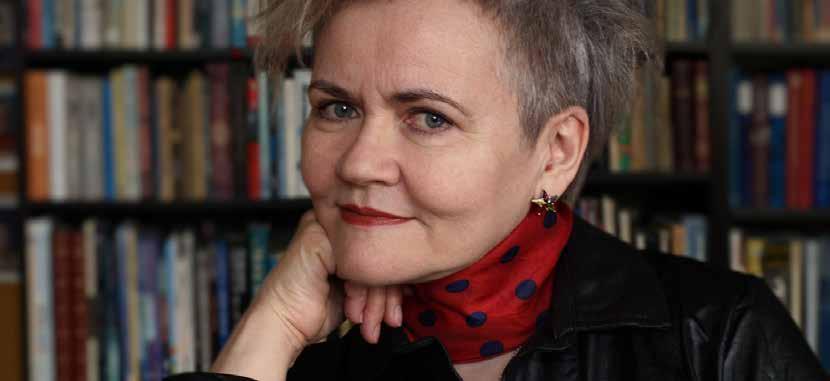
poetry collection Are there copper pipes in heaven (2012) was awarded the Faroese M.A. Jacobsen’s Award for fiction in 2013. Ottarsdóttir has published three poetry collections, two short story collections and now her second novel. All of her books have been published in Denmark and she has also published titles in Iceland and the US.
Title: Summarið varar ikki alt árið longur
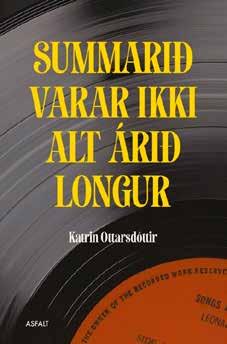
Pages: 304
Publisher: Asfalt
Year of publication: 2023
English sample available Rights sold to Denmark
4
SUMMER DOESN’T LAST ALL YEAR ANYMORE
Translated by Marita ThomsenMum comes scampering towards her. Happy in her psyche. Far too happy. Behind her the psychological glass doors swing, the green bag swings too and is just as giddy. Now they’re going home to daddy. Mum pants with joy. On the way home mum offers to get off when a hill is too steep, up or down. Nothing is impossible.
She ought to be happy too, share in the joy, she knows that, but a disquiet always comes over her when her mother is as overjoyed as she is now, happier than everyone else. She can’t shake the feeling that something ominous looms. Something inescapably unsettling. As per usual. At the very core of the elation.
She knows not to ask how it went with the medicine-man of the mind.
They drive. Mum doesn’t care if anyone sees them. Not right now. The ride home on the bright red Puch goes smoothly, eerily smoothly, all the way home to their driveway.
Mum runs up the stairs, into the kitchen to dad. She knows that he’s there waiting, rocking back and forth, ready with the hot cuppa, always ready. Patisseries from Frants’ Bakery. Mum blows dad a kiss, lands giggling on her own chair, in breathless excitement. They wait, she and her father.
‘the psychologist says there’s nothing wrong with me on the contrary I’m probably more normal than most if everybody were as strong as resilient as I am then all would be well with the world as he said when I left and he also commented on my chic bag…’
The mother laughs. Loud. Tense. Winks. At the father. At the daughter.
‘it’s beyond me why you keep insisting that I’m sick in the head mad crazy…’
farlit.fo 5
SUMMARIÐ VARAR IKKI ALT ÁRIÐ LONGUR
EXTRACT FROM THE BOOK:
THE NORN SPINS THE THREAD OF LIFE
A family saga begins when a mother of ten dies in childbirth. Not unusual over a hundred years ago. The grief is never spoken of. The father remarries. The children are scattered and end up having very different fates.
Helena has big dreams for her life. But when she is working on a farm, the farmer rapes her and she becomes pregnant. No one knows who the father is but she has to live with the shame. Her life unfolds through the novel.
The story takes place in the end of the 19th century and all the convulsions in religion, politics and culture in the Faroes around the turn of the century are intertwined in the depiction of fates. Helena and what happened to her is based on real events in the Faroe Islands.
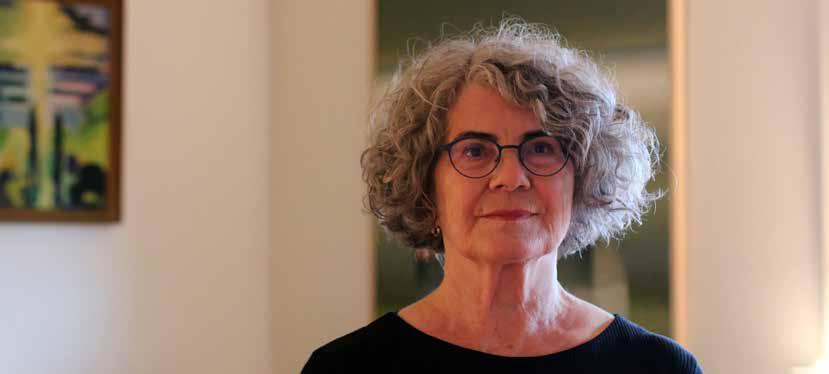
Sólrún Michelsen (1948) made her debut in 1994 with a short story collection for children, and has since published several books for children and adults in different genres. She has won several Faroese awards and was nominated for the Nordic Council Literature Prize in 2015. Sólrún’s books have been published in Denmark, Norway, Iceland and the UK. Her latest work, Nornan spinnur , is a family saga trilogy consisting of three novels published individually between 2019 and 2021.
Pages: 776
Publisher: Sprotin
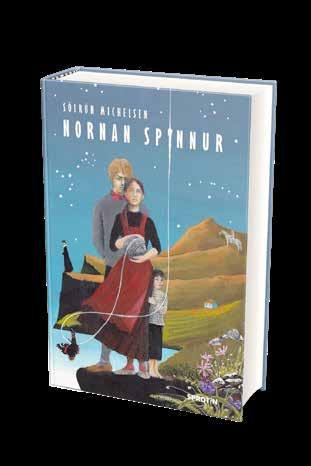
Year of publication: 2021
English sample available
6 SELECTED WORKS: FICTION
Sólrún Michelsen:
EXTRACT FROM THE BOOK: NORNAN SPINNUR
THE NORN SPINS THE THREAD OF LIFE
Translated by Lena AnderssenAnd now the moment had arrived. It was Saturday, and Andrias had sailed the boys across from school and was arriving with them. The weather was sloppy with sleet and wind and Helena saw they were soaking wet when they came in.
“Look at you.”
She fetches the boys some dry clothes and then goes into the bedroom to see if she could find something for Andrias to wear. Packed away in a large chest were all of Dánjal Petur’s clothes. They were good for sewing things out of when the boys needed something new.
Helena takes a sweater and a pair of pants from the chest, pauses for a moment with the clothes in her hands and lifts them up to her face. Dánjal Petur still lingered in them. The scent of him had not gone. She leaves the room and gives Andrias the clothes. He takes them and goes into the bedroom to change.
Helena can’t help but smile when he comes out again. Andrias is much bigger than Dánjal Petur was and the clothes are far too short around both the wrists and ankles. He looks like a little boy who has outgrown his clothes. But seeing him in Dánjal Petur’s sweater and pants also makes her stomach hurt. It evokes sad memories and makes her feel a little guilty for something she can’t really put into words.
The wet clothes that Andrias had taken off are hung above the stove to dry.
“It’s already February and soon we will have brighter days,” Andrias says and puts his arms around Helena.
“We also have to talk about the wedding. I’ve been looking forward to it.”
Helena looks up at him. His cheeks were still red from the boat trip over. His eyes sparkled and his hair was wet. She kisses him fervently and then pulls away.
“Boys, go into the bedroom and play for a while. Mamma has something she needs to talk to Andrias about. I’ll let you know when we’re done.”
“Yeah, but do we have to? Can’t we just…” Mortan doesn’t let himself get pushed aside, but Tórur takes his arm and they go into the bedroom, shutting the door behind them.
Helena sits down at the table so that she is facing the closed bedroom door. Then she motions Andrias to sit on the chair across from her. He looks at her quizzically but sits down without a word. Helena takes a deep breath.
“Before we can talk about the wedding, I have to tell you something that nobody except for my sister Kathrina knows about.” Helena is silent for a moment and then looks up at him.
“We agreed that there would be no secrets between us when we said yes to one another.” She falls silent again.
“This isn’t going to be easy to tell you,” she blurts out. Andrias has now grown serious. He takes her hands, which are resting on the table, but she pulls them away.
“You know you can tell me anything,” he says reassuringly in a low voice and looks insistently at her.
“I used to be a maid for the farmer,” Helena begins. “One Sunday, when everyone had gone to church, he violated me. He raped me.”
Helena can hear Andrias sigh, but she doesn’t dare look at him. She steels herself and continues.
“I didn’t know what to do. I was afraid to tell anyone because who would believe me? Perhaps Omma and Abbi would have, but why burden them with such grief? So I just started working harder, trying to forget about it and decided that I would stay for the remaining months of my agreement. After that I was going to Copenhagen where Kathrina would help me get a job as a resident maid. I counted the days.” Helena is quiet for a moment and then continues.
farlit.fo 7
Jógvan Isaksen: THE RELIQUARY
In 1952 a small green chest is found in a site of a fire in Tinganes and it has sinister and mysterious consequences. In 2022 a politician is killed and the incidents from 1952 repeat themselves shortly after in Argir. The Reliquary is a William Hammer horror crime novel and the 7th novel in the series about the detective.
Jógvan Isaksen (1950) is best known for his crime novels set in the Faroe Islands. He holds an MA in Nordic Literature and has taught Faroese literature and language at the University of Copenhagen since 1986. Jógvan has published a range of books about Faroese literature but he became a household name when his first crime novel of many was published in 1990. A TV series – TROM – based on four of the crime novels about investigating
journalist Hannis Martinsson has been filmed on the Faroe Islands and is available on BBC iPlayer. The new crime novel Halgigripaskrínið follows detective William Hammer but Hannis Martinsson is part of the story. Jógvan Isaksen’s works have been translated into Danish, German, Icelandic, Norwegian and English.
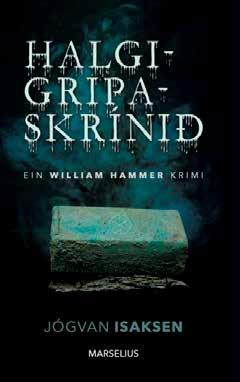
Title: Halgigripaskrínið
Pages: 300
Publisher: Marselius
Year of publication: 2022
English sample available

8
SELECTED WORKS: FICTION
THE RELIQUARY
Translated by Marita ThomsenThey’d been working on the foundations for a few days when he came across the chest. The others were off on their coffee break, so nobody heard him calling. To his great good fortune, he thought to himself only a heartbeat later.
The old ware and weighhouses, Vektarbúðin and Sjóbúðin, burned down in 1950, and for the most part remained how the fire had left them. The country was more or less bankrupt, so there was no money to reconstruct the buildings, which had stood here since the 1673 fire. Much of the crew was ill at ease working on this site, they knew it had once been a churchyard and that not every skeleton had been relocated.
He had been poking around in a corner with his shovel when it hit something that gave off a metallic clank. His first thought was of some charred remains from the fire, but as he removed more soil something pale green came to light. He scraped carefully with his spade, and a little oblong chest slowly emerged. Immediately it struck him that this might be his lucky day. The chest certainly hadn’t belonged to any ordinary thrall. He grew flustered and his hands shook. He suffered a moment of bewilderment, not knowing which path to take. Only one thing was certain, not a soul would be laying their grubby paws on his chest.
In the distance he could hear the others returning from the coffee break, and he hurried to push the soil back on top and trample it flat. His workmates
didn’t notice a thing, still, the rest of the day he made sure that nobody else went to work on that corner. Come evening he was the last man out, and the one who locked the gate in the fence around the worksite. Whoever locked up usually kept the key until the following morning. And that would be the case today too.
It was nearing midnight when he opened the door to the ruins out on the history-laden Tinganes headland. It was a cold March night, and a gleaming full moon reflected the chill casting both the headland and bay in a lifeless light. He moved slowly along the dirt floor in the darkness, and it wasn’t until his hands recognised the big stones in the walls on both sides, that he took two steps back and flicked on his torch. He was standing right up against the corner and made very sure that as little light as possible would escape through the window openings out to the bay.
He positioned the torch so it lit up the trampled soil and fetched the spade. Shortly after the chest was out in the open. Though it was no longer than one hand and no wider than half a hand, its weight surprised him. At first he thought it had caught on something, but no. Its sheer heft made it unwieldy, as if it were completely solid and fashioned from some material foreign to him. It was not made of metal, nor was it stone, but something on the border between the two.
farlit.fo 9
EXTRACT FROM THE BOOK: HALGIGRIPASKRÍNIÐ
SELECTED WORKS: FICTION
Jóanes Nielsen: ½ MOON ½ SUN
½ máni ½ sól is the fourth and last novel in this Nordic family saga about the author Eigil Tvibur. It is a tale of violence and deception.
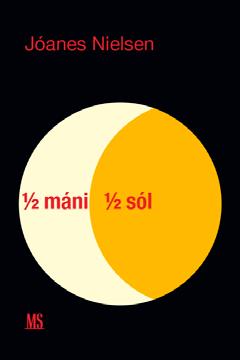
Eigil now lives in Copenhagen together with Marianna. The story begins when Marianna’s daughter, Hildegard dies in childbirth. At her funeral people talk about how Eigil helped her out of prostitution and drug addiction in Copenhagen. His efficient help has serious consequences because one day Eigil finds his apartment smashed into pieces and those responsible are from the drug environment in Copenhagen which means that Eigil is now a hunted man. Eigil and Marianna decide to move to the Faroe Islands with the newborn orphan. The saga begins with the measles outbreak in 1846 and ends in 2021 with the Covid-19 pandemic.
Jóanes Nielsen (1953) is an award-winning author and poet whose works deal with political and existential issues. He made his debut in 1978 and
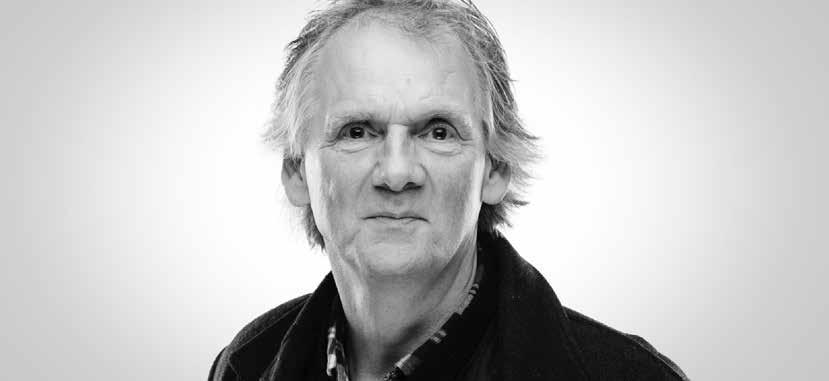
has since written several plays, short stories, poetry collections and novels. Several of his works have been translated into other Nordic languages.
Title:½ máni ½ sól
Pages: 196
Publisher: Mentunargrunnur
Studentafelagsins
Year of publication: 2022
10
½ MOON ½ SUN
Translated by Súsanna IngvardsdóttirBut when he opened the front door on this October day, he immediately noticed that something unusual had happened. The first thing he noticed were the about fifteen, or maybe twenty, empty paint tins, and the paint that had been thrown all over the hallway. He pushed the door to the living room ajar with the tip of his shoe. He saw directly onto the sofa where he had laid and consumed many works of literature through the years. The sofa had been cut open, and its insides pulled out onto the floor. The rocking chair on the other side of the small coffee table was gutted in the same way. And the bookshelves! The criminal or who the hell was responsible for this break-in had poured several litres of paint all over the books. And the tins in the hallway were two and a half litre tins! The stream of paint had run down the shelves, and the paper had soaked up the sticky liquid. He must have owned 1,500 volumes; historical works, novels, reference works, some poetry collections, and on two of the shelves stood the originals of the Faroese books that his foster father Ingvald had left him. Everything was ruined. Ingvald himself had set and made up several of the books during his years as a printmaker at H. N. Jacobsen’s Bookstore.
And it had been done in a frighteningly determined way. It was like the predator knew that this was the home of an author or at least a person that valued art because everything that held any cultural value was destroyed. The watercolours on the partition boards were smeared. Eigil’s hands went to his mouth as he saw the treatment that the painting Takvindeyga had endured. This was a painting by Steffan Danielsen that Eigil had inherited from his friend Symfor Thomsen. You could see the glory of the heavens revealed through a small roof window, and even though the painting still hung in the frame, the canvas was ripped into strips.
The LP record sleeves lay empty on the floor, and paint had been poured over the LPs. The record player, the television, and everything that belonged to the stereo installation was wrecked, as well as the videotapes he had collected. Based on the dry paint, it was at least a week, maybe two, since the break-in had happened. In the bedroom, the bed was gutted, and everything that had been on the shelves and hangers had been dragged onto the floor and poured over with paint. Only Symfor’s diaries lay untouched under the bed.
When Eigil saw all the binders and papers floating in the tub, he walked one step at a time towards the small office, as he could not believe his own eyes. But standing at the door his suspicions were confirmed. All his notepads and binders were missing from the shelves. And the hard disk was also missing! Paint had been poured over the computer screen and down onto the desk drawers; all of his dictionaries were soaked.
It was at that point that the energy drained from him. Even though he had worked by computer all the way back in the 90s when he worked as an auditor, he had never stopped writing by hand. In total, he must have owned about thirty or thirty-five A4 spiral notepads, all of which had ended up in the tub. He had most of the novel Brahmadellarnir written down by hand, as well as several chapters of Bommhjarta and Jarðarferðin. There were also sketches, drafts of letters, and commentaries of all kinds; in short, most of what he could call his literary memorial lay drowning in a mess. The ring binders with old and unpublished text had suffered the same fate. All his cultural stories, mature enough to be published in a book, floated, dissolved and unrecognisable in the tub. On the water’s surface, he saw the wire to the hard disk.
farlit.fo 11
EXTRACT FROM THE BOOK: ½ MÁNI ½ SÓL
Hanus Kamban:
THE PROMISED LAND
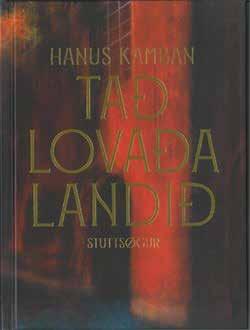
The six stories in this collection are thought-provoking and somehow marked by sorrow and grief, by something you carry with you your whole life.
Hanus Kamban (1942) is a writer, essayist, biographer, poet and is primarily known for his short stories. In some of his stories, played out against an austere, rural backdrop, he deals with religious and sexual repression. In others, he makes use of old
Faroese legends or draws on Europe as a setting, alluding to continental art and literature. His style is psychologically sensitive. His works have been nominated for the Nordic Council’s Literature Prize.

Title: Tað lovaða landið
Pages: 166
Publisher: Náttsólin
Year of publication: 2022
English sample available
12
SELECTED WORKS: SHORT STORIES
EXTRACT FROM THE BOOK: TAÐ LOVAÐA LANDIÐ
THE PROMISED LAND
Translated by Marita ThomsenAnd she took my head between her warm soft hands and kissed my brow, solemnly, like in a ceremony.
Hjalmar Söderberg: Doktor GlasTHE NEW ROOM was located in a corner of the student dorm. There were two large windows, one faced a narrow passage and the other fronted on a wide avenue, which on its way into town joined the main boulevard that hissed with uninterrupted traffic all day long. The interior was painstakingly tidy, dusted and washed on the desk overlooking the passage sat the typewriter, against the wall towards the avenue stood the bed, which doubled as a sofa during the day, and to the left as you entered two bookcases stretched. On the right was the sink. The room was suffused with a sharpish chemical scent, probably from the new record player. Books lit up the place – Maugham, Zweig, Söderberg, Huxley. It was all so strange. He had acquired a room, a job and a new life. What had happened was that about two months earlier the phone chimed for him. Just before noon one day. Aleksis was at the other end. He instantly recognised the clipped, cultured voice. ‘Good day, Sinbad. I bear happy tidings. You have a job now. Starting tomorrow at 10 am. Let me know if this suits.’ […]
[…]
When he received his first pay, he nearly fell upwards. Never had that sort of sum been transferred into his account. He made an arrangement with the bank about repaying his loans and still he felt like a Croesus. He didn’t know it then, not really, but the contours of a new existence seemed to be coming into focus. A decent student room, a wellpaid job, the means to give existence a gilded frame. Carmen entered his life at about the same time. They met one morning on the way home from town, they were wild, Carmen was in the company of Otto, who was pale, very intelligent, a, what might
you say, leptosomic Adonis. With them was a girl, Georgiana was her name, but for her overgrown breasts she became known as The Dairy. The street was deserted. They passed a wineshop. The display flaunted select bottles. In the park on the other side of the boulevard blackbirds and starlings were proclaiming the arrival of spring. Somewhere a cuckoo was cooing. They stopped to look. The bottles were emissaries from exotic cities: Arezzo, Siena, Positano, Burgos.
Suddenly Sinbad rammed his fist through the big pane and grabbed two bottles. They heard the tinkle of falling shards followed by an alarm, but Sinbad crossed over the boulevard and disappeared into the park opposite. Carmen and Otto followed him, while Georgiana ran, as quickly has her breasts would let her, and disappeared down a side street. The other three plunked themselves down on a park bench. Otto, who had a knife with a corkscrew, opened a bottle, and so they lounged and drank and chattered as the sun climbed higher in the sky. Carrion crows swooped between branches. They emptied the bottle, ambled up to the lake and rented a boat. The boys rowed lazily out on the water. Carmen presided over the stern. She broke into a morning hymn, ‘The dazzling sun now rises from the East.’ They opened the second bottle. Carmen had mahogany red hair. She slipped off her blouse, the sun lit up her face, shoulders and arms. Her smile exuded a blend of charm, melancholy and some enigmatic, antique nobility. They spent a leisurely hour on the lake, then rowed back to shore and agreed they should meet again sometime. Sinbad gave Carmen his new address.
Two days later there was a knock at his door. Sinbad didn’t recognise the rhythm, three calm, somewhat heavy raps, the time between knocks was longer than usual, but exactly the same for each thud. He went over and opened. It was ten o’clock. he had been on the night shift, was just awake and barely out of bed. Outside stood Carmen.
farlit.fo 13
I
Ben Arabo:
THE TIME CAPSULE
Short stories with an eerie atmosphere. The topics revolve around the emptiness of life, greed and materialism, life of luxury, envy and self-righteousness. Society is portrayed as cold and cynical with only one agenda: to abuse anyone and anything. The stories are captivating and they all have a twist.
Ben Arabo (1973) grew up in Oyrareingir where he lives now. He has a degree in finance and has lived in the UK and Indonesia,

where worked in the oil industry. Tíðarhylkið is his literary debut and his writing is sharp and light.
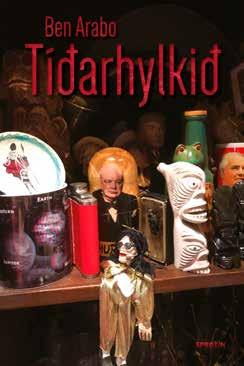
Title: Tíðarhylkið
Pages: 122
Publisher: Sprotin
Year of publication: 2023
English sample available
14
SELECTED WORKS: SHORT STORIES
THE TIME CAPSULE
Translated by Súsanna IngvardsdóttirThe sun glints on the tuba, and the trombones sound like Judgement Day. In this glorious weather, the wind orchestra plays Føroyingar, sum her nú koma saman and quite a lot of people have done precisely that. People’s moods are probably the closest they can be to a party mood with canapés in their hands.
This is a big day for Augusta Leikfjall, the manager of the National Gallery of the Faroe Islands. She stands before the gallery where a crane lifts a cement block off a hole that has been sealed off since the 1st of September 1973. Now, precisely 50 years later, a time capsule is to be opened. Everything is ready with cameras and a big screen. The national broadcasting company is also live-streaming this grand day.
For Augusta, this is not just professional. This is also a momentous day for her personally. She is the granddaughter of the famous sculptor and painter Georg Lukas Leikfjall. One of the objects in the time capsule is an art piece created by her grandfather. A piece that no one has seen before, which was placed in the time capsule. Now 50 years later, it will finally be revealed. Her grandfather died a long time ago, so nobody knows anything about this artwork.
The crane places the cement block down beside the hole. The cameras point directly down the hole. Inside a rectangular cement box, which almost looks like a sarcophagus, lays a white metal capsule on top of two blocks. The capsule is a cylinder the size of a lamb’s carcass. There is a little bit of rust on it, but it is not badly worn. It looks like only a little liquid has made it into it all these years. On the capsule is painted “1. Sept. 1973” in large black letters.
Augusta has butterflies in her stomach. No one has been more excited than she is right
now. The capsule is in better condition than she had expected. Two municipal workers place two straps under the capsule; then, it is pulled up out from the hole onto a large table placed there for the time capsule. The crowd applauds once the capsule is placed on the table. Lying there, it looks a bit like an oblong bomb.
Augusta steps onto the platform. She taps the microphone with two fingers to check if it is turned on. It makes the gathered crowd stop talking and look at her.
Augusta expects that the people are as excited as she is to open the time capsule, and for that reason, she has not prepared a long speech, but a few words must be said after all. She clears her throat before she starts. She can’t deny that she is a little emotional. “Dear all who have come together here at the National Gallery and those of you who are watching live nationwide. This is a day of celebration, as we will receive a greeting from 1973. We will open a small gate to the past and will be able to see a bit of the Faroe Islands from 50 years ago. Today we receive a gift given to us by the past.”
She smiles and points at the capsule.
“The gift, or better said, the gifts in this time capsule, have not seen the light of day in 50 years. There is a variety of objects that the Faroese art scene of 1973 wanted to pass on to the future.”
Augusta briefly looks up to the sky as if she was contemplating what she should say even though she has everything written down. “For me, this is also a special day on a personal level. In this capsule is an art piece that nobody has seen before by my grandfather Georg Lukas Leikfjall. He was given the task of creating a piece of art for the capsule that was not to be revealed until now, 50 years later.”
Augusta stops.
“As everyone knows, my grandfather died by his own hands shortly after he had completed the artwork for the time capsule.” She quickly wipes her eyes and continues.
“My grandfather created, as we all know, a lot of art and must be considered amongst the best sculptors in the Faroe Islands. Even though he was known to be cagey and most comfortable alone, he spoke to us through art.”
“Fate didn’t make life easy for my grandfather. He faced his own struggles, and his mind was troubled, said all who knew him. He became a widower with two children when he was far too young. His children were my father, who has since also passed away and his sister Olga who lives under care but who we are lucky to have with us today.”
Augusta points to a grey-haired lady in a thick winter jacket and hat sitting in a wheelchair in front of the table with the time capsule. The crowd claps, but the lady behaves as if nothing has happened. She sits with her mouth half-opened and appears to neither see nor hear anything that is happening around her.
Augusta prepares to end her speech.
“However, even though my grandfather faced many hardships, he gifted us all with his art, and now he will speak to us again nearly 50 years after his death. He and the others who have gifted objects for the time capsule have something to tell us. Let us open the time capsule to see and hear the message from the past. Thank you.”
The crowd claps again, and Augusta walks over to the table. The municipal workers are there, ready to help in case opening the time capsule proves difficult.
farlit.fo 15
EXTRACT FROM THE BOOK: TÍÐARHYLKIÐ
SELECTED WORKS: POETRY
Tóroddur Poulsen:
TITLE
“The poems are so light and elegant that they almost evaporate as you are reading them. What triggers the reader’s imagination is when something unexpected is being introduced.”
– From a review of Tóroddur Poulsen’s poetry collection Takrennutónar from 2019. Poulsen’s most recent collection is called Heiti
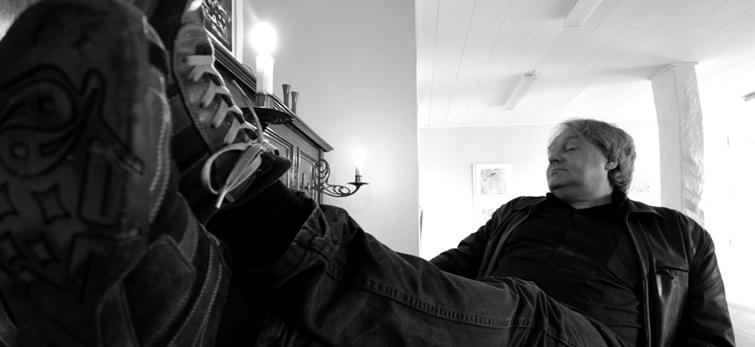
Tóroddur Poulsen (1957) is a poet, musician and graphic artist. His versatile artistic approach is reflected in his poetry which has a strong audio-visual expression. He made his debut in 1984 and has since been very productive in all three art forms. Poulsen’s works have a provocative and humoristic
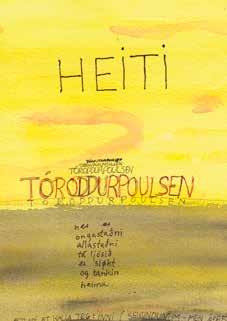
style, which he carries out with an acute awareness of artistic manifestation. His works have been translated into Danish, Swedish, German, English and French and have appeared in a number of literary journal. Poulsen has been nominated for the Nordic Council Literature Prize on several occasions.
Title: Heiti
Pages: 92
Publisher: Sprotin
Year of publication: 2023
English sample available
16
TITLE
Translated by Matthew Landrum and Rannvá Glerfossnow pull yourself together and write yourself apart like the complicated poet you never wanted to be before they see the carving marks in every word
we can’t see straight for all the spotless people who point out the shit in other people’s eyes though never their own and they collect these turds but just don’t get it and meanwhile whitewashed jars roll down the hill the breathing room exhaled outdoors
burst eyeballs and clotted blood in the drain look like they’re negotiating a new treaty as the sky in its vastness rushes by sit
on the stone step
contemplate your condition
the time: dark
no one is lying in the gutter because there aren’t gutters anymore now taxis line up to drive people home but not the ones who would have been lying in the gutter he has no curtains to draw but two good eyelids which are quick to communicate with both sleep and wakeness
farlit.fo 17
EXTRACT FROM THE BOOK: HEITI
Marjun Syderbø Kjelnæs:
THE KARMA GOAT & THE GIRL’S ROOM
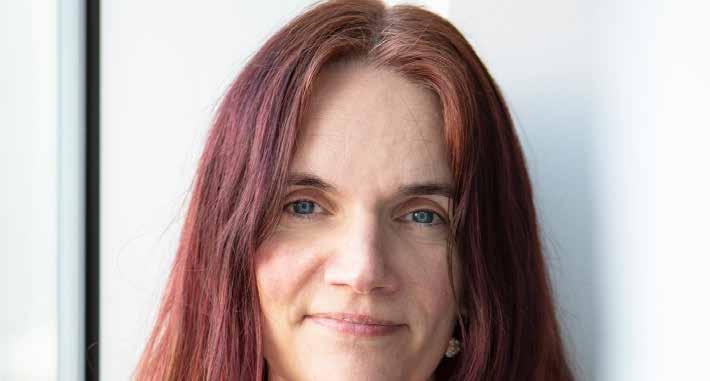
Marjun Syderbø Kjelnæs (1974) is a well-known and active voice on the Faroese literature and drama scene, and has published a wide range of works since her debut in 2000. She is a trained nurse but works as a full-time writer. Her YA novel Skriva í sandin, 2010 won the Nordic Council’s Children’s and Young People’s Literature Prize. Her works have been translated into the various Nordic languages as well as into English, French and German.
A literary double work, each with its own expression and character in two different genres. The works can be read in any order, and are not linearly or causally linked, but form rather two interlocking works, in which the dialogues of the drama, the movements of the poems, the states of mind and the physical spaces grow into each other. The Girl’s room is an existential horror comedy play which takes place in a girls’ bedroom during 24 hours and has a limited line-up of actors. The focus is on psychological relations, and
NOMINATED FOR THE NORDIC COUNCIL LITERATURE PRIZE 2023
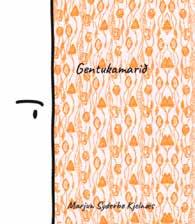
with black humour Marjun portrays how the past and present, in an irrational combination, influence the self-image and behaviour of the main character. The Karma Goat is a poetry collection that circles around the same themes as the play, however the humour, irony and gravity are even more apparent. As in the play the main voice is female and the lyrical style detaches it from the time and place limits and transfers it into a personal story, a family story and a universal story.
Title: Karmageitin and Gentukamarið
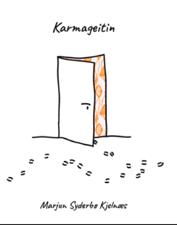
Pages: 138 & 96
Publisher: Ungu Føroyar
Year of publication: 2022
English sample of Karmageitin is available
Rights sold to Norway and USA
18
POETRY
SELECTED WORKS:
EXTRACT FROM THE BOOK: KARMAGEITIN
THE KARMA GOAT
Translated by Matthew LamdrumTHE MEAL PLAN
Today I will eat all the leftovers I won’t throw anything away it’s all going through me chewed swallowed digested and processed it will come out in the other end
Today everything will make sense all the fertilizer all the tractors all the lines of semi-trailers on the highway all the heavy laden cargo ships from the ends of the earth
My mouth will open like the pearly gates where there will enter a procession of exotic fruits imported slices of meat and chocolate wrapped in gold foil
Today I’m going to save a whole industry from condemnation blessed are the stuffed for they have eaten every last thing blessed are the empty shelves in the refrigerator for tomorrow it all begins again
THE KARMA GOAT
In my dream a goat tells me that at any given moment the majority of people will stop give up and retreat it’s the shame of not succeeding that’s too humiliating But then there are the eager the headstrong the beasts of burden who jump who miss again and again but still push on that’s the reason why I have my horns she lows
There’s an animal smell in my room when I wake up there’s a Chagall print untidily colorful the background conveniently dim the message eternally ambiguous like the smile of a goat
The morning is stretching out like an unfinished poem I wake up take a look outside and see a starling preening on a branch dropping truth to the ground manure thickens roots and tempts even the stubborn to grow toward the light of day
Before the maggots drag the words farther and farther down into the darkness I read the writing on the wall: With you it is karma to be your own goat
farlit.fo 19
SELECTED WORKS: CHILDREN & YOUNG
ADULTS
Dánial Hoydal and Annika Øyrabø: THE LINES
A heartfelt story about grief and OCD. The boy loses his granddad and then the lines appear. And they are everywhere. On the tiles out in the yard, On the ceiling above his bed at night. Everywhere. He has to count them or something bad will happen.
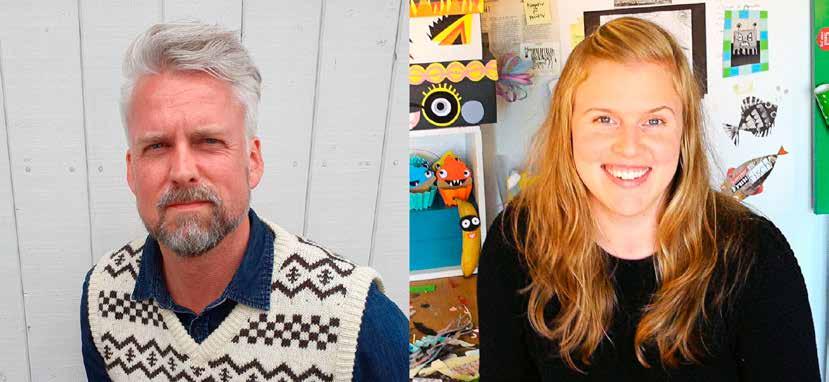
Dánial Hoydal (1976) is an author and translator and has worked in many genres. The Lines is the second book in a series about how mental illness affects children – and with it Dánial is back where he started as an author: writing for children.
Annika Øyrabø (1977) is a Faroese/Danish illustrator with education from The Danish Design School and Hochschule für Angewandte Wissenschaften in Hamburg.
The duo published Granddad and I and Granddad together in 2021 which won the West Nordic Council Children and Young People’s Literature Prize 2022. It was also a nominee for The Nordic Council Children’s and Young People’s Literature Prize 2022. She primarily works with paper cutouts.
Title: Strikurnar

Pages: 34
Publisher: BFL
Year of publication: 2022
English sample available
PRIZE 2023
20
NOMINATED FOR THE NORDIC COUNCIL CHILDREN’S AND YOUNG PEOPLE’S LITERATURE
EXTRACT FROM THE BOOK: STRIKURNAR
THE LINES
Translated by Marita ThomsenHøgni and I are walking home from school. It’s always nice to walk home with Høgni.We don’t talk a lot.We don’t need to, because instead we think together a lot. I know that Høgni also likes walking home from school with me.
Today Høgni is coming home with me. Those are the best days, when Høgni comes to my house to play. Høgni looks at me and smiles. I look at Høgni and smile.
When I walk home from school with Høgni, he asks me why I walk funny.Why I always have to walk the same way over and over. I pretend that I don’t know what he is talking about. Høgni doesn’t know the lines. He doesn’t know what they can do. He just walks. Like nothing has happened.
Høgni doesn’t like walking home from school with me anymore.We can’t look at each other and smile anymore. Now when we look, we don’t really know what to do. ‘Where is Høgni?’ mum asks.
But when we get to my house, mum is standing in the door. She looks sad. I think she has been crying. ‘You have to go home Høgni, sweetheart. I’m sorry, but you can’t come in to play today. Something has happened.’ I get a tummy ache. I often get a tummy ache when I know that something bad is about to happen. ‘Don’t worry so much,’ mum always says. But I don’t know how to stop.
‘Come sit in the sofa,’ she says. And then I know that something is wrong. Mum only says that when something is wrong. Mum cuddles me. It feels nice, but the knot in my tummy grows. Then it comes, ‘granddad is dead.’ Just like that. Out of nowhere. Dead. I say nothing. Just sit there. Just worry.
The next days there is a big fuss. The phone rings all the time, and lots of people come knocking on the door. People who I don’t know. They come to talk to mum. They don’t come to talk to me.
That is when I see the lines. The lines are everywhere. Between the slabs out in the yard. On the threshold under every door. Between each step in the stairs. On the ceiling above the bed when I go to bed. Everywhere. I never saw them before. But now I see them. Everywhere.
The lines are dangerous. Everything changes when you cross a line.You have to be very brave to cross them. But they are good too. Because if you step over a line four times, then everything goes back to the way it was before. So all you have to do is remember to always cross four times, then everything will be ok. Four times. Every time.
‘I don’t know,’ I say. But I do know. Høgni is scared of the strange things I have started doing. It scares me too, but I don’t know what else to do. I can’t talk to Høgni about the lines. Not to mum either. I know that they don’t understand the lines.
But then one day mum again asks me to come sit in the sofa. Uh oh, the sofa! Every time mum wants me on the sofa, I know that something is going on. Something serious.
‘Why doesn’t Høgni come play with you anymore? she asks. ‘I don’t know.’
‘I think you do know,’ mum says.
I don’t say anything. I think about the lines. I really want to tell mum about the lines, but I know that she won’t understand.
‘You have started doing so many peculiar things, sweetie,’ mum says. ‘And you spend all of your time alone.’
I know that. But I don’t know why.
‘Is it because granddad died?’ mum asks. Huh? I think.
‘We never really talked about granddad dying,’ mum says. ‘There was just so much stuff to do. My sweet little boy, I completely forgot about you in all of this,’ mum says and starts to cry.
I want to tell mum about the lines. That she doesn’t have to be so sad, because the lines help. But I don’t know if she understands that. ‘Tomorrow you and I are going to have fun together,’ mum says.
‘Just the two of us. All we are going to do all day is have fun together, just the two of us.’
And the lines, I think. But then I think that maybe the lines can have a rest tomorrow. Maybe it will be ok without the lines tomorrow.
farlit.fo 21
SELECTED WORKS: CHILDREN & YOUNG ADULTS
Elin Michelsen:
THE FADED FIELD – TÓRA II
Vanvarði is the second novel in the fantasy trilogy for young adults about the girl Tóra and her struggles to find her place in the newfound world of huldres. In this world of huldres she becomes aware of supernatural powers she didn’t know she had. Huldres are well-known fantasy creatures in the Faroe Islands. They are human in appearance and behaviour but live in a parallel world and have the ability to make themselves invisible.
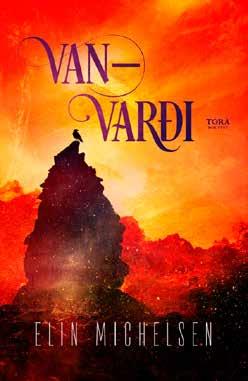
Elin Michelsen (1974) is an author and journalist in the Faroese public service radio station. As a child she was a regular in the fantasy section of the li -
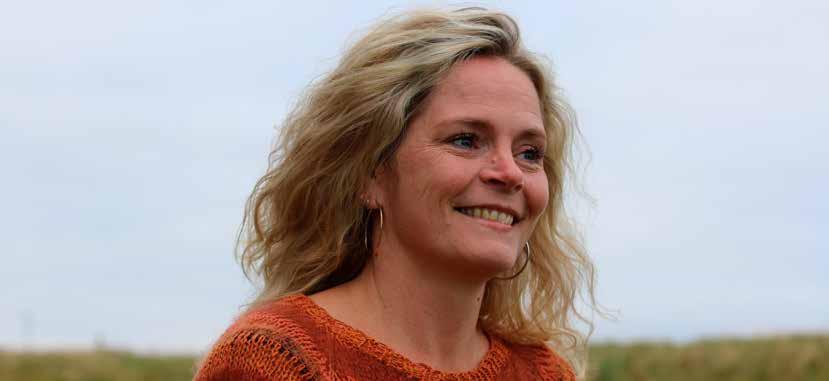
brary, and in 2021 she debuted as an author with a fantasy novel of her own called The Guarded Gift – the first in the Tóra trilogy.
Title: Vanvarði
Pages: 384
Publisher: BFL
Year of publication: 2022
English sample available
22
THE FADED FIELD
Translated by Súsanna IngvardsdóttirThe breeze is stroking her bare arms, and the sun is beating down from the blue sky. Not a single cloud. It is a beautiful morning in the late summer; Tóra doesn’t notice as she treks up the slope.
The slope is quite long and steep and exerts the thighs and legs, but Tóra continues pressing upward. She pants and sweats, but it is not far to the peak, and she does not plan on stopping until she reaches the top. She jumps across a ditch and steps into a heap of sheep droppings.
Fuck. Just what I needed!
This accident distracts her from focusing on reaching the top, returning her mind to reality. Back home to everything she doesn’t want to think about. When she has something to occupy herself with, there is no space for her thoughts, and if she does not think, then she has achieved the purpose of the walk.
So Tóra starts running up the slope. To run away from her thoughts. She does not want to think right now. Not here. This has been a summer that Tóra wants to forget, and forgetting can’t happen fast enough.
She has spent a lot of time in the fields to get away from school, away from both students and teachers, because being with people requires a lot of energy right now. It has taken so long to smooth the seas with everything and everyone, to the point that she is nearly seasick. Everyone is angry, and everyone is suspicious. Everyone.
Before the summer and the quarter exam, there were some who looked at her strangely and kept a distance from her because they did not think she belonged in Huldred Hill. Now it is not just something they think but something they know, like everyone else at the school. Tóra is different. Tóra stomps on up the slope as if to trample these truths down into the turf, but the truth is stubborn and does not let itself be cowed. Where Tóra is, weird things happen, that the Huldre
people have not seen before, so, of course, it is her fault. Of course, it was intentional that Tóra did not receive her gifts until she was 15. Of course, Tóra is responsible for Marita tying Heri with attraction cords, and of course, Tóra must bear it on her cloak that she swapped places with Silja so that they could swap quarters.
Of course!
Tóra is about to lose her breath because her lungs cannot take any more. Her heart is pounding so loud that she can hear it in her ears.
Of course!
Tóra is angry that she fell into that trap. Everything was so new and exciting, and most people were friendly. So she stopped listening to the warning signs because she felt at home.
Yeah, right, as if you have a home!
She came to the school, and as stupid as she was, she opened herself up to let people in. Then Tóra learned that it is easier for others to break down her barriers from the inside than from the outside. She trusted them, and they hurt her with distrust and accusations.
And Tóra is still sad that the good life that she has lived recently seems to be gone. She is sad about the distance that has wedged itself between her and the people she has come to care about.
In a way, it is worse now than right when she arrived at the school. She was alone then but had nothing to lose. Now she is alone again but not at all in the same way as before.
But she doesn’t want to be sad. She would rather be angry because, from experience, she knows it doesn’t hurt as much if you are angry.
Now you can learn it, Muddy Tóra. Being content and happy doesn’t suit you because you will be screwed over as soon as they get the chance. And after all, it wasn’t THAT good, right?
farlit.fo 23
EXTRACT FROM THE BOOK: VANVARÐI
SELECTED WORKS:
CHILDREN & YOUNG ADULTS
Bárður Oskarsson: HILBERT
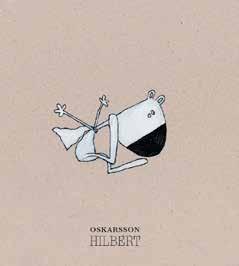
Bob and Hilbert are friends. One day Bob gets a text message from Hilbert, who needs help with something. Bob finds Hilbert dangling in the air. Hilbert wants Bob’s help to get down, so that he can go home. Down to earth storytelling with a philosophical twist.
Bárður Oskarsson (1972) is an author and illustrator. He started out as an illutrator for a Faroese Children’s Magazine and the first book he illustratred was one of his grandfather’s in 1992. He published his first book “Dog, Cat and Mouse” in 2004 which he both wrote and illustrated. Oskarsson’s illustrations are unique, they resemble cartoon illustrations and clearly con -
vey moods and atmospheres in a tiny wink or movement. “The flat rabbit” his book from 2011 has won him several international literature prizes and has been translated into about 20 different languages. Oskarsson received the Nordic Council Children’s and Young People’s Literature Prize in 2018 for his book “The Tree” from 2017.
Title: Hilbert
Pages: 32
Publisher: BFL
Year of publication: 2020
English sample available
24
EXTRACT FROM THE BOOK: HILBERT
HILBERT
Translated by Marita ThomsenOne day, Bob’s phone pinged when he was on his way home from the shop.
‘That was why I called you,’ Hilbert said. ‘I don’t want anyone else to see me hanging up here, midair. Could you help me down, so that I can get home?’
Bob had received a text message from Hilbert. It said: ‘Hi Bob, could you come help me, please?’
Bob rang Hilbert to find out what was the matter.
‘Hmmm,’ Bob said and thought about it for a while.
Hilbert answered the phone, ‘Hello?’
‘Hilbert?’ Bob asked.
‘Yes…? Is this Bob?’ asked Hilbert in a cautious tone.
‘Yes, this is Bob. What do you need my help for?’
‘Look, take this carrot. It might work.’
Hilbert didn’t reply straight away, but then he said, ‘I don’t know how to explain it, can’t you just come over? You will see what is the matter.’
‘Okay then,’ said Bob and he went to find Hilbert.
He started wondering. What could Hilbert need his help for?
It worked immediately!
Hilbert’s two feet were back on the ground again, but with Bob’s carrot.
‘Thank you so much, Bob! I can get home now,’ Hilbert said. He was ecstatic. But Bob wasn’t that pleased.
‘But that is my carrot, you know,’ Bob said. ‘But now we know that all you need to do is carry something heavy around, then you won’t be dangling in the air.’ Bob pondered for a while.
“I know what we can do now,’ he said when he had finished. Bob left for a moment, and then he came back with a string.
‘Hi Bob,’ said Hilbert when he spotted Bob.
‘Hi Hilbert,’ said Bob. Then they were quiet for a bit.
Hilbert was waiting for Bob to say something, and Bob didn’t know what to say. But he knew that he had to say something.
‘How did you get up there?’ Bob finally asked.
‘I don’t know,’ Hilbert replied.
‘I was just running around, doing some jumps, but then one time when I jumped I just stayed in the air, and now I can’t get down again.’
‘We will tie this around your legs, so that I can drag you home. Okay?’ Bob asked.
Hilbert found it a little strange to be on a leash. He preferred carrying the carrot. But maybe a dog with a carrot looks a little odd.
On the way home, Hilbert thought this was a bit like flying.
farlit.fo 25
SELECTED WORKS: CHILDREN & YOUNG ADULTS
Silja Aldudóttir:
BEAST
A different horror story about the beasts who live around and within us. The story centres around thirteen-year-old Asta, who finds a beast stuck in the tunnels of the old river running under the city. The beast is big and can destroy everything in its way, although it is starving and wounded. Asta decides to save it, but time is running out.
Ódjór is a suspenseful book about unlikely friendships, bullying and hope for children age 9+.
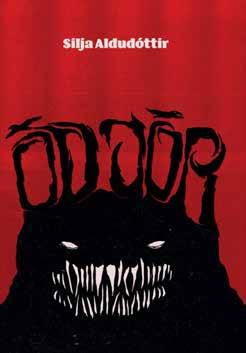
Silja Aldudóttir (1992) debuted as an author with Ódjór. She has always been interested in literature and has previously pub-
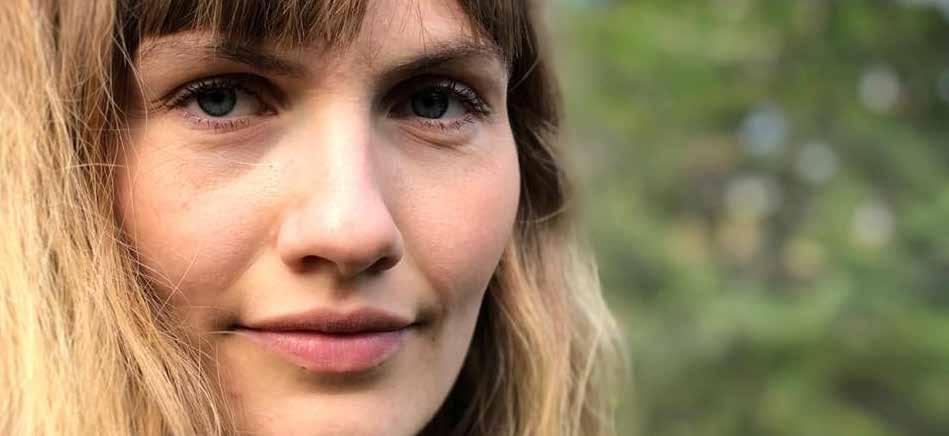
lished some of her short stories in anthologies. Silja holds an MA in Faroese language and literature and works as an editor.
Title: Ódjór
Illustrations by: Bárður Dal Christiansen
Pages: 156
Publisher: BFL
Year of publication: 2022
English sample available
26
BEAST
Translated by Marita ThomsenA car stopped for her and she hurried across the road. The sewers couldn’t keep up with the floods of water that gushed into them and swirled at full speed around her ankles. The cars looked like ships sailing down the road spraying as they ploughed through, she had to leap aside several times. Down, down, down, down the water tore its way. Down to sea. This wasn’t even the first time this spring that the roads in town were inundated. But it had never been as bad as this. And it wasn’t just on rainy days. Water would suddenly spew from the sewers, even when there wasn’t a cloud in the sky. That was when the rats emerged and took to the streets. She had also seen a lot of them under the trees in the park lately, but luckily she hadn’t seen any climb up the trunks. Yet.
The town stretched from the seashore up to the mountain slopes. Like a long hill with winding roads, shops, houses, little paths and open expanses, until it came to an abrupt stop up where the ravens waited for the town’s growing pains to resume.
With calm steps Asta approached the park on the edge of the town centre. She wasn’t planning on stopping today, but she still turned into the path. Walking home this way was only a slight detour. There was no point sitting in the tree in this rain. The pent roof she had built provided decent enough shelter, but not when it poured and everything was drenched and cold.
A few metres before she spotted the river, she heard it. It began so abruptly. Or ended, in fact. Water and then suddenly a road and asphalt. Like someone had changed their mind in the middle of a drawing. She glanced down at it as she walked past, and grimaced when she saw the stream where the water stopped. Brown water frothed around the rusty grid, and in all the froth danced the rubbish that was pulled along with the current. She wasn’t sure if it was just her imagination, but she always felt like she was hit by a rotten pong when she walked past this precise spot. That smell was quickly replaced by another, though, the sweet moist scent of wet soil hit her nostrils as soon as she stepped onto the narrow gravel path leading into the park. The river snaked alongside the path, a turbid and foamy companion. Sometimes it
idled there modest and tranquil, barely audible even, but today its roar seemed to fill the entire park swelling to the tree crowns. The pine trunks were black from all the moisture and needles hung heavy on branches. Asta’s legs immediately felt like dashing off the path and slipping unnoticed in between the trees. But she didn’t. Today she was someone who walked on the path. Civil. Instead she pulled the raincoat hood off her head and felt the rain wash over her skin. Heavy drops drummed against an empty juice box someone had tossed right beside the rubbish bin. She kicked it. It didn’t go far, landed in a puddle next to the path. She took a few steps, but then sighed and turned back, bent down and picked up the filthy box. When she straightened up again, she noticed something among the trees. Behind a trunk a few metres off the path stood a girl in a yellow parka looking at her. Asta’s hand stopped mid-air, like it had suddenly forgot what it was doing.
A pale face surrounded by dark hair.
For a moment Asta and the girl in the parka just stared at each other. Then it was as if the girl smiled at her, before she turned and headed deeper into the trees. Asta had a strange urge to run after her or to say something, but she did neither. Just stood there in the rain. Her long hair was glued to her chin and droplets trickled down her neck and under her clothes.
She could feel the seething inside, and now she knew what was going to happen. She couldn’t stop it. Rage pulsated through her body, twisted, turned and spilled over through her hands. She saw her own outstretched hands in slow motion. Hands that pushed. The body in front of her tumbled backwards. Blonde hair flowed forward and veiled the falling face. She didn’t want to. Didn’t mean to.
But it was too late, and she couldn’t look away as the body fell down the stairs. The sound as the back of the head hit asphalt. The eyes staring at her.
farlit.fo 27
EXTRACT FROM THE BOOK: ÓDJÓR
Rakel Helmsdal:
DREAM DEATH
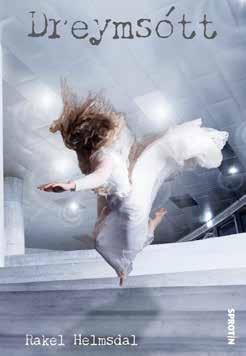
Dreymsótt is a dystopian novel about the Faroe Islands in a future, which none of us want to experience, but which nevertheless does not feel completely incredible. The year is 2036 and after several pandemics the goverment has completely isolated the Faroe Islands from the outside world in the name of protecting the people.
Now there is a vague streak of light in the east.
“Come, we have to walk faster,” Agnas says suddenly. “If we don’t get past the mountain before daybreak, the surveillance cameras will definitely notice us.”
We go faster. There is no time to enjoy the moment, just to walk as fast as we can. It is easier and easier to to see, where we’re treading. Too easy. It’s terrible, that the sun is our enemy.
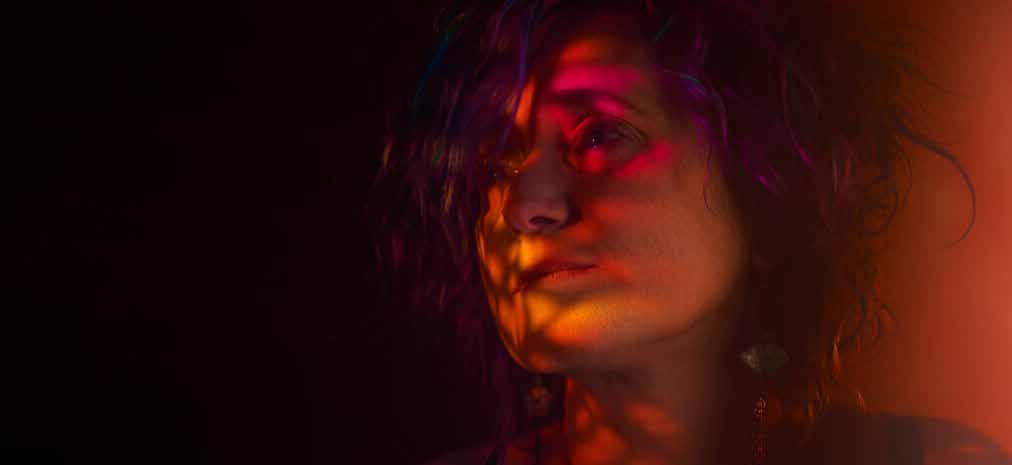
Rakel Helmsdal (1966) is a author and artist. She has written 26 books for children, YA and fiction.
Several of Helmsdal’s books have been nominated and awarded prizes in the Faroe Islands, Iceland and Scandinavia. Her books have been translated into 19 languages – Polish,
Chinese, Saami and Arabic to name a few.
Rakel always aims to take her art in new directions and goes by the wise words, that Pippi Longstocking never said: “I haven’t tried that before, so I think I should definitely be able to do that.”
Title: Dreymsótt
Genre: Fiction
Pages: 248
Publisher: Sprotin
Year of publication: 2023
28
SELECTED
BRAND NEW
WORKS:
Photo: Gwenaël Akira Helmsdal Carré
Kim Simonsen:
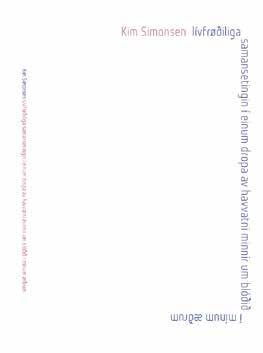
THE BIOLOGICAL COMPOSITION OF A DROP OF SEAWATER IS SIMILAR TO THE BLOOD IN MY VEINS
Kim Simonsen (1970) is a Faroese writer and poet. He completed his PhD in 2012 at the University of Roskilde and has authored 7 books as well as numerous essays and academic articles. He is the managing editor of Forlagið Eksil, a Faroese press that has published over 20 titles. He has worked as a researcher at the University of Amsterdam and the University of Bergen. He currently teaches creative writing at The University of the Faroe Islands. The collection is Kim Simonsen’s 5th poetry collection. He has previously published non-fiction books. His poetry is translated to many languages, most recently to Danish where he received a 5 star review in Ekstrabladet. In 2024 a translation will be published in the US.

What is the philosophy of fish?
The natural history of the threespined stickleback? What is the human race’s position in regard to nature? Do mushrooms care for us, did the trees see us, when we were children? What stories do we tell about ourselves and those, we have lost?
In four parts the collection dissects everything that we touch and the joy of turning to the world, our skin, mites, viruses, and the whirlwind of bacteria, that is the biological foundation of every living thing.
Lívfrøðiliga samansetingin í einum dropa av havvatni minnir um blóðið í mínum æðrum works
with the ocean as an element. Thematically the speaker deals with his dead father, who has been a sailor his whole life and the ocean that is eating away the land, which simultaneously is our organic original home.
Between worms, fish, trees and jellyfish references to biological diversity in the world are combined with literature, old philosophy, medical science and biology which is merged into a scientific and cosmic whole, where the ocean is reflected in everything, where the tiny and the mighty are united, where everything begins and ends with the ocean.
Title: Lívfrøðiliga samansetingin í einum dropa av havvatni minnir um blóðið í mínum æðrum
Genre: Poetry
Pages: 66
Publisher: Verksmiðjan
Year of publication: 2023
farlit.fo 29
BRAND NEW
SELECTED WORKS:
Photo: Thomas Koba
ONE STRAIGHT LINE ONE CURVED
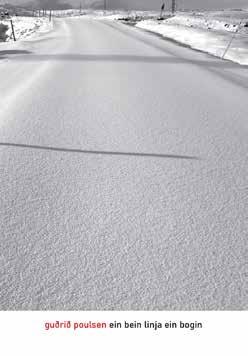
With poems and photography this book is a walk through the place where the city begins and ends, where we meet nature and the gut of the city at the same time, both past and present. It is a walk to the border of what we understand and what is about to fall apart. The poems and the photographs portray a world of real objects as well as plans and lost traces. This world is a terrain vague - an ambiguous place. A world of old projects, of garbage, and junk intertwined with thoughts of how the future will be.
Poulsen’s geopoetry puts into words what it means to live on earth. What it is like to exist in a landscape, to feel a certain tactility, how the body is in a space between nature and our changes in nature and how memories of generations and their marks exist in the world.
ein bein linja ein bogin by artist Guðrið Poulsen is a poetry collection and photo book combined.
Guðrið Poulsen (1961) is an established ceramic artist based in Tórshavn, Faroe Islands. Her medium has primarily been clay although she works in other materials as well. Her field of work
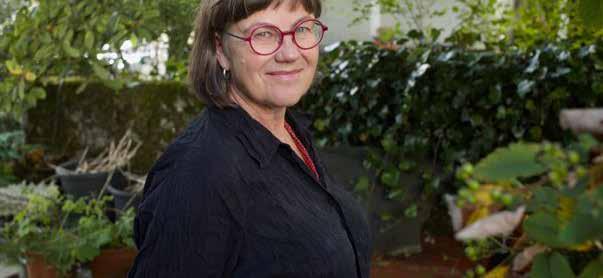
ranges from utensils to larger works in the public space. Guðrið also photographs and writes and these two artforms now come together.
Title: Ein bein linja ein bogin
Genre: Poetry
Pages: 44
Publisher: Eksil
Year of publication: 2023
30
Guðrið Poulsen:
SELECTED WORKS:
NEW
BRAND
Elin á Rógvi: MIGRATORY BIRDS
A lost home. A stolen child. And a gun to the head ...
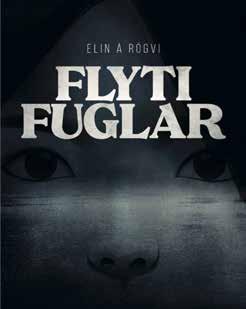
The novel follows 11-year-old Mai who, despite having lived in Vestmanna for several years, feels like an outsider as she is constantly reminded that she is different because she is an immigrant. One day, when a baby boy suddenly disappears from a baby carriage, Mai and her friend Emma set out to find the boy.
The days roll on and their search becomes increasingly frustrating. But suddenly Mai finds herself with a baby in her arms and needs to run for her life to save herself and the baby.
The author sheds light on what it feels like to grow up in a community where there is a need to bridge different cultures and languages.
Elin á Rógvi (1976) is a children’s book author. She has written several children’s books for different ages. She works in the lo-
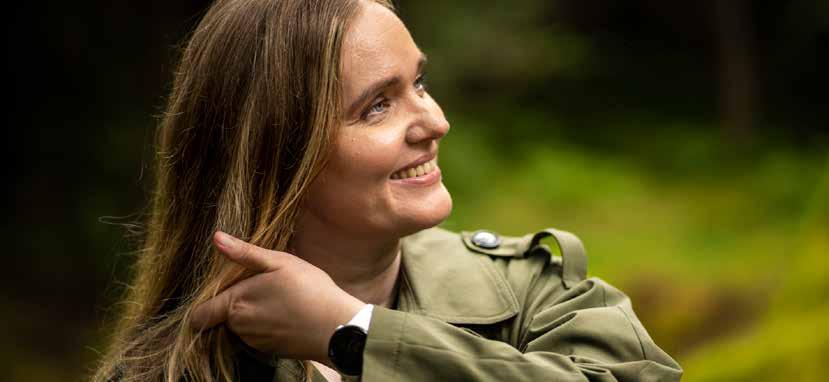
cal public service broadcaster, where she produces children’s radio and television.
Title: Flytifuglar
Genre: Children’s book
Pages: 132
Publisher: BFL
Year of publication: 2023
English sample available
farlit.fo 31
SELECTED
BRAND NEW
WORKS:
Photo: Bjarni Árting Rubeksen
BOOK PUBLICATIONS: 2018–2023
FICTION
Vatn er ein vátur logi (2021)
Terningar, søgur av tilvild (2019)
Carl Jóhan Jensen
Sprotin
Fáur fær tráðin heilt slættan (2021)
Ein annar er gull (2020)
Ein táttur er silvur (2019)
Sólrún Michelsen
Sprotin
Saga JAM (2022)
Høgni Mohr
Øgiliga egið forlag
Hjarta mítt fyri fót tín (2021)
Lív í Baianstovu
Forlagið Lív
Summarið varar ikki alt árið longur (2023)
Gentan í verðini (2020)
Katrin Ottarsdóttir
Sprotin
½ máni ½ sól (2023)
Jarðarferðin (2019)
Jóanes Nielsen
Sprotin
Tám (2022)
Jón Thorsteinsson
Brúgvin
Gloymdur (2019)
Solby Christiansdóttir
Sprotin
Psykosudrotningin sigur frá (2019)
Anna Malan Jógvansdóttir
Eksil
Ikki fyrr enn tá (2019)
Oddfríður Marni Rasmussen
Sprotin
NON-FICTION
Minni frá míni lívsleið (2023)
Jákup Lamhauge
Sprotin
Reyn, kæra Reyn (2023)
Randi Kúrberg, Jørleif Kúrberg Sprotin
Fuglar okkara (2022)
Jórun Pólsdóttir, Silas Olofson Sprotin
Om børn, træer, hvaler og andre, der har god tid (2021)
Bergur Rønne Moberg
Sprotin
Matur – okkara virðismikla tilfeingi (2022)
Gunnhild Dahl Niclasen & Sanna Andrassardóttir Dahl
BFL/Nám
Ketilostur, maðurin umborð, og putursukurveðrar (2021) Í stovuni sofu, í køki komfýr (2020)
Jóan Pauli Joensen
Sprotin
Gimburlomdini – ein endurminning sum kókibók (2020)
Tjóðhild Patursson
Sprotin
Gilgamesj (2020)
Kristian Osvald Viderø
Sprotin
Sanna Apol (2020)
Katrin Apol Didriksen
Sprotin
Svik (2019)
Jan Lamhauge
Sprotin
Nakrir tættir úr lívi V.U. Hammershaimbs (2019)
Regin av steinum
Sprotin
Faroes(e) (2019)
Eva Nielsen
Sprotin
Góða systir – ein dagbók til Arnvør (2019)
Margit M. Baadsager
Sprotin
Vinaliga (2019)
Brævaskiftið millum William Heinesen og Jørgen-Frantz
Jacobsen 1920-1938
Sprotin
32
BOOK PUBLICATIONS: 2018–2023
Heimurin, ið hvarv (2019)
Knút Háberg Eysturstein
Sprotin
Míni leikapetti (2018)
Eyðun Johannessen
Sprotin
CRIME
Halgigripaskrínið (2022)
Nivlheimur (2021)
Paranoia (2020)
Arktis (2019)
Anathema (2018)
Jógvan Isaksen
Marselius
Ein er tíðin at liva (2019)
Horvna rósan (2018)
Seytjandi maðurin (2018)
Steintór Rasmussen
Sprotin
Vit, Føroya fólk (2019)
Bjørk Maria Kunoy
Egið forlag
ART BOOKS
Landslagið í broyting (2023)
Listasavn Føroya
Floymandi nærvera (2023)
Marius Ziska and Hans Jacob Kollslíð
Sprotin
Føroyasmakkur – KOKS (2022)
Tim Ecott
Sprotin
Palli (2020)
Hannis Egholm
Sprotin
Frits (2019)
Sprotin
POETRY
Ein bein linja ein bogin (2023)
Guðrið Poulsen
Eksil
Lívfrøðiliga samansetingin í einum dropa av havvatni minnir um blóðið í mínum æðrum (2023)
Kim Simonsen
Eksil
Hjúpuljóð (2023)
Malan Poulsen
Sprotin
Protesur (2023)
Jóan Pauli Dahl Jacobsen
Sprotin
Oyðilendi (2023)
Svanna Jákupsdóttir
Sprotin
Karmageitin (2022)
Marjun Syderbø Kjelnæs
Ungu Føroyar
Setorð (2022)
Tykisljóð (2022)
Arnbjørn Ó. Dalsgarð
Sprotin
Heiti (2023)
Einki heiti (2022)
Fyribilsni (2021)
Bond (2020)
Takrennutónar (2019)
Himnahyljar (2018)
Tóroddur Poulsen
Sprotin
Vármjólk (2022)
Sólsmakkur (2018)
Rannvá Holm Mortensen
Sprotin
Fragmentir (2021)
Daniella Andreasen
Eksil
Eitt (2021)
Helgi Rasmussen
Sprotin
Millum blundirnar (2021)
Heðin M. Klein
Sprotin
Myndir við tíð í (2021)
Martin Næs
Sprotin
farlit.fo 33
BOOK PUBLICATIONS: 2018–2023
Sólgarðurin (2021)
Beinir Bergsson
Eksil
Lívsins dansur (2020)
Bárður á Lakjuni
Sprotin
Eg skrivi á vátt pappír (2020)
Lív Maria Róadóttir Jæger
Eksil
Skál (2020)
Dania Tausen
Sprotin
Rakkaljóð (2020)
Jóanes Nielsen
Sprotin
Protesur (2023)
Jóan Pauli Dahl Jakobsen
Sprotin
Whisper of Butterfly Wings (2020)
Kalpana Vijayavarathan
Sprotin
Leitanin eftir at vera (2019)
Katarina Nolsøe
Sprotin
Úrvalssavn (2019)
Oddfríður Marni Rasmussen
Sprotin
Korallbruni (2018)
Anna Malan Jógvansdóttir
Eksil
SHORT STORIES
Tíðarhylkið (2023)
Ben Arabo
Sprotin
Tað lovaða landið (2022)
Tann sæla ræðslan (2020)
Hanus Kamban
Náttarsólin
Hult og dult (2021)
Jón Thorsteinsson
Brúgvin
Í løtuni (2019)
Turid Thomsen
Sprotin
Virus (2019)
Sámal Soll
Sprotin
Oyðilendi (2023)
Svanna Jákupsdóttir
Sprotin
Kvøl (2021)
Anthology
Sprotin
DRAMA
Lykkenborg (2022)
Búi Dam
Sprotin
Gentukamarið (2022)
Marjun Syderbø Kjelnæs
Ungu Føroyar
Ó, søgur um djevulskap (2021)
Daniel Wedel
Sprotin
34
BOOK PUBLICATIONS: 2018–2023
YOUNG ADULT
Rangstøða (2022)
Tvístøða (2021)
Dánial Viðoy
Ungu Føroyar
Vanvarði (2022)
Rimarúmið (2021)
Elin Michelsen
BFL
Sólgrátur (2022)
Ingun Christensen BFL
Sum rótskot (2020)
Marjun Syderbø Kjelnæs BFL
Kjarr (2020)
Rakel Helmsdal
BFL
CHILDREN
Motorsúkklan (2023)
Richard H. Johansen
BFL
Heimurin hjá Rosu 1 + 2 (2023)
Lydia Didriksen BFL & Nám
Gullleyvan (2023)
Sunneva Lambavík
Egið forlag
Ódjór (2022
Silja Aldudóttir
BFL
Langa Lina langomma (2021)
Aðalbjørg J. Linklett
BFL
Vinmenn (2021)
Árni Dahl
BFL
Hilbert (2020)
Bárður Oskarsson
BFL
Strikurnar (2022)
Abbi og eg og abbi (2022)
Dánial Hoydal BFL
112 Fuglafjørður (2019)
Elin á Rógvi BFL
Ein eydnufluga (2022)
Alva og Lias (2021)
Julia og omman (2018)
Elsubeth M. Fossádal
BFL
Drongurin, sum rópti so illa (2020)
Hjalmar Didriksen Apol
BFL
Løgmansdóttirin á Steig (2019)
Húsfrúgvin í Húsavík (2019)
Marin fær ein lítlabeiggja (2019)
Marin og hjartavætturin (2018)
Ingun Christensen
BFL
Lítlan kráka samlar (2022)
Jenny Kjærbo
BFL
Magnus Heinason (2022)
Páll Nolsøe
BFL/Nám
Reiggjan (2021)
Loftar tú mær? (2019)
Rakel Helmsdal
BFL
Hilda og Monsi (2021)
Ranvør Isholm
BFL
Motorsúkklan (2023)
Richard H. Johansen
BFL
Luddi og Lundisa fara langa leið (2022)
Luddi og Lundisa spegla sær (2019)
Luddi og Lundisa (2018)
Vár Berghamar Jacobsen
BFL
farlit.fo 35

Go to www.farlit.fo for more information on us, the authors and the works. You can also sign up to get news from FarLit or follow us on Facebook or Instagram. www.farlit.fo Contact us at: farlit@farlit.fo facebook.com/farlit instagram: faroese literature