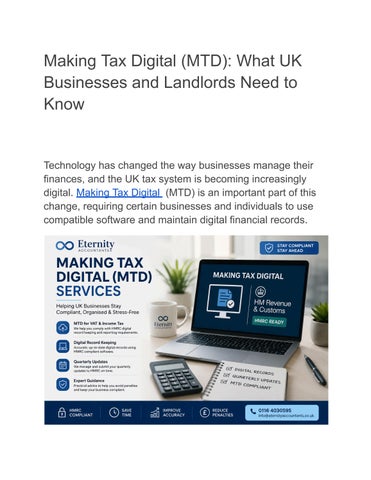
Making Tax Digital (MTD): What UK Businesses and Landlords Need to Know Technology has changed the way businesses manage their finances, and the UK tax system is becoming increasingly digital. Making Tax Digital (MTD) is an important part of this change, requiring certain businesses and individuals to use compatible software and maintain digital financial records.
For business owners, landlords, and self-employed professionals, understanding MTD early can make the transition much easier.
What Is Making Tax Digital?
Making Tax Digital is HMRC's approach to making tax administration more efficient and digital. Depending on the type of tax and taxpayer, it can involve keeping digital records, using compatible accounting software, and sending information to HMRC electronically.
MTD for VAT is already established. VAT-registered businesses are required to keep relevant VAT records digitally and submit VAT Returns using compatible software.
MTD for Income Tax is being introduced in stages for sole traders and landlords.
Who Needs to Use MTD for Income Tax?
The MTD for Income Tax rules are being introduced according to qualifying income levels.
From 6 April 2026, sole traders and landlords with qualifying income of more than £50,000 based on the relevant previous tax year need to use MTD for Income Tax, subject to the rules and exemptions. The threshold is scheduled to reduce to more than £30,000 from April 2027 and more than £20,000 from April 2028.
This means many self-employed people and property owners need to start thinking about their digital accounting systems now.
What Does MTD Require?
For people within MTD for Income Tax, the process involves more than simply submitting a normal Self Assessment tax return online.
You may need to:
Keep digital records of business or property income and expenses Use compatible software Send quarterly updates to HMRC Submit the required annual tax return information Keep financial information accurate and up to date
HMRC guidance confirms that quarterly updates form part of the new digital process.
Why Digital Record Keeping Matters
Keeping financial information digitally can make accounting more organised. Instead of relying on paper receipts or spreadsheets stored in different places, business owners can use accounting software to maintain records in one system.
Digital records can help you monitor:
Business income Property income Operating expenses Invoices Payments Tax-related information
Having current financial records can also make it easier to understand your business performance throughout the year.
Choosing Compatible Accounting Software
One of the most important steps when preparing for MTD is choosing suitable software.
The software needs to support the relevant MTD requirements. For VAT, HMRC requires businesses to use software capable of keeping the required digital records and communicating with HMRC digitally.
For Income Tax, sole traders and landlords should check that their chosen software supports the MTD functions they need.
Choosing software only because it is inexpensive may not be the best approach. Consider ease of use, compatibility, reporting features, support, and how well it fits your existing accounting process.
How MTD Can Benefit Small Businesses
Although adapting to a new system may require some preparation, digital accounting can offer practical advantages.
Regularly updating financial records can give business owners a clearer view of their income and expenses. It can also make it easier to identify cash-flow issues and prepare financial information when required.
Digital accounting may also reduce some repetitive administrative work and make financial information easier to share with an accountant.
Getting Ready for MTD
Businesses and landlords should avoid waiting until the last minute to prepare.
A useful preparation process can include:
Checking whether you need to use MTD. Reviewing your current bookkeeping system. Choosing suitable compatible software. Organising income and expense records. Making sure financial information is accurate. Learning how quarterly updates work. Getting professional advice if you are unsure about your obligations.
HMRC's current guidance recommends checking eligibility, getting compatible software, and signing up where required.
Professional Support With Making Tax Digital
For some business owners, moving from traditional bookkeeping to a digital tax system can feel complicated. Professional accounting support can make the transition more manageable.
Accountants can help review existing records, select an appropriate accounting process, organise digital bookkeeping, and explain the information that needs to be reported.
If you are looking for professional Making Tax Digital (MTD) Services, getting support early can help you prepare your accounting system and understand your responsibilities.
MTD and the Future of UK Accounting
The move towards digital tax administration is changing the way businesses manage their financial information. Rather than treating accounting as something that happens only at the end of the tax year, businesses are increasingly expected to maintain accurate records throughout the year.
For small businesses, landlords, and self-employed professionals, developing good digital bookkeeping habits can make future tax administration easier.
Final Thoughts
Making Tax Digital is an important development in UK taxation. With MTD for Income Tax now applying to qualifying sole traders and landlords above the first income threshold, businesses affected by the rules should make sure their accounting systems are ready.
Keeping digital records, using compatible software, and maintaining accurate financial information can help make the transition smoother.
If you are unsure whether MTD applies to you or need help preparing your accounting system, professional accounting advice can provide useful guidance and help you stay organised.