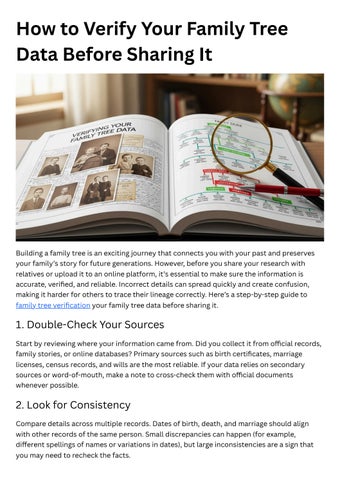
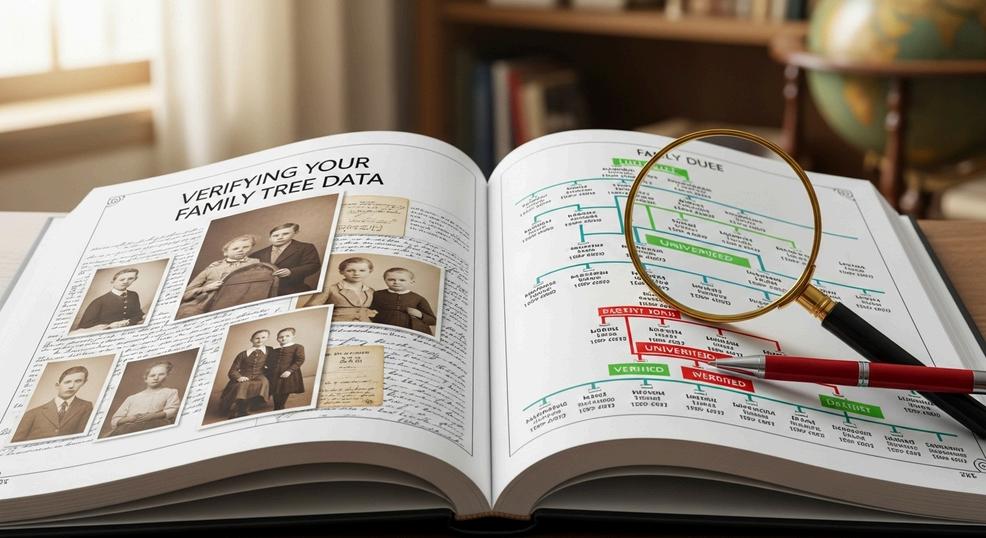
How to Verify Your Family Tree Data Before Sharing It
Building a family tree is an exciting journey that connects you with your past and preserves your family’s story for future generations. However, before you share your research with relatives or upload it to an online platform, it’s essential to make sure the information is accurate, verified, and reliable. Incorrect details can spread quickly and create confusion, making it harder for others to trace their lineage correctly. Here’s a step-by-step guide to family tree verification your family tree data before sharing it.
1. Double-Check Your Sources
Start by reviewing where your information came from. Did you collect it from official records, family stories, or online databases? Primary sources such as birth certificates, marriage licenses, census records, and wills are the most reliable. If your data relies on secondary sources or word-of-mouth, make a note to cross-check them with official documents whenever possible
2. Look for Consistency
Compare details across multiple records. Dates of birth, death, and marriage should align with other records of the same person. Small discrepancies can happen (for example, different spellings of names or variations in dates), but large inconsistencies are a sign that you may need to recheck the facts.
3. Verify with
DNA
Testing (Optional)
DNA testing has become a powerful tool in genealogy. While it doesn’t replace documentation, it can confirm family connections and help verify ancestral lines. If possible, use DNA results as an additional layer of evidence, especially when records are incomplete or unavailable
4. Document Every Source
Make it a habit to cite your sources. Whether it’s a census record, a church registry, or a family letter, recording where you got your information builds credibility and allows others to check your findings. This transparency makes your family tree much more trustworthy when you share it
5. Correct Errors Before Publishing
It’s easy for typos, duplicate entries, or misplaced relatives to slip into your tree. Go through your data carefully and clean up any mistakes before making it public. Most genealogy software, including Family Tree Maker and Ancestry, offer tools to detect duplicate entries and inconsistencies.
6. Share With Caution
Once your tree is verified, decide how and where to share it. Some family members may prefer a private family group, while others may be comfortable with uploading it to public platforms. If you share online, consider privacy settings to protect sensitive information about living relatives.
Final Thoughts
Verifying your family tree data takes extra time and effort, but it ensures that your family’s history is recorded accurately. By checking your sources, documenting evidence, and correcting errors, you build a trustworthy legacy that future generations can rely on. After all, your family tree isn’t just a project—it’s a living history that deserves to be preserved with care