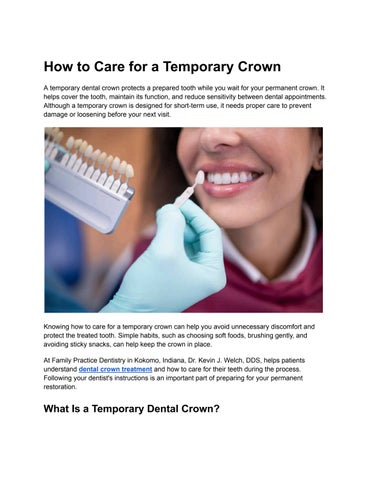
How to Care for a Temporary Crown A temporary dental crown protects a prepared tooth while you wait for your permanent crown. It helps cover the tooth, maintain its function, and reduce sensitivity between dental appointments. Although a temporary crown is designed for short-term use, it needs proper care to prevent damage or loosening before your next visit.
Knowing how to care for a temporary crown can help you avoid unnecessary discomfort and protect the treated tooth. Simple habits, such as choosing soft foods, brushing gently, and avoiding sticky snacks, can help keep the crown in place. At Family Practice Dentistry in Kokomo, Indiana, Dr. Kevin J. Welch, DDS, helps patients understand dental crown treatment and how to care for their teeth during the process. Following your dentist's instructions is an important part of preparing for your permanent restoration.
What Is a Temporary Dental Crown?
A temporary dental crown is a protective covering placed over a tooth that has been prepared for a permanent crown. It is usually made from temporary dental materials designed to protect the tooth until the final restoration is ready. Your dentist may recommend a crown when a tooth is weakened by extensive decay, a large filling, a fracture, or root canal treatment. The temporary crown helps protect the prepared tooth and allows you to eat and speak while waiting for your permanent crown. Unlike a permanent crown, a temporary crown is not intended for long-term use. It may be less durable and can loosen, crack, or come off if it experiences excessive pressure.
1. Choose the Right Foods Your eating habits can affect how well a temporary crown stays in place. Because temporary crowns are not as strong as permanent restorations, choosing suitable foods can help reduce the risk of damage.
Foods You Can Eat During the first few days, choose foods that are soft and easy to chew. Examples include: ● ● ● ● ● ● ● ●
Yogurt and soft cheese Scrambled eggs Mashed potatoes Oatmeal and soft cereals Cooked vegetables Soft pasta Bananas and other soft fruits Soups that are warm rather than very hot
Try chewing on the opposite side of your mouth when possible, especially if the treated tooth feels sensitive.
Foods to Avoid Some foods can pull a temporary crown loose or place excessive pressure on it. Avoid or limit: ● ● ● ●
Sticky candies and chewing gum Caramel and toffee Hard nuts and ice Hard candies
● Popcorn kernels ● Tough meats ● Hard crusts and crunchy snacks You do not need to avoid every solid food, but choose foods that do not require excessive biting or chewing with the crowned tooth.
2. Brush Your Teeth Gently Maintaining good oral hygiene is essential while wearing a temporary crown. Plaque can collect around the crown's edges, increasing the risk of gum irritation and problems with the underlying tooth. Use a soft-bristled toothbrush and fluoride toothpaste. Brush twice daily, paying attention to the gumline around the temporary crown. Move the toothbrush gently rather than scrubbing aggressively. Clean the surrounding teeth as usual, but avoid applying unnecessary pressure to the temporary restoration. If your gums are tender after the procedure, gentle brushing can help keep the area clean without causing additional irritation.
3. Floss Carefully Around the Crown Flossing removes food particles and plaque from between teeth, but you need to take extra care around a temporary crown. Follow these steps: 1. Slide the floss gently between your teeth without snapping it against the gums. 2. Clean the sides of the neighboring teeth carefully. 3. When removing the floss, release one end and slide it out sideways instead of pulling it straight back up through the contact area. Pulling floss upward can sometimes catch the edge of a temporary crown and dislodge it. If your dentist has given you different cleaning instructions, follow those recommendations. You can also ask whether an interdental cleaner or water flosser is appropriate for your situation.
4. Avoid Biting Down on Hard Objects Temporary crowns can be damaged by excessive pressure. Avoid habits that put unnecessary force on the treated tooth.
Do not bite your fingernails, chew pens, open packages with your teeth, or crack nuts using your teeth. Avoid chewing ice and other hard objects. If you grind or clench your teeth, let your dentist know. These habits can place additional pressure on the temporary restoration and may affect its stability. Taking care when biting and chewing can help protect the crown until the permanent one is placed.
5. Manage Sensitivity and Discomfort Some sensitivity after crown preparation is common. You may notice temporary discomfort when eating or drinking something hot, cold, or sweet. The gums around the treated tooth may also feel tender. To manage mild sensitivity: ● ● ● ●
Choose lukewarm foods and drinks if extreme temperatures cause discomfort. Chew on the opposite side of your mouth. Continue gentle brushing and flossing. Take medication only as directed by your dentist or according to its approved instructions.
Sensitivity should generally improve rather than become progressively worse. Contact your dentist if you experience severe or increasing pain, pain that persists, swelling, or discomfort when biting. A temporary crown that feels too high when you close your teeth may need adjustment. Do not attempt to reshape it yourself.
6. Keep Your Follow-Up Appointment A temporary crown is designed to protect your tooth until the permanent crown is ready. Keeping your scheduled appointment allows your dentist to check the prepared tooth and place the final restoration. Permanent crowns are made to provide a more durable, long-term covering when properly fitted and maintained. Delaying placement may leave the temporary crown exposed to wear, loosening, or breakage for longer than intended. If you cannot attend your appointment, contact your dental office to arrange another suitable time. Do not assume that a temporary crown can safely remain in place indefinitely.
7. Know What to Do If Your Temporary Crown Comes Off
A temporary crown can occasionally loosen or fall out despite careful maintenance. If this happens, try to stay calm and take the following steps. 1. Save the crown. Keep it in a clean container and bring it to your dental appointment. 2. Contact your dentist. Explain what happened and ask how soon you should be seen. 3. Keep the tooth clean. Brush gently and avoid chewing on the exposed tooth. 4. Avoid sticky or hard foods. The prepared tooth may be more sensitive without its protective covering. 5. Do not use household glue. Adhesives not intended for dental use can harm oral tissues and complicate treatment. If you cannot reach your dentist immediately, ask a dental professional or pharmacist whether an appropriate temporary dental cement is suitable for your circumstances. Do not force the crown back into place, and never use it if it does not fit comfortably or could be swallowed. Seek urgent dental care if the crown comes off and you have significant pain, swelling, or signs of infection.
8. Watch for Signs That Your Temporary Crown Needs Attention Knowing when to contact your dentist can help prevent a minor issue from becoming more serious.
Sign or symptom
What you should do
Crown feels loose or moves
Contact your dentist for advice
Crown cracks or breaks
Arrange a dental evaluation
Crown falls off
Save it and contact your dental office
Persistent or worsening toothache
Request prompt dental assessment
Crown feels too high when biting
Ask your dentist to check the bite
Swollen or increasingly painful gums
Contact your dentist promptly
Facial swelling with difficulty breathing or swallowing
Seek emergency medical care immediately
Do not ignore a loose crown or persistent discomfort, even if the symptoms seem mild. Your dentist can determine whether the temporary restoration needs repair or replacement.
How Long Does a Temporary Crown Last? A temporary crown is generally intended to last for the short period between tooth preparation and placement of the permanent crown. Depending on the treatment plan and laboratory turnaround, this may be around two to three weeks, although the timeframe can vary. Its lifespan depends on the material used, the tooth's location, your bite, and how well you maintain it. A temporary crown on a back tooth may experience greater chewing pressure than one on a front tooth. If your temporary crown has been in place longer than expected, contact your dentist to confirm when the permanent crown should be placed.
Can You Eat Normally With a Temporary Crown? You can usually eat many everyday foods while wearing a temporary crown, but it is best to be cautious. Soft foods are often more comfortable immediately after the procedure, especially if the tooth or gums are sensitive. As you become more comfortable, you can gradually return to a varied diet while avoiding foods that are especially hard, sticky, or chewy. Cut food into smaller pieces and avoid putting excessive pressure on the temporary crown. If chewing causes sharp pain or your bite feels uneven, stop chewing on that side and contact your dentist for guidance.
What Is the Difference Between a Temporary Crown and a Permanent Crown? Both types of crowns cover and protect a tooth, but they serve different purposes.
Feature
Temporary crown
Permanent crown
Main purpose
Protects the prepared tooth until final treatment
Provides a longer-term restoration
Typical materials
Temporary dental resin or other provisional materials
Materials such as ceramic, porcelain, metal, or combinations
Durability
Intended for short-term use
Designed for longer-term function
Care requirements
Requires extra caution with food and cleaning
Requires regular oral hygiene and dental checkups
Expected placement period
Until the permanent crown appointment
Remains in place with proper care and monitoring
A permanent crown still requires daily brushing, flossing, and routine dental visits. Although it is generally more durable, it can still become damaged or develop problems if not maintained.
When Should You Contact Your Dentist? Contact your dentist if your temporary crown becomes loose, falls off, cracks, or causes discomfort when biting. You should also seek advice if sensitivity is worsening instead of improving or if you notice swelling around the treated tooth. If you have severe pain or signs of infection, do not wait until your permanent crown appointment to seek care.
At Family Practice Dentistry in Kokomo, Indiana, Dr. Kevin J. Welch, DDS, can evaluate dental concerns and explain the next steps in your crown treatment. If you have questions about protecting a temporary crown, contact the office for guidance based on your individual situation.
Frequently Asked Questions 1. How do you care for a temporary crown? Brush gently twice daily with fluoride toothpaste, floss carefully, avoid hard and sticky foods, and chew cautiously. Keep your follow-up appointment so your dentist can place the permanent crown as planned.
2. Can I brush my temporary crown normally? Yes, but use a soft-bristled toothbrush and gentle pressure. Clean around the gumline carefully to remove plaque without putting unnecessary force on the crown.
3. Can I floss if I have a temporary crown? Yes. Floss carefully and release one end before sliding the floss out sideways. Pulling floss straight upward can sometimes dislodge the temporary crown.
4. What foods should I avoid with a temporary crown? Avoid sticky candy, chewing gum, caramel, ice, hard nuts, and foods that require forceful biting. These can loosen, crack, or dislodge the temporary restoration.
5. Can I drink coffee with a temporary crown? Usually, yes. However, very hot drinks may aggravate sensitivity after crown preparation. Let hot beverages cool if needed, and follow any specific instructions from your dentist.
6. Is it normal for a temporary crown to feel sensitive? Mild sensitivity can occur after the tooth is prepared. Contact your dentist if it becomes severe, persists, worsens, or is accompanied by swelling or significant pain.
7. What should I do if my temporary crown falls off? Save the crown, keep the exposed tooth clean, avoid chewing on that side, and contact your dentist. Do not use household glue or force the crown back into place.
8. Can I sleep with a temporary crown?
Yes. A temporary crown is designed to remain in place during normal daily activities, including sleep. If it feels loose or has already come off, contact your dentist for instructions.
9. How long can I keep a temporary crown? It is usually intended to last until your permanent crown is ready, often around two to three weeks. Your dentist should confirm the expected timeline for your specific treatment.
10. Can a temporary crown damage my tooth? A properly fitted temporary crown helps protect a prepared tooth. However, if it becomes loose, breaks, or falls off, the underlying tooth may become more vulnerable to sensitivity or damage. Contact your dentist if you notice a problem.
Closing Thoughts Caring for a temporary crown involves a few important habits: eat carefully, brush gently, floss correctly, avoid excessive pressure, and attend your permanent crown appointment on time. These steps can help keep the restoration in place and protect your prepared tooth while you wait for the final crown. If you need dental crown treatment or have concerns about a temporary crown, Family Practice Dentistry in Kokomo, Indiana, can help you understand your treatment and aftercare instructions. Call 765-453-0085 to contact Family Practice Dentistry or arrange an appointment with Dr. Kevin J. Welch, DDS.