Filling a Full Container from One FMCG Distributor in Spain
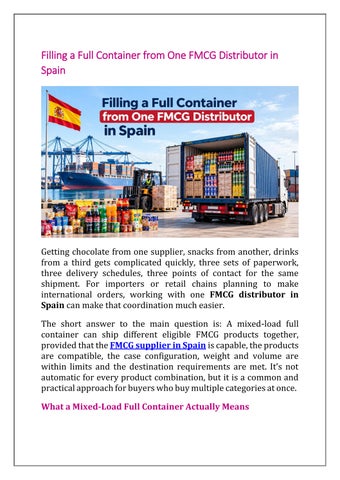
Getting chocolate from one supplier, snacks from another, drinks from a third gets complicated quickly, three sets of paperwork, three delivery schedules, three points of contact for the same shipment. For importers or retail chains planning to make international orders, working with one FMCG distributor in Spain can make that coordination much easier. The short answer to the main question is: A mixed-load full container can ship different eligible FMCG products together, provided that the FMCG supplier in Spain is capable, the products are compatible, the case configuration, weight and volume are within limits and the destination requirements are met. It’s not automatic for every product combination, but it is a common and practical approach for buyers who buy multiple categories at once. What a Mixed-Load Full Container Actually Means
A mixed-load is just that: more than one product category in one shipment. Instead of filling it with one SKU or one type of product, it is a consolidated container. A buyer might put the chocolate and soft drinks in one load rather than having a container of chocolate and a container of soft drinks. Whether this is practical depends on a few real factors, including product compatibility, packaging and case dimensions, weight and volume limits, pallet or carton configuration, and destinationcountry requirements. Not everything works well in the same load, and not every FMCG Distributor in Spain has the range or logistics setup to handle it. Before assuming any combination will work, it’s worth checking feasibility with a specific supplier. Which Categories Buyers Combine in One Container To maximize container space and reduce freight costs, commercial buyers frequently blend multiple shelf-stable product lines. Combining fast-moving FMCG categories into a single shipment ensures balanced inventory and better margins. •
Chocolate, Together
Confectionery,
Snacks
and
Beverages
Based on what an FMCG wholesale distributor actually stocks and how their logistics are set up, buyers often look to combine complementary FMCG categories such as chocolate and confectionery with snacks or beverages. For instance, a retailer sourcing from a confectionery supplier may want to have wholesale chocolate suppliers in Spain options in the same load, along with beverages from an energy drink supplier in Spain. You’ll hear the names of well-known energy drinks such as Monster Energy quite often, and it’s worth it to check with a supplier directly to confirm which brands they actually carry before including them in a container plan.
Consolidation can solve admin, freight complexity and leadtime problems There are some practical benefits to working with one supplier instead of three or four: one main purchase-order relationship, less separate supplier communication, more coordinated product availability, and centralized documentation rather than scattered paperwork across multiple parties. It also allows the buyer greater visibility of the entire order, rather than having to track multiple shipments individually. Watch out for freight claims here. Consolidation may improve shipment efficiency but actual savings depend on container usage, product mix, origin, destination and freight terms; there is no set number that applies to all orders. Documentation, Labelling and Customs for Container Orders Before making a full-container order, check the commercial invoice, packing list, product and batch information, labeling requirements, country-of-destination requirements, incoterms, export documentation, customs responsibilities and delivery terms. The requirements vary depending on the exact products and the destination market. So consider this a checklist to verify per order, not a set template. •
Container Usage and Case Configuration
Actual loading into a container will depend on the case size, pallet configuration, product dimensions and weight. The aim is to plan the load safely within the weight, space and handling limitations of the container, not to load as many cartons as possible. Rushed loading plans can create problems on the receiving end, not just during transit. •
RE-EXPORT FROM SPAIN TO EUROPE, NORTH AFRICA AND GCC
Its geographic position makes Spain a viable sourcing and distribution point for buyers re-exporting into Europe, North Africa and the GCC. That said, you need to check re-export requirements for the specific destination, product category, and customs regulations that apply there, this is not a one-size-fits-all process, and it’s worth confirming the specifics for your route before committing to volume. Why Falcon Gallant is the Right Choice for Your Whole FMCG Supply Chain in Spain Falcon Gallant is a FMCG supplier and distributor in Spain. We deal with commercial buyers who want to source multi-category FMCG, co-ordinate ordering and bulk supply. We work across categories such as confectionery, chocolate and beverages as part of our wider range. This means buyers who manage multiple product lines are coordinating sourcing and shipment planning through one relationship, rather than many. Our company can talk about product mix, documentation and delivery scheduling directly with buyers who are planning on a container order, but without promising any specific freight savings, pricing or delivery timelines as these depend on the specifics of each individual order. FAQs 1. Can I mix product categories in one full container? Mixed-load containers can also include other eligible FMCG categories, as long as there is product compatibility, packaging, weight, volume, supplier capability and destination requirements. Not all combinations are automatic so check with your supplier before finalizing a plan. 2. What is the benefit of buying a full container? The upside to this is the ability to consolidate several products into one shipment, simplify supplier coordination and optimize the available container space. It is best not to assume guaranteed
savings without confirming specifics as actual cost outcomes vary by order. 3. How is container utilisation planned? Planning considers carton dimensions, pallet configuration, product weight, space available in the container, stacking requirements and conditions for product handling. The aim is a safe, correctly balanced load, not maximum carton count. 4. Can Falcon Gallant re-export containers from Spain? Re-export arrangements are based on the buyer’s destination, products, documentation and agreed logistics responsibilities. These details can be discussed directly with a buyer by Falcon Gallant as opposed to giving a set answer that fits all. The best basis for planning a full-container FMCG order is real product availability, compatibility, documentation, container utilization and destination needs, not doing this at the eleventh hour. If you are considering a mixed load order of chocolate, confectionery, snacks or drinks it is worth discussing your specific product mix and shipment requirements with an appropriate FMCG distributor in Spain before placing a large order.