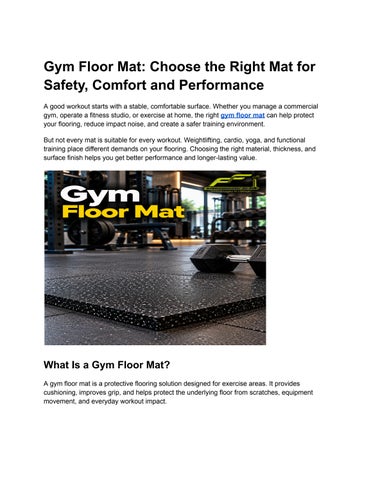
Gym Floor Mat: Choose the Right Mat for Safety, Comfort and Performance A good workout starts with a stable, comfortable surface. Whether you manage a commercial gym, operate a fitness studio, or exercise at home, the right gym floor mat can help protect your flooring, reduce impact noise, and create a safer training environment. But not every mat is suitable for every workout. Weightlifting, cardio, yoga, and functional training place different demands on your flooring. Choosing the right material, thickness, and surface finish helps you get better performance and longer-lasting value.
What Is a Gym Floor Mat? A gym floor mat is a protective flooring solution designed for exercise areas. It provides cushioning, improves grip, and helps protect the underlying floor from scratches, equipment movement, and everyday workout impact.
Depending on your needs, you can choose individual rubber mats, interlocking tiles, foam mats, or continuous rubber flooring rolls. Each option offers different levels of cushioning, stability, and durability.
Available Thickness Options for Gym Floor Mats Thickness is one of the most important factors when choosing a gym floor mat. The right option depends on your equipment, workout intensity, and subfloor. ● 6–8 mm: Suitable for light home workouts, stretching, and selected low-impact activities. ● 10–15 mm: A practical option for general fitness areas, cardio equipment, and moderate training. ● 15–25 mm: Suitable for many commercial gym areas and functional training zones, depending on the product. ● 25 mm and above: Often preferred for heavier equipment and weight-training zones where greater impact protection is needed. These ranges are general guidelines. Heavy free weights, Olympic lifting, and dropped loads may require thicker, higher-density rubber or a specialised lifting platform.
Materials Used in Gym Floor Mats Rubber Gym Mats Rubber mats are popular in commercial gyms because they offer durability, traction, and resistance to everyday wear. Recycled SBR rubber and EPDM rubber are common materials used in rubber flooring products.
EVA Foam Mats EVA foam is lightweight and offers soft cushioning. It is useful for stretching, floor exercises, and low-impact home workouts, but it may compress under heavy equipment.
PVC Gym Mats PVC mats are available in different surface finishes and constructions. They can suit selected fitness spaces where easy cleaning and a particular surface texture are priorities. For heavy-use gym areas, compare load-bearing capacity, slip resistance, and resistance to compression before choosing a material.
Density and Surface Options
Why Density Matters Density affects how a gym floor mat responds to pressure. A higher-density rubber mat generally provides a firmer, more stable surface, while softer materials offer more cushioning. For strength-training areas, prioritise stability and compression resistance. For stretching or floor exercises, comfort may be more important.
Choosing the Right Surface Finish Common surface options include: ● Smooth finish: Suitable for selected indoor fitness applications where easy cleaning is important. ● Textured finish: Can provide additional grip during movement. ● Speckled rubber finish: Often used in commercial gyms for an attractive, professional appearance. ● Interlocking edges: Help connect individual mats and cover larger areas. Always check the manufacturer's slip-resistance specifications and cleaning recommendations.
Where Can You Use Gym Floor Mats? A suitable gym floor mat can be used in several environments: ● ● ● ● ● ● ●
Commercial gyms and fitness centres Home gyms and workout rooms Personal training studios Functional fitness and circuit-training zones Cardio equipment areas Stretching and exercise spaces Selected rehabilitation and sports-training facilities
For free-weight zones, choose flooring specifically designed to withstand the expected equipment loads and impact.
Key Benefits of Gym Floor Mats The right gym flooring offers practical benefits beyond appearance. ● Floor protection: Helps reduce scratches, dents, and damage from equipment. ● Impact absorption: Cushions everyday workout impact and may help reduce vibration. ● Improved traction: A suitable textured surface can support stable footing.
● Noise reduction: Rubber flooring can help reduce noise from moving equipment and dropped weights, depending on the installation and floor structure. ● Easy maintenance: Many rubber mats can be cleaned with a compatible mild cleaning solution. ● Flexible installation: Individual mats and interlocking tiles can accommodate different room layouts.
How to Install a Gym Floor Mat Proper installation helps prevent movement, gaps, and premature wear. 1. Prepare the floor: Remove dust, debris, moisture, and loose material. 2. Measure the space: Calculate the required coverage and account for equipment placement. 3. Select the layout: Arrange the mats before fixing them in position. 4. Install carefully: Fit interlocking edges securely or follow the manufacturer's adhesive instructions for products that require bonding. 5. Check the finish: Ensure there are no raised edges, unstable joints, or trip hazards. 6. Allow settling time: Follow the product instructions before placing heavy equipment or starting workouts. The subfloor should be level, dry, and suitable for the chosen flooring system.
Gym Floor Mat Maintenance Tips Regular maintenance helps preserve appearance and performance. ● ● ● ● ● ●
Sweep or vacuum loose dirt frequently. Clean spills promptly to prevent slipping. Use a manufacturer-approved cleaner. Avoid harsh chemicals that could damage the surface. Inspect joints, edges, and high-impact zones for wear. Move equipment carefully instead of dragging it across the mats.
Good ventilation and suitable cleaning practices also help control odours in enclosed gym spaces.
Expected Durability of Gym Floor Mats The lifespan of a gym floor mat depends on its material, thickness, density, installation, maintenance, and daily usage. High-quality rubber mats can provide years of service under suitable conditions, but no single lifespan applies to every product.
Commercial gyms with heavy equipment and frequent workouts should inspect high-use areas regularly. Replace mats that develop persistent movement, damaged joints, excessive compression, or unsafe surface conditions.
Customisation Options Gym floor mats are available in different formats to suit individual projects. Depending on the supplier and product range, customisation may include: ● ● ● ● ●
Different thicknesses and dimensions Rubber rolls, individual mats, or interlocking tiles Black, speckled, and selected coloured finishes Textured or smooth surfaces Custom layouts for equipment and training zones
For a commercial project, share your floor dimensions, equipment type, and intended use with your supplier before ordering.
Technical Specifications to Check Before Buying Specificatio n
What to Check
Material
SBR rubber, EPDM, EVA foam, or PVC
Thickness
Match the workout and equipment requirements
Density
Confirm the manufacturer's stated value
Dimensions
Verify mat size and total coverage
Surface finish
Choose a suitable grip and texture
Installation
Interlocking, loose-lay, or adhesive-fixed
Maintenance
Confirm compatible cleaning products
Performance
Ask about compression, impact resistance, and slip testing
Actual specifications vary by product. Request a technical datasheet when comparing gym floor mats for commercial or heavy-duty use.
Gym Flooring Project Images
When selecting gym floor mats, review completed projects that resemble your intended space. Look for images of commercial weight rooms, functional training zones, cardio areas, and home gyms. Project photographs can help you compare colour, surface finish, mat layout, and overall appearance. Confirm the product specifications separately, since images alone cannot establish thickness or performance.
Frequently Asked Questions 1. Which gym floor mat is best for heavy weights? High-density rubber mats or specialised lifting platforms are generally suitable for heavy-weight areas. The required thickness depends on the equipment, expected impact, and subfloor.
2. What thickness should I choose for a gym floor mat? For general fitness, 10–15 mm may be a useful starting point. Heavy free weights and dropped loads often need thicker, purpose-designed flooring.
3. Are rubber gym floor mats better than foam mats? Rubber mats generally offer greater durability and stability for heavy equipment. Foam mats provide softer cushioning for stretching and low-impact exercises.
4. Can gym floor mats be installed at home? Yes. Rubber mats, foam mats, and interlocking tiles can work well in home gyms when selected for the intended workouts and floor conditions.
5. How do I clean a gym floor mat? Remove loose dirt, then clean the surface with a manufacturer-approved mild solution. Avoid incompatible chemicals and allow the surface to dry before use.
6. How long do gym floor mats last? Their lifespan varies with material quality, usage, installation, and maintenance. Regular inspection helps identify when mats need repair or replacement.
Find the Right Gym Floor Mat for Your Space
The best gym floor mat balances durability, stability, cushioning, and maintenance requirements. Before purchasing, consider your workout activities, equipment weight, available space, and preferred surface finish. Looking for gym flooring for a home workout room, fitness studio, or commercial gym? Contact RubberFloorings.in to discuss your project requirements and explore suitable flooring options. Share your area dimensions and intended use to help identify the right solution for your space.