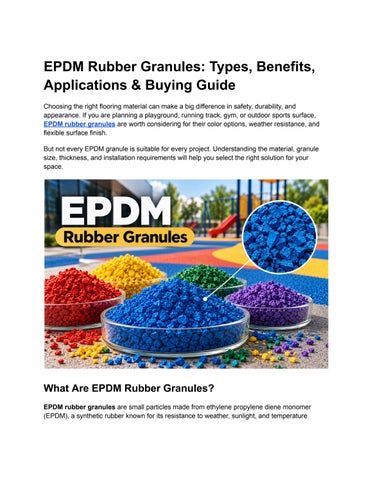
EPDM Rubber Granules: Types, Benefits, Applications & Buying Guide Choosing the right flooring material can make a big difference in safety, durability, and appearance. If you are planning a playground, running track, gym, or outdoor sports surface, EPDM rubber granules are worth considering for their color options, weather resistance, and flexible surface finish. But not every EPDM granule is suitable for every project. Understanding the material, granule size, thickness, and installation requirements will help you select the right solution for your space.
What Are EPDM Rubber Granules? EPDM rubber granules are small particles made from ethylene propylene diene monomer (EPDM), a synthetic rubber known for its resistance to weather, sunlight, and temperature
changes. They are commonly used to create colorful, resilient flooring surfaces for indoor and outdoor environments. These granules are typically mixed with a suitable polyurethane binder and applied over a prepared base. Depending on the project, they can form a seamless rubber surface or a decorative top layer over another rubber material.
Available Thickness and Granule Sizes EPDM granules are available in different particle sizes, while the finished flooring thickness depends on the application and required performance. ● Granule size: Common options include 1–3 mm, 1–4 mm, and other project-specific sizes. ● Thin decorative surfaces: Suitable for certain existing rubber bases and decorative applications. ● Playground flooring: Thickness should be selected according to the required impact attenuation and certified critical fall height. ● Sports surfaces: Running tracks and multipurpose courts may require different layer thicknesses and system designs. Always choose the finished thickness based on the application rather than granule size alone.
Material and Density EPDM is a synthetic elastomer designed to maintain flexibility under varying environmental conditions. Its performance depends on the compound formulation, manufacturing quality, and installation system. The density of EPDM granules can vary by product. When comparing suppliers, request the product's technical data sheet to verify density, hardness, tensile properties, and other relevant specifications.
Surface and Colour Options One major advantage of EPDM rubber granules is their design flexibility. Available colours may include red, green, blue, yellow, grey, and black, along with blended colour combinations. Depending on the installation system, the finished surface can be designed with: ● Bright, single-colour finishes ● Multicolour playground patterns ● Decorative borders and logos
● Contrasting zones for different activities ● Custom colour combinations for sports and recreational spaces Choose colours based on the project's visual requirements and the manufacturer's UV-resistance specifications.
Applications of EPDM Rubber Granules EPDM granules are suitable for a variety of recreational, sporting, and commercial environments.
Playgrounds and Children's Play Areas They can be used in impact-attenuating surfaces designed to help reduce injury risk from falls. The complete flooring system must meet the applicable fall-height and safety requirements.
Running Tracks and Sports Facilities EPDM granules are used in certain athletic track systems and outdoor sports surfaces where resilience, traction, and weather resistance are important.
Gyms and Fitness Areas Selected EPDM systems can provide a resilient surface for fitness zones, stretching areas, and multipurpose training spaces. Heavy-weight areas may require a different rubber flooring specification.
Parks and Recreational Spaces Their colour options make EPDM granules suitable for pathways, activity zones, and decorative outdoor flooring.
Key Benefits of EPDM Rubber Granules ● UV and weather resistance: Quality EPDM compounds are designed to withstand outdoor exposure. ● Colour retention: Suitable formulations can help maintain their appearance under sunlight. ● Flexible surface: Rubber provides a resilient feel underfoot. ● Design versatility: Multiple colours support creative patterns and layouts. ● Low routine maintenance: Regular cleaning can help keep the surface in good condition.
● Seamless finish: Properly installed systems can create a continuous surface without traditional tile joints. Actual performance depends on the compound, binder, base preparation, drainage, and installation quality. Pro Tip: For outdoor playgrounds, do not select EPDM granules by colour or price alone. Ask for the complete flooring system's impact-test results, UV-resistance information, and installation specifications before making a purchase.
Installation Process Correct installation is essential for achieving a stable and long-lasting EPDM surface. 1. Prepare the base: Ensure the substrate is stable, clean, and suitable for the selected flooring system. 2. Check drainage: Outdoor installations need appropriate drainage to prevent water accumulation. 3. Select the binder: Use a compatible polyurethane binder recommended by the flooring system manufacturer. 4. Mix the materials: Follow the specified granule-to-binder ratio and mixing procedure. 5. Apply the surface: Spread and compact the mixture evenly to achieve the required thickness and finish. 6. Allow curing: Follow the manufacturer's curing time and environmental requirements before opening the area for use. Professional installation is recommended for playgrounds, athletic tracks, and other surfaces with specific safety or performance requirements.
Maintenance and Expected Durability EPDM flooring generally requires routine cleaning rather than complicated maintenance. Remove dust, leaves, and debris regularly, and clean the surface using methods approved by the manufacturer. Inspect the flooring for loose granules, cracks, drainage issues, or areas where the binder has deteriorated. Repairing minor damage early can help prevent more extensive deterioration. Expected durability varies with product quality, UV exposure, foot traffic, drainage, binder selection, and maintenance. Request project-specific service-life guidance and warranty terms from your supplier rather than relying on a fixed lifespan.
Customization Options
EPDM rubber granules can be specified to suit different project requirements, including: ● ● ● ● ●
Custom colours and colour blends Different granule sizes Project-specific layer thicknesses Patterned and zoned designs Sports facility branding and decorative layouts
Confirm minimum order quantities, colour availability, sample options, and lead times before placing a bulk order.
Technical Specifications to Check Before purchasing EPDM rubber granules, review the following information with your supplier: ● ● ● ● ● ● ● ●
Material composition and EPDM content Granule size and particle consistency Density and hardness UV and weather-resistance test data Recommended binder and mixing ratio Suitable applications and installation thickness Relevant safety or performance test reports Packaging, storage instructions, and warranty conditions
The exact specifications should come from the manufacturer's technical data sheet. Do not assume that every EPDM product offers identical performance.
Project Images For your project gallery, include clear photographs of completed EPDM flooring installations, such as colourful playgrounds, running tracks, outdoor recreational areas, and decorative rubber surfaces. Before-and-after images and close-ups of the finished texture can also help customers understand the available design options. Use genuine project photographs with permission and descriptive image alt text relevant to the actual installation.
Frequently Asked Questions 1. What are EPDM rubber granules used for? They are commonly used in playground surfaces, running tracks, sports facilities, recreational areas, and selected gym flooring systems.
2. Are EPDM rubber granules suitable for outdoor use? Yes. Quality EPDM compounds are designed for outdoor exposure, including sunlight and changing weather conditions. Performance depends on the product formulation and installation quality.
3. What granule size is best for EPDM flooring? The right size depends on the application, desired finish, binder system, and installation method. Ask your supplier to recommend a size based on your project specifications.
4. How thick should EPDM playground flooring be? Thickness depends on the required critical fall height, base system, and tested performance of the complete installed surface. Follow the relevant safety standards and certified system specifications.
5. How do you maintain EPDM rubber flooring? Remove debris, clean the surface as recommended, maintain drainage, and inspect periodically for damage or loose granules.
6. How can I choose a reliable EPDM rubber granules supplier? Compare technical data sheets, product samples, consistency, test reports, available colours, delivery terms, and after-sales support. Choose a supplier who can explain which product and installation system suit your application.
Get the Right EPDM Rubber Granules for Your Project Whether you are planning a playground, sports facility, running track, or recreational space, choosing the right EPDM rubber granules is an important step toward achieving a durable and attractive surface. Contact our team to discuss your application, preferred colours, granule size, quantity, and technical requirements. Request product specifications and a quotation to help you make an informed purchasing decision.