THE EYRIE

EMCC Literary & Trades Journal

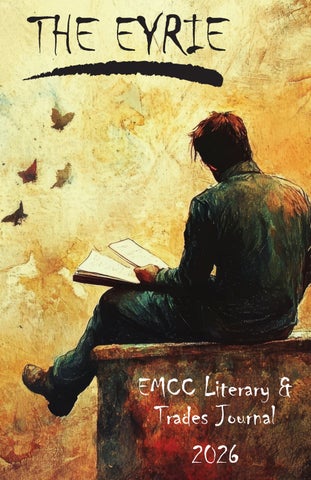
The Eyrie is a literary/arts journal by Eastern Maine Community College to showcase student work. This issue highlights exceptional writers, trades people, and artists from across the campus.
Heather Magee Anna Arquette
Cover Design
Deric Storr
Page Design
Ivry Smith
Bell, Nevaeh Bowden, Zinnia Carter, Samantha Coon, Jay Hanks, Erika Jorgensen, Collin Magee, Heather L McKenzie, Connor Romer, Stephanie
Sargent, Matthew Smith, Ivry Sprague, Nina Stohr, Deric Thai, Lorraine Theriault, Nathaniel Thibodeau, Mary Thrift, Nathanael
© All works in this journal remain the sole property of their owner and may not be reprinted without permission.
By Alexis Devere
For my research essay I chose my topic to be about iris colobomas, a rare congenital eye condition where part of the muscle surrounding the iris is missing, giving the eye an almost keyhole shape. I discussed this using medical resources and my own experiences as someone with an iris coloboma.
I was born with an iris coloboma, a birth defect that happens early in development, growing up I was always fascinated with my eye. But I was also always frustrated with how little I was able to learn about it. I would constantly ask myself questions like how many people had an iris coloboma, what were they, how they happened. These were all questions I wanted answers to but could not get, and while my mom was of course the first one to notice my eye when I was a baby, her curiosity relating to iris colobomas had ended after she was reassured that I was healthy and wasn’t going to die, so all she could tell me was the name of my eye defect and that was all, and while one of those things was later one when I first got a phone I looked up iris colobomas on the internet. However, all I received was basic information and that it occurred rarely. And I had no idea where to look for information on Iris colobomas or if there was any more information to be found, instead it was simply something I wondered about taking little bits of information I could and using what I learned to come to my own often wrong conclusions. Information on and my own personal experiences having an iris coloboma. How iris colobomas occur during development, the effects of having an iris coloboma on everyday life, and current medical treatments and procedures for iris colobomas.
Iris coloboma is categorized as a birth defect, the most readily available information on iris colobomas are the weeks in which it occurs during development, and the number of babes it occurs in per a certain amount. The number in which it is estimated to occur for each live birth is discussed in the article Evaluation of Posterior Ocular Structures in Patients with Isolated Iris Coloboma by Serkan Akkaya “Coloboma is a congenital anomaly characterized by missing pieces of tissue in the ocular structures. The estimated in cidence is estimated to range from two to 14 per 100.000 births”(1), iris coloboma is a rare iris defect widely accepted to occur in around 1 in 10,000 live births. This does not account for individuals with iris coloboma that were never diagnosed or traumatic iris colobomas that occur later in life due to an injury. There is also little information on the regional concentration of iris colobomas, as there is a genetic factor involved in an individual being born with an iris coloboma even though most cases appear randomly. Iris colobomas occur during early development as told in article Evaluation of Posterior Ocular Structures in Patients with Isolated Iris Coloboma by Serkan Akkaya, “During the intrauterine development process, a partial tissue defect occurs in any of the cornea, iris, ciliary body, lens, retina, choroid, and optic nerve tissues due to aberrant closure of the choroid fissure in the 5th-7th week of the fetal life (2), the anomaly presents itself within a wide spectrum from iris coloboma to clinical anophthalmia. It has heterogeneous etiology and may be genetically inherited; it can be seen together with chromosomal anomalies or some syndromes or”(1), The development of the fetus with iris coloboma is completely normal until the 5th to 7th week of development where the muscles surrounding the pupil Fail to close completely usually leaving a signature keyhole shape made-up of the iris. After The failure of the iris closure the fetus goes back to developing normally unless there are any other developmental issues during development. Because of the rarity of iris colobomas and the fact that most occur randomly, whether multiple genes can cause iris colobomas has not been determined, however one of those genes was isolated in a Chinese family in the article Two Pathogenic Gene Mutations Identified Associating with Congenital Cataract
and Iris Coloboma Respectively in a Chinese Family by Li “The candidate genes of cataract and iris coloboma were successfully screened out. A heterozygote mutation, CRYGD c.70C>A (p.P24T), was identified as cosegregating with congenital cataracts, while another heterozygous mutation, WFS1 c.1514G>C (p.C505S), which had not been reported previously, cosegregated with congenital iris coloboma.”( 3), researchers isolated a Iris coloboma causing gene in a Chinese family with multiple individuals spanning different generations with iris colobomas, They found around 500 family members within this group, a handful having iris coloboma along with other eye defects. Due to The rarity of iris colobomas is difficult to complete studies like this where the genome of multiple people can be compared to determine abnormalities because of a naturally small sample size researchers are able to pick from. But due to this unique situation of a family Carrying and expressing this gene multiple times they were able to determine both what it was and that it was homozygous, meaning that all cases of iris coloboma must have two copies of the gene to express. This makes the gene recessive. A baby needs to receive a copy from both parents to express, if inherited, much like blue eyes. This explains why most cases of iris coloboma are caused because of random genetic mutations and not because of familial inheritance. The gene for iris coloboma is not prevalent enough in most world populations for it to be something normally inherited. Not only is this A relatively good example of natural selection, iris colobomas not being a beneficial mutation. But I also find this personally interesting. since as I, myself have no record of anyone having an iris coloboma in my family, making mine Like most others occur because of a random mutation instead of inheritance. Iris colobomas are characterized by a unique appearance and structure this described in the article by Li Bin Two Pathogenic Gene Mutations Identified Associating with Congenital Cataract and Iris Coloboma Respectively in a Chinese Family “Iris coloboma is a special phenotype of congenital aniridia, defined as a rare bilateral preocular disorder characterized by the complete or partial absence of the iris [[ 6 ]]. Iris coloboma is most commonly inherited as an autosomal-dominant disorder [[ 6 ]]. It is an anatomical defect generated as a result of defective
embryogenesis in ocular structures [[ 7 ]]. If the choroidal fissure is not completely closed at the iris, the defect will exist under the iris, and the round pupil will appear as a key hole shape known as iris coloboma”(2), iris colobomas are characterized by a gap in the muscle encapsulating the pupil. This gap shows a larger amount of the pupil than usual. Most often these appear almost keyhole shaped starting out with the round pupil Either tapering off Softly or in an almost perfect line towards the edge into it meets the Border of the iris and stops either bluntly or to an almost point. Depending on the thickness of the gap, the pupil can take on an almost droopy or liquid appearance, like when you first puncture an egg yolk and it starts to run. While this often appears straight downwards it does not have to be perfectly centered, I personally have an iris coloboma that tilts towards the left edge of my face, making it look like my eye was poked with something and allowed to drip when my head was tilted. Not all iris cool bomas appear this way though. While the usual appearance of iris colobomas is relatively easy to spot, incomplete iris colobomas as mentioned in the article Management of anophthalmia, microphthalmia and coloboma in the newborn, shared care between neonatologist and ophthalmologist: a literature review by Russo, can be more subtle in appearance “A complete iris typical coloboma appears as an inferonasal defect that merges with the pupil in the shape of a keyhole, while an incomplete iris coloboma can be seen as a notch in the inferior pupillary border or a defect in the pigment epi thelium or heterochromia. In contrast to traumatic iris defects, the margins of a coloboma are smooth”(7), incomplete iris colobomas can not only range significantly in shape and appearance but can be harder to diagnose, then typically shaped iris colobomas. While typical iris colobomas usually adhere to a recognizable keyhole shape, hard to mistake, as anything but an iris coloboma. Incomplete iris colobomas can have an appearance so mild that it can appear like a deposit of melanin rather than a gap in muscle. This makes incomplete iris colobomas and unaffected eyes easy to confuse with one another. Individuals with an incomplete iris coloboma can also experience more mild visual symptoms, compared to normally expressed iris colobomas. Since iris colobomas are underdiagnosed compared to other eye conditions,
a significant amount of people who never receive a diagnosis, likely have a less noticeable incomplete iris coloboma. Although some people may never receive a diagnosis, they still will likely live with some side effects no matter how small these side effects can very.
Side effects from living with an iris coloboma can vary in type and severity, this depends on multiple factors including whether the iris coloboma appears in just one eye or both this is discussed in Evaluation of Posterior Ocular Structures in Patients with Isolated Iris Coloboma by Akkaya ”Ocular coloboma may be uni lateral or bilateral. Visual prognosis depends on location and other accompanying conditions”( 1)while iris colobomas can occur in one or both eyes there is no exact data on which is more common or whether or not there are different genes associated with different expressions, however the severity of iris coloboma most likely depends a significant amount on whether or not iris coloboma is unilateral or bilateral. As having a bilateral or iris coloboma in both eyes mean, eliminates the chance of having a normal functioning eye to rely on like with a unilateral iris coloboma. While I cannot personally give insight into what that might be like, to have an iris coloboma in both eyes as mine is unilateral, I can say that having a unilateral Iris coloboma still allows me to rely on my non iris coloboma eye, functioning as my dominant eye. Iris colobomas usually occur because of a genetic mutation on a specific segment of DNA are also connected with other eye conditions like cataracts. Iris colobomas are not just connected with harmful conditions, as interesting enough heterochromia is often observed in unilateral Iris colobomas, sometimes making the iris coloboma eye a completely different color, it is not known whether the presents of the iris coloboma simply act as an environmental trigger for heterochromia or if the genes simply commonly occur together. I personally also have heterochromia, the eye of which my iris coloboma is located in being a light brown or amber which my normal eye is green, this color is odd considering my father had blue eyes and my mother had green it is impossible for me to carry the gene for brown eyes meaning in my case it was likely a genetic mutation that caused the heterochromia. Iris colobomas are not the most researched
iris condition partly because they usually do not cause vision loss and are quite rare, this contributes to them often being under diagnosed this is discussed in the article by Akkaya Evaluation of Posterior Ocular Structures in Patients with Isolated Iris Coloboma
“While colobomas involving the retina or optic nerve resulting in loss of vision, iris coloboma usually does not cause loss of vision. Thus, it is considered underdiagnosed”(2), my iris coloboma is definitely something most eye doctors I’ve been to have noticed when I was first opening my eyes at around my mom saw that my iris was different and she panicked at the time we lived in the city of San Antonio in Texas so she made the appointment and took me to an eye doctor there the eye doctor after we had the employment with told her I had an eye was called boma and that I was fine but while we were there was actually another Doctor Who had an iris coloboma and as the story goes she walked into through most like hey guys why didn’t you tell me someone else would I was cool bomber was here apparently she was excited to see a patient with a nitrous cold bummer I can’t remember that doctor’s name but I do sometimes hope I’ll get the meter because that just sounds neat. Another time I remember a doctor talking about my iris coloboma and how was when I was still a relatively small child probably around four or five I can’t remember what he was saying exactly but I do remember that I was on the table they were checking my eyesight and he was talking to my mom about surgery relating to my iris coloboma and that it freaked me out when I was a kid because I thought they tapped to replace my eye but they didn’t. Other than that most interactions I’ve had with eye doctors have been positive most of the time they are excited to see a relatively rare I defect and tell me all about it like how children will run up to you and show you equal bug they found except it’s my own eye so that’s how I perceived a few fun facts like how it could be genetic or that I’m light sensitive One doctor the first one I saw outside of the pandemic when I was heading into high school excitedly told us about the other eye conditions that he saw around and in his family that inspired him to become an eye doctor And it really reminded me of my own ambitions of working around genetics because of my own fascination with how they work partly now because of my iris coloboma. While iris
colobomas usually do not contribute directly to vision loss, there are a number of common vision problems connected to iris coloboma this he’s talked about in the article by Li, Intraocular lens implantation for patients with coloboma of the iris” photophobia, monodiplopia, glare and unsatisfactory corrected eyesight”(1) , common problems with iris coloboma include light sensitivity, double vision, glare and semi poor eyesight, personally even with corrections like glasses I would say I have experienced most if not all these problems, and that I have to a certain degree shaped my life around them either subconsciously or consciously. To see the eye has to take in light through the pupil, the pupil contracts and expands according to how much light there is in area so that if it’s dark and can get bigger, and we can see or if it’s light it can become smaller to prevent our eyes from taking in too much light which would cause pain, and possibly damage overtime. The pupil can contract because of the iris which controls the contractions and detractions. In iris colobomas since part of the muscle is missing the pupil can’t contract as efficiently as it Needs to. To prevent discomfort or pain when presented with too much light. I can attest to this, growing up in Texas there was a lot of light, which would cause me discomfort going outside I would be in a constant battle between trying to point my eyes to where the least amount of sun would be reflecting into them causing a great amount of discomfort, and at times bordering on a type of pain I can describe as a sudden pressure behind the eyes varying from mild almost unnoticeable to feeling as though my eye was trying to shrink and expand itself at the same time. This led me both subconsciously and purposely avoiding the outside a great deal especially during summertime. This even influenced my move from Texas to Maine as Texas receives noticeably more sunlight than Maine year round, a comparative Average of 5,137 kJ/m² of sunlight compared to Maines Average of 4,000 kJ/m² of sun a year which I have found to be noticeable and helpful, encouraging me to spend more time outside as now I am less likely to experience pain if I accidentally look at the sky. Double vision is another associated side effect with iris colobomas this means in one or both eyes one can see a double of an object, In my experience Objects that results from double vision are often
more transparent and ghostly than their real counterparts there being a clear differentiation between the two, I remember being a child and staring at objects in the living room watching as they would unforces creating double images and refocus eventually. I learned to do this with some sort of control which I still have to this very day. At the time I remember thinking this was interesting and cool even telling my mother in excitement, which was met with confusion and a little bit of concern due to her having relatively normal vision and no idea what I was talking about. Now I often find I can experience double vision when I am tired and trying to focus on something, like a board in a classroom or my computer. This can be frustrating because I must physically refocus my eyes sometimes repeatedly depending on the day, or how tired I am. This is particularly frustrating when I am trying to do work related to writing or reading because if my eyes begin to unforces words, I cannot read them and often lose my place on the page or my train of thought thinking about how to refocus my eyes instead. And keep them focused long enough to either complete what I need to or understand what’s on the board. People with iris coloboma can also have problems with glare another eyesight problem where light sources such as headlights obscure the vision to a greater degree than they would someone without glare related vision problems. Having problems with glare can be particularly problematic when it comes to driving at night, as the headlights of other drivers obscures my vision to a miner degree. I am in particular struggling with this, finding that the headlights of other drivers take up a significant amount of my view causing my eye to feel uncomfortable as they get closer, Bing a major reason along with general poor night vision related to another visual disorder, why I prefer to avoid driving at night. However, because there is no clear guide on to the degree of which People without glare issues versus people with varying degrees of glare issues see glare, I cannot be folly sure that I do experience glare, but I hope they do not otherwise no one should be driving at night. When wearing corrective lenses individuals with iris call Obama often though experience completely corrected vision compared to the other eye I also experienced this wearing glasses I do notice that even though my prescription is accurate
when I close my dominant I my non cut coloboma eye the vision in that comes from my iris color bomb is noticeably worse even with the corrective lenses. Iris Colobomas, exempt from their obvious visual differences usually do not differ much structurally from the normal eye except for a few differences one of which it’s talked about by Serkan Akkaya, in Evaluation of Posterior Ocular Structures in Patients with Isolated Iris Coloboma “Evaluation of the posterior ocular regions of the eyes revealed that the coloboma eyes did not differ from the fellow and control eyes in terms of the mean SFCT and LCD. On the other hand, the mean LCT was significantly thinner in the coloboma eyes (200.2±9.5 µm) as compared with the fellow (238.8±26.7 µm) and control (240.0±12.9 µm) eyes (p=0.023 and” (3) A thin LCT affects the retina and while though it is technically not conditioned in its own serious condition, it is related to other problems like renal tears, detachments, and other eye problems. It is often recommended that people with thin LCT are monitored by an eye doctor to prevent the condition from causing vision loss. About 10% of the population has a thin LCT, it being more prominent in families with retinal issues, despite iris colobomas not being considered a retinal issue Instead affecting the pupil and its namesake the iris, the condition has also been found to often be paired with a thin LCT. While it is not too concerning to have a thin LCT on its own it is one of many other eye problems that seem to pair commonly with iris colobomas. Just like with any health issue there are multiple medical treatments available to either improve or correct the issue.
There are many different reasons for medical treatment or correction to be necessary in relation to iris coloboma Sometimes this is because of the coloboma itself or because it is paired with another eye condition Iris colobomas ignoring all other eye conditions that might worsen vision to the point of medical intervention on their own, usually Come from two sources genetic or physical trauma to the iris. The genetic side of iris colobomas are discussed in the article Management of anophthalmia, microphthalmia and coloboma in the newborn, shared care between neonatologist and ophthalmologist: a literature review by Russo “Ocular tissues are mesodermal and ectodermal in
origin. The retina, ciliary body, optic nerves, and iris derive from SOX2-associated ocular malformations, including anophthalmia, microphthalmia, sclerocornea, cataracts, persistent hyperplastic primary vitreous and optic disc dysplasia, are variable in type but are most often bilat eral and severe.”( 3), iris colobomas like many other eye and body defects have a genetic component. Iris colobomas like many other notable known eye defects can be found on the SOX2 gene a protein coding gene responsible for encoding a transcription involved in embryo development and stem cell maintenance The SOX2 gene is located on the 3rd chromosome and is responsible for the development of multiple tissues and organs during development including organs like the brain and eyes. Eye disorders caused by the SOX2 gene Can usually be categorized by either the underdevelopment or complete absence of one or both eyes This causes multiple eye conditions including iris coloboma, which is the failure of the optic fissure to fully close during early development. While most iris colobomas come from the genetic component people without any iris coloboma causing mutations can still have iris colobomas via physical trauma to the eye as explained in Intraocular lens implantation for patients with coloboma of the iris by Li Juanjuan, “In total, 11 patients presented with iris coloboma confined to one quadrant with an intact lens capsule, of which eight exhibited traumatic iris coloboma with cataracts and three had apriority iris coloboma with cataracts. “(2) , traumatic iris colobomas tend to occur one way through the puncture of the eye, Individuals with traumatic iris colobomas tend to receive more medical assistance then individuals born with iris colobomas, With supportive care seemingly being offered more regularly most likely because of the likely hood of other conditions being caused, by the same event that created the iris coloboma. Just like a normal iris coloboma the impact on vision depends on its location, with the added factor of any other structure or conditions caused or affected by the injury. Traumatic iris colobomas like non traumatic iris colobomas could require surgery to fix depending on the severity of the impact on the individual’s vision. There are only a few current surgical options for repairing or improving an iris coloboma one of the methods that uses sewing is described in
the article Modified sewing machine technique for iridodialysis repair, intraocular lens relocation, iris coloboma repair, Cionni ring fixation, and scleral-fixated intraocular lens by Ravi “The MSMT was further used to repair the iris defects such as iris coloboma both congenital and acquired as a result of iatrogenic complication during surgery. In this procedure, we pass the pretreated needle through one of the corneal side ports placed at 4 and 8 o’ clock positions; bites are taken through the peripheral edges of iris coloboma near pupillary margin. The suture is passed through opposite corneal side port and held on by forceps. Now the needle is partially withdrawn and one more bite is taken through the adjacent colobomatous area and the suture is pulled to opposite side. The needle is withdrawn after cutting the suture loop; the suture is placed so that both freed ends of the suture are on the same side. A slip knot [Fig. 5] is tied by making four throws using the two free ends of the suture and pushed into the anterior chamber and tied so that coloboma is closed. Using micro scissors, the suture is cut at the knot on the iris.”( 2 ) manually Sewing the gap between muscles is one of the main ways to surgically fix an iris coloboma, others including iris implants in which the doctor inserts a silicon cap made to look like the patents individual eye the artificial iris implant is inserted into the eye in between the layers of the eye. This technique, unlike the sewing of the iris, is more used to mask traumatic and non-traumatic damage. artificial iris implants can also be used for aesthetics, some individuals going to other countries to receive artificial iris implants to change their eye color, these surgeries are legal in much of the world and can sometimes be dangerous due to the unregulated nature. Artificial iris implants have also been used to fix iris colobomas, while in some cases this is necessary for medical reasons because of eyesight complications. This can also be done for aesthetic reasons. This is not entirely unfathomable to me. On a personal level I can understand why some people would want to cover up their iris coloboma. Even before it is considered it might help with light sensitivity, people can be a little weird when you have an iris coloboma and they notice it. Before I needed to start regularly wearing glasses people would often ask me what was wrong with my
eyes, especially when I was still in elementary school where kids often don’t have a full grasp on social cues at that age. This would continue all the way to high school with people seemingly suddenly noticing my eye, and then almost immediately without pause asking ‘what’s wrong with your eye?’. This was something that would happen with adults too, someone who was watching me while we went to the store noticed it at the checkout line and asked me if I was wearing contacts, and my high school art teacher in my second year of having her suddenly noticed my eye and asked me if I could see. While this would at times make me uncomfortable, it happened rarely enough that I mostly thought it was funny. However, I understand how someone might want to change their eye or eyes because of social attention over time, as it’s hard to have a different feature even if it’s a not as noticeable one like an iris defect. Learning more about iris colobomas over time has been helpful.
Learning more about iris colobomas, like how they happen during and before development, the type of everyday effects an iris coloboma can have on vision, and the most popular medical treatments for it, has helped to put multiple of my life experiences in a clearer light. Until I started doing my own research into iris colobomas I thought everyone had the same quirks when it came to their eyes, but now I realize that probably isn’t true. And I believe that says something about being able to do our own research as individuals, Because I learned a lot relating to my eyes that I believed was normal that might not be, and if I had never done this research I would have never known.
Works Cited
Akkaya, Serkan Evaluation of Posterior Ocular Structures in Patients with Isolated Iris Coloboma Beyoglu Eye Journal, (2020)
Ravi Kumar Modified sewing machine technique for iridodialysis repair, intraocular lens relocation, iris coloboma repair, Cionni ring fixation, and scleral-fixated intraocular lens. Indian journal of ophthalmology,2018 Aug Russo, Monica Management of anophthalmia, microphthalmia and coloboma in the newborn, shared care between neonatologist
and ophthalmologist: a literature review Italian Journal of Pediatrics (2025)
Li, Bin Two Pathogenic Gene Mutations Identified Associating with Congenital Cataract and Iris Coloboma Respectively in a Chinese Family. n; Journal of Ophthalmology, 2/19/2020
LI, JUANJUANIntraocular lens implantation for patients with coloboma of the iris Experimental and Therapeutic Medicine (2014)
By Liam Fogg
This is my research essay that I did in College Composition. I wanted it to be about the process of writing, and the steps of becoming an author; since that’s what I am working on achieving.
There are many steps one needs to take in order to achieve the goal of becoming an Author. Many of those steps focus on the specific skills an author needs to have, but people can’t just achieve this without the help of education. Being an Author in the 21st century is difficult because it takes a lot of education, it takes time to get one’s work out there, and it costs a lot of money. One also has to think about the salary, after paying for all of this education, editing, and publishing, does one make profit in the end or is it not a livable job that can support one’s needs?
Being an Author takes a lot of education because it helps teach the basic skills of a writer, a high school diploma is fine for becoming an Author or Writer, but more education is recommended. According to U.S Bureau of Labor Statistics, “A college degree in English, communications, or journalism is generally required for a full-time position as a writer or author. Experienced gained through internships or any writing that improves skill, such as blogging, is beneficial” (United States Department of Labor). Even though a normal high school level of education can pass in certain writing fields, it is necessary to branch out and take other sources of courses and education to become a well-received Author. An example can be looking for a Bachelor’s degree that corresponds with the skills needed to become an Author, branching out and taking these degrees can help one maintain a creative mindset in writing. According to Forbes, “Though not always required, many writing jobs call for a
Bachelor’s degree. From writing novels to reporting news stories, a creative writing degree equips you with strong writing and communication skills to prepare you for a fulfilling, imaginative career” (Grey and Beagle). Keeping this level of understanding in communication and writing skills not only are important, but it helps one become a better writer. It isn’t just about being good at writing, it’s about getting oneself out there and one can’t do that without communication skills. Taking college classes and getting a bachelor’s degree in writing even though not required is beneficial not only to the career one wants to achieve, but also benefiting themselves. Taking these extra classes stimulates both parts of the brain, the left side focusing on the logic, strategic, practical, accurate functioning and the right side that focuses on the creativity, feelings, art, senses, passion and imagination function. These skills can impact both parts of the brain making one learn more and apply them to real life situations. For example, according to the U.S Bureau of Labor Statistics, “Creative writing degrees develop your craft and evaluation skills. These programs typically include coursework in fiction, poetry, creative nonfiction, and screenwriting. However, some programs may not cover these genres, offering more specialized areas like graphic novels” (United States Department of Labor). One may be thinking what are the skills and abilities required to becoming an author? well there are many different skills and different experience levels one can attain but a few of the main ones really focus on the creative side. According to theknowledgeacademy, “Top Ten Creative Writing skills, imagination and creativity, Research, Storytelling, Conciseness, Editing and revision, Attention to detail, Self-motivation, Organizational skills, Time Management, and Grammatical skills” (Top 10 Creative Writing Skills: The Ultimate Guide). These skills and abilities are important if one is looking to obtain a writing career. It is good to have each one of these skills because it shows growth and strength in one’s learning, showing that they have gone through the necessary education they need to achieve this goal. Imagination and creativity are important skills to have when wanting to become an author because without those it would be harder to achieve the storytelling ability because without imagination and creativity it would be hard to come up
with good, strong plots, background and character to develop a story in the first place. Editing, Revision and Grammatical skills because if one doesn’t know correct grammar, punctuation or editing one cannot create and start a strong foundation before getting started on their life-long journey of writing. Readers want accurate, good and grammatically correct writing and if one doesn’t have the correct skills necessary to complete this it will be harder to become a successful writer. That’s why getting a bachelor’s degree in writing helps one gain these skills and helps them along with their journey in writing. According to Forbes, “A bachelor’s degree in creative writing focuses on the principles of effective storytelling, writing for different genres and developing believable characters. You hone essential skills through giving and receiving feedback from peers and instructors, preparing you for many jobs requiring strong writing skills” (Grey and Beagle). Getting a college education is important to achieve the goal of becoming an author but one can’t do that in just a little bit of time.
Becoming an author takes a lot of time because the skills required for doing so don’t just spawn in someone’s brain, one needs to learn and develop those required attributes in order to put them to future use in a writing career and that takes time. One reason why it can take a lot of time for an author to get their work out there is the time it takes for education and college degrees. According to the U.S Bureau of Labor Statistics, “A bachelor’s degree in creative writing or English takes a full-time four years to finish. Depending on what college one is planning on going to, students must earn a specific amount of credits, averaging around 120 to graduate, divided by the four years totalling 30 credits per year the student will have to keep up at a pace” (United States Department of Labor). Taking the specific amount of credits and education it takes to become an author can take anywhere around 4-8 years depending on the type of degree one is going for. Another reason it takes so long for an author to get their work out there is because of editing times. Becoming an author means finding an editor best for oneself, researching and looking for a good editor can take quite a bit of time. The time looking for an editor is not the only thing that takes a while but the time the
editor takes on editing the book can also push back any deadlines one had set to release a book. According to WOODBRIDGE, “The average cost to edit a book depends on several factors, including the length of the manuscript, the type of editing, and the project timeline. For a 50,000- word manuscript, you can expect to pay anywhere from $500 to $5,000 or more, depending on the type of editing and the level of service you require” (WOODBRIDGE Publishers). Not only does the cost matter but the time it takes to do this matters as well. Depending on how long an author’s novel, novella, article, etc is and how many spelling, grammar or any errors it has can vary the amount of time it will take for an editor to edit the piece. According to ProWritingAid, “Traditional publishing can take a long time, depending on the size of the specific publisher you sign with and how long their publishing process takes. On average, it takes anywhere from nine months to two years between the day you sign your contract and the day your book actually gets released. So once you’ve signed your contract, it’s time to buckle in for a long ride before you see your book on shelves” (Yang). The time it takes for an author to get their work out there may take somewhere around nine months to two years before they see their books out and about. All of this is important in order for an author to promote their writing and edit it, but it is hard for them to do that if there is something blocking or distracting them from work. Another reason why it takes a long time to get one’s published work out there is writer’s block. Writer’s block is a tough issue a lot of writers go through that causes them to lose time, miss deadlines and not be able to write for a while, all of this can delay the time an author publishes their work. According to Creative Writing Prompts, “The duration of writer’s block varies from person to person. While some writers may experience it for a few days or weeks, others may find themselves battling with it for months or even years. There’s no fixed timeline as it largely depends on the individual and the underlying causes” (Hall). Writer’s block all depends on the person, one writer may experience it for only a few days or weeks, while another writer could be pushed back in their work because they have been struggling with it for months or years. Writer’s block causes writers and authors to not be able to put
their ideas down and stops them from writing for a while, without writing it can set their deadlines and goals back and cause them to get behind in their work. If one is a self-publisher who doesn’t have another job and is only making income from their writing, writer’s block would be really bad for them because they won’t be able to write anything for a certain period of time. There are many things that can cause writer’s block but there are a few specific ones that are usually the main case of most writers. According to Creative Writing Prompts, “Writer’s block can stem from various sources, including perfectionism, fear of failure, self-doubt, burnout, external pressures, lack of motivation, or simply being overwhelmed by ideas. Identifying the underlying cause is crucial to finding effective strategies to overcome it” (Hall). If a writer has been going through a stressful time or place where one might feel too pressured, burned out, less motivated, overwhelmed it can cause a writer’s creative flow to stop working for a while then causing writer’s block. If a writer also is a perfectionist and wants their work perfect and their self-doubt says that it isn’t perfect they can spend a lot of time worrying and editing that piece to their idea of perfection, when most things can never be fully bereft. Writers can also develop writer’s block due to fear of failure or pressure from others, some writers who receive negative feedback take that feedback very literally and it causes them to spiral into a period of time where they stop writing for a while. Getting one’s work out there takes education and time, but one can’t do that without thinking about the cost.
Becoming an Author costs a lot of money because of the amount of education, editing and publishing processes one has to face just to get their work out there. According to the University of Maine at Farmington, “How much does it cost to attend? In State Maine Resident Sticker Price $24,724. Out of State Resident Sticker Price $36,484. (College Simplify). In Maine, typically depending on what college one goes to and what major they take can vary the cost but this is typically University in Maine prices. The difference between how much it would cost for a bachelor’s degree if one lived in-state versus how much it would be if one lived out-of-state also depends on the type of degree as well. The prices of universities and colleges have risen over the past
couple years though making it more expensive to take the degrees one is looking for, making it harder for lower class students to achieve their goal even with the FAFSA. According to Best Online Creative Writing Degrees, “Creative writing degree costs vary considerably. The median annual in-state tuition for these degrees was $7,716 in 2020. That same year, the median annual tuition for out-of-state colleges reached $38,345” (Bones). One can see the difference between how the prices were four years ago in 2020 than what it is now in 2024, one can see where back in 2020 the in-state tuition was cheaper than the ones now in 2024 but can see how the out-of-state tuition in 2020 was more expensive than it is now in 2024. Another reason why it costs so much to become an author is the prices one has to pay to hire a good editor and publisher. If an author wants their work to be free from spelling and grammar mistakes and wants someone they can trust to edit their book and publish it they need to pay the amount of cost for labor. According to Kindlepreneur, “Depending on how high-quality and how marketable you want the final product to be, self-publishing a book can cost between $100 and $5,000” (Chesson). The higher the quality, the more pages, words and spelling a grammar mistakes a piece has the higher the costs it would be to hire an editor and publisher. The prices to hire an publishes depend on a few different things including how many grammar and spelling errors one’s work has, how long is the piece of writing, how many days it will take to publish the writing, and what quality one wants their piece to be are all facts one wants to consider while becoming an author. According to WOODBRIDGE, “
to $50 $1,500 to $5,000 $1,000 to $2,500 $1,000 to $2,000 $500 to $1,000”
This graph shows the different types of editing and how much each of them cost by word. So depending on what an author specifically needs to edit and publish their book it can be a lot of money. One thing an author needs to think about though is balancing the money and profiting on it. An author’s salary depends on state and if one barely makes enough for living they will also need to figure out how to pay for the costs of hiring an editor and publisher for their work. According to the U.S Bureau of Labor Statistics, “The median annual wage for writers and authors was $73,690 in May 2023” (United States Department of Labor). So about a year ago the average salary for writers and authors was $73,690.
In order to become an author in the 21st century takes a lot of education, time, and money. It takes a lot of education because one needs to have the necessary skills in order to become a writer or author. A few of those skills are writing, communication, creativity and thinking. It takes a lot of time to become an author because of publishing, editing and writer’s block. These three things can setback an author’s goal on getting a published piece out there. Writer’s block makes it so an author cannot write or develop creative ideas which causes setbacks in a timeline. Writer’s block can vary from person to person so depending on the individual it can take anywhere between a week to a year for a writer to get back their creative ideas and put them on paper. It takes a lot of money to become an author because the cost of education isn’t cheap. In order to get the education one needs or desires it will be a lot of money. The cost of hiring an editor or a publisher is also pretty high, one has to pay per word count, page length, quality and spelling and grammar mistakes. With all of this, an author also has to pay attention to their salary as well, while becoming an author one may need a part-time job to help pay for not only basic needs like groceries and bills but also editing and publishing costs. In the end after a while one does start gaining back profit, so therefore in my opinion if one enjoys writing one should do what they love, but also figure out a way to balance and save money to pay bills and other important needs.
Bones, Alicia. “Best Online Creative Writing Degrees | BestCollegeReviews.” Best College Reviews, 28 July 2023, https:// www.bestcollegereviews.org/top/best-online-bachelors-degreesin-creative-writing/. Accessed 23 October 2024.
Chesson, Dave. “How Much Does It Cost To Publish A Book? [2024 Prices].” Kindlepreneur, 8 January 2024, https://kindlepreneur. com/how-much-does-it-cost-to-publish-a-book/. Accessed 4 November 2024.
Grey, Sheryl, and Veronica Beagle. “Earning A Creative Writing Degree: All About A Bachelor’s In Creative Writing.” Forbes, 24 August 2023, https://www.forbes.com/advisor/education/artsand-media/bachelors-in-creative-writing/. Accessed 29 October 2024.
Hall, Debbie. “How Long Can Writer’s Block Last? Breaking the Barrier.” Creative Writing Prompts, 28 8 2023, https://www. creativewriting-prompts.com/writing/how-long-can-writers-blocklast-breaking-the-barrier/. Accessed 10 31 2024.
“Top 10 Creative Writing Skills: The Ultimate Guide.” The Knowledge Academy, 15 September 2023, https://www. theknowledgeacademy.com/blog/creative-writing-skills/. Accessed 2 November 2024.
United States Department of Labor. “Writers and Authors : Occupational Outlook Handbook: : U.S.” Bureau of Labor Statistics, United States Department of Labor, 29 August 2024, https://www. bls.gov/ooh/media-and-communication/writers-and-authors.htm. Accessed 22 October 2024.
WOODBRIDGE Publishers. “What Is the Average Cost to Edit A Book?” WOODBRIDGE Publisher, 16 10 2022, https://www. woodbridgepublishers.com/blogs/what-is-the-average-costto-edit-a-book/#:~:text=The%20average%20cost%20to%20
edit%20a%20book%20depends,editing%2C%20the%20 editor%E2%80%99s%20experience%2C%20and%20the%20 project%20timeline. Accessed 2 11 2024.
Yang, Hannah. “How Long Does It Take To Write a Book (and Publish It)?” ProWritingAid, 3 11 2022, https://prowritingaid.com/. Accessed 4 11 2024.
“University of Maine at Farmington - Net Price, Tuition, Cost to Attend, Financial Aid and Student Loans.” CollegeSimply, University of Maine Farmington , 2024, www.collegesimply.com/ colleges/maine/university-of-maine-at-farmington/price/.
By Ezra Haines
This was a research paper about any topic we chose; I chose to do an easy on the origin of an evil demiurge.
For centuries, the narrative that has ruled Christianity held that there was one god who created the entire universe, including us. However, during its conception, many iterations had taken place from its inception. Many were left with questions: how could there be a Christ and a god if we were meant to worship only one, or was Christ fully man, fully divine, or half man, half divine? This was to be settled at the Council of Nicaea, though the battle would rage for many years. Many of these early Christian theologians had concluded that the god of the Old Testament wasn’t the same god of the New Testament. How could they be the same? One killed people in a flood, looted from corpses, and sent a bear to kill 42 children. The other was told to love everyone and to prohibit violent acts against your fellow man. This forced many early Christian theorists to create their own form of Christianity. A dualistic religion, one where the Christ of the New Testament is the true god and the god of the Old Testament is a demonic demiurge or creator. One who trapped us in this material world to prevent us from seeing the true god. Although scandalous, it was this theory that began in late Antiquity to answer these questions. It was this form of Christianity that incorporated Platonic ideas into its philosophy to answer its questions. Plato was the one who said that God, ‘the Good’, was entirely good and could do no wrong (The Republic, 141). He also created the concept of the demiurge, where an ignorant, but not evil, being saw the perfect world of forms and tried to replicate it, only to fail and create the material realm. I shall show how these ideas developed from ancient Egypt all the way to the Marcionites, who were the largest sect.
To begin, let us look at ancient Egypt, more specifically, their god Seth. The god was described as bearing the head of a donkey to show his ignorance. Seth was the god of the Desert and was often identified with the Phoenician Storm god Baal. This was due to the Greeks identifying Seth as being a chaotic god who was said to bring down storms on civilians. Greek influence seemed to rub off on the Egyptians because soon they were practicing relating their gods to others (The Evil Creator, 23). The Jewish god Yahweh just so happened to be Seth for malicious intent. This started when the story of Exodus was shared with the Hellenized Egyptians in the first century BCE. They were outraged by how they were portrayed. This was a complete embarrassment to the Egyptians, who said that it was false. To them, Yahweh was seen as a foreign god, so when, in Exodus, he essentially made all the gods in Egyptian mythology redundant, it rubbed them the wrong way. Not only that, but along with the plagues that allowed the Jews to be freed from Egypt and the drowning of the Pharaoh, which was the worst way for a Pharaoh to die, this culminated in an intense hatred of Jews.
So, they came back with their own story. They would say that the Jews were lepers, and they sent them away because they didn’t want it to spread. This went further, and they claimed that the Egyptians didn’t drown, but rather the Jews did when they attempted to make faulty rafts. When they made it out of Egypt, it was retooled so they were forced to walk in the Desert of Seth’s Realm as a doomed, diseased people. Then the comparison began between Seth and Yahweh. For one, both Seth and Yahweh were seen as sending disasters towards people, Yahweh sending plagues and floods while Seth sent darkness, eclipses, and pestilence. Another observation they made was that the color red was distinct in both. Seth was naturally associated with red, while Yahweh turned the Nile red and had people paint their lintels with blood. Finally, when Yahweh revealed his Law, it was done so with thunder, lightning, and fire. All attributes associated with Seth. As I have mentioned, the reason for this comparison wasn’t a fun practice of comparing gods. No, they knew that the Jews made fun of them because they worshipped animals. So, the only way to get back at them was to say their god was related to a Donkey god,
the most ignorant and ugly deity. The story spread like wildfire, with Roman Historian Tacitus claiming they worship an ass deity.
Soon after the Seth Yahweh comparison made it all the way to the Christians themselves, with many of them believing that God was part donkey. This would only continue as more and more graffiti began to appear, which would depict not just Yahweh but also Jesus as a donkey. The graffiti could be seen in a Roman palace, which depicts a slavish buffoon with his arm raised up high in praise of the crucified donkey man, intended to be Christ. Under is a caption that reads “Alexamenos worships God”. This has been noted by Felicity Harley-McGowan in ‘Alexamenos Graffito: Early Christian Evidence.’
Though the worship of a donkey deity is quite bizarre, it was the start of the belief that there was a malevolent creator who watched us suffer. That was why some were outraged when they heard that many had decided to worship this entity. One of these groups was the Phibionites. They believed that we are trapped by seven demonic rulers that represented the planets known to them at the time (the Moon, Mercury, Venus, Mars, Jupiter, and Saturn). You would need to break through these rulers’ circles in order to reach the true god. Each circle you broke through, you would have broken through an even stronger one. Since it was important to know their names, I will display them in accordance with their importance: Iao, Saklas, Seth, Davides, Eloaeus, Yaldabaoth, and Sabbath. Though sometimes Yaldabaoth and Sabbath are lumped together as Litwa points out (The Evil Creator, 34). In the Secret Book of John (The fashioning of this World section), Yaldabaoth is quoted to say, “I am God, and there is no God but me!” Despite this, they are both identified as the Judean creator. The only way for the soul to break past these rulers and reach the ‘true reality’ was to attain true knowledge, which is translated to Gnosis. There was another version of the Seth-Yahweh comparison that took place in The Secret Book of John. In the non-conical gospel, Yaldabaoth is depicted as being a lion-faced serpent who trapped the world in materialism. Interesting to note, but it has an offspring, Eloaios, that has the head of a donkey. One theory is that since Yaldabaoth is the embodiment of chaos, it only means that he can shapeshift as he pleases. So, his offspring, Eloaios, is
just one of his forms.
The last of these smaller sects I would like to cover is the Peratai. They had been mentioned in the Refutation of All Heresies by an unknown author in about 222 CE. Their name, translated from Greek to English, means travelers. This was due to their thought that a snake was an intermediary between the sacred and the profane. This sacred land remained in the stars, where the constellation Draco was to be the exit of the universe. The constellation was a revolving snake and was taken to be a symbol of Christ, the Son of God. This was taken to be from Moses’ bronze snake that healed those with snakebites. The snake would communicate with people through incorruptible materials, mainly color. This would mainly be seen in the leaking colors of rainbows. Those strong enough to discern these colors would be taken into the father’s realm after death. However, they then seek to differentiate themselves from the other Gnostic groups by adding that the father who created the material realm also created the devil. In the New Testament (John 8:44), “You belong to your father, the devil, and you want to carry out your father’s desires. He was a murderer from the beginning, not holding to the truth, for there is no truth in him. When he lies, he speaks his native language, for he is a liar and the father of lies.” This is the modern version of the text, but a mistranslated version would have Jesus claim that their father is the creator of the Devil or the creator of evil. The context behind the line is that Jesus is trying to prove that he is a prophet to a group of fictional Jews. To the Peratai, this was evidence to them that the god of the material world created the Devil to torment them.
It’s important to note that while not seemingly Christian, these groups were just that. The only difference was their refusal to accept Yahweh and Christ as being one. They essentially just took the preexisting myth that Yahweh was an evil, chaotic entity from the Egyptians and attached it to their own. Their evidence for this claim, however, was found in a different source or a mistranslated one. However, now I want to discuss Marcion’s, which was the largest of these heretical groups.
Let us start with Marcion himself. Marcion of Pontus was a wealthy ship merchant in modern-day Turkey. He was wealthy
enough to make a large donation to the church in Rome when he settled there in the late 130s CE. Marcion met Cerdo in Syria, where they would discuss who the true deity was apart from the fake one, or rather, the one from the Old Testament. At the time, the Christian movement was mainly just strands of small groups with no central leadership. The leaders of these small groups were called presbyters. When Marcion met with a group of presbyters, it didn’t go in his favor. Although not excommunicated, he left the organization of his own accord. Using the cash from the returned donations, Marcion started his own ecclesial movement in Rome. From there, he would republish Paul’s letters (the Apostolikon). He then attached a single gospel, the Evangelion, which was published from an early form of Luke’s Gospel. In his time, he would have several disciples, Luncanus, Potitus, and Basilicus, to name a few. Their teachings are fundamentally rooted in the rejection of the Old Testament in favor of the New Testament. Then, with the Platonic teaching of an entirely good god, he would quote Luke 18:19 that God alone is good. This belief was common for the time and was taught by the middle-Platonists at the time, Philo, Plutarch, Alcinous, Numenius, and Apuleius. To oppose this good god, there was an evil creator. However, he was not a god per se, although some claim this was a Ditheistic religion (two gods), it was not because the evil creator could not be as powerful as the true god. As mentioned, it was by contrasting the two gods from both texts that Marcion was able to structure his beliefs. The pieces Marcion picked from the Old Testament were rather about how it allowed much violence at God’s command, compared to the New Testament. This included the Flood, when Moses outstretched his hands to God to kill on the battlefield (Exodus 17:8-9), and to kill as many as you can on the battlefield (Joshua 10). Violence wasn’t the only thing that Marcion found. In the New Testament of Paul, he is quoted to have said, “In whom the god of this world hath blinded the minds of them which believe not, lest the light of the glorious gospel of Christ, who is the image of God, should shine unto them.” (2 Corinthians 4:4). To Marcion when he referred to the god of this world, he thought it was referring to the evil creator, who was not a god but tried to pass as one. Finally, when Christ said he would ‘destroy the law,” Marcion
took this to mean the Law of the Old Testament. Despite the two coming from two scriptures, Lieu would point out that it is not a separation between the two scriptures but rather a fight for the hearts and minds of humans between two entities. (Marcion and the Making of a Heretic, 256)
After Marcion’s movement eventually withered away due to a centralized Christian movement. The whole notion of an ‘evil creator’ fell with it. Though certain sects remained operative, such as the Cathars. They, too, would fall with a crusade. Now it remains but an interesting early Christian idea from late antiquity.
Sources
Bible, approximately 40-90 AD
David Litwa, The Evil Creator, Oxford University Press, 2021
Felicity Harley-McGowan,’Alexamenos Graffito: Early Christian Evidence’, T&T Clark
2020
Lieu, Judith, Marcion and the Making of a Heretic: God and Scripture in the Second Century, Cambridge University Press, 2017 Plato, The Republic, 375 BC
Secret Book of John, proximity 150 AD
By George Hines
This essay is a research paper that I wrote for my college composition class where I was assigned to write about Maine and how we could make Maine better.
The people of Maine have been significantly impacted by the drought of 2025; while the state has on average a wetter climate, the National Weather Service reported in September of 2025 that the summer had been the sixth driest on record in Maine, with the state receiving nearly 3 fewer inches of rain than the historical average of 11 inches for the summer. It left 16% of the state in extreme drought conditions with around 300 reported dry wells throughout the state, Maine would need six to twelve additional inches of rain compared to the usual amount before the ground freezes to replenish water reserves in the ground to normal levels (Overton). This lack of rain in the summer of 2025 led to many problems for Mainers. Who has been affected by the drought in Maine? What is being done in response to the drought? And what are some steps forward to reducing the impact of future droughts? We will dive into these questions in the coming paragraphs.
Many people from Maine have been affected by the drought; The Bangor Maine news group, WABI5, reported that there were around 300 reported dry wells throughout the state as of October of 2025. The dry conditions have left many people to deal with low water levels in their personal wells, putting them in a position where they may only be able to shower or run the laundry a limited number of times during the day, and some people have been left without drinking water, without these basic necessities many people have been put in a rough spot. Recreational folks have also been affected by the lower water levels. WABI5 reports that many lakes and ponds have been closed early to recreational activities due to the drought. Numerous people
have a deep recreational connection to Maine’s outdoors which has unfortunately been affected by the drought where they may not have been able to spend time on the lakes like they would have. There are also many hydro-dam operators who are having troubles; multiple workers have reported experiencing difficulties maintaining minimum flow and water level requirements (WABI5), resulting in headaches for those working in the hydro industry. In addition, the drought has affected the health of the grass in countless yards. You could ask almost any Mainer about their lawn, and they would tell you that the drought left it brown and dead. Some may tell you that they have enjoyed not having to mow the yard because of it, but the brown lawns throughout the area have left Maine looking a little less alive and beautiful. Drought conditions can also affect the health of the forest where they too have been dry, and a lack of precipitation can also lead to less snowfall in the winter which could result in the frost reaching deeper into the ground and damaging the roots of many trees causing dieback -where branches of the tree die- (Auclair 1). With numerous people affected in the state, the farmers of Maine have been majorly affected by the drought of 2025, with many farms having lost crops of all sorts from hay and corn to fruit and vegetables. Some farmers had trouble with their wells running out of water, Heath Miller is a farmer in Newburgh Maine, who had been on the hunt for water in the summer of 2025. When the summer heat wave hit, the dairy farmer realized the two wells that he relied on to water his 260 milking cows were running low. His cows need 50 to 80 gallons of water a day (depending on how hot it is). Miller was worried, “The cows can’t run out of water” (Overton). Miller was in a tough spot with the dry conditions; he needed to take care of his cows, and his making-a-living depended on it too. Another farmer was in a similar situation. Bob Parsons, owner of Parsons Dairy Farm in Gorham, said his farm’s corn silage crop yield was down about 20% in 2025 compared with the previous year. He finished chopping the summer crop from 125 planted acres, and it needed to last his dairy herd of 75 milking cows through the coming year. The crop looked good early on, he said, but was set back by a lack of rain as summer continued. “It just shriveled up,” Parsons said. “It was bad” (Overton). This lack
of food for his cows leaves Parsons in the position where he must buy extra corn which will increase his costs to feed his cows. The Maine agricultural economy is grappling with significant longterm repercussions from the drought of 2025, which deprived crops of critical water in July and August and threatens the next year’s harvests. The drought has caused reductions in hay crops, shortened the season for many row crops (resulting in smaller harvests), and it could hurt next year’s fruit crop. Seth Kroeck at Crystal Spring Farm in Brunswick is a fruit and vegetable farmer; he lost more than half of his plants that were to bear fruit the summer of 2025. “It was a really bad year,” Kroeck said. “The wet spring really hurt our pollination. Then the berries we did get pollinated were really small because we had to harvest them early with the 11 or 12 weeks of no rain at all. The berries, the plants, were drying right up” (Overton). The mood was grim at a meeting of Maine’s wild blueberry growers in September of 2025. The outlook for the state’s harvest, while not complete, does not look good. Kroeck said many other growers reported similar losses to what he had experienced. Some were worse. He is expecting double-digit losses in his carrot and Brussels sprouts crops, but those seasons were not over yet when he reported his situation (Overton). The drought conditions had put Kroeck in a rough spot with many of his crops failing due to the lack of water. Consistent and substantial rainfall is critical for plants to be healthy and thrive. According to Tom Gordon (a soil and water conservation program coordinator at the Maine Department of Agriculture, Conservation and Forestry) “For agriculture, timing is everything ... Consistency of precipitation is what’s essential and we can’t in agriculture really catch up on lost precipitation. We need about 1 inch of water per week for crops, and that was lacking during the critical growing season” (Overton). Without that water, numerous crops were left withered. With wells drying up and crops suffering from the shortage of rainfall, many farmers were left in frustrating situations trying to make ends meet and cover the bills on the farm. Numerous people on and around those farms depend on them too, like the people who find employment there or those who buy the locally made products from those farms. From your lawn looking brown and dead to the local farmers who have lost
their crops, many Mainers have been affected by the dry summer of 2025.
The lack of precipitation has triggered much action from Mainers in response to the drought. In October of 2025, the Maine Drought Task Force came together with some of its members and as well as representatives from state organizations to discuss the current drought issue that people from many backgrounds (from workers to recreational folk) in Maine were facing (WABI5). They hoped with the meeting to raise awareness of the issue and begin discussions on potential solutions to the difficulties caused by the drought. In addition, multiple farmers throughout the state were forced to buy extra feed in response to the drought or couldn’t sell hay like they did in previous years to feed their animals through the winter. Jaime Garzon, an educator with the University of Maine Cooperative Extension, said the key challenge will be how farms manage to adapt in the long term. “Some farms are facing extreme challenges this year. A lot of the hay, grass and alfalfa just didn’t come in. That can add up to serious financial stress,” (Charpentier). With the increasing financial stress of feeding their animals, many farms are struggling to get by. Other farmers like Heath Miller have had to haul water to give to his dairy cows. Miller decided to haul water from his home to make up for his dry wells until the rain came. Unfortunately, when it did it was not enough to replenish his wells. Miller said that, at one point, he doubled how much water he was hauling from his home well, paid his milk hauler to truck in city water and hired a contractor to double the depth of one of his irrigation wells. With the possibility the drought could last through winter, Miller said he planned to move 100 calves into a friend’s rented barn with its own water supply. “After a summer of hauling water, I’m ready to get back to farming,” Miller said. “As farmers, we’re always dealing with weather, and we’ll make do, of course, but the idea of the drought going into next year is depressing” (Overton). The Maine DACF (Department of Agriculture, Conservation and Forestry) is a government agency taking steps to help farmers cope with the ongoing crisis via programs to fund new sources of agricultural water for Maine farmers to help them in these times of drought, according to Tom Gordon, the DACF
plans to open grant applications for the Farmer Drought Relief Program after this growing season has ended and grants will be awarded in spring 2026 (Overton). Seth Kroeck used a federal cost-sharing program to mulch his wild blueberry crop in 2025 as a defense against drought at Crystal Spring Farm in Brunswick. It is a two-year crop, he said, meaning the berries he mulched this year will fruit in 2026. He plans to install a new irrigation system in the spring — one that is lower to the ground to reduce water loss to evaporation. “You can’t give up,” Kroeck said. “We find new ways to improve, to conserve, and do better every year” (Overton). With the drought making things tough on the farm, farmers have had to get busy responding to these issues. Some parts of the agricultural community are seeking ways to reduce the impact of future droughts to help farms become more tolerant to dry conditions.
There are multiple studies that hope to reduce the impact of future droughts, some by gaining research on potential future droughts and rainfall trends that could assist Mainers, like one done by Kyungmin Sung and James Stagge, where they discuss the seasonal precipitation trends across regions of the United States, These studies and others like this can help farmers predict future weather patterns that can better inform aspects of regional water management, including reservoir operation, irrigation planning, and flood mitigation planning depending on the region (Sung and Stagge 1). There is also a study by Justin Sheffield and Eric Wood, where they provide detailed research on global historical events of droughts and seek to draw conclusions from that research on how we should best manage future scenarios of major droughts. By tracing climate factors that contributed to these droughts, the researchers seek to gain insight from past problems to better handle future scenarios (Sheffield and Wood). Hopefully, research like this will develop the forecasting of future droughts that could help Maine farmers plan and prepare for a potential dry season. However, when those droughts come, irrigation is one of the primary methods used to combat drought and give crops the water they need. In the article “The Economics of Supplemental Irrigation on Wild Blueberries”, the researchers, Timothy Dalton and David Yarborough investigate
the cost management of different irrigation methods used by wild blueberry farmers; they state that Maine is a humid region that leaves the farmers in a trickier situation to justify the cost of water systems because of the random rainfall patterns. They look at four different kinds of irrigation methods and the tradeoffs that each has over the other to provide information on cost analysis to blueberry farmers looking to invest in water management for their crops (Dalton and Yarborough 1). Studies like this can help Maine farmers decide which irrigation system will best fit their operation and budget. During droughts farmers often struggle with their wells going dry, rendering the irrigation systems that they have in place useless and leaving livestock without water. In an article by Steven Smith and Andersson Krister, they study the practices used by the farmers of San Luis Valley (SLV) Colorado, to manage the dropping water levels of their shared groundwater resource caused by overextraction, instead of continuing with no change – risking further issues and potential state intervention – they organized and agreed upon a pumping fee paid by each farmer in the agreement, increasing the cost of water significantly. This practice is different from the common practices used by other groundwater stakeholders in Colorado, who prefer policies that reduce cost rather than increase them, such as subsidizing efficient irrigation systems to waste less water or paying farmers to not grow crops on their field to reduce water demand. The researchers were surprised at the beneficial outcome the practice had to conserve groundwater and the advantages this had over state enforced policies (Smith and Krister 1). Practices like this should be discussed when other regions, like us in Maine, are considering strategies to combat groundwater supply issues. Maine receives a lot more rain in comparison to Colorado, where the San Luis valley in Colorado receives a yearly average of 7-10 inches against Maine’s 40-46, but Maine farmers are not as prepared for dry conditions as Colorado farmers are, such as the crops we farm in Maine require more water like potatoes and wild blueberries where the lack of water in 2025 left many crops damaged by the drought. In addition, we don’t have as well developed water management strategies compared to the farmers of San Luis valley Colorado where they have developed
practices to conserve ground water which helps prevent the drying up of wells. Mulching is another method some farmers can use to combat drought conditions, In an article by J. F. Hunt and colleges, the researchers study the effects that mulching has on soil water levels for blueberry plants in Maine, they discuss their research showing that mulching reduces the amount of water evaporation in the peak heat of the day and thus concluding that it is an effective way to reduce drought conditions for blueberries. They also found that the pine bark mulch used helps with weed control and protection against frost in the winter. And because of Maine’s plentiful supply of wood products, mulch is readily available and affordable throughout the state. This information is helpful to the blueberry farmers of Maine and others who could benefit from mulching their crops to reduce the impact of droughts. However, drought management methods like irrigation and mulching can be expensive for farmers, to assist with these cost, the Maine legislature and the Maine DACF (Department of Agriculture, Conservation and Forestry) has taken action to help farmers dealing with drought consequences. To give an example from the past, Mary Clancy from the Bangor Daily News wrote about the bill that passed the Maine legislature in 2001. A bill that included $700,000 to support Maine farmers by providing grants to help develop irrigation methods like building high production wells or constructing storage ponds that would collect water when the rivers are full and hold that water into the dryer months. Building the wells and storage ponds are expensive projects; the development of high production wells can run between $70,000 and $100,000 and constructing storage ponds costs $25,000 to $75,000 (Clancy 1-3). The money given to farmers in this bill helped fight drought situations by helping farmers cover the cost of building new irrigation methods. Giving financial aid to Maine farmers experiencing difficulties from drought should be continued to provide ways for those farmers who need assistance to develop better water management methods. When drought hits Maine, many people throughout the state are affected, from workers to recreational folks. Farmers in particular struggle with dry weather because their way of life depends on the steady and substantial rainfall to water their
crops and keep their wells running to provide their animals with necessary hydration. Farming is a critical part of our Maine culture, and many Mainers hold our locally made products in high regard. Thankfully when it comes to droughts, the farming community is continuing to adapt and grow to combat difficult situations that farmers may come across; Maine farmers should continue to seek ways that they could develop their operations to become more tolerant to future dry conditions. Maine government agencies like the Maine Department of Agriculture, Conservation and Forestry, have created programs that have helped farmers cover the cost to make these changes. Policy makers should proceed to work with the farmers of Maine in the Future to continue developing better drought management strategies that will help reduce the negative impact and make Maine more durable when the weather decides to throw dry conditions our way.
Auclair, Allan N. D., et al. “Predicting Forest Dieback in Maine, USA: A Simple Model Based on Soil Frost and Drought.” Canadian Journal of Forest Research, vol. 40, no. 4, Apr. 2010, pp. 687–702. EBSCOhost, https://doi-org.emcc.idm.oclc.org/10.1139/X10-023.
Charpentier, Joe. “Dry year cuts into hay crops, leaving Maine farmers to adapt.” Portland Press Herald, 9 September 2025, https://www.pressherald.com/2025/09/09/dry-year-cuts-into-haycrops-leaving-maine-farmers-to-adapt/?copylink=true
Clancy, Mary A., and NEWS S. Of the. “Bond boosts funding for irrigation on Maine farms: [All Edition].” Bangor Daily News, 08 Nov., 2001, pp. 1. ProQuest, https://www.proquest.com/ newspapers/bond-boosts-funding-irrigation-on-maine-farms/ docview/414066969/se-2.
Dalton, Timothy J., and David E. Yarborough. “The Economics of Supplemental Irrigation on Wild Blueberries.” Small Fruits Review, vol. 3, no. 1/2, July 2004, pp. 73–86. EBSCOhost, https:// doi-org.emcc.idm.oclc.org/10.1300/J301v03n01_08.
Hunt, J. F., et al. “Effect of Pine Bark Mulch on Lowbush Blueberry (Vaccinium Angustifolium) Water Demand.” International Journal of Fruit Science, vol. 10, no. 4, Oct. 2010, pp.
390–415. EBSCOhost, https://doi-org.emcc.idm.oclc.org/10.1080/ 15538362.2010.530117.
“Maine Drought Task Force holds meeting to discuss current situation.” WABI5, uploaded by Keenan Mills, 2 Oct 2025, https:// www.wabi.tv/2025/10/02/maine-drought-task-force-holdsmeeting-discuss-current-situation/
Overton, Penelope, and Robert Lowell. “Persistent drought takes toll on Maine farmers.” Portland Press Herald, 5 October 2025, https://www.pressherald.com/2025/10/05/ persistent-drought-takes-toll-on-maine-farmers/?copylink=true Sheffield, Justin, and Eric F. Wood. Drought : Past Problems and Future Scenarios, Taylor & Francis Group, 2011. ProQuest Ebook Central, https://www.proquest.com/legacydocview/ EBC/1046811?accountid=40173.
Smith, Steven M., and Andersson Krister. “Conserving groundwater: Why irrigators chose to tax themselves.” Elementa, vol. 13, no. 1, 2025. ProQuest, https://www.proquest.com/ scholarly-journals/conserving-groundwater-why-irrigators-chosetax/docview/3236661093/se-2, doi:https://doi.org/10.1525/ elementa.2024.00081.
Sung, Kyungmin, and James H. Stagge. “Pre-industrial and future shifts in seasonal precipitation climatology for large river basins across the continental U.S.A.” Environmental Research Communications, vol. 7, no. 8, 2025, pp. 081008. ProQuest, https://www.proquest.com/scholarly-journals/pre-industrialfuture-shifts-seasonal/docview/3241630714/se-2, doi:https://doi. org/10.1088/2515-7620/ade51f.
Auclair, Allan N. D., et al. “Predicting Forest Dieback in Maine, USA: A Simple Model Based on Soil Frost and Drought.” Canadian Journal of Forest Research, vol. 40, no. 4, Apr. 2010, pp. 687–702. EBSCOhost, https://doi-org.emcc.idm.oclc.org/10.1139/X10-023. Charpentier, Joe. “Dry year cuts into hay crops, leaving Maine farmers to adapt.” Portland Press Herald, 9 September 2025, https://www.pressherald.com/2025/09/09/dry-year-cuts-into-haycrops-leaving-maine-farmers-to-adapt/?copylink=true Clancy, Mary A., and NEWS S. Of the. “Bond boosts funding
for irrigation on Maine farms: [All Edition].” Bangor Daily News, 08 Nov., 2001, pp. 1. ProQuest, https://www.proquest.com/ newspapers/bond-boosts-funding-irrigation-on-maine-farms/ docview/414066969/se-2.
Dalton, Timothy J., and David E. Yarborough. “The Economics of Supplemental Irrigation on Wild Blueberries.” Small Fruits Review, vol. 3, no. 1/2, July 2004, pp. 73–86. EBSCOhost, https:// doi-org.emcc.idm.oclc.org/10.1300/J301v03n01_08.
Hunt, J. F., et al. “Effect of Pine Bark Mulch on Lowbush Blueberry (Vaccinium Angustifolium) Water Demand.”
International Journal of Fruit Science, vol. 10, no. 4, Oct. 2010, pp. 390–415. EBSCOhost, https://doi-org.emcc.idm.oclc.org/10.1080/ 15538362.2010.530117.
“Maine Drought Task Force holds meeting to discuss current situation.” WABI5, uploaded by Keenan Mills, 2 Oct 2025, https:// www.wabi.tv/2025/10/02/maine-drought-task-force-holdsmeeting-discuss-current-situation/
Overton, Penelope, and Robert Lowell. “Persistent drought takes toll on Maine farmers.” Portland Press Herald, 5 October 2025, https://www.pressherald.com/2025/10/05/ persistent-drought-takes-toll-on-maine-farmers/?copylink=true Sheffield, Justin, and Eric F. Wood. Drought : Past Problems and Future Scenarios, Taylor & Francis Group, 2011. ProQuest Ebook Central, https://www.proquest.com/legacydocview/ EBC/1046811?accountid=40173.
Smith, Steven M., and Andersson Krister. “Conserving groundwater: Why irrigators chose to tax themselves.” Elementa, vol. 13, no. 1, 2025. ProQuest, https://www.proquest.com/ scholarly-journals/conserving-groundwater-why-irrigators-chosetax/docview/3236661093/se-2, doi:https://doi.org/10.1525/ elementa.2024.00081.
Sung, Kyungmin, and James H. Stagge. “Pre-industrial and future shifts in seasonal precipitation climatology for large river basins across the continental U.S.A.” Environmental Research Communications, vol. 7, no. 8, 2025, pp. 081008. ProQuest, https://www.proquest.com/scholarly-journals/pre-industrialfuture-shifts-seasonal/docview/3241630714/se-2, doi:https://doi. org/10.1088/2515-7620/ade51f.
By Makenna McDevitt
I was inspired to write about the challenges facing patients who attend methadone clinics due to my own extensive experience with family members who have attended them; my mother in particular. This paper aims to identify and spread awareness about common barriers facing patients attempting to access treatment, in the hopes that increased discussion can further progress towards solutions for these issues.
Methadone has long been a controversial treatment. Developed in the 1960s with the goal of managing heroin addiction, methadone clinics are often seen as a useless treatment that replaces opioids with another drug, rather than helping addicts stop using. However, the stabilizing effects of methadone on some patients have been undeniable, allowing them to begin rebuilding their lives. Unfortunately, not everyone who could benefit from methadone has easy access to it. Many obstacles exist for those attempting to seek aid for opioid addiction, which can lead addicts to give up before they begin the road to recovery. Therefore, the recognition of these problems is key to understanding methadone treatment as a whole. Throughout my extensive experience with methadone treatment and the additional research that I have conducted, I have discovered three major areas where methadone clinics are inaccessible to patients: being unable to physically attend the clinic on a consistent basis, challenges in overcoming opioid withdrawal and stabilization, and the discouraging social stigmas surrounding methadone.
One of the first barriers I learned about regarding methadone treatment is the inability of patients to consistently physically attend the clinic. Methadone clinics require new patients to dose 6-7 times a week, meaning they must have transportation. Patients also face the challenge of dosing during the limited
amount of time the clinic is open. Lastly, take-home doses are difficult to obtain, causing patients who would greatly benefit from this privilege to be unable to qualify for it. These burdens all make physically accessing the clinic difficult.
Transportation is one of the biggest obstacles facing patients attempting to dose. Of the few clinics in the U.S., the majority are concentrated in urban areas. Henceforth, many rural patients must drive for hours to reach a clinic. For instance, someone living in Aroostook County in Maine would have to drive for three hours to Calais or Bangor to dose. This example assumes that patients have daily access to a vehicle, which is not feasible for everyone. In addition, rural patients lack access to many forms of public transportation, such as buses or trains. A 2024 study conducted by a group of physicians and geographic specialists on patients who have attempted to take public transportation to methadone clinics in Connecticut also found that transportation was not accessible to many people (Kim et al):
Travel burdens, especially early in treatment when daily visits to the OTP are required, are frequently cited as a reason for treatment drop-out. Of note, chronic pain is common in patients seeking and receiving methadone, ranging from 45% to 65%, as well as 40% in individuals with OUD who are not in any form of OUD treatment, which likely increases travel burden. (Kim et al)
In other words, a lack of transportation options leaves patients unable to begin attending the clinic at all.
Alongside public transportation, the schedule of the clinic is another obstacle to treatment for some patients, as I saw firsthand when I accompanied my mother to retrieve her doses. Schedules vary between clinics, and most clinics do not remain open for the entire day. For example, New Seasons Treatment Center in Bangor, Maine, opens at 5:15 a.m. every day, yet closes at 1:30 p.m. on weekdays, and just 9:30 a.m. on weekends. These hours offer little flexibility for patients, who may not be able to dose because of these limitations. In particular, patients attempting to find or maintain employment may be unable to do so because of their dosing schedule. As a result of this challenge, combined with transportation difficulties, many patients are prevented from reaching an important goal: take-home doses.
Take-home doses of methadone are given to patients who meet various clinical requirements, such as passing risk assessments and attending counseling. Most crucially, patients must consistently dose at the clinic every day. Pre-COVID, patients needed to dose in-person for 90 days before receiving take-homes, as required by the Substance Abuse and Mental Health Services Administration (SAMHSA). If patients missed a dose, the counter was reset. However, when the COVID-19 epidemic began in the U.S. in March of 2020, SAMHSA issued new take-home guidelines to account for public safety concerns. These modifications allowed for up to 28 days’ worth of takehome doses for stable patients, and up to 14 days’ worth of take-home doses for less-stable patients, which some states implemented. A study conducted by a researcher and physician of addiction medicine compared the number of fatal overdoses from methadone take-homes between states that implemented SAMHSA’s modified guidelines during COVID, and those that did not (Harris), finding:
[This study] did not find any evidence of a link between extended take-home doses and increased mortality. Moreover, recent research has shown that the extended take-home policy was associated with fewer methadone-related deaths among Black and Hispanic men. (Harris)
In conclusion, even with less stringent take-home regulations, overdose fatalities did not increase, but rather decreased. In 2024, SAMHSA ruled to make these modifications a permanent option for clinics. Despite this ruling, non-permitting states have barred clinics implement these guidelines. I have also experienced how most clinics in permitting states have chosen to revert to the 90-day requirement. Consequently, this widespread inflexibility regarding take- home doses, combined with other physical challenges, leaves many patients unable to attend a clinic to begin with.
Alongside physical barriers in attending the clinic, policies regarding how methadone treatment attempts to help patients struggling with addiction remain an obstacle. Addicts who have just begun dosing must go through a withdrawal and adjustment period. This period is highly challenging, especially when patients
are not kept with one consistent counselor. Frequent invasive drug testing also has the potential to turn patients away. These first few weeks are the most crucial for patients to begin recovery, yet these difficulties make it extremely burdensome.
When a patient who has been on opioids for a while must suddenly come off of them, they experience the debilitating physical and psychological pain known as withdrawal, caused by their body attempting to cope with the loss of opioids. As stated in the Diagnostic and Statistical Manual of Mental Disorders, 5th edition, one of the eleven criteria for diagnosing opioid use disorder is that “Opioids (or a closely related substance) are taken to relieve or avoid withdrawal symptoms” (American Psychiatric Association 541). In contrast to opioid addiction, the use of methadone treatment is classified as a dependency, which differs in a few key ways. Most notably, methadone allows patients to fulfil daily obligations and regain a sense of a normal routine without constantly craving the drug. However, to begin experiencing the benefits of methadone, patients must first make it through the withdrawal stage, which can last anywhere from a few days to almost a month.
Unfortunately, as I have frequently witnessed, the structure of methadone treatment programs prevents their medical staff from devoting the attention necessary to manage withdrawal effects. This is because all new patients must be started on a methadone dose of no higher than 30 mg, with no allowance for special consideration towards the patient’s pain level or methadone tolerance, rendering this dose nearly ineffective on some patients. In addition, due to the high volume of patients at clinics, medical staff cannot give each patient the amount of care and support they could be receiving in their first weeks of treatment. As a result, this inattentiveness makes coping with withdrawals extremely difficult for patients.
As far as managing withdrawal goes, access to a mandated counselor is one of the few resources methadone patients have available. Sadly, inconsistency in counseling can prevent progress. Unlike traditional counseling, many methadone clinics do not keep patients with the same counselor for the duration of their treatment. Instead, patients are often forced to switch counselors
as often as every few weeks. These switches stem from attempts by clinics to ensure a fair amount of work for each counselor by giving them an even mix of easy and difficult cases. Easy cases are typically people who do not suffer relapses, attend all of their required meetings, and do not take much time to treat. Meanwhile, difficult cases include people who frequently relapse, skip required meetings, and take much more time and effort to treat. Although the decision to switch patients stems from a desire to ensure all counselors are treated equally, these choices fail to take patient welfare into account. Specifically, a patient who has made progress with one counselor might relapse under the care of another, with some frequently switched patients giving up on making progress altogether. Thus, this instability in counseling ultimately serves as an obstacle to patient stabilization. Without proper support from medical staff, patients may not be willing to endure some of the more grueling aspects of attending a methadone clinic. Drug testing is one of these factors, and I have seen how the invasive nature of the testing process can hinder patient recovery. Due to federal regulations, clinics must consistently perform random drug tests on patients at least once every two weeks. While the specifics can vary by clinic, nearly all methadone clinics keep track of patient testing automatically using computers, which select patients at random to test within each two-week period. The testing process consists of patients urinating into a cup, which is then tested for opioids. Patients found to still be using opioids can dose, but can never acquire take-homes, and are subject to much more stringent regulations. Patients must be watched by a staff member during their urination, which can consist of either a nurse physically following patients into the bathroom, or video cameras that record a live feed of the patient monitored by nurses. In summary, patients must undergo the humiliating experience of being denied privacy on a repeated basis, alongside undergoing painful withdrawals and inconsistent counseling, stalling recovery for many.
Even if a patient manages to make it through their first few weeks of dosing, the persistent social stigma surrounding methadone can make it difficult for them to continue treatment. Despite methadone’s long-standing use in harm reduction,
the shame patients feel serves as a constant demotivator. In addition to the stigma surrounding methadone, fear of medical discrimination can prevent patients from seeking further aid. I have witnessed how many clinics are unequipped to effectively handle these concerns, leading to a lack of support for patients. They therefore have a difficult time remaining stable without assistance.
Methadone has long carried a stigma attached to the treatment. This stigma is in large part due to the stringent regulations and lack of public understanding surrounding the drug. Unlike buprenorphine and naloxone, the other SAMHSAapproved drugs for combatting opioid addiction, methadone cannot be prescribed and filled at a pharmacy. On March 3rd and 4th, 2022, the National Academies of Science, Engineering, and Medicine hosted a professional workshop in the Executive Office of the President in Washington, D.C., at the request of the Office of National Drug Control Policy on improving methadone access (Stroud et al). The workshop was headed by addiction medicine physicians and researchers, who noted:
Though used as an analgesic since the 1930s, methadone emerged as a narcotics maintenance treatment modality for heroin dependence in the 1960s, and by 1972, following a regulatory history derived from the politics of stigma and distrust, the U.S. Food and Drug Administration and Bureau of Narcotics instituted stringent access restrictions. (Stroud et al)
As this observation shows, the strict treatment of methadone furthers misconceptions about it being more dangerous than other treatment options, exacerbating methadone’s negative reputation. Furthermore, Harris’s study of take-home overdoses previously showed no link between laxer methadone regulations and fatal overdoses, demonstrating the stark difference between the general negative perception surrounding methadone and its demonstrably low mortality rate when restrictions to access were removed. As I have seen firsthand, the appearance of many methadone clinics also contributes to the stigma surrounding treatment. Many clinics are not well-maintained because of a lack of funding or care towards the buildings, leaving them unwelcoming to both patients and passersby. This stigma
demotivates patients who feel alienated from society due to their treatment status.
Alongside the social stigma many methadone patients face is the fear that they may experience medical discrimination based on their addiction status. Despite legal progress, many addicts have still experienced challenges and hostility while attempting to navigate opioid treatment programs. One of the biggest causes is a lack of sensitivity training for medical staff regarding methadone. Medical staff who are not trained in addiction medicine may make harmful assumptions that prevent patients from receiving quality care. For example, a study by the Department of Addiction Medicine at St. Barnabas Hospital on the treatment of pain by medical staff towards patients undergoing methadone treatment found that “undertreatment or inadequate treatment of pain for these individuals is a particular problem because of opioid dependency and/or methadone maintenance treatment” (Scimeca et al.). Therefore, a lack of knowledge by medical staff can lead to patients having their pain inadequately managed. As a result, this fear of medical discrimination, alongside the social stigma surrounding methadone, can lead patients to drop out of methadone treatment.
As I have found throughout my experiences and additional research on methadone treatment, the inability of patients to physically attend the clinic, challenges regarding opioid withdrawal and stabilization, and the persistent social stigmas surrounding methadone are all ways that clinics remain inaccessible to patients. These barriers to access make it difficult for patients to receive help with substance use disorders, leaving many of them with a lack of support. Therefore, many benefits of methadone treatment remain out of reach for a lot of patients. The identification of these barriers is crucial to understanding the problems facing methadone patients daily, and how the treatment functions today.
By May Romer
This essay for College Composition was to be on a research topic of our choice, to include a number of academic sources, citations, and quotes. While it was encouraged to choose a topic previously written about in the semester, I was facinated by the behavior of crows I had been observing near my home, and I needed to learn more about the cognitive abilities of these fascinating creatures.
I have been feeding the crows near my home in attempt to bond with them. “My” crows especially love walnuts, grapes, and cat kibble. On only the third day of bringing our appetizer tray of bird munchies out, a scouting crow cawed a single time as soon as I walked out the door. I set the tray down in our designated spot, and he cawed thrice more. I turned and went back toward the porch, and he cawed four times and flew off toward the caws of multiple other crows out of sight. I was ecstatic, because I knew they were already recognizing me and associating me with something positive. I didn’t used to like birds, because I thought they were dull, but I’ve come to learn crows are some of the most intelligent animals in the world. They can reach the same level of intelligence as a 7-8 year old human child, and test as well in scientific experiments of cognition as primates. While they also have strong associations with death and the spiritual realm, these birds are often seen as messengers, representing wisdom and intelligence, and rightly so. Crows are problem solvers. New Caledonian crows have been observed shaping twigs into hooks to catch grubs from rotting logs. They have an excellent working memory, being able to remember and recognize faces, and even count. Crows are very social birds that exhibit a variety of social behaviors, such as communal learning about potential threats from each other, so they know which predators and locations to avoid. These birds’ brains are undeniably remarkable. Crows are known for their problem-solving skills. Even when presented with challenges they haven’t seen before, crows will experiment to solve a problem. In a scholarly journal titled Tool-
Making New Caledonian Crows Have Large Associative Brain Areas, Julia Melhorn et al note “New Caledonian (NC) crows (Corvus moneduloides) display extraordinary skills in making and using tools to acquire otherwise unobtainable food. These birds manufacture an impressive range of both stick and leaf tools, may have evolved rudimentary cumulative technology and can bend unfamiliar material like wire into functional tools.” The exemplary tool- using abilities of these NC crows is evidence of the crow’s critical thinking abilities, and it doesn’t stop there. “NC crows can also use one tool to get another (metatool use) and solve complex physical cognition tasks that require causal reasoning. These skills rival those of apes” (Melhorn et al). Further on the comparison between crows and primates, Dmitry Balakhonov and Jonas Rose write in their journal Crows Rival Monkeys in Cognitive Capacity, “…corvids, like primates, evolved a neural system that can store and process multiple pieces of information simultaneously. This neural capacity for abstract and complex computation is comparable between the species, thereby enabling crows to perform cognitive processes like analogical reasoning and planning, potentially at the same level as rhesus macaques” (Balakhonov, Rose). More about analogical reasoning, Carolee Caffrey writes her article, Bird Brainpower: Investigating the Remarkable Minds of Crows, “Caledonian Crows are the only nonhuman animals known to make tools from materials with which they have no experience and the only ones known to make cumulative improvements to tool design over time” (Caffrey). An excellent example of such an occurrence is recounted by Clive Cookson as he discusses a crow named Mango in Consider the birds: why crows are so clever. He tells of when Mango was presented with a box with a small bit of food inside that he could not reach through the narrow opening. Cylinders, some with hollow ends and some with solid, are made available to him, and he figures out within minutes how to fit them together to create a new tool that can reach the food. “This feat, reported in October 2018 by researchers from the University of Oxford and the Max Planck Institute for Ornithology, near Munich, represents the first recorded instance of any non-human animal putting together a compound tool with more than two parts” (Cookson). Such a
display of reasoning, tool use, and problem solving are evidence of the high cognitive abilities of crows.
Further evidence of elevated cognition is the crow’s great memory, enabling them to recognize faces, as well as themselves in a mirror, and even count. As Cookson states in Consider the birds, “Corvids and parrots, the two most intelligent bird groups, match apes, the most intelligent non-human mammals, in standard measures of cognition, including memory, numerical ability, self-recognition, distinguishing simple words, planning ahead and keeping hidden objects in mind” (Cookson) These are all examples of the Working Memory, which is the neural system for short-term storage and manipulation information, and is the subject of study detailed in Crows Rival Monkeys in Cognitive Capacity by Dmitry Balakhonov and Jonas Rose. Of their results, they discuss, “Here we report the working memory capacity of two carrion crows in a working memory paradigm that is virtually identical to a paradigm recently used with primates. Overall, the birds and the monkeys show a remarkably similar capacity” (Balakhonov & Rose). In this experiment, carrion crows were observed as they worked on a memory paradigm that was adapted from a recent experiment done with the rhesus monkeys. For the results of the same testing methods on both animals to be incredibly similar shows them at near exact same level of higher cognition. Balakhonov & Rose conclude, “if primates and corvids independently evolved a high capacity WM (Working Memory), this system is likely a general biological prerequisite to higher cognition” (Balakhonov & Rose, Crows Rival Monkeys) Of more studies on crows, Caffrey recounts in Bird Brainpower that carrion crows “have been trained to identify complex pictures despite distractions, express their understanding of the concept of greater than/less than and to respond to the switching between “same” and “different” rules provided both visually and auditorily. They’ve been trained to discriminate quantity, ranging between 1–30 dots and they have been trained to peck different numbers of times and to indicate ‘I’m done’ when they’re finished with their answer” (Caffrey). Caffrey continues about how she has personal experience while studying crows in Oklahoma and was able to observe that crows have facial recognition, years before
she learned it to be proven. “So that I could observe crows behaving naturally when I wasn’t trying to capture them or get to nestlings, I donned a disguise on the latter occasions. Years later, it was officially demonstrated that American Crows can remember “dangerous” human faces for at least 2.7 years, and they can even learn whom to worry about from others!” (Caffrey, Bird Brainpower) If the crows are given a reason not to like someone or to think they are a threat, they will tell their friends and family, and that person could be subject to a grudge from generations of the birds.
To be able to pass on information to each other, crows use several different sounds to communicate amongst themselves, such as cawing, clicking and rattling. They can copy a vast repertoire of sounds, including those of other birds and animals, as well as human speech. They are not so ‘bird-brained’, as the phrase goes, after all. Another statement from Tool-Making New Caledonian Crows Have Large Associative Brain Areas infers that crows have their elevated cognition is most likely due to their larger brain size as compared to other birds. “Higher cognitive abilities have been linked to increased brain size in mammals. These superior abilities are reflected in different domains such as tool use, social skills and behavioral flexibility. Higher levels of behavioral flexibility also correlate with increased brain size in birds” (Mehlhorn et al). Still, compared to the mammals that these birds are intellectually on par with, their brains seem relatively small for what they are capable of. Clive Cookson explains this. “As for their small brain size, Güntürkün points out that bird brains pack in neurons much more tightly than their mammalian counterparts. “The density of their neurons is six times greater than in human brains,” he says. “Because they are closer together, switching and signal processing within the avian brain may be faster and more efficient” (Cookson). This faster signal processing enables the crows ability to communicate efficiently with each other, and process the communicated information most efficiently. “A 2020 study published in Science found that crows can think about their own thoughts. Crows can recognize individual human faces, associate them with friendliness or danger, and pass that knowledge along to their pals” (Abby Ohlheiser, How to Befriend
a Crow). Being able to remember faces and pass information to the other crows so efficiently is remarkable. This communication paired with the high functioning working memory is how crows can pass down this information through generations. In her search for information on how to befriend the birds, Ohlheiser also discovers CrowTok, a website like the popular TikTok, but for those avid about crows. About her findings, Ohlheiser continues, “From there I watched more videos, and I went deeper down the crow rabbit hole. Crow behavior, I learned, varies family to family and region to region. As the humans behind CrowTok educate viewers about their relationships with crows, they also document how individual these relationships can be” (Ohlheiser). Because crows’ behavior is so individually varied, so are friendships that can be formed with them, so methods to attain this friendship will be equally varied from bird to bird. Birds are like humans and carry out social behaviors like ours. They have their own smaller families and home spaces that are in larger ‘neighborhoods’, as noted in How to Befriend a Crow by Ohlheiser’s annotation, “crows will interact with larger groups of crows that they don’t know as well, sort of the way how humans will engage with their communities beyond their closest relationships” (Ohlheiser). Having this similarity in communal construct to humans additionally contributes to the proof of their brilliance. It is showing that they are very much like us, a relation that helps make their unbelievable abilities more believable, and fueling the connection many humans feel with the birds.
Whether one thinks of crows as a blessing or an omen, the studies have proven that crows are more than just cunning. They test equally or incredibly close to primates, who are acknowledged to be the most intelligent animal next to humans. It is evident that this intelligence comes with the free-thinking abilities that allow such a variance in the personalities of each individual. Crows are far from dull, as I used to think birds to be, and stand out magnificently compared to other animals, being the first to display abilities like theirs with tool- making, even though studies on these birds are much fewer than studies on primates. They know more than many people realize, and maybe more than some people know themselves. I, myself, can
be horrible at remembering faces, something these birds are incredibly proficient at. The crows at my home seem to know it’s me still, no matter what I’m wearing, so I don’t think using a mask around my property would do much for hiding who I am from them. They also recognize my car, I believe, because I see them at the end of my road, and when they see me as well, they fly up toward my home and settle just out of the way to wait. I have more recently observed who seems to be the head of my resident crow family, a particularly large individual with two white feathers. They are different from the crow, or crows, that I have seen scouting from the nearby trees, who seem smaller with no distinguishing features. I am hoping this is a sign of progression in the relationship I am trying to establish with the rest of their community. Perhaps someday I will receive gifts or trinkets from them in return for my offerings. Whether or not this ever occurs, I feel privileged to be able to observe them daily, as well as to have their trust that they can return safely and consider my yard a safe place. I hope they raise their children to know that trust as well, because creatures so majestically bright and gifted will always be welcome here.
Works Cited
Balakhonov, D., & Rose, J. (2017). Crows rival monkeys in cognitive capacity. Scientific Reports (Nature Publisher Group), 7, 1-8. doi:https://doi.org/10.1038/s41598-017-09400-0
Caffrey, C. (2024, Bird brainpower: Investigating the remarkable minds of crows. Skeptic, 29, 18-25. Retrieved from https://www.proquest.com/magazines/bird-brainpowerinvestigating-remarkable-minds/docview/3099868910/se-2
Cookson, C. (2019). Consider the birds: Why crows are so clever. FT.Com, Retrieved from https://www.proquest. com/trade-journals/consider-birds-why-crows-are-so-clever/ docview/2166276184/se-2
Ohlheiser, A. (2022). How to befriend a crow. Cambridge: Technology Review, Inc. Retrieved from https://www.proquest. com/other-sources/how-befriend-crow/docview/2820961534/ se-2
Mehlhorn, J., Hunt, G. R., Gray, R. D., Rehkämper, G., & Güntürkün, O. (2010). Tool-making new caledonian crows have large associative brain areas. Brain, Behavior and Evolution, 75(1), 63-70. doi:https://doi.org/10.1159/000295151
By Kao Sumintra
The assignment for this essay was to write a descriptive paper that explored a metaphor and included quotes from a source (I also did an illustration for this piece). It’s about my daily life as an independent chronic pain patient and wheelchair user. My source is the beautiful book of essays, Disability Visibility, edited by the late Alice Wong-- which I highly recommend.
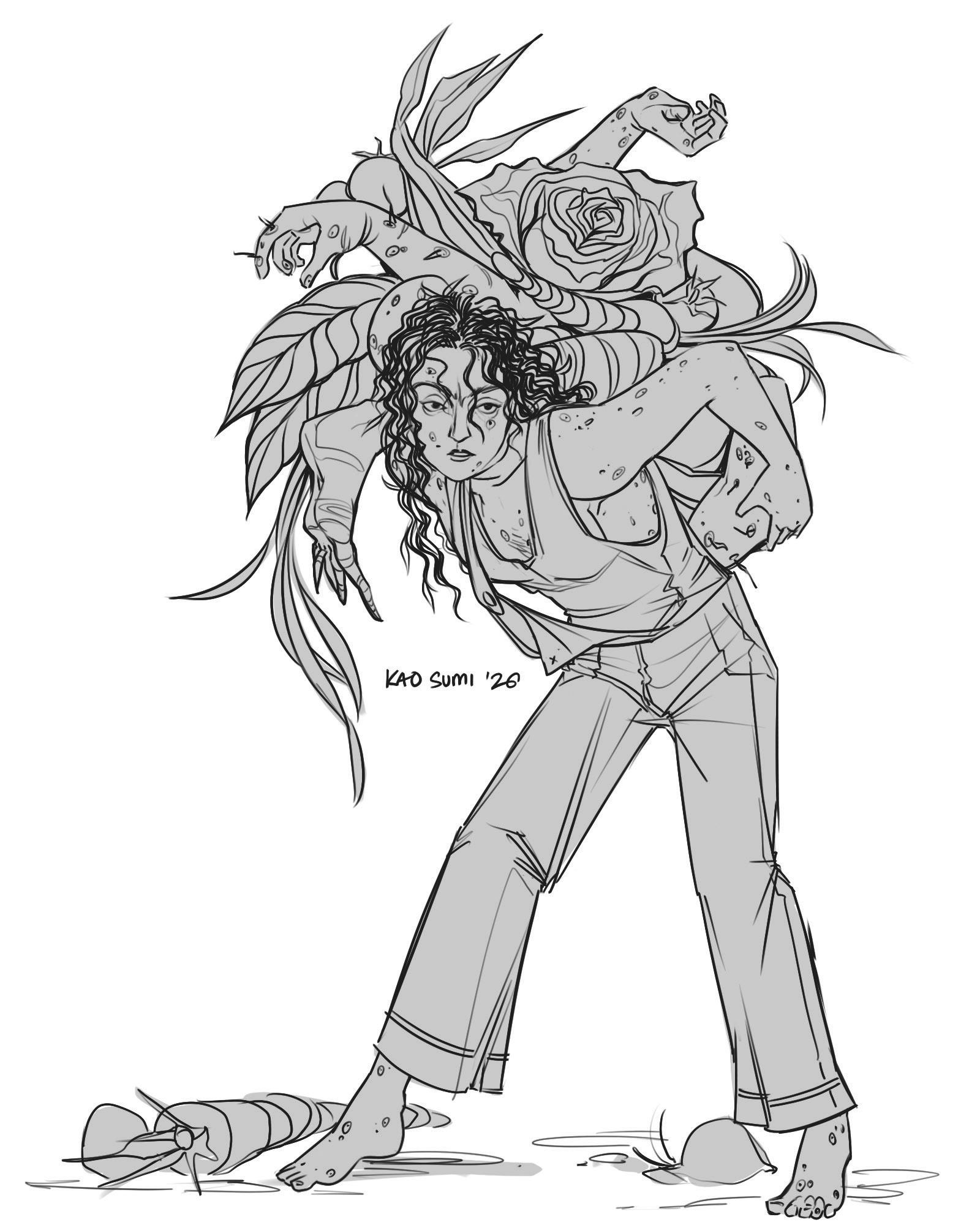
Sometimes people call me a vegetable. It always churns my stomach, I have always hated that word. Sometimes people are just joking, but I don’t find it funny. I find it cruel to compare a conscious, feeling person to an inanimate, lumpen thing. People have said many cruel things to me. I never know how to respond, so I brush it off the best I can. I tell myself “They don’t know any better,” but sometimes, the words stick anyway. Vegetable— It’s an ugly image, isn’t it? But sometimes, I think there’s some truth in it. Taking care of myself is a grueling, endless task. In a way, I must work with my body as a separate entity from myself. My body does not work with me. It is an ugly thing.
Every morning, I gather the pieces of myself like I might pull vegetables from a garden. It takes a lot of strength to uproot myself from my bed, with a grasp and a twist of each limb. I wrap the vegetables in cloth and I hold them together. I pile them into my arms in a stack that threatens to tumble loose. The pieces of myself are heavy— almost too heavy to carry on my own, but I’m the only one who can take them.
I haven’t always been strong enough to take this burden; It was especially difficult in the beginning. Liz Moore put it well in her own essay: “I remember the moment I realized the pain had become chronic. That I couldn’t concentrate because so much of my mental energy was relegated to ignoring the pain. I couldn’t read, I couldn’t cook, I could barely dress myself. Everything was agony. Was this my new baseline? I sobbed, and it hurt, but I couldn’t stop the tears.” (Moore, page 81)
I spend all day long tending to my yield. I keep the vegetables fresh, I keep them clean, I keep them cool and dry. I carry the pieces of myself with me. They’re needy and stubborn, each piece an individual in its own right. Each demands its own attention. They fight for space in the pile until one falls out. How I wish they were built to work together, but they are not. I bend over to catch one piece, another tumbles off. Catch one, lose another. Pieces of myself thump onto the floor and roll away, collecting bruises and grime. I pick them up and brush them off. I juggle myself like this all day long.
After all, the timeline of a vegetable is different from that of a person’s. All my attention, all my time, goes to my garden first. Samuels puts it like this: “For crip time is broken time. It requires
us to break in our bodies and minds to new rhythms, new patterns of thinking and feeling and moving through the world. It forces us to take breaks, even when we don’t want to, even when we want to keep going, to move ahead.” (Samuels, page 189)
The work is hard, but somehow I get used to it. This pile of myself becomes my constant company. The smell of raw earth follows me through my day and settles into my nose. The jostling pile on my back blends into the background. The rhythm of catching and dropping becomes routine. I ignore the bruises, and I stack the pieces onto my shoulders where the weight always settles in. The vegetables press into me, heavy and lumpen, as a constant reminder of my ultimate task. I twist myself up to accommodate the load and then carry on. After all, I have people who need me and tasks to complete. I go about my day, moving as quickly as my burden allows. I look away for a moment and a few roots tumble loose. I don’t notice until it’s too late to retrieve them. I swear, and I cut my losses. I only have enough strength to move forward, so sacrifices must be made.
My condition never ceases. The day pushes on, and I push harder. God, I wish the days were shorter. In idle moments, I watch my peers moving uninhibited. They’re free-range, running and frolicking, and I’m stuck in the dirt. I imagine what it must feel like for the weight to leave my shoulders. It’s an unrealistic dream, and I shouldn’t indulge it too much. Slice terms my experience, “Internalized ableism— the insidious belief that I would be a better person if I were not disabled— makes me feel like an imposter […],” (Slice, page 129)
My posture sags throughout the day. When my arms give out, I strap the pieces to my body with whatever I can find. I try to swaddle them gently. I can’t keep them all, though. I must prioritize. I weigh my vegetables against each other, comparing size and color. Sacrifices, sacrifices. I leave more of myself behind. I save only what I value most; some limbs of celery, a few sturdy carrots, a head of lettuce, a prized tomato. I hope they’ll last the day.
Finally, night draws near again. I trudge back to my garden bed. This is the hardest part of my day. Somehow, I must bring myself home and put myself to rest. I must give from an empty
bucket, and nourish myself from an empty pot. I strip myself down. I unload the day’s struggles— the day’s crop, untangling them from my jury-rigged slings. It takes ages. I lay it all out; there isn’t much left. I sigh. My back aches, my body is dirty. I never have quite enough left, but it’ll have to do. Resourcefulness is a virtue, I tell myself.
I get to work. I pull what’s left of my yield and I wash the vegetables one-by-one. I brush out each eye of the roots, I separate each layer of leaf and let the water flush through. The water makes my skin wilt, the scrubbing rubs me raw. It’s a thankless job, but I suppose that’s my own fault. The water is hot enough to force my own knots loose. Root from stalk, limb from limb— I come apart at the end of the day.
I turn the heat up. Hot oil crackles out of a pan, freckling my arms with burns that bore deeper every night. I peel, cut, and dice. Rich aromas fill the air, a brief sanctuary. My face drenches in sweat, my mouth fills with saliva. Acid, fat, salt, and heat. Blood, sweat, and tears. The process is visceral, the onions make me weep. My legs will give out soon, but I don’t need them for much longer. I toss pieces of myself into the rolling boil. I get smaller and smaller. I must be careful here; If I lose too much of myself now, I’ll be gone for good.
I turn the heat down from a boil to a simmer and the noise goes quiet. I sit back in my chair. There’s nothing left but scraps of myself, it’s the same every night. I scoop them all up. Seeds, skins, juices and bruises— all the ugly leftovers. But no parts can be wasted now, so back to the bed it goes. I feed the seeds with my day’s work; a few treasured mouthfuls of a rich and savory stew. All the flavors blend together, all my struggles melt together. This is the moment that keeps me going, in every possible meaning. It warms me, and it settles me into my bed. Tomorrow, I’ll grow again, but tonight the work is done.
Again and again, I drag my body along, feeding it to itself. Tending to a broken body with a broken body, sustaining it with itself — I’ll admit, the math doesn’t always add up. It’s a difficult road to travel, and it is a lonely one too. I’ll borrow the words of Diana Cejas, when she found recovery in functioning from her illness: “ I choked on the worst of it: the anger, the sadness,
the isolation. All the while, I wanted nothing so much as to tell someone all of it, every ugly, frightening thing, and for them to see me, to know me, and to comfort me.” (Cejas, page 108)
But there’s no one else who can care for me, no one better who could comfort me, and no one who could teach it to me either. I do this the only way I know how. The work is hard, but it’s not always bitter. Sometimes, I feel my body is a vegetable, but it still needs to grow, to be nourished, to be used, and to die like one. My body is my burden, and I will care for it until there’s nothing left.
Works Cited
Alice Wong. Disability Visibility. Konpf Doubleday Publishing Group, 2020
Diana Cejas. “Taking Charge of My Story as a Cancer Patient” Page 108 of Disability Visibility
Ellen Samuels. “Six Ways of Looking at Crip Time” Page 189 of Disability Visibility
Harriet McBryde Johnson. “Unspeakable Conversations” Page 7 of Disability Visibility
Jessica Slice. “Imposter Syndrome and Parenting with a Disability” Page 129 of Disability Visibility
Liz Moore. “I’m Tired of Chasing a Cure” Page 81 of Disability Visibility
By Alex Bickford
I wrote this poem for Lesley Gillis’ Creative Writing class. It’s a type of Japanese formal poem style called Solo Renga, basically a chaining together of Haikus. The dual ending stanzas are meant to illustrate the differing opinions on graffiti and street art’s impact
Old clay brick, blanched, fixed Once tagged, now clean, coaxing spray
Stigmatic canvas.
Tattered backpack slumped, unzipped Painter, hidden by shadow
Pressured paint arsenal,
Striking at the blank brick wall.
Outlaw artistry.
Compulsion fed, cans gathered Spray paint maestro vanishes.
Noxious bright colors.
Pristine edifice defaced. Uninvited graffiti.
Green leaves, honeydew vines
Portal to the wilds, rendered Meaning wrought from brick
By Liam Fogg
This is my Major Writing Project that I did in Creative Writing my second semester. I wanted to go for a supernatural type story. Where two teens are teaming up to solve a ghost mystery. Trigger Warning: Death, some blood, gore, murder, mentions of mental issues, and supernatural stuff.
Sylvian Reveren and Echo Spectre were traveling through a bike trail through the woods in March of 2025. The trail is an estimate of about an half an hour bike ride from their houses, when they stumbled upon a run-down, shaggy-looking cabin. The cabin was entwined in thick, spiky covered vines that wrapped around the entire cabin. The wind was blowing just right that it gave the place an even more eerie vibe. The windows on the cabin were cracked, and the wood was slowly decaying. Silence filled the forest, other than a slight breeze swaying the branches on the trees. Alongside the cabin towards the back was a toolshed, and further back there was a run-down, unkept trail that went down to the lake. As they were getting close to the cabin, the door suddenly and eerily creaked open.
“This place is creepy as hell,” Sylvian said.
“Yeah, and feels very off, like we aren’t supposed to be here,” Echo added.
They used their flashlights to head into the cabin, as they walked in the first thing they were accompanied by was a foul stench. It reeked up the entire cabin with the smell of death and rotten flesh. The two teens nearly gagged at the horrendous smell, that’s when they knew something had gone down here, and they had to find out what. They investigated the cabin, crumbled posters and flyers of missing people reports were scattered across the decaying, rotted floor. They had to watch where they stepped because that’s how bad the floor was, it was so rotted, there was a high risk of falling through the floor. As they walked further
through the cabin, they noticed a lot of locks on what appeared to be the basement door.
“What the hell was going on in this place?” Echo stated.
“I have no idea, but whatever it was, it definitely is not pretty.” Sylvian responded.
They then headed upstairs when they felt a strange chill going up their spine, as if someone was behind them. They turned around quickly, but to their avail, there was no one behind them. They opened a door, giving a slight squeak before opening. Sylvian went in first and audibly gasped at the sight of human remains and bones on the ground. After searching the bedroom, they found a bunch of keys inside the bedside drawer. They stole the keys and headed back downstairs; they used the keys one by one in all the padlocks on the basement door. One by one all seven locks were unlocked and the basement door creaked open, casting a cold draft. The two teenagers bravely headed down into the basement, using their flashlights to scope the area. They felt an even stronger, chilling aura to this place that they didn’t like, when boom the basement door slammed shut.
“What was that?” Sylvian gulped.
“Is there someone here with us?” Echo added.
The two teens shook the spooky feeling off and kept investigating the basement. As they got to the bottom of the stairs, the color drained off their face, turning a sickly white as paper pale. Their eyes widened, and their pupils expanded as they saw at least several bumps layered over the ground of the basement floor.
“Are you thinking what I’m thinking?” Sylivian asked.
“That these are graves?” Echo answered.
“Correct, I think we should get out of here, and now” he responded.
“I agree, this does not feel right at all,” they replied.
The two teens quickly made their way up to the first story of the cabin, grabbing their backpacks from the hallway and sprinting out the door. They got on their bikes and pedaled intensely back to Echo’s house. They parked their bikes and made their way into Echo’s house, and they rushed to their room. Once in the room, they closed the door and locked it behind them and closed the
blinds.
“We need to do research now,” Echo said.
“Yeah, maybe it will give us a lead on what happened at that place,” Sylvian added.
Echo started typing away on their computer, searching up 20 Pine rd. It brought up the exact picture of the cabin, but back when it was still in pretty decent condition. Echo scrolled down searching through many posts made on this cabin. Headlines titled, “The 2014 mass murder” and “Who was Victrillian Moris”
“Victrillian Moris!?” “isn’t that Latin for something spooky?” Echo asked.
“Yes, to my knowledge Victrillian roughly translates to victory and Moris means death. So Victory of Death.” Sylvian replied.
The two teens read more articles on Victrillian, each article said the same thing. Many people were disappearing, Victrillian Moris was a serial killer who killed 7 people and buried the bodies of the victims in the basement of his home, before later going upstairs and taking his own life. The police searched everywhere for the bodies but to their avail found nothing, later resulting in them leaving the case unclosed.
“Oh my gosh! That’s why it felt so damn eerie, 6 people died there in that cabin.” Sylivain gasped.
“I’m just appalled that the police had no idea where the bodies were? Like we are just teenagers and we very obviously saw the graves in the basement.” Echo added.
“I know, this is so scary. What makes it even scarier is our ability.” Sylivain said.
“Yes, I know, I’m honestly surprised that we haven’t received communication from spirits yet-” Echo said before a crash came from the bathroom in Echo’s house.
The two teens rushed into the bathroom to find the shelf knocked over and what appeared to be bloody handwriting on the mirror saying, “Help Us.” The two teens knew what they had to do, despite the mental strength it would take to do this, they needed to get the ghosts’ side of their stories on this and give them peace.
“Look I don’t know whether this ability we have is cool or absolutely terrifying as hell, but all I know is that we have to help
these spirits move on to the afterlife.” Echo stated.
“I agree, this ability is both good and bad in its own ways, and I believe these victims and the killer himself needs their explanation, but we need to think of our mental sanity as well.” Sylvian stated.
“I know, but we will deal with that when the time comes, as for now lets pack our supernatural bag, we have some ghost reporting to do,” Echo replied.
These two teens have the ability to see, talk to, and hear spirits without having to use any devices to communicate with them. Echo and Sylvian have had these abilities since they were eight years old when they saw spirits in a grave that were talking to them. The teens are still hesitant on these abilities but they know that they have to solve this mystery. Sylvian and Echo started packing their backpacks with food, water and spirit devices such as frequency finders, spirit boxes, and a recorder. The teens also brought some lucky charms like a cross, salt and wore healing stones around their wrists in order to keep safe from the bad spirits. They also printed the missing people posters of each victim off and put it into their bag so that they would have a reference to look back at when getting the stories of the spirits. After they were all packed, they rushed downstairs and grabbed their flashlights from off the table, about to head outside when-.
“Where are you two going?” Echo’s parents asked.
Sylvian abruptly replied with, “We are going on an adventure in the woods, we promise we will be back by nine at the latest.”
“Okay, have fun and be safe,” They replied, not even questioning a thing.
Echo nudged Sylvian’s shoulder saying, “Nice one dude, I thought we were going to be cooked.”
“You’re lucky they wouldn’t suspect anything because we are teenagers, and teenagers do some weird shit.” Sylvian chuckled. They make their way outside and kick the kickstand down on their bikes, before hopping on them and speeding down the rough trail and into the forbidden woods. As they got to the cabin they previously briefly searched before they stopped right outside of the door before looking at each other.
“Sylvian do you really think we should pursue this or should
we let the professionals deal with this for our own sanity?” Echo asked.
“It’s not very ideal, and I know it will cost us our sanity, and it will be very difficult. In my opinion this is very important, these spirits deserve to be able to get a proper burial and move on into the afterlife. We deserve to know their story and pass it on to others, to make this unclosed case finally come to an end.” Sylvian stated.
“I guess you are right, our ability can be very dangerous and very helpful, but these innocent spirits, these victims need us to hear their side of the story.” Echo replied.
They made their way back inside of the cabin, this time the aura of it felt ten times more scary than the last. Each creak of the floor, eerily sounding louder than the last time they entered this cabin. They set their stuff up in the kitchen first, putting the recording device on the table.
“Are there any spirits in here that want to talk to us, victim or killer?” Echo asked.
“No one has to respond, and no one is going to force you. We just want your stories on your death so we can bring peace and clarification to you and your loved ones.” Sylvian added.
A cacophony of static noises and beeps could be heard coming from the spirit box on the table. “G-get Out” a voice could be heard in the teen’s minds.
“Did you hear that!?” Sylvian asked Echo.
“Yes clearly, I wonder which spirit said that?” Echo added.
“Look, we are not here to hurt you. I understand we evaded your house, your resting place, but we need answers. May I ask you what your name is.” Sylvian tried to defuse the situation.
More static noises and beeps could be heard blaring from the spirit box before the malicious voice replied in a low growl “I am Victrillian Moris, and you are trespassing in MY house.”
“I understand you may be angry, we are trespassing on your property, but we want answers. Why did you kill these people?” Echo asked.
The static stopped and Victrillian vanished away, not wanting to give any information at all, when the teens heard a small gentle voice in their heads.
“H-hi, I am willing to tell my story.” A gentle voice whispered. “What might your name be?” Sylvian asked.
“Elise, Elise Ryder, I was twenty-two when I passed.” The spirit’s voice was gentle.
The teens scrambled through their papers and pulled out the article and missing person report on Elise Ryder. They briefly read the information they already had and then proceeded to let the spirit talk about her experience. They pressed the record button on the recorder.
“You may proceed by stating your name first and then explaining your story,” Sylvian said.
Beep. “My name is Elise Ryder, I was twenty-two years old when I fell victim to Victrillian Moris. Victrillian Moris was a friend of mine at the time, I knew he had serious mental problems and he needed help, though he refused.” “I knew this day would come, I had a feeling his finally sanity was going to snap, but I didn’t think it was going to be on me. I was walking home from the bar one day, a little tipsy, when he offered me a ride. Without even thinking about it, I got in his car, trusting him when he later murdered me in his car and dragged me down in his basement burying me.”
“You said Victrillian had mental problems, can you explain which?” Sylvian asked.
“Yes, Victrillian was suffering from Depression, Bipolar Disorder and Schizophrenia. He wasn’t himself, and me and his family knew that, but he didn’t want any help. I appreciate you two wanting to get our stories and lay us to rest. I wish you luck, I have to go.” Elise stated before the recorder went beeeep then shut off.
The teens saved that recording to their phones before proceeding downstairs to the basement where they thought they would get the most interaction with spirits. They set up everything the same way they did in the kitchen, just down in the basement instead before proceeding.
“Is anyone else interested in telling their story?” Echo asked. Beeeep the radio went off loudly and lots of movement was recorded.
In a low hush,a voice whispers, “I will.”
“Okay go ahead, start with your name and any other details,” Sylvian says.
“My name is Daniel Winters… I was seventeen years old when my life was taken away from me.”
They quickly looked through their flyers before moving on.
“I was fishing at the lake in the forest next to this cabin when I was violently pushed into the water by Victrillian. I struggled and fought against him, but I felt the life in my eyes go as I lost consciousness and died in the water. The last thing I remembered was waking up here in the basement of his cabin as a spirit.”
Daniel soberly replied.
“Did you know who Victrillian was?” Echo calmly asked.
Static noises. “No.. I was aware of some of the articles going around, but I didn’t think much of it, I didn’t think I’d be a victim of his sickness and evil.. It wasn’t fair.. I-I have to go.” Daniel responds before vanishing.
The teens check the time and find out it’s already eight o’clock.
“Crap we promised our parents we would be home by nine, I would say today has been successful. We got the story of two victim spirits. We just have five more victims to go, and then the killer himself.” Sylvian stated.
“I think we made enough progress today; we can come back tomorrow early in the morning to finish it.” Echo added.
Sylvian and Echo took care of their spiritual devices and packed them in their bags before heading outside and on their bikes, making their way home. They got home at the knick of time, it was 8:45pm when Echo got to their house. Sylvian waved goodbye to his friend before making his way down to the street and getting to his house at exactly 8:50pm.
The next day came round quickly; the teens tried to get some sleep despite everything they were mentally going through. Sylvian and Echo met up at the park near the forest on their bikes before proceeding down the trail and back through the scary forest, to the cabin.
“Is it weird I still feel as if we shouldn’t be doing this?” Echo asked.
“No, it’s a valid reason to feel this way.. But we have already come so far, we just need to push through a bit more and we will
finally get these victims the peace they want and need.” Sylvian responded. “Just four more people to go.” He added.
Sylvian and Echo headed into the cabin once again, hoping this time would be the last time they have to step on these haunted, evil grounds again. They headed back down into the basement this time, setting up their recorder and waiting for someone to reply. Approximately 15 minutes later a cacophony of beeps was heard from the spirit detector.
“Is there anyone else who wants to share their story?” Echo asked.
*Beep* A low angry, husky voice answers, “Fine, I’ll tell my side of the story. It started when I was eight years old, people would pick on me constantly because of my disabilities. One day I just lost it, I was schizophrenic, aggressive, depressed and bipolar and it got the best of me. I was 19 years old when I went on a killing spree, all I saw was red.” “It wasn’t my intention to kill these innocent people, I still don’t forgive myself, hence why I took my life that day at the age of 32.. I was angry at myself for doing what I did.” Victrillian Moris stated.
“There was no motivation other than the motive to get revenge on people because of your past experiences and mental issues?” Sylvian asked.
“No.. none, none other than the fact that I was mentally insane, yet I was still denied the ability to go to a facility, and because I had a sweet revenge towards people because of the way I got treated by people..” “I don’t want to talk anymore..”
Three more left, Sylvian and Echo replied.
*Beep* “My name is Kadyn Williams, I was twenty when I passed away. Me and Victrillian used to not get along. I was a jock and he was just a mentally unstable nerd, I bullied him every day. I guess he finally had enough and wanted revenge. Looking back at it now, I don’t blame him for killing me, I was a total jerk and I feel bad this whole situation happened.” Kadyn stated his story.
“Was there a reason why you bullied him?” Echo asked.
“No, none other than my own insecurities.. I guess I was jealous he always got the attention because he had disabilities. I guess I took my past out on him, and I regret it.” Kaydn replied.
After Kadyn’s spirit replied, Echo and Sylvivian waited for
about a good half an hour, and no other spirits responded. They packed up their radio and alarm devices from the basement and headed all the way upstairs, to a little bedroom with a rocking chair in the corner. The rocking chair was eerily swaying back and forth, a creaking sound coming from it. The teens figured there was another trapped spirit in this room. They set up their radio and alarm and started the recorder. *Beep*
“Anyone in this room specifically that wants to talk to us? We are here to get your stories” Sylvian asked this time.
*Static noises* “W-We want to share our stories. My name is Axel Martin- *another voice speaks* And my name is Andy Martin. We were both 11 years old when we were abducted and brought here, we didn’t know what was going on. Then all we knew was that there was a loud bang.. And then we never opened our eyes again.” The boys spoke.
“Where were you abducted, if you don’t mind us asking?” Sylvian and Echo asked.
“It was by the road, we were heading towards the bike trail on our bikes, when Victrillian pulled over and hauled the both of us in his truck, taking us to his house and locking us in this room, where we later was shot and killed.” The twin boys replied.
That was now all of them, this mystery and case was close to coming to an end. Echo and Sylvian packed their stuff and headed downstairs, hands hovering over the door handle.. Everything was quiet now. Echo made the first move, twisting the knob and exiting the cabin, Sylvian following behind them. They got on their bikes and rode quickly to the police station to report their findings. They spoke to the sergeant for hours, giving them the evidence. The police later headed over to the cabin, the destination where six people died. They dug up the makeshift “graves” from the basement and properly buried every single one of them, victims and killer.
The parents, friends and family of the victims and killer got closure after 10 years of an unclosed case. *Beep* Case closedSigned Sergeant Winslow. The spirits thanked the teens and the officers. *Three weeks later* Echo and Sylvian’s mental health was declining, after dealing with that brutal case. The two teens had to go to therapy where they were diagnosed with PTSD. It
took the teens 3 years to get over these traumatic experiences with their ability to talk to ghosts. The teens swore to never use their abilities again, because despite the ability to see, talk and hear spirits being cool and sometimes useful, it can also be very traumatizing.
Echo and Sylvian were supported by their friends, family, and the family of the loved ones that passed away that day. They were praised for doing a good deed, despite losing their own sanity in the process of it. The case was closed and that’s all that mattered, or was it?
Tyler Forsythe
This poem is for an assignment using a pathway/prompt. This pathway focuses on turning big emotions or ideas (abstract concepts like guilt, fear, love, and loneliness) into specific physical images or moments (concrete details). I wrote about grief regarding a long-term serious relationship.
My heart is an anchor in a bottomless ocean.
My heart is a cage of ravenous butterflies feasting upon their containment.
My heart is ablaze; my sanity is its charcoal.
My heart is an ever-changing maze left to time.
My mind is no longer my own, chaos its beholder.
My mind is a collection of recordings on loop.
My mind is akin to Tiresias, prophesying a future that will never be.
My mind is a short-circuiting machine, its functions decrypted and malfunctioning.
My sleep is war, an unpredictable battlefield controlled by forces beyond its borders.
My sleep is lost, a way-finder without the stars to guide him.
My sleep is a celestial kingdom fraught with my greatest joys.
My sleep is a hell of my own making.
My body is Judas, It betrays me.
I am Sisyphus.
By Raven Lee Sawyer
For this assignment, we were allowed to choose what prompt we wanted to use and I decided to explore the relationship between fictional and personal memory by creating and comparing a fictional love story to my own real-life love story. In my piece, I draw parallels between a princess and a knight who fall in love and my own journey of falling in love with my boyfriend, Michael Ellison. By weaving elements of my personal memories into a fictional narrative, I show how fantasy and reality can reflect and deepen one another, revealing shared emotions, contrasts, and connections between the two stories.
Having returned victorious once more, Miren of Greyhaven reached the palace gates to receive his new orders, the dust of a week-long ride still gripping his cloak and boots. He brought his horse to a careful stop before the captain of the guard, who met his eyes with an expression that held both pride and a hint of warning before announcing, “By decree of His Majesty, you are assigned as personal protector to Her Highness, Princess Ravelle.” The words settled on Miren’s shoulders like new armor heavy with expectation, for protecting the princess was an honor reserved for only the most trusted knights. Steady and composed, he dismounted, nodded his understanding, and set off to find her, but the moment he reached the rose garden and saw her standing among the blooms, every bit of that hard-won composure slipped away. When he first saw her, he nearly forgot how to breathe.
Princess Ravelle was nothing like the ethereal, glowing goddess the townspeople sung praises of or the idealized porcelain beauty painted in royal portraits. There was no halo around her, no angelic chorus following her. Only a young woman laughing softly to herself as she tucked a single fully bloomed rose behind her ear. Morning sunlight warmed her tan skin and caught in her beautiful curls, turning them to copper and gold, and for one suspended moment in time she seemed to have slipped free of duty and expectation, lightened of the crown that so often weighed her down.
Miren froze. Not because she was beautiful though she certainly was but because something in her laughter struck him with a sudden, startling recognition, a warmth he had long believed dead. Admiration. Attraction. Feelings he had no right to harbor for the woman he was sworn to protect, especially when she hadn’t even seen him yet. Conflict tightened in his chest; he was meant to guard her, not desire her. At last, forcing the turmoil down, he stepped forward and cleared his throat.
Princess Ravelle turned toward him, surprise flickering across her face before settling into the polite, practiced smile shaped by years of royal training. “You must be my new protector,” she said, her voice soft as a breeze through the garden. “Welcome to Greyhaven, Sir Miren.” He bowed again, ignoring the way her eyes the color of dark amber scanned over him, curious, gentle, quietly alive lingered on him as if trying to read the man beneath the armor. “It is my honor, Your Highness,” he replied. “I am at your service.” And though she didn’t know it though he had no right to feel it Miren was already falling.
The first time I saw him, I wasn’t in a rose garden. I was on my couch, hair in a messy bun, wearing an oversized t-shirt, scrolling through a dating app my friends had pressured me to reinstall. After three years of failed dates, rude strangers, awkward dinners, and one disappointment after another, I wasn’t expecting anything. I most definitely wasn’t expecting him.
His profile popped up dark hair that looked soft even through a screen, a smile that made the corners of his eyes crinkle in the gentlest way. He listed his interests like he wasn’t trying to impress anyone.reading, cooking, bad puns, late-night ramen .He felt real. Not like he was trying to find someone to audition for his girlfriend but like he was trying to find someone who was human. Someone to be his partner to build his life with not someone to just be his girlfriend. From his first image alone he felt warm and kind. I swiped right immediately. Then he matched with me within minutes.
From the very first message, he was witty and polite effortlessly funny in a way that never felt forced. His jokes made me laugh, his compliments felt gentle and genuine, and before I even realized what was happening, I found myself smiling at my phone like a lovesick teenager. I hadn’t meant to feel anything so soon I wasn’t sure I was ready. After years on my own, I still worried I’d rush into something and end up somewhere I didn’t want to be. But then again, maybe ready isn’t something you wait for. Maybe it’s something that finds you. Like Miren seeing Ravelle in the garden. something in me whispered, Maybe,this could be something.
By early spring, Sir Miren had become a constant presence at Princess Ravelle’s side. No matter where they went, one thing was clear. The kingdom adored her at markets, festivals, and every public gathering, people sang her praises, and she met each greeting with a sincerity that made even the shyest villager feel seen. Miren followed her like a quiet shadow one step behind, trained, alert, always watching the crowd for danger. He constantly reminded himself it was his duty. Nothing more. Nothing less.
On a very particular day, what was supposed to be a quiet afternoon in the marketplace proved how false that was.
The sun hung high over strings of colorful banners. Merchants called out their prices, children darted between stalls, and Ravelle’s skirts brushed softly across the cobblestones as she paused before a table of hand-carved trinkets. She leaned in to admire a small wooden bird, her fingertips grazing its wings with a tenderness that made Miren’s breath catch before he could stop himself.
“This is lovely,” she told the merchant, her voice warm with curiosity. “How much for it?”
Miren kept his gaze moving habit, training, duty but his heart betrayed him all the same. Just as his eyes lingered for a little too long on the princess. He caught movement out of the corner of his eye.
What he could feel much less see was a ripple of wrongness threading through the marketplace. Then, I’ll at once like a wild beast bursting out of the forest a man pushed forward with frantic, disjointed movements, eyes wide and unfocused, muttering slurred nonsense under his breath. His steps were uneven. Too fast. Too close. Miren moved before thought could catch up. The man lunged something sharp and metallic in his hand, reaching for the princess’s arm and in an instant Miren was there, slamming his shield into the man with full force. Metal clanged, the sound cracking through the square like thunder. Gasps erupted as Ravelle stumbled backward, caught by another guard, while Miren surged forward, sword drawn, planting himself firmly between her and the threat. “Back away,” he commanded, voice steady as steel. The man shrieked something unintelligible and bolted, vanishing into the crowd as quickly as he had appeared. Dropping the blade in the chaos.
When Miren turned back, Ravelle was staring at him not with fear, but with something soft and trembling and impossibly deep.
Her gaze drifted from the shield he still held raised to the flush in his face, born of adrenaline and protective fury.
“Sir Miren,” she whispered, as though she’d only just remembered how to breathe, “you saved me.”
He bowed stiffly, fighting to steady his heartbeat. “It is my duty, Your Highness.”
“No.” She shook her head, voice gentle but unyielding. “You moved before anyone else. You moved liked you care.”
Miren blinked, momentarily unmoored. Her words struck him harder than any blade. And in that suspended heartbeat, he realized she wasn’t looking at a knight. She wasn’t looking at her shadow.
She was seeing him.
Truly seeing him.
A man she was beginning to notice admire and to some degree want.
A man whose injury would have shattered her. The feelings gathering between them were dangerous things, threatening every oath he’d sworn.
But they were beautiful things too glimmering, undeniable, and growing too fierce to ignore.
For a moment, neither of them moved. The noise of the marketplace faded into the background. The shouting merchants, the clattering carts, and the surprised murmurs disappeared until it felt like only the two of them were there, standing in the space where the truth had almost escaped.
Ravelle’s breath caught in her throat. Her fingers brushed the fabric at her hip as if she was stopping herself from reaching out to him. Miren tightened his grip on his sword. He knew he should step back, keep proper distance, and remember every rule he had been taught since he was a boy.
But he did not move. He could not. All he could do was stand there and stare at her.
The sunlight caught her hair and made the loose strands shine like gold. She looked up at him with a fragile, honest expression he had no defense against. Heat rose in his chest, sharp and
frightening.
“Sir Miren,” she whispered again, softer this time, as if his name was something delicate.
He swallowed. “I am unharmed, Your Highness.”
“That was not what I meant.” Her voice shook not with fear, but with something much more dangerous.
The words hung between them like a spark ready to turn into flame.
At last, Miren forced himself to step back. It was only an inch, but it felt like losing something important. Her gaze flickered, a small, silent plea he pretended not to notice.
“Your safety comes first,” he said, falling back into the familiar tone of duty because anything else felt too risky.
Ravelle stood straighter and smoothed her trembling hands over her skirts. “Then walk with me,” she said quietly. “Please.”
He should not have hesitated. He should not have felt warmth spread through him at that single word.
“Yes, Your Highness,” he said at last softly and with reluctance he tried to hide.
They stepped back into the crowd, still shaken, still too aware of each other. Their steps fell into the same rhythm. Something neither of them admitted, yet neither of them broke.
Real world
Our second date wasn’t loud or dramatic.
No shields, no rushing crowds, no sweeping gestures, just a quiet magic that made everything feel alive.
He took me to one of my family’s favorite restaurants, where the lights glowed warmly and a live band played, filling the room with upbeat music that pulsed through the air. Sitting across from him, the rest of the world seemed to melt around us, edges dissolving into nothing but laughter and the soft pull of the moment.
He leaned in when I spoke, as if every word mattered. And when he laughed, truly laughed it wasn’t just sound it was a spark that touched the edges of my heart, twisting it in ways I hadn’t expected.
When I wasn’t distracted, by the way, my heart felt and my soul lit up when he laughed. The conversation flowed effortlessly. Childhood stories. Favorite foods. Stupid jokes. Time felt different with him, smoother, kinder, like someone who controls time had decided to give us a few extra seconds. The evening stretched out, as though it wanted to linger with us. Then somewhere between appetizers and dessert, the realization crept in.
For the first time in a long time, I wasn’t hoping to be loved. I felt loved softly, quietly, without demands. The way he listened. The way he cared. The way he looked at me like I mattered. Just as Miren instinctively shielded Ravelle, this man, this wonderful, earnest man, shielded me from loneliness, from doubt, from my fear that love was something other people found but not me. Somewhere between us, leaving the restaurant and him walking me to the car., I realized how deeply I was beginning to fall. It wasn’t dramatic. No lightning bolts. No grand gestures. Just the way he treated me with care, the way he listened, the way he made me feel seen.
When we finally got to the car he hugged me with gentle certainty and as he bent down to give me a goodnight kiss and tell me he would love to see me again, something inside me ignited. It was warm, bright, terrifying, exhilarating. As he pulled away from our kiss. Something lingered with me, something warm and bright flared inside me. For once, I didn’t push it away. All of a sudden, the world felt like it was on fire, and I was okay letting the flames engulf me.
For the first time in a long time, I wasn’t just hoping to be loved. I felt like I already was softly, quietly, unquestionably. He treated me like I mattered. Like I was someone worth showing up for. Like I was someone worth protecting.
Princess Ravelle never knew the exact moment she fell in love
with Sir Miren. It did not strike her like lightning; it crept in quietly, like dawn slowly stretching across the horizon, washing night away with soft, pale light. At first, she told herself she admired him only for his loyalty. Then she told herself it was his steadiness that drew her, the way he seemed unshakable, a constant presence in the chaos around her. And then, she noticed the quiet little things: the way he adjusted a stray lock of her hair without thinking, the gentle tilt of his head when he listened, the calm patience in his eyes that seemed to hold the world at bay. She clung to excuses like lifelines, but the truth kept growing, pressing against her chest, impossible to ignore.
She began searching for him in crowded halls, following the soft rhythm of his footsteps, listening for the clink of armor on stone floors, feeling a rush whenever she glimpsed him across the room. She stole glances she hoped he would not notice, unaware that he often did. She caught him adjusting a cup at the table or straightening a guard’s stance, always vigilant, always watching. Each small act, each brief connection, made her heart race and her defenses crumble, piece by piece.
One evening, the sun sank low, spilling gold across the palace walls, and she found herself standing beside him at a formal gathering. The distant chatter of nobles seemed to fade, replaced by the subtle, grounding rhythm of his presence. He was calm, attentive, protective in ways no one else could see. The realization struck her with sudden, thunderous clarity: she loved him. Panic fluttered in her chest. Princesses were not meant to love knights. What if she was wrong? What if her heart had no place in the world she had always known?
Then Miren looked at her truly looked. His gaze was steady, warm, full of patience and a devotion he was forbidden to voice, but could not hide. A shiver ran through her as his eyes held hers, quiet but unyielding. Slowly, carefully, she stepped closer, close enough that their hands hovered near, almost touching. Her fingers twitched, caught between longing and hesitation. When his gloved fingers brushed hers, the cold steel of the glove pressed against her skin yet somehow felt comforting, grounding, a silent promise passing between them. She felt her heart settle with a
weightless certainty.
His breath brushed against her ear as he leaned just enough to whisper something meant only for her. She didn’t need to hear the words to understand their meaning. Every sound around them the soft clink of distant armor, the murmur of voices, the rustle of gowns faded away. All that remained was the steady rhythm of his presence beside her, the quiet warmth of his hand, the electric almost-touch that spoke of love unspoken yet fully known. In that golden light, with the palace fading into the background, she knew without doubt that she belonged with him, and he had always belonged with her. Every glance, every breath, every subtle brush of skin confirmed what her heart already knew: this quiet, steady, unshakable love was enough.
I didn’t realize the exact moment I fell in love with him. It wasn’t a single kiss or a dramatic confession. It was the quiet accumulation of small, steadfast things that crept into my days until I could no longer ignore them the way he remembered the tiniest details I’d mentioned in passing, the way he laughed at my worst jokes as if they were brilliant, the subtle tilt of his head when he listened, the warmth in his eyes when he looked at me. And yet, it wasn’t until that evening, our third date that I understood what had grown in me. Until I had truly held the fire that has grown from the spark that we had between us. He arrived like a knight returning from battle holding flowers. Not just any flowers these flowers were vibrant and alive, they were the perfect mix of wildflowers and roses the kind I had mentioned once, almost carelessly, months ago. When he handed them to me, his smile hesitant, shy, I felt something open inside me that I hadn’t thought possible. It wasn’t just a door creaking; it was a flower unfurling in full bloom, delicate and brilliant, reaching for light I hadn’t realized I was missing.
I was scared. I am always scared. Scared of being hurt, of being wrong, of trusting again after long years of disappointment. But beneath the fear was something louder, stronger. Something that was bursting at the seams to get out, desire, hope, and the undeniable certainty that I wanted this, that I wanted him. When
he looked at me with steady, earnest eyes and asked softly, “Will you be my girlfriend?” the world seemed to pause. My heart whispered a thousand reasons not to, but even louder, my heart shouted Yes. Yes, I want this. Don’t let fear steal it. So I said yes. His grin was immediate, radiant, like the entire world had just opened to him. He kissed my cheek, light and grounding, and took my hand in his, holding it as though it were something fragile and precious. In that simple gesture, I felt everything I had longed for being seen, being wanted, being loved settled gently around me like sunlight.
There were no crowds, no chaos, no swords or shields, nothing spectacular to mark the moment. And yet, it was breathtaking. Cinematic, in the quiet, ordinary way that real love often is. It was in the way he lingered beside me, the warmth of his presence, the patient, careful way he moved through the world with me. It was in the way time itself seemed to slow, stretching the moment so that every laugh, every glance, every gentle brush of a hand could exist fully, without rush.
And I realized I’d always thought of myself as a princess who would never find her knight. Someone who would admire love from afar but never truly have it.
But then this man, this wonderful, earnest, loving man walked into my life and loved me like I was the only woman he could see. Like I was his first breath in the morning. Like I was his last breath at night.
And I knew deep down my heart, I wasn’t the princess left behind after all.
I was the princess who finally found her knight. And he was the knight who had been waiting to love me. I love you Michael, forever and a day.
By Wendy Van Dine
The assignment required writing a poem using one of the senses with the first stanza based on the present and the second based on memory.
Today I consumed A mature yellow fruit
And there the rind sits On my desk beside me In no hurry to discard The carcass
The odor sweet and pungent And on occasion As the air circulates
Through the room
The thick smell of The sugary produce Permeates my olfactory Nerves, then fades away Only to resurface on the wind
Again
The tropical -- banana
In contrast to yesteryear
I was in the bed of my youth Slumbering deep
Until the wafting of cured meat Met and landed heavily on My nostrils
The magical aroma Rich and savory held on As if desperate that it would Not linger and longed To survive
I too wished it long life As its smoky salty smell Pulled me up and out Of my cozy covers and Dragged me down the stairs To be closer
To the source – bacon
By Caden Boyce
I wrote this piece with very little in my mind originally. But as I went, I was imagining past memories of what my life was like, and I built this piece around my childhood. Writing this made me remember so many memories, like playing kickball on my street with my neighbors and having to keep an eye out for cars to move out of the way. I hope when reading this, the individual can picture the imagery associated with each phrase.
Alphabet soup going cold
Barbie dolls in the tub
Chicken Little in the Alamo.
Driving slow while blasting music.
Early mornings, blinding Sun
Fighting with my siblings, something dumb.
Going Home.
Ice cream cones from the truck circling the block
Just in time for Kraft Mac & Cheese.
Little Einsteins playing in the background.
Moving around New place to new place
Once again
Pulling into the spot, I can roam.
Quaker oats I don’t want to eat
Rock ‘em sock ‘em robots.
Sister and Brother
To
Unlike anything I’ve ever seen.
Vault of toys
Warmth of the sand on my feet
Xander and Dominic, the boys down the street.
You’re going to make it
Zig Zag
Grown.
By George Hines
I was assigned to take one story from our textbook and apply interpretations from three different literary criticisms; the goal was to show the different perspectives of the criticisms.
“The Lamb”, written by William Blake is a short poem with only twenty lines in length, but a well built one. It can be interpreted and understood by multiple views to understand the meaning behind it. There are three major literary criticisms: Formalism, Historicism and Reader-Response criticism (Gardner et al., pp. 140-49). These are fundamental to the interpretation of this literary work with their perspectives and insights by which we can understand this poem. In addition, we can explore how these different schools of thought work together to show what we can learn from this “little lamb” of a poem.
Beginning by digging into the text with close reading, The Formalist literary criticism looks at the formal elements of the poem itself, such as the structure, tone, characters, and other elements of a poem (Gardner et al., pp. 140-49). This perspective also pays attention to the layout of the reading and how parts relate in their meaning. One way is by looking at the grammar used in the text. In “The Lamb”, the author William Blake makes use of capitalization to hold a meaning where the speaker in his poem says to the listener, “Little Lamb, who made thee?” (line 1). The L in Lamb is uppercase like a name would be, one of the following lines reveals the author’s intent behind this where the speaker says “For he calls himself a Lamb. / [ . . .] / We are callèd by his name” (lines 14-18). This shows how the word “Lamb” is used as a title by which both the creator and the created in the poem are called by. Another mechanic that the Formalist would point out in this writing is where Blake makes use of accents on some of the words such as “We are callèd by his name” (line 18).
This accent on “callèd” achieves the meter throughout the poem with the matching syllable count between certain lines to give it a feeling of a song, where there is two lines of seven syllables, then six lines of six, which ends with two lines of seven and repeats for the second half. This song-like structure pairs with the tender and joyful tone used in the writing where the speaker gently questions “Little Lamb, who made thee / Dost thou know who made thee” (lines 1-2). The rhyming musical style gives the poem good sound and sense that makes it fun, beautiful, and entertaining to read. This poem’s structure is well crafted in the view of the Formalist and the criticism’s insights help us see the intention Blake had for the mechanics of capitalization, accents, and syllables that he made use of throughout his writing.
While the Formalist simply looks at the structure of a text itself, someone using Historical literary criticism would dig deeper into the details behind the poem such as the life and times of the author, gaining insights into the composition and significance of the poem during the times of the author and first readers (Gardner et al., pp. 140-49). Explanatory footnotes are a good example of this kind of study into a literary text, and without these essential pieces of background information, many older works of literature would be unexplainable and confusing to read. Returning to our poem of discussion, Historians would explain the reason for the imagery of a “Little Lamb” (Blake, line 1). By studying the faith of William Blake. Religion was important to him and many of his works were dedicated to religious themes. Numerous people from Blake’s time were extremely critical of his beliefs, which were very controversial and evolved throughout his life, such as his belief that “All deities reside in the human breast” (“William Blake”, poets.org). But in the Christian religion that Blake was influenced by (Damrosch). The creator and savoir of humanity, Jesus Christ, is addressed as a lamb, as well as all those who follow his teaching. This shows why the “Little Lamb” (Blake, line 1) in the poem ends with the conclusion that the Lamb was made by a Lamb, “Little Lamb I’ll tell thee! / He is called by thy name, / For he calls himself a Lamb” (lines 12-14). Another aspect that the Historical approach reveals is the reason for the simple language used in this poem despite it being an older one. For example, “He
is called by thy name, / For he calls himself a lamb” (lines 13-14). A study into history finds how Blake believed that his poetry could be read and understood by common people of his time in the late 17th century, “but he was determined not to sacrifice his vision in order to become popular” (“William Blake”, poets.org). Because of his simple style, the poem is easy to read for those who may have difficulty in reading older works of literature. This poem’s elements are also constructed in a traditional way of the English poets during the late 17th century. Blake was known to imitate the classical works of poetry during the early season of his writing career (Poets.org). Which gives this poem a traditional feel with the rhymes and meter that he employed. These insights show how Historical criticism is a helpful perspective to understand the background information of religious elements, simple language, and traditional poetry structure of “The Lamb”. Background information can be helpful to understand the meaning of a text or poem, but not to the Reader-Response literary criticism. In this school of thought, the view is to evaluate the text by how it impacts the individual reader instead of the intended meaning that the author had for the writing (Gardner et al., pp. 140-49). To the Reader-Response critic, the most important aspect of any text is the interaction between the author and the reader and how the reader finds and builds meaning from the text through their own unique insights which are built from the reader’s life experience, beliefs, values, state of mind while reading the text and previous reading experience. For a personal example, in my first few readings of “The Lamb”, I found that the poem connected quickly with me in the familiar symbols and meanings which I knew well from my Catholic faith, In the symbol of the “Lamb” (Blake, line 1), I was quite used to this reference in religious discussions with my family and church community in how it relates to us as members of our “savior’s flock” in how he cares for us and protects us from the dangers of the world. Inspiration also came from the lines “Gave thee clothing of delight, / Softest clothing wooly bright” (lines 5-6). This resonated with me in how thankful I am for the many blessings that I have been given throughout my life. Another place that this poem impacted me is where Blake writes “He is meek & he is mild, / He became a little
child” (lines 15-16), I was immediately drawn to the imagery of Christmas where Jesus Christ, was born as a baby. This line in the poem drew me into the contemplation of how great our creator loves us that he came into the world as a child to experience the suffering we suffer in this life. Despite the Historian’s perspective of this poem where their research would find that William Blake did not believe in Jesus Christ in many points throughout his life, this poem inspired me as if Blake was a man of my own religious faith. This illuminates the insight of the Reader-Response viewpoint that puts emphasis on the meaning that the reader interprets from the text.
In conclusion, when we read a literary text we can: study into the elements and structure with the perspectives of Formalist criticism, dig into the background information and insights of Historical criticism, and see the emphasis of personal interpretation of Reader-Response criticism, we have a more complete and well-rounded understanding of the poem that gives us the appreciation for the structure built by the author, the history embedded in the writing, and the impact of the work to the modern reader.
Blake, William. “The Lamb.” Literature: A Portable Anthology, edited by Janet E. Gardner et al., 6th ed., Bedford/St. Martin’s, 2025, pp. 651-52.
Damrosch, Leo. “The Artful Religion of William Blake” Yale University Press, 2 Nov. 2016, https://yalebooks.yale. edu/2016/11/02/the-artful-religion-of-william-blake/ Gardner, Janet E., et al., editors. Literature: A Portable Anthology. 6th ed., Bedford/St. Martin’s, 2025.
“William Blake.” Poets.org., Academy of American Poets, https://poets.org/poet/william-blake.
By George Hines
I was assigned to take one story from our textbook and apply interpretations from three different literary criticisms; the goal was to show the different perspectives of the criticisms.
In the world of literature, there are many different literary criticisms (perspectives by which we read a piece of writing and analyze it). In the short story “Sweat” by Zora Hurston, we can see how these criticisms apply themselves toward the comprehending of a text. There are three major views: ReaderResponse, Formalism, Historical criticism (Gardner et al. 140-48). These are critical to the analysis for the proper understanding and appreciation of this story, and we can learn how these different schools of thought work together to show what we can learn and interpret from this writing of fiction. Background information can be helpful to understand the meaning of a text or poem, but not to the Reader-Response literary criticism. In this criticism, the view is to evaluate the text by how it impacts the individual reader instead of researching the intended meaning that the author had for the writing. To the Reader-Response critic, the most important aspect of any text is the interaction between the author and the reader and how the reader finds and builds meaning from the text through their own unique insights which are built from the reader’s life experiences, beliefs, values, and other works of literature that they have read. For a personal example, I enjoyed the engaging and challenging dialogue that was used throughout “Sweat”. Many lines were hard to read but fun to speak aloud with the southern accent that the characters would have spoken in. Another thing that struck me in reading this story is Delia’s grit and determination to hold on through the hard times. This endurance and hardworking attitude were inspiring and illuminates the grit that people develop after
making it through the storms of life. In addition to this, it was humbling to see her humility, mercy, and self-control in the face of great torment from her husband Sykes. The good use of character development by the author helped me to connect with Delia and these traits that she embodied. Furthermore, I liked the ironic ending with the satisfying justice of the snake killing Sykes the snake. To wrap it up, I would recommend this story to others because of my own positive reading experience. This shows the Reader-Response viewpoint that puts emphasis on the meaning that the reader interprets from the text.
The Reader-Response view is quite different from the Formalist criticism. This perspective has a “pop open the hood” approach to analyzing a text and doesn’t focus on giving a summary (Gardner et al. 141). The focus is on the formal elements of a text itself like the structure, style, symbolism and other components of a story. In “Sweat” a reader with the lens of Formalism may note the element of its’ linguistic features. Throughout the story, the vernacular dialogue of African Americans is juxtaposed with standard language in the narrative. One example is where the protagonist Delia says “Sykes, what you throw dat whip on me like dat? You know it would skeer me – looks just like a snake, an’ you knows how skeered Ah is of snakes” (295). The use of this dialogue within the story brings the reader into the setting of which the events take place and makes the conversations between people engaging. Another element that could be examined is character development. The use of this element is critical to a story to emotionally connect readers to the people in the writing. As an example, one could look at Delia’s sorrowful character development where the author Hurston writes: She lay awake, gazing upon the debris that cluttered their matrimonial trail. Not an image left standing along the way. Anything like flowers had long ago been drowned in the salty stream that had been pressed from her heart. Her tears, her sweat, her blood. She had brought love to the union and [Sykes] had brought a longing after the flesh. Two months after the wedding, he had given her the first brutal beating. She had the memory of his numerous trips to Orlando with all of his wages when he had returned to her penniless, even before the first year
had passed. She was young and soft then, but now she thought of her knotty, muscled limbs, her harsh knuckly hands, and drew herself up into an unhappy little ball in the middle of the big feather bed. (297)
By unwrapping the details that are the keystones of her past, the reader can place themselves in the shoes of Delia during the events of this story and feel sympathy for her because of how the author opens her lonely world to the audience. In contrast to this, there is also the protagonist Sykes. He is a snake of a personality, which ironically is how he emotionally abuses Delia in the story:
“Sykes, Ah wants you tuh take dat snake ‘way fum heah. You done starved me an’ Ah put up widcher, you done beat me an Ah took dat, but you done kilt all mah insides bringin’ dat varmint heah.”
Sykes poured out a saucer full of coffee and drank it deliberately before he answered her.
“A whole lot Ah keer ‘bout how you feels inside uh out. Dat snake aint goin’ no damn wheah till Ah gits ready fuh ‘im tuh go. So fur as beatin’ is concerned, yuh aint took near all dat you gointer take ef yuh stay ‘roun’ me.” (301)
This building up of Sykes’ abusive and despisable character generates within the audience a distaste for this antagonist who will soon meet his self-made demise. Within this construction of character, A Formalist may also note the creating of symbols. For instance, the symbolism of the snake, and how Sykes embodies the evil traits that are associated with snakes in the western world, such as temptation and deceit that are displayed by how he played the part of a good man to trick Delia into marrying him. One of the towns people talk about Sykes’ double face in the story, saying “’he useter eat som mighty big hunks uh humble pie tuh git that lil’ ‘oman he got’” (298). Through his facade, Sykes got the wife he wanted, trapped with him and caught in slavery. Another symbol that is clearly drawn by the author is the one discussed by the men on Clarke’s porch when talking about Delia and Sykes. Joe Clarke draws a comparison of how some men use women like they would a fleeting source of pleasure like canechew as he states:
“Taint no law on earth dat kin make a man be decent if it aint
in ‘im. There’s plenty men dat takes a wife lak dey do a joint uh sugar-cane. It’s round, juicy an’ sweet when dey gits it. But dey squeeze an’ grind, squeeze an’ grind an’ wring tell dey wring every drop uh pleasure dat’s in ‘em out. When dey’s satisfied dat dey is wrung dry, dey treats ‘em jes lak dey do a cane-chew. Dey throws ‘em away. Dey knows whut dey is doin’ while dey is at it, an’ hates theirselves fuh it but they keeps on hangin’ after huh tell she’s empty. Den dey hates huh fuh bein’ a cane-chew an’ in de way.” (298)
The story of “Sweat” fully demonstrates this abusive usage of women. Hurston uses Clarke’s conversation to carry this intended message to the audience. Therefore, with the perspective on the elements of this story, we can see how the Formalist pieces this puzzle together to help us interpret these elements to see a complete picture of this literary work.
With the Formalist insights into the story alone, many things can be left unclear that are not explained by the text itself. That is where the Historic criticism comes into play. The Historian digs deeper than the elements of text, looking into sources of information about the life of the author, origins of the themes, and the customs of the times in which a text was written (Gardner et al. 146). Returning to the story “Sweat”, they would explain the significance of the term “love feast” that appears within the writing where the narrator states “She stayed to the night service – ‘love feast’ – which was very warm and full of spirit. In the emotional winds her domestic trials were borne far and wide so that she sang as she drove homeward” (Hurston 302). The phrase “love feast” refers to a Christian communal service also known as an agape feast, where the church community would come together to share a meal, promoting the unity and forgiveness within the fellowship (umcdiscipleship.org). This illuminates how Delia’s faith helped her endure and remain humble even through the most agonizing of times. The term agape has a double meaning, first for openness and second for sacrificial love. It also appears earlier in the text where Hurston writes, “Delia and Sykes fought all the time now with no peaceful interludes. They slept and ate in silence. Two or three times Delia had attempted a timid friendliness, but she was repulsed each time. It was plain that the
breaches must remain agape” (300). Rooted in her faith, Delia tried her hardest to soften the heart of her husband. However, Sykes’ heart was too far gone in the wrong direction for Delia to bring him back to the kind man he once was in their younger years. In addition to these terms of Delia’s faith, A Historian would also highlight the importance of Zora Hurston’s background to the understanding of this story. Hurston was an active member in the Harlem Renaissance and sought to display African American culture through her works of writing (Gardner et al. 294). This informs us of the purpose and intention of this story and shows why Hurston implemented certain components in the story to open up the world of black history for her audience to journey into. For example, after Delia told Sykes that she was done with him and his abuses, she was on her way back from her church’s love feast service, while riding her carriage she sang this song, “Jurden water, black an’ col’ / Chills de body, not de soul / An’ Ah wantah cross Jurden in uh calm time” (Hurston 302). These lyrics are from a Christian song that was first recorded to be sung by the slaves on St. Helen Island first noted during the American Civil War. The tune, called “Michael, Row the Boat Ashore” that was first published in 1867 in “Slave Songs of the United States” (Allen et al.). This research gives us a key to understanding the lyrics and the history that these words carry with that are important for us all to remember about the rough times in our nation’s past. A Historian would also note the offensive terms that are used throughout the story by Hurston, as where Sykes states “You sho is one aggravatin’ nigger woman!” (295). This is a deeply hurtful racial slur, but as the editors Gardner and colleagues noted in Literature: A Portable Anthology, “Hurston, the author of the story, was a Black American, as is the protagonist of this story. As an active writer of the Harlem Renaissance who was more than aware of both discrimination and the power of the written word, the author’s use of the slur is both intentional and purposeful” (Gardner et al. 294). Stories like Sweat help us as readers to understand the mistakes of our human past and assist us in addressing these issues going forward into our future. In addition to these findings, a Historian may also note how Hurston lost her mother at a young age (Gardner et al. 294). This may suggest
that Hurston had an emotional connection to the struggles that Delia faced. Therefore, the Historian’s studies are pivotal to understanding the background of this fictional story that Hurston intended to carry much weight.
In conclusion, when we understand the emphasis on personal interpretation of Reader-Response criticism, study into the elements and structure with the perspectives of Formalist criticism, and dig into the background information and insights of Historical criticism, we have a more complete and well-rounded knowledge of the writing that gives us the appreciation for the impact of the work to the modern reader, the work built by the author, and the impactful history embedded in the writing.
Allen, William Francis, et al., Slave Songs of the United States, Academic Affairs Library, UNC-CH University of North Carolina at Chapel Hill, 2000. https://docsouth.unc.edu/church/allen/allen. html
Gardner, Janet E., et al., editors. Literature: A Portable Anthology. 6th ed., Bedford/St. Martin’s, 2025.
Hurston, Zora Neale. “Sweat.” Literature: A Portable Anthology, edited by Janet E. Gardner et al., 6th ed., Bedford/St. Martin’s, 2025, pp. 294-304.
“The Love Feast.” umcdiscipleship.org, Discipleship Ministries, The United Methodist Church, https://www.umcdiscipleship.org/ book-of-worship/the-love-feast
Trapped by the Pattern: Reexamining the Nineteenth-Century “Rest Cure”
By Haley Sousa
I wrote this essay for Introduction to Literature with the prompt that I must interpret one story with three critical lenses. In this essay, I draw from historical sources, modern psychological scholarship, and feminist literary criticism to demonstrate how “The Yellow Wallpaper” functions as a harsh critique of the medical and social systems that denied women authority over their bodies and experiences in the nineteenth century. I hope to demonstrate the continued relevance of Gilman’s work, particularly in healthcare and academia.
“The Yellow Wallpaper” by Charlotte Perkins Gilman, first published in January 1892, explores the devastating consequences of denying a woman authority over her own body, mind, and experiences. Different approaches for critical analysis can reveal different dimensions of the story; when read through a historical lens, the story heavily critiques the treatment of women in nineteenth century medical circles; when read through a psychological lens, it is clear how forced passivity and isolation drive the narrator’s mental collapse; and when read through a feminist lens the narrative shows the consequences of patriarchal control and the denial of women’s autonomy. In the story, a woman is suffering from post-partum depression, or post-partum psychosis, following the birth of her first child. Her husband, a physician, takes her to a rented estate, forbidding her from engaging in intellectual activity or having much company as part of a treatment meant to restore her health. This regimen gradually worsens her condition, and she begins to fixate on the yellow wallpaper in the room where she is confined, eventually believing that a woman is trapped behind it. Her obsession culminates in a psychological breakdown during which she tears the wallpaper down, believing that she has finally freed the woman within and herself (Gilman, “The Yellow Wallpaper” 196). Gilman later explained that the story was inspired by her own experience with the controversial treatment widely prescribed to women at the
time in an effort to raise awareness of its consequences (“Why I Wrote”).
When examined with historical context in mind, “The Yellow Wallpaper” shows that the nineteenth-century medical practices and the prevailing cultural beliefs which influenced these practices frequently did more harm than good for women like the narrator of the story and its author. At the time, marriage was one of few respectable options available to women. When Gilman married her first husband in 1884, married women had little autonomy under the English Common Law doctrine of coverture. William Blackstone’s Commentaries on the Laws of England describes coverture as “the husband and wife [becoming] one person [by] law,” and goes on to state that “the very being or legal existence of the woman is suspended during the marriage” (442). In the United States at this time, coverture was still widely practiced, and women often could not independently control property or make legal contracts. When women gained some legal independence in Gilman’s home state of Connecticut in 1888 (Connecticut General Assembly), Gilman separated from her husband due to significant mental health struggles (Gardner 183), but due to strict marriage laws she was only able to secure a divorce after having been separated six years, the process being finalized in 1894 in California on the grounds of willful neglect (“Stetson Divorce Decree”). This dismissal of women extended to medicine and mental health. The narrator’s treatment in “The Yellow Wallpaper” is representative of the “rest cure,” a medical practice commonly prescribed to women suffering for mental health ailments in the nineteenth century. In his 1884 essay Fat and Blood, influential physician and neurologist Silas Weir Mitchell, the very physician that the narrator’s husband threatens to send her to should she not improve (Gilman, “The Yellow Wallpaper” 187), describes one such treatment, blaming his female patient’s mental health struggles on having too much intellectual stimulation and stating “I do not permit [female patients diagnosed with nervous disorders] to sit up, or to sew or write or read, or to use the hands in any active way except to clean the teeth,” a treatment that the author was recommended by Mitchell himself during a bout of mental illness in 1887 (Gilman, “Why I Wrote”; Gilman, “Journal”
37). In “The Yellow Wallpaper” the narrator explains that her husband, also a physician, has “absolutely forbidden [her] to “work” until [she is] well again” (Gilman, “The Yellow Wallpaper” 18). This type of treatment was far from ideal, exacerbating Gilman’s mental health struggles, causing her to subsequently abandon the treatment after three months according to her 1913 essay “Why I Wrote the Yellow Wallpaper,” and pushing the narrator in that work, who is unable to abandon the regimen, to a mental breakdown (196).
Reading “The Yellow Wallpaper” with modern psychological scholarship in mind, it is no wonder that the “rest cure” had such disastrous effects. A lack of stimulation, isolation, and an invalidation of one’s reality, can have serious mental health consequences. Rather than aiding in her recovery, the narrator’s treatment deprives her of healthy outlets that may have helped reliev her mental distress. Several modern studies have noted that engaging in hobbies allows for relaxation and helps mitigate symptoms of mental ailments like depression and anxiety (Cleary), but in “The Yellow Wallpaper” the narrator is strictly forbidden from her hobby of writing, as “[her husband] hates to have [her] write a word” (Gilman 185). Writing, in particular expressive writing, has been shown to help the writer cope with negative emotions and experiences (Tonarelli). Due to having to hide her writing from her husband, the narrator’s outlets for expression are limited, only made worse by her social and physical isolation, as her husband is often kept away by work and she is not taken in much company during her treatment, which she seems to be aware of when she states “I sometimes fancy that in my condition if I had less opposition and more society and stimulus—but John says the very worst thing I can do is to think about my condition” (Gilman, “The Yellow Wallpaper” 186). Doctor Ravi Shankar, associate professor of psychiatry and director for the psychiatry residency at the University of Missouri, explains that social isolation, like what is described in “The Yellow Wallpaper,” can cause significant deterioration in mental well-being. In addition, when the narrator voices her concerns about this treatment to her husband, he frequently invalidates her saying “I am a doctor, dear” (Gilman, “The Yellow Wallpaper” 190), and assures their
social circle that nothing is the matter (Gilman, “The Yellow Wallpaper” 183). This behavior is often referred to as “medical gaslighting” or “medical invalidation,” a complex issue described in the journal Translational Gastroenterology and Hepatology as when a patient’s ability to judge their own lived experiences is called into question by their medical provider or the institution where they have sought care (Fuss). Modern psychological scholarship on this issue suggests that this behavior by healthcare providers may lead to unnecessary harm such as worsened mental health and the avoidance of medical care (Shapiro). That is precisely what occurs in “The Yellow Wallpaper,” as the narrator eventually suffers a mental breakdown (Gilman, “The Yellow Wallpaper” 196). Studies show that women in particular face more negative experiences with healthcare providers than men even to this day, with medical invalidation playing a large role in these negative experiences and subsequent negative mental and physical health outcomes (Khan), not unlike what we see with the narrator in “The Yellow Wallpaper.”
When analyzed using feminist criticism, “The Yellow Wallpaper” exposes how nineteenth-century patriarchal ideas denied women authority over their bodies and experiences, while also showing the reader how women responded to these constraints. Early in the story, the narrator recognizes that her condition is not taken seriously, asking in frustration, “If a physician of high standing, and one’s own husband, assures friends and relatives that there is really nothing the matter with one… what is one to do?” (Gilman, “The Yellow Wallpaper” 183). Her question emphasizes the power imbalance at play when a male authority figure, being both the narrator’s husband and her physician, overrides a woman’s understanding of her own health and experiences. Modern scholarship shows that these imbalanced dynamics have not disappeared in medical circles. While the United States mandated female participation in drug trials in 1993 (“History of Women’s Participation”), many treatments and dosage standards have been developed on primarily male subjects, with female subjects underrepresented, contributing to many women being misdiagnosed and mistreated (Lerner). Beyond medicine, the paternalistic nature of the
narrator’s relationship with her husband allows him to limit her ability to make decisions and interpret her own experiences. When the narrator attempts to advocate for herself, she explains that “he said [she] wasn’t able to go… and [she] did not make out a very good case… for [she] was crying before [she] had finished” (Gilman, “The Yellow Wallpaper” 189). Her emotional distress is used as evidence against her credibility, reinforcing the belief that women are simply too irrational to make decisions relating to their own well-being, and like the narrator, must defer to their husband. This is only made worse by her husband also being a respected physician (Gilman, “The Yellow Wallpaper” 183). Nineteenthcentury beliefs also framed women’s intellectual and creative expression as dangerous to society as a whole, with neurologist George Beard going so far as to warn the reader of his 1881 publication American nervousness : its causes and consequences, a supplement to Nervous exhaustion (neurasthenia) that female mental activity was a leading cause of a rapid mental health decline he believed was occurring in western society at the time (14). This anxiety surrounding women’s intellectual activity likely stemmed from the fact that, should women be encouraged to seek education and produce scholarship rivaling their male counterparts, they may challenge the social order and the deeply ingrained patriarchal beliefs held by much of society at the time. Scholarly spaces were overwhelmingly male-dominated (Zubarioglu). A woman who is well-educated would be much more likely to question the social structures confining them to passive domestic roles, and often barring them from the academic publication and employment opportunities available to men (Parks). As a result, discouraging women from intellectual activity functioned as a form of medical advice which also protected the status quo. Unfortunately, studies show that gender inequality in academia continues well into the modern day (Zubarioglu). When viewed through a feminist lens, the woman trapped behind the wallpaper, and the narrator herself, become symbolic of women confined within these patriarchal systems.
Examining the historical, psychological, and feminist implications of “The Yellow Wallpaper” enriches much of what Gilman was trying to communicate to her reader. Historically,
the story offers an example of just how inhumane the medical practices of the day were when it came to addressing mental illness in women, and how restrictive cultural norms allowed such practices to propagate. From a psychological perspective, the narrator’s isolation, repeated invalidation, and eventual break demonstrate how easily the “rest cure” could worsen mental illness rather than cure it. A feminist reading further explains how patriarchal authority allowed men to control women’s bodies, experiences, and intellectual expression, leaving women with little power to advocate for themselves. By binding these realities into a compelling narrative, Gilman used her personal experiences to critique the systems that allowed such things to happen. In “Why I Wrote The Yellow Wallpaper,” Gilman explains that she wrote the story to expose the harmful consequences of the “rest cure.” In doing so, she succeeded in raising awareness of its dangers, and even helped change the medical practices of at least one physician. Gilman recounts, “the great specialist had admitted to friends of his that he had altered his treatment of neurasthenia since reading The Yellow Wallpaper” (“Why I Wrote”), suggesting that the story helped save many more women from suffering as she had, a truly heroic feat. To this day, over a century after it was penned, “The Yellow Wallpaper” serves as a reminder of how important it is to listen to women’s voices in both medicine and society as a whole.
Works Cited
Beard, George Miller. American nervousness : its causes and consequences, a supplement to Nervous exhaustion (neurasthenia). New York, G. P. Putnam’s Sons, 1881. Blackstone, William. Commentaries on the Laws of England. Vol. 1, Oxford, 1765.
Cleary, Michelle et al. “Exploring the Impact of Hobbies on Mental Health and Well-Being: A Scoping Review.” Issues in mental health nursing vol. 46, no. 8, pp. 804-814, 2017, doi:10.1080/0 1612840.2025.2512006
Connecticut General Assembly, Office of Legislative Research.
“History of Civil Marriage in Connecticut.” Report no. 2002-R0850, 15 Oct. 2002, https://cga.ct.gov/2002/rpt/2002-R-0850. htm.
Fuss, Alexandra et al. “We didn’t start the fire…or did we?-a narrative review of medical gaslighting and introduction to medical invalidation.” Translational Gastroenterology and Hepatology, vol. 9, no. 73. 2024, doi:10.21037/tgh-24-26.
Gilman, Charlotte Perkins. “Journal, January 1 - April 19, 1887, with Valentine poem by Charles Walter Stetson inserted in it.” Papers of Charlotte Perkins Gilman, 1846-1961, box 26, vol. 20, p. 37, Schlesinger Library on the History of Women in America, Harvard University, 1887, https://nrs.harvard.edu/urn-3:RAD. SCHL:3202973.
Gilman, Charlotte Perkins. “The Yellow Wallpaper.” Literature: A Portable Anthology, edited by Janet E. Gardner et al., Bedford/ St. Martin’s, 2019, pp. 183-196. Yuzu.
Gilman, Charlotte Perkins. “Why I Wrote The Yellow Wallpaper.” The American Yawp Reader, 1913, https://www.americanyawp. com/reader/18-industrial-america/charlotte-perkins-gilmanwhy-i-wrote-the-yellow-wallpaper-1913/.
“History of Women’s Participation in Clinical Research.” NIH Office of Research on Women’s Health, U.S. Department of Health and Human Services, 2024, https://orwh.od.nih.gov/toolkit/ recruitment/history.
Khan, Kianaat et al. “Psychological Impact of Medical Gaslighting on Women: A Systematic Review.” Journal of Professional and Applied Psychology, vol. 5, no. 1, pp. 110-125, 2024, https:// doi.org/10.52053/jpap.v5i1.249.
Lerner, Louise. “Women are overmedicated because drug dosage trials are done on men, study finds.” University of Chicago, 2020, UChicago News, https://news.uchicago.edu/story/ women-are-overmedicated-because-drug-dosage-trials-aredone-men-study-finds.
Parks, Beth. “Why aren’t more theories named after women? Teaching women’s history in physics.” The Physics Teacher, vol. 58, no. 6, pp. 377-381, 2020.
Shankar, Ravi. “Loneliness, Social Isolation, and its Effects on Physical and Mental Health.” Missouri medicine vol. 120, no. 2,
pp. 106-108, 2023.
Shapiro, D., Hayburn, A. “Medical gaslighting as a mechanism for medical trauma: case studies and analysis.” Curr Psychol vol. 43, pp. 34747–34760, 2024, https://doi.org/10.1007/s12144024-06935-0
“Stetson Divorce Decree, 1894.” Papers of Charlotte Perkins Gilman, 1846-ca.1975, MCC 588, folder 1.6, Schlesinger Library on the History of Women in America, Harvard University, 1894, https://nrs.harvard.edu/urn-3:RAD.SCHL:3202973.
Tonarelli, Annalisa et al. “Expressive writing. A tool to help health workers. Research project on the benefits of expressive writing.” Acta bio-medica : Atenei Parmensis vol. 88,, no. 5, pp. 13-21, 2017, doi:10.23750/abm.v88i5-S.6877
Zubarioğlu, Tanyel. “Through the Glass Ceiling: The Quest for Gender Equality in Academia.” Turkish archives of pediatrics, vol. 59, no. 4, pp. 333-335, 2024, doi:10.5152/ TurkArchPediatr.2024.28624
“Happy
Endings”, And Why This Story Isn’t One of Them
By Deacon Woodman
This paper for my Intro to Literature class was done for the fiction essay assignment, a large essay where I wrote about a very unique story that I approached using 3 literary critique angles. I think that it is my best work yet, and I would like to share it.
“Happy Endings” by Margaret Atwood is a story that seems fed up with everything, including the reader. Made by a storied author that has made hundreds of stories ranging from poetry to children’s stories, Atwood has made a name for herself in the literary world. However, this story breaks the mold completely, using heavy handed writing to shove plot points in the reader’s face, mention heavy topics like sexual abuse and manipulation without a care in the world, and tying the meaning together by chanting the intended meaning to the reader, this story comes off as bitter, impatient, and nihilistic. However, viewing the story through different types of criticism reveals many aspects of the writer’s intent and meaning in the story. Theories like psychoanalytic criticism, reader-response theory, and gender criticism show more to this story beyond the sour exterior.
According to Literature: A Portable Anthology, psychoanalytic criticism is a broad term used by critics to “examines the internal mental states, the desires, and the motivations of literary characters.” (Gardner, 147). This gives critics a wide range of tools to view the ideas and concepts that represent literary characters by closely inspecting their psychological characteristics. For example, Atwood’s style of writing for this story is very, very blunt. Characters like John have their interactions with women described as “He merely uses her body for selfish pleasure and ego gratification of a tepid kind.” (Atwood, 467). This shows that John views women more as objects and resources other than people. Another part of Atwood’s style is hammering these points home, which is shown with John and his selfish character aspects as “He comes to her
apartment twice a week and she cooks him dinner, you’ll notice that he doesn’t even consider her worth the price of a dinner out, and after he’s eaten the dinner he fucks her and after that he falls asleep…” (Atwood, 467). This further shows how evil John is, and this character sets the tone for the entire story. On the other end, this story heavily shows psychological themes of stress and helplessness, with Mary being one of the main victims of abuse that embodies these themes the best. Mary embodies many of the character traits of women in the late 1930s, trying to be the staple housewife that every man wants, but this story shows a very grim and unfortunately too common aspect of this lifestyle. Their relationship is instantly and clearly stated, with the line “Mary falls in love with John but John doesn’t fall in love with Mary.” (Atwood, 467). This echoes the psychological state of many women during this time, who think that they must be the ones to put themselves forward, which many men exploited, which was shown with John. However, this story points out the eventual outcome of this situation with the sentence “Mary gets run down. Crying is bad for your face, everyone knows that and so does Mary but she can’t stop.” (Atwood, 467). I find this sentence interesting since it points out an overlooked aspect of these relationships- the suggestion that women should just leave. Many women during this time felt trapped not only because they relied on men for support, both financially and emotionally, but also because they feel like the first man they meet is their one in a lifetime chance to get married, which causes them to intentionally overlook red flags in their relationship. Another interesting part of this story is the time frame. Many psychologists during the 1930s downplayed women’s mental health, and aspects like this went unheard, only making these feelings worse. The psychological state of the author is also an important aspect of these stories, and the blunt nature of the story combined with the heavy topics suggest that Atwood was very fed up with the state of women’s rights during this time. The style of the writing itself shows a state of exhaustion, with many run-on sentences and hard breaks in the sentence structure. The sentence that encapsulates Atwood’s tone while writing this story is “Mary collects all the sleeping pills and aspirins she can find, and takes them and half a bottle of sherry. You can see what
kind of a woman she is by the fact that it’s not even whiskey. She leaves a note for John. She hopes he’ll discover her and get her to the hospital in time and repent and then they can get married, but this fails to happen and she dies.” (Atwood, 467). Mary in this sentence is described as manic, completely broken, but still tragically hanging onto the hope that John still remotely cares about her. This comes off as a personal experience that Atwood had with someone she knew, and her horrific writing encapsulates the sheer desperation and despair that Mary felt in her final moments. Overall, viewing this from a psychoanalytical standpoint shows a fed-up writer tired of society’s silencing and handwaving women’s complaints. Atwood’s brutal style complements this story well, since every theme hits that much harder when each line feels like a punch to the gut to read, which makes the entire story feel like Atwood is showing the ugly truth of the world to the reader, which is very effective at provoking a response out of the reader.
Reader-response criticism views literature less like a package filled with meaning by the author, and more like a personal interaction between the author and reader. Literature: A Portable Anthology states, “A text, according to the various theories of reader-response criticism, is not a container filled with meaning by its author but rather an interaction between an author and a reader, and it can never be complete unless readers bring to it their own unique insights.” (Gardner, 148). Viewing this story from the perspective of a reader-response critic shows that this story is packed full of lines that are phrased to get responses out of a reader. Lines like “Her friends tell her John is a rat, a pig, a dog, he isn’t good enough for her, but she can’t believe it. Inside John, she thinks, is another John, who is much nicer.” (Atwood, 467). The meaning behind this line cannot be fully understood unless the reader interprets the line and compares it to their life. For example, someone who has had a similar experience with their significant other can empathize with Mary here since they also wanted to hold onto someone they loved but still had pressure from their friends to escape their abusive relationship. In reader-response criticism, gaps are described as “…are those things that a text doesn’t tell us, that we need to fill in and work
out for ourselves” (Gardner, 148). Many gaps are present in this story, preferring to tell the reader plot points and character traits flat out, which leaves a lot of empty space between the lines. For example, every character has many gaps associated with their character. Like Mary, who is described as an average early 1900s woman with a struggling relationship. Readers can infer many things about Mary from this info. For example, readers would infer that Mary may have substance issues due to their stressful relationship. She may also struggle with relationships outside of her significant other, shown by her not listening to her friends telling her to leave John. Analyzing John, readers can easily tell that John is shallow, evil, and selfish. However, when looking at the line “One evening John complains about the food. He has never complained about the food before. Mary is hurt.” (Atwood, 467). This allows readers to interpret that Mary is insecure about her cooking, and that maybe John knows this and is using it to hurt Mary. Once gaps are established by the reader, they can change their interpretations or specific aspects about their gaps can be confirmed or proven false. This evolution is a process, which is described as the idea that “the meaning of the text is not fixed and complete but rather evolving as the text unfolds in the time it takes to read.” (Gardner, 148). Processes are also plentiful in the story. Mary, for example, has a process from her gaps related to potential substance and stress issues when she uses her substance access after suffering a severe traumatic event to commit suicide. The gaps that readers picked up earlier in the story alluded to this, and it engages the reader much more when they can interact with the story like this. This story gives a lot of material to work with reader-response critics, and their interpretations can give a lot of context and reasoning to the events of the story. A reason why this story works so well with reader- response critics is because conflicts in the story are based on gender roles and looking at gender further can show this story in an entirely different light.
Gender criticism is a broader type of criticism stemming from feminist criticism, aiming to place the focus for discussion on “the roles of women in the literature or the culture, or on the relationships between men and women” (Gardner, 142).
This story’s base for gender inequality goes both ways for this discussion, first with Mary’s struggles with stress and relationship. The line “while she does the dishes so he won’t think she’s untidy, having all those dirty dishes lying around, and puts on fresh lipstick so she’ll look good when he wakes up” (Atwood, 467) illustrates the mind of someone conforming to these gender roles. Mary sees herself as someone who needs to prove herself to John, since the culture of the 1930s placed heavy pressure on women to try to appeal to men as much as possible. However, some issues with society’s male gender roles can be seen in this story with John and his conflicts. Although John is a despicable person, he is still affected by traditional gender roles and their complications, which are best shown with the line “Finally he’s middle-aged, in two years he’ll be bald as an egg, and he can’t stand it. He purchases a handgun, saying he needs it for target practice — this is the thin part of the plot, but it can be dealt with later — and shoots the two of them and himself.” (Atwood, 468). While this doesn’t excuse any part of John’s disgusting actions and character, it shows that men were affected negatively by gender roles as well in the 1930s. Men’s look was heavily valued, and being bald was generally seen as ugly, and John’s suicide is something that men have been struggling for a long time, which can be seen in suicide rates among men, which are at a record high due to their mental health being neglected due to gender roles that demand that men be stoic and never seek help for their problems. Viewing the story from a gender critic’s point of view shows that both genders are affected badly by gender roles. It also shows that gender roles fueled a lot of Atwood’s nihilism and apathy towards society, due to gender roles being the base for the story’s conflicts.
Overall, “Happy Endings” is a story that has much more meaning beneath the lines than many readers give it credit for. The heavy themes combined with the deadpan writing make a lot of the meaning very interpretative while never sugar coating their message. The story is psychologically fascinating, blending both psychopathic tendencies with real internal conflict with John while showing their brutal effects on the psyche with Mary. The story’s messages and material provoke many responses out of readers and has plenty of gaps and processes to keep readers engaged.
Gender roles and the conflicts they bring serve as the basis for this story, making the story feel very realistic and grounded, which results in an overall well-rounded story that is one to remember.
Atwood, Margaret. “Happy Endings.” Gardner et al., pp 467470.
Gardner, Janet E., et al., editors. Literature: A Portable Anthology, 6th ed., Bedford/St. Martin’s, 2025.

By Zinnia Bowden
This is an assignment I did for Commercial Photography entitled Step-By-Step Photography. In this assignment we had to show something being done step-by-step as if it were a tutorial. I decided to showcase the process of making a latte through these photos.
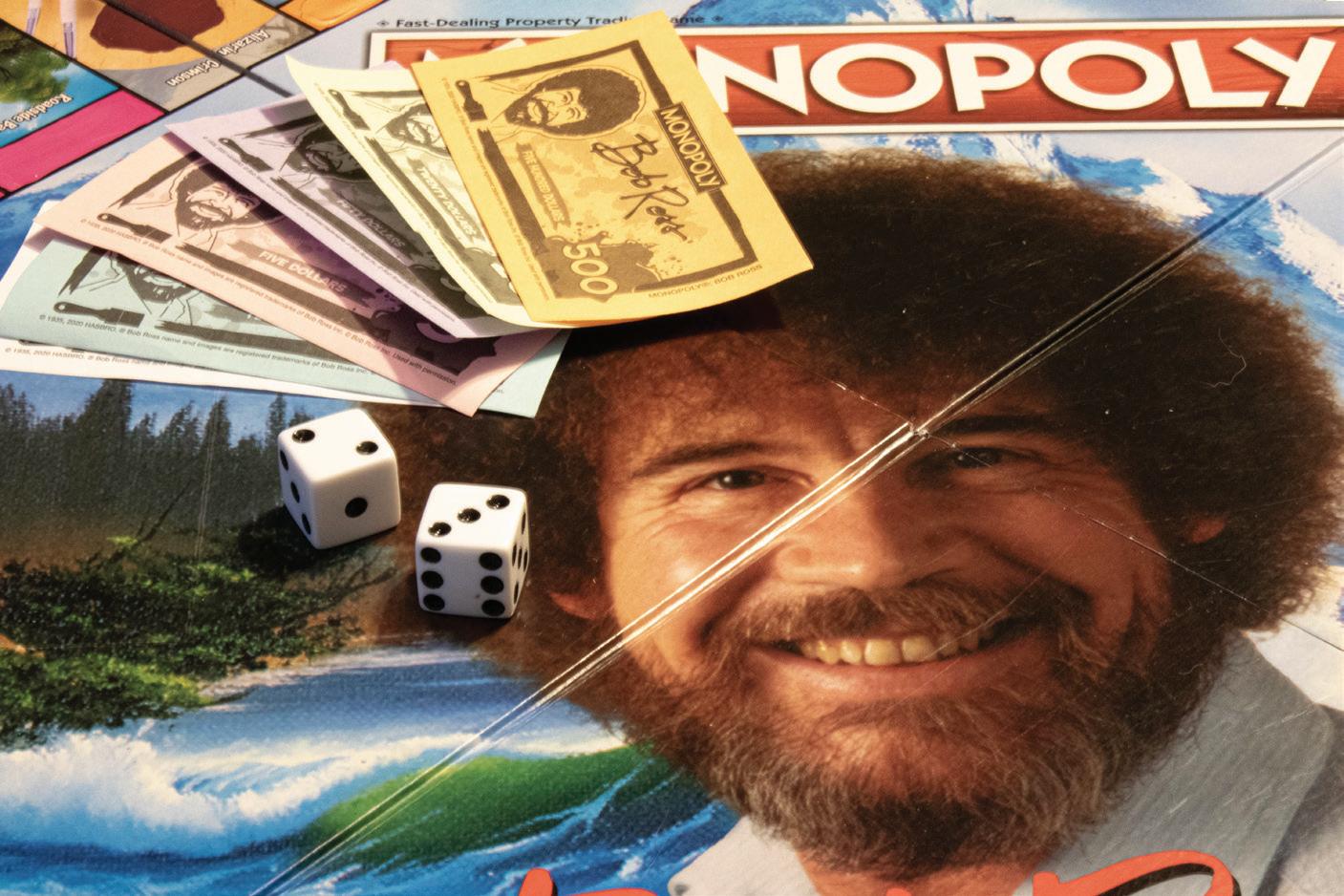
Commercial Photography
By Erika Hanks
The assignment was to take a series of photos that could be used as stock images. The images had to follow a series of prompts given by the instructor. This is one of the many in the series.

By Conner McKenzie
For the final assignment of Commercial Photography Final Project, I took a picture of a Christmas Tree for the Festives Holiday Season Branding on an article that could be used theoretically. It was created by using a Canon Camera and refocusing the aperture so the lighting is less concentrated leading to the blurring effect of close objects.
Untitled
By Ivry Smith
This photo was for our final project in which we were to create stock images based off a set of prompts. The prompt for this particular photo was “reading”. I took this photo in the library in Katahdin Hall.

By Ivry Smith
I took this photo while working on an assignment in which we were learning how to photograph food. My cat (whose name is Mouse) wanted to be included, so I took this candid of her with my breakfast. I never submitted this particular photo for the assignment, but did save it as an outtake.
Commercial Photography
By Lainey Thai
This photo was taken at the Kenduskeag Stream Canoe Race and was used for my final project under the prompt of “water activities”. Canoe #4 takes off after a small break and they fall into rhythm.
How to disassemble your old board! (or build one if done in reverse) Part
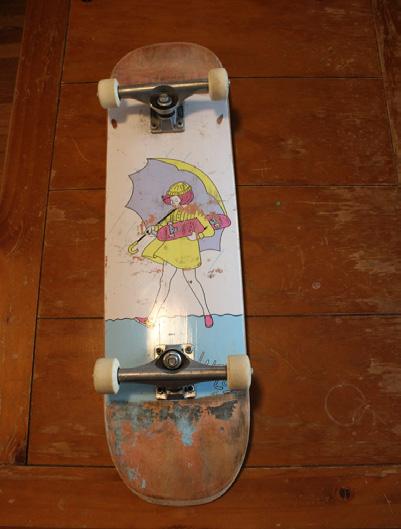
Completed Board (ensure the trucks are lined up facing each other if assembling)
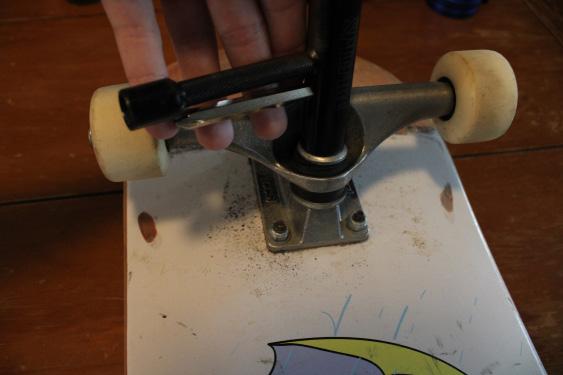
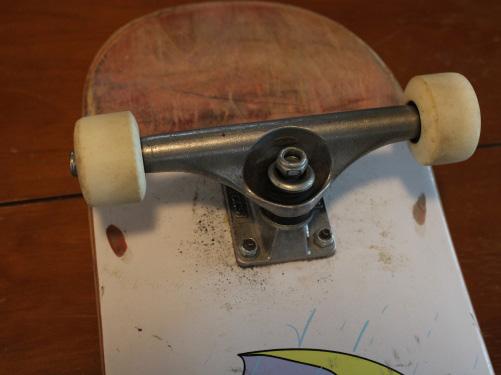
Place your T- Tool directly on the King Pin of the board (the biggest bolt in the center of the trucks)rotate counter clock wise to loosen the bolt
Remove Axle Nut (tip if assembling do not make this pin too tight or the board will not be able to turn effectively. )
Remove the remaining Busching
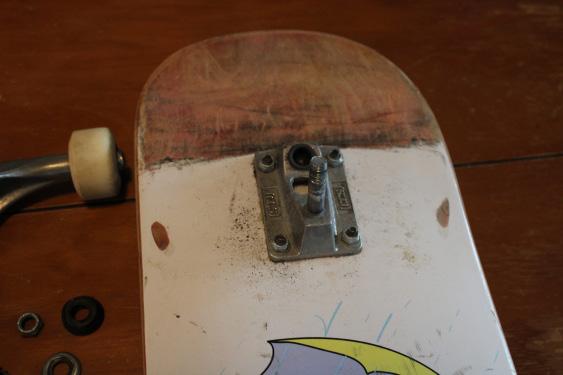
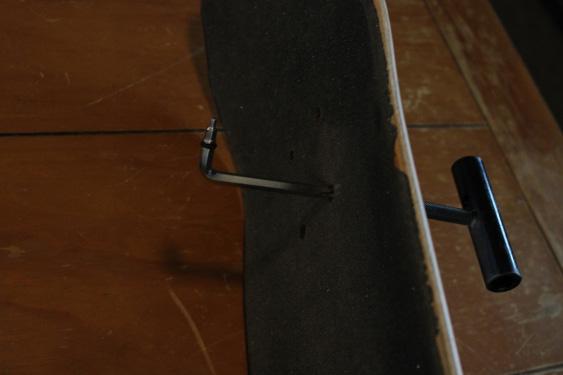
Using the T-Tool place the thinnest bar of the tool onto the remaining nuts and use the screwdriver tool for the screws on the opposite side. Keep the screwdriver tool in place while going counter clock wise with the T-Tool. This will loosen up the nuts making them removable. (tip if assembling youll go clockwise.)
How
to disassemble your old board! build one if done in reverse) Part 1; Trucks
Completed Board (ensure the trucks are lined up facing each
if assembling) Place your T- Tool directly on the King Pin of the board (the biggest bolt in the center of the trucks)rotate counter clock wise to loosen the bolt
Remove Axle Nut (tip if assembling do not make this pin too tight or the board will not be able to turn effectively. )
By Nate Theriault
This assignment was for my Commercial Photography class where we were tasked with creating step-by-step photography. I decided to photograph and demonstrate how to disassemble and build a skateboard.
Remove bottom cup washer Remove Busching Remove Trucks
Remove the remaining Busching Using the T-Tool place the thinnest bar of the tool onto the remaining nuts and use the screwdriver tool for the screws on the opposite side. Keep the screwdriver tool in place while going counter clock wise with the T-Tool. This will loosen up the nuts making them removable. (tip if assembling youll go clockwise.)
By Nate Theriault
These photographs were created for my final project in my Commercial Photography class. The assignments goal was to take photos that represent different themes. These were taken to represent “Game Night”.

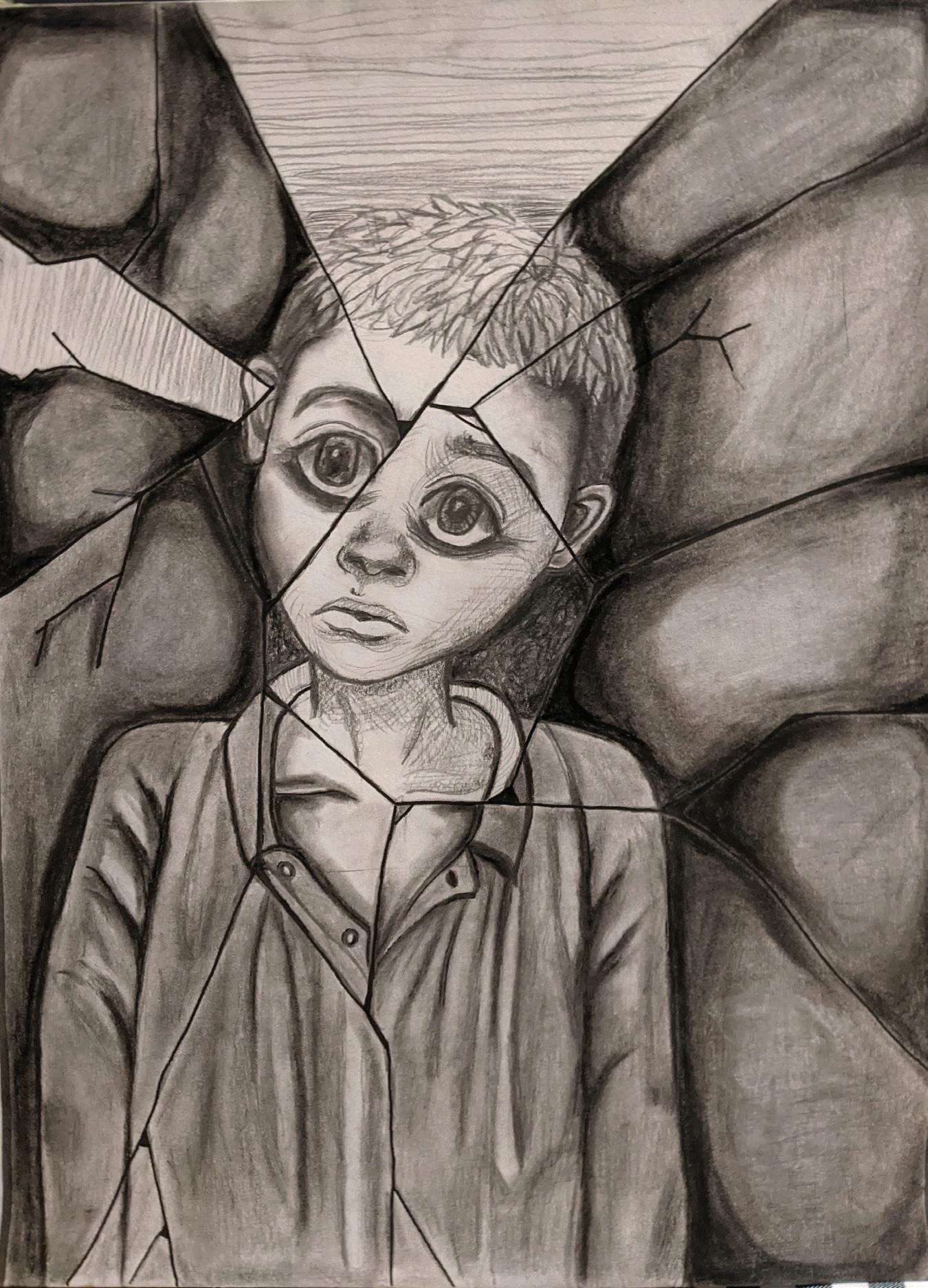
By Jadin Wilson

Lost Boy was created using charcoal and graphite and measures 9 by 11 inches.
The piece represents the psychological experience of childhood neglect. The fractured composition reflects a selfbroken not by a single act of harm, but by absence. It speaks to what was not provided, not protected, and not seen. The child’s enlarged eyes emphasize hypervigilance and emotional exposure, suggesting a constant awareness of their surroundings in the absence of safety. The subdued expression reflects how neglect often manifests as quiet endurance rather than outward distress. The surrounding forms press inward, creating a sense of confinement and emotional isolation. The cracks dividing the image represent divisions in identity formed as the child adapts to survive without consistent care. Through distortion and fragmentation, Lost Boy explores how neglect reshapes perception and leaves lasting fractures in how a child understands themselves and the world.

By Samantha Carter
Made for intro to photoshop, which this project was from the final in the class. We had to take everything we had learned during the time and put it into one piece; from the tools, to thinking Bringing all the elements together to make them into one.

Jay Coon
I created LearningCurves in my Introduction to Photoshop class when we were learning to use the Pen Tool for the first time. The main goal of the assignment was to create a digital self-portrait in Adobe Photoshop by practicing creating clean and accurate paths while building an image using simple shapes and layers. I found the Pen Tool a bit difficult to use at first, especially when it came to adjusting curves and anchor points. After practicing for a bit, though, it became easier and I was able to create cleaner and more controlled shapes as time went on. This project helped me feel much more confident using the Pen Tool while also improving my overall precision in Photoshop. The Pen Tool is now my favorite Photoshop tool to use, even.
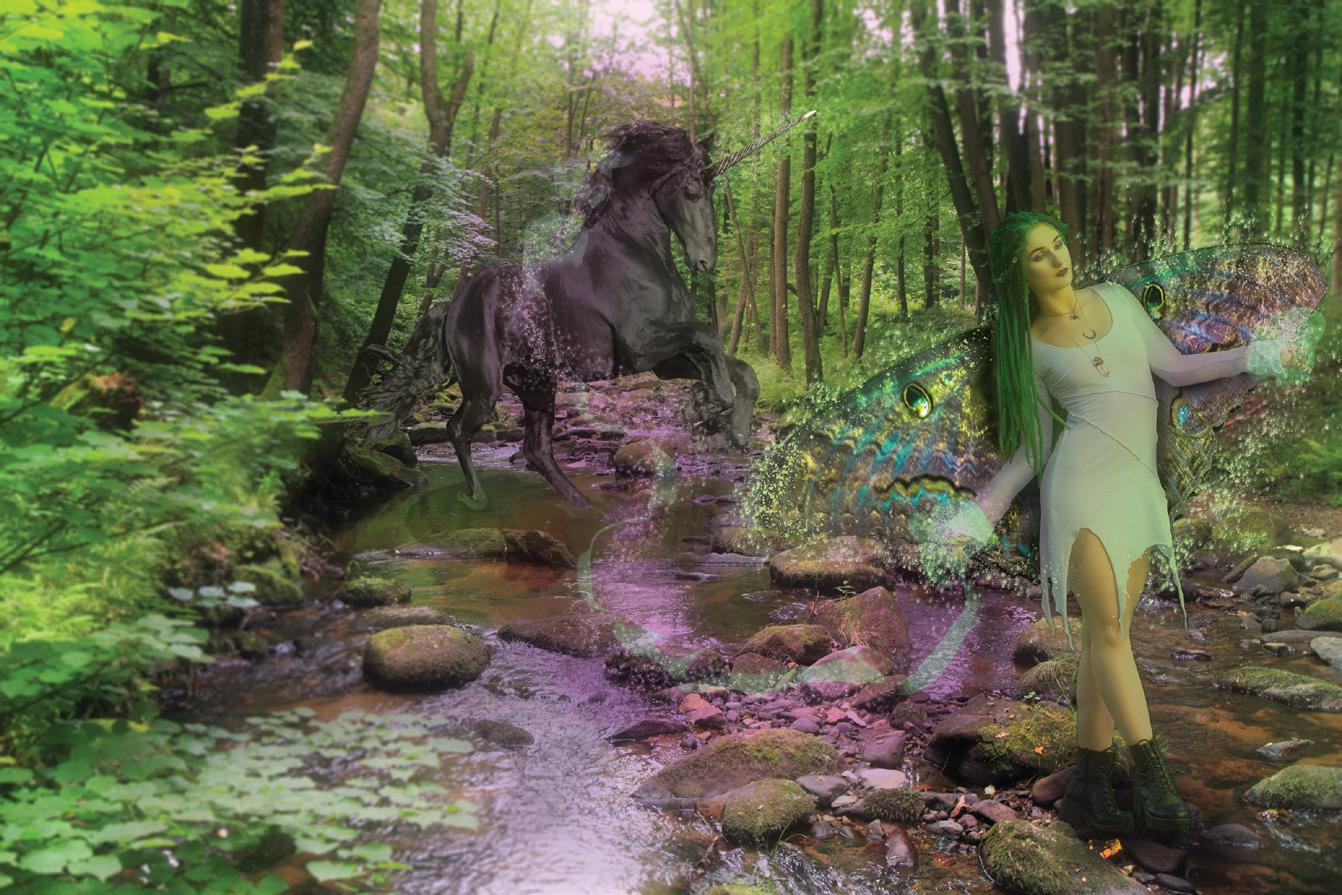
By May Romer
In this project for Introduction to Photoshop, we were to use several different high-resolution photos of the real world (photographs that are original/untouched in photoshop) that we were to composite together using techniques learned throughout the class along with filter, warping, lighting, etc. techniques so it looks like one setting of one scene of a surreal/fantasy artwork. I decided to create this scene of a fairy, made using photos of a clothing model and moth wings, leading her unicorn, a horse with horn made from narwhal horns, down a stream with their magic.
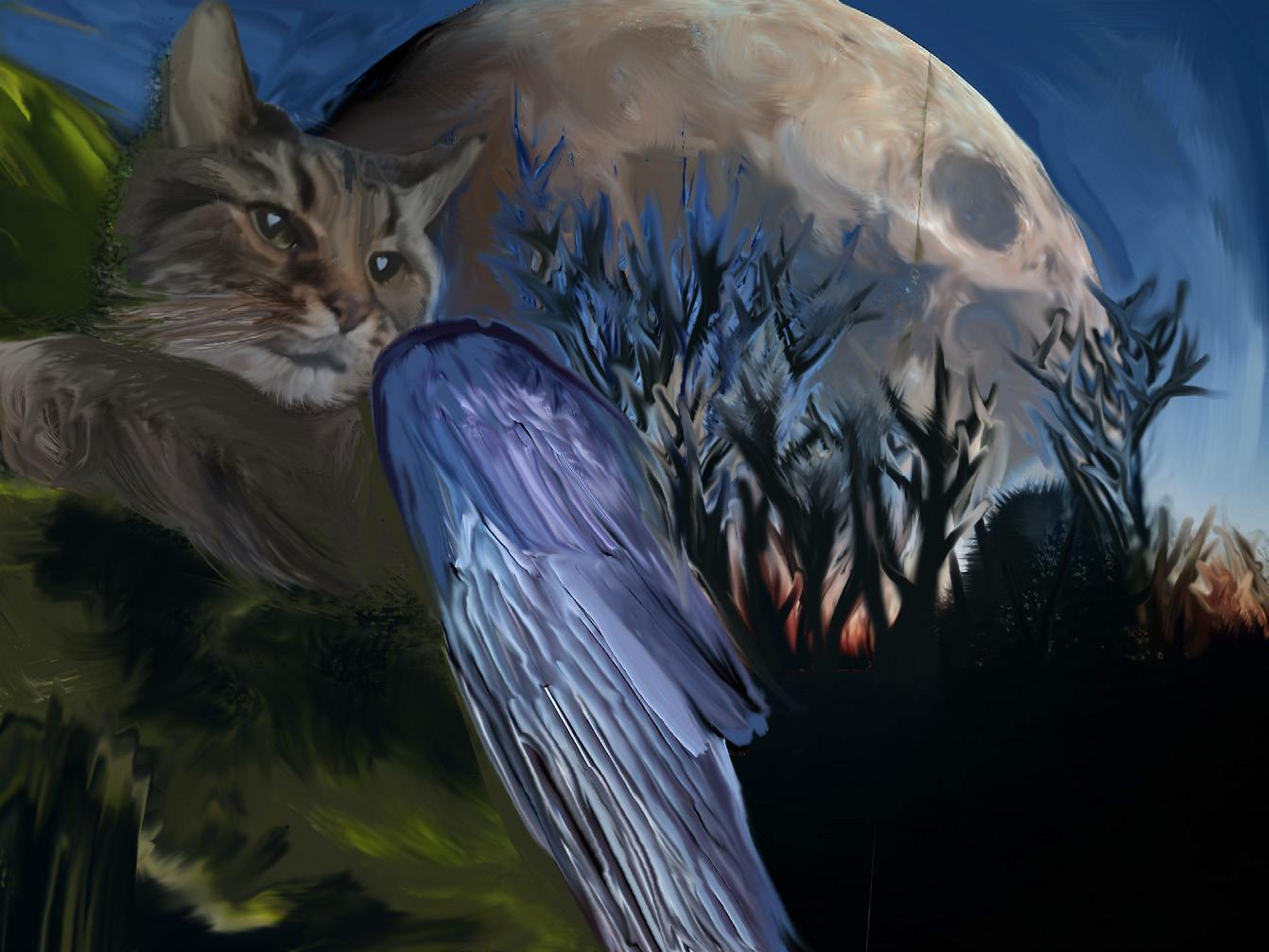
By May Romer
This painting made on photoshop was created using elements from several different high resolution real-world photos together, then blending those elements using techniques learned throughout the class along with new painting techniques. The goal was to be for the final result to like one hand painted composition/artwork while having the original photo/s’ layer visibility turned off, and without using any filters. I created this tribute to our cat after we said goodbye to her earlier that year. Photos I incorporated into this piece were of KitKat, a tree, the moon, the trees silhouetted against a sunset, and the wing of a raven.

Untitled
Ivry Smith
This assignment was from Intro to Digital Photography. This was part of the final for the class and was tasked with prompts to choose from and one of the prompts I chose was Rebirth. This class was during the spring semester so it seemed fitting to do something with flowers and plants. The hyacinths were just popping out of the ground so it fit the prompt of rebirth. Untitled, Ivry Smith, DGD 113 Introduction to Photoshop I created this piece for an assignment in which we were to take an image and use Adobe Photoshop to make it look as though it was hand painted. I used a stock image for the background, as well as adding a few extras such as the pour-over and croissants. I then used tools we had learned about in class to produce this hazy, impressionistic “painted” effect.

By Nina Sprague
For this assignment, we were tasked with creating a vintagestyle postcard of a place, real or fictional. This assignment was to be completed in Adobe Photoshop by editing stock images to create the appearance of a postcard. Typography and filters were also used to create a vintage feel for the project.

By Nathanael Thrift
I made this piece when we were learning to use the paint, blur, and smudge tools in Photoshop. I took a series of images from the internet: the Manta Ray, different pictures of coral, and an ocean background, put them together on a layer, and then used the paint, blur, and smudge tools over the images to make it look like an oil painting.
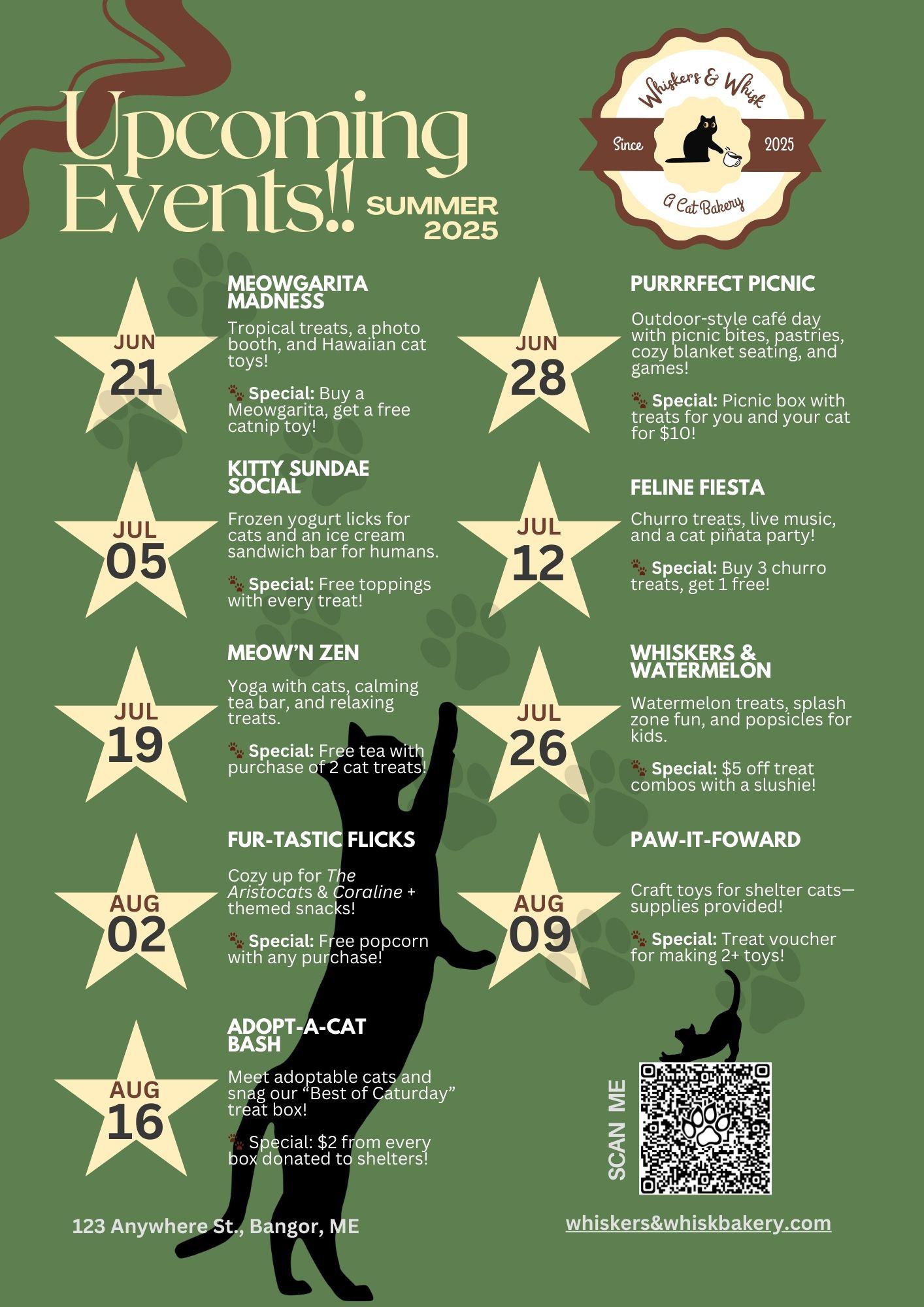
By Jay Coon
This project is a promotional flyer that was created for my Marketing Communications class. The final assignment for this class required us to create a promotional campaign to help market a business that we had been working on throughout the whole semester, which for me was called Whiskers & Whisk Cat Café. I came up with the idea of Caturday Café, where the campaign was planned to run throughout the summer and feature special events every Saturday to attract customers and build brand engagement. I focused on creating an eyecatching flyer design that matched the playful tone of my already established café, while still clearly communicating event information. Overall this project helped me understand how visual design and marketing strategy work together in a realworld style campaign.

By Deric Stohr
The assignment was to create different advertisement pieces for our made-up business. I decided to create an engineering fair booth. I created this piece in photoshop using a template I found. I replaced the stock images with my logo for the company and some posters I created.

By Mary Thibodeau
This was part of a client assigment to recreate a logo in order to have a clean vector file. I took the .jpg file, edited it for size, resolution and contrast in Photoshop, then created the vector image in Illustrator using image trace and extensive editing using tools like smooth and eraser, removing excess anchor points and the background, and polishing extra content.

"What you do makes a difference, and you have to decide what kind of difference you want to make."
-Jane Goodall
"It's the little things citizens do. That's what will make the difference. My little thing is planting trees."
-Wangari Maathai
• 4-Town Watershed District Formed
• 82 Brook Trout Streams Assessed
• 800+ Native Seedlings Distributed
• 11 Free Educational Events
• Launch of Lamoine Dune Project
• 5 New Volunteers
• 18 Free CLC Site Visits
• 3 Invasive Plant Paddle Workshops
• First Seed Saver Workshop Held
• $2.7Million in NRCS Contracts
• Blueberry Biochar Research Started
• 2 Major Partnerships Formed
By Mary Thibodeau
This was part of my internship at Hancock County Soil & Water Conservation District as part of our Professional Business Practices class. Since it was very in line with my Printing and Publishing class, which I took at the same time, I thought it would be a good submission for this section.
The old newsletter template was in a old Publisher file, a software that is no longer supported. The job was to recreate the newsletter in InDesign with a temaplate that could be used every year for the District’s annual newsletter.
The work that went into this template creation included setting up master pages, creating paragraph styles to determine which fonts, colors and sizing I would use, and adding natural elements to evoke the mission of the organization. I also wrote all the content, curating from a year of activities where I work and adding headings, imagery, the year’s highlights, and other call out boxes and points of interest.
The Annual Newsletter goes out to about 700 email subscribers and is posted on the District’s website.
Vv Ww Xx Yy Zz ! ? .
Rats is a decortive font created to showcase and emphasize the fluid nature of rats.
By Erika Hanks
The assignment was to create a font, either decorative or functional. Students followed a guide through Calligrapher, an online font creation website. The final product would be a polished and functional font.
By Matthew Sargent
This is a redesign of the logo for Ghost in the Shell: Stand Alone Complex’s 2nd season, titled Ghost in the Shell: S.A.C. 2nd Gig. All elements are custom typography, including the “STAND ALONE COMPLEX” and “GHOST IN THE SHELL” wordmarks. The goal of the project was to better convey the feel of the series by using typography.


By Nina Sprague
For this assignment, we were tasked with finding a typography-based logo for a movie or TV show that we believed was designed poorly. For the first part of the assignment, we had to analyze and break down the original logo to explain why we thought it was designed poorly. The second part was to redesign and improve the logo to better fit the media and appeal to its target audience.
By Deric Stohr
The assignment was to pick a movie logo you think needs to be redesigned and redesign the logo, so it better expresses what the movie is about. I decided to do the Jaws logo and redesign it in a way to express the movie better. I created this logo redesign using Photoshop and Illustrator.