


Hello and welcome to the Charity Compendium for the forces community, brought to you by the National Armed Forces & Emergency Services Events (NAFESE) team.
It is the first publication produced in terms of specific charity focus by NAFESE and it is another title to add to the ever growing publishing portfolio of ours.
Inside as well as featuring the likes of The Felix Fund and The Royal Alfred Seafarers Charity, we take a look at working in the charity arena, often referred to as the third sector, charity news for 2026 and charity listings to turn to for ease.
Personally and whilst working for NAFESE, as well as in previous roles, I have been fortunate to work on projects alongside Charities and Community Interest Companies (often referred to as CICS) on an array of topics and as most of us can allude to, the satisfaction gleaned from seeing positive outcomes for the community, can be immense.
The chance then to work in the third sector is something to be seriously considered for those in forces circles, be they entering their resettlement period from the military, veterans, spouses, partners or family members within the armed services.
These days, there also provides the opportunity to start one’s own charity or CIC and many ex-forces personnel have gone on to this to great effect and two that spring to mind, having worked with them (and fortunately continue to do so) are Veterans in Crisis (VICS) and Military vs Cancer.
Some of the work produced by Ger Fowler (ex-British Army) and his team at VICS, in particular their recent distribution of Christmas dinners to housebound Veterans on Christmas Day and David Bathgate (ex-Royal Navy) and his team completing their gruelling Field Gun Pull from one end of the country to another is just a mere glimpse of the excellent service provided by both and proof that setting up your own Charity and CIC is possible for the service leaver.
As always, we hope you enjoy reading our publications as we do putting it all together.
Kindest regards,
Mal
Mal Robinson
Editor, Forces Charity Compendium 2026.
www.nafese2023.com
Association of Special Constabulary Officers
www.asco.police.uk
Email: hello@asco.police.uk
ASCO is a charity that exists to support, engage and inform Special Constable Officers.
Police Care UK
www.policecare.org.uk
Tel: 0300 012 0030
Email: hello@policecare.org.uk
Police Care UK provides assistance to serving and veteran police officers and staff, volunteers and their immediate families, who have suffered harm as a result of policing.
Police Pensioners’ Housing Association
www.ppha.org.uk
Tel: 07494 914159
Email: secretary@ppha.org.uk
The PPHA is a community housing association for Police Pensioners and their families.
Police UK Disability Sport CIC
www.policeukdisabilitysportcic.co.uk
The charity delivers a platform for serving and retired police officers, staff and volunteers who have either been injured, living with a disability, illness, mental health or nuerodiversity to engage in adaptive, accessible and fully inclusive sports, events and activities throughout the UK.
Fire Brigades Union
www.fbu.org.uk
Tel: 0208 541 1765
Email: office@fbu.org.uk
For over a hundred years, the FBU has been the voice of firefighters across the UK. Since 1918 the union has supported firefighters, influenced fire safety policy and won improved pay, terms and conditions for its members.
Fire Fighters Charity
www.firefighterscharity.org.uk
Tel: 0300 373 0896
Fire Fighters Charity offers specialist, lifelong support for members of the UK fire services community, empowering individuals to live happier and healthier lives.
Royal Voluntary Service
www.royalvoluntaryservice.org.uk
Through the power of volunteering, they provide one-to-one, group and online services that improve health and wellbeing, resilience, confidence and connections.
The National Council for Voluntary Organisations (NCVO)
www.ncvo.org.uk
Tel: 020 7713 6161
Email: ncvo@ncvo.org.uk
They are the membership community for charities, voluntary organisations and community groups in England. Together they champion voluntary action.
Help for Heroes is proud to announce a new three-year partnership with Tesco’s Armed Forces Network, bringing together two organisations with a shared commitment to ensuring veterans and their families are not forgotten.
As Tesco re-signs the Armed Forces Covenant, the retailer is reaffirming a long-standing dedication to the Armed Forces community. Tesco is the largest private sector employer of veterans in the UK, and its Armed Forces Network is a thriving, supportive space for veterans, reservists, colleagues from military families, and allies across the business.
This partnership marks a significant moment for us at Help for Heroes and the Tesco Armed Forces Network. By uniting our strengths, we’ll build deeper connection, understanding, and opportunity for those who’ve served.
Throughout the next three years, Help for Heroes and Tesco’s Armed Forces Network will work side by side to strengthen Armed Forces communities up and down the country. Together, we’ll deliver activity that helps build connection and encourages the wider public to get involved.
Tesco’s Armed Forces Network will proudly sponsor our flagship challenge event: the Big Battlefield Bike Ride as
well as our Heroes Hikes series. These events bring people together through shared challenge, camaraderie, and remembrance, honouring the service and sacrifice of our Armed Forces while raising vital funds to support their recovery.
This collaboration is about much more than fundraising. It’s about removing barriers, recognising the invaluable skills veterans bring, and ensuring every member of the Armed Forces community feels supported, valued, and connected to the nation they’ve served. Whether someone needs help with their physical health, mental wellbeing, financial stability, confidence, or community connection, this partnership will help us reach more veterans and families with the support they deserve.
We’re excited for what this partnership will achieve over the next three years. By combining the Tesco Armed Forces Network national reach with our specialist expertise, we’re creating new opportunities for veterans and their families to thrive today, tomorrow, and long into the future.
Together, we’re building a future where no member of the Armed Forces community feels forgotten.

Clear Sky provides play and creative arts therapy services all around the UK. Please download our FREE parent resources and see our website for more about our work!


www.clear-sky.org.uk
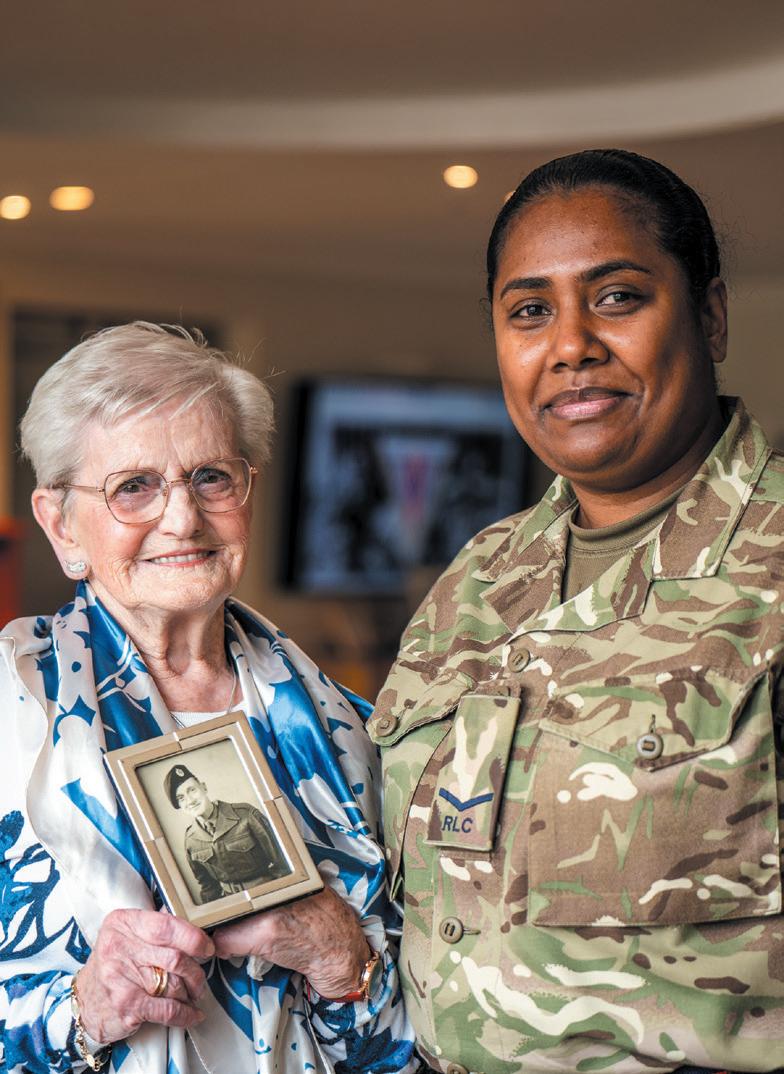

Show your support this Armed Forces Week by making a vital donation to the Army’s national charity. Since 1944 we have been here to support soldiers, former soldiers and their families in times of need.

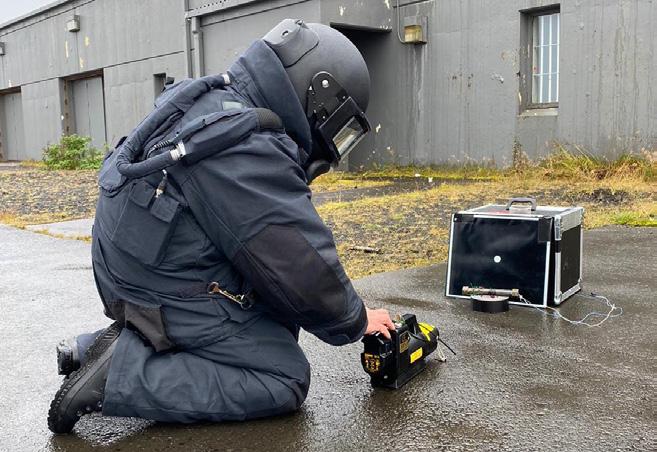
Every day, bomb disposal and search personnel confront life-threatening situations to ensure public safety. In the UK alone, these specialists respond to over 3,000 call-outs annually. With regular deployments overseas at short notice, they frequently operated in isolation in the most arduous conditions imaginable.
Established in 2011, the Felix Fund – The Bomb Disposal Charity – provides support to serving personnel, veterans, and their families within the Explosive Ordnance Disposal (EOD) and Search communities across all branches of the British military, including the British Army, Royal Navy Clearance Divers, RAF Bomb Disposal, and SO15 EOD.
The Felix Fund provides three core pillars of support—Health and Wellbeing, Financial Assistance, and Memorials and Remembrance —Felix Fund ensures these unsung heroes and their families receive the care and recognition they truly deserve.
The mental toll of bomb disposal work is significant. Long deployments, constant danger, and the weight of responsibility can lead to severe stress and psychological trauma.
Felix Fund’s flagship initiative, the Dashboard programme, offers mindfulness-based stress management training to help individuals cope with these pressures. Participants learn to identify early signs of stress and use practical tools to build mental resilience. As one veteran shared, “My life has honestly changed. I have no built-up anger and can communicate with my wife without arguments. I am far more considerate of others. It has made such a difference” Through education, prevention, and aftercare, Felix Fund is ensuring that personnel maintain a healthy mind to match their courageous spirit.
Felix Fund is also investigating a potential link between exposure to explosives and
bladder cancer in British Army bomb disposal officers. A 2024 veteran survey revealed a strong signal that incidence rates under the age of 70 were significantly higher than in the general UK population. The evidence suggests occupational exposure during munitions disposal may be a key factor. This is the UK’s first quantitative study on this link, prompting the Veteran’s Minister to form an Independent Medical Expert Panel. Felix Fund urges further research, improved GP awareness, and better health safeguards. Your generous support can help us continue this vital, life-saving work.
Behind every operator is a family who often faces their own struggles—especially when injury, illness, or sudden loss strikes. Felix Fund provides vital financial support where other systems fall short. Whether it’s covering funeral costs, funding home adaptations for injured veterans, or supplying specialist equipment for children with disabilities. The charity’s ability to respond quickly in times of crisis means help arrives when it’s needed most.
Felix Fund is also deeply committed to honouring those who have made the ultimate sacrifice. Working with military communities and families, the charity supports physical memorials that preserve the legacy of fallen EOD and Search personnel. In 2023, it launched Felix Fund Publishing, creating a platform for stories from those who’ve served. These personal accounts serve not just as powerful tributes but also as reminders of the human cost of this essential work. The first two volumes of “The Long Walk: An Anthology by EOD & Search Veterans” are available through Amazon.
Through its focused mission, Felix Fund ensures no one in the bomb disposal community is forgotten. To learn more or to support their work, visit www.felixfund.org.uk.




The ‘third sector’ is an umbrella term that covers a range of different organisations with different structures and purposes, belonging neither to the public sector (i.e., the state) nor to the private sector (profit-making private enterprise). You may have heard other terms used to describe such organisations – the voluntary sector, non-governmental organisations, non-profit organisations – particularly in public discussions around policy and politics. These terms all describe organisations which share the same fundamental elements:
• Non-governmental: although they often work with or alongside government agencies, and may receive government funding or commissions, third sector organisations are independent from the government.
• Non-profit: third sector organisations raise funds and generate financial surpluses in order to invest in social, environmental, or cultural objectives. They do not seek to make profits as an end in its own right.
• Values-driven: third sector organisations pursue specific goals which are often aligned with particular social and political perspectives. They may be associated with or work with political
parties, but a political party is not a third sector organisation.
• Charities
• Voluntary and community organisations
• Social enterprises and cooperatives
• Think tanks and private research institutes (this does not include universities and colleges)
• Some organisations, such as housing associations, have been spun off from government and are considered quasi-third sector groups, even though they deliver public services.
Third sector organisations operate at all levels of society, from the very local to the national and the international, and they make a significant – and rapidly increasing – contribution to the health and well-being of society both in the UK and abroad. Following the 2010 General Election, the government made it clear that charities and voluntary organisations would be expected to perform an increasing amount of the social and cultural functions which it has previously been the work of the public sector to provide, and many third sector organisations receive government commissions to provide services on the government’s behalf.
The Office for Civil Society, led by the Minister for Civil Society, is the government agency currently tasked with overseeing the government’s civil society agenda, and managing the relationship between the third sector and the government.
The growing importance of the third sector to public life and services is not just limited to the UK, but is a worldwide phenomenon. For this reason, working with third sector organisations can be a very effective way to impact on public policy.
Typically most third sector organisations devote themselves either to a particular issue which needs solving (for example, climate change or unaffordable housing); or to a particular group in society (for example, dementia sufferers, or women facing cultural barriers to education) who requires support and representation. They may provide services related to these issues (for example, running a women’s shelter, or providing legal advice). Some organisations (particularly think tanks and research institutes) may work on a whole range of issues, but apply a particular philosophical and political filter. Their focus maybe local, national, or global.
Third sector groups try to achieve their aims through a wide range of activities. Some, such as fundraising, providing services, or providing other forms of direct support and advice to the groups they help, are about immediate action. However, third sector organisations usually also want to back up direct assistance with long-term or systemic change, involving changes to relevant local, national, or international
policies. They seek to bring these policy changes about in lots of different ways, all of which offer potential opportunities for academic collaboration or input.
Many third sector organisations either employ their own researchers, or commission independent or academic researchers, to carry out investigations into subjects that affect the groups and issues they deal with. In addition, they will also aim to be widely-read in the existing and emerging academic research in relevant fields. Research helps third sector organisations identify emerging issues they should focus on, and provides evidence to back up their policy proposals and campaigning. This is an obvious way your research can make a real difference.
Third sector organisations also aim to raise public awareness and shape public perceptions about particular issues. They do this through public campaigns that may use a range of traditional and social media to get their message across. These campaigns may be aimed at the general public, or they may be targeted at certain groups or sectors, and this will affect media strategies and types of platform chosen. Third sector organisations want these campaigns to be as credible and authoritative as possible, so this is another area where academic research or an academic viewpoint can be of real value.
Article originally written for Northern Bridge Doctoral Training Partnership.
Andy Allen Veterans Support Northern Ireland
www.aavsni.com
Tel: 028 9074 7071
Email: info@aavsni.com
Help, advice and guidance to those who serve or have served in the British Armed Forces and their families throughout Northern Ireland.
Army Welfare Service (AWS)
Personnel Support: 01904 882053
The Army Welfare Service (AWS) is the Army’s professional welfare provider; it delivers a comprehensive and confidential welfare service responsive to the needs of individuals, families and the Chain of Command in order to maximise the operational effectiveness of Service Personnel.
Blind Veterans UK
www.blindveterans.org.uk
Tel: 0300 111 22 33
Email: supporter.services@blindveterans.org.uk
Blind Veterans UK provides veterans with rehabilitation, training, practical advice and emotional support.
Together they can help rebuild lives after sight loss.
The Confederation of Service Charities (COBSEO)
www.cobseo.org.uk
This is a conglomeration of charities representing the Armed Services and Veterans community including dependants. Provides a list of all charities and organisations covering a wide range of needs, welfare and general interest.
Combat Stress
www.combatstress.org.uk
Veterans & Families Helpline: 0800 138 1619 (24 hrs, 365 days a year)
Serving Personnel & Families Helpline: 0800
323 4444 (24hrs, 365 days a year)
Textline: 07537 173683
Email: helpline@combatstress.org.uk
Provides confidential help, advice and support on mental health to the military community, veterans and their families.
Gurkha Welfare Trust
www.gwt.org.uk
Tel: 01722 323 955
Email: info@gwt.org.uk
In the UK, in conjunction with other service charities and government bodies they offer advice and support to help the thousands of retired Gurkhas and their families who choose to settle here.
Help For Heroes
www.helpforheroes.org.uk
Tel: 0300 303 9888 (0900 - 1700 - Monday to Friday)
Email: getsupport@helpforheroes.org.uk
Provides direct practical support for wounded, injured and sick serving personnel, veterans and their families.
Military vs Cancer
www.militaryvscancer.com
Tel: +44 7469550679
Email: info@militaryvscancer.com
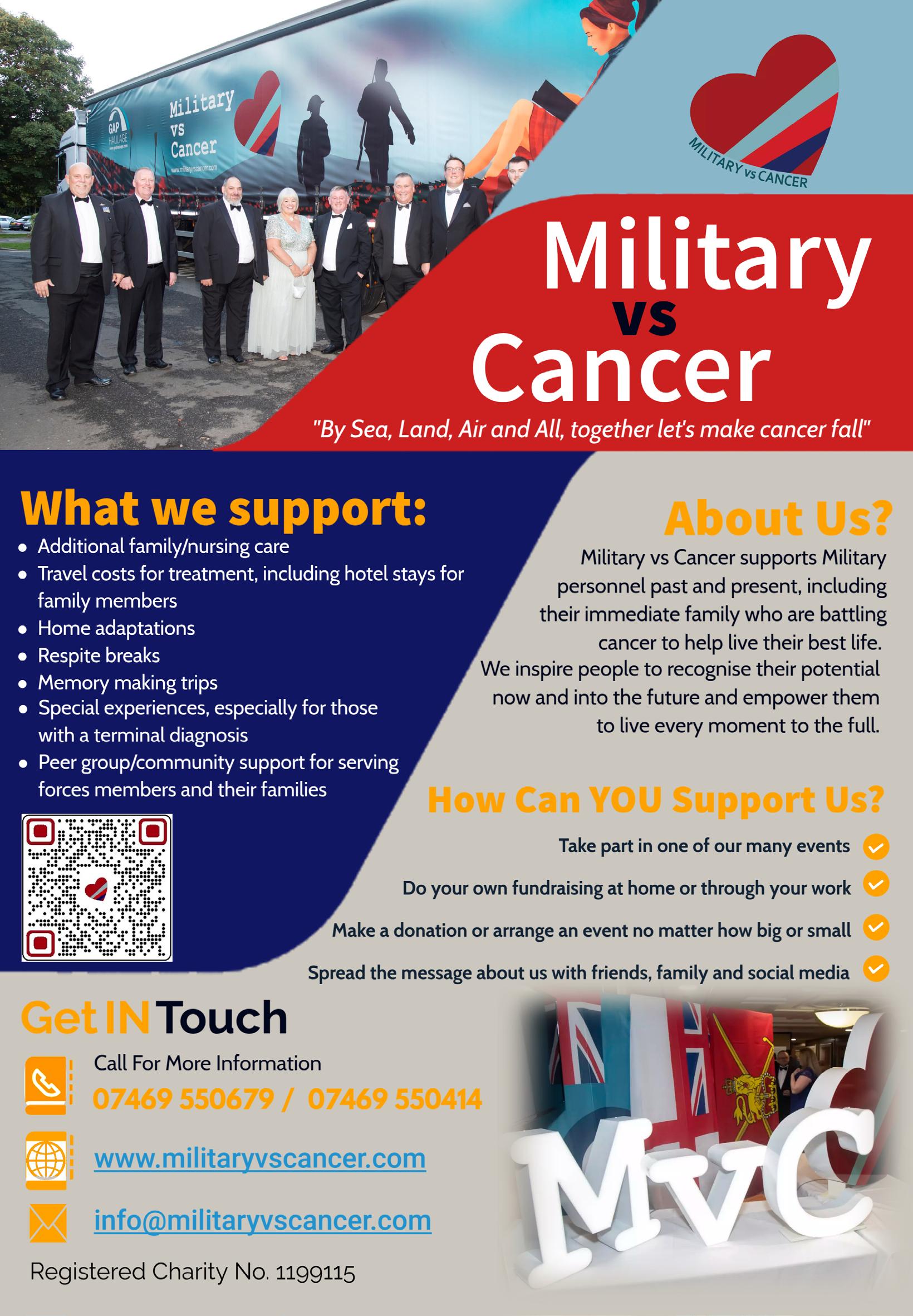
Military vs Cancer focus is on alleviating the effects of cancer for Military personnel past and present, as well as their immediate families.
Veterans In Crisis Sunderland (VICS)
www.veteransincrisis.co.uk
Tel: 0191 5671878
Email: info@veteransincrisis.co.uk
Their mission is to do everything they can to get veterans back on their feet, however long it takes. However, you don’t need to be in crisis – all veterans are welcome, offering support for the local Wearside area.

The Royal Alfred Seafarers’ Society: A legacy of care and community for retired seafarers, veterans, and local residents
For over 160 years, the Royal Alfred Seafarers’ Society has provided vital care and support to former mariners, veterans, and local residents. Established in 1865, the Society sits within a peaceful 14-acre estate in Banstead, Surrey, offering a dignified and fulfilling home for those in their later years, particularly individuals with maritime backgrounds.
At its core is Belvedere House, a purposebuilt nursing home delivering high-quality, person-centred care, including specialised dementia support and respite care. The home recently underwent a comprehensive refurbishment, upgrading all 68 ensuite rooms with modern amenities and fresh décor. Residents are encouraged to personalise their spaces, creating a comfortable and homely atmosphere. Alongside new assisted bathrooms, communal areas have also been enhanced with the addition of a scenic lounge, a sensory room, and an expanded activities space tailored for residents with cognitive needs.
Next to Belvedere House is the Society’s subsidised sheltered housing, offering seafarers and their partners independent living within a supportive maritime community. Financed in part by charitable donations and maritime partners, this accessible housing ensures residents receive the care they need regardless of their financial means.
Beyond clinical care, the Society fosters a vibrant, inclusive community rooted in dignity and respect. Activities span music, arts and crafts, gardening, themed events, and gentle exercises, tailored to individual interests. Interactive feedback stations help shape
engaging programmes, supported by the recently expanded activities room and sensory space. A dedicated in-house catering team ensures residents enjoy balanced, nutritious meals suited to personal dietary needs in a welcoming dining environment.
The Society also maintains strong ties to the local community. Initiatives such as the Memory Café and open community events provide outreach beyond the estate, while partnerships with organisations like Surrey Heartlands allow for broader dementia support and education. These efforts reinforce the Society’s ethos of compassion, connection, and service.
Today, the Royal Alfred Seafarers’ Society remains a sanctuary for those who dedicated their lives to the sea. With ongoing investment in facilities and an unwavering commitment to holistic care, it continues to offer expert support and fellowship to its residents, preserving dignity, promoting independence, and celebrating maritime heritage well into the future.
The Royal Alfred Seafarers’ Society is a registered charity and was established in 1865. It is incorporated under Royal Charter, with HRH the Princess Royal as its patron. It provides nursing, dementia, residential and respite care to retired seafarers and residents of non-seafaring backgrounds from across the UK. Under the Royal Charter, ‘seafarers’ include Merchant Navy, Royal Navy, fishermen and port workers, as well as their loved ones.