Why Regular Oil Change Service Is Essential for Long-Term Engine Health in Folsom, CA
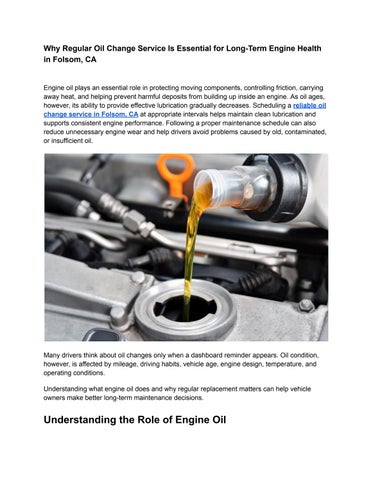
Engine oil plays an essential role in protecting moving components, controlling friction, carrying away heat, and helping prevent harmful deposits from building up inside an engine. As oil ages, however, its ability to provide effective lubrication gradually decreases. Scheduling a reliable oil change service in Folsom, CA at appropriate intervals helps maintain clean lubrication and supports consistent engine performance. Following a proper maintenance schedule can also reduce unnecessary engine wear and help drivers avoid problems caused by old, contaminated, or insufficient oil.
Many drivers think about oil changes only when a dashboard reminder appears. Oil condition, however, is affected by mileage, driving habits, vehicle age, engine design, temperature, and operating conditions. Understanding what engine oil does and why regular replacement matters can help vehicle owners make better long-term maintenance decisions.
Understanding the Role of Engine Oil
An engine contains many moving metal components operating at high speeds and temperatures. Without lubrication, these surfaces would create excessive friction. Engine oil forms a protective layer between moving components and helps reduce direct metal-to-metal contact. Oil supports several important functions, including: ● ● ● ● ● ● ●
Lubricating engine components Reducing friction Helping control heat Carrying contaminants Reducing internal deposits Protecting surfaces from corrosion Supporting efficient engine operation
These functions become increasingly important as mileage increases. When oil becomes heavily contaminated or degraded, it may not protect internal components as effectively as fresh oil.
Why Engine Oil Breaks Down Over Time Engine oil does not remain in the same condition indefinitely. Every time the engine operates, oil is exposed to heat, combustion byproducts, moisture, and microscopic contaminants. Over time, oil may become: ● ● ● ● ●
Darker Thicker Contaminated Less effective at lubrication Less capable of controlling deposits
Modern oils contain additives designed to clean, protect, and stabilize the lubricant. These additives gradually become depleted. Changing the oil at appropriate intervals replaces both degraded lubricant and depleted additives with fresh protection.
How Fresh Oil Helps Reduce Engine Friction Friction is one of the main causes of internal engine wear. Components such as pistons, bearings, camshafts, crankshafts, and other moving parts depend on proper lubrication. Fresh oil helps create a thin protective film between these surfaces. When oil becomes old or the level becomes too low, that protective film may become less effective.
Increased friction can contribute to: ● ● ● ● ●
Higher operating temperatures Accelerated wear Reduced efficiency Increased engine noise Component damage
Maintaining the correct type and level of engine oil helps minimize unnecessary friction during normal operation.
Oil Changes Help Control Engine Heat The cooling system handles much of an engine's temperature control, but engine oil also helps manage heat. Oil circulates through areas where moving components generate friction. As it moves, the oil absorbs some of this heat and carries it away from critical surfaces. Old or insufficient oil may not perform this function as effectively. Excessive heat can accelerate lubricant breakdown and increase stress on engine components. Keeping oil fresh and maintaining the proper level supports both lubrication and temperature management.
Why Contaminated Oil Can Become a Problem Combustion naturally creates byproducts. Small amounts of fuel residue, carbon, moisture, and microscopic particles can eventually enter the engine oil. Filters help capture many contaminants, but they cannot keep oil clean forever. As contamination increases, the oil may become less effective. Possible consequences of severely neglected oil include: ● ● ● ● ●
Sludge buildup Restricted oil flow Increased internal wear Reduced lubrication Poor engine performance
Regular oil replacement removes contaminated lubricant before buildup becomes excessive.
The Importance of Changing the Oil Filter An oil change involves more than replacing the fluid. The oil filter plays an important role in keeping contaminants from circulating through the engine. It captures particles that could
otherwise move through lubricated surfaces. Over time, the filter collects increasing amounts of debris. A heavily loaded filter may become less effective. Replacing the filter during routine oil service helps ensure fresh oil can circulate through a clean filtration system.
How Oil Changes Help Reduce Sludge Formation Engine sludge is a thick buildup that can develop when oil becomes heavily degraded or contaminated. Heat, moisture, oxidation, and extended oil change intervals can contribute to sludge formation. Sludge may restrict oil movement through small passages. Reduced oil circulation can prevent critical engine components from receiving adequate lubrication. Routine oil changes help remove aging oil before contamination and oxidation become severe. Following recommended maintenance intervals is one of the simplest ways to reduce the likelihood of excessive internal deposits.
Driving Conditions Can Affect Oil Change Needs Not every vehicle experiences the same operating conditions. Some driving patterns place greater demands on engine oil than others. Examples include: ● ● ● ● ● ● ●
Frequent short trips Stop-and-go traffic Extended idling Heavy loads High temperatures Repeated highway driving Dusty conditions
Drivers around Folsom, CA may use their vehicles for a mixture of short daily trips, commuting, highway travel, and warmer-weather driving. Maintenance intervals should therefore consider manufacturer recommendations as well as the way the vehicle is actually driven. Short trips can be especially demanding because the engine may not always remain at full operating temperature long enough to manage moisture efficiently.
Why Oil Level Matters as Much as Oil Condition Even fresh engine oil cannot provide adequate protection if the level is too low. Engines can lose oil through leaks, consumption, or other mechanical conditions. Low oil levels may result in insufficient lubrication. Checking the oil level periodically can help identify unusual oil loss before it becomes a larger problem. Drivers should also investigate repeated low-oil conditions rather than simply continuing to add oil indefinitely.
Dashboard Oil Lights Should Be Taken Seriously Vehicles may have different oil-related warning indicators. Some remind drivers that routine maintenance is due. Others indicate potentially low oil pressure. These warnings do not mean the same thing. A maintenance reminder usually relates to scheduled service. An oil pressure warning can indicate that the engine is not receiving proper lubrication and may require immediate attention. Drivers should consult the owner's manual to understand the warning system used by their vehicle.
Can Delayed Oil Changes Affect Engine Performance? Oil quality can influence how smoothly an engine operates. When lubrication deteriorates, internal friction and contamination may increase. Drivers may notice: ● ● ● ●
Increased engine noise Rougher operation Reduced efficiency Higher operating temperatures
These symptoms can also result from other mechanical problems, so an oil change should not be treated as a guaranteed solution for every engine concern. However, keeping oil fresh removes one major source of preventable engine wear.
Oil Changes and Fuel Efficiency Fuel economy depends on many factors, including tire pressure, driving habits, engine condition, vehicle load, airflow, ignition performance, and maintenance. Lubrication also plays a role. When internal engine components move efficiently, the engine does not have to overcome as much unnecessary friction. Old or degraded oil may slightly increase resistance inside the engine. Regular maintenance helps keep lubrication within the manufacturer's intended operating condition. Oil service alone will not correct every fuel economy problem, but it supports overall engine efficiency.
Choosing the Correct Type of Engine Oil Engines are designed to operate with specific oil viscosities and performance standards. Using the correct oil is important for lubrication, cold starts, operating temperature, fuel efficiency, and component protection.
Common oil categories include: ● Conventional oil ● Synthetic blend ● Full synthetic oil The correct choice depends on vehicle manufacturer specifications rather than personal preference alone. Drivers should follow the viscosity grade and oil standard listed in the owner's manual. Using an incorrect lubricant may affect performance or protection.
Why Synthetic Oil Is Common in Modern Vehicles Many modern vehicles use synthetic engine oil because it is designed to perform consistently across a wide range of temperatures. Synthetic oils can offer strong resistance to oxidation and thermal breakdown. However, using synthetic oil does not mean oil changes can be ignored indefinitely. Contamination still develops. Filters still collect debris. Additives still become depleted over time. Maintenance intervals should continue to follow manufacturer recommendations.
How Regular Oil Service Supports Long-Term Reliability Long-term vehicle reliability depends on many different maintenance tasks. Oil changes are among the most important because lubrication directly affects internal engine components. Routine oil service can help: ● ● ● ● ● ● ●
Reduce internal friction Support cleaner engine operation Remove contaminated lubricant Maintain proper oil additives Support temperature control Reduce sludge formation Protect moving components
No maintenance procedure can completely eliminate mechanical wear. Consistent oil service simply helps prevent avoidable wear caused by degraded or insufficient lubrication.
Why Waiting for Engine Problems Is Risky
Some drivers delay maintenance because the vehicle appears to be operating normally. Engine oil problems may not create obvious symptoms immediately. An engine can continue running while internal wear gradually increases. By the time loud noises, low oil pressure, severe sludge, or performance problems become noticeable, the underlying condition may already be more difficult to correct. Preventive maintenance is generally more practical than waiting for lubrication-related damage.
Oil Leaks Should Be Investigated Oil spots beneath a parked vehicle may indicate a leak. Possible leak areas can include: ● ● ● ● ● ●
Oil pan Drain plug Oil filter area Valve cover gaskets Engine seals Other gasket surfaces
Small leaks can gradually become larger. They may also cause oil levels to fall between scheduled services. Drivers who repeatedly notice oil spots, burning smells, or declining oil levels should have the source inspected. Repairing a leak helps maintain proper oil quantity and reduces the need for frequent topping off.
What Happens During a Routine Oil Change? A professional oil service typically involves draining the old engine oil and replacing it with oil that meets the vehicle manufacturer's requirements. The oil filter is normally replaced as well. Depending on the service, technicians may also inspect: ● ● ● ● ● ● ● ●
Oil level Fluid condition Visible leaks Filters Belts Hoses Tire pressure Other maintenance items
This creates an opportunity to identify developing concerns while the vehicle is already being serviced. Oil changes therefore serve both as routine maintenance and as regular checkpoints for overall vehicle condition.
How Often Should Engine Oil Be Changed? There is no universal mileage interval that applies to every vehicle. Oil change frequency depends on: ● ● ● ● ● ● ●
Manufacturer recommendations Oil type Vehicle age Engine design Mileage Driving habits Operating conditions
Older rules such as automatically changing oil after one fixed mileage interval may not apply to every modern vehicle. Some vehicles use onboard oil-life monitoring systems that calculate maintenance needs based on operating conditions. The owner's manual remains the best source for the recommended interval.
Why Maintenance History Matters Keeping records of oil changes can make vehicle maintenance easier to manage. A consistent service history helps drivers track: ● ● ● ● ●
Oil change dates Mileage intervals Oil consumption Recurring leaks Maintenance patterns
Records can also be useful when planning future maintenance or selling the vehicle. A documented history shows that routine engine care was performed consistently rather than only after problems developed.
Protecting Engine Health Through Consistent Maintenance Engine longevity depends on more than any single service, but regular lubrication maintenance is one of the most important foundations of reliable operation. Fresh oil helps control friction, carry heat, remove contaminants, support internal cleanliness, and protect moving components under everyday driving conditions.
Vehicle owners who want to maintain consistent engine performance should schedule an oil and filter change according to the manufacturer's recommended maintenance schedule. Consistent oil service helps protect internal components while creating regular opportunities to identify leaks, low fluid levels, worn filters, and other developing maintenance concerns.
Frequently Asked Questions 1. Why are regular oil changes important for engine health? Regular oil changes replace degraded and contaminated lubricant with fresh oil. This helps reduce friction, carry away heat, control deposits, and protect moving engine components. 2. How often should engine oil be changed? The correct interval depends on the vehicle, oil type, mileage, engine design, and driving conditions. Drivers should follow the maintenance schedule listed by the vehicle manufacturer. 3. Does the oil filter need to be replaced during every oil change? In most routine oil services, the oil filter is replaced along with the engine oil. A clean filter helps capture contaminants and supports proper oil circulation. 4. What happens if I wait too long between oil changes? Extended intervals can allow oil to become contaminated and degraded. Over time, this may increase friction, contribute to deposits, restrict lubrication, and accelerate internal engine wear. 5. Can low engine oil damage an engine? Yes. An insufficient oil level can reduce lubrication and increase friction and heat. Repeatedly low oil levels should also be inspected because they may indicate leakage or excessive oil consumption. 6. Is synthetic oil still required to be changed regularly? Yes. Synthetic oil can offer strong resistance to heat and breakdown, but it still becomes contaminated and its additives eventually decline. Oil changes should continue according to manufacturer recommendations. To keep your engine properly lubricated and your routine maintenance on schedule, Contact Us Today to arrange professional vehicle service. Consistent maintenance can help support reliable engine performance and reduce preventable wear over the life of your vehicle.