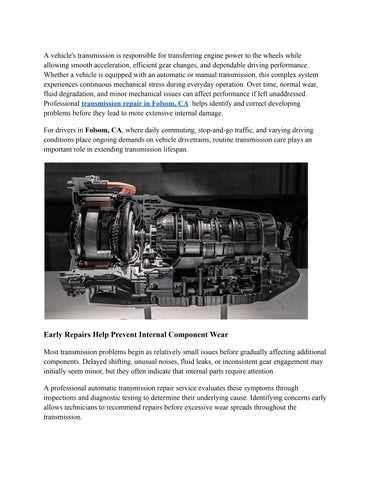
A vehicle's transmission is responsible for transferring engine power to the wheels while allowing smooth acceleration, efficient gear changes, and dependable driving performance. Whether a vehicle is equipped with an automatic or manual transmission, this complex system experiences continuous mechanical stress during everyday operation. Over time, normal wear, fluid degradation, and minor mechanical issues can affect performance if left unaddressed. Professional transmission repair in Folsom, CA helps identify and correct developing problems before they lead to more extensive internal damage. For drivers in Folsom, CA, where daily commuting, stop-and-go traffic, and varying driving conditions place ongoing demands on vehicle drivetrains, routine transmission care plays an important role in extending transmission lifespan.
Early Repairs Help Prevent Internal Component Wear Most transmission problems begin as relatively small issues before gradually affecting additional components. Delayed shifting, unusual noises, fluid leaks, or inconsistent gear engagement may initially seem minor, but they often indicate that internal parts require attention. A professional automatic transmission repair service evaluates these symptoms through inspections and diagnostic testing to determine their underlying cause. Identifying concerns early allows technicians to recommend repairs before excessive wear spreads throughout the transmission.
Addressing developing issues promptly helps preserve internal gears, clutch components, bearings, seals, and hydraulic systems that work together to maintain smooth transmission operation. Location Insight: Many drivers in Folsom, CA experience frequent stop-and-go traffic, making regular transmission inspections valuable for identifying wear before daily driving conditions contribute to larger mechanical concerns.
Routine Fluid Maintenance Supports Long-Term Performance Transmission fluid plays a critical role in cooling, lubrication, hydraulic operation, and wear protection. As fluid ages, its protective properties gradually decline, allowing friction and heat to increase inside the transmission. An experienced transmission maintenance provider evaluates fluid condition as part of routine servicing. Maintaining clean transmission fluid helps support smooth shifting while protecting internal components from unnecessary wear caused by contamination or reduced lubrication. Proper fluid maintenance also enables technicians to detect early signs of internal wear by evaluating fluid color, condition, and any unusual debris.
Some important benefits of routine transmission fluid maintenance include: ● Improved lubrication. ● Better heat control. ● Smoother gear changes. ● Reduced internal friction. ● Longer component life. Consistent fluid maintenance supports reliable performance while helping both automatic and manual transmissions operate more efficiently. Pro Tip: Following manufacturer-recommended transmission fluid service intervals helps preserve transmission performance even when no noticeable symptoms are present.
Diagnostic Testing Identifies Developing Problems Modern transmissions rely on both mechanical components and electronic control systems. Diagnostic testing allows technicians to evaluate transmission performance before problems become severe enough to affect everyday driving.
A professional transmission diagnostic services provider combines computerized diagnostics with mechanical inspections to evaluate sensors, shift operation, hydraulic performance, and electronic controls. This comprehensive approach helps accurately identify developing concerns. Rather than replacing parts based on assumptions, diagnostic testing allows repairs to target the actual source of the problem, supporting both efficiency and long-term transmission reliability. Location Insight: With a combination of city driving and highway travel around Folsom, CA, routine diagnostic evaluations help drivers monitor transmission performance under varying operating conditions.
Timely Repairs Help Automatic and Manual Transmissions Last Longer Although automatic and manual transmissions operate differently, both depend on properly functioning internal components to deliver smooth and reliable performance. Addressing minor concerns early helps reduce unnecessary stress throughout the entire drivetrain. A dependable manual transmission repair provider evaluates synchronizers, gears, bearings, clutches, and related components, while automatic transmission specialists inspect hydraulic systems, valve bodies, torque converters, and electronic controls. Performing repairs before damage spreads often helps preserve the overall condition of the transmission. Routine repairs also reduce the likelihood that one worn component will place additional strain on surrounding parts. Preventive attention helps maintain smoother operation while supporting the long-term reliability of both transmission types. Pro Tip: Unusual shifting behavior that appears only occasionally should still be inspected, as intermittent symptoms often indicate developing transmission issues.
Professional Maintenance Supports Long-Term Reliability Extending transmission lifespan involves more than repairing problems after they occur. Ongoing maintenance and professional evaluations help ensure the system continues operating efficiently as mileage increases. An experienced drivetrain maintenance provider monitors transmission performance during routine service visits, enabling technicians to identify gradual wear before it leads to significant mechanical damage. Regular inspections also provide valuable information about fluid condition, seals, cooling performance, and shifting quality.
Some long-term advantages of preventive transmission care include: ● Improved shifting performance.
● Reduced internal component wear. ● Better operating temperatures. ● Earlier problem detection. ● Longer transmission service life. By combining preventive maintenance with timely repairs, drivers can help preserve one of the vehicle's most important mechanical systems while reducing the likelihood of major transmission failures. Did You Know? Heat is one of the leading contributors to transmission wear, making proper cooling and fluid condition essential for long-term performance.
Routine Transmission Care Protects Long-Term Vehicle Performance Automatic and manual transmissions are engineered to provide dependable performance for many years with proper maintenance and timely repairs. Addressing developing issues early helps protect internal components while supporting smoother, more reliable vehicle operation. Professionals providing transmission service and repair understand how fluid condition, diagnostics, mechanical inspections, and preventive maintenance work together to extend transmission lifespan. Their expertise allows minor concerns to be corrected before they develop into more extensive internal damage. Rather than waiting until shifting problems become severe, drivers benefit from making transmission care part of their regular vehicle maintenance routine. Through consistent inspections, proper servicing, and prompt repairs, vehicle owners can support reliable performance while maximizing the lifespan of both automatic and manual transmissions.
Frequently Asked Questions 1. How does transmission repair help extend the lifespan of automatic and manual transmissions? Professional transmission repair addresses developing mechanical and electronic issues before they cause widespread internal damage. Timely repairs help reduce unnecessary wear, improve shifting performance, protect critical components, and support long-term reliability for both automatic and manual transmissions. 2. Why is transmission fluid maintenance so important? Transmission fluid lubricates moving parts, controls operating temperatures, and supports smooth gear changes. Maintaining clean fluid helps reduce friction, minimize internal wear, and preserve efficient transmission performance throughout the vehicle's service life.
3. Can diagnostic testing identify transmission problems early? Yes. Modern diagnostic equipment detects electronic faults, sensor irregularities, and performance issues before they become more serious. Early diagnosis allows technicians to perform targeted repairs that help prevent additional transmission damage and unnecessary repair costs.
4. What are some early signs that a transmission needs professional attention? Delayed shifting, slipping gears, unusual noises, warning lights, transmission fluid leaks, rough gear engagement, and inconsistent performance are common warning signs. Prompt professional inspections help identify the underlying cause before more extensive internal damage occurs. 5. How can preventive maintenance improve transmission reliability? Routine inspections, fluid servicing, diagnostic evaluations, and timely repairs help maintain proper lubrication, cooling, and mechanical performance. Preventive maintenance reduces unnecessary wear, supports dependable transmission operation, and extends the vehicle's overall lifespan. Contact Us Today for expert transmission repair that helps prevent further damage and extend the life of your automatic or manual transmission.