10 minute read
Is Exness SEBI Registered? A Comprehensive Guide

Forex trading has gained significant traction in India, with platforms like Exness attracting attention for their competitive spreads, advanced trading tools, and global presence. However, one critical question looms large for Indian traders: Is Exness SEBI registered? This article dives deep into Exness’s regulatory status, its implications for Indian traders, and what you need to know to trade safely and legally in India. We’ll also explore SEBI’s role in regulating forex trading, the risks of trading with non-SEBI registered brokers, and alternatives for Indian traders seeking compliant platforms.
✅ Join Exness now! Open An Account or Visit Brokers 👈
What is Exness?
Exness, established in 2008, is a globally recognized forex and CFD broker headquartered in Cyprus. With a client base spanning over 100 countries, Exness offers a wide range of financial instruments, including forex, commodities, indices, stocks, and cryptocurrencies. The platform is renowned for its low spreads, high leverage options (up to 1:2000), and support for industry-standard trading platforms like MetaTrader 4 (MT4) and MetaTrader 5 (MT5). Exness has built a reputation for transparency, fast execution, and client-centric services, making it a popular choice among both novice and professional traders.
However, for Indian traders, the question of regulatory compliance is paramount. To understand whether Exness is a suitable platform, we must first examine its regulatory status and how it aligns with India’s financial regulations, particularly those enforced by the Securities and Exchange Board of India (SEBI).
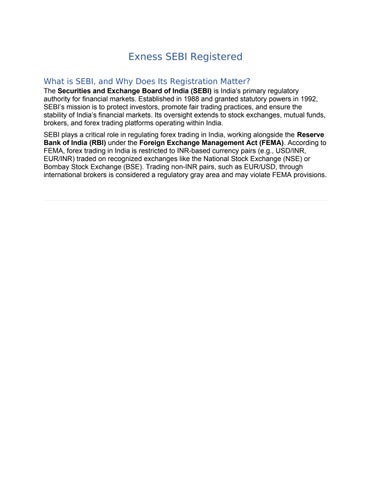
What is SEBI, and Why Does Its Registration Matter?
The Securities and Exchange Board of India (SEBI) is India’s primary regulatory authority for financial markets. Established in 1988 and granted statutory powers in 1992, SEBI’s mission is to protect investors, promote fair trading practices, and ensure the stability of India’s financial markets. Its oversight extends to stock exchanges, mutual funds, brokers, and forex trading platforms operating within India.
SEBI plays a critical role in regulating forex trading in India, working alongside the Reserve Bank of India (RBI) under the Foreign Exchange Management Act (FEMA). According to FEMA, forex trading in India is restricted to INR-based currency pairs (e.g., USD/INR, EUR/INR) traded on recognized exchanges like the National Stock Exchange (NSE) or Bombay Stock Exchange (BSE). Trading non-INR pairs, such as EUR/USD, through international brokers is considered a regulatory gray area and may violate FEMA provisions.
For Indian traders, choosing a SEBI-registered broker offers several advantages:
· Legal Protection: SEBI-registered brokers are accountable to Indian authorities, providing legal recourse in case of disputes.
· Compliance with Local Laws: These brokers adhere to strict guidelines on leverage, hedging, and fund segregation, ensuring alignment with Indian regulations.
· Investor Safety: SEBI enforces transparency and ethical practices, reducing the risk of fraud or mismanagement.
Given these benefits, the question of whether Exness is SEBI-registered is critical for Indian traders seeking a secure and compliant trading experience.
Is Exness SEBI Registered?
The straightforward answer is no, Exness is not registered with SEBI. While Exness holds licenses from several reputable international regulators, it does not have a formal license from SEBI or the RBI to operate as a regulated broker in India. Let’s explore Exness’s regulatory framework to understand what this means for Indian traders.
Exness’s Global Regulatory Licenses
Exness operates under multiple regulatory authorities worldwide, which underscores its credibility as a global broker. Its key licenses include:
· Financial Conduct Authority (FCA) in the United Kingdom (Exness UK Ltd, Financial Services Register number 730729). The FCA is a Tier-1 regulator known for its stringent standards on transparency and client fund protection.
· Cyprus Securities and Exchange Commission (CySEC) in Cyprus, regulating Exness’s European operations and ensuring compliance with EU financial laws.
· Financial Sector Conduct Authority (FSCA) in South Africa (Exness ZA Pty Ltd, FSP number 51024), which oversees market conduct and client protection.
· Financial Services Commission (FSC) in Mauritius and the British Virgin Islands, regulating non-EEA operations.
· Capital Markets Authority (CMA) in Kenya, where Exness operates as a non-dealing online foreign exchange broker.
· Central Bank of Curacao and Sint Maarten (CBCS), regulating Exness B.V. as a securities intermediary.
These licenses demonstrate Exness’s commitment to operating within international regulatory frameworks. However, none of these regulators have jurisdiction in India, and their oversight does not extend to compliance with SEBI or RBI regulations.
Why Isn’t Exness SEBI Registered?
Exness’s lack of SEBI registration stems from its operational model as an international broker. SEBI’s regulations are designed for brokers offering INR-based currency pairs on Indian exchanges. Exness, however, provides access to a broader range of financial instruments, including non-INR forex pairs (e.g., EUR/USD), which fall outside SEBI’s regulatory scope. Registering with SEBI would require Exness to limit its offerings to INR-based pairs and comply with strict leverage and hedging restrictions, which may not align with its global business model.
While Exness’s international licenses provide a level of assurance regarding fund security and transparency, they do not replace the legal protections offered by SEBI registration for Indian traders.
Is Trading with Exness Legal in India?
The absence of SEBI registration places Exness in a regulatory gray area in India. While Exness is not explicitly illegal, trading with the platform may contravene FEMA regulations, particularly if Indian traders engage in non-INR currency pairs. Here’s a closer look at the legal implications:
· FEMA Restrictions: Under FEMA, Indian residents are prohibited from trading non-INR currency pairs through international brokers. Trading such pairs via Exness could be considered a violation of Indian law.
· Taxation Challenges: Earnings from forex trading are subject to taxation in India. Since Exness operates outside India’s regulatory framework, reporting profits to Indian authorities may be complex, increasing the risk of non-compliance.
· Limited Legal Recourse: In the event of disputes or fund mismanagement, Indian traders using Exness may have limited recourse through Indian authorities, as SEBI does not oversee the broker’s operations.
Despite these challenges, Exness remains popular among Indian traders due to its competitive trading conditions, such as low spreads (starting at 0.2 pips on AUD/USD) and high leverage. However, traders must weigh these benefits against the legal and financial risks of using a non-SEBI registered broker.
✅ Join Exness now! Open An Account or Visit Brokers 👈
Risks of Trading with a Non-SEBI Registered Broker
Trading with a broker like Exness, which lacks SEBI registration, carries several risks for Indian traders:
· Legal Risks: Trading non-INR pairs through Exness may violate FEMA, potentially leading to penalties from Indian authorities.
· Limited Dispute Resolution: Without SEBI oversight, Indian traders may struggle to resolve disputes or recover funds in case of issues with the broker.
· Fund Security Concerns: While Exness adheres to international standards for fund segregation and security, Indian traders may not benefit from the same protections as those offered by SEBI-registered brokers.
· Tax Compliance: Reporting forex earnings from an offshore broker can be complex, increasing the risk of unintentional tax violations.
· Currency Exchange Costs: Depositing or withdrawing funds from Exness may involve international transfer fees and currency conversion costs, which can erode profits.
To mitigate these risks, Indian traders should carefully evaluate their priorities and consider whether trading with a SEBI-registered broker is a safer option.
Benefits of Trading with Exness for Indian Traders
Despite its lack of SEBI registration, Exness offers several advantages that make it appealing to Indian traders:
· Competitive Spreads: Exness provides some of the lowest spreads in the industry, starting at 0.0 pips on certain accounts, making it cost-effective for high-frequency traders.
· High Leverage: With leverage up to 1:2000, Exness allows traders to amplify their positions, though this comes with increased risk.
· Diverse Asset Classes: Exness offers access to forex, commodities, indices, stocks, and cryptocurrencies, providing more trading options than many SEBI-registered brokers.
· Advanced Platforms: Support for MT4 and MT5 ensures a robust and user-friendly trading experience.
· Global Regulation: Licenses from FCA, CySEC, and FSCA provide a layer of security and transparency, even if they don’t align with Indian regulations. � How to Verify a Broker’s Regulatory Status
To ensure you’re trading with a legitimate broker, follow these steps to verify its regulatory status:
· Check the Broker’s Website: Exness displays its license numbers and regulatory details on its official website under sections like “About Us” or “Legal Information.”
· Visit Regulatory Authority Websites: Cross-check Exness’s license numbers on the official websites of regulators like the FCA, CySEC, or FSCA to confirm authenticity.
· Consult SEBI’s Website: Visit SEBI’s official portal and navigate to the “Intermediaries/Market Infrastructure Institutions” section. Select “Recognized Intermediaries” and “Currency Derivatives” to verify if a broker is SEBI-registered. Exness will not appear on this list.
· Contact Regulators Directly: If in doubt, reach out to SEBI or other regulators to confirm a broker’s status.
By taking these steps, traders can ensure they’re working with a broker that aligns with their regulatory preferences.
SEBI-Registered Alternatives to Exness
For Indian traders prioritizing compliance with local laws, several SEBI-registered brokers offer forex trading services, albeit with limitations on currency pairs and leverage. Here are some notable alternatives:
· Interactive Brokers:
· SEBI Registration: NSE – INZ000217730, BSE – INE011288033
· Offers trading in INR-based currency pairs with competitive spreads (0.6 pips on EUR/USD for high-volume trades).
· Minimum deposit: $100; monthly activity fees apply if commission thresholds aren’t met.
· NordFX:
· SEBI Registration: NSE – INZ230000739
· Provides access to INR-based forex pairs with zero-spread accounts (0.0035% commission per order).
· Minimum deposit: $5, suitable for beginners.
· Forex.com:
· SEBI-registered through its parent company, GAIN Global Markets Inc.
· Offers trading in 80+ currency pairs, though limited to INR pairs for Indian traders.
· Spreads start at 1.1 pips; minimum deposit: $100.
These brokers comply with SEBI and RBI regulations, ensuring legal protection and alignment with FEMA guidelines. However, they may offer fewer trading instruments and lower leverage compared to Exness.
Tips for Indian Traders Considering Exness
If you’re an Indian trader contemplating using Exness, here are some practical tips to trade safely:
· Understand FEMA Regulations: Familiarize yourself with FEMA rules to avoid unintentional violations. Stick to INR-based pairs if trading through Indian exchanges.
· Verify Fund Safety: Ensure your funds are secure by confirming Exness’s compliance with international regulators like the FCA or CySEC.
· Consult a Tax Professional: Work with a tax advisor to report forex earnings accurately and comply with Indian tax laws.
· Use Secure Payment Methods: Opt for payment methods that minimize international transfer fees and ensure smooth deposits and withdrawals.
· Start Small: Test Exness with a small deposit to assess its platform and services before committing significant capital.
· Consider SEBI-Registered Brokers: If legal compliance is a priority, explore SEBI-registered alternatives to avoid regulatory risks.
Conclusion: Should Indian Traders Use Exness?
Exness is a reputable global broker with a strong regulatory framework, competitive trading conditions, and a diverse range of financial instruments. However, its lack of SEBI registration means it operates in a regulatory gray area in India, posing legal and financial risks for traders. While Exness’s international licenses provide a level of security, they do not offer the same protections as SEBI-registered brokers, particularly in terms of legal recourse and compliance with FEMA.
Indian traders must carefully weigh the benefits of Exness’s low spreads and high leverage against the potential risks of trading with a non-SEBI registered broker. For those prioritizing compliance and safety, SEBI-registered brokers like Interactive Brokers, NordFX, or Forex.com may be better options, despite their limitations on trading instruments. Ultimately, the decision depends on your risk tolerance, trading goals, and commitment to navigating India’s complex forex regulations.
Before trading with Exness or any broker, conduct thorough research, verify regulatory credentials, and consult financial and legal experts to ensure a secure and compliant trading experience. By staying informed and cautious, Indian traders can make empowered decisions in the dynamic world of forex trading.
✅ Join Exness now! Open An Account or Visit Brokers 👈