

ted to foster understanding across cultures, promoting dialogue, and building stronger bridges among religions.
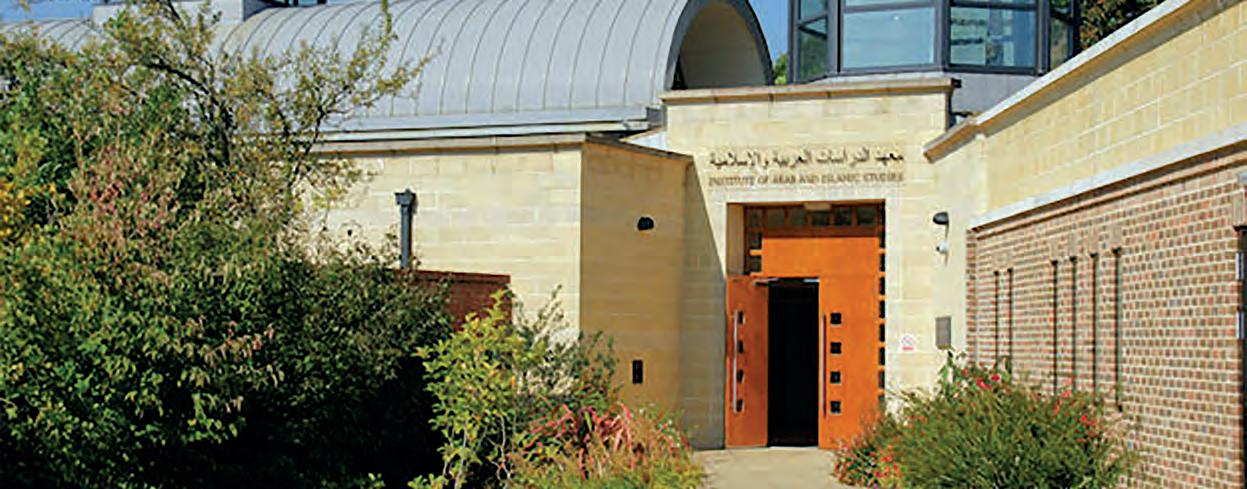
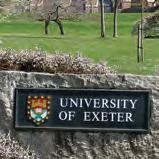
THE University of Exeter’s Institute of Arab and Islam Studies have recently joined the Alwaleed Cultural Network. The network brings together global universities and cultural institutions to help create a more inclusive and interconnected world.
Established in 2022, it is commit -
Part of the effort includes establishing the number of academic research centre s in UK, US and the Middle East.

Part of the effort includes establishing the number of academic research centres in UK, US and the Middle East
Talking to Exepos é William Gallios, Director of IAIS, stated “Exeter’s joining the Alwaleed Cultu ral Network represents a deepening of ties with Alwaleed Philanthropies, who have been longstanding supporters of travel scholarships which allow Exeter students to study and research in the Arab world.
The special value of the Cultural Network lies in the opportunities it affords Exeter to collaborate with partners, such as the
University of Edinburgh, on areas of common interest such as Palestine Studies (and the preservation of threatened Palestinian cultural and documentary heritage in particular)’’.

Which allow Exeter students to study and research in the Arab world
Emily S Rizzo & Lauren Walsh Editor-in-Chief & Deputy Editor
ANEW system to be used for freedom of speech complaints at universities is being introduced and will be implemented from the 1st of September 2026, to align with the beginning of the new academic year. It builds on the stronger laws regarding freedom of speech on university campuses that came into effect in August of last year.
The system will now allow staff, nonstudent members and visiting speakers to voice their complaints directly with the Office for Students (OfS), although it will not be open to students, who can raise their concerns first to their university, and then
to an independent adjudicator. The new complaint system is notably free of charge, while the current system can involve costly judicial reviews or employment tribunals, and allows the OfS to review universities’ handling of incidents, as well as recommending changes to their freedom of speech processes, and compensation for those affected.

The new complaint system is notably free of charge.
Furthermore, from April next year, if universities are found guilty of failing to protect free speech, they could face much higher fines than they do at the moment. The new fines will stand at £500,000 or two percent of the university’s income. For context many universities’ income
can lie in the region of millions of pounds, into the billions for some, meaning that a two percent fine could result in much harsher penalties than have previously been issued for failure to protect free speech. For example, in March 2025, the University of Sussex was fined £585,000.
Over the last six years, the FSU (Free Speech Union) shared that almost one in ten of its cases dealt in some way with universities “failing to protect free speech.” The new provisions were first proposed by the last Conservative government, followed by the Labour government’s removal of another proposal that would have allowed individual action against universities in civil courts.
Professor Malcolm Press CBE DL, President of Universities UK, has said “Free speech and academic freedom are
critical to our universities, to the education of students, and to the generation of new ideas. Universities are bound by law to protect both. We will support our members to comply with the new regulations and are committed to working with the Government, the Office for Students and the Office of the Independent Adjudicator for Higher Education as these new duties are implemented. Protecting free speech while preventing harassment, hate speech, and radicalisation are complex tasks involving finely balanced decisions.”
In fact, the BBC reports that the OfS technically holds the ability to remove “the right to provide university level education” under this new system, while the UUK (Universities UK) emphasises that these new powers should be used “fairly, transparently and proportionally”.
Devonshire House, Exeter, Devon, EX4 4PZ
Editors
Print: Kayleigh Swart and Emily Sara Rizzo
Online: Harry Morrison and Zandie Howells
Print Deputies: Amberly Wright, Lauren Walsh and Nina Exton
Online Deputies: Michelle Chung and Daniel Grayshon editors@exepose.com
News Editors
Print: Isabella Brooks and Daisy Newbury
Online: Zandie Howells news@exepose.com
Features Editors
Print: Ria Brown-Aryee and Bethany Last Online: Lucas Taylor-Kent features@exepose.com
Climate Editors
Print: Poppy Fellows
Online: Freddy Purcell climate@exepose.com
Comment Editors
Print: Tom Richardson and Lucas Eley
Online: Orlando McKillop and Lucy Parsons comment@exepose.com
Satire Editors
Print: Christopher Lyndsay
Online: Daniel Grayshon satire@exepose.com
Lifestyle Editors
Print: Yasmine Al-Saket
Online: Hayley Bell and Sofia Tapia lifestyle@exepose.com
Editors
Arts & Lit
Print: Isabel Bratt and Amber Platel
Online: Zoe Fry artsandlit@exepose.com
Music Editors
Print: Sarah Gould and Katie Roberts
Online: Amelie Marah and Maya Dallal music@exepose.com
Screen Editors
Print: Beth Casey and Charlotte Isbell
Online: Kyle Cleary and Lachlan Evans screen@exepose.com
International Editors
Print: Jed H. Gibbins and Antoni Kałduński Online: Anoushka Dutta and Lola Milroy-Tompkins international@exepose.com
Sci-Tech Editors
Print: Julia Szewczyk
Online: Anna Tennant and Rosie Merritt sci-tech@exepose.com
Sport Editors
Print: Annabel Gowling Online: Connor Myers sport@exepose.com
Social Media Executive: Megan Wynn
Finance Executive:Orlando McKillop
Welfare Executive: Sophia Cuschieri
Events Executive: Audrey Yuen
Podcast producers: Harry Morrison and Alannah Driscoll


@exepose
@exepose
facebook.com/exepose

issuu.com/exeposeexeter
Advertising editors@exepose.com
SOMEHOW we have arrived at our final issue as a committee. This has been the most crazy, fun, stressful and busy year that any of us have had at university. Although we are sad to say goodbye, we are also very excited to handover to our new committee. We cannot wait to see all the incredible things they'll get up to.
And so, for the final time if there's an important issue at the university or in Exeter that we've missed, please email us at editors@exepose.com.
In this issue, News looks at the new freedom of speech complaints system for universities and shares how the new Renter's Rights Act will affect students. Features reflects on students' times at Exeter while Comment discusses the politics behind women's fashion. In Exhibit, Lifestyle gives some tips on getting more sleep, Screen reviews some of the most recent shows and movies, and Excetera Excetera shares a new student friendly recipe.
In Sci-Tech we discuss if we need a multi-step skincare routine and Sport looks at the recent tables and shifting positions in university sport. If you can't get enough of Exeposé, you can check out our podcast and website which is updated on a weekly basis!
For the final time, thank you to all our editors, writers and general helpers who work so hard to make this paper possible! We have been blessed with
such an incredible team and we are going to miss every single one of you. We hope you all enjoy this issue and aren't too swamped with exams and deadlines. This senior team is offically clocking out.
Emily, Kayleigh, Lauren, Amberly and Nina






Unemployment rises: PostGrad Jobs Harder to Attain
IT used to be that a degree came with a job guaranteed but the percentage of job satisfaction and pay advantages for graduates is down, and unemployment is up. This can be put down to more people than ever getting university degrees, the job mar ket changing dra matically with technological advancements, and the struggling economy. More courses for the university businesses to keep churning and lower entry standards devalue the purpose of academia. Falls in available jobs by notable margins and the worth of a degree lower than ever it’s questionable how much of an advantage graduates genuinely have in 2026.
India launches new university dedicated to wildlife studies

INDIA has recently launched the world’s first integrated global university, that is entirely dedicated to wildlife and veterinary sciences –Vantara University. This university comes at a time when the world is battling against major biodiversity loss, habitat changes and destruction and the spread of disease. The university has stated that it offers a solution to the contemporary wildlife challenges. The university was founded by Avant Ambani who stated that this is a “1,000-year vision for the planet”. The university will integrate rescues operations, research, policy decisions and training. The university is situated on a wildlife rescue and has a close alignment with the Vantara Initiative which is an established wildlife rescue and rehabilitation project. This connection aims to bridge the gap between academic knowledge and practical skills that can be used in these projects.
Defending Democracy: An Obvious Vocation for Universities
UNIVERSITIES can no longer afford to stay silent on democracy. With 74 percent of the world living under autocratic rule, according to the VDem Institute's 2026 Democracy Report, higher education institutions are uniquely positioned to push back.
Their core values: academic freedom, institutional autonomy, and integrity, are inseparable from functioning democracies. When these erode, as seen in Trump's America and Orbán's Hungary, universities suffer first.
But engagement must go beyond campus. Com munity outreach, ethical education, and public discourse are all part of the mission. Universities that retreat into insularity risk becoming irrelevant — and complicit — in democracy's decline.

Graduates are Spending Housing Deposits to Pay Back Loans
OR many graduates, student loan debt is no longer a distant abstraction it is standing directly between them and homeownership. Despite the government's newly announced six percent interest rate cap, most Plan Two borrowers will still see rates rise in September. One graduate watched her £51,529 debt balloon to £65,879 despite years of repayments. Her solution: raid her house deposit savings to clear her postgraduate loan in a lump sum. It is a trade-off more graduates face. Monthly repayments that make no dent on ballooning debt are quietly killing a generation's financial future

Amberly Wright Deputy Editor
IT is estimated that PCOS affects 10-13 percent of reproductiveaged women globally, with individuals with PCOS at a higher risk for developing mental health issues, as well as physical conditions such as insulin resistance, due to imbalances in hormones. Currently, there is no cure for PCOS.
Another common reproductive condition is endometriosis, which occurs when cells similar to the lining of the womb are found elsewhere in the body, causing pain, inflammation, and scar tissue. Around one in ten AFAB individuals are affected by endometriosis. Closely related to endometriosis is adenomyosis, where the cells similar to the lining of the women grow within the muscle wall of the womb.
It is highly recognised that these conditions can lead to mental health struggles, with PCOS closely related to depression and anxiety. Studies reveal that individuals with PCOS are four to seven times more likely to have anxiety and depression, and three to six times as likely to have an eating disorder. Conditions like endometriosis also create debilitating pain and fatigue, leaving individuals unable to do their everyday activities, taking a toll on their mental health.
To investigate the effects of reproductive conditions such as PCOS on mental health, students were asked
about their experiences throughout the diagnosis process, and any mental health struggles they faced. Over half of students surveyed had an official diagnosis, with the remaining students having symptoms, but unsure what condition they have. Over 50 percent of students surveyed had PCOS.
Throughout the survey, there was no consistent way in which individuals were diagnosed. On individual was diagnosed by accident during treatment for an eating disorder, and one received speculation from their GP but never a diagnosis. They visited the GP and sexual health clinic six times during their first year at Exeter, including having cervical exams and blood tests. Eventually, they were referred for an ultrasound, where the process wasn’t explained to them. After their scan, they were told by a nurse that they “likely have PCOS, but as I’m not overweight or looking to conceive it’s not that big of a deal, and I don’t need to do anything about it”.

Throughout the survey, there was no consistent way in which individuals were diagnosed
When asked about the mental health effects, students felt it is a “battle to get taken seriously”. One said, “Doctors blaming my symptoms
Amberly Wright Deputy Editor
AJOINT investigation between Al Jazeera and Liberty Investigates found that twelve British universities paid Horus, private firm run by former military intelligence officials, to spy on student protesters and academics.
Twelve British universities paid a private firm to spy on student protestors and a cademics
on my IUD, but overlooked by other symptoms, and the fact my mother was diagnosed with PCOS as a young adult”. They feel that their mental health is affected, especially experiencing fatigue, anxiety, and insomnia, as well as “feeling dismissed because I’m a woman”.
One student, who got told by the GP that “there was no point having a diagnosis as the treatment would be the same, and the diagnosis process would be difficult and invasive” said, “I feel anxious about my upcoming period as I know it may be debilitating but do not currently have an effective treatment”. They also worry that they will be unable to complete exams due to pain on exam days.
Another student felt “worried I’m living my life “wrong” according to my diagnosis. There is so much conflicting evidence information when it comes to PCOS (such as blood sugar, exercise, caffeine, etc), and it gives me a lot of anxiety”.
One student, who has vaginismus, felt worried their partner would leave them due to problems with intimacy.
Students felt that increased awareness would help, as conditions such as PCOS and endometriosis are still stigmatised and left out of conversations. One student felt the “lack of funding for women’s reproductive issues is incredibly depressing, like my problem might never be understood by medical practitioners, let alone diagnosed”.
Many students felt frustrated that they are having to think about
pregnancy at such a young age. One student said “women’s health needs to be addressed more seriously. Just because I don’t want kids now, doesn’t mean my very real symptoms aren’t affecting me now”. Another said, “Having doctors speak to you at the age of 18/19 about how you will most likely need support from doctors when trying [to conceive] is overwhelming to think about at such a young age”.
‘Women’s health needs to be addressed more seriously. Just because I don’t want kids now doesn’t mean my very real symptoms aren’t affecting me now’
Rose, your Communities and Equality Officer, said, “Living with menstrual health conditions can affect every part of university lifefrom wellbeing and mental health to attendance, study and day-today routines. Balancing university alongside chronic pain and fatigue isn’t easy, and students deserve support that understands those challenges.
We’re taking this forward by working directly with the University to improve how support is delivered — from pushing for clearer and more flexible academic adjustments to strengthening staff awareness so students feel understood when asking for help.
This work is already underway,
and we’ll keep using feedback from nearly 500 students to drive practical changes that make a real difference.”
A University of Exeter spokesperson said: “for students who have concerns about how their physical health may be impacting on their mental health, it may first be relevant to discuss their circumstances with their GP who can decide the appropriate course of action. The University of Exeter also offers mental health support to students for whom their health concerns are impacting upon their wellbeing and their studies."
The survey shows that, not only are students being let down by services, with some being turned away at the height of their struggles, but they are also suffering with their mental health and wellbeing. This shows that more support needs to be given to young women when they are diagnosed with conditions such as PCOS, as the condition carries mental and physical burdens that no individual should have to face alone at such a young age.
Not only are students being let down by services, with some being turned away at the height of their struggle, but they are also suffering with their mental health and wellbeing
security firms to ‘spy’ on pro-Palestine students
The firm, which describes itself as a “leading intelligence” firm, has been paid around £440,000 by UK universities between January 2022 and March 2025.
Among the individuals monitored were a Palestinian academic who visited Manchester Metropolitan University, and a pro-Gaza PhD student at LSE. The University of Bristol provided the firm with a list of students they wished to be monitored, including pro-Palestinian activists and animal rights groups.
An article by The Bristol Cable highlighted an email with the subject line “University Encampment Update”, released as part of an FOI, saying, “Could you also add [redacted] to the circulation for Bristol”, signing off the email with “Our senior team are delighted with the briefing”.
Since the piece’s release, many universities have come forward to defend their case. The University of Sheffield said it used external services to scan for issues that may affect the university, such as protests, adding that they never shared student data. Imperial College London denied that the services Horus provided were used to survey students. There is nothing to currently suggest this activity is illegal.

Since the piece’s release, many universities have come forward to defend their case
In the original report, the University of Exeter were mentioned, but have since been removed upon the university's request due to the
university not being involved in any of the situations described in the original piece. The university does not wish to comment at this time.
Wikimedia Commons
which is wiped, refurbished, and given back to those who need it.
Kitty Carter
FIXY donation points are now part of Libraries Unlimited’s ‘Together for Tomorrow’ climate initiative, funded by the National Lottery Climate Action Fund. This donation program asks for unwanted tech,

This donation's programme asks for unwanted tech, which is wiped, refurbushed, and given back to those who need it
Donating your old, unused phones or laptops — and other items — is not only a way to give back to the
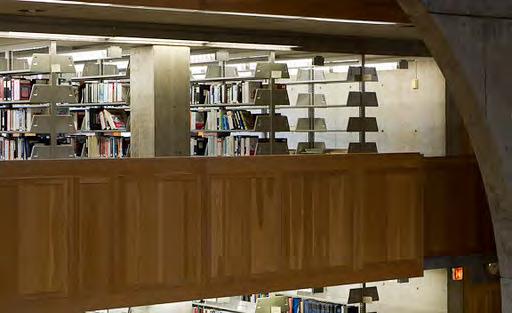
community through libraries but it's also a way to tackle digital waste. Managed by Resource Futures and supported by Somerset Council, Fixy partnered with Donate It, who are fully equipped to responsibly wipe devices in compliance with GDPR regulations.
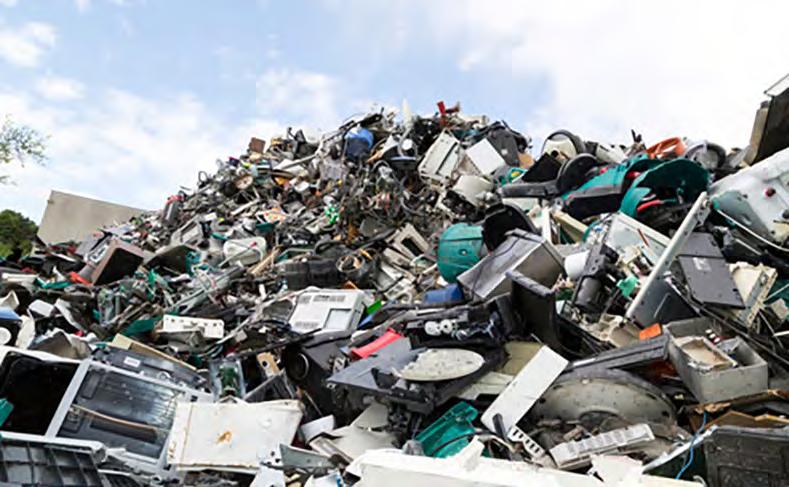
The UK generates six million tonnes of e-waste per year and is the second largest producer of e-waste globally. Often, tech is not disposed of properly, with individuals opting to discard phones and other devices into general waste.
The UK generates six million tonnes of e-waste per year and is the second largest producer of e-waste globally.
Projects like Fixy are instrumental in educating individuals on the value of recycling tech and giving back to their local communities. Digital poverty is also what Fixy aims to tackle, hence their emphasis on refurbishing
items so that they can be donated to those who require them. Up to 19 million adults face tech poverty in the UK, with serious consequences on their abilities to socialise, access education, and work. By partnering with Libraries Unlimited, Fixy can help to build stronger and more inclusive communities, whilst promoting more sustainable
ways to deal with digital waste. Exeter Library’s donation point opened at the end of April. You can find the full list of accepted items on the Libraries Unlimited website.

Fixy can help to build stronger and more inclusive communities, whilst promoting more sustainable ways to deal with digital waste.
IN r ecent weeks, the Cadbury Foundation has donated
£5,000 to CEDA, a Exeter based disability support service, as part of their initiative to give back to their community.
CEDA, which stands for Community, Equality, Disability, and Action, is a charity dedicated to growing the social inclusion of people
with physical, sensory or learning disabilities. They aim to empower disabled people so that they are connected, happy and seen. Donations such as this allow the charity to develop its services e.g. expand their activity hub and growing their community service, to ensure they reach those who need their help. Marilyn Frankum, Credit Controller/Credit Risk Lead at Mondelēz International nominated CEDA, due to the immense help they have given her granddaughter, who has been given the confidence to
start her own radio show. Frankum's nomination has been supported by many of her colleagues in Crediton.
They aim to empower diabled people so that they are connected, happy and seen
The Cadbury Foundation was established in recognition of George
and Richard Cadbury, who believed in the importance of ensuring the welfare of their employees and wider communities. Last year the foundation celebrated its 90th anniversary and has donated over £1 million to charities during that time. The award of £5,000 is part of an initiative which has been running for 14 years. It is for the colleagues of Mondelēz International across the UK & Ireland, allowing them to nominate charities and projects that are important to them. The award allows recipients to take advantage
of a better way of life, and expands the future opportunities available to those in need of disability support.
The award allows recipients to take advantage of a better way of life, and expands the future opportunities available to those in need of disability support
Kayleigh Swart Editor-in-Chief
THE University of Exeter’s student Guild has recently announced ‘The Inclusive Hair Project’ which is being led by the Guild’s current Communities and Equalities Officer Rose Arhin. This project came from students speaking up about the lack of afrotextured hair care available in Exeter and across Devon. The project aims to address this gap by calling on local businesses, and training providers to expand Afro hair education/services.
The project aims to address this gap by calling on local businesses and traning providers
In their press release the Guild highlight how many students have to travel to other cities (such as London, Bristol and Plymouth) to access the services they need. This comes with expensive travel costs.
In this press release they also state: “Access to appropriate hair care is not a minor con -
venience, it touches on dignity, inclusion and whether people genuinely feel welcome and supported in the region. It also represents a chance for the region to develop new skills and better serve a market that’s already here”.

The project has already made steps of addressing this gap by attempting to reduce costs for students in Exeter. They have given our hair bonnets, run peer workshops and are currently planning a termly pop-up salon to help students receive the services they need without having to travel. Going forward, the Guild’s press release outlines that the project is looking to connect with local salons, barbers and education providers to develop Afro hair training and improve local services.
“This region has the chance to create services that are inclusive, accessible, and right for everyone. While it may seem like a small thing,
it’s about more than hair. It’s about people feeling they belong and are included. We want Devon to be somewhere everyone can access the services they need, without having to travel hours or spend money they don’t have.” says Rose Arhin.
‘This region has the chance to create services that are inclusive, accessible and right for everyone’

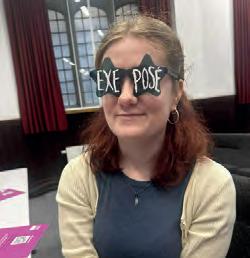

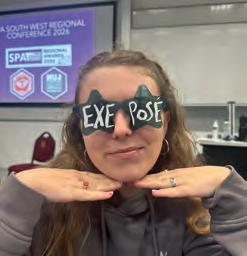

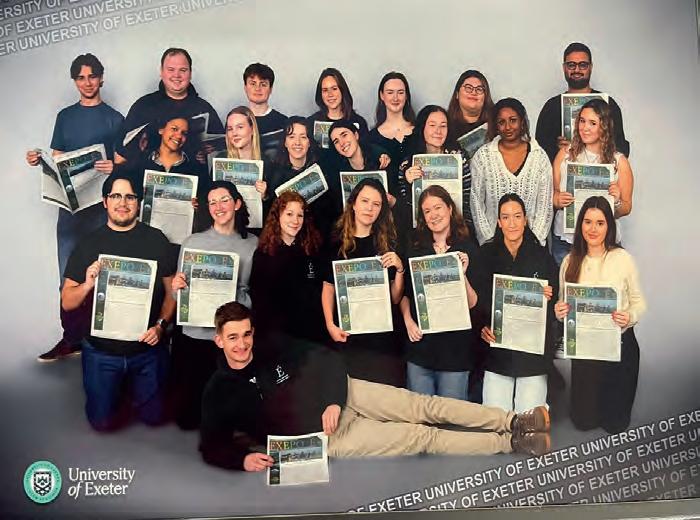
Exeposé has been such a huge part of my university experience, I’m so glad I joined the newspaper at the freshers fair in my first year in Exeter . I have met incredible people and made so many wonderful memories through it, including crash outs in the media office and Paul Hollywood jump scares. I’m going to miss Exeposé so much but I can’t wait to see what next year’s committee get up to!
Exeposé has been the most fun (and stressful) part of my fourth year! I have been fortunate enough to work with the most amazing team possible and I am gonna miss all of them so so much! There is no other group of people I’d rather cry in the media office with <3
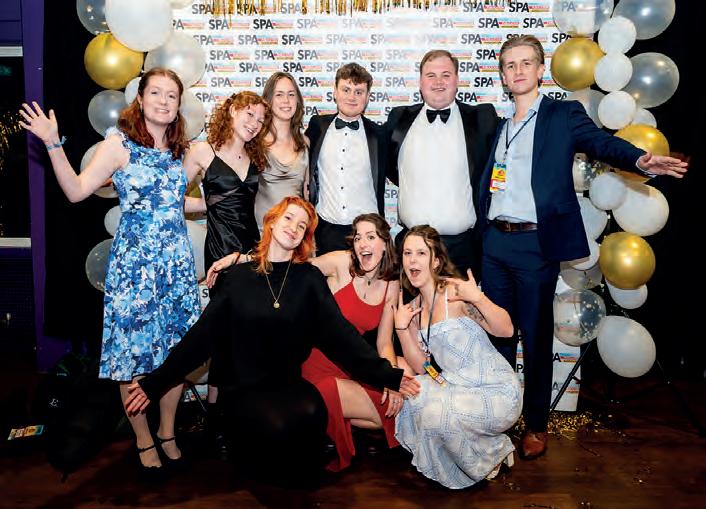




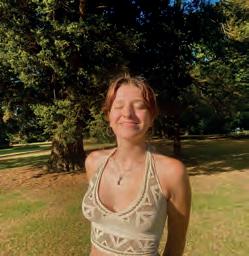
Despite the legal crash-outs, last minute panics, and loooong hours fighting InDesign, Exeposé has been the best part of my time at uni, and I’m sure I’ll somehow miss it even though it nearly drove me to insanity :) Not to brag, but I had the best team, and we had the best times. Here’s to us, and the left-wing trash we
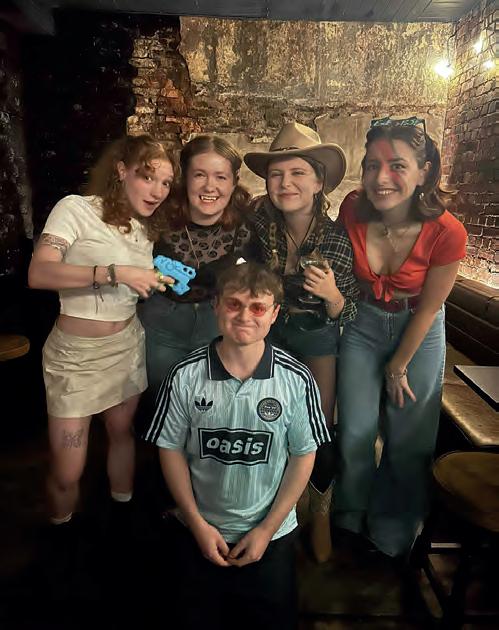

Emily S Rizzo Editor-in-Chief
ON May 1st, the Renters’ Rights Act came into force, and brought several important changes to English tenants renting from private landlords.
Under the new laws, fixed term contracts are banned, and all contracts will be rolling, or “periodic.” The government says this will give tenants greater security, allowing them to stay in the property if they so wish, and allowing them to leave with two months’ notice if not.
The Act also makes it harder for landlords to evict renters, with Section 21 being abolished, requiring landlords to provide a valid legal reason for evictions. If they have a legally justifiable reason, landlords are still required to give tenants four months’ notice. Also, landlords must reasonably
consider tenants’ requests for pets.
Importantly, landlords cannot ask for more than one month’s rent payement in advance, and cannot charge termly or annually unless renters request this. Increases in rent are also capped at once per year, avoiding unfair changes in price during tenancies.
The Act also makes it harder for landlords to evict renters, with section 21 beign abolished
The changes are automatic, and tenants won’t need to sign a new contract. Landlords or agents must provide renters with an information sheet about the changes. This means they should serve renters with an eviction notice before May 1st, most likely confirming tenants’ original contract end date. If this has not
DAME Ijeoma Uchegbu came to the University of Exeter on Thursday 30th April to discuss medicine for an event organised by The Debating Union and Exeter Medical Sciences Society. She began with a story about a girl who should have died.
Dame Ijeoma Uchegbu came to the UOE on Thursday 30th April to discuss medicine
When Uchegbu was about 15 years old a family friend came to stay. The girl was sporty, witty, and someone that the teenage Uchegbu looked up to. However, she became gravely ill. She lay in bed, barely breathing. Eventually, a doctor arrived with what appeared to be a syringe of water. He administered it, and left. The next morning, Uchegbu saw that the girl had awoken.
"Something magical seemed to have taken place. It felt like I had seen a miracle", Uchegbu recounted. "I thought, I don't understand what happened here, but I want to understand it."
From the root of this curiosity
happened, tenants are required to give the two-month notice before their leaving date. For joint tenancies, one person’s end date applies to everyone in the property.
These changes will mostly not apply to students living in university halls and other student accommodation. For those that signed a contract before May 1st, landlords will use a student-specific Ground 4A eviction notice during the
tenancy, so they can relet the property.
Kira, your Student Living Officer, said, "The recent changes to renters’ rights can be pretty confusing, especially when you’re already juggling university life. That’s why we’re focusing on making sure you’re informed, supported and confident in what to do next.
We’ve created clear, straightforward guidance to help you understand the

blossomed a remarkable career.
Uchegbu is now President of Wolfson College, Cambridge, a professor of pharmacy at UCL, and one of the UK's leading nanoscientists.
She spoke in the Parker Moot Lecture Theatre, to an audience of University of Exeter students, about her science, path through academia, and her belief in the importance of communication in medicine.
Nanoparticles are extraordinarily small, thousands of times smaller than a human hair. Through them, it becomes possible to deliver drugs more precisely in the body.
Her team's eye drop formulation, which entered clinical trials at the end of 2024, illustrates their value. Existing eye drops allow drug molecules to migrate from the eye into the bloodstream, producing wider side effects. Her formulation, using nanoparticle technology, keeps the drug where it's needed.
"The drug molecules stayed in the eye tissue and did not spill over into the blood", she said. "That is very different from some of the eye drops currently on the market."
Many in the room will already have encountered nanotechnology more directly than they realise.
The Pfizer COVID vaccine used lipid nanoparticles to deliver messenger RNA, a genetic material that instructs the body to produce an immune response. "If you had the Pfizer vaccine, you had
nanotechnology in your arm", she said.
Many in the room will already have encountered nanotechnology more directly than they realise
One frontier her team is exploring is the nose. Getting drugs into the brain is notoriously difficult because of the blood-brain barrier, which resists most compounds travelling from blood into neural tissue. The nerves involved in smell offer a potential alternative route. She said that, delivering nanoparticles through this route, her team "can switch off genes and replace or deliver genetic material." Possible applications for this technology include pain management and Parkinson's disease.
Uchegbu, however, argued that these scientific advances will only help people if those people trust and understand the science behind them, and that responsibility falls on scientists and doctors.
“We are seeing a growing distrust of science, partly because people do not always understand it. When something sounds unfamiliar, people become suspicious." Vaccine hesitancy costs lives, and it is the result of the science behind it not being explained clearly enough. "You will have to deal with patients who trust 'Dr Google' or
key changes and how this affects you on our website (go.exeterguild. com/renters-rights) and Instagram, so it’s easy to find when you need it.

Tenants are required to give the two month notice before their leaving date
If you’re unsure about anything to do with your tenancy, landlord, or rights, you’re not on your own. We offer free, confidential advice, so take a look at our resources or get in touch before making any decisions at exeterguild.com/support. We’re not stopping there. We’re working with the city to shape future housing plans, pushing for clearer ways to find housing options in one place, and improving on-campus housing allocation processes so renting works better for students.”
'Dr Claude' more than they trust you." Her advice was simple: talk to people. "If you are on a plane and someone sitting next to you asks what you do, tell them. Explain what you are working on, but speak in a way they can understand." It was important, she explained, to never talk down. "You have to talk about science in a way people understand, but you must not talk down to them."
Uchegbu's own path was not straightforward. She returned to the UK from Nigeria as a single mother with three young children, one of them barely a year old, and completed a PhD while living at one point in a bed and breakfast. She chose nanotechnology for her doctorate, despite never having heard of the field, simply because it sounded more interesting than the alternative, even though it paid less. "I have already given up a lot", she recalled thinking. "If I am going to do this, I should do something I am actually interested in."
She chose nanotechnology for her doctorate despite never having heard of the field
This was followed by honest advice on what research realistically entails. "Nine times out of ten, things do not work. You get up, start an experiment,
and often what you get is failure." Uchegbu described injecting animals during her PhD, and returning the next morning to find they had died. "I just started weeping, because it meant I had got something badly wrong."
This is why, she told the audience of Exeter students, the problems you set out to solve should matter to you personally. "Because there are so many setbacks, you have to care about the question you are trying to answer. If you do not, it becomes very difficult to keep going."
‘Because there are so many setbacks you have to care about the question you are trying to answer’
She was, however, equally clear about the more appealing side of research. "You can have an idea in the evening, wake up the next morning, test it, and suddenly you may be the first person in the world to know something. That is extraordinary." That sense of curiosity, Uchegbu suggested, is where it all begins. Standing in a room in Nigeria at fifteen, watching someone recover from what had seemed like certain death, and deciding she had to understand it.

Positions held: Print Music
It’s been a pleasure to be a part of the Exeposé committee. I’m so grateful to all of the friends I have made in this society and I can’t wait to see how the newspaper evolves in the future!

I’ve loved every moment of being a part of the Exeposé team, and will miss every single thing it involved, except for Adobe InDesign, which can go to hell.
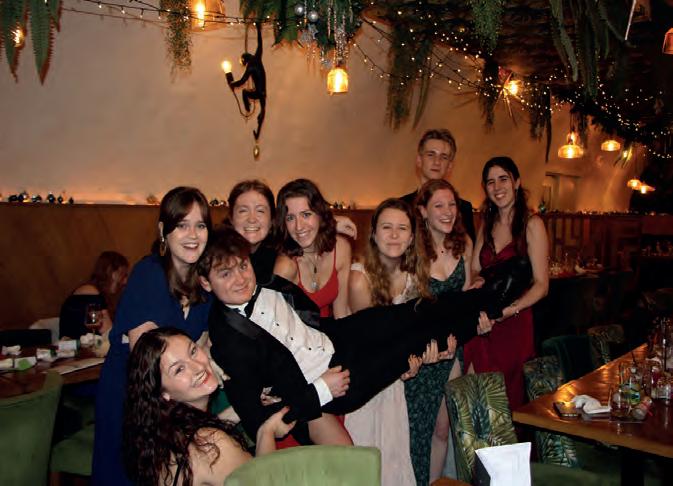
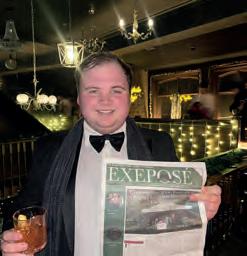
Positions held: Print Music, Podcast Host & Producer, Online Editor-in-chief
Three years ago, I was handed a copy of Exeposé having never written an article in my life — now I’m Editor-in-Chief! These past few years have truly shaped both me and my future ambitions. Along the way, I’ve met incredible people - including some of my closest friends and I’ll cherish those memories for a very long time. I’m immensely proud of the work produced at Exeposé during my time here, particularly the introduction of video journalism, and I’m excited to see where the paper goes next. As I move to London and take my next step into the world of journalism, it all began with Exeposé and that’s something I’ll always carry with me.

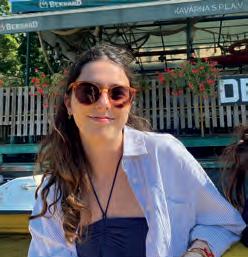
Positions held: Welfare Executive
“Let’s not waste any time, get wasted and have the time of our lives” -
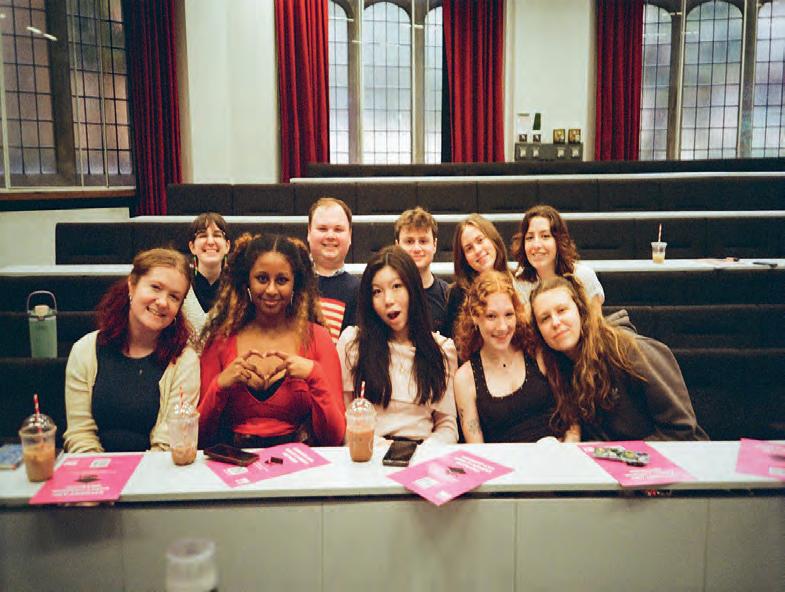

Positions held: Print Lifestyle
I hope that my section has made your life at university a lifestyle! From covering Exeposé Eats to the Exeposing the Influencer series, it’s been a pleasure to serve as your lifestyle editor.
Positions held: Print Features
Having the opportunity to write and edit for Exeposé has been one of the most meaningful parts of my time here. It has quietly shaped the way I think about writing and storytelling, and I’ve learned so much from both reading and producing work alongside others. I’m especially grateful to Ria, my section co-editor, who was incredibly supportive throughout.
Chloe Burrows assess the impact of the Mandelson scandal on Starmer’s political
SIR Keir Starmer remains under fire over the Mandelson scandal, or his appointment of Lord Mandelson as an ambassador to the US in February 2025, despite officials warning against this. Despite Starmer’s claims that “full due process” was followed, those who vetted Mandelson did not recommend him being given security clearance for this role, suggesting that Starmer ignored their concern. Seven months later, Mandelson famously lost his role due to his ties to Jeffrey Epstein, the late convicted sex offender, putting a spotlight on Starmer for having hired Mandelson despite his criminal connections.
In January 2025, Mandelson was subjected to a Developed Vetting Process, providing him with the necessary status to access highly confidential materials. This process filters out people who pose security risks or are more likely to be targets of blackmail because of secrets in their personal lives. Madelson would have gone through various questionnaires and interviews, many of which were several hours long and designed to question incredibly personal matters (i.e., his sex life, familial relationships, medical history, etc). Sir Olly Robbins, who was the Foreign Office’s top civil servant before losing his
job, considering the appointment of Mandelson, says that he has never seen any documentation regarding Mandelson’s vetting but was warned of him being a “borderline case, leaning towards recommending that clearance be denied” in an oral briefing. Robbins says that he refused to undermine the confidentiality of this process by sharing any risks revealed in Mandelson vetting with MPs and maintains this stance. However, he does reveal that the risks were not tied to Epstein. Starmer claims he was only recently made aware of the controversy surrounding Mandelson and does not take accountability for his ill-advised appointment, saying he was ignorant of Mandelson’s relationship with Epstein. The Foreign Office, the department that investigated Mandelson before his receipt of security clearance, has received heated accusations from Starmer in the House of Commons, who claims that they repeatedly failed to inform him of Mandelson’s past, including the investigation into Lord Mandelson’s sacking last year. In line with Robbins’ statement, Starmer claims that he was told that this information could not be divulged, and he had made the decision to respect this at the time, but criticises those who
interviewed Mandelson for not sharing this information with him due to its severe nature.
Opposition parties state that Starmer has “misled Parliament”, something that Starmer is quick to deny. Whilst he said to have previously accepted that no MPs should be given any more information on Madelson, he reminds that he “did not mislead the House”, continuing to blame the Foreign Office for omitting information. Starmer is being further criticised for the high level of security clearance that Mandelson received, which gave him access to the highest level of secret material during his time spent in Washington.

OPPOSITION PARTIES STATE THAT STARMER HAS “MISLED PARLIAMENT”
He has ordered an immediate review of any further security concerns raised about Mandelson, although this may not be enough to undo the damage that this has done to Starmer’s career.
Cabinet ministers are now rallying support for Starmer, who faces a vote by MPs.

The vote will determine whether he should face a parliamentary investigation into these claims regarding Mandelson, threatening the end of his time as UK Prime Minister. Starmer would be referred to the Privileges Committee if this vote passes, which would recommend to Parliament the appropriate sanction to be imposed on him, damaging his career in politics for good.
Image:WikiMediaCommons
Orlando McKillop, Online Comment Editor, discusses the online battle between Trump and the Pope
AS head of the Catholic Church, Pope Leo XIV, the first American-born Pope, holds a significant influence over 1.42 billion Catholics, an influence that spans across the globe. It is to no one’s shock he has turned to criticise America’s foreign policy in Iran and the Middle East, though it’s not the first time a Pope has involved himself in politics. George Bush and Barack Obama faced criticism from Pope John Paul II and Pope Benedict XVI respectively for their Western interventionism. However, what makes this clash (and to use the verb clash is itself unprecedented) between the American President and Pope Leo so unique is the diplomatic rift that has ensued. Not least a religious disagreement, but one between two of the most powerful Americans on the world stage.
Donald Trump is a notoriously outspoken character. But this often gets him into hot water, particularly with his use of hyperbole. Threatening to wipe out a whole civilisation and depicting oneself as Jesus (and then to claim he thought it depicted him as a doctor before deleting it off of Truth Social), can only warrant one of

parison to what religion means for some, arguably trivialises the topic of religion somewhat. The Pope’s response has been tame consider-
THOUGH IT CAN’T HELP BUT BEG THE QUESTION AS TO WHETHER THE POPE SHOULD BE INVOLVED IN POLITICS AT ALL?
ing the platform and power he truly wields. Even Mussolini was fearful of absorbing and antagonizing the Papal state. The Pope has been right to be an outspoken critic towards the American President, and it must be noted a President who has wholly respected the Vatican’s turf. How can any leader sit idly by when the President of the United States threatens to wipe out an entire civilisation?
WHAT MAKES THIS CLASH BETWEEN THE AMERICAN PRESIDENT AND POPE LEO SO UNIQUE IS THE DIPLOMATIC RIFT THAT HAS ENSUED THIS CAN ONLY WARRANT ONE OF TWO REACTIONS FROM A WESTERN RELIGIOUS LEADER: TO EITHER SIT IDLY, OR CONDEMN THE COMMENTS
two reactions from a Western religious leader: to either sit idly, or condemn the comments. Though it can’t help but beg the question
as to whether the Pope should be involved in politics at all? People often comment negatively
when individuals with platforms fail to stand up for causes, whatever side of the political spectrum that cause may be. The same may be said for the Pope, and any Pope for that matter. Donald Trump has desecrated Christianity and its respective sects by portraying himself as Jesus Christ, and it is not the first time he has used religion for political ends. The St. John’s Church Bible Photo-op, appointing Paula White-Cain to lead the White House Faith Office, and the signing of an executive order to immediately halt all forms of any anti-Christian agenda in the federal government. To be a devout Christian is one thing, but to portray oneself as such, in com-

LOOKING back to September 2022, when I became a fresher, everything felt so exciting and new. Moving to Exeter, having never lived away from home, as is the case for many students, it felt like the key to independence was put into the palm of my hand. Of course, after two years at college affected by Covid, this was especially true for our year group who couldn’t even go out to see their friends when it was supposed to be GCSE season. So, to move out into the adult world and fend for yourself at 18 is something that we should definitely give ourselves more credit for.
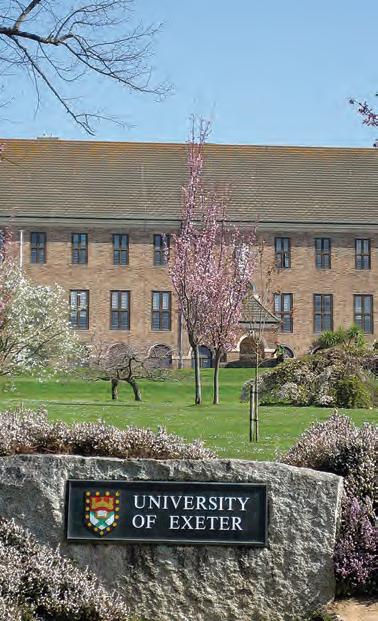
AS I sit on possibly my last bus journey back to Exeter as an undergraduate student, I find myself feeling strangely reminiscent of my wonderfully accomplished four spent years at this university. The dissertation, submitted as of two days ago at the time of writing, was a mammoth task of will and set me up for the prospect that I will definitely not be pursuing a masters any time soon. However, it gave me a chance to reflect how far I had really come since my crappy first year doing essays and I can even say that I know how to scrape together a decent literature review now. Whilst I enjoyed my degree in International Relations, I struggled to feel truly challenged by the incessant yearly repetitions of ‘globalisation’ which felt generic and overly theoretical rather than a genuine reflection of real life international and multicultural politics I had signed up for. However, this was saved by a year abroad studying in the Hague Netherlands where I felt like I was truly challenged intellectually and I learnt so much about the exciting nature of politics, international lawn, and international relations. Whilst I was terrified of making the jump, I know I would have had a remarkably different view of my degree overall if I had not taken the risk and I could not be prouder of my time there.

I KNOW I WOULD HAVE HAD A REMARKABLY DIFFERENT VIEW OF MY DEGREE OVERALL IF I HAD NOT TAKEN A RISK
Moving into halls was exciting, but after first year, it was clear that the true friends I made at university came from my course. Studying English and Creative Writing, I’ve been able to make so many friends with similar interests as me, whether through studying the same modules or being a part of the same extracurriculars, like writing and editing for Exeposé

IT WAS CLEAR THAT THE TRUE FRIENDS I MADE AT UNIVERSITY CAME FROM MY COURSE
Most of my friends and I also completed placements in third year. This was a tough year for a lot of us, but also incredibly rewarding. Situated mostly in or around London, we were able to keep in close contact and help each other through the nine to five office culture that we had never experienced before. These are friends that I know I’ll have for life.
After a year of ups and downs, the prospect of returning to university for final year was thrilling. I couldn’t wait to get back to academia, studying, and learning for the sake of it. On top of all this, I was set to study romance literature and children’s novels all year, which
I ended up loving. Throughout my time at uni, the creative writing side of my degree has been taught by published authors, and this was no different for my final creative writing module ‘Writing For Children and Young Adults’. I really enjoyed the content, and highly recommend to anyone going into final year creative writing and struggling with what modules to pick.

I COULDN’T WAIT TO GET BACK TO ACADEMIA, STUDYING, AND LEARNING FOR THE SAKE OF IT
Overall, final year of university has been my favourite, and it’s taught me that I would love to write children’s books someday. I’ve also enjoyed my role as Print Music Editor for Exeposé this year, which has enabled me to explore my creativity and editing skills in a setting other than academic life.

ITS TAUGHT ME THAT I WOULD LOVE TO WRITE CHILDREN’S BOOKS
If I was to change anything about my time at university, it would probably be rushing to get accommodation sorted for second year. It felt like a lot of pressure to find a house as soon as you could with your flatmates but, realistically, I do believe there was a bit of fearmongering about not getting a house if you don’t sign straight away in October. Trust me, it’s better to wait and see if the people you’ve known for only a month are
Anvi Deshpande also reflects on her time at Exeter
Overall, the highlight for me has been the social aspect of university. I have been lucky enough to have met some of the best friends of my life here. Particularly, my housemates have
whose presence motivated and sustained me through university, adding to my social constellation. As is custom, friendships have also been lost; this still comes with its own bittersweet les-

been a huge source of comfort and joy over the last years, with movie nights and late games nights being a fun break, undercutting the stress of our degrees. Along the way, I picked up people from classes and societies

ADDS TO THE SHARED EXPERIENCE OF UNIVERSITY LIFE AS A MELTING POTS OF UPS AND DOWNS
who you’re ready to be with for a whole other year. That being said, I wouldn’t change my time at Exeter for anything, and I’ve loved all that has come with studying at this University. Well, maybe not the hills. Or those pesky 8:30 am seminars – I don’t know who was trying to punish me every single year with those!
I WOULDN’T CHANGE MY TIME AT EXETER FOR ANYTHING, AND I’VE LOVED ALL THAT HAS COME WITH STUDYING AT THIS UNIVERSITY

sons and adds to the shared experience of university life as a melting pot of ups and downs. As a graduate, the future seems woefully uncertain (at least for a little while!) but what I can be certain of is that I couldn’t have picked a more perfect university to become an adult at. The things I’ll take with me come from beyond the hours spent in the library, eyes bleary, and fingers itching for an Instagram doom-scroll break. It comes from the curly fries breaks at The Ram and days cycling in the sun with my friends. In late nights at TP, re-discovering new hobbies, discovering new exhibitions at The Phoenix and in endless coffee dates with friends. These joys have become the unique kaleidoscope of serendipitous experiences that makes up my time at Exeter. I’ve danced, cried, laughed more times than I can count living a more magical life than I ever could have imagined. My time at Exeter has given me hope for what the future can hold, and exactly what I demand from it. Whatever is to come, I know that my time here has been lived to the fullest and I feel optimistic and curious about what is to come.
MY TIME AT EXETER HAS GIVEN ME HOPE FOR WHAT THE FUTURE CAN HOLD
Goodbye forever, Exeter, you were amazing.
CLIMATE EDITOR: Poppy Fellows
ENDANGERED Species Day is on May 15th this year and marks the 21st anniversary of the event, which was created to draw attention to the importance of protecting endangered species. The aim is for communities, schools and organizations to learn more about the natural world and the threats it faces, and what can be done to fight these threats.
Awareness about the plight of endangered species is crucial. The IUCN reports that over 48,600 species are threatened with extinction, with around 10,000 classed as critically endangered. These species are threatened by a range of factors, including climate change, parasites, human intrusive actions and intensive agriculture. The more people understand the natural
world and what is impacting it, the greater chance we have of preventing a species’ extinction.

OVER 48.600 SPECIES ARE THREATENED WITH EXTINCTION
The Amur leopard is estimated to have fewer than 200 individuals left in the wild, in its natural habitat in the far east of Russia and the very north of China. I first discovered this leopard subspecies in primary school, through a WWF campaign that highlighted the threats of poach-
Ters, habitat encroachment and inbreeding from a small population pool. Protection of the animal’s natural habitat and efficient anti-poaching measures have been undertaken in the past decade, allowing for the population to grow. Bringing awareness to a lesser-known species is needed for their protection, and the Endangered Species Day is a great opportunity to learn more.
To get involved, you can participate in the official Chalk Art Contest organised by the Endangered Species Coalition or join local events at nature reserves or zoos. Visit the online pages of conservation efforts, adopt an endangered species, or watch some wildlife documentaries to find out more about the different ecosystems and species of our planet. If you want to
become more involved with nature, there is the Exeter City Nature Challenge in late May, where you can identify local species! Even the smallest engagement is invaluable in supporting global efforts to thwart threats of extinction.

HE award ceremony for the Goldman Environmental Prize, known to many as the ‘Green Nobel’, took place on Monday 20th April. For the first time since the prize’s establishment in 1989, all the winners are women. They also hail from all over the globe, showing “that you don’t have to cross oceans to find environmental leadership — you might find it next door.”
FOR THE FIRST TIME SINCE 1989, ALL WINNERS ARE WOMEN
Each winner receives $200,000 as a prize and this year’s winners are: Sarah Finch of the United Kingdom, Theonila Roka Matbob of Papua New Guinea, Yuvelis Morales Blanco of Colombia, Iroro Tanshi of Nigeria, Borim Kim of South Korea, and Alannah Acaq Hurley of the United States.
Sarah Finch and her team campaigned against oil drilling in England for many years, the battle initially about stopping an oil development in Surrey. In 2024 the Supreme Court ruled against it, calling the result the ‘Finch Ruling’. This has set the legal precedent for subsequent developments, including the decision against the UK’s first new deep coalmine for 30 years.
A campaign led by Theonila Roka Matbob caused global mining company Rio Tinto to finally address the negative environmental and social impacts caused by the Panguna mine in Papua New Guinea over 35 years ago. An effort to create a long-term remedy mechanism and remediation process has begun.
Yuvelis Morales Blanco helped to prevent the introduction of commercial fracking into Colombia by leading a campaign forcing Ecopetrol, Colombia’s largest petroleum company, to suspend its pilot fracking contracts.
WIn 2024 the Colombian Constitutional Court ruled that “the projects had violated the right of the Afro-Colombian community of Puerto Wilches to free, prior, and informed consent.”
Iroro Tanshi and her community fire brigades stopped human-induced wildfires from taking hold in the Afi Mountain Wildlife Sanctuary in Nigeria, protecting both the landscape, local communities and the endangered short-tailed roundleaf bat.
The first successful youth-led climate litigation in Asia was led by Borim Kim and Youth 4 Climate Action, as in 2024 the South Korean Constitutional Court ruled in favour of legally binding emission reduction targets to achieve South Korea’s pledge of having net-zero emissions by 2050.
Yup’ik leader Alannah Acaq Hurley, representing 15 tribal nations in the U.S. as executive director for the United Tribes of Bristol Bay, won the prize, as she led a campaign that stopped the Pebble Mine megaproject in Alaska’s Bristol Bay region.
This protects not only the area, but its greater watershed, which contains 25 million acres of land, as well as the largest wild salmon runs in the world. John Goldman, the vice-president of the Goldman Environmental Foundation has said of the prize winners “I am especially thrilled to honour our first-ever cohort of six women, as this is a powerful reflection of the absolutely central role that women play in the environmental community globally.”
A POWERFUL REFLECTION OF THE ABSOLUTELY CENTRAL ROLE WOMEN PLAY IN THE ENVIRONMENTAL COMMUNITY
HAT is the best way to tackle the climate crisis? Is it lobbying the government? Going to protests? Hurling soup at priceless art?
Activism takes place through many different forms, and in an increasingly digitalised society, environmentalism can manifest through social media incredibly easily. This has been found by a select few OnlyFans models, who have taken on the task of informing their viewers environmental activism and raising public awareness through provocation.
Jessica Riches is a climate activist and screenwriter whose films are centred around a narrative that addresses the climate emergency. She has teamed with Adam McKay, director of The Big Short and Don’t Look Up, to produce ‘Headline Newds’, a series starring OnlyFans
models to digest and breakdown the climate emergency for subscribers. For instance, an episode titled ‘Spank Banks’ will see dominatrix Eva Oh call out banks who have profited off the global exploitation of fossil fuels, and Skins actress Megan Prescott remove her clothes whilst explaining the benefits of using solarpowered energy. Riches states 90 percent of people across 125 countries already are aware of the climate emergency and have called for greater climate action. She even claims that she is aware it is unlikely to enact policy changes. So why put out content in this unorthodox way?
The aim is to encourage engagement from people who would ordinarily scroll past any headlines, and taking a stab at over 377 million users worldwide may increase engagement in crucial environmental activism. Riches claims
there is “more stigma tied to selling nudes than polluting the planet”, and that ‘Headline Newds’ is one of the progressive and radical forms of activism needed to enact change.

OVER 377 MILLION ONLY FANS USERS WORLDWIDE MAY INCREASE ENGAGEMENT IN CRUCIAL ENVIRONMENTAL ACTIVISM
But the question is, is this unlikely method really, truly good? Debates about sex-positive content and whether it empowers or degrades
women are complex and contested. Whilst OnlyFans models state their work empowers them and allows them control over their sexuality, is it an insult to suggest that the only way we can engage certain audiences with vital and momentous environmental change is through the sexualisation of models, namely women. Is it an comfortable reality? No. But does it stimulate conversation about epochal changes that are occurring in today’s climate? Potentially.


Positions held: Writer for articles, mostly screen content and literature.
I am in my fifth and final year at Exeter and my biggest regret was not doing Exeposé earlier, the articles are so fun to write for and the people I’ve met at the proofing and pizza were so nice and welcoming. I just wish I’d done it sooner as it helped me sharpen my writing while being a creative outlet for my passions. I hope future students join in!

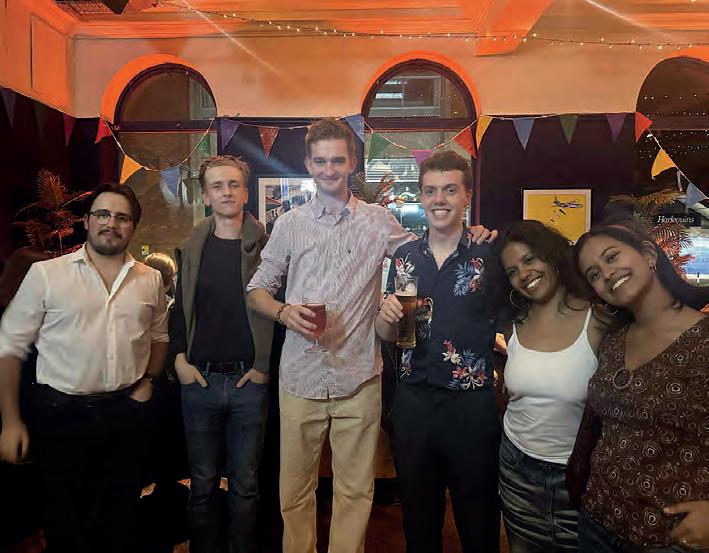

Thank you to all the lovely people I’ve met through Exeposé! I’ve spent the last two years writing about my absolute favourite thing and I’ve loved every second of it!

I initially joined Exeposé because I was constantly bursting into the media office with my best friend (editor-in-chief) when I couldn’t find seats in the library. Through Exeposé, not only have I developed a joy for writing I’ve met the loveliest and funniest group of people who’ve made stressful days a lot easier. Exeposé also allowed me to give pop music a chance so shoutout to

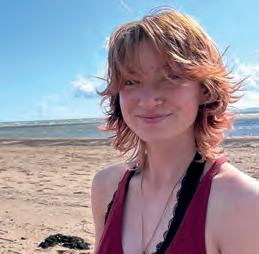
I dedicate this message to Emily Sara Rizzo. She is so so hardworking intelligent beautiful hilarious and has shaped Exeposé so much over the last four years. We are all so grateful that she exists and she will go on to achieve great things love you so much, Em.
COMMENT
Tom Richardson
Lucas Eley
Lauren Walsh, Deputy Editor, explores future prospects for this year’s graduates

WITH summer term in full swing, for those of us in our final year that means graduation is right around the corner and with it comes many important decisions about the future. While some may opt for the classic ‘panic masters’ to eke out their time in academia even more (or if you’ve already done that, maybe even a PhD) for many it means it’s time for the dreaded job applications.

FOR MANY [GRADUATION] MEANS IT’S TIME FOR THE DREADED JOB APPLICATIONS
While grad schemes tend to open nearer the beginning of the academic year (October/ November time) for the following year, the reality is that there is a dwindling number of graduate roles for an ever-increasing number of graduates. In the Uk, there are apparently less than 10,000 graduate roles available, and an estimated 700,000 recent graduates who are jobless or claiming unemployment benefits. So many of us will not in fact get graduate schemes, but will rather be applying for entry level roles. The main point here is that
competition is incredibly fierce for any kind of job. Who else has heard the horror stories of grads applying to hundreds and hundreds of jobs for over a year before securing one?
It hardly fills you with confidence. And if you’re like me, trying to break into a creative industry, the situation is even more dire. 98 percent of jobs are in London, so you better enjoy living in a big city, and you better be prepared to spend a majority of your pay check on extortionate London rent. What’s worse is that half of the entry level creative roles I’ve seen pay under London Living Wage. The national minimum wage is £12.71 for those over 21 years old per hour, which equates to a salary of roughly £24,784.50 per year for a 37.5 hour working week, but the London Living Wage is £14.80 per hour, or a salary of £28,860.

WHAT’S WORSE IS THAT HALF OF THE ENTRY
LEVEL CREATIVE ROLES I’VE SEEN PAY UNDER LONDON LIVING WAGE
Creative industries are notoriously hard to get into, relying heavily on networking, and requiring you to relocate to London on a salary
that is often unfeasible, and thus requires help from the bank of mum and dad to live off. Thus alienating people without these advantages. On one such job posting advertising for a job in London with a salary of £27,000, someone had commented underneath it “working class applicants need not apply”. What’s more is, many companies never get back to you to let you know you haven’t been successful. And if you do receive a politely worded rejection where you are told “After careful consideration, we’ve decided to move forward with other candidates at this time”, feedback is almost never provided due to the volume of applicants they have received. So you aren’t getting interviews, but you don’t know exactly why, so it’s hard to improve and change your prospects. Having experienced all of this firsthand,

YOU AREN’T GETTING INTERVIEWS, BUT YOU DON’T KNOW EXACTLY WHY, SO IT’S HARD TO IMPROVE
it is very easy to become pessimistic about the future. But amid the never-ending LinkedIn notifications, it’s important not to lose hope. It just goes to show that resilience is of the
utmost importance when applying for jobs these days and it is worth remembering, when you receive rejection after rejection, that it is not about you as a candidate but rather the current state of the job market as a whole. Even if you have to spend a year applying to jobs before you get one you want, a year in the grand scheme of your life is nothing. Maybe you end up getting a job that isn’t quite what you thought you wanted, but ends up being perfect for you. Or maybe it isn’t but you can use skills learnt on it when you apply for the next job. Perhaps you never did the ‘travelling to find yourself’ thing before uni, so doing a gap year after uni is the perfect choice. You’re never going to have the opportunity to travel for weeks at a time again once you’re locked into employment. So maybe you get a part time job for six months to fund your travels, and come back to the graduate job market in a years time, when prospects have (hopefully) improved. Overall, it is important to remember that you are not alone, unfortunately we are all in the same (sinking) boat.

YOU ARE NOT ALONE, UNFORTUNATELY WE ARE ALL IN THE SAME (SINKING) BOAT
Molly Panagi-Williams discusses how the film industry is changing
THE art of creating a great movie is much less important than the spin they put on the publicity, which now seems to need no resemblance to the final two plus hour experience. The contents of films currently showing on the screens of your local cinema appear to no longer be the core identity of the movie — that belongs to the marketing campaign which inspires you to spend your hard earned money on overpriced seats and popcorn you will eat during the trailers.

THE ART OF CREATING A GREAT MOVIE IS MUCH LESS IMPORTANT THAN THE SPIN THEY PUT ON THE PUBLICITY

animated animals to desecrate the plot of your favourite childhood classic. Capitalising on nostalgia to sell tickets and merchandise, Walt Disney’s ambition to keep innovating appears to have died and frozen with him.
CAPITALISING ON NOSTALGIA TO SELL TICKETS AND MERCHANDISE
Movie making is no longer a game of budgets and blockbusters, nor carefully crafted tales. It is about how well the studio’s marketing team can create a shiny image that people want to see, usually by employing Marvel movie style quips and jump cuts from your favourite A List Stars.
So long as you have an eye-catching lead actor to put on the posters, or a famous
In recent years, with cinemas filled with remakes, reboots and sequels the movies simply based on books are incredibly refreshing. This was what I thought when I went to watch The Roses. Settling in for my evening enjoying this dark comedy with Olivia Coleman and Benedict Cumberbatch that I believed was going to be a fun romp about a Mr and Mrs Smith style couple who hate and love each other at the same time. Instead, I finished my evening staring at the screen exclaiming ‘that’s how it ends!’ after I saw one of the happiest couples I’ve ever seen in cinema destroy their beautiful marriage and family life through resentment and hate in a far too realistic fashion, punctuated painfully by Kate McKinnon in what appeared to be an attempt to salvage the idea that this was a comedy. I was severely disappointed that whatever version existed at the point the trailer had been created had apparently been lost on the cutting room floor.
Adirector to name above the title it doesn’t matter what the end product was intending to be, because people won’t be encouraged to see it for the worth of the product.
The days of a new film with a new actor and a new director are over — you have to go to an indie festival for that. No one wants to splurge on a trip to the cinema with your friends for something that will be on streaming in a week and which might be the worst thing you’ve ever seen. It is the known properties still drawing crowds, even when another Disney live action remake uses CGI
Finally, even as we see romcoms returning to the box office, they seem more reliant on the press surrounding the actors’ potential scandals rather than the content of the story. Take Wuthering Heights, It Ends With Us, and Anyone But You — all have relied on cheating rumours to create buzz, attempting to imitate the madness of paparazzi catching the start of Brangelina. It feels as though the only film I have seen advertised in recent years that has relied on the actual content of the movie has been the recent Project Hail Mary, which even then used cute aliens, its bestselling novel’s reputation and Ryan Gosling as bait for the hesitant customer. All of this has lead to where we are now: awaiting which film will be designated the next rehashing, reimagining or recreation of something that was big ten years ago in an attempt to play it safe for the shareholders waiting for the box office numbers rather than the Oscar nominations. If you want to find a good film, you’re better off flipping a coin when you walk into the theatre than hoping the trailer will make good on its promises.
Lani Elatta talks about changing fashion trends amid today’s political climate
S of February 2026, the search term
“Japanese manicure” has increased by 100% in the last five years. A Japanese manicure is a nail treatment which from the outside looks like bare, natural nail treatment. It adds no colour but instead uses beeswax and minerals to strengthen the nail. It is not surprising that this minimalist style of manicure has grown in trend along with the rest of the reduction of colour and personality we have seen in clothing and the gravitation we’ve seen towards natural hair colours rather than the unique, alternative styles we saw in 2020. But how often are styles going to keep changing and will it ever end? This article will explore how style and fashion trends targeted at women change with the political climate — because yes, it is that deep.

HOW STYLE AND FASHION TRENDS TARGETED AT WOMEN CHANGE WITH THE POLITICAL CLIMATE
It is important to understand, I am not suggesting that women’s fashion trends cause
the political and economic state of the world at the time but if we look through history, we can really tell the status women held in society by what was trending at the time. In 1947, Christian Dior’s “New look” was introduced. This was “new” because for the first time in years, the aim of the silhouette was to emphasise the hourglass figure; a small waist, wide hips and larger bust. This was just after World War Two when many women had entered the work force for the first time to replace the critical roles of men who’d left to fight. This new style encouraged hyper-femininity, seduction and fertility - almost pushing women back into their domestic roles as wives and mothers.
This wasn’t the first or last time this would happen. The appreciation and enhancement of the hourglass figure returns multiple times throughout history. Specifically when femininity is culturally tied to fertility and domesticity. In direct contrast, more androgynous fashion becomes popular with women’s rise in social status. For example at the peak of the “heroin chic” era, things like Sex and the City and The Spice Girls took over the media, emphasising women’s empowerment like never before.
We’ve seem to have a return of the slen -
der figure in recent years. However, I would argue that this time around it is almost a direct opposite of the 90s response. The toned “Pilates body” and luxury athleisure that comes along with it moralises beauty. A toned body is supposed to signify discipline and self control (how many how to be disciplined videos have you been recommended recently?), the “wellness” status that coincides with this signifies virtue. The “clean girl” no/ low makeup “aesthetic” signifies authenticity. Femininity in this way has been created to be inherent or essential overlapping with conservative ideas that gender is natural and fixed. Furthermore, the loss of personality in clothes and makeup may seem apolitical but it signifies to women again that beauty is natural and found within the canvas of their bodies. The body becomes the personal brand and evidence of desirability. Instead of “adding” to themselves women are now pressured to endlessly improve their “canvas” and a body
slowly becomes a long term investment project.
THE BODY BECOMES THE PERSONAL BRAND AND EVIDENCE OF DESIRABILITY
Like I said in the beginning, trends are often cyclical. We’ll see things go away and come back many times in our lives and it’ll almost never be a coincidence. I hope that this is the strongest evidence yet that you should just wear what you want.
IN an event that many scientists considered inevitable, many business students have decided to forego their graduation ceremonies, instead opting for ChatGPT to attend in their stead. Having already done the vast majority of their work, ChatGPT reportedly took no issue with taking their place, stating that it simply felt “prompted to do so.”
While business lecturers have congratulated the students for their entrepreneurial attitude and delegation skills, other university officials have been less supportive. After reaching out to some about the event, we

received an email from one who wrote “This is an outrage!”, continuing that “If you want, I can also provide you with other emotional responses, for instance: woe.” Though we are yet to receive a follow up comment, we have noted that the river Exe has evaporated, so a further response is anticipated shortly.

BUSINESS LECTURERS HAVE CONGRATULATED THE STUDENTS FOR THEIR ENTREPRENEURIAL ATTITUDE
Many may consider this a climax to AI shenanigans, however scientists insist that for these students this is not the zenith of their entrepreneurial AI exploits. It is predicted within the next five to fifty years (give or take) that AI will attend the birth of these students’ children, continuing on to raise them until they’re ready to write their own prompts. With further enhancements, some scientists even predict that one day AI will be able to handle pregnancy itself, though the specifics remain thankfully murky.
THE RIVER EXE HAS EVAPORATED
Christopher Lyndsay (again) Satire Editor
FOLLOWING their completely unrelated CIA exposé at Coachella, every single member of The Strokes has been found dead after a missile strike from orbit repeatedly struck their band van while in transit. Government officials have thoroughly investigated the incident, and have confirmed that it was indeed, as we all suspected, a group suicide. Fans speculate that perhaps the mixed reception to the autotune-esque vocoding in their latest single “Going Shopping” weighed more heavily on The Strokes than anticipated.
Though all were clearly affected to the point of organising such a tragic bombardment, none were as deeply affected as their frontman, Julian Casablancas. Further reports discovered that Mr. Casablancas actually survived the waves of bombardments, having crawled smouldering from the wreackage of the van. Unfortunately, this miracle proved pointless, for as fate would have it a shotgun was lying beside the road, which Casablancas promptly used to shoot himself threes time in the back of the head.
It is unclear how The Strokes ever obtained the capabilities for an orbital strike, though most agree that it must have been during the heyday of the Indie Rock scene in the late 1990’s. Nonetheless, U.S. officials have stressed that the fifth amendment remains infallible, insisting that orbital bombardments don’t kill people; people kill people.
Fans will be pleased to note that despite this unprecedented tragedy, The Strokes are not finished, for their record label has announced that they will soon be resurrected in the form of AI

avatars. This blessing of technology will enable The Strokes to continue making music until the end of time, or at least until the oceans run dry.

ORBITAL BOMBARDMENTS DON’T KILL PEOPLE; PEOPLE KILL PEOPLE.
Before that however, fans can occupy themselves with the posthumous release of their upcoming album Reality Awaits, which now features an unreleased bonus track titled “We are not suicidal (and do not have the capacity for orbital bombardments)”. Though the content of this song remains a mystery, it is safe to assume that fans are hoping the late Julian Casablancas will lay off the autotune.
AND that’s how deals are made reader. We at Exeposé have little more comment to give.
Damn straight “The Art of the Deal.” The orange man may be the artist of the deal. Damien Hurst-esque in his consumption of animals (predominantly minced beef). Brain melting like a Dalí. Physically built like a Picasso (treats women similarly also). He’s not very much like Andy Warhol. We suppose he has hair like Marilyn Monroe? What can be said for certain is he has not seen, nor tasted, a can of soup. Returning to the point, god bless the troops, god bless NASCAR and with the light of the baby Jesus, God bless America.

THE ORANGE MAN MAY BE THE ARTIST OF THE DEAL

“People will be killed,” the president exclaimed, flaring his lower teeth. “In fact, nobody has been killed quite like these folks, it’s really something.” His claim is certainly correct; nobody has been killed this way as the U.S
are using “Celestial microwave technology.”
“They POP. Yes, they do. Its…quite something to watch. We use micr-A-waves yes, we do. Big beautiful micr-A-waves. The cleanest ones we can find. American ones. Very strong…reminds me off my drive against the late great senator...”
This continued for twenty-three uninterrupted minutes. Topics of the game, physical performance and the need for strong beautiful farmhands came up. We’d report the exact details, but our journalists were brutally mauled by an unfed RFK in heat. We’d mourn them if they didn’t pass on for a worthy cause.
Pete Hegseth also announced the plans with more slam poetry. Such examples are:
“Not minorly microwavable but preposterously popped.”
“Not cold and dry but certifiably cooked.”
“We’re wiring microwaves not ovens”
Allegedly the machine itself is comprised of two billion microwaves soldered together into a sphere. It is causing worldwide solar eclipses as it orbits the earth’s atmosphere. Two hundred have gone blind with that number steadily rising. The
woke agenda are trying to plead the use of nuclear weapons citing the microwave technology as unhumanitarian. Perhaps they are right? Most Exeposé staff can no longer contribute to the paper due to insomnia caused by the cacophony of pings let out by the microwaves as they “micro-smite” villages. Even worse, Israel claims Iran is, “Mere moments away from developing microwave technology.” Call Iran Black Adam because the hierarchy within D.C. and the wider world is about to change.
WE’D REPORT THE EXACT DETAILS BUT OUR JOURNALISTS WERE BRUTALLY MAULED BY AN UNFED RFK IN HEAT








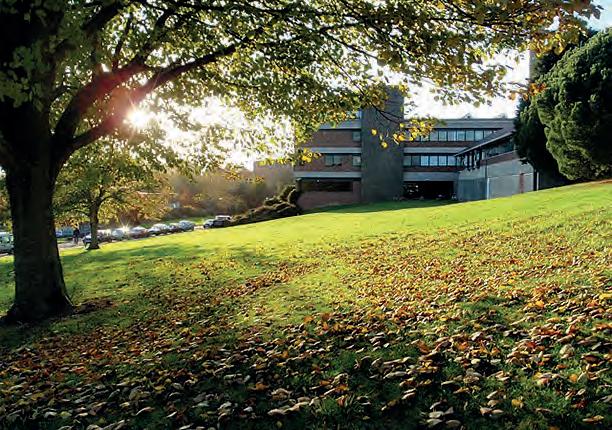
IF you’ve ever heard or seen the phrase “Devon is Heaven,” I confess: the rumours are true.Who knew that when I first moved into my dreaded small hall room three years ago? A keen-bean eighteen-year-old with a suitcase full of nerves, I never imagined I would eventually call Exeter "home." Now, at twentyone and facing the precipice of graduation as an "officially serious adult," I find myself looking back with the quintessential rose-tinted glasses. Even the things I once loathed, like those 8:30 AM seminars and hills I’d do anything to avoid, have taken on a nostalgic glow. Exeter’s charm isn't just in its cathedral or its rolling hills; it’s in the chaotic, specific memories that define the student experience. I will
miss Sidwell and Gandy streets, which bore witness to countless drunken pilgrimages. Fueled by the life-saving grease of an Efes chicken box or a Mega Kebab chippy run. These are the culinary pillars of a degree well spent.
The sensory details of Exeter life are etched into my mind. The salty crunch of The Ram’s curly fries, the stack of plastic Timepiece cups sitting on the kitchen counter like trophies, and the ink-stained fingers from flipping through the latest Exeposé . There was a unique, adrenaline-fueled joy in the hunt for a seat in the law library during exam season, only to be distracted by the simple pleasure of running into friends every five minutes. I suppose, some part of me will miss the late-night essay

Tcramming and the horrid 24-hour exams, which often ended with finding yourself in the library questioning if you chose the right degree.
THE SALTY CRUNCH OF THE RAM'S CURLY FRIES, THE STACK OF PLASTIC TIMEPIECE CUPS SITTING ON THE KITCHEN COUNTER LIKE TROPHIES
The social life here was a beautiful, bizarre ritual, despite all the bad press. It usually meant starting pres at the ungodly hour of 6:00 PM just to make a 7:00 PM Timepiece entry, and subsequently failing to scrub the entry stamp or Batty Bingo markers off your skin for three days. It meant the absurdity of dressing up like The Lorax on a Wednesday night for a social, slowly accumulating a wardrobe of fancy dress costumes that no "real" adult should own. Or the fast accumulation of too many black tie outfits you’re bound to acquire, marking a true Exetah experience. The weekends were a gentler kind of magic. I’ll fondly remember the Firehouse afters, the live music on Saturdays and unironically finding yourself in Vaults of all places. While Sundays were reserved for recovery: a roast at Mill on the Exe followed by a walk at the Quay to reconnect with nature, especially witnessing last night. Of course, the "true" Exeter experience was never complete without too many
HE biggest night in fashion rolled around again last week, and the endless deluge of celebrity strutting has been flooding socials ever since. This year’s co-chairs included Beyoncé, Nicole Kidman and Venus Williams, and the theme was “Fashion is Art.”
THE ENDLESS DELUGE OF CELEBRITY STRUTTING HAS BEEN FLOODING SOCIALS EVER SINCE
Amongst the Internet’s favourites, Gracie Abrams captures the essence of Klimt’s “Kiss”, while Rachel Zegler brought Paul Delaroche’s “Lady Jane Grey” to life, and Heidi Klum posed as Raffaele Monti’s “Veiled Vestal.” Artworks as inspiration seemed to be the order of
the day, but some also took the theme more liberally … Nicole, I'm looking at you choosing to wear red for “the way it’s been used in art.”
However, there were some faces that were missing from the event – after all, it’s not a Met Gala without Zendaya winning best dressed. And yet, Zendaya was one of the celebrities to boycott the evening perhaps due to it being
co-sponsored by Jeff Bezos and his wife, Lauren Sanchez Bezos. Other big names like Olivia Rodrigo, Mark Ruffalo and Bella Hadid did the same, and Zohran Mamdani was the first New York City Mayor since 2002 not to attend. Many people took to social media to express their discontent, with US Senator Elizabeth Warren posting on X saying “If Jeff



pitchers at The Impy or the occasional, cinematic bar fight witnessed at Chevs, if you must. When they say you can find love on campus, I believe it. Whether it was falling for the famous campus cat Napoleon, falling for the temptation to cancel all plans for a pint in the sun, or falling into a financial hole thanks to Pret and the Marketplace. Or my favourite, realising that one cannot possibly own too many Ralph Lauren jumpers. Exeter has been a whirlwind, one that I will miss deeply.
Whether I was dancing on the sticky floors of Fever, downing green venoms at Timepiece or gasping for air while climbing the deadly Forum and Cardiac hill, a part of me will stay here forever. And to quote my favourite show, Industry. ” We’re here forever even if we can’t be”. And always remember that, no matter where you find yourself, you bleed green.
S Rizzo, Editor-in-chief, reviews celebrities' looks from this years Met Gala
Bezos can drop $10 million to sponsor the Met Gala, he can afford to pay his fair share in taxes.” Others noted the hypocrisy of celebrities wearing the popular “ICE out” pins, although these were sparse at the event.
OTHERS NOTED THE HYPOCRISY OF CELEBRITIES WEARING THE POPULAR 'ICE OUT' PINS ALTHOUGH THESE WERE SPARSE AT THE EVENT
While it was a little lacklustre due to the missing favourites, and undeniably tainted by Mr. Bezos’ money, the Internet will always enjoy judging celebrities in whacky outfits, and if nothing else, Connor Storrie and Hudson Williams sure distracted the media and went down a treat online.
Lani Elatta shares

IWAS officially diagnosed with insomnia as a teenager and have had the pleasure (!) of becoming well acquainted with it through my university years. It is unfortunately not taken seriously enough as a health condition despite how awful even one night of bad sleep can make you feel. Throughout the years I have seen many doctors, tried a lot of very weird things and spent way too much money to try and fix my sleep. I have been told to meditate, go to sleep at the same time, get some morning sunlight and have no screens before bed to the point of frustration, so this will not be the advice I give here. Instead, I have compiled the most effective tried and tested ways to both prevent and deal with sleep problems that you may have not have heard of before. First of all, if you have persistent sleep issues outside of stressful periods you definitely should see a health professional, sometimes poor sleep is associated with airway issues which you may not know you have. Secondly, if you are laying awake directly because you are worrying, targeting your anxiety will improve your sleep. Reach out to well-being and/or the GP. To those this does not apply to, hopefully you’ll find my advice helpful.
IF YOU HAVE PERSISTENT SLEEP ISSUES OUTSIDE OF STRESSFUL PERIODS YOU DEFINITELY SHOULD SEE A HEALTH PROFESSIONAL
1 .Talk to your housemates in the morning! It doesn’t have to be your housemates, it can be anyone as long as it’s not over text. Say good morning, tell them your plans for the day, tell them your favourite sandwich — it doesn’t matter! This help give your brain a reliable “start of the
day” message and induces morning alertness which can help set your circadian rhythm (your internal body clock) — This is proven by scientific literature. A phone call is also okay but a face to face conversation is best as studies have further shown that eye contact can be a dominant regulator of circadian rhythm. I also found socialising really difficult when I had not slept, so doing it first thing proved to me that I can do it again throughout the day.
2 .Take a lemon into your morning shower I told you this would be unconventional! I first did this on a very desperate, sleepy day after I saw a post about how peeling oranges in a hot shower can help you relax and I was willing to try anything. This then really made me realise how strong of an impact scent can have on my mood, especially since the olfactory pathway is the only one of the senses directly related to the limbic system so can increase alertness right away. Lemon in particular has been repeatedly proven to increase mental energy and positive mood. Obviously you don’t have to actually take a lemon with you but using lemon shower gel, essential oil or perfume in the morning can be very helpful. Peppermint can also have a similar effect!
3 .Write your thoughts down as they pop up
This meant that tasks I have in my head are “closed” once written down — I don’t have to lay awake thinking about how I mustn’t forget I have to email X about Y because I’ve already written it down and I don’t have to be constantly reminding myself during a day where I’m tired either. On top of this, you don’t always have the smartest thoughts when you’re tired, I have read so many diary entries of mine during the worst of my insomnia which left me wondering what I was even trying to say. This can help you pause before you make potentially impulsive decisions which are proven to be more frequent when you haven’t slept.
4. Take more walks around campus
Sitting inside the library for hours on end means very little variation of light and temperature, which your circadian rhythm needs to help you sleep at night. The little trips to marketplace or fresh air I used to use to procrastinate lead to the days where falling asleep was easiest. Also if you didn’t know this already — you definitely shouldn’t be working in your bedroom, your brain needs to associate this space with its sleep only working on campus, a common area or a cafe is much better.
VARIATION OF LIGHT AND TEMPERATURE, WHICH YOUR CIRCADIAN RHYTHM NEEDS TO HELP YOU SLEEP AT NIGHT
5 . Wellness TikTok’s? Click 'not interested'
You already know that not sleeping isn’t good for you, you don’t need ten other influencers telling you that you’re wrecking your body, you won’t build muscle, you’ll damage your immune system etc — if you could sleep you would. The inevitable frustration you’ll build towards yourself won’t make you sleep any faster and will just make a hard day even harder. This is also not the best time to be trying out a new workout or diet regimen. Additionally, eating too few carbohydrates (which is often what these videos encourage) can reduce serotonin which we need for sleep. This was 100 percent the most frequent pattern in my case — so eat carbs!
6. Speaking of food…
My food and diet was particularly affected by my insomnia. Insomnia can often cause nausea (and it definitely did for me) which may make you skip meals but it can also enhance cravings for high fat, sugary foods which may make you feel worse throughout the day. As well as this, cooking and eating can feel really difficult when you’re tired. This is something I only recently
discovered but has been quite helpful when I am sleep deprived. You need to commit to eating a minimum of three times a day, and try to have at least one go-to breakfast and lunch where they are “simpler” meals with the majority of your nutrition for the day (mine are oats with blueberries and protein powder and Korean vegetable pancakes with prawns!) This helps reduce decision fatigue and anxiety about your health. Your evening meal can then be something more variable — something you actively look forward to eating but still makes you feel good so that you’re in a good mood in the evening before bed.
7. Name each day like a TV episode. By this I mean try to include a little something nice that makes today different from yesterday. When you’re sleep deprived, all the days can blend into one blurry week. The feeling that you’re living on autopilot because you’re so tired is truly awful. You can set yourself little challenges that aren’t physically or mentally demanding, for example building a Lego set — even if it was made for children, buying a disposable barbecue and casually making dinner on it, making flavoured syrups from herbal teas and other ingredients you have at home (this is surprisingly cheap and easy!) or watching flower arranging tutorials and trying it yourself. This can add a little bit of joy into a hard time and can also help you relax , improving sleep. I hope this was useful! Insomnia and sleep issues are really difficult to deal with and are seldom mentioned in conversations about physical or mental health. Please remember that this problem is in fact important, you deserve to see it improve and you are always trying your best with the tools you have at the moment.
THIS PROBLEM IS IN FACT IMPORTANT, YOU DESERVE TO SEE IT IMPROVE
Sophia Cuschieri, Welfare Executive,
AS someone who has tried a range of hobbies, from painting famous movie scenes to making jewelry, I value my hobbies to help exercise my creativity. If I had to choose one to recommend you to begin, I’d say give crocheting a go.
While watching TikToks to get started might sound daunting as they have the tendency to not show the exact stitch they’re working on, don’t let this sway you away from this wonderful hobby. Even if it takes a while to pick up on all the different types of stitches and their abbreviations like ‘hdc’ or ‘ch’, stick with me here, it’s the perfect stress relief with incredible results. The possibilities are endless with crocheting, you can make anything, from cardigans to tops, bags, scrunchies, amigurumi, coasters, there are no limits. It’s also perfect if you want to make someone a personalized gift. For me, crocheting is a great way to reduce stress, improve your focus and provide you with a strong sense of
CROCHETING IS A GREAT WAY TO REDUCE STRESS, IMPROVE YOUR FOCUS AND PROVIDE YOU WITH A STRONG SENSE OF ACCOMPLISHMENT
accomplishment, transforming wool into handmade items. After a long day of essay writing, I love putting a movie on in the background and starting my next project. It is also a good hobby to bring on the go, all you need is a hook and some wool and you’re set! This makes it perfect to bring while traveling, an excellent activity to do while relaxing at the beach, on the
Itrain or even when flying on holiday. Compared to something like knitting, I’ve found crocheting easier to get started with, being quite beginner friendly as you only need to worry about one hook. To begin I would recommend looking for tutorials on YouTube, and starting with something like a scarf or granny squares. These are good ways to get started, using repeat basic stitches like chains and single crochets to practice before starting more complex projects. With essays and the exam season approaching, having a creative outlet is so important, not only to give you a mental break but also as a means for self-expression, reducing doomscrolling and instead sparking innovation.
T is hard to find time to read as a hobby during your degree, and I’m sure I will not be the only student who finds it hard to find the motivation to read for pleasure having spent seemingly all day reading academic article after academic article. But then it’s all over! Summer term rolls around and you’ve (hopefully) submitted your essays and finished your exams, freeing up your previously chock-full timetable to allow many hours of uninterrupted reading. To celebrate your initial freedom from assignments I would begin by reading something the polar opposite of what you would find on a module reading list. I personally enjoy a fun romance book, as they usually have simple easy-to-follow plots and fun banter, gently ease you back into reading. My personal favourite romance author is Emily Henry and I’d recommend her novels Book Lovers, Beach Read or People We Meet on Vacation, as they all have holiday or summer-y vibes and can help get you in the mood for summer! Another route you could take is snuggling up with a cosy book, to destress and give you
an easy way back into the hobby. Cosy fiction is especially popular at the moment, and if you fancy giving this a go I’d recommend Toshikazu Kawaguchi’s Before the Coffee Gets Cold. Subgenres of cosy fiction are on the rise too, so if cosy crime is your thing you could try How to Solve Your Own Murder by Kristen Perrin, and if cosy fantasy is more your vibe, why not try T J Klune’s House in the Cerulean Sea? Personally, Heather Fawcett’s cosy fantasy novel Agnes Aubert’s Mystical Cat Shelter is at the top of my term three reading list!
THE Safekeep is the debut novel by Yael van der Wouden, and follows Isa, a young recluse who meticuously tends to her family home in the Netherlands fifteen years after the war. Isa is an awkward loner, who obsesses over her house and belongings, leaving exactly how her mother left it. When her brother’s girlfriend comes to stay for the summer, Isa is deeply disturbed by the disruption to her peaceful yet lonely life. The backdrop of the Dutch countryside, elements of mystery and tension, and complex, intense relationships makes this an ideal read for the summer term.
This is a quick-read, and certainly a page turner, exploring Piranesi’s relationships with The House and The Other, an older scientist whom he meets frequently, and claims Piranesi is losing his memory. What makes Piranesi such a perfect read for the summer term is the mystery and confusion that follows the protagonist in his haunting, unique, and whimsical world.
Poppy Fellows, Climate Editor
However, what is most important for your summer term reading is simply choosing whatever you want to read. Read whichever genre brings you the most enjoyment and reminds you why reading is enjoyable outside of an academic environment
Lauren Walsh, Deputy
Editor
OPiranesi by Susanna Clarke is a short novel written stylistically like a journal entry by the eponymous protagonist from within a mysterious setting known only as ‘The House’. The House is a world consisting of vestibules and hallways, with rooms full of clouds or oceans, with no real explanation to where we are, why we are here, and what is going on.

NE Picasso for 100 Euros is a charity raffle that offers each individual the opportunity to raise money for Alzheimer’s disease research, and the chance to win a Picasso piece valued at 1 million Euros. There are only 120,000 tickets available. Whilst around €1 million goes to the Opera Gallery who have owned the painting, the remaining money raised goes to the cause. This year all tickets were sold. This year, the winner was Ari Hodara, who, upon answering the call from Christie’s, wasn’t entirely sure whether he was being pranked. An engineer
THE POLAR OPPOSITE OF WHAT YOU WOULD FIND ON A MODULE READING LIST THE COMPETITION
and art enthusiast living in Paris, Ari bought the ticket on a whim after finding out about the raffle at dinner. The piece in question was Picasso’s Tête de Femme, a gouache-on-paper depiction of Picasso’s lover, Dora Maar, the surrealist photographer who documented Guernica’s creation. The sombre, grey tones reflect the mood of the wartime period in which it was painted, and it possesses the typical geometric distortion and sharp lines of Picasso’s work.
The benefit of using high-value art to raise money is that a raffle with this level of prestige
creates an opportunity for a plausible fantasy for the average person. For €100, which you could easily spend on a nice dinner, you have the chance to win a famous piece of art. The prestige of the Paris auction house, Christie’s, is part of the raffle’s allure. The price of the tickets also plays a part in how successful the raffle is a modest enough price for the average consumer to purchase but priced so that it adds up. The money raised outstrips the asset’s value, which is why it’s such a successful cause. Picasso’s grandson, Olivier, previously
commented to The Guardian that his grandfather was very generous, yet discreet, and thus the competition is a natural continuation of his legacy. Pairing prestigious art with accessible ticket prices unlocks a model of fundraising that benefits all: the charity, the gallery, and the everyday person who has a spare €100.
EDITORS: Amber Platel and Isabel Bratt
Catherine Wakefield covers the nominees for this year’s Women’s Fiction Prize
THE Women’s Prize For Fiction (originally named ‘Orange’) was founded in 1996 by Kate Mosse CBE. The catalyst for the prize’s inception was the 1991 Booker Prize — despite 60 percent of submissions being written by women, male-authored novels dominated, taking every spot on the shortlist. Generally, less than nine percent of female authors were shortlisted for prestigious literary awards. The prize’s aim was to platform the stellar works of literature that would have otherwise been shelved. Despite its pure intent, the prize was initially met with immense backlash, with many male authors deeming it sexist and unnecessary. Today, the prize is one of the most esteemed literary awards. Notable finalists include Margaret Atwood, Donna Tartt, and Madeline Miller.
And, winners such as Maggie O’Farrell’s Hamnet , with thanks to the prize, have been adapted into Oscarwinning films. No doubt this year’s finalists, too, will go on to find great success too. Spanning between post-war East Asia and suburban America, Susan Choi’s Flashlight follows the heartbreak of a family following the death of their patriarch. Told from the perspective of the women who love the protagonists, Addie E. Citchen’s Dominion explores a father’s damaged legacy, with striking themes of violence, patriarchy, and religion. Virginia Evans’ The Correspondent follows Sybil, an older woman who uses letter-writing to navigate the world. However, receiving correspondence from someone from her past forces her to face her trauma. The Mercy Step by Marcia Hutchinson
follows the story of Mercy, who finds solace in her toy, Dolly, reading, and her own mind to cope with the growing tensions within her family home. Set within the world of academia, Rozie Kelly’s Kingfisher details the infatuation of a creative writing professor with his colleague, against the interest of his partner. But, as both his colleague and mother fall gravely ill, his fantastical reality is crushed. Finally, Lily King’s Heart the Lover acts as both a sequel and a prequel to her 2020 novel, Writers and Lovers . It follows three pinnacle points within the protagonist Jordan’s life, including her college years, a complex love triangle, and the dichotomy of adulthood. Jordan navigates her successful career and the shadow of her former self, as both her son and her former lover battle cancer.
This year’s shortlist, as always, platforms six talented and deserving women. The winner will be revealed on June 11th, 2026, and will receive a sum of £30,000 and the prize’s iconic statuette known as ‘Bessie’.

Alex Beale explores the effects university degrees can have on reading and writing for fun
MANY students at universities globally enjoy the relief of reading and writing for pleasure. Those of us in humanities-based degrees often have a particular affinity for passing time with a good book in hand or a notebook in our bags. But have you ever felt as though you are too tired to read after a long day of being on campus? I know I have. A Reading Agency survey stated in 2025 that half of adults in the UK do not read regularly and one in six adults struggle to read altogether. It is easy to assume that these stats are more reflective of adults outside of higher education but that is not necessarily the case.
With the significant quantities of academic text that is given to students, especially within the humanities, many students are struggling to find the time and motivation to indulge in reading
when they get home. This is a worrying trend since reading and writing for pleasure comes with a number of benefits. According to the Scottish Book Trust, reading for just 30 minutes a week can increase life satisfaction and act as a powerful stress reliever, a benefit that is increasingly important as mental health challenges soar across age groups. Readers of fiction have also been noted to have increased empathy, and better knowledge of how to deal with difficult situations when compared with their non-reading counterparts. All this helps explain why reading is good for you, but that fact is scarcely up for debate.
The real question is why do adults, specifically university students, feel so unable to enjoy the pleasures of a good book? As I have touched on already, high workloads mean that students are often too tired or lack the
motivation to read after a busy day studying. In a world where you can experience ten lifetimes in a single minute through scrolling on social media, it is undeniably easier to ‘doomscroll’ over picking up that next book on your TBR. It is also true that many university students lost the habit for reading long before reaching higher education. Reading rates amongst 10-18 years old are at the lowest in the past century, and this too can likely be attributed to young people passing their time on social media and streaming services that are now so accessible. It is difficult to approach reading as a medium to relax when we are constantly analysing every word as taught to us by our institutions. However, this does not have to be the case. By mentally separating work from pleasure, it is very possible to read as a way of relaxing, even when
you feel as though you have read too much already. By creating mental and physical separations, such as only working at your desk whilst keeping reading to your sofa or bed, you too can once again get lost in a good story. The benefits of reading are so prominent that is important we continue to read, even when we are tired. You never know, the next book you pick up may be the one that forms a new lifelong love for reading.
THE BENEFITS OF READING ARE SO PROMINENT THAT IT IS IMPORTANT WE CONTINUE TO READ, EVEN WHEN WE ARE TIRED
Neurologist turned-novelist: the power of pseudonyms
Kitty Carter covers The Housemaid author Freida McFadden’s story of anonymity
FREIDA McFadden was the UK’s top thriller writer in 2025, and for good reason. Her novel The Housemaid was adapted into a film starring Amanda Seyfried, Sydney Sweeney, and Brandon Sklenar, which grossed over $400 million worldwide.
The name Freida McFadden came about thanks to the acronym FREIDA for a training program called the ‘Fellowship and Residency Electronic Interactive Database Access’.
Sarah Cohen, a neurologist based in Boston, is the writer behind the pen name. She adopted her pseudonym to keep her writing — originally self-published in 2013 — separate from her job. Often likened to James Patterson, McFadden’s work is readable, accessible, and full of plot twists. Her fiction is commonly described as
“airport books”: the kind of book you can pick up and can’t stop reading until the plane lands.

McFadden revealed in an interview with E! News that she releases so many books thanks to her method of completely immersing her-
self in first drafts, producing rough versions quickly and then spending time editing. She credits her career as a doctor and her role as a mother for the way she can multitask between books. In 2026 alone, she has four novels coming out, thanks to her astonishing pace of work.
AUTHORS ALSO USE PEN NAMES TO INSPIRE MYSTERY
Authors opt for pseudonyms for numerous reasons. Mary Ann Evans wrote as George Eliot to ensure that her novels were taken seriously, Nora Roberts wrote as J. D. Robb when
she wrote crime fiction to distinguish from her usual romance publications, and Charles Lutwidge Dodgson wrote as Lewis Carroll to separate his academic publications from his creative works. Aside from using a pseudonym to separate genres or be taken seriously, authors also use pen names to inspire mystery around their identity, such as Elena Ferrante, the author of My Brilliant Friend, amongst other works. In some cases, little to nothing is known about the ‘real’ author behind the pen name. In Freida McFadden’s case, she decided to reveal her true identity once she was ready to step back from her role as a neurologist slightly, and to respond to the growing intrigue about who was really behind the books captivating so many readers.
HATE, disappointment and confusion have filled recent news headlines pertaining to the cancellation of Ye's (formerly Kanye West) set at Wireless festival. From the moment of the announcement it seemed to most that the axing of this event was inevitable, as in recent years the star has made viciously anti-semitic and hateful comments, going as far as declaring on ‘X’ (formerly Twitter) “I’m a Nazi” in February 2025. Despite the lapse of only one year Ye was due to perform to an almost sold out crowd of 150,000 fans over three days in London’s Finsbury Park this July.
IN RECENT YEARS THE STAR HAS MADE VICOUSLY ANTI-SEMITIC AND HATEFUL COMMENTS
In response to these facts there are an infinite number of difficult questions, why of all people was he chosen? How does he still retain so many fans? How did nobody predict the inevitable outcome? Ye was chosen, according to organisers, to create an extraordinary “comeback event” and they believed that by offering this opportunity they were offering redemption. Some claim that
this was their downfall, totally absorbed in creating headlines and shock they completely neglected the communities left bruised and in fear due to the consequences his words have caused.
It is important to remember that Ye has had an unassailable, categorical and unmistakable cultural im pact on music.
He has a prolific musical legacy with many viewing him as one of the most influential artists of his generation with his constant “reinvention” of sound and production. This causes many loyal fans to negate his recent actions and still buy tickets despite intense media scrutiny. As well
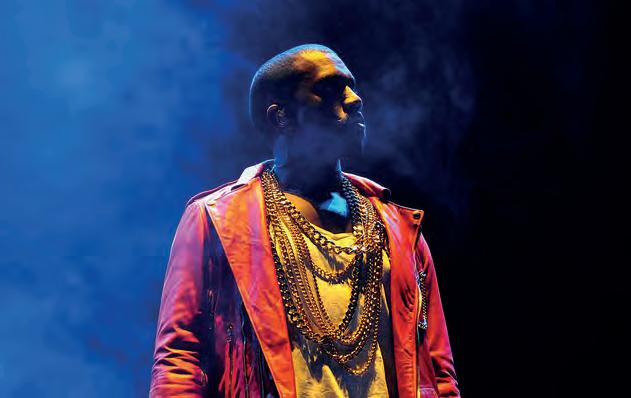
as this Ye apologised in April, issuing a desire to meet with the British Jewish community to “listen” and present a “show of change”. It should also be highlighted that Ye has historically suffered publicly with severe mental health problems such as bipolar, which can have a pronounced effect on a person's behaviour and actions which would not have been typical in their healthy state of mind.
To the apology however, the UK health secretary, Wes Streeting, responded that Ye’s pandering was “mealy mouthed” and “self serving”. Noting that the rapper needed to earn forgiveness from the Jewish community, not just the festival organisers. Following this it broke in the news that be home office decided to withdraw Ye’s
Apermission to enter the country on the grounds that his presence would not be conducive to the public good with the Prime Minister stating that the US rapper should never have been invited. This in turn resulted in sponsors pulling out and refunds for the thousands of ticket holders.
WITH THE PRIME MINISTER STATING THAT THE US RAPPER SHOULD NEVER HAVE BEEN INVITED
All of this sparked furious public debate, with many campaigning for second chances and mental health awareness whilst many others were still dealing with the impact of his cruel comments. During this time of debate it is key to mention the antisemitic attack on four ambulances from Hatzola, a volunteer led ambulance service operating in Golders Green, along with Jewish hate crime increasing significantly in the UK with almost 4000 incidents logged in 2025.
Music writers share their recommendations of music that will help you survive exam season
'A Thousand Capacities' by Keegan DeWitt
S someone who needs music to accompany every moment of their life, finding the perfect study song to get my head in the game is its own challenge. That was until I watched All The Bright Places . While the film itself is devastating, the score by Keegan DeWitt is beautiful, with my personal highlight being ‘A Thousand Capacities’. The song perfectly captures the raw, intense emotions of the film without being overbearing or distracting to listen to while studying. It’s able to capture a bittersweet and nostalgic sensation, the feeling of running through fields. Its atmospheric tone always gives me the motivation to work, mak-
ing writing essays and studying for exams a much more whimsical experience.
THE SONG PERFECTLY ENCAPSULATES THE RAW, INTENSE EMOTIONS OF THE FILM WITHOUT BEING OVERBEARING OR DISTRACTING
EParticle Shift by Arcologies
XAM time is here, and my playlist is ready. Occupying my mind is the Particle Shift album by Arcologies — an urban futurist soundtrack for a sci-fi game that doesn't exist, inspired by the late-90s/ early 2000s Sega Dreamcast console. Each song uses drum and bass, with synth waves and electronic keys. Fast-paced yet ephemeral, the endless reverb feels dreamlike. Yet, there's substance: the constant drumming and occasional lo-fi voices evoke deja vu.
FAST-PACED YET EPHEMERAL, THE ENDLESS REVERB FEELS DREAMLIKE
IThese nostalgic songs are subtle; they strengthen my research by making me feel contemplative, yet energised — ideal for studying. If you like cosy songs with weight, you'll love this playlist.
'The Winner Is' by DeVotchKa and Mychael Danna ' Miroirs: III. Une barque sur l’océan' by Maurice Ravel
HAVE a studying playlist that has been steadily growing since my GCSEs, and routinely messes up my top genres on Spotify wrapped. It’s made up of a combination of film, television and videogame soundtracks, as well as lo-fi and instrumental covers of songs I prefer listening to songs without lyrics while studying, so I don’t get distracted. This also means that in many ways it functions as an archive of sorts for much of the film and TV I have consumed in the past eight years.
A COMBINATION OF FILM, TELEVISION AND VIDEOGAME SOUNDTRACKS
If I had to pick a single song to encompass this vast playlist (the current count is 517 songs, or 26 hours 45 minutes) it would be ‘The Winner Is’ by DeVotchKa and Mychael Danna, which appeared in the film Little Miss Sunshine While my study playlist has been with me for a number of years, and it is sad to think I will likely never listen to it again once I leave education this summer, I cannot say I will be too sorry to see it go.
MIROIRS: III. Une barque sur l’océan' is the third movement of a suite of five pieces composed by Maurice Ravel. Translated to English, the title means “A Boat on the Ocean”.
TRANSLATE TO ENGLISH, THE TITLE MEANS "A BOAT ON THE OCEAN"
I came across it in the 2017 film Call Me By Your Name , where it fades in and out
of the scenes immediately after Elio confesses that he knows nothing about love, and that he wants Oliver to know that. They cycle through the Italian countryside as the music ebbs and flows like the ocean. It’s perfect for studying because it’s seven minutes and eight seconds of sweeping melodies imitating the waves.
EDITORS: Sarah Gould and Katie Roberts
Cristina Ferrin Pereda discusses the double standards for men and women in music
SEXISM in the music industry is not new, but it has transformed over the years. Cancel culture has been very damaging for the industry, but notably the public is a lot quicker to cancel a female artist over a male. Male artists can get away with a lot more than female artists; they are held to very disparate standards that mean women will never be able to get the public’s approval with the same ease as men despite always trying ten times harder.
NOTABLY THE PUBLIC IS A LOT QUICKER TO CANCEL A FEMALE ARTIST OVER A MALE
This issue has re-arisen with Chappell Roan’s latest controversy. The American pop singer is already infamous for her rocky rela -
tionship with the paparazzi — often setting her boundaries at red carpets and accusing them of invading her privacy. Many pointed out that these are the collateral issues that come with being in the spotlight, but the repeated hate and constant ‘cancellations’ she gets for this aren’t up to par with the mild treatment male artists, such as Justin Bieber, get for doing the same thing. At the beginning of this year, Roan was publicly called out by Brazilian football player Jorginho after his wife and stepdaughter were yelled at by a security guard at a hotel that both them and the singer were staying at. The footballer alleged that Roan had sent the security guard to do so for invading her privacy. This was later unveiled to be a huge misunderstanding as Roan published a video on social media explaining that the security guard was not part of her personal detail, but of the hotel, and so she played no part in that interaction. Although her past reputation contributed to how quickly
the internet turned against her, this doesn’t change the precedent of the public being quick to villainise female artists many went on to call the singer a ‘child hater’, and basically no attention was paid to the bodyguard.
Beyond this, Chappell Roan has frequently been accused of being ungrateful and not appreciating her fans. This is a criticism that men are rarely subject to, so this whole rhetoric I would argue is inherently sexist. Female artists should be grateful to their fans because they are the reason for their success, not their talent or their effort, etc. Jorginho even explicitly stated in his Instagram post to Chappell that
“without your fans, you would be nothing” Compared to the track records of some male artists, the reasons for criticising most women seem ridiculous. Chris Brown, despite having numerous assault charges, sexual assault allegations, and domestic violence cases, was still welcomed to perform his sold-out stadium tour in the UK. In 2025, despite one of his bail conditions for a charge of grievous bodily harm being surrendering his passport, a plan was set to allow him to still perform, and fans supported him through this. Comparing this to how the mayor of Rio de Janeiro publicly stated Roan was not welcome to perform at the city’s music festival, it feels like a mockery. This imbalance is what makes it harder for women in the industry the public actively perpetuates them every time they join the bandwagon at the crucifixion of yet another female artist.
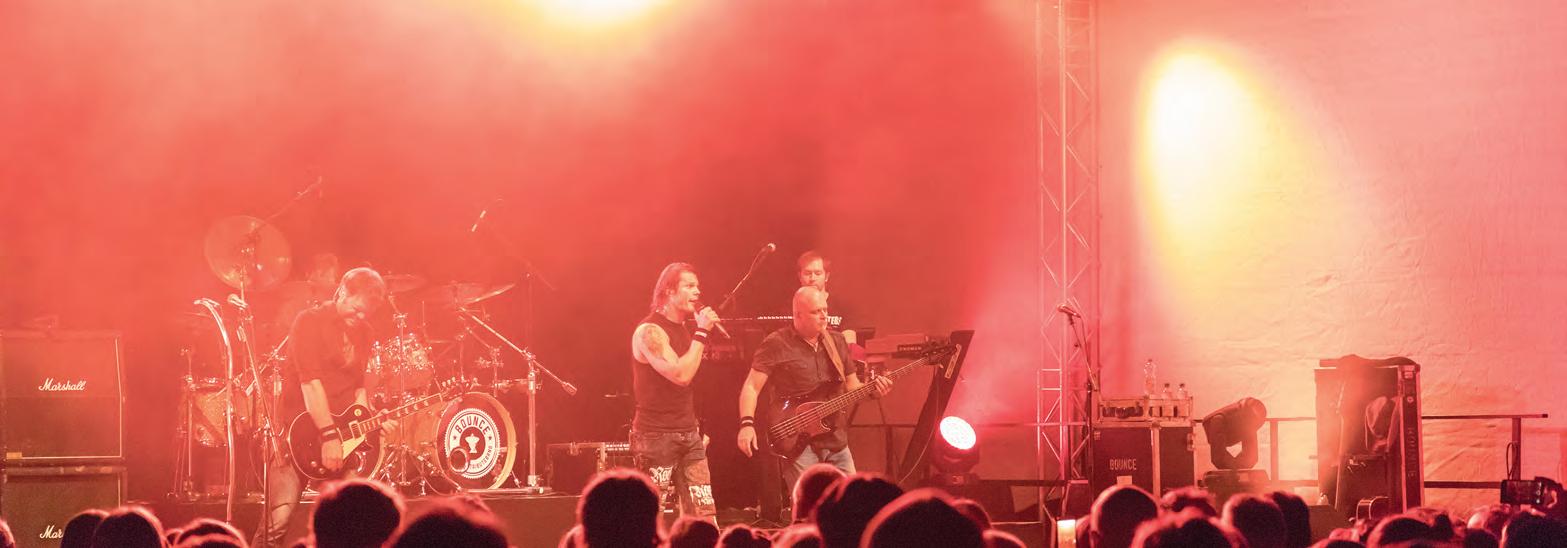

POP-SENSATION Ol ivia Rodrigo recently announced her third studio album, You Look Pretty Sad for a Girl So in Love , and its lead single ‘Drop Dead’ was released on April 17th. The album itself comes out on the 12th of June. Rodrigo also recently announced the album’s accompanying tour, The Unraveled Tour, with tickets for this going on sale in the first week of May. But this does put many fans in the awkward position of having to decide if they want to
spend money on tickets for an album they haven’t heard yet. Of course, many people are happy to do this, relying on their enjoyment of previous work in the artist’s ouvre and assuming that the new music will be of a similar quality. However, this is a risk that more and more fans are unwilling to take — especially with the soaring price of concert tickets at the moment, and the added expense of travel for those who live outside of metropolitan centres like London. (Not to mention that so called ‘World Tours’ often consist predominantly of countries in the Global North and not many other places.)
THIS IS A RISK THAT MORE AND MORE FANS ARE UNWILLING TO TAKE
And Rodrigo is not the only artist to have done this. Recently Noah Kahan announced
The Great Divide Tour, which takes place later this year to accompany his recent album of the same name, and back in January tickets went on sale for Harry Styles’ Together Together concert tour, in support of his fourth studio album Kiss All the Time. Disco, Occasionally . And it is Styles’ album that shows that legacy popularity from previous albums is not always enough to ensure fan attendance at upcoming shows. While Kiss All the Time. Disco, Occasionally performed well commercially, the album has a different vibe to his previous music, and many fans were left feeling disappointed. Couple that with outrageously expensive ticket prices — standing tickets for his London shows at Wembley Stadium were at least £144 — amid an ongoing cost of living crisis, and many fans have taken to TikTok to announce they are reselling their tickets.
One artist’s manager has said that tickets have become “a status symbol” and one user on Reddit commented that forcing fans to
buy tour tickets before even hearing the album “Seems like such a money grab”. While for the time being enough fans seem happy to cough up for concert tickets without knowing if they like the music, the tide does seem to be beginning to turn on artists in regards to tour ticket sales.
THE TIDE DOES SEEM TO BE BEGINNING TO TURN ON ARTISTS

Sofia Tapia, Online Lifestyle Editor, explains what is putting our area on the film and TV map
THE film and TV industry, whilst still synonymous with Hollywood, is slowly moving across the ocean into the United Kingdom. This change is highlighted by Oscar-winning movie Wicked being filmed around the UK in Buckinghamshire, Norfolk, Sussex and Hertfordshire. With many cast members being originally from the US, this decision shows how England’s beautiful scenery is slowly taking its well-deserved place in screens. However, it is not just the east of England that is getting their time on the spotlight. The southwest, specifically Devon and Cornwall, has also experienced a rising popularity as film and TV sets.
THE FILM
For centuries, many artists and writers have been inspired by these landscapes. Jane Austen’s Sense and Sensibility was set in the village of Upton Pyne — just four miles away from Exeter! Thus, it makes sense why many period pieces and adaptations of classic works would be filmed in the places that inspired them. For both the 1995 film and 2008 BBC’s TV adaptation of Sense and Sensibility, Devon was the main featured backdrop. Whilst the more recent adaptation was mostly filmed on the Hartland Abbey estate (described by the BBC as being “of outstanding natural beauty”), the 1995 film showcased several locations across South Devon. These included Compton Castle near Paignton and many areas surrounding Plymouth, like Saltram House, Berry Pomeroy and Mothecombe House. You might have even unknowingly visited some of them before! Devon and Cornwall’s appeal is undeniable.
As an Exeter student, you have likely taken day trips to nearby attractions, be it a nice small town, historical landscape or national park. If you have ever been left in awe by the beauty of your surroundings, why would it come as a surprise that directors and producers would be inspired by the same areas? Just the fact that the same book was brought to life through two different mediums that employed opposite sides of Devon showcases how full of perfect filming locations the southwest is. And this inspiration is not limited to old movies and TV shows, as evidenced by some of last year’s movie releases. Dark comedy The Roses was
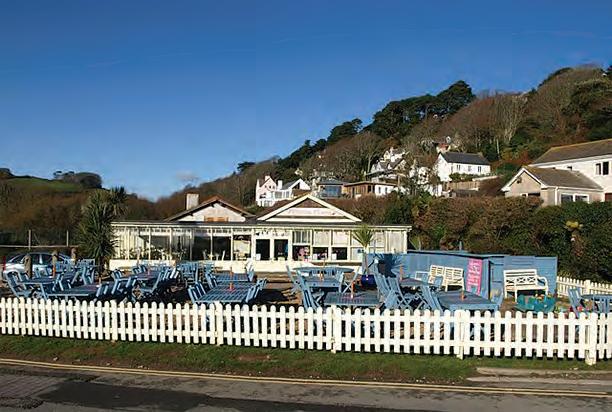
filmed in both Los Angeles, USA, and Salcombe, South Devon, and sci-fi Rose of Nevada both takes place and was filmed in Cornwall. The latter film’s director, Mark Jenkin, has spotlighted the region throughout his work. Why wouldn’t he, when the Southwest is perfect for the big screen!
Lauren Walsh, Deputy Editor, shares her thoughts on the heartwarming sci-fi taking the box office by storm

HEN Ryland Grace (Ryan Gosling) wakes up on a spaceship far far away from Earth, he has no memory of how he got there.
As he slowly recovers his memories, Grace learns that the Sun has been dimming for many years, and he is part of ‘Project Hail Mary’, namely the Earth’s attempt to save the Sun, and humanity in the process.
In my opinion, Project Hail Mary is an incredible movie. From spectacular visuals and cinematography to a beautiful score, and a — pardon the pun — stellar performance from Ryan Gosling, it really has it all. Equal parts funny, dorky and moving, Gosling’s acting is truly a standout in this film, and is made especially impressive as half of the film consists of scenes where Grace is alone, or only has the company of an alien he names Rocky, who he meets on the journey. And it is this central relation-
Wship between Grace and Rocky that really drives this movie. From first contact and working out how to communicate, to saving their species and heartfelt goodbyes, the pair had me tearing up near constantly.
FROM SPECTACULAR VISUALS AND CINEMATOGRAPHY TO A BEAUTIFUL SCORE
What I really appreciated about this film was that, even in the face of planet-wide catastrophe, humans kept being, well, human. Grace and his colleagues mess around while buying supplies in a hardware store, there’s karaoke night on the top-secret Project
Hail Mary aircraft carrier, and Grace teaches Rocky how to fist bump. Reminiscent of James Gunn’s Superman and his message that being kind is the real punk rock, the overarching idea of Project Hail Mary seems to be that it is our relationships with each other that make us who we are, and something worth saving.
IT IS OUR RELATIONSHIPS WITH EACH OTHER THAT MAKE US WHO WE ARE
I absolutely loved this movie and cannot recommend it enough, whether you are a sci-fi fan, or just anyone who is looking for an emotional but feel-good movie about the indomitable human (and alien) spirit.
Sophia Cuschieri, Welfare Executive, explores the significance of the Paramount and and Warner Bros. merger
ITH the entertainment industry still reeling from the pandemic and the 2023 labour strikes, the merger between Paramount Skydance and Warner Bros. Discovery is the latest product of this turbulent period. As of April, shareholders have approved the deal, but it still requires European regulatory and U.S. Department of Justice approval. The merger has already drawn scrutiny from members of the entertainment industry, with several state attorney generals considering if they should take legal action. Before delving into the scrutiny, let me provide some background on the deal.
Valued at approximately $111 billion, the merger is considered to be one of Hollywood’s largest, decreasing the ‘Big Five’ to four studios. It would consolidate major studios, large IPs, channels, news networks and streaming platforms under a single umbrella with the deal including iconic assets such as Harry Potter, Nickelodeon and CNN. The merger aims to create a commanding streaming competitor against
Disney and Netflix, through a combined streaming services of HBO max and Paramount+. Analysts predict prices might rise over time as decreased competition provides the company with greater pricing power. Because of the reduced competition among streaming services, it could mean viewers would have to pay more overall for their subscriptions.
IT COULD MEAN VIEWERS WOULD HAVE TO PAY MORE OVERALL FOR THEIR SUBSCRIPTIONS
The merger reflects an advance towards consolidation, with fewer, but larger studios in control over production and distribution. It means studios may prioritise lower-risk investments, with clear return on investments, franchise-driven and replicable content and enhanced cost con-
trol. Concurrently, independent producers may struggle to secure both distribution and funding.
One of the greatest concerns of the merger comes at the expected number of job cuts, the incentive for many industry figures opposing the merger. Over 3,500 people have joined the fight to stop the merger, signing an open letter opposing the deal. Famous actors including Ben Stiller, Emma Thompson and Javier Bardem have signed the letter, along with directors, such as, Denis Villeneuve and Yorgos Lanthimos. As well as multiple producers, writers, filmmakers and comedians arguing the merger reduce opportunities across the industry as well as decreasing diversity in content.
In response, Paramount emphasised its commitment to supporting talent. Chief executive of Paramount Skyance, David Ellison, mentioned that he intends to maintain Warner Bros. and Paramount as independent movie studios, releasing at least 30 feature films in cinemas each year.
Ellison also remarked that the merger will be able to greenlight more projects, support talent and provide stories to audiences at a global scale. With the fight to stop the merger continuing and Paramount waiting for regulatory approvals, time will only tell if the merger will be finalized and what its effects on the entertainment industry will be. Either way, we could be seeing a major shift in Hollywood’s structure.

Cristina Ferrin Pereda discusses the new seasons’ shortcomings
FINALLY, the long-awaited third season of Euphoria has begun streaming. But whilst Euphoria Mondays are back, the same can’t be said for the classic Euphoria feeling we all loved and missed. Despite only being three episodes in, the show has demonstrated a great shift from its previous seasons, partly due to the time jump between the seasons and changes with the cast. I think the show’s quality has suffered mainly because of Labrinth’s withdrawal from collaborations with the show. His music added a unique and distinct touch that amplified scenes and made them memorable. Even though Hans Zimmer is now handling the score for this season, it is not comparable to the soundtrack of seasons one and two.
[LABRINTH’S] MUSIC ADDED A UNIQUE AND DISTINCT TOUCH THAT AMPLIFED SCENES
Also, the show has become a lot more graphic and disturbing than other seasons. Many have pointed out the increase in animal cruelty scenes and what is described
as ‘fetish content’. Episode three was especially disturbing and more visceral than any other episode. The characters also don’t feel the same notably Nate Jacobs seems almost lobotomised, although they still have time to explore that the rest of the season.
Despite its many flaws, I will still be watching for both entertainment and curiosity’s sake. The show was bound to have been different with all the challenges it faced to get this season out, but this season doesn’t reflect the Emmy-winning quality of the others.
THIS SEASON DOESN’T REFLECT THE EMMYWINNING QUALITY OF THE OTHERS
Molly Panagi Williams offers praise for Zendaya’s marriagecomedy -thriller
SPOILERS AHEAD
ZENDAYA and Robert Pattinson star in The Drama , the latest film from A24 studios. It is a fantastic, cringe and anxiety-fueled insight into the fear of not knowing your partner as well as you think you do. Shortly before their wedding, Zendaya’s character Emma tells her fiancé Charlie (Pattinson), their best man and maid of honor about the worst thing she ever did.
AN ANXIETY-FUELED INSIGHT INTO THE FEAR OF NOT KNOWING YOUR PARTNER AS WELL AS YOU THINK
This film takes an unnerving meet cute and suspiciously happy relationship drama into new realms by the question ‘what is the worst thing your spouse could do for you to still love them?’
Feeling like an indie movie masquerading as a blockbuster, the performances are on point and the plot is gripping. Gorgeous cinematography and imaginative filmmaking creates a sense of unreality as the core cast of characters
step into free fall after the revelation that Emma came close to carrying out a school shooting as a bullied teenager. Her path from there to becoming a young anti-gun activist turned fully functional adult that we meet at the start of the film is as realistic as it is horrifying.
The mix of rom-com and underlying thriller means you don’t know how the plot will play out minute by minute. It makes for a deeply fascinating viewing experience that will have you switching between watching through your fingers and gasping in shock as their wedding day goes from bad to worse. I Truly recommend

Beth Casey, Screen Editor, outlines the strengths and flaws of HBO’s hit medical drama
anced performances in every interaction and teaching moment are our only guide.
HE eagerly awaited second season of HBO’s medical drama The Pitt arrived weekly from the eighth of January to the 16th of April and is now fully available in the UK through an HBO subscription on Amazon Prime. Following the same structure as season one (one hour of a twelve-hour shift per episode), season two develops familiar characters while bringing in newbies as part of the expected fluidity of staff at a teaching hospital. What many loved about the first season was its pace. Instead of catering to the shifting attention spans of the new tv watching generation by making it all drama, explosions and short episodes, it does the opposite. The Pitt slows us down. Its TV that’s gritty, unpleasant (I’m talking almost every bodily fluid, at least once) and emotionally havoc-wreaking.
THE PITT SLOWS US DOWN. IT’S TV THATS GRITTY, UNPLEASANT AND EMOTIONALLY HAVOCWREAKING
A standout strength is the complexity of characters. Some are deeply unlikeable, but then they show compassion and protect a vulnerable patient and suddenly they’re real, messy, conflicted people. There is a distinct absence of incidental music, so the nu-
Season two maintains these elements but pushes them further. Robby is strug gling, Whitaker is no longer just a little ‘Huckleberry’, he’s a confident resident, along with Santos. The med students are also engaging abrasive, ‘evil Ogilvie’ as fans have named him, and Joy’s hi larious nonchalance paint the old greenies in a much kinder light.

Narratively, we have another shift that gets progressively worse. Especially for Robby, whose comments and general behaviour before his sabbatical have Dana and Jack worried about possible suicide ideation. Alongside this arc, when another hospital in the city experiences a cyberattack, PTMC is promptly shut down digitally. The staff must revert to the analogue ‘good old days’ with runners, fax machines and grumpy clerks, hinting at broader anxieties about technology, especially as Dr. Al Hashimi’s AI app proves unreliable.
Despite these positives, my main issue lies in Dr Robby’s relationship with his female staff. When The Pitt comments on real world issues, it’s overt to the point of bluntness. Characters often state messages directly to the audience, such as delays in care due to racial disparity or violence against nurses. It can almost be jarring, but the clarity works. And yet, at other times, its unclear. Robby’s misogyny isn’t addressed. He favours his male protégées (Langdon and then Whitaker) and gets a bit of clapback from Javadi and Al Hashimi, but his treatment of Dr Mohan is glossed over.
WHEN THE PITT COMMENTS ON REAL WORLD ISSUES, IT’S OVERT TO THE POINT OF BLUNTNESS
It’s hard to tell if a point is being made about leaders needing to examine their un-
conscious biases, or if it’s just there accidentally, which is worse than putting it in and not making it an obvious talking point. Instead, Robby’s unstable mental health and Dana’s question to Abbot (“I’ve never seen him like this, have you?”) is supposed to suggest this is a one off. Does it therefore not require interrogation? It’s just too unresolved for such an on the nose, unapologetically confrontational show. Other than this, the new season doesn’t disappoint. While fans worry about losing their favourites due to staff turnover, season one proved how effortlessly attachments form. The new season is likely to endear us to the newbies just as quickly. All we can do is hope that our favourites return and look forward to new chaos when we clock in for shift three.

CAPRICORN (22 DEC — 19 JAN)
It’s exam season. Time to actually lock in.

AQUARIUS (20 JAN — 18 FEB)
A sweet treat is always the answer.

PISCES (19 FEB — 20 MAR)
You might be a night owl, but please get some sleep.

ARIES (21 MAR — 19 APR)
Trust your gut, you’ve got this!

TAURUS (20 APR — 20 MAY)
You’ll have time to celebrate your birthday after the exam season, I promise.

GEMINI (21 MAY — 20 JUNE)
Don’t forget to stay hydrated.

CANCER (21 JUN — 22 JUL)
Your ability to remain focused and disiplinend will serve you well.

LEO (23 JUL — 22 AUG)
Floor time is a need and not a want.

VIRGO (23 AUG — 22 SEP)
Don’t worry, you and your organised, colourcoded study notes will be fine.

LIBRA (23 SEP — 22 OCT)
Please proofread your work.

SCORPIO (23 OCT — 21 NOV)
Stop dreaming and start doing.

SAGITTARIUS (22 NOV — 21 DEC)
It’s perfect timing for any last-minute extensions.
THE exam season is one dreaded by all students. With deadlines piling up and revising to do, it is more important than ever to balance work with self-care to make sure you avoid getting burntout. These are some of my tips for surviving the exam season!
1. Create small, achievable goals
a. Exams, essays and dissertation work can seem very overwhelming, but making small, realistic goals will help you break down your work into small pieces. This helps to not only stay on track with multiple deadlines, but it also gives you a sense of achievement once you reach each goal. Mapping out a revision plan can also help things seem more manageable, preventing last-minute panics.
2. Maintain physical health
a. Take daily walks or play a sport; exercise helps to improve concentration and can be a really great stress relief. Getting out and doing something that isn’t revision can help with your focus while offering a change in pace and a chance to clear your mind. The university offers Pitch Up and Play sessions welcome to students weekly, offering a wide range of sports to try for free, without the commitment of joining a sports club.
3. Know how you work best
a. Revising is different for everyone, some people work best in busy environments, while others by themselves. Being able to identify where and how you work best, in a library or maybe a café can help boost your productivity and changing spaces can help to prevent boredom.
b. If you know you can get easily distracted, then make sure you find an environment without any distractions. Whenever I work from home, I always find other, menial tasks to do instead of my work, so I always make sure to get out of the house and study on campus or in a café. Revising with a friend also can help motivate you to get up at a specific time, getting you up and out in the morning.
4. Stay organised
a. Writing down on a sticky note or in your calendar when your deadlines are can be helpful to stay organised and can act as reminders of
deadlines so you don’t miss anything! It might be helpful to create a realistic study schedule focusing on areas you find challenging early and confront them during your most productive hours. Mapping out what exactly you should be working on each day to stay on track can also be useful.
5. Stay healthy
a. With lots of work to do, you might start to neglect cooking or start staying up late. It is so important to feed your brain, so eating good food is a must! To make things easier, bulk cook some meals on the weekend which you can just reheat during busy periods. This will save you time during the week and keep you healthy. Ensuring you get enough sleep is also crucial because it helps to consolidate memories and helps for better focus and decision-making. So please don’t neglect your sleep schedule!
6. Take breaks!
a. There is a reason why everyone says this when you’re revising! Taking a break isn’t being lazy, it is needed to help clear your mind. Go outside, scroll for a bit or grab a snack, just take some time to step away. Unwinding will help prevent you from burning out and it is better than studying for hours on end as it refreshes your mind. b. Also make sure you make time for activities or hobbies you enjoy. This can be as simple as going for dinner with friends or staying in and watching a movie. Organising activities means you have something to look forward to. For me, every Wednesday night my house organises something fun, from watching a girly film to playing Just Dance, it gives me something to anticipate and a much needed change of pace from studying.
If you feel like you are struggling or need help this exam period, please reach out for help. From friends and family to University wellbeing services, they’re all there to help. You can find a range of well-being services on the University website and if you have a problem please don’t hesitate to reach out. Wishing you all the luck for exams, you’ve got this!.
WITH the summer term approaching and the weather (hopefully) becoming warmer, I’ve got the perfect refreshing dessert for you! This recipe has been passed down from my Maltese grandmother, it was one of the first things my father taught me to cook. It has become a family staple and the perfect, unique dessert to serve guests. This dessert is simple to make and perfectly rejuvenating!
Makes: 4 servings
Freezing time: approx. 5 hours
Kitchenware: Yogurt pots or containers for freezing
Ingredients:
·500g Fresh Strawberries
· 115g Sugar
· 120ml Water
·1/2 Lemon
·1/2 Orange·
· Cream (optional)
.Fresh mint (optional)
1.In a saucepan, warm up 120ml of water (enough to dissolve the sugar). Add 115g of sugar and leave until dissolved. Make sure to let it cool completely!
2.While the sugar is dissolving, cut up and blend the strawberries.
3.Once the syrup has cooled down, add it and half of a lemon and orange juice to the strawberry puree and blend!
5. Once everything is blended, pour the mixture into small containers (e.g. yogurt
pots) and place in the freezer. They should take around 5 hours to freeze, but I find it best to leave overnight.
6. Serve the granitas in glasses or bowls and start chipping away! You can also top them with some cream or mint.
Sophia Cuschieri Welfare Executive
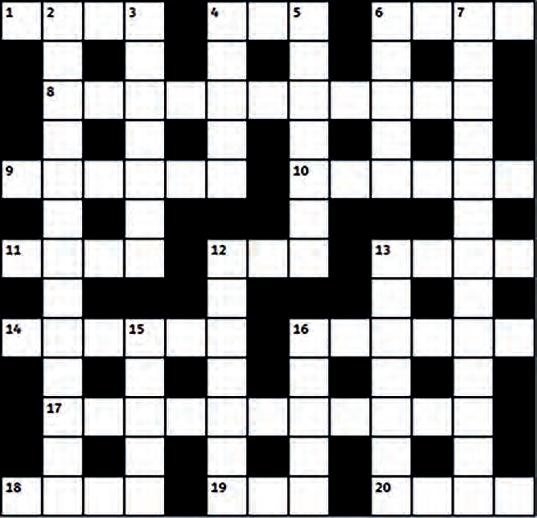
Across 1/4/6 Expression of sympathy (4,3,4)
8 Illustrative instance (4,2,5)
9 Tower (6)
10 Muslim ruler (6)
11/12/13 Alternate periods of economic expansion and recessionMBA’s doubt, no? (anagram) (4,3,4)
14 North American country, capital Ottawa (6)
16 Advertising catchphrase (6)
17 Full of ideas (11)
18 Part of the eye (4)
19 Understand (3)
20 Abhor (4)
2 Fairy-tale start? (4,4,1,4)
3 Secret medicine - most run (anagram) (7)
4 Contaminate (5)
5 Bare (7)
6 Coldness (5)
7 Not clear - spur an entrant (anagram) (13)
12 Wonderful (7) 13 Studious (7) 15 Gather (5) 16 Clever (5)

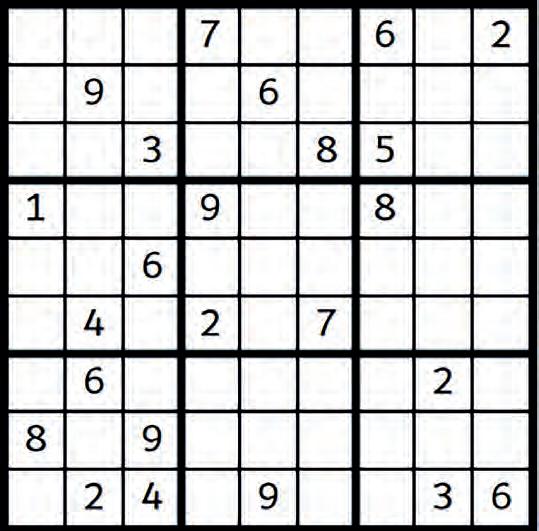

WHAT IS THE NAME GIVEN TO THE METHOD OF STARTING A BASKETBALL GAME?
WHICH MUSICAL IS BASED ON SHAKESPEARE’S ROMEO AND JULIET?
WHAT IS THE PANTONE COLOUR OF THE YEAR FOR 2026?
WHICH COMPANY MAKES THE HIGHEST NUMBER OF TYRES IN A YEAR?
WHAT IS THE CAPITAL CITY OF CANADA?
WHAT IS THE TOTAL RUN-TIME OF THE EXTENDED EDITIONS OF THE LORD OF THE RINGS FILM TRILOGY?
All you need to do is scan the QR code here in order to purchase your society membership from the Student’s Guild. After that you can join our Exeposé Members 25/26 facebook group in which you’ll find content calls from section editors on pretty much any topic you can imagine! We’ll have a link to this page on our instagram! If you see a content call that takes your fancy, simply comment under the facebook post, write your article and send it to the editor. Whilst they may send you some feedback or ask you to make a
couple of changes, no articles will ever be rejected and we encourage writers to get involved regardless of previous experience. If financial hardship prevents you from gettng involved, the Guild offers a Society Hardship Fund, aimed at any student awarded the University Hardship and Retention Fund or who is unable to take part in societies due to financial barriers. We can’t wait to see all the amazing writing you guys get up to!
EDITORS:
Jed H. Gibbins Antoni Kałduński
Burrows
AFTER 16 years in power, Viktor Orban finds his reign as Hungary’s Prime Minister coming to an end after a landslide victory for Peter Magyar, leader of the Tisza party. Orban’s system — condemned as an ‘electoral autocracy’ — pushed Hungary’s political position on a global stage towards an alliance with other radically far-right superpowers, such as Russia and the US. The landslide victory will allow Magyar to reset Hungary’s global relationships, connecting more with the EU and Ukraine. For the duration of Orban’s time in power, he maintained close partnerships (both personally and domestically) with US President Donald Trump, and Russia’s Vladimir Putin. His close relationship with Putin led him to maintain Hungary’s reliance on Russian imports, arguing that Russian oil and petrol would be more affordable. In light of the Ukraine war, this made Orban an unpopular leader in the eyes of the EU, who made multiple collective efforts to shake reliance on Russian goods in support of Ukraine. He is also remembered as breaking his promise on an EU agreement to loan Ukraine €90bn, aligning Hungary with Russia’s anti-Ukraine stance. Despite his growing unpopularity worldwide, as well as within Hungary, Orban has not resigned as leader of the Fidesz party. Magyar has made promises to reverse the changes made by Orban, and take a fresh stance politically, acting on the side of the EU. He aims to end the NER (a network of pro-government loyalists, institutions, and businesses aimed at centralizing power, control-
ling media, and directing state/EU resources to a newly created elite) and tackle corruption, restoring the integrity of Hungary as a nation. Addressing his supporters, Magyar, surrounded by his colleagues, claims that “Hungary made history” by electing him and vows to do better and create positive change.
A Kremlin spokesperson, Dmitry Peskov, claims that Moscow wants to continue its relationship with Budapest, despite Hungary now being perceived as “unfriendly” under Magyar’s rule. Ursula von der Leyen, president of the European Commission, believes the election result is a reflection of Hungary “choosing” Europe; Magyar, despite not agreeing with the EU on every level, intends to work with the bloc to repair Hungary’s damaged relationship with them. Ultimately, Magyar’s victory acts as a message to Russia to end their war on Ukraine, as well as Hungary’s journey to become a stronger ally with the rest of Europe. In addition, Hungary’s new closeness with the EU also follows Magyar’s intention to sever ties with China and Iran — acting in a similar manner to what the US values — providing new allyship opportunities for the Trump administration. Only time will tell what’s to come for Hungary under Magyar’s leadership.

MAGYAR’S VICTORY
ACTS AS A MESSAGE TO RUSSIA TO END THEIR WAR ON UKRAINE
Iran: what’s happened and what’s happening
Isabella Brooks, News Editor, explains the situation in Iran
ON 28th February 2026, the United States and Israel carried out coordinated strikes against Iran, triggering Iran to close the Strait of Hormuz. The Strait of Hormuz is a critical transport route for international energy supplies, supplying 20 percent of the world’s oil. The closure of the Strait has sent oil prices soaring past $100 per barrel, with costs briefly spiking to $122 — a level not seen since 2022.

THE STRAIT OF HORMUZ IS A CRITICAL TRANSPORT ROUTE
The knock-on effects have been substantial with petrol, diesel and jet fuel prices surging, raising concerns about higher inflation and potential recession. Flight prices have spiked sharply, with the cheapest economy tickets now running around 24 percent higher than a year ago, according to consultancy Teneo. In the UK, the economic outlook has worsened, with one thinktank warning that the country could face a £35 billion hit to its economy and risks tipping into recession, adding further pressure on Keir Starmer’s government as it contends with the wider fallout from the conflict.
David Aikman, the director of Niesr, said: “This is a serious blow to the government’s mission to get the UK economy growing again. The Mid-
dle East conflict has laid bare the fact that the UK remains highly exposed to global energy shocks.”
On the day the war began, Ali Khamenei, supreme leader of Iran, was assassinated. He had been criticised as a dictator who oversaw brutal crackdowns on domestic dissent, including the killing and torture of protesters. His son, Mojtaba Khamenei, was elected by a clerical body as the successor. Since the start of the war, Iran’s economy has been in tatters. It has seen one of the highest inflation rates in the world, and millions of jobs have either been wiped out or put on pause. This has come as a result of the near-total-state-imposed internet shut down that has now been in place for over 60 days. Around 3,000 — 4,000 Iranian soldiers have been killed, and over 26,500 have been injured since the start of the war.
Trump confirmed that Washington had received the latest Iranian peace proposal.
In a brief post on Truth Social, the US president wrote: “I will soon be reviewing the plan that Iran has just sent to us, but can’t imagine that it would be acceptable in that they have not yet paid a big enough price for what they have done to Humanity, and the World, over the last 47 years.” More recently, reported attacks by Iran on US warships escorting vessels through the Strait of Hormuz have escalated tensions, dashing hopes of a quick end to the war.
Jed
H Gibbins, International Editor, explores Japan’s recent shift in military strategy
JAPAN’S postwar pacifist stance has been constitutionally enshrined by Article nine of its 1947 constitution, drafted under US occupation after defeat in World War II. The clause states that Japan ‘forever renounces war’ and will not maintain armed forces for combat, embedding a national identity built on peace.
The constitution emerged because of the nuclear devastation of Hiroshima and Nagasaki, and Japan’s offensive militarism in World War II. It was designed both to prevent remilitarisation and to reassure neighbouring countries, namely China and Korea they would be left alone. However, Japan eventually developed their Self-Defence Forces (SDF), a compromise which allows defensive capability while maintaining the constitutional principle of pacifism.
Prime Minister Sanae Takaichi and her government argue the constitution is outdated in the current geo-political environment. She argues that increased regional threats from China and North Korea justifies reforming Japan’s pacifist position.
Japan has lifted its long-standing ban on exporting lethal weapons and expanding military capabilities, including investment in longrange missiles and offensive cyber operations. These moves signal a transition from a defensive posture toward a more Western, interventionist military role. Takaichi’s supporters argue this is necessary for deterrence and alliance com-
mitments, particularly with the United States. However, the proposed revision of Article nine, potentially to formally recognise the SDF and/or allow broader military action, has triggered widespread backlash. In early May 2026, over 50,000 protesters gathered in Tokyo, with demonstrations nationwide defending the pacifist constitution. Protesters argue that reform risks eroding Japan’s postwar identity and culture and could entangle the country in foreign conflicts. Japan’s younger population have been particularly opposed to this change. Student-led movements mobilised under slogans like ‘No to war’ and ‘Hands off the constitution’ reflecting fears that Japan is drifting toward militarisation under US influence. Public opinion remains divided, however. Polls show support for limited revisions such as clarifying the legal status of the SDF but strong resistance to abandoning pacifism entirely. Japan pacifist constitution, once a cornerstone of its postwar identity, is being re-evaluated in a rapidly changing geopolitical landscape. Whether reform proceeds will depend not only on parliamentary votes, but on a national referendum, and a society still deeply conflicted over the legacy of World War II. Within global military discussions, Japan’s changing attitudes would have repercussions on North Korea, but also on its close US alliance and their current military deployments.
Antoni Kałduński, International Editor, recommends the best sites to see in Budapest
IF there is one European city that perfectly balances culture, nightlife and affordability for a short trip, it is Budapest. Split by the Danube River into the historic Buda side and the lively Pest side, Hungary’s capital is ideal for a weekend getaway because you can experience so much within just a couple of days.

IF THERE IS ONE EUROPEAN CITY THAT PERFECTLY BALANCES CULTURE, NIGHTLIGFE AND AFFORDABILITY... IT IS BUDAPEST
One of the main reasons people visit Budapest is the atmosphere. The city combines beautiful historic architecture with a modern social scene, making it appealing whether you want a relaxing escape or a busy weekend with friends. Flights from many parts of the UK are relatively cheap, and once you arrive, most attractions are within walking distance or easily accessible by metro and tram.
A must-visit attraction is the famous Széchenyi Thermal Bath, one of Europe’s largest thermal spa complexes. Sitting in naturally heated outdoor pools while surrounded by grand architecture is a unique experience, especially during the colder
months. Another highlight is walking across the Széchenyi Chain Bridge at sunset, with views of the Hungarian Parliament illuminated along the river. For food and nightlife, the city is known for its quirky “ruin bars”, built inside abandoned buildings decorated with vintage furniture and street art. Szimpla Kert is probably the most famous and gives visitors a real taste of Budapest’s creative nightlife culture. Budapest is also surprisingly affordable compared to many Western European capitals. Accommodation, food and public transport are reasonably priced, allowing visitors to enjoy a high-quality city break without overspending. For anyone looking for a destination that offers history, nightlife and great scenery all in one place, Budapest is one of the best weekend getaways in Europe. In recent years, Eastern Europe in general has also become a more desirable travel destination, offering great culture and nightlife while also being much safer than many Western European cities.

Janani Kandaramage discusses
POPE Leo XIV, the first North American pontiff, has spoken out against the war on Iran, prompting a social media tirade against him by U.S. President Donald Trump. His opposition to militarism and anti-Iranian rhetoric challenges the nationalist, securityoriented narratives perpetuated by the Trump administration, undermining Trump authority.
Threats to his moral authority on the global stage from a revered figure will undoubtedly wound the pride of an egotistical insurrectionist such as Trump, triggering outbursts in the form of AIgenerated slop. Although intended to discredit the papacy, the U.S. President has instead drawn backlash from his conservative Catholic allies for satirizing religion. In a boomerang effect, the pope and his followers have garnered greater respect for their steadfast commitment to pacifism and humanitarian concerns. Their diplomatic approach serves as a benevolent antithesis to American partisan politics, intensifying the U.S President’s growing unpopularity both globally and domestically.
Full-scale war began on the 28th of Febru-
ary, when the United States, alongside Israel, launched drone strikes on Iranian nuclear and military infrastructure despite ongoing negotiations. Although framed as a protective measure against potential nuclear attacks, their violations of international law and genocidal damage have attracted fierce scrutiny from international actors like NATO and even the papacy.
The Vatican has always acted as a moral arbiter for peace, particularly during the reign of Pope Francis. However, Pope Leo’s appeal for peace stands out due to his moral clarity, calling threats to “annihilate civilization unacceptable.” He has also been remarkably frank in condemning its aggressors, while confronting the use of religion to sanction conflict. Denouncing American war Secretary Peter Hegseth’s framing of the conflict as a ‘holy war’ while also describing the world as “ravaged by a handful of tyrants” who prioritize billions in military spending over social development-agitated the American President and his loyalists.
In response to this direct challenge to his power, Trump fired back at the Pope’s supposed in-
competence. By labeling him “weak on crime” and “terrible for foreign policy,” and accusing him of catering solely to liberals, Trump attempted to bully him into submission. Similarly, Vice President J.D. Vance cautioned that the Pope must be “careful when talking about matters in theology,” arguing that he fails to consider the “thousand-year tradition of just war theory” as advocated by the Gospel. The most alarming outcome of this escalating feud, however, is the upload of an AI-generated image depicting Trump in godlike terms. The picture, uploaded on Truth Social, illustrates Trump in a white robe, seemingly healing a sick man on a hospital bed and surrounded by American nationalist imagery. This move, however, has alienated the Christian right-wing, whose support he relies on for reelection. The United States Conference of Catholic Bishops said they were “disheartened” by Trump’s mockery of Christianity. Meanwhile, Bishop Robert Barron, despite being a lifelong Republican, called Trump’s remarks “utterly inappropriate and disrespectful,” arguing that no one transcended God or the papacy, demanding an apology to the Vatican.
On the other hand, solidarity around t he Pope and his supporters has hardened, signaling the Catholic Church’s shift from diplomatic neutrality to an active global moral compass that nullifies global catastrophe by limiting superpower extremism and making war morally indefensible. Although the Vatican has occasionally come to loggerheads with governments around the world over abortion and immigration policies, the recent feud has strained hope for genuine reconciliation between the two in the near future. On a religious front, however, it at least the two in the near future. On a religious front, however, it at least symbolizes a shift from evangelical Christianity to a more progressive form of Christianity.

IT... SYMBOLISES A SHIFT FROM EVANGELICAL CHRISTIANTIY TO A MORE PROFESSIVE FORM
Lauren Walsh, Deputy Editor, recommends Amazon Prime’s Maxton Hall
IF you’re looking for a new tv show to binge, let me introduce you to the series Maxton Hall on Amazon Prime.
And yes, before you ask, it is originally in German. I first watched it with my friend who can speak fluent German because I wanted to practice my German skills and it is its German language that makes the series unintentionally very funny.

IT IS ITS GERMAN LANGUAGE THAT MAKES THE SERIES UNINTENTIONALLY VERY FUNNY
The show is based on a series of books by German author Mona Kasten, which have since been translated into English. The first book is called Save Me . This explains why the show is in German, with German actors, but takes place in England, with characters with English names, and English newspapers and so on in the background. However, it did take a few episodes for me to realise that it was sup posed to be set in England, and it feels like it is set in a fantasy world rather than reality.
The story follows Ruby Bell (Harriet Her big-Matten) who gets a scholarship to the ex clusive school Maxton Hall and the very rich students there, such as James Beaufort (Da mian Hardung). Her goal is to do well in her classes and get into Oxford University, but her classmates, such as James, try to disrupt this.

IT FEELS LIKE IT IS SET IN A FANTASY WORLD RATHER THAN REALITY
And it is here that the show’s ‘English’ setting falls apart. There is no UCAS and no SFE, no mention of A-levels, just vague references to ‘final exams’. The school uniform is not any kind you would find at an English school, and many students look like they’ve come from a fashion show. And the geography is odd too: at one point
Die deutsche Serie mit einem englishem Handlungort
Lauren Walsh, stellvertretende Herausgeberin, empfieht Maxton Hall von Amazon Prime
WENN Sie auf der Suche nach einer neuen Fernsehserie sind, möchte ich Ihnen die Serie „ Maxton Hall “ auf Amazon Prime vorstellen. Und ja, bevor Sie fragen: Die Serie ist ursprünglich auf Deutsch. Ich habe die zum ersten Mal mit meiner Freundin gesehen, der flüssig Deutsch spricht, weil ich mein Deutsch üben wollte, und die deutsche Sprache macht die Serie auf unbeabsichtlichte Weise sehr lustig. Die Serie ist auf einer Buchreihe der

overly dramatic but a lot of fun. It is just even funnier when you’ve lived the reality of university application it’s trying to emulate. The first two series are available on Amazon, and the third will be released this summer.
deutschen Autorin Mona Kasten basiert, die inzwischen ins Englische übersetzt wurde. Das erste Buch heißt „ Save “. Das erklärt, warum die Serie in deutscher Sprache mit deutschen Schauspielern gedreht wurde, aber in England stattfindet, mit Figuren mit englischen Namen, und mit englischen Zeitungen und so weiter im Hintergrund. Allerdings habe ich erst nach ein paar Folgen begriffen, dass die Handlung in England spielen
soll. Es fühlt sich eher so an, als würde sie in einer Fantasiewelt statt in der Realität stattfinden.

WARUM DIE SERIE IN DEUTSCHE SPRACHE MIT DEUTSCHEN SCHAUSPIELERN GEDREHT WURDE, ABER IN ENGLAND STATTFINDET
Die Geschichte dreht sich um Ruby Bell (Harriet Herbig-Matten), die ein Stipendium für die exklusive Schule Maxton Hall bekommt, und handelt auch von den sehr reichen Schülern dort, wie beispielsweise James Beaufort (Damian Hardung). Ihr Ziel ist es, gute Noten zu erzielen, um an die Universität Oxford studieren zu können, aber ihre Klassenkameraden, beispielsweise James, versuchen, ihr dabei Steine in den Weg zu legen. Und genau hier fällt die „englische“ Handlung der Serie auseinander. Es gibt weder UCAS noch SFE, keine Erwähnung von ALevels, sondern nur vage Hinweise auf „Abschlussprüfungen“. Die Schuluniform entspricht keiner die man an einer englischen Schule finden würde, und viele Schüler sehen aus als kämen sie direkt von einer Modenschau. Auch die Geografie ist seltsam. An einer Stelle steigt Ruby in London in die U-Bahn und scheint innerhalb weniger Minuten wieder in ihrem Dorf auf dem Landstrich zu sein. All das soll sagen, dass mir „ Maxton Hall “ wirklich gut gefallen hat; es ist zwar übertrieben dramatisch, aber macht viel Spaß. Es ist einfach noch lustiger, wenn man die Realität der Universitätsbewerbung selbst erlebt hat, die die Serie nachzuahmen versucht. Die ersten beiden Staffeln sind auf Amazon verfügbar, und die dritte wird diesen Sommer erscheinen.
Amberly Wright, Deputy Editor, reflects on the key moments of NASA's historic mission to the moon
ON the 1st April, NASA took the Artemis mission to new heights with Artemis II, the first crewed Artemis mission following a successful test flight. The mission broke the record for the furthest humans have travelled from Earth, which was set by Apollo 13 in 1970.
The mission spanned nine days, one hour and 32 minutes, elapsed an incredible 1.4-million-miles, and saw four brave astronauts’ orbit around the moon for a lunar flyby before returning to earth for splashdown in the Atlantic Ocean.
The flight began at the Kennedy Space Centre, with the core burning for around eight minutes before separation, at which point Orion entered elliptical orbit at almost 2,300km. Orion remained in high orbit for almost 23 hours, becoming the first crew to spend time in high Earth orbit, instead of going straight for the moon. On flight day six, the team entered the Moon’s sphere of influence, launching Orion towards the Moon. After their lunar flyby, the crew relied solely on gravity to ‘slingshot’ them back into the Atlantic Ocean.
Commanding the mission was Reid Wiseman, who served as a flight engineer on the International Space Station (ISS) on Expedition 41 for a total of 165 days. Wisemen
spent a shocking 82 hours in a single week doing research, which involved two space walks. After the Artemis II mission, Wiseman has spent a total of 175 days in space.
Victor Glover served as pilot for the mission after piloting the SpaceX Crew Dragon spacecraft on its sec ond crewed flight, as well as serving as a flight engineer for Expedition 64/65 on the ISS, complet ing four space walks.
Whilst on Artemis II, he became the first Black man to go be yond Earth’s low orbit. Perhaps the most monu mental member of the crew is Christina Koch, the mission special ist. Whilst working on the ISS’ Expeditions 59, 60, and 61, and on the MS-12 spacecraft, she completed life-altering research, growing protein crystals and testing biological 3D printers in microgravity. Koch has conducted a total of six space walks, totalling 43 hours and 15 minutes, and has been a part of

the first three all female space walks, and became the first women to travel beyond Earth’s low orbit, whilst on the Artemis Mission. Finally, serving as mission specialist, and the only non-American to go beyond low orbit, was Jeremy Hansen. Though Artemis II was his first time in space, Hansen previously served as an aquanaut on the Aquarius underwater laboratory, taking part in the NEEMO 19 mission. The mission marked a major step forward in moon and Mars exploration. Whilst in space, the team conducted cutting-edge research. Each member wore wristbands which monitored their sleep, stress, cognitive performance, and teamwork dynamics, collecting data for the ARCHER (Artemis Research for Crew Health and Readiness) project, which aimed to collect physiological and behavioural data on the effects of deep-space travel. Similarly, the team
Aalso took AVATAR (A Virtual Astronaut Tissue Analog Response), a small USB stick size chip, into space, which mimicked human tissue. The team collected samples of their saliva on specialist paper to help identify biomarkers that signal immune system changes due to the increase in radiation and isolation, whilst also looking at how viruses and bacteria behave, much like previous studies of chickenpox and shingles on the ISS. Whilst on their lunar flyby, the team were the first to ever see the dark side of the moon with naked eyes. They observed geological changes on the moon, and even named a lunar crater “Carroll”, after Wiseman’s late wife, during a teary livestream moment, continuing the tradition from Apollo 8, where Jim Lovell names a lunar peak “Mount Marilyn” after his wife. NASA has announced three future Artemis missions. Artemis III, scheduled for 2027, will test a lunar lander ahead of Artemis IV, which will be the first crewed lunar landing since Apollo 13. These two missions will pave the way for Artemis V, which intends to begin the development of a lunar base on the moon, which will be a major step forward toward human missions to deeper space
Lani Elatta discusses which skincare products our skin really needs, and which simply exploit our insecurities for marketing purposes
TIKTOK dermatologist on my ‘FOR YOU’ page recommends that a morning skincare routine should consist of six products (cleanser, toner, vitamin C, serum(s), moisturiser, SPF) and a night routine should also include six products (oil cleanser, water-based cleanser, toner, retinol, an exfoliating acid, moisturiser). If I were to buy all of the products, she recommends it would be around £65, even without using high end brands. Other TikToks and reels show off a nine or ten step routine, not including face masks once a week, I even managed to find a 22-step routine. Due to social media, a lot of us have spent a significant amount of money trying to cultivate the “perfect” skincare routine that’ll ensure clear skin and a youthful appearance ten years down the line. Yet there is almost always something missing, another product to buy. It is incredibly overwhelming and even then “skin problems” may still persist — but how much of this is really necessary?
Firstly, it is important to note that every single one of these videos that I’ve come across has been filmed by a woman and I am doubtful these videos are put into the algorithm of male viewers. There is also a strong emphasis in the videos on anti-aging, which again is a subject which is exposed to women most of -
ten. Skincare seems to fall into the common idea that capitalism will tap into our insecurities and sell it back to us. Before thinking about what we next need to buy we should reevaluate our relationship with consumerism, the mindset of “one more purchase then I’ll be prettier/happier/my ideal self” is incredibly harmful and should be unlearned. It is important to take care of ourselves because our bodies require it and we deserve to feel good!
Peer reviewed literature repeatedly recommends daily cleansing, moisturising and protection from the sun. Our faces are covered in a unique microbiome of bacteria (similar to our stomachs). Common skin issues such as acne are commonly caused by an unbalanced microbiome. Research has shown four weeks of just cleansing and moisturising twice a day increases skin microbiome diversity and improves skin health as a result. In terms of sun protection, SPF has the most robust evidence for preventing wrinkles and loss of elasticity and reducing uneven tone as long as it’s used regularly. Healthwise it’s also protective against skin barrier damage and skin cancer, so we all should definitely use an SPF.
This means that arguably, cleanser, moisturiser and SPF is a sufficient skin care routine. However, there are a few benefits you can add
without any extra cost that have been repeatedly verified in studies just by being more purposeful with the products you buy. Niacinamide (vitamin B3) has been shown to reduce redness, regulate oily skin and brighten uneven tone. This is an ingredient found in some cleansers already (e.g CeraVe foaming cleanser with niacinamide — £12.50 and Naturium’s niacinamide cleansing gel — £7.00) so you don’t have to buy it individually. Similarly, vitamin C is found in many moisturisers (Garnier vitamin C fresh and bright sorbet cream — £7.50 and Sunday Riley C.E.O Vitamin C hydration cream — £20). However, vitamin C does make your skin more sensitive to the sun so you definitely have to apply SPF with it. If you feel like you’re able to add something extra to your routine the next most evidenced-back product is retinol. Retinol increases collagen production and speeds up skin cell turnover thereby reducing acne and fine lines. However, retinol can be quite irritating and should be increased gradually (two to three nights per week for a few weeks then increase to daily if your skin tolerates it.)

DAILY CLEANSING, MOISTURISING, AND PROTETION FROM THE SUN IS RECOMMENDED
To conclude, little and often is the best approach for skin care and a 22-step routine is definitely not needed! Obviously, for serious and chronic skin issues a GP should be consulted. It is also important to bear in mind how much of our insecurities about our skin would actually matter if we were all offline more and how much of what we hear about skincare is fear-based marketing.

THE Government has recently passed legislation which will prevent anyone born after 2008 from legally buying cigarettes in their lifetime. While smoking has significantly decreased in popularity in the UK, with rates reaching the lowest on record in 2024 at 10.6 percent, this new law aims to create a completely smoke free generation. One of the main reasons for this ban is the negative effect smoking cigarettes has on your health and the health of those around you. Smoking is the primary cause of chronic bronchitis and emphysema (COPD) and is responsible for about 37 per cent of all respiratory disease related deaths. It also causes significant damage to the cardiovascular, immune, and digestive systems, and is a leading cause of preventable cancers due to containing 70 known carcinogenic chemicals (including arsenic,
benzene, and tar), and can decrease fertility in both men and women. Furthermore, smoking is associated with an increased risk of developing depression and anxiety. Breathing in other people’s cigarette smoke (known as passive smoking) can also cause health issues especially in children, making this a wider public health issue as well as an individual one. It is, therefore, no surprise that the new legislation has gained significant public support, with a YouGov survey finding 68 percent backed the policy.
Secretary of State for Health and Social Care, Wes Streeting, reacted saying “Prevention is better than cure – this reform will save lives, ease pressure on the NHS, and build a healthier Britain.”
The ban will be imposed by raising the legal age of buying tobacco products by one year every year from 2027, meaning those
Uborn on or after January 1st 2009 will never be able to buy them. The law only applies, however, to the sale of tobacco products and not the possession or utilisation.

THOSE BORN ON OR AFTER JANUARY 1ST 2009 WILL NEVER LEGALLY BE ABLE TO BUY TOBACCO PRODUCTS
The bill also bans vapes and other nicotine products from being advertised for children. Since 2024, vaping has been more popular than smoking in the UK, with 20 per cent of teenagers having tried vaping before the age of 17. It is therefore likely that stricter legislations on vaping will follow those on smoking.
For now, however, campaigners agree this
new law is a historic decision for public health and certainly a step in the right direction.

Amberly Wright, Deputy Editor, shares why this summer may be the hottest on record
N issues climate warning as El Niño looms.
The World meteorological organisation says that our planet is gaining more heat energy than it can release, driven by emissions of gases such as CO2. Over the last year, record “energy imbalance” heated the ocean to new heights, seeing ice caps continuing to melt, with sea ice at both poles at a record low throughout most of 2025.
OVER THE LAST YEAR RECORD “ENERGY IMBALANCE” HEATED THE OCEAN TO NEW HEIGHTS
The last 11 years have been the earth’s warmest 11 years on record since 1850. The global average temp for 2025 was estimat -
ed to be 14.3c above pre-industrial times, a time before humans used re cords amounts of fossil fuels.
This phenomenon is referred to as El NiñoSouthern Oscillation (ENSO), which is a recurring natural phenomenon characterised by fluctuating ocean temperatures in the equatorial Pacific. ENSO encompasses two phases: El Niño and La Niña.
During El Niño, the sun warms the waters as they move east-to-west, sending warm surface waters easterly. El Niño also brings more

tropical storms in the Pacific, with scientists observing increased CO2 in the atmosphere during El Niño periods. El Niño contributed to making 2023 the second-hottest year on record, with 2024 being the hottest. El Niño typically occurs every two to seven years and lasts around nine to twelve months.
Scientists are watching the Pacific Ocean closely for signs of El Niño, with
long-term forecasts suggesting that an El Niño phase could form in late 2026, and into 2027, pushing temperatures to new heights. The UN has even suggested that conditions could develop as early as May or June.
The opposite is La Niña, which has only occurred consecutively in 3 instances in the last fifty years. During these periods, east-to-west winds become stronger, pushing warmer waters westerly, which causes cold water to rise from the depths of the ocean, cooling sea temperatures in the eat pacific. Although, temporary cooling from La Niña weather meant 2025 was slightly cooler than 2024, however, it was still one of the warmest since records began.
Dr John Kennedy of the WMO says “if we transition to El Niño, we will see an increase in global temperatures again, and potentially to new records.”
Julia
Szewczyk, Sci-Tech Editor, shares how your favourite sad song may actually be helping you feel better, not worse

IT’S no secret that the kind of music you listen to can have a significant effect on your mood. From joyfully dancing around your kitchen to the Mamma Mia soundtrack, to processing heartbreak with Lana Del Rey, music plays a huge role in the way many of us process and express our emotions. But did you know that, perhaps counterintuitively, listening to sad music may actually improve your mood? Enjoying sad music may seem like an oxymoron, yet it’s a phenomenon which has intrigued both philosophers and scientists for centuries. Aristotle himself argued that sad art may provide people with a sense of emotional catharsis, providing a safe space for processing negative emotions. His theory has stood the test of time and is supported by modern neuroscientific research.
When we listen to a sad song, the amygdala in our brain is activated. This is a small structure which processes emotions, such as fear, anxiety and anger, and is crucial for emotional memory formation. Meanwhile, the prefrontal cortex and hippocampus interpret these emotional cues and provide context and personal meaning from your memories to the lyrics, possibly creating a feeling of nostalgia. In this way, the song can help you process your negative emotions while simultaneously providing comfort by validating them and making you feel less alone. Research also suggests that listening to sad music (as with happy music) leads to the release of the neurotransmitter dopamine which is associated with pleasure and reward. Prolactin and oxytocin, associated with emotional responses and social bonding, may also play a role. All these physi -
ological mechanisms may result in your favourite sad song actually helping you through your emotions rather than amplifying your sadness.
LISTENING TO SAD MUSIC LEADS TO THE RELEASE OF DOPAMINE WHICH IS ASSOCIATED WITH PLEASURE AND REWARD
So, while tuning into a Phoebe Bridgers song as soon as you wake up probably isn’t the best way to kick start a happy day, it may be a good way of helping you through challenging times in your life, providing comfort, validation, and a sense of support — ultimately improving your mood.
WITH the spring classics season over, we look back at what has already been a historic start to an already exciting season. Tadej Pogačar started the season strong with a first race win at Strade Bianche and Mathieu Van der Poel followed suit after last minute signing to race Omloop Het Nieuwsblad and taking that victory in the opening weekend. Following a thrilling Milano — San Remo which saw Pogačar take win at the first monument of the season.
The Tour of Flanders was up next with a further win for Pogačar over the 271km long course spanning the length of Belgium. In a blockbuster Paris-Roubiax, rightly known as the Queen of the Classics, Wout van Aert beat Tadej Pogačar for Visma-Lease a Bike to take the win along the cobbles. Amstel Gold was up next with Remco Evenepoel righting his fates by out-sprinting last year’s winner Mattias Skejlmose to claim a standout victory for his new team Red Bull-Bora Hansgrohe. Then at La Flèche Wallonne, Paul Seixas for Decathlon showed just why he has the cycling world talking. Liège-Bastogne-Liège closed out the season with a further victory for Tadej Pogačar whilst Seixas had to settle for second on this occasion.
The season so far has introduced new and returning contenders to the podium with performances pushing Tadej Pogačar and Mathieu Van der Poel right to the line. Wout van Aert has endured a lengthy comeback to the topflight follow -
ing his horror crash at Vuelta a España crash back in 2024 falling just short in the classics which many would argue is where he is most dominant.

In April, his performances were strengthening
with a second place to Ineos Grenadiers’ Filippo Ganna at Dwars door Vlaanderen and a fourth place at the Tour of Flanders. When it came time for Paris-Roubaix, all eyes were on Pogačar and Van der Poel. With VDP punctured in the Arenburg and groups fractured across the race, Van Aert stayed composed at the front of the race with only Pogačar for company as the velodrome came closer. When the time came, however, there really was no competition. Wout van Aert pulled ahead to take his maiden cobbled monument victory, making a bigger statement in the process.
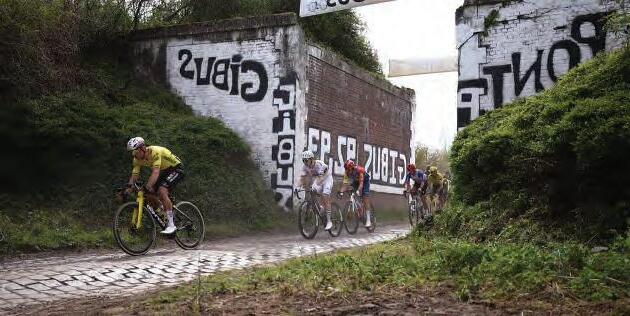

WHEN IT CAME TIME FOR PARIS-ROUBAIX, ALL EYES WERE ON POGACAR
AND VAN DE POEL
Britain’s Tom Pidcock has had less of a stellar start having suspended his classics season in March after crashing into a ravine at Volta a Catalunya. It left him with knee ligament damage, a tibia stress fracture and doubts for the continuation of his season. He was able to recover in time to make an appearance at the Tour of the Alps in which he came second in the opening stage and took victory in stage three following a hard day of climbing. It is without doubt that Pogačar looks to be the frontrunner once again going into the touring months of the summer. Having won all but one classic that he entered (that being Paris-Roubaix where he still came second), his dominance seems to be present amongst the peloton. He is the favourite in virtually any race he enters and following a mightily successful start of the season, that verdict seems to be going nowhere. The only question now is can he take that fifth Tour De France win in July to join the elusive club of legends?
Madison McNair discusses Kimi Antonelli's breakout victory at the Japanese Grand Prix 2026
AT only 19 years old and in his second season in Formula One, Mercedes driver Kimi Antonelli won the Japanese Grand Prix and has become the youngest ever championship leader in the history of the sport. After starting on pole for the race, Antonelli promptly lost his lead at the start, something we are seeing from him every weekend though he always makes the places back up. Antonelli then made his way back up to the top, where a then fortunately timed safety car meant that he could take his pit stop while maintaining his lead. The 2026 season is turning out to be a great one for the rising star as he currently leads the championship ahead of his teammate George Russell. When Antonelli was brought into F1, people questioned whether or not it was too soon. However, this year he is clearly proving that he’s exactly where he’s meant to be.


George Russell started the season as the one to beat, dominating the first round of the season in Australia. However, since that weekend Russell has suffered from problem after problem, leading to him falling behind his teammate Antonelli. Technical issues in Shanghai really served to hinder both his qualifying and race pace, and yet again in Japan similar issues arose, leaving him unable to properly challenge his teammate. On top of that, while Antonelli was exceptionally lucky with the timing of the safety car, Russell had the opposite as he had just pitted before it came out, meaning he missed out on the opportunity for a shorter pit stop. Both Russell and Oscar Piastri overtook Antonelli at the very beginning of the race and were battling each other for the win, however they both lost out due to the safety car aiding the Italian. It seems every week Russell has new problems with his car that are preventing him from catching his younger teammate, something that Mercedes seriously need to figure out.
In the case of Ferrari’s Lewis Hamilton, a race that could have been his chance to score back to back podiums for the first time in red soon turned into somewhat of a nightmare. Hamilton had great pace throughout the race and was ahead of his teammate Charles Leclerc for a significant
amount of time. However, towards the end of the race Hamilton suddenly seemed to lose almost all of his pace, and as a result he ended up finishing right back where he started in P6. Similarly, Red Bull driver Max Verstappen has been having heaps of struggles this season. The four times champion qualified in P11 and only managed to make his way up to P8, which is something we are not accustomed to seeing from the driver who has proven he can win from just about anywhere on the grid.
While the Japanese Grand Prix had its highs and lows for different drivers and teams, arguably the biggest low came from Oliver Bearman. Bearman suffered a massive 50G collision with a barrier during the race as he had to take avoiding action in order to avoid a crash with Franco Colapinto. He managed to safely remove himself from the car but was seen limp -
ing pretty badly while waiting for the medical car. Thankfully Bearman was okay, however the crash brought up concerns regarding the new regulations and closing speeds, as Bearman was unable to slow down quickly enough with the new car set up. Following the race, a meeting was held regarding the safety of the regulations, and it is understood that changes are to be put in place for the Miami Grand Prix.

BEARMAN SUFFERED A MASSIVE 50G COLLISION WITH A BARRIER

Samuel Hanlon covers the London Marathon 2026, one of the world's most iconic sporting events
THE London Marathon is one of the most famous marathons in the world. This year, over a million people entered the ballot to run, with only 59,000 being chosen to take place in the marathon! The race began in Blackheath, turning through Greenwich before reaching Wapping and making for Canary Wharf and the Isle of Dogs, eventually following the Thames west to The Mall. The race crossed different neighbourhoods, passing monuments such as Tower Bridge and Buckingham Palace, whilst being almost exclusively a flat course.
The breakout headline was of course Sabastian Saw,e and his record-breaking time of 1:59:30, becoming the first man in history to break the two-hour cap in a race environment. Yomif Kejelcha also finished in under two hours, mak -
ing the race all the more memorable.
These monumental achievements will truly go down in history. In the elite women’s race, Tigst Assefa also broke a record, that of the fastest time in an all-women’s race.
Over £87.5 million and counting has been
raised for charity this year. Celebrities such as Sir Alistair Cook and James Norton both ran, raising money for the Ruth Strauss Foundation and Breakthrough T1D, respectively. There are even more stories from other inspirational participants. Matt Hampson, who was para -
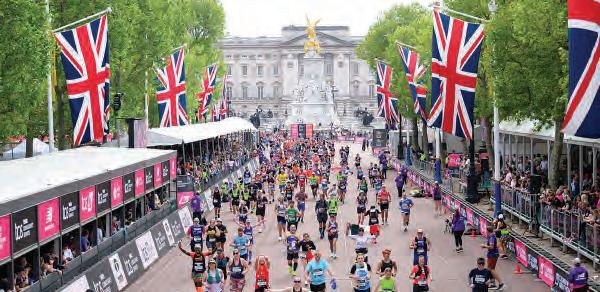
lysed following a rugby accident, took part in a wheelchair alongside friends to raise money for his foundation that supports young people seriously injured in sport. Jordan and Cian Adams, two brothers, also decided to run, with Jordan carrying a 25kg fridge on his back throughout. They took on the challenge, in order to raise money for the Alzheimer’s Society in memory of their late mother, and raise awareness about dementia. These are just a few of the thousands of stories from this year!

TO RAISE MONEY FOR THE ALZHEIMER'S SOCIETY IN MEMORY OF THEIR LATE MOTHER
Of all the runners taking part, no matter the skills or times, there is much to be admired. The gruelling effort needed for running a marathon is proof of a runner’s determination, and their ability to push through and succeed. Here’s to the next London Marathon!
Alex Horton previews predictions and competition heading into the 2026 Men's World Cup
WITH the 2026 World Cup on the horizon, it seems fitting to start making some predictions (however ridiculous they may be). Obviously, we all know England will be crowned the victors, but how will they get there?
Starting with the group stages, the top two teams in each group will progress to the round of 32 along with eight more third placed teams. Let’s first start with the predicted standings of the group stages:
Group A: 1. Czechia 2. Mexico 3. South Korea 4. South Africa
Group B: 1. Switzerland 2. Canada 3. Bosnia 4. Qatar
Group C: 1. Brazil 2. Scotland 3. Morocco 4. Haiti
Group D: 1. Turkey 2. USA 3. Paraguay 4. Australia
Group E: 1. Germany 2. Ecuador 3. Ivory Coast 4. Curacao
Group F: 1. Netherlands 2. Japan 3. Sweden 4. Tunisia
Group G: 1. Egypt 2. Belgium 3. Iran 4. New Zealand
Group H: 1. Spain 2. Ur uguay 3. Cape Verde 4. Uruguay
Group I: 1. France 2. Norway 3. Senegal 4. Iraq
Group J: 1. Argentina 2. Algeria 3. Austria 4. Jordan
Group K: 1. Portugal 2. Colombia 3. Congo DR 4. Uzbekistan
The main contenders for the coveted World Cup trophy are the likes of Brazil, Spain, France and England. I predict they will all top their respective group, so let’s focus on their route forwards. In this case, Brazil would play Japan with Brazil winning comfortably. Spain would battle against Algeria, where Spain
would struggle more than most would think, but ultimately come through on top. France would play one of the best third-placed teams, but it is too hard to predict at the moment which eight of the third-placed teams would progress, but it is safe to assume that France will beat any one of them. England face a similar scenario with another third-placed team; similarly, it’s safe to assume England won’t face any hardships at this stage (or at least we can hope).
The round of 16 sees some interesting match ups. Assuming that Norway beat Ecuador in the previous round, Brazil would play Haaland and co where Haaland would not be able to do enough to fend off a Brazilian masterclass. France would face a Scottish team that is fresh off a big upset (knocking Netherlands out of the cup). But France would extinguish the Scottish hopes with a relatively easy win. Perhaps the most exciting match would be Spain taking on Portugal (who easily made it past the round of 32). A hotly contested battle that goes all the way to penalties, where Ronaldo will miss a penalty to shatter his World Cup hopes and Spain will progress to the quarter finals. England against Czechia will not provide much entertainment, with England winning but only through a 1-0 scoreline.
With my predictions, the quarter finals would be as follows: Brazil vs Germany; Switzerland vs Egypt; France vs England; Spain vs Argentina. These quarter finals are extremely hard to predict, except for the fact that England will beat France. Spain will see off Argentina, with Messi unable to add a second World Cup to his name. Germany would put up an incredible fight against Brazil but will fail to make it the semi-finals after losing on penalties. Finally, Switzerland will scrape past Egypt to make it to the semi-finals, further than anyone could have imagined.
Brazil vs England; Spain vs Switzerland. England takes on a strong Brazil team for the semi-final and (sadly) England will most likely be knocked out at this stage. They would have put up a great fight though after experiencing an incredibly tough path. Switzerland will do the unthinkable and knock out Spain! Undoubtedly the shock of the season, setting up a Switzerland vs Brazil final for the 2026 World Cup. Could Switzerland actually shock everyone and beat the fivetime winners Brazil? Brazil will take a 2-0 lead within the first half; Switzerland responds with two goals of their own after just 15 minutes of the second half to bring it to 2-2. After a strong showing of defence from Switzerland to hold off the attacking prowess of Brazil, the game goes to extra-time. Yet, an early goal within the first half of extra-time for Brazil proves enough for another World Cup victory for Brazil. Meaning that Brazil will win the 2026 World Cup!

Alex Beale reports on the historic repeat victory of I Am Maximus and his place alongside past greats
IAm Maximus has become the first horse to regain the Grand National since Red Rum in 1977. The 2024 winner and last year’s runnerup started the race as the 9-2 favourite which was backed up by a stellar performance, beating out Iroko, Jordans and Johnnywho to once again lift the trophy. This victory means its Irish trainer, Willie Mullins, has won the Grand National four times in total, becoming the first trainer since Vincent O’Brien to win in three successive years.

9-2 BACKED UP BY A STELLAR PERFORMANCE ... TO ONCE AGAIN LIFT THE TROPHY
This victory means that JP Mc Manus is also now the leading owner in the history of the race with four wins over the past sixteen editions. The owner could successfully boast having been the owner of three out of the top four in the main race, with only Jordans not in his stable. Victorious jockey Paul Townend said he was “privileged” to be riding I Am Maximus. He told ITV: “He's tough. He's a really, really good horse … He is so good and

has such an engine. He will gallop to the end of the world for you. I am really privileged. What a horse
Grand
Nationals and Gold Cups are the pinnacle of
the sport and I have them both.” A total of 16 of the starting 34 horses completed the race. Mr Vango was walked into an ambulance after falling during the race but has been predicted to make a full recovery by trainer Sara Bradstock.
As Aintree brings another unpredictable National Hunt season to a close, all eyes turn to the big-money flat races over the summer.

HE WILL GALLOP TO THE END OF THE WORLF FOR YOU. I AM REALLY PRIVILEDGED. WHAT A HORSE

IN 2026, Exeter University Lacrosse (men’s and women’s) remains one of the strongest combined university programmes in the UK, with both sections competing at high levels across BUCS. The women’s 1st team plays in the BUCS Southern Premiership, consistently positioned in the upper half of the table and regularly challenging for playoff places and national knockout progression. The 2nd team also performs strongly against other universities’ first teams, while the 3rd–5th teams sit across Western and development leagues, providing depth and progression through the club’s five-team structure. The men’s 1st team also competes in the BUCS Southern Premiership, typically placing mid-to-upper table and competing in national BUCS cup fixtures against top opposition. The 2nd team operates in the Western leagues on the competitive development side, often finishing in the top half and producing players who progress into the 1s.
IN women’s football, Exeter fields teams in Western Tier 2 and Tier 3. The 1st team records competitive results including a 1–0 win over Bath 2nd team, alongside other wins, losses, and postponed fixtures. Lower teams such as the 3rd team also face strong opposition, including defeats like 0–2 vs Bournemouth 1st team. Results show mixed performances across tiers, with BUCS data confirming match outcomes, but not official league standings. In men’s football, the 1st team competes in higher Western divisions and national knockout competitions, including a notable 3–2 cup win over Heriot-Watt in the National Championship quarter-final. The 2nd and 3rd teams compete in Western Tier 2–3, producing mixed results such as tight wins, draws, and defeats, while lower squads focus on development across Tier 3–4 leagues.
N men’s rugby, Exeter’s 1st XV competes in Western Tier 1, producing consistent mid-to-upper table results with tight wins, draws, and competitive matches against teams like Bath and Hartpury. The 2nd XV sits in Western Tier 2 with mixed results, while lower teams operate across Tier 2–4, reflecting a deep development structure with fluctuating but competitive performances. In women’s rugby, Exeter’s 1st XV plays in BUCS Women’s Super Rugby, the highest university level. They record strong league wins such as victories over Cardiff Met and Edinburgh, alongside close games against Loughborough and Hartpury. Exeter also reached the BUCS Championship semi-finals, losing to Loughborough after a strong knockout run.
T the recent Tideway races, including the Head of the River Race and Women’s Eights Head of the River Race, Exeter crews delivered strong performances across all squads. The men’s squad achieved 16th, 30th, and 60th in the academic categories for the first, second, and third VIIIs respectively, alongside impressive novice results with 5th and 12th in beginner academic divisions. On the women’s side, the Senior First VIII placed 51st overall (10th senior university) and the Second VIII 143rd overall, while the Novice First VIII made history by (unofficially) winning the Beginner Academic Pennant and setting a course record, with the Second Novice VIII placing 235th. Overall, the club showed depth across all squads, with particularly notable progress in novice women and consistent mid-field academic finishes for the senior men, reflecting strong development ahead of the regatta season across both major Tideway events this weekend in London.