In partnership with

Until recently, we designed business conferences and events on the assumption that attention was a given. If delegates were in the room, we understood them to be present.
Just over a decade ago, sturdy keynote sessions, packed agendas, and dense slide presentations made sense in a world where uninterrupted focus was the norm. Smartphones have since become an acceptable part of the day job, and social feeds, notifications, and second screen behaviours have become normalised.
Today, attention is fragmented, challenged by dual screening, push notifications, and constant messaging. We watch keynotes online, skim information via AI, and dial in remotely as part of daily working life.
Distraction is no longer an exception; it’s the norm. And with the average worker attending 13.6 meetings per week*, it is now a major consideration when planning business events and conferences.
Content and information are easy to access, sense check, and summarise. Crucially, the problem is not a lack of content. Information is abundant, searchable, and instantly distilled.
Live events do not compete with phones and personal devices by delivering more information. They succeed by doing what phones cannot: creating moments of presence, challenge, and shared understanding.
To cut through the noise, planners must shift the narrative from room hire, ceiling height, and capacity to attention-based design: journeys that recognise how quickly attention is won, how easily it is lost, and how deliberately it must be held.
*The Sunday Times, 11th April 2026.
Global average screen time reached 6 hours and 37 minutes per day in 2023.
Digital Screen Time Usage Study (PMC)
Young adults aged 18–24 now spend more than 6 hours per day online.
Smartphone users engage with their devices approximately every five minutes.
London School of Economics

Which generation do you belong to?
Boomers: 5.7% (1946-1964)
Gen X: 45.7% (1965-1980)
The insights from Attention-Based Design are drawn from survey responses collected from senior corporate event organisers between January and March 2026.
Millennials: 45.7% (1981-1996)
Gen Z: 2.9% (1997-2012)
The paper is a collaboration between Exclusive Collection and Alexander Bell, a technology and productivity expert and the author of the Attention Intelligence philosophy and Tech Rules framework.
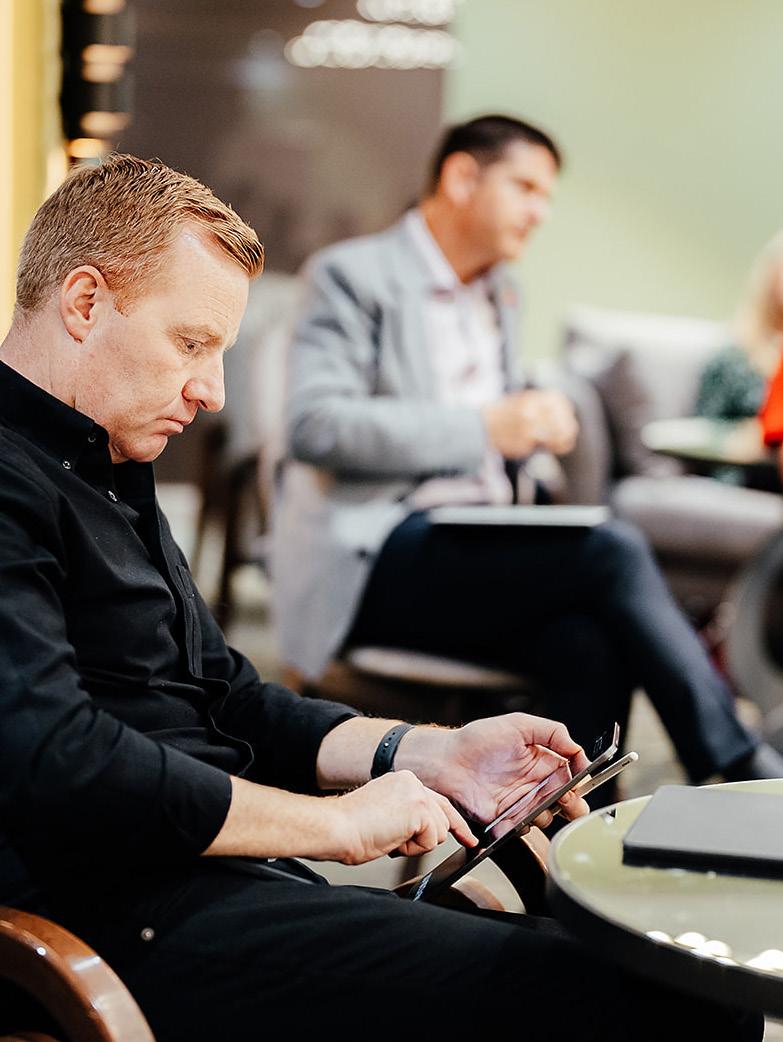
Take a meeting room of 100 people and at least 84 will be distracted.
*Source Attention Based Design Survey
How often do you feel distracted during corporate meetings or events (virtual or in-person)?
For event organisers drifting attention can lead to: Never: 2.6%
low retention of key messages disengaged audiences and missed messages slow decision-making
More pressingly distraction erodes trust in the purpose of the meeting and, unless framed with a clear objective, they can be seen as an unnecessary obligation rather than a route to progress.
The average worker attends:
13.6 9.9 hours
meetings per week, double the amount pre-covid / a quarter of the working week is spent in a meeting format*
Research by London School of Economics highlights that 35% of meetings are deemed unproductive equating to a £48BN dent to the economy.
*The Sunday Times, 11th April 2026.
Average number of meetings each week per UK employee




Organisations who redesign how meetings and events earn attention will move faster, communicate more clearly, and make better decisions. Those that don’t risk mistaking presence for engagement and activity for effectiveness.
When attention erodes, our phones come out.
At the start of sessions, audiences are checking emails, settling in, and catching up with colleagues. They are not yet hooked into the conversation.
Humans track faces instinctively, and while a speaker will frame attention far better than a slide, to gain attention, think TV programme techniques and TikTok tactics.
∙ Throw in a hook within the first 30 seconds; a bold claim, a weighty statistic, or a human story. Personal vulnerability builds credibility and authority.
∙ Drop the PowerPoint bullet points. Use one strong image and a clear “why you should care”, for example: “In the next 12 minutes, you’ll learn why X will impact Y within the next 18 months.”
Design in small impacts so that every 2–5 minutes something changes:
∙ A shift in the speaker’s voice
∙ A complete visual change (one idea per slide, large typography)
∙ An audience reaction or prompt
∙ A story replacing explanation
Channel, don’t ban, technology
Bin the ban on phones and instead channel technology with explicit “phone moments” and permission based interaction, such as:
∙ Live polls
∙ Prompted LinkedIn posts
Which format helps you stay most engaged?
Virtual: 2.6%
Hybrid: 10.3%
In-person: 87.1%
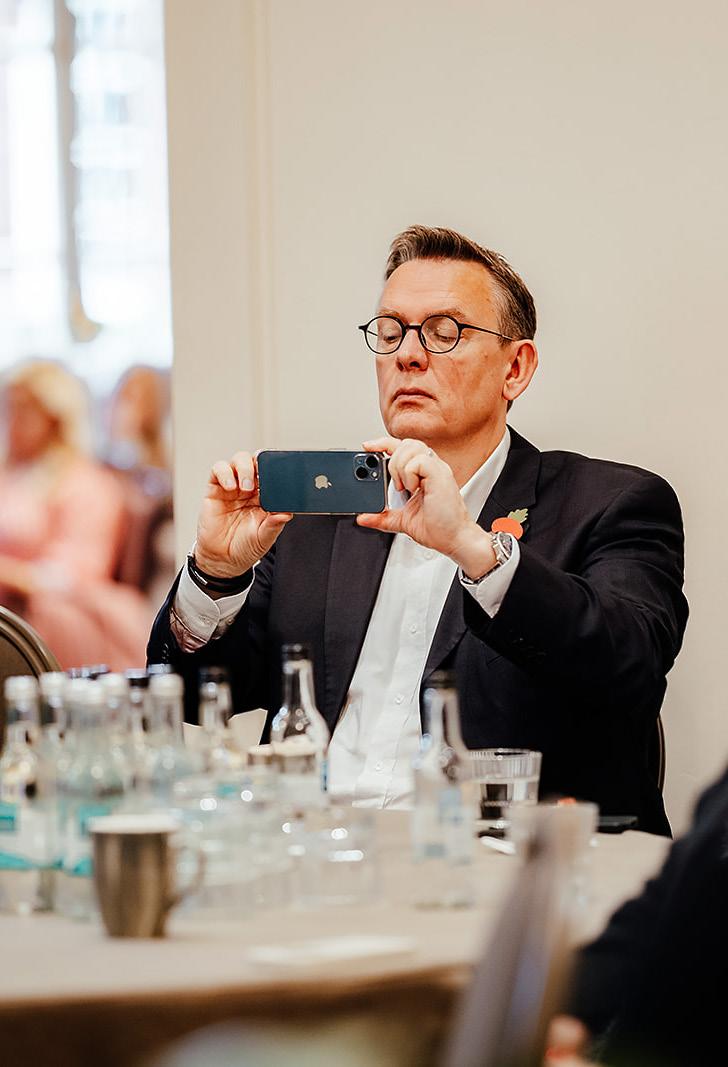
Despite living and working in a phone-first, digitally distracted world, planners all too often associate physical, in-room experiences with sustained engagement.
Hybrid formats attract limited support, while fully virtual formats struggle to compete for attention or engagement.
The survey results reinforce a growing tension in event design: while technology dominates daily life, presence still drives focus. In an age of constant digital distraction, the formats that perform best are not those that compete with smartphones, but those that temporarily displace them.
Today’s success should no longer be measured by how full the room was, but by what changed for the people in it.
Did they think differently? Did they make new connections? Did something unlock for them?
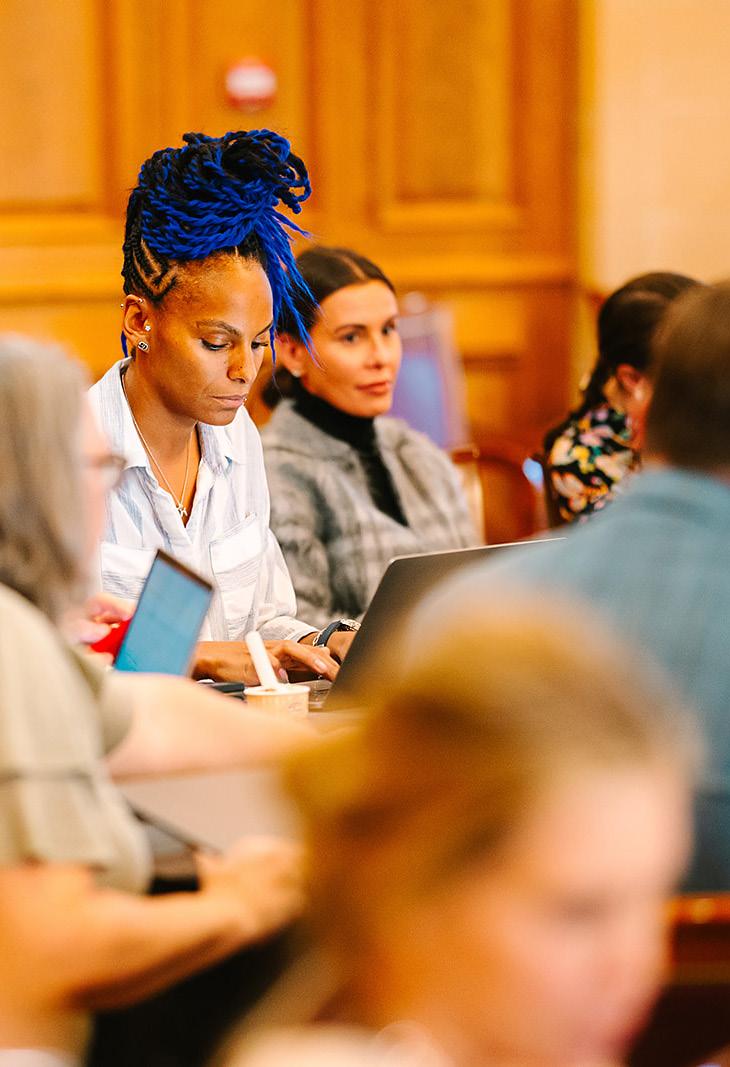
Research from the University of London found that distraction from emails and calls during cognitive tasks can temporarily reduce IQ scores by up to 10–15 points.
Studies consistently show multitasking increases cognitive load, weakens decision-making and reduces productivity.
The research clearly highlights delegates’ attention is driven by relevance and timebound focus than by format or technology.
With more than half of respondents pointing to content relevance affecting their ability to focus, it supports SMART meeting agendas: a clear purpose, defined outcomes, and attendees who genuinely need to be there. Vague agendas inevitably disengage people and are a waste on budgets and resources.
Length and interactivity both matter, 44% combined, underlining the importance of meetings being T – Time bound and M – Measurable. Clear agendas, time limits, and defined interactions keep meetings efficient and participative rather than passive.
Despite concerns about hybrid fatigue, technology quality scored 1.4%, reinforcing that it’s badly designed meetings, and not the online platforms, that create issues.
SMART meetings have:
∙ Clear agendas with outcomes.
∙ Strong openings to capture attention.
∙ A fast-paced agenda to maintain engagement and interaction.
∙ Explicit, measurable end points.
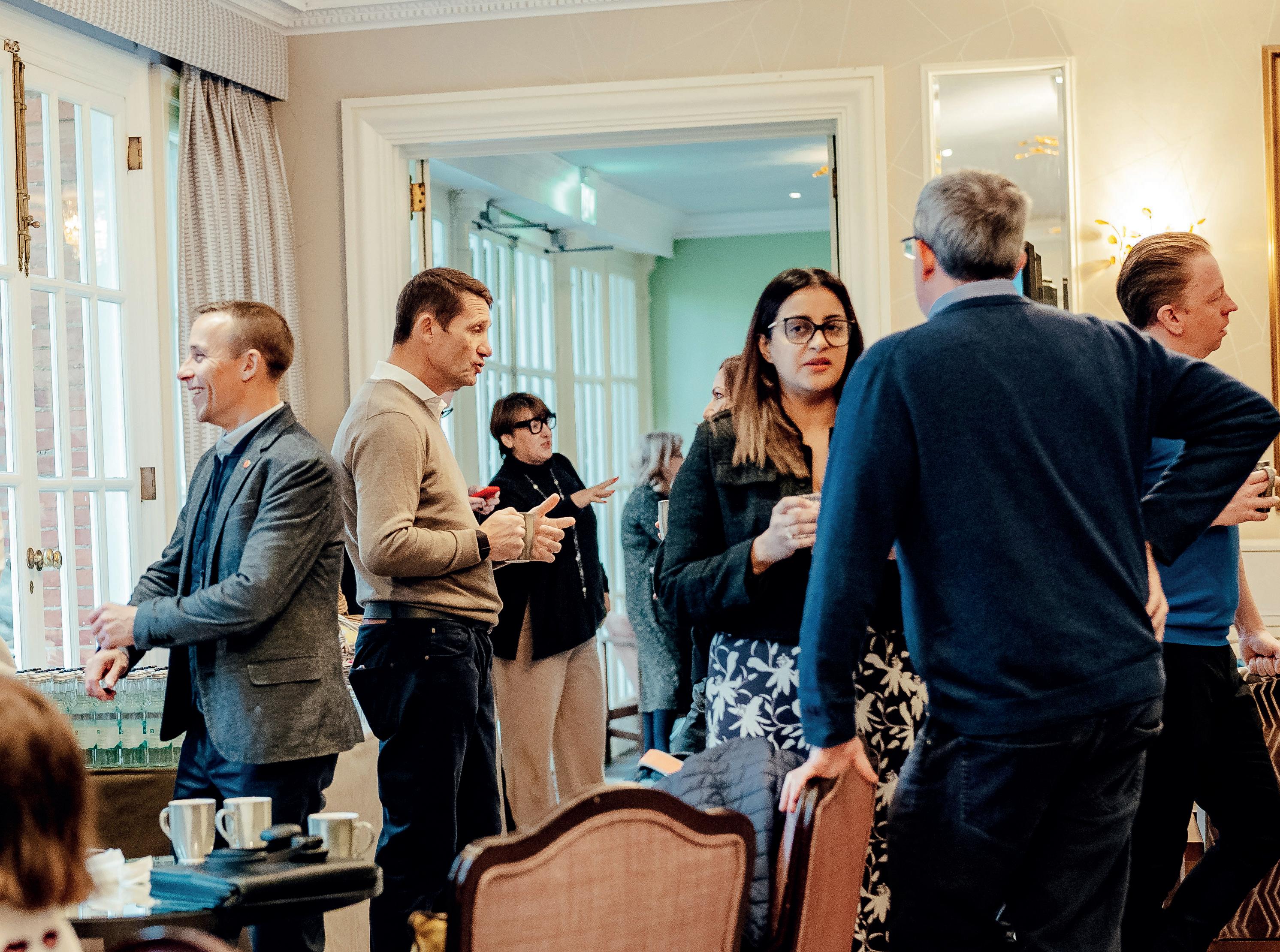
What factors most influence your ability to focus during events?
Now, every manager is told that the secret to forging a successful workforce is continual feedback. And the forum for this is often a meeting.
The Surprising Science of Meetings

How strongly do you agree:
“in-person events create stronger trust and belonging than virtual ones”
Mean: 4.62
Median: 5
Standard deviation: 0.67
Trust and belonging are strengthened when people are physically present, seen, and heard. In-person interactions build trust through signals such as eye contact, body language, and tone of voice. Informal moments such as arriving, settling in, and coffee conversations are absent in online formats, meaning many of the personal cues that accelerate trust and authenticity aren’t taking place.
Virtual environments fragment attention and can reduce spontaneity, making relationships feel transactional. While in-person creates shared experiences which can strengthen psychological safety and a sense of belonging within the organisation.
More than half of respondents say their attention is best maintained through small group discussions reinforcing the fact that people focus more when they are required to contribute, not consume. Small groups create psychological safety, accountability and are more relevant than continuous unfocused, large scale generic information download.
Meetings and events should move away from excessive plenaries to intentional moments where thinking is done with and by participants, not at them.
33% of respondents value multi sensory experiences, showing that attention improves when more than one sense is engaged (visual, physical, spatial, auditory). By varying the format and stimulus such as physical movement, visual change or tactile interaction, engagement increases and can prevent delegate mental fatigue.
Digital engagement tools such as apps and polls score low, suggesting that technology-only interaction is perceived as shallow or distracting and should support and not replace real interaction.
If people are conversing about and connecting to the content, they stay focused. If they are clicking buttons or passively listening, they don’t.
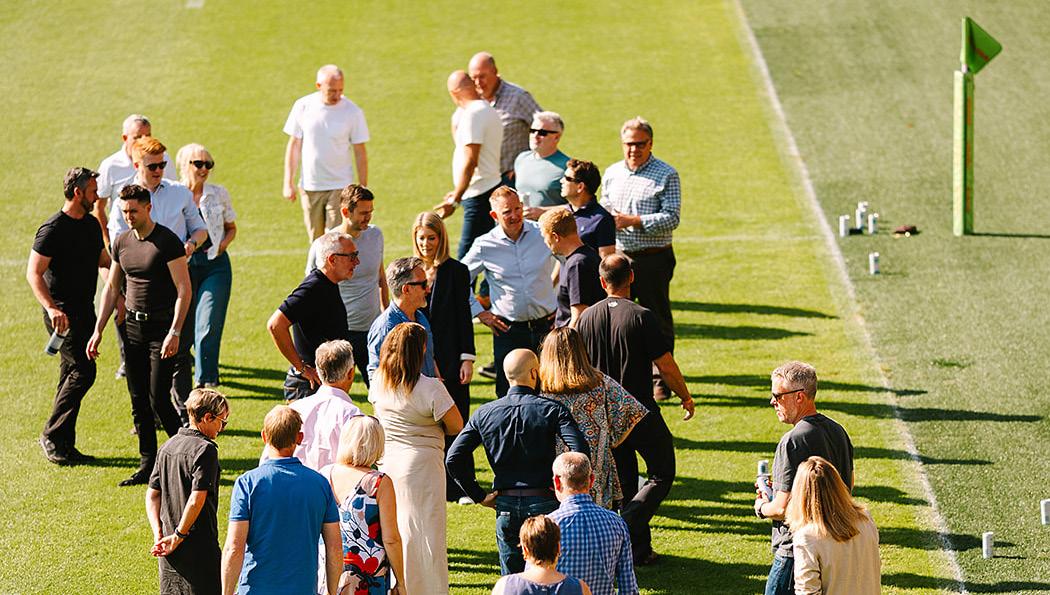
Which engagement methods keep your attention best?
Small group discussions
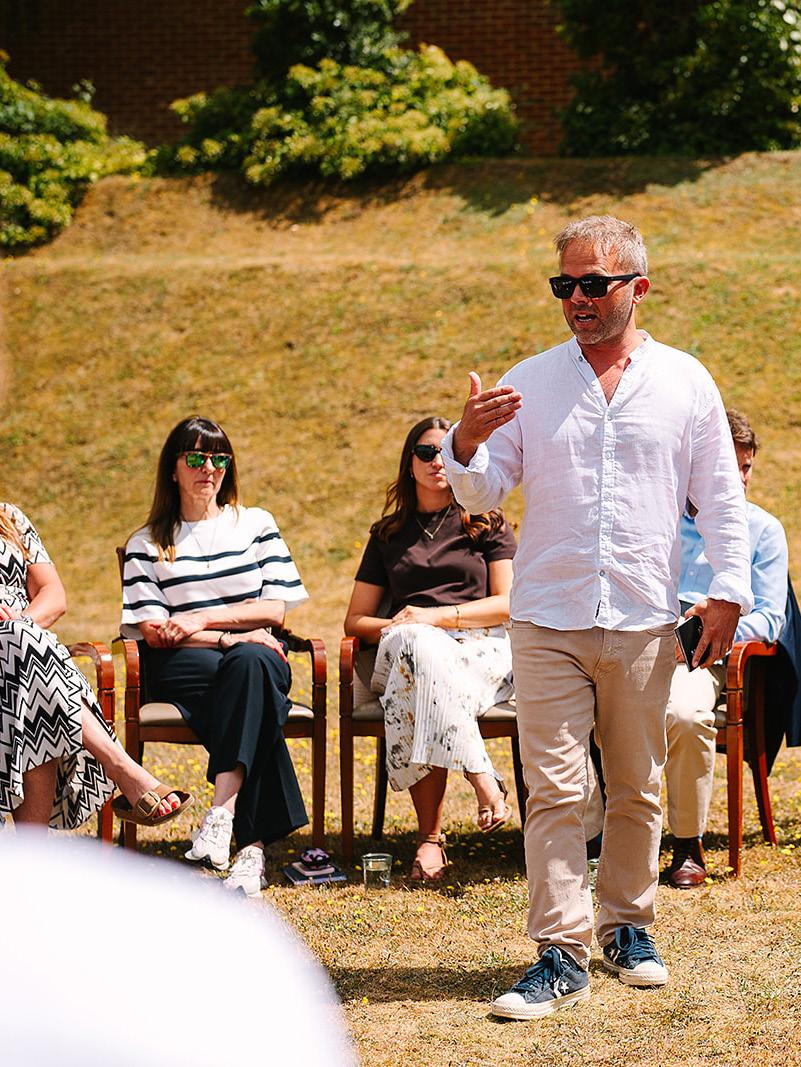
How effective are current corporate events at reinforcing trust in your employer?
Mean: 3.79
Median: 4
Standard deviation: 0.89
Research from the Edelman Trust Barometer highlights that people increasingly trust their employer, their colleagues, and those they encounter directly more than the media, government, and institutional bodies. Something which is backed up by respondents.
Business events provide rare moments where delegates can see leaders answer real questions and tangibly experience whether their organisation genuinely listens and acts.
Trust among delegates is present but fragile, and it can quickly be lost if events feel scripted, overly authoritative, or disconnected from reality.
Events are most effective when they are designed to:
Create human-centered shared moments, rather than broadcast messages
Act as conversation starters, not directive deliveries
Allow leaders to demonstrate openness, humility, and follow-through
Ultimately, events build trust by being believable and human, and by enabling listening, learning, and meaningful exchange.

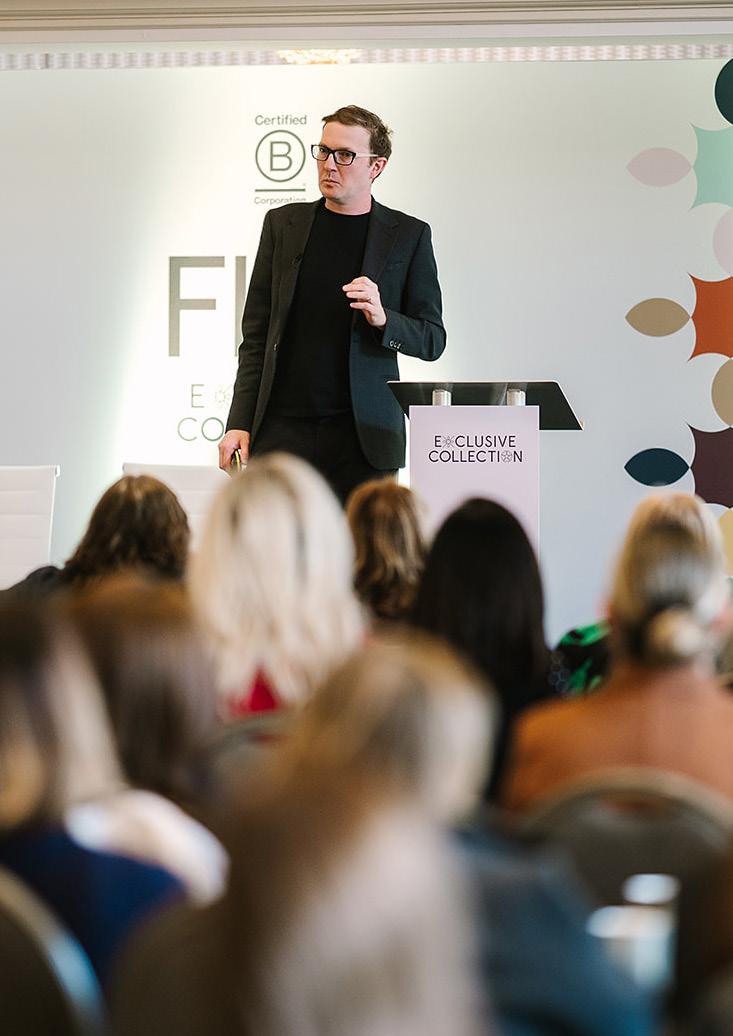
The economics of attention are now coming to the fore of event planning with organisations designing shorter meeting sessions of 15–30 minutes instead of 60 minutes.
Research consistently shows that attention and cognitive energy decline sharply as meetings extend beyond 30 minutes. Agendas should be SMART and framed by outcomes with clear purpose and outcome criteria.
Shorter, time-bound meetings lead to greater focus, faster decisions, and higher perceived value.
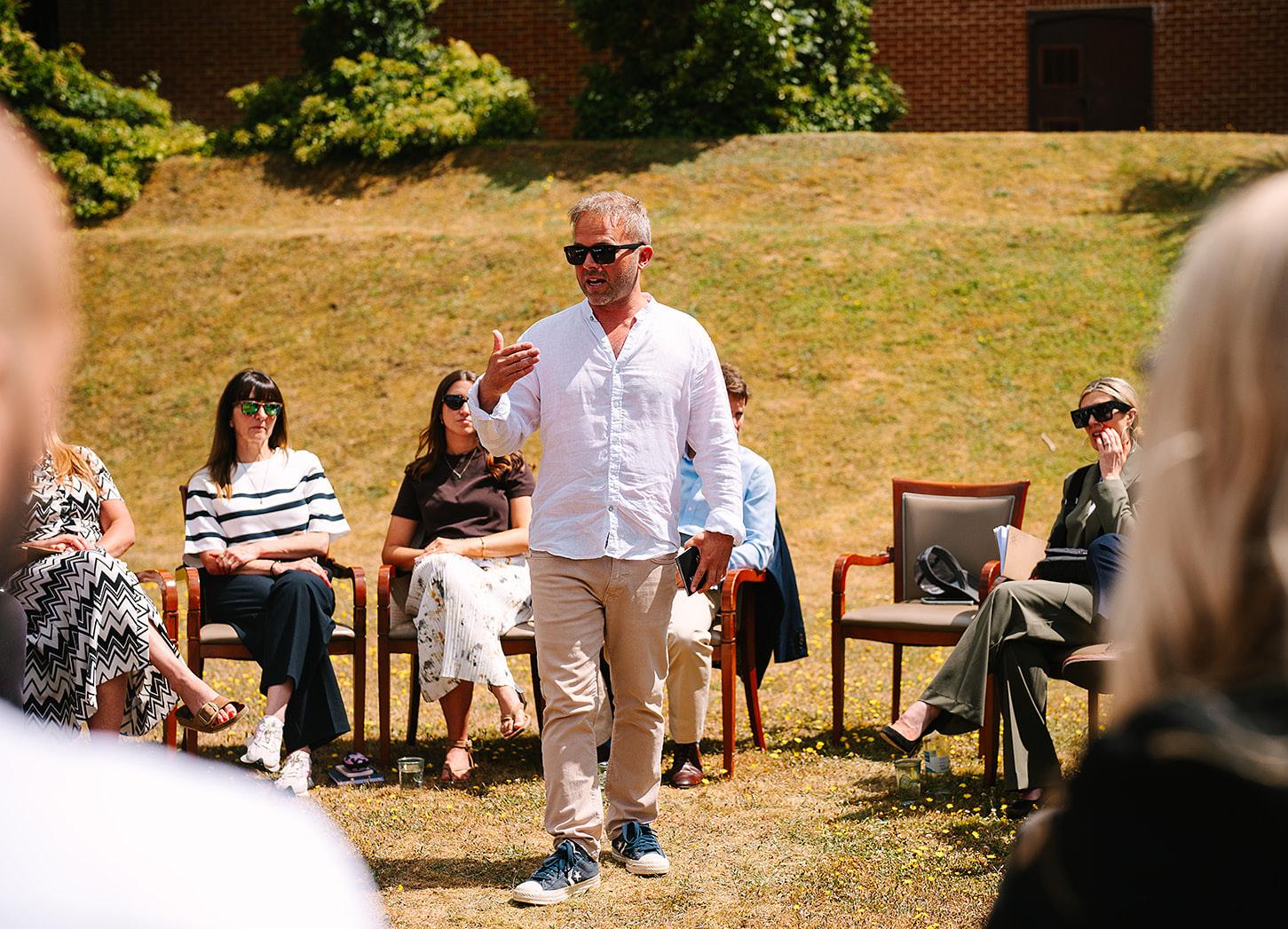
The analysis of millions of meeting minutes by Meeting Canary shows engagement drops steeply during longer sessions and does not recover once lost.
[linkedin.com]
Meeting Canary research highlights how quickly boredom sets in:
26 minutes into a 30-minute meeting
41 minutes into a 60-minute meeting
Meetings that perform best are not longer or content heavy. They are in fact shorter, sharper, and framed around decisions and change. Delegate attention isn’t something that can be demanded; planners must earn it early and respect it throughout the agenda.
Event success should be measured less by attendance and more by impact.
The data shows that learning transfer is the clearest marker of success (46.2%), followed by the quality of connections made (20.5%).
Attention retention matters, but primarily as a means to an end; sustained focus enables learning and meaningful interaction rather than being a success metric in its own right.
Ultimately, the most successful events are those where people leave thinking differently, equipped to act, and connected in ways that continue beyond the room.
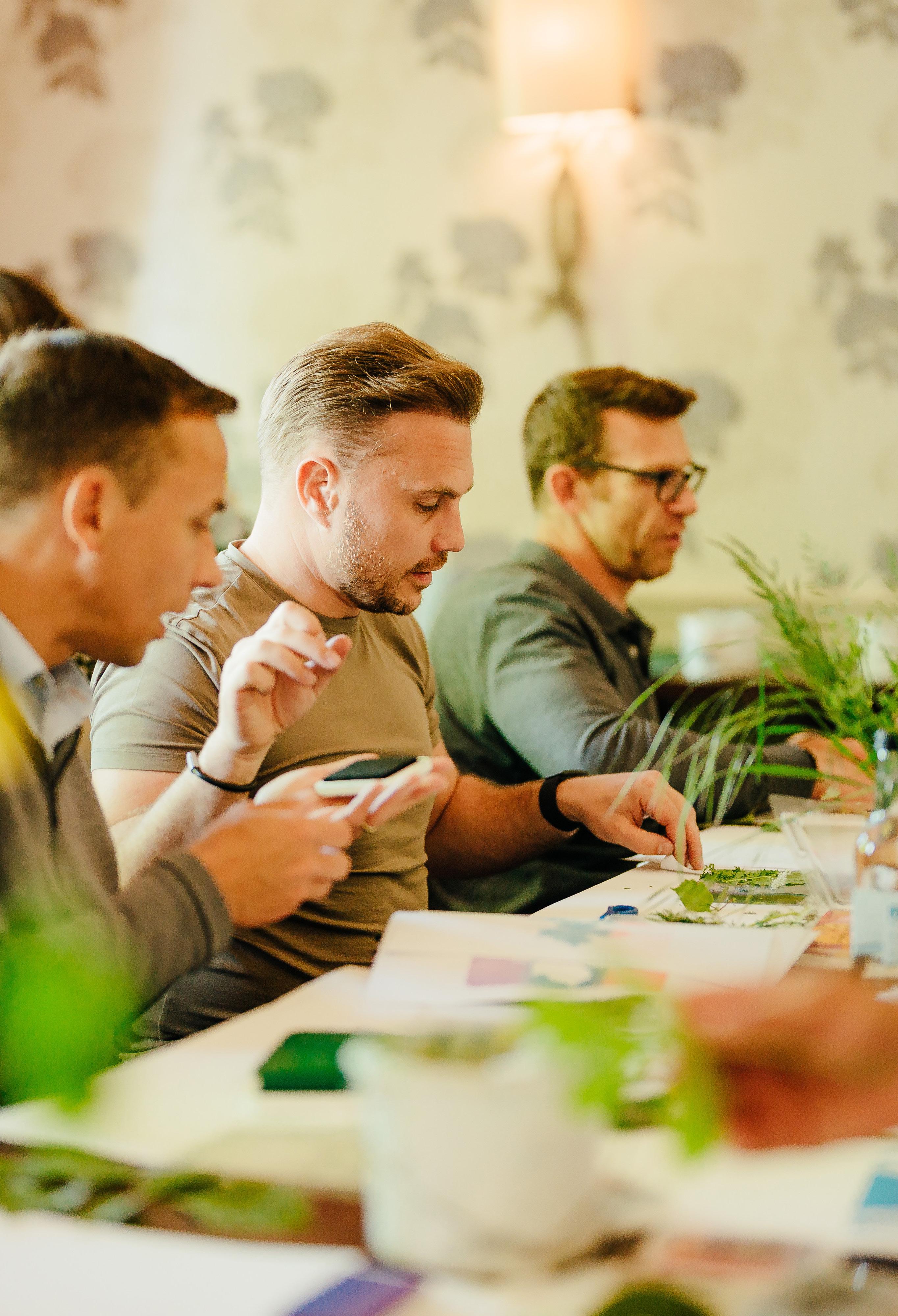
• How quickly attention is won
• How long it can be held
• How often it can be refreshed
For event organisers who want to frame their delegates attention:
• Think of your event as a TV episode
• Consider the room set up and the purpose of the conversation
The Focus Room (30–60 mins max)
Purpose: decision making, critical discussions
Design features:
• Smaller than traditional boardrooms
• Soft perimeter lighting, bright focal wall
• Chairs with comfort but not slouching
• Screens at eye height, not ceiling height
Studio
(high energy sessions)
Purpose: launches, workshops, creative sessions
Design features:
• Flat floor, no fixed table
• Moveable furniture
• Wall to wall writable surfaces
• Simple but dramatic lighting presets
Purpose: strategy, senior teams, persuasion
Design features:
• Sofas, armchairs, coffee tables, lowers the guard
• No obvious “presentation position”
Psychological effect: Encourages narrative thinking and improves trust and retention
Purpose: set emotional tone, frame thinking, energise delegates, trigger conversation and create shared focus.
Design features:
• Theatre-style immersion with clear sight lines
• High-impact lighting, sound and visual simplicity
• Limited or no table usage to reduce laptop distraction
• Shorter, sharper 30–45 minute keynote experiences
• Designed transitions into discussion and interaction afterwards
• Music and atmosphere used intentionally before sessions begin
Psychological effect:
Quickly captures collective attention while creating emotional connection and shared experiences. This set up encourages reflection and discussion, helping ideas stick while setting the narrative and energy for the wider event.
A keynote should not be treated as a guest lecture, but as the framing device for the entire event. Done right, it’s not just a presentation but the emotional and cognitive kick-off for everything that follows.
Build movement into the meeting experience as attention abates when bodies are static.
• Pre-function spaces that invite standing conversation
• Easy transitions between rooms
• Outdoor or heavy breakout options
If a meeting lasts more than 45 minutes, people should physically move at least once.
Whilst technology connects us, it also costs us our attention.

Alexander Bell Keynote Speaker and Creator of Attention Intelligence®
If speaking at conferences around the world has taught me anything, it’s this: whilst technology can connect us and bring those who are far away closer to us, it can also push those closest to us further away.
I see this all the time at events. Delegates may turn up physically, but psychologically they’ve already checked-out. Present in name only. Desperate to get back to a laptop or screen, incapable of switching off or leaning in. Cognitive loads at maximum capacity. Batteries depleted and running on empty. I don’t blame these people, I feel for them. It’s the curse of the modern workplace. Over worked, over connected and under engaged, missing out on the world in front of their very eyes. Frustratingly, it tends to be these delegates who desperately need to hear the messages being shared from the stage, who secretly crave human connection but simply don’t have the time or headspace for it. Grab and go attendance. Give me a link to the summary slide or let my AI record it and generate it for me.
You could argue that this TikTok approach to events; short form over long form, titbit takeaways, ten minute TED talks, is just how the modern world works. And you’d be right if you looked at our digital consumption and online behaviours as a guide. On demand content is getting shorter and shorter, we skip the ad breaks, ditch the end credits, binge a boxset in one go and listen to podcasts on double speed.
We have spent years prioritising speed, efficiency and convenience over human connection. But conferences shouldn’t become content delivery platforms. Meetings don’t have to just be calendar blocks. Hybrid and online formats shouldn’t normalise or allow for fragmented half attention. Amidst a sea of notifications, multitasking and multi-screening, we need to stand up and stop accepting event attendance as proof of audience engagement.
Because people were never designed to connect this way. Content doesn’t have to be consumed this way. Events can be for human connection what cinemas were for filmmaking; controlled environments designed to hold attention, remove distraction and allow people to fully experience something truly magical together.
Neuroscience shows that our attention is fragile, finite and heavily impacted by our environment. Research suggests the mere presence of a smartphone can reduce cognitive capacity and focus by as much as 26%1, even if the device is never touched. And yet, despite living in the most
digitally distracted period in human history, many meetings and events seem to ignore this and assume that attendees attention is automatically switched on. It isn’t.
Attention has to be earned, protected, directed and refreshed.
That is why I believe the future success of this industry will not be defined by online platforms, TikTok style agendas or more technology layered into the experience. It will be defined by how effectively organisers can create environments that help people think clearly, contribute fully and genuinely connect with each other. Events should not compete with technology by delivering more information, but by creating experiences technology cannot replicate. Real connection, real moments, real impact.

Because our most important thinking simply cannot happen whilst we are frantically consuming information. There’s a reason our best ideas arrive in the shower, on a walk, or during the middle of the night. When our brain briefly steps away from constant input and reaction, it activates what neuroscientists call the Default Mode Network2, the system associated with reflection, synthesis and insight. It’s where the dots connect, perspective forms and where ideas have room to grow.
In other words, breakthrough thinking can only happen in the space in between. The same is true of events. The most valuable moments are often not the slides themselves, but the conversations they trigger afterwards. The moments of disagreement, the shared laughter, the uncomfortable question, the discussions during the break. The realisation that someone else in the room shares the same problems or sees things differently.
The events that will create the greatest value in the years ahead will be the ones that respect the very foundation on which human connection is built; shared attention, shared experience and meaningful presence. That’s the power of events. That’s the power of connection and the reason we bring people together in the first place. Not to talk at them, but to talk with them. Not to overload them with more information, but to create the conditions for trust, creativity, collaboration and meaningful human connection.
Technology will continue to evolve at extraordinary speed. AI will continue reshaping how we learn and contribute. But we must remember that technology works best when it strengthens human interaction rather than replacing it.
Because regardless of how technology may shape the future of events, it will always be the people who give those events meaning.
As we celebrate 150 years since the invention of the telephone, I think it only fitting to end with one of my favourite quotes;
We walk through life with our eyes closed. There are things all around us, right at our very feet, that we never see, because we never truly look.
Alexander Graham Bell
Perhaps the real challenge, and greatest opportunity, for this industry in the digital age is not simply designing events that people attend, but designing experiences to help people fully arrive, to lift up their heads from the daily grind and create a space for them to truly look.
That, to me, is the very definition of attention-based design.
1 Source: University of Würzburg & Nottingham Trent University / Kaspersky Lab Study
2 Source: Harvard Medical School and resting-state cognition research
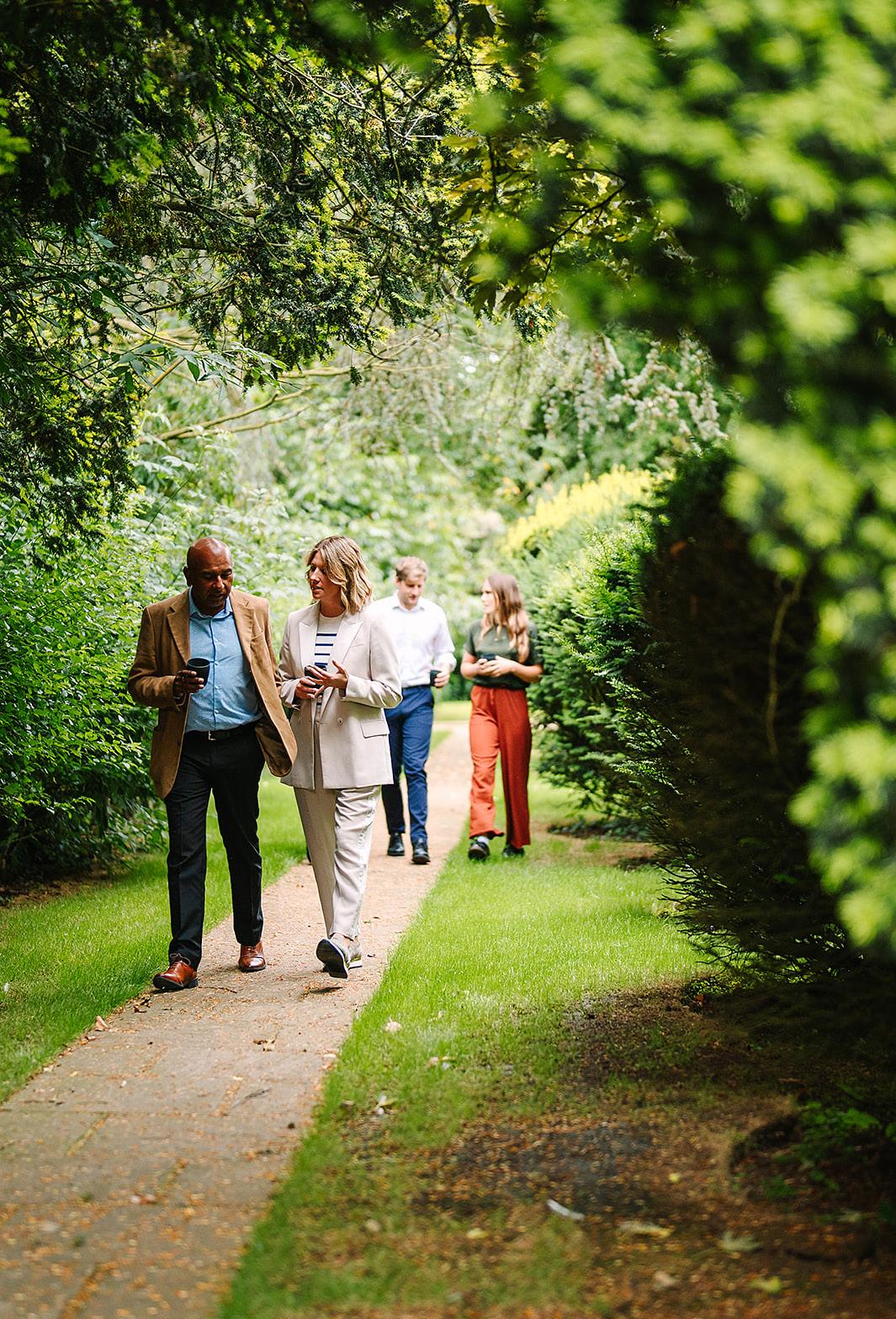
Attention is no longer a background assumption in event design; it is the central challenge and the defining opportunity.
In a world saturated with information, notifications and competing demands, presence has become fragile and focus must be deliberately earned. The most successful meetings and events are not those that deliver more content, but those that create the conditions for clarity, contribution and connection.
Attention-based design recognises how people think, listen and engage, respecting the limits of the human brain while unlocking its capacity for insight, creativity and trust.
By designing environments that protect attention, encourage participation and prioritise shared experience, organisers can move beyond attendance as a metric of success and towards genuine impact.
Events exist not to compete with technology, but to create meaningful moments where people think better, connect deeper and drive lasting impact for people and organisations.