
A Case Report: Toxic Epidermal Necrolysis in Children
Toxic epidermal necrolysis is a rare and severe skin reaction with a high mortality rate. This case report describes a case of toxic epidermal necrolysis in a 7-year-old patient caused by an adverse drug reaction.
ABSTRACT
Introduction
Toxic epidermal necrolysis (TEN) is a rare condition associated with high morbidity and mortality, which is characterised by severe acute mucous-cutaneous eruptions that lead to necrosis and detachment of the epidermis and mucous membranes over 30% of the body. In Europe and the USA, 1 to 3 people per million suffer from the disease. Early diagnosis of the signs and symptoms are key to a good prognosis.
Method
Case report.
Results
A previously healthy 7-year-old patient, 28 kg, fever (38–40ºC), with exanthematous lesions all over his body. He was prescribed trihydrate amoxicillin/clavulanic acid and ketoprofen supplemented with loratadine for 5 days at the end of September 2017. One day after the last dose, the patient started showing signs of bullous lesions on the trunk. Diagnostic hypothesis: TEN. Lesions significantly worsened, with blisters on his face, limbs, genitalia, and trunk; lesions on the oral mucosa and epidermal detachment on over 30% of his body.
Discussion
TEN is a rare, severe skin reaction associated with high mortality often triggered by the use of medications. Essential fatty acids are the first line of treatment in patients with epidermal detachment. The patient was discharged after 23 days (5 days in the paediatric intensive care unit and 18 days in the plastic surgery unit). Treatment employed is in line with other reports described in the literature.
Conclusion
This rare and severe case of TEN, caused by an
adverse drug reaction, had a good progression and no sequelae because of adequate treatment.
Implication for clinical practice
Given that TEN is a rare and severe skin reaction with high mortality and we have little data in the literature about children with TEN, it is important to disseminate experiences of children who suffered from this disease to the scientific community to contribute to the collective knowledge.
INTRODUCTION
Toxic epidermal necrolysis (TEN) is characterised by rare and severe acute mucous-cutaneous eruptions that affect the oral, ocular, and genital mucosae. The condition is associated with a high mortality rate and leads to necrosis and epidermal detachment on over 30% of the body. Adverse drug reactions are responsible for 80% of cases, although it has also been linked to infection and sepsis.1-3
Early symptoms are usually nonspecific, like sore throat, fever, and ocular irritation, and manifest one to three days before any cutaneous lesions, which are characterised by erythematous macules of undefined borders and purple centres. The lesions are initially located on the face and upper trunk causing pain and a burning sensation. The lesions then expand to include the back and thorax, covering the entire body in one week.1-3
TEN affects 1 to 3 people per million in Europe and the United States of America (USA), regardless of age, gender, and race. Only 20% of the affected population are children and adolescents. In the USA, cases tend to be more frequent dur-


ing spring and winter.1-3 The incidence of this disease in Brazil is still mostly unknown. However, it is believed that 0.4 to 1.2 people per million are affected each year. Mortality rates vary from 25 to 70%. Furthermore, multiple comorbidities, use of treatment medication, and advanced age seem to be risk factors for the disease.1-5
The most common medications linked to TEN onset are sulphas, phenobarbital, carbamazepine, dipyrone, piroxicam, phenylbutazone, aminopenicillins, and allopurinol.1-3
The main clinical difference between TEN and StevensJohnson syndrome (SJS) is the percentage body surface covered by cutaneous lesion and a positive or negative Nikolsky sign (NS). NS represents the detachment of the upper layer of the epidermis due to friction or light trauma. Patients with TEN show a positive NS over large areas of skin.4 By definition, lesions affect less than 10% of body surface area in SJS, 10 to 30% in SJS/TEN overlap, and over 30% in TEN.4-5
Prognosis and risk of death in patients with TEN is evaluated using the SCORTEN (SCORe of Toxic Epidermal Necrosis), a severity score developed by Bastuji-Garin et al. The tool considers seven parameters: Age > 40 years, malignancy, heart rate (HR) > 120 bpm, epidermal detachment > 10%, serum urea > 28 mg/dL, serum glucose > 252 mg/dL, and serum bicarbonate > 20 mg/dL.6
OBJECTIVE
Case report of a case of TEN and the treatment employed to manage the skin lesions caused by this severe skin reaction.
CASE REPORT
A previously healthy 7-year-old patient, 28 kg, sought medical care on 10/14/2018, complaining of fever (38–40ºC) since 10/12/2018 and exanthematous lesions all over his body. Initial diagnosis was ‘scarlet fever and he was prescribed amoxicillin. Personal history: the patient’s mother reported that the patient was prescribed trihydrate amoxicillin/clavulanic acid and ketoprofen, supplemented with loratadine and paracetamol, which he finished taking one day before the symptoms manifested. His condition worsened and on 10/15/2018 the patient’s mother brought him back to the emergency room, reporting additional symptoms of sleepiness and lesions on his hands and eyes. The new diagnostic hypothesis was ‘Kawasaki disease’ and the patient was hospitalised. The lesions evolved to bullous eruptions on the trunk, effectively disproving Kawasaki disease diagnosis and suggesting SJS. The lesions worsened, with blisters affecting the face, limbs, genitalia, trunk, and oral mucosa. He was prescribed antibiotic ther-
apy with ceftriaxone (10/14/2018), supplemented with oxacillin (10/15/2018 to 10/19/2018), and finally replaced by clarithromycin (10/18/2018). On 10/21/2018, a dermatologist evaluated the patient and diagnosed him with TEN, based on 30% epidermal detachment, areas with epithelial ulceration, fine brownish scales on upper and lower limbs, trunk, and face, necrotic crusts on upper and lower lips, and negative NS. Following a skin biopsy, he was prescribed immunoglobulin (4 g/kg) for 3 days. Laboratory tests were normal, including negative cultures, Glasgow Coma Scale (GCS) = 15, and body mass index = overweight (with medium risk for malnutrition). Patient was fed a complete polymeric diet through an enteral catheter. After ophthalmologic evaluation, he was prescribed methylcellulose ophthalmic at 0.5% 4/4 h and occlusive dressing with Epitezan ointment 6/6 h. An evaluation from a plastic surgeon and stomatotherapist indicated the use of rayon gauze bandages and essential fatty acids (EFA). Odontology orientation: oral hygiene with hexamidine mouthwash and laser treatment were used. The combination of prescribed treatment, bandages, and warm saline solution to clean the lesions proved beneficial and the patient showed improvement of the bullous lesions with hematic crusts. Morphine (0.05 mg/kg) was administered every 4 hours to manage moderate pain.


Figure 1.
Bulbous lesions covering 80% of the thorax and abdomen, showing signs of healing.
Figure 2.
Generalised erythematous and bullous lesions covering over 90% of the back and area of epidermal detachment, showing signs of healing.
Treatment: Nonadherent gauze dressing and EFA, associated with warm saline solution to clean the lesions.
Patient was discharged after 5 days in the paediatric intensive care unit and 18 days in the plastic surgery unit.

DISCUSSION
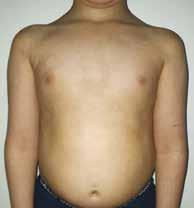
Figures 3 and 4. Thorax and back 12 months after the onset of the disease.
(83.3%).9 Lesions in this patient’s mucosae followed the same order as those reported in the literature, starting at the oropharynx, and spreading to the ocular, genital, and anal mucosae.10
In 2000 was published an article with a toxic epidermal necrolysis-specific severity-of-illness score for adults le to predict prognosis for the epidermal necrolytic disorders, called SCORTEN.6 However, this score includes criteria that are not applicable to children, such as age 40 years and older and ranges for laboratory values and vital signs that are relevant for adults. A study published in 2017 compared the adult SCORTEN tool with that of two modifications tailored to children for predicting disease outcome and revealed that the predictive power of the new paediatric SCORTENs for SJS/TEN in children was similar to that of the original SCORTEN developed for adults.11 This patient’s SCORTEN6 was 2, with an associated mortality rate of 12.1%, epidermal detachment > 30%, and HR > 120 bpm.

Ivana R Santana Pediatric Specialist1
1 Nursing Departament, Children’s Institute, Hospital das Clinicas HCFMUSP, Faculdade de Medicina, Universidade de São Paulo
2 Clinical Research Center, Children´s Institute, Hospital das Clínicas HCFMUSP, Faculdade de Medicina da Universidade de São Paulo
TEN is a rare and severe skin reaction with a high mortality rate, frequently triggered by an adverse drug reaction or infection that closely resembles a second-degree burn. This condition may affect the renal, respiratory, and digestive systems, among others. The acute prodromal phase of the disease lasts 1 to 4 days, during which patients may experience fever, malaise, cough, rhinorrhoea, photophobia, and diffuse erythema.7 Then, patients begin to develop mucosal and cutaneous lesions that are easily denuded with lateral shearing pressure applied by a clinician.7-8
A 20-year study performed in a tertiary referral hospital of Thailand reviewed all children diagnosed with SJS/TEN/SJS-TEN overlap and 12/36 cases had TEN (33.3%). The patients presented with morbilliform rash (83.3%), blisters (38.9%), targetoid lesions (25.0%), and purpuric macules (2.8%), and the most common mucosal involvements were oral (97.2%) and eye mucosae
The most common cause of TEN (70 to 90%) is medication,9,12-15 including antiepileptics, sulphonamides, antibiotics, NSAIDs, allopurinol, and paracetamol. A recent article recording adverse events (AE) reports for ‘paracetamol’ from 2007 to 2018 identified 24.2% of AE reports concerned children, 9/58 (15.5%) AE reports with fatal outcomes were SJS/TEN, and 286/4589 (6.2%) reports presented prodromes and symptoms of potentially life-threating SJS/TEN.16 Another study reviewed case reports of patients with SJS/TEN from 2006 to 2016 and found 94/166 cases of TEN, 29.5% of which were caused by antibiotics.17
No current consensus exists on how this disease should be treated. There are only health care protocols established by local hospitals. The literature has few clinical trials about specific treatment in children and it is controversial, with the few observational studies hindered by a low number of patients.13 The most commonly studied therapy is the use of intravenous immunoglobulins (IVIG) in doses of 2–7 mg/kg, until 2–4 g/kg, followed by corticosteroid treatment.9,18-21 Nonetheless, TEN is usually treated by closely and intensely monitoring the patient for possible multisystemic complications and employing a multidisciplinary team to provide the patient with the best care and follow-up. The supportive care for TEN resembles
Correspondence: juliana.caires@hc.fm.usp.br
Conflicts of interest: None
that of a high-grade burn patient for adult and paediatric populations, and includes attenuation of the catabolic state, application of nonadherent protective barriers, and maintenance of appropriate urine output and other organ systems representing the focus of initial care.22
This patient received supportive care well within the recommendations contained in the current literature, including immediate suspension of the triggering drug and all non-essential medications; transfer to a burn unit as soon as possible; isolation in a warm environment (30 to 32°C); maintenance of sterile conditions; avoidance of skin trauma; monitoring of vital signs, weight, urine output, and hydration; monitoring of epidermal detachment extent (“rule of 9”); administration of IV fluids and nutritional support in the first 24 hours; debridement of devitalized tissue; application of eye drops to lubricate the eyes; and pain assessment and management.1-6,23
Nutrition is another important aspect of treatment. Because children have lower reserves of lean body mass, nutrition tends to be more of a problem compared to adults. Paediatric patients with SJS/TEN have an increased energy requirement. Therefore, a 30% factor should be applied to the resting energy requirements when calculating nutritional support.24 Moreover, enteral nutrition should be established early on, using a high protein-caloric content based on the patient’s baseline nutritional status, which tends to differ from country to country due to, among other factors, the patient’s economic status.
Local therapy also needs special attention. Some experts recommend that the detached skin be debrided to remove all the potentially infected materials before covering with a biosynthetic dressings. However, others propose leaving the detached skin in situ as a biological dressing to protect the underlying dermis.25
The application of gels containing polyhexanide and bland gauze bandages with reverse isolation is suggested26, even while using nonadherent gauze containing either petrolatum or paraffin to facilitate wound healing and prevent infection.27
Finally, the pain control must to be managed according to the degree of pain. Some articles suggest that analgosedation beginning initially in bolus and switching to continuous application can be used26 and the use of either opioid or non-opioid analgesics as a sub-dissociative dose of ketamine.28 In this case report, for evaluation and management of pain, the Face, Legs, Activity, Cry, Consolability (FLACC) pain scale was used, followed by the
administration of dipyrone for mild pain and morphine for moderate pain.
The treatment we employed showed good results and the patient was released with no physical sequelae, confirming the effectiveness of using EFA as the first line of topical treatment in patients with epidermal detachment.
IMPLICATION FOR CLINICAL PRATICE
Given that TEN is a rare and severe skin reaction with a high mortality rate and that we have little data in the literature about children with TEN, it is important to disseminate experiences of children who suffered from this disease to the scientific community to contribute to the collective knowledge.
CONCLUSION
This rare and severe case of TEN triggered by an adverse drug reaction and characterised by lesions on the patient’s face, limbs, genitalia, trunk, oral mucosa, and eyes, had a good resolution and no sequelae because of adequate treatment. Early diagnosis of this clinical condition and treatment spearheaded by a multidisciplinary medical team are key factors for a good prognosis in children. The lack of substantial publications about TEN in children calls for specific health care protocols to guide intensive care teams regarding available treatments, in addition to immediate transfer to specialised units, and multicentre studies to help improve prognosis, reduce length of hospital stay, and improve quality of life.
ETHICAL CONSIDERATION
The patient’s parents signed an informed consent form, allowing this case and its associated images to be published in this journal. m
REFERENCES
1. Bulisani ACP, Sanches GD, Guimarães HP, Lopes RD, Vendrame LS, Lopes AC. Síndrome de StevensJohnson e necrólise epidérmica tóxica em medicina intensiva. Rev Bras Ter Intensiva 2006;18(3):292297.
2. Carneiro TM, Silva IAS. Diagnósticos de enfermagem para o paciente com necrólise epidérmica tóxica: estudo de caso. Rev Bras Enferm 2012;65(1):72-76.
3. Neto FC, Piccinini PS, Andary JM, Sartori LDP, Cancian LT, Uebel CO, et al. Abordagem cutânea na necrólise epidérmica tóxica. Rev Bras Cir Plást 2017;32(1):128-134.
4. Emerick MFB, Rodrigues MMT, Pedrosa DMAS, Novaes MRCG, Gottems LBD. Síndrome de Stevens-Johnson e Necrólise Epidérmica Tóxica em um hospital do Distrito Federal. Rev Bras Enferm 2014;67(6):898-904.
5. Cabral L, Diogo C, Riobom F, Teles L, Cruzeiro C. Necrólise Epidérmica Tóxica (Síndrome de Lyell): uma patologia para as Unidades de Queimados. Acta Med Port 2004;17:129-40.
6. Bastuji-garin S, Fouchard N, Bertocchi M, Roujeau JC, Revuz J, Wolkenstein P. SCORTEN: a severity-ofillness score for toxic epidermal necrolysis. J Invest Dermatol 2000;115(2):149-53.
7. Eginli A, Shah K, Watkins C, Krishnaswamy G. Stevens–Johnson syndrome and toxic epidermal necrolysis. Annals of Allergy, Asthma & Immunology. 2017; 118(2):43–147.
8. Gerull R, Nelle M, Schaible T. Toxic epidermal necrolysis and Stevens–Johnson syndrome: A review. Critical Care Medicine. 2011;39(6):1521–1532.
9. Chatproedprai S.et al. Clinical features and treatment outcomes among children with Stevens-Johnson syndrome and toxic epidermal necrolysis: a 20-year study in a tertiary referral hospital. Dermatol Res Pract. 2018;2018:3061084. May 7.
10. Lissia M, Mulas P, Bulla A, Rubino C. Toxic epidermal necrolysis (Lyell’s disease). Burns 2010;36(2):152-63.
11. Sorrell et al: SCORTEN in Pediatrics. Pediatric Dermatology. 2017;34(4):433–437.
12. Ferrandiz-Pulido C, Garcia-Patos V. A review of causes of Stevens–Johnson syndrome and toxic epidermal necrolysis in children. Archives of Disease in Childhood. 2013;98(12):998–1003.
13. Pan RY, Dao RL, Hung SI, Chung WH. Pharmacogenomic advances in the prediction and prevention of cutaneous idiosyncratic drug reactions. Clinical Pharmacology and Therapeutics. 2017;102(1):86–97.
14. Rotunda A, Hirsch RJ, Scheinfeld N, Weinberg J. Severe cutaneous reactions associated with the use of human immunodeficiency virus med- ications. Acta Dermato-Venereologica. 2003;83(1):1–9.
15. Rodríguez-Martín S et al. Incidence of Stevens-Johnson syndrome/toxic epidermal necrolysis among new users of different individual drugs in a European population: a case-population study. Eur J Clin Pharmacol. 2019;75:237–246.
16. Popiołek I, Piotrowicz-Wójcik K, Porebski G. Hypersensitivity Reactions in Serious Adverse Events Reported for Paracetamol in the EudraVigilance Database, 2007-2018. Pharmacy (Basel). 2019 Jan 17;7(1). pii: E12.
17. Yang SC et al. The Epidemiology of Stevens-Johnson Syndrome and Toxic Epidermal Necrolysis in China. J Immunol Res. 2018;Jun(28):4154507.
18. Belver MaT et al. Severe delayed skin reactions related to drugs in the paediatric age group: A review of the subject by way of three cases (Stevens-Johnson syndrome, toxic epidermal necrolysis and DRESS). Allergol Immunopathol (Madr). 2016. JanFeb;44(1):83-95.
19. Viard I, Wehrli P, Bullani R, Schneider P, Holler N, Salomon D, et al. Inhibition of toxic epidermal necrolysis by blockade of CD95 with human intravenous immunoglobulin. Science. 1998;282:490-3.
20. Stella M, Clemente A, Bollero D, Risso D, Dalmaso P. Toxic epidermal necrolysis and Stevens-Johnson syndrome experience with high-dose intravenous immunoglobulins and topical conservative approach. A retrospective analysis. Burns. 2007;33:452-9.
21. Mangla K, Rastogi S, Goyal P, Solansky RB, Rawal RC. Effi- cacy of low dose intravenous immunoglobulins in children with toxic epidermal necrolysis: an open uncontrolled study. Indian J Dermatol Venereol Leprol. 2005;71:398-400.
22. Woolum JA, Bailey AM, Baum RA, Metts EL. A Review of the Management of Stevens-Johnson Syndrome and Toxic Epidermal Necrolysis. Advanced Emergency Nursing Journal. 2019;41(1):56–64.
23. Oliveira FL, Silveira LK, Morais TS, Serra MCVF. Necrólise epidérmica tóxica e síndrome de StevensJohnson. Rev Bras Queimaduras. 2012;11(1):26-30.
24. Mayes T, Gottschlich M, Khoury J, et al. Energy requirements of pediatric patients with StevensJohnson syndrome and toxic epidermal necrolysis. Nutr Clin Pract. 2008;23:547–50.
25. Schneider JA, Cohen PR. Stevens-Johnson syndrome and toxic epidermal necrolysis: a concise review with a com- prehensive summary of therapeutic interventions emphasizing supportive measures. Advances in Therapy. 2017; 34(6):1235–1244.
26. Wallenborn J, Fischer M. Intensive Care in a Patient with Toxic Epidermal Necrolysis. Case Rep Crit Care. 2017;2017:3246196.
27. de Prost N, Ingen-Housz-Oro S, Duong Ta, ValeyrieAllanore L, Legrand P, Wolkenstein P, Roujeau JC. Bacteremia in Stevens– Johnson syndrome and toxic epidermal necrolysis: Epidemiology, risk factors, and predictive value of skin cultures. Medicine (Baltimore). 2010;89(1):28–36.
28. Valeyrie-Allanore L, Ingen-Housz-Oro S, Colin A, Thuillot D, Sigal ML, Binhas M. Pain management in Stevens–Johnson syndrome, toxic epidermal necrolysis and other blistering diseases. Annales de Dermatologie et de Venereologie. 2011;138(10):694–697.

Co-hosted by the American Lymphedema
Invited speakers
Tobias Bertsch, MD
Kristiana Gordon, MD
Jay Granzow, MD
Sophia Hanson
Keith Harding, MD
Gavin Hughes, PhD
Guenter Klose, CLT
Judith Nudelman, MD
Guillermo Oliver, PhD
Stanley Rockson, MD
Paula Stewart, MD
Alphonse Taghian, MD
Michael Bernas, MS
David Keast, MD