ABI Rehabilitation is the leading Aotearoa provider of comprehensive, specialised rehabilitation services for people with an acquired brain injury (ABI) resulting from a traumatic brain injury or stroke.
2026 Reporting period: 1 July 2025 to 30 June 2026
Te Hekenga (The Journey)
Whakamarama
The kuaka (godwit) is featured prominently in Māori pūrākau (narratives). It was believed that the godwit passed through Hawaiki on its journey to Aotearoa (New Zealand) and Kupe, a great captain of the Matahorua waka, followed the path of the kuaka to Aotearoa.
This tohu is a taonga (treasure) gifted to ABI Rehabilitation that conveys the complexity of the journey following a brain injury. For some the journey may be months, but for many it is lifelong.
The design of the tohu shows the kuaka in flight with wings outstretched as it navigates the journey to wellbeing and recovery. The wings are askew as the journey is not straight forward. There are many twists and turns and ups and downs as no one person or whānau journey is the same. The koru (spirals) in the body of the kuaka represents the whānau/family at the centre. The mangopare (hammerhead) design on the front and back of the body reflect forward and backward movement as whānau navigate the ripples on their journey.
The koru on the wings are growth, movement and new beginnings as whānau navigate their new normal.
The Unaunahi (fish scale) design signify abundance and health while the Taratarakae (whale teeth) design represents sensitivity and strength. The koru in the feathers are the many staff of ABI Rehabilitation and other services or agencies who support the whānau on their journey to wellbeing and recovery. The raranga (weaving pattern) on the beak and tail feathers represent kotahitanga (unity) by weaving all involved in the journey from the beginning to the end on Te Hekenga-ā-ora (journey to optimal wellbeing).
This tohu was designed and gifted by a māmā (mother) navigating the ripples of the journey after her son sustained a severe traumatic brain injury in 2007.
ABI Rehabilitation is incredibly grateful for this gifted taonga.
Foreword
This year has been one of continued focus, resilience and progress for ABI Rehabilitation. Across our services, we have remained committed to delivering high-quality care and support, while responding to the evolving needs of the communities we serve.
I am proud of the way our teams have embraced both challenge and opportunitystrengthening our capability, deepening our partnerships and maintaining a clear focus on outcomes that matter most to the people we support.
We have continued to invest in our people, recognising that their expertise, compassion, and dedication are the foundation of our success. At the same time, we have progressed key strategic priorities that position us well for the future, including service innovation, operational sustainability and the thoughtful adoption of new technologies.
While the environment remains dynamic, we are confident in our direction and our ability to adapt with purpose and pace. Our focus remains on delivering meaningful impact - improving health, wellbeing and independence for those we serve.
I would like to acknowledge and thank our staff, partners and stakeholders for their ongoing commitment and contribution. Together, we are continuously improving services.
Simon Keating Group Chief Executive Officer Evolution Healthcare
Message from the Chief Executive Officer
Tēnā koutou katoa. It is a privilege to reflect on another year of progress, impact and learning for ABI Rehabilitation. Across our intensive, residential and community services, our purpose has remained clear: to support kiritaki and whānau through some of the most complex and challenging stages of recovery following brain injury.
This year has highlighted the strength of ABI’s specialist rehabilitation model and the depth of capability across our kaimahi. We maintained CARF accreditation across our intensive, residential and community services, continued to grow the Hamilton service, and supported more than 5,000 kiritaki in the community. These achievements reflect the expertise, compassion and commitment of our interdisciplinary teams, and the trust placed in ABI by kiritaki, whānau, ACC, public health partners and the wider rehabilitation sector.
Te Hekenga-ā-ora has continued to be a defining kaupapa for ABI. The progress made through this mahi is strengthening cultural safety, supporting equity, and ensuring lived experience and whānau voice remain central to how services are designed and delivered. The recognition received through the He Autaia Excellence Awards and sector conference presentations reflects both the quality of this work and its importance for the future of rehabilitation in Aotearoa.
Looking ahead, ABI will continue to focus on expanding access, strengthening regional pathways, growing community rehabilitation, supporting workforce development and using digital innovation to improve experience, timeliness and outcomes. As part of Evolution Healthcare, ABI is well placed to continue scaling its impact while staying true to what matters most: high-quality, person-centred rehabilitation that supports recovery, independence and wellbeing.
Thank you to our kaimahi, kiritaki, whānau, partners and stakeholders for your ongoing commitment and support. Together, we are making a meaningful difference.
Christine Howard-Brown Chief Executive Officer Health and Wellbeing
Evolution Healthcare
2025/2026 at a glance
• 304 Intensive kiritaki
• 94% ACC satisfaction
• 100% Hospital satisfaction
• 97% Whānau satisfaction
• 87% Kiritaki satisfaction
• Hamilton service growth
• CARF maintained
• Te Hekenga-ā-ora milestones
• 5,130 Community kiritaki
Ngā mihi nui
Year in Review
He taonga rongonui te aroha ki te tangata
Goodwill towards others is a precious treasure
WHO ARE OUR KIRITAKI?
Average Age = 50 years old Range = 14-93 years old.
Average Age = 50 years old Range = 14-93 years old.
= 50 years old Range = 14-93 years old.
Post-Traumatic Amnesia
Median
Median
XXdays
Post-traumatic amnesia (PTA) duration refers to the time after a traumatic brain injury the person is disorientated, confused and struggles to hold onto new memory. PTA duration is a useful guide on the severity of the brain injury. Over an hour indicates mild, over 24 hours moderate, and over seven days is classified as a severe TBI.
Average PTA duration
Kiritaki length
Kiritaki length of stay - Intensive Only
Kiritaki length of stay - Intensive
42 days
64 days
Kiritaki length of stay - Emerging Consciousness
Kiritaki length of stay - Emerging Consciousness
112
112 days
112
112 days Kiritaki length of stay - Emerging Consciousness
116 days
Summar y of Admissions
Summar y of Admissions
Referring Hospitals to ABI Intensive Services
The table below shows the referring hospital prior to admission to ABI Rehabilitation. Admissions from Te Whatu Ora (Health New Zealand) may not be that person’s area of domicile because they may have been seen at one of New Zealand's five regional neuroscience centres. In addition to the admissions from the public hospitals, ABI Rehabilitation has a small number of admissions from home or other residential services.
Emerging Consciousness Programme
The assessment, treatment and support of kiritaki with disorders of consciousness, and their whānau, remains one of the most specialised areas of brain injury rehabilitation.
Disorders of consciousness are secondary to catastrophic brain injuries, typically categorised as coma, vegetative state (VS) or minimally conscious state (MCS). Kiritaki may progress through one or more of these states as recovery occurs, while others may remain at a particular level of consciousness for an extended period.
Since 2011, ABI Rehabilitation's Emerging Consciousness Programme (ECP) has provided specialised assessment, treatment and rehabilitation for people who have sustained catastrophic brain injuries and remain in a minimally conscious state. The programme is designed to maximise recovery potential, support the emergence of consciousness and facilitate the transition to more intensive rehabilitation where appropriate.
Programme outcomes this year
This year's results demonstrate the significant impact of the programme for kiritaki with some of the most severe brain injuries:
• 13 kiritaki entered the Emerging Consciousness Programme.
• 11 of 13 kiritaki emerged from a minimally conscious state. Six kiritaki progressed further to clear Post-Traumatic Amnesia (PTA).
• Seven kiritaki were successfully discharged home to their whānau and communities.
These outcomes reflect the expertise of our interdisciplinary team and the value of providing highly specialised rehabilitation at a critical stage of recovery.
Given the severity of their injuries, kiritaki within the programme often require longer lengths of stay than those admitted fully conscious. Recovery can be gradual and complex, requiring intensive assessment, specialist interventions, and ongoing support for both kiritaki and their whānau.
Despite these challenges, the programme continues to enable meaningful recovery and improve opportunities for participation, independence and community reintegration.
Emerging consciousness length of stay
Kiritaki Experience Highlights & Achievements
Ka pū te ruha, ka hao te rangatahi
As an old net withers, a new one is made
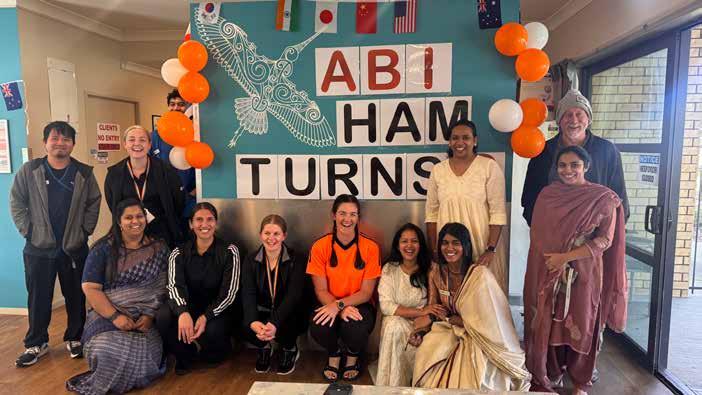
ABI Rehabilitation Hamilton turns two
ABI Hamilton turned two on 1 May. Congratulations to everyone involved in this growing and thriving service.
International CARF surveying
As ABI Rehabilitation holds CARF accreditation we have two surveyors that actively survey other rehabilitation services across the globe. This supports continuous improvement and cross learning opportunities.
The growing Hamilton team celebrating two successful years’ service.
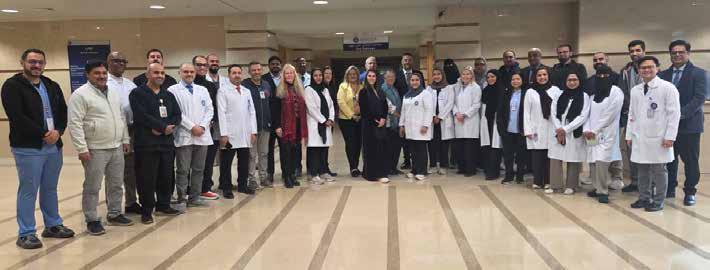
ABI Rehabilitation General Manager Intensive Services, Tony Young surveyed Humanitarian City-Riyadh, Saudi Arabia in January 2026 as part of his role as a CARF rehabilitation surveyor.
Multiple awards at He Autaia Excellence Awards
ABI Rehabilitation proudly sits as part of Evolution Healthcare group which has six hospitals, five specialist day hospitals, a maternity hospital and a range of specialist health and wellbeing services. Yearly, Evolution Healthcare holds the He Autaia Excellence Awards to showcase the quality improvement initiatives undertaken across the Evolution Healthcare group.
The Supreme Award in 2025 was Te Hekenga-ā-ora, ABI’s Māori Development equity strategy designed by lived experiences of tangata whenua, kiritaki (clients) and whānau, incorporating principles from multiple hapū and iwi. This living document adapts to the needs of kiritaki and whānau prioritising ABI’s cultural awareness, safety and competency, mediating inequity and enhancing rehabilitation experiences. It was a momentous occasion for everyone involved, including whānau impacted by brain injury.
In addition, another two winners were awarded the Circle of Excellence, a peer-nominated programme that shines a light on those who go above and beyond.
• Circle of Excellence Award for: Kotahitanga - Collaboration: Breaking down barriers to enable full participation in sustainable change (Joanna Young, ABI Kaiārahi Kaupapa Māori)
• Circle of Excellence Award for: Manawanui - Commitment: Bringing the very best of ourselves to every situation with kindness and respect (Tarun Sharma, Business Operations Manager, ABI Rehabilitation Community Services)
For ABI to win across multiple categories was recognition of the selfless mahi happening each day and gave kaimahi the opportunity to celebrate this.
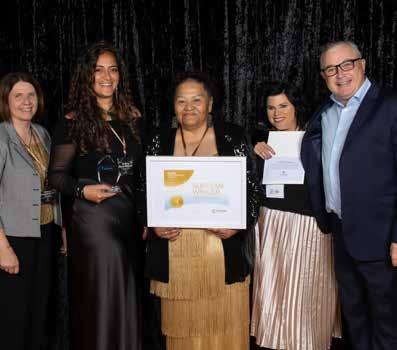
Dr. Christine Howard-Brown (Chief Executive Health & Wellbeing), Te Rina Ruru-Pelasio (Māori Development Manager), Arohanui Baker Toopi (Kaiārahi Kaupapa Māori), Joanna Young (Kaiārahi Kaupapa Māori) and Simon Keating (Chief Executive Evolution Healthcare) at the He Autaia Excellence awards.
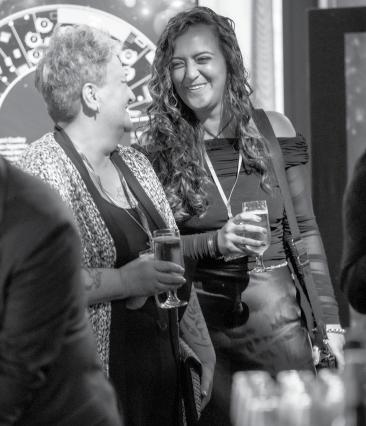
Corina Ruru and Te Rina Ruru-Pelasio at the awards. Their whānau's rehabilitation journey helped shape the formation of Te Hekenga-ā-ora which was the Supreme Award winner at the He Autaia Excellence Awards.
Special visitors to ABI Wellington
We have the pleasure of welcoming past kiritaki back to ABI Rehabilitation as visitors which is a special time for both our kaimahi, old kiritaki visitor and current kiritaki in their rehabilitation journey. One such visitor was Diane Taylor who had a fall in 2023. After intensive rehabilitation (including a cranioplasty) at ABI Rehabilitation Wellington, Diane was able to return home to the Hawkes Bay and is doing well on her rehabilitation journey.
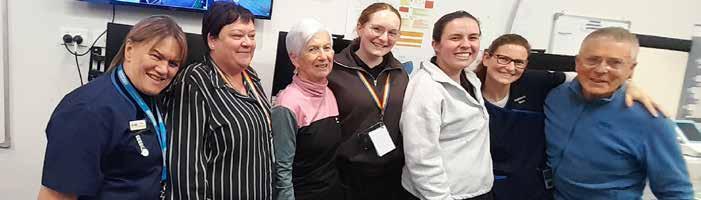
Diane and partner Quentin stopped to visit some of the team involved in her rehab at ABI, who Diane formed a special connection with during her months at ABI.
and some of the
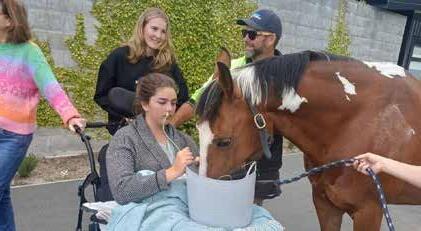
Another visitor was LuLu visiting Molly. Molly sustained a serious brain injury after a horse riding accident. ABI Rehabilitation was able to weave LuLu into Molly's rehabilitation goals and therapy
Joanna Young (Kaiārahi Kaupapa Māori) who made this kiritaki wish a reality commented:
"ABI kiritaki Molly had a special request that was granted when her beautiful hoiho (horse) came to visit ABI Wellington. Molly’s world is her horse, and to be up and close and connected is beyond words, and we just sat in awe and wonderment of this occasion.
There wasn’t a dry eye during this visit with Molly’s whānau surrounding her with aroha. Our other kiritaki also got to see and touch the horse too.
Molly’s whānau plan on giving back to ABI by bringing their special miniature horse back for kiritaki therapy in the future.
It's these days and experiences that make you smile!"
Past kiritaki Diane
team who supported her rehabilitation journey at ABI Wellington.
Molly and Lulu at ABI Wellington. A special day for everyone.
Chinese New Year
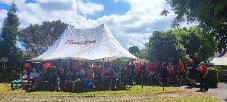
ABI Rehabilitation Auckland continues to hold an impressive Chinese New Year celebration and the team effort resulted in such a joyous event for our kiritaki, whānau and kaimahi.
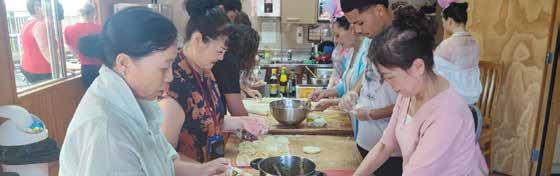
The team produced six hundred dumplings in an hour, with help from ‘dumpling making gurus’ from the dancing group who joined the festivities. This event was a special time in the ABI gardens, enjoying the sun, food and connection together.
The 2026 Lunar New Year is the Year of the Fire Horse. Symbolizing success, vitality, and intense, fast-moving energy, this rare 60-year cycle encourages fearless action and brings opportunities for growth and major life changes.
Thanks to the kaimahi who dedicated time and effort to organise this who delivered an incredible event enjoyed by everyone.
A huge crowd of kiritaki, whānau and kaimahi take shade in the gardens of ABI Auckland to enjoy the celebrations.
An impressive 600 dumplings were hand made to enjoy as part of the celebrations.
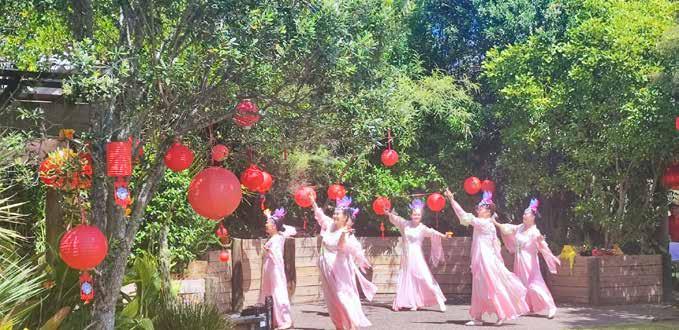
A beautiful dancing performance by Waikakere Chinese Association.
Summer of Pride 2026
Summer of Pride kicked off in Auckland during February with all ABI Rehabilitation services celebrating this occasion. The focus of the Pride events was to “Celebrate, Amplify, and Accelerate” with activities aimed at celebrating the diversity of our kaimahi, raising awareness of LGBTQIA+, improving knowledge, and providing training on how to support our kiritaki who belong to the Rainbow community.
Some of the events included rainbow lunches and morning teas with quizzes about the evolution of the Pride flag and Rainbow definitions. There were also on-line webinars that were attended by kaimahi across various services including the “Rainbow Awareness 101” and “Pride Pledge Pronouns Lunch and Learn”. The kaimahi that attended these sessions will be provided with rainbow lanyards as a visual symbol of allyship to those in the LGBTQIA+ community.
Some kaimahi also attended the community events that were being held around the city including Big Gay Out and the Pride Parade. In addition to Pride celebrations, Evolution Healthcare took the Pride Pledge in February which is a fantastic step actively supporting and celebrating rainbow communities, in workplaces and in the care provided.
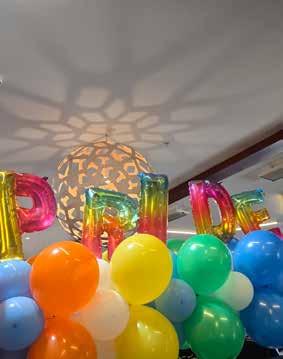
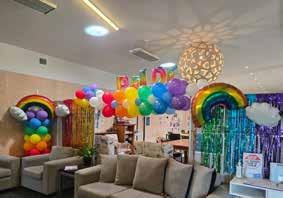
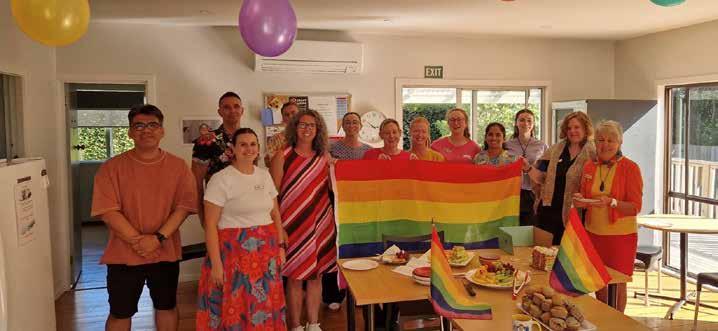
All ABI Rehabilitation services celebrated in different ways for Pride Month.
All ABI Rehabilitation services celebrated in different ways for Pride Month.
All ABI Rehabilitation services celebrated in different ways for Pride Month.
ASSBI/NZSIGN Conference in Otautahi (Christchurch)
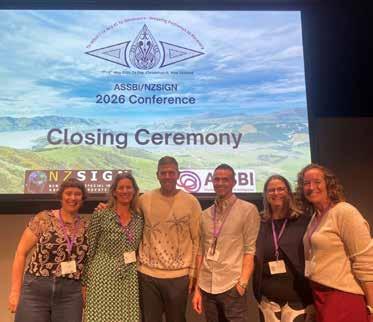
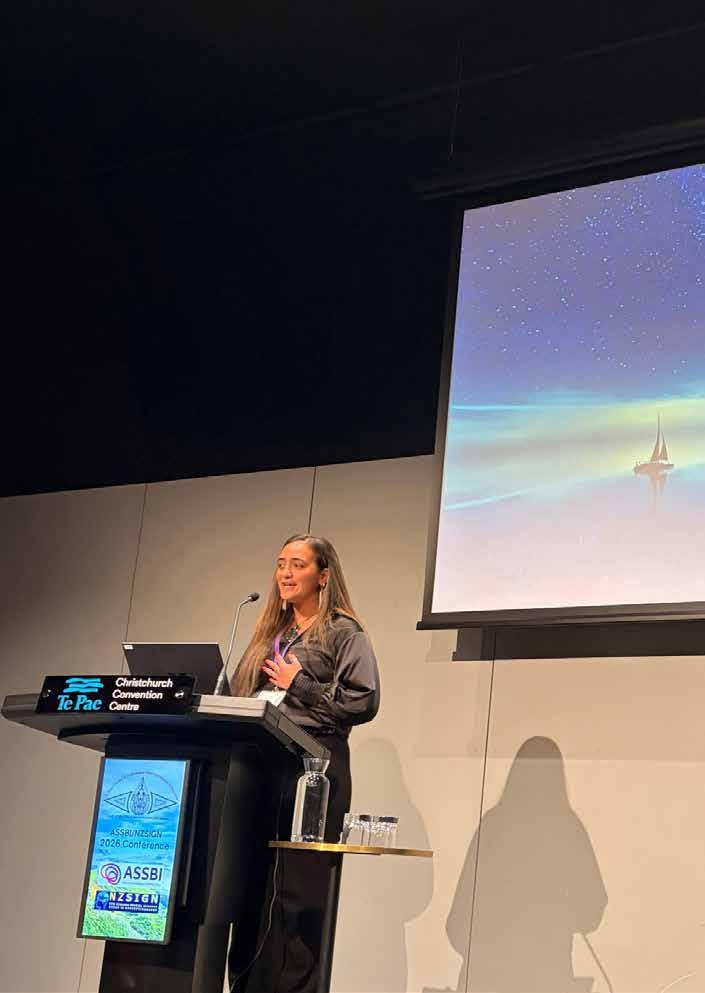
ABI Rehabilitation had a significant presence at the Australasian Society for the Study of Brain Impairment (ASSBI) and the New Zealand Special Interest Group in Neuropsychology (NZSIGN) conference in Otautahi from 7-9 May 2026.
Dr Jonathan Armstrong (Director of Allied Health), Dr Kathryn Murrell (National Psychology Advisor) and Karen Below (Manahautū Ora - Cultural Advisor) were coconvenors for the conference and chaired a range of sessions relevant to their specialty areas of interest including enhancing wellbeing in rehabilitation, paediatric mild TBI and Rongoa Māori practices.
ABI had several kaimahi delivering ‘howto’ sessions, oral and poster presentations ranging from embedding cultural authenticity in brain injury rehabilitation to supporting recovery from concussion through group education and peer support.
These presentations demonstrated the importance of integrating evidence-based practice with a deep appreciation of the diverse social, cultural and environmental contexts that shape recovery.
Te Rina Ruru-Pelasio (Māori Development Manager) won the ASSBI/Summer Foundation Lived Experience Award for the session that demonstrated the most impact on people with lived experience. The team that attended the conference were able to attend numerous concurrent presentations that applied directly to their clinical practice and are now planning ways to share their new knowledge with their colleagues.
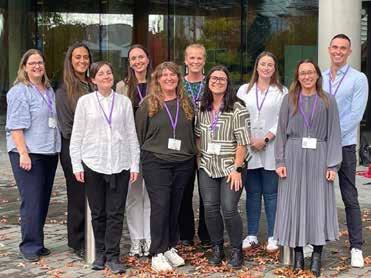
ABI kaimahi delegates who were part of the organising committee for the ASSBI Conference.
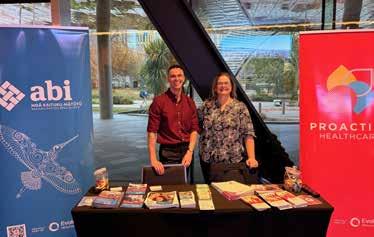
Director of Allied Health, Jonathan Armstrong and Director of Psychology, Kathryn Murrell manning the ABI exhibition stand at the conference.
ABI and Proactive kaimahi at the conference.
International Nurses Day celebrations
International Nurses’ Day is celebrated each year on 12 May and ABI Rehabilitation takes the time to celebrate all nursing staff supporting our kiritaki and whānau through their brain injury rehabilitation. Angela Davenport (Director of Nursing) has recently been appointed Vice President & NZ Chair of The Australasian Rehabilitation Nurses' Association (ARNA) and Angela reflected on how the rehabilitation nursing specialty has evolved over the years:
“As nursing continues to evolve into more specialised and expanded roles, rehabilitation nursing is also strengthening its identity as a distinct specialty. A key milestone has been the formal recognition and documentation of our specialist skills within the Evolution PDRP framework. Having a New Zealander on the ARNA Executive also strengthens our practice and collective voice internationally.”
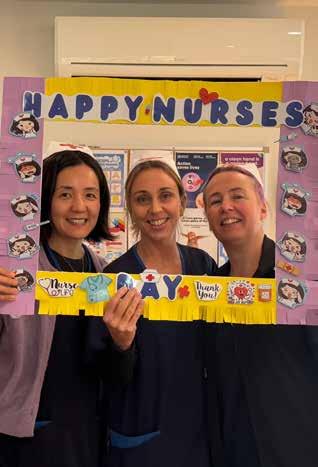
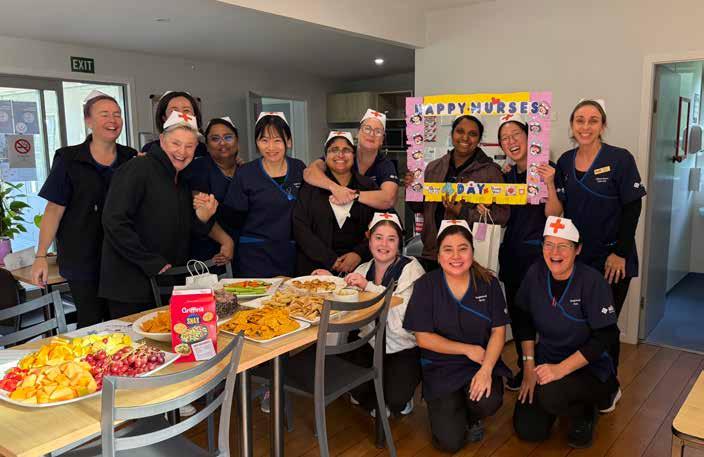
Some of the incredible nursing kaimahi celebrating International Nurses’ Day.
Some of the incredible nursing kaimahi celebrating International Nurses’ Day.
Te Hekenga-ā-ora
Kua hua te marama
Something has completed a full cycle
Te Hekenga-ā-ora Evaluation Milestone
Following the successful completion of the initial three-year implementation phase, Te Hekengaā-ora has continued to evolve from a development plan into an increasingly embedded way of working across ABI Rehabilitation.
Building on the momentum of receiving the Grand Supreme Award at the Evolution Healthcare Quality Awards in November 2025, the focus throughout 2026 has been on evaluating impact, strengthening sustainability, and ensuring the principles of Te Hekenga-ā-ora continue to influence everyday practice across the organisation.
Over the past year, work has focused on embedding Te Hekenga-ā-ora more deeply into service delivery, strengthening mana-enhancing practice, and expanding aspects of the programme into community rehabilitation services. A key priority has been ensuring that the gains achieved through the programme become part of "the way we do things" rather than remaining standalone initiatives.
The lived experience foundation of Te Hekenga-ā-ora has continued to shape organisational resources, communication, and service design. Documentation and resources have been reviewed and refined to better reflect the voices and experiences of kiritaki and whānau, ensuring information is accessible, meaningful, and supportive throughout the rehabilitation journey.
The learnings from Te Hekenga-ā-ora have also been shared nationally through conference presentations and sector engagement. This included presentations at the Australasian Society for the Study of Brain Impairment (ASSBI) Conference, where the work was recognised through the presentation of a lived experience award, highlighting the value of whānau voice and lived experience in shaping rehabilitation services.
Te Hekenga-ā-ora has been widely recognised for its integration of lived experience, tikanga and Māori models of health through the Te Mauri Ora Framework training and the lead of quality improvement projects. It has strengthened ABI’s cultural capability and improved the quality of engagement with Māori whānau.
Key areas of focus during 2026 have included:
• Embedding Te Hekenga-ā-ora principles into everyday practice across ABI services.
• Expanding aspects of the programme into community rehabilitation services.
• Reviewing resources, documentation, and communication through a lived experience lens.
• Strengthening mana-enhancing approaches across service delivery.
• Continuing to build staff confidence and capability in culturally responsive rehabilitation practice.
• Sharing learnings nationally through conferences, presentations, and sector partnerships.
The principles underpinning Te Hekenga-ā-ora closely align with Evolution Healthcare's Te Korowai Oranga strategy, which is committed to achieving equity, delivering mana-enhancing, kiritaki-centred care, and improving health outcomes for all. This shared commitment provides an opportunity to continue building on the success of Te Hekenga-ā-ora and to scale this mahi consistently and respectfully across the wider organisation.
Te Rina Ruru-Pelasio (ABI Māori Development Manager) won the ASSBI/Summer Foundation Lived Experience Award for the session that demonstrated the most impact on people with lived experience.
Workforce Development
He rau ringa e oti ai
Many hands make light work
Workforce Development
The Workforce Development Team comprised of senior leaders across the Health and Wellbeing Group continues to deliver improvement initiatives for ABI Rehabilitation kaimahi, (new and existing) working with kiritaki and whānau during their intensive brain injury rehabilitation journey. There has been a focus on six major workstreams over the last year:
1. Diversity and Inclusion
A Pride Network has been formed consisting of ABI Rehabilitation and wider Health and Wellbeing Group kaimahi that has focused on three key areas:
ABI Rehabilitation officially took the Pride Pledge in 2024 and is proud to have a commitment to being a rainbow-friendly, diverse, and inclusive workplace, recognising the intersectionality between rainbow whānau, race, cultural connection and disability which is embraced and incorporated. ABI recognises the importance of supporting diversity and inclusion within the workforce as a way of contributing to staff wellbeing and creating a welcoming and responsive service to our kiritaki and whānau.
The Pride Network is an example of how the ABI Rehabilitation values are applied in practice, particularly those of Pono and Tika (Honest and Right), Manaaki (respect and support) and Pūkenga (expertise and knowledge sharing).
The Pride Network provides a collaborative forum for kaimahi who identify as being part of the Rainbow community, and their allies. The Network has three main purposes:
• Support – Support for one another to navigate the working environment and context, as a member of the Rainbow community
• Action – Spreading awareness of the LGBTQIA+ community, influencing policy and procedure, and providing education or resources to create an organisation inclusive of Rainbow kaimahi, kiritaki and whānau
• Social – Meeting like-minded people from across the Health and Wellbeing Group.
Another milestone was the release of the Diversity, Equity and Inclusion (DEI) survey for all Evolution Healthcare kaimahi to provide feedback on how the organisation is doing in respect of diversity, equity and inclusion. Results are currently being analysed but the engagement rate was pleasing and ABI Rehabilitation looks forward to participating in project initiatives that will follow from the analysis.
2. Training and Development
In the last financial year, 25 kaimahi participated in the Leading an Empowered Organisation (LEO) programme, a health leadership training course designed in healthcare for healthcare professionals. LEO uses evidence based research, practical exercises, storytelling and reflection as learning tools and a conceptual framework to explore and understand complex leadership issues.
Feedback from ABI Rehabilitation kaimahi was positive, including:
Very useful information shared, I am better informed about my role.
Lots of good examples and not boring. By attending LEO I will be able to put in practice what I have learned.
The facilitators were very articulate in delivering the topics that were discussed.
This is a great programme, even for leaders who have been in leadership roles for a long time. By applying LEO principles any manager/leader can create safe and positive environment in any organisation. I now have a better understanding regarding how I can bring change without even being a leader.
Feel much more confident. Combined with previously learned knowledge, I now have a framework to support my abilities to complete this much more cohesively than before the course.
Consolidated my knowledge and provided new knowledge on leadership styles.
Clear, concise, well-run presentations. Safe space to share and generate discussion.
Thorough programme with very knowledgeable speakers.They provided multiple relevant examples that supported what we were learning.
3. Cultural Safety and Training
As part of our continued embedding of Te Hekenga-ā-ora, new and existing kaimahi have completed Mauri Ora training delivered over three modules:
• Ngā Mātāpono - Gain an understanding of ABI’s principles (ngā mātāpono), how they apply in your own life and the lives of kiritaki and whānau. Identify your role and responsibility to the implementation of ngā mātāpono.
• Te Whare Tapa Whā - Gain a deeper understanding of Te Whare Tapa Whā. Identify the roles and responsibilities that individuals carry in regards to applying Te Whare Tapa Whā in practice as kaitiaki. Confidently apply Te Whare Tapa Whā in your daily activities.
• Mauri Ora - Identify and gain an understanding of the additional concepts that contribute to Mauri Ora. Identify the meaning of these concepts to your own life and whānau before discovering ways to apply them in practice.
In addition, ABI Rehabilitation has released new training modules via Zambion, the HR system that supports access to and tracking of mandatory training for kaimahi. This supports audit and certification for ABI, as well as payroll, leave and professional registration information.
4. Wellbeing
The Workforce Development team have established the H&W Social and Wellbeing Roopu for the consolidation and connection of social committees across the Health and Wellbeing Group.
Ongoing work related to People Safety initiatives have been coordinated via the People Safety Steering Group (PSSG) with some exciting plans in place for 2026/2027. Coordinating policy, process, training and resources ensures safety for all is woven throughout our work.
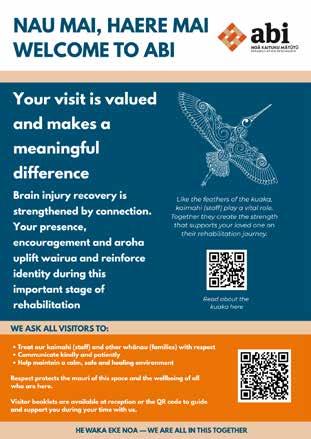
This year - the Wellington Intensive site initiated reviewing and developing resources to support whānau during their time onsite including Posters, flyers and brochures of information. Whānau feedback was sought and incorporated in these initiatives.
The Safeguarding Children committee has been reestablished to continue to progress initiatives for the safety of all children who interact with or are cared for by our services.
5. Organisational Development, Recruitment and Talent Management
ABI Rehabilitation continues to implement a robust quality improvement process which allows ongoing organisational development such as leadership training, links to university programmes (kaimahi enrolment, teaching and research), inservices and outreach to other services and professional groups. The Workforce Development Group coordinates oversight of these initiatives to ensure ongoing recruitment and talent management is always considered and available across the organisation.
Dr Tobias Wanke joins the ABI Wellington team
Originally from Germany, Tobi Wanke is a Rehabilitation Specialist with specialist qualifications in both Orthopaedic and Trauma Surgery and Physical and Rehabilitation Medicine. Before joining ABI Rehabilitation in May 2026, he worked as a Senior Consultant at BG Klinikum Duisburg and previously at BG Klinikum Hamburg, gaining extensive experience in neurological rehabilitation, musculoskeletal rehabilitation, pain medicine and the management of patients with complex injuries.
Tobi is passionate about rehabilitation medicine because of its holistic approach. He enjoys treating the whole person rather than focusing on a single diagnosis, considering each patient's medical background, personal goals and individual circumstances to optimise recovery. His clinical interests include acquired brain injury rehabilitation, conservative management of musculoskeletal conditions and interdisciplinary, patient-centred care. He particularly values working alongside nursing staff and allied health professionals and believes that empathy, listening and building strong relationships with patients are fundamental to successful rehabilitation.
Outside of work, Tobi enjoys spending quality time with his wife and daughter, travelling, exploring New Zealand, and spending time with friends. As a former German First Division field hockey player, he has always been passionate about sport and continues to enjoy an active lifestyle.
6. Career Development
Throughout all the above initiatives the Workforce Development team work alongside all parts of the organisation to provide a focus on training, developing and guiding our kaimahi on their career journeys. Providing opportunities for kaimahi to learn, experience new pathways and be guided about their career ensures ongoing passions are cherished and grown. Links to university programmes are diverse and strong.
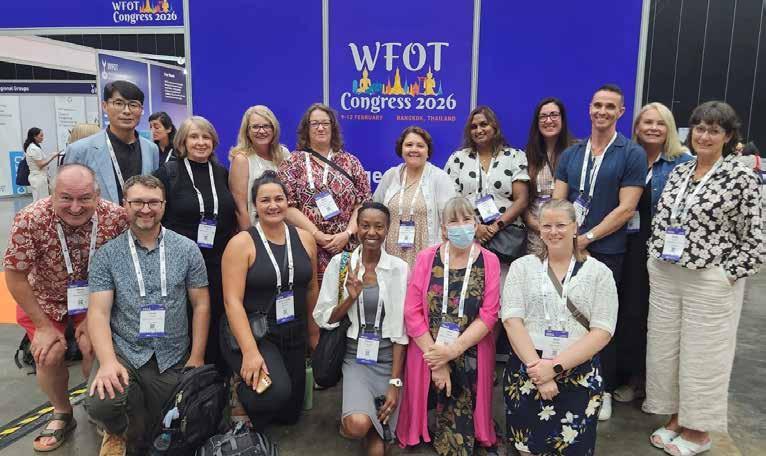
Jonathan Armstrong (Director of Allied Health) attended the World Federation of Occupational Therapy Congress in Bangkok, Thailand at the beginning of February. Jonathan was asked to attend the conference on behalf of CARF International as he also has a role as a CARF Surveyor. There were 2,500 occupational therapists from 96 different countries attending the congress and the diversity of presentations and people was incredible. In addition to discussing the benefits of CARF accreditation with the delegates, Jonathan was able to attend most of the education sessions and was fascinated to hear about the many ways occupational therapy is being practiced and developed across the world.
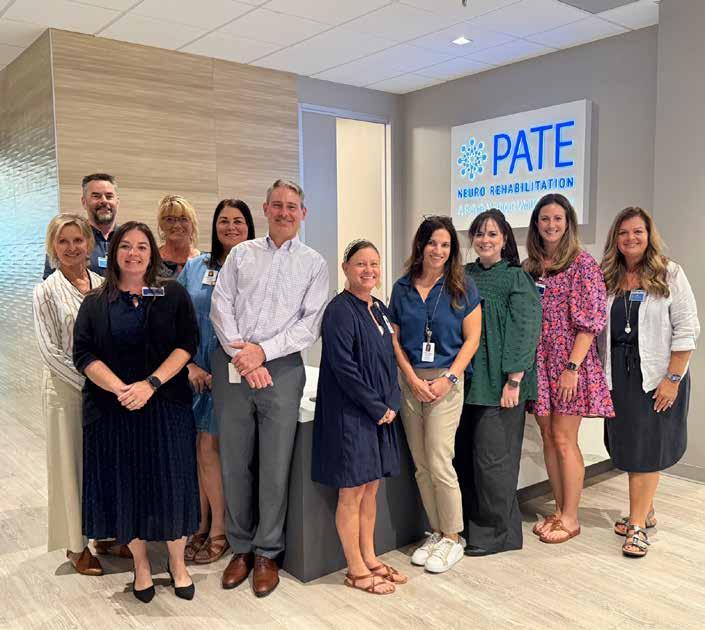
We're lucky enough to have several CARF surveyors within the Health & Wellbeing Group, including Tony Young (ABI's General Manager, Rehabilitation Services) who travelled to Texas recently to survey Pate Neuro Rehabilitation.
Jonathan (back row, third from right) with some of the delegates at the WFOT Congress in Thailand.
Feedback
Whāia te mātauranga hei oranga mō koutou
Seek after learning for the sake of your wellbeing
ACC Feedback
ABI Rehabilitation asked ACC Case Owners to provide feedback on their satisfaction with the service.
Overall Satisfaction 94%
ABI Rehabilitation uses feedback to inform service improvements and celebrate kaimahi
Comments included:
Wonderful, caring team of therapists.
Adequate time given for meetings and option to join via Teams if unable to attend to ABI
I attend online and it's lovely to see the client & their family and the team.
Good indication on progress and supports required when in the community
Very clear discharge summaries
Good rationale provided by Allied Health professionals.
Nice and clear great to receive a copy in a timely fashion thank you.
Good discharge planning meetings, with external referrals in place prior to discharge
It's good, a very capable team
The team in Porirua is absolutely amazing! I recently met most of them in person following a discharge meeting for one of my clients, and I was so impressed. Everyone was incredibly friendly and helpful. Highly knowledgeable team and made us feel very well-hosted.
Supported by allied team members to understand the level of care and what support needed for the whānau
Social worker happily took us on a tour around the property as it was my first time there.
I enjoy working with ABI Hamilton and the staff are all amazing. The staff provide great service to whānau.
It's a good relationship and team effort all round, which the client benefits from greatly.
My experience working with ABI in Wellington was very refreshing and I was very impressed with how they operate. I was included in communication and planning. Well informed, and everything came in a timely manner.
Hospital Feedback
ABI Rehabilitation asked hospitals to provide feedback on their satisfaction with the service.
Overall Satisfaction 100%
ABI Rehabilitation uses feedback to inform service improvements and celebrate kaimahi
Comments included:
ABI is really responsive to calls for advice and requests for review, and so knowledgeable, approachable and have excellent communication with our teams.
Very happy with the service.
ABI is a wonderful service and we enjoy working with them to discharge our TBI patients in hope they can achieve their best outcomes
Very helpful and valuable service.
The team are both assets to us, patients and ABI. Excellent relationship with staff and very much enjoy working with them and all their support they give us.
Amazing ABI contractors who engage well with the team
Great service. Excellent staff and rapport with patients/whānau
Amazing service who are very patient and whānau focused
There is great communication with the patient, their whānau and the healthcare team from ABI
Very good communication
It's a seamless process with clear communication from the coordinators
Very responsive and prompt
Have some good advice regarding managing patients with significant behavioural issues
Kiritaki Feedback
ABI Rehabilitation asked kiritaki to provide feedback on their satisfaction with the service.
Overall Satisfaction 87%
ABI Rehabilitation uses feedback to inform service improvements and celebrate kaimahi
Comments included:
The staff working with me gave me the confidence and healing I needed to go home
I felt comfortable with all the staff I came in contact with and was able to form positive relationships with all staff at ABI
I think the whole process was professional, yet down to earth. And it definitely went a long way towards my recovery.
They all were friendly and polite and helpful all the time and also sympathetic with me.
I can’t thank ABI enough for the support and encouragement I received from all the staff. Thank you all for your support and help.
I was really impressed with the support I received – ABI have vastly improved my recovery.
ABI has helped me massively. The work you undertake is absolutely vital, and every staff member I encountered was friendly and helpful.
Mā whero mā pango ka oti te mahi.
I can't express enough my thanks on supporting me with my recovery. It was a scary feeling being in an unfamiliar setting which was made easier by supportive and knowledgeable staff. Now I'm in recovery I can reflect with gratitude.
No refrain, ka nui te aroha ki a koutou manaki ai au me taku whānau.
I was always treated with kindness during my time at ABI.
The attention and care that all staff contributed to my welfare was instrumental in my journey to recovery.
Thank you for everything you did for me, it was amazing and I won’t forget it. My partner and I often talk about how Dr. Robyn saved me!
Communication was clear with all staff involved. Plans going forward were explained well with ongoing updates.
Whānau Feedback
ABI Rehabilitation asked whānau to provide feedback on their satisfaction with the service.
Overall Satisfaction
97%
ABI Rehabilitation uses feedback to inform service improvements and celebrate kaimahi
Comments included:
ABI worked miracles for my sister. The improvements are beyond what I had hoped for, and I will always be thankful for the positive impact ABI has had on her recovery journey.
I am incredibly grateful to ABI for the outstanding care, dedication and support provided to my sister throughout her recovery from a brain injury. While she may never be exactly the same as she was before her injury, the progress she has made has been truly remarkable. Throughout the entire journey, ABI kept me informed whenever needed and was always approachable and supportive.
I truly appreciated that my suggestions were listened to and taken into consideration. Rather than feeling like an outsider, I felt I was working alongside ABI, the staff and the caregivers as part of a team, all focused on achieving the best possible outcome for my family member.
ABI’s expertise, patience and encouragement played a significant role in helping my loved one regain independence and return to a much more normal life.
The care and respect for my mother was amazing; every staff member was good to her.
What an amazing refuge for rehabilitation, comfort and care. Thank you
We were extremely happy with our overall experience
We as a whānau felt involved in all aspects of the rehabilitation process
We felt like all the nurses staff and doctors interacted with us in a patient friendly helpful manner during some very trying moments during the rehabilitation process.We were extremely supported throughout.
Everything worked well. I felt like patient dignity was the underpinning ethos that made it a great place to heal.
The complex was well designed and situated so staying there was pleasant considering the circumstances.
Very respectful staff, lovely environment, definitely made us feel a part of a whānau.
The care that our family member received was absolutely amazing. Being away from home was hard but we knew he was being well looked after. ABI was an absolute blessing. Thank you so much
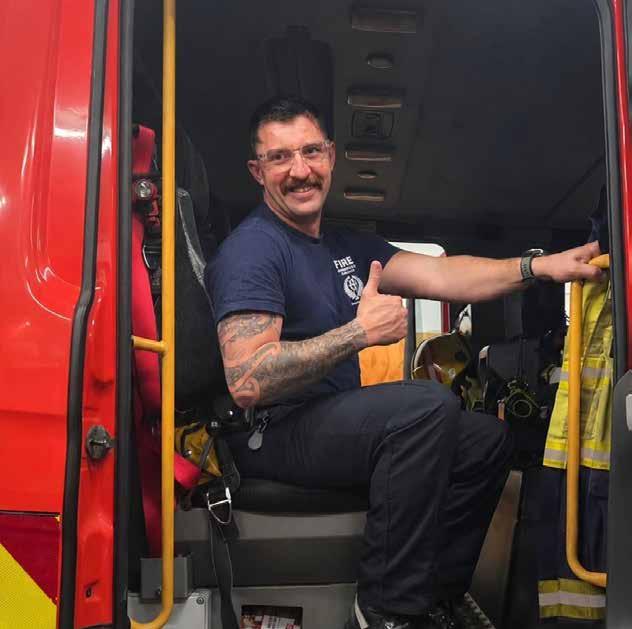
Five hundred and twenty six days after his severe TBI injury, Bradley proudly returned to mahi as a firefighter and had his first shift back on the trucks.
Billy’s story
Billy Ross is the epitome of a young adventurous rangatahi living life to the fullest. His and his whānau’s sheer determination in the face of severe brain injuries has been rewarded with the most precious gift – Billy returning to the things he loves most.
Billy has generously shared his story with ABI to encourage kiritaki, whānau and kaimahi to keep going, as against all odds, you can recover from brain injuries and there is light at the end of the tunnel.
After the Christchurch earthquake in 2011, my whānau and I moved out of the city to a rural property on the Banks Peninsula. My life before my accident was very active and I had sustained a previous brain injury at 14 after a mountain bike accident. That injury meant I needed to be airlifted by the rescue helicopter for surgery and gave our whānau a massive insight into brain injuries and the rehabilitation process. It took 18 months to recover from that injury but at the beginning of 2024, I was feeling ‘normal’ again and was able to get back to the things I loved. After finishing high school, I had spent a month trekking and climbing the Himalayas in Nepal, as well as volunteering in villages.
"I was 17, the world was my oyster.”
The night of 30 April 2024 changed all that. It was the second day of studying mechanical engineering at Polytechnic and after class, a group of friends and I decided to go hunting just north of Christchurch. We had a great evening and were heading back home, with my friend driving. I was a passenger in the front with two other friends in the back.
It’s easy for some people to see young men driving and assume we were being reckless in some way. We weren’t speeding, we weren’t drinking – the driver just lost attention for the briefest of moments.
"I remember nothing else of that night or the next six weeks."
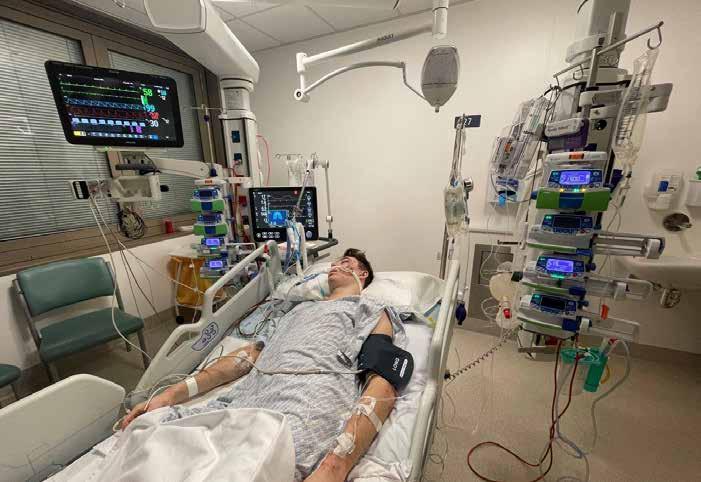
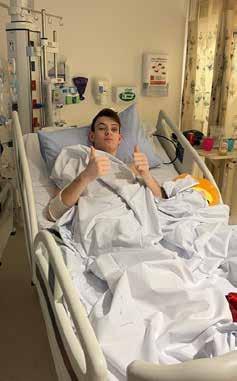
Billy in ICU
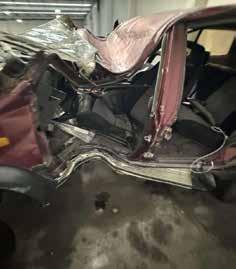
I found out afterwards that my friend tried to correct when he noticed he’d gone slightly off the road, but as he turned the steering wheel it veered the car sideways into a power pole. The front passenger side took full impact as the car flipped twice, eventually coming to rest, upside down.
I was crushed and upside down, trapped by my seatbelt (which kept me alive) and the wreckage of the car. My two friends in the back were knocked out and after they came to, they managed to pull the driver out who was still unconscious. But I was stuck. It took over two hours to get me out of the wreckage to Christchurch Hospital. My mum is an ambulance medic, and it was her friends that attended the accident. They rang my parents and told them the news, and they needed to come to the hospital urgently. I still remember none of this. I was placed on life support, moved to the Intensive Care Unit and had surgery on my legs, hips and pelvis the next day.
"My whānau was told I was in a critical condition and may not make it out of surgery."
I spent the first week on life support in the Intensive Care Unit and then moved to the Orthopaedic Trauma Unit at Christchurch Hospital. At first, the focus was all on my orthopaedic and chest injuries, despite scans showing I had sustained a traumatic brain injury too, my invisible injury.
My whānau and friends were very worried as I was not myself – I was aggressive and combative. My parents pushed for further investigation – they wouldn’t accept this was just normal behaviour to be expected from a 17 year old boy. Finally, an MRI revealed I had a significant traumatic brain injury, alongside my other injuries.
"I’d survived but it was grim."
My whānau were told extensive rehabilitation was going to be needed to make any progress. The likelihood of me being able to walk again was low and my cognitive abilities would be challenged because of the severity and complexity of my injuries. My parents were devastated. They didn’t think there was anything wrong with me apart from my broken bones –it’s so difficult to feel or see brain injuries.
ABI Rehabilitation was recommended, and we were relieved to know there was a facility that was dedicated to brain injury rehabilitation. Having to move to Wellington was difficult but we were determined to have access to the best care to ensure I could have every opportunity to reach my full potential. Whatever that was to be.
Week one at ABI Rehabilitation Wellington
Off life support with a big thumbs up
The car Billy was in when the accident occurred
I was airlifted to ABI Wellington by LifeFlight 27 days after my accident. I still don’t remember my first week there. My parents said we were all overwhelmed. But within two hours of arriving, my incredible physio Chris had me up and sitting in a wheelchair for the first time. All the staff were so welcoming. But I hated it.
I hated them all. I hated the other patients. I hated my whānau. I hated my friends. I hated my room, my wheelchair, my rehab sessions, the food – everything. But most of all, I hated my body, and I hated my life. I was mean and angry, and I let everyone know.
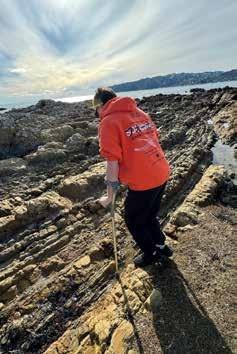
Instead of the staff seeing this as a problem they knew the solution. My incredible team arranged for me to be moved into a more teenage friendly space at the facility. I had a bigger room and a little area that could be closed off when my noisy mates visited. We were encouraged to use the OT rooms to play pool and games and could share meals and takeaways together. Every single weekday morning Jo would take me out to reconnect with the world, I got to put my feet in the ocean.
The hard road
The rehab was hard. I didn’t want to get out of bed. I didn’t want to talk to my therapists. I was gutted every time the pool was closed. I hated having to go out in a wheelchair. But the rehab started to pay off, and I was able to move to using crutches. This was a game changer: I loved going to the gym, the team challenged me, and I challenged them back. We planked and had competitions. I loved cooking with the OT’s. I loved going shopping with my whānau and going into the city, even if it was in the wheelchair. I hated being told I needed to rest – I hated knowing my brain was still injured and hated being “tested” to see how I was progressing. I hated that my Mum made me get up every day – and that even during the weekends and quiet times she pushed me. We went to the local pools, we played so many memory card games, everyone played sticky balls, we went shopping and she made me make lists, we visited museums, we went axe throwing and to smash rooms, we went to Weta, the beaches, out for meals – we started doing everything that “normal” people did and then it hit me – I was going to be ok – I was making progress. All this work had paid off – I still couldn’t walk but my brain was healing, and I was learning new ways of doing old things. I had stopped hating it at ABI.I even stopped swearing so much. I had stopped hating being alive and started looking forward. I started to remember who I was, where I came from and where I was going.
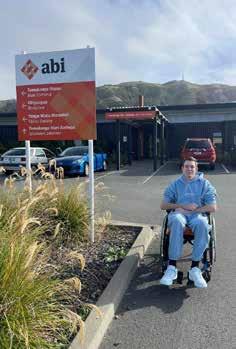
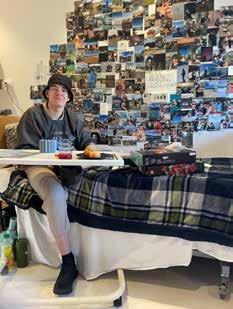
Personalising his space at ABI Rehabilitation with lots of friends and whānau memories.
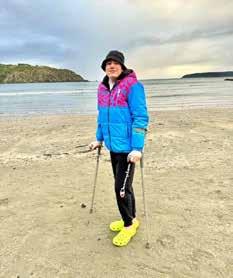
Connecting with nature again.
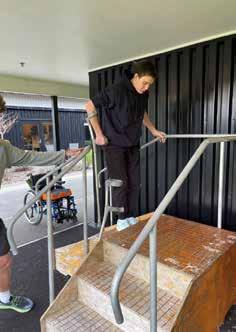
Working on walking steps again.
Light at the end of the tunnel
I was discharged from ABI 104 days after my accident – a total of four months as an inpatient! I was transferred to extensive community rehab at home in Christchurch and was determined to keep progressing. Two weeks after returning home, my orthopaedic surgeon told me to try and walk. And I did – kind of! Eight weeks later, I was walking unaided and returned my wheelchair to ACC. I enrolled in a night class with my dad and successfully completed a welding course.
7 months on
Seven months on from my accident, I was signed off to drive again which was a huge accomplishment. Cars and driving were my passion before my accident and I was wild when I was told my licence had been taken off me because I had a brain injury.
Once I could drive again, I re-enrolled in my mechanical engineering course in 2025, and with the support of my rehab team and student supports, I am passing my course and have secured part-time work in at a mechanics with the aim of an apprenticeship at the end of the course. I passed my full drivers’ licence and received clearance from my medicals teams to do what seemed like an impossibility a year earlier: I returned to the mountain – not quite Mt Everest this time but I skied again. A massive day on the snow, on off course tracks – doing what I loved. It hurt the next day, but it always hurt the next day.
Looking forward to the next chapter
I’m now 18 and the world is my oyster. I am more confident than the pre-accident Billy (can thank my frontal lobe injury for that), I’m fitter, I still attend gym sessions twice a week, I do stop and think before I jump a little more now, I still hate that I get tired so easily, but I’ve also learnt it’s easy enough to manage. My girlfriend stuck around and so did all my mates despite my swearing and lack of tolerance towards them.
If you’ve just had a brain injury my advice would be this: it’s ok to feel terrible, it is terrible that this is happening to you – but don’t ever let anyone tell you that you can’t or won’t be able to do something. There is more than one road to get to most destinations. No matter how much you don’t want to do the sessions – do them anyway. Your brain is playing tricks on you. Rehab works. The impossible is just ‘I’m Possible’.
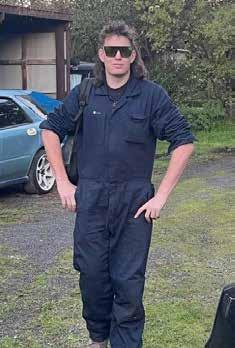
Back working againa, a huge step in independence.
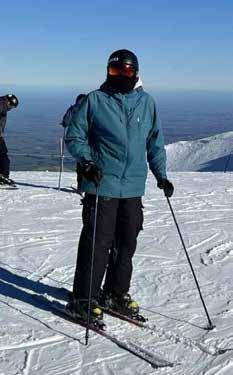
Skiing again in 2025.
Morning walks along the beach while at ABI Rehabilitation Wellington.
Reconnecting with who I was
One of the things that upset me most with my head injury was I lost my ability to remember my mihi. I had forgotten how to tell people where I was from, and who I was – but I hadn’t forgotten who I was – just how to explain – I could still feel who I was. Jo helped me find my missing words – my whakapapa was never lost; it was still in my jumbled up brain and just needed to be rearranged with all the mess in there after the accident.
Ko Aoraki tōku Maunga
Ko Waitaki tōku Awa
Ko Takitimu tōku Waka
Ko Kai Tahu ratou Waitaha ko Kati Momoe ko Te Atiawa ki Taranaki oku Iwi
Ko Huirapa tōku Hapu
Ko Moeraki tōku marae
No Motukarara ahau
Ko Anaru tāku Papa
Ko Nikki tāku Mama
Ko Billy Ross tōku ingoa.
Noreira, tena koutou, tena koutou, tena koutou katoa.
Billy leaving ABI Rehabilitation Wellington.
Jo Young, ABI Kaiārahi Kaupapa Māori reflects on her connection with Billy:
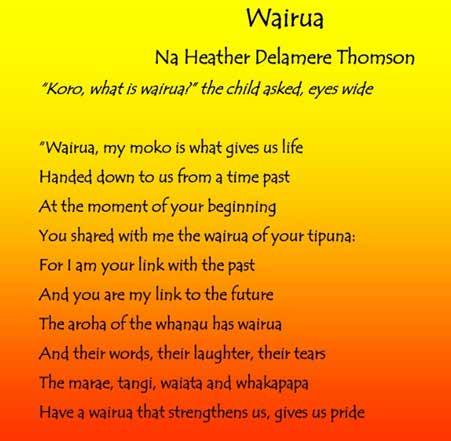
“This poem depicts my time with Billy. We went out into nature each day to ignite the wairua two waters that flow through him. It was here that my awhi and aroha grew with Billy, and I now call him whānau. Even though a rangatahi, I saw him as a whole person on a journey to flourish and thrive”.
Billy’s story was shared in the Major Trauma Annual Report in 2026. ABI are proud partners of this network, with several ABI leaders sitting as part of it, including our Chief Executive, Christine Howard-Brown.
The Trauma National Clinical Network aims to improve the outcomes for those who experience major trauma. The Network monitors major trauma, strengthens clinical practice and supports national quality improvement.
ABI Rehabilitation is grateful to Billy and his whānau for their willingness to be a part of this report which reflects the impact of major trauma and the ripple effect traumatic brain injuries have on whānau.
Billy’s mum commented:
“We never thought his story would have such an impact — if it helps just one other family, it’s worth it!”
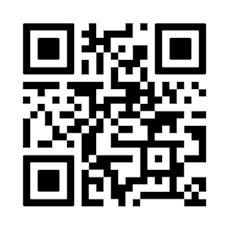
Read the 2025 Major Trauma Annual Report
Quality Improvements Initiatives
Mā mua ka kite a muri, mā muri ka
ora a mua
Those who lead give sight to those who follow, those who follow give life to those who lead
Quality Improvements Initiatives
Clinical Governance Structures
Clinical Governance Structure continues to be instrumental for ABI through contribution in the development of our Evolution Healthcare Clinical Governance Framework. This framework is aligned with Te Tāhū Hauora (Health Quality and Safety Commission) and supports a systematic focus on delivering high quality, safe and equitable services to our ABI kiritaki with a focus on continuous quality improvement.
ABI Rehabilitation's quality and safety committees play a critical role in supporting the Clinical Governance Framework and ensuring the delivery of safe, effective, personcentred and equitable rehabilitation services. These multidisciplinary groups provide oversight, leadership and continuous improvement across key areas of practice and collectively inform and report through ABI's Clinical Governance structures.
Key committees and focus areas include:
• Infection Prevention and Control Committee
• Restraint Elimination Committee
• Health and Safety Committee
Together, these committees foster a culture of accountability, learning, and continuous quality improvement. Their work contributes to service excellence, supports regulatory and accreditation requirements, and ensures ABI Rehabilitation remains focused on delivering high-quality rehabilitation services that improve outcomes for kiritaki and whānau.
Information Sharing
Continuing to ensure our kaimahi can easily and effectively access information including policies, key organisational updates and tools to support service delivery via Te Puna is an ongoing and core focus for the quality team.
Evolution Healthcare Quality Awards
Contributions from ABI towards our Evolution Healthcare Quality Awards in November last year was significant with two oral presentations and two poster submissions from ABI for the Quality Awards, two of our kaimahi were nominated for our Circle of Excellence for Kotahitanga (Collaboration) and Manawanui (Commitment). Areas of focus for next year include improving our digital training system and improving accessibility for our kaimahi and whānau to provide feedback.
Research
E koekoe te kōkō, e ketekete te kākā, e kūkū te kererū The parson bird chatters, the parrot gabbles, the wood pigeon coos
Research
During this reporting period, the Research Committee broadened its membership to include other health and wellbeing services of the Evolution health group. This important development has extended the committee’s research oversight across Health and Wellbeing services, fostering greater collaboration, innovation, and alignment of research activity.
Health and Wellbeing-initiated projects
• Implementation and evaluation of the NZA Nurse Coaching Program in rehabilitation (ABI Rehabilitation, Auckland University of Technology Royal Rehab, Sydney). Evaluating a Nurse Coaching practice development program in five rehabilitation units across NZ and Australia.
External research partnerships
• Evaluating virtual reality-based eye tracking tests for people with mild traumatic brain injuries (University of Auckland). The focus of this study is to see if the virtual reality eye tracking tests can pick up changes in eye movements in people with mild concussions versus the general population.
• Effects of nocebo on cognitive recovery after mild TBI (University of Otago). Two-phase project explores factors that affect cognitive recovery following concussion, with a particular focus on a person’s understanding of concussion, their subjective experiences, and their expectations; referred to together as nocebo effects.
• Making the roles and contributions of rehabilitation nurses visible and measurable through nurse sensitive indicators (Auckland University of Technology). PhD project to inform development of nurse sensitive indicators specific to rehabilitation nursing in NZ.
• Understanding confabulation in people with brain injuries (University of Auckland). Evaluation of confabulation from the perspective of purposeful behaviour. This is a novel approach (the literature is focused mostly on what the person confabulates about rather than why they confabulate) and will likely lead to effective intervention.
• How Rewards Guide Choices (University of Auckland). Exploring how choice is guided by consequences in the past - whether choice depends on which actions have been rewarded, or whether choice depends on what participants have learned about how one reward relates to other future rewards.
• Enhancing Rehabilitation for People with Brain Injuries (University of Auckland). Applying a behavioural perspective to evaluating environmental change interventions to support people with a brain injury in their rehabilitation.
Kiritaki Experience Residential Service Snapshot
Whatungarongaro te tangata, toitū te whenua
As people disappear from sight, the land remains
ABI Residential Milestone
ABI's residential kiritaki often stay longer than our intensive and community clients so it is a bittersweet moment when it comes to say goodbye.
Pavel was injured in August 2023 after a road traffic accident. He was admitted to ABI Intensive in October 2023 and then transferred to ABI Residential Farm in April 2024.
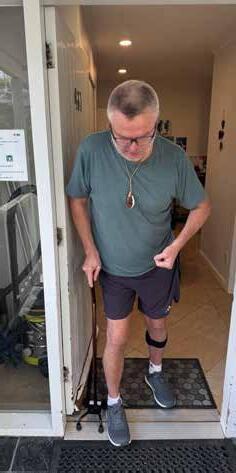
Pavel came to the service supported fully by his wheelchair and was discharged in July 2025 with Pavel walking out the doors of ABI Residential. What an amazing rehabilitation journey and emotional day for kaimahi, Pavel and his whānau.
ABI Rehabilitation’s Residential Service is privileged to be home for many kiritaki who have sustained a brain injury but cannot return home for a lot of different reasons. The Residential team make sure that all kiritaki engage with what they enjoy doing most – connecting with nature, engaging in sport, visiting favourite spots and many more. The rewards for kiritaki and kaimahi in these activities frequently improve rehabilitation outcomes and morale and something that is taken as priority in the Residential service. Some kiritaki can be at the service for weeks, months or at times long term and the committed team become part of their whānau which is why ABI Rehabilitation is so thankful for the wonderful kaimahi that form part of that.
Pavel walking out of ABI Residential almost two years after his accident. What a momentous day, well done Pavel.
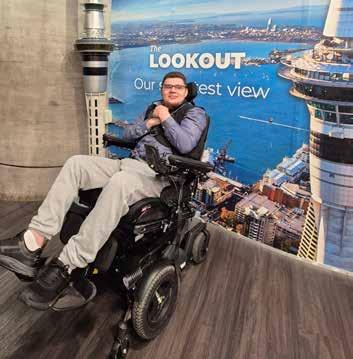
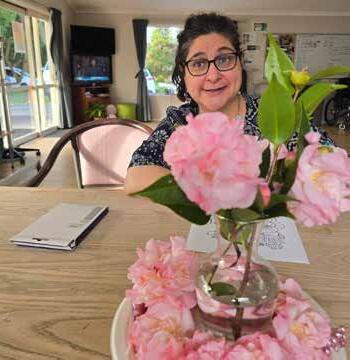
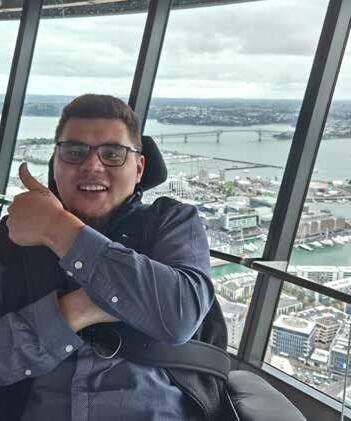
Residential kiritaki birthday visit to Sky Tower. Flower decorating.
activities.
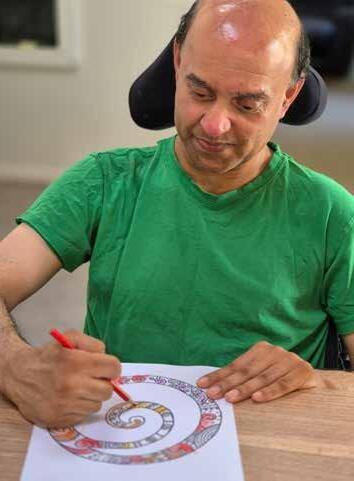
Colouring
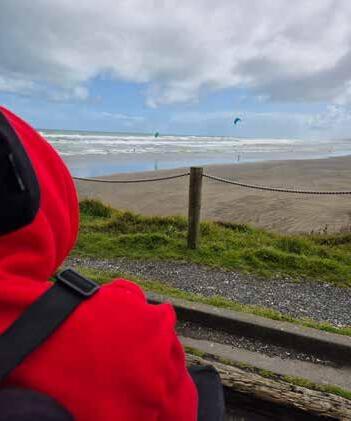
Outing to Long Bay Beach.
Birthday celebrations with whānau.
Visiting Muriwai Beach.
Kiritaki relearning to walk using a frame. Waitangi Day activities.
Up the Sky Tower enjoying the view.
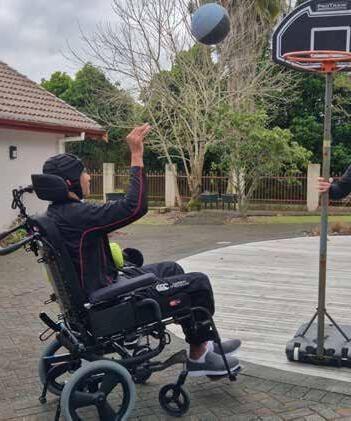
Kiritaki shooting hoops.
Kiritaki Experience Community Service Snapshot
Ehara taku toa i te toa takitahi, engari he toa takitini
Success is not the work of an individual, but the work of many
Community Service Snapshot
During 2025 and 2026, the Community Service continues to grow in Northland, Auckland and Wellington. Over this year we have welcomed 15 new kaimahi to ABI and said goodbye to a small number of kaimahi who have either retired, shifted home internationally or gone travelling. ABI is incredibly lucky to have little staff turnover which is testament to the culture and variety of mahi ABI offers kaimahi.
ABI has supported 5,130 kiritaki in the community over this last year. Just over 1,700 of these kiritaki were via the Concussion Service, 830 kiritaki for a Social Rehab Assessment, 1,054 for community rehab (inclusive of TI, LML and BSS) and 1300 kiritaki via vocational rehabilitation. Kiritaki range from babies and toddlers with ABI’s specialist paediatric service. ABI supported 321 kiritaki under 18s in the last year, 50 of these were in the 0-5 age group. The oldest kiritaki this last year being 98 years of age.
For tamariki, the main cause of injury were falls and sports (35%). ABI supports a high percentage of birth injury babies and tamariki who sustain their brain injury as a result of an assault (21% of the under 18s cohort). These kiritaki have significant impairments and are likely to need lifetime support from ACC. For adults, falls again is the main reason for injury at 28%.
ABI community had a number of quality initiatives praised in this last year at Conferences and the Evolution Quality Awards. These included the group education sessions within the Concussion Service, upgrades to the CMS (Patient Management System). ABI remains a member of the Brain Injury Screening Tool (BIST) Development Group and is supporting the development of the KidsBIST.
ABI is lucky to have full time community Medical Specialist and Neuropsychology/Clinical Psychology support meaning that IDT approaches occur in person within the team and office setting, over morning tea and lunch. These clinicians are so valuable to the ABI way and we appreciate how immersed they are within our teams
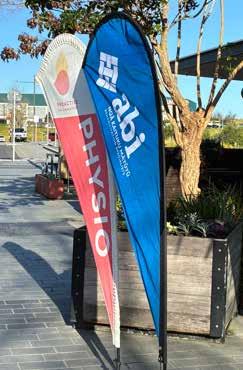
Flags outside the shared ABI and Proactive clinic in North West. Phone
NorthWest ABI Rehabilitation and Proactive at the new shared office hub.
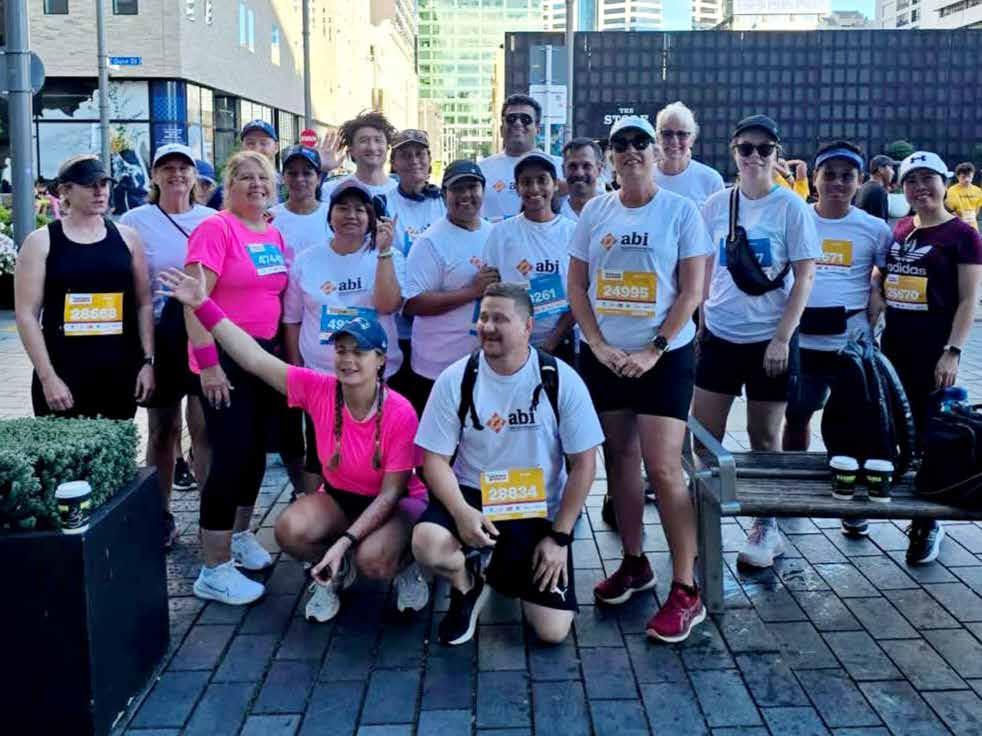
ABI Rehabilitation team at the Round the Bays 2026 in Auckland.
ABI Rehabilitation holds CARF accreditation and have two surveyors that actively survey other rehabilitation services across the globe. This supports continuous improvement and cross learning opportunities.
General Manager (ABI Rehabilitation Intensive Services) Tony Young (back left) with the PATE Rehabilitation team in Irving, Texas.
Glossary of Terms
Te reo Māori English
Kaimahi
Kaiārahi Kaupapa Māori (KKM)
Staff/workers
Māori cultural lead/guide
Karakia Prayer, incantation
Kōrero
Mātauranga Māori
Conversation, discussion
Māori knowledge
Mauri Life force, essence
Mauri ora
Ngā Mātāpono
Te ao Māori
Te Hekenga-ā-ora
Te Kuaka
Te Puna
Te Reo Māori
Te Tiriti o Waitangi
Te Whare Tapa Whā
Tikanga
Wellbeing, thriving life force
The principles
The Māori world, Māori worldview
The Māori Development Plan at ABI Rehabilitation
The godwit (and ABI’s client rehab resource)
The wellspring (SharePoint site)
The Māori language
The Treaty of Waitangi
Māori health framework with four dimensions
Customs, protocols
Taonga a treasure or prized object or gift
Unaunahi
Wai ora
Fish scale design (symbolising abundance and health)
Water of life, wellness
Wairua Spirit, spirituality
Waka hourua
Whānau
Double-hulled canoe (metaphor for dual frameworks)