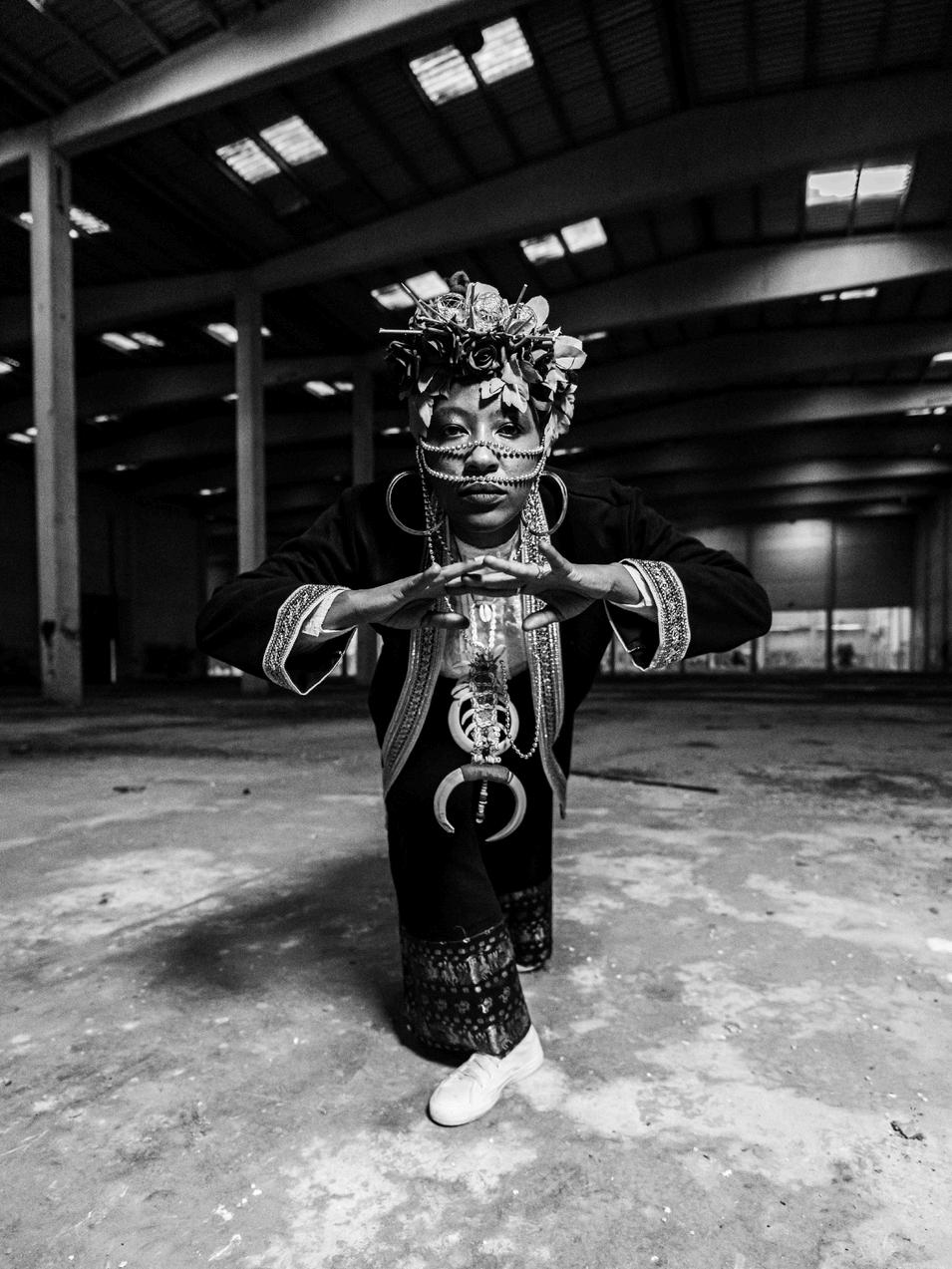
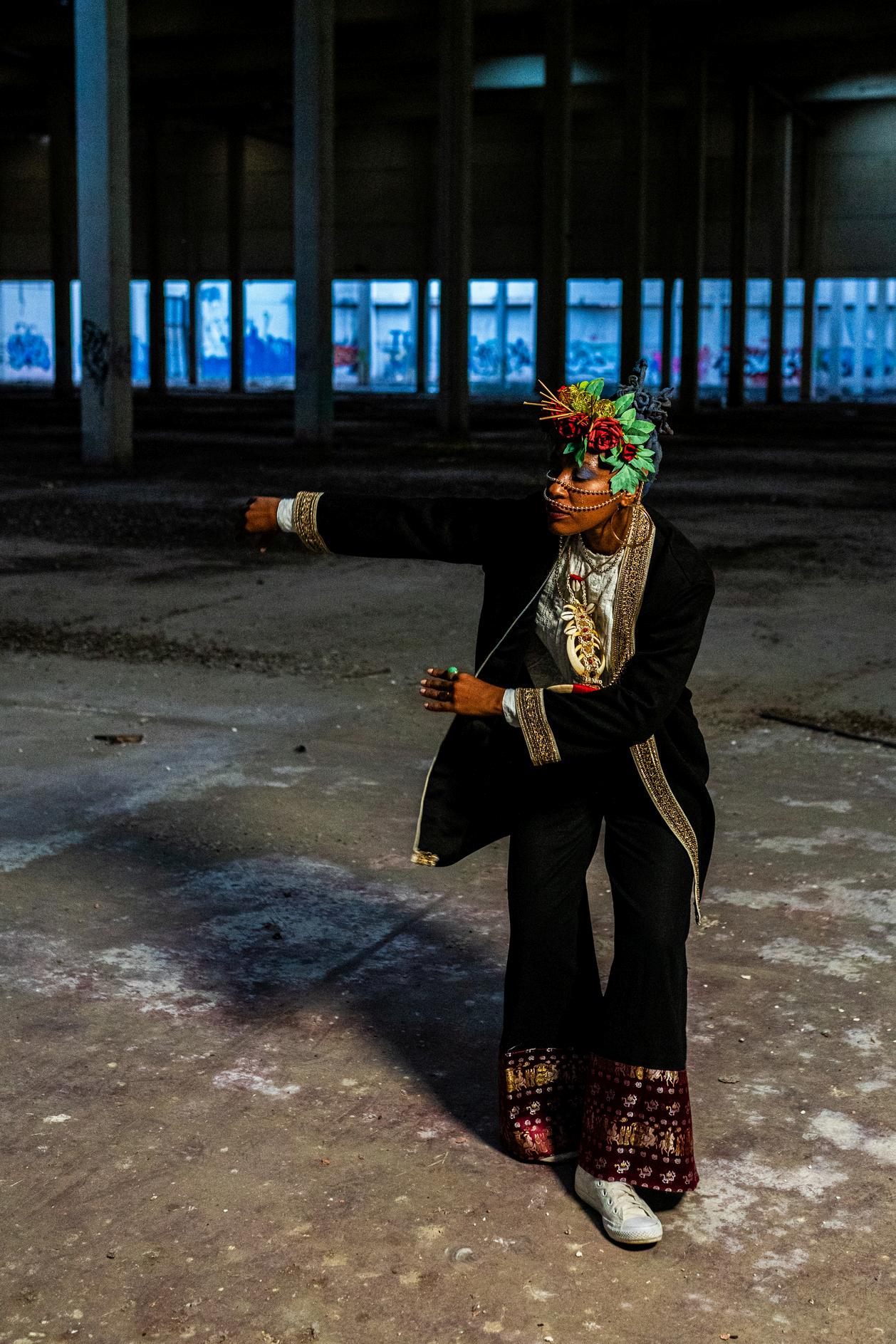
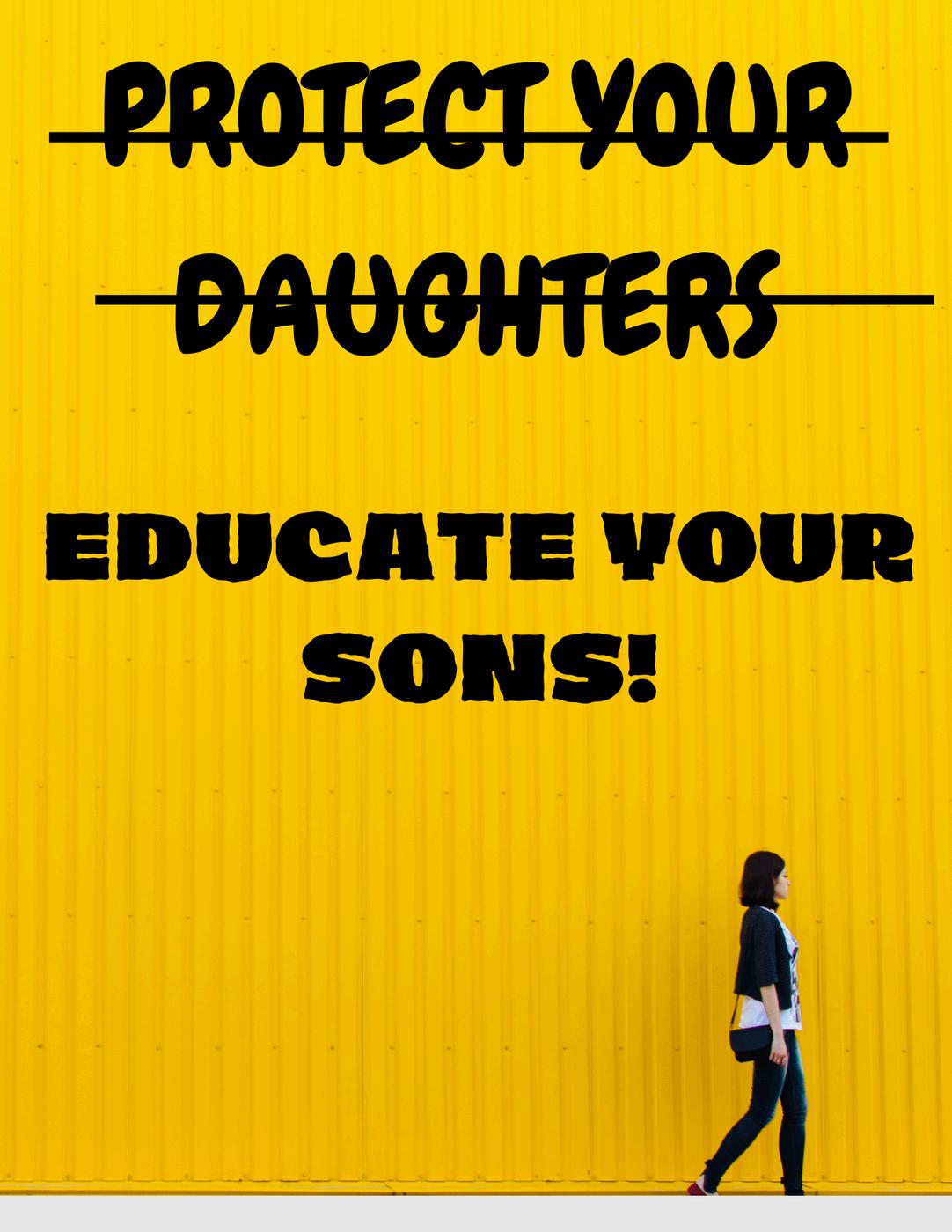
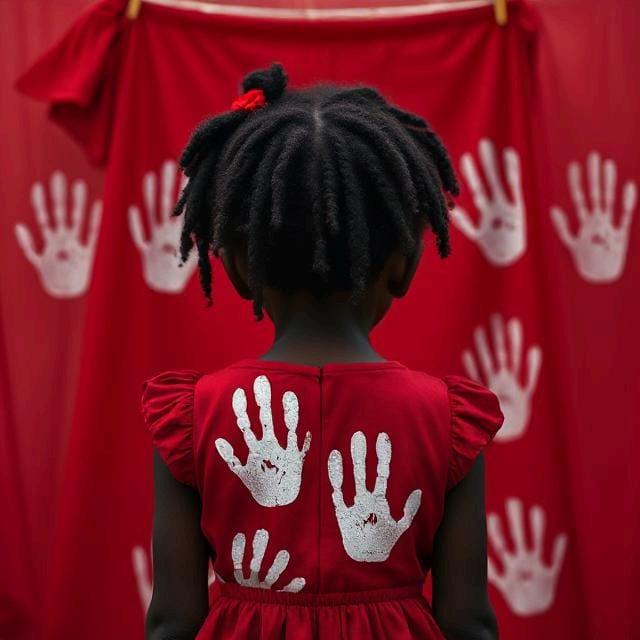
Eve knew what she wanted, and she took it—no shame, no apology. That’s the energy we’re carrying into Issue 20. We’re thrilled to welcome new team members, and this issue’s Creative Director, Ndalo Mazibuko, who brings vision and fire. This one is about staying true, stepping into the light, and reclaiming what is ours—our bodies, our stories, our joy. We grieve the continued violence against women, children, and queer people, but we also honour our resistance and pleasure. We’re excited for you to meet Jugen Blakrok, dive into Anele’s work on reclaiming African reproductive health knowledge, and explore the realities of dating (or not) in your 40s. We talk about navigating traditional ceremonies as long-distance parents and, of course, pleasure lots of it. Welcome to Issue 20—where we refuse to dim our light.
Zenande Xaba
Selokela Slu Molamodi
Lulama Mali
Ndalo Mazibuko
Hulisani Khorombi
"Our own people were colonised into believing that our traditions are invalid. Rebuilding confidence in our ancestral practices remains an uphill battle."-Ntandoyedlozi
My late grandmother once told me how, in the days of old, people used a simple yet insightful method to test whether someone had diabetes They would observe the response of ants to a person’s urine If the ants were drawn to it, it signalled the presence of sugar, a clear indicator of diabetes. This method, rooted in the careful observation of nature, shows the deep connection between the spiritual and physical worlds in traditional health practices. It is a reminder of how ancestral knowledge intertwined with natural signs to understand and care for our bodies long before modern diagnostics.
I was young when I heard this story, and so I didn’t understand the power it held until now It is a clear example of how our ancestors employed intuition and connection with nature in their healing practices These time-tested practices continue to resonate today, with izangoma ezinintsi still incorporating elements of ancestral wisdom to guide their healing work. It is a testament to the persistent relevance of these practices, despite the efforts to undermine them throughout history.
Colonialism and Apartheid’s Disruption of Indigenous Healing Systems
Colonialism and apartheid disrupted indigenous healing systems, branding them as primitive or superstitious "Our own people were colonised into believing that our traditions are invalid Rebuilding confidence in our ancestral practices remains an uphill battle"
Government support for traditional healing exists in policy, but practical implementation is lacking. "There are laws, but I have never seen real collaboration. It often feels like lip service."
The path to becoming a sangoma is rarely straightforward. For Ntandoyedlozi, it began with a calling. An experience that was both spiritual and physical. She shares, "I dreamt of lions, water, and events that were to come. I experienced strange occurrences, from taps opening on their own to visions of ancestors guiding me. After consulting multiple izangoma, I understood that I had a gift."
This calling led her through the sacred initiation process known as ukuthwasa, which is central to the life of a sangoma During this process, Ntandoyedlozi found herself confronting physical ailments, such as severe allergies, depression, and anxiety, which had plagued her for years "After embracing my calling and going through ukuthwasa, my body healed I fell pregnant, and this time, my baby survived It became clear that the womb, too, carries spiritual weight "
Her journey illuminated the deep connection between bodily health and ancestral guidance In African spirituality, the ancestors are ever-present, offering protection, healing, and wisdom, often through dreams and visions "I once dreamt of gumtree leaves on my pillow When I woke up, I still tasted them in my mouth Weeks later, I tested positive for COVID-19 but never got sick My ancestors had already prepared my body for healing"
Reproductive Health and Spiritual Guidance
This spiritual wisdom extends into reproductive health, where izangoma like Ntandoyedlozi interpret dreams, perform cleansing rituals, and prescribe herbal remedies to address a range of reproductive challenges, from infertility and miscarriage to menstrual irregularities "Before treatment, we need to determine whether a couple’s ancestors bless the relationship Sometimes, spiritual blockages prevent conception, requiring cleansing ceremonies."
Expecting mothers are guided by traditional wisdom to protect both themselves and their unborn children. "Pregnancy comes with sacred protocols. Expecting mothers are advised against attending funerals due to the presence of conflicting energies They are also discouraged from having braided hair during labour, as it is believed to 'tie' the birthing process," Ntandoyedlozi explains These traditions are seen as protective measures for both the mother and child, ensuring a smooth and spiritually harmonious pregnancy and birth.
Herbal Remedies and the Tensions Between Traditional and Western Medicine
Traditional medicine, however, does not adhere to a "one-size-fits-all" approach. "The ancestors dictate how a ritual should be done. Practices such as ukuphahla (communicating with ancestors) and drinking imbiza (herbal decoctions) are common. Imbiza, in particular, plays an important role for pregnant women, though Western doctors often discourage its use, which sometimes creates tensions between the biomedical and traditional healing approaches"
Despite this, Ntandoyedlozi sees potential for integration "Western medicine and traditional healing can complement each other Many pharmaceutical drugs originate from the same herbs we use Transparency about herbal treatments and spiritual consultations can create a balanced approach to reproductive healthcare"
Dispelling Myths and Reclaiming Ancestral Wisdom
One of the most damaging misconceptions is that izangoma use dark magic to manipulate reproductive health. "People believe we cause infertility or miscarriages, but our role is to heal and restore balance," says Ntandoyedlozi. This misunderstanding has roots in colonial and apartheid-era efforts to delegitimise traditional practices, branding them as inferior or harmful.
To preserve ancestral knowledge, younger generations need to actively engage with their heritage "Social media has become a powerful tool for education Many herbalists and izangoma are now documenting their practices to prevent cultural loss," she observes The ongoing documentation of these practices is important for ensuring that ancestral wisdom is not lost but passed down to future generations
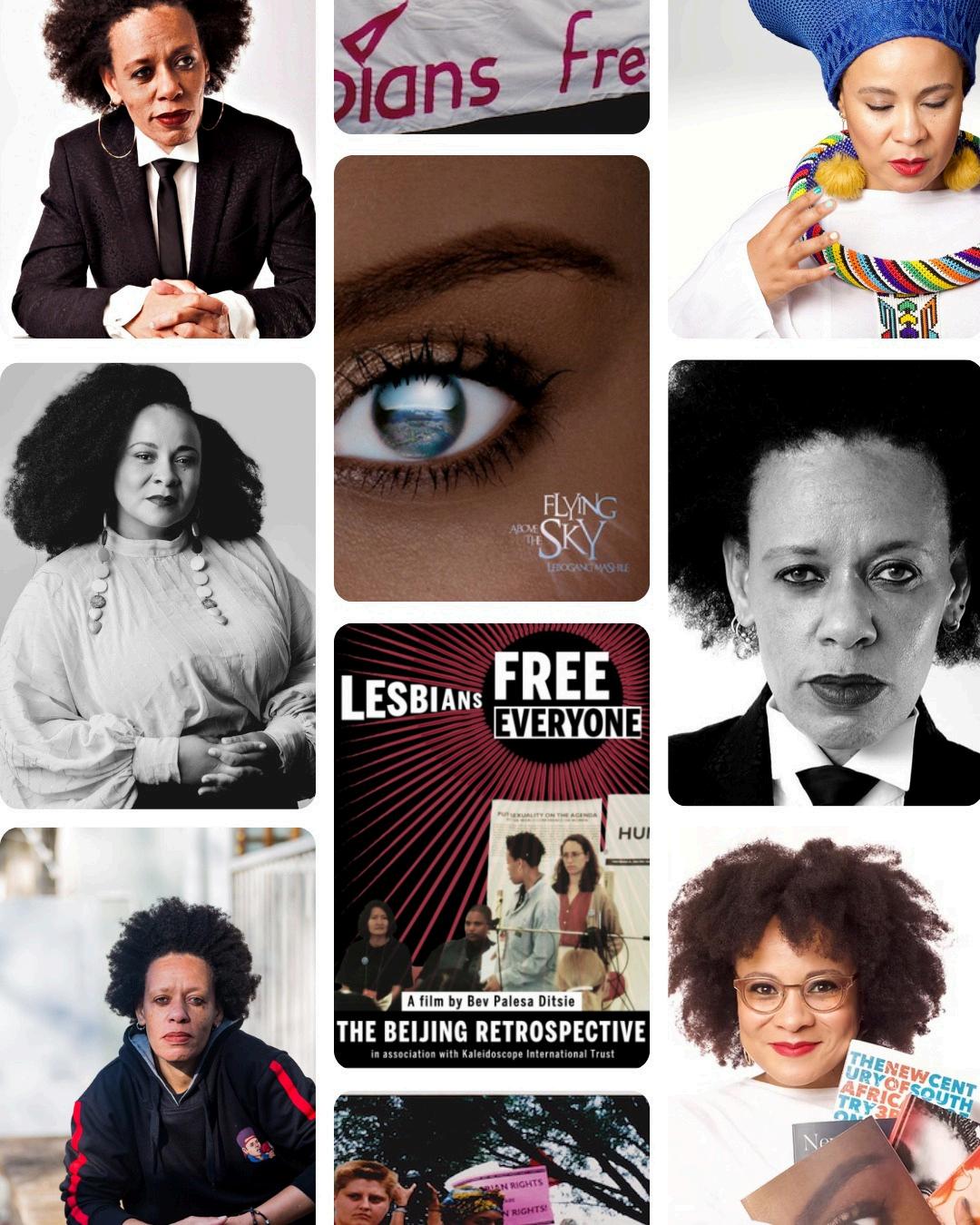
Dr. Bev Ditsie
Retrospective
ABlackQueer
FeministJourney
Through40Yearsof
TV&Film
A Celebration of Art, Activism, and Resilience
Join us on April 17, 2025, for an evening honoring the extraordinary journey of Bev Ditsie a filmmaker, TV director, and activist whose work has shaped South Africa’s cultural landscape. Moderated by the incomparable Lebogang Mashile, this retrospective will reflect on four decades of storytelling, advocacy, and artistic brilliance. April 17, 2025 6PM, The Other Foundation, Rosebank
For press inquiries, contact Nicole Ditsie at 082 591 9538 or b.ditsie@gmail.com.
A Legacy That Speaks
From becoming South Africa’s first Black androgynous child star at nine to directing powerful documentaries and reality TV, Bev’s career has been a testament to courage and vision. Their work amplifies marginalized voices, ensuring stories of resistance and resilience are seen and heard. This retrospective reclaims and celebrates Bev’s immense contributions to media and activism.
An Evening of Art & Community
Experience a curated selection of Bev’s groundbreaking work alongside a live painting session by Nico Phooko, weaving together visual art and film in a tribute to a true trailblazer
A Call to Support
This event is a fundraiser for Bev’s surgical procedure and medical expenses
Support their journey by contributing via BackaBuddy or securing your ticket on Quicket: https://bit.ly/BDRetrospective
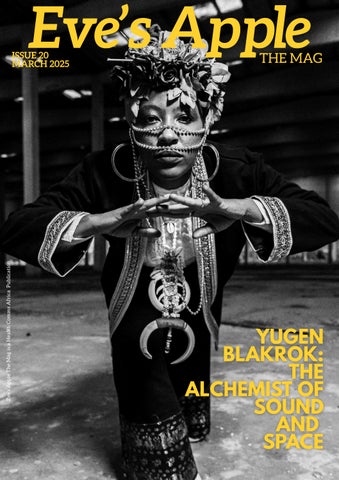
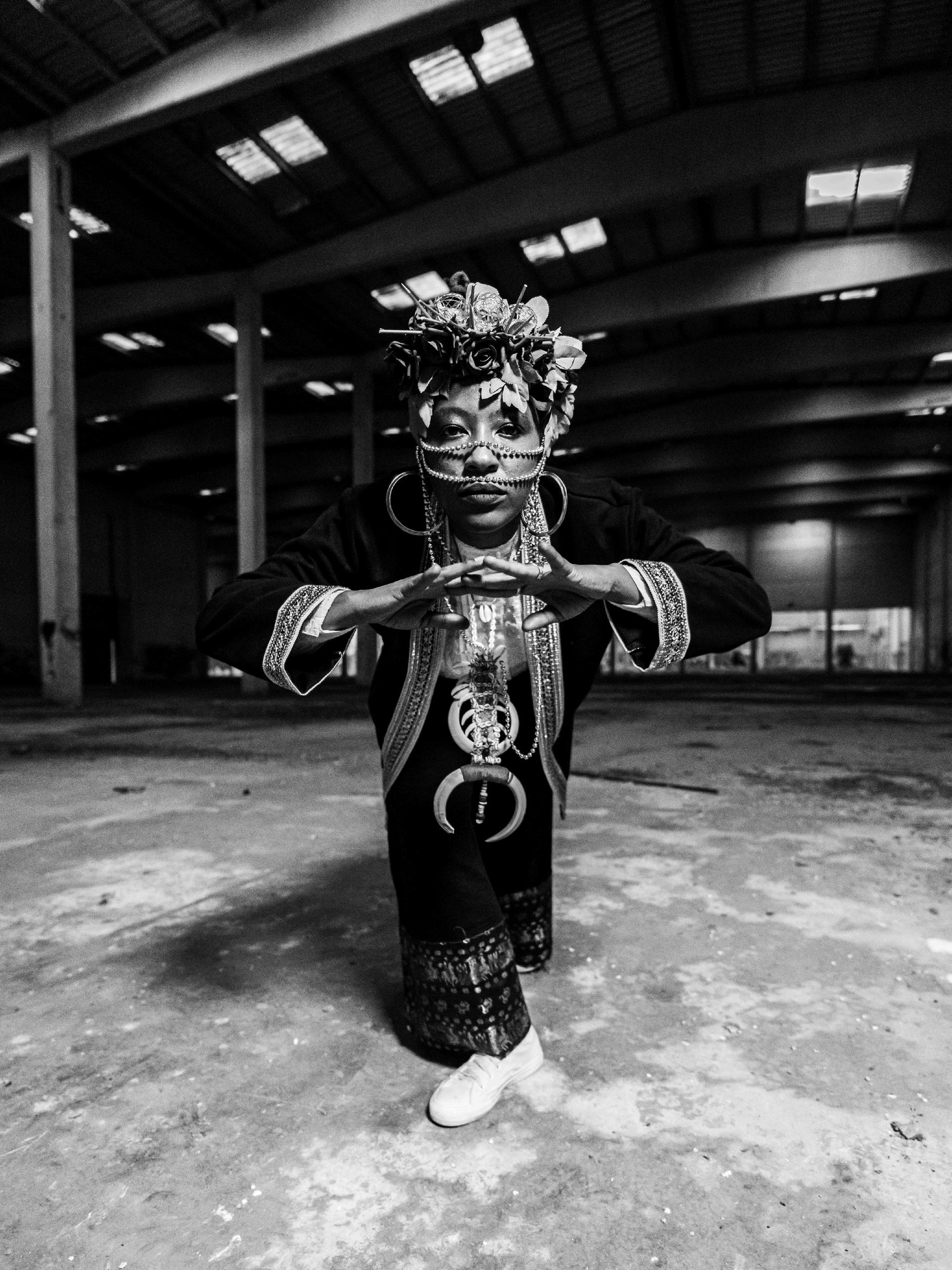
A chat with Yugen Blakrok feels like playing on a swing attached to both ends of the planet’s axis. It is a ride through the cosmos, exhilarating yet grounding, where a single moment can feel like an eternity and an eternity can pass in a blink Her presence has always been enigmatic to me; an ethereal force cloaked in lyrical armour, activated the moment she grips the mic Like a character in a supernatural saga, she moves through the hip-hop realm with an aura that glows, words tumbling from her lips like ancient spells woven into rhythm Her verses are galaxies, vast and mysterious, sprinkled with the cosmic dust of her wisdom, each line a star in the infinite sky of meaning
“an ethereal force cloaked in lyrical armour, activated the moment she grips the mic”
Born and raised in Queenstown in South Africa’s Eastern Cape, Yugen Blakrok’s journey into music was one of quiet revolution. She emerged as Blak Rok on The Hiphocalypse Mixtapes in the mid2000s, quickly establishing herself as an emcee of depth and defiance. Moving to Johannesburg in 2007, she joined the underground poetry and rap collective Recess Poetry before aligning with Iapetus Records, where she refined her craft under the mentorship of Kanif the Jhatmaster Her 2013 debut, Return of the Astro-Goth, solidified her reputation, earning her three South African HipHop Award nominations But it was her feature on the Black Panther soundtrack, alongside Kendrick Lamar and Vince Staples, that catapulted her into the global consciousness A rare artist who bends hip-hop into dimensions both mystical and boundless
When I asked her about the world her music creates, she painted a vision: “It would be a giant, multi-faceted crystal. Like a cosmic House of Mirrors where you can see, touch, and connect with all possible versions of yourself across time and space. It would feel like a warm bath or a hug. I imagine a subtle, citrus smell.” Listening to her music, it is easy to see how this world unfolds - a labyrinth of soundscapes where past, present, and future collapse into a single pulsating frequency.
Yugen Blakrok’s music is not for passive consumption It demands attention, pulls you into its vortex, and dares you to think beyond the ordinary Her lyricism is layered, dense with metaphor, carrying the weight of rebellion and self-discovery elderly black people she tells me “Failure is always there, it’s a normal thing to experience and great at teaching valuable lessons. Same answer with success.” Her artistic path has never been about chasing trends but about chiselling out her own mythos, one verse at a time.
Her writing process, too, feels like an ancient ritual “I listen to everything except hip-hop when I'm writing, so that I'm the most hip-hop thing in the process, if that makes sense,” she shares “Early mornings work the best - that silence around 4am just does it for me My brain is in its most creative form at this time, right after dreamstate and not fully in this reality yet ” This approach explains why her verses feel otherworldly, as if channelled from a place beyond time To hear Yugen Blakrok rap is to witness a convergence of dimensions, a sound that defies convention while remaining deeply rooted in hip-hop’s storytelling tradition.
With two critically acclaimed albums, Return of the Astro-Goth and Anima Mysterium, and a catalogue that stretches across video game soundtracks (Cyberpunk 2077), international collaborations, and performances at global festivals, Yugen Blakrok remains an uncompromising force. And now, she prepares to unveil her next sonic chapter: The Illusion of Being, set for release on 21 May 2025. “Survival. The question of identity. It's a description of the world I see, how I feel it, expressed in rhythm,” she reveals. “The focus is on emotion more than intellect, and there is an acceptance of Being that threads the songs together.” The album promises an evolution in her writing style, a fearless push into new territories where sound and spirit intertwine.
Her words are spells, her voice an incantation, her music a portal. When asked which of her own lines best encapsulates her personal philosophy, she recites without hesitation: frame flashy as the 80s, colder than a morgue/ this silver tongue identifies as sword/
And perhaps that is the essence of Yugen Blakrok a warrior of words, a poet of the cosmos, a traveller between worlds As she stands at the precipice of this new era, her music reminds us that existence is both illusion and truth, boundless and deeply our own For those willing to listen, she offers not just sound, but a way to see beyond the veil
The Illusion of Being is more than an album; it is an experience, a manifesto of freedom, resistance, and self-exploration And like the best of all mystical journeys, it leaves us forever altered, gazing at the universe with new eyes
“We entrust our children, the most vulnerable members of “We entrust our children, the most vulnerable members of society, to individuals who may be predators, shielded by a society, to individuals who may be predators, shielded by a system that prioritizes convenience over safety.” system that prioritizes convenience over safety.”
Justice Justice For For CWECWE CWECWE
By: Lulama Mali By: Lulama
In October 2024, a grievous incident unfolded at In October 2024, a grievous incident unfolded at Bergview College in the Eastern Cape: a seven-year- Bergview College in the Eastern Cape: a seven-yearold girl, affectionately known as "Cwecwe," was old girl, affectionately known as "Cwecwe," was allegedly raped within the school premises The allegedly raped within the school premises. The alleged perpetrators include the school caretaker and alleged perpetrators include the school caretaker and the child's transport driver, both of whom have since the child's transport driver, both of whom have since provided DNA samples for the investigation Initially, provided DNA samples for the investigation. Initially, the school's principal, Jaco Pieterse, refused to the school's principal, Jaco Pieterse, refused to submit a DNA sample, obstructing the path to justice submit a DNA sample, obstructing the path to justice for this innocent child and her devastated family. for this innocent child and her devastated family. However, since the publication of this article, Pieterse However, since the publication of this article, Pieterse has now agreed to have his sample taken has now agreed to have his sample taken.
The Department of Education's response has been The Department of Education's response has been woefully inadequate Despite deregistering Bergview woefully inadequate. Despite deregistering Bergview College due to safety violations, the department’s College due to safety violations, the department’s failure to expedite the investigation or hold failure to expedite the investigation or hold accountable those responsible for this egregious accountable those responsible for this egregious breach of trust is both infuriating and telling. This breach of trust is both infuriating and telling. This inaction not only betrays Cwecwe and her family but inaction not only betrays Cwecwe and her family but also sends a chilling message to other survivors: their also sends a chilling message to other survivors: their suffering is secondary to bureaucratic inertia. suffering is secondary to bureaucratic inertia
Mali
Justice for Cwecwe
This deplorable event is not an anomaly but a symptom of a morally deficient
This deplorable event is not an anomaly but a symptom of a morally deficient society where women and children are perpetually under siege. The brutal rape society where women and children are perpetually under siege. The brutal rape and murder of Uyinene Mrwetyana in August 2019 is a harrowing testament to this and murder of Uyinene Mrwetyana in August 2019 is a harrowing testament to this reality. Uyinene, a 19-year-old University of Cape Town student, was attacked reality. Uyinene, a 19-year-old University of Cape Town student, was attacked while collecting a parcel at a post office a government institution that employed a while collecting a parcel at a post office—a government institution that employed a man with a history of violence and sexual misconduct. Her tragic end ignited man with a history of violence and sexual misconduct. Her tragic end ignited national outrage, yet, years later, the systemic failures that facilitated her murder national outrage, yet, years later, the systemic failures that facilitated her murder remain entrenched. remain entrenched.
The statistics are damning. In 2024, the TPN Credit Bureau revealed that over The statistics are damning. In 2024, the TPN Credit Bureau revealed that over 16,000 active school teachers in South Africa have criminal records. This 16,000 active school teachers in South Africa have criminal records. This staggering figure likely underestimates the problem, given the lack of stringent staggering figure likely underestimates the problem, given the lack of stringent enforcement of disclosure policies. We entrust our children, the most vulnerable enforcement of disclosure policies. We entrust our children, the most vulnerable members of society, to individuals who may be predators, shielded by a system members of society, to individuals who may be predators, shielded by a system that prioritizes convenience over safety. that prioritizes convenience over safety.
The South African Police Service's lethargic approach to cases of sexual violence
The South African Police Service's lethargic approach to cases of sexual violence exacerbates this crisis. Delayed investigations, mishandled evidence, and a exacerbates this crisis. Delayed investigations, mishandled evidence, and a pervasive culture of victim-blaming deter survivors from seeking justice. pervasive culture of victim-blaming deter survivors from seeking justice. Communities, too, are complicit—often silencing victims to preserve a façade of Communities, too, are complicit often silencing victims to preserve a façade of normality, thereby perpetuating a cycle of abuse and impunity. normality, thereby perpetuating a cycle of abuse and impunity.
We cannot, we must not, remain passive in the face of such pervasive injustice. It is We cannot, we must not, remain passive in the face of such pervasive injustice. It is imperative that we demand accountability and systemic reform. By signing this imperative that we demand accountability and systemic reform. By signing this petition, you stand in solidarity with survivors and affirm a collective commitment petition, you stand in solidarity with survivors and affirm a collective commitment to safeguarding our children. to safeguarding our children.
When I press play, the world fades, and the music consumes me. The bass vibrates through my chest as my heart synchronizes with the rhythm while the melody dances along my skin. It’s not simply sound its sensation the act of listening becomes an affective, somatic, mental and emotional process. When I think of music as these four processes, it becomes clear how music is not just simply a sonic experience. The pleasure of music is found in the interaction of these processes. Music becomes a pleasure when it enables you to release, to evoke, to reflect, and to enhance emotion. Music becomes Knowledge when it allows for reflection, exploration and discovery.
“…music does not exist as just an arrangement of notes, it can provoke physical reaction”
It begins on the affective and emotional level. Affect is a felt bodily intensity; it is the feeling of having a feeling. Affect records an unconscious response to stimuli. As such, affect is something other than emotion, affect and emotion differ in that effect does not categorise feeling or mood into a rationalized form as emotion does. Affect is a visceral feeling that dictates our perceptions, our behaviors and our interactions. Susanne Langer: music does not exist as just an arrangement of notes, it can provoke physical reaction through “semblance of feeling” that allows for the nonverbal fully affective and emotional experience. Music in its affective form allows people the vulnerability and the pleasure of unlocking, releasing or evoking feelings they don’t believe they can experience. Music on the emotional level allows for an enhancement of current states of emotion or an escape for them.
Music touches us both emotionally and physically, on the somatic level as music is an acousmatic sound. Sound is a vibration that moves through the ear until it strikes the eardrum causing an internal vibration that is interoperated by the brain as sound. Jean-Luc argues that when music plays it moves through us it moves affecting our nervous system, our heart synchronises to its rhythms, our breath changes to accommodate the beat of the music as sound permeates the body.On a mental level music releases serotonin, thus it gives pleasure and joy. Music can also fuel our fantasies that we can align it with the story line we fantasize and daydream about. Music can transmute itself into knowledge through its lyrics. The music became a gateway to self-actualization as it allows the body to feel it, allows the mind to feel pleasure and it allows for selfintrospection that is guided by the safe space found in the comfort of music. It can reflect who we are, what we value, what we aspire to have and be. Music can also reflect what we repress and what we hope to hide.
Outside of ourselves music is a gateway for connection with other people, spirituality and the ability to transverse language. Emile Durkheim’s idea of “collective effervescence" of music in our communities as an essential part of an identity and all belonging, as it is a way to recognize and learn about our identity and culture. From the national anthem, folk songs and group playlist music expresses a collective sense of joy, grief or resistance turning moments of “me’ to “we.”
“Beyond the individual experience, music is a unifying force that nurtures deep social connection.”
Last year at the height of my depression, I was in a repetitive cycle of hollowness that I found it difficult to escape. Music became a tool for feeling emotion. At a time when I felt incredibly disconnected from my own body, music tethered me to it. When I isolated myself from my community, I found solace in the knowledge that I was part of a community that was simultaneously listening to this at the same time our circumstances may be different, but our experience bound us together. Music became my catharsis. It helped me process what I could not verbalize. “Music was my refuge. I could crawl into a space between the nodes and curl my back to loneliness”- Maya Angelou. Personally, music helped me cope with my own self-imposed isolation. They say that there is a paradox of sad music. When listening to melancholic music it helps to process and understand emotions that make them feel less individual and isolated, and for the span of my playlist allowed me to have the vulnerability to feel.
Beyond the individual experience, music is a unifying force that nurtures deep social connection. Whether through coordinated movement, shared cultural identity, or a collective emotional expression, it transmutes isolated listeners into a connected assemblage. It is in these shared moments— of dance, song, or simply pressing play that music becomes more than just an art form. It becomes imprinted on the body, the heart, and the collective human experience.
LongDistanceParenting: Imbeleko
Kanyisa Booi
Long school holidays in South Africa?
Expect one thing traditional ceremonies. Weddings, funerals, initiations, thanksgiving feasts you name it. And if you’re a long-distance parent, your child will be thrown into the mix, confused but expected to show respect. So, how do you make sure they understand the significance without embarrassing themselves (or you)?
Let me tell you about the time we had to do imbeleko for a now 15-year-old. Yes, you read that right. Not a newborn, not a toddler a fully grown, trainer-wearing, TikTok-scrolling teenager.
“Wait, I Have to Do What Now?”
One minute, my son was chilling, thinking he’d spend his holiday sleeping till noon. The next, he was being told, “Kuzokwenziwa imbeleko ” He blinked “For who?” “For you.”
Confusion. Shock. Then, panic.
You see, imbeleko is usually done when a child is still small a ceremony to introduce them to their ancestors, strengthen family bonds, and give them their place in the lineage But life happens. And when a child grows up away from home, some things get delayed. Now, here we were, doing a “welcome to the family” ritual for a teenager who already had facial hair.
“its about respect” Tip
“What happens if I don’t kneel right?”
“Will the ancestors be mad if I laugh?”
“Can I ask them to bless my exams?”
Did I have all the answers? Absolutely not But parenting is 50% answering confidently and 50% making things up until you confirm with an elder. When I didn’t know, I said, “Let’s ask.” And he learned that tradition isn’t about perfection it’s about respect
When you live far from your child, your family is your co-parent. I wasn’t there to answer all his questions, so aunties, uncles, and cousins had to step in. “No, you won’t have to wear traditional gear… unless you want to.” “Yes, you must listen when elders speak.” “No, you’re not eating the goat, don’t stress.”
Because I’ve made sure he knows his family, they could guide him through the process without making him feel like an outsider in his own home.
Kids are curious, and teenagers question everything. So I explained:
Tip 3: Answer as Much as You Can Community
The goat? A gift to the ancestors, to say thank you and seek blessings
The elders speaking? A way to remind you where you come from.
The kneeling and clapping? Respect. That’s it. Just show respect.
The Moment of Truth
The day came. He did everything right stood where he needed to, listened when spoken to, and even managed to keep a straight face when an uncle dramatically called on the ancestors Then, as the ceremony ended, he whispered, “So can I finally eat?”
A whole leg of goat.Yes, you can.
Long-distance parenting means your child may not grow up with daily cultural teachings, but that doesn’t mean they have to be strangers to their roots With family support, a little humility, and lots of explanations, they’ll find their place ceremony or not.
“Have enough courage to trust love one more time and always one more time.
”
Maya Angelou
WHY IS EVERYONE STILL SINGLE?
THE 40 AND SINGLE PIPELINE MYSTERY
LulamaMali
That
infamous, exhausting, memeworthy table.
"Whatdo youbringto thetable?"
I’ll kick this off by saying, I have no advice, just lessons from life and community. Dating in our 40s? It is an adventure, one that is both exhilarating and exhausting I have no advice, just learnings. From my life, from my friends, from whispered confessions over wine, and from the collective experiences of a community navigating love in this bold, boundless chapter of life
We are at an age where we are divorcees, grief-stricken, deeply career-focused, or so caught up in life’s demands that we lost track of time. Then, suddenly, we look up and realise we are single. And because we are single at this age, assumptions fly. Are we desperate? Have we "failed" at love? Did we choose ambition over companionship? The world has opinions, and yet, here we are, figuring it out, one date at a time.
And oh, the competing, the insecurity, the need to flex our superiority like peacocks in a courtship dance that neither side asked for. Dating in our 40s often feels like a silent battle of egos, where proving we "do not need" anyone becomes more important than admitting we want someone. But what is so wrong with wanting companionship? We have spent years building our careers, raising families, healing wounds; we are allowed to crave connection.
Then there is the table. That infamous, exhausting, memeworthy table. "What do you bring to the table?" some ask, as if love were a business transaction. Others throw around "gold digger" accusations, even when all we are looking for is emotional investment, not financial. The truth? We all bring something: a lifetime of experiences, growth, stories, and hard-won wisdom. Maybe we should stop worrying about who is bringing what and focus on whether we even like the meal being served.
If nothing else, our tolerance has plummeted. We have gone our whole lives doing things a certain way, so the idea of adjusting to someone else’s quirks can feel daunting. We forget to reply to texts, or, let us be honest, deliberately delay them as a power move. We swap trauma notes on first dates like we are exchanging baseball cards. We clutch our list of dealbreakers so tightly that we fail to see the beautiful, flawed, fascinating humans right in front of us.
Oh, and let us not forget the ex factor. Some are still indulging in non-committal horizontal tangos with their past loves, floating in that limbo of not together, but not entirely apart. Others face the classic conundrum: date younger or date older? Younger brings energy but often lacks shared life experience; older means stability but can sometimes come with emotional baggage that rivals an international trip. And let us be real, our bodies have changed. Some from time, some from bringing life into the world, some from simply living. The confidence we exude on the outside sometimes wars with the little insecurities we carry within. But here is the thing: every stretch mark, every line, every shift in shape tells a story, and any love worth having will embrace the entire novel, not just the polished cover.
“We clutch our list of dealbreakers so tightly that we fail to see the beautiful, flawed, fascinating humans right in front of us. ”
Sometimes, it feels like we need a manual just to navigate a simple conversation.
But despite all of it, the chaos, the frustrations, the "why are we even doing this?" moments, love is still worth it. Because at the end of the day, we need each other, even in our independence.
Even in our strength. We are bold, we are ours, we are boundless. And love, when we let it, should always win.
THE UNSCREWING LOOSENING ENOUGH TO REIMAGINE YOU
BY KANYISA BOOI
Asaqueeractivistshiftinganddecidingtolivethroughthelensofcuriosity,IthoughtIwasready Itfeltliketime because I had been in freeze mode for months, so naturally, I picked at my mother wound. A bold move, some might say, but what is healing if not a messy excavation of the things we ’ ve tucked away for later? Self Reimagined met me at the edge of that unraveling and, instead of letting me free-fall, it reminded me that healing is not meant to be done alone. Collectivism became my compass, and in this space, I learned that rest is notaluxury—itisarequirement
“ …I PICKED AT MY MOTHER WOUND.”
Nicole’ s design structure held me in ways I didn’t realize I needed. Every part of the journey was intentional, fostering a feeling of safety that made surrender possible. It wasn ’t just about doing the work; it was about being a held part of a whole. The one-on-one sessions challenged me in ways that only deep care can—pushing me towards uncomfortable truths while holding me, body, mind, and spirit, through it all. Ooooh, the shadow work! The journaling cracked me open in places I had long forgotten, and the breakthroughs felt like both a reckoningandarebirth.
Somewherebetweentheguidedmeditationsandtheweeklycheck-ins, I stopped bracing for impact. I stopped fearing what would emerge from the depths of my unhealed places. Instead, I leaned into the discomfort, recognizing it as a necessary threshold to transformation This was not about fixing myself; it was about making room for my becoming.
And so, I return, always, to the question: how do I nourish myself so that I always have something to pour in? Self Reimagined didn’t just ask that question; it gave me the tools to answer it, over and over again.
I have two partners. 16-year-old me never saw this coming, but here I am sitting in my apartment, writing an assignment, while one partner sleeps in my bed and the other is crossing the night’s trenches, deep in her own work.
Looking back, I realise I never imagined life beyond 25. While the other girls dreamed of marriage and children, I could entertain the fantasy for a moment enough to buy into the idea, even crafting a handmade journal dedicated to my future husband, filled with thoughts for him to one day read Yet, despite this and everything the church taught me, the years beyond 25 remained a blank space in my mind. Perhaps, to a 16year-old, 25 was simply an unimaginable age
Through my university years, I held tightly to those teachings. I ‘remained pure’ so much so that I had my first kiss at 25. It was November 2015, right before my first solo vacation with my best friend. The guy? A singer in the Hillsong Church band. And we all know never to date the band members, right? I won’t get into how that ended, but it marked the start of a long journey of dating cisgender, heterosexual men within the boundaries of monogamy.
“Iintroducedtheideaofdatingmultiplepeople.”
Then I met my second boyfriend. At the time, I had no real concept of sexual pleasure—giving or receiving. The cherry had already been popped, yes, under the promise of a future together in the church. But now I needed to understand: was there actually pleasure in sex, or should I quit while I was ahead?
From the start, I was direct with him: I just need someone to teach me the ropes. And so, we became lovers and friends—title less, for months. The regularity of our escapades meant we spent a lot of time together, and because the relationship was exploratory, communication became essential. We talked constantly, and nothing felt off-limits. Even other people we were seeing were open knowledge—though we didn’t share intimate details.
As time passed, it became clear that there was something deeper between us. Making things official was inevitable, but how would that look? Would we be monogamous? The answer was a simple no. I introduced the idea of dating multiple people, having heard of polyamory and thinking it might align with my ongoing exploration. For a few years—sometimes on, sometimes off—I dated this person within a hierarchical polyamorous structure.
When that relationship ended, I took a step back and re-examined everything. Was polyamory for me? How was my queerness evolving? So many questions, and for once, ample time to sit with them. I stayed abstinent for over a year.
Then, I re-entered the dating scene. Within a month, I was swept up in a whirlwind romance, convinced this time I wanted monogamy. I dove in headfirst—and experienced love bombing for the first time. Naturally, it crashed and burned within three months.
So, I withdrew again, choosing abstinence once more.
That was all well and good—until I decided to aggressively date. If this term is new to you, it simply means I took active steps to seek out partners who could truly match me. After multiple false starts, I made my first meaningful connection—with my non-binary, pansexual partner. Soon after, another followed—with my girlfriend. I now had two partners using the principles of relationship anarchy and no hierarchical partners. They get along and have plotted against me for gifting purposes and I am as happy as a sunflower on a sunny day.
I’ll wrap this up here, as my little tea light candle has just flickered out, signalling that it’s long past bedtime. But I’ll leave you with this: sometimes, you have to aggressively pursue your pleasure and not care what others say.
Intention Intimacy Impact
All yours ( Please in relationships)
An essay on intimacy
Selokela Slu Molamodi
Intimacy requires intention. While it might be natural because we are comfortable with certain people, it still needs to be nurtured to positively impact the relationship. We must pay attention to things that are said, not said, done, not done, and every nuance in between. Frankly, it can be a blessing and a curse; some people fully appreciate it while others feel exposed and could be triggered that you even picked that up. It's a very thin line that requires intricate balance, which can only be mastered as life progresses.
Intimacy is about safety. It is about feeling seen, heard and appreciating that it will not be used against us, knowingly or unknowingly. The safer we feel, the softer we become. This is an experience we all deserve. Intimacy is not just about sharing past shameful moments. It is also about sharing our wildest dreams, the dreams we are not yet sure of, the ones that do not have colour, shape, or form. True intimacy allows us to see ourselves beyond our current state. When we feel safe, we show up as our fullest and truest selves.
Above everything, intimacy is about choice. We choose to open up or be less judgmental so others can open up to us. When we prioritize intimacy in our relationships with others, we prioritize humanity in a fast-paced world. Let’s choose intimacy willingly, lovingly, and wholesomely.
Relationships are the core of all humanity. We can all agree that relat hard work, regardless of their nature. Take a moment and think about the various relationships you have, from your personal life to your professional life and beyond. Take another moment to think about the various elements that make these relationships functional. If you think deeply enough, you will realise there is a magic ingredient in all those relationships, which is applied fully, moderately, or not at all – intimacy.
“ … a fundamental element of deepening relationships and strengthening bonds”
In these modern times, the term ‘intimacy’ describes the state of familiarity or something of a personal or private nature. Etymologically, the word originates from the Latin word “intimus”, which means “innermost” or “innermost”. With this in mind, it becomes clear that intimate relationships are those we have with family and friends. However, this also extends to other groups, such as our favourite colleagues, fellow church members, sporting club members, the list is endless.
Intimacy is a fundamental element of deepening relationships and strengthening bonds. This is because of the vulnerability it demands, and vulnerability requires trust. I have lived long enough to appreciate that trust is a powerful yet fickle element of relationships. This is why we feel a sense of betrayal when something discussed in confidenceIntimacy requires intention. While it might be natural because we are comfortable with certain people, it still needs to be nurtured to positively impact the relationship. We must pay attention to things that are said, not said, done, not done, and every nuance in between. Frankly, it can be a blessing and a curse; some people fully appreciate it while others feel exposed and could be triggered that you even picked that up. It's a very thin line that requires intricate balance, which can only be mastered as life progresses. is brought out in the open. It is because, in the moment it was shared, it was not intended to be publicised. Therefore, it is important that we handle information shared in confidence with care.
CUM TO NAIROBI QUICKIE:
She told herself she was going for the art,the music, the thrill of a different skyline. But really,she was going for them.
It started with a message.
"You should come to Nairobi. I promise you’ll love it."
At first, it was just playful. The kind of banter that feels harmless across time zones, where desire can stretch without consequence. But then Zintle booked the flight.
East London had begun to feel too small, its edges too sharp. The weight of knowing too many people’s business, the suffocating familiarity of places that once felt safe but now only reminded her of what she couldn’t have. So, she packed light denim shorts, oversized shirts, and one dress, just in case. She told herself she was going for the art, the music, the thrill of a different skyline. But really, she was going for them.
Amani was nothing like she had expected.
She had imagined soft someone who folded into spaces rather than commanded them. Instead, Amani was all angles and presence, their locs brushing against sharp cheekbones, the weight of their gaze unsettling in its intensity. In the crowded Nairobi bar, where the bass rattled through the walls and the air smelled of warm bodies and spiced rum, they let their fingers linger on Zintle’s wrist for just a second too long.
“Karibu, love,” Amani murmured, their voice low, intimate. Zintle shivered, a response that had nothing to do with the night air.
“…with the Nairobi skyline glittering behind them,there was no need for restraint”
They moved through the city in stolen moments whispers between matatus, fingers barely brushing in public, laughter hidden behind hands in dimly lit corners. Here, love had to be coded, pressed into careful glances and hushed breaths Yet, in the privacy of Amani’s apartment, with the Nairobi skyline glittering behind them, there was no need for restraint.
Amani kissed like they knew they shouldn’t. Like they knew they only had a handful of nights, a finite number of touches. Their hands mapped Zintle’s body like they were trying to memorise it, lips tracing the curve of her neck, the dip of her collarbone. When they pulled away, eyes dark with want, Zintle exhaled shakily.
“I wish we had more time.”
“We should stop,” Amani murmured.
Zintle swallowed. “Do you want to stop?”
Amani’s smirk was slow, wicked. “No.” And so they didn’t.
Between sheets tangled with sweat and laughter, between the quiet murmurs of Swahili and Xhosa melting together, Zintle felt something shift. In the way Amani held her after, in the way they whispered, “I wish we had more time.” But they didn’t. The world outside would always be waiting, pressing down with its laws, its boundaries. And yet, for those stolen nights in Nairobi, Zintle had never felt more free.
Pleasure is your human right, it is a sensation we all seek to feel and to give There is no one method that fits all, as we are all unique humans, with our own desires and we all have things that tickle our fancy What pleasures you, may not pleasure your partner, this is why communicating and understanding what gives you pleasure and then being able to communicate that is the key to pleasure. Here are some of my top line tit bits for giving pleasure & receiving pleasure.
communication
This is essential to pleasure, and it sounds simple yet so many don’t talk about their desires, fantasies and what turns them on. Sure no one is saying bark orders (unless that’s what you’re into) but it is important to ask for what you want. Humans can’t read minds. Would you rather ask for what you want and get your happy ending or not! And ASK, check in with your partner and ask what they want, what turns them on, what feels good for them. How can you find the treasure without mapped directions?
listen
Listen to your partner, ask them what they want and then LISTEN to what they want. You can tell when someone is into it or not, so pay attention to the body language of your partner, you wanna see them moaning, groaning and toe curling in pleasure, not just laying there throwing out the odd moan here and there for encouragement.
consent
This is ESSENTIAL to any pleasure, in order for someone to relax and really enjoy themselves, they need to feel safe. You need to hear a hell yes, yes more, yes yes yes! NOT a maybe, ok fine, sure why not. Make sure your partner feels safe and trust me you to unlock Pandora's hot box of pleasure.
Now you know where you're going and you have the green light to go there, it’s about when. Not everyone is ready at the click of a finger, men are said to be simulated visually and where as most women have been observed to need mental stimulation. Men can be aroused by the sight of someone they find delicious, however send that sext or that picture of your thigh to show him he is wanted. Women may need little more stroking mentally. Think complements, gratitude for her efforts. Foreplay begins with that good morning kiss, coffee in bed, helping around the house, a sensual text in the day; showing her desire and appreciation. THIS IS A TURN ON.
timing lube
Of course it wouldn’t be a full pleasure party if I didn’t mention LUBE. A good lubrication can change the experience completely, it should be your bedroom essential. There are so many reasons why one should use lube, that’s a whole article on its own, but as we all know feeling dry friction won’t get anyone to their happy ending. WETTER is ALWAYS BETTER!
have fun!
What is pleasure if it’s not fun? Don’t forget to enjoy yourself because that is after all the point of pleasure.