2025 Progress Report
Acknowledgement in Relation

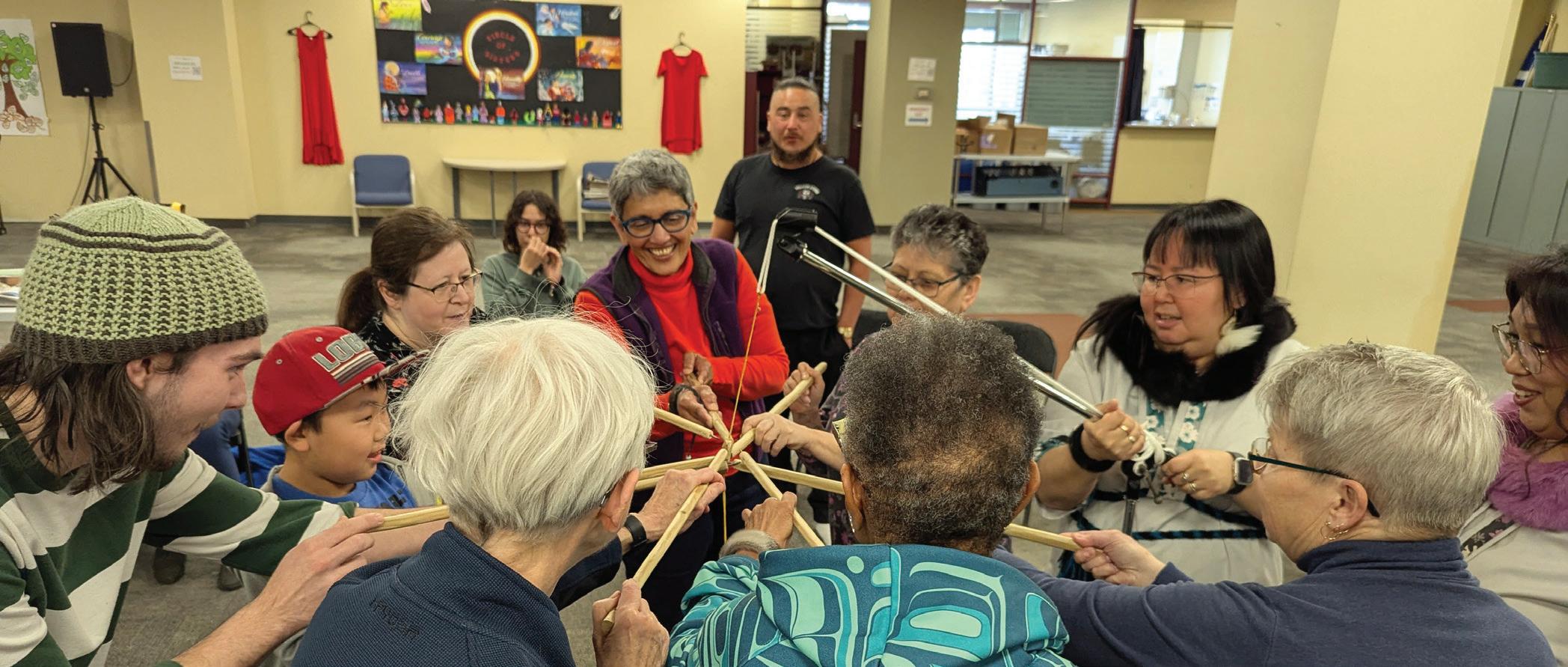
Weliaq, ni’n teluisi Tammy Mudge. Ni’n L’nu, Mi’kmaw aqq teluisi Glooscap First Nation. I am a mother of four, and I walk with the responsibility of Co-Director of EOED. I come here in a good way, msit wenjik wla wjit wilu’toq, all of us here to learn together.
I offer my gratitude to Wskitqamu’k, our Earth Mother.
Wela’lin for her breath, her soil, her waters, and for all she provides so we may live in balance.
I honour Mi’kma’ki, the ancestral and unceded homeland of the Mi’kmaq, eklmsite’tmnej, we hold this sacred. I acknowledge my kin, L’nu’k, who have cared for this land, water, and sky since time immemorial, guided by teachings of respect, balance, and etuaptmumk, two-eyed seeing.
I acknowledge the Peace and Friendship Treaties that cover Mi’kma’ki, maw-lu’lkik ntutamk, living agreements that call us into relational responsibility. May we always honour these sacred commitments.
I honour our kiskuk, ancestors. Those who dreamed us into being, those who walk beside us today, and those yet to come. Wela’lin aqq naqi wjit kiluwaw for your guidance, protection, and love.
I acknowledge msit no’kmaq, all our relations: the winged ones, putupl mimajuinu’k, the four-legged and hooved, ne’w kesalul wjit, the two-legged, ta’n tel L’nu’k aqq nesnaqalul, the swimmers, kaqlaqamuk, the scaly, meski’k, the slimy, muinawel, the crawlies, wjit kesalul aqq naqaql, the standing people, tiam aqq sisipu (trees), the plant relatives and me’katik medicine, the waters, nipk, our life force, and all of Earth Mother’s gifts that nourish our bodies, minds, hearts, and spirits.
To msit no’kmaq, I say Wela’lioq.
Acknowledgement in Relation by Tammy Mudge, EOED Co-Director
Acknowledgement in Relation is an approach to recognizing land, people, and history that emphasizes our living and ongoing relationships, rather than simply naming or stating facts about place or territory. It shifts the focus from acknowledgement as a statement to acknowledgement as a relationship.
To practice Acknowledgement in Relation is to recognize that we are part of the land, not separate from it. It means understanding that acknowledgement is reciprocal and that we are both acknowledging and being acknowledged by the land, waters, and beings we share space with. It also involves honouring the past, present, and future relationships among Indigenous peoples, settlers, newcomers, and the natural world, while reflecting on our personal and collective responsibilities to live in good relation.
This approach is different from a land acknowledgement because it moves beyond a formal statement and toward an ongoing practice of relationship. A land acknowledgement typically recognizes the Indigenous peoples whose lands we are on and honours their historical and continuing connection to that place. While this recognition is important, acknowledgement in relation asks us to go further. It invites us to understand that we are part of the land and the

web of relationships that exist within it, rather than observers standing outside of it.
Acknowledgement in Relation is about living that awareness in practice. It recognizes that our connection with the land, waters, and living beings is reciprocal and ongoing. It asks us to reflect on our responsibilities within those relationships, including how we act, how we care for the places we live, and how we build respectful relationships with Indigenous communities today. In this way, acknowledgement becomes less about words spoken at the beginning of a gathering and more about a continuous commitment to living in good relation with the land and with one another.
Introduction
Every One Every Day Kjipuktuk/Halifax is a Reconciliation Initiative of the Mi’kmaw Native Friendship Centre that is working to grow a culture of neighbourhood participation grounded in connection, learning, and action. At its core, EOED invites residents to come together through shared interests, build relationships, and shape the civic and social spaces around them in ways that reflect the knowledge, skills, and experiences already present in the community.
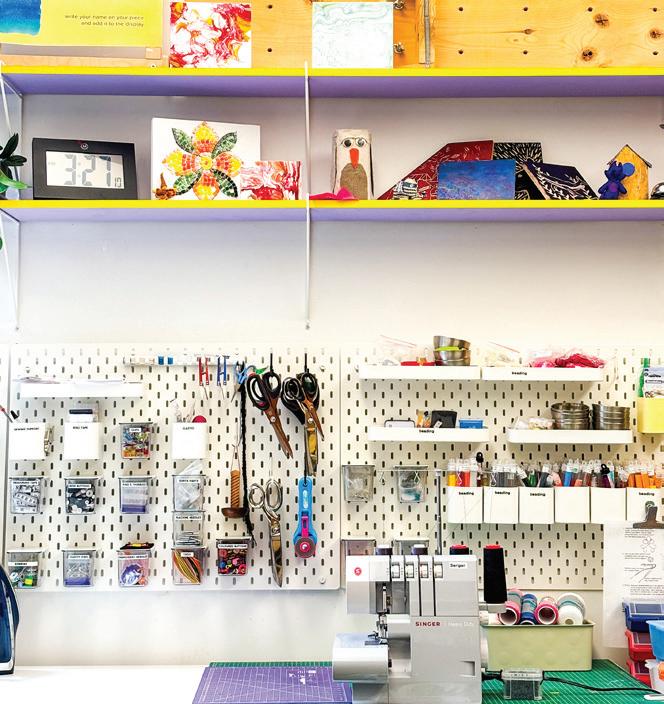
Our approach is rooted in building a participation ecosystem at the neighbourhood scale. Over time, this has taken shape through a network of accessible and welcoming spaces, including the Neighbourhood Shop and Community Build Trailer, supported by a team of skilled Project Designers and open access to tools and resources. Together, these elements create the conditions for ideas to emerge, be tested, and grow through collective effort.
This ecosystem is dynamic and evolving. Like a natural system, it is shaped by many interconnected parts, from small everyday interactions to larger collaborative projects. It is designed to remain open and responsive, welcoming a diversity of residents and continually adapting as new ideas, relationships, and opportunities take root. Guided by a shared set of design principles and reconciliation guideposts, EOED creates space for meaningful participation while supporting learning and action around Truth and Reconciliation at the neighbourhood level.
In 2025, this approach continued to deepen and expand, with more residents participating, more ideas taking shape, and stronger connections forming across the North End. This report reflects both the growth of the participation ecosystem and the collective effort of neighbours who are actively shaping their community together.
Place
Key Insights & Emerging Themes
The following themes reflect what we consistently observed across programming at the Neighbourhood Shop and Community Build Trailer in 2025. Grounded in resident experiences, participation data, and reflections from staff and hosts, these themes highlight how everyday activities are building connection, confidence, and collective capacity in the North End.
Together, they illustrate the ways that accessible, hands-on opportunities for learning, sharing, and co-creation are strengthening relationships, supporting wellbeing, and creating the conditions for neighbours to shape their community in meaningful and lasting ways.
•Shop Feels Like Community
•Strong Connections and Relationships between Residents
•Hands-on Joyful Learning & Play
•Great Hosts and Adaptive Facilitation
•Many Stages of Reconciliatory Learning
•Sharing Resources + Reciprocity
•Place To Learn and Talk About Culture
•Peer Learning + Mentorship
Shop Feels Like Community
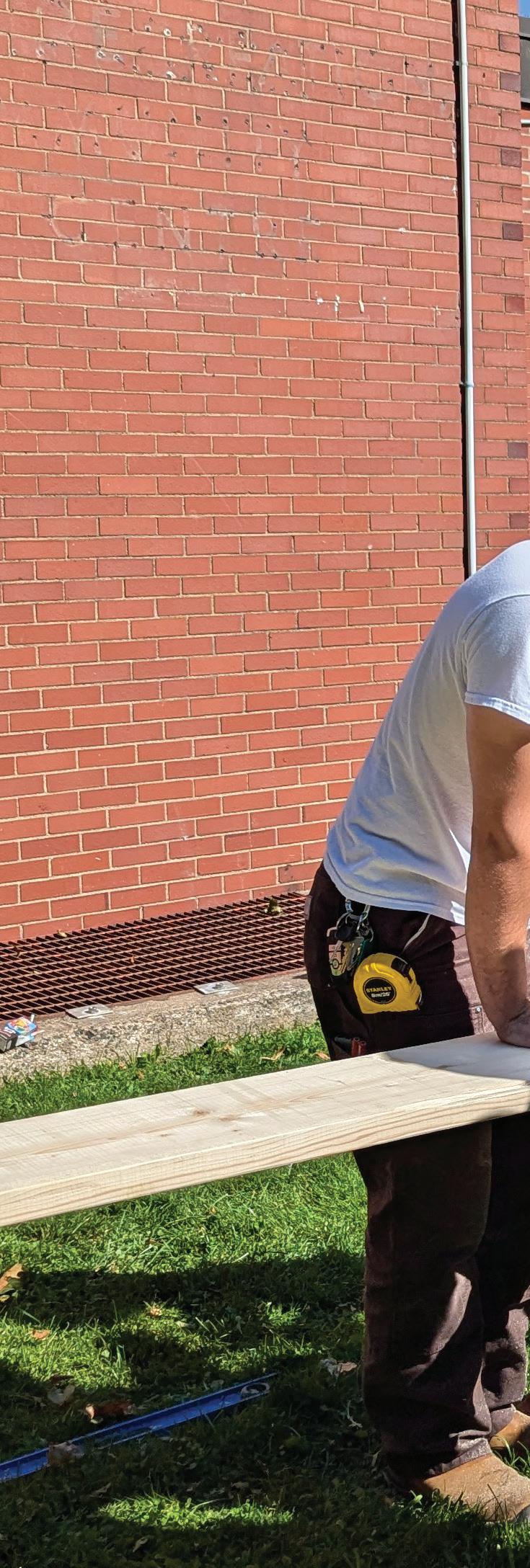
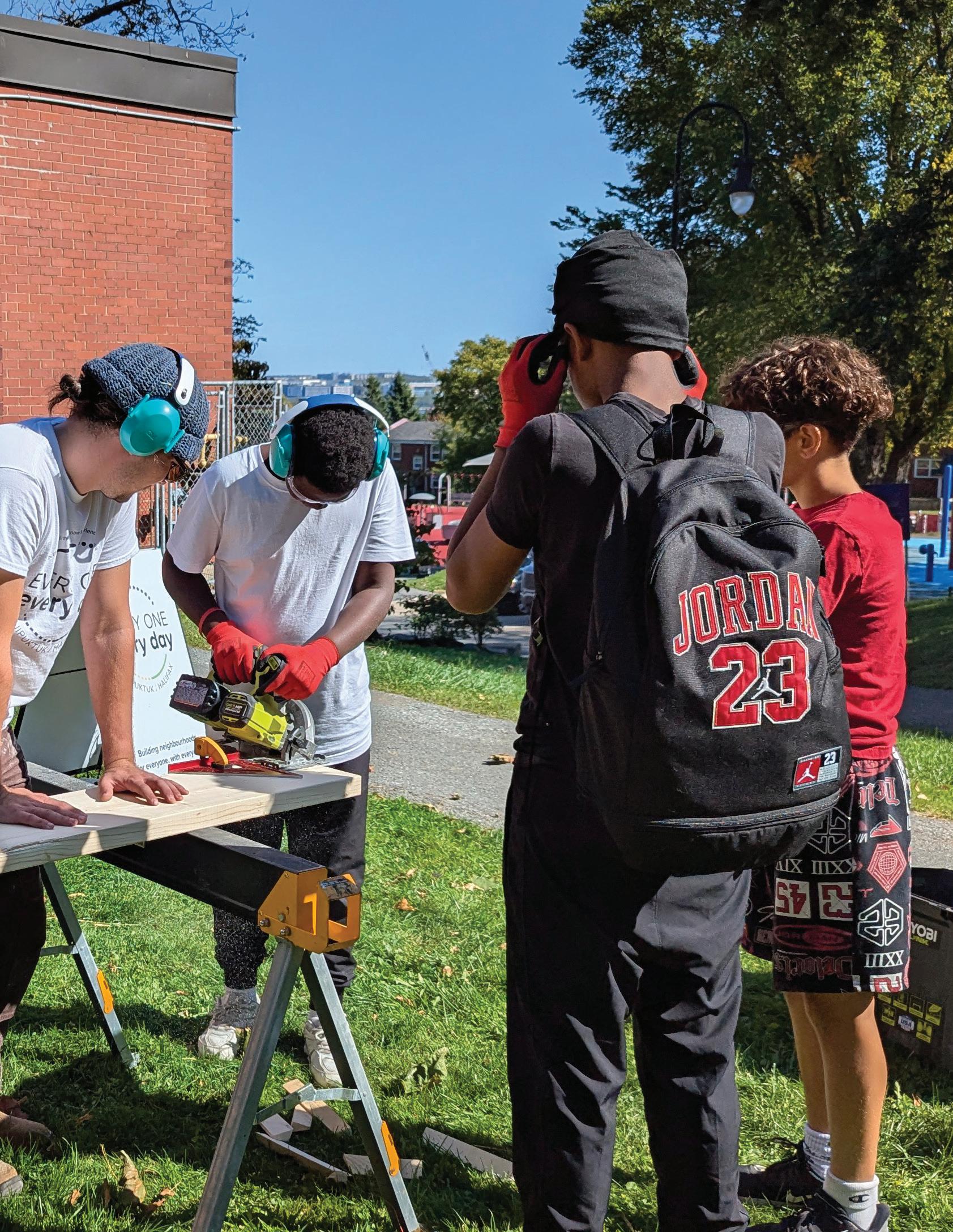
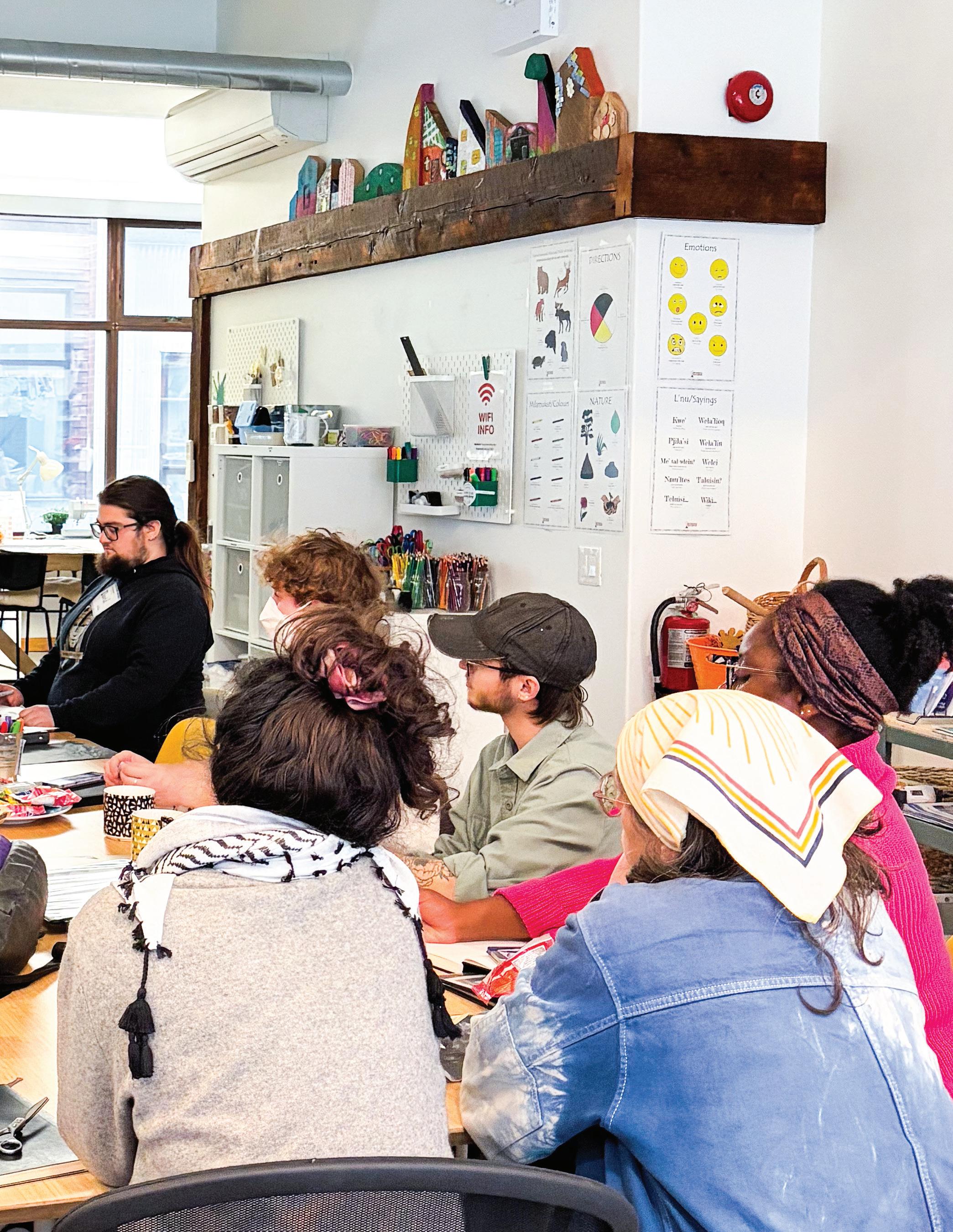
In 2025, the Neighbourhood Shop continued to grow as a welcoming community space where residents feel a sense of agency, independence, and belonging. Returning residents often treat the space as their own; sharing project ideas, experimenting with new skills, and building confidence. We see that this supportive environment encourages curiosity and knowledge sharing among both new and returning residents.
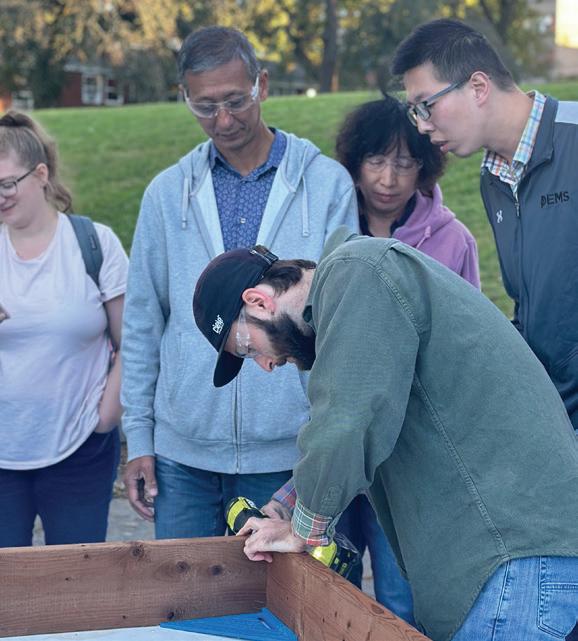
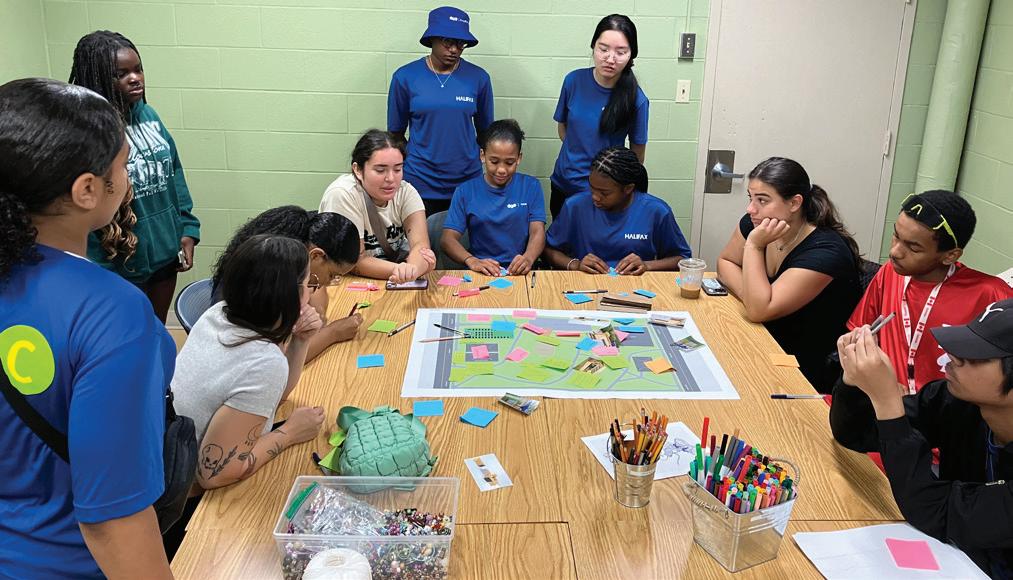
Collaborative builds such as the Gathering Table in Spring Program and the Gaga Ball Court in Fall Program highlighted the impact of teamwork and intergenerational learning. During the Gaga Ball Court build at the George Dixon Centre, youth and adults worked side by side measuring, cutting, and learning to use power tools. The atmosphere was filled with encouragement and curiosity, and participants were excited to return and continue building together.
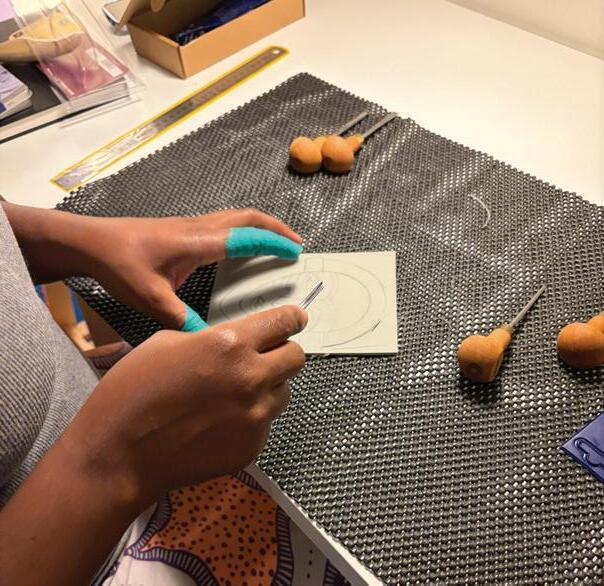
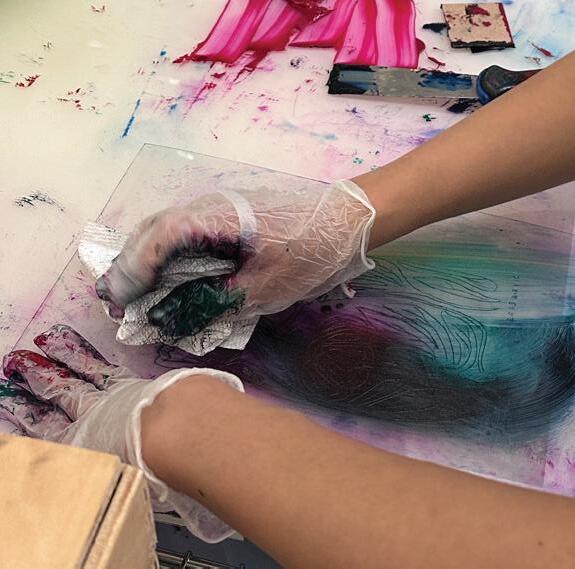
Neighbourhood gatherings, like the Fall Program Community Potluck, also strengthened connections. Residents contributed food, conversation, and helped with cleanup, showing how small acts create collective generosity. Recurring sessions like Slow Printmaking further fostered mentorship and skill-sharing, supporting EOED’s goal of cultivating networks of learning, mentorship, and connection.
“A mother of two young girls was in the Shop working on her sewing project and chatting with another resident about the space. I overheard her say “it’s so nice to be in a place where [my kids] can do something and I can do something” and the resident replied, “it’s great because it’s a safe space.”
–Neighbourhood Project Designer
Strong Connections and Relationships between Residents
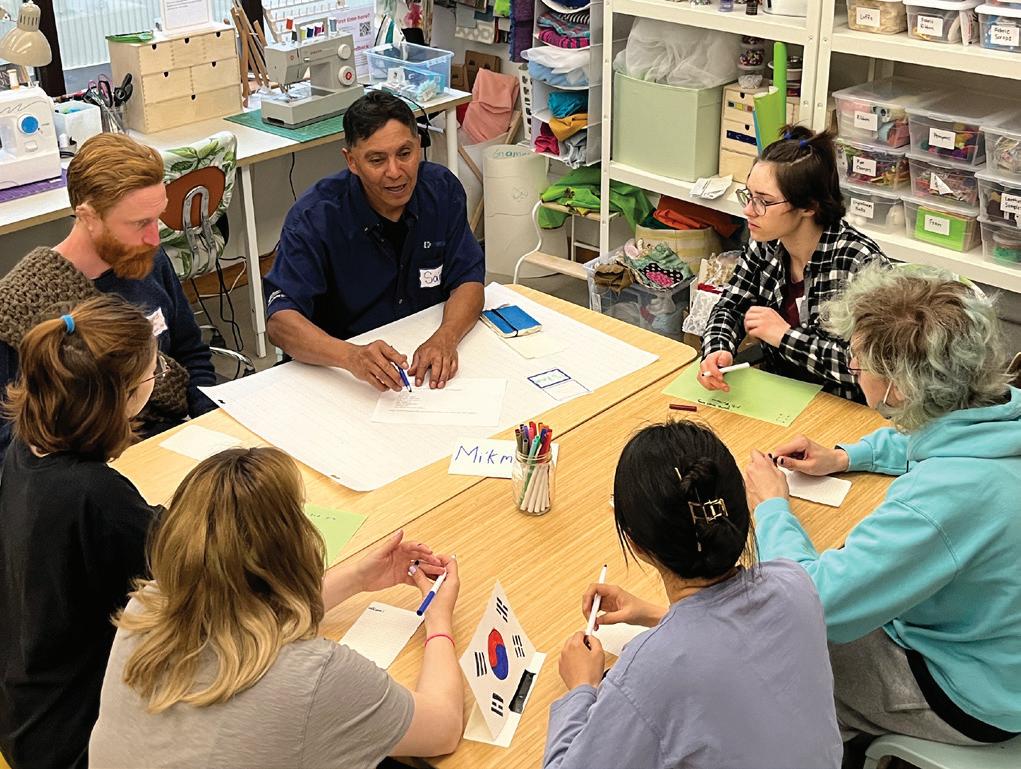
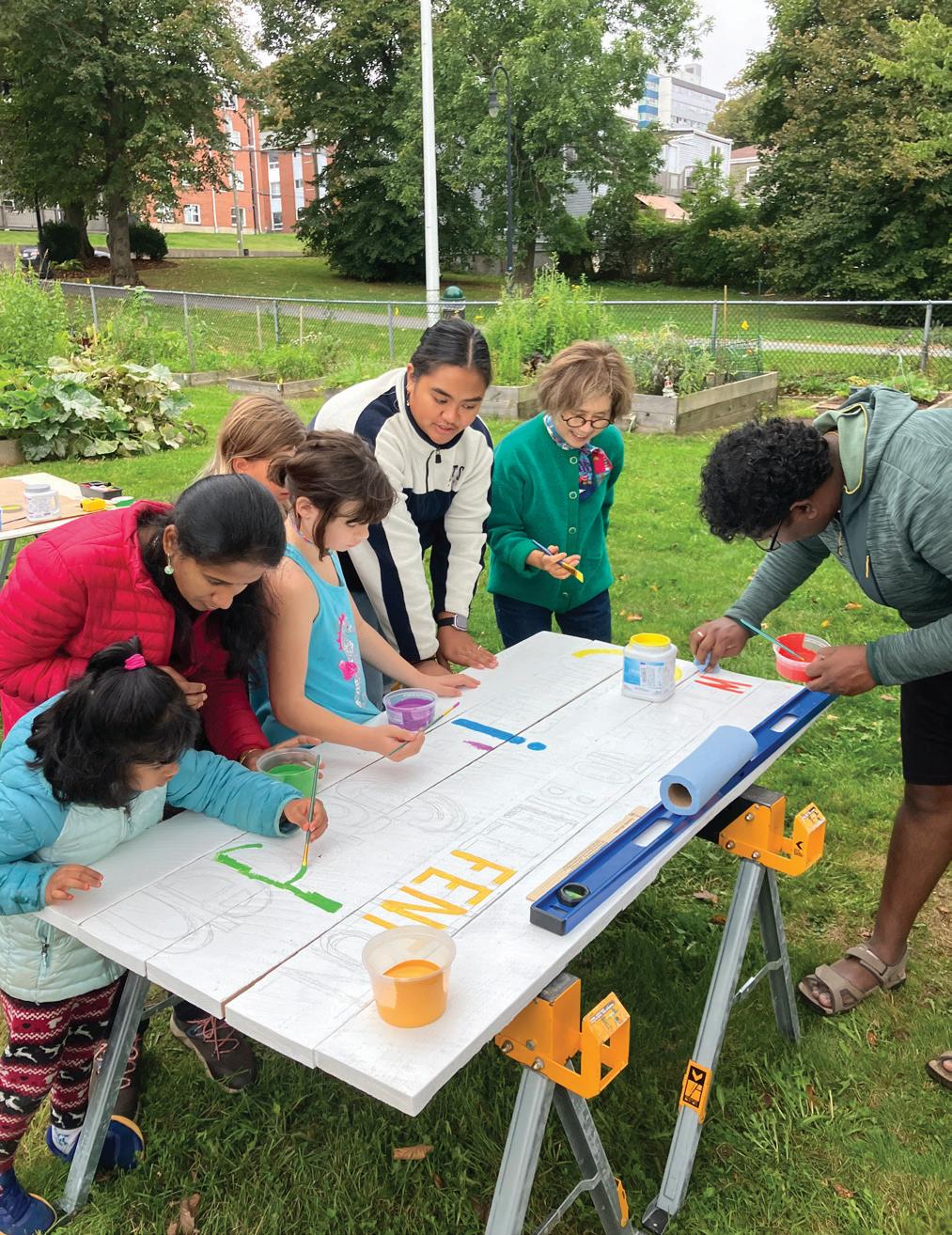
The past year of programming saw residents connecting with one another in new ways. The safe and supportive environment in the Shop helps residents feel comfortable building meaningful relationships based on respect, shared learning, and mutual support. New and returning residents alike felt at ease during sessions and Open Shop hours, demonstrated by a constant backdrop of laughter, curiosity, and conversation. Feedback collected during Summer Program shows that 86% of residents met a new friend or made a new connection during a session.
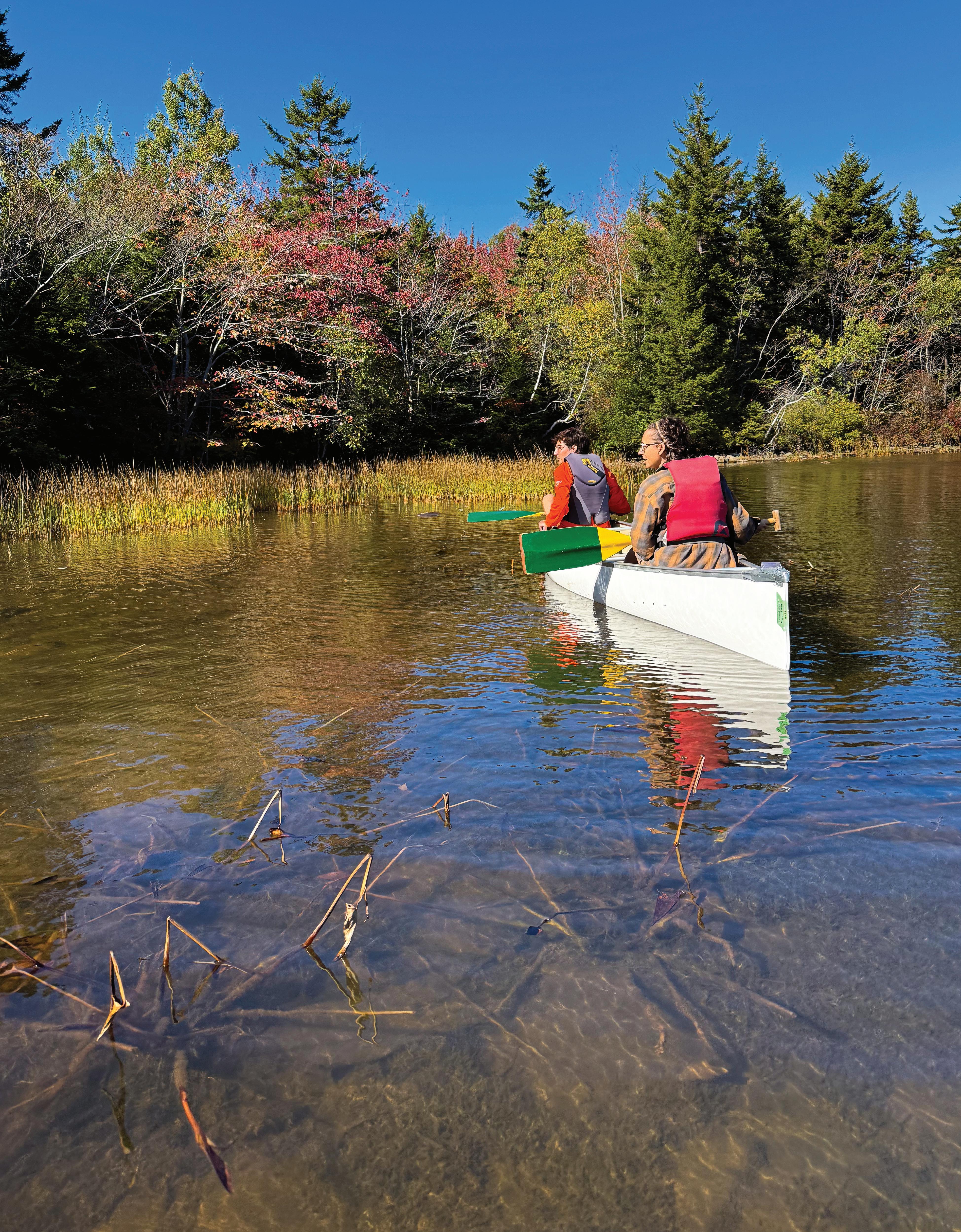
In 2025, we saw more residents connecting informally with each other outside of the Neighbourhood Shop. More than once, new friends walked into the Shop together to work on projects side by side, offering encouragement and sharing their ideas. During the Canoe Quest session at the Abenaki Aquatic Club in Dartmouth/ Punamu’kwati’jk, friendship and trust flourished. A mother, attending the session with her young daughter, expressed feeling a sense of safety and comfort as residents all took to the water in shared canoes. A few residents shared that it was their first time in a canoe, while another resident was thrilled to be holding a paddle again after a 34-year hiatus.
Sessions like Songwriting Basics offered opportunities for residents to share in vulnerable connection. The supportive atmosphere fostered by host Macarena made space for easy laughter
and knowledge sharing so that residents left the session feeling grateful and inspired. In all these spaces, we see inclusive and meaningful participation paired with spiritual, physical, mental, and emotional wellbeing—two of EOED’s key goals.
“We had people who were from Egypt, Columbia, Mexico, France, New Brunswick and Halifax all sitting at the table together talking about our varied experiences with dance. It was a really vulnerable chat that brought residents closer together by sharing stories and experiences that inform what they’d like to see in the future of social dance community.”
–Host, Dance & Community session (Fall Program)
Hands-on Joyful Learning & Play
+ Many Ways to Participate for All Ages and Abilities
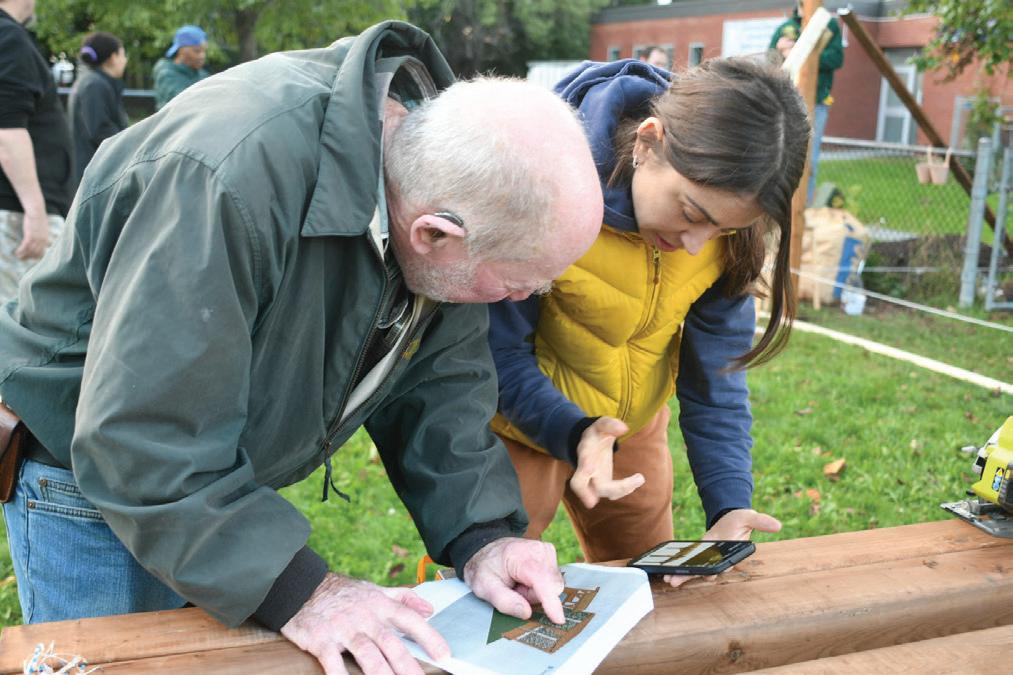
The Neighbourhood Shop continues to be a place for community members of many abilities, ages, and interests. A microcosm of all that the North End has to offer, made better by the people that walk through the door. Feedback collected during Fall Program tells us that 95% of residents learned something new or tried a new skill in a session.
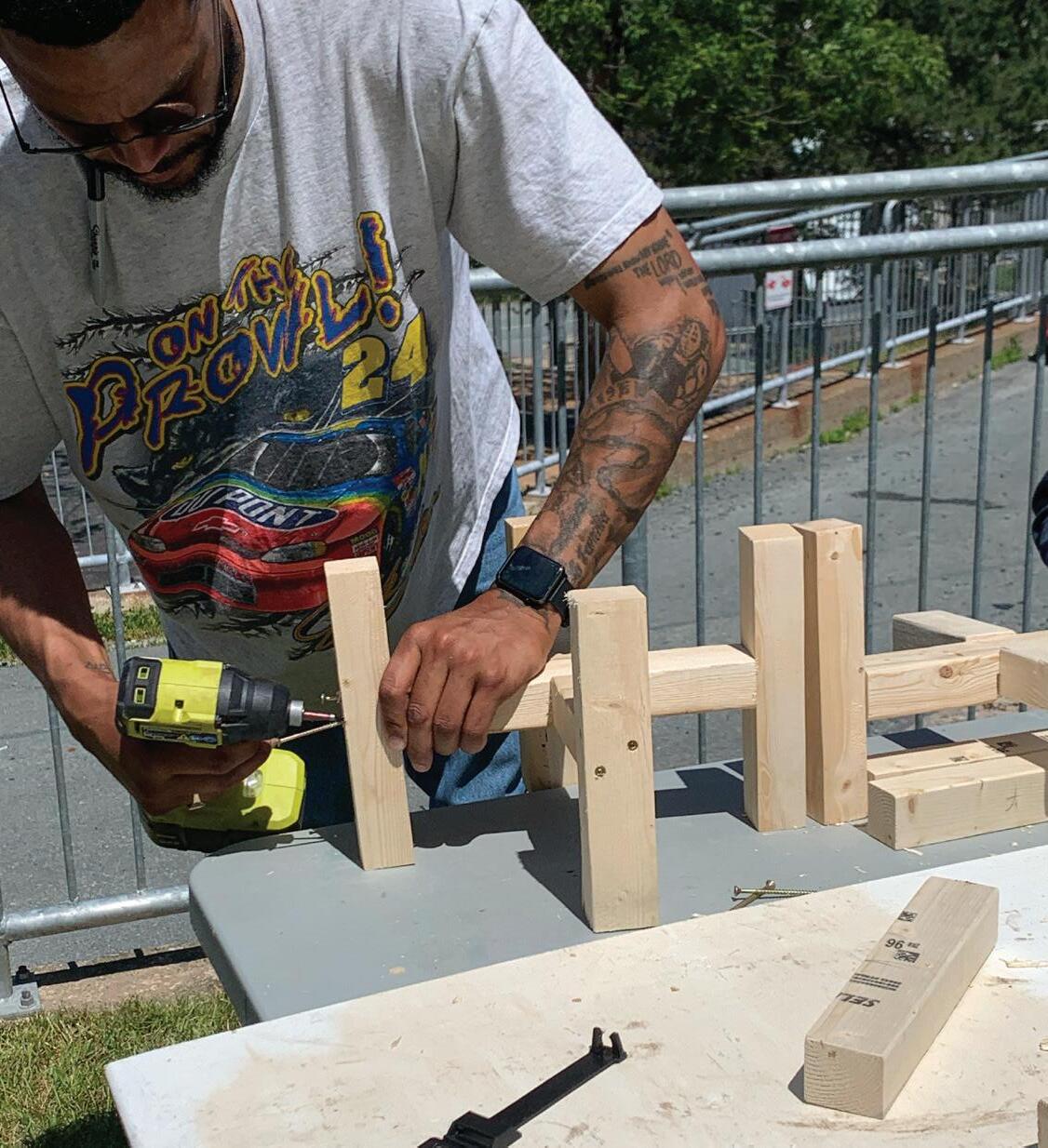
Woodworking sessions at the Community Build Trailer, like the Rainwater Collector build, saw youth and adults working together to gain DIY skills, explore sustainable design, and learn about community gardening. Participants brought soup to share, creating a sense of warmth and hospitality that matched the spirit of the project. Sessions like Intro to Fun Sign Language combine lightly structured learning, accessible visuals, and games for an experience praised by residents as engaging and informative.
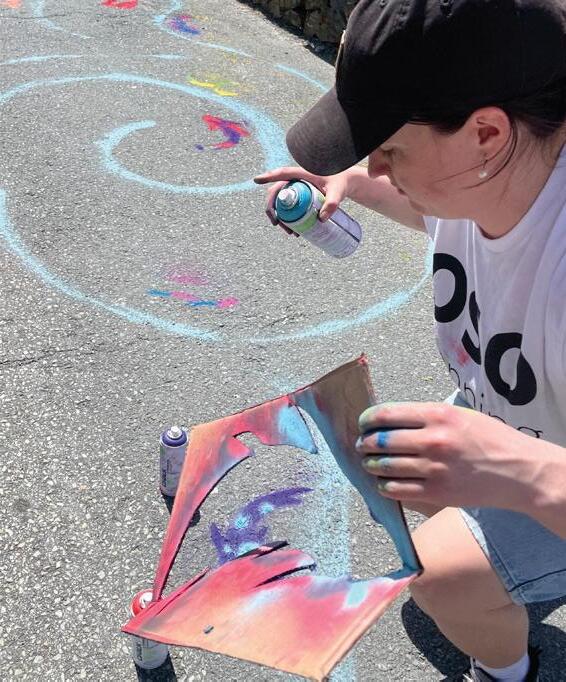
Throughout the year, sessions ranged from printmaking and sewing, to music and dance, to outdoor recreation and understanding the science of the natural world. We continue to see the benefits of group learning through handson opportunities and interactive sessions where residents can express their creativity freely, supporting EOED’s goals of intergenerational learning and increased skills and resource sharing in the North End.
Great Hosts and Adaptive Facilitation
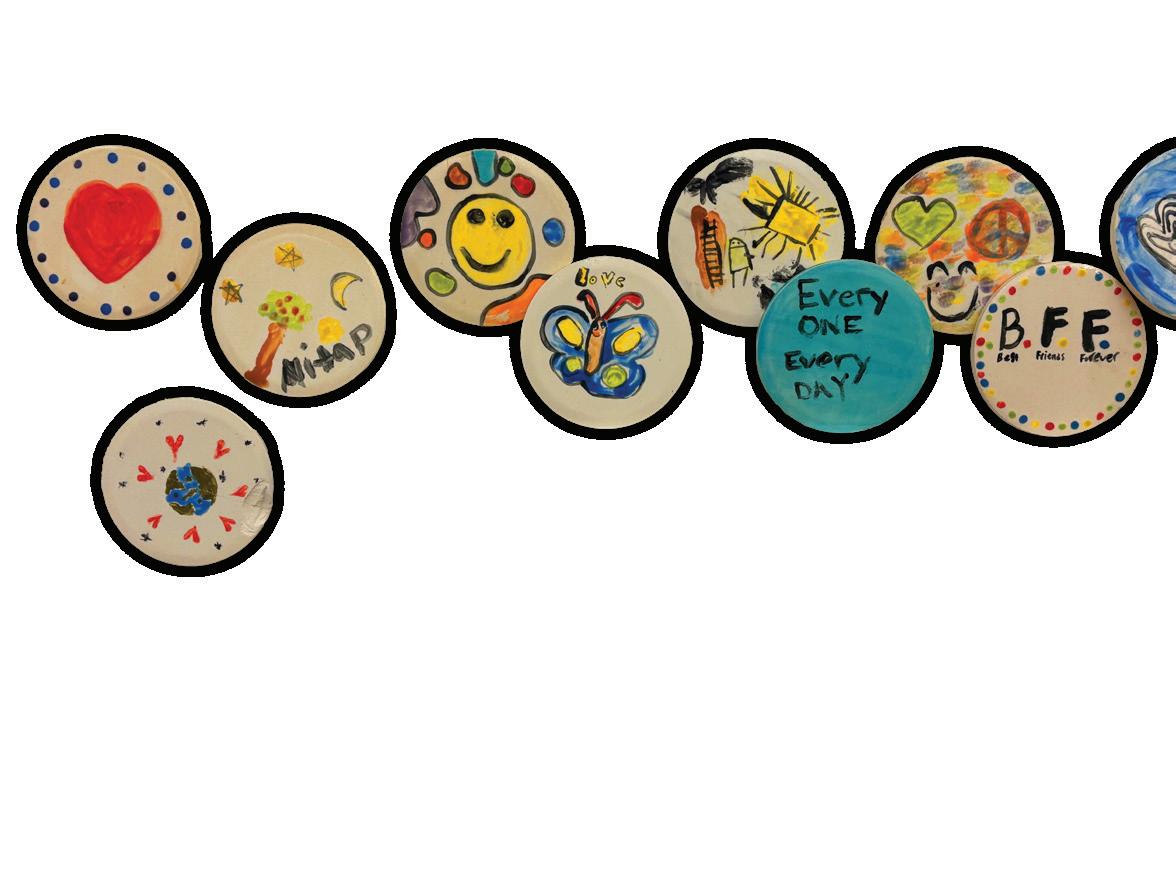
session hosts, North End residents themselves, bring it all to life. In 2025, we had over 80 community members dedicate their time, expertise, and energy to sharing their knowledge and skills with residents. Hosts were creative, adaptive, and felt agency to make the session their own. They practiced new teaching and facilitation methods, supporting EOED’s goal of fostering networks of learning and mentorship.
Feedback from residents in 2025 tells us that session hosts are kind, knowledgeable, and excited to share their skills. Hosts expressed gratitude for opportunities to co-design with Neighbourhood Project Designers on ways to bring Truth and Reconciliation into their sessions, leading to an increase in the number of hosts opening their session with a personalized and thoughtful Acknowledgement in Relation (see pg. X to learn more).
This year, our team developed the ‘Many Hands Guidebook: Hosting with Every One Every Day’. This visual guide outlines how hosting a session at EOED builds trust and belonging between neighbours and expands networks of support, furthering our goal of self-sustaining families and communities in the North End.
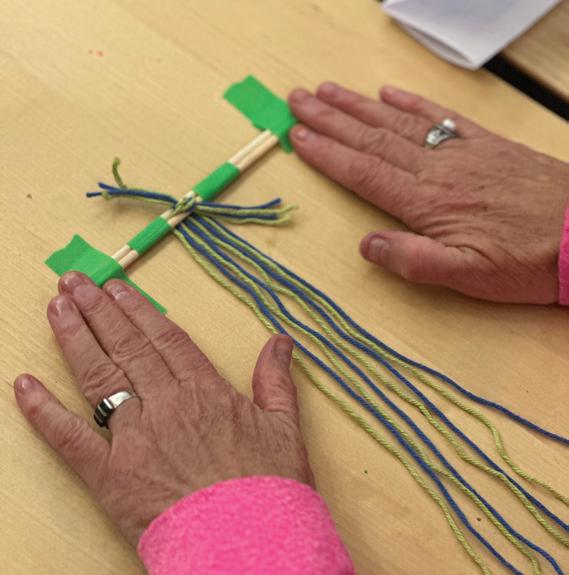
“What an excellent session! [Build Your Own Loom host] Ashley-Rose came in early to set up, then participated in the Land Acknowledgement session to craft her own before her session started. She gave a lovely introduction about herself and her experience in weaving, as well as why she wanted to host with EOED. It was great because people were able to participate and learn at their own pace. Some folks were visual learners and followed verbal instructions from Ashley-Rose, while others followed the written handout.”
Neighbourhood Project Designer
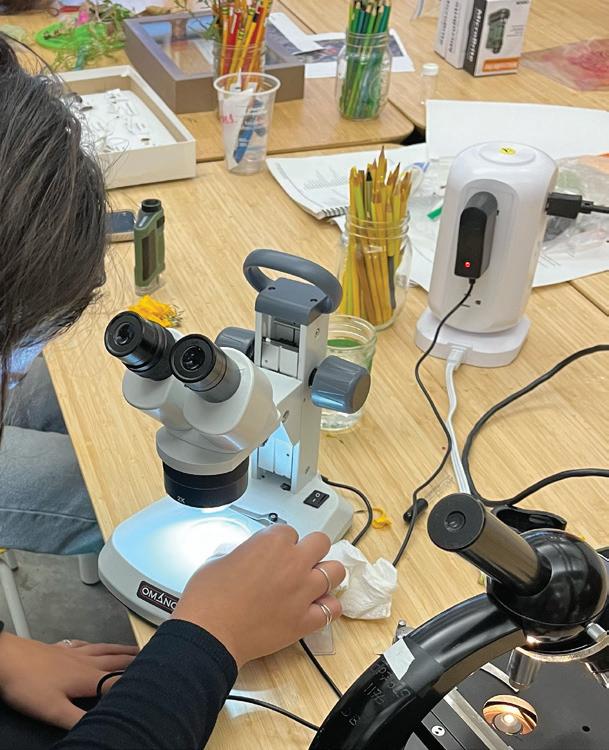
“Pat was thrilled to host [a session called Small World] with us this program; she brought a bunch of supplies for her session, including slide samples, bugs, flowers, sand and rocks. She came super prepared and brought her daughter and husband to the session for support!”
Neighbourhood Project Designer
Many Stages of Reconciliatory Learning
Truth and Reconciliation is at the heart of our work at Every One Every Day. In 2025, one theme that consistently emerged is that residents and hosts feel that the Neighbourhood Shop is a place for understanding truths so that together we can act towards reconciliation. This supportive learning environment enables residents to deepen their understanding of reconciliation at various stages of their learning journey.
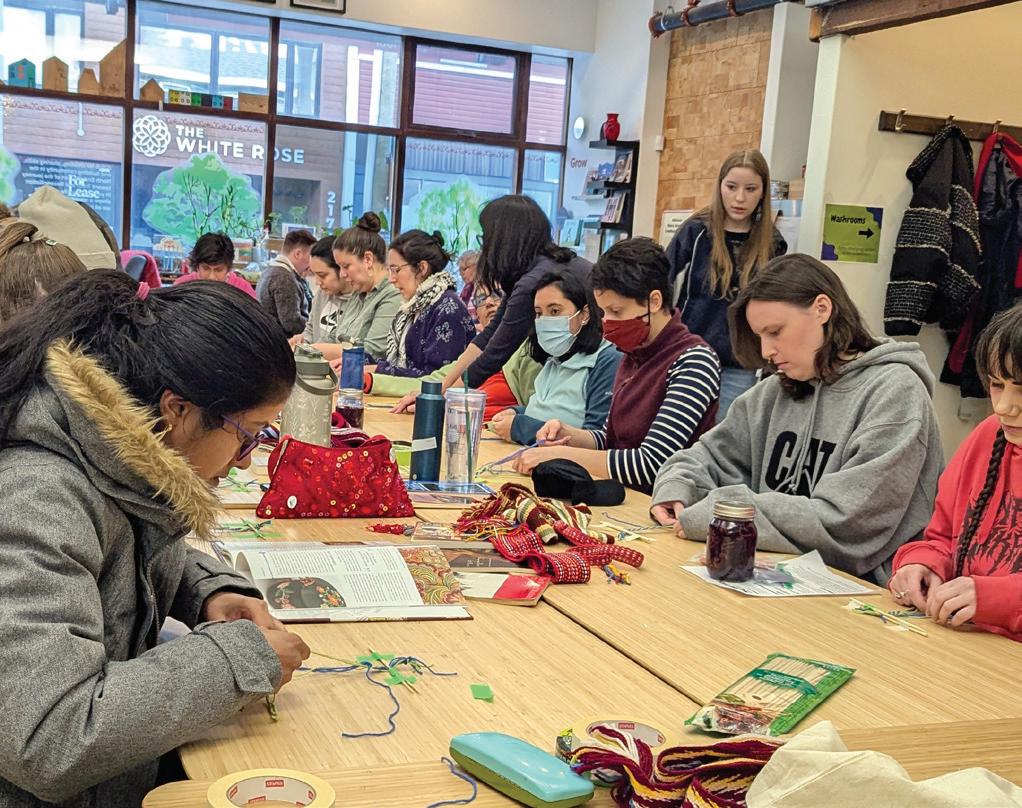
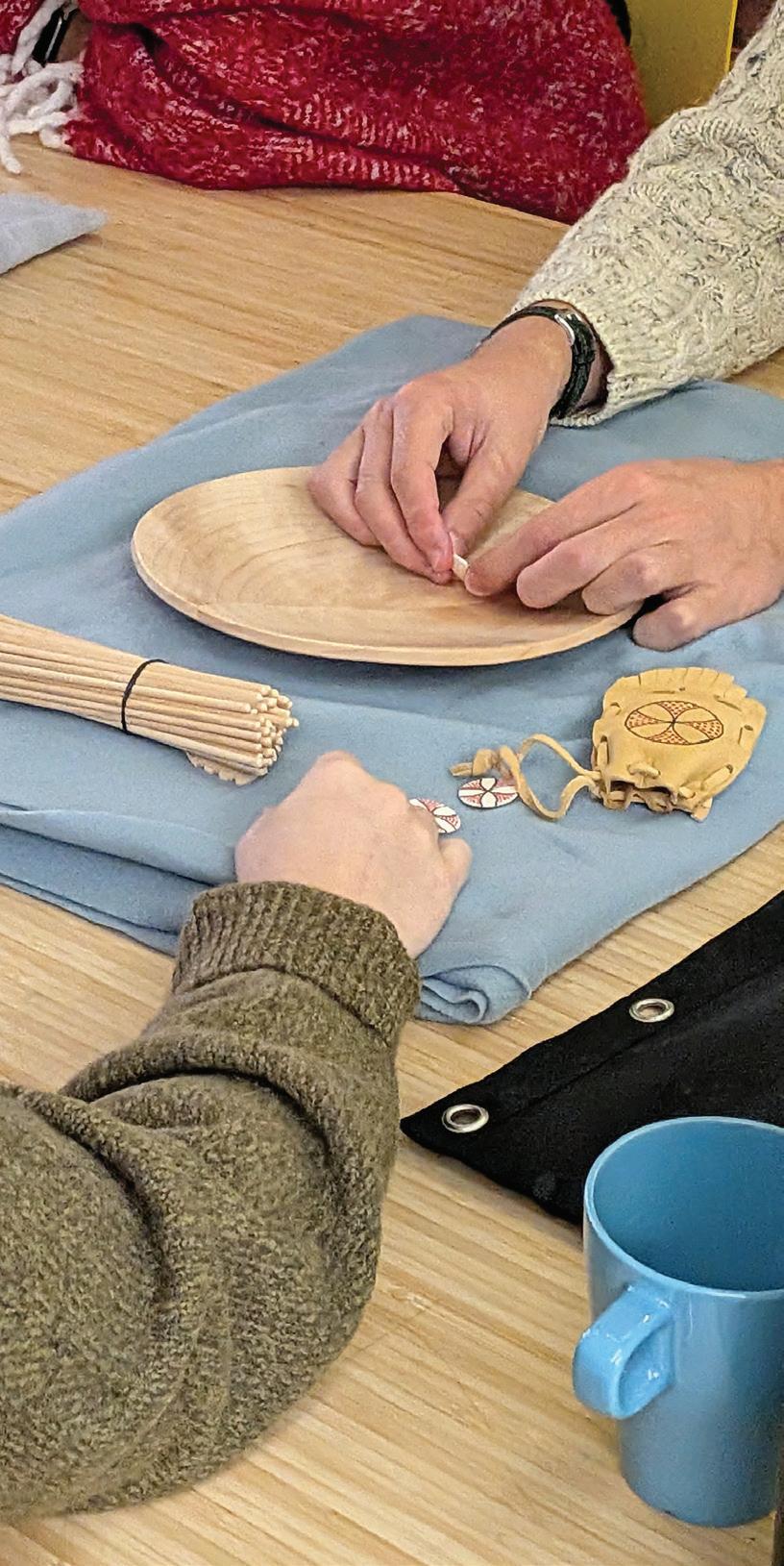
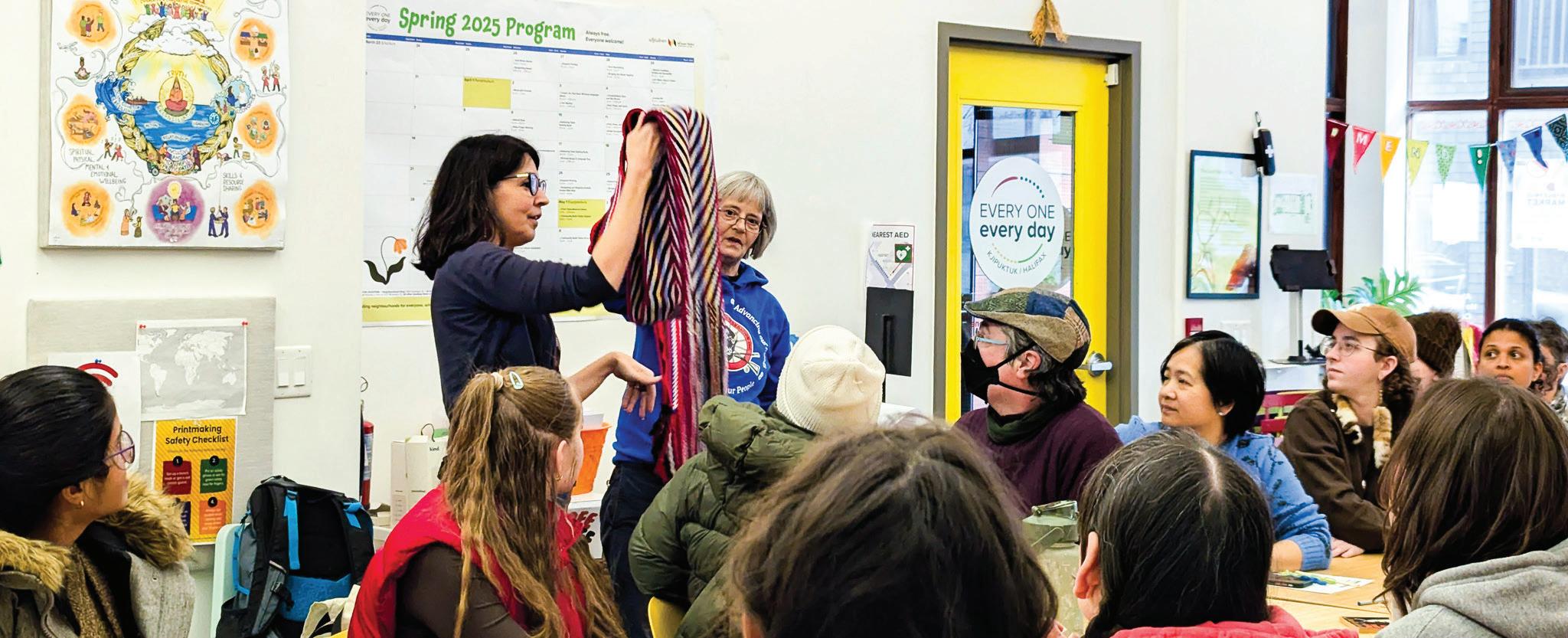
Sessions like Mi’kmaw Language Basics and Métis Finger Weaving saw residents excited to learn about Indigenous cultures and the historical and modern-day threats to cultural vitality, while sessions like Powwow Etiquette and Acknowledgement in Relation offered opportunities for residents to engage in, celebrate, and talk about reconciliation and cultural resurgence. After a screening of “Is the Crown at War with Us?”, residents engaged in thoughtful conversation and reflection around what it means to be a Treaty Person living in Mi’kma’ki--an experience described by attendees as impactful, gentle, and thought-provoking.
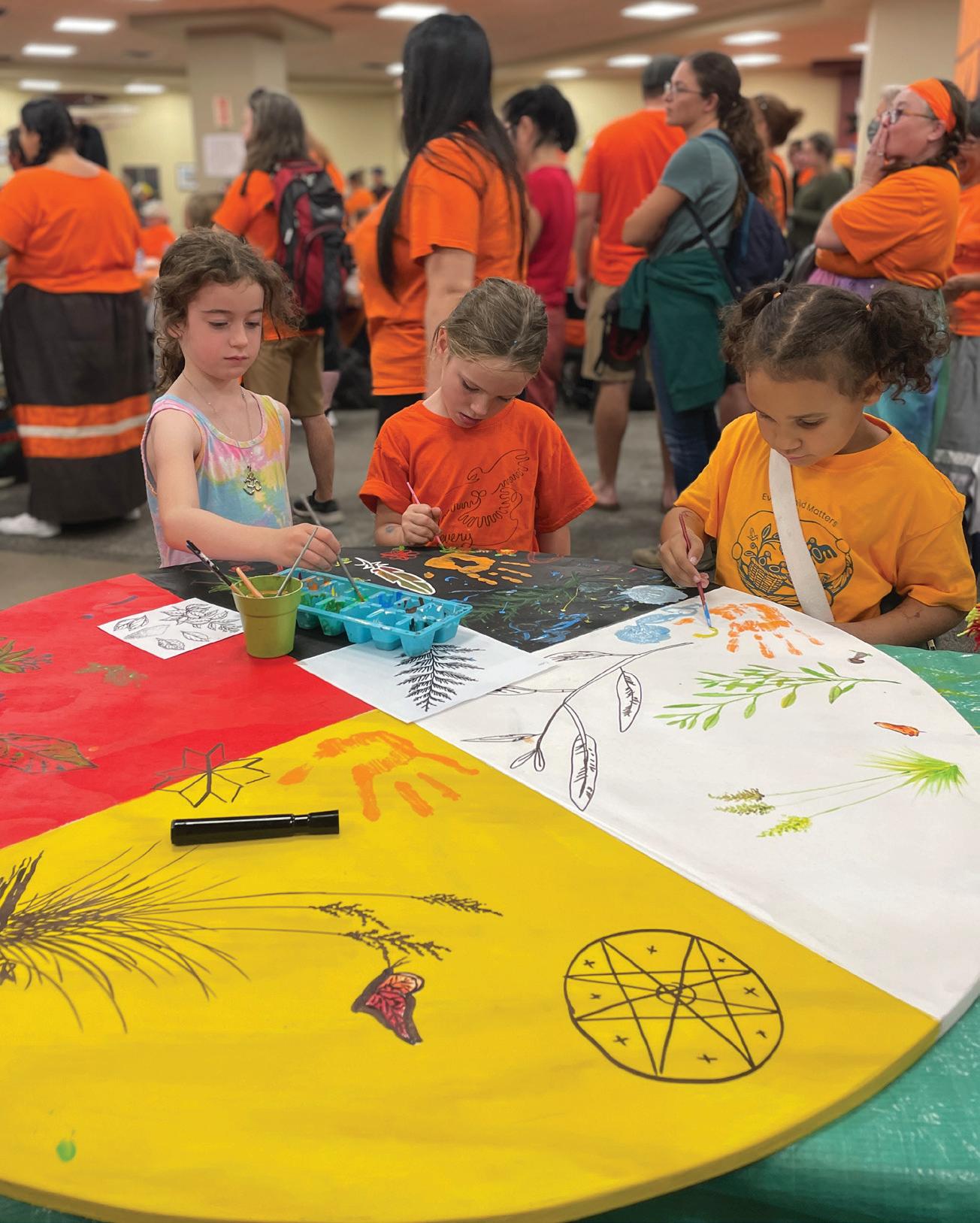
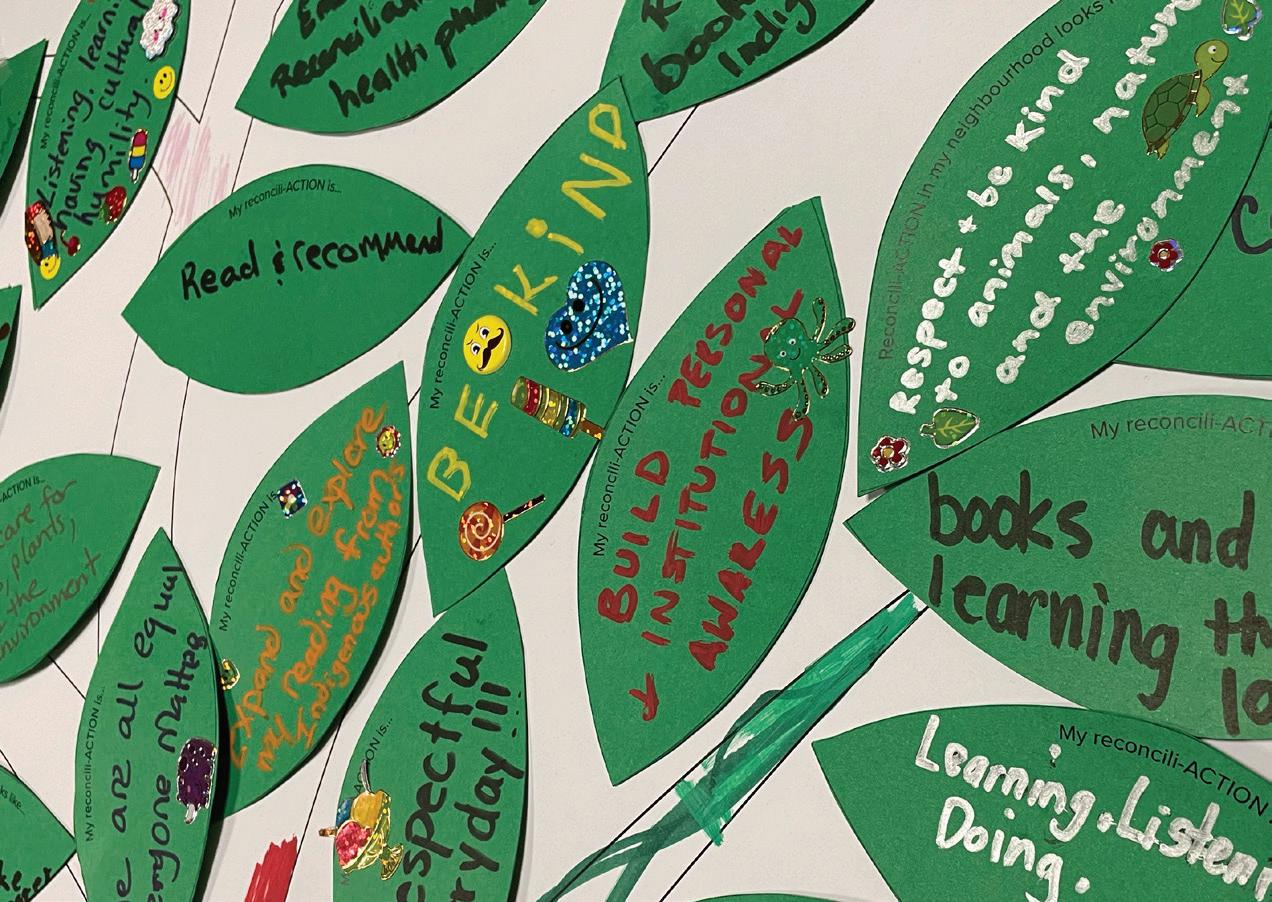
Throughout the year, the Neighbourhood Shop was a place for neighbours to actively engage in reconciliation. Hosts wrote personalized and thoughtful land acknowledgements; parents brought their children in to celebrate Treaty Day and commit to Reconcili-Action; and our Truth & Reconciliation sessions were the most highly attended overall.
“Carole and Francine are excellent hosts, both bringing a unique and different perspective to the practice [of Métis Finger Weaving]. Because the session is so hands on, it's nice that Carole has Francine to support her. [...] Almost everyone walked away with a new piece of art and the knowledge and craft of Métis Finger Weaving!”
Neighbourhood Project Designer
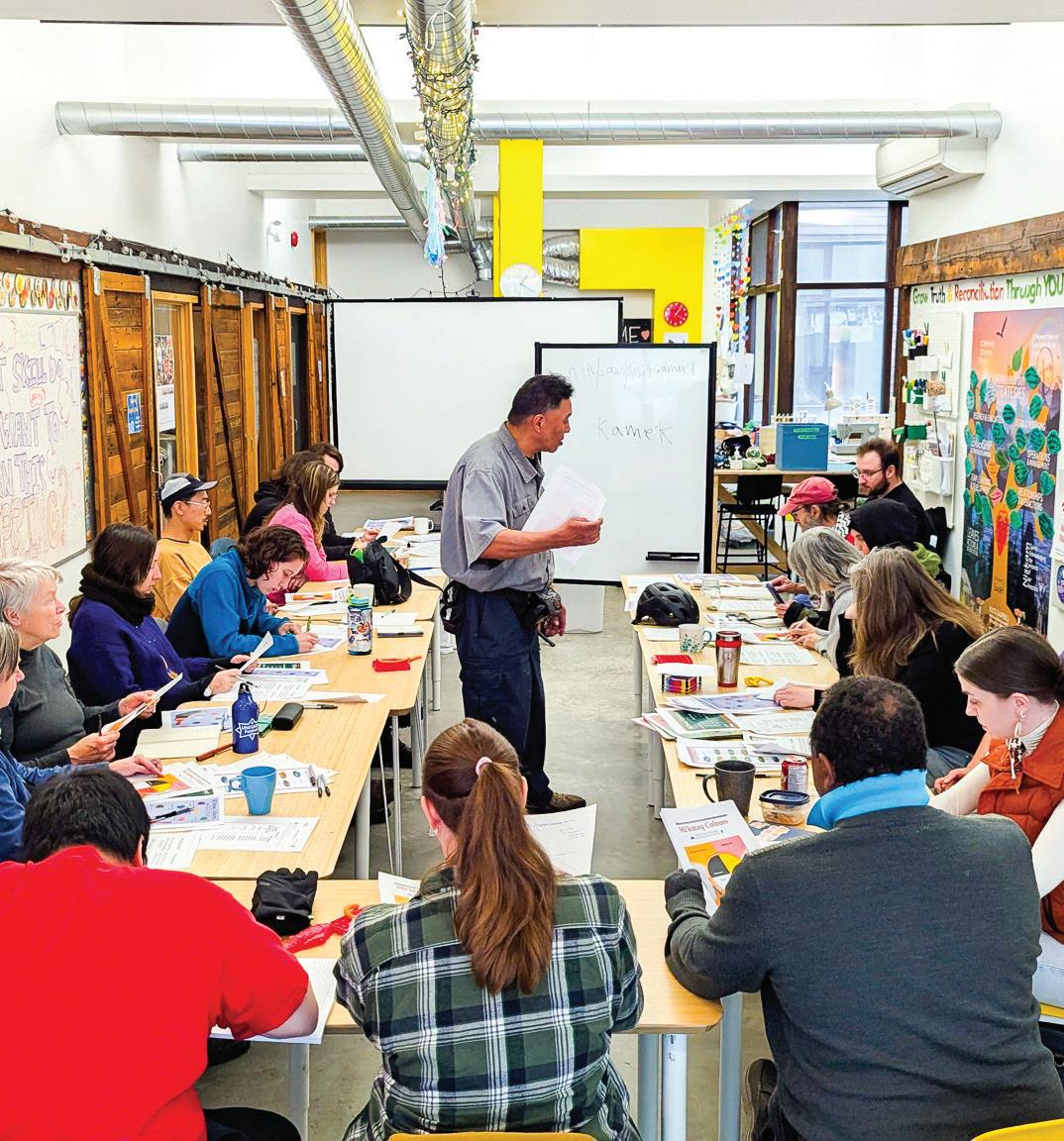
“There were over 10 new people at the [Mi’kmaw Language Basics] session and quite a few recently immigrated to Halifax. They were attending the session to learn more about Mi'kmaq culture and engage with different forms of learning such as storytelling.”
Neighbourhood Project Designer
“Local residents as well as out-of-province travelers visited the shop to learn about Treaty Day. [...] People gathered to watch a documentary outlining the Idle No More movement, listened to podcasts about the Peace & Friendship Treaties together in the Quiet Room, and situated themselves in relation to various treaties that exist across Turtle Island in a joint activity on the main
Neighbourhood Project Designer
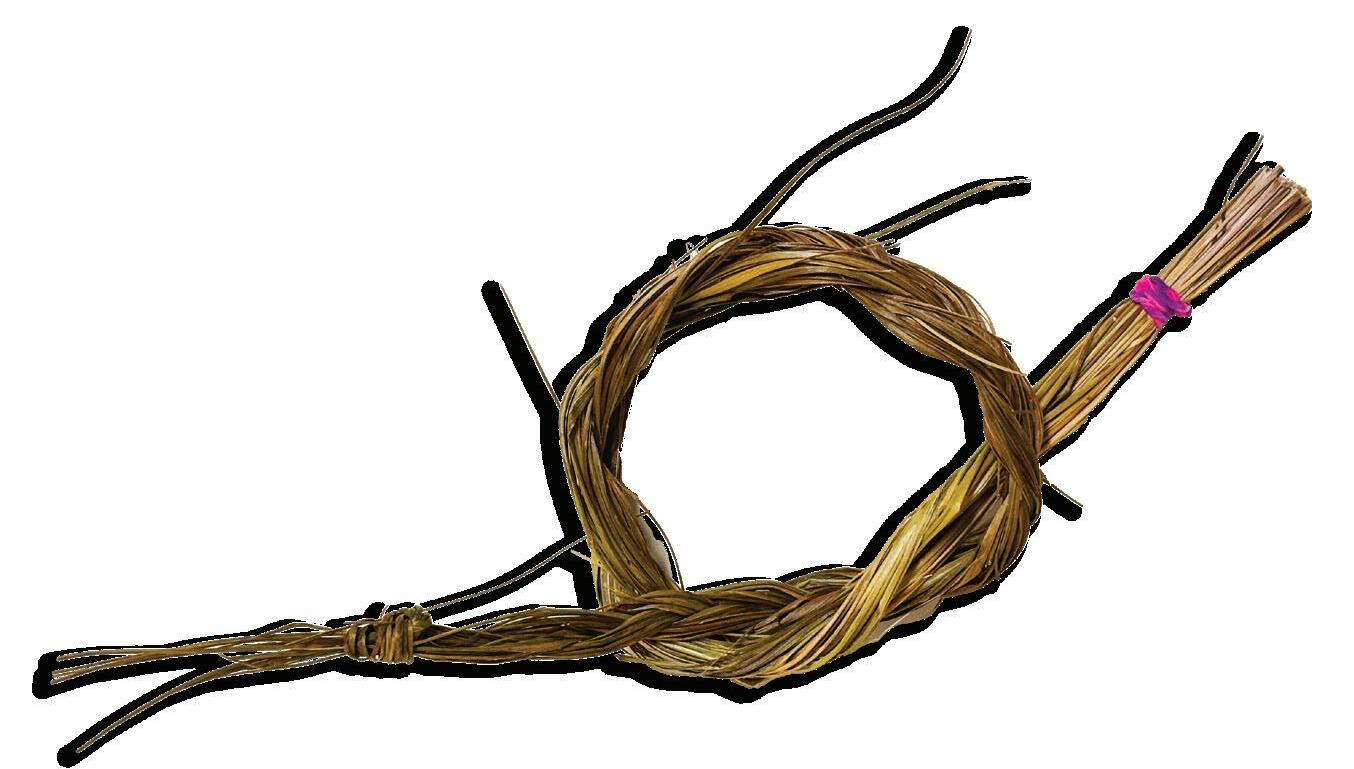
Sweetgrass braid grown in an EOED community garden.
Sharing Resources + Reciprocity
Residents continue to practice reciprocity in the Neighbourhood Shop, both through the connections they make and the resources they share with one another. Our seasonal programs reflect this, with many sessions that encourage Netukulimk, the Mi’kmaw teaching that asks us to protect and advocate for strong communities that are sustainable for the next seven generations.
In 2025, EOED continued to promote skills and resource sharing by creating opportunities for accessible skills training, by and for residents, that includes low-to-no-cost equipment, tools, and expertise. In Fall Program, the Collaborative Business Program launched the Inkubator Collective that brought together residents with diverse skills and experience to form a selfsustaining and inclusive printmaking co-op (see page X for more). This sharing of resources and knowledge supports EOED’s goals of informal, circular economies and pathways to bring many ideas & businesses to life.
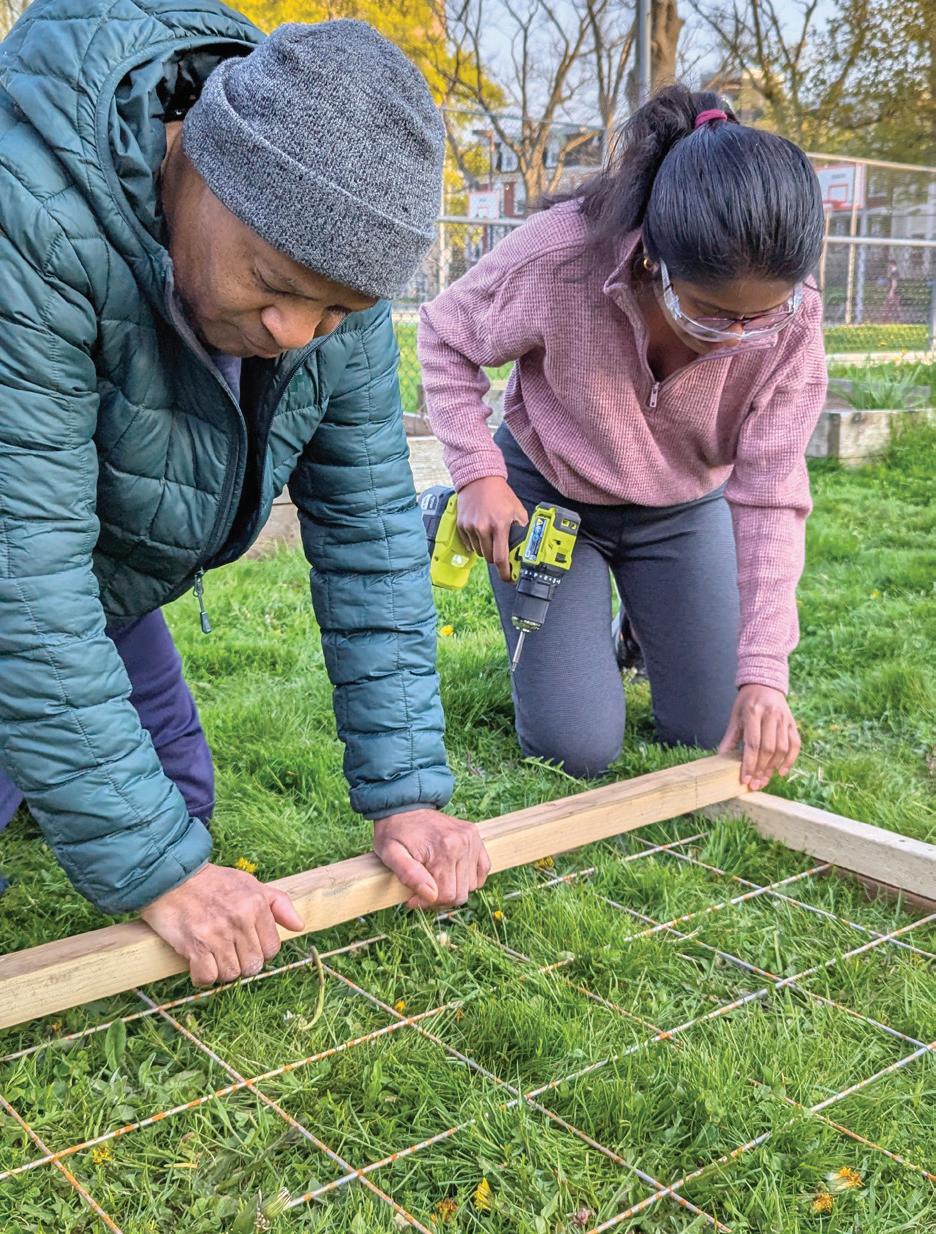
At the Community Build Trailer, residents engaged in free opportunities to collaborate on build projects around the North End, from compost collectors to raised garden beds and outdoor benches. We see the impact that simple DIY build sessions can have on spiritual, physical, mental, and emotional wellbeing both in youth and adults. Beyond the physical things residents built together, the Community Build Trailer sparks conversation and ideas with anyone who stops by; from residents working on big community projects to dreaming up small fixes for their homes. We are reminded that creativity and skill already exist in the North End, and that shared spaces and resources help those strengths grow.
Sessions And Materials/Tools Align with Community Interests
Resident feedback surveys collected throughout 2025 tell us that EOED offers sessions and opportunities to learn that align with resident interests. In both Summer and Fall Programs, 100% of survey respondents said they would continue to participate in sessions at EOED*. In Summer Program, 50% of respondents said it was not their first time participating in a session, indicating that residents feel EOED is a place for continued learning. Our unique approach to being resident-led through co-designing new modes of participation allows for community interests, knowledge, and skills to thrive.
Place To Learn and Talk About Culture
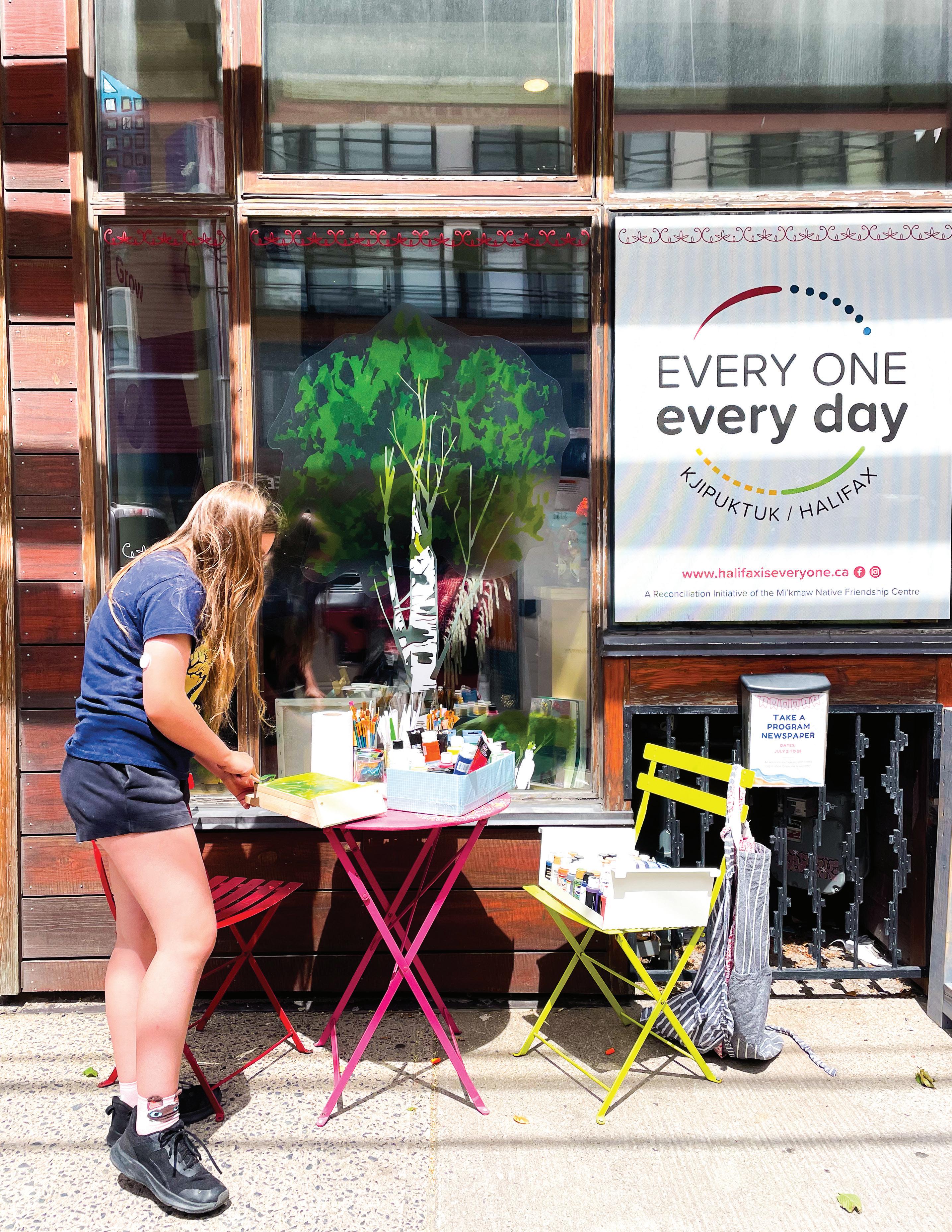
Sessions at Every One Every Day connect residents to their cultures in meaningful ways. One theme that consistently emerged in 2025 was that the Shop is a place where many cultures are present and celebrated. Cultural learning has been a part of every seasonal program since 2022 and ranges from topics like language, music, dance, history, and food.
We see that sharing cultural stories and personal experiences with neighbours supports EOED’s goals of building trust and belonging while facilitating cross-cultural and intergenerational learning. Latin Cooking with local organization Latispánica is consistently one of the most highly attended reoccurring sessions in our programs, providing space for neighbours to talk openly about their connections to food while learning new culinary skills. Special events like the Community Potluck remind us that food is a powerful connector across cultures; allowing for the sharing of stories, traditions, and practices in a nourishing environment.
“The community potluck highlighted how each person can contribute to their community in small but meaningful ways. Folks showed support through bringing food or making a dish, having conversations with strangers, and cleaning up after one another regardless of who created what mess. When a collection of people come together, it's always a case of creating more than the sum of its parts.”
Neighbourhood Project Designer
“The sessions offered residents the opportunity to learn a bit about Columbian culture, to learn about cooking techniques, and may have promoted wellbeing within the Latino community as a chance to connect, chat, and eat a traditional meal together.”
Neighbourhood Project Designer
Peer Learning + Mentorship
Peer learning and mentorship are central to EOED’s approach. We know that in order to achieve co-created and cooperative communities in the North End, there must be opportunities for shared learned and knowledge transfer that connects residents across ages and cultures. In keeping with Mi’kmaw ways of knowing, knowledge must be held as something sacred and valuable to be shared in community.
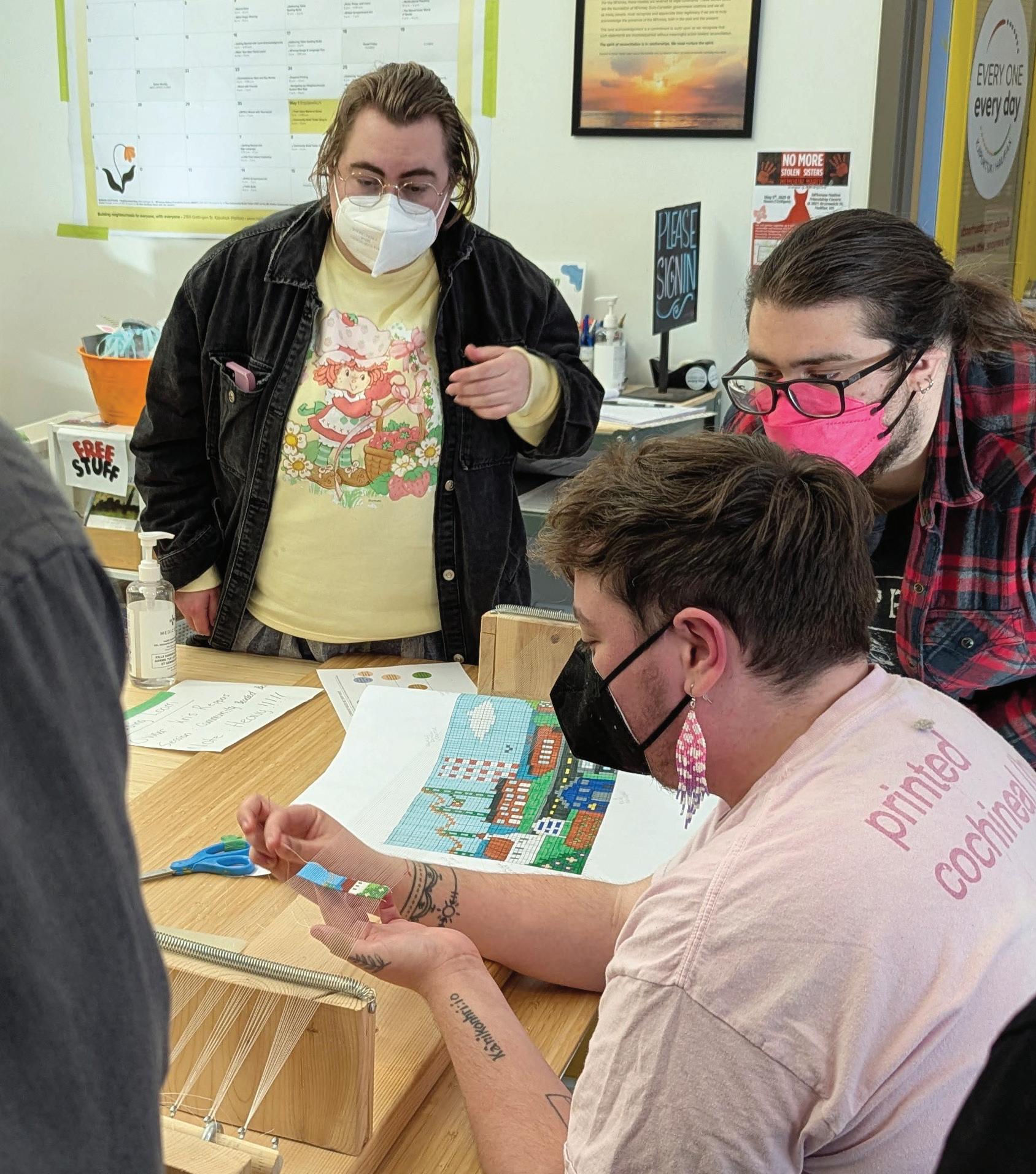
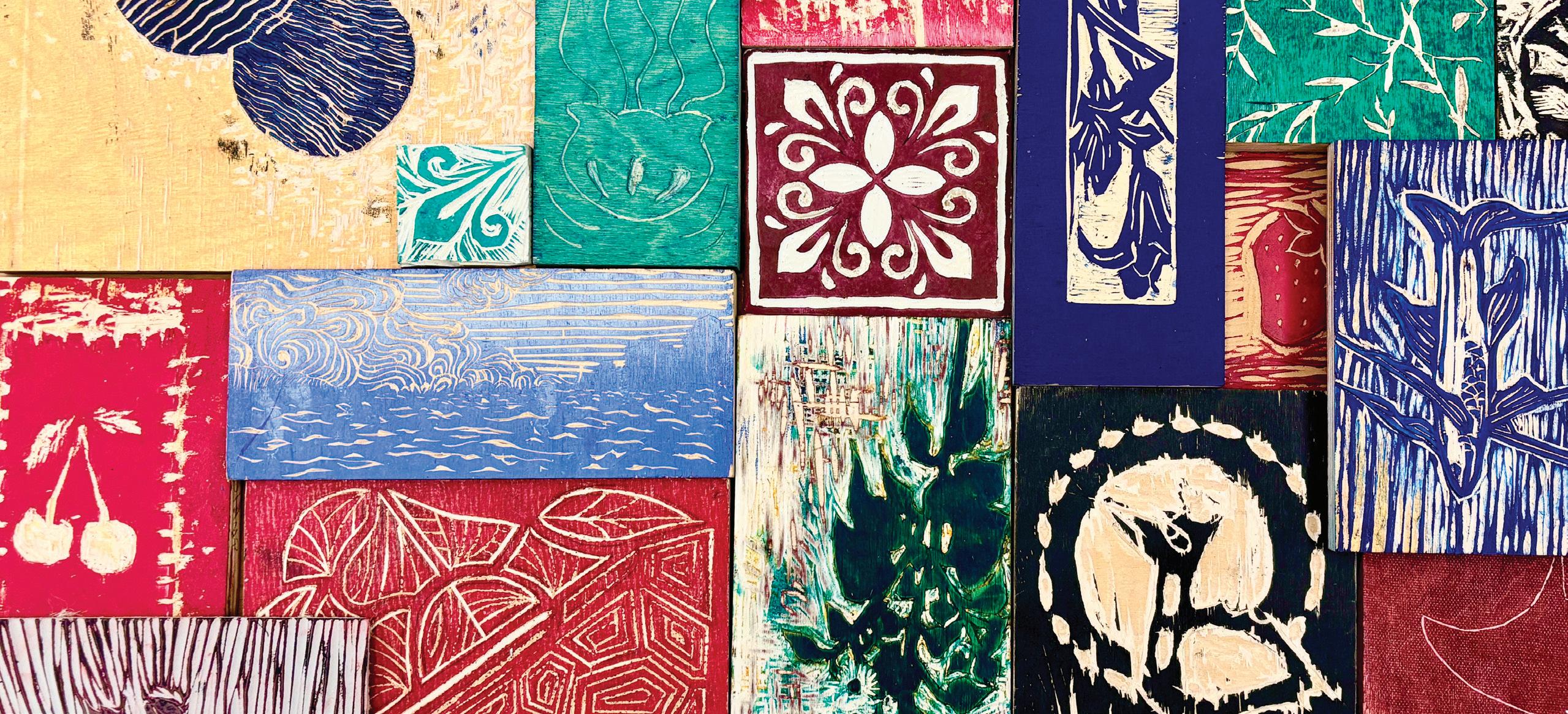
Throughout 2025, residents learned from one another, exchanged skills, and discovered new ideas. Repeat sessions like Slow Printmaking made space for knowledge transfer with the Inkubator Collective, resulting in an exciting exchange where members of the Collective became mentors to residents curious about printmaking. Multi-day sessions like these allow residents to build knowledge gradually while forming connections, reflecting EOED’s goals by building networks of learning and mentorship and supporting skills and resource sharing.
“This can be said for most sessions at EOED, but Slow Printmaking in particular [...] quickly become a space for friendships, sharing, and meeting new people who share similar interests. We saw people who met on the first day sitting, talking and learning together throughout the second, third and fourth sessions.”
Neighbourhood Project Designer
Building Confidence, Learning New Skills
Two important and connected subthemes that we see here are building confidence and learning new skills. In 2025, residents learned how to use power tools, speak in group settings, and lead activities. They tried new foods, spoke a new language, and learned how to thread a sewing machine. With hosts, many shared that leading a session helped them to step out of their comfort zones, with some taking the opportunity to try new facilitation methods. More than once, hosts shared that they began their session feeling nervous and, by the end, felt at ease and confident. During Fall Program, 100% of respondents to the Host Feedback Survey said that they would host another session with EOED.
We see that EOED’s structure of providing low-barrier opportunities allows residents to build confidence at their own pace. This freedom to build skills over time and engage in a way that feels good promotes EOED’s goal of fostering spiritual, physical, mental, and emotional wellbeing. Inclusive and meaningful participation is present when residents see themselves and their abilities reflected in the spaces and activities happening in their community. Supporting residents to realize the potential of their individual and collective agency in shaping their neighbourhoods is what EOED is all about.
“Our recent build session was a wellattended and successful event, marked by strong participation and a great sense of accomplishment. [...] Participants worked collaboratively and were able to complete one full bench, setting a solid foundation for the remaining builds in the upcoming two sessions. The atmosphere was energetic and supportive, with skills being shared and new techniques learned.”
Neighbourhood Project Designer
“I liked that there were multiple sessions so we could slowly build on our skills over time.”
Participant, Slow Printmaking series
“The slower pace absolutely supported prolonged engagement in the practice of relief printmaking as evidenced by the collection of high-quality work produced by participants.”
Host, Slow Printmaking series
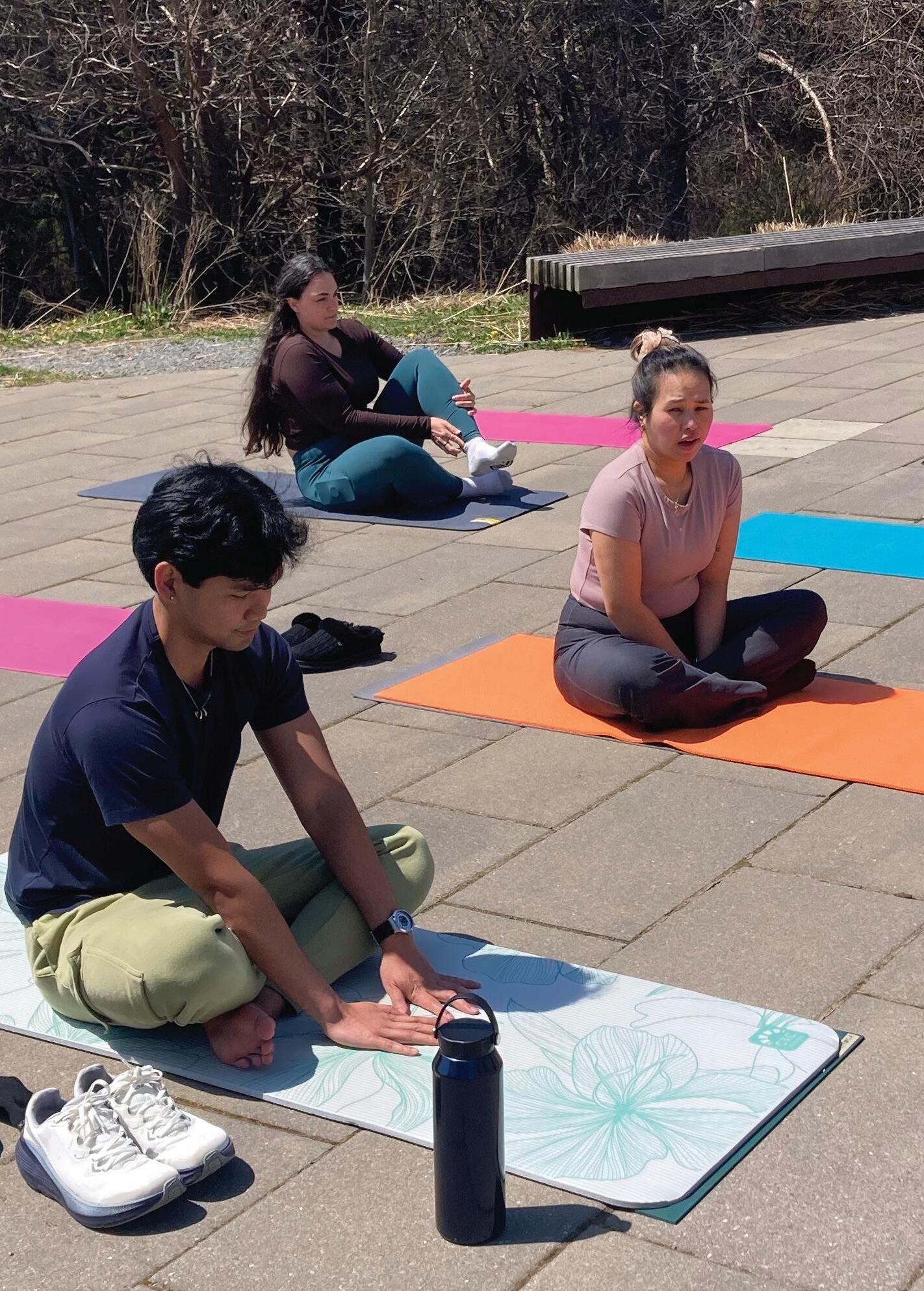
Growth in Participation
Participation at Every One Every Day in 2025 tells a clear story of growing momentum and deepening engagement across the North End.
More residents are not only attending sessions, but returning, bringing others with them, and choosing to spend time in shared community spaces like the Neighbourhood Shop and Community Build Trailer. This growth reflects the strength of EOED’s approach: offering accessible, resident-driven opportunities that respond to community interests while fostering connection, learning, and belonging. At the same time, this increase in participation has been thoughtfully balanced with team capacity, demonstrating that it is possible to scale impact in a way that remains sustainable, responsive, and grounded in care for both staff and community.
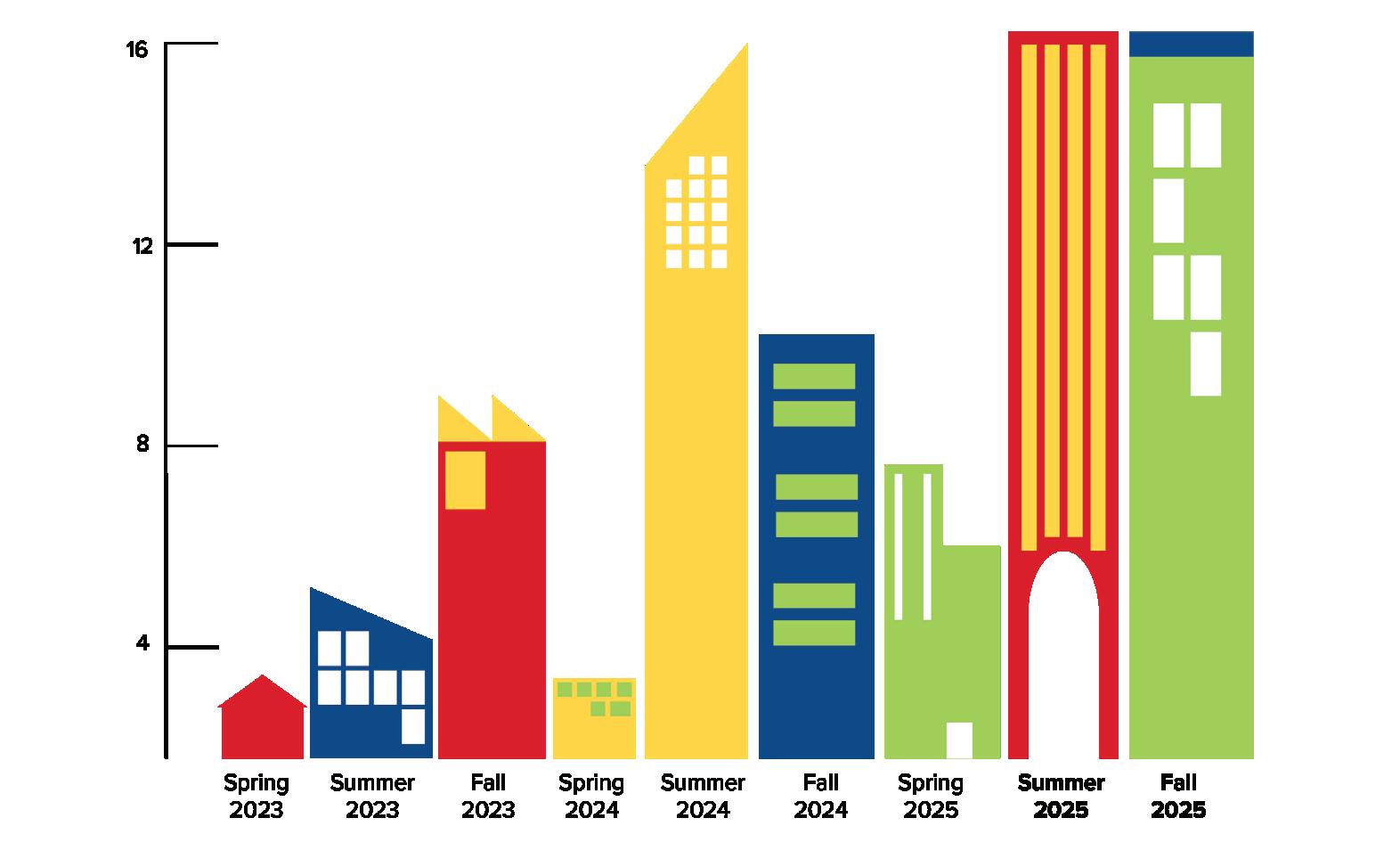
Participation in sessions at Every One Every Day increased across the board in 2025. All three of our seasonal programs saw increased
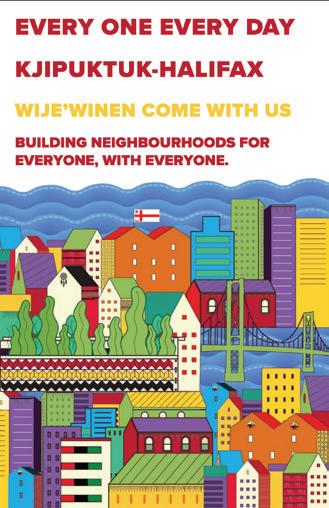
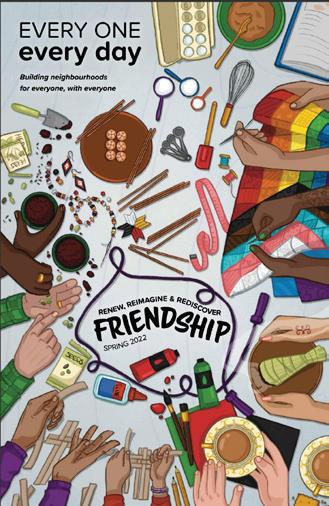
Spring 2022
New: 115
Returning: 94
Total: 209
Sessions: 28
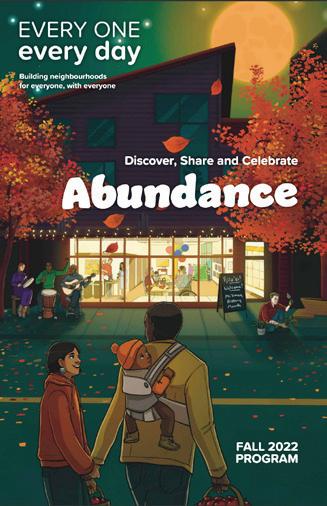
Fall 2022
New: 95
Returning: 124
Total: 219
Sessions: 30
participation, leading to an overall annual participation jump of 79% from 2024 to 2025. Seasonal participation increased by 97% in Spring Program; 225% in Summer Program; and 33% in Fall Program compared to 2024. This steady increase is evidence that North End residents enjoy and find value in spending time at the Neighbourhood Shop and Community Build Trailer. Qualitative data collected throughout 2025 tell us that residents see EOED as a place for learning new things and building relationships in an adaptive, welcoming environment.
An important consideration in program planning is the capacity and wellness of our team. In Spring 2025, we reduced the number of sessions offered by 32% compared to Spring 2024 to balance workloads within the team. Despite this slight reduction, we saw a notable increase in participation compared to the previous year. In Summer 2025, we piloted a fuller program;
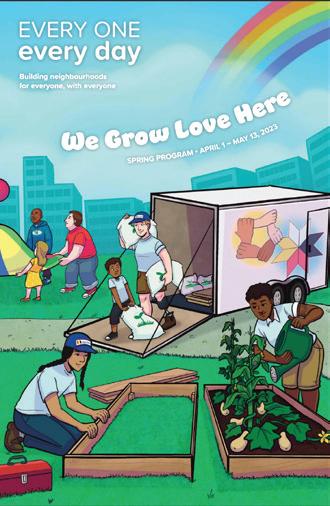
Spring 2023
New: 208
Returning: 285
Total: 493
Sessions: 63
Summer 2023
New: 128
Returning: 90
Total: 218
Sessions: 31
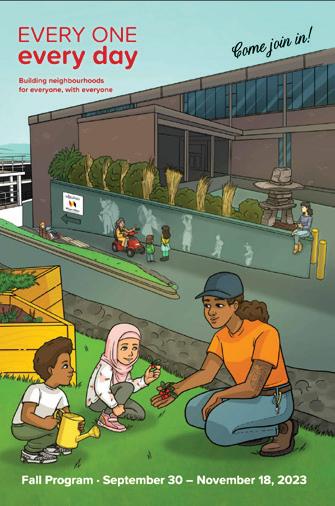
Fall 2023
New: 211
Returning: 402
Total: 613
Sessions: 72
offering almost double the number of sessions than Summer 2024 over the same four-to-five-week period. This pilot was popular among residents, evidenced by increased participation and positive responses in resident feedback surveys. Our team reported that this increase in the number of Summer Program sessions was manageable internally, due in part to increased capacity in the Neighbourhood Project Design team. Strong internal communication practices and adaptable workloads help the EOED team to maintain balance and avoid burnout while offering a wide variety of sessions aligned with the interests of the North End community.
Fall Program 2025 was a milestone for EOED, as participation in sessions, special events, and Open Shop hours surpassed 1000 for the first time since launching in 2022, landing at 1148 interactions. The most popular sessions by attendance continue to be ones grouped under the ‘Truth and Reconciliation’ and the ‘Let’s Make’ project buckets.
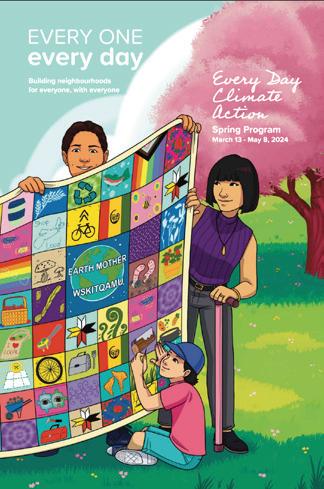
Spring 2024
New: 228
Returning: 269
Total: 497
Sessions: 79
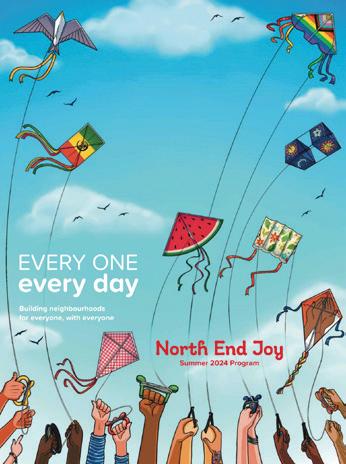
Summer 2024
New: 62
Returning: 146
Total: 208
Sessions: 17
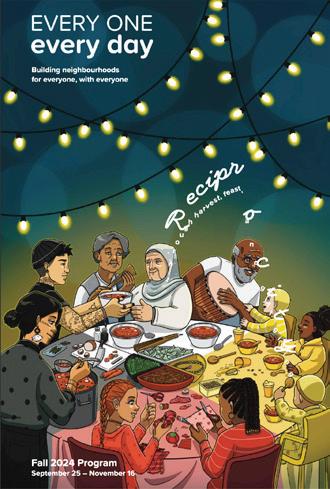
Fall 2024
New: 289
Returning: 574
Total: 863
Sessions: 48
2025: Shows the highest peaks yet, with Spring reaching 977 and Fall surging to a record 1,148!
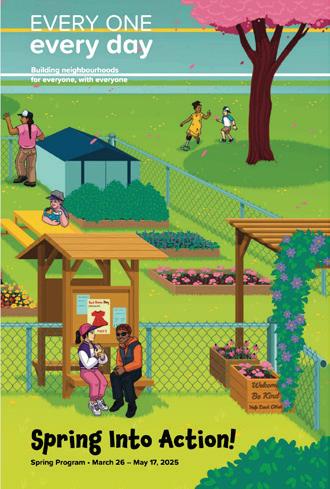
Spring 2025
New: 334
Returning: 643
Total: 977
Sessions: 54
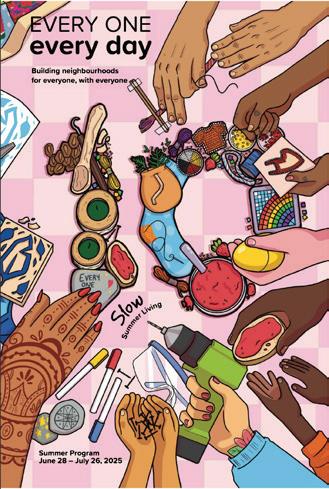
Summer 2025
New: 345
Returning: 331
Total: 676
Sessions: 35
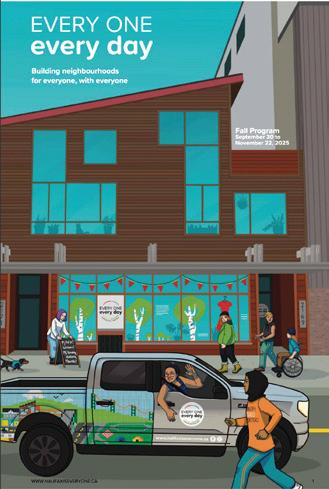
Fall 2025
New: 512
Returning: 636
Total: 1148
Sessions: 55
Growth in Participation
Our Growing Community
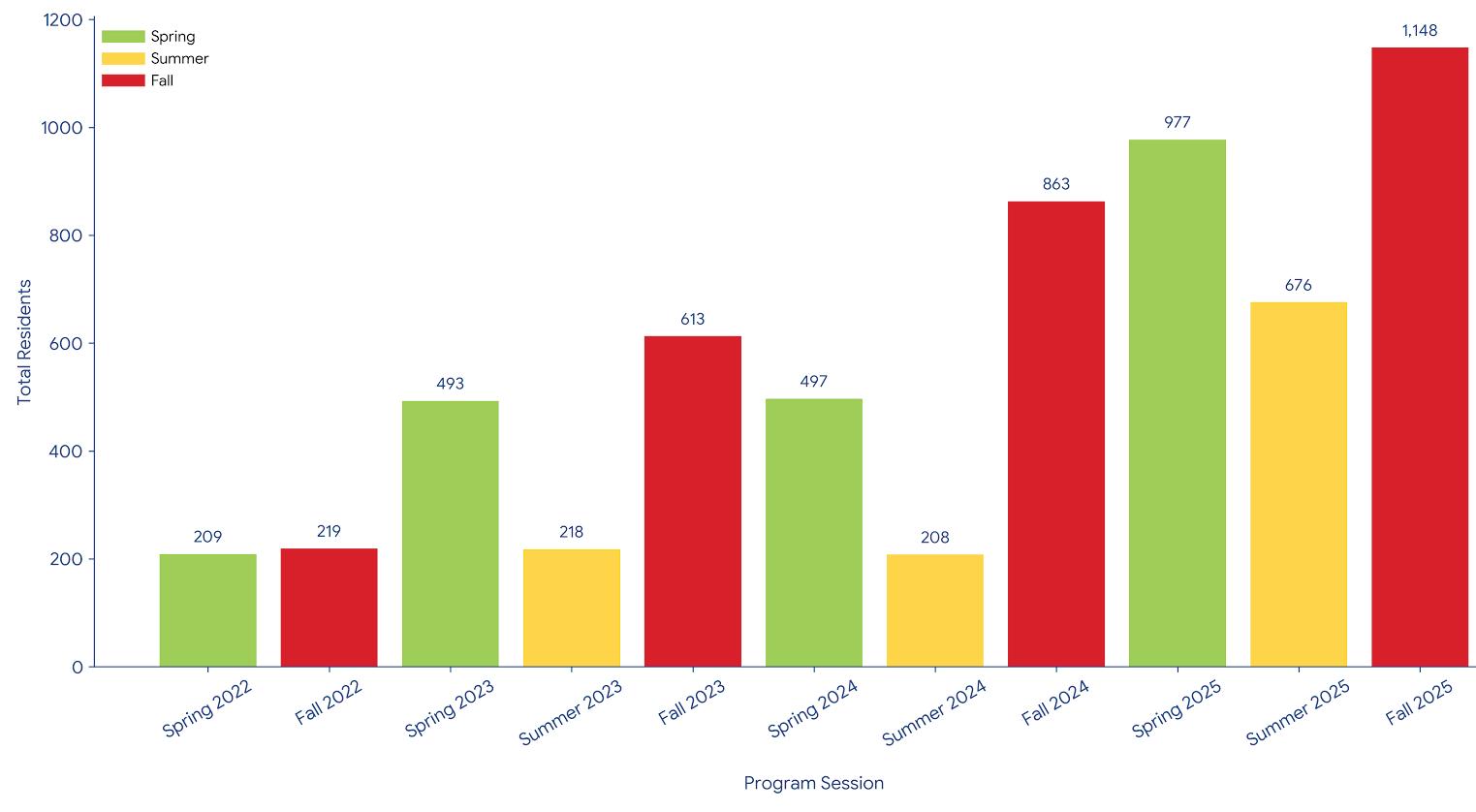
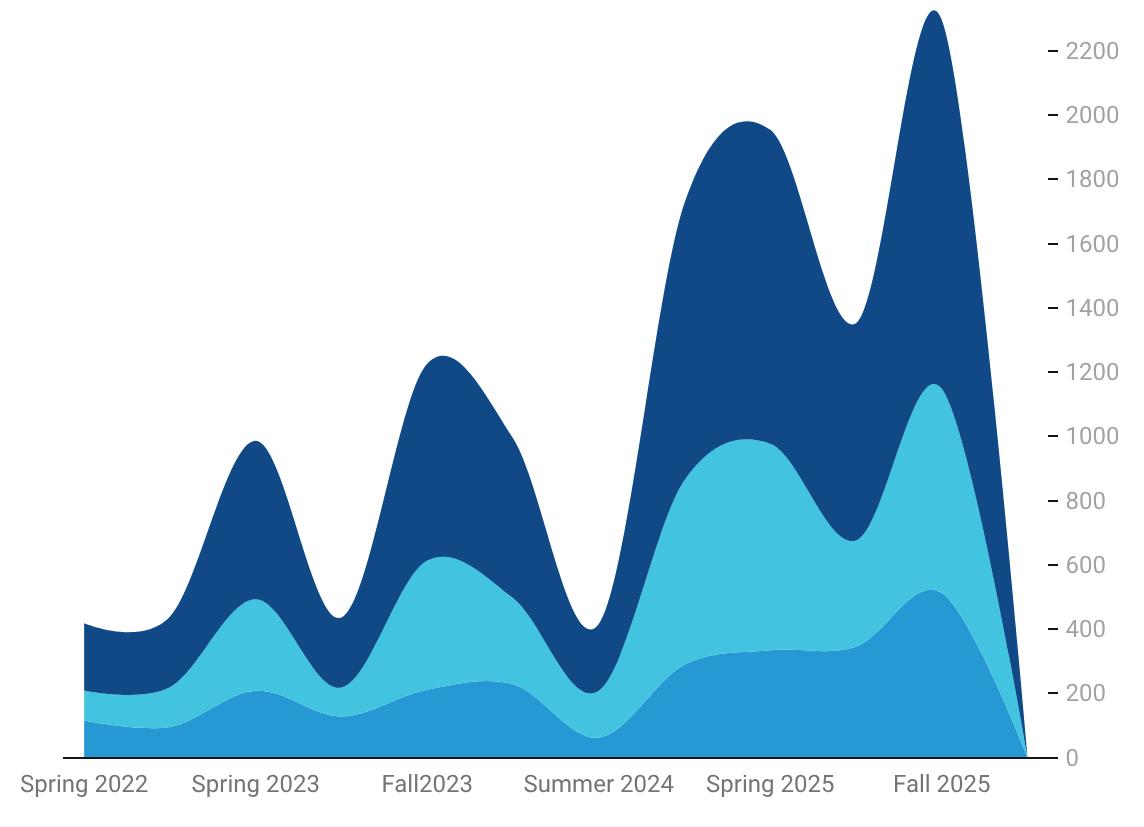
Growth in New and Returning Residents
*numbers shown are total engagements across sessions, special events, and open shop hours.

200
Number of Residents
Average number of participants per session
Number of Participants
Program
Inkubator Collective
A Collaborative Approach to Business Development
The Inkubator Collective is part of Every One Every Day’s Collaborative Business Program, a community-based initiative designed to support local makers and emerging entrepreneurs through practical skill-building, peer support, and realworld opportunities to strengthen and grow their collaborative enterprises. The Collaborative Business program is designed to support collectives through learning, making, and selling across multiple 8-week programs. Each cycle is part-time and flexible, providing access to shared workspace, tools, and a supportive network to help bring your ideas to life. Participants work alongside their neighbours to explore possibilities, build practical skills, and reach goals that matter to the collective. They shape the pace and direction, and Every One Every Day is there to support at every step of the way.
Our aim is to support opportunities for residents to collaborate on business ideas in a way that is adaptable, low risk, and rooted in community values - all while approaching business through an equitable lens.
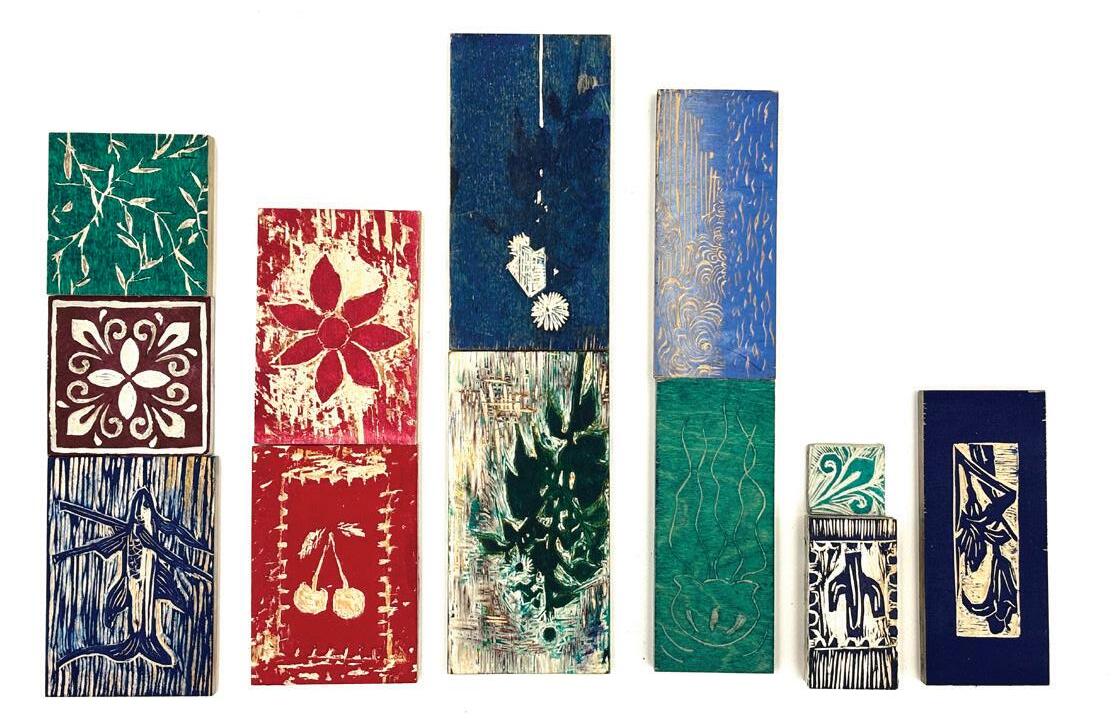
In 2025, the Inkubator Collective began as a way to bring people together who were interested in diving into printmaking, from first sketch to a finished edition, and who were interested in exploring how that interest could grow into a thriving, collaborative business.
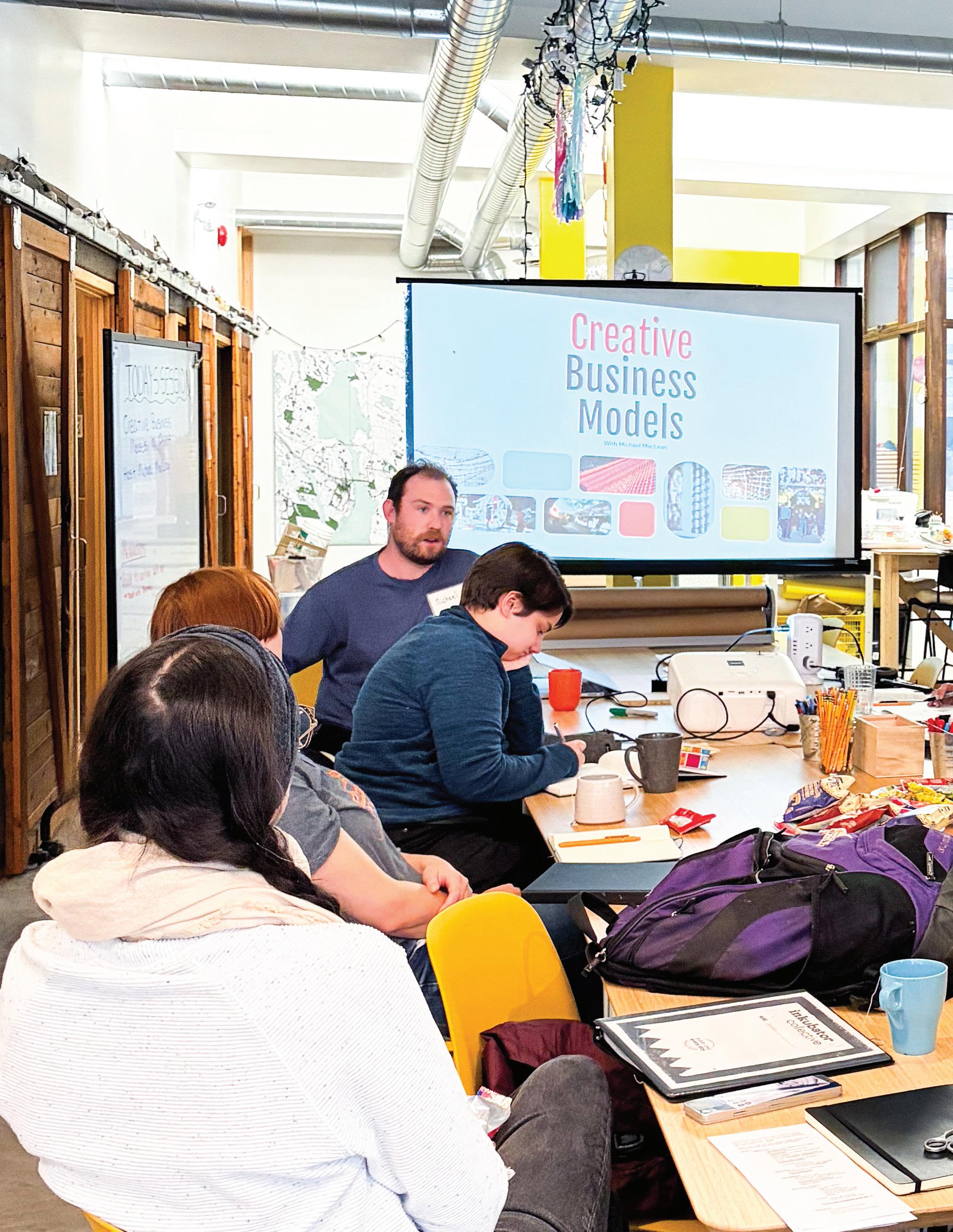
From October 2nd to November 22nd, EOED developed and delivered the Inkubator Collective Cohort, supporting participants through an applied learning journey focused on learning and building practical skills from a printmaking mentor, and increasing confidence in entrepreneurship and
collaborative enterprise. Participants engaged in structured sessions that combined business planning support, peer learning, hands-on activities, and facilitated discussion. The cohort created space for participants to explore their goals, identify barriers, test and refine ideas, and build clarity around next steps—while also strengthening relationships with one another and becoming more connected to EOED’s broader support ecosystem.
The Inkubator Collective showed strong commitment throughout the program, maintaining an 82% attendance rate across 11 facilitated sessions. Beyond the cohort gatherings, members also contributed to the broader Every One Every Day program by supporting 2025 Fall Program by helping facilitate four Slow Printmaking sessions for residents interested in exploring printmaking. These sessions welcomed 101 participants in total, creating opportunities for neighbours to learn new skills and demonstrating the cohort’s contribution to peer learning and community skill-sharing.
Key areas of progress included participants developing practical printmaking skills and deepening their understanding of the full printmaking process. Sessions such as Drawing for Print, Lino and Woodcut techniques, Texture exploration, and Tool Sharpening supported participants in building their technical skills. Through Test Printing, Quality Checks and Revisions, and Final Print Runs, participants refined their designs and improved the quality of their work. Additional sessions on Creative Business Models in Print and Preparing for Markets and Applications helped participants consider how their work could be presented and shared beyond the program.
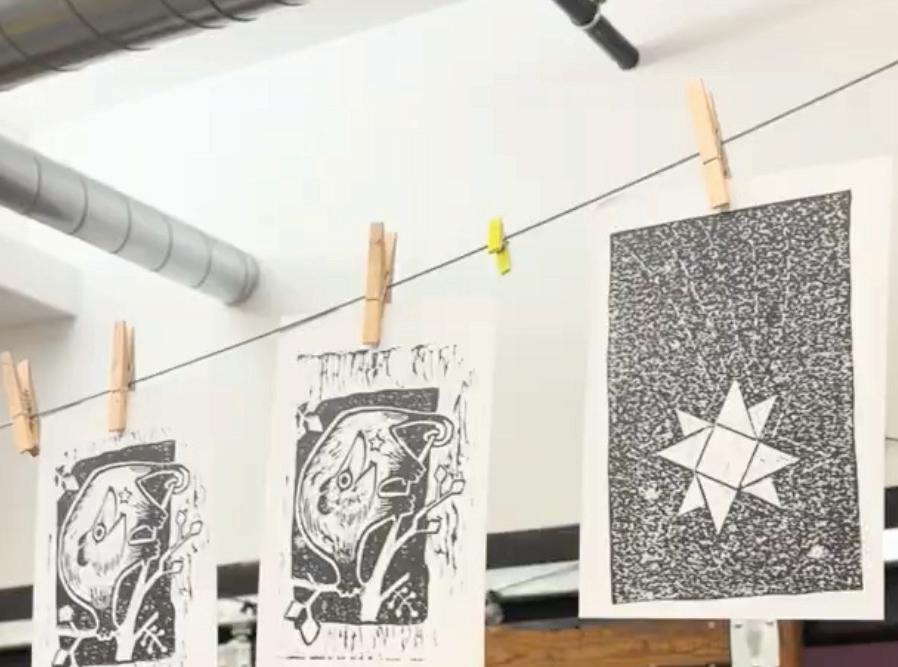
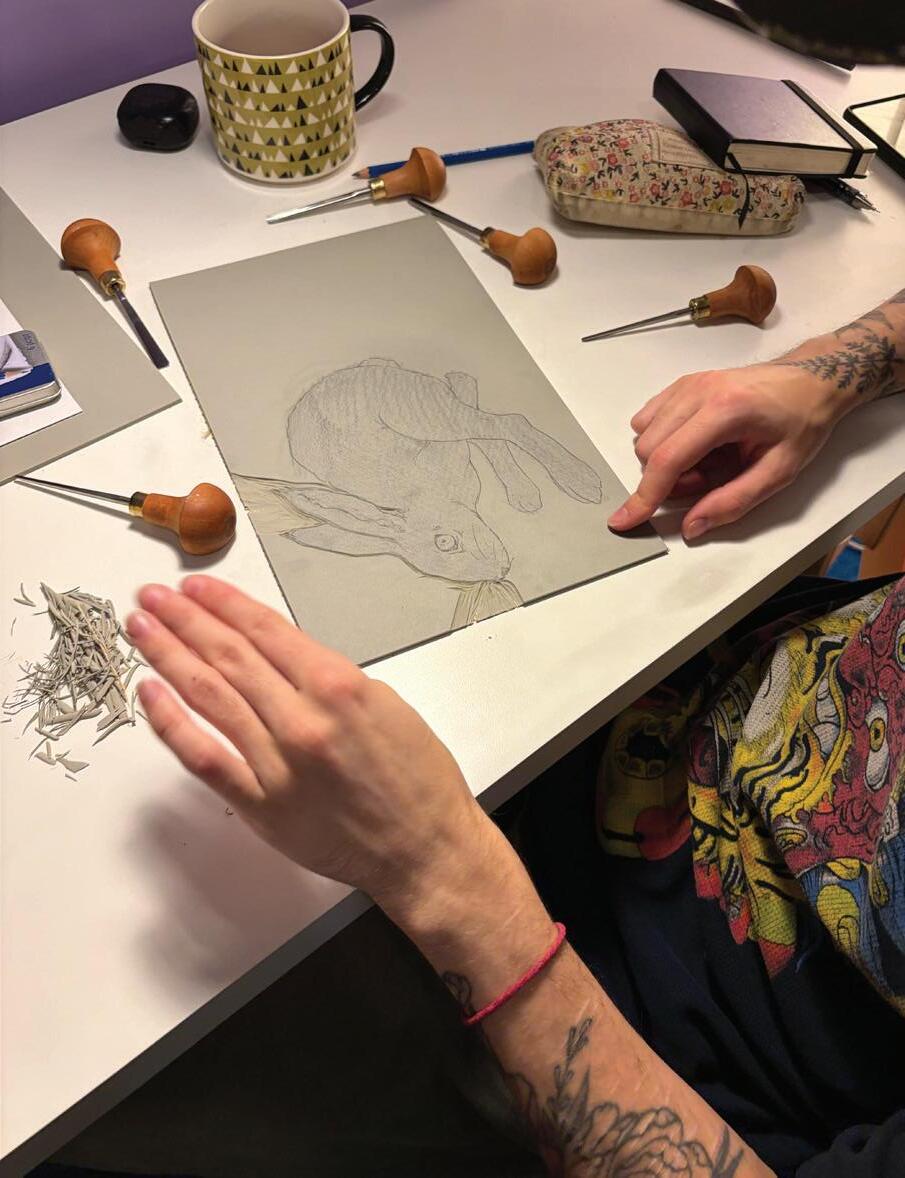
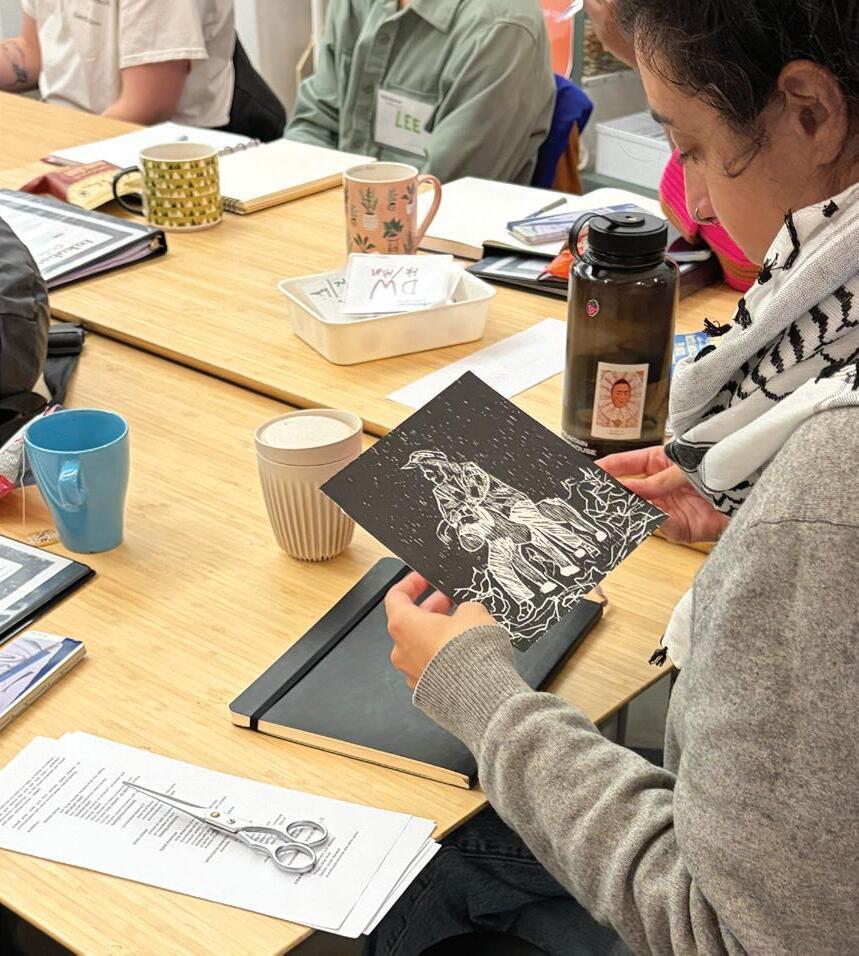
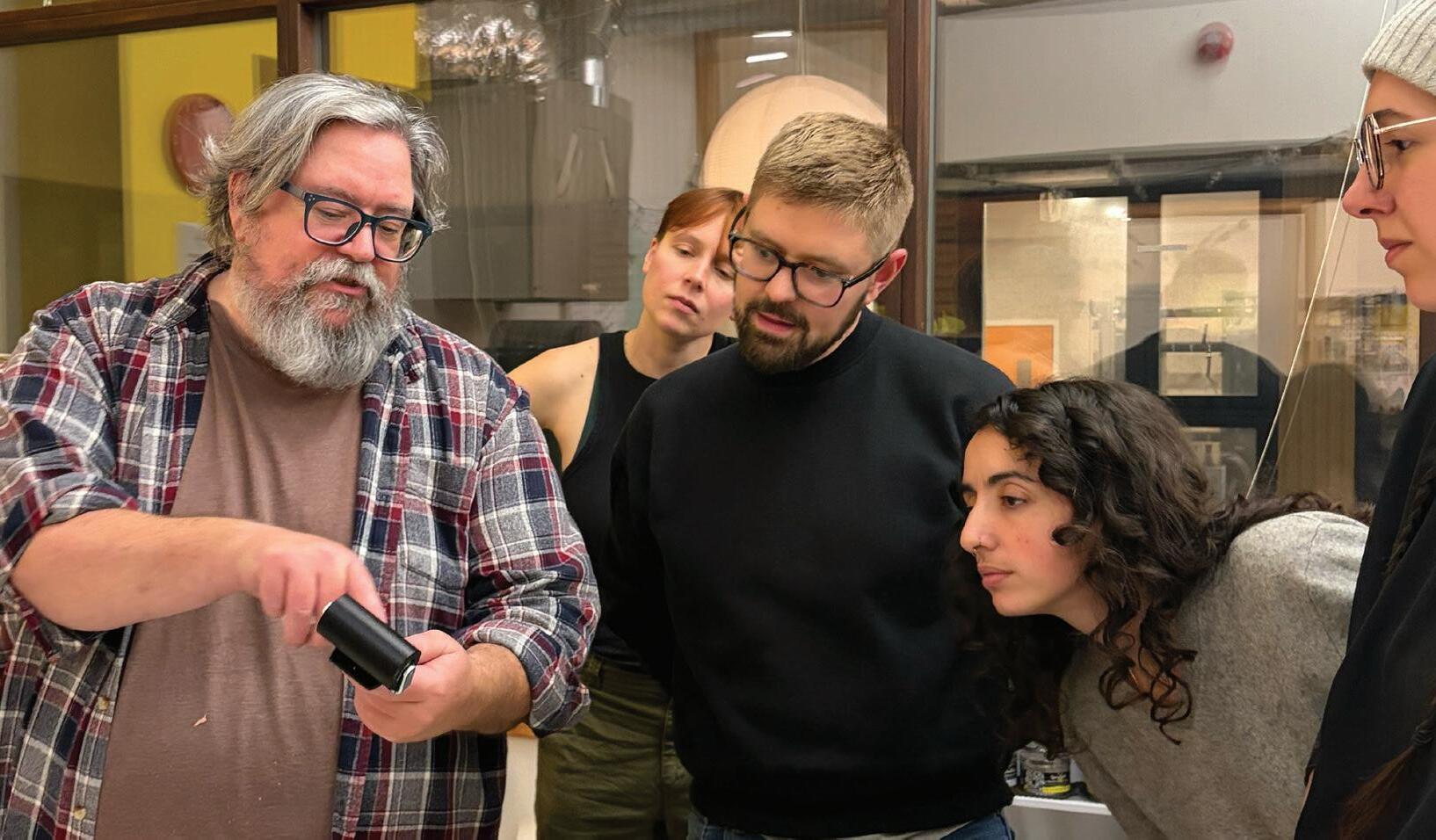
Overall, the Inkubator Cohort demonstrated strong engagement and momentum, contributing to EOED’s broader goal of advancing community-based economic participation and supporting emerging entrepreneurs through accessible, relationshipbased programming. Successes included consistent participation, increased confidence among cohort members, and tangible progress in
practical skills learning and business development goals. Lessons learned highlighted the value of balancing technical skill-building with space for relationship-building and peer support, as well as the importance of meeting participants where they are—offering flexible pathways that support both early-stage exploration and more advanced technical skill needs.

Powering Community Projects
Mobile Infrastructure for Participation
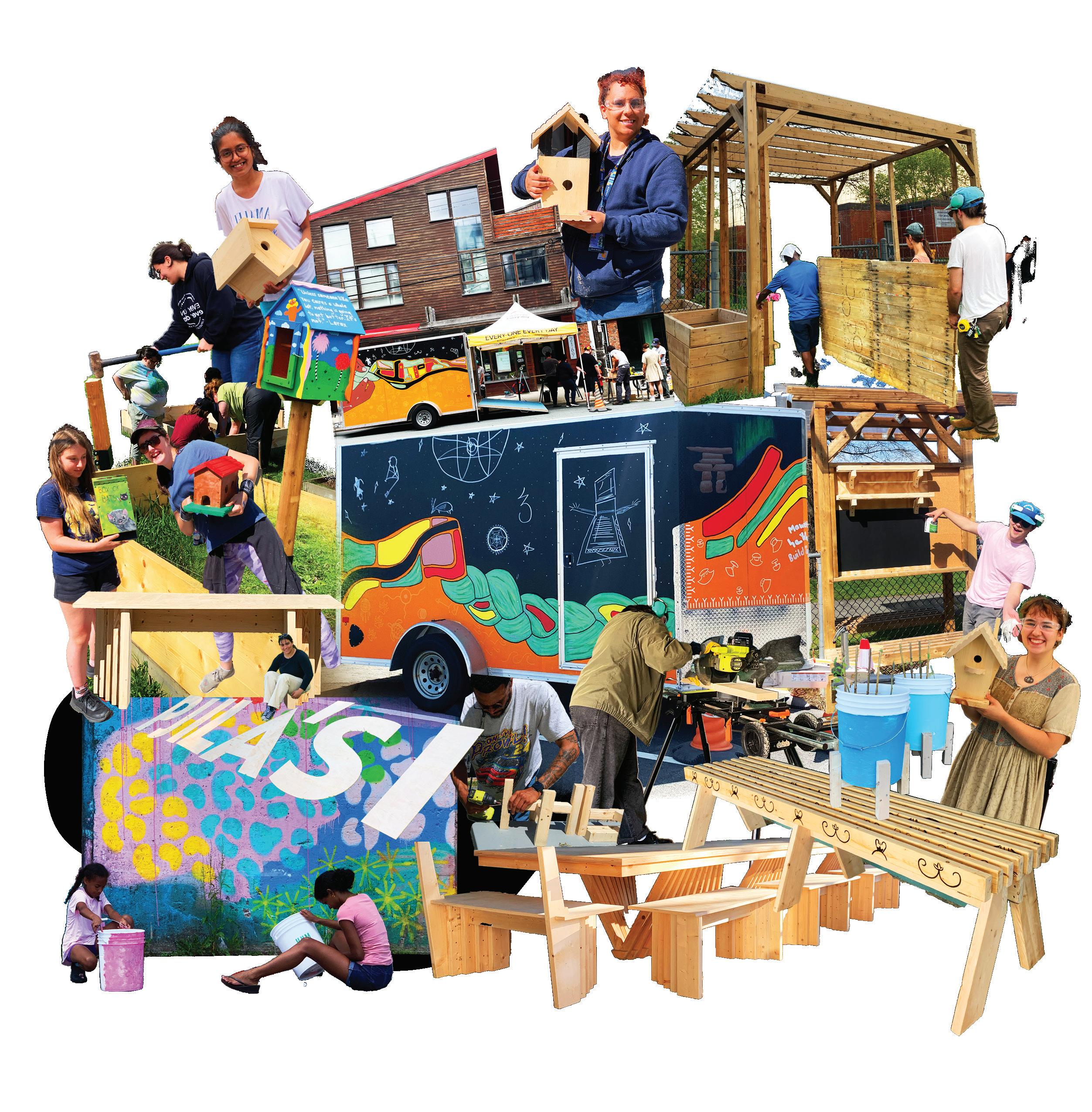

The Community Build Trailer (CBT) is a mobile, hands-on resource that brings tools, materials, and opportunities for making directly into neighbourhood spaces. Designed to reduce barriers to participation, the CBT allows residents to gather, learn practical skills, and work together on projects that reflect their interests and needs. It operates as both a shared resource and a platform for connection, where knowledge is exchanged, confidence is built, and relationships are strengthened through doing. By meeting people where they are and inviting them into collaborative, purposeful activity, the CBT supports a culture of participation that is rooted in accessibility, creativity, and collective care.
In 2025, the CBT continued to grow as a dynamic and visible expression of what it means to build community together. Moving across neighbourhood spaces, the CBT creates opportunities for residents to learn practical skills, collaborate on meaningful projects, and shape the environments they live in. More than a mobile workshop, it acts as a catalyst for connection, drawing people in through curiosity and shared purpose. Throughout the year, we saw how accessible, hands-on experiences spark creativity, strengthen relationships, and reveal the depth of knowledge and care already present within the community.
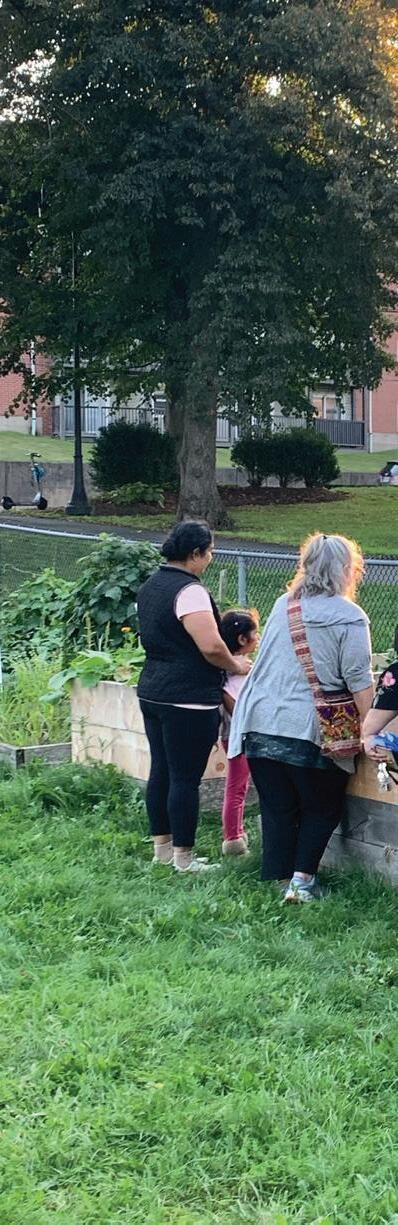
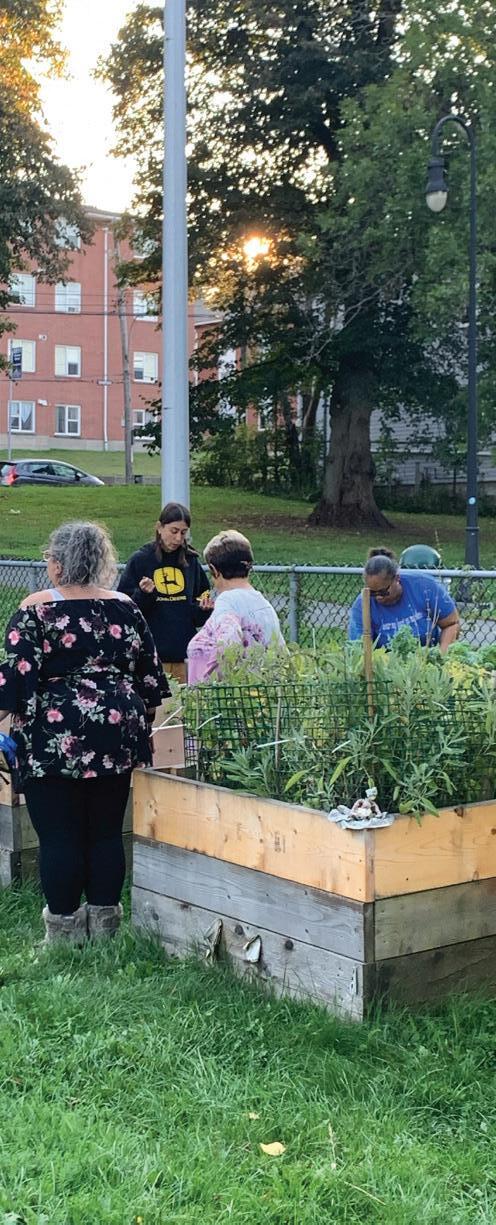
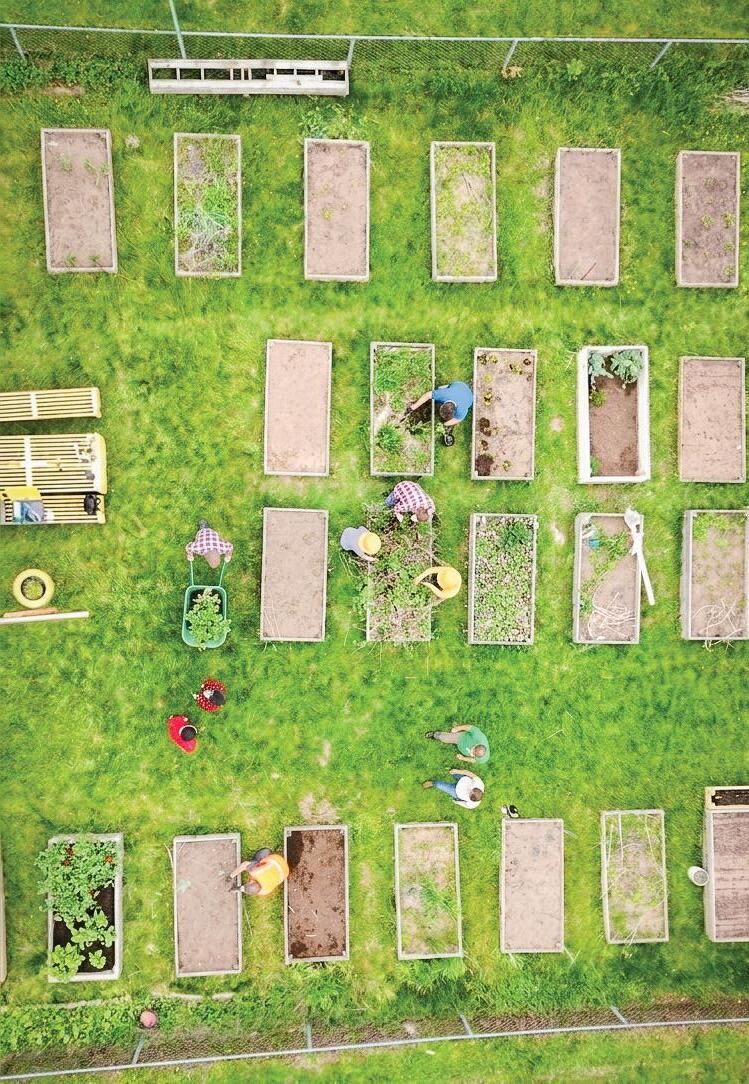
The spring and summer seasons began with a continuation of our work at the George Dixon Centre alongside the Bill Fenton Community Garden group. Together, we completed trellises, constructed additional garden beds, and adapted existing ones to improve accessibility. We also built a new community composting system and hosted sessions focused on its setup, maintenance, and use.
Projects at George Dixon are always a highlight, as the trailer is positioned directly in the heart of the community. As local resident Toonie shared, “I can see when the trailer door is open from my window… I know to come over and see what’s up.” The CBT is more than infrastructure; it is an open invitation to gather, participate, and create together. After wrapping up a “little free lending library” with local youth, the trailer moved to the Mi’kmaw Native Friendship Centre, where staff and community members contributed to the final builds of the Shape This Space project.
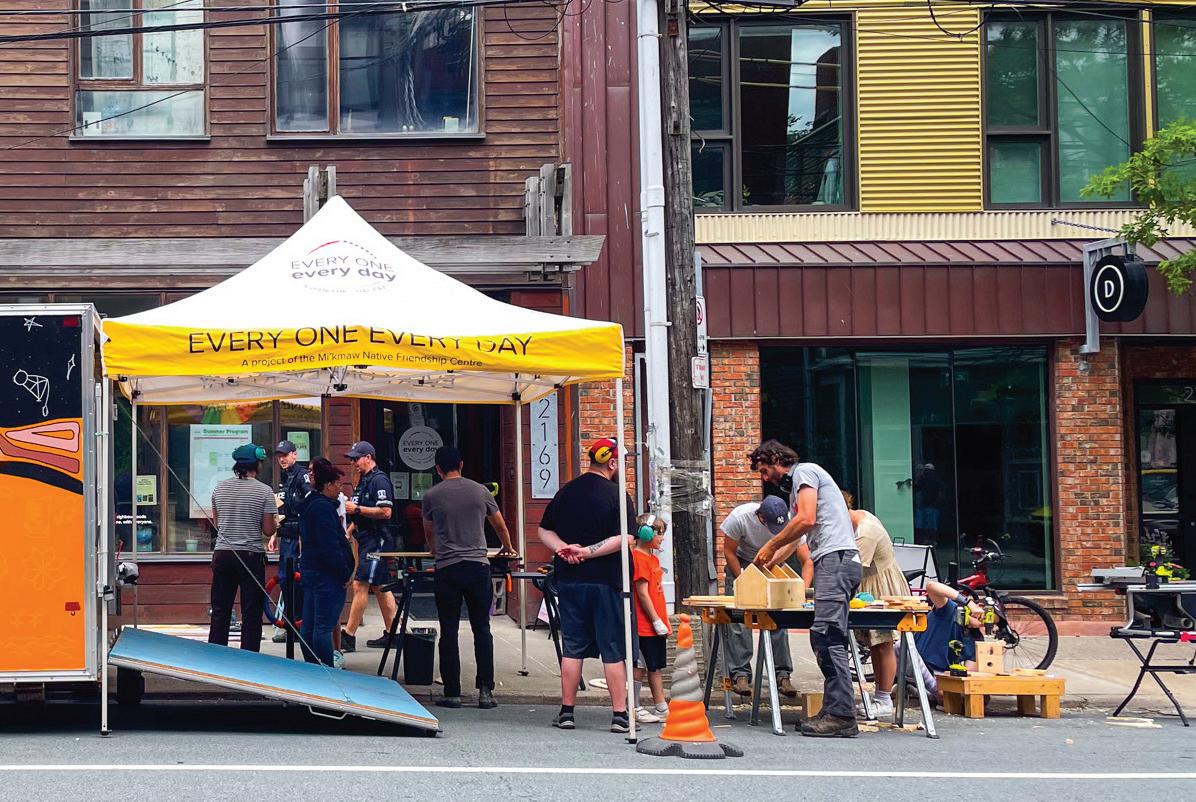
Over the summer, the CBT collaborated with Phoenix Youth Program for a full day build in Mulgrave Park. Residents worked together to construct planter boxes and bucket gardens, with a strong intergenerational presence. This became our highest attended single build day to date, with more than 45 participants. Another standout was the “Birds, Bats and Building Basics” session, which transformed the streetscape in front of the Neighbourhood Shop on Gottingen Street into a vibrant hub of learning and activity. This well attended event highlighted the versatility of the CBT as a truly mobile tool, capable of activating and transforming public space.
As the trailer moved into the fall season, sessions evolved alongside community interests. A community design session for a rainwater collector brought together a diverse mix of residents and skills. While some focused on gardening needs and others on construction, one group prepared and shared soup, and another developed a computer program using GPS coordinates to calculate the surface area needed for water collection. It was a powerful example of what becomes possible when community knowledge, creativity, and care come together in one space.
Overall, 2025 was an incredibly productive year for the Community Build Trailer, engaging more than 200 residents, hosting 24 sessions, and completing 15 major build projects, alongside many smaller repairs, lessons, and moments of shared learning.
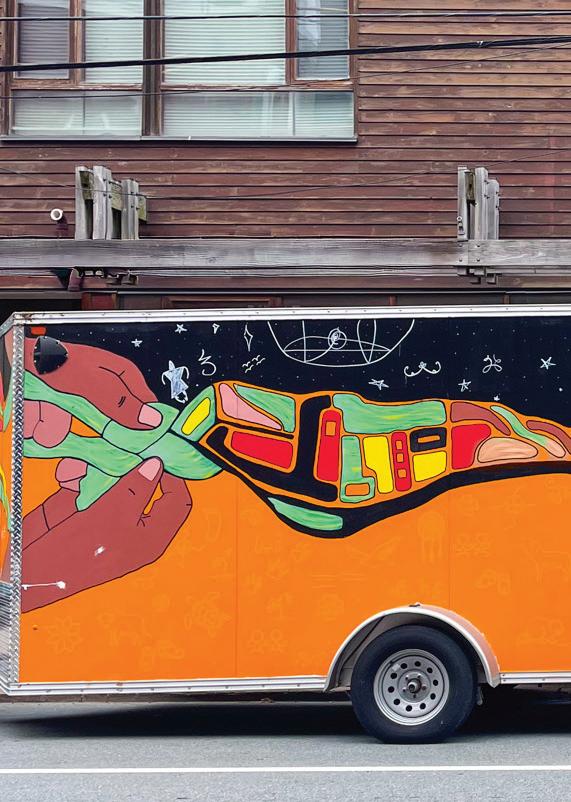
This year also marked a significant milestone with the addition of EOED’s new Ford Lightning, an electric truck, made possible through the generous support of HCi3. This vehicle has transformed the scale and flexibility of the CBT, allowing us to move more easily between neighbourhoods, transport materials efficiently, and support both large and small projects with greater ease. It has quickly become an essential part of our day-to-day operations.
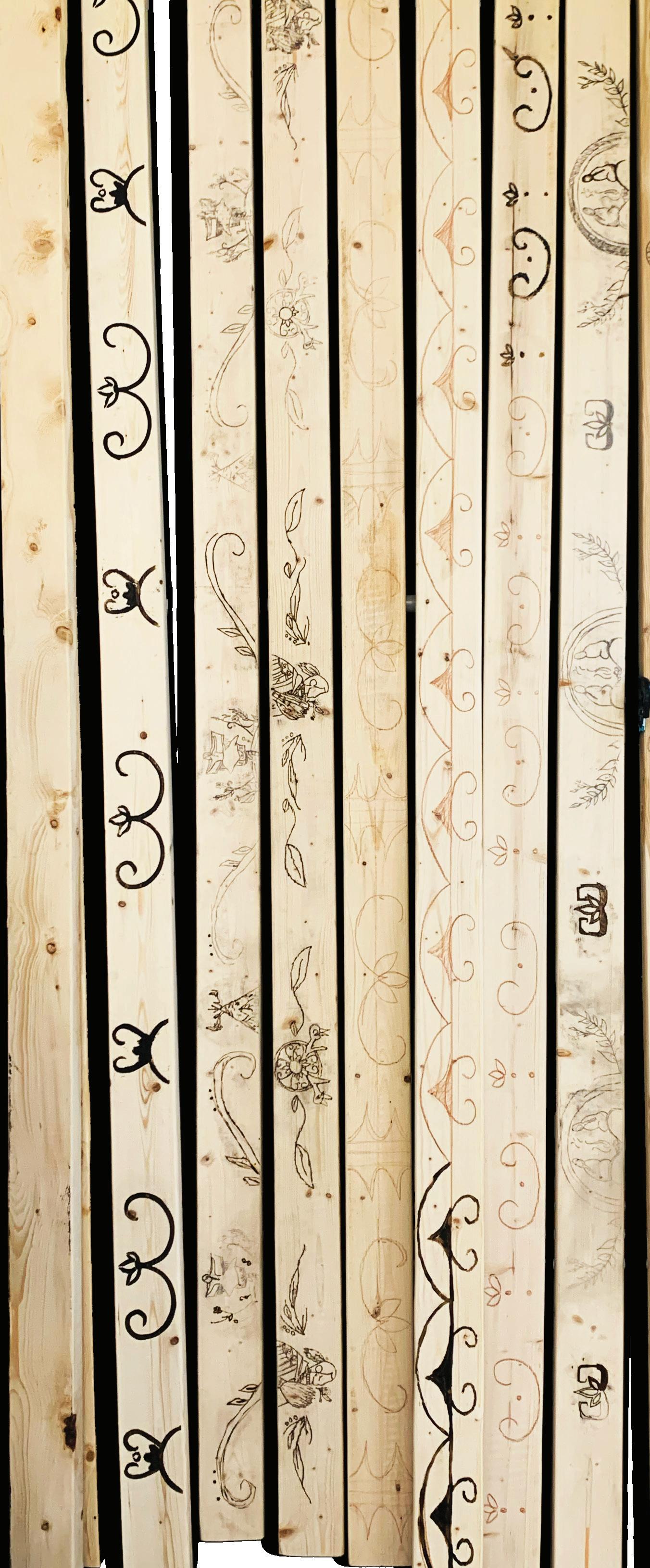
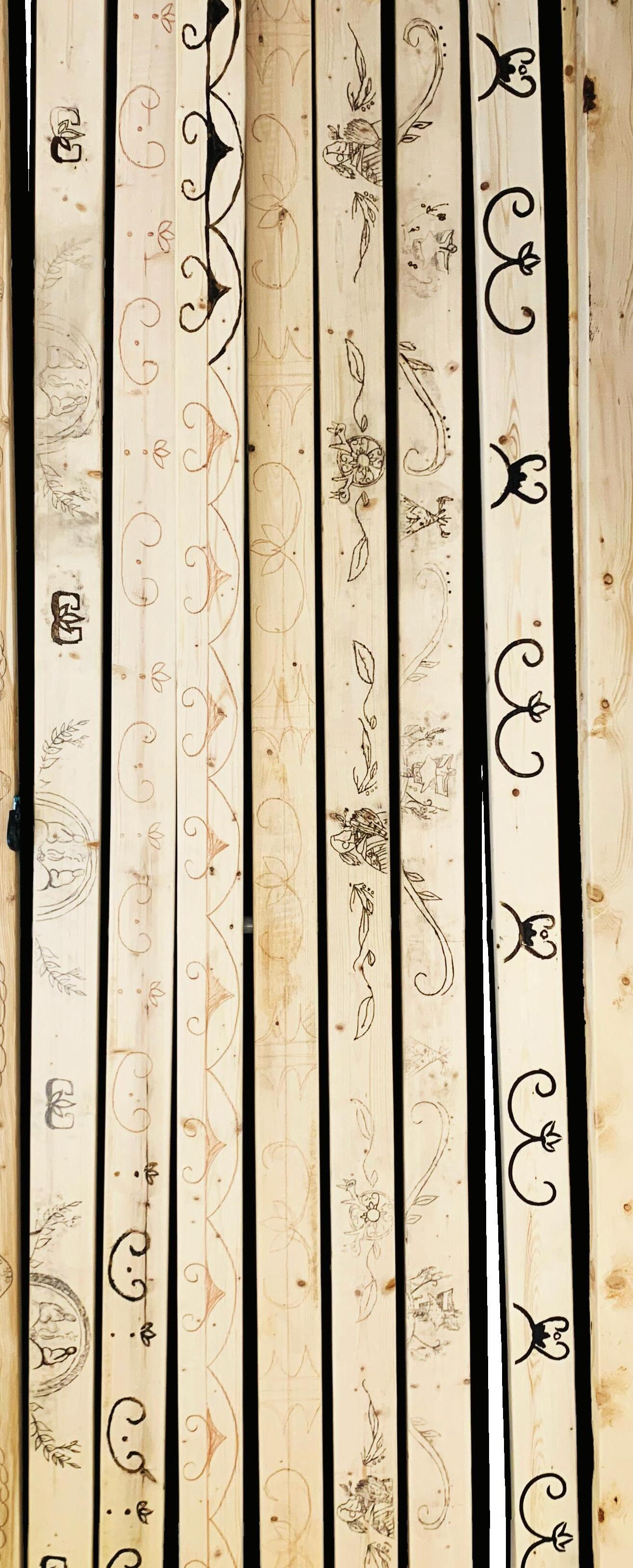
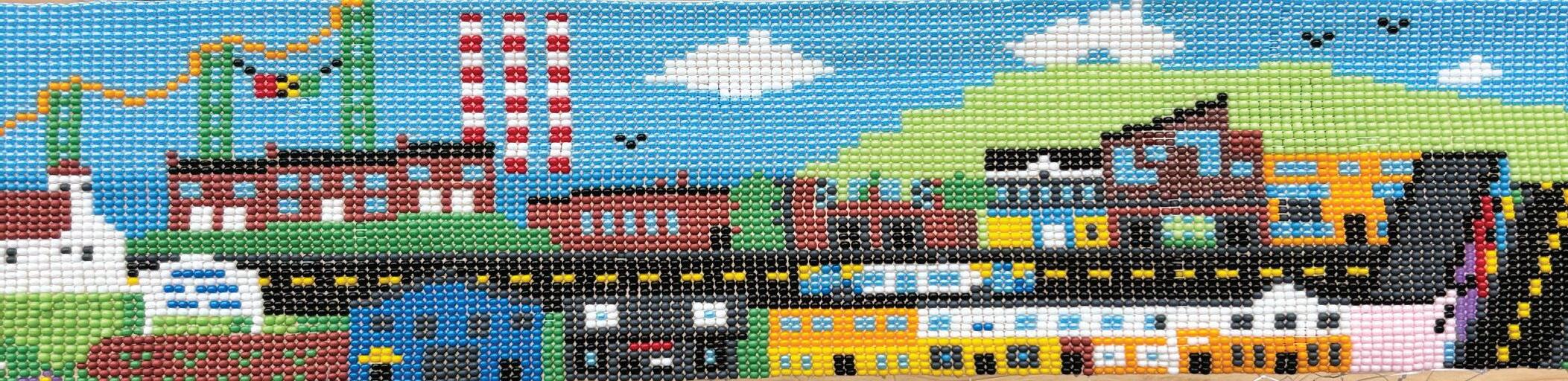
Beyond its function, the truck has become a visible symbol of community pride. Adorned with the Community Wampum Belt design, created collaboratively with residents at the Neighbourhood Shop, it invites curiosity, conversation, and connection wherever it goes. Its role as an engagement tool was especially evident during EOED’s first participation in the Halifax Pride Parade, where it served as the foundation for community made decorations and offered a welcoming, celebratory presence. In this way, the truck not only supports the work, but
Frameworks for Impact
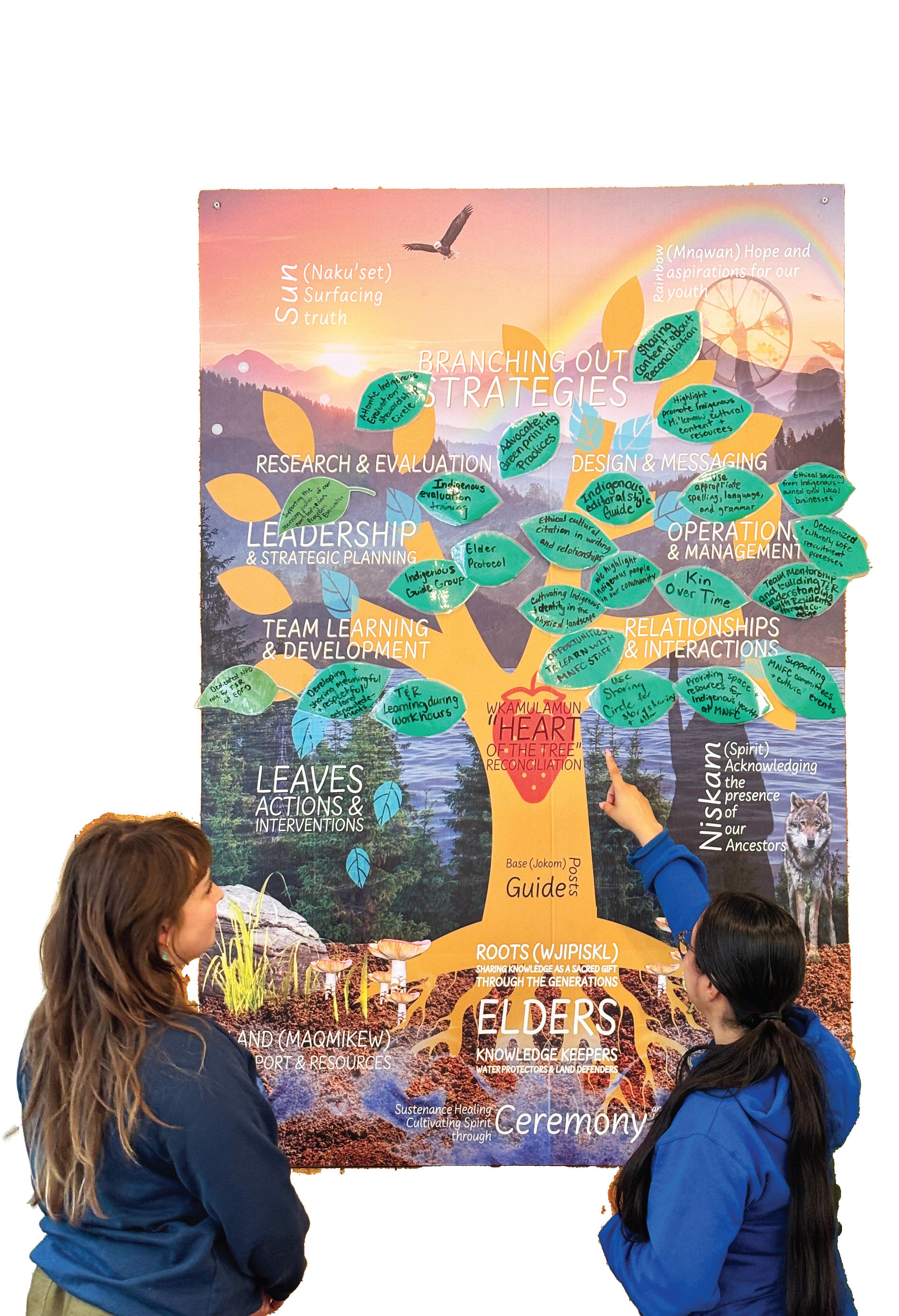
Kokum pictured above
At Every One Every Day, frameworks and tools play an important role in how we approach our work. They help us remain consistent, intentional, and accountable, while also making our approach visible and shareable with others. These tools support reflection, guide decision making, and help communicate how our work operates with neighbours, community groups, and organizations locally and across Turtle Island.
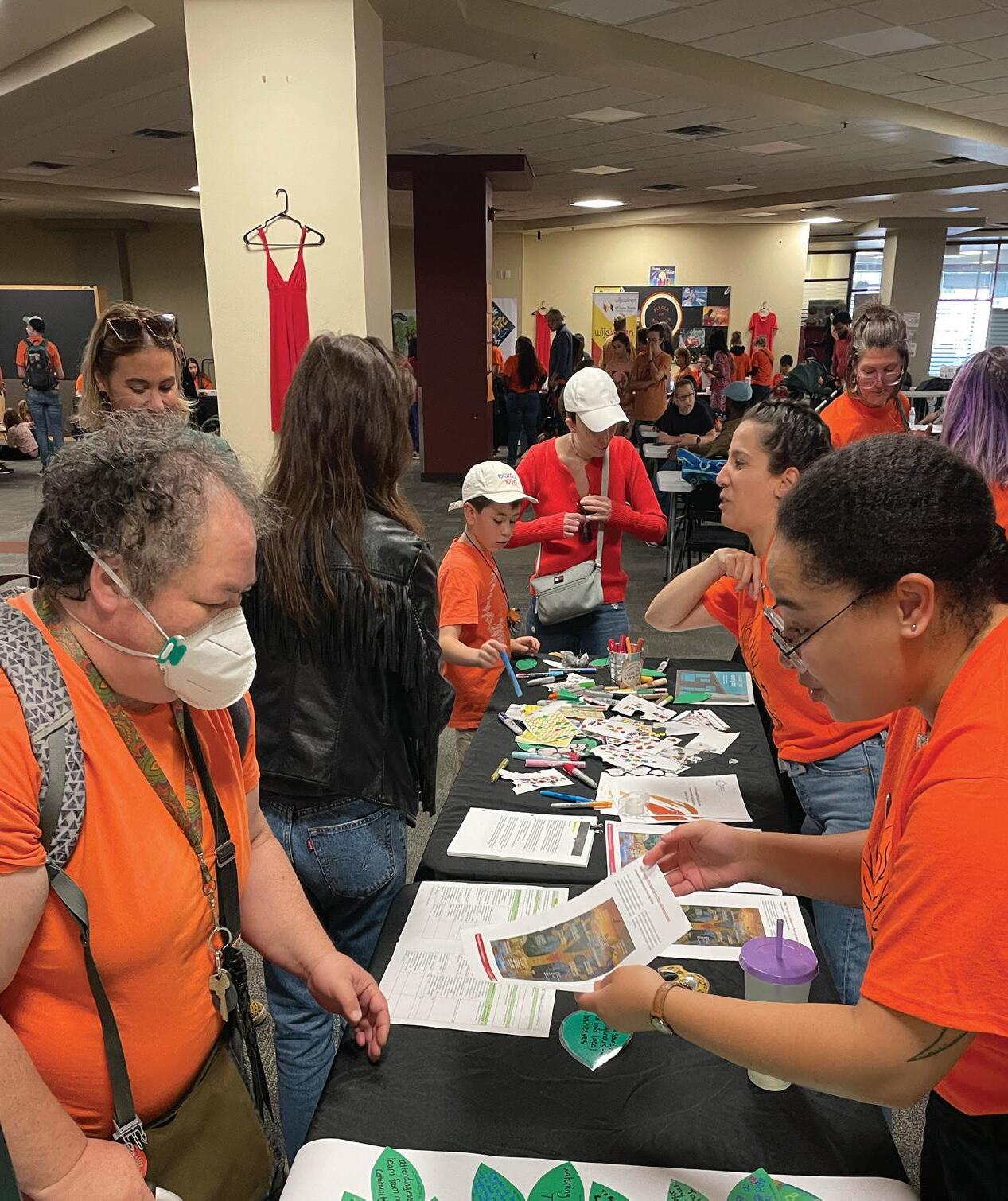
As a project of the Mi’kmaw Native Friendship Centre, Every One Every Day approaches reconciliation at the neighbourhood level. While reconciliation is often discussed in relation to policy or legislation, our work focuses on everyday actions and relationships between neighbours, organizations, and community members. We believe meaningful change can grow through the ways people connect, collaborate, and support one another in their shared community.
One of the key frameworks guiding this work is Kokum, our reconciliation framework. Kokum provides a structure for reflecting on how our actions contribute to reconciliation in practice. Over the past year, we moved through a full cycle of seasons with the framework, allowing us to reflect on the work and deepen our understanding of how it supports our approach. Through collaboration with the Indigenous Guide Group, we also developed a rubric that helps us assess whether the reconciliation actions we identify are meaningful and capable of creating real impact.
Frameworks for Impact
Alongside Kokum, we developed a Partnership Pathway Tool to support conversations with new partners. This tool is used when exploring collaborations with neighbours, community groups, and organizations. Rather than functioning as a formal agreement, the pathway acts as a shared reflection tool that helps determine whether a partnership aligns with our values and approach.
The pathway is represented visually as a circle Alongside Kokum, we developed a Partnership Pathway Tool to support conversations with four guiding questions. These questions invite potential partners to reflect on their connection to the North End, share their values and mission, and consider both what they may need from Every One Every Day and what they may be able to offer in return. In keeping with our focus on reciprocity, the tool encourages partners to think beyond transactions and instead consider the many ways people can support one another, including sharing knowledge, skills, spaces, materials, and time.
At the centre of the pathway is a question about reconciliation. Partners are invited to reflect on what their organization or group is doing to advance reconciliation in Kjipuktuk/Halifax and whether they are implementing decolonized practices in their work. We also share the actions we are taking, creating space for mutual learning and accountability.
Another tool we developed this year is our Many Hands Guidebook: Hosting with Every One Every Day, an illustrated resource designed to support community members who are interested in hosting a session with Every One Every Day. The guide walks people through the roles, responsibilities, and expectations involved in hosting, while also helping them understand the spirit and approach behind the program.
Mikjikj
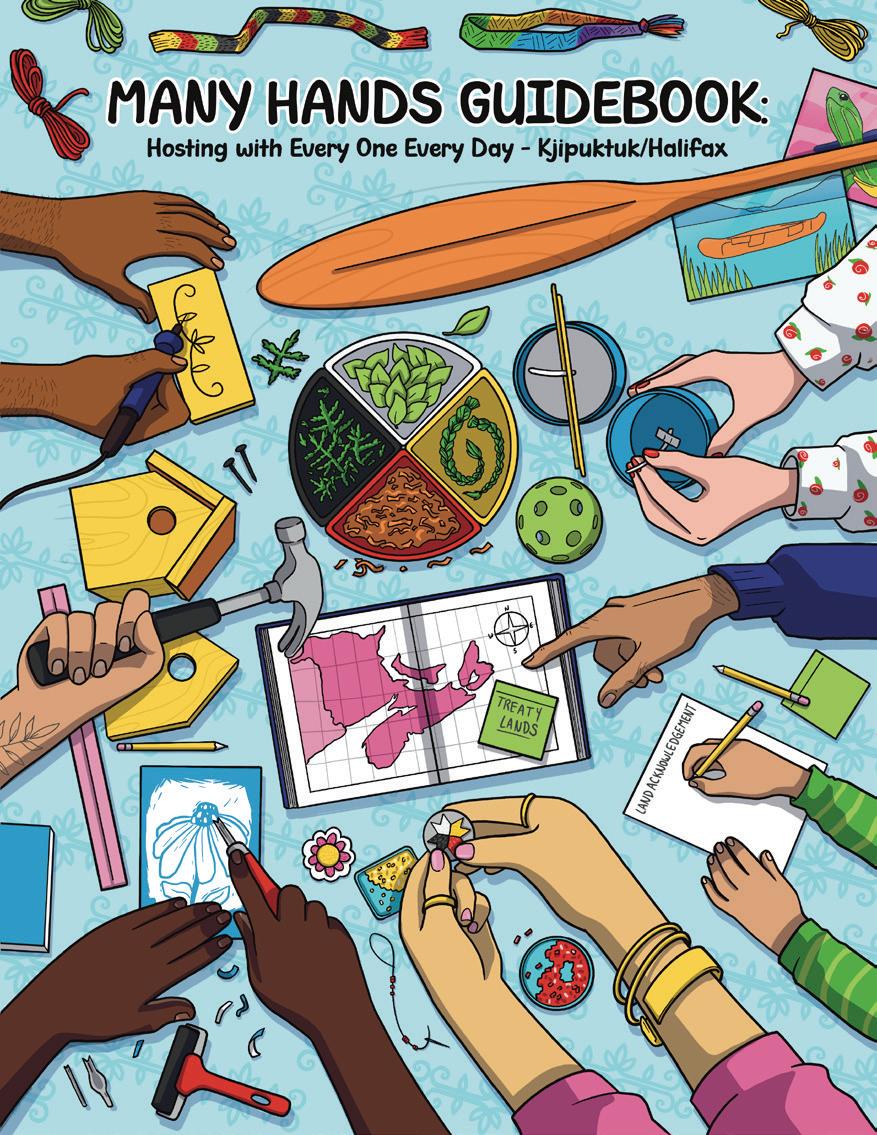
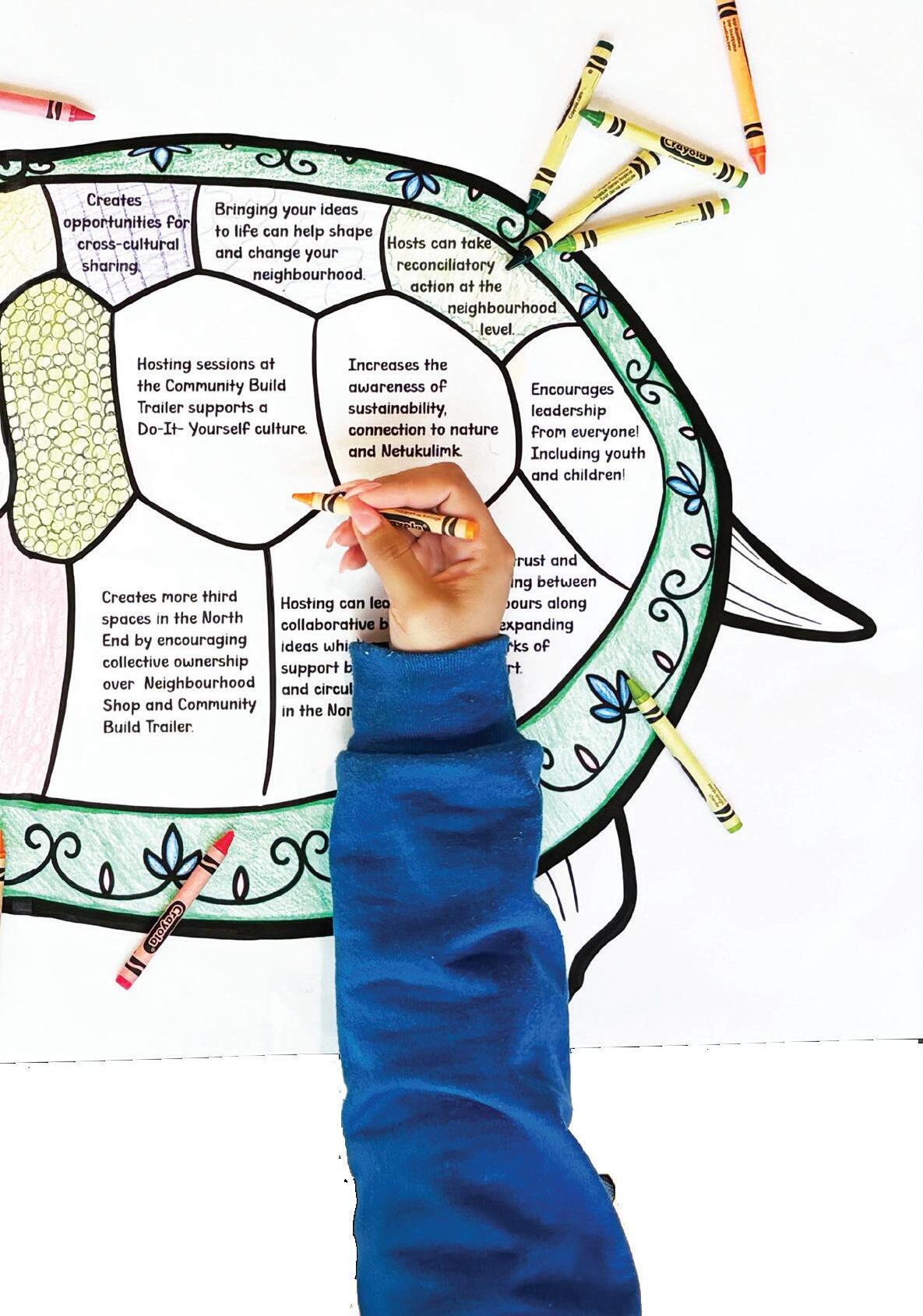
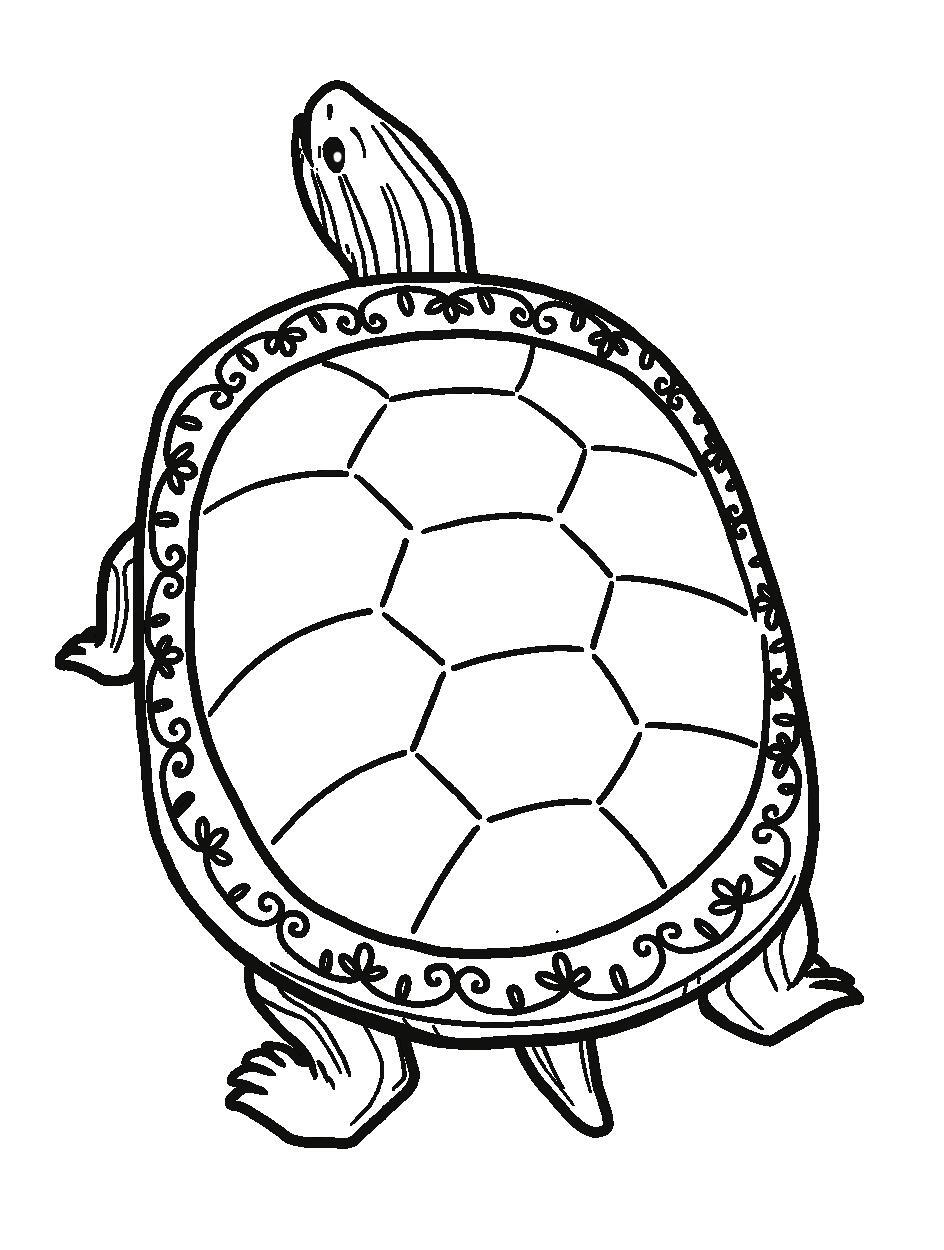
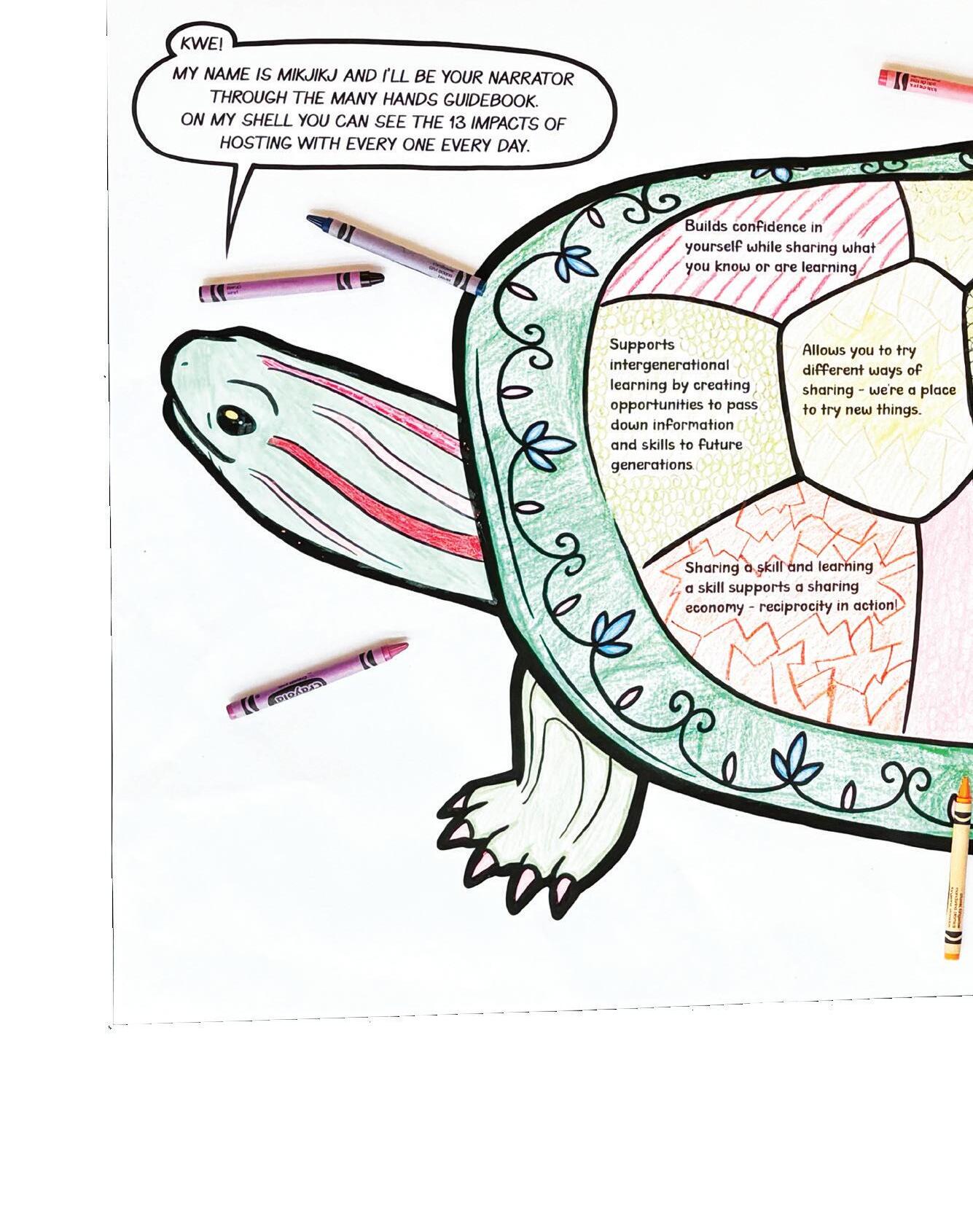
The guide uses illustrations to make the information accessible and easy to navigate. A turtle character, named “Mikjikj” (Mi’kmaw word for turtle), appears throughout the guide and helps lead readers through the process step by step. The guide is shared with individuals who are curious about hosting or want to learn more about the process. It provides a welcoming entry point and helps people feel confident about bringing their ideas, skills, and knowledge into the Every One Every Day program.
Looking ahead to the spring of 2026, one of Every One Every Day’s strategic directions is to further develop our tools and resources into a shared resource basket. This will bring together the frameworks, tools, and guides we have developed into a package that can be shared with other organizations interested in applying elements of our approach in their own work.
We plan to pilot this resource basket with a local organization to explore how these tools might support their work and how they can be adapted in different contexts. Through a partnership with the Rideau Hall Foundation and its Catapult program, we will test this approach locally in the first year. In the second year, the partnership will expand nationally, supporting eight to ten youth serving organizations across Canada to implement and experiment with the tools within their own communities. Our team will support this work through virtual guidance and shared learning as the organizations adapt the tools to their local contexts.
Together, these frameworks and tools help guide how Every One Every Day builds relationships, supports community participation, and advances reconciliation through everyday actions.
What We’ve Learned
In 2025, Every One Every Day Kjipuktuk/Halifax continued to deepen its place-based approach to participation, generating important insights about how community-led work grows and sustains itself over time. A key learning from the year was the importance of pacing expansion thoughtfully. As participation increased and new opportunities emerged, it became clear that sequencing initiatives in a way that protects quality and relationships is essential. This has strengthened our approach to growth, ensuring that future expansion builds from a solid and intentional foundation.
The year also reinforced that participation is strongest when it is designed with intention and supported by the right conditions. Across neighbourhood activities and initiatives, we saw that when residents are given meaningful opportunities to contribute, create, and lead, participation deepens naturally. This affirmed the importance of continuing to invest in accessible, hands-on opportunities that prioritize inclusion, creativity, and shared ownership.
Another important learning was the value of consistent presence in the neighbourhood. Trust and participation are built over time through ongoing relationships, visibility, and reliability. Maintaining a steady and welcoming presence in the community helped foster stronger connections and supported continued engagement from residents. This consistency remains a cornerstone of the approach and a key factor in sustaining participation.
Our work in 2025 also highlighted the importance of strong partnerships in enabling community impact. Collaborations with local organizations, designers, and institutional partners created new opportunities for residents while strengthening the overall ecosystem of support around the work. We learned that investing time in building and maintaining these relationships leads to more aligned and impactful outcomes.
Through collaborative and co-created projects, we saw that the process of working alongside community members is just as valuable as the outcomes themselves. Creating space for ideas to emerge, evolve, and be shaped by participants leads to work that is more meaningful and reflective of the community. This continues to reinforce our commitment to co-creation as a core practice.
Finally, 2025 provided important insights into how this work can be shared beyond the local context. As interest in the model grows, we are learning how to articulate and translate our approach in ways that support others while staying grounded in the principles that make it effective. This creates opportunities to extend the impact of the work while maintaining its integrity.
Overall, 2025 was a year of deepening practice, strengthening relationships, and building the conditions for long-term sustainability. These learnings continue to guide our work and position us to expand thoughtfully while remaining rooted in community.
Looking Ahead: Next Steps and Opportunities
Looking ahead, Everyone Every Day Kjipuktuk
Halifax is entering an important phase of growth that builds on strong relationships and a deepening body of practice. A central focus of this next stage is the development of the Indigenous Collaborative Business Program pilot. This work is being shaped in partnership with Indigenous leaders, organizations, and collaborators who bring essential knowledge, guidance, and lived experience. Together, these partnerships will support the design and delivery of a program that is culturally grounded, community driven, and responsive to the aspirations of Indigenous participants. This approach ensures that the program is not only effective, but also rooted in respect, reciprocity, and long-term impact.
At the same time, we will continue to deliver our ongoing seasonal programming, which remains a core part of how we build relationships, create opportunities for participation, and stay connected to the rhythms of the neighbourhood. These programs provide consistent, accessible entry points for residents to take part in shared activities, learn new skills, and contribute to collective projects. They also create the conditions for trust, connection, and community leadership to grow over time.
Alongside this, we are continuing to explore and deepen our understanding of how to support reconciliation at the neighbourhood level. Through everyday interactions, shared projects, and intentional collaboration with Indigenous partners, we are learning how reconciliation can be lived in practical and meaningful ways within community spaces. This includes creating opportunities for cultural expression, strengthening relationships, and ensuring that Indigenous voices and leadership are present and valued in the work.
We are also prioritizing the gathering and synthesis of our learning to date. Over the past several years, we have developed a set of practices, tools, and approaches that support inclusive participation and community led change. We are now working to bring these elements together into a clear and accessible learning framework that reflects both the principles and the practical application of the work. This will include insights from on the ground experience, tested methods, and reflections from participants, staff, and partners.
This learning framework will be piloted with a local organization as a way to both strengthen the resource and understand how it can be adapted in different contexts. Working closely with a local partner will allow for real-time learning, iteration, and refinement, ensuring that the materials are relevant, useful, and grounded in practice. This step is an important bridge between local experience and broader application.
Building on this foundation, we will expand the pilot nationally in the following year, supporting a small cohort of organizations to engage with and apply the approach in their own communities. Through this process, we will continue to learn alongside partners, adapting the tools and supports to meet diverse needs while maintaining the integrity of the model. This phased approach allows for thoughtful growth, ensuring that expansion is guided by learning, relationships, and shared purpose.
Together, these next steps reflect a commitment to deepening local impact while creating pathways to share and scale the work in meaningful and responsible ways.
In Closing
Every One Every Day Kjipuktuk-Halifax aims to inspire a way of life in neighbourhoods and communities where the things that we value, like relationships, culture, or connection to nature, are reflected in the places we live and the things we do together. And, where Reconciliation can be practiced daily, through welcoming opportunities to learn about Indigenous culture and history, spending time together, and sharing across cultures to create a new path forward.
In the short time that Every One Every Day has been operating in Kjipuktuk, we have seen a glimpse of many different residents working sideby-side to bring ideas to life in the neighbourhood
While we hope this is just the beginning, the vision for Every One Every Day rests in the hands of no single individual or organization, but rather, is an invitation for all of us to take part in creating a future society that centers connectedness, healing, regeneration, and where the creative potential of everyone, can be realized.
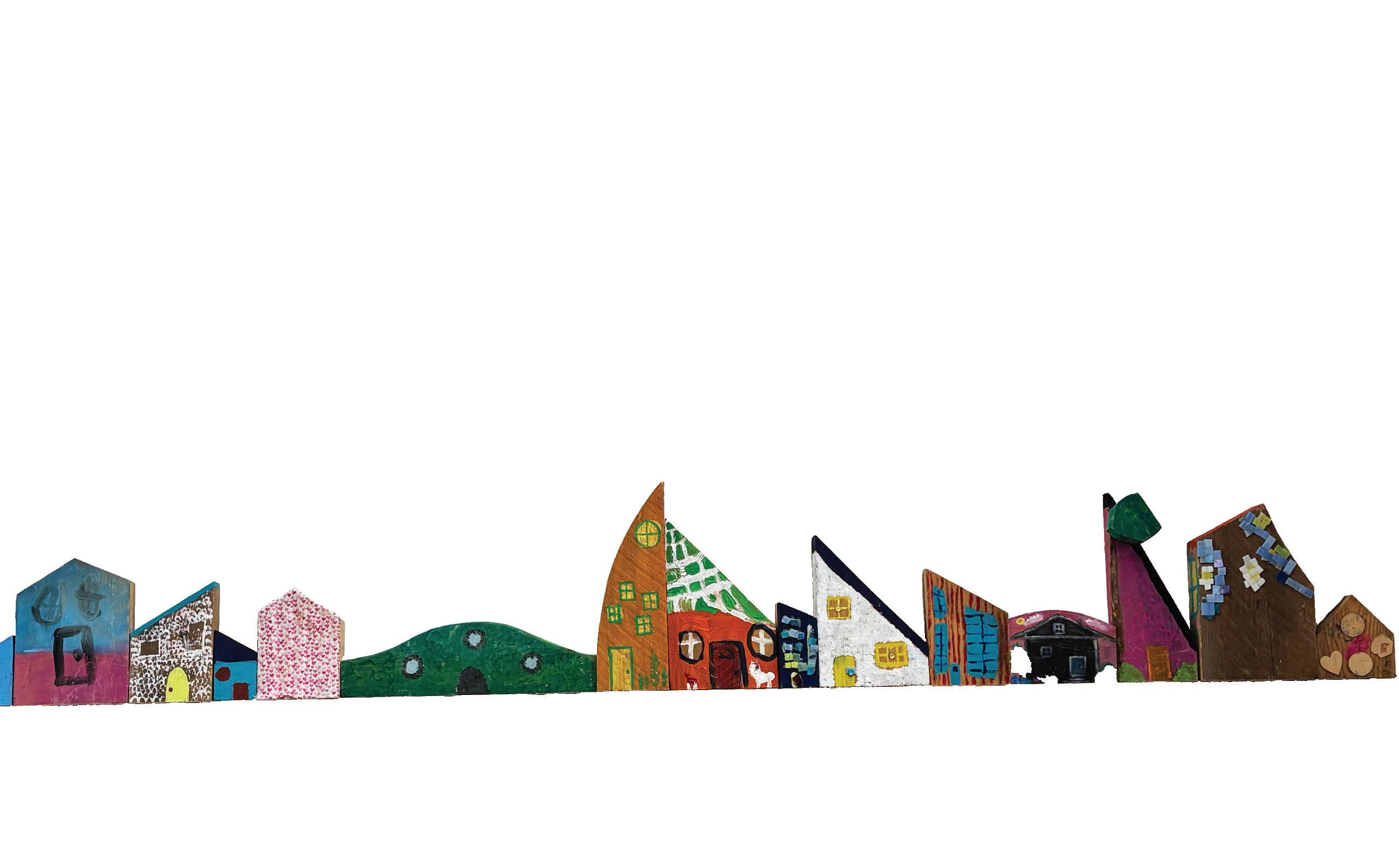
Acknowledgments
We are grateful to the many people who have contributed to bringing Every One Every Day Kjipuktuk to where it is today. A special thank you to:
The residents and neighbours of North End Halifax/Kjipuktuk
Pamela Glode Desrochers, Executive Director, Mi’kmaw Native Friendship Centre
Every One Every Day Project Team
Tammy Mudge, Co-Director, Strategy
Killa Atencio, Co-Director, Operations
Jayme-Lynn Gloade, Neighbourhood Shop Manager
Caitlin Skerratt, Learning Evaluation Lead
Julian Krizsan, Neighbourhood Project Designer
Franklyn Anoje, Administration and Bookkeeping
With gratitude to the staff who have been part of this journey, past and present, whose contributions continue to shape and nurture the community and relationships we are growing together.
Indigenous Guide Group
Carole Kowun
Charlotte Bernard
Denise John
Eli Rowe
Frances Palliser-Nicholas
Francine Fleming
Teresa Palliser
Funders and Partners
Atlantic Canada Opportunities Agency
Province of Nova Scotia CEDF
Ulnooweg Indigenous Communities Foundation
The Walmart Foundation
Dalhousie University
OSO Planning + Design
Our warmest thanks and appreciation to the many organizations and community partners who continue to collaborate with us in Kjipuktuk/Halifax. Your shared commitment to participation, relationship building, and reconciliation helps strengthen this work every day. We are grateful to everyone who has contributed space, inspiration, ideas, and resources to support this growing community effort.