Australian Bureau of Statistics, Causes of Death, 2024
State and territory suicide data summary
Released on 14 November 2025

State and territory suicide data summary
Released on 14 November 2025
• This summary was prepared by Everymind using the Australian Bureau of Statistics (ABS) Causes of Death data, released 14 November 2025.
• When exploring suicide data, it is important to remember that behind the numbers are individuals, families and communities impacted by suicide in Australia. By combining the knowledge in this data with other Australian data sets and the wisdom of those with lived and living experience, we will increase opportunities to reduce suicide and its impacts.
• Media and others communicating publicly about this data are reminded to be responsible and accurate. Resources to support reporting and other communication are available at mindframe.org.au/suicide and mindframe.org.au/our-wordsmatter-guidelines-for-language-use
• A full summary of data can be found on the Life in Mind portal at lifeinmind.org.au/abs-causes-of-death-2024
• The Australian Bureau of Statistics advises that care should be taken in comparing 2024 data with:
- Previous years, as some data has been subject to quality improvement processes and some cases are yet to be resolved
- Pre-2006 data, as this data was not subject to the revision process.
• For data from 2013 onwards, Causes of Death data is presented by the year the death was registered.
• Due to the relatively small population size in some states and territories, even one or two deaths can have a significant impact on state-specific age-standardised suicide rates. Therefore, comparisons across Australia must be done with caution
This release includes 2024 preliminary data, 2023 preliminary revised data and 2022 revised data. Data prior to 2021 are considered final.
Throughout this summary, rates are used to describe patterns and trends in the data. Alongside the number of suicide deaths, they help us to better understand and compare suicidal behaviours in different groups and over time.
Crude rates
A crude rate is the number of deaths divided by the population times 100,000.
Age-specific rates
Age-specific rates are used to measure how many deaths occurred in a specific age group.
Age-standardised rates
Crude rates do not account for population differences, such as proportions of people of different ages (‘age structures’), when comparing different groups.
This is calculated by dividing the number of suicide deaths in a particular age group by the total number of people in the specific age group.
Age-standardised rates use a formula to calculate a rate that reflects a ‘standard’ age structure of the population. This is useful to be able to make fairer comparisons between groups or populations over time.
It is best to use age-standardised rates when comparing populations with different age groups, for example, male and female if possible.
• Three-quarters (75%) of people who died by suicide had a usual residence in New South Wales (935), Queensland (790) or Victoria (755).
• Northern Territory recorded the highest suicide rate (19.3 per 100,000).
• The Australian Capital Territory recorded the lowest suicide rate (7.6 per 100,000).
Note: 2024 data are preliminary.
In 2024:
• The age-standardised suicide rate was 7.6 per 100,000.
• 38 people died by suicide (27 male, 11 female).
• The age-standardised suicide rate for males was 11.2 per 100,000.
• The age-standardised suicide rate for females was not available for publication.
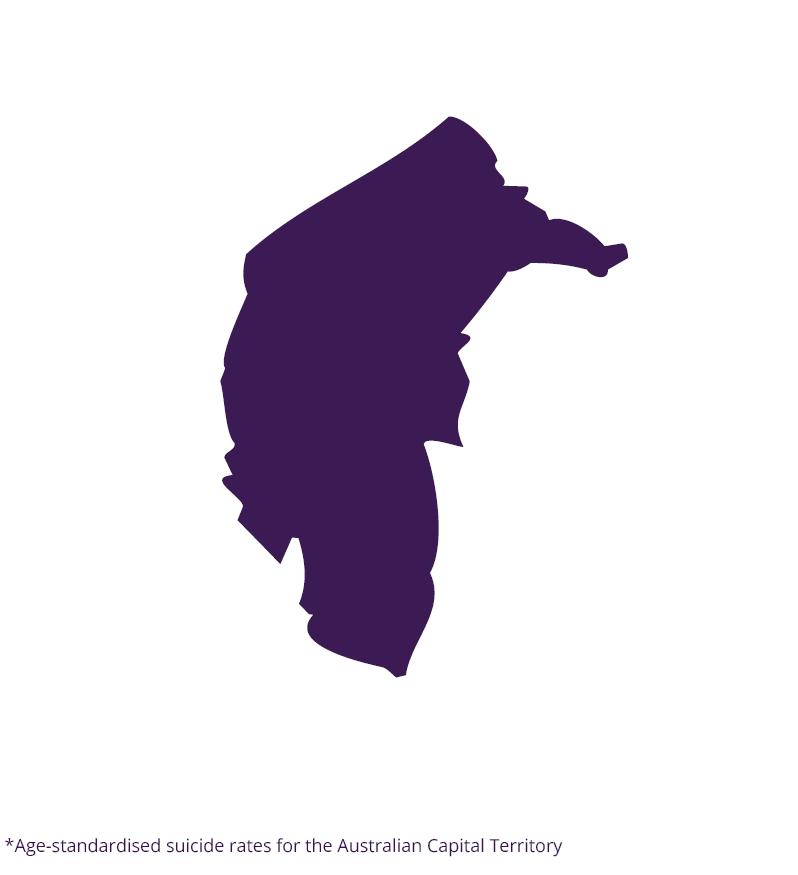
7.6 per 100,000*
38 deaths
• The Australian Capital Territory saw a decrease in the age-standardised rate (7.6 per 100,000) compared to 2023 (8.1 per 100,000).
• The ACT rate has been lower than the national average for the last three years.
Note: Suicide rates are by usual place of residence. Data for 2020 and 2021 are final. 2022 data have been subject to revision; 2023 data are preliminary revised; and 2024 data are preliminary.
• The Australian Capital Territory PHN had an age-standardised suicide rate of 7.6 per 100,000.
• This is lower than the rate for all of Australia (11.8 per 100,000).
Note: Rates are age-standardised per 100,000. 2024 data are preliminary.
State summary
In 2024:
• The age-standardised suicide rate was 10.6 per 100,000.
• 935 people died by suicide (723 male, 212 female).
• The age-standardised suicide rate for males was 16.7 per 100,000.
• The age-standardised suicide rate for females was 4.7 per 100,000.
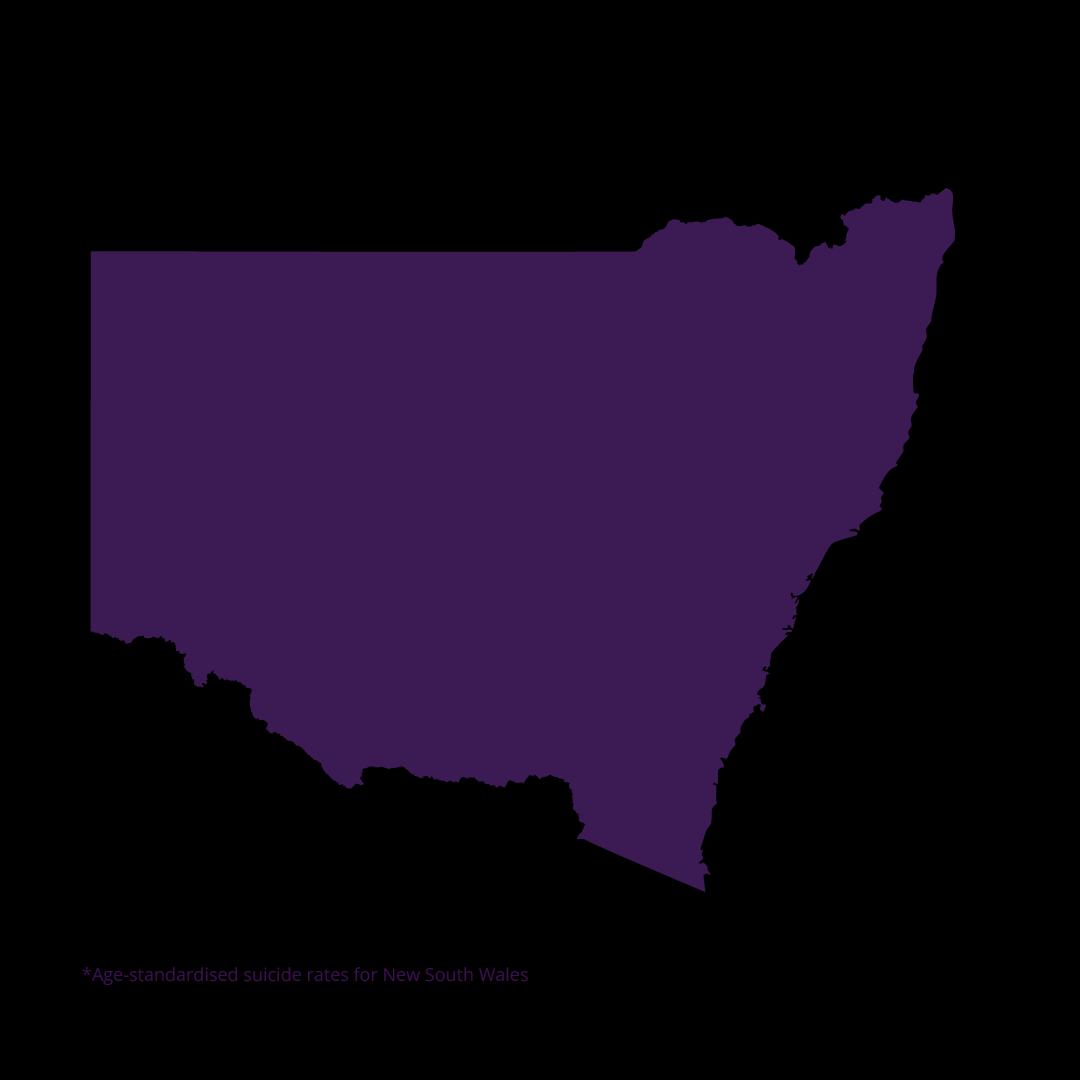
10.6 per 100,000*
935 deaths
• Greater Sydney had a lower suicide rate compared to the rest of NSW.
• A similar trend was observed across all states and territories.
Note: Suicide rates are by usual place of residence. Data for 2020 and 2021 are final. 2022 data have been subject to revision; 2023 data are preliminary revised; and 2024 data are preliminary.
• Overall, PHNs in regional and remote areas had higher suicide rates, whilst PHNs in major cities had lower rates.
• Western NSW PHN had the highest agestandardised suicide rate in New South Wales (17.2 per 100,000).
• Western Sydney PHN had the lowest agestandardised suicide rate in New South Wales (6.2 per 100,000).
Note: Rates are age-standardised per 100,000. 2024 data are preliminary.
Territory summary
In 2024:
• The age-standardised suicide rate was 19.3 per 100,000.
• 52 people died by suicide (41 male, 11 female).
• The age-standardised suicide rate for males was 30.3 per 100,000.
• The age-standardised suicide rate for females was not available for publication.
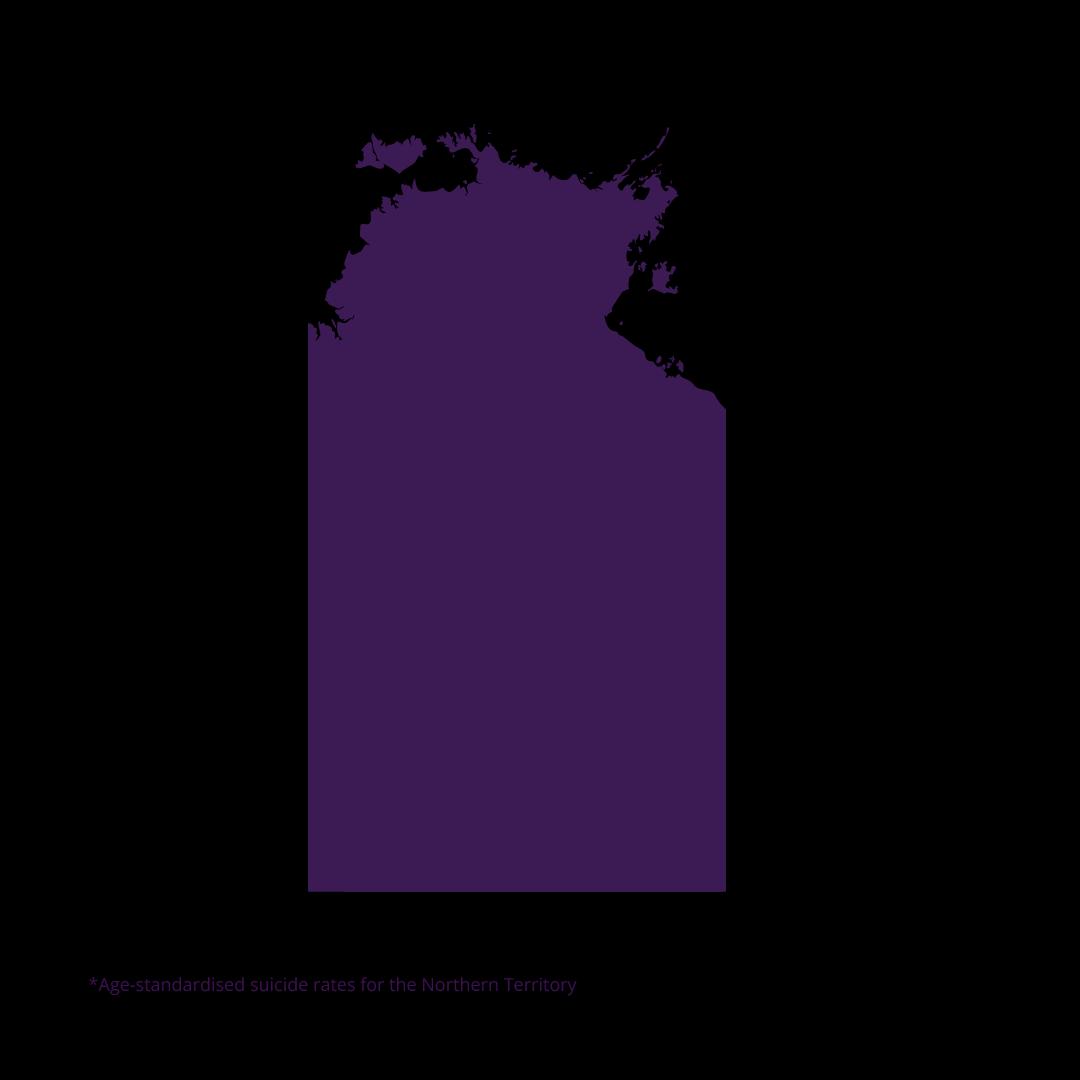
19.3 per 100,000*
52 deaths
• Greater Darwin had a lower suicide rate compared to the rest of the Northern Territory.
• A similar trend was observed across all states and territories.
Note: Suicide rates are by usual place of residence. 2022 data for Greater Darwin are not available for publication. Data for 2020 and 2021 are final. 2022 data have been subject to revision; 2023 data are preliminary revised; and 2024 data are preliminary.
• The Northern Territory PHN had an agestandardised suicide rate of 19.3 per 100,000.
• This is higher than the rate for all of Australia (11.8 per 100,000).
Note: Rates are age-standardised per 100,000. 2024 data are preliminary.
State summary
In 2024:
• The age-standardised suicide rate was 14.0 per 100,000.
• 790 people died by suicide (610 male, 180 female).
• The age-standardised suicide rate for males was 22.0 per 100,000.
• The age-standardised suicide rate for females was 6.2 per 100,000.
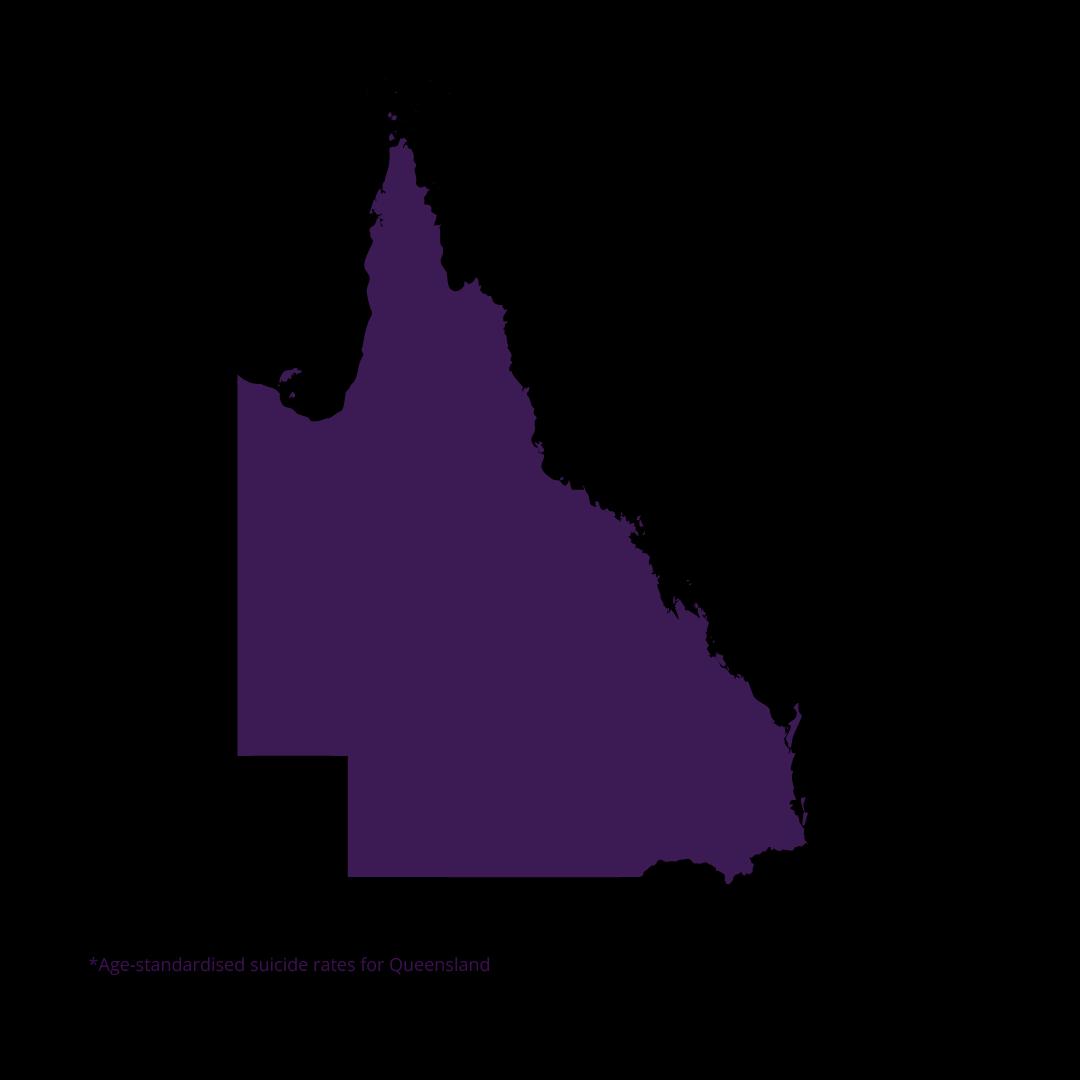
14.0 per 100,000*
790 deaths
• Greater Brisbane had a lower suicide rate compared to the rest of Queensland.
• A similar trend was observed across all states and territories.
Note: Suicide rates are by usual place of residence. Data for 2020 and 2021 are final. 2022 data have been subject to revision; 2023 data are preliminary revised; and 2024 data are preliminary.
• Overall, PHNs in regional and remote areas had higher suicide rates, whilst PHNs in major cities had lower rates.
• Northern Queensland PHN had the highest age-standardised suicide rate in Queensland (20.7 per 100,000).
• Brisbane South had the lowest agestandardised suicide rate in Queensland (10.7 per 100,000).
• The age-standardised rate for Western Queensland PHN was not available for publication.
Note: Rates are age-standardised per 100,000. 2024 data are preliminary.
State summary
In 2024:
• The age-standardised suicide rate was 12.2 per 100,000.
• 238 people died by suicide (175 male, 63 female).
• The age-standardised suicide rate for males was 18.1 per 100,000.
• The age-standardised suicide rate for females was 6.7 per 100,000.
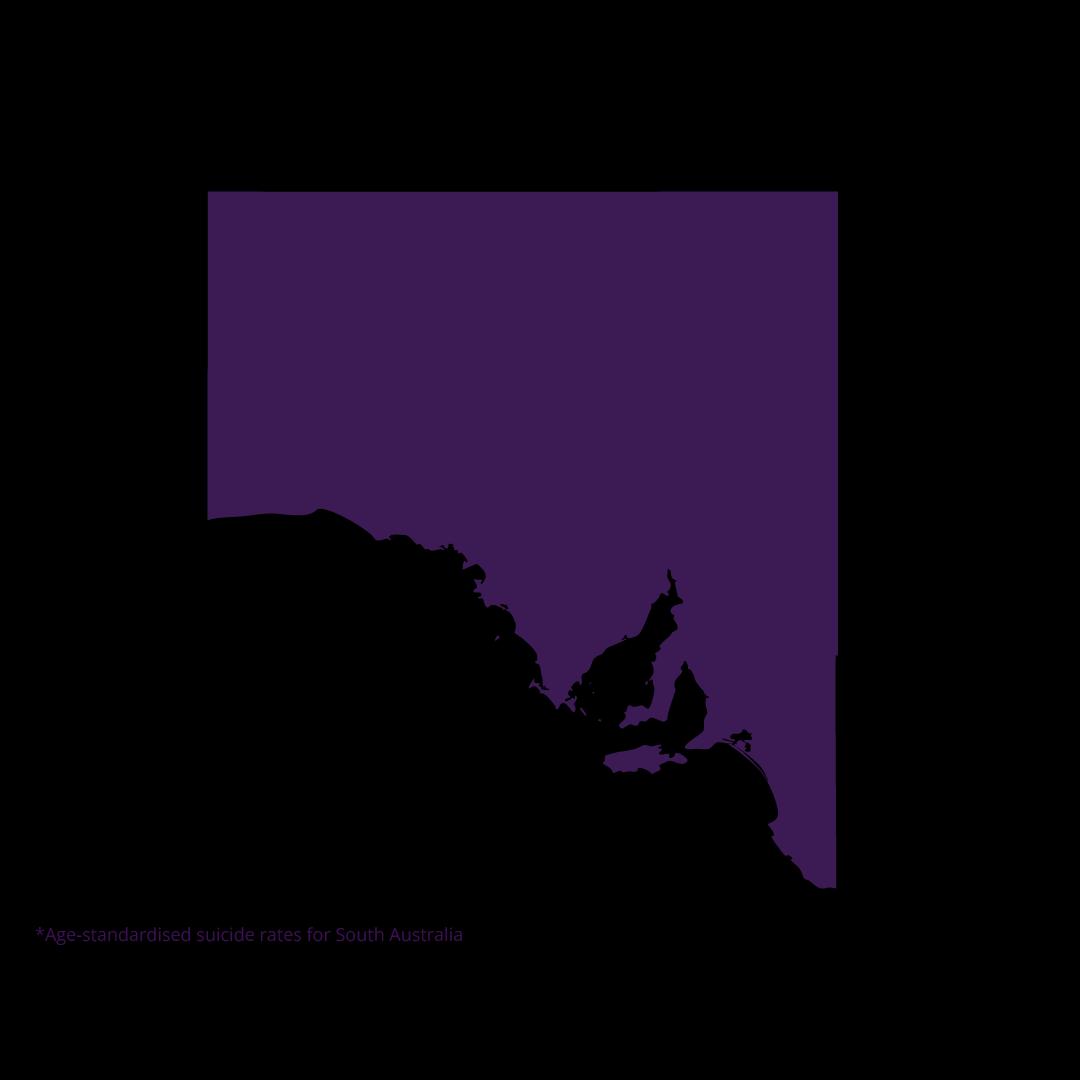
12.2 per 100,000*
238 deaths
• Greater Adelaide had a lower suicide rate compared to the rest of South Australia.
• A similar trend was observed across all states and territories.
Note: Suicide rates are by usual place of residence. Data for 2020 and 2021 are final. 2022 data have been subject to revision; 2023 data are preliminary revised; and 2024 data are preliminary.
• Country SA PHN had the highest agestandardised suicide rate in South Australia (13.6 per 100,000).
• Adelaide had the lowest age-standardised suicide rate in South Australia (11.4 per 100,000).
Note: Rates are age-standardised per 100,000. 2024 data are preliminary.
State summary
In 2024:
• The age-standardised suicide rate was 14.0 per 100,000.
• 81 people died by suicide (59 male, 22 female).
• The age-standardised suicide rate for males was 20.8 per 100,000.
• The age-standardised suicide rate for females was 7.3 per 100,000.
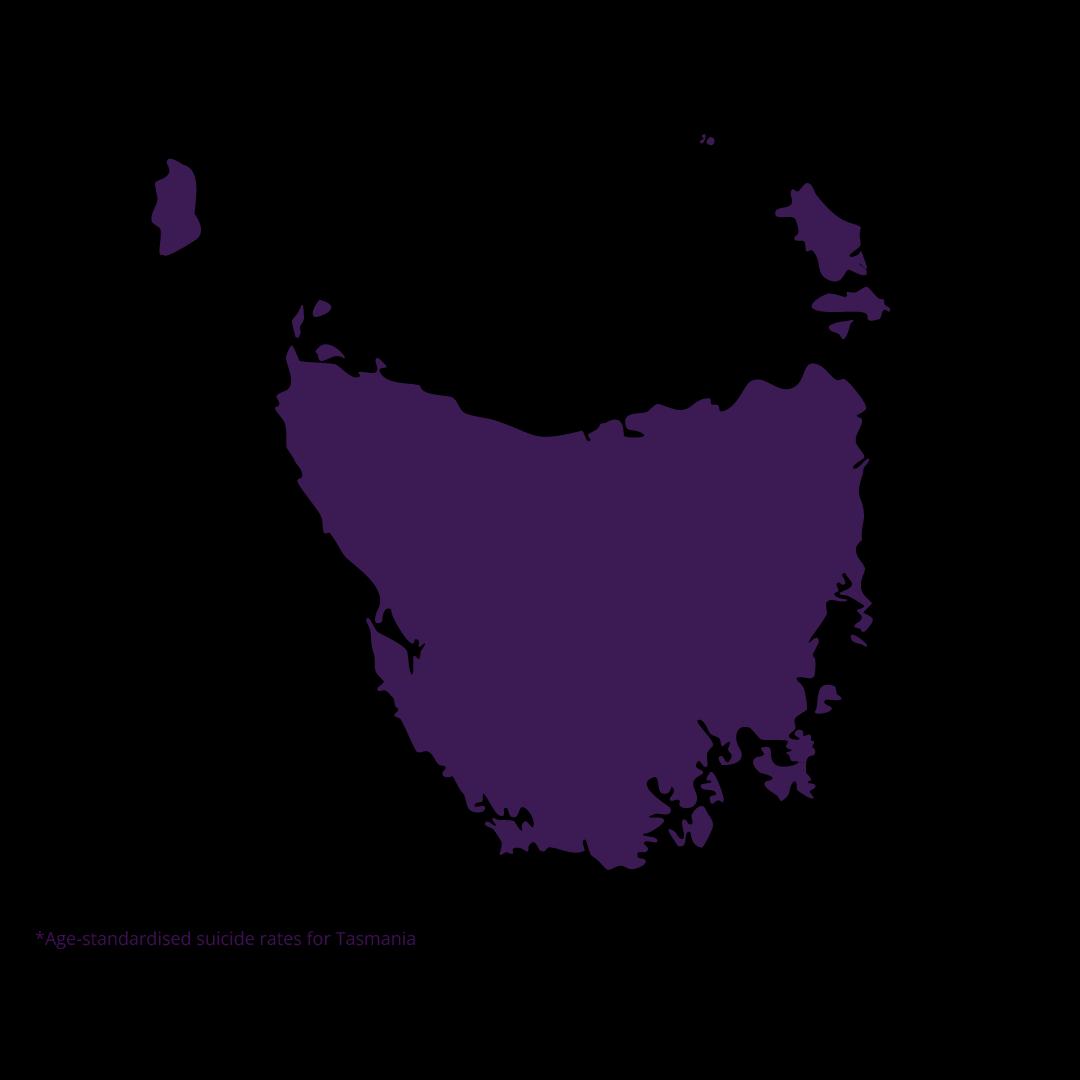
14.0 per 100,000*
81 deaths
• In 2024, Greater Hobart had a lower suicide rate compared to the rest of Tasmania.
• However, this trend has not been consistent in previous years.
Note: Suicide rates are by usual place of residence. Data for 2020 and 2021 are final. 2022 data have been subject to revision; 2023 data are preliminary revised; and 2024 data are preliminary.
Greater Hobart Rest of Tas Tas Total
• The Tasmania PHN had an age-standardised suicide rate of 13.1 per 100,000.
• This is higher than the rate for all of Australia (11.8 per 100,000).
Note: Rates are age-standardised per 100,000. 2024 data are preliminary.
State summary
In 2024:
• The age-standardised suicide rate was 10.5 per 100,000.
• 755 people died by suicide (560 male, 195 female).
• The age-standardised suicide rate for males was 15.8 per 100,000.
• The age-standardised suicide rate for females was 5.4 per 100,000.
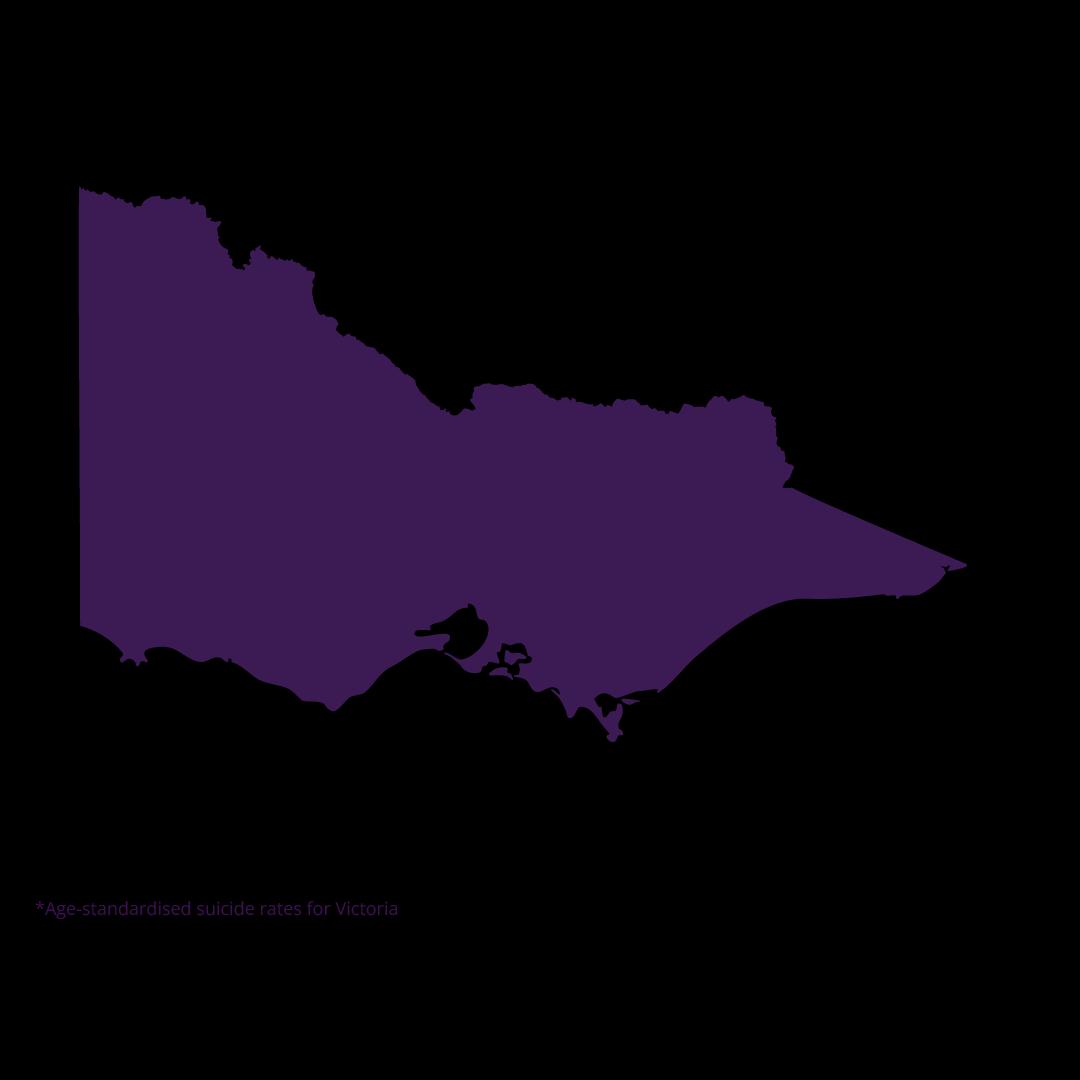
10.5 per 100,000*
755 deaths
• Greater Melbourne had a lower suicide rate compared to the rest of Victoria.
• A similar trend was observed across all states and territories.
Note: Suicide rates are by usual place of residence. Data for 2020 and 2021 are final. 2022 data have been subject to revision; 2023 data are preliminary revised; and 2024 data are preliminary.
• Overall, PHNs in regional and remote areas had higher suicide rates, whilst PHNs in major cities had lower rates.
• Murray PHN had the highest age-standardised suicide rate in Victoria (17.0 per 100,000).
• Eastern Melbourne had the lowest agestandardised suicide rate in Victoria (8.4 per 100,000).
Note: Rates are age-standardised per 100,000. 2024 data are preliminary.
State summary
In 2024:
• The age-standardised suicide rate was 13.8 per 100,000.
• 418 people died by suicide (334 male, 84 female).
• The age-standardised suicide rate for males was 21.9 per 100,000.
• The age-standardised suicide rate for females was 5.6 per 100,000.
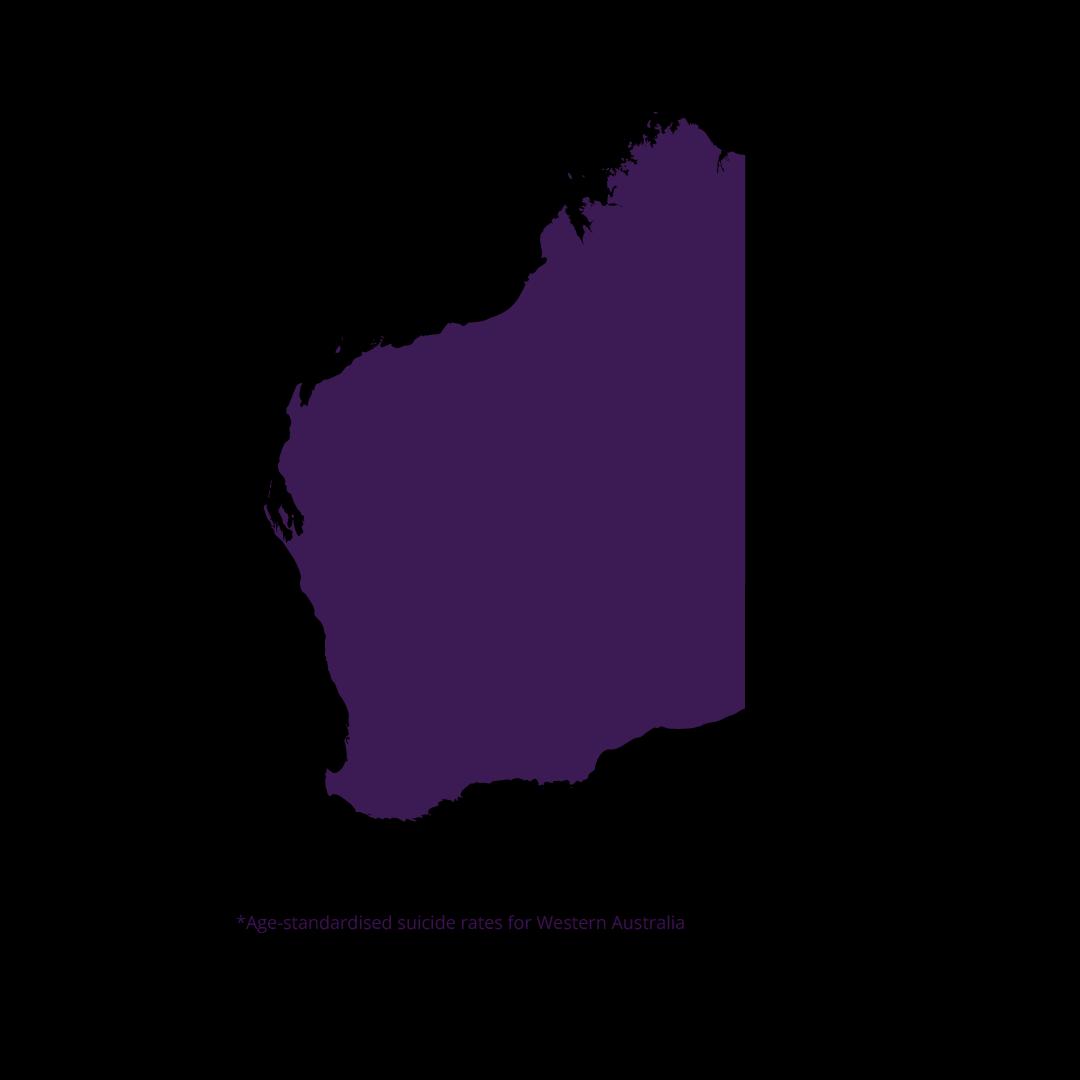
13.8 per 100,000*
418 deaths
• Greater Perth had a lower suicide rate compared to the rest of Western Australia.
• A similar trend was observed across all states and territories.
Note: Suicide rates are by usual place of residence. Data for 2020 and 2021 are final. 2022 data have been subject to revision; 2023 data are preliminary revised; and 2024 data are preliminary.
• Country WA PHN had the highest agestandardised suicide rate in Western Australia (20.7 per 100,000).
• Perth North had the lowest age-standardised suicide rates in Western Australia (11.7 per 100,000).
Note: Rates are age-standardised per 100,000. 2024 data are preliminary.
Life in Mind is a knowledge exchange portal providing translated evidence, policy, data and resources in suicide prevention, and host of the National communications charter (the Charter).
Life in Mind provides sector leadership through collaboration and engagement, and facilitates access to current evidencebased suicide prevention resources, services, research and policy through an easily accessible digital portal.


lifeinmind.org.au