ANNUAL DRINKING WATER QUALITY REPORT
2023
This report includes test results from water quality analyses conducted throughout 2023.
TABLE OF CONTENTS Drinking Water Quality Report Card . . . . 3 The Source of Your Drinking Water . . . . 4 About Your Water . . . . . . 5 Understanding the Terms . . . . . . 6 Drinking Water Quality Data . . . . . 7 Testing Your Drinking Water . . . . . . 8 PFAS . . . . . . . . . . . 9 Lead and Copper Program . . . . . . . 10 Conserve Water Love Collier 11 More Information . . . . . . . 12
D RINKING WATER Q UALITY R EPORT C ARD
Your drinking water comes from aquifers deep beneath the surface The water is treated with chloramines for disinfection purposes and a corrosion inhibitor to prevent corrosion of pipes . Fluoridation was discontinued on February 13, 2024, at the direction of the governing body of the Collier County Water Sewer District . Except where indicated otherwise, this report is based on the results of our monitoring for the period of January 1 to December 31, 2023 . Data obtained before January 1, 2023, and presented in this report are from the most recent testing done in accordance with the laws, rules and regulations .
Microscopic organisms such as coliform bacteria, giardia and cryptosporidium
Lead and copper
Disinfection Byproducts
Byproducts of the process of disinfecting drinking water – trihalomethanes and haloacetic acids
Can make people sick after drinking several glasses Naturally present in the environment or from animals or human activity Meets state and federal water quality requirements
High levels can cause health issues over an extended period of time Corrosion of indoor plumbing
Meets state and federal water quality requirements
High levels can cause health issues over an extended period of time Water disinfection process
High levels can cause marks on teeth over an extended period of time
Erosion of natural deposits and water additive for dental health
Meets state and federal water quality requirements
Meets state and federal water quality requirements
Synthetic
chemicals
Widely used in consumer and industrial products
Meets state and federal water quality requirements
WHY WE TEST FOR IT LIKELY SOURCE YOUR WATER SOURCE Microbes
POTENTIAL CONTAMINANTS
Fluoride
PFAS
oil
organic
that are resistant to heat, water, and
Th E S OURCE OF YOUR D RINKING WATER
Our water supply is sourced from aquifers, underground geological formations that store fresh water. These aquifers act as natural filters, purifying the water as it moves through layers of rock and sand. The result is water of consistently high quality, meeting rigorous safety and purity standards set by regulatory agencies. Customers can rest assured that the water provided by the county is thoroughly tested and monitored to ensure its safety and taste. With a commitment to excellence in water management, the Collier County Water Division delivers a reliable and dependable water supply that meets the needs of our community.
The Collier County Water System pumps groundwater from three wellfields located in Golden Gate Estates. The North Hawthorn Wellfield has 22 wells that provide water to the North County Regional Water Treatment Plant. The South Hawthorn Wellfield has 41 wells that provide water to the South County Regional Water Treatment Plant. The Golden Gate Tamiami Wellfield has 39 wells that provide water to the treatment plants.
There are two regional water treatment plants, the North County Regional Water Treatment Plant and the South County Regional Water Treatment Plant.
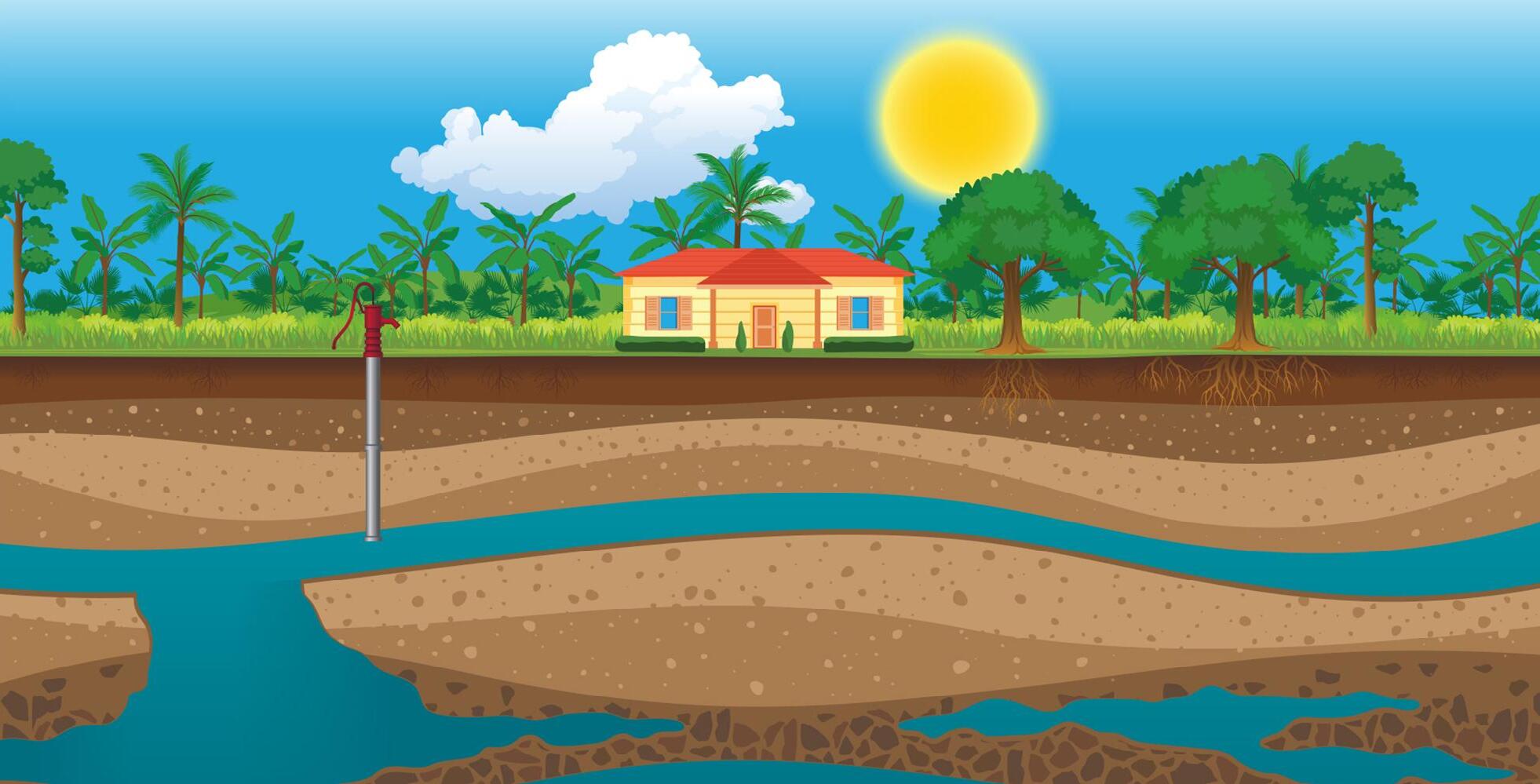
The North Plant has 12 million gallons per day (MGD) treatment capacity using nanofiltration treatment process and 8 MGD treatment capacity using reverse osmosis treatment process. The South Plant has 12 MGD treatment capacity using lime softening and 20 MGD treatment capacity using reverse osmosis. The water is treated with chloramines for disinfection purposes and a corrosion inhibitor is added to prevent corrosion of pipes. In 2023, the water was fluoridated for dental health purposes. This process was discontinued on February 13, 2024, at the direction of the governing body of the Collier County Water Sewer District.
The Florida Department of Environmental Protection (FDEP) performed a Source Water Assessment on the system in 2023. This assessment was conducted to provide information about any potential sources of contamination in the vicinity of the wells. There are 35 potential sources of contamination identified for this system with low to moderate susceptibility levels. Potential sources of contamination identified included underground petroleum storage tanks and injection wells. The assessment results are available on the DEP Source Water Assessment and Protection Program website at prodapps.dep.state.fl.us/swapp.
A BOUT YOUR WATER
The Collier County Water Division delivers potable water to the 85,000 connections and 225,000 individuals we serve in unincorporated Collier County. We understand the critical role water plays in daily life, health, and community prosperity. With this responsibility in mind, we are steadfast in our dedication to maintaining the highest standards of water treatment and distribution. In acknowledgment of the expanding population and planned developments in the eastern region of the county, we are proactively enhancing the utility infrastructure. Our ongoing efforts ensure a sustainable, reliable and safe water supply for the community, now and in the future.
hARDNESS OF YOUR WATER
General guidelines for classification of the hardness of water are: 0 to 60 milligrams per liter (mg/L) of hardness is classified as soft water; 61 to 120 mg/L
as moderately hard water; 121 to 180 mg/L as hard water; and more than 180 mg/L as very hard water. The range of hardness of water delivered to your home by the Collier County Water Division in 2023 was 22 to 94 mg/L, or 1.3 to 5.5 grains per gallon, with an average hardness of 67 mg/L.
CROSS CONNECTION CONTROL
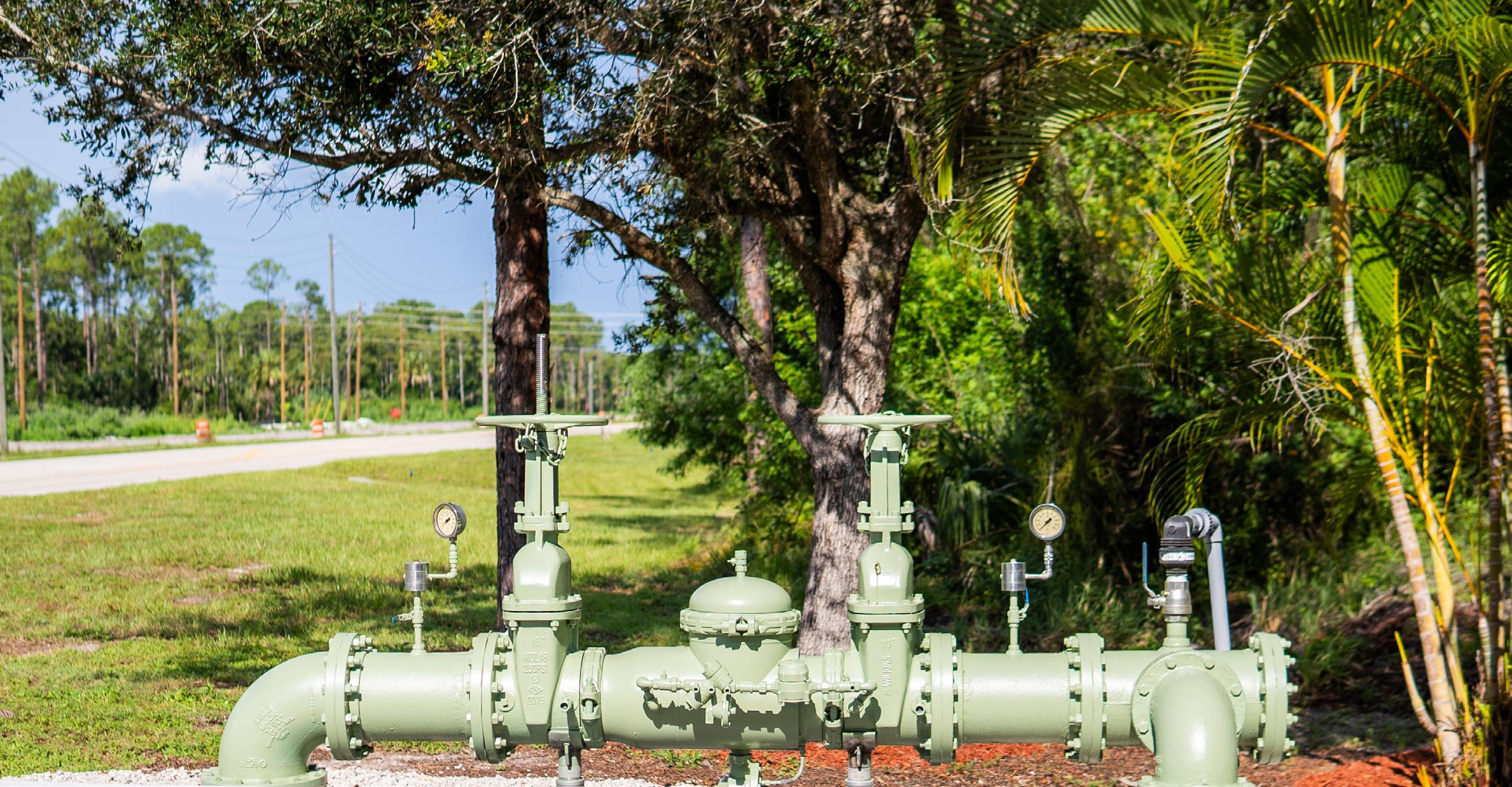
Any connection between the potable (drinking) water supply and any other source of water has the potential to contaminate the drinking water supply and is illegal in any form, permanent or temporary. Some common things we do around the house and yard can create a cross connection. For instance, without the proper vacuum breaker installed, leaving a garden hose submerged in a swimming pool is a cross connection. Attaching a pesticide or weed killer mixing sprayer to the end of a hose has the potential to contaminate the drinking water. Connecting an
irrigation system to both irrigation quality (reclaimed) water and the drinking water system is a cross connection that is not only dangerous, but also illegal. Only a licensed plumber should make changes to the plumbing on any property, or in any structure where any other source of water exists.
To prevent the possibility of backflow, Collier County adopted the “Collier County Crossconnection Control/Backflow Prevention Ordinance” (Ordinance 2008 32). This ordinance requires the installation of backflow prevention assemblies as part of any water service connection. The Water Division maintains a Cross connection Control and Backflow Prevention Section to install, maintain, repair and annually test backflow prevention assemblies. Please contact the Water Division for any necessary maintenance on the device.
U NDERSTANDING T h E T ER m S USED IN T h E WATER QUALITY TABLE
STATE AND FEDERAL REGULATIONS – LEVELS OF CONTA m INANTS
This report shows the results of our monitoring for the period of January 1 to December 31, 2023. Federal and state regulations allow us to monitor for some contaminants less than once per year because the concentrations of these contaminants do not change frequently. Some of our data, though representative, may be more than one year old. The Environmental Protection Agency (EPA) requires monitoring of over 80 drinking water contaminants. Those contaminants listed in the tables are the only contaminants detected in your drinking water.
TO h ELP YOU BETTER UNDERSTAND T h E TER m S AND ABBREVIATIONS, WE'VE PROVIDED T h E FOLLOWING DEFINITIONS:
maximum Contaminant Level or mCL: The highest level of a contaminant that is allowed in drinking water; MCLs are set as close to the MCLGs as feasible using the best available treatment technology.
maximum Contaminant Level Goal or mCLG: The level of a contaminant in drinking water below which there is no known or expected risk to health; MCLGs allow for a margin of safety.
Action Level (AL): The concentration of a contaminant that, if exceeded, triggers treatment or other requirements that a water system must follow.
“ND” means not detected and indicates that the substance was not found by laboratory analysis.
Initial Distribution System Evaluation (IDSE): An important part of the Stage 2 Disinfection Byproducts Rule (DBPR). The IDSE is a onetime study conducted by water systems to identify distribution system locations with high
concentrations of trihalomethanes (THMs) and haloacetic acids (HAAs). Water systems will use results from the IDSE, in conjunction with their Stage 1 DBPR compliance monitoring data, to select compliance monitoring locations for the Stage 2 DBPR.
Parts per million (ppm) or milligrams per liter
(mg/L): One part by weight of analyte to 1 million parts by weight of the water sample.
Parts per billion (ppb) or micrograms per liter
(μg/L): One part by weight of analyte to 1 billion parts by weight of the water sample.
Picocurie per liter (pCi/L): Measure of the radioactivity in water.
maximum residual disinfectant level or mRDL: The highest level of a disinfectant allowed in drinking water. There is convincing evidence that addition of a disinfectant is necessary for control of microbial contaminants.
maximum residual disinfectant level goal or mRDLG: The level of a drinking water disinfectant below which there is no known or expected risk to health. MRDLGs do not reflect the benefits of the use of disinfectants to control microbial contaminants.
mGD: Million gallons per day.
Contaminant: Any physical, chemical, biological or radiological substance in the water.
Violation: Violations occur when detected limits are greater than Maximum Contaminant Levels or Action Levels set by the EPA.
UCmR: Unregulated contaminants monitoring rule.
90th Percentile: The analytical result that is greater than or equal to 90% of the results.
D RINKING WATER Q UALITY DATA
* All repeat samples collected at the original, upstream, and downstream locations were negative for total coliform and E. coli therefore, there was no
LEAD AND COPPER (TAP WATER)
h E m ICALS Contaminant and Unit of Measurement Dates of sampling (mo./yr.) MCL Violation Y/N Level Detected Range of Results MCLG MCL Likely Source of Contamination Fluoride (ppm) 3/23 N 0.23 NA 4 4 Erosion of natural deposits; discharge from fertilizer and aluminum factories. Water additive which promotes strong teeth when at optimum level of 0.7 ppm Nitrate (as Nitrogen) (ppm) 3/23 N 0.052 ND – 0.052 10 10 Runoff from fertilizer use; leaching from septic tanks, sewage; erosion of natural deposits Sodium (ppm) 3/23 N 57.8 45.6 – 57.8 N/A 160 Salt water intrusion, leaching from soil Barium (ppm) 3/23 N 0.0033 ND – 0.0033 2 2 Discharge of drilling wastes; discharge from metal refineries; erosion of natural deposits Contaminant Dates of sampling (mo./yr.) MCL Violation Y/N Total # of Positive Samples for the Year MCLG MCL Likely Source of Contamination E. coli* Monthly 2023 N 2 0 Routine and repeat samples are total coliform positive and either is E. coli positive or system fails to take repeat samples following E. coli positive routine sample or system fails to analyze total coliform positive repeat sample for E. coli Human and animal fecal waste
MCL violation. STAGE 1 DISINFECTANTS AND DISINFECTION BYPRODUCTS Contaminant and Unit of Measurement Dates of sampling (mo./yr.) MCL Violation Y/N Level Detected Range of Results MCLG or MRDLG MCL or MRDL Likely Source of Contamination Chloramines (ppm) Monthly 2023 N 3.4 1.6-4.1 MRDLG = 4 MRDL = 4 Water additive used to control microbes
Contaminant and Unit of Measurement Dates of sampling (mo./yr.) MCL Violation Y/N Level Detected Range of Results MCLG or MRDLG MCL or MRDL Likely Source of Contamination Haloacetic Acids (HAA5) (ppb) Quarterly 2023 N 26.4 13.6-38.1 NA 60 By-product of drinking water disinfection Total trihalomethanes (TTHM) (ppb) Quarterly 2023 N 57.0 34.0-78.5 NA 80 By-product of drinking water disinfection
INORGANIC C
STAGE 2 DISINFECTANTS AND DISINFECTION BYPRODUCTS
Contaminant and Unit of Measurement Dates of sampling (mo./yr.) AL Exceeded Y/N 90th Percentile Result # of sampling sites exceeding the AL MCLG AL (Action Level) Likely Source of Contamination Copper (tap water) (ppm) 8/23 – 9/23 N 0.0378 0 1.3 1.3 Corrosion of household plumbing systems; erosion of natural deposits; leaching from wood preservatives Lead (tap water) (ppb) 8/23 – 9/23 N 1.2 0 0 15 Corrosion of household plumbing systems, erosion of natural deposits
T ESTING YOUR D RINKING WATER
The Collier County Water Division has an extensive and continuous testing program to routinely monitor for contaminants in your drinking water in accordance with federal and state laws, rules and regulations. In 2023, there were 65,286 laboratory tests conducted to ensure that your water was the highest quality and met all standards set by the United States Environmental Protection Agency (EPA) and the Florida Department of Environmental Protection (FDEP).
The sources of drinking water (for both tap water and bottled water) include rivers, lakes, streams, ponds, reservoirs, springs, and wells. As water travels over the surface of the land or through the ground, it dissolves naturally occurring minerals and, in some cases, radioactive material, and can pick up substances resulting from the presence of animals or from human activity.
CONTAmINANTS
ThAT mAY BE PRESENT IN SOURCE WATER INCLUDE:
(A) Microbial contaminants, such as viruses and bacteria, which may come from sewage treatment
plants, septic systems, agricultural livestock operations, and wildlife.
(B) Inorganic contaminants, such as salts and metals, which can be naturally occurring or result from urban stormwater runoff, industrial or domestic wastewater discharges, oil and gas production, mining, or farming.
(C) Pesticides and herbicides, which may come from a variety of sources such as agriculture, urban stormwater runoff, and residential uses.
(D) Organic chemical contaminants, including synthetic and volatile organic chemicals, which are byproducts of industrial processes and petroleum production, and can also come from gas stations, urban stormwater runoff, and septic systems.
(E) Radioactive contaminants, which can be naturally occurring or be the result of oil and gas production and mining activities.
In order to ensure tap water is safe to drink, the EPA prescribes regulations that limit the amount of certain contaminants in water provided by public water systems. The Food and Drug Administration (FDA) regulations establish limits for contaminants in bottled
water, which must provide the same protection for public health.
Drinking water, including bottled water, may reasonably be expected to contain at least small amounts of some contaminants. The presence of contaminants does not necessarily indicate that the water poses a health risk.
More information about contaminants and potential health effects can be obtained by calling the EPA’s Safe Drinking Water Hotline at 8004264791.
Some people may be more vulnerable to contaminants in drinking water than the general population. Immunocompromised persons such as persons with cancer undergoing chemotherapy, persons who have undergone organ transplants, people with HIV/AIDS or other immune system disorders, some elderly, and infants can be particularly at risk from infections. These people should seek advice about drinking water from their health care providers. EPA/CDC guidelines on appropriate means to lessen the risk of infection by Cryptosporidium and other microbiological contaminants are available from the Safe Drinking Water Hotline (8004264791).
PFAS
PFAS IN DRINKING WATER
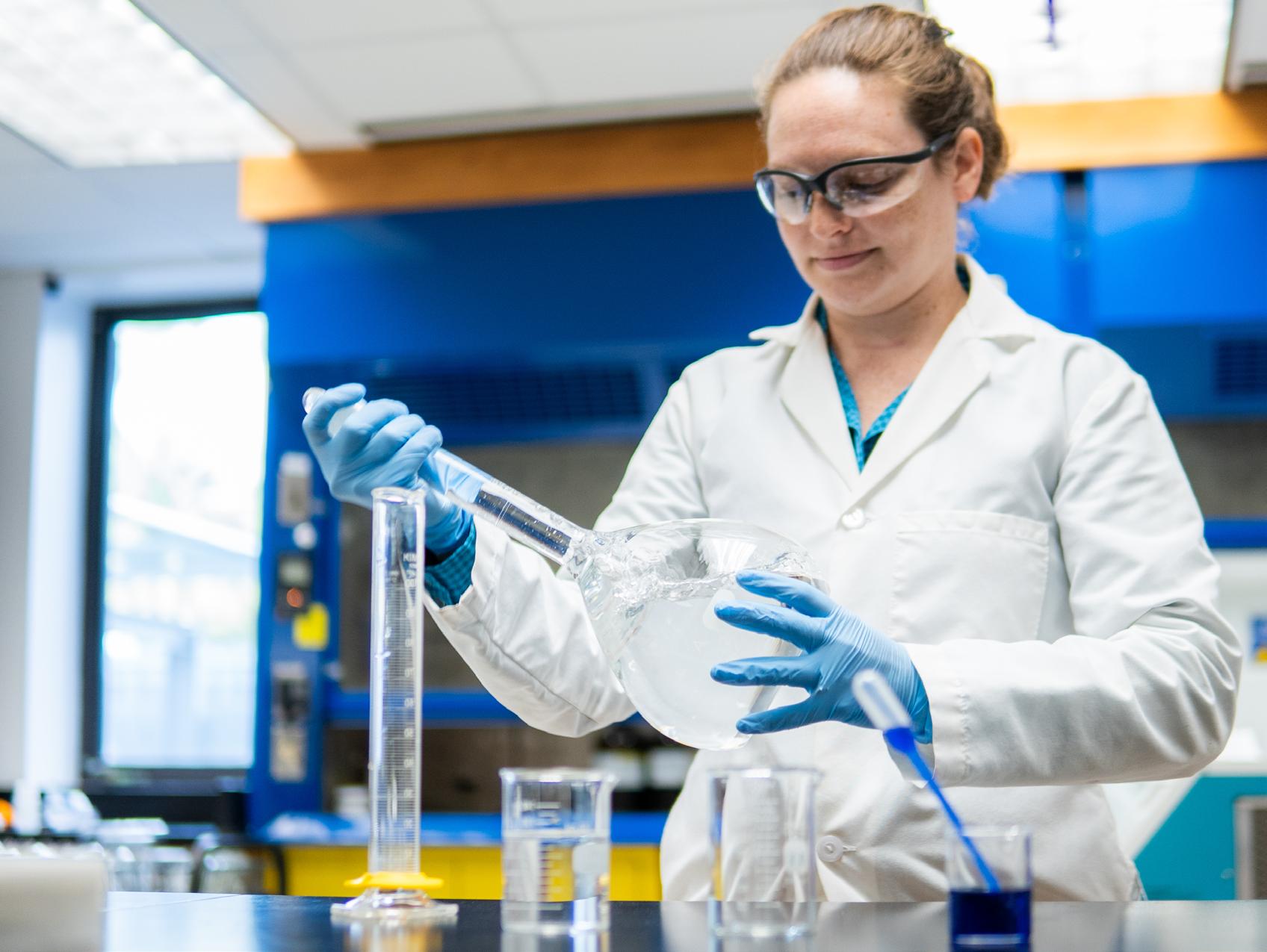
PFAS are manmade compounds extensively used in various products such as clothing, furniture and food packaging. PFAS compounds do not naturally occur in drinking water supplies. When products containing PFAS are used and disposed of, they have the potential to release PFAS into the environment, which can include drinking water sources. The Collier County Water Division has not detected the presence of PFAS in our drinking water supply. We continue to comply with all Environmental Protection Agency regulations to ensure the safety and quality of our drinking water.
More information is available at epa.gov/pfas.
L EAD AND C OPPER P ROGRA m
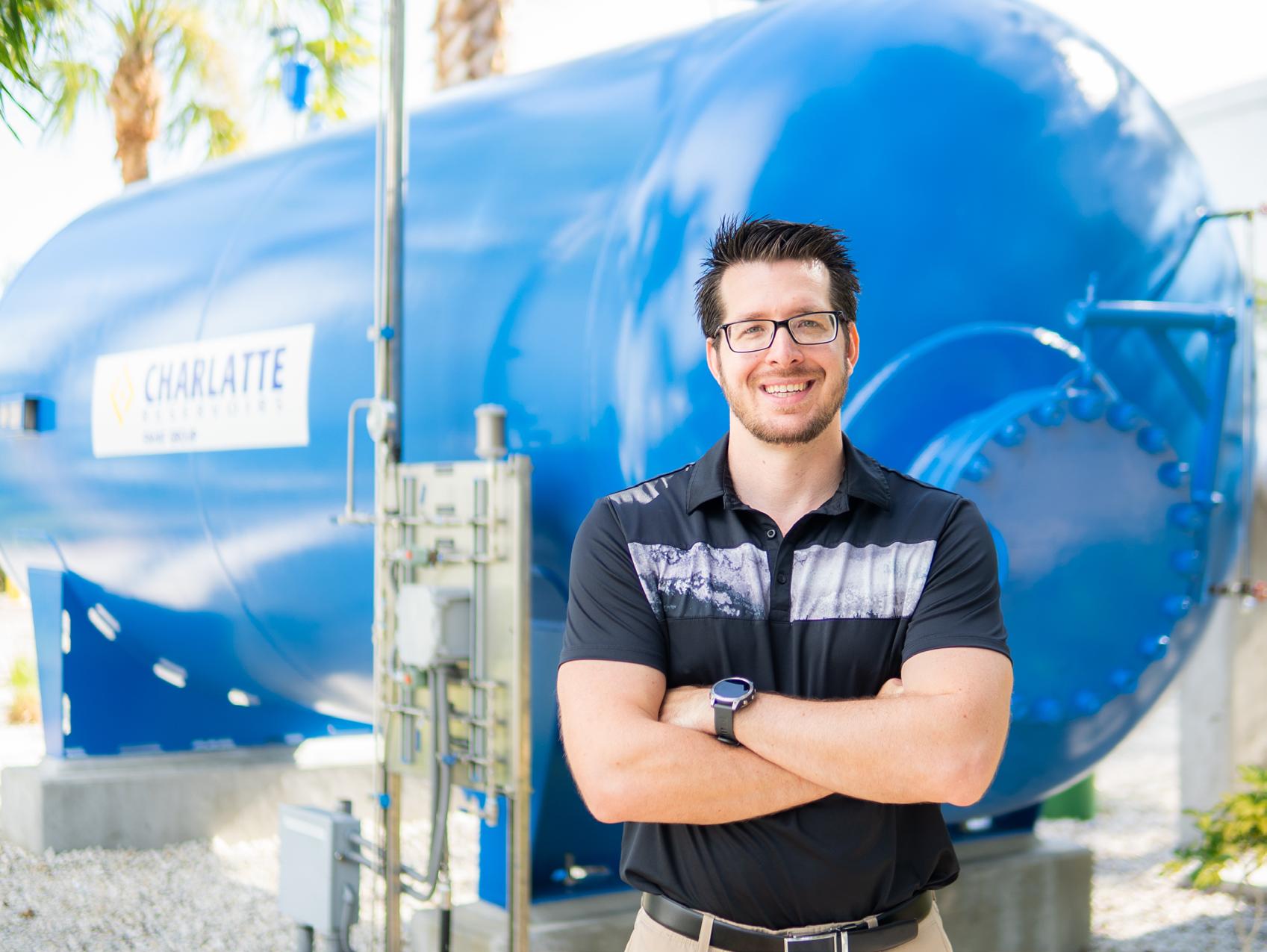
If present, elevated levels of lead can cause serious health problems, especially for pregnant women and young children. Lead in drinking water is primarily from materials and components associated with service lines and home plumbing. The Collier County Water Division is responsible for providing highquality drinking water, but cannot control the variety of materials used in plumbing components. When your water has been sitting for several hours, you can minimize the potential for lead exposure by flushing your tap for 30 seconds to 2 minutes before using water for drinking or cooking. If you are concerned about lead in your water, you may wish to have your water tested. Information on lead in drinking water, testing methods, and steps you can take to minimize exposure is available from the Safe Drinking Water Hotline (8004264791) or at www.epa.gov/safewater/lead.
The Collier County Water Division routinely samples the water for lead. More information is available at colliercountyfl.gov/lead.

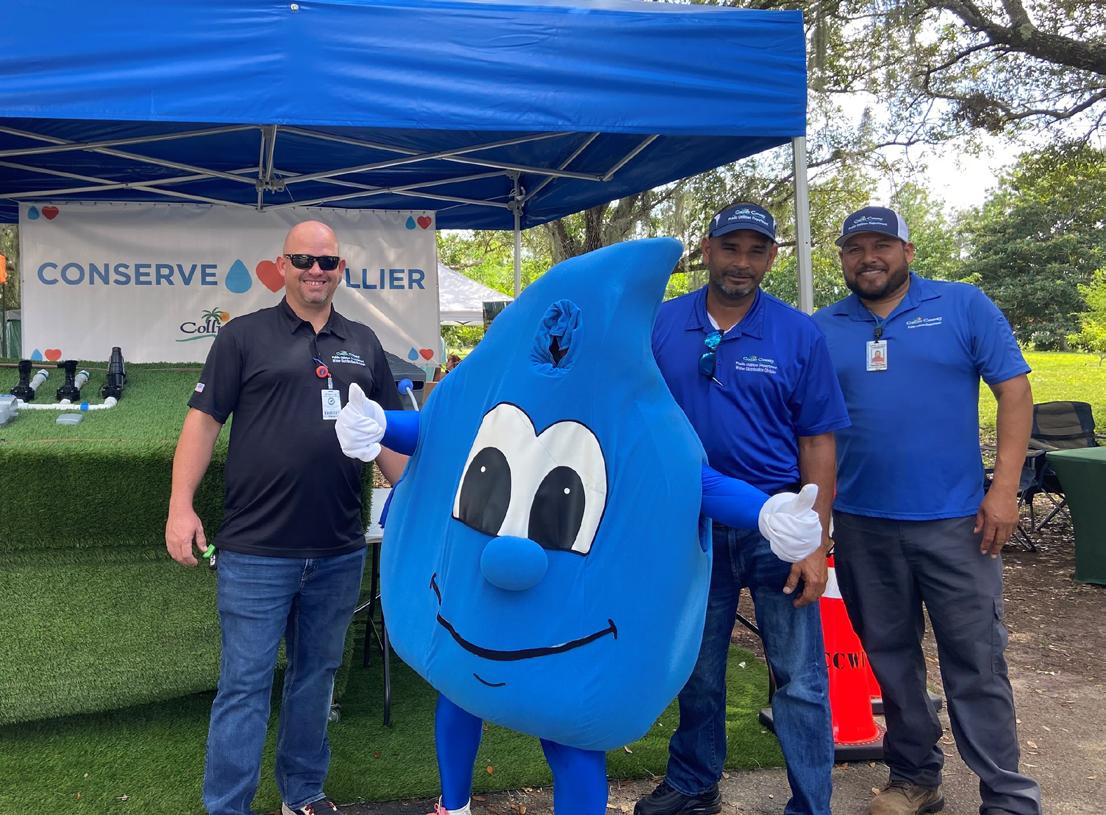
Water conservation is at the heart of our community’s efforts to protect our most precious resource . Working together, we can all participate in the long-term sustainability of the water supply Through conscientious water management and the promotion of water conservation, the Collier County Water District helps to safeguard water resources for generations to come
For more information about water conservation visit conservewaterlovecollier . com .
If you have any questions about this report or your water service, please contact us at 239-252-6245
For questions concerning your water service account, service requests and billing inquiries, call Utility Billing and Customer Service at 239-252-2380 .
If you have a water emergency or would like to report a leak, call us at 239-252-6245 . This phone line is attended 24 hours a day, 365 days per year PLEASE do not contact 911 for a water leak
This is a publication of the Collier County Water Division PWS 5114069
For water service interruption and precautionary boil water notices, visit colliercountyfl gov/watermap
OTHER SOURCES OF INFORMATION
Florida Department of Environmental Protection: www dep state .fl .us
United States Environmental Protection Agency
Safe Drinking Water Hotline: 1-800-426-4791
United States Environmental Protection Agency Office of Water: www .epa gov/OW The American Water Works Association: www .awwa .org