Today, if every sta ng gap were filled, we could have 60% more impact for isolated communities. More pilots means more flights; more lives saved. When someone says yes to following their calling, we want to honour that yes by providing the support they need.
Membership queries and updates
020 7520 3830 membership@eauk.org
Advertising
020 7520 3830 sales@eauk.org
Design
Sarah Fisher sarahfisher.co.uk
Evangelical Alliance
Leadership group
Gavin Calver, CEO; Peter Lynas, UK director; Theresa Stone, director of communications and engagement; John Gibson, director of membership, finance and operations; Rev Dr Israel Oluwole Olofinjana, director of One People Commission; Hil Sewell, director of people and culture; Danny Webster, director of advocacy; Alicia Edmund, head of public policy; David Smyth, head of Evangelical Alliance in Northern Ireland; Tim Rowlands, head of Evangelical Alliance in Wales; Lynne Paterson, head of Evangelical Alliance in Scotland
Evangelical Alliance offices
Head office
176 Copenhagen Street London N1 0ST tel 020 7520 3830 info@eauk.org
Northern England
1a The Mailbox 1 Exchange Street, Stockport Gt Manchester SK3 0GA
Northern Ireland
First Floor, Ravenhill House 105 Ravenhill Road
Belfast BT6 8DR tel 028 9073 9079 nireland@eauk.org
Wales
40 The Hayes, Cardiff, CF10 1AJ tel 029 2022 9822 wales@eauk.org
Scotland Challenge House 29 Canal Street
Glasgow G4 0AD tel 0141 353 0150
scotland@eauk.org
The Evangelical Alliance. A company limited by guarantee. Registered in England and Wales No. 123448. Registered Charity No. England and Wales: 212325, Scotland: SC040576. Registered Office: 176 Copenhagen Street, London, N1 0ST idea is published in accordance with the Evangelical Alliance’s Basis of Faith, although it is impossible in every article to articulate each detail and nuance of belief held by Evangelical Alliance members. Articles in idea may therefore express views on which there is a divergence of opinion or understanding among evangelicals. idea accepts advertisements and inserts to offset printing costs. Advertising in idea does not imply editorial endorsement. The Evangelical Alliance reserves the right to accept or refuse advertisements at its discretion. Articles may be reproduced only with permission from the editor.
Worship is a profoundly powerful thing. I think one of the reasons is because it is impossible to be both thankful and fearful at the same time. Psychologists have said that the brain cannot focus on positive emotions like gratitude and negative ones like anxiety simultaneously, making them mutually exclusive emotional states. I can personally attest to this. When my attention shifts from my circumstances to God – who He is, what He’s done, and His faithfulness – something in me changes. It doesn’t always mean my situation immediately improves, but it often changes how I carry it. My mindset, my emotions, even my sense of strength can be steadied when I choose to fix my eyes on
Welcome Highlights
04 Spotlight!
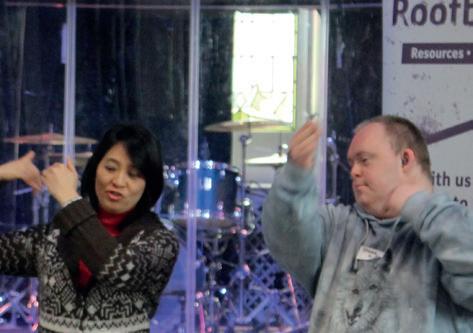
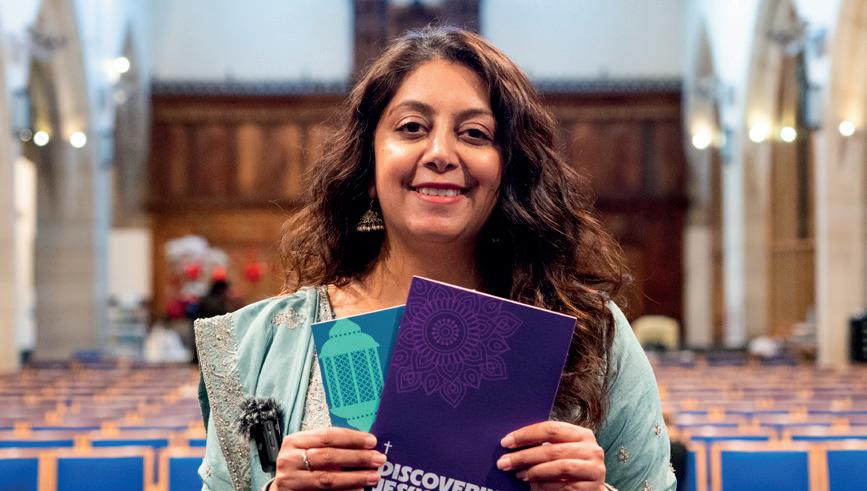
Exploring how the Evangelical Alliance’s South Asian Forum is equipping people with the launch of the new Discovering Jesus resource.
12
Faith in Focus
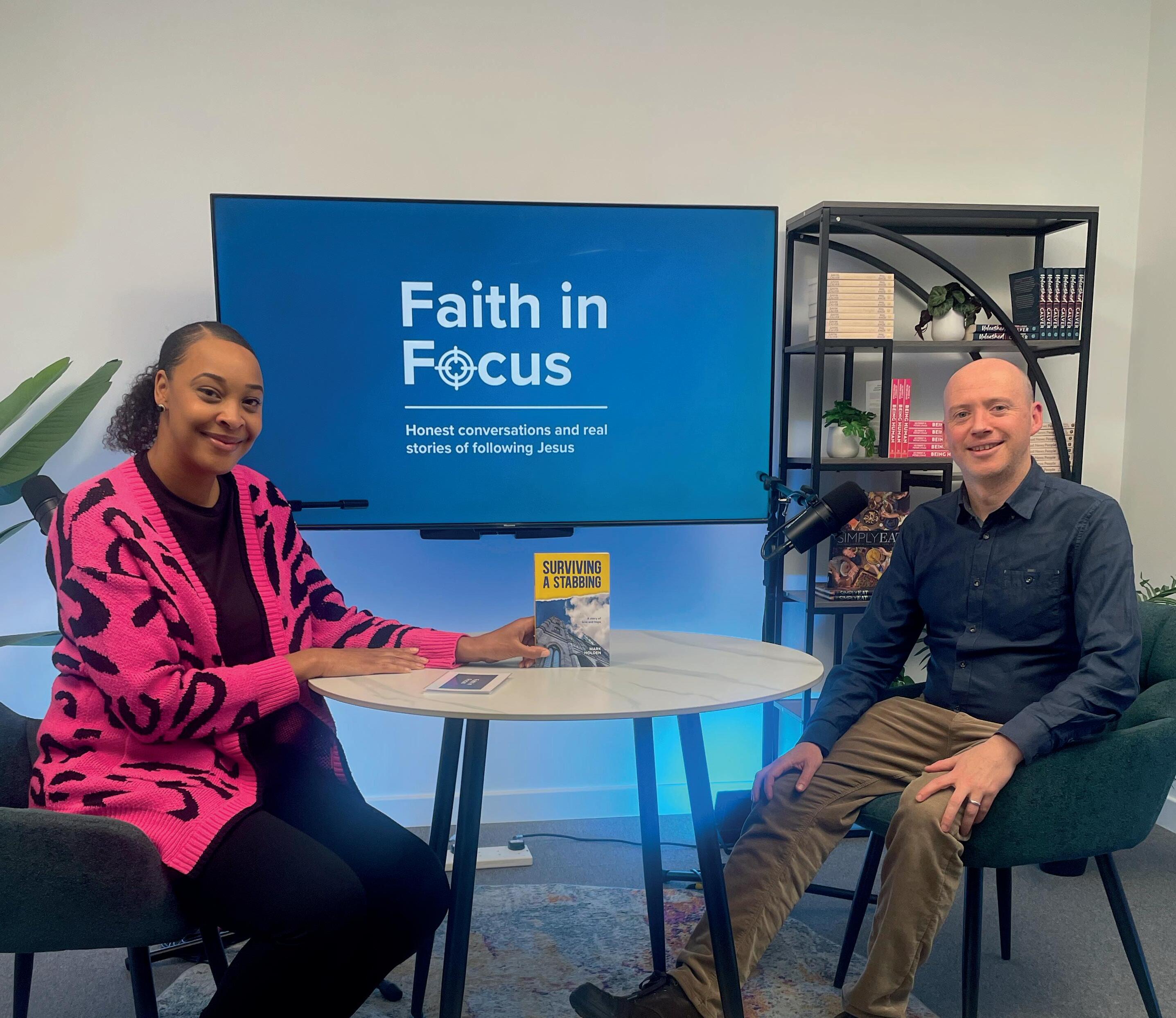
Mark Holden joins Nicola Morrison in the Evangelical Alliance studios to share his powerful story of resilience and restoration following a harrowing knife attack.
18 Beyond access
Lois Bunyan, from disability charity Through the Roof, highlights why accessibility and belonging should be at the heart of church life.
Christ with gratitude. Worship has a way of lifting our perspective above what feels overwhelming and reminding us that God is still in control.
And worship isn’t just one thing. It’s expressed in so many ways: in prayerful thanksgiving, in serving others with love, in showing mercy and patience the way Jesus did, and even in quiet moments of awe where words fall away and we simply rest in God’s presence. Romans 12 even frames our everyday lives as worship when we offer ourselves to God.
Worship draws us into truth. As we come with thanksgiving and praise, we’re reminded that God is worthy in every season – and in His presence, everything else finds its proper place.
Nicola Morrison Editor
20 Many cultures, one praise
Jessie Tang reflects on the transforming power of intercultural worship, revealing how shared expressions of faith across cultures can deepen unity, broaden perspective, and reshape the church into a more vibrant and inclusive community.
24 My story
Bryony Lines explores one woman’s story of perseverance, faith, and life beyond abuse.
30
When worship is not just words
Paul Smith explores how Musana, an organisation working in Uganda, is redefining support by enabling communities to build lasting independence.
The sound of revival: why our worship still matters
Founder of Beracahmusic Ministries International, Steve Thompson explores the theological anchoring of worship and asks, could the awaited revival be released through our worship?
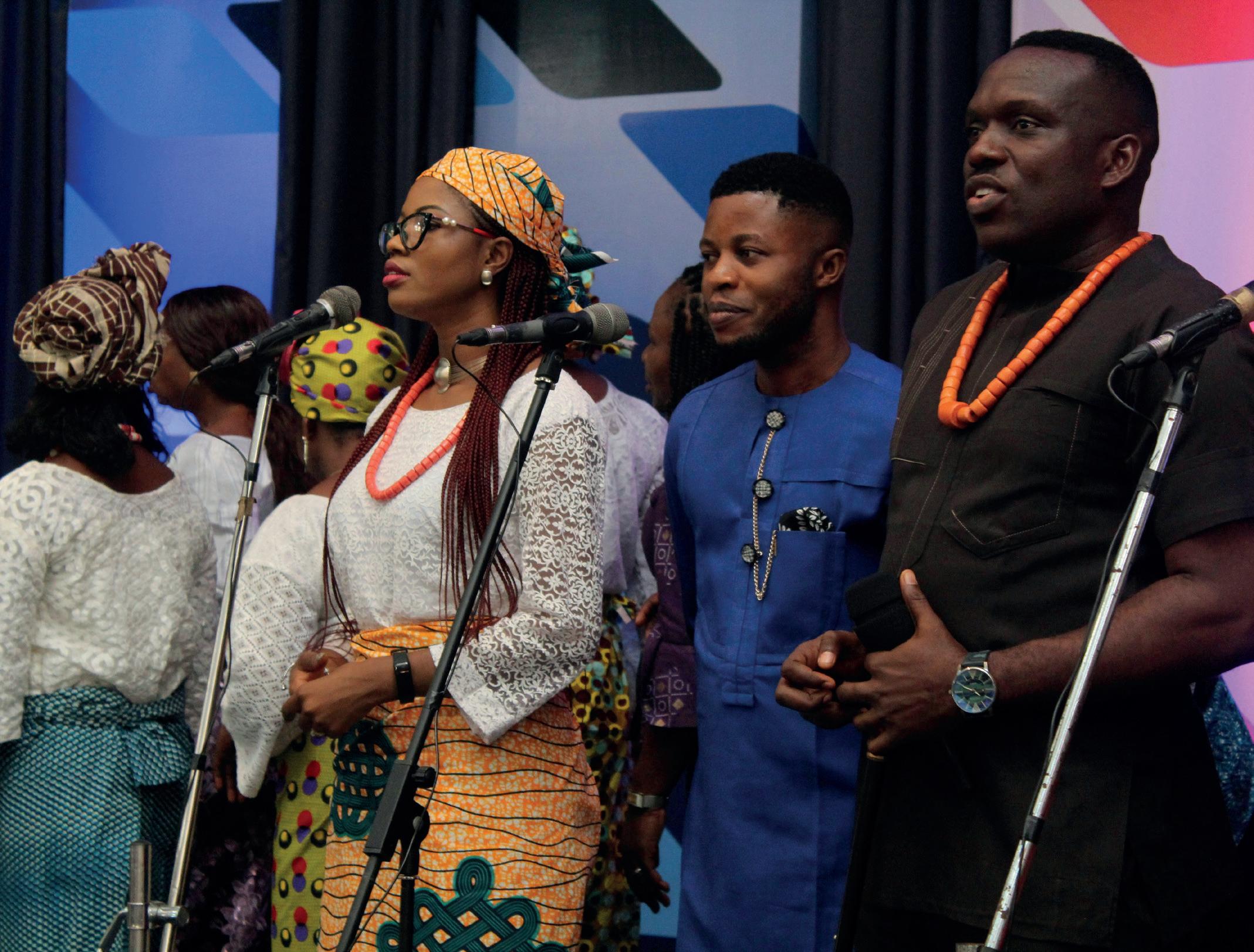
Recently, my wife Velveta and I were commissioned to lead worship at a David Hathaway ‘Revive Now’ revival meeting held at the Emmanuel Centre in central London. As we gathered a team of 15 musicians and singers from diverse cultural and church backgrounds, I was once again reminded that the sound we offer in worship is never neutral. What and how we sing matters, not only musically, but theologically, spiritually, and profoundly for the life of the church.
Scripture repeatedly connects corporate singing with spiritual breakthrough, revelation and renewal, presenting worship not merely as
expression but as participation in God’s activity.
In 2 Chronicles 20, Judah’s victory begins when the singers go out first, suggesting that praise can precede and even shape the outcome of physical circumstances, aligning the people’s focus with God’s sovereignty rather than their fear.
Psalm 22 reminds us that God is enthroned on the praises of His people, portraying worship as a sacred meeting place where His divine presence is manifested among the gathered community.
In Acts 16, Paul and Silas sing in prison, and their worship becomes the context for deliverance – not only for themselves but also as a witness that impacts those around them, demonstrating how praise can transform both inner and outer realities.
Communal singing is deeply formative, fostering unity, strengthening faith and opening space for God’s renewing work in His people.
Colossians 3 teaches that singing allows the word of Christ to dwell richly among God’s people, indicating that corporate song is a means of teaching, shaping belief and reinforcing truth in a way that engages both heart and mind. Together, these passages reveal that communal singing is deeply formative, fostering unity, strengthening faith and opening space for God’s renewing work in His people.
Sung worship is not ornamental; it is formational and catalytic. God often chooses melody as a vehicle for truth because song bypasses mere cognition and takes root in the affections. Songs and hymns about the blood of Jesus, such as those by Charles Wesley or Richard Smallwood, have shaped Velveta’s and my theological foundations and formed us into who we are today.
Whenever I arrange music for large, intergenerational congregations, one question always arises: will the younger voices know the songs, and will the older saints remember the melodies? I am often reminded of a quote from my dear friend and mentor Graham Kendrick, whom I have had the privilege of music-directing for over thirty-five years. He once said quite simply, “Worship is not what we get out of it, but what God gets out of it.”
Over the years, I have learned that there is a clear distinction between arranging music for recording and arranging music for corporate worship. In congregational settings, every
introduction, chord progression, rhythmic groove and melodic counter-melody must serve, rather than diminish, the voice of the gathered church.
One of the first hymns I began working on was ‘There is power in the blood’ by Lewis E Jones. Its opening lines are strikingly direct:
“Would you be free from your burden of sin?
There’s power in the blood, power in the blood; Would you o’er evil a victory win?
There’s wonderful power in the blood.”
Some time ago, a comment was made that Velveta and I were ‘too Pentecostal’. Such labels may reflect differences in doctrinal emphasis or cultural worship expression, yet they quickly lose their force when one reflects on the truth and significance of Christ’s sacrifice. Many would say that revival has often been released through sung worship and that it remains one of God’s most consistent conduits for renewal.
I truly believe that revival must begin in the worshipper’s heart before it is ever seen on a wider scale. It is a deeply personal journey before it becomes a communal experience.
So, do stylistic choices or the age of songs matter? I believe they do to some extent. We are rediscovering worship that awakens the soul, worship that puts heart before harvest. In essence, we are recognising worship as the seed of revival.
Our encounter with God certainly isn’t contained by songs, yet there’s something undeniable about how the Spirit repeatedly uses familiar, theologically rich songs and hymns as deep wells of memory, faith and formed devotion. Those old songs often carry decades of prayer, suffering, hope and lived theology in a way that instantly locates people inside the story of God rather than just observing it. It’s as though those songs give people language again for reverence, surrender and expectancy that can sometimes be harder to access through newer material alone. Not better or worse, just different.
In-depth theological and biblical content remains vital in our proclamation of the love of Jesus and His kingdom while we await His return. Perhaps the awaited revival will not begin with new techniques or louder moments, but with a renewed sound, worship rooted in truth, shaped by scripture, revitalised by a fresh anointing by the Holy Spirit – all of which empower us to engage in transformative private and public worship.
Steve Thompson is a worship leader, music lecturer at London School of Theology, arranger, and founder of Beracahmusic Ministries International, serving churches with biblically rooted worship.
SPOTLIGHT!
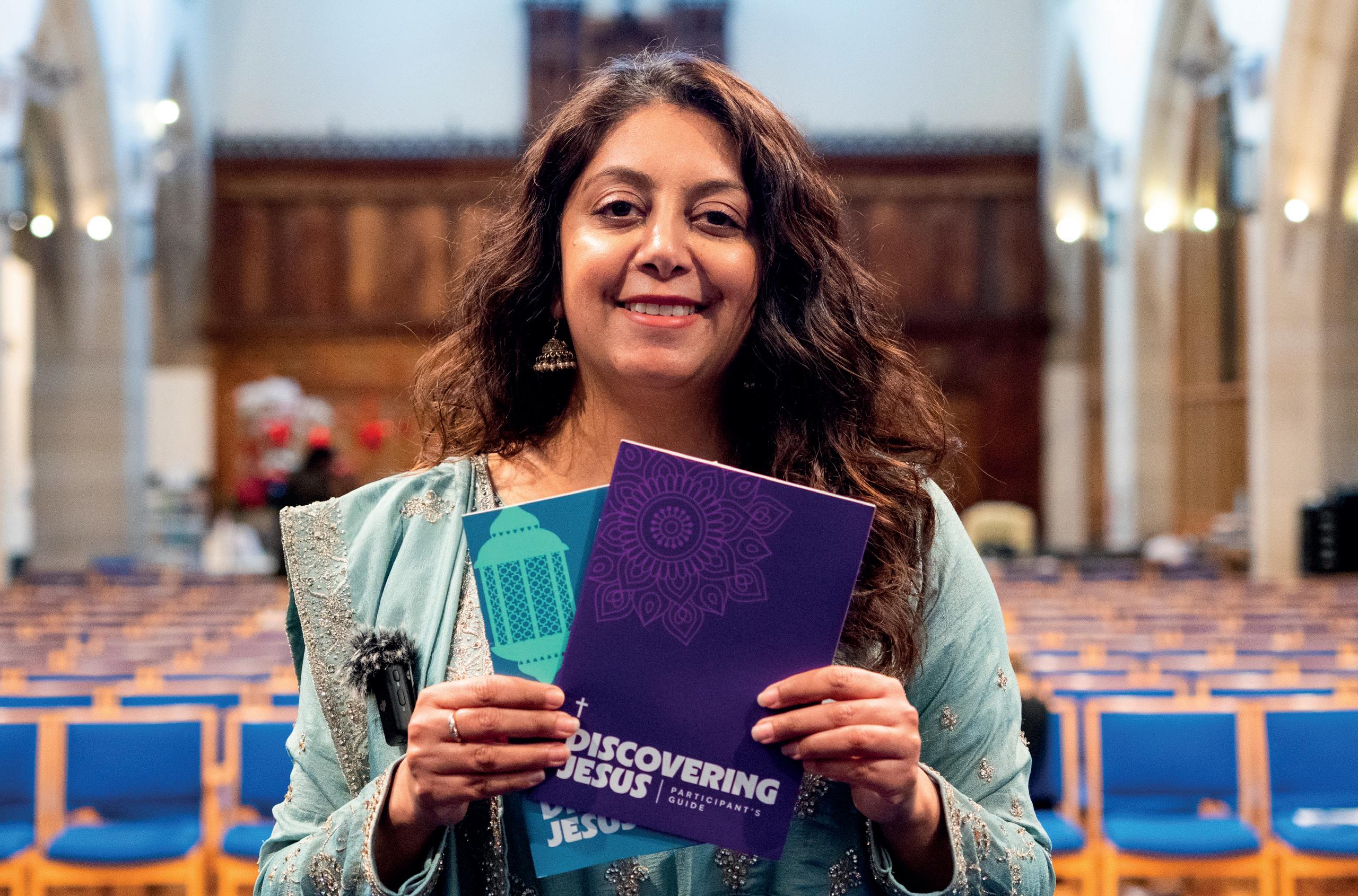
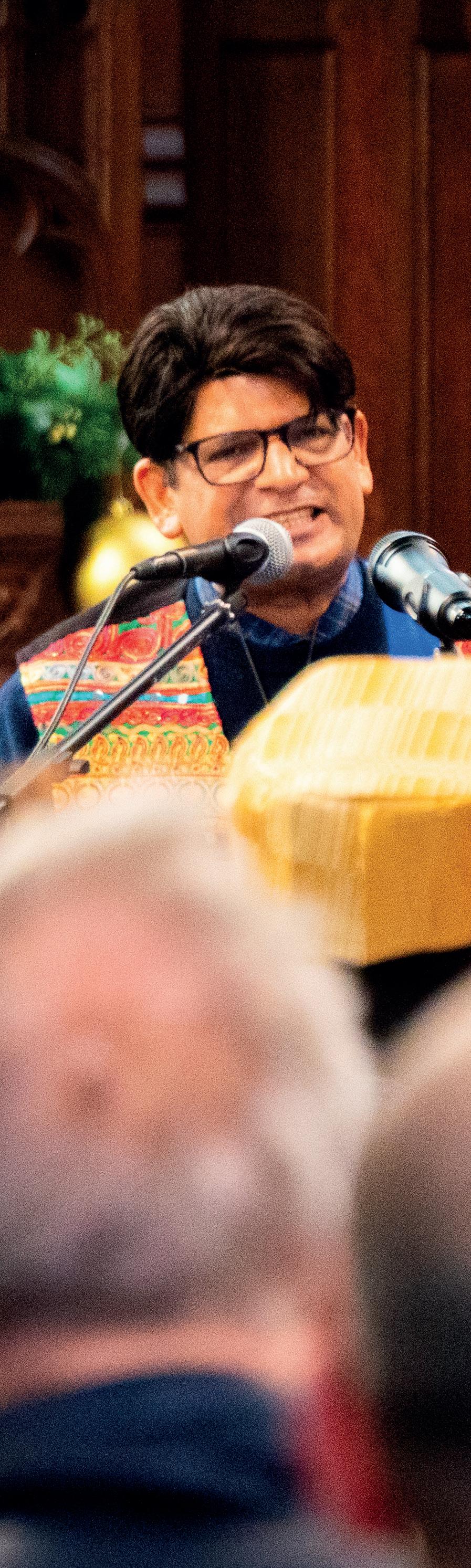
Rani Joshi highlights how the Evangelical Alliance’s South Asian Forum is equipping people with a refreshed suite of resources to support their faith journey in discovering Jesus.
The South Asian Forum network was set up in 2010 to raise awareness of persecuted South Asian Christians and to amplify their voices within the UK church and government. Over the past 15 years, we have built a network of church and organisational leaders, as well as developed resources such as Simply Eat and Discovering Jesus
Over the past two and a half years, I’ve had the privilege of leading the South Asian Forum. In that time, I’ve seen God move powerfully – particularly in gathering and equipping South Asian Christian women, and in the relaunch of Discovering Jesus
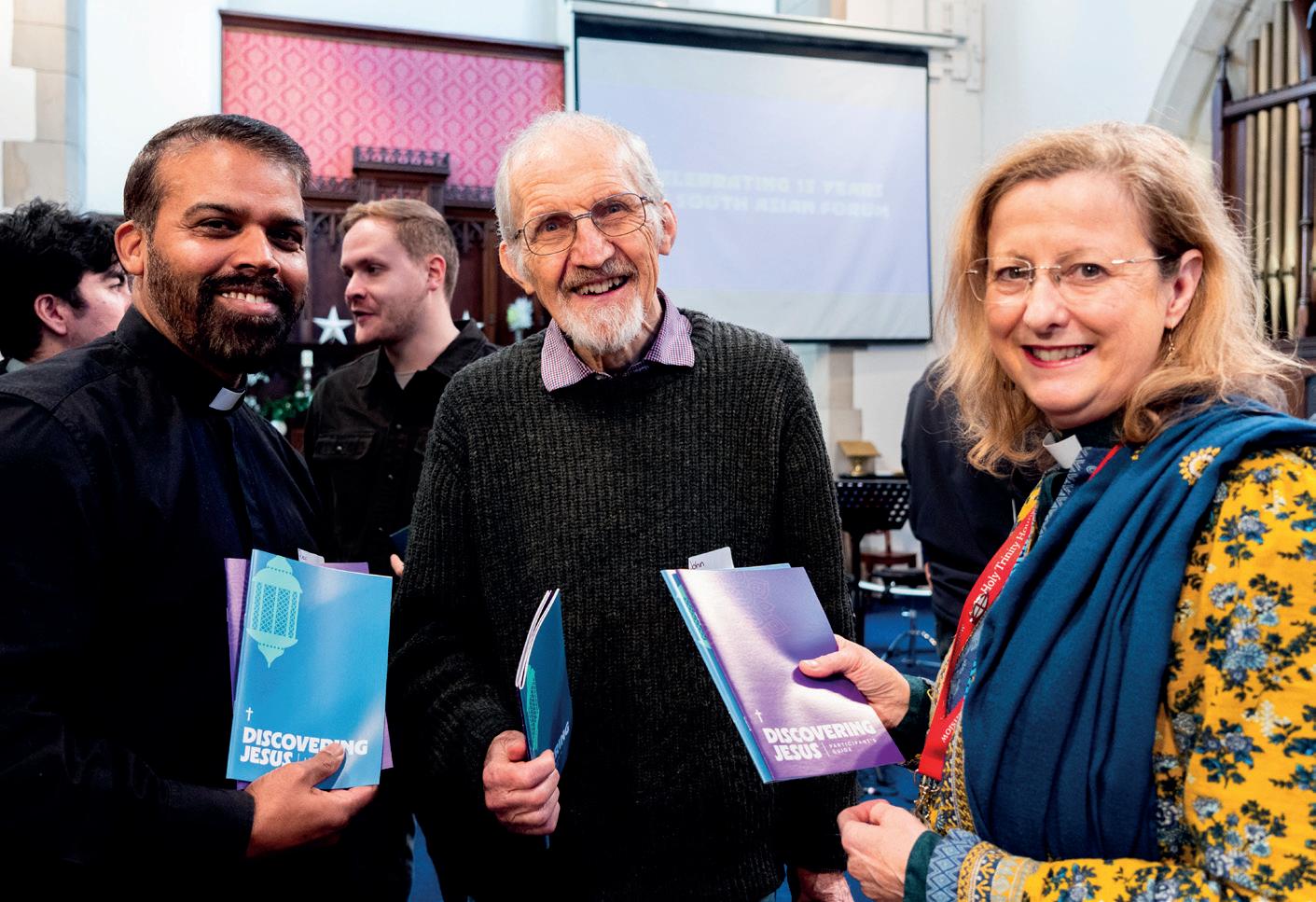
We have updated and refreshed our Discovering Jesus resource – an evangelistic course designed to help churches invite their Asian neighbours to explore who Jesus is for themselves. Many participants may come from Hindu, Muslim, Sikh, Buddhist or Jain backgrounds, whether practising or not.
There are over 5.5 million
South Asians in England and Wales who do not yet know Jesus.
My heart, and the heart of many others, is that people would have the opportunity to discover who Jesus truly is and what that means for their own personal story.
The course explores and discusses key themes of faith, identity and culture. What makes it distinctive is its focus on Asian cultural questions and we explore the relationship between faith and culture, particularly where the two are deeply intertwined. Alongside this, we look at who Jesus is, what the Bible says about Him, the role of the Holy Spirit, and the cost of following Christ – something that can be especially significant for many.
There are over 5.5 million South Asians in England and Wales who do not yet know Jesus. Some may have heard of Him, others may have rejected Him, and many hold misconceptions or try to fit Him into existing belief systems. As someone who came from a Hindu background, my heart, and the heart of many others, is that people would have the opportunity to discover who Jesus truly is and what that means for their own personal story. In Matthew 16:15 Jesus asks Peter, “Who do you say I am?” and I believe that question is for all those who God is inviting.
As believers, we are called to share the good news of Jesus, not just to see people baptised, but to see them become disciples and lifelong believers.
I want to encourage the UK church that you don’t need to know everything.
In fact, we have done the groundwork, so you don’t have to. The course includes a leader’s guide with practical tips, brief introduction and background on different faiths and beliefs, and stepby-step guidance. Participants also receive their own guide; in this guide we have the outline of each session and give guidelines. Each week there is a challenge for the participant and so we encourage giving each person a Bible so they can be rooted in God’s word as they journey through the course. The guides are £1 each and links to the accompanying videos are included in this cost.
I’d love to invite you to join us, whether by praying for the course and the churches running it, sharing it with others, or even hosting it yourself in your context or local church. Perhaps you could partner with other churches, as I believe there is real power in a united church, especially for the times we are in.
If you’d like to find out more about the course or purchase one or more guides, please visit: eauk.org/ discoveringjesus
Rani Joshi leads our South Asian Forum. Coming from a Hindu Gujarati background, Rani found faith in 2012 through an encounter with the Holy Spirit. She is passionate about sharing her faith and also enjoys writing poetry, growing vegetables and connecting with others.
Church life: MARK HOPKINS
Mark Hopkins highlights why church growth can’t just be measured by numbers and why every transformational story counts.
Not long ago I was chatting with the leader of a large city church. In the course of the conversation, he casually mentioned that they had 40 people at their most recent baptism service.
I paused for a moment, unsure how to respond. At our last baptism service, we had two.
In moments like that it’s easy for church leaders to reach for the language of numbers: attendance figures, baptism counts, growth percentages.
And to be fair, some of the statistics we’re seeing at the moment, are genuinely encouraging. There is an increase in Gen Z church attendance, Bible sales have reportedly increased since 2019 and in our own report, Finding Jesus, 39% of those surveyed said they had come to faith primarily through a powerful spiritual experience.
These are deeply encouraging signs of what God is doing across His church.
But I’ve realised that statistics aren’t always the best way to describe the work of God – especially when talking with other church leaders. For many of us leading smaller churches, it can sometimes feel as though our numbers simply don’t measure up.
Yet the more I reflected on it, the more I realised that perhaps numbers were never meant to carry the whole story.
When we read the Gospels, there are certainly moments where numbers appear significant: the feeding of the five thousand, the crowds gathering to hear Jesus teach, the multitudes waiting for a miracle. But alongside these moments are many deeply personal stories.
There’s Zacchaeus, the tax collector who climbed a tree just to catch a glimpse of Jesus. Bartimaeus, the blind man who refused to stop calling out until Jesus noticed him. Jairus, the desperate father who watched his daughter be raised back to life. And many unnamed individuals whose lives were completely transformed simply because they encountered Jesus.
The kingdom of God advances not just in crowds, but in people.
That’s why I’m learning that when someone asks, “How’s your church doing?” the best answer may not be a statistic at all. Instead, it might be to tell a story: Maxine first came across our church online. She had felt drawn to God and watched our services for several weeks from home. Then one Sunday our livestream had technical problems. Rather than giving up, she decided to overcome her nerves and come to the building in person. A week later she gave her life to Jesus. Today she attends regularly –alongside her grandparents, who have been coming ever since her baptism.
Then there’s Liz. She first came to church when her daughter phoned her on Easter morning and said, “I need to go to church today.” They arrived halfway through my talk, stayed for the final song and a coffee afterwards – and she’s been coming ever since.
I could also tell you about Nathan. He first came along to an Alpha course wanting to explore spirituality. Over the course of a year, he asked question after question, slowly exploring faith before eventually deciding to give his life to Jesus. He’s preparing to be part of our next baptism service.
None of these stories will appear in national statistics, but each one represents a life changed by an encounter with Jesus.
So, the next time someone asks you how your church is doing, perhaps instead of feeling pressured to recite numbers, you could simply say: “Let me tell you about…”
Mark Hopkins is part of the unity team at the Evangelical Alliance across the East Midlands. Alongside this he leads a church in Nottingham. He has a passion to see the local church equipped and empowered, working together for the sake of the kingdom.
What if your work was worship?
Daniel Ghinn shares how Worship.Works is helping Christians integrate their faith into their professional lives, viewing daily work as an act of worship.
Iwas sitting in a church in the Midlands before a Sunday morning service when a couple introduced themselves. It was the first time we had met, and after a few pleasantries, they asked me, “Are you in ministry too?” I replied, “Yes. The business I lead is my full-time ministry.” They laughed, slightly awkwardly, assuming I was joking.
That brief conversation reflected something many of us carry, often without realising it: a quiet divide between what we think of as ministry and what we think of as work. For many, ministry is perceived as happening in a church setting, while work is secular and takes place anywhere else. But I had come to see my work not as separate from ministry, but as an expression of it.
A shift in understanding
My father once told me that for years, he had prayed that I would go into fulltime ministry. When I was young, he and my mother were church-planting missionaries in South America, and I wonder if he had something like that in mind for me. Yet later in life, as he watched me develop my professional career with Jesus at the centre, he began to see that this was ministry too. Not instead of faithfulness to God, but as a living expression of it.
That shift did not happen overnight for me either. It came through a growing conviction, grounded in scripture, that both ministry and worship are far broader than we often imagine.
In the New Testament, the word often translated as ‘ministry’ comes from the Greek word ‘diakonia’, meaning service.
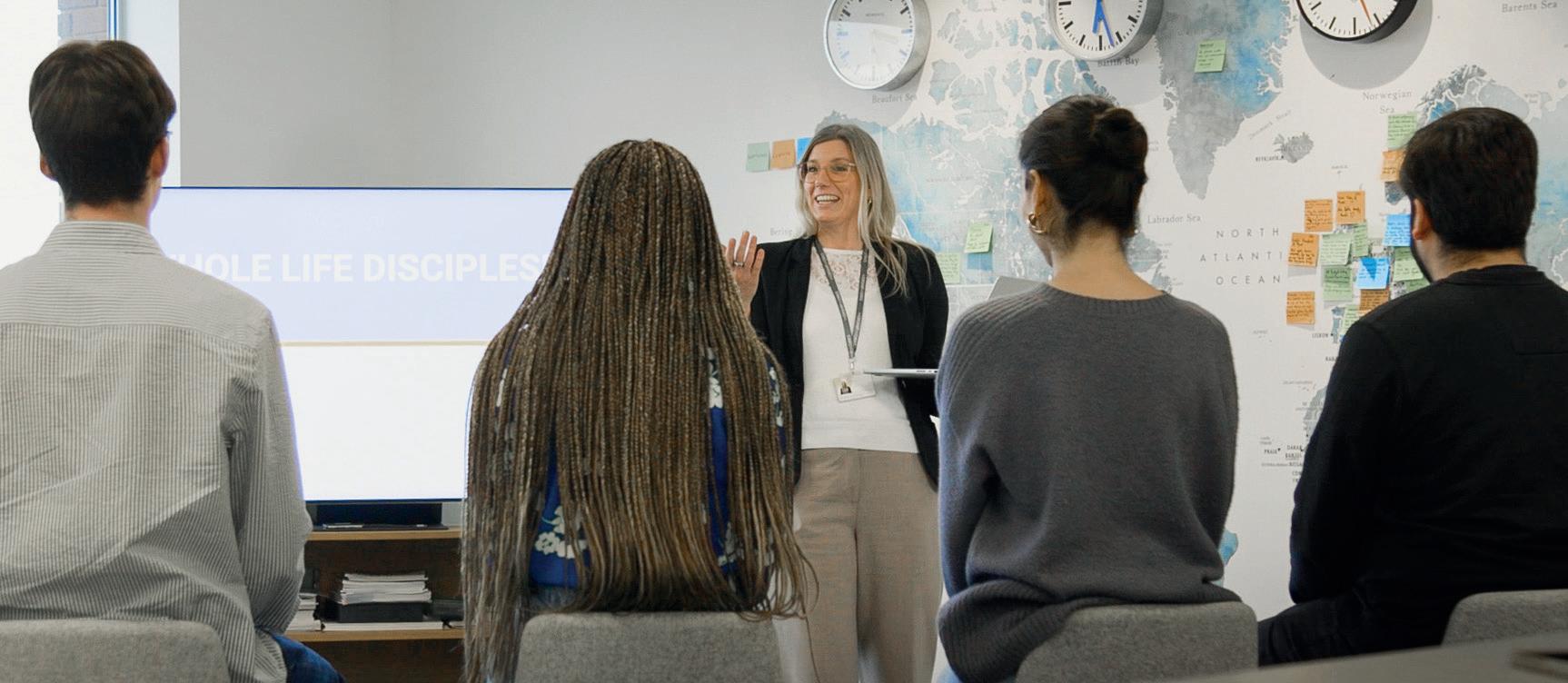
Work-based ministry training session with graduates
A minister is, quite literally, a servant. Ministry is not confined to a role or a title. It is expressed wherever we serve.
The same is true of worship. Paul writes in Romans 12:1, “present your bodies as a living sacrifice, holy and acceptable to God, which is your spiritual worship.” Worship is not limited to singing or gathered moments on a Sunday; it is the offering of our whole lives to God.
Even in the Old Testament, the Hebrew word ‘abad’ is used for both ‘serve’ and ‘worship’. The Bible does not draw the sharp lines we often do between work, service, and worship. Instead, they are closely connected.
Who are we serving?
This began to reshape how I saw my everyday work. Paul writes in Colossians 3:23–24: “Whatever you do, work heartily, as for the Lord and not for men… You are serving the Lord Christ.”
Those words led me to a deeper question: when I work, who am I really serving?
Jesus puts it plainly in Matthew 6:24: “You cannot serve God and money.” For many of us, work can easily become centred on earning, achieving, or proving ourselves. Yet what if our primary purpose in work was not to serve money, but to serve God? When that changes, something shifts not only in what we do, but in how we do it.
Worship in the everyday
Seeing work as worship to God begins to transform even the smallest tasks. Writing an email is no longer simply about getting a response or closing a deal. It becomes an opportunity to serve someone made in the image of God, to act with integrity, patience, and love, and to honour God in the way we communicate.
One lawyer who joined one of our Worship.Works meetups for Christians in the workplace began praying over her emails before sending them, asking God to bless the recipient regardless of the outcome. A healthcare worker told us how she realised she might be the only person praying for some of the patients whose blood results she handled. As she began to intercede for people she would never meet, her work became a quiet place of worship.
These moments are significant because they reflect a heart that has chosen to serve God in the ordinary rhythms of daily work.
At Worship.Works, we have seen this transformation again and again.
As people begin to recognise that their work can be offered to God, something changes internally. Frustration begins to give way to purpose, routine becomes meaningful, and relationships take on new depth.
Through initiatives such as the Year of Transformation, we help people explore what it means to follow Jesus in their everyday work. We also host local gatherings, creating space for encouragement and shared learning.
An invitation to reconsider
Worship is not confined to a moment or a place; it is a life lived in response to God. For most of us, that life is largely lived at work. So perhaps the question is not whether we are in ministry, but how we are serving and where we worship. Worship does not end when we leave the church building. For many of us, it continues in the work we do each day. If you would like encouragement as you explore what it means to worship God through your work, we would love to connect with you. To join an upcoming meetup, sign up for our monthly newsletter and much more, visit, worship.works
Daniel Ghinn is founder of Worship. Works, offering training and support to empower believers to serve God through their careers, focusing on excellence, integrity, and blessing their workplace. He is currently writing a book, Love to Sell , about how to put love at the heart of work.
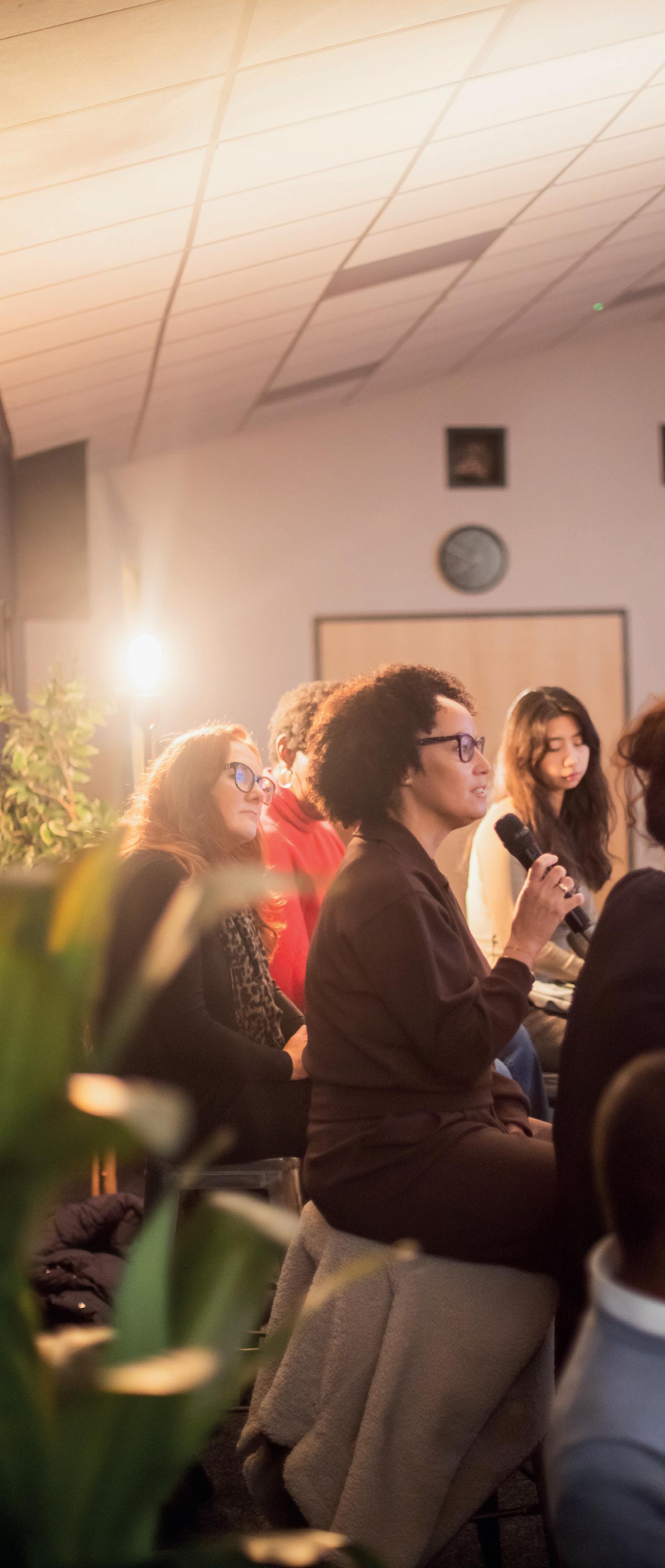
Small group discussions at a gathering for Christians in the workplace
Because people matte
Suppor
Leadership
Equipping
10 minutes with...
REV ISRAEL OLOFINJANA
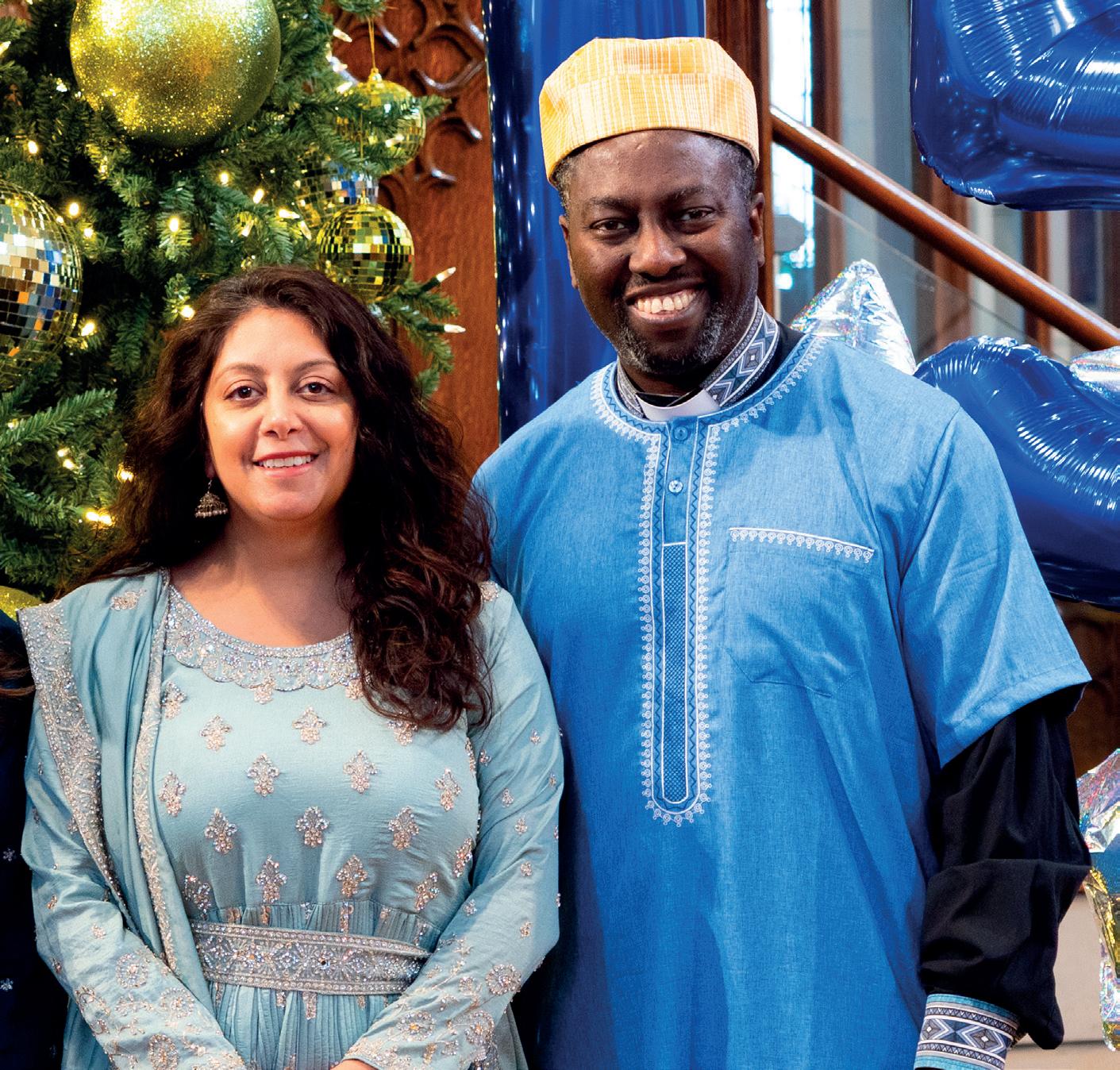
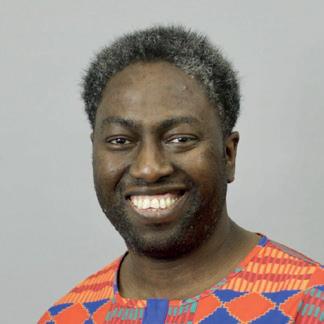
Director of One People Commission (OPC), Rev Israel Olofinjana bids the Evangelical Alliance good-bye and God bless as he leaves after a transformative five years.
Rev Israel, what originally inspired you to take on this role, and how has that vision evolved over time?
I had been involved with the OPC for a while before leading the network. I have always admired its work around unity and diversity within the evangelical tradition. The vision has developed, giving it a theological framing around Intercultural Church Conversations (ICC).
Looking back on your time leading the One People Commission, what moments or milestones are you most grateful for?
I am very grateful for us being able to celebrate 10 years of OPC, 15 years of South Asian Forum and to have been part of developing some significant resources such as Discovering Jesus.
What have you learned personally – about leadership, faith or community – through this role?
I have learned a lot through this role. Leadership takes a lot of courage, especially in this season where leadership is questioned but needed. My faith has grown through some of the challenges we have faced – I mean, I started during the pandemic! I have learnt that you need a community of people to be successful, so it is not about one person taking all the credit, but teamwork that gives glory to God.
What has been one of the most encouraging signs of unity or reconciliation you’ve witnessed during your time with us?
How churches have opened up and taken on the challenge of integrating an intercultural approach to church. I have seen pastors and church leaders intentionally going on this journey to create churches that are engaging in racial-inclusive communities that speak prophetically to their communities.
After five years, you are leaving the Evangelical Alliance as director of One People Commission. What is next for you?
I am very excited about this next stage of ministry. I will be the lead pastor for Colchester Baptist Church (a city-centre intercultural church) and alongside that will be catalysing a diasporic and intercultural network (One People Network) for the European Evangelical Alliance (EEA). I will also continue my work with Christ Theological College (CTC), focusing on developing the Centre for Intercultural Christianity.
What do you feel most hopeful about for the future of the One People Commission and its mission?
OPC has come a long way, resting on the shoulders of senior colleagues in the past. I am hopeful because it is entrusted into faithful and committed hands that will enable the work to continue to flourish.
Faith in F cus
Honest conversations and real stories of following Jesus
When was the first moment when you really started to process what had just happened?
What was that like in terms of making sense of it all ?
Nicola Morrison shares an exclusive sneak peek of the first episode of our new video series, Faith in Focus, due to launch in September.
I am in such a privileged position every day, as editor, to regularly hear extraordinary stories of challenge and triumph, hardship and hope, trial and transformation. Stories which have humbled, encouraged and inspired me. My desire is that
“...despite what’s happened, God’s here.”
“... this is what the Christian faith is about – forgiveness.”
these stories will have a profound effect on you too, as I interview everyday evangelicals and leaders on their faith journeys, not just to the point of coming to faith, but also to explore what it looks like to walk with God through life’s highs, lows and everything in between.
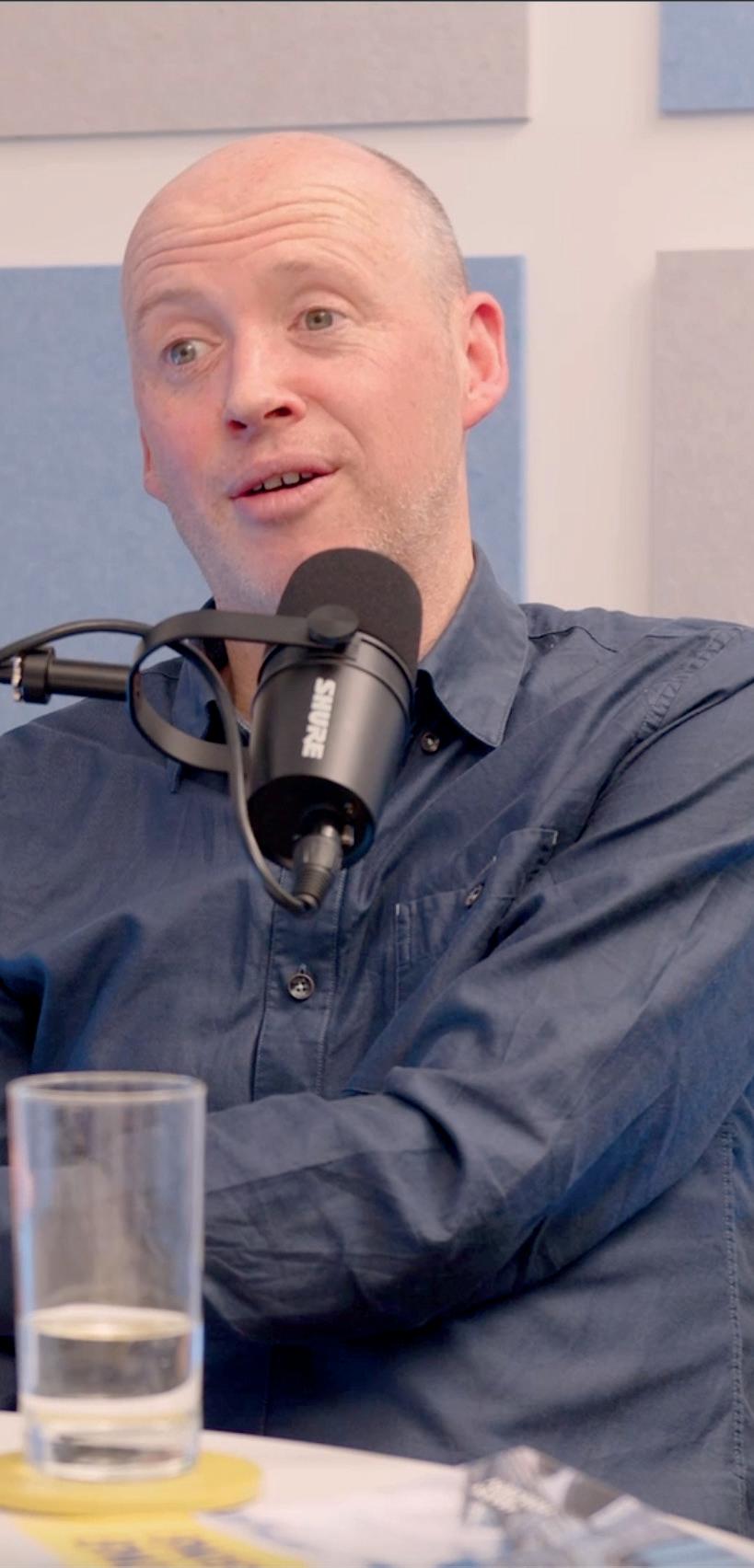
In this opening episode of Faith in Focus, we hear from Mark Holden, author of Surviving a Stabbing, whose journey spans profound emotional and physical struggle, resilience, and restoration. He shares moments that tested his convictions and the unexpected ways hope emerged in the midst of difficulty.
To watch Mark’s 20-minute interview, scan the QR code or visit: eauk.it/fif-ep1
Exalting the Name of the Lord
Hallelujah!
A prayer of praise, by John Gibson, inspired by Psalm 113.
You who serve God, praise God!
Just to speak His name is praise!
Just to remember God is a blessing –now and tomorrow and always.
From east to west, from dawn to dusk, keep lifting all your praises to God.
Holy God, you reign far above all powers and authorities.
You alone are worthy of glory, honour and praise.
Let all who serve you do so with willing hearts and with lips overflowing with thanksgiving.
May your name be spoken with reverence, and your goodness proclaimed at every moment of the day,
in the ordinary rhythms of life as well as in gathered worship.
Lord God, captivate the attention of your people once more.
Draw us into deep reflection on your faithfulness through every season.
Grant us fresh revelation of your steadfast love and your enduring favour toward all who bear your name.
Teach us again to delight in you and to trust your purposes with quiet confidence.
Holy Spirit, we pray for your church.
Renew us in our first love for Jesus Christ.
Let hearts be awakened, voices united and lives aligned with your will.
May the rising chorus of praise from your people be a pleasing offering before your throne.
Release worship from every tribe and tongue, until the whole earth resounds with your glory.
Amen.
John Gibson is our director of membership, finance and operations. John is also the founding trustee of Imagine If Trust and loves creating structures that enable people to bring their best and most transforming contributions. John is married to Nicky and they have three children and four grandchildren – ‘Grampa’ is definitely one of John’s favourite titles!
Advantages of becoming a personal member:
• Resources to equip and encourage you.
•
• Be the first to hear of events, gatherings, training opportunities, new resources, advocacy campaigns and prayer initiatives through our emails and appeals.
• Gain representation on a national and UK-wide scale as we speak up on behalf of the church and the vulnerable to government and the media.
• Be able to invite an Evangelical Alliance speaker to your church or organisation to share our experiences of what God is doing in the UK today.
5 TOP TIPS
for creating an atmosphere of worship
1 2
Daniel Johnson, programme leader for theology and worship studies at London School of Theology, shares the fundamentals of worship.
Psalm 95 has much to teach us about setting the atmosphere for worship.
1. Worship is God’s idea, and His invitation
The psalm begins with “Come, let us”. There’s a calling here to gather with God’s people. Committing to and meeting with your church, living together and serving one another, and knowing Jesus and making Him known –these are where God is at work. Psalm 5:7 tells us that we enter His temple because of His great, covenant love. Set an atmosphere of worship that loves the gathered church.
2. Sing
In the New Testament, we are told to sing to the Lord and one another. As we sing, the word of Christ dwells within us and His Spirit meets with us. St Athanasius taught that singing gives us fellowship with God and actually puts our soul in tune – our song joins with the Father who sings over us, the Son who sings with us, and the Spirit whose song echoes within us. Set an atmosphere of worship that resounds with holy songs.
3.Be thankful
The psalm also tells us to sing with thanksgiving, to bow down, to kneel down. Our hearts matter in worship. We come with a posture of deep reverence and delight in who God is and what He has done for us. Even when we come with broken hearts and songs of sorrow, He loves to hear us.
4. Have joy
When we see all that God has done for us in Christ, we are filled with a joy too deep for words. Set an atmosphere of worship that shows the power of the Spirit through the fruit of the Spirit. We sing to the Father, the Son and the Spirit because we have been saved for the praise of His glory. We sing with resurrection hope because we look ahead to the day when we cry out that the Lion of Judah and the Lamb who was slain is worthy of all honour and blessing and glory. We sing to the Great King, Our Maker, The Creator of All, Our Shepherd, The Solid Rock of Our Salvation. Set an atmosphere of worship that opens the eyes of our hearts to this glorious God.
The atmosphere of worship doesn’t depend on the brightest lights or the newest songs. Worship is ancient and immediate. When we gather to worship, in the name of Jesus, we worship our eternal triune God who meets with us. When we gather to worship, we sing songs of truth and joy and thankfulness. And when we gather to worship, we hear the voice of our Shepherd and Saviour who will lead us, when we gather with the saints and angels, and our songs will join the everlasting song.
Daniel Johnson is a lecturer and researcher, with expertise in the evangelical hymn tradition. He has been involved in worship ministry and music since he was a teenager. He is passionate about seeing worship leaders grow in the personal, pastoral and prophetic dimensions of their calling.
5. Listen and hear His voice
The warning in Psalm 95 is not to repeat the sins of the past, when God’s people doubted His plan, His presence and His provision. Our songs need to be saturated with God’s word, so that God speaks more in our gatherings than we do. When we gather to worship, the sound of the gospel must be proclaimed through our songs, sermons and sacraments. So, we must listen to the God who calls us to be holy as He is holy. Set an atmosphere of worship that hears and obeys the word of God.
Beyond access
Disability champion for Through the Roof, Lois Bunyan highlights the importance of creating spaces where faith and friendship can flourish without barriers.
For over a decade now I have been working in the disability arts sector, supporting adults with learning disabilities to build confidence and life skills through creative arts. Most recently, I have been spending my days supporting young adults with disabilities to find employment and advocating for them in the workplace. I come up against prejudice and barriers within society
daily, barriers that prevent those with disabilities from being involved in meaningful work. Sometimes this looks like a lack of accessibility or support; at other times it is a simple desire to prioritise efficiency over humanity. Perhaps you are not surprised that these barriers exist in the workplace. But surely, they don’t exist in church? Everyone is welcome at church, aren’t they? After all, in Galatians 3:28, we are told: “There is neither Jew nor Gentile, neither slave nor free, nor is there
male and female, for you are all one in Christ Jesus.”
Yet as we look around our churches, whether we are traditional or modern in our worship style, can we truly say that our worship is disability-inclusive? Inclusion goes beyond access into the building, beyond adapted toilets and ramps, and allows every Christian to feel included. If we want to be truly inclusive, we need to think beyond our buildings and look at our services and church life holistically.
If we want to be truly inclusive, we need to think beyond our buildings and look at
our services and church life holistically.
Access impacts all sorts of areas of church life. Our initial welcome: on the door, could we offer easy-read service sheets or fidgets to support people with additional needs? Our youth and children’s work: are we prepared to offer 1:1 support or introduce sensory play to support a child within our sessions? What about the language we use in our sermons? Are our sermons only open to those who are academic or university educated – or is our teaching open to all? And perhaps the most controversial of all, are we willing to adjust the volume of our worship to support an autistic brother or sister, even though it risks ‘ruining the vibe’? Inclusivity is hard, especially when the needs of one conflict with the needs of another.
I have had the privilege of being involved recently in co-authoring a book entitled Belonging without Barriers, a resource that unpacks this idea of accessibility in church. It begins with scripture, exploring how the theme of accessibility runs throughout the Bible, and then looks at how we can practically achieve inclusion and accessibility in our churches. One of the best things about this whole experience has been getting to hear people’s stories.
One such story is that of James and
John, who met as children on a summer camp in the Purbecks. John has Down Syndrome. Their story really isn’t groundbreaking; it doesn’t involve expensive adaptations or complicated adjustments. Instead, it involves real friendship and trust. It involves looking beyond someone’s disability and seeing the person God created and the fruit of the Spirit at work in their life.
It involves the living out of 1 Corinthians 12:22 – the body of Christ, “On the contrary, those parts of the body that seem to be weaker are indispensable.”
John and James’ story
James says, “One evening, after a particularly stirring worship, I wanted to stay a bit longer to reflect and pray. I told John – who, for context, is often first, third and sixth in line for a hot chocolate – he could go ahead and I’d catch him up. Instead, John remained next to me and prayed aloud over me. He thanked God for me, our friendship and our time together at camp. I cannot pretend that I caught every word that John spoke, but I didn’t need to. His words were genuine and heartfelt, his thankfulness to the Lord, pure. John’s relationship with the Lord reminds me
of Matthew 18, in which Christ calls us to have childlike faith – the challenge of putting aside our will and pride and depending on the Lord’s provision wholeheartedly. I cannot begin to comprehend how John perceives each day, and the challenges he may face. But the faith and trust he has glorify the Lord, as does the love he shows his family and friends. I am truly blessed to have had such a long friendship with John, in which there has been so much joy, personal growth and true fellowship shared.”
Do consider getting involved with this year’s Disability Awareness Sunday on 27 September 2026, based on the theme of 1 Corinthians 12:22 – the body of Christ.
You can access a range of free resources available at: throughtheroof.org
Lois Bunyan is a Roofbreaker disability champion with Through the Roof and is a passionate disability rights advocate. Lois is also actively involved in lots of ministries alongside her husband, who is a vicar.
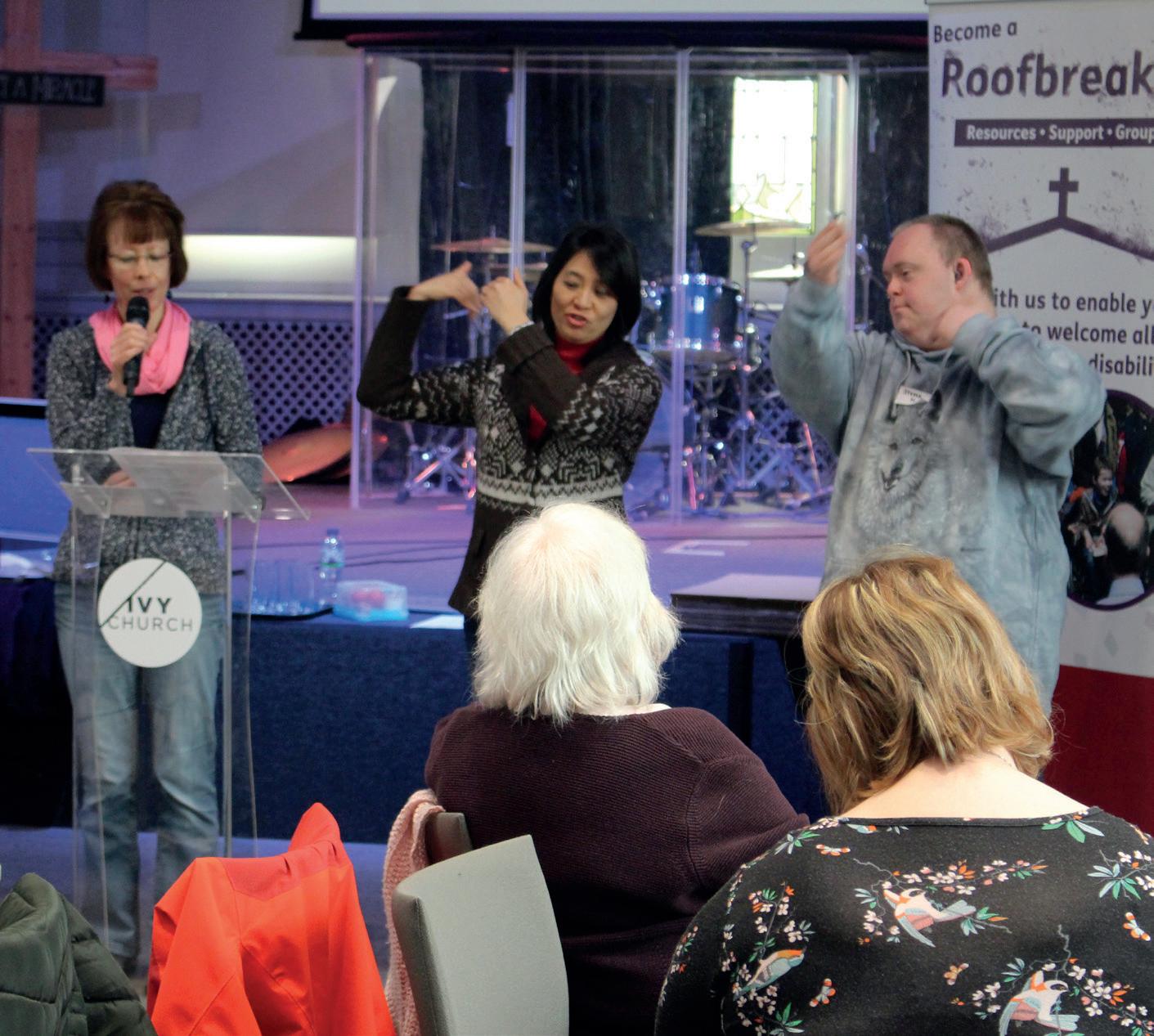
Through the Roof Makaton event in Manchester.
Many cultures, one praise
Jessie Tang explores the transforming power of intercultural worship.
Iremember leading worship using the lyrics of a familiar contemporary Christian worship song – firstly the chorus in English and then the same few lines translated into at least five languages. People literally had two seconds to digest everything that I presented and immediately had to pick a language to sing in! I overwhelmed the congregation in my attempt to help us to express ourselves with one another’s languages and cultures.
I knew every person in the room. I knew about their cultural heritage, their favourite musical worship styles, whether or not they sing or speak in various languages and even how they felt about intercultural church. Although my heart was in the right place, there were many things I was still learning and experimenting with, and I am grateful for everyone’s patience during that time.
In 2018, Anthony Gittins produced a series of diagrams to illustrate the differences between communities that are monocultural, bicultural, crosscultural, multicultural and intercultural (Aldous, Dunmore and Seevaratnam, 2020 – Intercultural Church , Grove booklet). A monocultural community is comprised of one culture, whereas a multicultural community has multiple cultures co-existing in one place. In an intercultural space, there is interaction – deeper relationships and mutual sharing of one another’s cultures.
As God’s people learn from one another, they also partake in one another’s cultural expressions, including singing each other’s songs, to create an organically evolving community, where when one member enters, the whole culture changes.
It is this mutuality which means that an intercultural church is where the cultures in the church form the overall culture of the church. This is also reflected in the sung worship space. In Genesis 1:26, God said, “Let us make humans in our image, in our likeness…” God is a community and we are made in the image of God – therefore a community bears the image of God. Cole Arthur Riley, author and creator of Blackliturgies on Instagram, wrote about how we need each other to bear the image of God in its fullness in her book, This Here Flesh She states, “I can never be truly myself apart from another person.”
Foundational to a healthy community and good mutuality are relationships, which are a key factor of any church, let alone intercultural church. It is through relationship that I knew the things that I stated about my church family; I saw them. This mutual seeing of one another caused us to invite and cherish the stories and cultures of each other, which we were honoured to share in our space. It was the protector against things like tokenism – knowing whether my sister or brother sings the language of their ancestors prevented the faux pas that I sometimes encounter when visiting
churches where people have been asked to read scripture in a language they do not know.
Worshipping interculturally is not restricted to diverse communities, however. Leading a song in Farsi (Persian) as a prayer for the country, people and diaspora of Iran encourages intercession and helps the church look beyond our four walls. We are able to see more of the global nature of our faith, as it connects us with believers from around the world too.
I fondly remember a time where I led the South African Zulu song ‘Wa Hamba Nathi’ (You Walk With Us) in the Netherlands, where engaging in this kind of worship style unlocked something new for so many of us. We learned to use our bodies in worship by joining in with the singing and dancing of South African members who came alive in their praise. Worshipping in different languages and styles creates new pathways and perspectives in our connecting with God.
Throughout my years of leading intercultural worship, I have experimented in various ways and seen practices which I have found helpful. Communicating vision is key for worship leaders and church leaders to bring the band and congregation along on the journey of exploring diverse worship and intercultural church. This could look like sharing stories and testimonies before or during a worship set, as well as scriptures showing God’s heart for His people from all nations to
Worshipping in different languages and styles creates new pathways and perspectives in our connecting with God.
worship together. It could be a standing agenda item for a leadership team meeting, AGM, or a group of people dedicated to seeing this as a priority in the church could be established. Finding the best moments to diversify a church’s worship repertoire is also important. Pay attention to the liturgical calendar, use feast days and festivals to introduce new songs. Pray regularly for news items and countries represented in and outside of the local church.
As we cross boundaries, see one another and allow the good of our cultures to shape the church, we must remember that above all, people are at the heart of this, and it is God’s Spirit who enables any change to happen. We merely help to facilitate the work of God, who created the nations, to see many come to know Him through worshipping together.
Jessie is an ethnomusicologist who has an interest in intercultural worship, missions and secondgeneration immigrants. She loves to speak about how important diversity is in loving others and knowing God more. Jessie is part of the European-wide intercultural worship ministry Songs2Serve, and in the strategic team of Intercultural Churches.
When we gather: encountering God through prayer and worship
The Evangelical Alliance’s monthly prayer meetings have become a highlight for John Goddard –why not be part of it too?
When you ask what it looks like to be rooted in worship, it can be hard for a Christian to think beyond singing our praises to God together in a church service. However, the reality of Christian worship is that sung worship is only one aspect of worship, and our worship to God can be expressed in almost every way we live out our lives.
I’m sure many Christians would join me in believing that prayer and fellowship are also key parts of our worship to the Father, Son and Holy Spirit.
To help root us in prayer and fellowship, in September 2024 our former head of prayer, Fred Drummond, started monthly online prayer gatherings. I am pleased now to be carrying the baton Fred passed on, and I’ve got to say, they’ve become one of the highlights of my month.
It is such a joy to join online with brothers and sisters in Christ across churches and denominations, who embrace different styles of prayer and are from all over the UK, and beyond, including participants from India and Nepal joining for a special time of unity, fellowship and prayer.
When our ten-year strategic direction was announced a couple of years ago, I remember the chair of the board, Manoj Raithatha, speaking to the staff team and saying he was confident we would achieve our goals because we were going to ask our members to pray. We live in an amazing time of openness to the gospel and yet challenge to Christian values in our society, so we are never short of topics to be informed about and pray into. We’ve prayed blessing over our podcasts and resources, and for God’s will to be done concerning significant legislation passing through parliament. There is such a rich variety of work covered by our members and staff team for us to hear about and support in prayer.
I remember one particular moment in a meeting when Fred suggested we pray prayers of thanksgiving for what was happening locally in the churches represented on the call. The prayer that stuck in my memory was from a church that had set about replacing their chairs and then started to see more people attending – so many, in fact, that they had to go back and order more chairs. Praise God!
In our September 2025 meeting, our CEO, Gavin Calver, spoke about how he
feels we are in a moment now that he and many others have been praying for over the last 20 years. The Bible teaches us many things about prayer, one of which is to persist in prayer.
We meet online, usually on the third Thursday of the month for one hour at 12.30pm, to lay before God the needs of the UK and the work of the Evangelical Alliance. All our members are welcome, and our heart is that God would be glorified in the UK and that together we would make Jesus known.
To find out more, please visit eauk.it/pray-with-us
John Goddard is our CRM and membership lead. He joined the Evangelical Alliance in October 2021, after serving as co-ordinator of Merton Street Pastors for 11 years.
John lives in South West London with his wife and three children. He is passionate about God, people and sports with a particular love for seeing the church working together in unity to transform the community.
My STORY
Yemi Ayeni shares her story of emerging stronger after abuse
It was several years before Yemi recognised and acknowledged the abuse in her marriage. “One night I was quite frightened and I’d stayed with friends,” she says. “They gave me some resources in terms of abuse and places that women might be able to turn to, shelters and things like that. I sort of dismissed it, thinking, No, this is not me. This is not where I am. This is not what’s happening.”
disbelief. I was asked to prove it. It was really, really painful to not be believed.”
This wasn’t the only way the people around her let Yemi down. Her husband had been unfaithful to her, and some suggested that was normal. “Culturally, I was taught, you don’t speak out when things aren’t going right. You don’t tell people what’s going on in your household.” Even those who tried to support her were often misguided in the advice they gave.
By Bryony Lines
This is quite common, she explains, going on to describe the cycle of abuse, in which times of crisis are followed by periods of stability. “Maybe you’re at the verge of, Okay, I’m going to take action now, but then the storm calms down. Maybe the perpetrator says, “I’m sorry. Let’s try again.” Or things are calm enough for you to think, Maybe it wasn’t that bad . That happened a lot.”
Eventually she shared what was happening with the wife of her pastor at the time, but instead of support she found suspicion. “I was met with
“Some might say, “I think you should go away and pray, go and submit more, do this or that.” But abuse is not something that disappears just because you submit more. Some of that well-meaning advice can just make things worse.”
Despite all of this, Yemi consistently turned to God, finding hope in prayer, comfort in the Bible and joy in worship.
While acknowledging that some people struggle to hold on to their faith in such difficult circumstances, she is grateful to have experienced the opposite. “He was my anchor in the midst of the storm.
As she continued to trust God, sung worship provided moments of relief. “I’ve always loved music. There’s just something about worship that’s very transcendent.”
I spent more time in Bible reading, more time in prayer, more time in fasting.”
Her voice breaks as she remembers the comfort that Matthew 28:20 brought her: “Jesus is about to leave and He’s speaking to His disciples and He says, “I’m with you.” I get a bit tearful thinking of that. Often when things were overwhelming, those were the verses that would come to my mind.”
She was also trying to protect her two children. “I was praying that God would cover them. I tried to keep as much from them as possible. Even if I wasn’t okay, I didn’t want that to show. I did the best I could to make sure that we still had fun times together. I don’t think I ever got angry with God in terms of, Why did you let this happen to me? My prayers were always for my husband, for his salvation, for a softening of his heart. The hope all along is that your partner will change, because it’s not what you want to do; nobody wants to end their marriage.”
As she continued to trust God, sung worship provided moments of relief. “I’ve always loved music. There’s just something about worship that’s very transcendent. It takes you to a different place and you forget whatever it is that you’re going through. ‘God of Revival’, ‘No Longer Slaves’ and ‘I’ll Raise a Hallelujah’ have been probably three of the most played songs on my playlist.”
Eventually Yemi did find people and resources to help her, including a new church. “One of the biggest reliefs was speaking out. I hadn’t been at the church for long, but they didn’t doubt me, they didn’t make me feel as if I’d done something wrong. They offered to speak to my husband.”
That accountability is often the missing piece, Yemi says – in churches and wider society – as most advice places the responsibility on the person experiencing the abuse. “There are not so many support programmes or words
Emerging Stronger by Yemi Ayeni, recently published
for the perpetrator, saying, actually, this is wrong.”
Since her husband was not prepared to change, Yemi made the difficult decision to leave her husband in 2019, taking the children with her and later divorcing him. The church family supported her in practical ways, helping her move and offering childcare, as well as enabling her to begin healing. “Experiencing the stress I was in, it made me sick on many occasions and anxious. I’m very privileged in terms of the church that I attend because we have a parish nurse. She was very supportive during that time.”
Since then, Yemi has enjoyed using her own gifts to support others, including in the worship and prayer teams. “There would be many weeks where I would be coming up for prayer, and there were faithful people that walked alongside me. Now I’m on the other side. That’s a great privilege.”
Yemi recently published a book, called Emerging Stronger, in which she shares what she has learnt about identifying abuse, and provides tools for recovery. “Times have been tough, but you can emerge stronger. That would be my message. This doesn’t have to be the end of you. You can emerge stronger –with your faith.”
If you are experiencing domestic abuse, our member organisation Restored can help: restored-uk.org
Free magazine
For a free copy of Search magazine email your address to admin@obt.org.uk or phone 01491 671357 or write to The Open Bible Trust, Fordland Mount, Upper Basildon, Reading RG8 8LU
Free resources
Use the QR code or go to www.obt.org.uk , and on the top bar click on free downloads to see graphics, pamphlets and booklets
There are also free videos and podcasts
of
Church planting: taking the gospel to the nations
From Melbourne to Moldova, John Warren, pastor of Northern Lights Church, shares how God has faithfully led him to missional work far and wide.
“Move to England. Plant a church. That church will be the base for missions into Moldova.”
That’s what I felt the Holy Spirit say to me one day in church. It was June 2012, and I was in Melbourne, Australia. I was 38 years old and had lived in Australia my whole life. I had a family, a good job and plans for the future that did not involve England, did not involve church planting and certainly did not involve Moldova!
Immediately I told my wife, who was next to me at the time, and she said, “Yes, that will work.” You see, God had been speaking to her for some months about missions in Moldova. She was ready to pack a suitcase. I had no interest, but I was terrified that the Holy Spirit might change that. Which of course He did, but with a pitstop in England first.
It turned out that we were eligible for a UK ancestry visa. Our church leadership in Melbourne thought it was so crazy that it must be God, and they backed us to the hilt.
We touched down at Manchester airport in July 2013 and quickly made a home in Halifax, West Yorkshire. We had no connections there, but God was so clear that that’s where we should be. We launched Northern Lights Church in February 2014. We’re in the
North of England, but the light comes from Christ, not from the Arctic. The scripture at the heart of the church is 1 John 1:7, “If we walk in the light, as He is in the light, we share in life together.”
From the moment we arrived we have loved the UK. Amidst constant questioning of, “Why on earth would you move here?” we are irrepressibly enthusiastic about England and about our corner of Yorkshire. We view this as a lifetime call and will not return to Australia except to visit. Spiritually, the UK has a great tradition of missionary sending – of being a blessing to the wider body of Christ – and we proudly stand in that tradition.
In the time since starting Northern Lights Church, we have seen 60 or so baptisms, as well as weddings and inevitably funerals.
But our dream does not end in the UK. From before the church was even started, we felt particularly called to be involved in charity works in Eastern Europe, especially in the nation of Moldova. Since 2015, we’ve been to Moldova no less than 15 times. It’s the poorest country in Europe, and our heart is to minster to those in need and be a blessing to evangelical churches there. We have built a great number of relationships there. We will eventually own land there and, by God’s grace,
begin a large ministry for those in need of healing, freedom and love.
It has given me great joy to see people take their first mission trip there. One lady who had never had a passport before came to celebrate her 50th birthday in Moldova and she just loved every minute of it.
I’ve also loved seeing our daughter embrace the whole vision and develop a strong faith of her own throughout the journey. She was six when we arrived and obviously had no choice in the matter. She’s now 19. She’s done multiple trips to Moldova, she’s been exposed to the ups and downs of church leadership as every pastor’s kid is, she’s been baptised and developed her own walk with God. And she has just started studying at Bible college. The whole journey has been the bulk of her childhood and it all seems to have worked well for her! For this I am exceedingly thankful to God.
From here we will plant daughter churches – we’ll light up the whole of the North of England if we can.
John Warren was a youth pastor, civil servant and lawyer in Australia before moving to the UK in 2013 and planting a church in Halifax, West Yorkshire.
Rediscovering the gift of difference
Dr Sheila Akomiah explores how intentional intercultural unity can transform the church into a richer, more authentic reflection of God’s kingdom through worship, leadership, and community.
The landscape of Christianity in Britain has changed dramatically over the last few decades. Among the most significant developments has been the emergence and steady growth of new churches and denominations across the country. Today, the fastest-growing churches in Britain include African Pentecostal congregations such as the Redeemed Christian Church of God (RCCG), and Chinese churches, each bringing distinct expressions of faith, worship, and community life.
This pattern is seen across the United Kingdom. In Scotland, diaspora churches are not only among the fastest growing, but also some of the most vibrant and active. Recent studies suggest that a new ethnic diaspora congregation has been planted every eight weeks since the year 2000, with around 22,000 people gathering in these churches each week 1 These figures are not simply statistics – they point to a deeper shift taking place within the body of Christ.
Alongside these broader changes in the landscape, individual congregations are also becoming increasingly diverse. This
1 Churches without People, and People without Churches, Brendan Research report 2025.
We must move from seeing cultural difference as an obstacle to seeing it as an opportunity.
is not an accidental feature of modern society, nor merely a sociological trend to navigate. It is, rather, a reflection of God’s kingdom and of His intentional design.
“But now God has set the members, each one of them, in the body just as He pleased. And if they were all one member, where would the body be? But now indeed there are many members, yet one body. And the eye cannot say to the hand, “I have no need of you”; nor again the head to the feet, “I have no need of you.”” (1 Corinthians 12:18–22).
In the passage above, the Apostle Paul offers a striking vision of the church. By comparing it to a human body, he reminds us that every member has been placed with care and purpose. This suggests that the composition of the church in any given place is not random. It is deliberate and carries God’s intention.
Paul goes on to emphasise that a body made up of only one part would not function as a body at all. Diversity is not incidental, it is essential. The eye cannot dismiss the hand, nor the head reject the feet. Each part depends on the others. They live in Ubuntu (a Nguni Bantu term from Southern Africa meaning ‘humanity’ or ‘humanness’).
This image is both simple and radical. The church is not meant to be a collection of identical people, but a living body made up of distinct and interdependent members. Diversity is not merely to be tolerated – it is vital to the survival and flourishing of the whole. In a world often shaped by division, comparison, and self-sufficiency, this vision is deeply countercultural. Within the body of Christ, difference is not a threat. It is a necessity, and each culture, each story, and each expression of faith contributes something important.
But our churches can sometimes mirror the separations we see in society. It is easy to gather in
culturally familiar spaces, to worship in ways that feel comfortable, and to build relationships with those who think and live as we do. While this may feel natural, it risks limiting our experience of the fullness God intends for His church. The growing presence of diaspora churches across Scotland and Britain invites us to ask a deeper question: what might God be doing through this shift, and how are we called to respond?
So, what does it look like to pursue this kind of unity? First, it begins with posture. We must move from seeing cultural difference as an obstacle to seeing it as an opportunity. This requires humility from everyone – the willingness to listen, to understand, to learn, and to be changed. It means acknowledging that no single culture fully reflects the kingdom of God, and that we need one another to see more clearly.
The body cannot function as it should if parts remain isolated. Nor can it thrive if difference is suppressed. But when each part is honoured, when each voice is heard, and when each culture is welcomed, the church becomes a powerful sign of God’s kingdom.
As we look ahead, my hope is that we will not settle for comfortable homogeneity but pursue courageous unity. That we will open our lives and churches to one another. And that, together, we will embody the beautiful, diverse, and unified body of Christ.
Dr Sheila Akomiah is a Ghanaian theologian and intercultural unity lead at the Evangelical Alliance Scotland, advancing intercultural collaboration, faith dialogue, and community cohesion.
When worship is not just words
Musana are reframing what it means to help by empowering communities to become self-sufficient.
We often think of worship as something that happens in church: songs, sermons, quiet moments of prayer. But what if some of our clearest acts of worship don’t happen in a service at all?
What if worship looks like building institutions, creating jobs or fixing a pipe?
At Musana, we have had to wrestle with an uncomfortable truth: sometimes what we call ‘help’ doesn’t actually restore people, it can keep them dependent. Across the developing world, there is a growing recognition that wellintentioned aid can actually reinforce the very problems it aims to solve.
If worship is about honouring God, then it must include the way we empower people, not just the way we sing.
For us, that has meant asking a different question: what would it look like for communities to sustain their own schools, hospitals and businesses?
That question comes to life in people like Fred.
“When I was five years old, I lost my parents,” he says. “I felt like it should also be the end of me.”
Without education and living with his grandmother, his future seemed
limited. But when Musana met him, the response was not just care, it was investment. Fred says, “Under the scholarship of Musana, I was able to join secondary school.”
It was there that Fred discovered plumbing. Soon, he began using those skills beyond the classroom – fixing taps, installing basins, serving others in his community. “It helped me earn some money… I could even send some to my grandmother.”
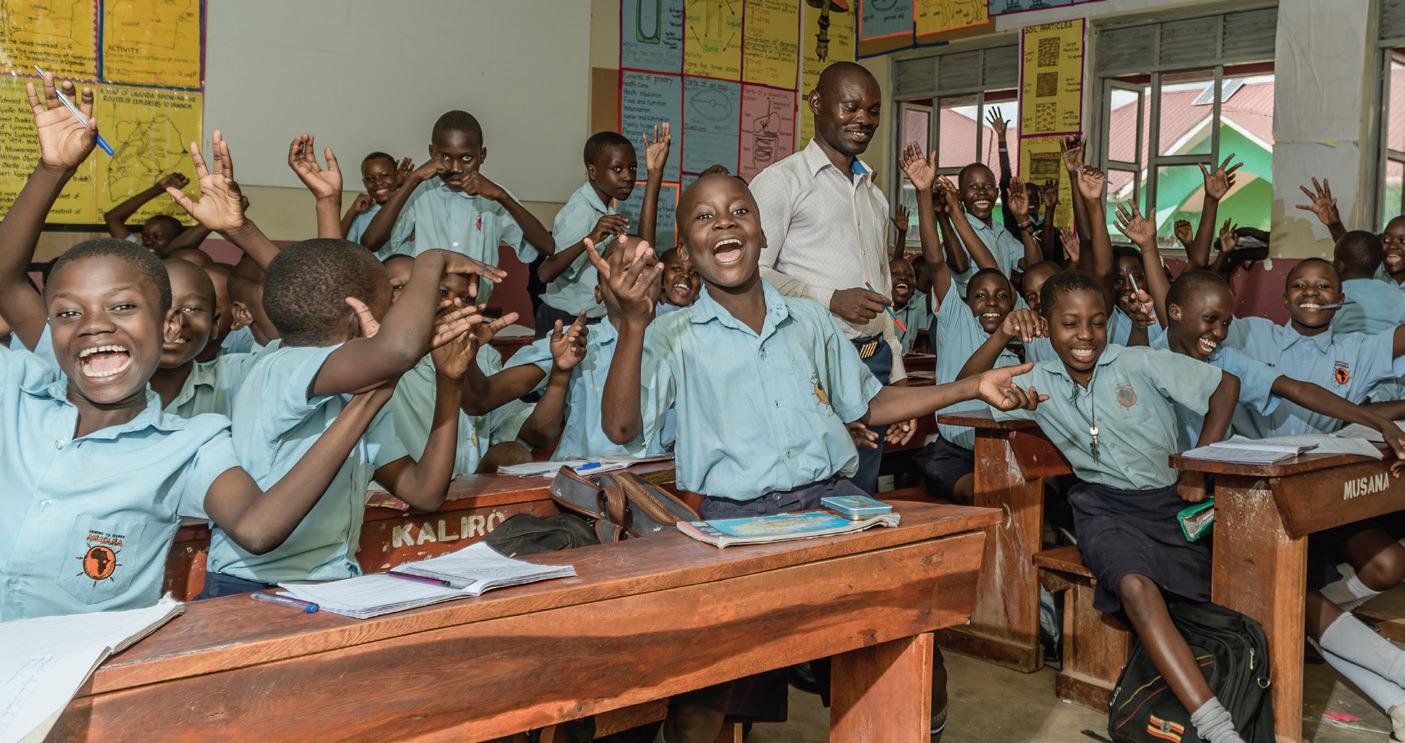
Musana Secondary School in Kaliro District, Uganda. This school opened in 2024 and currently has approximately 700 students.
We believe worship is expressed not only in words, but in how we steward resources, empower others and build systems that reflect God’s justice, compassion and long-term restoration.
This is where the story shifts. Fred is no longer simply receiving, he is contributing. His life reflects something deeper than provision, it reflects dignity.
“When I look at myself now… I am different. I can support my life.”
This is worship.
Manjeri’s story challenges us in a different way. For her, the issue was healthcare, and the quiet instability that comes when it is out of reach. In many communities, illness doesn’t just affect health; it affects livelihoods, education and the future of families. Through Musana’s hospital, that reality changed for Manjeri. “At Musana, they care for you well,” she says. “You feel valued.”
That word ‘valued’ matters. Because transformation is not just about access to services, but about restoring dignity.
“When people are healthy, they can work, they can provide. It changes everything,” says Manjeri.
What Manjeri experienced is part of a wider shift. Rather than services that disappear when funding ends, Musana focuses on building institutions that communities can sustain themselves, with local revenue now covering operational costs across every community where we work.
This is not sustainability at the expense of compassion. It is sustainability that strengthens it, enabling support for those most in need while building systems that last.
Then there is Alex. His story disrupts perhaps the deepest assumption of all: that transformation must come from the outside.
“Musana believes in us,” he says. “They don’t just bring solutions, they empower people from the community to lead.”
Alex is part of building systems that serve his own community, not as a recipient, but as a leader.
“When you are given responsibility, you grow. You start
to think not just about yourself, but about others.”
This is where worship becomes costly. Because it requires releasing control, trusting local leadership and believing that communities are not problems to be solved, but people to be empowered. And yet, this vision is deeply biblical.
From the beginning, humanity was entrusted with responsibility to steward, cultivate and multiply what God has given (Genesis 2:15).
The parable of the talents reminds us that faithfulness is not passive; it is expressed in what we build with what we’ve been given.
We believe worship is expressed not only in words, but in how we steward resources, empower others and build systems that reflect God’s justice, compassion and long-term restoration.
Worship, at its core, is about giving God what He is worth.
Please pray for:
• a renewed understanding of worship as whole-life stewardship
• strength and wisdom for local leaders building sustainable institutions
• continued transformation through education, healthcare and enterprise
• courage for churches to embrace models that empower rather than create dependency
Paul Smith is the UK director for Musana – driven by faith, exploring ways of working to strengthen impact and outcomes, building God’s kingdom through collaboration, creativity, and lasting change.
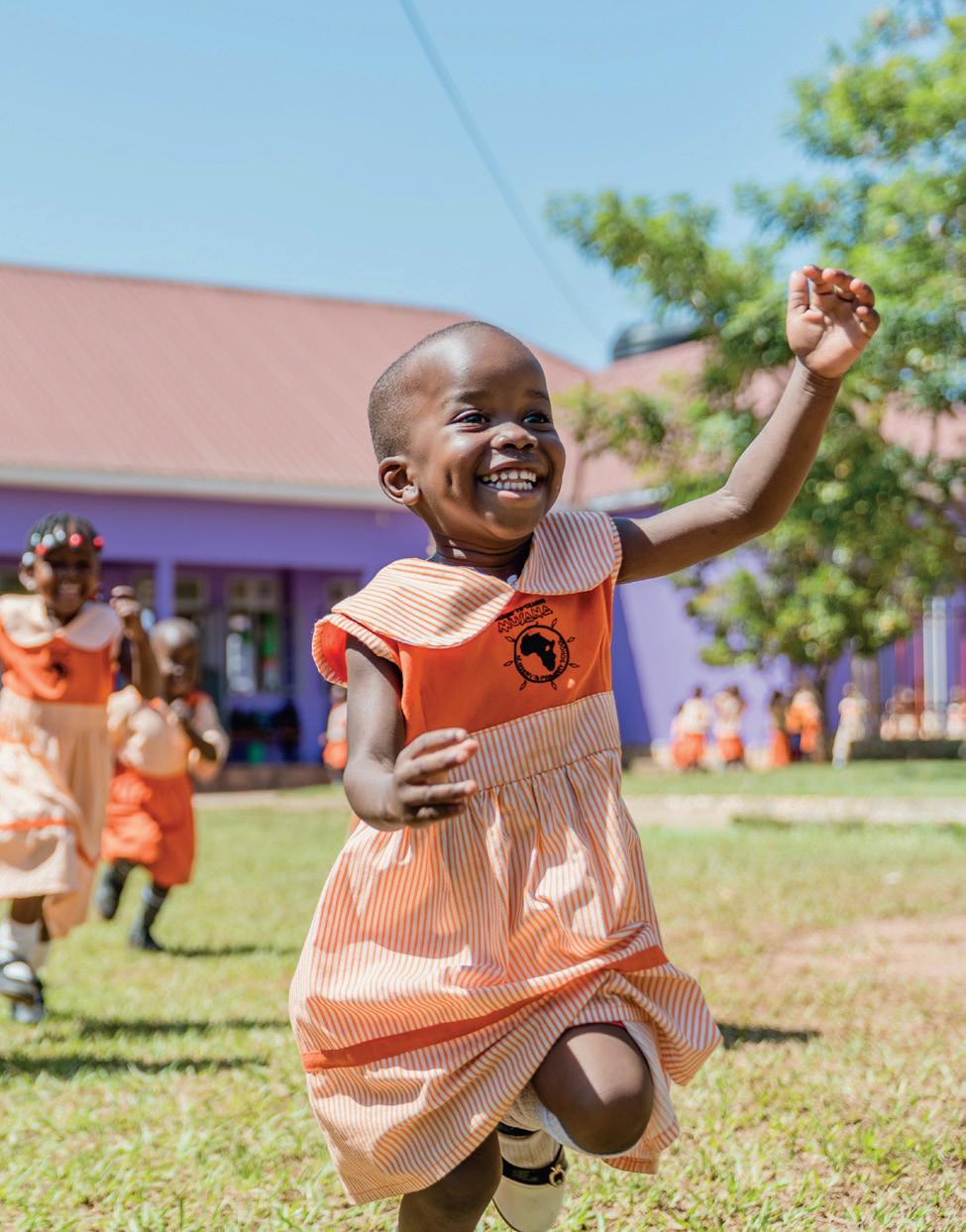
The start of the new year at Musana Primary School in Kamuli
Science class at Musana Primary School in Bukoona
I’ll bring you more than a song!
Gavin Calver reflects on how worship extends far beyond music – shaping identity, sustaining courage and transforming everyday life into an offering to God.
Ifeel very blessed to have grown up in a church where sung worship was a key part of everything. The worship leaders were really anointed but it wasn’t until I was 18 that I experienced my first truly profound moment during worship. I was standing in church singing along with the rest of the congregation to ‘History Maker’ by Delirious. As I worshipped that day, something shifted. I felt the presence of the Lord more closely than I had ever done before and the words of the song impacted me deeply. In that moment, I felt the Lord calling me to full-time ministry and within a year I found myself training at Bible college. That moment in worship shaped my life for the many years since.
One of the greatest joys in my nearly 30 years of following Jesus has been discovering the power of both corporate and solitary worship. When I worship, I am reminded that beyond every responsibility I carry, I am first and foremost a child of God. I have the privilege of worshipping Him, casting my burdens onto Him and overflowing with freedom and joy.
I’ve had the wonderful opportunity to worship in a wide variety of contexts: in multiple languages; in gatherings where two songs feels like the limit, and others where we worshipped for hours; in places where I’ve known every song and others where I’ve known none; in small groups of less than ten and auditoriums of thousands; among just my own generation and across every age and background. Yet regardless of the setting, my greatest joy remains the same – to praise King Jesus, to bring Him glory and to offer Him the most wholehearted worship I can.
At times, it feels like we may have reduced worship to something very narrow – the singing we do together in church. However, in my own life I’ve come to see worship as something far broader: honouring, celebrating and praising my King in every area of my life, in every waking moment. I think that many of us need a wider understanding of what we mean by worship. We are called to offer our whole lives to Him and to see this all as an act of worship. Maybe the clearest sign of how rooted we are in worship is not how we are on a Sunday at church but how we live on a Monday morning. Our
worship needs to overflow into every part of our lives.
In this role I often spend time with people who, in human terms, are very powerful. I have found that it’s important to remind myself how far more powerful the One I worship is and be comforted by His enduring presence, whatever I am stepping into. Before meetings, speaking engagements or political advocacy, I try to begin with a moment of personal worship, declaring how great my Lord is. In doing so, I’m worshipping and I’m also reminding myself that He is with me and for me in whatever I’m facing. When courage is required, I return to a familiar chorus…
‘Turn your eyes upon Jesus
Look full, in His wonderful face, And the things of earth will grow strangely dim
In the light of His glory and grace.’
(‘The Heavenly Vision’ by Helen Howarth Lemmel)
For me, being rooted in worship means giving my entire life to Jesus. He gave everything for me, and I want to give everything back to Him.
WESTMINSTER CHAPEL, LONDON
Evergreen is a one-dayCONFERENCE hosted by Pilgrims’ Friend Society, for Christians who care about or work with older people — in churches, ministries, chaplaincy, or the community. Including refreshments and a light lunch
PAM RHODES
Presenter of BBC’s Songs of Praise and Hearts and Hymns on Premier Christian Radio
TIMOTHY AGBENIKE
Operations Manager with Pilgrims’ Friend Society
LUCY HONEYSETT
Lead co-ordinator for Christians in Care
REVEREND
MARK WORMELL
Lecturer in Ministry with Seniors at Mary Andrews College, Sydney
PIPPA
CRAMER MB E
Pastoral Care and Seniors Minister, Holy Trinity Claygate