financial performance. In other words, the text shows students how to use ratios, as well as how to calculate them.
In addition, the text includes a separate chapter, Chapter 14, which provides indepth coverage of the analysis of financial statements. This chapter includes two full sets of exercises, problems, and test bank material, along with all the Connect features. Finally, the appendices of the text include two comprehensive financial statement analysis projects. One pertains to Target’s 10K annual report, which is included in the text. The other is an open-ended project that allows the instructor or the student to choose the company to be analyzed.
Once students understand how events affect statements, the next step is understanding how to analyze statements. The choice to cover financial statement analysis (FSA) at the introductory level really depends on the level of your students. We provide thorough coverage of FSA for the introductory level, but we separate it in such a way that covering this topic is left to the discretion of the professor.
● COMPREHENSIVE COVERAGE
Moving to a sequential learning approach does not change the content. It changes how the content is structured. This text includes all topics that are normally covered in a traditional introductory financial accounting book, including debits, credits, and all of the typical recording procedures associated with the double-entry accounting system. Indeed, focusing on a conceptual understanding of accounting before covering procedural details provides a better foundation for more advanced courses.
ABOUT THE AUTHORS
Christopher T. Edmonds
Christopher T. Edmonds, Ph.D., is an Associate Professor in the Department of Accounting and Finance at the UAB Collat School of Business. He is the course coordinator for the face-to-face and online principles of accounting courses. Dr. Edmonds specializes in teaching and developing engaging face-to-face and online introductory accounting courses. He is a frequent speaker at conferences and universities on best teaching practices and has delivered over 20 professional teaching workshops. His passion for helping students learn inspired him to create hundreds of short videos teaching the fundamental concepts of accounting. This work led to the publication of the first interactive video textbook for introductory accounting. Dr. Edmonds has received seven prestigious teaching awards including the UAB Faculty Student Success Award, UAB Transformative Online Course Award, UAB Loudell Ellis Robinson Classroom Teaching Award, UAB Disability Support Recognition Award, and the Virginia Tech Favorite Faculty Award. He has published four textbooks and has written numerous articles that have appeared in publications, including The Accounting Review, Journal of Accounting and Public Policy, Issues in Accounting Education, Advances in Accounting Education, Advances in Accounting, and Review of Quantitative Finance and Accounting. He currently serves on several editorial boards and the advisory board for the startup company, Edify. Dr. Edmonds started his career as a web application developer creating software solutions to put newspapers online. He began his academic training at Colorado State University. He obtained an M.B.A. degree from UAB. His Ph.D. degree, with a major in accounting, was awarded by Virginia Polytechnic Institute and State University. Check out his blog at www.accountingstepbystep.com
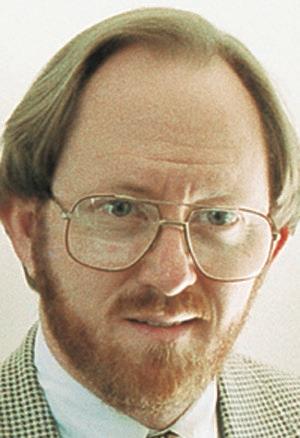
Thomas P. Edmonds
Thomas P. Edmonds, Ph.D., is Professor Emeritus in the Department of Accounting at the University of Alabama at Birmingham (UAB). He has been actively involved in teaching accounting principles throughout his academic career. Dr. Edmonds has coordinated the accounting principles courses at the University of Houston and UAB. He has taught introductory accounting in mass sections and in distance learning programs. He has received five prestigious teaching awards, including the Alabama Society of CPAs Outstanding Educator Award, the UAB President’s Excellence in Teaching Award, and the distinguished Ellen Gregg Ingalls Award for excellence in classroom teaching. He has written numerous articles that have appeared in many publications, including Issues in Accounting, the Journal of Accounting Education, Advances in Accounting Education, Accounting Education: A Journal of Theory, Practice and Research, the Accounting Review, Advances in Accounting, the Journal of Accountancy, Management Accounting, the Journal of Commercial Bank Lending, the Banker’s Magazine, and the Journal of Accounting, Auditing, and Finance. Dr. Edmonds has served as a member of the editorial board for Advances in Accounting: Teaching and Curriculum Innovations and Issues in Accounting Education. He has published five textbooks, five practice problems (including two computerized problems), and a variety of supplemental materials including study guides, work papers, and solutions manuals. Dr. Edmonds’s writing is influenced by a wide range of business experience. He is a successful entrepreneur. He has worked as a management accountant for Refrigerated Transport, a trucking company. Dr. Edmonds also worked in the not-for-profit sector as a commercial lending officer for the Federal Home Loan Bank. In addition, he has acted as a consultant to major corporations, including First City Bank of Houston (now Citi Bank), AmSouth Bank in Birmingham (now Regions Bank), Texaco, and Cortland Chemicals. Dr. Edmonds began his academic training at Young Harris Community College in Young Harris, Georgia. He received a B.B.A. degree with a major in finance from Georgia State University in Atlanta, Georgia. He obtained an M.B.A. degree with a concentration in finance from St. Mary’s University in San Antonio, Texas. His Ph.D. degree with a major in accounting was awarded by Georgia State University. Dr. Edmonds’s work experience and academic training have enabled him to bring a unique user perspective to this textbook.
Courtesy of Christopher Edmonds.
Courtesy of Thomas Edmonds.
Mark A. Edmonds
Mark A. Edmonds, Ph.D., CPA, is an Assistant Professor in the Department of Accounting and Finance at the University of Alabama at Birmingham. He has taught principles and advanced accounting classes in face-to-face, flipped, and online formats. Dr. Edmonds began his career providing assurance services for the internationally recognized accounting firm Ernst & Young. At the conclusion of his professional service, he obtained his Ph.D. from Southern Illinois University Carbondale. He serves as the education adviser on the board of the Institute of Internal Auditors Birmingham Chapter. Dr. Edmonds’s research focuses on alternative learning strategies and auditor decision making.
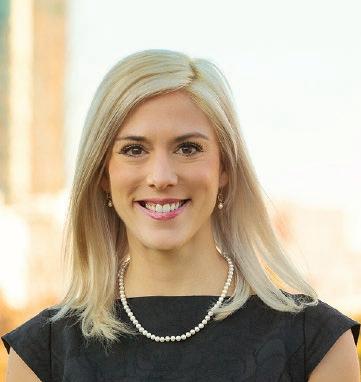
Jennifer E. Edmonds
Jennifer Echols Edmonds, Ph.D., is an Associate Professor at the University of Alabama at Birmingham (UAB) Collat School of Business. Her primary teaching areas are financial and managerial accounting. She has experience teaching in the Undergraduate, MAC, and MBA programs and currently serves as the course coordinator for the managerial accounting sequence at UAB. She has received the UAB Loudell Ellis Robinson Classroom Teaching Award, as well as teaching grants from Deloitte, UAB, and Virginia Tech. She created teaching resources for incorporating International Financial Reporting Standards into Intermediate Accounting. The teaching resources were published online at the American Accounting Association. Dr. Edmonds is also active in the research community. She has published articles in prominent journals such as Journal of Accounting and Public Policy, Advances in Accounting, Research in Accounting Regulation, and The CPA Journal. Dr. Edmonds received a bachelor’s degree in accounting from Birmingham-Southern College and completed her master’s and Ph.D. degrees in accounting at Virginia Polytechnic Institute and State University.
Philip R. Olds
Professor Olds is Associate Professor of Accounting at Virginia Commonwealth University (VCU). He serves as the coordinator of the introduction to accounting courses at VCU. Professor Olds received his A.S. degree from Brunswick Junior College in Brunswick, Georgia (now Costal Georgia College). He received a B.B.A. in accounting from Georgia Southern College (now Georgia Southern University), and his M.P.A. and Ph.D. degrees are from Georgia State University. After graduating from Georgia Southern, he worked as an auditor with the U.S. Department of Labor in Atlanta, Georgia. A former CPA in Virginia, Professor Olds has published articles in various professional journals and presented papers at national and regional conferences. He also served as the faculty adviser to the VCU chapter of Beta Alpha Psi for five years. In 1989, he was recognized with an Outstanding Faculty Vice-President Award by the national Beta Alpha Psi organization. Professor Olds has received both the Distinguished Teaching Award and the Distinguished Service Award from the VCU School of Business. Most recently, he received the university’s award for maintaining High Ethical and Academic Standards While Advocating for Student-Athletes and Their Quest Towards a Degree.
Courtesy of Mark Edmonds.
Courtesy of Jennifer Edmonds.
Courtesy of Philip Olds.
HOW DOES THE BOOK
● REAL-WORLD EXAMPLES
The text provides a variety of real-world examples of financial accounting as an essential part of the management process. There are descriptions of accounting practices from real organizations such as Coca-Cola, Enron, General Motors, and Amazon.com. These companies are highlighted in blue in the text.
“Relating this material to real life is key to get the students interested and make it applicable regardless of the major. This does a great job.”
1.
—ROB STUSSIE, UNIVERSITY OF
ARIZONA
● THE CURIOUS ACCOUNTANT
Each chapter opens with a short vignette. These pose a question about a real-world accounting issue related to the topic of the chapter. The answer to the question appears in a separate sidebar a few pages further into the chapter.
● FOCUS ON INTERNATIONAL ISSUES
These boxed inserts expose students to IFRS and other international issues in accounting.
● THE FINANCIAL ANALYST
Financial statement analysis is highlighted in each chapter under this heading.
● CHECK YOURSELF
These short question/answer features occur at the end of each main topic and ask students to stop and think about the material just covered. The answer follows to provide immediate feedback before students go on to a new topic.
● REALITY BYTES
This feature expands on the topics by showing how companies use the concepts discussed in the chapter to make real-world business decisions.
MOTIVATE STUDENTS?
● ANNUAL REPORTS
Excerpts from the 2016 annual report for Target Corporation are shown in Appendix B.
Business Applications Cases related to the annual report are included at the end of each chapter.
A Capstone Financial Statement Analysis Project for the annual report is located in Appendix E. Also, a general purpose annual report project is included for instructors to assign for any company.
“I like the way the book stresses real world applications and makes the transactions and discussions meaningful and engaging.”
—STACEY KLINE, DREXEL UNIVERSITY
● A LOOK BACK/A LOOK FORWARD
Students need a roadmap to make sense of where the chapter topics fit into the “whole” picture. A Look Back reviews the chapter materials and a Look Forward introduces students to what is to come.
HOW ARE CHAPTER CONCEPTS
stolen merchandise is automatically included in cost of goods sold. Because such goods are not included in the year-end physical count, they are treated as sold regardless of the reason for their absence. Because the periodic system does not separate the cost of lost, damaged, or stolen merchandise from the cost of goods sold, the amount of any inventory shrinkage is unknown. This feature is a major disadvantage of the periodic system. Without knowing the amount of inventory losses, management cannot weigh the costs of various security systems against the potential benefits.
Advances in such technology as electronic bar code scanning and increased computing power have eliminated most of the practical constraints that once prevented merchandisers with high-volume, low dollar-value inventories from recording inventory transactions on a continual basis. As a result, use of the perpetual inventory system has expanded rapidly in recent years and continued growth can be expected. This text, therefore, concentrates on the perpetual inventory system.
a. Organize the transaction data
b.
SELF-STUDY REVIEW PROBLEM
Regardless of the instructional approach, there is no shortcut to learning accounting. Students must practice to master basic accounting concepts. The text includes a prodigious supply of practice materials and exercises and problems.
A step-by-step audio-narrated series of slides is available in Connect Academy Sales Company (ASC) started the Year 2 accounting period with the balances given in the horizontal financial statements model shown below. During Year 2, ASC experienced the following business events:
The following information is available for
1. Purchased $16,000 of merchandise inventory on account, terms 2/10, n/30.
2. The goods that were purchased in Event 1 were delivered FOB shipping point. Freight costs of $600 were paid in cash by the responsible party.
3. Returned $500 of goods purchased in Event 1.
4a. Recorded the cash discount on the goods purchased in Event 1.
4b. Paid the balance due on the account payable within the discount period.
5a. Recognized $21,000 of cash revenue from the sale of merchandise.
5b. Recognized $15,000 of cost of goods sold.
a. What is the accounts receivable turnover for each of the companies?
b. What is the average days to collect the receivables?
6. The merchandise in Event 5a was sold to customers FOB destination. Freight costs of $950 were paid in cash by the responsible party.
● SELF-STUDY REVIEW PROBLEM
These example problems include a detailed, worked-out solution and provide support for students before they work problems on their own. These review problems are included in an animated audio presentation in the Connect Library.
7. Paid cash of $4,000 for selling and administrative expenses.
c. Assuming both companies use the percent of receivables allowance method, what is the estimated percentage of uncollectible accounts for each company?
8. Sold the land for $5,600 cash.
PROBLEMS—SERIES A
1.
of common stock for cash.
2. Recognized $210,000 of service revenue earned on account.
3. Collected $162,000 from accounts receivable.
4. Paid operating expenses of $125,000.
5. Adjusted accounts to recognize uncollectible accounts expense. Jova uses the allowance method of accounting for uncollectible accounts and estimates that uncollectible accounts expense will be 1 percent of sales on account.
The following transactions apply to Jova for Year 2:
1. Recognized $320,000 of service revenue on account.
2. Collected $335,000 from accounts receivable.
3. Determined that $2,150 of the accounts receivable were uncollectible and wrote them off.
4. Collected $800 of an account that had previously been written off.
5. Paid $205,000 cash for operating expenses.
6. Adjusted the accounts to recognize uncollectible accounts expense for Year 2. Jova estimates uncollectible accounts expense will be 0.5 percent of sales on account. Required Complete the following requirements for Year 1 and Year 2. Complete all requirements for Year 1 prior to beginning the requirements for Year 2.
a. Identify the type of each transaction (asset source, asset use, asset exchange, or claims exchange).
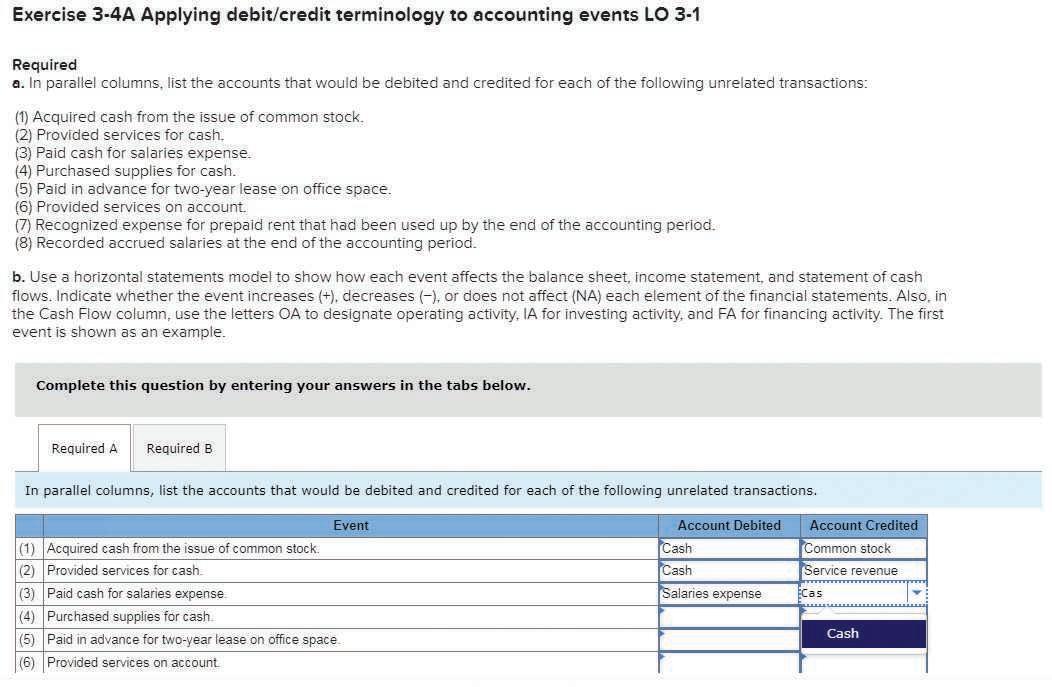
b. Show the effect of each transaction on the elements of the financial statements, using a horizontal statements model like the one shown here. Use + for increase, for decrease, and NA for not affected. Also, in
● EXERCISE SERIES A & B AND PROBLEM SERIES A & B
There are two sets of problems and exercises: Series A and B. Instructors can assign one set for homework and another set for classwork.
• Check Figures
The figures provide key answers for selected problems.
• Excel
Many problems can be solved using the Excel™ templates available in the Connect Library. A logo appears in the margins next to these problems.
“There is a rich variety of material of all levels of complexity. Between the wide variety of problems and the algorithmic versions in Connect, I doubt I would ever run out of homework problems.”
—EDWARD R. WALKER, UNIVERSITY OF CENTRAL
OKLAHOMA
REINFORCED?
● ANALYZE, THINK, COMMUNICATE (ATC)
Each chapter includes an innovative section titled Analyze, Think, Communicate (ATC). This section offers Business Applications Cases, Group Assignments, Real-World Cases, Writing Assignments, Ethical Dilemmas, Research Assignments, and Spreadsheet Assignments.
We use icons to help students identify the type of question being asked.
“The number and coverage of the end of chapter material is one of the strong selling points of the text.”
—WENDY POTRATZ UNIVERSITY OF WISCONSIN—OSHKOSH
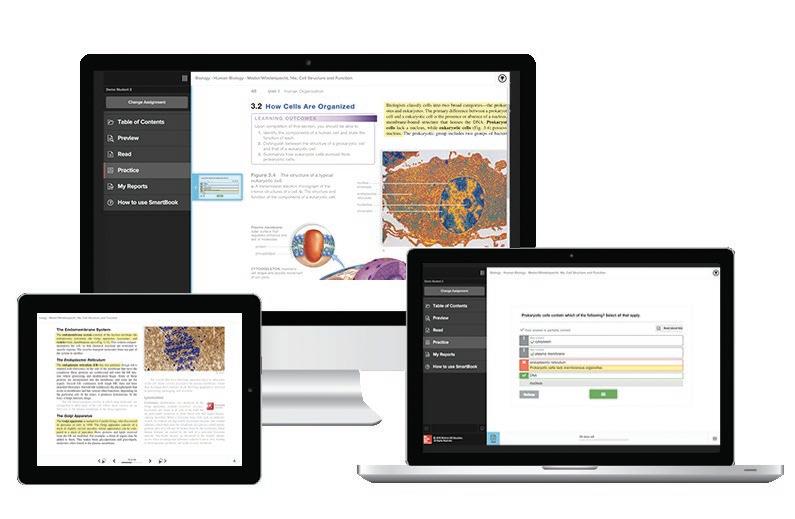
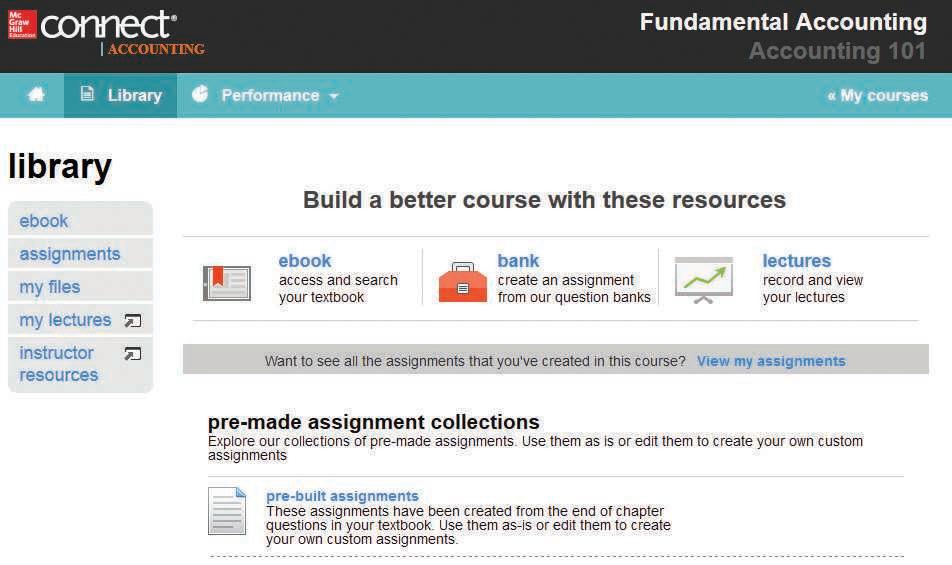
McGraw-Hill Connect® is a highly reliable, easy-touse homework and learning management solution that utilizes learning science and award-winning adaptive tools to improve student results.
Homework and Adaptive Learning
■ Connect’s assignments help students contextualize what they’ve learned through application, so they can better understand the material and think critically.
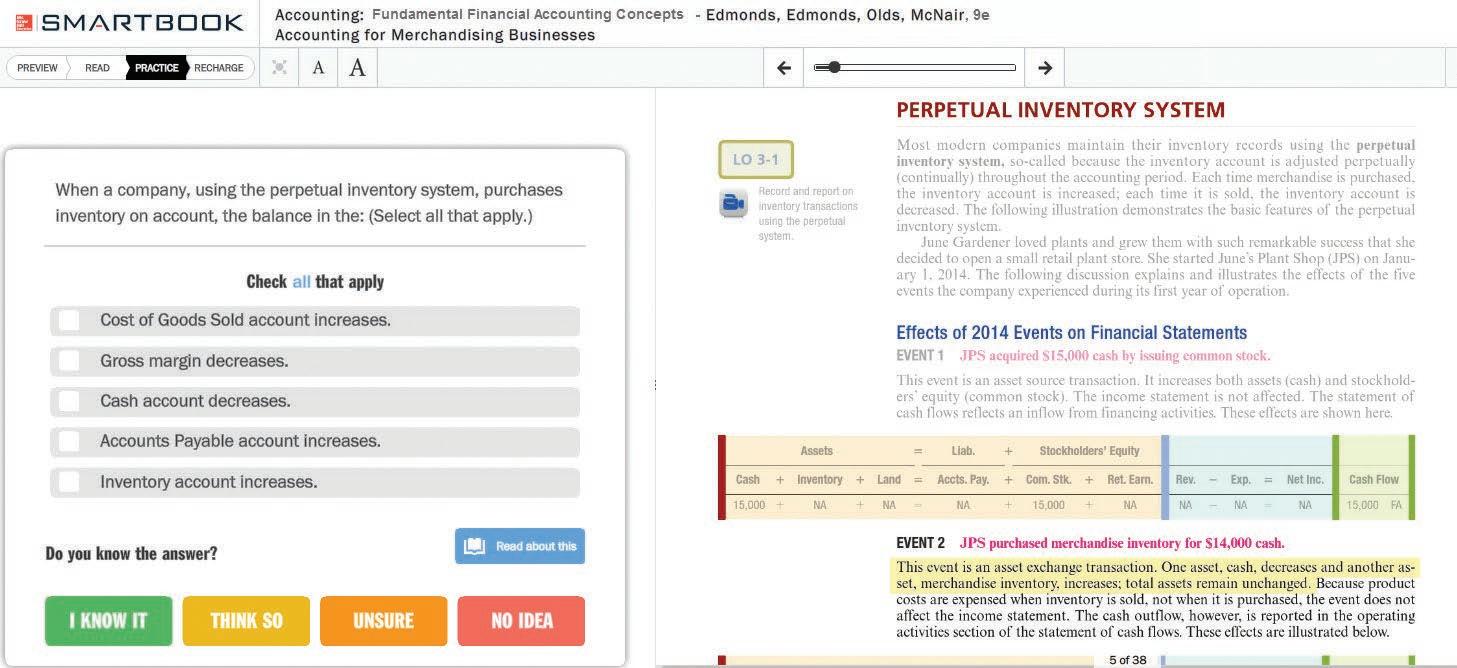
■ Connect will create a personalized study path customized to individual student needs through SmartBook®.
■ SmartBook helps students study more efficiently by delivering an interactive reading experience through adaptive highlighting and review.
Over 7 billion questions have been answered, making McGraw-Hill Education products more intelligent, reliable, and precise.
Using Connect improves retention rates by 19.8 percentage points, passing rates by 12.7 percentage points, and exam scores by 9.1 percentage points.
Quality Content and Learning Resources
■ Connect content is authored by the world’s best subject matter experts, and is available to your class through a simple and intuitive interface.
■ The Connect eBook makes it easy for students to access their reading material on smartphones and tablets. They can study on the go and don’t need internet access to use the eBook as a reference, with full functionality.
■ Multimedia content such as videos, simulations, and games drive student engagement and critical thinking skills.
73% of instructors who use Connect require it; instructor satisfaction increases by 28% when Connect is required.
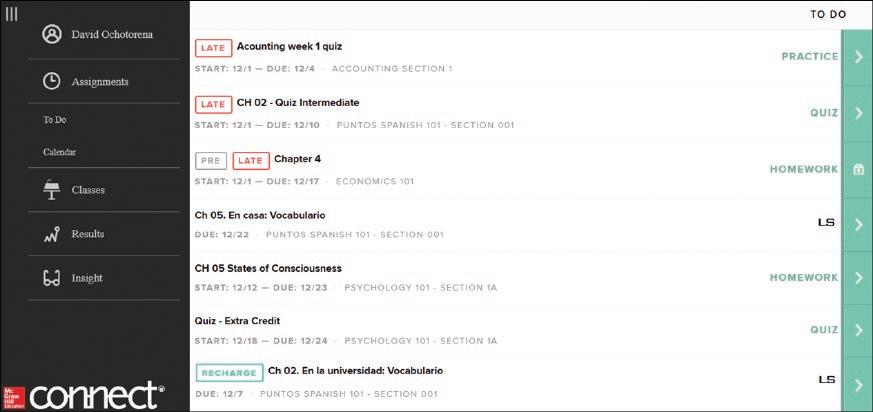
■ Connect Insight® generates easy-to-read reports on individual students, the class as a whole, and on specific assignments.
■ The Connect Insight dashboard delivers data on performance, study behavior, and effort. Instructors can quickly identify students who struggle and focus on material that the class has yet to master.
■ Connect automatically grades assignments and quizzes, providing easy-to-read reports on individual and class performance.
More students earn As and Bs when they use Connect.
Trusted Service and Support
■ Connect integrates with your LMS to provide single sign-on and automatic syncing of grades. Integration with Blackboard®, D2L®, and Canvas also provides automatic syncing of the course calendar and assignment-level linking.
■ Connect offers comprehensive service, support, and training throughout every phase of your implementation.
■ If you’re looking for some guidance on how to use Connect, or want to learn tips and tricks from super users, you can find tutorials as you work. Our Digital Faculty Consultants and Student Ambassadors offer insight into how to achieve the results you want with Connect.
HOW CAN TECHNOLOGY HELP
● MCGRAW-HILL CONNECT
McGraw-Hill Connect is a digital teaching and learning environment that gives students the means to better connect with their coursework, their instructors, and the important concepts they will need to know for success both now and in the future. With Connect, instructors can deliver assignments, quizzes, and tests easily online. Students can review course material and practice important skills. Connect provides the following features:
• SmartBook and LearnSmart.
• Auto-graded Online Homework.
• An integrated media-rich eBook, allowing for anytime, anywhere access to the textbook.
• Dynamic links between the problems or questions you assign to your students and the location in the eBook where that concept is covered.
• A powerful search function to pinpoint and connect key concepts to review.
In short, Connect offers students powerful tools and features that optimize their time and energy, enabling them to focus on learning.
For more information about Connect, go to www.connect. mheducation.com , or contact your local McGraw-Hill Higher Education representative.
• SmartBook, powered by LearnSmart
LearnSmart® is the market-leading adaptive study resource that has been proven to strengthen memory recall, increase class retention, and boost grades. LearnSmart allows students to study more efficiently because they are made aware of what they know and don’t know.
SmartBook®, which is powered by LearnSmart, is the first and only adaptive reading experience designed to change the way students read and learn. It creates a personalized reading experience by highlighting the most impactful concepts a student needs to learn at that moment in time. As a student engages with SmartBook, the reading experience continuously adapts by highlighting content based on what the student knows and doesn’t know. This ensures that the focus is on the content he or she needs to learn, while simultaneously promoting long-term retention of material.
Use SmartBook’s real-time reports to quickly identify the concepts that require more attention from individual students—or the entire class. The end result? Students are more engaged with course content, can better prioritize their time, and come to class ready to participate.
IMPROVE STUDENT SUCCESS?
• Online assignments
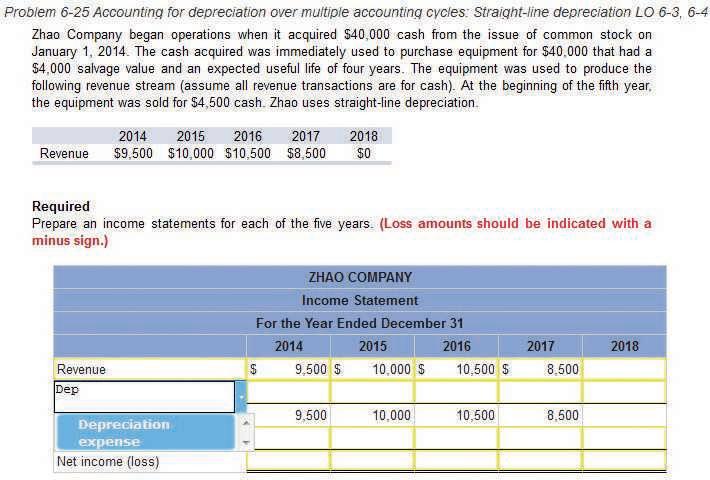
Connect helps students learn more efficiently by providing feedback and practice material when they need it, where they need it. Connect grades homework automatically and gives immediate feedback on any questions students may have missed. Our assignable, gradable end-of-chapter content includes a general journal application that looks and feels like what you would find in a general ledger software package. Also, select questions have been redesigned to test students’ knowledge more fully. They now include tables for students to work through rather than requiring that all calculations be done offline.
End-of-chapter content in Connect includes:
• Quizzes (multiple-choice questions)
• Exercises
• Problems
• Analyze, Think, Communicate
• Comprehensive Problems
• Lecture videos
One or more lecture videos are available for every learning objective introduced throughout the text. The videos have been developed by a member of the author team and have the touch and feel of a live lecture. The videos are accompanied by a set of self-assessment quizzes. Students can watch the videos and then test themselves to determine if they understand the material presented in the video. Students can repeat the process, switching back and forth between the video and self-assessment quizzes, until they are satisfied that they understand the material.
• Excel simulations
Simulated Excel questions, assignable within Connect, allow students to practice their Excel skills—such as basic formulas and formatting—within the content of financial accounting. These questions feature animated, narrated Help and Show Me tutorials (when enabled), as well as automatic feedback and grading for both students and professors.
• Guided Examples
The Guided Examples in Connect provide a video-based, step-by-step walkthrough of select exercises similar to those assigned. These short videos can made available to students as hints by instructors and provide reinforcement when students need it most.
“Using the Lecture Videos would allow me to delve deeper into the subject in class.”
—LINDA TARRAGO, HILLSBOROUGH COMMUNITY COLLEGE
• General Ledger
General Ledger Problems provide a much-improved student experience when working with accounting cycle questions, offering improved navigation and less scrolling. Students can audit their mistakes by easily linking back to their original entries and can see how the numbers flow through the various financial statements. Many General Ledger Problems include an analysis tab that allows students to demonstrate their critical thinking skills and a deeper understanding of accounting concepts.
• Instructor Resources
The Connect Instructor Resources is your repository for additional resources to improve student engagement in and out of class. You can select and use any asset that enhances your lecture. The Connect Instructor Library includes access to:
• Solutions Manual
• Instructor’s Manual
• Test Bank
• Instructor PowerPoint® slides
• Media-rich eBook
● TEGRITY: LECTURES 24/7
Tegrity is a service that makes class time available 24/7 by automatically capturing every lecture. With a simple oneclick start-and-stop process, you capture all computer screens and corresponding audio in a format that is easily searchable, frame by frame. Students can replay any part of any class with easy-to-use browser-based viewing on a PC, Mac, or other mobile device.
Help turn your students’ study time into learning moments immediately supported by your lecture. With Tegrity, you also increase intent listening and class participation by easing students’ concerns about note-taking. Lecture Capture will make it more likely you will see students’ faces, not the tops of their heads. To learn more about Tegrity, visit http://www.mheducation.com/highered/platforms/tegrity.html.
• Custom Publishing through Create
McGraw-Hill Create™ is a new, self-service website that allows instructors to create custom course materials by drawing upon McGraw-Hill’s comprehensive, cross-disciplinary content. Instructors can add their own content quickly and easily and tap into other rights-secured third-party sources as well, then arrange the content in a way that makes the most sense for their course. Instructors can even personalize their book with the course name and information and choose the best format for their students: color print, black-and-white print, or an eBook. Through Create, instructors can
• Select and arrange the content in a way that makes the most sense for their course.
• Combine material from different sources and even upload their own content.
• Choose the best format for their students: print or eBook.
• Edit and update their course materials as often as they like. Begin creating now at www.mcgrawhillcreate.com.
• McGraw-Hill Customer Experience Group Contact Information
At McGraw-Hill, we understand that getting the most from new technology can be challenging. That’s why our services don’t stop after you purchase our products. You can contact our Product Specialists 24 hours a day to get product training online. Or you can search the knowledge bank of Frequently Asked Questions on our support website. For Customer Support, call 800-331-5094, or visit www.mhhe.com/support. One of our Technical Support Analysts will be able to assist you in a timely fashion.
SUPPLEMENTS FOR INSTRUCTORS
Assurance of Learning Ready
Many educational institutions today are focused on the notion of assurance of learning, an important element of many accreditation standards. Introductory Financial Accounting for Business 1e is designed specifically to support your assurance of learning initiatives with a simple, yet powerful, solution.
Each chapter in the book begins with a list of numbered learning objectives, which appear throughout the chapter, as well as in the end-of-chapter assignments. Every Test Bank question for Introductory Financial Accounting for Business maps to a specific chapter learning objective in the textbook. Each Test Bank question also identifies topic area, level of difficulty, Bloom’s Taxonomy level, and AICPA and AACSB skill area. You can use our Test Bank software, TestGen, or Connect to easily search for learning objectives that directly relate to the learning objectives for your course. You can then use the reporting features of TestGen to aggregate student results in similar fashion, making the collection and presentation of Assurance of Learning data simple and easy.
AACSB Statement
McGraw-Hill Education is a proud corporate member of AACSB International. Understanding the importance and value of AACSB accreditation, Introductory Financial Accounting for Business 1e recognizes the curricula guidelines detailed in the AACSB standards for business accreditation by connecting selected questions in the text and the Test Bank to the general knowledge and skill guidelines in the revised AACSB standards.
The statements contained in Introductory Financial Accounting for Business 1e are provided only as a guide for the users of this textbook. The AACSB leaves content coverage and assessment within the purview
of individual schools, the mission of the school, and the faculty. While Introductory Financial Accounting for Business 1e and the teaching package make no claim of any specific AACSB qualification or evaluation, we have, within the text and test bank, labeled selected questions according to the eight general knowledge and skill areas.
McGraw-Hill’s Connect
Connect offers a number of powerful tools and features to make managing your classroom easier. Connect with Edmonds 1e offers enhanced features and technology to help both you and your students make the most of your time inside and outside the classroom.
TestGen
TestGen is a complete, state-of-the-art test generator and editing application software that allows instructors to quickly and easily select test items from McGraw Hill’s test bank content. The instructors can then organize, edit, and customize questions and answers to rapidly generate tests for paper or online administration. Questions can include stylized text, symbols, graphics, and equations that are inserted directly into questions using built-in mathematical templates. TestGen’s random generator provides the option to display different text or calculated number values each time questions are used. With both quick-and-simple test creation and flexible and robust editing tools, TestGen is a complete test generator system for today’s educators.
This test bank is also available in Word format and contains multiple-choice questions, essay questions, and short problems. Each test item is coded for level of difficulty, learning objective, AACSB and AICPA skill area, and Bloom’s Taxonomy level.
ACKNOWLEDGMENTS
Our grateful appreciation is extended to those who helped to make this first edition possible.
We would like to give special thanks here to the talented people who prepared the supplements. These take a great deal of time and effort to write, and we appreciate their efforts. Thank you to Helen Roybark and Beth Kobylarz for reviewing the text. Thank you to Ann Brooks for authoring LearnSmart. Jack Terry developed the Excel Templates. Thank you to LuAnn Bean for preparing the PowerPoints and Instructor’s Manual and Helen Roybark for accuracy checking the PowerPoints and Instructor’s Manuals. Thank you to Matt Stallings of University of St. Thomas for accuracy checking the test bank. A special thanks to Linda Bell of Park University for her contribution to the Financial Statement Analysis material that appears in Appendix D. We extend our sincere appreciation to Tim Vertovec, Rebecca Olson, Dana Pauley, Brian Nacik, Danielle Andries, Erin Quinones, Zachary Rudin, Matt Diamond, and Susan Culbertson. We deeply appreciate the long hours you committed to the formation of a high-quality text.
• Christopher T. Edmonds • Thomas P. Edmonds • Mark Edmonds
• Jennifer Edmonds • Philip R. Olds
We would like to express our gratitude and appreciation to those who have provided reviews for our first edition of Introductory Financial Accounting for Business:
Arek Arekelian, California State University, Dominguez Hills
Margaret Atkinson, Stark State College
Robyn Barrett, St. Louis Community College–Meramec
Marcia Behrens, Nichols College
Jaclyn Boichat, Johnson & Wales University
Robbie Coleman, Northeast Mississippi Community College
Rachel Cox, Oklahoma State University
Caroline Falconetti, Nassau Community College
Corinne Frad, Eastern Iowa Community Colleges
Ann Henderson, Georgia Southern University
Bambi Hora, University of Central Oklahoma
Kevin Jones, University of California, Santa Cruz
Pamela Jones, William Carey University
Sara Kern, Gonzaga University
Stacy Kline, Drexel University
Jeffrey Lark, University of Georgia
Mark Lawrence, University of North Alabama
Tara Maciel, Mesa College
Theresa Meza, James Sprunt Community College
Stephanie Morris, Mercer University
Rania Mousa, University of Evansville
Sia Nassiripour, William Paterson University
Leslie Oakes, University of New Mexico
Roshelle Overton, Central New Mexico Community College
Scott Paxton, Valencia College
Diep Phan, Beloit College
Wendy Potratz, University of Wisconsin–Oshkosh
Barbara Rice, Kentucky Community and Technical College System
Pinky Rusli, Montana State University
Melissa Schulte, University of Missouri–Kansas City
Tracy Sewell, Gulf Coast State College
Vincent Shea, St. John’s University
Sherrie Slom, Hillsborough Community College
Nancy Snow, University of Toledo
George Starbuck, McMurry University
Sean Stein Smith, Lehman College, City University of New York
Gloria Stuart, Georgia Southern University
Rob Stussie, University of Arizona
Linda Tarrago, Hillsborough Community College
Mary Teal, University of Central Oklahoma
David Waite, Brigham Young University–Hawaii
Edward R. Walker, University of Central Oklahoma
Angela Woodland, Montana State University
Jennifer Wright, Drexel University
Jill Zietz, Concordia College
BRIEF CONTENTS
Chapter 1 An Introduction to Accounting 2
Chapter 2 Accounting for Accruals 74
Chapter 3 Accounting for Deferrals 126
Chapter 4 Accounting for Merchandising Businesses 182
Chapter 5 Accounting for Inventories 236
Chapter 6 Internal Control and Accounting for Cash 278
Chapter 7 Accounting for Receivables 322
Chapter 8 Accounting for Long-Term Operational Assets 374
Chapter 9 Accounting for Current Liabilities and Payroll 428
Chapter 10 Accounting for Long-Term Debt 478
Chapter 11 Proprietorships, Partnerships, and Corporations 530
Chapter 12 Statement of Cash Flows 576
Chapter 13 The Double-Entry Accounting System 628
Chapter 14 Financial Statement Analysis (Available online in Connect) 14-0
Appendix A Accessing the EDGAR Database through the Internet 688
Appendix B Portion of the Form 10-K for Target Corporation 689
Appendix C Summary of Financial Ratios 696
Appendix D General Ledger Capstone Project 699
Appendix E Capstone Financial Statement Analysis and Annual Report Projects 710
Appendix F Accounting for Investment Securities 717
Another Random Scribd Document with Unrelated Content
minutes in as rarefied oxygen as existed here. But no more than four minutes.
The clock hand reached four minutes. The men still sat there. He had timed them wrong. He had missed a minute. Certainly. They were going to start sagging now. Now.
Another minute went by. Another minute. The men sat there, looking straight at him through the tele-screen. There was a cynical smile on their faces, as if they knew the camera was on them—as if they could actually see him.
Another minute passed.
Another minute.
Baker leaped to his feet. "Die, damn you!" he screamed.
The two men burst into laughter that exploded all over the screen. With a curse, Baker switched off the set and stood there, breathing hard. A moment later, he flicked it on again. The two men were leaving the booth. "Come back," he yelled.
They turned, part way. Their indifference was maddening.
"Come up here," Baker commanded. "I want to see your invention. I want to buy it."
"Not interested."
"Damn you, you must!" Baker shouted, his heart beating furiously. His hypnotized eyes kept swinging back to the clock. At least eleven minutes had passed!
"We're not walking into any trap, Colonel," Harvey Flanders said. "If you want to do any dickering, you'll have to come see us. You know where to get us if you want us."
The two men started up the road. Baker watched them with sick eyes as they went with firm steps to Harvey Flanders' house, and disappeared inside the doorway.
Inside Harvey Flanders' doorway, Dr. Lurie staggered. Harvey caught him, but didn't have the strength to hold him, and both sagged to the floor. "Quick, Ruth," Harvey said, gasping.
She was waiting with the oxygen packs. Red Brace was with her. They fitted the masks quickly over the faces of the two men on the floor, and anxiously watched their rapid, intense breathing.
In a little while, Harvey and Dr. Lurie were breathing at a normal rate. They got up and sat at the table, where Ruth had breakfast ready.
"Do you think he'll come?" Dr. Lurie said.
"He has to," Harvey said. "He can't afford to let anybody spread a new gospel among his people."
"Would you guys mind explaining what this is all about?" growled Red Brace.
Harvey laughed. "Sure, Red. It's nothing complicated; not very, anyway. Baker keeps plugging away at the fact that this is the same as living at a 27,000-foot altitude. It struck me suddenly that if that were really the case, some of us would be suffering from nose bleeds and other symptoms you get when you go up to a thin atmosphere, where the outside pressure is less than the body's blood pressure. But nothing like that has happened. So obviously, the atmospheric pressure must be about normal—the same pressure we have on Earth. There's less oxygen, but there's more carbon dioxide and there must be more of other gases, like nitrogen, to make up the full amount of pressure.
"So you see where Baker figured wrong. He figured that if the amount of oxygen here is the equivalent of what exists at 27,000 feet, on Earth, then the survival time here ought to be the same as at 27,000 feet. But the analogy is wrong. At 27,000 feet above Earth, the atmospheric pressure is so light that whatever oxygen is in your blood bubbles out pretty fast. But here, where we have normal
pressure, the atmosphere is pushing in on us a lot harder and keeps the oxygen in the blood longer. You follow me?
"Anyway, I put all this to Doc Lurie last night and he said I must be right. So he got out some of his books and did some figuring, and what he came up with was this: If we rested—didn't move—while we breathed from our packs, getting our blood a hundred percent saturated, then we could take off the packs and go as long as fourteen or fifteen minutes before we keeled over. Long enough to convince that old buzzard that we've invented a new gimmick for giving oxygen by injection. He's up there in his palace now tearing out his hair—or more probably hotfooting this way."
Red Brace leaned against the doorpost and grunted contentedly. "Boy, when I get my mitts on him."
"Red," Harvey said, "this time you can get as rough as you like. I don't care what happens to him. You keep a lookout at the window. Soon as Baker gets close, everybody take off your oxygen mask and stow it out of sight. We don't want him getting suspicious about the Lurie invention. Another thing: We'll need something for him to see when he walks in the door—a box that looks as if it contains some sort of instruments."
"I've got some boxes," Ruth said, going back into the bedroom.
"Okay. Now, Doc, you'll do the talking, and Red and I will do the grabbing. But look casual as hell when he walks in."
Ruth placed a covered box on the table. "Impressive," Harvey said. "Now, everybody, sit down and relax. It might be a long wait."
"Not so long," said Red Brace a little while later. "They're coming over the crest right now."
"Who's with him?"
"Looks like Carsing."
"I might have guessed that." Harvey watched a while at the window, then turned back. "Okay, everybody, masks out of sight."
There was a pause; a sound on the outside step. Then into the doorway walked Carsing. His hand made a swift motion inside his coat and out again.
The squat, ugly barrel of an explosive scatter-gun glinted at them.
"Everybody back against the wall," Carsing said. "Colonel Baker doesn't want to be crowded."
Slowly, tensely, staring at each other, they moved to the wall opposite the doorway. Baker walked in. His eyes made a quick circuit of the room, stopped briefly at the box, then turned to them.
"What's the gun for?" Harvey said bitterly.
Baker smiled. "You didn't trust me, hence I didn't trust you. Mistrust begets mistrust. Now, gentlemen," he said briskly, "explain this invention you told me about."
"Before we do any explaining, we want you to know what we want."
"Go right ahead." Baker pulled a chair to the doorway and sat down. "Name your price."
"We'll take the gun."
Baker's eyebrows rose. "Impossible. This is the only weapon on the planet."
"That's all right with us. Hand it over and we'll tell you all about our invention."
"I'm sorry, this weapon must remain in our hands. We're responsible for maintaining order and stability—it wouldn't make sense for anyone else to have custody of it. Now let's get on with the business. This box, I presume—"
"Not a word until we get the gun," Harvey said.
Baker's eyes narrowed. "Young man, you'd better hold your tongue. Dr. Lurie, I'm talking to you. I want the facts—immediately. And I
must tell you, you're in no position to negotiate. Now speak up."
"I, sir I—" Dr. Lurie's voice broke—he began again—"I'll do what Mr. Flanders says—"
"We'll see about that," Baker said grimly. He stood up. "You're coming with me. Carsing, take the box."
Carsing, holding the gun out warily in front of him, moved to the table.
"Don't you dare open it!" Ruth cried out.
Carsing stared at her. Then, holding the gun against his armpit with one hand, a finger on the trigger, he reached with his free hand and unhooked the lid—
Something sprang out of the box at his face—
"Watch out, Carsing!" Baker shouted—but Harvey was already halfway across the room. He dove across the table, one hand aimed at Carsing's chest, the other slamming against the moving weapon, knocking it upward, backward—
Shot spattered through and around the doorway.
Baker had leaped aside as he saw the muzzle swinging in his direction. Now he made a quick move toward Harvey and Carsing, tangled and struggling on the floor—but a blow from Brace's fist caught him on the cheekbone and sent him crashing back against the wall.
Brace darted down at the struggling men. He stood up a moment later, holding the gun. Carsing struggled upward, out of Harvey's grasp and reached for the gun. Brace's foot shot out and crashed with ferocious impact against his jaw. Carsing's head slammed backward against the floor. His body arched a moment, and then went limp all over.
Harvey sat up, breathing hard. Ruth already had her oxygen pack on and quickly adjusted his.
"Get mine," Red Brace said. He was standing in the middle of the floor, the gun trained on Baker, who stood half-slumped against the wall, watching them dazedly.
There was a hissing in the air. A soft, persistent hissing.
"Somebody has a leak!" Dr. Lurie shouted. Harvey, Ruth, Brace frantically felt their oxygen packs—and then their hands stopped, and they stared at Baker.
A jagged hole, caused by a small bit of shot, was visible on the side of his oxygen pack.
"Give the orders, Flanders," Brace said. "Do I blast him?"
"Won't be necessary, Red," Harvey said quietly.
Baker looked from one to the other with puzzled eyes. Then he muttered, "I must be going," and swung away from the wall, and out the door.
He stopped. He felt his pack. He came rushing back, his eyes wide with terror. "A leak!" he shrilled. "I need another pack!"
"Sorry, we've only one apiece," Harvey said. "You know that."
Baker's lips trembled. His face was white. "Your invention! Your invention! I'll make any deal you want. Hurry!"
"There's no invention," Harvey said gently. "Don't you know that by now?"
Suddenly Baker leaped forward, his hands flying. He had the oxygen mask half off Harvey's face before Harvey could untwist his hands and wrench free.
Baker stood there, breathing hard. Abruptly he turned and rushed out to the road. "Somebody!" he yelled. "Somebody give me a pack! I'll pay anything!"
Homesteaders peered at him in amazement from their doorways— then shut their doors as he rushed at them.
"I'll pay anything!" Baker screamed at the pitilessly closed doors.
"This is what he was leading up to for ten years," said Brace.
Harvey looked at the purple box. "A jack-in-the-box," he said softly. "Ruth where in the world did this thing ever come from?"
"I brought it with me," Ruth said defiantly. "I thought maybe it might be hard to get toys here—and maybe we might want toys someday ... for somebody."
Carsing stirred and groaned. "That's a relief—we're going to need the man to show us how to run the oxygen works," Harvey said. "Okay, kids, let's go to work. There's a lot to be done."
"Going to try to get a ship for the trip back home?" asked Brace.
"I don't know," said Harvey. "Maybe we can make a go of it after all," he went on dreamily, "we might be able to pump oxygen into the houses so you don't have to wear a mask when you're home relaxing ... or making love." He put an arm around Ruth's shoulders. "Who knows?—maybe one of these days we might find use for those toys you brought."
*** END OF THE PROJECT GUTENBERG EBOOK WRONG ANALOGY
Updated editions will replace the previous one—the old editions will be renamed.
Creating the works from print editions not protected by U.S. copyright law means that no one owns a United States copyright in these works, so the Foundation (and you!) can copy and distribute it in the United States without permission and without paying copyright royalties. Special rules, set forth in the General Terms of Use part of this license, apply to copying and distributing Project Gutenberg™ electronic works to protect the PROJECT GUTENBERG™ concept and trademark. Project Gutenberg is a registered trademark, and may not be used if you charge for an eBook, except by following the terms of the trademark license, including paying royalties for use of the Project Gutenberg trademark. If you do not charge anything for copies of this eBook, complying with the trademark license is very easy. You may use this eBook for nearly any purpose such as creation of derivative works, reports, performances and research. Project Gutenberg eBooks may be modified and printed and given away—you may do practically ANYTHING in the United States with eBooks not protected by U.S. copyright law. Redistribution is subject to the trademark license, especially commercial redistribution.
START: FULL LICENSE
THE FULL PROJECT GUTENBERG LICENSE
PLEASE READ THIS BEFORE YOU DISTRIBUTE OR USE THIS WORK
To protect the Project Gutenberg™ mission of promoting the free distribution of electronic works, by using or distributing this work (or any other work associated in any way with the phrase “Project Gutenberg”), you agree to comply with all the terms of the Full Project Gutenberg™ License available with this file or online at www.gutenberg.org/license.
Section 1. General Terms of Use and Redistributing Project Gutenberg™ electronic works
1.A. By reading or using any part of this Project Gutenberg™ electronic work, you indicate that you have read, understand, agree to and accept all the terms of this license and intellectual property (trademark/copyright) agreement. If you do not agree to abide by all the terms of this agreement, you must cease using and return or destroy all copies of Project Gutenberg™ electronic works in your possession. If you paid a fee for obtaining a copy of or access to a Project Gutenberg™ electronic work and you do not agree to be bound by the terms of this agreement, you may obtain a refund from the person or entity to whom you paid the fee as set forth in paragraph 1.E.8.
1.B. “Project Gutenberg” is a registered trademark. It may only be used on or associated in any way with an electronic work by people who agree to be bound by the terms of this agreement. There are a few things that you can do with most Project Gutenberg™ electronic works even without complying with the full terms of this agreement. See paragraph 1.C below. There are a lot of things you can do with Project Gutenberg™ electronic works if you follow the terms of this agreement and help preserve free future access to Project Gutenberg™ electronic works. See paragraph 1.E below.
1.C. The Project Gutenberg Literary Archive Foundation (“the Foundation” or PGLAF), owns a compilation copyright in the collection of Project Gutenberg™ electronic works. Nearly all the individual works in the collection are in the public domain in the United States. If an individual work is unprotected by copyright law in the United States and you are located in the United States, we do not claim a right to prevent you from copying, distributing, performing, displaying or creating derivative works based on the work as long as all references to Project Gutenberg are removed. Of course, we hope that you will support the Project Gutenberg™ mission of promoting free access to electronic works by freely sharing Project Gutenberg™ works in compliance with the terms of this agreement for keeping the Project Gutenberg™ name associated with the work. You can easily comply with the terms of this agreement by keeping this work in the same format with its attached full Project Gutenberg™ License when you share it without charge with others.
1.D. The copyright laws of the place where you are located also govern what you can do with this work. Copyright laws in most countries are in a constant state of change. If you are outside the United States, check the laws of your country in addition to the terms of this agreement before downloading, copying, displaying, performing, distributing or creating derivative works based on this work or any other Project Gutenberg™ work. The Foundation makes no representations concerning the copyright status of any work in any country other than the United States.
1.E. Unless you have removed all references to Project Gutenberg:
1.E.1. The following sentence, with active links to, or other immediate access to, the full Project Gutenberg™ License must appear prominently whenever any copy of a Project Gutenberg™ work (any work on which the phrase “Project Gutenberg” appears, or with which the phrase “Project Gutenberg” is associated) is accessed, displayed, performed, viewed, copied or distributed:
This eBook is for the use of anyone anywhere in the United States and most other parts of the world at no cost and with almost no restrictions whatsoever. You may copy it, give it away or re-use it under the terms of the Project Gutenberg License included with this eBook or online at www.gutenberg.org. If you are not located in the United States, you will have to check the laws of the country where you are located before using this eBook.
1.E.2. If an individual Project Gutenberg™ electronic work is derived from texts not protected by U.S. copyright law (does not contain a notice indicating that it is posted with permission of the copyright holder), the work can be copied and distributed to anyone in the United States without paying any fees or charges. If you are redistributing or providing access to a work with the phrase “Project Gutenberg” associated with or appearing on the work, you must comply either with the requirements of paragraphs 1.E.1 through 1.E.7 or obtain permission for the use of the work and the Project Gutenberg™ trademark as set forth in paragraphs 1.E.8 or 1.E.9.
1.E.3. If an individual Project Gutenberg™ electronic work is posted with the permission of the copyright holder, your use and distribution must comply with both paragraphs 1.E.1 through 1.E.7 and any additional terms imposed by the copyright holder. Additional terms will be linked to the Project Gutenberg™ License for all works posted with the permission of the copyright holder found at the beginning of this work.
1.E.4. Do not unlink or detach or remove the full Project Gutenberg™ License terms from this work, or any files containing a part of this work or any other work associated with Project Gutenberg™.
1.E.5. Do not copy, display, perform, distribute or redistribute this electronic work, or any part of this electronic work, without prominently displaying the sentence set forth in paragraph 1.E.1
with active links or immediate access to the full terms of the Project Gutenberg™ License.
1.E.6. You may convert to and distribute this work in any binary, compressed, marked up, nonproprietary or proprietary form, including any word processing or hypertext form. However, if you provide access to or distribute copies of a Project Gutenberg™ work in a format other than “Plain Vanilla ASCII” or other format used in the official version posted on the official Project Gutenberg™ website (www.gutenberg.org), you must, at no additional cost, fee or expense to the user, provide a copy, a means of exporting a copy, or a means of obtaining a copy upon request, of the work in its original “Plain Vanilla ASCII” or other form. Any alternate format must include the full Project Gutenberg™ License as specified in paragraph 1.E.1.
1.E.7. Do not charge a fee for access to, viewing, displaying, performing, copying or distributing any Project Gutenberg™ works unless you comply with paragraph 1.E.8 or 1.E.9.
1.E.8. You may charge a reasonable fee for copies of or providing access to or distributing Project Gutenberg™ electronic works provided that:
• You pay a royalty fee of 20% of the gross profits you derive from the use of Project Gutenberg™ works calculated using the method you already use to calculate your applicable taxes. The fee is owed to the owner of the Project Gutenberg™ trademark, but he has agreed to donate royalties under this paragraph to the Project Gutenberg Literary Archive Foundation. Royalty payments must be paid within 60 days following each date on which you prepare (or are legally required to prepare) your periodic tax returns. Royalty payments should be clearly marked as such and sent to the Project Gutenberg Literary Archive Foundation at the address specified in Section 4, “Information
about donations to the Project Gutenberg Literary Archive Foundation.”
• You provide a full refund of any money paid by a user who notifies you in writing (or by e-mail) within 30 days of receipt that s/he does not agree to the terms of the full Project Gutenberg™ License. You must require such a user to return or destroy all copies of the works possessed in a physical medium and discontinue all use of and all access to other copies of Project Gutenberg™ works.
• You provide, in accordance with paragraph 1.F.3, a full refund of any money paid for a work or a replacement copy, if a defect in the electronic work is discovered and reported to you within 90 days of receipt of the work.
• You comply with all other terms of this agreement for free distribution of Project Gutenberg™ works.
1.E.9. If you wish to charge a fee or distribute a Project Gutenberg™ electronic work or group of works on different terms than are set forth in this agreement, you must obtain permission in writing from the Project Gutenberg Literary Archive Foundation, the manager of the Project Gutenberg™ trademark. Contact the Foundation as set forth in Section 3 below.
1.F.
1.F.1. Project Gutenberg volunteers and employees expend considerable effort to identify, do copyright research on, transcribe and proofread works not protected by U.S. copyright law in creating the Project Gutenberg™ collection. Despite these efforts, Project Gutenberg™ electronic works, and the medium on which they may be stored, may contain “Defects,” such as, but not limited to, incomplete, inaccurate or corrupt data, transcription errors, a copyright or other intellectual property infringement, a defective or
damaged disk or other medium, a computer virus, or computer codes that damage or cannot be read by your equipment.
1.F.2. LIMITED WARRANTY, DISCLAIMER OF DAMAGES - Except for the “Right of Replacement or Refund” described in paragraph 1.F.3, the Project Gutenberg Literary Archive Foundation, the owner of the Project Gutenberg™ trademark, and any other party distributing a Project Gutenberg™ electronic work under this agreement, disclaim all liability to you for damages, costs and expenses, including legal fees. YOU AGREE THAT YOU HAVE NO REMEDIES FOR NEGLIGENCE, STRICT LIABILITY, BREACH OF WARRANTY OR BREACH OF CONTRACT EXCEPT THOSE PROVIDED IN PARAGRAPH
1.F.3. YOU AGREE THAT THE FOUNDATION, THE TRADEMARK OWNER, AND ANY DISTRIBUTOR UNDER THIS AGREEMENT WILL NOT BE LIABLE TO YOU FOR ACTUAL, DIRECT, INDIRECT, CONSEQUENTIAL, PUNITIVE OR INCIDENTAL DAMAGES EVEN IF YOU GIVE NOTICE OF THE POSSIBILITY OF SUCH DAMAGE.
1.F.3. LIMITED RIGHT OF REPLACEMENT OR REFUND - If you discover a defect in this electronic work within 90 days of receiving it, you can receive a refund of the money (if any) you paid for it by sending a written explanation to the person you received the work from. If you received the work on a physical medium, you must return the medium with your written explanation. The person or entity that provided you with the defective work may elect to provide a replacement copy in lieu of a refund. If you received the work electronically, the person or entity providing it to you may choose to give you a second opportunity to receive the work electronically in lieu of a refund. If the second copy is also defective, you may demand a refund in writing without further opportunities to fix the problem.
1.F.4. Except for the limited right of replacement or refund set forth in paragraph 1.F.3, this work is provided to you ‘AS-IS’, WITH NO OTHER WARRANTIES OF ANY KIND, EXPRESS OR IMPLIED,
INCLUDING BUT NOT LIMITED TO WARRANTIES OF MERCHANTABILITY OR FITNESS FOR ANY PURPOSE.
1.F.5. Some states do not allow disclaimers of certain implied warranties or the exclusion or limitation of certain types of damages. If any disclaimer or limitation set forth in this agreement violates the law of the state applicable to this agreement, the agreement shall be interpreted to make the maximum disclaimer or limitation permitted by the applicable state law. The invalidity or unenforceability of any provision of this agreement shall not void the remaining provisions.
1.F.6. INDEMNITY - You agree to indemnify and hold the Foundation, the trademark owner, any agent or employee of the Foundation, anyone providing copies of Project Gutenberg™ electronic works in accordance with this agreement, and any volunteers associated with the production, promotion and distribution of Project Gutenberg™ electronic works, harmless from all liability, costs and expenses, including legal fees, that arise directly or indirectly from any of the following which you do or cause to occur: (a) distribution of this or any Project Gutenberg™ work, (b) alteration, modification, or additions or deletions to any Project Gutenberg™ work, and (c) any Defect you cause.
Section 2. Information about the Mission of Project Gutenberg™
Project Gutenberg™ is synonymous with the free distribution of electronic works in formats readable by the widest variety of computers including obsolete, old, middle-aged and new computers. It exists because of the efforts of hundreds of volunteers and donations from people in all walks of life.
Volunteers and financial support to provide volunteers with the assistance they need are critical to reaching Project Gutenberg™’s goals and ensuring that the Project Gutenberg™ collection will
remain freely available for generations to come. In 2001, the Project Gutenberg Literary Archive Foundation was created to provide a secure and permanent future for Project Gutenberg™ and future generations. To learn more about the Project Gutenberg Literary Archive Foundation and how your efforts and donations can help, see Sections 3 and 4 and the Foundation information page at www.gutenberg.org.
Section 3. Information about the Project Gutenberg Literary Archive Foundation
The Project Gutenberg Literary Archive Foundation is a non-profit 501(c)(3) educational corporation organized under the laws of the state of Mississippi and granted tax exempt status by the Internal Revenue Service. The Foundation’s EIN or federal tax identification number is 64-6221541. Contributions to the Project Gutenberg Literary Archive Foundation are tax deductible to the full extent permitted by U.S. federal laws and your state’s laws.
The Foundation’s business office is located at 809 North 1500 West, Salt Lake City, UT 84116, (801) 596-1887. Email contact links and up to date contact information can be found at the Foundation’s website and official page at www.gutenberg.org/contact
Section 4. Information about Donations to the Project Gutenberg Literary Archive Foundation
Project Gutenberg™ depends upon and cannot survive without widespread public support and donations to carry out its mission of increasing the number of public domain and licensed works that can be freely distributed in machine-readable form accessible by the widest array of equipment including outdated equipment. Many