




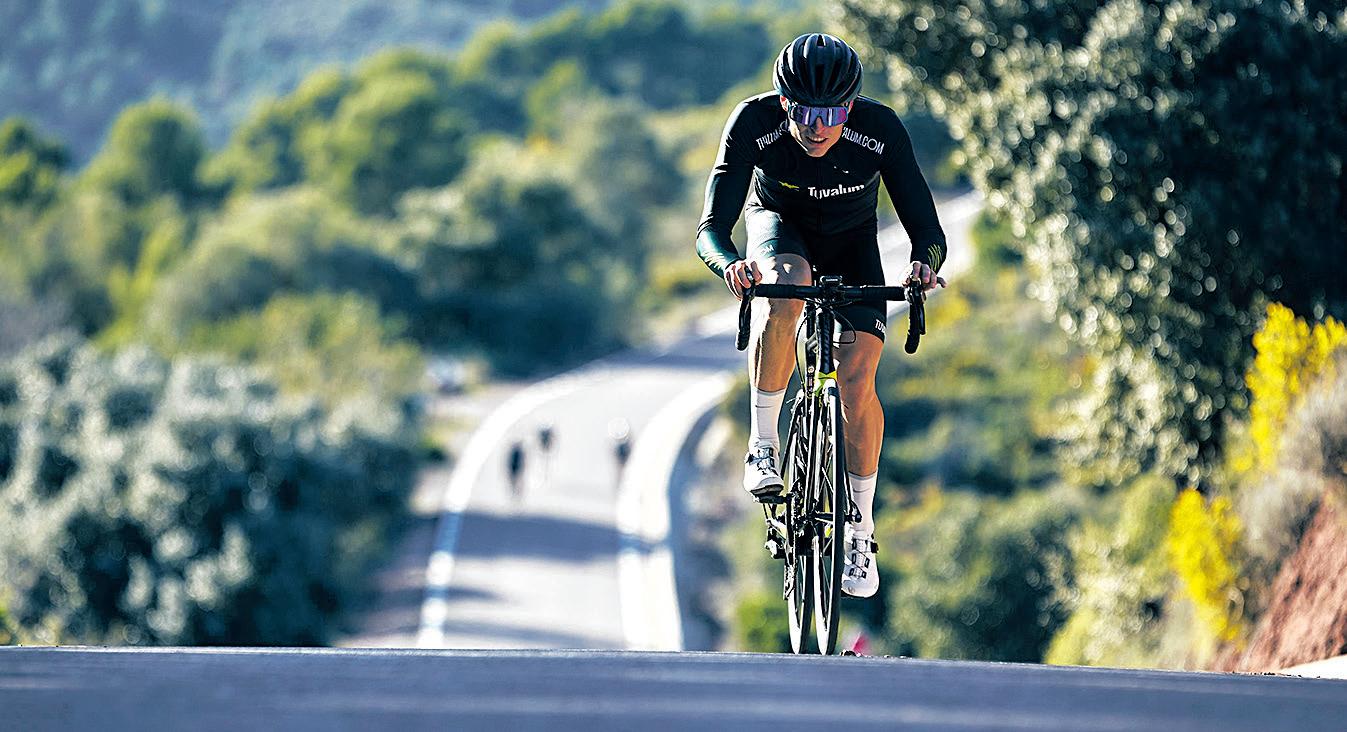
MALLORCA’S cycling season has surged into action, with the north of the island once again setting the pace as hotels, bike hire shops and restaurants reopen to welcome a steady stream of riders.
In hotspots like Playa de Muro and Alcudia, early-season occupancy is already strong, with many hotels reporting around 75 per cent capacity as cyclists arrive to take advantage of ideal spring conditions. Quiet roads, mild temperatures and dramatic coastal and mountain routes continue to position Mallorca as one of Europe’s leading cycling destinations, attracting everyone from casual riders to elite athletes.
The calendar is also a major draw. Events such
as the Mallorca 312 play a pivotal role, bringing thousands of participants to the island each year and delivering a significant boost to the local economy. The knock-on effect is clear, with businesses across the north benefitting from increased footfall and extended seasonal demand.
This growing international appeal is now being reflected in air travel. Air Canada has announced it will increase seat capacity on its Palma route from Montreal, responding to rising demand from North American cyclists eager to experience Mallorca’s iconic climbs and scenic routes.
me. What was once a primarily European market is now expanding, with long-haul visitors planning entire trips around the sport.
As the season gathers momentum, Mallorca is
proving once again that cycling is more than just a niche offering: it’s a key driver of tourism, extending the season and bringing a welcome economic lift well beyond the summer months.



The move highlights just how global the island’s cycling reputation has beco-
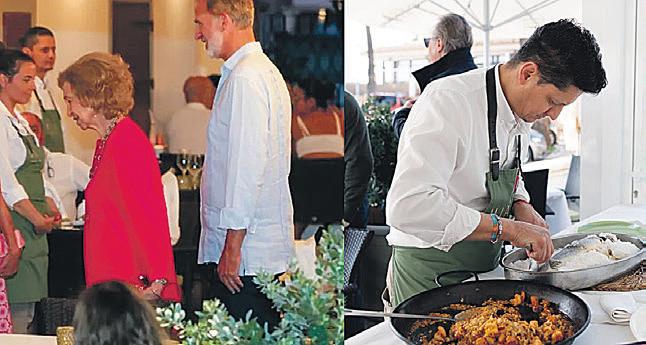
NOBODY can resist a good paella, even if you’re King Felipe VI. The Spanish monarch was recently spotted enjoying a relaxed, o -duty lunch in Palma, choosing a laid-back seaside setting over anything remotely formal. His destination? The ever-stylish neighbourhood of Portixol, a former shing village turned one of the capital’s most desirable coastal hangouts, known for its waterfront restaurants and easy, sun-soaked charm.
This isn’t a one-o visit. Felipe is known to return to the same restaurant called Mia by Guillermo Cabot, at least once a year, making it something of a personal favourite whenever he’s on the island.
He’s previously been seen dining here with his wife, Queen Letizia, his mother, Queen Sofía, and his daughters, proof that this is as much a family spot as it is a discreet royal retreat.
On this occasion, he joined close friends, including Mallorcan musician Jaume Anglada, for a long, leisurely lunch centred around one thing: paella.
The iconic paella dates back to Valencia, where farm workers cooked rice over open ames using simple, local ingredients. Today, it’s Spain’s most famous dish and one best enjoyed slowly, by the sea, in good company… just like the king did!
BOOKINGS for Etihad Airways’s new longhaul service between Palma and Abu Dhabi have slowed sharply just weeks before its planned June launch, raising concerns among tourism officials in Mallorca.
The seasonal route, due to begin on June 12 with three weekly flights, had initially been expected to generate strong demand, particularly from travellers based in the Balearics, but has now dropped from




Credit: Etihad Airways
BRITISH buyers searching for homes in Mallorca are being urged to look beyond the island’s luxury hotspots, as new data reveals where the most affordable properties can still be found.

















37 per cent to just 10 per cent. However, geopolitical tensions in the Middle East, specifically the outbreak of conflict involving Iran, have significantly dampened interest in travel to the United Arab Emirates. As a result, forward bookings have stalled at a critical moment for the airline’s expansion plans. The route, scheduled to run
until mid-September using an Airbus A321LR, was positioned as a premium offering, with fares starting above €800. Despite the current slowdown, Etihad has not altered its timetable and continues to operate under the assumption that demand may recover closer to the summer season.
Local industry figu-
res had anticipated robust uptake, with earlier projections suggesting more than a third of passengers would originate from the Balearics. Now, authorities and travel agencies are cautiously watching how the situation evolves, particularly as inbound tourism from the Gulf could still provide a late boost if conditions stabilise.
MAGALUF is stepping into a new era - and this time, it’s all about the shot.
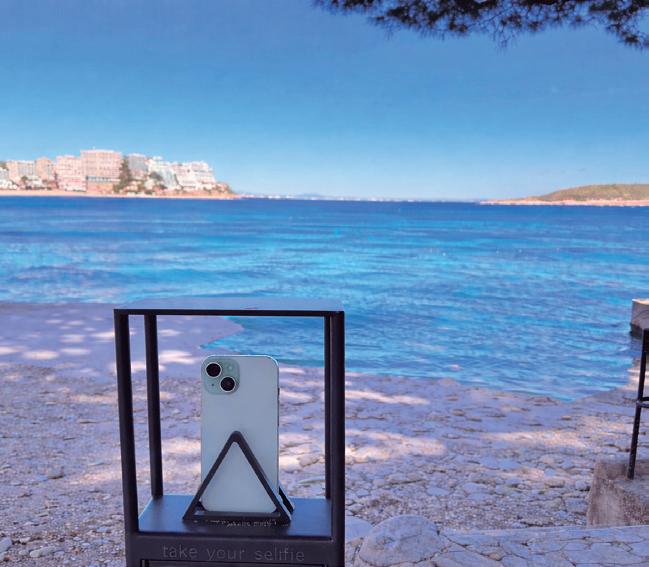
Long known for its party reputation, this Mallorca hotspot is embracing a more elevated, experience-led identity in 2026, thanks to a new selfie route launched by Calvia Town Hall.
Designed for modern travellers, the trail features sleek photo stations positioned at scenic points across the resort, allowing visitors to capture perfectly framed images… no tripod or awkward stranger required.
And yes, you’ll want to say ‘patatas’ while you do it: Spain’s playful equivalent of ‘cheese’, guaranteed to land a natural smile.
But these aren’t just selfie spots.
Each station doubles
Say
as a virtual tour guide. Scan the QR code and you’ll unlock access to a web app packed with location insights, photography tips, and even a multilingual audio guide. It also connects you to nearby hotels, restaurants, events, and local businesses, turning a simple photo into a fully
curated experience. It’s all part of Magaluf’s wider evolution, with new openings and a shift towards more refined, design-led tourism. From now on it’s not ‘what happens in Magaluf stays in Magaluf’… but more like what happens in Magaluf stays on your selfies!
According to Idealista, the town of Sa Pobla is currently the cheapest place to buy on the island, with average prices at €2,487 per square metre. Sa Pobla sits inland in the north and offers a more traditional, less tourist-driven lifestyle, appealing to buyers willing to trade sea views for value.
Other lower-priced areas include Inca, Felanitx and Porreres, where property remains comparatively accessible.
However, affordability is relative. Mallorca’s average property price has climbed to around €7,370 per square metre, underlining the scale of the gap between budget-friendly areas and the wider market.
Demand from international buyers, including Brits, continues to push prices higher, particularly in coastal and prime locations. As a result, lower-cost towns are attracting increasing attention, with competition rising fast. While Mallorca is no longer a budget destination, these inland pockets still offer a rare opportunity to enter one of Europe’s most sought-after property markets, if buyers are prepared to act quickly.
RECIPIENTS of Ingreso Mínimo Vital (IMV) in Spain can now work and earn up to €6,000 a year without losing any benefits, following new rules in force since March. The reform aims to remove a long-standing issue where even small earnings could reduce or cancel support, discouraging people from taking jobs.
Under the updated system, income up to €6,000 is ignored and benefits remain unchanged, making it easier to accept part-time or lowpaid work without risking financial stability. Where earnings exceed the threshold, support is reduced gradually rather than stopped, with only 50 per cent of additional income counted so it always leaves recipients better off.
Some households receive further flexibility. Single-parent families and those involving disability can have up to 55 per cent of additional income disregarded, allowing them to retain more earnings.

IMV recipients are also now treated as a priority group in employment programmes, with greater access to training, job guidance and support services. Authorities aim to improve coordination between social services and employment agencies to ease transitions into work.
Another key improvement is reduced bureaucracy. The National Social Security Institute (INSS) will now update payments automatically using data from Spain’s tax authorities, reducing paperwork and administrative burden.
Overall, the reform signals a shift in how IMV works - from a system that could discourage employment to one that actively supports people in returning to work while maintaining financial stability.
SPAIN has become a top European destination for medical treatment, attracting patients seeking specialist care, shorter waiting times, and modern hospitals. Yet many travellers, including some expats, overlook a key requirement: depending on nationality, a medical visa may be needed before treatment.
Patients from outside the Schengen Area or EU usually require either a short-stay Schengen visa for medical reasons or a long-stay national visa if treatment exceeds 90 days. Applying for the wrong visa can cause delays or refusal of entry.
The choice depends on treatment length. Short visits for consultations, tests, or minor procedures need a Schengen short-stay (Category C) visa, allowing stays up to 90 days in any 180-day period across the Schengen zone. Longer treatments, rehabilitation, or multiple procedures require a long-stay national (Category D) visa, permitting stays over three months.
Spanish consulates demand detailed documents, including a medical invitation from the hospital confirming diagnosis, treatment plan, and expected duration, alongside a report from the home-country doctor. Applicants also provide a valid passport, accommodation details, proof of finances, and insurance covering at least €30,000 for short stays or comprehensive coverage for longer stays.
Applications are submitted via consulate, with biometric data recorded in the Schengen Visa Information System. Even with Spain’s respected healthcare, incomplete paperwork or insufficient insurance can lead to refusals, making early preparation essential for a smooth treatment journey.
SPAIN’S 2026 income tax campaign has now begun and runs until June 30, with changes affecting the 2025 return. A key update is a 30 per cent tax band on high investment income, while lower earners continue to benefit from existing exemptions and deductions. Most taxpayers will find the system familiar, but reviewing individual circumstances before confirming the draft through Spain’s Renta WEB system is advisable.
Filing opened online on April 8 using a digital certificate, Cl@ve PIN, or reference number. Telephone assistance via the ‘Le Llamamos’ service is available from May 6, with appointments bookable between April 29 and June 29.
In-person appointments at tax offices start on June 1, with booking from May 29. The final submission deadli-
ne is June 30.
High earners with savings income above €300,000 will pay 30 per cent, affecting those with substantial capital gains or dividends. Lower savings tax bands remain unchanged, starting at 19 per cent for the first €6,000. Green transition deductions continue, including relief for electric vehicle purchases or charging points. Public aid received after floods or forest fires remains tax-free. Some employees need not file a return. Those with a single employer earning under €22,000 are generally exempt, including minimum wage earners at €16,576. A deduction of up to €340 applies to incomes up to €18,276.
Early review of eligibility and deadlines can help avoid last-minute issues.

Spain’s 2026 tax return campaign opens on April 8 and runs until June 30.
HOUSING pressures in Mallorca are driving a growing trend of overcrowded living conditions, with more people than ever sharing properties as rents continue to rise.
Industry figures warn that homes designed for small families are now accommodating double or even triple the number of residents. In some cases, apartments that once housed five people are now occupied by 10 or more, reflecting the severity of the island’s affordability crisis.
A key factor behind this shift is the increasing practice of renting individual rooms rather than entire homes. With prices pushing many out of the traditional rental market, tenants are turning to shared living as a necessity rather than a choice. Rooms are often rented to multiple occupants, maximising capa-

city and reducing individual costs.
The issue is particularly acute in Palma as well as larger towns like Inca and Manacor, where older, larger apartments provide more opportunities to subdivide space.
While overcrowding does not automatically trigger legal action, it can place strain on buildings and shared facilities. In
many cases, the impact is seen in the heavier use of communal areas rather than outright conflict between residents.
However, the wider implications are more complex. The trend highlights a deepening housing imbalance, where supply struggles to meet demand and affordability continues to deteriorate.

RISING temperatures and the boom in holiday homes have pushed the Balearic Islands to the top of Spain’s water consumption rankings, according to new research drawing on national data. The study highlights how climate, tourism patterns and housing types are combining to drive significantly higher usage across the region.
The figures show that dispersed housing, including villas, second residences and rural properties, is a major factor behind the spike. These types of homes typically require more water for gardens, pools and outdoor maintenance, particularly during peak summer months when demand is already elevated.
Hotter weather is compounding the issue. With temperatures rising and dry conditions becoming more frequent, water
usage naturally increases as both residents and tourists rely more heavily on cooling, irrigation and leisure facilities. Seasonal pressure from tourism further intensifies demand, especially in destinations like Mallorca, where visitor numbers surge during the summer.
In contrast, cooler inland regions of Spain record far lower consumption levels, with less tourism and fewer properties requiring outdoor water use. This gap underlines how environmental conditions and tourism-driven development are reshaping resource demand across the country.
The findings reinforce growing concerns about sustainability in the Balearics, where balancing tourism growth with limited natural resources is becoming an increasingly urgent challenge.





FLIGHT prices from Mallorca have jumped significantly, with industry figures warning travellers to act quickly as costs continue to climb. The increase is being driven by a combination of global instability, shifting travel demand and rising operational pressures across the aviation sector.
According to the latest report, fares have risen by around 15 per cent, a figure highlighted by the president of the Balearics’ Aviba travel agencies association, Pedro Fiol. He cautioned that anyone planning a summer getaway should secure tickets as early as possible, stressing that waiting could mean paying considerably more.
Despite this advice, many travellers are hesitating. Economic uncertainty and broader costof-living pressures mean some holidaymakers are delaying bookings, unsu-

re what they will be able to afford in the coming months.
Long-haul routes, particularly to Asia, have been hit hardest. Ongoing disruption linked to conflict in the Middle East has led to reduced flight operations and limited stopover options, pushing prices higher and restricting availability.
Even with a recent easing in oil prices fo-
llowing a temporary ceasefire, industry experts warn it will take time for fares to stabilise. For now, demand remains strong and supply constrained, creating upward pressure on ticket prices.
For travellers, the outlook is clear: Mallorca remains in high demand, but affordability is becoming a growing concern as flight costs continue to rise.
A GROWING campaign in Mallorca is urging authorities to step in and purchase a historic rural estate before it is transformed into a luxury hotel. The property, known as Gabellí Gran and located in Campanet, is currently on the market for €16 million, prompting concern among local residents and political groups. The push, led by Més per Campanet, calls on both the Balearic Government and the island council to secure the estate for public use. The proposal reflects wider tensions on the island, where increasing numbers of historic properties are being converted into high-end tourism ventures. Critics say this trend is eroding local identity and limiting access to spaces that were once part of the community. However, the €16 million price tag presents a significant challenge. While advocates believe public ownership would deliver long-term cultural and environmental value, others question whether such an investment is feasible.

RESIDENTS in Andratx recently took part in the traditional Pancaritat, marking the end of Semana Santa. Walkers set out on foot from the municipality towards s’Arracó and later continued on to Sant Elm. This year’s event saw strong participation and a festive atmosphere along the route.
In s’Arracó, the Xeremiers greeted participants and accompanied them towards the Torre de Sant Elm, providing traditional music during the procession.
The walk was attended by the mayor of Andratx, Estefanía Gonzalvo, the Education councillor, Antoni Vera, and several councillors. Officers from the Local Police and Protección Civil were deployed along the route to ensure safety. On arrival in Sant Elm, the Caparrots de s’Arracó association sold panades


and coques, both sweet and savoury, as people gathered in a communal setting. In the chapel at the Torre de Sant Elm, the rector of Bunyola, mossèn Manolo Hernández, celebrated mass.
The event concluded with a traditional ballada featuring the Colla de Xeremiers d’Andratx and Aires d’Andratx. Local residents joined the closing moments as the day ended with music and dancing in Sant Elm.
SOLLER, Port de Soller, and Fornalutx will host the 20th Orange Festival from April 10 to 26. This event focuses on local citrus production and culinary traditions throughout the region.
The official opening takes place on Thursday April 9 at 11.00 in the Soller Town Hall atrium. This marks the start of a local product exhibition featuring items made from oranges and citrus fruits, which remains open until April 26.
Visitors can also enter a competition to guess the number of oranges in a display to win prizes, including a travel voucher for two people on the Soller train.
A gastronomic showcase will also run across various restaurants in Soller, Port, and Fornalutx.
On Saturday April 11, the main fair opens in Plaça Constitucio from 10.00 to 16.00. This day includes citrus variety displays by the Agricul -

tural Cooperative and a dedicated orange market. Attendees can sample professional citrus cocktails or join a guided tour regarding local hydraulic heritage.
The evening features the ‘Nit Taronja’, with live music from Los Lost and Whisky Mama, where guests are encouraged to wear orange clothing.
Sunday April 12 conti -
nues with a market and historical talks at the MUCBO. Activities conclude on April 25 in Fornalutx with a citrus cake competition and the Golden Orange award ceremony.
Organisers suggest using the Soller train to attend the fair. Menus and further details can be found at www.menjat soller.com.

SPAIN’S tourism sector saw international visitors spend €7.606 billion in February, up 4.6 per cent from the same month in 2025, according to the INE’s Egatur survey. The increase was supported by steady demand from core European markets, particularly the UK, Germany, France, and Nordic countries. Winter destinations, especially the Canary Islands, remained popular due to milder climates, sustaining economic activity despite seasonal variations.
Expenditure was concentrated in accommodation, food and beverage services, and transport, with no significant change in spending patterns. Average spending per tourist remained stable, reflecting continuity despite broader economic pressures. Tourism continues to underpin employment and economic activity across multiple sectors, with regional variations influenced by seasonal travel patterns.
While growth moderated compared with January, the overall level of spending remains high, indicating resilience in international visitor demand. Seasonal fluctuations are typical, but strong winter traffic in regions like the Canary Islands offsets lower activity elsewhere. The data reinforces Spain’s position as a leading global tourism destination, with stable and rising expenditure underlining the sector’s ongoing contribution to national and regional economic performance.
SPAIN’S former monarch Juan Carlos I has reignited controversy after receiving a standing ovation at a packed bullring in Sevilla, despite years of scandal and his continued exile in Abu Dhabi.
The 87-year-old made a rare return to Spain over the Easter weekend, attending a high-pro le bull ghting event where sections of the crowd applauded and shouted ‘Viva el Rey’ as he took his seat. The reaction has once again exposed the deep divide in public opinion over his legacy.
Juan Carlos abdicated in 2014 after nearly four decades on the throne, later facing multiple investigations into alleged nancial misconduct. Although legal cases in Spain were ultimately dropped, the reputational damage has lingered, prompting his move abroad in 2019.
Supporters argue he played a crucial role in Spain’s transition to de-

mocracy, while critics say his past behaviour should prevent any public celebration or return to royal life.
His latest appearance has also reignited debate over whether he should be allowed to resettle in Spain.
The controversy was further ampli ed by the setting, as bull ghting itself remains a deeply polarising tradition.
For many, the reaction in Sevilla underlines a stark reality: Juan Carlos continues to command both loyalty and backlash in equal measure.

A BLACK market for immigration appointments is ourishing across Spain as desperate migrants face a broken system. Fraudulent brokers are exploiting a severe shortage of cita previa (advance appointments), charging between €50 and €200 for slots that are o cially free.







lose access to healthcare and work permits. In major cities like Madrid and Barcelona, wait times now stretch between eight and 14 weeks.





Police have dismantled several criminal networks using automated bots to hoard online appointments faster than human applicants can. This illegal
trade particularly targets asylum seekers; without valid papers, individuals
The crisis arrives as Spain prepares for an extraordinary regularisation programme. Up to 500,000 undocumented migrants who arrived before the end of 2025 will be eligible to apply for residence and work permits. This surge threatens to overwhelm o ces already struggling with routine applications, echoing the chaos of the 2005 regularisation where applicants queued overnight.









Authorities have promised to deploy temporary sta and modernise digital systems with bot-blocking codes, though no launch date has been set. To avoid scams, o cials urge applicants to use only the o cial government portal or seek legitimate legal counsel. Intermediaries on platforms like WhatsApp often disappear once money is transferred, leaving vulnerable people with fake appointments and no legal recourse.
SPAIN is set for a surge in UK travel this summer as Wizz Air expands its ight network, bringing more routes, increased frequency and cheaper fares for holidaymakers and expats alike.
The airline has con rmed a series of new routes from London Luton to key Spanish cities including Barcelona, Madrid, Valencia, Sevilla and Bilbao, launching from spring 2026. The move re ects growing demand for travel between the UK and Spain, particularly among second-home owners and the large British expatriate community.
Flights will run regularly, with Madrid seeing daily services and other cities operating multiple times a week, giving travellers far more exibility. Fares are expected to remain low-cost, with headline prices starting from around £17.99 one-way, making frequent trips more accessible.
For expats living in Spain, the expansion could make a noticeable di erence. Easier connections mean simpler visits back to the UK and more opportunities for friends and family to travel over, especially during peak seasons.
Spain continues to dominate as a top destination thanks to its lifestyle, climate and established expat communities. With airlines increasing capacity to meet demand, summer 2026 is already shaping up to be one of the busiest and most connected travel seasons yet.
FROM May, Bizum will expand beyond peer-to-peer transfers and online payments, allowing users in Spain to pay directly in physical shops using their phones. With nearly 30 million users already, the move could significantly change everyday payment habits.
The new system will work through NFC technology - the same contactless method used by bank cards and mobile wallets. In practice, users will open their banking app or Bizum Pay, tap their phone on the terminal, and the payment will be processed instantly. Notably, the system is designed to function even during temporary connectivity issues.
Until now, Bizum has mainly been used for quick transfers between individuals. But its expansion into in-store payments marks a major shift, placing it in direct competition with traditional card networks and platforms like Apple Pay. The goal is clear: move into the largest segment of payments - everyday spending in physical shops.
For businesses, especially smaller ones, this could be a key ad-
vantage. Payments are processed as instant bank transfers, meaning funds arrive immediately in the merchant’s account. Banks are also expected to charge lower fees than traditional card payments, which could encourage wider adoption among independent retailers.
substantial, with millions of users, thousands of businesses and over 100 million online transactions recorded in 2025 alone. This latest step brings it closer to becoming a full alternative to
could encourage already been
Bizum’s growth has already been






A FRESH wave of contemporary art is arriving in Palma this April with The Garden, a new solo exhibition by Nis Namdar. Opening with an intimate vernissage, the show invites guests into a dreamlike world where the boundaries between human, animal and nature begin to blur.
Set in the heart of the city and open until June 5, the exhibition explores the complex relationship between identity and the natural world. Namdar’s layered compositions combine organic forms with symbolic detail, creating works that feel both surreal and emotionally grounded. Each piece encourages viewers to question where instinct ends and consciousness begins.

Curated by Katharina Wenzel, founder of Artpiq, the exhibition reflects Palma’s growing presence on the contemporary art map. Wenzel is known for championing emerging international artists and bringing a fresh, accessible approach to curation on the island.
The vernissage is expected to draw a mix of
collectors, creatives and cultural insiders, offering a first look at the collection in an atmospheric setting.
Timely and thoughtprovoking, The Garden taps into wider conversations around coexistence and our connection to the natural world, making it one of the standout cultural moments in Mallorca this season.

AS spring returns to Mallorca, the Cancer Support Group Mallorca is inviting residents, particularly the island’s expatriate community, to get outdoors, meet new people and support a meaningful cause through its ‘Walk Against Cancer 2026’ series.
One of the key dates is Tuesday April 14, when participants will set off from Coll de Sa Gramola at 10.00am for an easy coastal walk to the Mirador Josep Can Sastre.

The route offers sweeping views over Sa Dragonera, a protected island known for its dramatic cliffs and unspoilt natural beauty. The walk lasts around four to five hours and is suitable for most fitness levels.
Further events include a moderate climb of Puig de

sa Gubia on Sunday April 19 from Bunyola, and a scenic walk through the historic Galatzó Estate on Saturday April 25, followed by a celebration gathering.
More than just walks, the events are designed to bring people together in a relaxed, supportive setting while raising funds for those affected by cancer.
Bringing
Booking is essential for all dates, which is possible via the website, with organisers encouraging as many people as possible to take part and support the island’s cancer community.
www.cancersupportma llorca.com
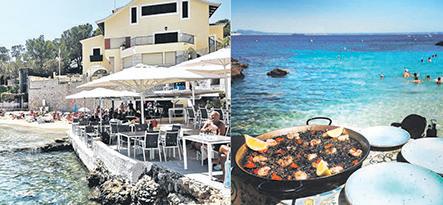
SITUATED along the curve of Cala Mayor, La Bugambilia is the kind of place that’s always full - for good reason. A favourite among Spanish families, its popularity feels earned rather than hyped, with a steady stream of loyal diners returning for its relaxed charm, beachfront setting and consistently good food.
The location is its biggest asset. Sitting right on the sand, it offers that rare, effortless blend of dining and seaside living.
For parents especially, it’s a game changer: children can wander between table and shoreline, paddling or playing while adults linger over a long, leisurely lunch. It’s Mediterranean dining as it should be: relaxed, sociable and sun-soaked.
We shared octopus crackling, croque-
ttes and prawns to start, each simple, fresh and packed with flavour. But the real reason people come is the paella. Served in its traditional pan, rich and perfectly cooked, it’s everything you want, especially with the ocean just metres away.
Sangria flows, the atmosphere hums, and for a moment you feel like you could stay all afternoon. The only catch is the strict 2.5-hour table limit, a gentle reminder of just how in-demand it is.
Still, with the beach at your feet, it’s an easy transition: full, happy, and already planning your return visit.
Address: Ctra. Andratx, 29, 07184 Calvia, Illes Balears
Phone: +34 971 402 741

SOMETHING to mull over in the light of these maniacs wiping out all our access to oil. Chew on it while you still can! Your local supermarket, that shining palace of plenty, holds roughly three days’ worth of food. Three days. After that, it isn’t a supermarket. It’s an empty warehouse with better lighting.
Now imagine, just for fun, that the oil stops. Not slows down. Not becomes expensive. Stops completely. No lorries. No deliveries. No helpful chap reversing into the loading bay at 4am with your strawberries, nothing. Day One? Barely a ripple. Day Two? A twitch. Day Three? Well, that’s when things get interesting.
Because by Day Three, those cheerful aisles start looking like a stage set after the audience has gone home. No bread. No milk. No pasta. Just the odd tin of something nobody wanted even in the good times. And that’s when our illustrious modern civilisation clears its throat and says, ‘Right, now what?’
Leapy
You see, we’ve become wonderfully spoiled. Not ‘comfortable’, spoiled. We expect mangoes in March, Irish beef, and a choice of 17 types of hummus without ever asking how any of it got there. Answer: diesel. Take that away and suddenly we’re all a lot closer to our ancestors than we’d like to admit. Fun time folks. Because the public, when faced with inconvenience, goes through three stages: 1. Mild irritation, 2. Quiet panic, 3. ‘Every man for himself’. By the end of Day Three, you won’t see polite queues.
You’ll see trolley duels over the last packet of digestives. And then comes the realisation, there is no more coming. No magical overnight restock. No convoy of salvation. Just, what’s left. Which raises an awkward question; what exactly do we eat?
Back gardens, assuming you have one, suddenly look less decorative and more, edible. That patch of lawn? Potential potatoes. Those owers you’ve been so proud of? Well, funny thing about da odils. Bright, cheerful and completely useless unless you fancy a trip to Urgencias. Still, give it a week and I wouldn’t entirely rule out someo-
ne giving them a go. Lightly sautéed, perhaps. With a nice drizzle of optimism! Of course, the clever ones will adapt quickly. Local farmers become minor celebrities overnight. Bicycles and donkeys reappear. People rediscover the radical concept of ‘growing things’. And neighbours - remember them? might actually start talking again. Swapping eggs for vegetables. Sharing what little there is. The sort of behaviour we used to call normal before convenience took over. But let’s not kid ourselves. The rst few days wouldn’t be a charming return to country life. They’d be a shock. Because those full shelves we take for granted? They’re not permanent. They’re a daily illusion, maintained by a constant ow of oil. Turn o the tap… and within three days, the illusion vanishes. And there you are. Standing in aisle seven. Holding a tin of something unidenti able, and wondering, quite seriously, if da odils might not be so bad after all. Are our so-called leaders listening out there? Probably not - too oily. Keep the faith Love Leapy leapylee2002@gmail.com
opinions are his own and are not necessarily representative of those of the publishers, advertisers or sponsors.

brought to you by Revolution Technology

PRIME’S Last One Laughing has a simple formula: lock the country’s top comedy talents in one room and tell them not to laugh. What transpires is hours of hilarity. The comedians themselves might not be allowed to so much as smile, but those watching at home are sure to be doubled over with laughter as the contestants try to make each other break. It’s not a feel-good show, it’s a feel-great show.
POLICE in the Canary Islands have dismantled a massive illegal clothing operation involving 70,000 counterfeit items. The
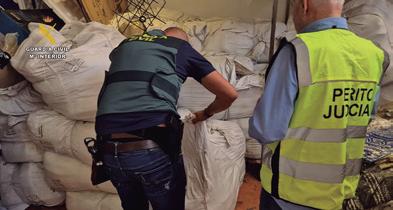
seized goods carry a market value of nearly €7 million. Conducted under the name ‘Operation LABEL’, the investigation targeted the production and distribution of fake designer apparel across Tenerife and La Palma.
O cers from the Guardia Civil inspected 20 businesses and warehouses linked to the criminal network. During these raids, they discovered a hidden workshop in the south of Tenerife. This facility served as a central hub where industrial machinery was used to manufacture knock-o garments before they were sent to local shops for sale.
Beyond the mountain of fake clothes, the searches yielded a signi cant haul of luxury assets. Investigators found more than €22,000 in cash, alongside a collection of jewellery and several gold bars. These additional seizures are estimated to be worth over €300,000.
So far, 19 individuals are under formal investigation for crimes against industrial property. The crackdown follows a long-term probe into how these imitation goods reached shelves in popular tourist areas. This major blow to the local black market aims to protect authentic brands and registered trademarks from large-scale fraud within the islands’ retail sector.

WEDDINGS have a reputation for being the most nerve-wracking day of your life, but Netflix’s new horror series turns it into the scariest. In the first episode we get a hint of what’s to come when the camera cuts from the not-so-blushing bride to a wolf-like creature lurking through the halls, leaving behind a trail of blood. This one flash-forward sni-


ppet sets the eerie tone for the rest of the show, confirming that yes, something very bad definitely is going to happen.

UK grocery inflation held at 4.3 per cent in the month of March. This figure is expected to increase as the Iran war continues. According to research by Worldpanel, each additional 1 per cent rise could increase a household’s annual grocery bill by £50.
FOR the first time, Virgin Bet has expanded outside of the UK, launching operations in South Africa. South Africa is the largest licensed betting market in Africa. Approximately 1.5 trillion South African rand (€83 billion) was wagered over the 2024/2025 financial year, with betting accounting for 75 per cent.
SAINSBURY’S are investing £5 billion into the UK and Ireland agriculture sector, supporting 2,500 British farms with long-term contracts by 2027. These partnerships will result in 3.1 tonnes of fresh produce stocking Sainsbury’s shelves, and help ensure stability across supply chains during a particularly volatile period for farmers.
AENA recently won the concession for Galeão International Airport, the main airport of Rio de Janeiro in a public auction for 2.9 billion reais (approximately €483 million). With 17.8 million passengers passing through in 2025, it’s the third busiest airport in Brazil and a major addition to Aena’s extensive airport network.
SPAIN’S pork exports have fallen by 17 per cent following African swine fever outbreaks, with trade restrictions hitting key international markets. Farmers have already lost around €670 million as prices drop and sales decline. The crisis is squeezing profitability, leaving producers struggling amid ongoing uncertainty and weakened global demand.
Spain ended 2025 with 154,247 unfilled job vacancies, only enough to employ 6.1 per cent of those currently unemployed in the country, according to Eurostat.
MILLIONS of drivers across the UK have been affected by unfair vehicle loans, resulting in the Financial Conduct Authority (FCA) ordering the motor finance industry to pay approximately £9.1 billion in compensation. This final figure is lower than the initially proposed £11 billion, which was reduced after lobbying from industry leaders. Of the total, £7.5 billion will go directly to motorists who took out mis-sold loans, while £1.6 billion will cover administrative costs.
Around 12.1 million motor finance deals will qualify for redress, fewer than the original estimate of 14.2 million. The initial plan was considered too broad, potentially compensating consumers who were not unfairly treated. As a result, the average pay-out per motorist has increased to approximately £829, up from earlier esti-

mates of £700. Pay-outs are expected to begin this year. The FCA split the scheme into two periods - April 2007 to March 2014 and April 2014 to November 2024 - to prevent legal challenges.
The mis-selling scandal stems mostly from inadequate disclosure of commissions and ties between lenders and car dealerships, which incentivised brokers to increase loan rates. The FCA
PHARMACEUTICAL company Eli Lilly has stated it will resume its £25 billion UK investment if the NHS agrees to regularly increase drug prices and end a rebate scheme.
The NHS has been under pressure to raise prices. As a result, the UK agreed to a new US-UK drug deal, with the UK paying 25 per cent more for new medicines by 2035.
Eli Lily’s president of international business, Patrik Johsson, said that the price of medicine in the UK has been “far too low for far too long.”
Life-extending drugs could now cost an additional £5,000, rising to £25,000 to £35,000 a year. Meanwhile, an ‘innovative’ pricing plan has been discussed which would see anti-obesity drugs prescribed depending on if the treatment will help patients return
INDITEX is a leading fast-fashion company. With €39 billion in sales in 2025, it beat high street mainstays like H&M. What’s more, Inditex’s profitability now surpasses luxury giants. In 2025 it achieved a net profit margin of 15.6 per cent, higher even than couture brand Louis Vuitton which closed 2025 with a net profitability of 13.8 per cent. The company’s success is due to cost control, efficient management and focusing on the key markets in-between cheap and high-end.
has stated the scheme evenly balances consumer protection with industry growth. The regulator estimates that 75 per cent of eligible consumers will claim compensation, down from 85 per cent previously, which also contributed to the lower overall bill.
Despite this, the scheme remains one of the largest consumer redress efforts in UK financial history.

to work.
Jonsson revealed the company has held several optimistic talks with UK ministers, and predicts an agreement could be made by the summer.
DESPITE a 6.9 per increase in Social Security contributions, the government injected a record €47.8 billion into the Social Security accounts to cover pension spending. This was necessary to cover €134 billion for contributory pensions, €2.1 billion for non-contributory retirement pensions and €194 billion for disability, widowhood, orphanhood, and minimum income supplements. The biggest strain remains benefits for workers on temporary leave, which reached €18.4 billion, a 12 per cent increase. Social Security contributions currently total €175 billion, but outstanding payments exceed €182 billion, leaving a shortfall, with additional social benefits widening the gap to around €30 billion.
SUPERDRY is set for a major expansion, opening 21 new stores across Europe. The British fashion brand will also strengthen its presence in Spain by launching its women’s line in El Corte Ingles.
Superdry’s women’s line only accounts for 38 per cent of sales. However, as the company switches its focus to the next generation of consumers, they expect womenswear sales to eclipse menswear by August. While the company ended the 2025 fiscal year with sales down by 23.3 per cent on the previous year, 2025 did mark its return to profit with a gain of £33.3 million.
BY 2026, Santander aims to double its payment transactions from €45 billion to more than €90 billion. To do this, the banking group plans to migrate payments to a unified global platform, increase digitalisation, and streamline processes to improve efficiency. It also intends to reduce the cost per transaction by around 40 per cent to 1.20-euro cents while strengthening its global payments business and integrating operations across its main markets and business divisions.
SPAIN’S new-build housing sector is strengthening its position, with developers reporting over 14,400 homes already pre-sold in recent months. This figure demonstrates sustained demand even as high borrowing costs lead to a real estate slowdown. New-build properties are particularly attractive to potential homeowners, especially first-time buyers, accounting for 23.6 per cent of total transactions in January.
Demand remains higher than supply, even with the production of new housing, helping to sustain the rapid pace of pre-sales.
SPAIN’S proposal to levy up to a 100 per cent tax on non-EU buyers of residential property has been halted in Congress after failing to gain backing from smaller parties. The government argued the measure would curb foreign speculation and make housing more accessible for locals, but critics say it could deter investment and have limited impact. Analysts suggest increasing housing supply, rather than imposing steep taxes, would more effectively address Spain’s affordability challenges.

3I Group 2.687,00 2.694,00 2.521,00 3,77M
Admiral Group 3.214,0 3.214,0 3.156,0 581,61K
Airtel Africa 353,20 356,20 341,60 4,58M
Anglo American 3.308,0 3.336,0 3.187,0 5,2M
Antofagasta 3.457,00 3.495,00 3.315,00 704,94K
Associated British Foods 1.890,5 1.902,5 1.873,0 933,95K
AstraZeneca 15.316,0 15.436,0 14.956,0 1,59M
Auto Trader Group Plc 474,90 474,90 463,80 3,09M
Aviva 621,40 624,60 609,40 19,4M
B M European Value Retail 184,00 186,50 171,00 11,25M
BAE Systems 2.289,00 2.302,00 2.261,00 9,52M
Barclays 408,75 411,65 397,30 81,42M
Barratt Redrow 259,60 260,10 250,00 10,91M
Beazley 1.273,00 1.273,00 1.269,00 6,57M
Berkeley 3.168,0 3.184,0 3.048,0 956,86K
BP 591,20 605,00 587,50 79,1M
British American Tobacco 4.407,0 4.432,0 4.339,0 3,83M
BT Group 216,10 216,10 212,00 11,12M
Bunzl 2.254,0 2.280,0 2.242,0 1,19M
Centrica 218,50 218,50 213,00 23,1M
Coca Cola HBC AG 4.274,0 4.292,0 4.218,0 415,61K
Compass 29,17 29,17 28,17 7,74M
ConvaTec Group 220,00 221,00 215,20 23,15M
Croda Intl 2.877,0 2.892,0 2.835,0 314,31K
4.784,0 4.798,0 4.698,0 208,96K
1.391,5 1.403,0 1.389,5 5,02M
6.225,00 6.235,00 6.035,00


HIGH streets are seeing a rise in sales of fake vapes. While nothing appears out of the ordinary at first, many counterfeits are missing a simple but crucial circuit that prevents overheating, causing them to catch fire.
Approximately 5 million devices have been seized since 2023, at an estimated value of £39 million.
IBERDROLA has secured a £700 million loan to fund a new submarine interconnection between England and Scotland. The 530-kilometre underwater electricity bridge will supply 1.5 million British homes with 2,000 MW of electricity. Long-distance submarine cables have become a cornerstone of the British energy system, enabling better connection.
THE UK government is expected to fully nationalise British Steel in the coming weeks, after taking operational control in 2025 to prevent the closure of its Scunthorpe plant. The site currently employs around 3,500 workers and operates the UK’s last remaining blast furnaces, making it critical for domestic steel production and national security.
Ministers view the sector as strategically important for both economic growth and national security, particularly in reducing reliance on

A UK technology firm has secured a £151 million contract to supply advanced fibre-optic sensing systems to US authorities, marking a major boost for British-developed security technology. Bristol-based Sintela will expand its initial £25.7 million 2020 agreement, providing distributed acoustic sensing systems that detect vibrations such as footsteps or fence tam-
pering, analysed via AI. The three-year deal strengthens Sintela’s presence on international borders and critical infrastructure, including pipelines and transport networks. Chief executive Magnus McEwen-King hailed it as a ‘quirky British success story’. Founded in 2017, the company expects further expansion, with plans to double staff in the UK and US.
imported steel.
Negotiations with its Chinese owner, Jingye, have stalled. Jingye reportedly turned down a £100 million offer for the business, instead demanding over £1 billion. As a result, officials are now preparing to take full control.
Ministers are now considering formal nationalisation, supported by moves to classify the steel sector as strategically vital. This reflects concerns over economic resilience, supply chain security and risks on relying on imports.
However, the intervention comes at a cost: government support has already reached hundreds of millions of pounds and could exceed £1.5 billion in the coming years.
Overall, nationalisation is seen as a necessary step to secure the UK’s steelmaking capacity, protect jobs, and enable long-term restructuring of the industry.
UK MAC Cosmetic employees can now earn commission by promoting products on TikTok Shop as the beauty brand attempts to capitalise off the influencer-led market. MAC hopes to drive sales and visitors to its 230 UK retail locations by encouraging make-up artists to film tutorials and product reviews in store.
STANDARD & POORS warn that rapid solar expansion in Spain is creating oversupply during peak hours, pushing electricity prices down to around €20/MWh. This increases volatility and weakens renewable project profitability, highlighting the urgent need for more energy storage and greater grid flexibility to balance supply and demand.











MALAGA’s property market has experienced a dramatic surge, positioning the Andalucian capital and the Costa del Sol among Spain’s most expensive residential regions. Official figures reveal that price increases for both new and second-hand homes now match or exceed growth in major urban centres like Madrid and Barcelona.
New developments are driving the sharpest rises in Malaga City. Values for properties up to five years old have climbed significantly, narrowing the gap with premium markets such as San Sebastian.
This acceleration has pushed the city well ahead of Sevilla and Valencia, moving it into the price territory of Bilbao.
Reports have confirmed that coastal hotspots are commanding record figures. Towns including Marbella, Estepona, Fuengirola, and Torremolinos recorded double-digit gains, establishing the Costa del Sol as a premier national market.
WORK is progressing well on Granada’s ambitious Senda Litoral, an 82.3-kilometre coastal walkway designed to unite 10 towns. Managed by the Granada Provincial Council, the project will provide seamless walking and cycling paths from Almuñecar to La Rabita, passing through towns including Salobreña, Motril, and Albuñol.
A central feature of the development is the construction of four striking viewpoint bridges. These structures are designed to provide safe passage away from traffic while offering panoramic Mediterranean views. Key installations include a bridge crossing Playa Granada to link directly with Salobreña, and a pedestrian crossing over the N-340 road, connecting Cabo Sacratif to Carchuna Calahonda.
Environmental restoration is also a priority. In Albuñol, work began on Monday, March 2 to clear former greenhouse sites at El Pozuelo beach. The area will be transformed with new walkways, lighting, picnic zones, and sports facilities.
Costa Blanca North Denia in demand
DENIA enjoyed an exceptionally busy long weekend as a shared public holiday in Madrid and the Valencian Community brought a wave of visitors to the Costa Blanca hotspot. In just 48 hours, the town transformed into a vibrant hub of activity. Streets, promenades and coastal areas were filled with visitors soaking up the sunshine, creating a lively, holiday atmosphere from morning through to late evening. The buzz was felt across every corner of the town, with a steady flow of people enjoying everything Denia has to offer.
While cooler sea temperatures meant fewer people headed into the water, it encouraged a shift towards slower, more social activities, strolling along the seafront, exploring the charming old town and lingering over long lunches in the sun. The port and central streets became natural meeting points, adding to the energetic and sociable feel of the weekend.
ALICANTE has closed this year’s Semana Santa with streets full, terraces busy, and a steady flow of visitors that could be felt from the coast to the historic centres, creating a lively atmosphere throughout the entire province.
Across the province, hotel occupancy rose above 82 per cent, with many areas exceeding 90 per cent at peak times, figures that place this year among the highest on record for the region. The strongest activity was seen along the coast, but the effect reached further inland as well.
In Torrevieja, one of the most tourism-driven cities in the Vega Baja, bars and restaurants reported near full capacity throughout the week, while its large international population helped extend activity beyond the usual holiday peaks.
Orihuela drew thousands of visitors to its processions. The city’s events, recognised as being of International Tourist Interest, brought a consistent flow of people into the old town.
LONG before his son, David Bisbal, reached international fame, Jose Bisbal was the first Spanish boxing champion born in Almeria. His influence on the sport was enormous, inspiring a whole new generation of boxers.
Jose Bisbal became a beloved figure in Almeria when he won the national bantamweight title in 1963, the first of many major wins. Throughout his illustrious career, Bisbal would go on to be crowned Spanish boxing champion seven times, achieving 49 wins, 35 losses, and nine draws. Earlier in the year, Jose passed peacefully at age 84 from Alzheimer’s disease. Following his passing, family, friends and fans filled the Olimpo Box Centre in San Isidro, gathering to pay tribute and say their final goodbyes to the local hero.
A heavy silence settled over the stands, full to the rafters with supporters, as a commemorative video played which walked audiences through the timeline of Bisbal’s tremendous sporting career, revisiting his greatest achievements.
THE Mar Menor is preparing to bring together nearly 1,000 international sailing enthusiasts in the month of April with a major championship, becoming one of the epicentres not only in Murcia, but in the whole of the country, for dinghy sailing. The event features three competitions, uniting sailors from different countries and backgrounds.
The waters of the Mar Menor will have hosted 900 sailors in April, in the Spanish Snipe Cup, the EurILCA Europa Cup and the ILCA 4 European Championship, reinforcing the position of the lagoon as one of the main international sailing venues in the Region of Murcia.
This long-awaited competition, taking place at the Region of Murcia High Performance Centre, features leading up-and-coming national and international sailors.
Due to the organisation of its local clubs, the favourable weather conditions, and the quality of its facilities, the Mar Menor has become a standout destination for sailors all over Europe.
LAMIA and her deep love of animals
Lamia, founder of HouseSit Match, is deeply passionate about pets and the house-sitting community she has built. To stay closely connected with the experience she offers members, she regularly house-sits herself, caring for pets and homes firsthand. This hands-on approach allows her to keep the platform thriving while continuously refining best practices to share with both homeowners and sitters. Like many in the community, her love of animals is at the heart of everything she does, ensuring that the service remains rooted in genuine care, trust, and a shared passion for pet companionship.
HouseSitMatch pet-sitters offer their time and service in exchange for free accommoda-

tion. It allows the sitter to discover a new location from the comfort of your home. It’s like old-fashioned barter.
How it works
1. Register at HouseSitMatch. com as a homeowner
2. Create your profile with photos of your home and pets
3. Review applications and video chat with potential housesitters
4. Match with the perfect petsitter and enjoy your holiday worry-free
Real savings, real peace of mind
Each house-sit benefits both the homeowner and the housesitter. Your pets receive oneon-one attention at home, your property stays protected, and you avoid expensive kennel fees (and stress on your pet!).
For a small annual registration fee (and no per-sit fee), you can connect with verified house-sitters willing to provide free pet care and home security. Your pets deserve the comfort of their own home, and you deserve an affordable holiday.
Join today
Register at HouseSitMatch. com and use code WELCOME50 for 50 per cent off your first year.
Lamia Walker, Founder. Call: +44 (0)7772 142742
Rated Excellent on Trustpilot - 4.9/5
LIKE many creatures, cats can recognise their name. Watch closely and you’ll see them perk up, flick their ears or tilt their head in recognition. However, just because your cat knows their name, doesn’t mean they’ll respond every time it’s called.
Cats have impressive ears. Able to swivel almost 180 degrees and move independent of each other, there’s no chance your cat doesn’t hear you calling for them. Of all the pets, cats are most likely to resort to selective hearing.
Unlike dogs, cats are much more independent and not familiar with or particularly fond of following commands. If a cat ignores you, it’s usually a sign they’re distracted or simply uninterested in what you have to say.
Newly adopted cats
may not recognise a new name straight away, especially if they were previously called something else. Cats learn through association. Start calling their name when they’re eating, playing or being smothered with affection to help link their new name with positive experiences. It can take a few days, maybe even a few weeks but with patience and consistency your cat will soon recognise and respond to their name.

Cats do recognise their name, they choose not to respond.
PET obesity is an increasingly common problem. Affecting both cats and dogs, a couple of extra kilos can lead to a poor quality of life, a higher risk of disease and a shortened lifespan. As a pet owner, it’s our responsibility to understand the causes and make sure our pets stay as fit and healthy as can be.
One of the main causes of pet obesity is overfeeding. If there’s food about, a cat or dog is likely going to eat it. It’s a pet owner’s responsibility to manage portion control and keep treats as a special one-off reward.
Genetics and medical conditions can also play a role, making animals more prone to weight gain than others. In these instances, it’s important to consult with


a vet to keep your pet healthy.
Some of the health risks attributed with pet obesity include diabetes, heart disease, joint problems and respiratory difficulties. Overweight pets will tire more easily and move less, leading to even more weight gain. Preventing obesity involves a combination of proper diet, portion control, and regular exercise. Feeding measured portions of balanced pet food, limiting treats, and encouraging play or walks can make a significant difference.



LEO, CAR HIRE. Free airport service and competitive rates! 3,5 KM from the airport www.leocar.com. Mobile 0034 609 622 746 (312353)
WE ARE currently the market leader in our country in the sale of direct car, motorbike, home and company fleet insurance. Since we started out in 1995, our philosophy has always been to offer an excellent service with the best prices in the market. For the most competitive quotes in English, call Linea Directa on 952 147 834. (200726)
EDS? We have the solution, Kamagra pills & jells, Cialis, Sidenafil, over 7 products for men & ladies, mixed trial packs. Available by mail-order. WhatsApp or call 603 117 394









ATHLETES are preparing for the upcoming Sol Half Marathon Magaluf, scheduled for Saturday April 18. This long-standing event in Calvia brings together high-level sporting competition and the local tourism industry. Runners can choose between two distinct distances: the 21km half marathon starting at 17.30 or a shorter 10km race beginning at 17.40, both departing from the Magaluf Athletics Track.
The competition has undergone a significant transformation since its inception in 1984. Originally a small-scale local meet, it has grown into a major international fixture. To date, the event has seen toptier finishers hailing from three continents and 24 different nations. Participants can expect official timing and RFEA certified courses.
Beyond the main races, the weekend includes a ‘Kids’ Run’ on Friday April 17 and a ‘Pasta Party’ held at various local restaurants. Organisers anticipate another substantial turnout this season, citing the appeal of professional-grade athletic facilities alongside high-standard amenities. According to the latest event information, registration for the two main races is now closed due to reaching capacity, however places remain available for the Kids’ Run. Entry fees for the junior event

go towards charitable causes. For those living in the Balearic Islands or travelling from further afield, the race represents a key moment in the regional sporting calendar. Those interested in this edition can find further details and registration information on the official event website at halfmarathonmagaluf.com



Ponsa Cup Mallorca 2026 youth football tournament.
THE Santa Ponsa Cup Mallorca 2026 was held from April 1 to 5, reinforcing its position as one of the most important youth football tournaments nationally and internationally. The event brought together 96 teams and more than 1,500 players, including academy sides, with matches staged across Santa Ponsa, Peguera, Calvia and Son Ferrer.
Over five days of competition, young players took part in fixtures across several age groups. The tournament concluded with a trophy ceremony attended by Calvia mayor Juan Antonio Amengual and Santa Ponça councillor Loli Godoy, who presented awards to participating teams.
In the under-10 category, Dylan

Makate Bokoya (Penya Arrabal) finished top scorer, Adama Conteh (Valencia) was named best player, Hugo Guaita (Valencia) best goalkeeper, and CD Manacor received the fair play award. In the under-12 section, Genaro (Granada) was top scorer, Edwin Obeng (Parma Calcio 1913) best player, Valery (Academia 380) best goalkeeper, and CD Binissalem received the fair play award. The event confirmed Calvia as a key location for youth sport, bringing together clubs and academies for a structured programme of matches.
LLUCMAJOR has approved more than €536,000 for the improvement, repair and modernisation of municipal sports facilities in Llucmajor and s’Arenal. The funding will come from last year’s treasury surplus and is intended to keep facilities operating safely while updating ageing infrastructure.
The plan includes key work at the municipal swimming pools in both areas. This covers replacement of water heating pumps and essential components of the dehumidification system, which have deteriorated and could affect operations in the near term. In Llucmajor pool, the waterproof membrane will be fully renewed to prevent water loss and improve efficiency.
Gym equipment will
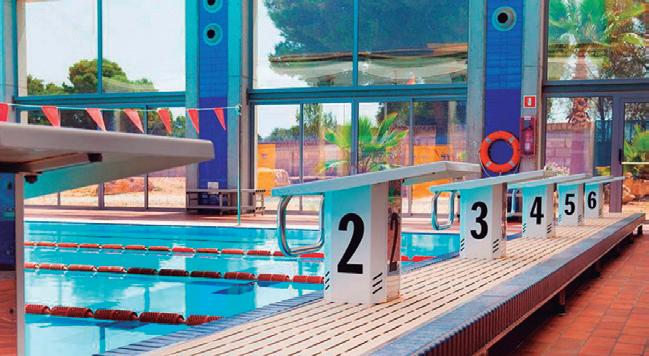
also be replaced, along with flooring in sports rooms and additional machines to meet rising demand. Football pitches will see repairs to worn sections of grass, installation of new sprinklers and goalposts, and the introduction of portable changing rooms during ongoing improvements.
The semi-covered court will gain new foldable basketball hoops, allowing more flexible use
of the space for different sports activities.
Mayor Xisca Lascolas said the investment reflects commitment to continuous improvement of sports spaces and adapting them to current needs. Sports councillor Rafael Amengual added that the works are necessary due to intensive use, improving user safety and supporting sport in the municipality with updated facilities.