Sunday, 13th September, 2026
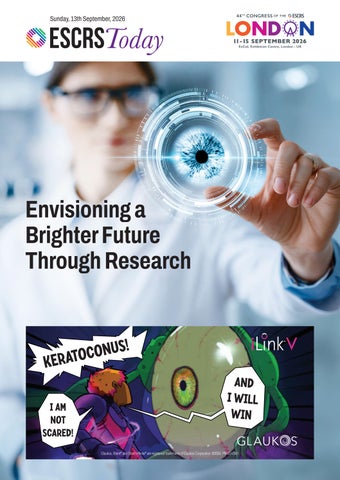
Envisioning a Brighter Future Through Research
Glaukos, iStent® and iStent infinite® are registered trademarks of Glaukos Corporation. ©2026. PM-EU-0361
Proper ergonomics
Assistant microscope
Wide-angle fundus visualization
Brilliant red reflex
Sustainable LED illumination
Efficient control
Microscope Imaging & Operating System (MIOS)
Integrated 4K video
Glaucoma positioning
METIS 900 Your surgical control center See it on booth D.365 at ESCRS
https://haag-streit.com/metis
OPENING CEREMONY
13th SEPTEMBER | 2026
Congress Opens with Global Vision for Eye Care
I
n a packed auditorium on Saturday morning, ESCRS President H Burkhard Dick officially welcomed attendees to the 44th Congress of the ESCRS. "Every vision begins with an idea,” he said. “Every discovery changes a life. In the city that connects the world from historic breakthroughs to tomorrow’s innovations, in London, one of the most significant places in the history of ophthalmology, we are welcoming you all.” Recognising London as one of the most international cities in the world, Professor Dick noted that beyond being a great destination, it has played important roles in the history of medicine, including ophthalmology. That observation provided a segue to his next comments. “London reminds us to think differently,” he said. “So, what comes next? “That is what this Congress is about,” he continued. “We have more than 17,300 participants from more than 135 countries. Thanks for being here with us. Our roots are European. Our responsibility is global.” David Lockington, president of the UK & Ireland Society of Cataract and Refractive Surgeons (UKISCRS), also welcomed Congress attendees and extended an invitation to attend the 50th Congress of the UKISCRS when in meets in London in November. Next, Sarah and Antony Robbins, better known as Mr and Mrs Londoner, provided a video tour to some of London’s notable sites and encouraged attendees to slow down, look around, and delight in the details. London’s place in history for revolutionising medicine was the topic of a presentation by Dr Ronald Gerste, a physician, historian, journalist, and author. Returning to the stage, Prof Dick announced the recipients of the 2026 ESCRS awards.
“Progress happens when knowledge is discovered, shared, and passed onto others,” he said. “This is what ESCRS stands for. This morning, we have reflected on some of the giants of the past. Now, we turn to those who are making extraordinary contributions to today.” He then introduced the awardees: • ESCRS Humanitarian Award: Carlos Luís Moser Würth (Spain) • ESCRS Chang Humanitarian Award: Maria Esther Ciancas Fuentes (Spain) • Emanual Rosen Fellowship: Shaz Rehan (Wales) • Peter Barry Fellowship: Rüştü Emre Akcan (Turkey) Following a film highlighting ESCRS’s commitment to and involvement in humanitarian work, Prof Dick listed four themes that summarise the content of the Congress programme: innovation, education, collaboration, and community. Speaking about collaboration, he emphasised the importance of partnering with industry and highlighted the size of the exhibition hall, the number of participating companies, and how the diversity of the exhibitors, who represent companies that have driven surgical technology in diagnostics, digital health, artificial intelligence, new surgical platforms, and, increasingly, pharmaceuticals. “The future of eye care will come from bringing different areas of expertise together,” Prof Dick said. He ended his remarks with this message. “London has given our profession some extraordinary moments of innovation,” he said. “This week, our task is not just to celebrate history, but to add it to it. “I’m very glad that you are here; enjoy these days, enjoy being part of this extraordinary community,” he concluded. “Thank you for being part of the ESCRS, and welcome to the global community.”
13th SEPTEMBER | ESCRS Today
1
HEADER GOES CATARACT & REFRACTIVE HERE
Paving the Way for the Future OR Ophthalmologists and industry compare notes on AI. TIMOTHY NORRIS REPORTS
T
he growing level of digitisation and the integration of robotics and AI into routine clinical practice can no doubt increase efficiency. However, potential confusion, disruptive new innovations, and a growing learning curve can still lead to potential errors both in diagnostics and surgery. During the iNovation Symposium, a panel of international experts engaged industry representatives in a compelling conversation aimed at finding a common ground and aligning on ways to improve the efficacy of the clinical workflow for the benefit of patients and clinicians. The panel—chaired by Drs Thomas Kohnen, Eric Donnenfeld, Bruce Allan, and Julie Schallhorn—discussed problems and potential issues of the newest technologies with Terry Kim from Alcon, Holger Ruchatz from Heidelberg Engineering, Frank Seitzinger from Zeiss Medical Technology, and Raj Rajpal from Horizon Surgical Systems. There are two main types of AI, Dr Allan observed. The first, generative AI, has revolutionised search, providing the eye doctor with a valid tool for summarisation and consultation. The second type, discriminative AI, is useful for classification, prediction, and surgical planning. He suggested it would be good to use discriminative AI to elevate the level of biometry, “I think it’s the application of those models that will change the results we’re getting in cataract surgery and elevate the level.” AI can help clinics negotiate reimbursements with insurance companies, especially in the US, Dr Schallhorn said, adding that it can also be helpful with automating filing claims and submitting documentation. “I think we are going to see AI in offices very soon,” she added. “Image guidance digital systems are going to be foundational,” Terry Kim said. According to Kim, AI is going to provide preoperational high-resolution imaging, “to get rid of that firewall that traditionally has been there between the clinic and the OR.” With the growing number of cataract patients, the need for a more efficient AI-empowered workflow is important. “Interoperability can be obtained with the use of cloud systems,” Frank Selzinger observed. With data standardisation, there can be a reduction in input errors, leading to better clinical decision making. “If you have standardised data, you have solid data. Future technology can build upon that going forward,” he added. Holger Ruchatz doubled down on multimodality as a means to improve the surgical pathway, emphasising that integrating anterior and posterior data and imaging in the operating theatre might be key for this goal. “If you look at the OR today, the degree of digitisation is somewhat lower there compared to the diagnostics,” he noted. AI empowerment, system integration, and advanced imaging are all identified as important steps towards the
2
ESCRS Today | 13th SEPTEMBER
broader implementation of robotics in ophthalmic surgery. Some concerns raised by Dr Kohnen about the limitations of this complex technology were addressed by Raj Rapal. “It’s not something that any of us, I think, should be scared of [in terms of] being replaced. Rather, all of us will be augmented and have better outcomes,” he said. “There is a lot of opportunity: a pathway towards better outcomes. But we do not have that quite yet, so there is still work to do.” The panel concurred that the current rate of technological improvement makes a complete overhaul of the operating theatre possible, but there is still a need for better integration and further AI development. Thomas Kohnen MD, PhD, FEBO is Professor and Chair of the Department of Ophthalmology, Goethe University, Frankfurt, Germany. Eric Donnenfeld MD is a Clinical Professor of ophthalmology at New York University, US. Bruce Allan MD is consultant ophthalmic surgeon at the Moorfields Eye Hospital and Professor of Anterior Segment and Refractive Surgery at the University College of London, UK. Julie Schallhorn MD, MS is Associate Professor of Ophthalmology at the University of California, San Francisco, US. Terry Kim MD is Chief Medical Officer and Head of Global Medical Safety, Alcon and Professor of Ophthalmology at Duke University Eye Center, North Carolina, US. Holger Ruchatz is Head of Product Management at Heidelberg Engineering. Frank Seitzinger is Head of Business Sector Surgery Anterior Segment of Zeiss Medical Technology. Rajesh K Rajpal MD is Chief Strategy and Chief Medical Officer of Horizon Surgical Systems.
DON’T MISS
Today’s Congress Highlights Arena Debate In presbyopes under 55, refractive lens exchange should be preferred over corneal laser solutions for functional vision 14:15 - 15:15 M2 (Arena) Arena Forum Complication Solutions in Refractive 15:45 - 16:25 M2 (Arena) Artificial Intelligence AI Digital Summit: Today’s application of AI to improve decision making and practice efficiency 10:15 - 12:00 Victoria Room 3 Building our Sustainable Society (BoSS) Psychological Safety and Inclusive Leadership: Building Sustainable, High-Performing Ophthalmology Teams 11:00 - 12:30 Connaught Room 1/2 From Surgeon to Leader: Developing Essential Leadership Skills in Ophthalmology 16:45 - 18:15 George V Room 1 Functional Vision Patient-Centred Functional Classification: PROMs and Clinical Relevance 09:30 - 10:00 Capital Suite Room 7/8 Achieving Functional Vision: What Is the Right Solution for Today’s Patients? 10:15 - 11:30 Victoria Room 5/6 Heritage Lecture Lasik: What’s Next? 10:30 - 11:00 ICC Auditorium Leadership, Business and Innovation (LBI) Podium Presentation Skills 09:00 - 11:00 Capital Suite Room 2-4
Maximising Personal Wealth: Perspectives on finances for ophthalmologists 11:30 - 13:00 Capital Suite Room 2-4 Negotiating Skills 14:00 - 16:00 Capital Suite Room 2-4 Main Symposium IOL calculation from A to Z 11:00 - 13:00 ICC Auditorium Retina Innovation Symposium Macular Care: From Today’s Standards to Tomorrow’s Solutions 15:45 - 16:45 Capital Suite Room 6/13 Simultaneous Vision IOLs Symposium on classification of simultaneous vision IOLs 08:30 - 10:00 Capital Suite Room 7/8 Surgical Pearls Cataract 08:30 - 09:10 M2 (Arena) Complex Cataract 09:45 - 10:25 M2 (Arena) World Café Session 1: Cataract 11:00 - 12:20 M2 (Arena) Session 2: Refractive 17:00 - 18:20 M2 (Arena) Young Ophthalmologists’ Symposium My First … 16:45 - 18:45 Victoria Room 5/6
PETER BARRY FELLOWSHIP
Congratulations to Our New Fellowship Recipients! Congratulations to Shaz Rehan and Rüstü Emre Akcan, recipients of two prestigious 2026 ESCRS fellowships. Akcan has been awarded the ESCRS Peter Barry Fellowship, named in honour of a founding member and former president of ESCRS, while Rehan is the inaugural recipient of the ESCRS Emanuel Rosen Fellowship, named for the Society’s founding president. Each fellowship provides €60,000 to support a year at a global centre of excellence, helping advance clinical and research expertise in cataract and refractive surgery.
4
ESCRS Today | 13th SEPTEMBER
We’re willing to bet most eye care professionals don’t realise just how prevalent Demodex blepharitis is. In fact, ~54% of eye care patients in Europe may have Demodex blepharitis (DB).1* *Data from an evaluation of 804 patients from 6 countries in Europe, including 15 clinicians each with ~50 consecutive patients. DB defined by the presence of collarettes.
WHAT ABOUT YOUR PATIENTS? LEARN HOW DB CAN FLY UNDER THE RADAR AT
Find us at ESCRS in London - Booth E.118 Reference: 1. Nanavaty MA, Findl O, Carones F, et al. Proportion of patients with Demodex blepharitis in ophthalmology clinics in Europe: the Eos study. Eye. 2026:40:165-167.
© 2026 Tarsus Pharmaceuticals, Inc. All rights reserved. TARSUS, LOOK AT THE LIDS, THINGS START LOOKING UP WHEN YOU GET YOUR PATIENTS LOOKING DOWN, and any associated logo(s) are trademarks owned exclusively by Tarsus Pharmaceuticals, Inc.
GL--2600026 03/26
13th SEPTEMBER | ESCRS Today
5
CATARACT & REFRACTIVE
Going with the Flow Ridley Medal Lecture explores comprehensive approach to streamlining cataract surgery. SEAN HENAHAN REPORTS
O
liver Findl MD, PhD is the 2026 recipient of the ESCRS Ridley Medal. In “The Flow of Cataract Surgery”, he discussed the evolution of cataract surgery from the era of Sir Harold Ridley, who implanted the first IOL, to the present day, marked by growing patient volumes, AI, and increasing environmental concerns. He emphasised the importance of organisation and efficiency in meeting current demand without sacrificing the human touch. Central to this approach is the concept of flow, which he examined as a means of both optimising efficiency as well as fostering a less stressful experience for patients, surgeons, and everyone involved in the surgical journey. Harold Ridley implanted the first IOL in late 1949 at St Thomas’ Hospital in London. A look at his operating book revealed he eventually would perform two to four cataract operations per day. Moreover, there were very few surgeons with the necessary skills to perform cataract surgery. “A question Dr Ridley probably never asked himself is, ‘Does the whole system really flow?’ That wasn’t so critical at the time,” Professor Findl noted. “It’s now really about
Medical History Classic Documentation 6
ESCRS Today | 13th SEPTEMBER
It’s now really about the patient journey, ideally reducing friction and anxiety. the patient journey, ideally reducing friction and anxiety. It’s about information, how does data move seamlessly, so digitisation is important, and of course, the surgeon, the team, the flow state.” Prof Findl noted how demand for cataract surgery has risen steadily in the past 20 years as the technology has evolved. He cited studies indicating that ageing baby boomers in Europe and the US pushed demand to an all-time high, with many now in their 70s and 80s. That demand is expected to level off by 2040. As volumes rise, optimising patient flow has become essential. Prof Findl shared processes instituted in his own centre to meet this need without sacrificing quality or patient experience.
Medical History Al Documentation
But improving flow in the operating theatre involves more than planning and efficiency. Prof Findl highlighted a deeper concept familiar to elite athletes and musicians, described in Flow: The Psychology of Optimal Experience by Mihaly Csikszentmihalyi. The book describes flow as a state of complete absorption in an activity, where time melts away and peak performance is achieved in a relaxed, stress-free mental state. Prof Findl said creating this sense of flow in cataract surgery requires attention not only to logistics but the patient experience. Optimising flow starts even before the patient arrives for surgery. Patients have a lot of fear and uncertainty when they come for their preoperative assessment in the clinic, making preparation incredibly important. A prepared patient is essential for a smoothly flowing clinic. Prof Findl recommended a combination of online, face-to-face, phone, and text-based patient communication to keep things flowing before, during, and after surgery. For example, he created an informed consent form using ChatGPT that he keeps on an iPad during patient interviews. This improves patient communication by reducing the time spent looking at the chart, while also reducing overall consultation times. ChatGPT also serves as an AI scribe. Prof Findl also stressed the importance of surgeon well-being to the overall flow of cataract surgery. On a
practical level, his centre conducted studies to optimise the operating theatre (OR) layout to minimise unnecessary movement. His centre also measured surgeons’ stress levels during surgery and introduced strategies to reduce them. For example, the team found that having a mobile phone in the OR increased stress, as reflected by heart rate variability. “It’s usually because somebody calls me and I have to give an answer, or I have to enter the data into our EMR, which is obviously also often very painful,” he said. “And so, interestingly, stress can be induced not only by the surgery itself, but actually by the surroundings. So try to get the phone out of the operating rooms, or have somebody else answer it.” In a broader global view, Prof Findl explained how increasing efficiency can also increase sustainability, sharing his efforts to improve sustainability in cataract surgery and outlining how others can reduce waste in the OR. He cited the value of the EyeSustain, an international collaboration of ophthalmology groups dedicated to this cause, as well as the ESCRS SIDICS tool. Oliver Findl MD, PhD, MBA, FEBO is Professor of Ophthalmology, Chair, Department of Ophthalmology, Hanusch Hospital, Vienna, Austria. He is the founder and head of the Vienna Institute for Research in Ocular Surgery (VIROS). He is a past president of the ESCRS.
REF R AC T I V E & C ATAR AC T S URGERY
WI N TH E
RACE AGA I N ST RI S K
ESCRS Meet us at OCULUS Booth D.166
POWERED BY OCULUS DATA-DRIVEN D IAGNOSTICS oculus.de/escrs The availability of products and features may vary by country. OCULUS reserves the right to change product specifications and design.
13th SEPTEMBER | ESCRS Today
7
Annual ESCRS Clinical Trends Survey Underway: Your Participation is Essential Survey participants will be entered into a raffle to receive a free registration for the 2027 ESCRS Annual Congress in Madrid.
T
he 12th annual ESCRS Clinical Trends Survey has been launched at the 2026 Annual Congress in London. This survey builds on the success of prior surveys, which have more than 19,000 participants to date. The survey asks ESCRS members key questions about the issues they face in practice, with the goal of gathering input from a significant proportion of members for review by ESCRS leadership. Building on the 2025 edition, the 2026 survey adds questions on evolving clinical and technological areas, such as retina. Data from previous surveys shaped much of the content for this year’s ESCRS Clinical Forum Independent Medical Education programmes, and results from the 2026 survey will guide future programming and identify new areas of education. The 2026 ESCRS Clinical Trends Survey includes a wide range of contemporary topics, such as: • Cataract extraction • Presbyopia correction • Astigmatism management • Ocular surface disease • Glaucoma • Corneal- and lens-based refractive surgery • Retina • Medical education
8
ESCRS Today | 13th SEPTEMBER
How to participate The survey can be completed in person at the ESCRS Annual Congress in London at the Survey Lounge, located in the Exhibition Area Hall across from the ESCRS booth. The lounge will be open 11–13 September and will provide seating and complimentary refreshments. If you are unable to complete it during the Congress, we encourage you to take this 15-minute survey at tfgedu.questionpro.com/ESCRS2026. Please respond as soon as possible, as the survey closes in October. By completing the survey, and supplying an email address, respondents will be entered into a raffle to win free registration for the 2027 ESCRS Annual Congress in Madrid. Most importantly, responses provide the data that drives future education programming. Respondents who prefer to remain anonymous can still complete the survey and provide ESCRS with valuable feedback.
P E NTA F O C A L I O L
EVERY DISTANCE. ONE CONTINUOUS VIEW. D esign e d to b ring f a r, i ntermed i a te and ne ar in to o n e s e a m l es s v is ua l experi en c e .
93.5% LIGHT UTILIZATION POWERED BY DLU
FIVE FOCAL POINTS ELIMINATE THE TRIFOCAL GAP
HIGH CONTRAST SENSITIVITY WITH LOW GLARE AND HALO
Intensity® — vision redefined.
H ANITA L EN S ES
丨
EXPERTISE IN PREM IU M IOL S
丨
WWW. H A NITA L E NSE S. C OM
For healthcare professionals only. 93.5% light utilization: Hanita Lenses data on file, DHF102. For product information or regulatory status in your market, contact marketing@hanitalenses.com. Availability and approved indications vary by market.
13th SEPTEMBER | ESCRS Today
9
ARTIFICIAL INTELLIGENCE
The ABCs of AI: A Guide to Terms The 2026 ESCRS Congress offers several sessions on AI. Below is a guide to AI terms and concepts. Agentic system
An AI tool that can plan stages, use tools, make decisions, and take steps to complete a task without human oversight. Includes everything from travel planning to military applications. Medical applications include triage, chart review, and scheduling.
Algorithm
A set of instructions or rules used by a computer to solve a problem. In ophthalmology, an AI algorithm can classify images, estimate risk, predict progression, or provide a referral.
Artificial intelligence (AI)
A variety of computer software-based systems for actions normally requiring human intelligence. This includes image interpretation, pattern recognition, problem solving, and decision support.
Artificial general intelligence (AGI)
AI that creates new content, such as text, images, video, music, or computer code. In ophthalmology, it may help generate patient information sheets, clinic letters, teaching materials, and research summaries.
Generative pre-trained transformer (GPT)
A family of LLMs designed to generate human-like text. ‘Transformer’ refers to the model architecture. Hence, ChatGPT.
Ground truth
The accepted ‘correct’ answer used to train an AI system. In ophthalmology, this may come from expert graders, multimodal imaging, clinical follow-up, surgical findings, or histopathology.
Hallucination
A hypothetical moment when AI possesses intellectual capabilities equivalent to a human being.
When an AI system produces an answer that sounds plausible but is false, fabricated, or unsupported. This is a major concern when using LLMs for clinical or scientific information.
Assistant
Large language model (LLM)
A software program using AI to help with a range of activities, from general information search and task automation to more complex decision interactions with humans. Wellknown applications include ChatGPT (OpenAI), Claude (Anthropic), Gemini (Google), and CoPilot (Microsoft).
Black box model
A system in which large language models produce useful results without explaining how these results were determined. Concerns include lack of accountability, reliability, and hidden biases.
Convolutional neural network (CNN)
A deep learning model suited to image recognition. CNNs have been widely used for detecting diabetic retinopathy, AMD, glaucoma, and keratoconus.
Deep learning
A type of machine learning that uses multilayered neural networks to identify complex patterns in data. Deep learning is especially powerful for image analysis, including retina imaging and OCT analysis.
Foundation model
A large AI model trained on broad data sets that can be adapted to different tasks. In ophthalmology, retinal or multimodal foundation models could support multiple applications, including diabetic retinopathy detection, AMD assessment, and glaucoma risk prediction.
10
Generative AI
ESCRS Today | 13th SEPTEMBER
Large language models are trained on huge data sets using deep learning to summarise, draft, translate, answer questions, and generate clinical or educational text. ChatGPT is an example.
Machine learning
A branch of AI in which computers learn patterns from data rather than explicit programming. In ophthalmology, machine learning can be trained on OCT scans, fundus photographs, visual fields, or biometry data.
Natural language processing (NLP)
AI applied to human language. In medicine, NLP can extract information from clinical notes, referral letters, discharge summaries, or research papers.
Superintelligence
Refers to a hypothetical moment when machine intelligence surpasses human cognition and capability. Sometimes considered a doomsday scenario in terms of societal risks.
PRECISE. RELIABLE. COMPLETE.
Meet Us at Booth #B.300 INDUSTRY SATELLITE SYMPOSIUM Sunday, 13 September 2026 1:00 – 2:00 PM · Captial Suite 7/8
How Enhanced Visualization Is Transforming Ophthalmic Surgery MODERATORS: Steven Thomson and Rosa Dolz-Marco MD, PhD, FEBO SPEAKERS:
D4008977-001 GL.AE26 © Heidelberg Engineering GmbH
Changing the way we see – How Heidelberg OPERA will enhance my ophthalmic surgery Prof. Damien Gatinel, MD, PhD | France Phakic IOL Surgery – Getting it right first time – SafeVault* supported by iOCT imaging Alain Saad, MD | France How ANTERION® supports my surgical decision making Prof. Mohamed Eid, MD | Egypt
* SafeVault is a third-party software solution. It is not part of the ANTERION® platform and is not commercially available as of June 2026.
13th SEPTEMBER | ESCRS Today 11
HENAHAN ESSAY CONTEST
Henahan Writing Prize Essay: 'The Signature of the Cornea' MELISA AKGÖZ KOYUNCUOĞLU
Each year, young ophthalmologists are invited to participate in the John Henahan Writing Prize competition by responding to an essay prompt. This year's prompt read as follows: The digital OR, AI algorithms, and robotics notwithstanding, cataract and refractive surgery involve a human relationship between you and your patient. Please describe how an experience or experiences in your early training reminded you of the importance of the human touch, and how this has inspired you in your clinical practice. The following essay scored among the highest in this year's competition.
I
n today’s digitalised operating theatre, a surgeon can sometimes feel more like a technician. The AI-calculated lens powers, the robotic lasers, the real-time feedback on every screen—all of it makes surgery look like a mathematics problem solved before you pick up the first instrument. But cataract surgery is not simply replacing a clouded lens with a clear one. It is the act of rebuilding a person’s connection with the world. Early in my career, I was posted to a small district hospital in rural Anatolia. One morning, an elderly man arrived alone. He had mature cataracts in both eyes and had been living in near-total darkness for years. He had no money to travel to the city and no one to take him. I told him his cataracts were hypermature and that a referral centre would be safer. If anything went wrong here, there was very little I could do. He
12
ESCRS Today | 13th SEPTEMBER
listened, then said he had no way of getting there. He asked if I would operate anyway. I said yes. What weighed on me was not the equipment. What we did not have was anyone else. No retinal specialist down the corridor, no experienced colleague to call, a scrub nurse who was learning alongside me. If a complication had arisen, the nearest vitreoretinal surgeon was an hour and a half away, and it was clear this man could not get there. If it came to that, I would have driven him myself. I remember the atmosphere before we started. It was not the usual quiet efficiency of a busy list. There was a heaviness, the kind that settles on you when the margin for error is small and the stakes feel personal. When he lay down on the table, he reached out and grabbed my hand. It was trembling. I held it for a moment. What I felt was something no digital readout has ever given me: fear mixed with hope, pressed into my palm. The surgery went well. Later that day, I removed the eye pad. He looked around the room silently. Then he asked something I was not expecting: whether he could keep the surgical blade rather than have it thrown away. I asked why. He told me that before his vision had gone, he used to carve wood. Small objects, nothing fancy. The blade looked sharper than anything he had at home. If it worked, he said, he would carve something for me. A gift, made with eyes that could finally see again.
But cataract surgery is not simply replacing a clouded lens with a clear one. It is the act of rebuilding a person’s connection with the world.
I gave him the blade. At his one-week follow-up, he walked in and placed a small wooden bird on my desk. He had carved it himself, at home, with a 2.2-mm keratome. It was not perfect. It was exactly right. That was when I understood something I had not fully grasped in training. We are not just removing a cloudy lens. We are giving someone their remaining years back, and sometimes their hands back too. But I also understood something else: if a flawless algorithm had performed that surgery, he would have walked out with the same vision. What he would not have had was someone to ask. You cannot turn to a robotic system and say: keep the blade, I think I still
have something left in these hands. And it would never have occurred to a machine to say yes. I think about this often, especially now that I work in a tertiary centre where a vitreoretinal surgeon is one call away and a complication is a problem to be solved rather than a crisis to be survived alone. But before every operation, I still touch my patient’s hand. Not out of habit. It is a reminder that the person in front of me is not a case or a biometry printout. They are someone who has been waiting, perhaps for a long time, to see again. AI can tell me the optimal incision angle. It cannot tell me that the blade I am about to dispose of might end up carving a bird. That moment, quiet and unexpected and entirely human, is something no algorithm can prepare you for. You only learn it by being there, by holding a trembling hand in a small hospital, and staying curious about what comes next. That man taught me, without knowing it, that the human relationship in this work is not a soft add-on to the technical side. It is where the real things happen. Now, with every tool I could ask for, I still make time before each case to sit with my patient for a moment. Not to check a box. Because somewhere in that conversation, there may be something I cannot afford to miss. That bird still sits on my desk to remind me.
iCare RETCAD and DRSplus are CE-marked medical devices under MDR (EU) 2017/745.
13th SEPTEMBER | ESCRS Today 13
CATARACT & REFRACTIVE
What is the ESCRS? In part one of this two-part series, EuroTimes sits down with ESCRS CEO Tom Ogilvie-Graham to discuss the Society’s growth, mission, and expanding role in ophthalmic education. EuroTimes: For people who may not know ESCRS, how would you describe what the Society does and the role it plays in ophthalmology today?
ESCRS exists to advance the science and practice of ophthalmology by connecting people, knowledge, and innovation to improve outcomes for patients worldwide. Many people know us for our Annual Congress, but that’s only one part of what we do. We are a member-led scientific society and registered charity, committed to supporting the ophthalmic community through world-class education, scientific research, clinical registries, publications, fellowships, and year-round professional development. What makes ESCRS unique is that it is shaped by the profession itself. More than 200 Board members, committee members, and faculty volunteer their time, expertise, and leadership to develop our educational programmes, guide our scientific direction, and help shape the future of the Society. Their commitment ensures our priorities are driven by the needs of ophthalmologists and, ultimately, the patients they care for. Our role is to bring the global ophthalmic community together to share knowledge, encourage collaboration, support innovation, and generate the evidence that advances clinical practice. Whether it’s a trainee attending their first Congress, an experienced surgeon adopting a new technique, or a researcher collaborating across borders, ESCRS provides a community where people can learn, contribute, and grow.
You’ve been part of ESCRS through a period of significant growth. How has the Society changed during your time here, and how has its role evolved alongside the profession? The biggest change has been our evolution from being recognised primarily for one outstanding annual event to
14
ESCRS Today | 13th SEPTEMBER
becoming a year-round professional community. The way ophthalmologists learn has changed dramatically. Knowledge moves faster, innovation happens continuously, and people expect access to education whenever they need it, not just when they attend a conference. We’ve responded by investing in digital education, expanding our research programmes, strengthening our clinical registries, developing the ESCRS Learning Hub, and creating more opportunities for members to engage throughout the year. At the same time, we’ve grown internationally. Today, ESCRS is a truly global community—bringing together ophthalmologists from across Europe and around the world to learn from one another, collaborate, and advance the profession.
ESCRS often talks about ‘shaping the future of ophthalmology.’ What does that mean in practice, and where do you see the Society having the greatest impact?
For me, shaping the future isn’t about predicting what comes next. It’s about creating the conditions that allow the profession to keep improving. That means investing in education so surgeons can adopt new techniques safely and confidently. It means supporting research that answers clinically important questions. It means building registries that generate real-world evidence. It means creating opportunities for collaboration between clinicians, researchers, and educators from different countries and different stages of their careers. Perhaps most importantly, it means ensuring that knowledge doesn’t stay within individual institutions or borders but is shared for the benefit of patients everywhere. If we continue helping ophthalmologists make better-informed decisions and improve patient care, then we’re fulfilling our purpose. There are many professional societies and educational resources available today. What do you think makes ESCRS different, particularly for someone early in their career? I think there are two things that really set ESCRS apart: First, we’re a charitable, member-led organisation. Every GalaxyH-H-Eurotimes-O.pdf
1
05/08/2026
What do you think makes ESCRS different, particularly for someone early in their career?
surplus we generate is reinvested into education, research, fellowships, grants, and initiatives that directly benefit the profession. We’re not driven by shareholders or commercial objectives—we’re driven by our mission. Second, everything we do is shaped by practising ophthalmologists. More than 200 volunteers contribute their time and expertise through our Board, committees, and faculty because they believe in advancing the profession. That collective commitment is one of our greatest strengths. For someone early in their career, ESCRS is much more than discounted Congress registration. It’s access to worldclass education, the Learning Hub, surgical videos, scientific publications, mentorship, research opportunities, and a global network of colleagues who can support their development for years to come.
09:50
C
M
Y
CM
MY
CY
CMY
K
13th SEPTEMBER | ESCRS Today 15
INNOVATORS DEN
Four Competitors Enter, One Competitor Emerges Four mentor-supported Innovators Den finalists pitched their ideas in hope of taking the top prize.
T
he Innovators Den, a popular feature of the iNovation Symposium, gives aspiring inventors and entrepreneurs a platform to introduce devices before a panel of judges. The London event saw the four finalists, each supported by an assigned mentor, present their ideas in a competitive round of pitches. “The purpose of the Innovators Den is simple: it is to shorten the distance between a good idea and a real innovation in ophthalmology,” said Burkhard Dick, president of the ESCRS. “Many clinicians are aware of unmet needs, but the difficult part is turning the idea into a prototype, doing early-stage studies, and eventually offering a viable product. The Innovators Den helps to bridge the gap by providing mentorship, business guidance, and networking to each participant.” Professor Dick sat on the judges panel with Rebecca Emerson, ESCRS Trustee and Independent Director and Risk Committee Chair, JP Morgan Markets; Diana Saraceni, Founder and Managing Partner, Panakès Venture Capital
16
ESCRS Today | 13th SEPTEMBER
Firm; and Prof Susana Marcos, Director of the Center for Visual Science, University of Rochester, US. The judges considered the magnitude of the problem being addressed, the degree of innovation, market strategy, potential for reimbursement, competitive analysis, and the quality and energy of the presentation. “It is more than a competition,” Prof Dick said. “It is about giving promising ideas a better chance to become real.” Amit Mishra, Kausprat LLP, who worked with mentor Jorge Alió MD, described a novel premium IOL design that allows multiple adjustments after implantation. The modifications are made with a wand that uses non-metallic spokes contained in the IOL. Adjustments can be made for hyperopia, myopia, and astigmatism. Unlike the current light-adjustable lens, this IOL would allow multiple follow-up refinements, he reported. Simon Skalicky MD, Eyeonic company, worked with mentor Pablo Artal PhD. He described an AI-powered, cloud-based visual field testing platform. The software
Booth D.346
So we asked, ‘What if the two lenses could communicate, and worked as one, instead of as separate lenses?
solution allows any computer or tablet to be used as a clinical-grade perimeter. It has been clinically validated and is now in use in Australia and elsewhere. The software uses advanced psychophysics and AI-driven algorithms to analyse patient responses. Each test takes two to five minutes. Maria Zozolou MD, PhD, Athens Vision Eye Institute, worked with mentor Rudy Nuijts MD, PhD on a binocular adaptive system of IOLs that communicate with each other to create accommodation. “It is a different way of thinking about accommodation after cataract surgery,” Dr Zozolou said. “Accommodation is not just about the lens— it depends on the binocular system. So we asked, ‘What if the two lenses could communicate, and worked as one, instead of as separate lenses?” Each lens contains a microchip with magnetic nanoparticles and a closed conductive loop. An electrical control signal can change the optical power of the lens. In another approach, the control signal activates a small actuator that changes the shape of the lens. Finally, Edoardo Grosso MD worked with mentor Michael Mrochen MD on the Glauco Releaser, a minimally invasive, valveless nitinol filtering device designed to provide stable, long-term outflow for patients with primary open-angle glaucoma. The system is free from needling or revision and designed to prevent fibrosis, occlusion, and erosion. The judges conferred and ultimately awarded the first prize to Dr Zozolou for her innovative approach to developing an accommodative IOL.
EM-4000
Specular Microscope High-resolution specular microscope with full auto-alignment and capture in just four seconds per eye. Assess central and peripheral areas via fixation light, including Dark Area analysis. Captures over 300 endothelial cells across 15 mapped positions, with pachymetry and morphology metrics (polymegathism, pleomorphism) – all in one fast, user-friendly workflow.
Effortless operation & analysis + L-count, Trace, Core method, Dark Area analysis + Counts more than 300 cells + Auto alignment per 1-2 sec + Auto capture of 16 images incl. CCT + Multi-fixation targets
Dark Area analysis + Number of dark areas + Dark area density + Min. and max. size of dark area
EM-4000 at tomey.de
13th SEPTEMBER | ESCRS Today 17
SUSTAINABILITY
Cutting Waste Without Cutting Safety Outlining the practical and policy-level opportunities to reduce the environmental impact of cataract surgery. CHERYL GUTTMAN KRADER REPORTS
A
lmost 10% of greenhouse gas emissions in developing countries come from medical waste, with surgeryrelated waste being a major contributor. Cataract surgery, in particular, is a significant source because it is the most common surgical procedure performed in the world. “Because of our role in creating greenhouse gas emissions, we as ophthalmologists carry a great responsibility to care about this problem. At the same time, we have a great opportunity to impact it in a positive way,” said Cathleen McCabe MD, speaking about developing sustainable clinical guidelines and changing pathways at a symposium dedicated to sustainability. “Fortunately, we know from large surveys conducted in the United States, Europe, and Asia that there is a strong commitment within the ophthalmology community to advocate for institutional sustainability and to partner with industry to develop ecologically responsible, clinically safe alternatives.” Based on the results of multiple studies, there is no doubt that limiting cataract surgery-related greenhouse gas emissions can be achieved without sacrificing patient safety.
18
ESCRS Today | 13th SEPTEMBER
“Data show that, on average, the CO2-equivalent produced by a single cataract surgery in the US is like that associated with driving about 300 miles. In contrast, at the Aravind Eye Care System in India—where there is reliance on optimised workflows, reusable instruments, and multidose medications—the CO2-equivalent emission from a case is the same as driving 15 miles. Importantly, the difference is achieved without compromising safety as measured by rates of endophthalmitis and other complications,” said Dr McCabe, who is on the EyeSustain medical advisory board, holds a director position for sustainability on the Outpatient Ophthalmic Surgery Society board, and practices at The Eye Associates, Bradenton and Sarasota, Florida, US. Outlining measures for addressing sustainability by reducing waste, Dr McCabe highlighted opportunities to modify the content of custom surgical packs, switch to electronic instructions for use for intraocular lenses, and increase the use of reusable instruments. She also discussed developing reusable one-day cassettes and tubing for phacoemulsification machines, creating pathways for removing the arbitrary 28-day expiration policy for multidose perioperative medications, allowing patients to take
home opened bottles of medications needed for postoperative care, and establishing a new reimbursement model in the United States that would remove the existing financial disincentive to performing immediate sequential bilateral cataract surgery. While there is a considerable amount of advocacy activity at the professional society level, Dr McCabe urged individuals to take action as well. She said a good place to start is by visiting the EyeSustain website, eyesustain.org, where there is a wealth of information on reducing surgical waste, becoming involved in advocacy efforts, and ways to improve their personal carbon footprint. She also highlighted online tools available on the ESCRS (SIDICS Calculator) and EyeSustain (Zasti Carbon Footprint Calculator) websites that allow surgeons to analyse their carbon footprint and the sustainability impact of introducing various modifications. Providing take-home messages, Dr McCabe said, “There is robust scientific evidence from centres in India, Brazil, and elsewhere outside the United States establishing the safety and effectiveness of practices designed to decrease ophthalmology’s impact on greenhouse gas emissions and our carbon footprint. Equipped with this evidence, we should aim to reform current regulatory frameworks acting as barriers in the United States so we can integrate proven strategies for increasing sustainability.”
13th SEPTEMBER | ESCRS Today 19
CATARACT & REFRACTIVE
ESCRS Expands Masterclass Programs Applications being accepted for 2027.
F
or ophthalmic surgeons, the training never ends—there is always a new lens or laser, a new formula, or a new twist on an old surgical technique. ESCRS, through its masterclass program, offers annual opportunities for surgeons to update and enhance their surgical skills in glaucoma, cataract, and now, refractive surgery. Building on the program’s early success, ESCRS supported three masterclasses this year in the clinical areas of interventional glaucoma surgery, complex cataract surgery, and refractive surgery. The program is free for ESCRS members, and organizers attempt to balance the age and experience levels of participants in each class. This year, 50 positions were made available for students in each masterclass clinical category.Each student learner was assigned to a personal mentor to guide them through the program. The program allows students to complete exclusive online virtual work in the summer, which takes the form of mentor-guided didactic workshops and interactive live webinars. In addition, students have been able to participate in in-person training during the Congress here in London. This includes in-person case review grand rounds as well as in-person wet labs and workshops. The classes conclude with a dinner celebration. The new 2026 ESCRS Refractive Surgery Masterclass offers a comprehensive program of instruction. A course of 17 online lectures begins with the history of refractive surgery and the optics of the eye, then follows a sequence of basics,
20
ESCRS Today | 13th SEPTEMBER
The goal of ESCRS masterclasses is to improve practice patterns, enhance clinical outcomes, and significantly grow the number of patients treated in each field.
diagnostics, corneal procedures, and intraocular procedures. Students then participated in live sessions at the London Congress, which included case grand rounds and wetlabs. The masterclass course content is designed collaboratively with program directors and mentors, with both online and live materials being updated on a rolling annual basis. In addition to pre-recorded presentations and interactive elements, participants join WhatsApp groups where they can ask questions of mentors. “The goal of ESCRS masterclasses is to improve practice patterns, enhance clinical outcomes, and significantly grow the number of patients treated in each field,” said Dawn Alva, head of engagement and masterclass operations manager. Applications are now being accepted for the 2027 masterclasses. More information on each masterclass, including eligibility criteria, curriculum details, and instructions for applying, is available at escrs.org/masterclass.
IOL Calculator
NEW FEATURES! This first-of-its-kind web application for IOL power calculations uses multiple modern formulas simultaneously, and suggests lens constants for a wide range of IOL models.
Find out more at iolcalculator.escrs.org/
cso booth talks
escrs congress • booth n. e255
sep tem ber 12/13 2026 scan the qr code to regIster
SATURDAY 12TH 9:00 Dan Z. Reinstein One device. Endless possibilities: The Italian Swiss Army Knife for cornea & anterior segment 9:30 Andrea Russo Post-cataract aberrometry: making subjective defocus curves more objective 11:00 Giacomo Savini MS-39: redefining biometry and IOL Calculation 12:30 Farhad Hafezi ECO-CAIRS: Surgeon-prepared CAIRS for easier insertion, enhanced sterility, and potentially greater effect SUNDAY 13TH 9:00 Victor Derhartunian Open-Field aberrometry: beyond myopia control 11:00 Riccardo Vinciguerra KAI: The next generation of keratoconus screening 13:00 Ivan Gabric Pyramidal aberrometry: a new perspective on vision quality www.csoItalIa.It
13th SEPTEMBER | ESCRS Today 21
Looks in
London
Memorable moments from the ESCRS 2026 Congress, capturing key connections and collaborations.
22
ESCRS Today | 13th SEPTEMBER
13th SEPTEMBER | ESCRS Today 23
24
ESCRS Today | 13th SEPTEMBER
13th SEPTEMBER | ESCRS Today 25
CORNEA
Can ECO-CAIRS Make Penetrating Keratoplasty Obsolete? New approaches to visual rehabilitation are raising the prospect of fewer keratoplasties for keratoconus. TIMOTHY NORRIS REPORTS
O
ver the last decade, the number of keratoplasty procedures for corneal ectasia has declined, largely due to the widespread adoption of corneal cross-linking (CXL), which can halt disease progression. Meanwhile, emerging visual rehabilitation techniques such as ECO-CAIRS (eco-corneal allogenic intrastromal ring segments) may further reduce the need for keratoplasty by improving corneal shape and visual function, according to Emilio Torres-Netto MD, PhD, who practices at the ELZA Institute in Switzerland. The journey towards ECO-CAIRS for corneal ectasia began only recently, but its progress has been remarkably swift. From the first polymethylmethacrylate (PMMA) corneal ring implantations, the search for greater biocompatibility reached a turning point in 2018 with Dr Soosan Jacob’s introduction of CAIRS and Dr Shady Awwad’s subsequent use of femtosecond laser for graft preparation. Since then, ongoing refinement has led ELZA Institute specialists to study increasingly sophisticated techniques to facilitate the implantation process. In 2022, the team started with femto-CAIRS, which presented challenges. “We were left with some important questions: How [can we] make their insertion easier? How [can we] insert more volume? And because we are adding biological tissue from a donor, how [can we] avoid rejection or infection?” Dr Torres-Netto said. These questions prompted the team to investigate ultra-high-fluence cross-linking as a means of stiffening the donor tissue before implantation, ultimately resulting in ECO-CAIRS. One important advantage of the technique is tissue hydration. Conventional CAIRS segments are implanted in a relatively dehydrated state and can rapidly rehydrate upon contact with the tear film, causing them to swell, which can make insertion more difficult. With ECOCAIRS, ultra-high-fluence cross-linking at 30 J/cm² modifies and stiffens the donor tissue, rather than the patient’s cornea, while allowing more controlled rehydration. When asked whether penetrating keratoplasty for keratoconus will be obsolete by 2040, Dr Torres-Netto said the answer is “almost yes.” Advances in cross-linking and visual rehabilitation such as ECO-CAIRS now allow to stabilise the disease, improve corneal shape and visual function, and avoid transplantation in most patients. A key prerequisite, however, is early diagnosis. Access to screening, follow-up, and treatment varies considerably between countries and healthcare settings, which inevitably influences how often patients present with advanced disease. Dr Torres-Netto witnessed this shift in his own practice. “Fifteen years ago, we were performing keratoplasty for keratoconus quite often. Over the past decade, however, the number has fallen dramatically. Today, only a very small
26
ESCRS Today | 13th SEPTEMBER
proportion of our patients ultimately require either DALK or penetrating keratoplasty.” For Dr Torres-Netto, this reflects a fundamental change in keratoconus management: from replacing the cornea to preserving, stabilising, and increasingly rehabilitating the patient’s own cornea. ECO-CAIRS is one of several treatment options for keratoconus and can be particularly useful in highly asymmetric corneas, improving corneal regularity and visual function while potentially helping selected patients avoid keratoplasty. The allogenic segments are relatively easy to implant, customisable, and may offer advantages in biocompatibility and long-term extrusion compared with rigid PMMA rings. Elastography studies Dr Torres-Netto presented also suggest that CAIRS and rigid segments interact differently with corneal biomechanics. These differences may be relevant for astigmatism correction, suggesting that nomograms developed for rigid segments may not directly apply to CAIRS, although further studies are needed. Ongoing studies are expected to further expand the possibilities for patients with keratoconus. “We are continuing our work on cell viability, cell culture, ultrastructure, and biomechanics, with more data expected over the coming year,” Dr Torres-Netto concluded. Emilio Torres-Netto MD, PhD, FEBO, FWCRS is an expert cornea, cataract, and refractive surgeon practicing at The ELZA Institute in Zurich, Switzerland.
Lighting the Way in Ophthalmic Research Research shapes the future of ophthalmic innovation and patient care. Through its Research Committee, ESCRS provides funding for several awards and initiatives that advance research in cataract and refractive surgery. ESCRS supports clinical, digital, pioneering, systematic review and sustainability research in cataract, refractive and corneal surgery. ESCRS also maintains leading ophthalmic registries—including EUREQUO, ECCTR and EuReCCA—with more than 4 million records spanning cataract and refractive surgery, corneal transplantation and paediatric cataract surgery. Together, these initiatives help advance knowledge, encourage innovation and improve ophthalmic care across Europe and beyond.
CORNEA
Treating Ectasia Without Keratoplasty Clinical results show a promising future. SEAN HENAHAN REPORTS
C
an ophthalmic innovation make penetrating keratoplasty for keratoconus obsolete? A Clinical Research Symposium at the 2026 ESCRS Annual Congress examined several promising techniques that could make it possible. Farhad Hafezi MD, PhD discussed a technique he has developed known as epithelial map-guided phototherapeutic keratectomy combined with customised epi-on cross-linking, or ELZA-PACE. ELZA-PACE for treating keratoconus or post-refractive ectasia begins with anterior segment OCT epithelial mapping and topography/tomography. The surgeon then performs a phototherapeutic keratectomy to remove a limited epithelial area over the cone, followed by collagen cross-linking (CXL) with riboflavin and customised UV-A irradiation.
and, because central flattening is accompanied by compensatory mid-peripheral steepening (the ‘coupling’ effect), the overall reduction in corneal asymmetry is often even greater, typically 8–12 D and up to 20 D in selected cases, he noted. Functionally, this regularisation translates into a reduction of vertical coma and gains in corrected distance visual acuity (CDVA) over 6–12 months. In one representative case, CDVA improved from 0.4 to 1.0 logMAR with glasses within a week of treatment. Crucially, this was achieved without removing any stromal tissue, preserving the corneal thickness profile. ELZA-PACE therefore regularises the cornea and improves vision, rather than merely stabilising the disease, he explained.
Understanding the early clinical results
ELZA-PACE is the result of more than two decades of CXL research. The original Dresden protocol (epi-off, 3.0 mW/cm² for 30 minutes, 5.4 J/cm²) normally halts ectasia progression and typically does little to correct the irregularities on the corneal surface. Epi-on approaches initially underperformed because the epithelium absorbs riboflavin and UV light while consuming oxygen—the rate-limiting component of the photochemical reaction. Higher fluences, pulsed UV delivery, and penetration enhancers have since closed the efficacy gap between epi-on and epi-off CXL.
“To date, we have performed ELZA-PACE in almost 300 eyes at the ELZA Institute in Zurich, Switzerland, of which more than 100 have now completed one-year follow-up,” Dr Hafezi reported. “A consistent pattern has emerged: cone-centred flattening is apparent immediately after the procedure (the photochemical effect is essentially immediate) and continues as the epithelium remodels, with topographic stability typically reached by month six.” A flattening of 4–5 D within the first month is common
28
ESCRS Today | 13th SEPTEMBER
Noting the procedure’s progression
The first generation of customised CXL used a topography-guided, eye-tracking UV source to deliver more energy over the cone apex; this improved flattening to roughly 3–4 D but remained moderately predictable. ELZA-PACE is the second generation: instead of shaping only the UV beam, it also models oxygen availability and riboflavin distribution. An epithelial map-guided PTK removes the epithelial cells over the cone, so the three overlapping gradients—riboflavin concentration, oxygen availability, and UV fluence—all reinforce each other at the cone apex. This also distinguishes ELZA-PACE from excimer-plus CXL protocols (Athens, Cretan, STARE-X, TREK) that achieve regularisation through stromal ablation. In ELZA-PACE, the stroma remains untouched, with the entire effect coming from cross-linking. That tissue preservation matters particularly in younger patients.
Establishing the CXL part of the treatment
In contrast to cross-linking, the PTK step is deliberately minimal. A custom-offset, custom-sized ablation zone, typically oval and a few millimetres across, is placed over the cone tip region and removes only the local epithelial thickness, without any stromal tissue removal.
“We then saturate the cornea with a penetration-enhancer-assisted, hypo-osmolar 0.1% riboflavin solution,” Dr Hafezi explained. “Over the denuded cone, the stroma undergoes rapid saturation. Under the intact peripheral epithelium, penetration is slower, and this creates a riboflavin gradient. Because the epithelium also consumes oxygen and absorbs UV light, oxygen and UV gradients form in parallel, all centred on the epi-off window over the cone.” UV-A delivery uses the C-eye device (EMAGine AG, Switzerland) through an accelerated, pulsed protocol at 18 mW/cm² across the whole treatment zone. The protocol is followed by an additional fluence boost confined to the central cone region, resulting in a considerably higher cumulative fluence at the cone tip than in the periphery. Cross-linking is therefore strongest where the cornea is weakest: the cone flattens, the mid-periphery steepens in compensation, and the cornea becomes more regular—all photochemically, without ablating stroma, he said. Farhad Hafezi MD, PhD, FARVO is Medical Director at the ELZA Institute of Zurich, Switzerland, and Professor at the Universities of Geneva, Switzerland; New York, US; Los Angeles, US; and Wenzhou, China. farhad@hafezi.ch.
Exclusive learning. Unlimited access for ESCRS members.
13th SEPTEMBER | ESCRS Today 29
CORNEA
Losartan Drops Show Potential for Treatment of Severe Keratitis Recent research reports the topical treatment may offer a safe, accessible alternative to corneal transplantation. SEAN HENAHAN REPORTS
T
opical losartan drops could offer a safe and effective alternative to corneal transplantation in low-income countries with limited access to surgical options, a Guatemalan study suggests. Speaking at a presented poster session during the ESCRS Annual Congress, Ruddy Ortiz Lopez MD discussed the clinical study, conducted in 10 eye centres in Guatemala in patients with central corneal scarring fibrosis. “Vision loss due to corneal opacities is the main reason for corneal transplantation and one of the leading causes of blindness worldwide,” he said. “According to the World Health Organization, 5.1% of bilateral blindness is corneal blindness, and stromal scarring is the largest subcategory.” The study included 101 eyes of 78 patients, 58% of whom were male, with a mean age of 45 years. Patients were followed for a mean of 71 months. One-third of
30
ESCRS Today | 13th SEPTEMBER
cases involved herpes keratitis, while 15% were bacterial keratitis, 15% were post-surgical, and 10% involved rosacea, with a few additional cases attributed to trauma and other causes. All patients underwent the same treatment: selfadministering one drop of losartan 0.8 mg/mL in balanced saline six times per day. The investigators monitored visual acuity, refraction, and spherical equivalence, took corneal photographs, and had patients use the validated NEI-VFQ-25 questionnaire. Statistically significant improvements were seen in many patients. Mean uncorrected visual acuity changed from 0.60 logMAR pretreatment to 0.71 logMAR. Mean best-corrected visual acuity improved from 0.63 logMAR to 0.53 logMAR. Mean spherical equivalent improved from 3.11 D to 1.61 D.
M et h o d s
Real-word study was conducted in Guatemala, across SEVEN different states. TEN ophthalmological centers participated.
CD GUATEMALA ALTA VERAPAZ QUETZALTENANGO HUEHUETENANGO JALAPA SOLOLÁ QUICHÉ
27/08/2026
Ortiz L. Ruddy, Guzman Pamela Plotnitskaya Hanna, Magas D.
Baseline acuity was the only independent predictor of efficacy, with greater improvement seen in eyes with worse acuity at the start.
The researchers also noted a statistically significant improvement in maximum epithelial thickness, densitometry, Q values, and higher-order aberrations. Baseline acuity was the only independent predictor of efficacy, with greater improvement seen in eyes with worse acuity at the start. Age was not a significant predictor, nor was leucoma duration or aetiology. Inflammatory and infectious leucomas improved more than mechanical or surgical leucomas. The losartan drops were well tolerated, with no serious adverse events. A few patients reported burning on installation, bulbar hypermap, photophobia, and itching. The first observable change after treatment was compensatory hypertrophy of the epithelium due to decreased stromal fibrosis. Visual acuity stabilised after several months, corneal changes ceased, and the epithelium appeared to return to its initial phase, Dr Ortiz noted. Dr Ortiz designed the study based on guidelines provided by Dr Steve Wilson, who pioneered the use of topical losartan. The treatment inhibits the signalling or activity of transforming growth factor-beta by inhibiting the extracellular signal-regulated kinase molecule responsible for signal
37
transduction. It is known to prevent the emergence of myofibroblasts and resolve fibrosis. This is the largest study to date on the use of topical losartan for leucoma treatment. “In Guatemala, we do have a highly effective corneal bank, but there is high demand, and costs limit access,” Dr Ortiz said. “Safe, low-cost, and highly accessible alternatives are needed.” No commercially manufactured losartan eye drop is available. In this study, the drops were prepared in a compounding pharmacy with 100% pure losartan powder in a balanced physiological solution (pH 7.0). Patients were not charged. Patients were instructed to keep the drops refrigerated at or below 30°C and to shake before use. “Currently, the cost per dropper for our clinic is approximately €15, though this could be reduced through large-scale production. We have contacted several pharmaceutical companies regarding long-term manufacturing, but discussions are still in the early stages,” Dr Ortiz said.
13th SEPTEMBER | ESCRS Today 31
GLOBAL
ESCRS Honors Two for Service to Society Two recognised for significant contributions to global eye care.
B
urkhard Dick MD, PhD, president of the ESCRS, announced the recipients of the inaugural ESCRS Humanitarian Service Awards during the opening ceremony of the Annual Congress. The two recipients later received special trophies at a formal ceremony. Carlos Luis Moser Würth MD received the ESCRS Humanitarian Service Award, which is presented to an individual whose work has made a significant and lasting humanitarian impact through the delivery, development, or support of eye care services. Esther Ciancas MD received the ESCRS David Chang Humanitarian Award, presented in recognition of outstanding service and commitment to humanitarian ophthalmology, acknowledging individuals who have demonstrated exceptional dedication to improving access to eye care and supporting underserved communities. “Let me underline something that is sometimes forgotten: ESCRS is a charitable, entirely not-for-profit organisation. We do not exist to generate profit. We exist to advance education, research, and, above all, better care for patients. Humanitarian work is therefore not an activity at the edge of our Society; it belongs at its very heart,” Professor Dick emphasised. Through its charitable programmes and partnerships, ESCRS supports sight-restoring surgery, community outreach, local team education, essential equipment, and the development of sustainable eye care services. The aim is not simply to arrive, operate, and leave, but to build local
32
ESCRS Today | 13th SEPTEMBER
We exist to advance education, research, and, above all, better care for patients.
knowledge, infrastructure, and confidence that remain long after a visiting team has departed, he said.
Esther Ciancas MD
Dr Ciancas’ humanitarian work centres on the Turkana Eye Project, which she founded in 2003 with Drs Ana Sendagorta and Blanca García Sandoval. It began in Turkana, Kenya, a vast, remote region with a largely rural and nomadic population and, at the time, virtually no access to specialist ophthalmic care. Although the project has now endured for more than two decades, its model was built through focused, high-impact deployments—each designed not only to treat patients but also to leave behind a stronger local service. The early missions delivered comprehensive examinations, cataract surgery, refractive services, and treatment for ocular disease. But Dr Ciancas and her colleagues soon understood that even the most successful surgical campaign would never be enough on its own. The real goal had to be a functioning local eye care system.
The project helped establish the Eye Unit in Lodwar— which has a consultation facility and operating theatre—and later supported the development of an operating theatre in Lokitaung, in northern Turkana. It invested not only in instruments and buildings but in people. More than 60 local healthcare professionals have been trained and integrated into continuing care, including ophthalmic assistants, nurses, and ophthalmologists. Three ophthalmologists have been trained, two of whom now work in Turkana, while Malawi is supporting further ophthalmology and optometry training. The reported clinical impact is remarkable: thousands of consultations, more than 10,000 cataract operations across the project, many additional trachoma procedures, and thousands of pairs of spectacles.
Carlos Luis Moser Würth MD
Dr Moser Würth has devoted more than four decades to clinical ophthalmology, education, and humanitarian service. His connection with global health began in 1984, when he joined a medical cooperation programme in Mozambique as a clinician and teacher. Since 2002, he has been deeply involved with Fundación Ulls del Món (Eyes of the World) and has helped lead and supervise ophthalmic programmes in Mozambique, particularly in Maputo and Inhambane Province. His humanitarian work has also taken him repeatedly to Ethiopia, including Mekele and Adigrat; South Sudan; the Sahrawi refugee camps; and Bolivia. These settings are shaped by poverty, distance, fragile infrastructure, displacement, and, in some cases, conflict. His distinctive contribution has been combining surgery with teaching, quality assurance, public health planning, and institutional development.
His documented direct activity includes around 6,000 examinations and 2,880 operations. He has been a committed teacher of small incision cataract surgery (SICS0, a safe and cost-effective technique particularly suited to low-resource environments. Through 15 structured SICS courses, Dr Moser Würth trained 210 ophthalmologists, many of whom later applied these skills during humanitarian work before passing them on to others. In this way, one teacher has enabled many more surgeons to restore sight far beyond the places he could reach personally. In Mozambique, he has mentored ophthalmologists, ophthalmic medical assistants, technicians, and optometrists. He has helped standardise preoperative, intraoperative, sterilisation, antibiotic, and follow-up protocols; supported preventive equipment maintenance systems; introduced structured outcome monitoring through BOOST (Better Operative Outcomes Software Tool) cataract; contributed to national eye health planning; and helped design safer, more efficient facilities and referral pathways. The wider Inhambane programme under his medical supervision illustrates the scale of this legacy. Since 2002, it has reported more than 363,000 consultations and refractions, almost 14,000 surgical interventions, and more than 1,800 professionals trained. These are programme-wide achievements, built by many hands; but Dr Moser Würth has been one of the people ensuring that those hands become more skilled, the systems more reliable, and the results more sustainable. His philosophy is simple but profound: restore sight today, while building the capacity to deliver better care tomorrow.
13th SEPTEMBER | ESCRS Today 33
OCULAR UPDATE
Ophthalmic Nurses in Norway Answer the Call Helpline offers professional eye care advice to the public. SEAN HENAHAN REPORTS
T
he rush and anxiety of an eye clinic visit is not the optimal setting for patients to have all of their questions answered. Recognising this need, a group of Norwegian nurses partnered with a patient organisation and industry to create Vision Helpline, a national call-in phone service. Mona Benedicte Nordvik RN, MSc, described the Vision Helpline project during a presented poster session. She works as a Quality Advisor in the Department of Ophthalmology at Haukeland University Hospital in Bergen, Norway. She is also the president of the Norwegian Association of Ophthalmic Nurses. Callers using the service remain anonymous. They are able to receive general eye health guidance and information from ophthalmic nurses. The system was designed to com-
34
ESCRS Today | 13th SEPTEMBER
plement hospital telephone services. Since it is a telephone service, it can be used by those without computer access. It also serves as a resource for family members and caregivers, offers emotional support after vision loss, and supports healthcare providers outside of ophthalmology. Callers are referred to appropriate healthcare services as necessary, she explained. The Vision Helpline is the fruit of a unique collaboration between the patient group the Norwegian Association of the Blind and Partially Sighted, ophthalmic nurses at the Haukeland University Hospital, and industry partners Roche and Bayer, which provided funding for the nurses along with advertising and marketing resources. The Norwegian Association of the Blind and Partially Sighted identified the need for such a service, provided
project leadership, and ensured the patient perspective remained central throughout the development process. It briefed the ophthalmic nurses answering the phones up on available vision rehabilitation services, patient support programmes, assistive technologies, benefits, and community resources. “This collaboration allowed us to create a service that none of the partners could have provided alone,” Nordvik explained.
Who is calling?
The service received 184 calls between 25 March and 26 June. Most of the calls (81%) were patients. The remainder were relatives, healthcare professionals, or classified as ‘other.’ Calls ranged from two to 60 minutes in length (average 16 minutes). Ophthalmic questions made up 39% of calls, another 30% were about treatment and medication, and 6% were from patients dealing with a vision loss crisis. Age-related macular degeneration, retinal diseases, and dry eye disease are the most common topics. “Vision loss can have a significant emotional impact. For many people, losing sight or receiving a serious eye diagnosis can trigger anxiety, uncertainty, and even a crisis reaction,” Nordvik said. “Speaking with an experienced ophthalmic nurse can provide reassurance, support, and guidance. Some people find it easier to discuss their concerns through an anonymous service, and we can also help direct them to additional support when needed.”
The Norwegian Association of the Blind and Partially Sighted identified the need for such a service, provided project leadership, and ensured the patient perspective remained central throughout the development process.
The service also helps address the many questions that arise after a hospital or ophthalmology appointment. Outpatient clinics are often busy, and consultation times can be short. Patients may leave with unanswered questions or concerns they only think of later. Family members and caregivers also frequently have questions and may benefit from access to professional guidance, she added. “The nurses involved describe it as meaningful and professionally rewarding to be able to use their ophthalmic expertise in this way, beyond the short patient meetings in the busy clinic.”
13th SEPTEMBER | ESCRS Today 35
GLAUCOMA
MIGS Maxing: Canaloplasty or Trabecular Micro-Bypass Surgery? A comparative study reveals whether these techniques are equally effective at reducing IOP in glaucoma patients. ANDREW SWEENEY REPORTS
B
oth canaloplasty and trabecular micro-bypass surgery (TMBS) are proven techniques for carrying out minimally invasive glaucoma surgery (MIGS), but when it comes to primary open-angle glaucoma (POAG), are they equals in efficacy, or is one technique better than the other? Both target the eye’s conventional outflow pathway, but they diverge significantly in implementation. Canaloplasty involves cleaning the eye’s natural drainage canal without requiring implants, whereas TMBS procedures require the surgeon to insert stents to bypass local blockages. Keith Barton MD and his colleagues—based at hospitals in London, Quebec, Melbourne, and Chicago, among others—wanted to ascertain which was best for POAG. They started by examining the International Glaucoma Surgery Registry (IGSR). “We set up an ambispective study using data from the IGSR to evaluate mild-to-moderate POAG patients who underwent iTrack ab interno canaloplasty or iStent trabecular micro-bypass implantation. The former group formed a prospective group, the latter group was retrospective,” said Dr Barton, who presented his results in a poster. “Patients were included in the study with or without concomitant phacoemulsification, and underwent follow-up at 12 months or afterwards. Our primary outcomes were intraocular pressure (IOP), medication usage, and surgical success.” After setting these parameters, Dr Barton and his colleagues studied 339 eyes, of which ≥94% underwent
36
ESCRS Today | 13th SEPTEMBER
concomitant phacoemulsification. Of these eyes, 224 underwent iTrack canaloplasty and 115 underwent iStent TMBS. Dr Barton said that differences in baseline IOP (P = 0.417) and medications (P = 0.741) between the two groups at the start of the study were ‘non-significant’. At the study’s last follow-up, mean IOP and medication usage decreased from 17.3±4.2 and 2.0±1.1 at baseline to 14.2±3.5 and 1.3±1.1 in the iStent group, and from 16.9±5.0 and 2.0±1.1 at baseline to 14.3±3.4 and 1.1±1.3 in the iTrack group. “We found that there were no significant differences in reduction of IOP and medications in either of the two groups. At the study’s conclusions, we found P = 0.422 for IOP and P = 0.211 for medications,” Dr Barton said. “Success was achieved in 61% of eyes in both groups, and more eyes were medication free in the iTrack group (at 42% vs. 29%). Postoperatively, both groups demonstrated infrequent and self-limited complications, no sight-threatening events, and low reoperation rates.” According to Dr Barton, both canaloplasty and TMBS therefore possess favourable safety profiles with limited additional glaucoma surgeries. Furthermore, canaloplasty may offer an advantage to some patients as more eyes in this group were medication-free compared with the TMBS group. Keith Barton MD is a professor of ophthalmology at University College London and a consultant ophthalmic surgeon in the glaucoma service at Moorfields Eye Hospital, UK.
Don’t Miss! GET ON THE BOSS TRACK!
Simultaneous Vision IOL: Don’t Miss Today’s IME Forum! Join today’s ESCRS Independent Medical Education session on simultaneous vision IOLs that explores how to achieve functional vision and successful presbyopia correction by aligning treatment strategies with patient needs, lifestyle, and expectations.
Victoria Room 5/6 Sunday, 13 September 2026 10:15–11:30 BST Chaired by Drs Pavel Stodůlka and Nic Reus, with expert faculty Drs Ramin Khoramnia, Andrea Janeková, and Belén Alfonso. Expect expert talks, interactive live polling, insights from the latest ESCRS Clinical Trends Survey, and a case-based panel discussion focused on practical decision making in presbyopia correction. Learn how to match functional vision goals with personalised treatment strategies and realistic patient expectations.
Building Our Sustainable Society (BoSS) BoSS Course
Creating Respectful and Inclusive Ophthalmology Work Environments: Understanding and Addressing Bullying and Harassment Bullying and harassment remain pervasive issues in scientific and clinical workplaces, with surveys showing a significant proportion of professionals experiencing or witnessing these behaviours. Recent sector-wide reports highlight how workplace culture, power imbalances, and inadequate reporting mechanisms contribute to ongoing harm and dissatisfaction. Understanding and addressing these issues is essential to safeguard well-being, improve retention, and support a culture of respect and inclusivity. Monday, 14 September 2026 9:00—11:00 Capital Suite, Room 2
DON'T MISS MONDAY
Arena Debate
The Parliamentary Debate Will Come to Order This House believes AI or IOL adjustability will outplan the surgeon in IOL power calculation within five years. Monday, 14 September 14:15–15:15 M2 (Arena)
13th SEPTEMBER | ESCRS Today 37
NOTES
38
ESCRS Today | 13th SEPTEMBER
NOTES
13th SEPTEMBER | ESCRS Today 39
Meet. Connect. Refresh. The ESCRS Member Lounge is the place where conversations happen and connections grow. Located in the middle of the Exhibition Hall, the lounge is a vibrant and highly visible hub designed to bring the ESCRS community together to connect, collaborate, and unwind.
Experience the heart of ESCRS at the Member Lounge. 40
ESCRS Today | 13th SEPTEMBER
13th SEPTEMBER | ESCRS Today
3
SPEAKERS CORNER PROGRAMME SUNDAY 13 SEPTEMBER | GLAUKOS BOOTH E.233
11:00 From assessment to action: Interventional glaucoma in practice Christine Funke SCAN TO SEE THE FULL PROGRAMME
13:00 The clinical need for interventional glaucoma Paul Singh 14:00 One procedure, two goals: Vision and glaucoma disease control Eric Mertens
LEARN. INSIGHTS FROM EXPERTS
Glaukos, iStent® and iStent infinite® are registered trademarks of Glaukos Corporation. ©2026. PM-EU-0429.