











Eurofish partners with stakeholders in its member countries and beyond executing projects for the development of fisheries and aquaculture.
Team up with us by contacting projects@eurofish.dk or visit eurofish.dk for more information.
Eurofish partners with stakeholders in its member countries and beyond executing projects for the development of fisheries and aquaculture.
Team up with us by contacting projects@eurofish.dk or visit eurofish.dk for more information.
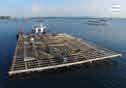
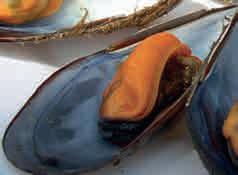
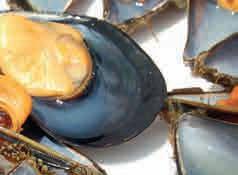
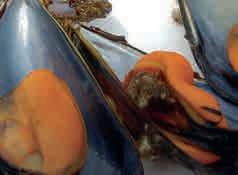
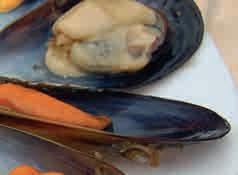
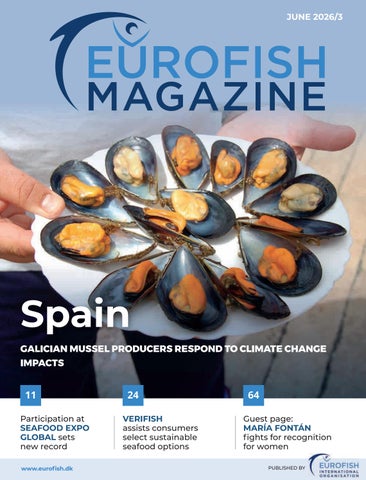
OPMEGA, the Galician mussel producer organisation, represents mainly family-run farms cultivating mussels on ra s in Galicia’s estuaries. It supports members by coordinating sales, payments, marketing, and promotion of mussels under the Galicia Mussel protected designation of origin. Galicia supplies more than 90% of Spanish mussel production, and OPMEGA accounts for about 30,000 tonnes annually. The organisation o ers producers price transparency, reliable payment, and collective market access, although many growers still sell independently. Environmental pressures, especially changes in salinity, rainfall, and water temperature, are reducing production and prompting OPMEGA to develop data-based tools to forecast losses.


MarineGuardian is an EU-funded project running from 2025 to 2029 that aims to make sheries more sustainable by reducing bycatch of sensitive species and juveniles while improving shing e ciency. The project involves 21 partners across nine countries and is testing more than 30 technical solutions in six Atlantic and Arctic case studies. Early results include an 87% reduction in dolphin bycatch in Portuguese beach seine trials, promising work on rope cutters to protect whales, and tests of T90 mesh to improve selectivity in red sh sheries. Decision-support tools are also being developed to help skippers avoid high-risk bycatch areas.
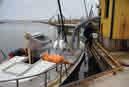
Estonia’s experience shows eet capacity can be reduced e ectively without relying only on subsidies or rigid capacity ceilings. Since joining the EU in 2004, Estonia has cut vessel numbers sharply, including through market-driven decisions by operators. Individual transferable quotas in the trawl eet, together with catch limits, spatial restrictions, fees, and monitoring, have encouraged shers to remove ine cient vessels. A similar pattern is seen in the Gulf of Riga herring shery, where individual allocations reduced the incentive to race for catches, leading to fewer vessels without public support. Estonia’s experience shows that EU Member States need more exibility, as capacity ceilings may obstruct eet renewal, safety, and decarbonisation.
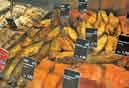
The EU decision not to renew authorisation for eight industrial smoke avourings followed an EFSA (European Food Safety Authority) nding that could not rule out potential genotoxic e ects. Traditional smoking with wood smoke is not banned, but smoke avourings used in foods such as sh, meat, cheese, sauces, and snacks will be phased out a er transitional periods. Smoking preserves sh, creates avour, and can also introduce harmful substances such as polycyclic aromatic hydrocarbons (PAH). Strict EU maximum limits apply to PAH in smoked products, including smoked sh. Manufacturers are now developing cleaner, low-PAH alternatives that may be labelled as avourings rather than smoke avourings.
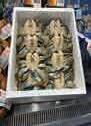
The Atlantic blue crab serves both as an invasive species and a product for human consumption. Native to the western Atlantic, it has spread through European waters, probably via ballast water, and is now causing serious ecological and economic damage in Mediterranean sheries and shell sh farms. Its high fertility, adaptability, swimming ability, and lack of natural predators have helped it expand rapidly. Yet the crab is also prized for its meat, and shers in many European countries are catching and selling it. A possible EU classi cation as an invasive alien species could restrict its marketing, making management plans essential for continued commercial use. PAGE
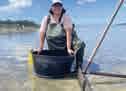
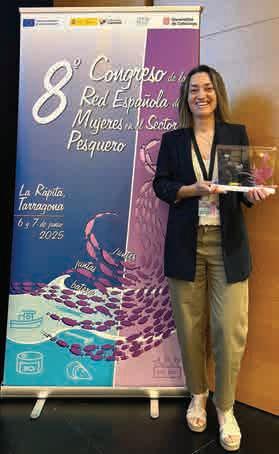
María Fontán, a Galician on-foot shell sh gatherer, uses social media to show the realities of a women-led profession o en misunderstood and undervalued. Her work involves harvesting, cleaning, reseeding, and monitoring shell sh beds while following strict regulations. She highlights women’s historic role in Galicia’s shell sh sector, their under-recognition in sheries data, and the need for better pay, stability, and social respect. Ms Fontán also stresses the impact of climate change, including excess rainfall and salinity shi s, and the consequent shell sh mortality and declining productivity of the beds. The sector’s future depends on environmental protection, generational renewal, and recognition of shellsh gatherers’ ecological knowledge.
BLUE CRAB (Callinectes sapidus)
eu
Euro sh director holds meetings in Prague, Bratislava, and Chisinau INFOFISH organises international tuna conference in Thailand
María Fontán, a shell sh picker, gives visibility to Galicia’s tidal workers
Imprint, List of Advertisers
Agraya GmbH is marking 25 years of promoting responsible farming practices through its GLOBALG.A.P. certi cation system. What began as a retailer driven initiative focused on food safety has grown into one of the most widely used farm assurance frameworks in global agricultural trade. Today, more than 195,000 producers across 135 countries
operate under GLOBALG.A.P. certi cation, covering 4.8 million hectares of plant production and 3.1 million metric tons of aquaculture output. The standard functions primarily as a business-to-business tool, supporting market access and supply chain transparency for traders and retailers worldwide. The anniversary marks not only the scale of what the
Global production of athead grey mullet, Mugil cephalus, is rising, highlighting its increasing value in aquaculture. A recent manual from FAO, one under its series of Fisheries and Aquaculture Technical Papers, brings together current knowledge on the species’ biology, life history, hatchery design, and operational management, insights support e ective culture practices. The athead grey mullet is considered a promising low-trophic species for the expansion of global aquaculture due to several desirable traits, including its adaptability to a wide range of rearing conditions, tolerance to challenging environments such as high temperatures and low dissolved oxygen levels, omnivorous feeding habits, and the high nutritional value of its products, including smoked llets and sh roe (bottarga).
The manual also examines hatchery site selection, system design, and infrastructure, covering open, semi-closed, and closed systems, seawater supply, live feed units, and facilities for larval and juvenile rearing. Operational guidance includes microalgae, rotifer, and Artemia production, alongside broodstock capture, maintenance, nutrition, handling, and spawning under controlled conditions. The production cycle is outlined
Hatchery, nursery and grow-out techniques for the flathead grey mullet (Mugil cephalus)
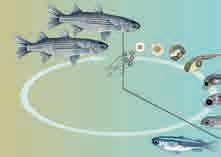

from egg incubation to post-larval culture, with attention to environmental parameters, feeding, growth, weaning, and behavioural changes during metamorphosis. Health management, diseases, and parasites are also reviewed. The manual is designed to assist practitioners in the eld as well as those embarking on the farmed production of Mugil cephalus for the rst time.
The volume can be freely downloaded from the FAO knowledge repository using the link, https://openknowledge.fao. org/handle/20.500.14283/cd9536en

organisation has built, but also a forward looking shi in ambition. Beyond its core certi cation activities, Agraya has outlined plans to address regulatory complexity, climate adaptation, and value chain resilience as part of its 2030 strategy.
The rapid expansion of o shore wind farms in the North Sea is displacing traditional shing grounds but may simultaneously be generating new commercial opportunities for coastal sheries. Researchers at the Thünen Institute of Sea Fisheries are investigating whether brown crabs and lobsters, increasingly colonising the arti cial reef structures formed around turbine foundations, could become viable target species for the sector.
The project, named PassFisch, focuses on passive pot-based shing as a sustainable and economically feas1ible alternative for shers losing access to traditional grounds. Researchers are mapping crab and lobster populations across the southern North Sea, analysing long-term data and satellite tracking of shing activity, while working directly with local shers to standardise data collection.
China’s seafood market is undergoing a structural transformation, driven by converging demographic and social forces. A growing middle class, falling birth rates, and a rising number of single-person households are collectively reshaping how Chinese consumers shop for and consume seafood. These are among the key ndings of the Norwegian Seafood Council’s Top Seafood Consumer Trends 2026 report which this year turns its focus to China.
The country’s rapid evolution as a seafood market is re ected in the numbers. Norwegian seafood exports to China grew 31% in value year-on-year in 2025, with China rising from sixth to third largest market. Imported salmon alone grew nearly 50%, with 59% growth in export volumes. Urban consumers are increasingly drawn to premium and imported products, with trust in sourcing, particularly for cold-chain species like salmon, which is consumed almost exclusively as sashimi, serving as a key

purchasing driver. Regional diversity remains a de ning characteristic of the market, with distinct culinary traditions creating di erentiated demand across product categories. Geopolitical factors, evolving supply chains, andtari
pressures, such as the shi in prawn sourcing away from Canada, continue to reshape import ows, making Chinese consumer behaviour an increasingly critical area of analysis for the global seafood industry.
The introduction of cat sh to waters in which they are not native presents a real threat, as it is a highly adaptive species that o en outcompetes the local fauna. The challenge of dealing with them is illustrated by Lake Garda, where a signi cant rise in catches of the species has now led to a meeting between regional councillors, shermen, technicians and local institutions. The regional intervention not only explored potential solutions and
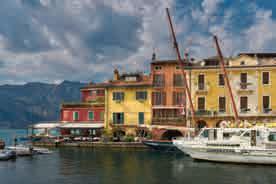
mitigation measures but also emphasised the potential economic opportunity the species can present. Cat sh already has a consolidated market in Northern European countries, giving professional shermen a viable alternative to the native species that are under pressure. By targeting the sh, participants of the meeting concluded, containing the environmental impact and economic relief for threatened livelihoods could be achieved together.
The sheries and aquaculture sectors are reeling from the e ect of a disrupted global energy and commodity market. Following a drastic increase in the cost of fuel, sheries operations have quickly become unpro table. And for the aquaculture sector, energy currently make up almost 30% of costs. To address this, the European Commission has activated the crisis mechanism of the EMFAF, providing nancial assistance to shers, aquaculture producers, processors and retailers. This
Norwegian restoration company Restorae AS and Japanese feed manufacturer Nosan Corporation have announced a partnership to address one of the key challenges facing native European oyster restoration—the reliable production of juvenile oysters at scale. The native European oyster, which once formed extensive reef systems from the North Sea to the Mediterranean, is now considered functionally extinct across most of its historic range following centuries of overharvesting, disease, and competition from invasive Paci c oysters. Restoration e orts across Europe have gained momentum in recent years, but hatchery survival rates and feed supply for early stage spat remain signi cant constraints. The partnership centres on Nosan’s SpatCare feed, a shelf stable juvenile bivalve supplement with a 15-micron particle size and nutrient density equivalent to approximately 30 billion diatoms per gram. Already in use in Japanese aquaculture for two decades, the product is designed to support growth in bivalve spat from as small as 2 mm. Restorae will work to make the technology available to EU
measure applies retroactively from 28 February 2026 and allocates around €760 million of the initial €1.3 billion for immediate use by the Member States. The current hostilities in the Middle East have further exposed the sector’s high dependence on fossil fuels and the structural vulnerabilities caused by disruptions to the energy supply chain. The crisis exacerbates an existing challenge emphasising the need for a sustainable and stable energy supply.


The European Maritime, Fisheries and Aquaculture Fund (EMFAF) entered into force on 14 July 2021 and supports the co onfisheriespolic themaritime policy and the EU agenda for international ocean governance.
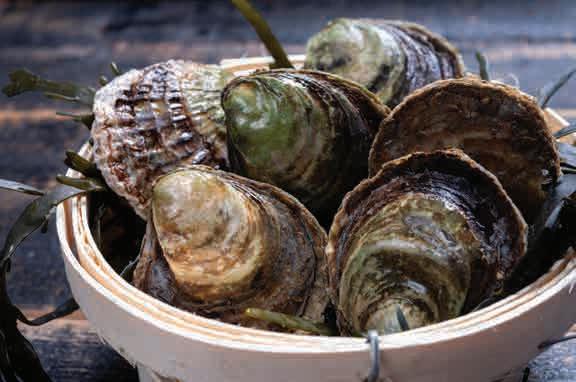
The European oyster has seen a historical decline in almost all its native areas. Restoration efforts to aid remnant populations and reintroduce the species are thus crucial to its future.
restoration partners across Europe. Over the coming three months, the partnership will seek to validate the feed’s e ectiveness with native European oysters
through trials with commercial, scienti c, governmental and NGO partners, ahead of a broader rollout to restoration initiatives across the continent.
BioMar is expanding its research and development activities at its Aquaculture Technology Centre (ATC) in Hirtshals, Denmark, with a focus on developing feed solutions for new species as the company enters markets beyond its traditional base. The Hirtshals facility is BioMar’s largest research centre, comprising 15 experimental trial units, 27 recirculating aquaculture systems and more than 350 tanks. While the centre has historically focused on cold water species such as salmon, trout, seabass and seabream, recent work has extended to warm water species including yellowtail king sh. Barramundi is the next species to be added to the research programme, with a
particular focus on its relevance for the Australian and Southeast Asian markets. The planned research will cover feeding strategies, biological performance and the development of predictive performance models for barramundi, with ndings intended to inform feed solutions across di erent production systems and regions. The expansion re ects a broader trend in aquaculture toward species diversi cation, which places increasing demand on feed producers to develop targeted nutritional knowledge outside their established portfolios. BioMar Australia has identi ed barramundi and yellowtail king sh as central to growth in the country’s warm water sector.
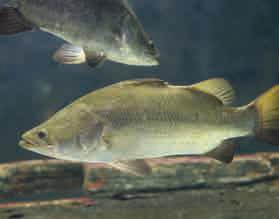
Barramundi will be the next species added to the BioMar research prora e re ectin theincreasin relevance of the Southeast Asian markets, herethefishis er pop lar
Spain, France and Italy have agreed to coordinate their positions ahead of EU negotiations on shing days in the Mediterranean for 2027 and to jointly push for reform of the regulation limiting trawl shing in the region. The agreement was reached at a trilateral ministerial meeting held in Nicosia, on the sidelines of the EU Informal Council of Fisheries Ministers and the MedFish4Ever Ministerial Conference. The three countries’ agriculture and sheries ministers underlined the importance of maintaining a united approach ahead of the December Council, where shing opportunities for 2027 will be set, replicating a coordinated strategy that they say yielded positive results the previous year. For Spain, the objective is to maintain at least the same number of shing days as in 2026 and to secure the removal of restrictions on red shrimp catches that have been in place since 2022, subject to favourable

scienti c assessments. Spain currently holds the presidency of the Pescamed group, which also includes Italy and France, and is preparing a formal proposal to present to Brussels. The three ministers also called on the European Commission to revise the multiannual
plan for demersal sheries in the western Mediterranean, which has signicantly restricted trawling activity. The reform push re ects growing pressure from southern European shing nations over what they describe as disproportionate constraints on their eets.
EU sheries ministers gathered in Nicosia, Cyprus, on 5 May for an informal ministerial meeting under the Cyprus Presidency of the Council of the EU, launching the rst political discussion on the future of the Common Fisheries Policy (CFP) since the European Commission published its evaluation of the framework earlier this year. The evaluation was mixed with lacklustre results for economic performance of the eet, living standards of coastal communities, control and enforcement, and contribution to food security. On the other hand, shing pressure reduction and the role of science in sheries management showed signicant improvements.
Three environmental organisations, ClientEarth, Sea Shepherd France and Défense des Milieux Aquatiques, have launched legal action against the French government at the Conseil d’État, alleging a failure to monitor and reduce seabird bycatch in French waters. France is estimated to record some of Europe’s highest seabird bycatch levels, with tens of thousands of birds dying annually in longlines, gillnets and trawls targeting hake, sea bass and tuna. A ected species include the Balearic shearwater, Northern gannet and common guillemot, classi ed as critically endangered, near threatened and endangered respectively on the IUCN Red List. The NGOs argue France is breaching the Birds and Habitats
The meeting, chaired by Cypriot Agriculture Minister Maria Panayiotou and attended by Fisheries Commissioner Kostas Kadis, marked the rst comprehensive assessment of the CFP since its last reform in 2013. Ministers acknowledged that while the framework remains broadly relevant, several key objectives had not been fully met over the 2014 to 2025 period, particularly regarding the economic performance of the sector and the situation of coastal communities. Recurring concerns raised during the discussion included regulatory complexity, gaps in implementation, administrative burden and the need for a more balanced approach across environmental, economic and social objectives.

An informal ministerial meeting under the Cyprus Presidency of the Council of the EU discussed the future of the Common Fisheries Policy following the commission’s evaluation.
Ministers stressed that further delays in addressing these shortcomings were no longer an option. The Nicosia meeting marks the start of a broader re ection process, with outcomes feeding into a more structured debate at the June AGRIFISH Council. Discussions will ultimately inform the Commission’s long-term vision for sheries and aquaculture looking toward 2040.
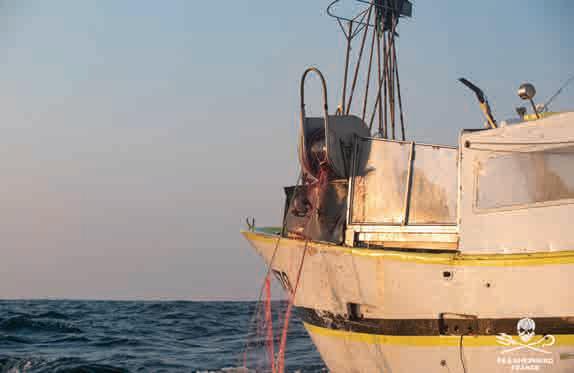
Directives, the Technical Measures Regulation and other EU law, and that proven mitigation measures used elsewhere are not being applied. The case follows an ongoing European Commission
infringement procedure against France over the same failings, adding further pressure on authorities overseeing the world’s second largest Exclusive Economic Zone.
Seafood Expo Global and Seafood Processing Global returned to Fira de Barcelona’s Gran Via venue from 21 to 23 April 2026 at a moment when the European seafood sector is still adjusting to high costs, shi ing supply routes, and cautious consumer demand.
Despite the current headwinds brought on by the latest war in the Middle East, the scale of Seafood Expo Global, according to organisers Diversi ed, was the largest in the event’s history. More than 52,980 net square metres of exhibit space, 2,300 exhibiting companies from 85 countries, and 65 national and regional pavilions. The economic bene t to Barcelona was estimated at more than €161m.
The event took place against a mixed market background. EUMOFA’s 2025 EU Fish Market report shows that EU consumer spending on shery and aquaculture products rose by 4% in 2024 to €62.8bn, although the increase re ected prices rather than stronger volumes. At-home consumption of fresh sh fell by 5% in 2024, continuing the downward trend in the largest consuming EU countries. EUMOFA also reported that the EU trade de cit in shery and aquaculture products improved slightly in 2024, falling by 2%, as export value rose while import

value declined. The war in the Middle East is already in uencing the seafood market as energy costs climb, according to Gorjan Nikolik, senior global seafood specialist at Rabobank, while other impacts such as higher fertiliser costs will take time to re ect in prices. Airfreight is constrained by the high prices or downright lack of aircra fuel plus the impact of rerouting to avoid combustible areas.
The show included a comprehensive conference programme. More than 90
experts led over 30 sessions, with contributions from FAO, WTO, WWF, EUMOFA, industry associations, and major seafood companies. Dr Nomi Prins’ keynote focused on trade disruption, economic pressure points, and the global outlook for seafood, while other sessions addressed EU market resilience, tari s, supply chain compliance, and consumer behaviour. The inclusion of EUMOFA in the programme was particularly relevant, as the organisation’s data now informs
many strategic decisions across the European seafood value chain. Innovation was the other clear theme. The new Aquaculture Innovation Zone brought attention to technology, sh health, welfare, and feed, with participants from Europe, Asia, and North America. Its launch was well timed. Aquaculture is increasingly expected to help stabilise supply, yet producers face pressure to improve performance while demonstrating environmental credibility. The zone allowed smaller technology providers to showcase their equipment and solutions to farmers, investors, and policymakers. Another event, Connecting Women in Seafood, was a forum to discuss the outsize role women play in parts of the sheries sector where participants could network and exchange knowledge.
Based in Lubsza, in south-western Poland, Fair Fish, company which specialises in carp farming, operates two processing plants to add value to carp and other sh species. The carp is produced in around 3,000 ha of ponds the company owns. Common carp dominates the production and is harvested and processed primarily from early December, a period when carp is traditionally consumed in Poland. The sh are grown typically for about three years, reaching 2.5–3 kg before processing. According to Kaspar Kalita, the son of one of the co-owners, Andrzej Kalita, the company processes about 3,000 tonnes of carp in the season, selling it across Poland and outside the country, in cooperation with major supermarket retailers. The product range re ects a shi in the Polish market from live sh towards convenient, readyto-cook formats. Fair Fish sells carp in steaks, llets, and portions, apart from
Product development also showed how suppliers are responding to the market. The Seafood Excellence Global Awards went to Vičiūnai Group for smoked herring slices and Frais Embal for a salmon roll designed for foodservice e ciency. The winners of the special awards recognising convenience, packaging, product-line development, and innovation suggested that seafood must be easy to prepare, clearly presented, and adaptable to modern retail
whole and gutted. Scored llets are also available. By scoring the meat, the bones in the esh are cut into fragments that more or less dissolve as the sh is cooked, thus addressing a challenge o en faced by some consumers when eating the sh. Fillets, steaks, and portions are also available as MAP-packed products for longer shelf life and greater convenience.
Since common carp is sold mainly at the end of the year, Fair Fish maintains the activity in its processing factories by working with other species. Some freshwater sh, including grass carp, come from its own or associated ponds, while marine species such as mackerel, hake, Alaska pollock, trout, and salmon are sourced from other suppliers. The company also has a line of ready-to-cook products in aluminium trays that combine sh with vegetables and other ingredients such as herbs or spices and that can go straight in the oven to give a healthful meal in a few minutes with minimal e ort. Another part of the assortment is ready-to-eat items made from carp such as patés and sh salads in glass jars. The two lines of products, common carp for the domestic market and the other sh species for international customers, are sold under
and catering needs. The 2026 Barcelona fair showed that despite falling consumption in some countries, at a global level ever more people recognise seafood as healthful and relatively friendly for the environment. The huge variety of seafood on o er as well as the number of countries represented also reinforced Europe’s status as the world’s top destination for seafood exporters. The 33rd edition of the event will run from 20-22 April 2027. For more information visit https://www. seafoodexpo.com/global/.
Companies from Euro sh member countries were present in strength at SEG. Below follow brief pro les of some of them.
two brands—one of them dedicated to freshwater sh called “Our sh”, and the other termed “Fish Market” for sh from around the world. At Seafood Expo Global Mr Kalita is looking for potential suppliers of white sh species such as hake and Alaska pollock, and of mackerel, which he says have become very expensive. The event certainly o ers a golden opportunity to nd what he is looking for.
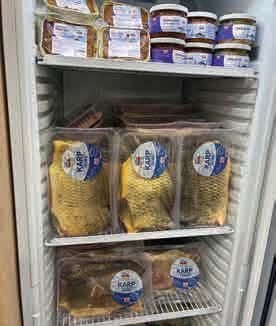
arpisincreasin l sol incon enientcons er frien l s chasfilletsansteaksin o ifie at ospherepacka in
Parlak Seafood’s Turkish salmon division is built around a vertically integrated production model in Samsun, on Türkiye’s Black Sea coast. The company traces its aquaculture origins to 1995, when it began producing trout at Derbent Dam in Bafra, Samsun. Since then, it has expanded from freshwater farming into sea farming, processing, freezing, and export, with Turkish salmon, Oncorhynchus mykiss, as the core product, while also starting to cultivate sea bass and sea bream.
The cycle for Turkish salmon starts in freshwater. Fish are grown in lakes to around 500 g to 1 kg before being transferred to cages in the Black Sea. There, growth is faster, and sh introduced at about 1 kg may reach 4–5 kg by the time they are harvested about six months later. The Black Sea phase is limited to about six or seven months a er which the water temperature gets too high for the sh. Metin Sarac, the
Avramar is one of the bestknown names in Mediterranean aquaculture, with activities centred on sea bass, sea bream, and meagre, marketed in Spain as Corvina REX. The company’s Spanish business is based in Valencia, while its main production area is in Alicante, where it operates three marine farms. It also has hatcheries in Castellón and Murcia, giving it a vertically integrated structure from eggs to juvenile production, on growing, packaging, and distribution.
export manager, says current Turkish salmon production is about 1,500 tonnes, but the company has a capacity of 16,000 tonnes, divided between 4,000 tonnes in freshwater and 12,000 tonnes in the Black Sea. Moreover, the group has three hatcheries and is thus self-sufcient in the supply of eggs needed for the production of Turkish salmon. Processing takes place at the company’s 7,500 sq m facility in the Bafra industrial zone, where it can process and shock-freeze 200 tonnes of sh per day. Its Turkish salmon range includes fresh and frozen whole sh, gutted sh, llets, H&G products, sashimi cuts, steak portions, and llet slices. Products include whole sh from 1,000 g to 5,000 g, llets from 300 g to 1,700 g, and packing in styrofoam or cartons.
The Turkish salmon is sold to Russia, Japan, as well as on the domestic market including through Metro in Türkiye. Volumes to the EU are limited, Mr Sarac explains, due to the market’s preference
etin arac export ana er as ersatisfie ith eafoo xpo lo althankstothecontactshe a ean theinfor ationhe athere
for fresh sh. The limited window for growing the sh in the Black Sea forces the company to freeze the product. Salmon producers on the other hand can supply fresh sh all the year round. Parlak Seafood is using its presence at Seafood Expo Global to look for market opportunities for seabass and seabream in the EU. The show is very useful for that, says Mr Sarac, and we certainly plan to be here in the future as well.
Corvina, or meagre (Argyrosomus regius), is the company’s speciality in Spain. The sh is farmed in controlled open-sea conditions and promoted as a premium, versatile product for chefs and retailers. The company emphasises that Corvina REX is raised in an anisakis-free environment and produced under standards covering sustainability, animal welfare, and traceability. The brand also promotes the idea of whole- sh use, encouraging chefs to work not only with llets, but also with skin, bones, tails, and other parts, reducing waste and increasing value. The company sells mainly whole sh and works with practically all major supermarket chains in Spain. Around 80% of sales are in Spain, with additional
volumes going to Portugal and a smaller share to France.
Sustainability is an important consideration for the company. Eduardo Soler, the sustainability manager, says the company collects data from farms and production sites to calculate indicators related to greenhouse gas emissions, fuel use, raw materials, and waste. It has issued sustainability reports using the GRI (Global Reporting Initiative) framework and he says it was the rst Mediterranean aquaculture group to make this type of reporting commitment. Strategies include the use of renewable energy, reduction in plastic consumption and disposal, and increasing the proportion of sustainable
Gümüsdoga is a vertically integrated Turkish aquaculture group whose feed production activities sit at the centre of a much wider sh business. Founded in Milas, in Mugla province, the company has developed from sh-feed production into one of Türkiye’s leading aquaculture producers, exporters, and feed manufacturers. Its sh-related activities now include sea bass, sea bream, trout, Turkish salmon, and meagre farming, as well as processing and international sales. The company exports seafood and feed to markets in Europe, Asia, Russia, the United States, and the Middle East. The company produces feeds for trout, Turkish salmon, seabass and seabream and is Türkiye’s largest shfeed producer. Output reached 300,000 tonnes of feed last year and is expected to reach 500,000 tonnes with the opening of a new factory. Around 70–75% of this volume is used internally for the company’s own farms, while the remainder is sold to other producers in
Türkiye and exported to international customers.
This internal demand re ects the scale and diversity of the company’s farming operations. Gümüsdoga produces feed for the main species it farms but it can also manufacture diets for other species according to customer orders. The feed division operates six extruder lines, allowing it to produce di erent pellet sizes, qualities, and formulations. Raw material sourcing is global and exible. The company buys sh meal, sh oil, and other ingredients from international and Turkish suppliers, depending on availability, logistics, and price. It also uses vegetable proteins, mainly soya, maize, and wheat. Formulations change during the year according to the species, the season, and sh requirements. Although Black Sea anchovy is available in Türkiye, the company avoids relying on this species because of environmental and supply concerns. The current geopolitical situation has provoked container
ingredients in feeds. Moreover, the company is certi ed to various standards including ASC, GlobalG.A.P., and ISO, as well as IFS and BRC at the packaging station. A welfare certi cation for sea bream developed with researchers at IRTA, a Spanish institution, is another label the company can boast of. Mr Soler admits that there is a substantial overlap between some of these certi cations and that they demand many man hours to gather the data and train the employees. The bene ts he sees in the way the standards optimise resources, improve working procedures, and facilitate communication both externally and within the company of how the certi cation improves company practices.
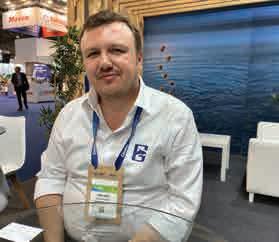
tk esiisresponsi leforproc re entfor s o a sfee i ision
shortages, oil price hikes, and disrupted shipping routes a ecting ingredient availability and costs. The company has responded by widening its sourcing base and avoiding vulnerable logistics routes where possible. At Seafood Expo Global the feed division is exhibiting separately from the sh farming part of the company, a decision that re ects the commercial importance of feed production in the group’s structure.
Algamar is a Galician company that helped introduce seaweed as a food ingredient in Spain. Founded in 1996, it is the rst Spanish company dedicated exclusively to harvesting, drying, and preparing marine macroalgae for human consumption, says Sergio Baamonde López, technical manager R & D. Seaweed has little culinary tradition in Spain and had historically been used more as a resource in times of scarcity, or as fertiliser. Drawing inspiration from France and from Asia, the founders built the company around native Atlantic macroalgae from Galicia. Seaweed is harvested from the wild following the seasons for when di erent species are available and respecting the biological capacity of the ecosystem. The company operates under an annually approved “Waters Exploitation Plan” from the Galician shing authority, which is intended to ensure renewable harvesting and ecosystem balance. Fresh algae are checked, selected, washed, and dried at low temperature to preserve nutritional value. Mr Baamonde says its stainless-steel equipment can dry up to 10 tonnes of freshly harvested algae per day, resulting in about one tonne of dehydrated product. The company designed its own 16-metre washing machine, using bubble cleaning and x-ray scanning to detect small crustaceans attached to the algae. Drying is supported by solar energy and recycled forest biomass from Galicia, collected as part of regional forest-cleaning programmes.
Algamar’s range covers dried seaweeds, salted and deep-frozen products, ours, canned lines, and prepared foods. Products include wakame, dulse, sea lettuce, codium, nori (which is imported), agar, spirulina, and salad mixes. These
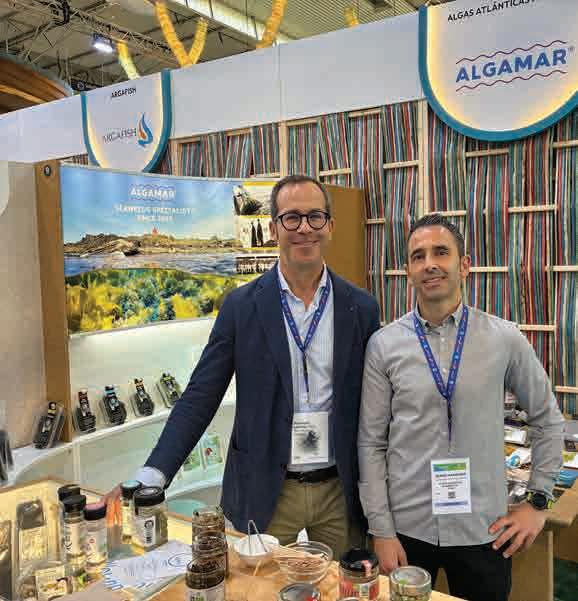
are sold both as branded retail products and as ingredients for food manufacturers. Alvaro Lugo, the commercial manager, highlights the use of algae in pasta, pizza, dough, vegan products, and vegetarian seafood-style foods, where seaweed supplies a marine avour without animal ingredients. EU legislation demands that algae products carry warnings about iodine levels as the natural content of iodine is very high. However, Mr Baamonde feels that there is no danger of threshold
values being exceeded as seaweed is always consumed in very small quantities. Besides, he says, iodine content varies from species to species so rather than a blanket warning he would prefer to see more precise recommendations. The company holds organic and IFS certi cation and is also active in research and consumer education. Mr Baamonde sees great potential in algae as a avour enhancer and a dietary supplement thanks to all the trace elements it contains.
UAB Šalčininkų Žuvininkystės Ūkis operates more than 340 ha of ponds growing carps and also farms about 700 ha where it cultivates part of the feed required for the sh. Carp is an important species for the company, although production has changed markedly. Julija Matijošaitienė, the marketing manager, says production today is around 150 tonnes of common carp a year, compared with about 350 tonnes some years ago. The decline re ects weaker demand, particularly among younger consumers, who are less attached to the traditional live carp market. Most sh are still sold live, mainly to Latvia, Poland, as well as to local buyers, including customers who buy directly from the farm or through mobile live- sh sales units. Supermarkets used to sell live sh too but that stopped several years ago, Ms Matijošaitienė says. At the same time, the company has diversi ed into sturgeon. The farm began growing Siberian sturgeon about a decade ago and is now producing caviar, a relatively new activity that is already becoming commercially signi cant. Caviar
production is now in its second year and currently amounts to about 500 kg annually. Other sturgeon products are female sturgeon with roe that is sold to other caviar processors, and sturgeon meat. Demand for the latter is growing, partly because it is boneless and therefore easier for consumers to prepare and eat.
Aquaculture is the company’s main activity and while common carp dominates the production, mirror carp, sturgeon, grass carp, pike, tench, perch, crucian carp, and silver carp are the other species grown on the farm. Sturgeon products, including caviar in several pack sizes and gutted sturgeon, are also sold through the online shop. The company is considering a small processing line for carp products such as llets and smoked sh, but Ms Matijošaitienė stresses that the scale must match the market. Being at the Barcelona show has been a very positive experience in terms of the number of people who have shown an interest in the products and Ms Matijošaitienė would certainly like to come back next year. If the contacts
José Luis Sáez Martínez is involved in aquaculture innovation at the Centro Tecnológico Naval y del Mar (CTN), where he is the strategic partnerships manager in aquaculture and sheries. CTN is a non-pro t business association based in Murcia that works to improve the competitiveness of maritime and naval companies through innovation. Its multidisciplinary team includes
specialists in naval and industrial engineering, biology, aquaculture, data science, and arti cial intelligence. Among Mr Sáez’s tasks is professional training for students aged about 16 to 19 who are preparing for careers as workers. The objective is to expose them early to the realities of aquaculture to support generational renewal in a sector that need quali ed young workers. Because companies cannot absorb all students
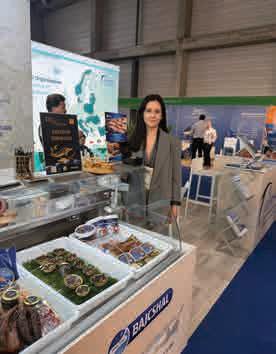
li a ati o aitien arketinana erat al inink in ink st s kis aco pan thatis ra all re cin co oncarppro c tioninfa o rofca iarfro i erianst r eon
she has made translate into orders for caviar the company would sell fewer gravid sturgeon to other processors and instead produce more caviar itself.
for in-company training, CTN is developing digital tools, arti cial intelligence, and virtual learning environments that give students more equal access to industry-relevant experience. A central element of this work is the use of digital twins. These are real-time digital replicas of production facilities, fed continuously by sensors installed at aquaculture sites. Unlike simple monitoring systems, which collect data for

os is e art ne strate icpartner ships ana erina ac lt rean fisher ies entro ecnol ico a al el ar
later analysis, digital twins support modelling, simulation, and prediction. This allows students to practise responding to realistic scenarios, while producers can use the same approach to move from reactive management to more proactive decision-making.
The systems described by Mr Sáez can be applied to several forms of aquaculture, including sea bass and sea bream farms, tuna operations, trout production, recirculating aquaculture systems, and o shore cages. The models use environmental, biochemical, physical, and structural data to anticipate risks a ecting both sh and infrastructure. CTN’s DIGI SAFE CAGE project uses sensors, IoT, cloud computing,
and arti cial intelligence to monitor and predict the behaviour of o shore aquaculture infrastructure, reducing economic, environmental, and social risks linked to extreme weather. The work at CTN is also connected with practical farm management and cooperation with research bodies. An agreement between CTN and IMIDA at the Marine Aquaculture Station in San Pedro del Pinatar aims to advance arti cial intelligence, data modelling, and digital technologies for more sustainable aquaculture. These activities link industry, research, and education. Mr Sáez’s role is to help turn aquaculture data into useful tools for better training, lower environmental impact, and more e cient production.
Bajcshal K ., a Hungarian sh producer and processor based in Kisbajcs, near Győr, has exhibited regularly at Seafood Expo Global the last few years. The company o ers a range of fresh sh products, ready-tocook items, sh soups, and caviar, says Gábor Szilágyi, the managing director adding that the company works under the IFS food safety standard with an emphasis on products free from hormones, yield enhancers, and articial materials.
The company’s product range re ects both Hungarian sh-eating traditions and targets more premium market segments. At SEG visitors showed interest mainly in Bajcshal’s caviar, smoked cat sh, smoked sh, and traditional Hungarian sh soup. Enquiries came from a wide range of countries, including Mexico, Bolivia, Slovakia, Moldova, Spain, and Iran, a gauge of the international character of the show. African cat sh is the backbone of production
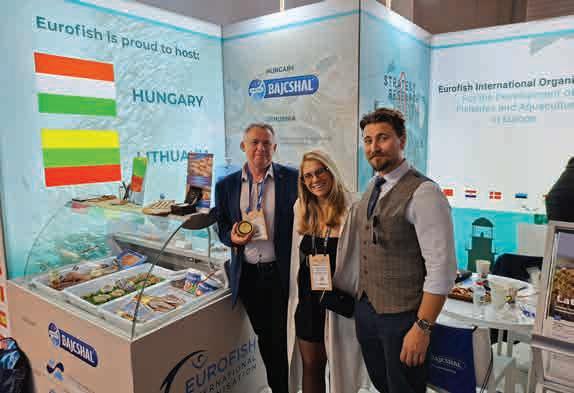
accounting for about 70% of the company’s volume, with annual production around 1,700 tonnes. Other important
species include carp, bighead carp, trout, and sturgeon. Trout is supplied live by a long-standing Italian partner,
allowing Bajcshal to o er fresh products regularly on the Hungarian market. Carp is used for llets, slices, steaks, and, above all, sh soup, where the bones contribute to the traditional avour and help minimise waste. The company makes both a concentrate and a ready-to-eat soup, producing about 4,000–5,000 litres a week. The retail version may contain carp or African cat sh meat, while restaurants can buy a frozen, meat-free one-litre format that yields several portions.
Bajcshal also produces caviar, including beluga caviar from sh that have taken 18 years to reach maturity. Sturgeon volumes are small compared with African cat sh, but the meat has a market, mainly fresh, with some frozen and smoked products. Restaurants and hotels are the main customers for sh soups, and premium items, including sterlet, Siberian sturgeon caviar, and smoked sturgeon. The company is investing in automation, renewable energy, and waste reduction, Mr Szilágyi
says, with automated cutting and lleting as priorities because labour is increasingly di cult to nd. In the works is also a sh silage system to turn o cuts, guts, and heads into material for feed production as a step towards a longer-term ambition of approaching zero waste. Solar power is another priority for Mr Szilágyi who plans to increase capacity from 250 kW to 500 kW, with battery storage, potentially covering about half the company’s energy needs.
Poland’s sh processing industry has built a strong position in Europe, but it is operating in a difficult environment shaped by higher costs, limited Baltic resources, reliance on imported raw material, and geopolitical uncertainty. In an interview at Seafood Expo Global, Jacek Czerniak, Secretary of State in the Polish Ministry of Agriculture and Rural Development, presented the sector as one of Poland’s success stories, stressing its role in European and global seafood trade. The industry’s main strength is its export orientation as well as a focus on technology and innovation. Polish companies are renowned for their salmon and other fish products sold across the European Union and to third countries. Altogether, Poland exports fish and seafood products to 107 markets around the world thanks to quality, brand recognition, and control from raw material to finished product. Preliminary data from the Polish Ministry of Finance show that in 2025 seafood exports increased 5.4% year on year to 545,000 tonnes in volume and by 7.0% to PLN15.2bn (EUR3.6bn) in value.
More than 90% of the raw material used by the Polish processing sector is imported making access to stable supplies one of the industry’s central strategic concerns. Mr Czerniak acknowledges the challenge and says the industry was diversifying its sources of raw material to cover not only the Atlantic but also the Pacific and other regions. Salmon, herring,
Alaska pollock, cod, mackerel, and trout are the main imported fish — species, with salmon imports head and shoulders above the rest. In total, the volume of seafood imports increased by 1% to 692,000 tonnes in 2025 while value climbed 5.5% to PLN15.25bn (EUR3.6bn). While the Baltic Sea remains important politically and socioeconomically, it
cannot provide the raw material base required by the processing sector. Mr Czerniak pointed to serious problems in the Baltic, both natural, such as eutrophication, pollution, climate change, and habitat loss, and anthropogenic, such as fishing pressure, as among the factors influencing fish stocks and thereby quotas. Uncertainty over how long recovery may take, for example, with iconic species such as cod, also reduces the incentives among fishers to invest in the profession. Poland has about 660 fishing vessels and must balance support for fishermen with sustainable use of resources, he said. In 2025 catches in the Baltic Sea declined 3.1% to 72,500 tonnes of mainly sprat and herring.
To support the competitiveness of the processing industry the government is implementing EU regulations in national legislation and is using the EMFAF to fund investments in innovation. Market development initiatives such as the Polish pavilion at Seafood Expo Global are also supported, Mr Czerniak notes, as it gives companies an opportunity to promote themselves and their brands. The industry’s opportunities lie in making the most of the quality of its products

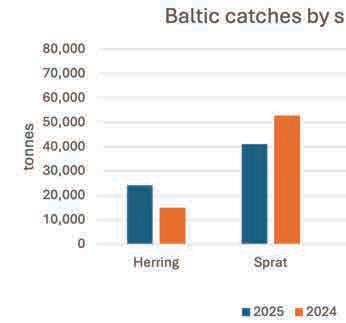
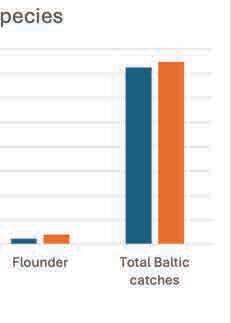
Source: Polish Ministry of Agriculture and Rural Development
Source: Polish Ministry of Finance
Source: Polish Ministry of Finance
and its reputation. Costs, however, remain a serious concern. In discussions, companies complain to Mr Czerniak that energy is a major issue as prices climb due to the geopolitical situation in the Middle East. These are only likely to rise further before they fall as two months into the war there is no resolution in sight. However, Mr Czerniak is con dent that the Polish sh processing sector can call on all the strengths it has built up over the years—scale, experience, quality systems, and access to many markets—to withstand the headwinds it is currently facing.

Among the numerous conference events held over the three days of the trade show was a seminar that presented FAO’s Blue Ports Initiative as a practical response to the changing role of shing ports. Rather than treating ports only as landing sites or trade infrastructure, the speakers described them as hubs for sheries, investments, employment, and coastal development. The initiative seeks to strengthen and support shing ports in optimising their operations to promote the sustainable development of coastal communities. Today, 26 countries are involved in the initiative forming a global network of ports that are adopting sustainable processes to preserve the environment, improve competitiveness, and spread social bene ts.
Chairing the discussion, Shirlene Maria Anthonysamy, FAO, placed the Blue Ports Initiative within a global network involving countries, port actors, and public and private partners. She highlighted that the initiative was not about infrastructure, but about how better port management and collaboration can support coastal communities. Yolanda Molares, an FAO consultant, gave the main overview of the initiative. She explained that shing ports face social, economic, and environmental pressures, including a lack of decent jobs, gaps in digitalisation,
weak traceability, ine ective pollution control, poor climate resilience, and an inability to ght IUU shing. Her main contention was that a blue port is not de ned by one measure alone—it creates value, generates pro ts and growth, supports human capital, and protects biodiversity. A Blue Port bene ts all its stakeholders by strengthening relationships between government, academia, civil society and the private sector; improving commercial operations; and by attracting investors and entrepreneurs. She also showed that the initiative is already operational, through workshops, roadmaps, an e-learning course, and support to countries including Argentina, Colombia, and India.
Audun Lem, Chair, International Board of the Fisheries Transparency Initiative, compared today’s seafood sector with the industry he rst encountered at the Brussels seafood exhibition in 1996. He noted that aquaculture, consumption, logistics, processing, and product development have changed greatly over 30 years, while
ports have remained central to sheries and trade. By linking the Blue Ports Initiative with the Fisheries Transparency Initiative, he underlined the importance of access to data, stakeholder involvement, and better communication about the positive role of seafood in food security. Roberto Alonso, Secretary General, ANFACO-CYTMA, argued that ports are critical control points for seafood trade, particularly for compliance, traceability, food safety, and action against IUU shing. He stressed that private participation must never be confused with weaker regulation. Instead, he called for stable rules, predictable procedures, performance indicators, and complaint mechanisms. He also emphasised the importance of communication to create awareness of blue ports, the blue economy, and the latter’s signi cance for the wider economy and for food security.
Javier Garat Perez, Secretary General, CEPESCA, a strong advocate for a level playing eld regarding standards within and outside the EU, welcomed the initiative as one that would raise standards at ports around the world. He stressed the need for pre-harvest and post-harvest infrastructure, from ice and equipment to auctions, cold storage, sanitary controls, and energy services. His examples showed that weak port conditions can discourage landings, reduce local income, and weaken market access. He also raised the serious challenge of generational renewal, noting that ports must help make sheries and the wider blue economy more attractive to young people. Using the example of the Port of Vigo he also made a case for the di erent stakeholders in a port to work together, despite di erences they may have, to solve the challenges facing ports.
A project is working towards increasing the sustainability of shing by reducing catches of sensitive species and juvenile sh while at the same time optimising shing operations.
Every day, millions of shing vessels head out to sea to feed the world. More than three billion people rely on seafood as a significant source of protein in their daily diet. In the EU, 44% of sh stocks are still overexploited and coastal habitats are under increasing threat. MarineGuardian is an EU-funded research and innovation project bringing together researchers, gear manufacturers, shers, processors, policymakers and ecolabelling bodies to accelerate the transition towards more sustainable and economically viable sheries.
What is MarineGuardian?
The project is part of the Mission Ocean portfolio and runs from 2025 to 2029. It has 21 partners from nine countries across the Atlantic and Arctic sea basins. The project is developing several innovative technologies to reduce and prevent incidental catches of sensitive






Research vessel from the Marine and Freshwater Research Institute, Iceland
species and juveniles, combined with decision-support systems o ering both optimisation of shing operations and mitigation measures to protect sensitive species. These technical solutions, more than 30 in number, are designed for use across both small-scale and large-scale sheries. Beyond the technical solutions, MarineGuardian is also developing policy briefs, training modules and an online course to ensure that the knowledge generated reaches shers, managers and decision-makers alike.
The project is demonstrated across six case studies spanning the Atlantic and Arctic, from the coast of Newfoundland, Canada, to Greenlandic waters, the coast of Norway, Iceland, west of Scotland, and the Bay of Biscay and Iberian waters, covering a wide range of sheries.
MarineGuardian is one of three complementary EU projects covering European seas, alongside ECO-CATCH (Baltic and North Sea) and Sea4Future (Mediterranean), all recently endorsed
under the UN Ocean Decade’s Gear Up Towards Sustainable Fisheries action, led by ICES. The project has now been running for one year and multiple exciting results demonstrate a reduction in bycatch of both sensitive species and juveniles. Three of the solutions have reached signi cant milestones in their development.
Beach seine shing is deeply embedded in the coastal culture of Portugal: nets are cast from the beach into the sea and hauled back by hand, a practice passed down through generations. This shery inadvertently catches common dolphins and Iberian harbour porpoises, two


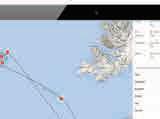





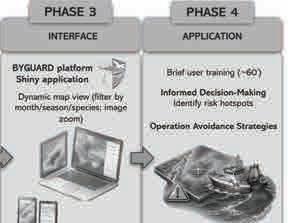
resentationofthe afs nsoft are atooltopro cecatchpre ictionson e an an th sallo skipperstoiti atetherisk
species that are listed as endangered on the IUCN Red List. During the rst tests conducted in summer 2025 by the team at the Centre of Marine Science of Algarve (CCMAR), two di erent brands of commercial pingers were tested on the shers’ vessels, following interviews with shers to identify the highest-risk beaches. Preliminary results were striking: an estimated 87% reduction in dolphin bycatch rate was recorded during the trials. As this shery is highly seasonal, the next steps will take place during summer 2026, when the pingers will be tested on more vessels and the rst designs for potential exclusion devices, to allow the live release of animals, will be developed.
Marine mammals, and speci cally whales, are o en entangled in the vertical buoy lines attached to baited pots (snow crab shery in Newfoundland). To prevent this, the team at the Marine Institute – Memorial University of Newfoundland has developed a time-tension
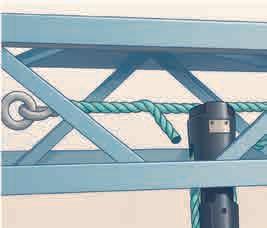



Drawing of a time-tension cutter, a device designed to cut aropeifanani al etsentan le init eforelastin haris one
line cutter which automatically detects tension caused by an entangled animal and cuts the rope before serious injury occurs. A er one year in the project, 400 bench-top experiments have been carried out. These revealed that 70% of the cutters maintained consistent performance a er repeated use. Moreover, the researchers found that cold water increases cutting time, a key parameter to be taken into account when adapting the tool for use in northern waters. In 2026, the rst tests will be carried out at sea.
In trawl sheries, one of the main challenges faced is the bycatch of sensitive species. In red sh sheries in Newfoundland, this issue is becoming increasingly problematic as one of the main species bycaught is the white hake (Urophycis tenuis), an endangered gadoid in parts of Canada. The team in Newfoundland evaluated whether switching from a standard mesh (T0) to a rotated mesh (T90, where the mesh is
turned 90 degrees, creating a more diamond-shaped opening) would reduce white hake bycatch and allow for the capture of only larger red sh. The tests conducted in November 2025 con rmed that using the T90 mesh selects for larger red sh, while results for white hake were less clear, despite indications that larger mesh sizes might reduce bycatch. The next steps will include new designs


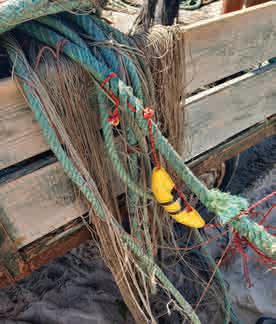
Pinger trials in the Portuguese beach seinefisher le toan re ctioninthe catchof olphins
and ume tank tests during 2026 to evaluate the best approach to reducing white hake bycatch.
As more data is collected during shing operations, the logical next step is to transform it into actionable knowledge, helping skippers improve eciency, reduce fuel use, and steer clear of areas where bycatch risk is highest. Multiple partners in MarineGuardian are working towards this goal. However, as these solutions require more development time, results a er one year of the project are less advanced.
Imagine having access, while at sea, to a map showing the areas where bycatch risk is highest for a given species and
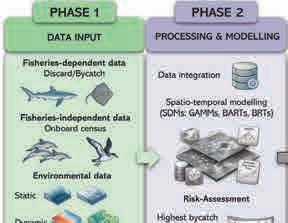
season. This is the solution the team at AZTI is working on. Having started with the demersal trawl eet in the Bay of Biscay, the group hopes to extend it to other local eets as data availability improves. By gathering and compiling sheries-dependent and -independent data, as well as dynamic and static data, they are now selecting the species most suitable for modelling based on data availability, and will begin integrating them into spatio-temporal models to enable a risk assessment of areas with the highest bycatch and encounter probabilities. The tool will ultimately be made available as an application to assist skippers reduce bycatch risk in real time.
In Iceland, numerous shing vessels are equipped with Hafsýn, a decision-support system developed by
another project partner, Trackwell. This system is fully operational but will be extended during the project to allow shers to monitor their impact and avoid bycatch and sensitive areas. The rst prototype has been developed and is already producing live bycatch predictions on demand. It has been validated on 12 years of data and has been demonstrated for cod catch and the bycatch of juvenile cod. It will progressively be expanded to cover more species and bycatch scenarios, trained on environmental and oceanographic data.

Fisheries policy is evolving, and shing more sustainably is becoming a requirement. The Landing Obligation under the Common Fisheries Policy increasingly requires that bycatch be reduced and, where unavoidable, landed and accounted for. However, new tools and solutions developed solely by scientists for scientists rarely work in practice and are unlikely to be adopted in commercial settings. In MarineGuardian, shers are co-designers, not just end-users. Solutions will be tested under real operational conditions where feasible, re ned based on user feedback, and built to be transferable and cost-e ective. When the project concludes in April 2029 some solutions will be close to commercial readiness, while others will still be in development. To follow the project’s progress, visit www. marineguardian.eu or nd it on LinkedIn, Facebook (@MarineGuardian) or Instagram (@MarineGuardianProject), where the project’s contribution to more sustainable sheries will be clearly evident.
Cecile Dargentolle, Matis, cecile@matis.is
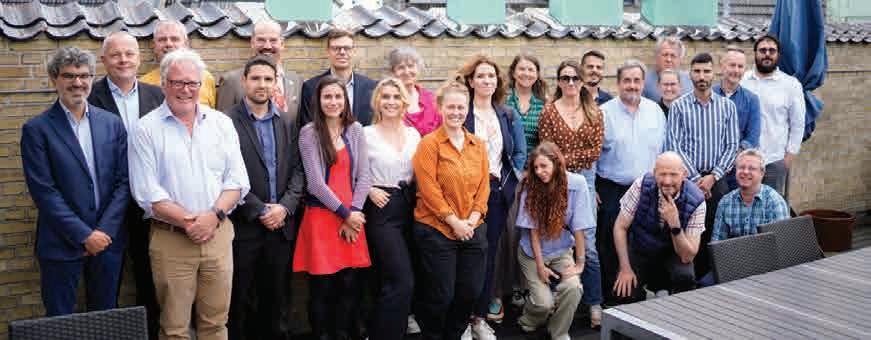
Every plate of seafood carries a story. Behind that piece of grilled sea bream or those frozen llets lies a chain of shers, farmers, traders, scientists, and retailers stretching across oceans and supply chains. However, that story rarely reaches the dinner table. VeriFish was created to change that. eri ishpro ectpartnersata eetin in nelast earatthe rofishoffices
Funded under Horizon Europe’s Mission Ocean and Waters, VeriFish set out to build a sustainability framework that helps citizens, producers, retailers, and policymakers make better-informed seafood choices, based on veri able information. The project o ers a framework, a toolbox, and a communication bridge, that brings veri able information to the people who need it. It sits alongside existing labels and certi cations without competing with them, thus informing users without confusing them.
Seafood is complicated. A single species can be nutritionally valuable, ecologically sensitive, and central to coastal livelihoods, all at once. How it performs on any of those dimensions depends heavily on where and how it was caught or farmed. Reducing all that to a simple red-orgreen ranking would be convenient but misleading. The VeriFish indicator framework brings together three pillars: environmental performance, socio-economic
aspects, and nutrition and health. The nal framework integrates 84 indicators across those pillars, linked to transparent, reusable data sources. Where reference points exist, it uses what the project calls a “distance-to-target” approach, measuring performance against relevant benchmarks rather than ranking products against each other.
Citizens, whether standing at a sh counter, picking up a food package, or ordering lunch, increasingly want their food choices to make sense for health, the environment, and the communities that depend on shing and aquaculture.
The project’s web1 and mobile application2 turns shery, aquaculture, nutrition, and sustainability data into an interface that does not require an advanced degree to navigate. Species factsheets, multilingual search, nutritional data, provenance information, and sustainability indicators are shaped by expert feedback and based on sources like STECF3 data. For a consumer, it means exploring seafood beyond the label. For a producer, it o ers a way to communicate product characteristics. Fishers, aquaculture companies, and retailers can tell their sustainability story as VeriFish gives them the structure to do it. The app was built with di erent users in mind—shoppers, retailers, and producers—and o ers concise summaries and detailed factsheets so information can be explored depending on the user’s requirements.
The project produced a series of media products for people to engage with. Over shed!4 turned sheries science into a card game for families and classrooms. The Let’s Cook Seafood!5 cookbook brought seasonal and nutritional thinking into the kitchen. A 136-species poster and puzzle6, a seafood calendar7, a shing methods poster8, and a video series9 rounded out a communication portfolio that reached children, families, educators, chefs, and professionals. These products endeavoured to inject fun into seafood literacy to make it appeal to di erent age groups and educational backgrounds.
From early on, VeriFish tested its outputs with the people who would need them, producers, researchers, educators, and public institutions. This outreach generated requests from industry bodies, schools, and public authorities to use both the web application and the media products. The project
also took its message on the road. Over two years, VeriFish travelled from the Faroe Islands to New Orleans, and from Brussels policy forums to Seafood Expo Global, contributing to the UN Ocean Conference and bringing its framework to FAO-GLOBEFISH seminars and aquaculture events across Europe. This resulted in one of the project’s most durable contributions: a voluntary European standard through the CEN network (VeriFish CEN Workshop Agreement (CWA))10, o ering good practice guidance on communicating seafood sustainability to di erent audiences.
Seafood has a genuinely good story to tell about nutrition, culture, coastal communities, and the extraordinary diversity of species that feed hundreds of millions of people. Its impact has however been diluted by vague claims, competing labels, and poor communication. By working with producers, researchers and public institutions, VeriFish created source of knowledge about how seafood is caught, farmed, and handled. The tools to communicate this knowledge are a direct bridge to consumers. With the help of the indicators de ned by the project they learn that seafood sustainability begins at sea or at the farm and encompasses the entire value chain. The project outputs are designed to contribute to greater awareness about
1 https://veri sh.info/
2 https://veri sh.info/veri sh-web-app/
3 https://stecf.ec.europa.eu/index_en







neofthe e iapro ctscreate the eri ishpro ect asacook ookaimed at bolstering children’s interest inseafoo
sustainability in the seafood sector and to promote consumption choices that bene t both the individual and the environment. An eminently worthy goal and one that VeriFish has achieved in spades.
VeriFish consortium: Coordinator: Trust IT Services SRL (Italy), Partners: Euro sh International Organisation (Denmark), COMMpla SRL (Italy), FORTH – Foundation for Research and Technology (Greece), NOFIMA – Norwegian Institute of Food, Fisheries and Aquaculture research (Norway), EuroFIR – European Food Information Resource (Belgium), PMT PL – Premotec (Poland), Clupea (The Netherlands) and Poseidon Aquatic Resource Management (United Kingdom).
Ixai Salvo, Euro sh, ixai@euro sh.dk
4 https://veri sh.info/over shed-the-card-game-by-veri sh/
5 https://veri sh.info/veri sh-cookbook/
6 https://veri sh.info/discover-the-diversity-of-the-ocean-poster/
7 https://veri sh.info/veri sh-calendar-seafood-inspiration-all-year-round/
8 https://veri sh.info/veri sh- shing-methods-at-a-glance-poster/
9 https://veri sh.info/interactive-seafood-insights/#Videos
10 https://veri sh.info/veri sh-cen-workshop-agreement-cwa/
APROMAR, an association (and producer organisation) representing around 60 Spanish sh farmers companies (about 95% of the total n sh production), speaks for the sector, defends its interests, and provides services to members. Acuicultura de España, one of its initiatives, is a Communication Plan that seeks to educate the general population about Spanish aquaculture.
For years, Spanish aquaculture has had to deal with a paradox. Spain is the leading aquaculture producer in the European Union, yet the sector has often remained poorly understood by the wider public. APROMAR, the Spanish aquaculture business association and producer organisation number 30, has made changing that perception one of its central tasks. Alongside its representative and technical work, it has built a communication strategy designed to make Spanish aquaculture more visible and easier to understand. At the same time, it has supported practical innovation projects for its members and promoted a collective brand that help consumers identify farmed fish of Spanish origin at markets.
In 2019, a study commissioned by APROMAR showed that fewer than 30% of Spaniards knew the sector well enough to identify it properly. According to Garazi Rodríguez of APROMAR, that finding made clear that better communication was necessary to promote the sector and its benefits such as fish quality, food security, low environmental impact, and job creation—often in areas with limited economic opportunities. In response, APROMAR in 2020 launched the initiative Acuicultura de
España (https://acuiculturadeespana. es/). The idea was to build a public-facing platform, separate from the association’s own institutional website, that would publish accessible, science-based information about aquaculture and ensure that reliable content appeared where consumers were already searching for answers online. The website and social media profiles present aquaculture as part of Spain’s food system, highlights its regional diversity, and explains why the sector matters in terms of nutrition and local employment. It also frames aquaculture as a national activity rooted both in marine and inland waters, which is important in a country where production ranges from sea bass and sea bream to trout, turbot, Atlantic bluefin tuna, mussels, oysters, and caviar.
The communication strategy has developed in stages. At rst, the emphasis was on building digital visibility through articles, blog content, social media, and collaborations with scientists and in uencers. Later, once public awareness had improved, APROMAR moved into broader campaigns. Ms Rodríguez explains that annual tracking showed a strong rise in public awareness by 2025, when 55% of the respondents were aware of aquaculture in Spain and that 74% had a positive perspective on the activity, and this gave the association the condence to launch larger-scale advertising, including television spots. Some of these campaigns are targeted at certain demographic groups, for example, young people or women. One of the key campaign messages was simple: without aquaculture, there would not be enough sh for everyone, an argument from APROMAR’s 2025 report, which states that aquaculture already supplies a major share of aquatic food globally and is central to future food security.
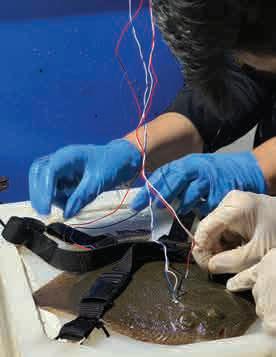
esearcherschecktheefficac ofelectric stunning as a possible alternati etost nnin fishinanicesl rr
Ms Rodríguez says the target for the broad communication campaign is not just consumers, but the general public, because APROMAR wants aquaculture to be known and understood beyond the point of purchase. The strategy thus includes school visits, local actions in farming areas, farm-related activities, and media work. The aim is to humanise the sector, show the people behind it, and counter outdated assumptions about sh farming. APROMAR’s own report describes this as an e ort to push back against disinformation circulating about aquaculture in some circles. Rising public awareness will encourage regional and national authorities to implement measures that foster growth in the sector. Demand for sh is high, and Spain has all the conditions to increase production—today more than 60% of aquatic products is imported.
Public debate around aquaculture is o en shaped by myths. Concerns about sh welfare, medicines, or environmental impact do not disappear simply because producers say they are unfounded. APROMAR has therefore tried to answer criticism with evidence. Ms Rodríguez explains that the association works with scientists and uses expert-backed content to respond to questions on social media and in public fora. The Acuicultura de España platform reinforces this by publishing articles on issues such as food safety and animal welfare, and by relying on a formal expert committee to provide authority and credibility.
Innovation is the other major pillar of APROMAR’s work. Because many of its member companies compete in the market, the association focuses on collective projects that address common bottlenecks. Ms Rodríguez describes
these as applied projects, largelynanced through public co-funding. For example, Ms Rodriguez mentions trials with electrical stunning systems for sea bass, sea bream, and meagre in oating pens, e orts to validate new technology for monitoring pathogens, and broader work on digitalisation and sh health. APROMAR’s innovation network, REMA, brings together producers and suppliers to identify the areas where new tools can make a di erence. In 2025, the REMA programme included projects on trout welfare, electrical stunning, disease prevention, and traceability technologies. Particularly interesting is APROMAR’s work on welfare guidelines. Ms Rodríguez notes that the association is developing species-speci c welfare guides by bringing together producers, NGOs, researchers, and public authorities. So far, this has resulted in guidelines for seabass, seabream, trout, and turbot, and guidelines for sole are in the works.
Marketing, nally, is where APROMAR tries to turn visibility into consumer recognition. The best-known example is the collective label now called Crianza Mares y Ríos de España. This is the successor to the earlier Crianza de Nuestros Mares label introduced in 2015 for marine species. APROMAR reworked the concept in 2023, creating a broader umbrella brand and species-speci c labels, while also incorporating inland aquaculture products such as rainbow trout and caviar. The purpose of the label is to make Spanish origin more visible and easier to identify, especially at the point of sale, where imported and domestic sh o en appear side by side and many shoppers assume everything on o er is local.
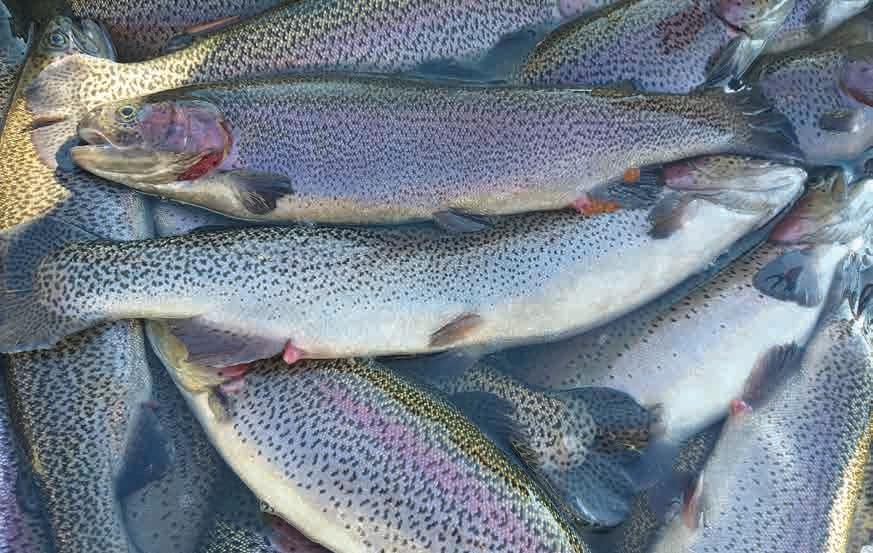
anassociationof panishfishfar ers isen o in s ccessatcreatin reatera arenessa o ta ac lt reamong the general public in Spain. Pictured, large trout produced at a Spanish farm.
The challenge is not merely branding, but consumer behaviour. According to Ms Rodríguez, many Spanish shoppers say they would prefer to buy a national product and even pay a little more for it, yet in practice they o en do not know the di erence between Spanish farmed sh and farmed sh of the same species from other countries nor where to nd this information. They therefore wrongly assume that all sh is equally fresh, when it generally takes more days for sh harvested in another country to reach a Spanish retailer than it does for sh harvested in Spain, which generally arrives at sh counters within 24 hours of being harvested. The current label strategy stresses Spanish origin and freshness, using the message “Pescado Español, Pescado Fresco”.
Campaigns in 2025 and 2026 have primarily focused on increasing visibility within supermarket chains marketing products under the brand. In parallel, collaboration with FEDEPESCA has supported a dedicated project aimed at improving the perception of aquaculture and boosting sales at traditional shmongers.
The label is not without complications. Ms Rodríguez acknowledges that only part of APROMAR’s membership actively supports it, and that uptake depends on geography, distribution strategy,
and the ability to guarantee stable supply. Some retailers prefer not to highlight individual brands in sh, while some regional markets respond differently to overtly national branding. Even so, APROMAR has continued to invest in the label because it highlights farmed sh as a Spanish-produced and traceable product. This dovetails with the message promoted in the Acuicultura de España campaign, which presents sh from Spanish aquaculture as fresh and safe. At a time when the Spanish aquaculture sector is stagnating in the face of red tape, climate pressure, and competition from imports, APROMAR’s activities within visibility creation, innovation, and marketing are intended to make the sector better known and more competitive.
Caviar Pirinea may carry caviar in its name, but the company today is, above all, a trout business. Diego Mendiola Martínez, the group’s director for innovation, says trout production now accounts for more than 80% of group business, while sturgeon is being pushed into a secondary position and will be reduced further over the next ve years.
Caviar Pirinea is at the centre of an important development in Spanish aquaculture. According to Aquaculture in Spain 2025, an annual report on the Spanish aquaculture sector produced by APROMAR, the association of Spanish farmed seafood producers, rainbow trout production in Spain reached 16,693 tonnes in 2024, up 13.1% on the previous year, and the sector is increasingly oriented towards larger sh rather than traditional portion sizes. This trend is linked to value-added channels such as smoking and the HORECA trade, where larger sh are preferred. In this context, Caviar Pirinea, with its production of trout of an average size of 3-4 kg is helping to shape the market.
Production approaches half of national trout output
The company is among Spain’s largest producers of sh. It has roots in Barbastro, Huesca, and farms in the foothills of the Pyrenees. The sh are raised in
pure, oxygen-rich mountain water, a condition central to both quality and identity. The business was founded in 2013 by Arnault Chaperon and Laurent Villaeys, two French aquaculture specialists with long international experience. Mr Mendiola emphasises the use of snowmelt water as one of the foundations of the company’s production model. The company now operates 12 aquaculture and industrial processing facilities across northern Spain, with two in Navarra (to where the registered o ce was moved in 2019), two in Aragón, one in Catalonia, three in Galicia, some new sites near Porto (Portugal), and the most recent acquisition of Normandie Truites (France). Not all sites hold sturgeon, but trout is produced at all the farms.
The assortment includes fresh and processed trout and sturgeon, smoked products, trout roe, semi-preserves and pâtés, under the Pirinea brand, while the Per Sé label is reserved for caviar. However, what was once a diversi ed premium sh-and-caviar house is today a trout specialist with a smaller caviar arm attached to it. The company’s trout strategy is distinctive because it centres on large sh and in its designation of origin and quality. Mr Mendiola
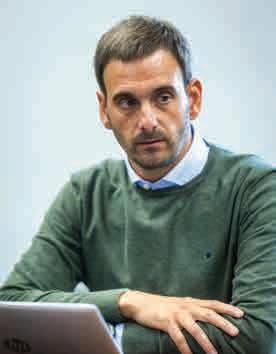
Diego Mendiola Martínez, Director of Innovation, Caviar Pirinea
says the standard target is around 3 kg, though larger sh are also produced, and the company can also sell smaller carcasses depending on conditions. Larger trout enable more products, better margins, and stronger market positioning. Small portion-sized trout are largely con ned to whole- sh presentations. Large trout, by contrast, can be turned into llets, loins, or smoked
products. They also t better with premium branding and can be positioned closer to other salmonids. Wider developments in the Spanish market support this focus on larger sh. According to APROMAR, the move towards larger trout is being driven by the stagnation of standard trout prices and by the growth of value-added outlets such as smoking and food service. The report also shows how concentrated Spanish trout production remains in inland freshwater systems, with key producing regions including Castilla y León, Galicia, Catalonia, La Rioja, Aragón, Andalusia, Navarra, Asturias, Castilla-La Mancha, and Cantabria. Trout is therefore a signi cant part of Spanish inland aquaculture, but still modest in national volume compared with marine n sh species (65,000 tonnes), not to speak of mussels (185,000 tonnes).
According to Mr Mendiola, current annual production is roughly 7,500 tonnes of sh and roe, with trout by far the main species by volume and value, and a gure indeed that is expected to increase signi cantly in the coming years due to the commissioning of several new farms.
The company has recently begun producing smaller sh, typically between 400 g and 800 g, following demand from distributors in Spain and elsewhere in Europe. But this is an extension of the product assortment, not a change of identity. The business remains focused on larger trout because that is where the strongest opportunities lie in di erentiation, processing, and margin, he says. On certain markets the company’s products carry the Crianza de Mares y Rios de España (Farmed in Spanish waters) label developed by
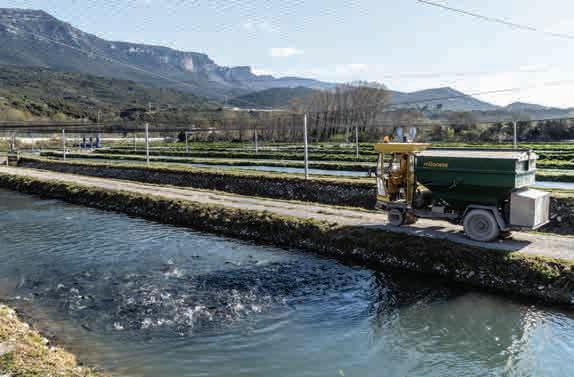
neoftheco pan stro tfar in sites lto ether a iar irineahashas12 sites spread over Spain, northern Portugal, and in La Normandie (France).
APROMAR. The label is widely recognised by consumers as testifying to the nutritional and gastronomic qualities of the product. In addition, safety, traceability generator of quality local employment, and respect for primary production are also attributes associated with the label, says Mr Mendiola.
A second pillar of the trout business is roe. Mr Mendiola says trout roe is increasingly important in tonnage terms, with particularly strong demand in France and among hospitality buyers in Spain. The roe is handcra ed within 24 hours of spawning to create a very fresh, tasty and playful product.
Mr Mendiola says that for larger-volume business the company increasingly supplies fresh sh a er being slaughtered under the strictest animal welfare standards, destined either for national smokehouses or for facilities linked to the group in France. He also points to a partnership with the Gozoki Food Group in Estillac, southern France, which gives Caviar Pirinea access to higher productivity and commercial positioning but also drives and underpins all industrial development
towards smoked products and readyto-eat formats. Its president, Mr Yann Maus, is a highly visionary leader in the food industry. Caviar Pirinea’s market footprint is national for fresh sh, but wider for premium products. Mr Mendiola notes that the most sustainable markets for fresh trout are those that can be reached within roughly 24 hours, especially Spain, southern France, and Portugal. Beyond that radius sales are mainly of its processed sh products as well as niche items such as trout roe and caviar. The sturgeon business though minor and becoming less relevant remains part of the company’s public identity. Spain produced only 5 tonnes of caviar and 121 tonnes of sturgeon meat in 2024, according to APROMAR, tiny gures compared with trout, and Mr Mendiola acknowledges that while the sturgeon business at Caviar Pirinea has high added value, it is small in volume and no longer strategic. Even its organic certi cation for sturgeon and caviar, once important, has become less commercially useful because the market does not pay for it or only very seldom.
Innovation is a priority for the company which is continuously working on productivity improvements, environmental integration, animal welfare, sustainable feed, circular packaging, AI, new products and European climate adaptation projects such as OCCAM, where the company will test new climate-smart technologies and
procedures aimed at enhancing sh health and growth under increasing environmental stress. The company has also invested a lot in animal welfare, including e ective stunning technologies before slaughter across all production since 2021. Mr Mendiola presents the company as innovation-minded but still focused on practical farming. High quality sh, uniform sizes, year-round availability, and stable pricing are the company’s key selling points and while technology, product development, and convenience formats matter, they must not obscure the company’s main competence: producing safe, nutritious
sh well. Caviar Pirinea is a modern trout farming company that uses scale, mountain-water, product diversi cation, and selective processing to push trout into higher-value territory with products like roe, smoked items, and convenience. As APROMAR points out in its report, the trend in Spain’s trout sector is towards larger sh and more value-added channels, since the price of portion-sized trout is stagnating. With close to half the national production of trout, most of which is large sh, Caviar Pirinea appears to be in a strong position to capitalise on this development.
A Spanish
in Northwest Atlantic and Northeast African waters has used a board game in a campaign to attract young people to the sector.
ANACEF, based in Las Palmas on the Canary Islands, has found an unlikely tool for one of the sector’s most stubborn challenges: a board game. Trabaja en pesca (Work in Fisheries), takes the question of generational renewal into the classroom, and into the hands of teenagers aged 13 to 16. The game was developed under ANACEF’s broader Programme for the Promotion of the Fishing Profession. Fewer young people are choosing sheries, and it might be a perception issue. Teenagers know that sheries are made with boats, without sparing a thought for all the other companies,
people, processes, and equipment that underlie the whole sector. Unable to see the whole picture, they cannot make an informed choice, and many potential candidates are lost before they ever seriously consider a profession in the industry.
The game puts players in the role of a vessel owner and asks them to make
the kinds of decisions that de ne real sheries: what and where to sh, how much (quotas), how to control costs across crew, fuel, and gear, and how to respond when things go wrong. Catch is landed and sold, and players begin to understand that pro tability in sheries is rarely straightforward. Sessions were led by a former shing captain, that helped students understand complex issues.
The rst campaign ran in Las Palmas de Gran Canaria in 2023, reaching close to 500 students across three secondary schools. The talks generated genuine engagement, and the game sparked competition, laughter,
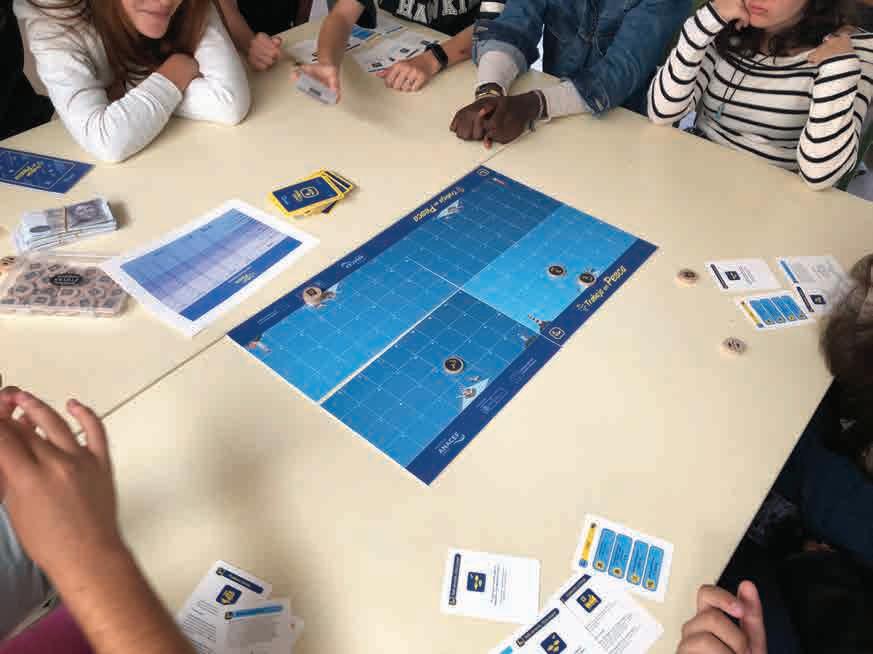
and the occasional heated debate about quota decisions. It also exposed just how little most of these students knew about sheries. And that, in a sense, was perhaps the most valuable outcome as it showed the wide gap between the sector’s complexity and its public image.
A second edition followed in 2025, on Tenerife, giving ANACEF the opportunity to compare attitudes across different islands. The survey results were encouraging as between 53% and 79% of students said they could imagine a professional path connected to sheries. Students were also clear about what
they wanted next: port visits, time on board, and the chance to meet young people who had actually gone into the sector.
Realism is among the fundamental attributes of the game. For example, quotas run out, shing grounds have limits, and decisions have
consequences. It is perhaps a more honest introduction to how the sector actually works than most formal approaches manage. ANACEF’s hope is that some of the students who encountered sheries for the rst time around a classroom table will one day choose to make it their career. If even a handful do, a board game will have proved to be one of the sector’s more consequential recruitment tools, and a reminder that the most e ective interventions are not always the most obvious ones.
Ixai Salvo, Euro sh, ixai@euro sh.dk
The processing industry is incorporating equipment and processes into its operations that make it more sustainable. This is an economic imperative according to Luis García Castro, Sustainability Manager at Conxemar, the Spanish Association of Wholesalers, Importers, Exporters and Manufacturers of Fish and Aquaculture Products.
Step into almost any seafood processing plant and it becomes clear very quickly how much is at stake. Energy is being used constantly to keep temperatures stable, raw material moves through production lines where every percentage point of yield matters, and by-products pile up that could o en be worth much more than they are today. Processors are working under real pressure: rising energy costs, tighter regulation, growing demands for transparency, and margins that leave very little room for mistakes.
But that same pressure also creates room for improvement, and this is something Mr. Luis García Castro, Sustainability Manager at Conxemar, understands well. His view of sustainable sh processing is broader and more practical than the term sometimes suggests. It starts with the origin of the raw material, but it also includes how e ciently a plant runs, how energy is managed, how much of the raw material ends up as product, and how people across the chain are treated. In the past, sustainability was o en understood mainly in environmental terms, linked to habitats, sh stocks, and natural resource management. Today, that picture is wider. Social conditions, worker welfare, and relationships with
communities are also part of the equation. But, as Mr. García Castro points out, none of this means much without an economically viable business model. That tension is especially visible in processing, where competition is strong and margins are tight.
When asked where the biggest environmental impacts lie, Mr García Castro does not hesitate: energy. It a ects all stages of production, but especially those linked to cooling, where consumption largely shapes the footprint of processed seafood. Refrigeration systems also raise another concern, particularly when gases with a high global warming potential are still being used. Raw material losses, underused by-products, water use, and packaging all matter too, but energy remains the main area of focus. Cutting energy use per tonne processed, alongside reducing refrigerant leaks, product losses, and reprocessing, can make a major difference. Technologies already proving their value include natural refrigerants
is arc a astro staina ilitManager at Conxemar, the Spanish Association of Wholesalers, Importers, Exporters and Manufacturers of Fish an ac lt re ro cts
such as ammonia and CO2, better insulation, heat recovery systems, improved defrost management, and digital process monitoring.
Mr García Castro also highlights technologies that support good freezing practices, such as modi ed atmosphere packaging, vacuum systems, high-pressure processing, biopreservation, and active or intelligent packaging. These help extend shelf life,
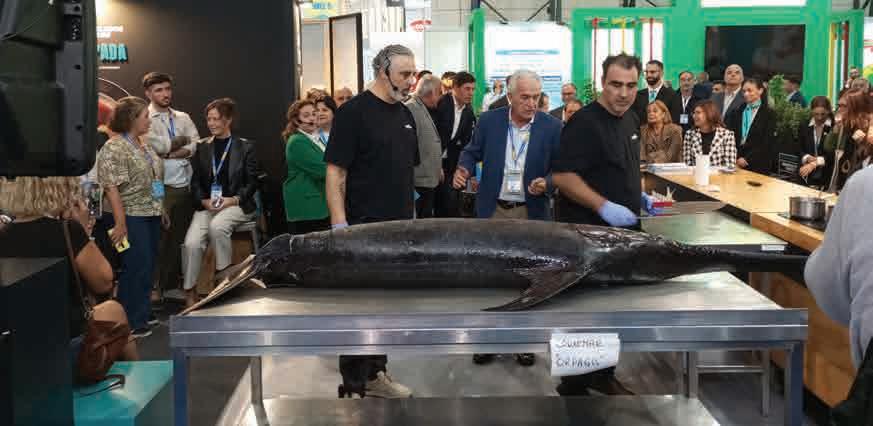
reduce losses, and maintain product quality across the chain. Faster and more stable freezing produces smaller, more even ice crystals, which helps preserve texture, water retention, and overall eating quality. But temperature control matters throughout the process, not only inside the freezer. Losses can build up during transfers, waiting times, glazing, and unexpected uctuations in storage.
Plastic packaging is another area where improvements can support greater sustainability. For most processed seafood products, it remains di cult to avoid, but its environmental impact, the cost of waste management, and the tax on single-use plastics have already pushed companies to reduce its use. Digitalisation is also becoming an important part of the solution. Sensors, IoT systems, machine vision, arti cial intelligence, and digital twins are helping processors monitor operations in real time, spot problems earlier, reduce waste, improve yield, and plan maintenance more e ectively.
Another area with clear untapped potential is the use of processing side streams. In much of the sector, by-products still represent lost value. Better valorisation of these materials can reduce waste while also creating new income streams and improving competitiveness.
On environmental regulation, the sector broadly accepts that sustainability is becoming more important and cannot be ignored. But many processors depend heavily on imported raw material, o en coming from suppliers working under very di erent conditions and not always subject to the same rules as those in the EU. Mr García Castro accepts the need for stronger standards but argues that the
transition must be managed in a way that does not leave European processors at a structural disadvantage. Looking ahead, Mr García Castro sees several trends that are likely to shape the sector in the coming years. These include a wider move towards low-impact refrigerants, better use of renewable energy, and greater digitalisation of plant performance. Sustainable sh processing is no longer just a matter of compliance. It is increasingly becoming an operational need and, in many cases, a competitive advantage. The tools already exist and the knowledge is growing. For Mr García Castro, the message is clear: changing the traditional business model into one that bene ts everyone is the path towards a successful company. And that change, he says, should come from conviction, not only from regulation or market pressure. If the sector does not make that change itself, others will do it for them.
Ixai Salvo, Euro sh, ixai@euro sh.dk
A Spanish company is farming vannamei in the middle of Spain using a new microbial technology. The shrimp is marketed on the strength of its environmental credentials and its proximity to the market.
At rst glance, the idea sounds almost contradictory: premium shrimp from inland Spain. Yet that apparent contradiction is precisely what has enabled Noray Seafood to stand out in a crowded and highly competitive market. In Medina del Campo, far from the coast and far from the traditional geography of shrimp production, the company has built a business around a proposition that would once have seemed improbable: it produces fresh, shrimp, raised in a controlled environment, and marketed as a premium alternative to both imported farmed shrimp and wildcaught products.
For decades, shrimp in Europe have largely followed two familiar models. The rst is imported aquaculture shrimp, usually sold frozen, where scale and price are decisive. The second is wild-caught shrimp, which carry connotations of tradition, quality, and authenticity, especially in premium segments. Noray has sought to create a third path. Its shrimp are neither an anonymous commodity nor a nostalgic product tied to capture sheries. Instead, they are presented as a modern, climate-smart seafood option, characterised by control, traceability, freshness, and proximity to market.
The shrimp sector today is under pressure to answer questions that were once easier to ignore. Consumers, retailers, and chefs are looking more
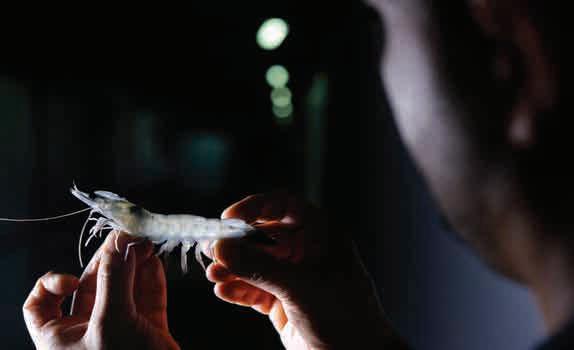
closely at how seafood is produced, how far it travels, and what environmental costs are hidden behind the nal product. Wild shrimp, especially where trawl sheries are involved, are increasingly scrutinised for their fuel intensity and broader ecological footprint. Imported farmed shrimp, meanwhile, may face criticism over traceability, chemical use, transport distance, and uneven production standards. Against this backdrop, Noray o ers a product that is sold not only on its taste and quality, but also on its fully controlled production and defensible environmental narrative.
Noray’s model turns technical control into market value. Shrimp are produced indoors in a tightly managed system using arti cial seawater and a microbial farming process designed to maintain stable conditions throughout the production cycle. This allows year-round production and gives the company a degree of consistency that is di cult to achieve
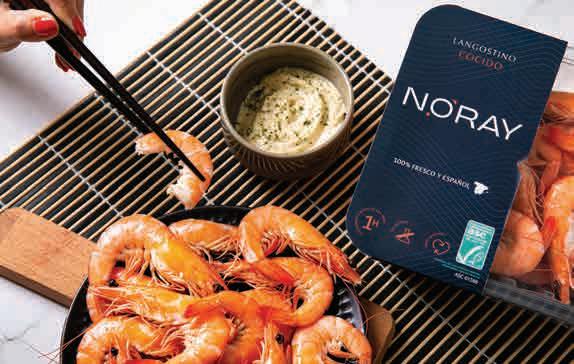
ora spro ctsthathi hli htstheirshri pas panish fresh a iti e freetraceable, and better aligned with modern environmental expectations.
in many conventional shrimp systems. More importantly, production involves no antibiotics, no chemical a ertreatments, full traceability, and predictable quality. In much of the European shrimp market, the distinction between genuinely fresh product and thawed product can be blurred. Imported shrimp may arrive frozen and later be sold in ways that suggest a higher degree of freshness than is actually the case. By contrast, inland production close to the end market makes it possible to supply freshly harvested shrimp to a sh counter or restaurant kitchen. Freshness a ects avour, texture, appearance, and shelf-life factors that are critical in the premium segment.
Spain is one of Europe’s great seafood-consuming nations, with strong culinary traditions and an informed customer base. Yet it is also a market where price, even in premium categories, is decisive. Convincing consumers, chefs, and other buyers to embrace a higher-priced shrimp therefore required Noray to demonstrate that a shrimp produced in an inland aquaculture facility can justify a premium because it o ers something di erent from both cheaper
imported shrimp and conventional wildcaught options, namely certi cation to the ASC standard. The company was the rst indoor shrimp farming company in the world to receive this certi cation which acknowledges the company’s commitment to responsible aquaculture and sustainability and guarantees good practices in terms of the environmental and social integrity of the product. Moreover, the use of a new technology to rear the shrimp, full control over the production cycle, and a location close to the market are all compelling justi cations for charging a premium.
Noray does not compete head-on with large-volume shrimp suppliers on price. Instead, shrimp are sold not simply as seafood, but as a set of values: Spanish, fresh, additive-free, traceable, and better aligned with modern environmental
expectations. Buyers are thus encouraged to see the shrimp as a product made possible by a di erent way of thinking about aquaculture. The use of chefs has played an important role in that process. Chefs show how a product behaves in the kitchen, what makes it distinctive, and why it deserves attention. Culinary endorsement provides a form of translation from technical innovation into gastronomic legitimacy. A chef can make the unfamiliar feel natural, even desirable. In the Spanish context, where seafood culture is strong and culinary authority carries weight, this has been particularly valuable.
Trade fairs and gastronomic events have also been central to the company’s marketing e orts. They create opportunities to demonstrate the product directly, answer questions, and o er samples to gauge the public’s reaction. And coverage in specialist, culinary, and mainstream outlets has helped broaden awareness beyond immediate buyers. This is important because the company’s challenge has never been limited to selling shrimp. It has also had to familiarise the market with the very idea of inland premium shrimp aquaculture.
Equally e ective has been the ability to adapt the story to di erent markets. In Spain, the emphasis naturally falls on national production, culinary quality, and the appeal of a premium shrimp grown domestically. In wider European markets, the same product can be presented more strongly through the language of sustainability, innovation, and controlled aquaculture.
Noray has shown that the future of premium seafood depends not only on how products are farmed or caught, but also on how they are marketed. By combining inland aquaculture with careful brand-building, it has created a space for a new kind of shrimp on the Spanish and European markets.
Søren Espersen Schrøder, Euro sh, soren@euro sh.dk
OPMEGA is the association of Galician mussel producers, mainly family-scale operators who breed mussels on oating ra s anchored in the Galician rias. The association was established in 1986 but changed its name to OPMEGA in 1996 and has been recognised as transnational (with a member each in Portugal and Greece) producer organisation OPP-18 since 2022.
Producer organisations (POs) are bodies set up by shery or aquaculture producers under EU-wide rules to look a er the day-to-day management of the activities of their members. Moreover, they steer these activities towards sustainability, promote the products through certi cation schemes, and manage the supply, marketing, and sales of the production.
OPMEGA organises Galician mussel producers to defend producers’ interests, and to promote the Galician origin of the mussels under the Protected Designation of Origin, Galicia Mussel (Mejillón de Galicia). It brings together 579 ra s, 312 members, and 11 delegations distributed in the estuaries of Muros and Noia, Arousa, Pontevedra, Vigo and Greece. Delegations are the local o ces that form an
intermediary between the association and the producers. Today, annual mussel production in Spain is about 200,000 tonnes of which over 90% comes from Galicia. OPMEGA accounts for some 30,000 tonnes. Galicia is thus the biggest mussel producing area in Europe with some 3,300 ra s in total. Ricardo Herbón González, the president of OPMEGA, explains the PO handles sales and payments, making it the principal economic intermediary between producers and buyers. Its delegations operate as local o ces close to the producers and typically each mussel-growing area along the Galician coast will be represented by a delegation. The central o ce communicates demand, the delegations coordinate with the growers, and the product moves through a system in which individual producers bene t from collective marketing. Galicia’s mussel sector is highly fragmented economically and geographically. Production is spread across the estuaries, and farms vary from very small holdings to larger family businesses with several ra s. Irrespective of the source of the mussels, they are all used for the same products. Traditionally,
this is mussels packaged in nets of different sizes. More recently, OPMEGA has introduced a new product made up of mussels that are cleaned, sorted, and packaged fresh in a sealed plastic tray that has a shelf life of about 10 days. Younger people nd it easier to deal with this product than, a net with mussels, as the plastic tray can go directly in the microwave. It also o ers an alternative to the variety of
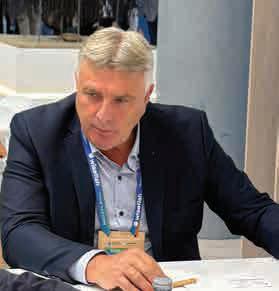
cooked, such as in cans, mussel products that are available on the market. For decades mussels have been cooked to conserve them and this plastic packaged format is a way of o ering something di erent.
Individual producers’ deliveries of mussels depend on the number of ra s they own. Payment is transparent and depends on the size of the mussels and the volume of mussels in the di erent size categories that each producer supplies. OPMEGA has di erent roles to play re ecting its commercial, political, local, and sectoral activities. The central ambition, Mr Herbón González says, is to secure the maximum value for the mussels produced by members. The sales guarantee is among the main bene ts that membership of OPMEGA o ers, while another is that the producers are con dent that they will receive a fair price for their production and that they will be paid on time. Despite these advantages a far greater volume of mussels is produced and sold outside of OPMEGA than through it, a fact Mr Herbón González attributes to the independent streak among many producers who feel that they need no help to market and sell their product. Each year OPMEGA releases a list of prices, so from the start of the year producers know the unit price for mussels that meet certain criteria (size, meat content). Producers know what they will receive when they harvest their mussels because they can check the quality and from there work out their earnings. The price generally remains stable from year to year. OPMEGA has tried to create a mechanism that will adjust prices to in ation, but this has not been easy. For producers, this transparency is one of the strongest arguments for membership. OPMEGA’s
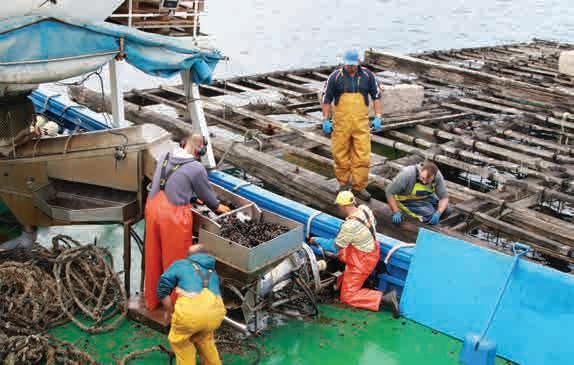
ssels ein ashe asthe arehar este leane an ra e sselsaretra itionall packa e innets o a the arealsostore inseale plastictra sfor convenience.
market work is shaped by the changing habits of consumers. Sales are mainly national, with some customers in Italy and Portugal. The organisation sells to retailers, such as Mercadona (the biggest in Spain with a market share of 26%) and to industrial users such as canning companies. Sales can be under the name of the producer even if the buyer knows that it is sold by OPMEGA, in other cases the product is sold without a brand name.
The environmental dimension of mussel production has a bearing on the activity’s pro tability. Mediterranean mussels are lter feeders that lter around 60 litres of water a day, which makes them highly dependent on the
conditions in the estuaries. Mr Herbón González identi es changes in salinity as a major concern, especially when increased river input reduces the salt content of the water. This concern is echoed by OPMEGA’s own recent communication on storm impacts in the Arousa estuary. In February 2026, the organisation reported mussel mortality following heavy freshwater in ows caused by storms and said it was gathering data from members before taking the issue to the regional authorities. Another change he has noted is in the in ux of fresh cold water from the Atlantic to the estuaries. Due to changes in marine currents these injections of fresh water have also changed. As a result, production has been declining. This year, for example, heavy rains at the start of the year caused production to fall by 30-40 percent due to lower water salinity. While salinity is impossible to mitigate, Mr Herbón González says the organisation is developing an app which will use an AI to gather and analyse data so that it can estimate how much of the production they are likely
to lose. With this knowledge producers can prepare themselves rather than being caught unawares and su ering the consequences. One way of mitigating the in ux of cold water may be to sink the ropes lower in the water column where the water is colder. But this is a complicated operation and because the water temperature may vary at the same height it would be di cult to get it right. The ideal temperature for growing Mediterranean mussels is between 10 and 20 degrees C. Traditionally, notes Mr Herbón González, water in the Atlantic is between 14 and 15 degrees C while now it has increased to 19-20 degrees C. That said, mussel producers are more fortunate than producers of clams or other bivalves which are less resistant to these changes in temperature.
Generational change is an issue that a ects the mussel-producing segment as much as any other segment within sheries and aquaculture. According to Mr Herbón González the fault lies at least partly in the education system which focuses too little on things that are relevant to the immediate community in which pupils grow up. Food production, for example, sheries, aquaculture, or terrestrial farming is not given the importance it deserves as the backbone of society. A child living a couple of kilometres from a mussel ra may not know what it is or that it
even exists, which he nds very disappointing. Another barrier to younger people joining the profession is that many do not know what they need or how to ful l the requirements to become a mussel farmer. The challenge is not critical yet because the o spring of mussel farmers are willing to take over, but for new blood to enter the sector, the prospects are bleak. In his personal capacity Mr Herbón González, who is also a producer, practices what he preaches. He has taught his three sons how to swim, where the food on their plates comes from, and how to farm mussels. He feels strongly that teaching kids about the origins of the food they eat contributes ultimately to the wellbeing and dynamism of the community around them.
A family-owned sh processor with a focus on salmon, Gimar puts its commitment to quality, sustainability, and worker welfare ahead of its bottom line. The goal is to ensure the long-term future of the company, says COO Carlos Jiménez.
At Seafood Expo Barcelona, discussions with exhibitors revolve around volume, margins and market access. At the Gimar stand, however, Carlos Jiménez, the COO of the salmon processor, emphasises something else: values. These are a set of principles inherited from his parents that still determines what the family company makes, how it makes them, what it will not make, which suppliers it works with, and how much
business it is prepared to lose along the way.
Gimar, a seafood company based in Petrer, Alicante, has over 30 years of history and a presence in both retail and HoReCa. The company o cially denes itself around four pillars: quality
of raw material, innovation in processes, the wellbeing of sta , and commitment to sustainability. The company is now run by the second generation. Carlos Jiménez and his brothers took over from their parents, whose passion, discipline, and sense of responsibility shaped how they thought a business should be run. He describes the company as not just a commercial structure but as a place where workers are treated well, products are made with conviction, and growth does not take
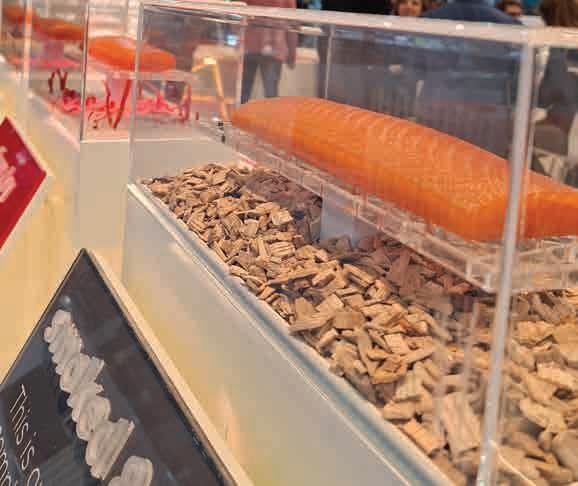
At the company, smoking salmon is a cra with a long history. Mr Jiménez talks about water, fat, protein, salt, drying, maturation and controlled transformation. The company’s salmon product range includes smoked salmon, carpaccio, tartare, burgers, steaks, llets, portions, and sushi formats like saku and sashimi. For Mr Jiménez consuming salmon is not about satiating hunger or seeking nutrition, but about creating an experience. One example of the insistence on quality is the invention of
precedence over values. During Covid and the raw material crisis that followed, for example, the company faced supply problems and falling quality. Its response was to walk away from certain species and shrink its portfolio rather than ship products it could not stand behind. Mr Jiménez says that decision cost them around 30% of their revenue.
This follows from a simple but demanding commitment to the nal consumer. A er all, ultimately it is the person who opens the pack at home, cooks the sh, and who decides whether to buy it again. He is aware of the risks to this strategy. Other actors along the value chain need to be convinced of the bene ts of this approach and not all of them are. This can lead to come partners being dropped and the need to nd new ones which adds to costs and risks potential disruptions to supply. This commitment to the end consumer
is why the company turns down commercially attractive propositions when Mr Jiménez does not believe in the product, and why it accepts a shorter shelf life if he thinks it protects the quality of the sh. This business model has earned him criticism, including from retailers who prefer more exible competitors. The salmon market, he admits, is not an easy place for this philosophy. Prices swing, retailers push hard on cost, and when salmon gets expensive, supermarket shelves feel the pressure. The easy x is to nd a cheaper supplier and keep the volume moving. However, the company has o en done the opposite, staying with suppliers who meet its standards even when it hurts. That includes sourcing salmon exclusively from the Faroe Islands, as well as wild tuna frozen at -50°C, and cod from speci c Icelandic producers, all MSC-certi ed.
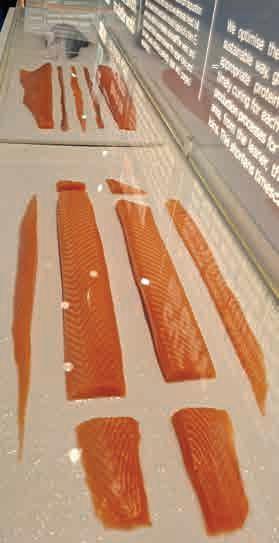
Salmon is trimmed and all blemishes such as blood spots are removed to i e eatofthehi hest alit
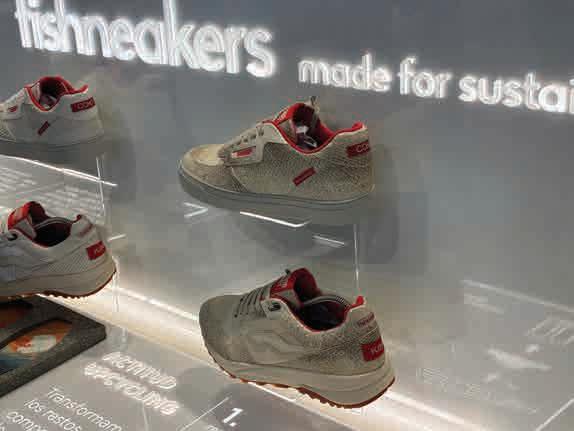
al onskinsare pc cle to akeshoesan a s o ercialpro ctionofthese products is due to start.
trim stage G, (trim stages usually go from A to F) a trimming process that removes blood spots, discolouration or visual defects from the llet, so only the highest meat quality reaches the consumer. At the company this is currently done by hand, though automated solutions are in development. The focus on quality is now second nature. We are completely transparent about our commitment to the nal consumer, Mr Jiménez says, and in discussions with suppliers we make that abundantly clear so there are no misconceptions. The goal is long term pro tability and as that is within reach, the company can a ord to pick and choose its partners.
Another revered process is maturation. Mr Jiménez describes its importance for the nal product. Salt draws water from the sh while di erent drying and curing stages produce di erent textures and avour intensities.
Products meant for cooking, burgers, sh balls, llets, go through a gentler process. Longer curing produces rmer textures suited to tartare or smoked salmon. The nal stage uses natural smoking with untreated hardwood. The payo comes when the consumer experiences the organoleptic qualities of the salmon. This obsession with process eventually pushed the company into building its own machinery. For een years as head of production, Mr Jiménez worked with equipment that did not quite t what he was trying to do, machines that broke down, were hard to clean, and were designed for generic processing. As they built their palette of products, they found that the machinery they needed did not exist. The result was Divso (Divergent Solutions S.A.), a technology company linked to Gimar, built to develop machinery around their own production philosophy. Among its
innovations is the use of magnets to drive certain machines rather than motors that tend to be susceptible to rust. The same spirit drove Salmon Planet, a start-up within Gimar focused exclusively on salmon.
Gimar is also developing sneakers and bags using upcycled salmon skin. This ts with the company’s philosophy of sustainability as the salmon skin is recycled into a high added-value product that in time may generate another income stream. In Alicante, a region with a strong footwear and leather-goods tradition, the company could nd the partners it needed to realise the idea. Mr Jiménez adds, however, that he changed tanning partners until he found a rm that could process the skins to his standards which essentially meant the use of vegetal ingredients rather than heavy metals. In keeping with the company’s philosophy, other materials used in the shoes and bags such as cotton and polyester are also recycled. In addition to recycling salmon skin, o cuts from the salmon processing go to cosmetics and pet food, and the company is also researching bioactive peptides and protein extraction. The aim is to use more of the sh, extract more value, and reduce waste. Mr Jiménez sees B2C (business to consumer) channels, including e-commerce, as increasingly important due to the direct interaction with the consumer and when commercial production of the leather goods starts, he expects to sell them online. While the shoes and bags will only be a niche product, they represent the same commitment to quality, sustainability, and workers’ welfare that characterises Gimar’s salmon business.
Estonia has been at the vanguard in developing and implementing measures to defend its sh stocks and coastal sheries from cormorants and grey seals.
Estonia restarted active management of great cormorants in 2023 a er several years during which control was limited resulting in increasing pressure on sh resources. In coastal waters the species has expanded strongly and in some areas its feeding now overlaps with sheries and with restoration priorities. The challenge is not only the quantity of sh consumed but the timing and location of predation. In spring, when sh concentrate near river mouths and in other spawning grounds, the impact can be disproportionate, particularly for migratory species gathering for spawning.
as well as deterring them
The policy response in Estonia has been a structured approach that combines long-term population
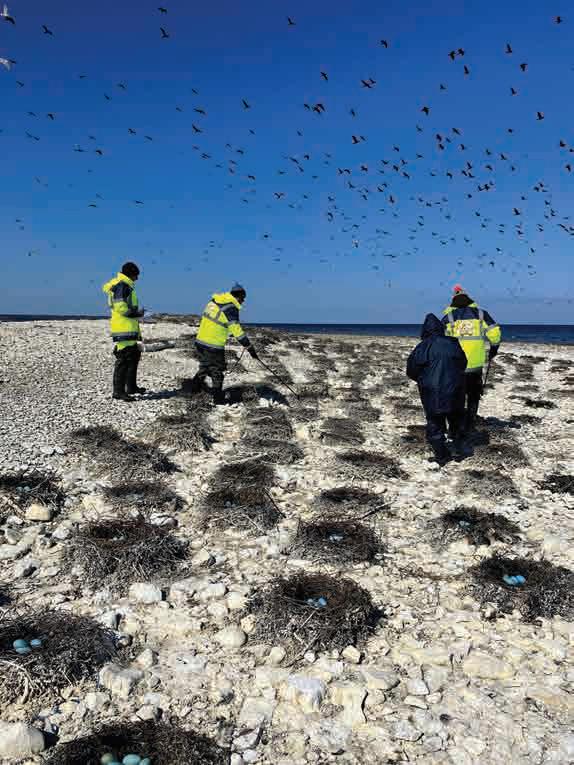
management with targeted action in high-risk locations. The backbone of cormorant control is egg oiling which aims to reduce breeding success and slow recruitment into the population. This is supplemented, where justified, by deterrence measures designed to protect vulnerable fish aggregations during narrow seasonal windows. In parallel, Estonia is increasingly active in the European policy debate, arguing that the issue is transboundary and that the current legal framework makes it unnecessarily difficult to apply coherent management measures at Baltic scale.
Egg oiling is the main nationwide instrument. Estonia’s working target is to oil at least 30% of the breeding population each year to achieve a sustained reduction in breeding success. Unlike short-term scaring that may simply move birds to nearby areas, reducing recruitment is intended to moderate pressure in the medium and long term. The scale of effort has increased accordingly. In 2025, Estonia estimated the population at 47,500 breeding pairs and carried out management on 19 islets, where 12,623 nests were treated. With clutch sizes typically in the range of three to five eggs, the operational footprint is significant and reflects a commitment to treat egg oiling as a continuing programme rather than an occasional intervention. This approximately 50,000 unborn birds left around 2,700 tonnes of fish in the sea showing the huge effect of oiling on fish populations.
At the same time, Estonia has recognised that some situations
require additional, highly targeted tools. The Pärnu River has become the clearest example. The removal of the Sindi dam in 2018 is one of the country’s most important river restoration measures. This is precisely the kind of restoration investment expected to translate into stronger returns of migratory sh, more resilient stocks, and improved ecological status.
However, restoration also concentrates fish movement in predictable corridors. In the sea area near the Pärnu river mouth, cormorant numbers have risen sharply, and nearby coastal islets host some of Estonia’s largest colonies. This combination creates a management dilemma—as the river becomes more accessible to fish, it can also become a more efficient feeding zone for birds during the spring migration. Estonia’s concern is that predation pressure in the river and near the river mouth can reduce spawning success and weaken the benefits that restoration is meant to deliver. The species most often cited in the local context include European smelt, salmonids, vimba, river lamprey, and other fish that migrate from sea to river and vice versa.
To protect the river during this sensitive period, Estonia’s Environmental Board has issued permits since 2024 to deter cormorants from feeding along the Pärnu River corridor. The permits allow both non-lethal and lethal deterrence, and they are timed to cover the spring, including the period before breeding and the peak spawning migration and spawning season for smelt. The rationale is to focus action where and when the ecological return is highest—at a migration bottleneck and during the weeks when fish are most exposed. This activity continues in 2026 to maintain pressure on the birds and safeguard the restored migration route.
While coastal colonies remain prominent, an emerging concern is the growth of inland breeding colonies. Experience from other countries suggests that inland lakes and smaller water bodies can be especially vulnerable, as predation pressure can translate quickly into visible changes in sh communities. Estonia’s practical di culty is that the main method, egg oiling, while feasible on accessible islets on the ground is much more challenging in colonies nesting high in trees. A scalable and safe approach for treating eggs in tree nests is still lacking. Estonia is therefore researching technological developments, including improved drone capability, both for monitoring and for potential future use in those colonies. At the same time, there is awareness that deterrence alone displaces birds rather than reducing overall impacts, underlining the importance of planning at the appropriate spatial scale.
Finally, Estonia places increasing emphasis on the European dimension. Cormorants and sh stocks present across borders and in the Baltic Sea is a shared problem. Estonia argues that the cormorant’s current status in EU legislation limits Member States’ ability to establish general management frameworks and forces reliance on case-bycase derogations and permits. Together with Sweden, Estonia has raised the issue with other Member States, calling for changes that would enable a more coherent approach across the region. From Estonia’s perspective, adding the species to Annex II of the Birds Directive would allow countries to set clearer rules on cormorant hunting, consequently reduce administrative burden, and align management more closely
with the scale and speed of current population developments. Only a holistic approach including a Baltic Sea-wide hunt (preferably before the breeding season) and massive egg-oiling will help to challenge the cormorant issue. Let us hope that there is enough political will to save our sheries.
Seal hunting and management in Estonia has also entered a new phase, driven by strong pressure on the coastal shery. Grey seals are native to the Baltic, their population has recovered strongly, and their interaction with small-scale sheries is increasingly visible both through direct consumption of sh and through damage to shing gears and catch. For many coastal operators the economic impact is amplied because attacks are repeated and concentrated in speci c areas. This has increased demands for a management response that goes beyond ad hoc mitigation and provides tools that shers nd e ective in practice.
Since 2025, Estonia has established seal hunt quota of three percent of the grey seal population, an increase from the previous one percent. The limit applies to the entire Estonian coastal sea. In the 2025 hunting year, 119 grey seals were hunted in Estonia, the rst time the country has recorded such a level within a single season. Even though the absolute number is small the change is signi cant because in earlier years the quota was typically 50–60 animals and the actual number hunted remained around 20–30. The higher quota has been retained for 2026, when up to 176 grey seals may be hunted. For the authorities, this marks a clear recalibration of policy, aligning
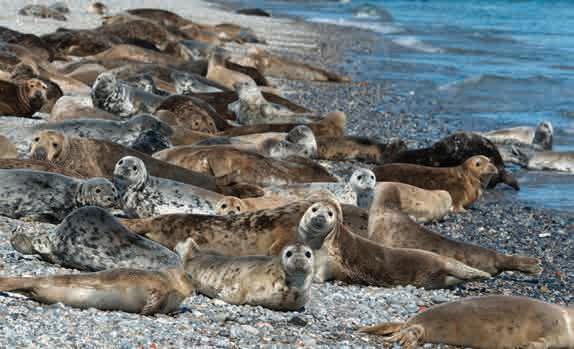
permitted take more closely with reported interactions and population dynamics. For shers, it widens the possibility of responding to repeated gear damage, particularly in locations where seals learn to associate shing operations with an easy meal. The concern is not only the sh consumed, but also the damaged catch and the costs of repairing and replacing gear.
A further indication of this shi is that last year Estonia issued, for the rst time, a permit to hunt a problem individual in a protected area. Protected areas require higher thresholds for intervention, and the permit was granted because the evidence was considered su cient to demonstrate that seal abundance and associated damage to shing gear in the area were substantial.
Fishermen are not necessarily hunters themselves therefore projects should be considered to hire specialists to deal with those seals and some additional motivation is needed to compensate the costs for such hunters. Estonia is also maintaining pressure on the European Commission to li the seal product trade ban in the European Union to fully utilise hunted seals.
Estonia’s strategy for dealing with these two predators is therefore to maintain long-term population measures, such as egg oiling for cormorants, while using targeted deterrence and hunting permits where acute pressure threatens sh stock recovery or the viability of coastal sheries. Whether consistent implementation, improved tools for inland cormorant colonies, and higher seal hunting quotas translate into measurable reductions in damage and stronger returns from investments in restoration remains to be seen.
Kerli Pettai Ministry of Regional A airs and Agriculture
In 2024, the Fisheries Information Centre project was relaunched with the support of the EMFAF (European Maritime, Fisheries and Aquaculture Fund). As in the two previous periods, the centre’s task is to help the sheries sector improve its economic performance by building knowledge and exchanging experience, while avoiding damage to ecological resources.
Operating under the Estonian Marine Institute of the University of Tartu, the Fisheries Information Centre fosters cooperation between shers, shing enterprises, and scientists, o en acting as an intermediary in communication with state authorities. Since it is unlikely that the future will bring any signi cant increase in sh quotas in the Baltic, income from sheries can only be increased through
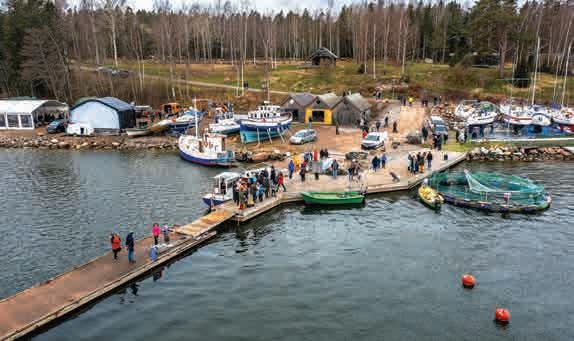
The Fisheries Information Centre organises the Open Fishing Ports Day when public activities are organised at some twenty ports in the country to promote fisheries n a o t people isite theports
smarter management. During its two years of operation, the centre has organised dozens of training sessions for aquaculture producers, shers, and sh processors, ranging from gear construction and marketing to production hygiene and business management. A recent trend has been great interest in training on arti cial intelligence (AI).
This training introduced shers and sheries entrepreneurs to the world of
AI’s endless possibilities and covered models and apps, prompt-engineering basics, report and data analysis functions, and market research. In addition to opportunities, the risks were also addressed as not every response from an AI is gold-plated, and con dential information should not be uploaded indiscriminately. In their daily work sector operators can use AI for optimising shing trip routes (most economical trajectory, impact of wind and waves on fuel consumption); weather and sea condition forecasting; product sales and pricing; and purchasing equipment and technical supplies. AI has also proven to be an e ective aid in project appraisal and product marketing. In addition to training, three international
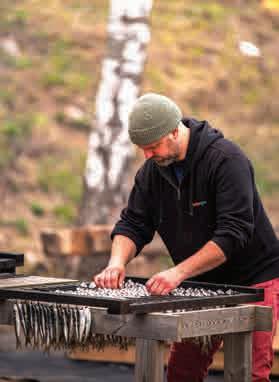
The consumption of domestically ca htfishincl in sprats alticherrin pike an perchispro otethecentre ict re spratsprepare to es oke
conferences as well as numerous seminars and information days have been organised.
Although the average age of an Estonian coastal sher is nearly 55, several dozen young people apply for a professional shing certi cate each year (preparatory training for the professional exam is held under the auspices of the centre). Therefore, it is logical to keep pace with technological developments in this eld as well, especially since the submission of logbook data is only permitted electronically. As in most countries, the shing community in Estonia is ageing. Entry into the sector, however, is quite di cult for young people. In addition to passing the professional exam, a commercial sher must hold historical shing rights (a state-determined proportion of all gear) for speci c gear in a speci c county. These rights have historically been concentrated in the hands of active shers and rarely appear on the open market.
When they do it is o en at a very high price. The large initial investment required is also an obstacle to young people entering the sector. In addition to purchasing historical shing rights, signi cant expenditure on boats, gear, and other equipment must also be taken into account. Therefore, there are relatively few young people joining as shers, even if many of them are people coming from within the system, that is, sons continuing their fathers’ trade.
Through the Fisheries Information Centre, aquaculture producers, shers, and sh processors can commission small-scale studies on topics of practical interest. Over the last two years, 15 such studies have been completed ranging from reports on sh diseases and cormorant predation pressure on sh stocks to cost-bene t analyses of technologies and marketing strategies. Just recently, UT (University of Tartu) scientists started a study commissioned by the centre, to explain the drastic decline in perch catches in Pärnu Bay over the last decade. Pärnu Bay has historically been the most profitable area for Estonian coastal shing and in the middle of the previous decade annual perch catches exceeded a thousand tonnes. In 2025, however, only 131 tonnes were caught. There are several suspected in uencing factors. Dumping that took place about ten years ago may have changed the bay’s benthic ecosystems; the stock of an invasive alien species—the Harris mud crab—has grown explosively, and the number of cormorants increases every year, which also a ects the sh fauna. Climatic conditions and the direct impact of shing must also be taken into account. By studying the combined effect of all these factors, the researchers will attempt to nd the reasons for
the decline in perch stocks and, ideally, design and implement measures to curb this downward trend. For the local shing community, this is critical, because historically it is perch, alongside herring, that has put bread on the tables of Pärnu shers.
The Fisheries Information Centre also continues to collect sheries statistics and re ect them in yearbooks and economic reviews. A good overview of the entire Estonian shing industry can be found at https://www.kalateave.ee/ images/2024/Estonian_Fishery_2024_ veebi.pdf.
The centre also publishes manuals and textbooks. At the end of 2025, a new fish book for preschoolers with a fresh approach was published, Minu kala-aabits(My Fish Alphabet). To date, the book has reached all five hundred Estonian kindergartens—approximately 12,000 toddlers who start school in 2027. Upon graduating from kindergarten, each child receives their very own fish alphabet book as a gift to take home. The idea of the alphabet book is to introduce children from an early age to fish as a valuable natural resource and a healthy food source to be treated with respect. The fish alphabet book tells tales of the fisherman’s profession and the activities of fish scientists. The publisher and authors hope that the alphabet book will inform the children, together with teachers and parents, the rhythms of nature through the lives of fish.
The first presentation of My Fish Alphabet took place on 20 March in Tartu at the Naerumaa kindergarten, where one of the book’s authors spoke about what inspired the stories
in the book. The biologist authors have woven the activities of their own family circle and friends into the stories using fishing trips with grandchildren, cooking together to put the catch on the table, boat trips, and tagging fish with scientists. Children were captivated by the puzzles presented in the alphabet book, the fishing tips passed down through generations, and the identification of fish species. They were also impressed by the realistic drawings of fish. Based on feedback from kindergarten teachers, the alphabet book, which invites children to discover Estonian fish and the cycle of nature in an age-appropriate and engaging way, is also a helpful tool for them in guiding children into the exciting world of fish.
The educational lm Kalandusest ja kalurikutsest (On Fisheries and the Fisher’s Profession), produced at the initiative of the centre, is aimed at higher primary school classes (grades 7–9), natural science teachers and hobby leaders in general education schools, and anyone interested in sheries. The lm introduces the principles of sustainable shing and provides an overview of the charms of the shing profession, as well as a brief overview of sh processing and aquaculture. Who is a sher and who is a sherman, what are the most common shing gears, which sh is caught the most in Estonia, how does trawling work, and why is aquaculture important, are among the questions addressed in the lm. The Interactive Fish Gametests young people’s knowledge of the main Estonian sh species and introduces the everyday reality of underwater life.
Traditionally, the Open Fishing Ports Day takes place on the last Saturday of every April, where fresh sh can be bought directly from shers in nearly twenty ports across Estonia. The day o ers sh-related activities for the whole family, especially children: the basics of sustainable shing and angling lessons, sh research and identi cation, puzzles and quizzes, and sh cooking workshops. Fishing Ports Day brings together local shers and current and future sh lovers, showing that delicious sh dishes are very easy to prepare. In the longer term, the event could help convert more people to sh consumption than at present, which in turn would help increase the economic well-being of the sector. This year (2026) was the eighth anniversary of the event and nearly 16,000 sh enthusiasts explored the harbours, bought fresh “silver of the sea” straight from shermen, and tasted local delicacies. The Fisheries Information Centre thanks everyone who visited the harbours as well as all organisers for contributing to the event’s success! Similarly, the traditional Estonian Fish Week continues to be organised in the last week of September—Estonian Food Month. In 2025, Fish Week took place in six catering complexes of the Defence Forces, where restaurant chefs, hand in hand with the Defence Forces’ kitchen sta , prepared sh delicacies from fresh Estonian farmed and wild sh. One of the Information Centre’s largest initiatives of the current period—a large-scale nationwide sh campaign—is driven by the same theme, with the following objectives. •To increase the sh consumption of Estonians. Ideally, sh consumption could rise to twenty
kilograms per person per year (15 kg/capita in 2021).
• To increase the habit of eating sh among young people up to the age of 29. According to studies, this age group consumes far too little sh.
•To dispel myths that sh as a food product always costs a lot.
•To encourage the consumption of less common sh species. Currently, mostly red sh is bought in Estonia, while local species—sprat, Baltic herring, perch, pike—are unfortunately underrated.
The centre also regularly organises a competition to select the shing achievement of the year. Among the thirteen shortlisted candidates in 2026 were the State Forest Management Centre for restocking e orts for seatrout and sturgeon and for demolishing two dams; the Estonian Fishing Association for safeguarding the interests of the sheries sector; and the Turja Fishing Association for organising youth camps on sheries and maritime issues on Saaremaa island. The winner was the state Environmental Board in cooperation with sheries action groups and the Aquatic Biota Society for their work in the management and deterrence of cormorants to reduce predatory pressure on sh stocks. Moreover, the Environmental Board and its partners won both among the jury of experts and among voters from the general public.
The Fisheries Information Centre will operate until at least 2029 and will do its utmost to ensure that sh stocks in Estonian waters and the Estonian sheries endure in the long term.
Toomas Armulik and Ave Menets Fisheries Information Centre
One of the objectives of the European Union’s Common Fisheries Policy is to achieve economically viable eets that do not overexploit marine biological resources. By providing the right incentives Estonia shows how eet capacity can be reduced without subsidies.
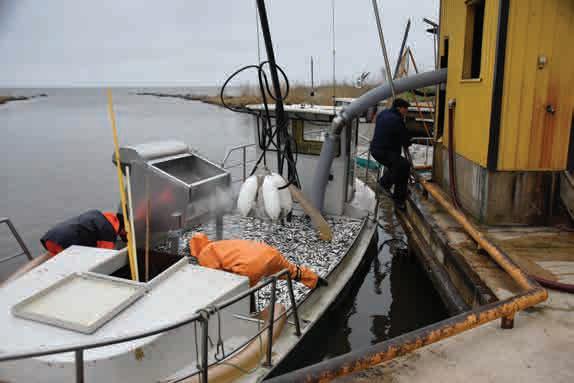
Thave further decreased at the expense of those vessels. At the same time, the remaining eet needs to be renewed to meet modern requirements for safety, working conditions, energy transition, etc. However, new vessels are generally larger and more powerful, which makes replacing an old vessel with a new one di cult if there is not enough free capacity.
Let’s take a closer look at the Estonian marine shing eet. At the moment of accession to the European Union in 2004, the Estonian eet totalled 2,104 vessels and the capacity ceiling for gross tonnage was set at 26,622 GT and for main engine power at 64,937 kW. Since then, 62 trawlers have been removed from the eet with help from subsidies, and the capacity ceiling has fallen by 22%. For larger vessels, the decline has been even more drastic because, in addition to subsidies, vessels have also been removed without li nin eetcapacit iththereso rceisi portantforthes staina ilit offisheriesan can eachie e iththeri htincenti es
he Common Fisheries Policy has de ned measures to adapt eet capacity (main engine power and gross tonnage) to shing opportunities. One of the measures for managing eet capacity is the capacity ceilings set for Member States’ eets— the total capacity of a Member State’s
eet, measured as the sum of the main engine power and gross tonnage values of the vessels, can never increase. Under the current sheries fund (like the previous one), Member States have the opportunity to reduce eet capacity through subsidies for decommissioning part of the eet, whereby the capacity ceilings for Member States’ eets
subsidies. Thus, compared to 2004, the total number of shing vessels of 12 metres and longer shing in the Baltic Sea has decreased from 154 vessels to 21 vessels, and the number of trawlers shing in the Atlantic Ocean from 12 vessels to four. At the same time, capacity in terms of engine power has decreased by 68% and 29%, respectively. Nine tenths of the main engine power and 70% of the gross tonnage of the Estonian eet’s capacity ceiling are already in use. Therefore, operators are currently in a situation where there is a growing demand for free capacity, and eet renewal is a very large challenge and an obstacle to the further planning of their economic activities.
An FAO analysis in 20251 concludes that traditional input and output-based eet capacity limits are important but insu cient on their own, which is why they should be supplemented with rights-based systems, market-based instruments and social measures to reduce dependence on sheries. In the context of reviewing the Basic Regulation of the EU Common Fisheries Policy2, it should therefore be asked whether setting a capacity ceiling for eets is a necessary measure in adapting eet capacities to shing opportunities, or would other measures provide the same or a better result? We bring two examples from Estonia, which clearly question the added
1 Davies, S., Durighello, A. and Van Anrooy, R. 2025. Implementation of the FAO International Plan of Action for the Management of Fishing Capacity (IPOA-Capacity). FAO Fisheries and Aquaculture Technical Paper, No. 723. Rome, FAO. https://doi.org/10.4060/cd8015en
2 Regulation (EU) No 1380/2013 of the European Parliament and of the Council of 11 December 2013 on the Common Fisheries Policy, amending Council Regulations (EC) No 1954/2003 and (EC) No 1224/2009 and repealing Council Regulations (EC) No 2371/2002 and (EC) No 639/2004 and Council Decision 2004/585/EC; https://eur-lex. europa.eu/legal-content/ET/TXT/?uri=CELEX:02013R1380-20230101.
value a capacity ceiling provides in such a situation.
In Estonia, a system of individual transferable quotas (ITQ) is used in the trawl eet, where annual shing opportunities are distributed among operators according to historical shing rights. An operator can allow their shing opportunities to be used by other operators or can sell their historical shing rights altogether. The ITQ system, inuenced by various input (seasonal and spatial shing restrictions, shing right fees, etc.) and output (allowable catch volume) measures has given operators the freedom and also the motivation to adapt their eets themselves, o en without subsidies, according to the market situation (Figure 1). If shing opportunities fall or input costs rise,
there is no point in using ine cient vessels and they are removed from the register. For example, while in 2004 there were 68 vessels in the length class of 12–18 metre small trawlers, by 2022 there were no longer any vessels there. In addition, shing in the Baltic Sea is very regulated and there is a constant overview of the activities of the vessels – AIS, VMS, ERS, monitoring increasingly carried out with drones, and in the future also risk-based CCTV and engine power measurement.
A similar example exists for coastal shing. In the Gulf of Riga, herring is caught with trap nets using 10–12 m vessels. Until 2015, a system of individual transferable shing e orts (ITE) was in use together with a common herring quota, where the maximum number of
Changes in the Estonian sprat and herring quota (t) and the number of 12–40 m trawlers in the Baltic Sea in the period 2004–2025
Estonian sprat and herring quota (t) Number of vessels
shing gears was divided among operators according to their historical shing rights, but the herring quota was common to everyone. Just as in trawling, an operator can allow their shing opportunities to be used by other operators or can sell their historical shing rights altogether. From 2015, the common herring quota is divided among shing gears based on ITE. A er the transition to individual allocation, the shing season lengthened signi cantly, while the number of vessels has decreased without any subsidy—in ten years, the number of vessels decreased by 27%, kW by 33%, and GT by 26%. At the same time, the Gulf of Riga herring quota has not fallen (Figure 2). Thus, when the ‘ rst come, rst served’ shing arrangement was eliminated, the need for more boats to bring as much herring ashore as possible before others also disappeared. Rising fuel prices have likely also contributed to the decrease in the eet and the increase in e ciency. This clearly shows that operators adapt their
Changes in the number of 10–12 m vessels and the Estonian Gulf of Riga herring quota in the period 2014– 2025
capacity, i.e. the number of vessels, according to the actual situation.
In summary, operators in this segment are restricted by several types of input and output measures—the type and number of shing gears are limited, temporal and spatial restrictions
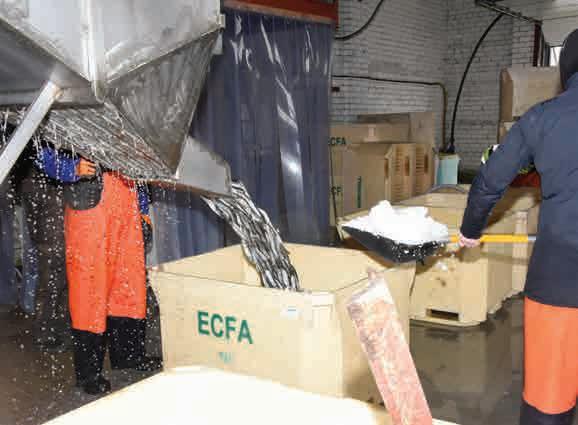
have also been established for herring shing, and the catch volume is limited. In addition to these, shing opportunities (number of shing gears and the allowed quantity of herring per shing gear) are distributed on the basis of historical shing rights; participants are able to lease and sell shing opportunities. Furthermore, surveillance has become signi cantly more e cient over the years. Since 2024 all Estonian coastal shers have been obliged to submit shing data electronically through an application and these data enable monitoring in real-time.
Fisheries regulation in the European Union has become more complex over the years. At the same time, many stocks are still in poor condition and fleet capacities and fishing opportunities are not in balance. Member States need greater flexibility to choose the best solutions for their circumstances from the fleet capacity regulation toolkit. Measures such as capacity ceilings, which directly hinder fleet renewal thus jeopardising safety, decarbonisation etc. should be avoided.
Epp Meremaa Ministry of Regional A airs and Agriculture
For the 2021–2027 period, Estonia has taken a clear decision to use the European Maritime, Fisheries and Aquaculture Fund (EMFAF) to support not only investments but also applied research and innovation by operators. This helps increase the sector’s competitiveness, promote environmental protection, and strengthen a knowledge-based approach to the sector’s activities.
The sector’s needs were rst mapped to identify what operators actually require and then aligned the research programme with the sector’s feedback. To this end, a survey was compiled and sent to more than 2,400 sheries operators, including shing, processing, and aquaculture enterprises. The responses sent a clear signal—almost
two thirds of the respondents were interested in cooperation with scientists. If research institutions and operators tackle important issues together, it is easier to take ideas to prototypes and trials, and from there to actual application in shing, aquaculture farms, and industry.
The Estonian research programmes are structured by theme. In the eld of sheries, the focus is on reducing negative environmental impact and increasing e ciency by developing smarter shing gear, digital solutions, and by increasing automation. Research is also being conducted into tools (such as cameras and arti cial intelligence) to identify the species composition in mixed sheries, and into cleaner energy sources for shing vessels. Reducing the damage caused by cormorants and seals through technological and real-time adaptive deterrence solutions, among others, is also being studied.
Aquaculture research focuses on sustainable growth. Land-based farm technologies and digital monitoring tools are being developed along with increased automation. Opportunities for better use of waste and by-products are also being explored. Solutions are also being sought to reduce damage caused by mammals and predatory birds, so that production growth does not increase the pressure on the aquatic environment and resource use becomes more e cient.
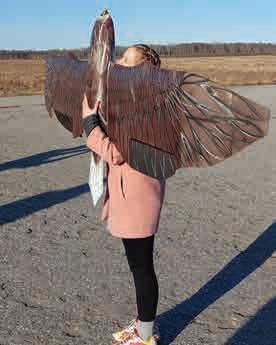
Drones designed to mimic the appearancean i htpatternsofpre atorbirds are being tested for their ability to prevent water birds from targeting fishca htinfishin ears
The valorisation of aquatic biological resources seeks ways to increase the value of raw materials and by-products generated in sheries. The focus is on the valorisation of biowaste (for example, proteins, collagen), more environmentally friendly packaging, internal market opportunities, and the modernisation and digitisation of logistics. This aligns with the European trend where competitiveness increasingly depends on the strength of processing, the supply chain, and marketing.
Environmental research ensures science-based stock assessment and the protection of biodiversity. The impact of cormorants and seals on sh



















ppl in artificialintelli ence a ea a toa to atetheseparationofspe ciesin ixe catchesofspratan alticherrin
stocks, by-catch, and the selectivity of shing gear are being studied, and mitigation measures are being developed. There is also a focus on preserving the diversity of sh species and exploring opportunities for algae and shell sh farming to reduce nutrient loads and develop the blue economy.
The call for proposals took place in the autumn of 2025, and at the end of the year, support was granted to 17 projects totalling approximately 6.3 million euros. Applications were evaluated based on criteria that favoured applied results. The highest weight was given to the novelty of the research and the direct bene ts to the sector, but other factors such as the involvement of the sector, justi cation for the budget, and a realistic timetable of activities were also assessed. Among the conditions was that funded research should be easily ndable and widely usable upon completion, and that the progress of implementation should be continuously monitorable through information days for the sector and the public. In March, the rst information day introducing the studies was
held, highlighting several of the projects presented. In the valorisation of aquatic biological resources theme, a study by TalTech Kuressaare College caused a utter. It explores possibilities for producing macroalgae-based bioplastic to be used as raw material for 3D printing. The project conducts tests with algae growing in the Baltic Sea (Furcellaria, Fucus, Ulva, and Cladophora) to obtain polysaccharides and biomass, from which the production of bioplastic lms, bio composites, and 3D printing laments is planned.
The Estonian University of Life Sciences is researching possibilities to produce liquid fertiliser from residues generated during sh lleting. During





the study, residues (bones, heads, viscera, and skin) are processed using enzymes and stabilised to create a marketable fertiliser. Additionally, the time and energy consumption and the cost price of the process are assessed, a market study is conducted, and plant trials (including in drip irrigation systems) are carried out to study the fertiliser’s impact on plant growth and crop quality. From the sheries research, the planned trials with bird-drones (linnukid) deserve mention. The University of Tartu, in cooperation with the Estonian Aviation Academy, is looking for ways to reduce bird by-catch and the raiding of catches in shing gear by birds. A linnuk is an unmanned aerial vehicle (UAV) built to mimic the appearance and ight pattern of a bird of prey. The aim of the study is to test whether imitating avian predators deters waterbirds from targeting sh caught in shing gear. Furthermore, a study is planned to develop an AI-based photo solution for automated species identi cation in trawl catches. The goal is for the system to automatically and quickly estimate the proportion of sprat and Baltic herring in the catch with over 90% accuracy. This solution will help the sher determine the species composition objectively and quickly. It also enables the rapid sharing of results with di erent authorities, thereby optimising sheries monitoring, data collection, and control.

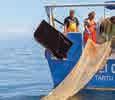

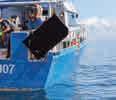




Among the interesting aquaculture studies was again a project by TalTech Kuressaare College. This explores possibilities to grow and valorise three products in parallel: shrimp, algae, and oysters in a recirculating aquaculture system (RAS). The study seeks answers on how e ectively a three-species IMTA (integrated multi-trophic aquaculture) system functions under
RAS conditions. It also examines how e ciently algae and oysters remove nutrients and sediments, and what the growth rates and survival of the species are in an IMTA-RAS system. Noteworthy projects under the environmental research theme included those focusing on the status of the pike-perch population in Pärnu Bay and the Pärnu River, as well as on the migration and spawning grounds of pike-perch in Lake Peipus, Lake Lämmijärv, and the lower reaches of the Emajõgi River. All presentations and materials from the information day are available on the website of the Fisheries Information Centre (link). Final research
The likelihood of wind farms being built in Estonia’s coastal waters has raised concerns among shers about the e ects of low-frequency continuous noise on herring behaviour. Researchers at the Estonian Marine Institute, University of Tartu have conducted several trials to determine the impact.
Novel large-scale experimental studies were conducted in the coastal sea of Estonia to investigate the potential e ects of operational noise from o shore wind farms on Baltic herring—Estonia’s national sh. Multiple extensive wind farm projects
are currently in the planning or development phase in western Estonia, but none has so far been constructed. Several stake-holders in Estonia, including the pelagic sh trawling eet, are concerned about the potential e ects of wind farms on sh stocks and shing. However, relatively little is known about the potential
reports are public in their entirety and include an English summary to facilitate experience sharing with other Member States. Topics, such as reducing by-catch, damage caused by predators, digital monitoring, and the circular use of by-products, are relevant throughout Europe, and the Estonian research e orts could create transferable solutions and opportunities for cooperation with other Member States.
Annika Teino
Fisheries Market Adviser
Fisheries Policy Department
Ministry of Regional A airs and Agriculture impacts of o shore wind farms on marine life, and especially on sh.
The general goal of the study was to conduct approximately 12-hour long continuous noise exposure experiments during periods of the year important for herring—spawning migration, spawning, and feeding. As no o shore wind turbines currently exist in Estonian coastal waters, high intensity low-frequency sound resembling the projected operational noise from a 15-20 MW turbine, was generated with a state-ofthe-art underwater speaker. Estonian researchers wanted to know whether and to what extent the generated noise a ected freely moving herring schools in the study area. In addition, net-cage experiments were conducted to determine the exact sound level that elicited a behavioural response in herring. Statistically signi cant noise e ects were detected only in the feeding area
experiments; no such e ects were found in the spawning migration or spawning area experiments. However, the statistical signi cance did not mean that herring schools completely le the approximately 16 km2 study area due to the noise. The observed e ect occurred at distances of up to 300–800 m from the noise source (in water approximately 20 m deep), corresponding to a received noise level of about 117–127 dB re 1 µPa in a one-third octave band at 125 Hz at the mentioned distances. Even within this impact zone, not all sh le the area. In net-cage experiments, it was determined that the sound level that triggers a behavioural response in herring is 118 dB re 1 µPa in a one-third octave band at 125 Hz. This threshold can be used in future impact assessments throughout the Baltic Sea.
In conclusion, the experiments conducted in this study did not detect any major negative e ects on herring. This means that most sh did not leave the study area due to high noise levels in the study area. However, the obtained results still warrant caution regarding the operational noise impacts of o shore wind farms. This means that some, statistically signi cant, behavioural e ects were evident in experiments conducted by Estonian researchers, especially during the herring feeding period. Also, it is unknown whether the absence or presence of herring behavioural e ects from a single sound source found in this study would be the same in the presence of multiple sound sources (an entire wind farm). The e ects of long-term noise habituation are also unknown, although Estonian researchers have now conducted the longest continuous noise experiments to date, with no signs of habituation during the feeding period.
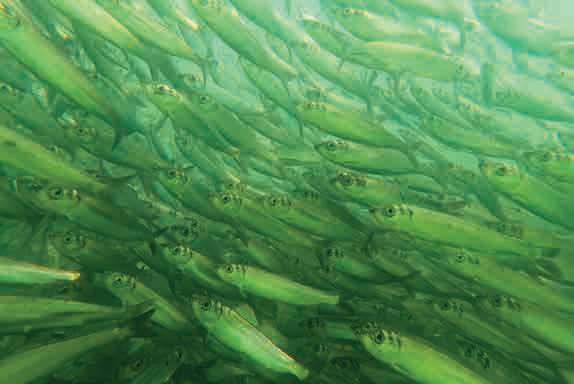
esearchersatthe ni ersit of art s stonian arine nstit tefo n thatnoisefro offshore in installationsha no a ori pactonherrin eha io rta ise ca tion henconstr ctin in far s ict re alticherrin inapound net
Consequently, until better knowledge emerges, a precautionary principle is advised by Estonian scientists— simultaneous construction of multiple wind farms in the Gulf of Riga should be avoided at this time. It is likely that the construction of a single o shore wind farm in the Gulf of Riga would not signi cantly a ect the feeding conditions of herring living in the gulf, as sh could move to other areas if noise e ects occur. However, the construction of several o shore wind farms might produce population-level e ects due to the cumulative impacts of di erent wind farms.
From a fisheries policy perspective, offshore wind development should
follow a science-based precautionary approach and safeguard the viability of traditional fishing grounds. Therefore, historically and economically important fishing areas should remain unaffected by wind farms as far as possible or be protected through clear spatial restrictions and effective mitigation measures. Marine spatial planning decisions must be grounded in the best available scientific evidence (including studies on noise impacts) as well as in long-term fishing practices and local fishers’ knowledge, to avoid unjustified harm to fish stocks and coastal communities.
Mehis Rohtla
Estonian Marine Institute
University of Tartu
Joosep Pärn
Ministry of Regional A airs and Agriculture
On the Estonian island Saaremaa, Pähkla Cray sh and Fish Farm is celebrated for its eco-friendly cultivation of rainbow trout. This highquality sh has become a favourite among Estonia’s top chefs for its rm texture and delicate, juicy avour.
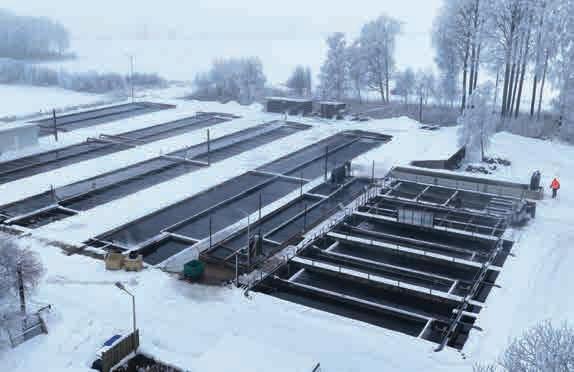
Located in Pähkla village, the farm bene ts from the Pühatu spring which is famous for its clarity and constant supply of fresh, mineral-rich water which maintains a temperature of 7 degrees centigrade both summer and winter. This “bottomless” spring provides the ponds with a healthy growing environment
which is critical for the clean taste and high nutrient content of the trout. While rainbow trout is the primary focus, the farm also raises carp and noble cray sh. Pähkla Cray sh and Fish Farm dates to the 1980s, but modern sh farming practices began in 2004. The farm’s competitive edge lies in the vertical integration of sh farming, production, and sales.
Pähkla farms approximately 150 tonnes of rainbow trout annually across ten ponds of varying sizes. Saaremaa’s pristine environment and natural water bodies provide the ideal habitat for raising rainbow trout, ensuring fresh and high-quality sh. By avoiding articial additives and relying on the natural ow of spring water, the company
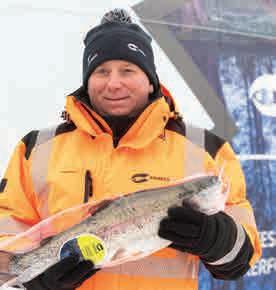
ro ctsincl efreshan s oketrout in a variety of formats that are a aila leallthe earro n
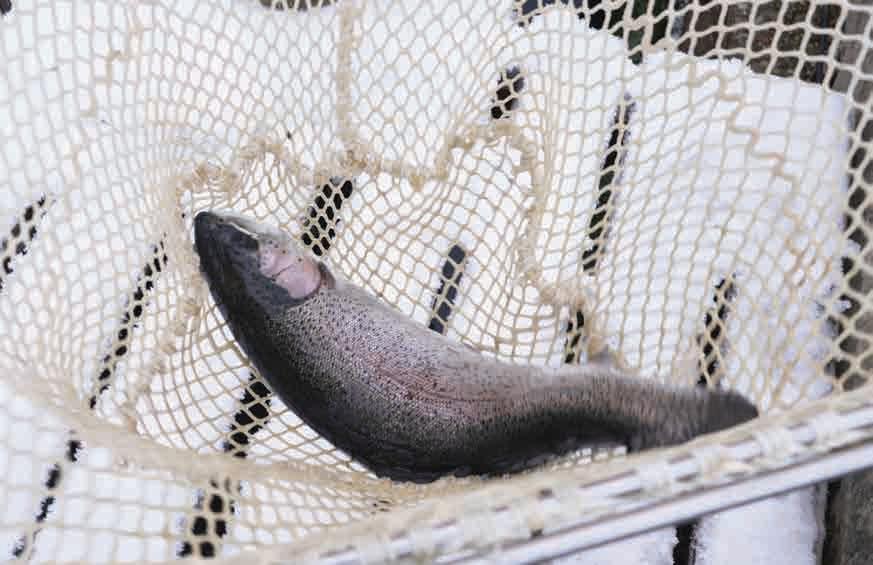
hefar isfe fro a eepsprin herethe aterte perat reis e rees oths eran inter
Source: Statistics Estonia
ensures the sh are free from the o - avours common in more industrial settings. The trout thrive in their natural habitat ensuring both quality and taste.
Signi cant support from the European Maritime, Fisheries and Aquaculture Fund(EMFAF) has enabled
Pähkla to modernise its facilities, including processing and refrigeration equipment, to deliver domestically produced, top-quality sh and sh products all the year round. Investments made in pond reconstructions and technology have streamlined all stages of sh farming. The installation
of solar power plants highlights Pähkla’s commitment to renewable energy and has reduced both electricity costs and ecological footprint. Moreover, some 80% of the water is recycled, says Remy Kolberg, an employee at the farm. Modern vehicles are used to transport the products so that they are delivered rapidly while maintaining the integrity of the cold chain. Trout products include fresh and smoked sh in di erent formats. More information is available at www.pahkla.ee.
Signe Soomann
Estonian Ministry of Regional A airs and Agriculture
The proposal by the European Commission not to renew the authorisation of eight smoke avourings has been accepted by the member states. The decision is based on the scienti c assessment by the European Food Safety Authority (EFSA) from November 2023, which was unable to rule out with certainty that the smoke avourings may have genotoxic e ects. Transitional periods will, however, still apply before the measure is implemented.
For a long time, alongside salting and drying, smoking was regarded as a safe method of preservation before the advent of refrigeration. A welcome “side e ect” of this method was that smoking also gave foods such as sh or meat a pleasantly smoky aroma. In addition, the treatment was very simple. The product only had to be exposed for a certain period to the smoke of a wood re, which signicantly reduced its water content. At the same time, substances from the smoke with antibacterial and antioxidant properties penetrated the product and contributed to the formation of avour compounds. Hot smoke also hardens the surface of the product, making it more di cult for microorganisms to penetrate. The high-quality protein, the heart-healthy omega-3 fatty acids, the vitamins, and the minerals remain almost unchanged during smoking. That is why smoked sh is fundamentally healthy, apart from its o en somewhat high salt content. The fact that smoking can also transfer some harmful substances to the products, including small amounts
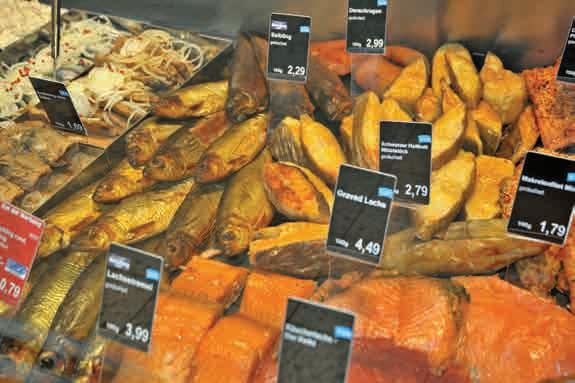
of carcinogenic compounds, above all so-called polycyclic aromatic hydrocarbons (PAHs), has only become much more widely recognised by the public in recent decades. Although strict legal provisions exist to protect consumers, a residual risk cannot be
excluded entirely. As so o en, however, the “poison” here too lies in the quantity: smoked sh should be eaten in moderation.
The concentration and composition of the smoking smoke, which is produced by the incomplete
combustion of wood, has a decisive in uence on the later avour of the smoked product, its antibacterial effect, and, ultimately, the preservative e ect. Considerable experience is needed to in uence these processes in a targeted way and guide them in the desired direction, because smoking smoke is a complex mixture that can contain up to 5,000 substances. These are chie y gaseous components and aerosols with avouring, preservative, and colouring properties, but, unfortunately, also small quantities of substances harmful to health. During incomplete combustion, temperature and oxygen supply a ect the composition of the smoke, and each type of wood delivers slightly di erent aromas. As a result, cold smoking produces compounds di erent from those formed during hot smoking. Modern processes o en use puri ed smoking smoke, which contains proportionately fewer harmful substances.
A large proportion of the smoke consists of water vapour. In addition, there are numerous organic compounds such as phenols and carbonyls, as well as organic acids, which lower the pH value on the surface of the smoked product and inhibit microbial growth. Tar substances are also part of the mixture; some of them settle on the product and intensify the characteristic brown colouring of smoked fish. Among the undesirable components in smoke, which arise particularly at higher temperatures, are the health-damaging PAHs, including benzo[a]pyrene, which is suspected of being carcinogenic. Benzo[a]pyrene is only one of around 250 potentially dangerous compounds from the PAH group that can arise during the incomplete
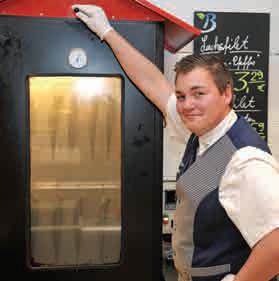
nthefish epart entsofso es perarkets s okin ise encarrie o tehin thefishco nter hichal a sattractsspecialinterestan ra sc sto ersin
combustion of organic material such as wood. These substances are not formed only during smoking, but also enter the atmosphere through grilling, as well as from the exhaust fumes of countless cars. They are ubiquitous environmental contaminants, the concentration of which in the air we breathe must be strictly monitored and limited. The scientific committee on food of the European Commission (SCF) has listed a total of 15 PAH substances suspected of being carcinogenic. Alongside benzo[a]pyrene, these include benz[a] anthracene, benzo[b]fluoranthene, and chrysene.
This is a major reason why smokehouses and smoked products, and now also some other food manufacturers, are subject to rigid regulations and official controls. Today, the typical smoky taste, which is popular with many consumers, is created not only by traditional smoking but also by adding “smoke flavourings”. In this way, foods that were never previously smoked, and in fact cannot really be smoked, such as soups, BBQ sauces, or baked goods, can be given
a subtle smoky flavour. Such smoke flavourings can be produced by purely chemical means, although this is done only rarely. As a rule, they are isolated from “real” smoke, which is cleaned in several stages and freed from undesirable substances as far as technically possible.
The starting point of the manufacturing process for “natural” smoke avourings is pyrolysis, in which wood, chie y beech or other hardwood, is heated strongly in steel reactors under conditions of very limited air supply. This produces a great deal of smoke, which then condenses on cooling into a “smoky liquid”. The smoke avouring is obtained from this concentrate. The conditions under which pyrolysis occurs in uence the composition of the liquid and the concentration of the substances it contains. The longer and more intensely the wood is heated, the more concentrated and oily the liquid becomes. At lower temperatures, by contrast, a relatively thin liquid is produced, with aromas that tend more towards acetic acid and vanilla notes. However, both one and the other concentrate contain substances that should ideally not come into contact with food, and which are therefore removed by elaborate ltration and puri cation procedures. All processes are strictly monitored and documented in order to ensure that smoke avourings produced in this way pose no health risks to consumers.
In November 2023, however, the European Food Safety Authority, EFSA, published a new scientific opinion that questioned the safety of eight smoke flavourings. These had previously been authorised on the
EU market, but, under the applicable legal provisions, their authorisation was due for renewal. On the basis of the scientific evidence available, the experts concluded that, for none of the eight smoke flavourings, could concerns be ruled out with the required degree of certainty that these substances might be carcinogenic or genotoxic, that is, capable of altering genetic material.
Following the EFSA recommendation, the European Commission decided not to renew the authorisation for industrially produced smoke flavourings, which in practice amounts to a ban on these substances. This far-reaching step was justified by the potential health risks posed by these substances. They must be withdrawn from the market gradually. Transitional periods do, however, apply. The sale of sauces, soups, and snacks is permitted until 1 July 2026. For fish, meat, and cheese products, the authorisation expires on 1 July 2029.
The polycyclic aromatic hydrocarbons and furans that may be present in smoke avourings are chie y responsible for the expiry of the authorisation. To protect public health, the European contaminants regulation laid down maximum levels for benzo[a]pyrene, as well as for the sum of benzo[a]pyrene, chrysene, benz[a]anthracene, and benzo[b] uoranthene (4 PAHs), in certain food groups. Muscle meat of smoked sh and shery products must therefore not exceed a content of 2 µg/kg of benzo[a]pyrene and a total content of 12 µg/kg for the 4 PAHs. Any sh products exceeding these values may not be placed on the market, in accordance with the said regulation. In addition,
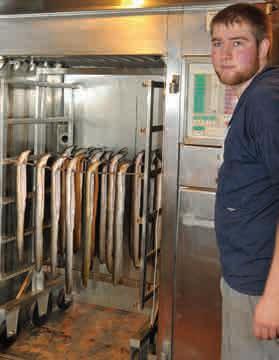
ltho hs oke sal onispro a lthe ostpop lars oke pro ctackerel tro t eel an otherspeciesarealsoinstron e an
sh smokehouses must comply with the food hygiene regulation and the regulation on hygiene rules for food of animal origin, including with regard to the cleanliness of smoking facilities and the quality of the smoke used.
Critics warn that the European Commission’s decision could mean the end of product-friendly and environmentally friendly smoking. Apart from the economic damage, they fear a return to conventional smoking processes, which pose at least the same health risks. In fact, the “quasi-ban” relates only to the use of smoke avourings, because traditional smoking with wood smoke remains permitted, as it is regarded as safer. Although, naturally, this smoke is not free from harmful substances such as PAHs either. Maximum levels must be observed, but the permitted limits for PAHs may vary depending on the food. Smoked sh is subject to di erent values from smoked ham. The EU allows particularly high PAH concentrations, for example, in sprat and Baltic herring. The permitted maximum level
is signi cantly lower for mackerel. One of the reasons for these curious provisions is the assumed “frequency of consumption”: the more o en consumers are thought to eat a product, the lower the limit generally tends to be.
Regular laboratory analyses in EU countries, in which smoked sh is tested for its PAH content, have in recent years almost without exception given the allclear regarding breaches of the maximum levels. In Germany, for example, the state laboratories responsible for this have not detected any infringements for a long time. Yet the end may not have come even for smoke avourings, and thus for smoky avour notes in potato crisps and barbecue sauces. Manufacturers of smoke avourings are already working on the development of “clean”, PAH-free, or at least extremely low-PAH production processes. The key to solving the problem lies in lowering the temperature during the heating of the wood in the reactors. Below 250 °C, the tar content in the condensate is signi cantly lower, and therefore so too is the PAH concentration. The resulting liquids would probably comply with the EU avourings regulation. They would no longer be smoke avourings, but “ avourings with a smoky note”. They will therefore in future be listed in the ingredients declaration as “ avouring” and not as “smoke avouring”. Numerous food manufacturers are already showing interest in these new products. As a clean alternative, sh products smoked using the “Clean Smoke” process are already available. This clean smoking process, which uses primary smoke products, remains permitted and is even authorised in organic production. Manfred Klinkhardt
ATLANTIC BLUE CRAB (Callinectes sapidus)
The blue crab (Callinectes sapidus) from the western Atlantic was introduced into European waters more than 100 years ago and is causing increasing problems. At the same time, however, blue crabs are also highly sought-a er seafood in many places because of their excellent meat quality. If the species is soon classi ed in the EU as invasive, that could considerably hamper its commercial use.
The blue crab, also called the blue swimming crab, owes its name to its intensely blue legs, which are o en marked with irregularly distributed white spots and speckles. Its scienti c name also refers to this appearance, combining the ancient Greek words kállos (beautiful) and nḗktēs (swimmer) with the Latin saphyrinus (sapphire blue). Particularly striking are the crabs’ bright blue claws, which in adult females o en have red tips resembling nail varnish. Although the carapace sometimes shimmers slightly bluish, it is otherwise more typically crab-like in brownish, olive-green, or greyish tones. Blue crabs are fairly sizeable crustaceans whose carapace can grow to up to 23 cm wide and about 10 cm long. The size record is held by an animal caught in Chesapeake Bay that weighed just under 500 g and had a carapace 25.7 cm long. Under normal conditions, blue crabs typically weigh between 150 and 180 g.
As a decapod crustacean, the blue crab has ve pairs of legs, the front pair bearing two di erently sized claws as in lobsters. The larger is used to break open prey, while the smaller moves
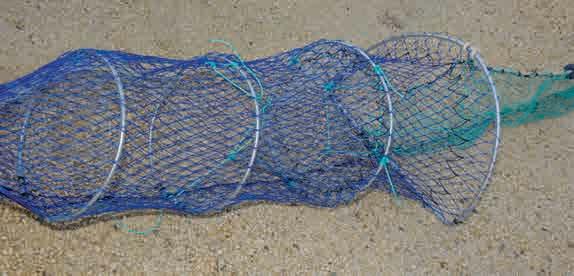
pieces of food to the mouth opening. Behind the claw-bearing legs follow three pairs of walking legs. The h and nal pair are the swimming legs, whose paddle-shaped end segments are used for swimming.
The blue crab’s original home is the Atlantic coasts of North and South America, from Nova Scotia via the Gulf of Mexico to Uruguay. As a neozoon, however, the species is now also found in Japanese coastal waters, in the North and Baltic Seas, as well as in the
Mediterranean and the Black Sea. It was probably introduced there in ships’ ballast water. It typically inhabits “subtidal coastal areas”, which include almost the entire shallow shelf region that is permanently covered by water, averaging 200 metres in depth below the low-water line. The habitats used by blue crabs change according to age, season, and sex, and include both marine and estuarine areas. When water temperatures fall towards winter, the animals burrow into muddy or sandy sediments
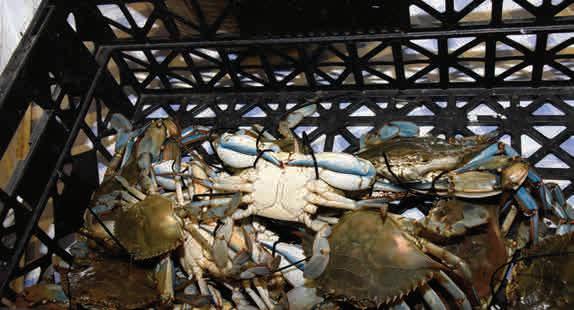
in deeper waters. Adult crabs can tolerate temperatures between 6°C and 30°C, while juveniles need at least 15°C. Blue crabs generally live for two to four years. Although the species has spread strongly in recent years, blue crabs require high water quality. They react to pollution, particularly when it reduces the oxygen content of the water.
Blue crabs are omnivores that prefer animal food such as bristle worms (polychaetes), thin-shelled mussels, young crustaceans, and sh, but in times of scarcity they also accept plants, detritus, and carrion. As opportunistic feeders, they also show a strong tendency towards cannibalism in some areas. In a meta-analysis, American scientists evaluated 37 years of data on the diet spectrum in Chesapeake Bay and found that cannibalism is the most frequent cause of mortality for young blue crabs in the region. According to the study, adult blue crabs were responsible for 97% of all juvenile losses. By contrast, the number of predators
that themselves threaten blue crabs is relatively limited. In the western Atlantic, the species’ original home, these include chie y red drum and Atlantic croaker (Sciaenops ocellatus, Micropogonias undulatus), sea turtles (Cheloniidae), and the American herring gull (Larus argentatus smithsonianus). In shallow water they can also fall prey to large heron species (Ardeidae).
Blue crabs usually reach sexual maturity at the age of 12 to 18 months. Females mate only once in the course of their lives, whereas males can do so repeatedly. Transfer of the sperm packet typical of crustaceans (spermatophore) takes place immediately a er the female moults, when her shell is still so . She then carries the male’s sperm with her for several months until egg laying and fertilisation take place. Depending on size and condition, the female lays between 750,000 and 3,200,000 eggs. A er about 14 days, the tiny nauplii hatch. They moult several times and pass through several larval stages within a few weeks before taking on the typical shape of a crab. Losses up to that point are immense, but this elaborate reproductive strategy enables the crabs to colonise new areas quickly and establish themselves there.
Indeed, over recent decades the blue crab has spread in many European waters beyond its natural distribution range. The species was first observed in 1901 in Rochefort on France’s Atlantic coast. From there it probably advanced into the Mediterranean (first recorded in 1935) and later into the Black Sea as well. Today it is found almost everywhere: off Israel, near Alexandria and Rhodes, in the Gulf of Thessaloniki, as well as along the North African and Iberian Mediterranean coasts. Blue crabs are even caught regularly in the North Sea between England and the Netherlands. A specimen found off Usedom in 2023 is regarded as the first record of this crustacean species in the southern Baltic Sea.
While populations in northern Europe are confined to only a few areas, the blue crab has spread almost continuously along the Mediterranean coasts. Because of the rapid colonisation of new areas, its enormous population growth, and its effects on marine ecosystems, the crab is considered one of the 100 most invasive species in the Mediterranean. The blue crab benefits from rising water temperatures. Nevertheless, experts do not agree on whether climate change is in fact the sole main reason for the “crab invasion”. Without its ability to outcompete other crab species, its high fertility, its capacity for sustained swimming, its tolerance of changing temperatures and salinities, and the absence of natural predators, the newcomer would hardly have established itself so successfully in the Mediterranean. Since about 2016, the population in the western Mediterranean, especially in the northern Adriatic, has risen massively.
The blue crab has become a genuine pest in many regions of the Mediterranean. Its spread damages native species and ecosystems and is responsible for losses in biodiversity. This also a ects economic activities, above all sheries and aquaculture. When the crabs attack oyster, clam, and mussel farms, they can destroy substantial parts of the harvest in a short time. Set gillnet sheries also su er losses because the predatory crabs eat sh caught in the nets, o en become entangled in the meshes, and thereby render the gear unusable. In Tunisia, the blue crab caused such great damage a er 2014 that many shers gave up their trade. Tunisia’s sheries sector, however, struck back, because the blue crab itself is a very high-quality and internationally sought-a er seafood product. Together with the FAO, the Tunisian government launched a project in 2019 to catch and export blue crabs. By 2022 Tunisia was already exporting more than 8,100 tonnes of blue crabs worth about EUR 33 million. In 2024, 51 businesses were involved in the processing and trade of blue crabs.
It has been reported from Croatia that blue crabs have further reduced the stock of European eel in the Neretva. Italian shell sh farms on the Adriatic and Tuscan coasts have been especially badly a ected. In the rst half of 2023, a mass invasion of crabs suddenly occurred there, descending on oyster, clam, and mussel farms. In the Po Delta, harvest losses reached almost 50%. In August 2023, the Italian government therefore released EUR 2.9 million to combat blue crabs. Small crabs were disposed of in land lls, whereas the larger animals were used for culinary purposes. The crab cannot, however, be pushed back by consumption alone, but catching and using it is certainly sensible from an economic point of view, because blue crabs command attractive
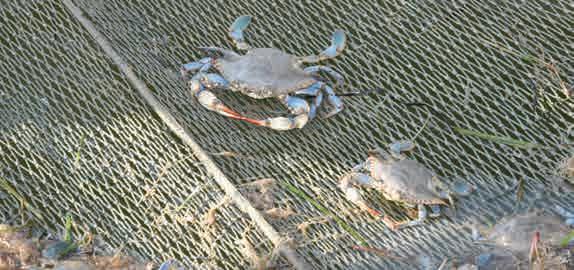
prices on the seafood market. Although prices vary by region, size, and season, a dozen medium-sized crabs on the east coast of the United States, where the crustaceans are especially popular in summer, can sometimes cost nearly USD 75. Large blue crabs fetch up to USD 13 each. Especially sought-a er are freshly moulted so -shell specimens.
Blue crabs are regarded as an excellent delicacy whose white, tender, yet rm meat has a sweet, intense, slightly nutty avour said to be comparable to that of lobster. Traditionally, they are prized above all in the United States and in Asia, but they are also nding growing numbers of admirers in the Mediterranean region. Since 1980, shery landings have varied worldwide between about 65,000 and 110,000 tonnes and have stabilised at 70,000 tonnes since 2020. At times, small quantities (maximum 500 tonnes) have also been produced in aquaculture. It is therefore hardly surprising that on the Italian Adriatic coast some shers, a er only a short time, began
supplying interested restaurant operators in the north-east of the country with blue crabs. Alongside traditional dishes, guests were now also o ered new seafood variants such as blue crab salad, steamed blue crabs in rosemary sauce, or spaghetti with garlic and crab meat. The European Commission has announced a new risk assessment for the blue crab. It is intended to determine whether the newcomer must be classi ed as an “invasive alien species”. When the list was last updated in August 2022, this was not yet necessary. Should the blue crab now be added to the invasive list, however, it would be subject to several restrictions under Article 7 of the IAS Regulation. Particularly unwelcome is the fact that it could no longer be placed on the market, kept, used, or exchanged. That would, of course, make commercial use considerably more di cult. Exceptions to the ban on the “placing on the market of invasive species” are possible, but only “under strict justi cation and provided that all appropriate controls are carried out to prevent their further spread” (Article 19(2) of the IAS Regulation). If Italians, and their guests, are not to lose their newly awakened appetite for blue crabs straight away, a management plan for these crustaceans, and with it a certain bureaucratic e ort, would appear to be indispensable. Manfred Klinkhardt



The FISH INFONetwork (FIN) consists of seven independent partners who cover all aspects of post-harvest fisheries and aquaculture. Fifty national governments have signed international agreements with the different FIN services and are using the expertise of these services to develop the fishery sector worldwide.
The FIN pages are a regular feature in the four network magazines
- INFOFISH International,
- INFOPESCA Internacional,
- EUROFISH Magazine
- INFOSAMAK Magazine
They present the FIN-wide spectrum of activities, showing actions and results.
The FIN has more than 70 full-time staff and works with more than one hundred international experts in all fields of fisheries. Through its link from FAO GLOBEFISH to the FAO Fisheries Department, it also has access to the latest information and knowledge on fisheries policy and management issues worldwide.
The execution of multilateral and bilateral projects is one of the main activities of the network. It is also widely known for its range of publications and periodicals as well as for the organisation of international conferences, workshops and training seminars. All eight services offer different possibilities for co-operation with the private sector, institutes, government offices and donors.
For more information on the FISH INFONetwork visit the website http://www.fao.org/in-action/globefish/ background/fishinfonetwork/en/.
Marco Frederiksen, the Euro sh director, held meetings in May with o cials from the ministries of agriculture and representatives from the industry in the Czech Republic, Slovakia, and Moldova respectively. The meetings were arranged to formally present the Euro sh organisation and to assess interest in these countries to joining the organisation. Ján Regenda, from the University of South Bohemia in the Czech Republic, who was instrumental in setting up the meetings, and Toni Bartulin, the head of the Euro sh project unit, were also present in Prague and Bratislava. All three countries are landlocked but cultivate freshwater species, mainly carps, in traditional earthen ponds. Euro sh already has one landlocked member country with a similar freshwater aquaculture industry— Hungary. As a landlocked country Hungary enjoys a discount on its membership contribution to the organisation.
The 19th edition of the INFOFISH World Tuna Trade Conference & Exhibition will bring together stakeholders in the sector from around the world. Tuna remains one of the blue economy’s most commercially important sectors, contributing to food security, employment, export earnings, and economic development, especially in coastal and island nations. However, the industry faces a changing operating environment due to climate variability, shifting fish stocks, and geopolitical uncertainty. These topics, among others, will be central themes at the event.
The tuna industry operates within one of the most complex sheries management environments globally. Highly migratory stocks span multiple jurisdictions and are governed through regional sheries management
As an intergovernmental organisation dedicated to developing the European sh industry and aquaculture sector, Euro sh o ers its members analysis and information on the market for sh and seafood, conferences and networking, technical cooperation and assistance, as well as participation in project applications. Members can promote their industries through the pages of the Euro sh Magazine and receive the industry guides produced by the organisation on a regular basis. Currently two guides are in production, one on sh feed for juveniles, and another on marketing of aquaculture species. At the three meetings representatives explained the challenges they faced and sought to understand how Euro sh could help address them. From experience Euro sh is aware that the road to membership is long and winding, but these meetings were a promising rst step.

organisations (RFMOs). E ective cooperation between the di erent stakeholders is therefore essential to ensure sustainable resource use and long-term commercial viability. The conference will examine global and regional market dynamics, including demand trends, trade ows, and, of particular relevance, tari regimes. Sustainability-linked nance, blended nance, and public–private partnerships will be discussed as ways to support eet modernisation in developing economies. The social dimension of the tuna industry will also be highlighted at TUNA 2026. Crew welfare, and skills development will be addressed as essential factors in productivity and value creation. The event will be held on 14-16 September in Bangkok, Thailand. For more information and to register visit www.tuna.info sh.org
Picking shell sh on foot in the Galician rias is an occupation dominated by women that faces economic, environmental, and social challenges. If these are not addressed the future of the profession may be jeopardised, says Maria Fontán, a shell sh gatherer active on social media.
Whatever the weather, María Fontán’s work begins before dawn, yet she may still end the day with a basket of shell sh that falls short of the permitted quota. For her, being a mariscadora a pie, or on-foot shell sh gatherer, is not the picturesque activity collecting clams and cockles on a beach that outsiders sometimes imagine. It is a regulated profession shaped by biology, weather, public rules, and collective responsibility. There are minimum sizes, catch limits, assigned areas, working hours set by the tides, and controls intended to protect the resource. Behind the visible act of harvesting lies work that is less o en lmed or understood: cleaning shell sh beds, reseeding them, moving shell sh to improve production, monitoring sizes, and helping ensure that extraction today does not destroy tomorrow’s livelihood.
Ms Fontán’s brings a human voice to one of the most emblematic examples of women’s work in European sheries. In the European Union, women are often undercounted in shing statistics because much of their work takes place onshore, in family businesses, or in activities not always treated as shing. A 2025 European Parliament study on women in sheries notes that women account for only 3.8% of the EU shing eet workforce, but that the data can overlook onshore activities that support shing businesses. It speci cally highlights Galicia, where shell sh gathering on foot is largely carried out by women, and where women represent 95% of shell sh gatherers. Ms Fontán describes shell sh gathering as a profession with a long history of women behind it, a tradition of work, struggle, and support for families. The European Parliament study refers to Galician mariscadoras as an example of good practice and co-governance. Shell sh pickers cannot operate anywhere they wish; areas are assigned, and the activity is managed with temporal restrictions to protect the beds. Ms Fontán explains that shell sh gathering is not only about extraction. The resource is actively managed by moving shell sh to improve production, use di erent areas better, and avoid overexploitation. When beds are cleaned or reseeded, it is because, as she
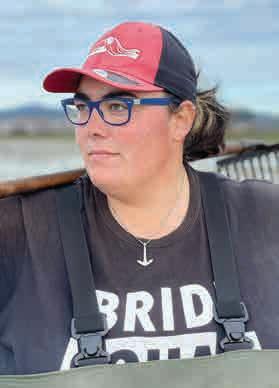
Fontán uses social media to explainthelifeofashellfishpickerin the Galician rias.
says, “if it is not cared for, it disappears.” Yet this maintenance that sustains the resource is not always valued as highly as harvesting. For Ms Fontán, this is one of the sector’s central contradictions— the work most important to the longterm future of the resource is among the least recognised economically. Her view re ects a broader debate about women’s visibility in sheries. Researchers at the University of Bergen note that sheries are still o en only imagined as men at sea, even though women do much of the background work including mending nets, baiting hooks, transporting sh, small-scale sales, and bookkeeping, as well as
harvesting shell sh. Iselin Åsedotter Strønen1, who is conducting eldwork among women in Galicia’s sheries sector, argues that women’s contributions have been systematically rendered invisible, and that lack of recognition can exclude workers from rights and legal frameworks. Maria Fontán has chosen to challenge these structures that deny women their rights. Through social media she has shown the physical hardship of the trade, including rough weather, long hours bent over, and the e ort of carrying heavy baskets across the shore. She says she began sharing her daily life because people were curious, but her aim now is to break myths, give visibility to the sector, and show the profession as it really is. She rejects the label “inuencer” as too shallow, preferring to see herself as a communicator for the sector and a worker presenting reality without idealising it. At a personal level, she nds it gives her a connection with other people, opportunities, and above all the satisfaction of giving a voice to her profession.
For many consumers, shell sh arrives as a nished product detached from the people who make it possible. Ms Fontán wants the public to understand that behind every clam or cockle there is e ort, knowledge, and care for the sea. Shell sh gathering depends on ecological balance, but also on the skills of people who understand tides, the shing grounds, mortality, species behaviour, market expectations, and who follow the regulations governing the trade. The economic reality is more fragile than many people assume. Ms Fontán points to one of the biggest misconceptions, namely that shell sh pickers earn a great deal. There are good
days, but also many bad ones, and a er costs, including self-employment contributions, the returns may be far lower than outsiders imagine. For incomes to improve, she believes the product and the work both need greater appreciation. Generation change is also a challenge. Entry into the profession is not straightforward as places are limited, and speci c training is required in areas such as biology, regulations, and safety. Ms Fontán says young people see the instability and the hardship, and many are discouraged. For shell sh gathering to be seen as a digni ed profession with a future, she argues that it needs more stability, better economic conditions, and stronger social recognition. These goals align with Spain’s wider e orts to strengthen the role of women in the shing sector. The Spanish Network of Women in the Fishing Sector2, promoted by the Ministry of Agriculture, Fisheries and Food through the General Secretariat for Fisheries, aims to boost women’s role in sheries, support association-building, improve communication, and exchange initiatives and good practices among women working in, or wishing to work in, di erent areas of sheries. The network also seeks to give visibility and support to women’s organisations and groups promoting equal opportunities in the sector. For Ms Fontán, however, visibility alone is not enough. The future of the profession is being tested by environmental change. In Galicia, she says climate change is visible every day on the shellsh beds. Torrential rains, lower salinity, temperature shi s, mortality, changes in species, and falling productivity a ect work directly. Winter rains in January and February 2026 have resulted in a decrease in production estimated at over 50% in a majority of the shell sh picking areas, according to the Galician government. And recovery is expected to take two to four years. These changes make it harder for her to imagine a peaceful retirement from the sector. Her testimony shows why women’s knowledge matters
in marine policy. The University of Bergen article stresses that women who harvest shell sh in Spain’s tidal zones hold detailed ecological knowledge and are closely connected to the ecosystems they work in; this is especially signicant in the context of environmental degradation and climate change.
Ultimately, Ms Fontán is a worker in a regulated, women-led, environmentally sensitive profession that is still ghting to be properly valued. She speaks for a sector whose future depends on more than catches and prices. It depends on whether low visibility maintenance work on shell sh grounds is paid and recognised, whether young people can enter with con dence, whether climate pressures are addressed, and whether the people who harvest shell sh are treated as professionals with knowledge that deserves a place in decision-making. Looking to the future Ms Fontán’s feels her profession would bene t from greater recognition, more support, and stronger measures to protect the environment. These changes in turn may support generational renewal. As she says, if the sea is cared for, and the people who live from it are cared for, then there is a future. Otherwise, the profession stands threatened.
[1]: https://www.uib.no/en/svf/179103/exploring-hidden-contributions-women- sheries “Exploring the Hidden Contributions of Women in Fisheries | Faculty of Social Sciences | UiB”
[2]: https://www.mapa.gob.es/en/pesca/temas/red-mujeres ”Red Española de Mujeres en el Sector Pesquero”
8-10 June 2026
AquaVision www.skretting.com/en/aquavision/

9-11 September 2026
Polfish*
Gdańsk, Poland

16-17 June 2026
Aquaculture UK Glasgow, Scotland, UK https://aquacultureuk.com/


16-18 June 2026
SeagricultureEU*
Gothenburg, Sweden
Tel.: +31 85 401 73 97 info@dlg-benelux.com www.seagriculture.eu
Tel.: +48 724 909 039 katarzyna.szkolnik@amberexpo.pl www.polfishtargi.pl

14-16 September 2026
Tuna 2026
Bangkok, Thailand info@infofish.org https://tuna.infofish.org/


18-20 August 2026
Nor-Fishing
Trondheim, Norway
Tel.: + 47 7356 8640 post@nor-fishing.no https://nor-fishing.no/en/


22-24 September 2026
Icefish*
Kópavogur, Iceland
Tel.: +44 1329 825 335 press@icefish.is www.icefish.is


29 September-1 October
Aquaculture Europe 2026* Ljubljana, Slovenia eas@aquaeas.eu www.aquaeas.org

6-8 October 2026
Conxemar Vigo 2026*
Vigo, Spain
Tel.: +34 986 433 351 www.conxemar.com

8-11 December 2026
AlgaEurope 2026*
Valletta, Malta
Tel.: +31 85 401 73 97
1-3 September 2026
Global Shrimp Forum Utrecht, Netherlands willem@shrimpinsights.com https://www.shrimp-forum.com/
24-26 September 2026
Future Fish Eurasia
İzmir, Türkiye
Tel.: +90 212 347 10 54 info@eurasiafairs.com www.eurasiafairs.com
info@dlg-benelux.com www.algaeurope.org
* Eurofish will be attending
Publisher Eurofish International Organisation
H.C. Andersens Boulevard 44-46 DK-1553 Copenhagen V Denmark
Tel.: +45 333 777 55, info@eurofish.dk eurofish.dk
Managing editor Marco Frederiksen
Editorial offices Behnan Thomas (bt)
H.C. Andersens Boulevard 44-46 DK-1553 Copenhagen V Denmark
Tel.: +45 333 777 64 behnan@eurofish.dk
Dr. Manfred Klinkhardt (mk) Redaktionsbüro Delbrück Franz-Stock-Straße 23 D-33129 Delbrück Germany
Tel.: +49 5250 933416 manfred.klinkhardt@web.de
Advertising Mads Tj rby FRONTMEDIA Ny Banegårdsgade 55 8000 Aarhus C Denmark
Mob.: +45 2750 7080
Tel.: +45 4822 4450 mads@frontmedia.dk
Frequency 6 issues per year
Circulation 2500 copies
Subscription details
Price: EUR 100,–To subscribe send an email to info@eurofish.dk
Unless otherwise stated, the copyright for articles in this magazine is vested in the publisher. Articles may not be reproduced without written permission from the copyright holders. An electronic copy is available on request to adverts@eurofish.dk
ISSN 1868-5943
Order your free trial info@eurofish.dk
Read the Eurofish Magazine online at www.eurofish.dk