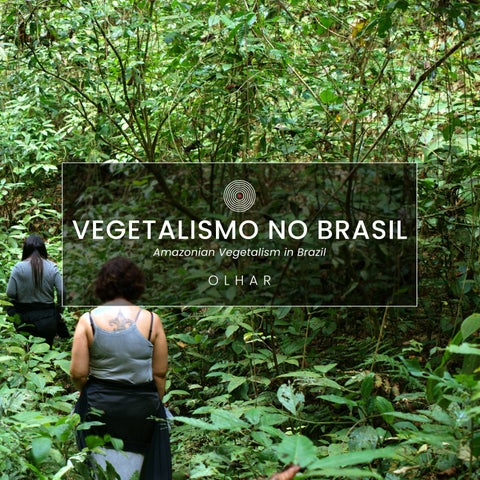
VEGETALISMO NO BRASIL Amazonian Vegetalism in Brazil
OLHAR
UM CONVITE
·
A CALL TO ACTION
E se eu te dissesse que existem muitos professores que você ainda não conhece? What if I told you there are many teachers you have yet to meet?
Conheça o Vegetalismo. Conheça o LIS. E conte aos outros. Discover Vegetalismo. Discover LIS. And tell others. lis.eco.br · @lis [confirmar contato]
OLHAR Consciência e Ação
SOBRE O LIVRO
·
·
Awareness and Action
ABOUT THE BOOK
A busca por sentido, clareza de rumo e compreensão do mundo que habitamos, é o que nos motiva a trabalhar para que mais pessoas conheçam o Vegetalismo e suas incríveis ferramentas de conhecimento e transformação pessoal. Reconhecer outras formas de aprendizado e entender que saúde não é tão somente ausência de doença, mas um contexto integral do ser humano, em equilíbrio e em paz. Trazer ainda seu reconhecimento científico como importante ferramenta de reflexão sobre os males da modernidade e seus caminhos para um mundo melhor. The search for meaning, for a clear sense of direction and for an understanding of the world we inhabit, is what drives us to work so that more people may come to know Vegetalismo and its remarkable tools for knowledge and personal transformation. To recognise other forms of learning, and to understand that health is not merely the absence of illness but the whole context of the human being, in balance and at peace. And to bring, too, its scientific recognition as an important instrument of reflection upon the ills of modernity and its paths towards a better world.
VEGETALISMO
NO
BRASIL
·
COLEÇÃO
OLHAR
PROPÓSITO
No Brasil, o uso da ayahuasca e de plantas medicinais psicodélicas é aceito apenas em contexto religioso. O LIS busca, através de sua equipe e de pesquisas na área, um diálogo entre conhecimentos ancestrais e ciência contemporânea. A ciência dos povos originários é um conhecimento válido e precisa ser reconhecida como tal. Ela segue protocolos, ensinamentos, experimentações e validações de seus professores e “cientistas” há centenas de anos. Não reconhecê-la como tal é um grande equívoco. Compreender estes saberes em igualdade de condições pode abrir portas para um conhecimento colaborativo em prol de um ser humano mais harmônico e consciente. Vivemos um momento de grande interesse por novos caminhos, mas, sem considerar a expertise e os protocolos dos conhecimentos dos povos originários — o devido preparo, a ritualística, o curandeiro devidamente capacitado, além de um contexto adequado —, a segurança e as contribuições em muitas camadas podem ficar comprometidas e os objetivos, não alcançados. Sensibilizar a sociedade para a importância deste reconhecimento e de um diálogo entre saberes, voltado a compreender os processos vividos nestas experiências e a integrá-los ao nosso aprendizado, é de crucial relevância.
VEGETALISMO
NO
BRASIL
·
COLEÇÃO
OLHAR
PURPOSE
In Brazil, the use of ayahuasca and of psychedelic medicinal plants is accepted only in a religious context. Through its team and through research in the field, LIS seeks a dialogue between ancestral knowledge and contemporary science. The science of the original peoples is a valid body of knowledge, and it must be recognised as such. For hundreds of years it has followed protocols, teachings, experimentation and validation by its own teachers and “scientists”. To deny it that recognition is a grave error. To understand these forms of knowledge on an equal footing may open doors to a collaborative body of knowledge, in the service of a more harmonious and conscious human being. We live in a time of great interest in new paths; yet without regard for the expertise and protocols of the knowledge of the original peoples — proper preparation, ritual, a duly qualified curandeiro and a suitable setting — safety, and the many layers of what these practices have to offer, may be compromised and the goals left unmet. Raising society’s awareness of the importance of this recognition, and of a dialogue between forms of knowledge devoted to understanding what is lived in these experiences and integrating it into our own learning, is of crucial relevance.
VEGETALISMO
NO
BRASIL
·
COLEÇÃO
OLHAR
APRESENTAÇÃO
Existem diversas formas de aprendizado com as quais ainda não estamos familiarizados. Fontes de transmissão de conhecimento que atravessam séculos de trabalho árduo e dedicação, ministradas por professores que, até então, acreditávamos improváveis. Assim é o LIS — Lar e Integração do Ser, uma iniciativa da Novo Humano juntamente com a psicóloga Karla Perdigão, onde o aprendizado vem da comunhão e da sintonização com as plantas mestras. Nesta prática tradicional do Alto Amazonas peruano, aprendemos sobre nós e sobre o mundo que habitamos. Observar o mundo de uma forma ampliada, com presença, força e discernimento. Este é o Vegetalismo. Cuidado, preparo, ritualística impecável, integração terapêutica dos processos vividos em busca de novos caminhos possíveis. Uma simbiose entre a medicina e os conhecimentos ancestrais e as demandas da sociedade contemporânea. Com uma equipe de apoio multidisciplinar que acompanha todas as jornadas, composta por psicólogos, terapeuta, médicos e enfermeiros, o LIS traz para a Região Serrana do Rio de Janeiro, em Areal, um centro vegetalista pioneiro no Brasil, com todo o cuidado e preparo para que as experiências sejam seguras e o mais exitosas possível. Ciência, cuidado e espiritualidade juntos. Todo processo é precedido por uma criteriosa anamnese sobre os objetivos que se pretende alcançar, orientada pelo curandero, juntamente com uma escuta terapêutica individual. Através das chamadas purgas, vomitivas e/ou diarreicas, prepara-se e afina-se o corpo e o espírito para que possamos vibrar em outra frequência e que se possa aprender com a abertura de nossos sentidos. Os processos são divididos em Jornadas de aproximação, de 3 dias, além da dieta e reclusão social de 9 dias, o ponto mais alto e profundo da experiência. Aqui pode acontecer uma verdadeira abertura para o sutil, para o ensinamento e para a profunda conexão com as plantas. O processo de dieta é todo realizado nas instalações do LIS, em cabanas imersas na Mata Atlântica do Rio de Janeiro, com requinte e segurança. Serão dias em que o participante viverá consigo mesmo, sem distrações e sem a “vida moderna” como agente principal. Um verdadeiro retorno ao lar, à Mãe Natureza como fonte de vida, conhecimento, compreensão e saúde. Na dieta, o participante recebe a indicação da planta que irá dietar. Esta indicação se dá após atenta escuta individual da equipe de apoio quanto aos seus principais desejos no processo. “Carências”, traumas, reflexões e demais características de cada um são conduzidas pela equipe de apoio terapêutica e referendadas pelo curandero.
Para aqueles que puderem e sentirem o chamado, uma sessão de ayahuasca no início e outra ao final da dieta comporão a experiência. No processo de dieta não há celular, luz artificial, água quente nem espelhos, e o contato social se dá apenas com o curandero e com o terapeuta que apoia as jornadas, que ajudará na compreensão do processo vivido. Neste período, a alimentação é propositalmente escolhida para a sutilização energética, entre outros aspectos, sendo composta por uma porção de arroz e batatas, sem temperos, além de duas tomas da planta que será sua professora durante esses dias. O relógio biológico muda, e uma força interior passa a trabalhar no compasso da Natureza. Você estará esse tempo apenas com você, de forma direta, aberta e profunda. E é aqui que pode começar a escuta das plantas, dos pensamentos, dos sonhos vívidos e das demais experiências de cada participante. É muito comum o transbordamento na escrita e nas artes. Inspirados no Centro Takiwasi, em Tarapoto, Peru, os processos em geral são muito fortes e profundos, e é possível alcançar níveis de conhecimento próprio e do mundo que habitamos de uma forma muito especial. Takiwasi promove dietas e retiros, com especial vocação para o tratamento das drogadições. Por esta razão você verá retratos de um dos locais mais devastadores de uso de crack, como forma de mostrar que tudo é possível quando nos conhecemos verdadeiramente. Busco retratar um pouco do que vivi no LIS e no Takiwasi, em suas incríveis dietas. Este livro é um convite. A quem deseja compreender um pouco mais sobre si, sobre este mundo e sobre a nossa posição nele, eu proponho: estejam abertos. Conheçam o LIS. E contem aos outros. Eurivaldo Bezerra Fundador · OLHAR
VEGETALISMO
NO
BRASIL
·
COLEÇÃO
OLHAR
FOREWORD
There are many forms of learning with which we are not yet familiar. Sources of knowledge handed down through centuries of hard work and dedication, taught by teachers we had, until now, thought improbable. Such is LIS — Lar e Integração do Ser, Home and Integration of the Being: an initiative of Novo Humano together with the psychologist Karla Perdigão, where learning comes from communion and attunement with the master plants. In this traditional practice of the Upper Peruvian Amazon, we learn about ourselves and about the world we inhabit. To observe the world in an expanded way, with presence, strength and discernment. This is Vegetalismo. Care, preparation, impeccable ritual, and the therapeutic integration of what has been lived, in search of new possible paths. A symbiosis between ancestral medicine and knowledge and the demands of contemporary society. With a multidisciplinary support team that accompanies every journey — psychologists, a therapist, doctors and nurses — LIS brings to Areal, in the mountains of Rio de Janeiro, a vegetalista centre that is a pioneer in Brazil, with all the care and preparation needed for the experiences to be safe and as fruitful as possible. Science, care and spirituality together. Every process is preceded by a careful anamnesis of the goals one hopes to reach, guided by the curandero, together with individual therapeutic listening. Through the so-called purges — emetic and/or purgative — body and spirit are prepared and attuned, so that we may vibrate at another frequency and may learn through the opening of our senses. The processes are divided into three-day Journeys of approach, followed by the diet and social seclusion of nine days, the highest and deepest point of the experience. Here a true opening may take place: to the subtle, to teaching, and to a profound connection with the plants. The diet takes place entirely within the grounds of LIS, in huts immersed in the Atlantic Forest of Rio de Janeiro, with refinement and safety. These are days in which participants live with themselves, without distractions and without “modern life” as the main agent. A true homecoming — to Mother Nature as the source of life, knowledge, understanding and health. On the diet, participants are told which plant they will diet. This indication comes after the team has listened attentively to each person’s main wishes for the process. “Needs”, traumas, reflections and the other characteristics of each individual are guided by the therapeutic support team and confirmed by the curandero.
For those who are able, and who feel the call, an ayahuasca session at the beginning and another at the end of the diet complete the experience. During the diet there are no mobile phones, no artificial light, no hot water and no mirrors, and social contact is limited to the curandero and to the therapist who accompanies the journeys and who will help make sense of what has been lived. In this period the food is deliberately chosen for energetic refinement, among other things: a portion of rice and potatoes, unseasoned, along with two doses of the plant that will be one’s teacher during those days. The body clock changes, and an inner force begins to work in step with Nature. You will spend this time with yourself alone — directly, openly and deeply. And it is here that the listening may begin: to the plants, to thoughts, to vivid dreams and to the other experiences of each participant. An overflow into writing and the arts is very common. Inspired by the Takiwasi Centre in Tarapoto, Peru, the processes are, as a rule, very strong and deep, and levels of knowledge of oneself and of the world we inhabit may be reached in a very special way. Takiwasi runs diets and retreats, with a particular vocation for the treatment of addiction. For this reason you will see portraits from one of the most devastating sites of crack use, as a way of showing that everything is possible when we truly come to know ourselves. I seek to portray a little of what I lived at LIS and at Takiwasi, on their remarkable diets. This book is an invitation. To all who wish to understand a little more about themselves, about this world and about our place within it, I offer this: be open. Come and know LIS. And tell others. Eurivaldo Bezerra Founder · OLHAR
VEGETALISMO
NO
BRASIL
·
COLEÇÃO
OLHAR
CAPÍTULO 01
As Ruas The Streets
Foi nas ruas que tudo começou. O crack chegava ao Rio de Janeiro e, com ele, uma sentença silenciosa: quem caísse naquele mundo não teria retorno — restava esperar. Eu precisava ver de perto. Em menos de uma semana, já fotografava no Complexo da Maré, uma das áreas mais carentes da cidade. Encontrei um lugar cruel e desolador e, ainda assim, gente que teimava em transformar gente em gente de novo. Jovens, idosos, histórias interrompidas, rostos que não me saem da memória. Havia dor — mas havia, sobretudo, uma vontade obstinada de viver. Foi diante dessa realidade que compreendi: os caminhos conhecidos não bastavam. Era preciso procurar, muito além dali, uma outra forma de cuidar. It was on the streets that it all began. Crack cocaine was reaching Rio de Janeiro and, with it, a silent verdict: whoever fell into that world would not return — there was nothing to do but wait. I needed to see it for myself. Within a week I was photographing in the Complexo da Maré, one of the most deprived areas of the city. I found a cruel, desolate place and, even so, people who insisted on turning human beings back into human beings. The young and the old, lives cut short, faces that never leave my memory. There was pain — but, above all, an obstinate will to live. It was before this reality that I understood: the known paths were not enough. I had to look, far beyond, for another way of caring.
VEGETALISMO
NO
BRASIL
·
COLEÇÃO
OLHAR
CAPÍTULO 02
Vegetalismo Takiwasi · Tarapoto, Peru
De volta das ruas, uma pergunta me perseguia: haveria outro caminho? Os tratamentos convencionais custavam bilhões e falhavam quase sempre. Foi então que ouvi falar de um centro vegetalista no Peru, na cidade de Tarapoto, com o maior índice de sucesso na recuperação que eu já vira — o Takiwasi. Parti para lá em abril de 2015, e ali fiquei vinte e um dias. Cheguei receoso e me enganei por completo. Em vez de um ambiente terminal, encontrei garra, vontade de viver e um tratamento inteiramente natural — sem trancas, sem repressão e com muito acolhimento e responsabilidade. Foi ali que conheci o vegetalismo amazônico: a ritualística, as purgas, as plantas mestras, a cerimônia de ayahuasca. E foi ali que compreendi que aquela floresta guardava uma tecnologia de cura tão antiga quanto o mundo. Ali conheci Jacques Mabit, Dra. Rosa Giove, Jaime, Edgardo e sua incrível equipe: estudiosos, médicos e pesquisadores de todo o mundo, engajados em aprender com as plantas e em integrar esse conhecimento para ajudar a humanidade. Back from the streets, a question pursued me: could there be another way? Conventional treatments cost billions and almost always failed. It was then that I heard of a vegetalista centre in Peru, in the town of Tarapoto, with the highest rate of recovery I had ever seen — Takiwasi. I set off in April 2015, and there I stayed twenty-one days. I arrived apprehensive and was entirely mistaken. Instead of a terminal ward, I found grit, a will to live and a wholly natural treatment — no locks, no repression, and a great deal of care and responsibility. It was there that I came to know Amazonian vegetalismo: the ritual, the purges, the master plants, the ayahuasca ceremony. And it was there that I understood that this forest held a healing technology as old as the world itself. There I met Jacques Mabit, Dr Rosa Giove, Jaime, Edgardo and their remarkable team: scholars, doctors and researchers from all over the world, committed to learning from the plants and to integrating that knowledge in the service of humanity.
CAPÍTULO 03
LIS Lar e Integração do Ser Vegetalismo no Brasil Amazonian Vegetalism in Brazil
VEGETALISMO
NO
BRASIL
·
COLEÇÃO
OLHAR
CAPÍTULO 03
LIS Lar e Integração do Ser · Home and Integration of the Being · Areal, Brasil
De volta ao Brasil, faltava uma coisa: como integrar tudo aquilo à vida? O vegetalismo abre acessos profundos — a gente volta mudado —, mas é preciso ressignificar o que se viveu e trazer o aprendizado para o dia a dia. Foi nessa vivência que a Novo Humano se inspirou e, juntamente com Karla Perdigão — psicóloga com vasto conhecimento em Vegetalismo e em seu processo de integração com a Psicologia contemporânea —, nasceu o LIS: Lar e Integração do Ser. Um lugar para receber o que a floresta ensina e transformá-lo em vida vivida. O LIS ergue-se na Mata Atlântica, na cidade de Areal, na Região Serrana do Rio, a uma hora do aeroporto internacional. O rigor da tradição, mas com características próprias: acolhimento, segurança e uma equipe médica de apoio, para que cada jornada seja de crescimento e evolução. Outro ponto marcante no LIS é o cuidado com a Terra: nascentes preservadas, plantio agroflorestal, banheiros secos e compostagem, uso inteligente da água. Do mesmo modo que a terra cuida de nós, o LIS cuida dela. O LIS é a aliança entre a medicina tradicional xamânica do Alto Amazonas e a medicina moderna. É um lar — e é uma ponte entre dois saberes, a serviço da humanidade e do mundo que habitamos. Back in Brazil, one thing was missing: how to integrate all of it into life? Vegetalismo opens deep doorways — we return changed — but what we have lived must be given new meaning and brought into the everyday. It was in that experience that Novo Humano found its inspiration and, together with Karla Perdigão — a psychologist with deep knowledge of Vegetalismo and of its integration with contemporary psychology — LIS was born: Lar e Integração do Ser, a home for the integration of the being. A place to receive what the forest teaches and turn it into life truly lived. LIS stands in the Atlantic Forest, in the town of Areal, in the mountains of Rio de Janeiro, an hour from the international airport. The rigour of the tradition, with a character of its own: welcome, safety and a medical support team, so that every journey is one of growth and evolution. Another striking feature of LIS is its care for the Earth: protected springs, agroforestry planting, dry toilets and composting, intelligent use of water. Just as the land cares for us, LIS cares for it. LIS is the alliance between the traditional shamanic medicine of the Upper Amazon and modern medicine. It is a home — and a bridge between two forms of knowledge, in the service of humanity and of the world we inhabit.
OLHAR Consciência e Ação
Awareness and Action
“Olhar é muito além de ver. É abrir os olhos do coração — ter disposição, curiosidade e coragem para compreender os nós que sustentam as circunstâncias mais desafiadoras. É deixar-se transformar pelo que se enxerga e oferecer adiante a transformação que se recebeu. Olhar é iluminar, perceber e estar presente. De corpo e alma.” “To look is far more than to see. It is to open the eyes of the heart, and to pass on the transformation you received. To look is to illuminate, to perceive, to be present.”
PERFIL
·
PROFILE
Euri Bezerra Fotógrafo e idealizador da OLHAR e da EB Studio Editora. Antes da câmera, mais de vinte anos de Direito. Quando encontrou a fotografia, buscou trazer a ela a visão jurídica, unindo dois olhares — o artístico e o jurídico — em torno de um propósito: transformar-se para transformar. Usa a fotografia como instrumento de empatia e mudança real. Photographer and founder of OLHAR and EB Studio Editora. Before the camera, more than twenty years in law. When he found photography, he sought to bring his legal perspective to it, uniting two ways of looking — the artistic and the legal — around a single purpose: to transform oneself in order to transform. He uses photography as an instrument of empathy and real change.
Rio de Janeiro · Londres — UK Representação · Representation
@bezerraeurivaldo · eurivaldobezerra.com · eurivaldo@me.com
Obras publicadas · Published works Arpoador, meu Amor
Vida nos Trilhos
2014 · ID Cultural
2014
Primeiro trabalho como fotógrafo convidado — um retrato do histórico e belíssimo Arpoador, no Rio.
Ensaio sobre os ferroviários brasileiros e sua paixão pelos trilhos.
His first commission as a guest photographer — a portrait of the historic and beautiful Arpoador, in Rio.
An essay on Brazil’s railway workers and their passion for the tracks.
Filhos
Multiplicadores Sociais
2016
ID Cultural
Primeiro livro autoral — a fotografia para sensibilizar a sociedade sobre a adoção.
Ensaio sobre o trabalho transformador dos Multiplicadores Sociais.
His first authorial book — photography to open society’s eyes to adoption.
An essay on the transformative work of the Social Multipliers.
Estácio · 45 Anos
Cariocas Exemplares
ID Cultural
ID Cultural
Pelos caminhos do Brasil — histórias e paisagens nos 45 anos da Universidade Estácio de Sá.
Retratos de cariocas notáveis — entre eles Taís Araújo e Fernanda Montenegro.
Along the roads of Brazil — stories and landscapes across 45 years of Estácio de Sá University.
Portraits of notable cariocas — among them Taís Araújo and Fernanda Montenegro.
Esperança
A Orla do Rio
EB Studio Editora
com Pedro Tinoco · ID Cultural
Um ensaio sobre a velhice e os idosos que vivem em abrigos, em busca de propósito.
A relação dos cariocas com suas praias — da Baía de Guanabara à Restinga da Marambaia.
An essay on old age and the elderly who live in shelters, in search of purpose.
Cariocas and their beaches — from Guanabara Bay to the Marambaia sandbar.
EXPOSIÇÕES
·
EXHIBITIONS
Exposições · Exhibitions 2015
Rio
2016
Mar e Terra
Isabella Bussade Clinic · Ipanema
All Clinick · Barra da Tijuca
Filhos
Educandário Romão Duarte · Flamengo
Filhos
Museu do Tribunal de Justiça do Rio de Janeiro · Centro
Filhos
Tribunal de Justiça de Niterói
2017
Filhos
ENAPA · Acalanto · Fortaleza
Filhos
IBDFAM · Belo Horizonte
Filhos
Shopping Leblon · Rio de Janeiro
Mar
Martha Pagy Escritório de Arte
Área 01
La Provence · Rio de Janeiro
Superação na Maré
Instituto Vida Real · Maré, Rio de Janeiro
2018
Em cada linha um traço, em cada fio uma trama Martha Pagy Escritório de Arte
Morar mais por Menos
Espaço Karine Taranto · Rio de Janeiro
Reflexos
Cidade das Artes · Rio de Janeiro
2019
Art Fact Gallery
Da Vinci Fine Art Event
Heartworld
Heart Monaco Gallery · Mônaco
Mares · Tormented Seas ECAD Gallery · Londres, UK
Mares
Paris Contemporary Art Fair · P/CAS
Vanzak Gallery São Paulo
2020
Hands
London Art Fair · ECAD Gallery, Londres
Start Art Fair
Saatchi Gallery · Londres
2021
Start Art Fair
Saatchi Gallery · Londres
Expo Mães
Instituto One by One
2022
WayDesign
5ª Mostra WayDesign
Pigment Gallery Paris
2023
Cinza Photo Gallery Rio de Janeiro
Miguel Sá Gallery Rio de Janeiro
2024
Olhar para a Transformação
Instituto Dara · Museu do TJ, Rio de Janeiro
Cultura Negra Instituto Dara
VEGETALISMO NO BRASIL coleção OLHAR fotografia e textos · photography and texts Eurivaldo Bezerra © 2026 OLHAR · Todos os direitos reservados Impresso no Brasil · Printed in Brazil · 2026