Deciding on time

Political decisions are not only shaped by ideas and institutions, but by time itself. The SYNCPOL team at LMU Munich, led by Professor Klaus H. Goetz and comprised of Radu-Mihai Triculescu, Paula Dornbusch, Nermine Abbassi, Christoph Ivanusch and Leonce Röth, explores how “synchronisation” – the coordination of timing, speed and sequencing – influences policymaking in the European Union, revealing how control over time can shape power, compromise and outcomes.
Political decisions are shaped not only by ideas and institutions, but by time itself. The SYNCPOL team at LMU Munich, led by Professor Klaus H. Goetz and including Radu-Mihai Triculescu, Paula Dornbusch, Nermine Abbassi, Christoph Ivanusch and Leonce Röth, explores how synchronisation – coordinating timing, speed and sequencing – shapes EU policymaking, influencing power, compromise and outcomes.
The European Union is often described as slow, complex, and bureaucratic. Major policy decisions can take years, even decades, to materialise, as multiple institutions, member states, and stakeholders must negotiate, deliberate, and reach consensus within a uniquely multi-level governance system. Beneath this apparent sluggishness lies a crucial dimension of governance: time.
How quickly decisions are made, when negotiations take place, how deadlines are set, and how different actors align their timelines – all of these factors shape whether policies succeed or fail. In a system where no single actor fully controls the process, coordination becomes not only political but also temporal. The SYNCPOL project (Synchronised Politics: Multiple Times and Political Power) sets out to examine this overlooked dimension of politics, focusing on how time structures political action across the European Union.
At its core is a simple but powerful idea: political systems do not just operate in space and through institutions – they operate in time. By uncovering how temporal elements such as speed, sequencing, duration, and urgency interact, the project offers a new perspective on how decisions are made, delayed, or ultimately achieved within the EU.
Hidden timing
“Synchronisation,” as defined by the research team, refers to the deliberate coordination of temporal elements in policymaking, ensuring that different actors operate within compatible timelines and can
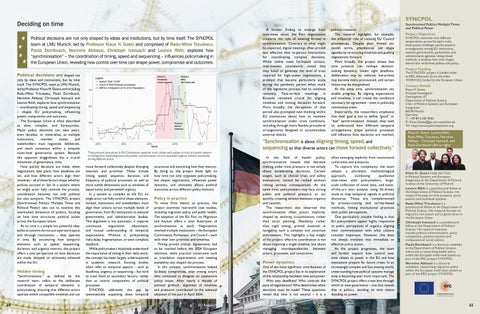
Time pressure invocations in EU Commission speeches track closely with asylum arrivals and public salience of immigration, illustrating how policymaker communication mirrors perceived urgency without necessarily driving effective action.
move forward collectively despite diverging interests and priorities. These include timing, speed, sequence, duration, and frequency of political processes, as well as more subtle dimensions such as windows of opportunity and perceived urgency. In a system as complex as the EU, no single actor can fully control these elements. Instead, institutions and stakeholders must align their actions across multiple levels of governance, from EU institutions to national governments and administrative bodies. This alignment is not automatic; it requires continuous negotiation, adjustment, and mutual understanding of temporal expectations. Without it, policymaking risks delay, fragmentation, or even complete deadlock.
While policymakers intuitively understand the importance of timing in their daily work, the concept has been largely underexplored in academic research. Existing studies often refer to temporal aspects – such as deadlines, urgency, or sequencing – but tend to treat them as secondary factors, rather than as central components of political processes.
SYNCPOL addresses this gap by systematically unpacking these temporal
structures and examining how they interact.
By doing so, the project sheds light on how time not only organises policymaking, but shapes negotiations, influences power dynamics, and ultimately affects political outcomes across different policy domains.
Policy in practice
To move from theory to practice, the project examines real-world case studies, including migration policy and public health.
The adoption of the EU Pact on Migration and Asylum offers a clear illustration of synchronisation at work. Negotiations involved multiple institutions – the European Commission, Parliament, and Council – each with their own priorities and timelines.
Timing proved critical. Agreements had to be reached before the 2024 European elections, while practical constraints such as translation requirements and meeting availability also shaped the process.
In this context, synchronisation helped facilitate compromise, even among actors who continued to disagree on substantive policy issues. After nearly a decade of political gridlock, alignment of timelines and pressures contributed to the eventual adoption of the pact in April 2024.
A further finding to emerge from interviews about the Pact negotiations concerns the role of meeting format in synchronisation. Contrary to what might be expected, digital meetings often proved less effective than in-person interactions for coordinating complex decisions. While online tools facilitated contact, interviewees consistently noted that they failed to generate the level of trust required for high-stakes negotiations, a problem that became particularly acute during the pandemic period when much of the legislative process had to continue remotely. Face-to-face meetings in Brussels remained crucial for aligning timelines and moving decisions forward. More broadly, the disruptions of that period also prompted new thinking within EU institutions about how to maintain synchronisation under crisis conditions, including through more flexible procedural arrangements designed to accommodate external shocks.
political resource.
The research highlights, for example, the influential role of rotating EU Council presidencies. Despite their limited sixmonth terms, presidencies can shape agendas by structuring timelines and pushing negotiations forward.
More broadly, the project shows that time pressure can reshape decisionmaking dynamics. Under tight deadlines, deliberation may be reduced, hierarchies may become more pronounced, and certain voices may be marginalised.
At the same time, synchronisation can enable progress. By aligning expectations and timelines, it can create the conditions necessary for agreement – even in politically contentious areas.
SYNCPOL
Synchronised Politics: Multiple Times and Political Power
Project Objectives
SYNCPOL examines how different temporalities across Europe’s multilevel system challenge synchronisation arrangements among EU institutions, national governments, parliaments, and administrative agencies. Using mixed methods, it analyses how time shapes democratic multi-level politics and policy.
Project Funding
The SYNCPOL project is funded under an ERC Advanced Grant (Number 101054122), funded by the European Union.
Contact Details
Klaus H. Goetz
Principal Investigator
Oettingenstr. 67
Department of Political Science Chair of Political Systems and European Integration 80538 Munich
Germany
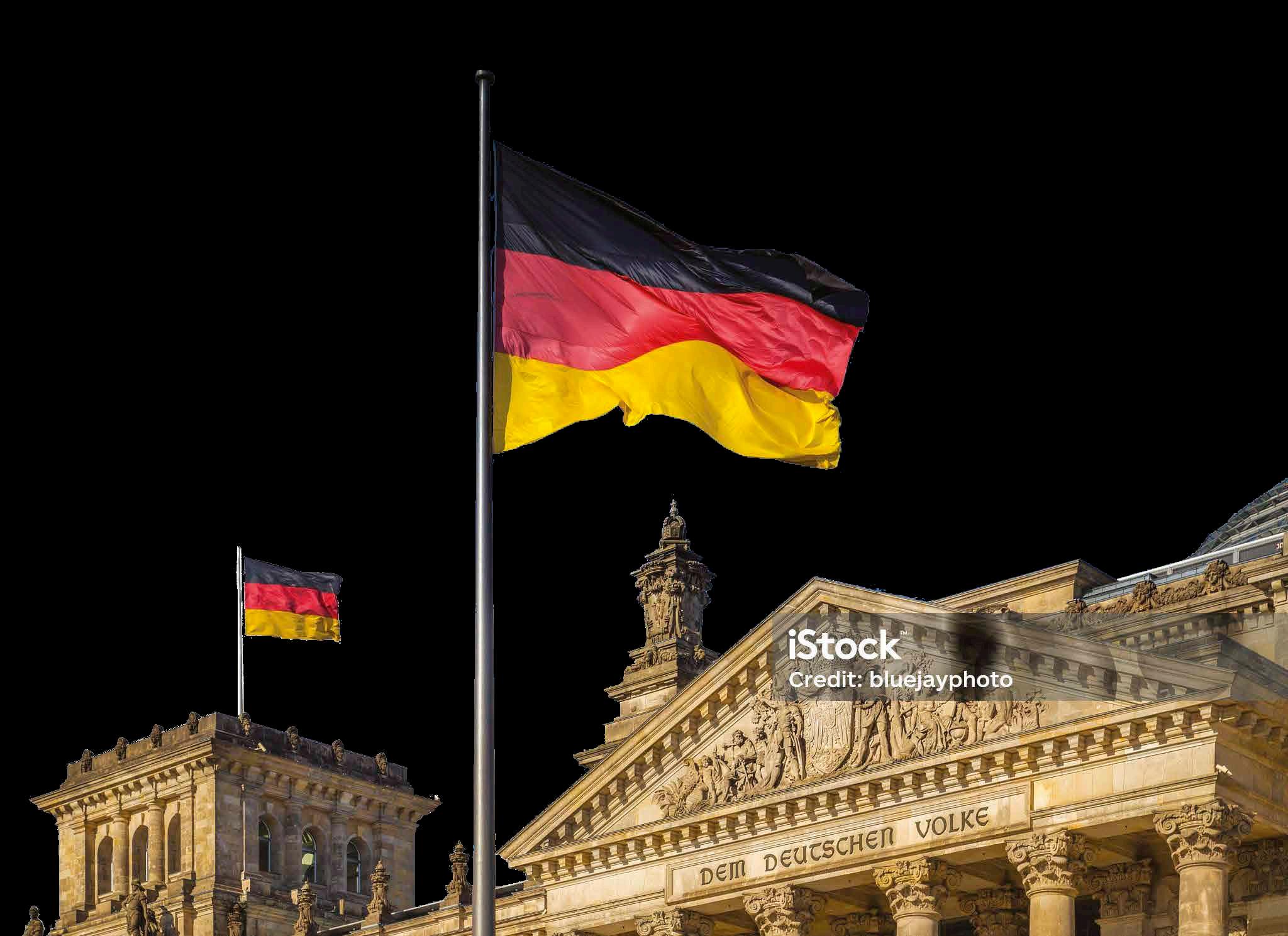
“Synchronisation is about aligning timing , speed, and sequencing so that diverse actors can move forward collectively.”
In the field of health policy, synchronisation reveals that decision making under time pressure is not simply about accelerating decisions. Certain stages, such as clinical trials and safety evaluations, cannot be rushed without risking serious consequences. At the same time, policymakers may face strong public and political pressure to act quickly, creating tension between urgency and caution.
The researchers also observed that synchronisation often occurs implicitly, shaped by evolving circumstances rather than strict planning. Flexibility, rather than rigid timing, proved essential in navigating such a complex and uncertain environment. This highlights a key insight of the project: effective coordination is not about imposing a single timeline, but about managing interdependencies between actors, processes, and constraints.
Power dynamics
One of the most significant contributions of the SYNCPOL project lies in its exploration of the relationship between time and power. Who sets deadlines? Who controls the pace of negotiations? Who determines when decisions must be made? These questions reveal that time is not neutral – it is a
Importantly, the researchers emphasise that their goal is not to define “good” or “bad” synchronisation. Instead, they seek to understand how different temporal arrangements shape political processes and influence how decisions are reached, often emerging implicitly from institutional constraints and pressures.
To capture this complexity, the team adopts a pluralistic methodological approach, combining qualitative interviews with policymakers, largescale collection of novel data, and stateof-the-art text analysis using AI-driven tools to map temporal signals in political discourse. These are complemented by process-tracing and survey-based methods, linking institutional practices with public perceptions.
One particularly notable finding is that EU policymakers appear highly responsive to public perceptions of urgency, aligning their communication with what citizens consider important. However, this does not always translate into immediate or effective policy action.
As the project progresses, the team will further explore how control over time relates to power in the EU and how institutions prepare for future crises. In an increasingly complex and fast-moving world, understanding how political systems manage time is becoming ever more important. The SYNCPOL project offers a new lens through which to view governance – one that reveals that in politics, deciding on time means deciding on power.
T: +49 89 2180 9040
E: Klaus.Goetz@gsi.uni-muenchen.de W: https://www.politicalsystems.org
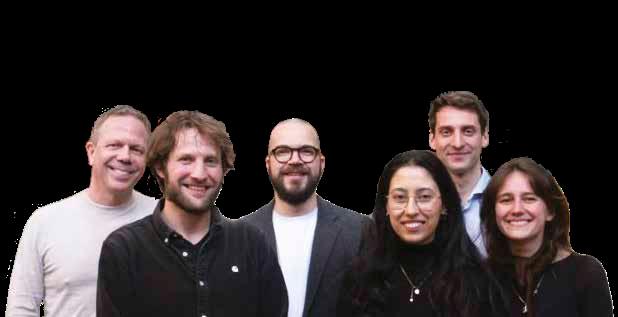
Klaus H. Goetz holds the Chair in Political Systems and European Integration at the Department of Political Science of the University of Munich.
Leonce Röth is a postdoctoral fellow at the Department of Political Science. His research focuses on time pressure, party politics and multilevel systems.
Radu-Mihai Triculescu is a postdoctoral fellow at the Department of Political Science. His research focuses on migration and asylum policy governance in the European Union.
Christoph Ivanusch is a postdoctoral fellow at the Department of Political Science. His research interests include political communication, party competition, political systems and computational social science.
Paula Dornbusch is a doctoral candidate at the Department of Political Science, where she is researching health policy within the European multi-level system as part of the ERC-project SYNCPOL.
Nermine Abbassi is a doctoral candidate, researching migration policy within the European multi-level system as part of the ERC-project SYNCPOL.