Sustainable Electronics for Healthcare

As the volume of Waste Electrical and Electronic Equipment (WEEE) continues to grow, it has become a central focus of updated international regulations. In response, the SusFE project is proactively reimagining the design and production of functional electronics to ensure longterm compliance and environmental stewardship. SusFE consortium explains how flexible, sustainable technologies can enable next-generation healthcare devices.
The SusFE consortium is a strategic European collaboration (Oct 2022 –Mar 2026, Horizon Europe project N° 101070477) dedicated to transitioning the functional electronics industry toward a circular economy by developing sustainable, high-performance materials and manufacturing processes that meet both rigorous clinical standards and the latest environmental regulations. Led by Medtronic Ibérica, this mission is driven by the complementary expertise of a world-class partnership, including industrial innovators Sofradim Production, Capitainer, BeFC (Bioenzymatic Fuel Cells), Molecular Plasma Group, and Pragmatic. This industrial core is seamlessly integrated with the advanced research capabilities of Fraunhofer EMFT, VTT Technical Research Centre of Finland, Tecnalia, and Teesside University, with the University of Cumbria subsequently joining the consortium to further strengthen the project’s collective impact across the medical and technological value chain.
Electronics underpin modern society, from communication systems and digital infrastructure to healthcare technologies and smart devices. As demand grows, so does their environmental footprint. Rising e-waste, resource depletion, and energy-intensive manufacturing are placing increasing pressure on the planet, while reliance on critical raw materials complicates sustainable sourcing and supply chain resilience.
The rapid expansion of the Internet of Things and wearable technologies is embedding electronics into everyday life at an unprecedented scale. While this drives innovation and new functionalities, it also increases the need for sustainable design. As a result, rethinking how electronic systems are designed, produced, and managed across their lifecycle has become essential.
The EU-funded SusFE project addresses this challenge by developing electronics based on sustainable materials, flexible architectures, and energy-efficient production, helping to shape a new generation of greener electronic systems.

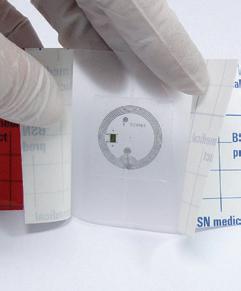
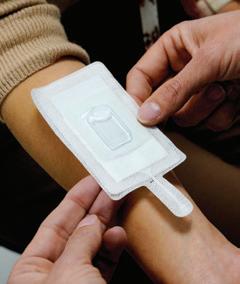

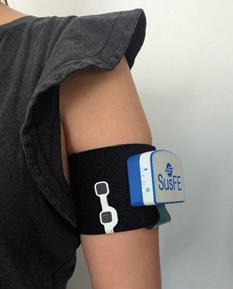
monitoring patch with temperature and humidity sensor

Flexible design
At the heart of SusFE lies a shift away from traditional silicon-based electronics towards flexible and printed alternatives. These systems can be produced on thin films or even paper-based substrates, using additive manufacturing techniques that reduce material waste and energy consumption.
“In a nutshell, SusFE is about implementing sustainable and flexible electronic technologies to support different use cases,” explains SusFE consortium. “These solutions can be printed on very thin films, with development cycles shortened dramatically compared to conventional electronics.”
This flexibility offers both environmental and practical advantages. For example, development times of flexible integrated circuits can be reduced from years to months, while production costs can be significantly lower than traditional semiconductor approaches. At the same time, these systems open the door to entirely new applications, particularly in sectors where lightweight, wearable, or disposable devices are needed.
Healthcare innovation SusFE has focused strongly on healthcare and in vitro diagnostics, where the need
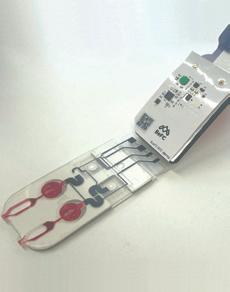
of care electrochemical sensor for protein biomarkers, including Troponin and CRP, using sustainable materials First volumetric micro-sampling plasma card with integrated timestamp Multimodal wearable device for cardiometabolic health monitoring, intyegrating electrochemical & bioimpedence sensors
for innovative yet sustainable solutions is particularly pressing. Ageing populations and the shift towards decentralised care are increasing demand for scalable solutions, while also raising challenges around resource use. At the same time, the growth of remote monitoring and athome diagnostics is accelerating the use of electronic devices, making it essential to combine high clinical performance with reduced environmental impact.
One key application explored in the project is wound monitoring. By integrating temperature and moisture sensors into flexible patches, researchers aim to provide real-time insights into healing processes.
“Moisture and temperature are key indicators,” says SusFE consortium. “If conditions are not optimal, healing will not proceed properly. By monitoring these parameters, we can detect early signs of complications.”
The project has already demonstrated promising results, including highly accurate temperature monitoring systems capable of detecting changes as small as 0.1°C. Such precision could enable earlier detection of infection or abnormal healing, improving patient outcomes.
Another important use case is remote blood sampling, designed to support decentralized clinical trials. Flexible
electronics are integrated into sampling cards to record when and how samples are collected, ensuring data reliability while allowing patients to remain at home.
“The idea is to avoid unnecessary travel for patients,” SusFE consortium explains.
“You can collect blood at home, while the system records the date, time, and conditions of the sampling.”
Scaling and impact
A defining feature of SusFE is its integration of green technologies across the entire system, rather than addressing sustainability at a single stage. This includes the use of printed circuits on biodegradable or recyclable substrates, such as paper or PLA-based films, which significantly reduce material consumption and simplify end-oflife disposal. In parallel, the project explores innovative energy solutions, most notably bioenzymatic fuel cells, capable of powering low-energy devices without relying on conventional batteries. These fuel cells use biological reactions to generate electricity, offering a more environmentally friendly alternative for short-term or disposable applications.
towards green and circular electronics, aligning closely with the ambitions of the European Green Deal and the transition to a more sustainable digital economy.
Through collaboration with European initiatives such as the Green Electronics Working Group, the project is not only advancing technological solutions but also helping to shape a common framework for what “green electronics” should mean in practice - across design, manufacturing, use, and end-of-life.
By bringing together industry, research organizations, and policymakers, SusFE feeds into ongoing discussions on how to reduce the environmental footprint of the electronics sector while strengthening Europe’s technological sovereignty.
Innovative Processes & Methodologies for Next Generation Sustainable Functional Electronic Components and Systems
Project Objectives
SusFE aims to develop functional electronics through manufacturing processes. These processes will be based on R2R production of wearable and diagnostic devices, all within the framework of green and circular economy.
Project Funding
This project has received funding from the European Union’s Horizon 2020 research and innovation programme under grant agreement Nº 101070477
Project Partners
https://susfeproject.eu/consortium/
Contact Details
Alicia Panadero
Innovation Project Manager
Integrated Health Solutions
INNOVA & European Projects Office Medtronic Ibérica, S.A C/María de Portugal, 11 Madrid, 28050 | Spain
T: +34 676 84 01 29
E: coordination@susfeproject.eu W: https://susfeproject.eu/
“In a nutshell, SusFE is about implementing sustainable and flexible electronic technologies to support different use cases.”
Together with roll-to-roll manufacturing processes, these technologies enable the production of lightweight, flexible electronic systems at scale, with lower energy input and reduced waste compared to traditional fabrication methods. However, integrating these components into reliable medical devices remains complex.
Combined with roll-to-roll manufacturing, these technologies enable scalable production of lightweight and environmentally sustainable electronic systems. However, challenges remainparticularly at the material level.
“The main challenge is identifying the right materials, especially conductive inks that are both biocompatible and stable. The design is much more challenging than the production,” the SusFE consortium notes.
While several prototypes have been successfully developed, commercialization is still in progress. Some applications, such as the blood sampling device, are moving towards clinical testing, representing an important step towards real-world deployment.
At a broader level, SusFE also contributes to Europe’s strategic push
SusFE along with the Green Electronics Working Group is dedicated to optimizing the regulatory landscape and promoting standardized sustainability metrics. A key part of this mission is identifying where alternative materials can be integrated without compromising on performance or budget. By focusing on these high-value opportunities, we can better advocate for the incentives needed to make circular manufacturing a standard practice
“We are advocating for flexible printed electronics as a more sustainable option,” says SusFE consortium. “And encouraging the European Commission to support these technologies and bring them closer to market.”
Such support could play a key role in accelerating adoption, particularly by bridging the gap between research and commercialization. By enabling higher technology readiness levels, improving recycling pathways, and fostering investment in sustainable innovation, Europe has the opportunity to position itself as a global leader in next-generation, environmentally responsible electronics. Although sustainable solutions may initially come at a higher cost than conventional silicon technologies, sectors such as healthcare provide a clear pathway for early adoption, where added value can justify the investment. As the project concludes, SusFE delivers more than technological advances—it offers a roadmap for embedding sustainability into electronics from the outset, helping to align innovation with environmental responsibility.


Yves Bayon is Chief Scientist at Medtronic and an EIT Health mentor with over 20 years’ experience in R&D of medical devices and translational solutions.
Zulfiqur Ali is Pro Vice Chancellor (Research and Knowledge Exchange) at the University of Cumbria. His research interests include microfabrication, as well as microfluidics for point-of-care diagnostic devices and for biological processing.