Building exoplanets in systems with multiple Suns

Multiple stellar systems host several stars, bound to each other by forces of gravity, and many exoplanets have been found in these systems. The Stellar-MADE project team is studying these multiple stellar systems, and exploring whether the exoplanets that form within them are different to those that emerge from single stellar systems, as Professor Nicolás Cuello explains.
A star is surrounded by a protoplanetary disc shortly after it is born, comprised of layers of gas and dust which act essentially as a planetary factory, where new planets form and evolve. As Principal Investigator of the ERCbacked Stellar-MADE project, based at the University Grenoble Alpes, Professor Nicolás Cuello is part of a team of researchers looking to build a fuller picture of this process. “We are interested in how discs form around young stars and how planets are then built within these discs,” he explains. This research is focused on multiple stellar systems, in which several stars are bound to each other by forces of gravity. “Most stars form in clusters or groups, where they strongly interact with each other. They are also often part of multiple stellar systems, which means that there are multiple stars orbiting around each other, with gaseous and solid material around them,” continues Professor Cuello. “There are a variety of different possible orbital arrangements. Most stars are part of these multiple stellar systems.”
Multiple stellar systems
The gravitational forces of young multiple stars strongly affect the material surrounding
them, modifying the very process of planet formation and stability. The project team is studying how planets in these multiple systems form and survive. “Are the exoplanets that form in these systems different to those that are formed in single stellar systems?” asks Nicolás Cuello. The first confirmed detection of an exoplanet – planetary objects which lie beyond our own solar system – was in 1992, followed
observational hints, and we know that the disk should have a certain morphology, a certain shape, and that it must contain a given amount of material.”
The project team is working with multiwavelength observations from a variety of facilities, including data from the ALMA telescope and the Very Large Telescope, both located in Chile. This involves looking at different frequencies and essentially
“Gas and solids gather in a disc of material surrounding newborn stars. We are studying the evolution of these discs to understand how they lead to the formation of planets.”
by more, the most famous and unexpected of which was the discovery of 51 Peg b in 1994, a hot Jupiter around a main sequence star. Now Professor Cuello is looking to gain fresh insights into those exoplanets that have formed within multiple stellar systems. “We mainly run hydrodynamical simulations, to understand the evolution of these systems. Our goal is to reproduce what we observe with telescopes in the hydrodynamical models,” he outlines. “We have some
reconstructing the tomography of the disc.
“Gas and solids gather in a disc of material surrounding newborn stars. We are studying the evolution of these discs to understand how they lead to the formation of planets, looking at the evolution of these gaseous disks around young stars,” explains Nicolás Cuello. The project team are largely focusing on stars between 100,000 years and a few million years old, which corresponds to the time period over which stars retain their
discs. “After a few million years the discs dissipate. The remaining gas and dust floating around then becomes what we call a debris disc, and we believe that the stars are then left with their exoplanets. We subsequently follow the evolution of these multiple stellar systems and any exoplanets,” outlines Professor Cuello. “Together with postdocs Antoine Alaguero and Pedro Poblete we recently published a review article, in which we combined hydrodynamical models and recent observations to discuss planet formation in multiple stellar systems.”
A key aim here is to characterise exoplanets more precisely in terms of their orbital parameters, one of which is the semimajor axis, essentially the distance from their central star. Researchers also measure the orbital eccentricity of exoplanets, the degree to which their orbit deviates from a perfect circle, and the tilt between the exoplanets’ and the stars’ orbits. Multiple
stellar systems are highly complex, with mutual gravitational perturbations between all the bodies within it, which can affect the behaviour of the system as a whole.
“The orbits of the star and the discs’ may be misaligned with respect to each other, and misalignment is much more likely to be observed in multiple stellar systems. This is a fascinating area of study, which opens up a whole new world of possibilities,” outlines Nicolás Cuello. Single stellar systems are to some extent easier targets in the search for exoplanets, as they offer a clearer, more stable signal, but now more groups are specifically targeting multiple stellar systems. “We are contributing to this work in the project, primarily from the theoretical point of view,” continues Professor Cuello.
Alpha Centauri
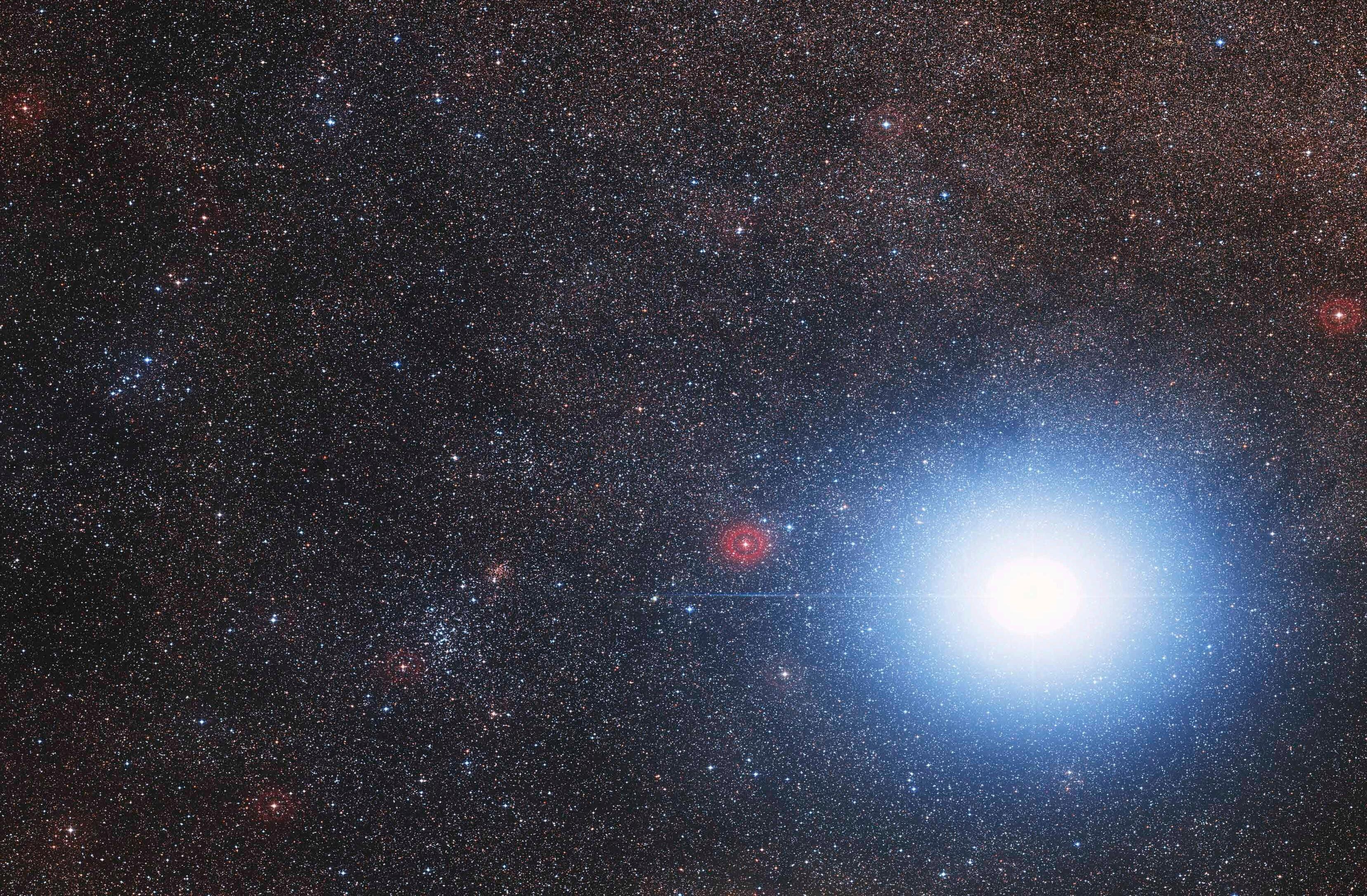
The closest stellar system to our own planet in fact contains three stars, namely
Alpha Centauri A and B, as well as Proxima Centauri. In collaboration with post-doc Mario Sucerquia, Nicolás Cuello is looking to build a fuller picture of the kinds of planets that this system could host. “There were two circumstellar disks, around Alpha Centauri A and B. We are studying what could have happened in the past, in this binary system,” he says. The motion of the stars in this system is fairly well-known, now researchers are looking to quantify the amount of material around each of the stars to better constrain planet formation theories. “It remains unclear how planets could have formed in there. Thanks to our simulations, we have been able to establish the amount of material available to form planets, and the distance from the star at which we should find those planets,” he explains. “We have found that there is room to form rocky planets, like in our own solar system, around each of those stars.”
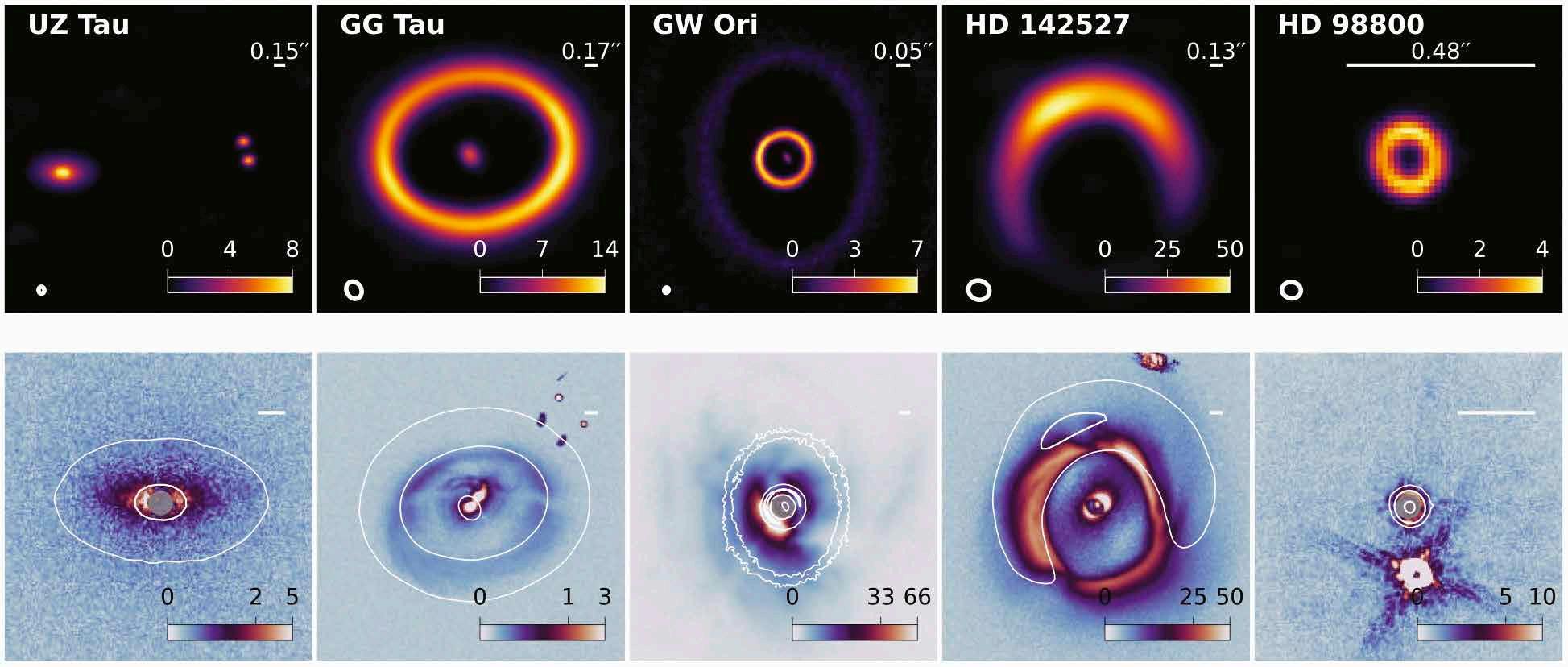
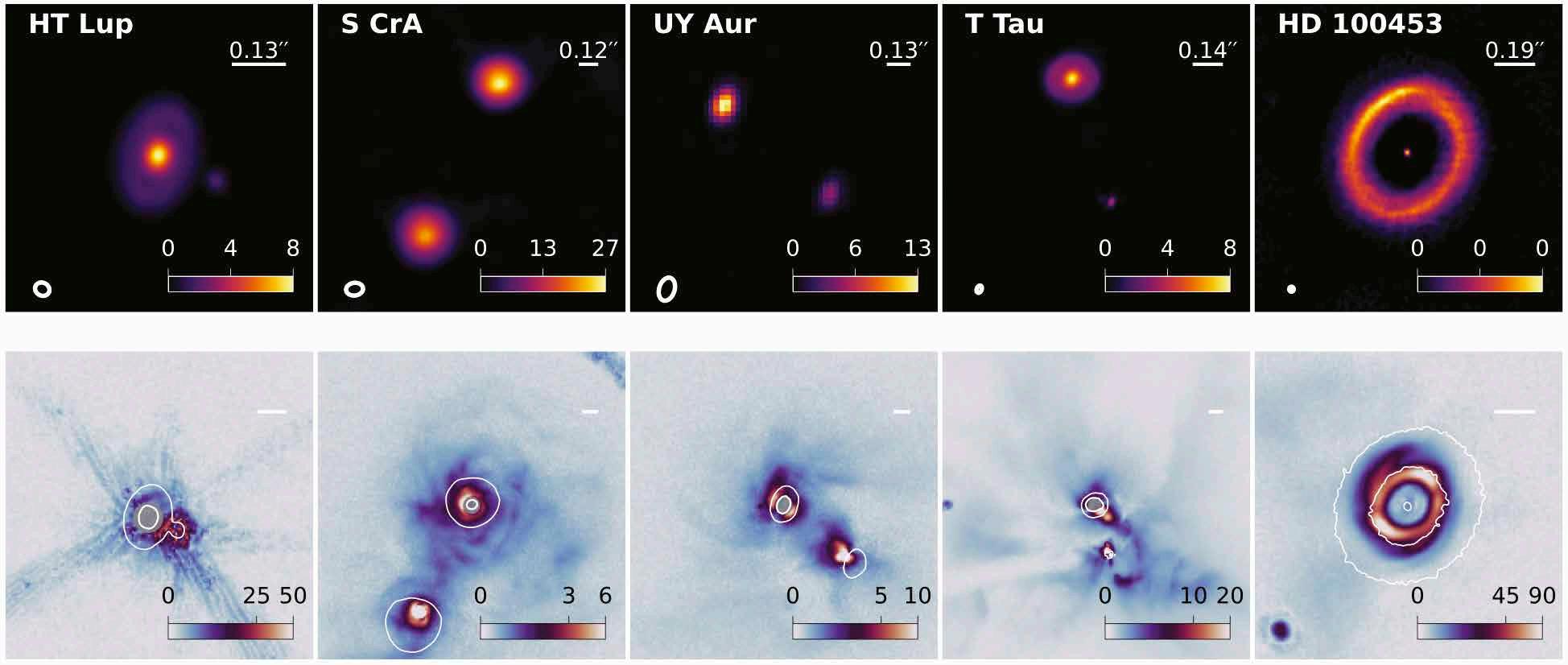
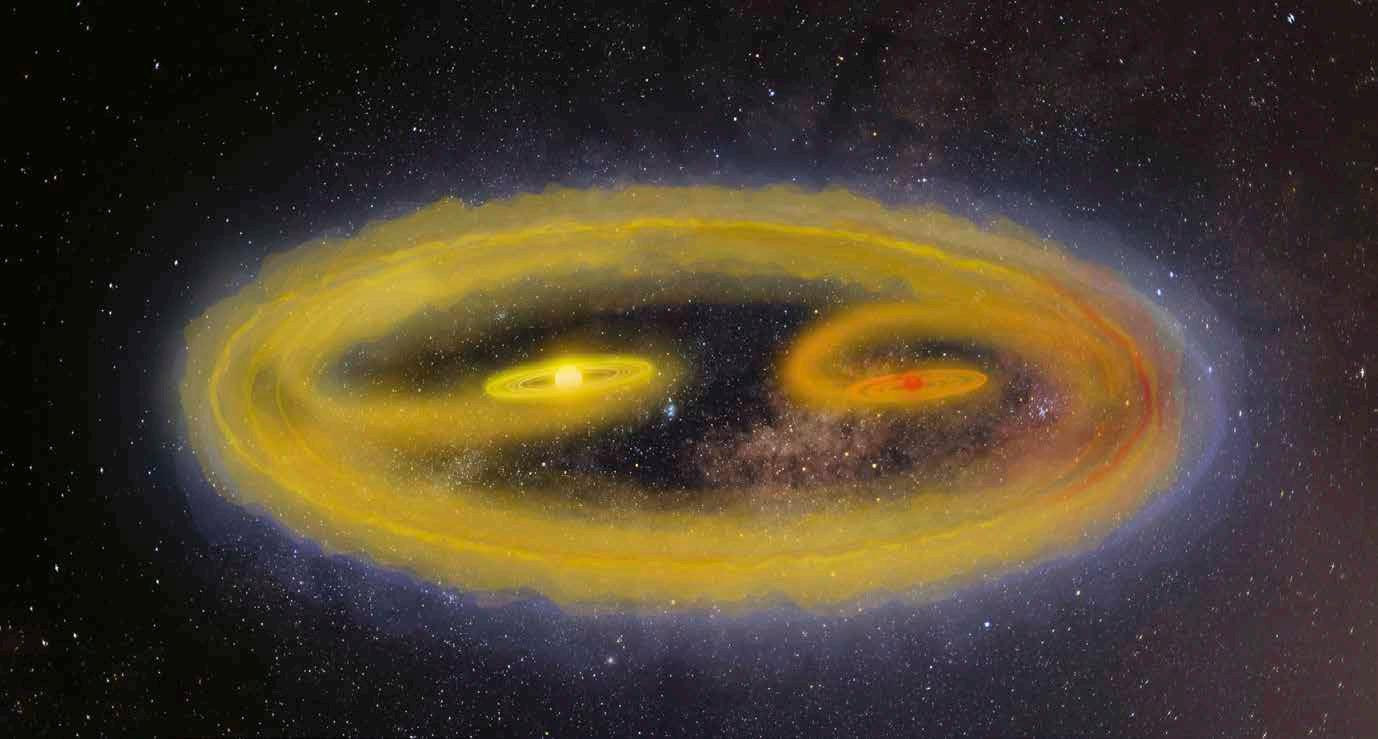
Fig 1: Artistic view of a young binary star with two circumstellar discs orbiting around each star and a circumbinary disc surrounding both stars. (Credits: M. Sucerquia)
Observations of circumbinary discs in multiple stellar systems with ALMA in the sub-mm range (top) and with the VLT in the near infrared (bottom).
Observations of circumstellar discs in multiple stellar systems with ALMA (top) and the VLT (bottom). (Credits: Cuello, Alaguero & Poblete, 2025).
This runs counter to the commonly held view in the astrophysics community that the environment in multiple stellar systems inhibits planet formation. The balance is now shifting with researchers paying more attention to multiple stellar systems; Nicolás Cuello and his colleagues recently participated in a campaign which led to some exciting results. “For the first time we detected transiting planets around both the stars of a binary system. There are two stars, orbiting around each other, and we know that there are exoplanets around each of the stars,” he explains. Researchers have been able to detect circumstellar exoplanets orbiting these components, using a variety of techniques. “For this quest, we combine several methods, such as transits (starlight dimming events), radial velocity (stars wobbling in the sky) and direct imaging (catching bright dots around stars),” continues Professor Cuello. The ongoing development of new techniques and instruments will allow researchers to extend the search for exoplanets in more corners of the universe. This is an active area of research in the Stellar-MADE team, with PhD student Elisa Castro set to participate in an upcoming campaign aimed at catching exoplanets in binaries using direct imaging, while Mario Sucerquia and PhD student Romain Grane are working on the dynamics and detection of circumbinary planets. As part of their work in the project, Nicolás Cuello and his team have also contributed to the development of a new telescope in Turkey
called PLACID, which will open up further possibilities. “We will be able to basically mask two stars at the same time. By doing so we will perform the first complete survey of binary systems in the northern sky, and we are looking for exoplanets in those,” he says. The exoplanets that have been discovered so far represent only the tip of the iceberg, believes Professor Cuello, and he expects more to be detected in multiple stellar
and if they are misaligned with each other,” says Nicolás Cuello. Huge volumes of data are being generated in astronomy research, and alongside analysing new information, Professor Cuello says it’s also important to revisit older data in the light of more recent research. “We may not always know how to look for signals in existing data that would validate our theoretical findings,” he acknowledges.
“Exoplanets are resilient. Even in the chaotic dance of multiple stars, nature finds a way to build worlds. But, we still need to understand how this happens.”
systems over the coming years. “A lot of energy in the wider research community is currently focused on using as much data and as many telescopes as we can, for instance Gaia, Kepler, JWST and other missions, to better characterise exoplanets,” he says.
Gaia data release 4
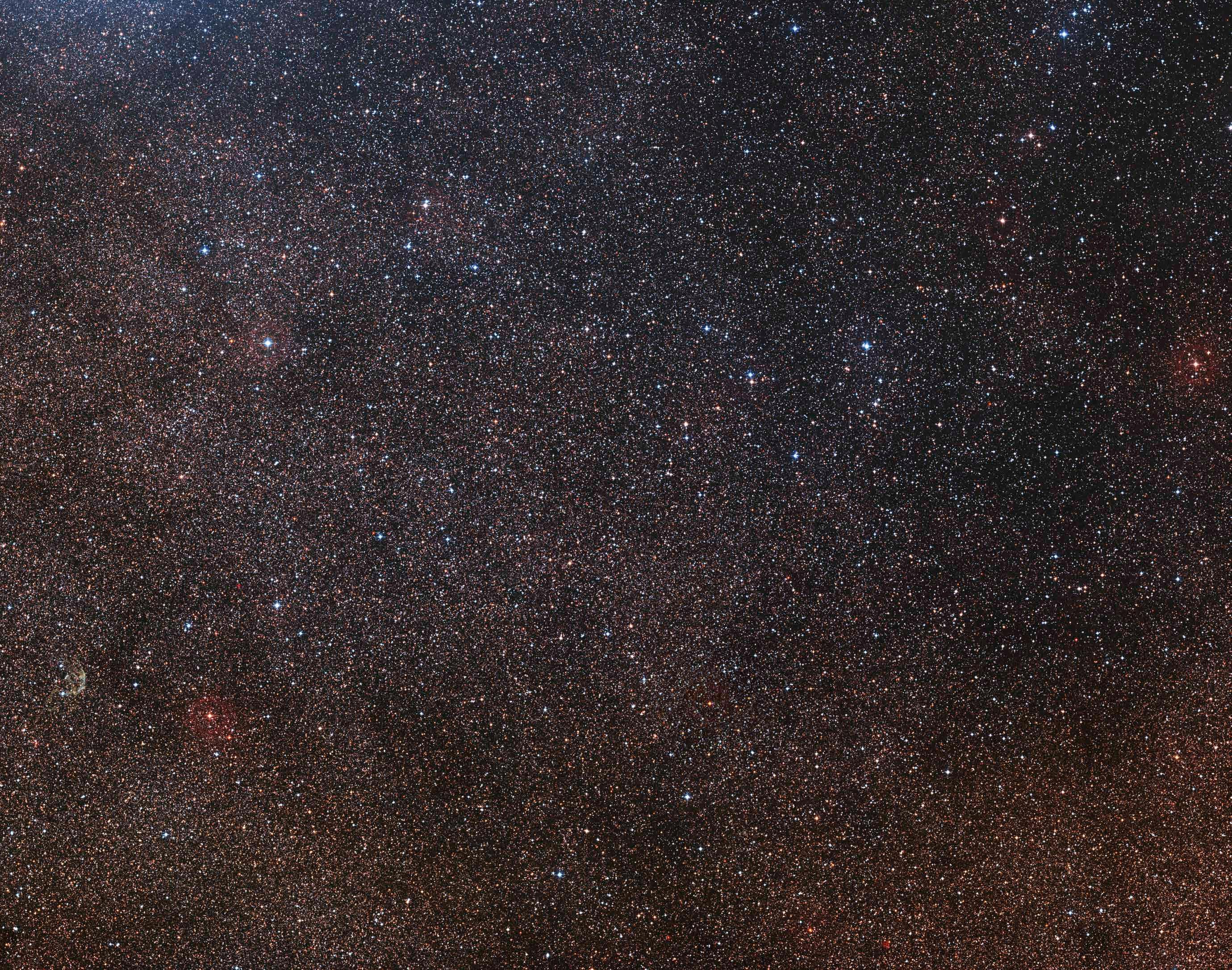
A large volume of data is already available from different missions, such as the Gaia satellite for example, which has made observations on over two billion stars and other objects throughout our galaxy since it was launched in 2013. A fourth set of data from the satellite will be released later this year, which will provide a rich source of information for researchers. “We will have information from different epochs to reconstruct orbits. We will be able to better constrain the orbits of bodies in multiple stellar systems, understand how big the orbits are, how elliptical they are,
The challenge is to use the data available effectively, to essentially know what to look for in these huge datasets. By building and developing rigorous theoretical frameworks, Nicolás Cuello and his team can help researchers glean fresh insights from the available data, and build a deeper picture of protoplanetary discs. “If we’re able to anticipate the kinds of signals that can be expected, or to predict the frequency at which observations should be made, then that will be beneficial for researchers,” he explains. The aim at this stage is to create a precise catalogue of possible orbital arrangements of exoplanets in multiple stellar systems. “The following game is to identify exoplanetary fingerprints in telescope observations and then infer their orbits. This will allow us to better understand how these exoplanets could have formed,” continues Professor Cuello.
A significant degree of progress has been made over the course of the project, and it is now possible to describe a broad variety of planets in multiple stellar system, such as rocky planets, mini-Neptunes or super Earths. The team is also on track in terms of reconstructing the evolutionary pathways of multiple stellar systems, yet Nicolás Cuello says there is still more work to do. “The celestial mechanics involved in these systems are particularly complex,” he stresses. At the same time new data is being generated from different sources, which may run contrary to established thinking and open up new avenues of investigation. “For example, if data from Gaia and other instruments indicate that there is an overwhelming quantity of circumbinary planets – which orbit two stars – in the galaxy then we will want to understand why,” continues Professor Cuello. “We have predictions,
but it is observations which will tell us what’s actually happening.”
The project team benefits here from being part of a very lively lab, home to a broad range of scientific expertise, which provides a lot of opportunities to share ideas between theoretical and observational astronomers. This is essential to scientific progress, believes Nicolás Cuello. “We need to be part of a group, to work together.
Discussing research with colleagues and going over recent articles can lead to new ideas,” he says. This can then spark further investigation and new projects; Professor Cuello plans to continue investigating exoplanets in future, and to explore the many unanswered questions in the field.
“We would like to keep chasing exoplanets in multiple stellar systems in future. Thus starts the quest for habitable worlds outside of our solar system. A bright future that may be illuminated by many stars!”
Stellar-MADE
Exploring the effects of Stellar Multiplicity on planet formation Across Disc Evolution
Project Objectives
The Stellar-MADE ERC project explores the impact of stellar multiplicity on disc dynamics and planetary architectures. Running from 2022 to 2027 at the Université Grenoble Alpes, this project combines numerical models and a broad variety of telescope observations. The ultimate goal is to understand how exoplanets form and evolve within multiple stellar systems.
Project Funding
Project hosted at at IPAG & UGA (Grenoble, France), with the participation of CNRS. Funded by the European Union (ERC, StellarMADE, No. 101042275).Views and opinions expressed are however those of the author(s) only and do not necessarily reflect those of the European Union or the European Research Council Executive Agency. Neither the European Union nor the granting authority can be held responsible for them. Grant agreement No. 101042275, project Stellar-MADE.
Project Team
• Nicolás Cuello (Principal Investigator, IPAG/UGA/ERC)
• Antoine Alaguero (Postdoc, IPAG/UGA/ERC)
• Pedro Poblete (Postdoc, IPAG/CNRS/ERC)
• Mario Sucerquia (Postdoc, IPAG/UGA/ERC)
• Romain Grane (PhD Student, IPAG/UGA/ERC)
• Elisa Castro (PhD Student, IPAG/UGA/ANR)
• Daniel Price (Visiting professor, Monash/UGA)
Contact Details
Project Coordinator
Nicolás Cuello Université Grenoble Alpes IPAG, 414 rue de la piscine, 38400 Saint Martin d’Hères, France E: nicolas.cuello@univ-grenoble-alpes.fr W: https://nicolascuello.github.io/Stellar-MADE/

Nicolás Cuello is an Italo-Argentinian astrophysicist working as a professor at the Université Grenoble Alpes. He is the Principal Investigator of the StellarMADE project, funded by an ERC Starting Grant and hosted at IPAG. His research explores how stellar multiplicity and flybys influence protoplanetary disc dynamics and planet formation.


Nicolás Cuello
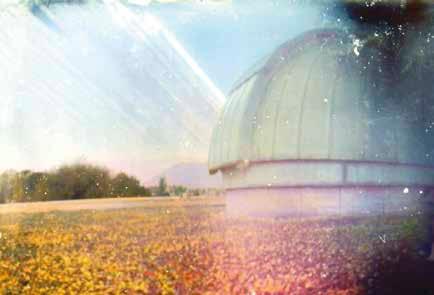
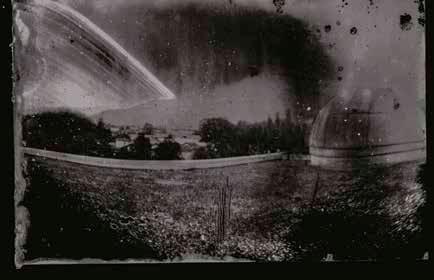
Long-exposure photographs showing the motion of the Sun in the Grenoble sky across several months.
The bright ray corresponds to Summer solstice in 2024.
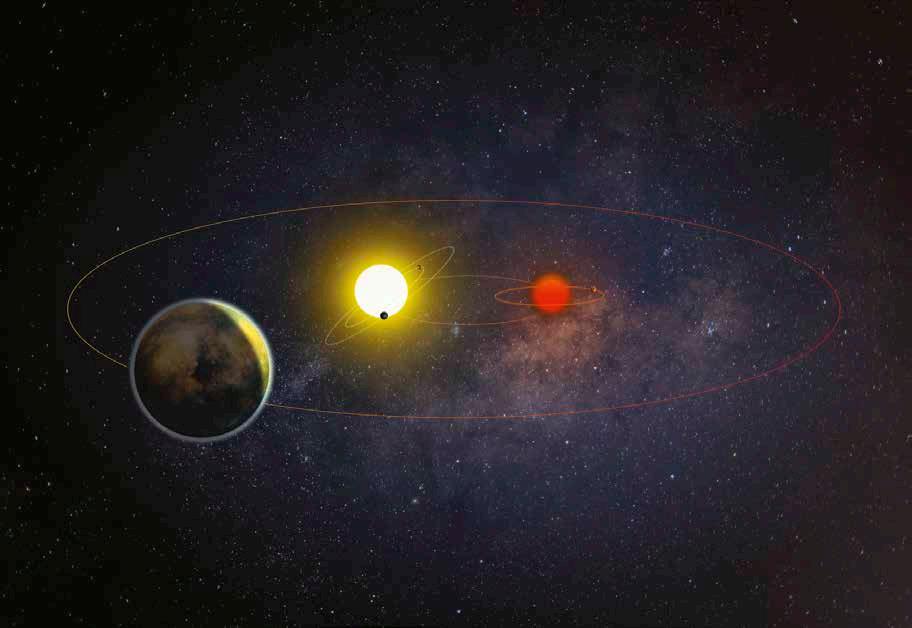
Artistic view of a mature binary star with three circumstellar exoplanets orbiting around each star and one circumbinary exoplanet orbiting both stars (Crédits: M. Sucerquia)
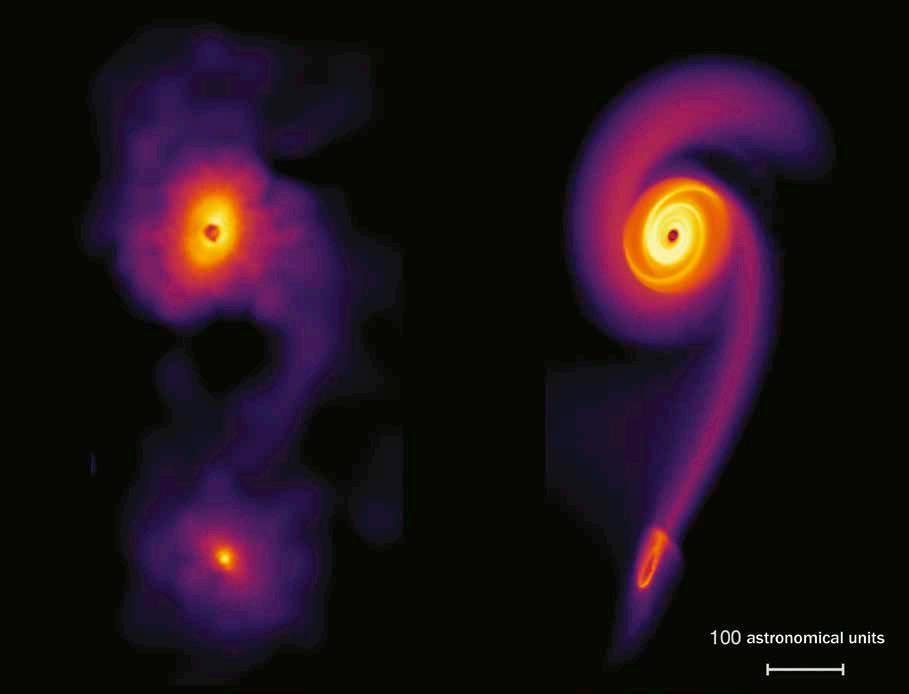
Observations with VLT in the near infrared (left) and hydrodynamical simulation (right) of the ongoing stellar flyby in UX Tauri. The scale on the bottom correspond to 100 times the Sun-Earth distance. (Credit: Ménard et al., 2020)
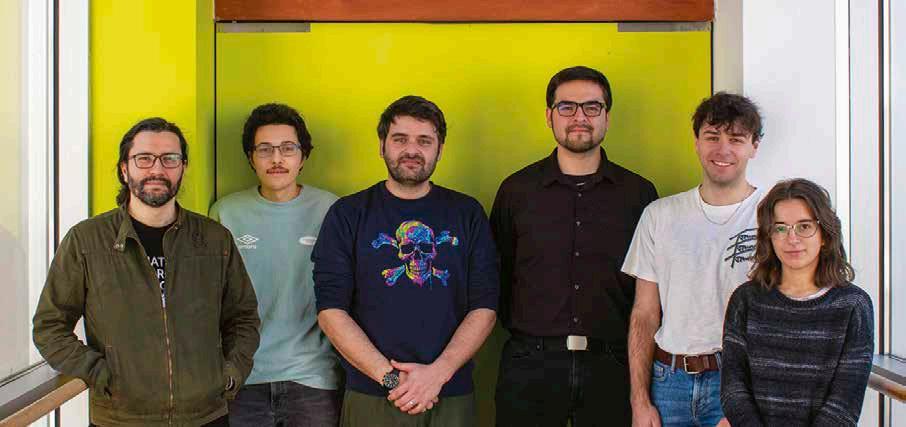
Stellar-MADE team (from left to right): Mario Sucerquia, Romain Grane, Nicolás Cuello, Pedro Poblete, Antoine Alaguero, and Elisa Castro.