Tracing the Ocean’s Climate Archive

We spoke to Dr. Blanca Ausín, a Distinguished Researcher at the Spanish National Research Council, about the ERC-funded PASSAGE project. By combining oceanographic fieldwork with advanced geochemical analyses, her team investigates how ocean currents redistribute sedimentary particles used to reconstruct past climates and quantifies the biases this transport introduces.
Marine sediments are one of the most extensive and continuous archives of Earth’s past climate. These deposits are formed by the accumulation of particles of diverse origin that settle on the ocean floor year after year, layer upon layer. A portion of these sedimentary particles consists of the remains of marine microorganisms, such as phytoplankton, that record information about the climate and environment in which they lived within their tissues and skeletal structures. The analysis of these sedimentary components enables researchers to reconstruct past climatic conditions and provides a long-term context for assessing how unusual recent and projected future changes may be.
The fundamental assumption underlying most paleoceanographic investigations is that the environmental signal encapsulated in marine sedimentary components reflects that of the overlying water column at the time and location of formation. However, evidence indicates that many of these particles experience significant transport in the ocean, travelling from their place of origin to distant locations over journeys that can last thousands of years before they are buried in the sediment. Consequently, some particles within a given sediment layer may carry climate information that belongs neither to the location nor to the time period being reconstructed, introducing spatial and temporal biases into paleoclimate records.
This challenge is at the core of the ERCfunded PASSAGE project, which stands for Provenance and Transport Pathways of Marine Proxy-Bearing Particles. PASSAGE is led by Dr. Blanca Ausín, a Distinguished Researcher at the Spanish National Research Council’s Institute of Natural Resources and Agrobiology (IRNASACSIC) and Head of the Biogeosciences and Climate Change Group. The project brings
together oceanography and paleoclimatology to investigate how hydrodynamic transport modes influence the movement and deposition of climate-encoding sedimentary particles.
“Our project tries to put together two different fields that have lots in common but sometimes work separately. When we study past climates, we have to make some assumptions. We assume, for example, that the sediment we pull up from the seafloor was actually formed right there, and that it gives us a clear picture of the local climate at the time. But oceanographers have shown that sediments move a lot in the ocean,” explains Dr. Ausín.
Fieldwork at Sea
The southwest Iberian margin, off the Portuguese coast from the Gulf of Cádiz to the waters off Lisbon, serves as the primary study area. This region has played a pivotal role in paleoclimate research because, during certain periods in the past, its surface waters recorded signals from the Arctic while its deep waters captured signals from the Antarctic, making it possible to study polar and midlatitude climate dynamics from a single location. However, this strategic importance also means that any transport-related biases would have far-reaching consequences for existing paleoclimate records. “What happens if what you are analysing is a mixture of material from multiple climate regions, like the Atlantic and the Mediterranean? Maybe we think we are
reconstructing pristine signals, but we are not,” explains Dr. Ausín.
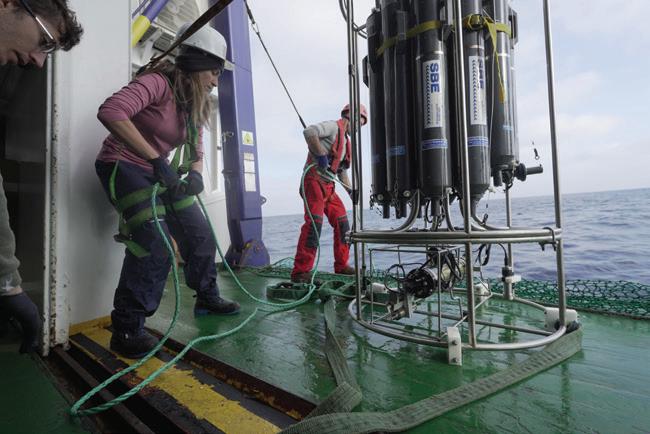
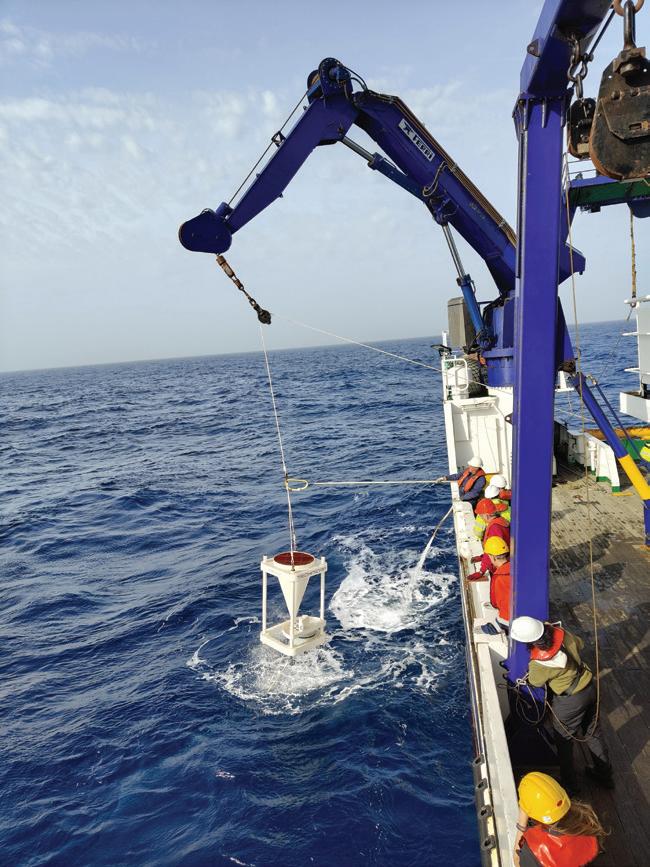
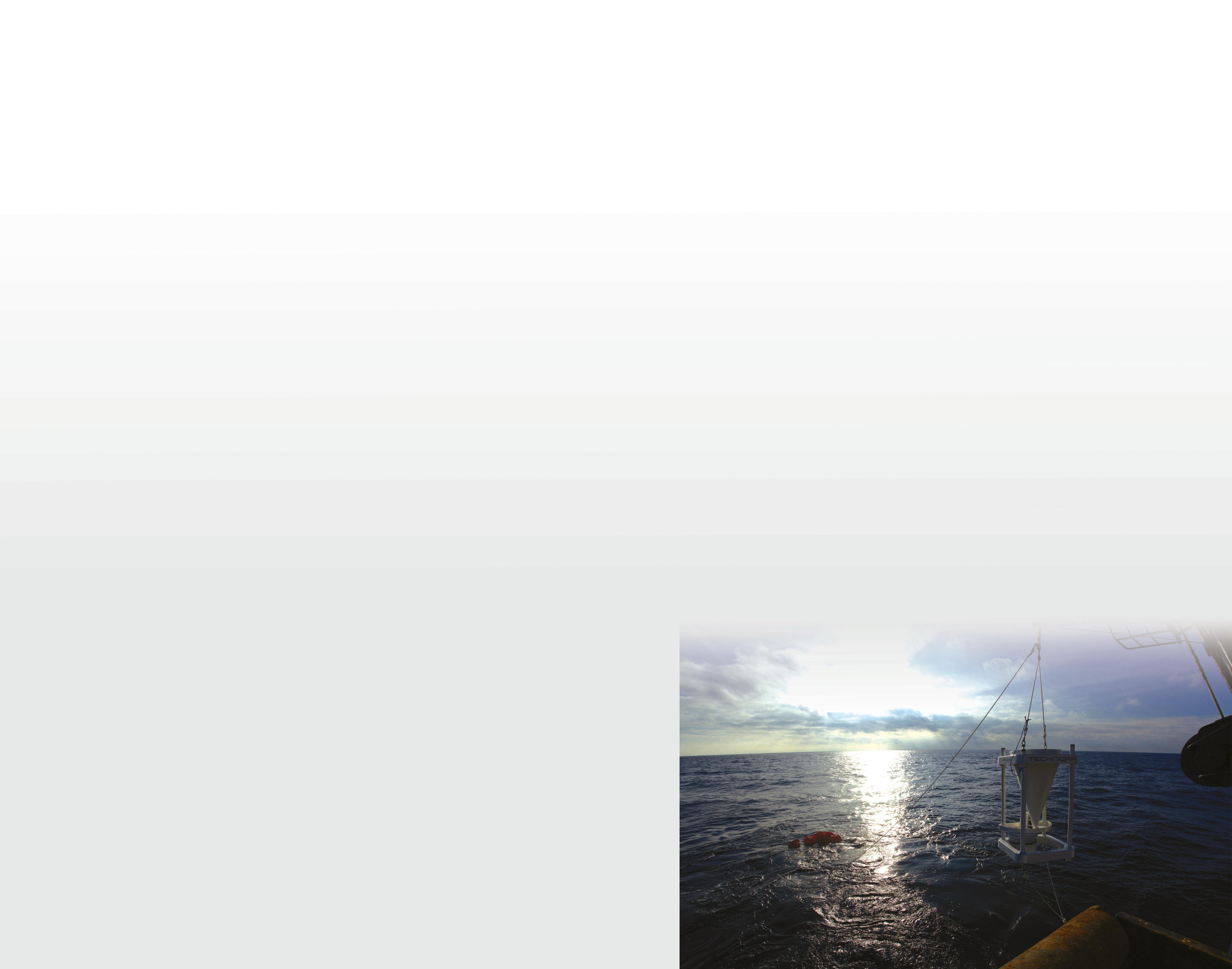
To investigate how particles travel through the water column, the PASSAGE team conducted two oceanographic cruises. The first, PASSAGE23, took place in November 2023 aboard the R/V Ramón Margalef. Over eight days, the team sampled 21 locations, collecting over 800 water and sediment samples. The most important milestone of this cruise was the successful deployment of two mooring lines, which are the first sediment traps ever installed and recovered in this region. The moorings are anchored to the seafloor with train wheels and consist of kilometres of cable held in place by buoys. Suspended at specific depths are sediment traps, which are large funnels nearly two metres tall that intercept particles being transported through the water column. Each trap carries 24 vials and is programmed to rotate every 15 days so that particles collected over each interval are stored separately. Hydrographic sensors alongside each trap continuously measure water turbidity, temperature, salinity, and current speed and direction.
The second cruise, PASSAGE24, was carried out in December 2024 aboard the R/V Ángeles Alvariño with the objective of recovering the instruments after a full year of operation.
Despite adverse weather conditions, the team successfully retrieved all moorings, obtaining an unprecedented year-long record of hydrographic properties and settling particles from this benchmark region.
Additionally, the project employs radiocarbon dating, a technique that allows the dating of carbon up to 55,000 years old, to determine whether co-deposited particles are of the same age or represent a mixture from different time
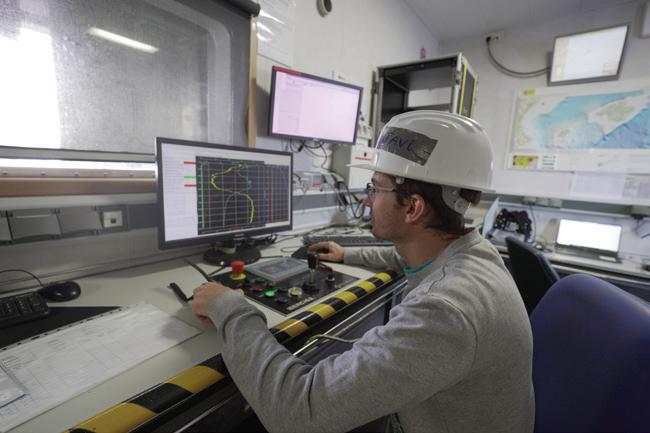
periods. Radiogenic isotopes such as neodymium, strontium, and lead are used to trace the provenance of mineral particles, while lipid biomarker analysis enables the reconstruction of environmental variables such as sea surface temperature. Part of this analytical work is carried out in the new organic biogeochemistry laboratory at IRNASA-CSIC, while radiocarbon and radiogenic isotope measurements are conducted in collaboration with ETH Zurich, AWI and Barcelona University.
Revealing Hidden Biases
Preliminary results presented at international conferences have already yielded important
“While
sample, demonstrating that sand-sized and clay-sized particles can carry very different provenance information. Moreover, analysis of organic carbon has revealed that lateral transport plays a more important role in this region than previously recognised. Old carbon is being carried sideways along deep, turbid water layers along the continental slope, and the organic carbon ultimately buried in the seabed is considerably older than the tiny shells that sink directly from the surface. “So far, the results show that currents are very strong, stronger than we thought, and that particles being transported in the water are also older than we thought,” summarises Dr. Ausín.
the sediments help us understand the past , the moorings tell us about the present: if we want to know how particles travel, we must go to the ocean and see it.”
insights. The year-long mooring data indicate that ocean currents in the study area are stronger than previously thought and that intermediate water properties, including temperature and salinity, vary widely throughout the year. Current direction was found to be highly variable, highlighting the influence of mesoscale features known as meddies, which are rotating lenses of warm, salty Mediterranean water that propagate into the Atlantic. The data captured the signature of a regional earthquake in August 2024 and pulses of river sediment delivered during rainstorms. Furthermore, the team developed a novel methodology in collaboration with ETH Zurich for sorting, purifying, and radiocarbon-dating coccoliths, which are calcium carbonate plates produced by phytoplankton and widely used as paleoclimate proxies. Using flow cytometry, a technique grounded in medicine and biology, the researchers produced what are believed to be the first radiocarbon measurements on pure coccolith samples isolated from complex sedimentary matrices. Work on grain-size fractionated sediments has additionally shown that the radiogenic isotope signatures of neodymium, strontium, and lead differ markedly between size classes within the same
Future Directions
The PASSAGE team is an all-female group comprising two PhD researchers, Prabodha Hewage, who focuses on radiogenic isotopes and coccoliths, and Nadee Nanayakkara, whose work centres on radiocarbon dating and lipid biomarkers, a postdoctoral researcher, Dr. Jiaying Li, who studies organic carbon signatures, a laboratory technician, Celia Merchán, and Dr. Ausín. The overarching goal is to develop a new indicator that enables other researchers to assess whether the sediments they intend to study contain potential climate biases, and whether the information derived from those archives is robust and reliable. While PASSAGE has focused on the southwest Iberian margin, the potential for extending these approaches to other climate variables and ocean regions is considerable. Alongside its scientific programme, the team has invested in public engagement, including the publication of a freely accessible graphic novel: “Logbook.
An oceanographic adventure”, inspired by the PASSAGE23 cruise that aims to introduce the wider public to oceanography, an area of science that studies nearly three-quarters of our planet yet remains relatively unfamiliar to many.
PASSAGE
Provenance and Transport Pathways of Marine proxy-bearing Particles
Project Objectives
PASSAGE aims to comprehensively understand how hydrodynamic transport modes influence the movement and deposition of marine particulate material that encapsulates climate information, and to quantitatively constrain the impact of this particle translocation on derived paleoclimatic proxy signals and reconstructions.
Project Funding
This project is funded by the European Research Council (ERC) under the Horizon Europe research and innovation program (ERC-2021-StG_101039348)
Project Partners
• Spanish National Research Council (CSIC) / Institute of Natural Resources and Agrobiology of Salamanca (IRNASA) (Host Institution) https://passage.csic.es
Contact Details
Project Coordinator, Dr. Blanca Ausín
Biogeoscience Laboratory
Institute of Natural Resources and Agrobiology of Salamanca (IRNASA-CSIC)
C. Cordel de Merinas, 40 37008 Salamanca
Spain
T: +34 923 21 96 06
E: blanca.ausin@irnasa.csic.es
W: https://www.irnasa.csic.es/en/ biogeosciences-and-climate-change/
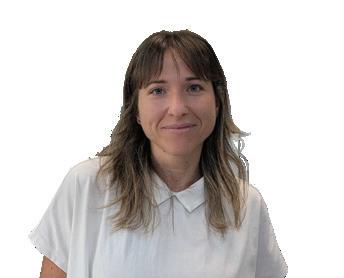
Dr. Blanca Ausín is a Distinguished Researcher at the Spanish National Research Council (IRNASA-CSIC) and Head of the Biogeosciences and Climate Change Group. With a dual background in oceanography and paleoclimatology, her work has revealed how ocean currents influence the age of seafloor carbon, reshaping how scientists interpret Earth’s climate history from sedimentary records.