New mirrors for gravitational wave detectors

Many gravitational waves have been observed since they were first detected in 2015, and the next generation of telescopes promises to bring improved sensitivity, opening up further possibilities.
Dr Jessica Steinlechner and her team are developing mirror coatings for the proposed Einstein Telescope (ET), which will help astronomers peer even deeper into the origins of the universe.
The collision of black holes far out in the universe causes ripples in spacetime known as gravitational waves, which can now be detected using highly sophisticated interferometers. In these interferometers laser light is bounced off mirrors at the end of perpendicular arms, which change very slightly in length when a gravitational wave is detected. “The change is very tiny, and a lot of advanced techniques are used to enhance the sensitivity of these instruments,” says Dr Jessica Steinlechner, Associate Professor in the Department of Gravitational Waves and Fundamental Physics at Maastricht University. One major priority is reducing thermal noise of the mirrors; while cooling the mirror down to cryogenic temperatures achieves this to a degree, it doesn’t remove thermal vibrations entirely. “As long as the mirrors are not at absolute zero, there are always thermal vibrations,” explains Dr Steinlechner.
MIRRORS project
This is an issue Dr Steinlechner is addressing in the EU-backed MIRRORS project, in which she and a team of researchers are developing a new technique to create reflective mirrors, looking to improve sensitivity for the next generation of gravitational wave detectors, in particular the proposed ET. Usually coatings are externally deposited layer by layer, on top of the mirror surface, but now Dr Steinlechner and her colleagues are exploring a different approach. “We are looking at shooting atoms and molecules directly into the mirror surface with high energy, to create a new type of highly reflective structure, similar to a coating, but with the aim of achieving better properties,” outlines Luca Massaro, a PhD student working on the project. “The mirror substrates are made of crystalline silicon, and by implanting oxygen ions we can create SiO 2 , fused silica.”
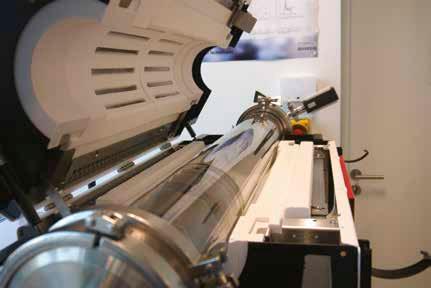
The ions are implanted in the same way across the whole mirror surface, at a certain depth within the substrate, using a specific energy which is simulated beforehand. While researchers are working with small test samples around 2 inches in diameter, at the same time Dr Steinlechner is mindful of the size of the telescopes. “The mirrors of the ET will have a diameter of around 50 centimetres, so the technology has to be developed in such a way that it can be scaled up,” she stresses. The implantation process itself causes some damage to the surrounding material, but the effects can be mitigated by heating the sample up to a high temperature to restore the crystalline structure, an issue the project team is tackling. “We are looking at how we can get the properties of the mirror back to where they were prior to the implantation,” says Dr Steinlechner.
The main idea of this project is that parts of the crystalline silicon mirror, remaining between the implanted layers, will serve as ‘coating’ layers, which will help minimise light absorption. This is an important consideration in terms of improving the sensitivity of a detector overall. “In the detector there will be two mirrors in each arm which form cavities, and laser light may circle these cavities up to thousands of times. We want to make sure the circulating laser power is not absorbed by the mirrors, as that would make it more difficult to pick up signals of gravitational waves,” outlines Dr Steinlechner. “Optical absorption would heat the mirror and prevent us from keeping it at a low temperature. This is essential for keeping the mirror surfaces very ‘quiet’ and avoiding any changes which might distort or hide the signal from a gravitational wave.”
Einstein Telescope
The project team is one of many groups around the world working on the development of improved coatings for gravitational-wave detectors. While Dr Steinlechner and her colleagues are involved in several different projects, she stresses that “The MIRRORS project is really targeted at developing coatings for ET.” With this proposed detector still in the planning phase, a lot of effort is being devoted to testing the coatings, so they are ready when it does enter operation. “We are conducting tabletop experiments to measure properties such as the optical absorption of our samples. This is done by creating a thermal lens with a strong laser beam, which we can use to assess the optical performance of a coating,” says Dr Alex Amato, an
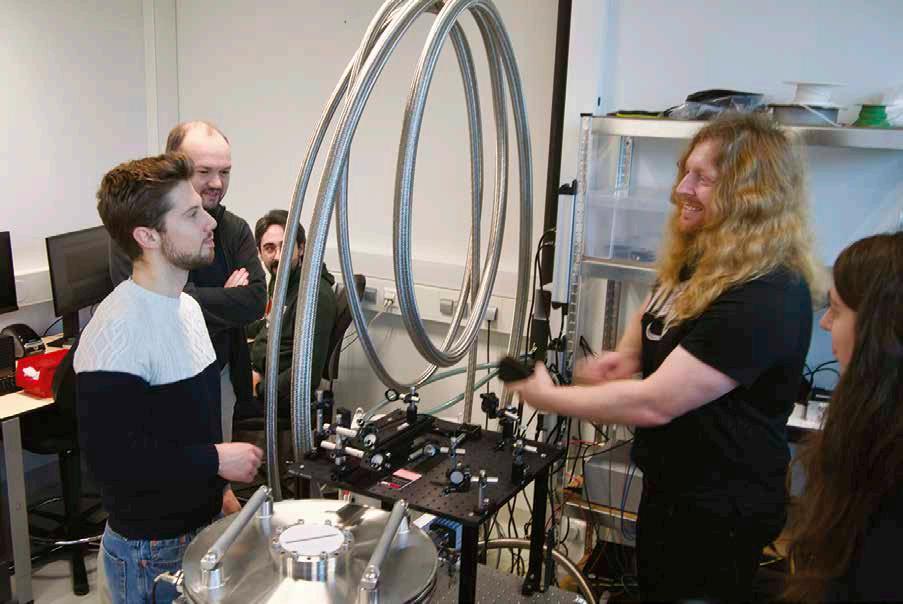
Assistant Professor in the team who works closely with Dr Steinlechner. “For the thermal noise, we use a nodal suspension setup to measure mechanical loss.”
This is technically demanding work, and if the project team is successful the hope is to test their mirrors in ETpathfinder, an infrastructure established to evaluate technologies ready for their future application in ET. With ET, researchers are aiming to achieve a 25-fold reduction in coating thermal noise compared to current detectors such as LIGO and Virgo, although Dr Steinlechner says any degree of progress would help. “Any improvement would mean that we could detect more gravitational waves,” she says. Previous detectors upgrades have enabled researchers to observe more gravitational waves, and ET will extend capabilities even further when it enters operation. “The detector is planned to be more sensitive than current detectors by a factor of 10. That means that we will be able to see far more of the universe, and pick up signals from further away,” outlines Dr Steinlechner.
MIRRORS
Revolutionizing Mirror Technology to Discover the Dark Universe
Project Objectives
The MIRROR project is involved in the development of improved detectors for measurements of gravitational waves, such as the future Einstein Telescope..
Project Funding
This work is supported by ERC grant MIRRORS Project No. 101040572, funded by the European Union.Views and opinions expressed are however those of the authors only and do not necessarily reflect those of the European Union or the European Research Council Executive Agency. Neither the European Union nor the granting authority can be held responsible for them.
Project Collaboration
The development of mirrors for future gravitational-wave detectors is a worldwide effort, including many research groups from all over the world which are closely collaborating. The MIRRORS team is in regular contact with many colleagues and groups within the LIGO, Virgo and Einstein Telescope collaborations without whom such projects would not be possible. They are particularly grateful to groups from from Montréal, Glasgow and Lyon, who are supporting our research for this project, and to CuttingEdge Ions, in California, who are hosting the Ion Implanter, which is the key facility of this project, and provide incredibly helpful support.
Contact Details
Project Coordinator, Dr Jessica Steinlechner
Associate Professor (UHD) in the Department of Gravitational Waves and Fundamental Physics (GWFP) Maastricht University Duboisdomein 30, 6229 GT Maastricht, Nederland E: jessica.steinlechner@maastrichtuniversity.nl
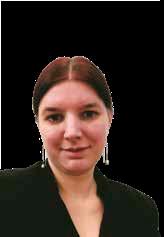
Jessica Steinlechner is Associate Professor in the Department of Gravitational Waves and Fundamental Physics at Maastricht University in the Netherlands. Prior to taking up her current role she held research positions at universities in Germany and the UK.



Research agenda
The group’s work on the MIRRORS project is just one part of their overall agenda, with Dr Steinlechner and her colleagues pursuing several strands of research into coatings and mirrors for gravitational wave detectors more generally. While ET will have a cryogenic part, another part will operate at room temperature, which will have a lot of similarities with current detectors like LIGO and Virgo, and improvements in one can be translated into enhanced performance in another. “The general scope of my group’s research is on coatings and mirrors for gravitational wave detectors,” continues Dr Steinlechner. “Our work on mirrors for LIGO and Virgo is a step towards reaching ET’s performance requirements.”
An effective method of coating the surface of the mirrors within the detector is central to this wider goal, and the project team is
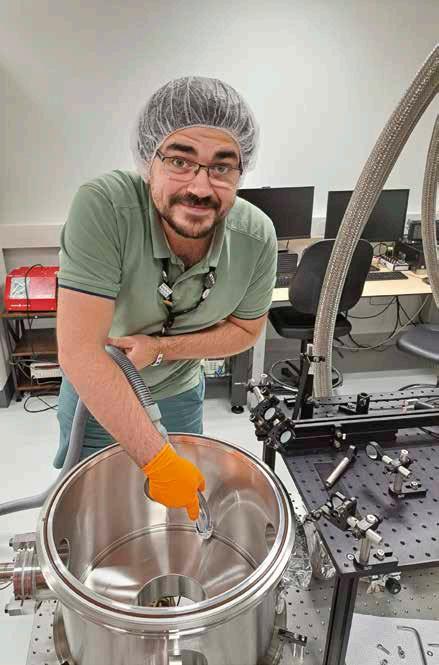
“We are looking at shooting atoms and molecules directly into the mirror surface with high energy to create a new type of highly reflective structure, similar to a coating, but with the aim of achieving better properties.”
making an important contribution in this respect. Alongside their work in MIRRORS, Dr Steinlechner is also looking into other issues around coatings and the operation of mirrors at cryogenic temperatures. “In our detector, we will never have a perfect vacuum, but there will always be some background gas. At cryogenic temperatures this will of course freeze,” she explains. This means that ice layers will grow on the mirror, which will add to thermal noise and lead to the absorption of laser light. “These ice layers grow at very low rates of just a few nanometres a day. We have been looking to characterise how problematic this is for the noise in the detector, to assess how much effort has to be put into mitigating this
growth,” Guido Alex Iandolo, who recently finished his PhD project in the group, explains.
This work is very much in progress, with researchers striving to develop improved coatings, ready for the gravitational wave detectors of tomorrow. A decision on where ET will be located is expected soon, with the detector itself expected to begin operating around the latter part of the next decade, and Dr Steinlechner hopes to provide coatings that will help open up even deeper insights into the origins of the universe. “We aim to find a way to produce mirrors which result in more sensitive gravitational wave detectors than those currently available,” she says.