Restoring the ‘Amazon of Europe’

The valuable habitats of the UNESCO Five-country Biosphere Reserve Mura-Drava-Danube are under growing pressure. Through the LIFE RESTORE for MDD project, a dedicated team is working to restore alluvial forests, riparian mixed forests and river ecosystems along the Mura, Drava and Danube, as Lisa Wolf explains.
The area surrounding the Mura, Drava and Danube (MDD) river basins spans several national borders and is often referred to as the ‘Amazon of Europe’, in recognition of its biological diversity and ecological importance. The region is home to a rich variety of habitats and species, yet this diversity is under threat due to various factors, including river regulation practices which have impacted the transport of sediments along the three rivers. “Sediment transport is a very important issue, as it is the main driver of the hydromorphology of rivers. The availability of sediment is crucial for establishing pioneer areas, renewing forest habitats, as well as for mineral intake and soil health,” explains Lisa Wolf, project manager at the World Wide Fund for Nature (WWF) office in Vienna. However, hydropower plants along the three rivers limit sediment transport, while earlier straightening projects have also had a significant impact in this respect. “Rivers were straightened in the past, leading to a loss of sediment. The sediment doesn’t remain in the area to help create natural habitats, such as side channels and oxbow lakes,” continues Wolf. In 2021 the MDD region was declared the world’s first Five-country biosphere reserve by UNESCO to protect the area. Wolf and her partners in LIFE RESTORE for MDD, a project co-financed by the EU LIFE programme, are now working to restore priority habitats within the reserve, particularly alluvial and riparian mixed forests, and other key ecosystems along the rivers. “The project focuses on the conservation, protection and restoration of the three rivers and the 17 Natura 2000 sites along them,” she outlines.
Five-country biosphere reserve
The project brings together partner organisations from each of the five countries in the MDD region, namely Austria, Slovenia, Hungary, Croatia and Serbia. While in
the past a relative lack of cross-border understanding has been an issue when it comes to protecting the region, the EU Water Framework Directive today provides a common framework to manage the rivers. “The rivers have to be managed in a transboundary manner, with a focus on EUspecific goals,” says Wolf. At the same time there is still considerable interest in using the land along the Mura, Drava and Danube. This makes it essential to strike the right balance
these rivers, essentially undoing some of the damage caused by previous straightening projects. In a straightened channel, water flows faster than in a meandering river, meaning sediment is less likely to settle and create natural habitats. “Without the natural river dynamics, side channels and oxbow lakes dry out. This is also a threat to groundwater levels. Channelizing a river can exacerbate flooding, as it removes natural retention areas that would otherwise absorb
“River landscapes are complex ecosystems. Once restored, they become true treasure troves of biodiversity, act as carbon sinks, provide drinking water and supply us with clean air.”
between the sometimes incompatible interests of different stakeholders. “There is interest in developing hydropower plants, to meet continued high demand for energy, while the EU Nature Restoration Regulation focuses on ensuring the free flow of water in rivers,” she continues.
As part of the project, Wolf and her team are working to restore natural habitats along
and temporarily store excess water when the river overflows its banks,” explains Wolf. With this in mind, the project team is following a holistic, ecological approach to address these kinds of issues and help restore forests along the three rivers. “In the project, we remove embankments, reconnect side channels and restore oxbow lakes both along the rivers and in the surrounding floodplain.
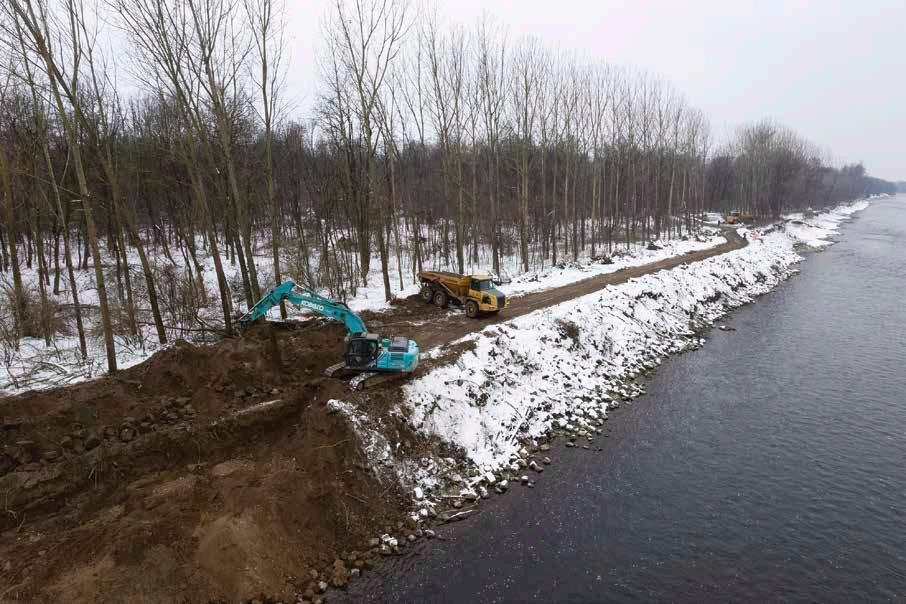
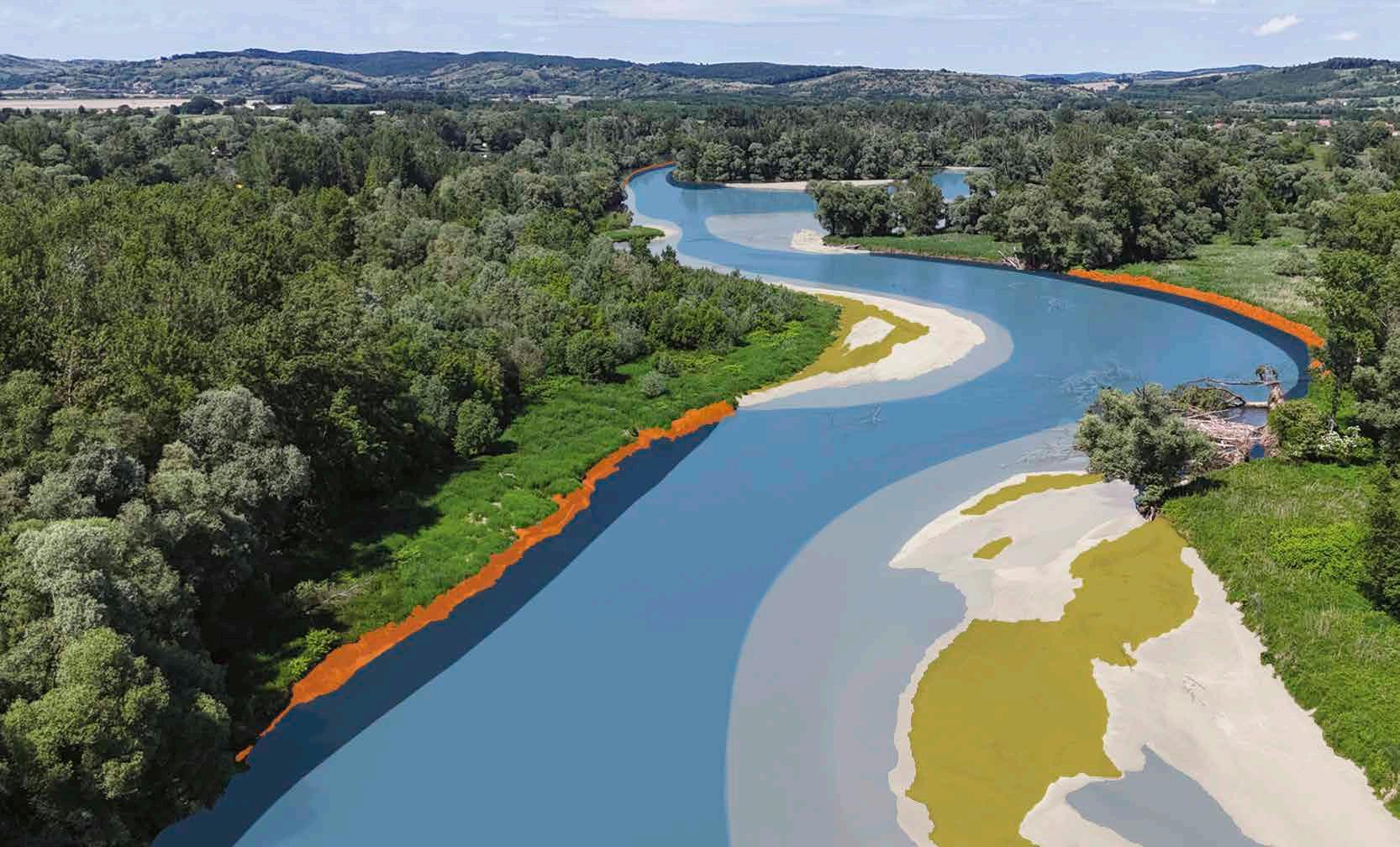
This approach enables us to create new habitats and dynamics that positively affect the sediment flow and, consequently, the hydromorphology of the river,” Wolf outlines. The impact of this work will be rigorously assessed throughout the project. The team is monitoring river hydromorphology and sediment input at various locations, together with a broad set of other indicators. Researchers will also have access to data gathered beyond the scope of the project, allowing for a more comprehensive understanding of its effects. “Our local partners carry out regular monitoring in line with Natura 2000 management plans. At WWF, for example, we monitor bird populations along the Drava every year,” says Wolf. The wider aim is to improve the health of these habitats; this doesn’t necessarily mean restoring them to preindustrial conditions, but rather achieving sustainable, long-lasting improvement. “We have some information about how the rivers meandered before they were extensively straightened and channelled, which provides a kind of reference framework.
Nevertheless, we have to be realistic, and understand the current reality of the area,” acknowledges Wolf. “Our main focus in the project is on improving existing habitats and expanding both these habitats and the protected Natura 2000 sites.”
Floodplain forests
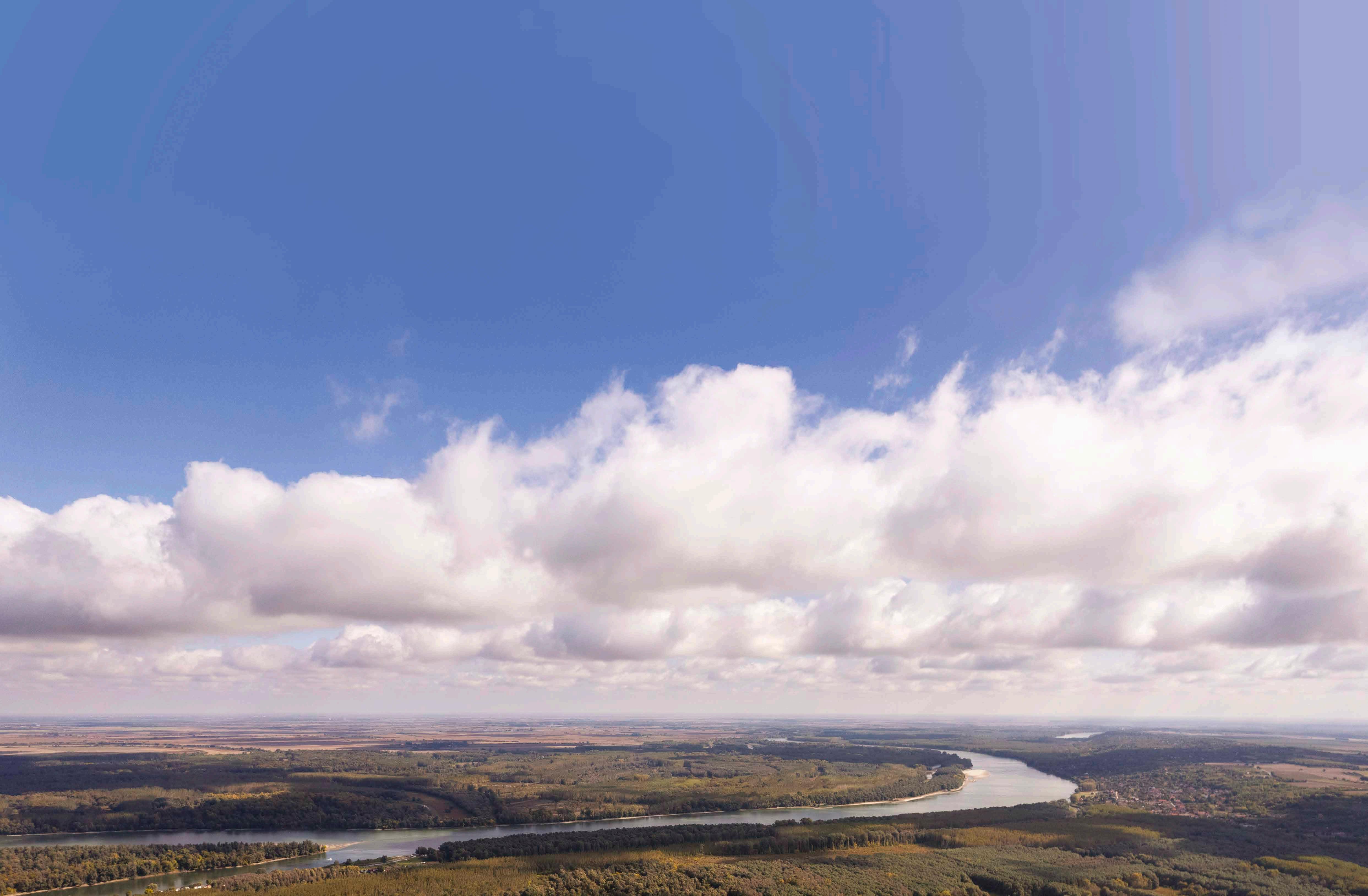
The project team is currently working towards these objectives, with restoration measures being carried out at several sites across the biosphere reserve. While the project is only around halfway through its funding term, a lot of progress has already been made.
“We recently completed work at three restoration sites in Slovenia, including a riverbed widening, an oxbow lake restoration and a side channel reconnection,” says Wolf. This work is part of a broader network of efforts to restore and conserve natural habitats and species in the Danube river basin, with several cooperative relationships already in place. “We are cooperating with the LIFE-Boat 4 Sturgeon project, which is working to
This means first and foremost establishing healthy conditions for floodplain forests at 29 different sites, including both alluvial and riparian mixed forests, covering an area of around 2,100 km2 . The aim is to improve these priority habitats and strengthen the overall health of the surrounding ecosystems, as well as supporting the recovery of species whose numbers have declined sharply in recent years. “Fish populations have declined throughout the entire Danube basin. We have lost a great amount of biodiversity, including fish and certain plant species. Monocultures and lower water levels are also putting pressure on the landscape. For example, we are losing oak trees in large numbers,” says Wolf. The project’s work represents a step towards addressing this decline, with Wolf and her team focusing on priority habitats in alluvial floodplain forests. “We are not focusing on specific species of fish or birds, but rather on the priority habitats of the alluvial floodplain forests,” she explains. “But of course, healthier floodplain forests also create better conditions for bird and fish populations to recover.”
LIFE RESTORE FOR MDD
LIFE RESTORE FOR MDD: FIVE COUNTRIES,THREE RIVERS AND ONE PROJECT
Project Objectives
UNESCO Five-country Biosphere Reserve
Mura-Drava-Danube is a five-year initiative launched in October 2023 and implemented by 17 partners in Austria, Slovenia, Croatia, Hungary and Serbia. The project aims to preserve and restore the largest contiguous riparian forests in the Mura-Drava-Danube Five-Country Biosphere Reserve, also known as the ‘Amazon of Europe’. Restoration measures at 29 locations across 2,100 km² will focus on reconnecting river branches, widening riverbeds and converting poplar plantations into more natural floodplain forests within 17 Natura 2000 areas.
Project Funding
Co-funded by the European Union.Views and opinions expressed are however those of the author(s) only and do not necessarily reflect those of the European Union or CINEA. Neither the European Union nor the granting authority can be held responsible for them.
Project Partners
https://www.amazon-of-europe.com/ projects/life-restore-for-mdd/#partner
Contact Details
Lisa Wolf, BSc, MSc WWF-Austria
Project Manager
LIFE RESTORE for MDD
T: +43 (0)1 488 17 231
E: lisa.wolf@wwf.at W: www.liferestoreformdd.eu
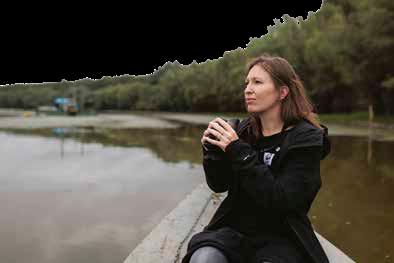
Lisa Wolf, BSc, MSc is an Austrian geographer and environmental manager specialising in nature conservation, restoration and sustainable regional development. She is the project manager at WWF-Austria for the EU LIFE RESTORE for MDD project, which aims to restore the UNESCO Five-country Biosphere Reserve Mura-Drava-Danube and advance inclusive conservation.

reintroduce four different sturgeon species into the Danube. At every restoration site that we finalise, we will release young sturgeon into the rivers, which I’m very excited about. Sturgeons are an incredible species,” continues Wolf.
This work is far from being finished, and Wolf hopes that all dedicated project partners will play a role in improving the area further in future. This could include a follow-up project to LIFE RESTORE for MDD, beyond the end of the funding term in 2028, which she sees as crucial for building on the progress made over the past 25 years through both this project and earlier initiatives. “We want to continue with this work, as otherwise everything that has been achieved will be at risk,” she warns. This would be a great loss for local communities, so alongside the conservation work, Wolf sees public engagement and education as essential to building lasting support for the biosphere reserve and future restoration efforts. “We have created a harmonised educational programme for young people in all five countries. Meanwhile, one of our partners is running a training programme for adults to become Biosphere Reserve Ambassadors. These ambassadors will raise awareness of the biosphere reserve and enhance understanding of its importance,” she continues.
Restoration plans
The long-term goal is to restore the floodplain forests along the three rivers and preserve their vital ecological functions, such as providing flood protection and acting as a carbon sink. Achieving this will require continued effort beyond the conclusion of the project, so Wolf and her colleagues are already looking ahead, building on earlier restoration efforts to create lasting change. “We are developing restoration plans for the Drava and the Mura rivers in line with the EU Nature Restoration Regulation. As part of this process we are bringing together different stakeholders, including key actors beyond LIFE RESTORE for MDD, to help carry this work forward beyond the project period,” she outlines, adding: “Rivers connect countries, landscapes and communities, so their restoration requires a joint approach. Shared restoration plans provide a structured, long-term framework for transboundary cooperation.”
These restoration plans will help inform future National Restoration Plans under the EU Nature Restoration Regulation, ensuring that future generations can continue to enjoy the region’s landscapes and wildlife. They also underline the value of the LIFE programme in supporting ambitious, longterm work that can continue well beyond a single project period.