
Improving energy efficiency is an urgent priority for the EU, and regional authorities have a major role to play. We spoke to Kateřina Vosičková, Jiří Juránek and Vladimír Lichnovský about how the LIFE LivingLab project is providing support and advice to building operators in the Czech region of Olomouc, helping meet environmental targets and move towards a more sustainable future.
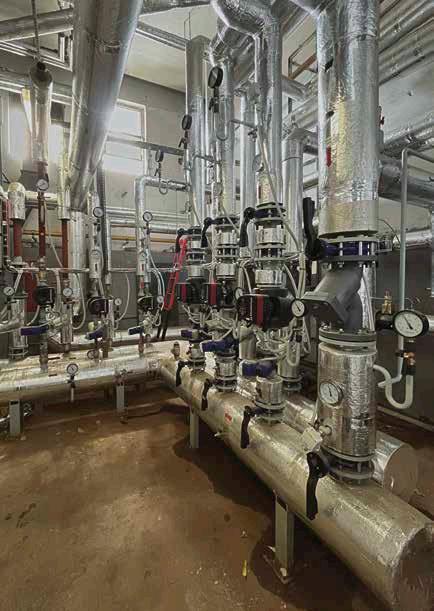
The European Union is committed to improving energy efficiency across the continent, as demonstrated by the Fit for 55 package, the Green Deal and a range of energy security measures, part of a wider strategy to reduce carbon emissions and move towards a more sustainable future. Public and regional authorities can play a role in these terms, for example by renovating and improving the energy efficiency performance of the buildings they own, which are often large, prominent structures that provide vital services to citizens, including many vulnerable groups. There are often significant hurdles to overcome before renovation projects can move forward and deliver tangible benefits. In the Olomouc Region of the Czech Republic for example, the scope and timing of public building modernisation work has historically been closely linked to the availability and design of national and European funding programmes, alongside coordination capacity. Over time, investments have been implemented in a number of the 572 buildings managed by the Olomouc Regional Authority. In recent years, however, the region has adopted a more structured and responsible approach to investment planning, placing stronger emphasis on strategic prioritisation, improving the effectiveness of public spending, and systematically targeting the most energy intensive facilities in order to achieve the greatest possible energy efficiency benefits.
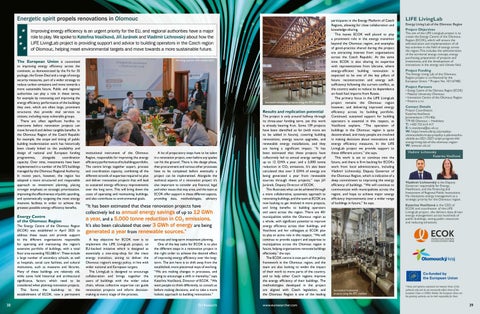
Energy Centre of the Olomouc Region
The Energy Centre of the Olomouc Region (ECOK) was established in April 2025 to address these issues and provide support to the different organisations responsible for operating and maintaining the region’s extensive portfolio of buildings, with a total floor area exceeding 702,080 m2 These include a large number of secondary schools, as well as hospitals, social care facilities, and cultural institutions, such as museums and libraries. Many of these buildings are relatively old, while some hold historical and architectural significance, factors which need to be considered when planning renovation projects. This forms the backdrop to the establishment of ECOK, now a permanent
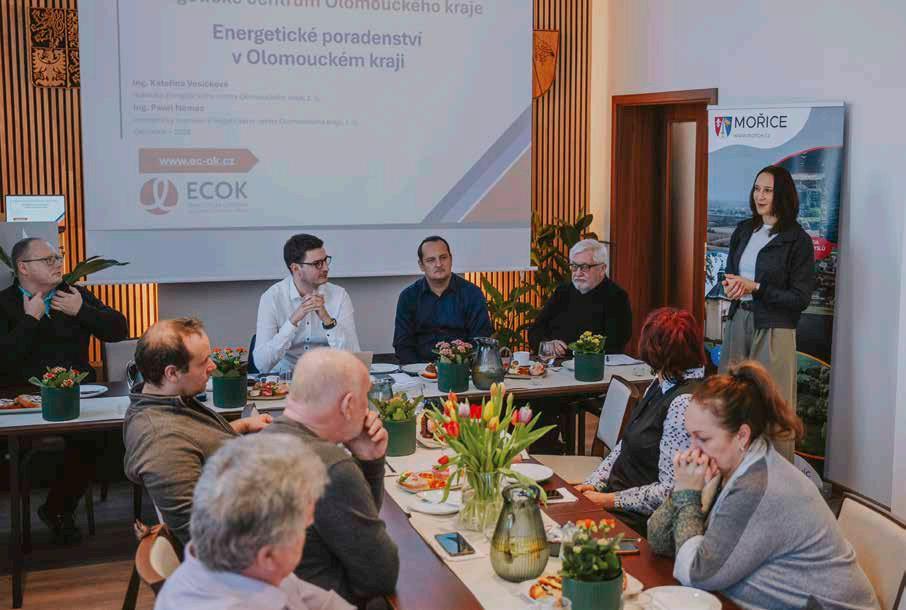
institutional instrument of the Olomouc Region, responsible for improving the energy efficiency performance of its building portfolio. The centre brings together expert, process and coordination capacity, combining all the different strands of expertise required to plan and deliver renovation projects that will lead to sustained energy efficiency improvements over the long term. This will bring down the costs of operating and maintaining buildings, and also contribute to environmental goals.
A lot of preparatory steps have to be taken in a renovation project, even before any spades can hit the ground. There is the design phase, then procurement and various other processes have to be completed before eventually a project can be implemented. Alongside the technical aspects of a renovation project it’s also important to consider any financial, legal and other issues that may arise, and the team at ECOK offer support in these different aspects, providing data, methodologies, advisory
“It has been estimated that these renovation projects have collectively led to annual energy savings of up to 12 GWh a year, and a 5,000 tonne reduction in CO2 emissions.

A key objective for ECOK now is to implement the LIFE LivingLab project, an EU-backed initiative which is designed as essentially a one-stop-shop for the clean energy transition, aiming to deliver the Olomouc region’s energy policy, in line with wider national and European targets.
services and long-term investment planning.
One of the key tasks for ECOK is to plan the different steps in a renovation project in the right order to achieve the desired effect of improving energy efficiency over the longterm. The aim here is to shift away from the established, more piecemeal ways of working.
Results and replication potential
The project is only around halfway through its three-year funding term, yet this work is already bearing fruit. Some 139 projects have been identified so far (with more set to be added in future), covering building renovations, energy source upgrades, and renewable energy installations, and they are having a significant impact. “It has been estimated that these projects have collectively led to annual energy savings of up to 12 GWh a year, and a 5,000 tonne reduction in CO 2 emissions. It’s also been calculated that over 3 GWh of energy are being generated a year from renewable sources through these projects,” says Jiří Juránek, Deputy Director of ECOK.
This illustrates what can be achieved through a more collaborative, systematic approach to renovating buildings, and the team at ECOK are now looking to get involved in more projects, and bring benefits to building operators and users across the region. There are 401 municipalities within the Olomouc region as a whole, with significant potential to improve energy efficiency across their buildings, and Vosičková and her colleagues at ECOK plan to play an active role in this respect. “We will continue to provide support and expertise to municipalities across the Olomouc region in future, helping organisations renovate buildings effectively,” she says.
participants in the Energy Platform of Czech Regions, allowing for close collaboration and knowledge-sharing.
This leaves ECOK well placed to play a prominent role in the energy transition beyond the Olomouc region, and examples of good-practice shared during the project are attracting interest from organisations across the Czech Republic. At the same time ECOK is also sharing its expertise with representatives from Ukraine, where energy-efficient building renovation is expected to be one of the key pillars of future reconstruction and energy selfsufficiency following the current conflict, as the country seeks to reduce its dependence on fossil fuel imports from Russia.
The primary focus in the LIFE LivingLab project remains the Olomouc region however, and delivering improved energy efficiency across its building portfolio.
Continued, sustained support for building operators is essential in this respect, as Vosičková explains. “The operation of buildings in the Olomouc region is quite decentralised, and many people are involved in making decisions about renovations and energy efficiency measures. In the LIFE LivingLab project we provide support to these different actors,” she says. This work is set to continue into the future, and there is firm backing for ECOKs work from local administrators, including Vladimír Lichnovský, Deputy Governor of the Olomouc Region, which is indicative of a deep commitment to improving the energy efficiency of buildings. “We will continue to communicate with municipalities across the region, and hope to achieve major energy efficiency improvements over a wider range of buildings in future,” he says.
Energy Living Lab of the Olomouc Region
Project Objectives
The aim of the LIFE LivingLab project is to create the Energy Centre of the Olomouc Region (ECOK), which will ensure the administration and implementation of all key activities in the field of energy across the region. This includes the administration of the territorial energy concept, energy purchasing, preparation of projects and investments, and the development of innovations in the energy and climate field.
Project Funding
The Energy Living Lab of the Olomouc Region project is co-financed by the European Union. * Project No. 101167482.
Project Partners
• Energy Centre of the Olomouc Region (ECOK)
• Palacký University Olomouc
• Innovation Centre of the Olomouc Region
• Ensytra s.r.o.
Contact Details
Project Coordinator,
Kateřina Vosičková
Jeremenkova 1191/40a 779 00 Olomouc – Hodolany T: +420 733 614 417 E: k.vosickova@ec-ok.cz
W: https://www.olkraj.cz/projektyolomouckeho-kraje-projekty-z-planovacihoobdobi-eu-2021-2027-unijni-program-life/ energy-living-lab-of-the-olomouc-region W: www.ec-ok.cz/
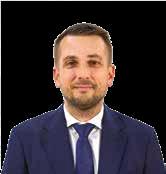

Vladimír Lichnovský is the Deputy Governor responsible for Energy, Healthcare, and the Financing and Investment of Regional Public Institutions. He champions energy management as a strategic priority for the Olomouc region.
Katerina Vosičková is the CEO of ECOK and coordinator of the LIFE LivingLab project. she delivers data-driven energy management across hundreds of public buildings, saving public resources and reducing emissions.
It’s also been calculated that over 3 GWh of energy are being generated a year from renewable sources.” *
The LivingLab is designed to encourage collaboration and brings together the users of buildings with the wider value chain, whose collective expertise can guide renovation projects and inform decisionmaking at every stage of the process.
“We are making changes in processes, and trying to encourage a shift in mentality,” says Kateřina Vosičková, Director of ECOK. “We want people to think differently, to consult us before making decisions, and to take a more holistic approach to building renovations.”
The ECOK centre is now part of the policy framework in the Olomouc region, and the team are also looking to widen the impact of their work to more parts of the country, and to help other Czech regions improve the energy efficiency of their buildings. The methodologies developed in the project are aligned with Czech legislation, and the Olomouc Region is one of the leading