Executive Director –Letter
2025 represented the dawn of a new era for Maine’s Turnpike. Beginning with a “root and branch” fresh assessment of our business processes, information technology strategy, cybersecurity posture, federal and state compliance methodologies, human resources practices, and a wholesale refocusing on our core competencies and value add for the people of Maine—MTA embarked on a new strategy framework which will guide us into 2027.
This new strategy anchors onto the firm conviction that this organization exists for one reason…to serve Maine. We do this most visibly by connecting communities and commerce through a safe and reliable toll road. But we also serve the multimodal transportation needs of Maine in many other ways. Our focus is on our customers, and that is the common thread across everything we do. As we operationalize our new strategy over the near and mid-term, we are focusing on four priorities: 1. Enriching the customer experience; 2. Strengthening our organizational culture and empowering our staff; 3. Enhancing our use of data and technology; and 4. Improving public perception of MTA and growing public engagement.
In 2025, we also advanced key safety initiatives, upgraded traffic monitoring systems, modernized tolling software, and reshaped an Executive Team aligned with MTA’s evolving needs. We transitioned to Office 365 to improve collaboration and

refinanced 2015 bonds—saving more than $5 million for future infrastructure
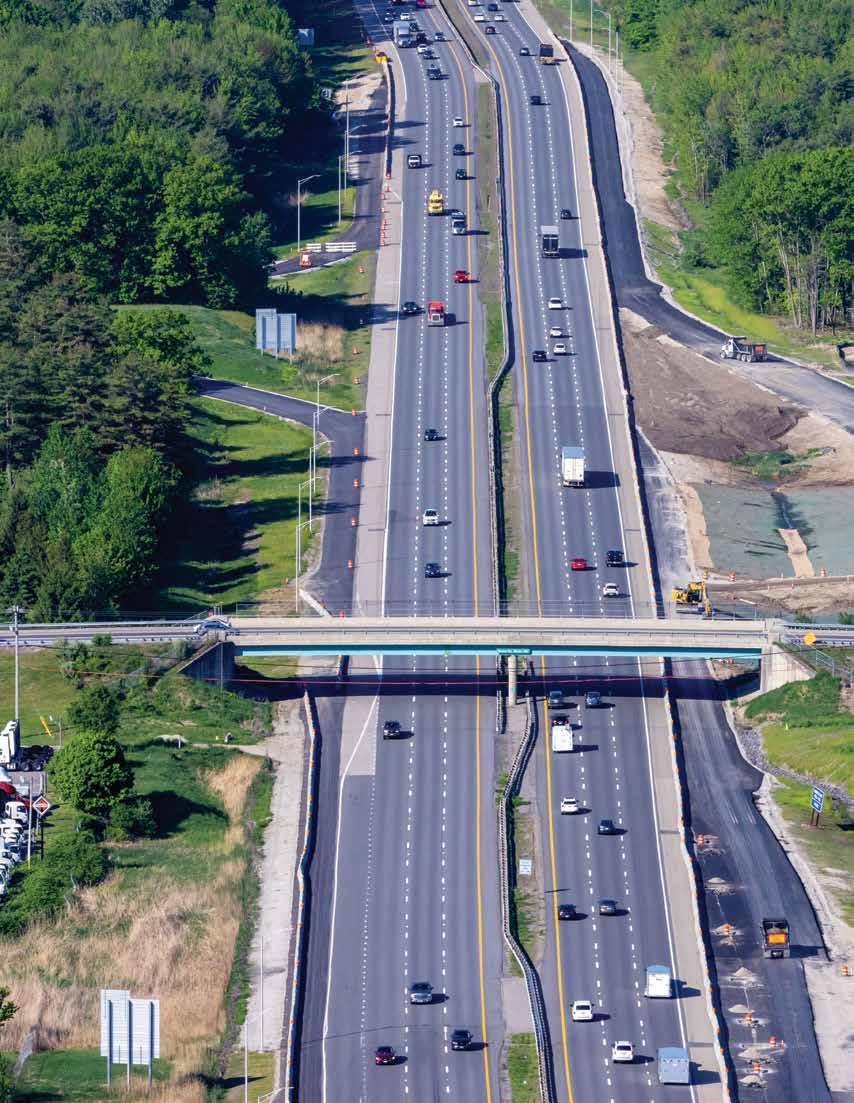
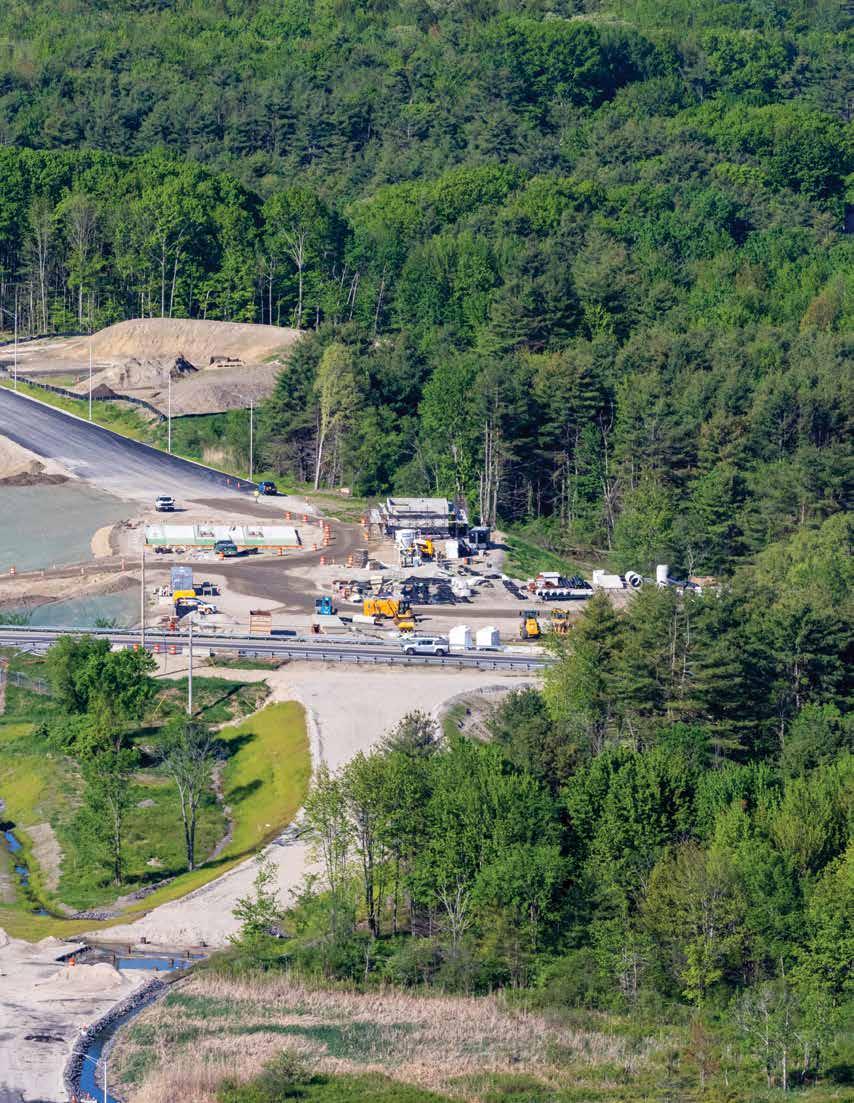
The opening of Exit 35 in Saco stood out as a major milestone as well. As the first new interchange in a generation, it improves safety, eases congestion, and strengthens access for one of Maine’s fastest growing regions. The project reflects what the MTA values most: putting safety first, connecting Maine’s economy, designing infrastructure with intention, and keeping the people of Maine at the center of every decision. Its early success is already improving travel times, supporting businesses, and sparking new commerce interest to the area.
It was my privilege and honor to assume leadership of this organization in early 2025, and to meet and engage the amazing men and women who serve Maine through their work at MTA. Their dedication strengthens our mission and guides our priorities as we look ahead to 2026.
Executive Director
Andre J. Briere
Executive Director
Executive Staff
Chief Operations Officer
Peter S. Merfeld, P.E.
Chief Financial Officer & Authority
Board Treasurer
John P. Sirois
Chief Administrative Officer
Erin T. Sullivan
Staff Attorney & Authority Board
Secretary
Jonathan A. Arey, Esq.
Director of Intelligent Transportation Systems
Eric R. Barnes, P.E.
Director of Fare Collections
Richard R. Barra
Director of Highway and Equipment Maintenance
John W. Cannell, P.E.
Director of Human Resources
Lauren G. Carrier
Deputy Director of Human Resources
Cecile Champagne-Thompson
Director of Finance
Matthew W. Elliott
Director of Communications and Government/Public Relations
Rebecca J. Grover
Director of E-ZPass Operations
Samantha M. Kaherl
Director of Building Maintenance
Shawn R. Laverdiere
Executive Director - Andre J. Briere
Strategic Year for Organizational Clarity
How a Collaborative Agency Effort
Shaped MTA’s New Mission, Vision, Values, and Strategic Focus
In 2025, Maine Turnpike Authority took important steps forward by updating our Mission and setting strategic priorities to guide MTA’s work through 2027. This effort aims to bring more clarity to why MTA exists, what MTA hopes to achieve, and how we will work together to get there.
Employees from across MTA played a central role. Through surveys and agencywide town halls, staff shared their experiences, helping shape a direction that reflects our purpose.
This Mission reinforces what drives us every day: serving Maine by connecting customers, communities, and commerce through a safe and reliable toll road. Our Vision describes what we aim to deliver—an excellent travel experience, a supportive workplace, strong partnerships, and responsible stewardship of public resources. Grounding all of this is a renewed set of Values that guide our decisions, elevate ways we work together, and keep MTA’s needs in clear focus.
The strategic priorities focus on the near term: improving customer experience, strengthening the MTA organization and culture, making better use of data and technology, and
improving public engagement. Cross-functional teams are working together in new ways to support these goals and reduce silos, bringing a new sense of energy and momentum.
At the heart of the strategic priorities is a renewed emphasis on employees— encouraging innovation and reinstating recognition programs that highlight teamwork accomplishments. These cross-functional teams are streamlining processes to evolve MTA into a modern public serving organization—one grounded in, and driven by, a foundation of collaboration.
Together, this updated Mission, Vision, Values, and strategic focus reflects the collective voice of our employees and our longstanding commitment to serving Maine with excellence, integrity, and purpose.
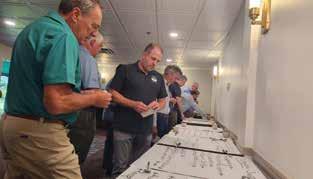
Staff identify top strategic priorities with a collaborative sticker exercise
Saco: First New Interchange
in Over 20 Years
The opening of Exit 35 in Saco stood out as one of Maine Turnpike Authority’s defining milestones of 2025—a long-awaited project that delivers real, tangible benefits for the people and businesses of Maine. More than just a new interchange, Exit 35 represents a strategic investment in safer travel and continues our promise of …We Serve Maine Its completion marks a pivotal moment in our ongoing effort to keep Maine moving forward.
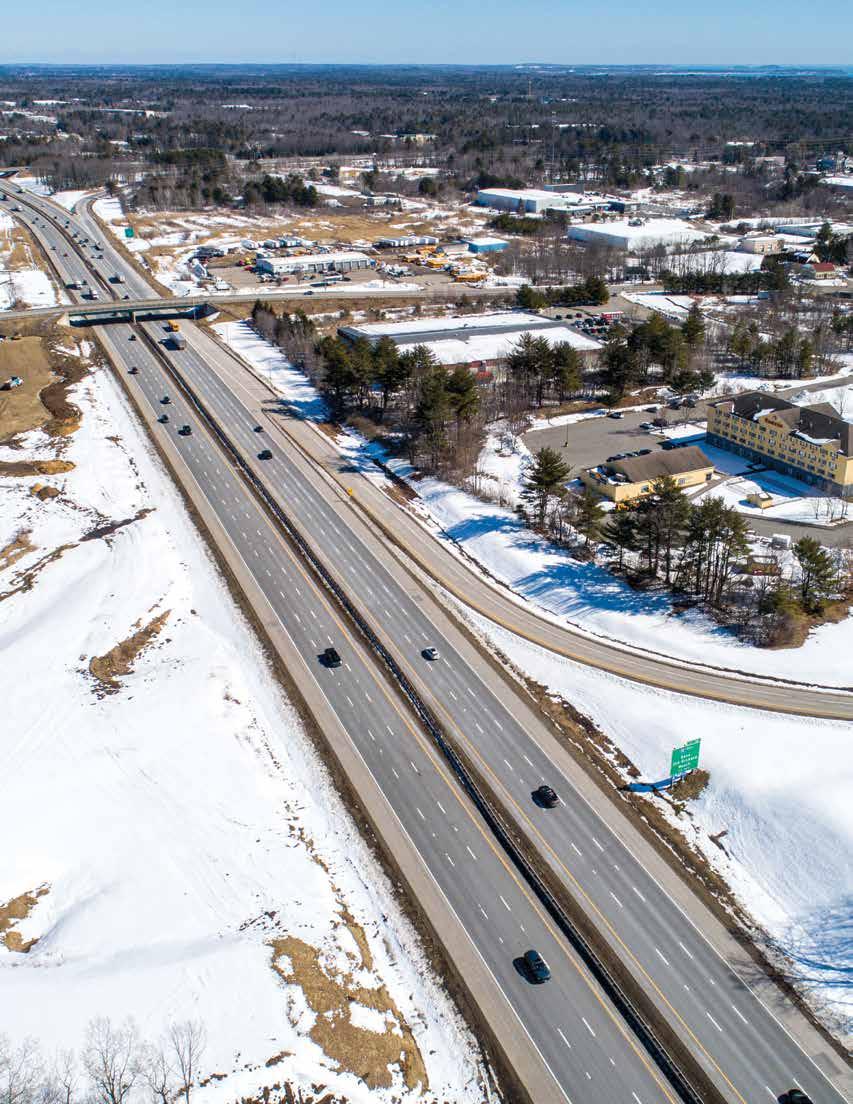
When Exit 35 officially opened to traffic on November 3, it delivered something Maine had long been waiting for: direct northbound and southbound access to the Turnpike without the bottlenecks and heavy reliance on local roads, while easing pressure on Exit 36, I-95 and Biddeford’s Route 1.
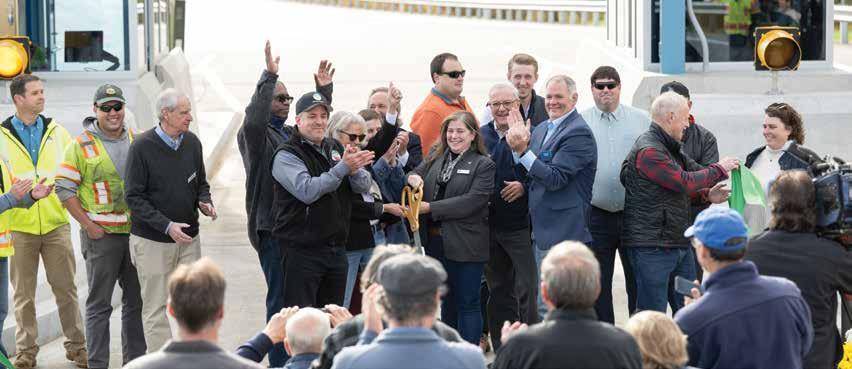
Historic Milestone
Exit 35 is the first new interchange built on Maine Turnpike in more than two decades. The ribbon-cutting ceremony held October 24th brought together state and local leaders, MTA officials, and the local community for an inauguration event that included a flag-raising ceremony, remarks from project partners, and a performance by the Saco Middle School Band. A community block party followed, complete with local food trucks and games—a fitting tribute to a new access point that will serve Saco for generations.
Infrastructure That Brings Community Together
Beyond the traffic improvements, the project delivered major upgrades to pedestrian safety, including new lighting and modern ADA-improved compliant crosswalks. On the northbound side, the entire roadside was reconfigured—transforming a fragmented shoulder into a safer, more accessible corridor. The project also improved vital sidewalk connections for families walking to and from Saco Middle School and to afterschool programs at the nearby sport facility, strengthening safe routes for students. For emergency responders the improvements mean reaching the Turnpike faster; every minute saved can make all the difference when seconds count.
When Maine Turnpike Authority builds a bridge, it is typically built to last a hundred years. That longterm perspective drives every engineering decision—one that requires
meeting the considerations of the present and anticipating needs in the future. Since the opening of the new interchange, MTA has heard strong interest from businesses and developers looking to invest in the area as reflected in a recent town meeting. This interest underscores the importance of ensuring each element of the project aligns with municipal needs.
Responsible design means preparing for future growth while learning from, listening to, and collaborating closely with the people of Saco to support a safe, resilient transportation network.
– Jamie Mason, MTA Construction Project Manager

Saco Middle School Band students at the community block party
The moment the ribbon officially gave way, marking a new chapter for our organization
Regional Network Moving Better
By easing pressure on Exit 36—where roughly 40,000 vehicles travel daily—and reducing congestion on surrounding local roads, the new Exit 35 interchange is improving travel times. Trucking companies report smoother traffic flows and shorter turnarounds to major destinations. These improvements relieve chronic bottlenecks for both commuters and freight.
The impact reaches far beyond daily commuters. Come Memorial Day weekend, Exit 35 will support the influx of traffic headed to the nine distinct beaches that make up Old Orchard Beach—where the population swells to nearly 75,000 in summer. That’s a massive traffic load now flowing with purpose.
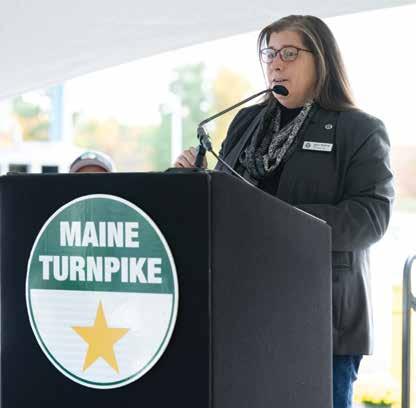
“Partnering with Maine Turnpike Authority on the Exit 35 project has been a successful collaboration” said Saco Mayor Jodi MacPhail. “City staff report decreased traffic volumes on Industrial Park Road and, while drivers are still finding their preferred new routes with increased options, the City continues to monitor changing traffic patterns and work with MTA for any needed adjustments. Some fruitful analysis and planning since the exit opened has led to small, smart adjustments planned for the spring 2026.
We’re pleased to see the follow-through MTA has delivered on the project, even after completion, to make a more efficient travel experience for locals and visitors.
The new Exit 35 makes Saco a more desirable and connected community for businesses looking to establish themselves or grow their operations in Saco, bolstering our economic vitality.
The new Exit 35 makes Saco a more desirable and connected community for businesses looking to establish themselves or grow their operations in Saco, bolstering our economic vitality.
As Southern Maine and Saco continue to grow, we are proud to have increased access to our community through this MTA project.
The project has also helped us strengthen our relationship with MTA, which will carry on and benefit not only Saco residents, but all Turnpike travelers.”
Access That Accelerates Commerce
The benefits of the new interchange extend deeply into Maine’s economy. Improved connectivity strengthens the state’s supply chain while lowering transportation costs. These enhancements are already catalyzing interest and leading to investment. Nearby businesses are planning projects such as a hotel redevelopment, a proposed gas station, and a new coffee shop—each bringing new jobs and local tax revenue. Just as importantly, these projects help transform older or underused
properties and vacant lots into vibrant places to visit, shop, and spend the day.
For Maine manufacturers like Casco Bay Steel, which operates a major shipping yard in Saco, the new interchange provides faster access to I-95 and reduces delays—boosting productivity.
Together, these efficiencies ripple through the economy, supporting hundreds of jobs and help Maine businesses grow while providing safe highway access.
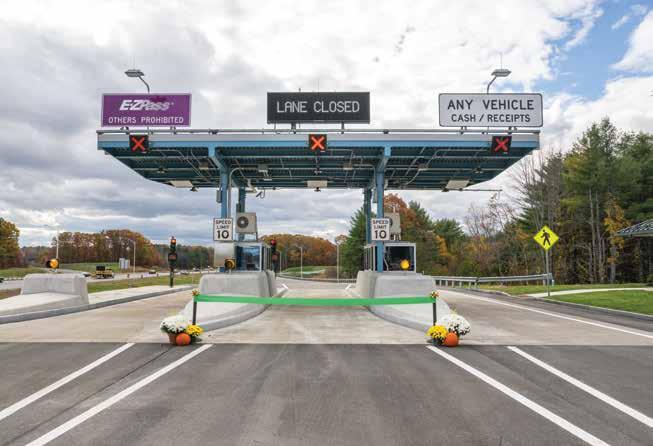
Improved access shortens travel distances for local businesses
Saco Mayor speaks to the economic benefits this new exit brings to Maine
Advancements in Design
For the first time, Maine Turnpike Authority built a collector-distributor road bringing national best practices in safety and interchange design.
Running parallel to I-95, this engineered roadway steers entering and exiting vehicles out of the mainline, eliminating weaving and tight merges. With dedicated lanes for accelerating, decelerating, and changing lanes, motorists gain clearer sight lines, fewer conflict points, and have more time to react. The result is a safer driving experience.
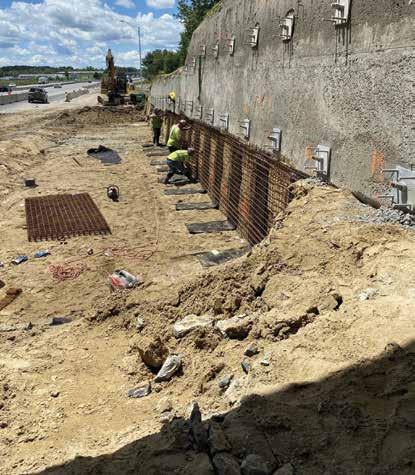
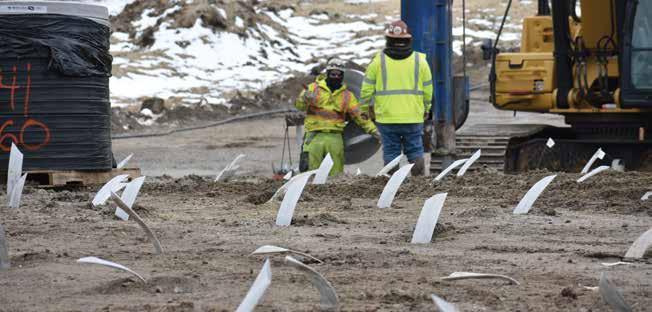
Construction required extensive site work, including soil stabilization, drainage improvements, and features like a soil nail wall to provide safe clearances at the southbound entering ramp, and wick drains beneath the toll plaza that help consolidate unstable soils and minimize post-construction settlement.
A Smarter Use of Resources
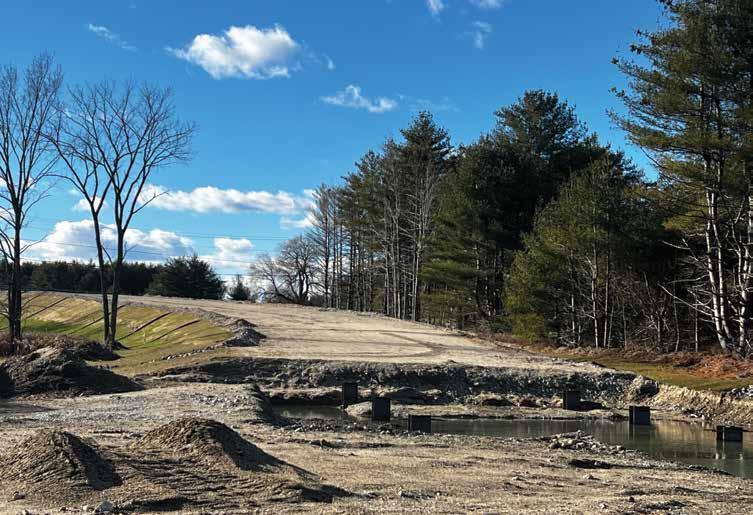
Exit 35 opened ahead of schedule and stands as a testament to the planning and collaboration among project partners— including their commitment to sustainability. Sargent Corporation of Orono served as the lead contractor. They coordinated dozens of subcontractors throughout the build. In keeping with the project’s sustainability goals, materials from an onramp connected to a former bridge— removed years earlier—were repurposed on site. Rather than sending this material offsite, the project team reused it to help create stable slopes and improve transitions from the Interstate to the local roadway.
All major materials—including concrete, gravel, pavement, and steel for the toll plaza—were sourced from Maine businesses. Sargent Corporation fabricated structural steel for the project. And by sourcing materials locally and reducing heavy truck trips, the project cut emissions while keeping Maine businesses at the center of the work.
Crew place reinforced steel as part of a new soil nail wall
Material from the former bridge approach was reclaimed, processed, and reused as structural fill, reducing waste and supporting the new project’s foundation
Wick drains installed to prepare the ground for the future toll plaza
Meeting Challenges with Transparency
Several abutting businesses initially expressed concerns that the changes could make customer access more challenging, especially with the recreation of turn lanes that had previously supported older traffic patterns. MTA understood that operating in an active industrial area—and now a new onramp—creates real day-to-day challenges for local businesses. The design team modeled anticipated traffic volumes to provide the best level of service to new and returning travelers of the area.
Throughout the design process, MTA worked closely with businesses, local leaders and transportation professionals to understand their concerns and incorporate them into a final
product that would provide long-term safety benefits for the public and pedestrians. And while there are some growing pains, it’s a natural part of adapting to change—one we continue to navigate together with the community.
Another challenge has been helping freight drivers shift from familiar routes to the new interchange. Because trucking relies on multiple GPS technology that update at different speeds, habits change slowly. MTA is working with routing providers to keep data current and manage travel patterns, while also partnering with local businesses to remind their freight carriers to use the new, faster, safer connection.
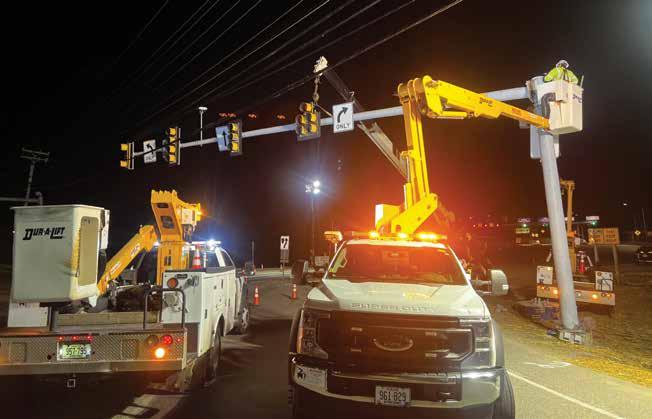
Beyond freight operations, our employees are seeing meaningful benefits. Commute times have improved, traffic tie-ups have lessened, and end-of-shift departures are more streamlined.
Commitment That Continues
As traffic patterns settle, MTA continues refining the final transition point. The takeaway is simple: MTA doesn’t complete a project and walk away. Ongoing communication is central to how the Turnpike operates, and staying connected helps us understand realworld impacts. We continue supporting local businesses after construction, and that commitment remains strong in Saco and across the system.
Exit 35 demonstrates what it means to build infrastructure with intention: safer roads, stronger communities, and a more resilient transportation network. As traffic patterns evolve and development continues around Saco, Maine Turnpike Authority remains focused on the same principles that shaped this project: listening closely, building responsibly, and investing in infrastructure that lasts.
“We have experienced noticeable improvements in shipping and receiving times as a result of the enhanced roadway connections serving Saco, ME,” said a General Dynamics Ordnance and Tactical Systems Spokesperson.
From a logistics standpoint, we’ve received positive feedback from our freight partners. They report improved traffic flow when entering and exiting the freeway, along with a safer experience overall. The updated exits and off-ramps have reduced congestion and simplified access.
Beyond freight operations, our employees are seeing meaningful benefits. Commute times have improved, traffic tie-ups have lessened, and end-of-shift departures are more streamlined.
Looking ahead, we foresee long-term advantages that benefit our operations, our employees, and our region.”
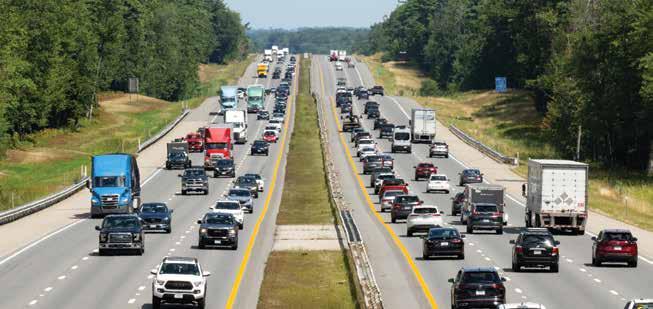
As travel patterns evolve, MTA remains committed to improving our system to meet riders’ needs
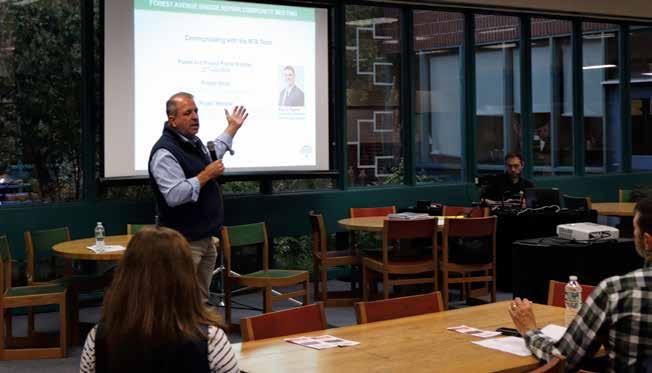
Executive Director discussing community priorities at a recent neighborhood community meeting
LIST OF ACTIVE CONTRACTS IN 2025

Bridge
Our Mission
We Serve Maine by connecting customers, communities, and commerce through a safe and reliable toll road experience.

MTA Board of Directors
Michael J. Cianchette - Chair Falmouth, Maine Member at Large
Nina A Fisher - Member Farmingdale, Maine Member at Large
Andrew McLean - Member Gorham, Maine Cumberland County Rep
Thomas J Zuke, CPA - Member Saco, Maine York County
Jane L. Lincoln - Vice Chair Farmingdale, Maine Kennebec County Rep
Emily N. Becker - Member Poland, Maine Androscoggin County Rep
Dale Doughty - Commissioner MaineDOT Ex-Officio Member