2
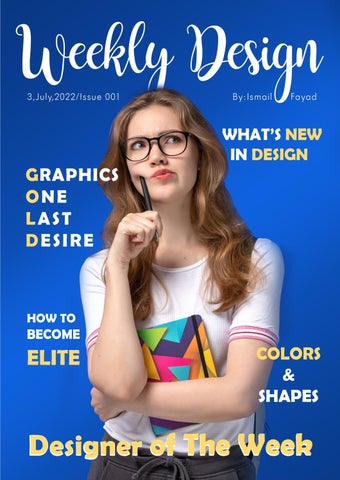
Weekly Magazine
What’s New In Design Graphic Design Trends: What’s Coming in 2022 + Expert Tips
We were all wrong when we thought we would celebrate the end of COVID-19 in 2021.
This year, we saw how the lingering pandemic took a toll on everyone. For visual designers, it shifted the way we communicate and express ourselves as a brand or individual.
2022 will be a year of creative pragmatism Creative pragmatism is the common thread across graphic design trends in 2022. We will see bold, expressive, yet purposeful and intentional design. As a graphic and communication designer who’s made it through the wild rollercoaster of a ride this year, I will draw a picture (with words and visuals this time around!) of what I interpret as creative pragmatism. What is creative pragmatism?
Creative pragmatism is a concept from two opposing ideas: creative and pragmatic. Creativity sparks the imagination, which means being bold, expressive, and inspirational. Meanwhile, pragmatism means being realistic based on practical rather than theoretical considerations. The uncertainty plus the gloom and doom vibes of the pandemic has led to The Great Resignation.
3
Weekly Magazine
Graphics One Last Desire How to be a graphic designer without losing your soul? Ah, the concept of art for art’s sake! It’s fueled creativity and cultural development for thousands of years. Maybe it even fueled your desire to become a graphic designer. After all, what could be more noble than creating beautiful pieces that both enlighten and inform, helping the consumer to communicate on a more meaningful level with the companies they purchase from? Well, it’s a nice idea. In truth, the majority of graphic designers don’t have the privilege and the luxury of working on “artsy” pieces — to pay the bills with graphic design, it’s more a case of functionality over form, legibility over creativity, and deadlines over exploration. For those of us who came into graphic design with a dream in our hearts and our heads in the clouds, the actual process of making a living can be a rude awakening. But in the end, all design — even simple iconography for your client’s website buttons, finding the right metallic sheen for your logo creation or color choice for plastic packaging, or looking through endless sans serif fonts until you find the perfect one to use for the disclaimers at the bottom of the page — is really about art. It may not be “art for art’s sake,” but that doesn’t make it any less important. In fact, the goal of good graphic design actually makes this particular industry more vital to how the world runs on a day-to-day basis. So how can you keep your head in the clouds and your feet on the ground? Here are my tips for how to be a graphic designer without completely losing your soul. Don’t Get Hung Up On Trends If your client is a trend monster(or a trend-setter, which is almost worse), this tip may seem easier said than done. After all, design trends make the world go-’round, right? Trends become popular because people like them. If we don’t do what’s popular, how
4
will people like us? First off, the idea of trends only becoming trends because they are universally liked is a fallacy. Trends often take over not because of their popularity but because of their notoriety, which is an entirely different thing. Beauty is in the eye of the beholder, and trends are highly subjective. Simply creating a piece of graphic design that is “trendy” doesn’t guarantee its success; in fact, it’s more likely to come across as a gimmick than an actual legit piece of design. On top of that, trends come and go on almost a day by day basis. Trying to stay on top of them and create designs “in the mode” is a surefire way to lose your focus as a designer. With this tip, I’m not trying to say “ignore all trends, do your own thing, and be a wild and free anarchist!” I’m merely cautioning against an overdependence on doing the “trendy” thing. If there’s a trend you like that fits with your projects, by all means use it as a jumping off point. If there’s a trend that you don’t know much about and which intrigues you, by all means experiment with it and let it build your artistic experience. But jumping from trend to trend, regardless of whether it makes sense for your portfolio or career path, is a surefire way to land in exhaustion and, ultimately, professional oblivion.
Weekly Magazine
How To Become An Elite Designer In Any Discipline As professional designers
attempt to make more sense of their art-form, they apply new philosophies to the concept of design, making gurufied statements like “Design is Communication” or “It’s Visual Story Telling”.
Good design is not graphic design, design communication, story-telling, digital design, UX or a creator of space. These are all labels used to identify specific areas of design but do not define what good design is.
These statements lead to new buzz words such as “digital design” and “UX” as well as “designing spaces” and “creating experiences”. In all honesty I quite like these new words and the ideology behind them. These words push the discipline of professional design forward and create new services to sell, but this is also an example of how the overuse of new language might be turning the profession of design into piffle and poppycock. These buzzwords are marketing words used to label, glamourise and refine design and designers. It’s used to segregate design and loses focus on what a good designer actually is.
practice, principles and philosophy of good design and some of it does mirror much of the babble above but just the other day I was inspired to simplify it and figure out just what makes good designer without the tradition of pretentious principles or mesmerising marketing words. Here are the 6 practices that will always lead to a magnificent piece of design work and make you an elite designer whether you’re an interior designer, graphic designer, digital designer or landscape designer. 1. Research Research is the epitome of great design because, in reality, we don’t have instant eureka moments where lightbulbs flash above our head and magical ideas are formed.
Good design utilises design principles and design briefs. It meets objectives and obtains goals by solving problems but you know what? All of that is also just a load of buzz words and hubbub. Having run my own design studio for over 10 years I have my own
Ideas are formed from memories, experiences or education that we encounter at some point in time. Maybe it was something you saw, read, met or heard. Maybe it was something you felt emotionally or touched. Or maybe it was just something you skimmed over or even disliked but that something was stored in your brain consciously or subconsciously for
5
Weekly Magazine
The Psychology of Colors & Shapes The world around us is filled with designs. We see them everyday in our lives and yet we don’t notice them all. However, only a few of them get to catch our eye. Why is that? Design is what influences us to purchase a product or service. A design can have a profound effect on how we perceive and feel the world, as well as on the way we make decisions. Design is a form of art communication practiced for centuries through cravings, shapes, colors, & typography. Psychology of colors and shapes seems to be perceive from ancient times. To create stories, compositions, identities, products and experiences. Besides, let’s agree to the fact that these ancient designs are proof of human civilization and their lifestyle. We are consciously unaware of several ways that designs evoke emotions in us. Since design communicates in different forms, it is important to know and understand the psychology of human behavior to hit the desired target audience. Therefore let’s understand the psychology of different colors and shapes that plays a major role in influencing people.
Triangle:
Circles:
Triangles are three lines joined together, making three points. This shape can be perceive as sharp, edgy & powerful. Because of such characteristics your brain will understand the power of design. To understand this more clearly, the best example of triangles showing power can be The Great Pyramids of Giza. Due to the size of it, it shows the symbolism. If your client has a vision of showing power, masculinity or stability, triangle as a shape can be the best choice.
Speaking of a circle, it has no end nor the beginning. This shape is friendly or non dangerous shapes. For example, if you remember a cartoon called “Oswald”, you may recall that the cartoon character Oswald was in circle shape and was friendly by nature. The curve is generally more feminine shape compare to its sharp-angle counterpart. Circles and spheres can also be associated with the world we live in and the circle of life, how birth and death is life. Therefore, they represent community and unity.
6
Squares and Rectangles: Squares and rectangles showcases, stability, strong, professional & balanced. If you recall the famous cartoon, “SpongeBob” you will notice that he was in rectangle shape. Which perceived the friendliness, balance and stable character as a cartoon. This way, if companies want to portray a sense of reliability to their audience and professionalism. can make a text feel more aesthetically pleasing and friendly.
Weekly Magazine
Design Of The Week
Ismail W Fayad UX-UI & Graphic Designer Palestine
www.behance.net/esmaeelfd
Sport Magazine
7