MIDDLE SCHOOL 2026
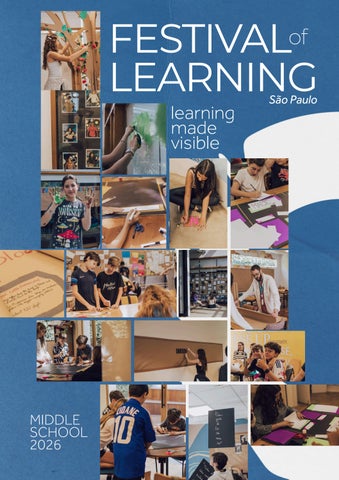
MIDDLE SCHOOL 2026



Our greatest obstacles are often ourselves. If you think you can’t, you probably won’t.

by Kobi Yamada,
Finding Muchness: How to Add More Life to Life Theme of the 2026 Academic Year
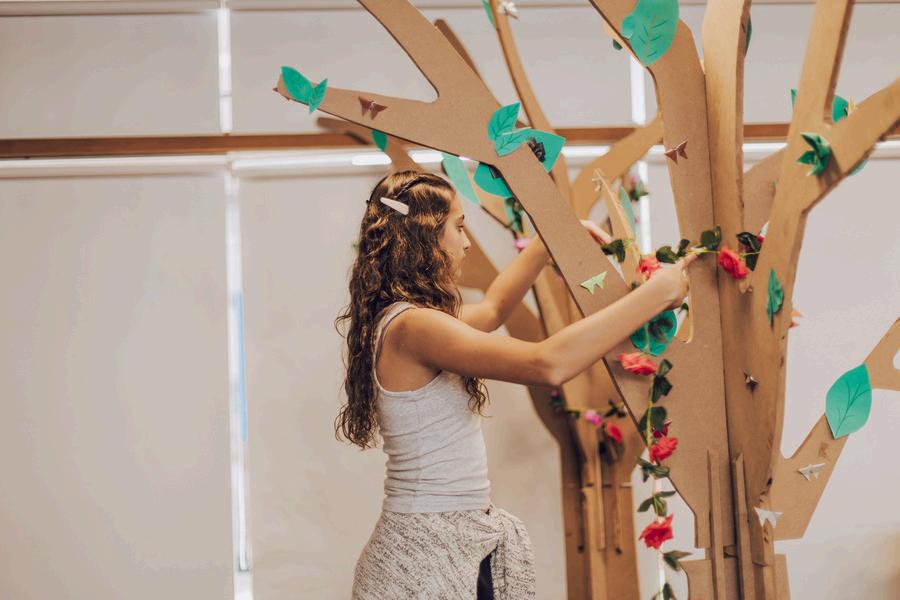
The 1st Festival of Learning of 2026 has arrived - a celebration of the wonder, imagination, and muchness that lives within each of us.
Inspired by this year’s theme, Finding Muchness by Kobi Yamada, this festival honors the unique qualities, bold ideas, and joyful discoveries that make every learner extraordinary. It is a vibrant reflection of journeys filled with curiosity, creativity, courage, and the countless moments that help us better understand who we are becoming.
Throughout this special event, our community is invited to experience the powerful learning that emerges when learners are encouraged to think deeply, explore freely, and embrace their authentic selves. Each exhibition, each interaction, and each shared story reveals the imagination, voice, and potential that live within our community.
Join us as we celebrate the beauty of learning in all its forms — the big breakthroughs, the quiet discoveries, the questions, the risks, and the sparks of inspiration that help us uncover our own muchness. Let this be a time to honor not only what we have learned, but the unique gifts, perspectives, and possibilities each learner brings into the world. Welcome to the Festival of Learning — a celebration of imagination, belonging, discovery, and the extraordinary muchness within us all!
It is time to celebrate learning!

1º Festival of Learning de 2026 chegou uma celebração do encantamento, da imaginação e da grandiosidade que existe dentro de cada um de nós.
Inspirado no tema deste ano, "Finding Muchness", de Kobi Yamada, este festival celebra as qualidades únicas, as ideias ousadas e as descobertas cheias de alegria que tornam cada learner extraordinário É um reflexo vibrante de jornadas marcadas por curiosidade, criatividade, coragem e pelos inúmeros momentos que nos ajudam a compreender melhor quem estamos nos tornando
Ao longo deste evento especial, nossa comunidade será convidada a vivenciar a potência da aprendizagem que emerge quando learners são incentivados a pensar profundamente, explorar livremente e abraçar sua autenticidade. Cada exposição, cada interação e cada história compartilhada revelam a imaginação, a voz e o potencial que vivem dentro da nossa comunidade.
Junte-se a nós para celebrar a beleza da aprendizagem em todas as suas formas as grandes conquistas, as descobertas silenciosas, as perguntas, os riscos e as centelhas de inspiração que nos ajudam a descobrir nossa própria grandiosidade Que este seja um momento para celebrar não apenas o que aprendemos, mas também os talentos, perspectivas e possibilidades únicas que cada learner traz para o mundo
Bem-vindos ao Festival of Learning uma celebração da imaginação, do pertencimento, da descoberta e da extraordinária grandiosidade que existe dentro de todos nós!
É hora de celebrar a aprendizagem!

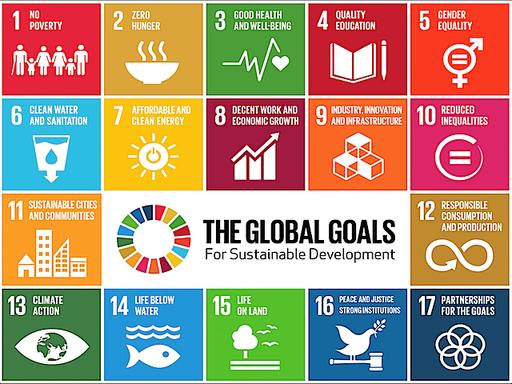
Na Escola Concept, a aprendizagem é intencional, significativa e guiada por práticas pedagógicas com propósito. Os projetos desenvolvidos ao longo do primeiro semestre de 2026 foram apoiados pelos Global Goals, juntamente aos objetivos de aprendizagem conectados ao Fieldwork Education e à BNCC, criando oportunidades autênticas para investigação, exploração e crescimento.
At the same time, the Habits of Mind, developed by The Habits of Mind Institute, nurtured in our learners the dispositions needed to think flexibly, act thoughtfully, and respond intelligently when faced with challenges, questions, and new experiences.
At Escola Concept, learning is intentional, meaningful, and guided by purposeful pedagogical practices. The projects developed throughout the first semester of 2026 were supported by the Global Goals, alongside the learning standards connected to Fieldwork Education and the BNCC, creating authentic opportunities for inquiry, exploration, and growth.

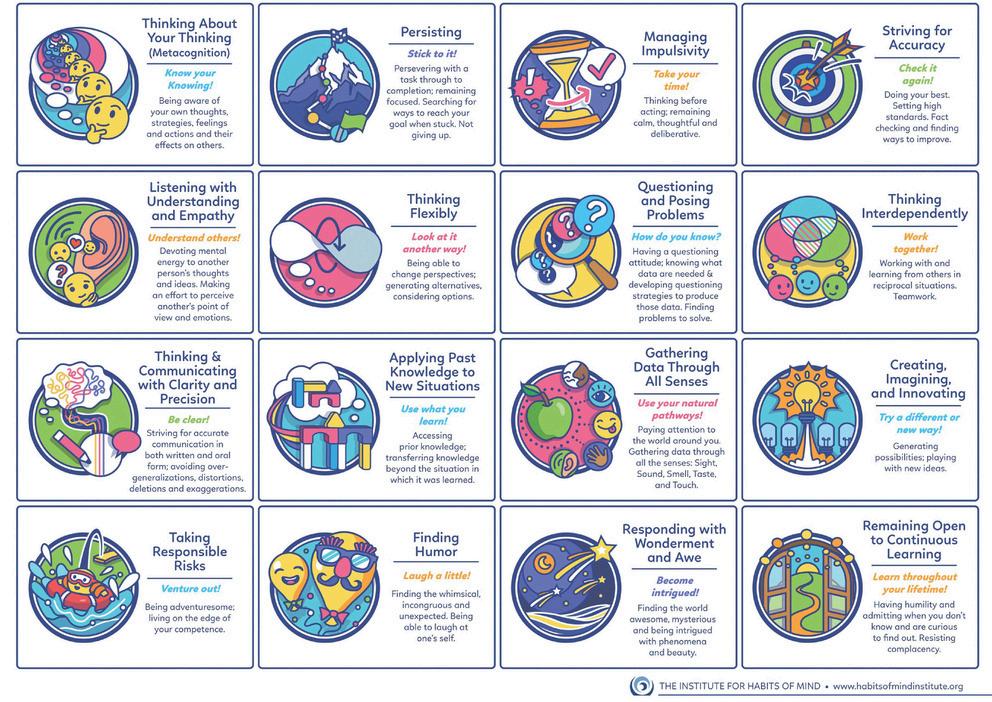
Ao mesmo tempo, os Hábitos da Mente, desenvolvidos pelo The Habits of Mind Institute, fortaleceram, em nossos estudantes, disposições importantes para pensar com flexibilidade, agir com intencionalidade e responder, de forma inteligente, a perguntas desafiadoras, e viver novas experiências.

Sumário

What makes an effective speech?
O que faz um discurso ser efetivo?
Math Has a Story to Tell: How do numbers and stories work together to create meaning and change the world?
A Matemática Tem Uma História para Contar: Como os números e as histórias trabalham juntos para criar significado e transformar o mundo?
Math Is Everywhere: How can understanding mathematical operations help us make sense of the world around us?
A Matemática Está em Todo Lugar: Como a compreensão das operações matemáticas pode nos ajudar a entender o mundo ao nosso redor?
Chemistry in Real Life: Exploring Through Real-Life Data
Question: How can we apply chemistry to understand our daily lives?
Química na Vida Real: Explorando por meio de Dados do Cotidiano. Pergunta: Como podemos aplicar a Química para entender o nosso dia a dia?
Howdosocietiescreatetheirstoriesandwhatcanwelearnfromthem? Comosociedadescriamsuashistóriaseoqueaprendemoscomelas?
How does literature help us understand who we were, who we are, and who we can become?
Como a literatura nos ajuda a entender quem fomos, quem somos e quem podemos ser?
How can anthropologic activities lead to habitat destruction, and what impact do they have on human health?
Como as atividades antropológicas podem levar à destruição do habitat, e qual é o seu impacto na saúde humana?
How do circles grow?
Como os círculos crescem?
How can we use algebraic language?
Como podemos usar a linguagem algébrica?
How can we use rigid transformations to create infinite patterns that tile the plane?
Como podemos usar transformações rígidas para criar padrões infinitos que preenchem o plano?
How do revolutions redefine the world and ourselves?
Como revoluções ajudam a redefinir o mundo e a nós mesmos?
Sumário
How did angle relationships in truss design drive the architectural revolution of the Industrial Age?
Como as relações entre ângulos no design de treliças impulsionaram a revolução arquitetônica da Era Industrial?
Electrical Energy
How can the concept of energy be transferred to other systems?
Nervous System
How does the nervous system allow us to perceive, interpret, and respond to the world around us?
Energia Elétrica
Como o conceito de energia pode ser transferido para outros sistemas?
Sistema Nervoso
Como o sistema nervoso nos permite perceber, interpretar e responder ao mundo ao nosso redor?
How do our choices shape who we are?
Como as nossas escolhas moldam quem nós somos?
How do languages connect people, cultures, and the world?
Como os idiomas conectam pessoas, culturas e o mundo?
Oquefazumdiscursoserefetivo?
Sobre a jornada de aprendizagem


MS learners have delivered speeches to their peers in class, learners who volunteered themselves and tailored their speeches will present them to the school community during the Festival of Learning, which aims to portrait the learning trough the semester and also promote the TEDx, event that will occur in June 20th in which 44 learners have applied to participate in Learners have investigated public speaking skills, research, script writing, storytelling and audience engagement techniques.
Os alunos do Ensino Médio realizaram discursos para seus colegas em sala de aula. Os estudantes que se voluntariaram e adaptaram seus discursos irão apresentá-los à comunidade escolar durante o Festival of Learning, que tem como objetivos retratar a aprendizagem ao longo do semestreetambémpromoveroeventoTEDx,queaconteceránodia20dejunho,noqual44alunosseinscreveramparaparticipar. Osestudantesinvestigaramhabilidadesdeoratória,pesquisa,escritaderoteiros,storytellingetécnicasdeengajamentodopúblico.

O que vai acontecer no FOL?
- Use captivating hook
- Use remarkable takeaways
- Write script to guide the speech
- Speak with clarity and confidence
- Apply storytelling in your speech
- Consider the audience and engage them
- Use uma introdução cativante
- Utilize mensagens e aprendizados marcantes
- Escreva um roteiro para guiar o discurso
- Fale com clareza e confiança
- Aplique storytelling em sua apresentação
- Considere o público e envolva a audiência
A Matemática Tem Uma História para Contar: Como os números e as histórias trabalham juntos para criar significado e transformar o mundo?
Sobre a jornada de aprendizagem

In this project, learners research mathematicians who changed history from Alan Turing to Emmy Noether and bring their stories to life through narrative writing. A published class book and Wall of Mathematical Courage celebrate math, courage, and human impact.
Neste projeto, os estudantes pesquisam matemáticos que mudaram a história de Alan Turing a Emmy Noether e dão vida às suas histórias por meio da escrita narrativa. Um livro da turma publicado e o Mural da Coragem Matemática celebram a Matemática, a coragem e o impacto humano.
O que vai acontecer no FOL?
Math: Connect mathematical discoveries to their historical and social context; understand the contribution of key mathematicians to fields such as computing, physics, algebra, and number theory.
ELA: Produce narrative writing with a clear structure (beginning, challenge, climax, impact); develop empathy and voice through biographical storytelling; read for comprehension and inference.
Matemática: Relacionar descobertas matemáticas ao seu contexto histórico e social; compreender a contribuição de matemáticos importantes para áreas como computação, física, álgebra e teoria dos números ELA (Linguagem e Artes da Língua Inglesa): Produzir textos narrativos com uma estrutura clara (início, desafio, clímax e impacto); desenvolver empatia e identidade narrativa por meio de histórias biográficas; realizar leitura com compreensão e interpretação inferencial
Math Is Everywhere: How can understanding mathematical operatio help us make sense of the world aroun
A Matemática Está em Todo Lugar: Como a compreensão das operações matemáticas pode nos ajudar a entender o mundo ao nosso redor?
Sobre a jornada de aprendizagem
From a chessboard legend to the Four Fours challenge, students discover that math is everywhere. Exploring exponents, square roots, and order of operations (BODMAS/PEMDAS), they see how numbers power real-world decisions in money, nature, and technology.
De uma lenda do xadrez ao desafio dos Quatro Quatros, os estudantes descobrem que a Matemática está em todo lugar. Explorando potências, raízes quadradas e a ordem das operações (BODMAS), eles percebem como os números influenciam decisões do mundo real no dinheiro, na natureza e na tecnologia

O que vai acontecer no FOL?
Reading: interpreting texts and making inferences
Writing: producing coherent narratives (autobiography/biography)
Oral communication: sharing ideas and interpretations
Language analysis: understanding how language creates meaning Multiliteracies: integrating visual and textual expression
Interpretação de textos e realização de inferências
Escrita: produção de narrativas coerentes (autobiografia/biografia)
Comunicação oral: compartilhamento de ideias e interpretações
Análise da linguagem: compreensão de como a linguagem constrói significados
Multiletramentos: integração entre expressão visual e textual
Question: How can we apply chemistry to understand our daily lives?
QuímicanaVidaReal:ExplorandopormeiodeDadosdoCotidiano. Pergunta:ComopodemosaplicaraQuímicaparaentenderonosso diaadia?
Sobre a jornada de aprendizagem
Science comes to life in this unit! After learning what science is, leraners apply it through two parallel paths: hands-on chemistry experiments and a collaborative data investigation with a New York school. They explore matter, mixtures, changes,anddensitywhileconnectingconceptstoreal-lifesituationsandevidence-basedresearch.
A ciência ganha vida nesta unidade! Após aprenderem o que é ciência, os alunos a aplicam por meio de dois caminhos paralelos: experimentos práticos de Química e projeto colaborativo de pesquisa com coleta de dados, com uma escola de Nova York. Exploram matéria, misturas, transformações e densidade, conectando conceitos ao cotidiano e à investigação baseada em evidências
O que vai acontecer no FOL?
Classifymaterialsaccordingtotheirproperties,identifyingsimilaritiesanddifferencesand relatingthemtotheireverydayuses.
Recognizethatmaterialscanbeformedbyoneormoresubstancesandthatmixturescanbe composedofdifferentcomponents
Identifydifferenttypesofmixturesandclassifythemashomogeneousorheterogeneousbased onobservablecharacteristics
Selectandapplyappropriatemethodsforseparatingmixtures,consideringeverydaysituations andpracticalapplications.
Identifyphysicalandchemicaltransformationsinmaterials,recognizingevidenceofthese transformationsineverydayphenomena.
Investigateandrelatedensitytothebehaviorofmaterials(suchasfloatingandsinking),using observation,comparison,andsimplecalculations.
Classificar materiais de acordo com suas propriedades, identificando semelhanças e diferenças e relacionando-as aos seus usos no cotidiano
Reconhecer que os materiais podem ser formados por uma ou mais substâncias e que misturas podem ser formadas por diferentes componentes Identificar diferentes tipos de misturas e classificá-las como homogêneas ou heterogêneas com base em características observáveis.
Selecionar e aplicar métodos adequados para a separação de misturas, considerando situações do cotidiano e aplicações práticas.
Identificar transformações físicas e químicas nos materiais, reconhecendo evidências dessas transformações em fenômenos do cotidiano.
Investigar e relacionar a densidade ao comportamento dos materiais (como flutuar e afundar), utilizando observação, comparação e cálculos simples.
Comosociedadescriamsuashistóriaseoque aprendemoscomelas?
Sobre a jornada de aprendizagem
Our G6 and G7 learners embark the public on a time travel through Ancient and Medieval History, analyzing the different ways in which humans represented themselves artisticaly. It is a journey throguh time and space that reflects upon the magical power of stories (myths, folk tales and non-verbal representations) to help us better understand who we are, where do we belong and our attempts to leave behind an everlasting legacy Connecting past and present, we visist the Stone Age, Ancient Rome and Medieval Western Europe to figure out the many ways found to explore our place in the world and how we, in the present, can imagine our future through a deep analysis of our past.
Nossos alunos do G6 e G7 embarcam o público em uma viagem no tempo pela História Antiga e Medieval, analisando as diferentes formas pelas quais os seres humanos se representaram artisticamente É uma jornada pelo tempo e pelo espaço que reflete sobre o poder mágico de histórias mitos, contos populares e representações não verbais, para nos ajudar a compreender melhor quem somos, a que pertencemos e nossas tentativas de deixar para um legado duradouro. Conectando passado e presente, visitamos a Idade da Pedra, a Roma Antiga e a Europa Ocidental Medieval para descobrir as muitas maneiras encontradas para explorar nosso lugar no mundo e como nós, no presente, podemos imaginar nosso futuropormeiodeumaanáliseprofundadonossopassado.
WILL
O que vai acontecer no FOL?
Explore the ways humans represented themselves through art, stories, and symbols across Ancient and Medieval History. Analyze myths, folk tales, and non-verbal representations from the Stone Age, Ancient Rome, and Medieval Western Europe to understand identity, belonging, and legacy Connect past and present by reflecting on how people throughout history explored their place in the world, and imagine the future through a deeper understanding of the past.
Explorar as formas pelas quais os seres humanos se representaram por meio da arte, das histórias e dos símbolos ao longo da História Antiga e Medieval Analisar mitos, contos populares e representações não verbais da Idade da Pedra, da Roma Antiga e da Europa Ocidental Medieval para compreender identidade, pertencimento e legado Conectar passado e presente ao refletir sobre como os povos ao longo da história exploraram seu lugar no mundo, e imaginar o futuro por meio de compreensão mais profunda do passado.
How does literature help us understan who we were, who we are, and who we can become?
Como a literatura nos ajuda a entender quem fomos, quem somos e quem podemos ser?
Sobre a jornada de aprendizagem
In this project for the Festival of Learning, students explore the relationships between identity, memory, and imagination through a dialogue between O Menino no Espelho, by Fernando Sabino, and A Midsummer Night’s Dream, by William Shakespeare.Throughout the process, Grade 6 students, inspired by Sabino’s work, produced their own autobiographical narratives, while Grade 7 students, inspired by Shakespeare’s classic, created biographies of each theatrical character in productions that reflect on experiences, memories, and aspects that shape identity. At the same time, reading comprehension was developed through the analysis of chapters from Sabino’s work and the construction of meaning around the plot and conflicts present in Shakespeare’s play. As a culmination, the project takes shape as an exhibition experience: an interpretive and interactive art gallery inspired by the fantastical universe of Sabino’s childhood and Shakespeare’s play. In this space, students visually represent characters, scenes, and central themes, connecting imagination with critical reading. Visitors will also be able to access the autobiographies and reading comprehension records, making visible the students’ processes of meaning-making and authorship. The project highlights student agency, creative expression, and the connection between literature, personal experience, and artistic language, inviting students to understand themselves as subjects of memory and creators of narratives.
Neste projeto para o Festival of Learning, os estudantes exploram relações entre identidade, memória e imaginação a partir do diálogo entre a obra O Menino no Espelho, de Fernando Sabino, e Sonho de uma Noite de Verão, de William Shakespeare
Ao longo do percurso, os estudantes do Grade 6, inspirados pela obra de Sabino, produziram narrativas autobiográficas, enquanto os do Grade 7, inspirados pelo clássico de Shakespeare, criaram biografias de cada um dos personagens teatrais em criações que refletem experiências, memórias e aspectos que constituem identidades. Paralelamente, desenvolvemos a compreensão leitora por meio da análise de capítulos da obra de Sabino e da construção de sentidos sobre o enredo e os conflitos presentes na peça de Shakespeare Como culminância, o projeto se materializa uma experiência expositiva: uma galeria de arte interpretativa e interativa inspirada no universo fantástico da infância de Sabino e da peça de Shakespeare, na qual os estudantes representam visualmente personagens, cenas e temas centrais, articulando imaginação e leitura crítica. O público também poderá acessar as autobiografias e os registros de compreensão leitora, tornando visível o processo de construção de sentido e autoria dos alunos. O projeto valoriza o protagonismo, a expressão criativa e a articulação entre literatura, experiência pessoal e linguagem artística, convidando os estudantes a compreenderem a si mesmos como sujeitos de memória e criadores de narrativas
Reading: interpreting texts and making inferences
Writing: producing coherent narratives (autobiography/biography)
Oral communication: sharing ideas and interpretations
Language analysis: understanding how language creates meaning
Multiliteracies: integrating visual and textual expression
interpretação de textos e realização de inferências
Escrita: produção de narrativas coerentes (autobiografia/biografia)
Comunicação oral: compartilhamento de ideias e interpretações
Análise da linguagem: compreensão de como a linguagem constrói significados
Multiletramentos: integração entre expressão visual e textual
can
Comoasatividadesantropológicaspodemlevaràdestruição dohabitat,equaléoseuimpactonasaúdehumana?
Sobre a jornada de aprendizagem
In this unit, learners explored the rich diversity of Brazilian biomes, learning about their unique characteristics. They had the opportunity to visit Mata Atlântica and deepen their understanding of key concepts related to Ecology, such as food chain, ecosystem, and the interactions between living organisms. A major focus of the unit was on current environmental threats, such as deforestation, pollution, and habitat destruction. Students investigated how human activities impact ecosystems and the consequences these changes have on biodiversity and the balance of nature. Students also made important connections to human health, learning about the immune system and how the body defends itself against diseases. They explored the role of vaccines in preventing illness and protecting communities, linking environmental health to human wellbeing.
Nesta unidade, os alunos exploraram a rica diversidade dos biomas brasileiros, aprendendo sobre suas características. Eles tiveram a oportunidade de visitar a Mata Atlântica e aprofundar a compreensão de conceitos-chave relacionados à Ecologia, como cadeia alimentar, ecossistema e as interaçõesentreosseresvivos.
Um foco importante da unidade foram ameaças ambientais atuais, como desmatamento, poluição e destruição de habitats. Os alunos investigaram comoasatividadeshumanasimpactamosecossistemaseasconsequênciasdessasmudançasparaabiodiversidadeeoequilíbriodanatureza
Fizeram conexões importantes com a saúde humana, aprendendo sobre o sistema imunológico e como o corpo se defende de doenças. Exploraram o papel das vacinas na prevenção de doenças e na proteção das comunidades, relacionando a saúde ambiental ao bem-estar humano
O que vai acontecer no FOL?
Characterize the main Brazilian ecosystems in terms of landscape, amount of water, soil type, availability of sunlight, temperature, etc., correlating these characteristics to specificfloraandfauna. Applythescientificmethod. Explaincause-effectrelationships. Explainhowanthropologicactivitiescanimpacthumanhealth.
Caracterizar os principais ecossistemas brasileiros em relação a paisagem, quantidade de água, tipo de solo, disponibilidade de luz solar, temperatura, entre outros aspectos, correlacionando-os à fauna e à flora específicas
Aplicar o método científico
Explicar relações de causa e efeito.
Explicar como as atividades antropológicas podem impactar a saúde humana.
Como os círculos crescem?
Sobre a jornada de aprendizagem
Students steped into the role of a "Value Consultant" for a new local pizzeria. The restaurant has already set its prices, but they haven't decided on the sizes of the pizzas. The students' mission was to use the geometry of circles to determine the exact diameters for the Medium and Large pizzas to ensure customers get a "fair deal" based on a predetermined Small pizza price-per-square-centimeter.
Os alunos assumiram o papel de “Consultores de Valor” para uma nova pizzaria local O restaurante já havia definido os preços, mas ainda não tinha decidido os tamanhos das pizzas A missão dos estudantes foi utilizar a geometria dos círculos para determinar os diâmetros exatos das pizzas média e grande, garantindo que os clientes recebessem um “preço justo” com base no valor por centímetro quadrado previamente estabelecido para a pizza pequena.
O que vai acontecer no FOL?
7.G.4. Know the formulas for the area and circumference of a circle and use them to solve problems; give an informal derivation of the relationship between the circumference and area of a circle.
6.G.1. Find the area of right triangles, other triangles, special quadrilaterals, and polygons by composing into rectangles or decomposing into triangles and other shapes; apply these techniques in the context of solving real-world and mathematical problems
EF07MA33 Estabelecer o número $\pi$ como a razão entre a medida de uma circunferência e seu diâmetro, para compreender e resolver problemas, inclusive os de natureza histórica
EF08MA19 Resolver e elaborar problemas que envolvam medidas de área de figuras geométricas, utilizando expressões de cálculo de área (quadriláteros, triângulos e círculos), em situações como determinar medida de terrenos
Sobre a jornada de aprendizagem
Algebra is a living language. Like any language, it evolved over centuries: from full descriptive sentences to concise symbolic notation. Students who learn to translate fluently between mathematical symbols and English develop a deeper understanding of algebraic structure and become more powerful mathematical communicators.
A Álgebra é uma linguagem viva. Como qualquer linguagem, ela evoluiu ao longo dos séculos: de frases totalmente descritivas para uma notação simbólica concisa. Os alunos que aprendem a traduzir fluentemente símbolos matemáticos e língua inglesa desenvolvem uma compreensão mais profundadaestruturaalgébricaesetornamcomunicadoresmatemáticosmaiseficazes.
WHAT
O que vai acontecer no FOL?
(7.EE.1) Apply properties of operations as strategies to add, subtract, factor, and expand linear expressions with rational coefficients. (7 EE 2) Understand that rewriting an expression in different forms in a problem context can shed light on the problem and how the quantities in it are related (7 EE 3) Solve multi-step real-life and mathematical problems posed with positive and negative rational numbers in any form (whole numbers, fractions, and decimals), using tools strategically. Apply properties of operations to calculate with numbers in any form; convert between forms as appropriate; and assess the reasonableness of answers using mental computation and estimation strategies.
(EF07MA13) Compreender a ideia de variável, representada por letra ou símbolo, para expressar relação entre duas grandezas, diferenciando-a da ideia de incógnita
(EF07MA16) Reconhecer se duas expressões algébricas são ou não equivalentes (incluindo o uso de propriedades da igualdade)
(EF07MA18) Resolver e elaborar situações-problema que possam ser representados por equações polinomiais do 1º grau, redutíveis à forma ax + b = c, fazendo uso das propriedades da igualdade.
(EF07MA29) Resolver e elaborar situações-problema que envolvam medidas de grandezas inseridas em contextos oriundos de situações cotidianas ou de outras áreas do conhecimento, reconhecendo que toda medida empírica é aproximada.
How can we use rigid transformations to create infinite patterns that tile the plane?
Como podemos usar transformações rígidas para criar padrões infinitos que preenchem o plano?
Sobre a jornada de aprendizagem
Explore the intersection of art and math! Students will apply translations, rotations, and reflections to a single shape to create a seamless M.C. Escher-style tessellation. Discover how simple movements can transform a basic polygon into a complex, interlocking masterpiece.
Explore a intersecção entre arte e Matemática! Os alunos aplicarão translações, rotações e reflexões para criar uma tesselação ao estilo M.C. Escher. Descubra como movimentos simples podem transformar um polígono básico em uma obra de arte complexa que se encaixa perfeitamente.
WHAT WILL HAPPEN IN THE FOL?
O que vai acontecer no FOL?
Verify experimentally the properties of rotations, reflections, and translations. (Understand that a two-dimensional figure is congruent to another if the second can be obtained from the first by a sequence of rotations, reflections, and translations; given two congruent figures, describe a sequence that exhibits the congruence between them. Describe the effect of translations, rotations, and reflections on two dimensional figures using coordinates. (Understand that a two-dimensional figure is similar to another if the second can be obtained from the first by a sequence of rotations, reflections and translations; given two similar two-dimensional figures, describe a sequence that exhibits the similarity between them
Reconhecer e construir figuras obtidas por composições de transformações geométricas (translação, reflexão e rotação), com o uso de instrumentos de desenho ou de softwares de geometria dinâmica
Comorevoluçõesajudamaredefiniromundoeanósmesmos?
ABOUT THE LEARNING JOURNEY
Sobre a jornada de aprendizagem
Explore the concept of revolution through examples of it from the Modern Era. Based on studies of the French, English, American and Industrial Revolutions, we determine the possible meanings of this category both applied to the world (politics and the economy), but also to our lives. Learners are invited to remember moments of rupture they have been through, as well as the consequences they left on their lives. The final products are artistic representations that display the synthesis our learnersmadeofwhatrevolutionsmeantothosewhoaredirectlyaffectedbythem.
Exploram conceito de revolução por meio de exemplos da Idade Moderna. Com base nos estudos das Revoluções Francesa, Inglesa, Americana e Industrial, buscamos compreender os possíveis significados dessa categoria, tanto aplicados ao mundo (política e economia) quanto à nossa vida Os alunos são convidados a relembrar momentos de ruptura que vivenciaram, bem como consequências que esses momentos trouxeram para sua trajetória. Os produtos finais sãorepresentaçõesartísticasqueexpressamasínteseconstruídasobreoqueasrevoluçõessignificamparaaquelesquesãodiretamenteafetadosporelas
WHAT WILL
O que vai acontecer no FOL?
Explore the concept of revolution through the study of major transformations in the Modern Era. Analyze the causes and consequences of the English, American, French, and Industrial Revolutions, and connect these moments of rupture to changes in politics, economy, society, and personal life. Reflect on turning points in your own journey and create an artistic representation to express your understanding of what revolutions mean to those directly affected by them
Explorar o conceito de revolução por meio de estudo de grandes transformações da Idade Moderna Analisar as causas e consequências das Revoluções Inglesa, Americana, Francesa e Industrial, e conectar esses momentos de ruptura às mudanças na política, na economia, na sociedade e na vida pessoal. Reflitir sobre momentos de virada em sua própria trajetória e criar uma representação artística para expressar compreensão sobre o que as revoluções significam para aqueles que são diretamente afetados por elas
How did angle relationships in truss de drive the architectural revolution of t Industrial Age?
Como as relações entre ângulos no design de treliças impulsionaram a revolução arquitetônica da Era Industrial?
Sobre a jornada de aprendizagem
Learners will engineer a truss structure, analyzing how angle relationships allowed 19th-century builders to create massive bridges and factories. Discover how geometry turned iron and steel into the backbone of modern transportation and industry.
Os alunos projetarão uma treliça, analisando como as relações entre ângulos permitiram grandes pontes e fábricas do século XIX. Descubra como a geometria transformou o ferro e o aço na espinha dorsal do transporte e da indústria moderna.
O que vai acontecer no FOL?
(Use facts about supplementary, complementary, vertical, and adjacent angles to solve problems. Use informal arguments to establish facts about angle relationships (triangle sum, exterior angle).
Utilizar fatos sobre ângulos suplementares, complementares, verticais e adjacentes para resolver problemas
Utilizar argumentos informais para estabelecer fatos sobre relações entre ângulos (soma dos ângulos internos do triângulo e ângulo externo)
How can the concept of energy be transferred to other systems?
Nervous System
How does the nervous system allow us perceive, interpret, and respond to th world around us?
Energia Elétrica
Como o conceito de energia pode ser transferido para outros sistemas?
Sistema Nervoso
Como o sistema nervoso nos permite perceber, interpretar e responder ao mundo ao nosso redor?
Sobre a jornada de aprendizagem
Electrical Circuit: Grade 8 students explored electrical energy through circuits, Ohm’s Law, and a visit to IEEUSP. Their final project compares a neuron to an electrical circuit, showing how energy flows in both systems and exists not only in circuits but also in the human body.
Nervou System: Learners explore how cells, systems, and signals work together through the nervous system. Through models, experiments, and a final zine project, they investigate how the body responds to stimuli and how substances affect behavior.
Alunos do 8º ano exploraram energia elétrica por meio de circuitos, Lei de Ohm e uma visita ao IEE-USP. No projeto final, comparam um neurônio a um circuito elétrico, mostrando como a energia flui em ambos e que também está presente no corpo humano Os alunos exploram como células, sistemas e sinais atuam juntos por meio do sistema nervoso Com modelos, experimentos e um zine final, investigam como o corpo responde a estímulos e como substâncias afetam o comportamento.
O que vai
Justify the role of the nervous system in coordinating the body’s motor and sensory actions, based on the analysis of its basic structures and their respective functions.
Explain how the functioning of the nervous system can be affected by psychoactive substances.
Explain the importance of vision in the organism’s interaction with the environment and, based on the functioning of the human eye, select appropriate lenses to correct different vision impairments.
Justificar o papel do sistema nervoso na coordenação das ações motoras e sensoriais do corpo, com base na análise de suas estruturas básicas e respectivas funções. Explicar como o funcionamento do sistema nervoso pode ser afetado por substâncias psicoativas Explicar a importância da visão na interação do organismo com o meio e, com base no funcionamento do olho humano, selecionar lentes adequadas para a correção de diferentes defeitos da visão.
Como as nossas escolhas moldam quem nós somos?
Sobre a jornada de aprendizagem
Our Grade 8 ELA Festival of Learning showcases how students explored the big idea that choices shape consequences, and stories help us understand that truth. Families will see the full journey from reading to creating: students began by activating background knowledge about literary genres, then built deep understanding of the Gothic genre through mind maps, examples, and connections to The Monkey’s Paw. Their work highlights key reading skills like analyzing mood, tone, suspense, foreshadowing, cause-and-effect, and point of view, shown through character POV letters, character development posters, and a gallery of alternative endings. The exhibition also features students’ media literacy by comparing three versions of the story (original Jacobs, Hannah Fish retelling, and the 2013 short film). To connect literature to life, students share a personal “choice” reflection wall, and families are invited to respond on an interactive mural. The festival closes with a look into Unit 2’s creative processscripts, storyboards, and a screening space for student-made short films about wishes, choices and consequences.
Nosso Festival of Learnig de ELA do 8º Ano apresenta como os alunos exploraram a grande ideia de que as escolhas moldam as consequências, e as histórias nos ajudam a compreender essa verdade As famílias poderão acompanhar toda a jornada, da leitura à criação: os alunos começaram ativando conhecimentos prévios sobre gêneros literários e, em seguida, desenvolveram compreensão aprofundada do gênero gótico por meio de mapas mentais, exemplos e conexões com The Monkey’s Paw Os trabalhos destacam importantes habilidades de leitura, como análise de atmosfera, tom, suspense, antecipação de acontecimentos (foreshadowing), relação de causa e efeito e ponto de vista Esses elementos aparecem em cartas escritas sob a perspectiva dos personagens, pôsteres de desenvolvimento de personagens e uma galeria de finais alternativos. A exposição também evidencia a alfabetização midiática dos alunos ao comparar três versões da história: a obra original de Jacobs, a releitura de Hannah Fish e o curta-metragem de 2013. Para conectar a literatura à vida real, os estudantes compartilham um mural de reflexões pessoais sobre “escolhas”, e as famílias são convidadas a participar deixando suas respostas em um mural interativo. O festival se encerra com uma apresentação do processo criativo da Unidade 2 roteiros, storyboards e um espaço de exibição para curtasmetragens produzidos pelos próprios alunos sobre desejos, escolhas e consequências.
O que vai acontecer no FOL?
Analyzehowauthorsandcreatorsusestructure,language,andcraftchoicestoshape meaningandinfluenceaudiences;compareideas,themes,andtechniquesacrossmultiple versionsandmedia;citeandintegraterelevantevidencetosupportinterpretationsand evaluations;writeandrefinenarrativework(includingscripts)throughthewritingprocess; collaborateinevidence-baseddiscussionandpeerfeedback;communicateideasthrough multimediaproducts(infographics/film);andstrengthenlanguageprecision(grammar, vocabulary,clarity)foreffectivespeakingandwriting.
Analisar como autores e criadores utilizam estrutura, linguagem e escolhas criativas para construir significados e influenciar o público; comparar ideias, temas e técnicas em diferentes versões e mídias; citar e integrar evidências relevantes para sustentar interpretações e avaliações; escrever e revisar produções narrativas (incluindo roteiros)exercitando a escrita; colaborar em discussões baseadas em evidências e em feedbacks entre colegas; comunicar ideias por meio de produtos multimídia (infográficos/filmes); e fortalecer a precisão da linguagem (gramática, vocabulário e clareza) para comunicação oral e escrita eficazes
Como os idiomas conectam pessoas, culturas e o mundo?
Sobre a jornada de aprendizagem
Explore student work in Chinese, Spanish, Italian, and French. Learning languages strengthens communication, cultural understanding, and global awareness while opening doors to new perspectives. Grade 6 presents maps, countries, and nationalities; Grade 7 showcases writing, expressions, and word games; Grade 8 shares videos, personal presentations, and food-related projects.
Exploram trabalhos em chinês, espanhol, italiano e francês. Aprender idiomas fortalece a comunicação, amplia a compreensão cultural e desenvolve uma visão global, abrindo portas para novas perspectivas O Grade 6 apresenta mapas, países e nacionalidades; o Grade 7 traz escrita, expressões e jogos com palavras; o Grade 8 compartilha vídeos, apresentações pessoais e projetos sobre comidas
O que vai acontecer no FOL?
Compararculturas,paíseserotinasescolares;explorardiferentes idiomaseformasdecomunicação;apresentarprojetosculturaise linguísticosdesenvolvidosemaula;compartilharproduçõesescritas, vídeoseapresentaçõesdosalunos;desenvolveracompreensão interculturaleaconsciênciaglobal;valorizaradiversidadelinguística ecultural;praticarhabilidadesdecomunicaçãoemdiferentesidiomas; erefletirsobresemelhançasediferençasentrepaíseseculturas.
Compare cultures, countries, and school routines; explore different languages and forms of communication; present cultural and linguistic projects developed in class; share students’ written work, videos, and presentations; develop intercultural understanding and global awareness; value linguistic and cultural diversity; practice communication skills in different languages; and reflect on similarities and differences between countries and cultures