

Come Together Right Now


DIE ERSTE österreichische Spar-Casse Privatstiftung
WHY WE EXIST OUR STATEMENT OF PURPOSE
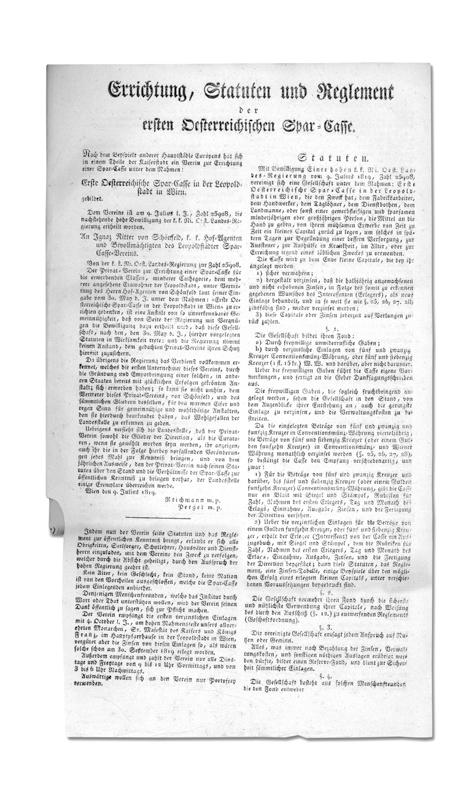
»No age, no gender, no social status, no nation shall be excluded from the benefits that the Spar-Casse offers every depositor«. From the founding charter of »Erste oesterreichische Spar-Casse«. Vienna, October 1819.
Our story begins in October 1819 with this message of confidence.
This statement envisioned a future where access to prosperity and independence would be available to everyone, free from the constraints imposed by a ruling class.
In this deeply humane spirit, our founders established the first inclusive financial institution in our region: the »Erste oesterreichische Spar-Casse«.
The ERSTE Foundation of today is its successor.
The following pages describe where we come from and why we exist.
They explain our Statement of Purpose and the principles that guide our thoughts and actions.
The savings bank culture fuelled the middle class and supported the rise of European democracy.
From 1819 onwards, hundreds of savings banks modelled after »Erste oesterreichische Spar-Casse« sprang up across Central and Eastern Europe, from Bregenz to Lviv and from Dubrovnik to Teplice.
Saving and loans became the cornerstones of financial independence and security for people, communities and regions. As early as 1824, the seeds of social security were sown with the establishment of the »Allgemeine Versorgungsanstalt«.
This combination of the most advanced financial instruments of the time with inclusive access became a powerful engine of prosperity in Europe.
The culture of saving played an influential role in shaping the middle class and fostering European democracy throughout the 19 th and 20 th centuries.
After the end of World War II, when communism stripped the savings banks in Eastern Europe of their purpose, the region’s middle class disappeared as well.
This trend reversed only after the fall of the Iron Curtain in 1989.
In Austria, however, a robust middle class was able to develop after World War II, capable of strengthening its financial and social standing and accumulating financial reserves.
»Erste« in the third century of its history.
Austria’s accession to the European Union marked the beginning of a new chapter for »Erste«.
»Erste« reinvents its future. In 1997, »Erste« jointly with the savings banks launched the largest initial public offering by an Austrian company ever seen, and started its expansion into Central, Eastern and Southeastern Europe by acquiring many of the financial institutions that had emerged from the former savings banks.
With this move, it combined many of the financial institutions that emerged from the original savings banks into a uniform banking group.
Throughout these developments, ERSTE Foundation has remained the core shareholder of Erste Group. ERSTE Foundation is the legal successor to the institution established in 1819 and carries its values into the future.
In the tradition of the founders, it invests the profits from its share of the banking group in purposes that serve the common good.
In the firm belief that the course of the world is not predetermined and that we have the power to change it for the better, we hereby make the following statement.
Why we exist
A society that is resilient and works for all people needs an inclusive economic basis and a strong, vibrant civil society in order to look to the future with confidence.
We see this as an important prerequisite for the preservation of our democratic values and principles, which ultimately give every person the right, the opportunity and the support to lead a self-determined and fulfilling life.
ERSTE Foundation is here to pave the way to this reality for the people in our regions. This commitment particularly applies to those who are underserved and marginalised, and those who are in danger of becoming so. Ahead of us are three tasks upon which we want to focus our knowledge and resources.
I. Financial health
This is the economic basis for a functioning and resilient society. That is why we want to promote the development and maintenance of financial health at all levels of society, with a particular focus on enhancing access to knowledge.
II. Democratic values and principles
Through our social, economic, societal, and cultural activities, we want to strengthen and expand democracy based on fundamental rights, together with our partners from civil society.
III. Independence
As core shareholder, we safeguard the independence of Erste Group and provide its management with the support to think long-term and act innovatively. We reinvest our share of the profits in the common good, in line with our Foundation's charter.
Hope, in this deep and powerful sense, is … an ability to work for something because it is good, not just because it stands a chance to succeed. The more unpropitious the situation in which we demonstrate hope, the deeper that hope is. Hope is definitely not the same thing as optimism. It is not the conviction that something will turn out well, but the certainty that something makes sense, regardless of how it turns out. (…) It is also this hope, above all, which gives us the strength to live and continually to try new things, even in conditions that seem as hopeless as ours do, here and now.
Václav Havel, Disturbing the Peace (1985)
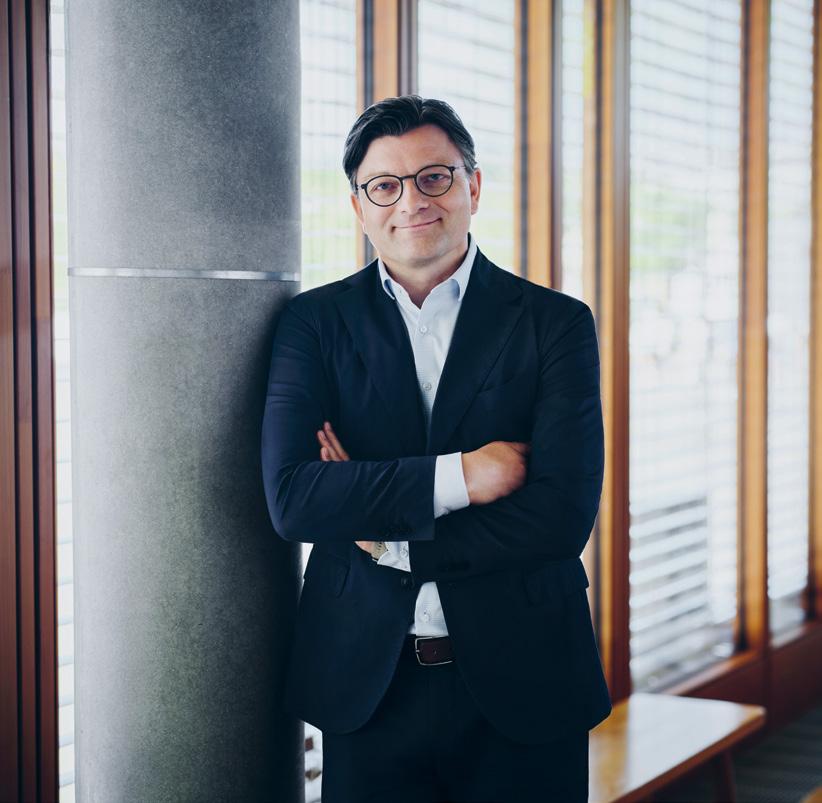
Dear readers,
my name is Christoph Prantner. Since July 2025 I have been heading the communications division at ERSTE Foundation and am delighted to introduce myself with some introductory thoughts for this year's annual report.
2025 was a challenging year to say the least. To many of us the state of the world appeared as a daily deluge of disheartening reports: wars and conflicts everywhere. Profound social upheaval threatening to unravel old certainties and undermine ways of life once considered secure. Bitter public disputes that turn negotiation and compromise into signs of weakness and make polarising positions appear as the only hard currency in politics. Flagging economies across the European continent struggling to keep pace with rapid, global structural change. An eroding international order where the law of the jungle seems to have become the new normal.
A world out of joint. This is one reading of the year 2025. But there is another: one in which the protagonists are people who refuse to relinquish agency or remain in the passenger seat of their own lives. For them, solidarity is not an empty phrase. They strength the social fabric where it threatens to come undone. In the face of adversity, they are building a strong, sustainable network of understanding, participation, and community spirit. They embrace challenges, instead of losing heart. Where others would shirk responsibility, they refuse to abandon hope.
As Václav Havel writes on the opposite page, it is hope that gives us the strength to live and to keep trying new things. In this annual report, we would like to introduce you to some of the individuals who are dedicated to making a positive difference. As the ERSTE Foundation, we are honoured to support them in all their Endeavour: whether it concerns the economy, public policy, social services, or the arts and culture. Each and every story demonstrates that even the most challenging of times cannot destroy a fundamental feature of the human condition: our capacity for optimism and trust in a better future.
Christoph Prantner Executive Director Communications
Photo – Valerie Maltseva
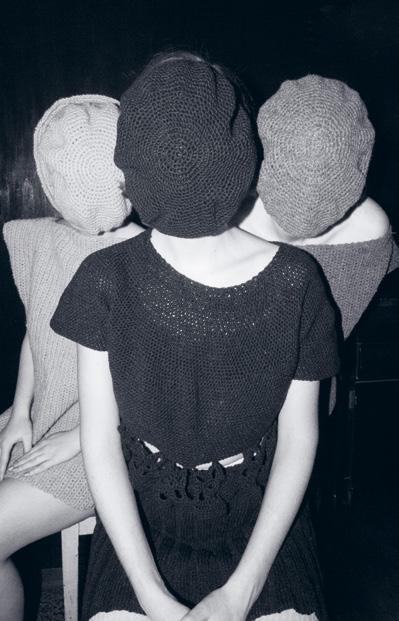
The cover image shows a work by Katalin Ladik (White Aria, 2025, Photo – Pat Mic).
Like the photographs on pages 16, 29, 45, 54, and 73, it is taken from the exhibition The Cynics Republic –Plac Defilad, Museum of Modern Art in Warsaw, May 10 – June 8, 2025.
See also the accompanying text on pages 52 and 53.
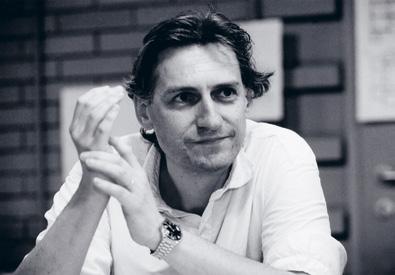
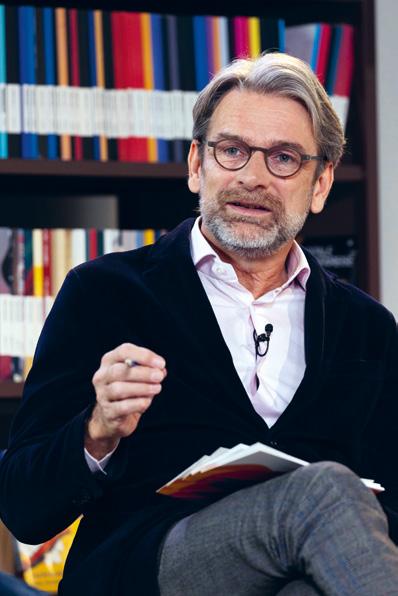
Boris Marte: »In many regards the ERSTE Foundation has become a true all-rounder.«
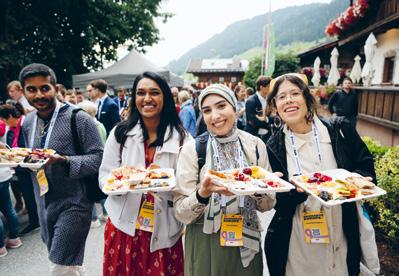
Recharging Europe in Alpbach
OFF-Biennale Budapest 2025: From Resilience to Resistance
Tomorrow's Entrepreneurs in the secondary school Kleine Sperlgasse 22
Reading Igor Zabel Today An Essay by Charles Esche 50
Europe Must Reinvent Itself – and It Can Four-Wings-Strategy 2026–2030 Looking Ahead to 2030: Why We Do What We Do ERSTE Foundation: Core Shareholder with Social Responsibility
In Conversation with Boris Marte: ERSTE Foundation as a True All-Rounder A Second Round of Success for the MARC Impact Programme Tomorrow’s Entrepreneurs Beyond Money – What Is Financial Wellbeing? Young Carers in Austria Human(e) Until the Very End
Europe’s Futures Initiative Starts in Vienna Time to Decide Europe Summit 2025 Next Visionaries Are Shaping the Future of Ukraine Bee Together Eight Tables for the Fourth Estate
Poems of Unrest – Off-Biennale Budapest 2025 Charles Esche: Reading Igor Zabel Today Kontakt Exhibition in Warsaw: »The Cynics Republic – Plac Defilad«
ERSTE Foundation Network: What Happened in 2025?
New Additions to the ERSTE Foundation Library
Financial Statement 2025
Notes to the Financial Statement 2025 Status Report 2025
Association Members of »DIE ERSTE österreichische Spar-Casse Privatstiftung«
Major changes lead to great uncertainty. Many people in Europe no longer believe that a bright future is possible. ERSTE Foundation and its partners are working to prove otherwise.
Europe Must Reinvent Itself – and It Can
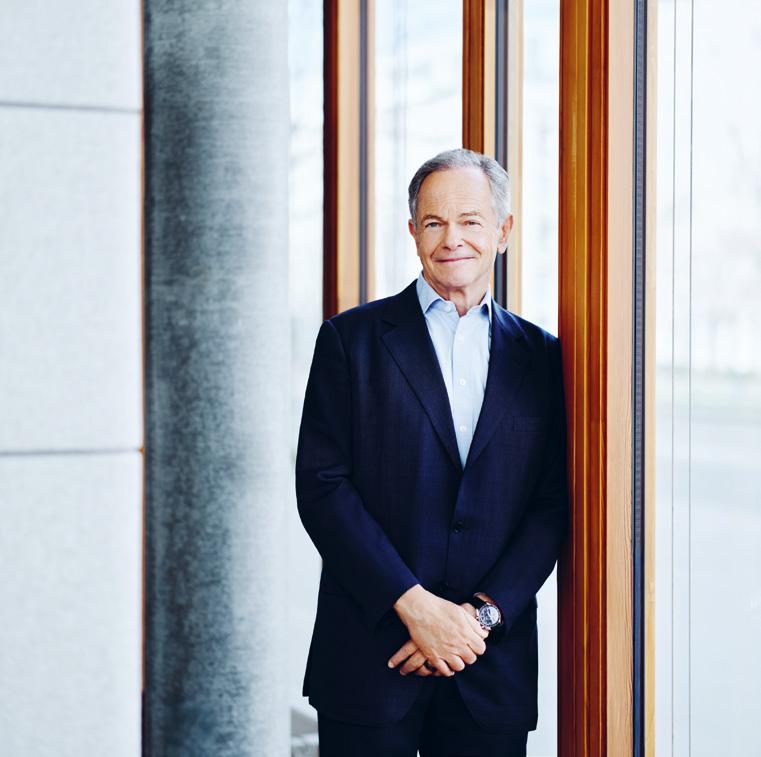
Photo – Valerie Maltseva
2025 turned the world upside down. The global order we have known since 1945 no longer exists. Since US President Donald Trump entered the White House, rulesbased international cooperation has been reduced to mere fragments. Europe, in particular, has come to realise that the transatlantic partnership has entered a new phase – and that Europe is now far more often left to fight for itself.
This applies to Ukraine’s defence against the Russian invasion, which, now in its fifth year, still shows no signs of ending. But it also applies to the rules of global trade, meant to ensure fair competition, as well as to cooperation on climate protection, health and development. At first, Europe was ill-prepared for all these changes. Too often, its political leaders backed down too quickly. A year later, however, there is cause for hope: in Brussels and many European capitals, politicians have realised that new rules apply in this new world – and that Europe need to shape them.
The uncertainty that such major changes, wars and conflicts have created is profound. Recent years have shown just how vulnerable economic and social stability has become. Many people view the future with concern, and far too many have lost faith in the ability of politicians to resolve these economic and social problems.
In such turbulent times, institutions that think long-term, take responsibility and clearly commit to democratic values play a particularly important role. ERSTE Foundation is one such institution.
Our story begins in 1819 with a simple yet revolutionary idea: prosperity and independence should not be the privilege of a select few but must be accessible to everyone. This conviction gave birth to the first inclusive financial institution in our region – the »Erste oesterreichische SparCasse«. Much has changed since then, but this profoundly democratic principle continues to guide ERSTE Foundation to this day.
Financial health, access to knowledge and the opportunity to actively participate in social and economic life are essential prerequisites for a stable and resilient society. And they are indispensable for people to believe in themselves, in their future and in the transformative power of democracy.
Today, more than ever, we can see just how important this task is. Europe’s social and economic centre is under increasing pressure, and many people feel that their opportunities are shrinking. However, as the centre weakens, the fringes grow stronger. This is dangerous for a liberal democracy. An open and stable society needs people who are confident that progress is possible. This is precisely where our work begins.
ERSTE Foundation is committed to supporting those at risk, as well as those at
Our history, spanning more than 200 years, has taught us that progress cannot be taken for granted. Progress happens when confidence, responsibility and courage come together. It is contingent on people’s belief that change is possible –and on institutions that are prepared to help shape that change with perseverance.
the heart of an increasingly fragile society. We support initiatives that promote the financial well-being of people of all ages, as well as initiatives that protect and strengthen democratic values. A vibrant civil society, arts and culture, independent journalism and social innovation are essential pillars of a resilient democracy –and only a democracy is capable of truly securing broad prosperity for all.
As a core shareholder of Erste Group, we furthermore provide its management with the support it needs to act independently and with a long-term perspective. We do this because we are convinced that a stable and responsible banking sector plays a crucial role in fostering public trust and ensuring the smooth functioning of the economy.
Our history, spanning more than 200 years, has taught us that progress cannot be taken for granted. Progress happens when confidence, responsibility and courage come together. It is contingent on people’s belief that change is possible –and on institutions that are prepared to help shape that change with perseverance.
The challenges we face will remain significant in the coming years. But the past year with Donald Trump has taught us Europeans a surprising, yet long overdue lesson: if we join forces, if we confidently prioritise long-term benefits over shortterm success, and if we remain openminded, curious and eager to try out new things, we will succeed in securing prosperity and freedom.
ERSTE Foundation will remain committed to this mission in 2026. We will direct our resources and expertise where they create social value, and we will continue to work toward empowering people – economically, socially and democratically. For we are convinced that a
society in which everyone has the opportunity to lead a self-determined and fulfilling life is not only more resilient but also more confident – and thus equipped to build a better future together.
On behalf of the supervisory board, I would like to thank all partners and employees of ERSTE Foundation and its subsidiaries for their commitment –especially Boris Marte. At the end of October 2025, the co-founder and long-time CEO of ERSTE Foundation stepped down from his role as CEO, but he will stay on as an adviser. Boris Marte has played an instrumental role in making ERSTE Foundation the institution it is today, laying the basis for its future.
Andreas Treichl Chairman of the Supervisory Board
One bee, four strategic wings
Wing 1
Financial and civic competence
We will be one of the key initiators of easily and widely accessible economic and financial education in Central, Eastern and South-Eastern Europe. We promote the strengthening of competencies for personal growth and active citizenship, as well as the ability to manage money life successfully. These are important prerequisites for an independent and successful life and for long-term financial health. We provide targeted support to impact-oriented organisations in the region as they develop more efficient, sustainable and scalable business models.
Wing 3
Strong democracies in a strong Europe
We support political innovation and defend democracy based on fundamental rights in Central, Eastern and SouthEastern Europe through value-oriented activities. In doing so, we draw on experience, expert networks, communities and cross-party platforms to strengthencivil society and to promote collaboration around solution-focused political reforms. Promoting democratic infrastructures, such as independent journalism and civic engagement, builds trust, social cohesion and a positive perspective for the future. Prosperity is most likely to be built in democracies because they protect ownership and rules more reliably.


Wing 2
Inclusive participation in working life and financial life
As a funding organisation and investor, we collaborate with a banking group in CEE to provide a comprehensive range of financing and innovative financial instruments for social impact-oriented organisations and committed individuals. Planning for long-term participation in working and financial life and making provisions for the future helps people practice financial self-care and maintain their well-being. We develop innovative solutions to overcome barriers in order to facilitate dignified participation in working life and financial life and provide support, particularly for vulnerable people.
Resilient and vibrant civil society
We strengthen the resilience of civil society organisations by providing them with skills, resources, structures and knowledge, and we team up with our partner network to encourage a broadbased and well-connected civil society infrastructure. We support and promote open societies and the arts through diverse social participation, space for free artistic expression and inclusive discourse to strengthen a crisis-proof, democracy
From financial literacy and social inclusion to Europe and democracy –the Foundation has identified four key areas in which it seeks to make an impact in the coming years.
Looking Ahead to 2030 –Why We Do What We Do
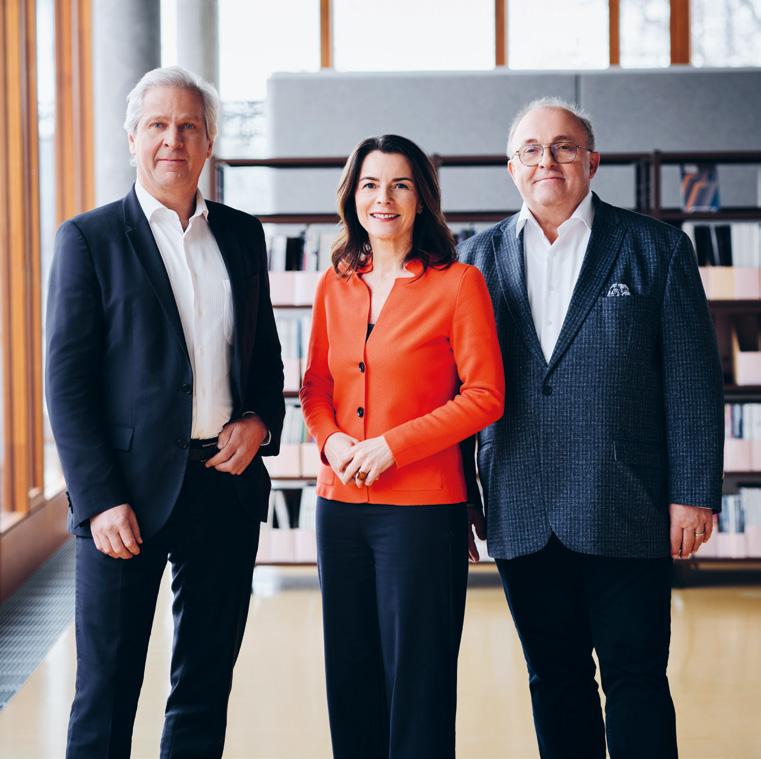
Martin Wohlmuth, Gudrun Egger, Wolfgang Schopf
Photo – Valerie Maltseva
The more uncertain the times, the stronger the desire for structure and direction. 2025 was indeed a year of reorientation and self-reflection for ERSTE Foundation. Building on our statement of purpose we have adopted a new strategy to ensure we can thrive in these changing times. The Four Wings Strategy (see pages 10 and 11) will ensure that the foundation remains well positioned in the years ahead, up to 2030.
In this foundational document, we have defined four areas of work for ERSTE Foundation, which our activities shall focus on:
1. Financial and civic competence
2. Inclusive participation in working and financial life
3. Strong democracies in a strong Europe
4. Resilient and vibrant civil society
Among the defining events of the year 2025 was the founding of the Europe’s Futures Initiative (EFI) in December. This network of around 50 carefully selected experts, academics and practitioners acts as a policy accelerator for Europe and aims to deliver current, relevant and feasible policy recommendations and measures. Francesco Rocchetti was appointed as founding director, and work on establishing the organisational structure of EFI began in Vienna at the start of the year.
The third edition of the Time to Decide conference was held in Vienna at the same time, and it attracted a great deal of attention from the public. Intellectuals such as Francis Fukuyama discussed burning geopolitical, economic and social issues before a packed Grand Hall on Erste Campus.
In times of uncertainty, nurturing talented individuals is the best investment in the future – and this is precisely where the Next Visionaries programme, initiated by ERSTE Foundation, comes in. After two successful cohorts – with a third to follow in summer 2026 – Next Visionaries has established itself as a key platform for supporting and developing values-driven, interdisciplinary leaders who are actively committed to Ukraine’s European future.
MARC, a programme that helps impact startups tackle social and environmental challenges while strengthening their financial sustainability, launched successfully in Austria, Hungary and Romania in 2024. It has already received EUR 3 million in funding for 13 projects from third parties and the ERSTE Group.
In Economic and Financial Education, we continued to place a strong focus on children, teenagers and young adults in the CEE region in 2025. The Financial Life Park (FLiP) expanded its offering for schools and provided practical knowledge on managing money. In Slovakia, the FinQ programme was further embedded within the school system and supported teachers in imparting financial literacy
to schoolchildren. Through the Foundation for Economic Literacy, we are promoting the sustainable integration of basic economic skills into the curriculum at 60 pilot schools in Austria.
The app for family carers, Alles Clara, made young carers one of its priorities in 2025. The goal was to increase the visibility of children and youth who have carer responsibilities while also offering them support and a network. The app also enabled people in the states of Burgenland, Lower Austria and Vorarlberg to use the app for free thanks to cooperation agreements with those states.
In Journalism and Media, a new event called Eight Tables for the Fourth Estate offered stakeholders in the Austrian media scene an opportunity to network and set out specific measures aimed at reforming media funding and preserving media diversity.
2025 saw another edition of the highly publicised OFF-Biennale in Budapest after previous editions in 2015, 2017 and 2021. The title was Poems of Unrest, and the events drew many international artists to the Hungarian capital once again. The Kyiv Biennial, which was held internationally as a cooperative effort due to the war, opened with a small but impressive exhibition at the Lentos Art Museum in Linz – and other locations stretching from Dnipro to Antwerp.
The activities celebrating the 20th anniversary of the Kontakt Collection continued in 2025 at the MSN – Museum of Modern Art in Warsaw. The exhibition architecture, designed by Pierre PalBlanc, marked the first major external show at the city’s new contemporary art museum.
The ERSTE Foundation bee took flight in 2025, buoyed by the momentum of all these projects under its four wings. It will undoubtedly continue to soar even higher in the years to come. And we look forward to it!
Wolfgang Schopf
CFO and Deputy CEO
Gudrun Egger
Member of the Board
Martin Wohlmuth
Member of the Board
ERSTE Foundation is a private savings bank foundation operating under the Austrian Savings Bank Act. In accordance with its statutes, the foundation must perform two tasks in parallel: serving the common good and holding a permanent stake in Erste Group Bank AG.
ERSTE Foundation: Core Shareholder with Social Responsibility
Erste Group increases dividend payment
In order to serve the common good, ERSTE Foundation strives to invest part of its dividend from its stake in Erste Group Bank AG (Erste Group) in philanthropic projects. Each year, the bank’s managing board submits the proposed dividend payment for approval at the general shareholders’ meeting.
As Erste Group reported a result for the period of over EUR 6.1 billion (+ 11 % compared to the previous year) in 2025, a dividend of EUR 3.00 per share was paid in May 2025, an increase of more than 11 % compared to the previous year. ERSTE Foundation used the dividend income to finance ongoing operations and ERSTE Foundation grants, and to cover the foundation’s remaining liabilities. In addition, ERSTE Foundation further increased its stake in Erste Group.
Increase of the stake in Erste Group
In accordance with the foundation statutes, ERSTE Foundation must have a permanent and qualified stake in Erste Group. The foundation increased its stake in Erste Group’s share capital by 0.08 percentage points to 12.35 % during the 2025 fiscal year by acquiring shares on the stock exchange and as a result of Erste Group repurchasing and cancelling shares, which reduced the bank’s share capital.
ERSTE Foundation forms a syndicate, together with the savings bank group consisting of Austrian savings banks, numerous savings bank foundations and share management savings banks as well as Vienna Insurance Group / Wiener Städtische Wechselseitiger Versicherungsverein— Vermögensverwaltung. Due to another round of the WeShare employee share programme at Erste Group in 2025 (and due to the above-mentioned share buyback), the syndicate’s stake increased by 0.27 percentage points to 26.36 % of the voting rights in Erste Group, giving it a blocking minority.
The contract that forms the basis for this syndicate was extended until 2032. The syndicate agreements entitle ERSTE Foundation to influence how contracting partners vote at Erste Group supervisory board elections. The savings bank group, which collectively holds a syndicate share of around 7.9 %, has the right to nominate two members of Erste Group Bank AG’s supervisory board.
In the past, ERSTE Foundation supported Erste Group in its regional and national investments and therefore repeatedly participated in Erste Group’s capital increases, consequently incurring liabilities. ERSTE Foundation’s debt at year-end 2025 stood at EUR 100 million. Sufficient provisions have been allocated from dividend income to pay back these liabilities by the end of 2027.
Erste Group share price
After advancing by more than 60 % in the previous year, the Erste Group share continued its uptrend in 2025 and ended the reporting period on a record gain of 72.5 %. On 30 December, the last trading day of the year, the Erste Group share closed at an all-time high of EUR 102.90. It had marked its low at EUR 54.95 on 9 April 2025. The key drivers of this extraordinary growth in share value were highly bullish market sentiment, the extremely positive performance of the entire European banking sector, as well as, once again, the strong results reported by Erste Group with strong volume growth, solid capitalisation, a better-than-expected net profit and the announced market entry in Poland. The acquisition of a 49 % controlling stake in Santander Bank Polska, announced in early May 2025, and thus access to one of the fastest-growing and most profitable banking markets in Europe was welcomed by investors and analysts, particularly as the transaction was fully funded from internal resources. By taking this step, Erste Group is not only strengthening its presence in Central and Eastern Europe but also improving its profitability profile on a sustainable basis. The transaction was closed on 9 January 2026. The bank was renamed Erste Bank Polska in the second quarter of 2026.
Shareholder structure as of 31 December 2025
Project implementations and grants 2025 186 implemented or supported projects
Funding for project partners EUR 12.6 m
* ERSTE Foundation controls 26.36 % of shares in terms of the voting rights at Erste Group Bank AG’s supervisory board elections (including 13.98 % from the shares of the savings banks, the private savings bank foundations, Wiener Städtische Wechselseitiger Versicherungsverein and Erste Employees Private Foundation) and directly holds 12.35 % of Erste Group Bank AG.
Performance of the Erste Group share and major indices (indexed)
Direct project expenses EUR 1.4 m
**Start-up financing and share aquisitions were provided to Erste Social FinanceHolding, Alles Clara, Open Future Lab, TwoNext GmbH and MFF GGMBH.
After more than ten years in total, Boris Marte stepped down as Chairman of the Board of ERSTE Foundation at the end of October 2025. He remains closely associated with the foundation as an advisor, contributing his extensive knowledge and many years of experience. This is not a farewell, but a personal transformation – and it comes at a time of great social change. It is time to talk to him about how the world is changing and, with it, the tasks of civil society.
»In
many regards the ERSTE Foundation has become a true all-rounder.«
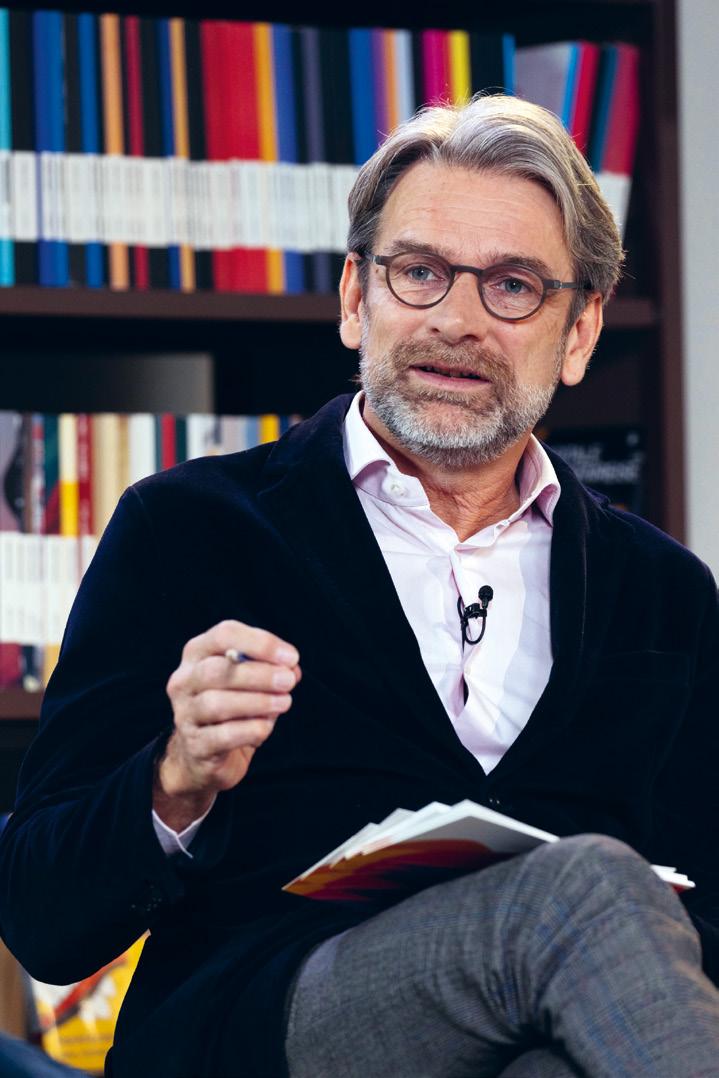
ERSTE Foundation ERSTE Foundation was founded in 2003, and you helped design it. The world has changed dramatically since then. What was the foundation’s mission at that time?
Boris Marte In 2003, we were an amplifier. There was verve and energy, and the whole world seemed to be moving in one direction. Fourteen years after the fall of the Iron Curtain, Europe was on the rise.The economy was growing, and democracy seemed like a good thing to everyone. We wanted to help reinforce this trajectory in a sustainable way.
ERSTE Foundation How did the foundation approach that task?
Boris Marte From the beginning, we felt that we wanted to give the economic engine a purpose that puts people first. We rediscovered Central and South-Eastern Europe for us. Wherever we went, we encountered new initiatives, young people, and an incredible amount of hope, commitment and modern spirit. We wanted to use that energy to bring people together and turn local phenomena into something European.
ERSTE Foundation Do you have an example of where you noticed that energy back then?
Boris Marte The wounds left by dictatorships, communism and war were still raw, but there was a palpable sense of hope that democracy could help heal them. As a foundation, we wanted to help root the reconciliation process – in the Balkans, for example – firmly in civil society. This is also where we met a very young man at the time, Gerald Knaus, who is a Europe’s Futures Fellow and with whom we still
Photo – eSel.at / Lorenz Seidler
collaborate today. We shot a television series about the Balkans with him. In Austria, many people had no idea of the spirit of optimism that existed there and how young people in the region were building a future in society for themselves.
ERSTE Foundation Central, Eastern and South-Eastern Europe had high expectations of the EU. Today, one gets the impression that they have been disappointed. What has happened?
Boris Marte To the people in the region, the EU was not primarily a peace project as it was in Western Europe, but it was a source of hope. In 1989 and the years that followed, many also learned that it not only entailed a free, open world but often also brought unbridled capitalism without the safety net of the welfare state. That is where the foundation came in.
We realised that we all had to be careful about how we built this Europe because ideas and expectations varied greatly. As a foundation, we invested a lot of work in developing a genuine image of Europe. We only partially succeeded in this goal.
ERSTE Foundation The general trend today is not towards a strong Europe or strong democracies. What does this mean for ERSTE Foundation?
Boris Marte The foundation needs to show what it stands for. The wind has changed, but our values and principles remain the same. We are still committed to people and the dignity of the individual, which can best be secured through democracy, human rights and the rule of law. As civil society, we must also ask ourselves what we have missed that has caused some people to stop believing in these values. I believe this has a lot to do with emotions.
ERSTE Foundation Do you mean that populist and authoritarian movements have become adept at tapping into emotions?
Boris Marte Civil society lost its ability to defend its values and convictions with the right emotions. Emotions have always appealed to us. The foundation has always embraced this force. We have succeeded in finding networks, partners, initiatives, institutions and NGOs we collaborate with to develop ideas and strategies. There was energy, emotion and a firm belief in putting local knowledge and understanding front and centre. This is how the curatorial work with the tranzit offices came about, for instance, always organised locally. This is also how the social banking initiatives were set up. We do not impose one system on everything. And today, we cannot save what we want to save from behind a desk.
ERSTE Foundation What do you need to do instead?
Boris Marte We need to go out, look more closely and join forces with lots of people to rediscover common ground and ideas. From there, we can start thinking in new ways again. Trust within society is eroding. We need to rebuild that trust. Only then will we rediscover a sense of common ground, connection and energy, and that could be an alternative to all the things that swamp us each day via our phones. That is the fundamental task of civil society.
ERSTE Foundation What is the foundation’s mission?
Boris Marte It must not stand still, but it must remain steadfast. I believe that to a certain extent we need to reinvent many things that are dear to our hearts rather than just fine-tune them, which is often the response of the rational world. That will not be enough. And we must defend what is important.
We are trying to do that with the Speech to Europe. The idea behind it is that once a year, on Europe Day, someone will raise their voice in front of Vienna’s Holocaust memorial and draw a red line. This far and no further. If we care about the dignity of the individual, red lines are crucial. Rethinking Europe will also be the task the Europe’s Futures Initiative which is established now in Vienna will be focussed on.
ERSTE Foundation The foundation works with many partners in a variety of sectors and contexts. How does it manage to do so?
Boris Marte Its particular strength lies in its ability to connect other civil society representatives who specialise in specific topics and tasks across national borders and languages. That is why art and culture are always so important to me. They are a language that everyone understands or is able to understand. They are one of the foundation’s talents for approaching solu tions in a different way. Another talent is bringing together the right people from different sectors. In many regards the ERSTE Foundation has become a true all-rounder.
At the very beginning, we met with NGOs, which was not always an immediate success. But when we started to bring in not only the management level but also counsellors and street workers, we learned that NGOs had to open cash registers in their counselling centres because many of the people who came to them did not have bank accounts. That was the birth of Zweite Sparkasse.
ERSTE Stiftung How did Kontakt, the foundation’s art collection, evolve?
Boris Marte While travelling through the region, we saw that the works of artists who were dissidents during the communist era were sometimes stored in refrigerators or under beds. Those were pieces of art history, and Europe was in danger of losing them because no one was interested in this heritage. So we started to secure this heritage, build a collection and document these works through Kontakt. I could name hundreds of other examples.
Emotions have always appealed to us. The foundation has always embraced this force. We have succeeded in finding networks, partners, initiatives, institutions and NGOs we collaborate with to develop ideas and strategies.
ERSTE Foundation These examples are always about respect, aren’t they?
Boris Marte Respect and trust. As a foundation, we have shown very often that we are with the people. I believe that today’s societies often lack this feeling. So we need to create new contexts that will enable this feeling and trust to flourish again. We have to keep working at this attitude. Doing so makes it a standard in every respect.
ERSTE Foundation Many people are overwhelmed by all the crises and the uncertainty that looms over everything. Some have given up. You are not one of them.
Boris Marte I believe there is a lot of good out there and that good things can happen. It is always the small friendships, the small groups, that can make a difference. It is never the grand gestures. Embrace your friendships, build your world from there. I tell my children the same thing: Be good to each other and find your way starting with your friendships. It is in the seemingly insignificant places that something good and new emerges. You just have to look and listen closely.
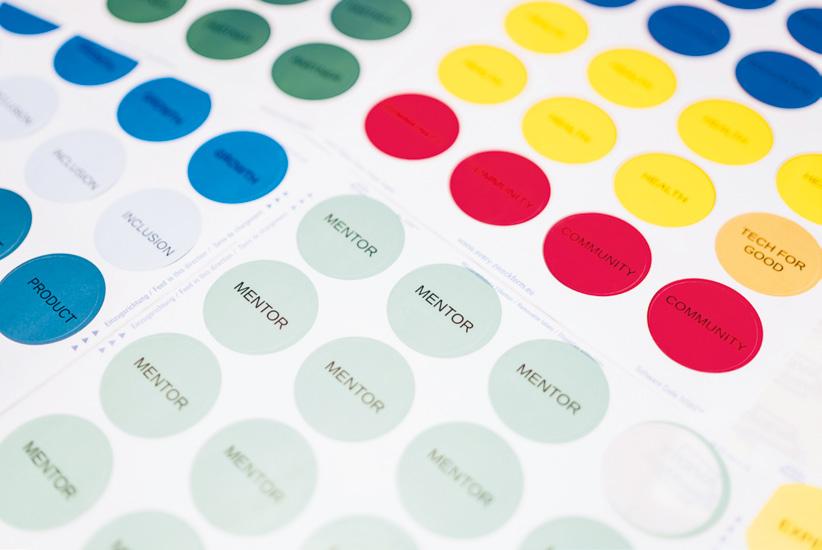
The Marc Impact Programme is now entering its second phase. Following the kick-off in Austria, Hungary and Romania, the programme has expanded to include the Czech Republic, Serbia and Croatia. Its local partners organise consultancy services tailored to start-ups and NGOs. Their aim is to help organisations tackle social and environmental challenges while also turning a profit.
A second round of success
»Did you know that sheep’s wool can make an excellent fertiliser?« asks Dominika Prekopová. She has just learnt this from Greenwool. The company uses leftover sheep’s wool from across the Czech Republic to make organic fertiliser. Pressed into mini pellets, it releases its nutrients slowly, over a period of months. The idea behind it: no waste, healthier soil –and no fossil fuels, a raw material commonly used in the manufacturing of conventional fertilisers.
»I was impressed by the huge variety of ideas that companies presented to us,« says Prekopová, co-founder of the Praguebased community platform »Startup Kitchen.« Since autumn 2025, she has been dealing with an increasing number of so-called social enterprises – that is, companies that not only aim to make a profit but also seek to solve an environmental or social problem. Startup Kitchen is the Marc Impact Programme’s Czech partner. Marc’s initial run in Hungary, Romania and Austria was so successful that the Czech Republic, Croatia and Serbia joined the programme in the second year.
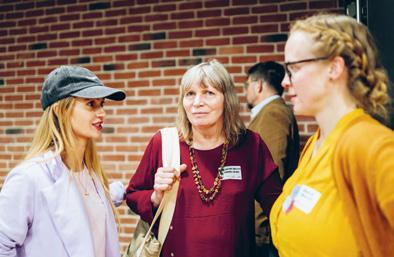
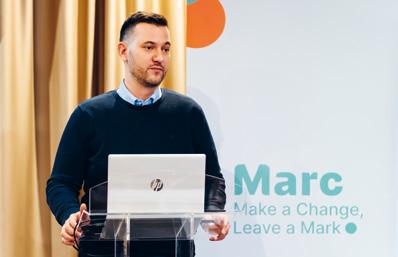
The basic principle is always the same: over a period of several months, a selected group of social enterprises and NGOs receives a combination of group-based and bespoke consulting, coordinated by national partners such as Startup Kitchen. Depending on the initial situation, these support services aim to align the companies’ products or services more closely with what customers actually want, to get marketing and sales off the ground, or to improve the organisation’s efficiency and business plan. Sometimes all of this happens at once. Makinig these companies, in turn, more attractive to investors and significantly improvings their access to quality funding. »It is Marc’s individual mentoring programme, in particular, that sets it apart from other programmes,« says Prekopová.
Programme kick-off in Czechia. Photo – Marc
Participants sharing their experiences at the initial meeting. Photo – Marc
Andrej Balanč is responsible for MARC at the Association for Affirmation Culture (ASK) in Serbia. Photo – Marc
Entrepreneurs and their mentors meet not once but regularly to ensure that good ideas turn into good business models.
In the Czech Republic, Marc selected 15 companies and organisations from more than 60 applications. While the programme will conclude in spring 2026 in all participating countries, collaboration will continue. »Even though the programmes in each country are managed separately, Marc also aims to foster an international community that seeks to make an impact and supports one another in doing so,« says Andrej Balanč. He is the founder and Executive Director of the Association for Affirmation of Culture, or ASK, and is responsible for Marc in Serbia. Founded in 2015, this NGO today offers a variety of programmes, ranging from large-scale educational projects and consultancy services to events targeted primarily at young people and aimed at social improvement.
Entrepreneurship plays a key role in this; for the past six years, ASK’s Entrepreneur Academy has been providing training to young entrepreneurs still in the process of developing their businesses. Since autumn 2025, ASK has also been Marc’s local implementation partner, thereby taking things a step further, as Marc focuses on organisations that already have a business model but wish to optimise it and scale up their businesses. Of the initial cohort,, twelve have qualified to receive individually tailored coaching. »With p to eight individual coaching sessions with experts and selected consultantscombined with a personalised development plan, Marc can provide participants with targeted support and genuinely help them move forward,« says Andrej Balanč.
In Serbia, as in the other five countries where Marc is being implemented, NGOs such as Caritas and the Kolping Group are involved in the programme as well as start-ups. The range of business ideas is enormous. Beehold, for instance, is a young enterprise that aims to revolutionise the traditional work of beekeepers: sensors attached to the hives measure, among other things, temperature and activity inside the hive in real time, meaning beekeepers can monitor the data on their mobile phones – and react more quickly if they detect any irregularities. The aim is to reduce bee mortality, increase pollination and, consequently, bring down the extinction rate of these species. Companies that need to meet their ESG targets could support this, as Beehold provides them with automated data on how it helps the bees.
»Needless to say, we’re now connecting Serbia’s Beehold with the people from Beeco, who are taking part in Marc’s Hungarian programme and are also dedicated to preserving bee colonies,« says Andrej Balanč. There it is again, Marc’s community concept: where likeminded entrepreneurs come together, collaboration takes precedence over competition. And the more evidence you can provide of economically successful companies having a positive social and environmental impact, the more likely it is that other creative minds will venture to put their social ideas into practice in a business setting.
Helena Matuša, too, knows that successful start-ups inspire people with ideas, encouraging them to give it a go themselves. She is the director of the »Poduzetnički centar,« the Croatian Entrepreneur Centre, which Marc is now
implementing in Croatia for the first time. Around 40 organisations applied, and 12 are now going through the full programme. The Entrepreneur Centre, an initiative of a regional Croatian government, has drawn up a development plan with each of them; progress is discussed during weekly calls, along with any current issues. One such organization is Serenity Health, which positions itself as a secure online platform for mental health. The basic idea is simple: many people still find it difficult to seek professional help for mental health issues. Often, they don’t take this step until it’s too late. By providing online access to licensed psychologists and keeping prices intentionally low, Serenity Health aims to lower this barrier to care. Data security, of course, plays a very important role. But Serenity Health advocates for mental health beyond the digital space. It collaborates with communities, businesses and regional initiatives to make access to psychological help as easy as possible.
»Marc helps NGOs think entrepreneurially, while assisting start-ups in clearly defining their social impact. That is also one of Marc’s real strengths,« says Matuša. She is convinced that this does not hinder economic success. On the contrary: »The better people understand why a product exists and how it works, the more likely they are to love it.«
Marc is a growth programme tailored to social and green impact enterprises. It is a joint project of Erste Social Finance, ERSTE Foundation, Ifua Nonprofit, Simpact, Impact Hub Vienna, Synerb, Startup Kitchen, Croatian Entrepreneur Center and ASK.
Results to date
6 countries
70 high-impact organisations have been supported to date
4.6 million euros have been raised so far by Marc alumni companies
At Kleine Sperlgasse Secondary School in Vienna, economic education is part of the regular curriculum. We join a lesson with the pupils of class 3A, some of whom express an interest in starting their own business one day.
Tomorrow’s Entrepreneurs
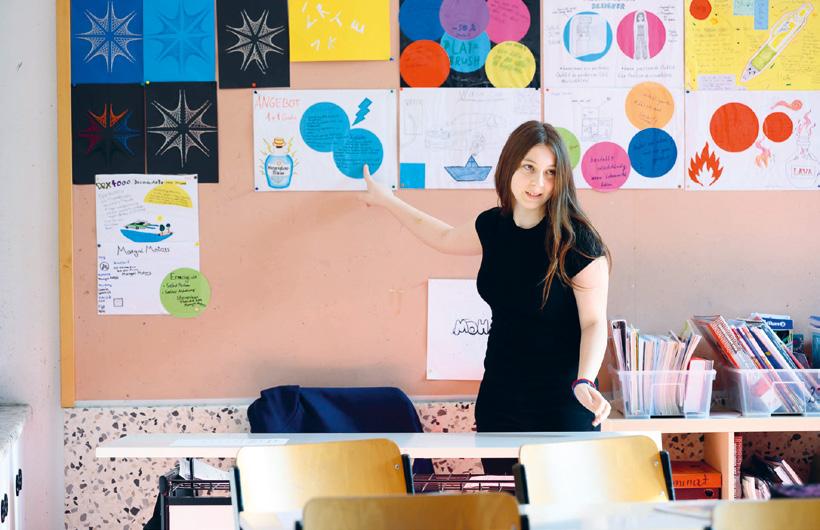
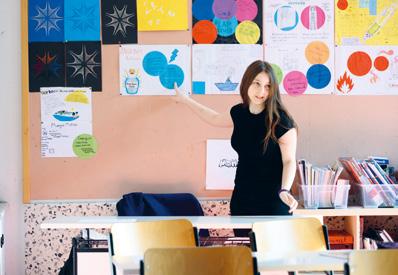
It is ten to nine in the morning; the bell rings, and the pupils of class 3A start their second lesson of the day. While a few kids fiddle with their pens, others take out folders and exercise books from their rucksacks. »Economic Education« is on their timetable on this mild spring day. Just like her pupils, Heidelinde Auer is getting ready to resume a topic she and her class have been working on for the past few months: entrepreneurship. »Who would like to share their idea for a business of their own with the class?« asks the teacher. Pupils in all four rows raise their hands. »I’d develop a drinks vending machine and then sell it,« says a boy in the window row, who, like many of his classmates, is wearing a football shirt. Others can picture themselves setting up their own fruit and vegetable shop, getting into the car trade or starting a transport company.
After each suggestion, Heidelinde Auer, a woman in her early 50s, with short hair and glasses, kindly asks them to elaborate, trying to get to the bottom of what lies behind her pupils’ ideas. It’s a warm-up round; the teacher encourages the class to get talking, then it’s back to the subject at hand. Having one hour of economic education per week, this Year 3 class is an exception in the Austrian school system, where basic economic principles are generally taught as part of the geography curriculum.
A student in class 3a presents her business idea.
Photo – eSel.at / Joanna Pianka

Kleine Sperlgasse Seconday School in Vienna’s second district adopted an economic focus three years ago. It is also one of 60 compulsory and academic secondary schools in Austria that participate in the »School Pilot for Economic Education«. Within this programme, the Stiftung für Wirtschaftsbildung—backed by a broad civil society alliance including ERSTE Foundation – supports schools with learning materials, training and financial assistance, to equip pupils with the basic knowledge they need to understand connections in the economy: down-toearth, relevant, interesting. At Kleine Sperlgasse Seconday School, economics is now taught from Year 1 onwards, first integrated, than alternating with geography.
»The pupils love this subject because they quickly realise that they can take away a lot of practical knowledge that will benefit them in their daily lives and that they can also share with their families,« says Auer, while the pupils gather in so-called »buzz groups« to answer the teacher’s questions in groups of four. At the start of the school year, for instance, they discussed at length the responsibilities of the state and why companies and individuals must pay taxes, says Auer. She also regularly invites figures from the business community to talk about their everyday professional lives. »This opens many pupils’ eyes to career opportunities they would otherwise often never have heard of,« says the teacher.
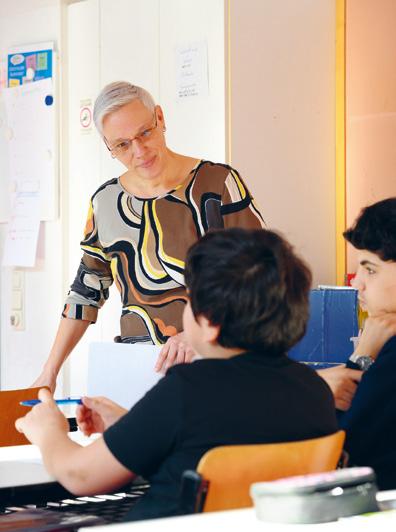

The pupils have finished their assignments. »What responsibilities does an entrepreneur have?« asks Auer, addressing the class, which is still divided into groups of four. »They have to cover production costs, pay their staff and pay taxes,« says a girl in black jeans and a black hoodie. »They have to treat all employees equally and make sure they don’t get hurt,« adds another. »If they don’t make enough money, they can’t pay for all that, so they need to be smart and creative and make good products,« says another kid. For the teacher, that’s a good cue. A whole row of colourful posters is displayed at the back of the classroom. A few weeks ago, class 3A organised a pitch competition where the pupils were asked to invent products that the world still needs. A girl with long brown hair gets up, walks over to her poster, takes a moment to compose herself, and then, with the confidence of an influencer, presents a cream that not only makes wrinkles and spots disappear but also gives the skin a healthy glow and a natural blush. Next is a boy who has invented a house-cleaning robot that can even climb stairs. Entry-level price: 1,000 euros—peanuts for anyone building their own home. The class applauds. You can tell that the pupils in class 3A have done this before; they present their ideas with confidence. Time and again, they participate in extra-curricular projects with their teacher. There is something truly inspiring about Heidelinde Auer; by constantly taking a fresh approach to her subject, she is able to instil enthusiasm for it in her pupils. »How does an entrepreneur become successful?« she asks the class as the lesson draws to a close. Many pupils raise their hands; a boy in the back row is called on and says: »When they enjoy what they do as much as a hobby.« A statement many entrepreneurs are likely to agree with.
Lots to think about in the Murmelgruppe.
Photo – eSel.at / Joanna Pianka
The students in class 3a are paying close attention.
Photo – eSel.at / Joanna Pianka
Heidelinde Auer teaches geography and economic education.
Photo – eSel.at / Joanna Pianka
How do people define their financial well-being? How do they make financial decisions? How do they experience shifts in their levels of financial well-being? Three years ago, ERSTE Foundation, Erste Group and the University of Tartu decided to answer exactly these questions and to explore financial well-being through a human lens.
Beyond Money – What Is Financial Wellbeing?
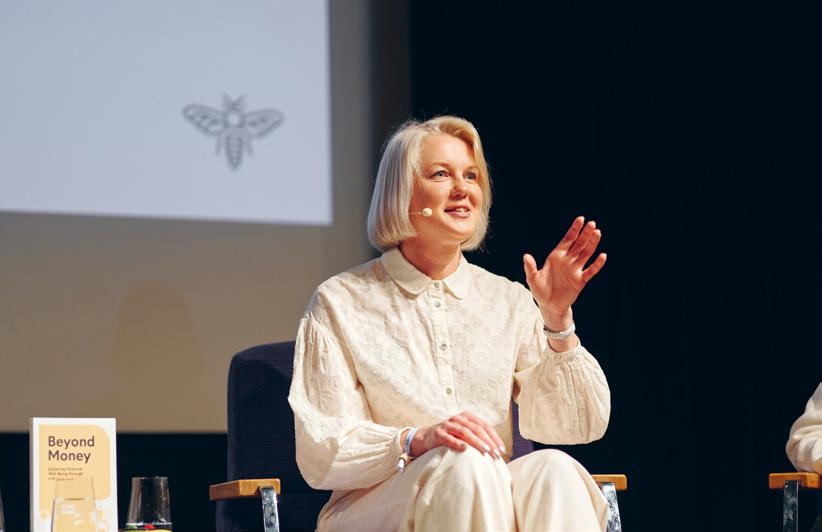
We spoke with Project Lead, Leonore Riitsalu, who has been devoting her research to this topic for years. She also lectures on behavioural insights in policymaking at the University of Tartu, Estonia. As a founder of Nügila and a consultant, she advises policymakers and financial sector institutions on applying behavioural insights to improve well-being in Europe. She has worked as a consultant for the OECD and as an advisory board member for the Saudi Arabian Central Bank. Her research is published in high-level academic journals such as Nature Human Behaviour, Journal of International Marketing and Journal of Economic Psychology
Leonore Riitsalu explaining her study.
Photo – Valerie Maltseva
3 Questions To Leonore Riitsalu
ERSTE Foundation What is financial well-being and why did you partner up with us to do research on it?
Leonore Riitsalu At first glance, it appears that the question »what is financial well-being?« is rather silly. Isn’t it obvious? It is about having a lot of assets or the lack of debt and financial problems. But that is not all there is to it. In my first academic article on financial well-being, published in 2019, I found that subjective financial knowledge – the confidence in the sufficiency of one’s financial knowledge – is a far more significant predictor than actual knowledge of financial affairs. What we see after interviewing 630 people in seven European countries is that the common thread for all is that we need to have security, freedom, and pleasure – the three dimensions of financial well-being. The proportions and balances of these differ for people; there is no single score or diagnosis that is best for all.
ERSTE Foundation How can people and society benefit from the findings of your study?
Leonore Riitsalu We created a practical tool that is useful for people and builds on our research findings. It is a digital tool that prompts the user to reflect on their financial well-being through a threedimensional lens. The user is invited to think about aspects of their lives and choices that go far beyond finances from the perspective of security, freedom, and pleasure.
The outcome is not a verdict or score but an overview of the things the user considered having positive, neutral, or negative effect on the financial well-being elements. Additionally, we do not leave the user with just that information. The tool provides tips on what the user may want to consider changing and gives them a chance to set future goals.
ERSTE Foundation As we look at the rapidly changing world around us, what should we not lose sight of amidst this turmoil?
Leonore Riitsalu We should keep in mind that humans are humans, no matter how educated or wealthy they are. Life can throw all sorts of shocks at us, in our personal lives, by changes in economic or political circumstances, pandemics, etc. Therefore, assuming that financial wellbeing interventions are needed mainly for those who are underprivileged, have lower education, or are in a vulnerable state is misleading.
All of us can benefit from thinking about security, freedom, and pleasure in our lives, and consider whether we wish to change something, and in a perfect world, be able to find personalised support when needed.
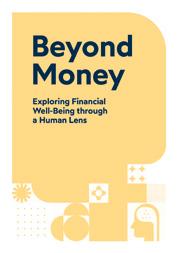
Do you want to dive deeper into the research? Then read more in the report »Beyond Money –Exploring Financial Well-Being through a Human Lens«.

Students volunteered with Alles Clara to develop support services for children and young people with caregiving responsibilities.
»I had no idea what a young carer is«
»If someone had told me a few months ago that I would be working with an interdisciplinary team of scholars, social workers, designers and young people to develop ideas for young carers, I would have had trouble believing it. And yet here I am – right in the middle of the innovation project ›Young Carers in Austria‹, which is being implemented in collaboration with Alles Clara, the University of Vienna and many dedicated partners.« Julia Hochlenert (19 years old) shares details of the project and her experiences as an intern at Alles Clara gGmbH in the summer of 2025
Who are young carers?
Young carers are children and young people who regularly care for a sick family member, such as a chronically ill mother, a father in need of care, or a sibling with a disability. They are thereby confronted with the physical or mental illness or addiction of close relatives. During my internship, I learned that this includes over 40,000 young people in Austria. In statistical terms, that is one child in every school class. Many of them do not realise that they are taking on more responsibility than might be healthy at their age. That is exactly where the »Young Carers in Austria« project comes in. We want to find new ways to reach young carers with suitable services and raise awareness on the issue among the public. Even I had never heard the term »young carer« before.
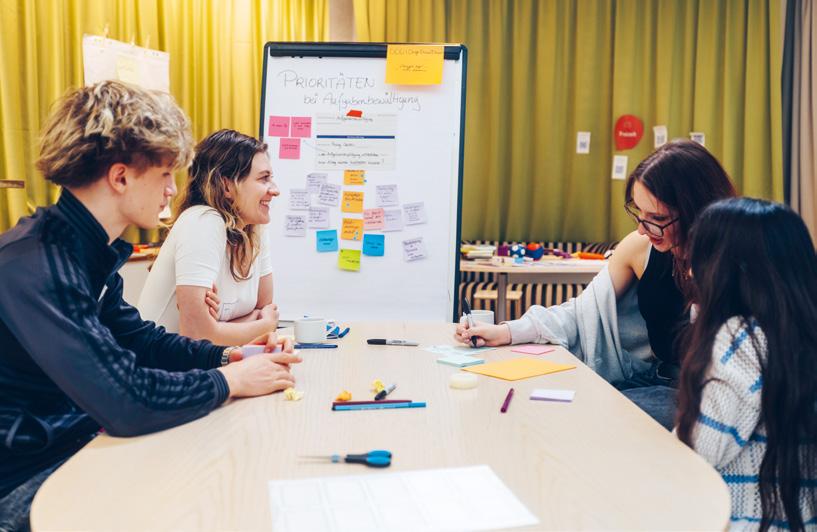
They are not alone: young carers at their workshop.
Photo – Ian Ehm.
Three cities, three workshops: Here’s what happened
In spring 2025, three innovation workshops took place in Vienna, Graz and Innsbruck. The workshops were based on the design thinking process, which I had previously only come across in theory. It was awesome to see this approach play out in practice for the first time and to be involved in such a socially relevant topic right from the start. All of a sudden, I was right in the middle of things: observing, asking questions, forming clusters, developing ideas, creating prototypes, and gathering feedback. We worked with personas, analysed real everyday situations, and openly discussed which solutions could be helpful – and which ones not. Step by step, concrete ideas and concepts emerged from our understanding of a variety of problems.
I was particularly impressed by how we all worked together as equals, and that everyone’s perspectives—whether from scholars, social education workers, or pupils—was considered equally valuable. This open atmosphere enabled creative and viable ideas to flourish.
From design thinking to project ideas: What happened after the workshops? The workshops resulted in numerous approaches, which I had the opportunity to develop further with seven other students during our internships in the summer. Following intensive brainstorming and feedback sessions and a lot of teamwork, four central project ideas emerged:
• #ichregeldas campaign: A public campaign showing how strong and responsible young carers are. For example, a park bench with a sign that reads: »Elena could be sitting here. But she is at home taking care of her sick mom.« QR codes link to further information.
• The toolbox: A case filled with emotion cards, games and books. They are designed to help children and young people identify and better understand their feelings. The toolbox is intended to be used in schools, clinics, or even private settings.
• Young Mochi App: An app where young carers can exchange ideas, read articles, or find workshops in their area. The app promotes openness around mental health and strengthens the community.
• Jumpin Support: An app with an SOS button, advice, and support services by caregivers to provide young carers with support and security. They can request help when they need a break or feel overwhelmed, for example.
What are your key takeaways from the internship?
I am proud to have been part of this project. I hope that there will be even more awareness and that young people with caregiving responsibilities will receive the support they need.
What happens next?
Promoting exchange and networking, as well as raising society-wide awareness of the issue were, ultimately, the underlying aims in all the ideas we developed. Three concepts focused on increasing cooperation between existing services and organisations. Three workshops were held to work on the »Young Carers Community Austria«, defining its orientation and activities and designing communications aimed at stakeholders and those most affected. Following the kick-off in January 2026, the project—in close coordination with the funding bodies, the Ministry of Social Affairs and the FFG—will focus on building trust and developing processes and joint activities among the members.
Goals of Young Carers Community Austria
• Raise awareness and visibility of the lived experience of young carers
• Increase visibility of services and support options for young carers
• Promote networking, exchange, and share learnings between organisations and services
• Leverage synergies and implement joint measures to support young carers
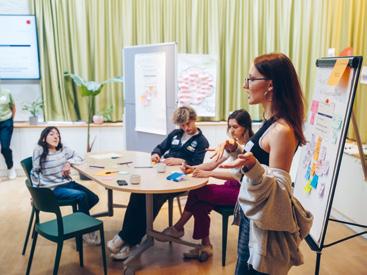
Finding solutions with design thinking.
Photo – Ian Ehm
Interested organisations and individuals can become part of the Young Carers Community Austria and register their interest here:

Project phase February – December 2025
27
9
55 hours of workshops

>190 workshop participants ideas collected
479 contributors to the sounding board accompanying the project workshops

41 test interviews
2.604 Post-it notes collected
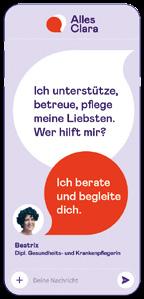
Alles Clara, the app for family carers, has been downloaded over 8,000 times and has more than 2,100 registered users in Austria. Relatives are supported by 28 qualified online counsellors from 8 Austrian federal states, who are employed by organisations such as Caritas, Diakonie, Hilfswerk, Red Cross, ArbeiterSamariterbund, Volkshilfe, connexia and Soziale Dienste Burgenland GmbH. Alles Clara won the 2025 Innovation in Politics Award in the »Public Health & Ageing Society« category, as well as the World Summit Award Austria in the »Health & Well-Being« category and was shortlisted for the 2026 International World Summit Awards. In addition, a Young Carers project was successfully launched as an Austrian-wide participatory project. Alles Clara is supported by the Austrian Ministry of Social Affairs, the State Government of Lower Austria, the Austrian funding agency FFG and ERSTE Foundation, as well as the Vorarlberg Social Fund and Soziale Dienste Burgenland GmbH.


Fördergeber
How do we, as a society, deal with death, dependency, vulnerability and mortality? In recent years, discussions about the end of life have gained a great deal of attention, from changes in legislation to individual, highly publicised personal decisions—such as that of Austrian journalist Niki Glattauer. The broad social debate points to the importance people attach to self-determination and being accompanied and cared for in the last stage of their lives.
Human(e) Until the Very End: Our Cooperation with HOSPIZ ÖSTERREICH
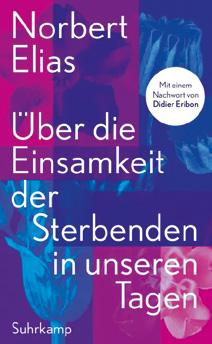
»Death is a problem of the living,« wrote French sociologist Norbert Elias back in 1982—a challenge that affects not only individuals and how they grapple with mortality, but above all society’s approach to it. For Elias, the feeling of loneliness at the end of life is not a personal failure but a consequence of social structures that encourage us to exclude death from our everyday lives.
Hospice work purposely counters these structures with a human presence. In doing so, it fosters meaningful connection where otherwise withdrawal and silence would threaten to take hold. Our long-standing commitment to hospice and palliative care contributes to supporting a society that remains humane and takes responsibility until the end of life. Through a partnership project with the Austrian Savings Banks Association and Erste Bank, we also support the work and objectives of HOSPIZ ÖSTERREICH. They build personal relationships and connections where they are needed the most.
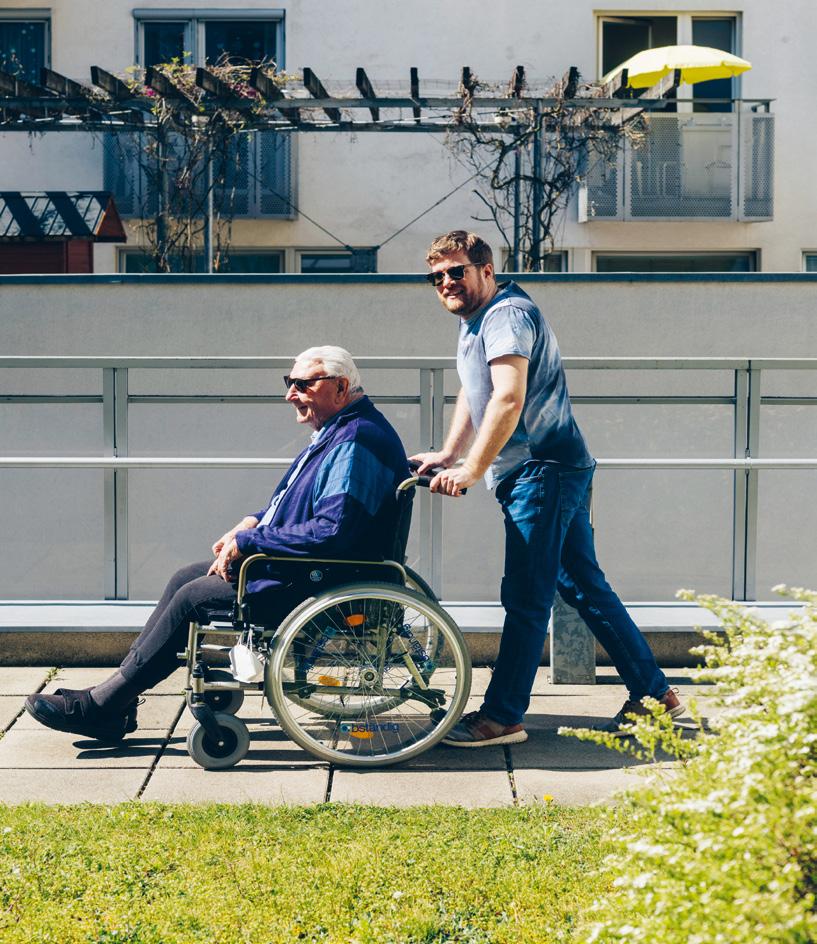
Avoiding loneliness at the end of life.
Photo – Ian Ehm

On a side note: Norbert Elias’ text The Loneliness of the Dying is still worth reading today. You can find it, along with other resources on hospice and palliative care, in the ERSTE Foundation Library.
HOSPIZ ÖSTERREICH is the umbrella organisation for over 400 hospice and palliative care facilities throughout Austria. It is committed to enhancing the quality of life of terminally ill or dying people up until the very end. Multi-professional care aims to ensure that people can die with dignity and autonomy and as pain free as possible. Hospice and palliative care services must be accessible and affordable to everyone. Another important goal is to support qualification, training and continuing education for full-time staff and volunteers.
In 2025, HOSPIZ ÖSTERREICH produced a video series entitled »Legal Knowledge for the End of Life«. Starting point was a central question for those affected: Who will make decisions for me when I am no longer able to make them myself? There are complex medical, legal and ethical issues surrounding end-of-life decisions, and the Hospice and Palliative Care Funds Act and the Death Decree Act have raised numerous new questions.
The twelve videos provide clear, practical information on complex legal issues aimed at professionals and interested laypeople. They cover the basic principles and terminology—do you know the difference between a health care proxy and a living will? What does »assisted suicide« mean? —and discuss case studies.
We were keen to support the making of these openly accessible videos in cooperation with the Savings Banks Association, because education is key in allowing people to make well-informed decisions about their own futures.
You can find the videos, an overview of the HOPIZ ÖSTERREICH’s activities, as well as useful information for those affected via www.hospiz.at

Presence, not withdrawal or silence.
Photo – Ian Ehm

Transition, rupture, tectonic shifts, a time between times. No matter what word we choose, it is undeniable: the old order is melting away with little certainty as to what will replace it.
Europe’s Futures Initiative: Launching a new policy accelerator in Vienna
Adding to uncertainty, geopolitical risks are intensifying, emergent technologies keep developing at breakneck speed, and economic and technological dependencies are being weaponized. Amid the volatility, European societies are facing a loss of faith in and direct attacks against democratic institutions and the liberal democratic way of life.
As a new era and order is taking shape, the need for informed debate, strategic thinking, and concrete policy advice, could not be more acute. Driven by the desire to shift from problem analysis to crafting solutions, the Europe’s Futures Initiative (EFI) emerged out of the deep conviction that a confident and resilient Europe is one of action, not reaction, of hope, not fear.
Founded by ERSTE Foundation, EFI was created as a pan-European accelerator for innovation in policy, governance, and civic engagement. EFI is designed to deliver timely, relevant, and actionable policy advice. It addresses complex challenges ranging from geopolitical instability to democratic backsliding by combining intellectual rigour with practical solutions. A defining feature of EFI is its emphasis on inclusivity and collaboration: it brings together changemakers from across Europe—north, south, east and west—to co-create strategies rooted in shared democratic values. This intersection of cultures is also mirrored in the initiative’s headquarter location of Vienna. EFI draws on the city’s long-standing role as a European crossroads, a place where Europe’s past and future continue to engage in dialogue.
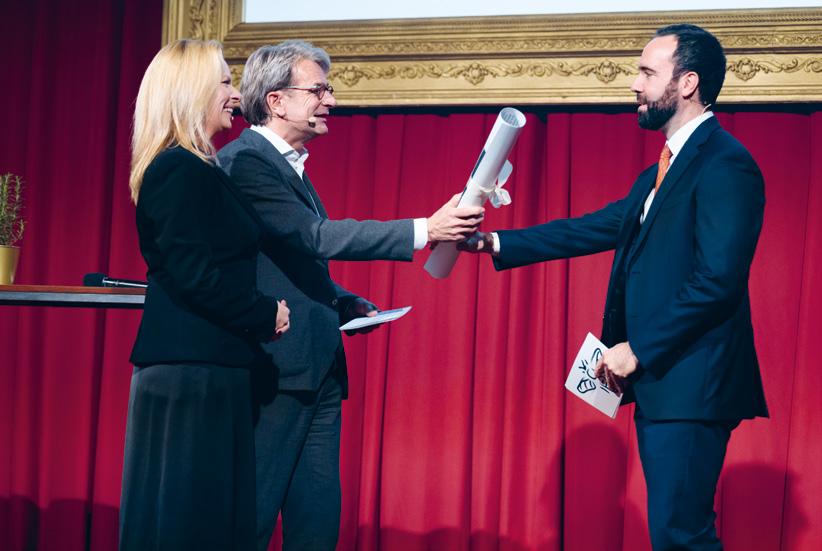
Boris Marte and Hedvig Morvai present Francesco Rocchetti with EFI’s founding charter.
Photo – eSel.at / Joanna Pianka

EFI’s activities can be grouped into three main areas: policy design, coalition building and public communication. It seeks to transform ideas into strategies that can be implemented, tested and scaled. Thematically, EFI engages with carefully selected topics, concentrating on areas where Europe faces long-term structural challenges and where strategic debate can lead to tangible progress. The initial thematic pillars are democracy, demography, emerging technologies, and Europe’s changing global and regional environment.
What sets EFI apart, is its community of members, the Europe’s Futures Fellows. Committed to inclusive, bottom-up governance, EFI’s members actively shape its strategic direction. The initiative builds on the Europe’s Futures Fellowship, launched in 2018 by ERSTE Foundation and the Institute for Human Sciences (IWM). Since then, the fellowship has brought together a network of policy experts, academics and practitioners committed to democratic values and European cooperation.
EFI’s leadership structure reflects its pan-European ambition and close connection to policymakers. Alexander Schallenberg, former Austrian Chancellor and Foreign Minister, serves as President of EFI. The board also includes Hedvig Morvai, Executive Director Europe and Democracy at ERSTE Stiftung, and Ivan Vejvoda, Fellow at the Austrian Institute for International Affairs (oiip) in Vienna. Francesco Rocchetti, formerly Secretary General of the Italian think-tank
Founding Charter Recognising Europe’s rich history and the responsibilities it


... a network of policy experts, academics and practitioners committed to democratic values and European cooperation.
ISPI, was appointed as EFI’s Director to lead the development of the initiative, its partnerships and its programme.
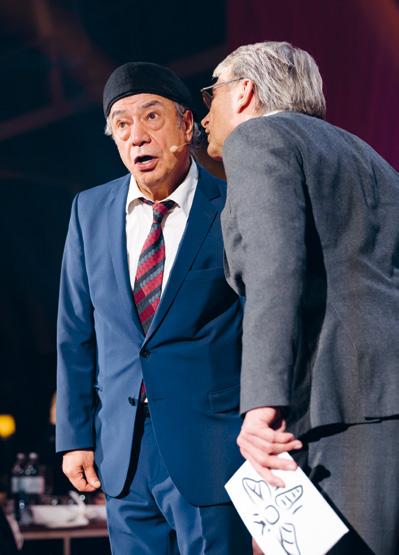
Gathering Vienna’s intelligentsia, a wide range of partners, fellows, policymakers, civil society actors, academics and media representatives on the evening of 2 December 2025, ERSTE Foundation hosted the official launch of Europe’s Futures Initiative in Vienna. Beyond marking the formal start of EFI, the energy and atmosphere of the evening reflected the new organisation’s ethos and intent: focused on community, creativity, and steadfast commitment to the future of Europe.
... even using pantomime if necessary.
Photo – eSel.at / Joanna Pianka
The initiative aims to break new ground, ...
It’s time for European leaders to make bold decisions in the face of profound global change. This was the clear message framing the Time to Decide Europe Summit 2025, held on 2 December 2025 at the Erste Campus. And what better way to support politicians in making these conceptual leaps than to introduce them to some of today’s greatest economic and political thinkers?
Time to Decide Europe Summit 2025
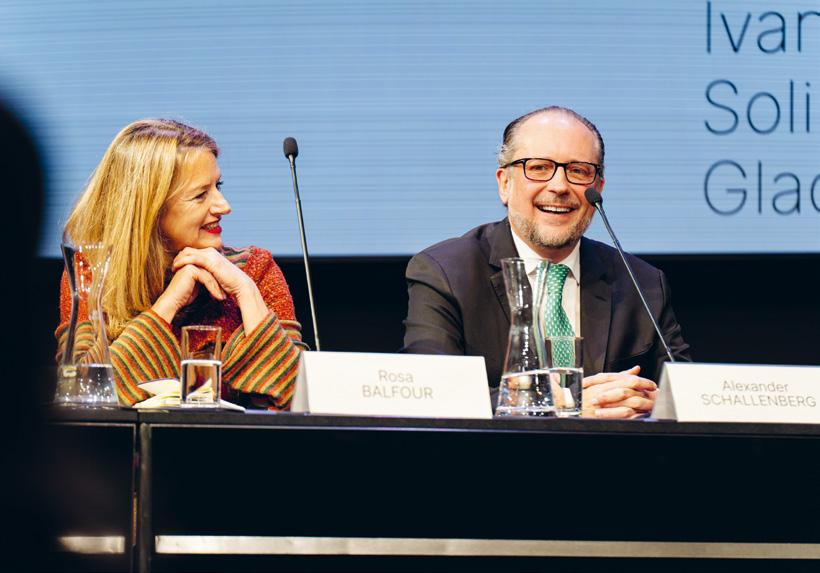
The format of the Time to Decide conference is unique: active politicians or business leaders moderate panel discussions—not the other way around. Pictured: Rosa Balfour from Carnegie Foundation and former Federal Chancellor and Foreign Minister Alexander Schallenberg, now President of the Europe's Futures Initiative.
Photo – eSel.at / Robert Puteanu
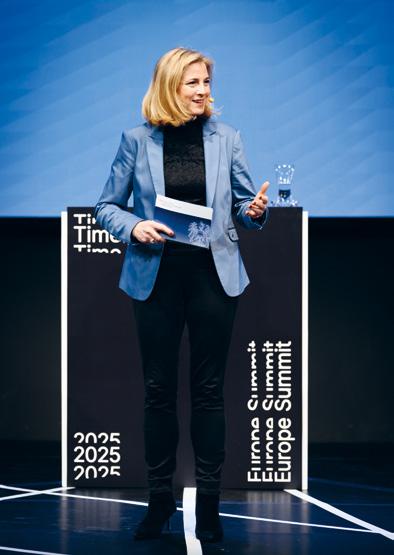
Foreign Minister Beate Meinl-Reisinger spoke out in favor of an independent European security policy.
Photo – eSel.at / Joanna Pianka
»If Europe wants to remain a global actor not a museum, we need unity, speed and strength«. Beate Meinl-Reisinger,
Austrian Minister for European and International Affairs
Normally in the hot seat themselves, former Deputy Prime Minister of Croatia Martina Dalić, Mayor of Warsaw Rafał Trzaskowski and Prime Minster of Albania Edi Rama respectively moderated discussions on European competitiveness, the transatlantic partnership and challenges to small states. Judy Dempsey, Senior Fellow at Carnegie Europe and Europe’s Futures Fellow, oversaw the day’s events and chaired their concluding session.
Austrian Minister for European and International Affairs, Beate Meinl-Reisinger, identified deregulation, unity and defence as key issues in her opening address. »Our rivals will not stand still,« said Minister Meinl-Reisinger. »If Europe wants to remain a global actor not a museum«, she continued, »we need unity, speed and strength«.
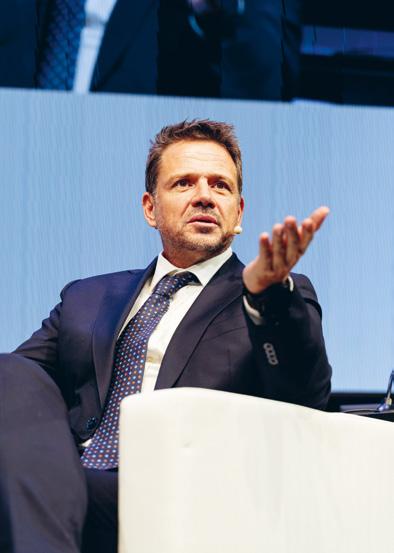
Warsaw's Mayor Rafal Trzaskowski.
Photo – eSel.at / Robert Puteanu
Generating capital and global impact Panellists agreed with the ERSTE Foundation’s Supervisory Board Chairman Andreas Treichl’s calls for progress within the EU project. In particular in the realms of a European capital market, transparent competition and deregulation. Many expressed their disappointment in the EU-US trade deal brokered in July this year. In the first session, economist and former Deputy Prime Minister of Bulgaria Atanas Pekanov called it »embarrassing for Europe«. Karel Lannoo, CEO of the Centre for European Policy Studies, wants »a confident and competitive Europe« instead. And Tomáš Sedláček, Director of the Václav Havel Library, called for narratives that we could believe in that would inspire such change. Director of Carnegie Balfour, Rosa Balfour, also sees the detrimental impact of »cultivating a small garden«, calling for the need to address perceptions of Europe’s business potential elsewhere.
It’s »all about scale«, said James C. O’Brien, former US Assistant Secretary of State for European and Eurasian Affairs. Marie-Helene Ametsreiter General Partner of Speedinvest advised unlocking pension funds to raise business capital. »It takes just one hour to open a business in the UAE,« said Ebtesam Al-Ketbi, the President of Emirates Policy Center, illustrating the persistence of European red tape.
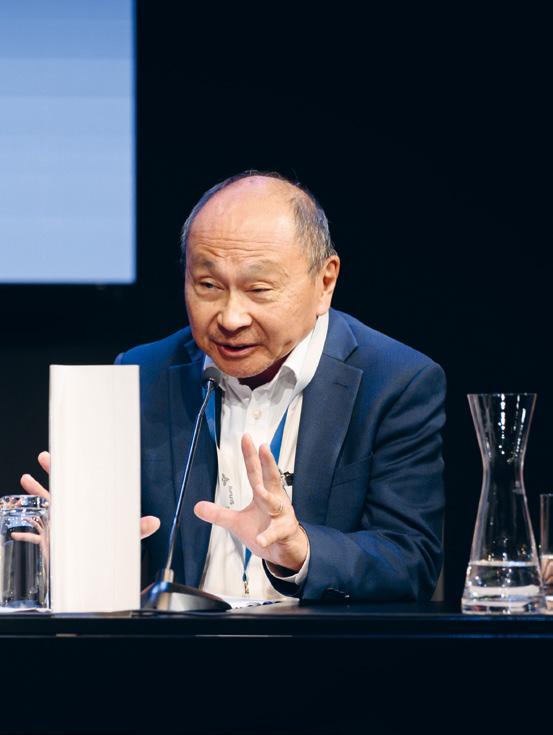
Transatlantic shifts in identity and defence
The second session asked whether Trump’s administration is a symptom or the cause of the Republican retrenchment negatively affecting Europe. Nathalie Tocci, Director of the Istituto Affari Internazionali, who considers US Conservative Nationalism’s revival »structural, not temporary«, questioned whether Europe was facing an »American betrayal« in its »imperial collusion with Russia and possibly China too«. Francis Fukuyama, Senior Fellow at Stanford University, called on European leaders to take the opportunity to stand up to Trump, as many Republicans are now doing, speculating that »we’ve now hit peak Trump« calling him a »lame duck president«.
When Gladden Pappin, President of the Hungarian Institute of International Affairs, professed that Trump doesn’t exclude »civilisational allies«, IWM Permanent Fellow Ivan Krastev provocatively asked, »which civilisation?«, proposing that Europe offers a quality of life to challenge toxic positivity. Veronica Anghel from the European University Institute also coun tered that » National Conservatism is not the solution but part of the problem.» Lea Ypi, Professor of Political Theory at LSE, meanwhile, reminded the room that Europe also has its fair share of hegemonic leaders like Italy’s Prime Minister, Giorgia Meloni.
»National Conservatism is not the solution but part of the problem«. Veronica Anghel, European University Institute
Talk of European rearmament sparked divergent opinion. While Fukuyama believes that »Europe will be taken more seriously when it is militarily more powerful,« Ypi, commenting on defence and rearmament’s marginalisation of the European Green Deal, suggested that »a real EU army, where states could pull together, would reduce military spending and have more money for education and infrastructure«—a piece of potential advice for amongst others former Chancellor of Austria Alexander Schallenberg, who later warned that »neutrality does not ensure security«.
Francis Fukuyama traveled all the way from Stanford to the Time to Decide conference in Vienna. Photo – eSel.at / Joanna Pianka
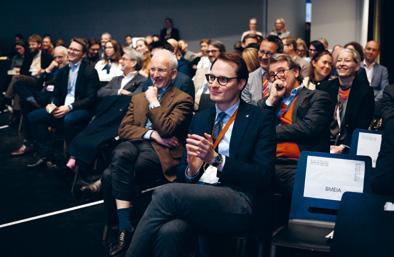
A fully-booked Grand Hall on the Erste Campus during the conference, with an audience that was no less international than the panelists. Photo – eSel.at / Joanna Pianka
»To meet the incredible complexity of challenges ahead Europe must collaborate.« Misha Glenny,
Rector of the Institute
for
Human Sciences
2 December 2025 Grand Hall ERSTE Campus
Ebtesam Al-Ketbi
Marie-Helene Ametsreiter
Veronica Anghel
Rosa Balfour
Martina Dalić
Judy Dempsey
Nikola Dimitrov
Francis Fukuyama
Sigrid Kaag
Ivan Krastev
Karel Lannoo
James C. O’Brien
Gladden Pappin
Atanas Pekanov
Edi Rama
Alexander Schallenberg
Tomáš Sedláček
Nathalie Tocci
Andreas Treichl
Rafał Trzaskowski
Lea Ypi

Alliances, resilience and leadership
In a lively discussion about the role of smaller countries in achieving European unity, the third session addressed issues of representation and accountability. As »multilateral norms unravel,« said Nathalie Tocci, we’re all going to do badly.« Former Deputy Prime Minister of Northern Macedonia Nikola Dimitrov saw a counter measure in smaller countries assuming more responsibility, identifying the importance of good leaders. Soli Özel, Professor of International Relations and Political Science, Kadir Has University, who recognises that some countries »manage their vulnerability better than others«, suggested that networks could be a solution to this precarity.
As Misha Glenny, Rector of the Institute for Human Sciences, said in closing: »Alarm bells should be ringing in Europe« and »to meet the incredible complexity of challenges ahead Europe must collaborate.«
Poster for Time to Decide, Atelier Anna Liska
In times of uncertainty, the most powerful infrastructure is talent. Next Visionaries is a platform for young Ukrainians who are actively imagining and already shaping the future of their country beyond the war. The programme supports young leaders by creating space for experimentation, dialogue and real responsibility, ensuring that the future of Ukraine is shaped by capable, value-driven change makers.
NEXT VISIONARIES 2024
Shaping the Future of Ukraine
Initiated by ERSTE Foundation in 2024 and implemented by Internews Ukraine, Next Visionaries responds to the strategic need to strengthen Ukraine’s human capital amid the EU accession process and post-war recovery. The eight-month academic programme focuses on European integration, leadership, and innovation for young Ukrainians.
»At its core, Next Visionaries is about people, about those who refuse to wait passively for the future to unfold and instead take responsibility for shaping it today«. – Vladislava Pidhorodetska
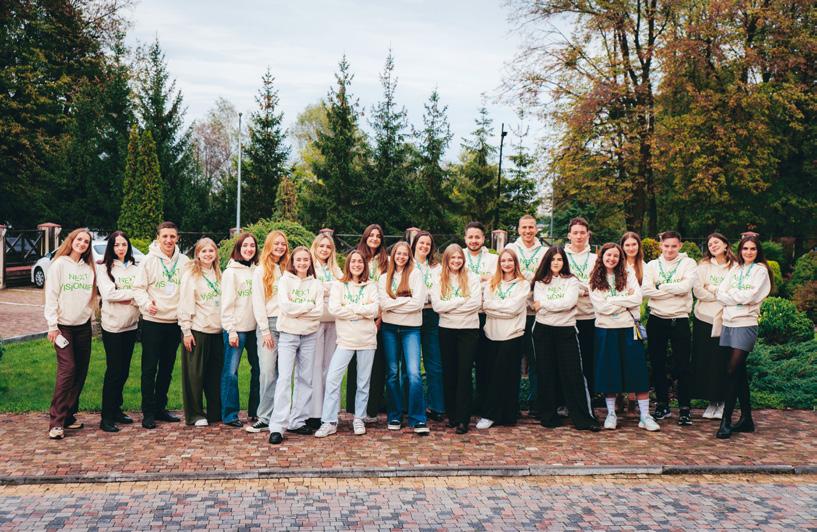
Next Visionaries provides participants with direct exposure to European and international institutions, a deeper understanding of European integration and multilateral diplomacy, enhanced leadership and intercultural communication skills, as well as practical insight into innovation-driven solutions relevant to Ukraine’s development, and strengthened motivation to contribute to Ukraine’s future as part of the European community.
The programme combines academic depth with applied learning and is delivered through a blended format that includes online learning with regular sessions led by leading Ukrainian and international experts, three major offline events (an opening intensive in Ivano-Frankivsk, Innovation Days in Kyiv, and a study visit to Vienna), and project-based learning. This unique programme design equips participants to develop initiatives addressing concrete challenges related to European integration and Ukraine’s development.
Participants are from diverse academic backgrounds and at an early stage of their professional careers, while already
Next Visionaries opening event, Ivano-Frankivsk, Ukraine, 3 – 5 October, 2024
Photo – Andrii Sydoruk
demonstrating strong engagement with Ukraine’s development priorities. Their experience spans government institutions, civil society organisations, private-sector companies, and the healthcare sector, contributing to a highly interdisciplinary learning environment.
A highlight is the study visit to Vienna, designed to provide participants with direct exposure to European and international institutions and decision-making environments. The programme was complemented by a cultural component, fostering informal exchange and reflection. The study visit concluded at the ERSTE Campus, where participants presented their final project concepts, followed by a certificate ceremony and closing networking session.
ERSTE Foundation’s continued support reflects a long-term commitment to investing in Ukraine’s human capital. After two successful cohorts, and a third one planned for summer 2026, Next Visionaries is consolidating its role as a strategic platform for developing values-driven, interdisciplinary leaders equipped to shape Ukraine’s European future.
Next Visionaries in their own words
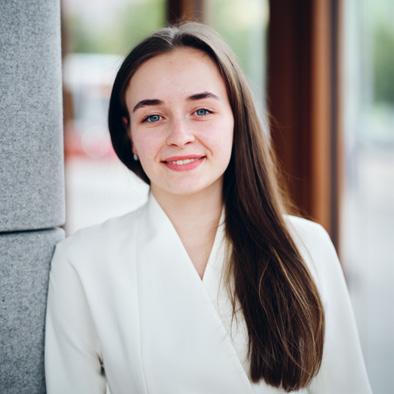
Vladislava Pidhorodetska
»For me, Next Visionaries became a space where diversity evolved into a strategic advantage. It brought together professionals from public administration, business, culture, and civil society, fostering an environment in which interdisciplinary perspectives challenged conventional thinking and encouraged innovative approaches to change. Through this experience, I came to understand in practice that sustainable transformation is only possible when sectors collaborate rather than operate in isolation«.
»… I became acutely aware of the level of responsibility already placed on our generation. Next Visionaries helped me embrace this responsibility with clarity and ambition: to think in terms of national and European horizons and build a proper network. The programme strengthened my belief in thinking at scale, while staying grounded in real societal needs«. – Olha Sydii

Nataliia Pidmurniak
»Most importantly, the program treated us not as future leaders, but as actors shaping change today. It reinforced the understanding that actions taken now already influence future policy, and enabled practical cooperation with international and Austrian partners to support Ukraine’s medical sector and its young professionals.«

Olha Sydii
»NextVisionaries ultimately helped me articulate a powerful formula for growth: knowledge, motivation, and a clear idea matter in vision building because you are willing to take on the leadership responsibility… has shaped both my professional path and my decision to pursue PhD research, as well as my broader commitment to strengthening Ukraine’s democratic and human capital capacity.«
In times of profound transformation across Europe, the European Forum Alpbach remains a vital space to reflect and recharge. In 2025, the forum celebrated its 80th anniversary.
Be e Together
Recharging Europe in Alpbach
We believe that the challenges of our time and our societies require us to join forces and shape the future together. Last year, we once again played a central role at the European Forum Alpbach –a unique setting for discussion and expanding our horizons – to put these ambitions into practice.
Together with our partners and our network, we once again created a space in Alpbach for people to engage in open dialogue and work towards a strong and democratic Europe: in the village square and in the church, through music, shared moments and genuine connection, as well as in the Labs and sessions... All in keeping with the EFA’s theme »Recharge Europe«.
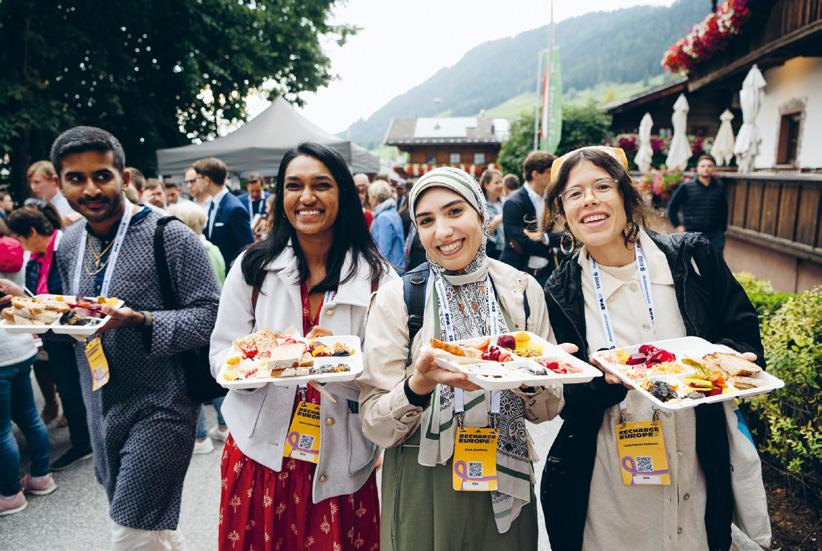
Our Labs
— Democrac y Strikes Back: Understanding and Countering Authoritarian Plays
The Lab provided a space to reflect, exchange ideas and reinforce strategies for democratic resilience. The focus lay on getting to the bottom of transnational authoritarian strategies and jointly developing bold, practical responses in the form of a »Democracy Playbook«.
— Beyond the Reform Era: The Future of Pensions in Central and Eastern Europe
Policymakers, economic experts and institutional leaders from the region analysed the evolution of pension systems in Central and Eastern European countries since the 1990s and discussed ways to improve their financial sustainability. Several working groups formed in Alpbach continue to drive reforms in their respective countries.
Sessions with and supported by ERSTE Foundation:
Pump it! Protest as the Heartbeat of Democrac y
Citizens play a crucial role in fighting against authoritarian threats. What lessons can we learn from the protest movements in Georgia and Serbia, and what conclusions can we draw from them for the future of democracy in the region and beyond?
Ukraine’s Civil Societ y : Driving Resilience and Recover y
Ukraine’s civil society has been a cornerstone of resilience throughout the war and is instrumental in ensuring that reconstruction is inclusive and transparent. How can this strength be sustained in the long term?
Nothing brings people together like a shared meal: hungry scholarship holders in Alpbach.
Photo – EFA Luiza Puiu
How New Business Models Help Journalism to Survive
We explored new, sustainable business models for independent journalism and ways for various funders to support newsrooms in this journey. Experts discussed the challenges, success factors and next steps in strengthening publicvalue media in Europe.
Closing: Europe in the World Days
The closing session of the Europe in the World Days focused on Europe’s future paths in an era of geo-economic disruptions, trade wars and shifting alliances. How can Europe forge new partnerships and secure its role in a world of intensifying economic competition?
The Role of Housing in Building Resilient Democracies
Housing is a basic human need and a recognised human right. Experts discussed how rising housing costs affect social inequality, reduce democratic participation and fuel extremism.
Europ e’s Geop olitical Dilemma
In a fragmented security environment, Europe faces the challenge of balancing internal reform and external stabilisation. What reforms and actions are needed to strengthen Europe’s strategic role in the future and reinforce the EU’s position in securing peace and stability across the continent? Organised in cooperation with the European Council on Foreign Relations (ECFR)
Befriending Our Future Selves: From Imagination to Action
What factors shape our future selves? A workshop designed to view financial wellbeing as something shared and to come up with ideas that support a healthier, more connected financial future.
The Demographic Bomb: How Can We Make Healthcare and Nursing Fit for the Future?
The number of people in need of care is increasing every year. Where do we need to start in order to alleviate the shortage of skilled labour, ensure high-quality care and provide better support to family caregivers?
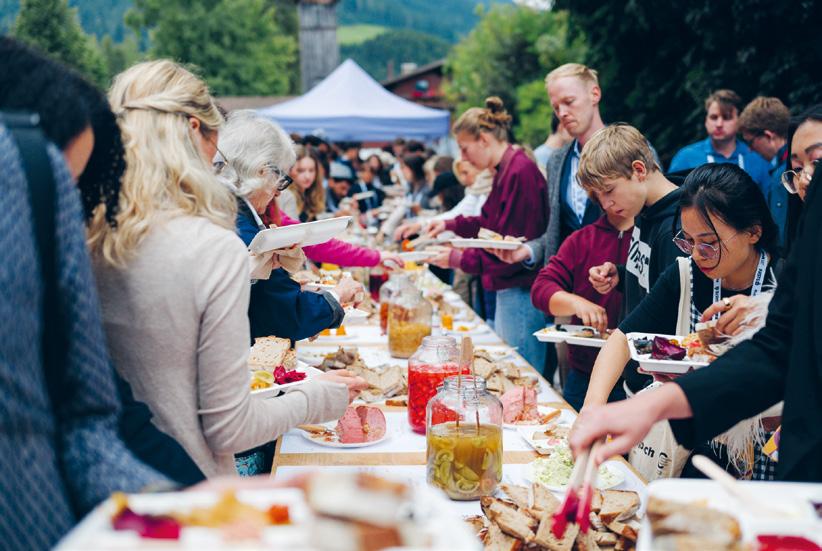
The Forum and the people of Alpbach: »Bread and Butter« brought the entire village community together. Photo – EFA
Elisabeth
Mandl
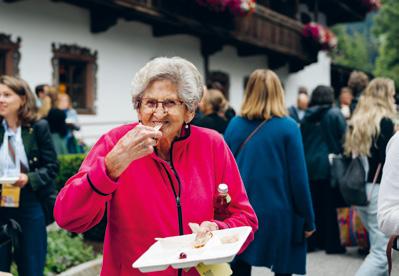
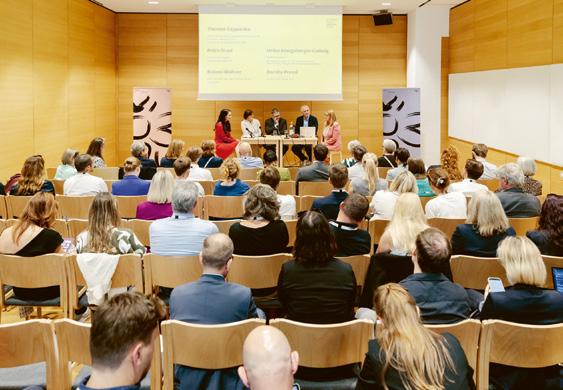
Marko Risovic
Be(e) Together – an open invitation from the ERSTE Foundation: residents of Alpbach, young people from Europe and around the world, and leaders from politics, business, civil society, culture, and academia. Photo –EFA
What do our colleagues appreciate most about the European Forum Alpbach? They share their thoughts in this short video:

Elisabeth Mandl
Plenty of food for thought in the ERSTE Foundations's seminars. Photo – EFA
Over the course of two days, more than 60 stakeholders developed an action plan to reform media funding and safeguard media diversity in Austria.
Eight Tables for the Fourth Estate
Envisioning a vibrant and diverse future for media and journalism
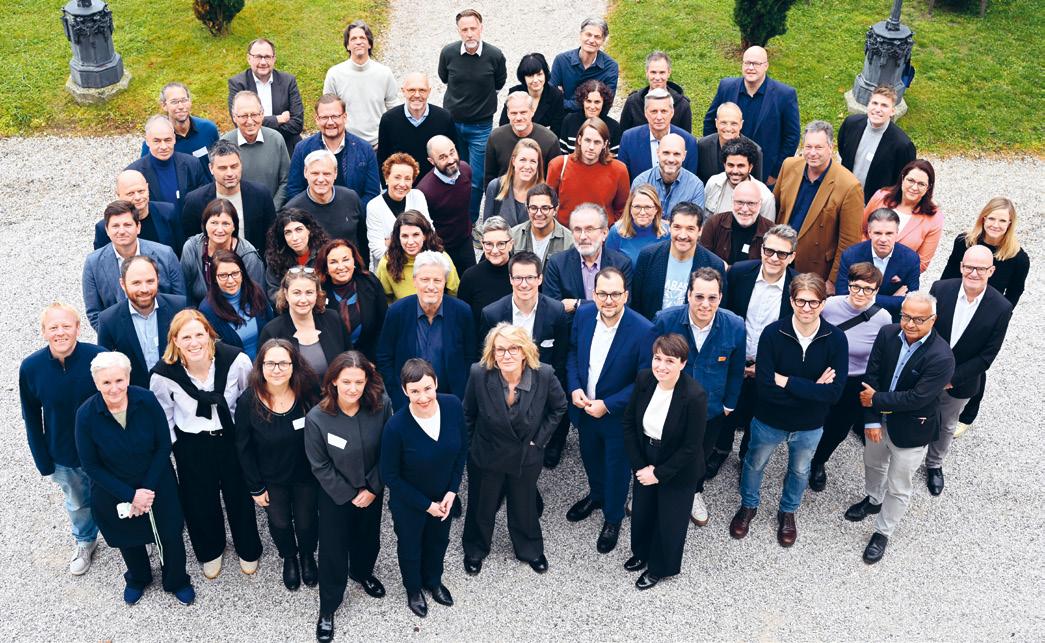
Not just any group photo: A wide variety of stakeholders accepted the invitation to discuss the future of media in Austria. Photo – Regine Hedrich / Acht Tische für die vierte Gewalt
The event was the first of its kind. In mid-November 66 representatives from the media ecosystem gathered for an inter disciplinary conference in Hernstein (Lower Austria) to discuss specific proposals for enhancing media diversity and safeguarding media freedom in Austria.
Co-initiators Gabriela Bacher (Ein Versprechen für die Republik ) and Sebastian Loudon (DATUM Foundation for Journalism and Democracy) were pleased with the strong turnout at the event: »With this experiment, we’ve succeeded for the first time in bringing everyone together – from industry associations and political representatives to media startups and civil society—to work out proposals collaboratively and constructively.«
The recommendations primarily focused on how to enhance or restructure government funding to best ensure a free media landscape and independent journalism. A representative opinion poll conducted ahead of the event showed that a majority of the population agreeing that the state should provide financial support to safeguard journalistic diversity.
Clear recommendations for action: public media funding, advertising, big tech
The participants all concurred that existing funding programmes should be standardised and awarded by an independent, non-governmental jury based on objective, measurable criteria. Emphasis should also be placed on innovation, resilience and sustainability, as well as on emerging media channels. Transparent adherence to journalistic and publishing standards based on an open set of criteria should, as is customary in other countries, be the basic prerequisite for receiving state support.
The federal government should reduce its spending on advertising to the average of the European Union, it was argued, with the saved funds, in turn, being used to raise media subsidies. It was further recommended that the commitment to a pluralistic media landscape, as well as the existence of the Austrian Broadcasting Corporation ORF and its secure funding and programming standards, should be explicitly included in the Federal Constitutional Law. The Freedom of Information Act should also be enforced consistently.
Expanding the »European Public Open Space« instead of big tech
Concerning big tech platforms, the conference participants advocated effective regulation at the European level, with a particular focus on the protection of minors, copyright, content responsibility, tax fairness and transparency. As a potential sanction they proposed access to advertising revenue from tech platforms. Furthermore, they recommended stepping up efforts to develop European alternatives to big tech services—such as the expansion of a European Public Open Space (EPOS). This should be promoted through close collaboration with public broadcasters (EBU), publishers and private electronic media providers. They also underlined the importance of media literacy and specifically recommended that »Media and Democracy« be introduced in schools as a cross-curricular competency.
Eight Tables for the Fourth Estate
In November 2025, eight representatives each from media management, publishing houses and editorial boards, journalism, industry institutions, academia, politics, civil society, and the legal sector gathered at eight large tables at Hernstein Castle, south of Vienna, to discuss the future of media in Austria. The result: ten joint proposals for policymakers and the media industry on how to safeguard media diversity in the future.
Initiated by Ein Versprechen für die Republik (»A Promise for the Republic«, Gabriela Bacher) and the DATUM Foundation for Journalism and Democracy (Sebastian Loudon) and organised by the P&B Agency for Communication, the closed conference was supported by ERSTE Foundation, RD Foundation Vienna, the Federation of Austrian Industries, Anton Schneider, the Vienna Chamber of Commerce and Industry, and #aufstehn.
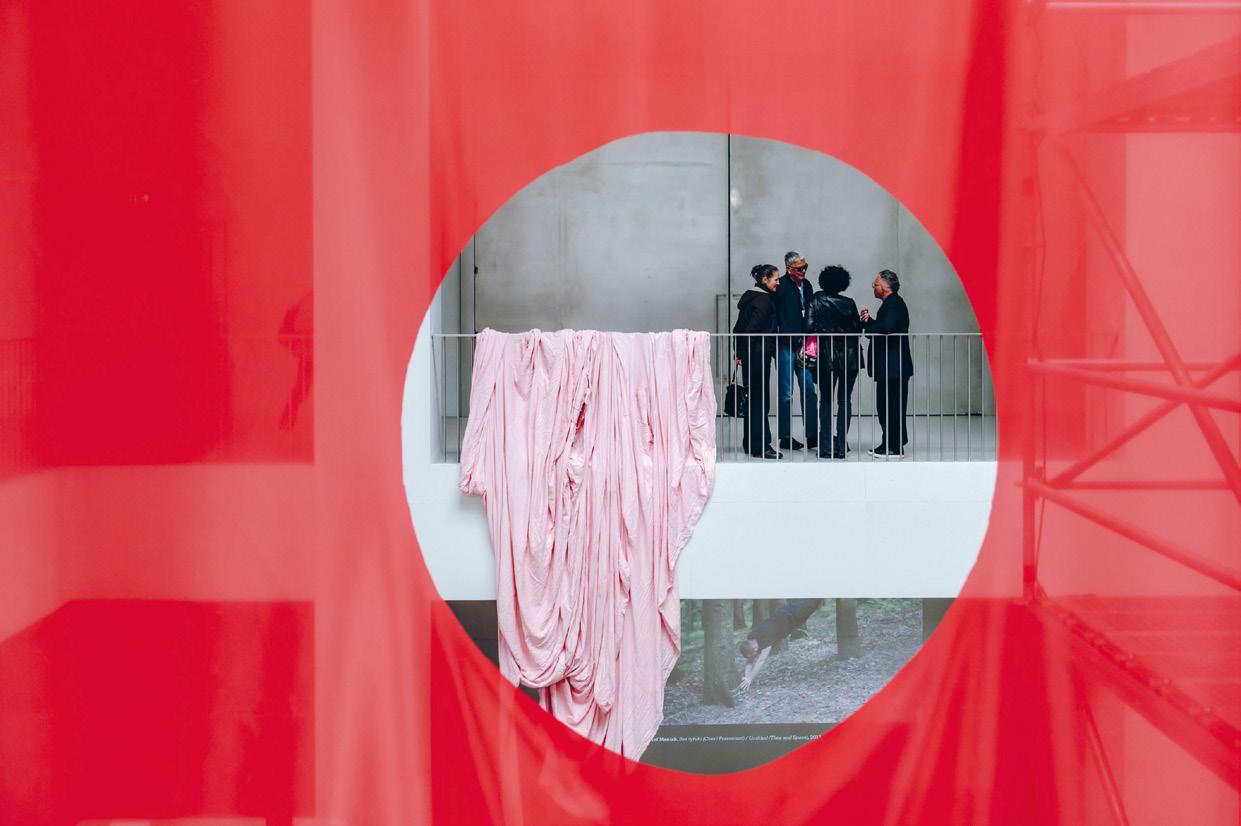
In 2025, the OFF Biennale, supported by the ERSTE Foundation, celebrated its tenth anniversary as an independent platform for artistic and socio-political engagement. With each edition, it sparks public debate on social, political, and environmental issues. In the following text, art historian Hedvig Turai offers insights into the fifth edition of the Biennale.
From Resilience to Resistance
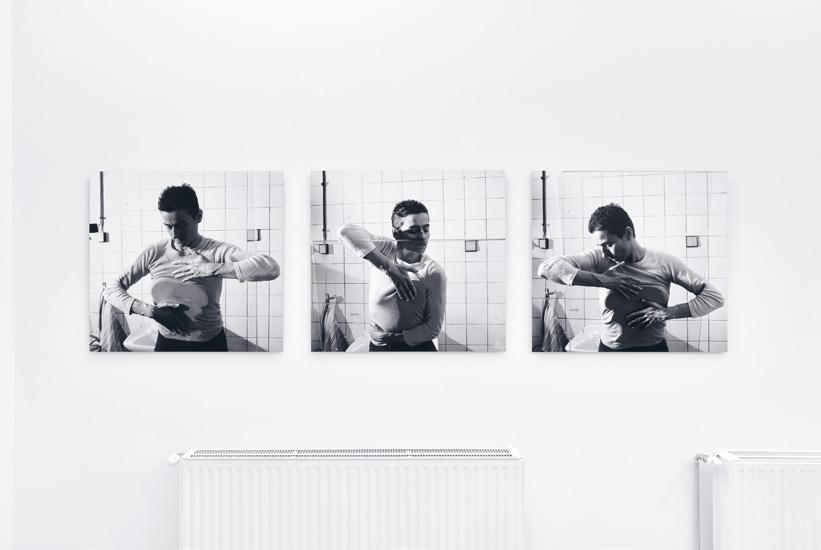
In the early 2010s, following the political changes in Hungary, the conditions for independent contemporary art in the country became ever more austere. Yet it was also a time of resistance. OFF-Biennale Budapest, a curatorial alliance, was founded in 2014 in this cultural climate. The aim of the first edition, realised in 2015, was to give a stimulating injection to the local art scene, but beyond that, it also showed that there could be life outside of official frameworks. The second and third editions of OFF-Biennale went further by choosing different thematic focuses around shared concerns: democracy and freedom in 2017 (Gaudiopolis) and climate catastrophe in 2021 (Inhale). The latter soon gained new additional meanings with the pandemic and from the last words of victims of state violence – »I can’t breathe.« OFF-Biennale grew and developed into an internationally recognised independent association. It has received international awards and was invited to participate in documenta 15. OFF has been working amidst successive local and international crises, maintaining the principle of not accepting state funds and thus retaining its intellectual independence. In 2025, at the age of ten, the fifth edition chose Security as the central concept. »Wall,« with its multiple implications, was the loaded metaphor used for the fifth edition, closely connected to the notion of security and how it is manipulated by authoritarian political regimes. In 1989, isolation ended when the Berlin Wall came down, while today new walls are erected not in order to protect us but to separate and exclude once again. The central curatorial concept of security was sadly enriched by actual ongoing wars and new threats.
Since 2015, a collective of curators has been organizing the OFF Biennale in Budapest.
Photo – David Biró
While there is no escape from the severe reality of wars and authoritarianism, there was a poetic thread running across the exhibitions of OFF-Biennale, especially present in the works of artists who themselves belong to systemically marginalised social groups. The title of the biennial itself, Poems of Unrest, was taken from a work by Robert Gabris, a queer Roma artist.
In 2025, OFF-Biennale Budapest dealt with precisely the issues that Hungarian official politics either push into the background, silence, or oppose by declaring them dangerous to society. Such issues are connected to minorities, foreigners, marginalised people, LGBTQ+, Roma, women, and sex workers, or to issues like border zones, the environment, and war. Marginalised people are searching for personal security, and fear is a familiar feeling for them.
The exhibition venues and events were located in districts where the local mayor is in the opposition, or which belong to the Budapest municipality led by the opposition. In addition to Merlin’s refurbished building, these venues included privately owned and run galleries, cultural venues, and an apartment. Although the curatorial team prefers to consider the exhibitions and events as horizontal and thus non-hierarchical, the exhibition at Merlin functioned as a de facto focal point. Here, the title These walls are not here to defend us was borrowed from the Hungarian non-binary poet Rebeka Kupinhár. The curatorial cooperation created an intellectual context where artworks connected and strengthened one another, while older works gained new meanings among their new neighbours, which acknowledged their predecessors and thus created a discursive continuity.
Other alternative venues even gave locals an opportunity to rediscover their own city – spaces like the Bakáts Bunker, a war shelter turned to an underground cultural space, or a tiny Pharmacy Museum in district 8.
At Merlin, Robert Gabris’ installation invited visitors to join him in his imagination, where unclassifiable beings braid together, creating a new sense of collectivity. Humans open up towards insects and other forms of life—or as the artist suggests, they exchange organs of the body and breathe together. The Most Dangerous Person was another complex research-based work, by Gideon Horváth. He interviewed sexually marginalised people living outside of Budapest in small communities that are especially threatening for them. Fear, stigma, and survival strategies shape their experiences, which remain mostly invisible. As Horváth quoted one of his interviewees, the survival strategies of marginalised people serve to convince themselves that »it is not against me, personally«, even if
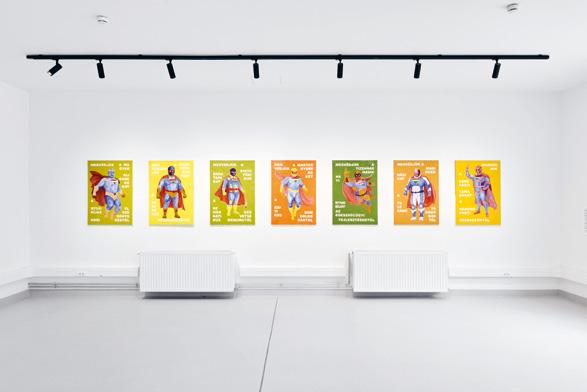
2025, the Biennale focused on the political situation in Hungary, which was marked by political exclusion and polarization.
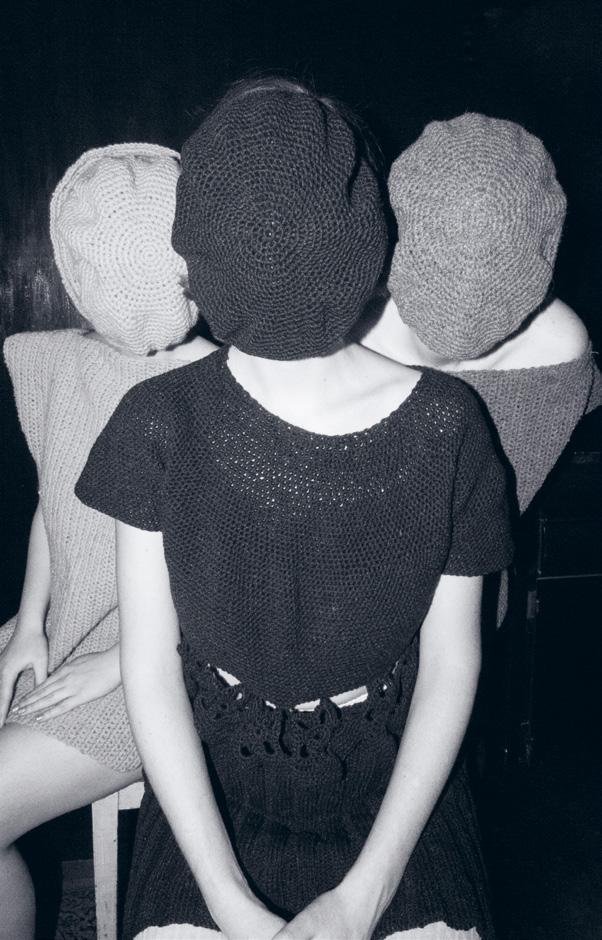
Photo – Bede Kincső
In
Photo – David Biró
they »still must suffer from it«. Here, the well-known feminist slogan »the personal is political« returns.
Feminist strategies, as well as female artists and themes, had a strong presence in OFF-Biennale (Anna Daucikova’s The Grammar of the Gaze, the Derry Film & Video Collective’s film performances).
Rachel Fallon and Alice Maher’s monumental textile sculpture The Map offers a topography of the »Magdalene« institutions where unmarried mothers –female »sinners« – were placed. Mary Magdalene returned in the work of Hungarian artist Anita Horváth, who evokes the saint as an analogy for how Roma women are often viewed and treated.
A collateral exhibition of female artists’ works, Everything will change the day after tomorrow – about sex workers, domestic violence, and questions of ageing – was presented in an apartment in district 8, a neighbourhood where many Roma live and where prostitution is rampant. It offered a special kind of exhibition experience thanks to its location.
Contemporary Hungarian Roma artists also use the feminist strategy of inversion of stigmatising images as a means of resistance, criticism, and self-assertion. The artist group Gypsy Criminals ironically appropriates the slogans of official media, where words like war, peace, and protection are already twisted. They add another twist and apply them in a liberating, ironic way, akin to feminist laughter.
In the exhibition Security / Borders, BW-Lab (the team from the earlier Biennale Warszawa) approached security »from above«, taking a Google Maps perspective on the ways in which authoritarian regimes handle people as bare lives en masse, stripped of their individuality. Filip Wesolowski’s Anatomy of a Border shows satellite images in which those who try to escape systematic violence are not even visible. In a sober voice, a narrator informs us about how human rights are being violated. Border Emergency Collective contributed a shocking video about the crisis at the Polish-Belarusian border, a death zone back in 2022.
In another installation, ecological crisis and war were connected by Karolina Bregula’s The Storm. In this poetic work, the same feelings, the same sentences uttered by lonely persons, seem to create tensions instead of community amongst neighbours, as fear separates them. In Forensic Architecture’s work Traces of Life, war and ecological disaster are connected, but a sense of hope is given by the Seeds of Life, a seed archive for the future. A refreshing trans-generational perspective also appeared throughout the exhibitions. Dorottya Szonja Koltay’s brick installation and performances included participants of different ages. In Kincső Bede’s The Art of Pista, a granddaughter tries to find a way to her grandfather, attempting to connect with
»Wall,« with its multiple implications, was the loaded metaphor used for the fifth edition, closely connected to the notion of security and how it is manipulated by authoritarian political regimes.
him and forgive him through his ghostly art objects after she herself has become an artist. Another artist photographed her father as a fashion model (Dóra Galyas Denerák, Hello Father? ), and a daughter and mother performed a dance piece together (Erzsébet Gyarmati and Eszter Salamon, Monument 0.7: Mothers).
Thematic tours, workshops and projects in collaboration with civil society organisations accompanied the exhibitions of OFF-Biennale Budapest. Recetas Urbanas, with whom OFF had a successful collaboration at documenta 15, set up a special site and a series of collaborative exercises with locals (still going on); there were visits to the local Chinese market; and special experts were invited to participate, among them the Háttér Society (which works against discrimination based on sexual orientation or gender identity) and feminist organisations. OFF-Biennale is an art event first of all, a show produced by a female curatorial team, but the point of view was broader since the political environment forced the curatorial team to be more political than ever. OFF-Biennale Budapest has radicalised its approach from resilience to resistance.
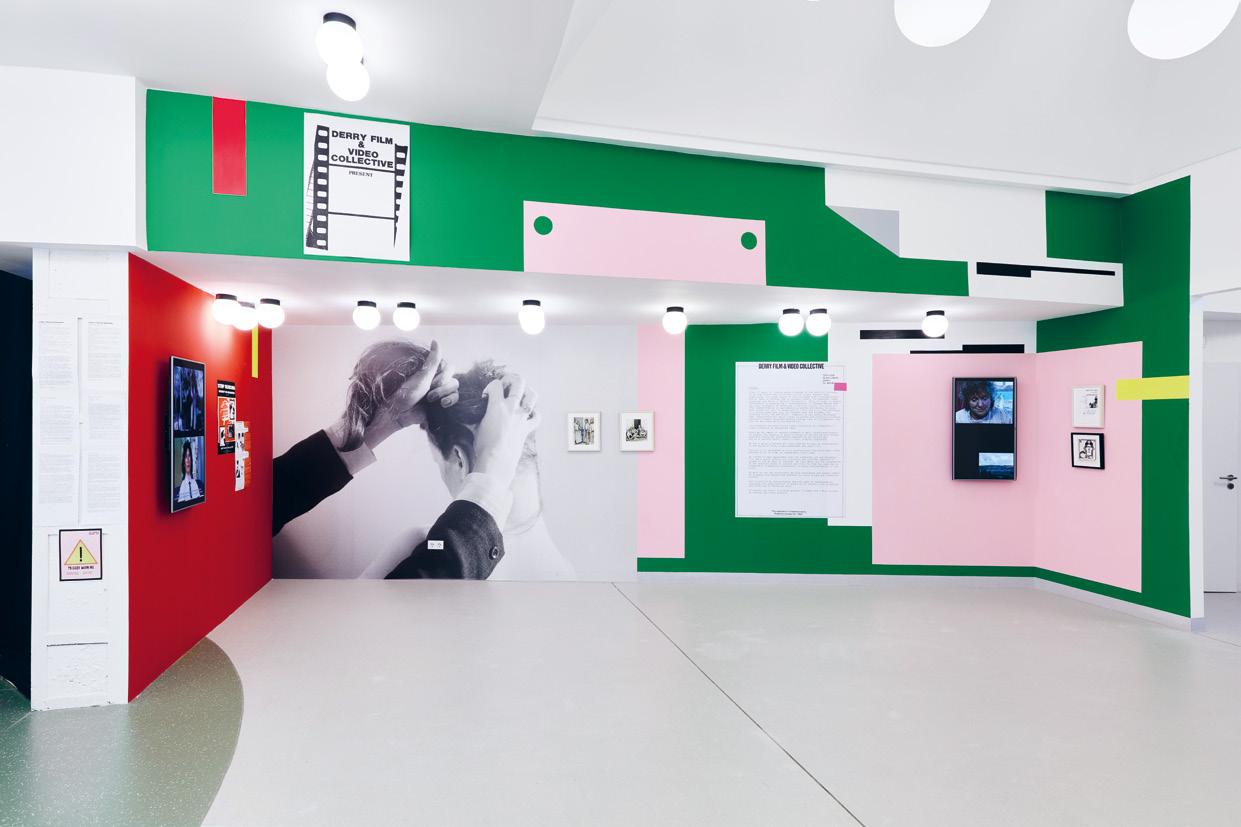
The exhibitions at the
were complemented by workshops and projects.
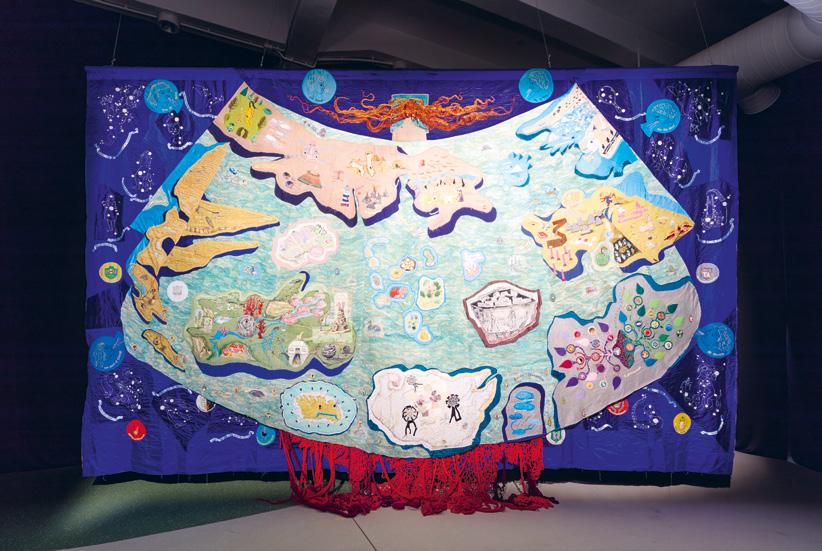
The OFF Biennale was not only an art exhibition, but also made headlines with its political statements.
Biennale
Photo – David Biró
Photo – David Biró
Reading Igor Zabel Today

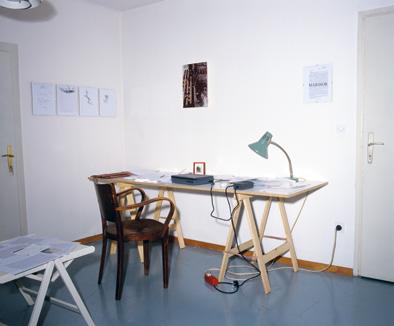
The Igor Zabel Award is a fitting tribute to the Slovene art historian, curator, and theorist Igor Zabel, who tragically died in 2005. When he left us, we lost so much potential. Yet, what does remain of his work as an art writer and exhibition curator becomes increasingly valuable for thinking about the European continent and how it understands itself today. Above all, his writings show Igor Zabel as an astute historian of Central Europe who understood the lasting impact of the imperial modes of power exercised from Berlin, Moscow, and Vienna on his part of the continent. He proved himself equally crucial as an insightful contemporary witness to the end of socialism, the painful break-up of Yugoslavia, and the emergence of a new European order that remained embedded in the cultural and political divides of the past.
Igor Zabel. Photo – Borut Krajnc
Igor Zabel: Inexplicable Presence: Curator’s Working Place, 1997, exhibition detail. Photo – Matija Pavlovec / Moderna galerija, Ljubljana
Zabel writes eloquently of his experiences as a person from Central Europe who was frequently labelled as coming from »the former East«. He remained doubtful of this implied identity politics while recognising the need to confront the Western arrogance that flattened the East into a clichéd, amorphous, and backward-looking »OstBlock«. Often, his criticism was less directed at the ignorance of the West than at the need for new and multiple narratives from the Slavic, Hungarian, and Romanian territories themselves. He was always alert to how Slovenian and other intellectuals would fall so easily into self-colonising discourses. His thinking has had its most tangible impact on the work of the Museum of Modern Art+Museum of Contemporary Art Metelkova in Ljubljana under the directorship of his colleague Zdenka Badovinac, but his influence extends to the policies of institutions such as the Museum of Modern Art in Warsaw and Kontakt Collection itself, both of which are more or less unthinkable in their current form without Zabel’s reflections. Still, he remains undervalued. This is particularly the case when he steps beyond the »Eastern« domain to question the wider context in which the work of artists find themselves discussed and presented. Thus, when he asked: »does anyone speak about the former West«, he was using his status as a designated outsider to question the effect of the end of socialism on the part of Europe dominated by the United States.
As global US hegemony appears to have run its course, the question of how the West deals with demise of its supremacy haunts culture and politics. Reading Zabel now alerts us to moments when different choices might have been pursued. He recalls, for instance, a time when Russian society and politics were still open to dialogue and mutual influence, or when the capacity of Europe to find a middle ground between free-market and socialist policies had not been entirely extinguished by the privatisations and free market dogmas of the 1990s and 2000s. In that sense, Zabel’s prime was undoubtedly a more optimistic time, when thinking about art functioned as a way to imagine positive social and political futures. For instance, he speculates in one text about how a broader, less exclusionary art historical narrative could include socialist realism alongside autonomous modernism in a way that might have changed the narrative and direction of European art in general, across both the former East and West.
A quizzical ambivalence defines Zabel’s relationship to the projected division between eastern and western European art – something that stems from his own thoughtful questioning of binary categories in general. This is why he never comes across as angry or upset by the attitudes of the art professionals who visited him from the former West. Overcoming, or at least mitigating, the simplicities of identities and definitions were a fundamental part of his way of thinking, as can be observed in his refusal to decide between autonomy and commitment, or independence and context, that extend across his writings. A text titled Commitment (2002) is especially relevant here. It challenges art’s
autonomy / commitment dialectic by putting it in the context of the Bosnian war and genocide of the mid-1990s. Considering his community’s need to address the horrors happening a few hundred kilometres south of Ljubljana, he points out the powerlessness of art to make a difference. A group, including IRWIN and Zdenka Badovinac, decided to ask artists across the world to contribute works to a collection for Sarajevo. In this way, the question of artistic commitment was expressed not through the nature of the works themselves but through the gesture of solidarity and generosity towards another possible Bosnia and Herzegovina in which the collected works could enrich a public institution where dialogue and encounter would flourish. For Zabel, autonomy and commitment are not opposites, nor does the tension between them need to be resolved. Instead, one can give force to the other: autonomy opens the space for effective political art, just like political art requires distance from direct action to assert an artistic existence. He concludes the text with an intriguing thought: »Today, I think,…opposition has largely shifted into the temporal dimension of the work: it is the particular experience of the ›not-yet-colonised‹ time that acts as the ›real‹ – the point of resistance that the system is unable to absorb and appropriate.«1
Twenty years later, facing another genocide in Palestine and ongoing grappling in Western Europe with its colonial legacy of violence and exploitation, this last remark is pregnant with meaning. Is this »not-yet-colonised« time a condition where or when some eastern European practices could build coalitions with indigenous and Global South positions for instance? Can time be used to gain distance from an all-pervasive colonial system and to create relations that are not predetermined by its matrix of power? Like »former West«, Zabel’s ability to coin a phrase that opens to lasting analysis is remarkable. In doing so he is redefining the terms of the debate, insisting that the real questions of art history are how art negotiates with power and how it emerges through ignorance, arrogance, and ultimately conflict.
Interpreting Zabel today is inevitably to read him with the benefit of hindsight, and one is left with the impression that he was working within a more plural art world than the destructive polarisation in which we find ourselves today. The financialisation of art and its frequent reduction to a luxury product or asset class has closed off some of the options Zabel wanted to leave open. Yet his relevance stems largely from the fact that many of his proposals and intuitions have yet to be explored by the art establishment in a sustained and systematic way. Especially within Europe (taken as a whole), the urgency of recognising the profound changes that happened around 1989, with the end of communism and how it continues to shape both artistic and political discourse today, is profound yet neglected.
Zabel’s core questions – how historical knowledge can help make sense of and respond to new contexts, how to embrace the local while refusing the demands of identity politics and the challenge of Western cultural
globalisation, or how to prevent the hegemony of power from determining cultural value –remain as sharp and poignant as ever. With the continued financial support to the Igor Zabel Association, one can hope that his legacy will go on challenging and renewing and challenge established ideas about art, place, and power well into the future.
1
Igor Zabel, Commitment , first published as »Angažma,« in Prostori umetnosti, Društvo inovatorjev, Ljubljana, 2002, p. 161–169. »Commitment« as English translation was first published in: Igor Zabel, Commitment, in: Kathrin Rhomberg et. al, Ausgeträumt…, Secession, Vienna, 2002, p. 17–21. A current version of Commitment will be included in the forthcoming new edition of Igor Zabel, Contemporary Art Theory, to be published by JRP|Editions in 2026.
Exhibition 10 May – 8 June 2025
Opening: 10 May 2025, 12 pm
»The Cynics Republic –Plac Defilad« at the Museum of Modern Art in Warsaw (MSN)
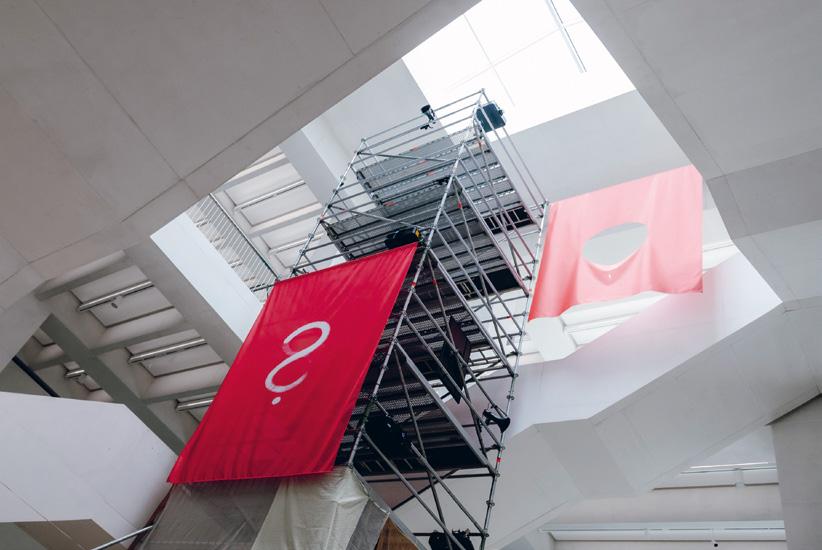
On May 10, 2025, the exhibition »The Cynics Republic – Plac Defilad«, initiated by Kontakt, opened at the Museum of Modern Art in Warsaw (MSN) to a large number of visitors, among them many international ones. Curated by Pierre Bal-Blanc, it was created as part of the long-term institutional cooperation between MSN and Kontakt.
The exhibition offered an alternative perspective on the history of performance art and performative practices. Its starting point was the hypothesis that performance art—or at least the performative stance— has existed since antiquity and has been particularly influenced by one school of thought: Cynicism.
Artworks from the MSN and Kontakt collections were placed in dialogue and presented in a vertical exhibition at the center of the museum‘s monumental staircase, as well as within the framework of the Video Klub and a performance and film program. No physical artworks were displayed; the works from the two collections—including concepts, ideas, and performances documented on paper, film, or photography—served merely as a guide for performances and sound works realized on site.
The »Kontakt Video Klub« was also accessible on Kontakt‘s website. For »The Cynics Republic – Plac Defilad,« this was inspired by the extensive archives of the MSN. The selection included films from the Filmoteka Muzeum—a collection of nearly 700 works by Polish avant-garde filmmakers—as well as works from the Kontakt Collection.
»The Cynics Republic –Plac Defilad«, Museum for Modern Art in Warsaw, 10 May to 8 June 2025, Photo – Pat Mic
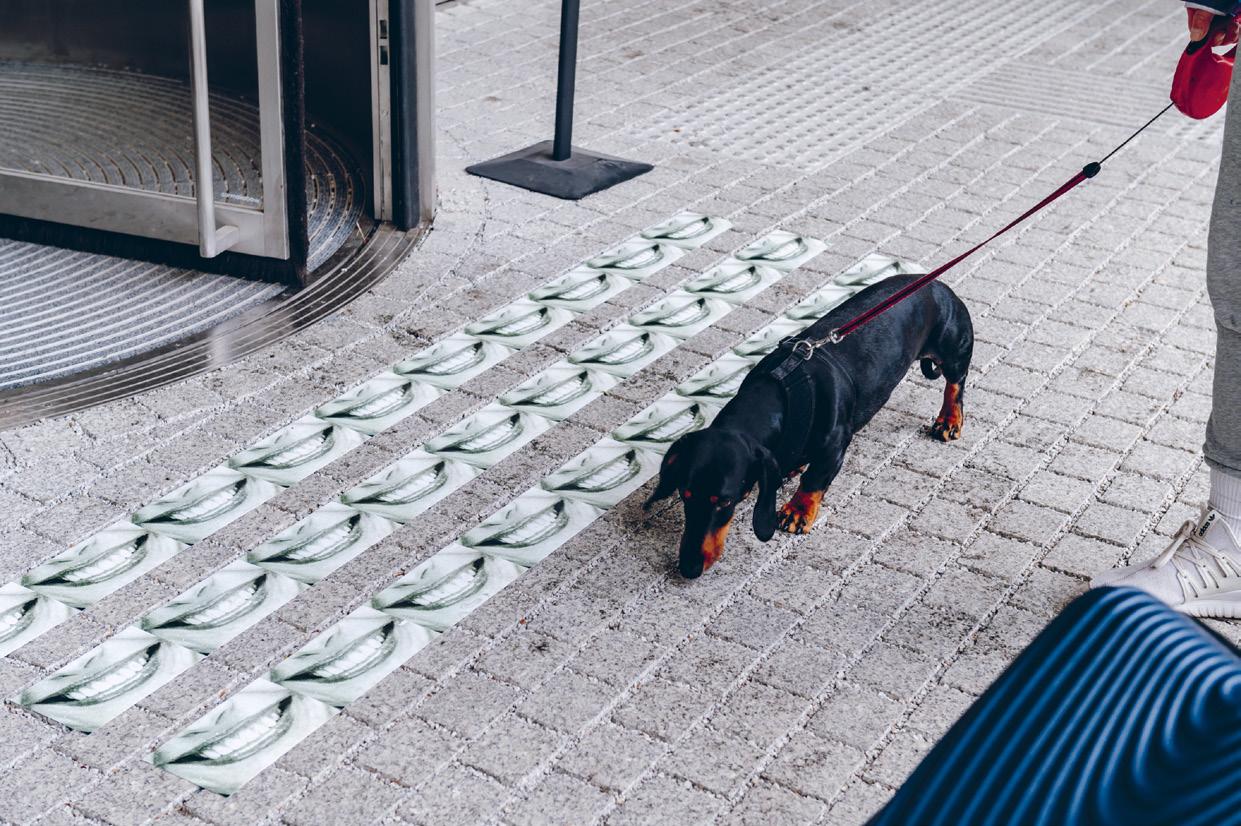
Mladen Stilinović, Smiles , 2025, »The Cynics Republic –Plac Defilad«, Museum for Modern Art in Warsaw, 10 May to 8 June 2025,
– Pat Mic
Page 16
Cezary Bodzianowski, Procession, 2023, »The Cynics Republic – Plac Defilad«, Museum for Modern Art in Warsaw, 10 May to 8 June 2025, Photo – Pat Mic
Page 29
Karol Radziszewski, Fag Fighters , 2025, »The Cynics Republic – Plac Defilad«, Museum for Modern Art in Warsaw, 10 May to 8 June 2025, Photo – Pat Mic
Page 45
Marcus Geiger, Wealth of Nations , Tank T 34–85, 1991, »The Cynics Republic – Plac Defilad«, Museum for Modern Art in Warsaw, 10 May to 8 June 2025, Photo – Pat Mic
Page 54
Milan Adamčiak, Floor Score from Diamond Dance, 1967, »The Cynics Republic – Plac Defilad«, Museum for Modern Art in Warsaw, 10 May to 8 June 2025, Photo – Pat Mic
Page 73
Slaven Tolj, Craquelure Pavo & Me, 2023, »The Cynics Republic – Plac Defilad«, Museum for Modern Art in Warsaw, 10 May to 8 June 2025, Photo – Pat Mic
Photo
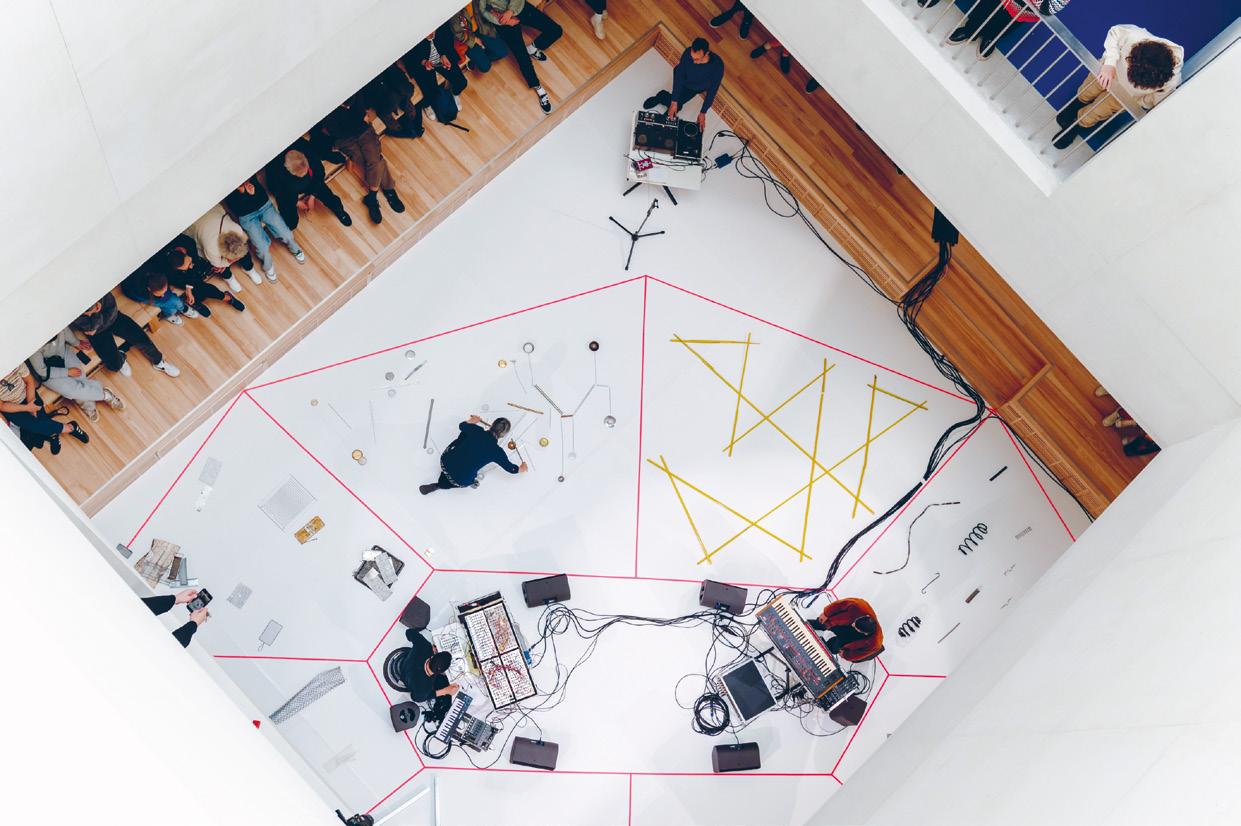
What Happened in 2025 in ERSTE Foundation’s Network?
January February March
Chris Marcich celebrates César and Oscar nominations
Policy Labs alumnus Chris Marcich, President of the Association of European Film Agency Directors and CEO of the Croatian Audiovisual Centre, celebrates a remarkable milestone with the international success of The Man Who Could Not Remain Silent, directed by Nebojša Slijepčević. Following its Palme d’Or triumph, the film has been screened at more than 100 international festivals and been honoured with César and Oscar nominations. Notably, it is the first Croatian film to receive an Oscar nomination since the country gained independence, marking a historic achievement for Croatian cinema.
Natalia Libet at the 75th Berlinale
Tomáš Sedláček appointed director of Václav Havel Library
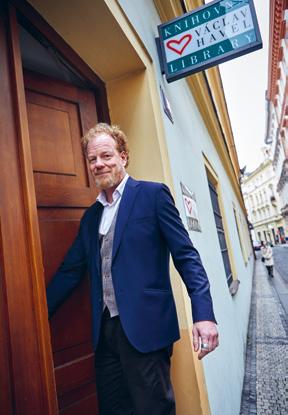
Policy Labs alumna Natalia Libet, film producer and co-owner of the women-led production company 2Brave Productions, left a significant mark at the 75th Berlinale with the world premiere of Timestamp, directed by Kateryna Gornostai. The film became the first work by a Ukrainian director to enter the festival’s main programme in 28 years and stood out as the only documentary selected for this year’s competition. Libet’s contribution highlights her ongoing commitment to innovative filmmaking and the visibility of Ukrainian cinema on the international stage.
The economist, philosopher and former advisor to Czech President Václav Havel Tomáš Sedláček has been appointed director of the Václav Havel Library in Prague. The library’s board selected him following the resignation of former director Milan Babík. Founded in 2004, the institution preserves Havel’s legacy, publishes books and organises public events. Sedláček announced that he aims to develop the library into a »global platform« promoting Havel’s values, optimism and democratic spirit.
Romania: Hack for Facts –designing solutions for publicinterest journalism
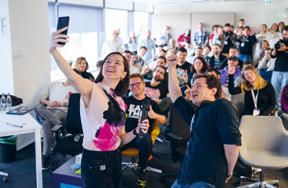
Between 28–30 March 2025, AmpliFY ONG, an initiative of BCR Social Finance and How to Web, with the support of BCR and ERSTE Foundation, organised Hack for Facts: Empower Independent Journalism through Ethical Tech & AI, which brought together 42 developers and 18 mentors to co-create ethical, probono technology solutions for publicinterest journalism. The hackathon responded directly to concrete challenges identified by independent newsrooms and resulted in multiple working prototypes designed to support publicinterest journalism. The hackathon was organised in partnership with the Ethical Media Alliance (EMA), a non-profit initiative focused on identifying and launching new, sustainable operational models for publicinterest journalism.
Photo – Ondřej Němec / Václav Havel Library
Photo – Archive AmpliFY ONG
Photo – 2Brave Productions
Lea Ypi and Alberto Alemanno named among world’s top 30 Forward Thinkers
Lea Ypi, 2025–2026 Europe’s Futures Fellow, and Alberto Alemanno, Europe’s Futures alumnus, have been selected among the world’s top 30 Forward Thinkers by Project Syndicate for their ability to contribute to and shape global policy debates. Project Syndicate’s Forward Thinkers list highlights 30 individuals from around the world whose ideas are helping shape discussions on issues ranging from climate policy to the future of democracy.

WHW opens two-year teaching programme at the Academy of Fine Arts Vienna
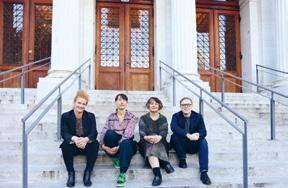
Following the guest professorship of Adam Szymczyk, the Croatian curatorial collective What, How & for Whom / WHW— represented by Ivet Ćurlin and Nataša Ilić—has been appointed guest lecturer at the Academy of Fine Arts Vienna for the academic years 2024 / 25 and 2025 / 26. In 2024, Ćurlin, Ilić and Sabina Sabolović were also named directors of the 2027 Skulptur Projekte Münster. Under the title The secret is that there is no secret, their inaugural public lecture explored the relationship between curating and politics, and examined tensions between radical institutional
posturing and unaddressed practices of discrimination and exclusion.
Office Ukraine get-together at Kunsthalle Wien
On 25 April, Kunsthalle Wien hosted an Office Ukraine get-together, bringing together artists, cultural workers and supporters of the Ukrainian creative community in Austria. The event provided a space for exchange, networking and shared reflection on artistic practices shaped by displacement, resilience and crossborder collaboration.
Explore interviews with Ukrainian artists currently living and working in Austria here:

Croatian journalism awards on Press Freedom Day
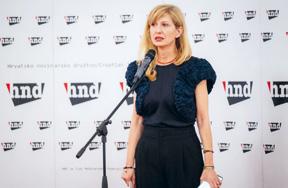
On 3 May, Press Freedom Day, the Croatian Journalists’ Association Hrvatsko novinarsko društvo (HND) presented its awards for 2024 in Zagreb. Fellowship for Journalistic Excellence alumna Tamara Opačić sat on this year’s jury. The Otokar Keršovani Lifetime Achievement Award was presented to author and journalist Slavenca Drakulić. The Marija Jurić Zagorka Prize for Radio Journalism went to Barbara Matejčić, alumna of the Fellowship for Journalistic Excellence, for the documentary Cause of Death: The Border

Nathalie Tocci appointed Professor of the Practice at Johns Hopkins SAIS Nathalie Tocci, Europe’s Futures alumna, has been appointed Professor of the Practice at the Johns Hopkins School of Advanced International Studies (SAIS). She is teaching graduate-level courses in European governance and global affairs and contributes to the development of the school’s executive education programmes. Her appointment is part of SAIS Europe’s Vision 2030 strategy, aimed at strengthening the school’s academic leadership and global engagement.

Tim Judah publishes new book on demographic shifts in Central and Eastern Europe
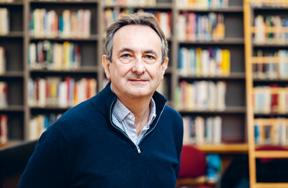
Tim Judah, Europe’s Futures alumnus, has published his new book Life and Fate: All You Need to Know About the Changing Demography of Central, Eastern and SouthEastern Europe with the Institute for Human Sciences (IWM) and ERSTE Foundation. The book is the culmination of ideas developed during his 2018–2019 Europe’s Futures fellowship and examines demographic trends and their implications for the region.
Photo – Akademie der bildenden Künste Wien
Photo – HND / Nikola Šolić
Photo – Klaus Ranger
OFF Biennale Budapest celebrates ten-year anniversary

The Cynics Republic –Plac Defilad: International cooperation in Warsaw
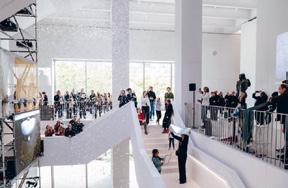
In 2025, OFF Biennale Budapest celebrated its ten-year anniversary (see page 46–49).
Marking a decade of grassroots collaboration and independent artistic action, the anniversary edition continued to energise Hungary’s independent art scene and stimulated public conversations around social, political and environmental issues. With Poems of Unrest as its thematic focus, the Biennale reflected on the notion of »security« and on how artistic and collective practices can help navigate the uncertainties shaped by overlapping crises. The tenth-anniversary edition unfolded across Budapest and subsequently travelled to partner institutions in Vienna, Amsterdam, Oldenburg and Limerick.
On 10 May 2025, the exhibition The Cynics Republic – Plac Defilad opened at the Museum of Modern Art in Warsaw (MSN), attracting numerous international visitors. Organised as part of a long-term cooperation between the MSN and the Kontakt Collection, the exhibition was curated by Pierre BalBlanc and provided an alternative vision of the history of performance art, focusing on the hypothesis that the performative stance has existed since antiquity and was especially influenced by the philosophy of Cynicism.
Lea Ypi holds A Speech to Europe 2025: »A world in which nobody is forced to leave their home«
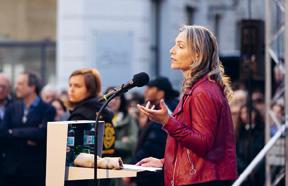
In her speech to Europe at Vienna’s Judenplatz, the renowned philosopher and political scientist Lea Ypi encouraged the audience to think about migration and identity. The focus of her speech asked what it means to be a migrant in a
divided world – being both open and alienated, seen and invisible. Standing before the Holocaust Memorial in Vienna, Lea Ypi reminded her audience that the costs of exclusion are not abstract, but carved in stone. Initiated by the ERSTE Foundation, the »Speech to Europe« is organised in collaboration with the Vienna Festival, the Institute for Human Sciences (IWM) and in cooperation with the Jewish Museum Vienna to anchor the European idea in the public sphere and in our collective consciousness.
June
Europe’s Futures hosts fifth edition of its annual symposium in Cres, Croatia
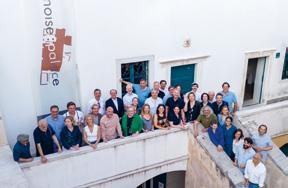
The fifth edition of the Europe’s Futures annual symposium was organised in Cres, Croatia, bringing together more than 40 participants in attendance. For three days, the alumni network of the Europe’s Futures project discussed plans for future collaboration under the umbrella of the emerging Europe’s Futures Initiative (EFI). President of the EFI and former Chancellor and Foreign Minister Alexander Schallenberg delivered the traditional Erhard Busek Memorial Lecture.
Robert Gabris: »Asylum – A Poem of Unrest« (2024), Photo – Gregor Hofbauer, courtesy of the artist The Cynics Republic – Plac Defilad, Museum for Modern Art in Warsaw, 10 May to 8 June 2025, Photo – Pat Mic
Photo – eSeL.at / Lorenz Seidler
Photo – Davor Konjikušić
A true story about a Polish forest A joint project of the Fellowship for Journalistic Excellence alumni Tadeusz Michrowski and Adina Florea made it onto the shortlist for the True Story Award. Their in-depth reportage, »Learning How to Live with Poland’s Bison«, explores the complexities of reintroducing European bison into Poland’s Białowieża Forest. The piece delves into the challenges faced by both the species and local communities, highlighting the need for sustainable coexistence strategies. This collaboration underscores the strength of an alumni network and its capacity to produce impactful journalism. The story was published by the New Lines Magazine. The True Story Award is the first global journalism prize to make the voices of journalists known beyond the borders of their home countries.

Respectful reporting on poverty in Croatia

Commemorating twenty years since the passing of Igor Zabel
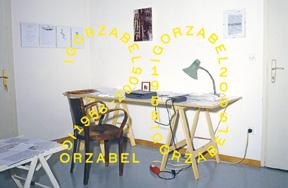
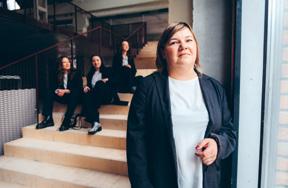
In June 2025, the Croatian Anti-Poverty Network presented the ninth Svjetionik (»lighthouse«) Award as part of the awards for respectful reporting on poverty. One of the two winners was Barbara Matejčić, alumna of the Fellowship for Journalistic Excellence. She received the Svjetionik Award for Reporting on Poverty, which is co-funded by ERSTE Foundation and the City of Zagreb, for her investigation into the abuse of minors in state care at the psychiatric hospital for minors in Croatia. The report was produced through the Reporting Democracy granting programme and published by BIRN and the Croatian newspaper Jutarnji list

Twenty years after the passing of Igor Zabel (1958–2005), one of Central and Eastern Europe’s most influential thinkers on contemporary art, Ljubljana’s Museum of Modern Art commemorated his legacy with a dedicated programme. As an art historian, curator, critic, editor, writer, translator and mentor, Zabel shaped regional discourse in lasting ways. To honour his contributions, the Igor Zabel Association and the Museum of Modern Art opened an exhibition on 24 September 2025. Curated by Vladimir Vidmar in collaboration with artist Christophe Barbeau, the show revisited key exhibitions Zabel had organised, reflecting on the ideas and concepts that guided his curatorial and theoretical work.
In July 2025, Policy Labs alumna Ksenia Malykh’s role as part of the curatorial team representing Ukraine at the 61st Venice Biennale of Contemporary Art was announced. Together with artist Zhanna Kadyrova, she will be presenting the project Security Guarantees, which centres on Kadyrova’s concrete sculpture Deer from the Origami series, created in 2019 for Leontovych Park in Pokrovsk, Donetsk region. Installed on the site of a dismantled Soviet aircraft, the work transforms a space marked by military symbolism into one of cultural reflection, highlighting the shifting meanings of public space amid ongoing geopolitical tensions.
HMPS – Hrvatska mreža protiv siromaštva –Croatian AntiPoverty Network.
Photo – Mirko Cvjetko
Igor Zabel: Inexplicable Presence: Curator’s Working Place, 1997, exhibition detail. Photo – Matija Pavlovec / Moderna galerija, Ljubljana
Photo – Ksenia Malykh, private
Ksenia Malykh at the 61st Venice Biennale
Maciej Kisilowski coedits Let’s Agree on Poland, published by Oxford University Press
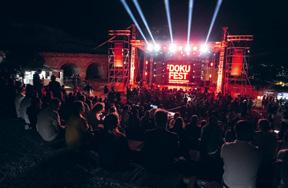
From 2 to 4 August 2025, the international DokuFest film festival in Prizren presented two film programmes curated by Veton Nurkollari, featuring works from the Kontakt Collection. As part of Austrada Biennale’s public programme, it also screened a series of Kontakt video portraits selected by Veton Nurkollari. In addition, Nurkollari curated two film programmes of 90 minutes each for the official DokuFest programme, showcasing works from the Kontakt Collection.
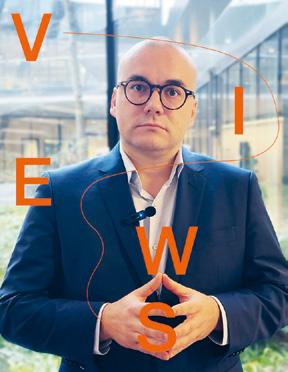
Maciej Kisilowski, 2025–2026 Europe’s Futures Fellow, coedited Let’s Agree on Poland together with Anna Wojciuk. The book, published by Oxford University Press in September 2025, is adapted from a 2023 Polish bestseller and brings together progressive and conservative thinkers to propose institutional reforms aimed at bridging Poland’s ideological divides.
Lea Ypi publishes Indignity: A Life Reimagined , blending memory, fiction and reckoning
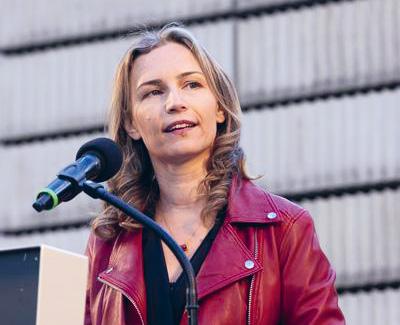
Lea Ypi, 2025–2026 Europe’s Futures Fellow, published her new book Indignity: A Life
Reimagined (Allen Lane) in September 2025. Exploring questions of dignity and the personal histories of her own family through the lenses of state surveillance and social memory, the book offers a fusion of fact, fiction and personal reckoning. Building on Ypi’s earlier work Free: Coming of Age at the End of History, this new publication further establishes her as a notable contemporary literary voice in Europe and beyond.
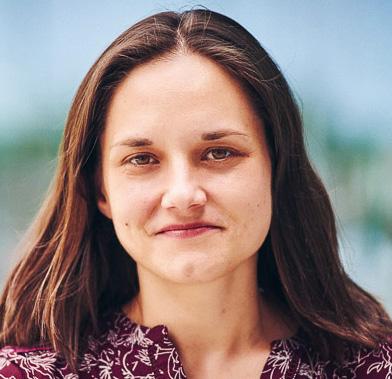
Claudia Ciobanu, Reporting Democracy correspondent in Warsaw, has joined the reporting team of Associated Press. Claudia was born in Romania but lives in and reports from Poland. Her work focuses on social movements (progressive and ultra-conservative), the illiberal takeover of institutional structures, and inequality. She joined BIRN in 2019, when the Reporting Democracy platform was launched. She was a fellow of the Balkan Fellowship of Journalistic Excellence (2018) and won the first prize for her investigation into global ties between ultra-conservative groups waging war on gay marriage and gender rights in the Balkans and the movement’s corrosive effects on democracy.
IJ4EU Impact Award: Honourable mention to Andrei Popoviciu
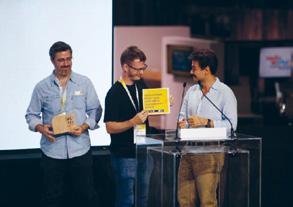
During the 2025 Uncovered Conference (25–27 September) in Athens, Andrei Popoviciu, Fellowship for Journalistic Excellence alumnus, and José Bautista received an honourable mention in the IJ4EU Impact Award for their unflinching work exposing corruption and rights abuses in West Africa. The investigation prompted calls in the European Parliament for a formal inquiry.
You can read the article here: How an EU-funded security force helped Senegal crush democracy protests | European Union | Al Jazeera

Photo – Uncovered
Claudia Ciobanu joins Associated Press
Photo – Ferdi Limani
From Austrada Biennale to DokuFest: Films by Kontakt dominate Prizren’s 2025 summer culture programme
Maciej Kisilowski im Views-Videoformat, Erste Campus, 2025
Photo – BIRN
Photo – eSeL.at / Lorenz Seidler
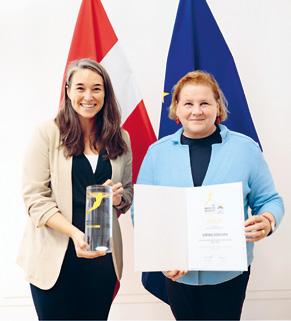
Alles Clara was honoured with the Innovation in Politics Award, recognising the initiative’s contribution to strengthening visibility, dialogue, and support structures for family carers in Austria. The award highlights initiatives that demonstrate forwardlooking approaches to societal challenges in close collaboration with public authorities and create tangible public value. Federal Minister for Social Affairs, Health, Care and Consumer Protection Korinna Schumann welcomed the Alles Clara team to the ministry to jointly acknowledge the project’s recent recognition. She accepted the Innovation in Politics Award certificate on behalf of the consortium supporting Alles Clara. In the category Public Health & Ageing Society, the Alles Clara app achieved first place.
TURN UP – 30 Years of springerin

European Commission recognises Dostupný Domov as leading social impact initiative
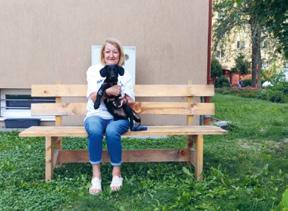
In September 2025, springerin magazine marked its 30th anniversary with the performativetheatrical congress TURN UP – 30 Years of springerin To celebrate three decades of critical, transdisciplinary cultural publishing, the magazine brought together artists, theorists, musicians, filmmakers and writers from the springerin network in an eveninglong associative »marathon« presented under the motto »30 Years – 30 Acts«. The programme included performances, music gigs, DJ sets, microexhibitions, short dialogues and other experimental formats, highlighting the breadth of springerin ’s collaborations and its ongoing role in shaping contemporary art discourse.
The European Commission highlighted Dostupný Domov (Affordable Home) as a leading European social impact initiative, recognising it in President Ursula von der Leyen’s State of the Union speech as a practical and scalable response to Europe’s housing crisis. Developed by Slovenská sporiteľňa’s Social Banking / Social Finance department, Slovak Investment Holding and the Slovenská sporiteľňa Foundation, the programme blends public and private capital with repayable EU funds to deliver sustainable, affordable rental housing. By 2025, more than 400 apartments had been provided to over 1,300 people, positioning Dostupný Domov as a replicable model for other EU countries.
Péter Krekó and Zsuzsanna Szelényi co-organise 2025 Budapest Forum on Sustainable Democracies
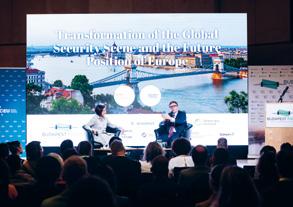
Péter Krekó and Zsuzsanna Szelényi coorganised one of the most significant international relations conferences in Hungary and Central Europe in 2025: the Budapest Forum »Building Sustainable Democracies« (17–18 September). They invited the Europe’s Futures fellowship programme to contribute to the conceptualisation of several sessions, resulting in speaking engagements for the 2025–2026 Europe’s Futures Fellows James C. O’Brien and Maciej Kisilowski, alongside Ivan Krastev, IWM Permanent Fellow.
Photo – Political Capital
Alles Clara honoured with Innovation in Politics Award
Photo – AI-generated Midjourney cover by Zorro Zuo @space.for.visual.research, created in collaboration with @markusweisbeck and @v_braun@designsummer_academy, Hangzhou, China, September 2024
Nicole Traxler with Federal Minister Korinna Schumann. Photo – BMASGK
Maria received affordable housing after taking her grandchildren in to live with her.
Photo – Archiv Dostupný Domov

Policy Labs alumna Anna Novosad, co-founder of the savED charitable foundation, supports war-affected communities through education and infrastructure initiatives. With the support of the Grand Duchy of Luxembourg, the foundation has opened 15 after-school learning centres in Kryvyi Rih, providing educational support to Ukrainian children studying partly online within adapted school facilities.

Fifteen years ago, a group of dedicated people founded Impact Hub Vienna to foster social entrepreneurship in CEE. It is part of a global network dedicated to creating a more sustainable world, with businesses that know how to combine profit and impact. Since its early days, Impact Hub Vienna has become a true centre of entrepreneurship, knowledge and empowerment.
Its programmes have changed the business landscape, and its expansion has created new centres for social innovation, climate and educational solutions. Like Erste Bank Österreich and Erste Group, ERSTE Foundation has been a partner from the very beginning.
With Leeching States, Slovakian artist Šimon Chovan presented a compelling artistic investigation into the ecological, technological and ethical dimensions of lithium—a key raw material in our age of digitalisation and e-mobility. Created in cooperation with transit.org, the exhibition was on view from September to November 2025 at the MQ Pop-Up showroom in Vienna. The exhibition emerged directly out of Chovan’s extensive research into lithium as MQ Artist-in-Residence at Vienna’s MuseumsQuartier in spring 2025.
October
Europe’s Futures alumna Olivia Lazard joins Berggruen Institute as Planetary Fellow
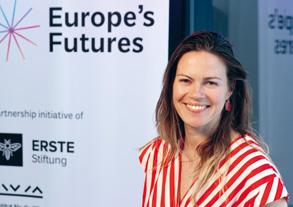
Europe’s Futures alumna Olivia Lazard has taken on a new role as a Planetary Fellow at the Berggruen Institute. In this position, she focuses on her forthcoming book exploring human and planetary insecurity in the technoindustrial age. Parallel to this work, she is advancing the foundation of Transition Intelligence, a new European institute dedicated to supporting planetary transitions through policy, technological, economic and mediation innovation labs.
Works council members donate supervisory board remuneration to social projects
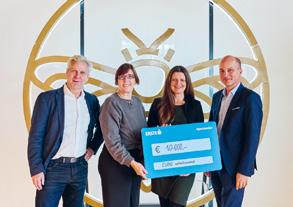
Supervisory board members
Kurt Zangerle (works council chairperson of Erste Bank der österreichischen Sparkassen AG) and Barbara Pichler (works council chairperson of Erste Group Bank AG), delegated to ERSTE Foundation from the works councils of Erste Group and Erste Bank, have once again waived their remuneration as supervisory board members in order to support charitable projects. Donations were made to eight selected Austrian social organisations focused on supporting women and children:from providing assistance to those who have experienced violence or are affected by illness to educational support. The grant recipients included RAINBOWS gem. GmbH, the START-Stipendien Österreich association, the Make-A-Wish-Foundation, the children’s cancer research department at St. Anna Children’s Hospital and Volkshilfe Hafen, among others.
Olivia Lazard, at the EF Symposium, Cres.
Photo – Davor Konjikušić
Martin Wohlmuth, Barbara Pichler, Romy Leonhardt – RAINBOWS gem. GmbH, and Kurt Zangerle. Photo – Marcel Billaudet
Hinnerk Hansen, Co-Founder & Managing Director Impact Hub Vienna. Photo – Yvonne Fetz / fotografiefetz
Photo – Viliam Ondo
Happy Birthday, Impact Hub
MQ AiR artist Šimon Chovan Leeching States exhibition at MQ PopUp showroom
Photo – savED
Anna Novosad opens after-school learning centres in Ukraine
OHO Film receives Slovenian Vesna Award for Special Achievements
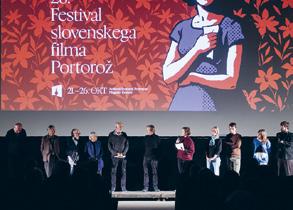
The documentary OHO Film received the Slovenian Vesna Award for Special Achievements. Directed by Damjan Kozole and cowritten by Urška Jurman, programme manager at the Igor Zabel Association, the film was recognised for its contribution to Slovenian art and film culture.
In its statement, the jury emphasised that the film »celebrates the boldness and freedom of thinking outside established frameworks, providing indepth insight into a vital part of Slovenian art history while inspiring today’s and future generations of artists, where the boundaries between the possible and the impossible become a testing ground for artistic expression.«
Scaling the narrative: Tech for Good in the public interest and the story of Context.ro
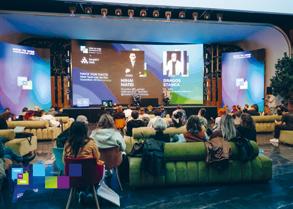
In October 2025, AmpliFY ONG brought Hack for Facts to the main stage of How to Web, one of Eastern Europe’s leading tech conferences, reaching more than 3,000 founders, developers, investors and policy actors. This spotlight strengthened the role of independent journalism and ethical technology as publicinterest infrastructure and broadened our network of contributors. As part of the initiative, Context.ro, an independent Romanian investigative media startup, joined the hackathon to extend its tools to new platforms, explore scalable solutions and engage with emerging developer talent.
Leszek Jażdżewski leads 2025 Freedom Games with keynote on navigating an age of uncertainty
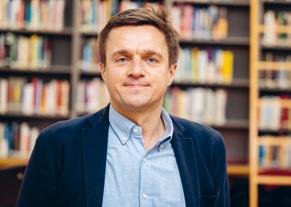
Europe’s Futures alumnus Leszek Jażdżewski played a central role in organising and leading the 2025 Freedom Games, a major public event in Łódź on the theme of »Living in an Age of Uncertainty«. He delivered a keynote lecture titled »Strategy for the Age of Uncertainty«, addressing democratic resilience and global challenges. The event brought together leading public intellectuals and policymakers for discussions on the future of democracy. The programme also included an appearance by George Clooney during his first-ever visit to Poland.
EU Investigative Journalism Award to Dragana Peco and Stevan Dojčinović
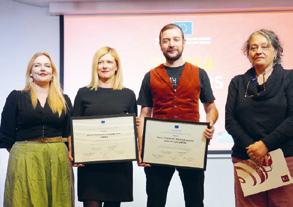
Two Fellowship for Journalistic Excellence alumni from Serbia, Dragana Peco and Stevan Dojčinović from the investigative portal KRIK, received an EU Investigative Journalism Award. Their reporting unveiled the connections between the state apparatus, security forces and organised crime members in Serbia. The EU Prize for Investigative Journalism recognises the best investigative stories published in the previous year in the Western Balkans and Turkey.
Photo – Katja Goljat, Matjaž Rušt Photo – Archive AmpliFY ONG
Photo – Klaus Range
Photo – EU Investigative Journalism Award
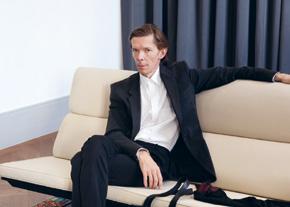
On 6 October 2025, the Board of Trustees of the Swiss Architecture Museum (S AM) – chaired by Meinrad Morger – unanimously elected internationally renowned curator Adam Szymczyk as its new director. Szymczyk, who previously worked as director of Kunsthalle Basel, will take up the post at the beginning of 2026. He has also been a member of the art advisory committee of the Kontakt Collection since its foundation in 2004.

Promprylad wins New European Bauhaus award

Ksenia Malykh (Policy Labs alumna), founder and programme director of the Promprylad Art Centre in Ivano-Frankivsk, has been recognised with a New European Bauhaus award. Promprylad. Renovation turns underused
industrial space into a vibrant hub for SMEs, cultural initiatives, craftspeople and citizens. The transformation of the former Promprylad industrial plant into a hub for creative industries and innovative business, launched in 2017, is now entering a new stage of development.
Nilbar Güreş to represent Turkey at the 61st Art Biennale

The artist Nilbar Güreş, who has a work in the Kontakt Collection, has been selected by the Istanbul Foundation for Culture and Arts (İKSV) to represent Turkey at the 61st Art Biennale in Venice. Güreş is one of the most distinctive voices within contemporary art. Her multidisciplinary work addresses issues such as social inequality, cultural memory, gender and identity. The Turkish pavilion will be curated by Başak Doğa Temür.
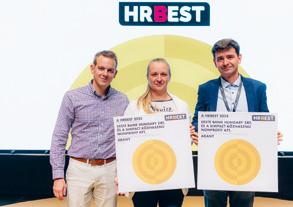
SIMPACT won Gold at HRBest 2025 in the »Future Builders« category for its skillsbased volunteering model, implemented within Erste Bank’s SEEDS+ programme. This recognition honours a unique initiative that was originally launched as a pilot and scaled up thanks to the strategic support of Erste Bank. Unlike traditional pro bono programmes, this model significantly lowers the entry barrier for both corporate volunteers and NGOs. The model’s scalability is proven by its traction, attracting volunteers from industry leaders such as Morgan Stanley, bp, E.ON, PwC and Oracle, as well as numerous SMEs.
Artist Josef Dabernig: presented his distinctive short films in Vienna
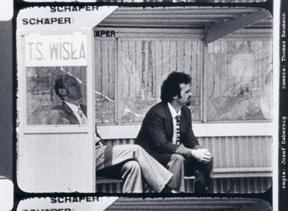
With FOCUS ON Josef Dabernig, the Breitenseer Lichtspiele in Vienna hosted one of Austria’s most significant artistic filmmakers. The screening took place on 9 October 2025 and featured a curated selection of Dabernig’s acclaimed short films. The programme included works ranging from Wisla (1996) to Stabat Mater (2016), showcasing Dabernig’s characteristic minimalist precision, choreographed ensembles, and subtly humorous approach to space, repetition and narrative fragmentation.
Josef Dabernig, Wisla, 1996. Still from 16mm footage (Cinematography: Thomas Baumann) Bildrecht Vienna, 2026
Photo – S AM / Gina Folly
Photo – New European Bauhaus
Photo – Nilbar Güreş
Photo – HR Fest / Zoltán Hercegfalvi
Adam Szymczyk appointed director of S AM
SIMPACT wins Gold at HRBest 2025
November
Vertical Horizon marks 10 years of the Kyiv Biennial at Lentos Kunstmuseum Linz
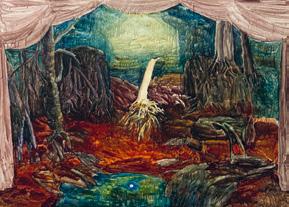
To mark the 10th anniversary of the Kyiv Biennial, Lentos Kunstmuseum Linz presented the exhibition Vertical Horizon, initiated by tranzit.at and conceived specifically for the museum. The show explored land and landscape as poetic and political agents, tracing how notions of territorial identity have shifted from horizontal geopolitical conflicts to vertical forms of power into geological depths and atmospheric heights—where resources are extracted, monitored, and controlled.
Vasyl Cherepanyn announced as artistic director of Berlin Biennale 2027
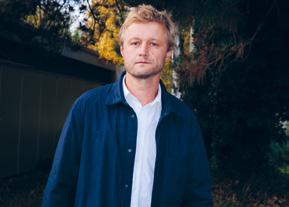
The Ukrainian philosopher and curator Vasyl Cherepanyn has been named as the artistic director of the 14th Berlin Biennale for Contemporary Art, which will take place in the summer of 2027. A co-founder and director of the Visual Culture Research Center (VCRC) in Kyiv, Cherepanyn impressed the selection committee with extensive experience of working at the intersection of art, political theory and civic engagement.
Still the sweetest: »Sunny Honey« continues its award-winning tradition

The long-standing »Sunny Honey« cooperation between the Sonnwendgarten community garden and ERSTE Foundation
was once again recognized by »Die goldene Honigwarbe« product awards in 2025: »Sunny Honey« blossom honey won first prize, while »Sunny Honeycreamy« took second prize in the cream honey category. While almost a tradition by now, these successes remain anything but a given. They demonstrate that true quality emerges when long-term support, community engagement and a firm commitment to sustainability come together.
Award for Zweite Sparkasse at ForumF Innovation | Day 2025
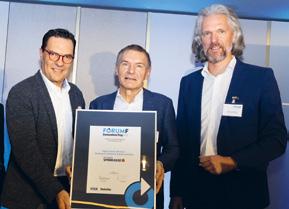
Over 100 experts and executives from the financial sector gathered at the ForumF Innovation | Day 2025 in November 2025. Zweite Sparkasse was highlighted as an example of best practice in the Corporate Social Responsibility category. Rupert Rieder presented the project »Digital. Sozial. Wirksam. – Banking mit Herkunft, Zukunft und Sinn« (»Digital. Social. Effective. –Banking With a Past, Future and Purpose), which focuses on social effectiveness, promoting financial inclusion and providing support for people without access to traditional banking services.
#aufstehn celebrates its 10th anniversary
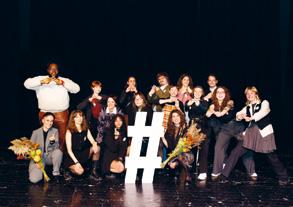
On 6 November, the civil society organisation #aufstehn celebrated its tenth anniversary. The community has grown to over 365,000 committed members – people who have been working for a decade to promote a positive sense of togetherness, social justice and a liveable future. In the same month, #aufstehn was one of the co-organisers of the stakeholder retreat »8 Tables for the Fourth Estate« (see p. 42–43) and a funding partner of the European democracy fund Civitates.
Kateryna Aliinyk, What the Heroine Wants is the Main Question, 2023
Photo – Diana Pfammatter
Robert Sollak (BL-Verantwortlicher for »Zweite« Vienna), Rupert Rieder (CEO of Die Zweite Sparkasse) and Roland Pirker (ForumF / REGAL Verlag)
10 years of #aufstehn, Team. Photo – Hannah Mayr
Photo – ERSTE Stiftung
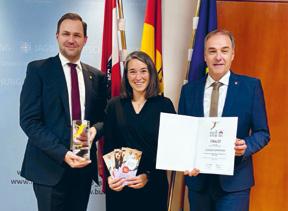
Regional minister Dr Leonhard Schneemann met with the Alles Clara team for personal conversations, congratulations and an inspiring exchange on the project’s development and impact. He received the Innovation in Politics Award certificate, presented by the Innovation in Politics Institute.
Alles Clara wins WSA Austria Award in Health & Well-Being
Alles Clara, an app supporting family carers in Austria through digital counselling and care assistance, was chosen from more than 40 socially impactful digital solutions to win the WSA Austria Award in the Health & Well-Being category. The recognition highlights the relevance of family carers in Austria and the practical value the platform provides. Following this recognition, Alles Clara was nominated as Austria’s official entry for the
global World Summit Awards, where it will compete with projects from 181 UN member states. The achievement underscores the role of digital innovation in addressing pressing social challenges.
Foundation for Economic Education at the centre of Austria’s new quality seal initiative
December
ÖJAB visits the Zweite Sparkasse
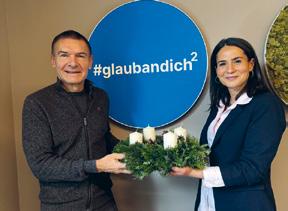

Austria is introducing the new »Ready4Finance« quality seal to strengthen financial, economic and consumer education in lowersecondary schools. The certification highlights schools that integrate these competencies sustainably into everyday learning. A leading force behind this development is the Foundation for Economic Education, which brings extensive experience from working with more than 60 pilot schools.
As part of its traditional annual Advent celebrations, ÖJAB – the Austrian Young Workers Movement visited Rupert Rieder, honorary CEO of Zweite Sparkasse. The two organisations have been cooperating to enhance both financial education for young people and support for those who need a second chance after personal setbacks.
New podcast for SaxonyAnhalt, new lines of funding at MFF
As part of its cooperation with the Media Forward Fund (MFF), detektor.fm received 500,000 euros to launch a new podcast programme for Saxony-Anhalt ahead of the 2026 elections as part of its regionalisation strategy.
Barbara Matejčić, alumna of the Fellowship for Journalistic Excellence and Croatian freelance journalist, accepted the Srđan Aleksić regional award (Western Balkans) for courage and excellence in journalism. Matejčić focuses on social issues and human rights. She received the award for »Killing for the Photo«, an in-depth investigation into the circumstances behind the only known professional photographs capturing executions during the Yugoslav Wars. In addition, Matejčić was shortlisted for the 2025 Daphne Caruana Galizia Prize for Journalism for the same reportage.

Rupert Rieder with Daniela Lucia Bichl, ÖJAB.
Photo – LinkedIn
Photo – Barbara Matejčić
Photo – Media Forward Fund / Valerie Maltseva
Barbara Matejčić receives Srđan Aleksić Award
Photo – Ian Ehm
Political recognition for Alles Clara
Left to right: Dr. Johannes Zsifkovits (Soziale Dienste Burgenland GmbH), Nicole Traxler (Alles Clara), and Regional Minister Dr. Leonhard Schneemann. Photo – Büro LR Schneemann
Impact through ecosystems: Supporting women and social entrepreneurs in Serbia
The Erste Women’s Entrepreneurship Bazaar in Serbia showcased how thoughtfully designed community spaces can strengthen women entrepreneurs and social enterprises across the country. Held at Belgrade’s Jevremovac Botanical Garden, the event featured 22 womenled initiatives that highlighted creativity, resilience and inclusive economic participation. Participants included many social enterprises supported through Social Banking, illustrating how dedicated platforms help these organisations connect with customers, generate income and build longterm sustainability.
Oskar Kokoschka Prize 2026 for Knebl & Scheirl
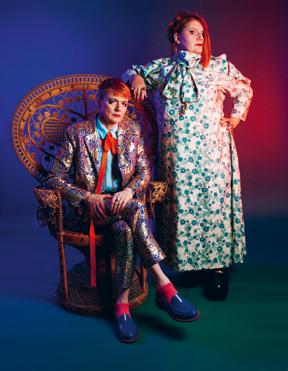
The Oskar Kokoschka Prize 2026, one of the most prestigious awards for visual arts in Austria, was awarded to the artist duo Jakob Lena Knebl and Ashley Hans Scheirl. Ashley Hans Scheirl is also represented in the Kontakt Collection with important works and created a mural for the Art in Architecture project at the Erste Campus.
Miriam Cahn Scholarship awarded to Natalia Gurova Cosmin Costinaș and Inti Guerrero to curate the 9th Yokohama Triennale in 2027
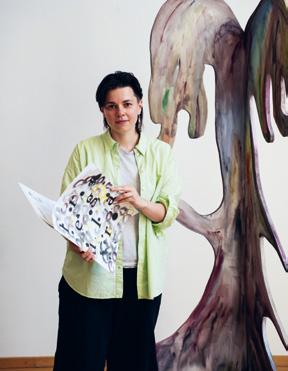
For the first and only time, the Miriam Cahn Scholarship was awarded to Natalia Gurova, a visual artist who recently graduated from the Academy of Fine Arts Vienna and previously worked with Office Ukraine supporting artistic and cultural initiatives. Her work, which moves at the intersection of fiction, history and social structures, has been shown in various exhibitions in Vienna and abroad.
On 10 December 2025, the Yokohama Triennale organising committee appointed curators Cosmin Costinaș and Inti Guerrero as artistic directors of the 9th Yokohama Triennale, scheduled to take place in Yokohama from 23 April to 12 September 2027. Cosmin Costinaș has been a member of the art advisory committee of the Kontakt Collection since 2025. Both curators are among the most internationally renowned voices of their generation and previously co-curated the 24th Biennale of Sydney in 2024, among other things.

Photo – Erste Bank Serbia
Jakob Lena Knebl and Ashley Hans Scheirl.
Photo – Christian Benesch
Photo – eSeL.at / Sarah Tasha
Inti Guerrero with Cosmin Costinaș.
Photo – Wolfgang Tillmans
EZRA KLEIN, DEREK THOMPSON Abundance
New York: Avid Reader Press 2025, ix, 288 pages
Abundance is a once-in-a-generation, paradigm-shifting call to rethink big, entrenched problems that seem mired in systemic scarcity: from climate change to housing, from education to healthcare. The book examines the reasons behind the lack of progress in ambitious projects in the United States, including those related to affordable housing, infrastructure, and climate change.
A selection of interesting new additions to the ERSTE Foundation Library in 2025, compiled by the Head of the library Jutta Braidt
CARL BENEDIKT FREY
How Progress Ends. Technology, Innovation, and the Fate of Nations Princeton, Oxford: Princeton University Press 2025, xiii, 529 pages
This is another book that critically interrogates the concepts of innovation and progress. Carl Benedikt Frey challenges the conventional belief that economic and technological progress is inevitable. For most of human history, stagnation was the norm, and even today progress and prosperity in the world’s largest, most advanced economies – the United States and China – have fallen short of expectations. To appreciate why we cannot depend on any AI-fuelled great leap forward, Frey offers a remarkable and fascinating journey across the globe, spanning the past 1,000 years, to explain why some societies flourish and others fail in the wake of rapid technological change. Only by carefully balancing decentralisation and bureaucracy can nations innovate and grow over the long term – findings that have worrying implications for the United States, Europe, China and other economies today.
MACIEJ KISILOWSKI, ANNA WOJCIUK (eds.)
Let’s Agree on Poland. A Case Study in Strategic Constitutional Design Oxford: Oxford University Press 2025, 310 pages
At a time when constitutional democracy is under increasing strain, Let’s Agree on Poland offers a bold exploration of how divided societies can break through ideological deadlock and reform their institutions. While rooted in the case of Poland, the book offers both academic insight and practical solutions for addressing democratic challenges worldwide. Born from an extraordinary cross-partisan initiative launched at the height of Poland’s constitutional crisis, the book presents a comprehensive constitutional reform proposal by legal and political thinkers across the ideological spectrum, from progressives to staunch conservatives.
PHILEAS – THE AUSTRIAN OFFICE FOR CONTEMPORARY ART (ed)
Toni Schmale. First Monographs Berlin: Distanz Verlag 2025, 199 pages
The sculptural and performative practice of Toni Schmale (born in Hamburg in 1980; lives and works in Vienna) explores the intersections of body, material and power structures. By deconstructing familiar forms and reassembling them into new sculptural languages, Schmale situates her work within a feminist critique of normative body politics, gender binaries, and heteronormativity. Her abstract visual language serves to unburden the representation of marginalised bodies, highlighting the complex relationships between material, form and identity. Through her precise yet ambiguous steel constructions, she challenges dominant narratives of power, inviting viewers into a space of reflection and resistance.
ANDREAS HENNING (ed.)
Honiggelb. Die Biene in der Kunst. Von der Renaissance bis in die Gegenwart exhibition catalogue Wiesbaden Hessisches Landesmuseum, 7 March to 22 June 2025, Munich: Hirmer 2025, 269 pages
From a symbol of justice, peace, and love, as well as recklessness and diligence, to an emblem of climate change and the interconnectedness of humanity and nature – this richly illustrated volume is dedicated to the bee in Western art throughout seven centuries. Through the lens of art, the bee receives the attention it deserves: a visual feast for all bee enthusiasts! The radiance of the bee in Western art since the 15th century is revealed in paintings and sculptures, in medals, jewellery, and installations. Livestock, symbol of purity, central factor in our Earth’s ecosystem – its diverse social significance is explored through images and stories: from the ancient god of love, Cupid, or Wilhelm Busch’s broadsheet The Little Honey Thieves , to key works on the subject from the Renaissance to contemporary artists like Rebecca Horn, or popular icons like Maya the Bee . A truly interesting and beautiful book.
THOMAS RAAB
Intelligenz & Phantasie. Zwei Essays zu künstlicher und menschlicher Intelligenz Berlin: Parados Verlag 2025, 134 pages
Thomas Raab’s book goes beyond the anthropomorphising aspect of our approach to artificial intelligence. His two essays delve much deeper to uncover what the term and concept of intelligence are truly about – both artificial and human –and how both might evolve, or perhaps not. Summarising his first essay, Raab writes, echoing Evgeny Morozov: »One problem here [namely, in the use of statistical pattern recognition] is certainly the sheer faith in technology, mixed with kitschy notions of salvation through technology. As long as most people do not make an effort to understand this technology, politics will not be able to change the demand. It is the old problem of Western modernity: can all problems that may ever arise be solved through the manipulation of the material world –that is, through technology (Morozov 2013)? I think the answer is: no.«
LÁSZLÓ KRASZNAHORKAI
Im Wahn der Anderen. Drei Erzählungen with drawings by Max Neumann and a drum solo by Miklós Szilveszter Frankfurt am Main: S. Fischer 2023, 255 pages
Representing the manifold books of 2025 Nobel prize awardee Laszló Krasznahorkais, the plot of his short story Kleinstarbeit für einen Palast is about a librarian losing his mind – or perhaps he is crazy from the very beginning. Strolling through Manhattan he imagines cutting off »his« library from public usage to keep its books and the knowledge they contain away from potential readers – as if they needed protection from the »stupidity« of this world. The story is a great read and a lot of fun, using techniques from Gertrude Stein, James Joyce, and most humorously the crankiness of Thomas Bernhard – Krasznahorkais even manages to smuggle in Bernhard’s Auslöschung (Extinction) and the famous wing chair taken from Holzfällen (Woodcutters ). His writing is packed with amusing references and a truly worthwhile read.
MILJENKO JERGOVIĆ
Das verrückte Herz. Sarajevo Marlboro remastered Frankfurt am Main: Suhrkamp 2024, 299 pages
Thirty years after the publication of his collection of stories Sarajevo Marlboro, Miljenko Jergović returns in his new work to the fate of the »little people« in everyday life during wartime, writing about the horrors of war and its aftermath – 29 new stories from a city with so much history, religion, and experience of war. Or, in the words of Karl-Markus Gauss: Jergović reports on the temporality of a world that war has cut in two, and on Sarajevo, which seems like a disintegrating society, a civilisation destroying itself. Jergović often sketches in great brevity, but with a keen eye for detail.
In March 2026, Jergović was awarded the Leipzig Book Prize for European Understanding. Here is a stimulating conversation with the author at ERSTE Foundation:

JUAN S. GUSE
Tausendmal so viel Geld wie jetzt Frankfurt am Main: S. Fischer 2025, 189 pages
Guse’s book, described as a »novel«, provides a look into the world of cryptocurrencies; actually, the text is a field study about four men who became millionaires with cryptocurrencies. They all share a very inconspicuous lifestyle; their wealth is not apparent at first glance. Classic gainful employment is a no-go in their world, and each has his own magic bullet for which cryptocurrency to bet on. Guse describes how the men came to their wealth partly through skilful strategy, but partly also by chance. But he also shows us what lives the four lived before wealth changed them, and how this (almost magical) multiplication of money sucks them in; crypto is no longer just a means of payment for them, but a worldview – a worldview that is diametrically opposed to the regulated financial market and classic employment relationships.
WALT DISNEY, CARL BARKS, ROSA DON, KARI KORHONEN
Dagobert Duck. Chronik der reichsten Ente der Welt – Onkel Dagoberts Reise vom Schuhputzer zum Fantastilliardär
Köln: Egmont Comic Collection 2025, 448 pages
Scrooge McDuck is known to love every single coin in his money bin and knows exactly when and how he earned them by the sweat of his brow. As an introduction to a complex world, this is a book suitable not only suitable for our young readers. A must-read on financial literacy!
BooksBooksBooks is an Erste Group-wide forum that welcomes all employees of Erste Group and the Austrian savings banks. The forum discusses literature, nonfiction, good and bad reads and is hosted by the ERSTE Foundation Library.
Established in the summer of 2024, the group already has more than 800 members. The blog covers all kinds of topics: such as Women’s Day in March 2025, new acquisitions for the library, books on artificial intelligence, economics and personal finance, or political developments in Europe, including new books about the Russian war in Ukraine. The forum is informal and a lot of fun, and a great place to be introduced to new books and share a love for literature and philosophy.
We sometimes also organise screenings of documentary films!
2025: Umberto Eco. Eine Bibliothek der Welt (directed by Davide Ferrario) 2026: Martin Pollack. Looking into the abyss (a project by Michal Hvorecký)
ERSTE Stiftung Bibliothek
Head: Jutta Braidt
Opening hours Monday – Thursday 10 a.m. – 5 p.m.
Write to us or book a guided tour of the ERSTE Foundation Library. +43 50 100 15461 library@erstestiftung.org
ERSTE Foundation Library Erste Campus, Bauteil F Am Belvedere 1 1100 Vienna

359,858,334.78 2,682.00 437,536.00 0.00 5,319,692.36 0.00 482,433.31 0.00 960,399,539.18
1. Liabilities to credit institutions
a) repayable on demand
b) with agreed maturity dates or periods of notice
2. Amounts owed to customers
a) savings deposits of which:
aa) repayable on demand
bb) with agreed maturity dates or periods of notice
b) other liabilities of which:
aa) repayable on demand
bb) with agreed maturity dates or periods of notice 3. Securitised liabilities
a) bonds in issue
b) other securitised liabilities
Accruals and deferred income
6. Provisions
a) provisions for severance payments
b) provisions for pensions
c) provisions for taxes
d) other 6a. Special fund for general banking risks
7. Tier 2 capital pursuant to Part 2 Title I Chapter 4 of Regulation (EU) No 575 / 2013
8. Additional Tier 1 capital pursuant to Part 2 Title I Chapter 3 of Regulation (EU) No 575 / 2013 of which: compulsory convertible bonds pursuant to § 26 Banking Act (BWG) 8b.
239,775.60 1,014,268.00
4,015,128.50 0.00 1,254,043.60 0.00 0.00 0.00 0.00 0.00 79,147,249.86 186,563,088.66
Retained
a) statutory reserve b) reserves provided for by the articles c) other reserves d) other restricted reserves
Reserve pursuant to § 57-5 Banking Act (BWG)
Net profit or loss for the year
Investment grants a) COVID-19 investment premium
LIABILITIES AND EQUITY
Off-balance-sheet items
1. Contingent liabilities of which: a) acceptances and endorsement liabilities arising from bills of exchange passed on b) guarantees and assets pledged as collateral security
Commitments of which: commitments arising from repurchase agreements
pursuant to Part 2 of Regulation (EU) No 575 / 2013 Tier 2 capital pursuant to Title I Chapter 4 of Regulation (EU) No 575 / 2013 5. Own funds requirements pursuant to Art. 92 of Regulation (EU) No 575 / 2013 of which: own funds requirements pursuant to Art. 92 Par. 1 (a) to (c) of Regulation (EU) No 575 / 2013 a) Common Equity Tier 1 capital ratio b) Tier 1 capital ratio c) total capital ratio
1,016,107.54
Income from investments and participating interests
a) income from shares, other ownership interests, and variable-yield investments
b) income from participating interests
c) income from shares in affiliated companies
8. General administrative expenses
a) staff costs of which:
aa) wages and salaries
bb) expenses for statutory social security contributions and compulsory contributions related to wages and salaries
cc) other social security charges
dd) expenses for pensions and assistance
ee) reversal / allocation of pension provision
ff) expenses for severance payments and contributions to severance and retirement funds
b) other administrative expenses
Value adjustments in respect of asset items 9 and 10
(IV. Operating result)
11. Balance of value adjustments to loans and advances / 12. and allocations to provisions for contingent liabilities, commitments and securities held as current financial assets as well as
value re-adjustments to loans and advances and provisions for contingent liabilities, commitments and securities held as current financial assets
Balance of value adjustments to transferable securities
held as fixed financial assets, participating interests and shares in affiliated companies as well as
value re-adjustments to transferable securities held as fixed financial assets and to participating interests
Notes to the Financial Statements 2025
1.1 Introduction
The 2025 financial statements were prepared in accordance with section 18 of the Austrian Private Foundation Act (PSG) by analogy with the relevant provisions of the Austrian Commercial Code (UGB) and in consideration of the relevant provisions of the Austrian Banking Act (BWG) as amended.
Information and explanations that resulted from changes in applicable accounting provisions can be found in section 3 (›Deviations from accounting and valuation principles‹). When adding up rounded amounts and calculating rates of change, minor differences may occur compared to the calculation from the non-rounded values.
1.2 Structure of the financial statements
Due to the conversion of the legal form of »DIE ERSTE österreichische Spar-Casse Anteilsverwaltungssparkasse« to »DIE ERSTE österreichische Spar-Casse Privatstiftung« and the associated retention of book value, the financial statements of ERSTE Foundation retain the structure stipulated under the Austrian Banking Act.
1.3 Liability of ERSTE Foundation for Sparkassen AG
Pursuant to section 27b, paragraph 1 of the Savings Bank Act (SpG) in combination with section 92, paragraph 9 of the Banking Act (BWG), ERSTE Foundation is liable for all current and future liabilities of Erste Group Bank AG in the event of the latter’s insolvency. For this reason, ERSTE Foundation can nominate up to one third of the Erste Group Bank AG supervisory board members to be elected by the annual general meeting.
The private foundation was created with the entry in the commercial register pursuant to article 1, section 7, paragraph 1 of the PSG. The Anteilsverwaltungssparkasse (share management savings bank) continues to exist as a private foundation pursuant to section 27b, paragraph 1 of the Savings Bank Act (SpG). The private foundation was entered in the commercial register at the Landesgericht Vienna as the commercial court on 19 December 2003 under company number 72984f and the name »DIE ERSTE österreichische SparCasse Privatstiftung«.
2 Information on the Accounting and Valuation Principles
2.1 Generalnorm
The financial statements were prepared in accordance with generally accepted accounting principles and the fair presentation concept, which stipulates that preparers provide the most accurate picture possible of the private foundation’s net assets, financial position and results.
The valuation of assets and liabilities is based on the principle of individual valuation, and the private foundation is assumed to be a going concern.
The principle of prudence was also applied.
2.2 Valuation principles
2.2.1 Foreign currency debtors and creditors
Foreign currency debtors and creditors, values and foreign currency cheques were valued using the ECB’s reference exchange rate.
Currency conversion income was recognised in the income statement.
2.2.2 Participating interests and shares in affiliated companies
Participating interests and shares in affiliated companies were recognised at initial value unless a write-down was necessary due to a probable permanent impairment (using the lower of cost or market rule).
2.2.3 Accounts receivable
Loans and advances to credit institutions, investments held as other current assets, and other accounts receivable were valued in accordance with the regulations in section 207 of the UGB. Discernible risks were accounted for through a corresponding value adjustment.
2.2.4 Investments
Investments (bonds and other fixed-rate securities, shares and other variable-yield investments) are valued as follows depending on whether they are allocated to current assets or financial assets and depending on whether they are ›accounts receivable and financial instruments similar to accounts receivable‹ (abbreviated in German as FFIs) for the purpose of AFRAC Opinion 14: Recognition of Non-derivative Financial Instruments (UGB) (June 2021):
— Investments held as current assets are valued at their initial value or at the lower of cost or market price. If the cost or market price cannot be determined, they are valued at the lower of purchase price or fair value (›strict lower of cost or market rule‹).
— Investments that are FFIs are valued at amortised cost less impairments resulting from default risks. FFIs are debt instruments that are intended to be held to maturity and whose value is not potentially affected by risk and return structures that differ significantly from the default risks of the instrument.
— Debt instruments held as fixed assets that are not FFIs and equity instruments held as fixed assets are valued at amortised cost and written down to the lower fair value if impairment is expected to be permanent (›moderate lower of cost or market rule‹).
Investments are allocated to current or financial assets or to FFIs according to the organisational guidelines passed by the managing board.
Regarding fixed-rate securities with characteristics of a financial asset, if the initial value is higher than the repayment amount, the difference is written down pro-rata temporis pursuant to section 56, paragraph 2 of the BWG. There is no instance of a pro-rata temporis write-up of differences pursuant to section 56, paragraph 3 of the BWG.
If, during a subsequent fiscal year, the reasons for a write-down to the lower fair value no longer apply, the write-down loss is reversed.
The fair value is the amount that could be received from the sale of a financial instrument in an active market or the amount that would be payable for a corresponding acquisition in an active market. If market prices were available, these were used for the valuation. When market prices were not available, valuation models were used, particularly the net present value method.
2.2.5 Intangible assets and tangible assets
Tangible assets and acquired intangible assets were valued at their cost of acquisition or production, less scheduled linear amortisation or depreciation. Amortisation and depreciation periods have not changed during the reporting year.
They are:
— four years (2 %) for intangible assets.
— between four and 15 years (between 2 % and 6.6 %) for other tangible assets. Low-value assets were depreciated in full in the year of acquisition and recorded as disposals.
2.2.6 Liabilities
Liabilities were recognised at the amount to settle the obligation.
2.2.7 Provisions
Provisions were measured at the best estimate of the amount to settle the obligation. Other provisions with a remaining term of more than one year are discounted at a market interest rate, which is the rate at which a company with a high credit rating can procure debt.
3 Deviations from accounting and valuation principles
No changes were made to the accounting and valuation principles versus the previous year.
4 Details on the balance sheet
The balance sheet values and shows individual balance sheet items according to section The figures in the following notes show book values with pro rata interest.
4.1 Breakdown of receivables, deposits and payables by maturity
Breakdown by residual terms of loans not repayable on demand, deposits not payable on demand, and obligations to credit institutions and non-banks not repayable on demand:
Obligations not payable on demand
More than 1 year and up to 5 years
Other accounts receivable
4.3 Relations to affiliated companies
Relations to affiliated companies were managed under standard industry conditions.
4.4 Transactions with related companies and persons
There were no transactions with related companies and persons that were significant or unusual for the market.
4.5 Investments
Asset items 5 to 8 contain securities admitted to trading on the stock exchange, participating interests, and shares in affiliated companies, which are categorised as follows:
4.6 Financial instruments held as fixed assets
The figures that appear in the following table do not include contractual accrued interest.
31. 12. 2025
Public debt instruments Bonds and other fixed-rate securities
and other variable-yield investments Total
12. 2024
Ordinary distribution-equivalent income for investment funds stood at EUR 521,151.00 in 2025 (previous year: TEUR 0).
The cumulative balance of ordinary distribution-equivalent income for investment funds was EUR 521,151.00 as at 31 December 2025 (previous year: TEUR 0).
4.7 Financial instruments held as current assets
The figures that appear in the following table do not include contractual accrued interest.
31. 12. 2025
Ordinary distribution-equivalent income for investment funds stood at EUR 496,740.00 in 2025 (previous year: TEUR 423).
The cumulative balance of ordinary distribution-equivalent income for investment funds was EUR 920,190.00 as at 31 December 2025 (previous year: TEUR 423).
4.8 Bonds maturing in the following year
Of bonds issued, EUR 100,000,000.00 (previous year: TEUR 0) are maturing.
4.9 Participating interests and shares in affiliated companies
Participating interests and shares in affiliated companies comprise shares in the following key companies and show the following shareholders’ equity and results according to the most recent financial statements available to us:
Company and headquarters
Erste Group Bank AG, Vienna
Pluralis B.V., Amsterdam
Media Forward Fund gGmbH, Lörrach
Fund of Excellence Förderungs GmbH, Vienna
Sparkassen Beteiligungs GmbH & Co KG, Vienna
Erste Social Finance Holding GmbH, Vienna
Sparkassen Beteiligungs GmbH, Vienna
Two Next GmbH, Vienna
Alles Clara gemeinnützige GmbH, Vienna
Open Future Lab GmbH, Vienna Share of total equity (of which indirect) in %
Shareholders’ equity (as per UGB) TEUR 13,201,440
The participating interests item on the balance sheet totals 377,789,949.29 (previous year: TEUR 358,496) and comprises interests in Erste Group Bank AG, Pluralis B.V., Media Forward Fund gGmbH and Fund of Excellence Förderungs GmbH. These have developed as follows:
Erste Group Bank AG
Pluralis B.V.
Media Forward Fund gGmbH
Fund of Excellence Förderungs GmbH Total
The participating interest in Erste Group Bank AG totalling EUR 376,582,291.29 (previous year: TEUR 356,164) increased through the purchase of 270,000 shares with a book value of EUR 20,418,677.36. This book value represents total holdings of 24,650,000 Erste Group Bank ordinary shares, which are managed – depending on their acquisition period – in three different custody accounts at different acquisition costs and which represent 6.0 % of the share capital as at 31 December 2025 (previous year: 5.9 %). The market value of this participating interest was EUR 2,536,485,000.00 at the end of the year (previous year: TEUR 1,454,511) as calculated from the closing price of EUR 102.90 (previous year: EUR 59.66).
As ERSTE Foundation is not a superordinate credit institution (credit institution or financial holding company) in relation to Erste Group Bank AG, which would constitute a credit institution group for the purpose of section 30, paragraph 1 of the BWG, there is no need to include ERSTE Foundation in the companies to be consolidated according to the BWG. No consolidated accounts need to be prepared under commercial law either according to section 244 of the UGB.
The ‘shares in affiliated companies’ item stands at TEUR 359,858,334.78 (previous year: TEUR 353,519) and comprises stakes in Sparkassen Beteiligungs GmbH & Co KG, Erste Social Finance GmbH, Two Next GmbH, Alles Clara gemeinnützige GmbH, Open Future Lab GbmH and Sparkassen Beteilgungs GmbH. These have developed as follows:
376,582,291.29 1,201,408.00 6,250.00 0.00 377,789,949.29
Sparkassen Beteiligungs GmbH & Co KG
Erste Social Finance Holding GmbH
Two Next GmbH
Alles Clara gemeinnützige GmbH
Open Future Lab GmbH
Sparkassen Beteiligungs GmbH
Total
351,981,653.78 5,589,883.00 878,485.00 1,250,074.00 123,239.00 35,000.00 359,858,334.78
The book value of Sparkassen Beteiligungs GmbH & Co KG shares in the amount of EUR 351,981,653.78 (previous year: TEUR 347,438) increased through the acquisition of a limited partnership interest in the amount of EUR 4,543,625,00 (= 50,000 EGB shares). This book value represents total holdings of 26,050,000 Erste Group Bank ordinary shares, of which 26,000,000 were previously held and 50,000 were newly acquired.
ERSTE Foundation indirectly holds 6.3 % of Erste Group Bank AG’s share capital via Sparkassen Beteiligungs GmbH & Co KG (previous year: 6.3 %). ERSTE Foundation therefore directly controls 12.3 % as at 31 December 2025 (previous year: 12.2 %). In accordance with the Preferred Partnership Agreement, ERSTE Foundation forms a syndicate of core shareholders with Sparkassen Beteiligungs GmbH & Co KG, the savings banks and their foundations or share management savings banks (Anteilsverwaltungssparkassen), Erste Mitarbeiterbeteiligung Privatstiftung and Wiener Städtische Wechselseitige Versicherungsverein – Vermögensverwaltung – Vienna Insurance Group. Along with its syndicate partners, ERSTE Foundation directly and indirectly controlled 25.5 % (previous year: 25.4 %) of Erste Group Bank AG’s share capital.
The average valuation rate per Erste Group share for the shares that ERSTE Foundation holds directly and indirectly in the form of its stake in Sparkassen Beteiligungs GmbH & Co KG was EUR 14.37 as at 31 December 2025 (previous year: EUR 13.97).
4.10 Fixed assets
The statement of changes in fixed and long-term assets can be found on the following pages.
Description
Investments
a) Public debt instruments
b) Loans and advances to credit institutions
c) Loans and advances to customers
d) Bonds and other fixed-rate securities
e) Shares and other variable-yield investments
Total
Participating interests
Shares in affiliated companies
Intangible assets
a) Goodwill, added value from mergers
b) Other
Total
Tangible assets
a) Land and buildings
b) Plant and equipment
c) Leased assets
Total
52,766,800.00 20,424,927.36 11,916,135.72 0.00 0.00 0.00 0.00 71,274.28 0.00 71,274.28 0.00
85,179,137.36
1,202,407.09
Initial value as at 31.12.2025 EUR 25,000,000.00 0.00 0.00 45,200,000.00 57,766,800.00 127,966,800.00 379,208,241.29 375,498,439.50 0.00 480,505.98 480,505.98 0.00 1,083,629.00 0.00 1,083,629.00 0.00 884,237,615.77
Description
Investments
a) Public debt instruments
b) Loans and advances to credit institutions
c) Loans and advances to customers
d) Bonds and other fixed-rate securities
e) Shares and other variable-yield investments
Total Participating interests
Shares in affiliated companies
Intangible assets
a) Goodwill, added value from mergers
b) Other Total Tangible assets
a) Land and buildings
b) Plant and equipment
c) Leased assets
Total Shares in controlling company
Total
0.00 0.00 3,620.00
0.00 0.00 48,790.00 0.00 55,290.00 1,418,292.00 15,640,104.72 0.00 477,823.98 477,823.98 0.00 646,093.00 0.00 646,093.00 0.00 18,237,603.70
Investments
Wertpapiere
a) Public debt instruments
b) Loans and advances to credit institutions
c) Loans and advances to customers
d) Bonds and other fixed-rate securities
e) Shares and other variable-yield investments
Total Participating interests
Shares in affiliated companies
Intangible assets
a) Goodwill, added value from mergers
b) Other Total
Tangible assets
a) Land and buildings
b) Plant and equipment
c) Leased assets
Total
Shares in controlling company
Total
Book value as at 31.12.2025 EUR
25,053,910.96 0.00 0.00
47,258,272.73 57,766,800.00
130,078,983.69 377,789,949.29
359,858,334.78 0.00
2,682.00 2,682.00 0.00 437,536.00 0.00 437,536.00 0.00
868,167,485.76
46,352,847.47 30,000,000.00 76,352,847.47 358,495,944.93 353,518,517.99 0.00 4,470.00 4,470.00 0.00 447,450.00 0.00 447,450.00 0.00
788,819,230.39
4.11 Interim corporation tax pursuant to section 22, paragraph 2 of the Corporation Tax Act (KStG)
ERSTE Foundation generates income primarily from capital assets and other income from the disposal of participating interests that, according to section 13, paragraph 3 of the KStG, are subject to interim tax of 12. % up to and including 2010, an interim tax of 2 % from 2011 to 2022, an interim tax of 2 % in 2023, and an interim tax of 2 % from 2024. No interim tax is collected if ERSTE Foundation makes grants on which it pays capital gains tax. An evidence account needs to be kept for interim tax paid and any interim tax refunds; the amount in this account is EUR 7,330,594.77 as at 31 December 2025 (previous year: TEUR 6,861). The amount receivable has increased by 296,290.72 due to the calculation of interim corporation tax for 2025 (previous year: refund of TEUR 549).
As of preparing the financial statements, no prediction can be made as to whether or when this non-interest-bearing amount owed by the Republic of Austria will be offset against capital gains tax on grants. For this reason, that portion of interim corporation tax has been discounted by 5 %.
A 3 % discount rate was used for the remaining portion of offsettable interim corporation tax.
Interest in the amount of EUR 2,746,505.00 (previous year: TEUR 2,606) has therefore been deducted from the evidence account. The interest deduction’s impact on the result has changed by EUR 140,485.00 in 2025 (previous year: TEUR 1,099).
4.12 Other liabilities
Other liabilities included the following significant individual items:
Tax liabilities
Payroll liabilities
Outstanding invoices
Amounts owed to grants
4.13 Operating leases and rental obligations
For the following fiscal year, there are obligations of EUR 307,310.18 (previous year: TEUR 274) regarding leased tangible assets not listed on the balance sheet. These obligations total EUR 1,503,610.60 for the next five years (previous year: TEUR 1,301).
4.14 Obligations to affiliated companies
There were no significant obligations to affiliated companies not shown on the balance sheet.
4.15 Provisions for taxes
Deferred tax liabilities of EUR 239,774.00 arising from 2018 relate to operating expenses subsequently recognised during 2013 and 2014 that had been de-recognised as part of the 2008-2012 tax audit (completed in 2015). Any resulting back payments were recognised as a provision in 2018. The legal view of the tax audit was thus followed when calculating the tax expense, but ERSTE Foundation disagrees with its content and has filed an appeal to contest it.
A provision of EUR 1.60 was created for deferred tax liabilities (previous year: TEUR 0) using a tax rate of 2 %. Deferred tax liabilities arise from temporary differences resulting from the deferral of other operating income taxable under section 29 of the EStG.
4.16 Deferred taxes arising from the conversion of legal form from Anteilsverwaltungssparkasse to private foundation
Pursuant to section 13, paragraph 5(1) of the KStG, the conversion of legal form from the Anteilsverwaltungssparkasse to ERSTE Foundation is considered to have taken effect at the end of the conversion date, that is, as of 1 April 2003. The conversion date is the day on which the final balance sheet of the Anteilsverwaltungssparkasse was prepared according to section 27a, paragraph 6 of the SpG.
Pursuant to section 13, paragraph 5(2) of the KStG, the tax liability resulting from the conversion (for the differences between the taxable book values and the current values of the individual assets on the final balance sheet of the Anteilsverwaltungssparkasse) can be partially deferred until ERSTE Foundation assets are sold or otherwise disposed of, provided a corresponding application has been filed. This application was filed with the 2003 tax return.
The difference on the list results from the difference between the commercial value and the taxable value of Erste Bank der oesterreichischen Sparkassen AG (now Erste Group Bank AG) ordinary shares before the conversion and was calculated as follows: The taxable value of Erste Bank der oesterreichischen Sparkassen AG shares was EUR 31.48 per share before the conversion (EUR 7.87 after the share split). The commercial value of the shares was calculated as the six-month average from October 2002 to March 2003, or EUR 61.10 (EUR 15.28 after the share split). The difference of EUR 29.62 (EUR 7.41 after the share split) was recorded as the difference for 19,831,809 shares (or EUR 587,418,182.58). Disposals in 2004, 2005, 2010, 2011, 2012, 2013, 2014 and 2015 reduced this to EUR 294,895,657.74. The difference for 1,500,000 shares was taxed in 2003.
4.17 Other provisions
Provisions for staff
Audit expenses
Administrative expenses Allocations EUR 452,068.00 23,000.00 539,200.00
4.18 Breakdown of capital reserves and retained earnings
Committed reserves were allocated to capital reserves as part of the change in legal form in 2003. This capital reserve balance results from assets originally endowed to the private foundation and is to be retained pursuant to section 27a (4), line 4 of the SpG. The balance may be reduced to cover disposal losses connected with the originally endowed assets or any income tax arising from conversion or disposal gains on those same assets.
4.19 Contingent liabilities
ERSTE Foundation issued a portfolio guarantee to Erste Group and its subsidiary banks in Central and Eastern Europe for credit risks totalling EUR 300,000.00 (previous year: TEUR 300) to enable these banks to help social enterprises grow and better serve civil society in their respective countries. This guarantee is subject to precisely defined conditions and strict reporting by these banks. No payments from this portfolio guarantee were required during the reporting year.
ERSTE Foundation also issued a portfolio guarantee to Zweite Wiener VereinsSparcasse for credit risks totalling EUR 300,000.00 (previous year: TEUR 300). In cooperation with Caritas and the immo humana association, Zweite Wiener VereinsSparcasse offers security deposits and microloans to enable people to rent flats and avoid eviction. This guarantee is subject to precisely defined conditions. No payments from this portfolio guarantee were required during the reporting year.
4.20 Other off-balance sheet items
There are no off-balance sheet items and no items that need to be disclosed according to section 237 paragraph 1(2) UGB that are required to evaluate the company’s financial situation.
452,068.00 23,000.00 539,200.00 1,014,268.00
Net income for the year
–/+ Gains / losses on investments
+ Value adjustments in fixed financial assets
+ Depreciation (operating)
= Operating cash flows
+/– Increase / decrease in inventories, trade debtors, and other assets
+/– Increase / decrease in creditors (without banking liabilities and notes payable) and other liabilities
+/– Increase / decrease in short-term provisions
= Cash flows from operating activities
Payments for investments in fixed assets
–/+ Acquisition / disposal of government bonds
–/+ Acquisition / disposal of bonds and other fixed-rate securities
–/+ Acquisition / disposal of shares and other variable-yield investments
–/+ Acquisition / disposal or non-cash issue of EGB shares
Acquisition / disposal of EGB shares
Investment in participating interests Media Forward Fund gGmbH
– Investment in shares in affiliated companies Sparkassen Beteiligungs GmbH & Co KG Erste Social Finance Holding GmbH (formerly good.bee Holding GmbH) Two Next GmbH Alles Clara gGmbH Open Future Lab gGmbH
= Cash flows from investing activities
= Cash flows from financing activities
Grants
Net change in cash and cash equivalents
– Balance of liquid resources at the beginning of the period
+ Balance of liquid resources at the end of the period
Total change in cash and cash equivalents
134,636,235.43 – 3,620.00
365,981.53
140,528,064.56 – 71,274.28 – 25,000,000.00 0.00 – 33,146,800.00 – 20,418,677.36 – 20,418,677.36 – 6,250.00 – 6,250.00 – 11,916,135.72 – 4,543,625.00 – 2,295,000.00 – 1,000,000.00 – 2,577,510.72 – 1,500,000.00 – 90,559,137.36 0.00 – 12,627,494.10 37,341,433.10 28,111,494.65 65,452,927.75 37,341,433.10
122,529,704.42 – 32,136.50 4,411,377.79 76,805.06 126,985,750.77 – 2,275,271.81 – 275,969.87 178,007.00 124,612,516.09 – 104,070.06 – 45,000,000.00 – 45,597,000.00 – 5,253,365.88 – 5,253,365.88 0.00 0.00 – 5,055,000.00 0.00 – 2,295,000.00 0.00 – 2,400,000.00 – 360,000.00 – 101,009,435.94 0.00 – 10,795,227.22 12,807,852.93 15,303,641.72 28,111,494.65 12,807,852.93
6.1 Interest income and similar items
Interest received amounting to EUR 3,456,592.54 (previous year: TEUR 3,351) results primarily from the investment of fixed-term deposits at Erste Bank der oesterreichischen Sparkassen AG, a bond issued by Banca Comerciala Romana S.A., and a Romanian government bond.
6.2 Interest expenses and similar items
Interest expenses totalled EUR 2,440,485.00 (previous year: TEUR 2,300) and relate to interest on the issued bond and the evidence account for interim tax.
6.3 Income from investments and participating interests
Dividend income from shares held directly in Erste Group Bank AG totalled EUR 73,380,000.00 (EUR 3.00 per share) (previous year: TEUR 65,516 and EUR 2.7 per share), and dividend income from shares held indirectly through the participating interest in Sparkassen Beteiligungs GmbH & Co KG amounted to EUR 78,000,000.00 (EUR 3.00 per share) (previous year: TEUR 70,200 and EUR 2.70 per share).
6.4 Auditor expenses
Audit expenses for the 2024 year-end financial statements stood at EUR 21,110.75 (previous year: TEUR 22). A provision of EUR 23,000.00 was created for the 2025 fiscal year (previous year: TEUR 23). No other services were provided.
6.5 Allocation to retained earnings
Net income for the year of EUR 134,636,235.43 (previous year: TEUR 122,530) was already fully allocated to reserves.
6.6 Changes in ERSTE Foundation equity balance
Foundation equity as at 1 January Amounts owed to grants Plus allocation
Foundation equity as at 31 December
Of which, committed reserves as at 31 December: Of which, free reserves as at 31 December:
31. 12. 2025 EUR
730,962,724.29 – 12,615,259.34 134,636,235.43
852,983,700.38 224,375,507.09 628,608,193.29
As at the balance sheet date of 31 December 2025, the equity balance of ERSTE Foundation stood at EUR 852,983,700.38 (previous year: TEUR 730,963) as shown above, without hidden reserves or hidden charges. This change in foundation equity results, on the one hand, from the allocation of 2025’s net income of EUR 134,636,235.43 to free reserves and, on the other hand, from the appropriation of reserves in the amount of EUR 12,615,259.34 through grants to beneficiaries according to section 3 of the foundation’s articles of association.
6.7 Return on assets
The return on assets, which is to be presented as the quotient of the annual result after tax (net income for the year) divided by the balance sheet total as at the balance sheet date, is 14.0 % (previous year: 14.6 %).
7 Event after the balance sheet date Es sind keine wesentlichen Ereignisse nach dem Abschlussstichtag eingetreten.
8 Liquidity
ERSTE Foundation received a total of EUR 151.4 million in liquidity as a result of the dividend payment from Erste Group Bank AG in May 2025 and the distribution of profits from Sparkassen Beteiligungs GmbH & Co KG in June 2025.
To prepare for repayment of the outstanding liability of EUR 100 million in January 2027, EUR 100 million was invested long-term with matching maturities. In addition, EUR 59.4 million was invested in money market funds and government bonds issued by EU member states.
The remaining liquidity was invested in short-term fixed-term deposits at Erste Bank der oesterreichischen Sparkassen AG to service planned and promised grants to beneficiaries as well as running administrative costs. There is enough liquidity present for the following fiscal year to service the outstanding liability and undertake planned activities.
31. 12. 2024 TEUR 619,475 – 11,042 122,530 730,963 224,376 506,587
Erste Group Bank AG has announced that it will propose to the annual general meeting to pay a dividend of EUR 0.75 per share for fiscal year 2025.
9 Details on Boards and Staff
9.1 Number of staff
There were 36 staff members as at 31 December 2025, equal to 33.97 full time equivalent employees (previous year: 30 staff members or 26.24 full time equivalent employees).
9.2 Loans to the managing board and supervisory board
No members of the managing board or supervisory board had any outstanding loans or advances.
9.3 Board remuneration
According to section 13 of the foundation’s articles of association, the members of the foundation’s managing board receive remuneration consistent with their tasks and with the situation of ERSTE Foundation, the amount of which is to be determined by the supervisory board, unless the member of the foundation’s managing board receives regular remuneration from Erste Group Bank AG or from one of the companies it controls. Total remuneration for members of the managing board amounted to EUR 1,408,242.98 (previous year: TEUR 887).
Remuneration of EUR 296,000.00 was paid to members of the supervisory board in 2024 (previous year: TEUR 80). A provision of EUR 350,000.00 was created for 2025 (previous year: TEUR 350 liability).
Remuneration of EUR 7,379.04 (previous year: TEUR 0) was paid to former members of the supervisory board and their heirs.
9.4 Names of board members
The following persons were active as members of the managing board:
Wolfgang Schopf, Deputy Chair
Gudrun Egger
Martin Wohlmuth
The following persons were temporarily active as members of the managing board: Boris Marte, Chair, until 31 October 2025
The following persons were active as members of the supervisory board:
Andreas Treichl, Chair
Dr Manfred Wimmer, Deputy Chair
Bettina Breiteneder
Eva Höltl, M.D.
Dr Johanna Mair
Barbara Pichler
Philipp Thurn und Taxis
Dr Markus Trauttmansdorff
Kurt Zangerle
The general assembly was made up of 128 members (previous year: 122) and 40 honorary members (previous year: 41).
Association director: Andreas Treichl
1 Economic Environment
From an economic perspective, 2025 was shaped primarily by higher trade barriers, greater political uncertainty, stricter immigration policy, rising investment in AI (artificial intelligence), and ongoing regional conflicts. Inflation continued to fall during the course of the year, although there were significant regional differences. Most of the world’s leading central banks continued to gradually loosen their monetary policy and further lowered their key interest rates. The global economy proved to be more resilient than expected. This was mainly due to front-loaded imports and adaptations in supply chains to ensure trade flows in the first half of the year. Growth rates differed markedly in industrialised nations and emerging markets, with China and India providing the most support in the second category. The global economy achieved overall growth of 3.3 %.
Among the industrialised nations, the United States once again posted stronger economic growth than the eurozone and Japan. Although higher import tariffs, steps to reduce immigration, the longest government shutdown on record, and political uncertainty had a negative influence on economic growth in the US, strong consumption, expansive fiscal and monetary policy, and high investment in AI offset the resulting negative effects. After bottoming out in April 2025, inflation began to creep up again. In light of weakness in the labour market, the US central bank, the Federal Reserve (Fed), resumed its policy of monetary easing and lowered the daily rate three times – beginning in September – from 4.5 % to 3.75 %. In addition, the Fed announced at its December meeting that it would begin buying short-term government bonds starting at USD 40 billion a month. The US government deficit shrank slightly. US economic growth stood at 2.1 % for 2025 as a whole.
In Europe, economic growth was supported by strong labour markets, falling inflation, and a more favourable interest rate environment. In addition, support measures within the framework of the Recovery and Resilience Facility as well as extra EU funding in several EU member states helped soften the impact of more restrictive fiscal policy. Strong demand for services also provided a boost, benefiting major tourist destinations like Croatia and Spain. Spain, in particular, posted much better than average growth thanks to successful reforms and a strong service sector. In Germany, Europe’s largest economy, economic activity remained relatively weak, however. The euro appreciated against the US dollar and other major currencies. Average inflation in the euro area hovered around the European Central Bank (ECB)’s % target as the ECB cut its key interest rate four times over the course of the year from 3.0 % to 2.0 %. The unemployment rate stabilised at a low level in most European countries. The European Union’s overall growth rate in 2025 stood at 1.5 %.
The Austrian economy developed somewhat better than originally expected and achieved modest growth in 2025 after two years of recession. This growth was driven mainly by higher consumption, government spending, and stable investment activity. Household consumption increased thanks to a rise in real income in recent years. Exports, on the other hand, slowed down economic growth, particularly given the weak performance of Germany, Austria’s most important trading partner. The construction sector (not including residential construction) recovered in 2025. Industrial production also showed signs of recovery. Tourism performed well once again and contributed to economic growth. The agricultural sector performed well too, although it did not make a significant contribution to GDP growth. Overall growth in the Austrian economy stood at 0.4 % in 2025, which was below the European Union average.
Inflation accelerated during the course of the year, averaging 3.6 % in Austria, which was above the eurozone average of 2.1 %. Prices for services and energy were among the main drivers of inflation once again. Prices for food and industrial goods were higher than expected too. The Austrian labour market was relatively stable throughout the year, although the unemployment rate rose slightly to 5.7 %. The overall government deficit increased again despite steps taken in 2025 to consolidate the budget. Government debt as a percentage of GDP increased as well.
The economies of the countries of Central and Eastern Europe posted solid economic growth in 2025. The main driver here was household consumption – thanks to strong labour markets, falling inflation, and mostly higher real wages. Funding for investment activity came from the NextGenerationEU stimulus package. A decline in foreign demand was felt most strongly in countries that are heavily dependent on the German economy, such as Slovakia and Hungary. The Romanian economy developed more poorly than the CEE average too. The Croatian and Polish economies exhibited the strongest growth dynamics. Croatia benefited from its flourishing tourism sector and was among the fastest growing economies in the region once again. The Czech Republic performed well too. Consumer sentiment gradually recovered in all CEE countries except Romania, where households were impacted by fiscal consolidation. Overall GDP growth in CEE economies ranged from 0.4 % in Hungary to 3.6 % in Poland.
Labour markets remained very strong in Central and Eastern Europe, with the Czech Republic posting one of the lowest unemployment rates in the EU for another year.
However, inflation accelerated in most CEE countries due primarily to higher food and energy prices. Romania had the highest rate of inflation in the European Union as it ended electricity price caps and increased its VAT rates in 2025. The central banks of the Czech Republic and Poland continued to lower their key interest rates while the central banks of Hungary, Romania and Serbia left their key rates unchanged. Slovakia and Croatia use the key rates of the ECB. While most CEE currencies remained relatively stable during the year, the Hungarian forint appreciated against the euro. Some CEE countries introduced or raised special taxes on profits, special bank taxes, and financial transaction taxes.
2 Foundation Purpose: Philantropic Activity
ERSTE Foundation emerged in 2003 from Erste Österreichische Spar-Casse Anteilsverwaltung, the legal successor to Erste Österreichische Spar-Casse. In 1819, this savings bank association opened Vienna’s first bank for people who previously had no way to plan for their future. The foundation inherited its commitment to people from its founders. According to the foundation’s governing document, the purpose of the foundation is to maintain a shareholding in Erste Group Bank AG as well as »to promote the savings bank idea and the savings bank system, business and technology, science and art, research and innovation, culture and education« (including school education, adult education and vocational training, environmental protection, and much more). The governing document indicates that ERSTE Foundation is to make grants of financial resources to specifically defined beneficiaries in »pursuit of charitable, benevolent or ecclesiastical purposes«. ERSTE Foundation therefore invests a portion of its dividends in the region in which Erste Group operates. ERSTE Foundation makes targeted investments aimed at building prosperous, resilient societies that enable all people to lead fulfilled, dignified lives. Below are some examples of the foundation’s charitable activities in 2025. For more information, please see the first section of this report.
Among the defining events of the year was the founding of the Europe’s Futures Initiative (EFI) in December. This network of around 50 Futures Fellows acts as a policy accelerator for Europe and aims to deliver current, relevant, and feasible policy recommendations and measures. Francesco Rocchetti of Italy was appointed as founding director, and work on establishing the organisational structure of the EFI began in Vienna at the start of the year.
The third edition of the Time to Decide conference was held in Vienna at the same time, and it attracted a great deal of attention from the public. Intellectuals such as Francis Fukuyama discussed burning geopolitical, economic and social issues before a packed Grand Hall on Erste Campus.
MARC, a programme that helps impact startups tackle social and environmental challenges while strengthening their financial sustainability, launched successfully last year in Austria, Hungary and Romania. It has already received EUR 3 million in funding for 13 projects from third parties and the ERSTE family.
The app for family carers, Alles Clara, made young carers one of its priorities in 2025. The goal was to increase the visibility of children and youth who have carer responsibilities while also offering them support and a network. The app for family carer support, Alles Clara, made young carers one of its priorities in 2025. The goal was to increase the visibility of children and youth who have carer responsibilities while also offering them support. The app also enabled people in the states of Burgenland, Lower Austria and Vorarlberg to use to app for free thanks to cooperation agreements with those states.
In Journalism and Media, a new event called Eight Tables for the Fourth Estate offered stakeholders in the Austrian media scene an opportunity to network and set out specific measures aimed at reforming media funding and preserving media diversity.
This year saw another edition of the highly publicised OFF-Biennale in Budapest after previous editions in 2015, 2017 and 2021. The title this year was Poems of Unrest, and the events drew many international artists to the Hungarian capital once again. The Kyiv Biennial, which was held internationally as a cooperative effort due to the war, opened with a small but impressive exhibition at the Lentos Art Museum in Linz – and other locations stretching from Dnipro to Antwerp.
The activities celebrating the 20th anniversary of the Kontakt Collection continued this year at the MSN – Museum of Modern Art in Warsaw. The exhibition architecture, designed by Pierre PalBlanc, marked the first major external show at the city’s new contemporary art museum.
3 Financial Instruments and Risk Management Goals
Market risk from the participating interest in Erste Group Bank AG: Holding a qualified participating interest in Erste Group Bank AG is defined in the foundation’s mission.
The participating interest in Erste Group Bank AG represents ERSTE Foundation’s key asset. This creates an income dependency on dividends distributed by Erste Group Bank AG and an associated risk of suspended dividends. This risk last materialised in fiscal year
2020 when, following the ECB’s recommendations, banks did not pay dividends. Erste Group began paying a dividend again in 2021. Furthermore, ERSTE Foundation has invested EUR 79 million in money market and pension funds. This carries market risk too, particularly if interest rates rise.
Interest rate risk from borrowings and issued bonds: All outstanding liabilities (one bond) have a fixed interest rate.
Liquidity risk: Interest payments for loans as well as their amortisation will be financed in the long term mainly through dividend income from the participating interest in Erste Group Bank AG. Sufficient liquidity is available until the payment of the upcoming dividend for the 2025 fiscal year. This liquidity is invested in short-term deposits (each with a fixed term of one to three months) at Erste Bank der oesterreichischen Sparkassen AG.
There is no foreign currency risk and minimal credit risk from accounts receivable in the amount of EUR 45 million from Banca Comerciala Romana, a subsidiary of Erste Group Bank AG, and in the amount of EUR 25 million from the Republic of Romania.
4 Assets and Asset Management
The assets arising from the balance sheet conversion of DIE ERSTE österreichische Spar-Casse Anteilsverwaltungssparkasse will remain permanently dedicated to ERSTE Foundation and are to be retained there. Grants may only be allocated from income generated by ERSTE Foundation. Assets result primarily from dividend income generated by the stake in Erste Group Bank AG.
4.1 Balance sheet
Total assets grew during the reporting period by TEUR 121,616 from TEUR 838,783 to TEUR 960,400.
4.1.1 ASSETS
Public debt instruments
This item includes a Romanian government bond of TEUR 25,060 (previous year: TEUR 0) that was purchased in fiscal year 2025. The stated book value includes accrued interest of TEUR 60 (previous year: 0).
Loans and advances to credit institutions
Demand deposits amounting to TEUR 3,392 (previous year: TEUR 4,921) and a fixed-term deposit of TEUR 62,061 (previous year: TEUR 23,191) were held at Erste Bank der oesterreichischen Sparkasse AG.
Bonds and other fixed-rate securities
This item, amounting to TEUR 47,258 (previous year: TEUR 46,353), consists of a bond (investment) issued by SLSP Social Finance, s.r.o. in the amount of TEUR 166 (previous year: TEUR 163) and a bond issued by Banca Comerciala Romana in the amount of TEUR 47,092 (previous year: TEUR 46,200). Both bonds were recognised as fixed assets. This item includes accrued interest of TEUR 2,107 (previous year: TEUR 1,200).
Shares and variable-yield investments
Fiscal year 2025 saw the acquisition of additional shares amounting to TEUR 33,147 (previous year: TEUR 45,597) in the investment funds acquired in 2024. The totals have been recognised at year-end as follows: — Fixed assets: ES 2024 TEUR 57,767 — Current assets: Erste Reserve Euro TEUR 20,977
Participating interests
This item increased by TEUR 19,294 and stands at TEUR 377,790 (previous year: TEUR 358,496). This effect can be explained on the one hand by the purchase of 270,000 Erste Group Bank shares in the amount of TEUR 20,419 and the purchase of shares in Media Forward Fund gGmbH in the amount of TEUR 6, and on the other hand by a write-down of the participating interest in Pluralis B.V. in the amount of TEUR 1,131. ERSTE Foundation directly held 24,650,000 shares (previous year: 24,380,000 shares) in Erste Group Bank AG as at the balance sheet date, with a book value of TEUR 376,582 (previous year: TEUR 356,164).
Along with its syndicate partners and Sparkassen Beteiligungs GmbH & Co KG, the foundation directly and indirectly controlled 25.5 % (previous year: 25.4 %) of Erste Group Bank AG’s share capital. The average book value of directly held shares is EUR 15.28 per share (previous year: EUR 14.61).
The ›participating interests‹ item also includes the holding in Pluralis B.V. (6.0 % stake), with a book value of TEUR 1,201 (previous year: TEUR 2,332), the holding in Media Forward Fund gGmbH (2 % stake), which has a book value of TEUR 6 (previous year: TEUR 0), and the holding in Fund of Excellence Förderungs GmbH (4 % stake), which has a book value of TEUR 0 (previous year: TEUR 0).
Shares in affiliated companies
This item stands at TEUR 359,858 (previous year: TEUR 353,519) and developed as follows.
The book value of Sparkassen Beteiligungs GmbH & Co KG in the amount of TEUR 351,982 (previous year: TEUR 347,438) increased by TEUR 4,544 (50,000 Erste Group Bank shares) versus the previous year through the acquisition of a limited partnership interest.
ERSTE Foundation holds 26 million (previous year: 26 million) of its Erste Group Bank shares, or 6.3 % (previously 6.3 %) of Erste Group Bank AG’s share capital, via Sparkassen Beteiligungs GmbH & Co KG as a result of contributions or purchases.
Erste Social Finance Holding GmbH (5 % stake) has a book value of TEUR 5,590 (previous year: TEUR 4,965). Erste Social Finance Holding was granted shareholder contributions of TEUR 2,295 in fiscal year 2025, which were written down by TEUR 1,671 at the end of the year.
Two Next GmbH (10 % stake) was granted shareholder contributions of TEUR 1,000 in fiscal year 2025. After a write-down of TEUR 157, this company has a book value of TEUR 878 (previous year: TEUR 35) as at 31 December 2025.
Alles Clara gemeinnützige GmbH (10 % stake) was granted shareholder contributions of TEUR 2,578, which were written down by TEUR 2,362 as at 31 December 2025. As a result, the book value is TEUR 1,250 (previous year: TEUR 1,035).
The book value of Open Future Lab GmbH rose to TEUR 123 (previous year: TEUR 10) on the one hand through granted shareholder contributions of TEUR 1,500 and, on the other hand, through the resulting write-down of TEUR 1,387.
In addition, this item includes shares in Sparkassen Beteiligungs GmbH (10 % stake) with a book value of TEUR 35 (previous year: TEUR 35).
Other assets
This item amounts to TEUR 5,320 (previous year: TEUR 6,219) and primarily comprises a receivable from taxation authorities, which stands at TEUR 4,584 (previous year: TEUR 4,255) and essentially consists of the evidence account for interim tax.
4.1.2 LIABILITIES AND EQUITY
Securitised liabilities
This balance sheet item is unchanged from the previous year and has a book value of TEUR 102,147 (previous year: TEUR 102,147). This item includes accrued interest of TEUR 2,147 (previous year: TEUR 2,147).
Other liabilities
This item amounting to TEUR 4,015 (previous year: TEUR 4,393) contains grants promised but not yet disbursed of TEUR 3,338 (previous year: TEUR 3,692) and administrative expenses totalling TEUR 677 (previous year: TEUR 701).
Provisions
This item totals TEUR 1,254 (previous year: TEUR 1,280). It includes provisions for taxes of TEUR 240 (previous year: TEUR 240) and for staff and other costs totalling TEUR 1,014 (previous year: TEUR 1,040).
Reserves
Foundation equity (capital reserves and retained earnings) stands at TEUR 852,984 as at 31 December 2025 (previous year: TEUR 730,963) after grants to beneficiaries totalling TEUR 12,615 (previous year: TEUR 11,042) and after an allocation to reserves of TEUR 134,636 from the net income for 2025 (previous year: TEUR 122,530). The free reserve includes TEUR 2,663 (previous year: TEUR 279) of unutilised funds from the 2025 grant budget as at the reporting date. These funds will be available for grants in 2026 – in addition to the current 2026 budget.
4.2 Income Statement
ERSTE Foundation’s main sources of income during the last fiscal year stemmed from dividends from shares in Erste Group Bank AG and interest from the investment of liquid assets. Specifically, this consisted of dividend distributions of TEUR 151,380 (previous year: TEUR 135,716) and interest income of TEUR 3,457 (previous year: TEUR 3,351) in the 2025 fiscal year.
Net interest income
This item had a surplus of interest received over interest payable amounting to TEUR 1,016 (previous year: TEUR 1,051).
This item consists of interest received from the investment of fixed-term deposits and from the current account of TEUR 865 (previous year: TEUR 996) as well as interest received from bonds and other assets of TEUR 2,592 (previous year: TEUR 2,351), less interest payable on the foundation’s own bond and other liabilities of TEUR 2,440 (previous year: TEUR 2,300).
Operating income
This item (including net interest income mentioned above) totalled TEUR 152,390 (previous year: TEUR 136,749) and essentially consists of the dividend distribution from Erste Group Bank AG of TEUR 151,380 (previous year: TEUR 135,716).
Operating expenses
This item totalling TEUR 11,038 (previous year: TEUR 10,165) consists of staff costs of TEUR 5,303 (previous year: TEUR 4,266), administrative expenses totalling TEUR 5,652 (previous year: TEUR 5,822) and write-downs totalling TEUR 83 (previous year: TEUR 77).
Balance of the revaluation of investments valued as financial assets as well as of participating interests and shares in affiliated companies or income from the revaluation of investments valued as financial assets.
This item stands at TEUR 6,715 (previous year: TEUR 4,379) and comprises, on the one hand, TEUR 6,707 of write-downs from participating interests and shares in affiliated companies, the allocation of TEUR 12 to guard against risk for bonds and public debt instruments, and, on the other hand, the impairment loss reversal of TEUR 4 for the bond issued by SLSP Social Finance, s.r.o.
Taxes
This item includes income taxes totalling TEUR 0 (previous year: TEUR –326).
Net income for the year
The net income for the year of TEUR 134,636 (previous year: TEUR 122,530) was allocated in full to the balance sheet reserves.
5 Report on Research and Development
ERSTE Foundation is not involved in activities related to research and development.
6 Outlook for 2026
The core shareholder syndicate, which consists of ERSTE Foundation, the savings banks and their joint subsidiary, Sparkassen Beteiligungs GmbH und Co KG, Erste Mitarbeiterbeteiligung Privatstiftung and Wiener Städtische Wechselseitiger Versicherungsverein, held a 25.3 % stake in Erste Group Bank AG as at 31 December 2025. The syndicate members aim to further increase their stake over the medium term.
ERSTE Foundation still has liabilities in the form of a EUR 100 million privately placed, fixed-rate bond that matures in January 2027. ERSTE Foundation has no other long-term liabilities. There are plans to repay the bond in January 2027 from Erste Group’s dividends. The full amount has already been reserved for this purpose and invested in conformity with the maturity date.
Erste Group is planning to pay a dividend of EUR 0.75 per share for fiscal year 2025. For 2026, a decision was made to increase the grant budget by 2 % versus 2025, to EUR 19.0 million, to continue putting greater focus on projects with a high long-term impact in the international nonprofit sector. Another moderate increase in administrative and staff expenses is planned.
Vienna, 30 March 2026
The managing board:
Wolfgang Shopf Gudrun Egger MSc Mag. Martin Wohlmuth
Association Members of »DIE ERSTE österreichische Spar-Casse Privatstiftung«
ADLER Dr. Georg
AMETSREITER Mag. Marie-Hélène
ANGYAN Dr. Thomas
ANTLANGER-WINTER Dipl.-Ing. (FH) Christine
ATTEMS Mag. Dr. Johannes
ATTENSAM Ing. Oliver
BADELT Univ.-Prof. Dr. Christoph *
BERCHTOLD-OSTERMANN Mag. Dr. Eleonore *
BLAHUT Mag. (FH) Stephan
BLEYLEBEN-KOREN Dr. Elisabeth
BREITENEDER Mag. Bettina
BURGER Dr. Ernst *
CATASTA Mag. Dr. Christine
CLARY UND ALDRINGEN MBA Dkfm. Maximilian
DEL FABRO Mag. Franz
DRAXLER Mag. Christiane
DÜKER Dipl.-Bw. Gabriele
EBERLE Doraja
EGERTH-STADLHUBER Mag. Dr. Henrietta
EGGER MSc Gudrun
EISELSBERG Dr. Maximilian
ERSEK Mag. Hikmet
FEYL Dr. Peter *
FLATZ Dr. Alois M.
FRITZ Dr. Dipl.-Ing. Michaela
GATNAR Anton
GEIGER Ing. Franz *
GLATZ-KREMSNER Mag. Bettina
GLAUNACH Dr. Ulrich
GÖTZ Dipl.-Ing. Dr. techn. Herbert
GROENEVELD Sunnie Jaye
GRUSZKIEWICZ Mag. LL. M. Jan
GÜRTLER Dkfm. Elisabeth
GUTMANN Dr. Guntard
GUTSCHELHOFER Univ.-Prof. Dr. Alfred
HABER Univ.-Prof. MMag. Dr. Gottfried
HAFFNER Dr. Thomas M.
HAGG MSc Valerie
HAINZ Dr. Bernhard
HARDEGG Dipl.-Ing. Maximilian
HAUSER Dr. Wulf Gordian
HEINISCH Dr. Michael
HIMMELFREUNDPOINTNER Friedrich
HOFFMANN MBA Monika
HÖLLINGER Mag. Dr. Susanne
HÖLTL Dr. Eva
HOLZINGER-BURGSTALLER MMag. Gerda
HOMAN Mag. Jan
HORNSTEIN-TOMIĆ Dr. Caroline
KALSS Univ.-Prof. Dr. Susanne
KANTA Mag. Helene
KAPSCH Mag. Georg *
KLEINITZER Dr. Peter *
KNECHTEL Dr. LL. M. Gerhard
KOLLMANN Mag. Dagmar
KÖPPL-TURYNA Priv.-Doz. Prof. Dr. Monika
KRAINER-SENGER-WEISS LL. M. Dr. Elisabeth
KRISTEN Dkfm. Dr. Walter
KUCSKO-STADLMAYER Univ.-Prof. Dr. Gabriele *
KUHNERT Dr. Caroline
KWIZDA KR Dkfm. Dr. Johann F.
KWIZDA MBA Mag. Johannes Eric
LAMEZAN-SALINS Dr. Dominik
LANDAU DDr. Michael
LASSHOFER Mag. Robert
VON LATTORFF MBA Philipp
VON LATTORFF Tatjana
LEIXNERING Priv.Doz. Dr. Stephan
LIEBEN-SEUTTER Christoph *
LOUDON Dr. Ernst-Gideon
MAIR Professor Dr. Johanna
MARENZI Dr. Stefan
MARTE Mag. Boris
MAYR-HARTING Mag. Clemens
MECHTLER Mag. Bernhard
MITTELBACH-HÖRMANSEDER Univ.-Prof. Stéphanie
MÜLLER Univ.-Prof. Dr. Markus
NIMMERVOLL Dr. Maximilian
NISS MBA Dr. Therese
OBERHAMMER Univ.-Prof. Dr. Dr. h. c. Paul
PIRKER DDr. Horst
PLACHUTTA Mario
PLASSNIK Dr. Ursula Eintritt
POLSTERER-KATTUS Dr. Ernst *
PORTISCH Mag. Franz
PRÜLLER MSc Franz Karl
RACHINGER Dr. Johanna
RATH Mag. Philipp
REUTTER Dr. Georg
ROBATHIN Dr. Heinz
RÖDLER Dipl.-Ing. Mag. Friedrich
RUCKENSTEINER, Dr. Martin
SALZMANN Alexandra
SCHEER Markus
SCHELLHORN Dr. Franz
SCHOPF Wolfgang
SCHUSTER Walter
SEMMELROCK-WERZER Gabriele
SKOPEK Martin
SORGER MBA Dipl.-Ing. Felix
SPALLART Dr. Michael
SPALT Mag. Bernhard *
STEIN-PRESSL Mag. Susanne
STICKLER Dipl.-Ing. Friedrich
STIMPFL-ABELE Dr. Alfons
STRADIOT Georg
SUTTER-RÜDISSER Prof. Dr. oec. Michele F.
SZCZEPANSKI Valerie
TANRIYAR Suzan
TAPPEINER Univ.-Prof. Dr. Gerhard
TERZI Cav. Dott.mag. Dr.techn. Lucrezia
THEISS Mag. Johannes
THURN UND TAXIS MBA Mag. Philipp
TRAUTTMANSDORFF Dr. Markus
TREICHL Mag. Andreas
TUMA Zdenek
UHER Dr. Thomas *
UMDASCH MBA Mag. Stefan
UNTERBERGER Dr. Andreas
WALLMANN Tom
WEINZIERL Mag. Christine
WEISER Dr. Stefan
WENCKHEIM Christiane
WIMMER Dr. Manfred
WOHLMUTH Mag. Martin
WOLF Dr. Richard
ZEILER Gerhard
ZIMPFER MBA Univ.-Prof. Dr. Michael
HONORARY MEMBERS
BRETSCHNEIDER Dr. Rudolf
CESKA Dr. Franz
DORALT em. Univ.-Prof. Dr. Peter
ESSL Prof. Karlheinz
FÖLLß Mag. Herwig
FUCHS Dkfm. Dr. Konrad
GALLE Dr. Klaus
GEYER Dr. Günter
GLEISSNER Dr. Friedrich
HARMER Dr. Gustav
HAUMER Dr. Hans
HUMER Rudolf
HUTSCHINSKI Dipl.-Ing. Werner
JONAK Friedrich
KARNER Dr. Dietrich
KESSLER Dr. Heinz
KURZ Dr. Otto
LÖWENTHAL-MAROICIC Dr. Franz
MANG em. o. Univ.-Prof. Dipl.-Ing. Dr. Dr. h. c.
mult. Herbert
MARENZI Dr. Heinrich
MARSONER Dkfm. Dr. Helmut (verstorben am 29.10.2025)
MITTERBAUER Dipl.-Ing. Dr. Dr. h. c. Peter
NIEDERSÜSS Rudolf
PAMMER Dr. Ernst
RAUCH Franz
RUSTLER Dr. Peter
SALM-REIFFERSCHEIDT Dr. Franz
SCHIMETSCHEK Herbert
SCHMITZ Dr. Richard
SCHNEIDER Dr. Georg-Jörg (verstorben am 18.8.2025)
SCHNEIDER Dr. Graham Paul * SCHÜSSEL Dr. Wolfgang *
SENGER-WEISS Dipl.-Ing. Paul
STREISSLER Dr. Erich (verstorben am 12.10.2025)
ULRICH Dr. Wolfgang
WALDSTEIN Georg WIESMÜLLER Dr. Heinrich
WINCKLER Univ.-Prof. Dr. Georg
ZEIDLER Mag. Dr. Franz
ZERDIK Dr. Michael
HONOURS 2025
35-years’ membership (joined 27 September 1990)
RUSTLER Dr. Peter
SCHNEIDER Dr. Graham Paul *
40-years’ membership (joined 3 October 1985)
LOUDON Dr. Ernst-Gideon
ESSL Prof. Karlheinz
FÖLLß Mag. Herwig
SCHIMETSCHEK Herbert
SENGER-WEISS Dipl.-Ing. Paul
ZEIDLER Mag. Dr. Franz
45-years’ membership (joined 8 May 1980)
KWIZDA KR Dkfm. Dr. Johann F.
50-years’ membership (joined 25 April 1975)
SCHNEIDER Dr. Georg-Jörg (deceased 18 August 2025)
ERSTE Foundation Boards and Team
Supervisory Board
Andreas Treichl, Chair
Manfred Wimmer, Deputy Chair
Bettina Breiteneder
Johanna Mair
Barbara Pichler
Eva Höltl
Philipp Thurn und Taxis
Markus Trauttmansdorff
Kurt Zangerle
Barbara Kampits, Assistant to the Chair of the Supervisory Board
Managing Board
Wolfgang Schopf, Deputy CEO
Gudrun Egger
Martin Wohlmuth
Boris Marte, Senior Advisor to the Board
Franz Karl Prüller, Senior Advisor to the Board
Beatrix Beck, Assistant to the Board
Stefanie Riedmüller, Executive Assistant and Project Coordinator
Franziska Tamussino-List, Assistant to the Board
Project Management
Nicole Alber, Project Manager Arts and Culture
Jana Barinowa, Director Ukraine
Florian Bauer, Executive Director Social Finance and Impact Investment
Ana Maria Cretu, Director Social Impact Investment
Ursula Dechant, Grant Manager
Kevin Kaiser, Project Manager Europe and Democracy
Alexander Kickinger, Executive Director Economic and Financial Education
Katrin Klingan, Executive Director Arts and Culture
Maribel Königer, Director Journalism and Media
Daniel Mayer, Project Manager Europe and Democracy
Hedvig Morvai, Executive Director Europe and Democracy
Barbora Orlíková, Project Coordinator
Olena Sushkova, Project Coordinator
Nicole Traxler , Executive Director Social and Digital Innovation
Jovana Trifunović, Senior Content Manager
Milan Vujic, Project Coordinator
Heide Wihrheim, Project Manager
Zoltan Bakay, Economic Researcher
ERSTE Foundation Library
Jutta Braidt, Head
Sabine Altmann, Library Assistant
Communications
Martina Bachler Huber, Spokesperson
Sarah Hayes, Communications Expert
Miroslava Krása, Communications Specialist
Daniela Mühlbacher, Communications Expert
Christoph Prantner, Executive Director Communication
Gerald Radinger, Communications Expert
Finance, Law & Organisation
Beatrix Beck, Board Meeting Manager
Angelika Neumann, Office Manager
Beatrix Köhle, Office Manager
Simona Rhomberg, Executive Director Legal, Organisation and Compliance
Marianne Tomann, Office Manager and Grant Manager
Katharina Urban, Office Manager
Ľubica Vopičková, IT-Coordinator and Accounting Administrator









Heide Wihrheim
Philipp Thurn und Taxis
Daniel Mayer
Kevin Kaiser
Ana Maria Cretu
Barbara Kampits
Alexander Kickinger
Maribel Königer
Jovana Trifunović
Gerald Radinger
Sarah Hayes
Olena Sushkova
Manfred Wimmer
Martina Bachler-Huber
Wolfgang Schopf
Zoltan Bakay

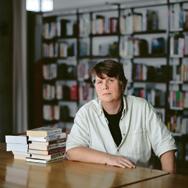

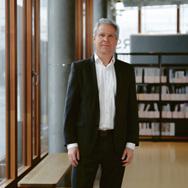


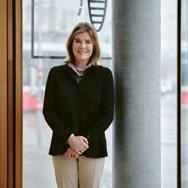
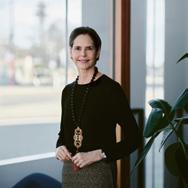

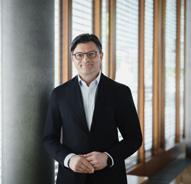
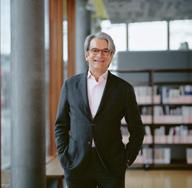
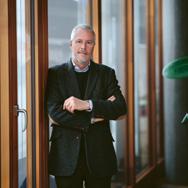
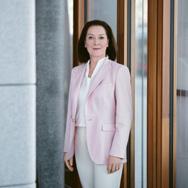


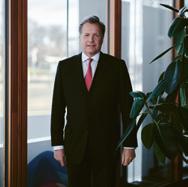

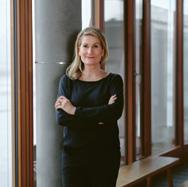
Milan Vujic
Jutta Braidt
Nicole Traxler
Kurt Zangerle
Franziska Tamussino-List
Florian Bauer
Markus Trauttmansdorff
Martin Wohlmuth
Katharina Urban
Eva Höltl
Bettina Breiteneder
Johanna Mair
Katrin Klingan
Ursula Dechant
Christoph Prantner
Rauno Pello
Boris Marte Franz Karl Prüller


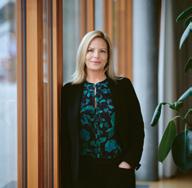

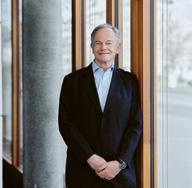





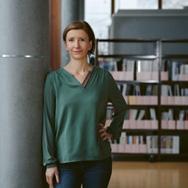




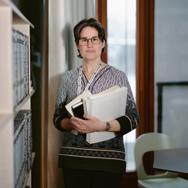


Jana Barinowa
Simona Rhomberg
Beatrix Beck
Marianne Tomann
Andreas Treichl
Stefanie Riedmüller
Nicole Alber
Miroslava Krása Daniela Mühlbacher
Barbora Orlíková
Ľubica Vopičková
Gudrun Egger
Sabine Altmann
Hedvig Morvai
Barbara Pichler
Beatrix Köhle
Angelika Neumann
Andreea Petrea-Schweiger
PUBLISHING DETAILS
Publisher
DIE ERSTE österreichische Spar-Casse Privatstiftung
Am Belvedere 1, 1100 Vienna, Austria office@erstestiftung.org www.erstestiftung.org
Editors
Christoph Prantner & Leonie Haiden (managing editors), Martina Bachler-Huber, Helene Hartmann, Sarah Hayes, Miroslava Krása, Daniela Mühlbacher, Gerald Radinger
Authors
Martina Bachler-Huber, Yana Barinova, Jutta Braidt, Gudrun Egger, Charles Esche, Julia Hochlenert, Kevin Kaiser, Maribel Königer, Hedvig Morvai, Dani Mühlbacher, Christoph Prantner, Francesco Rocchetti, Wolfgang Schopf, Jovana Trifunović, Hedvig Turai, Andreas Treichl, Martin Wohlmuth
Photo editor
Miroslava Krása
Design
Atelier Anna Liska
Art Direction & Graphic Design
Collaboration Lucia Průša, Marlene Posch
Photo Editing
Mario Rott
Proofreading
ERSTE Foundation Communications Team
Translations
Barbara Maya, Douglas Fox
© ERSTE Stiftung, Vienna 2026
Photos, if not marked differently: © ERSTE Stiftung

20 25