
ANNUAL REVIEW 2025
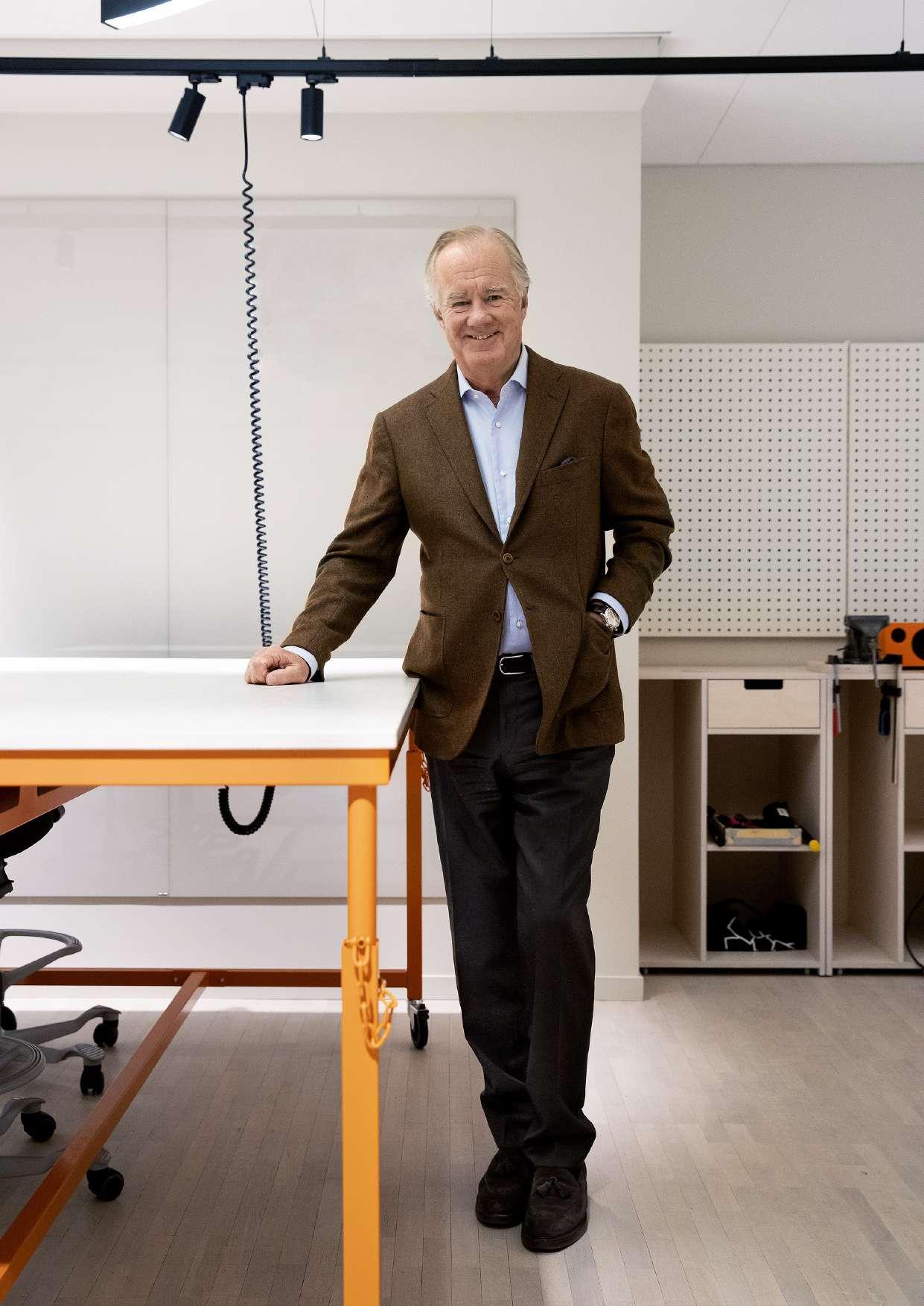
STEFAN PERSSON

ANNUAL REVIEW 2025
STEFAN PERSSON
The Erling-Persson Foundation has its origin in the Persson family’s interest in how the power of entrepreneurship can contribute to solutions that benefit our society.
Through the Foundation’s work we want to actively strengthen education, promote entrepreneurship and create better conditions for children and young people to shape their lives. We also contribute to research that pushes the boundaries of our shared knowledge. For us, this is not just about supporting individual projects but about enabling lasting change.
The Foundation provides us in the family with a shared platform for our community engagement. We are united in our view of knowledge as one of society’s strongest driving forces – a force that can change lives and that needs to be made available to more people. Our efforts reflect what is particularly close to our hearts: faith in the future, innovative thinking and opportunities for young people to grow.
At a time of conflict and unrest, it also feels particularly meaningful to make a concrete contribution to Sweden’s competitiveness and optimism. In 2025 we made several significant grants to advance entrepreneurship. The Center for Retailing at Stockholm School of Economics was awarded an additional SEK 50 million to further develop its successful courses in retail. Overall, Stockholm School of Economics has received nearly SEK 900 million from the Foundation over the years.
The single largest donation in 2025, amounting to SEK 550 million, was made in support of the construction of a new Nobel Center. Together with previously awarded funds, this means that the Foundation has now contributed a total of SEK 1.15
billion to the project. An equally large contribution has been provided by the Knut and Alice Wallenberg Foundation.
We see the Nobel Center as a future meeting place for knowledge, inspiration and new perspectives; a place that can engage people far beyond the borders of Sweden. The Nobel Prize has a unique global standing and highlights the importance of work within science, culture and peace. The Nobel Center will breathe new life into these values, inspiring future generations of researchers and thinkers – something that is crucial for Sweden’s role as a knowledge nation.
Over the year we also continued to strengthen Swedish research. A total of SEK 169 million was donated, mainly for medical research. Fourteen new projects have received support, some being of significance for the rapidly growing area of regenerative medicine. In addition, we invested in new medical imaging diagnostics through an award of SEK 60 million and have supported research into cancer, cardiovascular disease, allergies, inflammation and neurodegenerative diseases.
The Foundation’s commitment to Ukraine continues. Since the outbreak of the war we have donated close to SEK 300 million to support those affected. For children and young people in the country we are participating in the Nadija Children’s Foundation, a Nordic initiative focusing on trauma care. In supporting collaboration between the Astrid Lindgren Children’s Hospital, Beredskapslyftet and the Okhmatdyt Children’s Hospital in Kyiv, we are
helping to strengthen healthcare skills and improve equipment. Among other things, during the year we enabled generators to be purchased for children’s hospitals hit hard by the war.
We continue to invest in the creativity and future of young people. Through continued support for initiatives such as Värmeverket in southern Stockholm, Järvaveckan’s Culture Bridge and support for the think tank Unga tankar om musik (Young Minds for Music), we want to provide more routes into culture and creativity. Fryshuset received this year’s largest donation in the area of children and young people, with SEK 50 million for its project The Block.
Alongside this, we have prioritised initiatives that give more children and young people access to meaningful leisure time. We are particularly pleased to support the Scouts’ initiative ‘Scouting for all’ and Generation Pep’s work for increased movement and equal health.
In total, the ErlingPersson Foundation donated SEK 896 million in 2025. Behind every initiative are people with commitment, drive and a desire to create lasting value. In this annual review we meet several of them – and their work reminds us of what is possible when ideas are put into action.
Stefan Persson Chair of the Board
“The Foundation provides us in the family with a shared platform for our community engagement. We are united in our view of knowledge as one of society’s strongest driving forces – a force that can change lives and that needs to be made available to more people.”
Since the Erling-Persson Foundation was formed in 1999 it has made more than 370 donations, awarding a total of SEK 6.7 billion. The long list of recipients includes Karolinska Institutet, Stockholm School of Economics and Fryshuset.
In 1947 Erling Persson established the company that has developed into the global H&M Group we know today. The ErlingPersson Foundation was formed in 1999, in memory of his many achievements in retail and enterprise, financed by donations from the Persson family.
The family is passionate about entrepreneurship as a positive force in society, so supporting education in this area was a natural initial focus area for the Foundation. Before long two more focus areas were added, aimed at equipping society better for the future: support for research and support for the development of children and young people.
The Foundation sees meetings and collaboration as important for stimulating new thinking and new solutions. It is therefore particularly pleased to support interdisciplinary ventures and projects that link together different sectors of society.
The Foundation’s commitment to the projects supported is based on confidence that the project owner is capable of pushing the boundaries of our shared knowledge and understanding, and a sure and certain belief that knowledge changes and improves lives. Nearly 370 donations have been made to date, with the Foundation having given a total of SEK 6.7 billion to causes that benefit society.
The largest donation to date has been made to the Nobel Center Foundation, through two awards amounting to SEK 1.15 billion. The donation will enable the construction of the new Nobel Center at Slussen in Stockholm – a building whose content will enlighten, inspire and stimulate.
Various educational programmes in the field of entrepreneurship have together received around SEK 1.5 billion; major recipients have included the Stockholm School of Economics, Stockholm School of Entrepreneurship and the Royal Swedish Academy of Engineering Sciences (IVA). The Foundation’s funding has also created opportunity to start education and research in a new subject area: fashion studies, through a donation of SEK 75 million. The Centre for Fashion Studies is now well established at Stockholm University.
In the scientific field, research into type 1 diabetes is the area where the Foundation has made its largest contribution, amounting to around SEK 480 million to date. Significant support has also been given to research in areas such as cancer, cardiovascular disease, antibiotic resistance and neurological disease.
Fryshuset was the first organisation for children and young people to receive support for its activities from the Foundation. So far, its projects have received funding from the Foundation totalling around SEK 245 million, helping Fryshuset to develop into a highly valued centre for children and young people within sport, knowledge, leisure activities and more. Organisations for children and young people have together received around SEK 800 million.
At the end of 2025 donations to the three focus areas were distributed approximately as follows: 38 percent to research, 50 percent to education and 12 percent to children and young people.
In 1947 Erling Persson established the company that has developed into the global H&M Group we know today. In 1999 the Erling-Persson Foundation was formed in memory of his many achievements within retail and enterprise.
800 m
By 31 December 2025 the Foundation had awarded funding to over 100 projects that advance the development of children and young people, amounting to SEK 800 million in total.
75 m
In 2006 the Centre for Fashion Studies was established at Stockholm University, aided by a donation from the Foundation of SEK 75 million. Since 2018 fashion studies has been an independent academic discipline at the university.
1.15 bn
The Foundation’s largest ever donation amounts to SEK 1.15 billion, through two awards, and will enable the construction of a new Nobel Center. An equally large sum has been contributed to the project by the Knut and Alice Wallenberg Foundation.
300
The Foundation receives more than 300 applications for project support every year. Nearly 200 of these are research applications.
38%
An amount corresponding to 38 percent of the total funds distributed by the Foundation – SEK 2.6 billion – has been awarded to research projects led by Swedish universities and colleges.
313 m
Since the full-scale invasion of Ukraine in 2022 a total of SEK 313.5 million has been donated to date for various activities to help people affected by the war. As well as emergency relief, these include resources for reconstruction and to supply much-needed skills.
3.3 bn
Over the years, grants of around SEK 3.3 billion have been awarded in the area of Tuition & Education, representing around 50 percent of all funds donated.
4
The Foundation’s board holds its regular meetings to decide on awards four times a year.
100 m
As part of its major renovation, the Royal Swedish Opera will get a new stage for children and young people – partly funded by SEK 100 million from the Erling-Persson Foundation.
443 m
Stockholm School of Entrepreneurship (SSES) is an interdisciplinary and international network bringing together students from six universities and colleges to foster future innovation and entrepreneurial thinking. Over nearly 25 years its activities have received a total of SEK 443 million in support.
6.7 bn
Since the Foundation was formed in 1999 it has handed out more than SEK 6.7 billion to its three focus areas.
4 M / 3 YEARS
Anna Asarnoj and her colleagues want to change the treatment of early food allergies – instead of avoiding the food, the idea is to build up tolerance through many small doses. In this project, children eat a powder containing 10 different allergens in order to cure their allergy or avoid becoming allergic.
How common food allergies really are depends entirely on who you ask. A frequently used figure is that one in five people feel they have some kind of food allergy, and in the latest study from the Swedish National Food Agency around 17 percent of Swedes state that they have a food allergy.
“But those of us in the profession would say that the proportion of people with food allergies is significantly lower, at around five percent,” says Anna Asarnoj, a paediatrician and associate professor at Karolinska Institutet.
The discrepancy is partly due to the fact that blood tests may show antibodies linked to allergy, known as IgE antibodies. Having measurable IgE antibodies is not the same thing as having a clinical allergy, however.
“Unfortunately, it can also be the case that if a parent believes their child’s eczema is due to a food and begins to exclude that food, then the food allergy will appear like clockwork,” says Anna Asarnoj.
This is because eczema itself increases the risk of IgE antibodies forming. One thing that reduces the risk of becoming allergic to a food, however, is to eat it early and regularly.
“Often it’s good to be cautious as a parent, but in this particular context it’s actually bad. That’s why I’m trying to pass on the message to the child health clinic nurses and primary care centre doctors who meet this large group of children that it’s not a good idea to say ‘You might want to try eliminating milk or egg’.”
Idun Holmdahl, a paediatrician and postdoctoral researcher at Karolinska Institutet, thinks along the same lines:
“Parents from another generation might say ‘I had that problem as a child, but they let me keep eating it and eventually it passed’. In other words, they did their own tolerance training.”
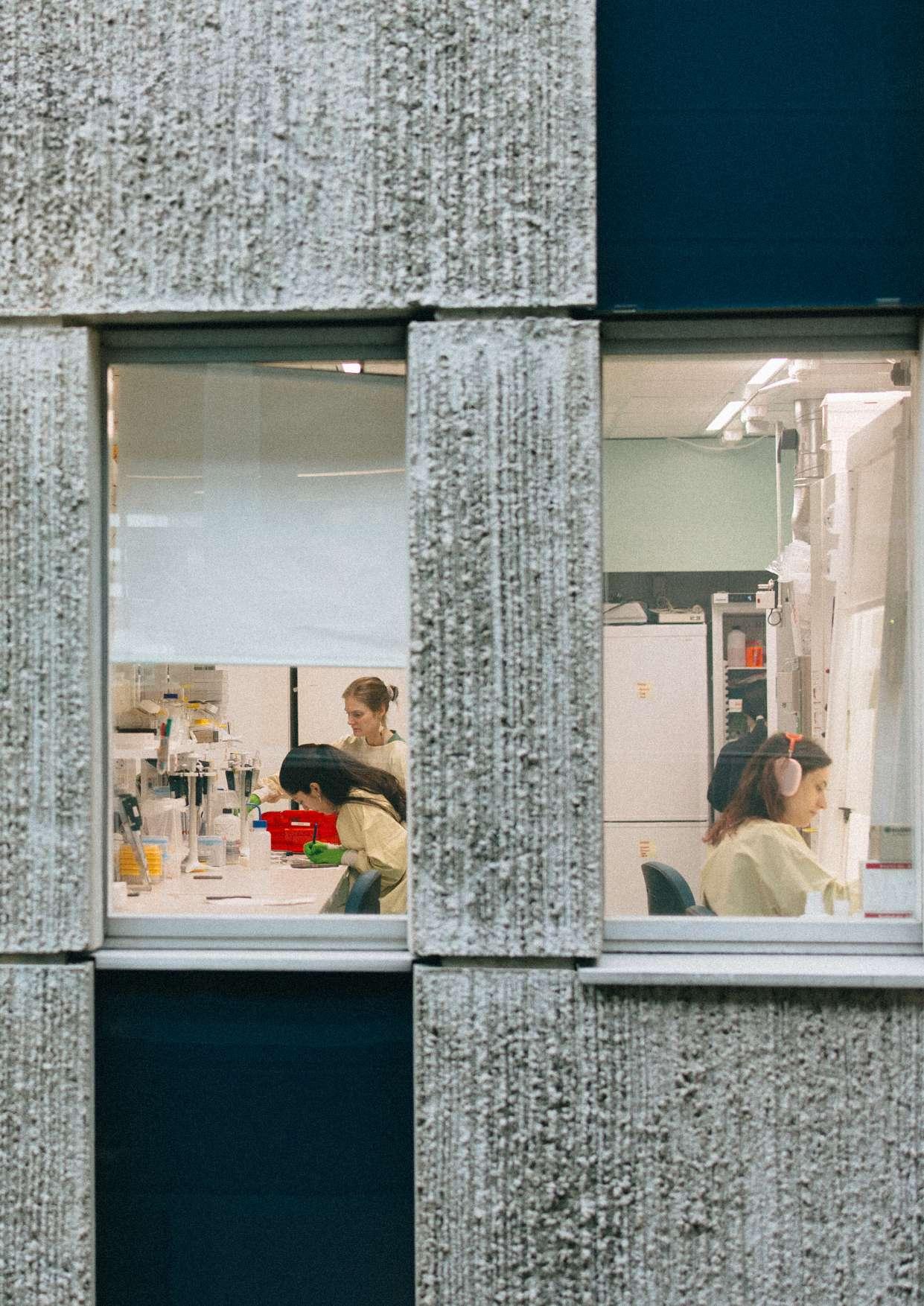
They have carried out a highprofile peanut study here in the clinical research department at Södersjukhuset in Stockholm, up on the fifth floor. The view is breathtaking.
“We know that peanuts, tree nuts, eggs and milk together account for 90 percent of all allergic reactions in children that result in medical visits.”
“We can see all the way to Karolinska Hospital in Solna,” says Caroline Nilsson, a paediatric allergist and associate professor at Karolinska Institutet.
On the table in the waiting room are blocks and photos of the hospital clowns who stop by on Tuesdays. Just inside the nurses’ office, adrenaline syringes and antihistamine are laid out on an emergency tray – a necessary safety measure in a food allergy study.
In the peanut study, children with a peanut allergy were either allowed to eat peanut puffs for three years or avoided peanuts altogether. After one year, 72 percent of the children who
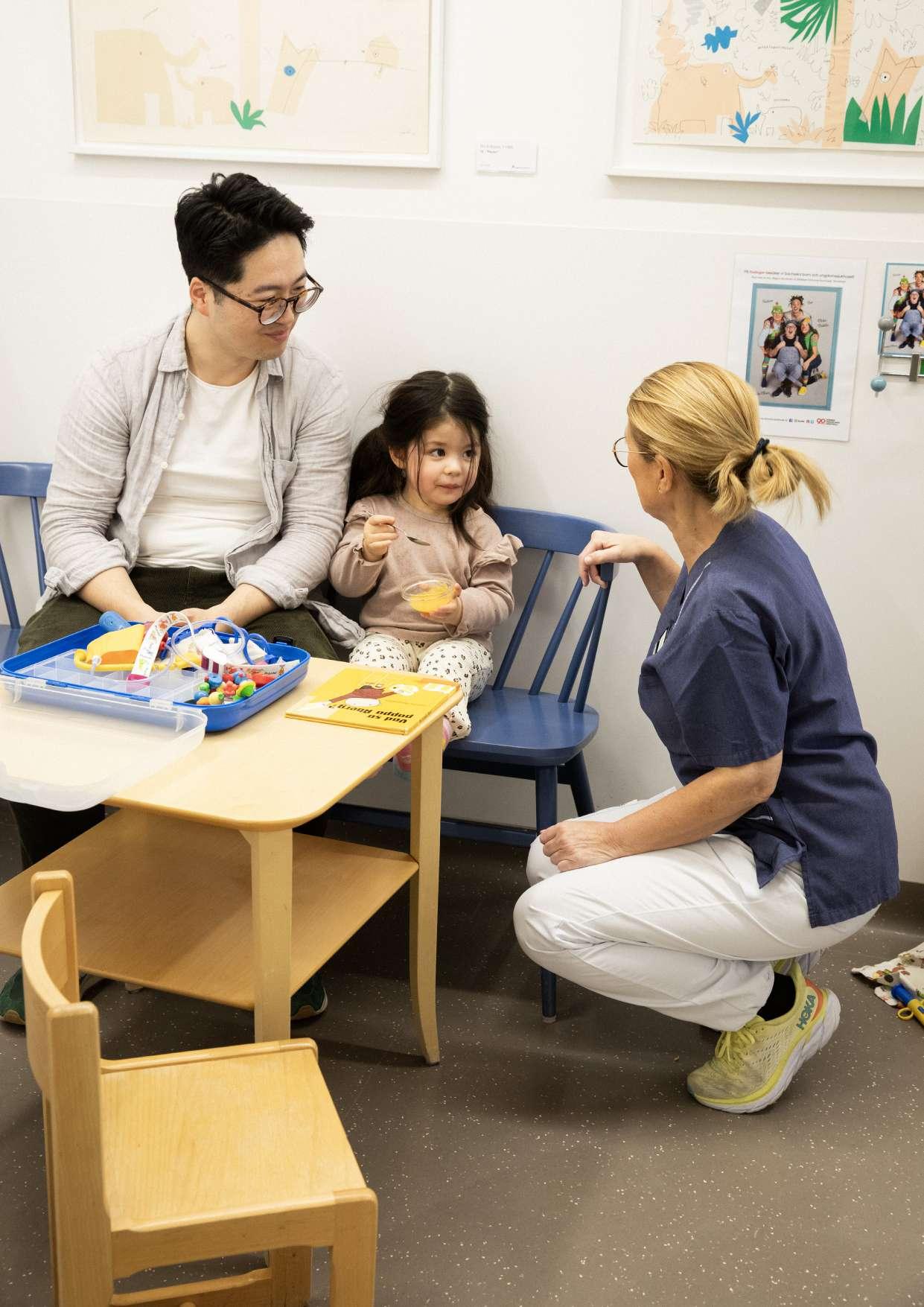
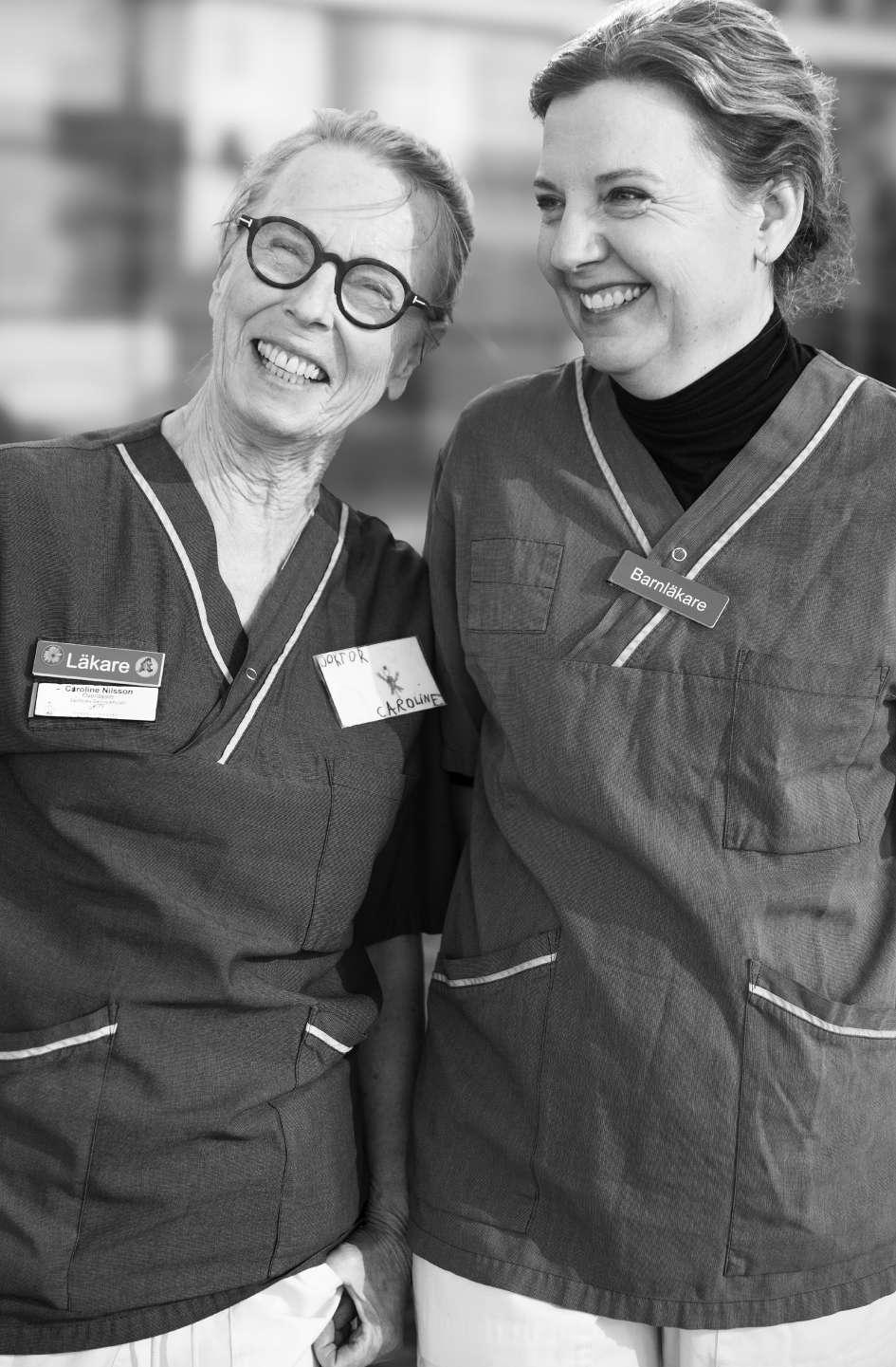
“The dream is to avoid children having to have such a hard time at children’s parties or when travelling, or being teased at school and having to sit with their own separate lunchbox,” says Anna
shown here with Caroline Nilsson.
had eaten peanut were free of their allergy compared with 4 percent in the avoidance group. The results were published in the Journal of Allergy and Clinical Immunology Practice in 2024. Threeyear data is about to be published and there the results are even better, say the researchers.
Most of the families were pleased, but not all. Anna Asarnoj reports how she was, in fact, berated:
“One family said, ‘Why aren’t you bothered about egg? It’s good that she can tolerate peanuts, but now the window is closed and it’s too late for her to be cured, so we’re left with a really severe egg allergy!’. It made me rethink.”
“Some put the powder into sliced jelly sweets, others into fish balls.”
The new study is therefore designed differently. The children are between six months and three years old, and those who are treated receive a powder containing 10 common allergens.
“We know that peanuts, tree nuts, eggs and milk together account for 90 percent of all allergic reactions in children that result in medical visits,” says Anna Asarnoj.
The tree nuts group includes various nuts such as cashews, walnuts and hazelnuts. The researchers have also added legumes to their powder, as these are related to peanuts in such a way that the proteins people are allergic to are very similar.
As for allergies to milk and egg, in 80 percent of cases people grow out of them.
“But we don't know why, or who will remain allergic,” she says.
The study involves 80 children who have IgE antibodies and who react to the powder in what is known as a provocation. Half are treated with allergen powder while the other half receive a placebo powder, and together they are known as the AB group.
But unlike in the peanut study, the study will also include children who have IgE antibodies but do not react to the powder – known as the CD group.
“They have signs in their blood of an incipient allergy, so for preventive purposes we allocate them to receive active powder or a placebo,” says Anna Asarnoj.
Families visit Södersjukhuset, where they are screened using questions but where blood tests are also taken. Over the course of a day at the hospital, the child is given the powder to eat in four doses
– ranging from roughly a quarter of a pinch to two small pinches.
At home the children are then given a low dose daily for a month, at the level that they tolerated in the provocation, before coming back and stepping up to the next dose. Once they have reached the maximum dose – one tablespoon – this is maintained for the rest of the study.
At the clinic the children are given their powder in fruit puree, which does not go down well with all of them. Families are allowed to be resourceful and bring in their own variants for the return visits. “Some put the powder into sliced jelly sweets, others into fish balls,” says Idun Holmdahl.
The researchers also collect blood and stool samples from the children, as well as cells from their oral mucosa. An important part of the study is taking place in collaboration with a group of immunologists at Stockholm University who will map what happens in the children immunologically.
“For example, how does their gut flora change? We also want to try to see if there’s some kind of biomarker that signals that it won’t work. It’ll be really interesting to compare treatment and placebo in both the AB and CD groups,” says Caroline Nilsson.
Neither the researchers nor the families know which children receive active powder. Initially, the plan was to treat all the participants for two years before the code was broken, but they have now reconsidered. Idun Holmdahl describes all the time the families spend on giving the powder each day and on coming back to step up the dose and for followup visits.
“But if the child reacts, you can usually figure out what it is that the child cannot tolerate.”
“It doesn’t feel right that those who do everything so carefully but get the placebo powder are not helped,” she says.
Caroline Nilsson agrees.
“It has to be that way because it’s a study, but we’ve submitted a new ethics application for an evaluation after a year. Should the results be good, then the placebo group could also be offered treatment,” she says. The evaluation takes place by means of a provocation with active powder; those who do not react are considered to tolerate all the 10 allergens contained.
“But if the child reacts, you can usually figure out what it is that the child cannot tolerate,” says Anna Asarnoj.
Anna Asarnoj explains that the study is costly to carry out, as for safety reasons they must have both a doctor and two nurses on site, plus access to hospital care. All provocations take one day per child, and upping the dose once a month also takes time.
“In that sense it’s by far the most difficult study you can do, precisely because it’s so expensive,” says Anna Asarnoj.
The support from the ErlingPersson Foundation is therefore more than welcome.
“I really am unbelievably happy! You’re always nervous with a new study – you don’t have the funding for the whole study at the outset, but you start when you’ve pulled together enough for the initial period. So it’s incredibly nice when you get in decent contributions,” she says, continuing:
“We’re really happy that we can do this project. No matter what the results show, we’ll gain an incredible amount of knowledge.”
Caroline Nilsson points out that the study is unique, since nowhere else is a study being conducted that involves 10 allergens at once. But she stresses that the research must never come at the expense of the children.
“With such young study participants, it’s particularly important from an ethical point of view that we’re very careful. I think we can tell if the kids don’t want to do it. I’ve seen cases where the parents want it much more than the children, and then we have to take the child’s side.”
The number of allergens in the active powder given to half the children.
Idun Holmdahl agrees:
“In the long run, we have to weigh up what’s best – if a child doesn’t get an allergy but instead becomes very scared of hospitals… We never force them.”
The common goal for 10 years’ time is clear to the three researchers.
“To do more active work on allergies. And above all, to have got information and knowledge out there within that period,” says Idun Holmdahl.
Caroline Nilsson adds:
“It’s my hope that we have very few children with food allergies. That those who have an early food allergy are given multiallergen powder to eat, or some other product, or just what they are allergic to. The important thing is the mindset that, instead of avoidance, you should be exposed to it.
Anna Asarnoj agrees and points out that a clinical food allergy is disabling.
“The dream is to avoid children having to have such a hard time at children’s parties or when travelling, or being teased at school and having to sit with their own separate lunchbox. There’s so much sadness associated with this,” she says, continuing:
“And all these fake allergies, people avoiding this or that – they ruin things for those with real allergies, because people lose respect.”
The year that the first case study on oral immunotherapy – that is, treating food allergies by eating low doses of allergens – was published in the journal The Lancet. The title was A case of egg-poisoning.
72%
Percentage of those who ate peanut puffs in the peanut study and were free of their allergy after a year.
Project leads: Anna Asarnoj and Caroline Nilsson.
Title: The InFO Study – the acronym stands for Infant Food Allergen Oral Immunotherapy. What it involves: Curing food allergies in children – a paradigm shift from passive to active treatment with multi-allergen oral immunotherapy for children.
Funding: The Erling-Persson Foundation is supporting the project with SEK 4 million over three years.
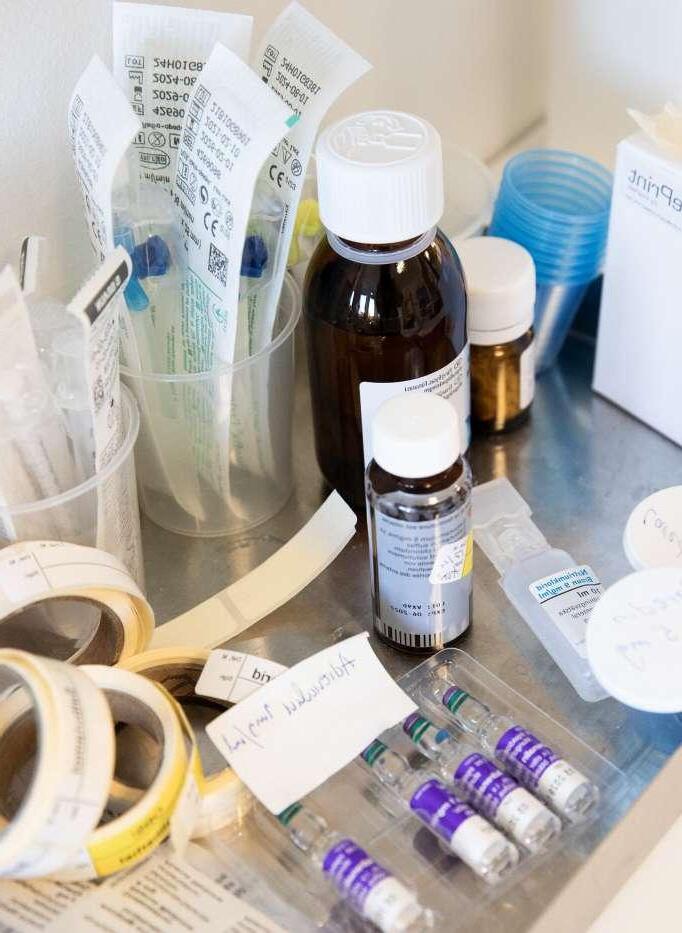
Adrenaline and antihistamine are laid out on an emergency tray – a necessary safety measure for a study on food allergies.
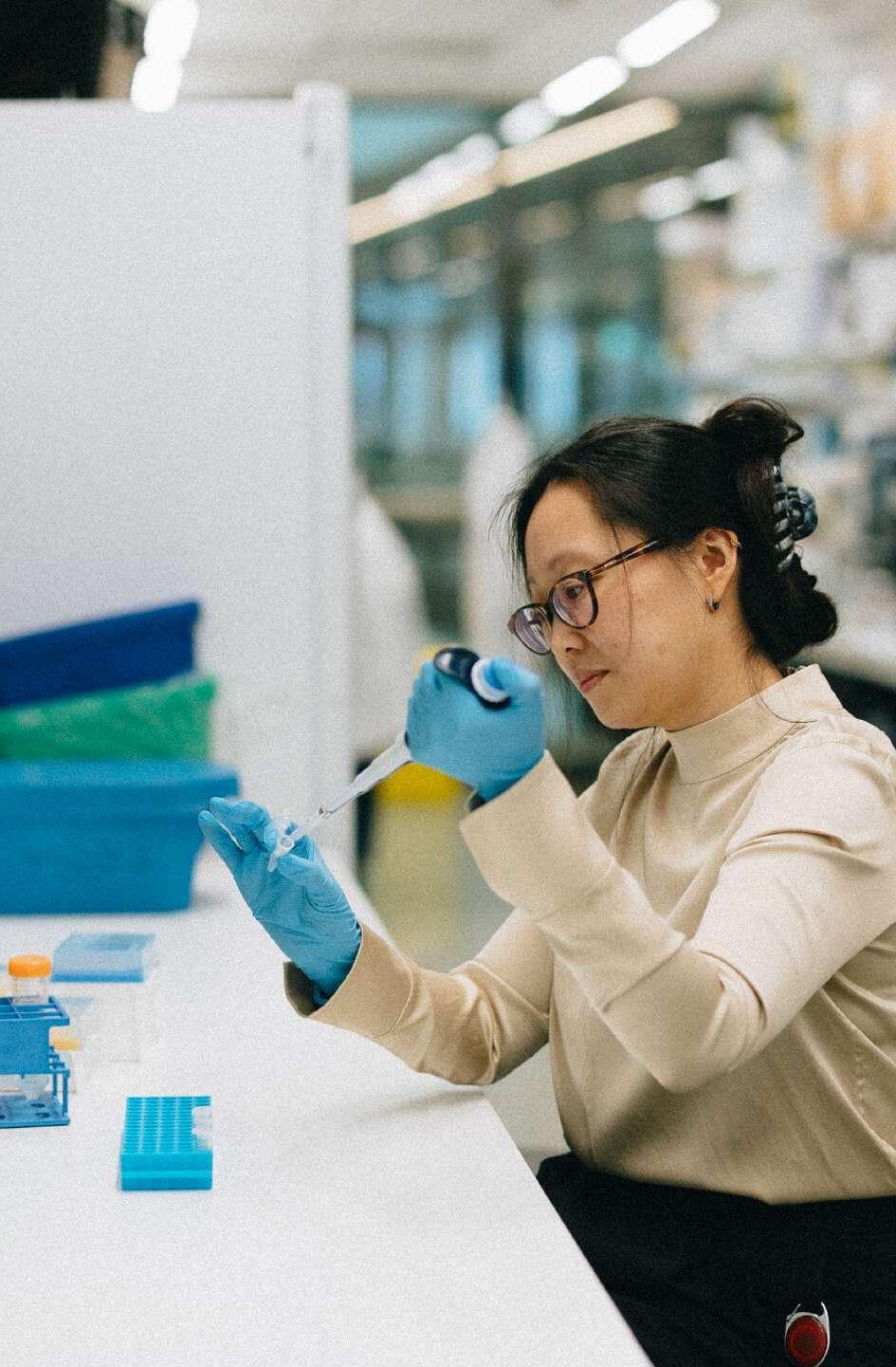
Amanda Andersson Rolf has produced mini organs – organoids – with three cell types. “There’s a type of stem cell that gives rise to all three – it’s tripotent,” she says.
SEK 15 M / 5 YEARS
The pancreas is 90 percent made up of cells that secrete digestive enzymes. Amanda Andersson Rolf wants to use models in the form of mini-organs to understand – among other things – how the enzyme leakage that can lead to pancreatic cancer can be prevented.
The name pancreas comes from the ancient Greek, meaning ‘all flesh’. Aristotle believed that its task was to passively protect the large blood vessels. Today the important and active role of this organ in metabolism is well known: to regulate blood sugar with the aid of insulin, and to digest food with the aid of various enzymes. These digestive enzymes are produced by what are known as acinar cells, which are often overlooked in this context, says Amanda Andersson Rolf, a researcher at Karolinska Institutet’s Department of Medical Biochemistry and Biophysics.
“The main focus has been on the beta cells that produce insulin, but which make up only two percent of the organ’s weight. The acinar cells account for 90 percent,” she says.
“Even cells have inherent genetic programmes, but the environment they are in also affects what they will become.”
Acinar cells produce enzymes like trypsin and elastase, which break down proteins, and lipase, which breaks down fat. This works well as long as the pancreas is intact – but if it is damaged, their secretion can cause problems. The most common cause of damage is blunt force, or inflammation due to high alcohol intake or infection, and the problem is that the cells then leak out enzymes that destroy the tissue. Inflammation of the pancreas
– pancreatitis – is also a risk factor for pancreatic cancer, a cancer that still today has an extremely poor prognosis.
“The fiveyear survival rate is less than 10 percent, so the longterm goal is to find new and better treatments for pancreatitis,” she says.
Despite acinar cells being so important, they are also one of the least studied cell types, as it has not been possible for researchers to keep them alive in vitro, i.e. in a plastic dish in the laboratory.
“This has made it difficult to study the mechanisms of how acinar cells are formed from the beginning and also what goes wrong in a disease situation. And although there are mouse models, there is a difference between a mouse pancreas and a human pancreas,” says Amanda Andersson Rolf.
Her research focus is cell identity – how cells get their specialised function, which is similar to how our own identity is created from properties and environment.
“Even cells have inherent genetic programmes, but the environment they are in also affects what they will become. This parallel got me interested in understanding how a cell that has so much potential nonetheless only chooses one path or the other,” she says.
As a postdoctoral researcher in the Netherlands, Amanda Andersson Rolf worked with Professor Hans Clevers. It was he who, in 2009, first described socalled organoids – miniorgans that can be grown in a laboratory. During her time at the Hubrecht Institute in Utrecht she developed a human in vitro
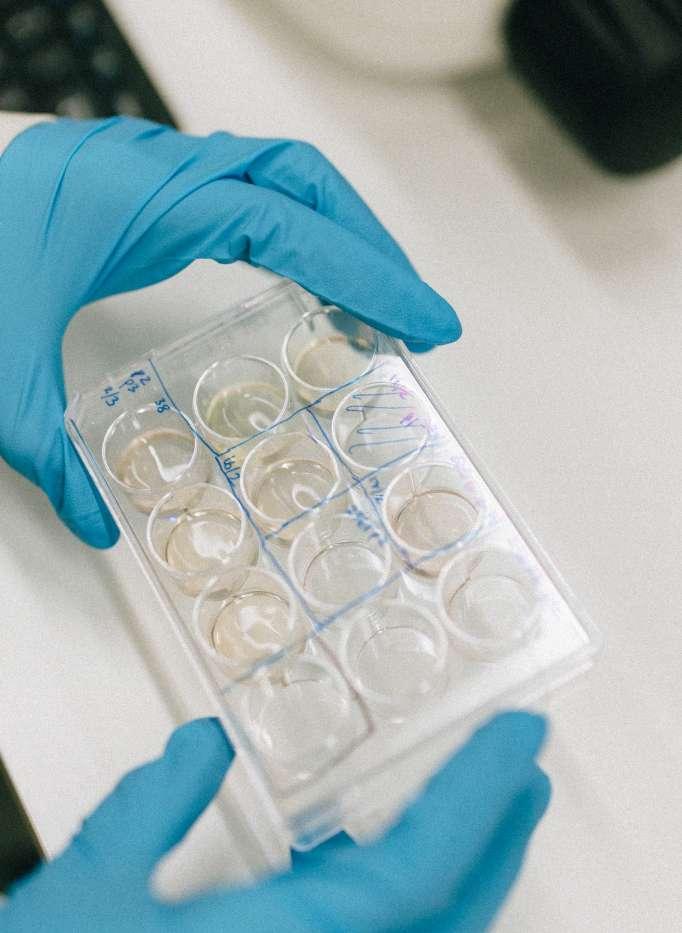
Organoids can be studied because they can be grown in vitro in the laboratory. They mimic how the cells in the foetal pancreas function and interact.
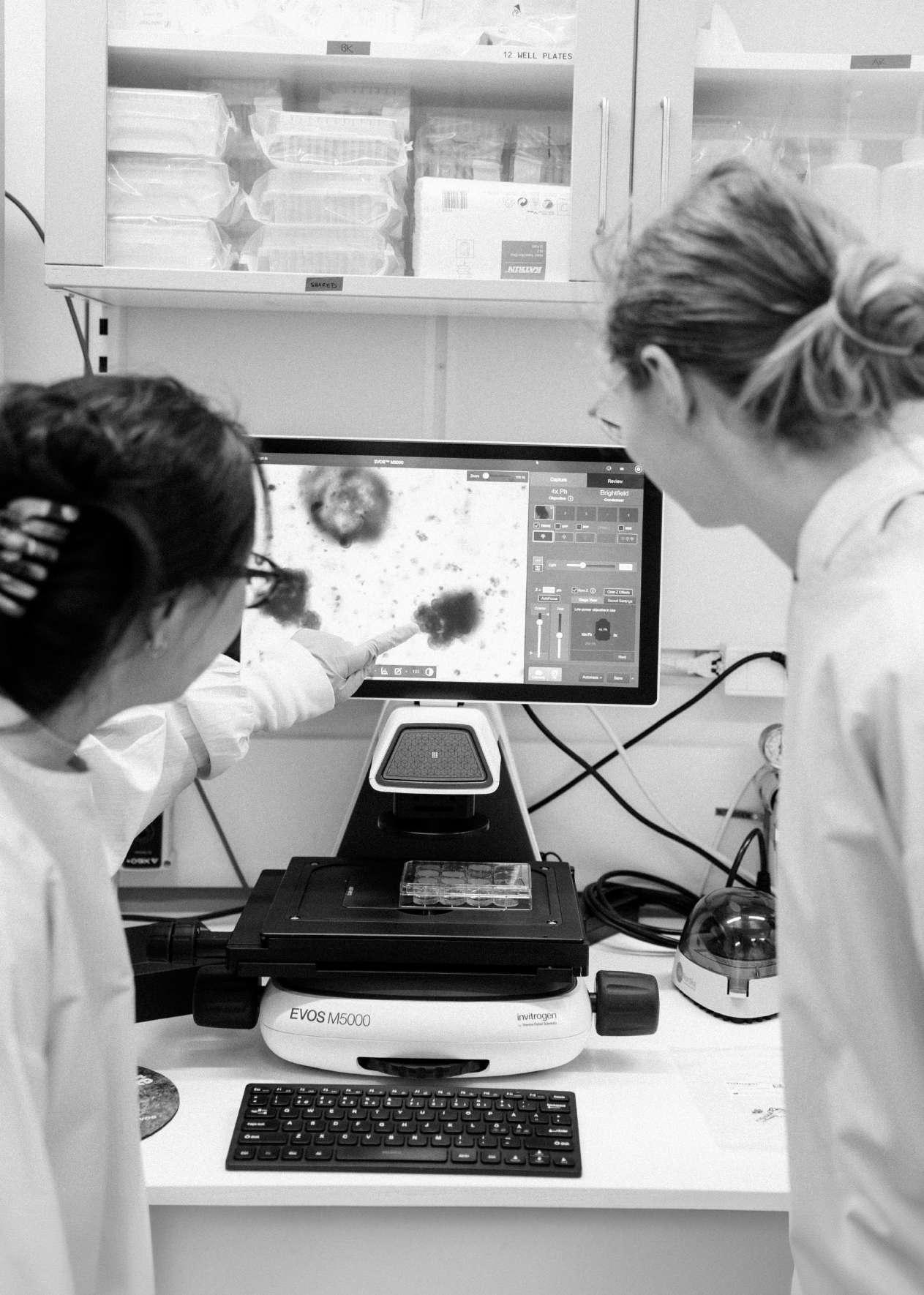
model of the foetal pancreas – the first to contain all of the three different types of cell found in the pancreas: as well as acinar cells, there are endocrine cells that manufacture hormones and ductal cells that transport fluids.
“It was the first model that could generate acinar cells de novo in vitro. This model gives my laboratory the opportunity to study how acinar cells are formed and the mechanisms that regulate enzyme secretion,” says Amanda Andersson Rolf.
“In my laboratory we will basically not use any animals at all.”
To create organoids, the researchers use stem cells found in pancreatic tissue. A single stem cell is enough to create the different cell types. Organoids are defined as selforganising, threedimensional structures with at least some of the cell types found in the actual tissue. In addition, they must reflect some of the organ’s functions.
“In older models of the pancreas, cells were made to form a ball – a spherical structure. Usually this is done using cancer cell lines that are forced to aggregate. One important difference compared to this is the organoid’s ability to selforganise – a single stem cell can bring about a 3D structure,” she says.
The limiting factor for the number of cell types is getting the right conditions, so that all the different kinds of cells are ‘satisfied’ at the same time. When Amanda Andersson Rolf realised that the organoid had three cell types, she was curious to know whether one type of stem cell gave rise to all three or if there were three different stem cell populations.
“There’s a single type of stem cell that can give rise to all three – it’s tripotent,” she says.
In human foetal tissue, she compared at what point during development it was possible to identify tripotent stem cells.
“I could see that they were present during foetal weeks 14–16, which is longer than in the development of a mouse. And in humans, but not in mice, the stem cells have a specific surface marker called LGR5,” she says.
The results were published in the journal Cell in December 2024.
The current project PANID (Pancreatic ID) has three strands. The first involves identifying what regulates and maintains the tripotent stem
cells. Since 2012, when researchers Yamanaka and Gurdon were jointly awarded the Nobel Prize in Physiology or Medicine, there has been hope that stem cells will be able to replace damaged or lost cells.
“If we can understand this stem cell better, maybe we can use that knowledge to also improve the regenerative capacity of adult cells,” she says.
The first aim is to understand what internal factors help maintain the potential of tripotent stem cells to generate different cell types.
“As part of this, I also want to find out what makes a stem cell with these three potentials become specifically an acinar cell,” says Amanda Andersson Rolf.
The second part of the project focuses on the external factors in the environment that can either maintain a stem cell or, in contrast, promote the formation of acinar cells.
“And by being aware of both internal and external factors, we can get clues to how the cell forms a specific identity,” she says.
In the third part of the project she wants to create an in vitro model of the adult pancreas, as today’s foetal organoid does not produce as much enzyme as cells in the adult organ. The model is to be used to study pancreatitis, and here it is also possible to mimic the damage that occurs when the acinar cells leak out enzymes.
“My core competency is that I really know how to establish new models.”
“If we know how they regulate their secretion, perhaps it can be stopped – which in turn would prevent inflammation. That’s also useful in other contexts, as pancreatic surgery is one of the riskiest surgeries precisely because of enzyme leakage,” says Amanda Andersson Rolf.
One advantage of organoids is that they reflect how different cell types interact.
“Usually, hormoneproducing cells, for example, have been studied separately. But in an organ they’re not isolated; rather there may be communication between the different cell types.”
She also highlights the ethical aspect: that organoids can reduce the use of experimental animals.
“In my laboratory we will basically not use any animals at all,” she says.
She values the support from the ErlingPersson Foundation very highly.
“Our ambitious projects require a lot of resources, and the longterm funding from the ErlingPersson Foundation gives us a unique opportunity to ask bold questions that are not possible to answer in, say, two or three years, but instead require a little more time.”
And for her recently established lab, it’s an “absolute game changer”.
“I can have a project that’s more descriptive, like the internal factors, while building up a more innovative project in the longer term – like the adult model I mentioned. During these five years I will publish other things as it develops,” she says, continuing:
“My team and I are so enthusiastic and happy to have been given this opportunity – we feel very fortunate to have been selected.”
Now that she has returned to Sweden after her postdoctoral studies, she brings with her cutting edge expertise which is not just about growing organoids.
“My core competency is that I really know how to establish new models. During my doctoral studies and my postdoc I worked with as many as 11 different types of organoids,” she says, continuing:
“Now I hope to be able to collaborate and help the rest of the research community in Sweden take this model system on board.”
In three years’ time she will have a team that works well together, the experiments will be well underway and the first publications will begin coming out.
“And we will have established an adult model in which we start to characterise the biology, or at least complete the final technical details,” she says, continuing:
“The dream is to be able to identify new drug targets, to regulate the secretion of digestive enzymes, or to understand pancreatitis better, such as which signal pathways are affected.”
Large pharmaceutical companies have now started using organoids for drug development and in 10 years’ time her lab may no longer be devoting itself strictly to basic research.
“In the longer term there are two things I’m hoping for: one is more basic scientific research, because there is still much we do not understand about how cells become what they are – and innovation often comes from basic research. And then also that we collaborate externally on drug development,” says Amanda Andersson Rolf.
3
Number of cell types that make up the pancreas: acinar, ductal and endocrine cells.
Ivan Petrovich Pavlov is awarded the Nobel Prize in Physiology or Medicine for the study of the physiology of digestion, the first of five Nobel Prizes relating to the pancreas.
ABOUT THE PROJECT
Project lead: Amanda Andersson Rolf.
90%
of the mass of the pancreas is made up of acinar cells – the cells that the project is focusing on. Only 2% is made up of the more well-known insulinproducing beta cells.
Title: Cell identity across foetal pancreas development and adult regeneration.
What it involves: Studies of cell identity in the pancreas, focusing on tripotent stem cells and acinar cells, as well as the development of an in vitro model of the adult pancreas.
Funding: The Erling-Persson Foundation is supporting the project with SEK 15 million over five years.
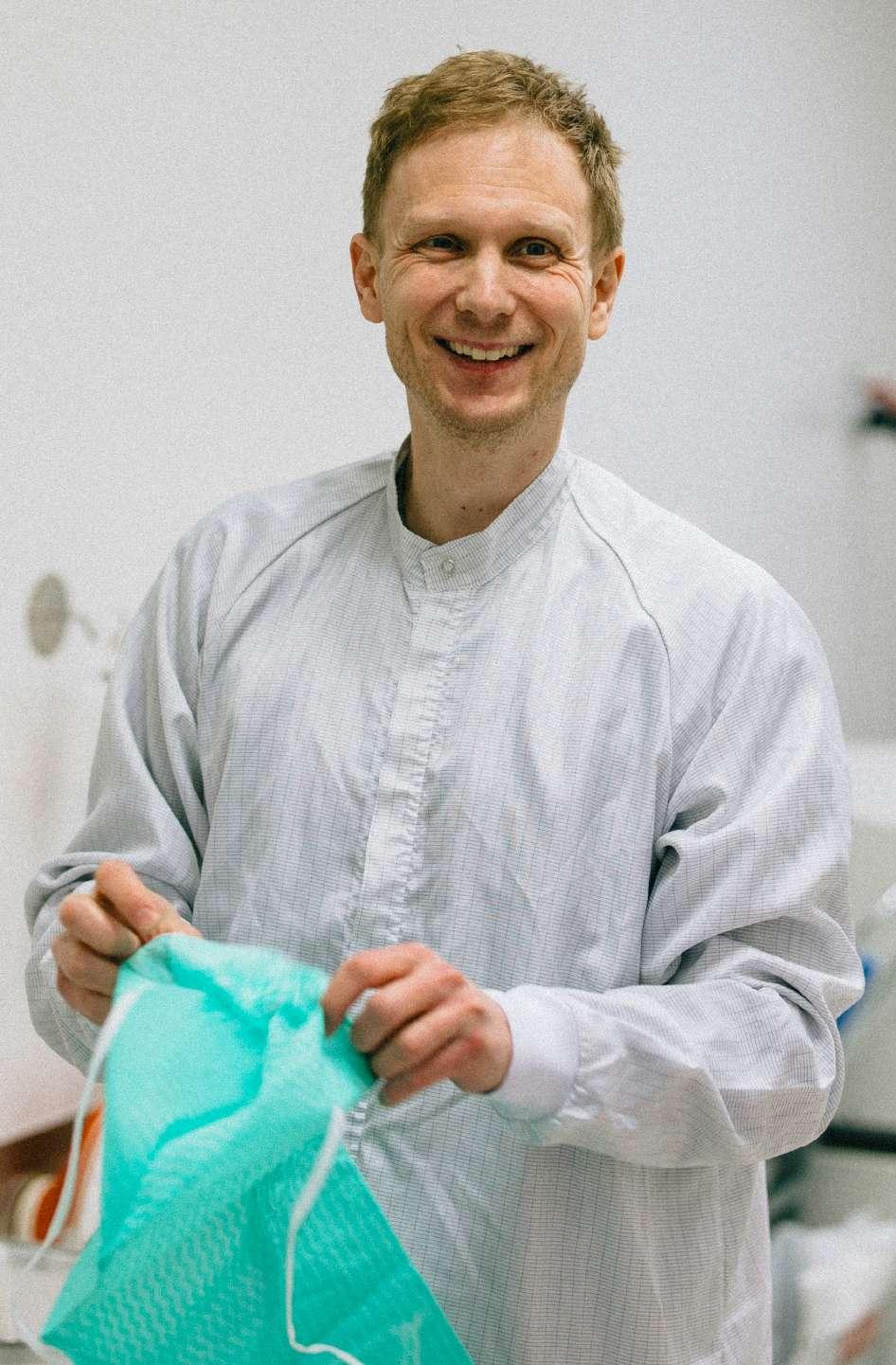
Joel Nordin wants more patients to receive CAR-T cell therapy. “Today treatment costs around SEK 3 million, which is a limiting factor,” he says.
Immunotherapy using what are known as CAR-T cells is expensive – and since these cells are manufactured abroad, it is also time-consuming. Joel Nordin and his colleagues want to manufacture the active cells at the hospital – and in the future, produce them directly in the patient’s body.
Being able to direct the cells of the immune system to kill tumour cells is an important part of the treatment arsenal for cancer. In CART cell therapy, which has been approved in Sweden since 2019, the patient’s T cells form the raw material for the drug.
In brief, the treatment involves harvesting cells from the patient, then in the laboratory adding a chimeric antigen receptor (CAR), growing them on and subsequently returning them (see Facts on page 29).
One obstacle is the price.
“Today treatment costs around SEK 3 million, which is a limiting factor that reduces patients’ access,” says Joel Nordin, a doctor at Karolinska University Hospital in Huddinge and researcher at Karolinska Institutet.
And the situation is not unique to Sweden.
“There is a great deal of discussion at conferences about how to get past this problem of cost –especially in Europe, where we have statefunded healthcare,” he says, illustrating his point with a technical metaphor:
“When you buy something for a car it can be quite cheap, but if you buy the same thing for a boat it suddenly becomes 10 times more expensive. In the same way, as soon as you have to do something for patients according to good manufacturing practice (GMP), the companies add on 10 times the price because it requires 10 times more paperwork and testing.”
The first time CART cells were used in Europe was in 2014, when Uppsalabased researcher Angelica Loskog treated a patient with lymphoma,
a blood cancer, within the framework of a study. Since then it has been possible to clinically treat different types of leukaemia and multiple melanoma. However, CART cells have not worked in the case of solid tumours. It has been tried, but it is more complicated, says Joel Nordin.
“Firstly, a solid tumour is more heterogeneous –so each cell is a little more individual and expresses different surface markers – and secondly, solid tumours shut down the immune system, which prevents the CART cells from doing their job,” he says.
“What’s so great about CAR-T cells today is that now the next phase has started.”
His colleague William Nyberg, an immunologist and researcher at Karolinska Institutet with solid knowledge in the field, has recently returned from a conference in Spain.
“What’s so great about CART cells today is that now the next phase has started. The target is no longer just B cell cancers; instead people are starting to explore all diseases involving B cells,” he says.
These include, for example, autoimmune diseases. Tests are ongoing for treatment with CART cells in cases of systemic lupus erythematosus (SLE), as well as myositis and scleroderma.
Joel Nordin highlights that cost is not the only dilemma.
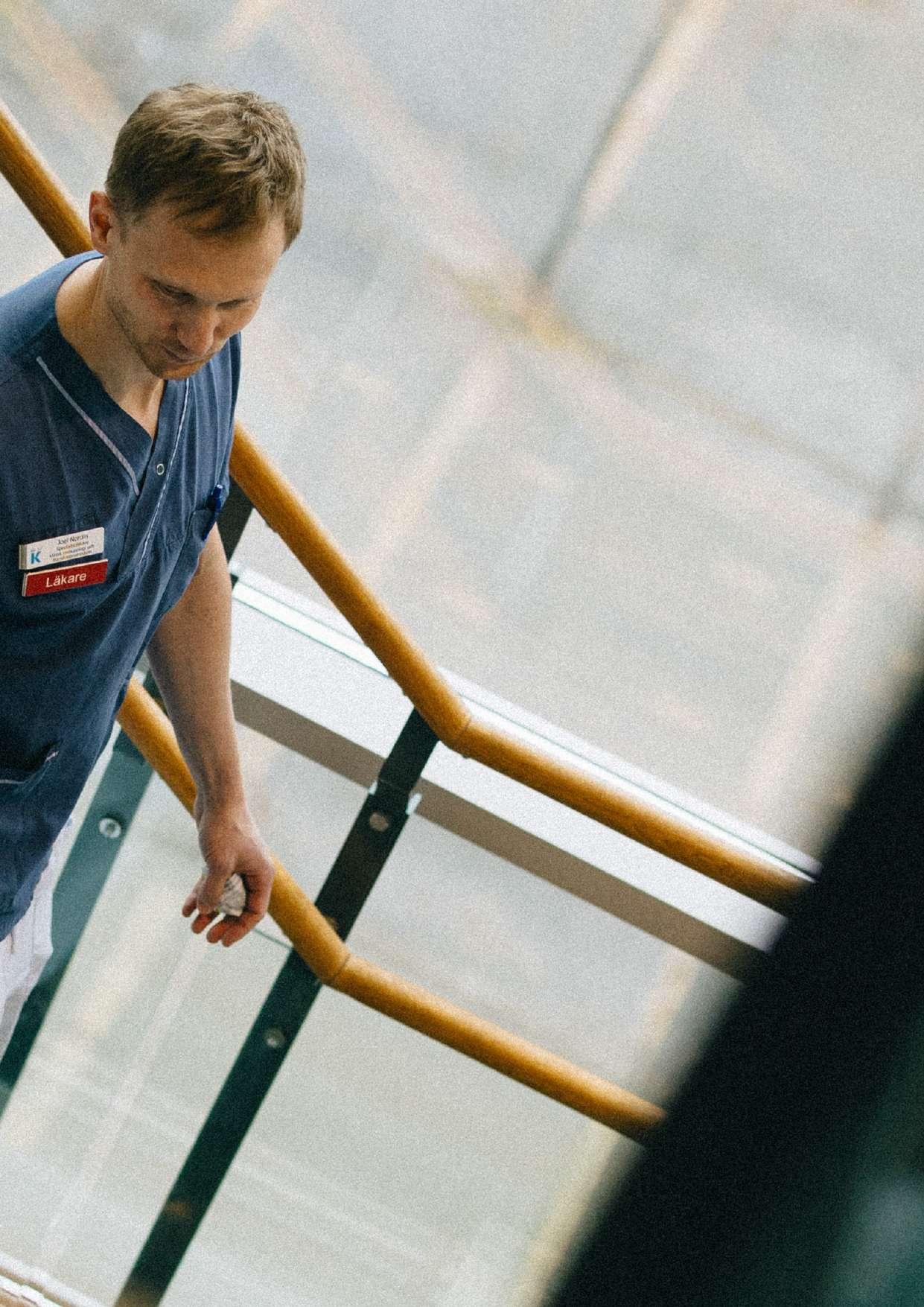
JOEL NORDIN
“This is the first time that I feel we can actually take some of what we discover all the way to clinic. Other labs at KI have done it, but now our department, where I’m a small part, can actually do it. That feels really great.”
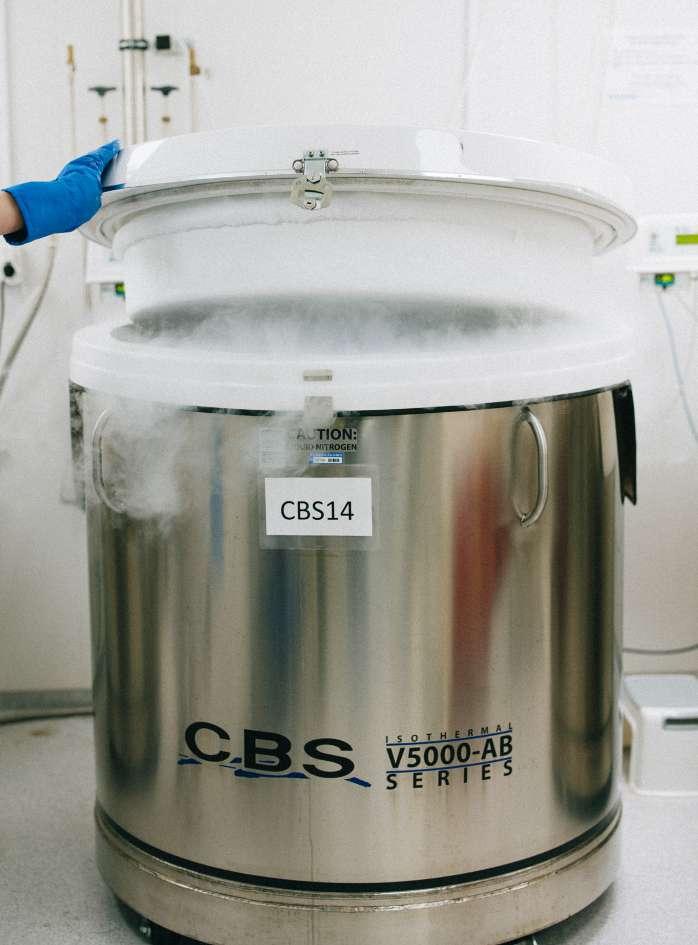
The steel tank, which holds 93 litres of liquid nitrogen, is kept at minus 190 degrees. Here blood or cells can be stored for a long period.
“In this project we intend to try to overcome another major problem, which is access to the treatment. As William says – now that we’re also starting to treat nonmalignant B cell diseases, the capacity of these companies in their centralised factories will not be enough,” he says.
Joel Nordin describes the current project as “very molecular biology” and points out that it is a team effort.
“I have good knowledge of the ‘middle part’ but need help before and after. William is very important in preclinical development and Stefan Mielke, who heads the hospital’s stem cell transplant centre where today’s clinical CART cell treatment takes place, will be very important for clinical development,” says Joel Nordin.
There are two parts to the project. In one part the researchers want to manufacture the next generation of CART cells based on transferring the CAR gene to the T cells using gene scissors at the hospital, without going through the commercial companies that have their production abroad.
The second part is to create CART cells inside the body – in vivo as it is called in Latin. That sounds a bit like science fiction, but is made possible by various ways of introducing nanoparticles that bring with them what is needed to convert T cells into effective CART cells in situ.
Joel Nordin describes how the project is particularly important in an uncertain world. They saw how, back during the pandemic, it became difficult to send cells abroad.
“It’s important to be independent and to be able to control how we will treat the patients.”
“Access to external factors is no longer as stable, which may mean that hospitalproduced CART cells – or in vivo, as we are both working on – would be more secure, hopefully cheaper and at least as good or better. That’s what we’re hoping for,” he says, continuing:
“It’s important to be independent and to be able to control how we will treat the patients.”
The project application describes how the in vivo project will use an allinone particle. Joel Nordin says that at present this works well in cell cultures, but needs to be optimised for testing in animals and eventually humans.
“William has a system using two nanoparticles that has come further. We’ve tried to reduce it to one, and if that works, it would be great,” says Joel Nordin.
A study was recently published in Nature on precisely this in vivo production of CART cells, with William Nyberg listed as first author. The researchers report that they have been able to treat cancer in mice using two particles introduced into T cells. Mice with a human immune system carried three types of cancer: acute leukaemia, multiple myeloma or the solid tumour sarcoma. Injecting the particles removed the majority of detectable cancer within two weeks in most of the animals.
The manufacture of CART cells often uses lentiviruses that infiltrate the target cells, bringing with them the desired CAR gene. William Nyberg says that lentiviruses can integrate more or less anywhere in the genome, however, and can moreover introduce multiple copies of the gene.
“You don’t really have control over how much is expressed. Here we used the CRISPR Cas9 gene scissors, which via a kind of adenovirus insert a copy of the CAR gene in a specific place,” he says.
The gene was placed in the part of the genome that normally expresses the T cell receptor.
“This means that the gene is expressed and regulated naturally in the T cell,” he says.
Joel Nordin is part of a consortium of researchers at Karolinska Institutet, Uppsala University and Chalmers University of Technology who are running another in vivo project in which they are evaluating lipid nanoparticles. These fuse with the cell membranes, and are based on the same technology as was used to transfer the mRNAbased Covid vaccine into cells. In the in vivo system they will combine lipid nanoparticles with various methods of gene editing, as they described in Nature Communications in 2025.
“I think it’s good that we have slightly different approaches but are also working together – then we’ll see what works in the end. I think that’s much better than each of us having our own camp here at KI and competing with each other,” says Joel Nordin.
One of many questions in the in vivo project is whether this method requires the patients who are being treated to be healthier. To get a better picture, the researchers have therefore started using donated cells from patients.
“We ask those whose cells are harvested at the clinic if William can use some cells for his in vivo research. When cancer patients have undergone
chemotherapy, the immune cells are not as vigorous as in a healthy volunteer. It’ll be interesting to see what the potential advantages or disadvantages of the in vivo system are,” he says.
When it comes to producing CART cells at the hospital, Joel Nordin believes that it may be possible to start within three years provided the paperwork is in order.
“The aim is to be able to submit our application to the Medical Products Agency within two years. The method itself, and especially all the safety regulations, take an incredible amount of time and require an extreme amount of paperwork… an unnecessary amount, in my opinion. But being able to try it out on patients in three years’ time is a reasonable schedule.”
The support from the ErlingPersson Foundation is very significant.
“It’s one of my biggest grants, so for me it means a huge amount. I would think it’s enough to drive through almost the entire preclinical development and is absolutely crucial for the project,” says Joel Nordin.
He has been at Karolinska Institutet since 2006, when he began studying on the medical programme.
“But this is the first time that I feel we can actually take some of what we discover all the way to clinic. Other labs at KI have done it, but now our department – where I’m a small part – can actually do it. That feels really great,” says Joel Nordin.
Through a process known as apheresis, the patient’s own T cells are harvested from their blood. They are then genetically modified so that on their surface they express a chimeric antigen receptor (CAR). This targets a surface marker on B cells called CD19.
The CAR-T cells are then cultured and tested for viruses before being returned to the patient, who by then has been given chemotherapy to suppress the immune system.
Once back in the blood, the CAR-T cells specifically seek out and kill the cells that have the CD19 marker on their surface.
At present the patient’s cells are harvested at the university hospital but then sent to commercial laboratories in the Netherlands or the US. After a few weeks, the doctors get the finished CAR-T cells back.
3 m
Number of patients in Sweden who have been treated with CAR-T cells so far – 104 of them in Stockholm.
Funding: The Erling-Persson Foundation is supporting the project with SEK 8 million over three years. 2014
The first patient in Europe is treated with CAR-T cells for lymphoma, in Uppsala. 355
The cost of treating a patient with commercial CAR-T cells today. Within three years the researchers hope to reduce that cost to a third.
ABOUT THE PROJECT Project lead: Joel Nordin.
Title: Implementation of Hospital-based production of Homology Directed Repair generated CAR-T cells and development of next generation in vivo CAR-T cells.
What it involves: Developing technology to create CAR-T cells in the hospital, without intermediaries, and using vectors to convert cells into CAR-T cells inside the body (in vivo).
SEK 60 M / 4 YEARS
Mats Danielsson wants to revolutionise the type of medical imaging that is based on radioactive isotopes. The aim is for the imaging to be faster, provide better resolution and be capable of showing several biological processes in parallel.
Nuclear medical imaging is now a workhorse within healthcare, especially for diagnostics. The various methods used are based on the patient being injected with a radioactive substance known as a radionuclide. This is linked to a ‘marker molecule’ that is designed to seek out the particular tissue or type of cells that the image is to show. The main techniques used are positron emission tomography (PET) and single photon emission computer tomography (SPECT).
In a regular Xray a beam is sent through the patient and the image appeared traditionally on a photographic plate, though the technology has now been digitised. In PET and SPECT the radiation is instead emitted by the actual patient, while detectors placed round about them capture the gamma rays.
Standard computer tomography (CT) can depict anatomical structures, and often PET and SPECT are combined with CT. PET and SPECT scans instead provide information about functioning –for example, metabolism. A common variant of the PET scan is carried out using the glucose analogue fluorodeoxyglucose, where the fluorine atom is radioactive. This can be used to show glucose metabolism – a process that is elevated in cancer cells, for example.
Mats Danielsson, a professor of medical imaging technology at the Royal Institute of Technology in Stockholm, describes how PET and SPECT scans are fundamental for diagnostics and research.
“Both are super important but suffer from poor resolution, and SPECT in particular is not very efficient,” he says.
The scans take between 10 minutes and an hour, and one reason the images become blurry is that the patients need to breathe – resulting in movement that creates blur.
To remedy this, researchers want to combine PET and SPECT in a single piece of equipment. This is the focus of the project New technique for molecular imaging. In part, this involves replacing today’s relatively inefficient detector made of expensive materials such as lutetium with a detector based on integrated silicon chips.
“Being able to have SPECT/PET in the same room frees up space in hospitals, and faster scans result in better patient flows.”
This will make it possible to detect for the first time the exact direction of the gamma rays, resulting in a much higher resolution image than is possible today.
Mats Danielsson is optimistic.
“For SPECT, we’ll be able to improve resolution by a factor of two and speed by a factor of a million.”
Moa Yvebom Tamm, a researcher at the same institution, interjects:
“Where PET is concerned we’re more uncertain, but we think it’ll be better there as well.”
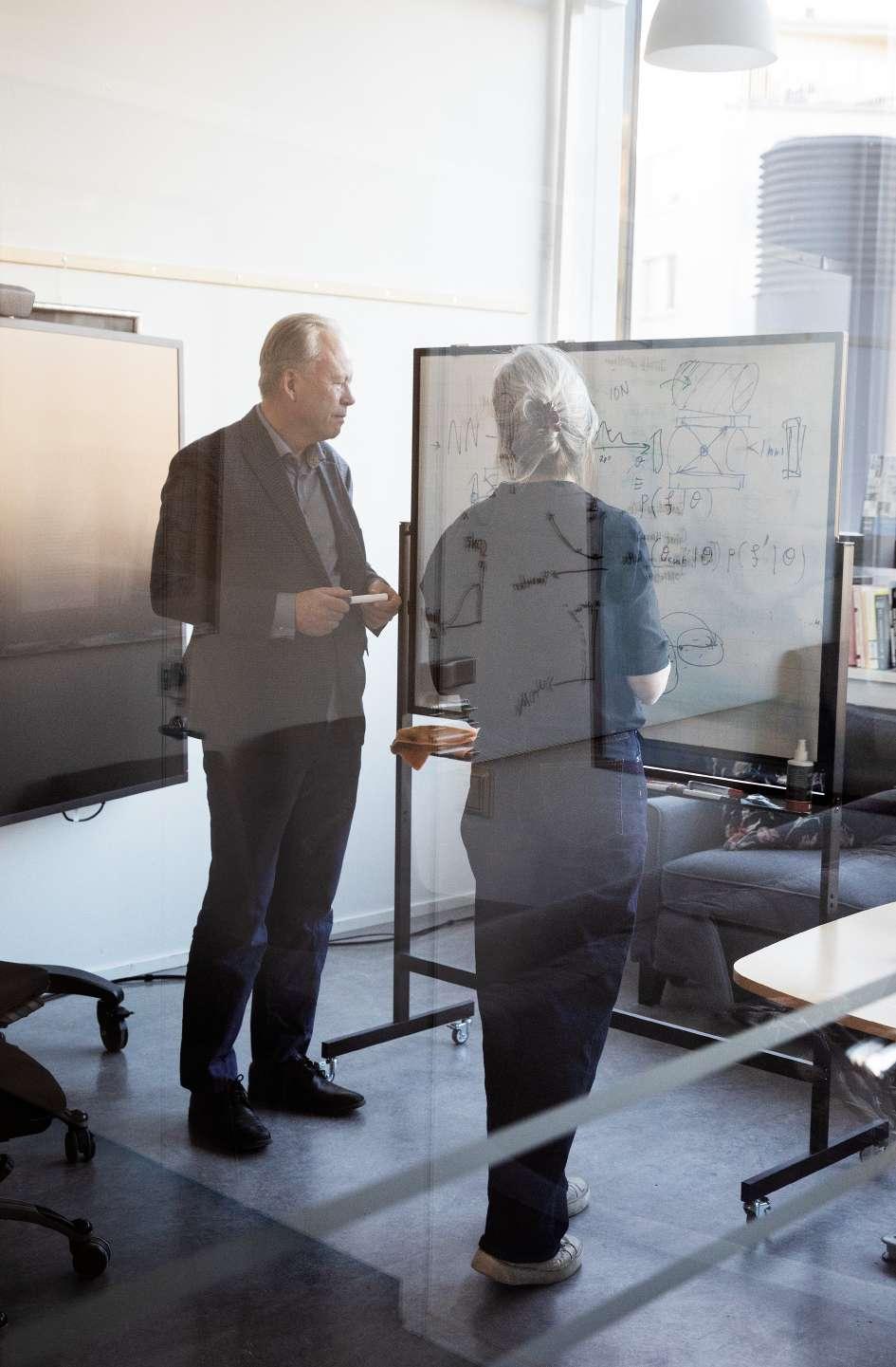
“We’ll be able to improve resolution by a factor of two and speed by a factor of a million,” says Mats Danielsson, who wants to combine two imaging techniques.

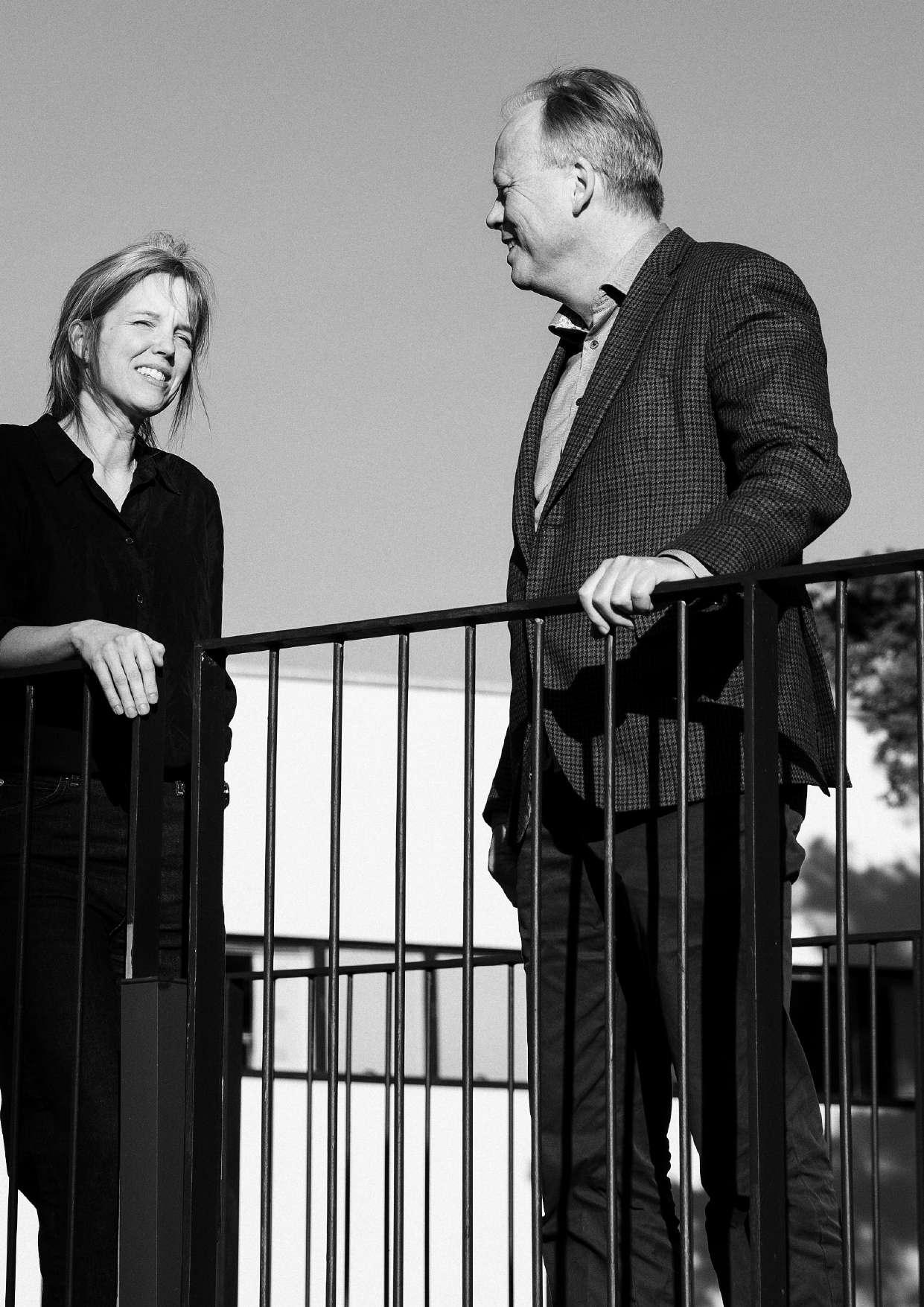
Another advantage they highlight is that it should be possible to depict several processes in parallel.
“Since we can track multiple energy levels, we can see several biological processes. Today you get a picture of, say, the metabolism. However, there are many applications where you want to see two or more things happening. If you can mark the tumour with one label and the drug with another, for example, then you can follow their interaction as if were a computer game,” says Mats Danielsson.
From a patient perspective, one advantage is a very short imaging time for the scan – maybe a tenth of a second per image. They can then hold their breath so that the images do not become blurred.
“All researchers working on new medicines currently use PET and SPECT.”
Less time in the scanner is gentler on older and more fragile patients, and also makes it easier to image children who would not be able to lie still without being given a general anaesthetic.
Another factor is a lower dose of radiation, as it may be possible to reduce the dose for SPECT by a factor of a thousand. This would be gentler on children, who are more sensitive than adults, but also makes it possible to screen for diseases such as lung cancer or cardiovascular disease.
The fact that the scan can provide images with resolution that is as good as today’s MRI scans also enables better detection of microtumours in metastatic cancer.
Mats Danielsson points out possible economic benefits for the healthcare system.
“Being able to have SPECT/PET in the same room frees up space in hospitals, and faster scans result in better patient flows,” he says.
Moa Yveborg Tamm mentions that combined imaging equipment could benefit researchers, not least within drug development.
“All researchers working on new medicines currently use PET and SPECT. We’ll give them a much better tool, like a better microscope, to see what’s happening – which will make them more efficient.”
She describes how pharmaceutical companies use these techniques when developing new drugs –for example, to monitor how the drug is spread in the body.
“Much better resolution and better images will
save them time, I think. We can help researchers to develop medicines more efficiently – and that will benefit patients, of course,” she says.
Naturally, there are also challenges. Mats Danielsson says “everything is difficult” and lists various stumbling blocks.
“It’s difficult to design the chips, and difficult to put them together into a system. You need really advanced image reconstruction. And it’s hard to manage all the data we have. That’s four really hard things – is that enough?”
Nevertheless, they are firmly convinced that the project is viable, as they have done similar things in the past. Back then it was a CT machine based on photon counting silicon detectors, which would provide higher resolution images and also be able to distinguish three types of tissue. In 2008 the ErlingPersson Foundation supported Mats Danielsson with an award of SEK 23.4 million for that project. In March this year the CT machine was approved by the US Food and Drug Administration.
“So we’ve practiced designing, building the data process, working with the hospital doctors and so on. Even if it’s a different kind of chip and different image reconstructions,” says Moa Yveborg Tamm.
Mats Danielsson adds:
“We wouldn’t have believed in it ourselves if we hadn’t spent 18 years in training. And me even longer – 30 years. It’s like the Vasaloppet ski race – you can’t just rock up at the start without knowing how to ski.”
Mats Danielsson stresses the importance of the project being support by the ErlingPersson Foundation.
“It’s like the Vasaloppet ski race – you can’t just rock up at the start without knowing how to ski.”
“It’s only the ErlingPersson Foundation that gives us SEK 60 million so that we can invest in this revolution – no other funding body does it like that. We have to get to a level where we can build a prototype to show doctors that it’s for real,” he says.
Moa Yveborg Tamm adds:
“It makes a big difference to be able to move on to full scale instead of just showing a bench prototype that you’ve developed in a lab. That kind of thing can be useful, certainly. But for doctors specifically to believe in this, it has to be possible to scan real patients and be clinically relevant.”
She mentions that the technology, once in place, will be evaluated at Karolinska University Hospital in Solna. The study will include 15 patients who have already been injected with radionuclide for a clinical PET scan. After that the patients can be quickly scanned using the new technology, meaning that no one is given an unnecessary dose of radiation. The doctors can then assess the images.
“It will be the current technology and our technology, side by side. They’ll be able to rate which one is best on a scale of 1 to 10, or something like that. And I’m convinced they won’t want to go back to an inferior method once they’ve tried ours,” concludes Mats Danielsson.
FACTS / PET AND SPECT
In healthcare and in research the main techniques used are positron emission tomography (PET) and single photon emission computer tomography (SPECT).
Both show biological processes, using gamma cameras to measure gamma radiation from injected radionuclides.
In PET, radionuclides that emit positrons are used. When a positron encounters an electron in the body, they annihilate each other and two gamma rays are emitted that travel in opposite directions.
These radionuclides have short half-lives, which means that there must be a cyclotron in place to produce the radionuclides.
In the case of SPECT, single gamma photons are emitted that can be measured directly using a gamma camera. These radionuclides have a longer half-life.
The year that HungarianSwedish chemist George de Hevesy described the principles of nuclear medicine for the first time. He was awarded the Nobel Prize in Chemistry in 1943.
How many times better the new imaging technology will be, according to the researchers.
15
The number of patients who will take part in the clinical study at Karolinska University Hospital in Solna once the combined SPECT/PET machine is ready.
ABOUT THE PROJECT
Project lead: Mats Danielsson.
Title: New technique for molecular imaging.
What it involves: Combining two imaging techniques, PET and SPECT, to create faster scans with higher resolution imaging.
Funding: The Erling-Persson Foundation is supporting the project with SEK 60 million over four years.
“Since we can track multiple energy levels, we can see several biological processes. Today you get a picture of, say, the metabolism. However, there are many applications where you want to see two or more things happening. If you can mark the tumour with one label and the drug with another, for example, then you can follow their interaction as if were a computer game.”
Ana Luís, University of Gothenburg SEK 15 M / 5 YEARS
Changes in the composition of the gut flora have been linked to chronic inflammatory diseases and obesity. The aim of the project is to define how the gut flora (microbiota) can break down the mucous substances (mucin) that build up a protective mucus barrier in the intestine.
In a healthy gut, the mucus layer limits the intestinal bacteria’s contact with the intestinal tissue and prevents inflammation. The mucus layer has long been seen as a passive barrier, but recent studies have shown that this layer plays a key role in the composition of the gut flora. The mucus layer’s main constituent, mucin, is a protein that carries sugar molecules on its surface (o-glycosylated) – known as a glycoprotein.
Ana Luís has shown that degradation of the mucin can be initiated by a specific enzyme produced by certain bacteria in the gut flora. The project now wants to investigate how the gut flora bind to and use the glycoproteins in the mucus layer and how these processes contribute to the establishment of a healthy gut flora. It is hoped that increased knowledge of the mechanisms that govern the interaction between the gut flora and the host’s intestinal tissue can be used to improve human health.
DEVELOPMENT OF NEW CANCER IMMUNOTHERAPY
Anna Blom, Lund University SEK 6 M / 3 YEARS
The research group has found that the protein COMP (Cartilage Oligomeric Matrix Protein) in breast cancer drives tumour growth, formation of metastases and resistance to drug treatment and at the same time inhibits the activity of the immune system’s T cells.
The project has produced a monoclonal antibody with therapeutic potential. The
antibody binds COMP and appears to have a positive effect by both disrupting tumour growth and reactivating the immune response to the tumour cells.
The group will investigate how the antibody interacts with COMP and how it behaves in the body, and will test whether it can work in synergy with other cancer treatments. It is hoped that the antibody can be used to investigate what causes COMP to inhibit the immune response to the tumour.
COMP has also been seen to be produced by pancreatic cancer cells, which is associated with a very poor prognosis. The hope is to be able to broaden the studies to see whether the antibody may also be effective against this severe type of cancer.
HEALING BURNS WITHOUT SCARRING USING 3D-PRINTED SKIN
Johan Junker & Daniel Aili, Linköping University SEK 6 M / 3 YEARS
Burns are one of the most serious acute injuries globally and result in great suffering, lifelong disabilities and high mortality, especially in children and in low- and middle-income countries. Hundreds of patients are also affected each year in Sweden. Today’s standard treatment – skin grafts from the patient’s own body – is often associated with pain, limited skin supply and permanent scars.
In this project the group is building on previous progress to develop a groundbreaking method of creating skin tissue by combining biomaterials with the patient’s own cells. These can then be printed using 3D printers to form functional skin structures. The method is unique in that it can recreate the complex structure of the skin and stimulate healing that more closely resembles normal skin, with less risk of scarring and loss of function.
Now they are continuing with studies that prepare the way for clinical studies. In the longer term the method could become a new standard treatment for burns.
NON-INVASIVE DIAGNOSIS AND TREATMENT MONITORING IN INFLAMMATORY BOWEL DISEASE
Alexandra Teleki, Uppsala University
SEK 4 M / 3 YEARS
Inflammatory bowel disease (IBD), which includes Crohn’s disease and ulcerative colitis, is a chronic bowel condition that affects at least 70,000 people in Sweden. Recurrent symptoms such as abdominal pain, diarrhoea and bleeding greatly affect quality of life. In children they can also inhibit growth and affect mental health and social well-being.
Today’s diagnostics are mainly based on endoscopy – an invasive method that can cause discomfort, involve risk and can be insufficient to map the entire intestine. Teleki and her colleagues want to develop a new, non-invasive method of diagnosis and treatment monitoring by combining PET (positron emission tomography), which reveals inflammation at a molecular level, with MRI (magnetic resonance imaging), which provides high- resolution anatomical images without radiation. This combination will allow more accurate diagnosis, safer examinations for children and provide potential for individualised treatment.
IMPACT – NEW EXPERIMENTAL MODELS FOR DEVELOPING PRECISION CANCER TREATMENT
Anna Herland, KTH Royal Institute of Technology
SEK 6 M / 3 YEARS
Every year around 7,000 people in Sweden develop bowel cancer, making it one of the most common cancers in the country and the second most common cause of cancer-related death. Although today we can treat many patients with surgery, radiotherapy and chemotherapy, the survival rate is still low once the disease has spread.
The aim of the project is to develop advanced laboratory models of patients’ tumours derived from bowel cancer. The models include various environmental factors of tumours that have not
previously been fully considered, in the form of immune cells, gut flora and blood vessels. This allows the clinical situation to be reflected as closely as possible. These models can be used to try out different drugs and immunotherapies and to predict which treatment is best for the individual patient. This could result in more targeted treatment, fewer unnecessary side effects and better chances of survival.
Daniel Öhlund, Umeå University
SEK 6 M / 3 YEARS
Pancreatic cancer is one of the most deadly cancers, with a very low survival rate. Traditional immunotherapies have proved ineffective, suggesting that the tumours have specific mechanisms of immune escape. Öhlund and his colleagues want to identify and study these mechanisms, focusing on proteins called galectins in the tumour’s supporting tissue (extracellular matrix). By blocking the interactions between galectins and immune cells, the researchers hope to be able to restore the immune system’s ability to attack the tumour –thereby making it susceptible to immunotherapy.
The project focuses on a completely new class of target molecules – galectins – that have not previously been used clinically. By developing and testing blocking antibodies to galectins, new therapeutic tools can be developed with a view to future clinical studies.
Eva Hedlund, Stockholm University
SEK 6 M / 3 YEARS
Amyotrophic lateral sclerosis (ALS) is an incurable disease in which nerve cells that control our movements slowly die. Both the nerve pathways that go from the brain to the spinal cord and those that go from the spinal cord to the muscles are affected. The result is increasing paralysis, with most people dying within two to
three years of diagnosis. At present there is only one treatment, which delays death by a few months; there are no other effective therapies.
Eva Hedlund and her research group are addressing an important phenomenon in the disease: the nerve cells that control eye movements are not affected by ALS, even when all other muscles are paralysed. By comparing these resistant cells with those that are vulnerable, genes that are only expressed in the resistant cells have been identified –including IGF2 and SYT13. When these genes are introduced into sensitive nerve cells they are protected against degradation, and in animal models regeneration of nerve-muscle connections can also be seen. The group now wants to try out the new gene therapies in advanced models of ALS.
DYSGLYCAEMIA AND CORONARY HEART DISEASE: OCCURRENCE, CAUSE, PROGNOSIS AND TREATMENT
Lars Rydén, Karolinska Institutet
SEK 2.06 M / 2 YEARS
It is important to discover the signs of disturbances in glucose metabolism, not least in individuals with established cardiovascular disease. As many as two thirds of such patients have disturbances in glucose metabolism, without this having previously been detected. Detection is especially important because there are glucose-lowering drugs available with cardiovascular protective properties. Another risk factor in these patients, which is not given sufficient attention or fully assessed through comprehensive testing, is signs of impaired kidney function. New research has also shown that changes in the properties of red blood cells may possibly play a role in the prognosis of individuals with coronary artery disease and glucose metabolism disturbances. In the project, individuals with coronary artery disease are investigated with regard to lifestyle and drug treatment.
ANTERIOR CHAMBER OF THE EYE AS A TRANSPLANTATION SITE IN DIABETES
Per-Olof Berggren, Karolinska Institutet SEK 30 M / 3 YEARS
Diabetes is a very common disease that results in great suffering for patients as well as high costs for the healthcare system. It is essential that new, more specific and effective treatment strategies are identified for both type 1 and type 2 diabetes. What makes this particularly complex is that diabetes is a heterogeneous condition in which each patient is unique in terms of their genetic background, environmental factors and lifestyle.
Transplantation of Langerhans islets with their insulin-producing beta cells is an important treatment method for insulin-dependent diabetes. At present, Langerhans islets are transplanted to the liver, which is not an optimal site since up to 80 percent of the islets die immediately in an inflammatory process, and the patient is subject to lifelong treatment with powerful immunosuppressive medications that can have severe side effects.
The group has developed a groundbreaking technique in which the Langerhans islets – with their insulin-producing beta cells – are transplanted into the anterior chamber of the eye, using the cornea as a natural window into the body for studies of these cells.

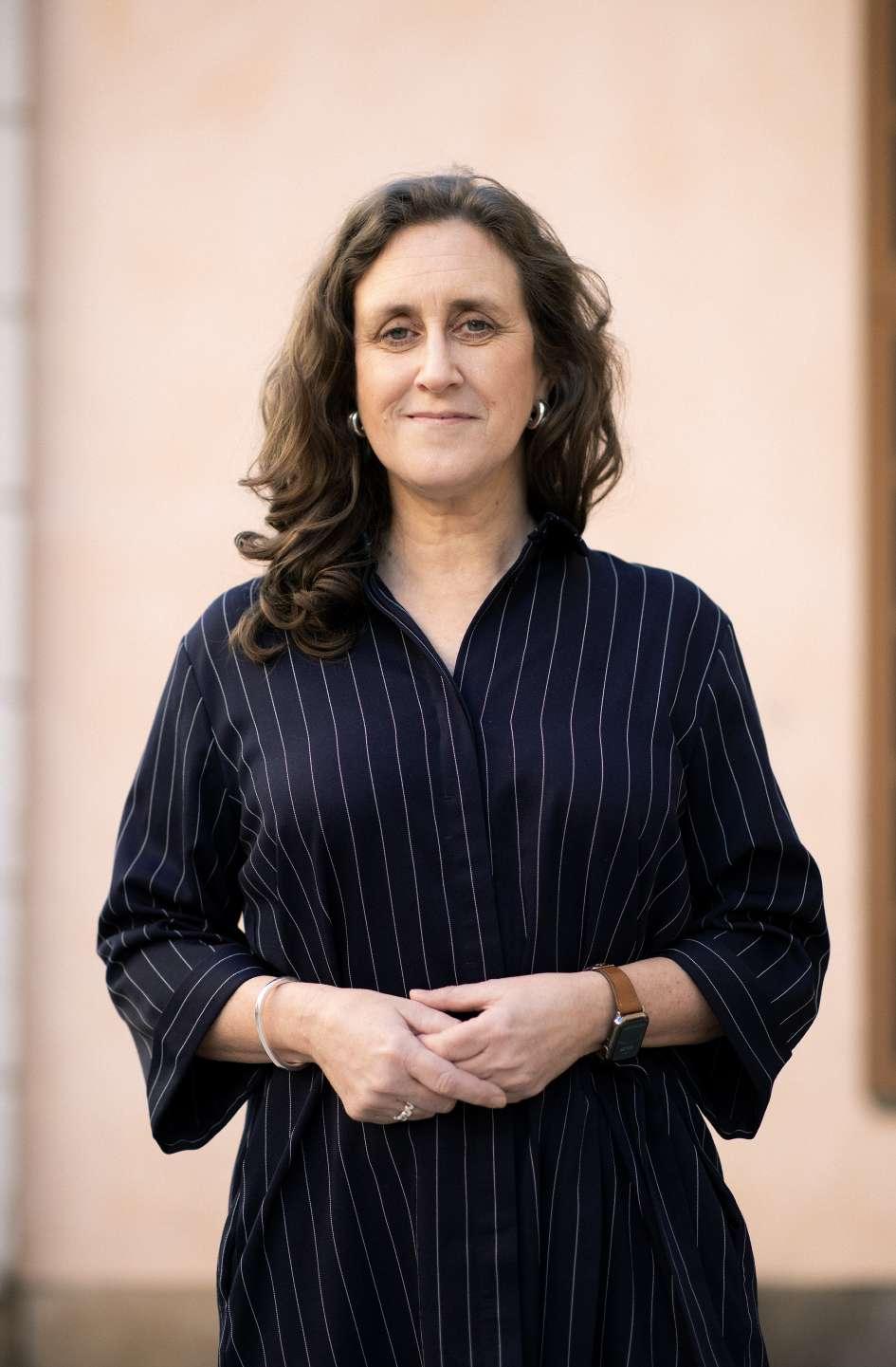
“I believe that this building could be the strongest symbol of knowledge in the world,” says Hanna Stjärne.
When the Nobel Center is completed, more people than today will be able to attend events that reflect current issues and visit a permanent Nobel exhibition. The Nobel Foundation’s Executive Director Hanna Stjärne wants to convey hope for the future to young people by demonstrating the power of science.
The heart of the Nobel Foundation’s premises at Sturegatan 14 in Stockholm is the boardroom, decorated in dark green with high oak wall panels. On the far short wall, from his place above the fireplace, Alfred Nobel looks down at whoever enters.
“That picture of him is in all the history books. I usually come in here for a little while each day, soaking up the atmosphere,” says Hanna Stjärne, Executive Director of the Nobel Foundation since January 2025.
At the head of the table that dominates the middle of the room is a chair from Alfred Nobel’s home; Nobel laureates are invited to sit here and write in the guest book. On a shelf to the right of the door are old books containing the photographs and signatures of Nobel laureates. The first, marked 1901 to 1903, includes such names as Marie Curie.
“And in the book from 1921 there is Einstein and later Martin Luther King, so there are many wellknown names,” she says.
The Nobel Center project involves a new building with a total area of 13,000 square metres. The idea of a Nobel building in Stockholm is not new, but rather has existed for as long as Nobel Prizes have been awarded. Now construction is going to start, on a plot of land at Slussen in Stockholm. Many people may remember that a Nobel building was previously planned at Blasieholmen – plans that were then abandoned.
“It was before my time, but the idea then was that the actual award ceremony would be held there, for example. But we’re not going to do that now
– instead the award ceremony will continue to be held at Konserthuset and the celebration in Stockholm City Hall, just as today,” says Hanna Stjärne. She tells us that things are going according to plan and that they hope to take possession of the plot in 2027, after which construction will begin. The aim is to officially open the Nobel Center in 2031, when the Nobel Prizes celebrate their 130th anniversary.
“We’ve already had a number of inquiries, including from Nobel laureates who would like to take part, so there’s a lot of interest,” she says.
Hanna Stjärne talks about the power of the Nobel Prizes and the Nobel laureates:
“We want to be able to convey hope by showing people’s power to change the world.”
“The Nobel Prizes have a huge impact globally and they stand for much of what the world and people need. We want to make more of that, and the new building will enable us to do so,” she says.
She also highlights the importance of reaching out to young people more widely than today.
“Many young people have a darker view of the future than previous generations – but things that seem impossible today may be possible to solve in a few years’ time, thanks to scientific progress. We want to be able to convey hope by showing people’s power to change the world,” she says, continuing:
“The entire history of the Nobel Prize is about

The Nobel Prize Museum in Gamla Stan, Stockholm’s Old Town, has an exhibition about the Nobel Center – including a model of the building.
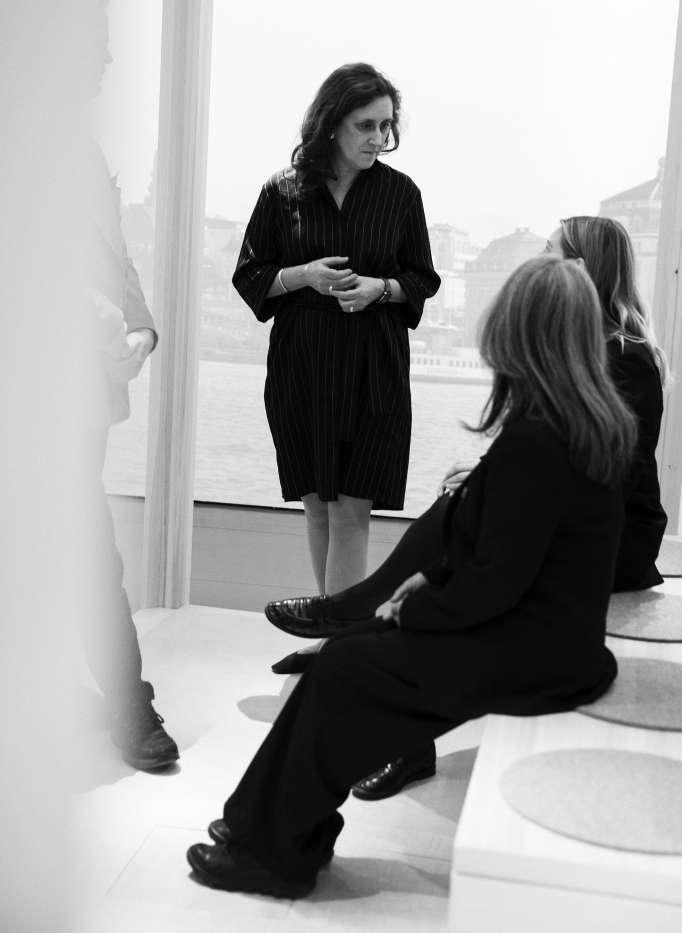
Hanna Stjärne, seen here in a weekly meeting with colleagues.
being able to tell people every day about the progress that is being made for the good of humanity.”
An important part of the planned activities will be the ability to invite schoolchildren in a more generous way than is currently possible. The current Nobel Prize Museum is located in Börshuset, the old stock exchange building on Stortorget in Gamla Stan, Stockholm’s Old Town, where space is limited. It is a noticeable bottleneck – not least in the October week when the Nobel Prizes are presented. At present the announcements are displayed on a screen.
“I believe that this building could be the strongest symbol of knowledge in the world.”
“While all other media are trying to figure out what the prize is about, we have the advantage of being able to gather leading experts who can directly explain this year’s prize in physics, for example. At the moment we can invite 50–60 people, including one school class, and we have a huge queue of school classes who want to come. At the Nobel Center the auditorium will hold 500 people – around 20 school classes,” says Hanna Stjärne.
It will also provide opportunity to invite Nobel laureates for discussions on relevant and topical issues. This is already happening today in collaboration with research foundations and universities around the world.
“Nobel laureates are treated like rock stars and draw audiences of thousands in countries such as India and South Korea,” says Hanna Stjärne, continuing:
“We have globally unique access to the world’s most interesting individuals through our Nobel laureates – to researchers, to authors, to the bravest people who are engaged in peace initiatives around the world. People will be able to meet them in this new building.”
In addition to various events, there will also be a permanent exhibition on the Nobel Prizes and on Alfred Nobel’s life and work.
When asked what the project means, she is clear:
“I believe that this building could be the strongest symbol of knowledge in the world. It will be an international powerhouse for science, for literature and for peace, and at the same time a warm and welcoming building that is open to all,”
says Hanna Stjärne.
She describes how people will be able to go in and listen to a talk or see an exciting exhibition or themselves be involved in discussing the big issues with others.
“Then when you sit down in the café and have a cup of coffee afterwards, there could be a Nobel laureate sitting at the table next to you,” she says.
And she emphasises the importance of the support from the ErlingPersson Foundation.
“This would not be possible without that support, so the support is absolutely crucial – but also the values that the Foundation stands for, which we will do all we can to uphold in the best possible way,” says Hanna Stjärne.
She does not feel too sad about leaving their current premises.
“We’re looking at what to bring with us to the Nobel Center to keep some of the atmosphere. And in the new building many more people will get the chance to see this, for example,” she says, pointing at the oil painting behind the desk.
It is a portrait of Alfred Nobel’s mother Andrietta, which he commissioned for her birthday.
Hanna Stjärne points out that while she may be the first woman to hold the post of Executive Director, she is “not the first woman to have influence over Nobel”.
She concludes:
“The Nobel Center will be a building for our grandchildren and their children.”
FACTS / NOBEL CENTER
The Nobel Center will focus on activities for the public and will be open to everyone, all year round. The Nobel Prize Museum will also move into the new building.
David Chipperfield Architects Berlin is the architect for the Nobel Center project.
The Nobel Center will be built on the property Södermalm 7:87 (Hamnmästaren), along Stadsgårdskajen at Slussen in Stockholm.
500
The number of visitors that the new auditorium will hold – equivalent to around 20 school classes.
2031
The year that the Nobel Prize will celebrate its 130th anniversary and the Nobel Center will officially open. Since 1901 the Nobel Prize has been awarded 633 times to 1,026 laureates.
ABOUT THE PROJECT
300,000
The number of visitors each year to today’s Nobel Prize Museum. Twice as many are expected to visit the Nobel Center.
Project lead: The Nobel Foundation, whose Executive Director is Hanna Stjärne.
Title: Nobel Center.
What it involves: Construction of a Nobel Center as well as costs related to its activities, including a permanent Nobel exhibition.
Funding: The Erling-Persson Foundation and the Knut and Alice Wallenberg Foundation are donating a total of SEK 2.3 billion, with equal contributions from each.
The bachelor’s programme in Retail Management is at the heart of the Center for Retailing’s operations. Here, through close contact with companies, the students get to test out and follow up on their theoretical knowledge.
Sara Rosengren highlights the importance of close collaboration between education and research at the Center.
The Center for Retailing is part of the Stockholm School of Economics and is located at Saltmätargatan 13–17, in the block next to the main building. The lowest floor is dominated by a colourful mural by Elisabeth Frieberg, 142 square metres in size.
“It’s inspired by the Indian Ocean,” explains Christopher Rosenqvist, who has responsibility for the bachelor’s programme in Retail Management, as he shows us around.
The bachelor’s programme forms the heart of the Center for Retailing’s operations, which also include research and collaboration. Since 2018 the programme has been conducted in English – hence the modules and course elements have English names.
One thing that stands out is the company logos outside the rooms. This is where students gather in the 10 Retail Clubs that are part of the Applied Retail Track course.
“The clubs are a manifestation of our close collaboration with the companies, which is unique. Through it, we create a link between theory and practice from year one,” says Christopher Rosenqvist.
The collaboration includes workshops that are held four times a year in partnership with the companies. There, the students are confronted with current issues and can themselves contribute suggested solutions, which are then discussed. In their first year the students are placed in a club, but in years two and three they choose for themselves.
“It means that they get to know three companies in depth. And since students in different year groups
meet each other in the clubs, they also get to know each other well,” he says.
Often in bachelor programmes the students have a common course of study initially, before each chooses their specialisation. The Retail Management programme instead offers a single learning journey for the 60 students in total who get a place on the course.
“That has great benefits in terms of teaching,” says Christopher Rosenqvist.
Sara Rosengren, a professor of business administration and the director of the Center for Retailing, describes retail as part of the infrastructure of our society – a part in which Sweden has been very successful. The 20th century saw large companies such as H&M and IKEA being built up, and still today many young people get their first job in retail.
“We see many young students who come directly from upper secondary school but who have relevant experience – maybe they had a parttime job at an H&M store or at Coop,” she says.
She emphasises that the Center for Retailing is helping to shape a sustainable and competitive retail industry.
“By bridging the gap between researchers, students and practitioners, we’re creating the conditions for faster skills upgrading in the industry and enabling the industry to develop in a way which avoids each individual company having to find their own unique solution to problems,” she says.
Matilda Nordgren, a secondyear student who acts as a ‘key account manager’ (KAM) for
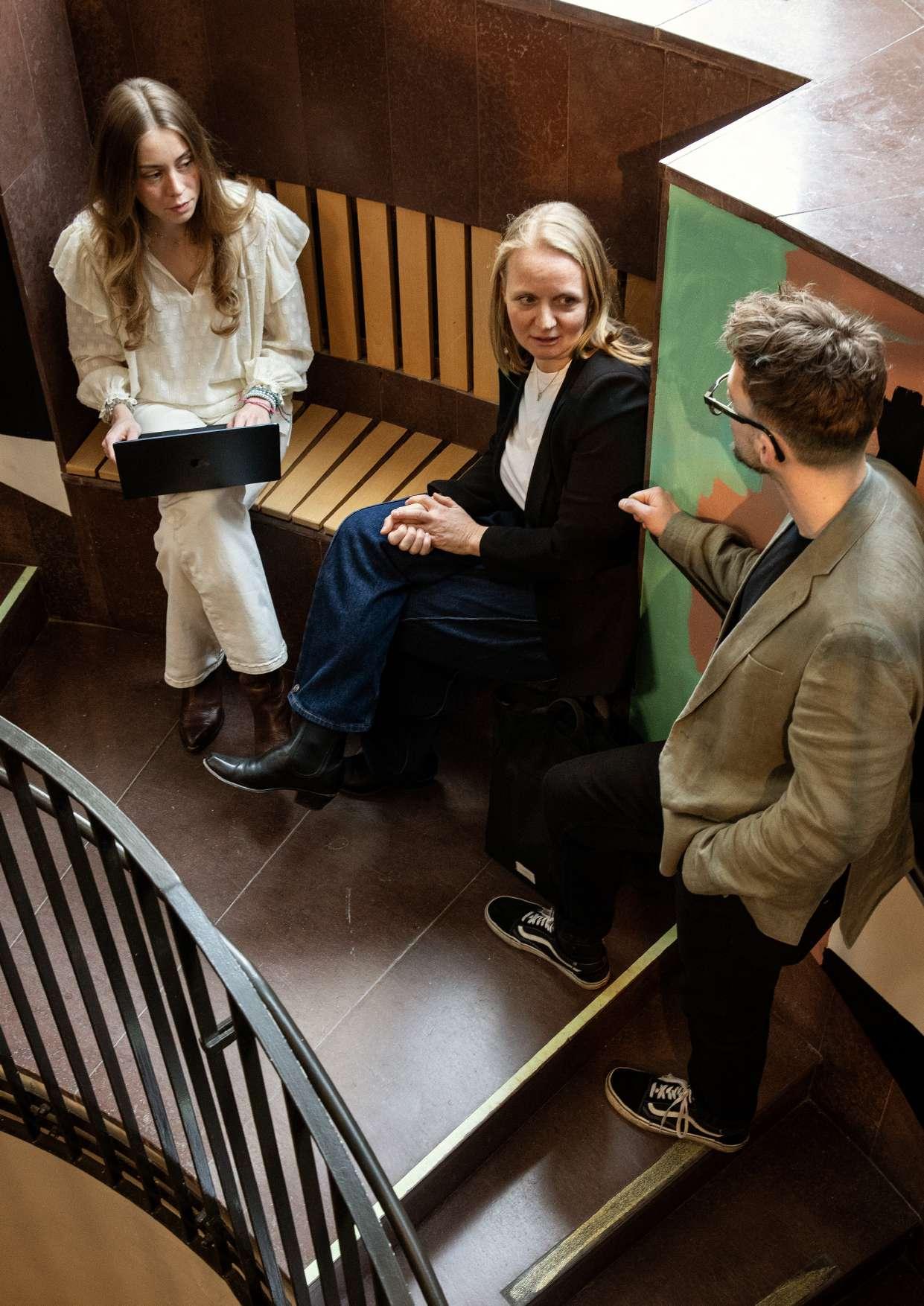
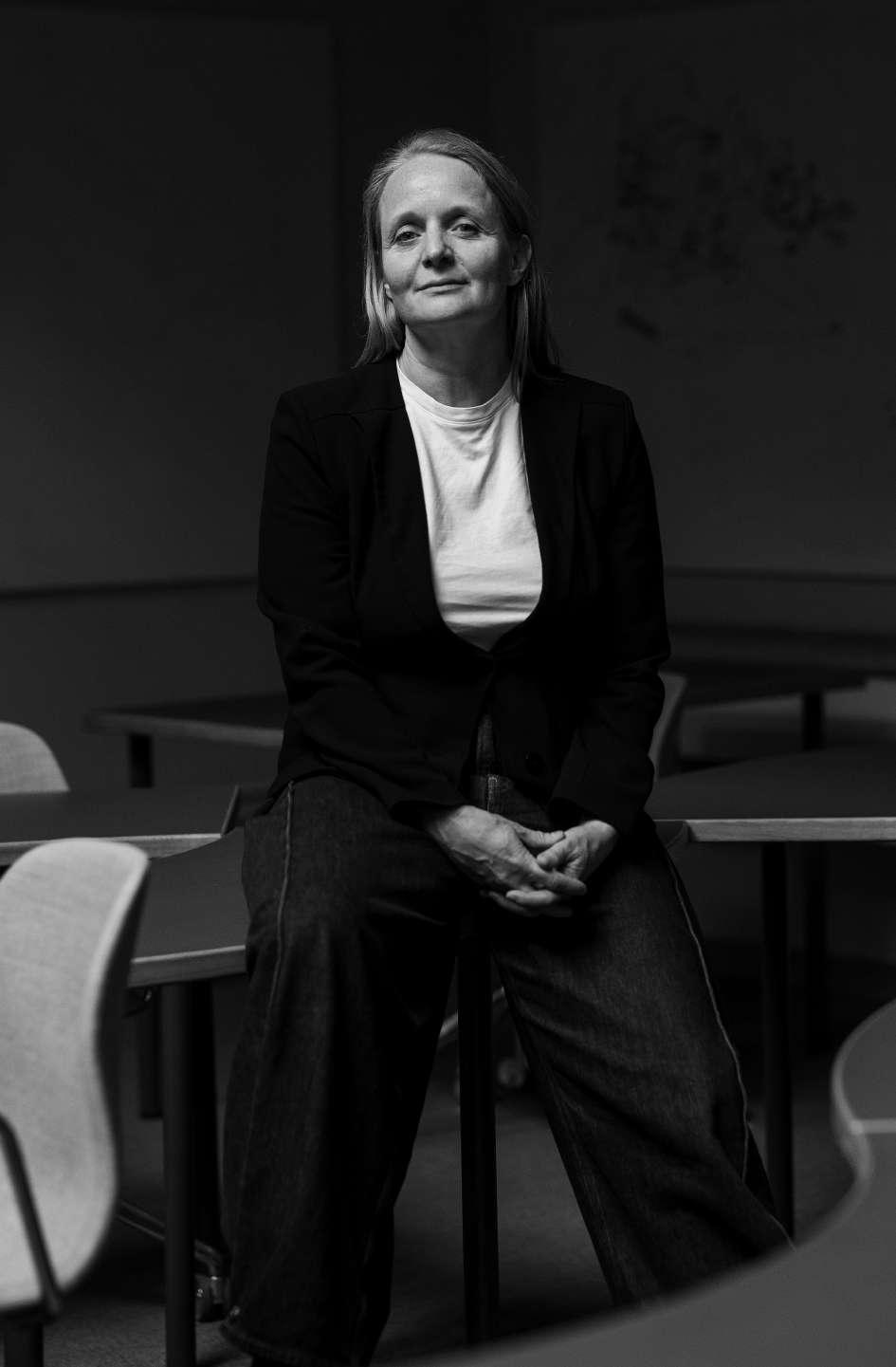
“The Center’s faculty is made up of researchers who, by constantly interacting with companies in the industry, get a good sense of which issues are relevant,” says Sara Rosengren.
SARA ROSENGREN
“What I’m most proud of about the Center for Retailing is that we’ve created a system where education, research and knowledge sharing reinforce each other. Our international academic colleagues are surprised that this is even possible.”
H&M, and director of research Alexander Mafael, who is also faculty tutor for H&M, join in the conversation.
“It means that Matilda and I together organise all interaction with the company, along with their HR specialist,” he says.
The workshops given at the company have varying content, but the first for firstyear students is about management accounting – that is, financial analysis of different decisions.
“It comes as something of a surprise for some, who think that H&M is all about creativity and fashion, but it’s a very good learning experience,” says Alexander Mafael.
The last workshop of the programme varies; this year it is about forecasting trends.
In her role as KAM, Matilda Nordgren acts as a point of contact – linking up the students with the company and with the faculty members. She also plans a careers module for the secondyear students where they learn such things as how the recruitment process works.
“And we meet alumni who tell us about their path through H&M and what they’ve learned. We also get input from the students about what they expect and are interested in, and try to build a bridge from there to various workshops and lectures,” she says.
She mentions a workshop at one of H&M Group’s brands which devoted plenty of time to the students’ views on a new product range and how it was presented in store.
“It’s a very valuable part of the programme that our ideas and suggestions and what we have seen are assessed by the companies. They really take our suggestions seriously and ask for reflections from the students,” she says.
Sara Rosengren adds that the close contact with the companies means that both the research and the programme develop in harmony with the fastmoving retail sector.
“The Center’s faculty is made up of researchers who, by constantly interacting with companies in the industry, get a good sense of which issues are relevant,” she says.
Alexander Mafael, for his part, joined the Center for Retailing in 2020, after having defended his thesis at Freie Universität Berlin. Now he is studying payment methods, among other things, and how different options affect people’s behaviour.
“We’re finding that the option to defer payment, such as with ‘buy now, pay later’ solutions, can
actually be negative for trade because many consumers who did not previously return goods begin to do so,” says Alexander Mafael.
Sara Rosengren points out that the Retail Management programme is at the leading edge of teaching and learning development at the Stockholm School of Economics.
“Since 2018 the Applied Retail Track has been supplemented with an individually tailored tutorial programme,” she says.
Alexander Mafael says the programme’s content on AI is an interesting challenge, because the landscape is changing at the same time as the teaching is being delivered.
“We can be flexible as regards new aspects, test out different approaches and then design a programme that is innovative and continues to be a leader not just at this moment but also as time goes on,” he says.
“It’s a very valuable part of the programme that our ideas and suggestions and what we have seen are assessed by the companies.”
Matilda Nordgren agrees, highlighting the AI Prompt Days initiative that is currently being piloted and which will be included in the programme in the autumn. Here students develop their ability to write instructions (prompts) and, together with the faculty, explore how to solve problems through humanmachine interaction.
“It's extremely practical – exactly what the industry is demanding and what they expect from us,” says Matilda Nordgren.
Sara Rosengren points out that the support from the Erling Persson Foundation is for both education and research.
“What I’m most proud of about the Center for Retailing is that we’ve created a system where education, research and knowledge sharing reinforce each other. Our international academic colleagues are surprised that this is even possible,” she says.
She describes how in Sweden there is a tradition of collaboration, but colleagues in the US find it difficult to comprehend how companies such as ICA and Axfood can be part of the same centre when they are competitors.
“But the Swedish model involves cooperation
on matters that are important for everyone. And futureproofing our industry is one of them,” she says, concluding:
“The retail industry in Sweden is far ahead in
dealing with future challenges, including sustainability. With this support the Center can take a bigger role in that change journey, even internationally, and we’re hugely grateful for that.”
FACTS / EDUCATION AT THE CENTER FOR RETAILING
The Retail Management programme started in 2008, and has been conducted in English since 2018. It is a three-year bachelor’s programme consisting of 23 course modules plus a dissertation. Each year 60 students are admitted.
Students come into close contact with various companies in the retail sector and become part of a company’s Retail Club.
A total of 15 people work at the Center, in research and education.
Proportion of those employed in Sweden who work in retail. Among young people, the figure is 21%.
Number of alumni from the Retail Management programme. Nearly 70% of these work in the retail sector or in related operations. 20% have started their own business, while 12% are currently active business owners.
ABOUT THE PROJECT
Project lead: Sara Rosengren.
Title: Center for Retailing.
621 bn
How much retail contributed to Sweden’s GDP in 2024. This corresponds to 11% of all goods and services produced in the country.
What it involves: Support for the bachelor’s programme activities and for research linked to the programme.
Funding: The Erling-Persson Foundation is supporting the project with SEK 50 million over five years.
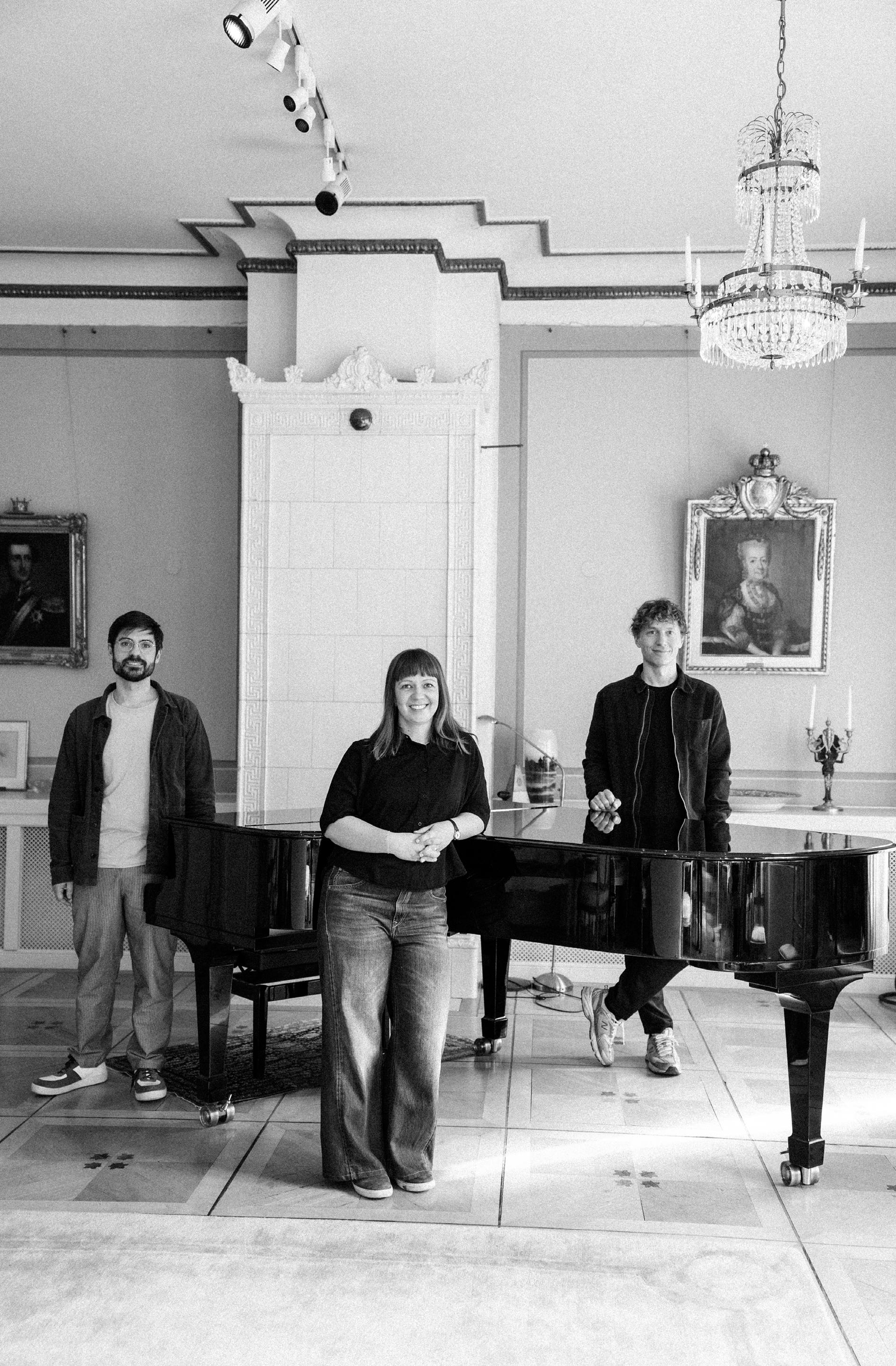
SEK 5 M / 2 YEARS
Unga tankar om musik, which translates as ‘Young minds for music’, is a think tank working to strengthen the music ecosystem. It brings together young professionals from different genres and working in different professional roles, and now hopes to map out and strengthen the future of music education.
In 2016 the Royal Swedish Academy of Music took the initiative to form a think tank, Unga tankar om musik – which thus celebrates its tenth anniversary this year.
“We work for the benefit of the music scene – you can boil it down to that,” says its director Gustaf Bäckström Elmelid.
He describes the think tank’s members as its most important resource, as they bring both knowledge and networks. Each year 10 new members are invited to join for four years, while 10 current members become alumni. All are prominent in their field – whether that is composing, producing, conducting or playing music, or working as a singer, teacher or sound technician. The aim is to reflect the music ecosystem in Sweden through members representing a broad range of skills and genres.
“Thanks to our members, we have our ear to the ground everywhere – so we feel very well informed about the music industry.”
“It’s impossible to cover everything, but we want a diversity of perspectives,” he says.
Now it’s time to interview the 32 individuals selected from this year’s applicants.
“It’s hugely enjoyable and exciting, but it’s hard. You read all these applications from people who wants to do good things for the music scene, and
then you have to turn down two thirds of them,” says Gustaf Bäckström Elmelid.
At the heart of the think tank’s activities are four annual conferences, where its members gather together in different locations around the country. As part of their 38th conference, at Sundsvall Theatre, they met with the organisation Musik Västernorrland and also visited the rock club and cultural institution Pipeline.
“Pipeline is Sweden’s oldest music club and started in 1973. Some members have played there 10 times, others didn’t know what it was. You might think that those working in the music industry keep tabs on each other, but there’s a lot of tunnel vision – and it’s in the collisions that new insights arise,” he says.
Josefin Kahraman, the think tank’s producer, adds:
“Thanks to our members, we have our ear to the ground everywhere – so we feel very well informed about the music industry.”
Gustaf Bäckström Elmelid says this is a strength when something happens that they need to act on.
“Then we can identify those members who are familiar with the matter, put together a working group and come up with a statement, a debate article or some form of action on what has happened.”
Such an event occurred just recently.
“Nearly a third of the adult education associations’ cultural programmes have disappeared, after a third of the state grant was cut. Since many of the associations are tied into expensive leases, it is the

“This gives us the chance to do a systematic and longterm deep dive and to follow up on the small pilot projects we’ve done. To have the opportunity to build this network over time, a network that we can see is needed and in which we link up the various actors, it provides opportunity to actually make changes and strengthen the education pathway in the longer term.”

staff who are being let go – so the loss of expertise in adult education will be enormous,” he says.
Elias Söderström Aupeix, the think tank’s communications officer, emphasises that membership is an opportunity for professional development – for example, the chance to formalise one’s thoughts in a panel discussion or to dare to take up space in a room with politicians or those in power within music.
“People share, open up to each other and connect through their differences.”
“So development is one aspect, but it’s also a network – a sense of belonging that you don’t always have in the music business, where life can be a little lonely,” he says.
Josefin Kahraman describes the think tank's ‘safe spaces’ for promoting an open climate of discussion.
“For example, we’ve done exercises comparing genres: ‘What does credibility mean in your genre? What educational and training routes are there? What do people earn and how do they get gigs?’ It can create some tension, but that’s OK,” she says, continuing:
“Because it shows that we may think differently but can still meet respectfully and discuss the issues that cause friction. People share, open up to each other and connect through their differences. We think that’s how people should work in society in general, instead of polarising.”
In the project ‘Unga tankar om musik and the future of music education’, the think tank will develop ways to strengthen music education in Sweden by mapping needs. Something they want to take a closer look at is the music education pathway, which according to Josefin Kahraman is fragmented and difficult to get an overview of.
“For an outsider, it’s not obvious what steps they should take if they want to become a professional musician – so we want to make that visible. In recent times there have been massive cuts in funding for adult education, which is an important piece of the puzzle,” she says.
She describes how it is in the adult education associations that arts students at upper secondary school form study circles and start playing in bands; these associations contribute rehearsal rooms and knowledge about adult education centres.
“So it’s interesting that politicians are making
cuts there, but have then set up an inquiry to look into starting a specialised programme for music at elementary school level. That’s fantastic, of course, but then the later steps need to remain in place – the students need to be able to move on further,” she says, clarifying:
“We have good relations with politicians in the cultural sphere, but usually it’s not them that need convincing. When it comes to education there are other politicians that we need to influence, which is one of the think tank’s objectives.”
Gustaf Bäckström Elmelid says one of the reasons for the inquiry into a specialised programme at elementary school level is the weak pipeline of future orchestral musicians.
“But if you want to invest in an initiative, there has to be a viable professional life available to get into. So it is not just the education pathway that’s important – there need to be reasonable conditions for those working with music professionally. And that’s where there are a lot of challenges,” he says.
He says that the think tank also aims both to highlight and to make efforts to strengthen the links between different levels of education in order to address any gaps.
Elias Söderström Aupeix adds:
“The music industry is extremely fragmented and specialised, so it can be a challenge to get an overview – but we get that through our members.”
“For an outsider, it’s not obvious what steps they should take if they want to become a professional musician.”
The three mention several different approaches to strengthening the future of music education, such as political advocacy and training initiatives for music teachers. Josefin Kahraman also highlights the ongoing Musical Role Models project, which is supported by the Signatur Foundation for Music Promotion, in which members return to their hometowns to take part in initiatives to bolster the grassroots music scene.
The initiatives take place somewhere that has been of significance for the member’s own development. Artist Birgit Bidder returned last autumn to Birkagården adult education centre in Stockholm, where she completed the rock music programme. Another example is church musician Emmy Algefors’ workshop on leading church choirs, with
both students and active choir leaders.
“And Farshid Dalir, a percussionist specialising in Persian music, went back to his secondary school and held workshops involving rhythm and clapping exercises. A lot of it is about showing the potential: ‘I’ve been in your position too, and now I do this’,” says Gustaf Bäckström Elmelid.
The think tank will participate in Järvaveckan’s Culture Bridge, where one idea is that members can provide study and career guidance to those interested in music.
“Sometimes we need to stand on the barricades, but this mutual curiosity and getting to know each other is also important for having an influence.”
“Our member Elin Öberg, for example, is a selftaught blues harmonica player. She wasn’t guided into music by musical parents – instead she thought the harmonica was cool and downloaded a teachyourself guide. At Järvaveckan it’s about meeting young people from different backgrounds and showing different entry points into music,” says Gustaf Bäckström Elmelid.
Josefin Kahraman also highlights the political network programme, where they pair up one of their members with someone from the Parliamentary Committee on Cultural Affairs so that the two can shadow each other doing their jobs.
“Sometimes we need to stand on the barricades, but this mutual curiosity and getting to know each other is also important for having an influence,” she says.
The politicians then gain practical insight into how things might be for a professional musician in Sweden today.
“Having that kind of network for the Parliamentary Committee on Education, I think, would benefit our work on the education pathway. As for Järvaveckan, we thought we would select one or two pairs of people who can talk about things that might engage young people – such as participation and equal access to Sweden’s extracurricular arts schools,” she says.
The support from the ErlingPersson Foundation is very important, says Gustaf Bäckström Elmelid.
“Yes, it’s absolutely crucial for this initiative.”
Josefin Kahraman adds:
“This gives us the chance to do a systematic and longterm deepdive and to follow up on the small pilot projects we’ve done. To have the opportunity to build this network over time – a network that we can see is needed and in which we link up the various actors – it provides opportunity to actually make changes and strengthen the education pathway in the longer term.”
Gustaf Bäckström Elmelid says the support enables them to put more ideas into practice and to make the most of the commitment found within their membership. And Elias Söderström Aupeix agrees:
“The think tank has been taking shape over 10 years, which has brought us to where we are now. Now we’re now ready to take the next step.”
Josefin Kahraman concludes:
“Being this positive force for social change is something I see in all the different projects that the Foundation supports. We’ve come to the right place, and it feels natural to continue our journey together with the ErlingPersson Foundation.”
The number of active members of Unga tankar om musik, which also has 54 alumni. It is also the maximum age for members, who should be between the ages of 25 and 40 when appointed. 2016
The year that Unga tankar om musik was formed – it celebrates its 10th anniversary this year. 3
The think tank has three purposes: continuing education, cultural policy and outreach.
ABOUT THE PROJECT
Project leads: Gustaf Bäckström Elmelid and Josefin Kahraman.
Title: Unga tankar om musik and the future of music education.
What it involves: The think tank wants to strengthen music as a subject throughout the Swedish education system – covering the entire pathway from preschool through primary and secondary school, including music-focused programmes and arts/creative/practical subjects, to adult education and the higher education sector. By first mapping needs and challenges, the initiatives that have the greatest effect will then be implemented.
Funding: The Erling-Persson Foundation is supporting the project with SEK 5 million over two years.
Jan Sherman and Ulrik Medin
SEK 0.32 M / 1 YEAR
Teaching material for schools and adult education based on the documentary ‘Make Democracy Great Again’. The film has been shown at Folkets Hus och Parker cinemas as well as on TV4’s platforms, and is now available for free online. To accompany the film, the project team has developed extensive material including a guide for teachers, lesson plans and various formats of the documentary.
The aim of the Make Democracy Great Again teaching materials is to broaden, deepen and revitalise teaching about democracy, and for the material to become a natural complement and aid in the classroom.
Centre for Business History
SEK 4.8 M / 3 YEARS
The Centre for Business History (Centrum för Näringslivshistoria – CfN) is developing an online teaching platform to support teachers and students at upper secondary schools with critical evaluation of sources and to help convey the role of entrepreneurship, companies and the business sector in Sweden’s development, for the school and a wider public.
The project meets a growing need for authentic source material in an era of AI, and meets the requirements of the new Gy25 curriculum. By making available unique material from the extensive corporate archives that CfN manages for companies and organisations, students are given a concrete tool for understanding how we know what we know.
The platform builds on CfN’s existing digital reading room and successful school activities. What is new is an investment in AI-powered technology to make poorly accessible material usable, with features such as automatic handwriting interpretation, transcription and facial recognition.
In addition to the source material, the platform will offer ready-made and adaptable learning materials such as teaching guides and films, and will allow teachers to customise materials before printing. Opening up the archives digitally and without geographical restrictions democratises access to knowledge about the role of business in Sweden’s history, and strengthens young people’s future ability to critically evaluate sources.
Non-profit organisation Beredskapslyftet SEK 5 M / 1 YEAR
The project trains women and war veterans on the ground in Ukraine for shortage occupations, such as bus and truck drivers and forklift drivers. The aim is to strengthen opportunities in the job market for groups that are otherwise remote from employment and also to contribute to Ukraine’s ability to both rebuild and keep the economy going. The project expects to train around 750 people in 2026. To make it easier for those with young children to participate, it also offers day camps with activities for 100 children aged 6–12 years.


SEK 50 M / 2 YEARS
Fryshuset’s project The Block will make room for more children and young people. Johan Oljeqvist highlights the importance of investing in the young, while youth leader Rut Öman likens it to her home being extended – all so that more people can experience the positive power of Fryshuset.
On a wet, grey and windy Tuesday during the spring halfterm holiday, behind Fryshuset’s doors all is a hive of activity. There are youngsters playing table tennis, speaking English with each other. Another group is crafting long, colourful paper garlands. In the gym a football practice session for teenagers is underway, while parents keep an eye on small children carrying skateboards. As we head into the Basketball meeting room, between the Music and Dance rooms, Johan Oljeqvist, CEO of Fryshuset, points to the floor’s durable fibre matting.
“We got that from a company that lays flooring in ski resorts – they had a few square metres left over.”
Fryshuset has been around since 1984 and Johan Oljeqvist has been its CEO for the past 16 years. But despite her youth, Rut Öman has had an even longer relationship with Fryshuset – starting from when she was still in a pushchair.
“My mum’s been coming here since she started playing basketball at thirteen – and now she works here, so I've been coming here for nearly 20 years. First for training sessions in the school holidays –junior basketball and dance – and then I went to secondary school here. Now I train kids in basketball, so it’s come full circle,” she says.
Johan Oljeqvist adds:
“Fryshuset should be a place that conveys hope and faith in people, not distrust and not fear. After all, there are no security scanners when you come in here – no barriers to keep people out or suggest that not everyone is welcome here.”
Fryshuset’s project Kvarteret (The Block) involves building on what is currently a parking area to provide a new ninestorey building with an area of 10,000 square metres that will be connected to existing buildings. The temporary skate tent will also be replaced with a permanent building of 1,000 square metres. Johan Oljeqvist says the project is important for a number of reasons, one of which is serious overcrowding.
“Even in the year after we acquired our current building in 2014 – also with the help of the ErlingPersson Foundation – I realised that if we continued to grow, we would run out of space. Fryshuset does not turn away young people, we do not shut anyone out and we want to keep barriers to entry low,” he says.
“Fryshuset should be a place that conveys hope and faith in people.”
Eleven years ago, therefore, Johan Oljeqvist wrote a letter to the Mayor of Stockholm stating ‘We intend to develop this parking area – do you have anything against it?’. Eventually, they didn’t.
“Politicians from all parties are unanimously behind us, and we’re grateful for the leasehold. But we don’t get any money from them, which is why we’ve approached private funders,” he says.
There are now none of the external tenants from 2014 remaining. Instead, despite the fact that
“Fryshuset should be a place that conveys hope and faith in people,” says Johan Oljeqvist, seen
here with Rut Öman.
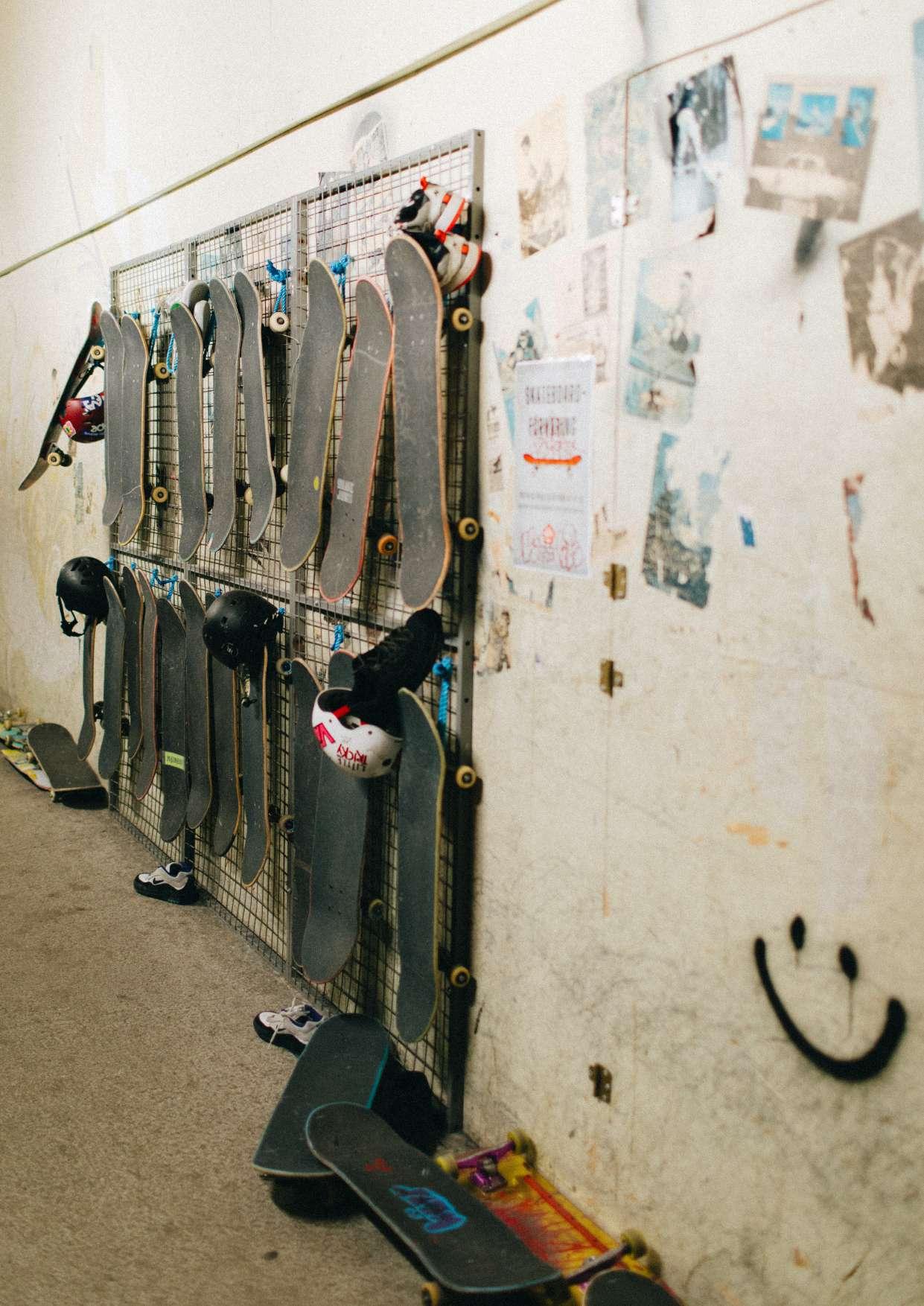
Ylva Linderson from the Erling-Persson Foundation visits Johan Oljeqvist and Rut Öman in the sports hall. Here they hope to use LED lighting to mark out lines for basketball or football, instead of all the permanent markings.
the current building has an area of 24,000 square metres, they have been constantly hunting for space.
“When we suddenly found two square metres that had been forgotten, they were quickly transformed into a combined storage room and office for two people,” he says.
Another dilemma is that there are not enough time slots available in Stockholm’s sports halls for children and young people to practice their sports.
“We can’t offer basketball training for 7 and 8yearolds at 9 pm, so it’s a perpetual headache,” says Johan Oljeqvist.
“We think that youth crime is rampant, when in reality it’s steadily decreasing.”
On the computer screen, he shows what the new building will look like – and surprises Rut Öman with the fact that there will be a basketball hall right at the top, with a glass wall looking out across the whole of Södermalm.
“Wow – I heard earlier about a football pitch, but then that wasn’t possible because of the load capacity. How fantastic to have a basketball court!”
“Yes, it’s very symbolic to have the most expensive and finest area in Stockholm given over to young people, where they can practise their passion. After all, they’re usually relegated to the basement,” says Johan Oljeqvist.
A third reason why the project is important is the dark picture that is painted of the future and of young people – such as that all young people are gang criminals and are doing badly in school.
“That’s not true. If you read the PISA results carefully, Sweden is specifically mentioned for its high level and its innovation in schools. We may not be the best at maths, but we’re among the top 20 in the world,” he says.
Johan Oljeqvist also points out that crime is not increasing to the extent that reporting suggests.
“We think that youth crime is rampant, when in reality it’s steadily decreasing,” he says, continuing:
“There are generally a lot of cuts, things are being taken away and recreation centres closed, so we’re doing the opposite to signal hope. We know that investing in young people is a very good investment.”
Rut Öman agrees.
“Here at Fryshuset the focus has always been on the positive and the obvious fact that people’s
differences are not a problem. That’s the most important factor, rather than dwelling on the bad,” she says.
Since Fryshuset opened, it has become more central – despite staying in the same location.
“When we moved here, it was an industrial area. Now we have the Tvärbanan tram link that goes all the way to the western suburbs, so we have youngsters from all over Greater Stockholm coming here,” says Johan Oljeqvist.
He says that in the skate hall there is a door that leads nowhere, but which says ‘to T Centralen’ on it – the name of the central hub of the Stockholm metro system.
“And now it’s been decided that there will be a metro entrance exactly 200 metres away in the direction that the door leads. So we have incredibly good connections,” he says.
A decision on planning permission is being made in spring 2026. The building is to be completed in April 2028, ready for movein during August.
Johan Oljeqvist explains that in purely financial terms, a total of SEK 200 million is needed in donations – of which SEK 170 million has been secured. In addition, they require a loan of SEK 353 million.
“We told the banks that we wouldn’t be able to meet anything like market terms, so who wants to step up and see the innovation in this? In the end, it was Swedbank that was brave and made a management decision. This will be the largest youth initiative in Sweden in the coming years,” he says.
And if it turns out that they get five million more, there is an obvious place to put it:
“It makes me so happy to think that the amazing things I got to be part of can become a reality for many more young people.”
“Then we’ll install LED flooring in our halls. At the moment the lines are there all the time, but with LEDs you can have just basketball markings when you’re playing basketball, football markings when you’re playing football and so on. And if you want the have an 80s disco, you can have the whole floor covered in disco lighting effects!”
Speaking of discos: not only sport, but also music and dance are important components of Fryshuset’s activities. Johan Oljeqvist says that when it comes to concerts, they and Annexet are the only venues that can accommodate an audience of 3,500.
A smaller concert space holds 800. In addition, there are 35 rehearsal rooms, music production areas and an open stage.
“We also have management training, music production training, professional dance training –you name it!”
In collaboration with Quincy Jones III, son of the recently deceased jazz legend, there could be even more of this: there is ongoing dialogue about building a worldclass music studio in Quincy Jones’ name.
“The idea is that famous artists will want to come here and use it and pay for it, which means that we can also let young people have access to it in between,” says Johan Oljeqvist.
Quincy Jones III’s mother is a Swedish actress who was married to music producer Quincy Jones for some years, after he first visited Sweden back in 1953.
“Quincy Jones III hung out here at Fryshuset as a teenager, devoting himself to music,” says Johan Oljeqvist.
The support from the ErlingPersson Foundation cannot be overestimated, says Johan Oljeqvist.
“We couldn’t have got any further without that donation, because it’s so big. That’s one aspect. The other is that it came early, giving a signal to others
that led them to follow suit – they dared to invest,” he says, continuing:
“The Foundation is also known for encouraging entrepreneurship, encouraging people to take the risk of investing in young people – and that chimes closely with our core values. People could have given us money just to stop youngsters from going off the rails, but that’s not the same thing. We’ve been given money because they believe that young people can be helped to develop.”
When asked what the project means to their target group, Johan Oljeqvist passes the ball to Rut Öman.
“My perspective is not what’s most important – I’ve never been young here, but you have. What does it mean that we can make Fryshuset accessible to more people?”
Rut Öman thinks a while before answering.
“I’ve realised over the years that the majority of what Fryshuset has given me has happened completely unconsciously. How the place shaped my respect and love for all kinds of people, but also my faith in people and the future. It makes me so happy to think that the amazing things I got to be part of can become a reality for many more young people. It’s like they’re building a big extension on my home,” she says.
11,745
The average number of unique visitors to Fryshuset each month.
50%
How many more visitors Fryshuset’s meeting place in Hammarby Sjöstad will have capacity for with the new building.
ABOUT THE PROJECT
2
The number of days Fryshuset is closed each year – just New Year’s Day and Midsummer Day.
Project leads: Johan Oljeqvist and Negin Tagavi.
Title: Kvarteret Fryshuset (The Block).
What it involves: Building a nine-storey building adjacent to the existing Fryshuset, as well as a permanent skate park.
Funding: The Erling-Persson Foundation is supporting the project with SEK 50 million over two years.
The aim is for children and young people to become part of society. “How do we get them to believe in themselves? That’s where we come in – that’s the basic idea,” says
and
SEK 2.29 M / 2 YEARS
Inkludera supports grassroots movements that are working to advance inclusion. Its founder Golnaz Hashemzadeh
Bonde believes the best solutions to social challenges come from grassroots level – and Inkludera helps such enterprises to become more sustainable.
The Rinkeby Hall seats 500 spectators and is located right next to Rinkeby School, where the Nobel laureate in literature is invited to talk to students every year. One floor up, in one of the conference rooms, a meeting is underway between representatives of Inkludera and sports club Vision Generation Boll IF.
Golnaz Hashemzadeh Bonde is the founder of Inkludera.
“It’s clear that the most effective solutions to social challenges come from grassroots level. But such enterprises often find it difficult to get longterm funding. The founder also carries a lot themselves – in their head, in their soul, in their heart – which makes the enterprise less sustainable,” she says.
“It’s clear that the most effective solutions to social challenges come from the grassroots level.”
For a long time they have worked with children’s rights organisation Maskrosbarn, where children from vulnerable families can meet confident adult leaders who share their experiences. Inkludera goes into organisations that have developed successful enterprises and packages these as services that can then be sold to the public sector.
“Maskrosbarn, for example, have sold a lot to social services. Our enterprises know their target group, they have the close contact and can
complement the work of public sector actors,” says Golnaz Hashemzadeh Bonde.
The two founders of Maskrosbarn grew up in the same conditions as the children they work with today.
“That’s often the key. Then they can identify with people, build relationships and drive social development. Unfortunately, often we see resources going instead to large organisations that are well established but which never hit the target. We’re working to counter that,” she says.
In total, Inkludera’s partners have signed more than 1,000 agreements with 128 municipalities. Golnaz Hashemzadeh Bonde says that social enterprises outside their portfolio find it difficult to understand how they have succeeded in doing this. One reason for their success is that they have been given help with how to communicate with authorities and municipalities.
“Many are used to talking about activities, but not about value. We want to shift the perspective from ‘we organise activities’ to saying ‘we make this difference in the children’s lives’ and ‘by doing so we save longterm costs’. That makes the sales conversation easier,” says Golnaz Hashemzadeh Bonde.
In the project ‘From passionate volunteer to entrepreneur’, she and her colleague Malin Andrée are working with sports club Vision Generation Boll IF, which was founded in 2017 by Yacouba Barry. Inkludera’s concept also includes the idea that sustainability should make it possible to scale up the enterprise.
“In this case it’s not about growing geographically, but instead making sure that the children get more hours with adults. To continuously and consistently get adult time in a safe environment where you carry out a meaningful activity – that’s how we scale up here,” says Golnaz Hashemzadeh Bonde.
Malin Andrée is project manager for Inkludera’s work with Vision Generation Boll.
“In brief, the four steps are business development, organisational development, measuring results, and finally sales,” she says.
As far as measuring results is concerned, they are already doing that. Around the hall are notices with a QR code and leaders are encouraged to fill in a digital questionnaire after each completed training session.
“In our enterprise we want to find ways to make things better – how can we measure things, how can we generally get more structure? That’s the kind of thing we’re working on – systematising things,” says Yacouba Barry.
Vision Generation Boll is a sports club where children and young people can train, mainly in basketball. There are also activities for parents, such as swimming for mums – and for dads.
“The dad swims got a lot of attention, because it hadn’t been done before,” he says.
Yacouba Barry stresses that the social dimension is the most important thing.
“We’re associated with sport and exercise, and we’re put in those compartments. But for those of us who founded it, this has never been about the sport itself – the sport is only the hook to draw people in,” he says.
The goal is for children and young people to become part of society, even though it may seem remote to young people in the area that they can have a place in society or even to believe that they can make something of themselves.
“How do we get them to believe in themselves? That’s where we come in – that’s the basic idea,” he says.
Malin Andrée mentions that the subject recently came up at their meeting, in relation to away matches.
“You can’t assume that if we just say ‘see you in the hall in Älvsjö on Saturday’, everyone will be there. It’s a huge logistical project, ensuring that everyone brings along snacks, basketball shoes and travel cards and has an idea of who they’re going to travel with,” she says.
At the same time, it is important to have a change
of environment – although parents may think it unnecessary to travel to an away match when there is a home game the following week.
“For the children it’s about building a continuous community, but also about giving them the opportunity to leave here, meet others and go to other places. Social mobility is an important dimension,” says Malin Andrée.
Yacouba Barry agrees and talks about when one of the girls’ basketball teams was to play in the Swedish Championships.
“It was really difficult to plan travelling to Norrköping, for example – a lot of work went into it – but they ended up coming third. It’s easy to look at the end result and celebrate it, but for us the fact that they coped with everything around it means much more than the sporting achievement,” he says.
When the parents then asked Yacouba Barry what his best memory was from his time with Vision Generation Boll, they thought maybe he would bring up a particular sports performance. But he instead recalled coming back in the minibus from a basketball game in Arvika.
“How do we get them to believe in themselves? That’s where we come in – that’s the basic idea.”
“One girl on the team had a Somali background and another girl was Syrian and Christian. When I checked behind me in the minibus, I saw the two of them sat leaning against each other. For me, that was two cultures that would otherwise not have met but who were now sitting there as sisters. It was the best memory,” he says.
His commitment stems from the fact that he himself is from the area.
“You know what they’re going through, have some understanding and want to help. This platform can be the safe space for both children and parents,” he says, continuing:
“The parents have confidence in someone who has been working actively with their children on the ground.
Over the years Vision Generation Boll has got around 2,000 children and young people active, and today has around 800 active participants. Offering alternatives is important, says Golnaz Hashemzadeh Bonde.
“Working with so many children in a structured
Local youth leaders are an important part of sports club Vision Generation Boll IF. Since being established in 2017 the club has got 2,000 children and young people active, with 800 active participants today.
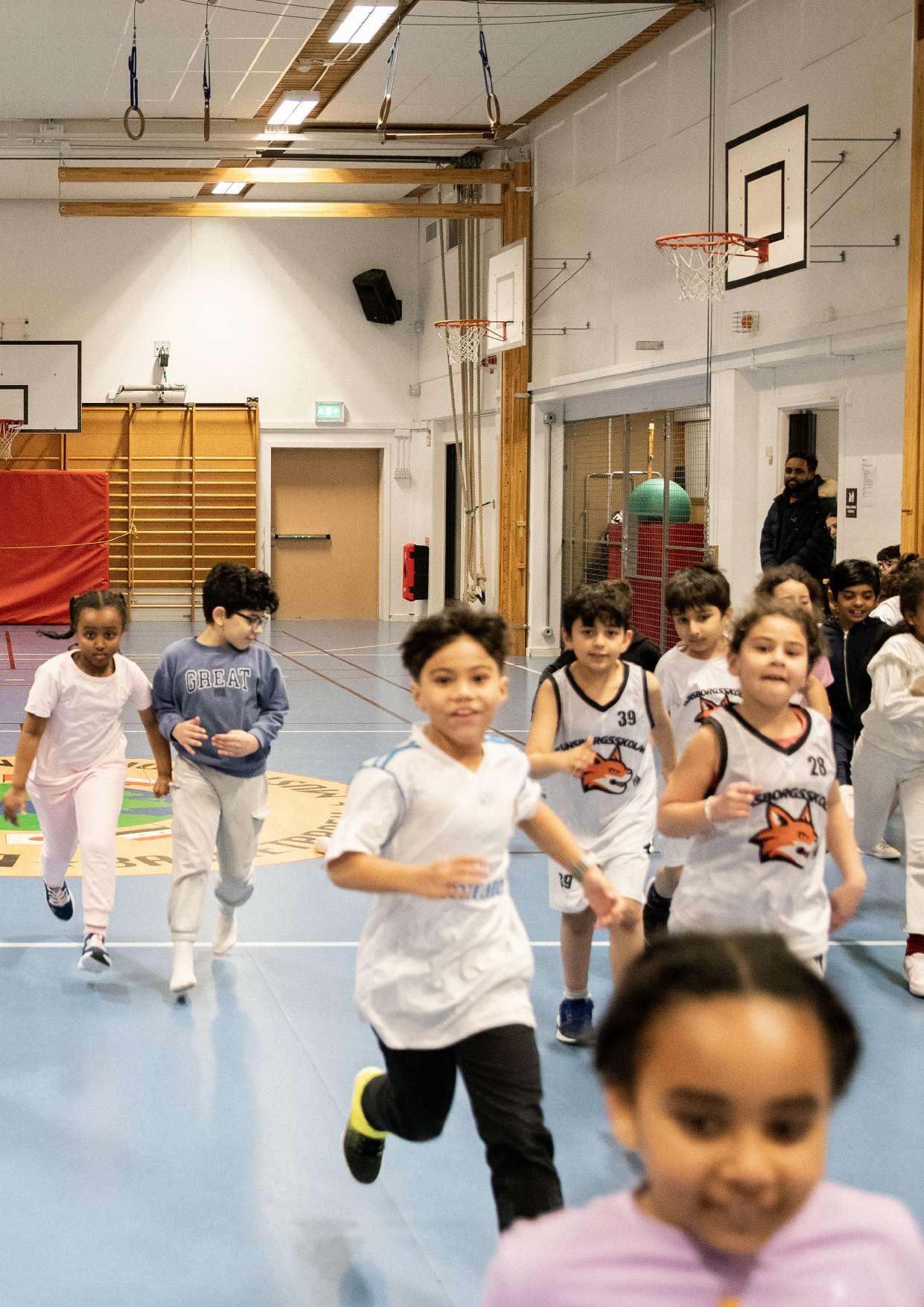
and repeated way affects an entire generation, who then have a context and a meaningful upbringing – keeping them away from other things,” she says.
Yacouba Barry points out that there have been no shootings in Tensta for the past five years – something that politicians and other actors like to take credit for.
“You can’t produce figures, but those of us who are here know why things have calmed down. Vision Generation Boll is directly linked to it. That’s what I try to explain to the staff at the sports hall – these 25 guys who are playing football even though they didn’t book a slot, why it’s important that they get to play anyway,” he says.
Vision Generation Boll operates all year round – not least in the summer, when many young people are drawn in. Golnaz Hashemzadeh Bonde describes how Cemil Karahan’s martial arts activities at Området in Flemingsberg had to close for a period because they did not have access to premises. In that short time, they lost contact with an entire generation of youngsters.
“It’s so, so important that, wherever we come from, we join forces to give children a secure background.”
“So it’s not makebelieve to say that grassroots enterprises make a crucial difference,” she says.
As for the project’s current status, Malin Andrée says that the goals have been formulated.
“It’s like a threestage rocket. Stage one is about laying the foundation for what we package and then finding funding and hopefully also public funding, because we believe that’s important for longterm sustainability,” she says.
But things don’t always go smoothly, emphasises Golnaz Hashemzadeh Bonde.
“Right now the challenge is to get the district to understand what’s happening here – to assess it based on the value created and see beyond the basketball club,” she says, continuing:
“Persuading politicians and local government to tweak their models and budgets in order to make use of the value that is being created here, the potential that exists, is definitely the biggest challenge,” she says.
The significance of the support from the ErlingPersson Foundation cannot be overstated, Golnaz Hashemzadeh Bonde says.
“It means everything! It enables us to devote hours to these matters, but also shows that there is a commitment from all parts of society. That it’s not just locals who are interested in what’s happening here,” she says, continuing:
“It’s so, so important that, wherever we come from, we join forces to give children a secure background and a constructive sense of community. That dimension is at least as important as the money itself – that we don’t just push the problem and its challenges back to where they are geographically located, here and now.”
2,000
Number of children and young people who have actively taken part in sports club Vision Generation Boll IF since it started in 2017. Today they have 800 active participants.
Number of shootings in Tensta in the past five years.
2011
The year that Inkludera was started. More than 1,000 agreements have been signed for social enterprises to sell their services to 128 municipalities.
ABOUT THE PROJECT
Project leads: Golnaz Hashemzadeh Bonde and Malin Andrée.
Title: From passionate volunteer to entrepreneur.
What it involves: The organisation Inkludera is working with sports club Vision Generation Boll IF in Tensta and Rinkeby as well as the Området IF sports club in Flemingsberg. The aim is for the two grassroots clubs to become strong and sustainable and, in the longer term, to develop economic partnerships with the municipalities.
Funding: The Erling-Persson Foundation is supporting the project with nearly SEK 2.3 million over two years.
SEK 1 M / 1 YEAR
Last year saw the premiere of Järvaveckan’s Culture Bridge, attracting around 12,000 visitors. This year Filippa Austin and Nanny Marianovic are focused on even higher quality, with the aim of giving more people the chance to discover the power of cultural activities.
Those attending Järvaveckan’s week of events over the period 11–14 June last year could also choose from a programme of 75 events under the banner Järvaveckan’s Culture Bridge, which included film screenings, art exhibitions, music and performing arts, but also talks, play and workshops.
“The evenings had a clear focus on culture for and by young people, with artists such as B.Baby and Cherrie on the main stage,” says project manager Filippa Austin.
Järvaveckan’s Culture Bridge is a project that aims to showcase cultural activities and their power.
“We want to enable everyone to experience different kinds of cultural expression, but also to express themselves. Culture is so much more than music and dance, which is why Järvaveckan is a fantastic platform,” says Nanny Marianovic, project coordinator and producer.
Järvaveckan’s Culture Bridge was created on Filippa Austin’s initiative, and this year she is working together with Nanny Marianovic.
They have developed three clear goals: to offer meaningful cultural experiences, to strengthen young people through creative expression and to promote participation in cultural life.
“We have these days at Järvaveckan, but also the opportunity to organise meetings, spread knowledge and bring about collaboration between cultural actors during the rest of the year,” says Filippa Austin.
She talks about some of the events on this year’s programme, one of which is taking place in
collaboration with the Royal Dramatic Theatre.
“For the first time we have a professional theatre performance. They’re going to perform the play Avig, which is aimed at those around 10 to 12 years old. And Konserthuset Stockholm, which celebrates its 100th birthday this year, will put on a big lunchtime concert,” says Filippa Austin.
She also names artists such as Lilla AlFadji, Cimberly Wanyonyi and Lekaye, as well as shows with Özz Nujjen and – from kids’ TV – Bolibompadraken (the Bolibompa Dragon) and Sommarskuggan (Summer Shadow). In partnership with real estate company Hemsö, six graffiti works each measuring two square metres will take shape during Järvaveckan, by and with young people. These will then be placed out in local meeting places.
“We’re not just creating art for the moment, but impressions that will live on.”
“We’re not just creating art for the moment, but impressions that will live on and become part of the common space and our common story,” says Nanny Marianovic.
In collaboration with Kulturhuset Stadsteatern Husby, which opened the Bio Husby cinema during the year, there will also be a film screening on a big screen.
“And we’ve expanded our partnership with television channel SVT. They’re screening the
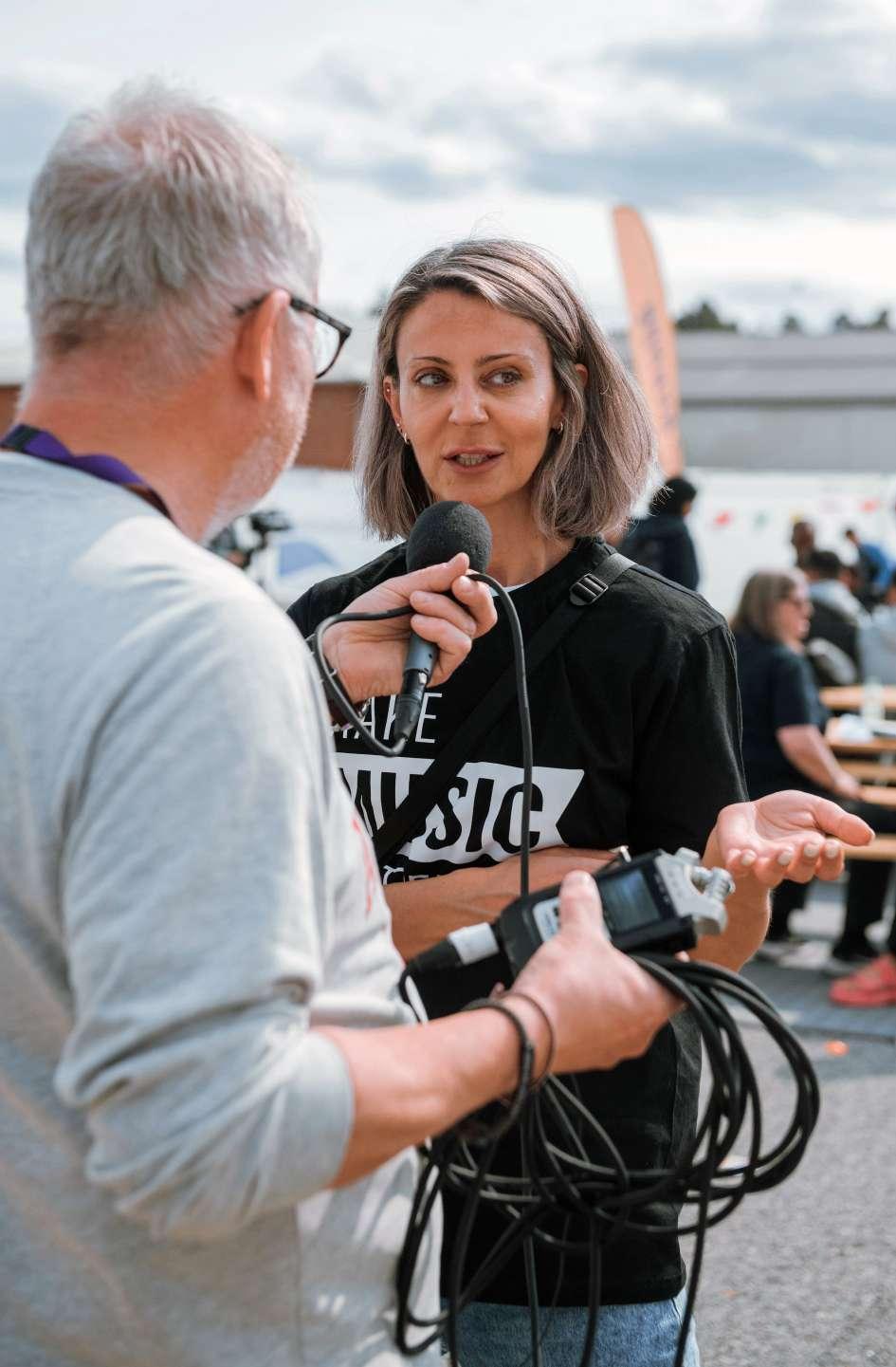
“Culture is so much more than music and dance, which is why Järvaveckan is a fantastic platform,” says Nanny Marianovic, shown here being interviewed at Järvaveckan 2025.
Järvaveckan has been held since 2016 at Spånga IP sports field in northern Stockholm. Järvaveckan’s Culture Bridge premiered in 2025.
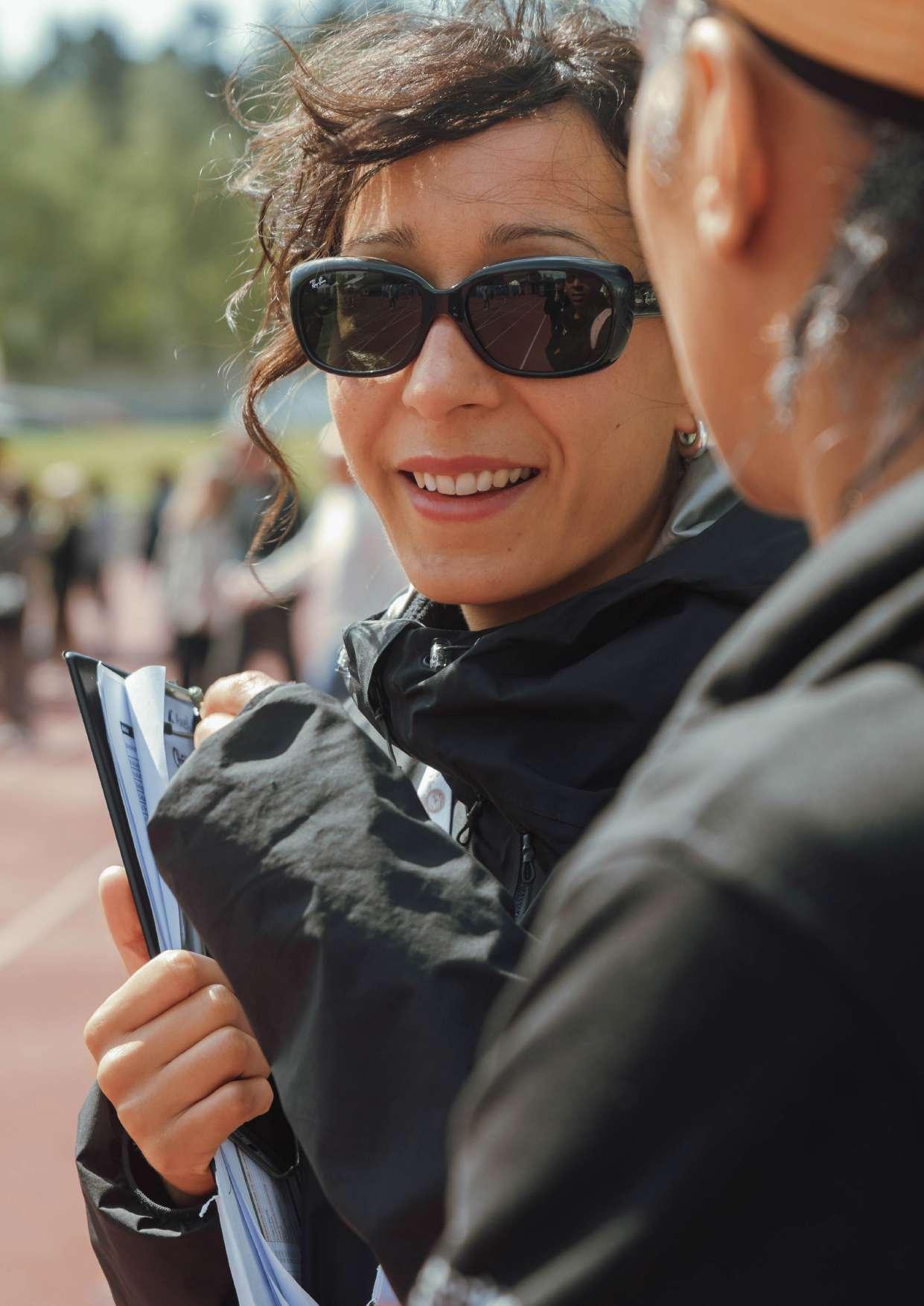
In 2026 the dates for Järvaveckan are 27–30 May. “We want school classes from different districts, different bubbles, to meet,” says Filippa
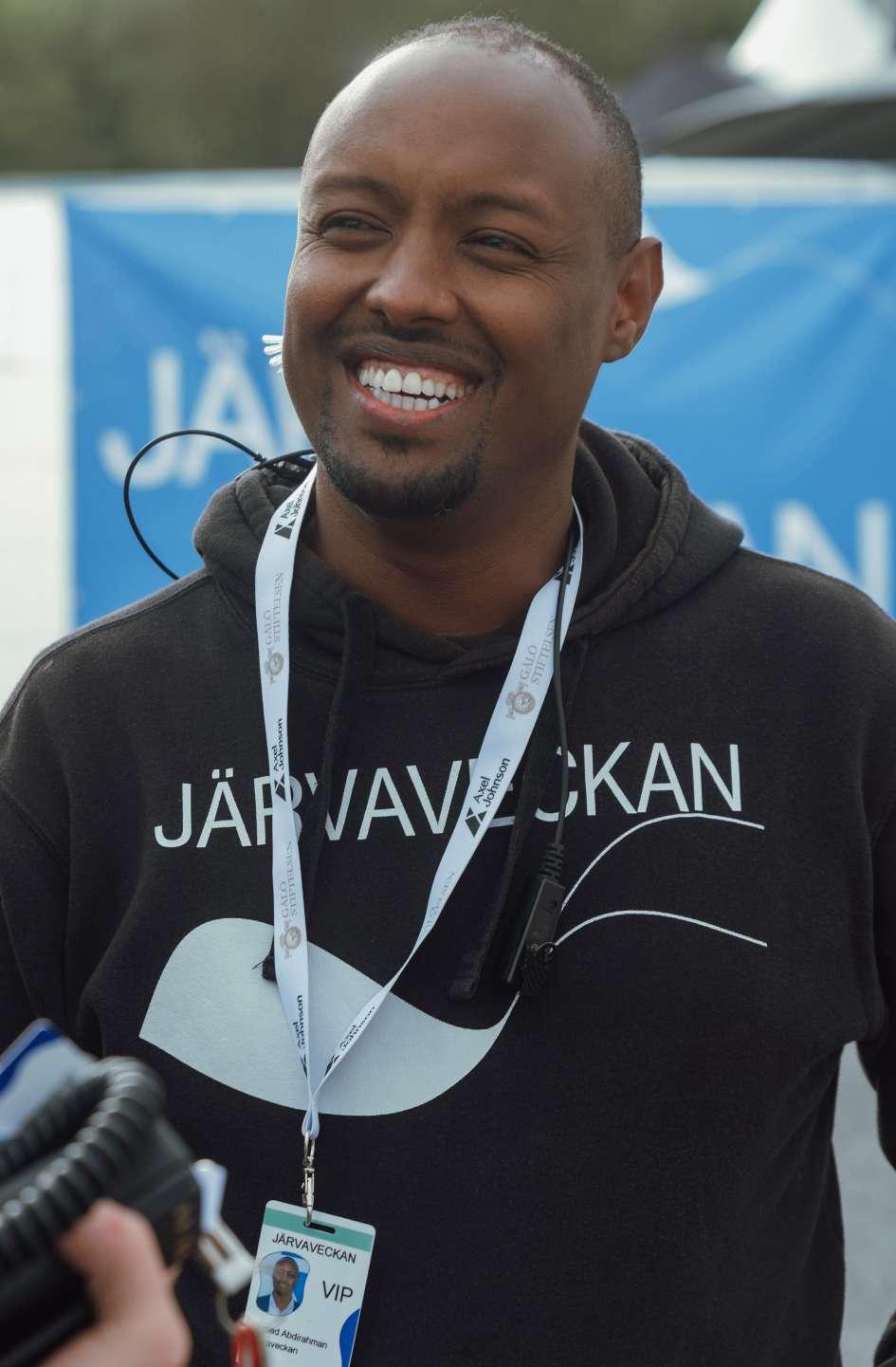
Ahmed Abdirahman describes the Culture Bridge as “a very important venture” and a natural continuation of the work that Järvaveckan has built up since its inception.
AHMED ABDIRAHMAN
“Our entire journey, from the 2013 film festival to Järvaveckan as it is today, has been based on the idea of culture as a meeting place. Culture can bring together people who might otherwise never have met – visitors, decisionmakers and residents.
So Järvaveckan’s
Culture Bridge
is not a sideline, but an important part of our whole and of our work to reduce the distance between people.”
documentary film project Mina drömmars land (Land of My Dreams) here with us before it comes out on SVT Play, with an accompanying talk by the director,” says Filippa Austin.
What’s new this year is that the Culture Bridge is moving onto the site, with a more visible presence on the main stage. There will also be a Culture Hub this year.
“In physical terms, it’s a 10x18 metre marquee where we’ll gather together all kinds of participants,” says Filippa Austin.
The idea of the Culture Hub came from lessons learned in their first year. One was that it is important that different programme events do not clash or compete with each other, while another was to provide better space for smaller outfits.
“They don’t have enough resources – and not just financially. Even if they get a tent, they don’t have the resources to put on a full programme. So some times and activities were great last year, while on other occasions it was a bit empty,” says Nanny Marianovic.
In the Culture Hub they can book a small corner rather than having to fill the entire space.
“And then they can contribute to one, two or three events in the programme. We’ll have a stage in the middle where people can put on a showcase presenting what they do, and share the activity they want to highlight,” explains Filippa Austin.
For visitors, this means that there will always be something going on in the Culture Hub – from dance theatre to panel discussions about working in the cultural sphere.
“We want to enable everyone to experience different kinds of cultural expression, but also to express themselves.”
“The aim is to create a space where there’s always something to discover, but also something to get involved in – where you’re not just part of the audience but also part of what’s happening,” says Nanny Marianovic.
Filippa Austin mentions another lesson they learned – to get people to think more about the longterm outlook beyond Järvaveckan.
“Right from early on in our dialogue, we’ve started talking to participants in the cultural programme about what they have in mind for the rest of the year? What are they going to do with the
interest generated?” she says, continuing:
“We try to find solutions that benefit the target group and enable them to stay engaged and active. We see Järvaveckan as being a way for lots of people to discover and try out different things, but when something goes down well, we would like to make sure that they can continue to explore this.”
This includes a collaboration with Järva district’s Aktiv Fritid Järva project, which provides guides who children and young people can get in contact with for information on recreational activities.
Another example is the short film competition, which has received 48 entries. Filippa Austin explains that the regional film fund Film Stockholm AB puts together a jury of established directors, and selected contributions are shown at Järvaveckan.
“We want school classes from different districts, different bubbles, to meet.”
The winners receive money in the form of project support and move on to the national film competition in Trollhättan, with travel and accommodation paid for.
“They’re given resources to continue with their interest, which is great and important,” says Filippa Austin.
This year Järvaveckan will take place over the period 27–30 May. The dates were deliberately chosen so that entire school classes can be invited.
“We want school classes from different districts, different bubbles, to meet. This year is also an election year, so we’ve had meetings with social studies teachers about inviting classes to specially selected events,” says Filippa Austin.
She also highlights the collaboration with the debating competition Debattmästarna, organised by Förenade Förorter, where students aged around 13–15 years from socioeconomically vulnerable areas in Sweden work to research and evaluate sources and learn to formulate their thoughts clearly before an audience as part of a public speaking competition.
“They learn to argue according to rhetorical theory, and it’s so great to hear the young people putting forward these arguments,” says Filippa Austin.
Other types of activities also took place at last year’s Culture Bridge, such as sumo wrestling.
“The costumes were adult size but children
thought it was great fun, even if they were rolling around in them, and teenagers could burn off some of their surplus energy,” says Nanny Marianovic.
Filippa Austin adds:
“To me, it was also clear that it became a gateway to other things in the culture tent. While waiting for their turn they began to play around with instruments and other things that were lying there.”
There was also a very popular table tennis table, with bats and balls.
Ahmed Abdirahman, CEO and founder of the Järvaveckan Foundation, describes the Culture Bridge as a natural continuation of the work that Järvaveckan has built up since its inception. He calls it “a very important venture”.
“Our entire journey, from the 2013 film festival to Järvaveckan as it is today, has been based on the idea of culture as a meeting place. Culture can bring
together people who might otherwise never have met – visitors, decisionmakers and residents. So Järvaveckan’s Culture Bridge is not a sideline, but an important part of our whole and of our work to reduce the distance between people,” he says.
He also highlights the importance of the support from the ErlingPersson Foundation.
“It’s been crucial in enabling us to carry out this initiative with high quality, breadth and a longterm approach,” says Ahmed Abdirahman.
Filippa Austin agrees:
“None of it would have been possible without it – giving children and young people the chance to be co creators and an opportunity to develop their interests further. And then getting a proper theatre production and a big orchestra… You need the technology, stage and so on to be able to do something like that,” she says.
2016: Ahmed Abdirahman starts Järvaveckan, now an annual event at Spånga IP sports field in northern Stockholm. Representatives of political parties, interest groups and companies gather to discuss politics and social issues.
2025: Järvaveckan’s Culture Bridge is organised for the first time, also with support from the Erling-Persson Foundation. The Culture Bridge replaced the Järvaveckan Film Festival.
2026: Järvaveckan celebrates its 10th year and will be held on 27–30 May, before the school holidays start.
50
The number of planned events on the programme for Järvaveckan’s Culture Bridge 2026, including films, stage talks, exhibitions, music and performing arts, as well as play and workshops.
2013
The year that Ahmed Abdirahman started the Järvaveckan Film Festival, which has developed into Järvaveckan’s Culture Bridge.
12,000
Estimated number of visitors to Järvaveckan’s Culture Bridge in 2025, with 43,000 attending Järvaveckan overall. As the Culture Bridge is moving onto the Järvaveckan site, this year 50,000 visitors are expected.
ABOUT THE PROJECT
Project leads: Ahmed Abdirahman and Filippa Austin.
Title: Järvaveckan’s Culture Bridge.
What it involves: Järvaveckan’s Culture Bridge will create space for cultural expression and work to counter feelings of exclusion. The aim is to offer meaningful cultural experiences, to empower young people through creative expression and to promote participation in cultural life.
Funding: The Erling-Persson Foundation is supporting the project with SEK 1 million.
VÄRMEVERKET ENTERPRISE SUPPORT
2025–2027
Värmeverket
SEK 20 M / 2 YEARS
Watching the escalating developments in our vulnerable areas, the team behind Värmeverket realised that it is impossible to change how things develop without being on the ground where the challenges exist. In 2017 they began with the idea of transforming the old heating plant premises in Bredäng into Sweden’s leading creative hub – Värmeverket.
Today Värmeverket focuses on three priorities: to be an accessible resource that provides creative spaces both for creative individuals and for local organisations; to run programmes to increase employment among those individuals who theoretically might be expected to work or study but do not; and to enrich the 127 postcode area of Stockholm, especially Bredäng, with an expanded cultural offering. This is being done partly through two formats that they have designed themselves with the aim of giving creative people an arena to be seen in, and partly by offering the venue as an arena for cultural life.
By working on these three priorities, Värmevärket strengthens people as well as the area – which in turn leads to increased security and a greater sense of community.
GENERATION PEP ENTERPRISE SUPPORT
Generation Pep
SEK 5 M / 3 YEARS
Generation Pep wants all children and young people in Sweden to have the opportunity to live an active and healthy life – and to want to do so.
Today most children and young people in Sweden do not move about enough and eat too little of what they need. Moreover, there are great differences between children growing up in different circumstances. Too little physical activity and an unhealthy diet increases the risk of depression, type 2 diabetes, disrupted sleep and cardiovascular disease, among other things.
According to the Convention on the
Rights of the Child, all children have the right to the highest attainable standard of health.
Generation Pep wants to reverse the trend whereby more and more children are living lives that are too sedentary and eating too little of what the body needs to feel good. Generation Pep wants Sweden to feel better, which is why they are working to create a public movement for more physical activity, improved diet and more equal health for children and young people.
Today, Generation Pep brings together over 7,000 actors from different social arenas who are working together for a society in which all children and young people have the opportunity and the will to live an active, healthy life.
S/S Orion’s Friends
SEK 50,000 / 1 YEAR
The non-profit organisation S/S Orion’s Friends is running the project ‘Unga på rätt köl’ (Young People on the Right Track), which aims to meet the needs of socially vulnerable young people for support and development. In a unique way, it combines social work with an interest in our cultural heritage. The activities take place on the pilot ship S/S Orion at Söder Mälarstrand.
Stockholm Youth Community Service is its principal and most important partner. The collective experience found among S/S Orion’s Friends as regards teaching methods for young people has led to a successful way of working and provided a safe environment for our youth in which they can develop.
The project works to support children and young people in organising independently and participating in union life and the principles of democracy.
The Nadija Foundation
SEK 20 M / 2 YEARS
In Lviv, the Nadija Foundation is building Ukraine’s first children's hospital that will also be a university hospital, with a focus on rehabili-
tation for children. The hospital will act as the national centre for trauma surgery, rehabilitation and mental health care and will meet some of the acute needs of children affected by war.
Since the full-scale invasion, more than 2,200 medical facilities have been damaged or destroyed in Ukraine, while the number of children in need of complex surgery, prosthetics and rehabilitation has increased dramatically. Mental illness among children has tripled since the start of the war.
The new hospital will handle a considerable part of this great medical need and is expected to admit around 140,000 paediatric patients annually. The hospital’s status as a university hospital will also strengthen education and research in the area of children exposed to war.
It is anticipated that the construction of the hospital will be mainly co-financed by Nordic countries, and the support in question will enable the design phase of the project.
Non-profit organisation Beredskapslyftet
SEK 5 M / 1 YEAR
Ever since the Russian missile attack on Kyiv’s largest children’s hospital, Okhmatdyt, in the summer of 2024, Beredskapslyftet has been working with the Astrid Lindgren Children’s Hospital to support the rebuilding of the hospital and the development of new capacity among its staff.
Activities include delivery of medical equipment and consumables, continuing training of doctors and nurses, as well as rehabilitation of sick or injured children. Work to procure equipment and organise training is coordinated from the Astrid Lindgren Children’s Hospital.
OUR FUTURE
Min Stora Dag
SEK 2.06 M / 2 YEARS
Min Stora Dag (My Special Day) works to give joy to children with serious illnesses and diagnoses.
The concept is all about making the children’s dreams come true. On their special day the child gets to experience something they have dreamed of doing or to meet someone they admire, or to have fun with others who know what it is like to be in their situation.
The project ‘Stark inuti – en satsning på vår framtid’ (Strong on the inside – an investment for our future) aims to bring strength, joy and hope to children, but also to have a positive impact on entire families and our society. Healthcare professionals across the country where children and young people receive care help Min Stora Dag to reach its target group.
‘Stora Dagar’ (Big Days) are unique experiences that strengthen children’s existential health and build resilience. It is all about feeling meaning, hope, togetherness and having a positive focus.
VISITS TO ASTRID LINDGREN CHILDREN’S HOSPITAL Clownmedicin
SEK 1.22 M / 1 YEAR
Since 1998 Clown Medicine has been visiting children and their families at the Astrid Lindgren Children’s Hospital. Clowns are at the hospital in Solna six days a week and in Huddinge three days a week, for 50 weeks of the year. In total nearly 30,000 children who have been admitted to hospital and their relatives are visited by the clowns every year.
The clowning has a real purpose – to make the hospital stay easier for the whole family, but also when necessary to make the work of the hospital staff easier so that the treatments go as smoothly as possible.
The clowns provide a complete distraction from sickness and medication. A visit from a clown can act as a stress-relieving safety valve, giving the family ‘a breath of fresh air’ and distracting their thoughts for a while from things that are frightening and worrying.
SCOUTING FOR ALL: SKÄRHOLMEN PHASE 2
Scouts
SEK 4.57 M / 3 YEARS
Through the project ‘Scouting for all: Skärholmen phase 2’ the Scouts, along with the district administration in Skärholmen as well as schools and other local bodies in the same area, want to break down exclusion and develop more confident and responsible adults. This is being done by making Scouting more accessible to children and young people in Skärholmen, thereby giving them the chance to develop and grow as individuals.
Activities are conducted as part of outdoor days and in the summer holidays, in the form of Scout day camps for younger children where young people in the same area are offered paid holiday jobs to help as leaders. The holiday job begins with a week’s training in leadership and outdoor skills.
In the long term the project is also expected to contribute to reduced exclusion, to more young people entering the labour market and to parents of the children who participate in the Scouts’ activities gaining greater knowledge about the importance of meaningful leisure time in general and Scouting in particular.
THE GOOD TALENTS HOLIDAY PROGRAMME AND TALENT TUESDAYS
The Good Talents SEK 574,480 / 1 YEAR
The Good Talents runs a social entrepreneurship programme during the school holidays for young people in areas with socioeconomic challenges, where young people develop ideas for solving social challenges that business can influence. Many young people are ambitious, but lack basic knowledge about the opportunities that they have in life. Neither are they aware that they have the power to change their situation.
The Good Talents wants to counter this by highlighting young people’s potential and helping them to become leaders to others while
at the same time chasing their own dreams. This is being done by developing and running educational programmes in leadership and social innovation which give young people a stronger sense of their own power.
In concrete terms, young people get a paid holiday job that includes a training programme in which they produce solutions to social challenges that business can influence. Meeting with people in power also gives young people a feel for how their ideas can be taken up and thereby influence future development.
“Behind every initiative are people with commitment, drive and a desire to create lasting value. Their work reminds us of what is possible when ideas are put into action.”
FROM LEFT:
MATHIAS UHLÉN
Board member. Born 1954.
Mathias has an MSc in chemical engineering and a PhD from KTH Royal Institute of Technology. From 1999 to 2001 he was Vice President of KTH. Mathias is a member of the Royal Swedish Academy of Sciences and the Royal Swedish Academy of Engineering Sciences (IVA), as well as the National Academy of Engineering in the USA.
Since 1998 Mathias has been professor of microbiology at KTH, from 2012 to 2021 he was professor of biotechnology at the Technical University of Denmark (DTU) and from 2018 to 2025 he was visiting professor of neuroscience at Karolinska Institutet. He was director of the Science for Life Laboratory from 2010 to 2015 and has worked for industrial applications of the research through various corporate collaborations and entrepreneurial ventures. Mathias’ research on protein A is the basis for the export success of MabSelect SuRe, among other things.
Mathias co-founded the biotech companies Pyrosequencing AB, Affibody AB and Atlas Antibodies AB, among others, and is an advisor to the venture capital fund Healthcap.
CHARLOTTE SÖDERSTRÖM
Board member. Born 1977.
Charlotte studied market economics at Institutet för Internationell Utbildning (IIU). Up until the age of 21 she was an active competition rider in equestrian sport and today she runs the Stuteri Arch stud farm in Skåne in southern Sweden. The stud farm breeds, trains and sells jumping horses, and in 2017 and 2021 the International Federation for Equestrian Sports (Fédération Equestre Internationale – FEI) named Charlotte as its Owner of the Year. Charlotte is also involved in the sponsorship project H&M We Love Horses as well as apparel brand All In Equestrian.
Board member at family companies.
TOM PERSSON
Board member. Born 1985.
From 2006 to 2010 Tom studied at the European Business School and Metropolitan Film School in London. He subsequently worked on the production and financing of TV and film projects.
Since 2016 Tom has run investment company CoMade, which focuses on the media sector. Alongside his own company he works with around 10 other companies in film, television and sound.
Board member at family businesses and other companies including Playpilot AB and CoStudios.
ELISABETH TAMM
Board member. Born 1947.
Elisabeth has degrees in law and business administration from Uppsala University. After a period as a notary she was employed at the Swedish Tax Agency in Stockholm. She has also been head of tax and family law at Carnegie and Ålandsbanken.
Elisabeth chairs or holds other positions of responsibility at a number of foundations, including the Alba Langenskiöld Foundation associated with publishing house Langenskiöld, the Foundation for the Astrid Lindgren Children’s Hospital, the Tranås Säteri Foundation and Sällskapet för Makarna Malmqvists minne.
Elisabeth is also chair of the board at the H&M Foundation.
STEFAN PERSSON
Chair of the Board. Born 1947.
1969–1973 Stockholm University and Lund University. 1976–1982 Country Manager for H&M in the UK and responsible for H&M’s expansion abroad. 1982–1998 President and CEO of H&M. 1998–2020 Chair of the Board at H&M.
Other board positions at family companies.
MARI-ANNE CRONSIOE OREFORS
Board member. Born 1957.
Mari-Anne has a degree in economics from Stockholm University. After graduating she worked for five years in H&M’s buying department. From 1985 to 2020 MariAnne had a key role at the Ramsbury family office as accounts and administrative manager. Mari-Anne was involved in setting up the Erling-Persson Foundation and has also been part of the H&M Foundation since it was established in 2007.
Mari-Anne is on the board of the H&M Foundation and was responsible for running the accounting and administrative side of the foundation during its first 20 years.
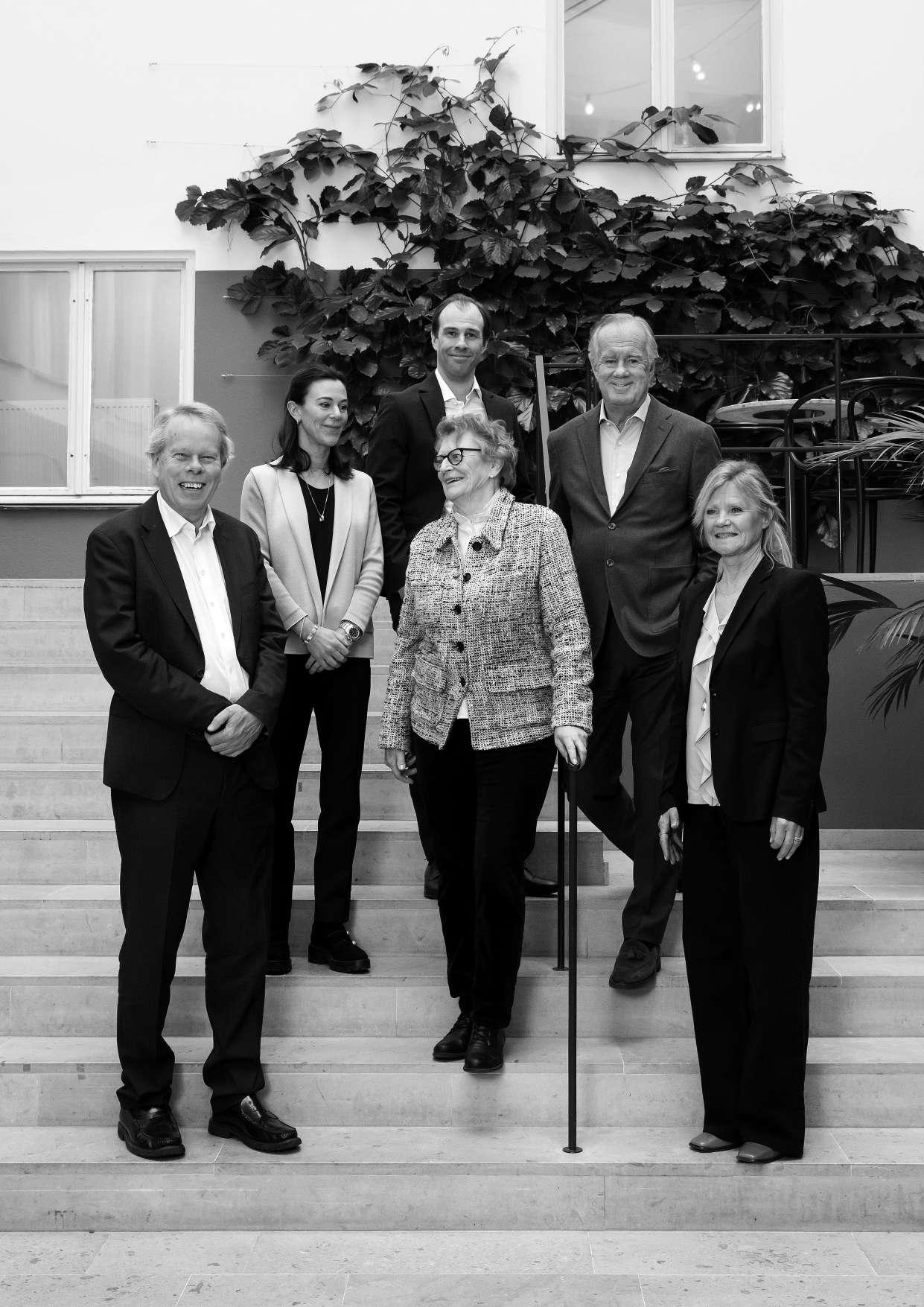
SCIENCE & RESEARCH
University of Gothenburg, Ana Luís
SEK 15 m 5 years
Karolinska Institutet, Amanda Andersson Rolf SEK 15 m 5 years
Karolinska Institutet, Anna Asarnoj SEK 4 m 3 years
Karolinska Institutet, Per-Olof Berggren SEK 30 m 3 years
Karolinska Institutet, Joel Nordin SEK 8 m 3 years
Karolinska Institutet, Lars Rydén SEK 2.06 m 2 years
KTH Royal Institute of Technology, Mats Danielsson SEK 60 m 4 years
KTH Royal Institute of Technology, Anna Herland SEK 6 m 3 years
Linköping University, Johan Junker & Daniel Aili
SEK 6 m 3 years
Lund University, Anna Blom SEK 6 m 3 years
Stockholm University, Eva Hedlund SEK 6 m 3 years
Umeå University, Daniel Öhlund
Uppsala University, Alexandra Teleki
TUITION & EDUCATION
SEK 6 m 3 years
SEK 4 m 3 years
The Nobel Foundation SEK 550 m 4 years
Beredskapslyftet/Reskilling Ukraine SEK 5 m 1 year
Centre for Business History SEK 4.8 m 3 years
Stockholm School of Economics, Center for Retailing SEK 50 m 5 years
Make Democracy Great Again SEK 0.32 m 1 year
Unga Tankar Om Musik SEK 5 m 2 years
DEVELOPMENT OF CHILDREN & YOUNG PEOPLE
Beredskapslyftet/Children’s hospital in Kyiv
SEK 5 m 1 year
Clownmedicin SEK 1.22 m 1 year
Fryshuset SEK 50 m 2 years
Inkludera SEK 2.29 m 2 years
Generation Pep SEK 5 m 3 years
The Good Talents SEK 0.57 m 1 year
Min Stora Dag SEK 2.06 m 2 years
Nadija Children’s Foundation SEK 20 m 2 years
S/S Orion’s Friends SEK 0.05 m 1 year
Scouts SEK 4.57 m 3 years
Järvaveckan Foundation SEK 1 m 1 year
Värmeverket
SEK 20 m 2 years
M
STATEMENT 1 JAN–31 DEC
31 DEC
*The Foundation’s assets are recognised at cost.
There are surpluses in the financial portfolio and consequently adjusted equity on the closing date is positive.
**Refers to grants awarded but not yet paid out.
***Refers to amounts approved, gross.
Ylva Linderson, Programme Manager ylva.linderson@erlingperssonsstiftelse.se
Kristina Stenvinkel, Communications stenvinkel@ramsbury.se
The Erling-Persson Foundation
Drottninggatan 50 Box 1421, SE-111 84 Stockholm, Sweden erlingperssonsstiftelse.se
© Erling-Perssons Stiftelse, 2026
Photos: Carl Hjelte, Mira Wickman, Avat Andimeh
Text: Lotta Fredholm
Graphic design and production: Open Studio
Printing, reproduction and binding: Grafisk Verkstad
Typefaces: Brown Pro and Sabon
Paper: 300 g Lessebo Moss and 150 g Munken Polar Rough