Why Psychological Realism Matters in Modern Horror Writing
The most enduring horror doesn't just frighten — it haunts. By grounding fear in authentic human emotion, contemporary writers create stories that linger long after the final page.


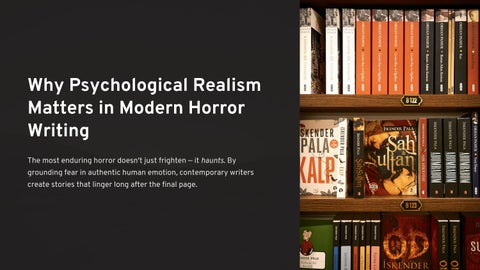
The most enduring horror doesn't just frighten — it haunts. By grounding fear in authentic human emotion, contemporary writers create stories that linger long after the final page.
Modern horror has moved far beyond jump scares and graphic suspense. Today's most memorable stories focus less on external terror and more on emotional complexity, internal conflict, and psychological tension. Readers are drawn to narratives that feel emotionally believable — even when the supernatural is involved.

Readers remember horror not because it was frightening, but because it felt emotionally meaningful. Complex, relatable characters deepen that connection.
Modern horror builds tension through atmosphere, memory, trauma, and vulnerability — not sudden scares alone.
Literary Depth
Suspense emerges naturally from character relationships and unresolved conflicts, giving horror greater emotional and literary strength.

Author and professor Erika T. Wurth has become recognised for her psychologically layered approach to horror. Her novels — including White Horse and The Haunting of Room 904 — explore memory, identity, grief, and personal history while delivering genuine suspense and atmospheric tension. Her teaching encourages writers to prioritise dialogue, emotional realism, and narrative structure over plot twists or supernatural spectacle.

In White Horse, Kari James confronts painful family secrets surrounding her mother's disappearance. The novel combines suspense with emotional introspection — the horror develops gradually because the emotional stakes remain tied to Kari's identity and personal history. The result is tension that feels both deeply personal and profoundly unsettling.
The Haunting of Room 904 explores how memory, place, and unresolved emotional tension influence perception and fear. Supernatural elements emerge carefully rather than overwhelming the narrative. This slower, more deliberate approach creates stronger suspense — readers become emotionally invested in the characters before confronting the uncanny.

Modern readers want to understand not only what happens, but why characters react the way they do. Psychological realism allows horror to explore themes that make the genre feel meaningful and emotionally engaging.
Grief & Trauma
Unresolved loss shapes how characters perceive threat. Identity & Belonging Who we are determines what we fear most.
Family & Memory
Personal history becomes the source of horror itself. Isolation & Anxiety Solitude amplifies every emotional and supernatural threat.
As the genre continues evolving, psychological realism will likely remain one of the defining characteristics of modern horror storytelling. Readers increasingly seek horror that is emotionally intelligent and psychologically believable — stories that create fear while exploring deeper human experiences.
Through novels like White Horse and The Haunting of Room 904, Erika T. Wurth demonstrates how contemporary horror can balance atmosphere, realism, and emotional resonance in powerful ways.

www.crunchbase.com/person/erika-t-wurth