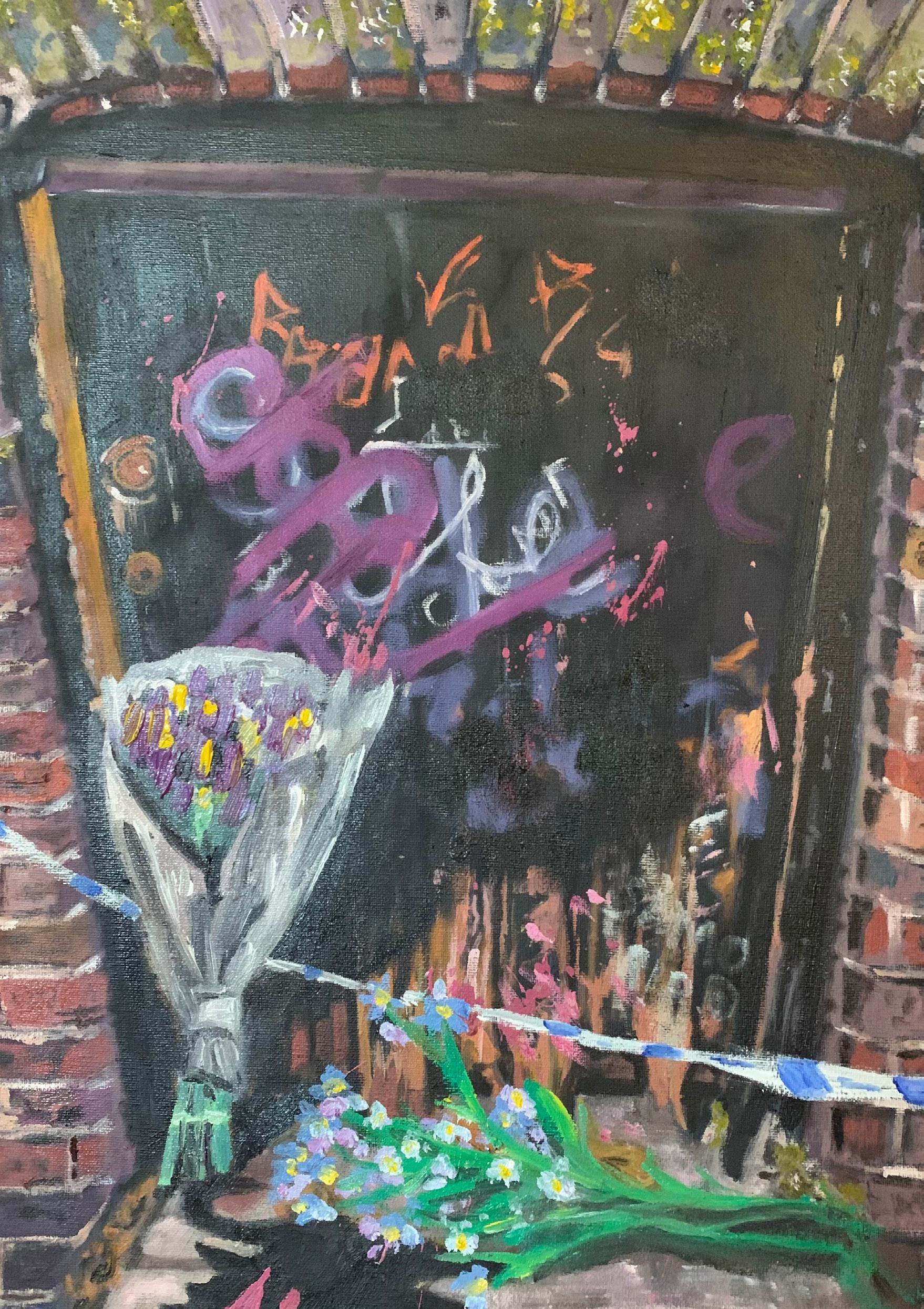




















Painting by: Bruce Houlder - based on an original drone photo by Chris Gorman of The Big Ladder Company


By Bruce Houlder, Founder, Fighting Knife Crime London
This magazine could not be more topical. At the end of this introduction, we also have an exciting new venture to announce.
Following the successful launch of the National Knife Crime Centre (NKCC) on 2nd April, and the Government’s announcement of the plan to halve knife crime on 7th April , we have some well-informed comment about this from Coalition member Patrick Green , CEO and founder of the Ben Kinsella Trust.
Building on this theme of proactive change, this edition also brings together a powerful and deeply human set of perspectives on knife crime and youth violence. We have contributions from Leanne Lucas founder of Let’s Be Blunt, Joe Raby from Catch22, Jonathan Ley from Make Time Count Today, Ash McMahon of the Violence Intervention Project,
Sue Scott-Horne from Let’s Get Talking, the ever impressive Professor Stan Gilmour from Oxon Advisory, and Sandra Campbell from Word 4 Weapons. While each article stands on its own, together they form a compelling argument: that if we are serious about reducing violence, we must move beyond reactive responses and instead confront the complex realities that drive it.
Across these contributions, a consistent theme emerges — violence is rarely random. As Ash McMahon explains, it is often rooted in emotional experiences such as shame, humiliation and the need to protect one’s sense of self. What can appear, from the outside, as sudden or senseless is frequently the visible expression of something far deeper and long-standing. This reframing challenges us to look not only at what violence does,
but what it does for the individual in that moment — and how limited the perceived alternatives may be.
At a systemic level, Professor Stan Gilmour offers a critical examination of current policy approaches, particularly the risks embedded within mandatory intervention frameworks. His analysis raises important questions about the potential for well-intentioned measures to inadvertently deepen criminalisation, especially for children who themselves are victims of exploitation. His work calls for greater accountability, better data, and a more nuanced understanding of vulnerability within the justice system.
Joe Raby’s reflections reinforce this human lens, drawing attention to the formative experiences that shape young people’s lives. His work reminds us that behind every label is a story, and that the difference between harm and hope can rest on something as simple — and as profound — as a single trusted relationship or moment of belief. The “quiet work” of keeping young people safe, often unseen and unmeasured, is shown to be one of the most powerful protective forces we have.
Leanne Lucas brings a different but equally vital perspective, grounded in her own life-changing experience. Her work highlights how prevention must begin far earlier than we often acknowledge — even within our own homes. By challenging the normalisation of everyday risks, such as the accessibility of pointed kitchen knives, she makes a clear and practical case that prevention is not only the responsibility of systems, but of individuals and communities. Small, tangible changes can have life-saving consequences.
This emphasis on practical prevention is echoed by Sandra Campbell, from
Word 4 Weapons, whose work demonstrates the importance of creating real-world opportunities for safer choices. These resources are found everywhere you look on the Fighting Knife Crime London website. Their approach recognises that many individuals who carry knives do so out of fear rather than intent, and that by providing accessible, anonymous ways to remove weapons from circulation, we can interrupt the pathway from carrying to use. It is a reminder that effective responses must meet people where they are, not where we assume them to be.
Sue Scott-Horne’s contribution is a tribute to her ever present energy. She underlines the importance of immediate harm reduction alongside longer-term prevention. The distribution of trauma bleed kits and educational resources reflects a clear-eyed understanding that while we work to reduce violence, we must also be prepared to respond to its consequences. Saving lives in the moment and educating for the future are not competing priorities — they are complementary ones.
Similarly, the contribution from Jonathan Ley of Make Time Count Today focusses on the benefits of Out of Court Resolutions. He highlights the opportunity for smarter, more proportionate responses to lowerlevel offending. This is something that Fighting Knife Crime London have long advocated. A more consistent and prevention-focused approach could not only relieve pressure on the justice system but also create earlier opportunities to address the underlying causes of behaviour — before they escalate into more serious harm.
Taken together, these articles make
clear that there is no single solution to knife crime. Instead, what is required is a layered, coordinated approach — one that combines emotional understanding, trusted relationships, practical interventions, community engagement and systemic reform. Enforcement has a role, but it cannot stand alone. Prevention, in its broadest sense, must sit at the centre of any meaningful strategy.
What also emerges strongly is a sense of shared responsibility. Whether through the design of everyday objects, the conversations we have with young people, the systems we build, or the policies we implement, each of us has a role to play in shaping safer environments.
There is reason for hope. As several contributors note, there are signs of progress, and examples of what works. But continued progress is not inevitable. It depends on our willingness to listen, to adapt, and to act early.
Ultimately, this collection is not just a reflection on violence, but a call to rethink how we prevent it. It challenges us to move upstream — to the moments before crisis, before escalation, before harm — and to recognise that it is often in those quiet, easily overlooked spaces that the greatest opportunities for change exist.
At the beginning of April, Fighting Knife Crime London launched an original new venture. It about the ability of Art to Change Lives. We can only continue to offer the free services we do because of your individual generosity. We now want to offer something special in return.
For this reason our founder, Bruce Houlder has just launched a new
website called www.brucehoulder.art. The images you see above are partial only. The full images can be seen on the website. At present there are about 35 paintings displayed in our gallery area. Art can change lives, and you can help this happen. In return a donation that goes directly to our charity Fighting Knife Crime London, this new linked website offers original and high-quality fine-art giclé prints of paintings by Bruce and other artists who will donate their works from time to time. Even if you cannot contribute, do take a look and share the website link with your networks. No contributing artist will make a penny from this. They just want to help us grow the information resources we provide, bring these together in one place to enhance collaboration and change young lives.
Bruce Houlder Founder of Fighting Knife Crime London (FKCL)
www.fightingknifecrime.london



By Patrick Green, CEO, The
Ben
Kinsella Trust
and a member of the Government’s Coalition to Tackle Knife Crime.
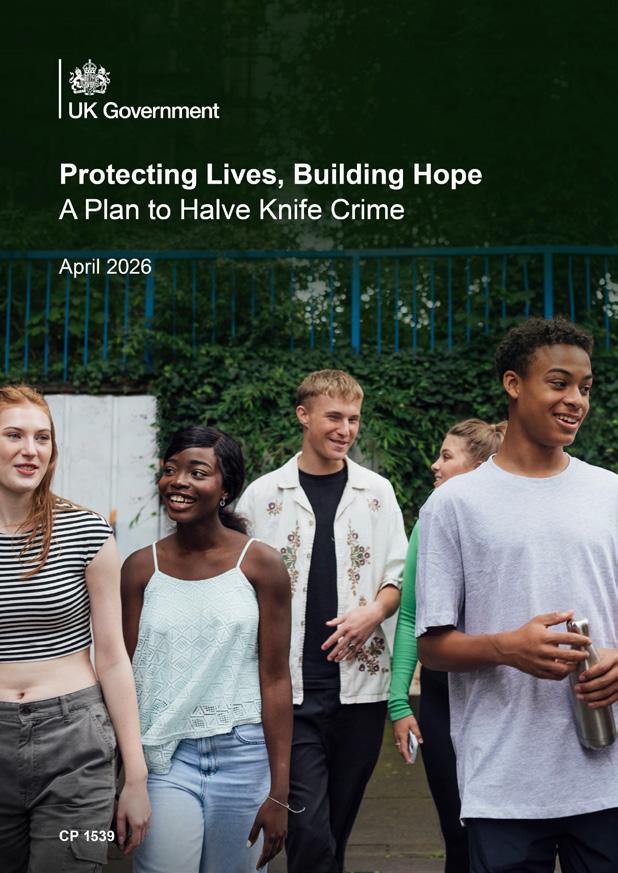
The Government’s new strategy, Protecting Lives, Building Hope: A Plan to Halve Knife Crime, sets out an ambition that families affected by serious violence have waited far too long to hear. It marks a clear and welcome commitment to significantly reduce the harm caused by knives. For those of us who work daily with young people and schools, and for a charity founded by a family grieving the loss of their child, this ambition is not abstract. It matters deeply, because lives depend on it.
I write from my perspective as CEO of the Ben Kinsella Trust, where we support and empower thousands of young people every year, and as a member of the Government’s Coalition
to Tackle Knife Crime. My combined roles provide a rare vantage point, one that recognises both the genuine strengths in the Government’s approach and the challenges that must be confronted if this plan is to succeed.
The pledge to halve knife crime within a decade was a central commitment of Labour’s 2024 manifesto, framed within its mission to “take back our streets” by reducing serious violence. On entering government, ministers reframed this pledge as a “moral mission”, establishing the Coalition to Tackle Knife Crime as an advisory body to test policy thinking, identify gaps, and ensure lived experience and frontline expertise shape strategic decisions.
Crucially, the plan acknowledges that knife crime is not a problem with a single cause or solution. It organises its response across four pillars, Support, Stop, Police, End and places welcome emphasis on a genuine “whole-ofsociety” approach. This framing is vital. The evidence is clear: policing alone cannot stop knife crime. It must be matched by early intervention, well-resourced youth services, and sustained support for young people growing up with trauma, exclusion and fear.
For this reason, the plan’s focus on early support and protecting children who are vulnerable to exploitation and serious violence is particularly encouraging. Commitments to expand youth mentoring, school based interventions and trauma informed services align closely with what we know works to keep young people safe. The real test for Government, however, will be whether it can deliver sustainable investment in these important early interventions. Short term funding cycles and time limited pilots cannot undo years of instability in young people’s lives. Prevention is too often the first casualty of funding cuts, despite its proven return on investment. Announced amid an uncertain economic outlook, this plan will only succeed if prevention is backed by reliable, long term funding, not just strong rhetoric.
The Police pillar outlines the central role policing will play in reducing knife crime through targeted enforcement, intelligence led patrols and effective local policing. It recognises the need to adapt to emerging threats, including the growth of online knife sales, and highlights the importance of developing
modern policing approaches in collaboration with digital platforms and retailers. However, many of the measures outlined build on existing police powers and long established practice, meaning their success will rest on consistent, sustained delivery rather than new policy direction alone. Achieving meaningful and lasting impact will therefore require long term investment in specialist capability, such as the new National Knife Crime Centre, alongside a clear commitment to ensuring that the familiar policing tactics set out in the plan are applied fairly and consistently, and at the scale and pace required to reduce knife crime.
Crucially, the plan does not ignore the need for rehabilitation of offenders. For those convicted of knife offences, levels of repeat offending remain unacceptably high. The END pillar seeks to break this cycle by prioritising rehabilitation alongside accountability, recognising that without addressing trauma, exclusion and unmet need, enforcement simply recycles the same individuals through the system. Yet this pillar carries some of the greatest delivery risks. Meaningful rehabilitation depends on coordinated, properly resourced services across prisons, probation and local communities, systems that are already under severe
pressure. Promises of improved resettlement, tailored supervision, and access to mental health support, education and employment will only reduce reoffending if they are delivered consistently, at scale, and beyond pilot schemes or well intended policy statements.
One notable shift in the plan is the requirement that every child caught carrying a knife is referred to Youth Justice Services and placed on a mandatory intervention programme. This brings an end to the inconsistent, postcode dependent responses that have failed too many young people in the past. On the face of it, this is a rational and potentially transformative change. However, many young people carry knives not through malice, but because they are fearful, groomed, coerced or living with trauma. As Professor Stan Gilmour argues elsewhere in this publication, there is a real risk that mandatory, enforcement led pathways can place young people deeper into the criminal justice system rather than safeguarding them. As he puts it, “the real question is whether the coercive architecture threaded through this scheme will produce the outcomes it promises”. Without safeguards, discretion and clear
separation from punitive pathways, mandatory interventions risk pulling frightened or traumatised children deeper into the criminal justice system, the very outcome evidence warns against.
The mission to halve knife crime is both vital and exceptionally challenging to deliver. It should also be recognised that this plan represents the strongest commitment a Government has made to tackling knife crime in the past eight years, and that it has the potential to make a genuine difference. For families like the Kinsella’s who have lost loved ones, for young people who live in fear on their own streets, and for communities calling for lasting change, the stakes could not be higher, and failure is simply not an option.

Patrick Green CEO, The Ben Kinsella Trust benkinsella.org.uk



By Joe Raby, Assistant Director, Justice and Education, Catch22
For as long as I can remember, I’ve had a strong sense of social justice. Even as a child, I felt pulled towards helping people, towards fairness, towards trying to understand why some lives are surrounded by stable scaffolding while others stand exposed. School itself never really gripped me. I wasn’t ‘academic’ in the way the system wanted me to be. Looking back, I can see the points where the absence of the right conversation or the right adult might have led me somewhere very different.
What ultimately changed the direction of my life wasn’t a system or a structured intervention. It was a conversation.
Just days before university application deadlines closed, a college
tutor asked whether I had ever considered higher education. No one in my family had gone. It wasn’t mentioned at home. But in that moment, someone saw something in me and said it out loud. Within days, I applied, I went, and my life expanded in ways I had never considered possible. Later, I gained a master’s degree and dedicated my career, now over a decade to working across criminal justice, social justice, violence reduction, and youth support. That moment taught me something I have carried ever since: a single expression of belief can shift the direction of a young person’s life. And after years of working in this sector, I’ve seen that principle proven again and again: the smallest interactions can have the biggest impact.
Across youth justice, violence reduction, victim support and custodial settings, the patterns in young people’s stories are strikingly consistent.
You see the same crossroads repeated:
• school exclusions,
• the absence of safe adults,
• unstable or unsafe home environments,
• trauma that has gone unnamed and untreated,
• limited access to safe spaces,
• communities where fear shapes everyday choices,
• opportunities that feel out of reach.
We often talk about “opportunities” as though they need to be big, life changing events. But for many young people, the opportunity they need is much smaller: a safe space to explore hobbies, someone who checks in without judgement, a place to belong, the chance to try something new, or somewhere to challenge and be challenged safely.
And above all, the chance to get things wrong without being defined by it.
Young people I have worked with are often labelled before they are ever understood. “High risk.” “Offender.” “Known to services.” These labels rarely capture the complexity of their experiences or their potential for change. Research shows that many young people involved in violence have themselves experienced harm, loss, trauma, or exploitation. The line between “victim” and “offender” is far thinner than public narratives suggest.
And yet we can sometimes expect too much from them.
We treat young people as though they are fully formed adults, as though they should “know better,” even when they have never had stability, guidance or emotionally safe environments. Developmentally, socially, and neurologically, they are still becoming. To expect perfection from children who have lived through chaos is not only unrealistic but unfair. When we hold them to standards they have never been shown, we create conditions where failure feels inevitable.
Young people are not finished. They are in formation. And they deserve the space to grow.
There is one young person whose story has stayed with me for years. Anyone who knows me has probably heard me talk about it, because it remains the clearest illustration of what policy can never fully capture.
He was well known to the youth offending service, excluded from school, frequently in dangerous situations, and entangled with peer groups that raised serious concerns. There were times when my team and I genuinely feared the next phone call might bring devastating news.
One night, a serious incident took place in an area he was closely associated with. When something like that happens, practitioners instinctively check in with the young people they work with.
But he hadn’t been outside that night. He was at home teaching his dad how to play chess.
A few weeks earlier, he had mentioned that his grandad taught him to play, but he hadn’t touched a chessboard since. One of our project workers,
after finishing their shift, dropped off a board at his house.
That chess game likely saved his life. There’s no KPI for that. No dataset. No funding line.
But it is exactly the kind of impact that keeps young people safe.
A moment of connection that interrupted a potentially fatal chain of events.
This field is filled with moments like that, moments the public will never see but that shape the lives of young people in ways no metric can capture.
Recent youth justice reforms, including the commitment that every child caught carrying a knife will receive a mandatory targeted support plan, alongside £320 million of investment, have potential.
Mandatory support plans can be a positive step. I’ve seen firsthand how inconsistent responses can be across local areas. Ensuring every child receives support, not just sanctions, is important.
But for these plans to work, they must be meaningful, not procedural. The danger with any national reform is that good intentions become diluted into checklists. Young people do not change because a process is followed. They change because someone takes the time to understand them, to build trust, to offer guidance and stability.
Investment is welcome too, particularly in a system that has carried heavy pressure for years. But funding alone doesn’t transform outcomes. What matters is how it is used:
• to build trusting relationships
• to strengthen trauma informed practice
• to reduce school exclusions
• to create safe community spaces
• to provide meaningful opportunities
• to allow practitioners time with young people, not just time on systems
Reform works when it amplifies what we already know is effective.
After more than a decade in this field, my belief is simple: people are inherently good, and most young people want to make the right choices when they feel safe enough to do so.
From experience, three things make the biggest difference:
Research consistently shows that the presence of one stable, reliable adult can buffer the impact of trauma and reduce the likelihood of offending. This aligns completely with what I’ve seen on the ground.
Young people need places where they can express themselves, challenge ideas, and make mistakes without fear of punishment or permanent labels.
Not just education or employment, though these matter, but hobbies, groups, spaces and identities that allow young people to feel part of something constructive and safe.
Belonging is a protective factor. Isolation is a risk factor.
This work is not easy. You see trauma, loss, fear, and the consequences of systems that often intervene too late. The emotional weight can be heavy.
But the work is also filled with resilience, hope, and moments of real transformation. You see young people who have every reason to give up yet show extraordinary determination. You see small changes with enormous meaning. You see futures opening that once felt impossible.
These moments stay with you, and they remind you why this work matters.
If I could ask policymakers to hold one truth at the centre of reform, it would be this:
A young person involved in violence is almost always a young person who has been let down long before they ever harmed anyone else.
Knife carrying rarely begins with intent.
It begins with fear, trauma, coercion, exclusion, or the absence of safety.
We cannot expect children to behave like adults when their lives have not given them the foundations that adults take for granted.
The reforms underway have potential, but only if they remain rooted in humanity, not bureaucracy. Reform must recognise that young people are still forming their identities, and they need patience, guidance, opportunities, and safe adults who believe in them.
We must stop expecting perfection from children who have lived through instability and instead give them what they have never had:
• the freedom to grow
• the safety to fail
• the support to get back up
• and the belief that they can choose a different path
A single conversation changed the course of my life.
A simple chessboard changed the course of another young person’s.
If reform can amplify the power of those small but profound moments, we will not only reduce violence, but we will also build futures that young people genuinely want to choose.
Joe Raby Assistant Director, Justice and Education, Catch22
catch-22.org.uk

By Professor Stan Gilmour, Oxon Advisory
I write in connection with Ending Coercive Offending (ECO), a Community Interest Company built on a principle that should not need stating but plainly still does: no child should be criminalised as a result of their own exploitation. Youth crime has declined significantly since 2019, yet NRM ( National Referral Mechanism) referrals have risen year on year, with criminal exploitation, most commonly county lines activity, accounting for around half of all child referrals by 2024. Ministry of Justice and Home Office data confirms both movements: fewer child offenders, and more safeguarding referrals for children identified as potential victims of modern
slavery. Yet the UK publishes no linked data on how many of those victims are subsequently charged or prosecuted, making it impossible to assess whether statutory duties to protect them are being upheld. ECO exists to close that gap, which is precisely why the government’s announcement of 11 February 2026 deserves careful examination.
The announcement and what it gets right
Every child caught carrying a knife in England and Wales will receive a mandatory, tailored intervention plan through Youth Justice Services, backed
by a £320 million commitment and multi-year stability for Turnaround. The Policing Minister called it “an immediate, mandatory intervention, no excuses.” For families devastated by knife crime, that carries real weight. For practitioners who have argued that children carry knives out of fear or coercion rather than inclination, the investment signals something promising. But there is a design feature that deserves scrutiny.
How mandatory support becomes a criminal pathway
The government is explicit: these plans will be mandatory, with “no child able to avoid getting the support they need.” Failure to engage will have “serious consequences, such as possible criminal charges and time behind bars.” That means a child can face prosecution not for carrying a knife but for non-compliance with a welfare plan, creating a new criminal exposure by administrative design.
Many children who carry knives do so because someone with power over them has instructed or coerced them to. County lines operations rely on exactly this dynamic, and NRM data increasingly confirms the knife-carrier may be a victim of modern slavery. Disengagement from statutory services is rarely defiance; it is a survival response shaped by exploitation, trauma, and rational distrust of institutions that have failed to protect them. Mandating compliance under threat of prosecution ignores all of this.
We have seen this before
This pattern has repeated itself across thirty years of youth justice policy. The Anti-Social Behaviour
Order, introduced under the Crime and Disorder Act 1998, is the most instructive precedent. ASBOs were civil orders framed as welfare tools, but breach was a criminal offence: five years’ imprisonment for adults, two years’ detention for children. Ministry of Justice sentencing data showed that children received longer average custodial sentences for ASBO breaches than adults did. The Youth Justice Board Chair warned from the mid-2000s that such imprisonment was rising sharply, and a 2005 National Association of Probation Officers assessment found people being imprisoned for behaviour not in itself imprisonable.
Those most likely to breach were children with mental health problems, learning disabilities, neurodevelopmental conditions, and chaotic home lives: precisely those the welfare framing was meant to help. Use varied widely across authorities and fell disproportionately on disadvantaged young people. ASBOs were abolished in 2014, the coalition government citing high breach rates, poor evidence of effectiveness, and a 2012 survey in which only 8% of the public believed they had worked.
Knife Crime Prevention Orders, introduced under the Offensive Weapons Act 2019, replicated this architecture. Civil orders preventative in stated intent, they imposed positive requirements including mentoring, counselling, and educational attendance, and could be made against children as young as 12. Breach carried up to two years’ imprisonment, imposed on the civil standard of proof, meaning a child could face criminal penalties on evidence insufficient to secure a conviction for the original act.
The pilot evaluation was damning. A youth offending service manager interviewed by UCL researchers captured the circularity: “If you’re saying to a child ‘don’t carry a knife’, well that’s already against the law. So what are we hoping to achieve here? Often, a child’s got a sentence but then you’re giving another order that is exactly the same. If they breach one part, they breach two things, which is treated more severely. These are children.” Practitioners reported no evidence base for such orders, requirements routinely going unmet for want of funding, and disproportionate use against young Black men and boys. Of 138 KCPOs issued during the pilot, the MPS Strategic Insight Unit found 44% involved under-18s.
Scholars have framed this pattern using Adam Crawford’s analysis of how welfare language can be appropriated to legitimise extensions of state power that bypass due process. Hendry (2022) in the British Journal of Criminology characterised KCPOs as producing the stealth criminalisation of disadvantaged children, with inadvertent breach structurally probable given who receives orders. Jo Phoenix (2009) described the underlying dynamic as “repressive welfarism”: punishment positioned as care where genuine welfare has been dismantled. Marshall’s 2023 research in Children and Society found the same mechanism in current exploitation responses, with practitioners using criminalisation as a safeguarding tool because it was often the only route to intensive support under austerity. As one officer put it: “It does sometimes take an offence to happen to be able to get that support, which is really wrong.” The February 2026 announcement risks
recreating this structure, with noncompliance now generating the criminal exposure.
The JUSTICE organisation’s 2023 review of more than thirty behavioural control orders found recurring failures: inadequate procedural safeguards, disproportionate impact on people with mental health conditions and learning disabilities, and a legal aid landscape too depleted to mount effective challenges. Children breach at higher rates than adults, and positive requirements go unmet because the services needed are unfunded, and the criminal consequence follows regardless. The government’s own Home Office framework guidance for KCPOs acknowledged that punitive sanctions have little impact on reoffending and described enforcement as a blunt instrument, even as those sanctions stayed in the legislation. The February 2026 announcement reproduces this contradiction at scale.
The government cites Turnaround’s 90% non-reoffending rate as the evidence base. That figure is real, but its context is everything: Turnaround works because it is voluntary and relationshipdriven. Lifting a single outcome metric from a voluntary model and applying it to a coercive compliance framework is not evidence-based policy. Research consistently shows that coercive interventions with children embedded in exploitation, fear, or neurodevelopmental difficulty tend to deepen disengagement from statutory services rather than resolve it.
A significant proportion of children who carry knives have unmet
neurodevelopmental needs, including traumatic brain injury, ADHD, and related conditions that affect capacity to engage with formal plans. Research shows how rarely these are identified by the systems these children encounter. A child with an acquired brain injury may simply be incapable of meeting the terms of a mandatory plan; under the announced framework, the consequence is criminal charges. That is not welfare; it is the justice system reaching further into a child’s life through the language of care, and it is the institutional pattern from which trajectories into serious harm are built.
What accountability would look like
None of this is an argument against investing in Youth Justice Services or early intervention. Both are overdue. The real question is whether the coercive architecture threaded through this scheme will produce the outcomes it promises, or whether it will add a new layer to the accountability gap ECO was built to close.
At minimum, the government should publish linked data on every child referred under this scheme: how many are identified as exploitation victims, how many fail to engage, how many face prosecution for non-compliance, and how many were already in the NRM. Without it, we cannot distinguish a scheme that protects children from one that simply processes them through a different gate.
ECO’s founding purpose is clear: no child should be criminalised as a result of their own exploitation. The February announcement could be a step toward that goal. The coercion embedded in its design means it could also move us in precisely the opposite direction.
That is worth saying plainly, and worth watching closely.
Professor Stan Gilmour is a criminologist and Global Strategic Consultant at Oxon Advisory and Research and Implementation Advisor at ECO, with 30 years of policing experience spanning homicide investigation, counterterrorism, and violence reduction. He is a contributor to global prevention in criminal justice and publishes the Doing Violence Reduction newsletter.


By Jonathan Ley, Founder and CEO, Make Time Count
It is not the glamorous end of policing. These are not the investigations that dominate headlines or the cases that define careers. Yet the absence of a coordinated national approach to dealing with low-level offending is quietly placing enormous strain on the criminal justice system.
Out of Court Resolutions (OoCRs) were introduced to allow police to deal swiftly and proportionately with lower-level offences without resorting to the full cost and delay of the court system. In principle, they allow officers to resolve cases earlier, engage victims meaningfully and direct offenders
towards interventions that reduce the likelihood of further crime.
In practice, however, the way they are used varies dramatically across England and Wales.
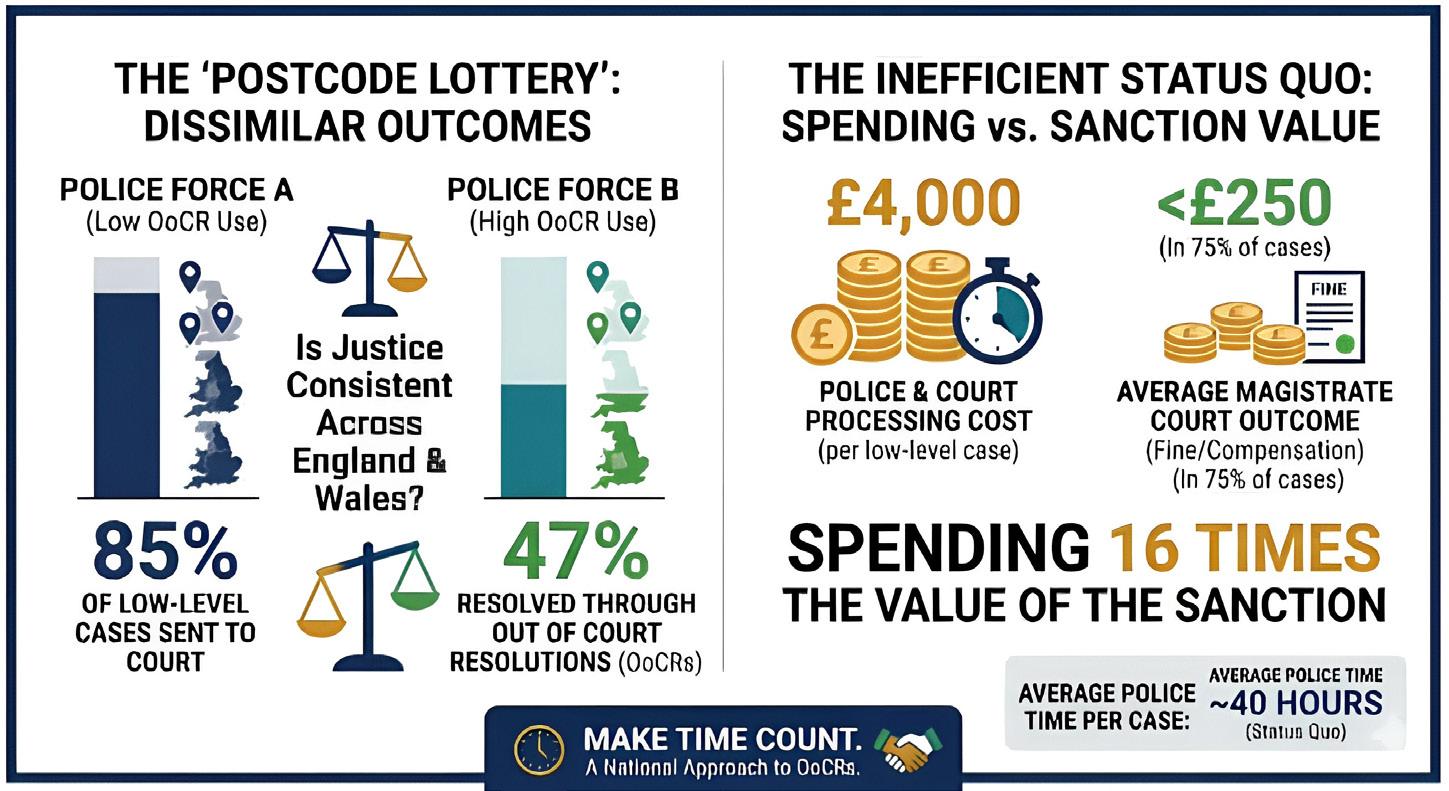
Research published by Transform Justice highlights the scale of the inconsistency. In the police force using OoCRs most frequently, around 47% of cases are resolved without going to court . In the force using them least, up to 85% of cases are sent to court
Even allowing for differences in local crime patterns, such variation is difficult to justify. Justice should not depend on postcode. Yet the reality is that two individuals committing the
same offence in different parts of the country may experience completely different outcomes.
The inconsistency extends beyond whether OoCRs are used at all. The type and quality of interventions offered to offenders also varies widely. In some areas, resolutions involve meaningful interventions such as restorative justice, educational programmes, or behaviourchange courses. In others, the process remains largely administrative, with limited opportunity to address the underlying causes of offending.
Perhaps more concerning is that the use of OoCRs has declined steadily over the past decade , despite growing evidence of their effectiveness. Today they account for roughly one third of offender outcomes , a significant drop from the levels seen earlier in the 2010s.
At the same time, the criminal justice system is under increasing pressure. Policing budgets remain stretched, officer time is increasingly absorbed by administrative demand and magistrates courts continue to face significant backlogs. Public confidence in the system is fragile.
Against this backdrop, the case for a clear national approach to Out of Court Resolutions has never been stronger.
A consistent framework would ensure that eligibility rules are applied uniformly across the country, decisionmaking thresholds are standardised and victims receive consistent opportunities to engage with the process. It would also generate better national evidence about which interventions are most effective at reducing reoffending. Such an approach would align directly with the strategic priorities of the National Police Chiefs' Council
(NPCC), which emphasises productivity, prevention and public confidence. It would also support the recommendations emerging from the Independent Review of the Criminal Courts, led by Sir Brian Leveson. That review highlighted the urgent need to reduce unnecessary demand on the courts and identified pre-court diversion as a key mechanism for doing so.
Many cases entering magistrates courts involve relatively low-level offences that could be resolved earlier through diversionary measures, conditional cautions or structured community resolutions. Expanding the use of these approaches would allow courts to focus on serious and contested cases where judicial oversight is genuinely required.
The financial case for reform is compelling. Through two projects funded by Innovate UK, Make Time Count examined how the justice system currently handles lower-level offending and what might be achieved through greater use of OoCRs.
The findings were striking. Around 75% of low-level magistrate court cases ultimately result in fines or compensation orders of less than £250 . Yet the combined cost to the police and the courts of processing these cases is estimated to be around £4,000 per case
In other words, the justice system is often spending sixteen times the value of the sanction simply to administer it .
Operational data suggests that even a straightforward case can require around 40 hours of police time from investigation through to case preparation and court attendance. Resolving the same case earlier through an Out of Court Resolution can save
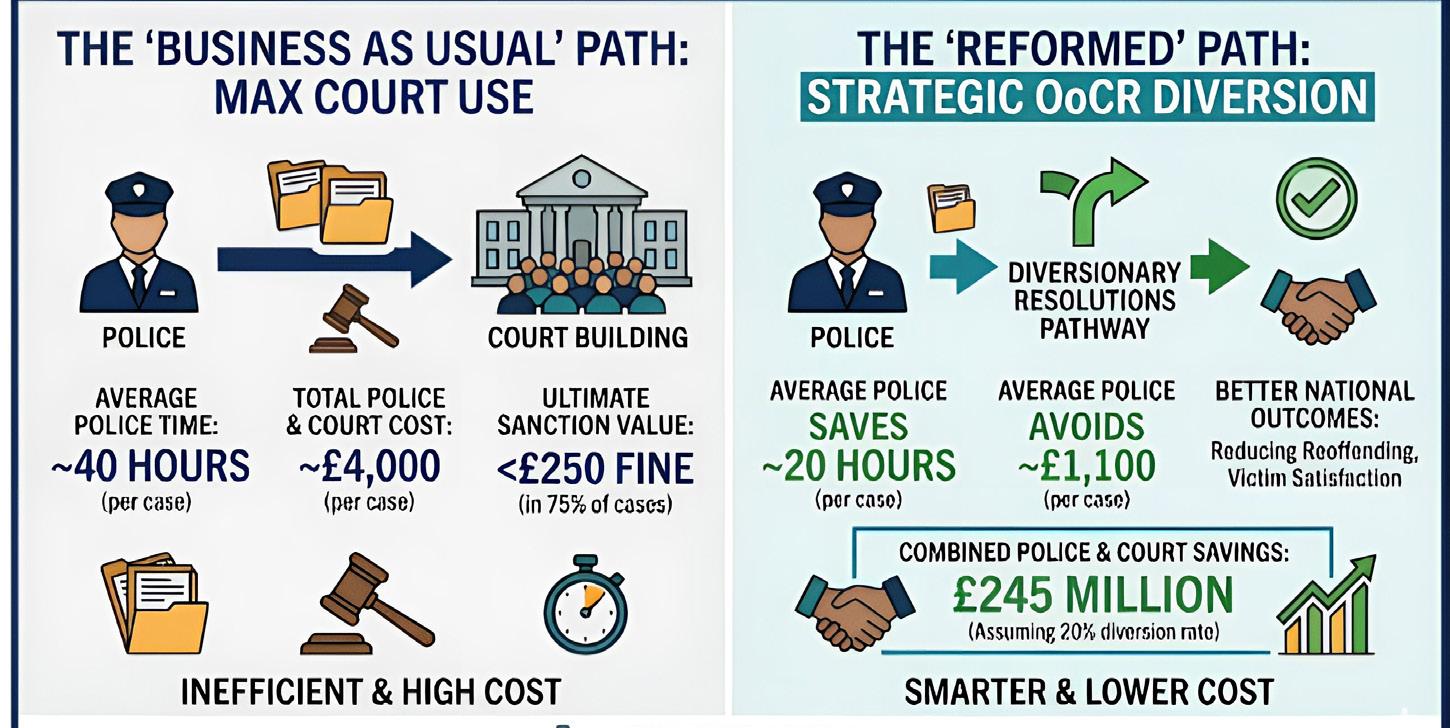
roughly 20 hours of police time, equivalent to about £1,100 per case
If just 20% of magistrate court cases were diverted appropriately through OoCRs , policing could save around £85 million annually, while the courts could avoid approximately £160 million in processing costs
A second Innovate UK project, jointly funded by a Police STAR grant, explored
how digital tools could support this shift. By creating an end-to-end platform for managing OoCRs, including eligibility checks, victim engagement, partner referrals and compliance monitoring, the project demonstrated how administrative overhead could be significantly reduced.
The research showed that a digital approach could release the equivalent of
551 police officers from administrative workloads , representing around £35 million in additional policing capacity
Taken together, these changes could deliver around £280 million in combined savings across policing and the courts.
But the real opportunity lies not simply in reducing costs. It lies in redesigning the front end of the justice system.
Too often, officers spend significant time preparing case files for offences that ultimately result in modest penalties. Meanwhile, courts process large volumes of uncontested, lowharm cases that could be addressed more effectively through restorative or rehabilitative approaches.
A national approach to Out of Court Resolutions would allow policing to redirect officer time towards neighbourhood policing, serious crime and safeguarding. Courts could focus on the cases that truly require judicial oversight. And offenders could receive
interventions earlier—often at the point where they are most likely to change behaviour.
This is not about being “soft” on crime. It is about being smarter in how the justice system responds to it
The opportunity now is not merely to process cases differently but to rethink how the system deals with lower-level offending altogether. By diverting appropriate cases away from court and addressing behaviour earlier, the justice system can become faster, fairer and more effective.
A national approach to Out of Court Resolutions may not make headlines. But it could prove to be one of the most important reforms available to a criminal justice system under growing pressure.
Ley Founder and CEO, Make Time Count




By Leanne Lucas, Founder, Let's Be Blunt
After surviving a devastating knife attack, Leanne Lucas founded
Let’s Be Blunt CIC to challenge one of the most overlooked risks in everyday life: the pointed-tip kitchen knife. Drawing on lived experience, research and national collaboration, she shows that meaningful knife crime prevention must start long before violence occurs.
What happened to me didn’t happen in a world that felt dangerous. It happened in a moment that, like so many others, should have been ordinary.
In seconds, everything changed.
The impact of that moment doesn’t end when the incident is over. It stays - in the physical, emotional and psychological reality that follows. It changes how you see the world and how you understand just how quickly harm can happen.
And what became impossible to ignore was this:
the weapon used was not unusual. It was not rare.
It was not hard to access. It was an everyday kitchen knife.
That realisation is what led to Let’s Be Blunt.
Let’s Be Blunt exists to create meaningful change, so fewer families ever have to experience the devastation that knife harm brings. It is about reducing risk before a moment of impulse, crisis or dysregulation occurs. Because once a knife is used, the damage is done. Prevention has to come earlier than that.
It is important to recognise that the majority of our work is not with those already on a criminal pathway. Instead, what we offer supports professionals, families and communities at an earlier stage. We deeply value the incredible work already being carried out by charities and services across the country, who are responding to harm and supporting those most affected.
Our focus sits alongside this at the earliest point of prevention. We aim to raise awareness of how risk can be quietly reduced, strengthening safeguarding and reducing the likelihood of harm - whether that be accidental injury, self-harm or harm caused to others - so that, wherever possible, families never find themselves facing situations they could never have imagined.
The foundation of Let’s Be Blunt focuses on how every individual can contribute towards the prevention of knife harm.
One of the simplest, yet most effective, places to start is the place we feel safest: our own homes. The traditional pointedtip kitchen knife is something almost every household owns. But it is also one of the most easily accessible weaponsused in impulsive moments, during crises, or in situations that escalate quickly.
Many people don’t realise that an everyday kitchen knife - the one we barely think twice about - is the one most often used in sharp-instrument homicides. In the UK, the majority of these offences involve a kitchen knife.
With nothing more than an age check, it can be bought in a shop or online with ease. Once in the home, they are often stored in drawers, left on draining boards or displayed in knife blocks within easy reach. And while an object itself has no intent, once a pointed-tip kitchen knife is used in an act of violence, the consequences are life-changing.
Whilst progress is being made to address the availability of more extreme weapons, we must not overlook those that remain in plain sight.
The knives that are easy to access. Easy to conceal. Easy to misuse.
Because kitchen knives are so closely tied to everyday life and cooking, they have largely gone unquestioned. But that needs to change. By choosing safer, rounded-tip alternatives, we take a small, practical step that can have a meaningful impact. For most everyday cooking, the tip serves little purpose.
Almost all tools used in daily life have evolved over time to become safer. We have seen this with seatbelts, smoke alarms and product safety standardschanges that did not remove freedom,
but reduced risk and saved lives. And yet the kitchen knife, despite what we now understand about risk, has seen little change in design. We have accepted it as standard, without questioning whether it still meets the needs of today’s society.
When used as a weapon, a pointedtip can cause catastrophic injuries or fatalities. No meal prepared at home requires that level of risk. We already take steps to reduce harm in other areas of the home. This should be no different.
Prevention is not about eliminating all risk. But it is about reducing it wherever we can. We may not be able to prevent every act of violence, but we can reduce the likelihood of harm in those moments of impulsivity. And we can take responsibility for the tools we keep in the places we live, work, meet, learn and play.
There are simple, practical steps we can all take. We can start conversations with our family, friends and colleagues, raise awareness in the communities we work in and take personal action.
How many pointed-tip kitchen knives do you own? How many of them do you actually use? Would you know within a short period of time whether one had gone missing?
With that in mind, could you reduce the number of pointed-tip kitchen knives you own by safely disposing of them and choosing safer alternatives for your home and work place?
Let’s Be Blunt is already working with police forces, violence reduction units, local authorities, schools and communities across the country, with over 1,000 people having made a personal pledge to support safer knife practices.
Both Kent and Wigan have reported significant reductions in knife crime figures this year. Let’s Be Blunt forms part of their wider prevention approach. The success of the National Safer Knife Replacement
scheme, led by Caley Walden from Kent and Medway Violence Reduction Unit, has been phenomenal. And in Wigan alone, over 3,000 knives have been collected since July 2025 through safe disposal points across the borough.
While no single initiative can claim responsibility for such changes, these partnerships show how prevention-led thinking can contribute to wider efforts to make communities safer. Prevention is a jigsaw, and safer knife design, access and opportunity are one important piece of that picture.
Another example of this preventative approach can be seen in the launch of the UK’s first Safer Knife Campus at De Montfort University, where safer knife design has been introduced in areas where food is prepared. Initiatives like this demonstrate that institutions do not have to wait for national policy change to start thinking differently about safety. They can lead that change themselves.
This work is strengthened by collaboration with leading experts, including the Safer Knife Group, Leisa Nichols-Drew (forensic scientist) and Duncan Bew (leading UK trauma surgeon), whose research and expertise underpin this approach.
Evidence from forensic research shows that knives without a pointedtip can significantly reduce the severity and likelihood of fatal injuries, without compromising everyday use.
Together, this combination of lived experience, research, and frontline expertise shapes a prevention approach that is credible, practical and purposeful.
But this is only the beginning. If we want different outcomes, we need a different approach.
This requires new mindset - one that prioritises prevention before harm occurs.
Because the reality is simple: we all have a role to play. It’s time to make a kitchen knife without a point the new norm.
Make the change. Save a life. Take the pledge.

Leanne Lucas is the founder of Let’s Be Blunt CIC, a preventionled campaign focused on reducing knife harm through awareness and safer design. She is a member of the Home Office Knife Crime Coalition and works with police, universities, policymakers and community organisations to promote prevention-led approaches to public safety.
Leanne
Lucas Founder, Let's Be Blunt

letsbeblunt.co.uk
Leanne Lucas





By Sandra Campbell, CEO, Word 4 Weapons
There is often a temptation, when we discuss knife crime, to seek one big answer. One law. One policy. One initiative that will suddenly change everything. But the reality is more complex and human than that.
Knife crime is not caused by a single factor, so it cannot be addressed by a single response. Fear, trauma, peer pressure, exploitation, social media, poverty, family breakdown, poor mental health, lack of opportunity, and the normalisation of carrying a weapon all contribute. That is why any serious effort to reduce violence must be both practical and preventative. It needs to meet people where they are, not just where we wish they were.
At Word 4 Weapons, that has always been at the core of our work.
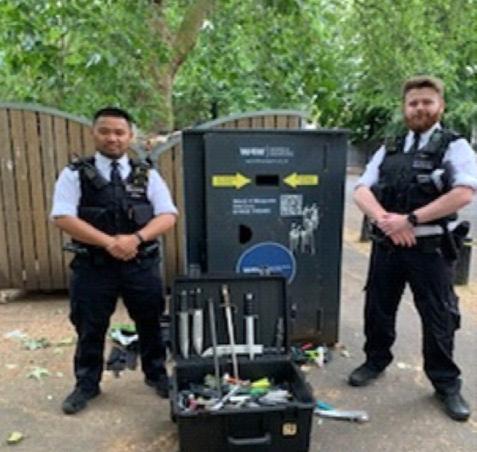
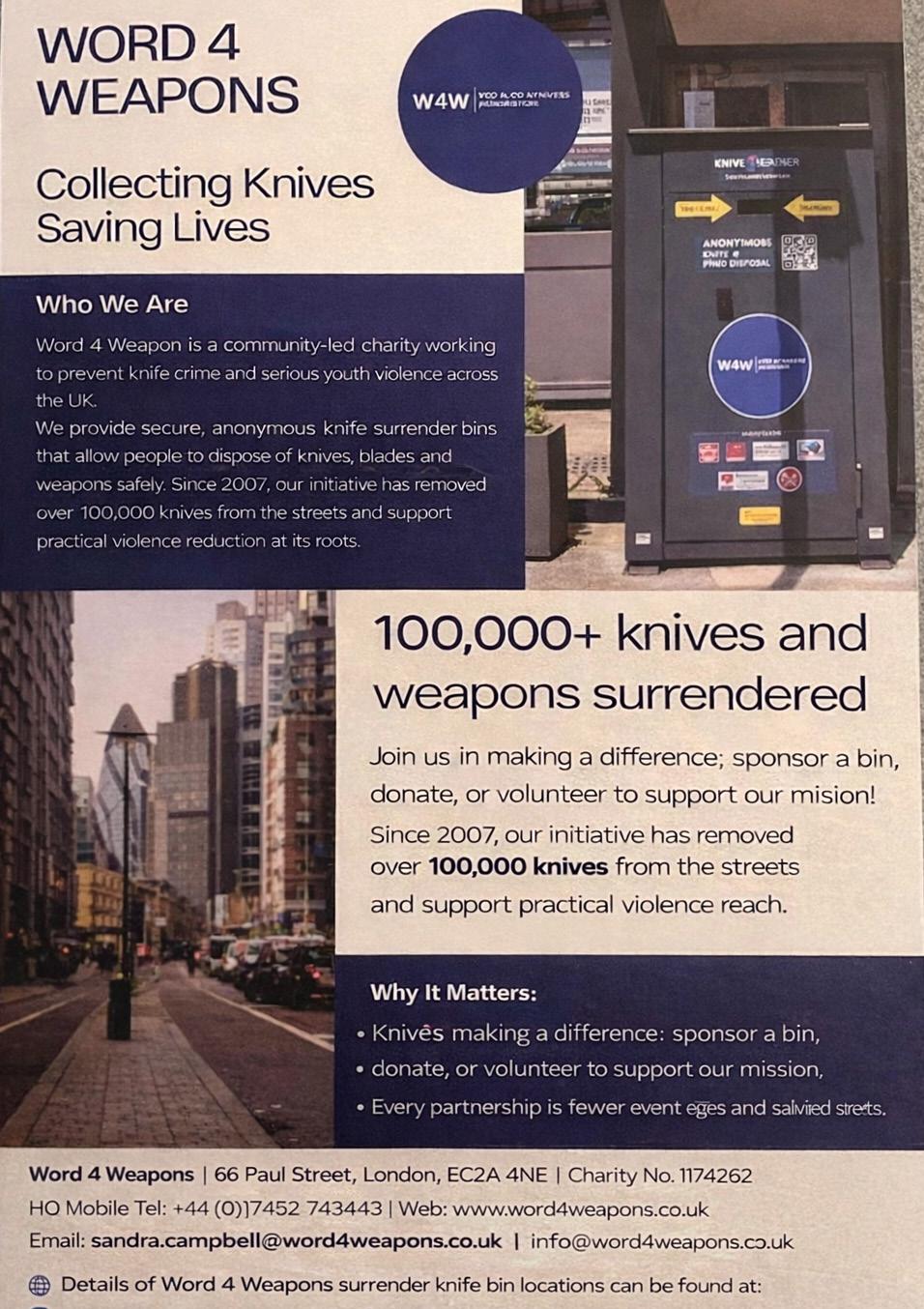
In 2007, the charity was founded by a retired police officer, Michael Smith MBE. Since then, we have supported communities by providing secure, anonymous surrender bins that allow members of the public to dispose of knives and other weapons safely. On the surface, a surrender bin might look like a simple intervention. It is, after all, a physical steel unit in a public place. But what it represents is far more important: a moment of choice. A chance for somebody to step back from risk. A chance for a parent to remove a hidden weapon from the home. A chance for a young person, acting out
of fear rather than intent, to make a different decision before that weapon changes lives forever.
That is more significant than many people realise.
The national picture illustrates why our work must continue. The Office for National Statistics (ONS) reported that in the year ending September 2025, there were 50,430 offences involving a knife or sharp instrument in England and Wales. That was down 9% on the previous year, which is positive, but it still indicates a significant level of harm and risk in communities across the country. In the same release, ONS recorded 499 homicides, the lowest figure since current recording practices began, demonstrating that improvement is achievable when efforts are sustained and targeted.
There are other signs of progress, too. ONS homicide data for the year ending March 2025 showed that homicides involving knives or sharp instruments fell by 21%, from 261 to 205 victims, the lowest number recorded since the year ending March 2015. Yet even positive statistics must be handled with care. Every number still represents a person, a family, a neighbourhood, and often a chain of trauma that extends far beyond the initial incident.
That is one of the key insights people working in violence reduction understand deeply: success is not just about reacting after harm has occurred. It is about reducing opportunities, access, escalation, and interrupting the pathway that leads from fear to carrying, and from carrying to use.
This is where surrender bins play a very real, practical role.
They are not a silver bullet, and responsible organisations should
never claim that they are. A surrender bin alone will not address the complex causes of violence. However, when part of a broader system, it can be highly effective. It provides a safe, anonymous way to dispose of knives and weapons, removing them from circulation. It offers councils, police, charities, and local partnerships a visible and credible harm-reduction tool. Additionally, it can serve as a catalyst for wider community discussions on safety, education, and responsibility.
Sometimes, the public debate on knife crime becomes divided. People either see it purely as enforcement or solely as prevention. In reality, it requires both. Enforcement is essential, and strong legislation is important. The government’s extended surrender schemes in July 2025, linked to the goal of halving knife crime and supported by organisations including Word 4 Weapons, demonstrated this understanding by combining legal reforms with practical opportunities for individuals to anonymously surrender weapons.
But enforcement alone cannot eliminate the mindset that leads someone to believe carrying a blade makes them safer.
In many cases, especially among younger people, carrying a weapon begins with fear. A teenager may not see themselves as someone who commits an offence at all. They might view the weapon as protection, status, insurance, or something they hope never to use. Adults understand that once a weapon is present, the risk of irreversible harm increases significantly. However, young people do not always consider the consequences; many focus on survival, belonging,
or image. That is why prevention must be grounded in reality rather than slogans.
It also needs to include safe educational environments, trusted relationships, secure living conditions, and other visible alternatives.
At Word 4 Weapons, we have always believed that the conversation must go beyond confiscation and talking points. It must include why people carry, what fear looks like in a young person’s life, and how communities can create alternatives before violence occurs. The surrender bin is one of those alternatives. It is also about practical support for struggling families, carers, schools, and safe spaces. Furthermore, it involves school engagement, youth work, trauma-informed practice, trust in the legal system, credible community leadership, and support for parents who are frightened by what they are discovering in bedrooms, bags, and gardens.
The impact of serious violence extends far beyond the immediate victims, perpetrators, and society. Each stabbing sends shockwaves to ambulance crews, A&E staff, surgeons, police officers, forensic teams, schools, housing officers, youth workers, and grieving families, among others. NHS Digital continues to publish data on hospital admissions for assault with sharp objects, emphasising that knife violence is not merely a policing matter; it is a public health concern as well
There are reasons to be hopeful. In 2025, London recorded 97 homicides in a city with over nine million residents. The Mayor’s Office for Policing and Crime stated that the first nine months of 2025 saw fewer
homicides than any similar period since monthly records began in 2003, while City Hall noted that London’s homicide rate per capita was the lowest since records started. These improvements are not coincidental. They reflect years of targeted policing, partnership work, youth intervention, and violence reduction initiatives. Much of this work happens quietly every day in communities, and we are now seeing signs of progress.
If anything, it should teach us that practical, evidence-based interventions can make a difference when they are sustained and properly combined. That is the lesson. Not that the problem has vanished, but that communities do not have to accept violence as unavoidable.
The public often only notices the headlines when there is a tragedy. What they do not always see is the quieter work of prevention: the knife surrendered before an argument turns fatal; the parent who acts just in time; the local authority willing to fund a bin in the right place; the school ready to have difficult conversations; the charity worker, police officer, or community volunteer trying to build trust before a crisis occurs.
So quiet work like ours genuinely matters. In many ways, it is the work that saves lives .
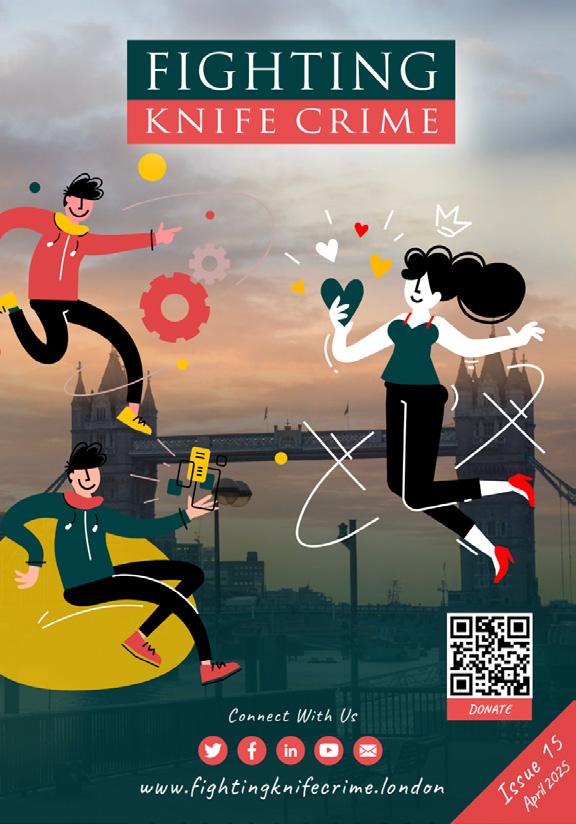
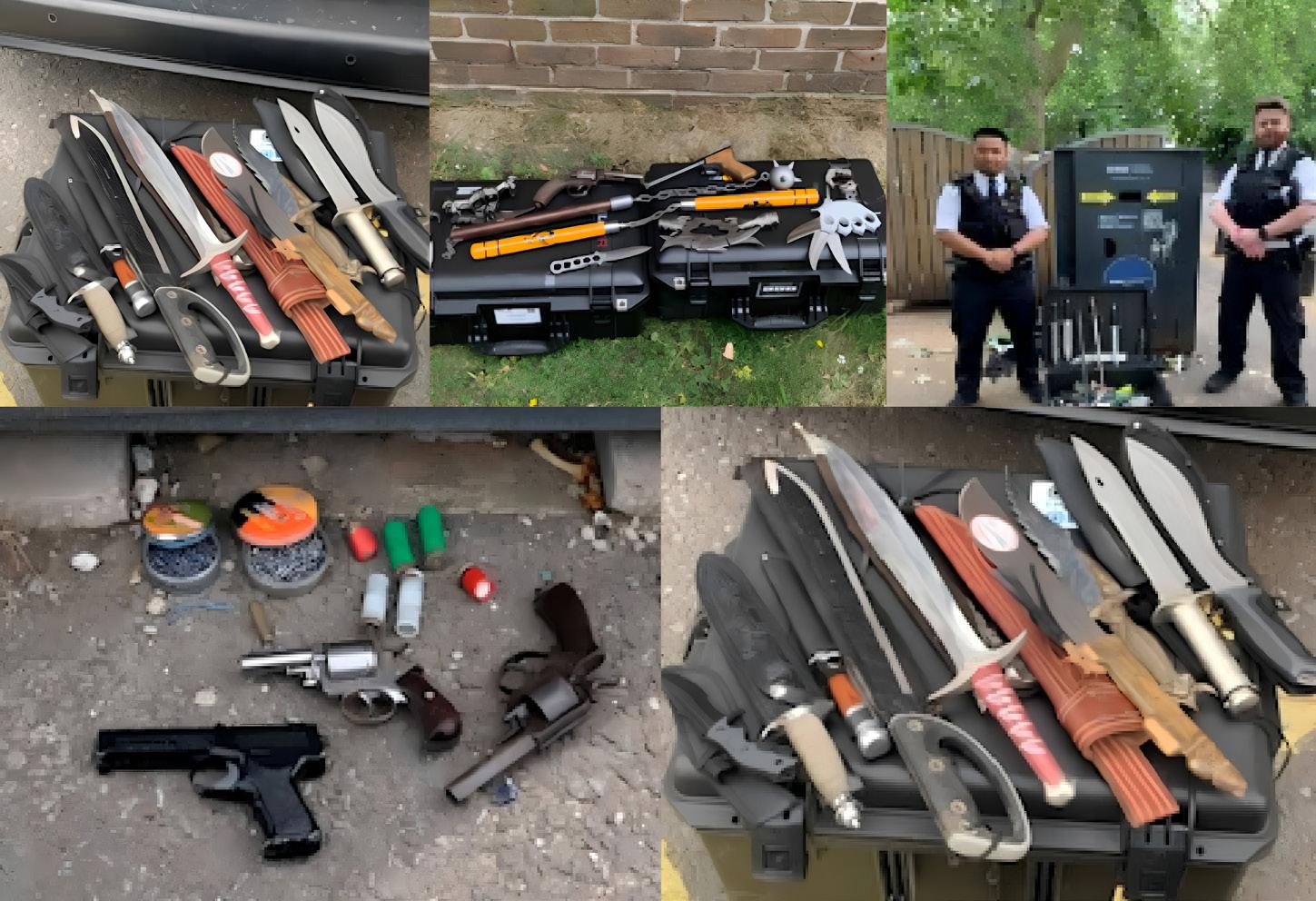
There is something deeply sobering about the image of surrendered weapons. Each blade or weapon removed from circulation is one less opportunity for fear, anger, bravado or desperation to turn into irreversible harm. Not every weapon handed in would have been used, but some might have been. Once surrendered, that risk is no longer sitting in someone’s pocket, home or bag.
That is why I remain convinced that practical interventions like surrender bins still matter. Not because they are the complete solution, but because they form part of a serious approach. They provide people with a safe way to do the right thing. They support broader efforts to reduce violence. They eliminate immediate risks. And they send a message that communities do not have to stand by and accept the presence of weapons in everyday life.
Genuine progress against knife crime will stem from layered strategies: robust laws, effective policing, education, safeguarding, youth investment, community leadership, and practical harm-reduction tools that work in real life. We need all of these elements.
Sandra Campbell CEO, Word 4 Weapons
word4weapons.co.uk


By Ashley McMahon, Head of Therapeutic Operations, Violence Intervention Project (VIP) 1
Seven years ago, in the earliest days of the Violence Intervention Project, we sat with Prof. Peter Fonagy at the Anna Freud Centre trying to think about a difficult question: What actually drives violence?
We spoke about trauma. About marginalisation. About the environments young people grow up in and the ways in which structural inequalities shape behaviour. And we spoke about shame - the emotional experience of feeling exposed, disrespected or humiliated in the eyes of others. At one point, Peter said something that has stayed with me ever since. He said that when we think about violence - and the knife crime epidemic affecting London and the UKwe tend to focus on what it does to the victim and wider society. The harm. The injury. The injustice.
But if we are serious about preventing violence, we have to ask a different question.
What does violence - and the knife - do for the person using it? Violence is not only an act of harm. First and foremost, it is an act of protection. And not simply protection of the physical body, but protection of the emotional and psychological self.
For some young people, the greater threat is not physical injury. It is something harder to see, harder to understand and harder to name. The greater threat is losing face. It is the experience of humiliation and loss of status they’re defending against. A kind of psychological exposure that can feel, in the moment, intolerable, annihilating and worse than death.
This is not theoretical. It is a pattern and narrative we see and hear again and again in our work with young people. It unfolds in our communities and on our streets and more often than not, it is acted out in seconds.

Recently I was standing on a balcony with a young person, looking out over the estate, when he started telling me about something that had happened a few nights earlier. He had stepped off the train and seen someone he knew on the platform. Not a close friend, but someone familiar. He walked over, hand out, expecting acknowledgement.
The other young person didn’t take it. No handshake. No recognition. “He mugged me off,” he said. So my client responded. “What, you’re too good to shake my hand?”
And that was enough. Within seconds, the atmosphere shifted. The other young person’s friends stepped in. Words were exchanged. The energy shifted. Two of them backed out knives.
My client didn’t step back. He stepped forward. “Go on then, you fucking pussies,” he said. “Stab me.” He started goading them. Calling them out. Challenging them to either stick the blades in or to put the knives down and fight him “like men.”
The whole thing - from a missed handshake to knives drawn - had taken seconds.
Standing there, listening to him recount the incident, bringing it to life in front of me, I found myself asking the same question: How does something so small become something so dangerous, so quickly?

Imagine you had been on the platform that night and witnessed this violent incident. How might you have described it – senseless, random? We reach for simple explanations when something feels difficult to understand. The more useful question is not whether violence makes sense, but what made it feel necessary in that moment. Why might violence come to feel like the only available option?
Psychiatrist James Gilligan, who spent decades working with some of the most violent individuals in custodial settings, observed that he had yet to encounter a serious act of violence that was not preceded by the experience of feeling shamed, humiliated, disrespected, or ridiculed. Whether or not one accepts that claim in its strongest form, it offers a powerful lens. What appears, from the outside, to be disproportionate or impulsive may in fact be a response to something much deeper - something that has built up internally over time.
Violence, in this sense, is not random. For the young people we work with at the Violence Intervention Project 2 , it is a resource. When we look more closely, particularly in the context of serious youth violence, we are not seeing unpredictability so much as the effects of constraint - a narrowing of options shaped by systemic and structural disadvantage.
This is the context in which knives are pulled: a young person with limited access to relational safety, who struggles to make sense of overwhelming emotional states, and who experiences threat - both social and psychological - as immediate and total. In these moments, intense feelings such as shame are activated without the capacity to reflect on or regulate them. Instead, they are acted out - embodied and discharged into the world, increasingly through the point of a blade.
From the outside - as a witness, an observer - violence can look sudden. Senseless. Random. But from the inside, it is often the latest expression of something that has been building over time - something chronic. If that is the case, then the question is not simply why violence happens, but what is happening in the moment?
One way of understanding what is happening in these moments of escalation - moments in which knives are drawn, threatened, or used - is through Donald Nathanson’s ‘ Compass of Shame’ 3 which describes how people respond when they experience shame - the feeling of being exposed, diminished, or “mugged off” in the eyes of others. Shame is not experienced in private. It is a social emotion. It depends on the presence of an audience – real or imagined. To feel shame is to feel seen in a way that threatens how we wish to be interpreted, in the minds of others. Because of this, shame does not sit still. It demands a social response. Nathanson’s ‘Compass of Shame’ helps us make sense of what happens next. It shows how the emotion drives behaviour and how that behaviour
is an attempt to protect against the experience of shame itself, particularly in social contexts where status and respect are at stake.
If we return to the station platform, we can see that the missed handshake was not a minor social slight. It was public exposure. A moment in which social status was threatened. And in that moment, the shame did not sit with one individual. It moved between them. What began as exposure for one quickly became exposure for all, as each young person responded to the presence of the other, the audience around them, and the risk of losing status. Their interactions became organised around managing their individual and collective experience of shame.
To describe the rapid escalation that followed, including a willingness to confront an aggressor in possession of a knife, as irrational impulsivity, fails to recognise shame as a powerful driver of behaviour. It fails to acknowledge violence, in that moment, as a protective responsenot only for the individual confronting the knives, but for those holding them, each attempting to protect themselves from the experience of shame.
It protects against the experience of shame by displacing it. What cannot be tolerated internally is pushed outward - through aggression, intimidation, and, at times, the use of a weapon. The knife undoubtedly increases the potential for physical harm. At the same time, it increases the individual’s capacity to regulate the excesses of shame - to regain control, repair the social rupture and avoid being seen as vulnerable.
In our work at the Violence Intervention Project , and through the
development of the Shame Initiative 4 , we have come to understand violence not as senseless or random, but as a response to shame. While this is particularly visible in the context of serious youth violence, the dynamics of shame are not confined to it. They shape behaviour across relationships, communities, and the systems designed to respond to them.
If that is the case, then our approach to prevention begins to shift. The task is not only to manage risk, but to better understand the moments in which exposure, status and belonging come under threat and how those moments are navigated, not only by young people, but by the professionals and services around them. Shame does not sit in isolation. It moves through interactions, shaping all our social responses.
This does not make violence acceptable. But it does make it understandable. And in that understanding lies the possibility of responding differently - not only to the behaviour itself, but to the social and emotional conditions that give rise to it. If we are willing to take that step, then prevention may begin not at the point of crisis, but in the moments where shame first takes hold.
[1] Ash McMahon is a registered Child and adolescent Psychotherapist and Head of Therapeutic Operations at the Violence Intervention Project (VIP). He leads the development of Urban Therapy, a community-based therapeutic approach to working with young people affected by serious youth violence. His work focuses on the relational and emotional drivers of violence, with a particular interest in the role of shame, mattering, and mentalizing in prevention and intervention.
[2] The Violence Intervention Project (VIP) is a West London based charity working with young people aged 12–25 who are at risk of, or involved in, serious youth violence. VIP delivers long-term, communitybased therapeutic interventions, building trusted relationships with young people who are often excluded from traditional services. Its work is grounded in shame-informed and relational practice, with a focus on creating safety, supporting reflection, and strengthening pathways away from violence.
[3] See too Donald L. Nathanson (1992) Shame and Pride: Affect, Sex, and the Birth of the Self. New York: W. W. Norton & Company.
[4] The Shame Initiative (TSI) www.theshameinitiative.org.uk - The Shame Initiative is a developing practice and training framework that extends trauma-informed approaches by focusing on the role of shame in shaping behaviour, relationships, and systems. Drawing on frontline experience and interdisciplinary theory, it aims to support
Ashley McMahon Head of Therapeutic Operations, Violence Intervention Project (VIP)

www.vip.org.uk


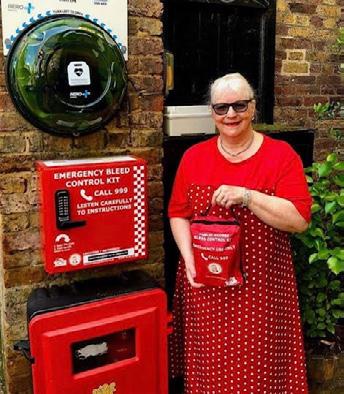
Every second counts in an emergency. Let’s Get Talking has placed the first bleed kit in Camden Stables Market. These trauma bleed kits boxes and bags are designed are designed to provide immediate first aid in case of severe bleeding, potentially saving lives before professional help arrives.
Join us in making our community safer. Your donation can help us place more bleed kits in high-risk areas, educate young people about knife crime, and provide crucial resources to prevent violence.
DONATE TODAY
Together, we can make a difference. Visit LetsGetTalking.org to learn more and cafdonate.cafonline.org/3076 to donate. YOUR SUPPORT CAN SAVE A LIFE.

By Sue Scott-Horne, Founder, Let's Get Talking
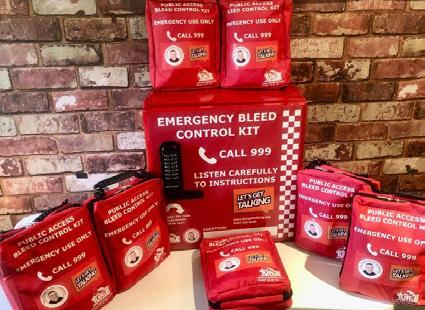
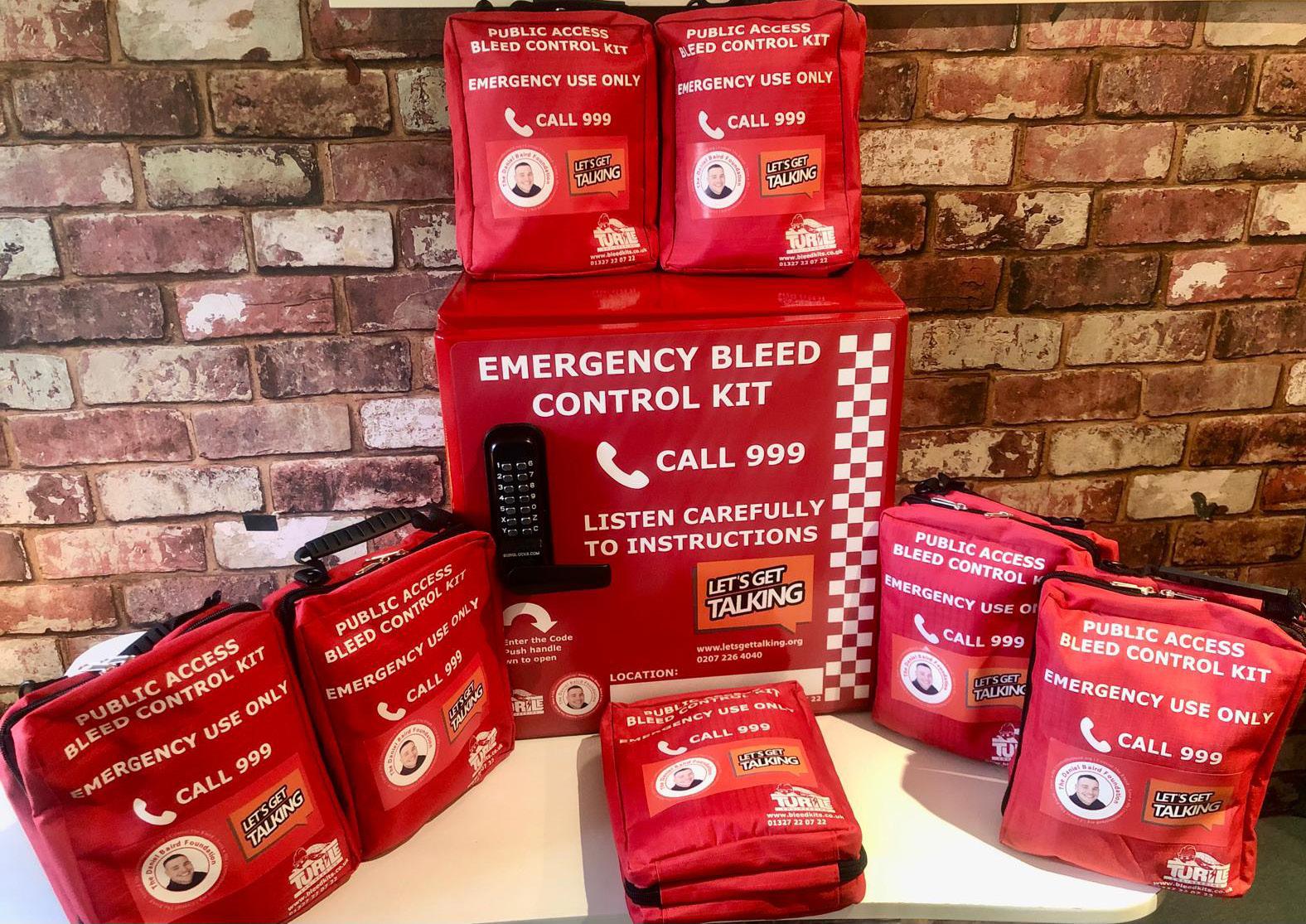
Let’s Get Talking Charity in Camden have been instrumental in fundraising to donate Trauma Bleed Boxes and Trauma Bleed Kit bags, that save lives from a stabbing or a bad accident. We have been supported by many businesses in Camden/London, especially LabTech and have so far donated the first Trauma Bleed Box into Camden Stables Market and outside Hampstead Town Hall. We have also distributed bleed bags to various schools and organisations, but we are desperate for more funding to donate more.
The Daniel Baird Bleed Kits are not a First-Aid kit. They are equipped to save lives, and have everything in the
kit to do just that. They are registered with the emergency services database www.bleedmap.uk for access and locations.
They need to be everywhere, schools, shops, youth projects, pubs, libraries etc which is why we have an ongoing fundraising campaign at www.letsgettalking.org .
With Knife Crime remaining high, and with so many young people dying from the blade our Award winningPSHE topic-based individually-boxed education knife crime discussion card sets will support your work. For example,
HMPPS London Probation Service have purchased a large quantity of these successful sets for every one of their London offices to support young people to understand the consequences of carrying or using a knife. We also have many more projects around Health & Crime Prevention for schools, PRU's, Prisons, Probation Offices, Parents, Youth Projects etc. These are available online at www.letsgettalking.org. They are all aimed at children & young people. We also find that adults find these sets useful to talk about an issue they may be facing with their child. Full guidance is included.
Our Knife Crime Safety Education Workshops for primary & secondary age groups covering knife crime safety and drugs awareness can be delivered to Primary & Secondary School Assemblies, classes, youth projects, PRU's and anyone requesting support. All this is available now. We also partner with the Ben Kinsella Trust knife crime exhibition, which is a powerful educative event which you can visit through us. Our own knife crime workshops can be delivered by our excellent educators/mentors in your buildings a spart of your youth projects.
Our fundraising campaign to buy more trauma Bleed Kit boxes and bags to stem the bleed and save lives in the case of a stabbing or a bad accident is ongoing. We have been supported by many businesses in Camden/London and have so far donated the first Trauma Bleed Box into Camden Stables Market and outside The Hampstead Town Hall along with bleed bags to various schools and organisations, but we are desperate for more funding to donate more.
The Daniel Baird Bleed Kits are not a First Aid Kit. They are equipped to save lives with a trauma bleed and have everything in the kit to do just that, they are registered with emergency services database www.bleedmap.uk for access and locations; they need to be everywhere, schools, shops, youth projects, pubs, libraries etc which is why we have an ongoing fundraising campaign that people can donate to at www.letsgettalking.org
You can of course find out more about all this information via our website.
Sue Scott-Horne Founder, Let's Get Talking

www.letsgettalking.org

Registered Charity No. 1157783
Please Donate to support our vital education programmes: cafdonate.cafonline.org/3076