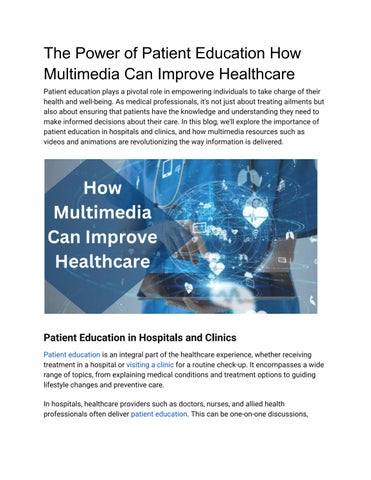
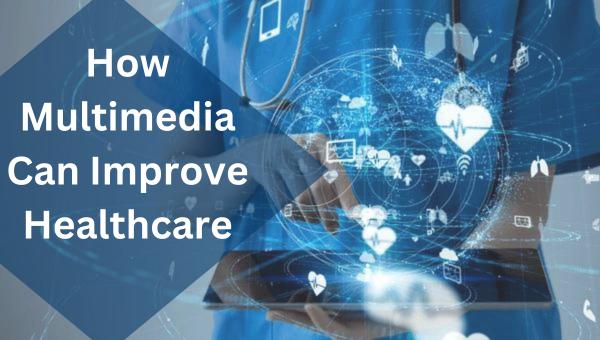
The Power of Patient Education How Multimedia
Can Improve Healthcare
Patient education plays a pivotal role in empowering individuals to take charge of their health and well-being. As medical professionals, it's not just about treating ailments but also about ensuring that patients have the knowledge and understanding they need to make informed decisions about their care. In this blog, we'll explore the importance of patient education in hospitals and clinics, and how multimedia resources such as videos and animations are revolutionizing the way information is delivered.
Patient Education in Hospitals and Clinics
Patient education is an integral part of the healthcare experience, whether receiving treatment in a hospital or visiting a clinic for a routine check-up. It encompasses a wide range of topics, from explaining medical conditions and treatment options to guiding lifestyle changes and preventive care.
In hospitals, healthcare providers such as doctors, nurses, and allied health professionals often deliver patient education This can be one-on-one discussions,
printed materials such as pamphlets and brochures, or multimedia resources such as videos and animations.
Similarly, clinics also prioritize patient education as part of their holistic approach to healthcare. From educating patients about their diagnosis and treatment plan to providing information on managing chronic conditions, clinics play a vital role in empowering individuals to make informed decisions about their health.
Leveraging Multimedia for Patient Education
While traditional methods of patient education have their merits, multimedia resources offer a dynamic and engaging way to deliver information to patients. Patient education videos, in particular, have emerged as a popular tool for healthcare providers looking to enhance the patient experience.
Patient Education Videos
Patient education videos are short, informative clips that cover a wide range of healthcare topics. From explaining medical procedures and demonstrating exercises to providing tips for managing medications, videos offer a visual and auditory learning experience that resonates with patients of all ages.
These videos can be accessed in various settings, including hospital waiting rooms, clinic websites, and patient portals. By leveraging the power of video, healthcare providers can deliver consistent and standardized information to patients, ensuring that key messages are communicated effectively
Patient Education Animation
In addition to videos, patient education animations are another valuable resource for healthcare providers. Animations use visual storytelling techniques to simplify complex medical concepts and make them easier for patients to understand.
Whether illustrating the inner workings of the human body or depicting the progression of a disease, animations provide a dynamic way to convey information in a manner that is both engaging and memorable. By incorporating animation into patient education materials, healthcare providers can enhance comprehension and retention, ultimately leading to better health outcomes for patients.