




HorseVibes
Advertising



HorseVibes
Advertising
Welcome to ‘Our Jumping Heroes’ – the very first print edition of HorseVibes!
I’ve been editor of HorseVibes for two years now, and it’s been my privilege to gather most of the interviews for the main feature on ‘Our Heroes’.
Speaking with this amazing collection of human beings, all of whom are stars in the equestrian world in their chosen discipline, has been inspirational for me. I think what has stood out for me is the special quality they have that enables them to continue chasing their dreams - through thick and thin, and I take my riding helmet off to them.
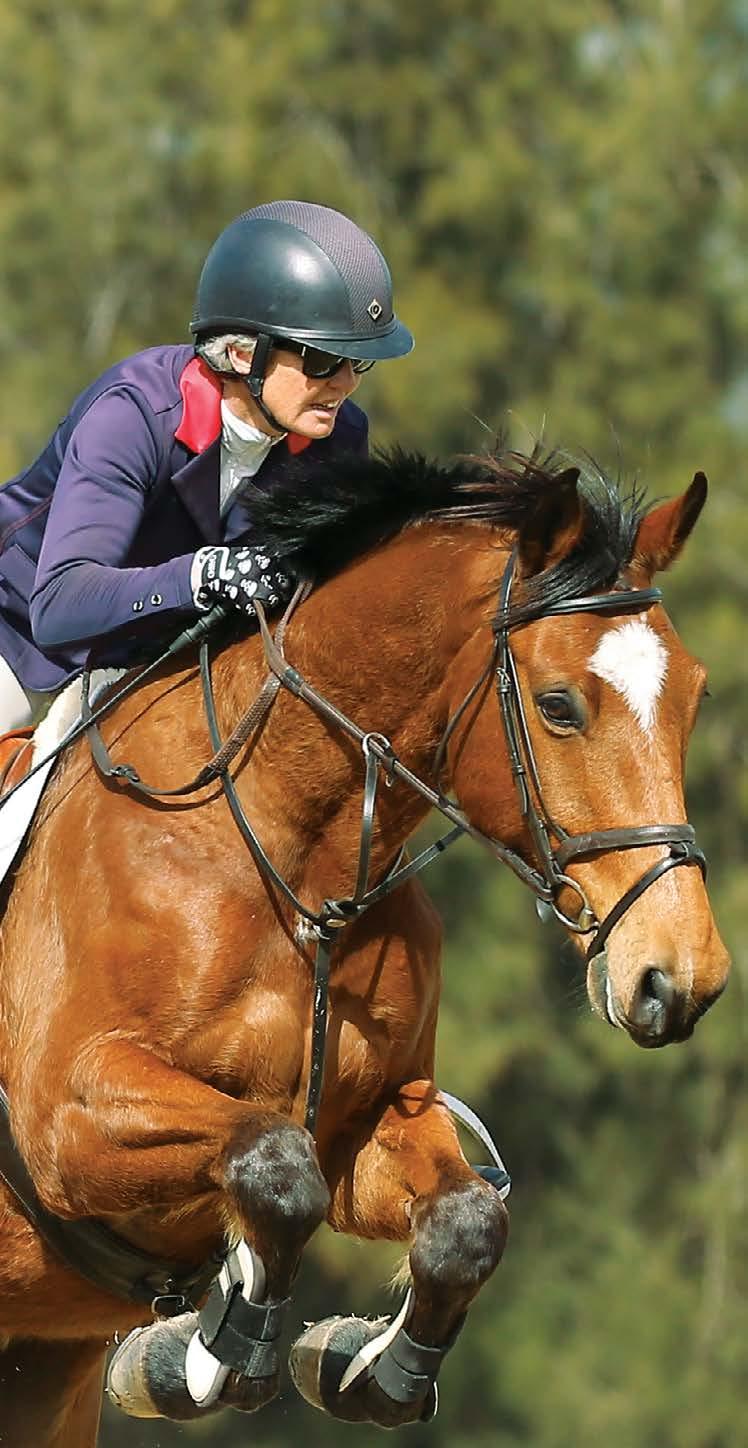
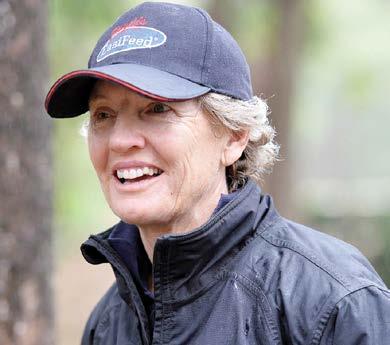
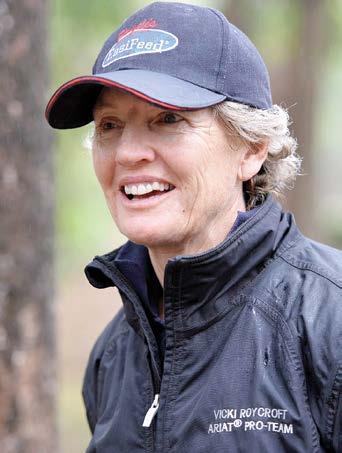
Vicki Roycroft, loved by all of us, has won more World Cup Qualifiers than any other Australian rider, on more than 12 different horses and has been to four World Cup Finals representing Australia. Vicki, now in her 60’s, jumps with a replacement hip and one eye, and is still right at the top of her game.
You might notice that four of our ‘Jumping Heroes’ are women, and so they should be. Edwina Tops-Alexander is currently rated 11th in the world, and is the highest-ranking female rider, stunning the world with her brilliant mare California.
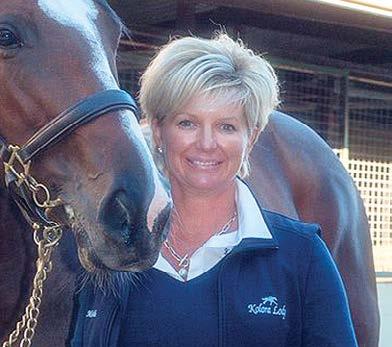
Michelle Lang-McMahon, as well as representing Australia at the World Equestrian Games several times, is part
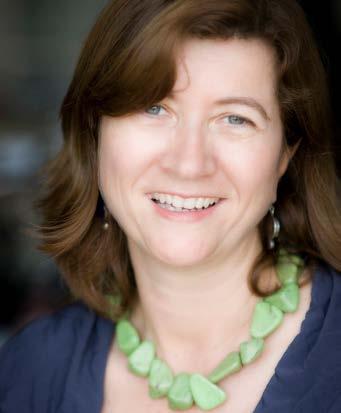
of the partnership, with her husband Peter, behind this month’s Aquis, and is also now a successful racehorse breeder. Says Michelle: “I don’t really recognise the concept of not being able to do something.”
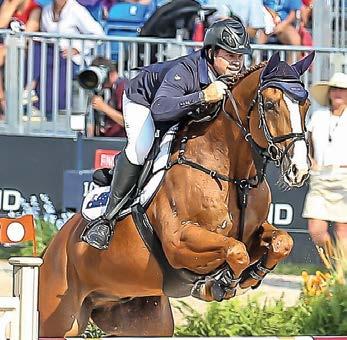
Then, of course, there’s Chris Chugg – affectionately known as ‘Chuggy’, this hugely popular showjumper is a five times Australian Showjumping Champion, for three consecutive years on Vivant; he’s been an Australian representative at the World Cup Finals in Paris and at the World Equestrian Games in Kentucky, and he is well known as a trainer, buyer and breeder.
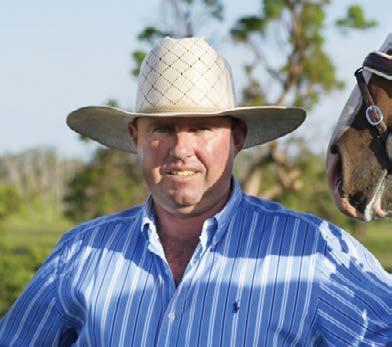
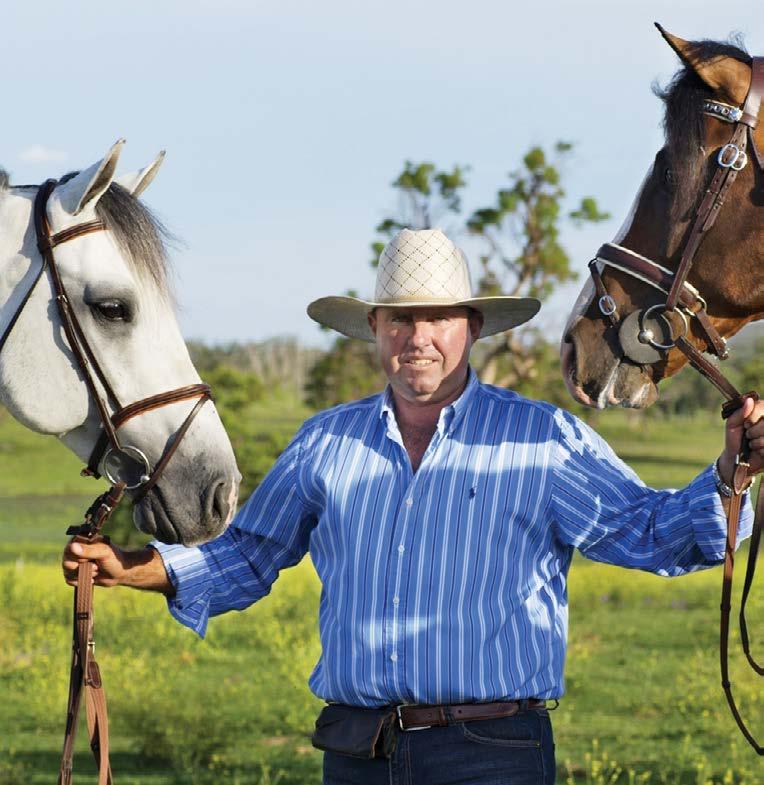
Following in the tradition of Australia shortening names for their favourite people, Queensland-based showjumper, breeder, trainer and the Chair of Equestrian Queensland, David Finch is,
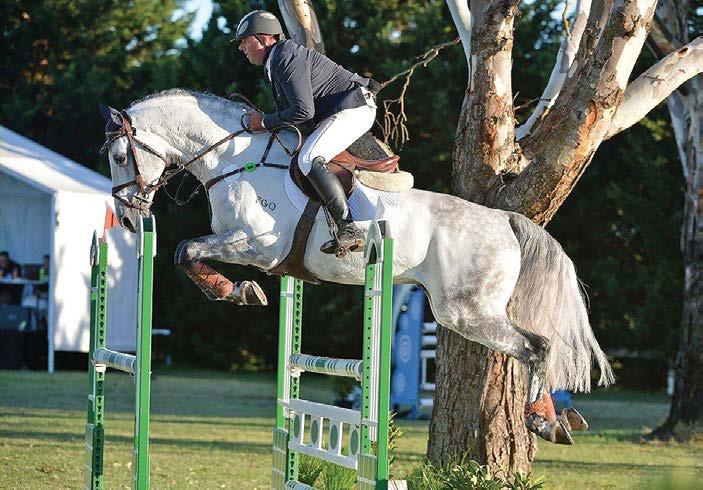
of course ‘Finchy’. Respected in every field he works in, his main ‘man’ at the moment is the beautiful 17hh grey sporthorse stallion, Charlemagne Ego Z. With every new stallion coming up through the ranks at Finch Farm, Finchy’s impact on the world of Australian jumping is assured.
Last but by no means least, we have Vicki Wilson, from across the Tasman – not an Australian, we know, but close enough, we reckon, to include this extraordinary young woman who has done more in her 26 years on the planet than most people twice her age. This World Cup showjumper is also a stunt rider, trainer; the inventor of the Equisystem bandages; the US Road to the Horse winner - for two consecutive years - and a champion of the Kaimanawa – New Zealand’s wild horse.
All of us who have ever jumped a fence, and felt the thrill of that moment of suspension in mid-air, and the sensation of a horse under us that we trust implicitly, know the hard work, the bravery and the exceptional dedication that goes into the making of a champion rider – and a champion horse. Our ambitions may have changed as we’ve progressed through life, but talking to these champions, pursuing and achieving their dreams, I’ve come to realise that anything is possible.
For those who simply love to watch horses and riders taking off over fences – there’s plenty in here for you to enjoy, and perhaps to learn a bit more about this adrenalin-filled spectator sport.
We hope you enjoy this special printed edition. Don’t forget to visit our website, or find us on Pocketmags and subscribe to read our exciting equestrian stories.

VICKI ROYCROFT
Vicki Roycroft is one of the most successful Australian riders ever at World Cup Finals. She talks about a life lived in the spotlight, the highs – winning the Rome Grand Prix on Apache, for example, and the lows, the worst of which was the tragic death of her son at the age of 17.
Ican remember the last time I spoke to Vicki Roycroft in person as if it was yesterday. She was competing at what was then the Elysian Fields Showjumping competition on the Gold Coast, and my son’s horse was stabled near hers.
She told us that she was a bit concerned because she’d been having blurry vision for sometime, and that it wasn’t easy jumping the classes she was in with a “bung eye.”
As it transpired the bung eye was both more and less serious than she’d imagined. “I’d been having flashes of light in my eye, as if a car was coming at me,” she recalls, “and when I was up at the Elysian competition I went to the Gold Coast hospital where they did a whole heap of tests and told me that I had fluid on my retina. I remember saying to them, ‘well, that’s good I thought I had a brain tumour’. But it kept on getting worse, so when I
was back home I saw my doctor who referred me to a specialist, and within 15 minutes I had the diagnosis that I had a large melanoma at the back of my eye, and that I needed to have my eye taken out. It was a bit of a shock.”
That was in August 2007, and as luck would have it – for Vicki at least – EI hit.
“None of us could really do anything for 12 months,” she says, “so I was able to recuperate, and by the time I was out competing again I’d adjusted.”
In fact, she says, the experience of riding with one eye gave her a new appreciation for a horse’s ability to ‘read’ a jump. “Horses eyes are not really designed to look straight ahead,” she says, “they’re designed to look back and yet they can determine what’s a vertical or horizontal oxer, what’s a triple combination, what’s a double. I also found, to my surprise, that when you lose an eye you don’t lose half your peripheral vision, which is what you’d think – you only lose around 30% because the other eye adjusts.”
By the time the restrictions of EI were over Vicki was well and truly back on top form, and for this rider, who has seen more than her fair share of tragedies and triumphs, life continued as normal.
Strangely though, for someone whose entire life has been based on horses and riding, she wasn’t that keen on it as a child. “I was born in Melbourne, and my mum was horsey,” she says, “and we moved to Sydney when I was seven. My brother and sister rode, but to be honest I used to kick and scream my way around the horse shows. It wasn’t until I was 13 or so that I go interested and then my siblings gave up as they got older whereas I just kept on going.”
A chance conversation between her mother and Tommy Smith resulted in the arrival of a thoroughbred, Harvest Time, who went on to become not only a champion hack but also an eventer and showjumper. “He was too slow to race,” she says, “much to Tommy’s disgust because he’d been expensive, but he was the most wonderful horse. He retired with us when he was 20.”
Surprisingly, given her stellar career -
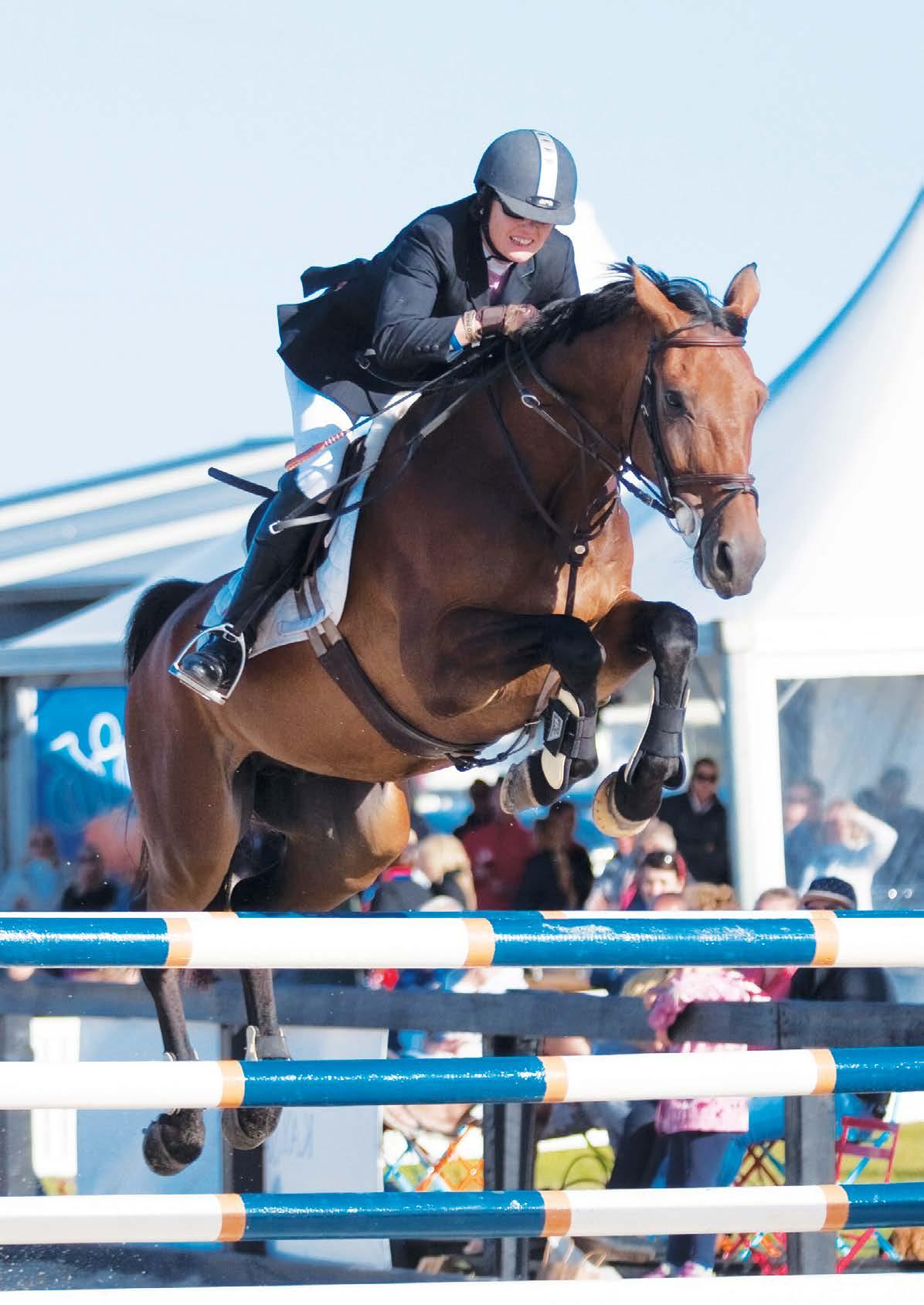
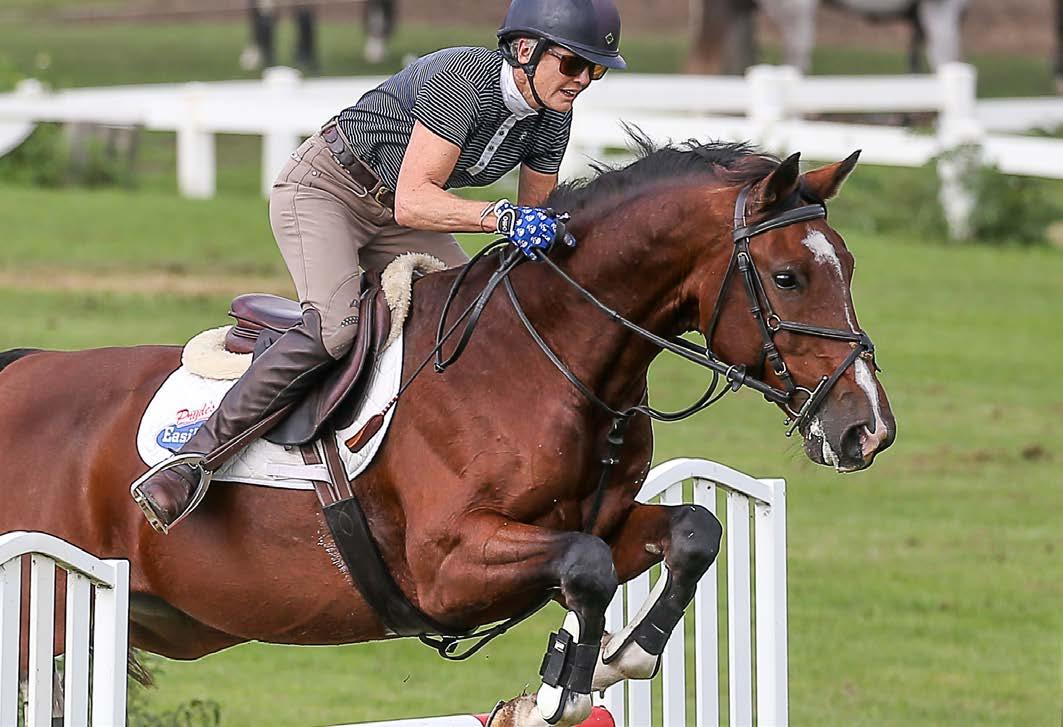
Z competing at the Boneo Park World Cup Show January 2015.
representing Australia in three Olympic Games and three World Championship Teams, as well as herself being Australian Champion in Three Day Eventing and in Showjmping, Vicki remarks wryly that despite competing at Sydney Royal: “I wasn’t a great junior rider. In fact most of my generation were pretty hopeless to be honest. I got lucky in my last junior year when I was riding Kevin Bacon’s Bindi – but that was the only time I won and I can tell you it was the pony, it wasn’t me.”
It concerns her that these days there is so much pressure put on younger riders.
“The fact is in equestrian sports, in most disciplines, your best years are from your early 30’s through to your 50’s,” she says. “We should be building careers to last, not putting so much pressure on them at the start.”
It wasn’t until the young Vicki met the then-doyen of Australian eventing and showjumping, Bill Roycroft (who died in 2011), that her riding began to show its true potential. “Bill was a bush rider in many ways,” she says, “but he was always in a perfect position over a jump. Although he was a great rider, he wasn’t so good at teaching – it was Wayne, his son who has always been a brilliant coach.” When Vicki married Wayne in 1976 at the age of 24, she became part of an Australian equestrian dynasty and although she and Wayne divorced in 2000, their marriage was a partnership that produced more winning combinations for Australia in showjumping and eventing than anything before or since.
And then of course, there was that horse – the 15.2hh Chestnut with heart and courage to burn. A racehorse so slow that after seven dismal starts the syndicate who owned him had no choice but to sell him for $250 to one of the owners, Tim Egan, who had seen
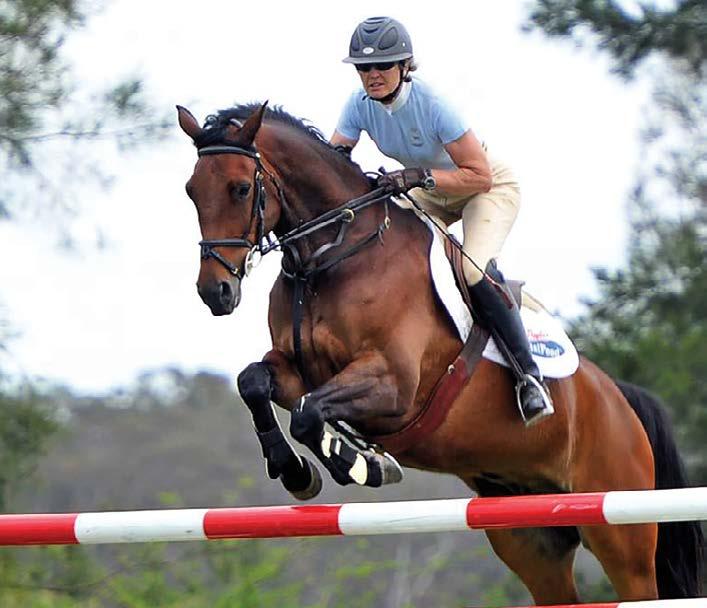
B: Condo Z at Sydney Jump Club in 2016.
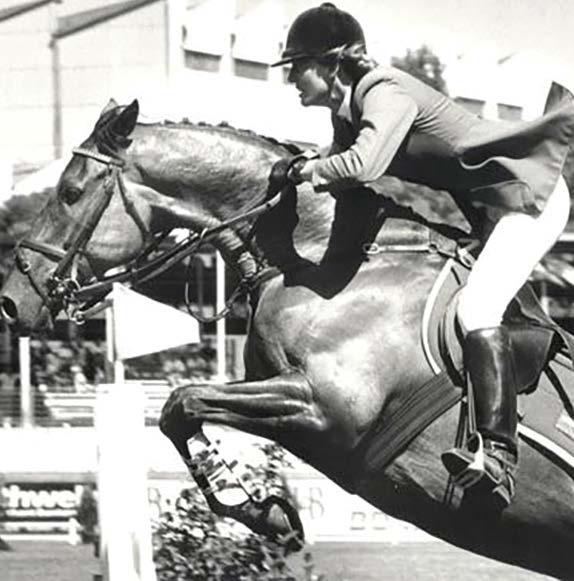
C: Vicki on her famous Thoroughbred, Apache.
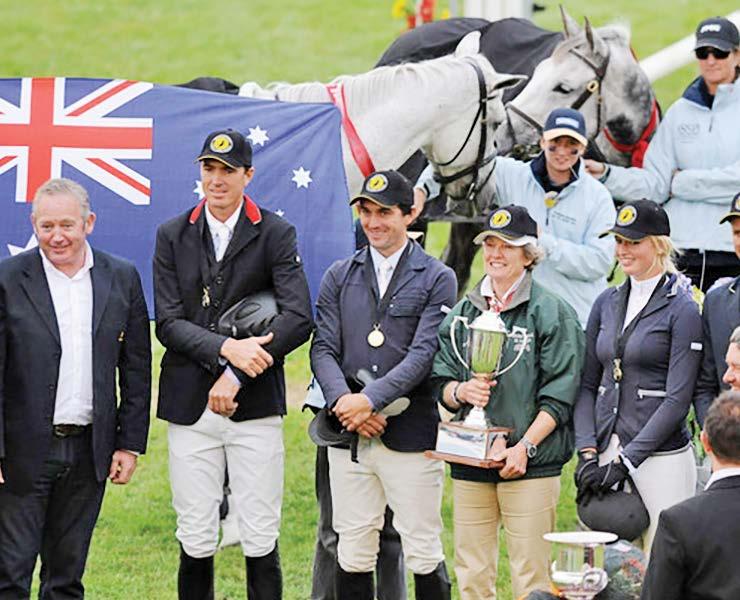
D: After winning New Zealand Horse of the Year.
Bold General jump thistle patches in his paddock, and thought he might have a bit of talent.
“It was 1982, if I remember correctly,” says Vicki, “when Tim rang me about this little horse that he thought had talent but he was having a bit of trouble with. I remember I thought he’d done more with him than he had, so I put him straight at the jumps the more experienced horses had been jumping. He was a bit rough – he’d never jumped anything like those jumps before, but he was willing, and he had something.” So Bold General was sold to Vicki for $500 and trucked off to Mt White to begin his new career with a new name – Apache. It wasn’t an auspicious start – the horse was small and skinny – and Wayne was not impressed. “I hid him in a paddock to fatten up,” she says, “but when I started to ride him he showed me straight away that he had something.” At around the same time the stellar coach and showjumper George Morris, entered Vicki’s life.
“I think the most important thing George taught me straight away was that you can’t have ego,” she says. “I thought I was pretty good the first clinic I did with him – I didn’t ride Apache at that clinic, he was still very hot to handle but I reckoned I was doing ok, and George knocked that out of me straight away. I was shattered, to be honest, I thought I was hopeless. And then I just thought, ‘I’ll show him I can ride’.” Not only has Vicki been showing George she can ride ever since, the pair became firm friends and when he comes to Australia he gives clinics from Vicki’s property at Mt. White.
Vicki had a chance to turn a very quick profit when an Irish dealer was out looking for horses not long after Apache’s first few shows. “I was thinking I’d ask ten thousand – which isn’t a bad profit from $500, but Wayne, to my surprise put $20,000 on him, and the dealer pulled out. Wayne knew that he was going to be amazing.”
And amazing he certainly was. Nine
months with no rail down. Winner of more big competitions than most have had hot dinners, winner of the Grand Prix at Wentworth Park, which shot them both into the European spotlight, where he was immediately runner-up in the Geneva World Cup round. After a sensational European season Apache was ranked one of the top ten horses in the world.
As a chosen rider in the Nations Cup in Rome, it was a bit “wild”, Vicki says at first. “He was so strong, but by the time we got to the Grand Prix, he was in great shape – there were only two double-clears going into the jump off. One was me on my tiny hot horse, the other was this massive 17hh German horse, Argonaut, who’d won it the year before. Well, he went in first and had a rail down, and I went in and the crowd went wild. I was pretty sure I could go faster than Argonaut, so instead of going for slow and clear I decided to beat his time – and that’s what happened, I had a rail but we were faster.” To add icing to the cake, the Australians won the Nations Cup and the party, she adds, as if it’s an everyday occurrence that an opera singer should host a party for showjumpers, was at Pavarotti’s. She was the first Australian, and the first woman to win the Rome Grand Prix.
These days if an Australian rider takes a horse to Europe and wants to bring it back there is Sports Commission funding, in those days there was none. And after a year away from home, and with the dollars they could get for Apache, Vicki had to make the heartbreaking decision to sell him - but in a rare happy ever after ending, she bought him back when he was 19, and actually did one more season with him at home. “He got to mini-Prix,” she says, “and won the warm up class for the World Cup at Horseworld, and that’s when I decided
‘
‘ Apache lived to a ripe old age, and is buried on the Mt. White property.

to retire him. I thought it was so great he could go out on a good note.”
Apache lived to a ripe old age, and is buried on the Mt White property.
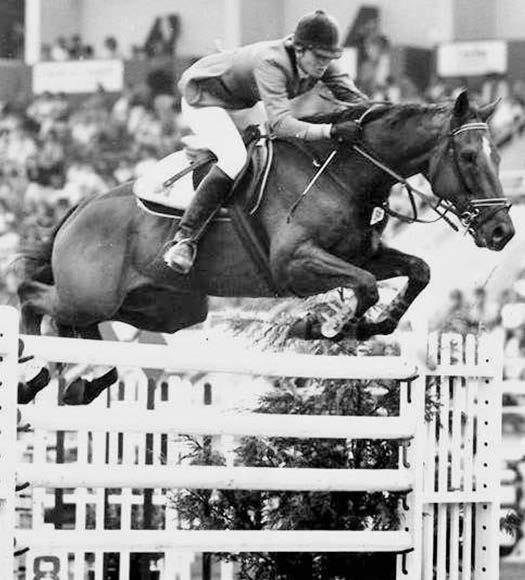
The property has been an anchor for Vicki for decades now, and never more so than when, in 2003, only three years after her separation from Wayne, their only son, 17-year-old Mark, died in a tragic accident on January 14 after he was caught in a notorious rip at Birdie Beach in Lake Munmorah National Park.
“I was never going to have children,” says Vicki. “I was terrified when I found out I was pregnant, and Wayne and I had no idea how to be parents. Mark simply evolved with a lot of love along the way and turned into a beautiful, loving, kind young man. I couldn’t discuss it for a long time, but finally although you never get over it, you get through it. We had him in our lives for 18-years, and for that I’m thankful. Every day I use a tea-cup he gave me for my birthday and not a day goes by without me thinking of him.”
Mark was a good swimmer and surfer, and the sad irony that it was the surf that claimed him, rather than an equestrian accident, is not lost on Vicki. “Every time you ride, it’s a risk,” she says. “After I lost Mark for a long time I thought I would just give up riding, but then I thought I would have lost everything I love, so I just kept going, day after day, and in the end what they say is true – time is a great healer.”
Fortunately for Vicki a new partner came into her life after Mark’s death, and that plus her continuing commitment to her horses, riding and coaching meant that in the end she realised that Mark would not want her to be unhappy, and that the genuine pleasure she gets from coaching and teaching was a way in which she could give back to the equestrian community.
‘
‘ We had Mark in our lives for 18-years ... and not a day goes by without me thinking of him.
She is vocal about certain aspects of horses and riding. “I’m absolutely with George Morris on the importance of flatwork,” she says. “Particularly these days when the courses have got more and more technical. If you don’t nail your flatwork you won’t nail your jumping, it’s as simple as that. I’m also a great believer in sitting lightly on your horse, and not over-riding it, you want a willing partner – one that asks, ‘what would you like me to do?’ I’m also really strong on groundwork. I go crazy when people let their horses rub up and down on them. It all starts on the ground.”
At Mt. White she currently has 21 horses, with ten or so of them in work, including
the talented young stallion Dynamite Bay, whom she rode recently at Aquis. “He’s a bit quirky, as stallions can be,” she says, “but he’s got talent for sure.”
Does she, I wonder, have a theory around the difference between mares, geldings and stallions? “Well, certainly with stallions you have to be more assertive. After all, they’re the alpha males, and there’s a lot of testosterone floating around, and a tendency to have a high opinion of themselves. Geldings are easier-going without a doubt, and mares are temperamental, but,” she says, “get the mare that will give you her heart, and she will give and give and give.” She’s always fascinated by the
progression of her young horses, and the potential they show.
A recent hip replacement – “they said I couldn’t ride for 12 weeks but I was riding in four,” has actually been a godsend she says. “I can hop up on a horse from the ground again,” she says. “I haven’t been able to do that for years.”
Time has mellowed her somewhat, but scratch the surface and the fire still burns bright. “I don’t have the same huge ambitions I once had,” she says, “but still of course, I would love to have a horse I could win an Olympic medal on since despite everything that remained out of my grasp. But that would be the only way I would be aiming that high again. There’s no point in simply making up the numbers.”
I don’t think that anyone could ever say that Vicki Roycroft has ever or will ever, ‘simply make up the numbers’.
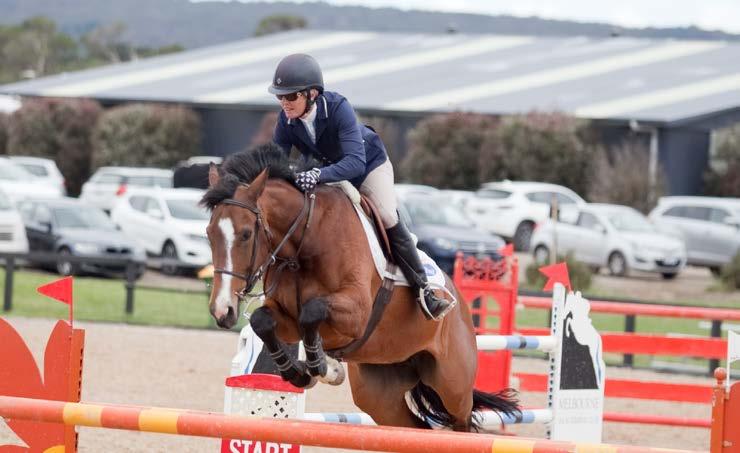
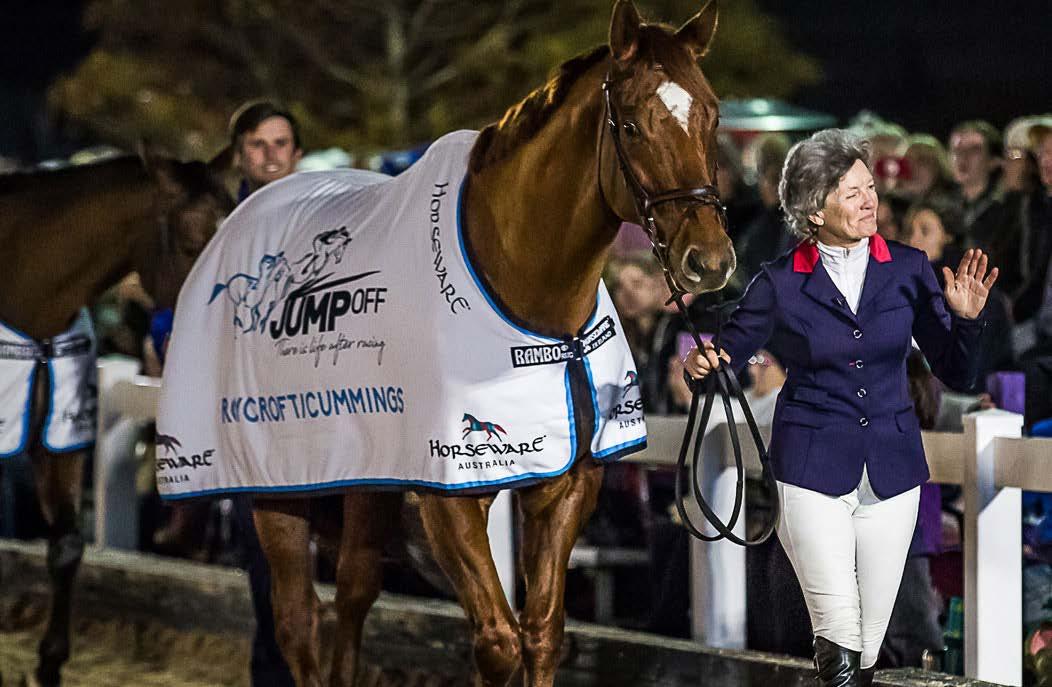
Vicki Roycroft has won more World Cup Qualifiers than any other Australian rider, on more than 12 different horses. She has been to four World Cup Finals representing Australia. She is an NCAS Level Three Showjumping and Eventing Coach and a Member of the NSW Elite Showjumping Squad. She was Chairman of the Equestrian Australia National Showjumping Committee from 2005 to 2013 and Chairman of the Australian Showjumping Riders Association from 2003 to 2011.

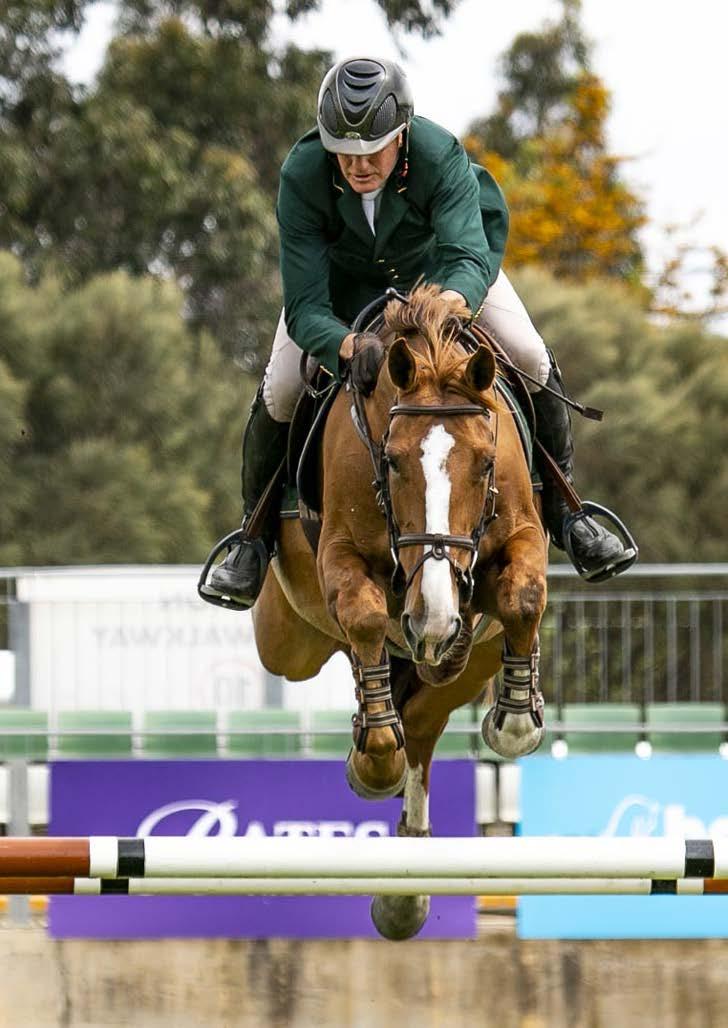

CHRIS CHUGG
Showjumper Chris Chugg talks about the serious side of building a horse business.
If I’ve heard one constant refrain over the years from my vet and my chiropractor it’s been about the dangers of over-lunging, and yet for many trainers and riders it’s still normally a go-to method of training.
Not Chris Chugg, though, whose ability to raise and train top showjumpers is legendary. He’s as clear as day on the topic of circles.
“The fact is that horses aren’t built to go in circles,” he says bluntly. “Everything about their bodies, including all their joints, are designed to go in a straight line. If you ask a horse to do circle work before it’s mature enough, strong enough and supple enough to do it, you’re just asking for problems.”
These days, Chris says, particularly in Europe, people are now paying attention to the surfaces, and the size of arenas their horses are being worked on.
“We use a lot of different training surfaces and different areas,” he says. “We swim our horses, we use a treadmill, we work them on a very large arena.”
The ‘we’ that he’s referring to of course, is his partner in life and in jumping, the incredibly talented showjumper Gabi Kuna, also Chris’s fiancée. Together the couple are a formidable force in the
showjumping world, and at the moment all their efforts are going into the team they’ll take up to the Aquis Champions Tour at the Elysian Fields near Canungra, Queensland, which runs between April 26 – May 5.
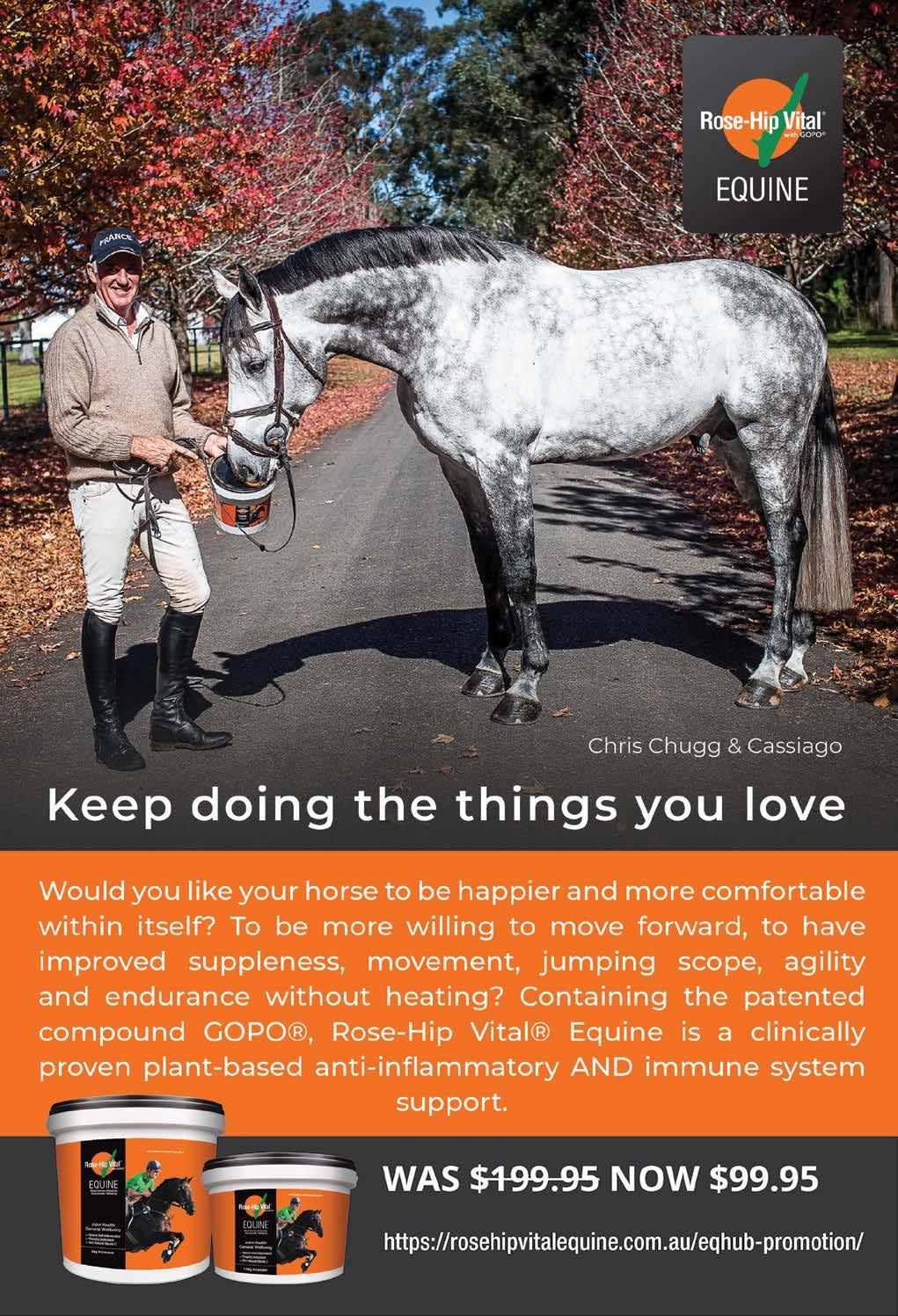
“Aquis is a great event,” says Chris. “It’s equivalent to a 5* show in Europe. The prize money may not be as high as Europe, but the footing, the jumps, the great stables – the manicured grounds all create a fantastic environment for a good event. Gabi and I will be taking eight horses, including Cassiago and Flare. It comes straight after Sydney Royal so it’s a busy time for us.”
Talking of how he and Gabi work their horses, he says that they’re lucky they both admire each other’s riding. “We train each other,” he says, “and we ride each other’s horses. Gabi has a great eye for a horse, and we both enjoy bringing on young horses.”
But although Chris may not be a fan of circle work too young, the final goal of having a horse work ‘round’, is the same he says, he just likes to find the way each horse likes to engage with what they’re doing. “There’s a lot of pressure for horses to look like everybody else’s horses; even for riders to look like other
riders,” he says. “But they don’t all work the same. It’s vital for all horses to have self-carriage, to be able to balance themselves up, to work round – but often you’ll need to chop and change how you work a horse, because every horse is a little different.”
For Chris and Gabi keeping their horses sound and happy is paramount. “They get regular chiropractic treatment and acupuncture; we use the treadmill for building muscle and weight on the back
leg which is so important for jumping, and the horses are kept in a hilly area around Tennyson near Sydney.” The early tragedy of losing Del Bart means there are no steel fence posts. “You learn to keep your horses safe,” he says.
Over the decades Chris, always known as ‘Chuggy’, has built himself up a fearsome reputation as a competitor. He is a five times Australian Showjumping Champion (three consecutive years on the extraordinary Vivant); an Australian
Representative at the World Cup Finals in Paris in 1987, in Gotenburg in 1991 and in Geneva in 2010, and an Australian Representative at the 2010 World Equestrian Games in Kentucky, finishing 21st individually on Vivant. He’s an NCAS Level 3 Showjumping instructor, and, with his former wife, Helen Chugg put together a formidable Warmblood breeding program, for jumpers and dressage horses.
Chris has always had horses in his life. “My mother, Bev, was heavily involved in the trotting scene,” he says. “From the time I can remember I was around horses, and for many years our extra money came in from horses we used to buy at McGrath’s Hill, the old Homebush saleyards – where the Olympics were held.”
It was a quick turn-over. The family would buy on Friday, and sell on Saturday and Sunday through a regular ad in the paper. “Where we lived wasn’t very horsey,” he says, “so we used to go to the local park and ride.”
When his mother decided to take out a trainer’s license, the family moved out to Riverstone, continuing to deal in horses, an endeavour which brought along Chris’s first competition horse, Del Bart, a grey 15.3hh purebred Arabian. “Not the obvious choice for a competition horse,” he says, “but we did very well jumping at pony club together.” Chris loved his horse, the pair of them growing into showjumping together, until sadly they came home after the Championships and Del Bart injured himself beyond repair on a fence post.
His knowledge of the breed stood him in good stead however when he decided to finish school early, to make a living showing Arabians for Paul James from Arabian Park. “That was a great job for me,” he says. “I learnt a lot about
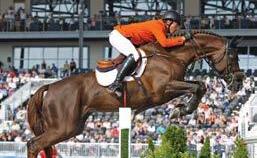
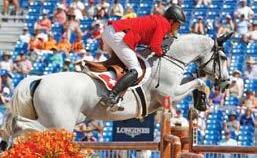
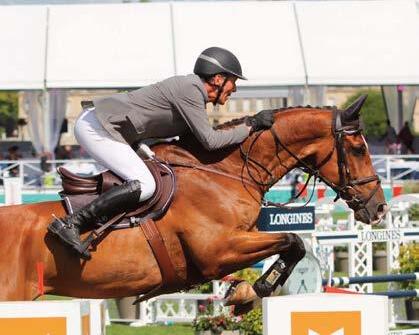
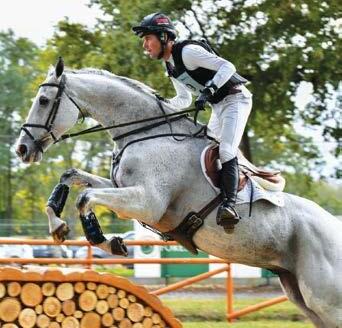
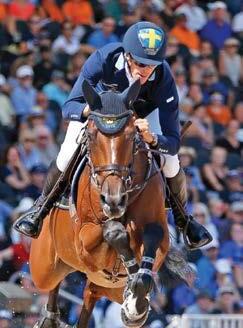
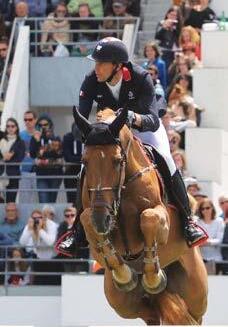
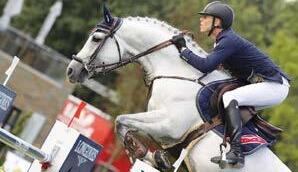
conformation and handling stallions. The main stallion I used to ride was a beautiful purebred black Egyptian stallion called Hakim. He was wild and fierce, and I enjoyed that about him. I had to be tough with him because he had a lot of bad habits. He’d actually been banned as a ridden horse from The Royal because he’d thrown his rider.”
Already not one to pass on a challenge, Chris schooled Hakim as regularly as he could. “I once rode him in a Karl Mikolka clinic,” he says, “and Karl said to me that he looked like a Warmblood not an Arabian. He was very big on long reins, and so we put Hakim in the long reins. We taught him two-time changes and one-time changes, and he drove me like I was at the Vienna Riding School for weeks on end. Hakim came out of it at Prix St George level which was pretty incredible.”
Almost without realising it, Chris was learning a valuable lesson about horses – and himself as well. “I’m not sure that as a teenager I even thought about whether I was particularly good with horses,” he says. “I made pocket money training horses, leading stallions, riding and showing, and I just gradually realised that I seemed to have a talent for it. I think Hakim showed me that when you get horses that are good at what they do, you stick with it. It’s nice to work with smart animals, to teach them trust and that they can believe in themselves – then it either becomes a great partnership, or they become a very saleable item, and you can make sure they go on to a great home.”
It seemed as if Chris was headed in the direction of eventing when his eventing horse, Kustah, died of an aneurysm at the Melbourne 3DE.
But Chris had a surprise around the corner. His mother had bought a
horse that was to become famous. The Palomino first-cross Quarter Horse stallion, Chico D’Oro, had done a bit of everything when he was purchased as a dressage horse for Bev – but he had other ideas. All these years later Chris still laughs at the memory. “He was no dressage horse,” he says. “He was a playful, bucking handful. As soon as I was old enough I got to ride him, and he
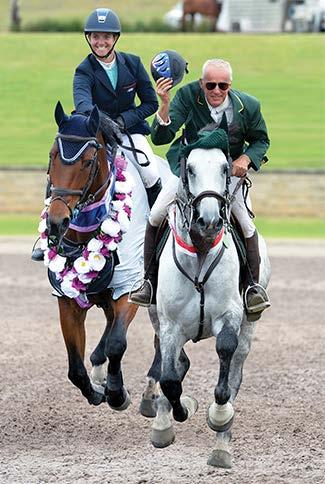
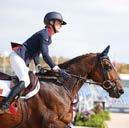
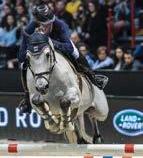
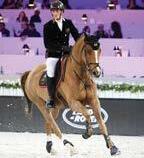
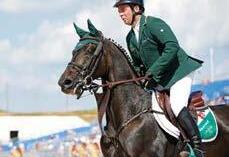
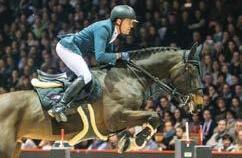
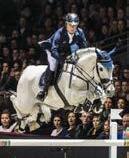
B: Gabi and Cristalline, and Chris and Cera Cassiago: “They are both riders’ horses”.
Photo: The Horse Magazine.
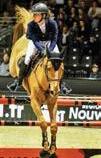
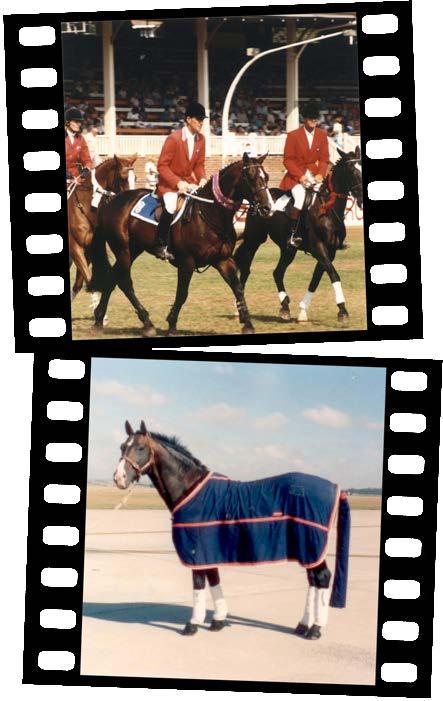
C: Top: A win at Sydney Royal for Sky High. Seond Greg McDermott and Mr Shrimpton, third, Vicki Roycroft and Mickey Mouse. Bottom: Sky High on the tarmac at Sydney Airport heading off to Paris and a big learning curve.
D
‘
‘ I didn’t even recognise Sky High. He’d lost about 200kgs.
took me to Grand Prix showjumping.”
Google Chico D’Oro and you can see how he won the hearts of so many – with hundreds of posts about his bloodlines. He went on to sire a number of good jumpers, including Ashico, and, says Chris, they were lucky to be coached by Di Lawson (Gala Nigh, TickTac). Chris soaked up everything she had to teach him. “She was a great rider,” he says. “She could take a horse that had learned the basic ropes and turn them into a really great horse.”
One of the reasons that Chris enjoys working with showjumpers is their
longevity. “Jumpers last much longer than high-level dressage horses or eventers,” he says. “Horses that are well looked after will jump well into their teens, they can still compete at Olympic level up until they’re 16 – even older sometimes, so they’re well looked after. I believe you can create a really fit jumping horse in 12 weeks or so, then really you’re just asking them to work for sixty seconds every now and then to keep them ticking over, you don’t have to ride them for two hours like a dressage horse. Showjumping is really a light, easy way to ride.”
Something that Chris enjoys is buying horses at a young age, and working them up through the grades, perhaps because of the wonderful journey he enjoyed with Sky High.
“My mother was on the hunt for a breeding stallion when she found Sky High, a two-year-old Hanoverian Warmblood,” says Chris. “Sky High was completely different to Chico –an European-bred horse, slower and heavier. He weighed 750kgs so you wouldn’t think he was built for speed but he was fast, very fast. We took him slowly up through the grades, and I won my first World Cup on him at Armidale when I was 21. I’d won the Mini Prix, and I thought, well I may as well try the World Cup. I won that, and my Mum had bought me in the Calcutta the night before, so she won more than I won in prize money!”
Chris still remembers the thrill of being chosen to represent Australia at the World Cup final in Paris in 1987, but also the massive learning curve of discovering what can happen if you don’t travel with your horse. “I’d never done it before, and of course they sent a groom to travel with him – the horse got sick, and they worked him after he’d arrived,” he says. “I arrived four weeks later, and walked straight past him in the stable-block. I didn’t even recognise him. He’d lost about 200kgs. I was devastated.”
Sky High was sick for weeks, but recovered to give the pair a few starts prior to the final in Paris. “In the very first class he trod on a shoe in the first double, and that was it, we were out. I figured it could only ever get better. It taught me a valuable lesson. The horse goes nowhere without us. I travel with any horse we take to Europe 24 hours a day. Owners know their horses like no-one else does, and you have to
have your finger on the pulse. They’re big animals, but they can get sick very easily.”
Staying on in Europe to work at Paul Schockemöle’s place for a few months, cleaning stables and riding young horses, gave Chris some more major life lessons - namely that the horse industry in Europe was massive in comparison to Australia, but that he didn’t want to live in Europe. “I knew that I wanted to come and produce my own horses, and have Europe as a place to go to for purchasing horses,” he says. “I’ve never regretted that decision. For me living in Australia and doing what I do with horses is the best possible life.”
Fast forward a few decades to THAT mare, and by now Chris’s eye for a young horse, and the combined training and riding of Cristalline by both Gabi and Chris of the horse they’d purchased as a five-year-old, created what he refers to as: “A freak of nature. Cristalline has an incredible level of self-confidence, but again, it reinforces how important the early years are in a horse’s life. You can have Incredible talent in a horse, but unless you nurture it correctly, and create a relationship of trust with the horse, the results won’t happen.”
But when results do happen, a professional stable has to face the difficult choice, particularly with a younger horse, of whether to keep it, or sell it. In 2016, Cristalline was sold to US rider Adrienne Strenlicht, for an undisclosed amount.
“I’m not going to say that it’s not tough selling horses, it is,” he says. “But if you want to be in the business of horses, and not just have them as a hobby, you have to sell them. Bringing them on from youngsters and selling them before they reach their teens is what brings in the money to sustain the business and provide our lifestyle so it just has to be.”
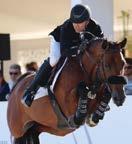
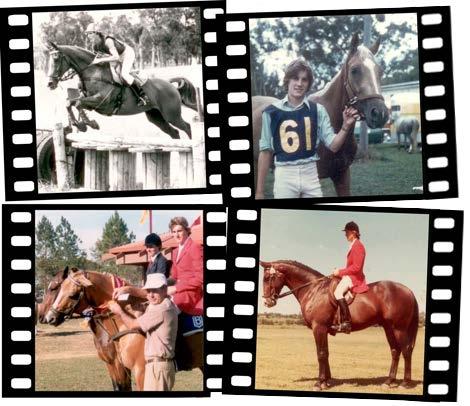
D: Clockwise from top left: Kustah cross country, late 70’s; Chris and Chico D’Oro, 1977; Chris and a four-year-old Sky High in 1979; Chris and Chico D’Oro at Peat’s Ridge Showjumping, 1978.
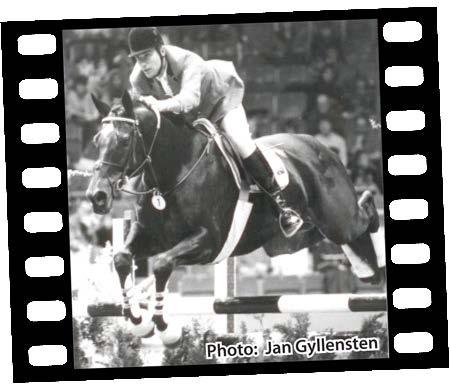
E: Mr Currency and Chris at the World Cup final, Sweden, 1991.
He’s as straight-shooting as it’s possible to be on the way to build a business.
“A lot of people think they can create a business out of one great horse – you can’t,” he says. “You might for a little while if you’re winning, and the horse is doing really well, but I’m sorry, one horse is a hobby not a business. If you want to be in the showjumping game, the only way to do it is to buy the breeding lines, buy the ones that are naturally athletic, smart, willing and keen to do it. Take them through the grades, and make the choice – at the right point – to sell them.”
Chris’s liking for young horses almost meant he missed out on Mr Currency one of the great horses of his career. “He was six, so he was really at the upper level of the age limit for me,” says Chris. “Helen and I were actually looking for a Palomino for a friend, but when we went to see this horse it had been sold. Then there was another one – this 16.3hh
black horse, that could piaffe in-hand.” Chris wasn’t entirely convinced but took Mr Currency home on trial for a week. He was going to sell him on quickly, but fortunately changed his mind. A good decision as it turned out since only three years later they were at the World Cup final in Sweden.
One pointer Chris gives to people wanting to buy a showjumper is that even though, in the past, thoroughbreds were the mainstay of the industry, the difference these days between thoroughbreds and warmbloods has become greater. “These days thoroughbreds are bred leaner, and flatter, and less uphill. For a great jumper you need a horse that is uphill, and in the main you won’t find that in a thoroughbred.”
It brings him back to his central point - if you want to do horses professionally it has to be a business. “If you do it on
the fringes it will just keep you poor,” he says, “if you try and do it in a big way and you don’t have the support you’ll go broke. Remember that to feed a top-performing showjumper costs $40-$50 a day. What you want to look for are your foundation mares, and a gold medal stallion. It’s a great game this one, but some months our vet bills would bankrupt some people. I learned, from buying and selling my own horses, that I could make a living. When I was young we had incredible diversification. My Mum had her trotters, we had Quarter Horses and Appaloosas, and my performance horses. Put it all together and it made something. You have to have big dreams, but at the same time you can’t afford to not learn how to
manage the business of horses.”
And then of course, there was Vivant. The very first horse that Chris and Helen Chugg looked at on one of their trips to Europe, the horse that finally retired two years ago at the age of 18, having dominated the World Cup scene for many years. “He was an unbelievable horse,” says Chris, “scopey, careful and brave. A warmblood with thoroughbred characteristics – a perfect jumping horse. He was the best athlete I’ve ever had the privilege of working with.”
These days Gabi and Chris’s breeding program is carefully worked out. “We try to stagger our horses and have them at every age,” he says. “Our first crop of two year olds have been broken in
– 50% are mares, and 50% stallions or geldings. We are now producing five to eight embryos, and before you know it we’ll have 20 or 30 young horses to train and sell. For me personally the icing on the cake is to go overseas, find a going four-year-old, bring it back and take it to the next level.”
In the meantime, after Aquis there’s a December wedding to plan for, the next World Equestrian Games, and of course the 2020 Olympics. What about their own personal breeding program, I wonder. Chris laughs. “’Well I’ve had a vasectomy so it would have to be reversed, but Gabi is only 30 so you never know – and in the meantime horses are our family.”
EDWINA TOPS-ALEXANDER
Edwina Tops-Alexander is the highest ranked female showjumper in the world. We profile the life and times of an inspirational rider.
The list of Edwina TopsAlexander’s firsts just keeps tumbling – unlike the fences she’s jumping. In December she became the second woman to win the Paris Longines Grand Prix on her amazing mare, 11-yearold California, and became the first Australian to take pride of place on the winner’s podium. Only a week later, at the Coruna World Cup in Spain, Tops-Alexander and her nine-year-old gelding, Vinchester won their first 1.60m class together, with the horse having only just jumped 1.50m a few days before that stellar performance. Her winning streak continued when Edwina, once more riding California, became the first ever winner of the inaugural $1.4m Longines Global Champions Tour Super Grand Prix in Prague on December 16, 2018 – beating German veteran Ludger Beerbaum by a mere half-a-second. But half-a-second is all the tripleOlympian needed to cement her place in equestrian history. All of this topping her success in Aachen, Germany 2006, when she became the first Australian to make the final of the individual jumping
competition at the World Equestrian Games, finishing fourth.
Originally from Turramurra, in Sydney’s northern suburbs, Edwina started riding when she was eight-years-old. “We weren’t a horse family,” her mother has said, “but we had neighbours with horses, and Edwina used to watch them ride. She decided she wanted to learn, and she loved it so much she joined the Avondale Pony Club in North Turramurra.” The young Edwina’s ambitions were mostly relatively modest. She wanted her ears pierced, a navy blue jacket and a chestnut pony. The other ambition, to ride at the
Olympics, seemed not quite as easy to achieve, but the goal was a portent of things to come.
Even her first horse wasn’t exactly star material. “He was an un-broken fouryear-old pinto,” she recalls, “not exactly first horse material when you’re eight, but somehow we survived.”
Edwina attended Pymble Ladies College, and after school gained her degree as a Bachelor of Physical Education, all the while training and riding. Her competitive streak didn’t take too long to assert itself, and by 1995 Edwina had won the Australian Young Rider Championship.
Even determined champions have their rough patches, something all of us would do well to remember, and the sport almost lost her when she was 18. “I had a horse that just refused all the time,” she recalls, “and I almost stopped riding.” But she persevered, training, and riding different horses and in 1998, only three years after her AYR Championship, she made her debut riding for Equestrian Australia in Hong Kong, moving to Europe later that same year taking her horse Mr. Dundee to Belgium with her. Edwina was based with Belgian showjumping star Ludo Philippaerts for three years before she made the decision to branch out on her own, creating her own company buying
‘ ‘ He was an un-broken four-year-old pinto,” she recalls, “not exactly first horse material when you’re eight, but somehow we survived.”
‘ ‘ It was literally a match made in horse-heaven...The partnership has allowed that talent to blossom.
and selling horses for Australian clients.
“The fact is,” Edwina has said, “that unfortunately Australia is not the core place for my sport. If it was, I’m sure many more of us would want to live there, but Europe is where we have to be based. It was a great place to grow up, and gave me the chance to compete in many different sports, but Europe is where the best showjumping is.”
It wasn’t the easiest time though, starting over. “She had to prove herself right from the start over again,” her mother says, “but after six months she came home and told us that she wanted
to be based in Europe.”
As she became better-known in Europe, and the winner’s podium became a regular event for her, another side to Edwina started to show itself to those around her. Always interested in fashion, her perfect turnouts, and her style gained her admirers in the fashion industry and some A-list sponsors, including Gucci, and the Swiss watch company Jaeger-LeCoultre, for whom she’s an ambassador.
‘Strong’, ‘powerful’, ‘motivated’, ‘talented’, ‘petite’, ‘determined’ – these are all adjectives that people who know
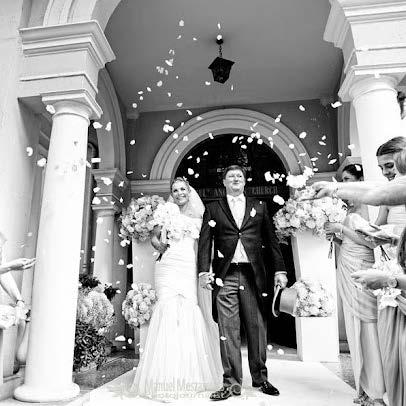
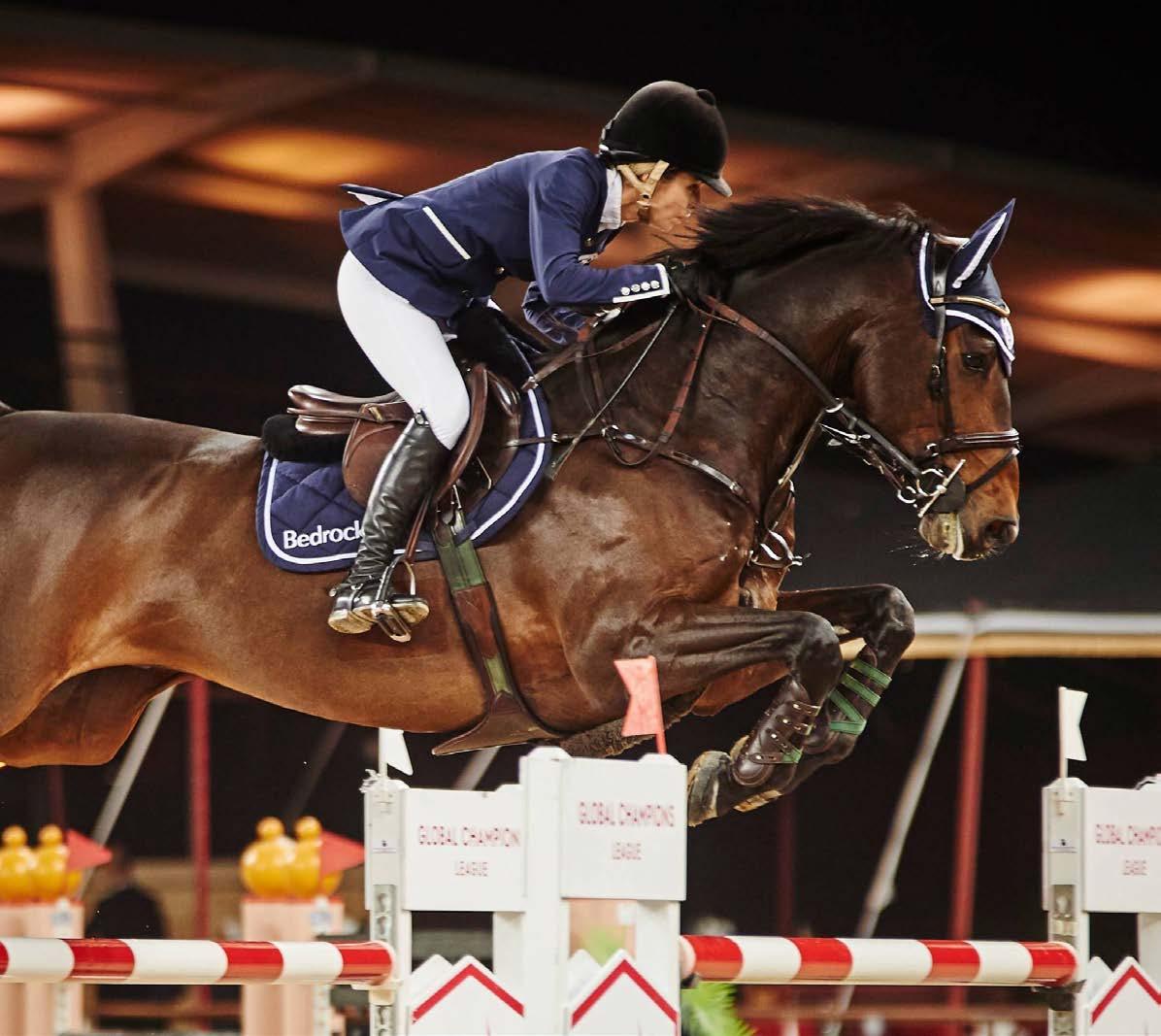
A. Charlotte Casiraghi, Princess Caroline and Princess Alexandra all attended the red-carpet wedding of Edwina Alexander and Jan Tops.
B Edwina Tops-Alexander with Inca Boy Van T Vianahof. Photo: Malene Nilssen, Equipromotion
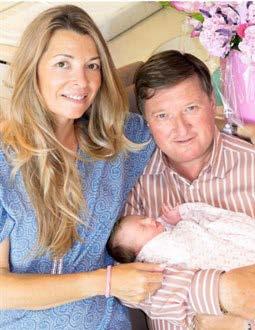
C. The couple welcomed baby Chloe into the world in July 2017.
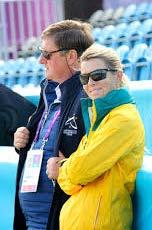
D. Edwina Alexander-Tops and her husband Jan Tops at the 2012 London Olympics.
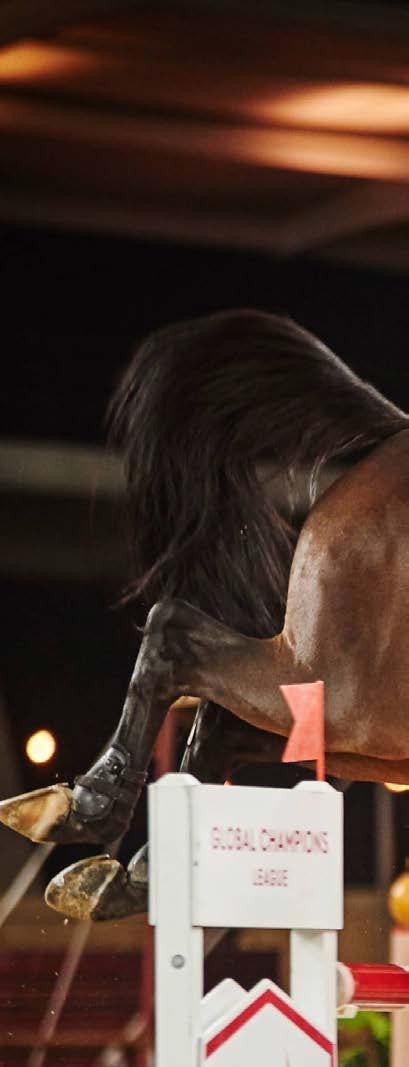
Edwina have used to describe the diminutive blonde, who says, as the highest ranking female rider in the world: “I don’t feel any different as a woman rider to any male - but it does feel good to beat the boys.”
Edwina’s achievements have been consolidated with her extraordinary partnership – and marriage – to previous Olympian and renowned horse breeder and trainer Jan Tops. “She was raw talent when I first met her,” he says. “But she didn’t have a huge amount of knowledge about how to do the technical flatwork and exercises that
would take a horse to the top.”
It was literally a match made in horseheaven. The couple met when Edwina first moved to Europe, but didn’t actually begin a relationship until 2002. Edwina was keen to learn, and Jan to teach her. “She tries 100 percent every single day,” he says, “and that’s what sustains her.”
In 2006 while they were at a show in Malaysia, Jan hatched a plan – the Global Champions Tour. Edwina could immediately see that the plan had merits. “All he had to do was pull it off,” she said at the time. In only five years the GCT has lifted the level of prize
money by hundreds of thousands of dollars – in Aachen, for example, it went from $150,000 to $1million.
The philosophy behind the GCT is that less should be more in showjumping. “Showjumping horses are valuable, unique and hard to come by,” Edwina says. “We believed that if we could create something that meant competitors could earn more, and jump their horses a bit less, then the horses welfare would be better looked after.”
Jan was already famous in the equestrian world for his ability to create partnerships between horses and riders, but his partnership with Edwina (they married in 2011) has allowed that talent to blossom. “He’s found me amazing horses,” Edwina says. “But also what you need to remember is that every horse is different. You can’t ride every horse the same way, and so the right way to ride

the horse is as important as the horse itself.”
And there is no doubt that some of the horses she’s ridden will be remembered forever. Horses like Pialotta, Socrates and Cevo Itot du Chateau, for example, with California and Vinchester hot on their heels as champions in their own right.
But of all of those horses, it’s Cevo Itot du Chateau, affectionately known as ‘Toti’, that remains her horse of a lifetime. No fan of showjumping could surely ever forget the little 15.2hh chestnut gelding out of Le Tot de Semilly, given to Edwina by her husband as a New Year’s Eve surprise in 2007, that took her to victory not once, but twice in 2011 and 2012 on the Global Champions Tour.
“He’s not anywhere as large as many of the other horses,” she says, “but he’s got heart and he and I just connected straight away. Toti has earned more than €3.5m in prize money – an amount even a top racehorse could be proud of. He retired in 2014 at the age of 18 but according to Edwina still rules the roost. “He’s got a bit more weight than he used to have, but he’s still very active.”
Perhaps the best bit of her recent inaugural LGCT Super Grand Prix win, was that she didn’t realise she had won! All three leading jumpers, Dutch rider Frank Schuttert, Ludger Beerbaum and Edwina all had four penalties over two rounds. Pulling all stops out, the
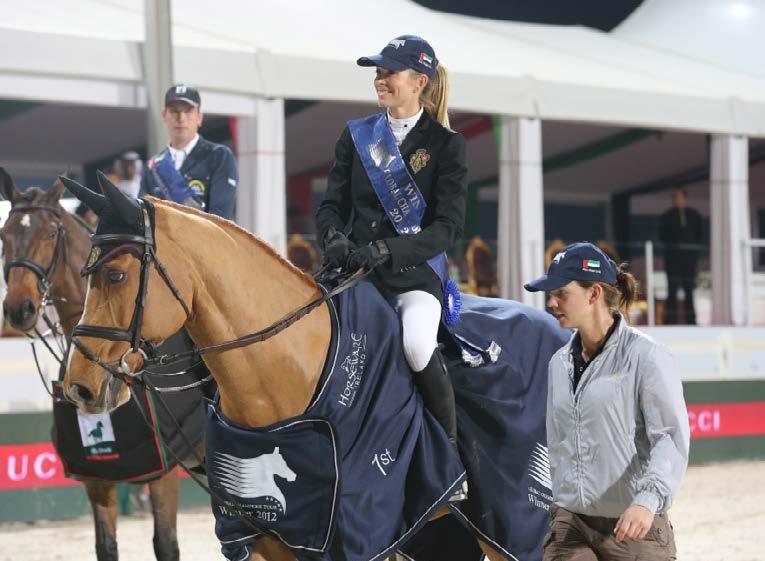
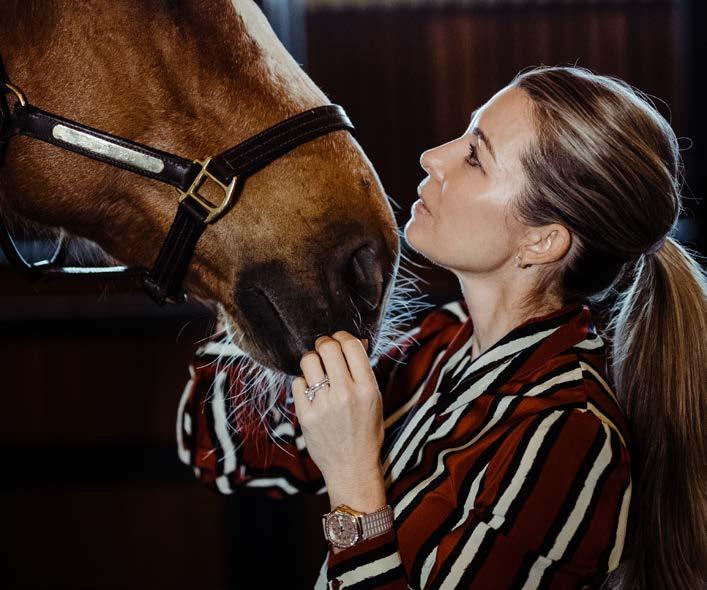
E. Edwina Tops-Alexander on Cevo Itot du Château.
F. : Lena Saugen, Equipromotion
Australian couldn’t actually see her results. “I thought the crowd was just cheering because I’d finished,” she says.
‘ ‘ He (Toti) is not anywhere as large as many of the other horses,” she says, “but he’s got heart and he and I just connected straight away.
“I really didn’t think I’d won. After I had the fence down, I thought, ‘right, I just have to go for it.’” And so she did!
Although she is a strong advocate for women in sport – across the board –she does not like to see showjumping as ‘Men against Women’. “For me it’s horses against horses,” she says.
May the best horse win.
For more information go to: www. edwinatops-alexander.com
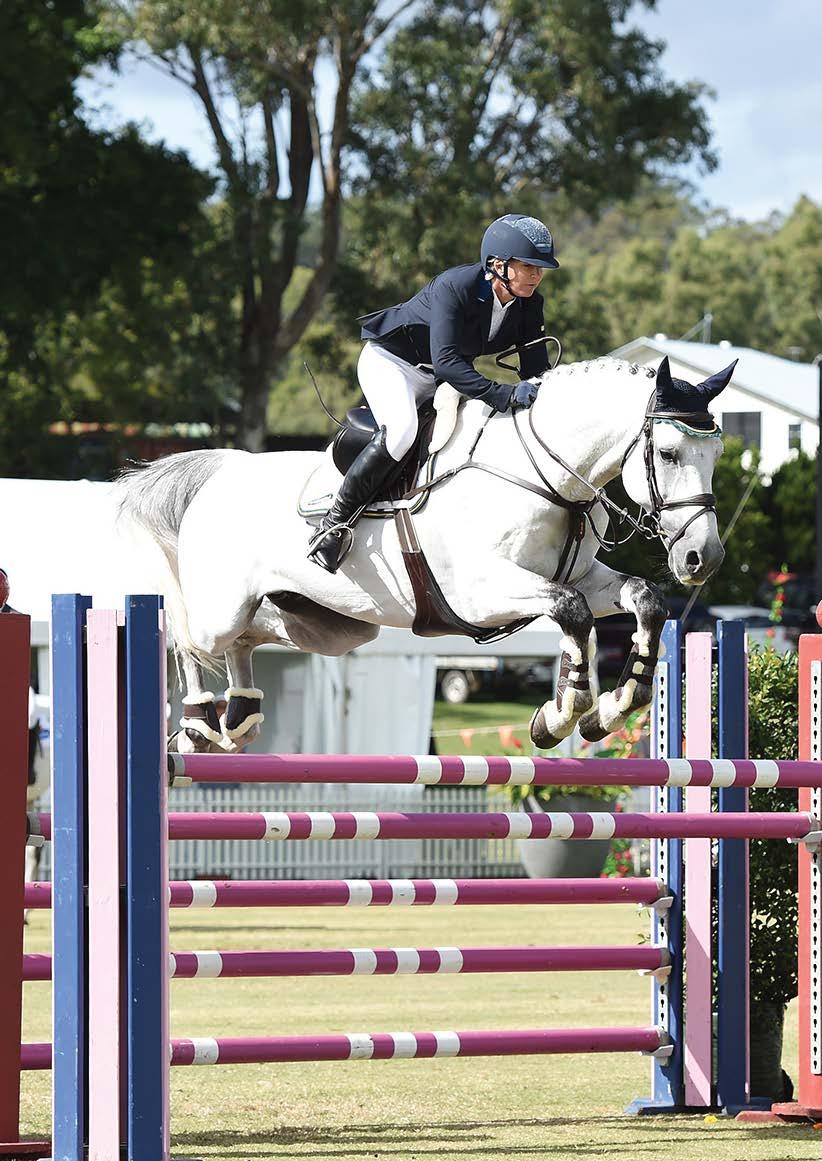
MICHELLE LANG-MCMAHON
One thing showjumper Michelle Lang-McMahon knows only too well is that if a thing’s worth doing, it’s worth doing well. For the organiser of the upcoming Aquis Champions Tour showjumping competition, it was the logistics that were most nerve-wracking about taking on the massive project, which is now entering its fourth year.
Both myself and Peter have done a lot of global shows,” says Michelle Lang-McMahon, the showjumping mother of three, “and right from the start we wanted it to be top class. Not,” she adds, “that it was something we were originally looking to do – not by a long shot.”
In fact, it was five years ago when the McMahons were holding a George Morris clinic at their place, and Michael Keane was there watching his wife Kelly participate.
“Michael asked Peter if he’d like to resurrect the Elysian Fields event, and the pair of them organized to have dinner, so next thing you know we’re all having a meeting, and Michael told us that he’d give us $125,000 to put on an event,” she says, “so that was that! The very next day my daughter Meleah and I sat down for three days straight planning a program.”
To say it was a learning curve is an understatement Michelle says, looking back at the first couple of years. “It was a massive learning curve,” she says. “For
the first time in my life I appreciated the effort that goes into putting on any show, let alone a major event. We had to plan classes, and create ideas for classes, get course designers, jumps, stables, sawdust – article numbers - I knew nothing about article numbers! You could give me the numbers of jumps in a jump-off and I knew about those, but article numbers – what were they?”
Michelle is a good example of Heath Ryan’s theory that in Australia it’s mainly the parents that make our equestrian champions, because although her parents were not horsey themselves, they did have a passion for the sport of eventing. “As soon as it became obvious that they had a rider for a daughter, I was encouraged to event,” she says, “I was also lucky enough to have a cross-country course at our property, Equestrian Australia held events there, so I evented.”
But perhaps like all true showjumpers Michelle was not fond of the dressage. “I told my parents that I just wanted to jump, and that was that, we ditched the eventing and off we went.”
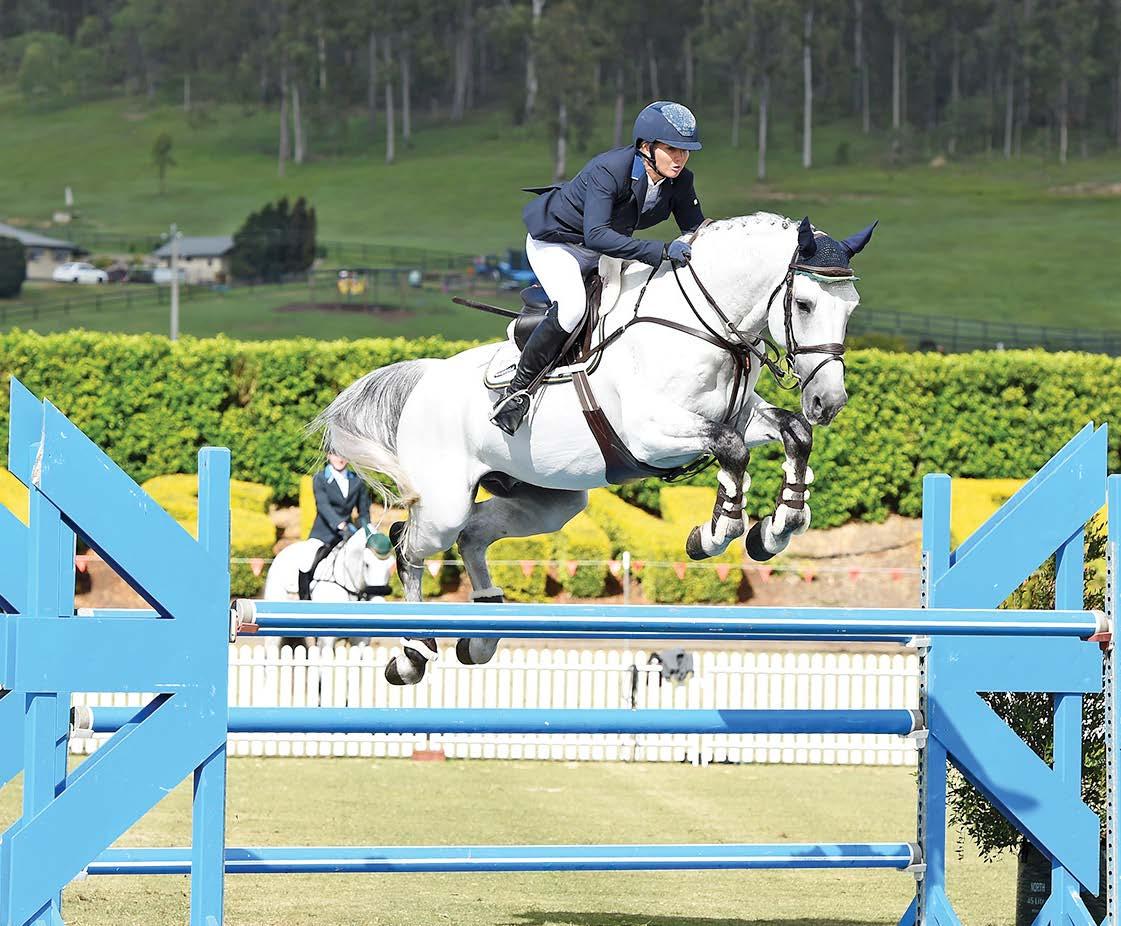
Not, she hastens to add, that she doesn’t believe in the importance of dressage training for all competition horses. “We actually have a dressage trainer, Ron Patterson, for our horses,” she says, “and he’s brilliant with our horses, it’s just it’s not really for me.”
By the time she was 19, Michelle had a horse with huge potential – an exracehorse, Odds On. “My dad sent me to George Sanna’s to train for three months,” she says, “and by the next year we were on the World Cup circuit. We won a big one in Shepparton, and when I was 22 I went to Europe to try and make the team for the World Equestrian Games.”
Michelle says this almost off-handedly
as if this was an easy task, but make no mistake about it, representing Australia at the highest level of jumping, is anything but easy – in all ways. “What a lot of people don’t realise is how lonely it is,” she says. “I made the team with Odds On, but really it’s very boring riding one horse a day, the weather is vile, and the Europeans aren’t that friendly. Obviously once the team turned up it was a lot of fun, but up until then it was a bit ordinary.”
Odds On went on to qualify again two years later, with an outstanding season leading to the World Cup in Geneva, and in the wings was another ex-racehorse superstar in the making. “Before I went back to Europe I’d bought another
nice TB with Sir Tristram bloodlines, KS Double Up – he was really skinny and under-nourished so I got my Mum to look after him while I was away and when I was back he really proved himself quickly – in his first World Cup he came third, and I really wanted him for the Olympics in Sydney, but then we discovered he had a degeneration of the pastern joint.”
Most people, with that kind of information might well not have taken the horse further, but Michelle’s belief in him was so strong that she decided to have surgery performed on him by Jim Vasey, a vet who had done it twice before. So down he went all the way to Goulburn, and although he missed the
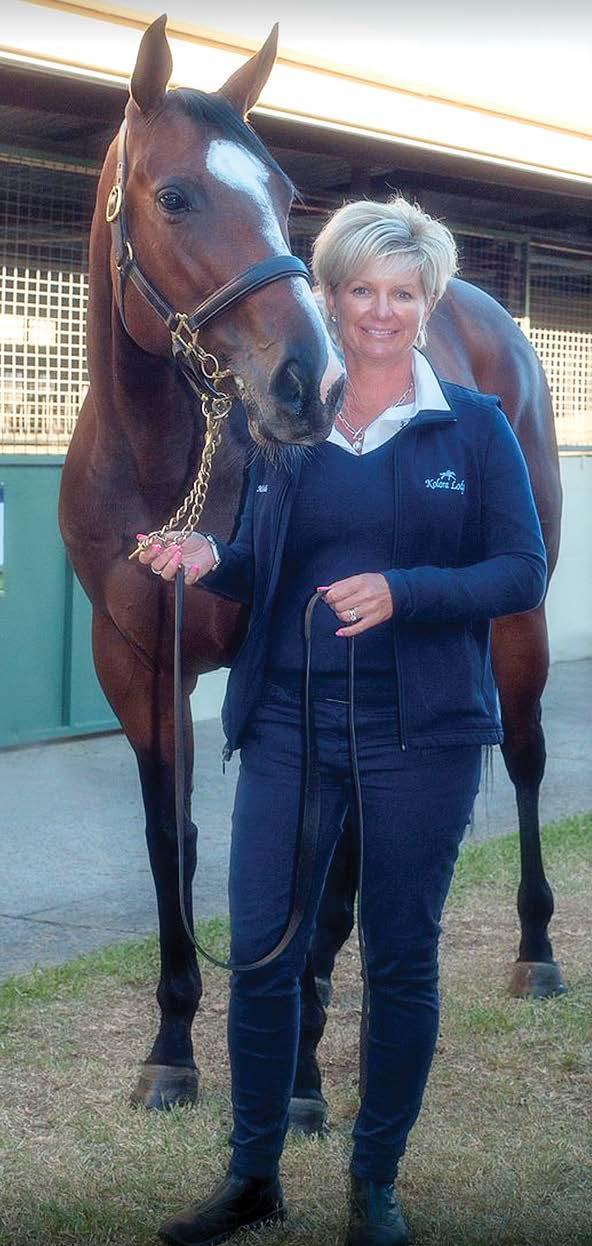
Olympics, by 2001 he was back in work.
“I took him to Sydney Royal in 2002 and he won Champion Part 1, then he won Champion Horse. I took him to Europe and made the team for WEG with him,” she says. “He was the highest scoring horse, and the best-performed horse at Rotterdam. At the time I didn’t know that would be the last time I sat on him, but Jan Tops wanted to buy him, and he kept him to the end. He was 27 when he died and very much loved. I came back from WEG and was very sad to say the least. It was the best trip I’d ever done. Edwina (Alexander) and I were up to no good most of the time, and it was just one of those periods of life where we couldn’t do a thing wrong. We had the
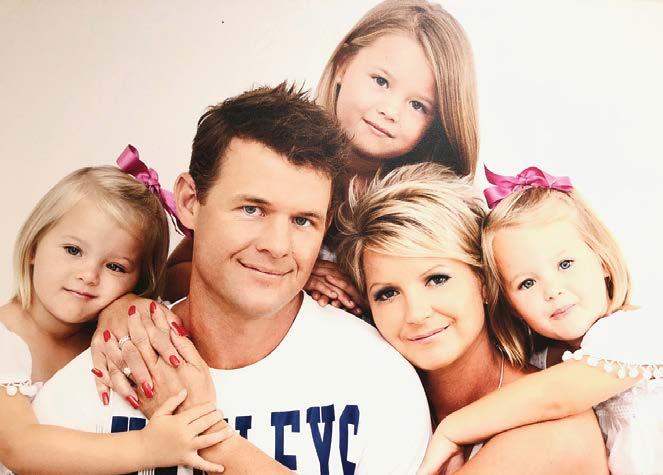
‘ ‘ I suggested he bring horses up to me. And, as they say, the rest is history.
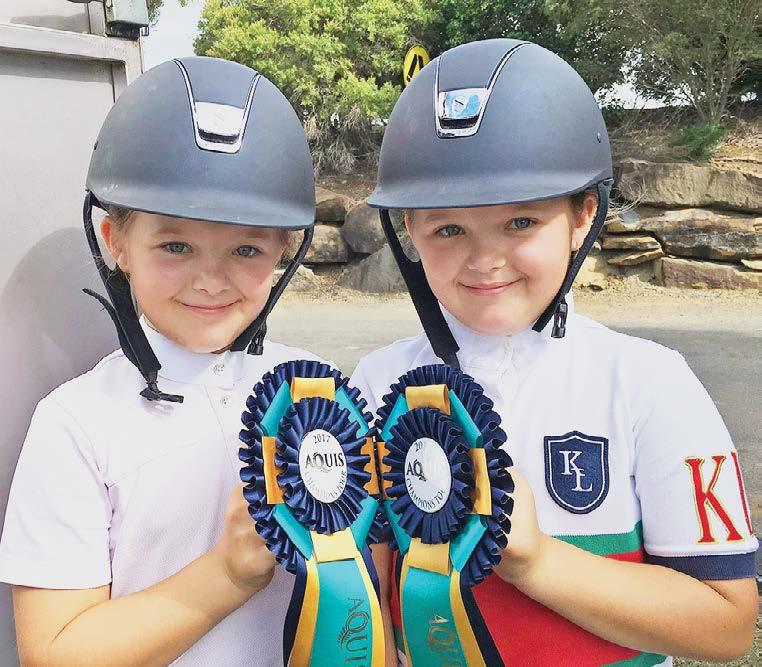
D: Emily and Elkee LangMcMahon with their rosettes at the Aquis Champions Tour.
E: The Lang-McMahon tribe in a rare moment together!
best time.”
But it wasn’t long before resuming her life in Australia produced something very special – a meeting at the Sale Show in 2002 with another jumper, Peter McMahon.
“Pete was in drought at the time,” she says, “and having to cart water so I suggested he bring horses up to me. And, as they say, the rest is history.”
It’s been a hell of a ride, to use a horse metaphor, since then. By June 2003
Michelle was pregnant, marrying in October that year, and by 2004 she was back competing at Brisbane Royal. “Pete was asked if he would ride a mare, Genoa, who wasn’t behaving the best,” she says. “So he did and won the Grand Prix on her. He was really impressed with her – he told me he thought she was the horse he could really compete on. To be honest I was dead-set against him getting her. Meleah was only four months old, we were so busy building up our business, but then I caved in and decided to buy her for him for his first ever Father’s Day present. I hid her at my neighbour’s place, and in the morning we snuck her over – and that was it, she was his.”
That one gift set off a raft of wins, with Genoa winning her first World Cup, in 2006 Peter took her to Europe where she was the best-performed non-Europeanbased horse, qualifying for WEG in Aachen in 2006.
But behind the scenes it wasn’t all just about horses - Peter and Michelle had been trying for another baby, and in 2007 she started on a course of IVF, which resulted in her, as she says in a good horsewoman way, “foaling down in 2008”.
The twins were born in February 2008, and Peter left to chase his Olympic dream with Genoa when they were four weeks old, with Michelle following when they were eight weeks. “I left them with my Mum and Dad,” she says. “I just knew I had to go, and so I went. I was there a month, with Meleah and was with Pete at the selection events and once he qualified I came home.”
It wasn’t the easiest of homecomings; one of the babies was sick and in hospital, so Michelle landed and went straight into hospital for a week, only to discover that the selectors were, in her

words, “being difficult”. So the day she was discharged, she flew back to Europe. A legal battle went Peter’s way, but unfortunately in Hong Kong disaster struck when Genoa flipped herself over a practice jump, and Pete broke his collar-bone. “I thought he’d just corked it,” says Michelle, with what I’ve come to realise is her usual direct fashion. “He was screaming at me, it’s my shoulder, and I’m like, can’t you just be like Gillian Rolton and get back on? But the bone was actually piercing his skin, and so that was that, it was the end of the dream which was really sad.”
But Michelle wasn’t going to let her husband walk away from his hugely successful partnership with Genoa just yet. “He was really down and out from the result of the Games,” she says, “but
I just made sure she stayed in work, and I persuaded him to take her to the Horse of the Year Show in New Zealand in 2009. I knew that there was $150,000 for the top jumper, and I knew he could win it.”
As it turned out, Michelle was right. Peter McMahon rode the only doubleclear in the Bell Tea Olympic Cup, winning the largest ever prize in the Southern Hemisphere. For him, it was enough. Despite the lure of Kentucky, he decided to retire, and despite the lure of the amazing Animate, who has since gone of course to be highly successful with Paul Brent, Peter McMahon was happy to hang up his spurs and to concentrate on running the family business Kolora Stud in the hinterland of the Gold Coast.
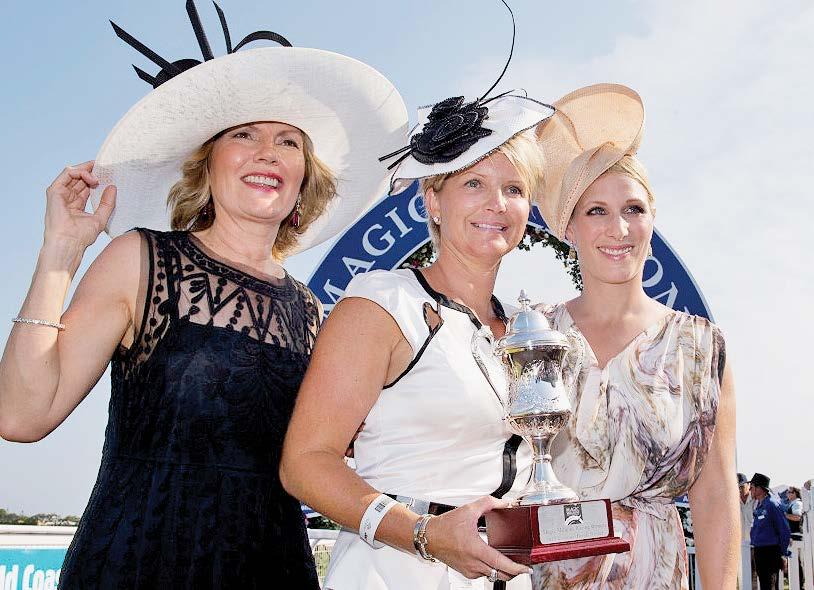
“To be honest, I was a bit miffed,” says Michelle. “I was like, so, I have to go around all these shows by myself now – well, that sucks.” But never one to be thwarted for long, a slight change of direction towards breeding racehorses, has seen the Lang-McMahon camp already produce a couple of truly special horses, including Real Surreal, who had actually failed to sell at auction as a oneyear-old. Putting her money where her mouth is, Michelle had decided to keep her. The filly went on to win close to $2 million, including her first big race at the Magic Millions.
“I learned everything I could about racing,” she says, and you don’t doubt her for a second. “We knew she had it in her to win at the Magic Millions, and she’d raced well the weekend before. But there I was at the MM, and this is
no word of a lie, I’m standing there and a bird pooped on my head and it splattered all over me. My Mum said it was good luck, and not to wipe it off – so I didn’t, and she won by three lengths!”
Despite the excitement of the jumping circuit, Michelle says that the thrill of seeing your own horse race is something else. “I knew all the sectionals, and I would have been disappointed if she’d been fourth or less, but our trainer had said that we needed to be six or less for her to be pretty certain to win. So when I went to get our number the people in front of me were all getting high numbers – 22, 11, 17. I went up to pull out my brick, and at the very last second it was as if my head was literally pulled to the right, and there it was – number 3! When our race came, it was something else. They jumped from the barriers, and
she was out the back, and I’m like, this is not good, and then when the horses were swooping on the home-turn to look at her come home - it was a wall of horses, and suddenly they’re past you on the finish line, it’s an indescribable feeling!”
Between the breeding, the coaching, the competitions, and now the fact that all three children, Meleah, and ten-year-old twins Emily and Elkee, are all following in their parent’s footsteps, it’s hard to imagine a busier life, or a life where running a major event is even the slightest possibility.
“I don’t really recognise the concept of not being able to do something,” Michelle says off-handedly. “But I do think it gets a little easier to run – even though of course the expectation from everybody coming gets higher.”

This year the program has changed a bit, with more prize-money on offer. “If you double up your entry fee and you qualify for the final we have prizemoney first to 12, and we will triple your money. We’re basically asking riders to back themselves! The Grand Prix is $45,000 to win, this year, and we’ve also created an all-girl Aquis team. We’ve got great sponsors, and corporate teams. I’m determined that this will become an international event not just a Queensland or an Australian event.”
I’d say the odds on her achieving her ambition would be high indeed.
For more information on this year’s Aquis Tour of Champtions go here: http://elysianfields.com.hk/ showjumping/




DAVID FINCH
The much-loved David Finch is a formidable showjumper, breeder of sport horses at his property Finch Farm, five times Equestrian Queensland Coach of the Year, and of course, Chair of Equestrian Queensland.
It’s not easy getting hold of David Finch, or Finchy, as he’s inevitably and affectionately known in the industry.
“Darl,” he says, when I call him for our first appointment, “I’m just loading a horse, can I call you back?”
The next morning on the rescheduled appointment we get a few sentences in and then he tells me, “I’ve got a load of people here for breakfast.”
Then there were lessons, a visit to his grandfather and some work he had to do.
I was just beginning to take it personally when we made a firm booking – for 7.00am – it seemed about the only time David could take a moment out of his busy life as, not just as the proprietor of his stud, Finch Farm, but as a coach and teacher, current chair of Equestrian Queensland – and let’s not forget – a gun showjumper on his brilliant horse Charlemagne in his own right.
David can’t remember a time without horses. Growing up on the family farm outside Roma, he learned on ponies and bush-horses. “I always wanted more riding,” he says. “I was the kid that
used to hang around after mustering to go for another ride. I grew up in a stock saddle behind a mob of cattle, and I think in the long run it’s been a great thing for me to have those country skills. You learn to keep it real.”
‘Keeping it real’, meant, as it almost inevitably does for anyone wanting competition horses, supplementing his income. “I got into teaching just to help support my own riding and competing,” he says. “It just grew like topsy and almost overnight I had a business.”
But not all riders make good teachers, and having watched him teach at numerous clinics over the years, there’s something about his natural, downto-earth approach which is not only sensible, but also very reassuring to all levels of riders. As a teacher he becomes deeply engaged with helping the rider get the best from their horse –and he doesn’t discriminate, travelling Queensland teaching showjumping, cross-country and dressage. It’s not difficult to see why he’s won the Australian Equestrian Coach of the Year gong and the Equestrian Queensland Coach of the Year five times.
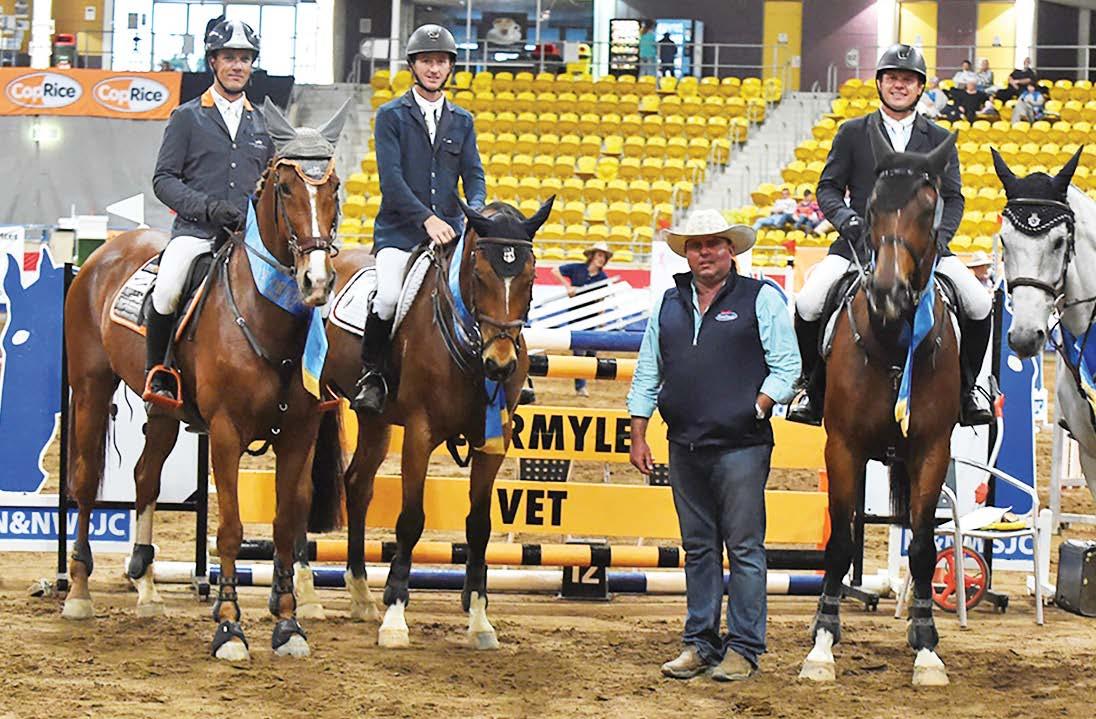
B: The winning Queensland team with David Finch at the 2016 Tamworth World Cup State of Origin.
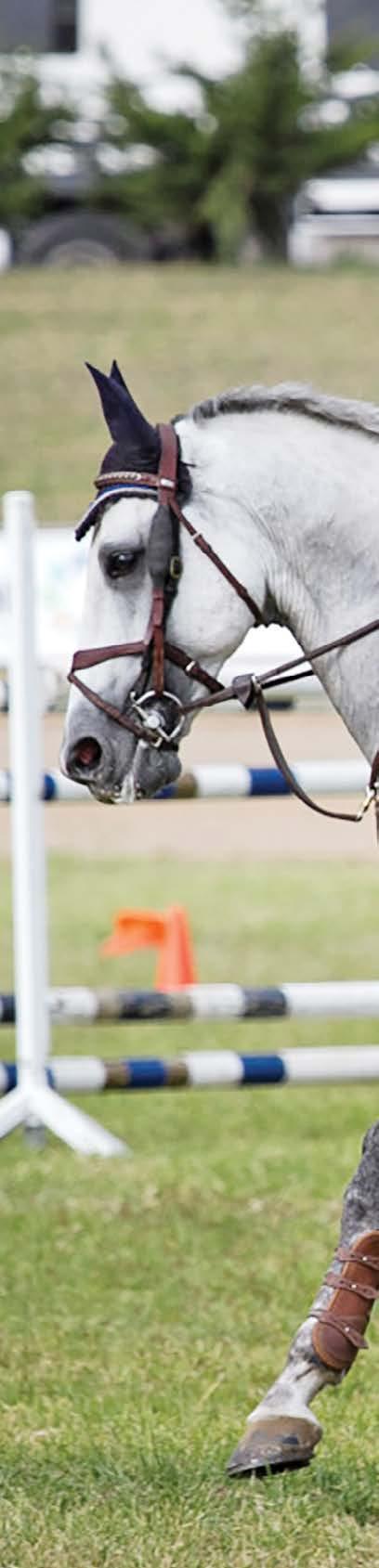
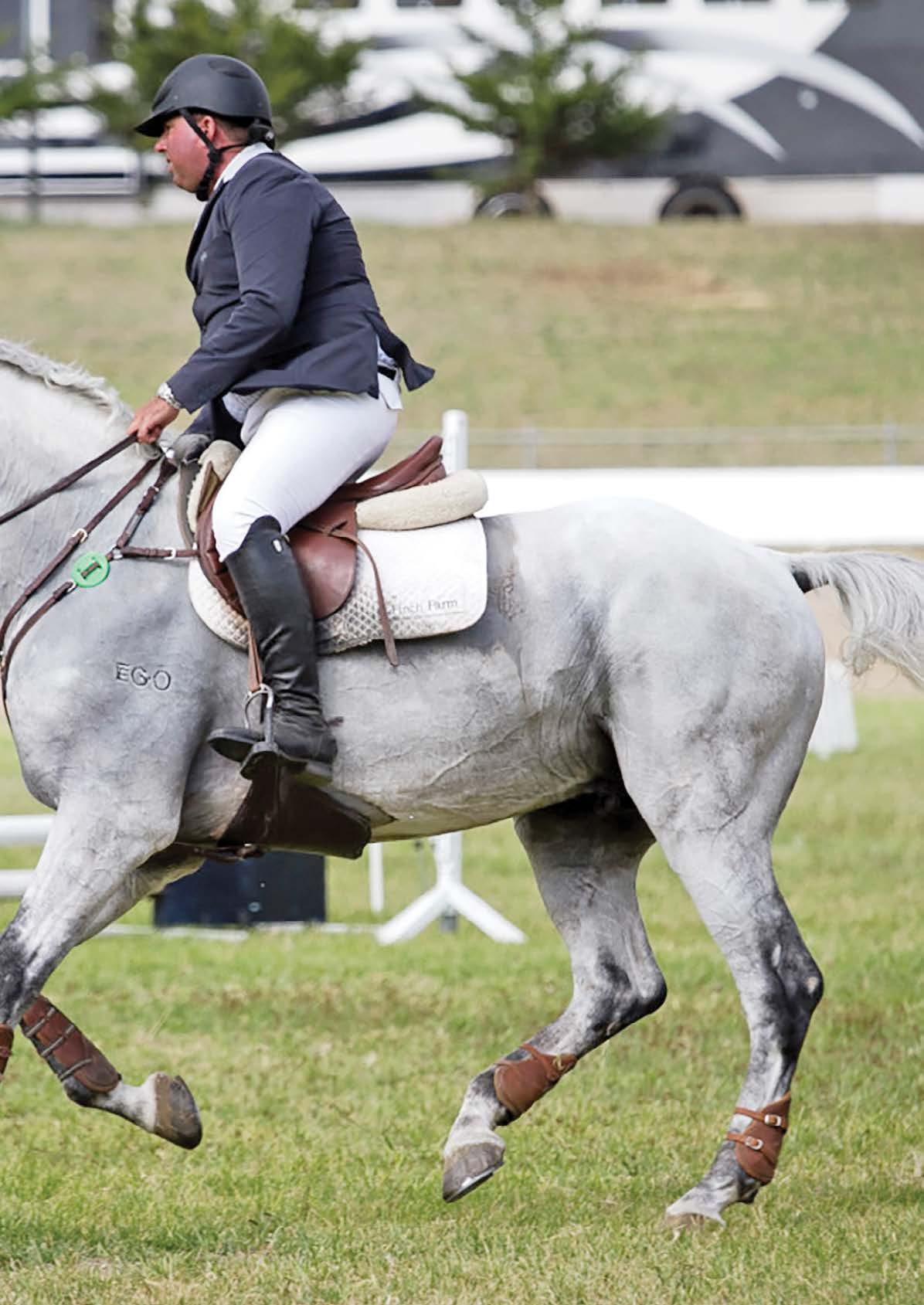
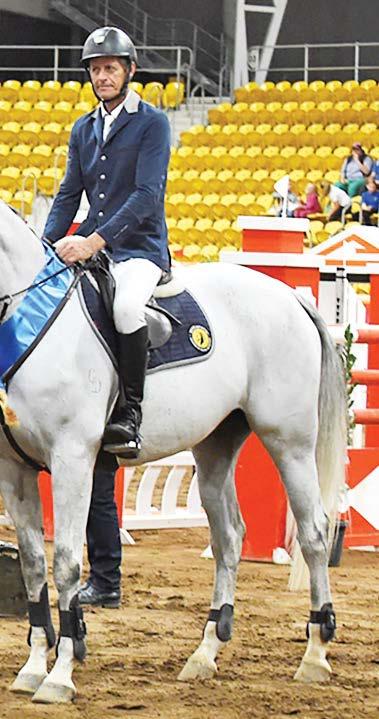
C: David Finch with Charlemagne Ego Z (left) and Calgary GNZ.
D: David Finch on his Sporthorse stallion, Charlemagne Ego Z.
‘ I’ve never been one for early peaking. In fact I’ve never peaked early in anything. I just poke along, and that’s what I get my horses to do.
‘
“One of the things I love about teaching is that I could be helping a young kid, mentoring a seasoned competitor, or teaching a 60-year-old who just wants to pop over low jumps because that’s their passion,” he says.
Did he ever envisage such complete immersion in the industry, I wonder? “I always knew the horse industry would be my life, but things didn’t come easily, and financially it was often tough, so I had to really think about what I was doing,” he says. “I traded my way up, at first through the classic avenue of re-training off the track thoroughbreds, later through my breeding program. I’ve had to learn to improvise which has
really helped me in the industry. I’ve learned to survive – and if you want to be involved in the equestrian world long-term that’s what you have to do.”
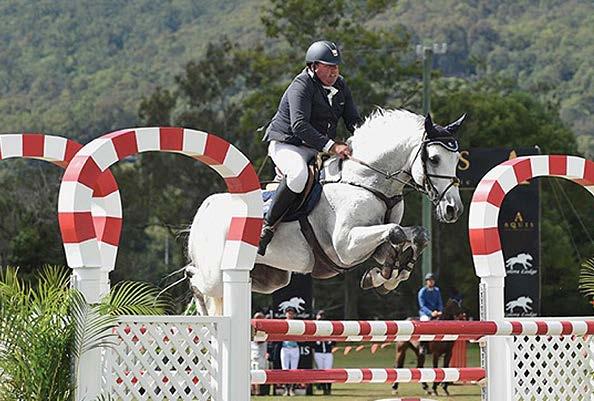
Perhaps, more than anything, David’s long-term survival could be put down to the planning he’s executed for his breeding program, which has earned his horses an amazing reputation as competition horses in Australia. His main ‘man’ at the moment is the wonderful 2005, 17hh Sporthorse, Charlemagne Ego Z, by Calvaro Z – a horse that won Grand Prix and World Cup events, and sired a prolific stream of Sporthorses, including Charlemagne, who is truly the classic embodiment of
an European pedigree in a modern sport horse body. David comes as close to waxing lyrical as I’ve ever heard when he’s talking about the big grey. “He’s the best horse in the world,” he says. “He’s just come up through the ranks to Grand Prix, and he’s taken it all in his stride. I always mean to do more with him, he’s such a pleasure to ride. And he is siring some amazingly talented progeny.”
One of the main differences between David and many other trainer/breakers, is, it seems to me, the more European route he takes with his horses – who are not started under saddle until they’re three or even four. “We really don’t do much with our horses here until they’re five or six,” he says. “I’ve never been one for forcing young horses to compete too early – it’s not good for their long-term physical health, and I don’t think it’s good for them mentally either – these larger horses need time to mature, physically, mentally and emotionally, and we give them that time. We’ve
got young horses going into dressage, showjumping and eventing, but we never push them too young.” He pauses for a beat. “I’ve never been one for early peaking. In fact I’ve never peaked early in anything. I just poke along, and that’s what I get my horses to do.”
Those of us who have watched him jump a Grand Prix jump course might agree to differ, but unlike some other showjumpers who concentrate on only the competition side of the sport, it is the holistic balance of his life that makes David such a respected figure in the industry he loves so much.
With his official Chair of EQ hat on, he talks about his ambitions for Equestrian Queensland and the kind of work that it can do supporting young riders. “I think because of my country background one of the things that is really important to me is helping genius country kids that may not have access to the money or support other kids may have,” he says. “I
would love the sport to be accessible to everyone, and I like to think Australia is a place where kid can have a go. I also love the fact that equestrian sport is one of the few sports where men and women compete equally and age makes very little difference,” he says. “Look at Laurie Lever. He was 60 when he made
his Olympic debut in showjumping at the Beijing Olympics.”
One of the advantages, as he sees it, to the type of horse that we breed in Australia is the presence of the purebred thoroughbred line in our sport horses. “These days with technology, you can collect genetics from around the
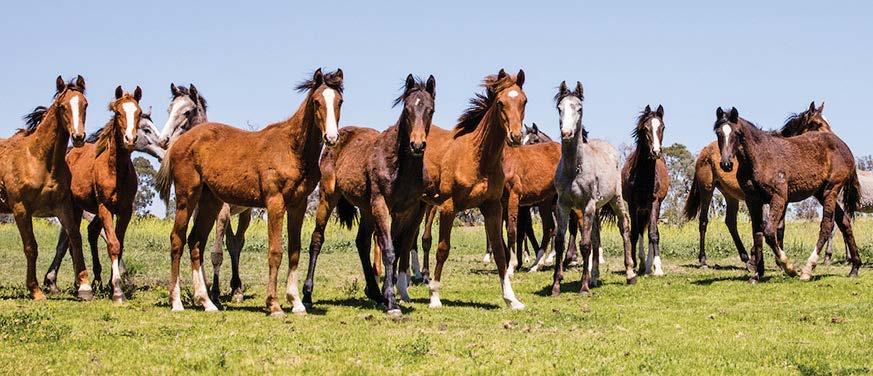
E: Young ones on the farm, ‘poking along’ until they’re ready.
world,” he says, “but the fact is that our thoroughbreds became a particularly tough strain of the breed, and it’s that toughness, speed and desire to win that you can use in Australian horses.”
A downside though, to the world of technology is that it’s too easy for us
to compare ourselves to the rest of the world, according to David. “Australians do incredibly well on the world scene for a country with a small population,” he says, “but I’m not a fan of comparisons.”
If you really want to get good at something, he says: “Hang around with
people who are good at it. I’ve never been the smartest person in the world, I surround myself with smart people – at EQ for instance, on the board we have some amazing people. You can’t let your own ego and self-gratification get in the way of success.”
Code: SAVEME5 Expires: 30/5/2019
www.paddockblade.com.au e: hello@paddockblade.com.au
Back on his 400-acre farm, south west of Toowoomba, the breeding provides the backbone of all the operations. “At the end of the day you can’t help but get emotionally connected,” he says, “although I’m definitely not a rainbow and unicorn person! But delivering a foal, standing it up, seeing it take its
first steps, growing them up, getting on them for the first time, and then seeing them at competitions, it can’t help but be rewarding.”
In fact, chances are that if you’re at a showjumping competition, ‘Finchy’ will have had something to do with it. He
could be riding, coaching, there in an official capacity, watching horses he’s bred compete – or he might even have designed the jump course.
“The horse industry is my world,” he says. To our minds the industry is all the better for his presence in it.

The Wilson sisters are famous around the world for their equestrian achievements. From World Cup Showjumping, to winning the Road of the Horse, to working with New Zealand’s wild horses, Vicki has proved being the youngest is no disadvantage.
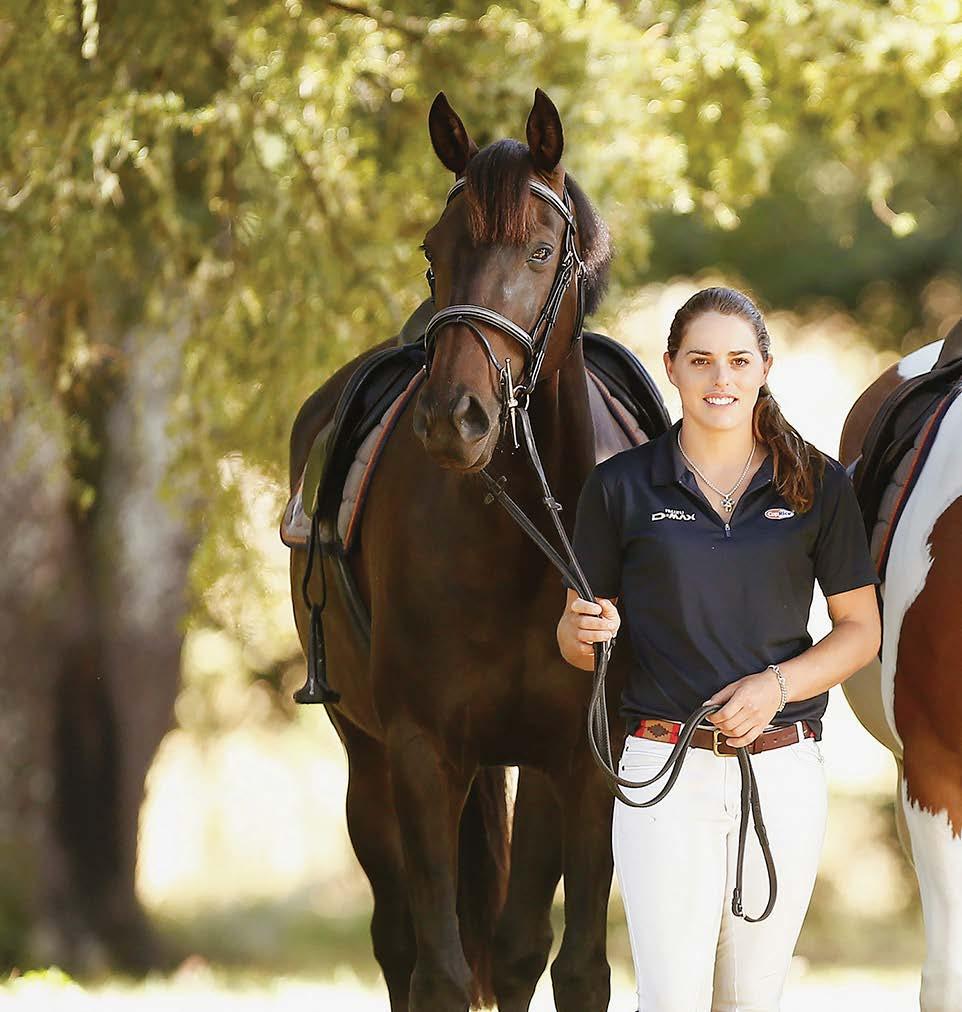
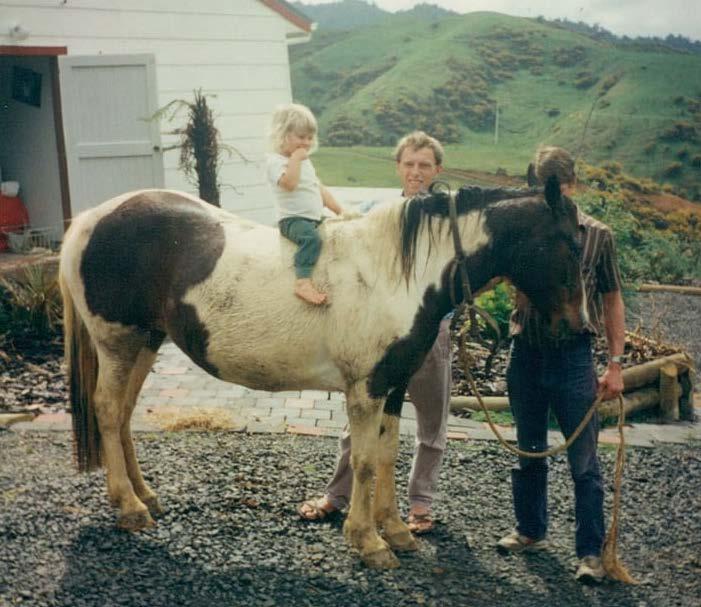
Riding on the sheep’s back. It’s an expression usually associated with Australia’s wool industry but for one of New Zealand’s top equestrians, Vicki Wilson, it was literally the start of her unusual and stellar career.
“I didn’t get my first pony until I was twoand-a-bit,” she tells me on the phone
from her home in Hawke’s Bay as if waiting that long was a tough slog for a toddler. But for this toddler, it obviously was, so Vicki did the next best thing.
“Until I was two I just used to climb on the pet sheep that were in the paddock next to our house, and cling on until I fell off,” she says.
She still remembers climbing through
the fence into the paddock beyond and trying to clamber up on sheep that were, in her words, “a bit wild”. No wonder her parents bought her a pony.
Vicki, 26, and her two sisters, Kelly, 31, and Amanda, 28, are famous, not only in New Zealand but world-wide, not just for their derring-do in the showjumping ring, and for Vicki’s extraordinary
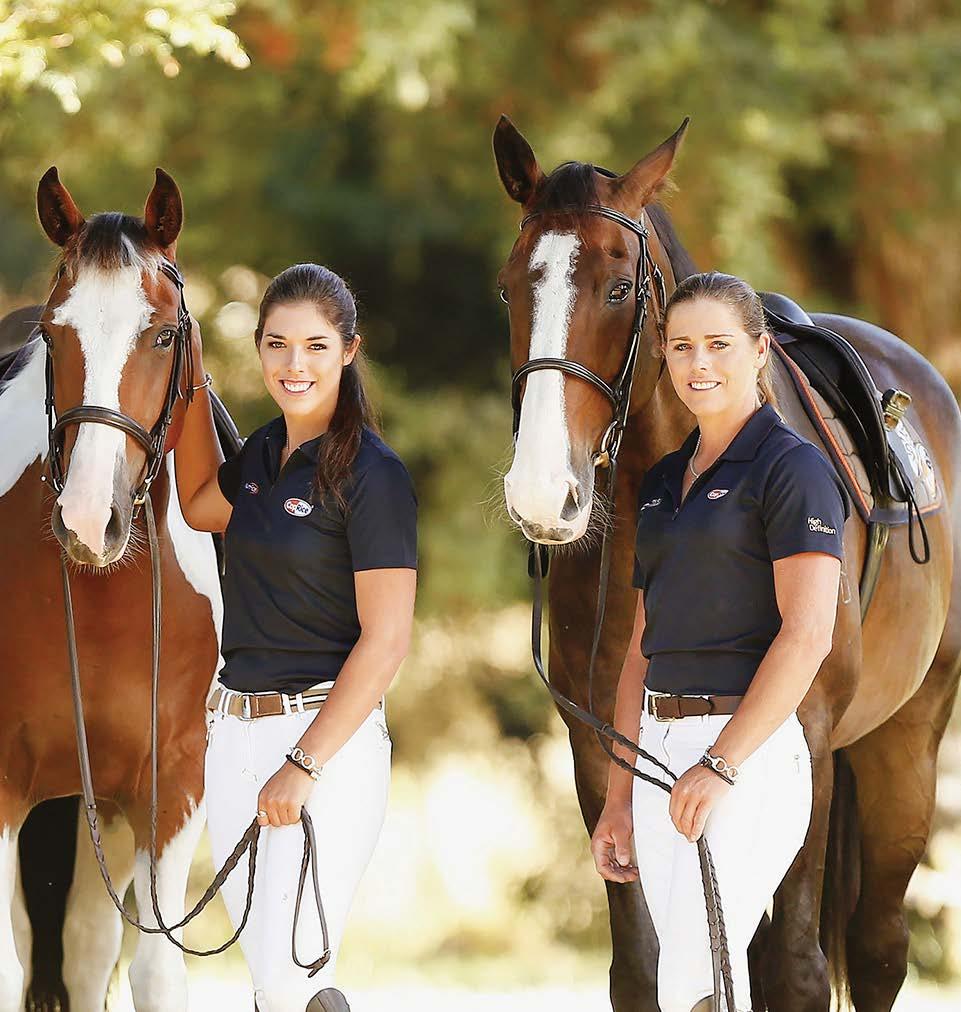
performances in the US Road to the Horse Colt Starting Championship, in which she’s been the only woman to win it twice in a row, but also for their work with New Zealand’s wild horses, the Kaimanawa, to avoid them having to be culled when the herd exceeds sustainable management numbers. Their journey with the Kaimanawa
produced a book (written by Kelly), and a documentary series, Keeping up with the Kaimanawas, (produced by Amanda).
In 2015, the Wilson sisters spent 100 days taming 11 wild American mustangs in the West, which has been documented in a book and documentary called Mustang Ride.
But if Vicki’s life, in which she’s blended all her passions into her breeding, starting and rehabilitation establishment at Hawke’s Bay, seems luxurious now, it wasn’t always like that growing up on their parent’s farm in the Waikato region of the North Island.
“My parents weren’t wealthy,” she says, “and although they encouraged us to
A‘
‘ ... realising they had three horse-obsessed daughters, they supported them as best they could.
ride, we could never afford a good or educated horse, only the dangerous and problem horses that were other people’s rejects. But we were all desperate to ride so we took them on.”
Although her parents were supportive, her father had broken his back in his twenties, and no longer rode, and her mother, who had learned to ride as a teenager, was an “occasional” rider, says Vicki. But realising they had three horseobsessed daughters, they supported them as best they could. Growing up in a Christian household encouraged them to dig deep whenever a problem came up, and it’s a solution-based approach to horses which has served Vicki – and the thousands of horses and riders who
have come to her for help – one could say almost miraculously well.
“All my first showjumping horses were other people’s rejects,” she says. “What it fired in me was a curiosity as to why this horse wasn’t performing. I learned to go through an entire process with a horse and to gradually eliminate all the possible physical problems – foot balance, saddle fit, dental problems, incorrect feed for that horse. Looking back with the knowledge I have now there were even more horses I could have fixed, but I was learning as I went.”
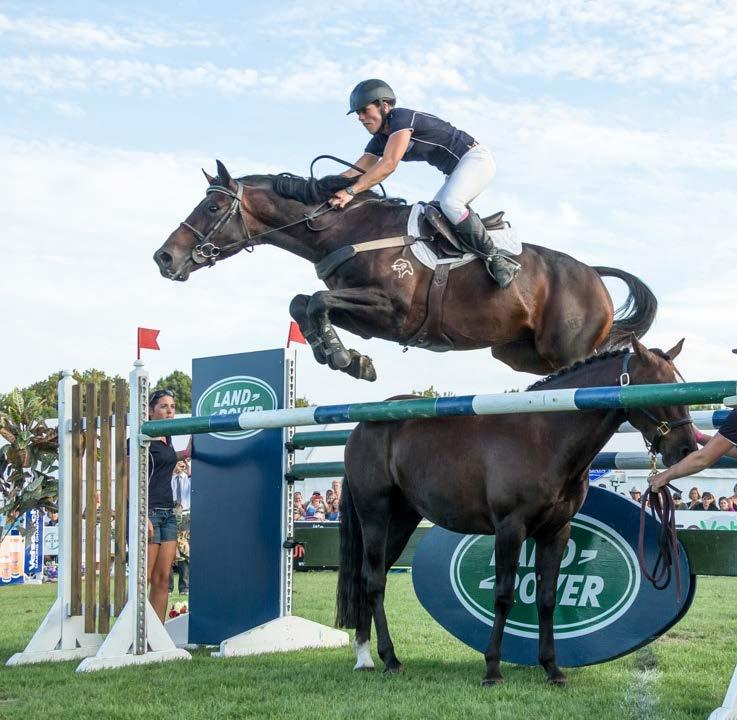
Vicki’s learning took her to extraordinary places. After working her way up from local gymkhanas, she’s now won more awards at the New Zealand Horse of the
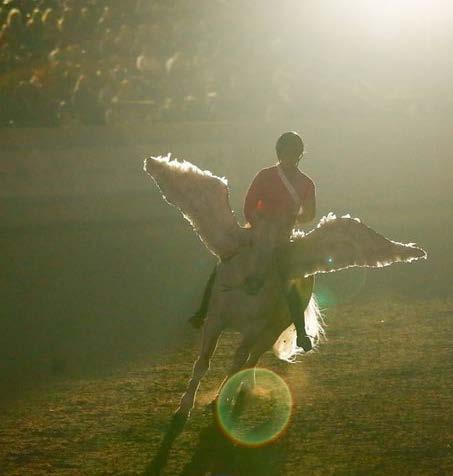
Year show than any other rider in history. Winning the World Cup in 2014 took her showjumping career to another level, and she has also competed under the New Zealand flag in Europe with many wins and placings. She’s performed all over New Zealand and Australia in bridle-free, bareback stunts, jumping to 1.82m bareback and 1.95 in a saddle in Puissance events.
In 2018 Vicki defended her title in the US competing against two former Road to the Horse champions, this time starting two colts instead of one – at the same time. It’s almost too much to contemplate that in this one discipline alone Vicki nailed the following firsts, by being the first rider from the English discipline to compete in Road to the Horse; the first rider from the English discipline to win Road to the Horse; the first New Zealander to compete in and win the Road to the Horse; the first rider to jump bareback in the Freestyle event; the first rider to wear a helmet; the first rider to use an English saddle – and, in a testament to her own work, the first rider to do body work on their colt.
I was already in awe of this woman I’d seen last year at Equitana changing several young women’s relationship with their horses – and the way the horses used their bodies – right in front of my eyes, but by the time I digest all this, I feel in need of a nice cup of tea and a lie down. How on earth, I wonder, does she do it?
She laughs. “I don’t know, it just grew and unfolded as it went, and I’m on a journey which is leading me to inspire and educate people around the world so they have a better relationship with their horse. That’s what keeps me going. Also, I think if you don’t love what you’re doing, and you don’t wake up every morning ready to jump out of bed and do that ‘thing’, then why do it?”
That ‘thing’ has also led her to take over all the shoeing and trimming of the 100 or so horses she has on her property. “I took over the shoeing about ten years ago,” she says. “To me foot balance is perhaps the most fundamentally important element of all, and I wanted to be sure that it was correct for all my horses, and for my clients, so I decided to do it myself…it keeps me busy,” she concludes, in what is possibly the understatement of the year so far.
Her equine body therapy work that has become core to her life with horses came about when she was mentored by a well-known New Zealand equine body therapist Dan Erikson for six years.
“How I’ve learned is that I ask questions. I’ve watched every horse trainer I’ve ever met, every equine therapist, every vet, dentist and farrier, and I’ve asked questions – why are you doing this? What’s this for? What will the result of this be?” she says. “Most importantly the
horse has been the teacher. Sometimes of course, horses with behavioural issues will turn out to have kissing spine, or arthritis, or a bone spur - something that has to be managed rather than cured, but it’s still about giving them quality of life. I don’t feel I need to study under any one particular person, or that there is any one method that works – we have to be open-minded and not afraid to continue exploring. To me, every single horse is different and every horse
Crequires a different program to help it fulfil its potential.”
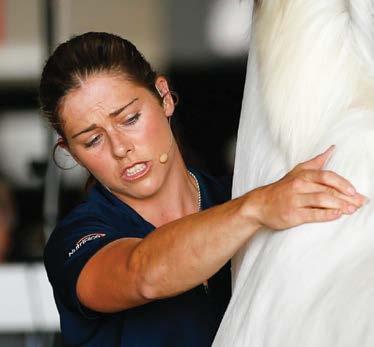
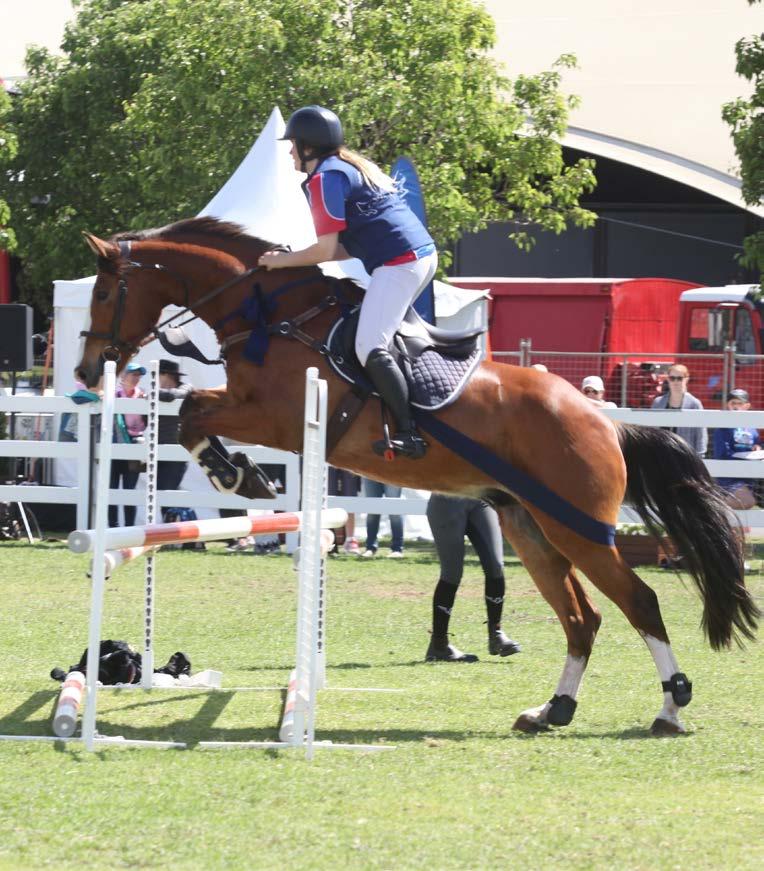
One of Vicki’s many tools is the use of the Equisystem, a bandage that is wrapped around the horse to help horses engage their hindquarters. It’s a technique she’s refined from her time showjumping in Europe 12 years ago.
“I saw that almost all the trainers used a leather strap going over the horse’s rump and loins,” she says, “and what it creates is these very uphill, powerful horses, so I decided that when I got home I would try it with my horses. Well, it was a bit of a disaster – they were bucking, and kicking, and clearly not happy, so I thought – how do I change that?” Vicki’s solution was to use the elastic bandage. “I’ve refined the bandage quite a few times over the years,” she says. “We’re not wanting to hurt or restrict the horse in any way
whatsoever, all I want to do is to remind their brains that they have a powerful engine behind.”
At Equitana, three of Vicki’s hand-picked young women and their horses were helped with the bandages, and to be honest, if I hadn’t seen it with my own eyes I would never have thought that it could make so much difference (in conjunction, of course, with the instantaneous body work Vicki does during a lesson).
“The thing with horses is that they are actually naturally heavy on the forehand,” Vicki explains. “They have a heavy head, neck and shoulders, and they tend to work forward – in their natural state they carry 60% of their weight on the forehand and 40% on the back. Add a 70-95kg rider to that, and suddenly 80% of their weight is on the forehand. It’s our job to make sure that they can correctly use their body to support a rider. The bandage is a reminder that they have an engine to help them push from the end, so they can lift through their core, and take contact forward. This pays dividends in all work, not just jumping, because it’s vital that the horse should be ‘on’ the bit through its body, not through its neck, which is what we tend to see far too much of.”
Horse welfare is paramount to all three sisters, and is one reason why they became involved with the Kaimanawa program which has seen the numbers of wild horses gradually culled over the years to bring the herd down from over a 1000 to 350, which the Kaimanawa Heritage Society believes is a sustainable amount on the million wild acres they have to live in.
“One of the Kaimanawa ponies that came from a muster went on to win New Zealand’s prestigious Pony of
‘
The Equisystem is a bandage that is wrapped around the horse to help horses engage their hindquarters.
‘
the Year award,” she says. “When we first got involved with the re-training program, any horse over four was going to slaughter, and after I’d seen these beautiful, strong horses in their home ranges, my sisters and I agreed that there was no reason for any of them to be slaughtered.”
The first time they took Kaimanawas home, 11 horses, of all ages and genders were lucky enough to find themselves with Vicki.
“Within 45 days we had an 18-year-old stallion cantering down the beach safely with a rider on,” she says. She feels deeply for the horses, who, contrary to the US where mustangs are ‘held’ in custody for six months to two years before being rehomed, or Australia where brumbies are given some time in holding yards, are mustered by helicopter into stockyards, and the very next day are delivered to their new homes. “I do believe the musters are done as quietly and gently as possible,”
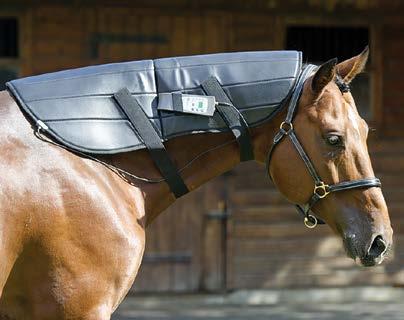
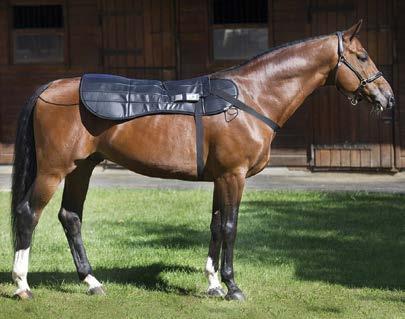
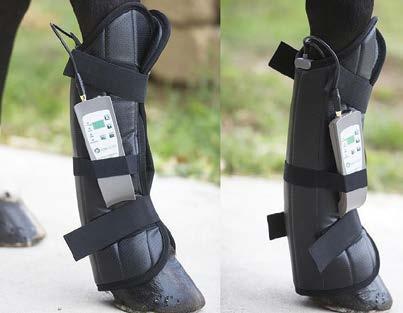
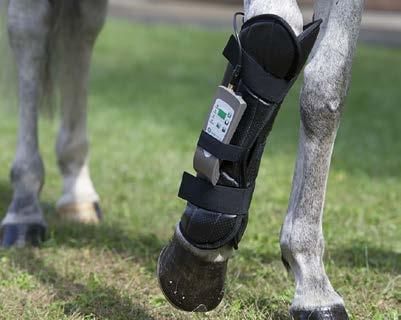
she says, “but the fact is that we are taking these wild horses out of the ranges and putting them into prison cells. So it’s essential that you get the rope on them and start walking them off your property as soon as possible, because freedom is so important to them.”
The rehoming program has been working so well that in that last four musters no horses have gone to slaughter. “It’s pretty incredible for such a small country that we’re managing our wild horses so well,” she says. “But it’s also a case of trying to create easy transitions – a two-year-old will transition into a human way of life much easier than an older horse.”
For Vicki these problems are simply another way to learn solutions. “What I’ve learned is to feel, to observe, to listen and to have empathy,” she says. “Wild horses senses are much more acute than a domesticated horse, but, on the other hand they are also much more family oriented than the average domesticated horse, because their family is all important. I think that’s why they become such loyal, brave friends. You become their family. They become yours.”
For Vicki working with wild horses is all about the feel, timing and pressure. “I’m not saying that people should get cross at their horses – but unfortunately it happens,” she says, “however, you can be cross at a domestic horse and the next day they’ll forgive the person, but if you put a fraction too much pressure on at the wrong time, the wild horse won’t forget in a hurry. There are no shortcuts training wild horses. But if you do it right, and learn what you become is a horseman or horsewoman, rather than just a rider, and to me that is much more important.”
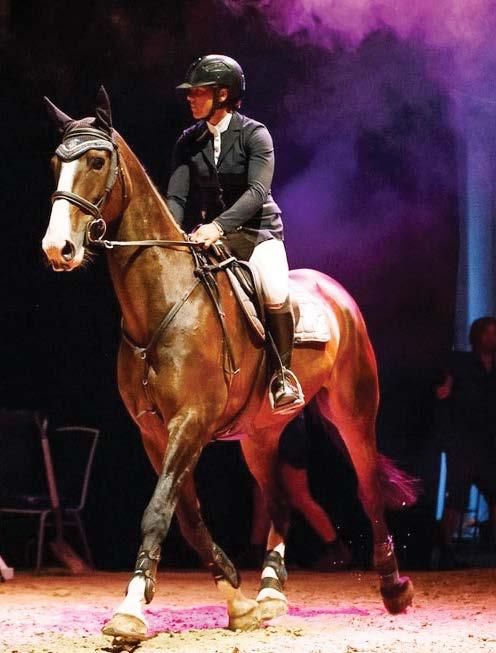
The idea of ‘naughty’ horses is something that distresses her. “No horse, in my opinion, wakes up saying ‘Oh today I want to be naughty, and be smacked and punished,’ she says firmly. “What I’ve discovered is that the horse that doesn’t, or can’t do something we’ve asked for has a problem, and it’s our job as its rider, or trainer, or owner to find out the problem and offer a solution.”
If winning the Road to the Horse was tough in 2017 against all women competitors, tougher again in 2018 against two previous winners, and with two colts to start, it’s going to be tougher again in 2019 – with Vicki going head to head with previous winner and
multiple colt starter Nick Dowers. Nick, the 2016 World Champion and National Reined Cow Horse Futurity Champion, will be meeting the New Zealand showjumper and two-time Road to the Horse Champion head on with three horses to start simultaneously in the round pen. Vicki doesn’t intend to try out the technique beforehand. “We’ll just turn up on the day and see what happens,” she says mildly, as if starting three startled colts in one round-pen will be a walk in the park.
“2017 was pretty tough for me because I dislocated my shoulder on the first day, and I was in agony,” she says. “I had to change my approach. One of the things I did that I was really happy with was
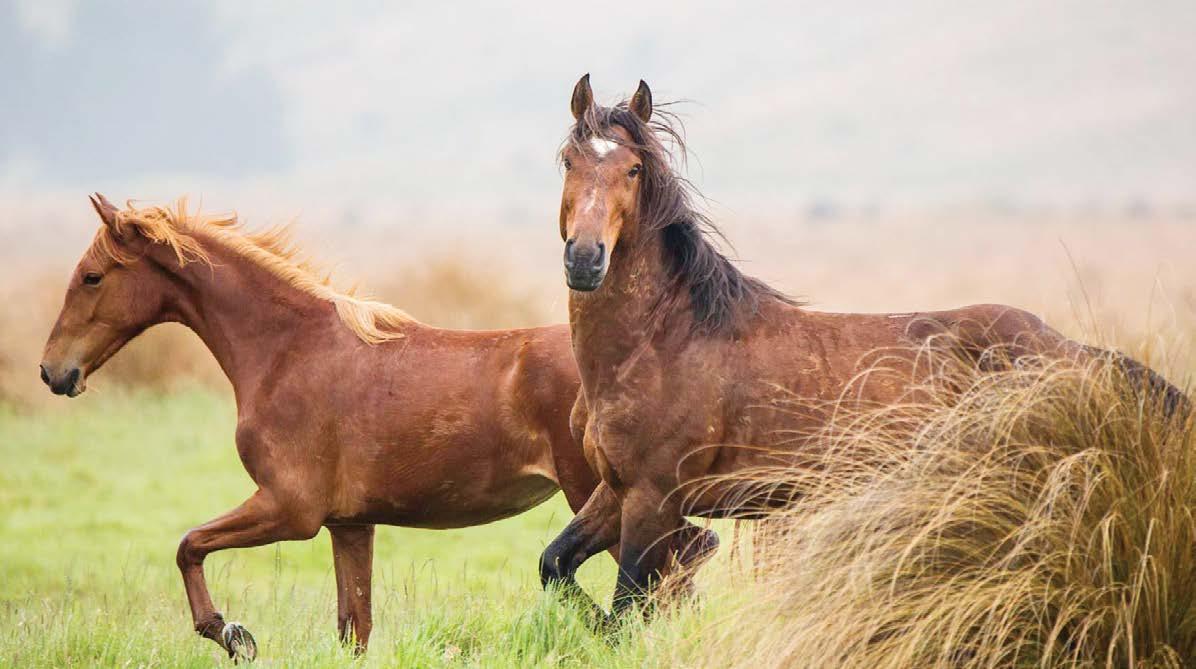
to teach my horse to lead really well, because I couldn’t risk my shoulder being pulled. It stood us both in good stead by the end of the competition, because he was so bonded with me.” That horse, Kentucky, came home to New Zealand with her and has since gone onto to become a wonderfully successful all-round horse.
Vicki’s goal is to educate people around the world to be the world’s best teacher they can be for their horse. “Personally for me, it’s vital to have healthy, happy horses,” she says. “Even my top showjumpers round up stock, swim in the river, get ridden on the beach, have time off, do groundwork. Every horse needs variety, just as we do in our lives, and every horse deserves to be working at its physical peak. Whatever that is for that particular horse.”
She’s off again in just a few days to compete in the US Road to the Horse once more and see if she can make it a hat trick of wins. Beyond that she has plenty of other goals. “I love my breeding programme,” she says, “and I want to bring on my young horses to
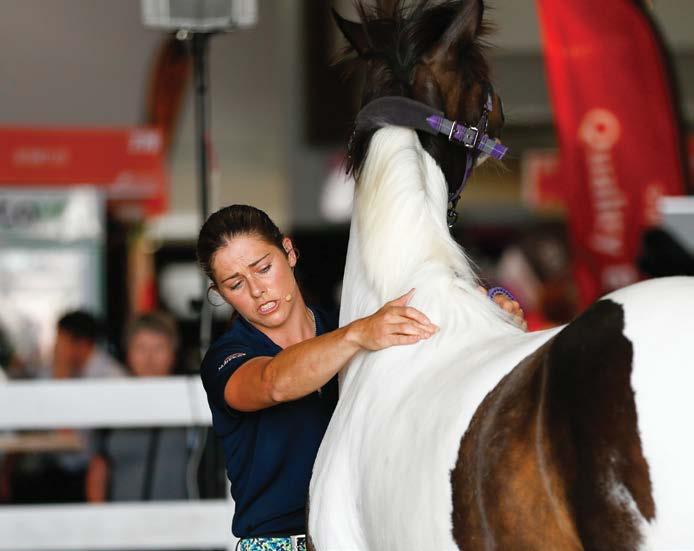
have long, healthy, happy competition careers. I’d love to compete in the Longines World Champions Tour, but even more importantly I want do as many clinics and workshops around the world so I can continue to teach people about their horses’ bodies.”
Her life, she admits, used to be about winning. “It’s not anymore,” she says. “I have a partner, Michael (Whittacker),
and he works with me with the horses. I compete once a month rather than once a week, and what I want now is for every horse that comes through my place to be set up to have a long career.”
I can’t help thinking that it’s not just the horses that are going to have a long career, and that Nick Dowers may have his work cut out.
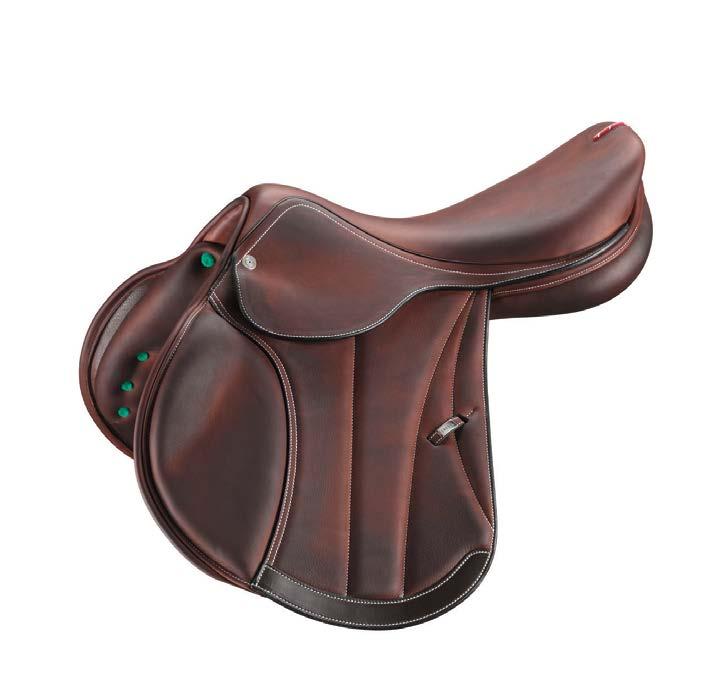
The innovative shock-absorbtion technology increases comfort and performance, benefiting the tuning between horse and rider. The EK-26 Special jump saddle features a deeper seat and is now available in printed leather.