And just like that it’s Christmas and the year is over!
The last couple of months have been a whirlwind I imagine because they have been so full and so busy!
Last month we sold our 1000th saddle, launched Equestrian Marketplace Catalogue and went to Equitana. Our stand was incredibly popular, and we were thrilled to host a signing visit by para-rider Emma Booth; as well as drawing our Equipe saddle prizewinner. We met some amazing people and saw some fabulous horses – for me, the jumping had to be a hot favourite. We came home pretty exhausted and then and shortly after I was greeted with the arrival of my handsome new family member. We’re still deciding on a name for him, so far we’ve shortlisted Cruze, Cassanova and Cobba but at the minute he is ‘The Dude’.
This month’s edition of HorseVibes has a new look which we are sure you will love, and is
PUBLISHER’S LETTER
From the Horse’s Mouth
HorseVibes has a whole new look, a new horse addition to the family, and a New Year to look forward to…
full to bursting with Christmas present ideas – our top 10 equestrian gift picks, what to give, and our staff suggest what they would like to get! (Hints to partners maybe?) Candy gives us her Horse Listener thoughts on Equitana; Berni Saunders has done a profile on our Hub Hero Working Equitation World Champion Pedro Torres; we look over the Tasman at New Zealand’s Spirit Horse Festival which is on in February 2019 and Lorraine Dowdeswell and Penny Newbold give us different takes on the idea of a Christmas pony.
I guess for me it’s time to wrap up 2018 by thanking everyone for their support and feedback over the year and for embracing HorseVibes, and being a part of its growth. We are taking a one-month break at HorseVibes for January but we will still be on deck to help you if you are seeking to buy or re-home a saddle.
Everyone here at Equestrian Hub HQ would like to wish everyone
a super Christmas, may it be safe, have lots of horses involved and be full of joy, family, friends and good times.
As usual, pour your favourite tipple, put your feet up and enjoy.
Merry Christmas, see you in February 2019!
Fiona Todd
The club of the month is Townsville Dressage Club Subscribe now to win!
HUB HERO
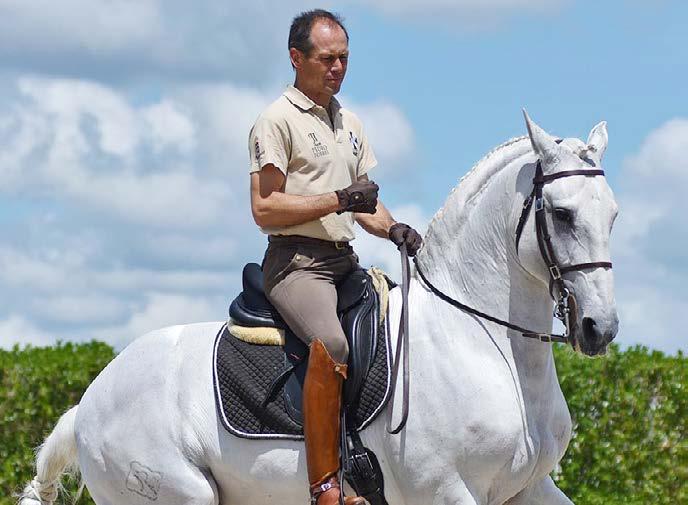
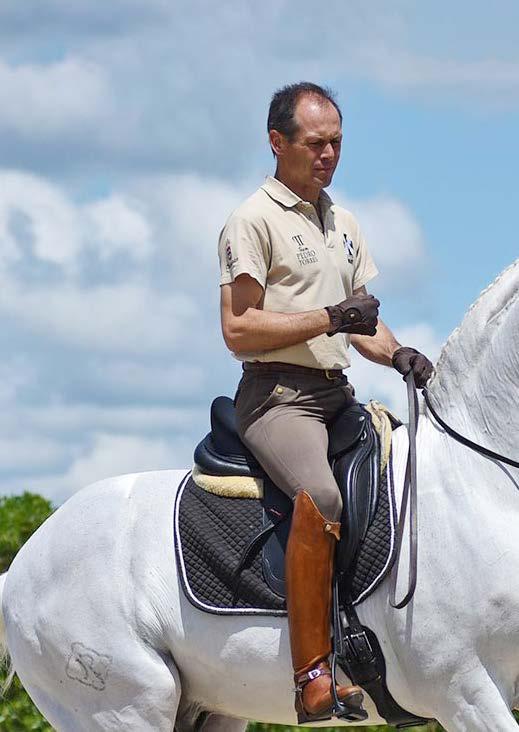
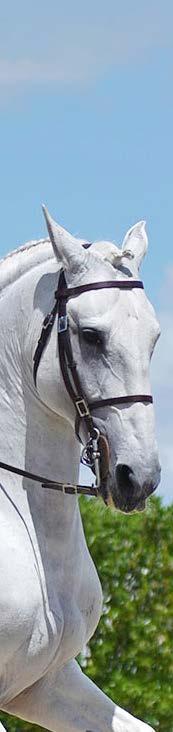
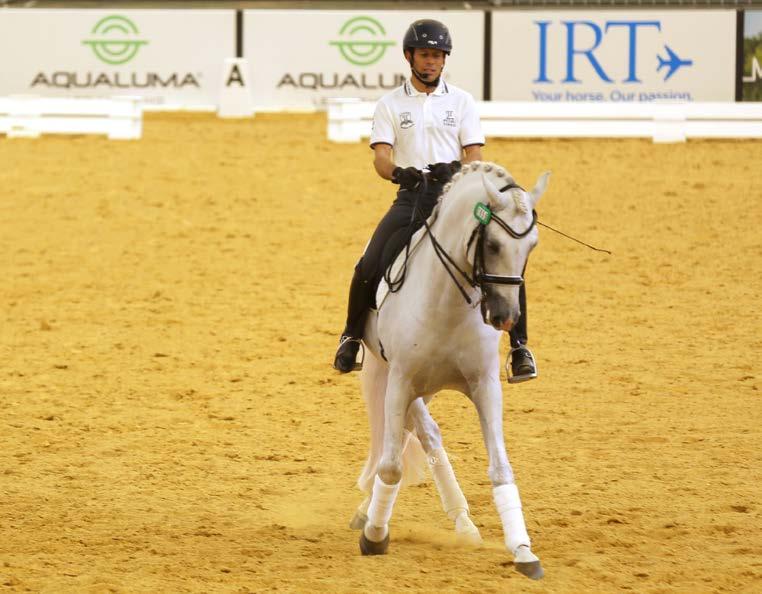
Pedro Torres rides the imported PRE stallion Instan de
HUB HERO
A Maestro gives a Master Class
Pedro Torres is a multiple World and European Champion in Working Equitation, an FEI-ranked Dressage Rider, and at Equitana recently according to BERNI SAUNDERS, ran one of the best master classes she has ever seen.
It did not take the capacity crowd in the Aqualuma arena at Equitana long to see that Pedro Torres is a truly exceptional and compassionate horse trainer. He likens riding and training horses to the relationship a person would have with a dance partner, saying: “You both have to be listening to the same music, and when you’re learning the steps you have to go slow!”
While this Portuguese star is a multiple World and European Champion in Working Equitation, and has been largely responsible for the phenomenal uptake of WE, he has represented Portugal at the 2007 European Dressage Championships, alongside fellow Portuguese School of Equestrian Art graduates Daniel and Carlos Pinto.
Pedro told us that he has great admiration for the style and achievements of UK champion Carl Hester, and has often taken advice from five-time Olympian Kyra Kyrklund and her partner Richard White, who have both helped Pedro achieve international success at CDI2* and 3* Grand Prix, which has given him a Dressage ranking with the FEI.
These days Pedro runs his own training yard and rides up to 18 horses a day. He has two very talented dressage prospects in his stable, the Lusitanos Ahoto and Csar, but has no ambitions to qualify for the next Olympic Games. “My riding goals are simple,” he said. “What I want to do is ride better, understand the horses better and find better techniques.”
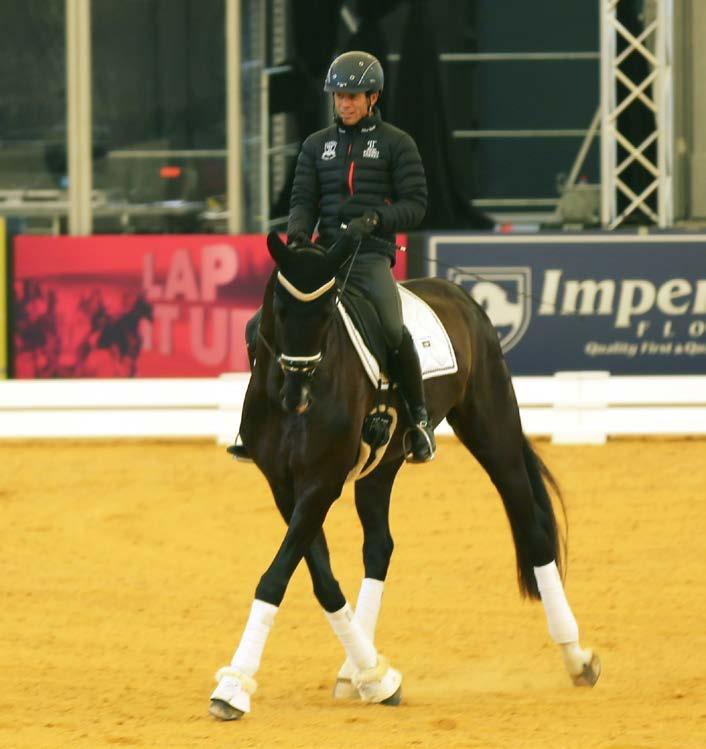
At his Master Class Pedro explained that he would be working with five horses and that he had met the horses in an earlier familiarisation session. The first horse in was the elegant imported gelding Yarramee Fonzie, owned by Sharyn McCombe and presented by Justine Greer. Pedro explained that following on from their previous meeting, he would aim to improve the horse’s lateral responses and uphill tendency. He mounted calmly and did not ask much in the first instance.
“Energy is like water and you receive it,” he explained, “The hind legs produce this ‘water’ and it comes across the back until there is enough to make it come to the hands. When you receive the energy in your hands, this is called contact. Our aim is to make more water to catch in our hands.”
Pedro likened riding a horse for the first time to meeting a friend. “I will sit and feel the movement,” he said. “It is like when you meet a friend, you are gentle and wait to feel a reaction. After our first introduction, I analyse him, step by step, and use almost nothing in my hands. This horse is very nicely ‘taught’. He feels very nice, I try to relax him, I hold him a little to give him support, because he is only four.”
Pedro explained that with a four-year-old horse, he opens his outside rein when turning, to allow the shoulder to move
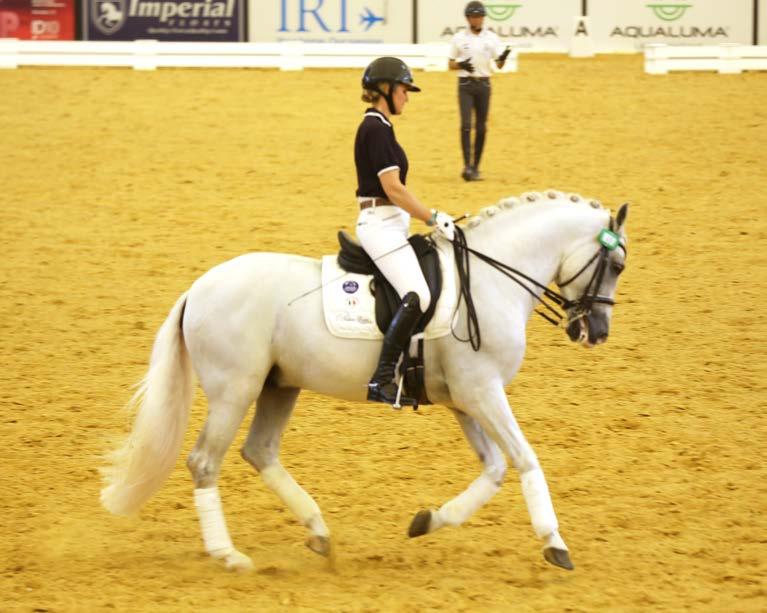
A: South Australian rider and trainer Heather Currie presents Instan De …..
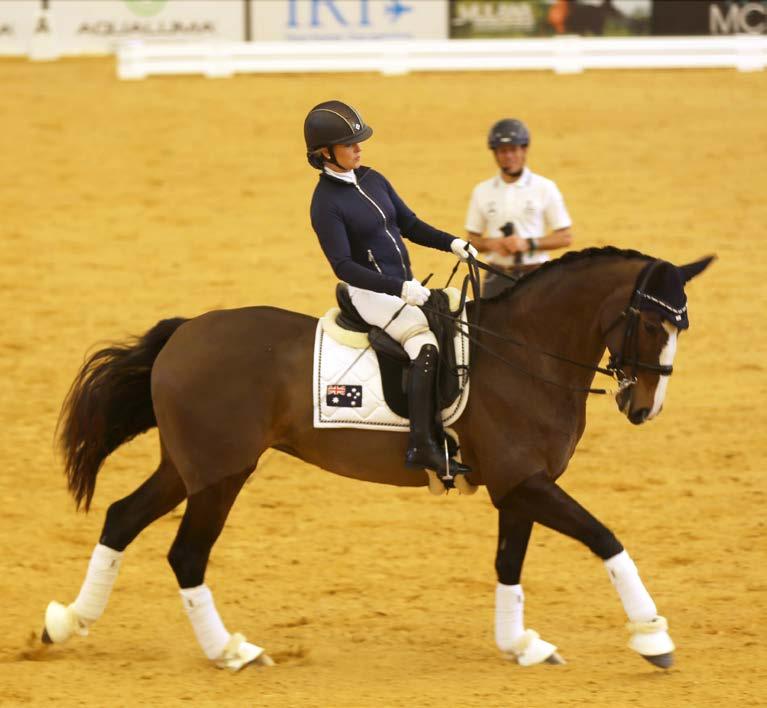
B: Emma Booth on Kirby Park Joy
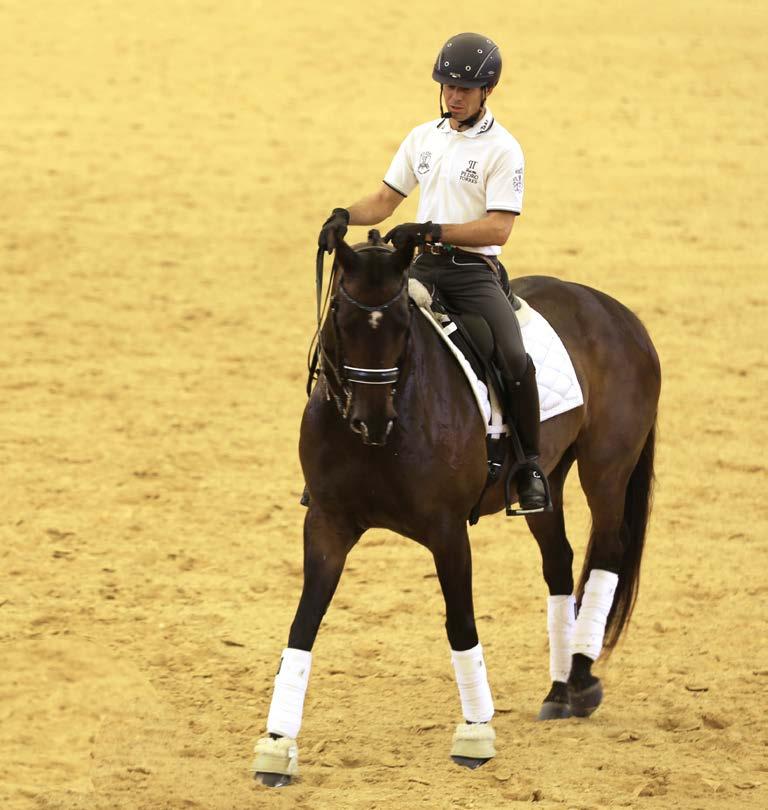
C: Pedro Torres on Yarramee Fonzie
HUB HERO
across and he uses the corners to prepare for the canter. The outside leg asks for canter (or gallop as he calls it) and the inside leg to indicate the trot, to help the horse become light.
The next combination was Para Equestrian Emma Booth who rode Kirby Park Joy. Emma was a successful eventer before an accident left her paraplegic. She explained that she gets frustrated because she cannot achieve what she once did, and this has prompted her to find other ways to ride horses. Pedro asked Emma to slow down and get
In His Own Words
“I started riding when I was five, and when I was seven I joined a riding school in Lisbon. When I was 16 I started to ride professionally, first on a farm with Lusitanos and then as a groom at Quinta da Marinha, where a horse named Navarro became very important to me. I won a Working Equitation European Championship and I also started studying at the Portugese School of Equestrian Art, before finally I found my patio, or courtyard, as we say.
Over the years we formed a cooperative of breeders and we started to develop and
train young horses, and we now prepare for performances and internships at home and overseas. I do any kind of competition, and I like all equestrian disciplines. I choose the one I feel the horse has the ability to do. By pure chance I have a horse that was fantastic in Working Equitation, but I believe the main function of a good rider is to evaluate the horse and allow the horse to be himself, and to be true to his own character.
I think it is good to mix things up. Oxidado is a world champion Working Equitation horse, but we did a Grand Prix dressage test with him when he was 15 in Portugal. He scored 61% and this is with a horse that has only ever done WE. But he
is more comfortable with WE, he is a warrior, and feels more at ease with speed.
He has taught me through his strength of character to think of him as a companion, and that has helped with other horses.
My ideal in a partnership is when you don’t notice the rider, you only see the horse, that for me is the goal. Everyone should notice how free and beautiful the horse is, and not even realise that the horse has a rider.
At the start everyone criticized me and said it was not possible to have a future in riding, but I was never interested in studying – unless it was to do with horses. Now my family understand and support me completely.”
her horse more relaxed. “I want you very light in your hands, I want more relaxation. When he is slower, he has more expression,” he explained to her. “I like to see the harmony and balance, this is an opportunity to lighten your hands.”
Pedro did not ride Emma’s horse; instead he worked with her to achieve a more tactful and light seat and rein aids, and then used preparation to improve the dressage movements. At the end of Emma’s session the pair gave some lovely balance sequence flying changes – all done from seat and light hand aids. Perfection!
Next up was Jessica Greelish
We have the largest range of popular and Australian-made fencing brands, AND we’ll get your order to you quickly!
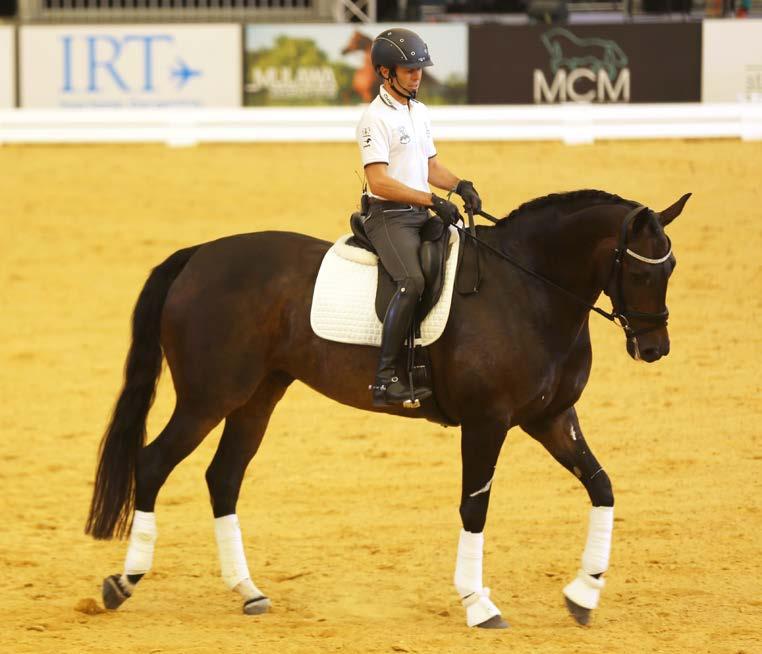
riding the lovely18-hand gelding Good Time, owned by Victorian, Keryn Connors. After mounting Pedro said, “He is a big impressive horse, light in the contact. It is difficult for horses to work like this. It is not a normal environment, he is a little bit tense, and so I touch him in a different way. I introduce myself and keep my legs very soft. I bend him one way and then to the other, I must relax his muscles in order to use his skeleton, the touch is very important. I don’t fight with the horse I learn the feel. I spent hours and hours with my eyes closed and realised that I do not need to be strong with my hands, I only use ONE rein and reins OR legs. I go really, really slow with him – you have to learn to dance and when you start, you go slowly to get to know the rhythm.”
Pedro worked on small segments of the more advanced movements and prefaced each exercise with the same message. Pedro used the canter on two tracks to free the outside shoulder and added that taking an outside bend was a good exercise to free the inside shoulder. “We have to find solutions,” he said. This beautiful horse finished the session with Pedro by showing some lovely soft sequence changes in a state of perfect harmony with his rider. Next out was Clair Arnold riding Dolcima, a mare she has trained from Novice through to Prix St George. Dolcima (Dolly) was very
E: Pedro Torres uses lateral bending exercises to relax and soften Dolcima
F: Jessica Greelish presents Keryn Connors’ Good Time
HUB HERO
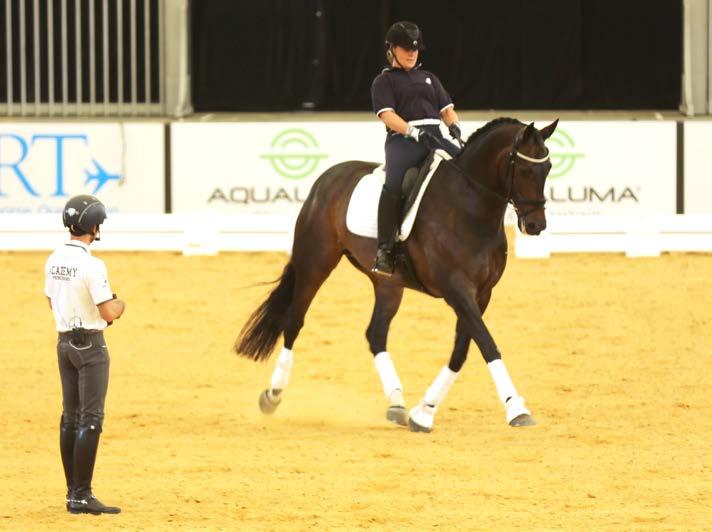
D: Pedro Torres on Good Time
tense and first of all Pedro told Clair to smile.
After mounting Clair’s horse, Pedro said again what a tense
‘
for quarters in and then quarters out, step by step as it helps to take the pressure away. It is very important that the horse gets
‘ We must think about how we would want to be touched, rough handling makes horses tense and strong as a way of protecting themselves
environment the huge arena and crowd was for a horse. “I have to be very careful with her and use movements like asking her
positive relaxed vibrations from the rider. She has to know that it’s time to slow down. I would do more bending, but it is very hard
to have bend when there is so much tension.”
At this point in Pedro’s demonstration on Dolly, it was difficult to imagine that he would achieve relaxation and softness, but the patient exercises helped to relax the horse’s back, and Pedro added that little circles can also help reduce tension. It all added up to a breakthrough where she started to stretch her neck which in turn softened her back.
“We must think about how we would want to be touched, rough handling makes horses tense and strong as a way of protecting themselves,” he said. Pedro only
worked with what Dolly offered and accepted, and his soft approach allowed the relaxation and calm necessary to show some more advanced work.
“We will see if she understands my signals - she is a really fantastic horse,” he said, as the pair started to dance their way though the sequence changes to two times. His finale was a number of one times with a relaxed horse, at ease with her rider and environment. The change from very tense and afraid to softness and compliance made this a most interesting learning opportunity for us all.
The final horse in Pedro’s Masterclass was the PRE (Spanish) stallion Istan de Azuel (Imp Ned) and owned by Kerrie Massey. It was a treat to see Pedro riding the type of horse that he usually rides. As he took over from trainer Heather Currie he told us: “I chose this horse because he shows me very nice things, but we want him to improve in the piaffe. He has more movement in the front legs and not so much with the hind, These are very elastic horses, they are very flexible but weak, so we need to make specific gymnastic exercises to make their back strong. I am now trying to bring the horse’s neck down, we want to get the belly up and make the back soft. Slow, slow, I put weight into the back legs and stretch the horse’s back. From a collected walk we try a big pirouette them to halt and relax.”
Pedro Torres rides the imported PRE stallion Instan de
The horse stepped out and then did a couple of confused steps.
“Do not punish your horse,” Pedros said. “It shows that he is learning to find his legs, but they don’t yet have enough coordination.”
“We try and try and try to find the best solution. I also try to have the best possible connection of the horse’s hind legs to the contact. I am feeling a different rhythm in the back legs to the front legs because they are elastic and want to go fast. I start off very slow, we want to teach him to dance and at first we have to count, 1,2,3, now I start to get the same rhythm with the front and back legs.”
Pedro worked on exercises to free the horse’s shoulders and this lovely measured patient work gave very clear improvements.
“In the gallop (our canter) he follows me and I have his head a little down to keep his back up. I slow down just with my body, the horse really engages and sits,
feel the rhythm, wait. I check my position, shoulders back!”
“When the horse is soft and in rhythm, I can try a pirouette. It is good when they have initiative, but they must be relaxed. Now he listens and we will do some changes. Count 1,2,3 and change. Good! The energy is coming from the quarters, I love it, and he is a nice guy! He did very well and is relaxed, nice to my leg.
Now we will make something nice - when the music is ready, let’s dance!”
Pedro Torres and Istan de Azuel performed a thrilling freestyle to music with all of the elements of Grand Prix dressage and the joy of movement was a fitting finale for a wonderful four hours with a truly enlightening master of equestrian art. Thank-you Equitana, for giving us all a wonderful experience.
Story and pictures by Berni Saunders, FEI Rider, A Level Judge and equestrian event reporter.
HUB
Summerbreeze
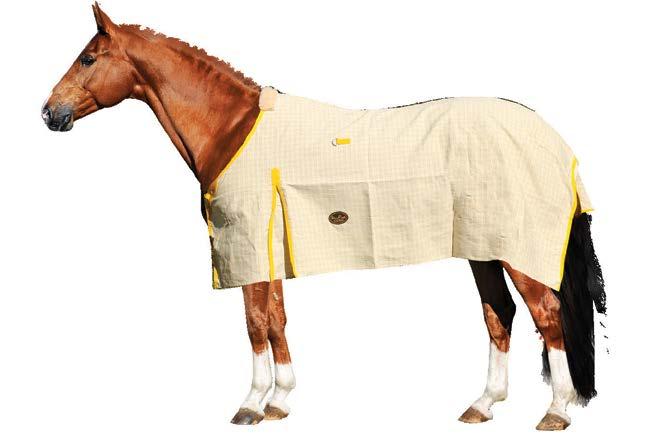
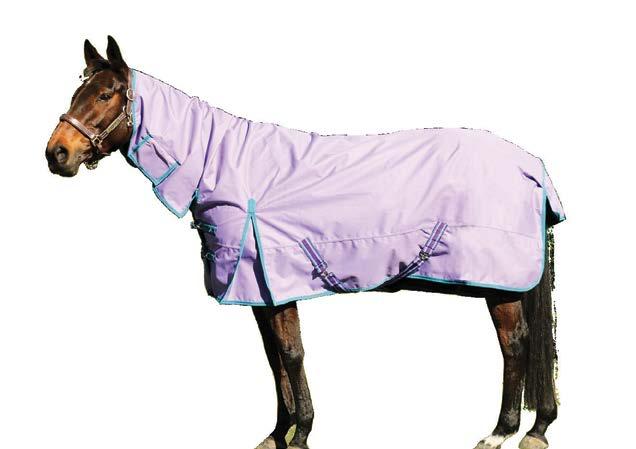
SHOWCRAFT GOLD RUGS
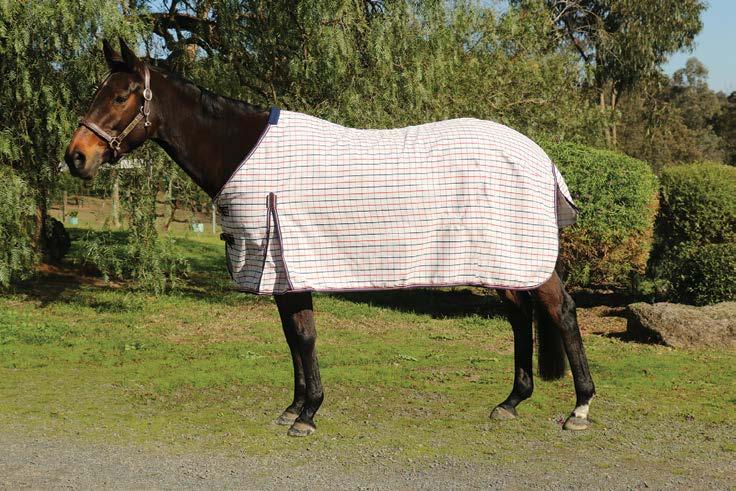
Waterproof ripstop 18.5 oz canvas mid season rug with double wax waterproofing. Reinforced poly grids for extra strength. Three way PVC chest and strap. Long shoulder gussets, nylon lined chest and mane strips. A fantastic rug for Summer and Mid Season. 4’3” – 6’9” RUG $69.95 NECK RUG AND HOODS $24.95
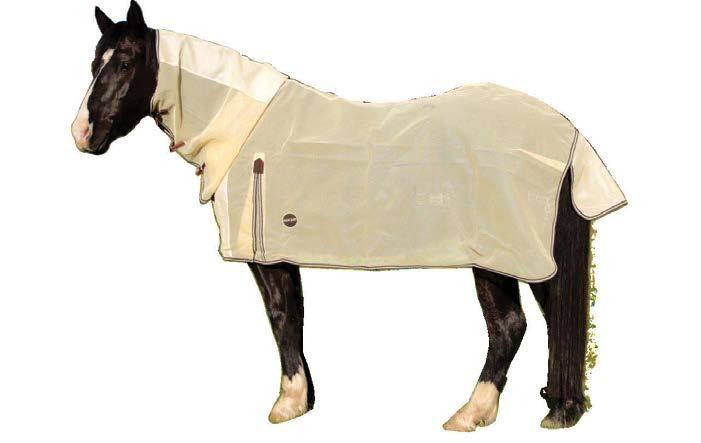
SHOWCRAFT MESH COMBO
Light in colour and sturdy in body. This flymesh combo helps protect against annoying flies, midges and UV rays. Taffeta lined neck and shoulders plus other quality features. 4’3’ – 6’9” COMBO $69.95
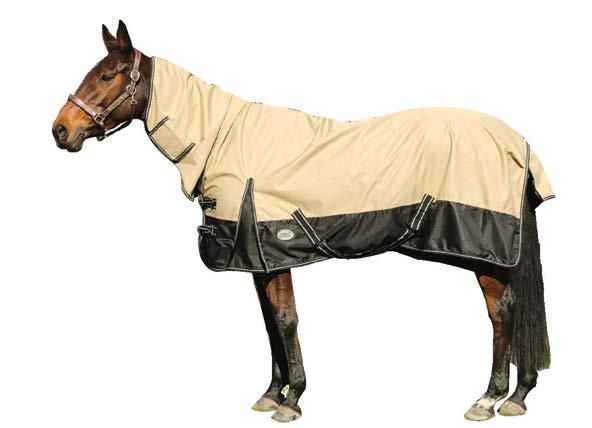
X-CALIBUR 1200 DENIER SUMMER RUGS AND COMBOS
1200 Denier waterproof rug and combo fully cotton lined body with anti rub synthetic satin in shoulders, tail flap and combo neck. Quick clip chest straps, double crossover surcingles with elastic. Deep shoulder gussets and three rump darts for a moulded fit. 4’3” - 6’9”
RUG $94.95 COMBO $119.95
EUREKA SUMMER SYNTHETIC RUGS AND COMBOS
Eureka 600 Denier waterproof breathable ripstop rug and combo with cotton lined body, satin lined shoulders, chest and combo neck, crossover surcingles, shouder gussets, rump darts and tail flap. 5’0” - 6’9” Also available in miniature rugs and combo styles 3’0” – 4’0” RUG $79.95 MINIATURE RUG $58.00
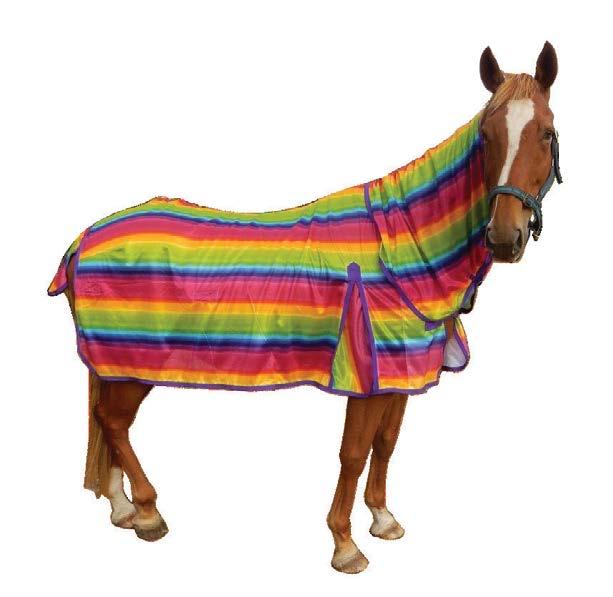
RAINBOW MESH SUMMER COMBO
New to our summer range is an absolutely stunning rainbow mesh summer combo with satin shoulder, mane inserts, tail flap and removeable leg straps. Great protection from flies and biting insects. 4’3” - 6’9” COMBO $69.95 $69.95
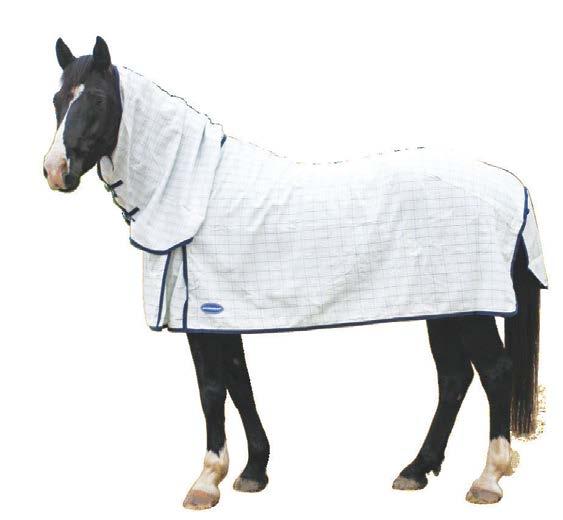
SHOWCRAFT SUMMER RIPSTOP RUGS AND COMBOS
Showcraft 280gsm Ripstop poly cotton rug and combo is fully bound with lined chest and combo neck, shoulder gussets, rump darts, and large tail flap. 4’3” - 6’9” Miniature Range 3’0” – 4’0”
RUG $58.00
$37.00
EUREKA
SUMMER RIPSTOP RUGS AND COMBOS
$55.00
Eureka rugs and combos are 280gsm ripstop 100% polyester material. The ripstop grids provide extra fabric strength to this fully bound rug with taffeta lined chest, shoulder gussets, rump darts, large tail flap. 5’0” – 6’9”
RUG $44.00 COMBO $55.95
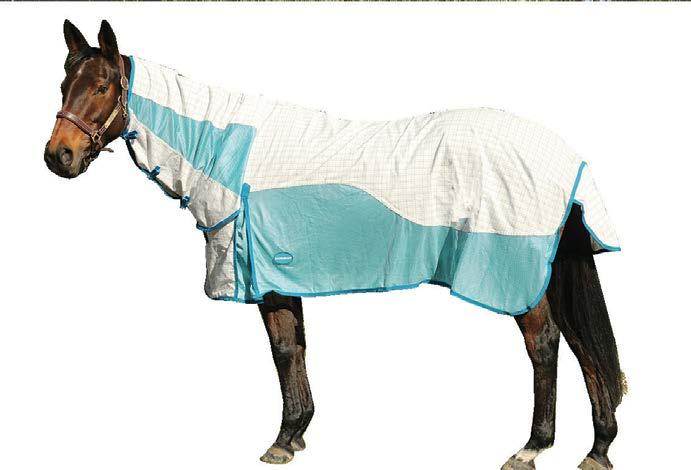
SHOWCRAFT DIAMOND MESH INSERT COMBO
Made from 280gsm Diamond weave ripstop poly cotton material for extra fabric strength. Quality features including lined chest and combo neck, shoulder gussets and rump darts for a secure fit. 4’3” - 6’9”
It takes team work to round up a mob
Team penning is a sport for all ages, and also delivers a huge adrenaline kick for participants and audiences alike writes DANNII CUNNANE.
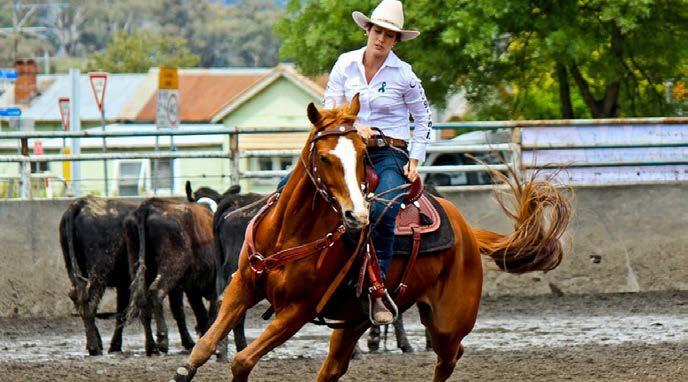
Team Penning is a fastpaced event giving a team of three riders a total of 60 to 90 seconds (depending on the class) to separate three head of specifically identified cattle from a herd of around 30 head. Once they’ve been separated from the herd, the team’s job is to get the separated cattle to the opposite end of the arena and in to the ‘pen’, hence the name Team Penning. But there is a catch - no more than four head of cattle are allowed to cross an invisible line known as the time or foul line at one time or the team is automatically disqualified. Of course the other variable – the cattle!
The sport takes place in 60 30 metre arena. At one end is the
Time is called when all three cows and the riders are in the pen and one of the riders raises their hand above their shoulder to signal that their run is completed. Sounds simple doesn’t it? SPORT
mob of cattle, at the other a gated pen that measures up to five metres.
What is the Run?
The ‘run’ is the time it takes the team to perform all the tasks required in the event. A team consists of three members, a ‘first man in’, a ‘second man in’ and a ‘turn back’, each having an individual role.
To start a run, the riders cross the time or foul line in the direction of the herd and the timer starts. The first man in locates a cow with the correct identification and cuts it from the herd, the turn back blocks the rest of the herd (dirty cows as they are known) from breaking out.
Once the first man has cut his
cow out, the second man in follows the same procedure and again the first man in cuts the third cow from the herd. From here all three cows are herded down to the pen.
How can you get disqualified?
Any unnecessary roughness towards cattle or horses will lead to disqualification, as will contact with the cattle by the rider or any of their equipment. There are other ways to be disqualified, and some of the main ones are a team calling for a time with any wrong numbers in the pen, too many cattle on the pen side of
Time is called when all three cows and the riders are in the pen and one of the riders raises their hand above their shoulder to signal that their run is completed
the time or foul line or if the riders delay the start of their run 30 seconds after the first call of the announcer.
What should I wear?
A western hat, long sleeved shirt, western pants and western boots are the typical attire – approved standard helmets may be used.
What equipment should my horse wear?
Team penning competitors use western style equipment including western saddles, split reins and bits or hackamores. Western saddles differ from English saddles in the sturdiness. Saddles are made of wood covered in thick leather. Many saddles also have carved patterns in the leather to reflect the style
of the rider. Western saddles have a horn for grip as well as heavy, wooden stirrups.
Team Penning horses
The horses in team penning are the most important participants. Team penning horses are typically stock horses with quarter horses being a popular choice for all rodeo events. Stock horses are supple and responsive as well as being quick, particularly over short distances. Their athleticism allows them to stop, turn and accelerate quickly.
Quarter horses are also extremely athletic with many cowboys saying that a quarter horse can turn on a dime. Their muscular hindquarters allow them to make a quick, full stop and take off again with great speed. Quarter
horses, and other stock horses, also have what many refer to as ‘cow sense’.
Cow sense is the horse’s ability to understand where cows are located and instinctively how to herd them. The horse is able to do this without assistance or aids because it is pure instinct. The horse pulls the stock away from the herd and uses its athleticism to keep the cow away from the horse.
Where can I find more information?
There are many clubs that can be joined right across Australia. Visit Team Penning Australia Incorporated to see the list of rules and find the closest affiliated club within your region.
Team Penning is a sport for everyone. It takes skill to cut out a cow, and to complete the run in time, but the horses are bred for the task.
Rare Japanese horse breeds face critical list
The Taishū is one of eight horse breeds designated as indigenous in Japanese by the Japan Equine Affairs Association, and many of them are on the brink of extinction, writes DANNII CUNNANE.
Although there is still some controversy over the subject, it is generally believed that horses did not exist in Japan during the Paleolithic, Mesolithic or Neolithic periods (Stone Age, Jomon and early YaYoi eras).
It is also believed that all Japanese native horses are descended from animals brought from the mainland of Asia at various times and by various routes. Certainly domestic horses
were present in Japan as early as the fourth century.
Where does the horse live?
The Taishū is a rare Japanese breed of small horse from Tsushima Island in the Korea Strait, in Nagasaki Prefecture, off the coast of Japan. The island is situated halfway between the Japanese mainland and the Korean Peninsula.
It is a relatively small breed of horse and stands at an average
height of around 130 centimetres at the shoulder – 13hh. They are noted for their gentle nature and were once widely used for agriculture and to transport people and goods to their destinations before cars and trucks took over the industry.
The horse in Japanese culture
Up until 1912, the Taishū played an important role in Japanese culture. They were widely used in warfare until the introduction of firearms in the late sixteenth century and horsemanship was one of the skills prized by the warriors who founded the Samurai class.
Horses had an important symbolic role in Japanese religion
and even today at certain shrines a sacred white horse is stabled. Oddly enough horses were not widely used in agriculture until the Meiji Era (1868-1912), oxen being preferred in most areas for working fields and rice paddies. Oxen also provided traction power, pulling wagons and carts.
Horses, on the other hand, were widely used as pack animals to carry goods on the highways and for use in steep mountainous regions. People of the upper classes also rode them. During these years there were more than 4000 horses on Tsushima Island, with the breed being mixed with larger horses imported from other countries. Eventually motorisation and mechanised agriculture pushed the Taishū to the edge of extinction.
‘
‘ Their heads are relatively large, the neck is carried horizontally, their manes are thick and flowing.
Breed Characteristics
Japanese native breeds share a number of characteristics: they are all technically ponies as all of them stand at approximately 13 hands high. Their heads are relatively large, the neck is carried horizontally, their manes are thick and flowing.
In general, when viewed from the rear the croup is rather wide at the top, narrowing toward the
legs. The most common colours are bay, brown, chestnut, roan and cremello.
These horses generally do not have white markings on legs or face but a black dorsal stripe is extremely common. The Taishū are known for their endurance, their ability to survive on poor food and in severe weather conditions and have extremely tough hooves.
How close to extinction is it?
In 1989 the population was reported as critical with only 89 alive and in 2007 the horse was listed by the Food and Agricultural Organisation of the United Nations as criticallymaintained with a population of 30 reported.
To prevent the Taishū from becoming extinct, residents on Tsushima Island and the local municipal government and outside experts are breeding it in a local horse-riding park. This has raised its population to 38 animals in the breeding program but a shortage of stables and land still threatens the population.
To raise revenue, horse riding lessons were being offered in the park on these beautiful animals, but unfortunately the Tsushima city office, which manages the riding park, became entangled in a financial bind.
Once a popular sport, that fell into a decline the racing of the Taishū has recently been reintroduced. The horses are also being used as therapy for children and adults alike, with their calming presence of great benefit to those who spend time with them.
Locals and those on the Japanese mainland are encouraged to adopt a horse from the breeding program to assist with the monthly bills associated with each horse.
Left: Kaori Tsuda and her daughter, Rin, out for a ride on Taishū horses.
Above: Rin Tsuda brushes a Taishū horse, an ancient breed that originated on Tsushima Island
YOUNG RIDER
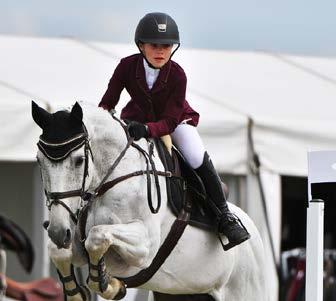
Hannah Overton – Reaching for the Stars
This month’s rider is 12-year-old Queensland Young Rider, HANNAH OVERTON.
Hannah has been riding since she was three and it’s very much a family affair.
“I started out riding on a pony called Lucy and got into riding as my older sister Grace and both my parents compete in show jumping,” explains Hannah.
Hannah recently competed at the Australian Championships and placed fourth in the final of the Australian Children’s Title - a class for 14-years-old and under with the height of the final being between 1.15 -1.20 meters.
“I currently compete on Louie (Sonovet Sir Louive IV) who is an 18-year-old French Warmblood and stands at 16.2 hands high,” says Hannah. “I’ve been riding Louie for four months, but previous to him I was riding a
14.2 hand high paint pony called Buddy.”
Hannah works hard for her achievements and knows that it takes dedication to get the results she wants. “I ride at least three times a week at home and compete every second weekend,” she says.
“It’s been a big step up moving from my pony to a horse and
‘
jumping 30 centimetres higher than I ever have before. I’ve found that I’ve had to work a lot harder on my strength and keeping my horse forward and straight.”
Hannah’s goal is to be successful in the junior classes of the big shows next season. The larger shows include the Aquis Champions Tour, the Interschool Queensland State Championships and the World Cup Shows, and in November they will trek down to Victoria for the Australian Champs.
“I can’t do all this by myself, so I’m thankful to a few people, particularly to my sister Grace as well as to my mum and dad who help me out at home and at the competitions.”
Louie and Hannah are shaping up to have a wonderful 2019 season and we wish them every success together.
‘ I’ve found that I’ve had to work a lot harder on my strength and keeping my horse forward and straight
CLUB OF THE MONTH
Townsville Dressage Club
Written by STEPHANIE CAIRNS
Most will remember the time they plaited up for their first Dressage competition and pulled on the unforgiving white jods. For Townsville Dressage Club President, Tony Pickersgill, that moment is still vivid and his love of the sport only grew. It wasn’t long before he was setting up arenas and allocating draws on the Townsville Dressage Club’s Committee.
Fast forward 29 years and Tony is pre -
sented with the opportunity to contribute further to this great sport by taking on the role of President on the Committee, a position he has now held for six years with the club celebrating its 35th anniversary this year.
“The ride with Townsville Dressage Club has been memorable and rewarding. We’re a small club that like so many others, runs on volunteer hours and passion.
“Being so far north, we’re a bit removed
from the opportunities that present in some of the larger areas but this has never been a barrier for the Club in providing development opportunities and a high calibre of competition.
“In 35 years we’ve hosted 10 different coaches, in excess of 150 clinics and over 150 events. The reward comes when you see more nominations and growth in percentages.
“It’s even more exciting when we see our riders compete at the large Southern competitions. We’ve got some very talented young riders coming through from the North.
“Access to quality judging plays a huge role in this success and we’ve been very fortunate to have a number of talented judges all too happy to enjoy a weekend in the tropics, volunteer their time and share their experience.
“The invitation is always open to more quality judges and coaches to visit our riders in the North.
To get in touch with Townsville Dressage Club, email tsv.dressage@hotmail.com or find them on Facebook.
A: Christine Dale on Barringha Gift
B: Pamela Kingwell on Remi Lolita
C: Christine Dale on Belcam Charge
D: Angela Sausman’s AP Swish celebrating a win at our 2018 Championships
PRODUCTS
Portable grazing can save lives
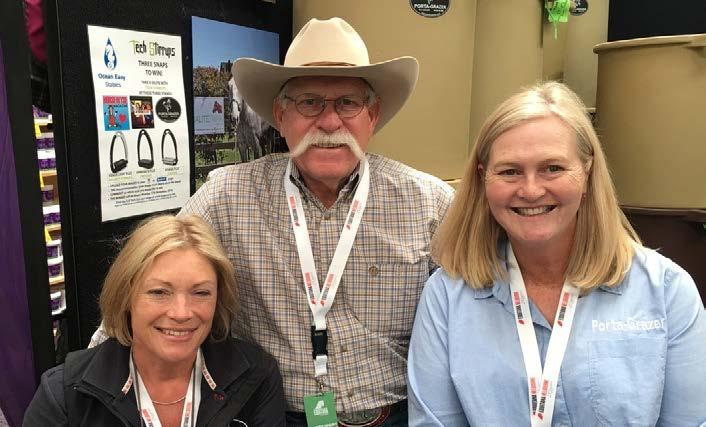
At Equitana JANE CAMENS caught up with American rancher Walt Tharp, the inventor of the Porta-Grazer which is revolutionising horse-health world-wide.
Walt Tharp has been a rancher all his life. His ranch is located in beautiful country near Yellowstone National Park in Idaho, USA, where, he says, he has owned horses “forever”. In the course of doing rehabilitation for horses with laminitis, Walt began to study the way horses eat when left alone in good pasture.
“What I realised is that it’s when horses diets get out of control, they get sick,” he told me when I caught up with him at Equitana.
Enter the Porta-Grazer - Walt’s incredibly simple, but effective way to mimic natural grazing, and to slow down the rate at which a horse eats, thereby minimising colic.
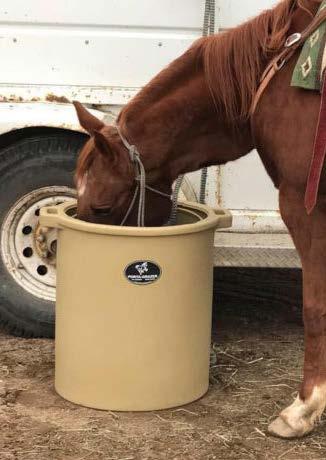
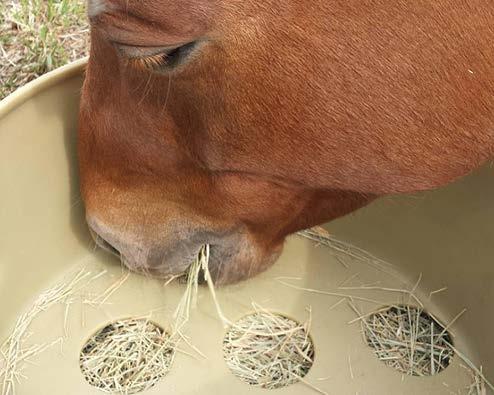
The Porta-Grazer is essentially a disk with holes that rotates inside a drum in response to a horse’s eating. Hay is folded over and placed into the bottom of the
drum then, when the horse pulls the hay through the hols, the disk rotates. Walt said he folds the hay in order to replicate a root system, requiring the horse to pull it out. Another advantage of this feeding system is that dirt and dust trapped in the hay is shaken to the bottom, so the horse has a cleaner diet.
“I basically designed the PortaGrazer to control the amount of sugar a horse consumes over a 24-hour period,” says Walt.
“It doesn’t allow horses to pick through the hay to find the heaviest sugary bits. It’s also ideal for the prevention of ulcers in horses because it enables horses to feed all day long and not develop acid build up which can occur when horses can’t feed for many hours when they are stabled for instance, or on land where they are relying on hardfeeding.”
The Porta-Grazer has several advantages over slow hayfeeders. One of the main differences is that it allows the horse to graze with its head down. If a horse’s head is below the wither its system is producing endorphins, once its head is above its wither, it produces adrenaline. The PortaGrazer is designed to allow your horse to graze in a natural slow continuous manner in the correct body posture.
The Porta-Grazer comes in various sizes and is now sold worldwide. It was a chance meeting
The Porta-Grazer gives constant access to ‘trickle feeding’
in America with Australian horse breaker and trainer Julien Welsh and his wife Melanie that secured the Welshes the sole rights to Australian distributorship through their Victorian equestrian centre, Booralite Park with racing trainer Peter Moody being one of their first satisfied customers.
Earlier this year Michelle Beatty, currently a Committee member on the Equine Facilitated Learning Charity, Reason to Thrive, personally used a Porta-Grazer when her daughter’s showjumper had to be stabled for four months with a ligament injury.
“He’s quite a highly strung horse, and I honestly thought his days were numbered,” Michelle says. “I didn’t see how we could confine him all day. But the Porta-Grazer was phenomenal. It kept him occupied him all day.”
Michelle found that this innovative apparatus not only controlled how much the horse could eat, but also kept the stable much cleaner than it would have been with a hay net, plus it saved on hay costs. “He slowly made his way through three or four biscuits and he didn’t destroy the feeder. It was amazing because that particular horse is a Houdini and good at figuring out puzzles,” says Michelle. “I thought he’d work out how to disassemble it, but he didn’t. He was happy for four months and he’s now back in work. In my work as an Operations Manager I’ve used it for a couple of laminitic ponies,
a big horse that needed to be stabled and a horse with some gut issues who was prone to colic, and in every case it’s been successful.”
Walt’s invention came from his desire to look at his horse’s world through a horse’s eyes. “The horse has evolved from the beginning of his time to be on the move - twenty-four hours a day if necessary to survive,” he says. “A horse travels light, and has a small stomach carrying little food constantly eating and moving. It’s natural for a horse to travel and search for his food constantly. Everywhere he looks there is food. He stands in it, walks in it, and lies on it.”
Walt explains that a horse is a hind gut fermenting grazer, searching, pulling, tearing, chewing and swallowing in a continuous manner whenever it’s hungry – but eating only enough to be satisfied and never to be full.
“Unlike humans who produce stomach acid when we eat, horses secrete a constant supply of stomach acid - up to 16 gallons a day - to digest the constant supply of forage they require to survive,” he says. “Well-chewed forage mixed with saliva is the beginning of the digestive process. Saliva production is dependent on the movement of the jaw muscles and horses rely on the PH balance in the stomach to indicate when he has eaten enough. Remember, horses do not eat to be full but only enough to not be hungry, which is why the Porta-Grazer works so well –it’s a trickle feeder, allowing the horse to keep on foraging, and mimicking the exact method of digestion that occurs in the wild.”
As well as feeders for stables and paddocks, a smaller travel friendly feeder is available. Go to www. portagrazer.com.au/ for more information.
At Amacron we’re always innovating to come up with the safest possible solution to keep your animals safe and healthy.
Our key advantages are:
• Personal advice and service - if you have any questions, feel free to email, call or see if we are online to answer you on our store chat.
• Same day dispatch if ordered by midday.
• Excellent value for money - price is not our target factor, it is about what you get for you money.
• Long life products - who wants the trouble of installing a product that you have to pull down and
re-install in a year or two’s time. All our products are therefore made from the best raw materials, engineered to have the correct amount of UV stabilisers to be able to withstand the harsh Australian sun.
• Reliable products that will give you peace of mind - using our products you can sleep at night without that nigling concern for you animals safety.
• We stand by our product and their quality - we claim realistic life spans based on accelerated tesing or actual time in the field and we’re here to help.
• We learn and innovate through customer feedback, good or bad.
• We live the belief, things can always be improved or done better.
• Rubber matting is not your standard matting 100% pure natural rubber, ensuring non slip particularly when wet.
• Drinkers and feeders are designed for strength and reliability, but most of all for the safest smoothest finish.
receive offer, quote code ‘EQU1798’ on checkout. Valid from 15/11/18 - 31/12/18 2018. Not to be used in conjunction with any other offer. Offer available from www.amacronsolutions.com.au
Happy Horsey Christmas
Not sure what to give a horse-loving friend or partner for Christmas?
We’ve gone through our lists to show you what our top ten equestrian picks for presents are and the best part is, they’ll all fit under the Christmas tree!
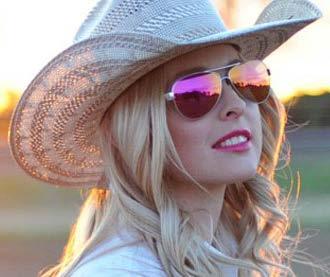
Sunglasses: Gidgee Eyewear
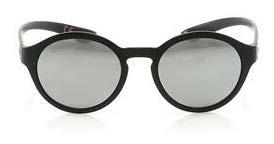
Taking care of your eyes is important, when riding outside we need to protect our eyes from harmful UV rays. Gidgee Eyewear is specifically made for equestrian sports with quality materials that are flexible and impact resistant as well as stylish. From aviator to wrap around styles, Gidgee Eyewear literally has you covered and prices start from $130.
gidgee-eyes.com
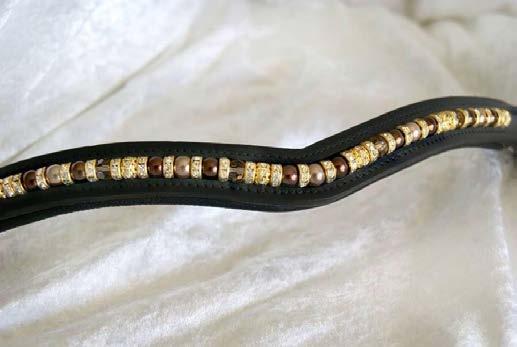
Browbands
JR beaded Browbands are well known for their eye catching crystals and colours on the horses that sport their apparel, but they have recently branched out to make some beautiful sun catchers. Choose from horse-shoes to watering cans, the attached crystals are beautiful and dance as soon as the sun hits them. Priced from $88 you don’t need to be a horse lover to appreciate their beauty.
jrbeadedbrowbands.com
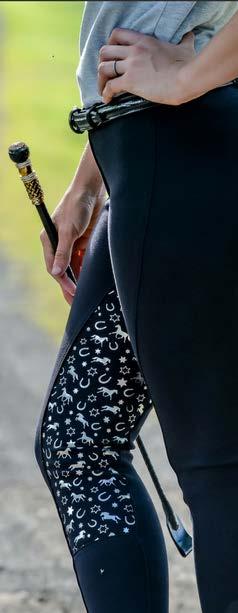
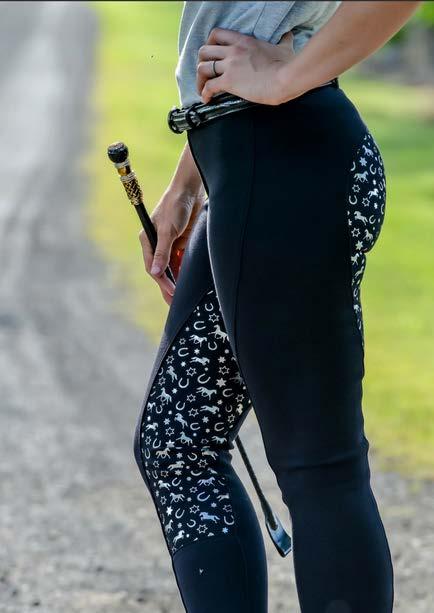
Jodhpurs: Peter Williams pull-on printed seat jods
Peter Williams riding apparel is one of the best brands on the market. For hackies and dressage divas, he’s known for producing quality jodhpurs at amazing prices. Recently the pull-on printed seat jodhpurs were released and what a treat they are! They’re the same quality riding jods that you’d expect - great quality fabric with stick and elasticity but it’s the silver equestrian themed pattern on the seat that gives it the fun flair and wow factor. Priced at only $60 they are a fun looking bargain.
pwra.com.au
Belts: C4 Belts
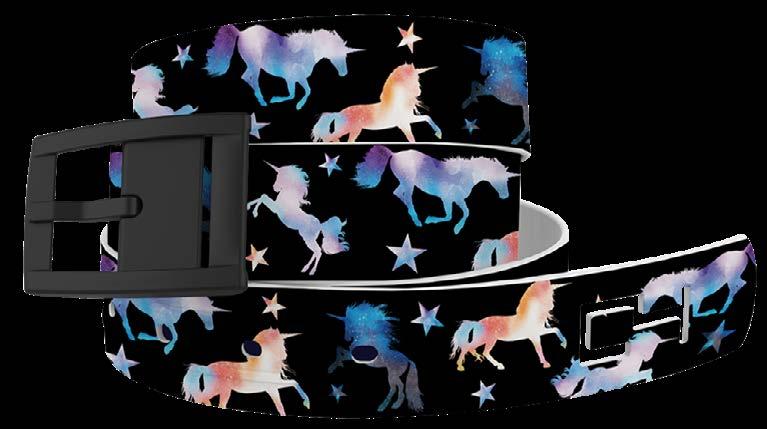
C4 belts have become quite popular from their eye catching designs, eco friendly outlook and passion for good causes. If this isn’t enough reason for you to purchase one, perhaps you’d be swayed with their mix and match buckle options. The belt material is hear wearing and actually made from the old tread from snow mobiles. Prints vary from subtle to ‘out there’ and each purchase allows you to choose what cause your donation from purchase will go to. What’s best about this belt is, one size does actually fit all. Pull off the buckle, cut it to size and you’re ready to wear!
Plain belts are priced from $34.95. c4belts.com.au
Spur Guards: Celeris
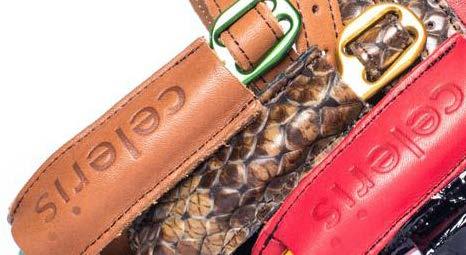
With their low prices and funky colours Celeris changed the way we look at made to measure boots. They also have leather spur guards that some in funky designs and colours while protecting your boots from wear and scratches. You can coordinate or mix up your look and the best part is, these are affordable for full grain leather. Prices start from $50.
ridersxoxo.com
Bridle: PS of Sweden
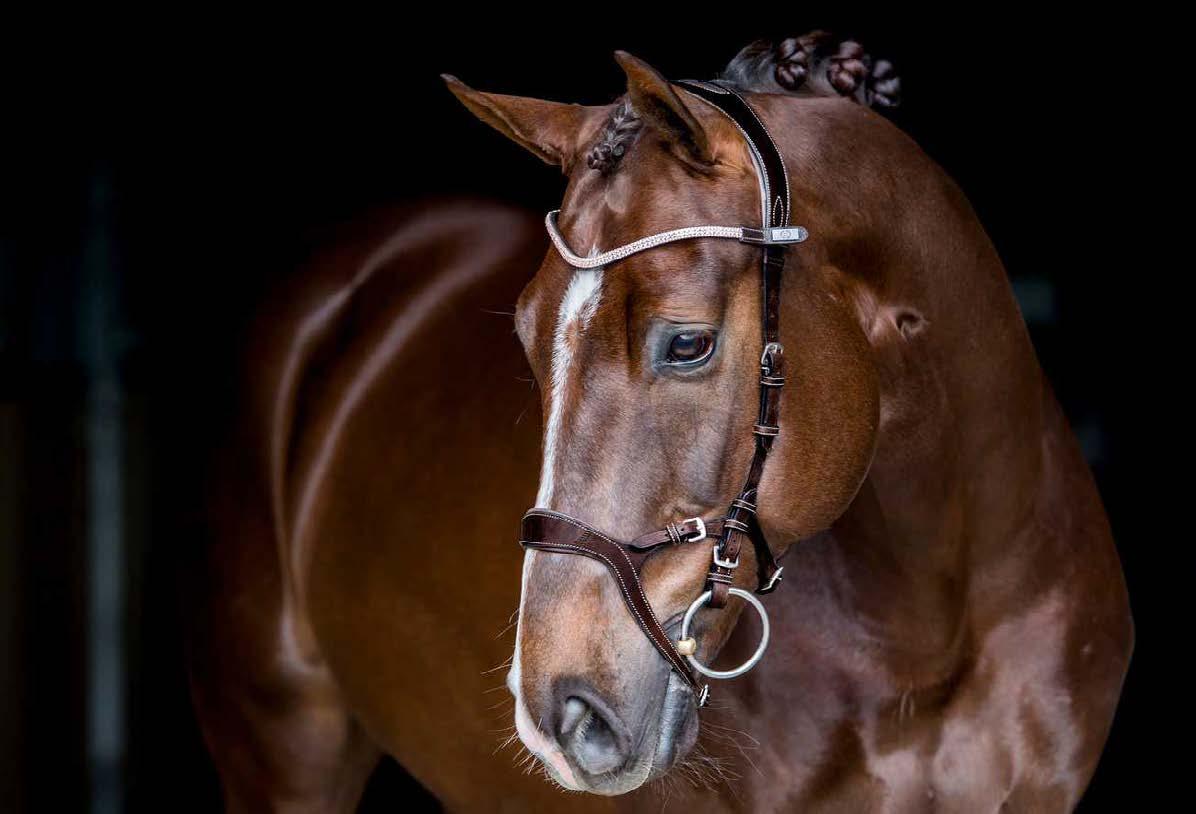
Who isn’t a sucker for a well-made bridle! Have you seen the new anatomical bridles made by PS of Sweden? There are several types on the market which tailor to different horses and their needs. They are anatomical and can be adjusted (different length pieces can be ordered). Priced from $200 they aren’t the cheapest bridle, but they are excellent quality and of the latest technology.
psofsweden.com
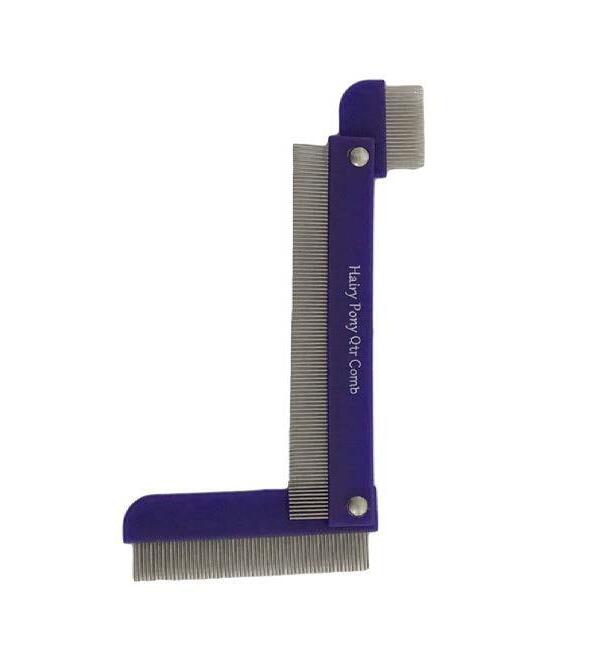
7 Perfect Quarter Marks: QTR Comb
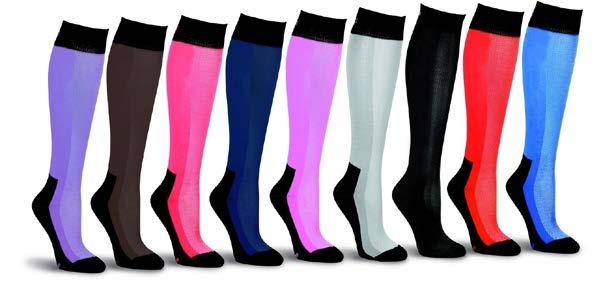
Socks: Tredstep Ireland
Tredstep Ireland socks are the gift that keep giving every ride. While this is a big statement, the materials are threaded to enhance support in the foot arch and archilles tendon. They also have built in cushioning which helps as shock protection and eases the pain of a hard day at the barn. No more tired feet! Priced from $29.95 they are the perfect gift for those who value happy feet.
horseinthebox.com.au
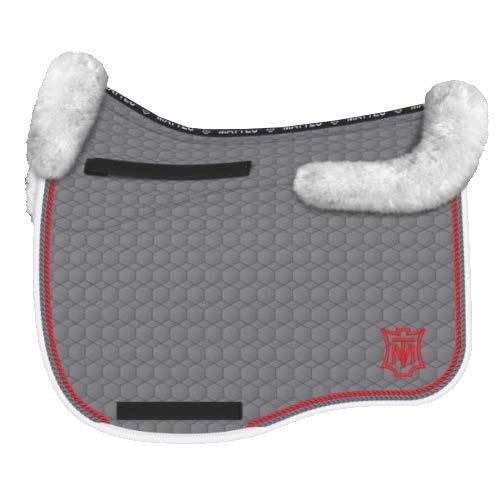
Saddle pad: EA Mattes
Saddle pads can tie your ensemble together and what greater way to create your own look than by ordering your very own Mattes pad. These saddle pads are brilliant - you can choose your saddle pad colour, bindings and wool colour. The wool is optional, but great if you use a back protector or numnah for your horse – it cuts out the bulk because it’s manufactured into the design. Prices start from $150 and sales are often a feature.
Trailrace.com.au
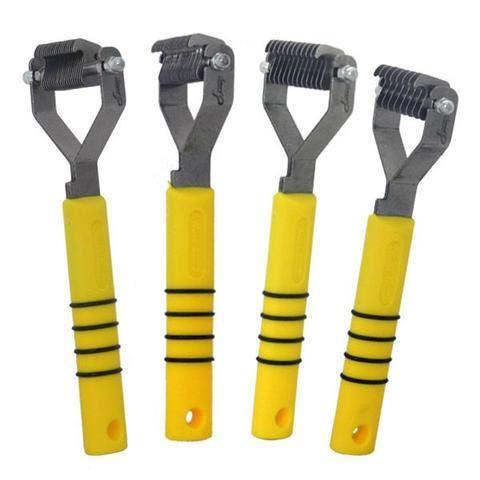
Mane Thinner: Smart Mane
Do you have a horse with a thick mane but hates pulling? The Smart Mane is a revolutionary thinning tool that actually does thin an unruly, thick mane without discomfort. Perfect for those sensitive horses in your life, you can obtain a sleek, pulled look just by running it through the hair. The blades can be replaced as well as interchanged – bonus points since it can also be used on long-haired dogs and cats. Priced at $70 it’s affordable and the perfect stable accessory.
grosvenorparkproducts.com.au
Main photo: Horsewyse Magazine’s Hannah Pikkat was a ‘mane’ attraction with her two mini ponies.
B: Jochen Schleese demonstrating saddle-fit.
COLUMN
The Horse Listener
CANDIDA BAKER looked, listened and learned at this year’s Equitana.
Ithink my Equitana truly began when I was watching Stacy Westfall, and she said to the assembled audience: “There is NO discipline in which soft easy rhythm isn’t better than the reverse.”
Oh yes. The saddleless and bridleless reining queen of the US, also the first woman to win The Road of the Horse in the US, was teaching a slightly hot little thoroughbred show jumper a four-leaf clover patter to help it relax, and for it to learn to bend on only one rein.
During the course of her class, the pearls of horse wisdom dropped effortlessly from her, and, although I was to hear this repeated over and over again in different ways over the next few days, she was the first clinician to tell us: “Make it really easy for the horse so they don’t have to think too much.”
Encouraging the horse’s rider to literally drop one of her reins, she explained that, by dropping one aid: “It will show you both yours and your horse’s weaknesses and strengths.”
As well as the relatively simple four-leaf clover pattern, she introduced the idea of the counter-bend at a walk to introduce suppleness in a horse.
And the last Stacy gem for that session was something I know all of us will have wondered about: “Always work a horse on its good side first. Finish on its bad side because they will make the connection that you stop working them after the bad side, and guess what? The bad side gets good, beacuase they’re like ‘whoah I get good on this side they’ll stop quicker and go and do housework or whatever and I get to eat grass…’”
I think my lightbulb moment at this year’s Equitana was hearing the same philosophy from so many of the great teachers there, namely that the horse comes first. A lot of the Hub Heroes I’ve interviewed throughout the year have stressed the idea that the horse should be considered as the athlete in the partnership, but at Equitana it showed itself in so many different ways, from training brumbies to miniature
ponies, to police horses, reining horses, showjumpers, dressage horses, sporting horses - you name it, they were there, and I might add, apparently enjoying themselves as much as their human owners, riders and trainers.
Show jumping World Cup Champion and Horse Body therapist, New Zealand’s Vicki Wilson, also stressed making it easy for horses, and the utmost importance of a horse being able to use its body correctly. Competing at the New Zealand Horse of the Year Show, Vicki has won the Lowry Medallion five times and the Nationwide Cup nine times – more than any other rider in history.
“Set the horse’s body up so the
‘
... she simply steers herself towards them, and inserts herself in between them as if to tell them to head home and stay out of trouble
‘
job becomes easy, always work on activating the hind-quarters,” she said, teaching a group of young women on horses who were jumping 60cms at the start, which had doubled to 1.20 only an hour later!
“You need to really emphasise the evenness and strength of the canter, so they don’t have to try and do it themselves. It’s my job to keep my horses strong and
fit, emotionally, physically and mentally,” she told us all. “If your horse is as strong and fit as it can be you hardly need to jump them at home. Some horses need more support than the rider gives them, other horses, our job is simply to sit still. All horses need to know is where they’re going and what you want them to do. If they understand, as long as they are able to do it, they’ll do it for us. Make it simple and easy to
C: Horses of the Victorian Mounted Police are used for different jobs.
D: Vicki Wilson helps a young rider engage her horse’s hindquarters.
understand, as soon as we make it grey horses get confused. I have a World Cup horse that I can only ask him 1+1 = 2, anything else and his brain fries. I have other horses I can ask to do algebra. Have you ever stopped to ask: ‘What kind of student is MY horse?’”
It was the notion of this question, asked in many different ways over the four days, that reinforced for me the idea of a horse as a partner. Through centuries of breeding, genetics often determine what a horse will be naturally good at – as in a quarter horse cutting out a cow – but at the same time every individual horse has a different personality, and those personalities vary from a horse who might choose a road of no riding, given the chance, to a horse who laps up competition. Over the years I’ve owned both kinds, and you could no more make the top show jumper a laid-back pleasure horse or companion horse than you could the reverse!
Helping them to become the horse they want to be, is perhaps a better way of looking at the relationship with a horse, rather than abiding by the notion of them doing what we want them to do.
I’m pleased to say that every teacher there from Working Equitation champion Pedro Torres, to eventing maestro Chris Burton, to the training
instructor for the Victorian Police Force horses, emphasized how important light hands are.
Talking of horse personalities it was fascinating to see the big grey police horse, Willow, now an amazing-looking 23-year-old 17hh Warmblood, who is still in active service. “She knows exactly what she has to do,” said the instructor. “If she sees a group of teenagers loitering suspiciously on the corner, she simply steers herself towards them, and inserts herself in between them as if to tell them to head home and stay out of trouble.”
Elaine Russell and my friends from Australian Equine Facilitating Learning were presenting on therapy horses, alongside the RDA legend Sally Francis, who
spoke about what kind of horse makes a good therapy horse, which was an extraordinary insight into how technical the requirements are.
There were also a raft of bodyworkers and horse anatomy specialists in attendance. I was completely blown away by Jochen Schleese and his talks on saddles for women. It was SO simple – our pelvises are not the same as males, therefore the saddles we’ve been riding in for hundreds of years are not designed to help us stay in a relaxed shoulder, hip, heel alignment. My tip for the future – saddles for women are going to be BIG business.
American Karen Loshbaugh who was a show jumper and now
does dressage, is the co-founder of Art2Ride Classical Foundation training. She showed us a basic tummy lifting exercise for our horses.
“A horse can’t be a great jumper until it can bascule over every fence,” she explained. “When you’re doing soft work a horse’s head is below the wither and endorphins are released, when the horse’s head is above the wither adrenaline is released. Back engagement makes the back strong. It can take TWO years once your horse begins to get the idea of the lift. Longer riding time isn’t always better engagement. A shorter ride can help their muscles more if the
work is correct.”
Of all the products at Equitana –and there were thousands – I was coincidentally drawn to one I’d read a lot about, EQU StreamZ, the magnetic fetlock bands for horses, designed to reduce inflammation, swelling and stiffness, and to spead up healing. Little did I know the use these bands would be put to as soon as I got home, but that’s a story for February.
Eventing star Chris Burton mixed up show jumping and cross country in his Masterclass, and he hammered home the idea of looser reins: “Too much back with your hands girls – it’s not
the 1980’s…” was a bit of a crowd favourite, and he reiterated several times: “Reins don’t help you, it’s line and distance. Longer reins, longer reins, longer reins…”
He gave advice on how to train your horse to jump on an angle. “Don’t trust the course designers they’re trying to trick you. Always ride in a snaffle except when really really necessary. Jumping a corner have someone at the side so they jump something the first time,” he said. “Don’t set them up for failure, and give them a guide pole in the beginning. By mixing up show jumps and cross country your horse gets used to going fast to the cross country and coming back slow to show jumps. Show them the line once, they know where to go and they will always remember.”
And then, of course, there was TWOTH (The Way of The Horse). I think the entire audience fell in love with the spirited Moriesian (Morgan/Friesian cross) that trainer Adam Sutton chose as his horse. She showed her proud and independent nature right from the start when she held up the start of the event for an hour because she point-blank refused to enter a round-pen. She may not have been the easiest horse to work with, but she was certainly the prettiest, and the most interesting. Adam was with Ken Faulkner, Bruce O’Dell and New Zealand’s Tui Teka, all of them previous winners of TWOTH, and to watch these masterful
horsemen gentle their untrained horses (from a Morgan stud in Victoria) was a privilege. Adam’s horse, Joelle, formed an obvious bond with him, and on the last day of the challenge, I think all of our hearts with him when he said that he felt she’d told him she wasn’t ready to work in the
arena without the roundyard, and that he was withdrawing from the competition. He put the horse’s needs ahead of his, which was wonderful thing to witness, as indeed of course was the winner, Bruce O’Dell, whose horse completed the challenges fearlessly.
Finally, it seems only fitting that I finish on Stacy Westfall – I actually got to meet her after having interviewed her several times, and got a photograph. Did I say I’m a big fan?
“If you want to take your horse to a higher level in any discipline you must make it fun for both horse and rider,” she told us on the last day. “If you do the same thing or use any kind of punishment your horse won’t become a willing partner in what can become, if you encourage it, a truly playful relationship –and horses are naturally playful so don’t shut that down in your horse.”
Amen to that.
E: Stacy Westfall explaining one-rein flexion to a show jumper.
F: Chris Burton using guide poles to teach horses to jump narrow fences.
G: 44 Adam Sutton has a bonding moment with Joelle in The Way of the Horse.
This page: Stacy Westfall: “Tip the nose like this.” Next page: Jumping, reiners, ranchers, Arabians and Maestros – they were all at Equitana’s 20th Birthday celebrations.
All The Pretty Horses
Pictures by: CANDIDA BAKER
EQUITANA IN PICTURES
CHRISTMAS WISH LIST
All we want for Chrismas ...
The staff and various HorseVibes contributors have put in their horsey wish list. What would yours include? We all wish you a Very Merry Christmas, and hope the ‘horse’ is with you through this festive season.We’ve gone through our lists to show you what our top nine equestrian picks for presents are and the best part is, they’ll all fit under the Christmas tree!
Penny NewboldColumnist
“I’ve been very patient, but it’s been over a year since I’ve owned a horse (one that I can actually ride I mean!) so I’d really, really like Santa to bring me a new horse for Christmas. It would also be very handy if he/she came with a new Equipe saddle and a beautiful handcrafted bridle from Mal Byrne! Did I say I’d been very patient?”
Candida BakerEditor
“My pretty little three-andhalf-year-old Chestnut thoroughbred mare had a bad accident in November while I was at Equitana (doesn’t it always happen when you’re away?) severing two tendons and
cutting herself to the bone. She’s already wearing a pre-Christmas present, the amazing EQU StreamZ magnetic fetlock bands to help speed up healing, but the best present of all would be for her healing to be as swift and complete as it can be, and anything that will help her on that route. Other than that, if I win the lottery an indoor arena would be nice, a dressage Schoolmaster, a few new saddles and a couple of riding holidays! Nothing over the top. But otherwise, a fully recovered horse (even though she may never be a riding horse again) is top of my wish list this year.”
Fiona Todd – Publisher
“It’s a sad day for me, but as it turns out that time has come for my beloved slip on Ariats to pass on to the next life. Recently we had a large storm so I went outside to check on my four-legged friends, and when I got back my left foot actually needed scrubbing to remove the red sticky mud that had found its way through my boot. I had to admit to myself that my Ariats are due (or even overdue) for retirement.
Elizabeth BonehamAdvertising Manager
“All I want for Christmas is…a Black Knight Accessories Rider Wristlet. This will allow me to ride my horses in comfort with a fashionable wallet that easily attaches to my belt making it possible to ride with my phone on me. I often ride by myself and my phone is too large and bulky to fit in my breeches pockets. It’s also fancy enough to use as an everyday wallet which is fantastic.”
Mind you, I would also love a mower with a nice wide deck, able to manage the ridiculous amount of grass our climate produces. Nothing fancy, 72” deck, shock absorbers to make it comfy for my broken old body, perhaps an air-conditioned enclosed cabin and guaranteed never to break down!”
Dannii CunnaneWriter
“I’m a massive fan of anatomical girths after switching to one a few years back. My horse was a bit stiff and wooden, especially when I asked him to extend. I ended up using a friend’s anatomical girth and I found that my horse had a bit more freedom within the shoulders and was able to move more smoothly. The Hufglocken brand offers several different girths depending on your horse’s shape, so it’s not a ‘one size fits all’ affair. They also have removable sheepskin for added comfort. I find clothing from HKM to be smart and comfortable, but these particular Lauria Garelli
breeches really nice to ride in. Her usual stretchy and light material is fitted but flattering no matter what size you are. The breeches offer a full seat of silicone print which is grippy without making you feel you’re stuck in the saddle. They’re perfect for the warmer Australian months – there’s nothing worse than sweaty riding attire!”
Jane CamensWriter
“I’d love, love, LOVE, a paid flight to Lisbon for late October, returning around 14 November so I could ride (again) under instruction for up to 10 days at the Valença Academy of classical dressage, and spend at least a few additional days doing Working Equitation with their friend and WE champion Pedro Torres.
It’s in November that Portugal’s great horse fair is held in the city of Golegã, known as ‘The Capital of the Horse’, which is visited annually by thousands of horse lovers from around the world for 10 days of revelling and celebration of the Lusitano breed. I understand Portuguese wine is consumed immoderately. What’s not to like? It’s a party with horses! Oh, how I wish. Happy Christmas!”
Berni SaundersWriter
“I used to dream of the Christmas when Santa would bring me a pony! This passionate and heartfelt wish consumed my childhood until my wish came true. Since then I’ve had a number of wonderful four-legged friends who have bought me joy, friendship, solace and a sense of achievement way beyond my expectation!
This year I wish for good health and the opportunity to keep on doing what I love. But even more than this I wish for a kinder world for animals and more ways to give a voice to the voiceless. Wishing all friends – great and small - Seasons Greetings!”
Ute RaabeWriter
“A horse present for Christmas, yes! I know just the one, catalogue no 3 of the current P.S.I. Auction dressage collection would suit me just fine and would look very good under the Christmas tree indeed. In reality I am in the lucky position of having already received my equestrian-related Christmas present. I’ve finally acquired my own horse float! The lovely team behind Böckmann Australia were at Equitana exhibiting a great range of horse floats with some top-of-therange safety, towing and comfort features. I was in love! Two days later I became the proud owner of my very first float, a Böckmann Champion R — like me, made in Germany. I might even pick up the Christmas tree in it!”
Between Horse and Rider
Introducing the EK-26 Special Jump Saddle
The innovative shock-absorbtion technology increases comfort and performance, benefiting the tuning between horse and rider.
The EK-26 Special jump saddle features a deeper seat and is now available in printed leather.
Tuggerah NSW
Ph: 02 4353 1922
Ph: 03 9974 2344
Proud supporters of Billy Raymont, seen riding Oaks Redwood at the WEG.
Between Horse and Rider
Introducing the Viktoria Monoquartiere
The flap can be customised with the saddle flap, tree, knee roll and panels for a perfit fit.
The Viktoria is the ultimate in comfort, sophistication, functionality and supreme quality.
Proud supporters of Alexis Hellyer, shown heere riding Bluefields Floreno at the WEG.
NSW Ph: 02 4353 1922
03 9974 2344
Shae HerwigSaddle Hub
“I would love an iSpy wireless horse float camera for Christmas. We travel a lot for competitions and I’m always wondering if my horses are okay and happy in the float.
The camera means I can check on them safely without having to stop. Being wireless also means it
can double up as a reversing camera, which would make my life so much easier. Lets face it, who likes getting in and out of the car 100 times trying to reverse the car on to the horse float only to end up reversing too far and dinging the back bumper - oops! The horse float camera would be an easy solution to my problems. Other than that, you can never have too many horse riding pants and tops. I live in my jodhpurs almost everyday and with this heat I’m finding myself needing to wear a long sleeve sunsafe top - no one likes a t-shirt tan. Performa ride have a super range of cool riding tights and long sleeve tops.”
Equipe - jump and dressage all models
Luc Childeric - jump and dressage
Bates Isabell and Elevation
Kent and Masters
PDS all models
Show saddles under 16”
Windsor Esquire #5 and #5 16-17”
Black Country Eloquences and a Show Hunter
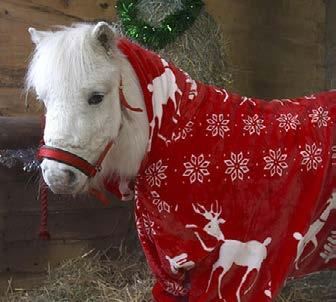
The Christmas Pony
LORRAINE DOWDESWELL, the Horsemanship
Are you thinking of buying a pony for a special child this Christmas?
Maybe you’re imagining those wild screams of delight, that
wonderful look on a child’s face when their dreams come true there in front of them is the pony of their dreams.
It all sounds so wonderful, and I am sure that there are many
parents out there right now contemplating whether or not to start the process of finding that Christmas perfect pony. But have you honestly thought this decision through? After all, there are no refunds on Boxing Day if this doesn’t work out! On the plus side, owning a pony can teach children respect, responsibility, assertiveness and leadership skills, something that will stand them in good stead as they are growing up.
For those of you who may be contemplating purchasing a pony for the first time, here are a few points to consider - taking the time to do some research could help you make a more educated
ARENA RAKES
from $1950
Custom Built
Includes GST
Delivery Extra
Model Options
• Towed Ball Hitch
• Three Point Linkage
• Textile Surface
• Water Tanks
Standard:
High tensile tines • 3mm walled box
section Australian steel • detachable edge grader • grooming blade. Tines and grooming blade can be adjusted independently. Sold fully assembled. One year warranty.
Have you had your dose of HorsePLAY today?
Even Russell Crowe wrote to congratulate Jacqueline Thompson, creator of HorsePLAY.
“…we love the hard case it comes in. Far too many games have their cardboard boxes destroyed after a few sessions.”
“So excited to get HorsePLAY. Friends and I played it the day it arrived. This unique product delivered way beyond what we’d expected. How happy our customers and how quickly HorsePLAY sells certainly isn’t surprising given the major bang for your buck packed into this proud Aussie creation.”
Lee Woodland, Natural Equipment online store
“Absolutely brilliant, love it. Love the images. Questions are so interesting, I shared it with the office – fantastic feedback from everyone. I keep HorsePLAY handy on my desk because once is never enough.”
Peter Lindeman, Fairfax Media
“HorsePLAY is a game changer! That’s straight from the horse’s mouth.”
Adam Sutton, All Round Horsemanship
“It’s great fun horsing around without the mess and expense of an actual horse. And you get to learn some really interesting things along the way.”
Charlie Brister, Eventer
Stunning images to dazzle and delight you.
decision and one that will not be looked upon with regret down the track.
1. Do you have a budget?
Take some time to research what a well-educated pony will cost – they’re NOT cheap – and buying a cheap pony will come with unforeseen difficulties. Look online or in some of the glossy magazines to give you an idea of what the current price will be. If you were looking for a particular breed, then you may be surprised that some ponies may cost a lot more than others.
2. Where will you keep your pony?
Do you have space at home or will you need to agist your pony on someone else’s property? Doing some research now before you bring your pony home will alleviate any stress in looking for somewhere at the last minute. Keep the agistment as close to home as possible, as you will be making daily trips if you are not in a position to pay for full care of your pony.
3. Do you know how much the pony will cost to keep?
On average you will spend about $100.00 per week on agistment, feed and care, and that will also depend on whether you have space at home to keep your pony or if you will need to agist on someone else’s’ property. It will also depend on what you choose
to feed your pony and how often. This amount does not include any veterinary bills that may arise from time to time.
4. Feet and teeth are important
Your pony will need consistent care from professionals such as a farrier and a dentist. Unlike most pets, a pony’s feet and teeth keep growing and do require a management program to keep them in good condition. Feet will need to be trimmed between four and six weeks and teeth will need to be checked annually. Plus there is regular worming, annual tetanus shots, and depending on where you live and what your child wants to do with their pony, Hendra vaccinations as well.
5. Match the pony to
the child
Regardless of what anyone says, matching the pony to the child is one of the most important aspects you will come across from a safety point of view. Don’t fall for the thought that a young pony and a young child are a good match; you want your first pony to be well educated and mature, anything over the age of eight would be more suitable for a beginner. Don’t fall for the concept of buying a pony because it needs to be rescued. There have been instances where professional horse trainers have not been able to rehabilitate these types of ponies and horses. They are not suitable for beginners and please stay away from ex-racehorses, your child is way too precious to be faced
with a horse that needs to be retrained after learning how to run in a straight line at high speed!
My rule of thumb is if the child can lift the saddle onto the pony’s back with ease, can brush the pony’s back and even see over the pony’s back then you are on the right track. Overmounting a child on a pony or horse that is too big may result in the child losing confidence, falling, being out of control and not wanting to continue riding through fear of being hurt.
6. Don’t look for a certain colour or a pretty face
There are many pretty ponies and so many breeds out there,
and it’s hard to resist a pretty face; however, we do need to be mindful of what is important.
An older educated pony, even one who is not so pretty, is a much better acquisition than a pony who may not be suitable but is your child’s favourite colour or looks sweet.
7. Get some professional help
Buying a pony can be daunting if you are are looking to own your very first pony. I would highly recommend some professional advice to help you on your way, research equestrian professionals in your area and have a chat with them about your needs, they may know of a pony that may be suitable. Take the time that it takes to find your perfect pony so that there will be no disappointment to your child if you need to sell the pony because
it is not a good match.
8. Get veterinary advice
Something that I highly recommend is to get a Veterinary Inspection before handing over the money to purchase your pony. I have known of many instances where injuries and health issues have not been detected before the purchase and have left new owners with devastating effects. Look at the cost as an investment rather than an expense. Always better to be safe than sorry and end up with a pony that cannot be enjoyed. It’s a small amount of money in comparison to the cost of the pony!
As a child, my parents finally succumbed to my constant requests to own a pony, and I have many fond memories of weekends and school holidays
filled with hours of riding and taking care of my horse. For us, a lot of what we learnt about owning a pony was trial and error, many mistakes were made, and injuries occurred in the pursuit of understanding what was needed and what was the right thing to do.
I encourage you all to take the time, do the research, speak to professionals and gain some knowledge before taking ownership of one of nature’s finest gifts - the horse.
You can find more information in Lorraine’s first ebook ‘Ten Handy Hints For First Time Horse Owners’ now available on Amazon/ Kindle www.amazon.com.au/dp/ B07KTXP4GV or follow her on Facebook at My Perfect Pony. www.facebook. com/myperfectpony.com. au/?ref=settings
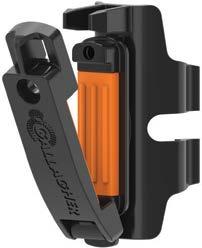
Gallagher Equine Fencing Solutions
Keep your horses safely contained with Gallagher equine electric fencing - a safe, reliable and highly visible solution designed to ensure your horses’ welfare.
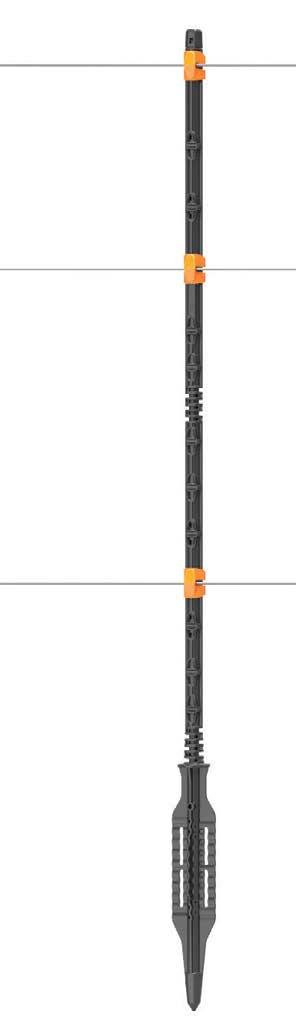
Heavy Duty Multiwire Treadin Post
An extendable, heavy duty portable fence option, ideal for horses.
Insulated Line Posts
A tailor-made, fully insulated line post for low cost, low maintenance permanent electric fencing for sheep, cattle, deer and horses.
Insulated Wire Strainer
All in one insulated ratchet strainer - insulate, strain and connect - for end of line electric fence assembly.
5mm Turbo Braid
Heavy duty, woven material for easy handling with turbo conductivity for superior, long life animal control on portable fences over 200m.
Insulated Line Post 40mm Tape Clip
Our new 40mm Tape Clip is designed specifically for 40mm (1½”) Equine Electric Tape to be securely attached to the Gallagher Insulated Line Post.
40mm Turbo Tape
High visibility tape with turbo conductivity for superior, long life portable fencing and semipermanent horse fences.
Head into your local Gallagher reseller to see our full range of Equine Fencing products or for more information, call Gallagher on 1800 425 524.
Spirit Horse Festival
It was a horse with ‘attitude’ that set the founder of New Zealand’s International Spirit Horse Festival, Rosemary Wyndham-Jones, on her journey towards a deeper, and more natural understanding of horses, writes CANDIDA BAKER.
Iloved horses from an early age but we lived in London, so they were not readily available,” says Rosemary Wyndham-Jones, recalling days when she would trek to a suburban riding school to muck out stables, just to get her horse hit.
It would be hard to imagine a more different location – and way of being with horses – than where she is based now, at the Dune Lakes Lodge Retreat and Horse Inspired Learning Centre, in South Head near Woodhill Forest, not far from Auckland. Photographs of her herd galloping together on the beach, or stretched out in the early morning sun in their pasture, speak of an enviable freedom for the horse.
It’s this dream of freedom that attracted international speakers
and 200 participants to the inaugural Spirit Horse Festival in 2016, but it may never have happened, if it wasn’t for one particular horse, Jodie.
“I bred her in 1990 and by the time she was nine-years-old she
had actually almost killed me several times. What I learned from Jodie, in a way made all of this possible,” Rosemary says. “She passed four years ago, but I still have Mary, her mother, who is 32 this year.”
It occurs to me that this means she took Mary and Jodie from the UK to New Zealand when she moved in 2003. ”Of course,” she says, matter-of-factly. “They’re my family.”
As a young woman Rosemary first moved from London to the Isle of Wight, where, along with working in various different careers to keep her horse-habit afloat, she got her first horse at 27, competing in eventing, show jumping and dressage.
“I think the first inkling that I might not be ‘conventional’ is that I simply couldn’t keep my horse in a stable, which is what everyone else did,” she says. “I leased graz-
A: Christi
ing for him, and used to get a lot of criticism because people said you couldn’t compete horse kept on grass, but of course he was fine, and always healthy and fit. Then I bought a mare, Mary, and I decided to breed from her.
The sire, in Rosemary’s words, had ‘attitude to burn’, and unfortunately or fortunately (whichever way you look at it) Jodie, a 17.00hh chestnut Warmblood mare, inherited her father’s proud and challenging ways, rather than her mother’s more easy-going nature. “By the time she was nine, she’d almost killed me a couple of times,” says Rosemary, “and I was really scared of her. I sent her to three or four professional horse trainers and she came back more aggressive, and even more dangerous.”
Rosemary didn’t know what to do. She felt in all conscience that she couldn’t sell Jodie, or give her to a dealer to sell, but for her own safety she had to consider the option of having her put to sleep.
“It was a dark period of my life,” she says, “and then, out of the blue, in the way the universe does, it send me an angel, in the form of a woman who had spent many years practising what you might call ‘horse whispering’.”
So Rosemary upped sticks, took her two horses and went to live in what she describes as a “muddy bog in Wales! I absorbed everything I could from her, and what happened was - which was such a huge lesson for me - that
‘
The more children I teach that bridleless and barefoot is normal, the more kindness this next generation can show to horses.
‘
although Jodie stayed the same in her nature and behaviour, I changed. I gained confidence and skills in learning and understanding horse language. Jodie began to see me more as a partner, with me taking the role of lead mare rather than the other way around. This opened up a whole new world for me.”
It was while Rosemary was in Wales that she happened to see a friend’s holiday videos of New
Zealand, and was prompted to put an advertisement in a New Zealand Yahoo Group (remember Yahoo Groups?!) to see if anyone wanted help or advice with their horses, so she could visit the country on a shoe string. “We didn’t pay for one night’s accommodation,” she recalls, “and I fell in love with New Zealand. After 9/11 I decided to move sooner rather than later, because I felt Aotearoa was a safer part of the
world.”
Rosemary arrived in New Zealand to live in 2003 with her dogs, leaving her horses with a neighbour in the UK. When she got residency she brought out Mary and Jodie, and between buying up properties to do up, began the journey towards creating an holistic healing and educational centre for horses, with her charity the Equine Pathfinders Foundation gradually leading her towards the creation of the Spirit Horse Festival. Gradually Rosemary’s family joined her in New Zealand - first her daughter, then her son, and last of all her mother.
After her initial immersion into a more natural way of being with horses, and witnessing in herself the change it made to her
relationship with Jodie, Rosemary threw herself into learning, studying in the EAGLA model in 2008 and then in 2014 studying with the legendary author Linda Kohanov (The Tao of Equus amongst other books), speaker, horse trainer, riding instructor and equine facilitated psychotherapy practitioner. Rosemary also studied holistic horse and hoof care management with Dr. Hiltrud Strasser. She became a Riding Focused Eponaquest instructor under Shelley Rosenberg, the ex-Olympic rider whose book, My Horses, My Healers was one of the early books to introduce the notion that horses could help heal humans, as well as humans horses. Everything began to come together and as Rosemary says: “Life unfolded for me to be able to live my dream.”
Rosemary’s ‘dream’ has become a very clear definition around the idea of ‘riding’ horses. “I do still teach people to ride however it’s always barefoot and bitless with the aim towards liberty riding” she says. “Thousands of children have attended my residential kids pony camps - the more children I teach that bridleless and barefoot is normal, the more kindness this next generation potentially will show to horses in the future.”
This year’s Spirit Horse Festival, at Dune Lakes Retreat and Horse Inspired Learning Centre on 7-10 February, honours the alternative way to be with horses through teachers such as Judy Brightman and her ‘Shamanic Connection’ with horses, as well as the highly practical through presenters such as Jane Hemingway-Mohr and her session on learning how
C: Rosemary WyndhamJones.
D: Horses and humans enjoying a Spirit Horse session.
D: with the chestnut mare with ‘attitude’.
to creative a viable, ethical and sustainable client base. Rosemary will also be presenting ‘Holding Sacred Space With Horses’ (I am also honoured to be presenting on two subjects – ‘So You’ve Rescued a Horse’, and ‘Achieving Limbic Resonance with Energy Work and Essential Oils’.)
But there will be a deep sadness at the third Spirit Horse Festival, because one important herd member will not be there, Laura Williams. In November the Herd of Joy creator, passed away after a riding accident at her property in Russia.
“Laura was a shining light in the equine facilitated learning world,” says Rosemary, “and she had an amazing ability to connect people to people and people with horses. She came to the first and the second Spirit Horse Festival, she stayed, she helped, she gave of herself for the humans and the horses. All of us who knew her loved and respected her very much.”
These days, Rosemary is not just living her dream, but creating more for the future, planning the next stage of her journey through a project she hopes to launch in New Zealand soon shortly, ‘Wild Boys, Wild Horses Gentling Programme’.
“I’ve been working with troubled youth for a long time now,” she says, “and it is very rewarding. One of the very best horses on the team was Jodie. She commanded respect and had exactly
E: Rosemary with four legged friends and
‘
‘ She said to tell me that she had important things to do now, she had taught me everything she could ...
the attitude that a teenage boy needed to understand to be able to learn how give and receive respect, to be calm and quiet, and how to show ‘partnership’ skills.”
Rosemary is convinced that Jodie knew exactly what she was doing every time she was with a troubled young person. “After she died suddenly of a heart attack in January 2013. Saddened, I asked a psychic friend where Jodie wanted to be buried, and she told me
that Jodie communicated that she didn’t really mind. She said: ‘I’m always going to be part of the place.’ She said to tell me that she had important things to do now, she had taught me everything she could. That just made me laugh out loud, because it was SO her, and so detached from the human experience of loss and grief,” says Rosemary. “She was a grand chestnut mare, she nearly killed me in the early days – and I
thought I was a good horsewoman!! Her final lesson to me is that it’s not always humans who are the teachers - Jodie came into my life to teach me. I feel all horses are here to teach us something about ourselves, who we are and how to find our place in the world.”
To find out more about New Zealand’s 2019 Spirit’s Festival go here: Spirit Horse Festival and to find out more about Rosemary Wyndham Jones go to Dune Lakes Lodge
Down on Penny Newbold’s farm you’ll find her family and animals, and of course, horses…
a blade of grass was out of place, not a leaf permitted to remain on the ground for long enough to mark the immaculate carpet of manicured lawn.
A Horse by Any Other Name…
Penny looks back at a lifetime of naming (or misnaming) her beloved equine companions.
Christmas ‘Gifts’
T he naming of horses (mine that is) has always been a challenge.
TI was surprised their kids were even brave enough to walk on the lawn with their shoes on, so much like pristine carpet it appeared.
’was the night before Christmas, when all through the house Not a creature was stirring, not even a mouse” - CLEMENT CLARKE MOORE
But maybe a horse. Or two.
Once I’d passed the obligatory ‘Star’, ‘Princess’, ‘Snowflake’ and ‘Blackie’ phase and moved on to the more exotic titles (like ‘Regal Dimples’ - it pains me to admit!) coming up with a show name became an artistic science. And something that I was convinced could ultimately determine the long-term future success or failure of my equine superstar.
Funny how horses always seem to find the most inconvenient times to undertake wild adventures.
Things got trickier when I started to incorporate the all-important, (for my ego at least) breeding and parentage
in question did not tend to be heavily trafficked at midnight on Christmas Eve, apart from the odd Christmas reveller on their way home from (overly exuberant) Christmas celebrations.
references. After I’d made the discovery of how important particular bloodlines were to my riding peers, it didn’t matter how distant the relation was, if it was there – even five generations back – it was relevant!
The fact that I had very little
Why not midnight? On Christmas Eve? What better time could there be to scare our owners out of their wits?
On the Christmas Eve in question, my two equine companions decided to bust their gate hinges and, leaping to freedom, galloped merrily down the road. (As any horse owner knows, there is nothing quite like the terror that follows being woken in the middle of the night by the sound of galloping shod hooves clattering on bitumen. Nothing.).
Fortunately, being a quiet country back road, the road
(none if I’m brutally honest) clue about how genetics even really worked in horses, didn’t dampen my enthusiasm. My theory, founded entirely in my imagination, was simple - if their name reflected a distant genetic connection to a superstar,
So, having successfully made their escape, and while I was frantically finding pants and boots in the dark, trying not to wake the entire household, I should imagine their dilemma was, where to go next?
It was a dilemma easily solved by the sight of the neighbours immaculately manicured garden. So in my horses went, digging up the neighbours lawn, eating their prize-winning roses and leaving their somewhat overly natural Christmas ‘gifts’ in strategic locations. (Well, they do say it’s good for roses.)
Now, these neighbours were not horsey ‘types’, if you know what I mean. They maintained their carefully planned and (expensively) designed garden with research and precision. Not
Funnily enough, the fact that the horses did decide to make their break for freedom on Christmas Eve, probably saved me from meeting my fate in the neighbours mulching machine. Despite the damage – and it took my teenage self quite some time to repay the cost of the repair work, it did give my neighbours a lovely story to tell their small children about the time when they got up at the crack of dawn on Christmas morning only to find hoof-prints and manure in their yard. (Only moments after I’d removed my wayward four-legged friends from their Christmas Eve playground.)
My neighbours at least had a lovely Christmas story for their children. Where on earth could the damage have come from? Why, Santa’s reindeer of course!
By the time the kids were up and about and exploring the reindeer’s hoof-prints, the actual culprits were well and truly back in their (repaired) paddock when they met me at breakfast time a couple of hours later - with far more joyful enthusiasm than I felt they were entitled to.
Penny on Mullendorf - otherwise known as Mully.
The Solstice is nigh, (or should that be neigh) bringing change, enthusiasm and momentum for 2019. But don’t worry if the holiday shopping isn’t done in a snap. There will be delays, and best forget about the estimated delivery dates. Not happening! The good news is, the later you leave hands-on gift selection, the easier it will be to find perfect items for special others in your life. And for us fourlegged creatures, 2019 rings in with spectacular omens. Everything feels magical, especially between the 7th – 20th of January. We will make a fabulous impression, I promise! Happy Holidays and New Year 2019.
Aries
With the holiday season comes an important turning point, marked by the ancient Solstice Sun. Two-legged Rams can expect the career or calling to take a turn for the better, offering a chance to accept more responsibility and greater reward. For the Aries equines, body language will be subtle but telling. Tune in so you can hear what we are saying! The wisdom we whisper will help make 2019 the best it can be.
Taurus
The Solstice gift for two-legged Bulls is all about explorations into the unknown. You want to experience something completely new. Maybe it will be through meditation, foreign travel, holiday reading, learning a new skill or language, or even solving a quirky challenge. With us four-legged friends, we’re quite happy to visit the undeniable pleasures of the three Cs: curry-comb, corn and carrots. Thank you.
Gemini
The end of this year brings a grounded focus for both equine and human Twins. Instead of heads high and nostrils flared, shying at every guy and his dog, there is a potent and contained energy for you both. Think war-horse steady, strong and responsive. If ever a Gemini was ready to work, it’s now, but make it a partnership, human and equine together. Note: the challenge is to stay humble - you’ll be that extraordinary.
Cancer
The laser focus for two-legged Crabs this month is commitment. You can get a jump on it by assessing the relationships in your life now, before challenges arise. Are they a match? Do you have room to grow, adjust and evolve? The goal is to experience equality and the Solstice gift is full of opportunities to get it right. Us equines already have this down pat so maybe you can learn from our generosity of heart.
Leo
The holiday traditions might have human Leos extremely busy over December and on into the New Year. The key is to not neglect your own personal needs as you deal with everything else on the agenda. You’ll want to put more energy into the body, exercise, health and physical well-being. That goes for us equines too. Remember, the box stall might be convenient for you, but it’s solitary confinement for us!
Virgo
Opportunities come for two-legged Virgos to be heard, acknowledged and made to feel special. It’s heady and artistic and full of romantic notions. Think of it as your chance to initiate a new artistic ritual into day-to-day life, as if the universe offers a creative self-expression upgrade. Ignore it at your own risk because unexpressed, the energy will likely come up through us equines. Think feisty and hot-blooded!
Libra
Holiday time brings an array of feelings, emotions and situation. Human Libras, you best find ways to hold it all gracefully. Nothing will get your hackles up unless you let it. If you can release the charge you have – usually in the form of expectations and assumptions around family – you’ll find connection, love and respect. Us horses, on the other hand, might be restless. If you must travel, please leave us in good hands!
Scorpio
Two-legged Scorpions receive a message via the written or spoken word. You hear a new idea, or something catches your eye, and suddenly you’re experimenting with old protocols and making innovative proposals. Haiku, novel, dissertation or chat, you’re on top of your word game. Note: us equines will be much happier with familiar cues and prompts, so keep the innovation to yourself. You’ve been forewarned.
Sagitarius
Centaurs, be ready for the most expansive year ahead. I mean, it’s always big, but this one is huge. You can prepare by indulging yourself in sensuality. Think of tangible things like baths, mud masks, long walks in nature, massages, fine food, vistas and company. Us horses would like some pampering too, like extra grooming, warm mashes, fly-free shade and fountain water. Oh, fast and fun trail rides too!
Capricorn
For human Sea-goats, this time of year always opens new doors and sets up opportunities for the next twelve months. Think of it as a fresh chapter in your life where you can aim higher and reach further than the year before. Hint: best way to open the door to your dreams is to relax. Hopefully, that includes spending time with your fourlegged steeds, in the stables, pasture, trail, arena. Even on the road. Tally ho!
Aquarius
The Holiday season will have its own special brand of chaos for both two and four-legged Water-bearers. The key to happiness, and/or survival, is to enjoy, allow and appreciate every little bit of it. That means humans, stop trying to control the end-game, and equines, relax a bit on that urge to go wild. This will turn frustration into opportunity, a Solstice gift that brings joy and a wonderful sense of freedom.
Pices
Human and equine Pisceans will thrive if they focus on friendship, camaraderie, and connection. Being with your herd, whether you share DNA or not, is what counts, so make the effort to reach out, respond to and revive old soul connections. The Solstice Season is rich with opportunities for those of the twolegged persuasion but maybe rethink the stabling situation for steeds. Nix any isolation. We want our herd too.