




Hasn’t 2019 started with a bang! Floods in the north, fires and searing heat everywhere else – our thoughts are with those who have suffered during this time. It hasn’t been an easy summer, and we hope your four-legged friends, houses and properties are safe.
February is HorseVibes first edition for 2019. You’ll see lots of changes this month, and as always, we appreciate your feedback.
We have a new column for you, entitled ‘On Their Tackbox’, and who better to write the first one than legendary equestrian Vicki Roycroft? Thank you Vicki.
‘Our Hero’, (formerly Hub Hero) continues to bring you profiles of some
of the most inspirational champions of our industry. We trust these stories encourage you to chase your goals –whatever they are! Who could be a more inspiring choice than this month’s Hero, the highest-ranked female show jumper in the world, Australia’s own Edwina Alexander-Tops.
Our editor, Candy, writes about
separation anxiety in her column, The Horse Listener. It can be a very misunderstood phenomenon, but there are numerous ways to manage it.
Ute and Berni have balanced our stories on show jumpers with dressage and theory articles. Berni explains the often-misunderstood but extremely important use of the outside rein, whilst Ute interviews Therese Nilshage as a prelude to P.S.I. Dressage & Jumping with the Stars. Who wouldn’t love to have Therese’s Oldenburg stallion Dante Weltino OLD on their stable?
Danni brings us our young rider and our featured breed, the distinctive Marwari, and nutritionist Larissa Bilston gives HorseVibers the top ten reasons why it’s so important your horse has mineral supplementation.
Last but by no means least Jane interviews the amazing and insightful Wayne Banney and introduces us to his horsemanship philosophy and the entire crew from HV have put their thinking caps on to offer you a taste of the products we love.
Follow this link to provide us with feedback, advertise or to contribute to the next edition of HorseVibes.

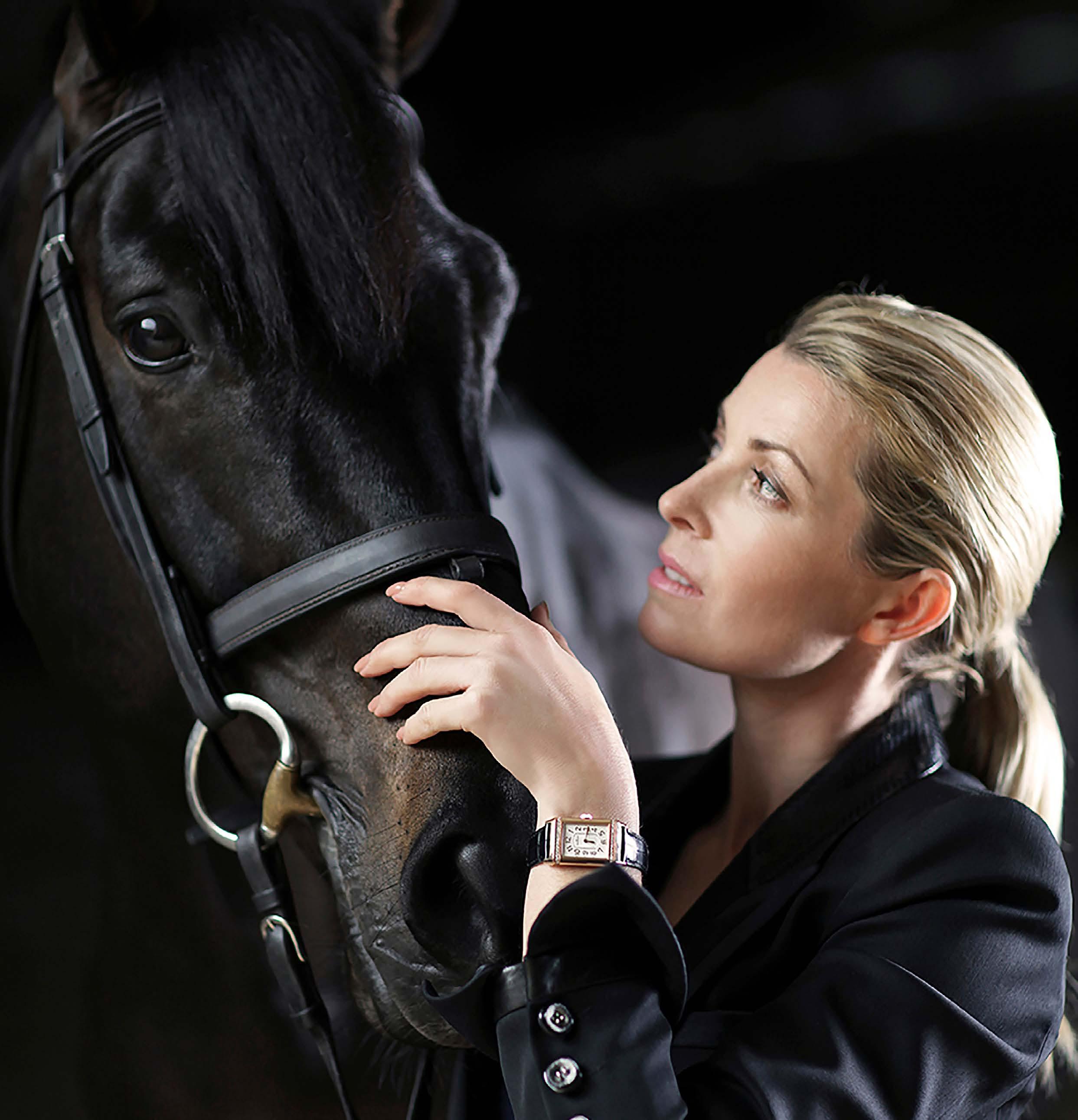
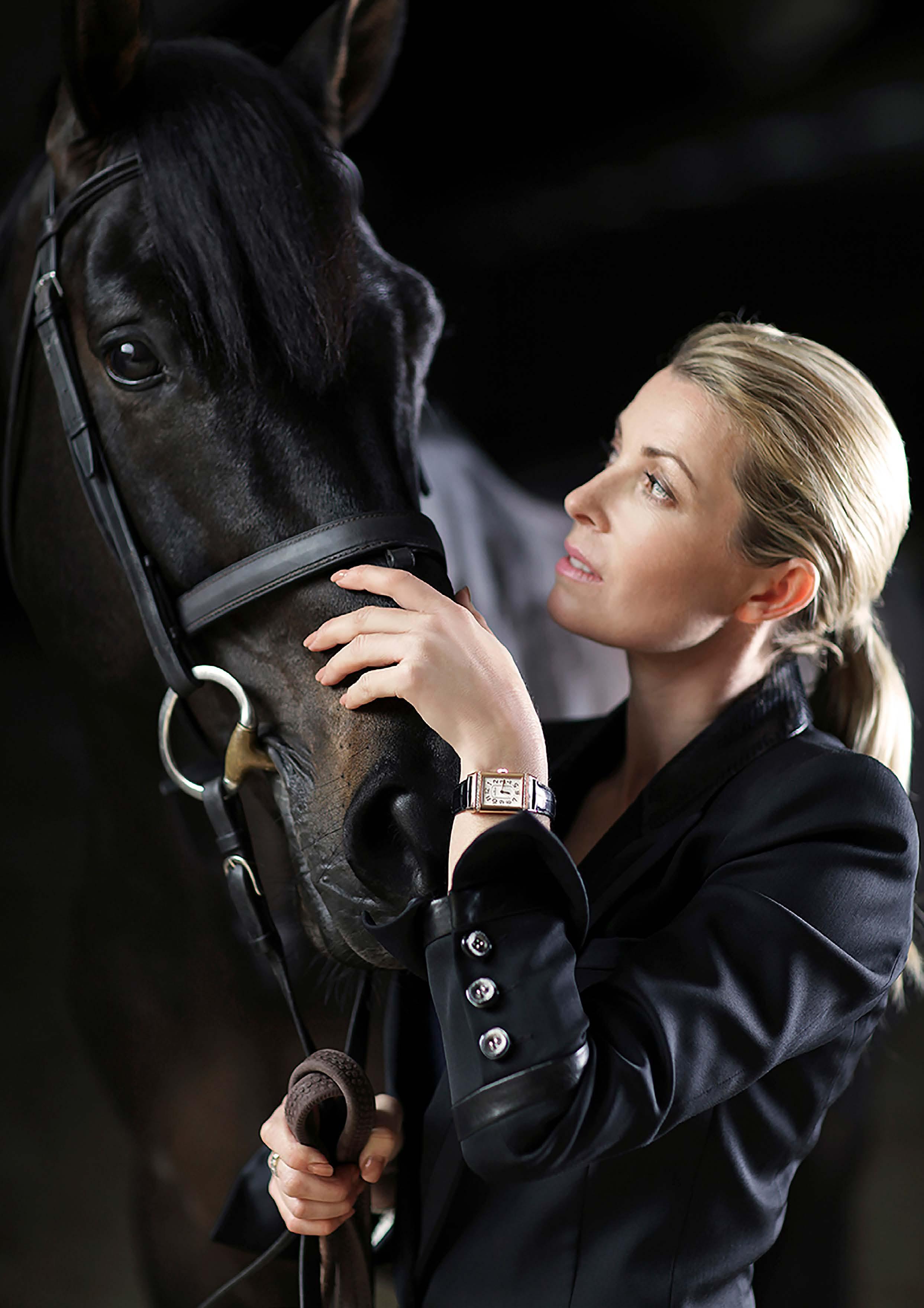
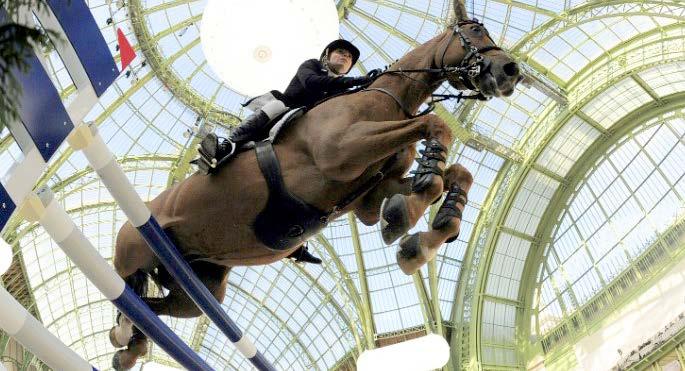
Edwina Tops-Alexander riding Cevo Itot Du Chateau at the Grand Palais in Paris in 2010.
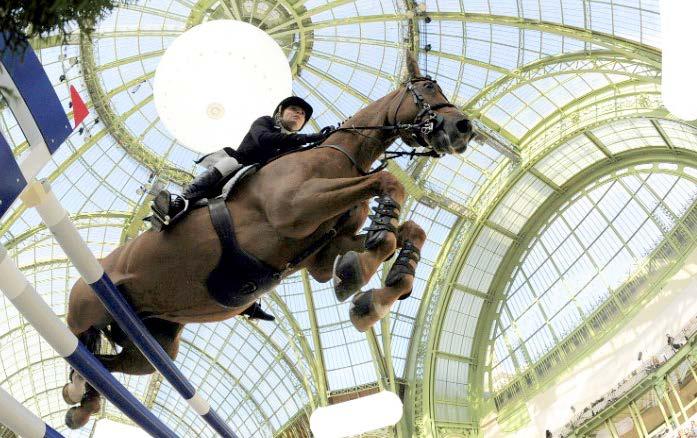

TEdwina Tops-Alexander is the highest ranked female show jumper in the world. HORSEVIBES looks at the life and times of an inspirational rider.

fourth.
Originally from Turramurra, in Sydney’s northern suburbs, Edwina started riding when she was eight-years-old.
“We weren’t a horse family,” her mother has said, “but we had neighbours with horses, and Edwina used to watch them ride. She decided she wanted to learn, and she loved it so much she joined the Avondale Pony Club in North Turramurra.” The young Edwina’s ambitions were mostly relatively modest. She wanted her ears pierced, a navy blue jacket and a chestnut pony. The other ambition, to ride at the Olympics, seemed not quite as easy to achieve, but the goal was a portent of things to come.
Even her first horse wasn’t exactly star material. “He was an un-broken fouryear-old pinto,” she recalls, “not exactly first horse material when you’re eight, but somehow we survived.”
year taking her horse Mr. Dundee to Belgium with her. Edwina was based with Belgian show jumping star Ludo Philippaerts for three years before she made the decision to branch out on her own, creating her own company buying and selling horses for Australian clients.
“The fact is,” Edwina has said, “that unfortunately Australia is not the core place for my sport. If it was, I’m sure many more of us would want to live there, but Europe and the U.S is where we have to be based. It was a great place to grow up, and gave me the chance to compete in many different sports, but Europe is where the best show jumping is.”
It wasn’t the easiest time though, starting over. “She had to prove herself right from the start over again,” her mother says, “but after six months she came home and told us that she wanted to be based in Europe.”
he list of Edwina TopsAlexander’s firsts just keeps tumbling – unlike the fences she’s jumping. In December she became the second woman to win the Paris Longines Grand Prix on her amazing mare, 11-year-old California, and became the first Australian to take pride of place on the winner’s podium. Only a week later, at the Coruna World Cup in Spain, Tops-Alexander and her nine-year-old stallion, Vinchester won their first 1.60m class together, with the horse having only just jumped 1.50m a few days before that stellar performance.
Her winning streak continued when Edwina, once more riding California, became the first ever winner of the inaugural $1.4m Longines Global Champions Tour Super Grand Prix in Prague on December 16, 2018 – beating German veteran Ludger Beerbaum by a mere half-a-second. But half-a-second is all the triple-Olympian needed to cement her place in equestrian history.
All of this topping her success in Aachen, Germany 2006, when she became the first Australian to make the final of the individual jumping competition at the World Equestrian Games, finishing
Edwina attended Pymble Ladies College, and after school gained her degree as a Bachelor of Physical Education, all the while training and riding. Her competitive streak didn’t take too long to assert itself, and by 1995 Edwina had won the Australian Young Rider Championship.
Even determined champions have their rough patches, something all of us would do well to remember, and the sport almost lost her when she was 18. “I had a horse that just refused all the time,” she recalls, “and I almost stopped riding.” But she persevered, training, and riding different horses and in 1998, only three years after her AYR Championship, she made her debut riding for Equestrian Australia in Hong Kong, moving to Europe later that same
‘
‘ He was an unbroken fouryear-old pinto,” she recalls, “not exactly first horse material when you’re eight, but somehow we survived.”


It was literally a match made in horse-heaven... The partnership has allowed that talent to blossom.
‘

As she became better-known in Europe, and the winner’s podium became a regular event for her, another side to Edwina started to show itself to those around her. Always interested in fashion, her perfect turnouts, and her style gained her admirers in the fashion industry and some A-list sponsors, including Gucci, Equifit, and the Swiss watch company Jaeger-LeCoultre, for whom she’s an ambassador. In her downtime she likes nothing more than a shopping spree. “For anything,” she says. “I just like shopping!”
‘Strong’, ‘powerful’, ‘motivated’, ‘talented’, ‘petite’, ‘determined’ – these are all adjectives that people who know Edwina have used to describe the diminutive blonde, who says, as the highest ranking female rider in the world: “I don’t feel any different as a woman rider to any male - but it does feel good to beat the boys.”
Edwina’s achievements have been consolidated with her extraordinary partnership – and marriage – to previous Olympian and renowned horse breeder and trainer Jan Tops. “She was raw talent when I first met her,” he says. “But she didn’t have a huge amount
of knowledge about how to do the technical flatwork and exercises that would take a horse to the top.”
It was literally a match made in horseheaven. The couple met when Edwina first moved to Europe, but didn’t actually begin a relationship until 2000. Edwina was keen to learn, and Jan to teach her. “She tries 100 percent every single day,” he says, “and that’s what sustains her.”
In 2006 while they were at a show in Malaysia, Jan hatched a plan – the Global Champions Tour. Edwina could immediately see that the plan had

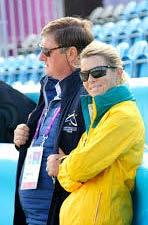
A. Charlotte Casiraghi, Princess Caroline and Princess Alexandra all attended the red-carpet wedding of Edwina Alexander and Jan Tops.
B Edwina on her beloved stallion Vleut, bringing home the blue once more. Photography CAMILLA STEPHAN
C. The couple welcomed baby Chloe into the world in July 2017.
D. Edwina Alexander-Tops and her husband Jan Tops at the 2012 London Olympics
merits. “All he had to do was pull it off,” she said at the time. In only five years the GCT has lifted the level of prize money by hundreds of thousands of dollars – in Aachen, for example, it went from $150,000 to $1million.
The philosophy behind the GCT is that less should be more in show jumping. “Show jumping horses are valuable, unique and hard to come by,” Edwina says. “We believed that if we
could create something that meant competitors could earn more, and jump their horses a bit less, then the horses welfare would be better looked after.”
Jan was already famous in the equestrian world for his ability to create partnerships between horses and riders, but his partnership with Edwina (they married in 2011) has allowed that talent to blossom. “He’s found me amazing horses,” Edwina says. “But also what you
need to remember is that every horse is different. You can’t ride every horse the same way, and so the right way to ride the horse is as important as the horse itself.”
And there is no doubt that some of the horses she’s ridden will be remembered forever. Horses like Pialotta, Socrates and Cevo Itot du Chateau, for example, with California and Vinchester hot on their heels as champions in their own right.
But of all of those horses, it’s Cevo Itot du Chateau, affectionately known as ‘Toti’, that remains her horse of a lifetime. No fan of show jumping could surely ever forget the little 16.1hh chestnut gelding out of Le Tot de Semilly, given to Edwina by her husband as a Christmas present in 2007,
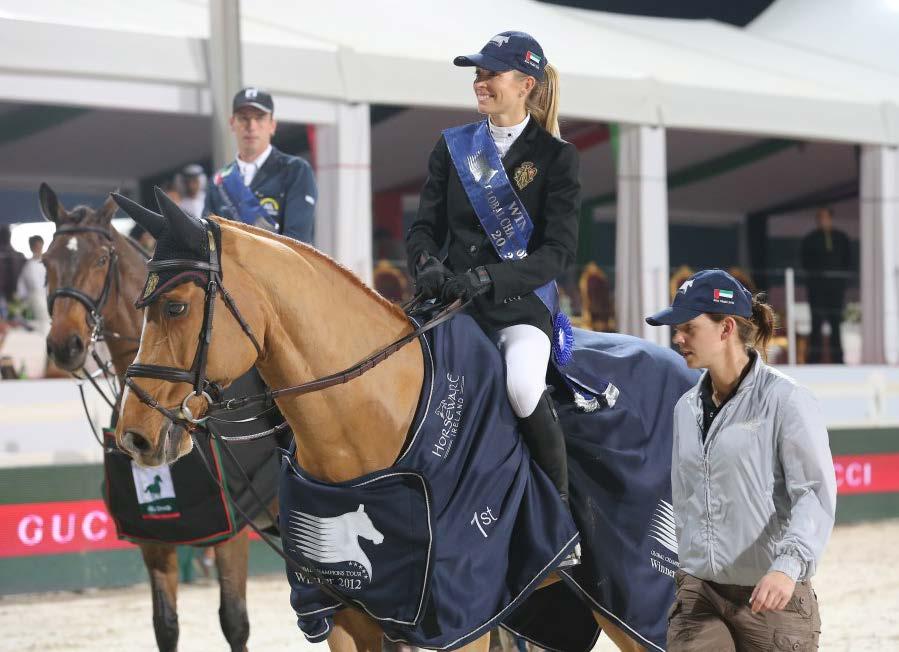
that took her to victory not once, but twice in 2011 and 2012 on the Global Champions Tour.
“He’s not anywhere as large as many of the other horses,” she says, “but he’s got heart and he and I just connected straight away. Toti has earned more than $3.5m in prize money – an amount even a top racehorse could be proud of. He retired in 2014 at the age of 18 but according to Edwina still rules the roost. “He’s got a bit more weight than he used to have, but he’s still very active.”
These days the couple divide their time between Monaco, where their daughter was born, and Valkenswaard in The Netherlands, where their magnificent stable, Stal Tops, is set on 24 acres, surrounded by woods. The property has three Grand Prix fields, a staff of 12,
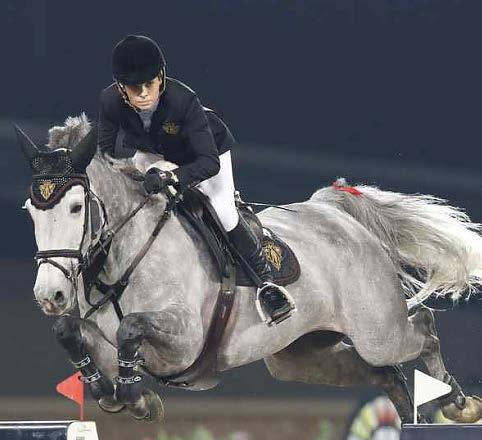


‘ ‘ For me it’s horses against horses, ... May the best horse win
and on average 35 horses present when they are not at competition. Edwina rides five to eight horses a day, runs, eats healthily – and, she says, “gets lots of sleep,” although it’s a bit hard to see how she has the time to sleep. She’s achieved representing Australia at the Olympic Games at Beijing, London and Rio, and in 2011 and 2012 was the overall champion of the Longines Global Champions Tour twice in a row. She’s won Grand Prix events in over 10 different countries during the course of her competition career.
Perhaps the best bit of her recent
inaugural LGCT Super Grand Prix win, was that she didn’t realise she had won! All three leading jumpers, Dutch rider Frank Schuttert, Ludger Beerbaum and Edwina all had four penalties over two rounds. Pulling all stops out, the Australian couldn’t actually see her results. “I thought the crowd was just cheering because I’d finished,” she says. “I really didn’t think I’d won. After I had the fence down, I thought, ‘right, I just have to go for it.’” And so she did!
The next week, leading up to Christmas, saw her at the Olympia Horse Show in London, with three mounts, Dakota,
Veronese Teamjoy and Vinchester, her stunning stallion. Although she finished a creditable 13th overall in the top 30 rider standings – to put that into perspective, she was the only Australian in the top 20.
Looking back at her decision in March 2017 to “retire indefinitely” from the sport she so loves before the birth of Chloe, seems, in hindsight, as if it was never going to work for this power house of a competitor. In September 2017 she was already back to five-star competition in Switzerland surely making it one of the shortest retirements in the world.
Although she is a strong advocate for women in sport – across the board – she does not like to see showjumping as ‘Men against Women’. “For me it’s horses against horses,” she says.
May the best horse win.
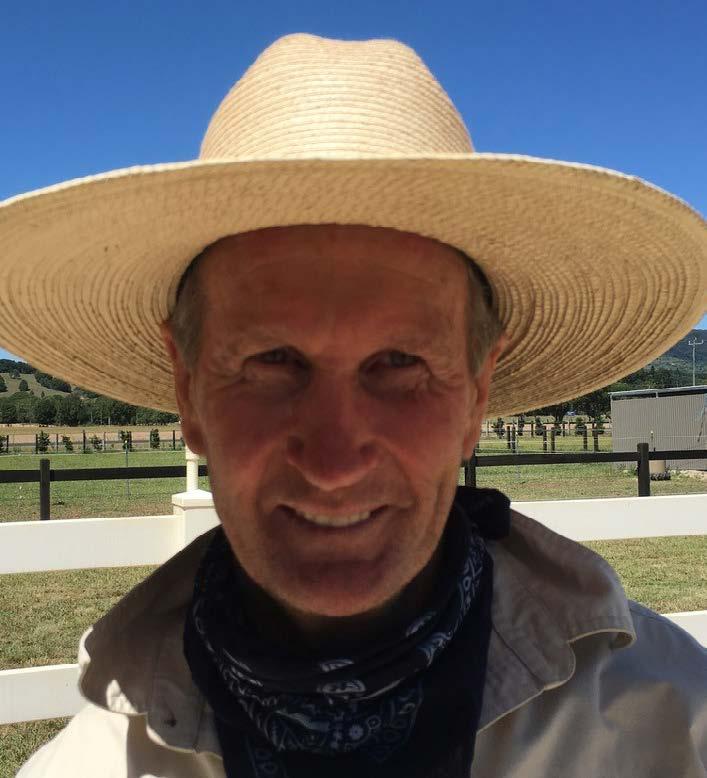
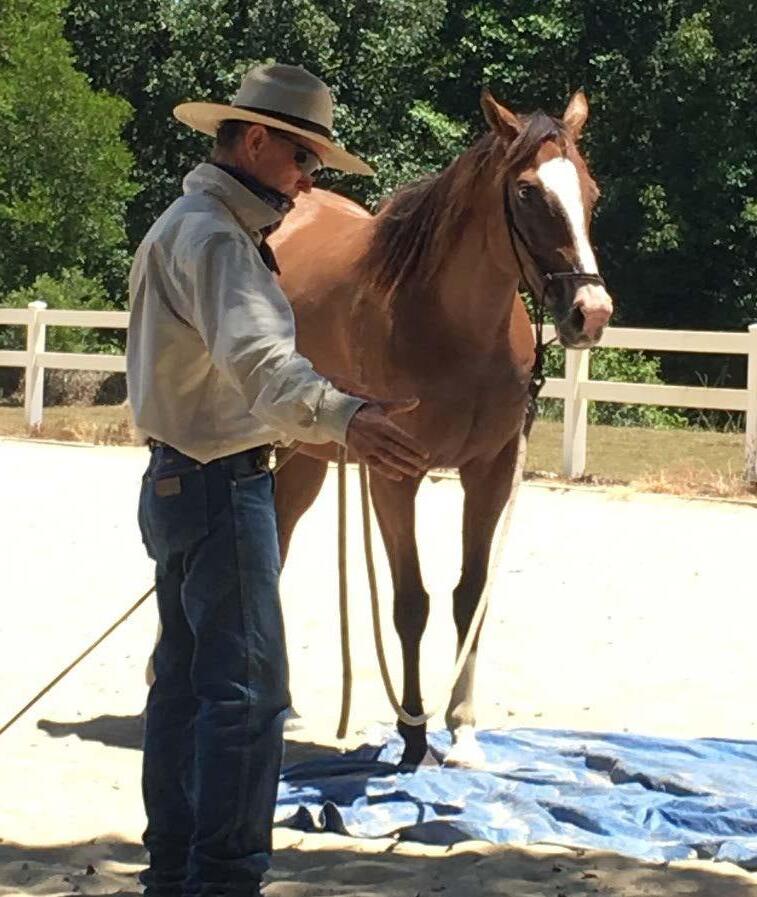
Wayne Banney has been teaching horsemanship for 30 years. This wiry cowboy has earned a reputation Australia-wide and overseas for training horses and encouraging people to make changes to themselves. He helps people become better communicators, not only with horses but also in other areas of their lives.
Wayne has a dry, quintessentially Australian sense of humour, evident to anyone who’s worked with him. He isn’t quick to talk about himself, but relaxing in the shade of a big old fig, after an intense half-day clinic, he starts to open up. His horse Roy is grazing beside the truck they both travel around Australia in.
‘I was a feral bush kid, bare-footed and running about all day,’ he says. He left school the day he turned 15, believing that ‘the mind controlling system’ didn’t offer him the chance to learn what he needed. ‘The bush and animals became my teachers, along with some humans.’
He started work on a dairy farm around the Gold Coast hinterland where he grew up. ‘There were horses there, and
that’s what I wanted to know about. The husband and wife team were as different as night and day. Her method was one of reassurance, patience, firmness and kindness; his was a big stick method, rigid and aggressive. I saw the fear in the poor horses’ eyes when he dealt with them, which wasn’t the case with the wife’s horses. When I found myself being too hard I’d think back to the promise I made myself way back then, to put myself in the horse’s place. Aggression is a signal to dig deeper within oneself and deal with your own negativity.”
He points to Roy, his horse. “See that horse, he was destined to have his life ended as a youngster,” he tells me. “He didn’t have time for the deeper thinking required to work out how to keep his spirited ways, but with adjustments. He had to work out how and when he could use his high spirits. My goal for him is to help him achieve his maximum. When we’re finished here, I’ll signal him and he’ll jump aboard the truck. Wait and see.”
After his stint on the dairy farm, Wayne headed north to work on a cattle station in the Northern Territory. While he
was working as a ringer he had some success in local shows and rodeos, which helped him decide to dedicate the wild part of himself to becoming a competitive professional cowboy. After a couple of years, he joined the professional rodeo cowboys association and before long qualified in the top 15 for the national finals in both bull riding and team roping. He also had success with show jumping and stockman challenges.
He would get away from the circuits and people during the winter to organise the horse teams for musters on two million acres in the Kimberley and
Pilbara. He laughs at the memories. “Matching horses to a sometimes ragtag assortment of temporary stockmen and women, ranging from thrill-seeking backpackers to experienced ringers, and keeping both horse and rider safe, had some interesting moments,” he recalls. “The country is harsh, but beautiful and interesting. It’s not a holiday, but it still felt more like a privilege than a job.”
His horsemanship clinics had their genesis when he was asked to start a black stallion. “I started him, along with several horses. But after a couple of weeks I received a call from the owners who weren’t happy because they
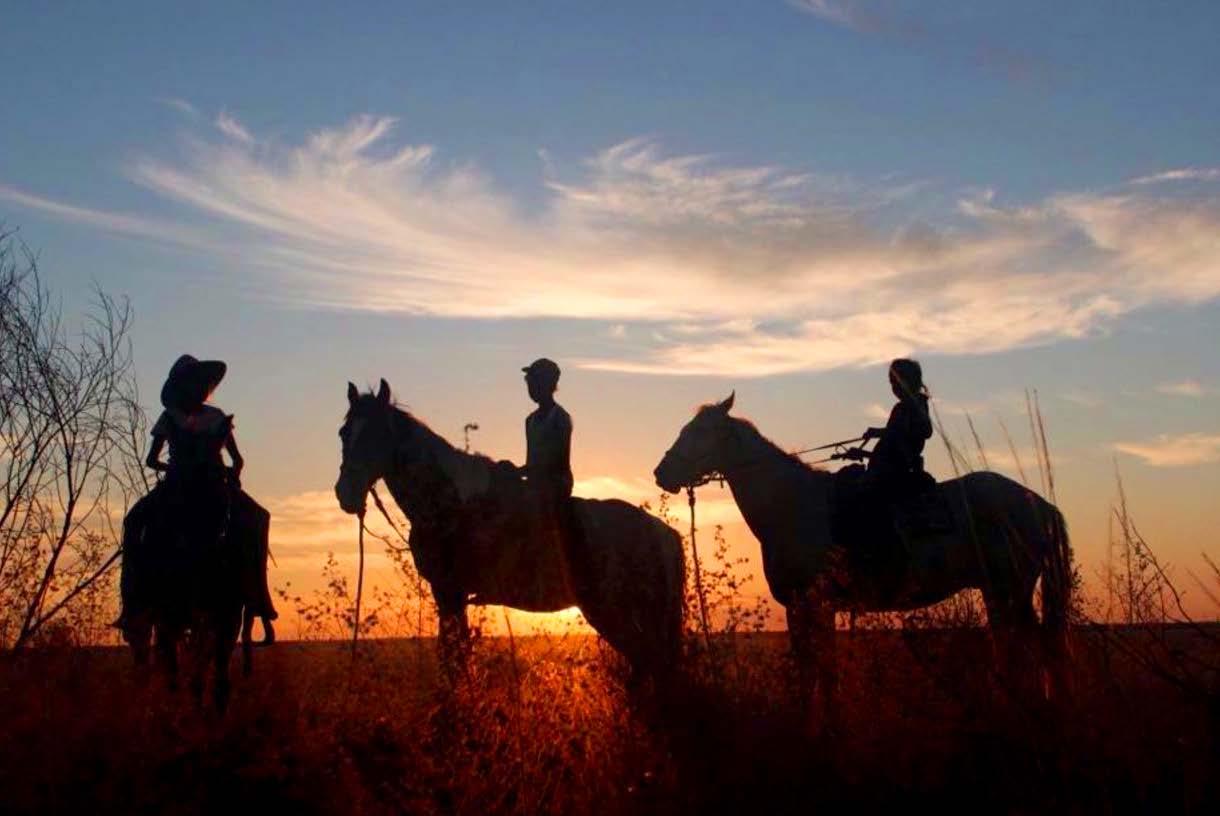
Enjoying the sunset at the end of a long day’s learning.
‘
‘ The country is harsh, but beautiful and interesting. It’s not a holiday, but it still felt more like a privilege than a job ...















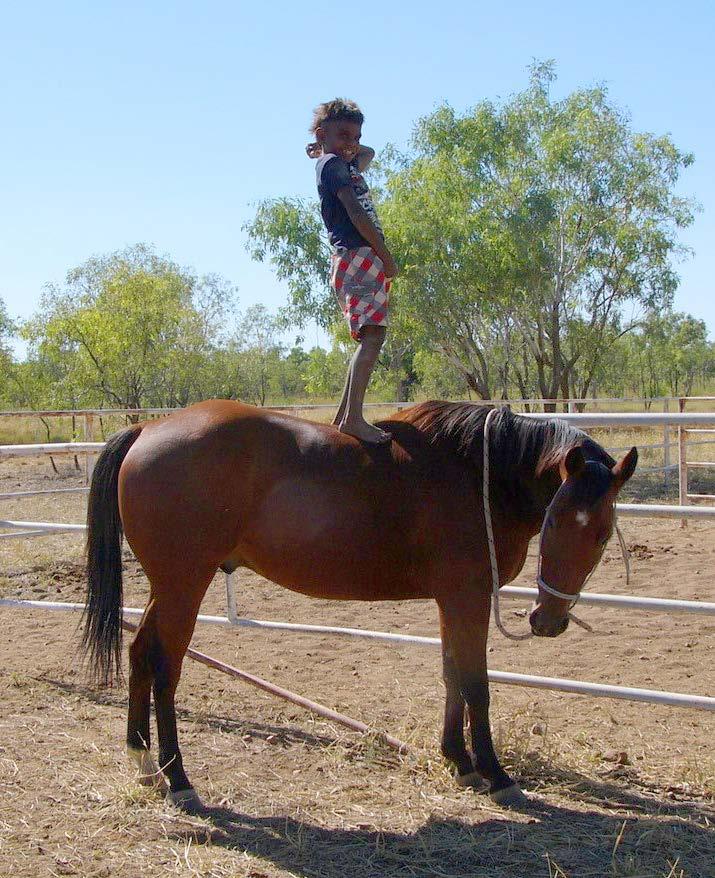
B. “Mr Wayne! Mr Wayne!” Johan shows off standing

















couldn’t get along with the stallion,” he says. “They were thinking of sending him to the doggers, so I asked them bring the horse back. He was a very nice horse. I insisted that whoever was going to be working with the horse had to stay so I could get them on the same page. From that day forward it was my rule for any horse I started. The clinics stemmed from this.”
One of the riders in the half-day clinic he’s just completed is 27-year old Mariah Hearn. She reached out to him to conduct a clinic in Mullumbimby with her current horse, Tolkien, 16 years after she did her first clinic with him as an 11-year-old in Port Fairy, Victoria.
She recalls her first clinic with Wayne with her first horse, Abby, a little stock horse, who Mariah thought pretty much hated her.
“That horse tried everything to harm me…bucking, bolting, rearing, charging at me on the ground, shying towards traffic, you name it. My goals were to strengthen my relationship with her and gain skills to better handle her while remaining safe on the ground and in the saddle.”

Mariah is now studying a diploma in horse industry management and performance horses. She champions the principles of horsemanship for any riding discipline. She says the best thing she’s learnt from Wayne is pressure and release, timing, consistency and repetition.
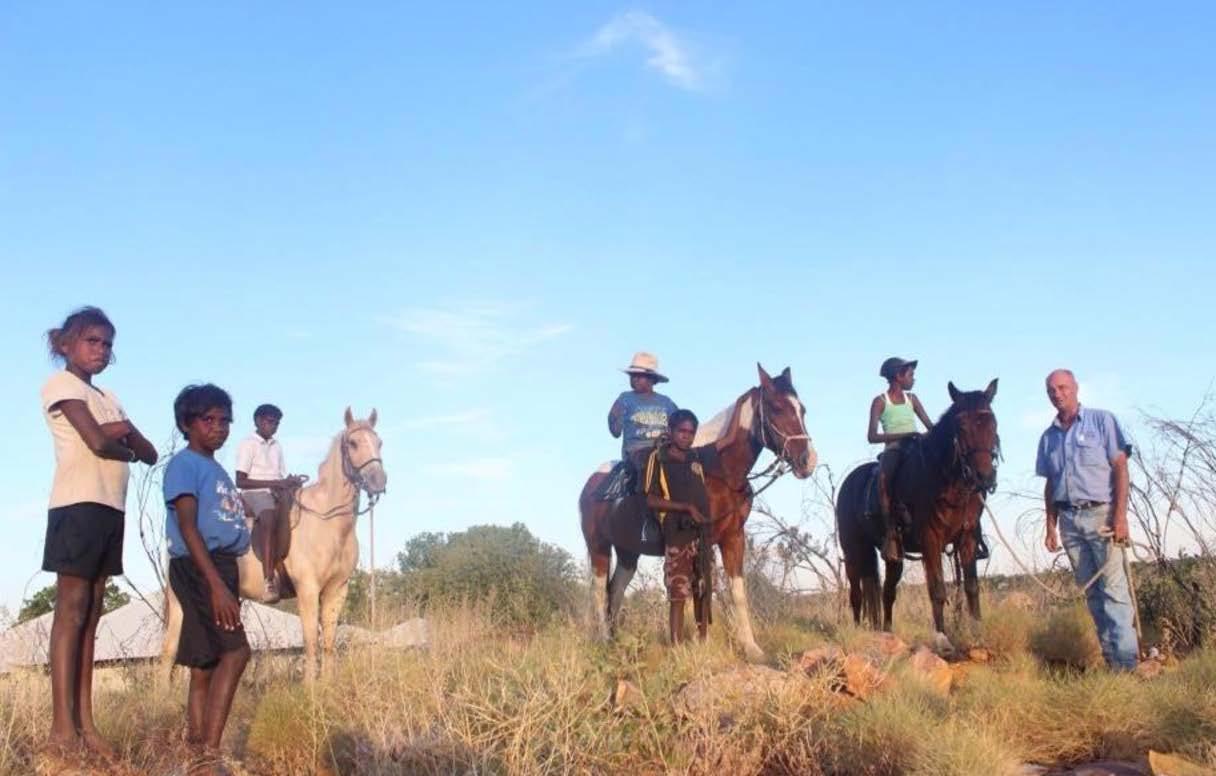
Wayne’s most recent venture is a project with First Nations youth in Fitzroy Crossing, Western Australia. Gundagai businessmen Stewart Mack and several Elders in the area wanted to get the youth involved with horses to break the boredom in a community with limited activities to engage rural youth. They bought five Balgo horses from near Halls Creek and gave them to the youths, with no strings attached, along with the support to help care for
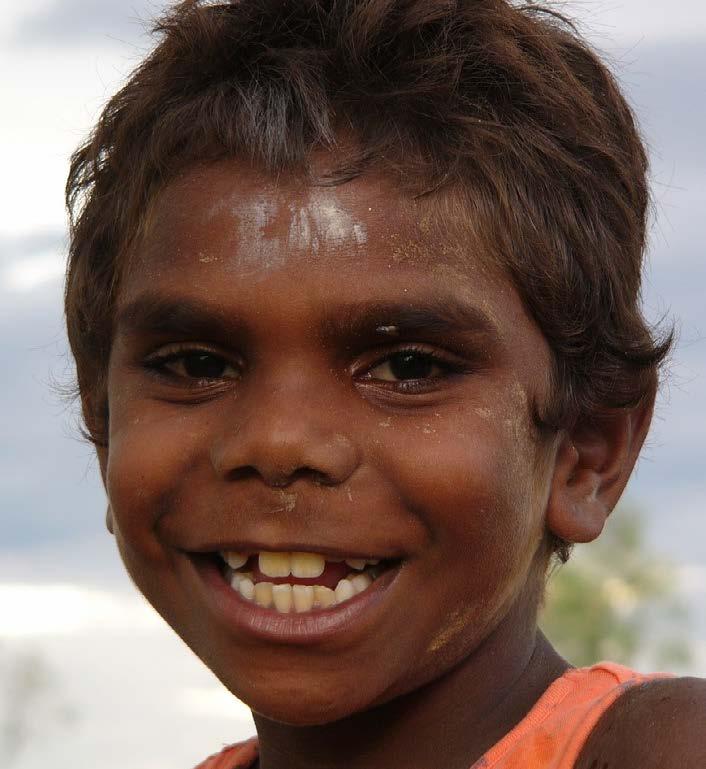
and learn natural horsemanship, The kids progressed over about six months to a point where some expertise was required.
Stewart had known Wayne for a number of years and asked if he would come

C&D: Johan and Wayne
–firm friends.
E: Wayne’s gentle horsemanship builds a safe environment.
up to the Kimberley and pass on his knowledge. Wayne drove the five days to Fitzroy Crossing (as mates do) and arrived to a bunch of kids aged between seven and 14 years old, five horses he describes as “hoorangs” - and limited facilities. Wayne set about doing what he does best: working horses and educating people, building a safe environment.
“There’s one little kid, Johan, who calls me Mr Wayne,” Wayne says with a grin. “I got him braver around horses, and he’s really a natural. He listens to me and then goes off and just does it. One day I was working with some of the kids and I hear a voice across the yard. ‘Mr Wayne, Mr Wayne!’ and there’s Johan standing bareback, barefooted on ‘Ohi’, smiling ear to ear, proud as punch. It’s the reason I got into horses all those years ago.”
As the shadows beneath our fig tree have grown longer, Wayne starts to pack up to get himself and Roy on the road again. They’ve got a lot of miles to put beneath them before their next stop. Wayne whistles to his horse. Roy trots right up to the back of the truck and jumps the metre jump to load himself. Nothing unusual in Wayne’s books.

THE HORSE LISTENER
It’s summer and in Australia that means horses being bought and sold for the competition year ahead, with the horse’s emotional wellbeing often low on the list of priorities, writes CANDIDA BAKER
IIf you were to think about the major difference between horses and humans – other than their four-legs of course, it would be that they have a physical language, and we have a verbal language, and although many of us now understand that we can facilitate their growth into happy and useful members of the horse/ human world by attempting to learn their language, there are limits. One of those limits unfortunately, is explaining to your equine buddies that it isn’t actually going to kill them if you separate them.
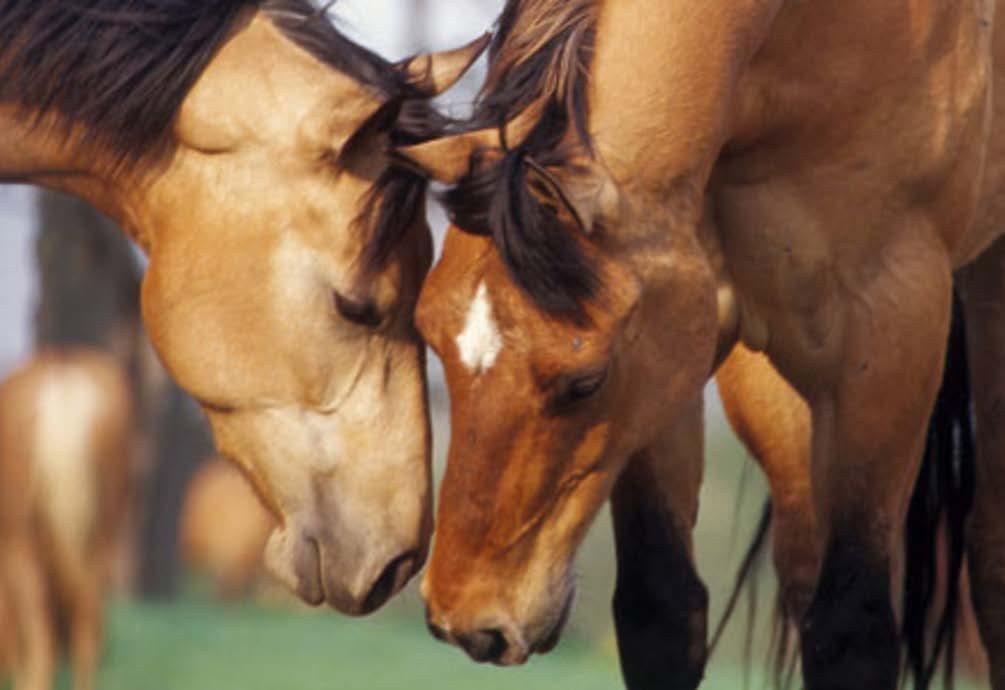
In the wild, even within a herd, horses will form close bonds or friendships with another horses. It serves them well to have a ‘buddy’ system within the larger herd.
In virtually every horse’s life, some type of separation is occasionally necessary and unavoidable. Fortunately, it’s not always a source of significant suffering. “Whether horses are traumatized by separation depends if they have a chance to join a new group,” says Konstanze Krüger, PhD, of the Department of Evolution, Behavior, and
Genetics at the University of Regensburg in Germany. She believes horses kept in isolation suffer because they are highly social animals.
Changing groups is a common scenario for young horses in nature. Wild horses tend to remain in relatively stable groups throughout their lives except for younger herdmates. Studies of American Mustangs, for example, revealed that up to 80% of these horses disperse from their natal groups between the ages of three to five years. According to Krüger, “Many equine researchers now observe that social groups in horses are very fluid. Like many intelligent social mammals, horses live in a fissionfusion social system, meaning that they frequently disperse and reunite.”
In a domesticated situation – i.e. almost every horse on the planet these days – bonds are formed, and broken, on a regular basis. And the result can be traumatic for some horses. Some people work on the basis that if a horse doesn’t live with another horses then ‘over-bonding’ won’t occur but ideally horses should have a mate, at the very minimum over the fence to chat with and groom.
So how do you deal with separation anxiety? Over the years of rescuing horses, and particularly in the offthe-track thoroughbreds we’ve had a few that suffered this at the start in a major way, and straight up I would say that the main cure for it is time. Time, unfortunately is often the one investment people are not prepared to make, whether it be for rehabilitation, or for training, or for curing behavioural problems. We are an impatient race, we humans, we want something, and we want it now!
What I’ve seen is that often it can take
a year for a horse to be naturally cured of its anxiety, simply by dint of taking it away from its mate for very short period of times, swapping paddock mates, floating it on its own when possible, and doing ground-work with it so that in its mind YOU become a BFF as well, and they’re as keen to be with you as they are with their friend. Food is a great calmer as well. A horse that has its head above its wither has adrenalin (needed of course for competition) coursing through its body to a greater or lesser extent, a horse that has its head below its wither is producing endorphins.
This time of year separation anxiety is a bit rife. Horses have been sold on at the end of the school year, performance horses have gone up or down grades, kids have outgrown ponies and are moving on (the fate of the quiet small pony is often to be moved on, sadly); horses are retired, or young horses are taken for starting under saddle, people are setting themselves up for the rest of the year, and unfortunately the horse’s emotional well-being isn’t often taken into account.
I’ve seen it take anything from six weeks to a year to truly settle a horse, but it’s
worth it, particularly if you are a small outfit or an individual with just a few horses. Marjoram oil is particularly good for trauma, for horses that have just arrived from a new home for example; bergamot for anxiety and depression. A lot of horses, particularly if a friend has left them, suffer from depression for a while. So if you do have a horse with separation anxiety, don’t despair. Put the time in and there’s every chance that it will come through.
Candida Baker is the editor of HorseVibes andruns a Facebook page – The Horse Listeners
The concept of correct balance and posture sounds simple, however for some riders the benefits afforded by the influence of the outside rein are lost as the concepts appear to be counter intuitive.
I was fortunate that my early riding instruction came from Australia’s “Grand Master” Malcolm Barnes at the Oakwood Riding School in Narre Warren. I am blessed to have had his insights, as these lessons were presented in the most wonderfully colourful and expressive ways that painted “word pictures” that helped me to visualise the concepts and recognise correct feel.
Malcolm’s unique gift was his ability to identify if various problems were due to the horse’s inexperience or resistance, and his recommendations were insightful and effective. Green or educated, all horses responded positively as their understanding, balance and confidence was restored.
Malcolm frequently used a flexible dressage whip to show how the horse’s body should be shaped on curved lines and the lateral movements and he showed how the interaction of the reins,
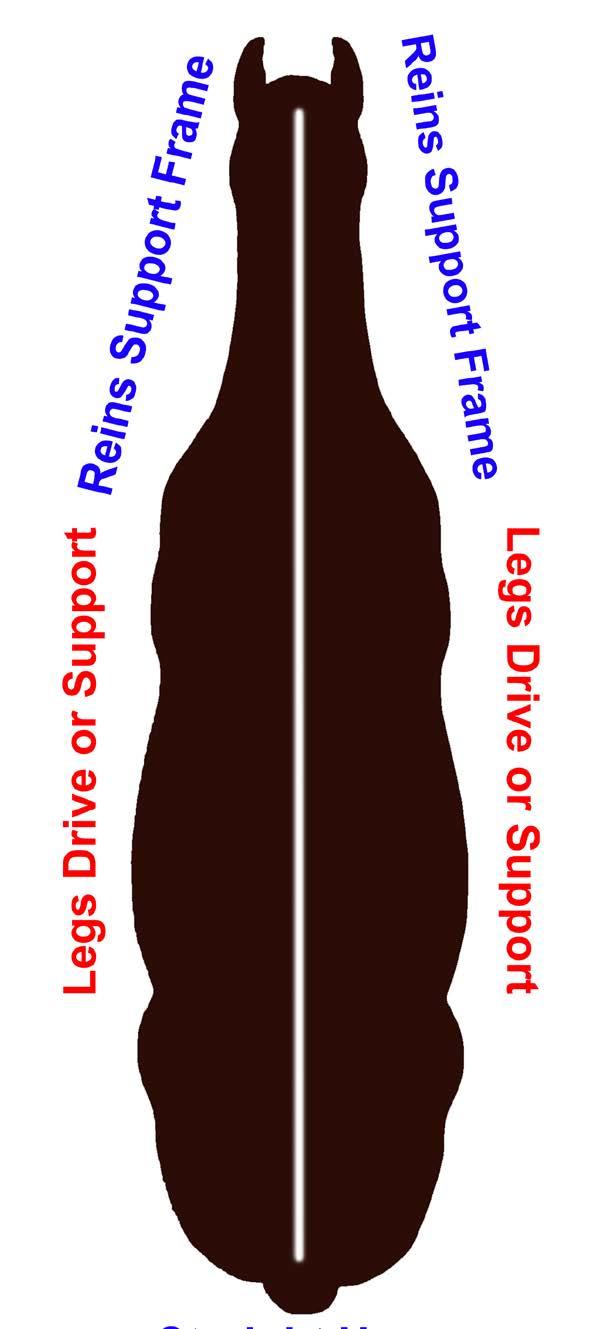
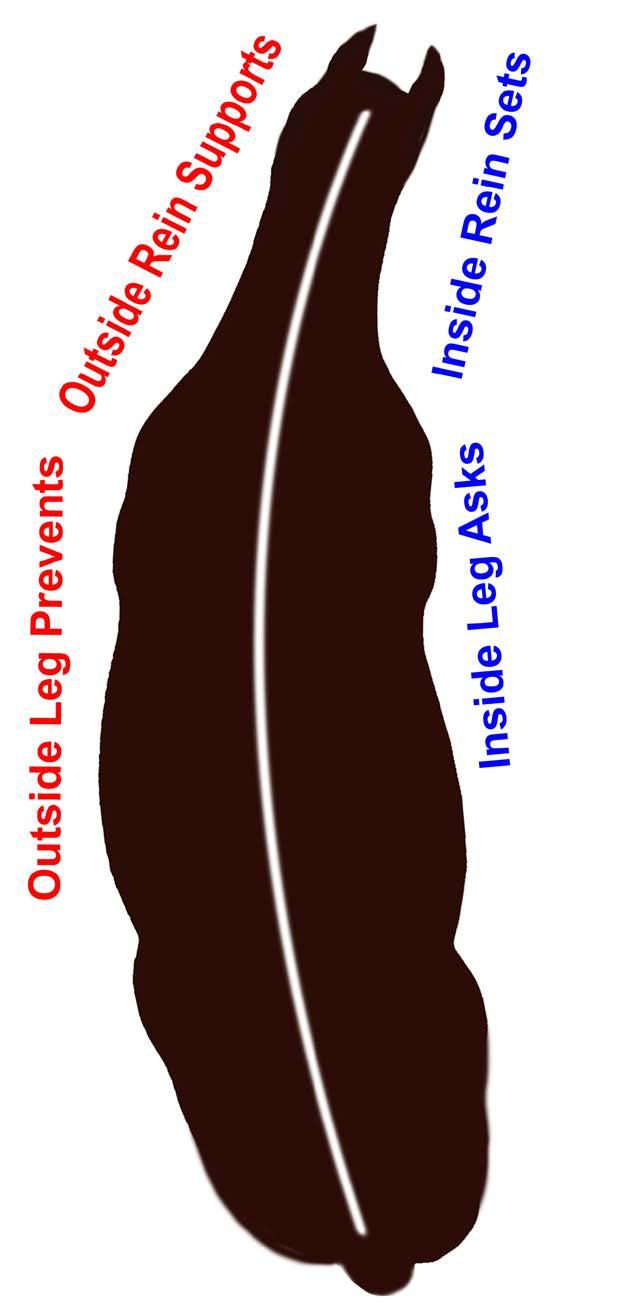
The inside leg drives forward and the outside rein contains the energy and is the constant that gives the horse longitudinal support and security by setting and controlling the degree of roundness, engagement and collection. The inside rein affects the softness and bend in a way that keeps the horse supple and light.
The outside leg prevents the horse deviating or swinging out, perhaps as an over-reaction to the inside leg or some evasive resistance.
the inside handlebar is pulled to make a turn, the bike will over-rotate and the rider will need to stop or fall. To control the degree of turn, the inside hand indicates direction and the outside hand controls the degree of turn and keeps the bike stable and upright. A horse requires the same support from the outside hand to control the bend and influence the roundness and engagement.
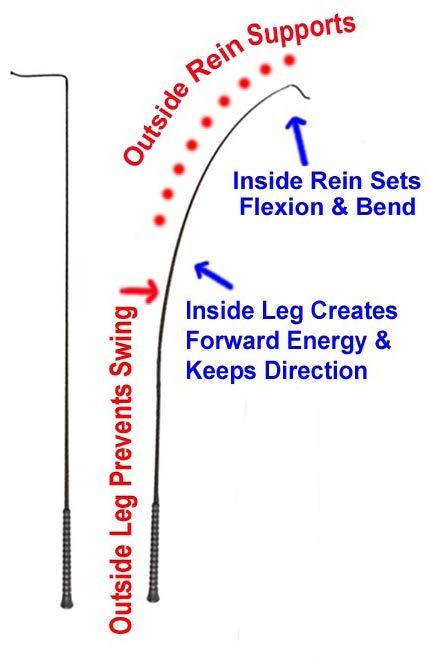
legs and seat shaped and contained the horse’s body, frequently referring to the juxtaposition of the “longitudinal” flexion” (roundness and collection, with the horse engaged hind legs and stepping forward and under the horse’s centre of gravity) and the “lateral flexion” (sideways bend and softness) which governs direction, precision, lightness and self-carriage.
Malcolm Barnes was a “stickler” about the rider’s position and its impact on the horse’s posture and balance. “Riders have a responsibility to improve their posture and develop an independent and balanced seat!” The head should be upright not looking up or down, shoulders over hips and hips aligned with heels with a bend in the knee to absorb shock, which allows the oscillating hips to influence the seat.” he said.
As a quadruped the horse stands on 4 legs with a suspended body relying on the forward reach of the hind legs to support and balance each phase of movement. A balanced rider will use the reins to frame the horse and contain the energy that is transferred into engagement and lift.
IMAGE 1 A Straight motionless horse, framed by both legs and energy directed to both hands.
The outside rein influence is better understood if the rider follows the outer circumference of the circle and only uses a soft vibrating inside rein to lighten the horse and indicate direction and bend. The outside rein also helps to keep the horse upright and straight.
IMAGE 2 Uniform bend supported by the combination of aids with the line of travel set by the outer circumference of the circle, controlled by the outside rein.
An example of the outside rein influence can be found in bicycle riding. If only
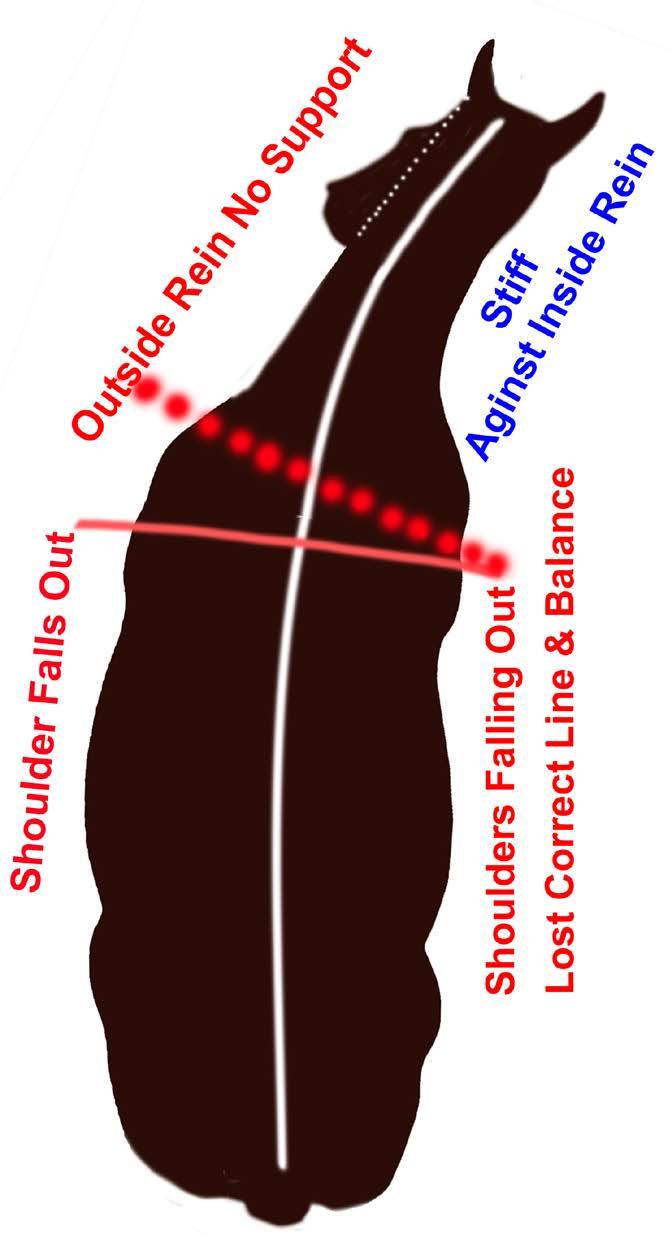
IMAGE 3 The outside rein is lost, along with the directional control and balance. The horse falls in or out, drops onto the inside shoulder and twists head to try and avoid discomfort.
The correct use of the outside rein allows the horse to work in self-carriage in a state we call “gymnastically correct” and free of the paralysing affects of fear and resistance.
Instructional diagram showing normal, correct and incorrect procedure.


VICKI ROYCROFT’S father could not have fitted
much more into his life if he’d tried. Vicki remembers a man who was an inspiration to his family…
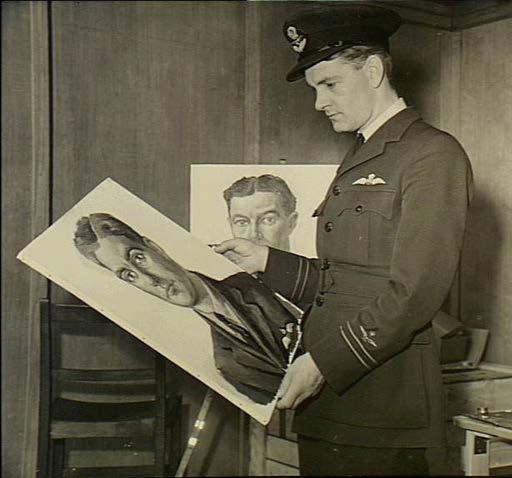
My father, Bruce Rose, was an extraordinary man with great vision and determination. I was the youngest of his three children, a bit of a mistake I think, since they already had the perfect nuclear family of a boy and a girl. He married his lifelong wife Pamela Fincham not long after WWII had broken out, and was a much decorated member of both the Royal Australian Air Force, and then the Royal Air Force, based in the UK. He was a Squadron Leader, and later Wing Commander, but was a bit sidelined after he had to bail out of his aircraft, losing a leg just below the knee when it was caught in the propellor.
But my father was never one to allow these sort of minor setbacks to affect him, when he came back to Australia he continued in the Air Force based out at Wagga Wagga. Later in life he obtained his helicopter licence, and also learned to water ski (on a specially designed single ski) and ride a horse. When the war was over he started a dry cleaning business in Melbourne in Collins St, and was the first person to instigate same day dry cleaning, which was very successful! Later he created a sterile plastics business, Tuta Products, that became a world-wide agent for the Red Cross, and was created pioneering products in the
showcase property for breeding outstanding racehorses. It is now Strawberry Hill, owned by John Singleton, and is the home of many of the fabulously bred stakes winners owned by John.
After my father received permission to have a helipad at Point Piper he could fly his beloved helicopter up to Mount White (12 minutes!), and often flew mum to wherever her horses may have been racing. The house has been rebuilt a few times, and was recently rented by Bill Gates and his family for their Australian holiday.
medical field. He had an extremely agile mind!
We moved to Sydney in 1960, where his foresight came into play again, and he bought land on the waterfront at Point Piper and built an amazing five-bedroomed house that capatalized on the views across the harbour to the bridge and Opera House.
He had always promised my mum, who loved horses, that one day he would buy her a beautiful stud farm where she could breed champion thoroughbreds, and thus in the early 70’s we came to own a 110 acre property in the then unknown area of Mount White, one hour’s drive from the Sydney CBD for a cost of around $30,000. Again his wisdom and foresight was utilized and Pokey Hill (he had an odd sense of humour!) became a
My dad had very little interest in horses, or any animals - although later in life he developed a huge fondness for Great Dane. But he tolerated the fact that his wife and all three children were passionate about horses. He on the other hand, loved sailing and the sea, and typical of his drive and ambition he also became a champion yachtsman, winning the Dragon Class World Championship with his yacht, Titipu.
Regrettably old age took its toll on my mum and dad’s health, and they ended up, still totally devoted to one another, living quietly in an apartment in Darling Point, until his death from a heart attack at age 72. His legacy was enriching, although not in the monetary sense. I will be forever grateful that I – nor my siblings – were not treated to an indulged lifestyle, with my most expensive horse purchases being bought by me later in life thanks to the sale of my wonderful Apache, whose purchase price was only $500. Five years later the sale of Apache set me up for quite a few years, but that’s another story!”
vickiroycroft.com.au
By DANNII CUNNANE
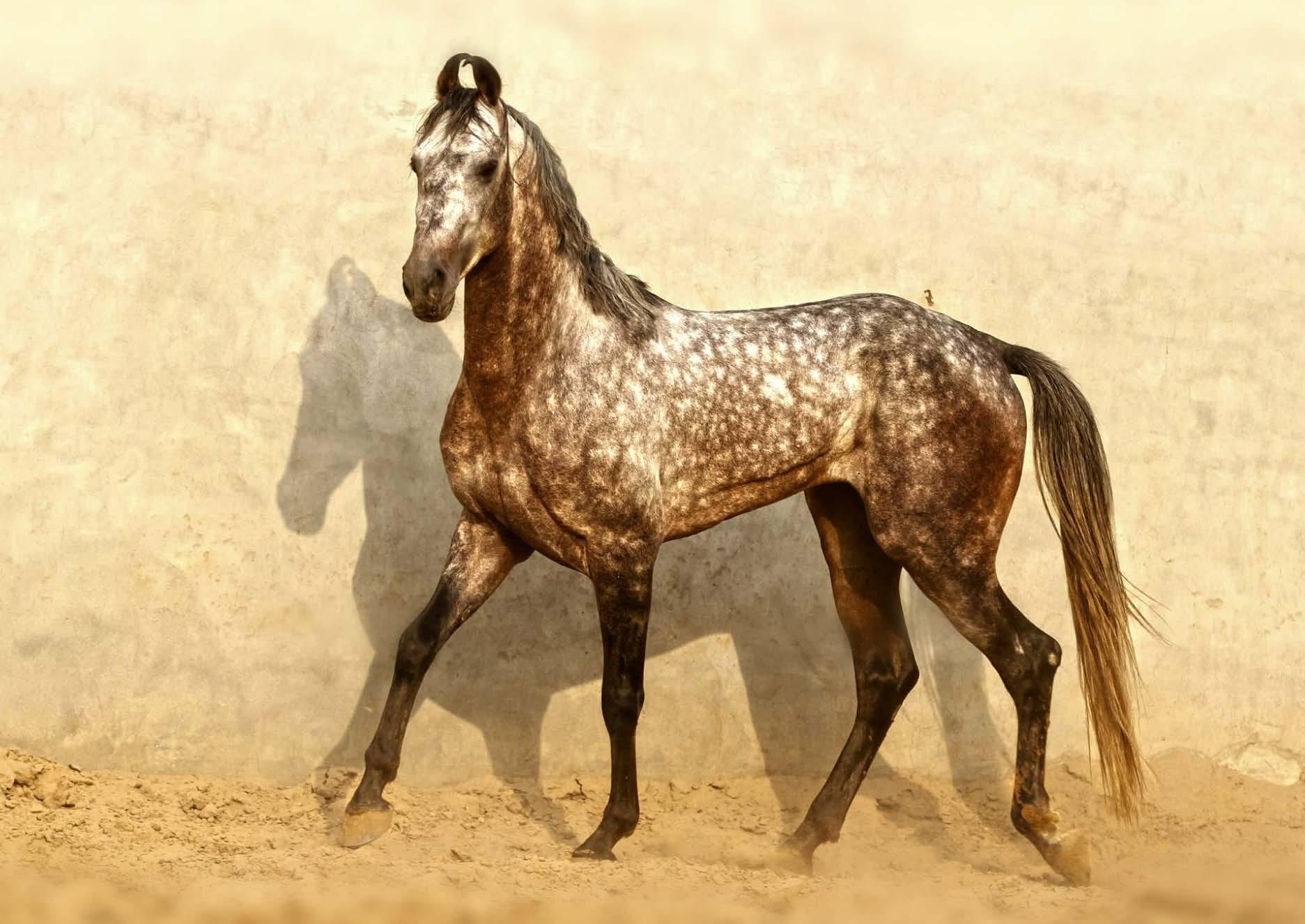
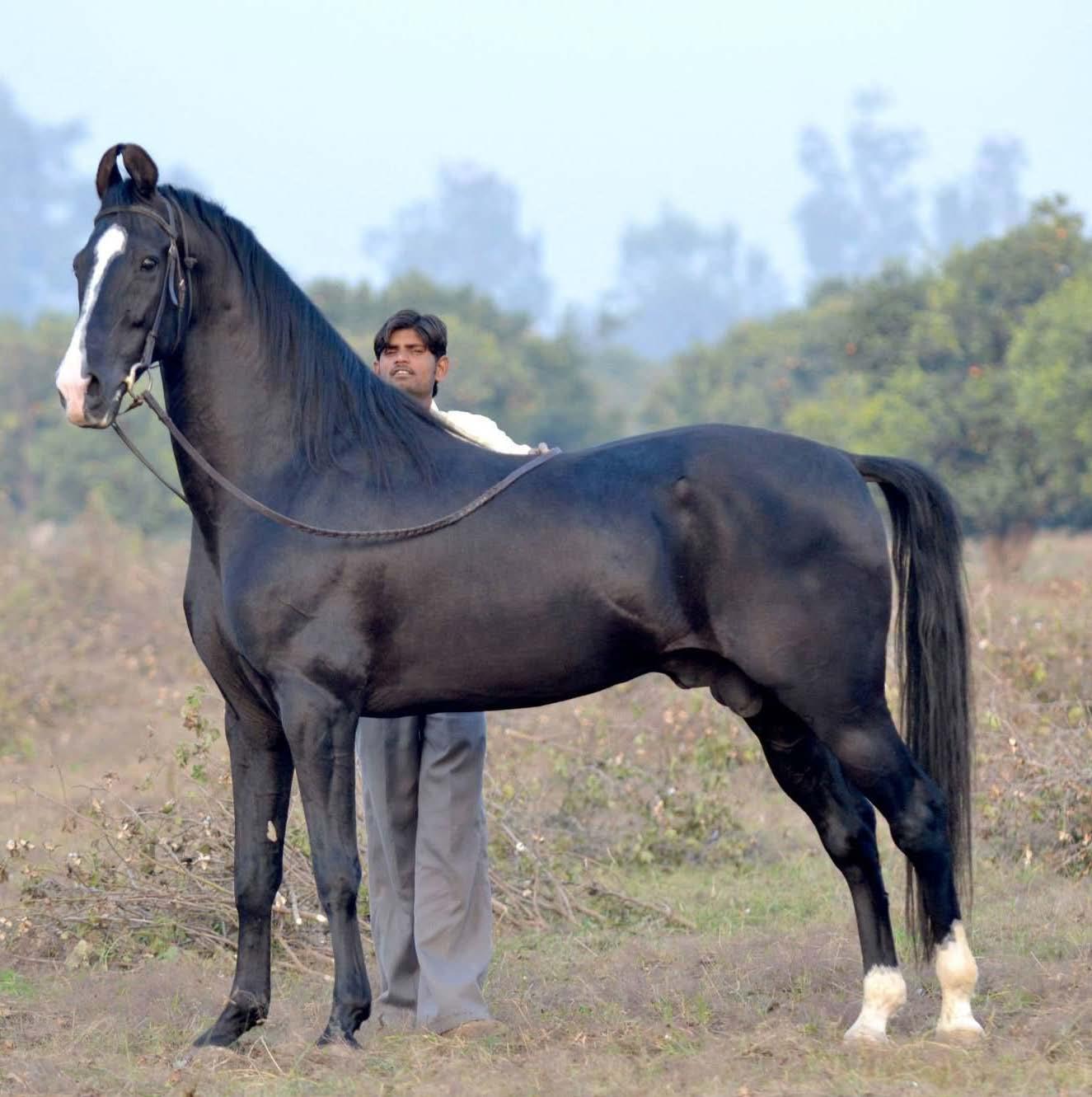
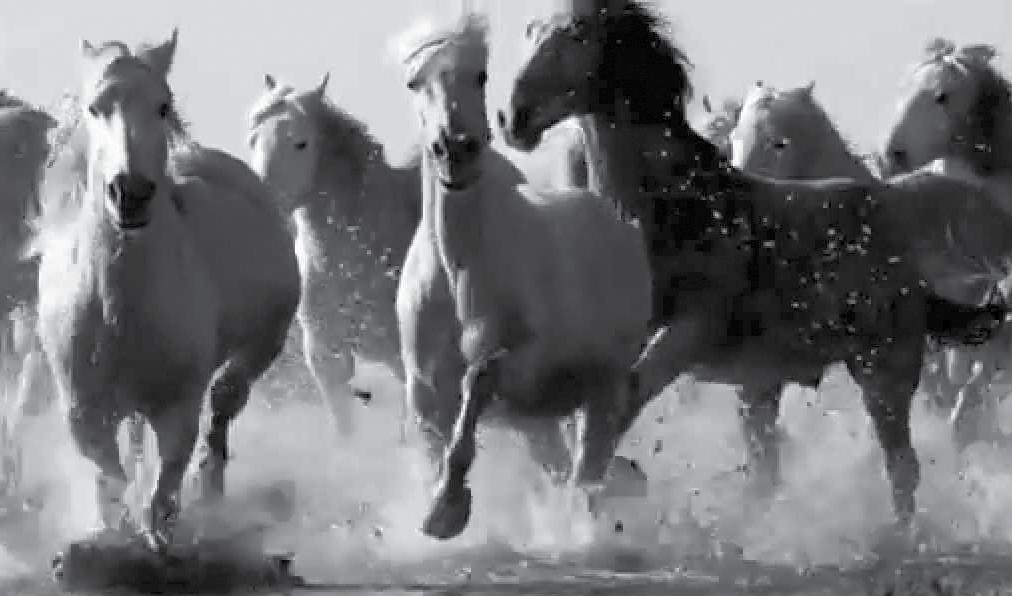
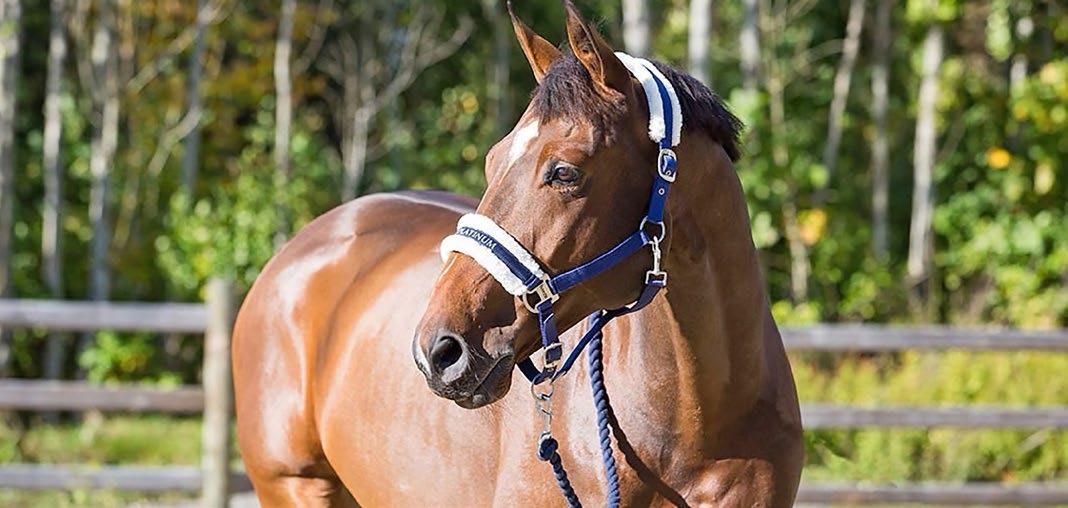
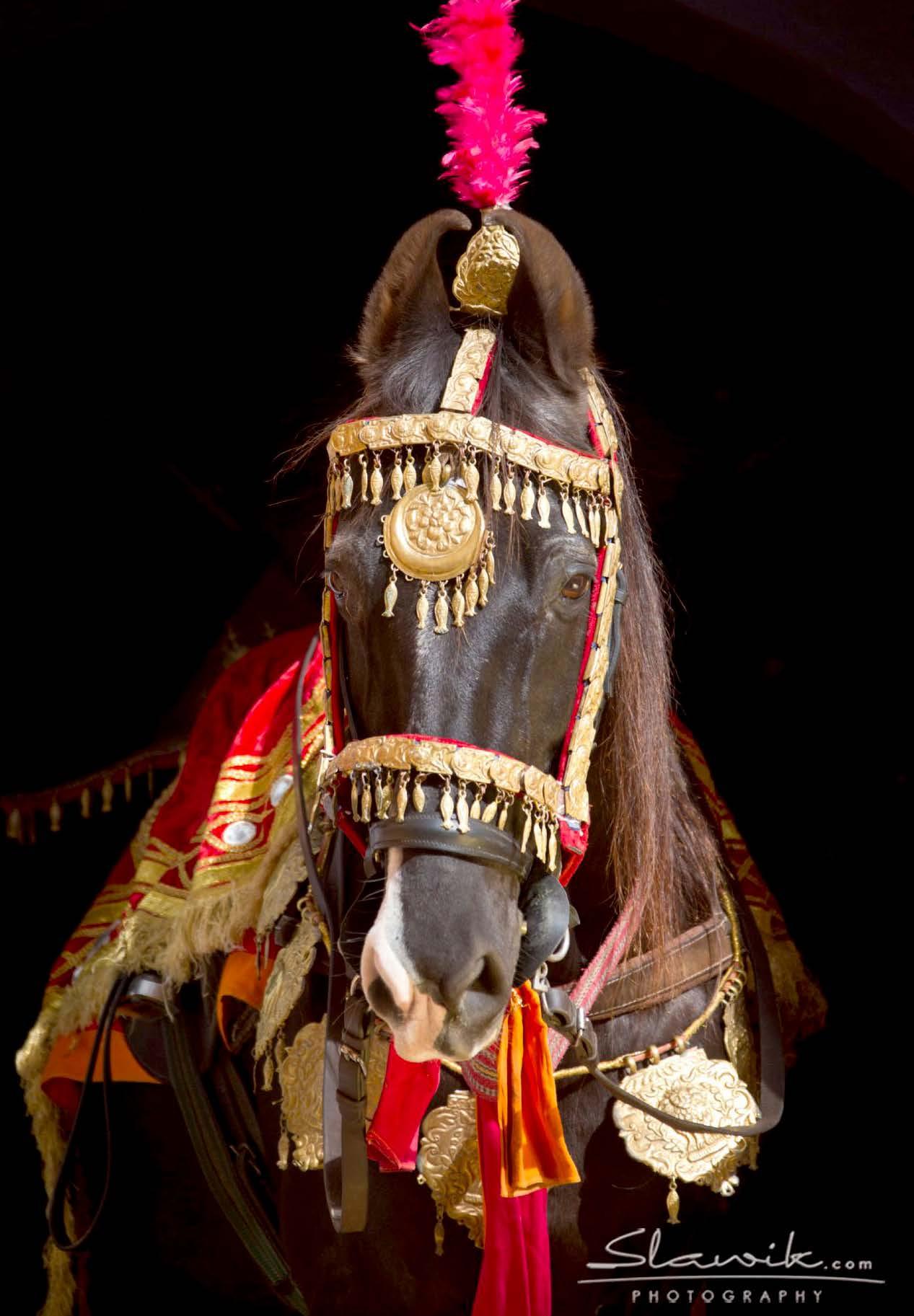
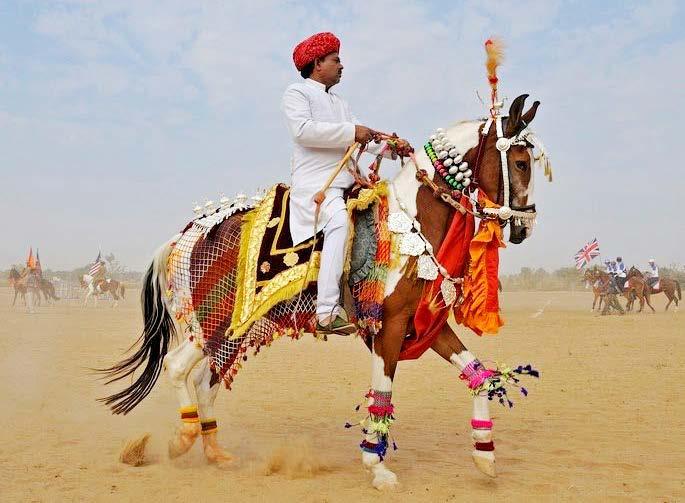
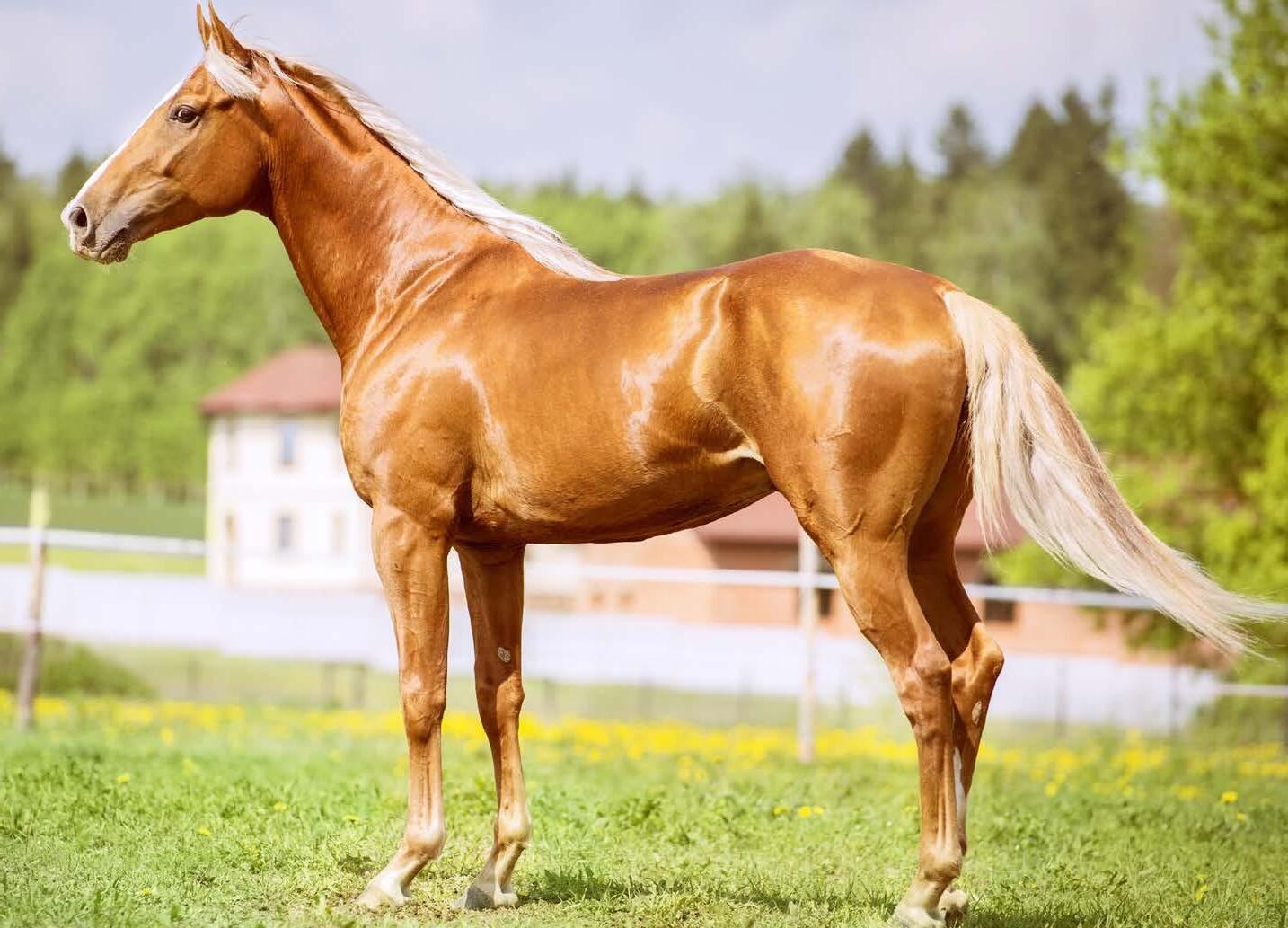
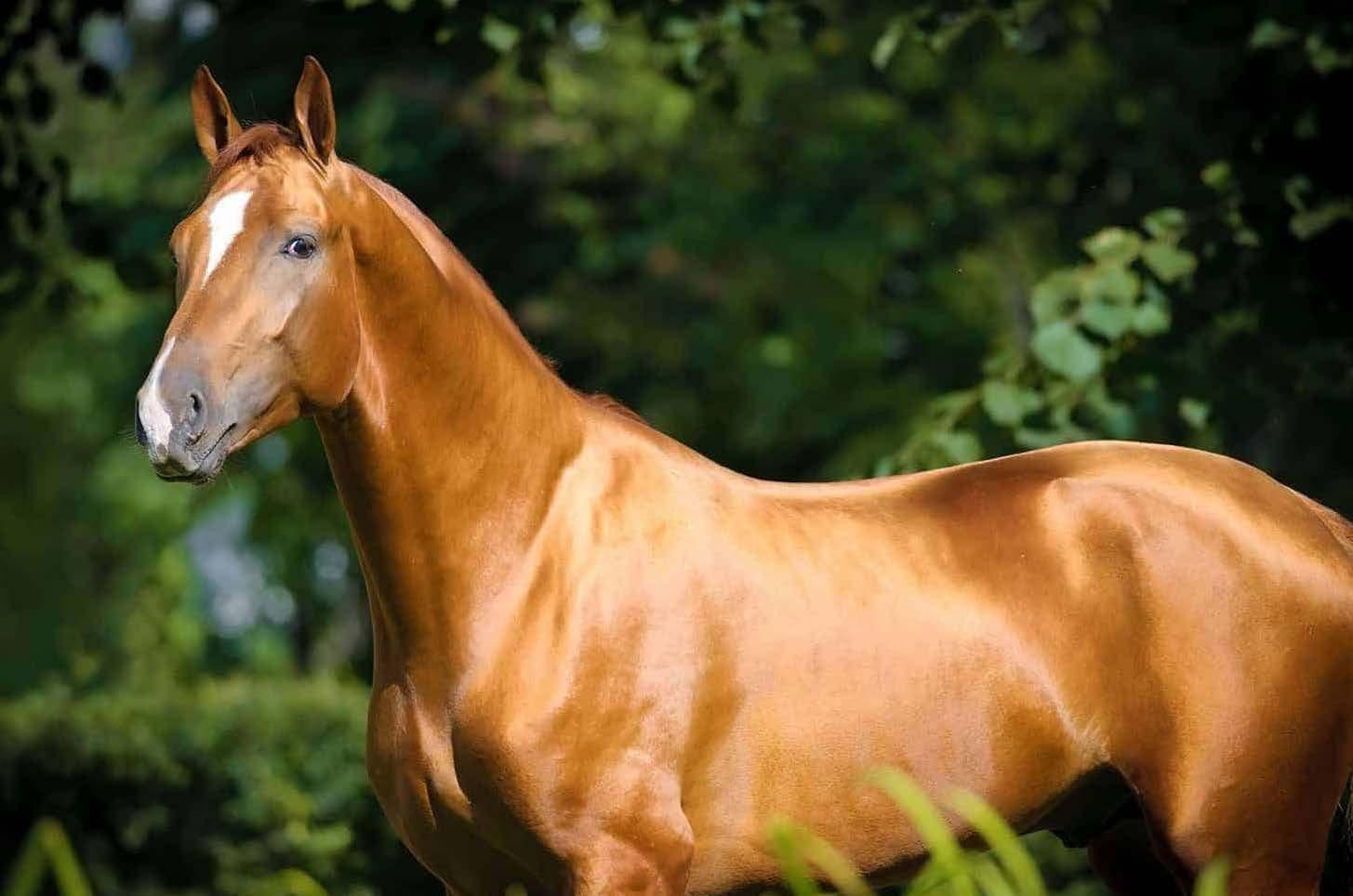
The Marwari (also occasionally known as the Malani) horse is extremely rare. The horse was originally bred in India, in the Marwar (Jodpur) region, and is most famous for its ears, which have a distinctive inward turn.
India is rightly proud of its beautiful, distinctive and brave horse, which was used for centuries as a cavalry horse in the Marwar district. It’s said there were only three conditions under which ‘The War Horse of India’ was allowed to leave the battlefield: victory, death or carrying a wounded rider to safety. Breeders developed the Marwari by crossing the small native Indian ponies with Arabian horses to create a horse that is swift, brave, often with a distinctive, ambling gait, and beautiful to look at. They are also renowned for being extremely loyal to their owners. (The Arabian influence possibly came after a cargo ship was wrecked off India’s West Coast and the
horses were taken and used for creating the foundation stock of the Marwari breed.)
When the rulers of Marwar were dispossessed in the early 12th century, they fled into the Indian deserts where their horses were vital to their survival. They followed select breeding processes to keep the horses as strong and their bloodlines as pure as possible. When the Moguls captured northern India in the early sixteenth century they brought Turkoman horses that further influenced the Marwari breed.
During times of war, the Marwari were trained to be extremely responsive in battlefield conditions and were practised in complex riding manoeuvres. They were agile, strong and quick which pleased the Indian military who relied on them heavily.
‘ ‘ They were agile, strong and quick which pleased the Indian military
quality due to poor breeding practices. Indian independence, along with the obsolescence of warriors on horseback, led to a decreased need for the Marwari and many animals were subsequently killed or simply died out.
The breed was on the verge of extinction until the intervention of Maharaja Umaid Singhji, the ruler of Jodhpur, who almost single-handedly saved the Marwari. He took great pride in the breed and worked hard to raise number of quality breeding stock until his death in 1947.
In 1995 a 49-year-old woman called Francesca Kelly went travelling to India with dreams of seeing the country via a luxury horse safari. It’s during this time she fell in love with the Marwari after being enthralled by their beauty as well as their wild spirit.
Soon after, Francesca purchased her first Marwari with the intention if bringing it back to the United States. To her surprise though, this was near impossible as the breed was on an export ban that made it impossible to import them to another country.
used in endurance races and eventually were entered into India’s national shows.
In 1999, the government partially lifted the exportation ban and Francesca was able to move her horses (Francesca had also bought a handful more by then) to the United States. She then went on to breed the horses in America, with a breeding program also set-up in India to show her dedication and love of the breed.
In 2008, the Indian government began granting licenses for temporary exports of up to one year, to allow horses to be exhibited in other countries. This was in response to breeders and the breed society, who felt they were not being allowed a fair chance to exhibit their animals and show the breed to the world.
In 2007, plans were announced to create a stud book for the breed which was

The attempted eradication
When the British seized India in 1858, they preferred the Thoroughbred over the native horse and tried to eradicate the Marwari. The horse was considered sub-standard and mocked for its inward pointing ears.
During the 1930s the Marwari deteriorated, with breeding stock diminishing and becoming of poorer
Three years earlier, India had signed a global biodiversity pact and declared its indigenous livestock part of the country’s ‘national wealth’. Indian scientists were estimating that only 500 or 600 Marwaris remained untainted by crossbreeding at that time, so the odds of getting the Indian government to reverse its position looked grim. Francesca made it her mission to promote and preserve the breed and, chose to stay in India to achieve her goal. She also did not want to leave her beloved horse behind! She founded the group called Marwari Bloodlines and worked with the Indian government and keen breeders to conserve the bloodlines and develop breed standards. With Francesca’s efforts, the Marwari horses became popular again and were

a collaborative venture between the Marwari Horse Society of India and the Indian government.
These days the Marwari horse is primarily maintained for show, horse safaris, sport, ceremonial and religious purposes, whilst many people choose to cross them with thoroughbreds to create a larger, taller horse. The distinctive ‘dancing’ strain, known as the Natchni is now extinct, but Marwari horses love to show-off, and many are now used for ‘dances’. This trait also makes them extremely suitable for dressage.
These unique horses now have a permanent place in the horse world of today, and are much loved by breeders and owners alike.
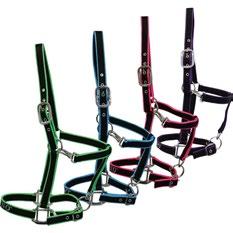
Family owned and run, we operate world-wide from our easy-to-use, state of the art online store! With the convenience of AfterPay & ZipPay we can get great gear in your hands faster, so you can ride now and pay later! We pride ourselves on our honest and helpful advice. We also offer the convenience of AfterPay & ZipPay to make life easier and to get great gear in your hands – faster! Visit us at: www.onestophorse.com.au

Depending on where the Marwari was bred, it can stand between 14.3hh and 16hh.
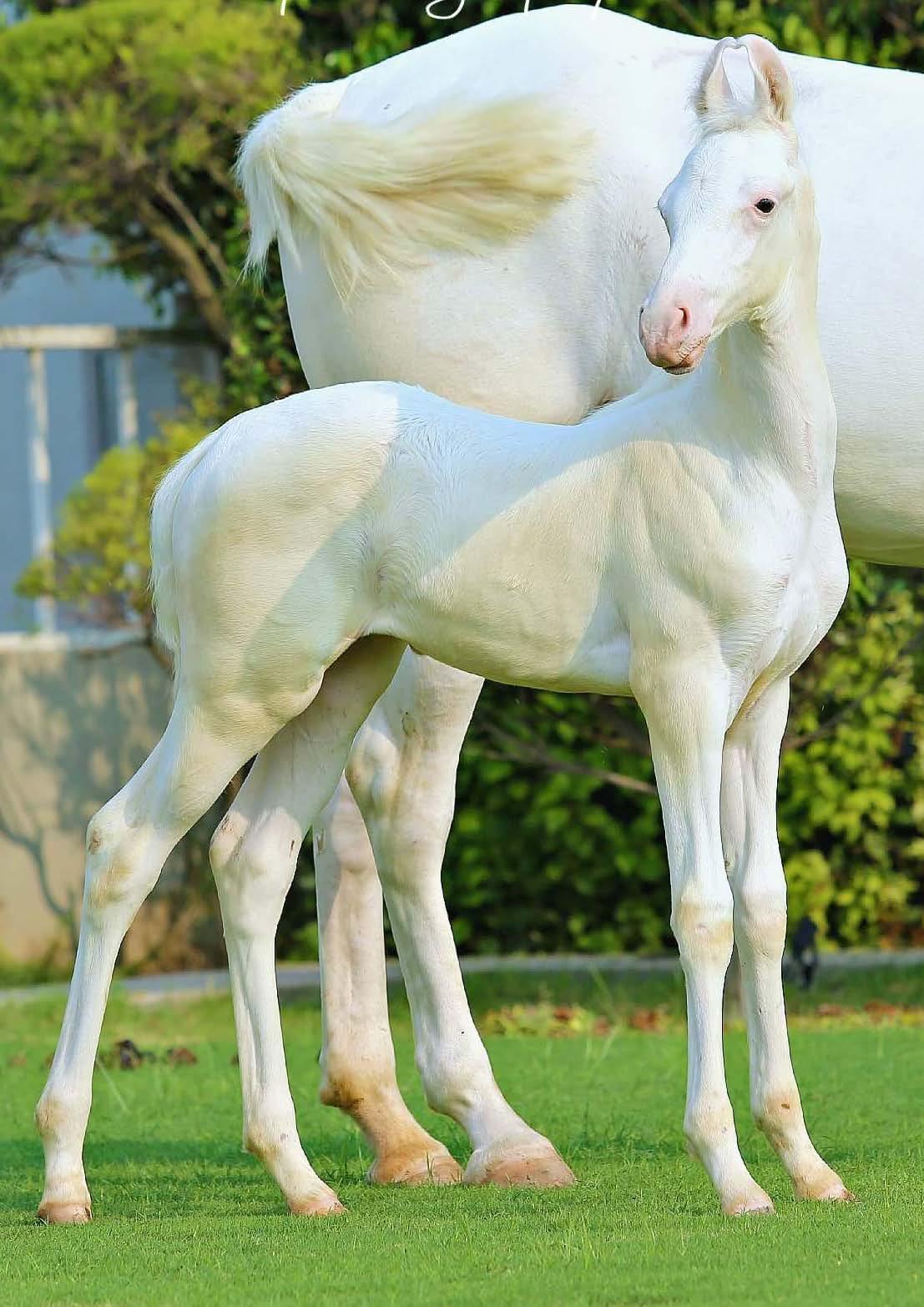
The colour of the horse can range from black, bay, chestnut, palomino, buckskin and grey as well as piebald and skewbald, with grey being considered the most auspicious colour. White horses, bred mainly for religious ceremonies, are not so prized as riding horses, with pure black being the least popular colour.
The nose is slightly Roman and the ears must curve inwards. The neck is slender with a natural arch with straight shoulders and a long back. The tail is high set and the legs elegantly slender with good movement. Their hooves are famously hard and their hearing is said to be exceptional.
Further information
This is an extraordinary breed with a huge history. To find out more about the Marwari’s story, visit the Marwari Horse Societies webpage.
Every month HorseVibers bring you some handy hints about the products they love.
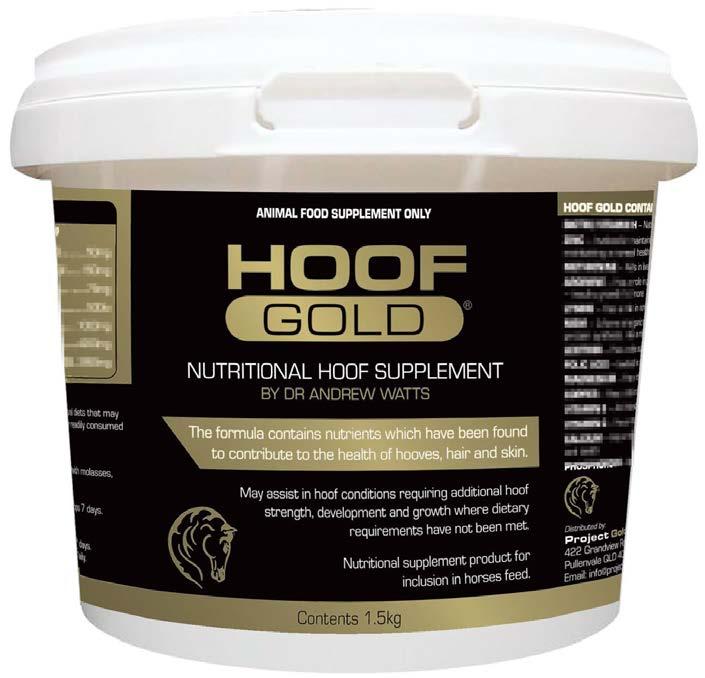
It’s hardly surprising that Hoof Gold has some of the best testimonials we’ve ever seen on a website. This amazing product was created by Brisbane-based veterinarian and hoof specialist Dr. Andrew Watts. Dr. Watts career includes 14 years working in Oman for the Royal Cavalry, as well as stints Dubai and Bahrain. It was in the Middle East where he confirmed his belief that hoof health was paramount to horses’ wellbeing, and began a lifetime of research to come up with a supplement which is specifically tailored to Australian conditions. Designed to help horses with brittle, soft, or thin hooves, some of the results for horses with compromised hoof health is almost miraculous. We can vouch for that!
View online
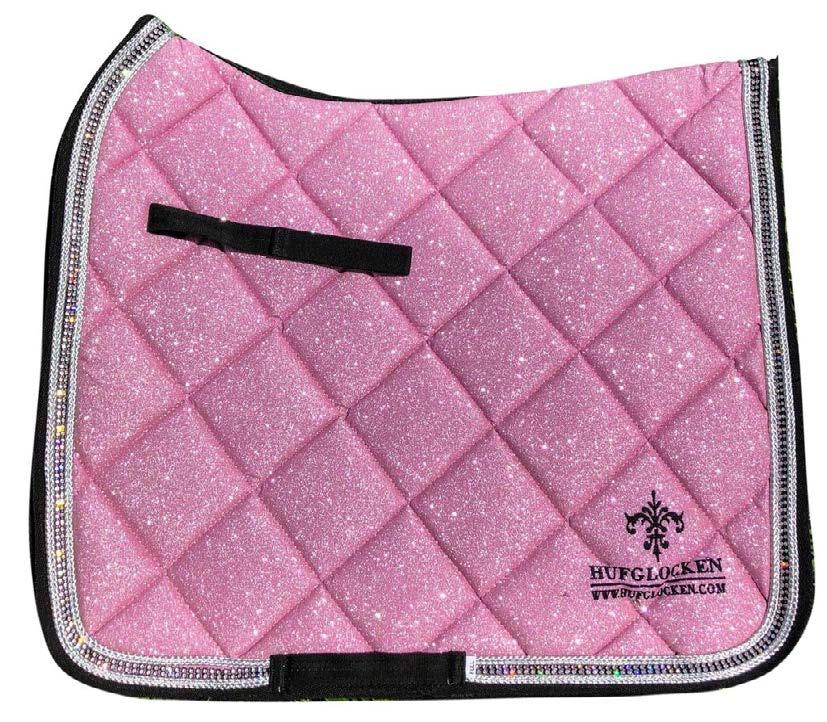
We LOVE these saddle pads. How hard is it to be a fan of the Hufglocken brand? The quality is always great and they have an awesome range of colours. What about the Diamante Pink Dressage Pad, it certainly makes you stand out from the crowd! The glittery material is stunning whilst the quality is still top end. The pads fit larger horses really well. One of us rides in a 17” saddle and uses a full-size pad on their 16.2hh Warmblood. Highly recommended.
View online
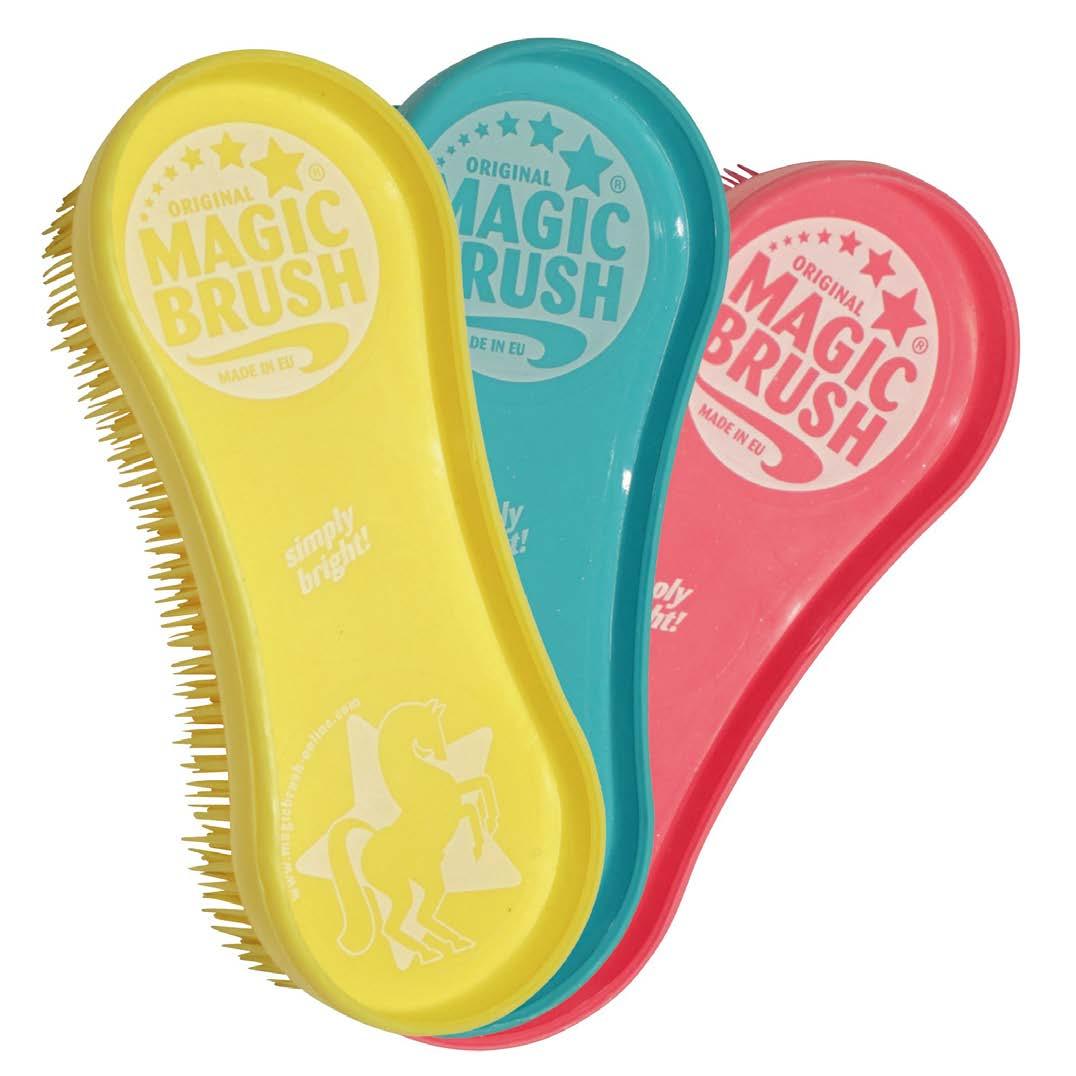
Owning a few woolly mammoths who are particularly fond of rolling regularly in the ‘stick to anything’ red clay type soils, prevalent in the Northern Rivers, where HorseVibes is based, we find the Magic Brushes amazing. They get the mud off - or dirt depending on how soon after washing our four-legged friends have rolled - with no problem, the hair comes out really easily. Use the brush to apply the shampoo and then simply turn the brush over and use it as a scraper once done. All debris comes out easily with a quick swipe across the fence.
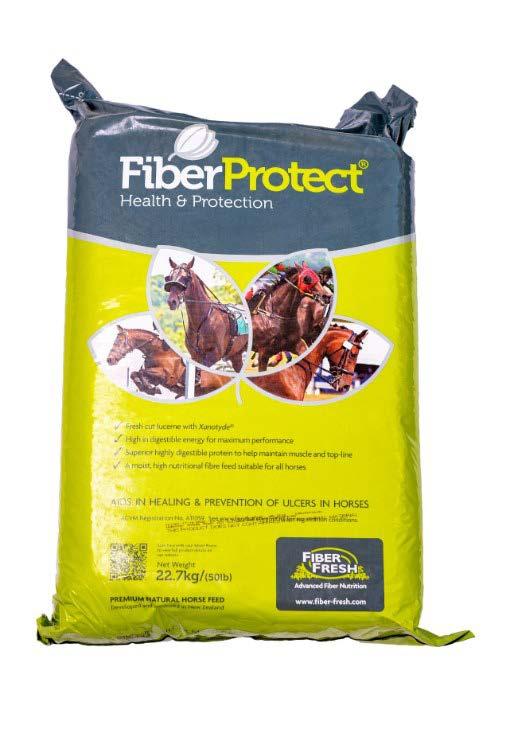
Kombucha for horses! We were sure the smell of fibre protect would put the horses off. How wrong could we be - the horses love it. One HorseViber with babies has noticed that the foals nose around their buckets looking for clumps that aren’t mixed in properly. During this long summer, there is not much pasture to be found anywhere, and what there is has little nutritional value, so like most of Australia, we had to search around for an alternative to grass. We’ve found fibre protect to be an amazing product. All of them have gleaming coats, full tummies and smiles on their faces, and it’s great for horses hind-guts as well. It’s a bit of a struggle to get it out of the bag, but the results are worth the workout!
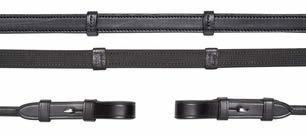
Finding reins soft enough to hold (even without gloves) and sticky enough to provide grip even on a sweaty horse neck, seemed like an impossible proposition, until we tried the Schockemöhle Sports Dura Soft Grip reins. These reins feature soft leather on one side and a soft rubbery surface on the other side. The stops are close-set, making it easy to maintain a good hold. No more blisters or floppy reins! On the downside they’re not cheap, but the tear-resistant nylon core makes them pretty resistant and durable as well.

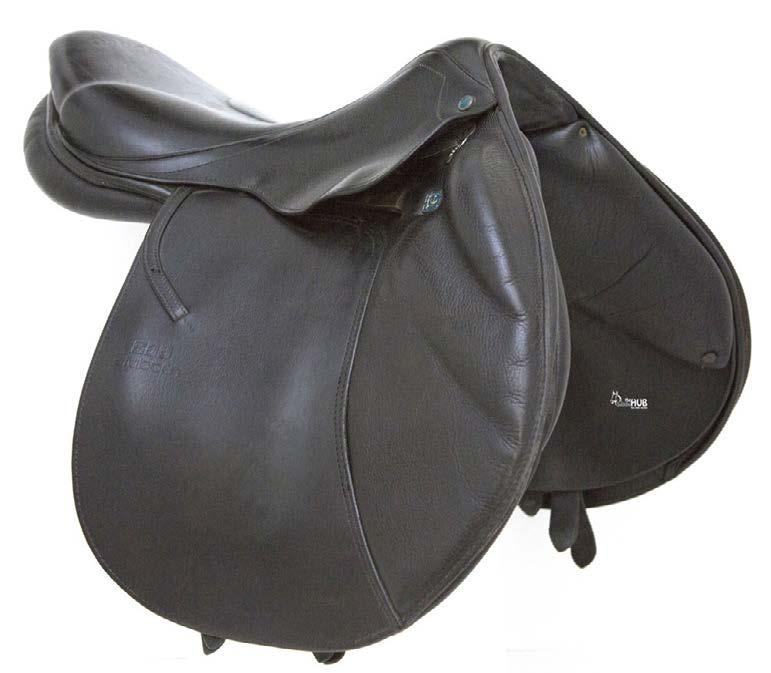
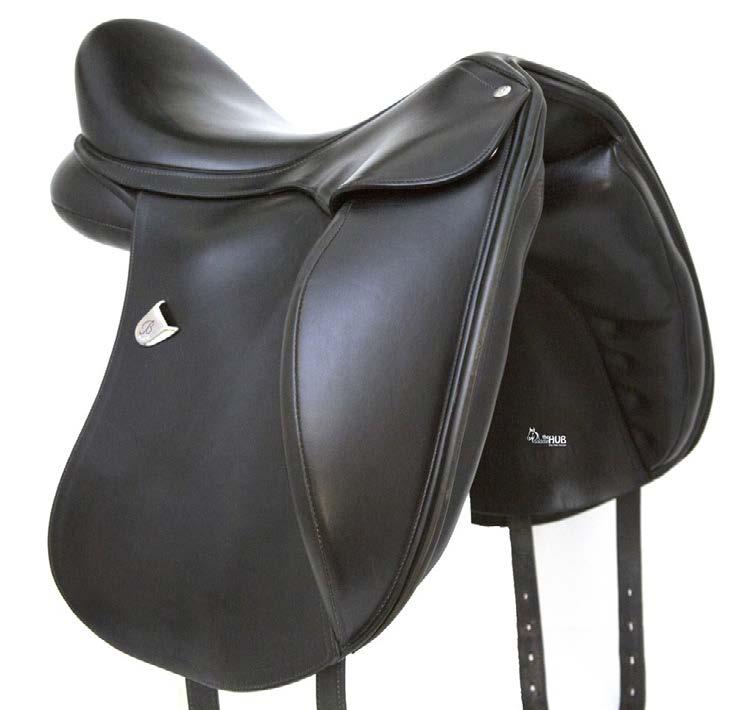
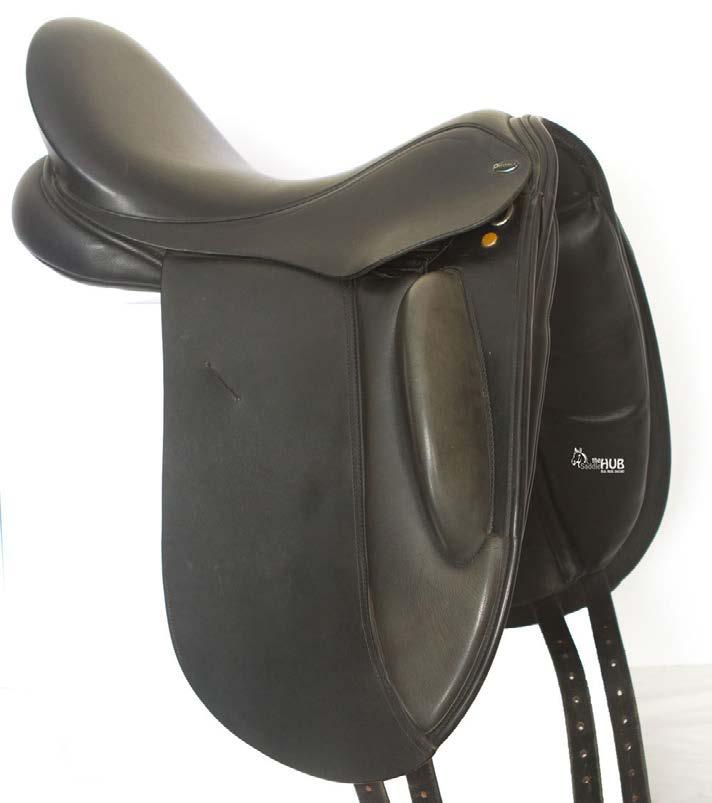
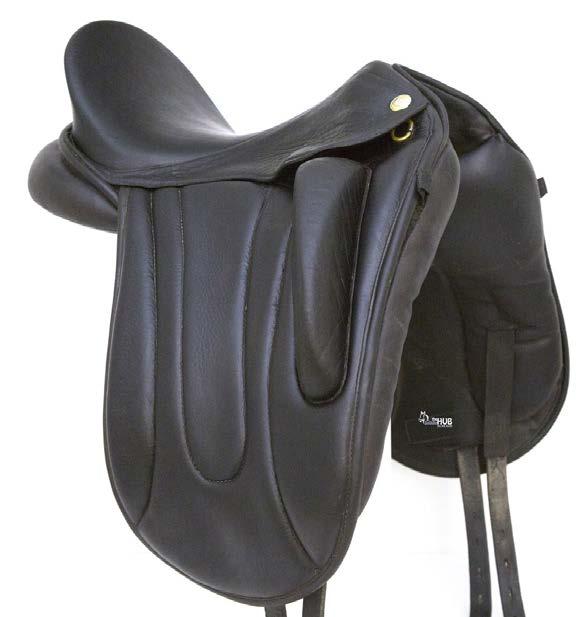
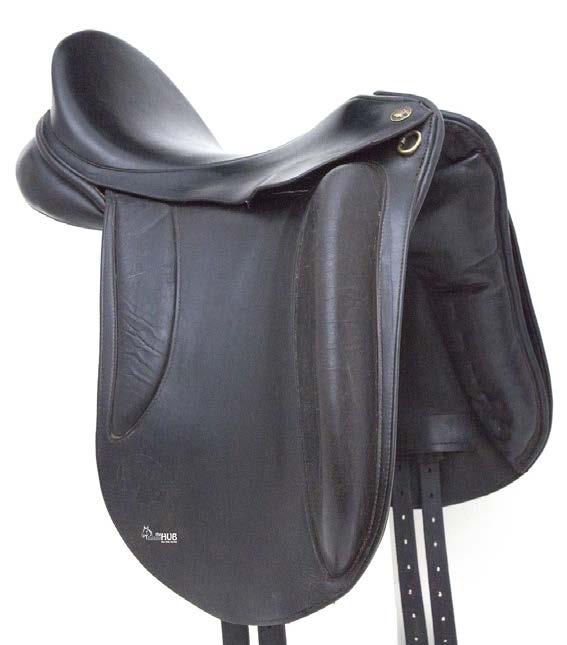
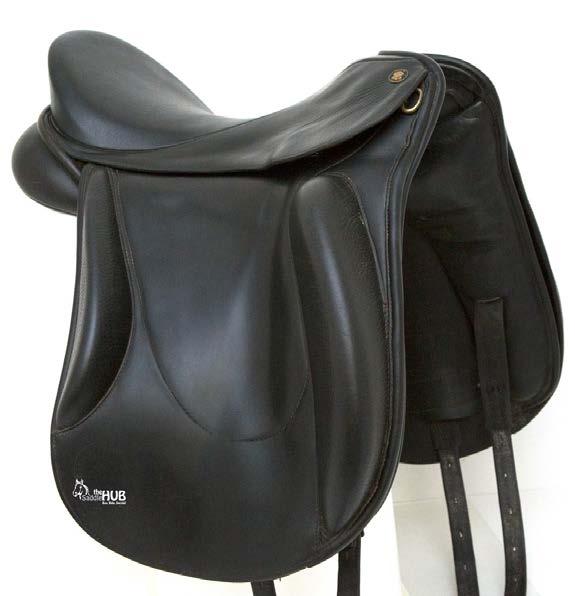
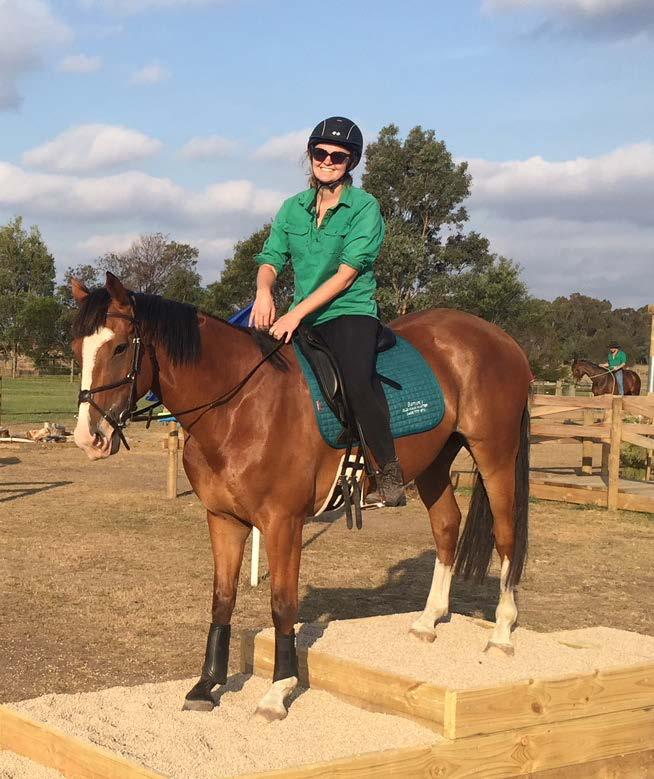
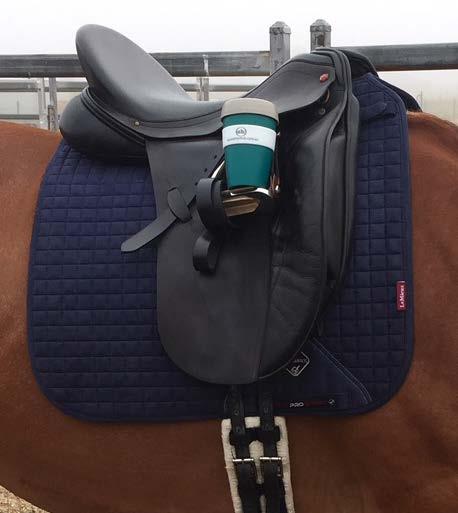
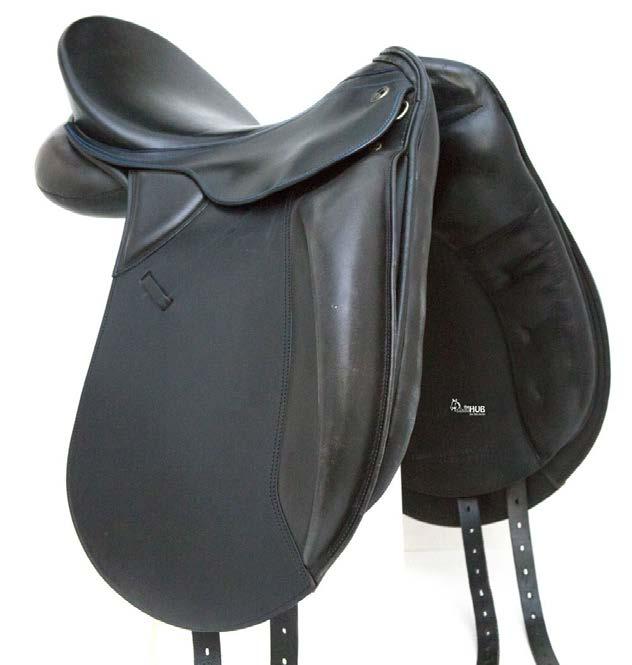
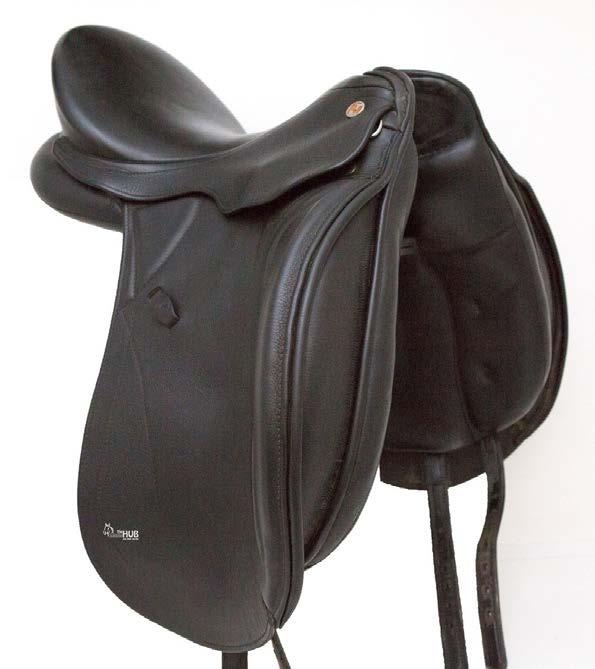
Ichose this saddle because that model is one my saddle fitter recommended for me and Clydesdale X, Mycroft,” says Kerry.
“After sitting in the different brands and models I picked this one because it was so comfy! I also liked that it’s more adjustable than the other options. My horse has just turned six and his shoulders popped up seemingly overnight, outgrowing his old saddle.
He’ll probably grow some more so I wanted that bit of extra adjustability to allow for him getting chunkier.”
Kerry says the saddle fits Mycroft like a glove. “He’s happy and working the best he ever has,” she says. “The knee rolls are in just the right spot.
It’s fantastic to be able to just put the saddle on and ride, without having the saddle fit worry in the back of my mind. It’s also lovely quality leather and I know it’s going to last and last. I highly recommend this saddle to others, it’s fantastic quality, fits really well and is super comfortable to ride in – I’m looking forward to buying a jumping saddle next!”
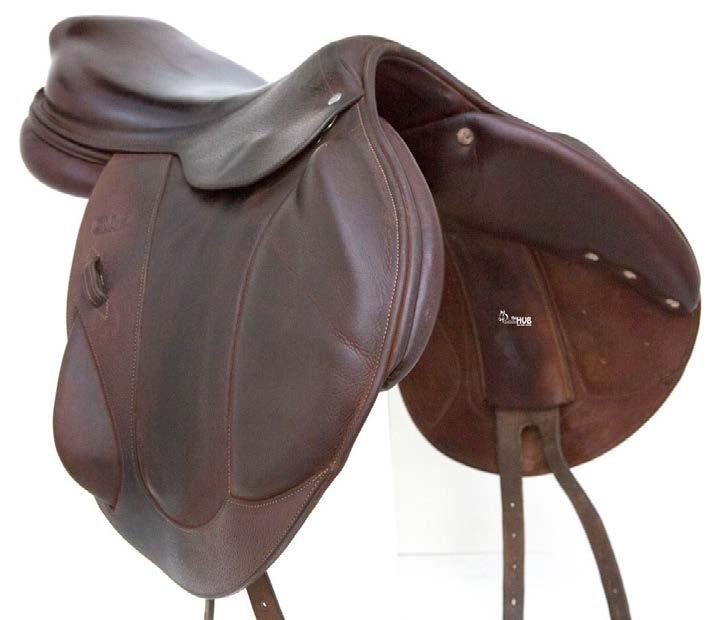
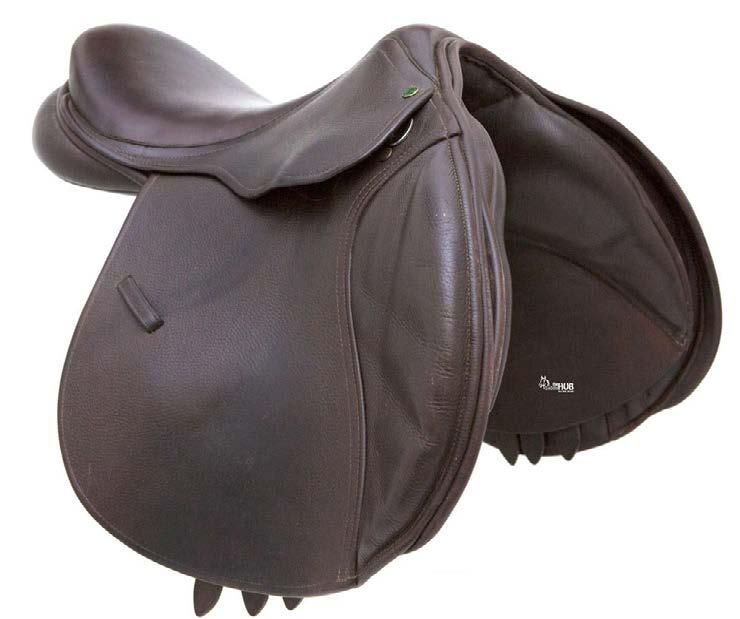
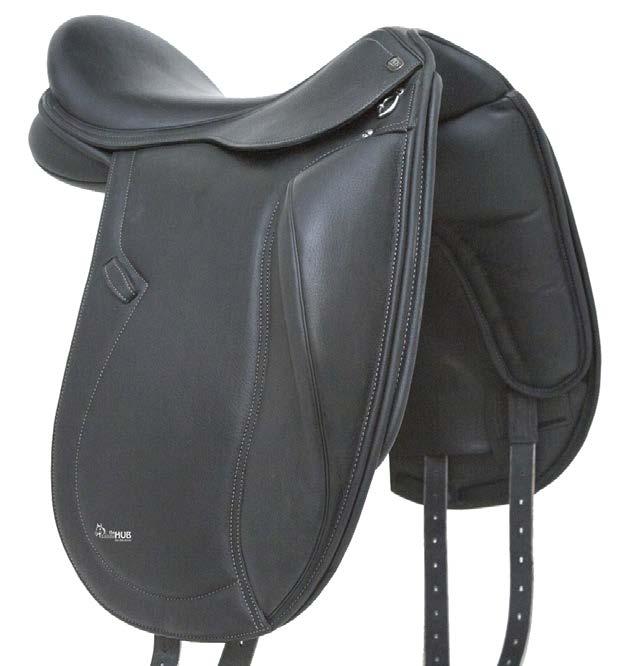
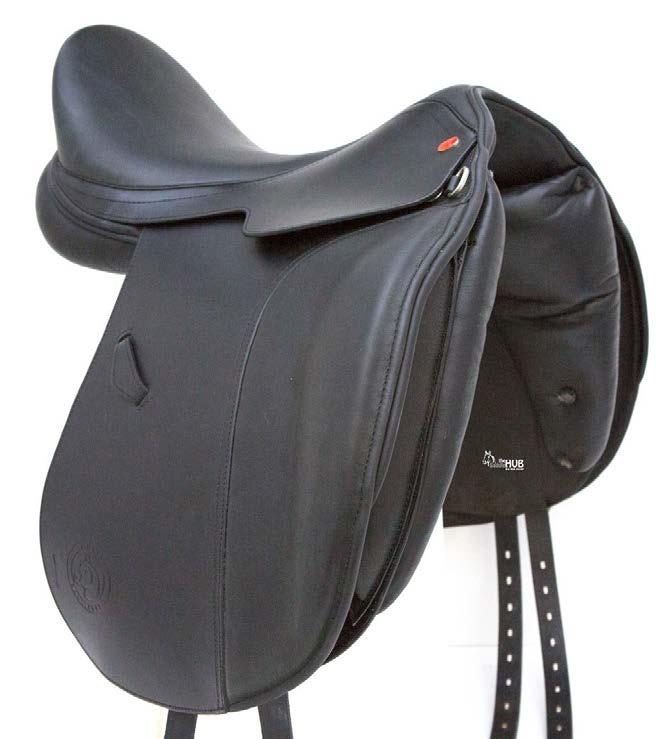
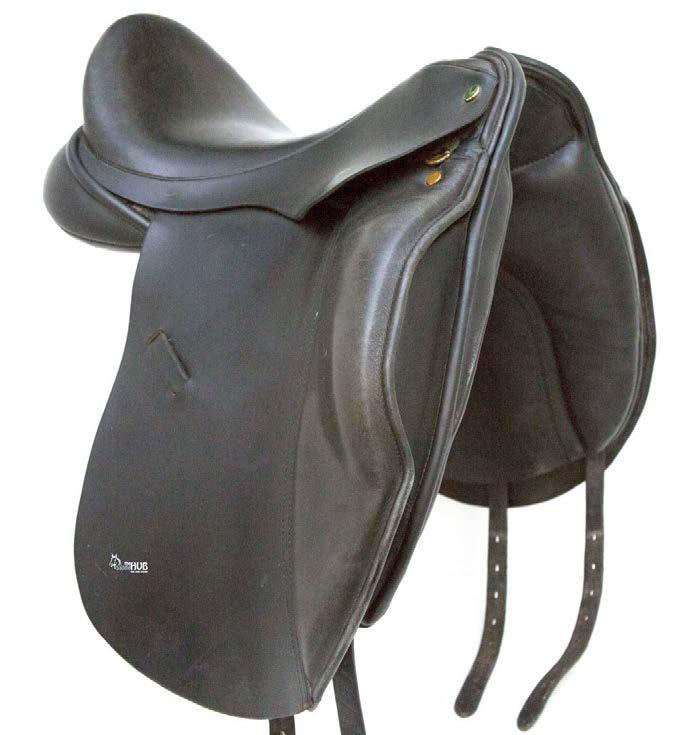
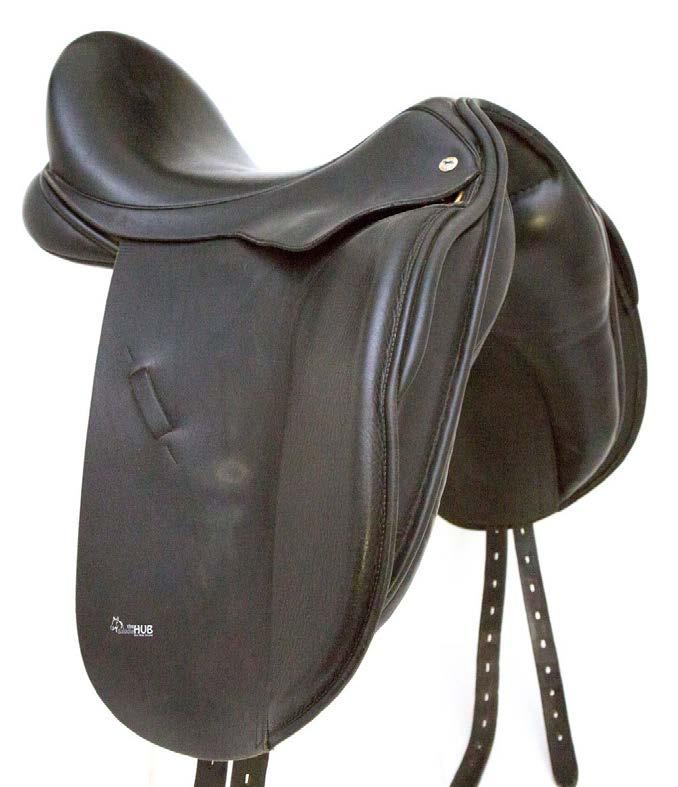
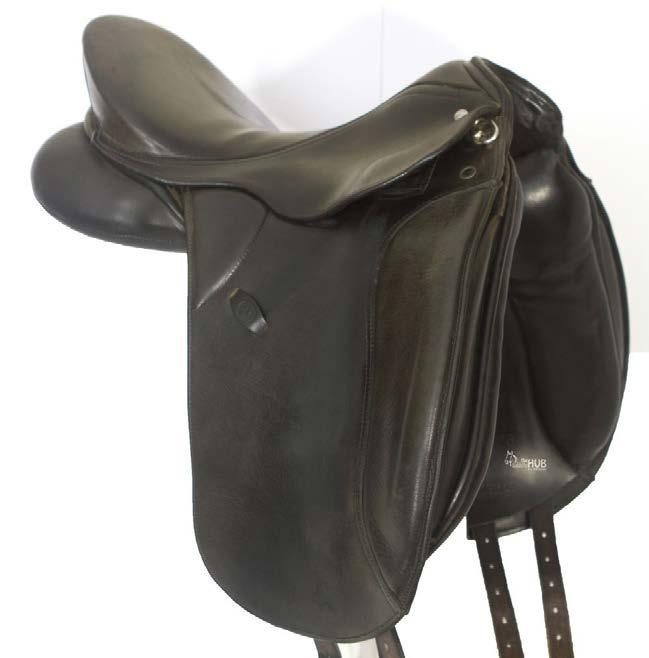
The Equestrian Hub has a large variety of second hand saddles in our warehouse, so why not visit www.equestranhub. com.au and have a browse.
Saddles come with a two-week trial, finance options and courier to your door.

Horse nutritionist LARISSA BILSTON gives HorseVibers the top ten reason why it’s so important that your horse has a balanced diet – including mineral supplementation.
Nutrition is an important aspect of caring for our horses, but have you ever heard the following statements?
“I don’t need my horse to look like a show horse.”
“He’s just a camp drafter, looks don’t count.”
“She’s only a few months in foal and the grass is good.”
“They look healthy, and I never need the vet.”
“He’s spelling. I’ll save some money, he won’t need supplements now.”
“She’s fat, she doesn’t need a feed.”
“They get silly when I feed them supplements.”
If you’ve ever avoided supplementing minerals for these reasons then your horse is most likely mineral deficient. This means either they have not been getting enough of every mineral they require, or they will be suffering from a secondary deficiency caused by consuming minerals that are not balanced across the diet (too much of one means not enough absorption of another).
We know that deficiency is real by looking at the mineral levels from thousands of samples of plants that have been accurately measured for their mineral content.
The cold hard facts about nutrition
Did you know that the levels of minerals in grass don’t provide everything a horse needs to meet the minimum daily requirement for every mineral? Let’s take a closer look.
The graph provided (next page) shows the mineral deficiencies in the diet of a horse grazing enough good quality C3 grass to maintain or gain weight. As an example, this horse will be deficient in copper, zinc, selenium and iodine.
(Source: FeedXL)
The ratios of minerals in grass aren’t balanced to provide the mineral ratios that research demonstrates are necessary for optimal nutrition. For instance the grass in the graph contains 32 times as much iron as copper, when the horse needs around six times more iron than copper in the diet. This ratio imbalance could exacerbate the copper deficiency. Therefore copper must be supplemented to balance the amount of iron naturally occurring in the pasture. This trend is true and even includes well-fertilised good quality grasses and grasses grown on good soils. Why? Because plants only put into leaves and stems the nutrients they need to be plants (they’re not too worried about the nutritional requirements of those who eat them!). These facts are based on scientifically measured values - the mineral content of plants and the proven daily minimum levels a horse needs to avoid a deficiency.
Although minerals are often fed as part of a pre-mixed feed, they can be supplemented separately to give the owner control over the level of calories consumed while still providing all the minerals needed. This is particularly important for horses that get enough (or more than enough!) calories from grass alone.
1. Healthy hoof growth - no hoof, no horse! Important for every horse from broodmares and trail ride mounts to performance horses.
2. Your horse’s body can repair and maintain itself more effectively for ongoing performance.
3. Improved endurance is possible as the body has enough minerals to make enzymes critical for energy utilisation.
4. Better feed use efficiency because the body has enough minerals to use
‘
‘ ... plants only put into leaves and stems the nutrients they need to be plants
energy more efficiently so you can feed less.
5. A more resilient immune system.
6. Optimal reproductive performance, with more mares in foal first cycle.
7. Less inferior bone development and joint problems in growing horses.
8. Less risk of diseases caused by mineral deficiencies - such as white muscle disease and bighead.
9. A smaller feed bill.
10. A darker, shinier coat (whether you like it or not!).
Minerals provided in the right amounts and correct ratios relative to each other will boost the health and performance of a previously deficient horse no matter whether they’re provided by a premixed hard feed or a quality supplement designed to balance the forage.
So, what’s the conclusion?
Over time, a well-balanced diet will also lead to growth of the best mane, tail and hoof tissue that your horse is genetically
programmed to produce.
As an owner you will still need to manage the many other environmental factors that impact on manes, tails and hooves to get the best out of the nutrition you provide.
These factors include rugs, insecticides, strategies to prevent rubbing, appropriate fences, shelters, correct and regular farrier work, providing appropriate surfaces during weather extremes and so on.
Many horses fed correctly balanced diets also become more metabolically efficient at using energy, meaning you can save money on the amount and type of hard feeds your horse requires.
Larissa Bilston has a B.AgrSc (Hons 1), she is the nutritionist for Equine Vit&Min and with the purchase of any Equine Vit&Min product you can request a free diet analysis for your horse.
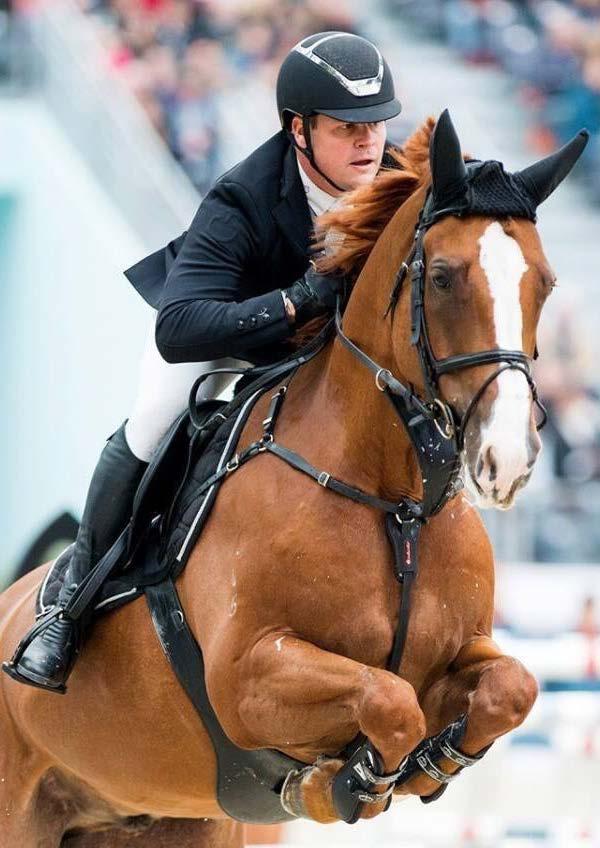
Congratulations to Billy Raymont, Athlete of the Year in the 2018 Equestrian Queensland Annual Awards. With some stellar performances Billy qualified in the top 25 and competed in the individual final representing Australia
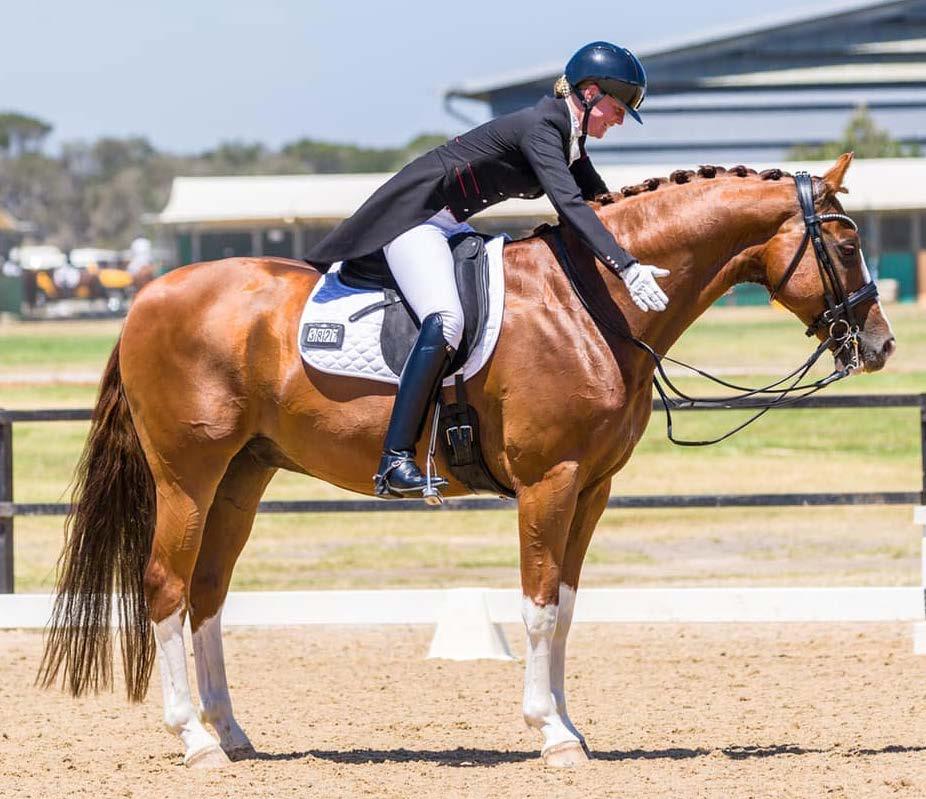
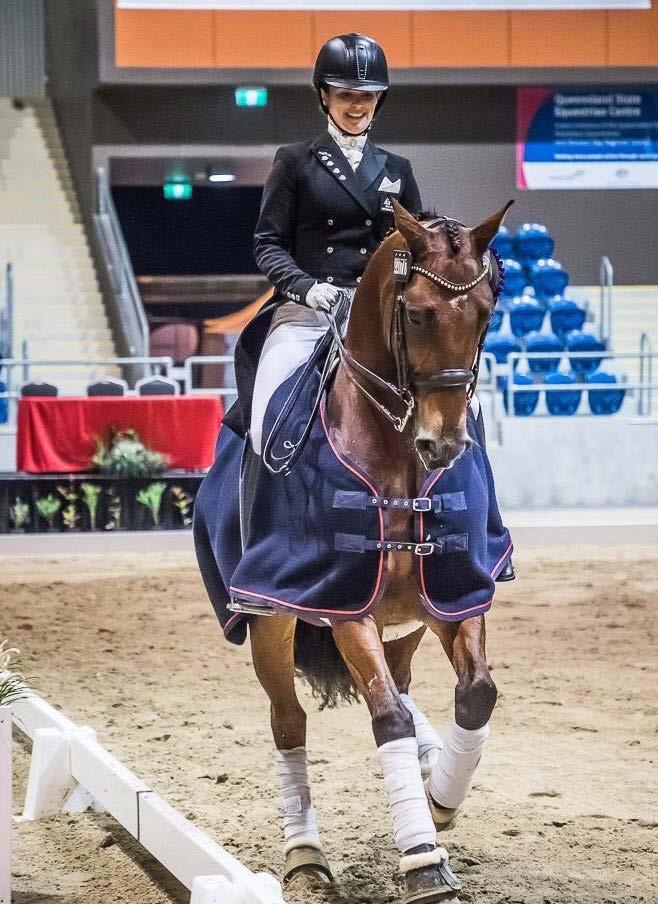
Rebecca Williams-O’Brien is extremely proud - and rightly so - of her horse Hollingrove Dazzler. “He’s pushed me to break through the limiting beliefs I’ve had about myself,” she says of her partnership which resulted in the pair ending 2017 in Novice, 2018 in Advance, and beginning 2019 with their first FEI PSG start.
Photo Credit: Equine Images Victoria
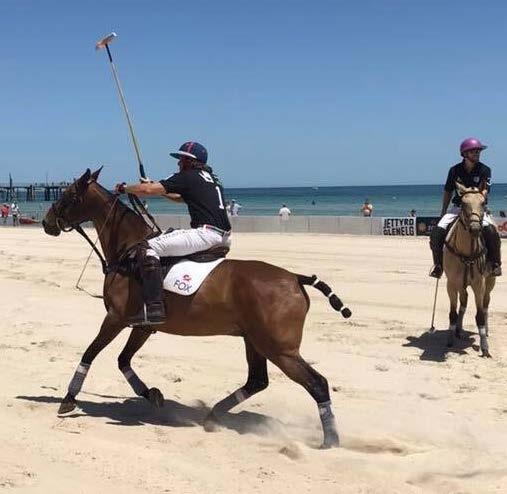
Okay! Let’s combine our two favourite things - beaches and horses in one. Look at this great image from Glenelg Beach in South Australia - just a short tram-ride from Adelaide’s CBD. What a wonderful way to spend a day.
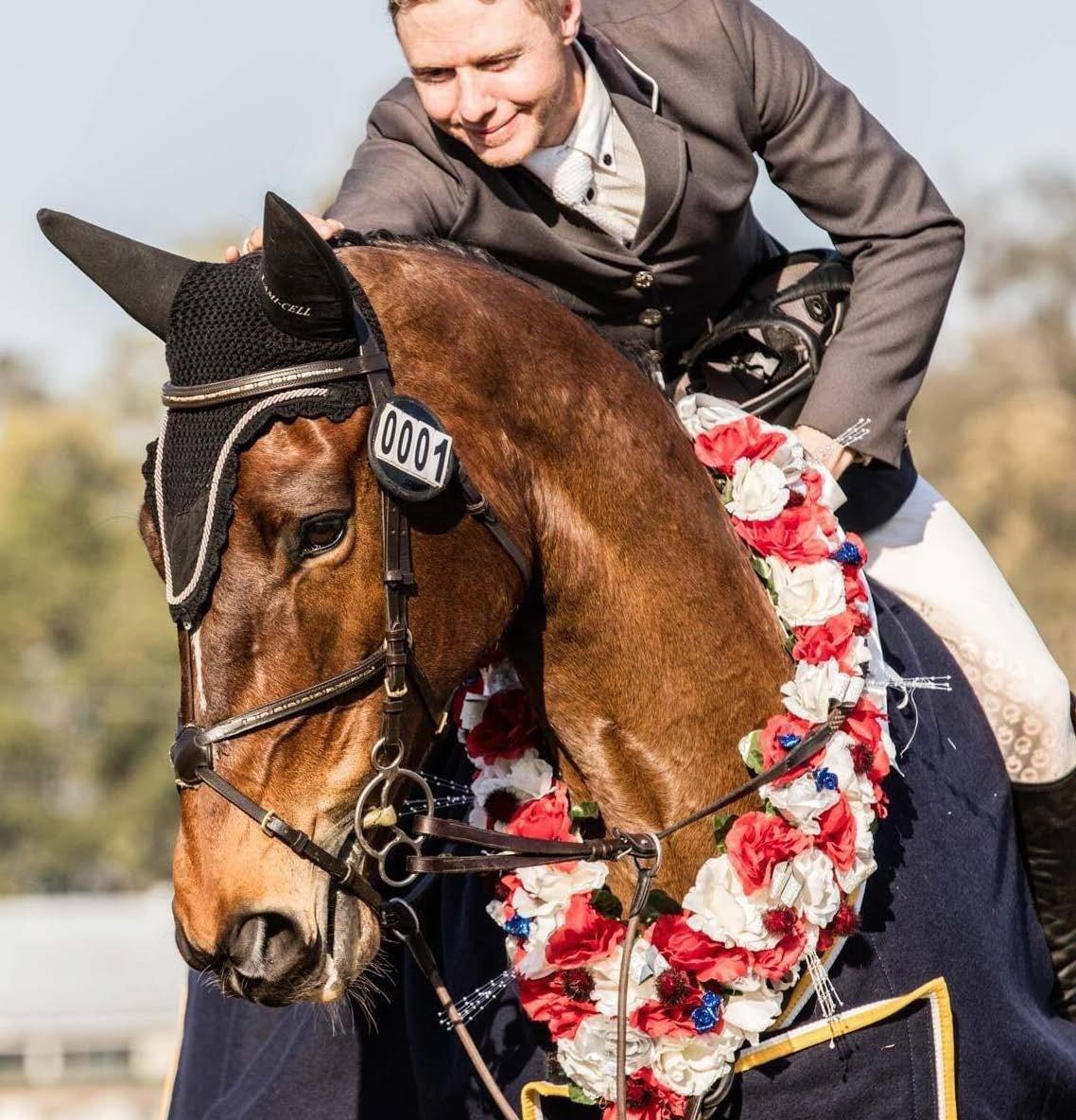
This image tells an amazing story of triumph for Aaron Hadlow, the 32-year-old clerk from Dapto, who took on the professional to win the Australian Leage FEI Jumping World Cup recently.




Eureka

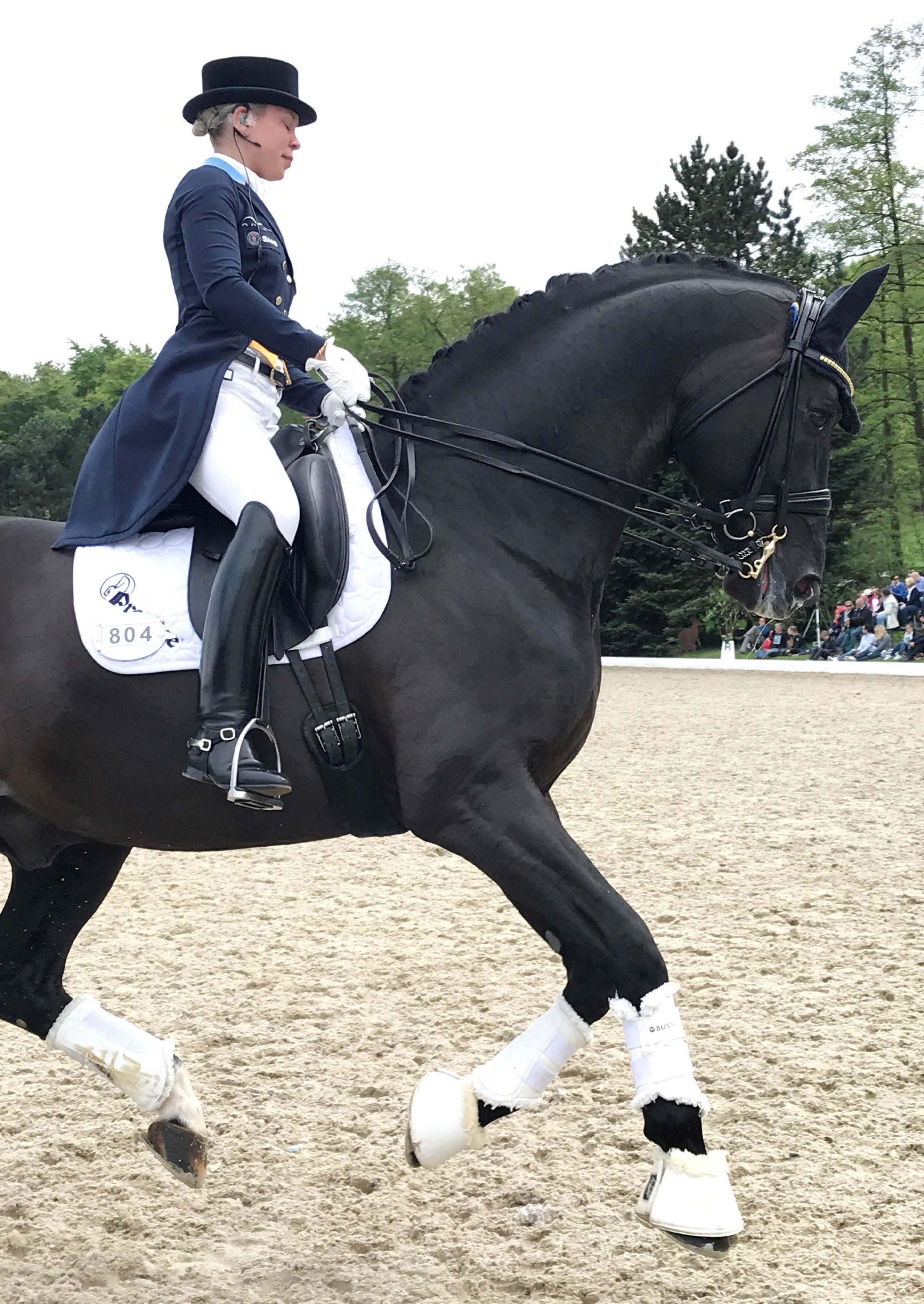
Swedish dressage rider Therese Nilshagen and her beautiful black stallion have won the hearts of fans and admirers around the world, by UTE RAABE.
The black stallion powers across the arena. His extended canter is as uphill and ground-covering as you could wish for, yet he collects just as effortlessly for a beautiful, balanced pirouette. In the saddle is Sweden’s brightest star in dressage, Therese Nilshagen, guiding her imposing mount with a light hand, a loose curb rein and seemingly invisible aids.
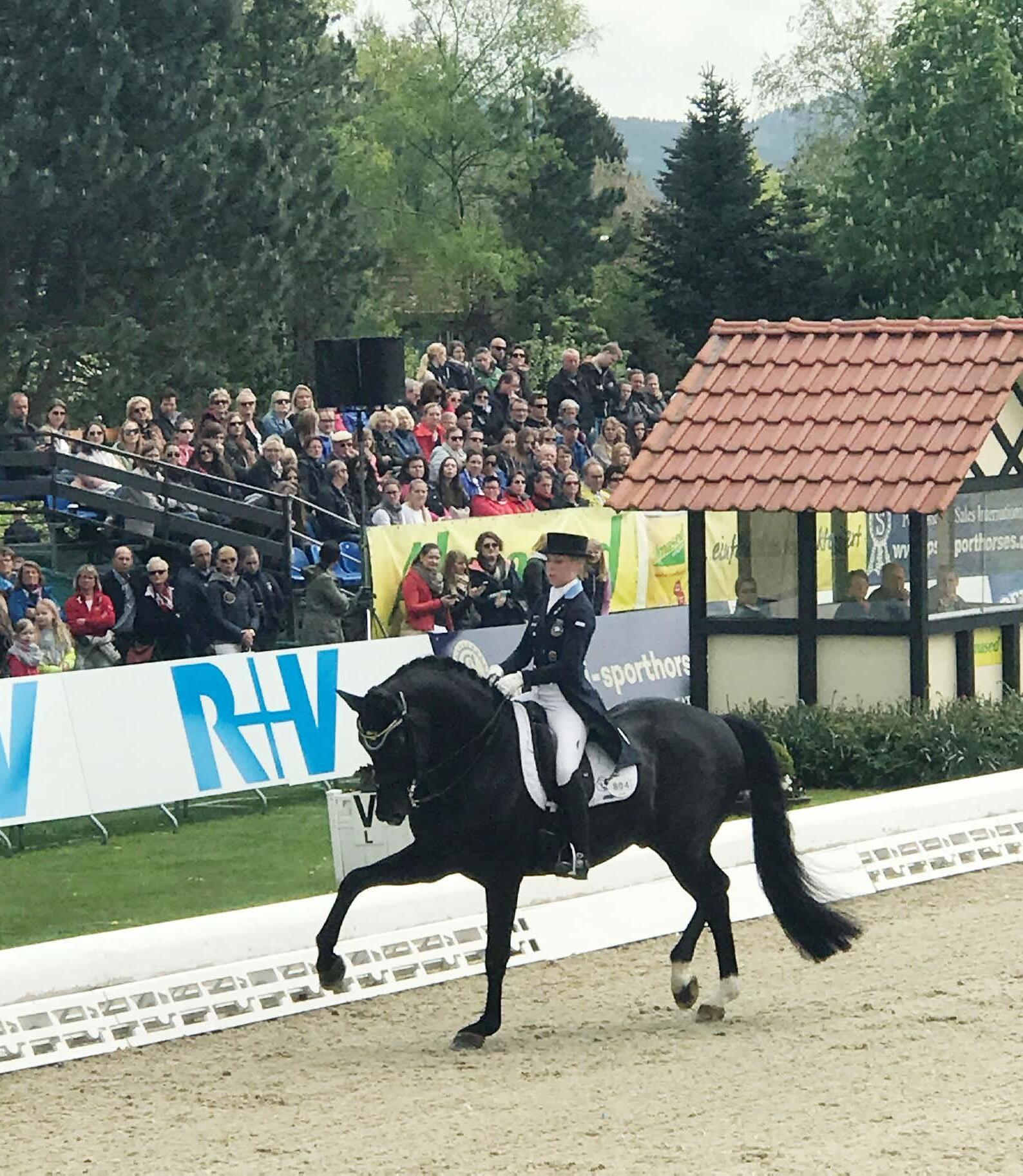
Images: Therese Nilshage and Dante Weltino OLD showing the crowd their wonderful partnership at Horses & Dreams 2018.
the 2017 European Championships in Gothenburg, where Therese’s fine riding earned her a close fourth place in the Grand Prix Special and a fifth place in the Freestyle. She also contributed strongly to the Swedish Team Bronze Medal. At the 2018 World Equestrian Games in Tryon the pair again placed in the top ten in the Special and qualified for the Freestyle, but that event was cancelled due to the approaching
It is impossible not to marvel at the performances of Therese and Dante Weltino OLD. The stunning Oldenburger breeding stallion and the petite blonde Swede have risen through the ranks to the top echelons of the sport and, along the way, have won many fans and admirers around the world. Next month Australian equestrians will get the opportunity to see Therese for the very first time, as the international dressage star for P.S.I. Dressage & Jumping with the Stars, Australia’s Young Dressage Horse Championship. Definitely time to get to know her a little better before her visit.
As of January 2019 Therese and Dante were ranked number 12 in the FEI World Ranking List and the pair have been regulars in the placings at the top European shows for the past two years. Their breakthrough moment came in
student aspirant, who never even owned her own horse!
You might think that this comet-like rise must have been supported by a family happy to promote their daughter financially - and with the right horse to help her career. But the opposite is true. Therese negotiated her career the tough way, from humble riding school beginnings to the world summit. She has demonstrated that it is possible to succeed, even if you don’t have large financial resources in the background.
Therese is your quintessential down-toearth girl — blonde, bubbly, passionate and direct. She grew up in the small village of Vällingby in Sweden. Her family was by no means horsey, but her grandmother was fond of horses and when her older sister began to take riding lessons at the local equestrian club, Therese soon joined as well. Her parents could only afford for her to ride once a week, so Therese started helping out at the stables to be able to ride more often. After school she worked with Louise Nathorst, a former Swedish team member and medal winner, again in
‘
‘ She has demonstrated that it is possible to succeed, even if you don’t have large financial resources in the background ...
hurricane. Most recently Therese and Dante scored 80.09% for fourth place in the World Cup Freestyle in Mechelen, riding another stallion, DSP Dominy, Therese has also won gold at the famous Bundeschampionate in the hotly contested Five-Year-Old Championship. Not a bad resume for a former law
exchange for lessons.
After graduating from school she moved to Germany in 2003 to learn German and also improve her riding. The plan was to stay for a year and then return to Stockholm to commence a law degree. However, fast forward to 2019 that degree is no closer and Therese can’t



imagine a life out of the saddle. ”The more you learn, the more you realise how much more you still need to learn,” she says. “One year passed, and suddenly it’s 15 years later and I have no plans to go home!”
Therese began her education at the legendary Grönwohldhof Stud - of Karin Rehbein and Donnerhall famewhere she spent seven years under the guidance of renowned German Grand Prix rider Falk Rosenbauer. A year at the busy Hof Kasselmann stables followed, a place that is famous for producing young talent on both two and four legs. Since 2012 Therese has been the head rider at the prestigious dressage stable and stud, the Dressage Horse
2008 through the initiative of a circle of friends around the successful Oldenburg breeder and stallion keeper, Harli Seifert, and combines breeding and sport at the highest level. It is now a highly modern training center with an affiliated stallion station, known for its horse-friendly approach and training methods. Daily time out on pasture is a must for Lodbergen’s horses.
Therese is a rider who has learned how to carefully train and develop a young horse through the levels, something she has proven with Dante Weltino and others over the years. She also belongs to that rare species of professionals, someone who would rather leave a showground than risk a start if the conditions might be harmful for her horses.
Performance Center Lodbergen — a position that has secured her the rides on Lodbergen’s flagship stallions Dante Weltino OLD, For Romance OLD and DSP Dominy.
Lodbergen was newly founded in
The partnership with the horse is what Therese values most about the sport. “You are working with your horse with the aim of eventually speaking the same language. I am fascinated by the level of communication and connection you can establish with such a large animal,” she says. “It can be a challenge sometimes, but horses are such amazing, intelligent creatures, who give so much back. Each horse is different, some mature more quickly and are happy to cope with a little more work, others need more time. You need lots of time, patience and sympathy with horses.”
Working with the breeding stallions at Lodbergen poses its own challenges, but she loves her job, “It is a lot of fun.
‘ ‘ You are working with your horse with the aim of eventually speaking the same language ...
I have enjoyed my biggest successes on stallions, and when you can turn a stallion’s special characteristics into something positive, then they have so much more expression and power in the arena. That is what I am always working on.”
She also loves spending time with her horses outside of schooling them. When we talk, it’s her day off but she’s nevertheless in the stables grooming a horse. “You have to try to understand your horse, not just in the saddle, but also from the ground,” she says. “It’s something that is very important to me, and I am sure that you will be rewarded by the horse a thousand times. I know how my horses feel by the way they stand and look at me. That’s my main advice to other riders, spend time with your horse and be patient, patient, patient.”
For the past three years Therese has been training with German dressage icon Klaus Balkenhol, who is known as a veteran of classical dressage, but also as one of the foremost champions of safeguarding horses’ strength and well-being in line with their physical and mental capacities.
Therese is looking forward to her first visit to Australia, “The Opera House and Sydney Harbour are always such an amazing sight, but someone has told me that Melbourne is even more beautiful and I hope I can squeeze in a bit of tourist time too.” Therese will present a





By DANNII CUNNANE.
Georgia has been riding since she was six and has been specializing in dressage for the last six years.
This will be a big year for Georgia. “I’m going to University to do a degree in Psychological Science,” she says. She also has her hands full riding her two warmblood horses, both of which she has trained herself.
“Regal Don Debonair, also known as Inky, is a six-year-old warmblood gelding who stands at 17.1 hands high. He was purchased by my family by us as a twoyear-old from breeder Linda McKinnon and has been ridden by me for the last 12 months. Regal Prince Black, also known as Teddy, is an eight-year-old warmblood gelding we purchased as a newly started three-year-old, also from Linda McKinnon. I was 14 and he was three when I started training him.”
Georgia has great success with both horses. With Regal Don Debonair she has been selected on the 2019 Dressage NSW Young Rider Squad, and they were also awarded the Young Rider Preliminary Champion at Dressage NSW Winter Festival in 2018. Not to be outdone, however, Teddy (Regal Prince Black) qualified and competed at the 2017 Sydney CDI in the six-year-old young horse class and was in the top 10 at Medium and Elementary Young Rider Dressage Nationals in 2018.”
While Georgia is only young, she puts in the hard yards to get positive results.
“Equestrian is a sport that requires a lot of commitment and drive to do well and you have to love it because it can become all consuming,” she says. “You might ride each horse for 45 minutes a day, but so much more time goes into making sure they are sound, fit, and healthy, both physically and mentally.
During the summer months this means getting up at five in the morning to make sure the horses don’t overheat when being worked and spending time cooling them down at competitions.”
Georgia has her goals set for this year with both Inky and Teddy moving up the levels and improving on scores. “I’m aiming to compete Inky in elementary early this year and be working towards medium throughout the next 12 months,” says Georgia. “Teddy has just had his first Advanced start and I am aiming for a Prix St George start in the next month or so to qualify him for the CDI-Y this season. Towards the end of 2019 we will begin the process of qualifying my Mum’s horse for his fouryear-old young pony season in 2020 which is exciting.”
Georgia is lucky to have a big support system behind her, with everyone encouraging her to reach her goals, including, she says, her parents and her current coach Deon Stokes. “There’s also Wendy Bruszewski who introduced me to dressage and coached me before we moved to the Hunter Valley, and my amazing sponsor KC Equestrian Wear,” she says.
At HorseVibes, we wish Georgia all the best on her journey and look forward to following her progress.

A: A rider goes through water from Geelong Horse Trials 2016.
B: Lauren Hussell
C: Hayley Womersley


Geelong Horse Trials are an annual sporting event which has been running since 1979 and gains in popularity every year.
What exactly are the Geelong Horse Trials you might ask, if you’ve never heard of them!
The Geelong Horse Trials is an annual equestrian sporting event, involving all three disciplines: dressage, crosscountry and showjumping. (Many people think of eventing as the equivalent of a triathlon.) The Geelong
Eventing Association has been running the Geelong Horse Trials since 1979, and it draws competitors from all over Victoria - they are based about an hour from Melbourne.
The trials are held in Inverleigh at the beautiful
property ‘Barwonleigh’, a 2,330 hectare cattle and sheep property, which has been in the Campbell family for seven generations.
Geelong Horse Trials attracts a huge range of competitors and spectators every year, and is put together by a group of volunteers, the Geelong Eventing Association Inc, entirely committed to the running and future development of the Geelong Horse Trials. Their aim is to continue to improve the grounds and facilities for the event, with the ultimate goal to make the event more appealing to elite, national level competitors.
The Eventing Association has a committee of 19 people, holding their annual event at Barwonleigh each February. This year The Geelong Horse Trials are on the 23rd and 24th of February.

For more info go to: facebook. com/pg/geelonghorsetrials/

This month has a spectacular vibe, opening with the Chinese New Year of the Pig. It falls on the new moon and paves the way for an abundant 2019. Think wealth, expansion and generosity all rolled into one. Pig years are all about practical application too, and that means actions that lead to success. Us equines will feel the calming influence of Pig all year, sure to smooth out quirks or bad habits. Check your sign below for this month and welcome the Year of the Pig!

Two-legged Rams will be asked to take charge and lead the way, especially in groups or social situations. Practice saying YES in the mirror, if you have to, but be ready to step up when called upon. Fourlegged friends respond a bit differently. We are happy to blend into the herd, for now, as long as our needs are met. That would include hay, pasture, fresh water (preferably running), thorough grooming and a regular gallop.

Bulls will find February more productive, creative and sensual than usual. It’s good for proposing projects, launching an idea or changing up the profession or calling. Whatever your mission in life, you’ll see it with fresh eyes and adjust accordingly. Equine Taureans also enjoy attention and accolades. Actually, we yearn for them, so take note. This is no time to leave us in a stall or obscure paddock. We want to show off!

February has you feeling carefree, vitalized and resilient, ready to put the focus on new experiences that take you places you’ve never been before. For more pizzas, let’s just say you won’t have any trouble finding a plus-one when requited. Us equines feel the same, gregarious and social, but there is one caveat, i.e. a propensity for overindulgence, which will lead to health concerns. Make sure the feed room door is locked.
Crabs feel exuberant this month and will need an outlet. Consider training in a mind-body-spirit discipline, martial art, weights, yoga or join a team sport. You decide, but the benefits of being in shape will carry over for the whole year. Four-legged Crabs may feel especially jumpy if they aren’t getting worked. Even if a ride has to be missed, remember grooming is a form of exercise too. And, we love it!

Human Lions take heed. Not another day can go by without consideration or decision when it comes to personal, one-to-one relationships. Likely there is a conflict between inner life and outer world, home and job, creativity and family. You want balance, and now is the time to craft it. Luckily, us equine of the Leonean persuasion have less urgent needs though more attention would be nice. Some extra pampering will do the job. Thank you.

What a great month ahead! You have the energy and the wits to sort out any issues in the ‘day job,’ routine chores vs. free time, health and well-being. It’s like you have a magic wand to wave over just about any department in your life. But for us equines, it’s a different story. Grumpiness might mean we crave more roughage. You know the average horse can eat twenty pounds of hay each day, right? Up the ration please?

The urge to be more creative has you in one of two states: buoyant and optimistic or flat and cranky. If it’s the former, pursue your artistry. Make time for it! If it’s the latter, you might need to let go of disappointment and start over from scratch. Us equines have fewer worries and feel mostly carefree. As long as you keep to a schedule this month, neither late nor early with our care, feeding and training, all is well.

This month the focus is internal and no matter how much others try to drag you to a party, the beach, on stage, it won’t feel quite right. Hint: respect the urge for some personal alone time. Make no mistake, this quiet reflection can be productive and good for well-being. Spending a little more time on your own is like an elixir. With the four-legged Scorpios, it’s not the same. We need companionship, and no, chickens don’t count.

For the two-legged centaurs, your words can be over the top, as in fast, sharp and to the point. Sure, it’s great to be blunt at times, but make sure you say what you mean and mean what you say. Chances are good you’ll be quoted. For us equines, we have some restless urges this month. When you consider we would naturally move between 30km and 80km a day, you’ll understand why. Up the activities, please.

For any Sea-goat with an ATM card, this month brings exciting financial news. It’s also a time to get a feeling for what gives you meaning and purpose in life. It’s probably not going to be the money itself but the way you think it will make you feel. Solution: do more things that bring a smile, without spending a dime. Four-legged Cappys thrive with one thing this month. More rests in a shady paddock or dry stall.
This is your personal New Moon, an optimal time to see your life from a different perspective. Clues are tied up in the four pillars of Self, others, career, home. Is there balance there? The answer is your clue where to focus. If happy, then do more of that. If not, do less of that. Us four-legged Waterbearers may seem a little lethargic this month. The solution may be a new stable-mate, more companionship or a change of scenery.

This is your month to bring a dream down to earth, manifesting it into reality. But first, release any reluctance or doubt and embrace your desires. Large or small, whatever you hold in your thoughts is fair game for reality. It can help to think of yourself as Midas with the golden touch, sans the consequences. For us equines, it’s all about perfect health. Watch for any change in manner and call the vet if need be. You know what they say about an ounce of prevention.
