Podcast CHARLIE BRISTER bluegumperformance@gmail.com
HOLLY HALL PERRIN kennallywood@coleychellefarm.com.au E-mail
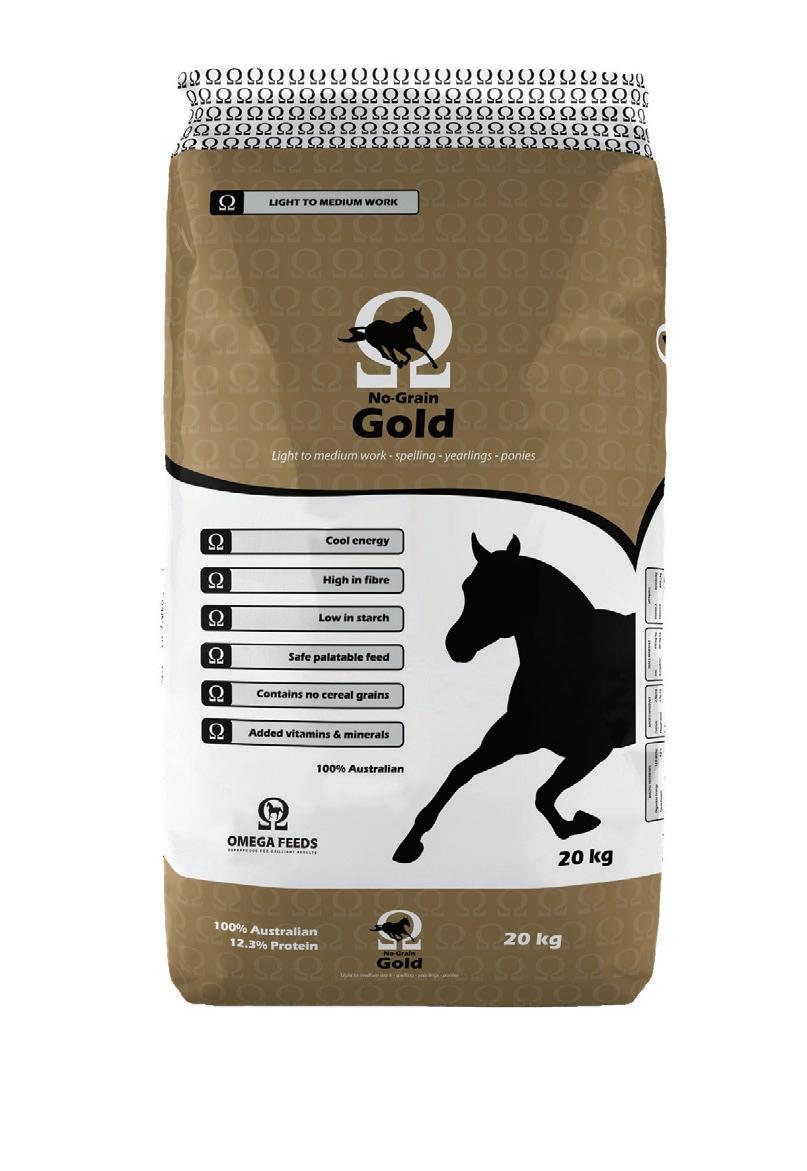
HIGH FIBRE COOL ENERGY FEED
HARNESSING THE POWER OF SUNFLOWER SEEDS, AN ALL NATURAL SUPERFOO D
Omega Feeds has formulated a palatable, high fibre, low starch feed that contains a balanced blend of vitamins and minerals to ensure optimum health and vitality. No-Grain Gold is suitable for ponies, spellers and horses in light to medium work.
High Fibre: For gut health and cool energy.
Non Pelleted: Horses spend more time chewing which stimulates saliva production and in turn buffers the stomach and protects it from ulceration.
Low Starch: Reduced risk of digestive upsets and metabolic conditions.
Balanced blend of vitamins and minerals: For optimum health and vitality.
100% Australian, proudly supporting Australian farmers
Hello,
There’s a particular kind of magic when you watch a combination at the top of their sport. No matter what their discipline, world class riders have that quiet confidence, technical precision, and partnership with their horses that makes us sit a little straighter in the saddle.
It’s inspiring to see, definitely, but it can also stir something far less helpful: a creeping sense that our own progress is too slow, too ordinary. But here’s the truth: another rider’s success should never be a measure of our own.
Equestrian sport is beautiful and sometimes maddeningly individual. No two partnerships are the same, no two journeys unfold at the same pace, and no rider - no matter how polished - has travelled without setbacks, doubts, and detours. Behind every seamless round lies years of grit, repetition, and the same frustrations we all know so well.
So don't be overawed. Instead, choose to let the excellence of others serve as an example of what's possible, and maybe more importantly, as a reminder that our own journey - however winding - is uniquely, beautifully, and excitingly our own.
Talking of exciting journeys, this month we chat with Lauren Balcomb, who has built
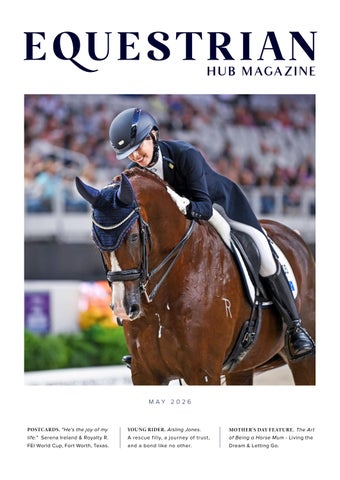
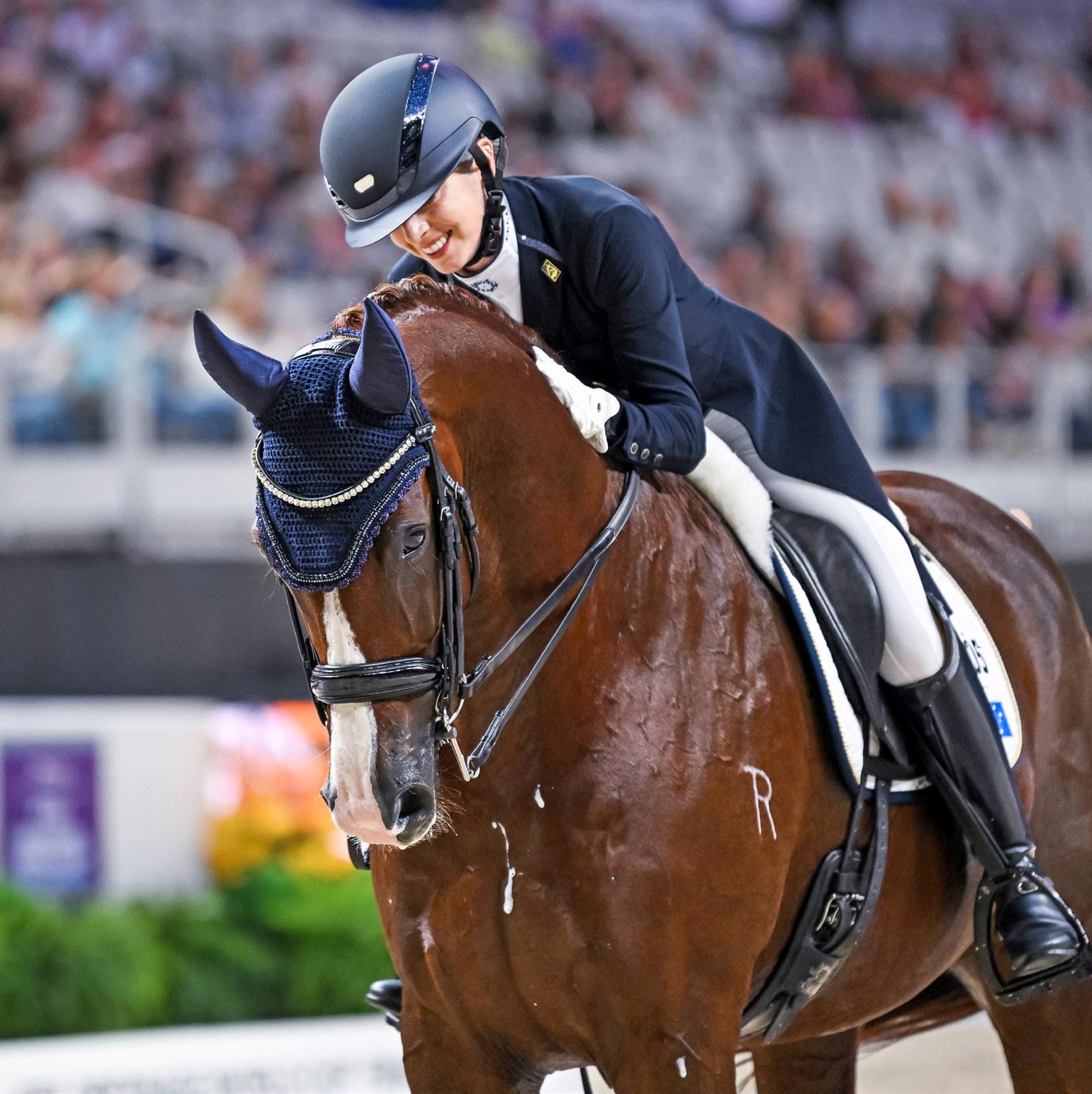
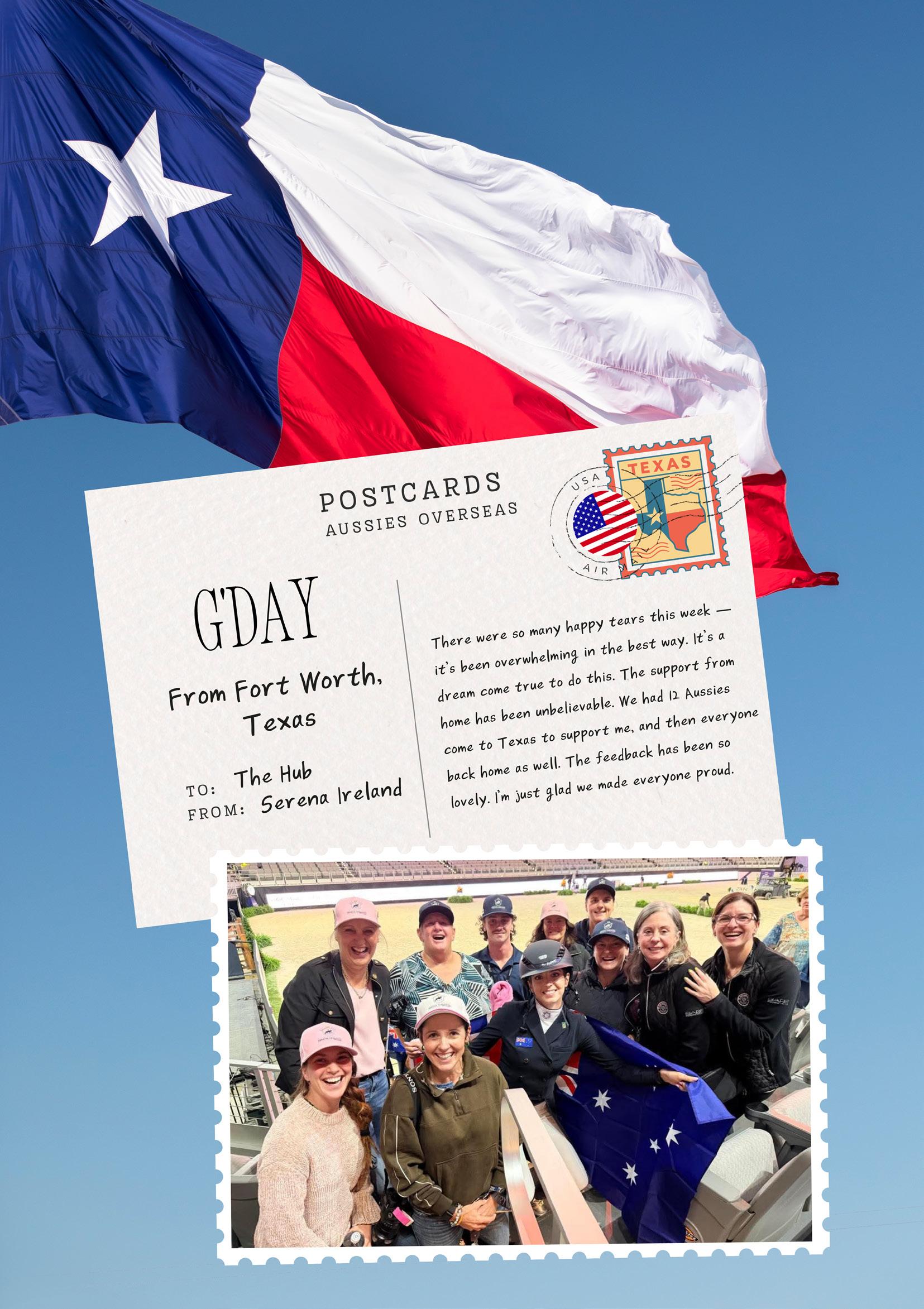
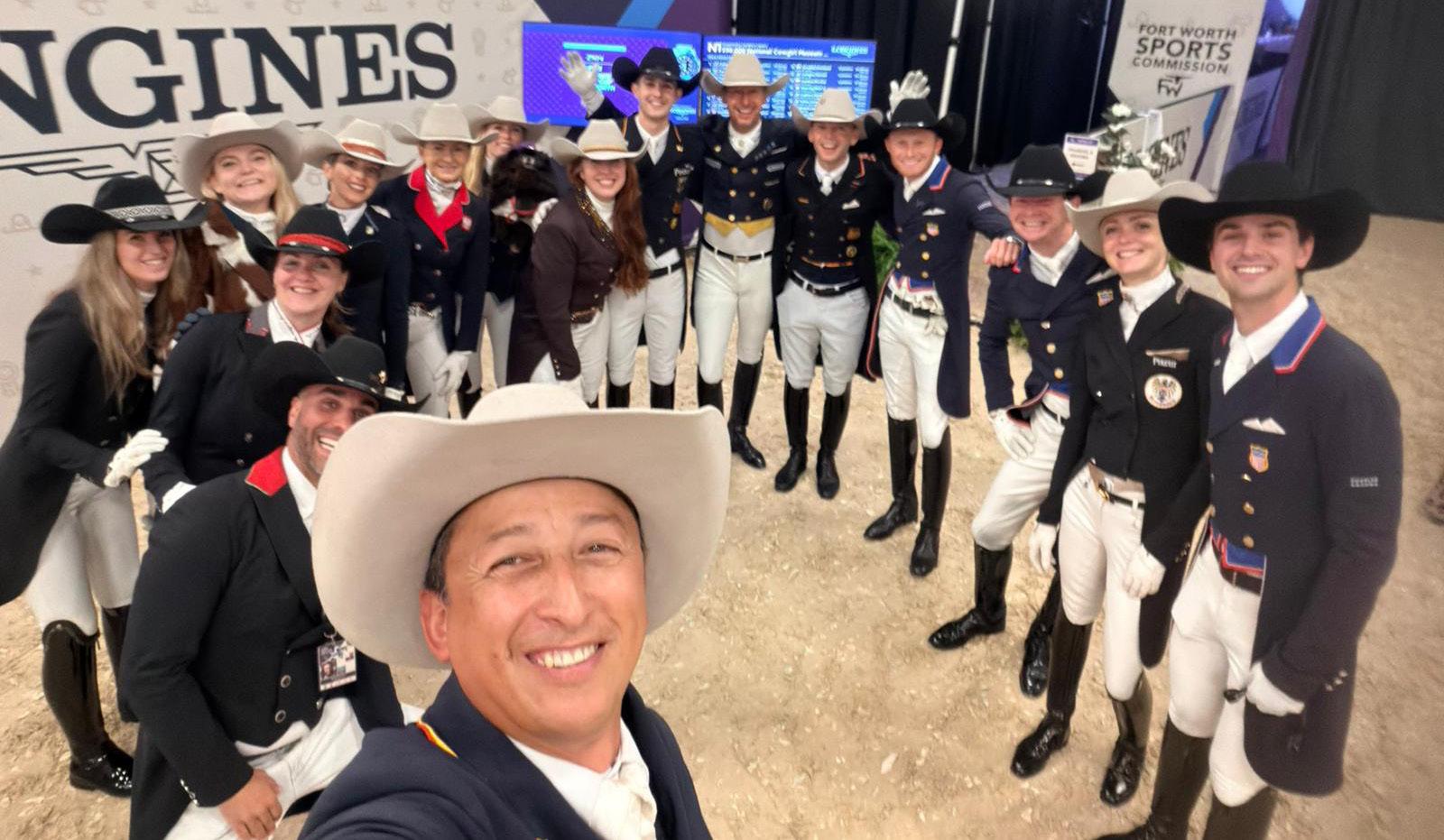
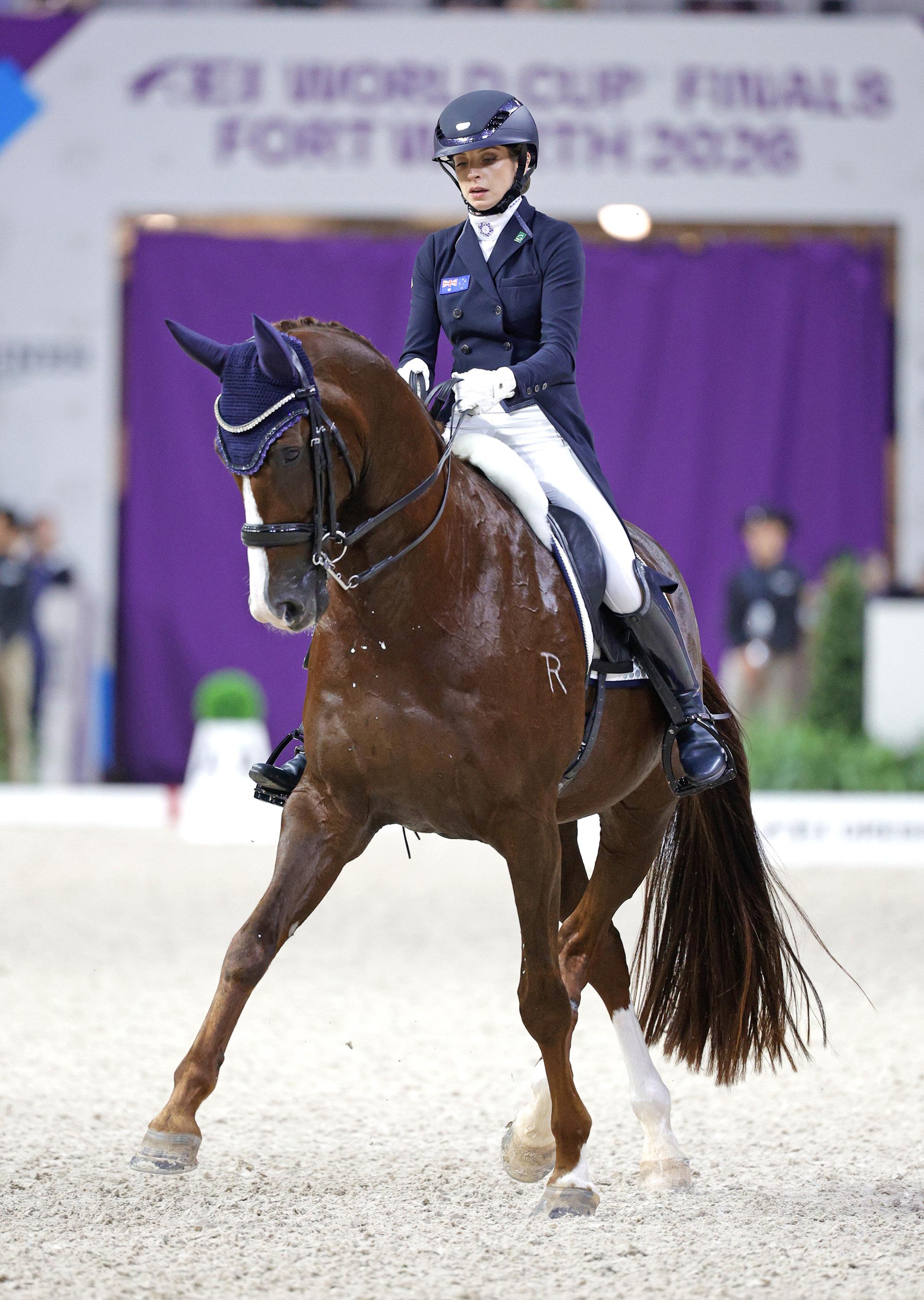
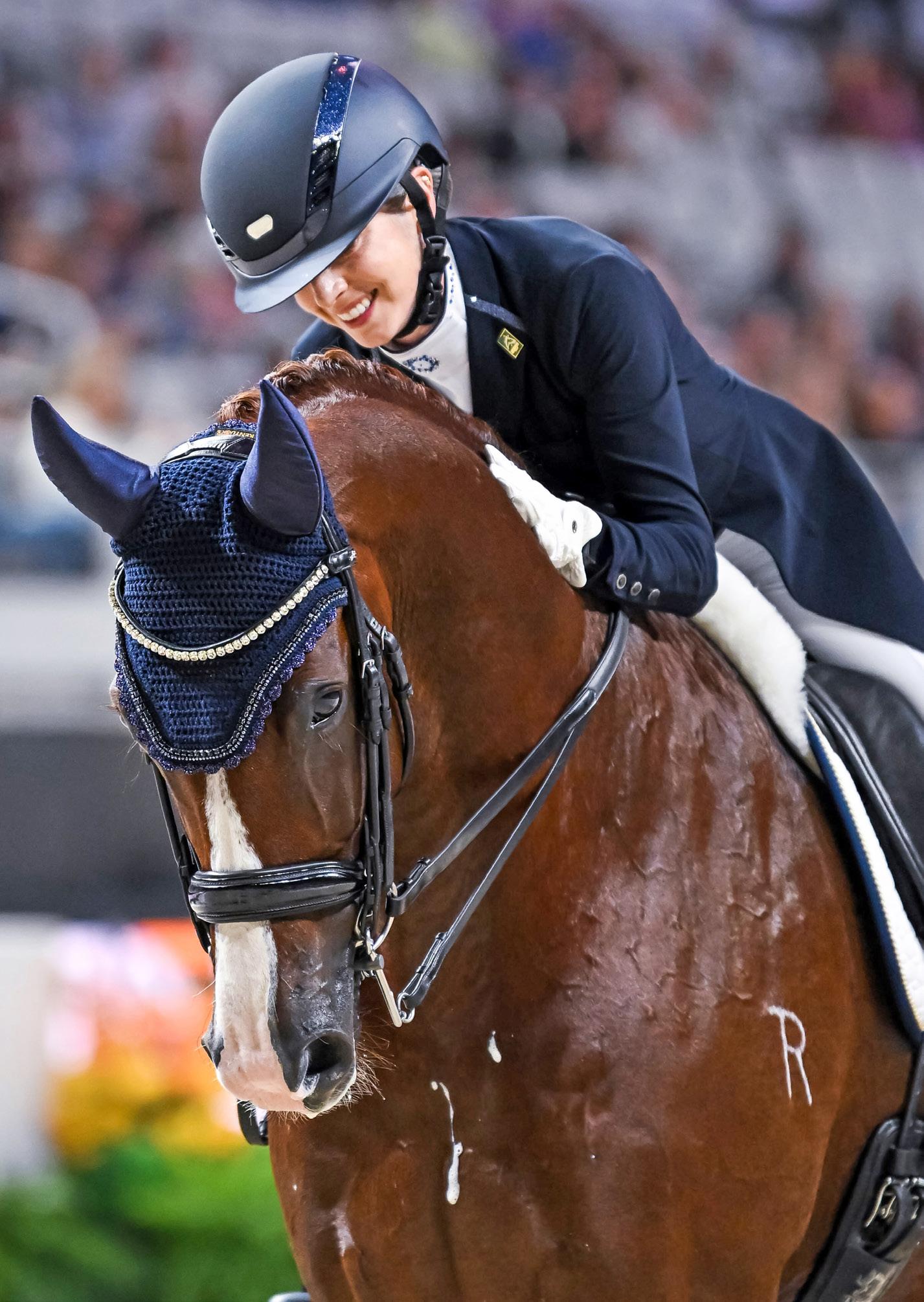
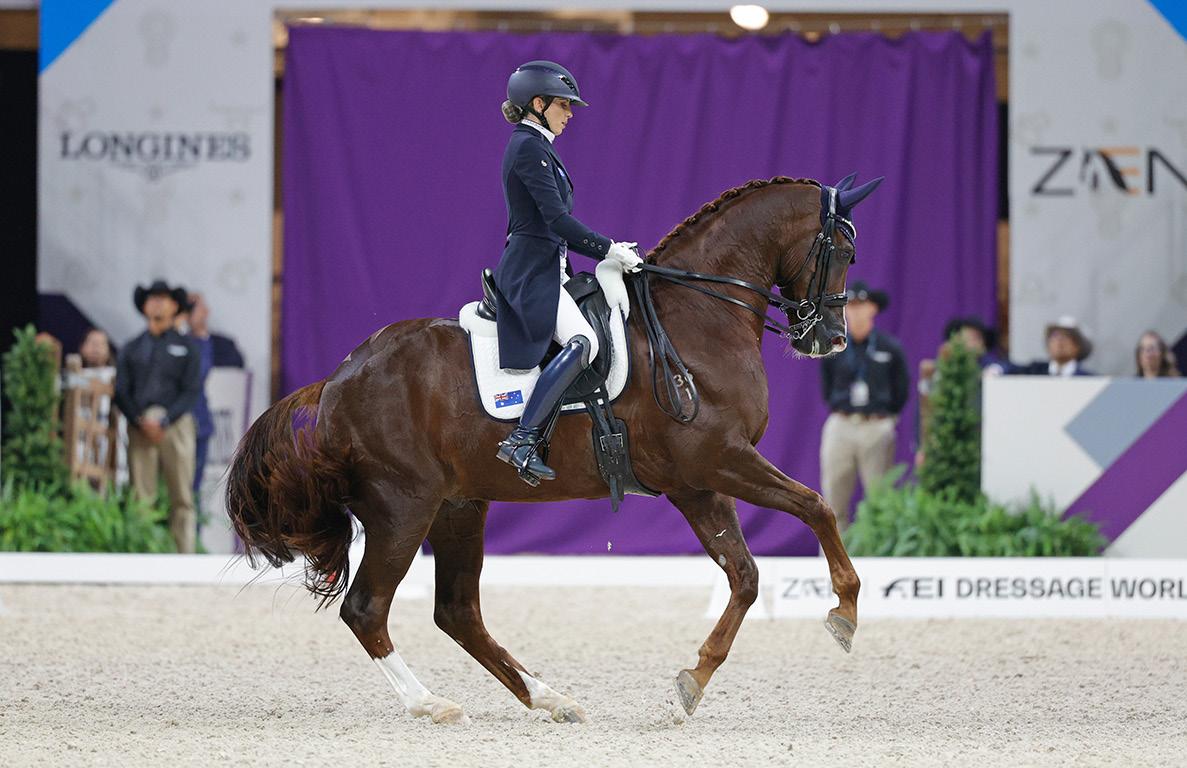
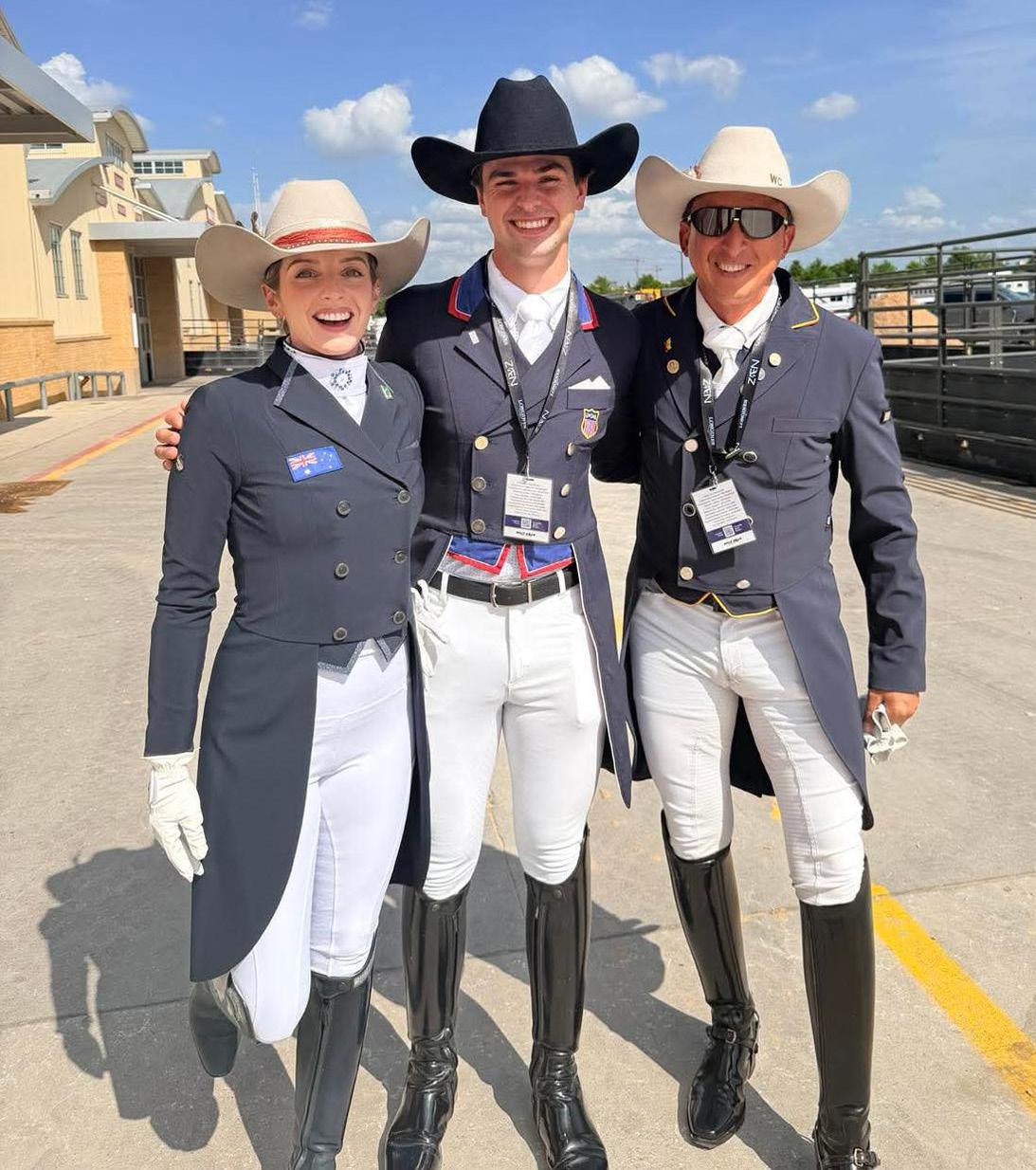
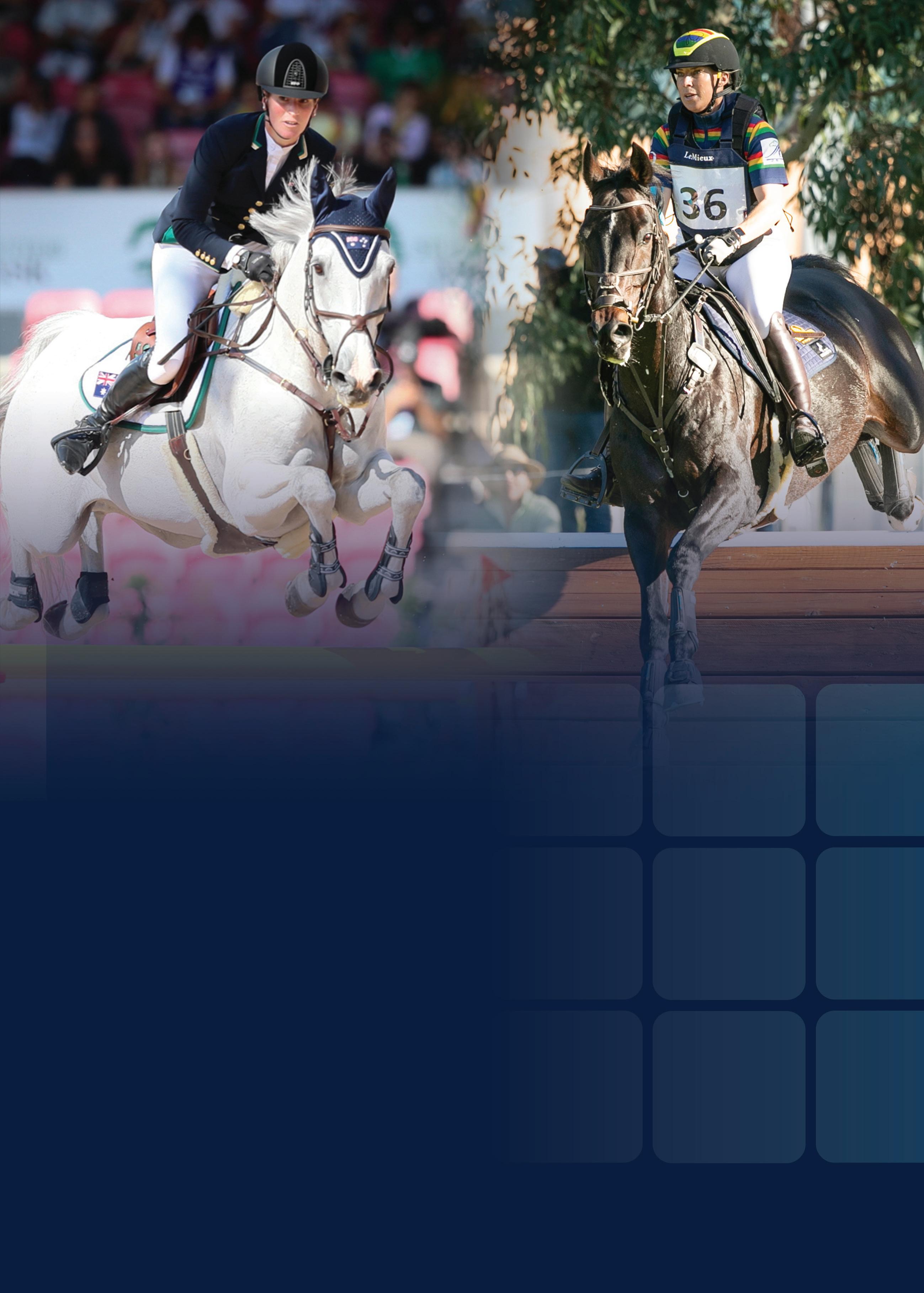
a reputation as one of Australia's most successful show jumpers, plus we catch up with Serena Ireland, a fellow Aussie, who's just competed at the FEI Dressage World Cup™ Final in Fort Worth - go Serena!
Closer to home, Libby Guest shares her journey of successfully producing and competing her own horses while balancing the realities of regional riding, and Grand Prix dressage rider Jessica Dertell explains how she transforms pressure into performance.
In Part 1 of Donal Hancock's new training series, we learn why ground control should be where every horse's education begins. But as Paul Dopper suggests in Point of View, education isn't just for our horses! Lifelong learning is critical for riders too.
In our Power of Participation feature, we take a closer look at the equestrian industry's global dollar value. It's a huge figure, but perhaps not so surprising when you consider it includes all related goods and services: from your local farrier to international companies like logistics giant Equitrans, who we feature in this issue.
On the horse health front there's veterinarian Caroline Spelta's excellent article on the whys and wherefores of vaccinations, and
AMANDA MAC
EDITOR, EQUESTRIAN HUB
equine nutritionist Larissa Bilston offers her expert advice on feeding for health and immunity during winter.
For rider wellbeing, there's the first of our Nourish series from Sugar Beach Ranch (someone please book me in), and AnneMarie Lasserre's always inspiring Ride Fit.
Sam Cavallo delves into the mysteries of horse coat colour in Tech Talk, and you won't want to miss Regina Knobel’s retraining journey in Life After Racing. Plus, you're going to love our Young Rider Aisling Jones every bit as much as he loves his rescue horse Bambi - they're quite a team.
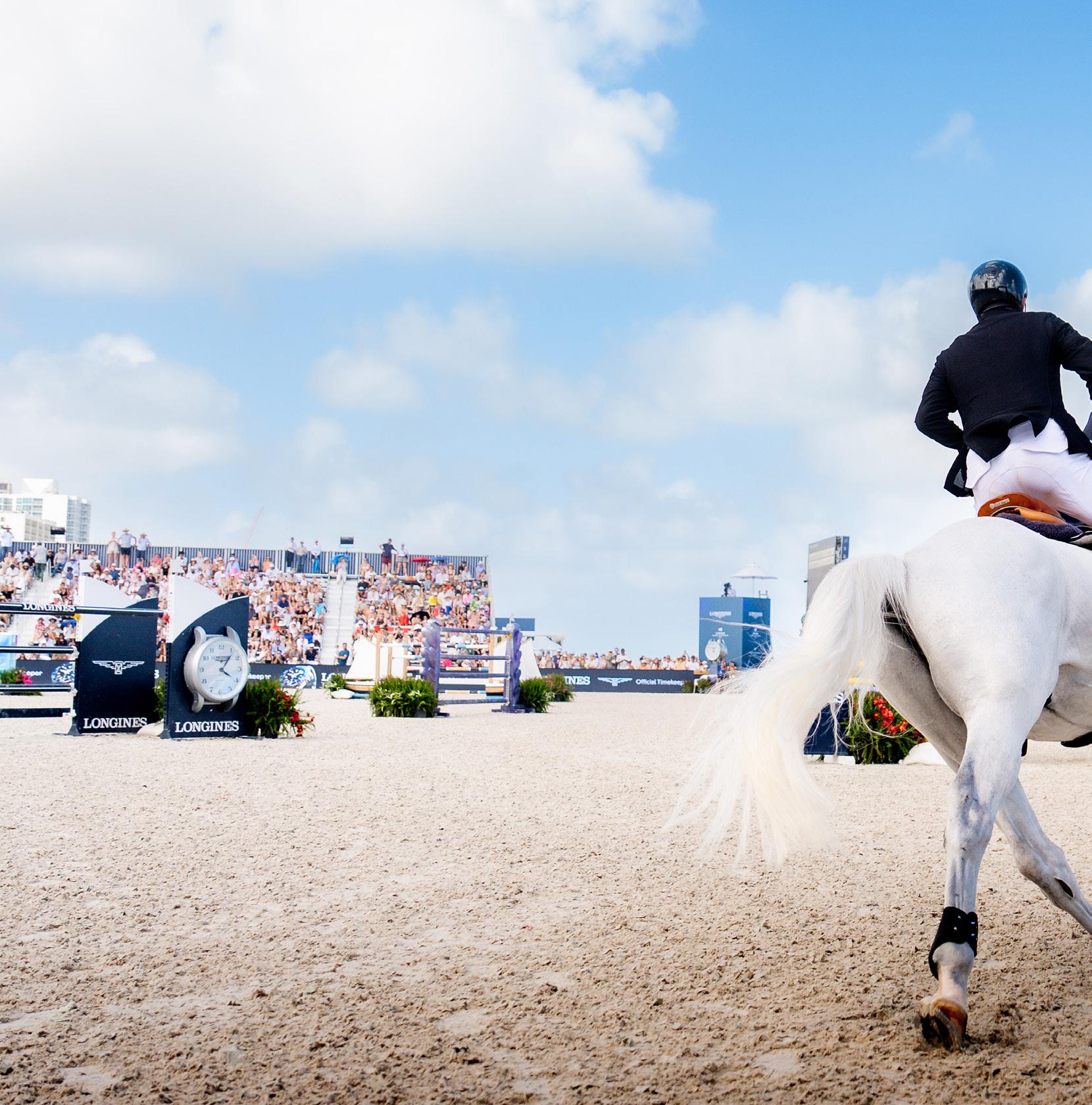
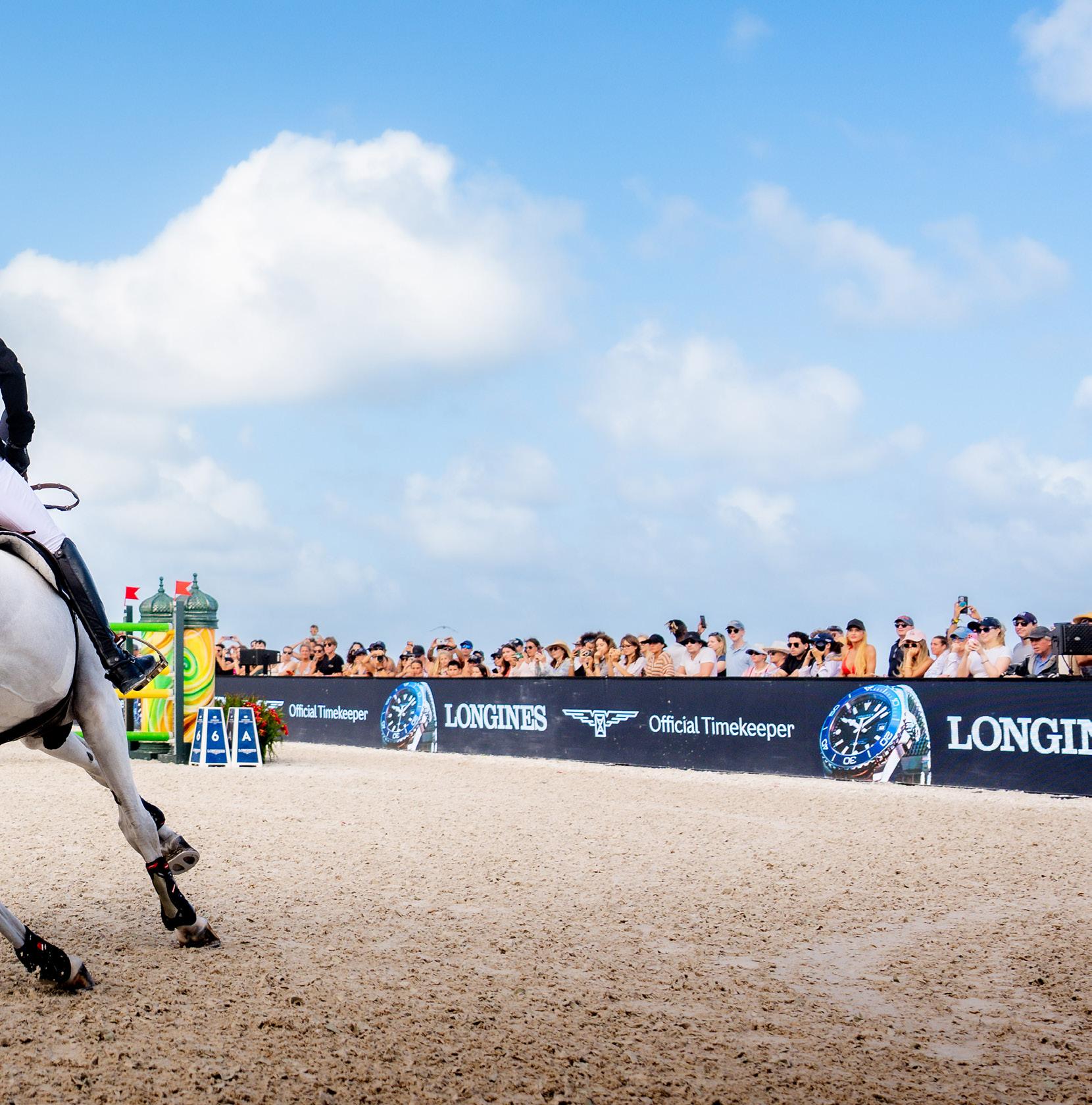
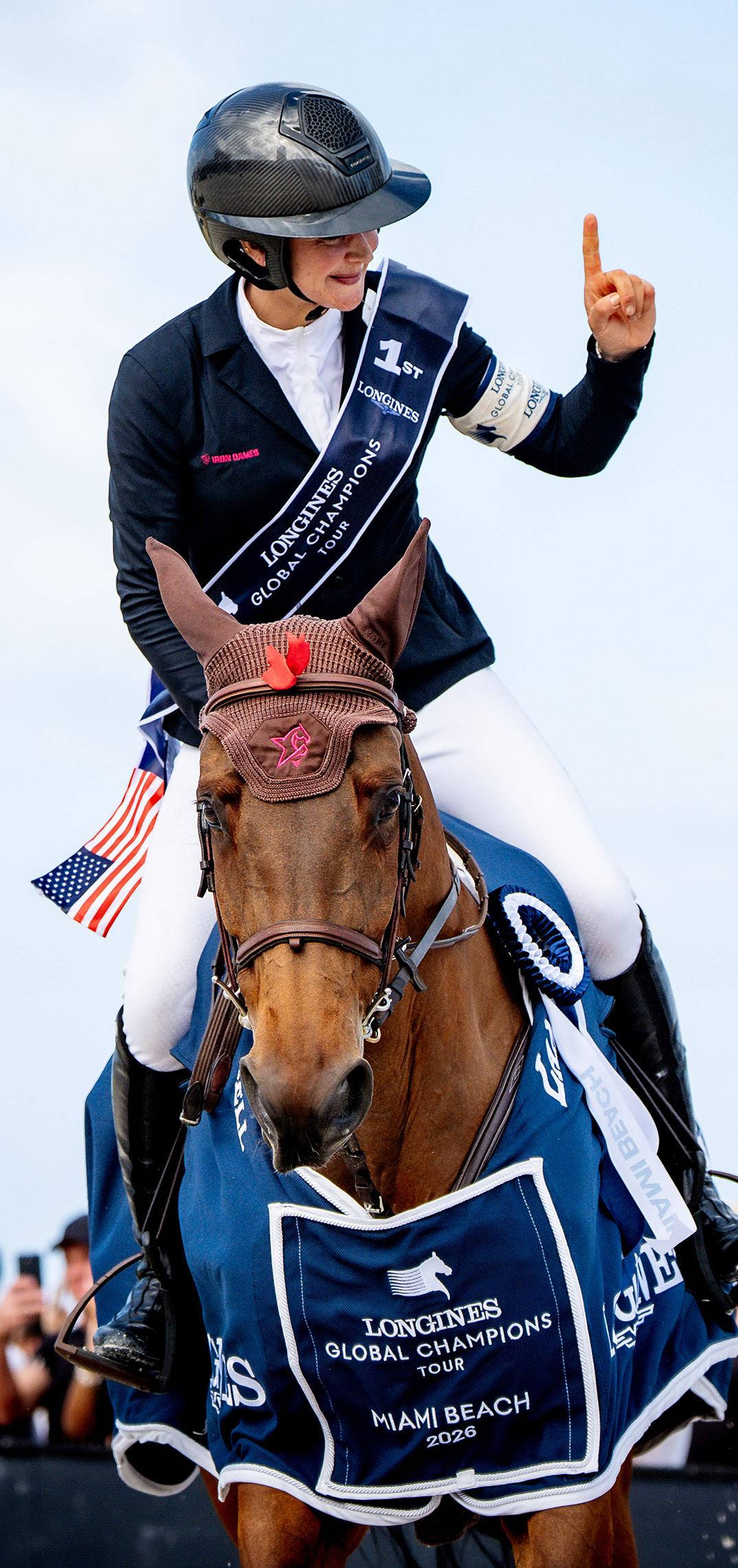
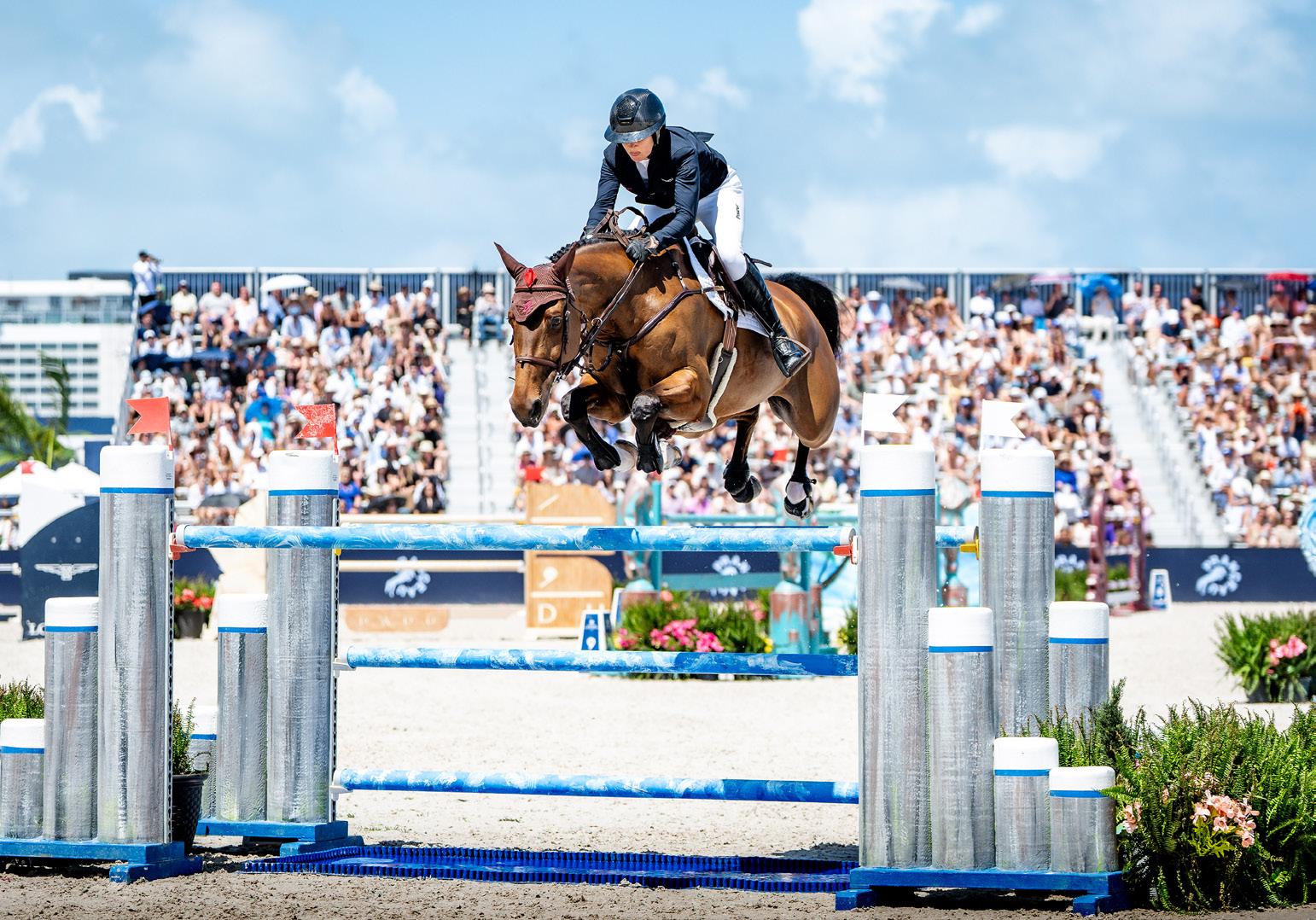
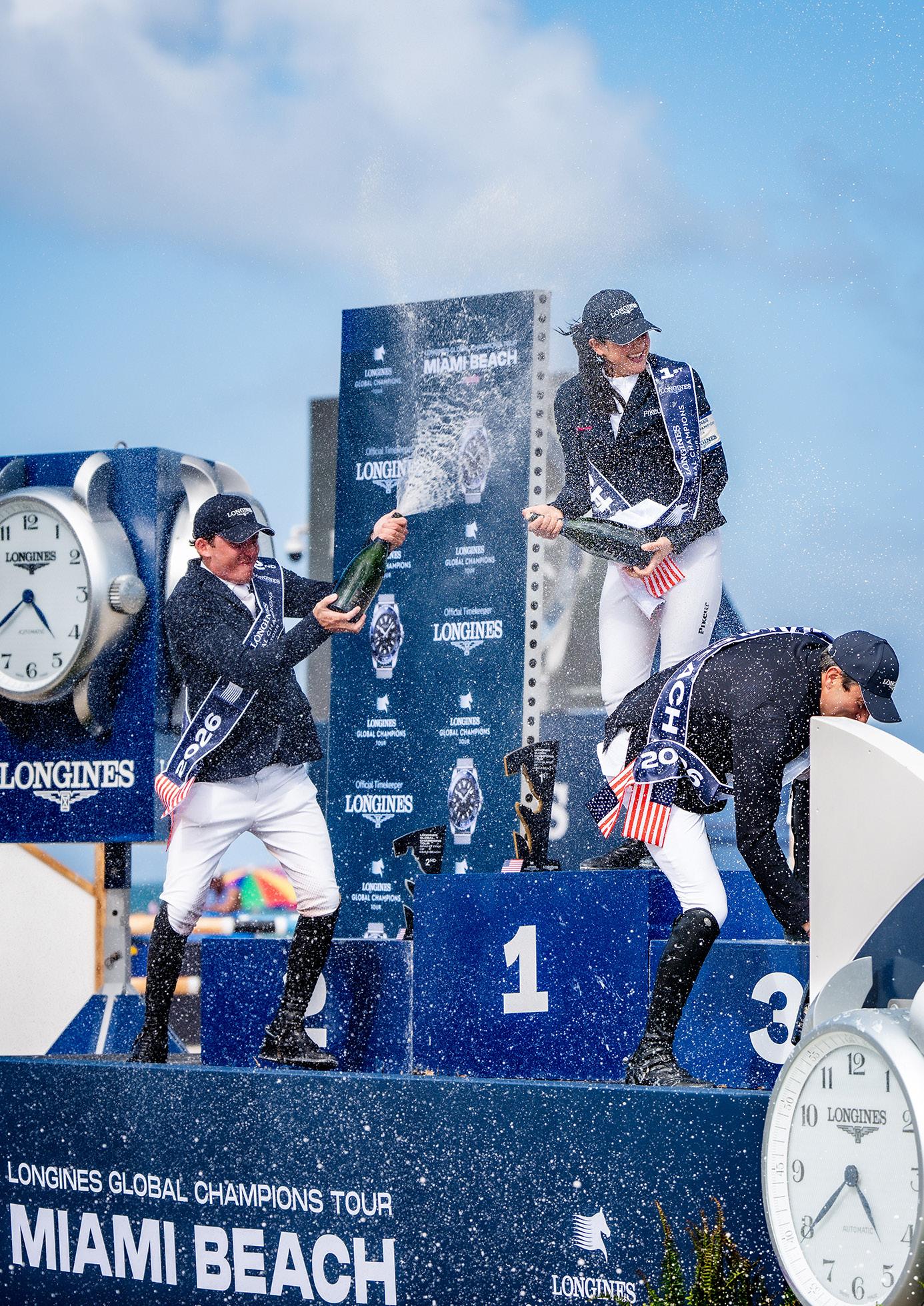
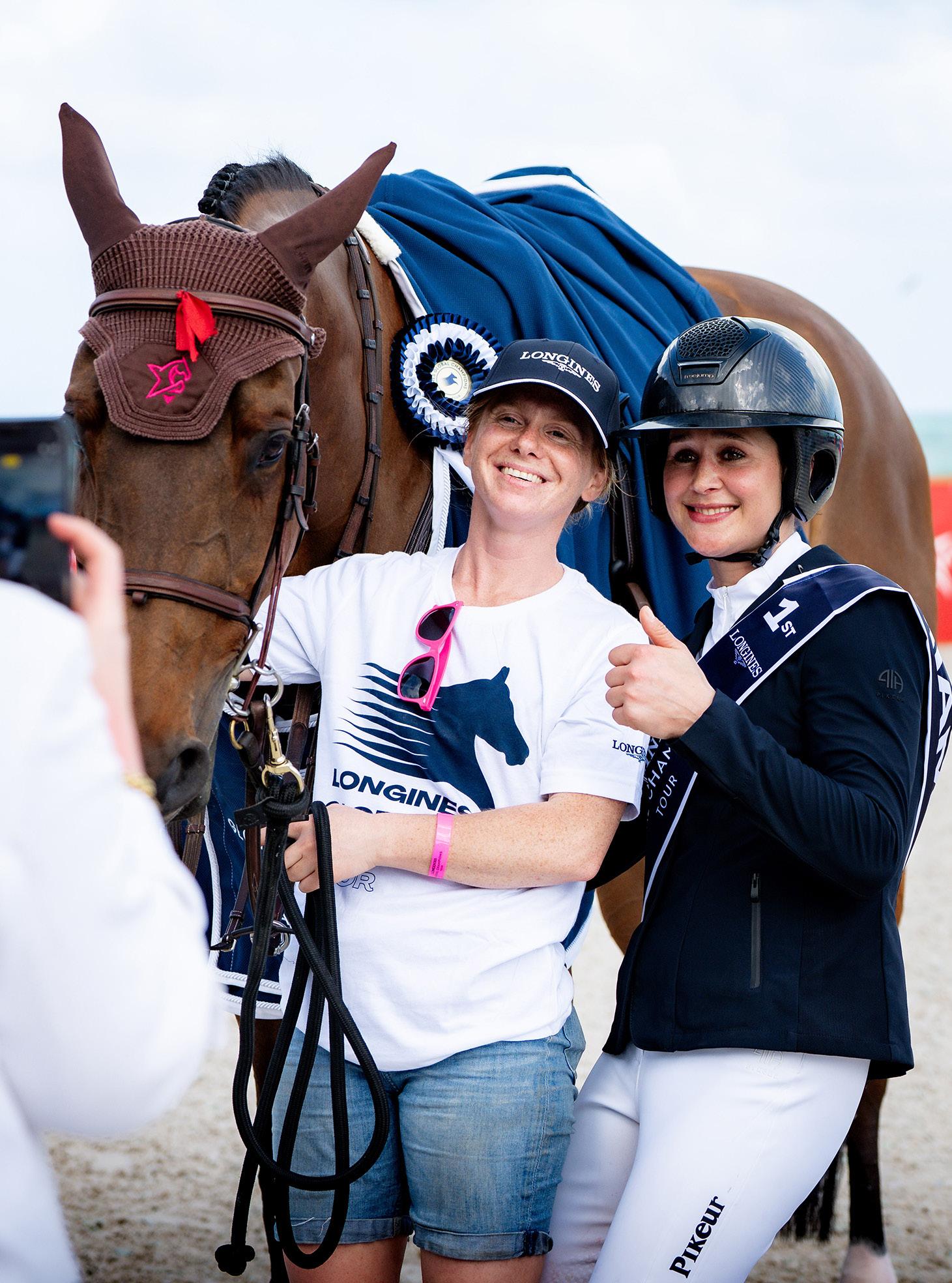
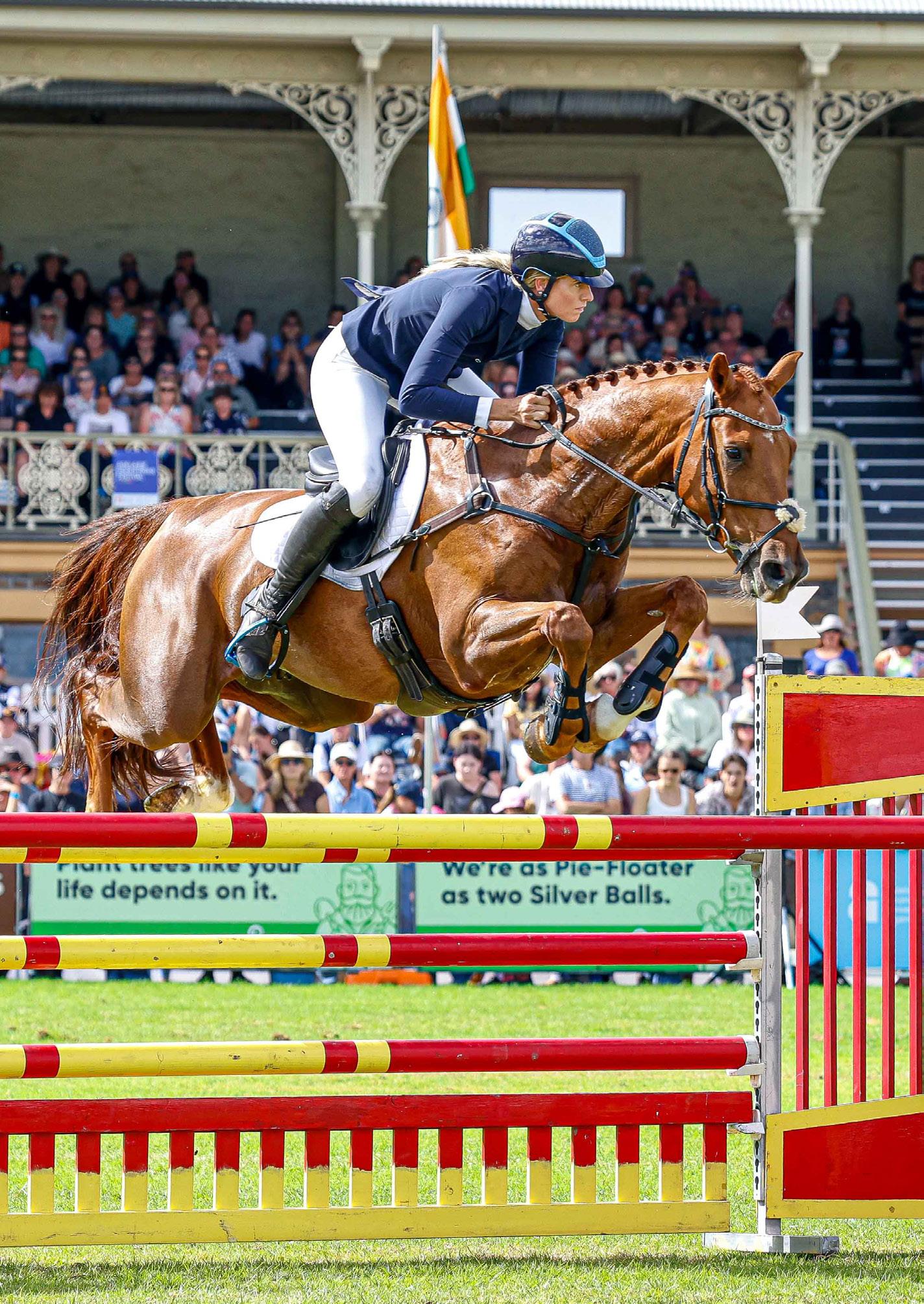
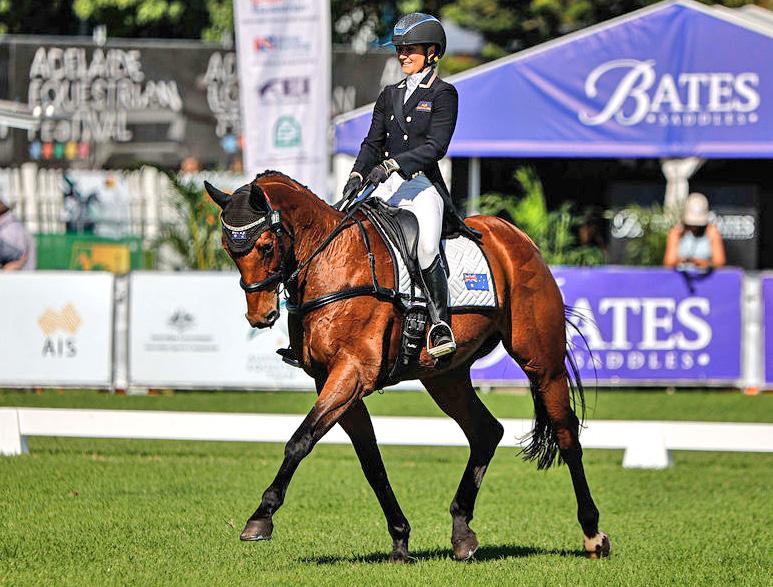
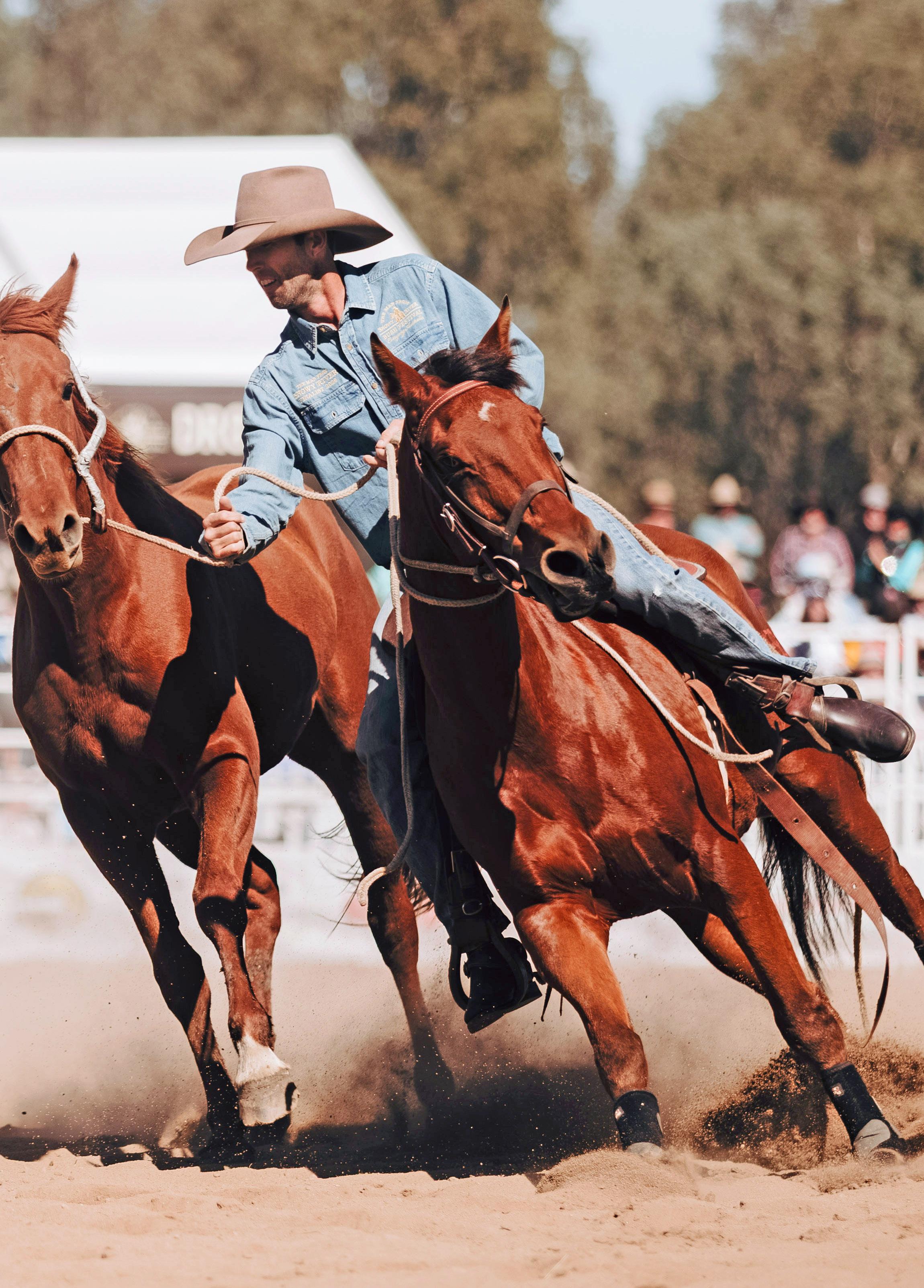
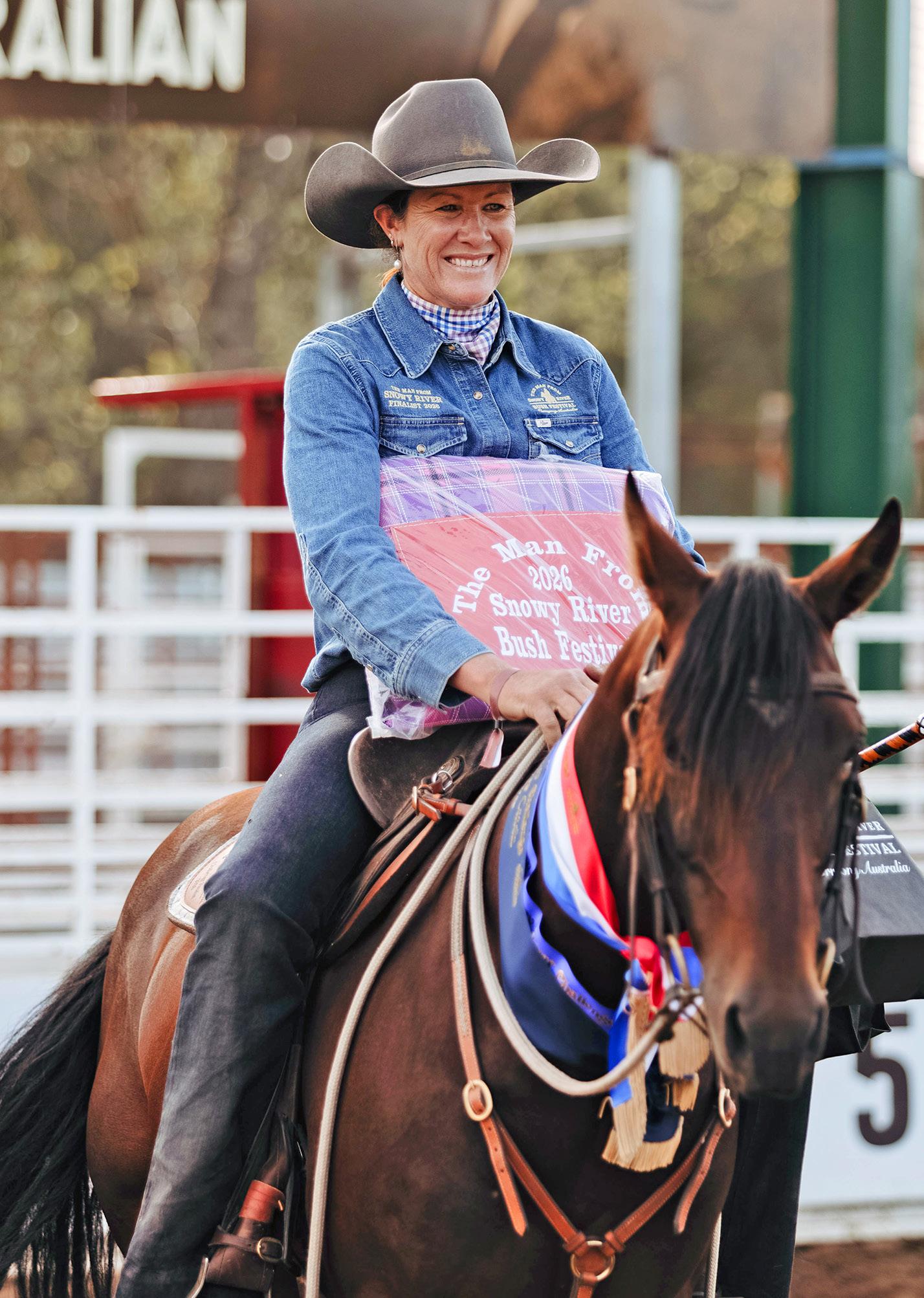
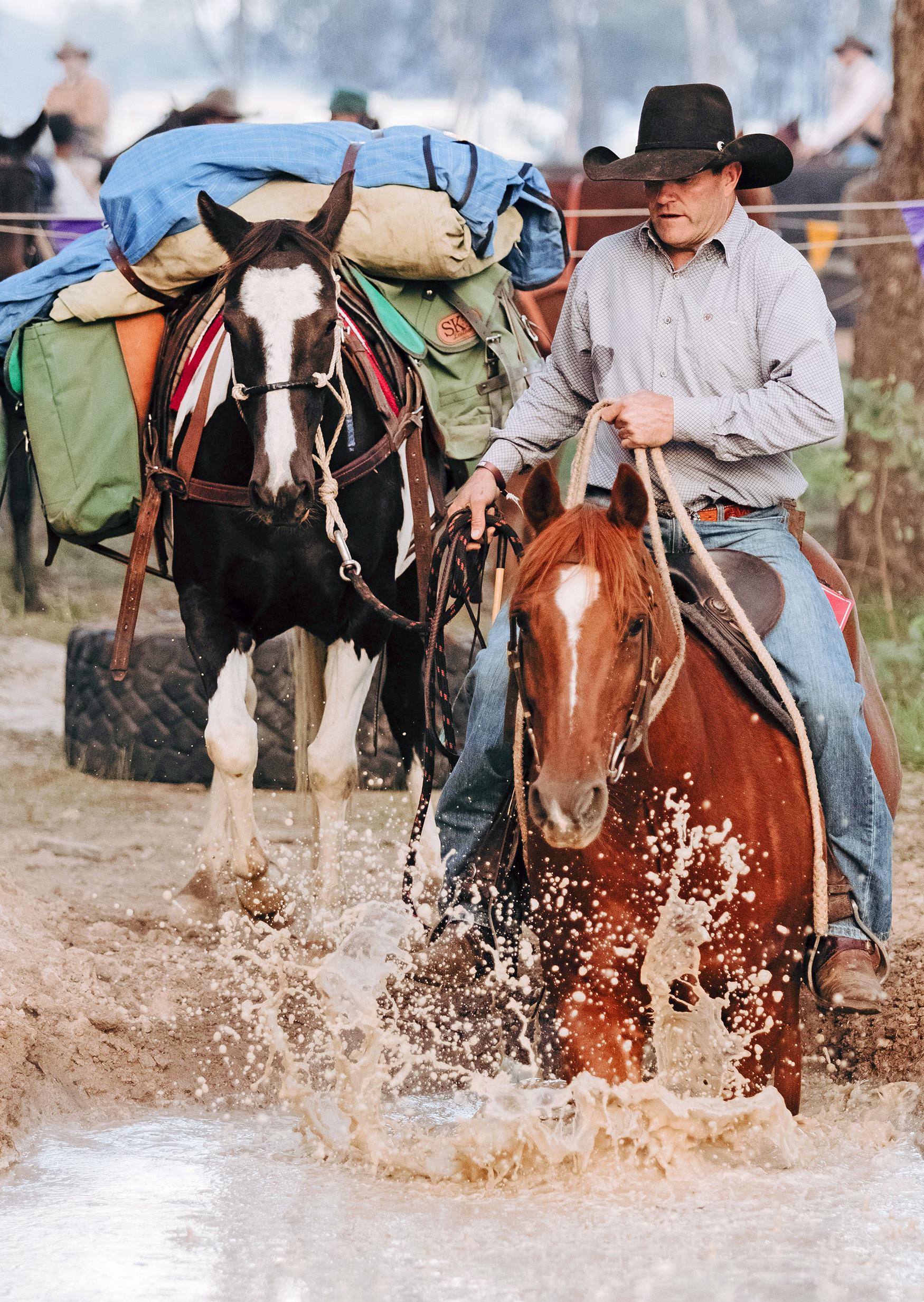
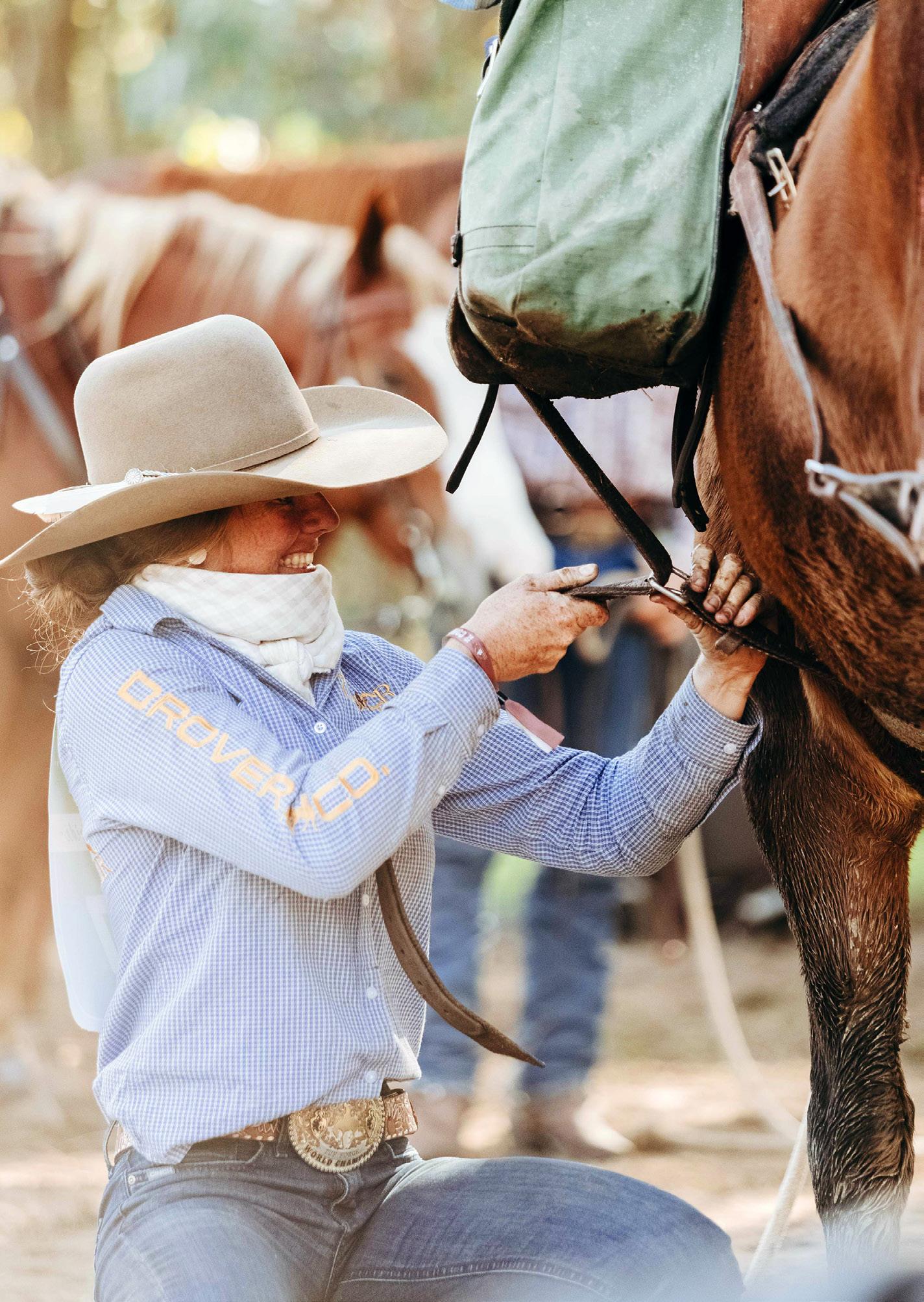
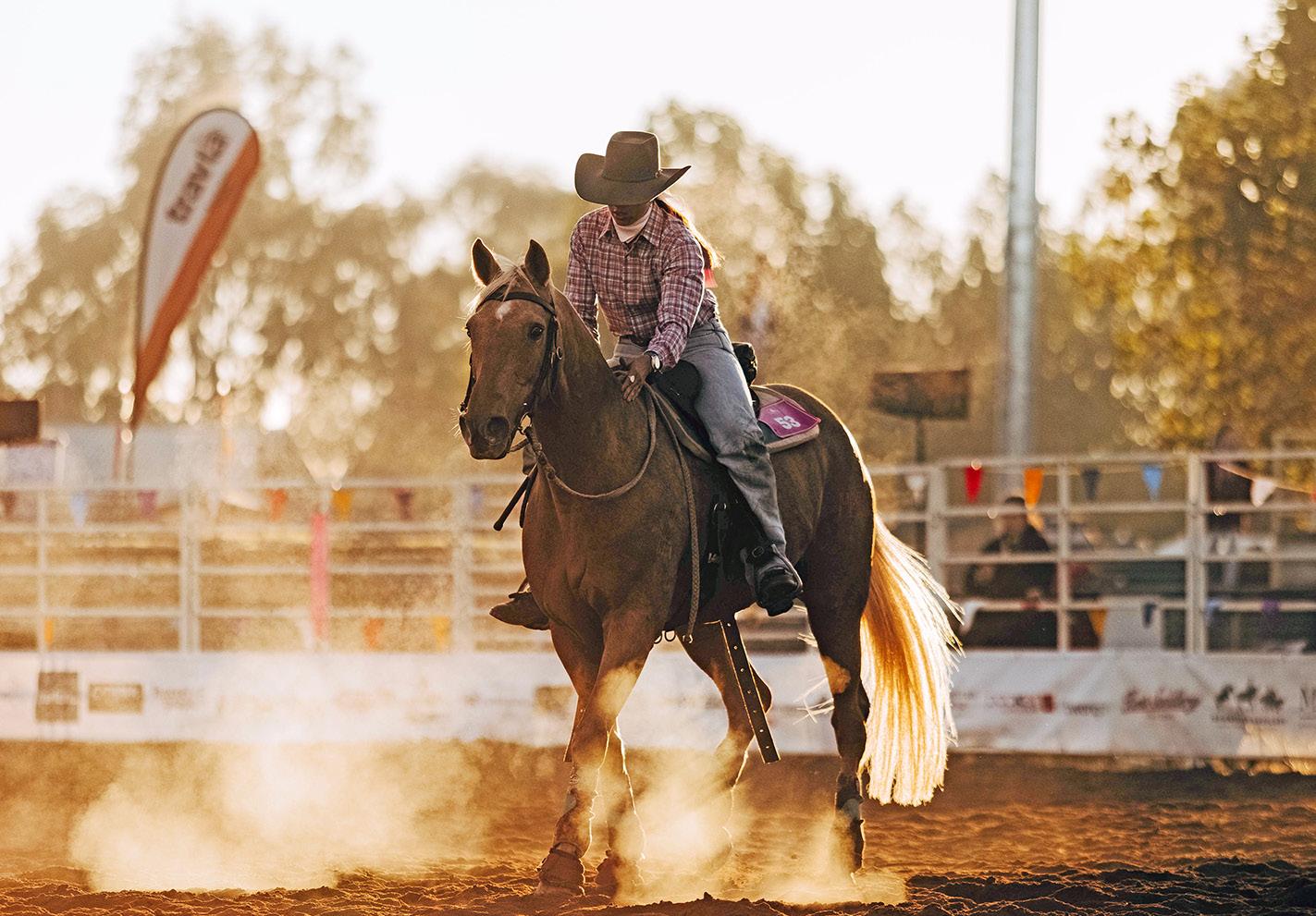
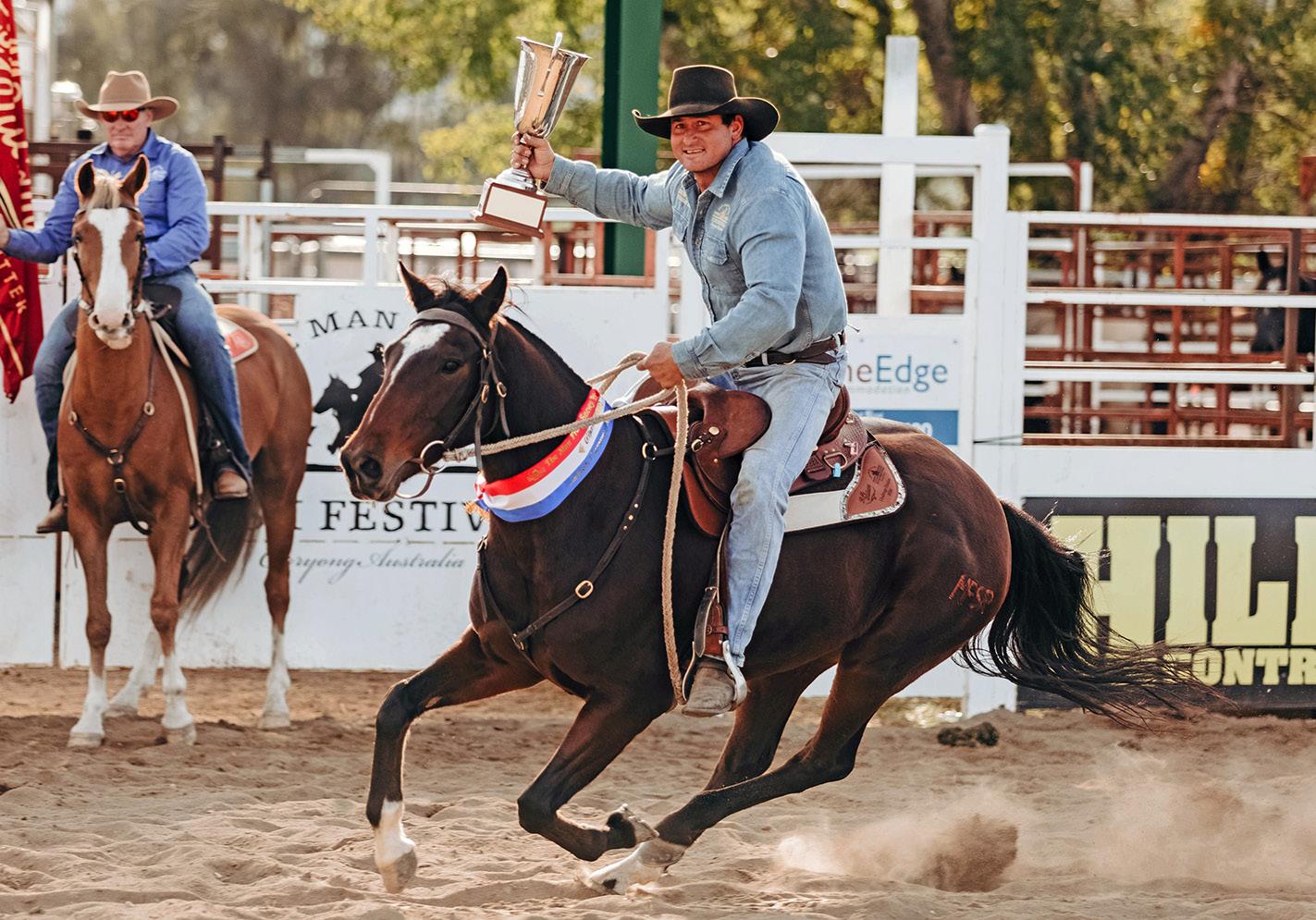
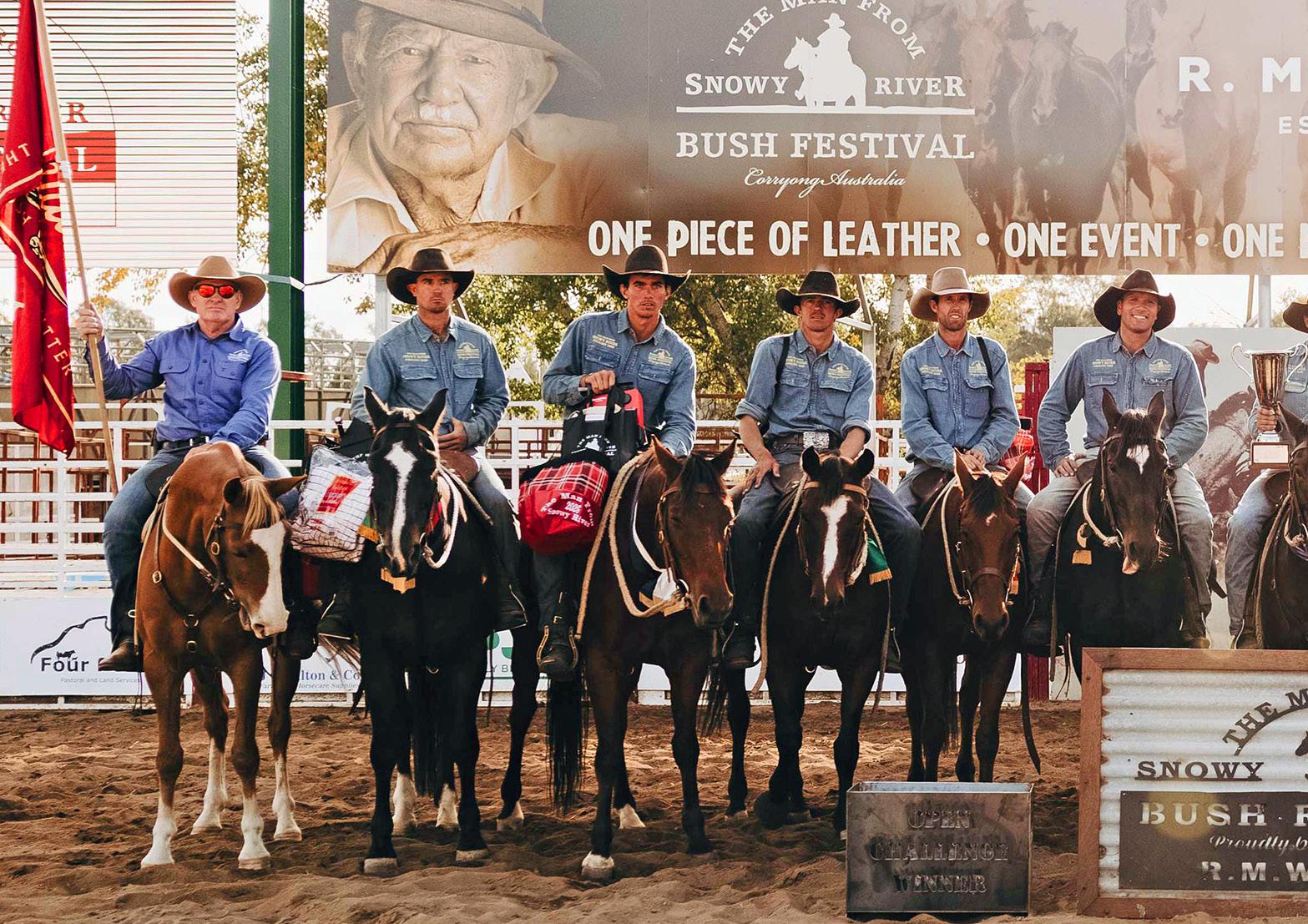
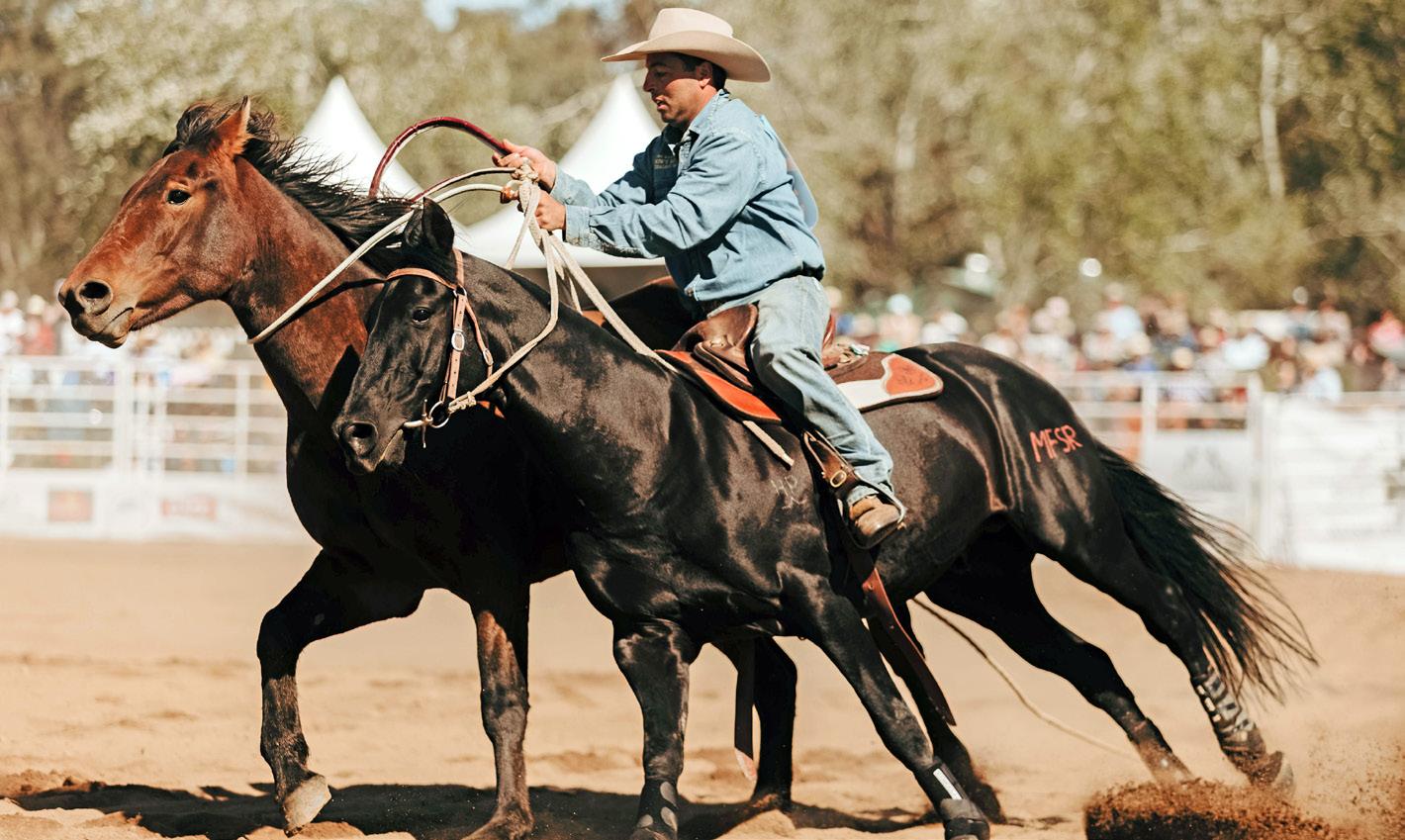
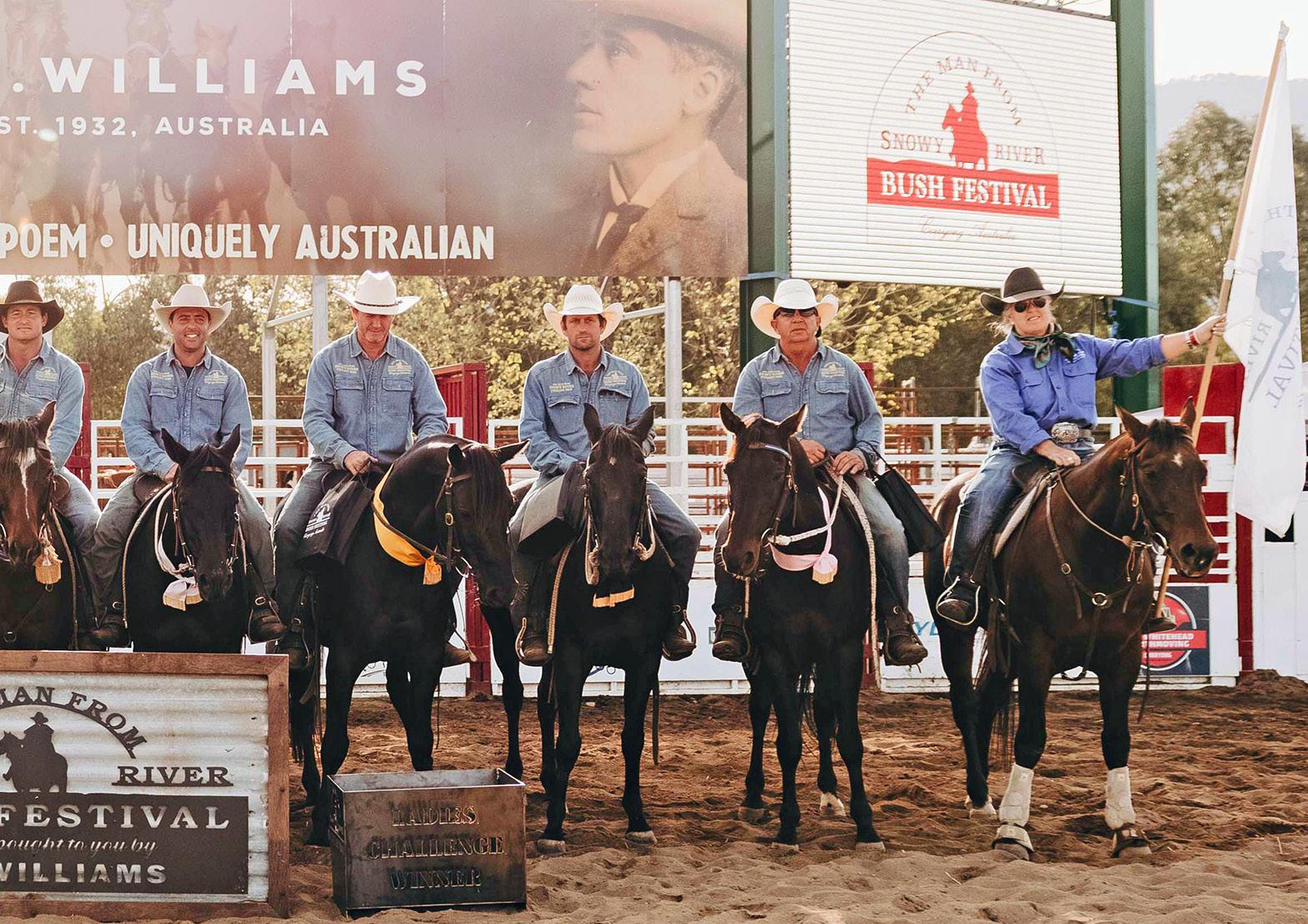
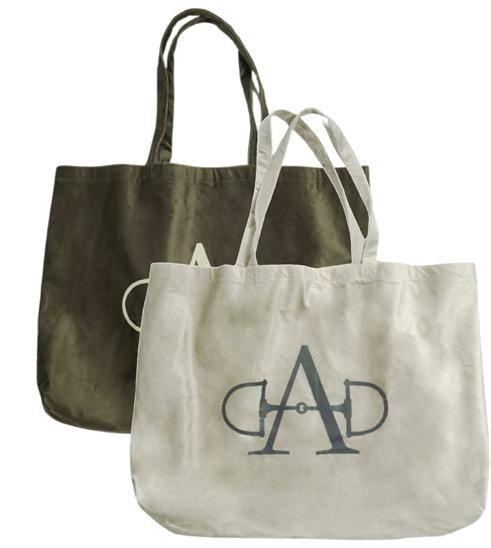
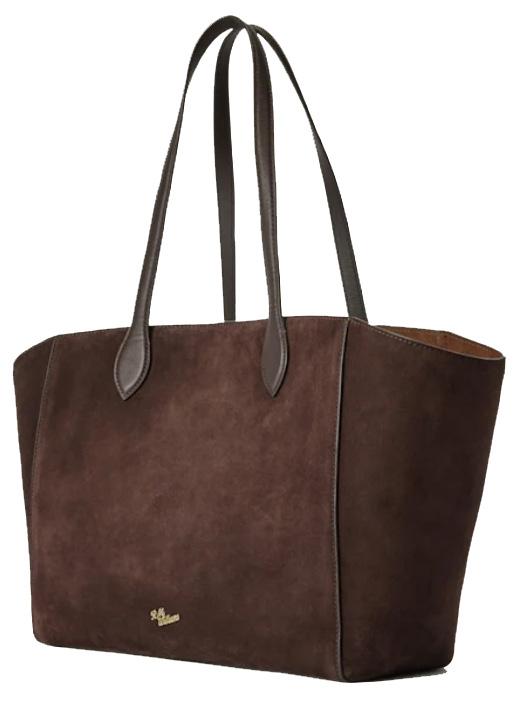
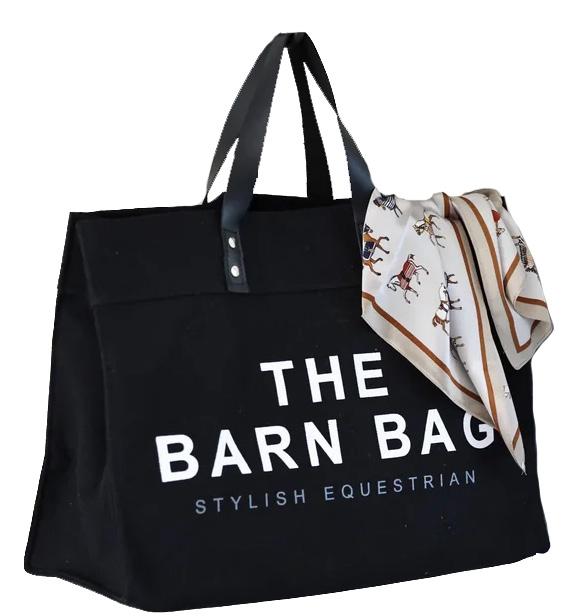
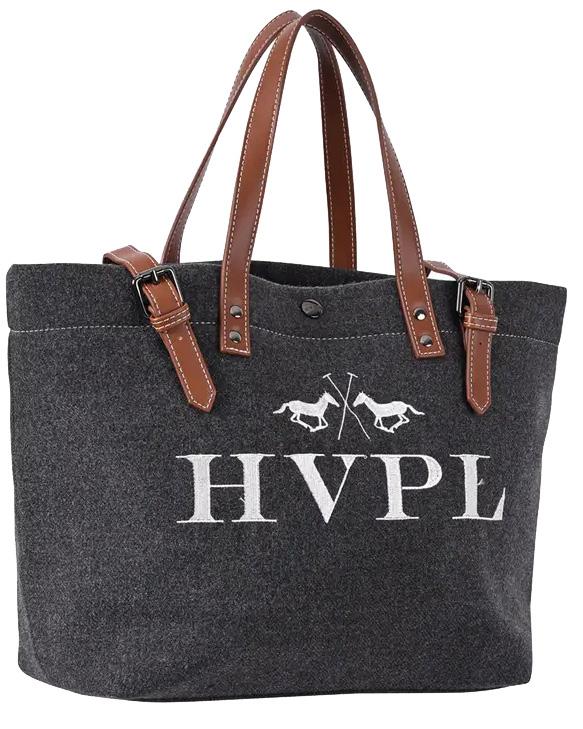
Of course, we also have an event roundup: the Miami LGCT, Adelaide Equestrian Festival, Australia’s Greatest Horsewoman, and the Man From Snowy River Bush Festival. Our Behind the Shot from Brooklyn Coverdale is stunning, as is this month's property. Some gorgeous totes are trending in What We Love, and keep up to date with all the latest in Mini News.
And last, but certainly not least: happy Mother's Day to all the wonderful horse mums. We think you'll enjoy Sam Cavallo's reflections on the art of raising a horse girl: the realities, and the quiet lessons in knowing when to hold on and when to let go.
OUR CONTRIBUTORS
Aisling Jones
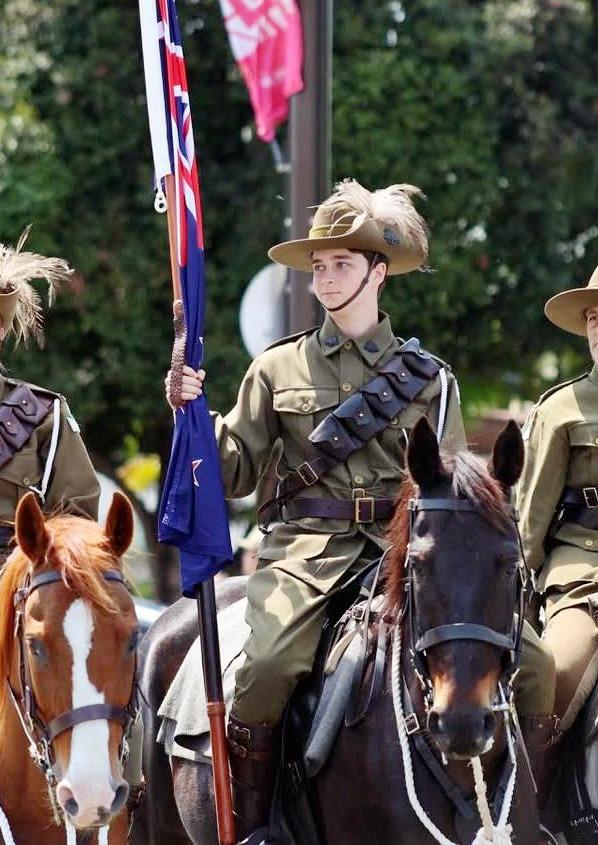
Aisling, this month's Young Rider, shares the story of his remarkable partnership with rescue horse Bambi. He is a member of the 2nd Light Horse Regiment Woombye Troop and the AAVC Commemorative Troop, and through Scouts Australia, was awarded a grant from the Dick & Pip Smith Leadership Through Adventure Fund. He also won the Scoot Boots Young Rider Award and is a champion tentpegger.
Lauren Balcomb
Lauren was a 12-yearold Pony Clubber when she decided she was going to pursue an equestrian career. Since those early days, she has built an outstanding career in the show jumping arena, and for many years has competed internationally at the very top level. We speak to Lauren in this month's Chat With a Champion, and it makes for very interesting as well as informative reading.
Paul Dopper
Founder of Team Dark Horse, Paul is known for helping equestrians better understand their horses and become more knowledgeable, confident horsemen and women. He has been involved in breeding, training, and showing horses at both Royal and National level, and his years of experience have taught him that true horsemanship matters far more than matching gear or winning a blue ribbon.
Kim Peterson
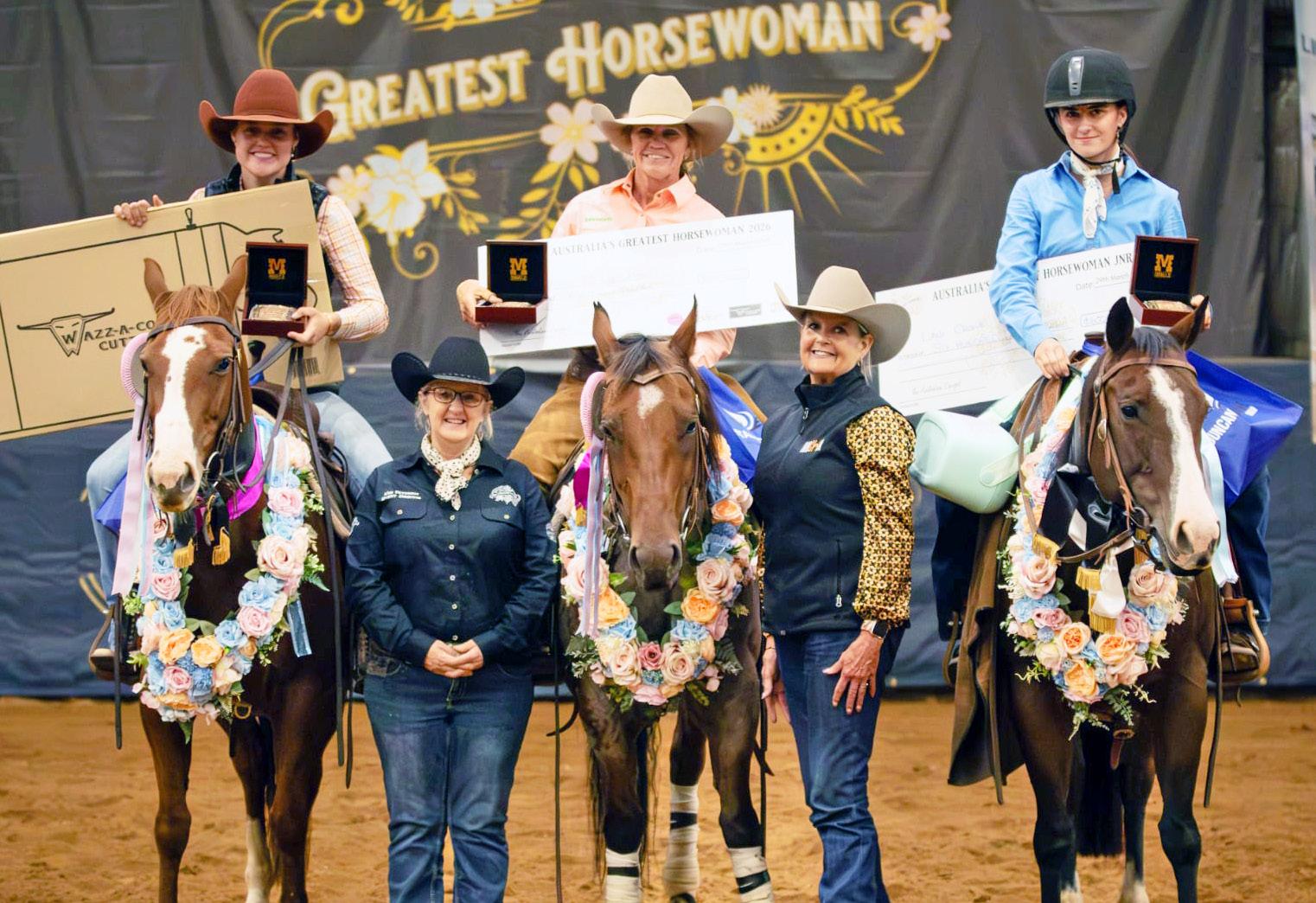
Kim is the founder and driving force behind The Australian Cowgirl Co., a platform dedicated to supporting women in the western performance horse industry. With deep roots in horsemanship and a vision for the future of female-led competition in Australia, she has created some of the country's most exciting equine events, including Australia's Greatest Horsewoman. Held last month, Kim reports in this issue.
Dr Caroline Spelta B.V.Sc. (Hons), MANZCVS, DECEIM
Caroline specialises in equine medicine. Boarded with the European College of Equine Internal Medicine and a Member of the ANZCVS, she has extensive expertise in Australasian equine internal medicine and toxicology, with special interests in ophthalmology, neonatology, and intensive care. This month, she offers some invaluable insights into the often confusing topic of vaccinations.
Anne-Marie Lasserre
Anne-Marie is a Miss World and Miss Universe Figure Champion. She’s an AOR dressage rider, and a specialist coach in aesthetics, sports performance and nutrition. Dedicated to empowering equestrians to achieve peak fitness and personal transformation, in this issue she looks at why women should stop training to be smaller, and start training to be more capable. It's a must-read.
Hannah McCabe Hannah, a rider, UAEERF judge, and communications expert, founded Dark Horse in 2023. The Middle East’s first integrated marketing and communications agency, she works with some of the region’s most exceptional equestrian talent and brands. In this issue, she looks at how the Equitrans Logisitcs team ensure their precious cargo arrives safely amid increasing pressures in the region.
Larissa is the Equine Nutritionist for Farmalogic, where she developed Equine Vit&Min and the Farmalogic Equine range. Her extensive experience is highly regarded by trainers, riders and owners who understand the importance of good nutrition. In this issue, she discusses winter feeding and the importance of making changes to your horse’s feeding program in the colder months.
Larissa Bilston B.AgrSc (Hons)
OUR CONTRIBUTORS
Regina Knobel
Regina is an eventer and dressage rider. Known for her success with OTT Thoroughbreds, she is a Racing Victoria Acknowledged Retrainer and has achieved strong results across HRCAV and dressage competitions, including multiple wins and placings with horses such as Hillview Park Standing Ovation and Hillview Park Denman. In this month's Life After Racing, she shares her passion for OTT horses.
Libby Guest Libby produces and competes her own horses. Horse mad as a child, she won the Australian Junior Show Jumping Championship as a 16-year-old, later successfully entering the show horse arena and competing up to national level. She has since switched to dressage with equal success, and began competing FEI in 2025. We feature her story in this month's AOR.
Serena Ireland
Serena is an Australian dressage rider who developed her homebred partnership with Royalty R from the lower levels to Grand Prix. Based in Australia and shaped by training in Germany, she has just competed in the 2026 FEI Dressage World Cup Final in Fort Worth. Admired for her work ethic, horsemanship, and commitment to making elite sport feel attainable, she shares her experience in this month's Postcards.
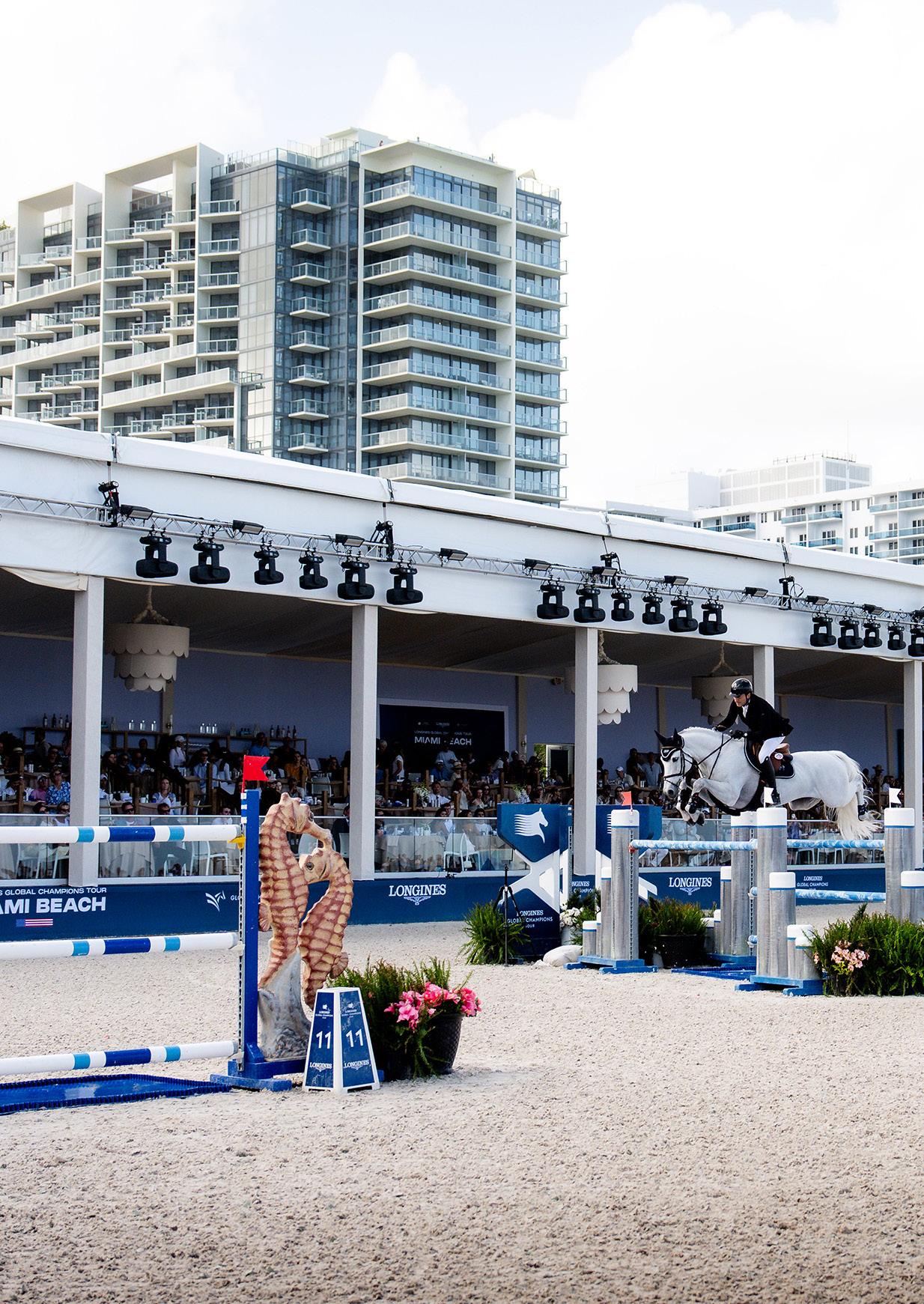
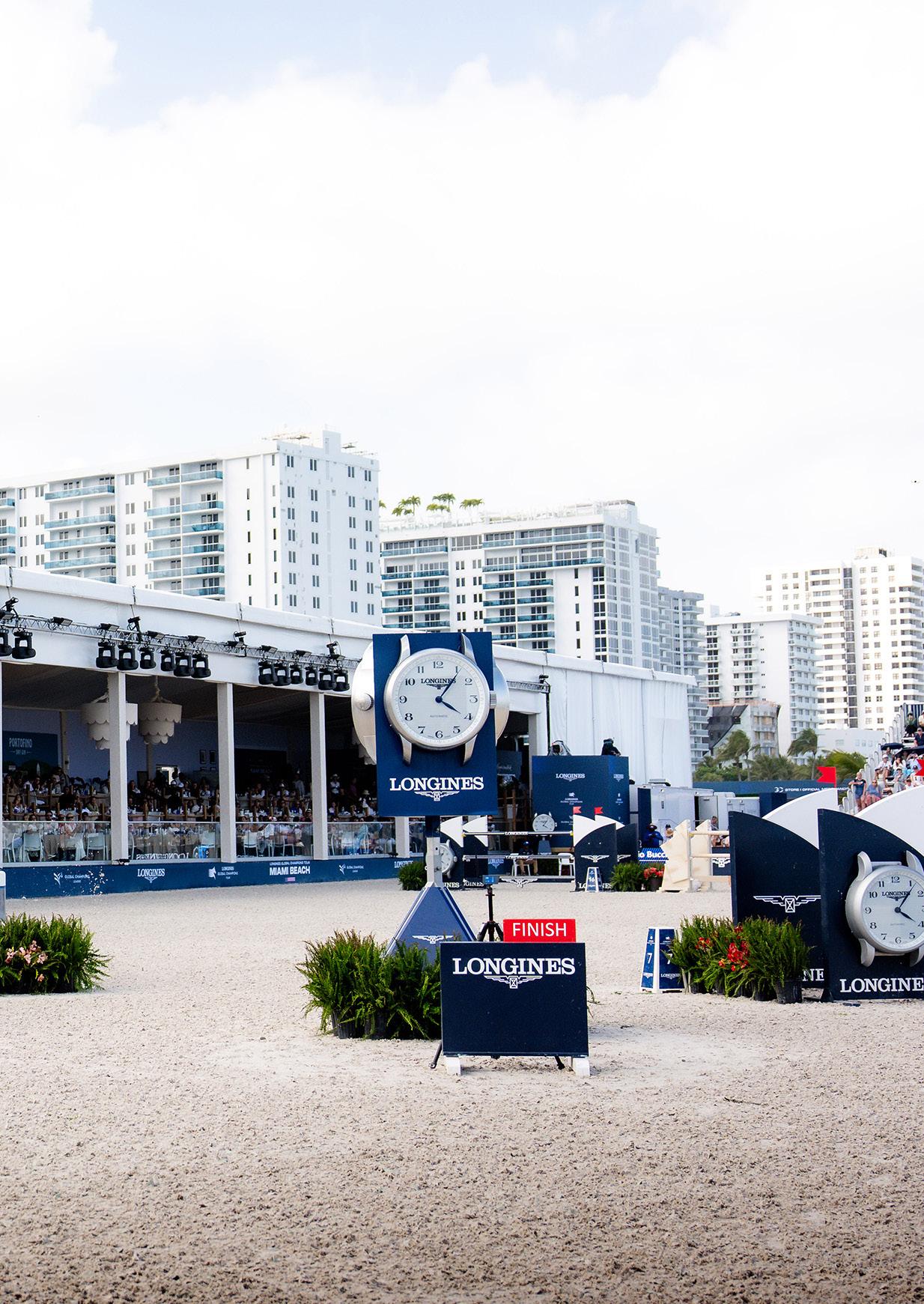
With a rich family heritage in equestrian sports, Helen is a prominent figure in the international equestrian scene. Renowned as both a show jumper and photographer, her images are highly sought after. She travels extensively, covering major show jumping and polo events, capturing the bond between horses and their riders. This month, we feature her coverage of the spectacular Miami LGCT.
Donal, founder of Hancock Horsemanship, believes building a relationship with your horse is foundational, not optional. Recipient of the Jack Brainard Horsemanship Award, he is a trainer, clinician and entertainer, and has competed in colt start and liberty competitions both here and overseas. Don't miss Part 1 of his excellent Foundation to Finished training series in this issue.
Lucy Rae
Featured in this month's Founders, Lucy took over the reins at Belle Equestrian in 2023, and has since transformed the brand into one serving the broad equestrian community with pieces that are functional, affordable, and genuinely horse and rider focused. Above all, she's committed to building a welcoming community where every rider feels supported, seen, and inspired.
Jessica Dertell
Competing internationally at Grand Prix level, Jessica has represented Australia in Nations Cups, earned multiple National Championship titles across Youth and Open divisions, and was shortlisted for the 2024 Paris Olympics. In this issue, she shares how preparation, perspective and routine can help transform pressure into performance.
Sam Cavallo
Sam, the publisher of Equestrian Hub and Equestrienne Magazine, has a keen interest in international events and equestrian culture and lifestyle, with a focus on community and the people behind the sport. - and is committed to supporting education and positive change within the equestrian community. In this month's Tech Talk, she dives deep into the fascinating science of horse coat colour.
Helen Cruden
Donal Hancock
MINI NEWS
FAREWELL TO HORSE DEALS MAGAZINE
Long-standing publication Horse Deals has announced it will cease print production, marking the end of an era for Australian equestrian media. Known for its classifieds, stories and industry connection, the magazine has been a staple for riders nationwide for over 40 years. The decision reflects broader shifts toward digital platforms, with audiences increasingly consuming content online. The final issue will be the May edition, on sale the week commencing May 4. horsedeals.com.au
RIDE YOUR HORSE TO SCHOOL DAY
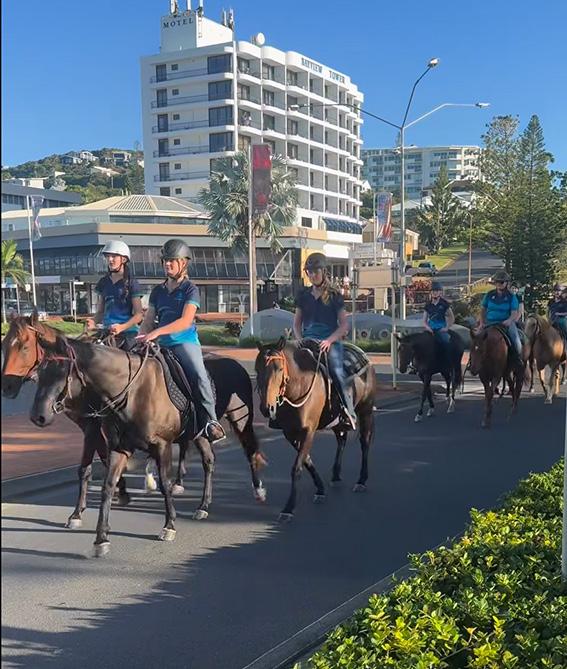
“Ride Your Horse to School Day” is capturing hearts across regional Australia, with students swapping cars and buses for saddles. In Yeppoon, riders — including students from St Ursula’s — travelled to school on horseback under police escort, with patrol cars leading and following the group. The initiative reflects a grassroots take on National Ride2School Day, celebrating equestrian culture and connection. Nostalgic yet progressive, it highlights a growing appetite to integrate horses into everyday community life. Image via Grant's Horse Transport Facebook
BOONAH TURNS BLUE FOR DO IT FOR DOLLY DAY
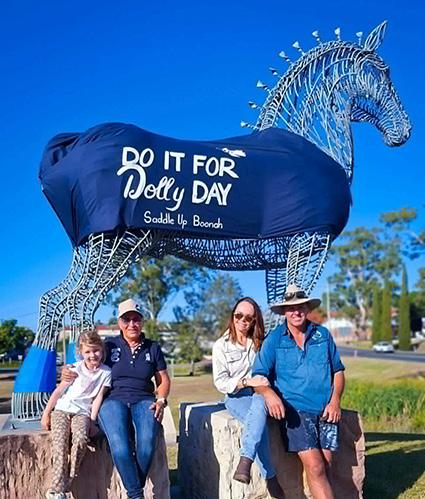
Boonah is gearing up for Do It For Dolly Day on 8 May, with the town already awash in blue in support of the anti-bullying campaign. A major community raffle featuring nearly 100 prizes is underway, while local businesses are joining in — from blue milkshakes at Scenic Milk Bar to cupcakes at Sandie Lee’s Kitchen, with proceeds donated. A standout moment includes a locally made blue rug for the town’s Clydesdale. With momentum building, organisers are now aiming to surpass a $10,000 fundraising goal. FacebookBoonah Turns The Twon Blue.
MICHELLE PAYNE HONOURED WITH FLEMINGTON STATUE
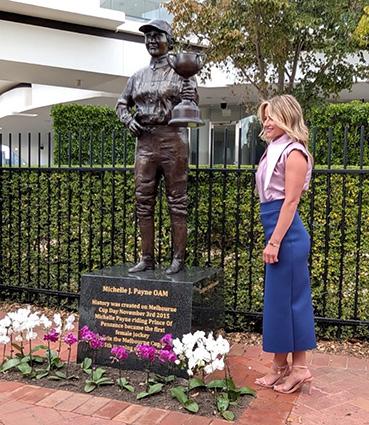
Trailblazing jockey Michelle Payne has been immortalised with a statue at Flemington Racecourse, celebrating her historic Melbourne Cup victory aboard Prince of Penzance. Payne made history in 2015 as the first female jockey to win the Cup, guiding the 100–1 outsider to one of racing’s greatest upsets. Payne described the honour as a reflection of an “incredible, unexpected journey”. She is also the first woman to be honoured with a statue at Flemington, recognising her lasting impact on the sport and her role in inspiring future generations.
TABULAM HONOURS LIGHT
HORSE LEGACY
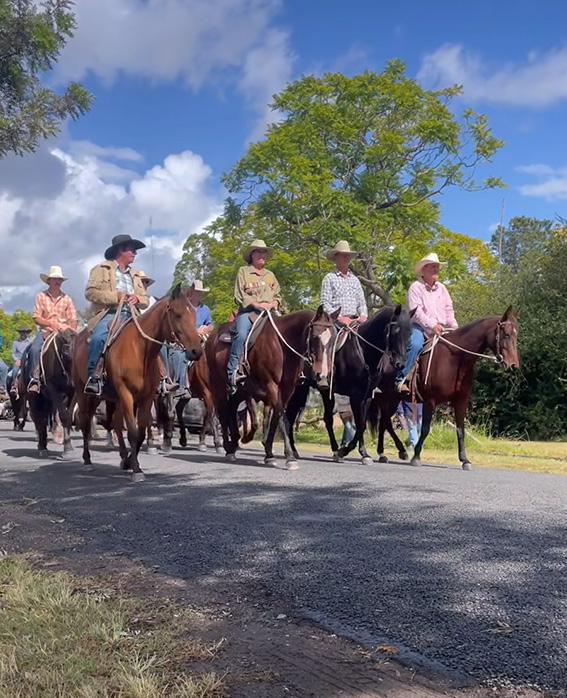
A special ANZAC Day service in Tabulam, NSW saw more than 70 horses and riders marching through town before paying their respects at the Light Horse Memorial. The tribute honoured a rich local legacy, with ties to General Sir Harry Chauvel and the Upper Clarence Light Horse. Commemorations continued into the weekend with a campdraft and rodeo drawing strong support. The event reflected the enduring connection between rural communities, horses and remembrance, blending history, tradition and respect in a uniquely Australian way.
May 2026
QOTT GRANTS PROGRAM APPLICATIONS NOW OPEN
Applications for the 2026 Queensland Off-The-Track (QOTT) Grants Program opened on 27 April, with up to $350,000 available across three funding streams. The program supports not-for-profits, charities and retrainers providing rehabilitation, retraining and second careers for retired racehorses, including therapy roles.. With applications closing 20 May, the initiative continues to strengthen aftercare pathways and improve welfare outcomes for retired racehorses across Queensland. Go to racingqueensland.com.au/news for more information.
BEHIND THE SHOT
A FAVOURITE SHOT I LED BY LIGHT
The Calm Before The Cut
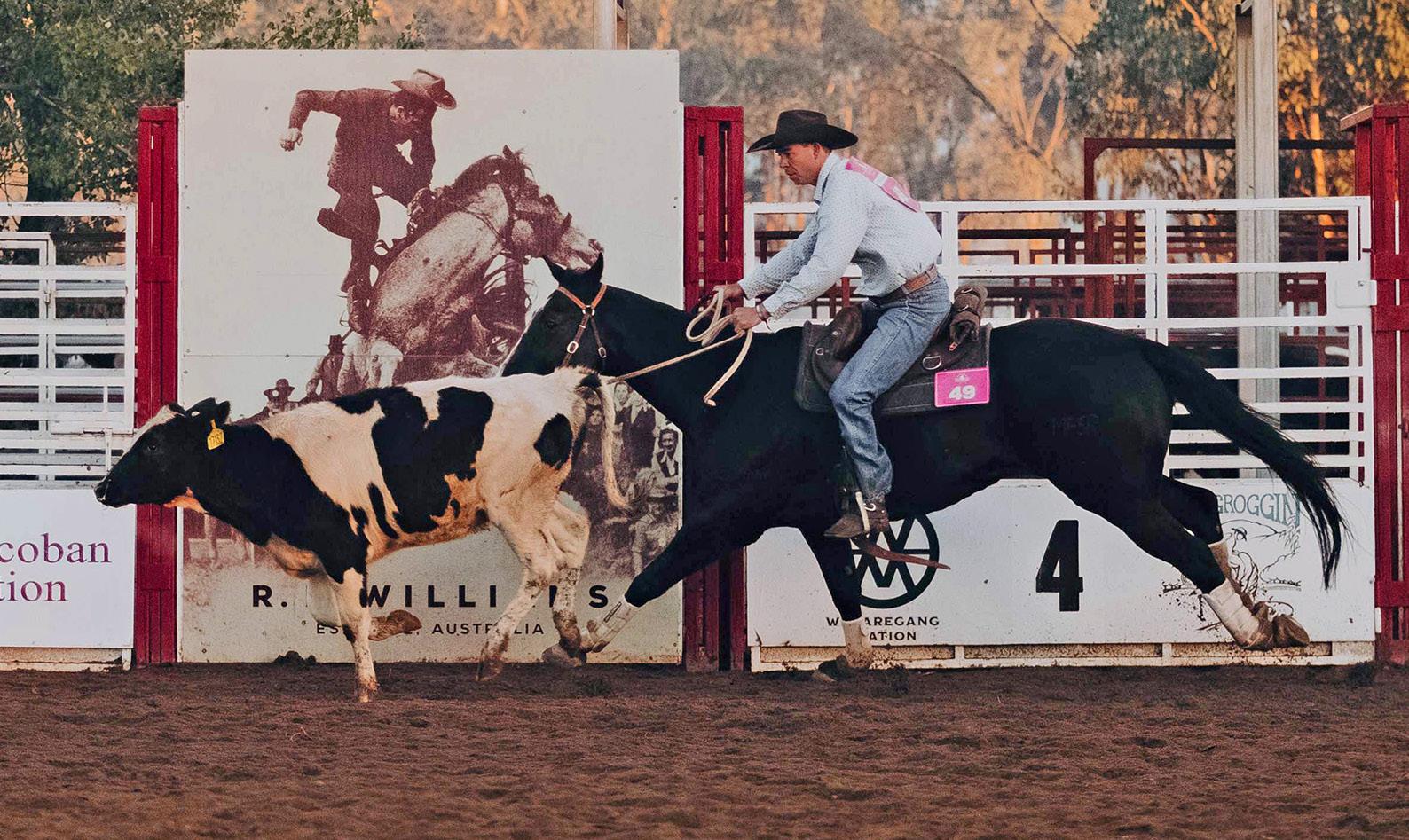
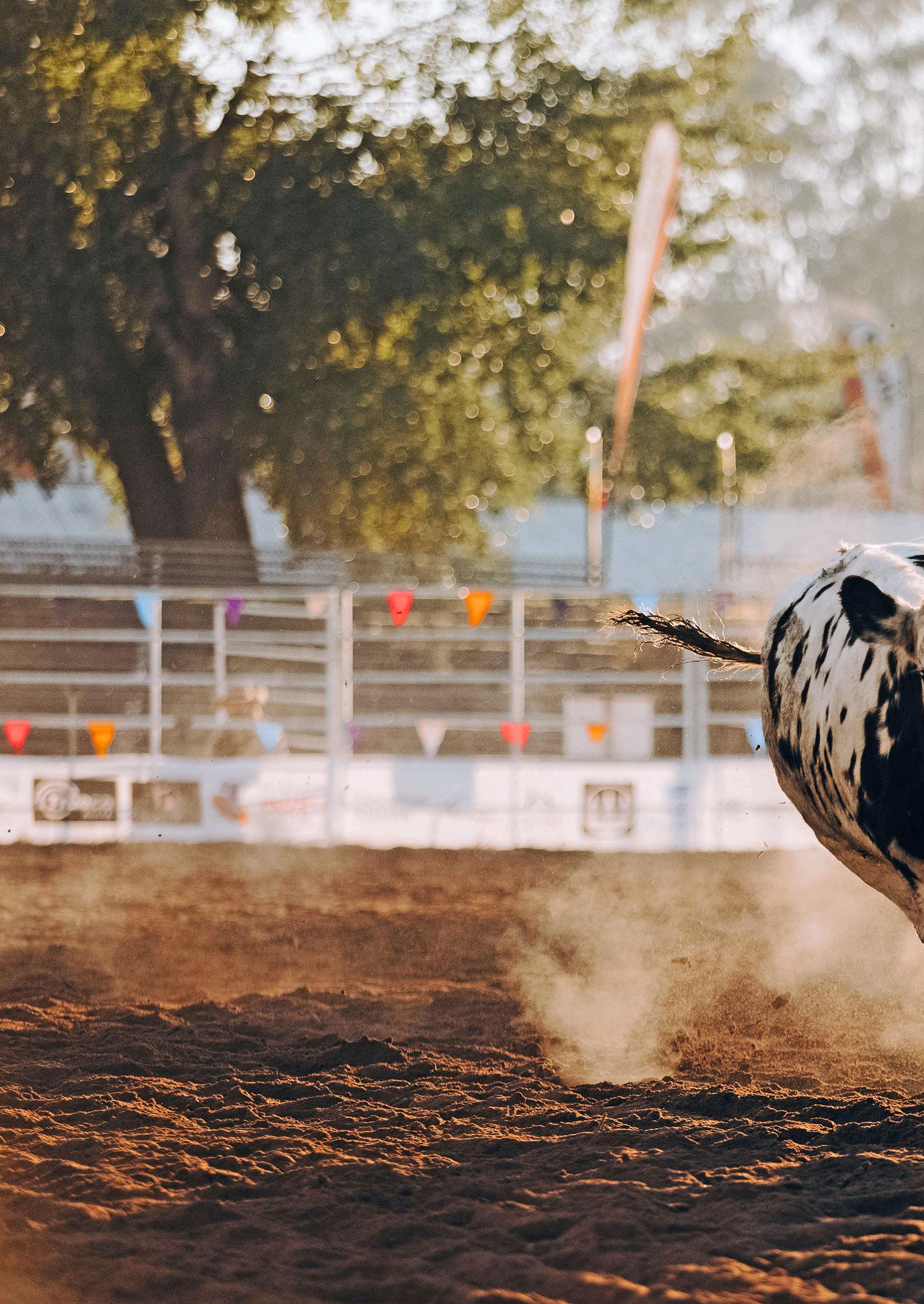
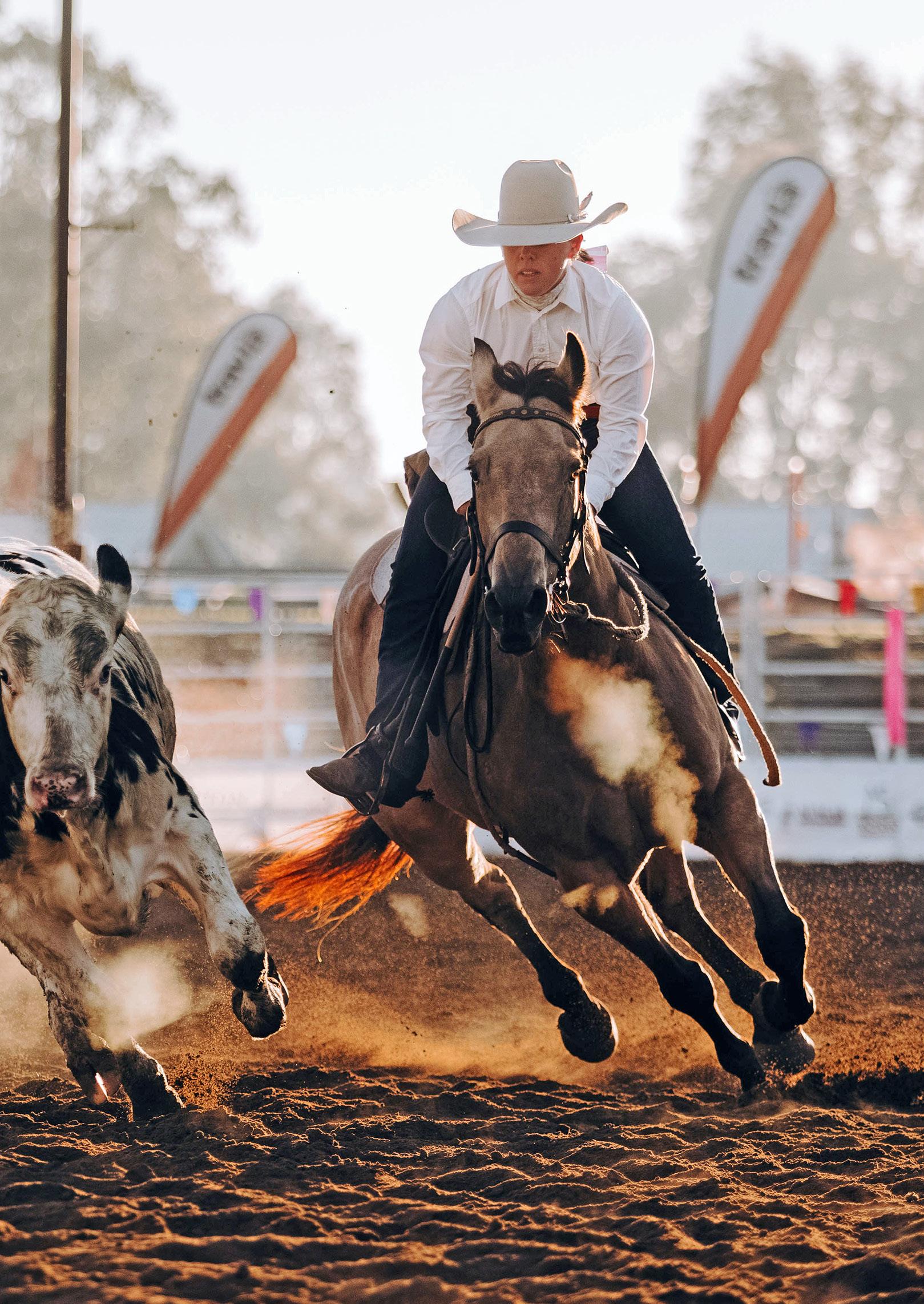
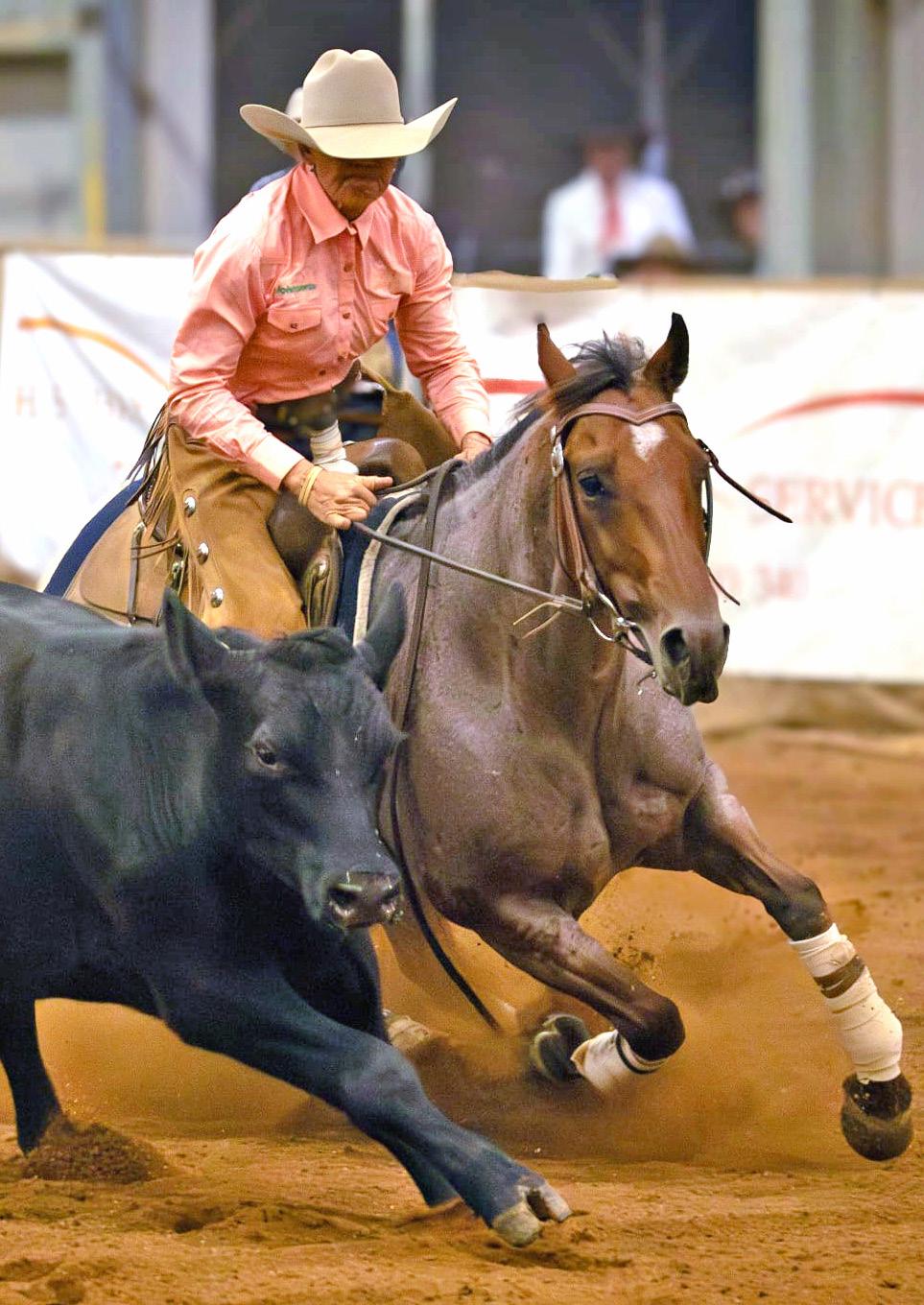
As the sun rises over the arena at Guerie NSW, cattle are quietly settled, ready for a morning of competitive cowhorse cutting. The coffee van is already busy - serving not just the caffeine needed to start the day, but croissants and a smile as well.
The light is beautiful, but for a photographer, it presents a challenge.
Ideally, you’d position yourself close to the judge, capturing that ‘money shot’ - the moment a horse locks onto a cow with precision and athleticism. Backlighting can be stunning, but combined with the harsh shadows cast by the viewing platform, it makes getting a clean, usable image nearly impossible.
So instead of chasing the ‘ideal’ shot, I let the conditions lead.
I moved to the viewing platform and leaned into the angle the light allowed. It’s rare to have this kind of vantage point at any arena event, let alone for cutting - and it offered something different. A new perspective.
The image captures the calm before the cut The slow walk in. The quiet moment before horse and rider step up and show exactly what they’re made of.
Technically, the image was captured on a Canon R5 paired with a Canon RF 70–200mm f/2.8 - my go-to combination for equestrian events. The shutter speed was set to 1/1600, ready for the action to follow.
Shooting at f/2.8 allowed as much light as possible into the lens, while an ISO of 3200 helped balance exposure and retain detail - particularly in the shadows, ensuring the
black cattle weren’t lost against the arena surface.
The images taken from this vantage point have become some of my favourites to date.
It’s a reminder that sometimes the best photographs come when you let go of what you think the shot should be - and instead, respond to what’s in front of you.
About the Photographer
Brooklyn Coverdale is the photographer behind Coverdale Media, capturing equestrian sport across regional NSW and beyond. Her work blends technical precision with a natural, storytelling style - documenting both the action and the quieter moments that define life around the arena.
From pressure to performance
Nerves are a normal part of competition, even for the most experienced riders. JESSICA DERTELL shares how preparation, perspective and routine can help transform pressure into performance.
Mental pressure is something every rider will face when they step into the competition arena. It doesn’t matter whether you’re riding your very first test or entering at Grand Prix - those nerves are always there in some form. The difference is that some riders have simply had more time to understand and manage that pressure, and others have learned how to turn it into a driving force that helps them succeed.
As a rider who has had the opportunity to compete across the globe - from bringing on young horses to riding Grand Prix, representing Australia at 5* Nations Cups and Youth Nations Cups, and even being shortlisted for the Australian Olympic team - I’ve experienced both ends of that spectrum. And one thing is consistent: the mental side of our sport is just as important as the physical.
Dressage is, at its core, a sport of self-reflection. We are constantly analysing our rides, reviewing mistakes, reading over our score sheets and comments just searching for ways to improve.
While this is what makes the sport
so rewarding, it can also lead riders to be overly critical of themselves. But being hard on yourself isn’t always a negative. In fact, when managed correctly, it can be one of your greatest assets. That internal drive to be better can give you a real competitive edge, the key is learning how to channel that pressure productively.
There are more resources available now than ever before to help riders understand and manage their mental approach.
"No matter where you are in your journey, it’s important to remember this: it’s completely normal to feel nervous."
Sports psychologists and performance coaches can provide valuable tools, but equally important are the conversations we have within our own community and surrounding yourself with positive and supportive groups such as your team, barn, coaches and friends.
Speaking with fellow competitors, sharing experiences, and learning
how others cope with pressure can be incredibly powerful and is something we need to open the discussion to more.
No matter where you are in your journey, it’s important to remember this: it’s completely normal to feel nervous. Whether you’re stepping into the arena for the first time, moving up a level, or competing at the biggest event of your career, those feelings are part of the process. Every rider you look up to has been in that exact position. Even the top riders in the world all started at the beginning, building their experience and mental fortitude step by step.
Personally, I’ve always considered myself someone who doesn’t get overly nervous in competition. However, that changed when I began competing in the qualifiers for the 2024 Paris Olympic Games.
Suddenly, the pressure felt different, each centerline carried more weight and more expectation. The pressure to do well was intense - from trying to keep clients happy to wanting
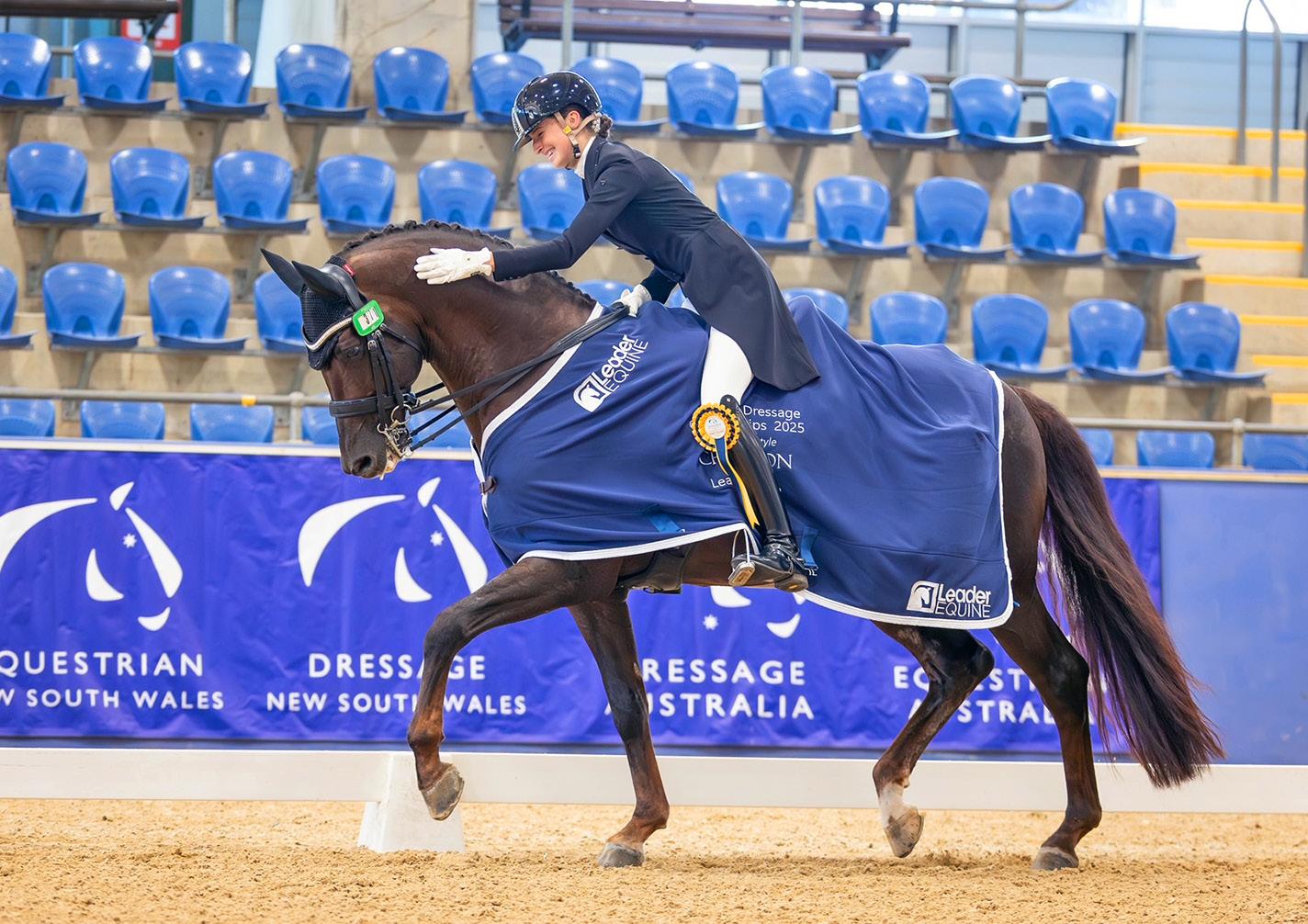
LEFT: Jessica and Osaka competing in the 7-Year-Old Horse at PSI Dressage and Jumping with the Stars (Image courtesy Jessica Dertell).
to make everyone proud who had supported me - it was a lot to carry.
During that time I was lucky enough to talk to my good friend and mentor Mary Hanna and asked how she has managed the pressure of competing at the top of the sport for so many years, including multiple Olympic Games and World Championships. Her response was simple, but it has stayed with me ever since: “It’s just another centreline. You’ve ridden it a thousand times, and you’ll ride it a thousand more.”
That perspective gave me the courage to take a breath and realise at the end of the day, no matter how big the stage feels, the fundamentals remain the same. It’s still you and your horse, doing what you’ve trained to do.
One of the most effective ways I’ve found to manage pressure is through routine. Having a consistent system leading into your ride can make a huge difference in settling your mind and preparing you for performance.
For me, preparation starts well before I enter the arena. I go over my test in detail before I even get on. From there, I follow a clear and structured warm - up plan that I trust. Knowing to feel the horse underneath me on the day and adjust where needed is also super important.
Small routines also play a big role. Whether it’s the timing of when I get boots off, doing final gear checks, or taking a moment to reset before heading into the arena, these habits create a sense of familiarity and control. At this point I’m not thinking about the pressure or the occasion
- I’m simply in the zone, ready to perform.
Ultimately, managing mental pressure isn’t about eliminating nerves altogether. It’s about understanding them, accepting them, and learning how to use them to your advantage. That energy, when directed correctly, can sharpen your focus and elevate your performance.
So, the next time you feel those nerves creeping in, don’t fight them. Recognise them as part of the process. Trust your preparation, lean on your routines and those around you, and remind yourself, you’ve done this before, and you can do it again! Because at the end of the day, it really is just another centreline.
You can follow Jessica Dertell on Instagram and on Facebook.
ABOVE: Jessica and Kilimanjaro winning the championship in the U25 Grand Prix Big Tour at the Australian Dressage Championships (Image by Simon Scully Photography).
CHAT WITH A CHAMPION
Lauren Balcomb
LAUREN BALCOMB has built an international reputation as one of Australia's most successful show jumpers. We ask her about her career and the keys to her success.
EH: You’ve built an incredible international career - but taking it back to the beginning, where did it all start for you and horses?
LB: I began riding when I was four years old. From as early as I can remember, I was always begging my parents for a horse. I got my first pony on Christmas Day when I was four and a half - he wasn’t broken in yet, and all I had was a halter, a lead rope, and a helmet, which made for some very interesting rides! But that didn’t deter me. By the time I was seven, I had joined Pony Club, and at 12 I decided to pursue a career in eventing.
EH: You’re now balancing elite sport with motherhood - how has becoming a mum shaped you, both as a rider and as a person?
LB: From the time I became a mum, it was really important to me to take a step back from how much riding and teaching I was doing, so I could be as present as possible in my kids’ lives.
Motherhood has taught me a lotespecially patience. It’s also helped me put things into perspective. If I don’t ride as well as I’d hoped, I’m much better at letting those moments go and being kinder to myself.
I feel incredibly fortunate to be doing what I love in the sport, while also having the privilege of being a mum to two beautiful kids.
Career & High Performance
EH: You’ve spent years competing at
the very top level internationally - when you’re in the ring, what does it actually feel like in those moments?
LB: When I’m in the ring, I focus on the things I can control. I have a clear plan for how I want to execute my round, and I stay as present as possible. In those moments, everything slows down, and I genuinely enjoy being in the ring competing.
EH: From the outside, top-level sport can look glamorous - but what does the reality of that lifestyle really look like day-to-day?
LB: From the outside, it does look glamorous - and to be honest, much of it is. Getting to compete at incredible venues, travel, and work with these amazing animals is something we’re very fortunate to experience while following our passion.
But that glamour is built on structure, discipline, and consistency. It’s early mornings, long hours, travel, sweat, and setbacks - and for me, also the sacrifice of moving away from Australia. That contrast is really what defines the lifestyle
EH: What has high-performance sport taught you about discipline, sacrifice, and balance - especially alongside family life?
LB: High-performance sport has taught me that discipline is about consistency - showing up every day, even when you don’t feel like it. Sacrifice is part of the journey, whether that’s time, comfort, or
being away from home.
Balance has become even more important since having kids. It’s about being fully present in whatever role you’re in at the time - whether that’s as a rider or as a mum - and accepting that you can’t always be everything, all at once.
EH: Before stepping into a high-stakes class, how do you get yourself mentally focused and composed?
LB: Before stepping into the ring, I focus on finding the right balance in my mental and emotional state. Over the years, I’ve become very practiced at this. I make a conscious decision to stay calm, confident, and focused on what I need to execute.
For me, it’s about having enough intensity to be sharp, but enough composure to perform under pressure.
EH: At that level, where the margins are so fine, what makes the difference between a good round and a winning one?
LB: At that level, the difference comes down to being extremely technicalknowing exactly how many strides to ride between each fence and having the ability to execute that plan.
It also comes from understanding the field. By watching closely, you learn the
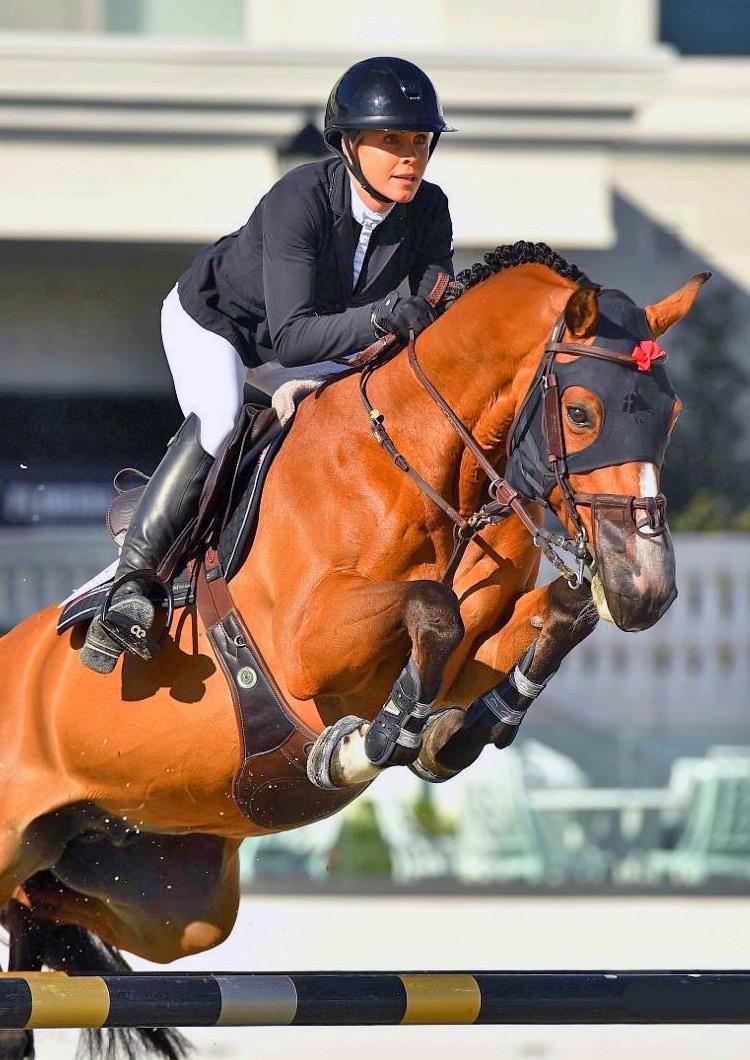
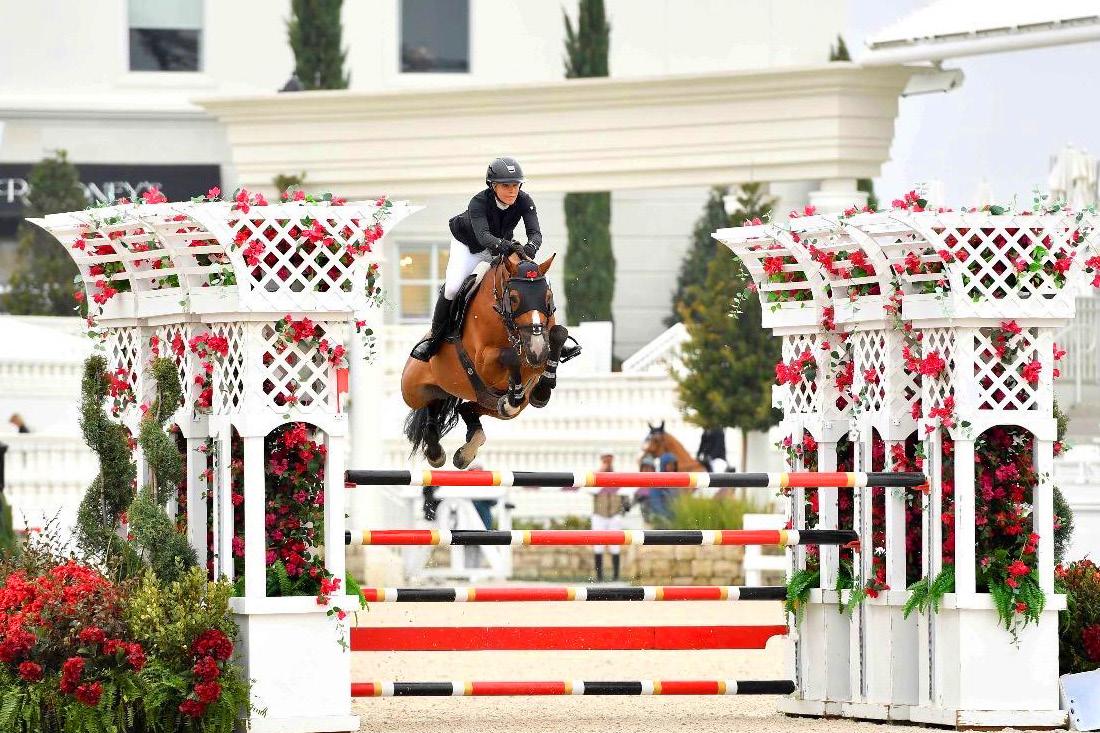
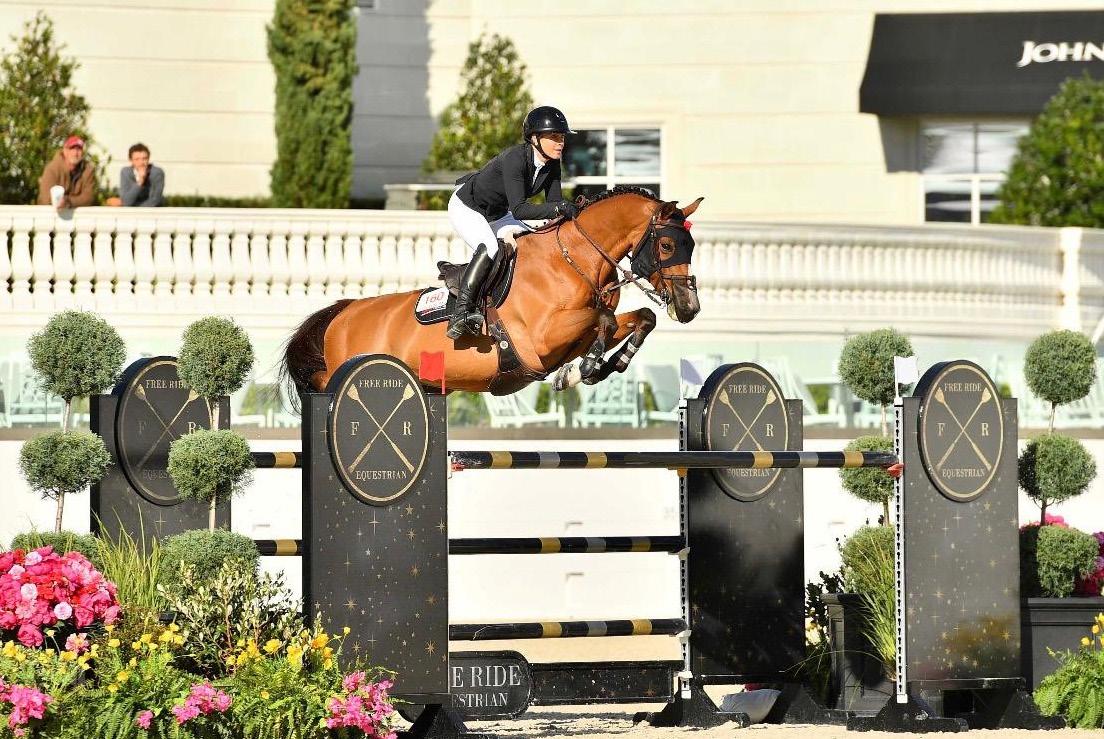
LEFT: Lauren and Verdini D'Houtveld Z on their way to victory in the CSI3* Grand Prix qualifier at the World Equestrian Centre in Florida (Image by Andrew Ryback).
riders and horses you’re competing against, which allows you to adjust your plan to what it will take to win.
Going later in the order can also be an advantage, as it gives you more information and allows you to refine your approach.
EH: And when things don’t go to plan - how do you reset and come back the next day?
LB: You have to be mentally tough in this sport. Of course there are times I feel disappointed in how I’ve ridden, but I try not to dwell on it for too long. I learn from it, reset, and move forward.
The next day is always a new opportunity, and I use that disappointment as motivation to come back sharper and ride even better.
Partnership - Verdini
EH: You’ve had an extraordinary partnership with Verdini D’Houtveld Z over many years. What made him so
special to you?
LB: We’ve been through so much together. I’ve had him since 2017, so it’s been a long partnership. We’ve really learned the sport together - he’s definitely my once-in-a-lifetime horse.
EH: How did that partnership evolve over time?
LB: When I bought Dini, he was show jumping in Belgium, but they didn’t expect him to jump more than 1.30m. At the time, I was still eventing, which is what I originally bought him for.
He always loved his job and was an incredible cross-country horse. But the more we competed, the better he started jumping. It became clear that his future was in show jumping, and it was a very natural transition for us.
I never really knew what he was capable of, but every time we stepped up, he gave me more. That’s what made our partnership so special.
EH: What did Verdini teach you - not just as a rider, but as a person?
LB: He’s shown me that we are only limited by our self-belief - and when you truly love something, it drives everything.
Horsemanship & Philosophy
EH: What qualities do you value most in a show jumping horse?
LB: A good brain, blood, athleticism, and bravery. The mentality is just as important as physical ability - having a horse that wants to do the job and is willing to fight for you makes all the difference.
EH: How do you build trust and connection with your horses?
LB: Trust and connection take time. Every horse is different, and you have to learn how to work together.
EH: Has your approach to training or riding changed over time?
ABOVE: Dini is both scopey and quick across the ground - a winning combination (Image by Andrew Ryback).
ABOVE: Lauren and Dini, her once-in-a-lifetime horse, have been partners since 2017 (Image by Andrew Ryback)
LB: Definitely. Over time I’ve become more mature, knowledgeable, and experienced, which has naturally shaped my approach. Being surrounded by the best riders in the world has made me a student of the sport - and I’m always learning.
Grassroots & Advice
EH: Many of our readers are pony club and grassroots riders - what fundamentals matter most early on?
LB: For me, it always comes back to the love of the horses. That’s what carries you through the early mornings, the setbacks, and the learning curves.
It’s important to immerse yourself in every part of horsemanship - not just riding, but care, routine, and understanding each horse as an individual. Those basics stay with you forever.
EH: What advice would you give riders navigating the financial and practical
realities of building a career?
LB: It’s definitely not an easy path. For me, it’s always been about working hard and making the most of every opportunity.
If you’re fortunate enough to have financial backing, that helps - but if not, surrounding yourself with the right people and putting yourself in environments where you can learn and grow is just as important. Over time, those relationships and experiences are what help you build your career.
Reflection
EH: What does success mean to you now, compared to earlier in your career?
LB: I don’t think it’s changed all that much - I’m naturally very competitive, so winning will always feel like success.
But over time, I’ve learned that executing my plan and riding to the best of my ability is just as rewarding. For me,
success is a balance between results and performance - and doing the right thing for your horse on the day.
Quickfire Qs
Best piece of advice you’ve received It’s okay to have butterflies - as long as they fly in formation.
A small habit that makes a big difference
Visualisation.
Your proudest moment
Being on the team that qualified Australia for the Paris Olympics.
Show-morning coffee order Americano, black.
Favourite place to compete World Equestrian Center.
One essential in your grooming bag
Sticky spray.
You can follow Lauren on Facebook and on Instagram
TRAINING
Foundation to Finished
In Part 1 of his excellent new training series, DONAL HANCOCK covers the foundations of that all-important ground control.
Ground control is where every horse’s education begins. I often explain it like building a skyscraper, with the penthouse representing a finished horse.
That’s where you should aim to live, but you can’t get there without every level in between. Ground control starts with building the lobby - this is the foundation of the horse’s education.
For many riders, this stage is either rushed or overlooked, yet it’s often the difference between a horse that understands its job, and one that reacts to it.
Your ground control gives the horse a chance to understand certain manoeuvres it will be performing under saddle, without the weight of a rider. This gives the horse an opportunity to develop muscle memory and coordination.
It’s important to remember that if you haven’t taught ground control to your horse, when you get into trouble under saddle you have nothing to go back to.
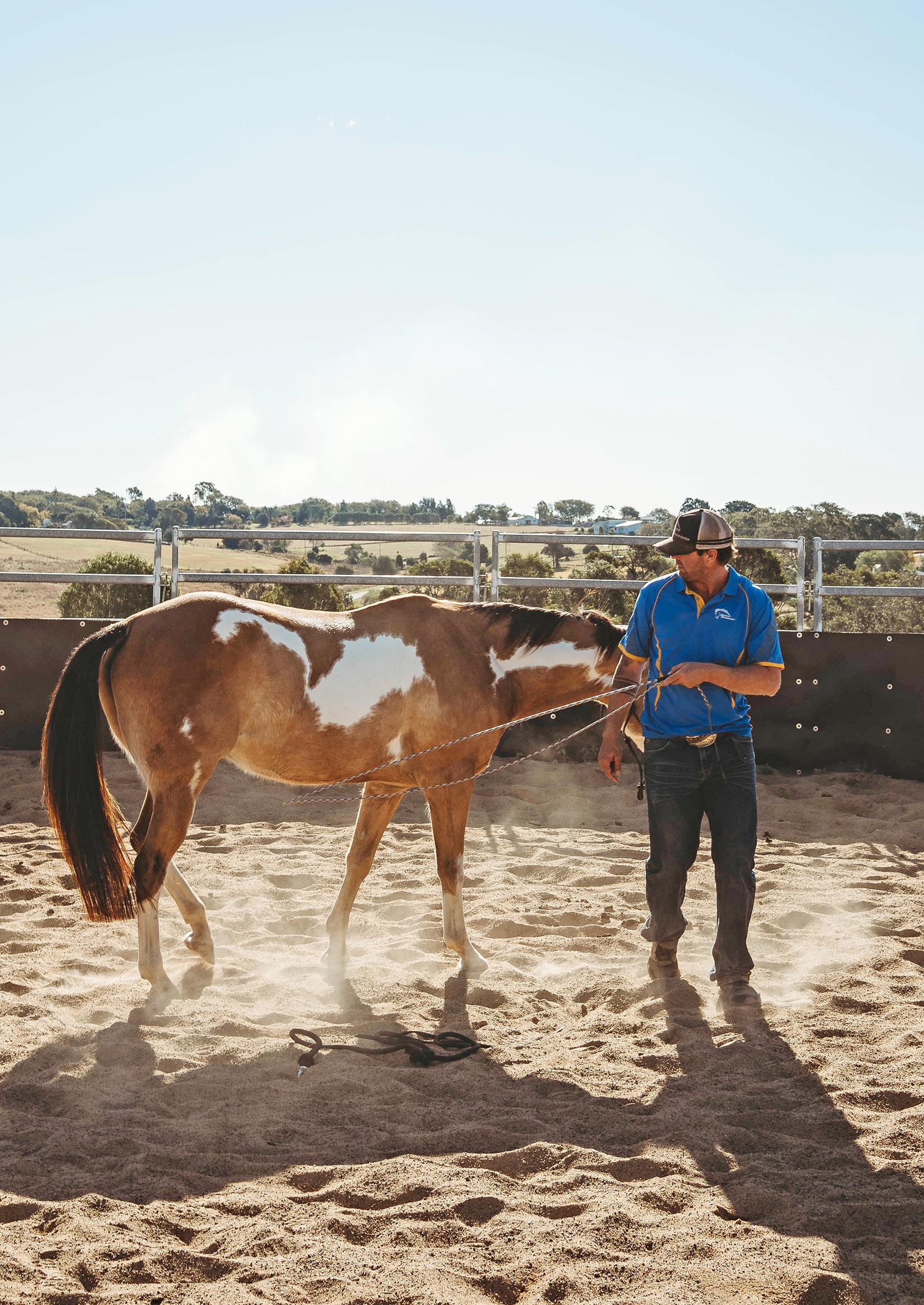
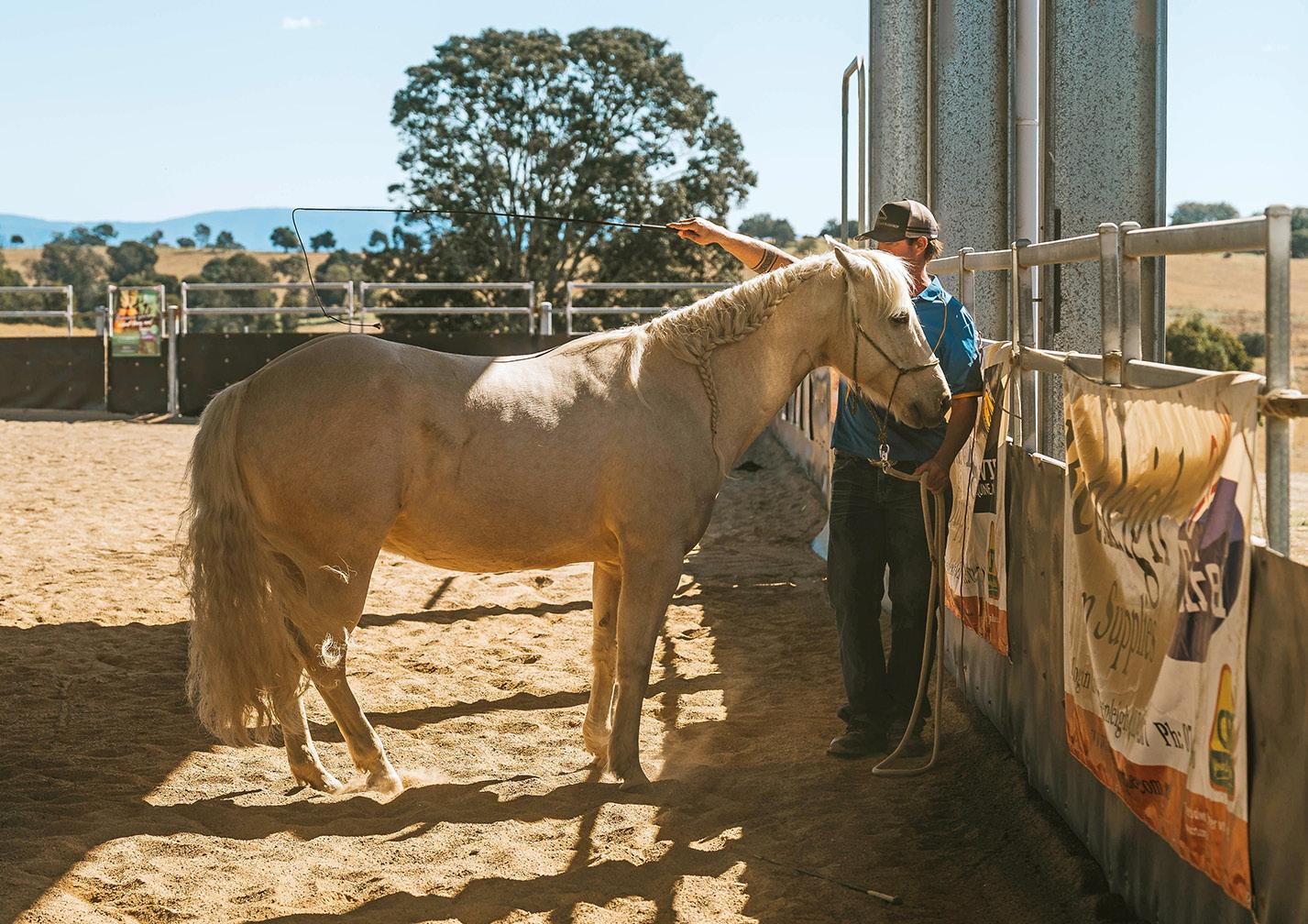
I use three types of whips (dressage whip, carriage whip, and lunge whip) as an extension of my arm so I can clearly communicate to the horse which part of their body I am concentrating on.
The three main body parts I want to gain communication with are the head and neck (which work as one), the
hindquarters, and the shoulders. I repeat all these exercises in this order through long reins (Stage 2) and under saddle (Stage 3).
Lateral Flexion
Standing at your horse’s girth line, place the slack of the lead rope with one hand up on the wither, then take pressure on the lead rope with your other hand
"Your ground control gives the horse a chance to understand certain manoeuvres it will be performing under saddle, without the weight of a rider."
towards the girth line. If your horse walks, hold the pressure until it comes to a standstill, then release. Work this on both sides, creating softness left and right.
Disengage the Hindquarters
Take your lead rope up short under the horse’s jaw, then, using the carriage whip towards the inside hind leg, direct the hip to move away from you. The inside hind leg should step up and across the outside hind leg, or in front of it.
The horse should remain soft through
the face and bend its body away from you as it disengages the hind end. Work this on both sides.
Shoulder Control Exercise 1: Change of Direction
Send your horse around you in a circle. When you are ready to change direction, keep the whip in the same hand and bring it under the lead rope to the other side of the horse’s body as you change direction.
Your whip can assist by touching the body part you want to move (hindquarters or shoulders), but if the horse gives you the result you’re looking for, leave it alone.
When changing direction, you are looking for the inside front foot to step across, followed by the outside front foot stepping in front of it.
Shoulder Control Exercise 2: Yield out of the Circle
Begin your circle and forward movement again. When you want to push the shoulders out of the circle, elevate your lead rope to keep the bend to the inside, and direct your whip to the girth line - where your leg would be if you were riding.
Step to the girth line and ask the horse to move its shoulders away from you.
This manoeuvre under saddle simulates the beginning of counter arcs - helping the horse stay balanced and responsive
through changes of direction
Side Pass
Start the horse facing the fence of the arena so the forward movement is blocked.
Hold the lead rope short with one hand - this hand controls everything from the girth line forward (shoulders, neck, and head). With the other hand, bring the whip horizontally across the horse’s body. This hand controls everything from the girth line back (ribcage and hindquarters).
Ask the horse to move laterally down the fence as a unit, looking for the inside foot to step up and across the outside foot in both the front and hind end.
It’s a balancing act between the hand holding the lead rope and the hand holding the whip. Sometimes you’ll need
to adjust the shoulders, and sometimes correct the hind end to achieve the desired result.
Shaping Up Circles
The final exercise is creating shape in your circles using all the horse’s body parts discussed earlier. This is about developing the same shape you would look for under saddle.
You want a slight bend through the horse’s neck to the inside, the shoulder lifted (not dropping into the circle), and the hip driving up underneath the horse.
You can practise this at a walk, trot, or canter. Use the previous exercises to help create this shape.
If the horse isn’t bending through the neck, bump the nose with your lead rope until it starts to look in (lateral flexion). If the shoulder drops in and crowds you,
bring your whip to the girth line and push it out (shoulder control). If you need more forward and engagement from the hind end, direct your whip to the hindquarters.
Just remember - when your horse is trying to hold the shape, leave it alone. If the horse finds no pressure when performing the manoeuvres correctly, it will stay in the manoeuvre because it finds the release there.
Done well, ground control doesn’t just prepare a horse for ridden work - it creates a language you can rely on, long after you’ve left the ground.
For details of upcoming lesson and clinic opportunities, visit Hancock Horsemanship. You can follow Donal on Instagram.
ABOVE: To communicate to the horse, Donal uses dressage, carriage and lunge whips as an extension of his arm. RIGHT: Donal is an in-demand speaker and educator, as well as a successful competitor (All images courtesy Donal Hancock).
Vaccinations - the long and the short of it
Not every horse needs every vaccine, but protection does matter. DR CAROLINE SPELTA explains.
Vaccination reminders are easy to tick off the calendar, but how often do we stop to think about what those vaccines are actually protecting our horses from? Tetanus, strangles, Hendra virus, herpesvirus - the list can feel overwhelming, and
not every horse needs every vaccine at the same time. Understanding which diseases pose a real risk to your horse, and when protection matters most, is key to making informed decisions about their health. The common diseases are easy, tetanus and strangles.
Tetanus
Horses are exquisitely sensitive to the tetanus toxin produced by Clostridium tetani (they are also super sensitive to toxin produced by Clostridium botulinum). Cl. tetani is ubiquitous to the soil environment and is found worldwide. The bacteria only need a small break in the skin – scratch, hoof abscess, etc, to get into the body and set up an environment in which they thrive in, producing toxin and causing tetanus in the horse.
The vaccination in very protective, in fact one of the better vaccines in the world and if the horse is up to date with their tetanus vaccinations, then the likelihood of getting tetanus is exceptionally low.
When to you need to vaccinate for tetanus? Foals should get a Tetanus Anti-toxin (short-acting green tetanus vaccine) to protect the foal for the first few weeks. Vaccinations with the Tetanus Toxoid start at three months of age and includes an initial two
VET VIBES
vaccinations four weeks apart then annually from then on.
Strangles
Streptococcus equi var equi is the bacteria responsible for Strangles. Strangles is a bacterial infection of the upper respiratory tract and lymph nodes that drain the area. It most commonly occurs in foal and weanlings, but it is highly contagious and easily spread between close contact horses.
The strangles vaccination is a moderately protective vaccine in that it decreases clinical signs (fever, nasal discharge, swollen lymph nodes) but does not prevent a horse from becoming infected or shedding. If you have an outbreak of Strangles, vaccinating is not recommended as it can cause an over stimulation of the immune system and a disease called purpura haemorrhagica.
Tetanus and Strangles vaccinations are considered core vaccines. Depending on what your horses are used for and your location, vaccinating against Hendra Virus and Equine Herpes Virus are also particularly important Hendra Virus
Hendra virus is a serious disease carried naturally by flying foxes, with horses becoming infected when they come into close contact with contaminated environments.
Once infected, horses can show a wide range of clinical signs - from fever and respiratory distress to neurological symptoms that may initially resemble colic. One of the greatest risks with Hendra virus is that horses can shed the virus for several days before they appear unwell, creating a significant risk to other horses and, importantly, to people handling them.
Spillover events are most commonly seen in South East Queensland and northern New South Wales, particularly during the cooler winter months. While some owners believe their horses are unlikely to be exposed because they
'don’t live near bats', transmission does not always require direct contact. Horses that mix with others (at agistment, events, or through shared transport) may encounter an infected horse that still looks perfectly healthy.
The Hendra vaccine is highly protective and is one of the most effective tools we have to prevent infection. In addition to protecting the horse itself, vaccination significantly reduces the risk of the virus being shed, helping protect other horses, owners, handlers, and veterinarians. Given the severe outcomes of Hendra virus infection in people, Equine Veterinarians Australia strongly recommend Hendra vaccination as a core component of horse health care.
The vaccine is available to all horses over four months of age. There is an initial course of two vaccinations threesix weeks apart followed by the first booster in six months’ time, followed by an annual booster vaccination. It has been proven to be safe in both pregnant and competition horses. The vaccinations must be given by a veterinarian as they are responsible for keeping the Hendra registry up to date.
Herpes Virus
There are a number of Equine Herpes Viruses (EHV) in Australia with the most common ones beginning EHV 1-5. Equine Herpes Virus-3 causes a sexually transmitted disease called Coital Exanthema for which there is no vaccine for. EHV-1 and -4 both cause respiratory disease in horses and foals. EHV-1 is also associated with abortions and abortion storms in mid to late term mares.
There is a vaccination available to aid in protection against both the respiratory (EHV-1 and -4) and reproductive (EHV1) diseases. The vaccine, is not 100% protective, does not prevent infection or shedding but does decrease the severity of clinical signs and decreases the duration of illness.
VET VIBES
Core Vaccines – At a Glance
Core vaccines protect against diseases that pose a significant risk to most horses, regardless of use or location.
Tetanus
A life threatening disease caused by bacteria commonly found in soil. Horses are extremely sensitive, but vaccination provides excellent protection and is considered essential for all horses.
Strangles
A highly contagious bacterial infection affecting the upper respiratory tract and lymph nodes. Vaccination reduces the severity of disease and spread, particularly in young horses and those in close contact with others.
Hendra Virus
A serious and potentially fatal disease that affects both horses and people. Vaccination is highly effective and strongly recommended to protect horses, owners, and handlers
For show and competition horses that are frequent contact with new horses, two vaccinations four weeks apart and then a booster vaccination every six months is recommended.
For pregnant mares to aid in the prevention of abortion, the vaccination program is two vaccinations four weeks apart, then a booster vaccination at five, seven and nine months of gestation.
There are couple of other vaccinations that are specifically for brood mares and foals.
Salmonella
In areas where there is a high incidence of Salmonella associated diarrhoea, vaccinating against Salmonella will assist
LEFT: Foals should be given a Tetanus Anti-toxin to protect them for the first few weeks.
Apiam’s equine veterinary credentials are well-founded with a growing number of purpose-built dedicated Equine Vet Clinics and Referral Hospitals located in Victoria, New South Wales and Queensland, working alongside our network of mixed practice clinics in delivering quality equine veterinary care.
Scenic Rim Veterinary Service
Beaudesert QLD
Agnes Banks Equine Clinic
Agnes Banks NSW
Hunter Equine Centre
Scone NSW
Victorian Equine Group
Bendigo VIC
Gippsland Equine Hospital
Maffra VIC
Southwest Equine Veterinary Group
Warrnambool VIC
Find out more by visiting the Apiam Animal Health website & view the equine product range on Country Vet Animal Supplies
ABOVE: Herpes virus vaccinations are recommended for show and competition horses in frequent contact with new horses.
in decreasing the duration and severity of disease and improve mortality rates.
Brood mares with an unknown vaccination status should be vaccinated 10 weeks before foaling, followed by a booster at six weeks before foaling and then annually. If your mare is back in foal, then this annual booster should be timed to be given six weeks before foaling.
Foals can then also be vaccinated from four months of age, with a booster vaccinations four weeks and six months later followed by annual vaccinations.
Rotavirus
Rotavirus is a common cause of acute diarrhoea in foals less than 2 weeks of age. The Rotavirus vaccine is moderately protective in that it helps decrease clinical signs and duration of illness. It does not stop the foal from becoming infected or from shedding the virus and infecting others.
Due to the age of infection in foals, immunity must come from the mare’s colostrum. This means that the mares need to be vaccinated against Rotavirus for the foal to be protected. The Rotavirus vaccination protocol for previously vaccinated mares is one booster 4-6 weeks prior to foaling. If the vaccination status of the mare is unknown, she will need three doses give at eight, nine and ten months of gestation.
As always, discussing vaccinations, what your horses may need and when is with your veterinarian is especially important. Your veterinarian will be able to recommend an appropriate vaccination schedule tailored for your horses.
You can access vaccination protocols for adult horses, foals and breeding mares on the University of Melbourne website. Visit Apiam Animal Health to learn more about their extensive range of services.
Why Hendra Matter
Hendra virus isn’t just another horse disease. It’s a serious risk to horses and people.
Potentially fatal: Hendra virus can cause severe respiratory and neurological disease in horses, with a high fatality rate.
Invisible risk: Horses may shed the virus for several days before showing any signs of illness. People are at risk too: The virus can be transmitted from infected horses to humans, with high illness and death rates in people.
Not just a bat problem: Even horses with no obvious bat exposure may be at risk through contact with other horses.
Vaccination protects everyone: The Hendra vaccine is highly effective and significantly reduces virus shedding, helping protect horses and humans.
Inside Equitrans' Critical Operations
Amid increasing pressure in the Middle East, horses and pets are still travelling – and the team at EQUITRANS LOGISTICS is dedicated to ensuring they all arrive safely.
As the Middle East navigates an increasingly complex geopolitical landscape, much of the global focus has centred on trade, travel, and security. Yet behind the scenes, another movement continues
- quieter, but no less critical. Across airspace, borders, and desert highways, horses and pets are still travelling. And ensuring they do so safely has never felt more significant.
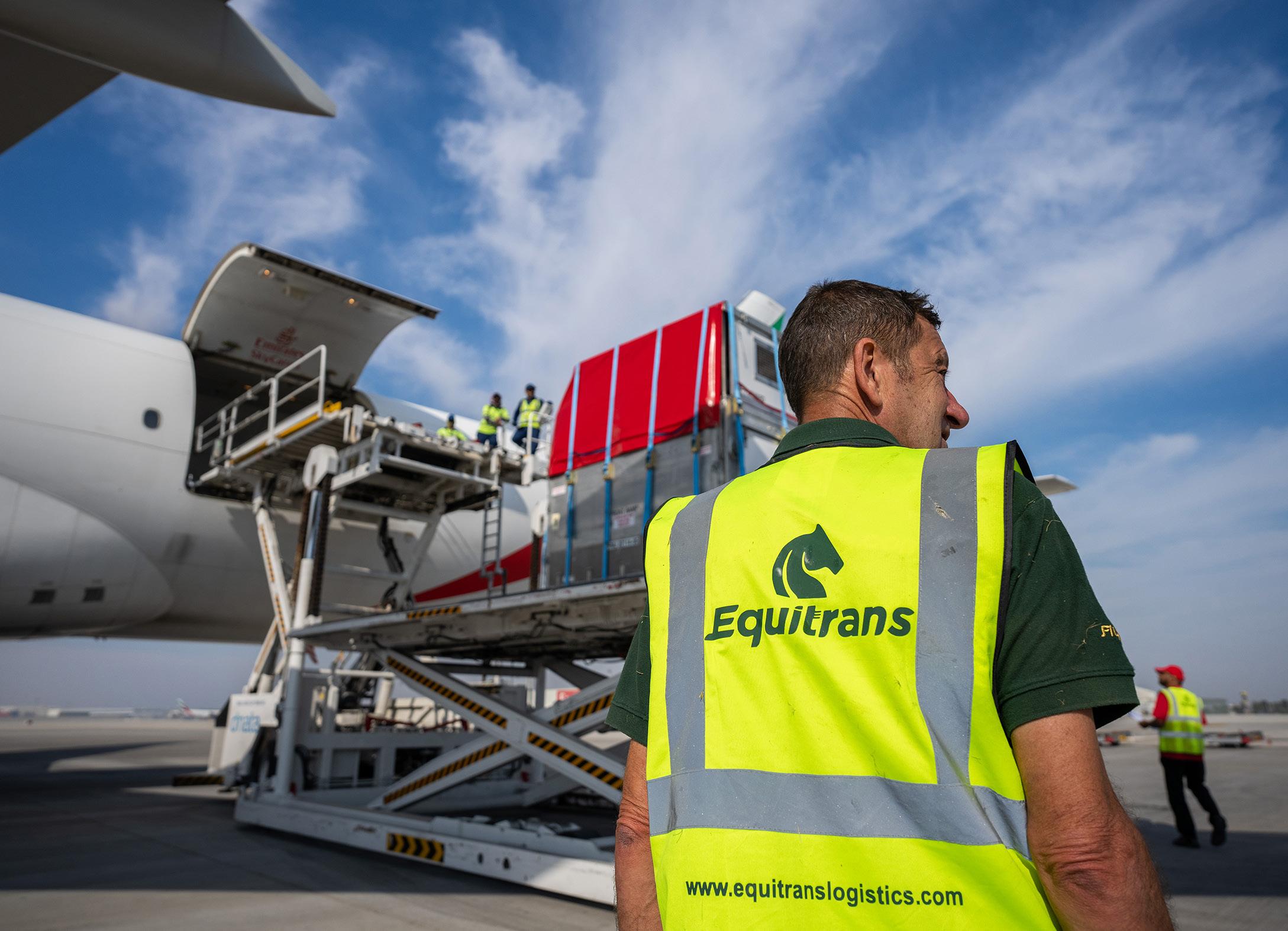
At the centre of this effort is Equitrans Logistics, a UAE-based specialist in equine and animal transport, which has continued to operate uninterrupted as regional conditions evolve. For a company built on precision, welfare, and trust, the stakes have never been higher.
In March alone, Equitrans managed the international air transport of 155 horses and 124 by road, alongside the relocation of 27 companion animals, connecting the UAE with key global destinations including Liège, London Stansted, Paris, Amsterdam, Johannesburg, and Osaka.
Behind each movement is a horse - a competitor, a breeding prospect, or a partner in someone’s life. And despite the pressure surrounding the region, the expectation remains the same:
they must arrive safely, calmly, and on schedule.
A System Under Pressure - But Still Moving
The logistics of moving horses internationally is complex at the best of times. It requires careful coordination between airlines, veterinarians, regulatory authorities, and ground handlers, all working to strict timelines and welfare protocols. In the current environment, that complexity is heightened.
Equitrans has maintained close coordination with national carriers Emirates and Etihad Airways, alongside the Ministry of Climate Change and Environment, the Emirates Racing Authority, and the UAE Equestrian Federation. This network has proven critical in ensuring continuity, even as conditions shift rapidly. “The
environment we’re operating in is highly dynamic,” explains David Robson, Managing Director and Co-Founder of Equitrans Logistics. “But our priority remains unchanged - the safe, compliant movement of every animal in our care.”
That consistency is hard-won. Air routes must be monitored continuously. Documentation must remain compliant with evolving regulations. And above all, welfare standards cannot slip. “There is no margin for error,” David continues. “Whether it’s a high-performance sport horse travelling to compete, or a family pet relocating with its owners, every detail matters. Our role is to manage that complexity - and make it feel simple for the client.”
Beyond the Aircraft: A MultiLayered Operation
While air transport often takes the spotlight, it is only one part of the
equation. Across the UAE and wider GCC, Equitrans has also maintained an active road transport network, moving 124 horses during the same period.
These journeys support ongoing competitions, training programmes, and stable relocations - many of which continue despite heightened operational awareness.
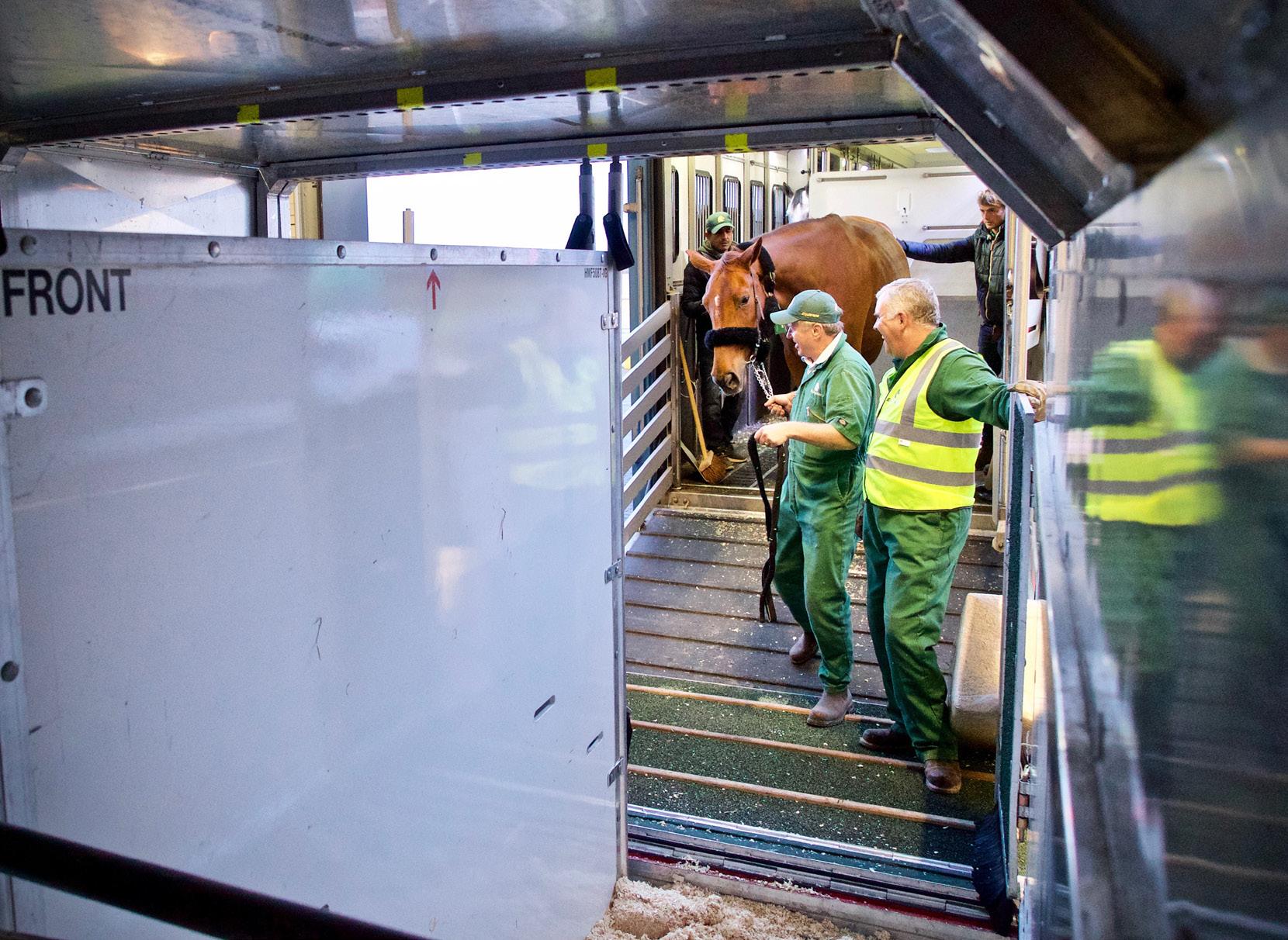
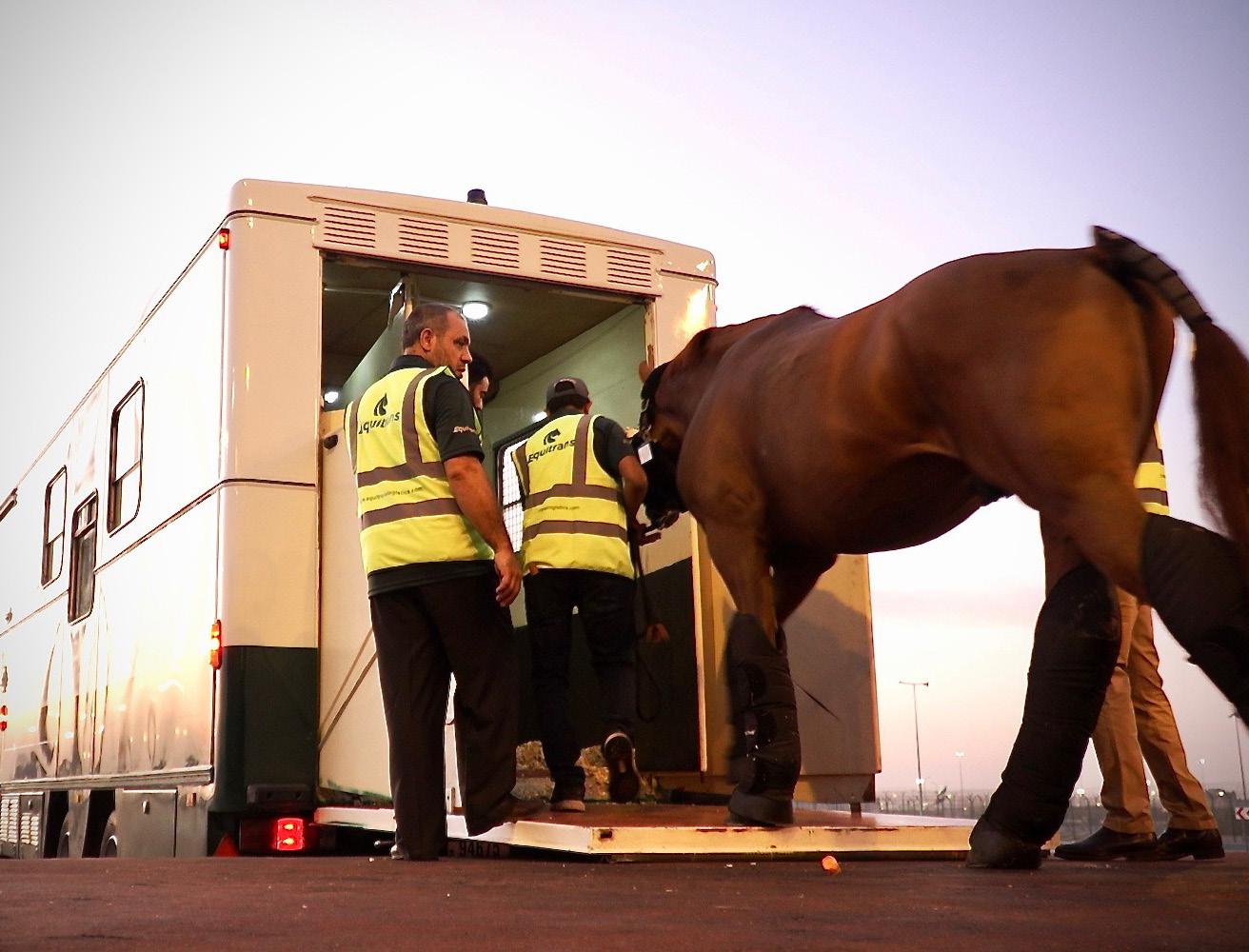
Each movement, whether by air or road, is approached with the same level of care. Horses are transported in purpose-built vehicles, monitored throughout their journey, and handled by experienced grooms who understand not only the physical requirements of travel, but also the behavioural nuances of each animal.
The aim is always the same: to minimise stress, maintain routine where possible, and ensure that horses arrive ready to
ABOVE: Horses are transported in purpose-built vehicles, monitored throughout their journey, and handled by experienced grooms. LEFT: Unloading at Dubai World Central Airport.
perform - or simply ready to settle into their new environment.
Maintaining Global Pathways
One of the key challenges in times of disruption is maintaining reliable international routes. For the equestrian world, this is particularly important. Competition schedules, breeding programmes, and sales all depend on the ability to move horses between countries with confidence.
Equitrans has continued to operate weekly flights to the UK and Europe, maintaining established export pathways in line with international regulations. While export to the EU and UK does not currently require vaccination, strict protocols remain in place.
Horses must complete a 40-day residency period in the UAE, be under the supervision of an approved veterinarian, and be stabled at an authorised export facility. Preparation for travel typically takes 10 to 15 working days, including blood testing and Ministry approvals.
For owners, this process can feel daunting. Here, the role of a specialist logistics partner becomes invaluable.
“We guide clients through every step,” says David. “From checking whether their stable is approved, to arranging veterinary supervision and handling all documentation. It’s about removing complexity wherever we can.
A Shift in Demand: Families on the Move
Alongside its equine operations,
Equitrans has seen a noticeable shift in demand within its pet transport division. As families navigate relocation decisions, ensuring that animals can travel with them has become a priority.
In March, 24 pets were transported internationally, with destinations including Johannesburg, Madrid, London Heathrow, and Paris. Behind each movement is a decision - families choosing not to leave animals behind, even when timelines are tight and circumstances are challenging. “There’s a real sense of responsibility here,” David notes. “Pets are part of the family. We’re seeing more people determined to keep that family unit together, regardless of the situation.”
To support this, Equitrans has worked
ABOVE: All Equitrans passengers, whether frequent flyers or new to the experience, are treated with care and consideration.
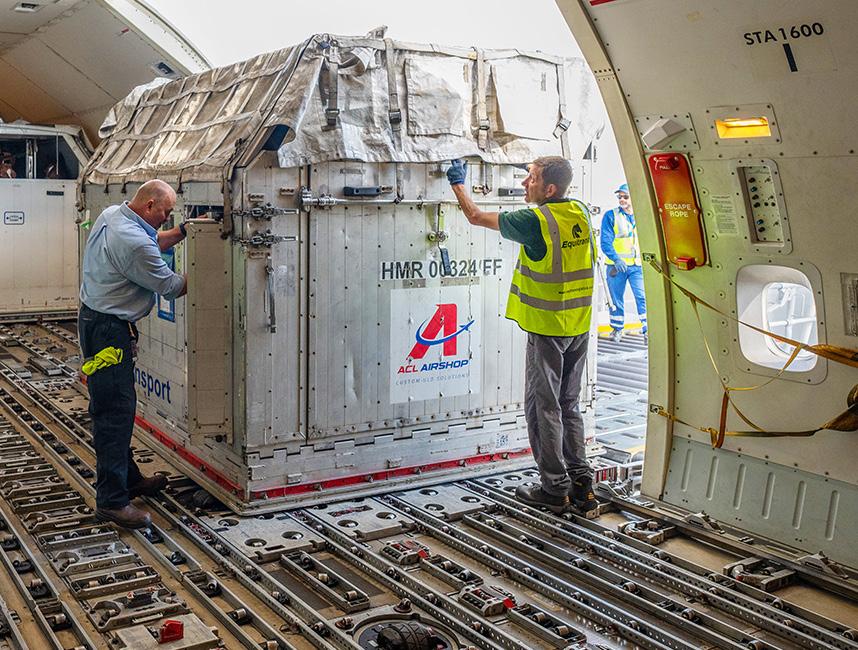
ABOVE: Experience and focus ensures that loading and unloading jetstalls is done safely and smoothly.
to provide flexible and cost-conscious solutions, helping clients navigate both logistical and financial pressures. The message is simple, but powerful: no pets left behind.
Experience Matters
In times of stability, logistics is about efficiency. In times of pressure, it becomes about resilience.
With over 60,000 horses transported globally, Equitrans brings a depth of experience that allows it to adapt quickly, respond to change, and maintain standards even under pressure. That experience extends beyond technical capability; it is built on relationships, trust, and an understanding of what is at stake.
“We’ve strengthened our coordination
with airlines and authorities and adapted in real time to ensure continuity,” says David. “But ultimately, this is about more than logistics. It’s about responsibility - to the animals, to the owners, and to the sport.”
The Invisible Infrastructure of Equestrian Sport
For the equestrian world, the ability to move horses safely and reliably is fundamental. Competitions, breeding programmes, and international collaboration all depend on it. Yet it is a part of the sport that often goes unseen.
Moments of performance - a clear round, a winning test - are the visible result. Behind them lies a network of logistics, planning, and care that begins
long before a horse enters the arena.
In the current environment, that network has been tested. But it continues to function.
While headlines focus on disruption, the reality on the ground is one of continuity - of systems holding, of expertise applied, and of a commitment to welfare that does not waver.
Whether it’s a championship horse crossing continents or a family pet heading to a new home, the expectation is the same. They must arrive safely. And they must not be left behind.
Visit Equitrans Logistics or you can follow them on Instagram. Story by Hannah McCabe, founder of equestrian PR consultancy Dark Horse.
What's Colour?
Colour may catch the eye, but it’s genetics that tells the story. From base pigments to dilution genes, SAM CAVALLO explores the fundamentals behind the remarkable spectrum of equine coat colour.
Arguably the first thing we notice about the horse is what colour it is. Bay, grey, black - everyone has a personal preference for what draws their eye. As a child, I was horse obsessed but horseless, so I filled my ‘stable’ with different coloured Breyer figurines.
I think my favourite was a flea bitten grey Arabian stallion (I never said it out loud in case it upset the others). His ‘coat’ had a pearlescent sheen and an abundance of freckles - I suppose we had those in common.
And I know I’m ageing myself here, but the stars of iconic horse movies like The Black Stallion, The Silver Brumby and National Velvet helped shape what my dream horses looked like long before I understood anything about genetics.
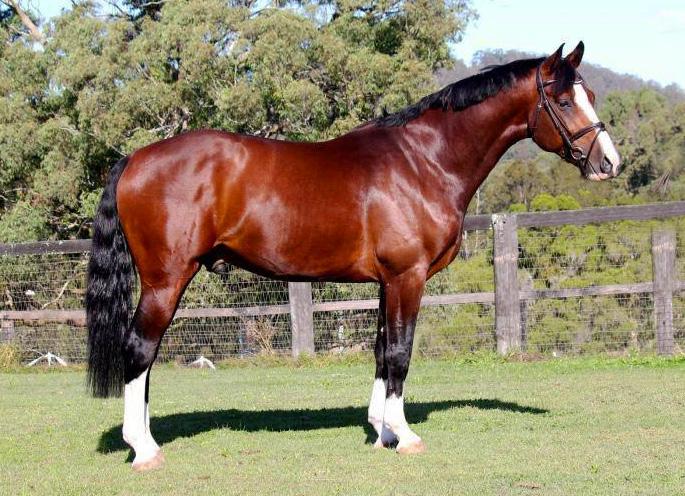
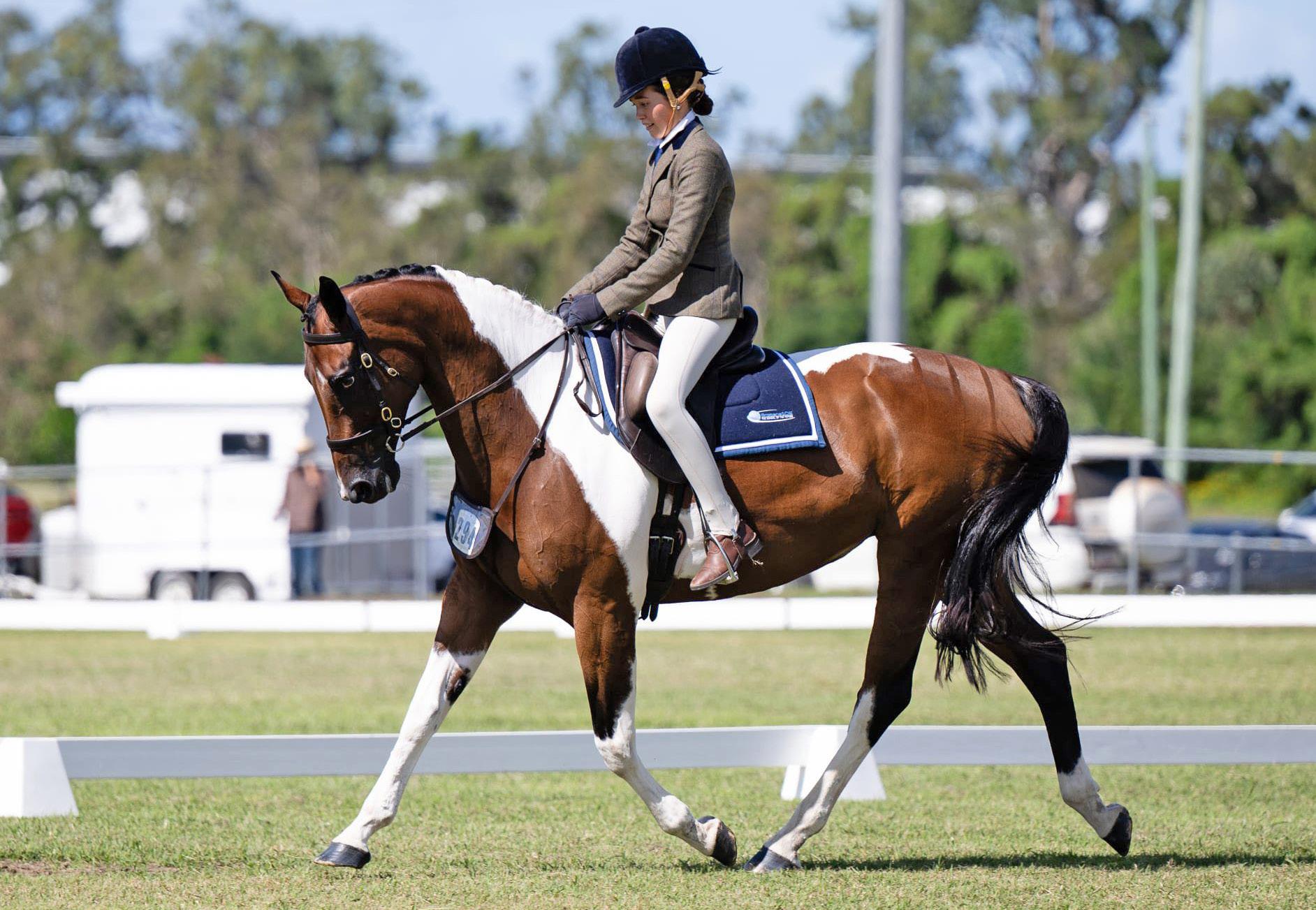
I’ll admit, as an adult exercising free will, I did end up buying a horse for its colour. I wanted a ‘fancy patchy’ – so I bought a coloured Warmblood. But ultimately, I purchased her for her movement and breeding and would love her in any colour now. I honestly think a bay horse with white markings is hard to beat. Cera Charisma comes to mind when I think about a ‘perfectly coloured and marked’ horse.
This topic has always fascinated me, and while I’m not a breeder, I have read and researched quite a lot about horse colour over the years. There’s
a great coat colour calculator tool on the Animal Genetics website which is fantastic fun to play with, especially if you’ve got heaps of things you’re actually supposed to be doing.
I’m no expert, but I’d love to share a few of the fundamentals. There is, of course, far more complexity to coat colour genetics than can be covered here - and if this piques your interest, it’s a subject well worth exploring further.
Colour really is only an aesthetic preference when it comes to buying a horse - but beneath the surface is a remarkably intricate genetic system at play, where a handful of genes interact in complex ways to create the incredible spectrum of coat colours and patterns we see across breeds today.
The Foundation: Red vs Black
Every horse colour begins with one fundamental question: can the horse produce black pigment, or only red?
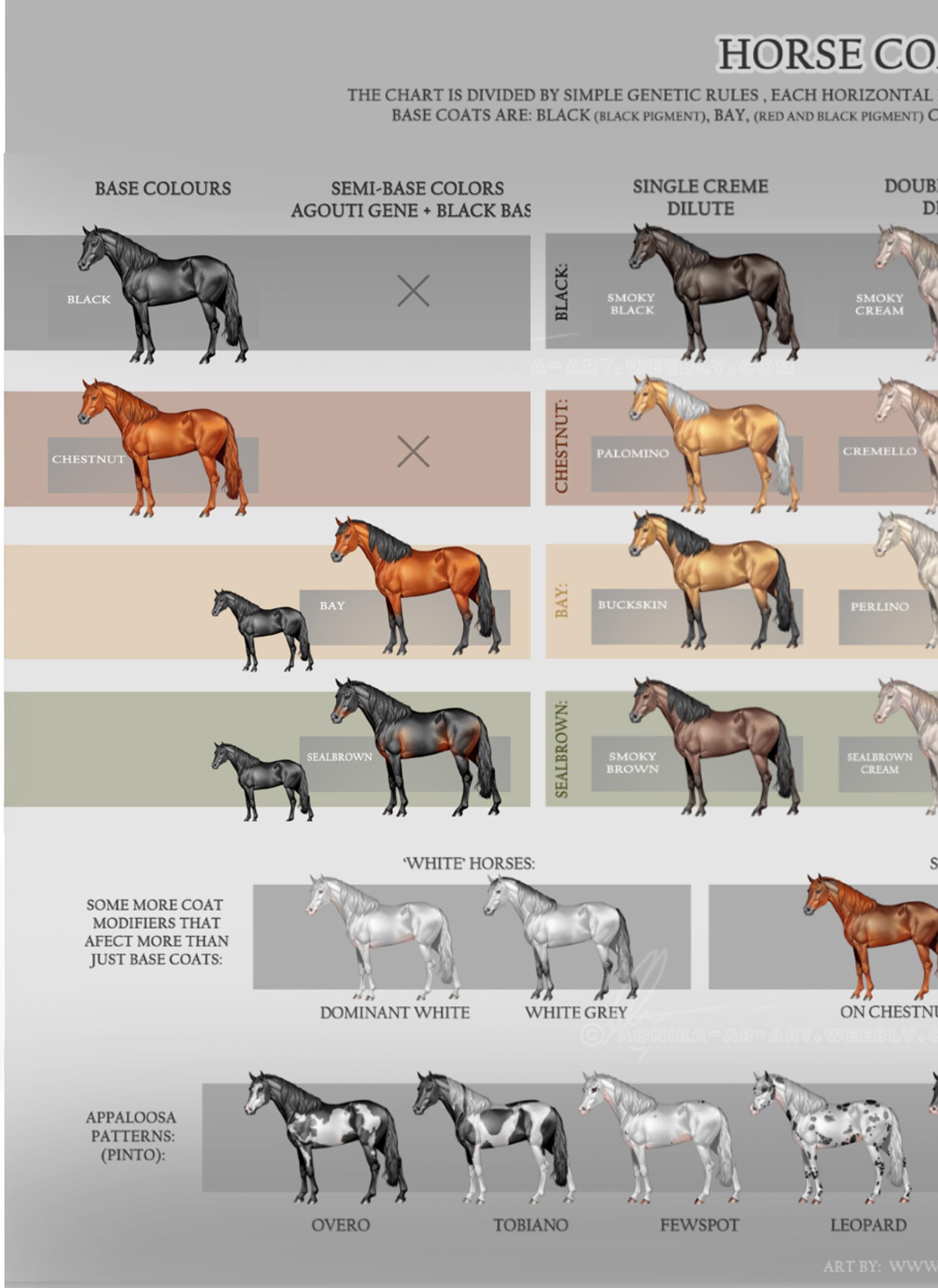
Coat colour is controlled by two primary pigments - eumelanin (black) and pheomelanin (red). The gene responsible for this is called the Extension gene (MC1R).
• Horses with at least one dominant E allele (E/E or E/e) can produce black pigment.
• Horses with two recessive e/e alleles cannot produce black pigment and will always be chestnut.
This is why chestnut is often referred to as a ‘masking’ colour - it hides any genes that would otherwise affect black pigment, because black simply isn’t present.
The Three Base Colours
From this red vs black foundation, three base coat colours emerge:
Chestnut (e/e) entirely red pigment
Black (E/_ a/a) evenly distributed black pigment
Bay (E/_ A/_) a combination of red body with black “points” (mane, tail, legs)
The difference between black and bay comes down to Agouti (ASIP), another key gene, Agouti controls where black pigment appears:
• With a dominant A allele, black is restricted to the points (bay)
• Without it (a/a), black spreads across the whole body (black)
So already, with just two genesExtension and Agouti - we can explain the three most common equine colours.
Dilution Genes: Where It Gets Interesting
Once a base colour is established, a whole new layer of genetics comes into play: dilution genes. These genes don’t change the underlying colour - they modify it. By lightening or softening pigment, they create some of the most recognisable and admired coats we see.
One of the most influential dilution genes is the cream gene, which works in varying strength depending on how many copies are present:
• One copy (heterozygous): Palomino (on chestnut), Buckskin (on bay), Smoky black (on black)
• Two copies (homozygous): Cremello (red base), Perlino (bay base), or Smoky Cream (black base)
This is a perfect example of how the same gene can produce dramatically different results depending on its genetic pairing.
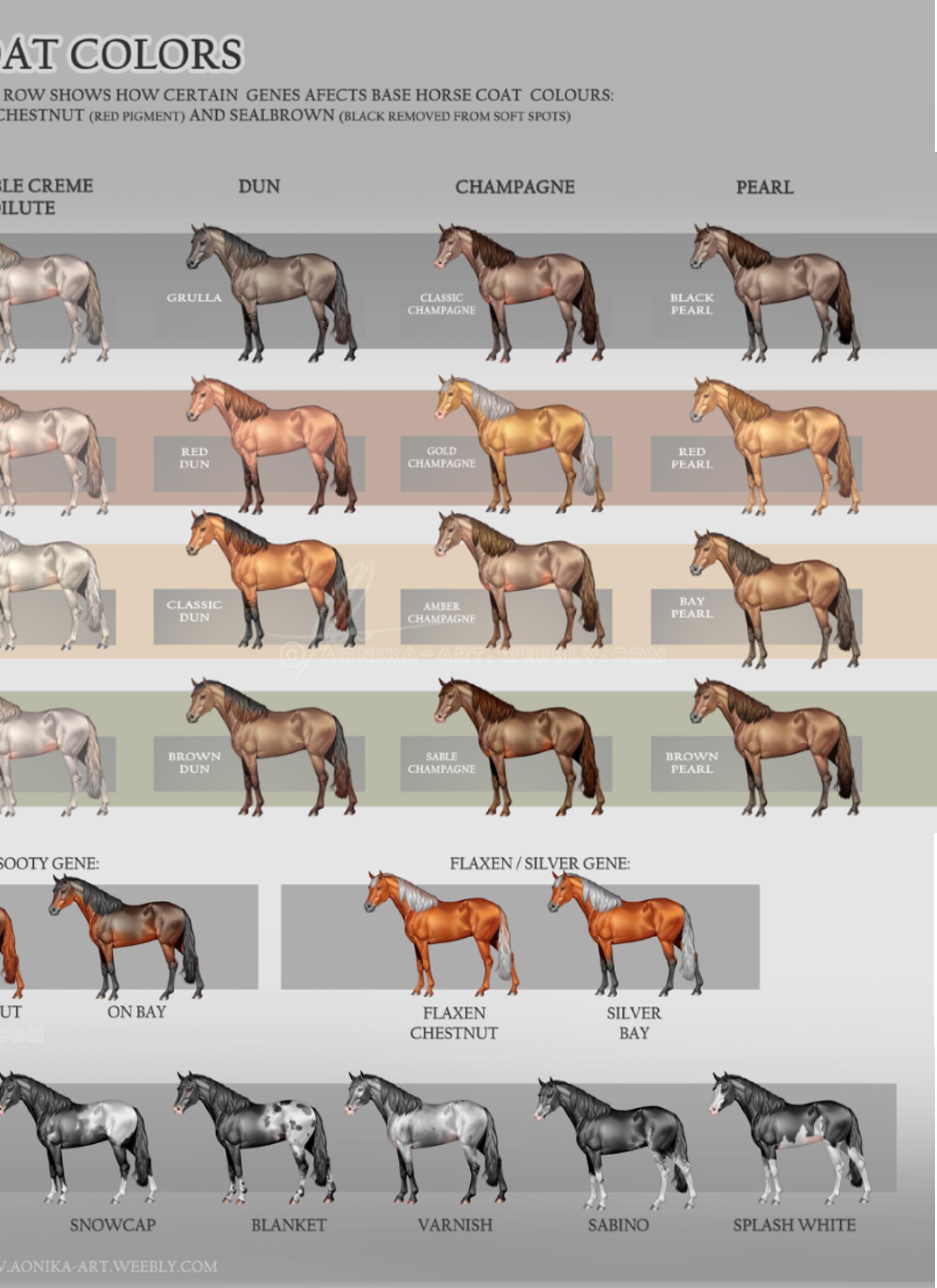
Another key dilution is the dun gene, a dominant gene that lightens the body while leaving distinct, primitive markings i.e. a dorsal stripe, leg barring, darker points. This creates colours such as red dun, bay dun, and grullo - all
instantly recognisable once you know what to look for.
Beyond cream and dun, several other dilution genes further expand the colour spectrum, including champagne, silver and pearl. Each affects pigment in slightly different ways. Interestingly, some only act on black pigmentmeaning a chestnut horse may carry the gene without showing any visible change at all.
Homozygous vs Heterozygous: Why It Matters
To really understand how these colours are passed on, two terms become essential: homozygous and heterozygous. Every horse inherits two copies of each gene - one from the sire, one from the dam. These paired genes are called alleles.
• Homozygous - both copies are the same
• Heterozygous - the two copies are different
For example, with the Extension gene (which controls whether a horse can produce black pigment):
• E/E (homozygous) always passes on black pigment
• E/e (heterozygous) can pass on either black or red
• e/e (homozygous) produces only red pigment (chestnut)
This is where genetics becomes especially relevant for breeding.
A homozygous horse will always pass on the same version of a gene, making outcomes far more predictable. A heterozygous horse introduces variation, meaning the foal’s colour becomes a probability rather than a certainty.
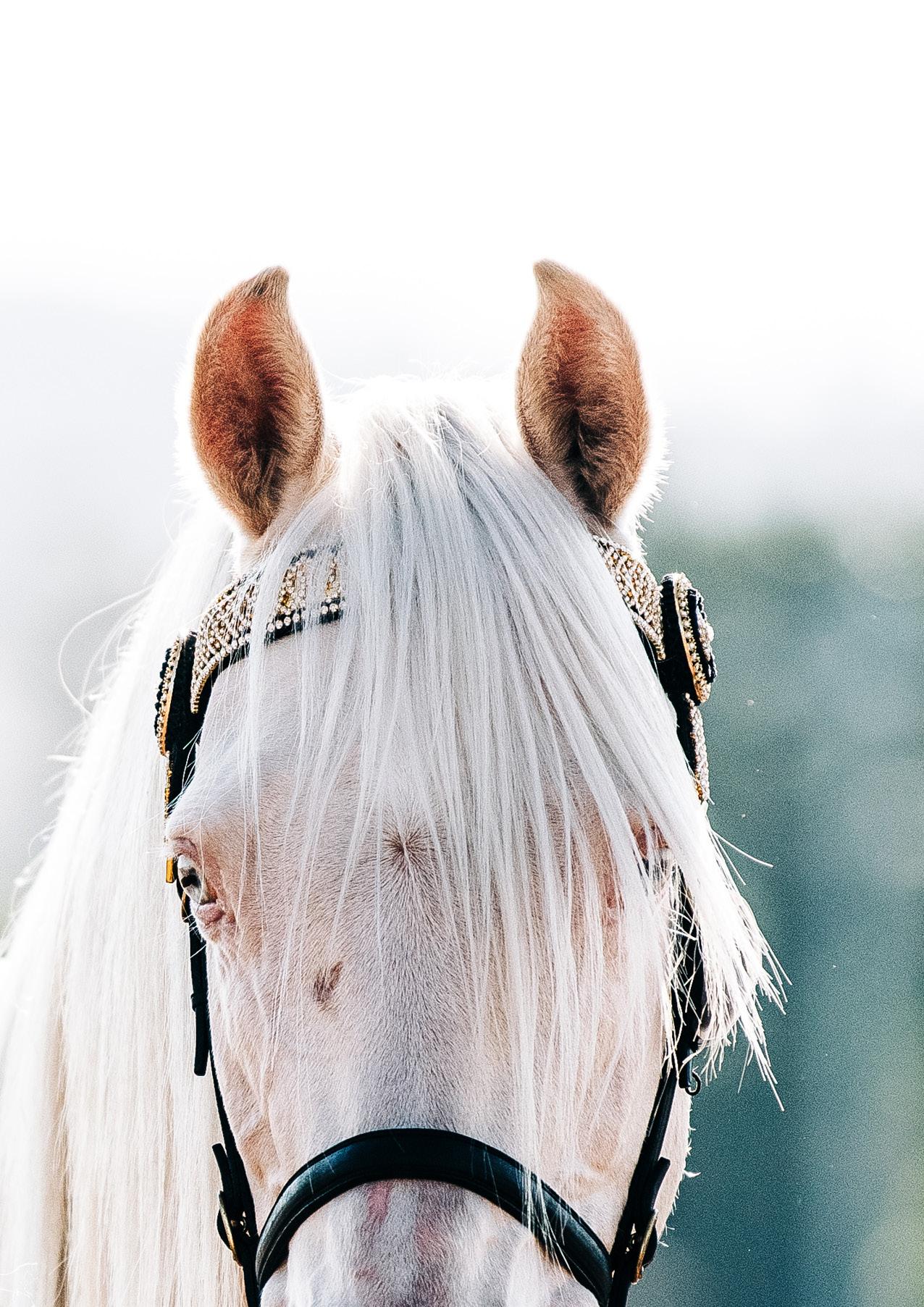
ABOVE: Cera Charisma comes to mind when I think about a ‘perfectly coloured and marked’ horse
Take a black horse as an example. If it’s homozygous (E/E), it will never produce a chestnut foal, even when bred with a red mare. But if it’s heterozygous (E/e), there’s always a chance (if paired with another carrier) that a chestnut foal could appear. And if it does, it’s almost always a colt, just as a reminder that you can’t control everything!
The same principle applies across other genes, including agouti and dilution genes. It’s why two horses that appear to be the same colour can produce very different foals.
A good example is the cream gene. A palomino or buckskin (single cream) only has a 50% chance of passing on that dilution. A double cream horse, such as a perlino, will always give one copy of cream to its foal. The
base colour is then determined by the combination of genes inherited from both parents.
White Patterns and Modifiers
Beyond base colours and dilutions, there’s another layer again: pattern genes. These genes don’t change the underlying colour but instead alter how pigment is distributed across the coat. Examples include:
• Roan – intermixing of white hairs
• Pinto patterns – large white patches (Often confused with Paint horses, ‘pinto’ refers to a colour pattern, while the Paint Horse is a specific breed with defined bloodlines.)
• Leopard complex (Appaloosa) –spotted patterns
These patterns are caused by genes
affecting melanocyte distribution, the cells responsible for producing pigment. This is why two horses with the same genetic base colour can look completely different.
Some colour combinations can’t come from just one parent, roan tobiano is a great example. To produce a horse that is both roan and tobiano, it must inherit the roan gene from one parent, and the tobiano gene from the other.
Each parent contributes one copy of each gene to the foal. Even if a parent carries both roan and tobiano, it can only pass on one version of each gene at a time. This is why certain combinations rely on both sides of the pedigree, and a lot of careful thought and planning goes into pairings designed to produce specific colours.
ABOVE: Colour influenced my decision to buy Warmblood Kenlock Andorra Sky, but ultimately, I purchased her for her movement and breeding.
" A good horse has no colour. "
- William Cavendish
When Colour Defines the Breed
While most breeds showcase a wide range of colours, some are defined by it. In these cases, colour isn’t just aesthetic, it’s the result of generations of selective breeding.
The Friesian, originating from the Netherlands, for example, is almost exclusively black, with other colours deliberately bred out over time, aside from the rare recessive chestnut that still occasionally appears. The Lipizzaner offers a different kind of visual identity; born dark and gradually lightening with age, their impressive herds of youngsters are quite literally fifty shades of grey.
Then there’s the Fjord horse, known for its dun colouring, primitive markings, and distinctive two-toned mane, all closely tied to its proud Nordic heritage. The Akhal-Teke adds yet another layer, originating from the deserts of Central Asia and often seen in metallic gold or cream tones, where coat colour and hair structure combine to create that unmistakable sheen.
In each of these breeds, colour isn’t just what we see, it’s a defining characteristic, deeply connected to identity, heritage, and carefully preserved through generations.
What About Greys?
One of the most fascinating genetic traits is the grey gene. Grey is not a base colour, it’s a progressive condition. Horses are born their base colour and gradually lose pigment over time, ‘greying out’ as they age. It’s also dominant, meaning only one copy is needed for a horse to grey. If a parent is grey, there’s a strong chance the foal will be too, regardless of its underlying base or dilution genetics.
The Bigger Picture
What makes coat colour genetics so compelling is that it’s both simple and
ABOVE: Who doesn't love a Barbie Dream Pony?
complex at the same time.
At its core, everything comes back to just two pigments: red and black. But layered on top of that is a network of genes interacting, modifying, diluting, and redistributing colour in ways that create an endless spectrum of variation.
Coat colour might be what first draws us in, but underneath, every horse carries a complex genetic blueprint, silently shaping possibilities for the next generation.
As William Cavendish, one of the founding figures of classical horsemanship, famously observed in A General System of Horsemanship, “a good horse has no colour.”
Centuries later, that sentiment still holds weight. While genetics can explain every shade and pattern we seefrom true black to smoky cream and everything in between - performance,
temperament, and trainability remain entirely independent of coat colour. Regardless of what chestnut mares may be trying to prove.
In an industry where preferences and popularity still influence perception, this enduring idea is a quiet reminder that beauty may be in the eye of the beholder - but true quality runs far deeper.
Sources
University of Illinois College of Veterinary Medicine: Genes Determine a Horse’s Coat Color
UC Davis Veterinary Genetics
Laboratory: Horse Coat Color Resources
MSU Extension: Genetics of Coat Color in Horses
American Museum of Natural History: Horse Coat Colors
Wikipedia: Equine Coat Color Genetics & Chestnut (horse color)
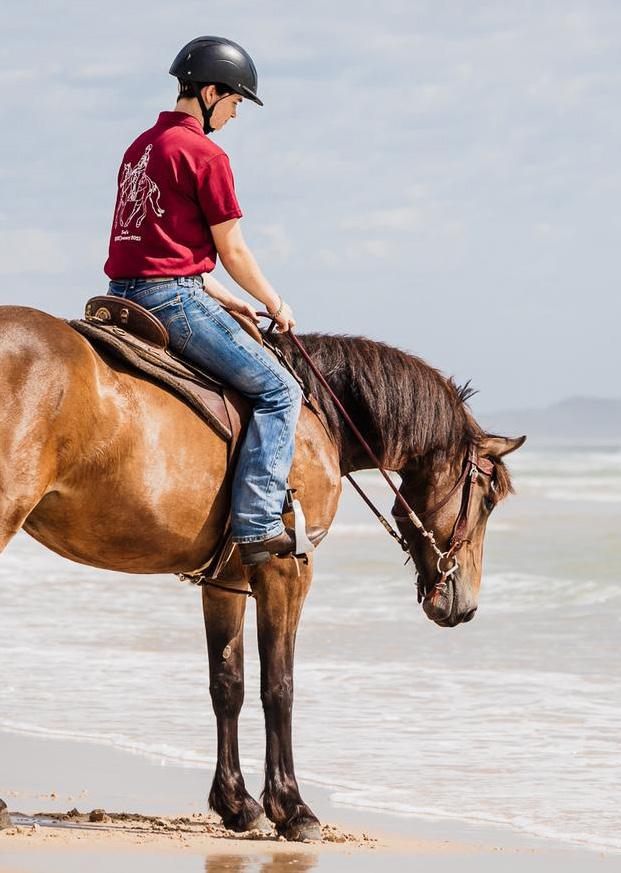
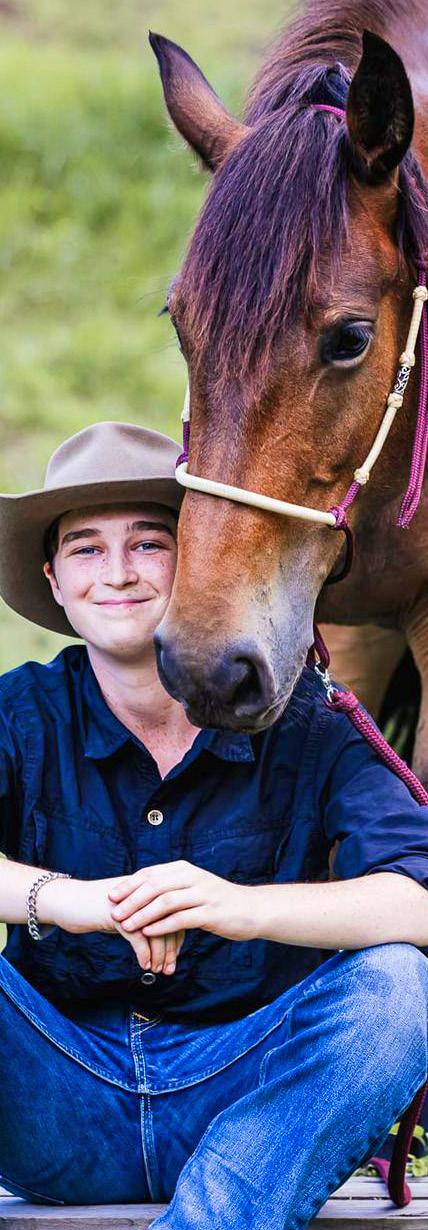
Hi, I’m Aisling Jones and I am a 17-year-old equestrian, about to turn 18 in May. I first decided to begin my riding journey when I was 11 due to my passionate love for animals, and I started taking riding lessons at Glenelg Equestrian.
I rescued Bambi around 18 months ago. She had been abandoned with two other horses in a muddy agistment paddock with little forage. Over a 12-month period of trying to track down the owners and reporting the horses’ health to the RSPCA multiple times, the situation became critical. My friend Sarah and I both started bringing them food and water each day. Finally, the decision was made to remove the horses as their condition was worsening.
Bambi was a wild, untouched, scruffy and malnourished filly but despite this, I knew that she was ‘the one’. I asked if I could take her, and the other two horses were also rehomed.
The first challenge was just trying to get her to the haltering stage so that we could float her home. This was difficult because of how pushy and dominant Bambi was, having had no previous handling. Once we got her home, the next challenge was introducing her to a new herd, which we did slowly over the next week.
Then we began. Practising basic leading skills, ground manners and handling her feet so we could get a farrier was the focus. The biggest challenge early on was how unfazed Bambi was - using flags to move her only made her want to look at them! Lots of consistent work was needed, and most afternoons I would spend just teaching her the basics. Although she was pushy, she was still very willing to learn.
Very quickly, she started to trust me. She would run down the hill to greet me, whinny every time she saw me, and as our bond developed, the progress we made accelerated too. If she saw something she wasn’t sure about, she would come and stand next to me for reassurance.
The bond I feel with Bambi is unlike anything I’ve felt with any other horse. It’s a mutual trust between her and I. She trusts me when I ask her to do something and I trust her with my life. She knows when I’m not 100% and need a cuddle, or if I’ve got some energy and want to have a play. In turn, I know when she has had enough or isn’t in the mood to be ridden and just needs more pampering.
When faced with a difficult or new challenge, sometimes I’d get nervous about how Bambi will react or whether she is ready. Then I remind myself to breathe because I know how much my energy affects hers - when I take a deep breath she does the same, and then I know we are prepared for what’s next.
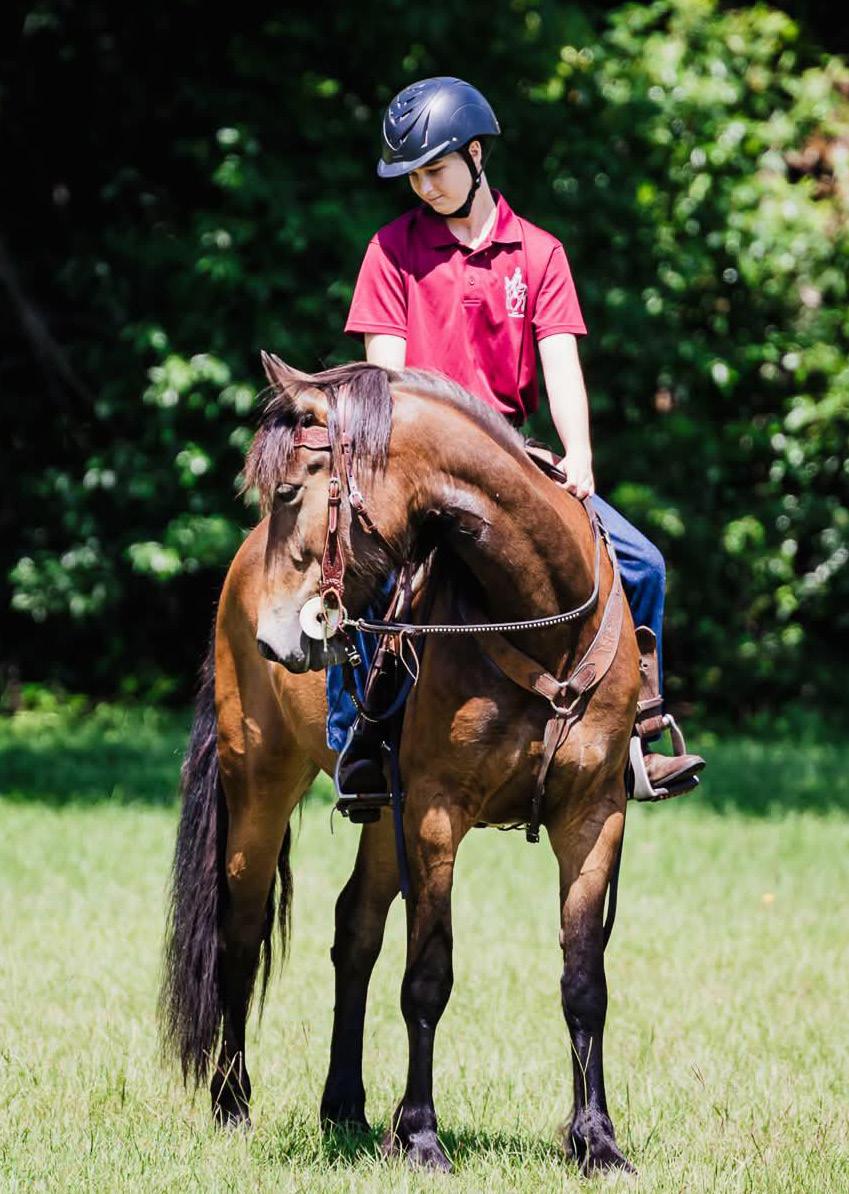
Bambi’s journey has also been a journey of self-discovery. I have learned to trust my own instincts and stay the course. I’ve been reminded that good things take time and to never rush the process. I didn’t put Bambi under saddle for over a year as she needed time to build trust and strength. I spent that time developing ground skills and doing liberty. My quiet nature suits this style of horsemanship very well.
Bambi has so much personality! She’s a bit of a diva - she loves to prance and flick her mane, definitely main character energy! She lets me know if I’ve done something wrong, usually with a sassy head flick or what is almost an eye roll. When we work on something new, she starts doing the most exaggerated yawning. She also loves a bum scratch and backs up for one at every opportunity. She’s learnt to smile for me, it’s a baby gummy smile.
I made the mistake early on of using too many treats and Bambi became pushy. I was too kind as I just love her so much - she was smart and knew this. I had to learn to be kind but firm. Now we have mutual respect for each other. I mostly reward with praise, scratches and cuddles these days. Treats are end of session or only very occasionally!
RIGHT: Image courtesy Sunshine Valley Gazette
The trust is mutual (Images this page and next by Picture the Moment Photography).
I’m a member of the 2nd Light Horse Regiment Woombye Troop and also the AAVC (Australian Army Veterinary Corp) Commemorative Troop. Being part of these troops has allowed me to join a community of supportive riders. I feel proud to be part of this community as it honours the tradition of the Light Horse, their horses and other animals that served us.
Their story is one of mateship, horsemanship, courage and perseverance in the face of adversity. For people of our generation, what they did seems unfathomable, especially given many were around my age. I want to help preserve their memory and stories.
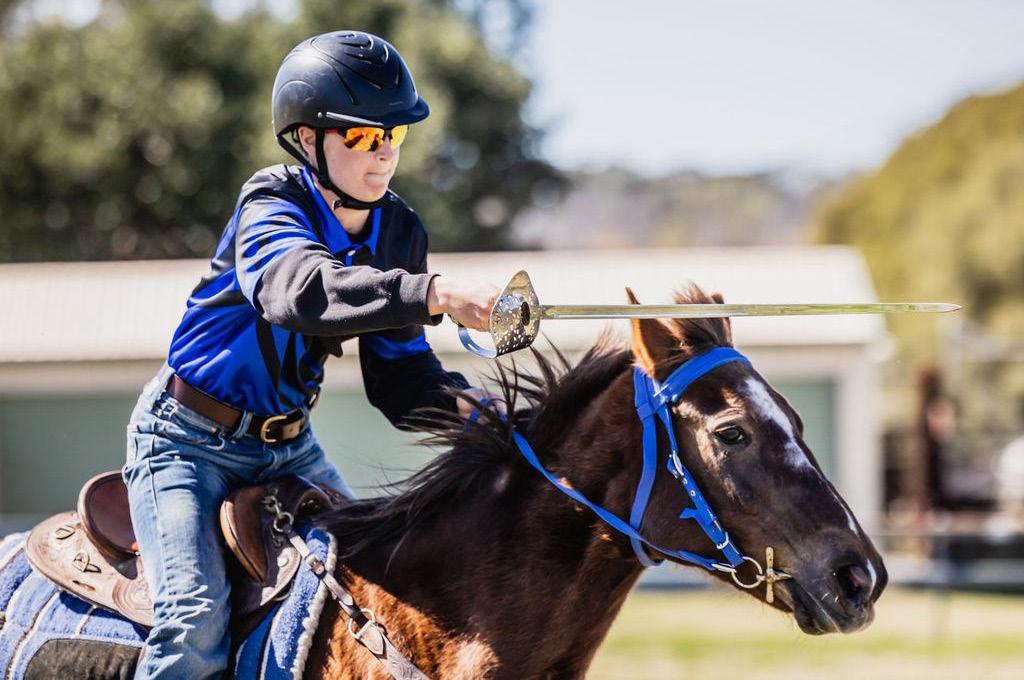
Through Light Horse, I have also discovered the sporting side. I now participate in tentpegging and last year won the junior Queensland and NSW championships. It is a high-adrenaline sport which originates from mounted infantry techniques requiring accuracy to collect ground pegs with a lance and sword, along with other skill-at-arms challenges - all done at speed.
"The bond I feel with Bambi is unlike anything I’ve felt with any other horse. It’s a mutual trust between her and I. She trusts me when I ask her to do something and I trust her with my life."
Looking back over the past 18 months, I can see the huge development I’ve had in my knowledge and ability. I am most proud of completing a four-day, three-night trail riding journey with five other riders. I planned, organised and executed all the logistics of the journey myself as part of my Scouts Queensland King Scout Award. This is the first youth-provided adventurous horse riding journey undertaken in Scouts Queensland.
Through Scouts Australia, I have received a grant from the Dick & Pip Smith Leadership Through Adventure Fund to cover costs, and I have almost completed my trail riding guide and horse riding instructor qualifications. I just need to turn 18 and complete the week-long workshop to finish.
Winning the Scoot Boots Young Rider Award is a huge honour, especially as it recognises horsemanship. I hope to inspire others to build deep connections with their horses and show that there is so much enjoyment to be found beyond just riding.
I love that Scoot Boots are designed to ensure the horse’s comfort and safety. They give the horse and rider freedom to explore different terrain while remaining shoe-free. It’s also great that they are an Australian company.
When I rescued Bambi, she was really a lot to deal with. Lots of people offered their opinions, some warned me I could ruin her, some thought she was worthless. Others felt it was best to have her started by a professional because I was young and inexperienced. I know they were thinking of my safety. I nearly agreed, but I felt in my heart that it would change our bond. I worried that after already being abandoned, sending her away would feel like another rejection.
I decided to trust my instincts. With time and patience, I believed I could start her myself. I am very proud that I stayed the course.
I am a more confident rider and person now. I know how good Bambi is, she is so responsive and learns really quickly. I have read so much about horses - from anatomy to behaviour - and I am a better rider and horseman.
I have learnt that I am very good at reading a horse, and my journey with Bambi has influenced how I am able to react and
respond when riding other horses. I ride many other horses and love some of them very much, but I feel connected to Bambi in a way that is hard to explain. I feel whole and my best self when I’m with her. The connection is undefinable and almost spiritual. She has a piece of my heart and always will.
Looking ahead, I want Bambi ready for parades by Beersheba Day. I want her to be an all-rounder and not get bored doing the same thing. I love jumping, so I’m working on starting her over fences, and I am continuing to build my trail riding experience toward my guide qualification. Once I have my own float, I will have more independence and freedom.
If someone is considering taking on a rescue horse, I would say the biggest thing is taking time to build trust through consistency and patience. Consistency in your body language and what you ask for, and patience while your horse is learning. You wouldn’t be mad at a toddler for not understanding. Short, regular sessions each day are key and know when to stop. Always try to finish on a positive, and reward appropriately.
In rescuing a horse, you discover a lot about yourself. It is incredibly rewarding.
ABOVE: Aisling won the 2025 Junior Queensland and NSW Tentpegging Championship. RIGHT: Aisling and Bambi’s partnership has been a journey of self-discovery (Images by Picture the Moment Photography).
Built Not Bought
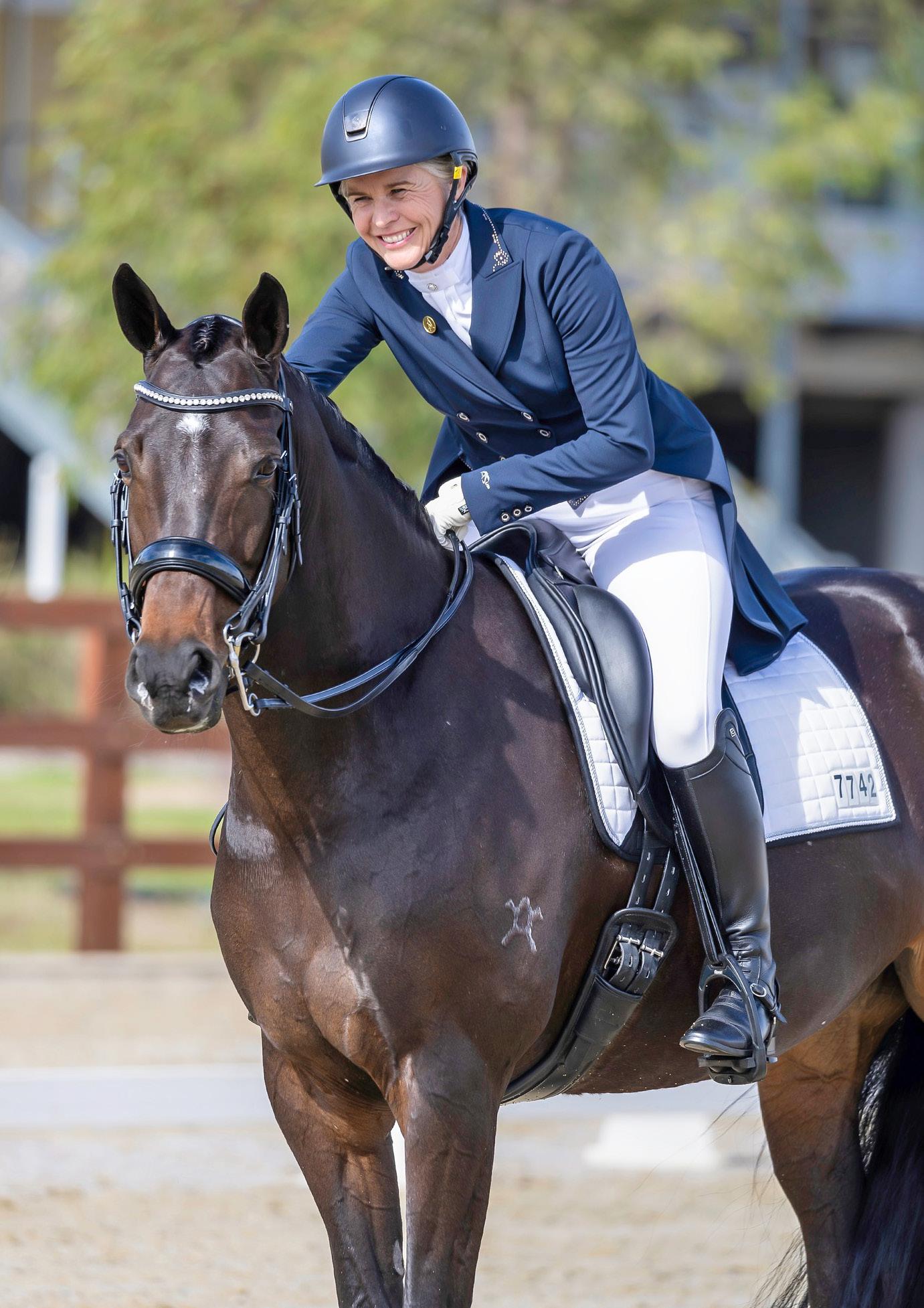
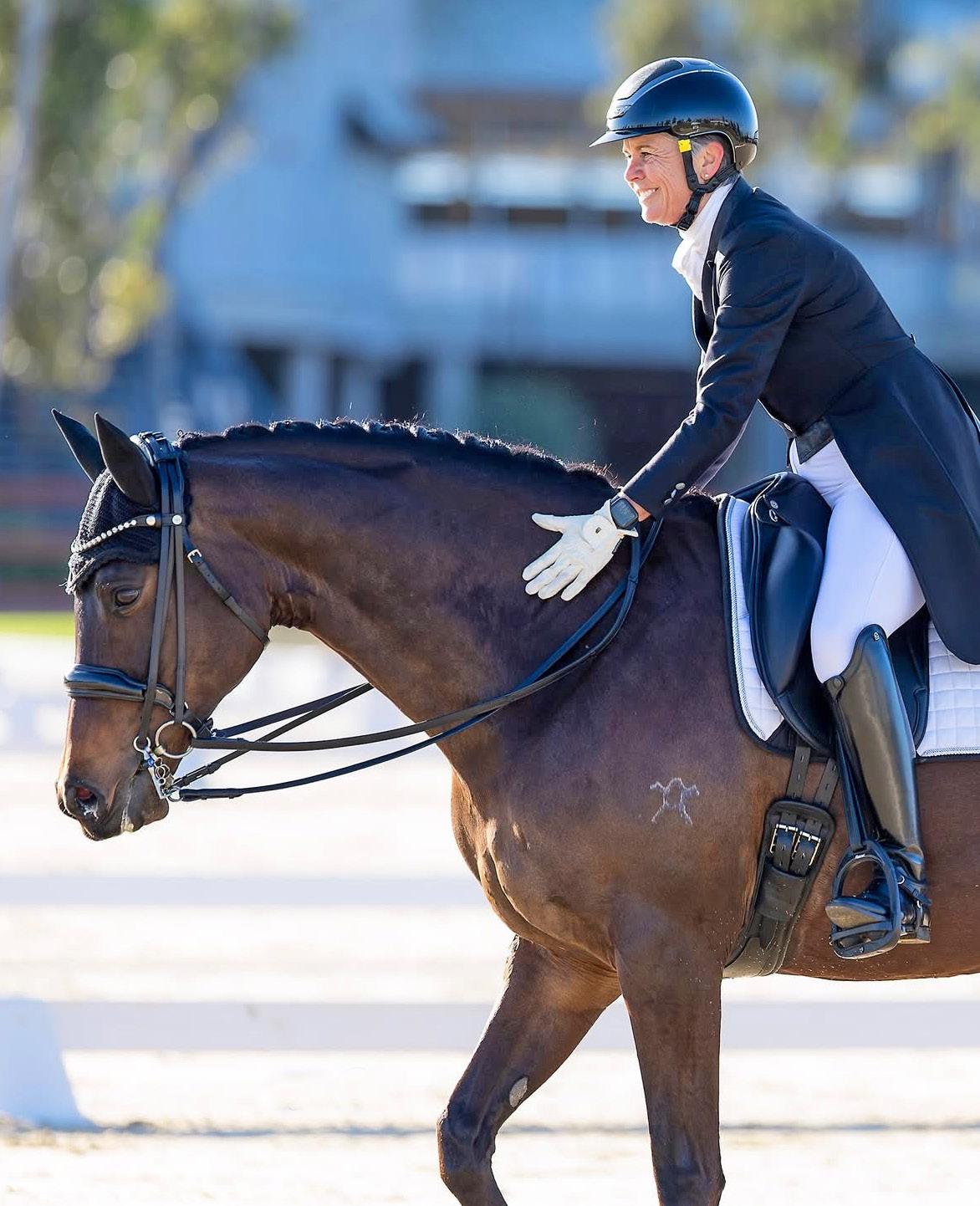
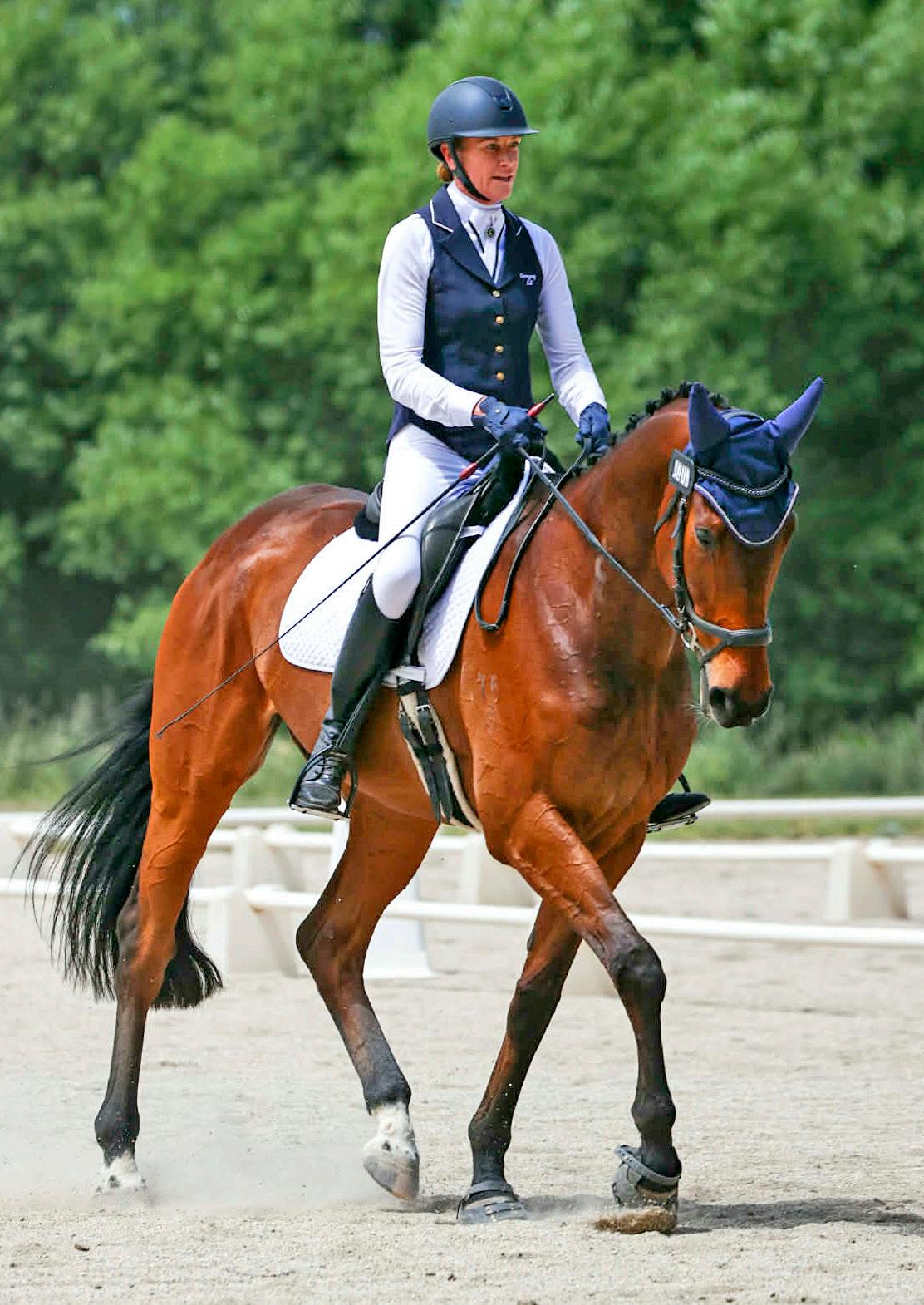
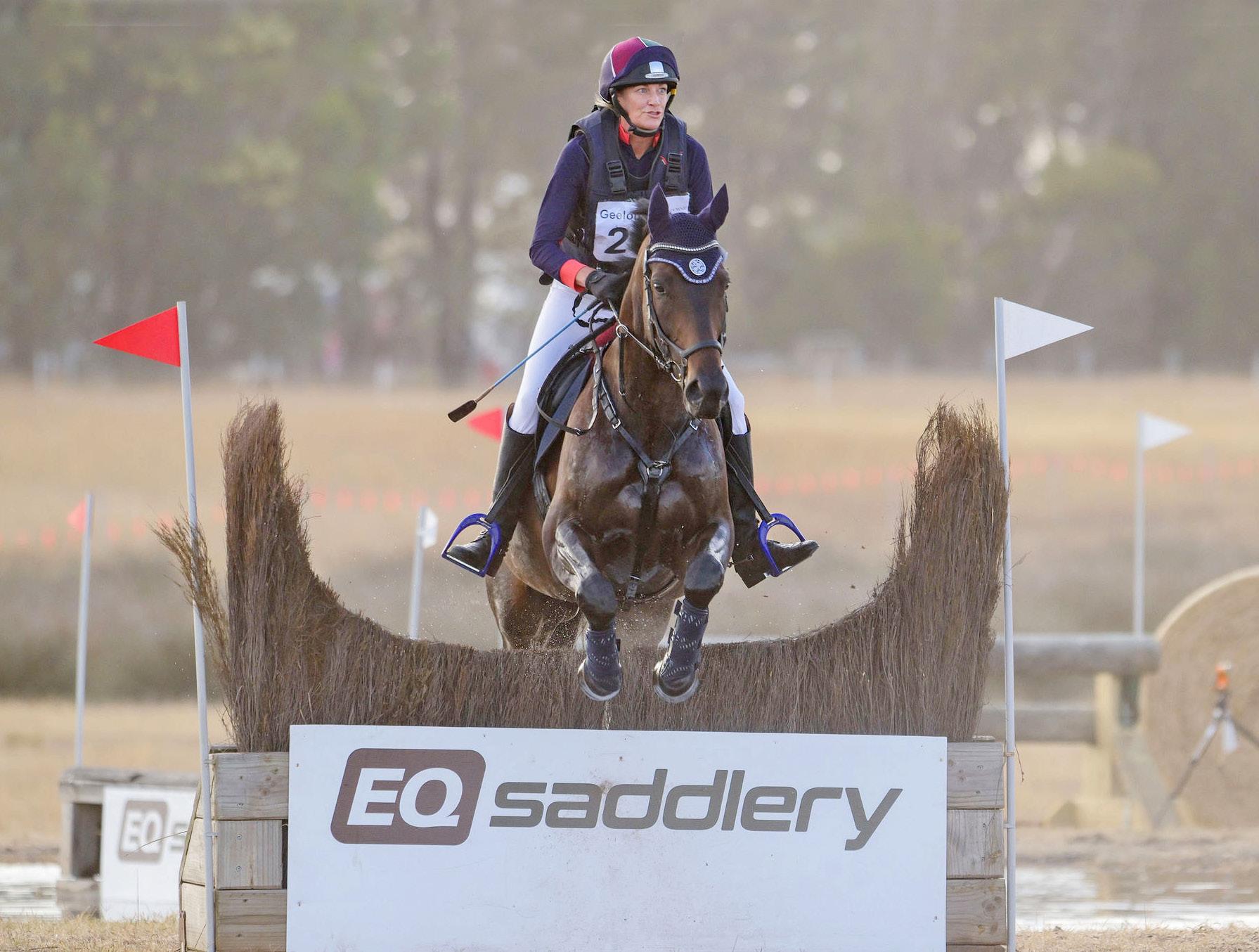
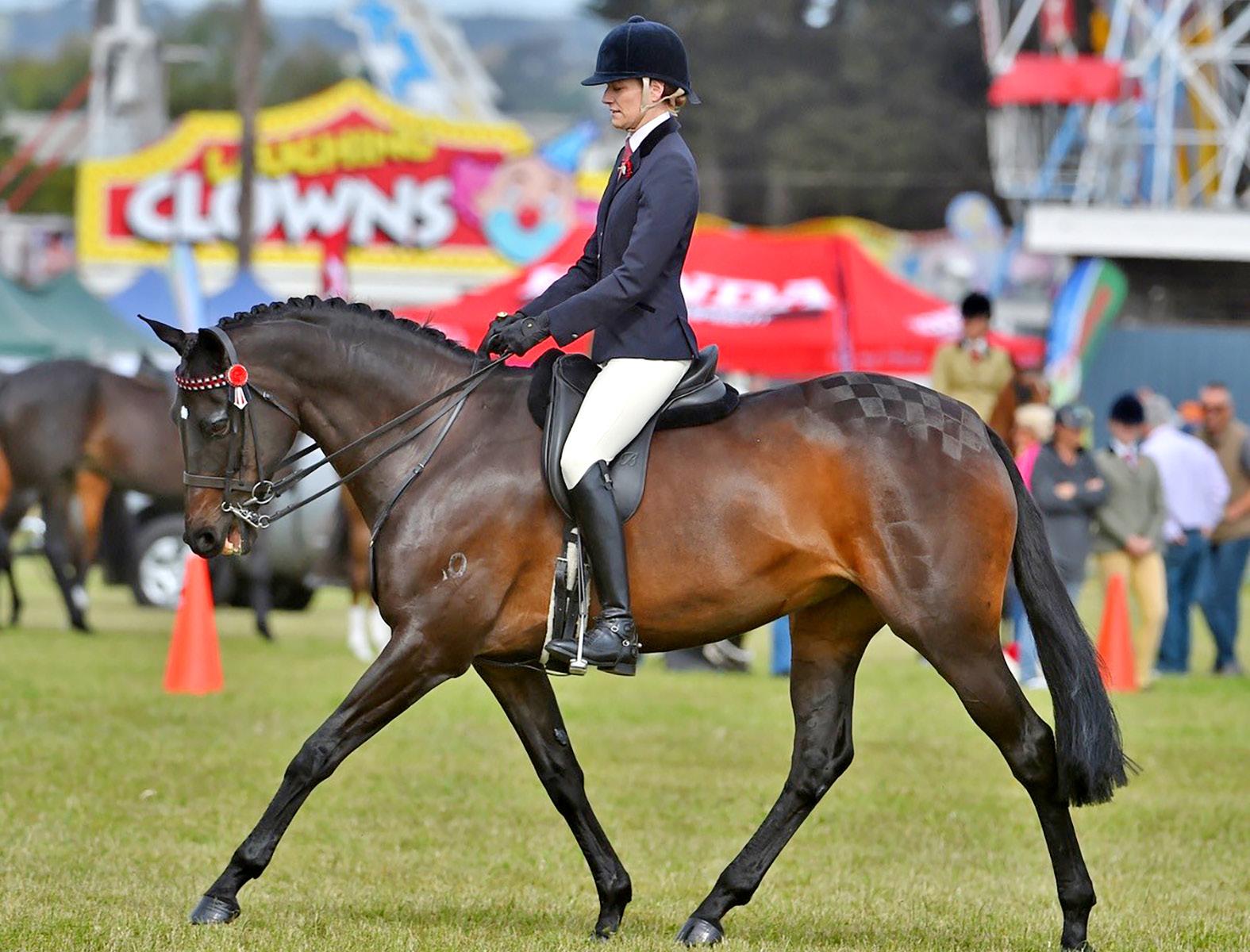
Based in north west NSW, LIBBY GUEST produces and competes her own horses while balancing the realities of regional riding - proving that progress in dressage isn’t always about proximity, but persistence.
EH: Can you tell us a little about yourself and how horses first became part of your life?
LG: Despite growing up in a nonhorsey family, I was horse-mad from the time I was a toddler. I had a serious fall when I was four - dragged by the stirrup and repeatedly kicked in the head - but it didn’t deter me.
My teenage years were spent show jumping, and thanks to a special horse called Chickaroo, I won the Australian Junior Showjumping Championship at 16.
Horses took a back seat while I finished university, built my career, married, and had my two children. When my daughter Annabel was old enough to ride, we entered the show horse world and enjoyed a few years competing together up to national level.
Dressage was always there in the background as a training foundation, but I only competed sporadically until after COVID.
I live in Narrabri in north-west NSW, where long distances to compete and limited access to coaching are some of my biggest challenges.
EH: What drew you specifically to dressage?
LG: I love that dressage is fundamentally about training the horse
and progressing through the levels. Each stage builds on the last, so your partnership becomes stronger, more refined, and more technical over time.
I find that deeply satisfying - far more than focusing purely on competition results as a measure of success.
EH: What has your journey in the sport looked like so far?
LG: I’d always dabbled in dressage, but I committed to it wholeheartedly in 2022 when I began competing Statford Novalia (Nancy), who I’ve had since she was broken in.
Nancy was bred to be an eventer and is half Thoroughbred, so she’s not your typical dressage mount. We won the Australian AOR Preliminary Championship later that year, the NSW AOR Medium Championship in 2024, and began competing FEI in 2025. I’m well and truly hooked.
EH: You produce and compete your own horses - what do you enjoy most about that process?
LG: It never fails to amaze me that, through training and partnership, a 500kg-plus animal will willingly ‘dance’ in response to the lightest cues.
To develop that from the very beginning is incredibly rewarding.
EH: How does building a horse from the ground up shape your connection with them?
LG: It certainly strengthens the connection, but ultimately, if I’ve done my job well, they should be just as rideable for someone else.
That said, I’ll always feel a deeper emotional connection to horses I’ve developed myself. While I’d like to think they feel the same, they’re probably happy as long as life is comfortable and the grass is green!
EH: How would you describe your approach to training and working with your horses?
LG: I still feel very much like the little girl who simply loves horses - it’s far more than a sport to me.
My training is structured, with a strong focus on consistency and progressive development. I aim to build things in a way that nothing comes as a big surprise to the horse.
EH: What have your horses taught you about yourself?
LG: They’ve taught me that when I’m patient and methodical, it’s amazing what can be achieved.
On the flip side, they’re a constant reminder that my natural tendency toward impatience isn’t particularly helpful!
LEFT: Libby and Statford Novalia competed in the 2024 Tamworth Dressage Showcase, winning the AOR Advanced Championship (Image by Amy-Sue Alston Photography).
EH: Not every ride goes to plan - how do you navigate the challenges?
LG: Living in north-west NSW can feel isolating, especially when training doesn’t go to plan.
Joining the Performance Riders program has been a game-changer. It’s given me a solid foundation to troubleshoot issues, along with access to a supportive community of riders and coaches.
EH: Have you had a moment that felt particularly rewarding or meaningful in your journey?
LG: It’s tempting to choose a competition result, but my first Advanced test with Nancy stands out. It brought me to tears - it felt like we were really starting to do dressage.
EH: Many riders struggle with confidence at times - is this something you’ve experienced?
LG: Thankfully, I’ve never had any major confidence issues, despite plenty of broken bones from my showjumping days.
That said, I’m careful about the horses I choose to ride and the situations I put myself in - especially as I get older.
EH: How do you balance horses with the rest of your life?
LG: It can be challenging, but I’m fortunate to work from home in our family business.
I usually ride in the mornings before starting work, and my day is flexible rather than strictly clock-based. Holidays are rare, as it’s difficult to leave the horses, but my husband is very supportive.
EH: What keeps you motivated to keep showing up, even on the busy or challenging days?
LG: It’s probably more about habit than motivation.
Time with the horses gives me a mental
ABOVE: Libby is looking forward to the challenge of progressing through the FEI levels (Image by Amy-Sue Alston Photography).
reset from daily pressures. Some people do yoga each morning - I spend time with my horses. It’s simply part of my routine.
EH: What advice would you give to women starting later or returning to horses?
LG: Choose your horse carefully.
Finding a suitable partner is far more important than buying the fanciest horse. It’s easy to get carried away with the ideals we see on social media, but it’s important to objectively consider your own situation.
EH: What does a perfect day with your horses look like?
LG: A perfect day would be at a clinic - learning from my coach, watching others, and spending time with likeminded people talking about nothing but horses. Ideally with good weather as well!
EH: What are you most looking forward to next in your journey?
LG: I’m really looking forward to the challenge of progressing through the FEI levels.
Will we get to Grand Prix? Who knowsbut I’m going to enjoy trying.
You can follow Libby's inspiring journey on Facebook
MOTHER'S DAY
The Art of Being a Horse Mum
SAM CAVALLO reflects on raising a horse girl, the realities of life as a horse mum and the quiet lessons in knowing when to hold on and when to let go.
Life and love took me overseas as a young adult, and I was 22 when I had my daughter in France. Horse ownership wasn’t possible where we lived, and it wasn’t until we returned to Australia - and after I had my son - that I found my way back to riding. Not in any structured way, but in small moments of freedom. When he was old enough, I’d leave him with my grandparents and sneak off to the stables for a ride and a little me time.
In those early years, motherhood and horses sat side by side but not yet intertwined. I rode for the love of it - occasionally heading away for a weekend show or trail ride with friends - but mostly it was just self-care/horse care. I had a keen interest in liberty training, spending hours in the paddock with my horse, a lively pinto mare named Patches, teaching her tricks.
I remember the moment it shifted.
Saffron was still little when I brought her down to the paddock one afternoon. Patches was hot and forward - not a plodder by any means - so riding was limited to the occasional on-lead wander. But on the ground, she was soft, smart, and kind.
Saf was fascinated. She’d ask her to bow, pick up a hat, and before long, she was lunging her - tiny hands learning to feel the horse at the end of the rope, completely serious about the job.
I can still see her face when that spark lit up. The kind that tells you everything - what you’d hoped, prayed for, and maybe feared a little too. She was always going to be a horse girl.
We started lessons on a good old pony named Trevor at a local riding school. She learnt her up-downs while I sat in the shade under a gum tree with her brother on my lap, trying to eat a lemonade ice block faster than it could melt. One day, it was so hot she practically fainted off the side of the pony - her first fall. A shock, briefly. Then straight back on, with tenacity and a toothless smile.
I remember the drive home after her first canter. “That was so good, Saf. Did you have fun?” “Yes, Mummy,” she said. “But you know what would be even more fun? If I was hanging off the side while the horse was galloping.”
Oh great. She’s going to be a trick rider. That’ll be excellent for
my adrenals. Fortunately, my son plays the piano. They balance each other out.
Lessons turned into trick riding, then jumping, then Pony Club. For the most part, she went with her instructor - and honorary ‘pony club mum’ - Hollie Sheils from HLS Trick Riding.
We didn’t buy her a pony of her own until she was 12. Being a rider - and a photographer - I’d seen too much. Too many things go wrong. I’ll admit, I found it hard trusting something else to look after her as carefully as we did. She is just so… precious.
So naturally, I bought her a two-year-old Shetland. She stood just over 9hh - tiny, opinionated, ridiculously cute, and absolutely capable of flattening her. My husband once found a search on Saf’s iPad: ‘How to make a good bond with your Shetland’. It still makes us laugh.
She did get pelted into the ground a few times as that pony came under saddle - but at least it wasn’t far to fall. There were moments that surpassed humbling and were borderline humiliating. Moments that made me question whether it had been my wisest decision.
The time Saf entered her in a liberty competition, and the pony spent the entire routine galloping laps around the arena, screaming, is a core memory. Saf running after her in a pink tutu, breathless, until her time was up. The longest five minutes of my life.
I’m sure we’re not the first to be victimised by a child’s ponyand we certainly won’t be the last.
She’s 18 now and an amazing rider and horsewoman. We went on a family holiday and were lucky enough to ride in Spain. When the guide asked me, “Who is the better rider?” before allocating our horses, I had no hesitation in saying she was.
That was another moment I won’t forget - one full of quiet pride.
Because motherhood and horses, in many ways, ask for the same things: discipline, devotion, patience, resilience.
There’s a rhythm to it - the feeding, the grooming, the training, the travelling - a life built not around ease, but around care and responsibility. Around something bigger than yourself. It’s
LEFT: Saf in full flight (Image by Zahlie James Photography).
early morning alarms and going to bed when it’s done. It’s routines that don’t bend for weather, moods, or convenience. It’s showing up anyway - with kindness, with consistency, with quiet commitment. Some days are harder than others!
And somehow, within all of that structure, there’s freedom too.
There’s independence. And God knows, I can’t wait until she can tow that float on her own - but I’ll treasure those long drives to shows together forever. The time spent side by side. Sleeping in the float in winter, sitting in the paddock on summer evenings. All the conversations in between, the shared wins, and the perspective that comes when things don’t go to plan.
There’s the shared purpose. Packing the float, walking courses, learning tests, practicing patterns and debriefing on the way home after a cheeky Macca’s pitstop. It’s a life lived together.
At a show recently, a friend greeted me early one morning with, “You’re looking very homeless today!” I couldn’t help but laugh at the disparity - me, still in a tracksuit, hair unbrushed, covered in horse make-up and hoof black, while Saf and Stella entered the ring gleaming, completely poised, and perfectly groomed. I mean, of course some mums manage to arrive manicured and moisturised on show day, and I am always incredibly impressed and curious as to how. There must be levels of Show Mum. Coiffed and couture-ed is something to aspire to, I suppose!
If your car doubles as a travelling tack room, if you regularly find Smoochies and chaff in your pockets, and if you’ve ever reached for tail spray to detangle your child’s - or your ownhair… you might be a horse mum, too.
Somewhere along the way, you realise you’re not doing it alone. Because being a horse mum isn’t just about your own child - it’s about the women standing beside you. The ones who understand the highs, the lows, the joy, the tears… the investment in every sense of the word. (This is sometimes called trauma bonding!)
It’s leaning on each other when it’s a rough day and celebrating each other’s wins. Borrowing stirrup leathers, stockwhips, buckets, or whatever I’ve forgotten to pack. That’s not just support - it’s connection.
You watch a whole cohort of kids grow up together. Move from ponies to galloways. Step up heights, levels, classes. You see them lying around on horse rugs laughing, running around a showground with grass-stained jodhpurs and frothing cans of soft drink, having the time of their lives. Those moments live in your heart far longer than any results.
Horses don’t just shape riders - they shape families. They form friendships. They create bonds that are built over years of shared experience, long after the ribbons have faded. Horses bring us together. And in doing so, they give us something rare - a community that understands, supports, and stays.
For me, some of my dearest, lifelong friends have come from horses. And now, watching my daughter step into that same world… build her own connections, finding her own people… it’s one of the most rewarding parts of all. There’s something profoundly beautiful in that continuity.
Of course, it’s not always romantic. In fact, for the most part, it’s day-in, day-out practicalities and logistics. Being a horse mum isn’t just learning to reverse park a horse float and plait - it’s logging onto Nominate like it’s an extreme sport. Budgeting for nominations, memberships, registrations, farrier, feed, fuel - a constant mental tally that never really switches off. And that’s all on top of the rest of your lifework, home, family. And somehow, you make it all work.
It can be exhausting. Completely overwhelming at times - and a full-blown cortisol rollercoaster at others. When I asked a group of horse mums what it meant to them, the answers were immediate - and relatable.
“Family and teamwork. Making sure that connection between the land, the animal, and you all stays strong - that’s the most important thing,” one mum shared. “This chosen life builds resilience - a lifelong journey like no other.” There’s honesty in it too. “Money, money, money.” No explanation needed.
“It’s a juggling act,” another said. “Sometimes you catch them and everything works. Other times, the balls just drop. But you start again.” “Exhausting, heartbreaking… but I wouldn’t
swap it for anything.”
And then there are the moments that stop you. “I thought I was raising a child with dreams,” one mum shared. “But somewhere along the line, they were teaching me what devotion looks like.”
That seems to be the thread that ties it all together.
Because beyond the chaos, the cost, the commitmentthere’s something deeper. Something that’s hard to explain until you’ve lived it.
There’s purpose. There’s pride. There’s the realisation you’re raising a child who is learning just as much - if not morefrom their horses as they are from you. It’s a relationship with something honest and grounding in a world that often isn’t.
Horses teach them about love. About respect. About life. Sometimes, the lesson is the ground itself.
Because it’s never really just about the riding. It’s about who they become along the way - and who you become alongside them.
I spent years trying to make sure she was safe, protected, looked after. But if I’ve learnt anything from motherhood and horses, it’s that both ask you to hold on tightly - and then learn how to let go.
Eventually, you realise: You’re not just supporting their dream. You’re living one too.
Miami in Motion
There are showgrounds - and then there is Miami. HELEN CRUDEN reports from one of the world’s most stunning equestrian locations
ABOVE: Piergorgio Bucci and Pallieter vd N.Ranch on their way to placing 3rd in a highly competitive international field.
Set against a horizon where ocean light meets glass towers, the Longines Global Champions Tour Miami Beach returned with its unmistakable blend of elite sport and atmosphere. Horses and riders stepped into an arena that feels as glamourous as it is to ride in - where every round is heightened not just by competition, but by environment.
This is a venue that doesn’t let you fade into the background. The light is sharper, the space tighter, and the aura of the crowd becomes part of the experience. And the horses feel it.
A Different Kind of Pressure
Miami asks different questions. Not just technical ones - though the track delivered plenty of those - but environmental ones. The coastal breeze,
the brightness of the sand, the liveliness beyond the ring.
The Grand Prix course reflected that balance. Careful rather than forgiving. Lines that rewarded accuracy over aggression. It was never about outright speed - it was about riding with intention. Clear rounds had to be earned.
The Result That Defined Miami
Katrin Eckermann produced a round that felt inevitable the moment it landed. Riding Iron Dames Dialou Blue PS, she stopped the clock in 44.15 seconds, over two seconds clear of the field - a margin that, at this level, feels less like a gap and more like a statement. In doing so, she claimed her third Miami GCT Grand Prix title, a record that has earned her the unofficial title of the ‘Queen of the Beach’.
The jump-off demanded commitment from the outset. Lines rode tighter, turns came up quicker, and those chasing the time were forced to decide early - stay smooth or take the risk.
Jack Whitaker came closest, delivering a bold and forward round aboard Izara des Dames to finish in 45.68 seconds, while Piergiorgio Bucci secured third with Pallieter vd N.Ranch in 46.06 seconds, underlining just how competitive the field remained behind the lead. Edwina Tops-Alexander delivered a composed round aboard Cydello to finish 14th with just two time faults - narrowly missing the jump-off in a class where the margins were consistently unforgiving.
A Track That Asked the Right Questions
Under the Miami sun, the class unfolded as a true test of discipline and feel.
A technical track immediately set the tone, catching out even experienced combinations and reinforcing how little margin exists at this level.
From a strong international field, thirteen combinations progressed to the jump-off - and when they did, the energy shifted. The shortened track rewarded instinct. Riders who committed early gained time; those who hesitated paid for it. In a breathtaking final round of precision under pressure, the combinations came together and made it look effortless.
Inside the Top Ten
1. Katrin Eckermann - Iron Dames Dialou Blue PS - 44.15
2. Jack Whitaker - Izara des Dames45.68
4. Cian O'Connor - Kentucky TN46.53
5. Maikel van der Vleuten - Beauville Z N.O.P. - 46.85
As an early leg of the Longines Global Champions Tour, Miami does more than crown a winner - it sets a tone.
Results here begin to shape momentum.
Riders aren’t just chasing podiums; they’re building campaigns, establishing rhythm, and testing partnerships under pressure.
From Miami, the tour moved on to the second leg in Mexico City, with the global circuit continuing its rapid pace as Shanghai hosts the next round beginning May 1st - another shift in atmosphere, surface, and intensity in a season that is already starting to take form.
Sport and Spectacle
Miami doesn’t separate one from the other. Between rounds, the energy shifts but never disappears. Riders move through a chic, shimmering crowd - champagne and cologne meets sunglasses and sunscreen - all just metres from an arena where the surface feels only just removed from the sand
Where the glamour of elite showjumping meets the unmistakable energy of the city. It’s a combination that feels uniquely and unapologetically Miami.
For all its atmosphere, Miami still belongs to the horses. Away from the arena, the warm-up tells a quieter storypartnerships that never falter, no matter where in the world they might be. And when they step into that arena - framed by ocean and skyline - it’s not about the setting or the crowd, or even the crown. It’s that connection that carries them across oceans, through seasons and circuits, and ultimately, over the fences.
For more of Helen's stunning work, follow her on Instagram
ABOVE: Katrin and Iron Dames Dialou Blue PS produced a round that felt inevitable from the moment it landed. LEFT: Stopping the clock at 44.15, Katrin was over two seconds clear of the field.
L to R: Jack Whitaker, Katrin Eckermann and Piergiorgio Bucci celebrate on the winner's podium.
ABOVE: Katrin Eckermann with groom Kelsey Jandura.
For all its atmosphere, Miami still belongs to the horses.
Serena Ireland
Fresh from last month's Fort Worth Dressage World Cup, SERENA
IRELAND
shares her adventure with us.
The Centreline Moment
EH: You’ve just ridden down the centreline - can you talk us into that moment?
SE: I think I have this little window between when the bell rings and I pass the gate - it’s about 20 seconds - and that’s the only moment I’m really nervous. My stomach just churns … but it’s a good thing. It’s excitement.
And then once you’re through those gates, it’s just game on. Here we are. You really zero in on making a good first halt, a good first impression, and having a good feeling.
He comes in, and he stands there at X, and 99% of the time I’ll feel his ribs gohe takes this really big breath - and I wait for that. He breathes … I breathe … and then it’s go time.
The Atmosphere
SE: The inside of the arena was just insane. The American crowd was so cool.
By the end of the freestyles, it almost felt like a cutting event - they were cheering for every extension, every curved line of tempis. It was electric.
I came through the chute from under the stadium, and people were saying how loud it was - but I don’t remember hearing anything - I remember feeling it. I could feel the vibration of the crowd through my chest.
And then I got the nod to go. I just clicked him up into trot, and he carried me in. Nothing compares to that feeling. Even just getting into that arena felt like a huge achievement.
Outside the arena, it was actually really relaxed. Everyone was chilled, friendly,
laughing - it was fun. And I think that’s what made it so special. It didn’t feel hush-hush or rigid - it felt like we were there to put on a show. And what was really special was how invested everyone was. It felt like every freestyle was taking the audience on a journey.
The Freestyle
EH: Was your freestyle your choice?
SE: Yes. Maddi Foster built it with me. I come with the ideas, and she fills the gaps and works her magic. I didn’t want it to be too cheesy, but I wanted it to feel like a statement from home. Land Down Under has never felt so relatable until you’ve carted your horse halfway across the world by yourself. It wasn’t just patriotic, it represented the personal journey. We left on the 16th of March, and it was just him and me. We didn’t know what we were heading into. So yes, it was patriotic - but it also represented the personal journey.
The Team
SE: We really had quite the village with us. My parents and younger brother were here, and we had about 10 Aussies in the stands. Keira Shaw, my very good friend who came to groom for me - she’s known Rusty longer than I have. We had Tracey Watson, who bought him as a three-year-old completely unhandled from Auction of The Stars. She saw a vision and she was right! We had Liz Mudd, who taught me to ride when I was three years old. Sponsors, my vet, people who’ve supported this journey in so many ways.
And then we have our Texas family at Black Star Sport Horses. They didn’t know me at all, and they opened their doors, housed both Rusty and me, drove
us to the show - everything.
You just realise how special this sport is because of the people you meet. We feel like we’ve made friends for life.
EH: Tell us about Rusty (Royalty R).
SE: He’s just the most generous horse. He has the best work ethic of any horse I’ve ever ridden, and I think that’s what’s put us where we are. At first he’s polite, a bit reserved. Once you’re in his circle, you’re in, he’s hugging you - but you have to earn it. And he will do absolutely anything for a piece of liquorice.
When I got the call about going overseas, I just knew - when push came to shove, he would go down that centreline and give me everything. We’ve been partners for seven years. There’s nothing I don’t know about that horse, and nothing he doesn’t know about me.
He’s my best buddy. My Velcro horse. You don’t get to this level without that kind of partnership, it means everything. He’s the joy of my life, that horse, I’m just so grateful for him.
EH: What’s something people don’t realise about travelling a horse overseas?
SE: It’s always more significant than you realise. I travelled with him and barely slept - maybe three one-hour stints over about 35 hours of flying. By the time I got to my hotel, I hadn’t slept properly in days.
It was emotional leaving home and doing this by myself. There were so many unknowns: my first time flying a horse overseas, my first major championship. And you’re thinking in two and a half weeks, we have to go down that
centreline. And so much could go wrong before that. Landing in Chicago, it was minus 15º. That horse had never seen snow. We left Melbourne at 25 degrees, and suddenly he’s in freezing temperatures, surrounded by people in full PPE.
And then leaving him in quarantine. That was really hard. You’re exhausted, overwhelmed, and you’re thinking is he drinking, is he okay? Nothing prepares you for it until you’re in it.
But he was a trooper. He handled everything. And I don’t think we give horses enough credit. You can’t explain it to them. They get in these flying boxes - he was in between two Standardbreds - and they travel across the world and come out somewhere completely different – and they just trust us. They really are the most amazing animals. I didn’t think I could be any closer to this horse, but I absolutely am now.
The Camaraderie
SE: Everyone was so welcoming and accommodating.
I was stabled next to Julio Mendoza from Ecuador. He was just so kind and so seasoned. He’s done this before, he’s been the ‘little guy’, and I really felt taken under his wing.
He would include me in conversations, and as the days went on, you get a bit braver about introducing yourself and connecting with people. That made such a difference.
I also had the opportunity to train with Patrik Kittel in the first couple of days, which was just incredible. To have someone with that level of experience guiding you through so many firsts - your first ride, your first time in the big stadium - was invaluable. He was so supportive and so positive, especially considering he had his own competition to focus on.
And then Betsy Steiner stepped in as a coach during the competition days. She’s basically USA royalty, and she was so generous with her time. Through her, we met so many people and made so many
connections - she really made us feel part of everything.
It was amazing. People at that level, competing at the top of the sport, still taking the time to support someone like me coming from the other side of the world.
It really felt like we were a team. And I think that was the biggest takeaway - you realise everyone is just normal. We’re all just people, we all love our horses, and we’re all trying to do the best we can for them.
Behind it all, my coach Robert Schmerglatt has been there every step of the way. He’s been coaching me online from the moment I got back in the saddle in Texas
EH: What would 10-year-old Serena say if she saw you riding down that centreline?
SE: At 10, I was finishing Pony Club, probably riding down the centreline in purple chaps, purple shirt, purple gloves,
ABOVE: The Fort Worth Class of 2026. RIGHT: Serena and Rusty Royalty R during the Zen Elite FEI Dressage World Cup™ Final Grand Prix Freestyle (Image by Tiffany Van Halle via MXIMD Pictures).
ABOVE: Sand dancing at Forth Worth (Image by Tiffany Van Halle via MXIMD Pictures). BELOW: New friends and great memories.
LEFT: A well deserved pat for Rusty Royalty R (Image by Guillaume Anjoran via MXIMD Pictures).
and having my horse stop to wee at X! But that’s where the dream started.
I remember watching Rozzie at the Sydney CDI and thinking, that’s what I want to do. And now to be here, riding a horse she bred at a World Cup Final, it’s just full circle. It’s crazy.
Quickfire Qs
Show morning coffee order?
I’m an oat latte girl.
Lucky charm or pre-ride ritual?
I try not to be too superstitious — I’d spin out. I just like being around my people.
Advice you keep coming back to?
Your frustration starts where your skill finishes.
Something you always pack for a show?
Pack the right saddle - I’ve got that wrong before.
If you could ride anywhere, where would you go next?
Wellington - that's the goal.
You can follow Serena on instagram and on Facebook
LIFE AFTER RACING
TRANSFORMATION | THE JOY OF RETRAINING OTT HORSES
Something Very Special
Growing up as the youngest in a horse obsessed family, it was pretty much inevitable that horses would shape Regina Knobel’s life. “Mum had me sitting on a horse when I was about nine months old,” she says, “and I think I started riding properly when I was two or three, so basically I’ve been riding my whole life.”
Rather than the usual 'hand-me-down' family pony (four of her five siblings rode), Regina’s first horse was a 14hh Stockhorse. She worked her way through Pony Club and from there on to EA competitions, eventually focussing more on eventing, which is what she enjoys most. “That said, I’ve also branched into showing, dressage, and show jumping,” she adds, “so I do a bit of everything.”
In partnership with her eldest sister, the only one of her siblings who still rides, Regina has established Hillview Park Performance Horses, where the sisters specialise in the professional retraining of off the track Thoroughbreds, carefully preparing them for a variety of disciplines.
But alongside that passion sits the realities of a full-time job. Like many dedicated equestrians, she balances long workdays with early mornings and late evenings. “I ride before and after work, and on weekends I teach at Pony Club, HRCAV rallies, and give private lessons when I’m not competing. My life is horses - it keeps me out of trouble, but it also keeps me very broke,” she laughs.
Despite the demands, her enthusiasm for the sport hasn’t waned. If anything, it has sharpened, particularly in her chosen discipline of eventing. “It’s the adrenaline,” she explains, “it’s better than a cup of coffee!”
That thrill, however, comes with its risks. Like many riders, she has her share of war stories - fractured ribs, broken toes, even a fractured neck. Yet she’s quick to point out that danger isn’t unique to high-intensity disciplines. “I’ve broken ribs just doing flatwork at home when a horse slipped over. Horses are horses, and things can happen anywhere.”
It’s a pragmatic perspective, and one that underpins her broader philosophy of understanding and working with the horse in front of you rather than forcing outcomes, an approach which has been pivotal in her significant success with off the track horses.
Now a Racing Victoria Acknowledged Retrainer, Regina’s journey with retired racehorses began almost by chance more than a decade ago. Together with her sister, she purchased a broodmare who had previously raced. “We bought her in foal, with a foal at foot,” she says. “From her, we ended up with both a Quarter Horse cross and a straight Thoroughbred.”
It was the Thoroughbred, Hillview Park Zephyrs Lady, who would leave the greatest impression. “She could jump over the moon,” Regina recalls, “but she didn’t enjoy it. So we listened to her.” Instead of pushing the mare into a discipline that didn't suit her, they redirected her career. The result? A top-level show horse who went on to compete successfully in HRCAV events, at the Canberra and Geelong Royals, and was in the Pope Cup's top 10 at the Melbourne Royal.
For Regina, retraining is not a quick turnaround, but a carefully considered process. Unlike some who aim to produce and sell horses within a few months, she takes her time with each horse. “The quickest I’ve retrained and sold one is about a year,” she explains. “They go out, compete with me, and get exposure. I get to know them inside out, what suits them, what doesn’t, and what kind of rider they need.”
This emphasis on compatibility is central to her approach. Horses are not simply sold to whomever might come along, but are placed with riders who Regina thinks will be a good match in terms of temperament and ability. “If I’ve got a quirky Thoroughbred, I’m not going to sell them to a young rider who won't be able to handle them,” she says. “It’s about setting both horse and rider up for success.”
LEFT: Hillview Park Denman won the 2025 Lancefield HRCAV Level 2 Dressage and also collected the award for Best Performed OTT (Image by Caitlyn Beer Photography).
And her commitment doesn’t end at the point of sale. She maintains contact with many buyers, offering guidance and, in some cases, ongoing coaching to help ensure that the new partnership works well in the long term.
Currently, Regina competes with her own small team of two. Hillview Park Denman Keikari (Denman Dude), is a striking 17.1hh gelding who has been with her for nearly nine years. Now competing at novice to medium level dressage, he has proven himself to be a consistent performer, even against Warmblood competition. “He often gets mistaken for a Warmblood,” she remarks, “he’s got beautiful movement and he’s very agile.”
Her younger prospect, five-year-old Hillview Park Standing Ovation (Tuscante), known in the yard as Stanley, was sourced as a three-year-old, and before training began, had ample time to readjust - something which Regina and her sister have established as standard practice. To ensure their newly acquired off the track horses can reset, they are given at least three months to let down, and at a minimum, they each have their shoes removed, bodywork, their teeth and diet attended to, as well as benefiting from extensive ground work.
And their patience pays dividends. Stanley has enjoyed a string of recent successes across eventing and dressage, though not without the occasional learning curve. "At the moment he's got an open ditch issue," Regina laughs, "and that's cost us two wins. If he hadn't spooked, he would have won every competition he's gone to this year - but we’ll get through it.”
Regina's work as a retrainer is supported by Racing Victoria’s Off The Track Program. She has been involved in the program for around seven years now and has nothing but praise for its scope and professionalism, “It's incredible. It keeps improving and it’s a great community to be a part of," she says, noting that the program has a dual focus: the support it offers to retrainers, rehomers and riders, and its commitment to ensuring that the horses are handled responsibly.
The growth of off the track classes, many sponsored by Racing Victoria, has also played a significant role. Dedicated events now provide opportunities for OTTs to shine across multiple disciplines, while also encouraging more riders to consider Thoroughbreds as viable sporthorse partners.
ABOVE: Regina and Hillview Park Standing Ovation on their way to a win in the 80cm Equestrian Victoria Geelong Horse Trials (Image by Mane Memories Photography).
One standout initiative is the Off The Track Carnival, which has quickly become a highlight on the calendar. “It’s been a real game changer,” Regina explains. “It’s open to everyone, not just EA members, and it gives riders a chance to compete at a high level.”
For Regina, there’s something very special about retraining retired Thoroughbreds. “They come off the track with so much talent, but they’ve only ever known one job. Teaching them to slow down, to balance, to think differently, you can almost see the moment it clicks for them. That transformation - from racehorse to relaxed, willing partner - never gets old."
But it goes even deeper. "What really gets me is their heart. Thoroughbreds try - even when they don’t yet quite understand what you’re asking, they give you everything anyway. When you take the time to be patient and consistent, they meet you halfway - and then some."
And as Regina points out, no two horses are the same. Some are bold, some are sensitive, some take longer to trust. You can’t rush them, you have to be prepared to listen, and when
it all comes together, it feels earned - which, she says, is a big part of what makes retraining so rewarding. "And it’s also about giving them a future," she adds. "They've already given so much on the track, and retraining opens the door to a whole second career, whether that’s competition, pleasure riding, or just a quieter life."
With strong participation and increasing support, it's good to know that the future looks bright for both Racing Victoria's Off The Track Program and the horses it champions. But at the end of the day, for Regina it’s all about the journey. Watching the horses grow in confidence and understanding, building that partnership, and knowing she's played an important part in shaping what comes next for them - that's what makes the hard work, long hours and dedication more than worthwhile.
If you are now inspired to explore the possibility of partnering with an off the track Thoroughbred, you can find contact details for Acknowledged Retrainers on Racing Victoria's website, and you can follow Hillview Park Performance Horses on Facebook.
ABOVE: Regina and Hillview Park Zepher’s Lady at the Royal Geelong Show (Image by Derek O’Leary Photography).
Belle Equestrian's Silver Clincher and Countess Noseband.
FOUNDERS
Beyond the Tackroom
When LUCY RAE took over the reins at Belle Equestrian, she transformed the brand into one serving the broader equestrian community.
EH: Tell us a little about your journey - how did horses become part of your life?
LR: When I was growing up, my neighbours owned horses which they kept up the road, and they used to take my older sister and I up there to see them. This sparked my love for horses, and from there I would go to our local riding ranch at Darkes Forest for trail rides and school holiday camps.
The horse bug never went away, and when I was 15, my parents bought me my first horse, Oliver, a five-year-old Thoroughbred. I worked three casual jobs to pay for him. I never would have bought him if I knew what I know now about horses, but it was love at first sight.
Oliver carried me safely through Pony Club and into my first dressage and eventing competitions, and he’s still with me today - living his best life in retirement on my property at 25 years old.
EH: What drew you to Belle Equestrian originally, and what made you decide to take over the brand?
LR: To be honest, it was curiosity. I had always wanted to run my own business but didn’t quite know what I wanted to do or where to begin. Out of interest, I started looking online for businesses for sale and came across Belle Equestrian.
I saw there was potential to continue
to grow the brand. Being a business that sells technical products like bridles and girths, there was value in acquiring an established brand with an existing customer base rather than starting from scratch. At the time, the market was also seeing a rise in equestrian clothing brands, but not the same level of competition in riding equipment, so I felt there was opportunity there.
I was working full-time in marketing when I first took over Belle, but my long-term vision was to focus on it full-time. We were planning to start a family, and I wanted the flexibility to be present while still building a professional career.
For over a year I juggled both, until November 2024 when I made the decision to leave my job and commit fully to Belle.
EH: When you stepped into ownership, what was your vision for Belle Equestrian?
LR: The vision was never to scale into a large company that mass produces goods. I always wanted to keep the business small, maintain quality control and deliver high-quality, personalised customer service.
Quite simply, our goal is to provide quality products with quality service - to be a go-to for equestrian leatherware at an affordable price.
EH: How have you evolved the brand since taking it on in 2023?
LR: I’ve taken my time to really understand customers’ needs before making changes.
One of the first things I introduced was more customisable bridle optionsallowing customers to choose different nosebands or browbands with a base bridle, as well as adjustable sizing. Many horses don’t fit off-the-rack tack, but small adjustments can make all the difference.
The brand previously had a large range of matching designs across multiple products. I’ve refined that approachscaling back the number of matching variations and instead expanding into new product types, including leather accessories like spur straps and number holders, as well as new bridle designs currently in development.
EH: Belle is known for its leather goods - what defines a truly exceptional piece of tack for you?
LR: Quality leather, timeless design, and proper fit.
EH: As an amateur owner-rider yourself, how does your own experience shape the products you create?
LR: Being a rider myself, I create pieces that I genuinely love and use on my own horses.
I also really value the social side of the sport - spending time at clinics and events, talking with other riders and getting to know them. That’s helped
ABOVE LEFT: As a mother, business owner, and equestrian, productivity looks different these days, and Lucy is learning to go with the flow. ABOVE RIGHT: Belle Equestrian's stylish picnic rug is always ready to go.
me better understand what people are looking for, which has shaped new products and designs.
EH: You’ve recently expanded into lifestyle pieces like the Snaffle Bit Picnic Rug - what inspired that direction?
LR: Good quality leatherware should be built to last, so customers shouldn’t need to replace a bridle or girth every year (which is great for them, but not ideal as a business model!).
It made me think about what else we could offer customers who love our leather and style. Our belts already transition from riding to everyday wear, and that led me to explore other pieces that go beyond the stables - items
people can use both with their horses and in everyday life.
EH: What does that ‘in between’ time with horses look like for you?
LR: During the day, when I’m not riding, working or at the beck and call of Charlotte, I’m spending time with friends and family, walking my dog, or doing Pilates or yoga.
At night, I’m usually cosied up by the fireplace with a glass of wine.
EH: You collaborated with Mel Parbery on this design - how did that come about?
LR: I first met Mel when I hired the Parbery Performance Horse property for a photoshoot in 2024. Since then,
she’s been coaching me in dressage and has become a wonderful mentor.
I’ve followed her work with Mel Parbery Design, and when I had the idea for the rug, she was the obvious person to help bring it to life. As both a designer and a rider, she understood exactly what I was trying to achieve.
EH: How important was it to create something that feels equestrian but works beyond the stables?
LR: I wanted to create something that appealed not only to equestrians, but also to people who love horses and the equestrian aesthetic.
EH: Was versatility a key focus in the design?
FOUNDERS
ABOVE: Designed to be practical, durable and versatile, the Snaffle Bit Picnic Rug and Throw Blanket is perfect when you're out with your horses, or for everyday use (Images by BM Photography).
LR: Absolutely. Equestrians are always on the go, so I wanted something that could go wherever the day takes them. It also had to be durable and easy to clean - nobody has time for hand washing.
EH: What does building a welcoming community look like in practice for Belle Equestrian?
LR: For me, it’s about representing all levels of riding - from grassroots through to elite - and creating a space where everyone feels welcome.
It’s about supporting and celebrating the small wins, not just the big ones.
EH: How has becoming a mum influenced your perspective?
LR: Naturally, when you have a child your priorities shift and your time is divided in more ways. Someone asked me recently how I do it all - and the reality is that I don’t.
I’m doing my best as a mother, business owner, equestrian and woman. Productivity looks different these days, and that’s okay. I’m learning to go with the flow more and be present in what I’m doing.
EH: What’s next for Belle Equestrian?
LR: Continuing to provide our signature leather tack with new styles and products, alongside more unique pieces for riders that go beyond the stables.
Quickfire Qs
Go-to riding outfit?
I always reach for my black Sabi tights. Favourite piece from your range?
The Belle black anatomical leather girth. It’s an essential piece, and the leather is so soft - perfect for sensitive horses. I also love the patent detailing.
Morning or sunset ride?
Afternoon golden hour.
Coffee order?
Flat white.
Best advice for other women in business?
Support and lift each other up. There’s enough competition in the sport - no need to bring it into the industry as well.
Browse the entire range at Belle Equestrian
T he Power of Participation
Aviral post claimed the equestrian industry generates over $300 billion globally each year placing it alongside some of the world’s biggest sporting economies. But the real story isn’t just the numbers. It’s the millions of riders, horses, and communities quietly powering an industry far larger - and more influential - than it’s ever been given credit for.
It started, as many conversations do now, on Instagram. A post shared by Pegasus stopped people mid-scroll with a statement that felt almost implausible: “One of the biggest sports economies in the world - and almost nobody is talking about it.”
The headline figure? The global equestrian industry generates an estimated USD $300 to $400 billion annually (approximately AUD $450 to $600 billion) when total economic impact is considered. I must admit, it was hard to believe.
To put that into context, that places equestrian alongside industries like film, fitness, and video games - and significantly larger than sports like Formula 1. It’s a number that demands attention.
While many of us prefer not to total up what we spend on our horses (for our emotional and financial wellbeing), we all instinctively understand one thing: this sport isn’t cheap. But numbers alone don’t tell the full story. Because equestrian doesn’t behave like other sports - and that’s exactly why its scale has gone largely unrecognised.
The world’s biggest sport you rarely see
Most major sports are built on spectatorship. Broadcast rights. Ticket sales. Stadiums filled with fans. Equestrian is not. Sure, there are some examples of this – franchises such as The Longines Global Champions Tour and the World equestrian and Olympic games attract massive international crowds. But it
is, at its core, a participation-driven economy. And that changes everything.
While other sports monetise attention, equestrian monetises involvement - and that involvement runs deep.
Globally, millions of riders engage with horses not as casual participants, but as part of their daily lives. In the United States alone, around 7 million people are directly involved in the equine industry, supporting approximately 1.74 million jobs.
That’s not a niche. That’s an economy.
But unlike other industries of similar size, equestrian doesn’t live in one place. It’s spread across rural towns, local riding schools, agistment properties, and regional competition circuits. It doesn’t just gather in one stadium. It lives in thousands of communities. And that’s exactly why it’s been so easy to underestimate.
Participation is the engine (and the magic)
At the heart of the equestrian economy is a simple truth: This is a sport powered by participants, not spectators. Every rider represents not just a single point of engagement, but an entire chain of economic activity.
Even at a modest level, the cost of horse ownership can exceed $25,000 per year - covering everything from feed and farrier visits to lessons, and competition entries. And at the moment the fuel to get to and from lessons and shows feels at risk of blowing that number out completely.
And that’s not elite sport - that’s everyday participation. And before you factor in the ‘extras” we all pretend are optional. A new saddle that just fits better. Another rug because the new season colours are so pretty! Your tack room becomes a Pantone chart of Equestrian Stockholm. Supplements that, per gram, rival the value of something far less legal become nightly essentials. Boots - tendon, float, paddock - preferably genuine sheepskin, of course. Acupuncture. Bodywork. The list goes on…
When was the last time you booked yourself a massage or a pedicure? Probably not once every four weeks (unless you’re very lucky). It adds up, painfully quickly. But it also tells us something important. This isn’t casual spending - it’s committed spending.
Multiply that across millions of riders globally, and the scale becomes clear. But more importantly, it reveals something deeper: This is not discretionary spending. For most riders, it sits at the very centre of their lifestyle and identity. Horses
"At the heart of the equestrian economy is a simple truth: This is a sport powered by participants, not spectators."
aren’t a hobby you dip in and out of. They are a commitment. And for many of us, a way of life.
The ripple effect: one horse, many livelihoods
What makes equestrian unique is not just how much is spent - but where that money goes. Unlike many industries, where spending concentrates in a few large organisations, equestrian disperses its economic impact across an entire ecosystem.
Every horse supports:
• farriers
• veterinarians
• feed growers and suppliers
• saddle and bit fitters
• transport operators
• coaches and instructors
• event organisers
• small businesses and local retailers
This is what the Pegasus paper describes as an “economic cascade” - where one participant activates dozens of adjacent services.
And critically, many of these services are irreplaceable. If equestrian participation declines in a region, the result isn’t just a shift in spending - it’s a loss of economic infrastructure.
So why does it still feel ‘niche’?
If the numbers are this large, why isn’t equestrian perceived with the clout of other major global sports? As the white paper puts it: “Equestrian is a golf-sized global economy
operating with the media and investment infrastructure of a niche sector.”
The answer lies in structure. Equestrian is fragmented across disciplines, spread geographically, divided between sport and agriculture, and largely invisible to mainstream media. It doesn’t have a centralised league like the NFL. It doesn’t have a global broadcast platform like Formula 1. It doesn’t have a unified commercial voice.
Instead, it exists in thousands of localised communities - each contributing to the whole but rarely seen collectively. That gap - between what equestrian is, and how it’s perceived - is not a weakness. It’s an opportunity.
A sport that doesn’t stop
Another defining feature of equestrian is its continuity. Unlike most sports, equestrian doesn’t run in seasons. Horses require care 365 days a year. There’s no off-season for feeding, mucking out, vet checks, farrier visits, or training. Which means the economy doesn’t pause either.
It continues - quietly, consistently - regardless of headlines or hype. And while that might not make for prime-time broadcasting, it creates something far more powerful: A stable, recurring, deeply embedded economy.
Community at scale
For all its economic weight, this sport is deeply human. Behind
every statistic is a story: a rider juggling work and early mornings rides; parents budgeting for everything from a horse float to Pony Club uniforms; a coach building confidence, one lesson at a time; a small business built around a lifelong passion; a regional show bringing a community together.
This is where equestrian differs most from other industries of similar size. Its scale is not built on mass audiences. It is built on relationships: between horse and rider; between professionals and clients; between communities and their local equestrian infrastructure. And that’s exactly what makes it both powerful - and easy to overlook.
The participation story we’re not telling
Perhaps the most important insight from the paper isn’t the headline number. It’s the underlying message. Equestrian has always had the scale. What it hasn’t had is the narrative. For too long, the industry has been defined externally as niche, inaccessible and elite. When in reality, it is widespread,
"Another defining feature of equestrian is its continuity. Unlike most sports, equestrian doesn’t run in seasons. Horses require care 365 days a year."
community-driven, economically significant, deeply embedded in everyday life.
The challenge - and the opportunity - is to tell that story more clearly. To connect the dots between individual riders, local communities, and global economic impact. And to recognise that participation is not a footnote in this sport. It’s actually the foundation.
The opportunity ahead
As conversations around sport, investment, and community evolve, equestrian sits in a unique position - at the intersection of sport, lifestyle. agriculture, community and commerce.
It has a deeply engaged participant base; consistent, recurring economic activity, strong ties to regional communities, and a level of emotional connection few industries can replicate. Few industries operate across these spaces. Fewer still do
so at this scale. And yet, it remains underdeveloped in how it is presented, understood, and supported. This is exactly the space Equestrian Hub is stepping into.
Not just to report on the industry - but to connect it, elevate it, and make it visible in a way it hasn’t been before. Because if there’s one thing this data makes clear, it’s this: The opportunity isn’t to create value in equestrian. It’s to recognise, connect, and amplify the value that already exists.
Last Thought
A USD $300 billion industry, built not on spectators - but powered by participants. Not by crowds. But by people who show up - every single day.
Source: The Case for Equestrian: A Toolkit for Governing Body Leaders, Investors, Founders, Sponsors, and Policymakers, Pegasus, March 2026. Many thanks to the Pegasus App team.
POINT OF VIEW
Learning Over Winning
PAUL DOPPER has spent much of his adult life working with horses, and believes the best seat in the house isn’t always in the saddle.
Some people might ask what right does someone like me have to write an article like this. And that’s fair - I haven’t competed or ridden in years.
However, I have spent over 40 years watching, listening, and learning - much of it shaped by my mentor who was a protégé of the great horseman Ray Hunt.
But more than anything, I’ve learned from the horses themselves. I’ve worked with over 200 problem horses on the ground, and I’ve come to realise something important: sometimes the best seat in the house isn’t always in the saddle.
Safety Before Style
For me, it all comes back to safety and control. Without control, how can a rider expect to compete successfully in any discipline?
Control doesn’t come from gadgets. It comes from knowledge and good horsemanship. And good horsemanship is built through consistent learning and steady improvement. As Clinton Anderson says, “Frustration begins where knowledge ends.”
Winning Isn’t the Same as Knowing
Winning a blue ribbon doesn’t automatically make someone a skilled or knowledgeable horse person. Some of the best horse people I know have never stepped foot in a show ring. Their focus has always been on the horse, not the applause.
They prioritise understanding, correct foundations, and producing horses that are willing, relaxed, safe, soft, and
responsive partners. And in many ways, that’s a far greater achievement than any ribbon.
All the Gear, No Idea
There’s nothing wrong with having nice gear - but the problem is when it replaces learning. Many riders will spend thousands on:
• A stronger bit
• Supplements
• Gadgets
• Matchy matchy gear
Yet they hesitate to spend a small amount of money to fence sit at a clinic so that they can learn – even though the sideline is one of the best classrooms there is.
Fix the Rider, Not Just the Horse
When things go wrong, many riders send their horse away to a professional trainer. There’s nothing wrong with that - but if the horse improves and the rider doesn’t, the same problems often return.
Interestingly, those same trainers are often criticised for using rope halters or riding in western or stock saddles. If their methods are effective enough to fix the problem, why does the gear matter?
Too often, the horse world values appearance over learning, and what looks right over what actually works.
There's No Quick Fix
Ego says: “I already know enough; I don’t need lessons; I just need a better horse.” Confidence says: “I’m capablebut I can always improve.”
Learning isn’t instant. It takes patience, consistency, and repetition. Real progress comes from:
• Asking questions
• Gaining knowledge
• Understanding it
• Applying it
• Repeating it
• Refining it
• Reviewing it
Clarity beats chaos every time.
What Good Horse People Do Differently
The best horse people I know stay curious and will happily go back to basics. They remain humble, ask questions, and admit when something isn’t working. They also listen to their horses and never stop learning.
My friend and respected Australian horseman John O’Leary from Horse Problems Australia produced a video many years ago titled ‘Listen to your horse’ – what great advice.
A Final Thought
Pat Parelli once said: “Horses don’t care how much you know until they know how much you care.”
At the end of the day, horses don’t care about ribbons, prizes, or gear. They care about safety, comfort, and leadership. They respond to feel, timing, and consistency. Maybe that’s where our focus needs to return - learning to truly understand our horses: how they think, behave, and feel.
Riding teaches you how to sit on a horse. Learning teaches you how to understand one.
Let learning be your goal - not winning.
LEFT: Paul's Highcroft Angel From Heaven, former Riding Pony Youngstock Champion, Canberra Royal (Image by SWD Images).
The Quiet Conversation Between Horse and Human
Nourish is a new feature from our friends at SUGAR BEACH RANCH, exploring the wellbeing of the rider. A gentle reflection on slowing down and reconnecting with your horse.
There is a moment - often missed by those who rush - when a horse turns its head ever so slightly toward you. Not in demand, not in defiance, simply in awareness.
It’s here, in this near - silent exchange, that the real relationship between horse and human begins.
For those of us who spend our lives around horses, it’s easy to believe connection is built through hours in the saddle, kilometres travelled, and discipline. And while time creates familiarity, it’s not what deepens connection. Horses read something far more subtle - our breath, our nervous system, the energy we carry into their space.
A horse does not follow tension. It does not soften to control. It responds, with quiet honesty, to presence.
And this is where the conversation begins to shift.
The modern rider is taught to refine technique - to perfect position, improve timing, strengthen aids. Yet rarely are we asked a more important question: what are you bringing into this space?
Not just physically, but emotionally. Mentally. Energetically.
Because the horse already knows.
As prey animals, horses are deeply attuned to their environment. Their survival depends on it. They feel the smallest shift long before it becomes
"A horse does not follow tension. It does not soften to control. It responds, with quiet honesty, to presence ."
visible - a held breath, a tightened jaw, a distracted mind. In response, they mirror, question, or step away.
What many interpret as resistance is often reflection.
A horse that won’t stand still. One that rushes. One that feels disconnected. These aren’t always problems to fix through more effort, but quiet invitations - subtle reminders that something within us may be unsettled.
And so the conversation returns, gently, back to self.
To nurture your horse, you must first learn to nourish yourself.
For me, that understanding didn’t come from a lesson - it came from experience. “After years around polo and performance horses, I thought I understood connection,” says Stevey Arena of Sugar Beach Ranch. “But it wasn’t until I stepped into equine wellness here at the ranch that everything shifted. The horses don’t respond to pressure - they respond to presence. Learning to slow down, to listen, has changed not only the way I work with horses, but the way I move through life. The land holds that space, but it’s the horses that teach you how to truly feel it.”
This isn’t indulgence. It’s responsibility.
If this sounds like the reset you've been waiting for, visit Sugar Beach Ranch to learn more, and you can follow them on Instagram
More Isn't Always Better
This new era of the rider prioritises strength, recovery, and resilienceproving that real performance isn’t just about capability, but the capacity to sustain it, writes ANNE-MARIE
LASSERRE
Icouldn’t help but wonder, when did being the ‘fit equestrian’ start looking so tired? Not the romantic kind of tired - windswept, sun-kissed, earned. I’m talking about the kind of tired you can’t quite shake.
The kind hidden beneath those early morning mid-week lessons and immaculate breeches on the weekend. The kind that shows up in short tempers, flat rides, and bodies that feel more wired than strong.
You know the kind - burning the candle at both ends, and calling it discipline.
Because somewhere along the way, between chasing lean legs and lighter scales, we built a version of “fit” that looks good in photos… but doesn’t always hold up in the saddle - or in real life.
And if we’re honest - really honest - it’s not working anymore. It’s unsustainable.
The Subtle Ideal
For years, the equestrian ideal has been subtle, almost unspoken: be light, be small. Take up less space so your horse can take up more. Add cardio, skip the heavy weights, and whatever you do, don’t get bulky.
But here’s the quiet shift happening in arenas, gyms, and everywhere in between right now: riders are getting stronger. Not just aesthetically - structurally, mentally, unapologetically stronger.
And interestingly, the riders who are lifting more are burning out less.
More muscle, it turns out, isn’t just about power. It’s about capacity. Because riding - real riding - isn’t passive. It’s not just sitting pretty while your horse does the work. It’s isometric strength through your core, controlled tension through your legs, stability under fatigue, and the kind of coordination that demands your nervous system stay sharp
long after your body wants to check out.
So what happens when your version of 'fitness' is built on restriction, depletion, and the constant push to do more?
You get the rider who looks the part, but struggles to hold form in the last ten minutes of a session. The one who feels strong at the start of the week and shattered by the end of it.
The one who thinks she needs more discipline - when what she actually needs is more support. More fuel.
More recovery.
More muscle.
Less burnout.
Because burnout doesn’t always announce itself loudly. Sometimes it whispers. It shows up as a lack of progress. As niggling injuries. As the feeling that no matter how hard you train, you’re always just a little behind.
And here’s where it gets interesting - not just for the women reading this, but for the industry around them.
Strength, real strength, changes the dynamic.
The Rider with Muscle
A rider with muscle doesn’t just look different - she rides differently. She sits deeper. She reacts faster. She recovers quicker - between movements, between rides, between weeks. She has the capacity not just to ride, but to sustain everything else life demands.
And psychologically, that shift is powerful.
Because when a woman stops training to be smaller, and starts training to be more capable, something else happens. She becomes harder to shake. More decisive. More presentnot just in the saddle, but everywhere.
Confidence Becomes Embodied
Confidence stops being performative and starts being embodied. And that’s not always a comfortable shift for the
people around her - but it is a necessary one.
The ‘fit equestrian body’ isn’t disappearing - it’s evolving. It’s no longer defined by how little it takes up, but by how much it can handle. How long it can last. How well it can recover.
It’s built in the gym as much as in the arena. In the pauses as much as in the pushes. And perhaps most importantly, it’s built with an understanding that more isn’t always better. Smarter is.
That might mean lifting heavier - but training fewer days. It might mean fuelling properly instead of cutting corners. It might mean prioritising rest over squeezing in one more ride. It might even mean - and this is where it really challenges us - letting go of the identity built around being the one who always does more. Because doing more is easy to admire.
Doing Only What's Necessary
Doing what’s necessary, and no more, requires a different kind of discipline.
So maybe the question isn’t, “How do I get fitter?” Maybe it’s: “What is my version of ‘fit’ costing me?” And is it giving me anything back?
Because the riders who are thriving right now - the ones who feel strong, ride well, and still have something left at the end of the day - aren’t chasing exhaustion. They’re building resilience. They’re choosing muscle over depletion. Recovery over punishment. Longevity over quick wins.
You don’t have to break yourself to become a better rider. In fact, the stronger you become, the less breaking there is to do.
Together, they reduce burnout and build resilient, capable equestrian athletes.
• Eat every 3 hours - fuel consistently to support energy and recovery
• Engage your core daily - exhale, gently draw the belly in, then brace as if preparing for impact (while breathing normally)
• Choose one non-negotiable movement each day - show up, do it well
Because discipline isn’t intensity - it’s consistency.
Follow Anne-Marie on Instagram.
Winter feeding for health and immunity
Making changes to your horse’s feeding program during the colder months can improve their wellbeing. Equine nutritionist LARISSA BILSTON explains the benefits.
Sometimes it only takes a small feeding or horse husbandry change to provide significant health benefits over winter. But why is it that horses need a change to their feed regime over the colder months?
Winter pastures in many parts of Australia can be lower in quality and
quantity at the very time of year when horses’ requirements for good forage are increasing as they burn extra calories to keep warm. Older horses in particular can have trouble maintaining weight through cold weather as their bodies become less efficient at producing, processing and absorbing nutrients.
Horses can also be prone to developing a runny nose through the change of season, and in some areas wet weather increases the risk of mycotoxin ingestion. So having strategies in place to help your horse through winter is a sensible approach. These strategies might include:
Health checks
If you have a horse who struggles to hold weight over winter, now is the time to ensure that your worming program is up-to-date and that dental and other health or veterinary issues are dealt with before the full stress of winter hits
Keep them warm
The two most important things you can do to help horses prone to winter weight loss are also the two easiest: keep them warm and feed them plenty of hay. Keeping warm in cold weather burns body fat, so the appropriate use of rugs, wind breaks, shelters and stables helps less thrifty individuals hold
condition over winter. And a bonus for horses eating plenty of forage during cold weather is that the microbial fermentation of fibre in the hindgut produces heat and has a ‘warming’ effect.
Provide adequate roughage
Plant growth is naturally slower in winter due to the longer nights and less sunlight hours for photosynthesis to occur. Growth is further restricted by cold weather, frost, drought and waterlogged conditions. When pasture is in limited supply, it is essential to provide enough good quality grass or meadow hay to fill the gap in pasture availability. If you feed lucerne or cereal hay, limit these to no more than 30% of total intake.
Hard-keepers and underweight horses will benefit from access to free choice grass hay whenever pasture is overgrazed or the average length of leaves in the pasture falls below ankle
height. Horses with poor teeth who ‘quid’ or ‘ball up’ long stem roughage will need chaff (made predominantly from grass hay if possible) rather than hay or long grass.
Although spring and autumn are the highest risk times for laminitis, it is important to carefully monitor pasture and horses through winter as well. Overweight horses and those with metabolic conditions should not have access to short, green, or frost affected grass as these are higher in the sugars and carbohydrates that can trigger laminitis.
Keep them drinking
Some horses don’t drink enough water during colder weather, which can lead to impaction colic. Encourage drinking by:
• Providing fresh clean water that is not too hot or too cold
• Keeping water under cover especially if bat or bird droppings are likely to contaminate it
• Emptying and cleaning the water
trough every few days to avoid algae, bird droppings and dead insects building up in the water
• Adding 7-10 grams of salt per 100 kilograms of horse bodyweight to their feed to encourage healthy levels of water intake. Remember to include the salt content of pre-mixed hard feeds when calculating how much to add.
Is there enough protein?
An adequate quantity of moderate to good quality roughage usually provides enough protein to meet the needs of adult horses. Pregnant, lactating or growing horses may need extra protein in their diet. Some older horses are less efficient at digesting protein and may need supplementary protein. Higher protein feeds include lucerne, clover, soy or legume products. Performance horses can benefit from a boost of the amino acid leucine immediately after work to help switch on muscle building and repair pathways.
TOP: Many mature easy-keeper horses and ponies at rest or in light work hold body condition easily from hay and grass alone.
LEFT: Having strategies in place to help your horse through winter is a sensible approach.
Add calories, but only as required
Although many mature easy-keeper horses and ponies at rest or in light work hold body condition easily from hay and grass alone, others need more calories over winter to prevent an unwanted loss of weight. A hard feed of grains and/ or superfibres is often necessary for Thoroughbred types, those in harder work, and ageing horses - but when choosing a hard feed for older horses you need to take into account the condition of their teeth and digestive efficiency. Remember to always ensure adequate roughage (as pasture or hay) is available before deciding to introduce or increase hard feeds.
It is healthier to make small and regular adjustments to the diet to maintain optimal body condition rather than making drastic changes once a horse becomes very overweight or underweight. If using oils as a means of adding calories, be aware of their omega-3, 6 and 9 content and include an appropriate omega-3 balancer to optimize immune system function.
The amount of concentrate required depends on the horse’s size, level of activity or breeding status, and the individual's metabolism (easy keeper or hard keeper). Another major factor impacting concentrate requirements is the ever-changing calorie content of pasture. Because changes in roughage quality are often not visible, it is important to remove winter rugs at least every two weeks to monitor for changes in body condition.
Balance
vitamins, minerals and fatty acids
Feeding a correctly formulated diet complete with all the vitamins, minerals and fatty acids in balance allows the horse’s body to function optimally. This can result in improved fuel efficiency and immune function to help them through the cold of winter.
Grass and hay alone do not give a horse all the minerals required for optimal health. Supplement by providing the full recommended amount of a quality
pre-mixed feed, or by adding a balancer powder/pellet to an unfortified feed. If feeding a reduced rate of pre-mixed pellets or muesli, use a balancer powder to top up and balance your horse’s vitamin and mineral requirements. If your horse is prone to respiratory disease or over 15 years old, consider adding extra antioxidant nutrients such as vitamin C, natural vitamin E, and organic selenium.
Manage mycotoxin risk
Fungi love growing in wet conditions and unfortunately this includes the fungi that grow on grass, grass seeds, hay, silage, grains and stored horse feeds, producing harmful and invisible mycotoxins. Horse health, welfare and physical performance can be severely impacted by eating mycotoxincontaminated food and pasture.
Because there are many types of mycotoxins which can act on many organs, symptoms can vary widely. Symptom severity depends on the type and amount of toxin present and the individual’s immunity or tolerance to mycotoxins. Affected horses need the help of a broad-spectrum mycotoxin binder to stay in top health.
Nutraceuticals for joint care
Horses with osteoarthritis often 'feel their bones' and suffer more pain during the cold of winter. Whilst feeding cannot cure degenerative joint problems, adequate vitamin and mineral supplementation supports your horse’s joint health. Vitamins B6, C and E and the minerals manganese, copper and zinc are required to help the body build, maintain and repair joint fluids, connective tissues, muscles and bones. Orally ingested joint supplements containing hyaluronic acid (HA), MSM, glucosamine and DHA omega-3s can have anti-inflammatory and analgesic (pain relieving) affects. These can be used in addition to veterinary oral or injectable treatments where required.
It’s worth the effort
Maintaining horses in optimal health and condition over winter takes a little extra attention to forage availability, body condition, and tweaking a well-balanced hard feed. Your efforts will be rewarded with the satisfaction of horses that glow with a healthy winter shine!
Larissa Bilston, BAgrSc (Hons) is the Equine Nutritionist for Farmalogic.
EVENT
Another fabulous year for Adelaide
The ADELAIDE EQUESTRIAN FESTIVAL recently celebrated yet another highly successful event, with some of Australia's best known and upcoming equestrians in pursuit of top honours.
Oliver Barrett rode on the shoulders of legacy in his first CCI5* effort at the Adelaide Equestrian Festival. In 2014, his father, Craig Barrett, rode one of the early Sandhills bred horses, Sandhills
Brillaire, to the Adelaide victory. In the 1990s, Barrett and his wife Prue had begun breeding sporthorses, seeing a need within the sport to influence bloodlines with more Thoroughbred blood. The result would be a prolific
breeding program, with Sandhills horses populating entry lists across the levels throughout the Oceania region.
If he felt the pressure and weight of that legacy, Oliver didn't shown it outwardly.
On a day when rails were flying around David Sheppard's show jumping course, Oliver’s delivery of a flawless clear with the 10-year-old Sandhills Briar (Christian - Sandhills Beetle) ensured a podium finish.
When both cross country leader Sam Woods and runner-up Madison Seivwright went on to lower rails, it was Oliver, standing at the in-gate, watching intently, who celebrated the ultimate victory. "To be able to get to 5* in the first place is a feat in itself," he said. "It just feels amazing to be able to pull this off. We put ourselves in a position right from the start. I knew that we were there thereabouts the whole time. Eventing is a three-phase sport, and it's not over
until the final day. I was just so lucky to be riding such a super jumper today."
Oliver, currently second on the FEI Eventing U25 athlete rankings, indicated he is targeting selection to represent Australia in the FEI Eventing World Championships at Aachen in August.
And as for the aforementioned legacy?
"You know, it's a real testament to Mum and Dad and their system and production of these horses," Oliver said. "Dad won a 5* on a homebred horse. Sandhills Special went round here in the 3*, 4*, and now, Briar too. We love these horses. They do so much for us, and we can't possibly thank them enough."
Runner-up after lowering one heart-
breaking rail, but nonetheless pleased with his horse's efforts, was Sam Woods, who piloted 13-year-old SS Eight Count to a finishing score of 37.6 in the horse's first CCI5*, with Sam also earning his first completion at that level. "I couldn't be prouder of this horse," Sam said. "Honestly, he jumped his socks off in there. Unfortunately, we did go in there in the lead, and we did roll one off, but really happy, and that's just three-day eventing."
Completing the CCI5* podium was Andrew Cooper with Sharvalley Thunder, lowering one rail to end the weekend on a score of 39.9. With this result, he also qualifies for World Championships consideration. "It's taken a while," he
ABOVE: The Australian Young Rider Team savouring their victory (All images courtesy Adelaide Equestrian Festival).
commented. "There's been a few bumps in the road, but so happy with the horse this weekend, and the only thing that's let him down is me. I couldn't have asked any more from him. Obviously stoked with the qualification and really happy with my horse."
Jess Somerfield Makes a Statement
Jess Somerfield came to Adelaide with something to prove. Disappointed to have missed selection in a team competing for the Oceania Championships (held during the Festival), she came with one primary goal: compete and make a statement. And that she did, taking first place in the Horseland CCI4*-S with APH New Sensation, a 14-year-old gelding with Sandhills breeding lines who earned his first win at the level and second career FEI win on a final score of 43.1. It was
also Jess's first CCI4* win. "I've been at 4* for a while, but the win has eluded me, and to save it up for Adelaide is pretty special," she said, “so I'm going to let that sink in for a bit."
When Jess competed in the Adelaide 3* a year ago, New Sensation was
"I've been at 4* for a while, but the win has eluded me, and to save it up for Adelaide is pretty special."
still green and she was not sure how he would cope with the crowds and atmosphere. “And now, 12 months on, we've done a few more events, and he was so relaxed in the warm up and left the start box clocking on. And I can feel
that already in a few 4*. By next year, maybe we'll be at the 5*,” she said.
Jess was accompanied on the podium by Sophia Hill with Tulara Baltango (43.3) and Andrew Cooper with Ocean Eight (44.6).
Tahlia Pursell Emerges Victorious
Tahlia Pursell began the day in runnerup position with Astro NZPH (Oberon du Moulin - Sugar Rush NZPH), and as the course exerted its influence - eliciting two downed rails from overnight leaders Georgia Elias and Silverwoods Aussie Pride - a clear round proved to be a rare commodity.
Tahlia earned one of just six across the division with the 17-year-old New Zealand sporthorse gelding, to finish on a score of 31.2 and atop the podium. The combination also contributed to a
ABOVE LEFT: Oliver Barrett took his debut win in CCI5*. ABOVE RIGHT: Sam Woods piloted 13-year-old SS Eight Count into 2nd place in the 5*. LEFT: Tahlia Pursell and Astro NZPH emerged victorious in the Racing SA CCI3*-L.
win for Australia's Young Rider team in the Oceania Championships. "It's just incredible," Tahlia said. "It's been such an amazing event and I couldn't be happier. My teammates were fantastic. Show jumping's certainly come to be one of our strongest phases, but he's pretty consistent across all three. He's a really nice event horse to be sitting on, especially on the final day with just a couple of rails in hand."
The Racing SA CCI3*-L was completed by Lamoza Velisha and Ophelie Van Prinseveld (31.2) in second and Olivia Shore with Dreamcatcher (33.4).
Australia Reigns Supreme Australia's Senior and Young Rider/U25 teams sealed their respective victories
in the Oceania Championships' return to Adelaide for the first time since 2009.
The Australia Gold Team won the Senior competition in the Horseland CCI4*-S thanks to the joint efforts of Sophia Hill and Tulara Baltango, Hannah Klep and Tulara Chicolive, and Samuel Jeffree with Wimbourne Conjuror. Their team score of 136.1 bested the Australia Green Team (Andrew Cooper and Ocean Eight, Edward Darby and Dawn of the Day, Andrew Barnett and Oscar Park Deluge) and their three-phase score of 157.9.
For the Young Riders in the Racing SA CCI3*-L, the Australia team of individual winners Tahlia Pursell and Astro NZPH, Charlotte Lalak and Along Comes Lucy and Georgia Elias with Silverwoods Aussie Pride, won the Oceania
Championships on a collective score of 105.8.
Sophia Hill also received the Anna Savage Award, given to honour eventing rider Anna Savage who died in a fall in 1997. At the time Anna was listed on the Elite Eventing Squad and was working towards Olympic selection for Sydney 2000. A Foundation was set up in her honour to celebrate her achievements as one of Australia's finest equestrian athletes and a favourite competitor amongst her peers.
Athletes competing at Adelaide CCI5*, Melbourne CCI4* and Sydney CCI4* are awarded votes against the three set criteria of competitive excellence, horsemanship and sportsmanship by a panel of Senior Event Officials.
ABOVE: Georgia Elias and Silverwoods Aussie Pride complete the Racing SA CCI3* dressage phase. LEFT: Jess Sommerfield took the win the Horseland CCI4*-S with APH New Sensation.
Record Crowds at the Man From Snowy River Bush Festival
A celebration of Australian bush heritage like no other, this year's festival attracted record crowds. SARAH ROWSON reports.
The 2026 Man From Snowy River Bush Festival has wrapped up after four spectacular days in Corryong, delivering record crowds, elite competition, outstanding entertainment and a celebration of Australian bush heritage unlike any other.
Across the four-day festival, a total of 58,887 people attended the event, with visitors travelling from across Australia to experience one of the nation’s most iconic regional events.
Night entertainment in the arena proved a major drawcard, with 15,111 patrons attending the evening programs across three nights, while 5,863 people lined the streets for the ever-popular street parade.
Perfect autumn sunshine set the tone across the weekend, with only a brief light shower on Friday evening doing little to dampen spirits as festivalgoers embraced the electric atmosphere, community spirit and energy that filled the town all weekend long.
One of the standout additions to the 2026 program was the debut of the Station Muster, which proved an instant crowd favourite. The event showcased teamwork and local station pride, with strong support from competitors and spectators alike.
Friday’s famous re-enactment once again captivated audiences, attracting a sold-out crowd of 4,000 people, while the ever-popular Xtreme Broncs delivered two thrilling nights of action on both Friday and Saturday, securing its spot as one of the festival’s major attractions.
The prestigious Stockman’s Challenge once again showcased the very best horsemen and horsewomen in the country, with champions crowned across all divisions:
Open Stockman’s Challenge: Daryl Baines
Ladies Stockman’s Challenge: Emma Webb
Junior Stockman’s Challenge: Jack Lindley
Striplings Stockman’s Challenge: Luca Chaplain
Beyond the arena, festival crowds packed the bush markets, art and photography exhibitions, bush poetry sessions and family attractions, while live music across the weekend kept dance floors full late into the night with a stellar line-up of headline acts.
Nicole Martin, Chairperson and General Manager, thanked competitors and everyone involved for helping deliver another successful event. “The Man From Snowy River Bush Festival continues to grow because of the incredible support of our community, visitors, sponsors and volunteers. This event celebrates our heritage, our people and the spirit of the Australian bush, and we are so proud of what was achieved in 2026.”
Planning is already underway for the 2027 festival, with organisers looking forward to welcoming visitors back to Corryong for another unforgettable celebration in April. Tickets will go on sale on the 1st September this year.
Our photo roundup of the event is courtesy of Chloe Smith Photography
Dave Mitchell in the Yenda Prods Wild Horse Catch.
Emma Webb, victorious in the Ladies' competition.
Water wasn't an obstacle for Greg Wheeler and his pack horse team.
Tup Forge preparing to compete in the Four Peaks Pastoral Pack Horse.
Kelsie Lupson in the S&K Whitehead Earthmoving Stockmans Cutout.
A delighted Daryl Baines from Tooma was the overall winner.
ABOVE: The top 10 Open finalists bookended by flag bearers. BOTTOM LEFT: Matt Maliki in the Yenda Prods Wild Horse Catch. BOTTOM
BOTTOM RIGHT: Sam Webb hot on the heels of a steer in the S&K Whitehead Earthmoving Stockmans Cutout.
Annie Triggs was impressive in the S&K Whitehead Stockmans Cutout.
NZPCA Eventing Championships
Riders from across New Zealand came together in HAWKE’S BAY for the 2026 NZPCA Eventing Championships - a weekend shaped not just by competition, but by camaraderie, sportsmanship, and the values at the heart of Pony Club.
PONY CLUB
The 2026 NZPCA Eventing Championships were held at Hawke’s Bay Equestrian Park from 18–20 April, bringing Pony Club riders from across New Zealand together for three days of competition.
This year brought a slightly different format, with the Championships running alongside the ESNZ Northern Hawke’s Bay Autumn Event. It was a great example of how Pony Club can continue to evolve while still keeping what matters at the centre.
Manawatū West Coast took out the overall NZPCA Perpetual Challenge Cup, delivering a strong and consistent team performance across all phases.
Northland/Hawke’s Bay/Waikato combined placed second, Wairarapa Wellington finished third, and Canterbury came in fourth.
Individual results:
• NZ Horse Society A1 Challenge Cup (110cm): Hollie Falloon on Sweet Chilli II
• Sir Mark Todd (MT) Challenge Cup (95cm): Hannah Ashwell on Starlight Jakeeta
• Price Family (JP) Cup (80cm): Kayla Trevethick on Mustangs Ricochet
Hawke’s Bay Equestrian Park once again proved an outstanding venue for this level of competition. Set on stunning grounds, the John Holmes designed cross country course was inviting and rewarding for riders who rode accurate lines.
The organising committee deserves real credit. The event ran smoothly, and the hospitality and atmosphere across the weekend made it a Championships to remember.
As always, the Championships were about more than results. A strong sense of teamwork, support, and learning was evident throughout, exactly what Pony Club is all about.
New Zealand international eventer Amanda (Muzi) James opened the Championships, reflecting on her Pony Club journey and reinforcing a simple message: be kind to your horse, your fellow competitors, parents, volunteers and officials.
That message was evident across the weekend. The camaraderie, support, laughter, and genuine engagement highlighted Pony Club values at their best.
ABOVE: Wairarapa Wellington team member Hollie Falloon and Sweet Chilli II jumping to win the NZ Horse Society A1 Challenge Cup. Hollie competes in the national show jumping circuit and organisers commended her for giving back to Pony Club by supporting her junior team members.
Growing in strength from year to year, the inspiring Australia’s Greatest Horsewoman event was once again, a huge success. KIM PETERSON reports.
Australia’s Greatest Horsewoman (AGHW) has firmly established itself as one of the most unique and inspiring equestrian events on the Australian calendar. More than just a competition, AGHW is a celebration of horsemanship, versatility, and the connection between horse and rider - drawing competitors and spectators alike into an experience that is as educational as it is unforgettable.
Held over five dynamic days, AGHW brings together women from across different disciplines and experience levels to compete, learn, and grow in an environment that champions authenticity, support, and skill. At its core, the event is designed to showcase the complete horsewoman, one who can adapt and perform across multiple challenges with a single horse.
A True Test of Versatility
What sets AGHW apart is its multidiscipline format. Competitors are tested across four key phases: reining, cutting, obstacle challenge, and the final reined cow horse/fence work. Each phase demands a different skill set, requiring riders to demonstrate precision, feel, timing, and adaptability.
From the finesse of a reining pattern, to the instinct required in the cutting pen, through to the technical demands of obstacles and the intensity of fence
work, AGHW is a true test of wellrounded horsemanship.
For Open competitors, the event culminates in a clean slate final, where the top riders return to the arena with everything on the line. It’s here that champions are made, not just through skill, but through composure, connection, and the ability to perform under pressure.
"More than just a competition, AGHW is a
celebration
of
horsemanship, versatility, and the connection between horse and rider ..."
Opportunities for All Levels
AGHW is defined by its inclusivity. Alongside the Open division, Rookie and Junior classes provide a pathway for emerging riders to step into a professional-level event in a supportive and encouraging environment.
The Rookie class is designed for those newer to competition, while the Junior division fosters the next generation of horsewomen. This layered structure allows competitors to grow within the event year after year, while offering
spectators a diverse and inspiring showcase of talent.
Education at the Core
While competition is a major drawcard, education remains central to the AGHW experience. Each day features clinics and demonstrations from respected horsewomen and horsemen, covering areas such as liberty, reining, cow horse, cutting and foundational training.
These sessions provide valuable insights for both competitors and spectators, offering a deeper understanding of the ‘why’ behind the training. Judge Q&A sessions further enhance this, giving competitors and audiences a rare opportunity to gain clarity around scoring and expectations.
The Horsewoman’s Touch Colt Start
A standout feature of AGHW is the Horsewoman’s Touch Colt Start, a competition capturing horsemanship in its most authentic form. Over several days, trainers work with previously unstarted or minimally handled horses, building trust, communication, and confidence from the ground up.
The progression is both raw and powerful to witness, as spectators see the journey unfold from first contact
LEFT: Open Champion Lindee McNaughton & Chisel It (All images by JVA Photography).
through to ridden work. With an emphasis on connection over force, the colt start reflects the core values that underpin the entire event.
More Than a Competition
Beyond the arena, AGHW offers a complete event experience. In 2026, this was expanded with the introduction of Cowgirl Fashions on the Arena, adding a new dimension of style, personality, and Western culture. The class was embraced by competitors and spectators alike, bringing creativity and individuality into the spotlight.
Complemented by trade stands, social spaces, and evening entertainment, AGHW delivers an atmosphere that extends well beyond competition. Highlights such as the Ladies Freestyle Liberty Challenge showcase the artistic side of horsemanship, where riders and horses perform in harmony, telling stories through movement and connection. Evening entertainment,
including live performances, adds a festival-like energy and makes AGHW a destination event for the wider community.
Open Events: Expanding Opportunities
In addition to the main AGHW competition, the event also features a series of Open classes, creating even more opportunities for riders to step into the arena and be part of the experience.
These include Cowgirl Up, Open Reining, and Open Cutting, each offering both Junior and Senior divisions. This structure allows competitors of varying ages and experience levels to compete within their own class, while still being part of the larger event atmosphere.
The Open events provide a fantastic entry point for those wanting to get involved without committing to the full multi-discipline format, while still maintaining a high standard of competition. They also add depth to the
event schedule, ensuring there is always action in the arena and something for spectators to enjoy.
For many riders, these classes serve as a stepping stone - a chance to build confidence, gain experience, and become part of the AGHW community, with many going on to compete in the full event in future years.
Celebrating Our Champions
The 2026 event delivered exceptional performances across all divisions, with competitors demonstrating the depth of talent within the Australian equestrian community. The results reflect not only competitive excellence, but the dedication, feel, and partnership that define true horsemanship.
• AGHW Open Champion: Lindee McNaughton & Chisel It (NSW)
• Rookie Champion: Rebecca Sinclair & Flash of Metallic (VIC)
• Junior Champion: Lani Crowe & Lil Boondiva (VIC)
• Ladies Freestyle Liberty Challenge Champion: Taylor Escriva & Reba, Cupid & Henry (QLD)
• Rein In Pink Open Champion: Keiran Moses & All I See Is You (VIC)
• Rein In Pink Junior Champion: Celeste Dennehy & A Cool Custom (VIC)
• Open Cowgirl Cutting Champion: Rose Wellesley & Corona (VIC)
• Junior Cowgirl Cutting Champion: Lacey Crowe & The Cats on Whiskey (VIC)
• Cowgirl Up Champion: Bec Laurie & Q Vista Chilli Gota Gun (NSW)
• Cowgirl Up Junior Champion: Ellie McNaughton & Magpie (NSW)
• Horsewoman’s Touch Colt Start Champion: Taylor Escriva (QLD)
A Strong Sense of Community
Perhaps the most defining feature of AGHW is its sense of community. While the competition is high-level, the environment remains supportive and inclusive. Competitors encourage one
another, share knowledge, and celebrate each other’s achievements.
This culture is intentional - built on the belief that horsemanship is a journey best shared. It is a place where riders leave not only as better competitors, but as more complete horsewomen.
For Competitors and Spectators Alike
For those considering stepping into the arena, AGHW offers an opportunity to challenge yourself, learn from industry leaders, and be part of something truly special.
For spectators, it provides a front-row seat to exceptional horsemanship, combined with education, entertainment, and a welcoming atmosphere that keeps people returning year after year.
Looking Ahead
As the event continues to grow, its mission remains clear: to honour
authentic horsemanship, create opportunities for women in the industry, and bring people together through a shared passion for horses.
AGHW will return in March 2028, with dates to be announced.
In the meantime, The Australian Cowgirl Co. looks forward to Legacy of the Horse, another exciting event set for March/April 2027, where a standalone colt starting championship will further showcase the art and skill of developing young horses.
AGHW is more than an event - it is a movement, a community, and a celebration of everything it means to be a horsewoman. And once experienced, it’s something that stays with you long after the final run.
For AGHW updates and more, visit The Australian Cowgirl, and follow them on Instagram
Located at 154 Danns Lane, Keith Hall NSW, this light-filled home is set amongst improved pastures with premium equine facilities.
Imagine privacy and serenity within easy reach of town and just moments from South Ballina beach. This is a place where the pace drops and the sky opens up - it’s a setting that makes everyday life feel like a retreat.
Nestled on 16ha of private coastal acreage, this light-filled three bedroom home is a rare 'country meets coast'
Northern Rivers offering, rich in lifestyle opportunities.
Peaceful, spacious and secluded, yet only a four-minute ferry ride to town, the home offers three bedrooms and two bathrooms, plus a self-contained studio, creating the possibility for flexible living, or even an additional income stream.
Soft coastal finishes and open interior spaces, complete with comforts such as ducted air-conditioning, define the easy-going ambiance of this 2012 built Morgans Homes design.
The large stable shed sits adjacent to the home and has been designed to allow for the easy movement of horses or other stock from the paddocks
to the day yard and under-cover feeding stalls. Fully powered with floor drainage and two stable boxes plus two additional enclosures, there is hot/ cold water for the wash bay, and for the shower, laundry and toilet facilities.
Since 2011, an extensive series of soil tests have been conducted across the entire property, followed by a
pasture improvement program and the installation of a state-of-the-art irrigation network. Successful harvests of soy bean and sugar cane have provided a reliable income in the past, and whilst there are currently no crops in the ground, there is an abundance of fodder with established pastures of Rhodes, Rye and Kikuyu grasses.
This is the kind of property that gives you permission to spread out, simplify, and make the most of the Northern Rivers lifestyle. South Ballina Beach is known for its secluded, nature-first feel, with surfing, fishing and horse-riding on the beach just part of the appeal.
View the property online, or call Nick Arena on 0420 315 416
The property has undergone significant pasture improvement.
Soft coastal finishes and open interior spaces are a feature of the home.
The large, thoughtfully designed stable shed sits adjacent to the home.
P O D C A S T
F r o m t h e A r e n a t o Y o u r A i r P o d s ��
Y o u r h o s t s C h a r l i e B r i s t e r a n d H o l l y H a l l P e r r i n
b r i n g y o u g r a s s r o o t s r i d e r s t o r i e s , e x p e r t
i n s i g h t s a n d i n s p i r i n g c o n v e r s a t i o n s w i t h t o p
i n t e r n a t i o n a l c o m p e t i t o r s .
A v a i l a b l e n o w w h e r e v e r y o u l i s t e n .
B r o u g h t t o y o u b y
R E A L R I D E R S . R E A L I N S I G H T S . R E A L C O N N E C T I O N .
WHAT WE'RE LOVING
Totally Perfect
Arrive ringside calm, cool, and stylishly collected with one of our super practical totes.
Available from Exclusively Equine, their affordable Luxury Velvet Tote comes in cream and olive. This roomy tote is finished with a stylish Adamsbro detail, and is generously proportioned at 70cm x 30cm - perfect for the busy horse lover.
In stock at Horseland, the HV Polo Clarisse Bag is designed for all your essentials. With premium leather handles for comfortable carrying; an internal zip pocket to safeguard valuables; and stylish leather closing straps, this tote effortlessly blends timeless elegance with everyday functionality.
A Stylish Equestrian exclusive, their Barn Bag tote is the ultimate carry-all for your equestrian essentials. Its features
include durable canvas, genuine leather handles, and two interior pockets perfect sized for a celebratory bottle of champagne.
The Eden premium suede tote from R.M. Williams features elegant top stitched handles, a leather toggle closure, an internal slip pocket, full leather lining, smooth full-grain leather trim, and a detachable zip pouch. Over the years, R.M. Williams has become synonymous with absolute quality, and this beautifully crafted tote is no exception.
The Arena Saddles Maxi Tote is the ideal ringside bag for all your essentials. The perfect 'carry all' for the helper on the go, it is generously proportioned to easily fit a water bottle, personal items, and those can't-leave-home-withoutthem horse treats. Designed without a closure, it makes throwing in last minute must-haves easy.
Luxury Velvet Tote from Exclusively Equine
HV Polo Clarisse Bag available from Horseland
Arena Saddles Maxi Tote in stylish Heritage Green
R.M. Williams Eden Premium Suede Tote
The Barn Bag is exclusive to Stylish Equestrian
Targeted Nutrition for World-Class Performance
For over 30 years Kentucky Equine Research has continually developed innovative solutions to the health and nutritional challenges inherent in modern equine management. The results of studies conducted at its research farms, as well as advances in equine nutrition from institutions around the world, are applied and thoroughly tested in the creation of KER products.
Proprietary ingredients and science-based solutions characterise KER Targeted Nutrition. Top equestrians worldwide in a variety of disciplines know they can rely on KER to fuel world-class performance.
Discover science-based products or your closest retailer at ker.com