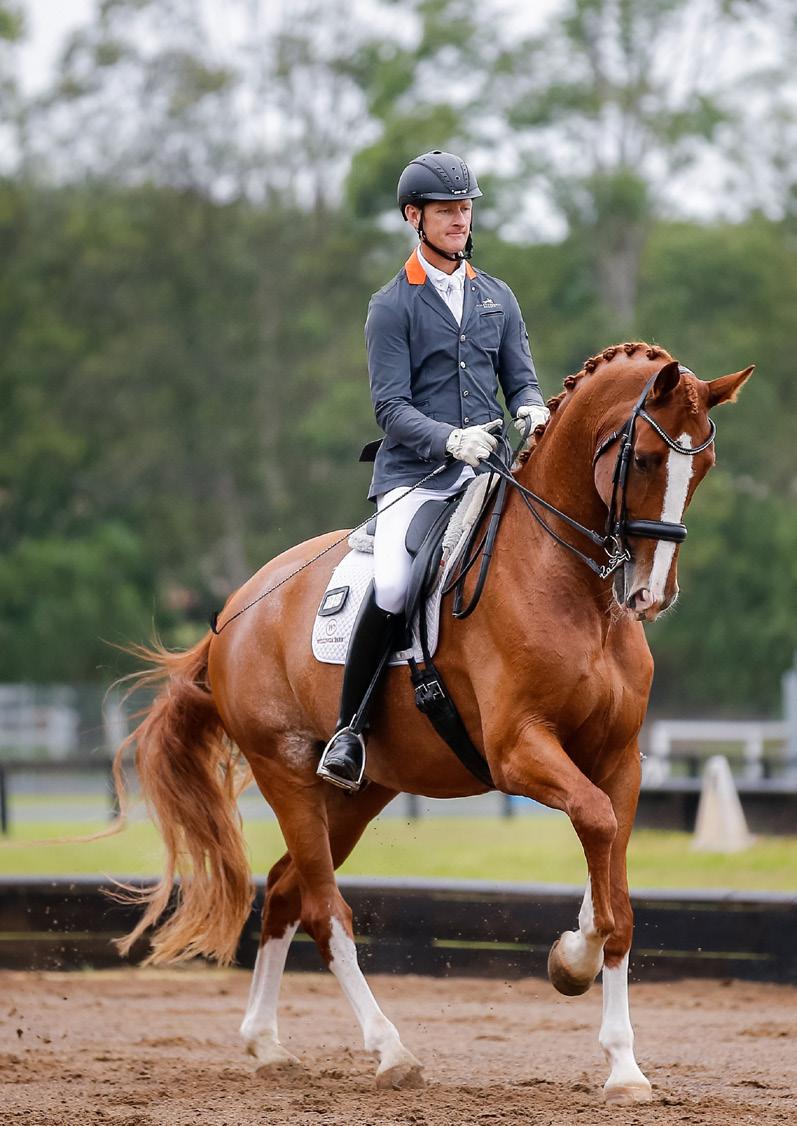
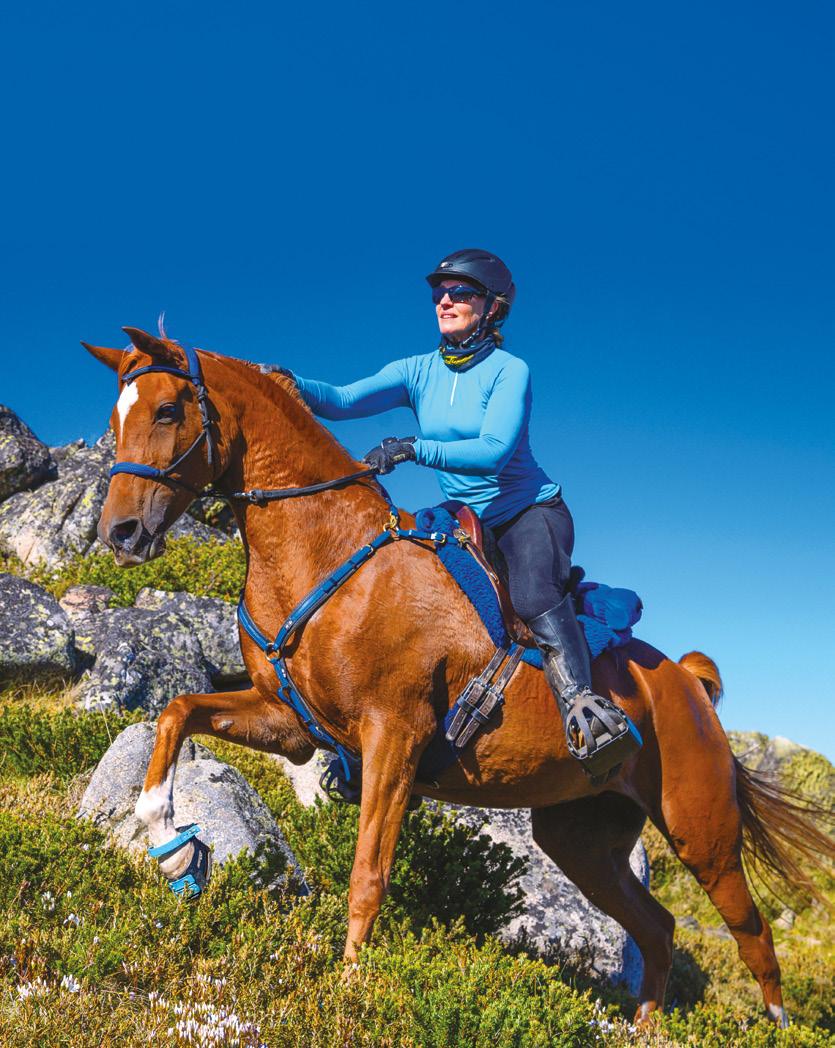
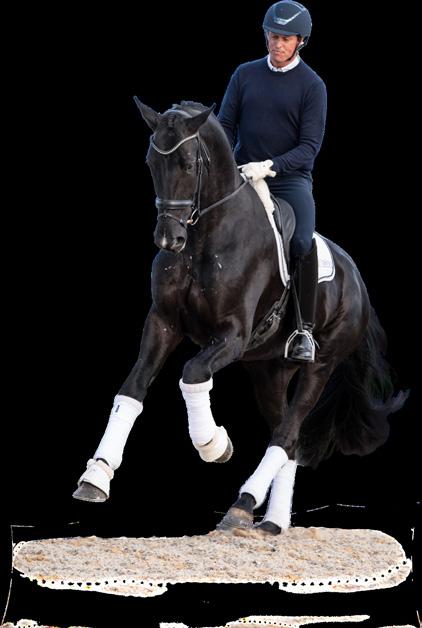
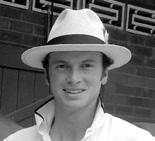
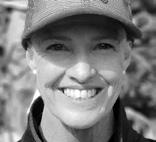
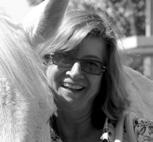
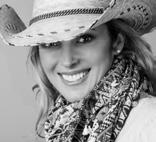
A Queensland-based journalist, Marisa has worked for national and international media organisations. She enjoys all things art, travel and photography, and in her spare time you’ll find her out hiking. Marisa caught up with multi-award-winning photographer Carol Hancock and spoke to her about her fascination with the wild Brumby.
Amanda Clifford
OUR CONTRIBUTORS
Amanda Mac
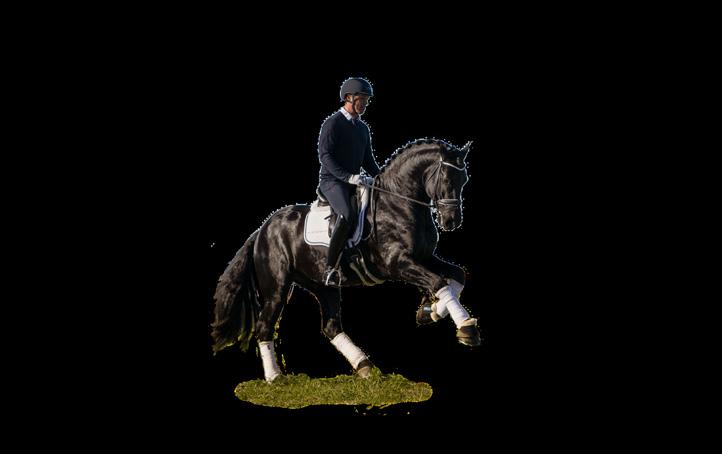
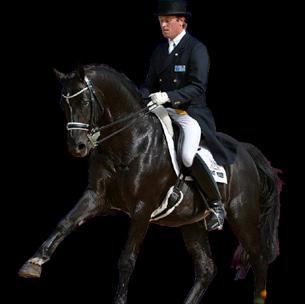
Amanda Mac has had two lifelong love affairs: one with horses, and the other with writing. Now she happily combines both passions as editor of HorseVibes. In this issue, she speaks to dressage great Brett Parbery about rollercoaster highs and lows, and what it takes to keep life on an even keel.
Anna Minogue
Anna is an equine dentist and qualified bit fitter who’s examined over 20,000 horses. An expert in the anatomy of the mouth, she has seen hundreds of horses with wounds caused by ill-fitting bits, and is passionate about educating riders and ensuring that horses are as happy and comfortable in their work as possible.
Aaron Hadlow
Winner of the 2019 Australian League FEI World Jumping Cup with his mare Vahlinvader, Aaron holds down a fulltime job on top of training a full stable of horses. With an efficient system for bringing his horses back to fitness after spelling, he generously shares his expert techniques with us in this issue.
A full-time Equestrian Australia accredited coach, Amanda has had a lifelong interest in education and the philosophies that underpin excellence in coaching. Firmly of the belief that training should be horse centred, she shares some tips that might change your understanding of horses and the way in which you ride them.
N.G. Quinlan aka ‘Q’
N.G. Quinlan, otherwise known as ‘Q’, is a writer, musician and poet. A resident of Northern New South Wales, he has been contributing to HorseVibes since August 2019. In our new Perfect Partners feature, he tells the tale of Olympic dream team Gillian Rolton and her beloved partner, Peppermint Grove.
Charlie Brister
Regular columnist
Charlie is an allround horseman whose expertise is in re-training problem horses, as well as coaching riders in the art of cross country, show jumping and dressage. Turn to Brister’s Brief for the first of his excellent three-part series on lunging – it’ll certainly get you thinking outside the circle!
Roly Owers
Roly qualified as a veterinary surgeon from Cambridge University in 1992 and worked with the Blue Cross and Royal Army Veterinary Corps before taking up his role as Chief Executive of World Horse Welfare. Roly is passionate about educating owners on correctly caring for their horses across the five domains of animal welfare.
OUR CONTRIBUTORS
Candida Baker
President of equine charity Equus Alliance, Candida returns with her popular Horse Listener column, this time to explore the complexities of the horse’s eye. Did you know that horses have nearly 360 degree vision yet can’t see a jump during and after take-off? Candida discusses these and other facts in her fascinating article.
Sonia Caeiro Alvarez
Christine Armishaw
Christine is a horse trainer, riding coach and passionate eventing and jumping rider. A Kiwi girl based in NSW, she teaches others not just how to ride, but how to read and understand their horse. Curious to know what makes a good Paralympic horse, Christine recently asked three equestrian Paralympians for their expert insights.
Jo McKinnon
A multi-award-winning horse racing and equestrian broadcaster and documentary maker, Jo is a former top-level show rider who has competed all over Australia. A racing commentator for many years, she writes our Life After Racing feature, this time talking to Caroline Price about ex-pat Aussie Amy Taylor’s OTT adoption program.
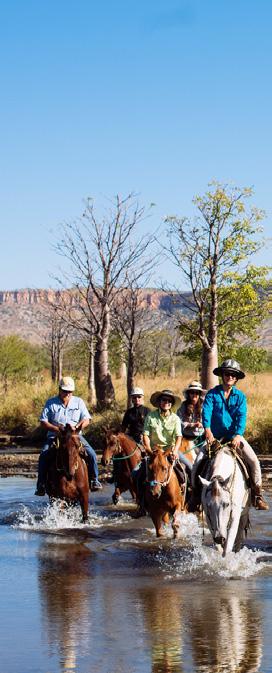
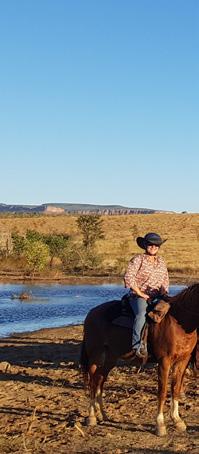
Sonia is a journalist, editor and writing workshop facilitator based in the Tweed Valley. She’s had a lifelong love affair with horses, although sadly does not own any so lives out her passion vicariously through her friends. In this issue, Sonia takes an armchair trip to the Kimberley for a virtual riding holiday.
Larissa Bilston
Larissa Bilston, BAgrSc (Hons I) is the Nutritionist for Farmalogic, where she developed Equine Vit&Min and the Farmalogic Equine range. Her extensive experience has been of inestimable value to trainers, riders and owners who understand the importance of good nutrition. In this issue she looks at regional challenges in feeding.
Francine Pullman
After a lengthy print media career, Francine is now a freelance writer and is enjoying her semiretirement, taking the opportunity to write about her personal passion: the horse. In this issue, she jumps into the wonderful world of Riding Ponies, and discovers a very big presence in some pretty little packages.
Ben Walder
While equine acupuncture may not be the first healing modality that springs to mind, it definitely shouldn’t be the last! A gifted therapist, Ben has witnessed some astounding results following acupuncture treatments. From humble paddock ponies to million-dollar racehorses, all have benefited from Ben’s skills.
Fiona Todd HorseVibes publisher Fiona Todd grew up on the North Coast of NSW on a dairy farm and developed a love for animals from a young age. HorseVibes was originally created as a way to promote saddles, but it has grown exponentially, and become a wonderful magazine in its own right.
DreamsDeliveringScholarship
The Delivering Dreams Scholarship is a HorseVibes initiative designed to help equestrians from a variety of disciplines achieve their dreams. We are dedicated to connecting with communities around Australia to ensure that our Scholarship recipients receive the help and inspiration they truly need to move to the next level.
Applications have now closed, and our recipient will be announced in the November/ December edition of HorseVibes
To find out more, or to apply for the next round, visit www.horsevibes.com.au/horesvibes-delivering-dreams-sholarship
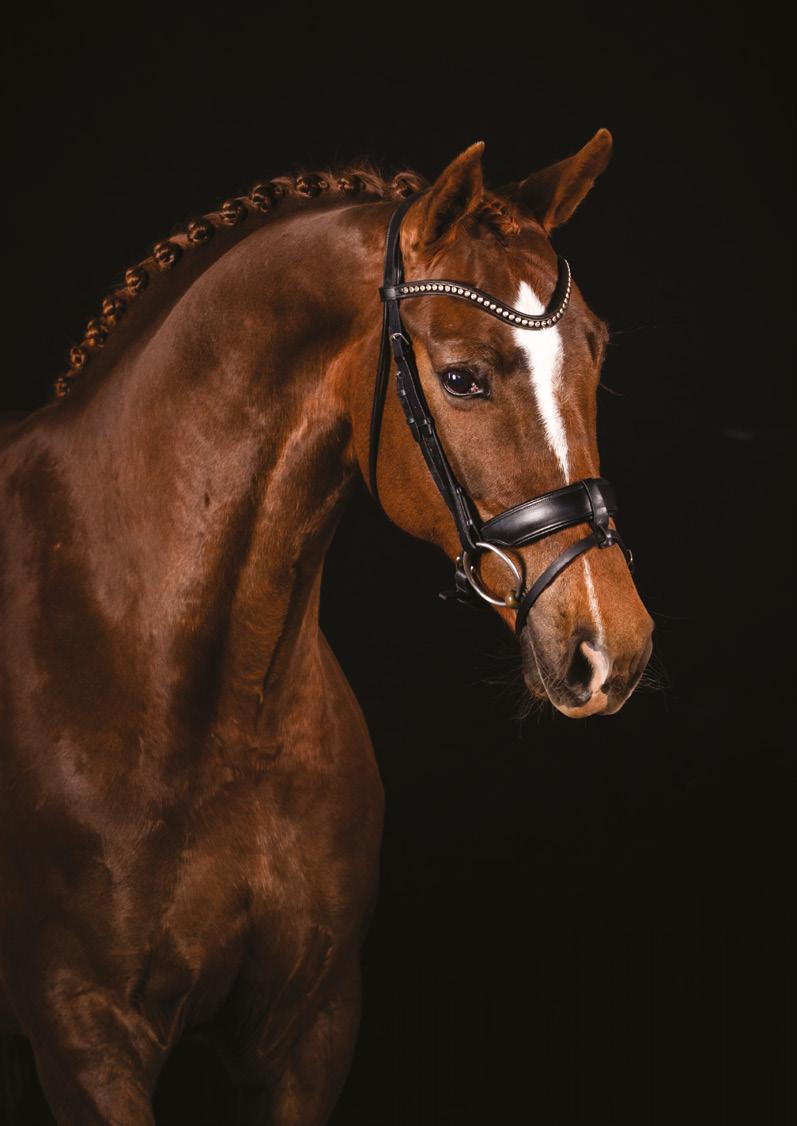
David Shoobridge’s Warmblood, Flame. Photo: Jessica Atkins, JA Studios.
PUBLISHER’S LETTER
From the Horse’s Mouth
With Fiona Todd
As the strangest year ever continues to roll along, the craziness in which we find ourselves means that one of my favourite celebrations will be a little different this time around. I always cherish the company of my very beautiful family, but Father’s Day is a special time and Dad and I usually enjoy raising the inevitable glass of bubbles together. This year we’ve been forced to do a long distance celebration. Trust me Dad, I would hug you if I could. Thank you for being you x.
The September/October issue is inspiring, to say the least. Congratulations to everyone who submitted an application for the Delivering Dreams Scholarship. The quality of applicants is very impressive and we’re currently shortlisting before handing the finalists over to our panel of judges. The lucky recipient will be named in our November/December issue.
Which brings me to the wonderful Spotlight, written by our editor Amanda Mac, on the life and times of champion dressage rider Brett Parbery. Talk about a never say never attitude! The highs and lows of his life have been jaw-dropping, yet he continues to approach it all with a sense of optimism and gratitude.
Resident columnist Charlie Brister looks at lunging, a training tool that’s often either poorly used or underutilised. As usual, Charlie brings no nonsense, simple techniques that will help you to move your horse’s training forward. And
stay tuned for details of The Right Rein, a super informative podcast hosted by Charlie. Launch date to be announced soon – and yes, we’re very, very excited!
Following on from the popular Brumby article in our last issue, Marisa Kuhlewein talks to Brumby photographer Carol Hancock in a fascinating Culture Corner. Carol’s passion for the Snowy Mountain Brumbies absolutely shines out of her stunning multi-award-winning work.
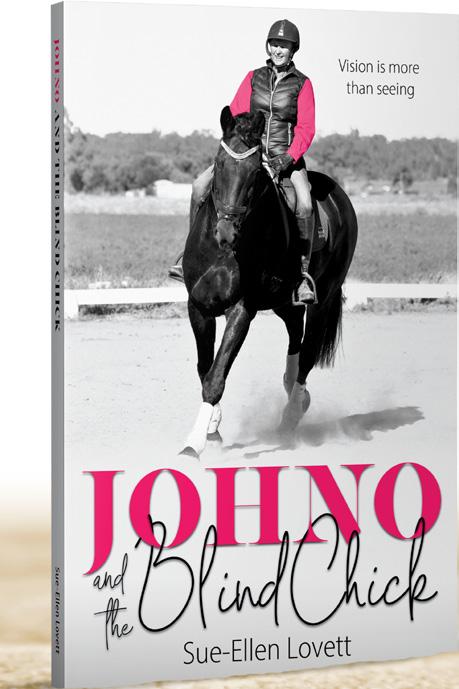
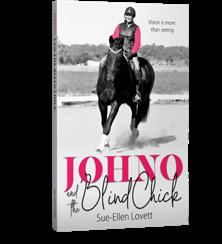
And if you’ve ever hunted high and low for a new horse and found it near impossible to find ‘The One’, then imagine being a Pararider with the difficulties they face and the enormous level of trust they have to place in their mount. This article brought tears to my eyes. The riders interviewed, Emma, Sue-Ellen and Katie are three of the most inspirational people I’ve ever met. Plus, we have some autographed copies of Sue-Ellen’s book Johno and the Blind
Chick to give away, so watch this space.
If you thought saddle fitting was important (and it certainly is), wait till you catch Anna Minogue’s take on bit fitting. She explains how vital it is to get it right, and warns of the potential for painful injuries if you don’t. Meanwhile, champion showjumper Aaron Hadlow found time in his crazily busy schedule to offer some sound advice on how to bring horses back to fitness after spelling or from injury. Patience seems always to be the answer!
On matters of travel - well, armchair travel anyway - Sonia Caeiro Alvarez whisks us off for a virtual riding holiday in WA’s glorious Kimberleys, while Roly Owers, Chief Executive of World Horse Welfare, climbs onto the Tackbox to have his say on the very broad concept of animal well-being.
Curious to know what acupuncture is? How it is helps? Equine acupuncturist Ben Walder reveals all. In Training Tips, Amanda Clifford brings us expert advice on horse-centred training, and our Horse Listener takes a fascinating look at how horses see.
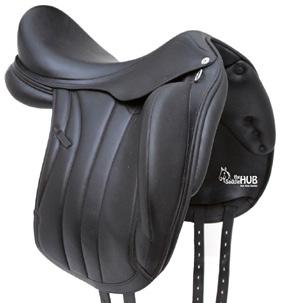
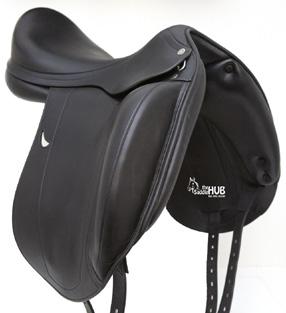
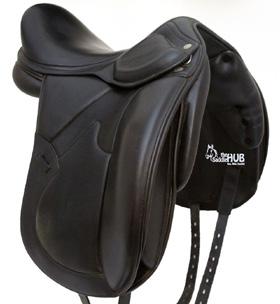
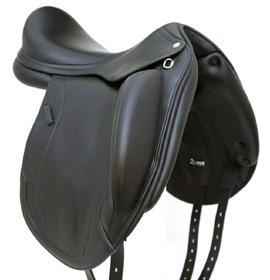
But of course, there’s more! We explore rugs, Riding Ponies and review the Bates Innova saddle. Jo McKinnon investigates a Hong Kong based OTT Thoroughbred retirement program, and Neil Quinlan’s Horses in History has now morphed into our new feature, Perfect Partners, launching in this issue with the amazing story of Gillian Rolton and Peppermint Grove.
And to close out the day, Charlie Brister asks Dan James 20 searching questions.
Phew! Pour your favourite tipple, sit back and enjoy, and remember to send your dad a cheers
Always fold the lead in your hand, never wrap it around your hand or your arm (an easy and potentially dangerous mistake to make).
BRISTER’S BRIEF
Lunging: It’s a circular question
Is lunging the magic cure-all? In Part One of this three-part feature, resident columnist CHARLIE BRISTER digs deep on the subject of circles.
Everyone has either ridden a horse or watched one being ridden and thought: “Whoops, should have lunged that camel!”
In its most basic form lunging can be an effective tool for dispersing excess energy, while more advanced lunging techniques can help the horse to improve transitions, build responsiveness and stretch the top line. BUT, be mindful that lunging is only one component of good groundwork – it’s not a short cut to the miles necessary for a calm school master.
Does lunging calm the horse down?
Lunging is no silver bullet. Quite often it’s the horse who lunges the poor rider who just gets dizzy, exasperated and bucked off anyway. If your pampered,
and possibly overfed pony is a little too animated, you may think that the best way to get rid of all that vibrant energy is to lunge them.
Mmm … let’s be a little more scientific. Let’s try to identify what might be causing your horse to behave like an energizer bunny inside a pinball machine.
Firstly, check their feed is properly balanced and appropriate for the work you’re doing. Unless the Melbourne Cup or an Olympic cross country course is on your horizon, lower the intensity of energy and protein - less pellets, more roughage. Hay is your friend. Get some expert advice (but not from the local grain merchant!).
Remembering that regular lunging for long periods will just make your horse fitter so that they can bounce around for longer, changing the diet could be a better long-term solution to bad behaviour!
The other thing to focus on is the horse’s consistency of tempo. Don’t start looking for the perfect frame ‘working over the back’ straight away – get the basics down first.
Lunging area and equipment
A great lunge yard is 20m across, but some are as small as 12m. If your horse is really fresh, a fenced yard is preferable so that you don’t get towed around the paddock. A dressage arena also works well. Use the extra space and move your circles up and down the arena while your horse is working on the lunge around you. This will show if they are drifting to the gate or if they are listening and following you.
Secondly, try to have a longer ride the day before the competition, and on the day, consider a short ride before loading up and heading out. This can really help with a young or a hot horse, although some horses just aren’t calm by nature.
Appropriate lunging can improve the horse
Make sure lunging is interesting and requires the horse to concentrate. This way you can work through excess energy while also improving your horse’s work.
While your horse is walking and trotting around the yard pay attention to the way their body moves. On which part of a circle do they drift in or out? Do they fall in on the left or the right rein? Most horses will have one side that’s a little more convex than the other, and lunging can really help the horse develop its straightness.
Lunging can incorporate different tools, including cavessons, side reins, Pessoa, flag, carrot stick … the list goes on. It’s easy to get confused about what’s best. Similar to other areas of riding it’s not the tool so much as how you use it, and a well-schooled horse might happily lunge at liberty.
Make sure you have thoroughly habituated/desensitised the horse so that it’s not afraid of the gear you are using – especially the long whips. Instead of being in flight mode, a horse should be calm when you enter the lunge area, which will minimise the likelihood of bad behaviour.
Go straight before upgrading to circle work
To focus on a horse’s tempo and line, make sure you can back the horse up and bring them forward off the halter pressure easily. If this is hard then chasing them around in a circle won’t be helpful.
Always give the horse a chance to respond to the lead pressure before using the whip. Let’s say your horse is remaining stationary looking at you with a puzzled expression wondering what’s going. Now you need to motivate
I’m sure he loves me: MT Henry Irish Spice, aka Spike A Saurus Rex, aka Spike, unashamedly smoodging.
This system is designed to position the horse’s head, but why not use good timing and technique instead!
Desensitising your horse to the gear you use will help them to be calmer when they enter the lunge area.
your horse with the tool. Start by a quiet wave of your wand. If the horse needs a little tap on the rump, aim for a smaller reaction in the beginning rather than sending them straight into a canter or gallop. Our objective is a calm, wellmannered walk to start.
Don’t be surprised if your horse does overreact a little. This is when it’s important to reinforce the stop button and limit any flighty behaviours like zooming around the yard. If the horse learns that small periods of wild conduct are acceptable, then your hope of a calm horse has just gone out the window.
Work calmly to get the adrenalin level down and gradually get the speed under control. A young horse that has just learnt to walk a calmly on the lunge deserves a scratch and a night out in the paddock. Perhaps tomorrow start on trot if your ‘walk to stop to walk’ is near perfect.
Remembering the basics
Remembering one of the basics of how horses learn - negative reinforcement (pressure followed by release) - is important before any training session. Positive reinforcement is also beneficial but let’s stick to one thing at a time.
Be careful using a lot of the lunging systems or side reins that aim to put the horse’s head in a particular position. This can lead to a poor stop response
from the bit when ridden. You just have to watch someone like Warwick Schiller or Manolo Mendez (check them out on YouTube) to realise that you don’t need fancy gear to get a horse using their back. When the horse does the right thing, we want to release or soften the pressure. If a horse stretches forward and down with side reins on, the pressure will increase – which is both counterintuitive and counterproductive.
Unfortunately, it might take more than ten minutes to develop a well-balanced horse that can move through all the gaits on the bit - but setting a rein length and expecting all the work to be done on that exact length is often not helpful for long term riding balance. Use this for particular issues, but not for all your lunge work.
Lunging may not be appropriate when rehabbing a horse from injury, so always take veterinary advice. Straight lines or turning at slow speeds are better in the beginning. That may mean a bit more walking your horse in hand, which is good to get the rider back to fitness too.
How to start your first circle
Stand in the middle of your lunge circle and imagine you are in the centre of a clock. Face towards the horse so that your first circle is to the left. The horse should be standing calmly a metre or two in front of you at the twelve o’clock point, and looking towards ten o’clock.
The lunge rein should be folded across your left hand, never wrapped around it. Now point your left hand towards ten o'clock with gentle pressure on the lead rope. Some instructors say to get behind the eye and drive the horse forward with a gentle whip touch. I believe it is better to reinforce the responsiveness to the halter pressure if possible. Then, if necessary, step behind the shoulder/eye to encourage the horse to step forward.
Don’t miss Part 2 of Lunging: It’s a circular question in our next issue.
Charlie Brister of Brister Equestrian is an all-round horseman based in western Sydney. His expertise is in re-training problem horses, as well as coaching riders in the art of cross country, show jumping and dressage.
After transitions, Spike is now relaxing and starting to use his back.
Spike starting out: looking to the outside, dropping his shoulder in, and with a hollow back.
The Right ReinCOMINGSOON!
Don’t miss it!
Joselyn Humphries and Paddy placed 3rd in the Medieval Skills at Arms at the 2019 National Capital Horse Show
(Image by Dana Russo Photography).
TOP LEFT: Pristine Image was ridden and led by Nicki Ward at the Waiau A & P Show where they won Supreme Led Exhibit (Image by Krystal Mack Saunders Photography).
TOP RIGHT: Natasha Adams and Strictly Money enjoying a fabulous day at the family property in Towrang NSW (Image by Melissa Goodson).
ABOVE: Debbie Thompson and Jessie James go up and over at the Strathalbyn Hunt Club Bald Hills run in Ashbourne (Image by Mark Bruggemann).
LEFT: Ready, aim, fire: Amelia Strivens and Showtime Lola at the Crystal Cascades Horse Park (Image by Edward Strivens).
MAIN: DP Weltmieser and Brett after their Equestrian NSW FEI GP Freestyle CDI3* win at the 2017 Sydney CDI (Image by Amy-Sue Alston Photography).
FACING PAGE: Brett and DP Weltmieser at the 2017 Willinga Park CDI (Image by Amy-Sue Alston Photography).
SPOTLIGHT
White knuckle ride
Dressage superstar Brett Parbery has ridden life’s rollercoaster with remarkable aplomb. But that’s really not such a surprise, because as AMANDA MAC discovered, he’s always up for a challenge.
MMost of us have experienced tragedies and triumphs in our lives: dark days followed by a turn of the cards that gifts us moments of sheer elation. And on occasion, you’ll meet someone who has not only mastered the skill of surviving the down times, but has also learned from them, and, as a consequence, savours life’s victories with deep appreciation.
Brett Parbery is one of those people, but then he’s had plenty of practice. Life hasn’t been stingy in handing him out both the highs and the lows: from tremendous successes on the international stage, to the death of much loved horses and a disastrous riding accident.
Brett grew up in Dorrigo, a small town on a picturesque plateau in northern New South Wales. His father trained horses for cattle sport, and between his father and mother, although not a rider herself, Brett learned to ride. “One of my earliest memories is of my mother leading me around in the cattle yards teaching me the basics. I started riding properly at five on a rather naughty pony. Then, like many boys, I fell in and out of love with riding as I grew up, but came back to it when I was around 13-years-old and from then on, that’s all I wanted to do.”
Variety lent plenty of spice to his riding life: some Pony Club, polocrosse, camp drafting, and then on to saddle bronc
riding. “That was for several reasons,” Brett explains, “my father did it and I’d grown up around rodeos and camp drafts. My sister was into showing, so we went to Royals and agricultural shows where I usually gravitated to the rodeo ring, it was a natural progression.”
But Brett, being competitive by nature, is certainly not one to do things by halves. “I took it fairly seriously,” he admits. So seriously that he rode saddle broncs while studying real estate property valuation at university, making the National Finals in Australia on several occasions, and winning the Australian Professional Rodeo Association’s NSW
Rookie Saddle Bronc Rider award in 1995. Then it was off to Canada and the US for a year to ride on the professional rodeo circuit, fulfilling a long held dream in the process.
But by the time Brett arrived back home in 1998, he needed a change of direction. “I’d done what I wanted to do and I started to wind the saddle bronc career down, while at the same time looking for something else to get into. I was actually quite keen to go cutting training, but a property valuer living in Sydney doesn’t get access to a lot of cattle! I looked at reining, show jumping and eventing but they didn’t quite do it for me. Then I started getting a few rides on dressage horses that were either young or a bit too scary for their owners.”
From bronc riding to dressage? That’s a fairly significant leap, surely – but when I dig deeper, I discover the chasm isn’t as wide as I’d thought. “Dad is a really good horseman and loved dressage. So there was great respect and fascination with the discipline as I was growing up. Because I come from a fairly diverse riding background I’d competed in a lot of riding and showing classes, so I had a reasonable position on a horse. Long story short, I started being drawn towards the discipline as a possible fit. I was quite liking the challenges it was bringing to me too.”
Mal Byrne Atelier Show
Ah, yes, that love of challenges – and I can’t resist asking what they were. “Well, it’s a sport of ongoing development,” Brett explains, “you just never feel that you’re ever getting there. There’s always something harder to do, and be better at. Every sport has a slight ceiling, but dressage has this constant progression attached to it and I really liked that. I liked the fact that I could continue to work hard and never really feel like I was getting the best out of myself.”
With that, fate kindly stepped in when Brett met dressage rider Vicky Brydon (now Lymbery) who not only lent him a horse, but also coached him. “That was really my start in dressage and without her help I don’t think I’d have gone on with it. It really was the break I needed, a key moment in my career. It was brilliant! I got the best of both worlds, a trained horse and a great coach.”
In 1999, after a year spent competing on the Australian circuit, Brett decided to go to Europe to progress his dressage riding. After a tough start, he eventually landed on his feet and in an interesting twist, became the flat work trainer for showjumper Bruce Goodin’s horses. It turned out to be the perfect job, allowing him to immerse himself in training horses
It really was the break I needed, a key moment in my career. It was brilliant!
in the basics: a soft and supple walk, trot and canter, with the ability to lengthen, collect or turn at any given moment.
But by 2002, it was time to go home. “I wanted to be close to my parents so I started a dressage stable in Tamworth, while at the same time working for a local property valuation firm. Although I really enjoyed my time there, after about eight months I felt that if I was going to make it happen I needed to return to Sydney where the action was with horses and riding. So I went back to the property job I’d held before going to Europe, and the valuation work supported my riding for the next four years.”
During that time, Brett met Melinda. The couple became engaged and, just before they married in 2007, bought a property in Penrose in the NSW’s Southern
Highlands. And that was the launch of an exciting trajectory. “We used the move from Sydney to Penrose to start my career as a full-time rider. Up until that time, I was holding down a property job in Sydney as well as managing a stable of 15 horses and three staff. So transitioning to Penrose and a full-time stable wasn’t that hard. The opportunity had also come up to qualify for the Beijing Olympics dressage team, and I put all my effort into that,” Brett says.
Unfortunately, that effort came to an unexpected halt with the outbreak of Equine Influenza. “It shut the Australian horse world down, and it shut us down for eight months. I had to go back to a property job as well as running the horses. But when we came out of it in early 2008, I was back into horses fulltime again.”
And partnered by Victory Salute (Sam), then owned by Carolyn Lieutenant, that included taking another tilt at Olympic qualification. “I took Sam to Europe in March 2008, and was there from March to August. We tried to make the Games but it wasn’t to be. I ended up as a nontravelling reserve and we came home at the end of that year.”
Disappointed but far from done, Brett rose phoenix-like to dominate the 2009 Australian dressage season. “Sam and I went through undefeated and then we returned to Europe to compete in the 2010 FEI World Cup dressage final in the Netherlands, where we placed in the top 10. At that time I still had the stable back at home and Mel was pregnant. We had great staff who looked after the stable and helped Mel, but it was really tough. It’s certainly hardest on the one left at home. While I’m overseas living this exciting dream of riding and competing in Europe, Mel’s at home pregnant, trying to keep everything together. These things are never easy but thankfully Mel is the most fantastic support,” he says, and you can hear the very genuine appreciation in his voice.
Still in Europe and training hard with top dressage rider Edward Gal, Brett flew home for the birth of the couple’s son, but after two weeks had to return to Europe
With Lord of Loxley at the 2012 CDI in Vidauban, France (Image by Rui Pedro Godinho).
to compete. “I did Rotterdam, Arken, Hickstead and then rode in the World Equestrian Games for Australia at the end of 2010. That was probably the best year I’d ever had. I was 10th in the World Cup final, 3rd in Rotterdam, 7th in Arken, 9th in the world in the Grand Prix Special and Freestyle, and I won the Grand Prix Special at Hickstead.”
Brett pauses thoughtfully, and then adds: “I think that’s something which won’t be done again by an Australian for quite a while. The way the sport’s going in general, and the way things are in Australia, I believe it will be a long, long time before that’s matched. I’m not saying I’m at all happy about that, I’m not. But that’s just the state of play - and it’s unfortunate.”
After returning to Australia at the end of 2010, Brett felt ready to go back and do it all again. But then tragedy struck. “Sam died in 2011 and that was a very, very sad time. We were all keen to get back for the London Olympics and to try to be in the world top 10 again, and I do believe it could have been achieved. Sam was a great dressage horse and his loss left a giant hole in our hearts.”
But life goes on and Brett eventually
found himself back in Europe trying to qualify another horse, Lord of Loxley, for the 2012 London Olympics. Unfortunately the lead time wasn’t enough and they fell short.
However, his trip to Europe was far from wasted. “The Australian eventing team was preparing in England, so when I didn’t make the Games, I began coaching them in dressage – and that was just a great time. I loved working with the eventers. Sport at a high level is one of my passions and I really thrive in that environment. After the dressage phase at the London Olympics we were leading, but unfortunately the team didn’t have the best cross country, and that put them out of the picture. It was such a shame.”
Another turn of the wheel and Brett again recognised it was time for a new chapter. Back home in Penrose, he was running clinics and working on building his stable when Mulawa Arabian Stud’s Greg and Julie Farrell called. They wanted Brett to ride for them. “That was a real life line for me. I was with them for five years and thoroughly enjoyed every moment. My job was to help them build their stable, train their horses, and train their daughter Kate. They are such a beautiful family and
such supporters of horses in general and especially dressage.”
And it was certainly a good time for Brett’s dressage career. “I won a lot of Australian championships with them and at the same time I had horses in training back at home including DP Weltmieser, PPH Zepplin and Good as Gold. I was lucky enough to qualify Weltmieser for the 2016 Rio Olympics. We would have been on that team but he had a lameness that I just couldn’t get right, so we made the call to take him out of the selection.”
Despite the disappointment of missing yet another Olympics, the following year was a good one for Brett. Between the Mulawa stable and his own, he had four Grand Prix horses: “I had to make a choice as to who went to which show – it was just crazy,” he laughs.
Brett tells me that spending yet more time apart from his wife and son was the hardest part of his work at Mulawa. “I was just yearning to have my family under one roof, all of us in one place and running a horse business from one property. And then the opportunity came up to join Terry Snow at Willinga Park. The thought was that I would try to locate Mel, our son, and our team of Parbery
horses at Willinga. We decided we’d give it a 12 month trial run. Mel would stay at Penrose and I would go down to Willinga to try and set things up. That meant I had to make the horrible decision to leave Mulawa, which I didn’t take lightly.”
But by the end of the trial, the couple had come to the conclusion that although Willinga wasn’t the right choice for them as a family, Brett should continue to work with Terry.
Then in 2018, Brett took Weltmieser to the World Equestrian Games at Tryon in the US, but once again, the road wasn’t easy. “We had had a disastrous preparation with Weltmieser almost dying in February of that year. How he survived I’ll never know, but he ended up coming good just before the second last selection event, which he won after only a few days training. I started to work him back in very gently and after the final selection event we’d made the team. So I took him to Kentucky and based myself there with Dan James of the Double Dans. We came 32nd at Tryon, just one horse away from the Grand Prix Special. I had an exceptional bond with Weltmieser, and I would have loved for him to have made that Special.”
It was after Tryon that Weltmieser was sold to an American family and so remained in the States, bringing to a close an exceptional partnership. “Getting as far as I did with him wouldn’t have been possible without the ongoing support, financially and otherwise, of his breeders and owners, Susie Duddy, and Brian and Barbara Marheine,” Brett recalls. “We had some great times together and it was wonderful to share his career with them. I was sad to close that chapter with such a great family, who have long been supporters of the sport in Australia.”
After leaving the US, Brett travelled to Europe to buy three horses for Terry Snow, who was keen to make a serious play for the 2020 Tokyo Olympics. One of those horses, Theodore, looms large in Brett’s memory. “He was one of the best I’ve ever ridden, we just clicked,” he says. But tragedy never seemed far away, and in July 2019, Theodore died of cancer.
MAIN: Aboard Victory Salute at the 2010 World Equestrian Games (Image by Tomas Holcbecher).
FACING PAGE: Brett and Mel at home in Penrose with PPH Zepplin and Good as Gold (Image by Magnus Agren Photography).
PROUD SUPPORTERS OF THE DELIVERING DREAMS SCHOLARSHIP
Another great horse gone, another Olympic dream shattered.
But 2019 wasn’t quite finished with Brett. “After Theodore’s death we pushed on and then in October I came off a young horse that we’d just bought. I broke my leg pretty badly, a fracture in the ball of my femur, and had to be operated on. That surgery had me sitting around at home for a couple of months with time to reassess and recalibrate. I was 48 and my son was by that time nine, and I wanted to make it more about him. So with my family in the Highlands and Terry two hours away, and with the run we’d had, I made the hard decision to leave Willinga. Terry’s a fabulous man with a passion to support riders towards their dream of making the Olympics and the World Games, so parting didn’t come easily.”
And one awful final blow was still to come that year. In November news arrived of the sudden and unexpected death of their beloved Weltmieser.
The Parbery family were heartbroken.
After the devastation of 2019, the only option was to battle on. “So with a broken leg I set about rebuilding my stable, while at the same time re-credentialing myself as a property valuer. Then of course we had the bush fires in our area, and now we have COVID which has made things a bit slow. But in saying that, I have a horse of Terry Snow’s in training, as well as one of Glenn Fryer’s horses, and we have our Parbery Program.”
It quickly becomes clear that the Parbery Program, launched around 18 months ago, has become one of Brett’s great passions – and with good reason. “It’s all about extending help and support to people who don’t otherwise get it and we do that by way of a syllabus that gives structure. One of the things I find that riders lack the most is structure and consistency in their training, and one of things a horse needs most is consistency.”
The online program consists of six modules based around Brett’s own training structure, breaking it down into a simple framework with achievable and measurable outcomes. “It’s designed so people can engage, benefit from the online learning, and then go back to their coach to improve even more. I can’t tell you how excited I am watching people benefit from the training, and there hasn’t been one single bit of negative feedback from any of the nearly 300 people who have gone through the program,” he says.
Running alongside the modules is an online community that Brett is intensely proud of. “We don’t accept negativity, we don’t accept jealousy. Constructive criticism? Sure, bring it on. But we only want people involved who are interested in helping those around them improve, while improving themselves.”
Despite fate dealing him some truly awful cards, I notice that in this moment, Brett seems not only to be enjoying life, but is also full of gratitude. “Yeah, I’m loving it, absolutely loving it. That’s what it’s about, just loving life and being thankful for the fact that I’ve got options, opportunities, and I’m surrounded by incredibly good people. I feel lucky, really lucky, and I really appreciate all the great people who’ve contributed to making my career what it has been.”
I wonder whether he has longer term goals in mind – but as soon as I ask, I realise it’s a silly question! “I really want to get back to being a world class rider. I’m driven and I’m driving my wife mad with it too,” he laughs. “Even though my leg is still giving me grief, I do feel that I’ll be able to get back to that level. I’m working on finding the mindset that goes with being a world class rider. I’ve had it before, and I’ll find it again.”
Then comes a gem of hard-earned Parbery wisdom: “I’ve learned in life that while the good times are great, the sad times are every bit as important for your development, both as a person and as a rider.”
And you simply can’t argue with that.
Riding PPH Zeppelin in New Zealand in 2015 at Riding with the Stars (Image by Libby Law Photography).
All images by awardwinning photographer Carol Hancock
In the wild
With a longstanding fascination for the wild horses of the Snowy Mountains, Carol Hancock has turned her attraction to them into stunning works of art, writes MARISA KUHLEWEIN.
Few people have the opportunity to see a domesticated mare give birth, and fewer still would even dream of seeing a wild horse give birth. But for awardwinning Brumby photographer Carol Hancock, special moments like this are a regular occurrence.
With her trusty pair of binoculars, she heads to the hills of the Snowy Mountains in Kosciuszko National Park almost daily to photograph the Brumbies roaming the area.
“The feeling is a huge sense of awe and admiration for these creatures. They have this strong sense of self awareness
MAIN: Grace hopes to encourage Mumma to get up so she can have a drink.
(see facing page).
and charisma. The way they puff themselves up and the way they carry themselves is just incredible,” Carol says. “Brumbies are conditioned to live in their own environment, they’re not conditioned to live in ours. Domestic horses ask us questions every day, and normally we have the answers for them. Whereas Brumbies ask each other the questions and they have the answers themselves. They know who they are –that’s the big difference.”
In her early days of photographing Brumbies, Carol would spend hours following every piece of wet manure or hoof print she found, hoping for
a sighting. But things are different now. “After eight years of consistently spending time in the mountains, I’ve become familiar with their patterns, so it’s much easier for me to spot a mob nowadays,” she explains.
Carol’s passion for Brumbies began as a child on a school horse riding camp in the Snowy Mountains. It was there that she first laid eyes on these wild horses, but it wasn’t until many years later that she began photographing them. After studying photography in Queensland and spending some time living and working there, she returned to her roots in Adaminaby, a small town near the
Paleface stamps his seal of authority over the little stallion known as Pocket Rocket in Kosciuszko National Park.
BELOW: A glorious Brumby stallion standing tall and strong in Bago Forest.
Snowy Mountains, and that’s when her interest in Brumbies was rekindled.
Carol’s gift lies in revealing the personalities of the Brumbies she photographs and capturing the vast and beautiful landscape of Kosciuszko National Park. From the intense gaze of the stallions to the subtler wisdom of the mares, each photograph invites the viewer into intimate moments, to commune with these magnificent creatures. In their eyes we are reminded of the fragility of life, and the strength needed to overcome adversity. “Having the joy of seeing and sharing their daily lives is an amazing feeling,” Carol says. And there have been so many special moments over the years, including witnessing the birth of Snowy Mountain Brumbies, an experience that will stay with Carol forever.
One particularly memorable moment occurred one year after winter had set in. The mountain face was covered by a heavy, white blanket, and pale fog swirled above, chilling Carol to the bone. The sky had none of the light that noontime should usually have, so thick was the fog. Knowing she would only
get lost if she tried navigating her way through the storm, she decided to wait it out.
Carol had been following a pregnant mare, Mrs Yan, since she had begun bagging up and was checking on her twice daily as she knew the birth
could happen at any time. As the fog gradually lifted, Carol caught a glimpse of some movement in the trees. It was the silhouette of a Brumby mob in the distance, and there was Mrs Yan, sheltering in the trees slightly away from the others. The trees stood ghostlike, silent observers of the miracle
P r o u d S u p p o r t e r o f t h e
D E L I V E R I N G D R E A M S
S C H O L A R S H I P
that had just happened. A wave of euphoria washed over Carol. Here she was, in the middle of a snowstorm, and witness to a tiny fillies very first steps. As she snapped some photos of the freshly born foal, she realised she was disengaging from the moment and put away her camera. “Is it about the photograph, or is it about the experience? For me, being so close to that particular mob, it was about the experience. So I wasn’t chasing the perfect quality photograph that time,” Carol reflects.
When they think of Brumbies, many people have romantic visions of wild horses galloping freely down a mountainside with long manes and tails flowing behind them. Unfortunately, the reality of life for many of these horses is competition between mobs during times of drought, and death due to injury, disease, snakebites or environmental crises such as the recent bushfires, which swept through many parts of Australia. There are also claims that Brumbies cause damage to National Parks and that their numbers are too high: “I’m pro-management and proBrumbies. If the numbers get too high, they become unhealthy, because they’re fighting for their territories. They’re fighting constantly with each other and for resources,” Carol explains.
‘Blizzard’ won 2nd place in the 2018 Australian Photography Awards, as well as the People’s Choice Award in the same year.
“But do I agree with the current plans? I am comfortable with passive trappings, but I am not comfortable with anything that is not transparent, nor am I comfortable with the shootings. There needs to be a tracking and identification system so there’s a way that we can monitor the herds, where they go and where they end up. I would absolutely love for everyone to come together and figure out a plan that works for everybody.”
Over the years, Carol has observed many Brumbies and has come to realise that our knowledge and understanding of them isn’t great. So, not only is she passionate about photographing them, she’s also passionate to learn more about them: “Why don’t we study the Brumbies? Why don’t we bring them in,
TOP: Rising from the flames: Two bachelors sparring within days of the fire that swept through Kosciuszko National Park.
RIGHT: These Brumby youngsters are as interested in Carol and she is in them.
tag them and then send them out,” she asks. “Let’s have a really good look at these herds and learn more.”
In her pursuit of understanding, Carol has teamed up with two Snowy Mountain locals, a land owner and an experienced horsewoman, and together they’ve been granted an application to bring five Brumbies down from one of the Snowy Mountains trap sites. Carol will spend time documenting, photographing, and blogging about the horses “from the minute they come in, to the minute they go to their new home,” she explains.
In what will be an immersive storytelling and photography journey, Carol is hoping to create awareness around the Brumbies. “That’s what we need. People think that Brumbies are inbred and certainly, as any horse breeder knows, some matchings and matings don’t work – that’s the way it is. In some areas, the Brumbies are definitely lighter in the body than in others. In the Kiandra area especially, they’re very robust and kind to the eye. I believe training them and raising awareness is something that they can only benefit from.”
When looking through Carol’s vast
A lot of people don’t perceive it as true photography. My question is, what is photography?
Photography is a platform for art, it’s the platform of your mind’s eye. So to me, it is true photography.
collection of Brumby photographs it’s difficult to believe that anyone could find these majestic horses to be anything less than beautiful. Each photo uncovers a new dimension to these wild creatures and brings into focus their strength and grace.
“When I go out and photograph, I’m not choosing what’s in front of me – these horses are roaming in thousands and thousands of acres and I’m not choosing.
They are not handpicked – they are what I find on that day and as such they’re a good example of the quality of horse out there. So if we can create an awareness of their potential, then maybe it will be easier, more feasible, to rehome them,” she says.
Carol finds photographing Brumbies endlessly interesting - as are some people’s reactions to her area of expertise! “It’s not that people don’t take you seriously, it’s that they ask you questions like, why are you photographing a feral animal,” she laughs. “A lot of people don’t perceive it as true photography. My question is, what is photography? Photography is a platform for art, it’s the platform of your mind’s eye. So to me, it is true photography. Although I’m portrait trained, this is what I want to do, and this is what makes me happy.”
Indeed, Carol brings immense vision and artistic grace to her work by expressing her passion for the wild horses of the Snowy Mountains, and by introducing them to us – face to face.
You can see more of Carol’s stunning work at www.carolhancock.com.au
A bit of a problem
During her 10 years as a fully qualified equine dentist, ANNA MINOGUE had seen numerous bit related injuries. Determined to do what she could to remedy the problem, she decided to become a bit fitter.
Are you becoming concerned by the way your horse grabs or chews on the bit? Or perhaps they’re tilting or tossing their head, an annoying habit that you can’t seem to remedy. And why is it that they appear unwilling to accept proper contact with the bit? All these issues can be frustrating, and more than a little puzzling - but the answer might just come straight from the horse’s mouth!
During her career as an equine dentist, Anna Minogue has seen over 20,000 horses’ mouths, and, as you might imagine, is more than familiar with the anatomy of the mouth and its relationship to bitting. Sadly, she has also seen hundreds of horses with wounds caused by ill-fitting bits, which is what launched her on her trajectory
as a bit fitter. A veterinary nurse in a previous life, she’s the first Australian to study with the prestigious International College for Professional Bit Fitting Consultants in the Netherlands, and has also trained with Horse Bit Fit UK, Bombers Bits, and The Academy by Neue Schule, as well as attending a Society of Master Saddlers bridle fitting workshop. Unlike many bit fitters, Anna doesn’t work for a bit company, nor is she a bit retailer. She prefers an unbiased approach to ensuring that horses are as happy and comfortable in their work as possible, and is committed to matching each horse with the right bit, no matter what the brand.
In the course of her career, Anna has discovered what she calls a “huge disconnect” when it comes to the
correct fitting of bits. “Much of the knowledge out there is out-dated and often incorrect – it’s what I was taught at Pony Club 30 years ago. There are now many more bits and much more science based research than there once was, and I think that as owners, we need to keep up with that. The physical consequence of the knowledge vacuum is that mouth wounds are really common. Then you’ve got the training issues stemming from that, because often times riders don’t look inside the mouth and don’t know that there’s a wound. They continue to ride the horse, the horse is completely over being in pain and then you get a raft of bad behaviours stemming from that problem: everything from bolting to rearing - lots of unwanted and unnecessary habits.”
However, whether a horse reacts to a mouth wound depends very much on its temperament. “There’re horses being ridden with badly fitted saddles that never complain. But there’re also horses that are a little like the princess and the pea! It can be a very small something that’s off and it throws the horse into a state of not being able to think about anything else other than the pain. The same goes with bits, and it’s our responsibility to get to the bottom of these problems. So yes, you can have horses with some pretty hideous mouth wounds and you wouldn’t know they were there. The horse isn’t showing any signs of negative behaviour under saddle, but you open the mouth and they’ve got awful wounds. In the case of a horse who is reacting to pain, you fix the wounds and the bit, and the bad behaviours disappear. The owner is amazed at what a good horse they suddenly have!” Anna laughs.
Of great concern to Anna is that damage from a poorly fitting bit can sometimes be permanent. “Things like bone spurs on the bars are not uncommon. If you feel the two bones that form the bottom jaw, they’re quite sharp between the incisors and the first canine tooth and
of cloth or rubber, which is passed through the mouth and tied below the chin. “Any permanent strangulation of the tissue can cause it to die – and I’ve seen some pretty badly affected tongues,” Anna says.
In Anna’s opinion, every horse owner should check their horse’s mouth for signs of abrasions and wounds. However, when it comes to determining whether your horse has an anomaly that should be accommodated when
fitting a bit, things become a little trickier. “People often tell me that their horse has, for example, a really low palate. Yet when I have a look, the palate is perfectly normal. But I’ve seen numerous mouths in my career and can easily determine what’s normal and what isn’t, whereas for someone feeling their horse’s mouth for the first time it’s very difficult to ascertain whether there’s an issue or not,” she explains.
And that’s where the services of a professional bit fitter are invaluable. “People are spending thousands of dollars on bits because someone on social media suggested a certain bit, and then they find it’s not right for their horse so they go and buy another, and another. A lot of the people I see have a bit collection that rivals my bit fitting kit, and still they can’t find anything to
But if you loosen the rein, the horse runs away. To me, that’s not true collection and no bit will fix that very common problem. That’s a fundamental training issue.
work on the horse. So I start by looking at the horse’s anatomy, the rider, the horse’s attitude and level of education, and come up with different options from there. It’s never easy. If you only think
your horse has wide bars and someone suggests a particular bit, it’s usually not going to work out,” says Anna.
So how do you know if your horse needs a bit fitting? “When a potential client calls me, I always ask if their horse has an understanding of what the bit does. Does the horse understand that loosening off the reins doesn’t mean go faster? Can your horse walk, trot and canter on a long rein? Do they understand that they shouldn’t run away from, or run into the rein? These are all training issues. You see a lot of horses that are held in a frame and their rider thinks they’re on the bit, there’s correct contact, and they're properly collected. But if you loosen the rein, the horse runs away. To me, that’s not true collection and no bit will fix that very common problem. That’s a fundamental training issue,” she explains.
While Anna says that she could put a stronger bit on a horse to stop them running, it’s not ethical to do so. “The same thing will happen with the stronger bit but the horse is in more pain. The horse needs a thorough understanding of the aids. It’s not fair to inflict yet more pain and the horse still doesn’t understand what it is you want. So they need to go back to flatwork, back to the very basics. If, on the other hand, people have tried a lot of bits and they know that the training is good and that the horse understands what the bit means – then yes, a bit fitting is often an appropriate next step.”
In broad terms, Anna believes most horses prefer a double jointed mouthpiece over a single joint, while many horses like a 'lozenge' centre rather than the flat centre piece typical of a double jointed French link bit. Some fussier horses sometimes prefer a straighter Mullen style bit, while others may prefer rubber over metal.
When it comes to shape, Anna suggests that you hold the bit by the rings, and opt for one that creates a ‘U’ shape
Peter Horobin
Dire consequences
Ill-fitting bits can cause some truly horrible wounds, as these images, captured by Anna during the course of her work, clearly demonstrate:
Injury to upper lip and lip commissure
This injury to the upper lip and lip commissure (the corner of the mouth) was caused by a bit that was too large and too thick. The bit sliding from side to side has caused friction burns.
Pinch wound
A pinch wound caused by a jointed bit that was too large. The sliding of the bit has caused the joints to grab the lip tissue and pinch it, causing blood blisters. This is the most common bitting wound that Anna sees.
Damage to the tongue and bars
This is the result of a ported hard plastic bit that was fitted too low and wide. The bit also had some hard plastic shards from being chewed. The movement of the bit has caused the horse to move their tongue away in discomfort and as a result, the bars have become severely damaged by the sideways, forward and backward slide of the bit, as well as the plastic shards rubbing on the delicate mucous membrane tissue.
rather than one that’s ‘V’ shaped. “A curved bit is anatomically more comfortable than a bit with straight canons, which often don’t encourage contact. And when considering bit thickness, measure the diameter of the canons closest to the rings. Horses vary in what they prefer but 12-14mm is a good middle option, while most horses will not be comfortable in anything thicker than 16mm.”
Of all the bits that are available, there are some that Anna prefers to avoid: “I don’t like using hard plastic bits, I find them quite problematic. If the horse chews on them, it can create really nasty rough ridges that will rub on the lip and the mouth and give quite bad wounds. If you’re using that type of bit, check it regularly and sandpaper any ridges or jags down. If the bit is a softer plastic
it’s not such as problem because it doesn’t create the rough ridges that do damage. So be very wary of any bit that’s made from material that could mark and cause damage to the mouth –they’re definitely the ones you have to be very careful with.”
And some final words of advice from Anna: “Check your bit regularly for any rough edges and if it’s a loose ring, make sure the rings are sliding smoothly – those are good points to check when buying a bit too. And please, clean your bits after every ride. Caked on dirt and saliva can also cause wounds.”
For more information on Anna’s services, visit www.thebitfitter.com, drop by her Facebook page, or call her on 0407 689 155.
A bit with a curve is more comfortable for your horse.
Statford Neo
At just 6 years of age Statford Neo took out the prestigious Adelaide International 2*, just as his sire, Statford Novalis had before him. Now his own progeny are stepping up with his talented son Kings Basil Brush putting himself on notice as a serious eventing horse.
Neo has been ACE eventing Horse Of The Year on 3 occasions. His full sister Statford Nuance just starting out winning the 2016 Camden Equestriad with her junior rider. Neo’s temperament, trainability and talent will ensure his future as a producer of high level event horses.
Neo is 17.1hh, and has been retired due to a paddock injury. His progeny can be viewed upon request. $1600 with LFG. Chilled and natural cover.
Para horses need pizazz
When you think about it, a good Paralympic dressage horse must have something a little special in their make-up. But what is it?
CHRISTINE
ARMISHAW investigates.
Agood horse must have pizazz. That’s what Paralympian Emma Booth tells me. But finding the perfect horse is no mean feat, especially when it’s a Para-horse. People always tell you never to buy the first horse you see, but perhaps if you know precisely what you are looking for, that’s exactly what you should do. Or, perhaps if you can’t actually see the horse, then that advice doesn’t count at all.
For example, blind dressage rider SueEllen Lovett simply knew she’d met her match when she found her dream horse, Johno. With the help of her mother-in-
law, the born-in-the-saddle Paralympian spent four months trawling through horse ads online. “I went through hundreds of ads that my phone read aloud to me. I would pick out the ones that sounded good, then my mother-inlaw helped by looking at the endless photos and videos. We must have gone through over 70 horses,” says Sue-Ellen. When they came across Johno, they drove six hours south from Dubbo to see him, close to where her trainer, Jose Mendez, is based on the Southern Tablelands of NSW.
Johno was one horse in a stable of 150, but Sue-Ellen wasn’t interested
in any of the others. She was left to her own devices while she took him for a test ride, but Johno was flawless. “Everyone else just stood around talking, they didn’t even tell me if there was anything for the horse to spook at or to crash into! We were on our own,” Sue-Ellen says with a laugh. “He was the first horse I tried. I rode him for 25 minutes and something just clicked, something magic happened.”
Sue-Ellen couldn’t afford Johno and was trying to think of every possible way to make it happen. It turned out that her husband, Matthew, could see the spark that had ignited between the pair, and was busy phoning the horse’s owner while giving thumbs-up signals to his mother (none of which Sue-Ellen was aware of), all the while leading Sue-Ellen to believe that purchasing Johno just wasn’t possible.
Then the impossible happened. “He bought him for me! Matthew bought Johno to look after me,” an emotional Sue-Ellen tells me through happy tears, “no-one has ever done anything like that for me before.”
Katie Umback, who has multiple sclerosis (MS), had a hunt on her hands too, when her 2016 Rio Paralympic partner Gronskovlunds Marquis retired. After a solid six months of looking, Katie ultimately found a larger version of Marquis in the form of Ambathalia Cellini (Benny), who was located at the opposite end of the country. “I’m based at the bottom of NSW and Benny was in Far North Queensland,” Katie tells me. “He was still with Lesleigh Kruse who’d bred him. He’d been with her on the same property his whole life.”
Benny took a three-day truck trip down to his new home with Katie. When he arrived he didn’t even know what grass was. He’d been on red sand for most of his life and suddenly found himself in lush, Victorian pasture. “It took him a while to realise the stuff he was standing in was food,”
MAIN: It’s always good to take time out for a chat - Emma, Zidane and a canine friend (Image courtesy Emma Booth).
FACING PAGE: Katie and Ambathalia Cellini getting ready for the qualifying event for 2020 Tokyo Olympics (Image courtesy Katie Umback).
says Katie, “now, he loves grass!”
But fellow Paralympian, Emma Booth, has to take the horse-hunt cake. An exhaustive 12 month search sent Emma to nearly every state in Australia and across the globe twice to the Netherlands and Germany.
The paraplegic rider was looking for a partner for the 2016 Rio Paralympics. She sat on and tried over 50 horses, along with countless others that she viewed online. “With just three weeks left until the second Rio qualifying event, it looked like we weren’t going to have a horse and Rio wasn’t going to happen,” says Emma.
But then the tables turned. With the help of her trainer, Lone Joergens, Emma found Mogelzangs Zidane, only 25 minutes down the road from her home!
The pay-offs began just three weeks later, when she and Zidane won their first competition at Boneo Park. “It was the second qualifying event for Rio,” recounts Emma. “We broke the record for the highest FEI freestyle dressage score of any Australian rider, including both Para and able-bodied riders, with a score of 79 per cent. After that I thought oh, OK, I think Rio might be happening!”
So what is it that these horses had that all the others did not? All three riders agree that a Para-horse needs an exceptional temperament, ability coupled with expressive movement, soundness, willingness, and that little something extra … pizazz!
These incredible horsewomen appear to be using the same guidebook when it comes to picking the perfect Para-pony. Firstly, they’re big horses, really big. Emma’s 18-year-old Danish Warmblood, Zidane, is the smallest, coming in at a solid 16.2hh. Katie’s 11-year-old German Warmblood, Benny, is next in at 17hh, while Sue-Ellen’s 9-year-old Hanovarian, Johno, towers at a whopping 18.3hh.
“You need the length in the legs to
Katie and the spectacular Ambathalia Cellini, better known as Benny (Image courtesy Katie Umback).
ABOVE: Emma Booth and Judy Fasher (former EA Chair) at the 2018 Boneo Classic (Image by Stephen Mowbray).
get that good movement,” explains Katie, “I’d love one in a smaller package, but they just don’t come in that size for what I need.”
Interestingly, all three horses were previously ridden only by able-bodied riders - a true testament to their amazing adaptability. “The horse needs the ability to adjust,” says Katie. “Going from having an able-bodied rider on board to one who isn’t is like learning a new language for the horse, like someone who’s learning English but is only catching every third word.”
Meanwhile, Sue-Ellen tells me that Johno has become her ‘guide horse’. “Johno takes me from paddock to tack shed. He ground-ties while I saddle him up and when we’re ready, he leads me around the twisty path through the garden, out to the arena. He lines right up to the mounting block and stands stock still while I get on.”
Because of her lack of sight, Sue-Ellen only rides in the morning and only when it’s sunny. “When I’m riding I can feel the sun on the different sides of my face as I go around the arena,” she explains, “that’s how I know which direction I’m travelling in. Johno totally takes care of me every ride. I have such a deep connection with him. We’re meant to be on this journey together.”
On searching for ‘The One’, Emma says: “You need to be open-minded and realistic. It can be surprising, the matches you wouldn’t think would work, but do.” She then talks about ‘stepping stone horses’. “Get the one that suits what you need now, then as you progress you can look for the next, more advanced horse. Once you get to international level, you need something rock-solid with that wow-factor, or that look-at-me presence that you can’t miss even in the warm-up ring.”
While ability and movement are important for getting good marks, all three riders are unanimous on
MAIN AND RIGHT: Johno and Sue-Ellen (Images by Prue Crichton, 2C Photography).
the number one, most important characteristic for a Para-horse: a great temperament, through and through.
Katie tells me just how important this is to her. With MS, she experiences numbness in 60 to 70 per cent of her body, which can vary from dayto-day. “My body changes and aids become non-uniform. My horse needs to be a really good guesstimator!” she laughs. “With Marquis, it didn’t matter how wrong he felt the movement from me was, he’d decipher it without blowing a gasket.”
I’m surprised to hear Katie describe new horse Benny as a bit of a scaredy cat. “He doesn’t like water or music - so a freestyle to music can be scary for him.” But big, softy Benny really trusts Katie. The connection they share means he would do practically anything for her. “He’s very accepting of anything new or strange,” shares Katie. “He has the most incredible amount of trust in me. I ride him with confidence in my body, and he says ‘OK’.”
Like the other two riders, Katie works with a trainer, Netherlands-based Tristan Tucker. “We have a lot of contact,” says Katie, “I’ll tell him what’s happening and
Tristan will say to try this, or try that.”
Emma describes Zidane as such a happy and friendly horse. Within five minutes of his arrival he’d slotted right in, as if he was always a Para-horse. “He’s always been fine to be mounted. To start with I was thrown on - not always elegantly -
and he never moved a foot,” says Emma. And of her epic 50-plus horsehunting marathon? “I’m definitely glad I waited,” she says, “Zidane is so loveable, affectionate and kind. He’s my one in a million. I’m very lucky to have found him.”
Katie and Gronskovlunds Marquis at the 2016 Rio Paralympics (Image courtesy Katie Umback).
ABOVE: Group hug: Johno, Sue-Ellen and Cathie Drury-Klein (Image by Prue Crichton, 2C Photography).
AROUND THE TRAPS
Water jump? No problem! Madison Hubbard and Do the Twist competing at Silver Hills (Image by Danielle Hubbard).
TOP: Keira Hawkey and her Warmblood gelding Hamon Park Wenergy enjoying the surf and sand at Queensland’s Beachmere Beach (Image by Brett Hawkey).
ABOVE: Fiona Weal and Amaranda Jazzmine won Best Junior at the APSB Pony National show held at SIEC in November 2019 (Image by Foxwood Photography).
TOP: Molly Palmer and Blondie sharing the love during COVID lockdown in Macclesfield, Victoria (Image by Jodie Palmer).
THE HORSE LISTENER
How Horses See
Did you know that a horse really can’t distinguish between a green apple and a red apple, or that they can’t see a jump during and after take-off? CANDIDA BAKER examines the complex world of the horse’s eye.
Aquestion for all you horse lovers out there. Which land mammal has the largest eyes?
If you guessed the horse, you’re correct. But large eyes don’t necessarily mean great sight, and the eye of the horse has developed to see in a very different way to the humans who ride them, or care for them.
For example – and to me this is a truly amazing idea – when a horse is jumping, as it takes off over the jump, it can’t actually see it. It has to rely on its visual memory of the jump a stride or two out. And of course, on its trust in the rider on its back. If you think about that just for a second, it makes it even more amazing what horses will do when we ask them!
Sight is arguably our most direct link to the environment around us – for humans, horses and other mammals. A horse’s eyes are huge, and set on the side of the head to enable their almost 360 degree ability to see, taking in almost the entire horizon.
So why have their eyes developed in the way they have? Well, of course, since horses were originally a large prey animal, they needed an advantage over predators, and one of those advantages is the ability to see to almost behind them.
It’s generally believed that horses have one blind spot, just on each side of their rump and right behind them, but in fact they have two – there is another one directly in front of their nose. Horses, it seems, have to move their heads up and down to see objects in sharp detail, which may explain why a horse will suddenly shy at something that has been there for a while, because it literally hasn’t registered.
Their field of vision is divided into a binocular field of 65 degrees directly in front and slightly to the side of their eyes, the rest, on each side is 146 degrees of unicocular field, giving them a much broader range than we have
but with less focus, to put it simply.
And what about colour? Surely horses can see that beautiful green grass in front of them? I know, growing up with ponies in the countryside in England, that I would often fondly imagine as I saw my pony grazing in the green field, or fed her a juicy green apple from the orchard, or the treat of a stolen orange carrot from my mother’s
ABOVE: The parts of a horse’s eye.
LEFT: A horse’s field of vision: almost, but not quite, 360 degrees.
vegetable garden, that she ‘saw’ those things in as rich a way as I did. When I started jumping over coloured poles, it didn’t even occur to me that she, and later all the other horses I rode, saw them differently, but in fact horses have limited colour vision.
Unlike birds or insects or human omnivores that feast on fruits and flowers and berries, horses have far less need to see in colour. They have what is called dichromatic vision, seeing two of the three wavelengths of visible light as opposed to our trichromatic vision, in which we see all three. It’s been proved that horses, therefore, see colour in the same manner as a human who is colour-blind, but on a red-blue rather than on a red-green spectrum. A horse really can’t tell green from grey, or gauge to any significant degree THE
A horse’s eye lacks depth of perception, which is why Johnny jumped over tyre tracks in the sand until he realised he could walk on them (Image by Candida Baker).
differences in tone and intensity. So, for example, if we are making a choice between a juicy red or green apple, a horse will see both apples as simply a deeper shade of brown/yellow. There’s another reason for this adaptation as well, which is that horses need to be able to see during the night and the day, so the coloursensitive cones of the eye need to be less triggered to react to changes in light – and having a more rudimentary colour vision allows the horse to watch for predators, and to move 24/7. At the same time having colour vision, as opposed to black and white helps horses see predators that might otherwise be camouflaged from them.
Another difference in the way horses see is that they don’t focus on things the way we do – and it explains why horses are often so mystified by what they think is the sudden appearance of a new or a strange object. We, for instance, have a large range of what is
called ‘accommodation’, meaning that the muscles that squeeze the lens and change its shape provide us with the ability to focus when we are looking at something close to us, and then change the focus to drive, or look at something further away. Humans and animals that use their hands or front paws to hold, move or manipulate objects all have a high range of accommodation at around 10 diopters - horses and dogs have a range of around two diopters. What a horse’s eye is designed to do is to bring a distant object (that could be a predator) sharply into focus on the retina, not to focus on close-up objects. Horses have virtually no ‘accommodation’, so their focus changes only minimally. Interestingly horses also have little to no depth perception.
I once personally experienced the depth perception question when I took our Arabian Galloway to the beach for the first time. His favourite sport was jumping, and as we were
walking up the beach, every time we came to the tracks of car tyres in the sand, he was jumping them – with great leaps! I couldn’t work out why, but the friend I was with explained to me that to Johnny, the tracks looked solid and he thought he had to jump them to get over them. So we walked carefully in between the ‘jumps’, and gradually introduced him to the idea that he could, in fact, walk on them.
When you think about their lack of depth perception, lack of focus, and limited colour range it makes the idea of them jumping even more extraordinary. A cross country jump, for example, that will appear in bright colour and sharp relief to the rider will be a blurry mass to the horse. At three metres away, the jump loses focus, and by the two-metre mark, the horse cannot judge the distance to the jump, or even see it accurately.
Add into the mix what horses do for us in all the sports we use them for, everything from cutting and reining, to polo and racing, and more, and their trust us in us becomes even more amazing. Even something as simple as opening a gate doesn’t look the same to us as it does to the horse, in fact when they’re close up to the gate they can hardly see it, relying entirely on our aids to guide them through.
So next time you ‘ask’ your horse to do something new – think about how your horse is ‘seeing’ it. Give them credit for the extraordinary leaps of faith they take for us, just because we ask, because sometimes they are literally flying blind.
Some of the information in this article came from The Nature of Horses: Their Evolution, Intelligence and Behaviour by Stephen Budiansky, published in 1997 by Weidenfeld & Nicolson.
Candida Baker runs a Facebook page, The Horse Listener, and is president of an equine rescue and rehabilitation charity, Equus Alliance.
BREED: Purebred Trakehner Stallion
SIRE/DAM: By Korrit (Imp) out of Tally ho Midori)
COLOUR: Black
HEIGHT: 16.1h
REGISTERED: ACE and Arabian Warmblood registration
TRAINING: Trained primary by his AOR from breaking to date
DISCIPLINE: Advanced Dressage
LOCATION: Located at Exeter NSW
TRAITS: Stamps progeny with gorgeous bling and super trainable attitudes and lovely movement.
NATURE: Beautiful nature in hand and under saddle ridden and competed by young rider and para dressage rider.
RATE: $1100 with LFG. Chilled semen.
Regional challenges in feeding
With regions ranging from cool temperate, and temperate to arid, subtropical and tropical, the Australian climate poses some interesting feeding challenges, writes LARISSA BILSTON.
Australian horse owners face very different management challenges depending on the climatic zone they live in. The impact of climate on pastures, feed quality and availability across different regions has a significant influence on what you need to feed your horse to optimise health and nutrition.
High oxalate pastures – tropical climates and coastal areas
Graziers introduced many species of high-producing C4 grasses from Africa into tropical Australia in the last century. Many of these grasses were very successful in Australian climates and have now become naturalised throughout tropical and sub-tropical zones. Some C4 species also grow alongside naturalised C3 grasses in temperate zones.
Most of the introduced C4 pasture grasses contain high levels of oxalates, which are a naturally occurring biomineral that help plants to regulate calcium levels and photosynthesize efficiently. Many plants contain oxalates but only some contain the very high levels that can cause problems for horses. Species of high oxalate grasses
that most commonly occur in horse paddocks in the northern half of Australia are Buffel, Setaria, Green Panic, Humidicola, Para, Signal and Pangola grasses. Kikuyu is another high oxalate species which grows well in coastal areas from northern Australia right down the eastern coast and into north-eastern Tasmania.
The problem with these grasses in horse pastures is that the oxalate molecule binds calcium, making it unavailable to the horse. Interestingly, oxalates
do not cause problems for sheep and cattle because their rumen (the first stomach of a ruminant) can metabolize oxalates into harmless products very early in the digestive tract.
If not supplemented with adequate calcium, horses grazing high oxalate pastures become calcium deficient and draw on the calcium reserves in their bones to maintain critical blood calcium levels. This condition is called Big Head or Bran Disease, more accurately known as nutritional secondary hyperparathyroidism (NSH) which is effectively osteoporosis in horses.
Horses grazing high oxalate pastures need to be supplemented with extra calcium to ensure there is enough available calcium in their diet to meet their requirements. Both inorganic and organic (chelated) forms of calcium are effective provided that they are supplemented in adequate amounts. Since there are many variables to be considered in calculating supplementation needs, advice from a qualified nutritionist experienced in tropical equine nutrition is recommended.
Too much of a good thing. Horses prone to laminitis need careful management especially during spring and autumn.
Sweet grasses and laminitis prone/insulin resistant horses
Many of the high producing C3 grasses introduced last century from Europe, the UK and USA for temperate sheep and cattle production have succeeded so well in the Australian climate that they are now naturalised species. These grass species have been bred to produce rapid growth of the high energy (calorie), high protein feed needed for milk and meat production.
The carbohydrate (sugar and starch) levels of ryegrass and some other introduced grasses, particularly the C3 species, are too high for horses
who evolved to graze lower quality roughages. Horses rapidly gain weight on high carbohydrate pastures which puts them at risk of equine metabolic disease, insulin resistance and laminitis. Sudden changes in grass quality and availability especially during spring and autumn can disrupt the equine gut microbiome which causes diarrhea and may lead to colic and laminitis.
When planting horse friendly pastures in temperate zones choose a mix of slower growing, higher fibre, lower nutrient varieties such as Cocksfoot, Browntop Bentgrass, Yorkshire Fog, Crested Dogtail Grass Prairie, and Australian native grasses – Wallaby,
Native Wheatgrass, Native Bluegrass and Weeping Grass are amongst the best suited to grazing.
Species for horse friendly pastures in tropical areas include Rhodes Grass (this is a high producing, low oxalate C4 grass) and native grasses such as Bluegrass, Native Wheatgrass, Mitchell, Kangaroo and Wallaby Grass.
Horses prone to laminitis will need very careful management especially during spring and autumn. Restricted intake via use of grazing muzzles and removal from grass with or without limited turnout time are necessary management tools. Replace fresh grass with low calorie hay (which may be soaked to remove calories), and minimise hard feeds to just enough to provide essential vitamins, minerals and the prebiotics designed to improve insulin sensitivity. Consider the use of hindgut buffers and probiotic live yeast to help maintain a more stable hind gut pH.
Lack of pasture
Most parts of Australia experience seasons where grass availability is inadequate to meet horse requirements. Grass growth can be limited by cold weather, short days, dry conditions and over-grazing.
Whenever pasture levels are low or grasses are dry and stalky, horses need to be fed hay. Horses need a minimum of one per cent of their body weight as dietary forage. For the majority of horses, the required amount of hay is closer to two per cent of their body weight (i.e. a 500 kg horse needs 10 to 12kg of hay per day when grass is not available, and a 250kg pony needs 5 to 6 kg).
The hay used to replace pasture intake should be a grass or meadow hay. Lucerne should not exceed more than 20 to 30 per cent of forage intake.
Horses reliant on hay or dry pasture for more than half of their forage intake should also be given
Always make fresh, clean water available, especially to a horse that has been sweating.
additional vitamins and an omega-3 fatty acid supplement to replace those levels lost from fresh pasture. Appropriate omega-3 supplements include DHA/EPA algal meal, fish oil, freshly ground or whole linseeds, stabilized linseed oil or chia seeds.
Mycotoxins
Mycotoxins are the naturally occurring toxins produced by certain moulds. Their ingestion is a common cause of horse health and behaviour problems during wet weather and when endophyte (fungi and bacteria) containing varieties
of fescue and ryegrass are present. Paspalum is also a high-risk species for mycotoxins during flowering. Many horse pastures will contain levels of myctoxins which are not detectable by the human senses, but are high enough to impact on horse health.
Use of a good quality, broad-spectrum toxin binder containing multiple binding agents is recommended during high humidity or whenever horses show signs of being mycotoxin affected, such as loss of appetite, poor performance, colic and immune-suppression.
Coping with hot summers
Minimising the risk of dehydration and heat stress is a major concern during periods of hot weather. Keeping and riding horses through an Australian summer requires an understanding of how to minimise heat stress and manage electrolyte balance. Working horses during very hot and/or humid weather can be potentially dangerous (even fatal) for both horse and rider. Horses rely heavily on their ability to sweat to cool their bodies during exercise. Sweating is only effective when humidity is low and a breeze is present. Hot, humid and still conditions make it much harder for the body’s core temperature to cool back down to a safe level.
Strenuous exercise and hot environmental conditions are two major factors causing oxidative stress. Oxidative stress occurs when free radicals (reactive oxygen species) outnumber the antioxidant levels in the body, causing cellular and muscle damage, fatigue and decreased performance.
Supplementing with additional antioxidants such as organic selenium, organic chromium, vitamins C and E, carotenoids and enzymes such as superoxide dismutase (SOD) during very hot weather or heavy exercise is scientifically proven to reduce the risk of oxidative stress.
Daily salt requirements
Horses require between seven and 12 grams of plain salt per 100 kilograms of bodyweight every day. This is the amount required for maintenance. Even more is needed for sweat replacement on very hot days and following heavy exercise. Since salt is usually added to pellets and grain mixes designed for horses, these amounts must be counted in calculations of how much extra salt to add. Top up with plain salt (sodium chloride) which can be purchased as table salt, pool salt,
Find out what species of grasses grow in your region and ensure you supplement with the minerals needed to balance the diet.
Horses require between seven and 12 grams of plain salt per 100 kilograms of bodyweight every day.
flossy salt or stock salt. Free access to a container of clean, loose salt rather than a salt block is also advisable because many horses will not lick a block for long enough to meet their salt requirements.
Sweat replacement
Sweating horses can lose as much as 10 to 15 litres of fluid per hour. Dehydration occurs if this liquid is not replaced. However, it is not as simple as just adding water.
The fluid in animal’s bodies contains various salts called electrolytes (sodium, chloride, potassium, calcium) which help manage the hydration of individual cells and blood volume. The water and electrolytes lost in sweat will be gradually replaced over the course of a few days' rest as the horse drinks water and eats
a diet with the correct mineral balance.
However, a faster recovery is often desirable for horses who work every day, or are living in hot and humid environments, or are competing over a number of days. These horses will benefit from a well formulated commercial electrolyte supplement. It is important to feed just the right amount of electrolytes because giving too much or too little can actually increase dehydration.
Always make fresh clean water available to a horse after sweating. Do not offer electrolyte-enhanced water without providing access to plain water.
Mineral supplements
Many horse owners recognise that horses grazing poor quality pasture, or who are on poor soils, need supplementation. But what is not well understood is that even the best quality pasture it’s possible to grow does not give a horse the ideal balance of minerals. Mineral supplements are needed no matter where you are in the world!
It’s all about the way they photosynthesize – that’s the way they use energy from sunlight to convert carbon dioxide and water into energy for plant growth. The vast majority of plants use C3 photosynthesis.
y C3 plants store their energy as sugar (fructan)
y C3 plants perform best in cooler, moist conditions with moderate sunlight and tend to be temperate plants (ryegrass, clover, wheat, barley, oats)
y C4 plants store starch rather than sugar
y C4 plants are higher in fibre
y C4 plants are more energy efficient and grow much faster
y C4 plants have a higher water use efficiency
y C4 plants evolved in the warm, strong sunlight areas of the tropics (sugarcane, corn, sorghum, Rhodes grass)
MAIN: In stunning form - Aaron and Easton at the 2018 Sydney Royal (Image by Jenny Shepherd).
FACING PAGE:
Braving the cold at the FEI World Cup finals in Sweden (Image courtesy Aaron Hadlow).
Back to fitness
After a layoff, whether through injury or spelling, your horse needs to be brought back to fitness with care. Champion show jumper AARON HADLOW shares the technique he uses to bring his horses into peak competition condition.
Just like us, horses lose muscular and cardiovascular fitness when, for whatever reason, they’re out of training. And also just like us, regaining that edge takes time. The longer your horse has been spelled, the longer it will take to get them back into shape – and that’s a process that can’t be rushed.
Last year, Aaron Hadlow, from Dapto in New South Wales, outdid more than 50 other competitors, many of them full-time professional riders, to win the 2019 Australian League FEI World Jumping Cup with his 11-year-old mare Vahlinvader. In fact, Aaron’s margin leading up to the final competition of the season was so great that his win
was a foregone conclusion even before the first competitor rode into the ring. He also qualified to compete at the 2019 Longines Jumping FEI World Cup held in Gothenburg, Sweden, and Vahlinvader was recognised as the highest ranked horse in the Australian League, winning the Golden Grand Leading Horse Award and outdoing more experienced horses in the process.
The pair’s partnership began when Aaron bought Vahlinvader as a rising four-year-old – and to his very great credit, he’s guided the mare throughout her career, eventually reaching the very top of the sport.
Now, before you jump to the conclusion
What I do with each horse generally depends on their condition and how fresh they are when you get on them.
that Aaron has plenty of time to ride and to keep his mounts in peak condition, consider this: he holds down a nine-to-five job and has only limited time to spend with his horses. Additionally, at the time of writing, he has seven horses in work, his own and his client’s. Not surprisingly, his day usually starts at 4:00am and finishes, well … late, very late. But despite the time restrictions, Aaron is clearly doing something right when it comes to conditioning and fitness.
Dealing with injuries
Although he says he’s been lucky enough not to have to deal with anything major, Aaron approaches the
management of injuries in a thoughtful, structured manner. “After competing at the Caboolture World Cup in July 2018, Vahlinvader was sore from a jar injury. We had to try and keep her in work because the Melbourne Royal was coming up in September. Obviously we couldn’t do anything with her that was load intense, so we swam her a lot so that her legs weren’t under too much stress.”
But as Aaron explains, there were pros and cons to this approach. “What happened was that her back end became muscled up from all the swimming, and because she couldn’t do any other work for about a six weeks, she also started developing the muscle underneath her neck so it was actually making her a bit ‘U’ necked, and generally when we train them we want them to become muscled through the shoulder, up over the wither, and through the neck.”
Although this overdeveloped muscle gave Vahlinvader a slightly upside down look, Aaron knew patience was critical. It was the end game that counted. “When I could start working her properly again it was long and low to stretch her out so she began to
develop the muscles along the top of her neck. It was a slow process and it took a little while to get her back from that, but it was worth the wait.”
When the holiday is over
To get a horse back to fitness, they need regular workouts but the key is not to overdo it. Too much too soon, and you might find yourself coping with needless injuries. For Aaron, recognising that each horse is different is crucial to successfully bringing them back from spelling. “What I do with each horse generally depends on their condition and how fresh they are when you get on them. For example, Vahlinvader tends to get quite heavy when she’s spelling, so I generally lunge her long and low for a week, just gradually building up the pressure so that I’m
I swim a lot when I’m competing because I find it’s good for my breathing, so I think that it’s the same with the horses.
not jamming her with work. By taking it slowly, I try to avoid any muscle aches, any tying up, and avoid putting her body under too much stress. Then I gradually begin riding her again.”
Regardless of how fresh a horse is, if they’ve had two or three months
off work Aaron generally starts them back with easy 20-25 minute sessions. “I try not to give them much work after that. Even if your horse is being naughty after spelling, don’t overwork them. I think that can lead to injuries. So instead of only riding three or four days a week, I spread the workload out and do 20-25 minutes six days a week, and over an extended period of maybe two or three weeks so that they slowly build up their muscles and fitness without having maximum load or maximum stress put on their joints.”
Aaron believes that the reason his horses remain virtually injury free has much to do with this slow but steady process. “I don’t bring them in and overwork them just because they might be naughty or pulling. And I
don’t try to over correct problems too early because I think they’re like us when we’re trying to get fit - we don’t want to go too hard too soon and then three days later not be able to walk. So I have that same philosophy with the horses. If it were me trying to get fit, I wouldn’t want to be putting my body and joints under too much stress by trying to get back up to fitness too soon – and they’re no different.”
Courses for horses
Also trained and ridden by Aaron and enjoying an enviable career is Twins Easton VDL, a horse owned by Twins
Performance Horses, who according to Aaron is a little bit naughtier than his other horses. To make allowances for this, Aaron tailors Easton’s program accordingly. “Particularly if I’m going to be busy bringing a lot of horses back into work, I’ll go a little slower with him. General I’ll start him earlier just because he takes that bit longer to get settled and relaxed after having time off. So I start by lunging him for a week, then give him a day off and then I’ll lunge him again. For example, I’ll lunge him from Saturday through to Thursday, give him Friday off, lunge him again on Saturday and then get back on him and slowly follow the same process as with the others. Easton is more forward thinking, and has a little bit more energy, probably the most out of all of them, so giving him that extra time works well for him.”
Slowly does it
After two to three weeks of working his horses long and low on the flat, it’s time to start upping the game. “My plan is to gradually build them up to trotting up the hill on the property where I agist. I start with once a week, then by the time they’re in competition mode, I do a lot of galloping up the hill just to open up their airways. I think that helps a lot.”
Aaron believes his horses’ fitness requirements are similar to his own. “For my fitness I swim a lot when I’m
ABOVE: Easton reassures Aaron that there are no hard feelings after that last hill gallop (Image courtesy Aaron Hadlow).
LEFT: Aaron and Vahlinvader in flight at the 2017 Sale World Cup (Image by Bronwyn Evans Photography).
FACING PAGE: Vahlinvader enjoys some chill time with icing and Equisage therapy (Image courtesy Aaron Hadlow).
ABOVE: Vahlinvader at the 2018 Sydney Royal. Aaron was awarded the E. S. Playfair Perpetual Trophy for Most Successful Rider thanks to Vahlinvader and Easton’s combined wins and places (Image by Jenny Shepherd).
BELOW: Easton and Aaron jump into 2nd place in the Mini Prix at the 2019 Sale World Cup (Image by Gone Riding Media).
competing because I find it’s good for my breathing, so I think that it’s the same with the horses. Galloping and exerting their lungs after they’ve been back in work for a while opens up their airways. I’ll finish up by taking them up the hill three times a week, but I’ll gallop them only once and trot them on the other days for a lower intensity, low impact training.”
Of course, Aaron also includes flat work in his horses’ regime: “Getting them to move off my leg, doing all the basic aids, listening, responding, flexion, as well as going long and low to muscle them up. Then, depending on the horse, I start jumping them around the three to four week mark, usually starting them over a grid. Jumping usually only happens at the weekend because I don’t have time during the week. Although since COVID I’ve been jumping the younger, less experienced horses twice a week, starting small and gradually building up, to progress them a little bit faster. The older horses, Vahlinvader and Easton for example, know their job so I only put them over cavalettis to keep them loose and supple.”
The other issue to take into consideration is your horse’s weight. Aaron explains: “If I feel a horse is carrying too much weight, I look at their frame and make a decision as to what might be an optimal weight for that horse to reduce the impact on their bodies once they’re competing. I’ve been told at times that my horses are too fat, and yes, we do feed them well! So that’s something I have to be very aware of as I bring them up to fitness.”
The take home message?
Slow and steady wins the day. Create a plan to suit your horse’s temperament and physical condition, and don’t rush things. Besides, if Aaron, despite time constraints and multiple horses to work, can give each one of them the attention they need to come back to fitness injury-free, then so can you!
Do
AROUND THE TRAPS
Abby Wilmot onboard Equineternal Chicago during the Black River Pony Club NQEG Showjumping Championships (Image by Ellen Gillman Photography).
When
and
BELOW: Megan Warwick and Khan Touch This enjoying a Sydney Hit Out event at the Sydney International Equestrian Centre (Image by
ABOVE:
Emma
Benjamin got married, Sherlock and Ralph were invited. It was a beautiful day, and Ralph particularly enjoyed Emma’s bouquet! (Image by Fotoco Australia).
RIGHT: Holly Thurgood and CL Spinnin Up Dust at the 2020 Victorian Reining Horse Association State Show at Werribee Park Equestrian Centre (Image by Ken Anderson Equine Photography).
Snapshot Australia).
To rug or not to rug?
That’s a really good question with no one-size-fitsall answer. AMANDA MAC looks at the whys and wherefores of rugging: when to, when not to, and which rug to choose if you’re going to.
It’s easy to assume that all horses benefit from rugging. It’s also easy to assume that if it’s cold outside, thicker must be better. But that's not necessarily the case. After all, horses have survived surprisingly well for thousands of year without the need of a blankie!
That’s not to say that you should never rug your horse, far from it, but you should take into consideration how a horse controls its own body temperature, how they’re kept (paddock or stable, clipped or not), as well as the effect a rug might have on their overall comfort and well-being.
Thermoregulation – it’s a thing
Assuming your horse hasn’t been clipped out and isn’t stabled, their ability to thermoregulate (regulate their own body temperature) is quite amazing. Because the coat and skin are excellent insulators and the horse’s muscle movements generate heat, it’s actually easier for them to warm up in cold weather than it is to cool down during a hot spell, or after a workout.
You may think your horse grows a winter coat and then sheds it as summer approaches because of temperature changes. But it’s actually down to a process called photoperiodism, in which sensors in the skin react to daylight. As the days shorten, the sensors trigger
the growth of the coat, and as daylight hours increase, they prompt shedding. Then there’s piloerection, the insulating mechanism that causes each individual hair to be raised, lowered, or turned in order to either increase or decrease the thickness, and therefore the warmth, of the coat. The hairs are moved by erector muscles, which like any other muscle in the body require regular exercise in order to work properly – exercise that’s unlikely to occur under a rug.
Without going any deeper into the metabolic and other processes involved in thermoregulation (that’s a subject for a whole other article), you probably now have an idea as to why rugging your horse unnecessarily, or indeed overrugging them might potentially interfere with their innate ability to heat their own bodies.
For instance, a rugged horse will try and warm up the exposed areas of their body, but because they can’t increase the heat to those parts specifically, their whole body warms causing them to sweat under their rug, which is more of a problem metabolically than many owners realise.
Reasons to rug
There are however, some situations in which rugging your horse is advantageous:
Showing: The woolly mammoth look isn’t a winner in the show ring, or at any other event! Lightly rug your horse from early autumn and throughout winter to prevent a thick winter coat. But you will need to keep a very careful eye on them to ensure a change in the weather hasn’t made them uncomfortably hot under their rug.
The young, old and unwell: Horses that are not yet fully mature (including foals), older horses, and those that are unwell may be more prone to feeling the cold, and will often require rugging during the colder months.
Climate change: You’ve just moved to a colder climate and it’s winter. Your horse is very likely to need time to adjust. So if they’re shivering or standing with their tails tucked down they’ll probably benefit from a rug to help them acclimatise.
Particularly bad weather: A horse’s winter coat will usually keep them warm, even in very cold conditions. However, if the weather is particularly bad with low temperatures, heavy rain and strong winds, you may need to rug your horse. In this instance, be sure to use a rug with adequate insulation.
Which rug to use?
So although it’s not a good idea to rush out and smother your pony in rugs the moment you start to shiver, rugs certainly do have their place – and there’s quite a variety to choose from. Firstly though, here are some general points:
1. Always buy the best you can afford. A good quality rug is likely to last longer, have heavier duty stitching, and sturdier leg straps and fastenings.
2. Ensure that the rug actually fits your horse – if in doubt you’ll find any number of online guides to help you get it right.
3. Some rugs are made from natural materials such as cotton, others are
Bucas Buzz-Off Zebra Rug and Mask (Image courtesy Ashbree Saddlery).
manufactured using synthetic fabrics that come in deniers ranging from 600 to 1800 plus (a denier is the measurement of the strength and density of the outer material).
4. Fill: There are different levels of fill offering varying levels of thickness and warmth. Sheets, for example, have no fill, while rugs can have from 180 up to 300 grams of fill. However, the more fill a rug has, the more mindful you must be that your horse doesn’t overheat.
5. Many rugs are lined with satin or a synthetic fabric, while others might be lined in polar fleece or a similar material. While fleece adds warmth to the rug, it requires more cleaning and maintenance to remove hair and dust.
Rug Types
With a mind-boggling variety of colours, trims, types and accessories on offer, you should be very clear as to the reasons you’re buying a rug or sheet before you venture out to your local saddlery. It’s all too easy to be tempted by all that horsey haute couture only to leave the store considerably lighter on cash and with a rug or three that perhaps you didn’t actually need!
Stable Rugs: If your horse is clipped and stabled, a stable rug will compensate for their loss of coat, and their inability to move around freely to generate body heat. Some stable rugs have memory foam sewn into the wither that contours to the horse’s shape and helps reduce chaffing, other have a standard neck design, or combine a neck rug that can be folded back if required.
Coolers: As the name suggests, a cooler rug is designed to be used after exercise so that the horse’s body temperature doesn’t drop too rapidly while they’re cooling down. Look for a rug that features stay-dry wicking and incorporates mesh to allow air to circulate freely. However, probably the only time a cooler is necessary is after a horse has worked up a sweat in very
cold weather and might therefore be at risk of a chill when they stop work.
Turn-Out Rugs: These rugs vary in the levels of warmth and protection they provide and are designed to protect your horse from harsh weather variables such as snow, rain and strong winds. Your horse’s living conditions, clipping routine, age, weight and exercise level should all be considered before choosing a turn-out rug
Summer Sheets: Summer sheets usually have a high cotton content and therefore ‘breathe’ more naturally, helping to keep your horse cool when they’re turned out in the sun. They also offer UV protection and reduce the likelihood of the coat fading, as well as keeping it relatively free of dust.
Show Sheets: Sometimes known as
dress sheets, these are usually made from anti-microbial, moisture wicking cotton drill. They are designed to be used at shows when you want to keep your horse clean and shiny. They can also be useful for cooling your horse down after you’ve ridden if the weather is chilly.
Mesh Rugs: If you want to help protect your horse from the irritation of summer flies and gnats, mesh rugs are a great choice. For added protection, these rugs are available with tail flaps and a satin lining in the shoulder and mane area to prevent rubbing.
Quarter Sheets: Usually made from moisture wicking polar fleece, the quarter sheet is perfect when you’re warming your horse up at competitions, or when you’re exercising your horse
Bucas Power Turnout and Combi Neck (Image courtesy Ashbree Saddlery).
in cold weather. Designed to be worn under the saddle, the sheet runs from wither to tail and drops down to cover approximately three quarters of the horse’s body.
Rain Protectors: These keep both your horse and saddle dry. Essentially a lightweight, breathable sheet made from waterproof fabric, they’re perfect for those rainy competition days.
Winter Rugs: From synthetic winter rugs with the added warmth of polyfill, to unlined canvas rugs, there’s a winter rug to suit most conditions. Choose a rug appropriate to your climate so you don’t run the risk of overheating your horse.
However, a problem arises if you can’t be there to take your horse’s rug off or put it on as temperatures fluctuate over the course of the day. But there is an answer. A technologically advanced rug is now available that offers a staydry lining coupled with a special heat reflective aluminium coating and silver outer that actually helps to regulate your horse’s temperature across a wide range of weather conditions.
Talking of technology, researchers noticed that zebras weren’t pestered by flies in the same way as horses. Why? It’s down to the zebra’s stripes, which apparently flies find confusing! One clever company made use of these findings with a range of zebra print horse rugs and accessories. So, if you notice a pony out in a paddock with a zebra print rug, it’s not for fun, it’s for the flies.
A final thought
Chosen wisely and properly fitted, rugs and sheets are more of a plus than a problem! They can protect your horse from the vagaries of the weather and help to keep them healthy, comfortable and happy. If you are still unsure whether your horse needs a rug, and if they do, what type would be best, ask for advice from someone whose opinion you trust.
B-COMPLETE BY BANANA FEEDS AUSTRALIA- THE GUT HEALTH REVOLUTION
Banana Feeds Australia has developed ‘B-Complete™, Nature’s Elite Equine Supplement’.
100% Australian owned, 100% Australian made, and a family business, Banana Feeds Australia has made waves within the equine supplement market in a truly short time. A 100% natural supplement focused on Equine Gut Health, and indeed a world first has resonated with the masses.
The patent protected product, consists of whole dried green bananas, including the skin, the pulp, the stem and the flower ends, and horse owners across the country are expressing disbelief about the positive results they are seeing.
WHY GREEN BANANAS AND WHY B-COMPLETE™?
Green bananas have long been the subject of intrigue, from use in the Sydney Olympics, to consumption in space, but with correct dosages of B-Complete™ the true benefits become obvious.
EQUINE GUT HEALTH -The health benefits that derive from supplementary feeding of dried green bananas are broad and include:
Green bananas have been shown to have antiulcerogenic properties, an
area widely accepted as needing a solution in the equine industry, other than expensive medications.
The insoluble fibre act as prebiotics to favour the nourishment of microflora in the gut (particularly the hindgut) to stabilise the microbiome.
This stability in the gut promotes immune competence allowing horses to counter bacterial, fungal, viral, or parasitic challenges whilst also improving digestion, feed utilisation and temperament. Other reported benefits include: Antimicrobial, Hypoglycemics, and Anti-lithiatic (prevent kidney stones).
GENERAL WELL-BEING Active compounds like dopamine, norepinephrine and serotonin all act to calm the animal and promote a sense of well-being, helping to make the animal more relaxed and easier to manage.
ANTIOXIDANT CAPACITY Green banana is recognised as antioxidant rich, with a wide spectrum of antioxidant compounds (phenolics, carotenoids, ascorbic acid or Vitamin C, tocopherols or Vitamin E, dopamine, flavonoids, norepinephrine) which are primarily located in the peel. All improve gut health.
“B-Complete is widely used in our stable. It has had a profound impact on the performance of our horses. I consider it a game changer. Our horses are working better, performing better, getting better results - particularly the ones we know are ulcer-prone. Very happy.”
- David Tootell
“Since I have been using B-Complete, our racehorses have better gut digestion, are healthier & maintain their condition easily. Their coats are amazing. We also found it extremely beneficial for highly-strung horses, making them safer and more manageable.”
- Rob Wilkinson
Wanderlust in the West
What is it about the West? SONIA CAEIRO
ALVAREZ armchair travels to the ancient landscape of the Kimberley, home to one of the world’s most spectacular wilderness regions.
There’s nothing quite like a pandemic to bring out the wanderlust. As soon as we couldn’t travel, the deep urge to do so was magnified. Armchair travel has sufficed, sort of, for many of us who long for the sun on our skin, wind through our hair and the majesty of nature. The Kimberley abounds with such magic, and the lure of a riding holiday at Diggers Rest Station in WA’s East Kimberley region is a siren song that’s almost too much to bear.
Like many tourist operations, Diggers Rest paused at the outset of COVID-19. Now planning for a new normal and post-COVID future, it’s coming back with a streamlined approach for visitors to once again experience this ancient place.
Alida Woodland, one half of the working cattle station’s beating heart, together with husband Roderick, is both anxious and positive about the future, and admits the instability has been a challenge. “We had to shut down during the crisis because here we have a highly controlled biosecurity region,” she says. “We have a short season and under the new COVID-safe requirements it will need a lot of adaptation. There was a bit of paralysis but we’re confident we have a plan that will help us manage it.”
Hugging the banks of the King River,
Diggers Rest is flanked by the dramatic Cockburn Ranges to the west and the Erskine Ranges to the east. The station stands on 3,000 freehold acres, with a surrounding sublease that runs to 500,000 acres, and is a short 46 kilometre drive from the historic town of Wyndham. Horse riding, bush walking, bird watching, fishing and hiking are just some activities, or one can simply absorb the serenity from the comfortable veranda.
Roderick Woodland is a third generation Kimberley man. His grandfather Tom Woodland worked for the pioneer pastoralist Durack family, and later for decades managed Newry, Ord River and Moolabulla stations. Despite attempts in the 1920s to run cattle on Diggers Rest, it was not until the 1970s when Roderick
MAIN: Pelican Hole Crossing – great for a rest and a sip of cool water.
LEFT: Roderick and Tomboy share a peaceful moment.
began working on the then abandoned land, that a lease was eventually granted in 1976. The property’s name refers to the returning WWI diggers who worked the pumping station supplying fresh water to Wyndham. The old station remains on a nearby waterhole. Trekking and trail rides, originally called the Kimberley Pursuits in honour of the stockmen and the pioneering years of the Kimberley, began in 1986.
The Woodlands’ beloved horses are the lifeblood of every aspect of the station and their care is an acute focus. “We run our horses as a natural herd,” Alida says. “Those being worked run in several hundred acres of house paddocks, and the ones spelling or retired run in a 30,000 acre paddock. This lets them continue to behave
BELOW RIGHT: L-R: Anzac, Roderick and Alida Woodland, and Nyarlie.
like horses and prevents habits that can potentially develop when they’re kept in more confined spaces. We do a great deal of groundwork with our horses, and find this keeps them calm, trusting, sociable and well behaved. All our working horses are hot shod by an excellent farrier who is flown up from Perth. Roderick is a very good farrier with a very bad back, so the extra help is invaluable.”
An unmatched Australian bush adventure - trekking ancient river systems and generation-old drover stock routes, picturesque sandstone escarpments, waterholes, alluvial plains and tidal rivers, and campfires by billabongs under the stars - is the
mainstay of a visit to Diggers.
Accommodation includes the Bunkhouse, bush huts and camp sites. The warm hospitality and the escape to a simple life are unchanged, and Alida is optimistic that Diggers will regroup in the current climate. “We’re leaning away from long camp treks, towards station-based riding,” she says. “That way we can still ride out every day over thousands of acres, but return to the station at night, and better manage the health and safety needs of our team and our guests. We’re also working on offering a cattle paddock-shifting experience as opposed to a traditional muster. It’s a little more subdued and again, easier to manage any restrictions or requirements that we need to.”
At the intersection of five rivers, Wyndham and its surrounds provides rich wildlife experiences. Diggers is located amongst golden spinifex ridges and grassy flats, with habitats that include rock escarpments, billabongs, flood plains and tidal mangroves. Over 140 bird species have been identified including the Spinifex Pigeon, White Quilled Rock Pigeon, and Red-Backed Fairy Wren, as well as the Masked, Long-Tailed, Star Crimson, Zebra,
MAIN: An adventure in the Kimberley on horseback – what’s not to like?
LEFT: Roderick stands on the drafting gate as sunlight cuts through the dust.
For the keen angler, the Kimberley is in the heart of Barramundi country, and Diggers is renowned for its fishing. They grow them big in these parts with a 1.2 metre specimen recently caught in a nearby freshwater hole, although they can weigh in at 60 kilograms and reach 1.8 metres in length.
The collaborative ‘On the Verandah Creative Adventures’ series
presented by Rachel Dillon and Andrew Kikeros has been offered at Diggers for the last seven years, with a rota of arts practitioners facilitating photography, writing and painting workshops. As well as daily art sessions, riding, early morning hikes, fishing and overnight camps are peppered throughout to ensure visitors have plenty of opportunity to explore the vast station and surrounding natural wonders. Alida has high hopes to rejuvenate
Double Bar and Gouldian finches.
Mustering at the tail of the herd.
the series with visitors still booked in for next season. “It was amazing to have over a third of bookings defer to next season, and we expect to sell out, even with our new format,” she says.
If anything has cemented Diggers’ appeal and profile as an authentic outback experience, its starring role in Baz Luhrmann’s feature film Australia brought the station to global audiences. As one of the film’s locations, the natural actors included the Cockburn Ranges, visible from the doorstep, and the flat-top mountains that dominate Wyndham and Kununurra. Home to over 90 crew and cast for several weeks during filming in 2007, Diggers was transformed into a Hollywood set. Autographs of stars such as Luhrmann, Hugh Jackman, David Wenham and David Gulpilil still adorn the walls.
Beyond the starlight, open skies, and the forever horizons, there’s another layer to the romance of this place. In 1996 a young American woman with a pretty name was exploring the Kimberley with a friend in an old Subaru. Car trouble and circumstance led the pair to Diggers Rest Station where Alida met Roderick. She never left, and the rest, as they say in the classics, is history.
And there’s more!
You won’t be short of things to see and do when you visit the Kimberley:
y From the Five Rivers Lookout on the Bastion Range at Wyndham, you can see where the Durack, King, Pentecost, Forest, and Ord rivers converge and flow into the ocean - and the views of the Kimberley, its coastline and vast flood plains are staggering.
y Located in the old Courthouse, the Wyndham History Museum offers a fascinating glimpse into both the town’s history and the Kimberley’s pioneering days.
y Pioneering life in the Kimberley was far from easy, and the Pioneers’ Cemetery became the final resting place for many. Established in 1866, the cemetery testifies to the hardships of those early days.
y The Afghan Cemetery, resting place of Afghan camel drivers, offers another window into the region’s past. Camel teams of up to 70 beasts once travelled up to 25 miles a day in the arid outback with a single bull able to carry over half a tonne.
y A proud reminder of Wyndham’s Aboriginal heritage, the larger than life statues at the Warriu ‘Dreamtime’ Park in Koolama Street depict an Indigenous family, as well as a variety of native animals.
y Drive along the King River Road south of Wyndham, and you’ll find the Prison Tree, a hollow Boab thought to be 1,500 years old and once used by local police as a temporary lock up.
y Escape from the Kimberley’s heat at the Marlgu Billabong. Located about 15 kilometres from Wyndham, the billabong is an all-year-round home to thousands of wetland birds, and not surprisingly, is a favourite haunt for bird watchers.
Caroline Price and her stallion Calavino. The pair won Champion 6-year-old at Dressage & Jumping with the Stars in 2018 (Image courtesy DJWTS).
A new life
The Hong Kong horse racing industry relies heavily on the importation of horses, Australian Thoroughbreds among them. JO MCKINNON reports on a program designed to re-home retired racehorses.
Dozens of Australian Thoroughbreds are exported to Hong Kong each year for the multi-billion dollar horse racing industry that flourishes there.
With no breeding industry in Hong Kong itself horses are specially flown in on a regular basis to supply the 24 Hong Kong Jockey Club (HKJC) listed trainers with their racing stock. Horses must quickly adapt in a hot pot of pressure. It’s a vastly different environment to the one they were accustomed to back home. There are no big open spaces and there’s no downtime from the rigours of racing life. Some cope with the intense, concrete jungle lifestyle - and some don’t.
Given such challenges, welfare is and always has been a major focus in Hong Kong. The HKJC proactively aims to ensure that owners take responsibility for their horses once their racing careers are over.
In recent years Amy Taylor, a passionate Australian equestrian now living in Hong Kong, has developed an exclusive Thoroughbred adoption program called International Thoroughbred Retirement (ITR), which is designed to provide clients with a service that delivers on horse welfare and wellbeing, with a strong focus on integrity.
ITR’s mission is to give a retired
racehorse not just a new home, but a successful and healthy future, and as a part of that mission their adoption program is structured to ensure each horse receives re-education and is found a future home that suits its unique personality and attributes
Amy has personally dedicated her time to the re-homing and re-education of more than 100 Thoroughbred racehorses at Affinity Park, her Australian property. Her work was
recognised in 2015 when she was awarded one of HH Sheikh Mohammad's Godolphin Awards for Thoroughbred Care and Welfare. Her focus has been on expanding the program by using her 13 years of experience in the racing industry as a jockey, trainer and owner to help give horses the best chance at a quality life off the track.
Linking a dedicated network of retrainers throughout Australia and New Zealand, the ITR program combines their efforts to achieve a diverse range of new careers depending upon the individual needs of the horse.
In March this year, one of Victoria’s leading show jumping riders, Caroline Price, was appointed as one of ITR’s exclusive re-trainers. Since then she has successfully re-homed eight horses and says it’s been an enormously satisfying journey.
“The most satisfying thing is seeing them go to a new home and knowing that you have placed that horse with that person and there’s a 99 per cent chance it will live there for
Caroline with My Darling, one of the Hong Kong racehorses she rehomed (Image courtesy Caroline Price).
the rest if its life,” said Caroline.
Caroline is paid a set re-trainer fee for each horse and has a minimum of six and maximum of ten weeks to prepare them for the next phase of their life.
Somewhat surprisingly, given the environment they come from, she says Hong Kong horses are very trainable. “I think it’s because they see so much over there. They have been exposed to so much and they hardly ever spook. During the first two weeks they are not so quiet but then they click into this pony club mode.”
However some horses suffer soundness issues that can usually be overcome with time and patience. “A lot of them have issues. Mostly they are degenerative issues in the joints like arthritis as they have had a lot of wear and tear,” she explains.
Once the horse is in good physical order Caroline then trains them in the basics.
“I make sure they can lunge. I teach them both ways and make them stand still to get on because most racehorses are walking when the jockeys are bunked up. They are green and raw but you have to put initial straightness into them. Teach them what a right leg is or half-halt. A lot of people don't know how to instil those things in them.”
Caroline says the next important step is analysing exactly what their future suitability might be. “I then assess what they are going to be good for. It’s no use sending a horse that cannot jump to a jumping rider. I find out what they are suited to and train them in that direction.”
The horses that Caroline has re-trained have been successfully placed into good homes. They are not sold but given away through the program and she says she’s been heartened by the positive feedback she’s received from people involved. “One girl put a post on social media that she could not believe that this particular horse is now in her
life. She's had him a couple of months and is just so appreciative,” she says.
For more information on how you can secure a horse through International Thoroughbred Retirement go to www. internationalthoroughbredretirement. com
BOTTOM: Before rehoming, training in the basics is vital. (Image courtesy Caroline Price).
HORSE BREED
Big presence in a pony package
If you love cute and sassy over might and power, a smaller version of the elegant show hack may very well win you over, writes FRANCINE PULLMAN.
If you love the look of those magnificent show hacks as they bound around the ring adorned with blue ribbons, makeup and perfect plaits, but you are too small (or a bit too nervous) to ride something so big and energetic, a Riding Pony might be just the equine partner for you!
Over the years I’ve met quite a few beautiful Riding Ponies – all were elegantly free moving, with plenty of scope and show-stopping good looks. Interestingly, each of these ponies was owned by a rider who was once serious about hack showing and dressage. But that’s before they fell in love with a Riding Pony. Clearly, in the show ring, as in life, good things really do come in small packages!
Refined, athletic and usually even tempered, the Riding Pony is a smaller version of a full-sized show horse, and they are blessed with an eye-catching confirmation. Once Riding Ponies are on your radar, you’ll begin to notice (when competitions restart in earnest), many striking examples excelling in the show ring, either ridden or in hand, and in the dressage arena. While they are often partnered by children, make no mistake: while one of the Riding Pony’s most appealing features is their suitability for child riders and handlers, they are also strong enough to take
a small adult into the winner’s circle. Add to that all the charm of pony personality and a willingness to please, and it’s hard not to be won over.
And in case you weren’t aware, Riding Pony dressage is not limited to children wanting to compete at the lower levels. Equestrian Australia dressage competitions for Riding Ponies include all levels from preliminary to advanced, with FEI levels continuing from Prix St Georges through to Grand Prix.
Out and about at an event, a well-trained
Riding Pony will rise to the occasion, showing off its good looks and stepping out with a lively and free flowing stride that covers plenty of ground, yet is also pleasant to ride. Overall they are very willing performers and generally stand well for the judge, easily rivalling their larger counterparts in the hack ring.
Although a great option as a child’s mount for Pony Club and trail riding, it’s in the show ring that the Riding Pony shines. Versatile and with plenty of character, this pony thrives on companionship and consistent training.
Riding Pony origins
Rather than a genetically identifiable breed, the Riding Pony is the result of a breeding program designed to achieve a particular outcome. In other words, it’s a type of pony in which recognised breeds and selected bloodlines were combined with the object of producing the ‘ultimate’ show pony. However, this is an ongoing program of refinement, one which allows for improvements to be made as new influences come along. While there are a number of standardised Riding Pony ‘types’ including the Czechoslovakian,
HORSE BREED
MAIN: Whitmere Ethereal was Champion Medium Pony at the EA National Saddle Horse Championships, Champion at the Horse of the Year Show, and Reserve Champion Pony at the Melbourne and Adelaide Royals (Photo Credit Lisa Gordon).
FACING PAGE: Deveron Gamechanger, a stunning three month old colt by Golden Rock Imp out of Dornero IIU (Image by Winter Hills).
American, French, and Belgian, we’ll take a closer look at three:
The British Riding Pony: It’s fair to say that the Riding Pony had its origins in the UK. Back in the day, British children rode native pony breeds for both general riding and hunting. However, by the early 1920s breeders had begun crossing hardy Welsh and Dartmoor ponies with small Arabian and Thoroughbred horses. Over the following three decades, yet more Arabian blood was introduced to further refine the ponies and to improve their stamina. The resulting Riding Pony is now shown in one of three classes: the Show Pony, which resembles a small show horse; the Show Hunter, which has more substance than the Show Pony, in that it should be capable of carrying a child across country; and the Working Hunter, the largest and most full-bodied of the three.
The German Riding Pony: Often described as miniature warmbloods, the breed is again very similar in body type to a full-sized horse, yet with a pony-like head. Ideally between 13.2
Although a great option as a child’s mount for Pony Club and trail riding, it’s in the show ring that the Riding Pony shines
and 14.2hh, they too were developed by crossing a variety of English pony breeds with Arabians, Anglo-Arabians and Thoroughbreds, with the aim of producing competition quality children’s ponies. The breed is suited to both dressage and jumping, with gaits that are smooth and horse-like, while retaining the character of a pony and their willingness to perform.
The Australian Riding Pony: Resembling elegant show hacks, the Australian Riding Pony ranges from 12.2 to 14.2hh, and owes its heritage to the British Riding Pony. In the early 1970s,
Australian breeders travelled to the UK in search of Welsh ponies to import –but what they discovered instead were British Riding Ponies. In 1973 the first British Riding Pony stallion, Aristocrat of Flawforth (by Bwlch Zephyr out of the Thoroughbred cross Welsh mare Chirk Catmint) arrived in NSW. Aristocrat soon made his presence known at the Royal Melbourne Agricultural Show where he won champion led and ridden Galloway stallion, which, at the time, was the only section in which he could be shown.
Another two stallions, both sired by Bwlch Valentino, soon followed, and with the many quality imported Welsh ponies, Thoroughbreds and Arabian derivatives which were by then in Australia, it wasn’t long before pony breeders followed Britain’s lead and began a program designed to create an outstanding Australian Riding Pony. These breeding programs were so successful that Australian Riding Ponies regularly feature in shows and dressage events at local, state and national level, and are much sought
Whitmere Stud stallion
Whitmere Secret Agent, Supreme Champion Riding Pony at the Sydney Royal. Secret Agent is the grandson of Ardenhall Royal Secret, Olympic Gold dressage rider Charlotte Dujardin’s show pony (Image by Greg Gerry).
after for both children and small adults.
Breeders later became interested in creating the ideal dressage pony and their attention turned to the German Riding Pony (GRP), which is possessed of a slightly sturdier build but still with elegant movement and striking ridden performance. When the first GRP, FS Golden Storm, was imported to Australia in 2004 he caught the eye of many breeders. He sired a number of foals but was gelded several years later.
Then in 2008, the first fully licensed GRP stallion, Don Philino WE, arrived to stand at stud in Australia. Sired by Dressman out of a part Warmblood mare by the renowned Hanoverian stallion Luxor, he gave the breeding program the lift it needed. Since then, a number of GRP stallions and mares have been imported, enhancing bloodlines and helping to generate considerable interest in pony dressage events.
General characteristics
A Riding Pony can be any solid colour, but paints are not acceptable. Overall, the look is elegant with finely chiselled yet sturdy legs, a long and slightly crested neck, and an unmistakeably ‘pony’ head with flat forehead and large dark eyes. The chest should be
deep and the shoulders flat but sloping. While the back is short, it should be well-coupled with enough scope to carry a saddle. The hooves are strong and neat, the coat silky with no leg feathering. A straight and smooth, free-flowing action is coupled with a calm and trainable temperament.
Health and feeding
Like many ponies, the Riding Pony can be prone to easy weight gain, but
is otherwise normally healthy. Their feeding requirements are relatively simply. They thrive on good pasture and/or hay, with some quality chaff and pony pellets when they’re in work.
Rapid weight gain can lead to laminitis, so while it’s essential to ensure your pony’s nutritional requirements are met, a low sugar diet is probably optimal. You may need to limit their intake of high value pasture (a grazing muzzle might be useful), or if hay fed, soak the hay to reduce calories before offering it in a slow feed hay net to reduce the rate of consumption.
Interested in learning more?
To find out more about Australian Riding Ponies, visit the Riding Pony Stud Book Society. They have an informative website – www.rpsbs.com.au – which includes an extensive stallion directory, or for the German Riding Pony, go to www.germanridingpony.com.au Deveron Stud specialise in German Riding Ponies, and can be contacted on 03 5852 1871, or visit www.deversonstud.homestead.com – while Whitmere Stud, the Australian Riding Pony breeders, can be contacted on 0405 201 232.
Lets Dance ridden by Georgia Davenport winning at his second outing under saddle at Clarendon 2019 (Image courtesy of Nicole Davenport).
Goldenero IIU by WES Donadoni out of Golden Dancer, an Elite Westphalien mare (Image courtesy of Deveron Stud).
Deveron
Getting to the pointy end
Equine acupuncturist BEN WALDER has a rather different approach to treating injured and sick horses. While this modality is not a cure-all, some of his success stories are truly remarkable.
Let’s get straight to the point –what is acupuncture? The short answer: it’s an ancient Chinese medicine approach to healing in which a variety of conditions are treated by inserting very fine needles into particular points in nerve-rich areas of the skin. The theory is that the needles create tiny injuries at the insertion site, which, although causing little or no discomfort, are enough to trigger a response from the body. Essentially, the immune system is stimulated, circulation to the area is improved, and injuries and chronic conditions are said to benefit.
Ben Walder, who has been an equine acupuncturist for ten years, explains the process in more detail: “When I find a really sore point on a horse,
FEATURE
that’s where I’ll generally insert the needle. Acupuncture works on meridian channels, which according to Chinese philosophy are the networks our energy flows along. The Chinese call that energy ‘qi’ (pronounced chee). So when I put a needle in a horse that’s the area where there’s a blockage, which causes the horse’s energy to slow down, which in turn can affect the organs ‘fed’ by that meridian channel. The acupuncture needles stimulate the area, encouraging blood and qi energy to flow again. It’s very similar, if not the same, to the way acupuncture works with humans.”
It’s not unusual for Ben to get called out as a last resort, something he responds to with great good humour: “Owners will change their horse’s feed, they’ll change their shoes, do saddle fittings, change their bits, basically they’ll change everything they think needs to be changed. While those changes may help to relieve whatever the problem is, it’s not getting to the underlying issue.”
Ben believes that there’s a beneficial connection between acupuncture and chiropractic work. “You’ll find the advantage is that acupuncture gets the body to rebalance and relax certain areas that have become overly tight – tension in the sacroiliac (the joint between the pelvis and spine), the back, shoulder, or the neck, for example. So when the chiropractor comes along, the horse is relaxed and can be adjusted more easily. It’s actually a soft adjustment rather than a hard adjustment, which is a definite positive. The two modalities are a great combination. An equine chiropractor I know can tell which horses I’ve treated because they adjust so much better.”
Often during an acupuncture treatment, horses will put themselves back in as Ben works on them: “I can actually hear whatever was out of alignment clicking back in,” he says.
If you haven’t experienced the benefits of acupuncture yourself, this whole
ABOVE: Acupuncture for sacroiliac issues, often called hunter’s bump. Problems in this area are usually caused either by a fall, or too much circling work as a young horse. Alternatively, it can be the result of a genetic breeding problem.
LEFT: Ben at work. Many horses appear to enjoy acupuncture, becoming very relaxed while the treatment is in progress (Images by Ben Walder).
idea may seem a tad odd – but Ben can tell you a few tales that may well change your mind. “I once worked on a horse owned by a woman who was considering putting him down because he’d become too dangerous to ride. While previously he’d had a kind temperament, now she had trouble going near him, couldn’t ride him, he just wouldn’t behave himself. When I did the first treatment, he literally dragged me 200 meters up the paddock.”
When Ben returned the following week for the second treatment, the horse was some distance away up in the paddock. Saying she would bring him back down, the owner began walking towards the horse who was sleeping on the ground, something he hadn’t done in a long time. But as she approached, he awoke, and looked up at the gate where Ben was standing: “The next minute he got up, pushed his owner out of the way, ran up to me and put his head on my shoulder,” he says with a smile.
Ben spent another six months working with the horse, giving him fortnightly treatments – but it was within just three treatments that his previously kind nature began to return. His owner was
able to start riding him again, even taking him campdrafting. “Basically we turned him right around from a horse that was going to be put down to a horse that was doing everything for the owner,” Ben says, “but unfortunately she didn’t keep up with the treatments and eventually he reverted to a really bad state.”
Which brings us to an interesting question: once acupuncture therapy has started, is it always necessary to continue the treatments, and if so, how regularly? “That depends on the horse,” Ben explains. “Just like a person, every horse is different. Some horses need regular once weekly work, while for others once a month, or as needed, is quite enough. I usually suggest to owners that every two to four weeks is a good time frame for treatments, but that can also depend on what the horse is doing. For example, with racehorses I’ll treat them either once a week or once a fortnight, depending on the horse, and of course on what the owner or trainer wants done. With horses that are doing a lot of dressage, jumping, or show hacking, it’s generally every fortnight or every three weeks.”
And in case you’re wondering, Ben treats every type of horse: paddock ponies, champion cutting horses, Grand Prix dressage horses, million dollar racehorses – they all benefit from Ben’s skills.
Take for example a racehorse who consistently trailed towards the back of the field. Realising that the horse was quite sore, Ben initially suggested a change of diet to allow him to detox. After finding a number of issues during the first treatment, he recommended that the horse be rested for seven to ten days, during which he would return for another two treatments. “Four days later, I went back and already there was a change. During the first treatment, the horse had been lethargic and had stood without moving, but during the second treatment, he started to get a bit narky with me,” Ben recalls.
And by the third treatment the difference
The acupuncture needles stimulate the area, encouraging blood and qi energy to flow again. It’s very similar, if not the same, to the way acupuncture works with humans.
was unmistakable! In his first run following treatment, the horse placed second. Another treatment followed a week later, and the horse ran another second, this time only a nose length off the winning post. He followed this up with a first place and four seconds, at which point his owner decided treatments were no longer necessary.
The horse responded by running fifth! Not surprisingly, treatments were resumed and he once again placed first.
So how does Ben decide where the acupuncture needles should be placed? “I watch to see how the horse walks and stands, and that gives me a good indication. If they’re not standing square that tells me straight away that there’s a problem. But I also use my intuition - I run my hands over the horse and find points that I think might be a problem. Just by looking and feeling I get a clear idea. So unless I’m dealing with a specific problem, nearly all my acupuncture treatments are based on my intuition. It comes naturally to me. I was a massage therapist for 18 years, working on up to 40 people a week –and that was intuitive massage. A lot of people came to see me almost as a last resort. I’d treat them and they’d be amazed that their problem would be fixed.”
So relaxed was this racehorse that she fell asleep while being treated for stiffness in her pelvic area, which was affecting movement in her right hind leg (Image by Ben Walder).
While acupuncture needles are usually Ben’s first option, as horses improve they tend to become more sensitive, to the point where needles have to be replaced by a moxa stick. Ben’s preference is for charcoal and mugwort sticks. “Mugwort is a heating herb,” he explains, “and while the stick is hard
to start, once the charcoal catches and begins to glow, they’re really hot. So I find the point where the horse is sore and hold the moxa a couple of centimetres above the skin and let the heat spread through the area. Some horses get very stiff and sore and are cold internally, so this is the way I warm
them and open their channels back up.” Ben also practises iridology, a diagnostic tool used to assess health by analysing the fibre structure and colour of the iris of the eye. Iridology can help to pinpoint organ strengths and weaknesses, and can also indicate the overall state of the horse’s constitution. “I became interested in the practice when, some years ago, a herbalist friend who was also an iridologist demonstrated it to me. So I’ve long had a fascination with it, and eventually studied it formally. I find that iridology helps give me confirmation as to exactly what and where the horse’s health problems are,” he says.
So, if helping a horse to regain their health, or maintain their general wellbeing is the goal, then the modality of acupuncture shouldn’t be overlooked. It may not be the first option that springs to mind, but it certainly shouldn’t be the last.
You can call Ben on 0429 369 530 to discuss your horse’s health issues and make an appointment.
SADDLES WANTED
The energy meridians and the acupuncture points used to stimulate them.
SADDLE REVIEW
Bates Innova
A keen rider from an early age, Olivia Mills couldn’t wait to start riding again after a break away. But things didn’t go entirely according to plan …
Once the site of the largest silver mine in Australia, Sunny Corner is a small town located a half-hour’s drive from Bathurst, NSW. A Registered Nurse in one of the town’s busy medical practices, Olivia Mills has been around horses her entire life. “We were a horsey family. Mum competed in both hacking and dressage events when she was younger, and Dad rode horses on a cattle station with his dad. So it was only natural that both my sister and I learned to ride.”
Olivia was a keen equestrian competitor, but that came to an end when she moved away from home to study. “When I returned, I was looking forward to getting back into it again. My main discipline is eventing, which I love, plus a little dressage and show jumping –but really it depends on what events
are being held locally,” she explains. But sadly, Olivia’s horse suddenly and inexplicably became lame. Despite every effort being made to discover the cause of the problem it remains a mystery, and although he’s pain free and happy, he can’t be ridden competitively again.
It was Olivia’s sister, a dressage rider, who saved the day. She had moved to Canberra, leaving behind Heath, her beautiful Friesian. “We’ve had Heath since he was four. He turns 20 this year and he’s a wonderful horse. My sister said I could ride him for as long as I wanted. Without her I wouldn’t be riding today so I’m very thankful,” Olivia says.
As with many Warmbloods, Heath has a broad back so when Olivia began searching for a saddle, she knew she would need to find one that was a
good match for them both. “I wanted a saddle that was comfortable for me, but also wide enough to allow Heath freedom of movement. It was really important to me that we were both happy with the saddle, and after some research, I realised that a Bates Innova would be perfect.”
Olivia’s mother had told her about The Saddle Hub, so she decided to visit their online store in the hope that an Innova might be available. “And there it was! It was in perfect condition and a really good price. I’d heard some really good things about The Saddle Hub, so I decided to go ahead and order the saddle,” Olivia says.
But was it a good decision? That would be a definite ‘yes’! “I adore the saddle. It’s so comfortable and Heath works really well in it. It also allows me to have great contact with my seat. I couldn’t be happier.”
Olivia and Heath have attended a couple of local clinics following the easing of COVID-19 restrictions, and are looking forward to plenty more outings to come.
The Equestrian Hub has a wide variety of second-hand saddles, so be sure to visit www.equestrianhub.com.au and browse through their fantastic range.
All saddles come with a two-week trial, finance options, and a courier right to your door.
The perfect match: Olivia and Heath are delighted with their Bates Innova saddle.
AROUND THE TRAPS
Kira Small and Soulenai Picasso at the 2020 National Capital Horse Show (Image by Belinda Coleman).
ABOVE: Chloe Palmer and Woodbury’s Lost in the Moment flying over fences to win the 1.10m at the Hunter Valley Showjumping Championships (Image by Bec Jeans).
BELOW: 9-year-old Erin Brown and Sanlirra Pollywaffle enjoying the Shibumi Equestrian Centre Fun Day (Image by Rodney’s Photography).
FAR LEFT: Karlia Woods and Put A Hat on Him competing at Denman's Flight of the Phoenix
Trials in July 2020 (Image by Chris Miller Photography).
LEFT: Kate Easlea and Brasileiro Macho celebrating Macho’s first birthday in his new career after many years as a successful galloper (Image by Michael Boyd).
TOP: 11-year-old Jazz Wingard and Wynara Flamboyant at the Strathalbyn Hunt Club Bald Hills run in Ashbourne, South Australia (Image by Nick Forster).
ABOVE: Freedom! Tori Jeffress and Rocco on the family farm in Manildra (Image by Monique Pasquali).
Horse
Horses in sport: getting it right
ROLY OWERS is Chief Executive of World Horse Welfare, an international charity based in the UK. The charity’s mission is to work with horses, horse owners, communities, organisations and governments to improve welfare standards and stamp out suffering.
When we hear the term ‘animal welfare’ it is so often considered to relate only to neglect and deliberate cruelty, but animal welfare certainly has much wider implications than that. At World Horse Welfare we work to improve the partnership between people and horses across the full spectrum of the horse world, and the use of horses in leisure or sport is no exception.
Research is continuing and, as our understanding of the needs of horses increases, we all need to take these on board and adapt our management techniques accordingly even if that means challenging the status quo. Just because we have managed horses
in a certain way for decades doesn’t necessarily make it right for today.
We have been working with sport regulators amid the increasing need for horse sport to maintain its ‘social licence’ or, to put it more plainly, the trust of the public. A social license to operate refers to the perception that an industry operates in a socially acceptable or legitimate way. To do this within the horse sport industry, it must do right by its horses – and to be seen to be doing this - by always putting the health and welfare of the horse first.
Don’t get me wrong, there is a lot of good welfare practice in horse sport, but there is also always plenty of room for improvement and it is incumbent
on everyone - whether in competition or leisure riding - to challenge whether they are truly giving horses what they need to have a good quality of life.
How can we do this? It’s certainly not about buying gold-plated feed bowls! A good place to start is what is known as the ‘five domains’ of animal welfare, which set out what we need to consider in order to reduce negative experiences and provide positive experiences for our horses. The first four of these are basic needs: nutrition, environment, physical health, and behaviour (especially its ability to express this). The fifth domain is a positive mental state, meaning that our horses can actually enjoy their lives and are protected as much as possible from negative experiences.
While we may all understand the importance of appropriate feeding and nutrition (not too much or too little, lots of forage), the need for a horse to have a suitable environment in which to move or rest, protection from and treatment of illness, injury or disease and the freedom to express its normal behaviour (such as its need to roam and be in the company of its own kind), ensuring that our horses have the opportunity to enjoy positive experiences - and are shielded from negative ones - may not be an obvious consideration for some owners and keepers. This is where responsible horse owners and all those who involve horses in sport should really challenge themselves.
So what, practically, should we do to improve things? Horses all evolved to roam in herds, forage for most of the day, maintain social bonds and run from threats. The more our horse management provides these conditions, the more fulfilled our horses will be. Some have further reduced the concept of the five domains, and called it ‘the three F’s: freedom, forage and friends’. While this might sound simple, I hope that everyone will question whether our horses’ needs here are truly being met, especially in the sport world. There are definitely moves in the right direction, with racehorses and Grand Prix dressage horses being allowed time
out in fields with friends, but there are still too many sports horses that only come out for their exercise sessions.
Another way to be vigilant in doing right by your horses is to keep abreast of the latest research through the media – magazines such as this one, for instance - or your vet. Our knowledge of horse welfare is growing all the time and we understand more about good welfare than we did, even 10 years ago. For instance, research over the past few years shows that individual stabling is not a healthy living environment for horses, leading to behavioural indicators of poor welfare: stereotypies such as weaving, crib-biting and wind-sucking, and box-walking; aggressiveness toward humans; unresponsiveness to the environment; and stress-related behaviours. It is estimated that up to 90 per cent of sport horses are individually stabled although this figure does vary across different sports. We should all consider whether this is really fulfilling the needs of our horses.
Then there is recognising – as well as responding to – the individuality of our horses. Most of us know that each horse is an individual, with their own preferences, idiosyncrasies and physical features. Many of us have experienced that our horses prefer the company of certain individuals and may not get on with others. Some horses would be happiest turned out permanently, some prefer to come into the comfort of a stable at night, others prefer to escape the sun and biting flies during the day but like being able to graze and socialise at night.
How many of us truly understand the implications of this? For instance, we all know that horses should wear a saddle that has been properly fitted for them to prevent pain and even lameness, but do we check this as often as we should as our horses change shape? Bridle fit is also vitally important, as discussed at our annual conference last year where Dr Rebecca Murray highlighted the different pressure points in bridles and how they can be affected by the size,
Whether in competition or leisure riding, there’s always room to improve horse welfare (Image courtesy of World Horse Welfare).
LEFT: Roly Owers, Chief Executive of World Horse Welfare, is committed to ensuring horses enjoy their lives. (Image courtesy of World Horse Welfare).
World Horse Welfare
World Horse Welfare’s values are grounded in pragmatism and compassion. They strive to support and improve the horse-human partnership in all its guises, and hold a vision of a world where every horse is treated with respect, compassion and understanding.
The charity’s Chief Executive, Roly Owers, qualified as a veterinary surgeon from Cambridge University in 1992 and worked with the Blue Cross and the Royal Army Veterinary Corps before taking up his current
shape and asymmetry of a horse’s head.
There is much more to question, more to learn and much more all of us can do to improve the lives of our horses. Horse sport should be setting an example for others to follow and not simply playing catch-up, and they have an opportunity to exceed the expectations of the public. Because public opinion does matter, and welfare is their biggest concern.
We hope to see real movement on this in the new year, especially in racing.
role in 2008. He has played an active role in the British Horse Council, the Equine Disease Coalition, the British Equine Veterinary Association and the European Horse Network, and he represents World Horse Welfare at events around the world, including the FEI Regional Dressage Forum at Willinga Park, New South Wales this February. He has also spoken at two meetings arranged by the Equestrian Queensland and Equestrian Victoria.
Visit www.worldhorsewelfare.org to find out more about this organisation and their vital work.
In the UK, the recently established Horse Welfare Board has developed a new welfare strategy covering the whole lifetime of racehorses, before, during and after they leave the sport. As Annamarie Phelps, British Horseracing Authority chair, said at our conference, “We must focus on what we do to maximise the benefits to horses and what we do to minimise the risks.”
We agree, and this applies to everyone who owns or cares for a horse.
AROUND THE TRAPS
ABOVE: Amelia Wallace and Emmooki Street during the 2020 Strathalbyn Hunt Club run at Castle Hill (Image by Nick Forster).
ABOVE: Nicole Marheine riding her Connemara x Arabian mare Triple A Comet during lockdown at home on Mangrove Mountain (Image by Ty Christiansen).
Shantel Steer and Nicconi Bell competing at the Candelbark Horse Trials in Victoria (Image by Equine Focus).
If you have had a great photo taken of you and your equine partner while you've been out and about enjoying yourselves, submit your photo to info@horsevibes.com.au to be considered for a starring role in our next issue!
If your image is selected it will be published in the print and digital magazines and on the HorseVibes website! www.horsevibes.com.au
ABOVE: 12-year-old Eden Liddiard and Stoodleigh Kahlua representing Wollondilly Anglican College at the 2019 Berry Interschools Championships (Image by Melissa Willebrand).
TOP LEFT: Sarah Young and her new OTT Zena at home in Darraweit Guim, Victoria (Image by Jodie Young).
LEFT: Morning tea! When 5-year-old Warmblood gelding Ace heard owner Angela Arkadieff rustling a biscuit packet (Image by Angela Arkadieff).
Abreakthroughactioncam 100% adapted to equestriansports
Oxley Interschools in the NSW Southern Highlands (Image by David Hubbard).
LEFT: Georgie Lorson and
BELOW LEFT: Kelly Needham strapper and part owner of four-year-old Thoroughbred racehorse Sometimes Never (Image by Brett Bennett).
BELOW: Emily Brown and Tess competing in the 90cm event at the Ashwood Equestrian Centre (Image by May Whiston Photography).
Halcyon Days at the Sydney International Equestrian Centre in July 2020 (Image by Melissa Goodson, Snapshot Australia).
FAR LEFT: Annabel Crutchlow and Rosemarkie Winsome at the Pony Club State Dressage Championships in Western Australia (Image by Fox Folly Photography).
LEFT: Jess Alderson and her Australian Stock Horse No Turning Back, members of the Cockatoo and District Pony Club (Image by Lisa Alderson).
RIGHT: Grace Norley and Sydney, her OTT Thoroughbred, ride tackless for the first time (image by Cecilia Norley).
It’s all in the approach
An accredited Equestrian Australia coach, AMANDA CLIFFORD offers some valuable insights into how to reach a greater understanding of your horse, developing a more perceptive approach to training in the process.
Based on Queensland’s Sunshine Coast, Amanda Clifford has been riding horses since she was a child. It’s a long-held passion that has taken many forms, including: assisting with the management of a performance horse rehabilitation facility; horse training and breaking; PCQ Club President and Equestrian Queensland Club Vice President, and at times, Welfare Officer for both; a fulltime coach, and the list goes on. On top of this, she’s a long time student of all things equestrian, and Amanda being Amanda, her list of interests is considerable, from the principles of equitation science including equine learning theory, and the biomechanics of horse and rider, to the principles of classical dressage, equine restorative and soundness techniques, and the philosophies that underpin excellence in coaching. Neither is she averse to thinking outside the box, and this is where her approach to training becomes interesting. “My path to coaching hasn’t come from the more usual route of success in competitions - it’s more about a lifelong interest in education. In fact, I suffered from fairly severe performance anxiety as a young adult in the competition arena, and I had quite a sensitive mare who didn’t cope very well either. But I loved working at home and taking
lessons, and that started me on a very different path - and I love it!
And Amanda is not of a mind that competitions are for everyone: “I think the more horse-centred you become, the more competition takes a back seat because it’s not always in the best interests of your horse to go out and compete. It’s good to push yourself out of your comfort zones at times, but training should always be horse focussed, with competitions fitting in where they fit in, if at all – and that’s perfectly OK,” she says.
When it comes to training tips, there are three that are near and dear to her heart:
Study the horse
Studying the horse doesn’t mean studying only your own horse, although thoroughly knowing your equine partner is important. Amanda is referring to learning about horses in general. “You should make a point of gaining information about what an equine actually is - because to ride one but not to know that is denying the horse the right to its virtues. Study the evidence based science and gain a deeper understanding of the species, because they have some quite specific behaviours around how they adapt, learn and keep themselves safe – and they simply
don’t work outside of their nature.”
As Amanda points out, if you don’t know that a horse is a prey animal, you might make the mistake of thinking that certain behaviours are intentional rather than a reflection of their natural instincts. “For example, horses don’t see as we see, and the way they visually assess things is different. So if a horse swings around to look straight on at something and either lowers or raises its head to gain a better view, your response shouldn’t be to immediately correct that behaviour, thinking that your horse is somehow misbehaving. If instead you understand that that’s how a prey animal with that type of vision needs to position itself in order to be sure that there’s no danger and it’s not about to be harmed, you’re not likely not to respond with a punishment.”
By extending that level of understanding to your horse, you de-escalate the situation and bring them back from the flight or fight threshold they may have been approaching. And as Amanda explains, that doesn’t mean that all your training has been wasted: “It just means that you are taking 15 seconds or so to allow your horse to satisfy itself that there’s no danger. If instead you force the horse to continue, with every circle past the object that’s bothering them they may become increasingly anxious, making you increasingly frustrated.”
So tip number one, never forget that your horse does not possess human traits. “They’re an equine with the qualities of a prey animal,” she says, “and if you work against those qualities you’ll have unnecessary battles because you’re misinterpreting what they’re doing and why. If instead you acknowledge their unique traits, you can still do what you want to do with your training, and actually get there faster.”
Avoid sending mixed messages
A problem that Amanda frequently encounters is that of a rider correcting
Cruiser the Buckskin Morgan is obviously relaxed in Amanda’s company (Image courtesy Amanda Clifford).
w w w f a r m a l o g i c g l o b a l c o m
Give your horses the winning edge with Farmalogic's premium quality nutritional solutions.
HEALTHY SHINE
The healthiest shine is the glow of inner health!
M I N E R A L B A L A N C E
W h e t h e r y o u ' r e b a l a n c i n g C 3 o r C 4
p a s t u r e s , h i g h o r l o w o x a l a t e d i e t s ,
n e e d e x t r a o m e g a - 3 s o r n o t , E q u i n e
S U P P O R T I V E
N U T R I T I O N
Y o u c a n r e l y o n F a r m a l o g i c ' s r a n g e o f
s c i e n t i f i c a l l y p r o v e n n u t r i t i o n a l s o l u t i o n s
t o s u p p o r t y o u r h o r s e ' s n e e d s f o r u l c e r
m a n a g e m e n t , a n t i o x i d a n t s , l a m i n i t i s
s u p p o r t , j o i n t s u p p l e m e n t s , p r e b i o t i c s ,
p r o b i o t i c s , t o x i n b i n d e r s a n d e l e c t r o l y t e s
V i t & M i n m a k e s c o r r e c t i n g t h e m i n e r a l
r a t i o s o f a n y f e e d s s i m p l e . C o n t a c t u s
f o r h e l p t a i l o r i n g s u p p l e m e n t
r e q u i r e m e n t s t o y o u r h o r s e ' s n e e d s .
M Y C O T O T O X I N S
F a r m a l o g i c G r a z a i d i s t h e b e s t b r o a d -
s p e c t r u m s o l u t i o n o n t h e A u s t r a l i a n
m a r k e t f o r m a n a g i n g g r a s s - a f f e c t e d
h o r s e s . I t c o n t a i n s s y n e r g i s t i c a l l y a c t i n g
i n g r e d i e n t s t o b i n d o r d e s t r o y
m o r e k i n d s o f m y c o t o x i n s ,
s u p p o r t b e n e f i c i a l g u t
m i c r o b e s a n d b a l a n c e
s e a s o n a l s p i k e s i n g r a s s
n i t r a t e a n d p o t a s s i u m l e v e l s
A v a i l a b l e w h e r e v e r g o o d s t o c k f e e d s a r e s o l d !
You’re never too young to learn good foundations: Amanda coaching Chole Walker and her pony over poles (Image by Justine Townsend).
and even punishing a horse for a response that they actually asked for.
“If you’re giving the horse mixed signals - for example, if the rider says ‘go’, but their body position says ‘no’ – or, if you think you’re telling the horse to do something and you’re actually not, that’s going to set up a situation where the horse is unable to relax because he doesn’t have the clarity he relies on to know what’s going on. You need to be very careful to avoid the clashing of aids, or unintentionally cueing the horse to do something that it wasn’t your intention to ask for.”
Amanda explains that if the horse does not know how to interpret what you want, they won’t be relaxed in your presence, and that applies whether you’re on the ground or in the saddle. “It’s on the ground that a horse first begins to get an understanding of you, whether they need to guard themselves or whether they can relax. And the same applies when they’re under saddle – and for me a relaxed horse is right where you want them to be, and that’s in a zone where they can engage their mind and body and thus learn.”
Do. Not. Punish.
And for Amanda’s top tip? “Don’t punish, literally, just don’t punish. You can redirect, you can bring back on task,
you can make small suggestions for corrections. You can show a horse you wanted a different response without surprising, frightening or hurting them. Reacting by taking after your horse with rein yanks, repeated small circles, or whipping more than tapping, are all unhelpful punishments because the horse can’t reason why they’re happening”.
For example, you might be asking your horse for a longer stride in a walk and instead they break into a trot. “Because the horse has not made the choice you wanted, you could violently yank on the reins, or turn a tight circle –
Amanda and Justine Davis on borrowed Irish Sport
Horse Otti (Image courtesy Amanda Clifford).
but these aids are not the aids for a lengthened walk, so this reaction would be considered a punishment. In contrast, you could swiftly use a half halt and transition within a stride or two back to walk before setting the horse up to calmly try again, and this time they’ll have a clearer idea that trotting was not the answer,” she explains.
Amanda stresses that the window in which you can let the horse know they’ve misinterpreted what you asked for is literally within two or so strides. In order for your horse to achieve what you’re asking for with fewer tries, it’s also important to work on improving how and when you apply your aids.
The trick, she says, is to encourage a learning environment in which your horse is not afraid to try something different if they initially got it wrong. “When you come in with heavy or harsh aids, your intent is to scare the horse into doing something else. Punishment evokes fear which diminishes the amount of positive associations they’ll take away from the training. Aim to keep them relaxed and in the learning zone, where they’re more likely to understand that if their first response wasn’t the right one, they can try again.”
And that’s important because as Amanda points out, horses learn through
trial and error: “Punishment shuts down the try, so if they’re not confident to try how are they ever going to be trained?
When you punish a try, you then close
Amanda’s coaching style stems from a lifelong interest in education (Image courtesy Amanda Clifford).
the window of things that they’re likely to want to offer. You might be able to do what I call wrestling and wrangling, which is physically making it impossible
for them not to do what you want with huge weight shifts or pulling beyond flexion levels, but that’s using everything else but the horse’s understanding - and that’s a mistake.”
Which brings us back to the importance of studying the horse. “Horses are so incredibly trainable if you understand equine learning theory,” Amanda says, “they build associations remarkably quickly and it doesn’t take long for them to understand that when the pressure of your aid is released, it’s telling them that they got it, that it was the right answer. Work on creating those positive associations, so that if at first they don’t get it right, they’re not afraid to try, try, and if necessary, to try again, because that’s what it takes for a horse to become a well-educated, sound and willing partner.”
You can follow Amanda by joining her DRESSAGE→←CONNECT Facebook group, or call her on 0407 460 413.
EQUESTRIAN HUB DIRECTORY :
Explore the wonderful world of horses. Promote your business to the Equestrian Hub audience from just $11 per month
GOODSON - LICENSED MASTER FARRIER
Servicing the Southern Highlands, Goulburn Region and Wollondilly Region. Other areas by request.
YOUNG RIDER
From little things
When Ellie Gough started riding, she started small. But from little things, much bigger things do tend to grow – and Ellie’s equestrian career is no exception. She spoke to AMANDA MAC about her remarkable journey thus far.
During a family camping trip, seven-year-old Ellie Gough had her first horse ride. The horse’s owner mentioned that due to poor health, the ill-fated mare was to be put down. Horrified by the thought, the family went home, arranged a float and rescued the horse. It was soon apparent that she needed a friend, who arrived in the shape of a Shetland pony called Pebbles. Sadly, she eventually succumbed, but Pebbles thrived as Ellie’s first pony. Seven years later and the now 14-year-old from Perth, Western Australia, is big news in the show jumping ring.
“I fell in love with horses as soon as I started to ride, and began jumping on a pony called William,” Ellie says. The only equestrian in the family, she not only fell in love with horses, but also with the excitement of showjumping, and William was eventually replaced by Western Diva, aka Sassy.
“She was the jumping queen,” Ellie recalls, “she taught me everything I needed to know and kept up with the bigger horses in the 100cm classes. She was a speedy 14.1hh Stock Horse who won almost everything she entered and even took me to my first Nationals in Victoria.”
When Ellie eventually outgrew
Ellie and GKO Arpeggio after scooping 1st place in the 1.15m at the WA Showjumping Association event in March this year (Image courtesy Eric Lloyd Photography).
Sassy, along came GKO Arpeggio, a 17hh Warmblood gelding, followed by Bellhaven Cardentice, another Warmblood gelding, then Starting Over, an OTT Thoroughbred, and finally the most recent arrival, Bellhaven Cascade, a seven-year-old Warmblood and the only mare on the team.
For the past four years, Ellie has competed successfully throughout Western Australia. She currently holds the George Hall Perpetual Trophy for Leading Junior Showjumper, and last year represented her state at the Interschool Nationals in Sydney. Despite being the youngest in her
class, she won Reserve Champion Rider at 1.10m, and was recently awarded the title of Rising Stars Most Outstanding Rider, which included a Rising Stars Squad scholarship.
Besides showjumping, Ellie also has a keen interest in eventing. “Sadly I haven’t evented much over the past few years due to my showjumping. However, I’m aiming to attend more events with Bellhaven Cardentice and Starting Over, which I’m really excited about.”
Success like Ellie’s doesn’t come overnight, and it certainly doesn’t come without dedication and hard work. “I ride one or two horses every day, and at the weekends I usually ride them all. I also have weekly jumping lessons and fortnightly dressage and cross country lessons. Because of my age, I still go to school so I have to work around that to fit everything in.”
And her goals for the future? “I want to compete successfully at 1.30m to 1.40m all over Australia. I’d also love to compete in the junior section of the Boneo Cup in Melbourne. But my main goal is to make it to the 2024 Olympics and compete for my country.”
So, there’ll be a few busy years ahead for Ellie, who has some people she’d like to thank for their contribution to her success so far. “A huge thank you to my parents who constantly help me with the horses and drive me everywhere, also to Nellandra Henry, my showjumping coach, and Phillipa Collier, my cross-country coach, and to my amazing sponsors: Lanoir Equestrian Saddleworld, 4Cyte EpitalisInterpath, and Perth Equine Hospital. And finally to Kelato Animal Health, sponsors of the Next Gen Team of which I’m very proud to be a member.”
Congratulations from all of us here at HorseVibes on everything you’ve achieved so far, Ellie - and we’re absolutely sure that even bigger things are yet to come.
TOP LEFT: Aboard OTT Thoroughbred Starting Over at the 2019 Oakford Cross Country event (Image courtesy Vicki Photos).
TOP RIGHT: Ellie and GKO Arpeggio won the 1.05m, 1.10m and 1.15m classes, and placed 2nd in the Kentaur Junior Jumper during the three day Yalambi Spring Showjumping Classic (Image courtesy Eric Lloyd Photography).
ABOVE: Ellie and Starting Over jumped into 3rd place in the 1.05m at the March 2020 WA Showjumping Association event (Image courtesy Eric Lloyd Photography).
LEFT: Placing 5th with Bellhaven Cardentice in the 1.05m Open Class at the March 2020 WA Showjumping Association event (Image courtesy Eric Lloyd Photography).
Gillian Rolton and Peppermint Grove
Described as one of the most wonderful horses to represent Australia, N. G. QUINLAN recounts the story of Gillian Rolton and her beloved partner, Peppermint Grove.
The horse’s hooves skidded and the rider hit the ground hard. Grimacing, she swung herself back up into the saddle and continued riding, knowing that the judges would have no mercy. The next jump was coming up, but her left arm did not seem to work and once again the experienced rider found herself unseated, this time tumbling headlong into water. She remounted the horse a second time and kept on going, little knowing that she had broken her collarbone and several ribs. Fifteen agonizing jumps and three kilometers later, she was in an ambulance and on her way to hospital.
The rider’s name was Gillian Rolton and the horse she was riding was Peppermint Grove. On that day in Atlanta in the summer of 1996, during the games of the XXVI Olympiad, Gillian gave one of the gutsiest performances ever witnessed. Her perseverance helped net her second Olympic team gold medal, both of which were won in partnership with the talented Peppermint Grove.
Gillian Rolton (née England) was born in 1956 – also an Olympic year – in Adelaide, South Australia. Her family was not horsey in the least, and Gillian grew up as a ‘surfie chick’ rather than a farm girl. In her 2003 autobiography Free Rein, she wrote, “Mum and Dad didn’t have any background with horses, apart from what they bet on at the horse track.” But before her age reached double digits, her obsession had taken root and she spent her days thinking about horses and how she could get one of her own.
Gillian’s parents presented her with her first horse, named Randy the Rig, when she was just ten years old. After riding competitively at a local level, Gillian realised that she enjoyed coaching others in the art of horse riding and so decided to become a riding instructor. It was a decision that would take her across the world to Edmonton, Canada, and then much
PERFECT PARTNERS
later, all the way to the Olympic Games.
Back in her hometown, she rode in the 1978 Royal Adelaide Show and won the title of Champion Lady Rider. By 1983 she was riding in international competitions and, in that same year, tried out for the 1984 Los Angeles Olympics. She did not qualify because her horse, Saville Row, was injured. Gillian also missed out four years later, during trials for the 1988 Seoul Games because of a dislocated elbow.
After marrying fellow rider Greg Rolton in 1985, Gillian decided to buy him a horse. She purchased one for $2,000 and named him Peppermint Grove, after the beautiful riverside suburb in Western Australia. A four-year-old and only recently broken in, as Gillian rode him over a series of jumps she realised that he was a very special horse and decided to keep him and train him up herself. Husband Greg would just have to find his own horse, because Peppermint Grove showed too much talent to let him go!
After winning the 1988 Australian Championships, Gillian retired her competition horse – a bay gelding named Benton’s Way – and began competing with Peppermint Grove. Then in 1991, with finances becoming increasingly tight, it looked as though the horse would have to be sold overseas - until well-known showjumper owners Faye and Mick Craig intervened and bought a part share. Once again, Gillian kept the ride. In 1992 she beat every male rider in the selection trials, made the Olympic team and set off for Barcelona to become the first female Australian to win a medal in an equestrian event.
Gillian fell in love with Peppermint Grove, whom she nicknamed Freddie. She once affectionately referred to him as “a big, boof-headed grey horse with an ugly scar”, yet the talented gelding carried her through two Olympics and helped set her name in stone as one
of the greatest and most respected equestrians in Australia’s history. Australian Olympic team vet, Dennis Goulding, described Freddie as one of the most wonderful horses to represent Australia, making special mention of his immense ability, and brave temperament. He also commended Gillian for keeping the horse sound through two gruelling Olympic Games.
Besides the pair’s unforgettable Olympic gold wins, they enjoyed many other show jumping victories, as well as dressage wins both here in Australia, in the UK and the US. Peppermint Grove passed away in August 2006 at the age of 27. His legacy lives on in the equestrian world in the form of an annual trophy called
The affection that Gillian and Freddie shared was easy to see.
FACING PAGE: Gillian and her beloved Freddie relax at home. (Images courtesy Equestrian Australia.)
the Peppermint Grove award, given to the best eventing horse of the year as chosen by the Australian eventing selectors. Gillian Rolton outlived Freddy by eleven years, sadly passing away from cancer in 2017. In that same year, Peppermint Grove was recognised in the Equestrian Australia Hall of Fame. Although retired from competition for some years, Gillian was well respected as a judge of equestrian events, having served on the Grand Jury at the London Olympics in 2012 and also as President of the Grand Jury at the 2014 World Equestrian Games. In January 2018, just two months after her death, Gillian Rolton was made a Member of the Order of Australia for “significant service to horse sports”.
20 Questions with Dan James
One half of the Double Dan Horsemanship team, Dan James consistently wows judges, fans, and audiences alike with his incredible training techniques, elite showmanship, and unique understanding of the way horses learn.
Q: How old were you when you started riding?
A : Six years of age, but it took another year or two before I conned the parents into getting a pony.
Q: Has fatherhood affected your morning routine?
A : I had no idea how much time I had prior to having a family! You can make a plan to be up and doing things in the morning, then the kids keep you up all night and the morning can look very, very different!
Q: Who were your mentors in the early days?
A: Heath Harris for liberty and stunt work, and Krissy Harris for showjumping and stunt work were my mentors and still are, plus Jan and Les Young, and Corey Keable, now Vice Chair of Equestrian Queensland and a Level 2 eventing coach.
Q: Who do you go to now for advice?
A : Lots of people. Dan Steers (the other half of the Double Dans) would be high on the list, Chris Cox, Josh Lyons, Brandon Brandt and Elizabeth my wife, just to name a few.
Q: What’s something you believe all riders need to think about and be better at when
working with their horses?
A : Really KNOWING your horse.
Q: When you’re not riding, how do you relax?
A : There’s not much down time. Between juggling the family, the farm and the business, if I can catch a movie once the kids are in bed it’s great!
Q: What were some of the highlights of working up in the Kimberley on Liveringa, a 265,000 hectare station?
A : The lifestyle was great. The friendships you form with people while catching bulls, flying helicopters and going to the Kimberley rodeos are second to none. The Kimberley itself is an experience I’d
highly recommend to anyone.
Q: Where did you meet Elizabeth?
A : My wife worked for the University of Kentucky and was finishing her PhD in the equine division. She came out to check on her interns, who were working for me, and things went from there. I don’t think my family expected me to move to the US. Neither did I until one day I realised I have an American wife, two kids, and a farm in Kentucky, so it’s pretty safe to say I have settled in.
Q: What was more nerve wracking, competing at WEG, getting married or performing in front of massive crowds, at the Sydney Royal for example?
A : Definitely getting married.
Q: What past horse of yours would you most like to ride again?
A: My dad had an old Stock Horse mare that was just amazing to have around and would be so useful for the kids now.
Q: Name a horse or horses you’ve always wanted to ride?
A: Matt Ryan’s Kibah Tic Toc, who delivered two Olympic gold medals in eventing, and Merlin, the bull fighting horse.
Q: You’ve ridden at WEG, what’s next for your long-term riding goals?
A : Just getting to WEG was such a big bucket list item it would be hard to top. Certainly if the opportunity presents itself to go to another WEG I would love to go back and put a better score on the board.
Q: If you had to switch disciplines, what would you choose?
A : Definitely back to eventing or polo.
Q: Is there anything different you’ve been working on during the COVID-19 drama?
A : I would say the International Liberty Horse Association has gained a lot of traction. Elizabeth had always planned to run virtual shows. With COVID-19 it’s taken off faster than we can keep up with – we’re
FACING
up to five virtual shows so far.
Q: What was the catalyst for you and Dan Steers to start working together?
A: I’m a big believer in that success is helped by having good people around you. When I met Steers, his character and his horsemanship stood out. There were more advantages to doing something together than not, because we had a common goal.
Q: Are there any projects in the works for your Kentucky farm?
A: They never end. When COVID hit there were more projects than money. One of the main ones we’re looking at is starting our own Australiana show. There’s an old train line that runs to the farm from town, and the plan is to have people arrive on the train in a dinner theatre cart. From there they can watch a trick and liberty show in an outdoor amphitheatre setting. Steers and I have always wanted to have our own venue.
Q: What’s next for Double Dan Horsemanship?
A: I’ve got a new stunt horse we bought right before COVID. He is a
BELOW:
Lusitano sport horse who’s a pretty exciting project. My daughter named him after Applejack in the My Little Pony show. (Editor’s Note: Now we know who’s really in charge!)
Q: Do you have a go-to motto?
A : Instead of when shit hits the fan start praying, start praying before the shit hits the fan!
Q: What’s the most number of horses you’ve ridden in a day?
A: When I worked for Washpool Lodge,
I would ride between 15 and 17 at the track in the morning. Then we were breaking in Thoroughbreds all afternoon. Now with the Intro to Liberty clinics I work everyone’s horse for them. Last weekend there were 15 horses in the clinic and I worked each one twice daily while also coaching the owners.
Q: If you could change one thing in your life what would it be?
A : To have more time.
MAIN: Dan and Don Magnum demonstrate a perfect sliding stop (Image by Josie Perrett).
PAGE: Dan with his Liberty Team - from left to right: Spider Pig, Amelia, Apollo and Swampy (Image by Josie Perrett).
Dan and Elizabeth with daughter Isabella and son Jesse (Image courtesy Dan James).