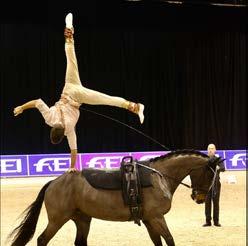
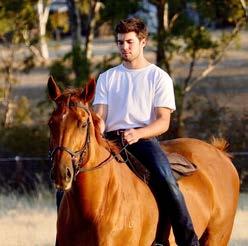
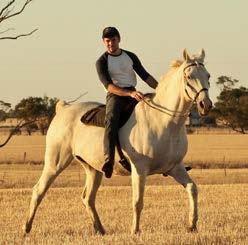
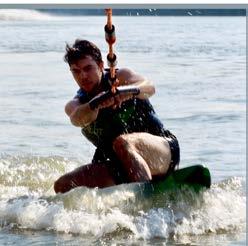
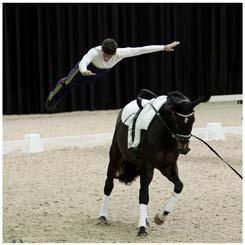
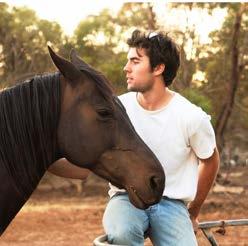
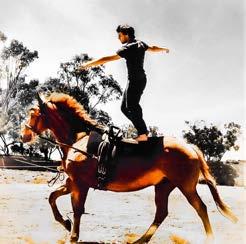
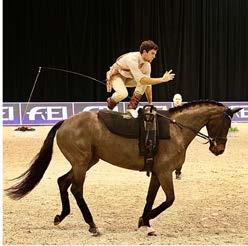
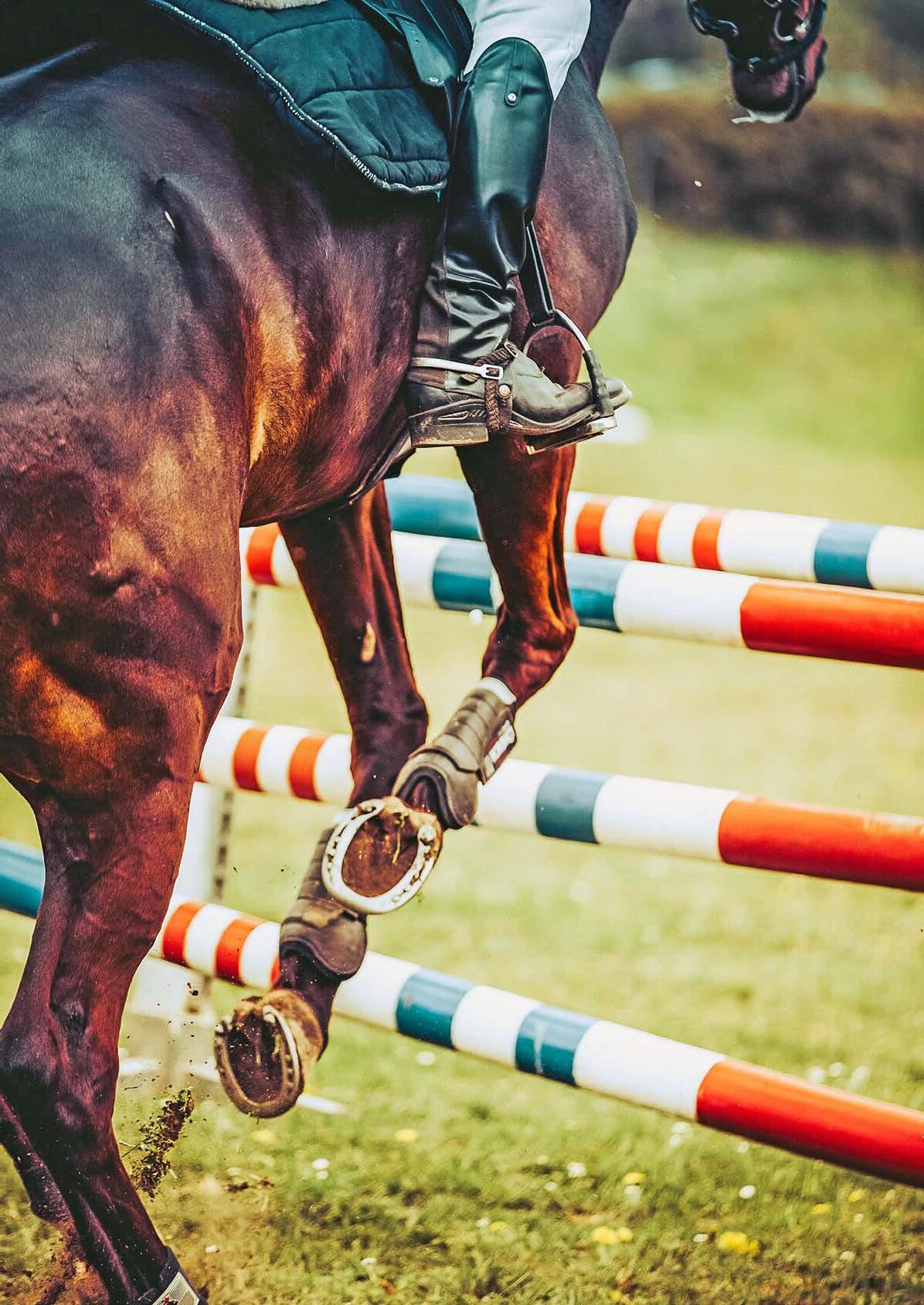
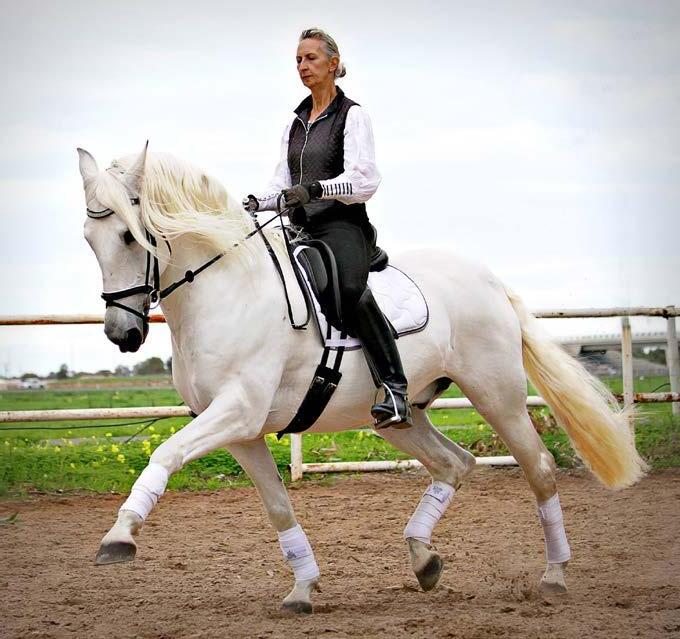
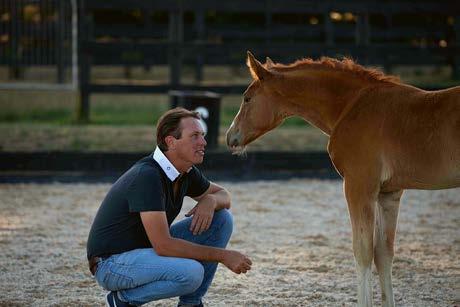
A leap of faith took Jamie Hocking from his family’s farm to competition on the world stage. Passion got him this far – don’t miss what comes next: his life, his horses, and the spectacular sport of vaulting.
UPR E M E R
To reign supreme and achieve show time success, not only do you need to train supreme –most importantly – you need to feed Supreme!
Barastoc Supreme contains the perfect balance of essential nutrients for superior topline development containing premium quality ingredients for muscle repair and development, brilliant coat shine and hoof integrity. With our unique Diamond V® prebiotic, scientifically proven to enhance gut microbiome and aid the absorption of vitamins, minerals and antioxidants. Ensure your supreme work training is backed by the best nutrition available. Feed the ultimate in equine conditioning nutrition. Feed Supreme – Barastoc Supreme.
The Saddle Hub Sales Enquiries: Shae Herwig info@equestrianhub.com.au
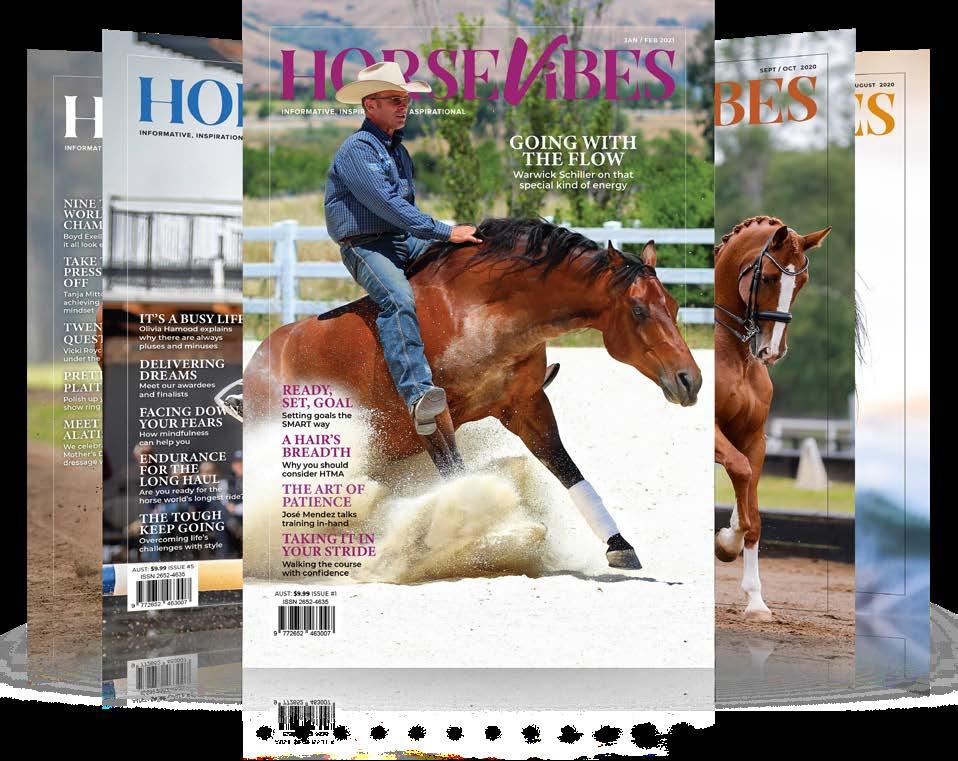
Website/subscriptions: www.horsevibes.com.au
Published by Equestrian Hub PO Box 13, Tintenbar NSW 2478 0414 760067
info@horsevibes.com.au www.equestrianhub.com.au
Follow HorseVibes horsevibes @horsevibesmag
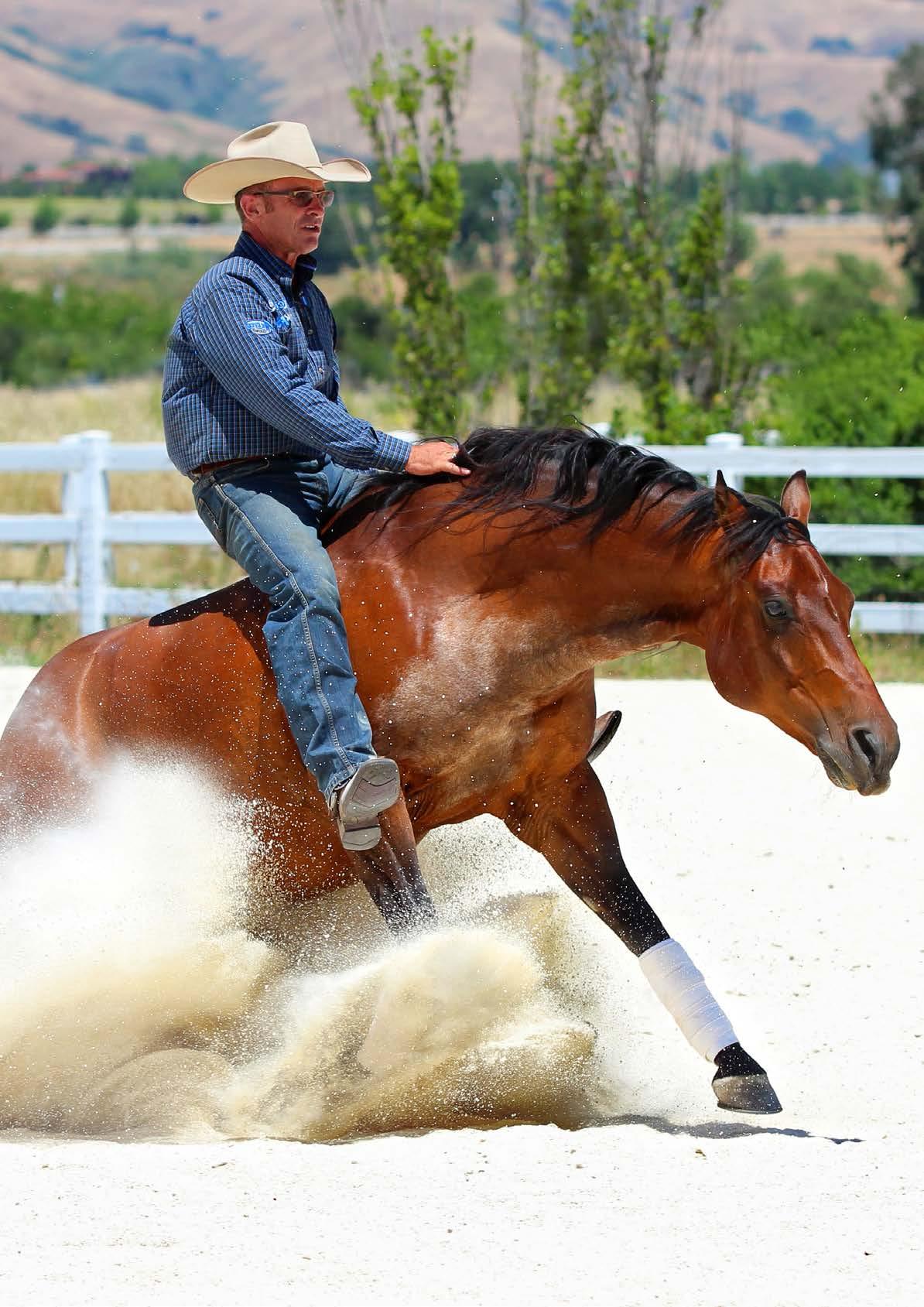
On the Cover: Bareback and bridleless at home in California, Warwick Schiller and his WEG horse Petey come to an impressive sliding stop (Image by Tyler Schiller).
Co-founder of Knight’s Equestrian, Skye was previously a member of the QLD Young Rider Squad, a HOTY winner, and a trick rider in the Australian Outback Spectacular for four years. She’s competed at national level in dressage and showing, and shares some sound advice on the do’s and don’ts of preparing horses for their first ride.
José Mendez
OUR CONTRIBUTORS
Amanda Mac Amanda has had two lifelong love affairs: one with horses, and the other with writing. Now she happily combines both passions as the editor of HorseVibes. In this issue, she talks to Warwick Schiller about mindfulness, energy and going with the flow, and takes a look at SMART goals and why we should have them.
Jeanne O'Malley
Andrew McLean
Winner of the Eureka Prize for Science, Australia’s highest science award, Andrew is in great demand as a trainer, coach and speaker. He’s the CEO of Equitation Science International, has written five books, including an international best seller, authored 35 peer-reviewed journal articles, and in this issue answers 20 of our most interesting questions.
Originally from the US, Jeanne gained a British Horse Society Assistant Instructor’s certificate before going on to teach, train horses, and judge in the show ring. She later wrote two equestrian-related books, and has competed in most disciplines, including long distance and Western. In this issue she turns her expert attention to the subject of stride.
An international dressage trainer and coach, José and his partner founded the Mendez Equestrian Centre in 1990 - the only Australian riding and education centre that combines the principles of Classical Horsemanship with the ASK framework in its training, clinics and coaching programs. In this issue, José offers expert tips on training in-hand.
N.G. Quinlan
N.G. Quinlan, otherwise known as ‘Q’, is a writer, musician, poet, and regular HorseVibes contributor. Intrigued by the story of John Solomon Rarey, the tamer of supposedly untamable horses, Q investigated. Turn to Perfect Partners to find out what happened when Rarey met Cruiser, the most vicious horse in England.
Charlie Brister
Regular columnist Charlie is an allround horseman whose expertise is in re-training problem horses, as well as coaching riders in the art of cross country, show jumping and dressage. In the final of his three-part lunging series, he explores the benefits of learning to jump without someone sitting on your shoulders!
Catherine Bird
Catherine Bird, equine herbalist and author of A Healthy Horse the Natural Way and Horse Scents, teaches herbs, bodywork and the use of essential oils to horse care providers worldwide. She also advises Country Park Animal Herb’s clients on herb selection, and in this issue suggests herbal remedies for common summer problems.
Dr Doug English
A veterinarian and longtime turmeric researcher, Doug completed his Bachelor of Veterinary Science at the University of Queensland in 1974. He’s well-known throughout Australia for his work in the equine industry and is a long-time Equine Veterinarians Australia member. In this issue he discusses equine sarcoids and the types of treatment currently available.
Sonia Caeiro Alvarez
Christine Armishaw
Christine is a horse trainer, riding coach and passionate eventing and jumping rider. A Kiwi girl based in NSW, she teaches others not just how to ride, but also how to understand their horses. In this issue she falls under the spell of the baroque breeds' big four: Andalusians, Friesians, Lusitanos and Lippizaners.
Jo McKinnon
A multi-award winning horse racing and equestrian broadcaster and documentary maker, Jo is a former top-level show rider who’s competed all over Australia. A racing commentator for many years, she recently spoke with Shory Park’s Director and Head Trainer, Nikki Cook, to discover more about their remarkable OTT success story.
Sonia is a journalist, editor and writing workshop facilitator. She’s had a lifelong love affair with horses, although sadly does not own any so lives out her passion vicariously through her friends. In this issue she takes virtual flight to Portugal, and finds magic in Midões at the Quinta da Alegria.
Leisa Hofstetter
Leisa is an Equine Nutritionist and founder of Hof Equine. She has a Bachelor of Equine Science, specialising in nutrition, and lives on the Far North Coast of NSW. She is familiar with best practice feeding in a warmer climate, and offers some expert advice on feeding through the summer months.
Dr Susan Peden
In 1982, Susan graduated from the University of Queensland with First Class Honours, later undertaking further training in veterinary equine dentistry and reproduction. She’s been a member of the Australian and New Zealand College of Veterinary Science since 2004, and in this issue explains why she believes HTMA is a valuable tool for assessing equine health.
Obelia McCormack
With years of industry experience, our wonderful designer Obelia is an expert in publication production and design, with a knack for combining copy and images into eyecatching layouts. Her client list is impressive and a wide variety of publications have benefited from her considerable talents, including our own very beautiful HorseVibes.
Fiona Todd Fiona’s love of animals in general, and horse’s in particular, has been life-long. Driven by a desire to support and inspire equestrians from all disciples, she first launched The Saddle Hub, a hugely popular pre-loved saddle online store, closely followed by HorseVibes, a magazine dedicated to Australian riders and their faithful equine companions.
It’s a new year, and for many folk around the globe a welcome opportunity for a new beginning. Like most people, I don’t like to wish my life away, but I was very happy to see the back of 2020 – and I suspect I wasn’t on my own! To help us all get 2021 off on the right leg, Amanda and Sonia give us the lowdown on setting goals, suggesting a path forward designed to help no matter how big or small your dreams might be.
And what a privilege it is to have Warwick Schillar as our first Spotlight of the year - such an amazing equestrian and all-round great bloke. In case you missed it, Charlie Brister spoke to him in Episode Five of The Right Rein Podcast. If you haven’t already, make sure you catch that episode and prepare to be inspired.
Speaking of Charlie, the final in his series on lunging is in this issue. If you thought lunging your horse was all about sending them around and around in rather boring circles, you absolutely must make sure you catch each of this three part series. And Charlie, I love your model!
Ever heard of sarcoids? In the first Vet Vibes, our new regular feature, Dr Doug English introduces us to these pesky skin tumours, their various types and their treatment. We also hear from Tasmanian vet Dr Susan Peden on the subject of Hair Tissue Mineral Analysis, also known as HTMA.
It’s no secret that I love show jumping, but what you probably don’t know is that
these days, I don’t ride (a long story for another time) – so I simply get to drool. Something that’s always fascinated me is watching riders walk the course. What are they doing? What are they thinking? What are they looking for? Wonder no more! Our guest columnist Jeanne O’Malley answers all of our questions.
Natural health therapist Catherine Bird takes a herbal approach to helping your horse cope with the stress of our hot climate, whilst equine nutritionist Leisa Hofstetter offers a scientific approach to some of the challenges feeding in summer presents. Get it right and your pony looks and feels amazing, get it wrong and there may be problems. With borders opening up and hopes of
being able to travel again looking a bit brighter than they have in quite some time, Sonia Caeiro Alvarez takes us on an armchair journey to a spot not too far from her own home town in Portugal.
In Life After Racing, Jo McKinnon catches up with Shory Park Director and Head Trainer Nikki Cook, who runs a stellar OTT rehoming program.
Three hundred Thoroughbreds through Shory Park’s gates last year alone is nothing to be sneezed at!
Then that talented duo Skye Liikanen and Joshua Knight hop up On My Tackbox and talk about preparing baby for their first ride, closely followed by the inspirational Jose Mendez with his take on the lost art of patience and some excellent tips on training in-hand.
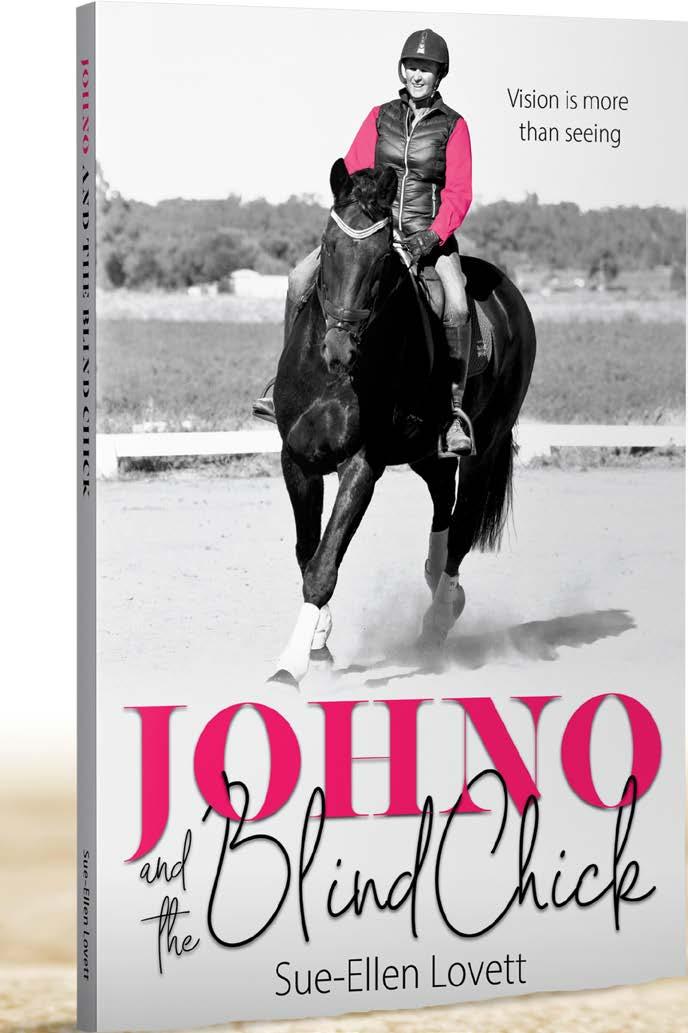
Amanda Mac chats to Candida Baker about her latest offering, The Heart of a Horse, and then we invite you to feast your eyes on the bodaciously baroque Andalusians, Lusitanos, Lippizaners and Friesians who star in this issue’s Breed feature.
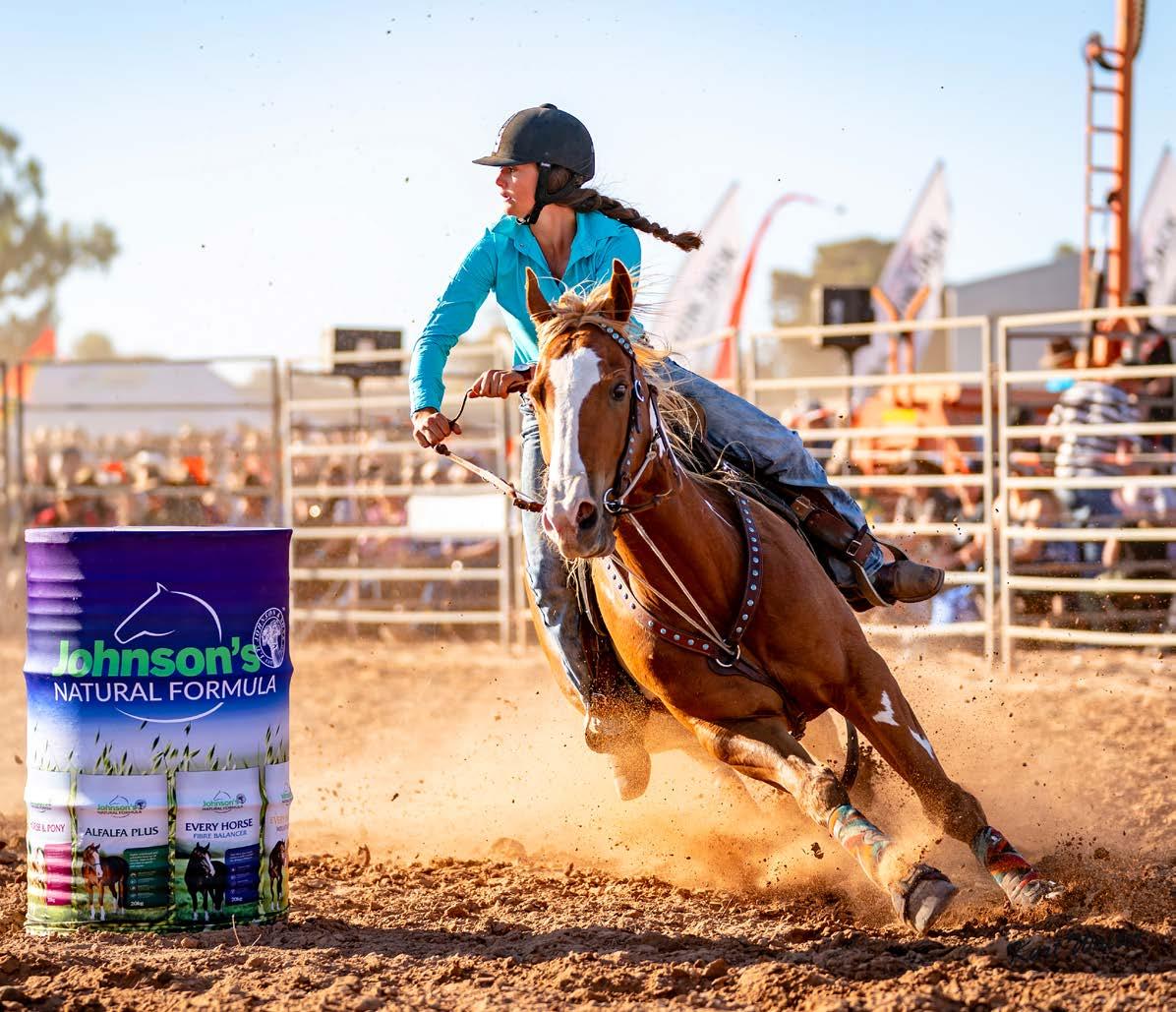
We introduce you to our Young Rider, the super speedy barrel racer Alishia Thomas, and then explain why John Solomon Rarey and Cruiser turned out to be Perfect Partners. That’s before we wrap it all up with 20 Questions, this time with the fascinating Dr Andrew McLean.
Phew! It’s a full on edition for you all to enjoy as we roll on into 2021 – and may this be the year when all of your dreams come true.
And finally, as always, pour your favourite tipple, sit back, relax and enjoy.
Going with the flow
Take expert horsemanship, mix with mindfulness and a belief in putting dreams out to the Universe. Add a serve of serendipity, plus a willingness to go with the flow, and, writes AMANDA MAC, you have the extraordinary life of Warwick Schiller.
Warwick Schiller still remembers the day the barley burnt.
He and his two brothers all rode, their lives following a well-ordered pattern. “Get up in the morning. Go and feed your horse, clean the stall, go to school. Come home and grab the barley pot that you put outside the back door when you came in from the stables that morning. Bring it inside, fill it with water, put it on the stove and turn it on high. Get changed, have something to eat and by that time the barley pot is boiling so you turn it down low, go riding and when you’re done the barley’s cooked and ready to be mixed with your horse’s feed,” Warwick pauses for breath.
The three boys had that system down pat, taking it in turns to get the barley cooking. But systems can sometimes be disrupted: “One day one of us put the pot on the stove with no water in it. It was an aluminium pot and the bottom got burned out of it. There was molten aluminium all over the stove and the stench of burnt barley was right through the house. Do you know what burnt barley smells like?” he asks me. I do, as it happens, and the word ‘foul’ comes to mind. “Well, Mum comes home from work,” he continues, “it’s dark and it’s winter and it’s cold out – and she finds every door and window in the house
open to try to get rid of the stench. It got into the curtains, everywhere. We only made that mistake once!”
But that was a long time ago and much has changed since those early days growing up on a 1,200 acre sheep and wheat farm near Young, NSW. Now this particular boy from the bush lives stateside, has twice competed for Australia in the World Equestrian Games, is recognised as an expert reiner and trainer, travels the world giving clinics, hosts a podcast, has 94,500-odd subscribers to his YouTube channel, and has just celebrated 20 million views. How did that happen? Warwick’s pretty sure
that it has a lot to do with serendipity.
But back to the bush: “Dad had ridden in rodeos, but by the time I was old enough to remember anything he was just into calf roping. He worked on the farm, we didn’t own it but we lived there,” he explains, “and there were always horses around which were used for mustering the sheep.”
It turns out that all three Schiller brothers competed at shows. Warwick recalls breaking his arm at the West Wyalong Rodeo in the calf ride when he was around 10 years old: “But it was my oldest brother in particular who
was very competitive and very, very good. We started out going to Pony Club and then went to the Quarter Horse shows in the late 70s. He was in the show ring, and pretty much won everything that you could win.”
And Warwick had his share of outings too: “You competed your horse in every event but it wasn’t specialised. You’d do a bit of jumping, a bit of barrel racing, reining – we could ride but we didn’t know how to teach a horse to do stuff. There wasn’t anything in the way of a process,” he recalls. “And the reining looked nothing like it does these days. But I’d seen magazines
and videos from America and the things those horses could do were unbelievable. I thought it was amazing. I think the Reining Association started in Australia around 1989 and I was at their first show. I didn’t have a horse there, but I was really interested in it.”
Other than horses and riding, school loomed large. Not a huge fan of that particular institution, Warwick’s report cards generally included the comment ‘he’s very bright but needs to apply himself’. “It took me ‘til I was about 45 or so to change that attitude,” he admits. By the time Year 12 rolled around,
Warwick had demonstrated an aptitude for maths, and along with other students who showed similar ability, was encouraged to send job applications to the various banks in town - and the Commonwealth came up trumps. “Growing up in rural NSW, the whole thing was that you went to school, you got a job, you got married, you had kids, and then you died. That was pretty much life,” Warwick says. “No one we knew went to university - that was for other people.”
So did he take the job? “Sure did, and I was about the same at the bank as I had been at school! It was just something
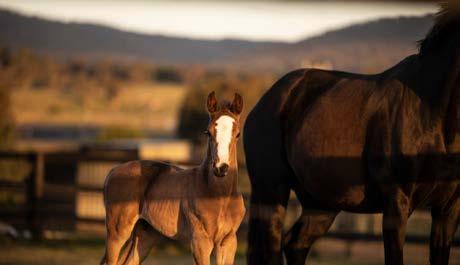
MAIN: Warwick and Robyn’s foal Chance with Bella his mum (Image by Tyler Schiller).
LEFT: Warwick and Petey competing at WEG 2018 (Image by Dead or Alive Photography).
By Australian horse people
to pass the time. I was with the bank for six years and every 18 months or so they’d transfer you to a different town. I did a stint out in Ivanhoe, just north of Hay. I was about 20 years old. The pub was next door to the bank, you finished work at five in the afternoon, played footie on the weekends, and drank some beers. I was pretty aimless.”
But after bank staff had worked in a remote placement, which back in the day Ivanhoe certainly was, they could pick their next location, and attracted by its big Quarter Horse community, Warwick opted for Wagga Wagga. Once there, he got back into riding in earnest.
And it was around about then that serendipity lent a hand. “At that time, if you were of a certain age the bank would give you 12 months leave without pay if you wanted to travel abroad, and they guaranteed you a job when you got back,” he tells me.
All well and good, but funding an overseas trip was another thing entirely. And that’s where things get interesting. These days, Warwick is big into manifesting – the concept of putting a goal or dream out to the Universe and waiting to see what comes up. Not that Warwick knew anything about that at
ABOVE: Calvin meets Warwick at a recent clinic (Image by Robyn Schiller).
LEFT: Warwick gives clinics all over the world. This one was at a horse expo in Holland in 2019 (Image by Tyler Schiller).
the time, but he did dream of going to the US to learn more about reining – and looking back on it, he reckons the way he financed that trip was the first time he’d manifested anything. “I had a Holden F100 ute I’d bought from a mate for $5,000, but the NRMA were happy to insure that particular year make and model for $10,000, so I did. I remember on three separate occasions telling three different people that if I knew how to write the car off without killing myself, I would. I’d take the money and go to America.”
Now, call it coincidence if you will, but three months later Warwick was driving along when his left front tire blew out, sending him off the road and into a stand of small gum trees. He was travelling just fast enough to write the ute off, yet opened the car door and stepped out unscathed. So in 1990, he went to America, landed a job with a horse trainer and worked there for a year.
Of course, these day it’s common knowledge that many great athletes train with a mental skills coach or sports psychologist in order to master the psychological aspects of their respective sports. For example, Kobe Bryant and Michael Jordan both worked with a
mindfulness meditation coach - so it’s a bit of a given that mindset plays a big part in what you can achieve. Warwick knows that now, but he didn’t back then. “At school I didn’t apply myself, nor at the bank, and I’d say that had a lot to do with never really believing in myself. So on the day I left the US to go home, the guy I’d been working for told me if I wanted to come back, he’d give me a job. ‘You could do this for a living if you wanted to’ he said. Well, I’d never given that a moment’s consideration. I thought that was for other people,” Warwick recalls.
Although somewhere in the back of his mind he wished that he could do that, he says lack of self-confidence made it seem impossible. “The way I felt about myself was that everyone else had what it took, but I didn’t.”
But this time there was another motivating factor: “I’d met a girl, Robyn, who’s now my wife. I’d chased her all year but she ran like a scalded cat!” he laughs. “So when I came back to Australia I had two reasons to go back to the US, one was the job and the other was Robyn.”
Home in Australia and working for the bank again, Warwick kept in touch with her, not with phone calls so much – too expensive in those days - but with plenty
of letters. Six months later, he returned to the US, to Robyn, and to his job, where he worked for the next two years training client’s horses, frequently competing with them in the Western show ring.
But by then, Robyn (who showed in Western pleasure herself) and Warwick were married and it was time to move on. After working for a Quarter Horse breeder for a year Warwick decided to go out on his own. “We moved back to Robyn’s home town south of San Francisco, where we still live today. We found this almost empty agistment centre. There were a few horses there and a big covered arena plus one hundred or so stalls. So I started training out of there as well as going to people’s homes to ride their horses in their own backyards. I’d charge by the ride - not training for reining necessarily, they might just have been horses that needed a bit more education,” he tells me.
By 2001, the business had grown and the Schiller’s now had a son, Tyler. It was during that year that Warwick spent a lot of time driving from one side of the country to the other showing a horse,
eventually winning Reserve World Champion. “The next year Robyn did the same thing with a client’s horse,” he tells me, “but by that time Tyler had started school and I got to thinking that the better you get at this stuff [reining] the more you’re gone from home and that really wasn’t the best thing for our son. So during 2003 we put it out to the Universe that we’d like to do something different
so we weren’t away from home so much.”
The Universe must have taken note, because by the end of 2003 Warwick was working for a wealthy client training beautiful horses on a superb property – and that’s what he did for the next three years.
Then circumstances changed and it was time to try something new. “We thought we’d do something really different. We bought a couple of stallions and moved to Australia at the end of 2006. One of the reasons for the move was that Australia had never been represented in reining at the World Equestrian Games,” he explains. “A number of Australian reiners in the US and Europe wanted to do it, but it had to go through the National Federation and no one in Australia had taken the job on. So Robyn helped Equestrian Australia organise it, we got a team together for 2010, and luckily enough, although it hadn’t been our intention, we both ended up on the team.”
While this was an unexpected bonus, the plan to build a successful long-term breeding program with their imported stallions had been brought to its knees by an outbreak of equine influenza, and by Christmas 2010, the Schillers had returned to the US permanently.
However, when one door closes, another opens – and this particular door was already ajar when the Schillers were still
Growing up: Chance with mother Bella and Warwick (Images by Tyler Schiller).
In New Zealand at a 2019 horse expo.
in Australia and serving on the board of Reining Australia. “During a board meeting it came up that Equitana wanted someone to do a reining demonstration. We lived the closest to Melbourne, and we’d got our stallions, so I said I’d go. When Equitana heard we were coming down for the demonstration, they asked whether I’d also do the commentary for their ‘The Way of The Horse’ demonstration,” Warwick explains. “So I spent three days talking to a crowd of three to four thousand people. I just did it to help out, but after that I got a lot of calls from people who had heard me at Equitana, loved the way I explained things, and wanted me to give clinics at their clubs.”
So you could say that it was because Warwick generously donated his knowledge and time with no thought of return, that he now travels the world giving clinics. “I’ve never been much of a planner or organiser, and I’d never thought of doing clinics,” he says, “I just kind of follow whatever the Universe presents to me and it
I’ve never been much of a planner or organiser ... I just kind of follow whatever the Universe presents to me ...
presented clinics – so I did them.”
And while we’re on the subject of the Universe: “I have a friend who recommends an intention, attention, no tension approach,” he adds, “you put the intention out there, you pay attention to the things that might arise because of it, but you have no tension about when it might happen.”
Warwick used the approach when he suggested to the Universe that he’d really like to present a clinic somewhere other than his usual destinations of Europe, Africa, Australia, New Zealand, the US, Canada and the UK. He wanted to go to a location that was exotic. “Anyway, about
two months later the wife of the British Ambassador to Morocco emailed to ask if I’d like to go there to work with Barb stallions owned by the Royal Society for the Encouragement of Horses. So last October we flew to Morocco and spent a week living in the British Ambassador’s residence and working with the stallions. We met the Prince of Morocco, who was the head of the Society, and had a jolly old time.” Exotic? Yep, tick that box!
And it was his experience with clinics that stood Warwick in very good stead on his return to the US. “I had to start finding clients all over again. But because I’d been out doing clinics with the average rider and their horse, I’d noticed some of the simple things they had trouble with. So I started making YouTube videos to show how easy some stuff can be. People really liked them and I began doing more and more. Then they wanted longer videos, so I started a library that people paid a subscription to access.”
At the time, Warwick was retraining rearing Warmbloods and bolting dressage horses as well as reiners. So he’d video every session from the day a
This Barb stallion was distracted and pushy at the start, but eventually connected really well. (Image by Robyn Schiller).
horse arrived. “It was just like you were sitting on the fence of the round yard watching me,” he says. “I was still reeducating problem horses for clients, but the video subscription side of it grew and I started doing clinics around the world. By mid-2014 I realised that training horses wasn’t generating the same income as clinics. So at the end of the year I stopped the training and concentrated on the clinics and video library.”
Twenty million views says he made the right choice!
Talking with Warwick has been a real treat, but before I let him go, I have a final question: what are the characteristics of a truly great horseman or woman? His answer is fascinating. “I think a lack of ego is a big part. I took a bit of a U turn about four years ago when I realised that I wasn’t interested in the competition side of it anymore, I was interested in connection. I really don’t think that most people realise - because I didn’t for the longest time - just how aware horses are of how aware you are,” he explains, quoting a Ray Hunt adage that goes something along the lines of ‘they know when you know, and they know when you don’t’.
Warwick once thought that meant horses know when you know what you’re doing, and they know when you don’t know. But a couple of years ago, he realised
I took a bit of a U turn about four years ago when I realised that I wasn’t interested in the competition side of it anymore, I was interested in connection.
that wasn’t quite the case: “I was reading an article by someone who’d spent a lot of time with Ray Hunt, and he said that when you’re around a horse you need to know what their eyes are doing, what their ears are doing, what their muzzle’s doing, what their breathing’s doing, what their back’s doing, what their neck’s doing, what their tail’s doing – is it tight, is it lose, is it clamped, is it up in the air. And you need to know all those things because they know when you know, and they know when you don’t know.”
So these days, Warwick’s focus is on being present with a horse: “It’s being with your horse and being nonjudgementally aware of all of the parts of them all of the time, without naming and blaming and saying that’s good or
Warwick joins Chance and his paddock mate Sherlock for a nap in the arena (Image by Tyler Schiller).
bad or whatever. And there’s something about that awareness that makes horses relax around you. I’ve being doing a lot of personal growth stuff over the past four years and since then, I’ve found that if someone hands me the lead rope of a horse they’re having trouble with at a clinic, the horse just softens and all the worry goes out of them and I haven’t done anything.”
He tells me that in the past, he’d noticed some people didn’t have to do as much as he did in order to get a good result with a horse: “Now I think it’s because they have a certain energy. The best horsemen I’ve ever met have no ego about them and they’ve got this warm and welcoming energy that I’ve found horses really respond to.”
I suggest it could be described as the horse tuning into you. Warwick agrees: “Yeah, they feel who you really are and it should be a welcoming energy, not a you need to do that, or you have to do this or you’re in trouble approach. It’s more like a ‘hey there, how’s it going’ kind of energy.”
It’s after I’ve thanked him and we’ve said our goodbyes that it hits me: warm and welcoming with a ‘how’s it going’ energy – that’s pretty much Warwick Schiller down to a T.
Fine tune your training and learn to work with the horse you have today. Visit www.warwickschiller.com for more info.
BRISTER’S BRIEF
Lunging: It’s a circular question
In the final part of our lunging series, resident columnist CHARLIE BRISTER adds jumping into the mix.
If you aren't dizzy from practicing your circle work after the last article, let’s jump into the next instalment. Moving away from simple circles and transitions we look at incorporating jumping into your lunge work.
Recap
Before we go any further, here’s a quick recap of the groundwork we’ve covered so far:
• Keeping your horse’s focus on you and not on what’s going on outside the circle.
Lunging a rider with or without stirrups to improve their seat. Ensuring the voice or postural cue comes before the physical aid. Working on transitions to develop strength and responsiveness. Focusing on tempo and line. Why lunging for long periods of time should be avoided.
Jumping into the finale
It’s always good to mix things up in your training regime. Too much of any one thing can lead to both horse and rider getting a little bored. It’s just the same with lunging. Lunge in different places, try different transitions. Not everything needs to be mixed up though! Make sure your aids and communication with your horse remain as consistent as possible, regardless of the day or your own mood.
Now let’s talk about why you should get your horse to progress from pole work to jumping on the lunge. Regardless of your discipline this is a beneficial exercise. Even if you ride only for pleasure, you can help your horse improve their jumping with these hoof-eye coordinating exercises. William Micklem who designed the Micklem bridle calls it fifth leg training. With a pole on the ground the horse doesn't have to change the way they use their body to get over the obstacle. When you start to raise the pole so that it becomes more of a jump, the
horse has to rock onto their hind end and push off the back legs with more power than normal. By doing this without a rider on their back the horse doesn't have to worry about anything except their own legs and the jump. When they become stronger and more confident they’ll be able to handle a rider whose weight is going to affect the horse when jumping. Without the rider the horse can focus easily on the job at hand and quite often this can accelerate the learning process. I certainly find jumping easier without someone sitting on my shoulders!
Setting up for success
How can you make it as easy as possible for the horse? Start small and be progressive. Check all the stop and go buttons on your horse first. Your plan might be to jump them but if they wake up on the wrong side of the stable and are not focussing, go back to the basics. You need to have their attention on you and have control of their tempo and line.
Once you are happy with that let's set the jump up. While free jumping a horse down a lane is great, it requires a lot more gear and you have less control over a horse’s speed. Similar to a free-jumping lane we want to help channel the horse towards the jump. This can be done very easily with two guide rails to aid with straightness. You can set up two rails on the ground between two 44 gallon drums. Start with them on the ground before building that up to a cross rail.
Problem solving
If you are starting in a round yard things will be considerably easier. The wall prevents the horse from running to the outside. Starting small with a guide rail on the inside will hopefully be enough.
Begin in trot and allow the horse to canter if they make that decision just
in front of the jump. If the horse jumps and loses energy ask for an upward transition shortly after the jump. Alternatively if the horse rushes before or after the fence gently ask for a downward transition before jumping again.
Sometimes the horse tries to run past the side of the jump. Slow everything down and make sure the jump isn't too big. Re-check all the basics and give your horse plenty of time to look at and sniff the fence so they become more confident near it. When a horse stops at the jump it either means they have been over-faced (presented with a jump that’s too big for their level of training) or you gave them a less than ideal preparation before the jump. Remember, the horse isn’t trying to be naughty if he stops or runs out, they are just reacting to the environment and the information we’re giving them.
Once the horse is trotting over a small fence from both directions you can have them canter over it on both reins too. Don’t forget to check your stop button after the fence. This will be very useful when you start them jumping out in the open. Jumping can adrenalise a horse and they might get a bit excited after the fence. No one wants to impersonate a water skier across the arena! When jumping in a round yard, keep the jumps under one metre to minimise the stress on the legs that occurs when they jump on a turn.
Watch them as they jump. Do they drift one way or another? Do they prefer a slower speed or being more forward? Are they more comfortable on the left or the right rein? This is all valuable information that can help both with your ground training and when you mount up.
Progression
This can be a good time to introduce tarps or fill under the jump. Fill is anything besides a pole that adds to
Start with the poles on the ground before building up to a cross rail.
Begin in trot, allow the horse to decide if they want to canter.
Sometimes the horse will run past the side of the jump.
the visual impact of the jump. This can be a yoga mat, chaff bag, brick wall or painted wood panels. When introducing something new make sure you give them plenty of time to look at it before you expect them to jump it. Getting them confident is always a priority. Most horses will benefit from doing this before being jumped under saddle. Even
Some people don’t need lunge leads. Showtyme Moonlight and Kelly Wilson winning the 2018 Equidays Top Talent (Image courtesy Kelly Wilson).
if your horse is quite experienced it can be really good for them to figure it out on their own again. After being able to jump your horse in both directions and have them stop easily you can take them out of the round yard to jump in the arena or a cross country paddock.
Showing the horse ditches and water jumps on the lead is very helpful for
the horse’s confidence. If you have poles lying around your paddock, by all means use them – I do if they’re available. But if not, it’s hard yakka taking poles around to set up as guide rails. You’re better off making sure your horse is jumping well on the lunge in the round yard before heading out into those wide open spaces - and when you do, just start small and let the horse tell you what they’re ready for.
This is a real test for how well your horse is listening to you so there's no need to rush into doing it if you are not sure. We can’t all be like Kelly Wilson jumping her horses at liberty in front of a packed arena.
Ommm
If you do get stuck, there’s always another day. It's better to quit and come back better prepared rather than get frustrated and keep the horse going around and around while you try and make it do exactly what you want.
Charlie Brister of Brister Equestrian is an all-round horseman based in western Sydney. His expertise is in re-training problem horses, as well as coaching riders in the art of cross country, show jumping and dressage.
Give them time to look before you ask them to jump.
The Right Rein
Don’t miss it!
the ORIGINAL butt loving
Relaxation Connection Training
Everything I’ve ever learned in life I’ve learned from horses. After training professional reining horses for 25 years and representing Australia at the 2010 and 2018 World Equestrian Games I thought I knew everything there was to know about training horses. What I now realize is that the horses were the ones teaching me. Through horses I have become a better listener, communicator, and leader. They have taught me the power of compassion and empathy, and helped me with personal growth. I started making online training videos to help people create a deep connection with their horses so they to could be open to their transformational power and realize their true potential as riders. I never expected this journey to be so life changing for everyone involved. If you’ve been looking for a training program designed to create the best version of you and your horse, I invite you to start your 7-day free trial of my online video library.
start your 7-day free trial
FEATURE
Ready, set, goal!
Are there strategies that can help you to turn your dreams into reality? There are, and AMANDA MAC and SONIA CAEIRO ALVAREZ have been exploring some options.
Welcome to 2021! After 2020’s roller coaster ride, hopefully this year will be a vast improvement on the past 12 months. The pandemic has had a profound effect on us all, inspiring a reassessment of what we want from our lives, and consequently, what our goals are and how we might achieve them.
Among other lessons, COVID has taught us the importance of remaining flexible
in the face of circumstances beyond our control. But flexible is not another word for failure. Flexibility means that we have the ability to shift our thinking and refocus as circumstances change. So never be afraid to re-examine your goals. Remember, the definition of insanity is doing the same thing over and over again and expecting a different result. However, while making small corrections to our plans when necessary
is self-empowering, wandering offcourse altogether is definitely not!
Getting down to basics
What’s your dream? At the end of three months, six months, a year, five years, what would you be absolutely overthe-moon happy to achieve? No matter whether you’re shooting for the World Equestrian Games, want to move up a grade in dressage, learn how to trick ride, find your dream horse, build a tack
In six months, a year, five years, what would you love to have achieved?
room, whatever … you need a plan.
Google the word ‘goals’ and you’ll be deluged! But before you disappear under the avalanche of information, here’s something to consider. In a highlyregarded study, a university psychology professor proved that by writing goals down and sharing your progress with a coach or a friend, you’d be (on average) 33 per cent more successful in achieving your goals than if you only had them
Flexibility means that we have the ability to shift our thinking and refocus as circumstances change.
vaguely in mind. So it’s as simple as writing them down and telling a friend? Not quite – you need to get SMART.
Tried and true
If you did Google ‘goals’, you may have noticed SMART popping up more than a few times. The SMART concept has been around for some years and is as valid now as ever it was. If you know of this approach and you’re already happily living your dreams, go to the top of the class and move on to another article – there’s plenty to choose from in this issue! However, if all this is news to you, or you have only a vague idea as to what SMART is, grab a pen and paper and read on.
Getting SMART
If you have anything in life you want to achieve, equestrian related or otherwise, one thing’s for sure: without a definite goal, your chances of success are minimal, without a written goal, your odds are even worse. And that’s where SMART comes in. SMART is an acronym for Specific, Measureable, Achievable, Realistic, and Timely. Sounds promising, but what does it mean?
Specific: This is where you drill down to exactly what it is you want to achieve. Your goal should be well-defined, unambiguous and simple. Keeping it simple clears away the distracting mental clutter and allows you to focus specifically on what it is that you want.
But goals must also pass the ‘excitable me’ test! Let’s say your dream is to achieve a dressage score that’s five points higher than your existing personal best. Take a moment to close your eyes and imagine yourself receiving your improved score. Picture it in clear and vivid detail. Now, how does it make you feel? Does it light you up? Or, is your enthusiasm dampened by the idea of getting up an hour earlier each morning to practice for your next test?
If your goal doesn’t fill you with passion, now might be a sensible
Set a goal and improve your dressage score.
time for a rethink. To achieve a goal you’ll need long-term motivation and commitment, and that’s hard to drum up for something that deep down you’re a bit ho-hum about.
When you’re happy that you’ve picked the right goal for you, take your pen and paper and write it down before we go on to the next step.
Measurable: A SMART goal is a measureable goal. Measurable goals help you assess your progress, stay focussed, and give you the extra burst of motivation that comes from realising you’re getting closer to your target. Think of them as mini-goals - and not to put too fine a point on it, without them you’re likely to run out of steam and your dream will remain just that … a dream.
But how do you introduce measureability into your plans? Say you have a young horse you’re teaching to jump. Eventually you’d like your horse to be confidently popping over a 1.2m
oxer. But while this might be your end goal, you need to break down your progress into measureable components. So, keeping your horse’s current level of education in mind, write down the stages (or mini goals) you’ll need to achieve on the way to your 1.2m target.
And there you have it, measurable goals.
Achievable: Is your goal achievable? This question is critical and not answering it could set you up for disappointment. If your goal is to compete in the next Olympics, but you are only just learning to ride, you would be wise to assess whether you’re
capable of, or have the necessary resources for achieving your goal. That’s not to say you won’t be ready to compete at a high level at some time in the future, far from it. In fact, it’s recognised that because we generally try harder to reach difficult goals, our best results are often achieved when we’re challenged. However, setting goals that are well out of reach in our current circumstances tends to be more self-defeating than inspiring.
Realistic: In some ways similar to achievable, being realistic means that the goal you’ve set is one you believe you can accomplish with your current resources and time constraints. Be very honest and ask yourself: Is this goal within reach? Can I commit to achieving the goal? If not, reassess your circumstances and establish a goal that’s more realistic.
Timely: If you really want to achieve a goal, set a target date for its completion and while you’re about it, one for each of those mini in between measurable goals too. Deadlines prevent drift and create a sense of urgency. Life can be busy, but setting a deadline
It doesn’t matter how you keep track of your goals, just make sure they’re in writing.
LEFT: If eventing’s your thing, you need a goal.
keeps your goal front and centre and prevents it from drowning in all those unrelated day-to-day tasks. So once you’ve firmed up your specific, measureable, realistic, and achievable goals, work out your deadlines and, you got it, write them down.
The word ‘goal’ often strikes terror into the hearts of those who err towards procrastination ...
What’s next?
Once your goals are SMART, in writing, and ready to roll, it’s time to share the good news with your trainer, or with a like-minded friend (or both). This serves a double purpose: you’re likely to receive support tailored towards helping you achieve your goals, and you’ll also have made yourself accountable
– and that never goes astray!
The word ‘goal’ often strikes terror into the hearts of those who err towards procrastination, and with good reason. On the surface goal setting appears to be a simple exercise, but if done correctly it can be challenging. Nonetheless, it’s a worthwhile activity even in uncertain times, because it gives us a plan, a trajectory, a chart to steer by.
Meanwhile, the enthusiastic planners among us can’t wait to spring into ninja-style action with sheets of butcher paper, Post It notes, white boards, goals journals, smart phone reminders, inspirational screen savers, vision boards, project management software, or any of the other tools that can be used to keep your goals foremost in your mind (which is just where they should be).
The method you choose to stay in touch with your goals is entirely up to you – but remember, they should be in writing, shared with a friend, and most importantly, acted upon!
A small well-defined sarcoid with a wide margin of unaffected skin.
If you’ve noticed a wart-like lump on your horse’s skin, it could very well be a sarcoid. Veterinarian Dr DOUG ENGLISH discusses types and treatments. VET VIBES
Equine sarcoids: what you
need to know
The equine sarcoid is by far the most common cutaneous neoplasm (skin growth) in horses. It affects horses of all ages, and was first described by Jackson in 1936. He introduced the term ‘equine sarcoid’ because the growth looked like a sarcoma, which is a cancer of the connective tissue.
An equine sarcoid is a tumour of the skin only, it does not spread to internal organs. Most affected horses are normal in every other aspect except those with large lesions. A sarcoid doesn’t seem to have any significant correlation with age, sex, or breed, and incidence varies between two to six per cent of the equine population, including donkeys, mules, and zebras.
Bovine papilloma viruses (BPVs)
Sarcoids can appear on anywhere on the body (Image by Alexandra Beckstett).
Examining a sarcoid prior to removal.
are most likely the primary cause of sarcoids. BPVs are spread by flies from any lesion to any wound, even one that’s small and barely noticeable. Your horse doesn’t have to be in close proximity to cattle for spread to occur, because flies can be blown around over distances of many kilometres.
Types of sarcoids
There are six broad types of sarcoids. While most are slow growing, all types have a high propensity for recurrence and often interference or injury can make them change to a more aggressive type.
With such a tendency for change, most vets are reluctant to use a biopsy to define them because of the risk of activating the sarcoid and it becoming
more aggressive. Most are recognisable by observation anyway, and any warty growth that has been present long term is going to be a sarcoid – and that’s true in almost 100 per cent of cases. To determine whether or not the growth is a sarcoid, a good size sample is needed from centre of lesion to achieve an accurate result.
A needle biopsy is not worth doing.
The six types of sarcoids are as follows (keeping in mind that any type can unpredictably change to another):
1. Occult: small circular hairless skin spots
2. Verrucous: warty and scaly
3. Nodular: large spherical nodules
4. Fibroblastic: fleshy with
After cleansing around the general area, a local anaesthetic ensures the procedure is painless.
prominent ulceration
5. Mixed: types two, three, and four all combined
6. Malignant: an extreme form with deep local tissue invasion (Prof Derek Knottenbelt, University of Liverpool).
Treating a sarcoid
No single treatment is consistently effective and recurrence is always possible. There are many treatment options, with no standout success achieved with any of them - radiation possibly being the best. That a few cases do resolve spontaneously does imply that there may be some immunological processes involved.
• Surgical incision: Only suitable for small well-defined lesions where there are wide margins of unaffected
VET VIBES
skin around the sarcoid. A good first choice for sarcoids of this type, I try to seal the edges with Superglue after suturing to protect the wound and wall off flies. Laser excision with a CO2 laser is better than a scalpel, but the equipment is very expensive and very few vets have a laser. I would love to own one.
• Cryosurgery or freezing: A commonly used form of treatment but with poor success rates.
• Cytotoxic compounds such as Xterra and Cansema: These compounds produce extensive tissue necrosis (death of the cells) and scarring. They’re a cheap and easy option, but messy. They’re sometimes successful, but because of the danger of the horse chewing the area and ingesting the compound, care should be taken in their use.
• Radiation: Offering the best overall results, this treatment is difficult to access. Targeted radiation requires very expensive equipment that is not, to my knowledge, available for horses in Australia. It is an option for dogs, who are anaesthetised and securely placed so they can be treated without the risk of them moving, and for humans who, of course, can be told not to move. Radioactive gold implants work well and produce radiation continually over a period of time. I don’t know of any vet who’s licenced to access them, but some doctors use them to treat humans. Professor Dick Dickson of Sydney University was my go-to person before he died, and 30 years ago we had a lot of success. However, there is danger to the operator who must be a licenced radiology specialist, and also to the owner who must not get within a meter of the treated region for four to six weeks.
• Cisplatin: Biodegradable beads containing cisplatin and a stable emulsion of cisplatin in sesame
With the sarcoid removed, Doug sutures the wound (All images courtesy of Sarah Gibson).
oil have given some very good results, but treatment requires repeated injection into the lesion. Cisplatin, a chemotherapy medication used to treat a number of cancers, is expensive as well as being a significant hazard and dangerous to humans.
• Turmeric: This treatment involves feeding turmeric powder as well as applying a mix of curcumin and tetrahydrocurcumin (the active ingredients in turmeric) dissolved in dimethyl sulfoxide (DMSO) to the affected area - or a more crude option is just to use turmeric powder. This approach has had reasonable success. It’s
a process I’ve experimented with, and ongoing results are available in the Facebook group https://www. facebook.com/groups/sarcoids. Feeding turmeric powder in a quantity of one teaspoon up to a half cup along with a small amount of linseed meal is best. Start small and consider adding pepper, which slows the otherwise rapid excretion of the beneficial curcuminoids.
• Acyclovir: A weak effect but there have been some good results along with feeding turmeric. Acyclovir in a gel of a five per cent or higher concentration needs daily application over many months.
• Autologous Vaccines: These have
reportedly produced good results with tissue taken from the sarcoid frozen in liquid nitrogen and implanted into subcutaneous pockets in the neck. There are some trials with chimeric vaccines involving BPVs which are promising but not yet on the market. These are produced by substituting genes from the target pathogen for similar genes in a safe, but closely related organism.
• EBC46: Now called Stelfonta and developed by the Australian company Ecobiotics, this is an excellent new product. I have used it and it works well. Now approved for use in the US and the European Union, it will hopefully soon be available in
While most are slow growing, all types have a high propensity for recurrence and often interference or injury can make them change to a more aggressive type ...
Australia. Stelfonta produces an immune response, enabling the body to eradicate the tumour. It’s injected into the lesion by a veterinarian (if the lesion is large much of the volume may need to be surgically removed before treatment), and further treatments might be necessary. In my experience, because curcumin also stimulates the immune system to attack viruses, Stelfonta worked better when turmeric is fed at the same time. There is a synergy between the two. For more information on Stelfonta visit https://qbiotics.com/.
• BCG vaccine: This is injected repeatedly into the lesion with varying but not great success. One aspect to consider is that there are reports of unpredictable anaphylactic (allergic) reactions which may be fatal. Also some lesions, particularly on the legs, can become worse after treatment with BCG.
• Homeopathic: There have been varying small successes with the use of Vegemite, toothpaste, aloe vera, rosemary oil, tea tree oil, and Camrosa ointment (caution is required with this option as it can be dangerous). However, these options frequently worsen the problem, which is probably a factor of interference rather than direct effect. Occasionally but not that often, sarcoids spontaneously disappear and then whatever treatment is being used at that time will get all the credit.
And on a final note, from my near 50 year experience with sarcoids, and their various treatments and outcomes, it’s become clear that turmeric can play a significant role in the success of any treatment option. Feeding horses turmeric daily is not only helpful in the prevention of sarcoids, it’s also a great way to boost their immune systems.
For more information on the uses of turmeric, visit www.turmericlife.com.au.
Plan your strategy, count your strides (Image by Markus
Early or late take-offs can generally be avoided if you know the length of your horse’s stride
Spiske).
RIGHT:
(Image by Melanie Hartshorn).
Taking it in your stride
You’re about to start your show jumping round – but how well prepared are you?
JEANNE O’MALLEY shares strategies learned from renowned equestrian coach Trevor Morris that will help you to take it all in your stride.
Of all the people walking the average show jumping course at the average horse show, it’s very possible that only a few of them actually know what they’re doing. For the rest of us, walking the course is just an opportunity to stretch our legs, and to make sure we know where the jumps are, and in what order we should take them. No doubt there’ll be some competitors taking giant leaping strides between combinations and muttering to themselves, but these gymnastics rarely affect their results!
At the Olympics and other top grade
competitions, riders are given half an hour to walk the show jumping course, and those riders use every minute of it very wisely. But what do they use it for?
Planning their strategy, counting their strides
If show jumping is 60 per cent confidence, that confidence comes from knowing what we’re doing, having a plan, and knowing how we’re going to put it into operation. Fear, nerves and loss of balance come from uncertainty and ignorance.
Which brings us to striding. Even when trotting and cantering through baby
grids, you’ll have noticed whether your horse’s stride and the jumps have worked together harmoniously or not. If everything’s going to plan, riding down a line of jumps – one right after the other – can feel like bouncing along like a well-dribbled basketball. Alternatively, get the stride wrong and it’s more like a terrifying smash and grab in which you have no idea when the next jump is coming up in relation to your horse’s stride, and even less idea of what to do about it.
Determining your horse’s stride
But there’s a simple remedy: learn to determine your horse’s stride. In spite of the assertion that an average horse’s stride is 3.66 metres, this measurement can differ from horse to horse. Course designers deal in increments of 3.66m or fractions thereof, but different horses might work in strides of 3.35 metres, 3.05 metres, or even less.
An easy way to identify your horse’s stride involves three observers. It’s a good riding school or Pony Club activity when there are plenty of people around, all just longing to be put to work.
First set up two easy crossbars 21.95 metres apart on a straight line. Now put the horse on a comfortable 20 metre circle, with a jumping rhythm canter and satisfactory impulsion. When you’re both established in the rhythm (and this may take several laps) swing onto the straight line and take the jumps.
Each observer, armed with a cone or similar marker, watches as the horse canters by their position on the straight line, and marks the inside hind footprint. Now measure the distance from the first marker to the second, and from the second to the third.
Repeat this exercise several times, and from both directions. The measurements you take will determine the average length of your horse’s stride (keeping in mind that the figure represents the length of their stride at
this particular stage in their training).
The length of a horse’s stride is not carved in stone, it can change with maturity and training. A young horse often has a long stride of perhaps 3.5 metres, while an older horse may move with a shorter stride of 3.2 metres. If you discover that your horse has a lot of variation in the length of their stride, they need more training on the flat to develop their balance. The same applies if there’s a lack of rhythm and impulsion, a lunging forward or a holding back - it’s back to balance enhancing basics.
Developing an eye
Assessing and determining stride can be a laborious process. However, some lucky people have a natural aptitude, or in this case ‘eye’, and can
If you discover that your horse has a lot of variation in the length of their stride, they need more training on the flat to develop their balance.
‘see’ stride, with very little preparation or practice. But most of us average people have to develop or learn eye through application and technique. While this may take a long time for some riders, most will learn and become
proficient in a matter of months.
If a rider is slow in learning to see stride, that doesn’t necessarily mean that their eye or adjustment of stride will be significantly less accurate than someone who has picked it up quickly. Although anyone who has learned stride is unlikely to have the degree of accuracy of someone with a natural eye. But that doesn’t mean they’ll be an inferior show jumper. Usually it means that the taught rider will compensate by either having or developing strengths in other aspects of the sport.
One of those aspects is attention to detail. Because taught riders can never take eye for granted, we pay a lot of attention to detail when measuring and walking a course. We measure the stride between the elements of a combination jump, and we learn to walk a course not in multiples of meters, but in multiples of our particular horse’s stride.
Here’s how we do it
While you’re at home in the comfort of your own paddock, here’s what to do: if you know your horse’s stride is 3.35 metres, measure 3.35 metres out on the ground. Now see how many of your strides fit into one of these 3.35 metre lengths. Practice until you can repeatedly stride out one of your horse’s strides accurately. Of course, you may have to make your strides a little longer or shorter than your usual walking pace in order to fit into your horse’s stride length. Try not to deal in half strides because what we want to be thinking is ‘three of mine to one of theirs’ or ‘four of mine to one of theirs’. It just makes it easier.
So, next time we’re walking a jumping course, we stride out our horse’s stride between jumps and count them on our fingers – and remember, we are thinking in terms of strides, not in meters. Start at the first jump and on the landing side, step out 1.83 metres from the upright. That’s where your horse will land. Now begin pacing
The importance of stride is vital to successfully negotiating a two or three fence combination (Image by Mitch Hodge).
out the distance to the next jump. Let’s say, for example, that it’s three of our strides to one of our horse’s. So, step one, two, three and hold up one finger. Step one, two, three and hold up a second finger. Every third step hold up another finger. Step to within 1.83 metres of the take-off side of the next upright and stop. How many fingers are you holding up? That’s how many of your horse’s strides between the point of landing over the first jump and the point of take-off for the second jump.
Staying grounded
When you’re counting strides, don’t focus on the next fence as you walk toward it. Look at the ground, or focus on the far distance like the
professionals do. When they stare at their feet or at the horizon, these riders are not lost in thought or working on another astral plane! They know that if they focus on the upcoming fence they will unconsciously accommodate their stride to that distance.
A truly happy realisation when you’re walking a course is that the striding has come up in even, whole strides. However, all too often it turns out to be three and a half or four and a half of our horse’s strides between jumps. This is not a crisis. This is an opportunity! It allows us to plan stride adjustment. And by using our pre-planned form, we develop an instinctive mechanism to adjust stride. In other words, if the stride doesn’t come up even, we can
lengthen or shorten our horse’s stride to make sure things even out anyway. This is where all those dressage exercises for lengthening and shortening stride pay off. Bring in the horse’s nose to shorten the stride or let it out to lengthen it, and things slide into place.
But have we measured correctly? Remember when walking a competition course, it’s easy to get excited and take too big a stride. At home we know our horse’s stride and can duplicate it. In competition we might get carried away, so walk the course several times.
Note: If you prefer working in feet rather than metres the math is simple! One metre = 3.28 feet, so multiply the metre measurement by 3.28 to convert to feet.
When counting strides, don’t focus on the next fence as you walk towards it (Image by Jeanne O’Malley).
The nutrient content of grasses change during summer.
BELOW RIGHT: Carbohydrate-rich oats might overheat your horse during summer.
Feeding for summer
As with all times of year, what you feed your horse in summer depends on factors such as their level of work, age and size. However, feeding horses over summer comes with some unique challenges, writes LEISA
HOFSTETTER
The increased ambient temperatures associated with the summer months can affect a whole range of factors associated with feeding your horse the right feed. But it’s not only the temperature that changes over summer. The nutrient content of grasses and other forages change during this time too!
Increased ambient temperatures in summer may affect what you should feed your horse. Aspects of your horse’s feed that might need to be modified include electrolytes, the type of energy source, and water intake.
Electrolytes
Electrolyte levels in your horse’s feed may need to be different in summer because an increase in ambient
When horses digest their food, a lot of the energy is lost as heat. This generated heat can be a potential problem in summer
temperature means your horse will sweat more than in the cooler months. Because electrolytes are lost in sweat, the more your horse sweats, the more electrolytes you will have to add to their feed. Be careful not to oversupply electrolytes though, as this can have the opposite effect to the one you are trying to achieve.
Fats vs carbs
When horses digest their food, a lot of the energy is lost as heat. This generated heat can be a potential problem in summer for horses performing moderate to high intensity work, such as race horses and show jumpers, as they can overheat. Theoretically, a diet with a reasonably high fat content will generate less heat in digestion than a diet with the same amount of energy supplied by carbohydrates. It may therefore be useful for horses in competitive work over summer to increase the fat content in their ration and lower their carbohydrates. The opposite may be true in winter. If your horse needs to generate heat to keep warm, their body will consume energy to do so.
fats. However, roughage in forages such as fresh grass and hay should still make up the majority of a horse’s diet, no matter what the time of year.
But what about protein?
Protein is quite an inefficient source of energy. Proteins are made up of chemical building blocks called amino acids, which are vital for a lot of different body functions in both horses and humans, so it shouldn’t be disregarded in a horse’s diet. But if you are aiming to get the most out of energy supply, protein is not the way to go.
When protein is converted to usable energy in the horse’s body, a lot of heat is produced for a small amount of energy in comparison to carbohydrates or fats. So protein is another energy source that could present a problem if fed in excess in the hotter ambient temperatures of summer, especially for horses in heavy work over long periods of time, like endurance horses. Horses overheating can be just as detrimental as it can be for humans, and can even be fatal if not treated quickly. But the most likely side
The Delivering Dreams Scholarship
We received some exceptional applications for this year’s Delivering Dreams Scholarship. Selecting a recipient proved difficult, so much so that our judges have chosen two particularly outstanding applicants: Jamie Hocking and Luke Purtill.
The HorseVibes Delivering Dreams Scholarship is something of which I am extremely proud. It has been a long-held dream of mine to help equestrians of all ages and abilities move closer to their own dreams. And that’s exactly what the scholarship is designed to do: to motivate its recipients and assist them in removing any barriers that might be holding them back.
This particular scholarship round has been outstanding. We
introduce Jamie and Luke to you on the following pages, along with our nine wonderful finalists. And I would like to personally thank everyone who has made it so very special, our applicants, our very generous sponsors, our panel of expert judges, my family, and my many friends, all of whom have helped in so many ways. With much gratitude,
Delivering Dreams Scholarship Sponsors
Forages
Forages such as grass and hay should make up the majority of your horse’s diet, at all times of the year. There are actually some variations in types of grasses that may affect what you feed your horse in the remainder of their diet. There are two main types of grasses, cool season and warm season. The differences in cool versus warm season grasses can be quite distinctive. Some obvious differences include the types of sugars present in the grasses and the presence or absence of calcium compounds called oxalates. In sub-tropical climates such as the Far North Coast of NSW, warm season grasses are prevalent.
Warm season grasses are those species of grasses that grow to maturity and produce seeds in the warm seasons of the year. The opposite is true of cool season grasses. Often warm season grasses are high in oxalates. Oxalates are compounds that bind calcium in the digestive system of the horse and prevent it from being absorbed into the body. This can cause a deficiency so severe that calcium will be taken from the bones to compensate for the lack of calcium available for important bodily functions. A calcium deficiency can sometimes be visually obvious, such as
ABOVE: Forages such as grass and hay should make up the majority of your horse’s diet, at all times of the year.
BELOW: Electrolytes lost when your horse sweats should be replaced by adding them to their feed.
with the symptoms of big head disease.
Warm season grasses
But what does this have to do with summer? New growth of warm season grasses containing oxalates tend to
have a higher oxalate content than the same grasses in later stages of maturity. So this means that in spring, during the beginning of the growth stages, the oxalate content in warm season grasses will be higher than in summer, when the grasses are more mature. But because of these growth stages, there may even be variations in oxalate content in warm season grasses within the summer months, with more oxalates being present in early summer than later in the season.
There is another factor to consider when looking at the maturity stage of grasses. You might have observed that your horse prefers new growth grass to tall, well developed grass that is ready to produce seeds. For horses, the palatability of new grass certainly seems much greater than for mature grasses. In addition to palatability, digestibility also decreases as grasses become more
Photo GRC Photography
mature. This is because mature grasses contain more structural carbohydrates such as cellulose, hemicellulose and lignin than new grass.
Digestibility
Lignin is a nitrogen containing compound that helps to give grass stems their rigid structure. Cellulose and hemicellulose also play a role in the structural component of grasses, but where cellulose and hemicellulose are digestible in the horse, lignin is not. Humans cannot digest any of these structural carbohydrates, which are often referred to as fibre. It is only because of certain microflora in the hindgut of a horse’s digestive tract that they get any nutrients
from cellulose and hemicellulose at all. These microbes are able to do the digesting for the horse.
As digestibility decreases in more mature grasses, so does the energy the horse is able to absorb from the grass. This means warm season grasses in spring and early summer will give the horse more energy than those same grasses in late summer. This also has implications for horses at risk of laminitis, in that there are more starches and sugars in early stage growth of warm season grasses than mature warm season grasses. Starches and sugars affect insulin levels, which can affect laminitic
horses or those at risk of laminitis.
Factors to consider
Feeding horses in summer comes with a range of unique challenges. Ambient temperature and seasonal growth of pastures can affect what you should feed your horse, and it’s important to consider all the factors affecting each individual horse.
Your Equine Nutritionist can help to ensure that you’re feeding your horse correctly, no matter the season.
Leisa Hofstetter, BEqSc, is an Equine Nutritionist and founder of Hof Equine. Call her on 0415 120 454, email hofequine@gmail.com, or visit www.facebook.com/HofEquine
Paradise in Portugal
They say there’s no place quite like home, so SONIA CAEIRO ALVAREZ armchair travelled very close to her hometown in north western Spain and found magic in Midões.
Nestled just outside the village of Midões in the mountains of central Portugal is Quinta da Alegria. That’s where an exceptional family of horse lovers, horses, and four-legged farm folk collectively create the heart-warming and unique Portugal by Horse riding holiday and farm stay. It is in essence a bucolic wonderland of mountains, meadows and rivers, historic villages, deep culture and the warmest hospitality. In reality it’s a captivating farm experience with a herd of much loved horses and
Portuguese passion in abundance.
For riders, a farm holiday at Quinta da Alegria is a total immersion into both magnificent nature, and what consummate hosts Liesje Vanneste and João Cabrita call the magic of horses. Liesje and João manage every aspect of the farm stay with heart and soul, and, along with extensive horse riding tours and trails, offer lessons in horsemanship and the captivating Dancing with Horses, as well as on-site yoga, reiki, massage, hiking, cycling and mountain biking tours, crossbow shooting, canyoning, and kayaking.
In 1996, Belgian-born Liesje arrived in Portugal with two horses, two dogs, some chickens and a tipi. She explored the region until she discovered a home for herself and her beloved menagerie: the stunning historical village of Midões, a short train, bus or car ride from Lisbon or Porto. A city dweller from Alcantarilha-Algarve and Lisbon City, João had spent years at university studying and working in IT, until his path collided with Liesje’s. From there, their dream of paradise gained traction as the pair developed a unique horse riding and nature adventure. The property is abundant in water springs and was last inhabited by Pastor António Pereira with his family and a large sheep herd. After his death
João shares a special connection with Fly.
BELOW LEFT: Ariza gazes through the window at the idyllic countryside.
Quinta da Alegria was abandoned, full of brambles and overgrowth, a devastated orchard, disintegrating roof and 12 years of dust and debris. Since 2009 the couple has lovingly transformed the original three hectares to 25 hectares of pastures, meandering wildflower meadows, and rich fertile land.
Liesje believes that it’s the little things and the simple pleasures that remain in our memories. The things we share with our friends, partners, children or grandchildren. “It’s when we can be taken to another dimension, the dimension of pure joy,” she says. “The joy of Quinta da Alegria is finding eggs in the barn and enjoying them for breakfast, picking fruit from a tree, helping to feed the farm animals, bringing hay to the meadow for the
horses, or just watching them run across the fields. It could be the joy of pushing your children in a wheelbarrow and having a picnic in the shade in a hidden valley, or watching sunsets give way to millions of stars by the campfire.”
The Quinta da Alegria herd is made up of 13 unique and diverse personalities including two Haflingers, four Lusitanos, four Portuguese Cross, a Garrano, a KWPN (the Dutch Warmblood) and a Selle Français. Nine are available for riding.
The horses are managed in as natural way as possible and are a true herd. “They are always together and almost always grazing in the 25 hectares of meadow, where they not only eat but also run and play and are extremely happy horses,” explains
Liesje. “When they are stabled to work, the structures are open so they can see, touch and smell each other. In winter, when it’s very cold or wet, they sleep and eat in stables, but still go to the meadow, rain or shine.”
All the horses are barefoot, and Liesje says they have not used horseshoes since 2006. “We believe that they are healthier and happier this way. Their hooves are trimmed regularly by a Portuguese specialist in barefoot trimming. Sometimes they can develop sensitivity in summer in which case we use hoof boots,” she explains.
The horses are ridden with English saddles, usually with a sheepskin on top of the saddle for extra rider comfort, although during pandemic restrictions sheepskins are not
being used. The farm is a registered COVID-safe establishment and stringent about the regulations around guest comfort and safety.
Riding lessons are available to anyone four years of age or older, and are oriented to Liesje and João’s philosophy of teaching without a bridle. This natural way of learning results in a more comfortable and intuitive ride for both horse and rider. “We focus on feeling, balance, timing and synchronisation,” Liesje says. “You learn using your body and weight and it doesn’t take long to be confident, without or with a bridle.”
All lessons from basic to an advanced level include the language of horses, feel, intuition, groundwork, and ridden work.
The farm is managed with the aim of maintaining the lightest possible environmental footprint and as such is classified as a Tripadvisor Greenleader. It is operated within circular sustainability principles, incorporating recycling, composting, and ecologically friendly cleaning products. Linen is dried by the sun, wind, or the warmth of a wood burner fire during winter. All electrical
appliances have an energy efficiency rating of A or A+ and light bulbs are either LED or energy savers. The buildings have all been constructed with locally sourced materials, and decorated using lime paint and natural pigments.
Most of the furniture is recycled, and the wood stoves used for heating are fed with wood trimmed from the trees. No food is ever discarded, with the
hungry menagerie doing their bit to dispose of leftovers and enrich the soil. With seven dogs, four cats, and a plethora of free roaming chickens, ducks and ducklings, this is an easy task.
Native wildlife abounds in the verdant countryside and the nightingale’s song can be heard day and night from April to June. The wide variety of native plant, bird, reptile, amphibian and insect species will delight nature lovers, and enhance riding through the lush glades and valleys.
Three main horse riding holiday packages are on offer for visitors, catering to all levels of expertise. The standard experience includes arrival in the afternoon to meet and feed the horses in the evening. After breakfast, guests gather to groom the horses they are to ride to the historic village of Casal da Senhora and the stunning views of the Estrella-Açor and Caramulo mountains. The afternoon is spent grooming and preparing the horses for a one hour sunset ride on the property, after which the horses are fed and guests are then free to spend the evening as they wish.
The weekend winds up with a farm
The leafy serenity of the Rio dos Cavalos River.
BELOW: João and Fly in the lead, followed by Lusia and Quo Vadis with two guests.
TRAVEL
breakfast, lazing by the pool and perhaps another sneaky ride exploring the property in this stunning corner of Europe. “Our guests love that all the horses respond to our special call. Wherever they are on the meadows, they’ll each gallop to their stable,” says Liesje. “The riders also love the abundance of nature on the farm, and the gallops up to the hill views. But they especially love listening to João’s stories of the history of our region and of the Romans, the Celts and the original Portuguese people, while they ride over Roman bridges and around Celtic graves and monuments.”
For experienced riders the full moon ride with João is an absolute highlight. “It’s extremely exciting as you have to surrender completely to your horse with absolute trust as you gallop through the dark,” Liesje explains.
Another of the more unique experiences at Quinta da Alegria is Dancing with Horses. João teaches riders how to more deeply understand and communicate with horses, while on the ground and in the saddle. The focus is on learning how to move, stop, turn, trot and canter without touching the horse, using only your inner energy and body language. Lessons are available singularly or as part of the farm holiday packages.
For experienced and new riders alike, the farm is ideal for singles, groups and families. Children and teenagers are welcome and well-catered for, with adults able to enjoy the experience knowing their children have a safe haven to play and learn, and a raft of activities to inspire them. For singles or couples seeking privacy, there are many peaceful locations in nature, or close to the property’s beautiful saltwater pool. Visit www.portugalbyhorse.com for information on accommodation options, rates, and activities, as well as details on each horse including their name, breed, age, and temperament.
João, Fly, Charlotte and Lola.
BELOW: Early morning on misty mountain trails (Image by René van Bakel Photography).
AROUND THE TRAPS
ABOVE: Is that a treat? Katt Blakemore with Sanji and Oska (Image by Picture the
LEFT: Never mind the weather! Annabel Dignam and French Buttons at the 2020 Equestriad Hunter Trials (Image by Brittany Hurles).
Moment).
TOP LEFT: Eight-year-old Noah Hardy and High Jinx having fun in the home paddock (Image by Danielle Hardy).
ABOVE: Michael Foulds and Banjo competing at the Dardanup Showjumping Day where they placed 2nd in the 1.05m and 3rd in the 95cm event (Image by Chrissy May Photography).
LEFT: Hayley Chambers and Outback Equines Larrykin took part in a photo shoot at the Runcorn Horse and Pony Club grounds (Image by Katy Driver Photography).
HTMA is a nutritional diagnostic and monitoring tool used to assess the health of both horses and dogs.
RIGHT: We all want our horse’s to have a long and happy life (Images courtesy InterClinical Laboratories).
A hair’s breadth
What is HTMA and how can it improve equine health and wellbeing? DR SUSAN PEDEN, an experienced vet, shares some fascinating insights.
Tasmanian vet Dr Susan Peden believes that horse owners and trainers need to think more broadly about assessing the nutritional status of their animals. Dr Peden arrived at this conclusion after undertaking a study on the benefits of Hair Tissue Mineral Analysis (HTMA) as a nutritional diagnostic and monitoring tool, and is so convinced of its value as an aid in improving animal health and wellness that she would like to see vets incorporate HTMA as part of their standard veterinary practice.
HTMA is a non-invasive test that detects an excess or deficiency of nutrient minerals, as well as exposure to toxic metals. But why not simply rely on a blood test? “Unlike blood, where nutrient levels can change daily, hair provides a solid record of trace element levels,” Dr Peden explains. “Once the growing hair reaches the outer surface of the skin the outer layer of the hair hardens. Nutrient levels and toxic metals accumulated during the previous three months are locked into the three to five centimetres of hair closest to the skin, a little like the layers of sediment in rock formations.”
Balanced mineral levels are important for animal health, but a wide range of various emotional and physical stressors can deplete the body of essential nutrients – and unfortunately, mineral deficiencies, as well as excesses, can lead to ill health and disease. “Exposure to heavy metals can also upset optimal
mineral balances. Environmental toxins build up over time and may disrupt normal function – showing up as a range of physical ailments and behavioural issues. Horses can be exposed to a variety of sources of contamination in their everyday environments,” Dr Peden says. “Feeds, water, food containers, building materials such as CCA treated wood and lead based paints, pesticides, and land that has been contaminated by industrial pollutants can all expose our animals to heavy metals, as well as high levels of nutritional elements.”
If you’re now thinking that your horse could benefit from a HTMA report, be aware that not all such services in Australia are created equal. “As
a gold standard in trace element pathology, a HTMA report should include clinical data on 32 nutrients and toxic minerals, and 27 significant mineral ratios, accompanied by a comprehensive interpretation of the results. The report should also include a detailed nutritional health discussion of the test results, as well as comments on mineral balances, ratios, endocrine and performance indexes, areas of concern and their possible contributing factors,” Dr Peden says.
And when it comes to taking a hair sample, there’s a specific process you should follow. Ensure the hair is untreated and has been washed thoroughly, rinsed completely and dried. Cut the hair close to the skin, in a few small portions from several sections of the mane near the wither, until you have collected around one loose tablespoon of hair. Submit only the three centimetres of hair that were closest to the skin, and to reduce contamination, use clean, stainless steel scissors. Then simply place the hair in the envelope provided by the laboratory and pop it into the mail. It will usually take around 15 days before your report is ready.
To gain the most benefit from the analysis, it’s important to
discuss the results with your vet, in particular an integrative vet.
A repeat test is recommended around three to six months after treatment begins to re-assess your horse’s mineral status and ensure that any imbalances are improving. Plus, a once-yearly analysis is a great way to effectively monitor your horse’s health going forward.
Dr Peden was first introduced to the concept of HTMA in 2015.
“I encountered hair testing during a lecture at the Integrative Vets Australia conference in that year. However, it took a very challenging case in 2017, in which specialist vets from Australia and New Zealand had been unable to provide an answer, before I turned to hair testing. The test revealed toxic mineral exposure as an underlying cause of the pathology,” she explains.
improve chronic musculoskeletal pain? Could hair testing and supplementation improve behavioural issues? Could early nutritional diagnoses by hair testing prevent hormone-related diseases such as Equine Metabolic Syndrome and Equine Cushings Disease?
The horses reviewed by Dr Peden exhibited a range of behavioural and health symptoms, including poor
In her life as an equine vet Dr Peden had encountered many horses with musculoskeletal pain who were unresponsive to veterinary medication and body work. Now very curious about HTMA and its potential, she conducted an exploratory practicebased case study of 25 horses with pain and bony abnormalities to determine the relevance of HTMA in assessing animal health.
The study, which ran from 2017 to 2019, was designed to answer several questions: Could targeted nutrition
imbalanced hormonal function, and 16 showed exposure to toxic heavy metals such as aluminium, arsenic, mercury, lead and beryllium. Sadly, eight horses showed no detectable lithium, which is required to transport serotonin to the brain and around the body to help promote calm behaviour and regulate mood. Interestingly, two of these horses were named ‘Spooky’,” Dr Peden says.
race performance, bony lumps, boils, bullying, lameness, limb swelling and pain, pica, unpredictable behaviour, skin lesions, and allergies.
As the HTMA results came in, a startling pattern was revealed. “Of the 25 equine patients with chronic musculoskeletal pain, 100 per cent showed depleted minerals, and 12 showed excess mineral levels. 22 horses had mineral ratios indicating
Along with highlighting mineral deficiencies and excesses, sometimes the most telling results uncovered by good HTMA laboratories are mineral ratios. In simple terms, these compare the levels of one mineral in relation to another. When one mineral is deficient or excessive, it can affect a number of other minerals, which in turn impact others. For example, a deficiency of vitamin C can allow copper to build up and become toxic, which can then result in deficiencies in iron, selenium or potassium and subsequently cause health issues.
On the flip side, excess vitamin C can cause a copper deficiency, which may lead to the potentially harmful retention of iron. Dr Peden explains: “Sometimes these relationships are positive, or synergistic, but often they are negative, or antagonistic. A good HTMA report will highlight significant mineral ratios, and it’s really important to understand these interrelationships, or ratios, of
nutritional minerals and address them.”
These complex nutritional interrelationships can explain why animals respond in different ways to nutritional therapy, and why a one-size-fits-all approach to diet and supplementation is not helpful. Dr Peden believes targeted, individualised nutritional therapy is the best approach. “You may feel you are doing the best thing for your horse by offering them what you think are quality balanced feeds and mineral supplements, but the study revealed that you may do more harm than good if you don’t know what the animal’s base nutritional levels are,” she says. “We cannot just rely on standard pre-mixed nutritionally fortified food preparations and supplements to guarantee our animals’ health and wellbeing.”
For example, many horses are given salt supplements to prevent impaction colic in cold weather, but these supplements may reduce lithium levels, which can then affect their mood. Or, if drinking water and soil contains contaminants, the presence of these toxins in their body can impact the effectiveness of the supplemental minerals in their feed.
The simple intervention of hair testing, combined with an individual nutritional plan was reported as successful by the owners of 20 of the 25 horses in Dr Peden’s study. Two of the horses were autopsied confirming the HTMA findings.
Dr Peden recommends the increased uptake of HTMA as a diagnostic and monitoring tool for nutritional interventions. She believes that along with radiographs and blood tests, hair mineral testing would add value to pre-purchase veterinary examinations, and cites a number of published cases in which HTMA was either successfully used as a screening tool, or had made a positive contribution to diagnosis.
Regularly using HTMA to benefit her own patients, Dr Peden suggests that horse owners should routinely request
Sections of the mane near the wither can reveal valuable information regarding your horse’s nutritional profile and possible exposure to toxic heavy metals (Image courtesy InterClinical Laboratories).
LEFT: A sample first two pages of InterClinical Laboratories comprehensive HTMA report.
hair testing. “It’s such a useful tool in assessing how well your horse is absorbing their current diet, as well as monitoring any stress they may be experiencing. HTMA also identifies imbalances that may predispose your animal to chronic disease, and identifies exposure to toxic minerals before
any problems can occur,” she says.
Dr Susan Peden, BVSC (Hons), Dip. Vet. Clin. Studies MANZCVS, graduated from the University of Queensland in 1982 with first class honours.
For more information on HTMA visit interclinical.com.au or call 02 9693 2888.
B-COMPLETE BY BANANA FEEDS AUSTRALIA- THE GUT HEALTH REVOLUTION
Banana Feeds Australia has developed ‘B-Complete™, Nature’s Elite Equine Supplement’.
100% Australian owned, 100% Australian made, and a family business, Banana Feeds Australia has made waves within the equine supplement market in a truly short time. A 100% natural supplement focused on Equine Gut Health, and indeed a world first has resonated with the masses.
The patent protected product, consists of whole dried green bananas, including the skin, the pulp, the stem and the flower ends, and horse owners across the country are expressing disbelief about the positive results they are seeing.
WHY GREEN BANANAS AND WHY B-COMPLETE™?
Green bananas have long been the subject of intrigue, from use in the Sydney Olympics, to consumption in space, but with correct dosages of B-Complete™ the true benefits become obvious.
EQUINE GUT HEALTH -The health benefits that derive from supplementary feeding of dried green bananas are broad and include:
Green bananas have been shown to have antiulcerogenic properties, an
area widely accepted as needing a solution in the equine industry, other than expensive medications.
The insoluble fibre act as prebiotics to favour the nourishment of microflora in the gut (particularly the hindgut) to stabilise the microbiome.
This stability in the gut promotes immune competence allowing horses to counter bacterial, fungal, viral, or parasitic challenges whilst also improving digestion, feed utilisation and temperament. Other reported benefits include: Antimicrobial, Hypoglycemics, and Anti-lithiatic (prevent kidney stones).
GENERAL WELL-BEING Active compounds like dopamine, norepinephrine and serotonin all act to calm the animal and promote a sense of well-being, helping to make the animal more relaxed and easier to manage.
ANTIOXIDANT CAPACITY Green banana is recognised as antioxidant rich, with a wide spectrum of antioxidant compounds (phenolics, carotenoids, ascorbic acid or Vitamin C, tocopherols or Vitamin E, dopamine, flavonoids, norepinephrine) which are primarily located in the peel. All improve gut health.
“B-Complete is widely used in our stable. It has had a profound impact on the performance of our horses. I consider it a game changer. Our horses are working better, performing better, getting better results - particularly the ones we know are ulcer-prone. Very happy.”
- David Tootell
“Since I have been using B-Complete, our racehorses have better gut digestion, are healthier & maintain their condition easily. Their coats are amazing. We also found it extremely beneficial for highly-strung horses, making them safer and more manageable.”
- Rob Wilkinson
Ballarat Cup winner Grand Dreamer broke a leg in training but after rehabilitation at Shory Park is ready to be rehomed (Image by EJIM Photography).
RIGHT: Nikki, Finn, two staff members and their Shory Park students (Image by Kiah Lucey Photography).
LIFE AFTER RACING
There’s strength in numbers
Rehoming racehorses is a full-time business for Nikki Cook, Shory Park’s Director, Head Trainer and Coach, writes JO McKINNON
Incredibly, 31-year-old Nikki Cook has had nearly 300 Thoroughbreds through the gates of Shory Park for training or rehoming last year alone. Additionally, the recent demand for Off the Track (OTT) horses has been so high that she had to give a special call-out to trainers and owners across Australia in an effort to source more horses.
You’d think that COVID would have slowed things down, but that’s far from the case. “I’ve been so busy over COVID it’s been nuts. I really thought 2020 would be a terrible year for us with no competitions, but project horses and anything under $5,000 seemed to be the perfect purchase for people. They were just flying out the gate and going to the best homes,” Nikki says.
Six years ago, the former real estate agent decided to work full-time with OTT horses and established Shory Park, south-west of Melbourne on the Surf Coast. Since then, she’s built a highly successful business and now employs a team of nine.
These days, Shory Park is a bustling stable with up to 35 horses in full work at any one time. Horses are sourced from and sold all over Australia, including Darwin and WA. While Nikki doesn’t pay for transport costs to Shory Park, once horses enter the gates they
becomes Nikki’s sole responsibility.
Before new arrivals begin any form of training, they’re given a holiday. “They all get three months out in the paddock to eat grass and be a horse. That’s a non-negotiable for us. It’s so important for them to let down physically and mentally. When they’ve just finished racing, they have to have that time out,” Nikki explains.
After their break, the horses are brought into work and eventually ridden up to six times a week by experienced horsewomen, including Nikki who, despite the daily pressures of running the show, finds the time to work up to 10 each day. “It’s important for
me to ride all the OTTs to get a feel for them and ensure I match them correctly with a new home,” she says.
When a horse is ready for market, they’re placed on the Shory Park website with a detailed background and accompanying images. Some find a suitable home within just a few weeks of being advertised, while others take a little longer to place. All horses are guaranteed no matter whether they’ve been sold as companion horses or have gone to professional homes, and if they don’t work out they can be returned to the care of Shory Park.
Nikki, who prides herself on her integrity, scrutinises potential owners to ensure they’re a good fit for the horse. And occasionally she has to say no to buyers, which is never easy. “We do it quite a bit and it’s sad because we want to find homes for them. We’ve had one horse for 12 months but I don’t want to let him go to an unsuitable home. They have a home here for as long as they need,” she says.
Whilst the wellbeing of all the Shory Park horses is a top priority, Nikki runs the property as a professional and commercially successful business. “If we sell a horse, we get the kicker. It’s a balance,” she explains, “some work
EquineFacilityConstruction&Maintenance
STABLE LIGHTING
Did you know that not all lights are the same. By choosing specific lighting for your horse stables you can improve your horses welfare whilst they are stabled. Our Light Bars directly replace fluorescent tube lighting and require no maintenance (No globes or starters to replace). They are impact and water resistant so good to use in the wash bay as well.
WE TAKE THE GUESSWORK OUT OF ARENA LIGHTING
DoWell Equine “Take the Guess work out of arena lighting” by taking on board your requirements and creating a lighting plan that will provide you with the light you expect to receive before the lights are even installed. A customised lighting plan will enable us to reduce shadows and prove the Lux Levels and uniformity of the light. Our LED lights are the latest technology, and require little to no maintenance. We mean it’s likely that you will never need to touch these lights once they have been installed!!!!
PREMIUM STABLE PANELS
Our Stables are an asset to any stable facility. Safe and low maintenance construction.
Made with recycled PE board, specifically designed for the Equine Industry to last in the harsh environment. It does not fade, rot, swell or warp. Round bars for extra strength and safety!
• All steel is full welded and hot galvanised dipped to prevent rust.
• Unique double flanged profile (no sharp edges). Our custom profiles enable us to use no screws when assembling our stables. In addition, the rounded edges remove another risk when stabling horses.
• Sliding doors are a top rail roller door system fitted with an automatic door lock that can operated from either side. We also offer stables out of more traditional materials Galvanised Steel, with bars or Mesh, Rubber or Form Ply Inserts. These are Australian Made to the Highest standards. Ensuring the practicality and safety of the horse are paramount in our stable designs.
out great and we get a really good win on them, some not so. I’ve had one horse for three years. He’s cost me $5,000 in surgery and he recently hurt himself in the paddock again.”
Whilst it’s had its challenges, Nikki’s delighted that Shory Park has been a success. “I operate a very successful business and I’m very happy with where I am financially, although it's taken a long time to get here.”
Initially running Shory Park while still working as a real estate agent, Nikki believes her sales ability, strong negotiation and people skills, and understanding of marketing, have proved invaluable: “I think it’s important to focus on not only riding a horse well, it’s also the business side you need to be able to keep up with.”
Nikki grew up with horses and, like many, went through the Pony Club grades. She also completed an Equine Certificate II, and showed horses as a teenager before moving into dressage. It was this discipline that taught her the importance of teaching young horses to be supple and correct, so that they’re ready to begin a promising career after their days on the track.
Named Racing Victoria Retrainer of the Year in 2019, Nikki is now sharing her knowledge and skills with OTT
horses in her new eBook Buying a Horse: “It’s all about helping people to purchase that ‘perfect match’ horse. We have so many people coming to us who have dealt with dodgy people and bought unsuitable horses.”
She is also developing a YouTube series that will explain how to choose and buy the right horse.
At the moment, Nikki is happy to keep Shory Park’s OTT numbers to no more than 35 horses in work at any one time, but she has some exciting projects lined up for this year that she hopes will expand their facilities and increase
TOP: The wellbeing of all Shory Park horses is a top priority (Image by Kiah Lucey Photography).
Winding down with a visit to the beach (Image courtesy Shory Park).
RIGHT: Nikki was named Racing Victoria Retrainer of the Year in 2019 (Image courtesy Racing Victoria).
the numbers of OTTs they can train.
Many people are now venturing into racehorse retraining, and Nikki encourages anyone who is willing to work hard to get involved in what can be a very rewarding journey. “I always tell people to go for it because if it’s your dream and what you enjoy you’ll be good at it, but it’s not as easy as people might think. I ran at a loss for a lot of years before I made a profit,” she says.
For more information, or to order Nikki’s eBook, Buying a Horse, visit www.shorypark.com
BOOK REVIEW
The heart of a horse
Well-known author and journalist
Candida Baker speaks to AMANDA MAC about life’s lessons, communicating with animals, and her latest book.
Wthout the company of horses and other creatures, great and small, our lives would be infinitely poorer – a subtle message that weaves its way through the pages of Candida Baker’s intriguing new book, The Heart of a Horse.
Candida’s love of horses has been lifelong. As a young child, she had a dream. “I told my parents that when I grew up I wanted to be a writer, live in the country and have horses,” she tells me. And that’s exactly what she’s achieved.
After a childhood and adolescence spent in the English countryside, where horses were always a feature, six months with a Royal Shakespeare Company theatre tour led a by then 20-year-old Candida to Australia, where she rode horses whenever she could, and experienced a strong knowing that this was to be her future home. She emigrated in 1977 and what followed was life at full throttle: marriage, children, a busy city career editing and writing for a wide variety of newspapers and magazines, culminating with six years as editor of The Weekend Australian Magazine.
But circumstances changed and it was time to reassess – a process that eventually led Candida to the Byron Bay hinterland, where she now
It’s hard to sum it up, but I’ve seen over and over again that when I’ve given a horse the chance to show me its response to my energy ... some sort of magic happens.
lives with her second husband and her equine companions: her beloved Jewel; Taz; Sapphy; Tyra, Eva, and a little Brumby, Sparrow, the only boy in this otherwise all girl line-up.
In the book’s prologue, Candida recalls the first time a horse ‘spoke’ to her. It was the first of many such conversations, and the beginning of a spiritual awakening. Acknowledging the way in which horses and other animals have taught her so many important life lessons, she says it was this idea of ‘open’ communication that prompted the experiences that found their way onto the pages of The Heart of a Horse, a book which was conceived and written during her threeyear stint as editor of HorseVibes
Over the years, numerous horses have woven their way through Candida’s life, along with various cats, dogs and other assorted animal visitors, all of whom in one way or another played their part in stirring a curiosity: “I felt that they chose me as much as I chose them, and I began to wonder about what seemed to be synchronicities, the odd coincidences, and the telepathic nature of my conversations with animals,” she explains. “I’d been writing fictional short stories that had an animal at their centre, and I’d used some of the psychic events that I’d experienced. I thought if I was going to write about these things, why not tell them as they really happened rather than disguising them as fiction.”
Initially Candida felt resistance to the idea – she thought people wouldn’t believe some of the more ‘far out’ events. But as she continued to write, she discovered a voice that suited what she wished to share. “In a way this book was a little like coming out of the psychic closet. And then when I’d put together enough of the stories I wondered whether my publisher would be interested, and obviously they were,” says Candida.
It says much about changing perceptions that while not so very long ago The Heart of a Horse would have been firmly pigeonholed within the Mind, Body, Spirit genre, it now sits comfortably in the mainstream.
The tales in this book are engaging, thought-provoking, insightful and tender. They also eloquently illustrate the spiritual path that Candida has travelled. “I honestly believe that if you’re really serious about understanding and communicating with animals, particularly with horses, you have to get to the point where you realise that you’re working with energy. I think that horses vibrate at a higher energetic level than us,” she explains. “It’s hard to sum it up, but I’ve seen over and over again that when I’ve given a horse the chance to show me its response to my energy, or for me to understand the energy its giving me, some sort of magic happens.”
Candida has observed that in much the same way dolphins and dogs can recognise a sickness in someone, horses are equally adept at ‘reading’ us. “If you introduce a child with autism or a health issue to a horse, the horse will usually do something quite miraculous and will drop their energy to meet the situation,” she says. It was observing this phenomenon that led Candida to become an Equine Facilitated Learning practitioner, practicing equine therapy with her little herd and her clients.
Among the fascinating characters in The Heart of a Horse, and there are many, you’ll meet Beau, the girthy Anglo-Arabian whose arrival was full of coincidences, Mama Tawny Frogmouth; the renegade dog who radiated love; and Jewel, Candida’s heart horse, who returned home after seven long years away.
Quite simply, this book is a truly wonderful read. You owe it to yourself to explore its pages – with an open mind. As Candida suggests: “One of the greatest lessons animals teach us is to
get in touch with our intuition. Much of their language is a secret to us, but if we can drop past our own conditioning and believe that we can hear them, then they will reveal their world to us, and sometimes even beyond their world.”
Other than being entranced by this book in a can’t-put-it-down kind of way, I noticed the hint of an ethereal something else that permeates its pages: perhaps it’s a sense of hope, healing and reconnection – and what more could you ask for in the midst of a chaotic COVID world.
MAIN: Candida and Eva, a muchloved equine companion.
LEFT: The cover of Candida’s intriguing new book, The Heart of a Horse.
Candida Baker has just completed a novel and is now working on a new book. She runs a small equine charity, Equus Alliance and regularly posts to The Horse Listener, her popular Facebook page. The Heart of a Horse is available from bookstores, or from Booktopia either in hard copy or electronic format.
Lucio Do Rei: Noble Shadow Baroque Horse Stud’s stunning Cremello Lusitano stallion (Image by Rachael Walker Equine & Pet Photography).
HORSE BREED
Bodacious horses to baroque your world
If you’ve seen the 1989 cult classic Bill & Ted's Excellent Adventure, you’ll know that ‘bodacious’ means extreme excellence. But do you know what ‘baroque’ means? Happily, CHRISTINE ARMISHAW does.
Abaroque horse is one of a group of breeds that owe their characteristics to a particular type of horse that became popular during Europe’s Baroque period.
With their flowing manes and tails and extravagant leg action, they’ve been the darlings of the movie world for years: think Braveheart, Robin Hood, Merlin, and of course the magnificent horses who played Gandalf’s Shadowfax in Lord of the Rings. Many a scene in ‘period’ movies includes fancy black Friesians or alluring grey Andalusians. But while their good looks and great hair makes for epic movie magic, there’s historical merit to why these specific breeds play feature roles.
The big four
During the Baroque period, from the late 16th century to the early 18th century, art and music became elaborate and grand, and horse riding evolved into an art form.
Selectively bred for centuries, the best known of these bodacious baroque beauties are Andalusians, Lusitanos, Lippizaners and Friesians, all of whom are characterised by a certain look: strong bodies, powerful hindquarters, flowing tails, convex to Roman noses, and arched necks adorned with luxurious manes.
They also sported a natural exuberance that could be easily shaped under saddle
and had an aptitude for performing haute école classical dressage movements, including the capriole, levade and mezair, sometimes referred to as Airs Above the Ground. During this era, watching these great steeds dance a ‘ballet’ was the entertainment of choice for a royal court.
Smooth moves and ravishing good looks were not the only baroque calling cards. These majestic equines were also
selected for their intelligence, strength and stamina. Often used as war horses, charging into battle took a certain level of courage. War horses had to be brave, bold and fearless, all traits the baroque breeds are still known for today.
There are also less commonly known baroque types, including the Frederiksborger, Ginetta, Kladruber, Menorquín and Murgese, but here we will delve into the big four and discover how these classical creatures came to be.
Andalusian (PRE)
Originating in the Spanish province of Andalucia, Andalusians are descendants of the Iberian war horses of Spain and Portugal. The Spanish now refer to their horses as Pura Raza Espanola (Pure Spanish Horse or PRE). Much of the rest of the world refer to them as Andalusian. However, the Andalusian Horse Association of Australia’s studbook also titles them PRE.
An animal of great beauty, they range in height from 15.2 to 16.2hh. Viewed in profile, the Andalusian or PRE displays a body made up of curves. The head
EA coach Elke Schoeberl schooling Jan, the 2019 National Champion Ridden Andalusian owned by Josep M. Gudayol-Dausa (Image by Sunshine Photography).
features a large kind eye, a straight or slightly convex nose, a broad forehead, and well-placed ears. The arched neck and well-defined withers lead to a short, strong back, rounded off with powerful hindquarters. The thick tail is set low and matches the silky mane. No feather is found on the legs. Most are white or various shades of grey, with some bay or brown, and a handful of black, chestnut, dun or palomino. Today there are no broken colours, although in the early history of the breed spotted horses were accepted.
Typically calm in temperament, these proud Spanish horses are sensitive and particularly intelligent, responsive and cooperative, learning quickly and easily when treated with respect and care. They show expressive and high knee action and, as riding horses, are particularly suited to collection. They have a great talent for haute école movements, including the passage, piaffe and Spanish walk.
Lusitano
The name Lusitano comes from Lusitania, the ancient Roman name for Portugal. This breed also shares Iberian war horse ancestry, dating back to when Spain and Portugal were joined under the Iberian Union. However, the Portuguese Lusitano and the Spanish Andalusian became independently recognised breeds after the two countries went their separate ways.
The special traits of the Iberian war horses can still be seen in their Lusitano descendants. In modern Portugal the Lusitano shines in the bullring, where they are required to be bold and courageous. The role they play in bullfighting is perhaps one of the most important factors in their breeding and selection process. While their job description does not require them to be as calm or docile as an Andalusian, they are still kind, willing and generous, and are noted for their intelligence.
Noble rather than pretty, the head has a pronounced jaw, slightly convex nose,
The Lusitano has a deep chest, a powerful neck and sloping shoulder which makes them look extremely majestic ...
an almond-shaped eye and small ears that curve slightly inwards at the tip. The Lusitano has a deep chest, a powerful neck and sloping shoulder which makes them look extremely majestic in front. While still round in appearance, the quarters are not large, but the loins are wide and strong and the hocks long. Well-developed gaskins and longer than usual cannons and pasterns allow for deep flexion and make for an extremely powerful horse. The predominant colours in the Lusitano are grey, bay and chestnut.
The average height range is 15.2 to 15.3hh.
Lipizzaner
The Lipizzaner (or Lipizzan) horse is named after the Austrian imperial stud at Lipizza, near Trieste, Italy. The breed was first developed in the 1500s by crossing the best imported Spanish horses with local Karst horses. Tradition is strong in this breed, even down to how the horses are named. The colts have two-part names. The first part is that of their sire’s foundation stallion line, one of the eight original stallions, and the second is their dam’s name. In the case of foals from the same parents, Roman numerals are added to the name for differentiation. Filly names are shorter and usually end in ‘a’, reflecting the Italian heritage of the breed. Lipizzaners are of comparatively small stature, averaging 15 to 16.1hh. Another noble breed with a convex or Roman nose, they have a large jowl and attractive, expressive eyes. These horses tend to have short, cresty necks, a long back, a well-muscled body and very powerful hindquarters. Adult Lipizzaners are
Lusitano stallion Ali Baba and Grand Prix dressage rider Jodi Hartstone of Hartstone Equestrian (Image by Elke Hartman).
Always black, Friesians have thick, flowing manes and tails
(Image by Nadeen Davis Photography & Digital Art).
nearly always grey, but are actually born black or bay, slowly turning white or grey between the ages of five and ten. A bay or black adult horse is a rarity and is considered to be a good luck symbol. Slow to mature, they are long lived, often reaching 30 years or more. Lipizzaners are mentally tough, oneperson horses. Once they bond with their person, they are trusting, understanding and have a serious work ethic.
The Lipizzaner’s reputation for excellence in dressage spans the history of the breed, and they are globally renowned for their amazing Airs Above the Ground. Originally used in battle, the spectacular levade, courbette, capriole and other awe-inspiring movements performed by these horses are synonymous with the famous Spanish Riding School of Vienna.
Friesian
Originating in Friesland in the Netherlands, the Friesian horse owes much of its heritage to monks, who in the Middle Ages were renowned for their horse breeding. Andalusian blood has given the breed its characteristic high knee action and craning neck. An excellent trotter, in their homeland the Friesian was used for racing short distances, with golden or silver whips awarded to the winners.
Throughout the rest of Europe, matching pairs made for stunning carriage horses. Friesian Horses are always black, and white markings of any kind are unacceptable. They stand between 15 to 17hh, with an average height of 15.3h. Blessed with lustrous Andalusian locks, Friesians have long, thick, flowing manes and tails. Unlike Andalusians, they have
the hallmark leg feather the breed is known for, and trimming any hair from mane, tail or legs is frowned upon.
The body is strong, with a deep chest and sloping shoulder. The hindquarters are robust and powerful. Knights in shining armour from times gone by found this horse very desirable, having the strength to carry great weight into battle while still being able manoeuvre quickly. Indeed, the Friesian was mentioned by Julius Caesar and known during the Middle Ages as a solid war-horse.
It’s a wrap
No longer required to use their incredible moves in combat, nor to charge forth at the enemy, the wonderful traits that make these baroque heroes so unique are nonetheless preserved and cherished by enthusiasts the world over. Often seen performing classical dressage, a baroque horse makes a wonderful, hardworking partner. If chiselled features, intelligence and quiet strength are what you look for in a horse, then a baroque movie star type may be just the horse for you.
ABOVE: Lipizzaner’s are known for their Roman noses, large jowls and expressive eyes.
ABOVE: Perfect timing - a Friesian mare and her foal enjoy the sunshine (Image by Nadeen Davis Photography & Digital Art).
AROUND THE TRAPS
Kate Clancy and Australian Stock Horse filly Clancy Stud Wanderlust, all painted up and ready for the Clancy Horsemanship Halloween Shoot (Image by Kee-Anna May Photography).
RIGHT: Olivia Johnson and Moon Dancer came 5th in the 60cm Super Two Phase at the first ever Valley & Rivers Showjumping event (Image by Jade Crystal Photography).
BELOW RIGHT: Ashleigh Urban and Quaterbella K at the 2020 QLD State Dressage Championships where they placed 1st and 2nd, and scooped the Reserve Open Medium Champion title (Image by Chris Seen Photography).
AROUND THE TRAPS
Seeking relief during summer
As summer temperatures soar, our horses can suffer from a variety of heat-related issues.
CATHERINE BIRD, one of Australia’s leading equine natural health therapists, suggests some herbal remedies for common problems.
With our weather becoming more extreme, the environment may become harsh and hostile to our horses. Herbs can help support and strengthen your horse’s body, making it more difficult for the body’s protective barrier to be compromised in the hot weather. By addressing the internal health of the horse you will have more success in dealing with common summer discomforts such as itch, photosensitivity, headshaking, and annoying bugs.
With many of these conditions, a herbalist may suggest herbs that will address the most issues with the minimum number of herbs. Less often means more of a result, especially when the digestive system is struggling or stressed with the heat.
A summer herbal dispensary could include: Burdock root, calendula flowers, clivers, dandelion leaf and root, echinacea, eyebright, lemon balm, lime tree blossom, marshmallow root, mullein, nettle leaf, peppermint, rosehips, wood betony. These herbs are categorised as cooling.
Which herbs to use?
When you first start selecting herbs for your horse, it can be difficult to
narrow down the choice. People often think more is better, when in fact two or three herbs will cover off on most of the clinical signs your horse is presenting. Look closely at your selection and see which herb might be duplicating another herb’s action. Giving only one of these duplicated herbs can be enough. Because healing is a dynamic process, you can always substitute the other herbs as you see how your horse responds.
If the choice is overwhelming, there are some carefully balanced commercial blends in which the thinking has been done for you. Then as you get to know your herbs and how they work, you might pick out the key herbs for your horse and use them individually.
How much to give?
For the purpose of this article, use dried herbs. They are more readily available and easily added to a feed. If you are giving five or less herbs, aim for one to two tablespoons of each daily and try not to exceed one cup in total. This will vary with some herbs and some conditions, so use this as a general guide. If you end up selecting only one herb, give up to one cup daily. Any more than that and your horse will not utilise all that you give, and your money is wasted. Often
two heaped tablespoons is plenty. By limiting your selection to five herbs or less, you are more likely to achieve a result. It means you can give your horse enough of each herb for them to activate in the body. If you select more than five herbs at one time, you might disperse the properties and in so doing, not achieve the result you are aiming for.
Thinking through your approach
Using herbs is a creative process. You can work through each of your horse’s clinical signs individually to see what herbs address each of these symptoms and where the actions of the herbs overlap. However, when you do this, consider the ‘whole’ horse. Sometimes the key element that helps trigger the
healing process is not necessarily the herb you have chosen to heal inflamed skin, it may be the herb that helps the horse’s distress at being uncomfortable. Itch
A veterinarian may suggest an antihistamine to help relieve your horse’s inflammatory response. Calendula similarly helps reduce histamine-like reactions. It is also
You scratch my back and I’ll scratch yours – but a better approach by far is to relieve their itch with carefully selected herbs.
helpful if your horse has rubbed their skin raw, as it will help reduce the likelihood of infection as the skin heals.
If your horse develops hives or hot spots with their itch, then nettle leaf could be the herb to choose. If he wants to be left alone, settle his nerves with vervain.
With skin being the biggest organ of elimination, sometimes soothing
the digestive tract with a demulcent herb can have a reflex effect which will help to soothe the skin. This can be achieved with marshmallow root or slippery elm bark.
Photosensitivity
This is an area in which clinical signs and herb selection begin to overlap. Calendula is again a good herb to choose, this time supported with clivers to enhance cleansing by the lymphatic system. You may also want to support the liver and if the skin is itchy as well, burdock root could be your next herb as it cleanses the blood, helping to ease the itch, while its bitter element stimulates the liver. A sluggish liver is often linked to photosensitivity.
Allergies
Allergies can be varied in their source and your insights into your own horse become the key to selecting which herbs to use. The intricacies of allergies
can be difficult to resolve, so adapt your approach as you address each aspect with patience and thoughtfulness.
If your horse suffers from runny, watery eyes in summer, eyebright has an antibiotic-like action to help cleanse the eye. Eye problems can often be linked to the stomach. You may have selected calendula for its histaminelike action and if you have, these two will combine their anti-inflammatory properties and cleanse the gut.
A cough can indicate an allergy or sensitivity. Demulcent herbs such as marshmallow root may be the key if dust is the irritant. If your horse is stressed with coughing, lime tree blossom can address upper respiratory inflammation and settle the distress that increases sweating. Then you might add rosehips. Although not noted as a liver herb, rosehip’s vitamin C content nudges the liver’s defenses
to help with inflammatory responses in the body, and in so doing acts as a tonic for tissue that is healing.
Headshaking
Headshaking can be associated with an allergy, or can be another aspect of the horse’s photosensitivity. If your horse is photosensitive and you have read the paragraph above and decided that those herbs fit your horse, then wood betony may be the fourth herb to use. Wood betony has nervine properties that help to relax tension held in the head and poll. It is also a good choice for allergies, should they be the cause of your horse’s headshaking.
Bugs
Summer awakens all creatures, and bugs are no exception. They niggle at watery eyes, and the saliva from their bites may irritate the skin. Anyone who develops a long term effective bug repellent will be the
A summer herbal dispensary could include a variety of cooling herbs, including bright orange and yellow calendula flowers.
If your horse suffers from runny, watery eyes in summer, eyebright has an antibiotic-like action to help cleanse the eye.
richest person on the planet.
Meanwhile, you can make your horse less tasty to bugs. The sulphur in garlic repels bugs when they get a whiff of it coming through the skin. If your horse is in strenuous work, needs medications, or has a sensitive stomach this may not be the best herb to give. It is also classed as a heating herb. A little goes a long way, and often every second day is sufficient to lessen the bugs’ interest.
Brewer’s yeast, which is high in B vitamins, is an alternative to garlic. The theory is that if the body is low or deficient in B vitamins, the blood chemistry is more attractive to bugs that bite. Brewer’s yeast can also help settle the nervous system.
Dealing with the environment
At any one time during the summer months in Australia, we could be suffering the effects of smoke-dense
If your horse suffers from runny, watery eyes in summer, eyebright has an antibioticlike action to help cleanse the eye. Eye problems can often be linked to the stomach.
bushfires or rain-bearing cyclones.
When there is too much smoke, mullein and peppermint can help with breathing.
If your horse is coughing, fenugreek seeds are often useful when soaked before adding to the feed. If your horse is stressed, lemon balm helps settle
the nerves and respiratory distress.
When the ground is wet and your horse gets thrush or greasy heel, clivers is the best herb to help clean the feet and skin. If your horse is stressed by the wet weather, vervain will support and settle the nerves, while also cleansing the skin.
Keep it simple
Keep your approach simple and stay focused so that you are responsive to the dynamics of the healing processes your horse’s body is working through. As you help your horse, your knowledge will grow.
If you’d like to know more, visit Country Park at countrypark.com. au. Catherine can be reached through www.happyhorses.com.au.
Disclaimer: The information provided in this article is for educational purpose only and is not meant to replace veterinary advice or treatment. Copyright Country Park Animal Herbs 2020.
AROUND THE TRAPS
The proceeds from each event are donated to different organisations. Last year it was the turn
ABOVE: Julie Nafe and McCradys winning The Grace Miller Whedbee Memorial Side Saddle Chase Over Fences in Maryland USA (Image by Middleburg Photo).
RIGHT: All legs and just one day old. Ellie, a Quarter Horse x Thoroughbred, and her mum Cleo (Image by Image by Amber Mayocchi).
LEFT: Kate Burns and Songbird at the Lockyer Equestrian Group’s annual hack show.
of the Clown Doctors (Image by Ali Kuchel Pixali Photography).
SADDLE REVIEW
Bates Pony Dressage Saddle
Trying to fit a broad shouldered pony with a saddle later to be used on another pony altogether wasn’t quite such a problem as you might have expected.
Samantha Schilling doesn’t ride, but her 11-year-old daughter Natasha most certainly does! In fact Natasha, who’s been riding for four years, loves eventing (even though many of the girls she rides with at Pony Club prefer dressage), particularly the cross country phase. But first, a little bit of back story. Not long before COVID-19 changed our collective landscape, Natasha rode in her very first Grade 5 competition at the Mildura-Alcheringa Pony Club horse trials on her 12hh pony. However, what had become obvious was that she’d outgrown that pony, so the Schilling family leased a mare called Stephie, lovingly known as The Princess.
Of course, Natasha’s saddle, which
had been perfect for her 12hh pony was never going to be a good fit for 14hh Stephie, particularly as she has big shoulders, an added difficulty when it comes to saddle fitting. “Previously Natasha had been riding in an allpurpose saddle but we specifically wanted a dressage saddle for all her flatwork so it didn’t sit forward on Stephie’s shoulders. And knowing that we were looking for another pony going forward, I also wanted something with a changeable gullet,” Samantha explains. “We tried a couple of saddles that we’d borrowed from riders at Pony Club and we were having all sorts of trouble with fit. Then a couple of people suggested that a Bates Pony Dressage would probably do the trick, so I started
looking for that saddle specifically.”
Enter Samantha’s sister Kylie, a keen eventing and dressage rider - which might go some way to explaining Natasha’s own love of horses and eventing! “Kylie lives next door to us, so she and Natasha go trail riding together. My sister has always loved horses, but her children aren’t interested. I’ve never ridden and my daughter loves it. It works,” laughs Samantha, “although I think that by now Kylie owes me quite a lot of money!”
Kylie had previously bought saddles from The Saddle Hub and suggested hopping onto their website to see if they had a Bates available. “They did – and for us that was a particularly brilliant option because we knew we could send the saddle back if it didn’t fit,” she says.
Natasha and Stephie work on their dressage test (Image by Samantha Schilling).
Samantha ordered the saddle, and when it arrived, was delighted to find that it was perfect. “We had to change the gullet - it came with a medium size black gullet and we needed to replace it with the wider red one - but yes, it actually fitted really well right from the start,” she says. “I am so happy with both the saddle and with the price. And Natasha rides beautifully in it. It sits her up nicely. Now she can’t wait to start competing again!”
The Equestrian Hub has a wide variety of second-hand saddles, so be sure to visit www.equestrianhub.com.au and browse through their fantastic range.
All saddles come with a twoweek trial, finance options, and a courier right to your door.
AROUND THE TRAPS
Rochelle Milnes with Sooty and Debbie Thompson aboard Jessie James, cooling off at Waitpinga Beach after Strathalbyn Hunt Club’s 2020 wind up hunt (Image by Nicholas Forster).
ABOVE: Kobie Cook on Mandaley Noah’s Ark after winning Best Presented Hunter Pony at the NQEG Classic in Townsville (Image by Red Hot Photography).
RIGHT: Katt Blakemore and Little Miss May Wood, a 7-yearold Waler competing at a Southern Cross Xtreme Cowboy Racing event (Image by Wild Rae).
ABOVE: 6-year-old Annabel Hopkins and her 25-year-old pony Kirkwood Marcus (Image by Rebecca Hopkins).
LEFT: Tara Corry and Camouflage competing at the 2020 PCQ Jumping Equitation State Championship (Image by Clare M Photography).
BELOW: Strapper Amelia Wallace with the David Jolly trained Behemoth after a Group 3 Spring Stakes win at Morphettville (Image by Rising Sun Photography).
ON MY T ACKBOX
The first ride
It’s time to educate baby, but where to begin? SKYE LIIKANEN and JOSHUA KNIGHT believe that thorough preparation will help to prevent many of the problems they’ve seen in young horses.
Joshua Knight and Skye Liikanen co-founded Knights Equestrian in 2018. Since then, they’ve built an enviable reputation with their comprehensive range of professional equestrian services, including ridden training, starting under saddle, liberty and groundwork, as well as lessons, sales, clinics and performances.
Prior to establishing their business, Skye and Josh spent three years honing their skills in the US. They worked with some outstanding horsemen and women, including a two-year stint as assistant trainers with the talented Dan James of Double Dan fame.
Now based in the picturesque foothills of the Darlington Range, 90 minutes south-west of Brisbane, they share some strong views on the subject of preparing young horses for their first ride. They believe it’s one of the most important steps in their education, yet often see youngsters that can’t be mounted without someone holding them while a rider tentatively climbs aboard, or that need to be led or lunged for their first ride. As Skye wryly remarks: “There’s a little bit more to it than putting on a saddle and waiting until the bucking stops before hopefully being able to mount!”
Skye and Joshua take a carefully considered approach to training, precisely because they want to avoid any of those less-than-best results.
“In our program, horses we start under saddle have one to two weeks of ground work depending on their past experiences, temperament and progress with us,” Skye explains. “Some can take three weeks or more before we get a first ride.”
But to back-up a step, before getting even close to the point of the first ride, youngsters trained by Knights Equestrian have, among other skills, been taught to lunge, stop, and understand lateral flexion, and have also benefitted from some desensitising techniques. This is achieved through a variety of basic groundwork exercises (which Skye says you can
never have too many of) including:
• Lateral flexion: When you pick up a rein they learn to give their head, whether they’re in a bridle or a halter.
• Bumping the stirrup on their side to mimic the action of your leg.
• Flapping the stirrup leathers to make a noise, and tapping the seat of the saddle with your hand.
When the horse is deemed ready to progress, the first stage of mounting begins bareback with either Skye or Joshua jumping up and down, first on one of the horse’s sides, and then the other (you can step up and down using a mounting block if you need to). “This gives the horse the chance to tell us how they’re coping with the situation. Do they lift their heads? Do they shift away? Do they panic? We definitely don’t move past this point until they
can stand there nice and relaxed and quiet,” Skye explains. “If they chose to move during this process, we allow it to happen whilst moving their hindquarter around until they figure out that it’s much easier to just stand still.”
The next stage is to lie over your horse’s back. “Some horses move while we do this, and if it’s safe to do so, we’ll stay there until they stop moving and then hop off. If they react, we simply move them around a bit before trying again. Once you’re able to lie over their back from both sides, try rubbing the off side where your leg would sit – but first make sure you’re able to rub them on both sides while you’re on the ground,” she says.
Skye suggests rubbing their neck and their rump. After making sure they’re comfortable with being rubbed over their rump, you can swing your leg over
MAIN: Joshua Knight and Skye Liikanen, co-founders of Knights Equestrian, with Australian Stock Horse Korey (Image by Josie Perrett Photography).
ABOVE LEFT: Josh lies over Aerion’s back, rubbing his neck and rump in preparation for the first ride (Image by Kaitlin Dooney Photography).
ABOVE: After hours of careful preparation, Warmblood Aerion’s ready to ride under saddle (Image by Kaitlin Dooney Photography).
LEFT: Working in the round yard: Staying soft and keeping it loose (Image by Kaitlin Dooney Photography).
their back, making sure that you keep your body low. “Once they’re relaxed and at ease with that, raise your body to an upright position. It’s important to be aware of your horse’s reactions. Always watch your horse’s ears, eyes and the set of their head during this process, as the most subtle of signs will let you know how they’re coping. We do this bareback exercise every day when working with our horses,” she says.
Once a horse is managing well with this stage, it’s time to mount. “Hold your rein about half way down the neck. Once you’re mounted, flex both ways so that the horse can see you from each eye,” Skye explains. “To move off, bump them with your inside foot to get a small circle, remembering to keep a wide inside hand.”
If the horse gets stuck, an assistant on the ground can help by using prompts
Don't spend another summer without it. Don't spend another summer without it. HALF PRICE $500 SAVING GET1 BUY1 GET1 BUY1
Paddock Blade is a tried, tested and proven product with hundreds of happy users throughout Australia, all saving themselves hours of time and effort every week and giving their horses, cows, sheep and alpacas a clean and healthy paddock pasture. It's Australian made and always will be, built tough to last a lifetime which is why every Paddock Blade comes with a lifetime warranty.
• Unbeatable Lifetime Warranty
• Zero moving parts or maintenance needed ever
• 300L Volume - X3 Wheelbarrows full
• Clears An Acre In 10 Minutes
• Also a Great Rock Picker & Trailer
• Works with any Ride On, Zero Turn, Quad or Car
• Available in 6 Colours
• Dispatched in 48 Hours
Use Code “HORSEVIBES500” PLUS FREE DELIVERY AUS WIDE
www.paddockblade.com.au
218212
the horse has been taught previously to help move them forward. For example, when your assistant points and lifts the whip the horse knows this means to go forward, or they might have been taught to move forward when they hear a ‘cluck’ or ‘kiss’, or are given a light bump. “Once the horse becomes more comfortable
and understands what’s required of them, you can start controlling things a bit more from on top,” Skye says.
And a final point: It’s always safety first, and being able to disengage your horse is really important for your safety. A horse who has been taught
to disengage has been taught to relax and yield from nose to tail, which is a great tool to use when settling or controlling a frightened horse.
Skye recalls a situation that occurred early on in Josh’s experience of starting horses under saddle. “He had someone holding a lunge rope on a first ride. The horse spun and the person on the ground held and pulled. The horse panicked and Josh no longer had control.”
training is over for the
And that’s a good example of the reason why it’s worth taking all the preparation time necessary with each youngster so that they don’t need to be held while mounted, or led, or lunged during the all important first ride.
For more information on Knight Equestrian’s services visit www. knightsequestrian.com.au, phone 0413 700 233, or email knightsequestrian.sj@gmail.com
The role of The Saddle Hub is to make the process of selling your saddle as effortless as possible. If you have a saddle that doesn't suit you or your horse, or is no longer needed, get in touch with
When
day: Josh, Skye and Korey relax (Image by Josie Perrett Photography).
Annabel Cusack and Dynamoey at the Canberra Horse Trials in their first ever 2** event (Image by JK Equine Photography).
BELOW: Lily Hustwaite and Richdale Retro at Boneo Park ISJ (Image by Samuel Noakes Photographics).
BELOW RIGHT: Louise Light and Benjo took out 1st place in the 1.15m Super Two Phase at the inaugural Valley & Rivers Showjumping event in Grafton (Image by Jade Crystal Photography).
AROUND THE TRAPS
ABOVE LEFT: Karen Sultana and Revider achieved some great results at the SPPHA Bionic Woman ODE, their first ever competition under saddle (Image by Bronwyn Evans Photography).
ABOVE: Kate Clancy of K Clancy Horsemanship and Australian Stock Horse Mate getting tricky at the Morisset Show & Rodeo (Image by Maykala Jane Photography).
LEFT: Brooke O’Malley and Jaybee Alapinki begin their dressage test at the Caboolture C&P (Image by RowanW Photo).
TRAINING TIPS
The forgotten art of patience
Spanish-born JOSÉ MENDEZ began working horses in-hand as a boy. He learned, in great detail, how to teach them piaffe, passage, Spanish walk and long-reining, and generously shares his knowledge with us
After moving to Australia at the age of 19, José was selected for the Dressage World Cup in Canada in 1986 and went on to compete and win for Australia at multiple international Grand Prix events. He’s a fully qualified Equestrian Australia Level 2 Dressage Coach and Coach Educator. An expert in horsemanship, José uses inhand for both the early stages of training the young horse, as well as in teaching advanced horses the more complex movements. Here he discusses the art of in-hand, why it is so important and how to incorporate it into your training:
First steps
Using in-hand training when starting a young horse is paramount, he will learn so much before we even get on. You can educate the horse on many things, including how to move sideways, how to lower his neck, which is very important, and how to rein-back. I refer to this type of training as therapy to the body. It teaches the horse how to deal with his own body without being encumbered by the rider.
For in-hand work I have the horse tacked up in a saddle and a cavesson with a snaffle. The line is attached to the ring on the noseband, never the bit, so the training does not interfere with the horse’s mouth. Many people get a horse, put a saddle on the back and a bit in the mouth. They take it into the round yard, get on and start working the horse. Then, because the horse is uneducated, when it does things like shoot forward, it gets a massive amount of pressure applied to the mouth, which can cause long-term damage and leave the horse feeling frightened and confused. The cavesson is a wonderful piece of equipment, it allows the horse to build up confidence through steady, kind, pain-free repetition, right from the start.
Creating a good mouth is the essence of creating a willing, confident horse. In the muscle at the back of the tongue, there is a small bone called the hyoid
José with Ebano demonstrating a beautiful piaffe (Image by Downunder Photography).
which connects the horse’s tongue to the mouth. Incorrect use of the bit can permanently damage this bone, potentially leading to hyper-flexion, rearing, bolting and over-chewing the bit due to tension. When you work inhand it creates submission, which keeps the mouth quiet, so the horse carries the bit with elegance and no tension.
Extra equipment
I put boots on the front legs for protection, especially during lateral work. The boots should cover only the cannon bone and never go down over the fetlock, otherwise they are too restrictive and can result in long-term damage to the tendons and joints.
I do not believe in gadgets and never use side reins. Outside of horses in performance, like in the Riding School
of Vienna, side reins are forbidden. I have seen too many horses die in them, at least four, because people do not know how to use them correctly. The horse gets the tongue over the bit, panics, then rears up and over, hitting the back of his head. Young horses have such delicate mouths, which side reins destroy. The mouth becomes hard and the horse difficult, he becomes overbent and learns to drop the shoulder.
There is so much technology available to us to learn about the body of the horse and how it works, that it’s not necessary that any reasonable trainer should use gadgets. If a trainer has to use such devices, they should stop and take a look at themselves; perhaps they are not as good as they think. They need to go back to the drawing board
and learn more about horses. Gadgets are only a band-aid over the problem. There is only one training aid that may be beneficial if used properly and that is the chambon. It can have the advantage of encouraging the horse to go lower and open the gullet but should be used only for a short period of time, to bring the message across to the horse.
For lunging too I connect the line only to the cavesson. A lunging whip is not in my collection, instead, I use a long piece of bamboo, similar to what you would get from a gardening store. Bamboo acts as an extension of your arm. It enables you to tap your horse to encourage him forward, but being light and hollow, it is not painful for
Toby with shoulders fore to the long side. (Images by Mendez Equestrian Centre).
your horse when you make contact.
Training from the ground up
When training a young horse that may be a little bit difficult, spooky or coldbacked, in-hand work is beneficial because it engages the brain. You do small circles, to the left and to the right and some rein-back. This is a great warm up and, after ten minutes or so, you can get on without needing to lunge the horse. Lunging is not to take energy out of the horse, lunging is for observing and learning about his body. Are his legs stepping under? Which leg steps higher? How does he like to carry his head and neck? The point is to make an assessment, to help enable you to improve the horse once in the saddle.
When teaching higher movements to an experienced horse, like piaffe and passage, working from the ground makes the process much easier. You can see what the legs are doing and what leg to touch or not touch. With correct fundamentals there are less mistakes and you create better quality horses.
Red apples taste better
When I ask people ‘what is the aim of dressage?’, they say ‘to get the horse to do this and do that’, but no, the aim of dressage is to create an understanding between the horse and rider. This enables the horse to execute any exercise you want, with suppleness, confidence, and minimal tension. Ninety per cent of the top dressage riders in the world don’t follow this. They jam the horse up into a too-tight frame but, because they are rewarded by the judges, they continue to do so. Some horses break down from being subjected to too much pressure too early.
One or two out of every ten horses may be able to cope with this type of training, but what does that mean for the other eight? If you train them with a longer neck and the correct frame, out of ten horses, you will have almost one hundred per cent positive results. All horses are born the same and I’ve never
José teaches Toby rotations on a circle using a bamboo rod as an extension of his arm. Bamboo is very light and is not painful for the horse when you make contact.
Photographer: Ashley Grant @theblachat
Kentaur Australia is the thought-child of Lucy Galovicova, an equestrian entrepreneur from Slovak Republic.
Originally an agent for wellknown and highly regarded European brand KenTaur, the business has now grown into far more. As well as KenTaur, we now co-operate with numerous other international equestrian brands; House of Montar, Cavalleria Toscana, KEP
Italia, KASK, Lorenzini, FairPlay and more.
Kentaur is a well-known and respected supplier of high quality, sought after brands and has cultivated a market of satisfied consumers not only in Australia but worldwide.
We aim to provide variety and quality to the equestrian customer, with free shipping available worldwide and numerous interest-free finance options.
seen a ‘no-good horse’, but I have seen a lot of horses that people have made bad.
More time should be taken at the start of the horse’s training, to promote longevity. It does not mean the whole process is slower, it means it takes the right amount of time. I sometimes ask people what they would do if they picked an apple from the tree and it was still a bit green and tasted bitter. They usually say they would throw it away and pick another. And if the next apple tasted the same? Then they would throw that one away too and go pick yet another. But all those apples are still green! If it were me, I would wait another one, two or even three weeks, until they became red, ripe, sweet and wonderful! The same thing applies to horses, if it is still green, you need patience: just wait, give it time.
Final thoughts
My philosophy is A.S.K:
A = Appreciation: You must appreciate the fact the horse has even let you on his back, he does not have to do anything more special than that to be appreciated.
S = Sincerity: Be sincere with the horse, if he does something wrong, the level of punishment should be gentle, when the horse does something right remember to tell him.
K = Kindness: Be kind in every aspect of dealing with your horse. Be careful how you punish him, you may need only to raise your voice, or ‘tap tap tap’ with the whip, rather than hit him. The moment he does something good let him know!
We must give the horse what he needs to make a good partnership. After all, we are riding a living being - it’s not all about us. If you listen to your horse, he will be the best teacher you will ever have. Interested in learning more?
Contact the Mendez Equestrian Centre on 02 4841 0069, or email mendezeqcentre@bigpond.com. José working on a piaffe with Toby in-hand. It's easier to see and reward or correct as required from the ground, when you can see what your horse’s legs are doing.
Competing at the 2019 Streaky Bay Rodeo, where Alishia won the Junior competition and came 3rd in the Open (Image by Kurt Walter Fine Art Images).
The queen of speed
Barrel racing is a discipline in which horse and rider sprint around a circuit of barrels in an attempt to achieve the fastest time – and that’s something at which Alishia Thomas is very, very good, writes AMANDA MAC.
Seventeen-year-old Alishia Thomas hails from Whyalla in South Australia. Last year she completed her Year 12 studies, which included a Certificate Three in Horsemanship. She comes from a family of four: dad Andy, mum Melissa and sister Courtney all ride and compete.
The thing with Alishia though, is that she’s blisteringly fast in her chosen sport of barrel racing. So fast, that she was the 2019 Australian Barrel Horse Association National Finals Junior 1D Champion, and scooped the 2019/20 season Junior Barrel Race Champion, Second Division Champion, and the title of Junior All Round Cowgirl on the Festival State Rodeo Circuit. She also won the 2019/20 season First and Second Junior
YOUNG RIDER
Divisions in the South Australian Barrel Horse Association Championships, and was awarded 2019 Female Sportsperson of the Year by her school.
Alishia started riding early. “Basically it was before I could walk,” she says. “Dad had pacers and Mum grew up riding, so I rode their horses as well as smaller ponies.”
Her current racing partner is usually Shameless Little King (aka Rugar), an eight-year-old Paint cross Quarter Horse, but she also sometimes competes on her dad’s Paint, Roc ‘n’ Cleopatra. Then there’s Chick’s Hillbilly: “We broke her in recently. She’s a four-year-old Quarter Horse and I’ve just started competing with her,” she tells me.
Obviously Alishia is passionate about barrel racing and there’s a good reason for that. “When I was younger I loved going fast – and I still do. We used to compete in local shows in the hacking classes, but I really didn’t enjoy it because of the pressure, and whether you did well or not was down to someone else’s opinion. With barrel racing, it’s against the clock so it’s all up to you. We also used to compete in gymkhanas and team penning, but once I got Rugar and realised he was the horse that could run the drums, that was pretty much it.”
Alishia works hard to achieve the success she’s enjoyed so far. She trains six days a week, doing drills around cones and barrels, which helps with her horses’ flexibility, as well as flat work. “We also go to the beach during summer to swim the horses and ride in the sand. It helps to build their muscles and improve their breathing,” she explains.
As for future goals, there are one or two: “I want to compete in the 2021 Australian Barrel Horse Association finals and win the Junior 1D Championship again. I also help break and train clients’ horses with my dad in our business AMT Performance Horses,
so I want to work towards becoming a really great barrel horse trainer.”
Much to her credit, Alishia believes in giving back to her sport and has served on the committee of the South Australian Barrel Horse Association as a junior representative. She is also more than grateful for everything her parents have done to help her. “They’ve
ABOVE: In action at the 2019 ABHA National Finals (Image by Frenchs Rodeo Photos).
LEFT: Built for speed. Alishia and Rugar in the 2020 Dash for Cash at Lyndock, South Australia (Image by Kurt Walter Fine Art Images).
BELOW LEFT: Alishia and Rugar after taking out the Junior 1D Championship at the 2019 ABHA National Finals (Image by Courtney Thomas).
gone to every length possible to support me,” she says, “and it’s with their help that I’ve been able to win the titles I have over the last couple years.”
From all of us here at HorseVibes, congratulations on all your outstanding achievements so far, Alishia, and every best wish for the future.
AROUND THE TRAPS
Amy AndreeJansz aboard Jimmy at the 2020 MSJC Summer Show
(Image by Samuel Noakes Photographics).
If you have a great photo of you and your equine partner while you’ve been out and about competing or simply enjoying yourselves, submit your photo to info@horsevibes.com.au to be considered for a starring role!
If your image is selected it will be published in Around the Traps (in both our print and digital magazines), on the HorseVibes website, and possibly in social media shout-outs across our brands.
www.horsevibes.com.au
TOP: Taylor Smith with Karizmah Tiara at the NSW Pony Club State Eventing Championships in Denman (Image by La Bella Vita Photography).
ABOVE: Evie Tonkin and Lucy competing at their local jump club on the Sunshine Coast (Image by Lisa Schmertzing Photography).
LEFT: Nicole Marheine and Triple A Comet scoop 1st place in Rider 25 Years and Over at the 2020 Hawkesbury Spring Horse Show (image by A & H Photography).
PERFECT PARTNERS
Cruiser and John Solomon Rarey
What do you do when a horse simply won’t cooperate? Back in the 1800s, they called in John Solomon Rarey, who even managed to calm the intractable and dangerous stallion Cruiser, writes N. G. QUINLAN.
Since the publication of Nicholas Evans’ 1995 novel The Horse Whisperer (and later the film of the same name starring Robert Redford), the term has been loosely, and sometimes inaccurately used to describe horse trainers who uses natural horsemanship
rather than traditional methods.
Modern-day horse trainers such as Buck Brannaman, Pat Parelli and Monty Roberts all emphasise natural horsemanship techniques, through which a horse is trained by positive reinforcement of desired behaviour,
rather than punitive methods.
This concept can be traced back as far as the third or fourth century BCE, when the Greek philosopher Xenophon of Athens wrote a treatise called On Horsemanship. In his writing, Xenophon advanced the theory that gentle methods were more effective than trying to break a horse’s spirit by domination.
The origin of the term ‘horse whisperer’ can be traced to a man named Daniel Sullivan, who was born in County Cork, Ireland in last half of the 1700s. Working mostly in England, Daniel became well known for being able to work with troublesome horses that didn’t respond to traditional training methods. He often stood very close to the horse so he appeared to be whispering to them, earning the name Daniel ‘Horse-Whisperer’ Sullivan. There is some speculation that he was biting the horse’s ear, in the manner of a mare disciplining her foal.
Very few details about his life are recorded, and he did not discuss his training methods with anyone. One of his contemporaries – a man named Townwright, who was himself witness to Sullivan’s skills – wrote of him: “How his art was acquired, or in what it consisted, is likely to remain for ever unknown, as he has lately left the world without divulging it.”
A man about whom much more is known is John Solomon Rarey. Born in 1827 in Groveport, Ohio, Rarey tamed his first horse at the tender age of twelve. Soon local folk were bringing him their unruly equines and his fame spread. By the time Rarey was 25 years old, he had written his first book, The Modern Art of Taming Horses, and had became known for his ability to rehabilitate horses considered untamable, vicious or traumatised.
Rarey went to Texas in 1855 and began working with wild horses from the Great Plains. However money was scarce and
John Solomon Rarey and the supposedly incurable ‘Cruiser’ (a drawing by John Leech courtesy Welcome Images).
BELOW: The cover from an early edition of The Art of Taming Horses.
LEFT:
Commemorating a famous son in Groveport Ohio, Rarey’s birthplace.
he was forced to return to Ohio where, in 1856, he gave public demonstrations in the capital city of Columbus.
Audiences watched in amazement as he tamed two belligerent horses, one in 20 minutes, the other in 15.
Word of his method, which became known as the Rarey technique, spread far across the world and in 1857 Rarey travelled to England. Officers of the British army had heard of his name and skill, which in 1858, led to Queen Victoria requesting that he give a performance at Windsor Castle. The Queen had one particular horse that couldn’t be tamed. As the monarch watched, Rarey spoke calmly to the animal, laid it on the ground and then rested his own head on its hooves.
Pleased with his efforts, the Queen gave him a handsome financial reward.
Soon another horse was brought to Rarey, a fierce beast named Cruiser. Said to be the most vicious beast in England, Cruiser was a magnificent stallion owned by the Earl of Dorchester. He stood
16hh and had already killed two grooms who were attempting to saddle him. Kept in a brick stable with a thick oak door and muzzled with eight pounds of iron, Cruiser was known to kick wildly to the point of exhaustion. Rarey was warned about the stallion’s evil temper, but nonetheless, opened the stable doors and stood before the dark bay.
The horse snapped twice, but Rarey kept his head and began speaking softly to him. After some time, Rarey was able to hobble one of the stallion’s legs and eventually lay him down on his side. Within three hours, he had saddled and mounted Cruiser and rode him from the stall. The Earl was so deeply impressed that he gave the horse to Rarey, who transported him back to America. The stallion outlived him by nine years, although his temper returned
upon Rarey’s death.
Rarey was now a rich and famous man. He travelled all over the world, giving demonstrations of his technique. Once he even tamed a zebra, and after four hours was able to saddle and ride the undomesticated animal. He seemed to understand certain horse-taming techniques in a way that few others could. For so many rough and rowdy horses, most of whom were more frightened than belligerent, Rarey was the perfect partner indeed.
John Solomon Rarey passed away in 1866. His written works, including his classic The Modern Art of Taming Horses, are freely available on the internet. To this day, his descendants maintain a website dedicated to his life and work. The website can be found at: http://www.rarey.com/sites/jsrarey/
20 Questions with Dr Andrew McLean
Dr Andrew McLean, PhD (Equine Cognition & Learning), BSc (Zoology), Dip Ed, is Co-Director of Equitation Science International, and conducts demonstrations around the world. He is Senior Vice President of the not-for-profit HELP, and his achievements in eventing and dressage are numerous.
Q: How old were you when you started riding?
A : I don't recall. I think I started about the same time I started walking. I do remember my first pony was an opinionated Shetland named Cricket.
Q: Was your family horsey or were you the odd one out?
A : My grandfather was a show jumper in Queensland. My parents had horses so riding was pretty natural for me. Growing up on King Island allowed us to spend
any spare time galloping around on our ponies.
Q: Where did your jumping start?
A : Dad was a show jumper and he would set up jumps and give us a hand to jump as high as we possibly could with 44 gallon drums and a few poles. That led into show jumping then eventing.
Q: When did you start to learn about the finer points of riding?
A : When I was at university in Hobart. I
kept my horse at a riding school run by George Sanna’s father. [George is an Olympian, World Cup show jump rider and coach].
Q: How did you balance riding and university?
A : Quite a lot of people at uni rode. George Sanna was studying law there. We were both at Hobart Show one year which ran at the same time as the uni study break. I did mention that we should probably be at study break but that didn't stop us from competing. I never really did a lot of study back then. For me it was more about horses.
Q: What was your first degree?
A : Zoology, then when I went back to teach at University I got my DipEd. The PhD in Equine Cognition and Learning came later.
Q: When you’re not riding, how do you relax?
A : Usually with music, I do something with my brain if I can and some reading. I am learning Spanish at the moment.
Q: Which of the 3DEs you’ve competed in had the toughest cross country?
A : Gawler was by far the toughest after the World Championships in 1986. Some of the Tasmanian courses were a bit crazy looking back on it though.
Q: How did you get your horses fit during the days of the long format 3DE?
A : I met Lucinda Green and she put me onto the work of US equestrian coach Jack Le Goff and the importance of interval training. Racehorse trainer Luca Cumani was also very helpful when I spoke to him.
Q: Who was your best horse and what did you like about him?
A : Woodmount Enterprise. He was just really tough. He was a fraction under 15.2hh, a real nugget of a horse. Quite a good racehorse and really good in the cross country but also a good show jumper up to B grade. He was an
Andrew and Kush Prasad get acquainted in Nepal
absolute machine, really fast.
Q: So you trained racehorses as well?
A : I was breaking in Thoroughbreds and pre-training racehorses and I became interested in it from there. I loved working with Thoroughbred horses! I trained a horse bred for the Melbourne Cup that didn't win anything on the track but it became a very successful eventer, Woodmount Magic. He eventually sold to Tim Collins in England and was one of the first Australian produced stallions and competition horses to be sold for six figures.
Q: Is there anything different you’ve been working on during the COVID dramas?
A : Just being home has meant I’ve had a lot more time to focus on studies. I’ve done a few scientific reviews and papers including a modification to the current Five Domain model of animal welfare.
Q: If you had to switch disciplines, what would you choose?
A : Definitely show jumping. The only
Andrew and Thoroughbred Purdie.
RIGHT: Andrew and Mr Biggles tackling the gruelling 1996 Gawler 3DE course.
BELOW RIGHT: Andrew teaches humane elephant training techniques through the notfor-profit HELP program.
reason I stopped jumping was that I loved galloping when I was younger.
Q: Favourite breed of horse?
A : I really got to love Thoroughbreds.
Q: If you had to stop riding completely, what would you do?
A : I would probably be teaching at university, and would probably be involved in a sport too. I did a tetrathlon once and really enjoyed that.
Q: What can people learn from horses?
A : The horse teaches you so much about yourself if you can be bothered to listen. They’re like a mirror.
Q: Which riders out there do you see doing a good job of balancing high level competition and all round horsemanship?
A : Warwick [Andrew’s son] is doing a pretty good job. He’s getting better and better all the time. He trains a lot of horses for top people. At the elite level I'm pretty impressed with Ingrid Klimke. She can do anything. I was a huge fan of
her father Reiner Klimke.
Q: What areas of research are you looking into next?
A : I’d like to see much more research into high level dressage training. The trouble is that there are very few people who are great riders and good scientists, and very few people who are great scientists and good riders to help bridge that gap between the science and the practical application.
Q: Besides horses, what animals have you trained?
A : Dogs, pigeons, ferrets and elephants.
Q: What made you start a charity for elephants?
A : I was teaching a clinic in Denmark and someone approached me about training elephants in a more humane way in Nepal. Even though I had never worked with elephants I was keen to give it a go and it’s turned into HELP (Human Elephant Learning Project) which is now a tax deductible charity.