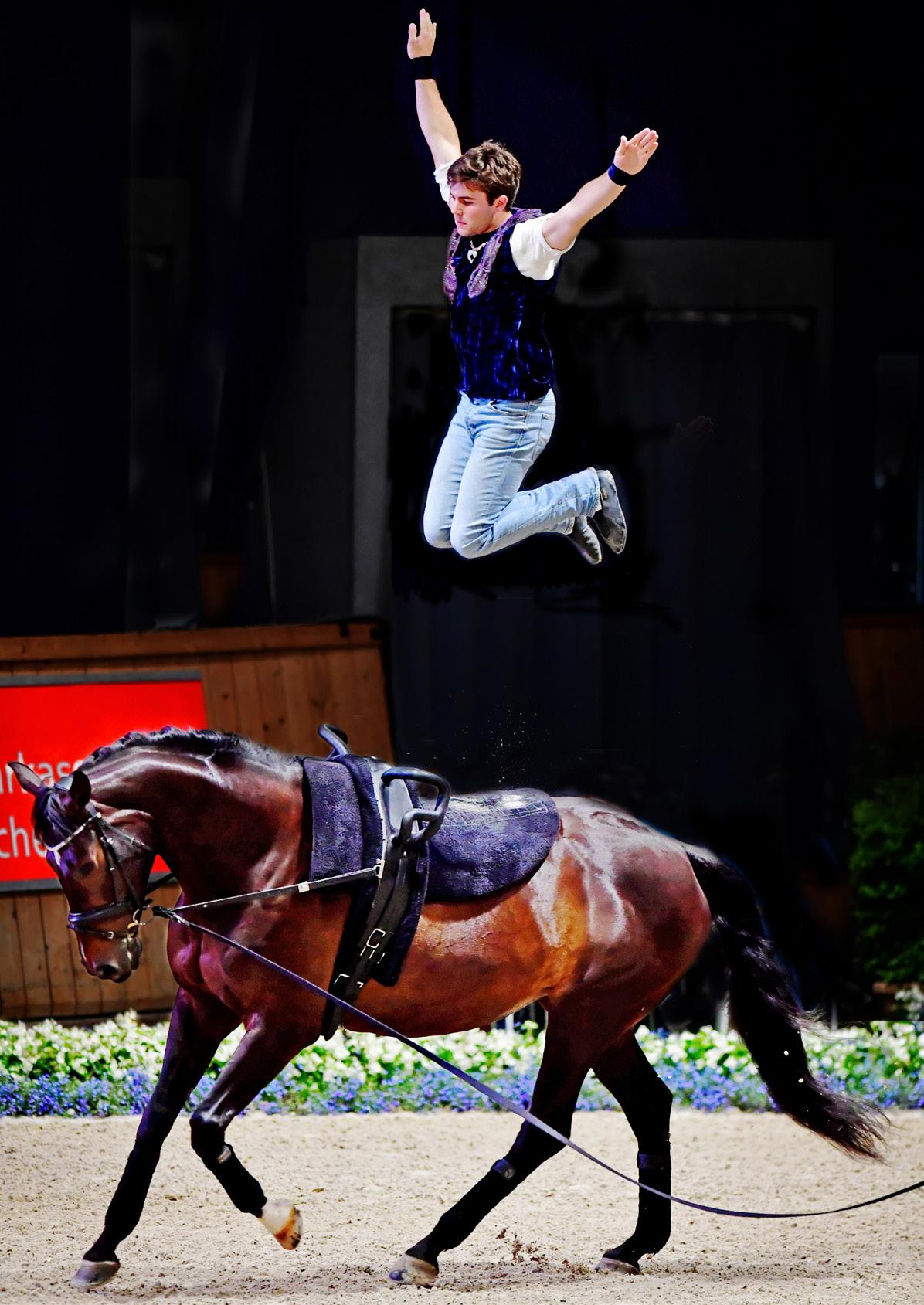
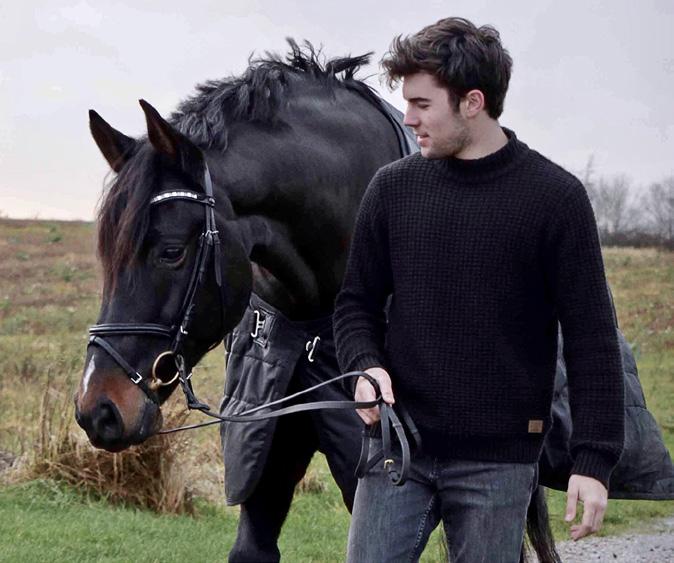
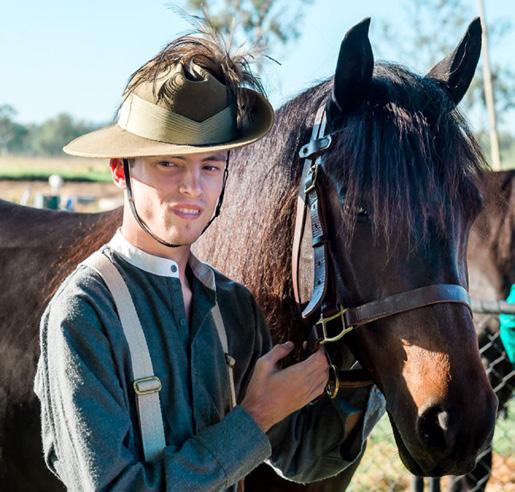
A Queensland-based journalist, Marisa has worked for national and international media organisations. She enjoys all things art, travel and photography, and in her spare time loves to hike. In Culture Corner, Marisa speaks to Anne Crawford on why a passion for words and horses has worked so well for this Australian author and journalist.
Victoria Ferguson
Amanda Mac Amanda has had two lifelong love affairs: one with horses, and the other with writing. Now she happily combines both passions as the editor of HorseVibes. In this issue, she chats to champion showjumper
Olivia Hamood on why there are always pluses and minuses, and then finds out what it takes to face down your fears.
Ian Lancaster
Ian, a master saddler, has been crafting beautiful saddles of all descriptions for the past 40 years. He is the only saddler to have won the Overall Showcase of Excellence at the Melbourne Royal, and in this issue’s On My Tackbox shares some valuable saddle fitting tips, along with some of his pet peeves.
Geoff McLean
A horse-lover since age eight, Geoff is a freelance journalist, photographer and consultant with a passion for horse sports. His great joys in life include family, his dogs, cooking, gardening and cycling. In this issue, he reports on the Remi Stud Young Rider Scholarship, awarded to Elise Payne at the recent Saddlefitter Brisbane CDN.
A member of the Australian Traditional Medicine Society and the International Institute for Complementary Therapists, Victoria is an author, an EA Level 2 dressage coach, and for 20 years has been an advocate and practitioner of herbal medicine for horses. In this issue she shares ex-racehorse Aussie Bob’s extraordinary healing journey.
N.G. Quinlan
N.G. Quinlan, otherwise known as ‘Q’, is a writer, musician and poet. A resident of the Northern Rivers of NSW, he has been contributing to HorseVibes since August 2019. So, with the Spring Racing Carnival in full swing, what better subjects for his Perfect Partners article than the indomitable Winx and jockey Hugh Bowman.
Charlie Brister
Regular columnist Charlie is an allround horseman whose expertise is in re-training problem horses, as well as coaching riders in the art of cross country, show jumping and dressage. In this issue we share the second instalment of Charlie’s three-part series, in which he explores the benefits of lunging for both horse and rider.
Alex Townsend
Alex and husband Derek Pascoe are owners of well-known Wallaby Hill Farm. Alex manages the property and is the Event Director for Wallaby Hill International Horse Trials. She is also a 4* Eventer, a Level II Eventing Instructor and a Coach Educator –and yet still found the time to answer our 20 Questions!
Candida Baker
Horse rescuer, author, photographer and equine facilitated learning practitioner, Candida returns with her final Horse Listener column, in which she tells the remarkable story of Jo Stacey and her rescue horse Phoenix. It’s a tale of strength, courage, magic, rebirth, and a remarkable connection that may well bring a tear to your eye.
Sonia Caeiro Alvarez
Christine Armishaw
Christine is a horse trainer, riding coach and passionate eventing and jumping rider. A Kiwi girl based in NSW, she teaches others not just how to ride, but also how to understand their horse. She recently caught up with endurance rider Rebecca Radny to find out how horses are trained to thrive in this epic sport.
Jo McKinnon
A multi-award-winning horse racing and equestrian broadcaster and documentary maker, Jo is a former top-level show rider who’s competed all over Australia. A racing commentator for many years, she chose Rebecca Farrow and OTT Thoroughbred Stage Presence’s show ring success story for this issue’s Life After Racing feature.
Sonia is a journalist, editor and writing workshop facilitator based in the Tweed Valley. She’s had a lifelong love affair with horses, although sadly does not own any so lives out her passion vicariously through her friends. In this issue, she indulges in a little Sunshine Coast dreaming at an award-winning riding holiday destination.
Larissa Bilston
Larissa Bilston, BAgrSc (Hons I) is the Nutritionist for Farmalogic, where she developed Equine Vit&Min and the Farmalogic Equine range. Her extensive experience is highly regarded by trainers, riders and owners who understand the importance of good nutrition. In this issue she looks at preparing the optimal diet for your aging horse.
Francine Pullman
After a lengthy print media career, Francine is now a freelance writer and is enjoying her semiretirement, taking the opportunity to write about her personal passion: the horse. In this issue, she takes a look at a truly classic breed, and ponders whether there really is nothing alive as beautiful as a Thoroughbred.
Obelia McCormack
With years of industry experience, our wonderful designer Obelia is an expert in publication production and design, with a knack for combining copy and images into eyecatching layouts. Her client list is impressive and a wide variety of publications have benefited from her considerable talents, including our own very beautiful HorseVibes.
Fiona Todd Fiona’s love of animals in general, and horse’s in particular, has been life-long. Driven by a desire to support and inspire equestrians from all disciples, she first launched The Saddle Hub, a hugely popular pre-loved saddle online store, closely followed by HorseVibes, a magazine dedicated to Australian riders and their faithful equine companions.
DreamsDeliveringScholarship
The Delivering Dreams Scholarship is a HorseVibes initiative designed to help equestrians from a variety of disciplines achieve their dreams. We are dedicated to connecting with communities around Australia to ensure that our Scholarship recipients receive the help and inspiration they truly need to move to the next level.
Applications for the next round of the scholarship are now open and will close on 30th April 2021.
To find out more, or to lodge your application visit www.horsevibes.com.au/horesvibes-delivering-dreams-sholarship
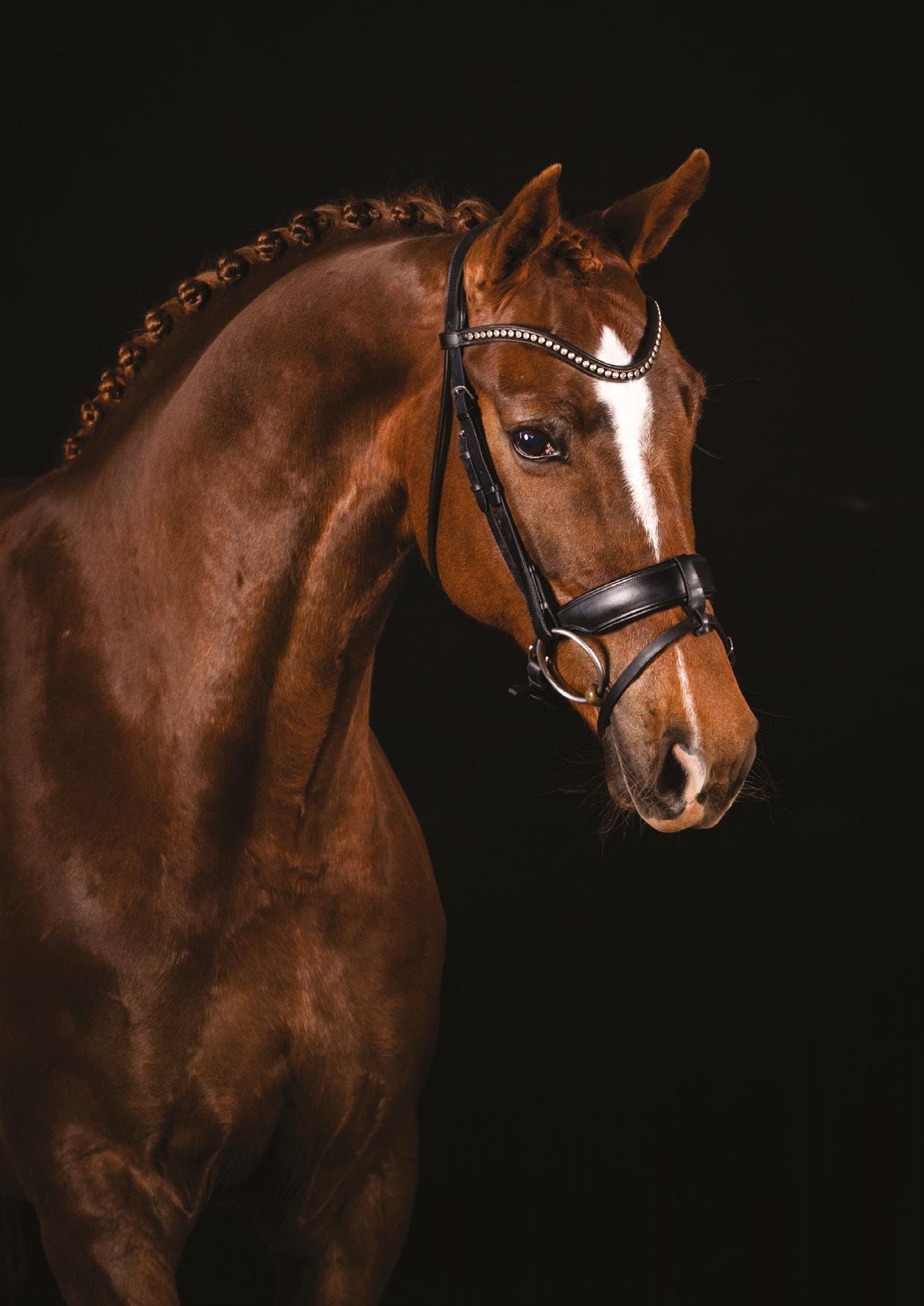
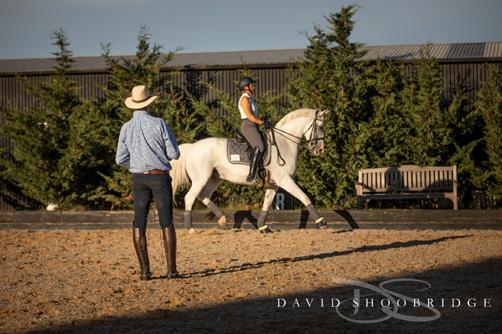
David Shoobridge’s Warmblood, Flame. Photo: Jessica Atkins, JA Studios.
PUBLISHER’S LETTER
From the Horse’s Mouth
A nd that’s a wrap!
DWith Fiona Todd
elivering Dreams 2020 has come to a close and we have not just one, but two very worthy scholarship recipients. In this issue we introduce you to our awardees and our nine amazing finalists. The HorseVibes Delivering Dreams Scholarship is designed to help riders who are committed to constantly refining and improving their equestrian skills, who have a heart to give back to their community, and who are prepared to do what it takes to achieve their goals. Read their stories, be inspired, and take the opportunity to put your nomination forward in Round 1 of the 2021 Delivering Dreams Scholarship.
On the subject of scholarships, Geoff McLean reports on this year’s Remi Scholarship and it’s very worthy recipient. Our collective hats are off to the amazing Cheryl O’Brien for putting this together every year and enriching the life of one lucky rider. Cheryl is one of those people whom I greatly admire.
Well, this issue is the last for 2020, and how fitting that after what has been a horrible year for our readers, our equestrian business friends, and the wider community, it’s the biggest and brightest issue we have ever put together!
We turn the spotlight on Olivia Hamood, one of my favourite show jumpers. She’s someone who has worked hard to establish her family’s brand and to produce horses of exceptional talent who consistently perform at their peak.
Charlie Brister has plenty of great lunging advice in the second of his three part series, as well as putting 20 carefully considered questions to Wallaby Hill’s Alex Townsend.
Editor Amanda Mac talks to Alex and Leigh Crabb from Burilda Park about their popular mindfulness training program. And heads up, we have a subscription to their online program to give away to one of our lucky Equestrian Hub platinum members!
Larissa Bilston gives us the low down on feeding the older horse in our regular nutrition feature, and learn how Victoria Ferguson helped badly injured ex-racehorse Aussie Bob to come back from the brink and enjoy a new lease on life.
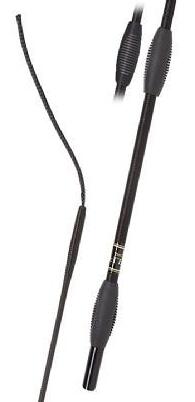
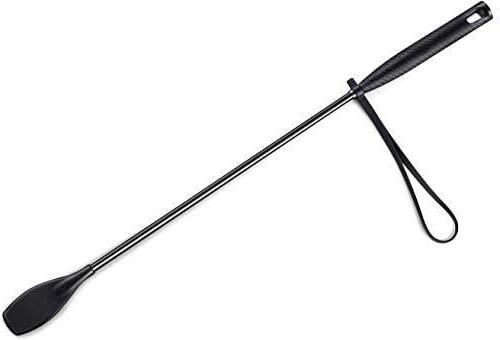
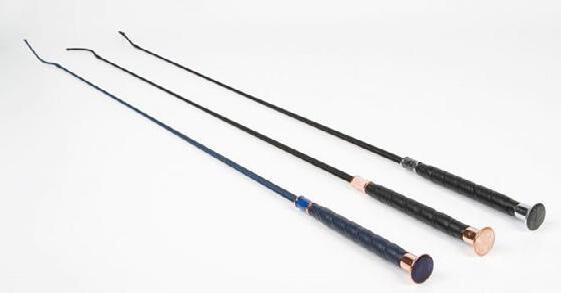
Regular columnist Christine Armishaw has a few things to say about whips and spurs, and also talks Training Tips with endurance rider Rebecca Radny. Bec is the consummate professional in all things endurance!
Sonia Caerio Alvarez takes off on another virtual adventure, this time
to check out Equathon. Owned and operated by Alex and Rebecca Watson (you may remember Alex as an Olympic pentathlete), Equathon is a fabulous riding holiday destination tucked away on Queensland’s glorious Sunshine Coast.
And in her Life After Racing column another of our regular contributors, Jo McKinnon, chats to Rebecca Farrow about her stunning OTT horse Stage Presence, aka Percy, and his successful transition to the show ring.
November being the month of the Melbourne Cup and all things Spring Carnival, it seems fitting that the amazing Winx and Hugh Bowman are N. G. Quinlan’s Perfect Partners. We also feature the majestic Thoroughbred as this month’s breed article.
Have you ever considered what goes into making a bespoke saddle? Master saddler Ian Lancaster mounts his Tackbox to talk about his craft, while Victorian Young Rider Phoebe Roche shares the story behind her success.
But there’s so much more to enjoy! Don’t miss the Saddle Review, Culture Corner, and, gracing our pages for the last time, The Horse Listener. We hope that they enjoy their new stable. Plus, if you’re a bit stuck when it comes to choosing the perfect gift for your equestrian buddy, the Equestrian Hub team are more than happy to share what’s on their Christmas wish lists this year.
And finally, to all our wonderful readers, advertisers, and contributors, thank you for the part you’ve played in helping make HorseVibes the great publication it is today. I’d like to wish every one of you a fantastic Christmas and New Year (well, it has to be better than 2020, right?). So, as usual, pour your favourite tipple, relax and enjoy, and we’ll see you all on the other side.
It’s a
busy life
Having horses in your blood doesn’t necessarily make equestrian success a foregone conclusion. Without single-minded focus and sheer hard work there are never any guarantees, writes AMANDA MAC.
I’m talking to champion showjumper Olivia Hamood. It’s late afternoon and she’s just finished riding for the day – not that that means work is over and done with, not by a long chalk. There’s plenty still to do.
We’ve been discussing what it takes to be successful in this sport, when Olivia remarks: “It’s probably not what people think it is when they see us at shows. We’re getting garlands of flowers and having a great time but that’s just a small part of it. Everything that you do at home, all the hard yards, the blood, sweat and tears, the disappointments, that’s what you have to keep on pushing through and not give up, never give up.”
The words of someone who knows that great achievements in the show ring come with a sizeable price tag, even if you were born into a family immersed in the equestrian world. Olivia’s mother is well-known Australian showjumper Paula Hamood, while her father David was for many years involved in the Thoroughbred racing industry.
Together, Paula and David established Glen Haven Park in Kilcoy, 70 minutes north-west of Brisbane, Queensland. There they specialise in producing, campaigning and selling top quality horses to an international market. It’s a family owned and operated business. David is the manager of the nearly 486 hectare property, Paula is a rider and
NCAS Level 2 Jumping Coach, and Olivia manages a very busy stable as well as competing with her team, something she does extremely well.
That Olivia’s earliest memories include horses shouldn’t come as a surprise: “I think I was still crawling when I first sat on a horse,” she says, “and I’ve probably been riding since I was around two-yearsold. I started off on a Shetland pony, as most kids do, and got bucked off nearly every day.” Safe to say that never give up was a lesson learned early.
I wonder whether Olivia’s obsession with jumping was through nature, nurture, or a little of both. “It was entirely my decision, but obviously I think that growing up with a mother who was heavily involved in the show jumping world was an influence. But it’s what I was always passionate about and wanted to pursue, and I’ve never seriously thought about any other discipline. I was probably four years old when I knew show jumping was it. I used to pretend I was a horse. I would put a spoon in my mouth - that was the bit - and canter around the coffee table jumping books. It was pretty clear even then!”
I mention that when I was around the same age, my pretend pony could execute a mean flying change. We laugh. “It’s funny,” she muses, “it’s like an addiction, once you’re hooked, you’re hooked.”
And young Olivia’s intensity of focus never faltered. She tells me that in primary school, she had been a promising runner: “I went to the Nationals for cross country running when I was only ten. I was quite good and they wanted me to give up riding and run professionally, but there was no chance of that happening!”
It’s natural to assume that it was Paula who taught Olivia to ride, and while that’s largely true, Paula’s father Brian Kennedy (lovingly known as Pop), has had a considerable hand in her progress as a rider. And there’s an interesting backstory. “They’re the two people who have helped me the whole way, but actually Pop never really came from a horsey family”, Olivia explains. “As a young child it was Mum who decided that she wanted a pony, and I guess it was the blind leading the blind to start with. Pop and Mum bought a colt from the doggers and broke it in. They did it all themselves, and learned along the way, and yeah, Pop absolutely loves it. He’s passionate about horses and has been for over 50 years. He’s here every day working with us, and that’s pretty amazing.”
Besides two brothers, neither of whom is horse-minded, Olivia also has a younger sister, now 12-years-old, who after a nervous start recently learned to ride. That’s a very different trajectory to Olivia’s: “Right from a young age I’ve always been very gutsy and Mum had to hold me back. When I was just 12, I had a 13.2h pony called Aztec Sun and we were at the Shepparton World Cup Show. There was a junior six bar and I was trying to jump 1.40. My pony ducked out and I whirled around again to have another try with Mum yelling at me from the sidelines to stop! So I’ve always been determined and never really afraid or put off by anything.”
Olivia tells me that her introduction to the show ring was in hacking classes, and you get the feeling that it wasn’t her preferred option! “That was simply because 12 is the earliest you can start to jump competitively and I was too young. I guess Mum thought hacking was a good place for me to start.”
But when the longed-for transition from
and Sundance GHP taking
the Winning Appliances
Olivia
out
Future Stars Final at the 2019 Chatham Park Summer Classic (Image by Stephen Mowbray).
hacking to jumping eventually came, it arrived in style at the 2004 Brisbane Royal. “It just happened that my 12th birthday was on the day of the Junior Grand Prix. So I went out on Torchbearer, Mum’s World Cup horse, and I won! I’ll probably always be the youngest rider to have won that event,” she laughs.
But was it all plain sailing? Surely there were setbacks, although it’s not sounding likely at this point in our conversation. Olivia ponders my question for a moment: “As a kid I never had any broken bones or major problems. I guess one of my biggest lessons was after riding Torchbearer. He was a schoolmaster. All you had to do with him was point and shoot, which had me thinking that it was me who was the hero. But I soon worked out that I wasn’t when I went from Torchbearer to Bucks Bunny, Mum’s other great horse. At home, I would literally fall off at every cross rail and burst into tears.”
Olivia can laugh at that now, but at the time it was a huge, and a valuable, reality check. “I learned that it wasn’t just a matter of sitting on top and pointing. So, while that’s not exactly a setback, it was something that gave me quite a kick up the bum!” she smiles. “Bucks was a horse you needed to be really accurate with, you had to put him exactly where he liked to be. He demanded a little more rider attention than I was used to giving while sitting on Torchbearer. So it was a big transition from being a kid on a schoolmaster to learning how to ride to actually make it happen.”
I suggest that as with any promising young athlete, the sport/school work balance must have been difficult. “It was,” Olivia assures me, “really difficult actually. When I was in primary school we used to go on the Victorian run for six weeks at a time. Shepparton, Wodonga, Sale, all those World Cup shows. So my teachers would send me away with six weeks-worth of work and I would have to do my school work after I’d ridden. Luckily I managed quite well, but when I got to high school and started studying the more intense subjects like chemistry, it became a real struggle. But Mum and
I learned that it wasn’t just a matter of sitting on top and pointing ... that gave me quite a kick up the bum!
Dad always said that my schooling was important so I did it. Dad was probably the one who helped me if I got stuck, but on the whole I just had to get in the truck, get on with my work and if I had a problem I’d ring the teacher.” Character building to say the least!
However, Olivia’s world changed radically when she was half-way through Year 11
and the Hamoods secured the contract to provide 38 horses for the 2010 Singapore Youth Olympic Games. “We had to procure, train and deliver the horses to Singapore, and that’s when I decided to leave school and pursue a career in show jumping,” she explains. “My grandfather, mum and I flew around the countryside trying out about 110 horses I think it was, before buying the 38. Then, with another two riders and a team of grooms, we began training – and that was basically our life for 18 months.”
The workload was intense, but for fresh out of school Olivia Hamood, the lessons learned were invaluable. “We had an overall budget for purchasing the horses, but we paid very different amounts for each one. Yet at the end of the 18 months,
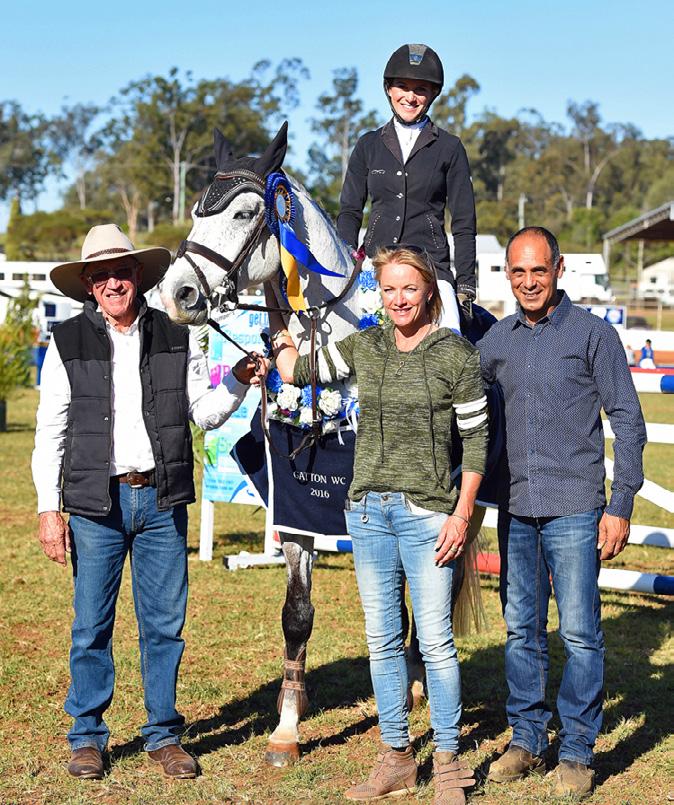
Olivia with her grandfather Brian Kennedy, and parents Paula and David Hamood after her first World Cup win at the 2016 Gatton World Cup on Nero GHP (Image by Oz Shotz).
SPOTLIGHT
we had a broad selection of horses that were all at the same level. After the first day of the Youth Olympics there were, I think, 12 horses all tied on penalties. So it taught me just how much you can do with different horses to get them onto an even playing field, regardless of what you might have originally paid for them.”
I take the point: it’s talent over price tag. “Oh, absolutely! It’s talent that counts plus a good education,” she says. “Something we became aware of while training so many different horses at once was that some had to be lifted up, while others just needed to be kept going. Still, it was a big job to get all of them to exactly where we wanted them to be.”
And as anyone who has ever worked with a bureaucracy will tell you, paperwork is king – another eye-opener for Olivia. “Because we were dealing with the government everything had to be very professional,” she recalls. “We had to produce nutritional reports, farrier reports and vet reports every month. The office management side of it was just massive, but it’s something that has had a big influence on the way I run my business now, even though it’s on a much smaller scale.”
Olivia has travelled the world to compete, and her globe-trotting started early with a trip to Korea in 2009, when she was a member of a junior team along with Tom
McDermott and Tom Sedger. But it was thanks to the Singapore Youth Olympics project that Olivia got a significant break in her career. While in Singapore, she met Belgium based showjumper Ludo Philippaerts, a four-time Olympian with some serious international successes to his name.
Ludo was so impressed with the then 18-year-old that he invited her to visit his stables in Belgium. “And that was such a big opportunity. But at the time Mum felt I was too young to go and held me back for a year. It was in 2012 that I eventually went to Europe and spent three months in Belgium and Italy with Ludo,” Olivia recalls. But even before arriving home in Australia she knew Europe was where she needed to be, so she applied for a 13-month visa and headed back to Europe with two of her own horses, Eternal Flame and Carado GHP. What followed was the stuff of dreams. Ludo and the team took Olivia with them wherever they went, giving her the opportunity to compete at a variety of 5* events: the Mechelen World Cup, shows in Portugal, Italy, France - essentially all over Europe.
I remark that at just 19, the experience must have been life-changing. She agrees: “Previously when I’d travelled overseas, I was with my family or a support crew whom I knew, so to go to Europe at that age with two horses of my own was really daunting at first. Now I look back on it as one of the best experiences of my life. It’s probably where things really opened up for my career.”
One of the biggest take-homes for Olivia, was the degree of professionalism she saw in Europe: “It’s another world over there as far as the horse dealing goes, the way competitions are run, the everyday work ethic, the whole thing. It’s next level. So that’s something I’m aiming for, to one day go back with my own horses.”
But before returning to Australia in 2013, Olivia and her mare Eternal Flame were selected to compete with the Australian Nations Cup Team in Portugal,
Riding for Ludo Philippaerts at the Arezzo Tuscan Tour in Italy (Image by Plastic Foto Sport).
an unforgettable experience that firmly cemented her desire to ride for Australia again.
And once back on home soil, Olivia and Carado wasted no time in making their presence felt with a stellar few years. “Probably one of the highlights was winning the 2016 Australian Championship Grand Prix and placing third overall in the Australian Senior titlethat was special," she says, "then he went on to win two Boneo Cups. We did a lot of good things together. But if you want to stay in the sport, the time comes when you have to part ways and he was sold in December 2018.”
For Olivia, the parting wasn’t easy: “That horse had been around the world with me and to see him leaving, that’s a feeling I’ll never forget. It was horrible, the hardest thing I’ve ever had to do. I was happy for him but so sad at the same time. But it’s just what you have to do when you’re a professional rider. And to watch him succeed now makes me so proud. He was sold to Annabelle Francis, a top little rider in New Zealand, and within the first four months of her having him she had won the Takapoto Gold Grand Prix, so that was a huge feather in his cap.”
In an odd twist of fate, around the time Carado was sold, Paula, who had unfortunately suffered a broken ankle, handed the reins of her top mare Jane Fonda over to Olivia. “She’s probably the best mare I’ve ever had, and 2019 is probably the best year I’ve ever had,” she recalls.
And that’s saying a lot when you look at some of Olivia’s previous successes, which include representing Australia three times, being named Equestrian Queensland Sport Star of the Year twice, winning the Gatton World Cup, and in 2016 winning both the Boneo Cup Grand Prix and the Australian Championships Grand Prix.
But for Olivia, one of her biggest achievements was placing second in the 2019 Australian Senior Championship with Jane Fonda. “That was a huge deal for me because it attracted some serious
ABOVE: Carado GHP jumping to 6th place in his first World Cup at the 2016 Gatton World Cup Show. Olivia won the class on Nero GHP (Image by Oz Shotz).
BELOW: With Knockout III, owned by Linda and Graham Huddy, at the 2018 Boneo Cup Classic (Image by Stephen Mowbray).
prize money,” Olivia explains. “Then I came second to Chris Chugg - a bit of an idol of mine - and Levilensky in the Willinga Park Grand Prix, and second to Chris again in the World Cup decider at the end of the year. They were in the region of $25,000 classes so that was a big thing – and Dad was certainly happy on the drive home!”
Olivia seems to have a knack for finding top showjumpers, and when she’s on the hunt, she has a very specific check list. “Probably the first thing I look for is a good temperament and a big heart. I think that with those two things in place, other qualities can be worked on. But they’ve also got to be careful,” she adds, “they can have any technique but if they’re not careful they’re not going to be any good to you. So heart, temperament, and carefulness are probably my top priorities.”
But while ability is essential for the horse, it’s also prerequisite for the rider, and that includes mindset. Olivia has some strong views on the subject: “Before a big class I like to go somewhere quiet to just be alone. I don’t like to do anything else other than that, and I don’t like talking to anyone because I find that the smallest of things can influence your mindset. And by the time I go into the arena, I’m completely focussed. All I’m thinking about is myself and my horse and the job we have to do. The rest is just a blur.”
Currently Olivia has a seven-horse show team in place, which she says is the best she’s ever had. Besides Jane Fonda, the line-up includes Alan 111 Z, Knockout 111, and Lola GHP, three great horses all owned by Linda and Graham Huddy, who are, in Olivia’s opinion “absolutely fantastic owners.” Besides Olivia’s team, there are an additional nine horses in work in the Glen Haven Park stable, with close to 50 horses on the property all told. “We also breed here as well as doing some spelling and pre-training. There’s no time for anything else but horses,” says Olivia, who puts in close to 12 hours a day - nine hours riding and another three managing the stables - six days a week.
The champion jumper is also a huge fan
Then I came second to Chris Chugg - a bit of an idol of mine - and Levilensky ...
of flatwork. “I think nearly 80 per cent of our riding is based on that. Without flatwork you’re fighting an uphill battle when you get to the higher levels,” she explains, “it’s the discipline that allows you to place your horse on an exact take-off spot. The horse needs to be so adjustable that you can put them wherever you want. We’re talking within inches. It can be the difference between leaving a 1.60m fence up or not, and that can be the difference between winning or not.”
As we bring the conversation to a close, Olivia offers up a few final thoughts. “You know the old saying: you don’t give up, you get up? That sums up the horse world. It’s relentless and it’s hard work but if you want it badly enough, you’ve just got to keep going. That, and the support of your family, is probably the biggest thing in this sport.”
Then there’s the ability to deal with pressure, and Olivia has had her fair share of that. “Coming from a horsey family people think you’re lucky, and you are,” she says thoughtfully, “but the issue there is that as Paula Hamood’s daughter, they expect a lot of you, and that’s additional to the pressure you put on yourself! So that’s something that you have to learn to overcome. No matter what people think, success is not simply a result of your circumstances. It’s not that simple. There are always pluses and minuses.”
Olivia with Linda and Graham Huddy’s Alan III Z in the Mini Prix at the 2018 Summer Classic (Image by Stephen Mowbray).
BRISTER’S BRIEF
Lunging: It’s a circular question
In Part Two of this three-part series, resident columnist CHARLIE BRISTER goes deeper still on the subject of circles and how to perfect them.
II’m hoping that you made it at least halfway around the circle after reading Brister’s Brief in the September/October issue of HorseVibes! But before we dig into the next instalment, let’s take a look at some key points from the last article to save you from having to read it all again:
y Lunging is no silver bullet, it will help rid your horse of excess energy, and depending on the way you do it, it can also help to encourage relaxation on a deeper level.
y Check that feed and turnout is suitable for your horse’s needs. Calm the energizer bunny behaviour with feed that’s properly balanced and appropriate for their workload.
y Pay attention to your horse: which rein do they fall in or rush more on? Remember, developing straightness begins on the ground.
There are lots of choices in regards to what equipment to use. Experiment with what works best for you and your horse. It’s not about the tool but more how you use it.
Aim for a calm but responsive horse.
Focus on tempo and line. Avoid using lunging ‘systems’ that pull the horse’s head down and diminish the stop response from the reins.
For rehab horses, go for straight lines before lunging.
Now your memory has been refreshed, let’s get into Part 2.
Developing a smooth, even circle
Clearly a bit distracted, this is today’s pupil Cletus Brown, a Team Thoroughbred NSW horse.
Your horse may be more interested in what’s going on outside the lunge yard. If that’s the case they’ll be working with their nose out and their shoulder falling in. They need to pay attention to the centre of the circle – you!
Gently squeeze the lead asking them to look to the inside. Release when their head turns in even a little bit. This may
reduce the circle size but it’s better to have a smaller circle with their focus on you than a large one with no focus.
One thing to watch out for is who is moving whose legs? Is the horse moving your legs, or are you moving the horse’s legs? If the horse falls in and you back away that’s rewarding the horse for falling in. Instead, stand your ground in the centre. Try pointing your tool at the shoulder so they are more likely to stay out on the circle. When you start walking backwards with the horse following you on a circle, the horse has succeeded in lunging you!
How do the aids work for stop and go?
Horses can learn through Pavlovian, also known as classical, conditioning. This means that the horse will start to link different cues together. For example, if clicking with the voice always comes before use of the whip, the horse will start to react to the initial clicking.
ABOVE AND BELOW: Start teaching the yield at the halt.
slower trot. When the trot is in balance again, repeat the transition to canter. Don’t do an upward transition if the horse begins to rush in the current gait.
It’s important that the horse is waiting for you to give an instruction, not just forging ahead on its own. Sometimes you might have to return to walk/halt transitions. Each time they halt, walk over and give them a scratch on the wither to reward the halt. The more you can reward them, the more they'll want to listen.
Also, try doing transitions within the gait – a slightly faster trot to slower trot. They should move to the new speed and stay there without you needing to chase them. Remember, the focus is on tempo and line control. To develop a calm horse we have to be careful not to confuse the horse.
Always saying ‘whoa’ before putting pressure on the lead to slow them down can teach them to respond quickly to your voice. It’s important to use the lightest cue first whether that be voice or body position, before you use a physical aid.
Work on transitions
Lunging can really help to improve transitions as the horse has the opportunity to move without a 50120kg load bouncing around on their back. Watch your horse make a transition on the lunge. Do they raise their head (which hollows their back)? Do they fall in towards the centre? Analyse the shape of the horse and their circle and work on improving both.
Trot to canter should be a nice, calm, upward transition. If the horse tosses their head and speeds up their trot, gently ask for them to come back to a
Good brakes from the bit are fairly essential in my book. A calm horse that can maintain the tempo and the line you ask them for from soft pressure will start to use their back on their own.
How much is a good thing?
The time you lunge a horse is totally dependent on your situation, but horses are not meant to be going on a small circle for extended periods. Start to think that that’s enough after ten to fifteen minutes - definitely not an hour. If you find yourself having to lunge your steed at trot and canter for half an hour just to get someone into the saddle, then maybe professional help from your coach would be useful.
Six of the best: top tips for happy lunging
1. Check your gear, and make sure your horse is familiar with the longer rein and any whip or flag you might choose to use.
2. Work your horse in hand on the
Your horse’s attention should ideally be on you in the centre of the circle.
straight before you send them out to work on a circle.
3. Aim for calm transitions in both directions without drilling the horse. Finishing on a good note is always advised.
4. Start smaller to make communication simpler. It’s easier to make a necessary
correction if the horse is only two to three meters away from your hand.
5. As soon as they’re comfortable and responding to your aids for walk, stop, and trot, enlarge the circle. Working a horse for long periods on a small circle is not advised.
6. Make it interesting and keep them
paying attention by changing the pace at least every couple of circles.
How can lunging improve the rider?
Once a horse is calm and responsive on the lunge, it can be used to help the rider’s seat. There are many different exercises you can build up to on the lunge - from trot poles to jumping. Lunging is often used to help a rider with their seat and balance sans stirrups. The use of side reins in this situation can be useful for stabilising the horse until the rider develops an independent seat.
The ultimate form of this work is vaulting. Check out the Australian vaulting team on YouTube to see how some of our young equestrians hone their skills riding on the lunge!
If you and your horse emerge from the lunge arena relaxed and happy, then your riding days are likely to be more calm, happy, and more competitive!
Don’t miss Part 3 of Lunging: It’s a circular question in our next issue.
Charlie Brister of Brister Equestrian is an all-round horseman based in western Sydney. His expertise is in re-training problem horses, as well as coaching riders in the art of cross country, show jumping and dressage.
Trotting over poles spaced at roughly 1.2m tests how well they’re listening and how relaxed they are when another level of complexity is added.
Cletus and Chavish with Charlie (recognisable by his socks) and Farm Manager Les Westwood. The aim of lunging is to produce a relaxed, attentive horse, regardless of the type of whip, halter, or any other gear you might be using.
The Right Rein
Don’t miss it!
The Delivering Dreams Scholarship
We received some exceptional applications for this year’s Delivering Dreams Scholarship. Selecting a recipient proved difficult, so much so that our judges have chosen two particularly outstanding applicants: Jamie Hocking and Luke Purtill.
The HorseVibes Delivering Dreams Scholarship is something of which I am extremely proud. It has been a long-held dream of mine to help equestrians of all ages and abilities move closer to their own dreams. And that’s exactly what the scholarship is designed to do: to motivate its recipients and assist them in removing any barriers that might be holding them back.
This particular scholarship round has been outstanding. We
introduce Jamie and Luke to you on the following pages, along with our nine wonderful finalists. And I would like to personally thank everyone who has made it so very special, our applicants, our very generous sponsors, our panel of expert judges, my family, and my many friends, all of whom have helped in so many ways. With much gratitude,
Delivering Dreams Scholarship Sponsors
DELIVERING DREAMS SCHOLARSHIP
RECIPIENT
J AMIE HOCKING: VAULTING
Jamie and his mare French Kiss at CHIO Aachen in 2019 (Image courtesy CHIO Aachen).
INSET: Jamie and French at their training facility in Jelling, Denmark (Image courtesy Jamie Hocling).
Jamie Hocking is a 24 year old rising star in the world of equestrian vaulting. He’s been an Australian High-Performance athlete since he was 12, and is absolutely passionate about his sport.
Vaulting greatly improves rider balance and coordination, foundational skills for all disciplines – and it was Jamie’s mother, once a keen eventer herself, who encouraged him to begin vaulting at the age of six because she wanted him to learn to fall safely and stay balanced on his pony, who was prone to pigrooting!
But Jamie, who loved the gymnastics and music involved in vaulting, never returned to the more conventional riding disciplines.
As you might imagine, it’s very costly to fly an Australian horse to competitions in Europe or the USA, so from the tender age of 12, Jamie left his own horse at home with his vaulting club coach, and competed in Europe and the USA on borrowed horses. During his junior high years he often spent eight to ten weeks training in Vienna and competing in France, Germany, Austria, Slovakia and Hungary. By the time he reached senior high school, he was training in Jelling, Denmark, his home away from home, in order to compete in Northern Europe and Scandinavia.
But Jamie’s life is a balancing act in more ways than one! In order to be able to spend most of the year with his Danish trainer, Lasse Kristensen, and his beautiful 17.2hh Danish mare French Kiss, he raises money by selling wool and sheep from his flock on the family farm at Woolsheds in South Australia. To help make ends meet while he’s in Denmark, he lives at the barn with French and does stable, maintenance and farm work, as well as coaching a team of Junior Danish Vaulters.
The mark of a well-rounded sportsperson is their desire to give back, which Jamie certainly does. When he’s home in Australia, he coaches at the
National Workshop in Canberra, as well as coaching at the Acacia Gold Vaulting Club in Springton, where Charlie, his exracehorse still helps to train new Aussie vaulters. Additionally, in 2019, Equestrian Australia announced that Jamie had been appointed as Chef d’Equipe for the FEI Vaulting World Championships for Juniors, an experience that he says was a privilege.
Jamie’s list of achievements is impressive, and includes, among other accolades, holding a 17th place in the World Rankings for Equestrian Vaulting, winning 16th place at the 2018 World Equestrian Games, 4th at the 2017 World Cup in Germany, and 3rd place in the 2017 World Cup in France. He’s also the current Australian NationalChampion.
Currently in his sights are the 2020 World Championships, which have now been scheduled for 2021. “Lasse, French and I are refocussing for that one, and hoping it will come off next year. It only comes around every four years so it’s a big deal.”
And refocussing includes a significant amount of hard work. “I average up to 18 hours training a week. Vaulter’s don’t really get a long break after competitions
finish, maybe a short vacation and then it’s back on the barrel to work on routines for the next season,” Jamie explains. “Most people think that all our training is done on the horse, but we only work with our horses for around 20 per cent of the time.”
Also part of the package for vaulters are gymnastics, stretching, practicing routines on the barrel, and mental training. And the horse? “To keep French fit, healthy and happy she has her own training program. She does dressage, free jumping and trail rides in the forest, plus the odd dressage competition with a friend who is an experienced dressage rider – and that’s not me!” Jamie laughs.
Being awarded the Delivering Dreams Scholarship means a lot to Jamie. “I was really honoured to be selected, especially as joint winner alongside fellow Aussie equestrian athlete, Luke Purtill. I really appreciate every bit of help I can get. I don’t have a sponsor and sometimes it’s a challenge to support myself so winning something like this is a real leg up. At the moment I’m a bit stuck in Denmark due to COVID and sometimes I feel far from my Aussie home, but this has really helped me to feel connected again.”
DELIVERING DREAMS SCHOLARSHIP RECIPIENT
LUKE PURTILL: DRESSAGE
Luke Purtill doesn’t pull any punches when it comes to the way he feels about horses: “They’re the best thing that I’ve ever done,” he says.
And that’s perhaps a bit of a family trait. Luke’s grandmother loved horses and taught her daughter, Luke’s mother to ride. Then his mother taught him, and at a very early age too: “I can’t remember not being able to ride,” Luke says. “Mum first started sitting me on horses before I could walk. I first fell off one when I was 18 months old!”
Fortunately that didn’t deter Luke in the slightest, and he’s now making his mark in the world of dressage with the courage and determination that would
put many of us to shame. “I am a rider with a disability and I have had lots and lots of health problems,” he explains, “but there are lots more things I can do than things I can’t do. Many people who know me say what I achieve is
inspirational and a good example. But I think that’s funny because I just try my best and give things a go. I like to show everyone that having a disability doesn’t have to stop you from reaching for your dreams and doing amazing things.”
Luke, who lives near Darwin where no Para or Special Olympic events are held, has to travel south for competitions.
“I compete mainstream in dressage. At the moment I am riding in Prelim and usually score in the low to mid 60s. I also like to do Western Pleasure and trail riding. I’ve joined the Special Olympics in Queensland and have been flying to Brisbane to train and compete. I won two firsts and a second
at my last competition,” he says.
For Luke, a good dressage horse has little to do with looks: “Much more important is that they’re kind, sensible and trainable. For dressage they need to have good movement. I’m lucky that my dressage horse Eureka is beautiful as well as sensible, and she moves really well.”
With a keen interest in Australian history, Luke enjoys participating in Light Horse re-enactments. “Our horses are Walers, an Australian breed that was used in the Australian Light Horse, including the charge at Beersheba on the 31st October 1917. Many of my ancestors were in WW1 and WW2 which is one of the reasons I’m interested in Light Horse re-enactment. It is important for people to know our history and our heritage.”
When the competition season is in full
swing, Luke trains anywhere from five to ten hours a week. He also works in a furniture factory and enjoys ten pin bowling, which helps him with his fitness.
Currently he has two horses, a mare and a stallion. “The stallion is going to be gelded soon. I have been riding him but I can’t compete on him until he is gelded. Mum is working on him now so he’ll be ready for me next year, by which time my mare will hopefully have had a foal!”
Luke’s major goal for the future is to be chosen to represent Australia at the 2023 World Special Olympics in Berlin. “To do this I need to win gold at state level to be eligible for the state team,” he explains. “I then need to win gold at the Australia Special Olympics to be eligible for the Australian Team.”
But while Luke is determined to achieve his goals, his motivation is balanced by
Luke with his stallion Mt Weld Resilience (Image by Darwin Photography Professionals).
INSET: Preparing to participate in the ANZAC Day Light Horse Re-enactment with Willing Noble Eureka (Image by Darwin Photography Professionals).
an admirable philosophy when it comes to competition success. “I always believe in looking after my horse before myself,” he says, “and Mum has taught me that being a good sport is the most important thing of all. You win every time you get on a horse. A ribbon is just a bonus.”
It came as a bit of a surprise when Luke learned that he had been awarded the Delivering Dreams Scholarship. “I was shocked and didn’t know what to say. Mum cried! She said it was because she was so proud of me and what I have achieved,” he says. “I am just so excited and want to say a huge thank you to HorseVibes and all the wonderful sponsors for allowing this opportunity. I’d also like to say a massive congratulations to Jamie Hocking for sharing this scholarship with me. I can only hope I can be as amazing as him!”
ENCOURAGEMENT AWARD
A NTONIA BEARDA E VENTING
Some people expect good things in life to land in their lap with little or no effort on their part – Antonia Bearda is not one of them.
Originally from New Zealand, her first equine partner was Gem, a 27-year-old paddock pony who was very selective about who rode her. However, she introduced Antonia to Pony Club and the pair subsequently became the six-bar champions, clearing 1.30m.
Antonia says she’s never had a ‘push button’ horse, but has managed to bring out the best in every one she’s owned. “I’ve turned horses no one else wanted, even horses that people were scared of, into horses who competed at the Horse of the Year in New Zealand, and won Pony Club championships.”
And nothing’s changed.
Partnered by ex-racehorse
Charlie, the pair have progressed from their first ever 60cm jumping round in 2019, to competing in a 1.10m event earlier this year. “We’ve jumped a 1.30m oxer with ease a few times at home, so I know he has the scope and talent,” Antonia says.
On the dressage front, learning together has been “slow but steady” and solid progress is being made.
Not surprisingly, Antonia has more than a few goals currently waiting out COVID-19: “I want to compete in the Jump Off Ex-Racehorse Series B Class. I also want us to be achieving higher than 65 per cent in our dressage tests. My long term goals are to compete for Australia or New Zealand in the World Equestrian Games or even the Olympics. And a huge dream of mine is to one day compete in the Al Shiraa'aa Hickstead Derby in the UK.”
K ASEY BOGIE W ESTERN REINING
Ever since she can remember, horses have been an essential part of Kasey Bogie’s life. She comes from a Western riding dynasty, and trains, travels and competes (she first rode in reining competitions at age 10) with three generations of her family. Her grandfather, Rick Sciberras, is her coach and mentor, and Kasey has learned much from him.
Passionate about her sport, Kasey is very focussed. “Hard work in conjunction with some incredible horses has enabled me to win four National Champion titles and three National Reserve Champion titles,” she says. “In 2019, I was placed 1st in the Non-Pro Top Ten Standing of Australia,” she says. Another long-held goal achieved through focus and discipline.
On the subject of goals, Kasey has been working hard to secure a position on a National Collegiate
Equestrian team in the USA. COVID-19 has added another layer of complexity to the process, but she is keeping her hopes high. “It would be a dream come true to have the opportunity to compete in reining whilst earning a degree in Animal Science,” she says.
Many Australian reiners have fine-tuned their skills in the US, and Kasey knows that to achieve the best results, you need to learn from the best. But while the knowledge gained from college coaches and industry professionals would greatly benefit her, she also has a goal of sharing those skills with others. Kasey’s passion for her sport begins and ends with her love of horses, and has done much to shape who she is today. “They teach you invaluable life lessons such as how to take care of others, respect, kindness and patience,” she says.
Antonia with her OTT Charlie (Image by Kia Loveday of Spirit Fire Photography).
Kasey, Starbar Tassas Oakie and Kasey’s grandfather Rick Sciberras (Image by Ken Anderson).
MICHAELA BRAY DRESSAGE
After learning to ride as a child and later progressing through Pony Club with the usual assortment of equine companions, Michaela Bray finally found her place in the world of dressage. “For me, dressage was an easy choice,” she says. “I thrive on the challenge of building and maintaining my horses’ fitness, elasticity, enthusiasm and strength. I cannot imagine a life without dressage, and more importantly, without my horses.”
Michaela currently has two horses in work: Flowervale Florenz (Floz) and Ellanbrae Benito Gold (Ben). Partnered by Floz, she earned a place on the Victorian High Performance Dressage Squad, the National Young Rider Squad, and was awarded Australian CDI-Y Champion in 2018. Meanwhile Ben scooped 4 Year Old Champion at the 2020 Boneo CDI, which
included an invite to the Ingrid Klimke Masterclass, which Michaela says was “a truly once in a lifetime experience.”
With two talented horses in her life, Michaela has set some exciting goals. “Ben is just beginning his dressage career, so training goals take priority over competing in specific events. I would love to have him confident with the elementary movements by the end of the year – and I’d be ecstatic to be able to attend the 2021 Dressage with the Stars and finish the year with a start at Medium. With Floz, I’m now looking at pushing his work to the next level and consolidating the Medium Tour movements.”
Whilst talent is essential, Michaela recognises that dedication, passion and hard work are equally, if not more important. Dressage, she says, is a long-term pursuit, and she’s strapped in for the ride!
CLAUDIA BRODTKE DRESSAGE
Claudia Brodtke has been obsessed with horses her entire life. Much to her parents’ dismay, the obsession started early: show jumping over broomsticks, lunging the family dog, and 'Why You Should Buy Me a Pony' PowerPoint presentations were a regular occurrence.
When she was 11, Claudia had her first riding lesson, taking any opportunity to work with horses that presented itself. Later, she competed in hacking and show horse events on ponies she’d broken and trained with a friend before turning her focus to dressage when she was gifted Style, a horse she’d been leasing.
At the end of last year she acquired her second horse Arnie, a young 17hh Arabian Warmblood who she’s training up for dressage. She was also competing in Prelim tests with
Style towards the end of 2019. Claudia has her sights set on being the best athlete she can be, and to give herself every chance of equestrian success, she’s learning about nutrition, mindset, rider-orientated workouts, sports psychology, and equine alternative therapies. Additionally, she’s begun teaching and is studying for her Equestrian Australia Instructor’s Certificate, an avenue to sharing her passion for all things equestrian with others.
Determined to succeed despite more than a few setbacks, Claudia’s main goal is to one day become a professional rider. But in the shorter term: “I want to have Style competing to Medium by the end of 2021, with the aim of competing at State Dressage, and to have my young gelding Arnie confident in his work and progressing up the FEI levels.”
Michaela rides a dressage test with Flowervale Florenz (Image by Gone Riding Media).
Claudia and Sordena Park Rhythm N Style (Image by Grace Watt, Geosnapshot).
LAMINITIS SEASON
We know what they are like, so help manage the temptation of high-sugar, starch & green grass this season. Give them the low-sugar, low-starch, high-fibre diet they need to stay fit and healthy this spring.
Barastoc’s complete range of horse feeds will satisfy even the most sweet-toothed horse and provide them with the nutrition they need
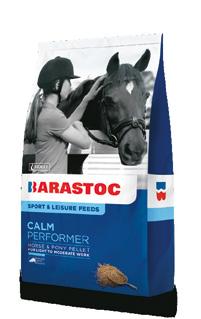
• Barastoc Calm Performer
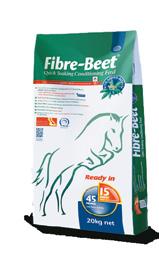
• Fibre-Beet
SOCIAL SCENE HELP BREAK THE HABIT!
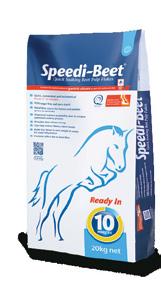
• Speedi-Beet
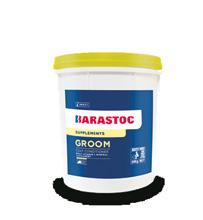
• Barastoc Groom
K ELSIE CRANSTON S HOW JUMPING
Although Kelsie Cranston is an accountant by day, her real passion is for horses. Unfortunately, working 8:00 to 5:00 with an additional two hours travel (she lives on a cattle property) doesn’t leave much time for riding. However, she makes it work with the help of arena lights and a very supportive partner.
Kelsie owns two Thoroughbreds: 14-yearold Alice who has been successful in classes up to 1.20m; and Rick, an OTT who after a recent start to his jumping career is showing plenty of promise.
Working for Vicki Roycroft for nearly a year was a high point for Kelsie. “Her knowledge, horsemanship and dedication will stay with me for a lifetime. I also worked for David Goodwin who instilled in me the confidence to set goals and chase them,” she says. Kelsie grew up with horses,
but it’s in the last few years that she has become serious about her riding ambitions. “I’ve very proactive about improving my skills and grasping every opportunity to have lessons with professional riders and coaches,” she explains.
Often competing all over NSW and South East Queensland, her long term goal is to compete in a World Cup qualifier with Rick. For Alice, Kelsie’s plans are to win a State Amateur title: “Alice is my heart horse and I cherish the years I have left with her before she starts stepping down the grades and moving to retirement.”
But there’s another dream: “My long term plan is to produce a horse from scratch, and to compete with them up the levels to World Cup and possibly even beyond,” she says.
A NNABEL CUSACK E VENTING
Annabel Cusack has been riding since she was three-years-old. Once a keen show jumper, she made the switch to eventing four years ago and hasn’t looked back. Her dedication to her discipline is such that, pre-COVID, she was happily driving six or more hours every weekend to compete.
She bought her current horse, Dynamoey, in September 2018. Although he had experience in the show jumping ring, he had never been around a cross country course, but like Annabel, he’s taken to eventing like a duck to water. Consistently competitive in Open 1* classes, the pair are now qualified 2*. Annabel says she feels extremely lucky to have a horse qualified at this level, the first she has produced to that particular FEI standard.
Currently sitting for her HSC, Annabel admits that this year
has been challenging on a number of levels: “It’s been nothing but knock after knock and very disappointing. But I’ve overcome many mental challenges and continued to push through and remain focussed on my goals.”
With her resilience and commitment tested and proven, she is now more determined than ever to make her dreams come true. In 2021, she’ll be taking up a place in the Australian Catholic University’s Elite Athlete Program, and has high hopes of being in a professional eventing stable in Sydney while she completes her degree.
Annabel’s next major goal is to compete at the Australian International 3 Day Event. “And Dynamoey is the horse with the talent to get me there,” she says, “he’s more than ready to take the eventing world by storm.”
Kelsie and Showtown at the 2019 Toowoomba Royal (Image by Oz Shots Photography).
Annabel in action with Dynamoey (Image by Elizabeth Borowik).
ENCOURAGEMENT AWARD
PEARL DESSART WORKING EQUITATION
Pearl Dessart’s love affair with horses started early and reached critical mass when the The Man from Snowy River travelling show came to town. It was then that she lobbied her parents in earnest for a pony. One eventually arrived in the shape of an on-loan Shetland.
Several other horses followed before Ruby came to stay. “She was sold as a children's pony,” Pearl explains, “and was anything but!” But Pearl persevered and she and Ruby now have “a unique bond.”
Pearl is a member of the Wudinna Team Yarders and Southern Eyre Team Penners, and has been competing in local inter-school gymkhanas since 2014. Ruby enjoys games and the pair frequently bring home ribbons. In 2018 Pearl competed on a friend’s horse in the Lower Lakes Stockman’s Challenge in Strathalbyn, SA, and against
an experienced field was delighted to be presented with an Encouragement Award. She also won High Points (Junior Team) for Southern Eyre Team Penning in the same year riding Ruby.
Last year was yet another good one for Pearl.
Accompanied by Ruby, she was the only junior rider to participate in the 250km fiveday Cummins Trek, a fundraiser for a regional mental health program. She was also nominated for the Lower Eyre Peninsula Junior Sport’s Person of the Year Award in acknowledgement of her equestrian achievements.
Pearl is currently focussing on completing a Certificate III in Agriculture. “Then I’m considering a career in either animal health, or the animal behaviour field. But one thing’s for sure, my life will always involve horses in one way or another,” she says.
P OPPY DOUGLAS WORKING EQUITATION
When it comes to blitzing Working Equitation competitions, Poppy Douglas does it well! She was the Australian Junior Champion in 2017, 2018 and 2019, scooped the 2019 Consagrados 1 Horse of the Year, an event ridden one-handed, and is the only junior to have qualified for the NSW State Team.
In 2019, she won the Open Company Maneability, an obstacle course ridden with dressage-like precision (and on that occasion presided over by an international judge), and in the same year, was both the dressage winner and runner-up at Mudgee Show on two different horses.
Poppy’s riding career began early. Perched on a horse’s back before she could walk, she comes from a horseloving family: her mother, who also competes in Working Equitation with both a Master’s and a Consagrados horse,
her step-dad and her sister all ride.
One of the secrets to Poppy’s success is her attention to detail. “None of my wins could have been achieved without a great deal of dedication to dressage training,” she says. For her, that’s key. She trains daily and often spends a solid week working on dressage movements with her horses, followed by roll backs, fast work, cattle work and trail rides for variety.
Self-motivated and driven, Poppy’s committed to competing at the highest levels, and wants to turn riding into her career. And she says a move Stateside isn’t out of the question: “I’d like to go to the US basically to train and learn from some of the best clinicians there so I become a better rider. It probably won’t be for some time, so I’ll just see how things play out.”
Pearl and Ruby training for the 2019 Cummins Trek (Image by The Dapper Crow Photography).
Poppy and Get Rhythm in a Phase 4 Cattle Test (Image by Renee Muller).
M ADISON DOYLE
E VENTING
Madison Doyle had an amazing run in 2018 and 2019, achieving a personal best of 125cm, a string of show jumping successes, and qualification for State Level C Grade competitions.
One of her long-term dreams is to compete in the Olympics with a Brumby cross to promote the breed and help save their lives. Late last year, she tamed a Brumby through the Victorian Brumby Association (VBA). “That was certainly a very big and special moment in my riding career. I also adopted him and he’s now mine,” Madison says.
But there are more immediate goals: “I’m aiming to improve my dressage to a Grade 1 level, so I can compete in Grade 1 horse trials. I’m currently Grade 3 due to dressage difficulties, but I’d really love to compete 1* in
eventing and show jumping,” she explains.
Madison also hopes to enter the Australian Brumby challenge once she leaves school, and would like to become a trainer in the VBA's training program, so she can tame and re-home Brumbies.
While life hasn’t always been easy for Madison, she’s anything but a quitter: “When I first got my mare three years ago, an instructor told me she would kill me,” she says, “and sure enough, the first five or so rides all ended in tears and sometimes blood. However, I persisted with her because I knew she had talent. Thankfully, our rides no longer end badly, and the horse that was going to kill me now jumps up to 120cm, can be ridden at liberty, has been trick trained, and visits residents at the local aged care home!”
Black Country Adelinda 17.5"
Madison and Little Gem eventing in the rain (Image by Mane Memories Photography).
Relaxation Connection Training
Everything I’ve ever learned in life I’ve learned from horses. After training professional reining horses for 25 years and representing Australia at the 2010 and 2018 World Equestrian Games I thought I knew everything there was to know about training horses. What I now realize is that the horses were the ones teaching me. Through horses I have become a better listener, communicator, and leader. They have taught me the power of compassion and empathy, and helped me with personal growth. I started making online training videos to help people create a deep connection with their horses so they to could be open to their transformational power and realize their true potential as riders. I never expected this journey to be so life changing for everyone involved. If you’ve been looking for a training program designed to create the best version of you and your horse, I invite you to start your 7-day free trial of my online video library.
start your 7-day free trial
a lot of attitude.
INSET: Great Australian Horse Stories, recounting the tales of horses and their owners.
After a long day’s ride through the desert, a comfortable camp is a welcome sight.
Anne and Poppy, a small horse with
RIGHT:
(All images courtesy Anne Crawford)
CULTURE CORNER
For the love of words and horses
A love of words and a passion for horses turned out to be a productive mix for Anne Crawford, author of Great Australian Horse Stories, writes MARISA KUHLEWEIN.
Anne Crawford can still recall the exact sensation she experienced that spring day while she was minding a house for a friend travelling overseas. As she sat at a desk, warmed by gentle sunlight, she glanced out at the garden. Suddenly, it felt as if something had fluttered down from the sky and she’d caught it in both hands. “I’d like to write books” – it was a striking moment of clarity. Something that had been sleeping curled inside since childhood was nudged and awakened. Later, when Anne told her father about her epiphany, he wasn’t surprised, commenting: “Oh, I always knew you’d write books.”
For this successful Australian author, her first love was – and remains – words. “Even from when I was young, I loved writing,” she says. In her early teens Anne, along with a group of friends, created a horse magazine called Stables and Stirrups just for fun. “There were
five of us. We all put in pictures of our horses and we made up stories. We only had one copy of the magazine and it would go from one person to the next. It wasn’t a very sophisticated operation,”
Anne laughs. “One of my friends was recently doing a COVID clean up and she actually came across the magazine!”
Anne’s passion for writing led her to work as a feature writer for The Age and The Sunday Age for over 10 years. It was there that she honed her craft and learnt how to construct compelling narratives. However, it wasn’t until she had received her house-sitting revelation that she realised her true calling was to write books. Deciding to pursue her childhood dream of becoming an author, Anne left the world of newspapers in 2009, and hasn’t looked back.
One of her first books was Doctor Hugh, a memoir co-written with Dr Hugh Wirth AM, an iconic Australian vet and former RSPCA president. Dr Hugh had his own radio show and was well known for being controversial and at times, feisty. He took on everyone: from people acting cruelly towards animals to animal rights activists, politicians, and even people in his own profession. “I was listening to him on the radio one day when the announcer suggested that he should write a memoir, and he replied, ‘If only I had someone to do it for me,’” Anne recalls. On the spur of the moment, she rang the radio station, and asked to be put in touch with Dr Hugh’s producer. “It was completely spontaneous,” she laughs, “even after I had sent off my email to him, I thought, ‘Oh my goodness, what have I done? This man is fierce,’ but actually he was really nice.”
Over the course of the following two years, Anne spent many enjoyable
It's important for you and your mount to be colour co-ordinated, even when riding through the Moroccan desert.
afternoons with Dr Hugh. Woven through his memoir, which is written in his unmistakeable tell-it-as-it-is voice, are his thoughts regarding the proper care of animals, and his views on the best approach to animal rights in contemporary society.
With three books to her name, Anne was building a reputation as an author who could craft words into colourful tapestries that brought people’s stories to life. Her powerful writing and vivid imagery captivated readers, taking them along with her for the journey. Following Doctor Hugh, Anne’s publisher approached her and asked her what she’d like to write about next. “Horses
There was a small scholarship available. My father said that if I won it, I could buy a pony. Well, I did win the scholarship and with it I managed to get a $350 pony.
were the first thing that came to my mind,” Anne says.
If writing is Anne’s first passion, then her second is horses. After pestering her parents incessantly for a horse, she bought her first pony Pepe at the age of 12. “There was a small scholarship available. My father said that if I won it, I could buy a pony. Well, I did win the scholarship and with it I managed to get a $350 pony,” Anne recalls.
It’s certainly an exhilarating feeling to ride a horse, and to hear their welcoming nicker as they see you approaching is always heart-warming. Time spent with horses can be both relaxing and restorative, and the very
TuffRock loves to make great quality products available at reasonable prices. This summer we are doing specials with your local retailer on our vegan friendly, Everyday Joint Formulas for horses (EJF), and for dogs (K9JF) made from the only volcanic collagen minerals (chelated) and botanic vitamins in today's world... Natural freedom of movement for all ages.
Tuffrock is the WORLD's FIRST energised ancient volcanic chelated minerals bio-available for GI health, joints & collagen generation for horses and dogs, livestock & small animals ... pure natural minerals ... 100% Australian
Maddie Brown Waymere Oaks Latitude
Maureen & Hudson_Supreme
Champion Oakway
Reign
Ov Fame
special bond humans and horses often share was something Anne thought would make for fascinating reading. And with that, the idea for Great Australian Horse Stories was birthed and Anne began her research.
Anne’s background in journalism was more than useful as she began to gather stories, seeking out the hidden treasures in people’s lives. She prides herself on being able to interview people and draw out their stories and idiosyncrasies. “A lot of people think ‘Why me?’ They might have the most amazing stories, but most people are quite modest,” she says.
Many of the people interviewed for Great Australian Horse Stories are from the Gippsland area in Victoria, where Anne herself lives. “It’s because I knew a lot of people there, and then they knew people, so the book grew from that. For example, the lady who lives across the road from me, her mother, Beth, grew up in the days when you rode a pony to school and parked it in the pony paddock next door. So I talked with her about that.”
Further along the road from Anne’s home the Horse Workshop offers Equine Facilitated Learning, which encourages the interaction between horses and humans, an interaction that’s been found to benefit both people with disabilities, and those suffering from maladies such as depression or anger.
“I’ve watched a session in progress,” she says, “and it was a really beautiful thing to see. So of course, I wrote about them and what they’re doing.”
Infused with heart, wit and drama, Great Australian Horse Stories brings to life stories of horses from all over Australia.
“It was just fantastic talking about horses with people for months on end,” Anne says smiling.
One of Anne’s own experiences with horses, which she holds close to her heart, was thanks to a Zouina Cheval riding trek. The tour included a week’s ride through the stony desert below the High Atlas Mountains in Morocco. At this point in her life, she hadn’t owned
TOP: One of the Moroccan Barb stallions Anne met on her desert adventure beneath the High Atlas Mountains
ABOVE: Anne’s exciting 2009 adventure in Morocco helped bring horses back into her life again.
a horse for years, but had never lost her love for them. “It was a chance of a lifetime thing. I specifically travelled to Morocco to do the tour,” she says.
Each day, the small group of riders mounted their Moroccan Barb stallions, ready for a long day’s ride through the stony terrain and sweltering heat. High valleys above them were splashed with patches of river-fed green, and the villages nestled on the mountainsides looked down over almond orchards and palm groves. Occasionally the riders came across a lush oasis framed by date palms offering shade and rest. For Anne, riding through the desert was both a thrilling and an unforgettable experience.
Arriving back in Australia after her Moroccan adventure, Anne decided that she’d like to own a horse again. “That trip really got me back into horses – now I’m more horse mad than when I was a young girl,” she laughs. And these days she has three: Poppy, a beautiful chestnut pony who’s been with her for 10 years; Harry, a chestnut Stockhorse colt bought for her by her partner in a “wildly romantic gesture”; and Angel, a liver chestnut on lease from Project Hope Horse Welfare Victoria. “Project Hope do fantastic work identifying horses that have been neglected and abused and finding new homes for them,” Anne explains. “Angel loves doing things with you, but she can be a little naughty sometimes and occasionally she can test you – but she’s a really lovely horse,” she adds, with real fondness creeping into her voice.
On being asked for her opinion on what it takes to be a good writer, Anne pauses for a moment and then says: “You have to be good with words and have a real love for them. And you have to re-read and examine every word you write. Obviously it helps be creative, but you also have to be accurate. Perhaps the main thing is to stick with it – and for that you have to be dedicated.”
Find out more about Anne and her work at www.annecrawfordphotography.com
A favourite place: Digger's Rest Station in the Kimberley, Western Australia.
Facing down your fears
As anyone who’s had a bad fall will tell you, the damage is as likely to be mental as it is physical. So how are you to get over the fear that you might fall again? AMANDA MAC looks at a unique program designed specifically for nervous riders.
Admitting your fears, whatever they are, is never easy, and overcoming them is usually even harder. But if it’s true that anxiety is just a state of mind, how do you flip that mental switch and regain your confidence?
If any rider ever had good reason to fear getting on a horse again, Alexandria Cragg, more usually known as Alex, is a perfect example. Half a dozen or so years ago she was riding a meanspirited horse that bolted and pitched her off his back. Landing with arms
outstretched, both wrists were broken in the fall. Alex, who at the time had six Standardbreds in work, suddenly found herself incapacitated. However, it was just before the accident that she’d met her now husband Leigh Cragg, who willingly assisted with the Standardbreds. He also helped Alex overcome her understandable nervousness around horses, using a series of methodical techniques and carefully detailed exercises, firstly while on the ground and then while mounted.
In 2015, Leigh and Alex moved west
of the Blue Mountains in Oberon NSW, and together established their dream property, Burilda Park Equine, settling down to a life in which they indulged their mutual passion for breeding and training horses. But in 2019, the unthinkable happened. Out on a ride to celebrate her birthday, Alex was thrown and dragged through the bush in a freak accident, breaking her right arm in five places. “It was horrific”, she recalls, “as well as being horribly painful. I was sitting in the bush for around 40 minutes waiting for the SES and ambulance. There were about 20 of us on that ride and I think everyone was traumatised by the accident.”
With her arm refusing to heal properly, it took an operation to piece the breaks back together. But unfortunately, damage to Alex’s radial nerve during the surgery left her arm paralysed. “My hand, my fingers, my wrist were all paralysed. I couldn’t lift anything and I couldn’t feel my arm at all. I was told that there was a possibility feeling and movement would never come back, but also a possibility that the nerve might regenerate. It really was touch and go.”
Alex shares that the months after the operation were very challenging both emotionally and physically. “I couldn’t drive and for seven months Leigh had to brush my hair, dress me, and often shower me. I was in constant pain. Then we got married and I couldn’t even hold my own bouquet. I was quite embarrassed by the whole thing, but it was an amazingly bonding experience for us.”
After such a terrible ordeal, it’s hardly surprising that Alex’s anxiety around horses was back with a vengeance. “I didn’t want to brush them. I didn’t want to lead them. I didn’t want to tie them up. I would feed them but that was it – and I certainly didn’t think that I’d ever ride again. But in reality, it wasn’t so much the fear of horses, as
MAIN: Happy to be around horses again - Alex and Chuck (Image by Louie Douvis Photography).
LEFT: One of Leigh’s specialities is resolving difficulties with problem horses (Image by Kate Gouldson Photography).
the fear of having another accident.”
As a way of dealing with the trauma, Alex, an ex-journalist, began writing about her experience on the Burilda Park Equine Facebook page. “Typing was slow and one handed,” she laughs, “but a lot of people, mainly women, felt the same and began to post about similar fears.”
If it hadn’t been for the techniques Leigh had used to help her regain her confidence after her first accident, plus the Burilda horses that were part of her daily life, Alex admits that she may well have given up. Added to that, there were numerous people writing to her about their own experiences: “I realised I couldn’t let them down and
It’s all very well and good to have a chat to people about their fears, but that doesn’t offer the solution ....
I couldn’t let myself down, so I just kept documenting it all,” she says.
Alex was receiving between thirty and fifty messages a day (she still does) and in the process built what she calls her ‘tribe’, people who are prepared to talk openly and
honestly about their anxieties and lack of confidence in the saddle.
Thankfully, over the next 12 months the nerves in Alex’s arm regenerated, and Leigh’s program proved pivotal in getting her not only back on a horse, but doing so with confidence and joy. What Leigh had discovered was a way to make Alex feel secure again. “I knew that she needed everything to be broken down to the tiniest of details. Then she felt in control. And when she felt in control, she felt secure and wasn’t scared to try anything. So, I made every step easy to understand and gave her the reason behind it to keep her mind busy, limiting the opportunity for it to run free and catastrophise everything!” he explains.
Leigh’s methodical and considered approach had brought Alex’s riding back to life - but if it had worked for her, why not for others? Through their Facebook page the couple had become aware of the very real need to make Leigh’s techniques more widely available. As Alex points out: “It’s all very well and good to have a chat to people about their fears, but that doesn’t offer the solution that’s going to get them over the line. So we started to organise everything Leigh had been teaching me – the ground leadership and the psychology he uses, basically just teaching me how to be safe – into a program we could share with others. We call it Mindful Horsemanship.”
The program, which has proved hugely popular, focuses on safety and caters for nervous riders. Alex and Leigh believe that safety essentially comes from a black and white approach. “This is what to do, and this is what not to do. Leigh often says that you don’t need to know everything, you just need to know what to do next – and that’s what the program teaches, both while you’re on the ground with your horse and in the saddle. The whole program is broken down to such specific
Alex and Leigh in emergency after her birthday ride went horribly wrong (Image courtesy Burilda Park Equine).
elements and exercises that no matter how nervous you are, you’ll get a lot out of it. It also takes you through all of the stages you need to train your horse to competition level,” says Alex.
Driven by their shared belief in the
program’s effectiveness, the couple organised a state-wide tour, purchased a gooseneck trailer, loaded up their horses and travelled around New South Wales, delivering their confidence-building holistic approach to horsemanship at booked out clinics. “The response
was very humbling,” Alex recalls. During the clinics Leigh also devoted time to problem solving, one of his specialities, including how to deal with horses that are hard to float, or are belligerent or pushy, or those that have become dangerous because they haven’t had the clear and unambiguous guidance from their rider that they needed.
It wasn’t long before the excellence of Leigh and Alex’s program was recognised by mindset coach and counselor Amy Watson. Amy joined them on the tour, expanding the scope of the training by coaching riders in her own sessions during each clinic. But in early 2020, the popular clinics came to a close when Alex fell pregnant (it’s a boy, he’s due in November, and no, his parents won’t divulge his name!).
So, using their Facebook page as a platform the couple took their program online in the form of a six week boot camp. With hundreds of riders from all over Australia and New Zealand joining the program, the Facebook offering has
been extended until the end of the year when it will be re-launched from the Burilda Park Equine website. The same methodical breakdown of horsemanship that guided Alex back on the path to confidence will then be available through a monthly subscription.
To accompany the Mindful Horsemanship program, the couple have designed a colour-coded lead rope with strategically placed markers to aid with the hand placements required during each of the program’s exercises. These are available for purchase through their website.
And if you’d like to attend a faceto-face clinic, you’ll be happy to know that Alex and Leigh are hoping to offer them once again in 2021, but this time with the addition of a very small cowboy to the team!
To learn more about the Mindful Horsemanship program, contact Alex and Leigh through their Burilda Park Equine Facebook page, or visit their website www.burildapark.com.au
ABOVE: A Mindful Horsemanship clinic held at Eden Equine in Bilpin NSW (Image by Kate Gouldson Photography).
LEFT: Leigh working a client’s horse on a misty Hawkesbury morning (Image courtesy Burilda Park Equine).
Stubben Maestoso Deluxe 17" $2,995
Stubben Roxane 17" $1,200
Stubben Juventus 16.5" $1,100
Six-year-old Gian and Lightning, who was in his late 20s in this photo. He’s now well into his 30s and still Pony Clubbing (Image by Jenna Bilston).
In this article, equine nutritionist LARISSA BILSTON takes a look at how to prepare an optimal diet to meet the changing needs of your aging horse. NUTRITION
HFeeding your older horse
aving the luxury of keeping much-loved horses through their retirement years is an honour many us happily perform for our equine friends. Older schoolmaster horses are highly valued for the lessons they can teach but they do need some additional nutritional support to keep them performing into their golden years.
Check general and dental health
Continue to take care of teeth, worming or other veterinary issues regularly, even in horses that are no longer ridden. This allows them to optimally utilize the nutrients they consume. When planning a diet for your older horse it’s important to know if they have any metabolic or health conditions that impact on the types of nutrients that are suitable to feed.
Provide adequate and appropriate roughage
The first step in planning a good diet is to ensure enough pasture is available for grazing and to supplement with hay when pasture is limited. This is the key to maintaining gastric health in horses of any age.
Horses need to be able to eat around two per cent of their bodyweight in dry matter per day to keep their gut functioning optimally. For a 500 kgs
horse, that adds up to 10 kgs of dry matter per day, which could be 11 kgs of hay or up to 50 kgs of fresh grass!
The horse gut evolved to constantly digest a steady stream of fairly low energy, high fibre forage. When pasture is in limited supply, underweight or ageing horses need an unlimited supply of good quality grass or meadow hay. Lucerne hay should comprise no more than 30 per cent of roughage intake.
Ask your vet or equine dentist if
your older horse’s teeth allow good utilisation of grass or hay. Horses with worn or missing teeth may need to be fed chaff (and lots of it!) to ensure their roughage needs are met.
If your horse is overweight, has a metabolic condition, or is prone to laminitis then limiting green grass and supplying them with low sugar hay (see sidebar) weighing 1.5 per cent of their bodyweight is often necessary. Slow feeder hay nets can help make their daily ration last so that they always have access to something to eat.
Add calories
Not all horses will get enough energy from hay and grass to maintain weight. Be prepared to increase the size of hard feeds in response to weight loss but always make sure free choice hay is available for underweight horses.
If you're looking for something to top up a diet in order to put weight on, you don't necessarily need a product that says 'weight gain' on the bagyou only need to add more calories. This is often easiest achieved by
ABOVE: Corrine and Reuben, her 29-year-old TB, competing in an online led obstacle race during COVID lockdown (Image by Larissa Bilston).
w w w f a r m a l o g i c g l o b a l c o m
Give your aging and retired horses the best of health with Farmalogic's premium quality nutritional solutions.
OLD HORSES
The healthiest shine is the glow of inner health!
M I N E R A L B A L A N C E
W h e t h e r y o u ' r e b a l a n c i n g C 3 o r C 4
p a s t u r e s , h i g h o r l o w o x a l a t e d i e t s ,
n e e d e x t r a o m e g a - 3 s o r n o t , E q u i n e
S U P P O R T I V E N U T R I T I O N
Y o u c a n r e l y o n F a r m a l o g i c ' s r a n g e o f
s c i e n t i f i c a l l y p r o v e n n u t r i t i o n a l s o l u t i o n s
t o s u p p o r t y o u r h o r s e ' s n e e d s f o r u l c e r
m a n a g e m e n t , a n t i o x i d a n t s , l a m i n i t i s
s u p p o r t , j o i n t s u p p l e m e n t s , p r e b i o t i c s ,
p r o b i o t i c s , t o x i n b i n d e r s a n d e l e c t r o l y t e s
V i t & M i n m a k e s c o r r e c t i n g t h e m i n e r a l
r a t i o s o f a n y f e e d s s i m p l e C o n t a c t u s
f o r h e l p t a i l o r i n g s u p p l e m e n t
r e q u i r e m e n t s t o y o u r h o r s e ' s n e e d s .
A v a i l a b l e w h e r e v e r g o o d s t o c k f e e d s a r e s o l d ! A N T I O X I D A N T S
F a r m a l o g i c M e l o x i s a n e x c e l l e n t s o u r c e o f
v i t a m i n C f o r o l d e r h o r s e s . M e l o x a l s o
c o n t a i n s n a t u r a l s o u r c e d v i t a m i n E , o r g a n i c
se l e n i u m a n t i o x i d a n t s a n d p l a n t - d e r i v e d
S O D e n z y m e s w h i c h
w o r k t o g e t h e r t o b o o s t t h e
i m m u n e s y s t e m , i m p r o v e
r e s p i r a t o r y h e a l t h a n d
s u p p o r t h e a l i n g p r o c e s s e s
a f t e r w o r k , s u r g e r y o r i n j u r y
feeding more of what you already feed. However, make sure you feed enough fibre before increasing hard feeds.
You can increase the level of energy (calories) in the diet with a cereal grain (such as oats or barley), a legume grain (e.g. lupins), a 'super fibre' (like beet pulp, soy, or lupin hulls) or oil. Or a combination of the above as plain ingredients, or in the form of a premixed pellet or muesli style feed.
Horses with equine metabolic syndrome or insulin resistance who do not maintain weight from forage alone can only consume a low GI feed such as beet pulp, copra, legume hulls, lupins or oil.
When choosing your grain or energy source, consider the condition of your older horse’s teeth and their digestive efficiency as well as how much time and energy you are willing to put into preparation.
• Whole oats can be fed raw, but other cereal grains such as barley, oats, and sorghum should be fed in a cooked form. You can boil them or buy steam flaked or micronised.
• You may wish to avoid the cooked grains with added molasses - just check the labelling on the bag.
• Some super fibres require a few minutes soaking.
• Uncooked lupins are also best soaked to soften the seed coat – soak whole lupins for 6 hours or overnight. Cracked lupins soften if soaked in boiling water for 10 minutes.
TIP: Older horses produce less saliva. Dampen hard feeds to aid swallowing and reduce the risk of choke.
When using oils for weight gain, take care to keep the diet anti-inflammatory by providing enough omega-3 fatty acids to balance the added pro-inflammatory omega-6 oils.
The amounts of energy food required depend on horse size, level of activity, the amount of energy provided by the roughage source and the individual's
metabolism. Research shows that some older horses experience a decline in the function and efficiency of their digestive tracts but others seem to process feed as robustly as ever. If your older horse requires large hard feeds, it is better to split these into two or more meals per day.
Check protein levels
Adequate roughage usually provides enough protein to meet the daily needs of adult horses but some older horses are less efficient at digesting protein and may need some supplemented.
If there is no clover in the pasture, increase dietary protein by feeding a biscuit of two of lucerne hay per day, or by adding full fat soy or
legume products in the hard feed.
Balance the vitamins, minerals and fatty acids
Feeding your horse a correctly balanced diet complete with all the vitamins, minerals and fatty acids needed will allow the body to function optimally. This can result in improved ‘fuel efficiency’ and immune function. Remember that unless all minerals are provided in the correct ratios, it is possible for a horse to be deficient in one mineral even if the recommended daily intake is given.
Horses produce their own vitamin C supply from glucose in the liver, but as they age the efficiency declines and an antioxidant supplement containing vitamin C is recommended.
Omega-3 fatty acid supplementation is necessary when horses are reliant
The greying muzzle of a dear old friend (Image by Susanne Jutzeler).
VITAMINS & VITAMINS & MINERALS MINERALS
OOIL IL
OOIL IL
Choosing Low Sugar Hay Forage for horses with equine metabolic syndrome (EMS) requires constant, detailed attention to sugar and starch levels.
y Ideally, choose hay which has been analysed and has a combined ESC + Starch value of less than 10%.
y Avoid high production grasses such as ryegrass and do not feed cereal (oaten, wheaten) hay or chaff.
y If carbohydrate levels of hay are
unknown, soak in warm water for 30 minutes or cold water for 60 minutes to remove soluble sugars.
y Drain and discard soak water before feeding. Soaking hay can reduce water soluble carbohydrates by 30%.
y Discard soaked hay after 12 hours if
uneaten. It is the spike in blood glucose and consequently insulin levels that triggers laminitis, so horses with EMS can suffer laminitis without being overweight.
All I want for Christmas ...
( ... besides a HorseVibes subscription)
FIONA TODD: Publisher
Dear Santa, It’s that time of year again, and I’d like a set of extra-large boots for my 17hh pony Bonnie! I really like these Lemieux Carbon Mesh Wrap Boots. They’re breathable so they’ll keep her tendons cool, plus they are washable, and quick to put on and take off.
$74.95
And if my pony’s getting new boots, I think I should have a pair too. I’m absolutely loving these Agave Blue Erin Bone vintage look boots. That distressed leather finish, those embroidery accents! And I’ve been super good this year, Santa, so any chance of two pairs?
$750, but on sale for $599 at the time of writing
AMANDA MAC: HorseVibes’ Editor
Hi Santa, I really don’t want to be pushy, but I want, need and absolutely must have this stunning photo of two Brumby stallions by Carol Hancock. To make your life easier, I’ve chosen the size and type: a 16" x 24" Nudirect Acrylic Bolted print, which I won’t even have to have framed.
$298
www.carolhancock.com.au
And I love this beautiful little pony pendant from Inga Genis’ new handcrafted, horse-inspired jewellery collection. So many beautiful pieces to choose from and all so reasonably priced! And Santa, make sure you check out her customised silver pendant range, which gives you the option of having a special keepsake piece crafted using your own horse’s … or reindeer’s … hair.
$145
ingagenis.com
All I want for Christmas ...
( ... besides a HorseVibes subscription)
CHARLIE BRISTER:
Columnist & Right Rein Podcast Host
You can’t have too many pairs of socks. Ideally, they’re knee-high and have pink flamingos emblazoned on them. Perfect for riding, securing the britches and giving that extra protection under my chaps. Also, the brighter they are the better it is for funky sock Friday! BTW, Santa, I particularly like these Limited Edition Empower Knee High Socks.
$19.95 www.performaride.com
A dressage whip is another essential that gets daily use. A nicely balanced whip, like this Fleck Perfect Balance Dressage Whip, is ideal for ground work, for teaching a horse to yield, back up, or come forward. It also makes for much easier float loading. One that’s not too bendy suits me so that I can be more accurate with it.
$49.95 saddlery.com.au
NICKY RICHMAN: Social Media Manager
Dear Santa, please, please, please bring me a 400 litre Greystone Paddock Vacc for Christmas! Keeping on top of manure pick-up will be so much quicker and easier. It’ll give me back my weekends so I can spend more time actually riding!
Start at $2,490 inc GST + shipping
I would love to unwrap a Kentucky Boot Bag this Christmas. Not only will it keep my tall boots well protected, it looks super-stylish with diamond quilting and artificial leather piping. The bag has faux rabbit skin on the inside so my boots won’t get scratched, plus a name tag on the front which I can personalise.
$179.95 trailrace.com.au
All
I
SHAE HERWIG:
( ... besides a HorseVibes subscription)
Manager, The Saddle Hub
I would LOVE an Equine Eye Horse Float Camera for Christmas to stop me worrying about my fur babies when travelling long distance. We have a three-horse float with a kitchen in the front, so I can’t see the horses through the window. The Equine Eye camera will solve this problem! And it’s wireless so I can also use it as a reversing camera when hitching up the horse float - super handy.
$250 equine-eye.com
Santa, I found a set of 12 metal dressage arena markers at Kingston Horse Supplies that would be perfect for training at home. And with all the virtual competitions during COVID it will make filming my tests much easier. They’re made from steel, so they’ll last well, with large easy to see letters. Perfect!
$189.95
MELISSA GOODSON:
Advertising Representative
I would love a pair of black or silver Freejump stirrups. I love my jumping, and when a friend let me try out her Freejumps, they felt like magic. The stability and leg control were amazing and a pair would help me reach my 2021 show jumping goals for sure!
Prices start at $375 equestrianhub.com.au
And I would be super happy to find a Kerrits Ice Fil® Long Sleeve Solid Shirt in my Christmas stocking. I’d wear it when I was riding, and as a professional photographer, it would also keep me nice and cool while I’m outside shooting events. The Ice Fil® Lite fabric technology can reduce skin temperature by up to five degrees, as well as giving UPF+30 protection. Plus, the shirt looks great!
$95 www.equissentials.com.au
All I want for Christmas ...
( ... besides a HorseVibes subscription)
KRISTAL BYRON:
Equestrian Hub Membership Manager
All I really want for Christmas is a 2HAL-L600 Prestige Series Eurofloat in dark grey. It’s a twohorse angle float with a kitchen, fully padded rump bars, and fold up beds to sleep on while I’m away camping with my horses. Santa, instead of your sleigh, maybe this year your reindeers could pull my new Eurofloat with everyone’s presents safe inside? Just an idea :)
$19,990
I’m also in desperate need of an Elite Saddle Company Western saddle with full Quarter Horse bars to fit my barrel-shaped Quarter Horse mare. The design I love is the Silver Show Saddle made from ornately tooled Argentinean cow leather with fully engraved silver detailing. Just one will do. Thanks, Santa.
$1,150
ENYA
CROCKFORD: Contributor
Santa, did you know that a good quality rug is one of the things that makes horse owners’ lives easier? And the Rambo Wallaby Duo fits the bill perfectly! It’s specially designed to stop rubs and wither pressure, it’s versatile for multiple seasons with a removable neck rug and liner, and its weave pattern makes it really tough, which is a necessity with my serial rug ripper!
$249
I find it much easier to splurge on my horses than myself, but as a Christmas gift I couldn’t say no to this J-Margot Competition Jacket! A lovely fit, classy, and the flower pattern on the sleeve and collar adds just enough style without going overboard for my conservative-ish taste. It’s also both breathable and waterproof – a big plus for our sometimes extreme weather conditions.
$595
Western spur with ornamental strap and buckle.
Fine tuning the forward button
Ever been dazzled by the apparently endless variety of whips, crops and spurs? Unsure what to use and when? CHRISTINE ARMISHAW is on a mission to clear up the confusion.
Whips, crops and spurs all have something in common, collectively they are artificial aids designed to improve your horse’s ‘go’ button. The former are carried in-hand, ready to encourage your horse forward with a touch or a flick. Spurs are worn around the heel of each foot, allowing pressure to be applied on both sides of your horse, keeping your hands whip-free and ready to do other things, like steer!
Sounds simple enough, but the challenge is down to the sheer number of choices available. How long should a whip be? When does a whip become a crop? Which spurs are best suited for what purpose? With an ocean of options, selecting the right tools to suit you, your horse and your chosen discipline can be quite the mission.
Let’s explore the world of movementenhancers in more detail. By the end of this article you’ll know when the Prince of Wales is required, what makes roller balls popular, and the maximum whip length you can use in the jumping ring without getting eliminated.
Whips and crops
Structurally, a whip features a length of stick, with a thicker area for gripping at the top, tapering down to a ‘tickler’ or ‘lash’ at the business end. By definition, a crop is technically a short whip, primarily for use while jumping. It usually has a leather flap or ‘popper’ at the end and a loop by the handle. However, it’s
rules, they are not to exceed 75cm in length. If your whip is longer than that, you’ll be eliminated. You’re allowed to use a longer whip for dressage and working on the flat, but you are strictly forbidden to carry or use it when riding over poles or any other obstacle, even when you’re in the schooling area. In eventing, the horse should never be hit with your whip more than twice for one incident, or three times in a row for show jumping. Crops of up to 75cm are also allowed in the majority of show horse classes.
Most EA dressage tests, including para-dressage, allow the use of a whip. Riders can carry a whip of up to 120cm on a horse, or up to 100cm on a pony. It always pays to check the conditions of the test you are planning to ride first. Across all disciplines, you are never allowed to use a whip on your horse’s head or leave visible marks on your horse’s body - this is deemed excessive use. In the sports of endurance and reining, whips and crops are not
Dressage whips: usually riders can carry a whip of up to 120cm on a horse, or up to 100cm on a pony –but check the rules first.
A riding crop with leather flap or ‘popper’ at the end and a loop by the handle.
always be to use the least amount of force required to get the result we want from our horse, some riders hold the view that spurs are too harsh. However, in reality it’s more uncomfortable for the horse or, in many cases, stubborn pony, to be repeatedly kicked before it finally moves off - not to mention incredibly tiring for the legs of the rider! This habit also tends to make the horse lazier and even less responsive as time goes on: it switches off and becomes dull to the leg aid.
The difference between using your heel against your horse’s side versus a spur is like the difference between being pushed with a flat palm or a pointed finger. A spur delivers a more direct point of pressure into a smaller area and so will elicit a quicker response. This is a good thing. It means you should only need to squeeze once before the horse moves forward, then you can leave it alone and stop nagging. With the right pair of spurs, you can train your horse to become more responsive to your ‘go’ signal and thus become much lighter in your aids. This is essential if your intention is to move up through the grades.
Which spurs to select
In making the right spur choice, you need to take into account your own needs as well as those of the horse, and the discipline you compete in.
Styles vary, as do the rules around them. Prince of Wales spurs are very traditional and commonplace in a variety of disciplines. Their shank is slightly curved with a flat end. In contrast, at the end of the shank of a roller ball spur there’s a rotating ball that pivots on either the
The ‘popper’ end of a riding crop.
vertical or horizontal plane. These can be a nice choice for a sensitive horse, or a horse that has never experienced spurs before as they exert a less concentrated pressure. They also reduce the possibility of leaving marks on your horse’s sides.
Swan-neck spurs are shaped as the name suggests, which allows them to reach higher than Prince of Wales spurs. These can be useful for reaching a specific spot on your horse’s flank, and can help prevent the need for a longlegged rider to pinch upwards with their heels. Hammerhead spurs are squared off rather than round at the end, which can give a stronger ‘go’ aid to a lazy horse. Rowel spurs feature a rotating flat disk at the end of the shank. The disk may be either smooth-edged or have serrated teeth or ‘tines’ around it. Dummy spurs have little to no shank and
rounded ends. These are great when your horse doesn’t really need spurs but they’re required as part of the dress code.
Gently does it
Thinking about your equine partner, aim to use the gentlest aid possible in order to achieve the required response. If you have a horse with sensitive flanks, like a thin-skinned Thoroughbred, you may only need to use a pair of softer roller ball spurs. However, if you are riding a ploddy type that has plenty of padding and not much forward inclination, then something a little more pointy and with extra persuasive power may be the answer.
To choose the right pair for yourself, consider your leg position in relation to your horse’s barrel. Generally speaking, the closer to your horse your heel falls, the shorter the shank you’re likely to need. A longer leg with more space between horse and heel will require a longer shank (with potentially more curve) in order to reach the right ‘squeeze spot’.
Rules can change
Discipline rules can change annually. It always pays to check for updates before you enter a competition, but here are a few guidelines to help you along. Spurs must be a matching pair. Shanks should point directly back from the centre of the spur when on the boot, with the tip pointing neither up nor inward. In eventing
To choose the right pair for yourself, consider your leg position in relation to your horse’s barrel.
Generally speaking, the closer to your horse your heel falls, the shorter the shank you’re likely to need.
Gold cup campdraft spurs.
too, so long as the rowels are blunt, smooth and rotate freely. Interestingly, in endurance riding spurs are prohibited altogether.
Whichever style you opt for, be sure to regularly examine the horse-touching ends for any signs of rough edges or sharpness. There is absolutely no excuse for blood, or marks indicating excessive use of the spurs anywhere on the horse. You should keep this in mind if you clip your horse in the winter. Sometimes, a pair of spurs that are fine when used through your horse’s regular coat can become too harsh on the flanks of a clipped horse. It may be best to opt for a gentler pair, or remove your spurs and stay with a whip or crop.
centimetres. This is from the actual boot to the end of the spur, so make sure your spurs are fitted well and sit right against the heel of your boot. Rowel spurs are primarily used in Western riding, but certain variations are legal in jumping, dressage and for show horses
Pro-Polo spurs with straps.
While spurs have their place, like all equipment they are ultimately as kind or as harsh as the rider using them. For those still developing lower leg stability, a whip or crop carried in-hand may be a better choice.
Final thoughts
Remember, the point of using either a whip or spurs is to reinforce your leg aid. It’s often better to carry a whip and not need it, then to need one and not have it. If you have a good, steady leg you can treat your spurs in the same way. In many cases, employing the use of spurs for a few rides can help sharpen up your horse’s responsiveness, after which you may wish to remove them.
The goal, after all, is to ride with the lightest aid possible.
Prince of Wales spurs.
Stubben dynamic dressage spur.
Healing comes naturally
A practising equine herbalist for 25 years, VICTORIA FERGUSON has been instrumental in the healing of many injured and sick horses – but few needed her help quite as badly as Aussie Bob.
Victoria Ferguson nearly didn’t answer her phone when it rang one afternoon in June. It was, after all, a Sunday, and the call was from an unknown number.
Fortunately however, she did pick up. The call was from South Australian Bryan Littlely of the Rise Relief Centre near Victor Harbor, where off-the-track racehorses are rehabilitated before being rehomed. Given the urgency of the situation, one of Victoria’s clients, who also happened to be a friend of Bryan’s, suggested that he should get in touch with her.
Victoria, who holds a Diploma in Herbal Medicine, has been an advocate and practitioner of herbal medicine for horses for over 20 years. Based in Tenterfield NSW, she studied with the renowned Australian herbalist Dorothy Hall during the late 1990s, and is the author of two bestselling books - The Practical Horse Herbal and The Complete Horse Herbal.
But back to Bryan, who was in a terrible predicament with his Thoroughbred horse Aussie Bob. “Bryan had been advised by his vet to put Aussie Bob down the next day, but Bryan didn’t want to do that. The horse was a tough battler and he hadn’t given up. He was
I’ve never seen fresh Calendula in a flower shop. We agreed this was serendipitous, a very encouraging sign!
the ex-racehorse was suffering from chronically infected wounds on three legs and had been on antibiotics and bute since April. Of greatest concern was the wound on his near hind leg. The infection had travelled up his leg and blown out above the hock leaving bone and ligament exposed.
“To my mind this was clearly a resistant staph infection and I decided to treat it as such,” says Victoria, “so I recommended herbs which have been proven to defeat infections caused by the bacterium Staphylococcus aureus in humans. I’ve used these herbs successfully in horses previously, as well as raw honey, which is also very useful for this type of infection.”
During their conversation, Victoria gave Bryan detailed instructions for the herbal protocol she believed Bob needed so urgently. “This involved cleansing the wounds with a wash made from Calendula flowers before packing them with raw honey. The flowers could be fresh or dried. Bryan enthusiastically embraced the routine and spent a lot of time raiding gardens in the area to gather the flowers!” laughs Victoria.
Fortunately, Bryan found his first batch of Calendula flowers at a florists, which, says Victoria, really blew her away.
“I’ve never seen fresh Calendula in a flower shop. We agreed this was serendipitous, a very encouraging sign!”
But Aussie Bob also desperately needed a herbal mixture specially formulated for him by Victoria. Luckily, one of Victoria’s Adelaide-based colleagues kindly agreed to dispense the prescription. There was no time to waste and Bryan happily made the long drive to Adelaide and back to pick up the remedy.
also the Rise Relief Centre’s founding horse and had a special place in the Littlely family’s hearts,” Victoria explains. After sustaining multiple leg injuries,
And that’s when the magic began. Within a few days, Bryan called Victoria to let her know that the wound on Aussie Bob’s near hind leg, the one that was the cause for most concern, was looking cleaner and had begun to improve - and that very gradually,
healing was beginning to occur. Additionally, the wounds on the horse’s other two legs were now being successfully treated with Artisan Skin Balm, a healing remedy formulated by Victoria, which, she says “is the perfect follow on from raw honey.”
Bryan, meanwhile, couldn’t be happier with the results. “The diet protocol and herbal remedies Victoria advised us to use were the game changer for Bob. They gave us the ability, as well as the confidence to steadily bring Bob off bute and antibiotics and we could see our super-tough horse was now well armed for his journey back to health.”
Victoria, who is recognised as a pioneer in her field, says that all Aussie Bob’s prescriptions were made up from human grade medicinal quality herbal extracts.
WARNING: Graphic photo content on the following pages.
ABOVE: Bryan, Crissina and Mahli Littlely with fourth family member, Aussie Bob (image by Hannah McArdle).
BELOW: Calendulas - gorgeous flowers with potent healing properties (Image by Bryan Littlely).
LEFT: Virginia and Orlando execute a piaffe (Image by Sue Jarman).
“The liquid was syringed over Bob’s tongue twice daily for three months. The prescription was the same as the first one I had prescribed, which was designed to defeat the bacterial infection through the blood, help his liver detoxify, calm and strengthen his nervous system, and bolster his immune system,” she explains. She also formulated a natural diet for him to provide all the essential nutrients needed to enhance healing, as well as to calm his nervous system and ensure he didn’t have excess energy.
Victoria is impressed by the way Bryan dedicated himself to healing Aussie Bob. “It has been extraordinary and it has paid off. It’s also a miracle that having been on bute and antibiotics for so long, the horse doesn’t appear to have gut ulcers. Now that we’re confident there’s no infection present, Bob is on a new prescription to accelerate tissue healing in his legs and, just to be sure, to help his gut.”
Bryan has been looking forward to the day when Bob can go back out into the retirement paddock with his old mates and that day is now not too far off. Not a bad result for a horse who was so frighteningly close to being put down!
Just recently, Bryan gave Victoria a progress report that couldn’t be more encouraging: “Bobby boy is well. His wounds are still healing up and hair is growing back over them. He's always going to have scars, but this week is the first time since March that I can say with confidence that he's well, not just improving, or fighting, but actually well. It's mind blowing to think just how tough this horse is, but it's easy to see how appreciative he is of our efforts - he shows us every day.”
An outstanding result to be sure. But when you consider Victoria’s background, which includes heading up a successful PR company as well as competing in dressage at the highest level, you have to
At the races: Bryan and Mahli Littlely with Aussie Bob (Image by Crissina Littlely).
Aussie Bob’s hock, showing the full extent of infection before the herbal protocol commenced (Image by
Bryan Littlely).
wonder what it was that drew her to herbal healing in the first place.
It turns out that she’d been attracted to natural therapies for many years when a series of events showed her very clearly just how powerful herbs were for healing both humans and horses.
“It was a light bulb moment,” she says, “when one of my horses was sick with lymphangitis, which is life threatening if not controlled. My vet wasn’t having any success, so I decided to give herbs a try and managed to heal my horse, which is what launched me on my path as an equine herbal healer.”
While recognising that drugs, whether prescribed for horse or human, have their place in healing, Victoria has absolutely no doubt regarding the efficacy of plants. “Herbs promote, accelerate, and strengthen the healing power of the body, and their ability to do so should never, ever be overlooked,” she says.
Along with her love of herbs, Victoria’s dedication to dressage is similarly
Within a few days, Bryan called Victoria to let her know that the wound on Aussie Bob’s near hind leg, the one that was the cause for most concern, was looking cleaner and had begun to improve ...
longstanding. Always the entrepreneur, in the late 1980s Victoria set up her own dressage training stables and became a Level 2 EFA dressage instructor. Then with Gamekeeper, her 17.1hh chestnut Thoroughbred Grand
The combination of herbal remedies and a specially formulated diet has supported a remarkable healing (Image by Bryan Littlely).
Prix horse, she was placed on the long list for the 1990 World Equestrian Games. “I picked Gamekeeper out, bought him when he was just five and he became a superb dressage horse. That was a partnership I always look back on with amazement,” she says.
As the years rolled round, Victoria found herself looking for a horse that was safe but not boring, and it was Vince Corvi, the famous trainer and a dear friend, who found just the right horse in Orlando, an unraced Thoroughbred.
Now nearly 24-years-old, Orlando is still in work at Grand Prix dressage level. “It’s my passion,” says Victoria, “and it keeps us both fit and well. We still attend dressage clinics with Terry Cowan together, and although I don’t compete anymore, I can’t tell you the joy I get from going through all the movements with Orlando at home.”
For more on Victoria, visit www. victoriaferguson.com.au , email enquiries@victoriaferguson.com.au, or call her on 0439 800 343.
B-COMPLETE BY BANANA FEEDS AUSTRALIA- THE GUT HEALTH REVOLUTION
Banana Feeds Australia has developed ‘B-Complete™, Nature’s Elite Equine Supplement’.
100% Australian owned, 100% Australian made, and a family business, Banana Feeds Australia has made waves within the equine supplement market in a truly short time. A 100% natural supplement focused on Equine Gut Health, and indeed a world first has resonated with the masses.
The patent protected product, consists of whole dried green bananas, including the skin, the pulp, the stem and the flower ends, and horse owners across the country are expressing disbelief about the positive results they are seeing.
WHY GREEN BANANAS AND WHY B-COMPLETE™?
Green bananas have long been the subject of intrigue, from use in the Sydney Olympics, to consumption in space, but with correct dosages of B-Complete™ the true benefits become obvious.
EQUINE GUT HEALTH -The health benefits that derive from supplementary feeding of dried green bananas are broad and include:
Green bananas have been shown to have antiulcerogenic properties, an
area widely accepted as needing a solution in the equine industry, other than expensive medications.
The insoluble fibre act as prebiotics to favour the nourishment of microflora in the gut (particularly the hindgut) to stabilise the microbiome.
This stability in the gut promotes immune competence allowing horses to counter bacterial, fungal, viral, or parasitic challenges whilst also improving digestion, feed utilisation and temperament. Other reported benefits include: Antimicrobial, Hypoglycemics, and Anti-lithiatic (prevent kidney stones).
GENERAL WELL-BEING Active compounds like dopamine, norepinephrine and serotonin all act to calm the animal and promote a sense of well-being, helping to make the animal more relaxed and easier to manage.
ANTIOXIDANT CAPACITY Green banana is recognised as antioxidant rich, with a wide spectrum of antioxidant compounds (phenolics, carotenoids, ascorbic acid or Vitamin C, tocopherols or Vitamin E, dopamine, flavonoids, norepinephrine) which are primarily located in the peel. All improve gut health.
“B-Complete is widely used in our stable. It has had a profound impact on the performance of our horses. I consider it a game changer. Our horses are working better, performing better, getting better results - particularly the ones we know are ulcer-prone. Very happy.”
- David Tootell
“Since I have been using B-Complete, our racehorses have better gut digestion, are healthier & maintain their condition easily. Their coats are amazing. We also found it extremely beneficial for highly-strung horses, making them safer and more manageable.”
- Rob Wilkinson
Sunshine Coast dreaming
Borders are opening and destination Queensland is tantalisingly close.
SONIA CAEIRO ALVAREZ discovers adventure riding in paradise with triple Olympian Alex Watson.
After six months of border closures and upheaval, armchair travel is edging closer to the real deal. As the Sunshine State gradually moves towards opening up to interstate visitors, there’s good reason to make plans to find your true north, at least for a weekend.
Nestled within rich tracts of beach, bush and hinterland, Noosa and its surrounds offer almost perfect weather, clear water, and stunning vistas best savoured with rides along beaches and inland trails.
Triple Olympian and eight-time national champion pentathlete Alex Watson, knows this better than most, having called this stretch of paradise home for the last 17 years. “It’s perfect on many levels,” Alex says. “There’s a diversity of terrain and trails within a short radius. From the beautiful beaches to the hinterland, there’s a wonderful range of experiences and wildlife biodiversity.”
It was these features, coupled with the region’s strong horse-riding culture that convinced Alex and his wife Rebecca that they’d found the perfect location for Equathon, their shared dream for a professional riding operation providing quality horses and experiences for customers in the tourism, recreation and sports sectors. Importantly, it was also the place in
which Alex was most comfortable to face the next chapters in life after his Olympic career, and where he discovered an unexpected nostalgia. “The Sunshine Coast felt a lot like the Sydney northern beaches where I grew up,” he says.
Alex and Rebecca are competition equestrians with decades of experience, and they’re passionate about sharing their love of horses, and the natural beauty of the diverse region with visitors from all over the world. “The year-round
pleasant climate means Noosa has a steady visitor capacity throughout the year,” Alex says, “and the Sunshine Coast is well served with a convenient airport of its own, and Brisbane Airport just one and a half hours away. We also benefit from large drive markets from Brisbane and the Gold Coast.”
Equathon maintains a team of five staff, as well as two satellite coaches specialising in general riding and Olympic disciplines. A Queensland
Tourism Awards winner in the Adventure Tourism Operator of the Year category, Equathon is ranked in the top 15 horse riding tours in the world by CNN International.
Located on 120 acres in Verrierdale, just 30 minutes south of Noosa Heads, Equathon is home to 32 horses in open paddocks and offers a wide selection of experiences. It caters to all skill levels with adventure rides along the Noosa Trail Network and Noosa North Shore beaches, accommodation packages, private and group rides, as well as dressage and show jumping
instruction. A second property, the 640 acre Edenview at Widgee Mountain, includes horse facilities, luxury safari tent accommodation and commercial catering capacity, and runs Droughtmaster beef cattle.
Like all Australian tourism businesses, lock down was a tough blow for Equathon with all offerings but one-onone coaching shut down. With virtually no revenue, refunds due for cancelled bookings and outgoing expenses, the business took a big financial hit, which was softened slightly by JobKeeper and other government incentives, as well
Josh and a very happy passenger enjoy a perfect day.
as consulting work with clients seeking suitable horses to purchase. “Before COVID we had decided to scale back the size of our Seven Day Australian Bush and Beach Tours which were very popular with international and domestic clients alike. This was indeed fortunate as we would not have been able to run them during this time anyway,” Alex says.
Since COVID, the couple have made other adjustments. “We have found that two to four day tours concentrating on the riding and experiences out at Edenview have been the most attractive options for domestic guests
MAIN:
INSET: Alex and Rebecca Watson.
(All images courtesy of Alex and Rebecca Watson)
and the daily beach rides have become fully booked with domestic clients who want nature based activities to escape city living. The desire to seek refuge in nature and a back-to-basics attitude seems to be happening as people look for stability in a world torn apart by COVID. Seeking enjoyable experiences with horses seem to be part of that trend,” Alex says.
An appealing feature of Equathon’s website is viewing the gorgeous images of their delightful crew of highly trained horses, including their names and details. Although Equathon staff are open to hearing which horse a guest likes best, they will generally match horses to riders based upon height, weight and riding experience.
Alex lives and breathes horse welfare and his decades of best-practice equine care underpin the entire operation. “Our philosophy has always been based on presenting well trained, happy, healthy horses,” he says. “Many of our guests comment on the quality of our horses and frequently request a particular horse for their next visit. Some have come back more than half a dozen times.”
This management philosophy goes back to Alex’s early Olympic riding
training. “My coaches would not tolerate anything but a ‘take care of your horse first’ attitude. We like to be an open book and all our management, training and care of horses can be viewed at any time,” he says. “There is never anything that guests are not welcome to observe, and in this way, they learn good horse management practices.”
Teaching good practice is obviously a priority for Alex. “We also run a successful program called Ride Easy,
teaching the three essential pillars –Horse Riding, Horse Management and Horse Training – to equip customers to be safe and effective around horses and in the saddle. This course is for riders of all ages and abilities and is ideal for people returning to riding after a break, a loss of confidence, or if they are contemplating buying their own horse. Ride Easy is conducted over five sessions of two hours each and can be followed by further lessons or
(LtoR) Marie and Kin Kin, Alex on MacTaggart, and Neil riding Moose
LEFT: Cody, MacTaggart, Monty, Duke, and Josh carry Equathon clients over the Black Snake Range.
From beach to bush and back again: Toby, Moose, Luke, MacTaggart, and Kin Kin are happy in any location.
instruction depending on need,” he says.
Alex knows a thing or two about quality experiences, first as a member of the Sydney 2000 Olympic Organising Committee, and later as a consultant to the new Queensland State Equestrian Centre 2009 Planning and Management Team. He believes that the principles behind the Equathon experience are not dissimilar. They are essentially very simple, and the strategy is the same whether for a few hours on the beach or an extended tour over several days. “What we would like to experience on a horse riding booking if we were guests ourselves, is basically our bar,” he says, “and that includes a relaxed, quality experience that is uniquely Australian and reflects its best aspects.”
The example he offers of this is the way the Sydney 2000 Olympics were staged. “I was honoured to be part of those Games,” he says, “they were so well planned and prepared, and yet had this relaxed, friendly, ‘we’ve got this covered’ presentation. Everyone involved, including the thousands of volunteers, were so sad when the Games were over. That’s how we like our guests to feel about Equathon.”
He expands on this philosophy: “It’s a
lot like your feelings for your favourite restaurant or hotel. You have a level of expectation about the experience, the service, and you expect a continuity of the brand from your previous encounters. You want relaxed, friendly professionalism and you want to feel that the staff know you, look out for you, and are genuinely happy you’re there. It’s about the total package – the quality of the horses, the experience, the meals, the accommodation, and the level of thought and imagination that’s gone into the planning so it’s not just a ‘same old thing again’ approach.”
For the Watsons, the single most
Moose explores possible feeding options on Noosa’s North Shore. (Images courtesy of Alex and Rebecca Watson) TRAVEL
important factor is guest satisfaction. “Guests come back because the people with whom they’ve interacted have made them feel welcome, comfortable and appreciated,” Alex explains. “If you get those things right your guests will be your best ambassadors because they tell others, and positive word-of-mouth is the most powerful marketing tool of all.”
One thing’s for sure, as borders open over the coming months, the Sunshine Coast is definitely worth considering if you’re looking for a memorable riding experience. Visit www.equathon.com for more information on Equathon’s quality trail ride and package options.
THE HORSE LISTENER
Big magic – the rebirth of Phoenix
CANDIDA BAKER talks to Jo Stacey about her extraordinary journey with her rescue horse Phoenix, and how ‘listening’ was part of their mutual healing.
Meant to be: Jo and rescue horse Phoenix
(Image by Chris F. Porter).
Savouring the gift of movement (Image by Cody Peachman).
It’s like a scene from Xena, Warrior Princess. Painter Jo Stacey is riding her rescue horse, Phoenix, along the beach at Port Stephens near Newcastle.
“I was riding her bare-back,” Jo tells me, “and we were in such unity that day that I opened her up and let her gallop. I'd noticed four 4WDs and three dirt bikes up ahead, and when they saw us, it seemed they suddenly decided to have a bit of ‘fun’. They’d formed a wall in front of us - we were only a few hundred metres away from them and they were heading towards us at full speed.”
The men had spread out, leaving no room for a galloping horse and rider to fit between them. “I knew stopping wasn’t an option. Horses are claustrophobic and it could have been dangerous,” says Jo. “As I had that thought, I felt her pace falter, and saw that she was looking back and up at me for leadership! So I did the only thing I truly know how to do, I ‘tapped in’ until I
I'd noticed four 4WDs and three dirt bikes up ahead, and when they saw us, it seemed they suddenly decided to have a bit of ‘fun’ ...
could see each individual.”
Jo ‘spoke’ to Phoenix through her spirit. “I told her who the leader was, released the halter rope, and silently said ‘take him head on’. Phoenix adjusted her course slightly so she was facing him, and went flat out. Her speed was incredible - her normal gallop is easily over 40km/h - but this was something else,” Jo recalls. “In a matter of seconds they peeled off – almost colliding with
each other to make way for this war horse! The moment we passed she slowed to a normal gallop, her ears went forward, and there was nothing within us but pure serenity.”
It seems when it comes to magic there are three kinds of people: the nonbelievers; the believers who are not sure how it works but know it’s out there; and those who are so finely attuned to it, that when it presents itself they jump in, boots and all. Such a story is Jo and Phoenix’s.
Jo was born in New Zealand, to a shearer father and a roustabout mother. “We moved around a lot,” she tells me, “I went to 15 different schools. My parents did a variety of seasonal work and shepherding. One of the places they managed was a 20,000 acre property owned by a Maori trust. I’d spend 12 hours or more on horseback, sometimes in the sleet and snow.” It was wild but Jo loved it.
Then when she was 16 they moved to
EquineFacilityConstruction&Maintenance
whilst they are stabled. Our Light Bars directly replace fluorescent tube lighting and require no maintenance (No globes or starters to replace). They are impact and water resistant so good to use in the wash bay as well.
WE TAKE THE GUESSWORK OUT OF ARENA LIGHTING
DoWell Equine “Take the Guess work out of arena lighting” by taking on board your requirements and creating a lighting plan that will provide you with the light you expect to receive before the lights are even installed. A customised lighting plan will enable us to reduce shadows and prove the Lux Levels and uniformity of the light. Our LED lights are the latest technology, and require little to no maintenance. We mean it’s likely that you will never need to touch these lights once they have been installed!!!!
Jo’s love work includes paintings for the Brumby cause (Photograph reference by and courtesy of Michelle Brown).
Sydney, Australia. “It was a complete culture shock,” she says. The sudden changes, serious unresolved earlier trauma, and unhealthy relationships caused Jo’s first nervous breakdown at age 18. Ten years later after her second breakdown, she decided to sell up and get out of Sydney, and almost immediately, her life turned around.
“I found the perfect cottage in the Hunter Valley at Millfield,” she says. “I bought it, started painting, and later finished my psychotherapy qualification, as well as working as a railway Traffic Officer. I was also helping with animal husbandry at the local Hare Krishna farm, and they asked me if I could find a horse for them.”
Jo wasn’t quite sure where to start looking, but magic was about to happen. “I was on a break at work on the railway in Clyde,” she says, “and a voice came through the air and said to me: ‘That man over there knows where your horse is.’”
Some might have hesitated, but Jo, used to these kinds of occurrences, went over to him, introduced herself and told him she was looking for a horse. After
And there was Phoenix between two trees as if she was in the barriers at a race, suddenly exploding out from the trees and galloping to the other end of the paddock
pausing thoughtfully, he told her one was waiting for her at the Rutherford RSPCA.
Jo made an appointment and went to see the horse. “I walked into her paddock, and her head was hanging on the ground,” she says. “I stood about 20 metres away and waited, and suddenly her head shot up and she looked me straight in the eyes – the connection
was so intense. She knew me and I knew her.”
The vet explained that her injury –severe pedal osteitis – made her unrideable. But Jo had a knowing that he was wrong. “Then he told me she had cancer that they hadn’t been able to cure, but I said that was fine, I would look after her,” she says.
Four days later Jo bought Phoenix from the RSPCA for $500, but not for the Hare Krishnas' farm!
Despite Jo’s faith and optimism, Phoenix could hardly walk, and thanks to abuse she was scared and violent, although not towards Jo, who went on a steep learning curve to care for her. “I learned about laminitis, hooves, horse feed and how to be a barefoot farrier, and I healed her feet as best I could,” she says. “When we started riding, she spent a lot of time rearing. I never got the feeling she actually wanted me off her back, so I would just sit it out, until gradually she did it only out of excitement.”
Jo delved into Phoenix’s past and found that after her racing career she’d become a brood mare, but unable to produce a healthy foal, she was moved on. “We don’t know where she ended up but she was finally surrendered to the RSPCA emaciated,” she says.
Once Phoenix could walk, Jo decided they would get fit together. “We’d sprint up hills,” she says. “I’d do it first and then it was her turn, and she started to put weight and muscle on. She’s 22 now and still has abs, with no sign of the cancer.”
When they started their beach work, the RSPCA came out to watch because they simply didn’t believe the photos Jo had sent them. “I discovered her pedal bone had been completely snapped,” she says. “What we’ve achieved through faith and love is remarkable and she is both grateful and giving. A few years ago we went up a hill to watch the sunrise for her birthday. I
BOOST IMMUNE SYSTEM
packed breakfast and included all her favourite things. She was so moved by the experience that she walked away, picked a mouthful of grass, and put it in my lap as a thank you.”
A favourite memory is of the day Phoenix discovered she could run again. “I’d gone out to the Hare Krishna farm to spend the day with Phoenix,” she says, “and when I arrived a guy who worked there came running up to me, terrified by what Phoenix was doing. And there was Phoenix between two trees as if she was in the barriers at a race, suddenly exploding out from the trees and galloping to the other end of the paddock.”
As Jo sat and watched, Phoenix did it over and over again, obviously relishing the sheer joy of movement. “That was about four years ago, and that was the day she got her feet back,” she says.
But if Jo gave Phoenix the present of rebirth, the gift has been returned in numerous ways, one being Jo’s commitment to painting. “I wanted to honour her,” she says, “so I picked up my paintbrush and started to paint. Over time my portfolio built to the point where I could also do ‘love’ work. Everything I do, every brush stroke, I do for her.”
As Jo and Phoenix developed their relationship, Jo wanted to use her psychotherapy skills to help people heal from trauma. As these journeys unfolded, she realised one day that she herself was healed. “All the horrors and betrayals as a child, and the adult misadventures that resulted - I’d just let it all go,” she says. “I choose life, love, genuine connection, and unity. And Phoenix? Well, we chose each other. I am her guardian and I will stand with her until the very end. It’s my greatest honour.”
Recently, Jo found Phoenix a companion. She’d been searching for the ‘right’ one for some time - enter Molly, a retired Standardbred, who is
now Phoenix’s constant companion, and is beginning her new life of love and magic with Jo and Phoenix.
You can find Jo, Phoenix, and Jo’s paintings on www.paintandpony.com
Candida Baker has a Facebook page, The Horse Listener and is President of the equine charity Equus Alliance.
TOP: Jo and Phoenix share an unbreakable bond (Image by Chris F. Porter).
ABOVE: Phoenix in care with the RSPCA.
Winners of the 2017 Sydney Royal Hack Championship. Rebecca and Stage Presence with hack judge and international dressage rider
Kristy Oatley
(Image by Julie Wilson).
LIFE AFTER RACING
Staging a comeback
After a less than auspicious racing career, OTT Thoroughbred Stage Presence and Rebecca Farrow joined forces with spectacular results, writes JO MCKINNON.
Rebecca Farrow is one of the queens of the Australian show ring. From a very young age, the Victorian rider has dominated competitions not only in her home state but throughout Australia. And in recent years she has been next to unbeatable on her big, flashy Thoroughbred gelding Stage Presence.
Known as Percy around the stables, Stage Presence is aptly named given his markings and general ‘wow’ factor. Wherever he goes he turns heads and more often than not, judges at major shows all over the country are taken with his good looks and impressive movement.
Now a 12-year-old, he’s one of the most decorated show hacks currently in competition. “He’s been remarkable, he really has,” says Rebecca.
Since purchasing him from Courtney Smith as a novice level Royal Show hack five years ago, Rebecca has won almost everything there is to win with him. In 2017, the pair scooped both the Champion Hack and the Champion Lady Rider at the Sydney Royal Easter Show. Notably, it was the first time in 46 years that an owner/ rider combination had managed this truly amazing coup. To further sweeten 2017, they also took out the
National Off the Track Championship.
The son of Testa Rossa, a multiple Group One winner and a prolific sire of winners, Stage Presence raced under the name Persistency. However, he was a rank failure on the track. He had only one start, which was at Scone in a maiden where he finished ninth of 14 runners. He was beaten by eight lengths and was retired not long afterwards.
But what he lacked on the race track
he has since more than made up for at the very top of the highly competitive show scene. “I first saw him at Sydney Royal when he won the novice large hack over 16.2hh,” says Rebecca, “and I thought he had a beautiful way of going. I then watched him in the best novice class and thought ‘I love that horse’. He was soft across the ground, had a lot of air under him and was really leggy. He was lean and green but had a nice way of travelling.”
Through a mishap with her own horse at the Sydney Royal that same year, Rebecca needed to borrow a horse for her rider class. The opportunity came up to ride Stage Presence and she jumped at it.
They clicked straight away and after riding him for just five minutes in the marshalling yard, the pair strode into the main arena and went on to win the class. Rebecca offered to buy him soon after but it took Courtney two months to finally make the decision to sell.
But just six months after Rebecca took ownership of Percy, tragedy came
An impressive pair: Rebecca and Stage Presence at the 2019 Sydney Royal (Image by Julie Wilson).
FEATURE
perilously close when he developed a bad bout of colic. After costly lifesaving surgery and a year off he pulled through, much to Rebecca’s relief. “It was a long recovery. He lost 100kg in five days, but he had an 80 per cent chance of making a full recovery, so it was money well spent. I would not otherwise have the great horse I have now,” she says.
Rebecca loves working with Thoroughbreds. Over the course of her career in the saddle, she’s had at least a dozen retired racehorses but says Percy epitomises the many great attributes of the breed. “I think when you stand him up and look at him, you realise that it’s very rare to find a 17hh horse so well put together. He has a great length of rein, long legs and is a very sound horse. He’s never had a day’s lameness in his life.”
According to Rebecca, even as a youngster Percy showed great promise: “I’ve seen a picture of him as a yearling and he was a cracker. Bio-mechanically he is so good. He has that rare quality in a Thoroughbred in that he’s a great mover but not all up in front. He moves more like a Warmblood. He’s got a great swing and softness in his back.”
She says his temperament is second to none and describes him as an absolute pleasure to ride. “He’s really
beautiful to ride and he’s a very rhythmic horse to watch. He’s now quite an uncomplicated character. He’s very well educated, he loves his work, and he doesn’t get frazzled when you put pressure on him to learn new things. He’s a horse you want to ride all day.”
Together they make a stunning combination and in 2018 their crowning achievement was winning the prestigious Garryowen Perpetual Trophy.
Due to the COVID-19 related
Stage Presence, the 2017 Racing Victoria Off The Track Ridden Thoroughbred Champion (Image by Julie Wilson).
BELOW: There’s no place like home (Image courtesy Rebecca Farrow).
cancellation of horse events all over Australia, 2020 has been devoid of any success. They have not competed at a major event since the nationals last December.
“It’s pretty frustrating,” Rebecca says. “Initially, I used the time off to train, work around the property, redo my tack room and stay focussed. I’m now using the downtime to rehabilitate from an injury. I’ve kept Percy in light work, just at a maintenance level really.”
Rebecca was recently nominated for the Equestrian Victoria Rider of the Year award. The recipient of this accolade will be decided by a panel of judges in the coming weeks.
In the meantime, her main aim after returning to competition is to try and fulfil a lifelong ambition to win the Pope Cup at one of the Royal shows. “My dream is to win a Pope Cup with Percy. He’s such a big, scopey, Pope Cup type. That’s one I would like to tick off the list,” she says.
We wish Rebecca and Stage Presence the very best of luck with their dreams and a speedy return to the show ring when competitions are finally back in swing.
HORSE BREED
The elegant Thoroughbred
19th Century English novelist and playwright
John Galsworthy once said “... there is nothing alive quite so beautiful as a Thoroughbred horse”. Was he right? FRANCINE PULLMAN takes a closer look.
With names like Phar Lap, Winx and Black Caviar so familiar to us all, it’s no surprise that the Thoroughbred is one of the best-known horse breeds in Australia. Admired for their athleticism and high spirits, they’re certainly a delight to behold.
Whether off the track or never raced, they can make the perfect equine partner in a number of disciplines, but their excitability does mean that they’re not the ideal horse for every rider.
The facts of the matter
The Thoroughbred is perhaps best known for its role in the horse racing industry. And let’s not forget that they’re also a royal favourite: Queen Elizabeth II has been breeding racehorses for many years, while Godolphin is the global Thoroughbred breeding operation and horseracing team founded by His Highness Sheikh Mohammed bin Rashid Al Maktoum.
Renowned for their speed, agility and lean good looks, Thoroughbreds are usually bold, intelligent and extremely athletic, making them an attractive option for many equestrians at all levels of competition. Olympic equestrian star Andrew Hoy is an enthusiastic exponent of their virtues and with good reason! Davey, an OTT Thoroughbred,
carried him through two Olympic Games, two World Championships, and won Burghley. Meanwhile Olympic eventer Boyd Martin partnered with a 12-yearold OTT Thoroughbred for the 2016 Olympic Games in Rio de Janeiro.
With approximately 600 horse breeds globally, the Thoroughbred is one of the most popular. Around 100,000 Thoroughbred foals are born worldwide each year, with Australia producing some 15,000.
Breed history
The story of the modern Thoroughbred can be traced back to 17th and 18th
Century England, and the arrival of three foundation stallions from the Middle East: the Byerley Turk, the Darley Arabian and the Godolphin Arabian. Even though the stallions were never raced, they became the founding fathers of today’s Thoroughbred racehorse.
The Thoroughbred foundation mares were mostly smaller native breeds, both local and imported. Interestingly, most of today’s Thoroughbreds can be traced genetically to just 30 animals from the 18th and 19th centuries (three mares and 27 stallions), initially raising some concerns regarding a limited genetic pool.
Selective breeding over 300 years has resulted in the Thoroughbred we know today, typically a horse with fine build, lean body type, great strength, speed, and stamina.
Horses arriving in Australia with the First Fleet in 1788 were most likely Thoroughbred crosses. The first pure Thoroughbred to be imported is thought to have been Northumberland, a stallion who arrived from England in 1802 for the purpose of siring coach horses. By 1810, Sydney had held its first formal race meet, and in 1825 the first mare of proven English Thoroughbred bloodlines arrived, followed throughout the 1830s by more Thoroughbreds imported for the purpose of improving local stock and for racing.
Hey good looking
Thoroughbreds have a fine build with a long, elegant neck, a chiselled head and a straight profile (the dished face of their Arabian ancestors is now rarely in evidence). With their deep chest, high withers, short back, strong hindquarters, lean body and long clean legs, the overall look is athletic, powerful and elegant. Standing anywhere from 15 to 17hh, they are mostly bay, black, chestnut, or grey. Their coat is fine and glossy with minimal leg feathering, and white markings on
A
twoyear-old
INSET: Bold and curious, this youngster shows promise.
MAIN:
stunning
Hannover Lodge Thoroughbred colt by Starcraft out of Wangalla (Image by Melissa Goodson).
HORSE BREED
Purchasing a Thoroughbred may be more affordable than you think.
the face and lower legs are acceptable.
State of mind
Generally considered to be a hot blooded breed, the Thoroughbred is spirited, bold and fast. However this helps to give them the presence often sought by more competitive riders. They are intelligent horses and thus trainable, but they can be quite reactive, which riders may experience as a tendency to shy at their own shadow, or fire up on a windy day.
They are an energetic and forward moving ride, potentially making them a challenge for beginners or nervous riders. However, in many cases, these characteristics can and do mellow with age, making an older more experienced Thoroughbred a good schoolmaster for the less experienced equestrian.
Health check
If you are considering a Thoroughbred who has raced or been trained for racing, you should be alert to past injuries. Under heavy work they can be prone to bleeding from the lungs and some develop laryngeal paralysis
They are an energetic and forward moving ride, potentially making them a challenge for beginners or nervous riders.
leading to a condition known as roaring.
A small hoof to body weight ratio can cause ongoing footsoreness and lameness, plus they often have thin soles and usually require shoeing. Orthopaedic problems including fractures can be common if the horse has been subject to high stress activities, such as racing and jumping, particularly on dry, hard ground.
As many as five per cent of Thoroughbreds specifically bred for racing suffer performance issues caused by too small a heart. Persistent behavioural issues caused by long periods of boredom in the training
stable are common and include weaving and wind sucking.
If you’re contemplating buying a Thoroughbred, a vet check is always a good idea whether the horse has been raced or not.
Feeding
Thoroughbreds have a fast metabolism so generally require pasture and supplemental feeding to maintain a good body weight. However, the advice of an equine nutritionist is always advisable to ensure that you get the balance right. Too much concentrated feed or rich spring grass can add a little too much spirit to that feisty temperament!
Colic and stomach ulcers are more common than with many other breeds, another reason why extra care should be taken to provide a correctly balanced diet.
So you want a Thoroughbred
While taking on a Thoroughbred who’s being retired from the track can seem like the right thing to do, there are a number of factors that should be considered. Due to this breed’s hot temperament and particular needs, your new horse could cost you much more than the purchase price in vet bills, feeding, training, and even lost confidence if things go wrong.
Some states have an Off the Track program designed to help retired racehorses find another role in life. Racing Victoria, for example, has established a network of experienced retrainers who help smooth the transition by working with each horse to assess which new career might best suit them.
So, if your heart is set on a Thoroughbred, and you love the idea of giving an OTT horse a home, investigate the re-training programs and see what they have on offer.
How big is your budget? Ironically, while many Thoroughbreds in the racing industry are sold for
breathtaking amounts well into the millions, the Thoroughbred is still considered to be one of the cheapest breeds to buy, simply because there are so many of them.
And so if you are considering purchasing a Thoroughbred either straight off the track, or re-trained, or from a breeder, you may not need to part with as much money as you might have thought.
While Thoroughbred yearlings regularly sell for many thousands of dollars to investors hoping to find the next Black Caviar, within a few short years many of these horses are rejected by the racing industry and sold off for significantly fewer dollars, or even given away.
So price isn’t necessarily a barrier, nor is it a good indicator of breeding, trainability or athletic potential when buying a Thoroughbred for purposes other than racing.
As an aside, one of the most expensive Thoroughbreds ever sold was American bred Fusaichi Pegasus. As a threeyear-old colt he was sold for more than US$60 million after amassing $2 million in winnings. He retired to stud but was considered a disappointing sire and died fairly young.
But don’t let that price tag put you off! Australian Thoroughbred gelding Rare
Find (sire Gonski, grandsire US Danehill) was sold for $32,000 at the 2010 Magic Millions Yearling Sale. After collecting just $26,000 in race winnings from 35 starts, he was retired in 2013 as a failure and sold for $500 to a Pony Club rider. He went on to enjoy a new lease of life as a much loved and useful all-rounder. An OTT story with a very happy ending!
Want to know more?
If you’re on the hunt for a Thoroughbred here are some links to follow up:
Thoroughbred Breeders Australia www.tbaus.com; registered charity Recycled Racehorses recycledracehorses.com.au/; the Aquis Farm retirement program aquisfarm.com/racehorse-retirementprogram/; horserescueaustralia.org.au; the Transitioning Thoroughbreds Foundation www.transitioningthoroughbreds.org; and International Thoroughbred Retirement internationalthoroughbredretirement.com/.
Fiona McIntyre and OTT Thoroughbred Precedence excel in the show ring (Image by Angie Rickard Photography).
ABOVE: Spirited, bold and fast, Thoroughbreds are perhaps best known for their racetrack prowess.
“You
The inaugural 2013 Remi Scholarship recipient Isabella WilkinsonMcIntyre and Remi Livingstone S were awarded EQ Runner Up Newcomer HOY 2019, and have been selected on the Talent Recognition Squad for 2020 (Images courtesy of Geoff
McLean, Gone Riding Media).
Remi Stud Young Rider 2020
Remi Stud is Australia’s home of internationally bred Hanoverians. Each year, the stud presents an up-and-coming young rider with a substantial scholarship, writes GEOFF McLEAN.
First offered in 2013, the Remi Stud Young Rider Scholarship is an annual award gifted to a deserving young rider who has the talent and dedication to succeed either in dressage, showing, or eventing, but who needs assistance in order to achieve their dreams.
The scholarship, prepared by Cheryl O’Brien from Remi Stud, includes ownership of a purpose bred Hanoverian weanling by Lauries As (imp), one of Australia’s best performing Hanoverian stallions.
The young horse awarded as part of this year’s scholarship was a nine-month-old weanling filly Remi Laurentia S (aka Tia) by Lauries As out of the mare Remi Veuve Clicquot. The filly was part of a scholarship package valued at over $30,000. The package was supported by an broad range of sponsors including Prydes Easifeed, Equestrian Queensland, Equestrian Australia, Brisbane CDI, HorseForce, Edwards Saddleworld, Lord Dressage (in conjunction with Team Van Den Berge), Dr Show, Belrock Equestrian, Westvets, the Hanoverian Horse Society of Australia, Meaker Farrier Services, Kelato Animal Health, and Manuel Equine Transport.
Applications, which were received from all over Australia, were assessed by Deb
McNichol (Victoria), who among many other roles has served as the Australian dressage team’s Chef d’Equipe; Ros Lipp (Queensland), an accomplished dressage rider and co-owner of Saddleworld Toowoomba; and Cheryl O’Brien (Queensland) owner of Remi Stud.
This year’s scholarship was presented to 17-year-old Elise Payne of Ourimbah
NSW during a ceremony at the recent Saddlefitter Brisbane CDN. Elise, who is coached by Melanie Schmerglatt, has had a passion for horses since the age of four and is certainly a deserving winner.
The journey for Elise and her family has not been easy. Her parents, while not ‘horsey’, understand and encourage their daughter’s passion. Her father a Vietnam war veteran suffers complex mental health issues as a result of his war service, while Allison, Elise’s mum, has often worked two to three jobs in order to support the family and her daughter’s equestrian activities. Elise, who has demonstrated considerable talent from a young age, also has an after school job to contribute to horse costs.
While under the watchful eye of Charlie Brister and riding her much loved grey mare Teenage Witch, she became the youngest competitor in NSW Pony Club B Grade eventing, winning the cross
Mathew Lord and Remi Laurentia S.
country medal as well as being awarded the Equestrian NSW State Primary Rider trophy.
But time doesn’t stand still, and when Elise outgrew her talented pony along came Tulla, a Warmblood gelding. Elise was previously awarded a
scholarship to NEGS in Armidale, a school renowned for its world class equestrian centre with its elite coaches, programs and training facilities. It was while at NEGS that Elise trained under former Olympian Imtiaz Anees, developing the skills to take Tulla to second place in the
2018 Equestrian NSW Interschool’s EVA95 Championship. The pair, who represented NSW and were placed fourth at Interschool’s Nationals that year, also enjoyed dressage wins and a team 120cm six bar show jumping win.
Sadly, Elise’s time at NEGS was limited to eighteen months due to family financial pressures.
Today, Elise is in her final year of school. COVID-19 and continuing family financial pressures meant it was difficult to keep Tulla in the work required to maintain him. Unfortunately he was sold, sadly leaving Elise without a mount.
However, Elise has partnered with Melanie Schmerglatt to ride a tricky three-year-old. Melanie says that Elise is demonstrating natural talent, empathy and maturity beyond her years to bring this horse on.
It is her drive, determination, maturity and natural talent that makes Elise Payne such a deserving winner of the Remi Stud Scholarship, and we wish her every success into the future.
Thanks again to Cheryl and the team of supporters and sponsors who make this valuable scholarship possible. It truly is an amazing opportunity for a deserving young rider to receive the support they need to enter the Australian equestrian industry.
TOP: Remi Stud’s Cheryl O’Brien announces the recipient of the 2020 Remi Stud Scholarship.
ABOVE: Remi Laurentia S with the Remi Stud Scholarship Sponsors (Images courtesy of Geoff McLean, Gone Riding Media).
Hannah Hawkey and Palamo Awesome Exposure at the 2019 Caboolture Summer Gala Series in their second ever dressage test. Hannah was the youngest rider to compete (Image by RowanW Photo).
AROUND THE TRAPS
ABOVE: Eden Jerinic and Dawnmaw Smarty in their first cross country at the Herbert River Pony Club (Image by Colleen Jerinic).
RIGHT: Von Robertson, OTT Herbie and Pandy share a quiet moment at home (Image by Craig Higgins).
SADDLE
REVIEW
Defiance Dressage
After travelling the globe Dr Clarissa BrownDouglas now calls Bendigo home. It’s where she’s settled with her husband, two children and a horse called Pi.
Dr Clarissa BrownDouglas, originally from Wellington in New Zealand, has ridden all her life. As a child, she was fortunate to have parents who were happy to drive their horse-mad daughter from their suburban home to a riding stable where she could indulge her passion.
Clarissa later had horses of her own and was a keen eventer. But then her career as an equine nutritionist with Kentucky Equine Research, a job she loves, intervened, and for several years she lived and worked in the US. The next move was to Melbourne, which became her base while she travelled the world working with horse owners, breeders and trainers providing nutrition advice for their equine athletes.
Then the opportunity arose to move to Bendigo, Victoria, and Clarissa and her husband relocated to the old gold rush town in 2014.
As life settled into a steady rhythm, it was time to think about owning another horse, and this eventuated when Clarissa purchased a stunning OTT dapple grey who unfortunately, proved not to be The One.
behind.
would be more accurate. We have a Labrador called Raffie, and she and Pi are best mates,” laughs Clarissa.
Originally bred to be a small dressage horse, Pi grew too tall to fulfil that role and subsequently joined Clarissa’s family, of which he is a much-loved member.
And then along came Pi: “He’s a beautiful German Riding Pony cross Thoroughbred, who at 16hh is a teddy bear, or perhaps a giant Labrador
Courtesy of Pi’s mixed heritage, finding a saddle to accommodate his solid body with its sloping back, high withers, and prominent shoulders, was always going to be challenging. “I enlisted the help of a saddle fitter, who assessed Pi and gave me a list of saddles that might suit
us both. I’m really quite tall with very long legs,” Clarissa explains.
Clarissa had heard about The Saddle Hub through friends and decided to visit their online store. “There were a couple of saddles there that caught my eye, but then I saw the Defiance, which was the right size and a very good price,” she says. “I loved the fact that The Saddle Hub gives you a 14-day period to trial their saddles, which I really needed. But as it happened, it was first time lucky – the saddle was perfect, I’m loving it.”
Given that Pi is only six, there’s every possibility that he might change shape and need a different saddle. If that’s the case, Clarissa will simply go back to The Saddle Hub. But for now, it’s time to enjoy the comfort of her Defence Dressage Saddle as she rides her sweet, sensible Pi. And when her children are older Clarissa may even consider getting into some dressage, but right now: “I’m a very happy hacker,” she says with a smile.
The Equestrian Hub has a wide variety of second-hand saddles, so be sure to visit www.equestrianhub.com.au and browse through their fantastic range.
All saddles come with a twoweek trial, finance options, and a courier right to your door.
Clarissa and Pi out for a ride with Raffie, Pi’s bestie, racing along
AROUND THE TRAPS
Taylor Smith and Karizmah
Tiara look mystical in this stunning fantasy shot (Image by La Bella Vita Photography).
Side
Pennsylvania USA (Image by Melinda Harding Photography).
LEFT: Eva Lewis and OTT Holland Park Vienna placed 2nd in the 95cm and 4th in the 105cm at the Dardanup Showjumping Day (Image by Chrissy May Photography)
ABOVE RIGHT: Chelsea Mead and Tilley Park Top Cat. The pair represent St Paul’s Lutheran Primary School in interschool dressage events (Image by Brendan Mead).
FAR LEFT: Julie Nafe and Gun Lobby won the Ladies
Saddle Over Fences class at the Quentin Fall Classic in
RIGHT: Shanniah Bartle riding Magpie at Wallaby Hill (Image by Melissa Goodson, Snapshot Australia).
Stitching the front of a traditional stock saddle.
ON MY T ACKBOX
A saddler’s tale
Have you ever wondered what goes into the creation of a custom-built saddle?
Master saddler IAN LANCASTER has been making them for 40 years, and knows a thing or two about his craft.
Binda is a village on the NSW Southern Tablelands. The population numbers a mere few hundred people, one of whom is Ian Lancaster, a master saddlemaker and these days, one of a fairly rare breed. Born in Dapto in the NSW’s Illawarra region, Ian’s family later moved south to Berry, and it was there that he visited a local saddle and shoe maker to have the metal studs in his football boots replaced. He left with not only his boots, but also the offer of an apprenticeship. Fifteen-year-old Ian jumped at the opportunity, which proved to be the start of a life-long career.
Ian makes saddles for all disciplines, bringing an admirable degree of artistry to his work. Over his 40-plus year career, he has created saddles and harness for several movies, and is the only saddler to have won the Overall Showcase of Excellence at the Melbourne Royal, which he achieved in 1998 with a stunning two-tone dressage saddle.
When a client contacts Ian wanting to purchase a custom-made saddle, it’s the start of quite a complex process: “I take into consideration the size and shape of the rider and the horse. If the enquiry is from a local, I’ll go and take measurements myself. If people ring from interstate or overseas, I give them a list of measurements that I need for both themselves and their horse, as well as photos of the rider. From this I can gauge their size and shape, and then I work things out from there.”
Ian has an adjustable saddle stand that he sets up to match each saddle’s shape and size. “I don’t make the saddle trees myself,” he explains, “but I do have them made to specifically fit each individual saddle. I have hundreds of leather cutting patterns in the workshop, so I pick one that I think will best suit the rider. For example, if the rider is a little wider in the thigh, they may need to have the flap cut wider, if they’re short in the leg the flap should be made shorter, and for someone with a long thin leg, I’ll choose a
pattern for a longer, narrower flap.”
But when you’re custom fitting a rider for a saddle, there’s more to it than just the length of their legs. “The width of their hips and the shape of their rear also have to be taken into consideration. When you shape a saddle seat to suit a rider who’s a little bit heavier behind, padding has to be taken out of the seat to allow them to fit into the saddle with their hips rotated into the correct position. But if their body build is fine and slender, then more is left in the back of the saddle so that they are correctly positioned,” Ian says.
And let’s not forget the horse!
“When I’m measuring a horse’s back for a saddle, I ensure that the bars running along the side of the tree will fit the horse correctly, and the angle at the front of the gullet must match the angle of the wither so it sits parallel without touching at the top or the bottom. If it does touch, the tree is either to wide or too narrow, and once you add the rider’s weight to it, it’ll wind up causing pressure points in those areas. To some extent you can make minor adjustments with the bottom panel to make it fit, but if the angles aren’t correct, you’ll still have a pressure point in those areas. Finally, the cantle has to be sitting up at the right angle too, to suit the rider as well as their discipline,” he says.
the horses they choose. “There are too many riders who are not suitable for the size horse they’re looking to ride. They’re heavier people who still want to ride a smaller pony, and that’s a real problem when it comes to the saddle. If the saddle is made to suit the rider,
an effect on their weight bearing ability. For example, your Arabian has two ribs less than a Thoroughbred, Warmblood, or other larger breed, which makes their back shorter in length. So the weight bearing area is less in an Arabian than a larger horse. It’s not just a case of ‘I like pony, that’s the one I want to ride and I’ll get a saddle made for it’, you have to match the horse with the rider,” he says.
Made for a
Over the years, Ian has developed a couple of pet saddle-making peeves, one of which has to do with riders and
Ian often comes across this problem when someone’s been given a horse, or has bought one that they fell in love without considering whether or not they’re a good match. “The build of different breeds and cross breeds has
Yet another issue arises when a horse has been bred from two essentially incompatible breeds, resulting in anomalies in their conformation that make it very hard, or nearly impossible to
Ian also points out that most standard saddles are made to suit an average size, and very few people are of an average size. “My main customers are usually people who’ve had trouble getting a saddle that’s a good fit for both them and their horse. Although a top quality saddle is a 40 to 50 year investment, one that will certainly outlive their current horse, I always suggest that they get the saddle made to fit that horse anyway. If they have several horses, the saddle should be made to fit the widest horse, and then saddle cloths and shims can be used to adjust the saddle to fit the narrower horse. But of course you can’t go the
A beautifully crafted turnout saddle.
An elegant Spanish riding saddle with suede inserts.
Nearing completion: a traditional stock saddle.
five-year-old girl, this pretty 13-inch saddle was a big hit.
other way, you can’t make a saddle to fit a narrow horse and then expect it to fit a wider horse,” he adds.
If you can’t afford to buy a custom made saddle right now, Ian has some advice to help you find the best possible saddle in your price range. “I’d suggest you go and sit in the best quality saddle you can find, one that’s the best shape for you and is the most comfortable – and that doesn’t necessarily mean the most expensive, because the mark-up on saddles can be more than the saddle’s really worth. And if that saddlery doesn’t have a similar saddle in your price range, shop around. Look at different brands until you find one that’s a close match and is in your price range.”
Ian uses only the best quality leathers in his saddles, and he strongly suggests that if you aren’t buying an Australian made saddle, you should choose one that’s been made in either the UK, Europe, or the US. Saddles made in Mexico, India and similar countries may be cheaper but, for
a number of reasons the quality of the materials is significantly less.
And Ian has one final word of advice if you’re in the market for an off-the-peg saddle. “If you can, find a reputable saddle fitter who can measure the saddle and fit it to your horse. Always look for someone with plenty of practical experience. You need a saddle fitter who knows how to put a shim in, how to
change the gullet, how to move the girth points if they’re not set in the correct position, and how to adjust the stuffing in the saddle to get it to fit correctly.”
To see more examples of Ian’s extraordinary work, visit Redback Saddles at bit.ly/3kqWSLm, or Ian’s personal Facebook page at bit.ly/35HQYB8, or email an enquiry to ianlancaster@activ8.net.au .
On the stand: a completed side saddle with girth.
AROUND THE TRAPS
ABOVE: Sarah Read and Heathmont Stedinger at a different type of event – a photoshoot (Image by Beautiful A Photography).
LEFT: Annabel Dignam and French Buttons were given a lesson by Olympian Rebel Morrow at the 2020 Sydney Eventing Hit Out (Image by Melanie Dignam).
AROUND
LEFT: Stacey Heath and Close the Book came 1st in the Senior division at Mackay North Pony Club’s One Day Event (Image by Pink Lady Photography).
ABOVE: Rebecca Hopkins and Strawberry Sundae well clear at the 2019 Tamworth World Cup Show (Image by Oz Shotz).
BELOW: It’s love! 3-year-old Ethan Fogarty and Snowdon Vale Eclipse at the annual Huntingfield Pony and Riding Club Spring Show (Image by Sarah Fogarty).
BELOW LEFT: Georgia Nettlefold aboard Chance competing at the Mt Evelyn Darby (Image by Jasmyn Sanders Photography).
Endurance riding is the odyssey among equestrian sports. No other discipline requires a horse and rider to traverse such varied terrain and travel such great distances as this one, writes CHRISTINE ARMISHAW. TRAINING
Endurance for the long haul
2017
Strappers hard at work during the
World Youth Endurance Championships (Image courtesy the Radny family).
In the sport of endurance riding, horse soundness, fitness and overall health are of utmost importance. Added to that, rider gumption is essential. Vet inspections are held at multiple locations throughout a ride and any horse that doesn’t pass the mandatory checks can be vetted straight out of the competition.
Those are stringent requirements, so you may be wondering how horses are trained so they can successfully compete in what are often rugged conditions. In search of answers, I spoke with Rebecca (Bec) Radny, who competes in endurance right up to FEI level alongside not just one, but both of her highly successful parents. The endurance gene runs strong in this family.
Bec has been involved in endurance for 18 years, pretty good going considering she’s just 23 years old. In 2014, she placed 7th overall and 2nd in the Junior Under 18 section in the Tom Quilty Gold Cup, arguably Australia’s most prestigious endurance event. She also represented Australia at the 2017 World Endurance Championships for Juniors and Young Riders in Italy, and was a member of the 2012 Australian Endurance team as groom for her mum, Jane Radny, when she competed in the Trans-Tasman Championships held in New Zealand. In the same year, Bec again joined the Australian team as a groom for the World Endurance Championships in the UK, this time for her dad, Norbert Radny.
It’s fair to say that this trio has a pretty good idea of what it takes to get a horse to the top level of endurance.
At home in Western Australia, as well as further afield, the family regularly compete against each other, taking turns in sharing the glory of the podium. The Radnys are super strategic - they plan everything out. “We don’t just go out there and flog it,” says Bec. Right down to the day-to-day routine, all the details are refined.
Bec’s mum Jane on Kib (left) and Bec aboard Max, enjoying a 40km training ride at Collie (Image by Down Under Images).
We’re checking for the speed of recovery. How quickly the heart rate comes back down to that horse’s normal is an indicator of fitness.
Longevity is key
This equestrian family approaches the training of all their horses with one motto: every horse is to have a decadelong career, if not longer. Bec stresses the importance of not overtraining. Throughout the season, running from March to October, each equine athlete is worked three to four times per week. These sessions start with an hour on the horse walker. “This allows them to warm their muscles and get their joints
lubricated, it also saves me a lot of time, as I work full-time as a teacher,” shares Bec. Being riderless also allows for horse fitness to be built gradually, without human weight putting extra and unnecessary strain on precious limbs.
The ridden components following the walker warm-ups take place out in the national park backing onto their property. Over the course of a week, each horse does a couple of 7km loops, primarily spent in walk and trot with lots of stretching, then one longer 20km workout to further build on fitness. In line with keeping the horses fit, healthy and sound, for every 10kms travelled they get one day off. “This is especially necessary when training on hard or concussive surfaces,” Bec explains.
An intriguing point from the Radny training schedule that struck me is the daily integration of competition simulation. “Every time we train, we simulate a vet check,” Bec tells me. “We take the heart rate after every ride. We
Bec and
BELOW: An example of the peloton style formation (Image by Down Under Images).
put the [heart rate] monitor on before we strap them. We’re checking for the speed of recovery. How quickly the heart rate comes back down to that horse’s normal is an indicator of fitness.”
And that’s not all, following strapping, these dedicated endurance professionals also trot each horse out to check for evenness. Full of endurance wisdom, Bec outlines the details: “We trot them out 20 to 40 metres and back, always on bitumen - it’s unforgiving and
will show up any signs of unsoundness. If necessary, we film this so we have a baseline to check against.”
A training aspect the family has employed in more recent years is the addition of groundwork and behavioural connection. “We had a couple of horses not wanting to get on the truck and float. Groundwork has been the answer,” says Bec, “it helps them ‘make the right choices’.” She chuckles as she likens the horses to the students she teaches
at school, then continues: “We use plastic bags and flags to desensitise. You see the personality and get to know your horse. With groundwork, my main horse West Coast Kia has improved in confidence. While not quite able to be off all on her own yet, she is now able to get out in front during a ride.”
Crunch time
Competitions are attended roughly every four to six weeks. When it comes to the day of the ride, strategy remains the name of the game. “It’s a bit like cycling,” Bec tells me. She is referring to the peloton formation employed in a cycle race. She describes how a horse and rider combination will lead the pack, doing more work than the others as they cut through the most air resistance. Being on a horse and not a bike, the rider in this position is required to pay more attention to what’s coming up ahead. The whole process is quite methodical. “Each horse has different strengths, which wax and wane throughout the event,” Bec says. “We pair horses up, to each bring out the best in the other, and they adjust to each other’s speed. We choose one that’s a solid leader, who won’t look and shy at the start.”
The staple in the stable at the Radny residence is a horse named Reg. He competes in every second event or so and makes a fantastic lead horse. “He
Steel Poppy Regent leading the pack, followed by dad Norbert aboard Sandstorm Spellbound (Image by Vince Evans).
doesn’t shy, gets out there, does his job and sets the pace,” Bec says fondly. When I question how much difference this could really make to the overall result, she had the perfect example of the implications of a bad match. “A few weeks ago, two horses we paired up for the first time were a terrible combo,” she recalls of a nappy couple that simply didn’t want to move out and get going. “We tried riding them side-by-side, then one in front of the other, which was a little better, but they only really settled properly once they realised they were going back towards home. Endurance rides are set up as a circuit and horses are very location-aware, they can tell when they are heading back to base, even though they have only been in that location for a matter of days.”
Endurance rides can be distances of 40kms (considered training rides), 80kms, 120kms and 160kms. Vet checks usually pop up every 40kms, where horses are assessed for soundness and heart rate, both of which must be deemed satisfactory in order to be allowed to continue. “The checkpoints are where you strap your horse and offer them food and water,” Bec says.
These stations are where riders must also remember to look after themselves. They are kitted out with bottled water to mitigate headaches and lollies for a sugar hit. “Party mix,” Bec offers when I inquire as to which lollies are available. “I really like milk bottles,” she laughs when I probe further.
Lots of rest makes for happy horses
Travel to different locations, staying away from home, and, during the longer rides, not being ‘trickle-fed’ as they would be normally, all contribute to massive change for the horse, something the Radnys recognise and take into serious account. So, after a competition, the horses get a full two weeks off - practically unheard of in other disciplines. “Horses can maintain
and Estragon before
The horses adapt to each other’s speeds: West Coast Kia is comfortable cantering, whereas Jest a Golden Gift prefers to trot (Image by Down Under Images).
their fitness for six weeks,” explains Bec, “our aim is to always keep them fit and healthy, and that includes mentally.”
The longest rides of 160kms are only ridden once every one to two years. These are a huge ask of both horse and rider, and undertaken only on a ‘needs must’ basis, to qualify for a national event or state championship, for example. In addition, these big events are always end-of-season rides, after which the horses are turned out for a
well-earned long spell. Bright-eyed and bushy-tailed, they return fresh and eager for more intrepid action the following year.
“Endurance is the ultimate test in horsemanship,” Bec concludes. “You don’t have to be the best rider - some of the best are self-taught and have never had lessons. But you do need to really understand and manage your horse and the terrain you are riding.”
Bec
the 2017 World Endurance Championships for Juniors and Young Riders (Image courtesy the Radny family).
The tough keep going
For Phoebe Roche, life has had challenges, but her tenacity and courage have earned this young rider a considerable degree of success, writes AMANDA MAC.
Phoebe with the now semi-retired
Phoebe Roche is a Grade IV FEI Para Rider. Look her up on the FEI website and you’ll find that since 2015, she’s been a successful competitor in CPEDI3* dressage events with her horses Amajah (now semi-retired), Power of Attorney (Will), and more recently Saddleup Romper Stomper (Smartie), in freestyle individual, and team events.
Originally from Brisbane, Phoebe and her mother moved to Tooradin, Victoria, where they live in a cottage on Tooradin Estate, the property of renowned equestrian Sally Francis OAM.
It was Phoebe’s late father Doug Roche who encouraged her to start riding. As a boy, an operation on his spine
YOUNG RIDER
Amajah (Image by Tarni Woodhead).
severed the nerves to his legs, and he later learned to ride at the McIntyre Centre, a Riding for the Disabled facility in Brisbane’s south west. When Phoebe was first diagnosed with cerebral palsy, Doug put her name on the Centre’s waiting list, where she began riding as a five-year-old. “It was a father daughter thing,” she says, “Mum was allergic to horses, so it was our time together.”
It quickly became apparent that Phoebe was a natural. A member of the McIntyre Pony Club squad, she was classified for Para by the time she was 15. Next was the McIntyre’s dressage squad, which is when Phoebe came to a life-altering decision: “I thought, well, you train for all the movements anyway and they’re the same whether you compete or not, so you might as well go out and put it all together in a test.” Which is what she did, starting first with Interschool and local club day events, before moving on to the world of international competition. Does Phoebe have a competitive streak? She does, but she directs it towards herself, a challenge to be the best she can be. “And it’s training the horse to be the best they can be too,” she adds. “I rode in one competition where the prize was a bucket of carrots and I’d say that was the best prize I’d ever won because it was something for the horse. A ribbon’s a ribbon, and I’m not in it for the ribbon. For me, it’s to do the best by your horse. I’d happily come last in a competition if I knew I’d ridden it correctly.”
After leasing a number of horses, Phoebe eventually purchased several of her own. “It’s hard to find a good horse,” she remarks, “It’s got to be one with a brain that wants to learn and will listen to you. It’s a horse that you’re going to spend a lot of time with, so you’ve got to have a connection with them on the ground, they’ve got to have a personality.”
Among many other achievements, Phoebe was a finalist in Equestrian
Australia’s 2016 Young Athlete of the Year award, and in January this year she attained a qualifying score for the Tokyo Olympics with Smartie. She is now waiting for the Tokyo 2021 selection policy to be announced. Finally, Phoebe, whose independence, dedication and hard work are the driving force behind her success, would like to acknowledge and thank those who’ve helped and supported her along the way: “There’s my mum Shaneen, my coach Sam Bartlett, Jess Ryan, Stephanie Eriksen, and my sponsors Kentucky Equine Research, South Eastern Equine Hospital, Hastings Produce, Saddle-Up Saddle World Chirnside Park and Bit Bank Australia. I’d like to thank them all.
TOP: Tokyo Olympic hopefuls Phoebe and Smartie at work (Image courtesy Equestrian Australia).
ABOVE LEFT: Phoebe, Smartie and Will share that allimportant connection (Image courtesy Phoebe Roche).
ABOVE RIGHT: Aboard Saddleup Romper Stomper (Image by Linda Zupanc).
From the entire team here at HorseVibes, congratulations on all your achievements so far, Phoebe, and we wish you every success for the future.
AROUND THE TRAPS
Sarah Crisp and her 18.3hh Shire, Ingleside Lucky Chance. Lucky loves competing at any show, including the Sydney Royal (Image by Karen Inverarity).
If you have had a great photo taken of you and your equine partner while you've been out and about enjoying yourselves, submit your photo to info@horsevibes.com.au to be considered for a starring role in our next issue!
If your image is selected it will be published in the print and digital magazines and on the HorseVibes website! www.horsevibes.com.au
ABOVE LEFT: Jamee Warren and her Welsh Mountain x Cob on the family farm (Image by Maria Warren).
ABOVE: Kobie Cook took out Champion Novice Show Pony with Jimba Miss Party Girl at the recent NQEQ Classic Show (Image by Red Hot Photography).
LEFT: Makalah Crichton and Little Black competing at the Rosedale Horse Trials (Image courtesy Makalah Crichton).
Thundering home to victory in the 2018 Cox Plate (Image courtesy Racing Victoria).
Winx and Hugh Bowman
There are very few Australians who don’t know the name Winx. N. G. QUINLAN takes a closer look at the story behind the legend.
The bay filly sure didn’t look like much as she lined up at Warwick Farm Racecourse on the 4th of June 2014. Even her owners had more confidence in one of her stablemates to win or place. But three-year-old Winx won her first race that day over 1,100 metres, an event that marked the beginning of a stunning five year career as a recordbreaking racehorse, one who many have called the greatest of all time.
Winx was foaled on the 14th of September 2011 near a village named Jerrys Plains in the New South Wales Hunter Valley. She was a product of the Australian branch of the famous Irish Thoroughbred operation Coolmore Stud, and was sold as a yearling
for $230,000 in January 2013.
It wasn’t long before the filly began to show some serious promise as a racehorse. Her sire, Irish-born stallion Street Cry, had won the Dubai World Cup in 2002, but her dam, a New Zealand bay named Vegas Showgirl, had a brief and undistinguished career consisting of no wins from four starts. Winx’s name, indirectly inspired by her mother, was a reference to the winks given to showgirls by men in the front rows of burlesque shows in Las Vegas.
Teamed with New Zealand-born trainer Chris Waller, the bay filly from Jerrys Plains won both races of her 2013-2014 debut season. In her next season as a three-year-old, she scored her first feature race success when she won the Furious Stakes at Randwick in September 2014. During that season, Winx took four wins and three second places from ten starts. It was then that the racing world began to pay attention.
During the running of the Sunshine Coast Guineas in May 2015, Winx was trailing the field as they came into the last stretch, yet somehow she managed to find her pace and win the race by one and three-quarter lengths. It was an effort that her jockey Larry Cassidy described as “breathtaking”.
In her next season, 2015 to 2016, the now four-year-old Winx put in another stellar performance. In October 2015, she started as favourite in the Cox Plate at Moonee Valley Racecourse in Melbourne. She won by four and three-quarter lengths and was timed at 2:02.98, a new record for both the race and the course. Her rider that day was Hugh Bowman, the champion Australian jockey who went on to ride Winx to victory in twenty-five Group 1 races. In 2017 Bowman won the World’s Best Jockey award, presented by the International Federation of Horseracing Authorities, and was later inducted into
Winx and Hugh Bowman, a winning team (Image courtesy Racing Victoria).
It was not the first time that Bowman had ridden Winx. He had steered her to her first major win during the Sydney Spring Racing Carnival in September 2014, as well as riding her into her second place finish the following month in the Flight Stakes at Royal Randwick. However Winx and Bowman would not meet again until six months later, when he rode her to victory at the Queensland Oaks in Brisbane on the 30th of May 2015. Not long after this win, Bowman was assigned to the bay as her permanent jockey. He partnered with her for the next four racing seasons until her retirement in 2019. With Bowman in the saddle, Winx produced 32 wins and one second placing from their 33 starts as a team.
During Winx’s racing career, she won 37 of her 43 starts. That in itself is a remarkable statistic. Yet what makes Winx stand out from the rest is that she won 33 of those races in succession, the longest winning streak ever for an Australian horse. Winx was named Australian Champion Racehorse of the Year four times, as well as twice being recognised as the World’s Top Ranked Turf Horse. In 2018 she tied with British colt Cracksman for the title
of World’s Best Racehorse, with both horses rated at 130. Also noteworthy is that Winx posted this rating for three consecutive years, a feat second only to Black Caviar’s. She is also the only horse ever to score four Cox Plate wins. Winx capped off a magnificent racing career by winning the Queen Elizabeth Stakes at Randwick in April 2019. It was the third time she had taken the honours in that auspicious race, and the first time since 1923 that any horse had won the race three times in succession. Winx has been retired since September 2019, but the bay horse known as the Mighty Mare had already secured her place in the record books as one of the finest Thoroughbreds in three centuries of racing, winning over $26 million in prize money.
And in a less than happy ending to this otherwise triumphant story, Winx, who was soon to be a mother for the first time, lost her foal in October. The foal, a filly, was sired by I Am Invincible, Australia’s most expensive stallion, and was expected to be worth almost $10 million. However, we have no doubt that the story of this recordbreaking mare is very far from over.
the Australian Racing Hall of Fame.
20 Questions with Alex Townsend
Alex Townsend, 4* Eventer and Level II Instructor, along with husband Derek Pascoe, a Director of Photography and keen eventer, are the owners of Wallaby Hill Farm, a private training facility for horses.
Q: At what age did you get bitten by the riding bug?
A : About four I think. It’s a long time ago now!
Q: Did your parents want you to go into a more ‘normal’ profession?
A : My parents aren’t horsey at all and they paid a lot of money for my education and sent me to university twice: first a BA then a Masters in Journalism. So they were definitely keen for me to use that and go into a ‘real’ profession. Before doing the Masters at UTS in Sydney, I was a diving instructor for 18 months in Egypt. The goal then was to become an underwater photographer, but then the horses got a hold of me again.
Q: How did you meet your husband, Derek?
A : We met while diving in the Red Sea. He was living in London and working abroad as a cameraman in various war zones. After re-meeting Derek when I arrived back in London he was keen to return to Sydney, which he did in November 1999, and I followed in January 2020 to start my Masters.
Q: Have you taught Derek anything about being a cameraman, and has Derek taught you anything about riding?
A : In the early days I could digitally
edit stuff well before Derek could. He was a bit old school. Derek pipes up in the background, “Duck under trees!” A reference to 2015 when Alex sustained multiple fractures, lacerations and broke her neck due to a low hanging tree branch at a 3-day event.
Q: Which riders are the easiest to host, dressage, jumping or eventing?
A : Eventers, definitely! Some high level show jumpers care a lot more about cleaning poo up at their own farms than when they visit other people’s farms.
Q: If you had to switch disciplines, what would you choose?
A : After just saying how bad show jumpers are at cleaning up I would probably go and do that if I stopped eventing.
Q: If you had to stop riding completely,
what would you do?
A : Probably do a lot more diving! There was a week after the last event where I contemplated selling it all and buying a boat.
Q: In hindsight, what would you have done differently when setting up Wallaby Hill?
A : A lot! We never set it up to be a big equestrian centre, not that it’s huge by international standards. We didn’t plan to run big events so as a result it’s been done in a bit of a piecemeal fashion. If I’d known what we were going to do I would have made it a lot more cohesive and user friendly. It’s a combination of eventing at someone’s house and an equestrian facility!
Q: How many cross country jumps are on the farm now?
A : A lot! Six levels of jumps plus portables for training, so between 200 and 300.
Q: Who designs the jumps?
A : Mike Etherington-Smith started designing in 2016 when we upgraded to a 4* course. Mike has been phenomenal. Obviously COVID happened and Derek Di Grazia wasn’t able to come, so Mike is now designing remotely. It will have a few new things but run along similar lines to last year. Mike is very familiar with the course and writes very comprehensive notes about where he wants the jump and how he wants it to sit. Vince Roche then signs everything off for FEI approval.
Q: What does a typical non-comp day look like?
A : Get up around 6am, feed the dogs, then go for a run. Feed myself. Then I usually ride a bit in the morning. I don’t ride as much as I used to. Stable rider Michelle Robson rides more of the young ones as she is better at that. Later in the day I do business stuff, bill paying, event planning and thinking up the next lot ideas and plans for the place. Wallaby Hill now gets hired by nonhorsey people so there are bookings to
MAIN: The 2019 Wallaby Hill Equestrian Extravaganza Showjumpers v Eventers event: Winner of the Best Dressed, Kirsty Douglas and Cushavon Crackerjack (Image by Stephen Mowbray).
INSET: Alex and Parodie competing in the 2017 CCI4*-L at Wallaby Hill (Image by Stephen Mowbray).
be managed.
Q: How do you manage everything at Wallaby Hill when you’re competing?
A : I'm lucky to have a very good team around me who help make the place run smoothly: Sophie, Michelle, James, Maddy, and Derek, who’s incredibly supportive.
Q: If your competitors did one thing to make your life easier what would that be?
A : On the whole Eventers are very good and very respectful. It would be really nice if they could clean up the rubbish and the manure! We try and recycle but people chuck food into bins and leave the toilets in a mess.
Q: Excluding horses what other pets do you have?
A : Maggie who’s a retired sniffer dog; Sammy the rescue Labrador who fell off a cliff; Fink, which is a really bad name for her, a red Labrador; and Mouse the rescue cat
Q: Have you been working on anything
you wouldn’t normally during the COVID dramas?
A : The biggest difference is I’m doing more feed ups on the weekend due to not competing as much. This has allowed me to be around the young horses that I don’t usually interact with as much and I enjoy that a lot.
Q: Do you have a favourite horse at the moment?
A : I definitely have a favourite. I try not to, and I pretend I don’t, but Pie, my old 4* mare is my favourite, I adore her. I have a massive soft spot for anything related to her. Then it alternates between Audi and Pimms, who I compete on mostly, depending on what I am doing with them.
Q: If you could steal anyone’s horse which one would it be?
A : I really like my friend Carrie’s horse Tarraleah Kokoda. I love mares and she’s a tough and feisty mare, a cool jumper, and good on the flat.
Q: What could English eventers learn
from Aussie eventers?
A : Be a little friendlier. There’re a lot more events in England with a lot more riders competing. Horses don’t get off the truck except to compete. A lot of events will do all phases in one day so it’s not as social. As a consequence of not being as social, it can be a little unfriendly with everyone hiding in their trucks. The Australian eventing community is much more friendly, inclusive and supportive.
Q: What could Aussie eventers learn from the English?
A : Because the numbers are greater, the Brits run a bigger enterprise. In the UK it feels like there’s a lot more scope to have a bigger event running business, but Australia could make things a bit more efficient. The longer distances make things harder here, but that often makes it a more social occasion.
Q: Is there a philosophy or motto you live by?
A : I feel very lucky to have what I have and I feel that it’s nice to share that.
PROUD SUPPORTERS OF THE DELIVERING DREAMS SCHOLARSHIP