China’s Crackdown on Online Foreign Trades Will Increase Capital Flight
By Anders Corr
The regime in China imposed a crackdown against three online brokers that serve mainland Chinese clients by facilitating their foreign securities trades.
The crackdown worries the Hong Kong financial industry with the threat of harming liquidity, initial public offerings (IPOs), and crossborder capital flows in the world’s top capital market for the first quarter of 2026. An estimated $1 trillion of “hot money” seeking short-term investments in high-interest assets flowed out of China in 2025.
The firms are Tiger Brokers, Futu Holdings, and Long Bridge Securities, which together hold as much as $32 billion in assets under management for mainland clients. The May 22 crackdown by the China Securities Regulatory Commission, coordinated with other regime organs, is over the firms’ alleged facilitation of unregulated overseas trading, including stocks and cryptocurrencies.
The regime confiscated “illegal gains” from the three firms. For two years, the mainland accounts in question are banned from making new purchases and are only allowed to sell their assets and withdraw funds.
The Chinese Communist Party (CCP) regulates international capital flows in an attempt to accumulate wealth in China and tax overseas investments. The controls apply to international transfers of foreign exchange above $50,000 per mainland Chinese person per year. Regulators in Beijing are forcing the three brokers to sell many of their overseas assets, putting downward pressure on the firms’ share prices, on popular (among Chinese investors) overseas-listed Chinese companies, and on the Chinese and Hong Kong stock indexes.
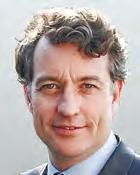
Rep. Chris
The regime’s targeting of the firms seeks to force the flow of investment into official channels that are more easily regulated and taxed, including Hong Kong’s Stock Connect, Wealth Management Connect, and qualified domestic institutional investor (QDII) programs. The first two only allow Hong Kong-listed securities, while QDII has quotas.
The crackdown comes approximately a year after at least some of the firms received increased interest in the Hong Kong IPOs of “star” Chinese companies and overseas transfers due in part to higher interest rates abroad.
Mainland investors are particularly interested in U.S. fixed income and equities. Quantitative strategies, hedge funds, and gold are also popular. In response to growing demand for private wealth, brokers have increased their presence in Hong Kong, Malaysia, and Singapore.
In June 2025, Tiger reportedly planned to double the number of its employees in Hong Kong to target offshore Chinese wealth in the city.
Holding, is U.S.-listed.
Tiger will likely pay about $60 million in fines and confiscated income to the regime. UP Fintech’s ADRs and Futu shares fell by as much as 47 percent and 35 percent in premarket trading following news of the crackdown.
Insiders may have profited from the crackdown, as buying of put options expiring on May 22 surged the day before the announcement, to 600,000 shares of Futu alone. Gains on those shares led to paper gains of as much as 3,400 percent. This raises questions about insider risks to U.S. investors and other investors in public companies over which the CCP has so much control and foreknowledge.
The regime’s targeting of the firms seeks to force the flow of investment into official channels that are more easily regulated and taxed, including Hong Kong’s Stock Connect, Wealth Management Connect, and qualified domestic institutional investor (QDII) programs. The first two only allow Hong Konglisted securities, while QDII has quotas.
The company was founded 12 years ago in Beijing but is now headquartered in Singapore.
Last year, it employed 60 people in Hong Kong, where it began operations in 2022. Tiger’s assets under management were north of $50 billion, including in the United States, Australia, and New Zealand. The company’s parent firm, UP Fintech
Smith
The proposed fine for Futu is approximately $271 million, plus a personal fine of $184,000 for the company’s CEO.
The Tiger CEO will likely pay about the same.
In August, Futu executives reportedly noted that high U.S. interest rates were driving client interest in fixed-income assets. The comment came in the context of reporting on the company’s growth, including through an eighth retail location in Hong Kong, as well as expansion in Malaysia and Singapore. The firm’s private wealth services are available to people with at least $640,000 in investable assets, many of whom are considered part of China’s “new wealth” clients who often invest online. Futu
is headquartered in Hong Kong but is U.S.-listed. In 2022, the regime banned Futu and other such companies without mainland licenses from adding new mainland clients, although old clients could still trade, and some new clients could evade the controls if they had access to a Hong Kong address. Now, even pre-2022 accounts may be deemed “illegal” and banned from unregulated foreign trades.
Stricter capital controls will likely increase demand in China for capital flight even more, as investors worry that the few exit options left to them will eventually close as well. This could increase the use of remaining avenues for wealth transfers out of China. Traders may attempt to change the identities on the brokerages to legalize and manage the risk of their Hong Kong accounts, or move their assets through a custodian transfer (without the need to sell stocks) to brokers at Bank of China’s Hong Kong branch or HSBC Holdings PLC, which may have more permissive controls on foreign trades. Others may seek to move their assets to brokers in the United States or Singapore, including through the use of cryptocurrencies.
Bitcoin rose for at least two days after the announced crackdown. Chi-
na has banned much crypto trading and mining since 2021, but two years later, Hong Kong attempted to become an Asian crypto-trading hub through permissive legislation and regulations. The latest crackdown will not help this goal. Neither will it ease downward pressures on China’s economy. Prior communist crackdowns against banks, online education companies, and property developers have hurt China’s economy, and this will likely be more of the same.
Views expressed in this article are opinions of the author and do not necessarily reflect the views of The Epoch Times.
Anders Corr has a bachelor’s/ master’s in political science from Yale University ( 2001 ) and a doctorate in government from Harvard University ( 2008). He is a principal at Corr Analytics Inc. and publisher of the Journal of Political Risk, and has conducted extensive research in North America, Europe, and Asia. His latest books are “The Concentration of Power: Institutionalization, Hierarchy, and Hegemony” ( 2021 ) and “Great Powers, Grand Strategies: the New Game in the South China Sea” ( 2018 ).
Shines Spotlight on Communist China’s Live
Organ Harvesting
By Robert Moffit & John Paul Libanati
Communist China is producing a real horror show. Rep. Chris Smith (R-N.J.) recently convened a special session of the bipartisan Congressional-Executive Commission on China and solicited stunning testimony from experts and eyewitnesses on the horrific practice of live organ harvesting—hearts, livers, lungs, kidneys, corneas—in communist China. The unlucky cohort of living “donors”—men and women murdered for their body parts— comprises various dissidents as well as politically persecuted ethnic and religious minorities.
This latest congressional inquiry follows in the wake of The Heritage Foundation’s public conference on the topic, which featured Jan Jekielek, author of the New York Times bestseller “Killed to
Order: China’s Organ Harvesting Industry and the True Nature of America’s Biggest Adversary.” Jekielek also appeared as a witness before the commission’s panel.
In his opening remarks, Smith noted a hot mic exchange between Russian President Vladimir Putin and Chinese leader Xi Jinping, during which the two autocrats were casually discussing the potential that organ donation could contribute to greater longevity, and Xi speculated that humans this century could possibly live as long as 150 years.
Ethical organ transplantation, Smith emphasized, is “noble and lifesaving.”
“But forced organ harvesting is not healing,” he said. “It is murder masquerading as medicine.”
This horrific practice, Smith notes, is a logical consequence of the Orwellian assumptions underlying communism: “a system where human beings are reduced to commodities, and the state controls the body as well as the mind.”
Ethan Gutmann, a senior fellow at the Victims of Communism Memorial Foundation and author of the recently published book “The
Xinjiang Procedure,” told the commission that as early as 2013, government agents started to come into people’s homes and draw blood from those deemed to be at odds with China’s communist regime. Those found guilty of practicing an “unsanctioned faith” were arrested, imprisoned, often tortured, and kept in harsh conditions in cells and internment camps.
Based on camp medical files in 2017, Gutmann said, a red check mark next to a blood sample meant that the person had been “pre-selected” for harvesting.
Gutmann said that when young people ripen to an average age of 28, prison guards drag them— whether kicking and screaming or resigned and hopeless—to a transplant hospital where, under anesthesia, organ removal occurs. They start removing different organs, one after another, until they excise the heart.
Religious Persecution
that the communist regime has launched an aggressive propaganda campaign against certain minorities, painting them as “black classes.” Jekielek said that this enables the regime to designate them as subhuman so that the Chinese people, assuming they become aware of it, are “psychologically prepared for the atrocities against the target group.”
Ambassador-at-Large for International Religious Freedom Sam Brownback reminded the commission that China’s totalitarian regime, regardless of any of its protestations to the contrary, cannot and will not tolerate genuine religious liberty.
Tyrants will continue to seek immortality, but not with our expertise or money. Not with a dollar of American complicity
For the communist regime, religious liberty is the equivalent of “kryptonite,” and they fear such liberty more than they fear the United States’ aircraft carriers or nuclear weapons.
A Global Problem
The target populations for this practice have been expanding. Originally, the victims were death row prisoners. Today, the enlarged “donor” class includes the practitioners of Falun Gong— mostly virtuous contemplatives— but also Uyghurs, Tibetans, and Christians.
Rep. James Walkinshaw (DVa.) observed that the “targeting of Falun Gong practitioners and Uyghurs reflects ... a broader campaign of religious persecution that includes Christians in China, ethnic repression, and dehumanization” carried out by the Chinese regime.
Jekielek told the commission
There is a growing global demand for organs, especially among wealthy Middle Eastern patients. China’s communist regime can profit from such a lucrative international market.
The policy question for the United States and its allies is how to ensure that medical researchers, practitioners, and medical institutions in the West are not complicit in this unethical practice. During his testimony before the commission, Gutmann specifically called for an investigation of Thermo Fisher Scientific, a company that supplied DNA testing used on millions of Uyghurs and Kazakhs. Likewise, Jekielek called for oversight over American insti-
tutions training practitioners as transplant surgeons who return to communist China.
There is bipartisan interest in tackling the problem. Rep. Smith’s bill, the Stop Forced Organ Harvesting Act of 2025 (HR 1503), would criminalize trafficking in forcibly donated organs and impose penalties of up to 20 years in prison and up to $1 million in fines for knowing complicity with this unethical practice.
“Tyrants will continue to seek immortality,” Smith said, “but not with our expertise or money. Not with a dollar of American complicity.”
The House of Representatives passed the bill by a vote of 406–1. The Senate has yet to act.
Curiously, the Chinese Communist Party’s organ harvesting program is another case in which life imitates art. In 1978, Michael Crichton directed “Coma,” a highclass horror film starring a young Michael Douglas and the beautiful Geneviève Bujold. Bujold’s character, a young surgeon, discovers that hospital patients are being induced into a coma and their bodies are being transported to a remote location for live organ harvesting. Initially, her colleagues are skeptical.
In the movie, the culprit is a sophisticated transnational criminal organization. In real life, it still is.
Reprinted by permission from The Daily Signal, a publication of The Heritage Foundation.
Robert E. Moffit, Ph.D., a seasoned veteran of more than three decades in Washington policymaking, is a senior fellow in domestic policy studies at The Heritage Foundation.
John Paul Libanati is a member of the Heritage Young Leaders Program.
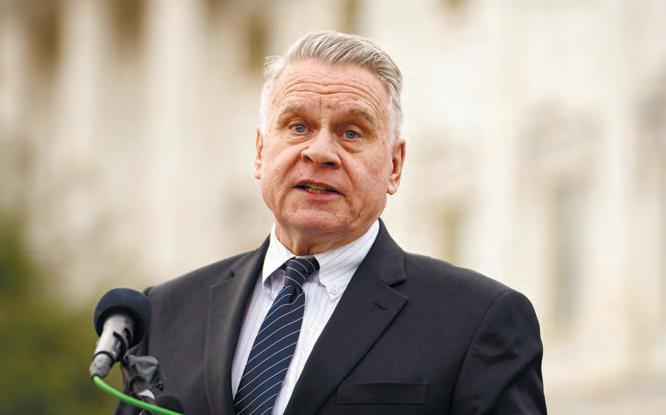
Rep. Chris Smith (R-N.J.) speaks during a press conference about Hong Kong at House Triangle on Capitol Hill in Washington on Nov. 19, 2024
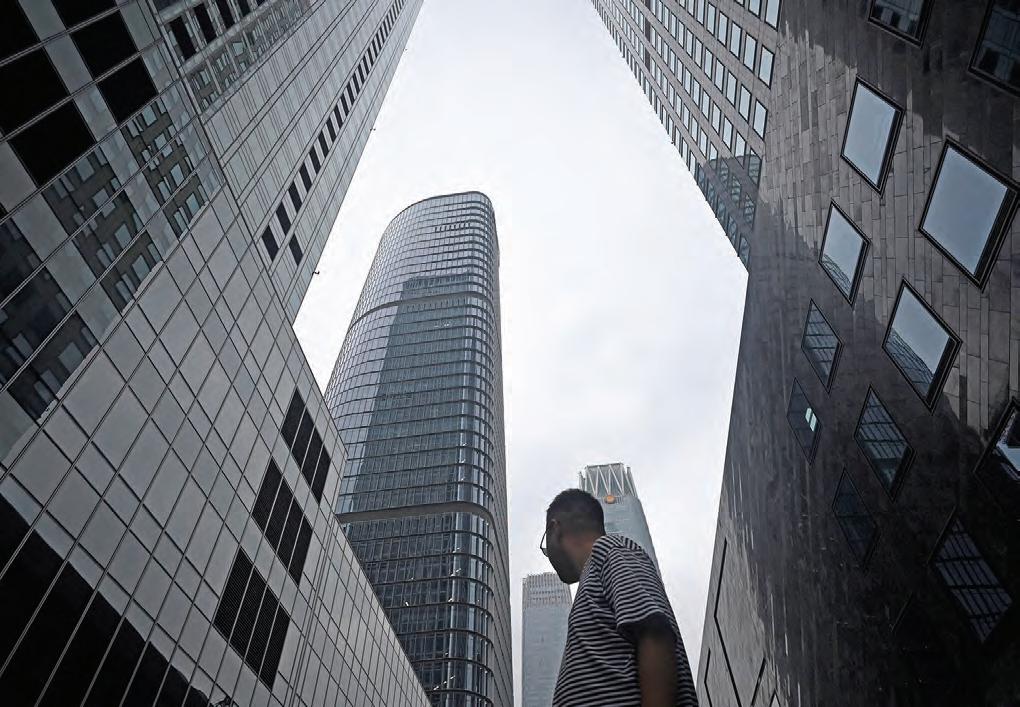
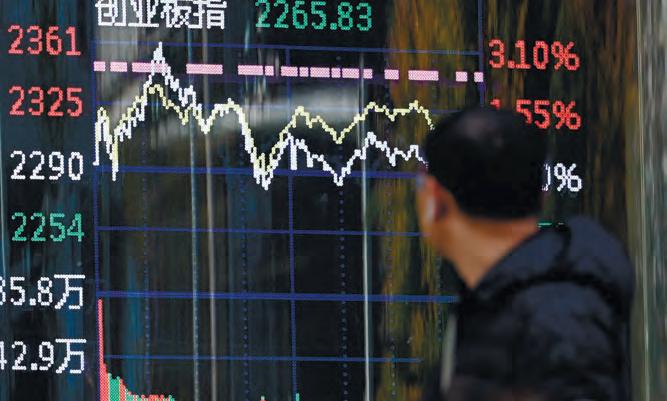
A man looks at a screen showing Chinese stock market movements in Beijing on Nov. 7, 2024.
[8] Stéphane Courtois, ed., The Black Book of Communism: Crimes, Terror, Repression , trans. Jonathan Murphy (Cambridge: Harvard University Press, 1999), 4.(待續)
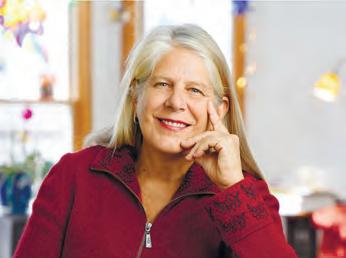
Dr. Jill Bolte Taylor says we can take control of our thoughts and emotions instead of
By Dina Gordon
For years, Dr. Jill Bolte Taylor devoted her professional life to studying the brains of people with severe mental illness. Together with her colleagues at Harvard Medical School, she researched the brains of patients with schizophrenia, convinced that scientific tools would eventually allow her to uncover the roots of the illness. She never imagined that the most profound insights of her career would emerge not from the laboratory, but from an unexpected source—her own brain.
It all started one December morning in 1996. Taylor woke up with a sharp pain piercing her head, just beneath her left eye. She tried to get out of bed and begin her usual routine, hoping the pain would quickly pass. Instead, her body refused to cooperate. Her arms and legs felt heavy and rigid, moving as if in slow motion. When she attempted to step onto her exercise machine, she stared in disbelief at her hands, which suddenly appeared to her like enormous, clumsy hooves. A powerful sensation of disconnection washed over her, as though she was watching herself from the outside.
After struggling off the machine, she dragged herself toward the shower. When she turned on the water, she lost her balance. Bracing herself against the wall, she felt her physical body begin to dissolve.
“I can’t define where I begin and where I end, because the atoms and the molecules of my arm blended with the atoms and the molecules of the wall,” she said in a TED Talk.
As she tried to understand what was happening, she noticed something even more unsettling: Her mind had gone completely silent. The constant stream of thoughts, plans, questions, worries, and emotional turbulence that had always occupied her mind had vanished.
“At first, I was shocked to find myself inside of a silent mind,” she said.
“But then I was immediately captivated by the magnificence of the energy around me. And because I could no longer identify the boundaries of my body, I felt enormous and expansive. I felt at one with all the energy that was and merged with all the energy that was there, and it was beautiful there.”
From time to time, she felt compelled to remind herself: I am Jill Taylor. I have a serious problem. I need help. But moments later, she would slip back into a euphoric state of timelessness she described as a kind of “wonderland.” Over the next four hours, she oscillated between bliss and terror as the pain in her head intensified.
When her mind briefly cleared, she attempted to call for help. But how could she locate the correct phone number among a stack of business cards? How could she use the phone, dial the number, and explain that she needed assistance?
After 45 minutes of failed attempts, punctuated by fleeting moments of clarity, she finally managed to call her workplace. When she tried to speak, no words emerged but only a jumble of syllables, groans, and sounds. The colleague who answered understood that something was terribly wrong and called an ambulance.
At the hospital, Taylor said, she sank even deeper into what she experienced as a wondrous state. Her body felt like a vast field of energy; the people and objects around her appeared to be the same clusters of energy immersed in an immense cosmic force. “My spirit soared freely, like a great whale gliding through the sea of silent euphoria,” she said.
Doctors diagnosed her with a rare stroke in the left hemisphere of her brain. By the end of that day, she had lost all function associated with that side of the brain.
‘Jill Taylor Died’
“I lost my rational thinking, my education, and my ability to speak,”
she said in an interview. “I also lost the emotional history of Jill Taylor. I could not remember anything from my life. On that day, Jill Taylor died. I lost my individual identity.”
Then she added, with unmistakable joy, “But what I gained that day was an awareness of the present moment. I felt an immense, infinite love for everything around me.”
It took Taylor eight years to fully recover, regain her cognitive and motor abilities, and recover her memories. Before the stroke, Taylor wrote in her book “My Stroke of Insight,” she was goal-oriented, organized, controlling, manipulative, and judgmental. Emotionally, she carried with her a heavy load of painful childhood memories that often erupted as anger, jealousy, insecurity, depression, and a desperate need for attention and validation.
After the stroke, as the left side of her brain shut down, all of these traits, constructive or destructive, were erased. By any rational measure, she should have felt profound grief over the loss of her abilities and her personal history.
She also lost what had been one of her central ambitions: advancing up the academic hierarchy at Harvard University. But the right hemisphere of her brain, which remained intact, did not care about any of that.
In the new reality shaped by her right brain, Taylor lived entirely in the present moment, without pain or regret over the past and without fear or anxiety about the future. She describes herself as a state of consciousness made up entirely of peace, love, compassion, and joy.
Rehabilitating her left brain was an immense challenge, as she recounts in her book. After three years, she could play solitaire again. After four, she learned to walk smoothly and fluidly. After five, she could solve simple arithmetic. After six years, she could skip up two steps. After seven, she began teaching anatomy at Indiana University.
And after eight years, she stopped perceiving herself as a fluid or pure energy and once again experienced herself as a separate, solid individual: “Jill Taylor.”
Searching for One’s True Self
Chris Niebauer, a professor of neuropsychology at Slippery Rock University in Pennsylvania, spent years searching—often in frustration—for a way to achieve what Taylor and other stroke patients stumbled upon unintentionally: to detach from memories, thoughts, and the entrenched emotions of pain, grief, anxiety, and depression that had taken hold in his own mind.
In an interview, Niebauer said that early in his career, he believed he could free himself from these emotions by understanding how the brain works. This led him to study the brain’s mechanics, the way it identifies with the physical body, and how it filters the endless physical, social, and mental stimuli from the environment based on perceived importance. Yet the deeper he pursued this path, the further he seemed to drift away from his goal.
At the same time, he began to explore a very different avenue: the wisdom of the East. The research methods in Eastern teachings were radically different from those of Western science, which typically involve the construction of theories and then the design of objective experiments to test them. In
letting them control us.
Eastern traditions, by contrast, understanding the mind—and indeed the universe itself—comes through quiet, inward observation.
“One of the most fundamental insights of the East,” Niebauer explained, “is that our individual ‘self’ is closer to a fictional character than to something truly real.” In other words, the concepts and narratives formed in our own head since early childhood are not our true selves, but layers added on top of us. The question, then, is how to access the “true self” beneath them. With the development of brain-imaging technologies such as MRI and fMRI, researchers attempted to answer this question scientifically. One line of inquiry involved separating the two hemispheres of the brain, a condition Taylor experienced firsthand.
“One of the most fundamental insights of the East, is that our individual ‘self’ is closer to a fictional character than to something truly real.”
Chris Niebauer, Professor of neuropsychology at Slippery Rock University in Pennsylvania
“They discovered that the sense of ‘I’ is constructed by the left hemisphere, which also contains the language centres,” Niebauer explained.
“There were a series of ingenious experiments conducted with epilepsy patients who had undergone surgery severing the connections between the two hemispheres.”
Following the surgery, scientists sent commands to the right hemisphere of the brain. For example, they might instruct the patients to stand up or raise a hand, and they would comply. Meanwhile, the left hemisphere, which had been ‘disconnected’ from the right hemisphere, had no idea why the action occurred, except for that it did happen.
“When researchers asked the patients why they were standing or raising their hand, the left hemisphere immediately invented an explanation,” Niebauer said. “They might say something like, ‘My leg fell asleep,’ or ‘I needed to stretch.’ And they were completely convinced they were right. This was a clue that the left brain invents stories and insists on certainty about everything happening around us. One of those stories is the idea of ‘self.’”
However, Niebauer said, scientists failed to locate the true “self” in the brain. “They never found it. This question has preoccupied neuroscientists since the 1960s and ’70s.”
Choosing Between Four Personas
This is where Taylor reenters the picture, hoping her rare experi-
remarkable happens. The chemical substances associated with those emotions take less than 90 seconds to flush out of the bloodstream. Neurologically speaking, the emotional wave passes quickly. I call this the ‘90-second rule.’
Q: So you imagine what’s happening in the brain?
A: Yes. Of course, I can also choose— consciously or unconsciously—to keep holding on to those emotions. In that case, I repeatedly activate the same neural circuit. But if I don’t, or instead of clinging to the difficult feelings, I can invite other personas into the conversation. I can choose to be rational, or to respond with compassion.
Q: Does that mean knowing how the brain works allows us to control these personas?
ence can enrich the field with new insights. During her recovery, she explained, her primary motivation as a neuroscientist was to preserve and document what she had witnessed. She vividly remembers how her right brain functioned after the stroke. “I had no words or language; I could only think in images. I had no linear sense of time, no past or future, only the present moment. I perceived the big picture but couldn’t focus on details. I focused on similarities rather than differences, and I had no judgment about the present. I simply accepted what was.” She called this mode of thinking “Persona 1.”
“When I was disconnected from my left hemisphere,” she continued, “I was also far more friendly, trusting, compassionate, and filled with unconditional love for those around me. This was the emotional aspect of my right brain. I called it ‘Persona 2.’” When her left brain eventually returned to full function, so did her former patterns of thought. “I became rational again. I was thinking in words. I focused on the past and future and searched for differences. I was self-aware. I called this mode of thinking ‘Persona 3.’” She also discovered the emotional side of her left brain. “I was selfish, aggressive, sceptical, and capable of love—but with conditions. I called this ‘Persona 4.’” According to Taylor, we can train ourselves to recognize these four personas through inward observation and tell which one is operating at any given moment. Once we recognize their patterns of thought and emotional responses, we can consciously choose which persona we want to be in different situations.
“Anyone can do this,” she said. “You don’t need to have a stroke.”
Q: How does this work in practice?
A: Imagine a colleague that harshly criticizes my work. Automatically, Persona 4—the emotional side of my left brain—kicks in. If I let it take over, thinking that it represents my true self, I become defensive, offended, aggressive, insecure, and irritable. But if I remind myself, from the perspective of a neuroscientist, that this is just a group of neurons firing together, something
A: It’s not easy, but it’s possible. It’s an anatomical choice—deciding which neural circuit to activate in a given moment. The more often you activate a circuit, the stronger it becomes, and the easier it is to return to. That’s both my scientific understanding and my personal experience. It’s like learning to play the piano. First, you have to really want to play. At the beginning it’s awkward, slow, and difficult. Over time, it becomes fluid. Eventually, you realize you can choose which thoughts you think and which emotions you feel, rather than letting them control you.
Q: Why, then, do most of us do the opposite?
A: It’s difficult in Western culture because we live predominantly in the left hemisphere. We are analytic, achievement-oriented, and competitive. That’s how I lived before my stroke. Our education system emphasizes this as well, often removing subjects like art and music that nurture the right hemisphere.”
At the same time, she noted, many people today practice mindfulness, meditation, and heartfelt prayer. “All of these bring us closer to the most sacred part of ourselves or to our connection with something far greater than us, who are like ants scurrying across the Earth.”
Niebauer agrees. One of the greatest challenges of Western culture, he believes, is our overreliance on analytical and scientific thinking and our fixation on the idea that such thinking can solve all our problems. “It doesn’t always work that way,” he said.
When we succeed in making the separation of personas that Taylor describes, Niebauer added, it is, metaphorically, like pulling the plug from an electrical outlet. “The first time I practiced this, I felt an enormous relief from suffering and anxiety.”
As we approach what he calls a state of “pure awareness,” decision-making—including moral judgment—often becomes easier. “It may sound paradoxical,” he said, “but the less we identify with our thoughts and simply observe them quietly, the clearer our thinking becomes. The best decisions arise from stillness.”
He offered a simple example: We are on the way to an important meeting and get stuck in traffic. Our navigation app predicts we’ll be 10 minutes late. Our mind immediately begins spinning stories. The boss will be angry. This will ruin the project. My credibility is at risk. When we believe these stories and identify with them, a wave of stress and anxiety follows. But in reality, we don’t know what will happen. Perhaps the boss is also stuck in traffic and will arrive even later. Our thoughts about the future, he says, often create unnecessary suffering.
“My conclusion is that the brain is an excellent tool, as long as we use it and it doesn’t use us.”
This article was originally published by Epoch Magazine Israel.
弗朗西斯貝塞爾神父(Fr. Francis Bethel)是 西尼爾的學生,也是研究西尼爾學術思想的專 家,他在《約翰西尼爾與現實主義的復興》(John Senior and the Restoration of Realism)中概括道: 「體操階段始於經驗,終於喜悅;詩歌或音樂始 於喜悅,終於驚奇;而哲學始於驚奇,終於智 慧。」貝塞爾引用西尼爾的話說,「教育的前兩 個階段讓心靈得以覺醒」,如此才能真正從追求 最高層次的智慧中獲益。