



Tariff volatility. Inflationary pressures. Supply chain disruptions.
Today, business operators who procure products and services must do so with more focus and strategy than ever before.
With support from a GPO (Group Purchasing Organization), procurement is evolving from a costcontrol measure to a meaningful competitive advantage for business operators, from restaurants and hotels to senior living communities, golf clubs and more.
This report dives into the hotbed issues operators are facing head-on in 2026 including:
• Tariffs and supply chain volatility
• Inflation, cost management & labor pressures
• Technology and AI integration
The right GPO must lend meaningful support to face these challenges as your business partner—and go well beyond cost savings.
When it comes to procurement, size, scale, coordinated purchasing power matters. As a GPO currently operating the most complex, comprehensive, high performing and resilient food and beverage supply chain in the world, Entegra, a division of Sodexo, is uniquely positioned to face any challenge.
Topline findings: Winter ‘25/Spring 2026
Cost Outlook1
• The U.S. economy is projected to slow through late 2025 and into 2026
• A recession is a 50/50 possibility by year-end 2026

We remain vigilant in monitoring all proposed and enacted changes to federal policy. Thanks to our broad network of contracted suppliers, Entegra is wellpositioned to respond quickly and effectively to shifts in the market.
-Dave Kourie, Chief Purchasing Officer, Senior Vice President, Supply Management
• Uncertainty around tariffs and immigration policy will remain a drag on economic activity
• Tariffs could push increases in the CPI (Consumer Price Index) higher into 2026
While there is some good news—consumer spending remains resilient, especially among higherincome households—many hospitality-driven business operators are feeling the pinch.
Let’s look deeper. 3




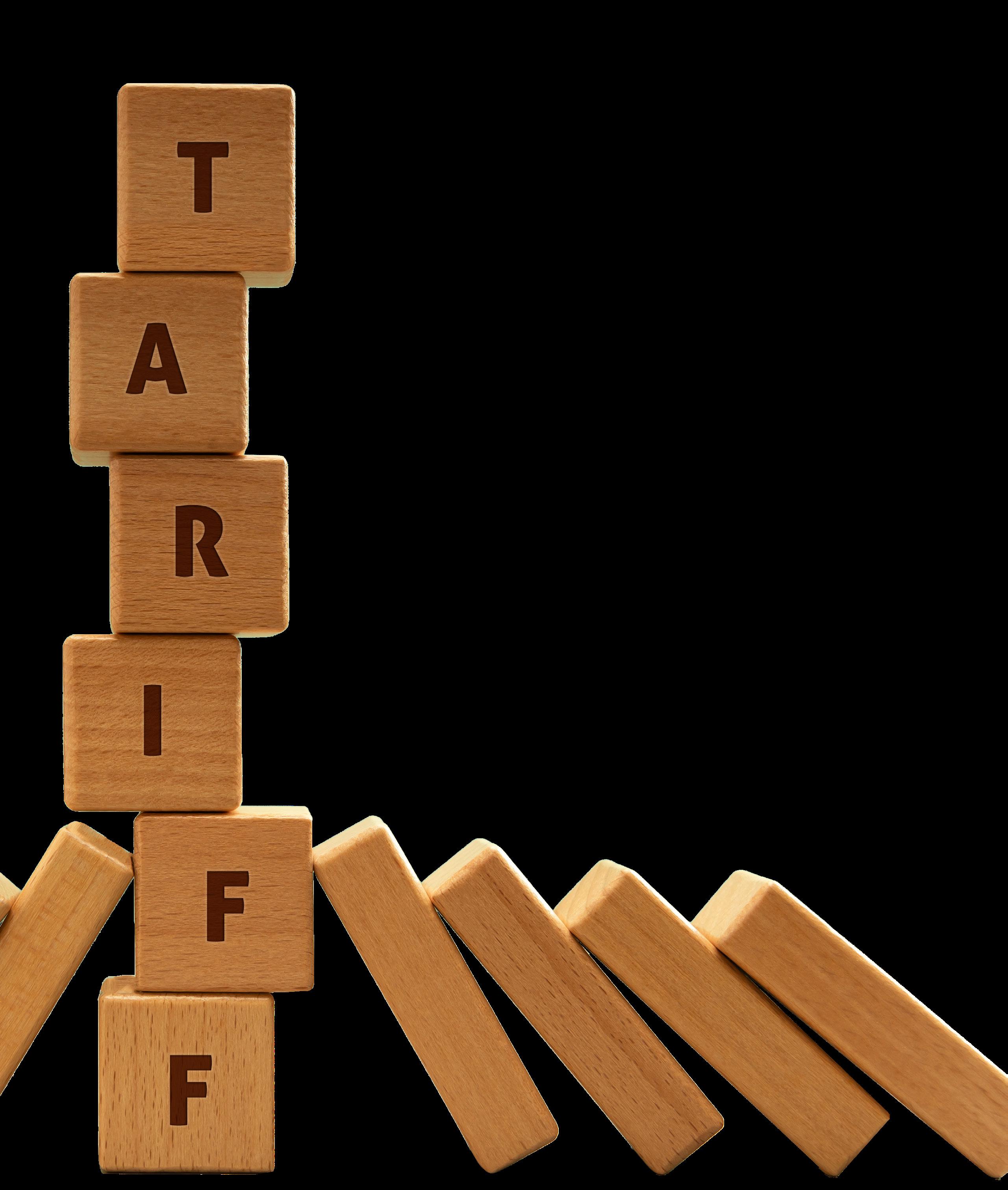
Keeping pace with evolving tariff structures and federal regulatory changes has become increasingly challenging.
A Group Purchasing Organization (GPO) partnership is critical for business operators to monitor updates and negotiate favorable terms with suppliers. Recent tariff-related activity includes:
• “Reciprocal tariffs” on goods from most U.S. trading partners were introduced in April 2025.
• While some exemptions have been granted, most countries still face a minimum 10% tariff.
• Food-related imports from Canada and Mexico are largely exempt. This has helped avoid major disruptions in fruit, vegetable and other staples in the U.S.
Tariffs are expected to raise costs for imported essentials like coffee, cocoa, olive oil and lean beef.
By aggregating its purchasing power across thousands of businesses, a GPO can negotiate better pricing and terms as well as remove tracking price fluctuations from a busy operator’s “to do” list. See “Why a GPO” on page 20, for more on GPO growth.
What are consumers thinking when it comes to tariffs?
According to a Q4 2025 Technomic foodservice report2, consumers are “extremely concerned,” with the majority of them expecting tariff outcome to yield an all-out trade war complete with high tariffs and heightened inflation. In fact, tariffs continue to be the top current event followed by consumers.*
Consumer concern about personal impact of tariffs**
All-out trade war with high tariffs and heightened inflation
Tariff increases will occur, but not as high as initially feared
and reversals
Base: 1,000 consumers
*Q: First, which of the following recent news stories have you been following closely? Select all that apply.
**Q: Thinking about your own personal financial situation, how concerned are you about the impact of tariffs?
***Q: Which of the following do you think is the most likely scenario as it relates to tariffs? Select one.
And with foodservice inflation outgaining wages and total inflation, consumers’ concerns are justified:
Note: 100= January 2022
Source: Technomic and Bureau of Labor Statistics
Here’s a look at tariff activity as seen through the lens of 500 foodservice operators:
Product categories that have experienced a recent tariff-related price increase
Global trade and geopolitics continue to have an impact on the seafood market, raising costs and injecting uncertainty and volatility into the seafood supply chain.
Alongside tight supplies, the coffee market remains volatile, including the 50% tariff on Brazil.
Tariffs on Brazilian beef (76.4% effective rate Aug–Dec 2025) are cutting lean beef imports.
Taking control of every F&B item you purchase while maintaining and exceeding guest satisfaction is paramount.
An operator’s kitchen that includes redundant, expensive and underutilized inventory needs an overhaul.
A culinary-forward GPO like Entegra can help operators select the most cost-effective alternatives without sacrificing quality. On the creative front, LTOs (Limited Time Offers) empower operators to test new flavors, formats and ingredients without disrupting core menu offerings–and pivot quickly based on what works and what doesn’t.
The result:
Streamlining SKUs, consolidating suppliers, leveraging stronger pricing, and getting creative with LTOs saves money while maintaining guest satisfaction.

“ “
We can analyze your menu, giving you insights into your ingredient costs and how they add up to the cost of each menu item.
-Chef Kevin Sennett Director of Culinary, Entegra Culinary
Consulting
Tariffs as high as 35% on non-USMCA compliant goods from Canada and Mexico have disrupted North American supply chains, forcing companies to re-certify origin or pay steep duties.
Prices expected to rise with the assertion of higher tariffs, continued labor cost increases (particularly in Central America) and a retaliatory response to current tariffs.
Chinese tariffs impact a range of equipment, including the cost of components. Transportation between Canada and the U.S. is also impacted.
A major hotel operator partnered with Entegra to rethink how they sourced Furniture, Fixtures & Equipment (FF&E) — and the results were game-changing.
The Challenge:
The hospitality operator needed high-quality FF&E at competitive prices and didn’t want to sacrifice timelines or reliability.
The Solution:
Using Entegra’s FF&E program, the client re-bid their specifications through a supplier that:
• Utilizes a wide manufacturing base to produce in a lower-tariffed country, reducing cost pressures.
• Handles end-to-end logistics, simplifying operations.
The result:
By aggregating their project volume, they received 15% savings.
Re-bidding alongside Entegra also opened the door to a new strategic supplier partnership, ensuring:
• Consistent quality across projects.
• Stable pricing for future purchasing.
• Shorter lead times to keep projects on track.
Given the unpredictability of today’s market, there are many reasons to consider proven alternatives. Consider Entegra’s Local & Direct Savings Program for volatility-fighting solutions like:

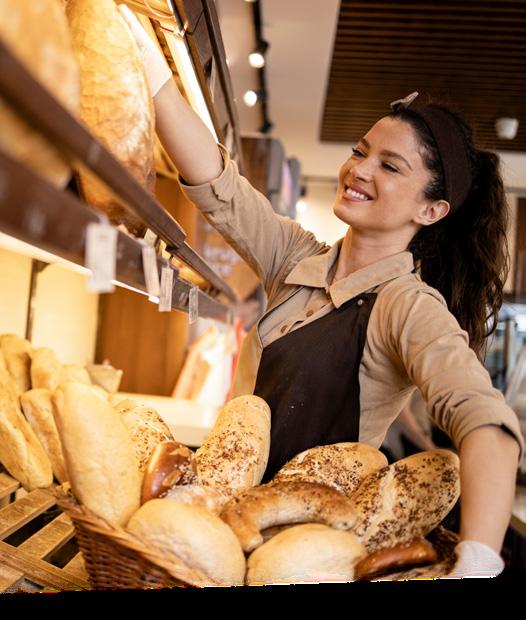


Direct store delivery (DSD)
– No third-party intermediaries necessary.
Nearly 800 local and direct suppliers, including the fresh items you need frequently: bakery, seafood, meat, produce and dairy.
An ever-expanding FF&E portfolio (Furniture, Fixtures and Equipment) for support with new construction, remodeling and refreshing any space.

Service contracts think pest control, labor, landscaping, linen / uniform service and more.
Savvy clients are using Entegra’s Local & Direct Savings Program beyond F&B. Items like cleaning supplies and packaging help them save even more money and generate revenue through rebates.
- Pern Lundell, VP, Entegra National Account Executive.

Above are just a few real-world wins showing how the Entegra Local & Direct Savings Program can help businesses stretch their budgets further. And while savings will vary, your Entegra representative can prepare a customized opportunity assessment so you can see your potential impact before activating any program—bringing clarity, confidence and smarter decision-making to every step.

Inflationary pressures and cost management 3.
Encouraging trends and persistent challenges are not new to business. The most recent Entegra Cost Outlook cites:
Milk supplies remain ahead of demand, which is expected to hold into 2026.
The delayed Farm Bill is expected to pass in 2026, with minimal impact on food prices.
Poultry prices for 2026 are expected to temper slightly on higher production.

Meat has been a consistent inflation driver due to the U.S. cattle herd being at its lowest in decades.
The U.S. seafood market is facing tariff-driven cost pressure, varying supply tightness and continuing logistics challenges.
The U.S. dollar has dropped over 10% since early 2025, driven by tariff policy shifts and concerns over changes in Federal Reserve governance.
“ “
Through a flexible procurement strategy and strong supplier partnerships, Entegra helps clients unlock greater value while navigating today’s procurement challenges. Together with our suppliers, we deliver innovative solutions that enable business operators to reduce costs without compromising performance.
-Amar Doshi VP of Supply Growth and Procurement Offers
Your GPO’s digital solutions need to help you balance reactive buying with proactive margin control. An Entegra client uses their overview dashboard on the client platform Entegra PurchasingIQ to:
• Track where they are saving (Entegra contracted spend) versus not saving (nonEntegra contracted spend) to identify more savings opportunities.
• Assess categories with the greatest savings potential based on their purchase history at-a-glance.
• Easily see all purchases made through primary distributors.
• Monitor spend on Entegra’s “Local and Direct” high-quality, cost-saving programs.
Estimated Savings Impact

Tuck this cheat sheet away for easy reference as you navigate inflation and volatility.
Tracks what guests are paying for restaurant meals.
Used to guide menu pricing and gauge consumer price sensitivity.
Source: U.S. Bureau of Labor Statistics (BLS).
Measures price changes at the producer and wholesale level.
A leading indicator of future distributor and operator cost increases.
Source: U.S. Bureau of Labor Statistics (BLS).
3. USDA Food Price Outlook
Forecasts categorylevel trends for proteins, dairy, produce, grains, and energy.
Helps anticipate volatility and plan sourcing strategies by category.
Source: USDA Economic Research Service (ERS).
Together, these indicators give operators a 360° view of inflation—from supplier costs to guest pricing—enabling smarter procurement, pricing, and contract decisions.
Labor shortages—driven by demographic trends—will remain a long-term challenge despite rising wages.
Job growth slowed to just 26K/month from May–August 2025 and a recession could push unemployment toward 5%.
To counter labor challenges, operators lean on a GPO like Entegra to:
• Easily access in-person full-time or temporary staff via cost-saving employment agencies.
• Leverage advanced automation—think robotic frying stations and autonomous vacuums—to fill the labor gap.
• Connect with proven self-service kiosk providers and other smart systems.



Technology and artificial intelligence are no longer optional in procurement—they’ve become strategic imperatives.
Over the past 12–18 months, procurement has shifted from manual, transactional processes to digital-first models powered by AI-driven insights. Today, advanced tools are automating routine tasks like invoice matching and contract analysis, while predictive analytics and generative AI are enabling smarter sourcing decisions, realtime risk monitoring and spend forecasting.
1.
Operators count on Entegra for a host of digital solutions, but here are just three top digital solutions that put control, efficiency and more savings into the hands of clients:
What you need: Easy access to a digital procurement solution: A procure-topay platform that simplifies approvals, purchasing, purchase order management, inventory and supplier interactions is foundational for efficient procurement processes.
Solution: EPRO, powered by Entegra: This powerful procure-to-pay tool helps minimize manual effort, enhance operational effectiveness and drive compliance.
2.
What you need: AI-driven purchasing guidance while shopping online: Once you’ve partnered with a GPO to get the best prices available, the last thing you want is wasted time finding them to order.
Solution: Proprietary Entegra Shopping Assistant uses AI to help busy operators easily identify Entegra-contracted items and alternatives while shopping on select distributors’ e-stores. The result? An average 10% savings on lower-priced Entegra-contracted products. The AI engine also helps identify substitute items when a contracted item is out of stock.
What you need: Your own purchasing data to quickly locate more cost-saving GPO-contracted product alternatives: Analyzing your spend history is a key tactic.
Solution: Savings Optimizer, located within the client platform Entegra PurchasingIQ, identifies SKU-level swap opportunities using an operator’s spend history to quickly and easily boost savings and incentives.

Some Entegra clients have achieved double-digit cost reductions in various categories, from dairy to beef, simply by using Savings Optimizer.
-Adam Sarbudeen, VP of Digital Solutions, Entegra

The Goal:
A major hotelier set a clear objective across 13 managed properties: reach 90% compliance with Entegra-contracted purchasing by March 2026. In light of economic pressures—from tariffs to inflation and supply chain instability—this directive aimed to protect margins and align procurement across locations.
The Solution:
The client is actively improving Entegra-contracted compliance by training property teams on the Entegra PurchasingIQ client platform. They are also training teams on the Entegra Shopping Assistant to drive contracted purchases across categories from F&B to FF&E.
To further strengthen results, the client’s leadership approved an upgrade to Entegra Shopping Assistant that includes AI-powered lower-cost alternative recommendations (of similar quality) while shopping on a distributor’s e-store in real time.
Bottom Line:
This major hotelier is transforming disruption into opportunity using Entegra’s digital solutions to improve consistency, strengthen purchasing decisions, and elevate the hotelier’s portfolio-wide performance.
Whether in challenging or stable trade environments, a modern GPO like Entegra...
• Aggregates purchasing volume across thousands of members, enabling them to negotiate fixed pricing and deep discounts (often 10–30%) that individual operators cannot achieve alone
• Pre-negotiates contracts, locking in pricing for extended periods and reducing exposure to market volatility
• Offers advisory services and strategic planning, going beyond transactional savings, to expert support for culinary operations, corporate sustainability reporting goals and more
The surge in procurement value—from $52.8B in GPO purchases in 2021 to $90.3B in 2025— reflects the vital role GPOs play for business operators in the U.S.:
Total segment purchases 2025 ($B)
$52.8B in 2021
Source: 2025 Technomic report: A strategic assessment of group purchasing organizations: Evolving procurement practices in a mature industry; methodology included 600 operator surveys and interviews of those using GPOs with wide U.S. regional representation. More operators are relying on GPOs for
The value of procurement made under a GPO contract has grown nearly 14% per year since Technomic’s 2021 GPO study. +14%
Operator satisfaction with GPOs has reached 89% with noticeable improvements in pricing and cost-savings metrics since 2014. 89%
$90.3B
The foodservice GPO market has achieved a record $90.3 billion in procurement value for 2025, up from $52.8B in 2021.
Rising tariffs and ongoing economic volatility are putting sustained pressure on business margins, making cost control more critical than ever.
Recent data underscores this challenge: by Q3 2025, 70% of business operators reported tariffdriven cost increases, with over half experiencing increases across some items and nearly one in five seeing increases on almost all items. At the same time, the share of operators reporting no tariff impact fell from 39% in Q2 to 31% in Q3, signaling that pricing pressure is becoming more widespread, not less.
Base: 500 operators
*Q:How have your costs gone up. If at all, specifically due to tariffs?
Business expenses are rising in core operating categories that operators can’t easily substitute or adjust without the support of a GPO.
In Q3 2025, food ingredients (34%), equipment (33%), and disposables (31%) were among the most significantly tariff-impacted expense categories.
Business expense categories impacted by tariffs**
% significantly/severely impacted
Base: 500 operators
*Q:How have your costs gone up. If at all, specifically due to tariffs?
**Q: How much are the following business purchases in your operation impacted by tariffs due to imports from targeted countries?
Sources
• 1Data within this report is from the Entegra Winter/Spring 2026 Cost Outlook unless otherwise noted. Entegra delivers data-driven forecasts and insights on inflation, commodity pricing and market trends. The contents of the Cost Outlook are provided by AES (Advanced Economic Solutions). You can access the Cost Outlook Winter ‘25/Spring ’26 here
• 2Q4 State of the Industry: Market Performance, Growth Drivers and Supply Chain Solutions, Technomic.
• 32025 Paper & Plastic Packaging Industry Tariff Updates
• 4 A Strategic Assessment of Group Purchasing Organizations, Evolving Procurement Practices in a Mature Industry, 2025.